EP0821691B1 - Methods of synthesizing gm2 - Google Patents
Methods of synthesizing gm2 Download PDFInfo
- Publication number
- EP0821691B1 EP0821691B1 EP97904258A EP97904258A EP0821691B1 EP 0821691 B1 EP0821691 B1 EP 0821691B1 EP 97904258 A EP97904258 A EP 97904258A EP 97904258 A EP97904258 A EP 97904258A EP 0821691 B1 EP0821691 B1 EP 0821691B1
- Authority
- EP
- European Patent Office
- Prior art keywords
- compound
- group
- benzyl
- pivaloyl
- vib
- Prior art date
- Legal status (The legal status is an assumption and is not a legal conclusion. Google has not performed a legal analysis and makes no representation as to the accuracy of the status listed.)
- Expired - Lifetime
Links
- 0 C1CC2*=CC2C1 Chemical compound C1CC2*=CC2C1 0.000 description 6
Images



Classifications
-
- C—CHEMISTRY; METALLURGY
- C07—ORGANIC CHEMISTRY
- C07H—SUGARS; DERIVATIVES THEREOF; NUCLEOSIDES; NUCLEOTIDES; NUCLEIC ACIDS
- C07H13/00—Compounds containing saccharide radicals esterified by carbonic acid or derivatives thereof, or by organic acids, e.g. phosphonic acids
- C07H13/02—Compounds containing saccharide radicals esterified by carbonic acid or derivatives thereof, or by organic acids, e.g. phosphonic acids by carboxylic acids
- C07H13/04—Compounds containing saccharide radicals esterified by carbonic acid or derivatives thereof, or by organic acids, e.g. phosphonic acids by carboxylic acids having the esterifying carboxyl radicals attached to acyclic carbon atoms
-
- A—HUMAN NECESSITIES
- A61—MEDICAL OR VETERINARY SCIENCE; HYGIENE
- A61P—SPECIFIC THERAPEUTIC ACTIVITY OF CHEMICAL COMPOUNDS OR MEDICINAL PREPARATIONS
- A61P35/00—Antineoplastic agents
-
- A—HUMAN NECESSITIES
- A61—MEDICAL OR VETERINARY SCIENCE; HYGIENE
- A61P—SPECIFIC THERAPEUTIC ACTIVITY OF CHEMICAL COMPOUNDS OR MEDICINAL PREPARATIONS
- A61P37/00—Drugs for immunological or allergic disorders
- A61P37/02—Immunomodulators
-
- C—CHEMISTRY; METALLURGY
- C07—ORGANIC CHEMISTRY
- C07H—SUGARS; DERIVATIVES THEREOF; NUCLEOSIDES; NUCLEOTIDES; NUCLEIC ACIDS
- C07H1/00—Processes for the preparation of sugar derivatives
-
- C—CHEMISTRY; METALLURGY
- C07—ORGANIC CHEMISTRY
- C07H—SUGARS; DERIVATIVES THEREOF; NUCLEOSIDES; NUCLEOTIDES; NUCLEIC ACIDS
- C07H3/00—Compounds containing only hydrogen atoms and saccharide radicals having only carbon, hydrogen, and oxygen atoms
- C07H3/06—Oligosaccharides, i.e. having three to five saccharide radicals attached to each other by glycosidic linkages
Definitions
- This invention relates methods of producing synthetic GM2s.
- the synthetic GM2s produced by the methods of the invention have greater than 95% purity, and have the same immunoreactivity with anti-GM2 antibodies as bovine brain-derived GM2s.
- Gangliosides are a class of molecules which are glycolipids. Different gangliosides have been identified as prominent cell surface constituents of various transformed cells, including melanoma, as well as other tumors of neuroectodermal origin. See, e.g., Ritter and Livingston, et al., Sem. Canc. Biol. , 2:401-409 (1991) and Oettgen, VCH Verlagstechnik (Weinheim Germany 1989).
- Gangliosides are known as mono-, di-, tri or polysialogangliosides, depending upon the degree of glycosylation with sialic acid residues.
- Abbreviations employed to identify these molecules include “GM1”, “GD3”, “GT1”, etc., with the “G” standing for ganglioside, "M”, “D” or “T”, etc. referring to the number of sialic acid residues, and the number or number plus letter (e.g., "GT1a”), referring to the binding pattern observed for the molecule.
- GT1a number plus letter
- the monosialoganglioside GM2 has the structure:
- the gangliosides are prevalent cell surface markers on transformed cells, such as melanoma. This has made them attractive targets for cancer research.
- Livingston, et al., Proc. Natl. Acad. Sci. USA , 84:2911-2915 (1987) describe results of a vaccine based trial, wherein subjects afflicted with melanoma received, as vaccines, either whole cells which present high levels of GM2, pure GM2 or pure GM2 plus bacterial adjuvant. Attention is also drawn to Livingston, et al., J. Clin. Oncol. , 12(5):1036-1044 (1994), and Irie, et al., U.S. Patent No. 4,557,931, both of which deal with the use of GM2 as a vaccine.
- gangliosides There are difficulties unique to the immunology of gangliosides, which are touched upon briefly here. First, while these molecules are prevalent on transformed cells, they are also common on certain normal cells, such as neural cells. There is a risk, in administering gangliosides to a subject, that the resulting antibody response will damage normal cells. Indeed, certain autoimmune pathologies, such as Guillain-Barre' Syndrome, are characterized by autoimmune antibodies reactive with GM1 or GQ1b. See, e.g., Yuki, et al., J. Exp. Med. , 178:11771-1775 (1993); Aspinall, et al., Infect & Immun. , 6295):2122-2125 (1994).
- gangliosides are secured via purification from tissue, such as bovine cranial tissues. Even under optimum conditions, the yields of pure gangliosides, in particular, GM2, are vanishingly small. Further, purification from mammalian tissue carries with it the risk of transmitting contaminants such as viruses, prion particles, and so forth. Alternate methodologies for securing ganglioside specific antibodies are thus highly desirable.
- This invention is directed to methods of synthesizing GM2.
- trisaccharide compound IIIa or IIIb and glycosyl donor compound IV are glycosylated in the presence of a catalyst to obtain tetrasaccharide compound Va or Vb.
- the N-trichloroethyoxycarbonyl group is removed and the acetamido group is liberated from compound Va or Vb to obtain acetamino derivative compound VIa or VIb.
- Compound VIa or VIb is debenzylated and O-acetylated to obtain compound VIIa or VIIb, which is then transformed into GM2.
- trisaccharide compound IIIa or IIIb and glycosyl donor compound VIII are glycosylated in the presence of a catalyst to obtain compound IXa or IXb.
- Compound IXa or IXb is converted to acetamino derivative compound VIa or VIb.
- Compound VIa or VIb is debenzylated and O-acetylated to obtain compound VIIa or VIIb, which is then transformed into GM2.
- trisaccharide compound IIIa or IIIb and glycosyl donor compound X are glycosylated in the presence of a catalyst and the glycosylation product is in situ treated with zinc in acetic anhydride to obtain compound VIa or VIb.
- Compound VIa or VIb is debenzylated and O-acetylated to obtain compound VIIa or VIIb, which is then transformed into GM2.
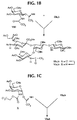
- These compounds can be obtained using known sialyl donors (compound I ( Figure 1A) wherein R is ethyl) and known glycosyl acceptors (compound II, Figure 1A, wherein R is benzyl or pivaloyl).
- Tin(II) trifluoromethane-sulfonate, ytterbium(III) trifluoromethanesulfonate, copper (II) trifluoromethanesulfonate, silver(I) trifluoromethanesulfonate, and related metal trifluoromethanesulfonates are used as catalysts herein. These catalysts are superior to the commonly used catalyst trimethylsilyl trifluoromethanesulfonate (T.J. Martin et al., supra ). Thus, higher yields of the desired ⁇ -product compound III are obtained.
- compounds IVa and IVb and structurally related compounds having selectively removable N-carbonyl moieties (for instance, benzyloxycarbonyl, allyloxycarbonyl, etc.) are ideal glycosyl donors for high glycoside yields at this hindered 4-hydroxy group of the galactose moiety. Additionally, they are accessible to direct liberation of the 2-acetamido group at the required N-acetylgalactosamine moiety without leading to the intermediacy of a free amino group.
- N-carbonyl moieties for instance, benzyloxycarbonyl, allyloxycarbonyl, etc.
- a second method of synthesizing GM2 calls for the transformation of compound III into compound VI.
- This method consists of the use of O-(3,4,6-tri-O-acetyl-2-deoxy-2-trichloroacetamido- ⁇ -galactopyranosyl)trichloroacetimidate (compound VIII, Figure 1B) as glycosyl donor, for instance, with IIIa or IIIb as glycosyl acceptors having the low reactive 4-hydroxy group of the galactose moiety.
- new catalysts are used for the attachment of the Neu5Ac residue to the lactose moiety, thus providing ⁇ (2-3)-connected GM3 type intermediates.
- the GalNAc residue is attached at the low reactive 4-OH group of the Gal moiety to obtain GM2-tetrasaccharide.
- Methods with lead in the deprotection steps to free amino groups frequently result in low yields due to difficulties in the removal of the protecting groups, and/or in side reactions (lactam formation with the ester group of the Neu5Ac residue).
- the invention described herein provides methods which allow for a readily removable auxiliary group at the 2-acetamido group or for a substitute of the 2-acetamido group of the GalNAc residue.
- the required enhancement of the glycosyl donor properties with the direct liberation of the 2-acetamido group is gained without resorting to the free amine and its subsequent N-acetylation.
- Y can be any readily removable oxycarbonyl, thiorcarbonyl or aminocarbonyl derivative, including, but not limited to, 2,2,2-tribromoethoxycarbonyl, allyloxycarbonyl, benzyloxycarbonyl, 4-nitrophenylethoxycarbonyl or trichloromethylthiocarbonyl.
- compound VIa has physical data in accordance with material obtained via a different route (see: M. Sugimota et al., Carbohydr. Res. Vol. p. 56, C1-C5 (1986)).
- Debenzylation of compounds VIa and b and subsequent O-acetylation to produce compounds VII a and b was performed using standard procedures.
- a mixture of compound VIa (85 mg, 51 ⁇ mol) and 10% Pd-C (15 mg) in MeOH-CH 3 COOH (8 mL, 5:1) was stirred for 2 hours at room temperature under H 2 . After filtration, the solution was concentrated. Without purification, a mixture of the residue, acetic anhydride (1 mL), pyridine (1 mL), and 4-dimethylaminopyridine (12 mg, 0.10 mmol) was stirred overnight at room temperature and then concentrated.
- a second method for the synthesis of compound VI is provided. This method requires the preparation of glycosyl donor compound VIII. This was performed via the following procedures starting from galactosamine: Trichloroacetyl chloride (3.88 mL, 34.8 mmol) was added dropwise at room temperature within 30 minutes to a vigorously stirred ' solution of D-galactosamine hydrochloride (5 g, 23.4 mmol) and NaHCO 3 (5.84 g, 69 mmol) in water (46 mL). The mixture was stirred for 1 hour, neutralized with 1 M HCl, concentrated and dried in vacuo. The residue was stirred for 3 hours at 0°C with MeOH (50 mL).
- Transformation into compound VIII was performed as follows: A solution of 1,3,4,6-tetra-O-acetyl-2-deoxy-2-trichloroacetamide-a,b-D-galactopyranose (1.73 g, 3.5 mmol) and hydrazine acetate (355 mg, 3.9 mmol) in DMF (20 mL) was stirred for 2 hours at 0°C, and then diluted with EtOAc (60 mL), washed with saturated aqueous NaCl and water, dried with MgSO 4 , and concentrated.
- a third method for the synthesis of compound VI is provided.
- This method requires the preparation of glycosyl donor X ( Figure 1C). This was performed as follows: A solution of 1,3,4,6-tetra-O-acetyl-2-deoxy-2-trichloroethoxycarbonylamino-b-D-galactopyranoside (see Example 1) (3 g, 5.73 mmol) and hydrazine acetate (0.6 g, 6.31 mmol) was stirred for 20 minutes at room temperature, and then diluted with EtOAc (100 mL), washed with water, saturated aqueous NaHCO 3 , and water, dried (MgSO 4 ), and concentrated.
- Compound X contains a 2,2,2-trichloroethoxycarbonyl group, which can be replaced by 2,2,2-tribromoethoxylcarbonyl, 2,2,2-trifluoroethoxycarbonyl or 4-nitrophenylethoxycarbonyl.
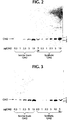
- the purity of the synthetic GM2 obtained by the procedure described in Example 1 was analyzed.
- the GM2 was subjected to thin layer chromatography utilizing techniques known to those skilled in the art.
- the GM2 was visualized with resorcinol/HCl and iodine vapor as indicated in the brief description of the figures.
- the synthetic GM2 contained one major band, which was resorcinol and orcinol positive.
- the synthetic GM2 co-migrated with bovine brain-derived GM2.
- three major bands were detectable after staining with orcinol and resorcinol in the lanes containing 5 and 10 ⁇ g synthetic GM2.
- One band migrated slightly faster, and two bands migrated slightly slower than the main GM2 band (see Figure 2).
- the purity of the GM2 synthesized by the method described in Example 1 was found to be greater than 95%, as determined by thin layer chromatography.
- the purity of the final product in the described process is dependent upon the purity of the starting materials. In the data described herein, the 95% would be improved, pernaps to 99%, if practical starting materials of higher purity, e.g., fatty acids with 99% higher purity, were available.
- the term "GM2" actually refers to a backbone structure, and while the glycoside chains which are described are constant, there is a certain amount of variability possible because of natural variability in fatty acid composition of the molecules. Hence, it is better to refer to GM2 in the plural (“GM2s”), or to "a family of molecules, all of which possess the GM2 backbone structure".
- the antigenicity of the GM2 synthesized by the method described in Example 1 was compared with the antigenicity of bovine brain-derived GM2. To do this, the synthetic GM2 was tested by ELISA for reactivity with various GM2 antisera.
- GM2 antigen both synthetic and bovine brain-derived titration were performed.
- the synthetic GM2 was recognized by three different GM2-reactive antisera. These antisera included murine monoclonal antibody 10.11 ( Figure 4), human monoclonal antibody 45.114 ( Figure 5), and sera from a melanoma patient which was immunized with a vaccine containing bovine brain-derived GM2 ( Figure 6).
- Table 1 shows that the synthetic GM2 and the bovine brain-derived GM2 were recognized by the same antibodies by ELISA. Specifically, both synthetic and bovine brain-derived GM2 were recognized by monoclonal antibody 10.11, antibody 45.114, and patient sera immunized with a vaccine containing bovine brain-derived GM2. Neither the synthetic GM2 nor the bovine brain-derived GM2 was recognized by monoclonal antibodies R24 (which is an anti-GD3 monoclonal antibody) or F31, a glycolipid-recognizing antibody. Similarly, neither synthetic GM2 nor bovine brain-derived GM2 were recognized by sera from a patient which had not previously been immunized with a vaccine containing bovine brain-derived GM2.
- the antigenicity of synthetic GM2 was compared with the antigenicity of bovine brain-derived GM2 utilizing immune thin-layer chromatography techniques known to those skilled in the art.
- Monoclonal antibody 10.11 ( Figure 7) was used in the chromatography.
- one main band and two minor bands were immunoreactive with monoclonal antibody 10.11.
- the main band co-migrated with bovine brain-derived GM2, while both minor bands migrated slightly faster than the main GM2 band (see Figure 7).
- the two minor bands which were immunoreactive with the anti-GM2 monoclonal antibodies are likely all GM2 species, which differ in ceramide composition from the major band, which contains C18:0 and d18:1. No band migrating below the main GM2 band stained specifically with monoclonal antibody 10.11.
- Rabbits were immunized with either synthetic GM2 obtained by the method described in Example 1 or bovine brain-derived GM2 in order to induce the production of anti-GM2 antibodies.
- the rabbits were immunized four times at three week intervals with 200 ⁇ g GM2 for the first two immunizations and 100 ⁇ g GM2 for subsequent injections. Freund's adjuvant was utilized. After three months, two additional immunizations, at three week intervals, were given.
- Sera from the immunized animals was tested for immunoreactivity. It was found that sera from both synthetic GM2-immunized rabbits and bovine brain-derived GM2-immunized rabbits had low titers of IgM and IgG anti-GM2 antibodies. Both sera had the same low levels of immunogenicity. This indicates that the synthetic GM2 and the bovine brain-derived GM2 are not distinguished by the immune system.
Landscapes
- Chemical & Material Sciences (AREA)
- Organic Chemistry (AREA)
- Health & Medical Sciences (AREA)
- Life Sciences & Earth Sciences (AREA)
- General Health & Medical Sciences (AREA)
- Engineering & Computer Science (AREA)
- Biochemistry (AREA)
- Biotechnology (AREA)
- Genetics & Genomics (AREA)
- Molecular Biology (AREA)
- Medicinal Chemistry (AREA)
- General Chemical & Material Sciences (AREA)
- Chemical Kinetics & Catalysis (AREA)
- Nuclear Medicine, Radiotherapy & Molecular Imaging (AREA)
- Pharmacology & Pharmacy (AREA)
- Animal Behavior & Ethology (AREA)
- Public Health (AREA)
- Veterinary Medicine (AREA)
- Immunology (AREA)
- Bioinformatics & Cheminformatics (AREA)
- Saccharide Compounds (AREA)
- Preparation Of Compounds By Using Micro-Organisms (AREA)
- Lock And Its Accessories (AREA)
- Acyclic And Carbocyclic Compounds In Medicinal Compositions (AREA)
- Crystals, And After-Treatments Of Crystals (AREA)
- Glass Compositions (AREA)
- Catalysts (AREA)
Applications Claiming Priority (3)
| Application Number | Priority Date | Filing Date | Title |
|---|---|---|---|
| US08/602,580 US5756695A (en) | 1996-02-16 | 1996-02-16 | Methods of synthesizing GM2 |
| US602580 | 1996-02-16 | ||
| PCT/US1997/001944 WO1997030061A1 (en) | 1996-02-16 | 1997-02-05 | Methods of synthesizing gm2 |
Publications (3)
| Publication Number | Publication Date |
|---|---|
| EP0821691A1 EP0821691A1 (en) | 1998-02-04 |
| EP0821691A4 EP0821691A4 (en) | 2001-10-04 |
| EP0821691B1 true EP0821691B1 (en) | 2003-08-06 |
Family
ID=24411928
Family Applications (1)
| Application Number | Title | Priority Date | Filing Date |
|---|---|---|---|
| EP97904258A Expired - Lifetime EP0821691B1 (en) | 1996-02-16 | 1997-02-05 | Methods of synthesizing gm2 |
Country Status (8)
| Country | Link |
|---|---|
| US (1) | US5756695A (enExample) |
| EP (1) | EP0821691B1 (enExample) |
| JP (2) | JP3220704B2 (enExample) |
| AT (1) | ATE246697T1 (enExample) |
| AU (1) | AU712149B2 (enExample) |
| CA (1) | CA2217708A1 (enExample) |
| DE (1) | DE69723926T2 (enExample) |
| WO (1) | WO1997030061A1 (enExample) |
Families Citing this family (4)
| Publication number | Priority date | Publication date | Assignee | Title |
|---|---|---|---|---|
| US5977329A (en) * | 1996-02-16 | 1999-11-02 | Ludwig Institute For Cancer Research | Methods of synthesizing GM3 |
| US5951317A (en) * | 1998-04-13 | 1999-09-14 | Motorola, Inc. | Accessory connector assembly |
| CN1300158C (zh) * | 2005-03-22 | 2007-02-14 | 重庆邮电学院 | 一类非天然活性寡糖类化合物及其制备方法和应用 |
| WO2011053614A1 (en) * | 2009-10-30 | 2011-05-05 | Merck Sharp & Dohme Corp. | Crystalline cdm-nag and methods for producing same |
Family Cites Families (2)
| Publication number | Priority date | Publication date | Assignee | Title |
|---|---|---|---|---|
| EP0508493A1 (en) * | 1986-08-06 | 1992-10-14 | Mect Corporation | Ganglioside related compounds and method of producing the same |
| US5371202A (en) * | 1991-02-28 | 1994-12-06 | The Nisshin Oil Mills, Ltd. | Processes of preparing sialoglycosyl compounds |
-
1996
- 1996-02-16 US US08/602,580 patent/US5756695A/en not_active Expired - Fee Related
-
1997
- 1997-02-05 CA CA002217708A patent/CA2217708A1/en not_active Abandoned
- 1997-02-05 DE DE69723926T patent/DE69723926T2/de not_active Expired - Fee Related
- 1997-02-05 AT AT97904258T patent/ATE246697T1/de not_active IP Right Cessation
- 1997-02-05 EP EP97904258A patent/EP0821691B1/en not_active Expired - Lifetime
- 1997-02-05 JP JP52939897A patent/JP3220704B2/ja not_active Expired - Fee Related
- 1997-02-05 AU AU18586/97A patent/AU712149B2/en not_active Ceased
- 1997-02-05 WO PCT/US1997/001944 patent/WO1997030061A1/en not_active Ceased
-
2001
- 2001-05-16 JP JP2001145749A patent/JP2001316397A/ja active Pending
Also Published As
| Publication number | Publication date |
|---|---|
| DE69723926D1 (de) | 2003-09-11 |
| JP2001316397A (ja) | 2001-11-13 |
| DE69723926T2 (de) | 2004-07-15 |
| AU1858697A (en) | 1997-09-02 |
| EP0821691A4 (en) | 2001-10-04 |
| US5756695A (en) | 1998-05-26 |
| AU712149B2 (en) | 1999-10-28 |
| CA2217708A1 (en) | 1997-08-21 |
| JP3220704B2 (ja) | 2001-10-22 |
| ATE246697T1 (de) | 2003-08-15 |
| JPH11504348A (ja) | 1999-04-20 |
| EP0821691A1 (en) | 1998-02-04 |
| WO1997030061A1 (en) | 1997-08-21 |
Similar Documents
| Publication | Publication Date | Title |
|---|---|---|
| US4866041A (en) | Synthesis of tumor antigenic determinant | |
| US5962660A (en) | Sialyl Lewis X mimetics incorporating fucopeptides | |
| JPS61246195A (ja) | リピドa型の新規な二糖及び三糖誘導体 | |
| Keding et al. | Synthesis of non-natural glycosylamino acids containing tumor-associated carbohydrate antigens | |
| Aspinall et al. | Synthesis of allyl glycosides for conversion into neoglycoproteins bearing epitopes of mycobacterial glycolipid antigens | |
| Andersen et al. | Synthesis of ganglioside epitopes for oligosaccharide specific immunoadsorption therapy of Guillian-Barré syndrome | |
| Ercégovic et al. | Synthesis of a Bis (sialic acid) 8, 9-Lactam | |
| US5756695A (en) | Methods of synthesizing GM2 | |
| CN111233949A (zh) | 一种神经节苷脂gm3和/或其类似物、合成方法和应用 | |
| Giorgi et al. | Synthesis of a model trisaccharide for studying the interplay between the anti α-Gal antibody and the trans-sialidase reactions in Trypanosoma cruzi | |
| JP2823358B2 (ja) | 免疫抑制性および寛容原性修飾ルイス▲上c▼およびLacNAc化合物 | |
| US5977329A (en) | Methods of synthesizing GM3 | |
| US4767845A (en) | Synthesis of tumor antigenic determinant | |
| US4794176A (en) | Synthesis of tumor antigenic determinant | |
| George et al. | Chemoenzymatic synthesis of derivatives of a T-cell-stimulating peptide which carry tumor-associated carbohydrate antigens | |
| US5837830A (en) | Stereodirected process for synthesis of α-N-acetylgalactosaminides | |
| Lubineau et al. | Synthesis of 3e-and 6e-monosulfated and 3e, 6e-disulfated Lewis x pentasaccharides, candidate ligands for human L-selectin | |
| Matta et al. | Synthesis of 2-acetamido-2-deoxy-4-O-β-d-galactopyranosyl-3-O-methyl-d-glucopyranose (N-acetyl-3-O-methyllactosamine) and its benzyl α-glycoside | |
| Stütz et al. | Volume I: Molecular Biochemistry and Cellular Biology 171 | |
| Davidson | Synthesis of selected fragments of the Lewis B Lewis A Tumor-Associated Carbohydrate Antigen | |
| Ovchinnikova et al. | and Free Disaccharides | |
| US4855126A (en) | Method to detect T-antigen delayed hypersensitivity | |
| Sen et al. | An Improved Method for the Synthesis of 3.6-Di-O-Methyl-D-Glucose: Preparation of the Neo-Glycoprotein Containing 3, 6-Di-O-Methyl-β-D-Glucopyranosyl-Groups | |
| Diakur et al. | Synthesis of Neu5Ac α-(2→ 8) Neu5Ac α-(2→ 3) Galβ1→ OCH2CH2CH3, a determinant epitope of GD3 ganglioside | |
| Caulfield | The synthesis of glycosphingolipids: I.~ The synthesis of lactosylceramide and lactosylsphingenine and a short synthesis of triacetyl-D-Erythro-sphingosine. II.~ The synthesis of the Le (x) family of glycosphingolipids |
Legal Events
| Date | Code | Title | Description |
|---|---|---|---|
| PUAI | Public reference made under article 153(3) epc to a published international application that has entered the european phase |
Free format text: ORIGINAL CODE: 0009012 |
|
| 17P | Request for examination filed |
Effective date: 19971110 |
|
| AK | Designated contracting states |
Kind code of ref document: A1 Designated state(s): AT BE CH DE DK ES FI FR GB GR IE IT LI LU MC NL PT SE |
|
| A4 | Supplementary search report drawn up and despatched |
Effective date: 20010820 |
|
| AK | Designated contracting states |
Kind code of ref document: A4 Designated state(s): AT BE CH DE DK ES FI FR GB GR IE IT LI LU MC NL PT SE |
|
| RIC1 | Information provided on ipc code assigned before grant |
Free format text: 7C 07H 1/00 A, 7C 07H 15/10 B |
|
| 17Q | First examination report despatched |
Effective date: 20020206 |
|
| GRAH | Despatch of communication of intention to grant a patent |
Free format text: ORIGINAL CODE: EPIDOS IGRA |
|
| GRAH | Despatch of communication of intention to grant a patent |
Free format text: ORIGINAL CODE: EPIDOS IGRA |
|
| GRAA | (expected) grant |
Free format text: ORIGINAL CODE: 0009210 |
|
| RIN1 | Information on inventor provided before grant (corrected) |
Inventor name: OLD, LLOYD J. Inventor name: RITTER, GERD Inventor name: DOLL, ANDREAS Inventor name: CASTRO-PALOMINO, JULIO C. Inventor name: SCHMIDT, RICHARD |
|
| AK | Designated contracting states |
Designated state(s): AT BE CH DE DK ES FI FR GB GR IE IT LI LU MC NL PT SE |
|
| PG25 | Lapsed in a contracting state [announced via postgrant information from national office to epo] |
Ref country code: NL Free format text: LAPSE BECAUSE OF FAILURE TO SUBMIT A TRANSLATION OF THE DESCRIPTION OR TO PAY THE FEE WITHIN THE PRESCRIBED TIME-LIMIT Effective date: 20030806 Ref country code: IT Free format text: LAPSE BECAUSE OF FAILURE TO SUBMIT A TRANSLATION OF THE DESCRIPTION OR TO PAY THE FEE WITHIN THE PRESCRIBED TIME-LIMIT;WARNING: LAPSES OF ITALIAN PATENTS WITH EFFECTIVE DATE BEFORE 2007 MAY HAVE OCCURRED AT ANY TIME BEFORE 2007. THE CORRECT EFFECTIVE DATE MAY BE DIFFERENT FROM THE ONE RECORDED. Effective date: 20030806 Ref country code: FI Free format text: LAPSE BECAUSE OF FAILURE TO SUBMIT A TRANSLATION OF THE DESCRIPTION OR TO PAY THE FEE WITHIN THE PRESCRIBED TIME-LIMIT Effective date: 20030806 Ref country code: BE Free format text: LAPSE BECAUSE OF FAILURE TO SUBMIT A TRANSLATION OF THE DESCRIPTION OR TO PAY THE FEE WITHIN THE PRESCRIBED TIME-LIMIT Effective date: 20030806 Ref country code: AT Free format text: LAPSE BECAUSE OF FAILURE TO SUBMIT A TRANSLATION OF THE DESCRIPTION OR TO PAY THE FEE WITHIN THE PRESCRIBED TIME-LIMIT Effective date: 20030806 |
|
| REG | Reference to a national code |
Ref country code: GB Ref legal event code: FG4D |
|
| REG | Reference to a national code |
Ref country code: CH Ref legal event code: EP |
|
| REG | Reference to a national code |
Ref country code: IE Ref legal event code: FG4D |
|
| REF | Corresponds to: |
Ref document number: 69723926 Country of ref document: DE Date of ref document: 20030911 Kind code of ref document: P |
|
| PG25 | Lapsed in a contracting state [announced via postgrant information from national office to epo] |
Ref country code: SE Free format text: LAPSE BECAUSE OF FAILURE TO SUBMIT A TRANSLATION OF THE DESCRIPTION OR TO PAY THE FEE WITHIN THE PRESCRIBED TIME-LIMIT Effective date: 20031106 Ref country code: GR Free format text: LAPSE BECAUSE OF FAILURE TO SUBMIT A TRANSLATION OF THE DESCRIPTION OR TO PAY THE FEE WITHIN THE PRESCRIBED TIME-LIMIT Effective date: 20031106 Ref country code: DK Free format text: LAPSE BECAUSE OF FAILURE TO SUBMIT A TRANSLATION OF THE DESCRIPTION OR TO PAY THE FEE WITHIN THE PRESCRIBED TIME-LIMIT Effective date: 20031106 |
|
| PG25 | Lapsed in a contracting state [announced via postgrant information from national office to epo] |
Ref country code: ES Free format text: LAPSE BECAUSE OF FAILURE TO SUBMIT A TRANSLATION OF THE DESCRIPTION OR TO PAY THE FEE WITHIN THE PRESCRIBED TIME-LIMIT Effective date: 20031117 |
|
| NLV1 | Nl: lapsed or annulled due to failure to fulfill the requirements of art. 29p and 29m of the patents act | ||
| RAP2 | Party data changed (patent owner data changed or rights of a patent transferred) |
Owner name: LUDWIG INSTITUTE FOR CANCER RESEARCH |
|
| REG | Reference to a national code |
Ref country code: CH Ref legal event code: PFA Owner name: LUDWIG INSTITUTE FOR CANCER RESEARCH Free format text: LUDWIG INSTITUTE FOR CANCER RESEARCH#1345 AVENUE OF THE AMERICAS#NEW YORK, NEW YORK 10105 (US) -TRANSFER TO- LUDWIG INSTITUTE FOR CANCER RESEARCH#605 THIRD AVENUE, 32ND AND 33RD FLOORS#NEW YORK, NY 10158 (US) |
|
| PG25 | Lapsed in a contracting state [announced via postgrant information from national office to epo] |
Ref country code: PT Free format text: LAPSE BECAUSE OF FAILURE TO SUBMIT A TRANSLATION OF THE DESCRIPTION OR TO PAY THE FEE WITHIN THE PRESCRIBED TIME-LIMIT Effective date: 20040106 |
|
| PG25 | Lapsed in a contracting state [announced via postgrant information from national office to epo] |
Ref country code: LU Free format text: LAPSE BECAUSE OF NON-PAYMENT OF DUE FEES Effective date: 20040205 |
|
| PG25 | Lapsed in a contracting state [announced via postgrant information from national office to epo] |
Ref country code: MC Free format text: LAPSE BECAUSE OF NON-PAYMENT OF DUE FEES Effective date: 20040228 |
|
| REG | Reference to a national code |
Ref country code: FR Ref legal event code: CA |
|
| ET | Fr: translation filed | ||
| PLBE | No opposition filed within time limit |
Free format text: ORIGINAL CODE: 0009261 |
|
| STAA | Information on the status of an ep patent application or granted ep patent |
Free format text: STATUS: NO OPPOSITION FILED WITHIN TIME LIMIT |
|
| 26N | No opposition filed |
Effective date: 20040507 |
|
| PGFP | Annual fee paid to national office [announced via postgrant information from national office to epo] |
Ref country code: GB Payment date: 20050126 Year of fee payment: 9 |
|
| PGFP | Annual fee paid to national office [announced via postgrant information from national office to epo] |
Ref country code: FR Payment date: 20050223 Year of fee payment: 9 Ref country code: CH Payment date: 20050223 Year of fee payment: 9 |
|
| PGFP | Annual fee paid to national office [announced via postgrant information from national office to epo] |
Ref country code: DE Payment date: 20050224 Year of fee payment: 9 Ref country code: IE Payment date: 20050224 Year of fee payment: 9 |
|
| PG25 | Lapsed in a contracting state [announced via postgrant information from national office to epo] |
Ref country code: GB Free format text: LAPSE BECAUSE OF NON-PAYMENT OF DUE FEES Effective date: 20060205 |
|
| PG25 | Lapsed in a contracting state [announced via postgrant information from national office to epo] |
Ref country code: IE Free format text: LAPSE BECAUSE OF NON-PAYMENT OF DUE FEES Effective date: 20060206 |
|
| PG25 | Lapsed in a contracting state [announced via postgrant information from national office to epo] |
Ref country code: LI Free format text: LAPSE BECAUSE OF NON-PAYMENT OF DUE FEES Effective date: 20060228 Ref country code: CH Free format text: LAPSE BECAUSE OF NON-PAYMENT OF DUE FEES Effective date: 20060228 |
|
| PG25 | Lapsed in a contracting state [announced via postgrant information from national office to epo] |
Ref country code: DE Free format text: LAPSE BECAUSE OF NON-PAYMENT OF DUE FEES Effective date: 20060901 |
|
| REG | Reference to a national code |
Ref country code: CH Ref legal event code: PL |
|
| GBPC | Gb: european patent ceased through non-payment of renewal fee |
Effective date: 20060205 |
|
| REG | Reference to a national code |
Ref country code: IE Ref legal event code: MM4A |
|
| REG | Reference to a national code |
Ref country code: FR Ref legal event code: ST Effective date: 20061031 |
|
| PG25 | Lapsed in a contracting state [announced via postgrant information from national office to epo] |
Ref country code: FR Free format text: LAPSE BECAUSE OF NON-PAYMENT OF DUE FEES Effective date: 20060228 |