EP0812910A1 - Novel lipase gene and process for the production of lipase with the use of the same - Google Patents
Novel lipase gene and process for the production of lipase with the use of the same Download PDFInfo
- Publication number
- EP0812910A1 EP0812910A1 EP96903231A EP96903231A EP0812910A1 EP 0812910 A1 EP0812910 A1 EP 0812910A1 EP 96903231 A EP96903231 A EP 96903231A EP 96903231 A EP96903231 A EP 96903231A EP 0812910 A1 EP0812910 A1 EP 0812910A1
- Authority
- EP
- European Patent Office
- Prior art keywords
- lipase
- gene
- pseudomonas
- sequence
- strain
- Prior art date
- Legal status (The legal status is an assumption and is not a legal conclusion. Google has not performed a legal analysis and makes no representation as to the accuracy of the status listed.)
- Withdrawn
Links
Images


Classifications
-
- C—CHEMISTRY; METALLURGY
- C12—BIOCHEMISTRY; BEER; SPIRITS; WINE; VINEGAR; MICROBIOLOGY; ENZYMOLOGY; MUTATION OR GENETIC ENGINEERING
- C12N—MICROORGANISMS OR ENZYMES; COMPOSITIONS THEREOF; PROPAGATING, PRESERVING, OR MAINTAINING MICROORGANISMS; MUTATION OR GENETIC ENGINEERING; CULTURE MEDIA
- C12N9/00—Enzymes; Proenzymes; Compositions thereof; Processes for preparing, activating, inhibiting, separating or purifying enzymes
- C12N9/14—Hydrolases (3)
- C12N9/16—Hydrolases (3) acting on ester bonds (3.1)
- C12N9/18—Carboxylic ester hydrolases (3.1.1)
- C12N9/20—Triglyceride splitting, e.g. by means of lipase
Definitions
- the present invention relates to a novel gene encoding a lipase as a lipid degradation enzyme industrially useful for detergents, food processing, paper making, oil manufacturing or the like and the nucleotide sequence thereof; a gene encoding the protein involved in the production of the lipase and the nucleotide sequence thereof; a recombinant vector carrying these genes, a transformant carrying the recombinant vector; and a method for producing the lipase using the transformant.
- lipase-producing microorganisms there have been known genus Pseudomonas , genus Alcaligenes , genus Mucor , genus Candida , genus Humicola , genus Rhizomucor and the like. Genes have been isolated from some of them, and a great number of lipase genes have been isolated from microorganisms of the genus Pseudomonas , in particular. Currently known such lipase genes include those from Pseudomonas fragi (Japanese Patent Laid-open Nos.
- a homologous host-vector system of Pseudomonas pseudoalcaligenes exerts an effect of elevating lipase production, but the gene in the downstream region is not essential for lipase production in a heterologus host-vector system thereof (EP 334 462). Furthermore, the gene in the downstream region is not present in Pseudomonas fragi .
- a lipase to be blended with detergents can satisfactorily exert its lipase activity in a detergent solution.
- the pH of washing solutions reside in an alkaline region, so a lipase functioning at an alkaline pH is demanded.
- lipid stain is relatively readily removed generally under high temperature and high alkaline conditions but cannot sufficiently be removed through washing at low temperatures (at 60 or less). Not only in Japan where washing has conventionally been carried out at low temperatures, but also in European countries and USA, the washing temperature is likely lowered.
- a lipase to be blended in detergents should satisfactorily function even at low temperatures.
- the lipase to be blended into detergents should sufficiently exhibit its functions during washing even in the presence of detergent components such as surfactant, and protease or bleach contained in many of detergents. Furthermore, preferably, the lipase to be blended into detergents should be stable in the concurrent presence of components contained in the detergents even when the lipase is stored in a blended state in the detergents.
- the genus Pseudomonas As lipase-producing microorganisms, there have been known the genus Pseudomonas , the genus Alcaligenes , the genus Achromobacter , the genus Mucor , the genus Candida , the genus Humicola , the genus Rhizomucor and the like. Because most of the lipases from these bacterial strains have an optimum pH in a neutral to mild alkaline region, the lipases cannot work sufficiently in alkaline detergent solutions or are poorly stable therein. Still furthermore, the individual lipases from the genus Achromobacter , the genus Mucor , the genus Candida , and the genus Humicola are strongly inhibited of their activities in the presence of anionic surfactants.
- Lipase-producing bacteria of the genus Pseudomonas include Pseudomonas fragi , Pseudomonas cepacia , Pseudomonas pseudoalcaligenes , Pseudomonas aeruginosa , and Pseudomonas fluorescens , but known enzymes having been isolated from these bacterial strains cannot satisfy the properties described above.
- the present invention relates to a method for efficiently producing a lipase with excellent properties for use in industrial fields such as detergent industry, particularly lipase S from a strain SD 705 (FERM BP-4772).
- the present invention relates to a gene encoding the lipase S and the nucleotide sequence thereof; a gene encoding a protein involved in the production of the lipase S and the nucleotide sequence thereof; a recombinant vector carrying these genes; a transformant through transformation with such recombinant vector; and a method for producing the lipase S from such transformant.
- Fig.1 is a restriction map of plasmid pS1.
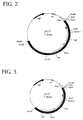
- Fig.2 is a restriction map of plasmid pS1S.
- Fig.3 is a restriction map of plasmid pS1E.
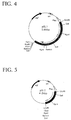
- Fig.4 is a restriction map of plasmid pSL1.
- Fig.5 is a restriction map of plasmid pSL2.
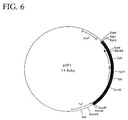
- Fig.6 is a restriction map of plasmid pSP1.
- Fig.7 is a restriction map of plasmid pSP2.
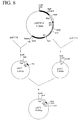
- Fig.8 depicts the constructions of plasmids pAP1, pAP2 and pAP3.
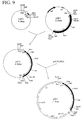
- Fig.9 depicts the construction of plasmid pSB1.
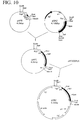
- Fig.10 depicts the construction of plasmid pSB2.
- strain SD 705 (Accession No. FERM BP-4772) firstly deposited by the present inventors at the Life Engineering and Industrial Technology Research Institute, the Agency of Industrial Science and Technology, at 1-3, Higashi 1-chome, Tsukuba-shi, Ibaraki-ken, Japan and then transferred under the Budapest Treaty to international deposition, the present inventors have isolated a DNA fragment carrying the gene encoding the lipase S and the gene encoding the protein involved in the production.
- the strain SD 705 of the genus Pseudomonas belongs to lipase S-producing bacteria useful for detergent and the like. Introducing the DNA fragment into a host cell and culturing the resultant transformant in a culture medium, it has been confirmed that lipase S was generated in the culture. Thus, the present invention has been achieved.
- the present invention is to provide what will be described below.
- the lipase-encoding gene can be isolated from chromosomal DNAs by known methods such as colony hybridization and the formation of a clear zone on a plate medium. More specifically, firstly, a chromosome library is prepared. If the whole or a part of the amino acid sequence of the lipase is known, an oligonucleotide probe corresponding to the whole or a part of the sequence is then prepared and using the probe, the gene encoding the lipase can be isolated through colony hybridization.
- an oligonucleotide corresponding to a sequence around the active center residue may be used as the probe, which sequence has generally been known to be highly preserved in lipases from microbial organisms.
- the sequence between the two primers is enzymatically synthesized via DNA polymerase, to prepare a double-stranded DNA, of which both the strands may be used as the probes.
- a chromosome library is prepared in a bacterium with no lipase production potency, and is then cultured in an agar plate containing a sparingly soluble substrate of lipase.
- a bacterium containing a chromosomal DNA fragment carrying the lipase gene decomposes the substrate around the colony, so that the screening of the bacterium can be conducted on the basis of the formation of a clear zone.
- the gene encoding the lipase may be isolated, but any of these methods may be used satisfactorily.
- the gene encoding the protein involved in the lipase production may be isolated as a DNA fragment downstream the lipase gene, from the chromosomal DNA.
- Any host capable of expressing the isolated gene may be used as the host to introduce the gene, including for example bacteria of genera Pseudomonas , Escherichia, and Bacillus.
- Bacteria of genus Pseudomonas are preferably Pseudomonas sp. strain SD 705 (Accession No. FERM BP-4772) or variants thereof, Pseudomonas alcaligenes , Pseudomonas pseudoalcaligenes and Pseudomonas mendocina . More preferably, the bacteria are Pseudomonas sp. strain SD 705 or variants thereof, Pseudomonas mendocina strain SD 702 (Accession No. FERM BP-4291) or variants thereof.
- Bacteria of genus Bacillus are preferably Bacillus subtilis, Bacillus amyloliquefaciens, Bacillus licheniformis , Bacillus firmus , Bacillus lentus , and Bacillus alcalophilus. More preferably, the bacteria belong to Bacillus sp. strain NKS-21 (Accession No. FERM BP-93-1) or variants thereof.
- the recovered lipase gene and the gene encoding the protein responsible for the production of the lipase are introduced into a host bacterium. These two genes are linked concurrently to one vector so that the same sequence as in the chromosome can be regenerated or the genes are independently linked to two vectors capable of coexisting in a host cell.
- the genes are inserted and linked between a promoter and signal sequence and a terminator, both functioning in the host, so that the genes can be expressed in the host.
- a host bacterium is transformed.
- the two genes are linked to different vectors, only the vector carrying the lipase gene singly may be used for transformation or the two recombinant vectors are simultaneously used for transformation.
- Escherichia coli if used as a host, for example, plasmids of pUC or pACYC can be used.
- bacteria of genus Bacillus if used as hosts, plasmids of pUB110 and pE194 can be used.
- plasmids of RSF1010 can be used.
- the genes can thereby be stably harbored outside the chromosomes of the host bacteria.
- the genes can also be introduced therein by a method for incorporating a DNA of non-replicable form in a host bacterium into the chromosome.
- the lipase is secreted into the culture broth.
- the separation and purification of the lipase from the culture broth can be carried out by adding ammonium sulfate to the culture broth, fractionating crude lipase, removing the ammonium sulfate through dialysis, and isolating the lipase through a CM cellulose column, to purify the lipase as a single band by SDS polyacrylamide gel electrophoresis.
- the lipase generation and purification are not limited to the methods described above, but as a matter of course other methods are applicable.
- the lipase S thus produced by the methods described above has the following properties.
- L medium 1% polypeptone, 0.5% yeast extract, and 0.5% sodium chloride
- 10% sodium carbonate 3 ml
- adjusting the medium to pH 9 inoculating then the Pseudomonas sp. strain SD 705 in the resulting L medium (1000 ml), prior to overnight culturing at 35°C , and centrifuging the resulting medium, the bacteria were recovered.
- the bacteria were suspended in a 50 mM Tris-HCl buffer, pH 8 (8 ml) containing 0.4 M sodium chloride and 10 mM EDTA.
- lysozyme and RNase A thereto so as to reach final concentrations of 0.5 mg/ml and 0.05 mg/ml, respectively, followed by gentle shaking at 37°C for 30 minutes, and further adding sodium dodecyl sulfate (SDS) to the resulting mixture so as to reach a final concentration of 1%, prior to gentle shaking at 37°C for 30 minutes, the bacteria were lyzed. Subsequently, the bacteria were heated at 60°C for 10 minutes, for complete solubilization.
- SDS sodium dodecyl sulfate
- a 2- to 10-kbp DNA fragment was recovered.
- a plasmid pUC 118 was digested with BamHI, for subsequent treatment with alkali protease. The two fragments were linked together with T4 DNA ligase. After culturing the resulting linking product in the L medium, the culture was then added to Escherichia coli strain JM 101 (0.3 ml) treated with 50 mM calcium chloride, followed by incubation at 0°C for 30 minutes.
- the N-terminal amino acid sequence of the purified lipase was analyzed by a protein sequencer Model 476A (manufactured by Applied Biosystems, Co., Ltd.), to recover consequently the Sequence No.5. Based on the Sequence, an oligonucleotide probe as shown as Sequence No.6 was prepared on a DNA synthesizer. This probe was labeled, using ECL (trade name; 3'-oligolabelling and detection system, Amasham life science, Co., Ltd.).
- the transformant of about 1,000 colonies was overnight cultured on a nylon filter placed on an L plate medium at 37°C . Peeling off the filter, the bacteria were lyzed for 10 minutes on a filter impregnated with 0.5 M sodium hydroxide/1.5 M sodium chloride, which were then neutralized two times on a filter impregnated with 1.5 M sodium chloride/1 M Tris-HCl buffer, pH 7 for 7 minutes. After firing the filter at 80°C for 2 hours, the remaining bacteria were washed in 0.5% SDS/6 x SSC (1 x SSC means a 150 mM sodium chloride/15 mM sodium citrate solution; n x SSC means a solution at n-fold concentrations of 150 mM sodium chloride/15 mM sodium citrate solution).
- Fig.1 shows the restriction map of pS1.
- the white arrow depicts the lipase gene; the black arrow depicts the gene responsible for the lipase production; "Plac” represents lac promoter; “ori” represents replication initiating point; and "Ap r" represents ampicillin-resistant gene.
- Figs.2 and 3 depict the restriction maps of pS1S and pS1E, respectively (the symbols in the figures are ⁇ the same as in Fig.1).
- the nucleotide sequences of the gene encoding the lipase S and the gene encoding the protein involved in the production of the lipase S were determined according to the dideoxy method by Sanger (Sanger, F., Nicklen, S., Coulson, A.R. (1977), Proc. Natl. Acad. Sci. USA., 74 , 5463). More specifically, the nucleotide sequencing was carried out on a DNA sequencer (Model 370A; Applied Biosystems, Co., Ltd.) using a dideoxy terminator sequencing kit (Applied Biosystems, Co. Ltd.).
- An oligonucleotide of Sequence No.7 was chemically synthesized, which worked to add the EcoRI site to the 5' terminus of a sequence corresponding to a segment containing the ribosome linking site (SD sequence) and the initiation codon of the lipase gene.
- SD sequence ribosome linking site
- M13 primer RV manufactured by TaKaRa Brewery K.K.
- PCR polymerase chain reaction
- the plasmid DNA was extracted, purified and analyzed, so as to confirm that the transformants thus produced carried a plasmid on which the DNA fragment carrying the lipase gene and the gene encoding the protein involved in the production thereof was harbored and inserted into the EcoRI restriction site of pUC118, to express the lipase gene and the gene encoding the protein involved in the production thereof downstream the lac promoter.
- the plasmid is defined as pSL1.
- Fig.4 shows the restriction map of pSL1 (the symbols in the figure are the same as in Fig.1).
- oligonucleotide to add the EcoRI site to the 3' terminus of the lipase gene was chemically synthesized. Mixing the oligonucleotide and the oligonucleotide preliminary synthesized, as shown as Sequence No. 7, with the plasmid pS1E for polymerase chain reaction (PCR), a DNA fragment containing only the lipase gene including the SD sequence was recovered.
- PCR polymerase chain reaction
- Fig.5 shows the restriction map of the pSL2 (the symbols in the figure are the same as in Fig.1).
- plasmid DNA was extracted, purified and analyzed, to recover a plasmid pSP1 in which a DNA fragment carrying the lipase gene and the gene encoding the protein involved in the production thereof was inserted in between the HindIII- and SacI digestion sites of pMFY 42.
- Fig.6 shows the restriction map of pSP1.
- the white arrow and black arrow represent the same as in Fig. 1.
- Km r represents kanamycin-resistant gene
- Tc r represents tetracycline-resistant gene.
- oligonucleotides Two oligonucleotides, namely a commercially available M13 primer M4 (manufactured by TaKaRa Brewery, K. K.) and the oligonucleotide as shown as Sequence No.9, were mixed with the plasmid pS1S for polymerase chain reaction (PCR), to recover a DNA fragment containing only the lipase gene.
- the fragment was completely digested with the HindIII and SacI, and the resulting digested products were then linked to the plasmid pMFY42 in the same manner as described above, to recover a DNA fragment containing only the lipase gene in between the HindIII-and SacI digestion sites of pMFY 42.
- Fig.7 shows the restriction map of pSP2 (the symbols in the figure are the same as in Fig.6).
- Pseudomonas sp. strain SD 705 (Accession No. FERM BP-4772) was transformed using the plasmids pSP1 and pSP2, to select kanamycin-resistant colonies. More specifically, firstly, the strain SD705 was grown in an L liquid medium (5 ml) adjusted to pH 9, until the OD reached 0.5. The bacteria were recovered by centrifugation. The bacteria were suspended in sterilized water, which were then again recovered and resuspend in sterilized water (0.5 ml). Adding the plasmid DNA to the bacterial suspension, which was then transferred into a cell with electrodes, a high-voltage electric pulse was applied to the DNA.
- Strain LD 9 as a lipase depletion strain of Pseudomonas mendocina strain SD 702 was transformed to generate a transformant.
- An oligonucleotide capable of adding the XbaI site to the N-terminus of mature lipase was chemically synthesized. Additionally, an oligonucleotide capable of adding the XbaI site to the 3'-terminus of the gene encoding the protein involved in the production of the lipase, as shown as Sequence No.11, was chemically synthesized. Mixing these two oligonucleotides with a plasmid pS1E for polymerase chain reaction (PCR), a DNA fragment carrying the mature lipase gene and the gene encoding the protein involved in the production thereof was recovered.
- PCR polymerase chain reaction
- plasmid pSM1 After completely digesting the fragment with XbaI and linking the digested fragments with plasmid pUC118, a plasmid pSM1 was recovered, on which a DNA fragment carrying the mature lipase gene and the gene encoding the protein involved in the production thereof was harbored and inserted in the XbaI digested site of pUC118.
- oligonucleotide capable of adding the XbaI site to the C-terminus of the lipase was chemically synthesized. Mixing the oligonucleotide and the oligonucleotide as shown as Sequence No.10 with the plasmid pS1E for polymerase chain reaction (PCR), a DNA fragment carrying only the mature lipase gene was recovered.
- PCR polymerase chain reaction
- a plasmid pSM2 was recovered, on which a DNA fragment carrying the mature lipase gene and the gene encoding the protein involved in the production thereof was harbored and inserted in the XbaI digested site of pUC118.
- Oligonucleotides as shown as Sequence Nos. 13 and 14 were chemically synthesized. Mixing these two oligonucleotides with plasmid pSDT812 (Japanese Patent Laid-open No. Hei 1-141596) for polymerase chain reaction (PCR), a DNA fragment including the promoter region of alkali protease and a part of the prepro sequence thereof was recovered.
- plasmid pSDT812 Japanese Patent Laid-open No. Hei 1-141596
- PCR polymerase chain reaction
- plasmid pAP1 After completely digesting the fragment with EcoRI and XbaI and linking the digested fragments with plasmid pUC118, a plasmid pAP1 was recovered, on which the DNA fragment including the promoter region of alkali protease and a part of the prepro sequence thereof was harbored and inserted in between the EcoRI digestion site and the XbaI digestion site of pUC118.
- Oligonucleotides as shown as Sequence Nos.15 and 16 were chemically synthesized. Mixing these oligonucleotides with the plasmid pSDT812 for polymerase chain reaction (PCR), a DNA fragment including the terminator region of alkali protease was recovered. After completely digesting the fragment with XbaI and HindIII and linking the digested fragments with a plasmid pUC 118 in the same manner as described above, a plasmid pAP2 was recovered, on which a DNA fragment including the terminator region of alkali protease was harbored and inserted in between the XbaI digested site and HindIII digested site of pUC118.
- PCR polymerase chain reaction
- plasmid pAP1 Digesting the plasmid pAP1 with EcoRI and XbaI, a DNA fragment including the promoter region of alkali protease and a part of the prepro sequence thereof was recovered. Additionally, digesting the plasmid pAP2 with XbaI and HindIII, a DNA fragment including the terminator region of alkali protease was recovered. Linking then these two fragments to the plasmid pUC118, a plasmid pAP3 was recovered, on which a DNA fragment including the promoter region, a part of the prepro sequence and the terminator region of alkali protease was harbored and inserted in between the EcoRI digested site and the HindIII digested site of pUC118.
- Fig.8 shows the processes of the construction of pAP1, pAP2 and pAP3.
- Papr represents alkali protease gene promoter
- pre represents alkali protease pre-sequence
- pro represents alkali protease pro-sequence
- ter represents alkali protease gene terminator.
- plasmid DNA was extracted and purified from these transformants, to recover plasmids pSB1 and pSB2, on which DNA fragments with the promoter region of alkali protease, a part of the prepro sequence thereof, the mature lipase gene or the mature lipase gene along with the gene encoding the protein involved in the production thereof, and the terminator region of alkali protease were harbored and inserted in between the EcoRI digestion site and the HindIII digestion site of pHY300PLK.
- Figs.9 and 10 depict the processes of the construction of pSB1 and pSB2, respectively (the symbols in the figure are the same as in Figs.1, 6 and 8).
- a protease depletion strain of the Bacillus strain NKS-21 (Accession No.FERM BP-93-1) with the plasmids by the protoplast method, a tetracycline-resistant transformed strain was selected.
- the protease depletion strain of the Bacillus strain NKS-21 was generated, by helping N-methyl-N'-nitro-N-nitrosoguanidine act on the Bacillus strain NKS-21 and inoculating and culturing the resulting strains on a plate medium containing skimmed milk, and thereafter selecting a strain with no formation of any clear zone.
- the solution was purified as a single band by SDS polyacrylamide electrophoresis.
- the activity of the lipase solutions from the cultures of Escherichia coli and Pseudomonas was determined.
- the assay of the activity was carried out by a method using as the substrate triolein-polyvinyl alcohol (PVA). More specifically, the following method was used.
- PVA polyvinyl alcohol
- n-hexane (2 ml), isopropyl alcohol (2 ml) and distilled water (1 ml) were added to the reaction mixture under vigorous agitation, and then, the mixture was left to stand.
- the resulting hexane layer was sampled to assay oleic acid by the TLC-FID method [Minagawa, et. al., Lipids, 18 , 732 (1983)].
- One unit (1 U) of the activity unit was defined as the enzyme amount generating 1 ⁇ mol of oleic acid per one minute.
- each of the lipase solutions (culture supernatant) from the individual transformants is represented as the relative value to the activity of the strain SD 705, which is defined as 100.
- the activity is shown in Table 1. All the transformants introduced with the lipase gene, expressed the lipase activity under observation; and further, the transformants carrying the plasmids inserted with the DNA fragments including the gene encoding the protein involved in the lipase production, showed higher expression levels of lipase activity than the levels in the transformants carrying only the lipase gene, which indicates that the gene is responsible for the elevation of the lipase production.
- the activity of lipase from the Bacillus culture was assayed.
- the activity was assayed by the following procedures according to the method using as the substrate p-nitrophenyl palmitate (pNPP)
- pNPP was solubilized in isopropyl alcohol to 2 mg/ml.
- One pNPP unit (1 pU) of the enzyme was defined as the enzyme amount increasing the absorbance at 405 nm by one per one minute.
- lipase gene of the present invention the generation and modification of lipase S as a lipid degradation enzyme industrially useful in detergents, paper making, oil manufacturing and the like, are readily carried out. Also, in accordance with the gene encoding the protein involved in the lipase production, in accordance with the present invention, the production of lipase S can be elevated, economically advantageously for providing the industrially useful lipase.
Landscapes
- Life Sciences & Earth Sciences (AREA)
- Chemical & Material Sciences (AREA)
- Health & Medical Sciences (AREA)
- Genetics & Genomics (AREA)
- Organic Chemistry (AREA)
- Engineering & Computer Science (AREA)
- Bioinformatics & Cheminformatics (AREA)
- Zoology (AREA)
- Wood Science & Technology (AREA)
- Molecular Biology (AREA)
- Microbiology (AREA)
- Biotechnology (AREA)
- Biomedical Technology (AREA)
- Biochemistry (AREA)
- General Engineering & Computer Science (AREA)
- General Health & Medical Sciences (AREA)
- Medicinal Chemistry (AREA)
- Enzymes And Modification Thereof (AREA)
- Micro-Organisms Or Cultivation Processes Thereof (AREA)
Abstract
Description
- The present invention relates to a novel gene encoding a lipase as a lipid degradation enzyme industrially useful for detergents, food processing, paper making, oil manufacturing or the like and the nucleotide sequence thereof; a gene encoding the protein involved in the production of the lipase and the nucleotide sequence thereof; a recombinant vector carrying these genes, a transformant carrying the recombinant vector; and a method for producing the lipase using the transformant.
- As lipase-producing microorganisms, there have been known genus Pseudomonas, genus Alcaligenes, genus Mucor, genus Candida, genus Humicola, genus Rhizomucor and the like. Genes have been isolated from some of them, and a great number of lipase genes have been isolated from microorganisms of the genus Pseudomonas, in particular. Currently known such lipase genes include those from Pseudomonas fragi (Japanese Patent Laid-open Nos. Sho 62-228279 and Hei 2-190188), Pseudomonas cepacia (Japanese Patent Laid-open Nos. Hei 3-47079 and Hei 3-87187), Pseudomonas putida (EP 268 452), Pseudomonas pseudoalcaligenes (Japanese Patent Laid-open No. Hei 3-500845), Pseudomonas aeruginosa (EP 334 462), Pseudomonas glumae (Appl. Envir. Microbiol. (1992), 3738 - 3791), and Pseudomonas fluorescens (Appl. Envir. Microbiol. (1992) 58, 1776 - 1779).
- It has been known that a protein encoded by a gene region downstream the lipase structural gene is involved in the lipase production in some bacteria of the genus Pseudomonas. For lipase production in Pseudomonas cepacia, the gene in the downstream region is essential, irrespective of the species of a host bacterium (EP 331 376). It has been known also that irrespective of the species of a host bacterium, the protein with an effect of stabilizing lipase is encoded by the region in the lipase produced from Pseudomonas glumae (EP 464 922).
- Alternatively, a homologous host-vector system of Pseudomonas pseudoalcaligenes exerts an effect of elevating lipase production, but the gene in the downstream region is not essential for lipase production in a heterologus host-vector system thereof (EP 334 462). Furthermore, the gene in the downstream region is not present in Pseudomonas fragi.
- It has been known conventionally that the washing effect of a detergent can be elevated when the detergent is blended with a lipase to degrade and remove the lipid attached to articles to be washed. The use is described in H. Andree, et. al., "Lipase as Detergent Components", Journal of Applied Biochemistry, 2, 218 - 229 (1980) and the like.
- Preferably, a lipase to be blended with detergents can satisfactorily exert its lipase activity in a detergent solution. Under routine washing conditions, the pH of washing solutions reside in an alkaline region, so a lipase functioning at an alkaline pH is demanded. Additionally, it has been known that lipid stain is relatively readily removed generally under high temperature and high alkaline conditions but cannot sufficiently be removed through washing at low temperatures (at 60 or less). Not only in Japan where washing has conventionally been carried out at low temperatures, but also in European countries and USA, the washing temperature is likely lowered. Thus, preferably, a lipase to be blended in detergents should satisfactorily function even at low temperatures. Additionally, it is preferable that the lipase to be blended into detergents should sufficiently exhibit its functions during washing even in the presence of detergent components such as surfactant, and protease or bleach contained in many of detergents. Furthermore, preferably, the lipase to be blended into detergents should be stable in the concurrent presence of components contained in the detergents even when the lipase is stored in a blended state in the detergents.
- As lipase-producing microorganisms, there have been known the genus Pseudomonas, the genus Alcaligenes, the genus Achromobacter, the genus Mucor, the genus Candida, the genus Humicola, the genus Rhizomucor and the like. Because most of the lipases from these bacterial strains have an optimum pH in a neutral to mild alkaline region, the lipases cannot work sufficiently in alkaline detergent solutions or are poorly stable therein. Still furthermore, the individual lipases from the genus Achromobacter, the genus Mucor, the genus Candida, and the genus Humicola are strongly inhibited of their activities in the presence of anionic surfactants.
- Lipase-producing bacteria of the genus Pseudomonas include Pseudomonas fragi, Pseudomonas cepacia, Pseudomonas pseudoalcaligenes, Pseudomonas aeruginosa, and Pseudomonas fluorescens, but known enzymes having been isolated from these bacterial strains cannot satisfy the properties described above.
- The present invention relates to a method for efficiently producing a lipase with excellent properties for use in industrial fields such as detergent industry, particularly lipase S from a strain SD 705 (FERM BP-4772).
- More specifically, the present invention relates to a gene encoding the lipase S and the nucleotide sequence thereof; a gene encoding a protein involved in the production of the lipase S and the nucleotide sequence thereof; a recombinant vector carrying these genes; a transformant through transformation with such recombinant vector; and a method for producing the lipase S from such transformant.
- Fig.1 is a restriction map of plasmid pS1.
- Fig.2 is a restriction map of plasmid pS1S.
- Fig.3 is a restriction map of plasmid pS1E.
- Fig.4 is a restriction map of plasmid pSL1.
- Fig.5 is a restriction map of plasmid pSL2.
- Fig.6 is a restriction map of plasmid pSP1.
- Fig.7 is a restriction map of plasmid pSP2.
- Fig.8 depicts the constructions of plasmids pAP1, pAP2 and pAP3.
- Fig.9 depicts the construction of plasmid pSB1.
- Fig.10 depicts the construction of plasmid pSB2.
- From Pseudomonas sp. strain SD 705 (Accession No. FERM BP-4772) firstly deposited by the present inventors at the Life Engineering and Industrial Technology Research Institute, the Agency of Industrial Science and Technology, at 1-3, Higashi 1-chome, Tsukuba-shi, Ibaraki-ken, Japan and then transferred under the Budapest Treaty to international deposition, the present inventors have isolated a DNA fragment carrying the gene encoding the lipase S and the gene encoding the protein involved in the production. The strain SD 705 of the genus Pseudomonas belongs to lipase S-producing bacteria useful for detergent and the like. Introducing the DNA fragment into a host cell and culturing the resultant transformant in a culture medium, it has been confirmed that lipase S was generated in the culture. Thus, the present invention has been achieved.
- More specifically, the present invention is to provide what will be described below.
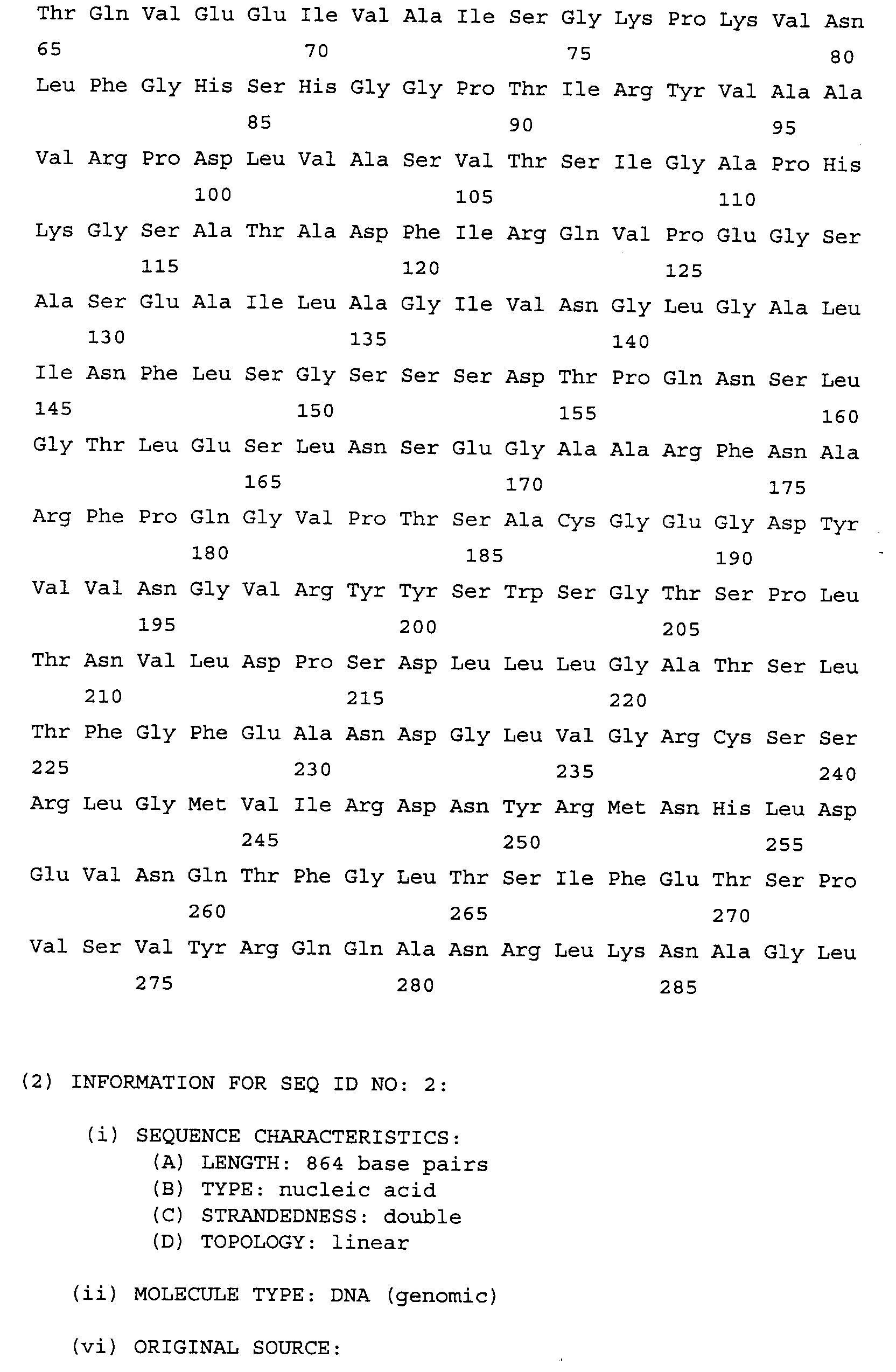
- 1. A gene encoding the amino acid sequence of Sequence No. 1.
- 2. A gene carrying the lipase-encoding nucleotide sequence of Sequence No.2.
- 3. A gene encoding the amino acid sequence of Sequence No.3.
- 4. A gene carrying the nucleotide sequence of Sequence No. 4, which encodes the protein involved in the lipase production.
- 5. A gene described in any one of 1 to 4, which is derived from bacteria of the genus Pseudomonas.
- 6. A gene described in any one of 1 to 4, which is derived from Pseudomonas sp. strain SD 705 (Accession No. FERM BP-4772).
- 7. A DNA containing the whole or a part of the nucleotide sequence of the gene described in any one of 1 to 6.
- 8. A DNA hybridizable with the whole or a part of the nucleotide sequence of the gene described in 3 or 4.
- 9. A recombinant DNA inserted into a vector replicable in a host microbial cell, so that at least one of the genes described in 1 to 4 might be expressed in the host microbial cell.
- 10.A recombinant chromosomal DNA generated by incorporating at least one of the genes described in 1 to 4 into a microbial chromosome via homologous recombination.
- 11. A transformed host microorganism, having been transformed with the recombinant DNA described in 9.
- 12. A transformed microorganism carrying the recombinant chromosomal DNA described in 10.
- 13. A transformed microorganism described in 11, wherein the microorganism is a bacterium of the genus Escherichia, Pseudomonas or Bacillus.
- 14. A transformed microorganism described in 12, wherein the microorganism is a bacterium of the genus Pseudomonas or Bacillus.
- 15. A transformed microorganism described in 11 or 12, wherein the microorganism is Pseudomonas alcaligenes, Pseudomonas pseudoalcaligenes, Pseudomonas mendocina, or Bacillus subutilis.
- 16. A transformed microorganism described in 11 or 12, wherein the microorganism is Pseudomonas sp. strain SD 705 (Accession No.FERM BP-4772), Pseudomonas mendocina strain SD 702 (Accession No. FERMBP-4291), Bacillus strain NKS-21 (Accession NO.FERM BP-93-1) or a variant thereof.
- 17. A method for producing the lipase, comprising culturing at least one of the transformed host cells described in 11 to 16 to produce a culture containing the lipase and isolating the lipase.
- The present invention will now be described hereinbelow in detail.
- In accordance with the present invention, the lipase-encoding gene can be isolated from chromosomal DNAs by known methods such as colony hybridization and the formation of a clear zone on a plate medium. More specifically, firstly, a chromosome library is prepared. If the whole or a part of the amino acid sequence of the lipase is known, an oligonucleotide probe corresponding to the whole or a part of the sequence is then prepared and using the probe, the gene encoding the lipase can be isolated through colony hybridization.
- When the amino acid sequence of the lipase absolutely is not known, an oligonucleotide corresponding to a sequence around the active center residue may be used as the probe, which sequence has generally been known to be highly preserved in lipases from microbial organisms.
- Otherwise, using as primers oligonucleotides independently corresponding to two different preserved sequences and as a template a chromosome with an objective lipase gene, the sequence between the two primers is enzymatically synthesized via DNA polymerase, to prepare a double-stranded DNA, of which both the strands may be used as the probes.
- Otherwise, a chromosome library is prepared in a bacterium with no lipase production potency, and is then cultured in an agar plate containing a sparingly soluble substrate of lipase. A bacterium containing a chromosomal DNA fragment carrying the lipase gene decomposes the substrate around the colony, so that the screening of the bacterium can be conducted on the basis of the formation of a clear zone. By this method, the gene encoding the lipase may be isolated, but any of these methods may be used satisfactorily.
- By colony hybridization using as the probe the whole of the lipase-encoding gene or a part of the 3' region thereof, the gene encoding the protein involved in the lipase production may be isolated as a DNA fragment downstream the lipase gene, from the chromosomal DNA.
- Any host capable of expressing the isolated gene may be used as the host to introduce the gene, including for example bacteria of genera Pseudomonas, Escherichia, and Bacillus.
- Bacteria of genus Pseudomonas are preferably Pseudomonas sp. strain SD 705 (Accession No. FERM BP-4772) or variants thereof, Pseudomonas alcaligenes , Pseudomonas pseudoalcaligenes and Pseudomonas mendocina. More preferably, the bacteria are Pseudomonas sp. strain SD 705 or variants thereof, Pseudomonas mendocina strain SD 702 (Accession No. FERM BP-4291) or variants thereof.
- As the bacteria of genus Escherichia, preference is given to Escherichia coli.
- Bacteria of genus Bacillus are preferably Bacillus subtilis, Bacillus amyloliquefaciens, Bacillus licheniformis, Bacillus firmus, Bacillus lentus, and Bacillus alcalophilus. More preferably, the bacteria belong to Bacillus sp. strain NKS-21 (Accession No. FERM BP-93-1) or variants thereof.
- The recovered lipase gene and the gene encoding the protein responsible for the production of the lipase are introduced into a host bacterium. These two genes are linked concurrently to one vector so that the same sequence as in the chromosome can be regenerated or the genes are independently linked to two vectors capable of coexisting in a host cell.
- In a host except the bacteria of genus Pseudomonas, if used, the genes are inserted and linked between a promoter and signal sequence and a terminator, both functioning in the host, so that the genes can be expressed in the host. Using a recombinant vector with the genes linked therein, a host bacterium is transformed. When the two genes are linked to different vectors, only the vector carrying the lipase gene singly may be used for transformation or the two recombinant vectors are simultaneously used for transformation. In Escherichia coli if used as a host, for example, plasmids of pUC or pACYC can be used. In bacteria of genus Bacillus, if used as hosts, plasmids of pUB110 and pE194 can be used.
- In bacteria of genus Pseudomonas if used as hosts, plasmids of RSF1010, etc. can be used. The genes can thereby be stably harbored outside the chromosomes of the host bacteria. The genes can also be introduced therein by a method for incorporating a DNA of non-replicable form in a host bacterium into the chromosome.
- In bacteria of genus Pseudomonas if used as hosts, the lipase is secreted into the culture broth. The separation and purification of the lipase from the culture broth can be carried out by adding ammonium sulfate to the culture broth, fractionating crude lipase, removing the ammonium sulfate through dialysis, and isolating the lipase through a CM cellulose column, to purify the lipase as a single band by SDS polyacrylamide gel electrophoresis. However, the lipase generation and purification are not limited to the methods described above, but as a matter of course other methods are applicable.
- The lipase S thus produced by the methods described above has the following properties.
- 1. Action
The lipase S acts on triglyceride to hydrolyze its esters. - 2. Substrate specificity
The lipase S hydrolyzes a wide variety of glycerides and esters. - 3. Active pH and optimum pH
When measured in a range of pH 8 to 12 using the pH-stat method on a substrate olive oil, the active pH is 8 to 12 while the optimum pH is about 10.7. - 4. Active temperature and optimum temperature
The active temperature and optimum temperature are 30 to 80°C and 60± 5 °C, respectively, when measured using triolein emulsion as the substrate within a range of 30 to 80°C . - 5. Effects of detergents
The lipase S has a higher activity in solutions of various detergents containing protease. - The present invention will now be described with reference to the following examples, but the invention is not limited to these examples.
- Supplementing an L medium (1% polypeptone, 0.5% yeast extract, and 0.5% sodium chloride) with 10% sodium carbonate (3 ml) and adjusting the medium to pH 9, inoculating then the Pseudomonas sp. strain SD 705 in the resulting L medium (1000 ml), prior to overnight culturing at 35°C , and centrifuging the resulting medium, the bacteria were recovered. The bacteria were suspended in a 50 mM Tris-HCl buffer, pH 8 (8 ml) containing 0.4 M sodium chloride and 10 mM EDTA. Adding lysozyme and RNase A thereto so as to reach final concentrations of 0.5 mg/ml and 0.05 mg/ml, respectively, followed by gentle shaking at 37°C for 30 minutes, and further adding sodium dodecyl sulfate (SDS) to the resulting mixture so as to reach a final concentration of 1%, prior to gentle shaking at 37°C for 30 minutes, the bacteria were lyzed. Subsequently, the bacteria were heated at 60°C for 10 minutes, for complete solubilization. To the resulting solution was added an equal amount of phenol saturated with TE buffer (1 mM EDTA-containing 10 mM Tris-HCl buffer, pH 8), followed by gentle mixing while the vessel was inversely held with the bottom upward, and after centrifugation, the resulting upper aqueous phase was recovered. The above procedure was repeated three times. To the resulting aqueous phase recovered at the third time was added a 3-fold volume of ethanol cooled at - 20°C , to wind and isolate the precipitate around a plastic bar. The precipitate was then rinsed with ethanol, dried under reduced pressure and again solubilized in the TE buffer (1 ml).
- After partially digesting the chromosomal DNA with a restriction endonuclease Sau3AaI, followed by agarose electrophoresis, a 2- to 10-kbp DNA fragment was recovered. Alternatively, a plasmid pUC 118 was digested with BamHI, for subsequent treatment with alkali protease. The two fragments were linked together with T4 DNA ligase. After culturing the resulting linking product in the L medium, the culture was then added to Escherichia coli strain JM 101 (0.3 ml) treated with 50 mM calcium chloride, followed by incubation at 0°C for 30 minutes. To the resulting mixture was added the L medium (to a final volume of 1 ml), followed by shaking at 37°C for one hour. The resulting culture was coated on an L plate medium containing 50 ppm ampicillin, for overnight culturing at 37°C . Consequently, a tranformant of about 1,000 colonies was recovered.
- The N-terminal amino acid sequence of the purified lipase was analyzed by a protein sequencer Model 476A (manufactured by Applied Biosystems, Co., Ltd.), to recover consequently the Sequence No.5. Based on the Sequence, an oligonucleotide probe as shown as Sequence No.6 was prepared on a DNA synthesizer. This probe was labeled, using ECL (trade name; 3'-oligolabelling and detection system, Amasham life science, Co., Ltd.).
- The transformant of about 1,000 colonies was overnight cultured on a nylon filter placed on an L plate medium at 37°C . Peeling off the filter, the bacteria were lyzed for 10 minutes on a filter impregnated with 0.5 M sodium hydroxide/1.5 M sodium chloride, which were then neutralized two times on a filter impregnated with 1.5 M sodium chloride/1 M Tris-HCl buffer, pH 7 for 7 minutes. After firing the filter at 80°C for 2 hours, the remaining bacteria were washed in 0.5% SDS/6 x SSC (1 x SSC means a 150 mM sodium chloride/15 mM sodium citrate solution; n x SSC means a solution at n-fold concentrations of 150 mM sodium chloride/15 mM sodium citrate solution). In a 0.1% SDS/5 x SSC/ 5 x Denhardts solution [0.1% phycol, 0.1% polyvinyl pyrrolidone, and 0.1% bovine serum albumin (BSA)], the pre-hybridization on the filter was carried out at 60°C for one hour. To an identical solution was added the labelled oligonucleotide probe for the hybridization on the filter overnight at 60°C . Subsequently, the filter was washed in 0.1% SDS/1 x SSC at 60°C for 15 minutes and then in 0.1% SDS/0.5 x SSC at 60°C for 15 minutes. This was subjected to detection according to the protocol of ECL (trade name; 3'-oligolabelling and detection system).
- As the consequence of such colony hybridization, a number of positive colonies were recovered. From one of the resulting colonies, a plasmid was recovered, followed by digestion with restriction endonucleases EcoRI and PstI, SacI and XbaI, to prepare fragments. These fragments were separated by agarose electrophoresis to estimate the length of the inserted fragment, which indicates that a DNA fragment of about 7 kbp was recovered. The plasmid pS1 was digested with a variety of restriction endonucleases, to prepare a restriction map. Further, the plasmid was separated by agarose gel electrophoresis and adsorbed on a nylon filter. By the same procedures as for colony hybridization, southern hybridization was carried out. Finally, the plasmid was hybridized with a HindIII -SacI fragment of about 4 kbp and an EcoRI fragment of about 2.7 kbp. Consequently, it was assumed that the gene encoding lipase S and the gene encoding the protein involved in the production thereof was estimated to be carried in the HindIII -Sac I fragment of about 4 kbp and the EcoRI fragment of about 2.7 kbp, respectively. Fig.1 shows the restriction map of pS1. Herein, the white arrow depicts the lipase gene; the black arrow depicts the gene responsible for the lipase production; "Plac" represents lac promoter; "ori" represents replication initiating point; and "Apr" represents ampicillin-resistant gene. Recovering these fragments and individually linking the fragments to the HindIII-SacI site or EcoRI site of the plasmid pUC118 (manufactured by TaKaRa Brewery, K.K.), thereby transforming the Escherichia coli strain JM 101, plasmids pS1S and pS1E individually containing the respective DNA fragments were recovered. Figs.2 and 3 depict the restriction maps of pS1S and pS1E, respectively (the symbols in the figures are `the same as in Fig.1).
- Using the plasmid pS1E, the nucleotide sequences of the gene encoding the lipase S and the gene encoding the protein involved in the production of the lipase S were determined according to the dideoxy method by Sanger (Sanger, F., Nicklen, S., Coulson, A.R. (1977), Proc. Natl. Acad. Sci. USA., 74, 5463). More specifically, the nucleotide sequencing was carried out on a DNA sequencer (Model 370A; Applied Biosystems, Co., Ltd.) using a dideoxy terminator sequencing kit (Applied Biosystems, Co. Ltd.). Consequently, the lipase-encoding nucleotide sequence of the Sequence No.2 and the nucleotide sequence encoding the protein involved in the production of the lipase, as shown as Sequence No.4, were recovered. The putative amino acid sequences based on these sequences are shown as Sequence Nos. 1 and 3.
- An oligonucleotide of Sequence No.7 was chemically synthesized, which worked to add the EcoRI site to the 5' terminus of a sequence corresponding to a segment containing the ribosome linking site (SD sequence) and the initiation codon of the lipase gene. Mixing two oligonucleotides, namely the oligonucleotide and commercially available M13 primer RV (manufactured by TaKaRa Brewery K.K.), with the plasmid pS1E for polymerase chain reaction (POLYMERASE CHAIN REACTION (PCR)), a DNA fragment carrying the lipase gene including the SD sequence and the gene encoding the protein involved in the production thereof was generated. After completely digesting the fragment with EcoRI and fractionating the digested products by agarose gel electrophoresis, the products were extracted and purified from the agarose gel. After completely digesting the plasmid pUC118 with EcoRI and mixing the resulting digested products with the DNA fragment thus purified for linking them together with T4 DNA ligase for transforming the Escherichia coli strain JM 101, ampicillin-resistant transformants were isolated. From these transformants, the plasmid DNA was extracted, purified and analyzed, so as to confirm that the transformants thus produced carried a plasmid on which the DNA fragment carrying the lipase gene and the gene encoding the protein involved in the production thereof was harbored and inserted into the EcoRI restriction site of pUC118, to express the lipase gene and the gene encoding the protein involved in the production thereof downstream the lac promoter. The plasmid is defined as pSL1. Fig.4 shows the restriction map of pSL1 (the symbols in the figure are the same as in Fig.1).
- An oligonucleotide to add the EcoRI site to the 3' terminus of the lipase gene, as shown as Sequence No.8, was chemically synthesized. Mixing the oligonucleotide and the oligonucleotide preliminary synthesized, as shown as Sequence No. 7, with the plasmid pS1E for polymerase chain reaction (PCR), a DNA fragment containing only the lipase gene including the SD sequence was recovered. The fragment was completely digested with EcoRI, and was then linked with the plasmid pUC118 in the same manner as described above for transformation, to recover a transformant carrying a plasmid pSL2 on which the DNA fragment containing only the lipase gene was harbored and inserted into the EcoRI restriction site of pUC118 to express the lipase gene downstream the lac promoter. Fig.5 shows the restriction map of the pSL2 (the symbols in the figure are the same as in Fig.1).
- After completely digesting the plasmid pS1S with HindIII and SacI, a DNA fragment containing the lipase gene and the gene encoding the protein involved in the production thereof was fractionated by agarose gel electrophoresis followed by extraction and purification from the agarose gel. After completely digesting the plasmid pMFY42 with the HindIII and SacI, the resulting products were mixed with the DNA fragment thus purified, followed by linking with T4 DNA ligase to transform Escherichia coli strain JM 101 to select kanamycin-resistant colonies. From these transformants, the plasmid DNA was extracted, purified and analyzed, to recover a plasmid pSP1 in which a DNA fragment carrying the lipase gene and the gene encoding the protein involved in the production thereof was inserted in between the HindIII- and SacI digestion sites of pMFY 42. Fig.6 shows the restriction map of pSP1. Herein, the white arrow and black arrow represent the same as in Fig. 1. "Kmr" represents kanamycin-resistant gene; and "Tcr" represents tetracycline-resistant gene.
- Two oligonucleotides, namely a commercially available M13 primer M4 (manufactured by TaKaRa Brewery, K. K.) and the oligonucleotide as shown as Sequence No.9, were mixed with the plasmid pS1S for polymerase chain reaction (PCR), to recover a DNA fragment containing only the lipase gene. The fragment was completely digested with the HindIII and SacI, and the resulting digested products were then linked to the plasmid pMFY42 in the same manner as described above, to recover a DNA fragment containing only the lipase gene in between the HindIII-and SacI digestion sites of pMFY 42. Fig.7 shows the restriction map of pSP2 (the symbols in the figure are the same as in Fig.6).
- By electrophoresis, Pseudomonas sp. strain SD 705 (Accession No. FERM BP-4772) was transformed using the plasmids pSP1 and pSP2, to select kanamycin-resistant colonies. More specifically, firstly, the strain SD705 was grown in an L liquid medium (5 ml) adjusted to pH 9, until the OD reached 0.5. The bacteria were recovered by centrifugation. The bacteria were suspended in sterilized water, which were then again recovered and resuspend in sterilized water (0.5 ml). Adding the plasmid DNA to the bacterial suspension, which was then transferred into a cell with electrodes, a high-voltage electric pulse was applied to the DNA. Subsequently adding the L liquid medium (1 ml), pH 9 into the bacterial suspension, followed by shaking culture at 37°C for one hour, the resulting suspension was coated on an L plate medium, pH 9 containing 50 ppm kanamycin and olive oil emulsion as a lipase substrate. After overnight culturing at 35°C , grown colonies with clear zones formed around themselves were selected to recover a transformed strain.
- Strain LD 9 as a lipase depletion strain of Pseudomonas mendocina strain SD 702 (Accession No. FERM BP-4291) was transformed to generate a transformant. By making N-methyl-N'-nitro-N-nitrosoguanidine act on Pseudomonas mendocina strain SD 702, which was then inoculated on a plate medium containing the lipase substrate to select a strain without any clear zone formed, herein, the strain LD 9 was recovered.
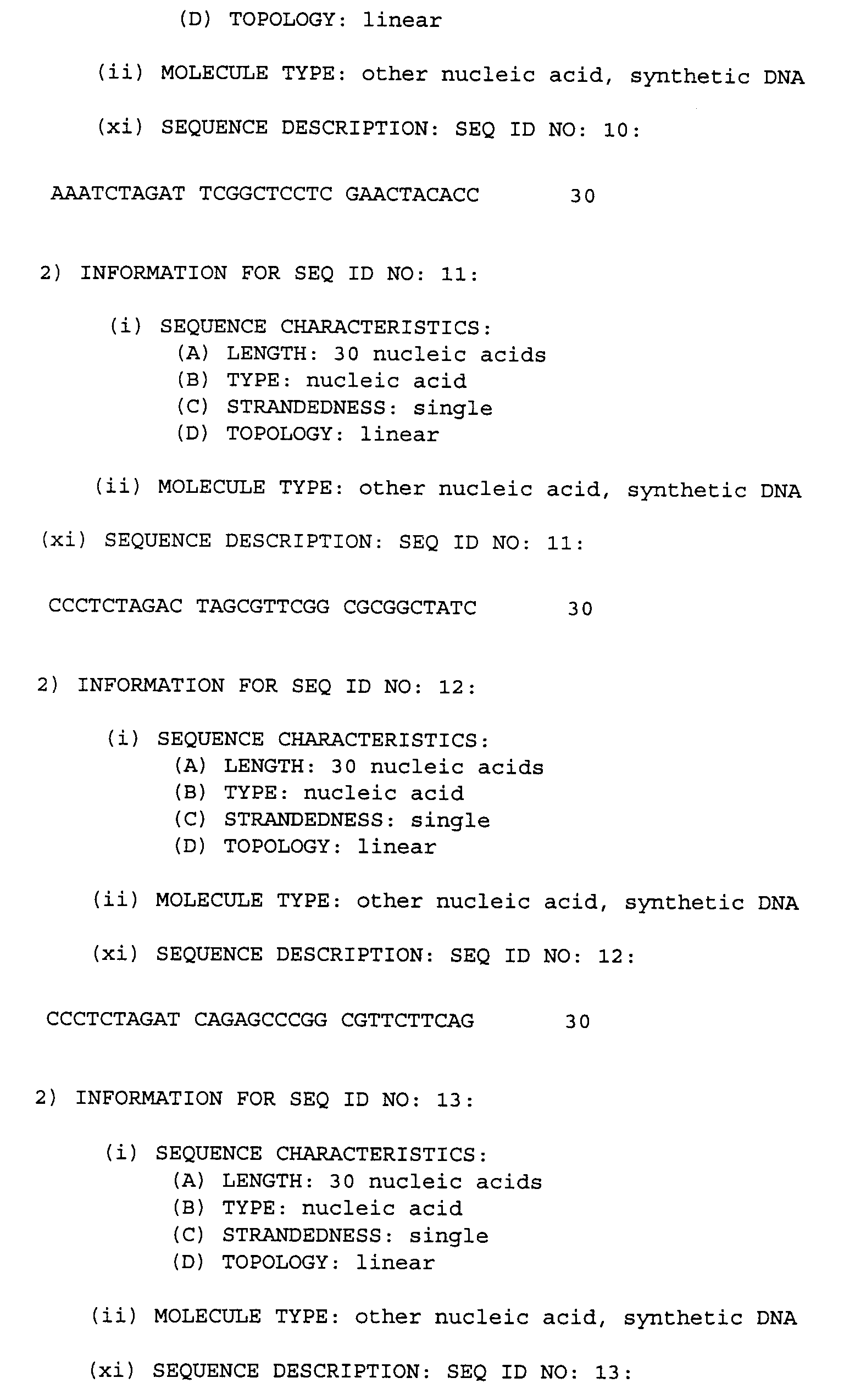
- An oligonucleotide capable of adding the XbaI site to the N-terminus of mature lipase, as shown as Sequence No.10, was chemically synthesized. Additionally, an oligonucleotide capable of adding the XbaI site to the 3'-terminus of the gene encoding the protein involved in the production of the lipase, as shown as Sequence No.11, was chemically synthesized. Mixing these two oligonucleotides with a plasmid pS1E for polymerase chain reaction (PCR), a DNA fragment carrying the mature lipase gene and the gene encoding the protein involved in the production thereof was recovered. After completely digesting the fragment with XbaI and linking the digested fragments with plasmid pUC118, a plasmid pSM1 was recovered, on which a DNA fragment carrying the mature lipase gene and the gene encoding the protein involved in the production thereof was harbored and inserted in the XbaI digested site of pUC118.
- An oligonucleotide capable of adding the XbaI site to the C-terminus of the lipase, as shown as Sequence No.12, was chemically synthesized. Mixing the oligonucleotide and the oligonucleotide as shown as Sequence No.10 with the plasmid pS1E for polymerase chain reaction (PCR), a DNA fragment carrying only the mature lipase gene was recovered. After completely digesting the fragment with XbaI and linking the digested fragments with the plasmid pUC 118 in the same manner as described above, a plasmid pSM2 was recovered, on which a DNA fragment carrying the mature lipase gene and the gene encoding the protein involved in the production thereof was harbored and inserted in the XbaI digested site of pUC118.
- Oligonucleotides as shown as Sequence Nos. 13 and 14 were chemically synthesized. Mixing these two oligonucleotides with plasmid pSDT812 (Japanese Patent Laid-open No. Hei 1-141596) for polymerase chain reaction (PCR), a DNA fragment including the promoter region of alkali protease and a part of the prepro sequence thereof was recovered. After completely digesting the fragment with EcoRI and XbaI and linking the digested fragments with plasmid pUC118, a plasmid pAP1 was recovered, on which the DNA fragment including the promoter region of alkali protease and a part of the prepro sequence thereof was harbored and inserted in between the EcoRI digestion site and the XbaI digestion site of pUC118.
- Oligonucleotides as shown as Sequence Nos.15 and 16 were chemically synthesized. Mixing these oligonucleotides with the plasmid pSDT812 for polymerase chain reaction (PCR), a DNA fragment including the terminator region of alkali protease was recovered. After completely digesting the fragment with XbaI and HindIII and linking the digested fragments with a plasmid pUC 118 in the same manner as described above, a plasmid pAP2 was recovered, on which a DNA fragment including the terminator region of alkali protease was harbored and inserted in between the XbaI digested site and HindIII digested site of pUC118.
- Digesting the plasmid pAP1 with EcoRI and XbaI, a DNA fragment including the promoter region of alkali protease and a part of the prepro sequence thereof was recovered. Additionally, digesting the plasmid pAP2 with XbaI and HindIII, a DNA fragment including the terminator region of alkali protease was recovered. Linking then these two fragments to the plasmid pUC118, a plasmid pAP3 was recovered, on which a DNA fragment including the promoter region, a part of the prepro sequence and the terminator region of alkali protease was harbored and inserted in between the EcoRI digested site and the HindIII digested site of pUC118. Fig.8 shows the processes of the construction of pAP1, pAP2 and pAP3. Herein,Papr" represents alkali protease gene promoter; "pre" represents alkali protease pre-sequence; "pro" represents alkali protease pro-sequence; and "ter" represents alkali protease gene terminator.

- Digesting plasmids pSMI and pSM2 with XbaI, two DNA fragments carrying the lipase gene were recovered. Linking these two fragments independently to the XbaI site of the plasmid pAP3, plasmids pAP4 and pAP5 were recovered.
- Digesting the plasmids pAP4 and pAP5 with EcoRI and HindIII, two DNA fragments carrying the lipase gene were recovered. Linking these two fragments independently to plasmid pHY300PLK (manufactured by TaKaRa Brewery, K.K.), Bacillus subtilis strain SD-800 (the strain with lower protease production potency, produced by the method described in Japanese Patent Laid-open No. Hei 1-141596) was transformed by the protoplast method. Selecting tetracycline-resistant tranformant strains forming a larger clear zone on an agar medium containing 0.5% olive oil emulsion, the plasmid DNA was extracted and purified from these transformants, to recover plasmids pSB1 and pSB2, on which DNA fragments with the promoter region of alkali protease, a part of the prepro sequence thereof, the mature lipase gene or the mature lipase gene along with the gene encoding the protein involved in the production thereof, and the terminator region of alkali protease were harbored and inserted in between the EcoRI digestion site and the HindIII digestion site of pHY300PLK. Figs.9 and 10 depict the processes of the construction of pSB1 and pSB2, respectively (the symbols in the figure are the same as in Figs.1, 6 and 8).
- Transforming a protease depletion strain of the Bacillus strain NKS-21 (Accession No.FERM BP-93-1) with the plasmids by the protoplast method, a tetracycline-resistant transformed strain was selected. The protease depletion strain of the Bacillus strain NKS-21 was generated, by helping N-methyl-N'-nitro-N-nitrosoguanidine act on the Bacillus strain NKS-21 and inoculating and culturing the resulting strains on a plate medium containing skimmed milk, and thereafter selecting a strain with no formation of any clear zone.
- Culturing independently transformed strains carrying plasmids pSL1 and pSL2 in an L liquid medium (5 ml) containing 50 ppm ampicillin under shaking overnight at 37°C and inoculating 1% of the transformed strains after shaking culture at 37°C for 3 hours onto the same medium (300 ml), isopropyl-beta-thiogalactopyranoside (IPTG) was added therein to a final concentration of 1 mM, to induce the expression of the lac promoter, followed by another 4-hour shaking culture. Centrifuging the culture and collecting the supernatant, a lipase solution was prepared.
- Culturing transformed strains carrying the plasmids pSP1 and pSP2 under shaking, in a lipase generation medium (300 ml) containing 1% Tween 80 and having been adjusted to pH 9, at 35°C for 14 hours, lipase was generated and secreted in the medium. Centrifuging the culture and collecting the supernatant, a lipase solution was prepared.
- After fractionating the solution with ammonium sulfate and removing the ammonium sulfate through dialysis and thereafter treating the resulting solution with a CM cellulose column, the solution was purified as a single band by SDS polyacrylamide electrophoresis.
- Culturing transformed strains containing the plasmids pSB1 and pSB2 under shaking in a medium (300 ml) containing 1% casein, 1% meat extract and 1% polypeptone and having been adjusted to pH 7.5 with sodium carbonate at 35°C for 66 hours, lipase was generated and secreted in the medium. Centrifuging the culture and collecting the supernatant, a lipase solution was prepared.
- The activity of the lipase solutions from the cultures of Escherichia coli and Pseudomonas was determined. The assay of the activity was carried out by a method using as the substrate triolein-polyvinyl alcohol (PVA). More specifically, the following method was used.
- A mixture solution of 100 mM ε-aminocaproic acid, 100 mM bis-tris[bis(2-hydroxyethyl)iminotris(hydroxymethyl)methane] and 100 mM TAPS [N-tris(hydroxymethyl)methyl-3-aminopropane sulfonic acid], further containing a lipase solution (0.1 ml) and 1 mM calcium chloride, was pH adjusted with sodium hydroxide, and the resulting solution was defined as buffer solution (pH 8.0; 0.4 ml). Heating then a mixture solution of the buffer solution and triolein emulsion (0.5ml) in a stoppered test tube at 37°C for 10 minutes, the reaction was terminated by using 1N hydrochloric acid (0.2 ml) as the reaction termination solution. Triolein was added into 10 ml of an aqueous 2% polyvinyl alcohol (PVA) solution (10 ml) [Poval PVA 117 (manufactured by KURARAY) : Poval PVA 205 (manufactured by KURARAY) = 9 : 1] followed by homogenization, to use herein the resulting mixture as the triolein emulsion. After termination of the reaction, n-hexane (2 ml), isopropyl alcohol (2 ml) and distilled water (1 ml) were added to the reaction mixture under vigorous agitation, and then, the mixture was left to stand. The resulting hexane layer was sampled to assay oleic acid by the TLC-FID method [Minagawa, et. al., Lipids, 18, 732 (1983)]. One unit (1 U) of the activity unit was defined as the enzyme amount generating 1 µmol of oleic acid per one minute.
- The activity of each of the lipase solutions (culture supernatant) from the individual transformants is represented as the relative value to the activity of the strain SD 705, which is defined as 100. The activity is shown in Table 1. All the transformants introduced with the lipase gene, expressed the lipase activity under observation; and further, the transformants carrying the plasmids inserted with the DNA fragments including the gene encoding the protein involved in the lipase production, showed higher expression levels of lipase activity than the levels in the transformants carrying only the lipase gene, which indicates that the gene is responsible for the elevation of the lipase production.
Table 1 Lipase Activity Plasmid/bacterial strain Activity None/JM 101 0 pUC118/JM101 0 pSL1/JM101 20 pSL2/JM101 10 None/SD705 100 pMFY42/SD705 100 pSP1/SD705 520 pSD2/SD705 320 None/LD9 0 pMFY42/LD9 0 pSP1/LD9 110 pSP2/LD9 50 - The activity of lipase from the Bacillus culture was assayed. The activity was assayed by the following procedures according to the method using as the substrate p-nitrophenyl palmitate (pNPP)
- pNPP was solubilized in isopropyl alcohol to 2 mg/ml. Mixing the pNPP solution and 100 mM Bicine buffer, pH 8.0 at a ratio of 1 : 10, the resulting solution was used as a substrate solution. Adding the lipase solution (0.02 ml) into the substrate solution (0.5 ml), and reacting them together at room temperature for 1 to 10 minutes, 1N HCl (0.2 ml) was added to the reaction mixture for termination of the reaction. Then, the absorbance at 405 nm was measured by a spectrophotometer. One pNPP unit (1 pU) of the enzyme was defined as the enzyme amount increasing the absorbance at 405 nm by one per one minute.
- The activities of the lipases from the individual transformants are shown in Table2.
Table 2 Lipase activity Plasmid/bacterial strain Activity None/SD-800 0 pHY300PLK/SD-800 0 pSB1/SD-800 3.2 pSB2/SD-800 1.1 None/NKS-21 0 pHY300PLK/NKS-21 0 pSB1/NKS-21 5.2 pSB2/NKS-21 2.3 - In accordance with the lipase gene of the present invention, the generation and modification of lipase S as a lipid degradation enzyme industrially useful in detergents, paper making, oil manufacturing and the like, are readily carried out. Also, in accordance with the gene encoding the protein involved in the lipase production, in accordance with the present invention, the production of lipase S can be elevated, economically advantageously for providing the industrially useful lipase.
- The depository of the microorganisms described in the specification and the claims is described hereinbelow, together with the address and deposition date.
- 1. Pseudomonas sp. strain SD 705 (Accession No. FERM BP-4772)
Depository: The Life Engineering and Industrial Technology Research Institute, the Agency of industrial Science and Technology, the Ministry of Industry and Trade Address: 1-3, Higashi 1-chome, Tsukuba-shi, Ibaraki-ken, Japan
The strain was deposited as P-13781 on August 4, 1993; under the Budapest Treaty, the strain was transferred and internationally deposited as Pseudomonas sp. strain SD 705 (Accession No. FERM BP-4772) on August 5, 1994. - 2. Pseudomonas alcaligenes strain SD 702 (Accession No. FERM BP-4291)
Depository: The Life Engineering and industrial Technology Research Institute, the Agency of Industrial Science and Technology, the Ministry of Industry and Trade Address: 1-3, Higashi 1-chome, Tsukuba-shi, Ibaraki-ken, Japan
The strain was deposited as P-12944 on May 1, 1992; under the Budapest Treaty, the strain was transferred and internationally deposited as Pseudomonas sp. strain SD 702 (Accession No. FERM BP-4291) on May 12, 1993. - 3. Bacillus strain NKS-21 (Accession No. FERM BP-93-1)
Depository: The Microbial industrial Technology Research Institute, the Agency of Industrial Science and Technology, the Ministry of Industry and Trade Address: 1-3, Higashi 1-chome, Yatabe-cho, Tsukuba-gun, Ibaraki-ken, Japan
As the re-deposition of the FERM BP-93, the strain was re-deposited internationally as FERM BP-93-1 on May 21, 1985.
The depository described in the above item 3 has been reorganized currently as "Life Engineering and industrial Technology Research Institute, the Agency of Industrial Science and Technology, the Ministry of Industry and Trade", and the address is modified as 1-3, Higashi 1-chome, Tsukuba-shi, Ibaraki-ken, Japan.





Claims (17)
- A gene encoding the amino acid sequence of Sequence No.1.
- A gene carrying the lipase-encoding nucleotide sequence of Sequence No.2.
- A gene encoding the amino acid sequence of Sequence No.3.
- A gene carrying the nucleotide sequence encoding the protein involved in the production of lipase, as described as Sequence No.4.
- A gene from bacteria of genus Pseudomonas according to any one of claims 1 to 4.
- A gene from Pseudomonas sp. strain SD 705 (FERM BP-4772), according to any one of claims 1 to 4.
- A DNA containing the whole or a part of the nucleotide sequence of the gene according to any one of claims 1 to 6.
- A DNA hybridizable with the whole or a part of the nucleotide sequence of the gene according to claim 3 or 4.
- A recombinant DNA generated by incorporating at least one of the genes according to claims 1 to 4 into a replicable vector in a host microbial cell for the expression of the genes.
- A recombinant chromosomal DNA generated by the homologous incorporation of at least one of the genes according to claims 1 to 4 in a microbial chromosome.
- A transformed host microorganism, having been transformed with the recombinant DNA according to claim 9.
- A transformed microorganism containing the recombinant chromosomal DNA according to claim 10.
- A transformed microorganism according to claim 11, wherein the microorganism is a bacterium of genus Escherichia, a bacterium of genus Pseudomonas, or a bacterium of genus Bacillus.
- A transformed microorganism according to claim 12, wherein the microorganism is a bacterium of genus Pseudomonas or a bacterium of genus Bacillus.
- A transformed microorganism according to claim 11 or 12, wherein the microorganism is Pseudomonas alcaligenes, Pseudomonas pseudoalcaligenes, Pseudomonas mendocina, or Bacillus subutilus.
- A transformed microorganism according to claim 11 or 12, wherein the microorganism is Pseudomonas sp. strain SD 705, Pseudomonas alcaligenes strain SD 702, Bacillus strain NKS-21 or a variant thereof.
- A method for producing a lipase, comprising culturing at least one of the transformed host cells according to claims 11 to 16 to produce a culture containing a lipase and isolating the lipase.
Applications Claiming Priority (3)
| Application Number | Priority Date | Filing Date | Title |
|---|---|---|---|
| JP38527/95 | 1995-02-27 | ||
| JP7038527A JPH08228778A (en) | 1995-02-27 | 1995-02-27 | Novel lipase gene and method for producing lipase using the same |
| PCT/JP1996/000426 WO1996027002A1 (en) | 1995-02-27 | 1996-02-23 | Novel lipase gene and process for the production of lipase with the use of the same |
Publications (2)
| Publication Number | Publication Date |
|---|---|
| EP0812910A1 true EP0812910A1 (en) | 1997-12-17 |
| EP0812910A4 EP0812910A4 (en) | 2000-04-19 |
Family
ID=12527760
Family Applications (1)
| Application Number | Title | Priority Date | Filing Date |
|---|---|---|---|
| EP96903231A Withdrawn EP0812910A4 (en) | 1995-02-27 | 1996-02-23 | NOVEL LIPASE GENE AND METHOD FOR PRODUCING LIPASE USING THE SAME |
Country Status (7)
| Country | Link |
|---|---|
| US (1) | US5942431A (en) |
| EP (1) | EP0812910A4 (en) |
| JP (1) | JPH08228778A (en) |
| CN (1) | CN1177376A (en) |
| AU (1) | AU4731596A (en) |
| FI (1) | FI973514A0 (en) |
| WO (1) | WO1996027002A1 (en) |
Cited By (8)
| Publication number | Priority date | Publication date | Assignee | Title |
|---|---|---|---|---|
| EP0943678A3 (en) * | 1998-02-18 | 2000-05-10 | Novo Nordisk A/S | Lipase variants |
| EP2113563A2 (en) | 1998-11-27 | 2009-11-04 | Novozymes A/S | Lipolytic enzyme variants |
| US9303254B2 (en) | 2008-04-30 | 2016-04-05 | Danisco Us Inc. | Chimeric alpha-amylase variants |
| US10760036B2 (en) | 2014-12-15 | 2020-09-01 | Henkel Ag & Co. Kgaa | Detergent composition comprising subtilase variants |
| DE102025106720A1 (en) | 2025-02-21 | 2026-08-27 | Evonik Operations Gmbh | Cleaning compound with improved viscosity |
| DE102025106722A1 (en) | 2025-02-21 | 2026-08-27 | Evonik Operations Gmbh | Cleaning compound with improved cold stability |
| DE102025106719A1 (en) | 2025-02-21 | 2026-08-27 | Evonik Operations Gmbh | Cleaning compound with improved viscosity |
| DE102025106723A1 (en) | 2025-02-21 | 2026-08-27 | Evonik Operations Gmbh | Cleaning composition with improved emulsification |
Families Citing this family (733)
| Publication number | Priority date | Publication date | Assignee | Title |
|---|---|---|---|---|
| US6936289B2 (en) | 1995-06-07 | 2005-08-30 | Danisco A/S | Method of improving the properties of a flour dough, a flour dough improving composition and improved food products |
| EP1433852B1 (en) | 1997-04-09 | 2006-06-28 | Danisco A/S | Use of lipase for improving doughs and baked products |
| US6156552A (en) * | 1998-02-18 | 2000-12-05 | Novo Nordisk A/S | Lipase variants |
| DE69904941T3 (en) | 1998-07-21 | 2008-01-31 | Danisco A/S | FOOD |
| EP1803817B1 (en) | 1998-12-18 | 2011-04-06 | Novozymes A/S | Subtilase enzymes of the I-S1 and I-S2 sub-groups having an additional amino acid residue in an active site loop region |
| WO2000060060A2 (en) | 1999-03-31 | 2000-10-12 | Novozymes A/S | Polypeptides having alkaline alpha-amylase activity and nucleic acids encoding same |
| CN100523181C (en) | 1999-03-31 | 2009-08-05 | 诺维信公司 | Polypeptides having alkaline alpha-amylase activity and nucleic acids encoding same |
| DE60040149D1 (en) | 1999-05-20 | 2008-10-16 | Novozymes As | SUBTILASE ENZYMES OF I-S1 AND I-S2 SUB-GROUPS WITH AT LEAST ONE ADDITIONAL AMINO ACID RESISTANCE BETWEEN POSITIONS 126 AND 127 |
| ATE402996T1 (en) | 1999-05-20 | 2008-08-15 | Novozymes As | SUBTILASE ENZYMES OF THE I-S1 AND I-S2 SUBGROUPS WITH AT LEAST ONE ADDITIONAL AMINO ACID RESIDUE BETWEEN POSITIONS 125 AND 126 |
| EP1183341B2 (en) | 1999-05-20 | 2012-05-02 | Novozymes A/S | Subtilase enzymes of the i-s1 and i-s2 sub-groups having at least one additional amino acid residue between positions 127 and 128 |
| EP1183337B1 (en) | 1999-05-20 | 2008-09-17 | Novozymes A/S | Subtilase enzymes of the i-s1 and i-s2 sub-groups having at least one additional amino acid residue between positions 132 and 133 |
| DE60040284D1 (en) | 1999-05-20 | 2008-10-30 | Novozymes As | SUBTILASE ENZYMES OF I-S1 AND I-S2 SUB-GROUPS WITH AT LEAST ONE ADDITIONAL AMINO ACID BETWEEN POSITIONS 129 AND 130 |
| EP1183342B2 (en) | 1999-05-20 | 2012-06-13 | Novozymes A/S | Subtilase enzymes of the i-s1 and i-s2 sub-groups having at least one additional amino acid residue between positions 128 and 129 |
| WO2001016285A2 (en) | 1999-08-31 | 2001-03-08 | Novozymes A/S | Novel proteases and variants thereof |
| EP1313846B1 (en) | 2000-08-21 | 2013-10-16 | Novozymes A/S | Subtilase enzymes |
| DE60144430D1 (en) | 2000-10-13 | 2011-05-26 | Novozymes As | SUBTILASE VARIANTS |
| US20040091994A1 (en) | 2000-10-13 | 2004-05-13 | Carsten Andersen | Alpha-amylase variant with altered properties |
| ATE449840T1 (en) | 2001-05-15 | 2009-12-15 | Novozymes As | ALPHA-AMYLASE VARIANT WITH MODIFIED PROPERTIES |
| ATE362315T1 (en) | 2001-05-18 | 2007-06-15 | Danisco | METHOD FOR PRODUCING DOUGH WITH AN ENZYME |
| US7785853B2 (en) | 2001-06-26 | 2010-08-31 | Novozymes A/S | Polypeptides having cellobiohydrolase I activity and polynucleotides encoding same |
| DK200101090A (en) | 2001-07-12 | 2001-08-16 | Novozymes As | Subtilase variants |
| CN1625563A (en) * | 2002-02-19 | 2005-06-08 | 宝洁公司 | Novel fungal lipase |
| EP1490485B1 (en) | 2002-03-27 | 2015-03-04 | Novozymes A/S | Granules with filamentous coatings |
| ATE420161T1 (en) | 2002-07-01 | 2009-01-15 | Novozymes As | MONOPROPYLENE GLYCOL AS A FERMENTATION ADDITIVE |
| ATE540108T1 (en) | 2002-10-01 | 2012-01-15 | Novozymes As | FAMILY GH 61 POLYPEPTIDES |
| EP2431048B1 (en) | 2002-10-08 | 2015-03-11 | Danisco US Inc. | Phenolic binding peptides |
| TWI319007B (en) | 2002-11-06 | 2010-01-01 | Novozymes As | Subtilase variants |
| CN1729287A (en) | 2002-12-20 | 2006-02-01 | 诺维信公司 | Polypeptides having cellobiohydrolase ii activity and polynucleotides encoding same |
| US20050196766A1 (en) | 2003-12-24 | 2005-09-08 | Soe Jorn B. | Proteins |
| MXPA05007654A (en) | 2003-01-17 | 2005-09-30 | Danisco | Method. |
| US7955814B2 (en) | 2003-01-17 | 2011-06-07 | Danisco A/S | Method |
| CN1742084B (en) | 2003-01-27 | 2010-09-08 | 诺维信公司 | particle stabilization |
| JP2006517989A (en) | 2003-02-18 | 2006-08-03 | ノボザイムス アクティーゼルスカブ | Detergent composition |
| DK1622921T3 (en) | 2003-05-02 | 2010-09-13 | Novozymes Inc | Variants of beta-glucosidases |
| EP1675941B1 (en) | 2003-06-25 | 2013-05-22 | Novozymes A/S | Polypeptides having alpha-amylase activity and polynucleotides encoding same |
| EP2617825B1 (en) | 2003-08-25 | 2015-04-01 | Novozymes, Inc. | Variants of glycoside hydrolases |
| EP1673451B1 (en) | 2003-10-10 | 2010-12-15 | Novozymes A/S | Protease variants |
| ATE516347T1 (en) | 2003-10-23 | 2011-07-15 | Novozymes As | PROTEASE WITH IMPROVED STABILITY IN DETERGENTS |
| EP1682656B1 (en) | 2003-10-28 | 2013-09-18 | Novozymes Inc. | Polypeptides having beta-glucosidase activity and polynucleotides encoding same |
| DE602004022967D1 (en) | 2003-10-30 | 2009-10-15 | Novozymes As | CARBOHYDRATE-BONDING MODULES |
| US7718408B2 (en) | 2003-12-24 | 2010-05-18 | Danisco A/S | Method |
| US7906307B2 (en) | 2003-12-24 | 2011-03-15 | Danisco A/S | Variant lipid acyltransferases and methods of making |
| GB0716126D0 (en) | 2007-08-17 | 2007-09-26 | Danisco | Process |
| WO2005066339A2 (en) | 2004-01-06 | 2005-07-21 | Novozymes A/S | Polypeptides of alicyclobacillus sp. |
| CN108728428A (en) | 2004-01-30 | 2018-11-02 | 诺维信股份有限公司 | Polypeptide with cellulolytic enhancing activity and its coded polynucleotide |
| CN102250861A (en) | 2004-02-13 | 2011-11-23 | 诺维信公司 | Protease variants |
| GB0405637D0 (en) | 2004-03-12 | 2004-04-21 | Danisco | Protein |
| US7148404B2 (en) | 2004-05-04 | 2006-12-12 | Novozymes A/S | Antimicrobial polypeptides |
| ATE541034T1 (en) | 2004-06-21 | 2012-01-15 | Novozymes As | NOCARDIOPSIS PROTEASES |
| BRPI0512776A (en) | 2004-07-05 | 2008-04-08 | Novozymes As | originating termamyl alpha-amylase variant, DNA construct, recombinant expression vector, cell, composition, detergent additive, detergent composition, manual or automatic laundry composition, use of an alpha-amylase variant or composition, and method of producing a variant |
| ATE514767T1 (en) | 2004-07-16 | 2011-07-15 | Danisco | ENZYMATIC OIL GUMBERING PROCESS |
| DK1794296T3 (en) | 2004-09-21 | 2012-07-30 | Novozymes As | subtilases |
| EP1794295B1 (en) | 2004-09-21 | 2011-11-16 | Novozymes A/S | Subtilases |
| ATE499439T1 (en) | 2004-09-21 | 2011-03-15 | Novozymes As | SUBTILATE |
| DE602005027093D1 (en) | 2004-09-30 | 2011-05-05 | Novozymes Inc | POLIPEPTIDES WITH LIPASE ACTIVITY AND THESE CODING POLYNUCLEOTIDES |
| ATE447013T1 (en) | 2005-04-27 | 2009-11-15 | Novozymes Inc | POLYPEPTIDES WITH ENDOGLUCANASE ACTIVITY AND POLYNUCLEOTIDES CODING THEREFOR |
| CN1315979C (en) * | 2005-06-30 | 2007-05-16 | 大庆沃太斯化工有限公司 | Biological enzyme oil-displacing agent for increasing crude oil production rate and its oil displacing method |
| EP1904628B1 (en) | 2005-07-08 | 2011-10-19 | Novozymes A/S | Subtilase variants |
| WO2007019858A2 (en) | 2005-08-16 | 2007-02-22 | Novozymes A/S | Subtilases |
| ATE503010T1 (en) | 2005-08-16 | 2011-04-15 | Novozymes As | POLYPEPTIDES OF STEM BACTERIA SP P203 |
| WO2007036235A1 (en) | 2005-09-30 | 2007-04-05 | Novozymes A/S | Immobilization of enzymes |
| EP2385110A3 (en) | 2005-09-30 | 2011-11-16 | Novozymes, Inc. | Methods for enhancing the degradation or conversion of cellulosic material |
| US20070191248A1 (en) * | 2006-01-23 | 2007-08-16 | Souter Philip F | Detergent compositions |
| US20070179074A1 (en) * | 2006-01-23 | 2007-08-02 | Souter Philip F | Detergent compositions |
| WO2007098756A1 (en) | 2006-03-02 | 2007-09-07 | Novozymes A/S | High capacity encapsulation process |
| WO2007107573A1 (en) | 2006-03-22 | 2007-09-27 | Novozymes A/S | Use of polypeptides having antimicrobial activity |
| EP2383330A1 (en) | 2006-03-31 | 2011-11-02 | Novozymes A/S | A stabilized liquid enzyme composition |
| PT2007942E (en) | 2006-04-14 | 2014-10-07 | Danisco Us Inc | One-step treatment of textiles |
| DK2046819T3 (en) | 2006-07-21 | 2015-06-22 | Novozymes Inc | Methods for enhancing the secretion of polypeptides with biological activity |
| WO2008021761A2 (en) | 2006-08-11 | 2008-02-21 | Novozymes Biologicals, Inc. | Bacteria cultures and compositions comprising bacteria cultures |
| WO2008039353A2 (en) | 2006-09-22 | 2008-04-03 | Danisco Us, Inc., Genencor Division | Enzymatic treatment of textiles using a pectate lyase from bacillus subtilis |
| WO2008040818A1 (en) | 2006-10-06 | 2008-04-10 | Novozymes A/S | Detergent compositions and the use of enzyme combinations therein |
| CA2673527A1 (en) | 2006-12-21 | 2008-07-24 | Danisco Us Inc. | Compositions and uses for an alpha-amylase polypeptide of bacillus species 195 |
| EP2109670A1 (en) | 2007-01-25 | 2009-10-21 | Danisco A/S | Production of a lipid acyltransferase from transformed bacillus licheniformis cells |
| CA2680158A1 (en) | 2007-03-09 | 2008-09-18 | Danisco Us Inc. | Alkaliphilic bacillus species .alpha.-amylase variants, compositions comprising .alpha.-amylase variants, and methods of use |
| CN101679087B (en) | 2007-03-23 | 2012-08-15 | 诺维信生物股份有限公司 | Preventing and reducing biofilm formation and planktonic proliferation |
| DE102007016139A1 (en) | 2007-03-30 | 2008-10-02 | Jenabios Gmbh | Method for regioselective oxygenation of N-heterocycles |
| US20090023624A1 (en) * | 2007-07-06 | 2009-01-22 | Xiaomei Niu | Detergent compositions |
| DE102007047433A1 (en) * | 2007-10-04 | 2009-04-09 | Lanxess Deutschland Gmbh | Liquid washing and liquid cleaning agents |
| NZ584434A (en) | 2007-11-05 | 2011-12-22 | Danisco Us Inc | VARIANTS OF BACILLUS sp. TS-23 ALPHA-AMYLASE WITH ALTERED PROPERTIES |
| RU2499044C2 (en) | 2007-11-05 | 2013-11-20 | ДАНИСКО ЮЭс ИНК. | Versions of alpha-amylase with changed properties |
| US8236545B2 (en) | 2008-02-04 | 2012-08-07 | Danisco Us Inc., Genencor Division | TS23 alpha-amylase variants with altered properties |
| MX2010009456A (en) * | 2008-02-29 | 2010-09-24 | Procter & Gamble | Detergent composition comprising lipase. |
| US20090217464A1 (en) * | 2008-02-29 | 2009-09-03 | Philip Frank Souter | Detergent composition comprising lipase |
| US9040278B2 (en) | 2008-06-06 | 2015-05-26 | Danisco Us Inc. | Production of glucose from starch using alpha-amylases from Bacillus subtilis |
| DK2297313T3 (en) * | 2008-06-06 | 2015-06-08 | Danisco Us Inc | ALPHA AMYLASE VARIETIES OF BACILLUS SUBTILIS AND METHODS OF USING IT |
| BRPI0915531A2 (en) * | 2008-06-06 | 2017-08-29 | Danisco Us Inc | COMPOSITION OF SACHARIFYING ENZYME AND SACHARIFYING METHOD |
| CA2726265A1 (en) | 2008-06-06 | 2009-12-10 | Danisco Us Inc. | Geobacillus stearothermophilus alpha-amylase (amys) variants with improved properties |
| EP2149786A1 (en) | 2008-08-01 | 2010-02-03 | Unilever PLC | Improvements relating to detergent analysis |
| CN202181298U (en) | 2008-09-12 | 2012-04-04 | 荷兰联合利华有限公司 | Dispenser and preconditioner for viscous liquids |
| BRPI0920891B1 (en) | 2008-09-25 | 2023-01-10 | Danisco Us Inc | ALPHA-AMYLASE MIXTURE AND METHOD FOR PRODUCING A FERMENTABLE SUGAR |
| WO2010059413A2 (en) | 2008-11-20 | 2010-05-27 | Novozymes, Inc. | Polypeptides having amylolytic enhancing activity and polynucleotides encoding same |
| WO2010065830A1 (en) | 2008-12-04 | 2010-06-10 | Novozymes, Inc. | Polypeptides having cellulolytic enhancing activity and polynucleotides encoding same |
| EP2376527A1 (en) | 2008-12-12 | 2011-10-19 | Novozymes Inc. | Polypeptides having lipase activity and polynucleotides encoding same |
| EP2202290A1 (en) | 2008-12-23 | 2010-06-30 | Unilever PLC | A flowable laundry composition and packaging therefor |
| EP2213723A1 (en) | 2009-01-30 | 2010-08-04 | Novozymes A/S | Isomaltose for fungus fermentation |
| EP2401371A1 (en) | 2009-02-27 | 2012-01-04 | Novozymes A/S | Mutant cells having reduced expression of metallopeptidase, suitable for recombinant polypeptide production |
| CN102341495A (en) | 2009-03-10 | 2012-02-01 | 丹尼斯科美国公司 | ALPHA-AMYLASES ASSOCIATED with BACILLUS MEGATERIUM DSM90, and method for using same |
| US8153574B2 (en) | 2009-03-18 | 2012-04-10 | The Procter & Gamble Company | Structured fluid detergent compositions comprising dibenzylidene polyol acetal derivatives and detersive enzymes |
| US8293697B2 (en) | 2009-03-18 | 2012-10-23 | The Procter & Gamble Company | Structured fluid detergent compositions comprising dibenzylidene sorbitol acetal derivatives |
| RU2011143721A (en) | 2009-04-01 | 2013-05-10 | ДАНИСКО ЮЭс ИНК. | CLEANING SYSTEM CONTAINING ALPHA AMILASE AND PROTEASE |
| CN102388131B (en) | 2009-04-08 | 2014-04-30 | 丹尼斯科美国公司 | Halomonas strain WDG195-related alpha-amylases, and methods of use thereof |
| BRPI1011411A2 (en) | 2009-05-05 | 2016-03-15 | Unilever Nv | fabric wash treatment composition, and domestic method of treatment of fabrics |
| MX342487B (en) | 2009-07-09 | 2016-09-29 | The Procter & Gamble Company * | A mildly alkaline, low-built, solid fabric treatment detergent composition comprising phthalimido peroxy caproic acid. |
| WO2011005804A1 (en) | 2009-07-09 | 2011-01-13 | The Procter & Gamble Company | Method of laundering fabric using a liquid laundry detergent composition |
| EP2451923A1 (en) | 2009-07-09 | 2012-05-16 | The Procter & Gamble Company | Method of laundering fabric using a liquid laundry detergent composition |
| EP2451922A1 (en) | 2009-07-09 | 2012-05-16 | The Procter & Gamble Company | Method of laundering fabric using a compacted liquid laundry detergent composition |
| DK3269804T3 (en) | 2009-09-17 | 2020-11-23 | Novozymes Inc | POLYPEPTIDES WITH CELLULOLYSIS IMPROVING ACTIVITY AND POLYNUCLEOTIDES ENCODING THEM |
| US20120252106A1 (en) | 2009-09-25 | 2012-10-04 | Novozymes A/S | Use of Protease Variants |
| WO2011036263A1 (en) | 2009-09-25 | 2011-03-31 | Novozymes A/S | Subtilase variants |
| BR112012006982B1 (en) | 2009-09-29 | 2021-12-21 | Novozymes, Inc. | TRANSGENIC MICROBIAL HOST CELL, METHODS FOR PRODUCING A POLYPEPTIDE, FOR PRODUCING A MUTANT OF A PRECURSOR CELL, FOR INHIBITING THE EXPRESSION OF A POLYPEPTIDE, FOR PRODUCING A PROTEIN, FOR DEGRADING OR CONVERTING A CELLULOSIC MATERIAL, FOR PRODUCING A FERMENTATION PRODUCT, FOR FERMENTING A CELLULOSIC MATERIAL, NUCLEIC ACID CONSTRUCTIONS, EXPRESSION VECTOR, ISOLATED POLYPEPTIDE HAVING CELLULOLYTIC ENHANCEMENT ACTIVITY, ISOLATED POLYNUCLEOTIDE ENCODING THE SAME, AND, DETERGENT COMPOSITION |
| CA2775353A1 (en) | 2009-09-30 | 2011-04-07 | Novozymes, Inc. | Polypeptides derived from thermoascus crustaceu having cellulolytic enhancing activity and polynucleotides encoding same |
| CA2775244A1 (en) | 2009-09-30 | 2011-04-07 | Novozymes A/S | Polypeptides having cellulolytic enhancing activity and polynucleotides encoding same |
| BR112012007758B1 (en) | 2009-10-08 | 2024-01-23 | Unilever Ip Holdings B.V | TREATMENT COMPOSITION FOR FABRIC WASHING AND HOUSEHOLD FABRIC TREATMENT METHOD |
| ES2532473T3 (en) | 2009-10-13 | 2015-03-27 | Unilever N.V. | Coloring polymers |
| CN102666868A (en) | 2009-10-21 | 2012-09-12 | 诺维信公司 | Method for treatment of oil |
| ES2529681T3 (en) | 2009-10-23 | 2015-02-24 | Unilever N.V. | Dye polymers |
| CA2778471A1 (en) | 2009-10-23 | 2011-04-28 | Danisco Us Inc. | Methods for reducing blue saccharide |
| CN102753672B (en) | 2010-01-07 | 2014-11-12 | 荷兰联合利华有限公司 | natural toner |
| AU2011208429B2 (en) | 2010-01-22 | 2014-05-22 | Dupont Nutrition Biosciences Aps | Methods for producing amino-substituted glycolipid compounds |
| BR112012018985B1 (en) | 2010-02-09 | 2019-11-12 | Unilever Nv | method for obtaining a dye polymer, dye polymer, wash composition, and method of washing a textile product |
| EP3892709A3 (en) | 2010-02-10 | 2022-01-19 | Novozymes A/S | Variants and compositions comprising variants with high stability in presence of a chelating agent |
| EP2357220A1 (en) | 2010-02-10 | 2011-08-17 | The Procter & Gamble Company | Cleaning composition comprising amylase variants with high stability in the presence of a chelating agent |
| CN102741387A (en) | 2010-02-12 | 2012-10-17 | 荷兰联合利华有限公司 | Laundry treatment composition comprising bis-azo shading dyes |
| US8859259B2 (en) | 2010-02-14 | 2014-10-14 | Ls9, Inc. | Surfactant and cleaning compositions comprising microbially produced branched fatty alcohols |
| US8815559B2 (en) | 2010-02-18 | 2014-08-26 | Danisco Us Inc. | Amylase from nesterenkonia and methods of use, thereof |
| EP2365054A1 (en) | 2010-03-01 | 2011-09-14 | The Procter & Gamble Company | Solid laundry detergent composition comprising secondary alcohol-based detersive surfactant |
| EP2365059A1 (en) | 2010-03-01 | 2011-09-14 | The Procter & Gamble Company | Solid laundry detergent composition comprising C.I. fluorescent brightener 260 in alpha-crystalline form |
| EP2380957A1 (en) | 2010-04-19 | 2011-10-26 | The Procter & Gamble Company | Solid laundry detergent composition having a dynamic in-wash ph profile |
| EP2363456A1 (en) | 2010-03-01 | 2011-09-07 | The Procter & Gamble Company | Solid laundry detergent composition comprising brightener in micronized particulate form |
| EP2365058A1 (en) | 2010-03-01 | 2011-09-14 | The Procter & Gamble Company | Solid laundry detergent composition having an excellent anti-encrustation profile |
| EP2377914B1 (en) | 2010-04-19 | 2016-11-09 | The Procter & Gamble Company | Mildly alkaline, low-built, solid fabric treatment detergent composition comprising perhydrolase |
| US20110257060A1 (en) | 2010-04-19 | 2011-10-20 | Robert Richard Dykstra | Laundry detergent composition comprising bleach particles that are suspended within a continuous liquid phase |
| US20110257062A1 (en) | 2010-04-19 | 2011-10-20 | Robert Richard Dykstra | Liquid laundry detergent composition comprising a source of peracid and having a ph profile that is controlled with respect to the pka of the source of peracid |
| US20110257069A1 (en) | 2010-04-19 | 2011-10-20 | Stephen Joseph Hodson | Detergent composition |
| US8889612B2 (en) | 2010-04-19 | 2014-11-18 | The Procter & Gamble Company | Method of laundering fabric using a compacted liquid laundry detergent composition |
| WO2011134685A1 (en) | 2010-04-29 | 2011-11-03 | Unilever Plc | Bis-heterocyclic azo dyes |
| EP2395070A1 (en) | 2010-06-10 | 2011-12-14 | The Procter & Gamble Company | Liquid laundry detergent composition comprising lipase of bacterial origin |
| EP2395071A1 (en) | 2010-06-10 | 2011-12-14 | The Procter & Gamble Company | Solid detergent composition comprising lipase of bacterial origin |
| CA2798745C (en) | 2010-06-23 | 2014-11-18 | The Procter & Gamble Company | Product for pre-treatment and laundering of stained fabric |
| EP2596087B1 (en) | 2010-07-22 | 2015-12-16 | Unilever PLC | Combinations of rhamnolipids and enzymes for improved cleaning |
| CN103052703A (en) | 2010-07-22 | 2013-04-17 | 荷兰联合利华有限公司 | Detergent compositions comprising biosurfactant and lipase |
| GB201015672D0 (en) | 2010-09-20 | 2010-10-27 | Unilever Plc | Improvements relating to fabric treatment compositions comprising targeted benefit agents |
| EP2622068B1 (en) | 2010-09-30 | 2016-07-20 | Novozymes, Inc. | Variants of polypeptides having cellulolytic enhancing activity and polynucleotides encoding same |
| DK2622070T3 (en) | 2010-09-30 | 2016-11-21 | Novozymes Inc | Variants of polypeptides having cellulolytic enhancing ACTIVITY AND POLYNUCLEOTIDES ENCODING THEM |
| WO2012049034A1 (en) | 2010-10-14 | 2012-04-19 | Unilever Plc | Packaging and dispensing of detergent compositions |
| ES2537714T3 (en) | 2010-10-14 | 2015-06-11 | Unilever N.V. | Laundry detergent particles |
| AU2011315788B2 (en) | 2010-10-14 | 2014-03-20 | Unilever Plc | Particulate detergent compositions comprising fluorescer |
| BR112013008994B1 (en) | 2010-10-14 | 2021-06-15 | Unilever Ip Holdings B.V. | DETERGENT COATED PARTICLE AND A PLURALITY OF DETERGENT COATED PARTICLES |
| EP2441825A1 (en) | 2010-10-14 | 2012-04-18 | Unilever Plc, A Company Registered In England And Wales under company no. 41424 of Unilever House | Process for preparing laundry detergent particles |
| ES2602176T3 (en) | 2010-10-14 | 2017-02-17 | Unilever N.V. | Laundry detergent particles |
| ES2594727T3 (en) | 2010-10-14 | 2016-12-22 | Unilever N.V. | Transparent packaging of detergent compositions |
| ES2555406T3 (en) | 2010-10-14 | 2015-12-30 | Unilever N.V. | Packaged concentrated particle detergent composition |
| BR112013009127B1 (en) | 2010-10-14 | 2020-05-26 | Unilever N.V | CLOTHES WASHING PROCESS |
| WO2012049053A1 (en) | 2010-10-14 | 2012-04-19 | Unilever Plc | Package comprising a laundry composition, dispenser for said package and method for washing using said dispenser and said package |
| CA2813789C (en) | 2010-10-14 | 2020-07-21 | Unilever Plc | Laundry detergent particles |
| WO2012049032A1 (en) | 2010-10-14 | 2012-04-19 | Unilever Plc | Refill and refillable packages of concentrated particulate detergent compositions |
| CA2814019C (en) | 2010-10-14 | 2018-08-28 | Unilever Plc | Laundry detergent particle |
| BR112013009131B1 (en) | 2010-10-14 | 2018-06-12 | Unilever N.V. | PACKED PRODUCT |
| EP2441820A1 (en) | 2010-10-14 | 2012-04-18 | Unilever Plc, A Company Registered In England And Wales under company no. 41424 of Unilever House | Laundry detergent particles |
| BR112013009125B1 (en) | 2010-10-14 | 2021-01-05 | Unilever N.V. | particulate detergent composition packaged in a packaging |
| EP2627758B1 (en) | 2010-10-14 | 2016-11-02 | Unilever PLC | Laundry detergent particles |
| WO2012048910A1 (en) | 2010-10-14 | 2012-04-19 | Unilever Plc | Packaged particulate detergent composition |
| EP2441822A1 (en) | 2010-10-14 | 2012-04-18 | Unilever Plc, A Company Registered In England And Wales under company no. 41424 of Unilever House | Laundry detergent particles |
| IN2013MN00618A (en) | 2010-10-22 | 2015-06-12 | Unilever Plc | |
| WO2012059363A1 (en) | 2010-11-01 | 2012-05-10 | Unilever Nv | A detergent composition having shading dyes and lipase |
| BR112013010129A2 (en) | 2010-11-18 | 2016-07-05 | Novozymes Inc | isolated chimeric gh61 polypeptide, isolated polynucleotide, host cell, methods for producing a chimeric gh61 polypeptide, for degrading or converting a cellulostic material, for synthesizing a fermentation product, for fermenting a cellulosic material and for cleaning or washing a hard surface or clothing for washing, transgenic plant, part of plant or plant cell, use of chimeric gh61 polypeptide, detergent composition, and broth formulation or whole cell culture composition |
| WO2012098046A1 (en) | 2011-01-17 | 2012-07-26 | Unilever Plc | Dye polymer for laundry treatment |
| WO2012098114A1 (en) | 2011-01-21 | 2012-07-26 | Novozymes A/S | Production of fatty acid alkyl esters |
| CN103339251B (en) | 2011-01-31 | 2016-05-04 | 诺维信公司 | Brownization glucose is as the purposes of charging matrix |
| PL2670788T3 (en) | 2011-01-31 | 2015-08-31 | Unilever Nv | Alkaline liquid detergent compositions |
| WO2012106701A1 (en) | 2011-02-04 | 2012-08-09 | Novozymes A/S | Fatty acid esterification process |
| CN103476921A (en) | 2011-02-15 | 2013-12-25 | 诺维信生物股份有限公司 | Odor reduction in cleaning machines and cleaning methods |
| WO2012110563A1 (en) | 2011-02-16 | 2012-08-23 | Novozymes A/S | Detergent compositions comprising metalloproteases |
| MX2013009177A (en) | 2011-02-16 | 2013-08-29 | Novozymes As | Detergent compositions comprising m7 or m35 metalloproteases. |
| CN103476915A (en) | 2011-02-16 | 2013-12-25 | 诺维信公司 | Detergent compositions comprising metalloproteases |
| BR112013016830A2 (en) | 2011-02-23 | 2017-03-01 | Novozymes Inc | isolated polypeptide, isolated polynucleotide, method of producing the polypeptide, producing a parent cell mutant, inhibiting expression of a polypeptide, producing a protein, degrading or converting a cellulosic material, producing a fermentation product and ferment a cellulosic material, transgenic plant, plant part or plant cell transformed with a polynucleotide, double-stranded rna molecule, composition, and full broth formulation or cell culture composition |
| VN36510A1 (en) | 2011-03-10 | 2014-01-27 | Unilever Plc No 41424 | Dye polymer |
| WO2012130492A1 (en) | 2011-03-25 | 2012-10-04 | Unilever Plc | Dye polymer |
| WO2012130961A1 (en) | 2011-03-30 | 2012-10-04 | Novozymes A/S | Esterification process |
| WO2012135659A2 (en) | 2011-03-31 | 2012-10-04 | Novozymes A/S | Methods for enhancing the degradation or conversion of cellulosic material |
| EP2476743B1 (en) | 2011-04-04 | 2013-04-24 | Unilever Plc, A Company Registered In England And Wales under company no. 41424 of Unilever House | Method of laundering fabric |
| WO2012149344A1 (en) | 2011-04-29 | 2012-11-01 | Novozymes, Inc. | Methods for enhancing the degradation or conversion of cellulosic material |
| EP2522715A1 (en) | 2011-05-13 | 2012-11-14 | Unilever Plc, A Company Registered In England And Wales under company no. 41424 of Unilever House | Aqueous concentrated laundry detergent compositions |
| EP2522714A1 (en) | 2011-05-13 | 2012-11-14 | Unilever Plc, A Company Registered In England And Wales under company no. 41424 of Unilever House | Aqueous concentrated laundry detergent compositions |
| BR112013021581A2 (en) | 2011-05-26 | 2016-11-16 | Unilever Nv | liquid laundry detergent composition and method of treating a textile |
| EP3354792A1 (en) | 2011-06-01 | 2018-08-01 | Unilever PLC, a company registered in England and Wales under company no. 41424 of | Liquid detergent composition containing dye polymer |
| EP2537918A1 (en) | 2011-06-20 | 2012-12-26 | The Procter & Gamble Company | Consumer products with lipase comprising coated particles |
| CN104204179A (en) | 2011-06-20 | 2014-12-10 | 诺维信公司 | Particulate composition |
| US20120324655A1 (en) | 2011-06-23 | 2012-12-27 | Nalini Chawla | Product for pre-treatment and laundering of stained fabric |
| WO2012175708A2 (en) | 2011-06-24 | 2012-12-27 | Novozymes A/S | Polypeptides having protease activity and polynucleotides encoding same |
| MX353621B (en) | 2011-06-30 | 2018-01-22 | Novozymes As | Alpha-amylase variants. |
| EP4026901B1 (en) | 2011-06-30 | 2025-01-22 | Novozymes A/S | Method for screening alpha-amylases |
| EP2540824A1 (en) | 2011-06-30 | 2013-01-02 | The Procter & Gamble Company | Cleaning compositions comprising amylase variants reference to a sequence listing |
| US20140228274A1 (en) | 2011-07-01 | 2014-08-14 | Novozymes A/S | Liquid Detergent Composition |
| US9085750B2 (en) | 2011-07-01 | 2015-07-21 | Novozymes A/S | Stabilized subtilisin composition |
| US10711262B2 (en) | 2011-07-12 | 2020-07-14 | Novozymes A/S | Storage-stable enzyme granules |
| EP2734610B1 (en) | 2011-07-21 | 2015-09-09 | Unilever PLC | Liquid laundry composition |
| EP2551335A1 (en) | 2011-07-25 | 2013-01-30 | The Procter & Gamble Company | Enzyme stabilized liquid detergent composition |
| EP2744898A1 (en) | 2011-08-15 | 2014-06-25 | Novozymes A/S | Polypeptides having cellulase activity and polynucleotides encoding same |
| CN103748205A (en) | 2011-08-18 | 2014-04-23 | 荷兰联合利华有限公司 | Enzyme system |
| ES2641039T3 (en) | 2011-08-19 | 2017-11-07 | Novozymes A/S | Polypeptides with protease activity |
| WO2013037643A1 (en) | 2011-09-15 | 2013-03-21 | Unilever Plc | Detergent compositions comprising surfactant and enzyme |
| US20140227738A1 (en) | 2011-09-22 | 2014-08-14 | Novozymes A/S | Polypeptides Having Protease Activity and Polynucleotides Encoding Same |
| CA2850079A1 (en) | 2011-10-28 | 2013-05-02 | Danisco Us Inc. | Variant maltohexaose-forming alpha-amylase variants |
| EP3597736A1 (en) | 2011-11-21 | 2020-01-22 | Novozymes A/S | Gh61 polypeptide variants and polynucleotides encoding same |
| MX2014006205A (en) | 2011-11-25 | 2014-07-14 | Novozymes As | Subtilase variants and polynucleotides encoding same. |
| WO2013076253A1 (en) | 2011-11-25 | 2013-05-30 | Novozymes A/S | Polypeptides having lysozyme activity and polynucleotides encoding same |
| EP3272862A1 (en) | 2011-12-16 | 2018-01-24 | Novozymes, Inc. | Polypeptides having laccase activity and polynucleotides encoding same |
| EP2794874A1 (en) | 2011-12-20 | 2014-10-29 | Novozymes A/S | Subtilase variants and polynucleotides encoding same |
| EP2607468A1 (en) | 2011-12-20 | 2013-06-26 | Henkel AG & Co. KGaA | Detergent compositions comprising subtilase variants |
| WO2013092051A1 (en) | 2011-12-20 | 2013-06-27 | Unilever Plc | Liquid detergents comprising lipase and bleach catalyst |
| AU2012358647B2 (en) | 2011-12-20 | 2015-01-15 | Unilever Plc | Isotropic liquid detergents comprising soil release polymer |
| WO2013096653A1 (en) | 2011-12-22 | 2013-06-27 | Danisco Us Inc. | Compositions and methods comprising a lipolytic enzyme variant |
| EP2794867A1 (en) | 2011-12-22 | 2014-10-29 | Danisco US Inc. | Variant alpha-amylases and methods of use, thereof |
| US10174301B2 (en) | 2011-12-28 | 2019-01-08 | Novozymes A/S | Methods for improving the nutritional value of the animal feed using a protease |
| ES2680145T3 (en) | 2011-12-29 | 2018-09-04 | Novozymes A/S | Detergent compositions with lipase variants |
| BR112014017919A2 (en) | 2012-01-26 | 2017-06-27 | Novozymes As | use of a variant polypeptide, composition, isolated polynucleotide, nucleic acid construct or expression vector, recombinant expression host cell, pilipeptide production methods, for enhancing the nutritional value of an animal feed, and for protein treatment, plant , transgenic plant part or plant cell, animal feed additive, animal feed, and, animal feed or detergent composition |
| US10093911B2 (en) | 2012-02-17 | 2018-10-09 | Novozymes A/S | Subtilisin variants and polynucleotides encoding same |
| EP2628785B1 (en) | 2012-02-17 | 2016-05-18 | Henkel AG & Co. KGaA | Detergent compositions comprising subtilase variants |
| US20150064773A1 (en) | 2012-03-07 | 2015-03-05 | Novozymes A/S | Detergent Composition and Substitution of Optical Brighteners in Detergent Composition |
| EP2639291A1 (en) | 2012-03-13 | 2013-09-18 | Unilever PLC | Packaged particulate detergent composition |
| US10087401B2 (en) | 2012-03-16 | 2018-10-02 | Monosol, Llc | Water soluble compositions incorporating enzymes, and method of making same |
| WO2013139702A1 (en) | 2012-03-21 | 2013-09-26 | Unilever Plc | Laundry detergent particles |
| EP2831215B1 (en) | 2012-03-29 | 2018-08-08 | Novozymes A/S | Use of enzymes for preparing water soluble films |
| CN107988181A (en) | 2012-04-02 | 2018-05-04 | 诺维信公司 | Lipase Variant and the polynucleotides for encoding it |
| CN104220582B (en) | 2012-04-03 | 2017-12-22 | 荷兰联合利华有限公司 | laundry detergent granules |
| AU2013242988B2 (en) | 2012-04-03 | 2015-01-29 | Unilever Plc | Laundry detergent particles |
| CN104220581B (en) | 2012-04-03 | 2017-03-01 | 荷兰联合利华有限公司 | Laundry detergent particle |
| CN104220583B (en) | 2012-04-03 | 2018-01-23 | 荷兰联合利华有限公司 | laundry detergent granules |
| US9394092B2 (en) | 2012-04-16 | 2016-07-19 | Monosol, Llc | Powdered pouch and method of making same |
| ES2595218T3 (en) | 2012-04-23 | 2016-12-28 | Unilever N.V. | Structured aqueous liquid detergent |
| US10227579B2 (en) | 2012-04-27 | 2019-03-12 | Novozymes A/S | GH61 polypeptide variants and polynucleotides encoding same |
| ES2643216T3 (en) | 2012-05-07 | 2017-11-21 | Novozymes A/S | Polypeptides with degradation activity of xanthan and polynucleotides encoding it |
| BR112014027275A2 (en) | 2012-05-11 | 2017-08-08 | Danisco Us Inc | use of aspergillus clavatus alpha-amylase for saccharification |
| US20150132831A1 (en) | 2012-05-16 | 2015-05-14 | Novozymes A/S | Compositions Comprising Lipase and Methods of Use Thereof |
| ES3035568T3 (en) | 2012-06-08 | 2025-09-04 | Danisco Us Inc | Variant alpha amylases with enhanced activity on starch polymers |
| WO2013189802A1 (en) | 2012-06-19 | 2013-12-27 | Novozymes A/S | Enzymatic reduction of hydroperoxides |
| CN104394708A (en) | 2012-06-20 | 2015-03-04 | 诺维信公司 | Use of polypeptides having protease activity in animal feed and detergents |
| EP2875179B1 (en) | 2012-07-18 | 2018-02-21 | Novozymes A/S | Method of treating polyester textile |
| PL3553172T3 (en) | 2012-08-16 | 2023-03-27 | Novozymes A/S | Method for treating textile with endoglucanase |
| CA2878988A1 (en) | 2012-08-16 | 2014-02-20 | Danisco Us Inc. | Method of using alpha-amylase from aspergillus clavatus and pullulanase for saccharification |
| BR112015003724A2 (en) | 2012-08-22 | 2017-08-08 | Novozymes As | isolated polypeptide, composition, use of a composition, isolated polynucleotide, nucleic acid construct or expression vector, recombinant host cell, and methods of producing a polypeptide and producing a protein. |
| US20160145540A1 (en) | 2012-08-22 | 2016-05-26 | Novozymes A/S | Detergent Compositions Comprising Metalloproteases |
| MX357022B (en) | 2012-08-22 | 2018-06-25 | Novozymes As | Metalloproteases from alicyclobacillus sp. |
| EP2900799B1 (en) | 2012-09-25 | 2016-11-02 | Unilever PLC | Laundry detergent particles |
| US20150291656A1 (en) | 2012-11-01 | 2015-10-15 | Novozymes A/S | Method for removal of dna |
| WO2014081622A1 (en) | 2012-11-20 | 2014-05-30 | Danisco Us Inc. | Amylase with maltogenic properties |
| TR201910918T4 (en) | 2012-12-07 | 2019-08-21 | Novozymes As | Prevention of bacterial adhesion. |
| CA2893270C (en) | 2012-12-11 | 2024-01-02 | Danisco Us Inc. | Trichoderma reesei host cells expressing a glucoamylase from aspergillus fumigatus and methods of use thereof |
| CA2894513A1 (en) | 2012-12-14 | 2014-06-19 | Danisco Us Inc. | Method of using alpha-amylase from aspergillus fumigatus and isoamylase for saccharification |
| WO2014090940A1 (en) | 2012-12-14 | 2014-06-19 | Novozymes A/S | Removal of skin-derived body soils |
| CN104903461A (en) | 2012-12-20 | 2015-09-09 | 丹尼斯科美国公司 | Method for using pullulanase and alpha-amylase from Aspergillus terreus for saccharification |
| WO2014099525A1 (en) | 2012-12-21 | 2014-06-26 | Danisco Us Inc. | Paenibacillus curdlanolyticus amylase, and methods of use, thereof |
| CN104884614A (en) | 2012-12-21 | 2015-09-02 | 丹尼斯科美国公司 | Alpha-amylase variants |
| CN104869841A (en) | 2012-12-21 | 2015-08-26 | 诺维信公司 | Polypeptides having protease activiy and polynucleotides encoding same |
| CN112458069A (en) | 2013-01-03 | 2021-03-09 | 诺维信公司 | Alpha-amylase variants and polynucleotides encoding same |
| EP2767581B1 (en) | 2013-02-19 | 2020-10-21 | The Procter & Gamble Company | Method of laundering a fabric |
| EP2767579B1 (en) | 2013-02-19 | 2018-07-18 | The Procter and Gamble Company | Method of laundering a fabric |
| US20160017305A1 (en) | 2013-03-11 | 2016-01-21 | Danisco Us Inc. | Alpha-amylase combinatorial variants |
| CN105189724A (en) | 2013-03-14 | 2015-12-23 | 诺维信公司 | Enzyme and inhibitor containing water-soluble films |
| US9631164B2 (en) | 2013-03-21 | 2017-04-25 | Novozymes A/S | Polypeptides with lipase activity and polynucleotides encoding same |
| EP2989117B1 (en) | 2013-04-23 | 2019-06-12 | Novozymes A/S | Liquid automatic dish washing detergent compositions with stabilised subtilisin |
| EP3461881B1 (en) | 2013-05-03 | 2024-10-09 | Novozymes A/S | Microencapsulation of detergent enzymes |
| RU2712877C2 (en) | 2013-05-14 | 2020-01-31 | Новозимс А/С | Detergent compositions |
| US20160083703A1 (en) | 2013-05-17 | 2016-03-24 | Novozymes A/S | Polypeptides having alpha amylase activity |
| EP3004315A2 (en) | 2013-06-06 | 2016-04-13 | Novozymes A/S | Alpha-amylase variants and polynucleotides encoding same |
| WO2014198840A1 (en) | 2013-06-12 | 2014-12-18 | Earth Alive Clean Technologies Inc. | Dust suppressant |
| WO2014200658A1 (en) | 2013-06-13 | 2014-12-18 | Danisco Us Inc. | Alpha-amylase from promicromonospora vindobonensis |
| WO2014200657A1 (en) | 2013-06-13 | 2014-12-18 | Danisco Us Inc. | Alpha-amylase from streptomyces xiamenensis |
| WO2014200656A1 (en) | 2013-06-13 | 2014-12-18 | Danisco Us Inc. | Alpha-amylase from streptomyces umbrinus |
| WO2014204596A1 (en) | 2013-06-17 | 2014-12-24 | Danisco Us Inc. | Alpha-amylase from bacillaceae family member |
| BR112015032524A2 (en) | 2013-06-27 | 2017-08-29 | Novozymes As | SUBTILASE VARIANT HAVING PROTEASE ACTIVITY, METHOD FOR OBTAINING IT, DETERGENT COMPOSITION CONTAINING IT AND USE OF THE DETERGENT COMPOSITION IN A CLEANING PROCESS |
| WO2014207224A1 (en) | 2013-06-27 | 2014-12-31 | Novozymes A/S | Subtilase variants and polynucleotides encoding same |
| RU2015156280A (en) | 2013-07-04 | 2017-08-09 | Новозимс А/С | POLYEPEPTIDES HAVING AN EFFECT AGAINST RESETITATION AND POLYNUCLEOTIDES CODING THEM |
| US20160160196A1 (en) | 2013-07-09 | 2016-06-09 | Novozymes A/S | Polypeptides with Lipase Activity And Polynucleotides Encoding Same |
| US20160160197A1 (en) | 2013-07-19 | 2016-06-09 | Danisco Us Inc. | Compositions and Methods Comprising a Lipolytic Enzyme Variant |
| EP3027748B1 (en) | 2013-07-29 | 2019-09-18 | Novozymes A/S | Protease variants and polynucleotides encoding same |
| EP3309249B1 (en) | 2013-07-29 | 2019-09-18 | Novozymes A/S | Protease variants and polynucleotides encoding same |
| EP3339436B1 (en) | 2013-07-29 | 2021-03-31 | Henkel AG & Co. KGaA | Detergent composition comprising protease variants |
| WO2015050723A1 (en) | 2013-10-03 | 2015-04-09 | Danisco Us Inc. | Alpha-amylases from exiguobacterium, and methods of use, thereof |
| WO2015049370A1 (en) | 2013-10-03 | 2015-04-09 | Novozymes A/S | Detergent composition and use of detergent composition |
| EP3052622B1 (en) | 2013-10-03 | 2018-09-19 | Danisco US Inc. | Alpha-amylases from a subset of exiguobacterium, and methods of use, thereof |
| MX2016006489A (en) | 2013-11-20 | 2016-08-03 | Danisco Us Inc | Variant alpha-amylases having reduced susceptibility to protease cleavage, and methods of use, thereof. |
| BR112016013684A2 (en) | 2013-12-16 | 2017-08-08 | Du Pont | AQUEOUS OR HYDROCOLOID SOLUTION, METHOD FOR INCREASE THE VISCOSITY OF A COMPOSITION AND METHOD FOR TREATMENT OF A MATERIAL |
| EP3083705B1 (en) | 2013-12-18 | 2020-09-30 | DuPont Industrial Biosciences USA, LLC | Cationic poly alpha-1,3-glucan ethers |
| WO2015094809A1 (en) | 2013-12-19 | 2015-06-25 | Danisco Us Inc. | Chimeric fungal alpha-amylases comprising carbohydrate binding module and the use thereof |
| US10030239B2 (en) | 2013-12-20 | 2018-07-24 | Novozymes A/S | Polypeptides having protease activity and polynucleotides encoding same |
| CN105849121B (en) | 2014-01-22 | 2020-12-29 | 诺维信公司 | Polypeptides with lipase activity and polynucleotides encoding them |
| EP3105256A1 (en) | 2014-02-14 | 2016-12-21 | E. I. du Pont de Nemours and Company | Poly-alpha-1,3-1,6-glucans for viscosity modification |
| CN106062270A (en) | 2014-03-05 | 2016-10-26 | 诺维信公司 | Compositions and methods for improving the properties of non-cellulosic textile materials using endo-xyloglucan glycosyltransferases |
| EP3114272A1 (en) | 2014-03-05 | 2017-01-11 | Novozymes A/S | Compositions and methods for improving properties of cellulosic textile materials with xyloglucan endotransglycosylase |
| CA2937830A1 (en) | 2014-03-11 | 2015-09-17 | E. I. Du Pont De Nemours And Company | Oxidized poly alpha-1,3-glucan as detergent builder |
| EP3117001B1 (en) | 2014-03-12 | 2019-02-20 | Novozymes A/S | Polypeptides with lipase activity and polynucleotides encoding same |
| WO2015150457A1 (en) | 2014-04-01 | 2015-10-08 | Novozymes A/S | Polypeptides having alpha amylase activity |
| WO2015155350A1 (en) | 2014-04-11 | 2015-10-15 | Novozymes A/S | Detergent composition |
| US10030215B2 (en) | 2014-04-15 | 2018-07-24 | Novozymes A/S | Polypeptides with lipase activity and polynucleotides encoding same |
| US10023852B2 (en) | 2014-05-27 | 2018-07-17 | Novozymes A/S | Lipase variants and polynucleotides encoding same |
| CN106459937B (en) | 2014-05-27 | 2024-09-10 | 诺维信公司 | Method for producing lipase |
| WO2015189371A1 (en) | 2014-06-12 | 2015-12-17 | Novozymes A/S | Alpha-amylase variants and polynucleotides encoding same |
| US9714403B2 (en) | 2014-06-19 | 2017-07-25 | E I Du Pont De Nemours And Company | Compositions containing one or more poly alpha-1,3-glucan ether compounds |
| US9771548B2 (en) | 2014-06-19 | 2017-09-26 | E I Du Pont De Nemours And Company | Compositions containing one or more poly alpha-1,3-glucan ether compounds |
| WO2016001319A1 (en) | 2014-07-03 | 2016-01-07 | Novozymes A/S | Improved stabilization of non-protease enzyme |
| EP3327122B1 (en) | 2014-07-04 | 2021-02-17 | Novozymes A/S | Subtilase variants and polynucleotides encoding same |
| EP3164486B1 (en) | 2014-07-04 | 2020-05-13 | Novozymes A/S | Subtilase variants and polynucleotides encoding same |
| EP2987849A1 (en) | 2014-08-19 | 2016-02-24 | The Procter and Gamble Company | Method of Laundering a Fabric |
| EP2987848A1 (en) | 2014-08-19 | 2016-02-24 | The Procter & Gamble Company | Method of laundering a fabric |
| BR112017005495B1 (en) | 2014-09-18 | 2021-11-30 | Unilever Ip Holdings B.V. | DETERGENT COMPOSITION FOR WASHING CLOTHES AND DOMESTIC FABRIC TREATMENT METHOD |
| WO2016079110A2 (en) | 2014-11-19 | 2016-05-26 | Novozymes A/S | Use of enzyme for cleaning |
| WO2016079305A1 (en) | 2014-11-20 | 2016-05-26 | Novozymes A/S | Alicyclobacillus variants and polynucleotides encoding same |
| CA2963331C (en) | 2014-12-04 | 2024-09-10 | Novozymes A/S | Subtilase variants and polynucleotides encoding same |
| CN116286218A (en) | 2014-12-04 | 2023-06-23 | 诺维信公司 | Liquid cleaning compositions comprising protease variants |
| US10457921B2 (en) | 2014-12-05 | 2019-10-29 | Novozymes A/S | Lipase variants and polynucleotides encoding same |
| CN107002049A (en) | 2014-12-16 | 2017-08-01 | 诺维信公司 | Polypeptide with N acerylglucosamine oxidase actives |
| CN107002061A (en) | 2014-12-19 | 2017-08-01 | 诺维信公司 | Protease variants and polynucleotides encoding them |
| DK3234093T3 (en) | 2014-12-19 | 2020-08-17 | Novozymes As | PROTEASE VARIANTS AND POLYNUCLEOTIDES ENCODING THEM |
| JP6770519B2 (en) | 2014-12-23 | 2020-10-14 | イー・アイ・デュポン・ドウ・ヌムール・アンド・カンパニーE.I.Du Pont De Nemours And Company | Cellulose produced by enzymes |
| EP3242925A2 (en) | 2015-01-08 | 2017-11-15 | Stepan Company | Cold-water laundry detergents |
| BR112017014673B1 (en) | 2015-01-09 | 2022-11-01 | Unilever Ip Holdings B.V | TREATMENT COMPOSITION FOR CLOTHES WASHING |
| WO2016128466A1 (en) | 2015-02-13 | 2016-08-18 | Unilever Plc | Laundry liquid composition |
| WO2016133734A1 (en) | 2015-02-18 | 2016-08-25 | E. I. Du Pont De Nemours And Company | Soy polysaccharide ethers |
| WO2016160407A1 (en) | 2015-03-31 | 2016-10-06 | Stepan Company | Detergents based on alpha-sulfonated fatty ester surfactants |
| WO2016155993A1 (en) | 2015-04-02 | 2016-10-06 | Unilever Plc | Composition |
| WO2016164596A2 (en) | 2015-04-07 | 2016-10-13 | Novozymes A/S | Methods for selecting enzymes having lipase activity |
| WO2016162558A1 (en) | 2015-04-10 | 2016-10-13 | Novozymes A/S | Detergent composition |
| CN107567489A (en) | 2015-04-10 | 2018-01-09 | 诺维信公司 | The purposes of laundry process, DNA enzymatic and detergent composition |
| CN107835853B (en) | 2015-05-19 | 2021-04-20 | 诺维信公司 | Odor reduction |
| EP3101109B1 (en) | 2015-06-04 | 2018-03-07 | The Procter and Gamble Company | Hand dishwashing liquid detergent composition |
| EP3101108B1 (en) | 2015-06-04 | 2018-01-31 | The Procter and Gamble Company | Hand dishwashing liquid detergent composition |
| TR201906232T4 (en) | 2015-06-11 | 2019-05-21 | Unilever Nv | Detergent composition for laundry. |
| US10858637B2 (en) | 2015-06-16 | 2020-12-08 | Novozymes A/S | Polypeptides with lipase activity and polynucleotides encoding same |
| CN107922095A (en) | 2015-06-17 | 2018-04-17 | 诺维信公司 | Container |
| EP3106508B1 (en) | 2015-06-18 | 2019-11-20 | Henkel AG & Co. KGaA | Detergent composition comprising subtilase variants |
| CN121406620A (en) | 2015-06-18 | 2026-01-27 | 诺维信公司 | Bacillus subtilis enzyme variants and the polynucleotides encoding them |
| EP3313966B1 (en) | 2015-06-26 | 2020-07-29 | Unilever PLC | Laundry detergent composition |
| CN107771210B (en) | 2015-06-26 | 2020-07-07 | 荷兰联合利华有限公司 | laundry detergent composition |
| WO2016135351A1 (en) | 2015-06-30 | 2016-09-01 | Novozymes A/S | Laundry detergent composition, method for washing and use of composition |
| EP3317407B1 (en) | 2015-07-01 | 2021-05-19 | Novozymes A/S | Methods of reducing odor |
| WO2017005816A1 (en) | 2015-07-06 | 2017-01-12 | Novozymes A/S | Lipase variants and polynucleotides encoding same |
| WO2017036916A1 (en) | 2015-08-28 | 2017-03-09 | Unilever N.V. | Process to manufacture cross-linked enzyme aggregates |
| CN108350443B (en) | 2015-09-17 | 2022-06-28 | 诺维信公司 | Polypeptides having xanthan degrading activity and polynucleotides encoding same |
| PL3350303T3 (en) | 2015-09-17 | 2021-01-25 | Henkel Ag & Co. Kgaa | Detergent compositions comprising polypeptides having xanthan degrading activity |
| WO2017050441A1 (en) | 2015-09-24 | 2017-03-30 | Unilever N.V. | Substrate washing device |
| US10934535B2 (en) | 2015-10-07 | 2021-03-02 | Novozymes A/S | Detergent composition comprising a DNase |
| CN108138203B (en) | 2015-10-09 | 2022-07-26 | 诺维信公司 | Enzyme or non-enzyme biodiesel refining method |
| US20180171318A1 (en) | 2015-10-14 | 2018-06-21 | Novozymes A/S | Polypeptides Having Protease Activity and Polynucleotides Encoding Same |
| JP2018531783A (en) | 2015-10-14 | 2018-11-01 | ノボザイムス アクティーゼルスカブ | Water filtration membrane cleaning |
| EP4324919A3 (en) | 2015-10-14 | 2024-05-29 | Novozymes A/S | Polypeptide variants |
| WO2016203064A2 (en) | 2015-10-28 | 2016-12-22 | Novozymes A/S | Detergent composition comprising protease and amylase variants |
| JP2019504932A (en) | 2015-11-13 | 2019-02-21 | イー・アイ・デュポン・ドウ・ヌムール・アンド・カンパニーE.I.Du Pont De Nemours And Company | Glucan fiber composition for use in laundry and textile care |
| EP3374488B1 (en) | 2015-11-13 | 2020-10-14 | DuPont Industrial Biosciences USA, LLC | Glucan fiber compositions for use in laundry care and fabric care |
| JP7045313B2 (en) | 2015-11-13 | 2022-03-31 | ニュートリション・アンド・バイオサイエンシーズ・ユーエスエー・フォー,インコーポレイテッド | Glucan fiber composition for use in laundry care and textile care |
| WO2017089366A1 (en) | 2015-11-24 | 2017-06-01 | Novozymes A/S | Polypeptides having protease activity and polynucleotides encoding same |
| WO2017093318A1 (en) | 2015-12-01 | 2017-06-08 | Novozymes A/S | Methods for producing lipases |
| JP2018537099A (en) | 2015-12-07 | 2018-12-20 | ノボザイムス アクティーゼルスカブ | Polypeptides having beta-glucanase activity, polynucleotides encoding the same, and their use in cleaning compositions and in detergent compositions |
| EP3387124B1 (en) | 2015-12-09 | 2021-05-19 | Danisco US Inc. | Alpha-amylase combinatorial variants |
| CA3005292A1 (en) | 2015-12-09 | 2017-06-15 | Basf Se | Method of purifying a protein from fermentation solids under desorbing conditions |
| US20190002819A1 (en) | 2015-12-28 | 2019-01-03 | Novozymes Bioag A/S | Heat priming of bacterial spores |
| EP4219702A3 (en) | 2015-12-30 | 2023-11-01 | Novozymes A/S | Enzyme variants and polynucleotides encoding the same |
| TR201808208T4 (en) | 2016-01-07 | 2018-07-23 | Unilever Nv | The bitter particle. |
| BR112018014327A2 (en) | 2016-01-15 | 2018-12-11 | Unilever Nv | wash treatment composition and domestic method of treating a fabric |
| CA3007148A1 (en) | 2016-01-29 | 2017-08-03 | Novozymes A/S | Beta-glucanase variants and polynucleotides encoding same |
| WO2017133879A1 (en) | 2016-02-04 | 2017-08-10 | Unilever Plc | Detergent liquid |
| BR112018016129B1 (en) | 2016-02-17 | 2022-06-07 | Unilever Ip Holdings B.V. | Detergent composition for washing clothes and domestic method of treating a fabric |
| EP3417040B1 (en) | 2016-02-17 | 2019-09-04 | Unilever PLC | Whitening composition |
| US10221379B2 (en) | 2016-02-26 | 2019-03-05 | The Procter & Gamble Company | Thickened or structured liquid detergent compositions |
| EP3433346B1 (en) | 2016-03-21 | 2020-12-30 | Unilever PLC | Laundry detergent composition |
| US20190048291A1 (en) | 2016-03-23 | 2019-02-14 | Novozymes A/S | Use of Polypeptide Having DNase Activity for Treating Fabrics |
| WO2017173190A2 (en) | 2016-04-01 | 2017-10-05 | Danisco Us Inc. | Alpha-amylases, compositions & methods |
| WO2017173324A2 (en) | 2016-04-01 | 2017-10-05 | Danisco Us Inc. | Alpha-amylases, compositions & methods |
| CN109312270B (en) | 2016-04-08 | 2022-01-28 | 诺维信公司 | Detergent composition and use thereof |
| BR112018070468B1 (en) | 2016-04-08 | 2022-07-12 | Unilever Ip Holdings B.V | AQUEOUS LIQUID DETERGENT COMPOSITION FOR WASHING CLOTHES AND DOMESTIC FABRIC TREATMENT METHOD |
| US10626354B2 (en) | 2016-04-29 | 2020-04-21 | Novozymes A/S | Detergent compositions and uses thereof |
| WO2017191160A1 (en) | 2016-05-03 | 2017-11-09 | Novozymes A/S | Alpha-amylase variants and polynucleotides encoding the same |
| US11186833B2 (en) | 2016-05-09 | 2021-11-30 | Novozymes A/S | Variant polypeptides with improved performance and use of the same |
| CN109563450A (en) | 2016-05-31 | 2019-04-02 | 诺维信公司 | Stable liquid peroxide composition |
| WO2017207762A1 (en) | 2016-06-03 | 2017-12-07 | Novozymes A/S | Subtilase variants and polynucleotides encoding same |
| CN109312259A (en) | 2016-06-09 | 2019-02-05 | 荷兰联合利华有限公司 | laundry products |
| CN109563449B (en) | 2016-06-23 | 2022-01-25 | 诺维信公司 | Use of enzymes, compositions and methods for removing soils |
| CN117721095A (en) | 2016-06-30 | 2024-03-19 | 诺维信公司 | Lipase variants and compositions comprising surfactants and lipase variants |
| WO2018002261A1 (en) | 2016-07-01 | 2018-01-04 | Novozymes A/S | Detergent compositions |
| CN109715794A (en) | 2016-07-05 | 2019-05-03 | 诺维信公司 | Pectin lyase enzyme variants and the polynucleotides for encoding them |
| WO2018007573A1 (en) | 2016-07-08 | 2018-01-11 | Novozymes A/S | Detergent compositions with galactanase |
| WO2018011276A1 (en) | 2016-07-13 | 2018-01-18 | The Procter & Gamble Company | Bacillus cibi dnase variants and uses thereof |
| DK3484996T3 (en) | 2016-07-14 | 2020-12-07 | Basf Se | FERMENTATION MEDIUM INCLUDING A CHELATING AGENT |
| EP3485008B1 (en) | 2016-07-18 | 2024-01-31 | Novozymes A/S | Lipase variants, polynucleotides encoding same and the use thereof |
| PL3284805T3 (en) | 2016-08-17 | 2020-07-13 | The Procter & Gamble Company | Cleaning composition comprising enzymes |
| AU2017317563B8 (en) | 2016-08-24 | 2023-03-23 | Henkel Ag & Co. Kgaa | Detergent compositions comprising xanthan lyase variants I |
| KR102507692B1 (en) | 2016-08-24 | 2023-03-09 | 헨켈 아게 운트 코. 카게아아 | Detergent composition comprising GH9 endoglucanase variant I |
| CN109844110B (en) | 2016-08-24 | 2023-06-06 | 诺维信公司 | Xanthan gum lyase variants and polynucleotides encoding same |
| US11072765B2 (en) | 2016-08-24 | 2021-07-27 | Novozymes A/S | GH9 endoglucanase variants and polynucleotides encoding same |
| US20190284647A1 (en) | 2016-09-29 | 2019-09-19 | Novozymes A/S | Spore Containing Granule |
| CN110023474A (en) | 2016-09-29 | 2019-07-16 | 诺维信公司 | Purposes, washing methods and utensil washing composition of the enzyme for washing |
| CN109844083B (en) | 2016-10-18 | 2021-11-09 | 联合利华知识产权控股有限公司 | Whitening composition |
| US20210284933A1 (en) | 2016-10-25 | 2021-09-16 | Novozymes A/S | Detergent compositions |
| US11753605B2 (en) | 2016-11-01 | 2023-09-12 | Novozymes A/S | Multi-core granules |
| WO2018099762A1 (en) | 2016-12-01 | 2018-06-07 | Basf Se | Stabilization of enzymes in compositions |
| WO2018108865A1 (en) | 2016-12-12 | 2018-06-21 | Novozymes A/S | Use of polypeptides |
| WO2018108382A1 (en) | 2016-12-15 | 2018-06-21 | Unilever Plc | Laundry detergent composition |
| EP3601551A1 (en) | 2017-03-31 | 2020-02-05 | Novozymes A/S | Polypeptides having rnase activity |
| WO2018177936A1 (en) | 2017-03-31 | 2018-10-04 | Novozymes A/S | Polypeptides having dnase activity |
| WO2018177938A1 (en) | 2017-03-31 | 2018-10-04 | Novozymes A/S | Polypeptides having dnase activity |
| EP3601553B1 (en) | 2017-03-31 | 2025-12-03 | Danisco US Inc. | Alpha-amylase combinatorial variants |
| CN110651040A (en) | 2017-03-31 | 2020-01-03 | 诺维信公司 | Polypeptides with DNase activity |
| US11339355B2 (en) | 2017-04-04 | 2022-05-24 | Novozymes A/S | Glycosyl hydrolases |
| WO2018185150A1 (en) | 2017-04-04 | 2018-10-11 | Novozymes A/S | Polypeptides |
| US20200109352A1 (en) | 2017-04-04 | 2020-04-09 | Novozymes A/S | Polypeptide compositions and uses thereof |
| DK3385361T3 (en) | 2017-04-05 | 2019-06-03 | Ab Enzymes Gmbh | Detergent compositions comprising bacterial mannanases |
| EP3385362A1 (en) | 2017-04-05 | 2018-10-10 | Henkel AG & Co. KGaA | Detergent compositions comprising fungal mannanases |
| CN110662829B (en) | 2017-04-06 | 2022-03-01 | 诺维信公司 | Cleaning compositions and their uses |
| CN110651042A (en) | 2017-04-06 | 2020-01-03 | 诺维信公司 | Detergent composition and use thereof |
| DK3478811T3 (en) | 2017-04-06 | 2020-01-27 | Novozymes As | Cleaning compositions and uses thereof |
| EP3607042A1 (en) | 2017-04-06 | 2020-02-12 | Novozymes A/S | Cleaning compositions and uses thereof |
| US10968416B2 (en) | 2017-04-06 | 2021-04-06 | Novozymes A/S | Cleaning compositions and uses thereof |
| WO2018184818A1 (en) | 2017-04-06 | 2018-10-11 | Novozymes A/S | Cleaning compositions and uses thereof |
| EP3607043A1 (en) | 2017-04-06 | 2020-02-12 | Novozymes A/S | Cleaning compositions and uses thereof |
| MX2019011764A (en) | 2017-04-06 | 2019-11-28 | Novozymes As | Cleaning compositions and uses thereof. |
| WO2018202846A1 (en) | 2017-05-05 | 2018-11-08 | Novozymes A/S | Compositions comprising lipase and sulfite |
| US11492605B2 (en) | 2017-05-08 | 2022-11-08 | Novozymes A/S | Mannanase variants and polynucleotides encoding same |
| WO2018206535A1 (en) | 2017-05-08 | 2018-11-15 | Novozymes A/S | Carbohydrate-binding domain and polynucleotides encoding the same |
| EP3401385A1 (en) | 2017-05-08 | 2018-11-14 | Henkel AG & Co. KGaA | Detergent composition comprising polypeptide comprising carbohydrate-binding domain |
| EP3622063A1 (en) | 2017-05-08 | 2020-03-18 | Novozymes A/S | Mannanase variants and polynucleotides encoding same |
| WO2018224544A1 (en) | 2017-06-08 | 2018-12-13 | Novozymes A/S | Compositions comprising polypeptides having cellulase activity and amylase activity, and uses thereof in cleaning and detergent compositions |
| US20200199801A1 (en) | 2017-06-09 | 2020-06-25 | Conopco, Inc., D/B/A Unilever | Laundry liquid dispensing system |
| WO2018234056A1 (en) | 2017-06-20 | 2018-12-27 | Unilever N.V. | PARTICULATE DETERGENT COMPOSITION COMPRISING A FRAGRANCE |
| WO2018234003A1 (en) | 2017-06-21 | 2018-12-27 | Unilever Plc | PACKAGING AND DISTRIBUTION OF DETERGENT COMPOSITIONS |
| US20200181542A1 (en) | 2017-06-30 | 2020-06-11 | Novozymes A/S | Enzyme Slurry Composition |
| CN110869480B (en) | 2017-07-07 | 2021-08-13 | 联合利华知识产权控股有限公司 | whitening composition |
| WO2019008035A1 (en) | 2017-07-07 | 2019-01-10 | Unilever Plc | LAUNDRY COMPOSITION FOR LAUNDRY |
| CN111032856A (en) | 2017-08-07 | 2020-04-17 | 诺维信公司 | Use of FCA control based on pH |
| RU2020111041A (en) | 2017-08-18 | 2021-09-20 | ДАНИСКО ЮЭс ИНК | ALPHA-AMYLASE OPTIONS |
| WO2019038060A1 (en) | 2017-08-24 | 2019-02-28 | Henkel Ag & Co. Kgaa | Detergent composition comprising xanthan lyase variants ii |
| WO2019038057A1 (en) | 2017-08-24 | 2019-02-28 | Novozymes A/S | Xanthan lyase variants and polynucleotides encoding same |
| US11624059B2 (en) | 2017-08-24 | 2023-04-11 | Henkel Ag & Co. Kgaa | Detergent compositions comprising GH9 endoglucanase variants II |
| WO2019038186A1 (en) | 2017-08-24 | 2019-02-28 | Unilever Plc | Improvements relating to fabric cleaning |
| US11525128B2 (en) | 2017-08-24 | 2022-12-13 | Novozymes A/S | GH9 endoglucanase variants and polynucleotides encoding same |
| WO2019038187A1 (en) | 2017-08-24 | 2019-02-28 | Unilever Plc | Improvements relating to fabric cleaning |
| CN111247235A (en) | 2017-09-20 | 2020-06-05 | 诺维信公司 | Use of enzymes to improve water absorption and/or whiteness |
| EP3684899A1 (en) | 2017-09-22 | 2020-07-29 | Novozymes A/S | Novel polypeptides |
| JP7114697B2 (en) | 2017-09-27 | 2022-08-08 | ザ プロクター アンド ギャンブル カンパニー | Detergent composition containing lipase |
| CA3301529A1 (en) | 2017-09-27 | 2026-03-02 | Novozymes A/S | Lipase variants and microcapsule compositions comprising such lipase variants |
| US11746310B2 (en) | 2017-10-02 | 2023-09-05 | Novozymes A/S | Polypeptides having mannanase activity and polynucleotides encoding same |
| MX2020003411A (en) | 2017-10-02 | 2020-07-20 | Novozymes As | Polypeptides having mannanase activity and polynucleotides encoding same. |
| WO2019076800A1 (en) | 2017-10-16 | 2019-04-25 | Novozymes A/S | Cleaning compositions and uses thereof |
| CN111542589A (en) | 2017-10-16 | 2020-08-14 | 诺维信公司 | Low powdering particles |
| CN111448302A (en) | 2017-10-16 | 2020-07-24 | 诺维信公司 | Low dusting particles |
| US11866748B2 (en) | 2017-10-24 | 2024-01-09 | Novozymes A/S | Compositions comprising polypeptides having mannanase activity |
| PL3476936T3 (en) | 2017-10-27 | 2022-04-11 | The Procter & Gamble Company | DETERGENT COMPOSITIONS CONTAINING POLYPEPTIDE VARIETIES |
| MX2020004145A (en) | 2017-10-27 | 2020-08-03 | Novozymes As | DEOXYRIBONUCLEASE (DNASE) VARIANTS. |
| DE102017125560A1 (en) | 2017-11-01 | 2019-05-02 | Henkel Ag & Co. Kgaa | CLEANSING COMPOSITIONS CONTAINING DISPERSINE III |
| EP3704220B1 (en) | 2017-11-01 | 2026-04-15 | Novozymes A/S | Methods for cleaning medical devices |
| DE102017125559A1 (en) | 2017-11-01 | 2019-05-02 | Henkel Ag & Co. Kgaa | CLEANSING COMPOSITIONS CONTAINING DISPERSINE II |
| DE102017125558A1 (en) | 2017-11-01 | 2019-05-02 | Henkel Ag & Co. Kgaa | CLEANING COMPOSITIONS CONTAINING DISPERSINE I |
| EP3704240A1 (en) | 2017-11-01 | 2020-09-09 | Novozymes A/S | Polypeptides and compositions comprising such polypeptides |
| BR112020008737A2 (en) | 2017-11-01 | 2020-10-13 | Novozymes A/S | polypeptides and compositions comprising such polypeptides |
| EP3707255A1 (en) | 2017-11-09 | 2020-09-16 | Basf Se | Coatings of enzyme particles comprising organic white pigments |
| CN111344566B (en) | 2017-11-13 | 2023-07-21 | 联合利华知识产权控股有限公司 | Demonstrate the method of removing sebum from laundered laundry |
| US20200362331A1 (en) | 2017-11-24 | 2020-11-19 | Novozymes A/S | Small Enzyme Particles For Interesterification |
| MX2020005661A (en) | 2017-11-29 | 2020-08-20 | Basf Se | Storage-stable enzyme preparations, their production and use. |
| EP3717616B1 (en) | 2017-11-30 | 2021-10-13 | Unilever IP Holdings B.V. | Detergent composition comprising protease |
| WO2019110462A1 (en) | 2017-12-04 | 2019-06-13 | Novozymes A/S | Lipase variants and polynucleotides encoding same |
| EP3728535B1 (en) | 2017-12-20 | 2023-10-25 | Basf Se | Laundry formulation for removing fatty compounds having a melting temperature > 30°c deposited on textiles |
| US20210071157A1 (en) | 2018-02-08 | 2021-03-11 | Novozymes A/S | Lipase Variants and Compositions Thereof |
| CN111868239A (en) | 2018-02-08 | 2020-10-30 | 诺维信公司 | Lipase, lipase variants and compositions thereof |
| WO2019162000A1 (en) | 2018-02-23 | 2019-08-29 | Henkel Ag & Co. Kgaa | Detergent composition comprising xanthan lyase and endoglucanase variants |
| WO2019175240A1 (en) | 2018-03-13 | 2019-09-19 | Novozymes A/S | Microencapsulation using amino sugar oligomers |
| US12188064B2 (en) | 2018-03-23 | 2025-01-07 | Novozymes A/S | Subtilase variants and compositions comprising same |
| US11535837B2 (en) | 2018-03-29 | 2022-12-27 | Novozymes A/S | Mannanase variants and polynucleotides encoding same |
| CN112262207B (en) | 2018-04-17 | 2024-01-23 | 诺维信公司 | Polypeptides containing carbohydrate-binding activity in detergent compositions and their use for reducing wrinkles in textiles or fabrics |
| CN112204137B (en) | 2018-04-19 | 2024-05-14 | 诺维信公司 | Stabilized cellulase variants |
| US11661592B2 (en) | 2018-04-19 | 2023-05-30 | Novozymes A/S | Stabilized endoglucanase variants |
| US20210155754A1 (en) | 2018-04-19 | 2021-05-27 | Basf Se | Compositions and polymers useful for such compositions |
| EP3775127B1 (en) | 2018-05-17 | 2022-07-20 | Unilever IP Holdings B.V. | Cleaning composition |
| BR112020023123A2 (en) | 2018-05-17 | 2021-02-02 | Unilever N.V. | cleaning composition and domestic method to treat a fabric |
| WO2019238761A1 (en) | 2018-06-15 | 2019-12-19 | Basf Se | Water soluble multilayer films containing wash active chemicals and enzymes |
| EP3814472A1 (en) | 2018-06-28 | 2021-05-05 | Novozymes A/S | Detergent compositions and uses thereof |
| EP3814473A1 (en) | 2018-06-29 | 2021-05-05 | Novozymes A/S | Detergent compositions and uses thereof |
| US20210189297A1 (en) | 2018-06-29 | 2021-06-24 | Novozymes A/S | Subtilase variants and compositions comprising same |
| EP3818139A1 (en) | 2018-07-02 | 2021-05-12 | Novozymes A/S | Cleaning compositions and uses thereof |
| WO2020007875A1 (en) | 2018-07-03 | 2020-01-09 | Novozymes A/S | Cleaning compositions and uses thereof |
| WO2020008043A1 (en) | 2018-07-06 | 2020-01-09 | Novozymes A/S | Cleaning compositions and uses thereof |
| WO2020008024A1 (en) | 2018-07-06 | 2020-01-09 | Novozymes A/S | Cleaning compositions and uses thereof |
| WO2020016097A1 (en) | 2018-07-17 | 2020-01-23 | Unilever Plc | Use of a rhamnolipid in a surfactant system |
| WO2020020703A1 (en) | 2018-07-27 | 2020-01-30 | Unilever N.V. | Laundry detergent |
| EP3830231A1 (en) | 2018-07-31 | 2021-06-09 | Danisco US Inc. | Variant alpha-amylases having amino acid substitutions that lower the pka of the general acid |
| WO2020030623A1 (en) | 2018-08-10 | 2020-02-13 | Basf Se | Packaging unit comprising a detergent composition containing an enzyme and at least one chelating agent |
| WO2020058091A1 (en) | 2018-09-18 | 2020-03-26 | Unilever Plc | Method of chemical monitoring the fat removal from surfaces |
| US20220033736A1 (en) | 2018-09-18 | 2022-02-03 | Conopco, Inc., D/B/A Unilever | Detergent composition |
| WO2020070063A2 (en) | 2018-10-01 | 2020-04-09 | Novozymes A/S | Detergent compositions and uses thereof |
| US20230287306A1 (en) | 2018-10-02 | 2023-09-14 | Novozymes A/S | Cleaning Composition |
| WO2020070209A1 (en) | 2018-10-02 | 2020-04-09 | Novozymes A/S | Cleaning composition |
| WO2020070014A1 (en) | 2018-10-02 | 2020-04-09 | Novozymes A/S | Cleaning composition comprising anionic surfactant and a polypeptide having rnase activity |
| WO2020070249A1 (en) | 2018-10-03 | 2020-04-09 | Novozymes A/S | Cleaning compositions |
| CN113056476A (en) | 2018-10-03 | 2021-06-29 | 诺维信公司 | Polypeptides having alpha-mannan degrading activity and polynucleotides encoding same |
| CN112805376A (en) | 2018-10-05 | 2021-05-14 | 巴斯夫欧洲公司 | Compounds for stabilizing hydrolases in liquids |
| EP3677676A1 (en) | 2019-01-03 | 2020-07-08 | Basf Se | Compounds stabilizing amylases in liquids |
| CN112805377A (en) | 2018-10-05 | 2021-05-14 | 巴斯夫欧洲公司 | Compounds for stabilizing amylases in liquids |
| US20210395650A1 (en) | 2018-10-05 | 2021-12-23 | Basf Se | Compounds stabilizing hydrolases in liquids |
| WO2020074498A1 (en) | 2018-10-09 | 2020-04-16 | Novozymes A/S | Cleaning compositions and uses thereof |
| WO2020074499A1 (en) | 2018-10-09 | 2020-04-16 | Novozymes A/S | Cleaning compositions and uses thereof |
| CN112996894A (en) | 2018-10-11 | 2021-06-18 | 诺维信公司 | Cleaning composition and use thereof |
| US20210355469A1 (en) | 2018-10-12 | 2021-11-18 | Danisco Us Inc | Alpha-amylases with mutations that improve stability in the presence of chelants |
| ES2981999T3 (en) | 2018-10-31 | 2024-10-14 | Henkel Ag & Co Kgaa | Cleaning compositions containing dispersins V |
| EP3647397A1 (en) | 2018-10-31 | 2020-05-06 | Henkel AG & Co. KGaA | Cleaning compositions containing dispersins iv |
| WO2020104231A1 (en) | 2018-11-19 | 2020-05-28 | Basf Se | Powders and granules containing a chelating agent and an enzyme |
| EP3884024B1 (en) | 2018-11-20 | 2024-08-07 | Unilever Global Ip Limited | Detergent composition |
| CN113056549B (en) | 2018-11-20 | 2023-03-10 | 联合利华知识产权控股有限公司 | detergent composition |
| BR112021009789A2 (en) | 2018-11-20 | 2021-08-17 | Unilever Ip Holdings B.V. | detergent composition, method of treating a fabric substrate and use of an esterase enzyme |
| BR112021009837A2 (en) | 2018-11-20 | 2021-08-17 | Unilever Ip Holdings B.V. | detergent composition, method of treating a fabric substrate and use of a fatty acid amide hydrolase |
| CN113302270A (en) | 2018-12-03 | 2021-08-24 | 诺维信公司 | Low pH powder detergent compositions |
| WO2020114968A1 (en) | 2018-12-03 | 2020-06-11 | Novozymes A/S | Powder detergent compositions |
| EP3898919A1 (en) | 2018-12-21 | 2021-10-27 | Novozymes A/S | Detergent pouch comprising metalloproteases |
| US11959111B2 (en) | 2018-12-21 | 2024-04-16 | Novozymes A/S | Polypeptides having peptidoglycan degrading activity and polynucleotides encoding same |
| CN109666661A (en) * | 2018-12-31 | 2019-04-23 | 苏州埃斯腾特生物科技有限公司 | Remove the biological enzyme formulation of sicker in paper pulp |
| EP3914682B1 (en) | 2019-01-22 | 2024-10-16 | Unilever IP Holdings B.V. | Laundry detergent |
| WO2020151959A1 (en) | 2019-01-22 | 2020-07-30 | Unilever N.V. | Laundry detergent |
| EP3702452A1 (en) | 2019-03-01 | 2020-09-02 | Novozymes A/S | Detergent compositions comprising two proteases |
| WO2020182521A1 (en) | 2019-03-08 | 2020-09-17 | Basf Se | Cationic surfactant and its use in laundry detergent compositions |
| EP3942032A1 (en) | 2019-03-21 | 2022-01-26 | Novozymes A/S | Alpha-amylase variants and polynucleotides encoding same |
| WO2020193101A1 (en) | 2019-03-22 | 2020-10-01 | Unilever Plc | Method for washing a garment worn on the head |
| BR112021019809A2 (en) | 2019-04-03 | 2021-12-07 | Novozymes As | Polypeptides that have beta-glucanase activity, polynucleotides that encode them, and their uses in cleaning and detergent compositions |
| US12247237B2 (en) | 2019-04-10 | 2025-03-11 | Novozymes A/S | Polypeptide variants |
| CN113795576A (en) | 2019-04-12 | 2021-12-14 | 诺维信公司 | Stabilized glycoside hydrolase variants |
| WO2020229480A1 (en) | 2019-05-14 | 2020-11-19 | Basf Se | Compounds stabilizing hydrolases in liquids |
| EP3969554B1 (en) | 2019-05-16 | 2023-03-15 | Unilever Global Ip Limited | Laundry composition |
| US20220195337A1 (en) | 2019-05-16 | 2022-06-23 | Conopco, Inc., D/B/A Unilever | Laundry composition |
| EP3744838B1 (en) | 2019-05-29 | 2026-07-08 | Novozymes A/S | Lipolytic polymer particles for esterification and interesterification |
| EP3750978A1 (en) | 2019-06-12 | 2020-12-16 | Unilever N.V. | Laundry detergent composition |
| EP3750979A1 (en) | 2019-06-12 | 2020-12-16 | Unilever N.V. | Use of laundry detergent composition |
| CN113891930A (en) | 2019-06-28 | 2022-01-04 | 联合利华知识产权控股有限公司 | Detergent composition |
| WO2020259947A1 (en) | 2019-06-28 | 2020-12-30 | Unilever Plc | Detergent composition |
| US20220372408A1 (en) | 2019-06-28 | 2022-11-24 | Conopco, Inc., D/B/A Unilever | Detergent composition |
| WO2020260040A1 (en) | 2019-06-28 | 2020-12-30 | Unilever Plc | Detergent composition |
| CN114008183B (en) | 2019-06-28 | 2024-12-13 | 联合利华知识产权控股有限公司 | Detergent composition |
| WO2020260006A1 (en) | 2019-06-28 | 2020-12-30 | Unilever Plc | Detergent compositions |
| CN114008068A (en) | 2019-07-01 | 2022-02-01 | 巴斯夫欧洲公司 | Enzyme-stabilizing peptide acetals |
| EP3994255A1 (en) | 2019-07-02 | 2022-05-11 | Novozymes A/S | Lipase variants and compositions thereof |
| WO2021009067A1 (en) | 2019-07-12 | 2021-01-21 | Novozymes A/S | Enzymatic emulsions for detergents |
| EP4022020A1 (en) | 2019-08-27 | 2022-07-06 | Novozymes A/S | Composition comprising a lipase |
| WO2021037895A1 (en) | 2019-08-27 | 2021-03-04 | Novozymes A/S | Detergent composition |
| US20220333038A1 (en) | 2019-09-02 | 2022-10-20 | Conopco, Inc., D/B/A Unilever | Detergent composition |
| WO2021053127A1 (en) | 2019-09-19 | 2021-03-25 | Novozymes A/S | Detergent composition |
| EP4038170A1 (en) | 2019-10-03 | 2022-08-10 | Novozymes A/S | Polypeptides comprising at least two carbohydrate binding domains |
| AR120142A1 (en) | 2019-10-07 | 2022-02-02 | Unilever Nv | DETERGENT COMPOSITION |
| WO2021074430A1 (en) | 2019-10-18 | 2021-04-22 | Basf Se | Storage-stable hydrolase containing liquids |
| BR112022007697A2 (en) | 2019-10-24 | 2022-07-12 | Danisco Us Inc | VARIANT ALPHA-AMYLASE THAT FORMS MALTOPENTAOSE/MALTOHEXAOSE |
| WO2021105336A1 (en) | 2019-11-29 | 2021-06-03 | Basf Se | Compositions comprising polymer and enzyme |
| WO2021115912A1 (en) | 2019-12-09 | 2021-06-17 | Basf Se | Formulations comprising a hydrophobically modified polyethyleneimine and one or more enzymes |
| EP4077656A2 (en) | 2019-12-20 | 2022-10-26 | Novozymes A/S | Polypeptides having proteolytic activity and use thereof |
| KR20220119609A (en) | 2019-12-20 | 2022-08-30 | 헨켈 아게 운트 코. 카게아아 | Cleaning Composition Comprising Dispersin VI |
| WO2021121394A1 (en) | 2019-12-20 | 2021-06-24 | Novozymes A/S | Stabilized liquid boron-free enzyme compositions |
| CN114846128A (en) | 2019-12-20 | 2022-08-02 | 汉高股份有限及两合公司 | Cleaning compositions comprising disperse protein VIII |
| WO2021122117A1 (en) | 2019-12-20 | 2021-06-24 | Henkel Ag & Co. Kgaa | Cleaning composition coprising a dispersin and a carbohydrase |
| EP4077618A1 (en) | 2019-12-20 | 2022-10-26 | Henkel AG & Co. KGaA | Cleaning compositions comprising dispersins ix |
| WO2021130167A1 (en) | 2019-12-23 | 2021-07-01 | Novozymes A/S | Enzyme compositions and uses thereof |
| CN114761527B (en) | 2019-12-23 | 2025-04-01 | 宝洁公司 | Enzyme-containing composition |
| EP4093842A1 (en) | 2020-01-23 | 2022-11-30 | Novozymes A/S | Enzyme compositions and uses thereof |
| US12497606B2 (en) | 2020-01-31 | 2025-12-16 | Novozymes A/S | Mannanase variants and polynucleotides encoding same |
| MX2022008955A (en) | 2020-01-31 | 2022-08-15 | Novozymes As | VARIANTS OF MANANASES AND POLINUCLEOTIDES THAT CODE THEM. |
| EP3892708A1 (en) | 2020-04-06 | 2021-10-13 | Henkel AG & Co. KGaA | Cleaning compositions comprising dispersin variants |
| EP4133066A1 (en) | 2020-04-08 | 2023-02-15 | Novozymes A/S | Carbohydrate binding module variants |
| EP4139431A1 (en) | 2020-04-21 | 2023-03-01 | Novozymes A/S | Cleaning compositions comprising polypeptides having fructan degrading activity |
| EP3907271A1 (en) | 2020-05-07 | 2021-11-10 | Novozymes A/S | Cleaning composition, use and method of cleaning |
| CN111662894B (en) * | 2020-05-14 | 2022-07-08 | 中国农业科学院北京畜牧兽医研究所 | Psychrophilic alkaline lipase PgLip1 and coding gene and application thereof |
| US20230212548A1 (en) | 2020-05-26 | 2023-07-06 | Novozymes A/S | Subtilase variants and compositions comprising same |
| EP4162018B1 (en) | 2020-06-08 | 2024-01-31 | Unilever IP Holdings B.V. | Method of improving protease activity |
| WO2021254824A1 (en) | 2020-06-18 | 2021-12-23 | Basf Se | Compositions and their use |
| EP4172298A1 (en) | 2020-06-24 | 2023-05-03 | Novozymes A/S | Use of cellulases for removing dust mite from textile |
| EP3936593A1 (en) | 2020-07-08 | 2022-01-12 | Henkel AG & Co. KGaA | Cleaning compositions and uses thereof |
| KR20230038177A (en) | 2020-07-09 | 2023-03-17 | 바스프 에스이 | composition and its application |
| WO2022008732A1 (en) | 2020-07-10 | 2022-01-13 | Basf Se | Enhancing the activity of antimicrobial preservatives |
| WO2022023250A1 (en) | 2020-07-27 | 2022-02-03 | Unilever Ip Holdings B.V. | Use of an enzyme and surfactant for inhibiting microorganisms |
| JP7885201B2 (en) | 2020-08-25 | 2026-07-06 | ノボザイムス アクティーゼルスカブ | Mutants of Family 44 xyloglucanases |
| US20230303949A1 (en) | 2020-08-28 | 2023-09-28 | Conopco, Inc., D/B/A Unilever | Surfactant and detergent composition |
| WO2022043042A1 (en) | 2020-08-28 | 2022-03-03 | Unilever Ip Holdings B.V. | Detergent composition |
| BR112023002979A2 (en) | 2020-08-28 | 2023-04-04 | Unilever Ip Holdings B V | DETERGENT COMPOSITION AND TREATMENT METHOD OF A TEXTILE ARTICLE |
| BR112023003008A2 (en) | 2020-08-28 | 2023-04-04 | Unilever Ip Holdings B V | SECONDARY ALKAN SULFONATE SURFACTANT (SAS), DETERGENT COMPOSITION AND TREATMENT METHOD OF A TEXTILE ARTICLE |
| BR112023002833A2 (en) | 2020-08-28 | 2023-03-14 | Unilever Ip Holdings B V | DETERGENT COMPOSITION AND TREATMENT METHOD OF A TEXTILE ARTICLE |
| MX2023002095A (en) | 2020-08-28 | 2023-03-15 | Novozymes As | Protease variants with improved solubility. |
| CN116096731A (en) | 2020-09-22 | 2023-05-09 | 巴斯夫欧洲公司 | Improved combinations of protease and protease inhibitor with a second enzyme |
| WO2022074037A2 (en) | 2020-10-07 | 2022-04-14 | Novozymes A/S | Alpha-amylase variants |
| WO2022084303A2 (en) | 2020-10-20 | 2022-04-28 | Novozymes A/S | Use of polypeptides having dnase activity |
| WO2022083949A1 (en) | 2020-10-20 | 2022-04-28 | Basf Se | Compositions and their use |
| US20230399588A1 (en) | 2020-10-28 | 2023-12-14 | Novozymes A/S | Use of lipoxygenase |
| US20240035005A1 (en) | 2020-10-29 | 2024-02-01 | Novozymes A/S | Lipase variants and compositions comprising such lipase variants |
| EP4244325A1 (en) | 2020-11-13 | 2023-09-20 | Novozymes A/S | Detergent composition comprising a lipase |
| WO2022106404A1 (en) | 2020-11-18 | 2022-05-27 | Novozymes A/S | Combination of proteases |
| WO2022106400A1 (en) | 2020-11-18 | 2022-05-27 | Novozymes A/S | Combination of immunochemically different proteases |
| CN112375776B (en) * | 2020-12-09 | 2021-11-23 | 山东隆科特酶制剂有限公司 | Pichia pastoris engineering bacterium for high yield of alkali-resistant lipase |
| US20240002751A1 (en) | 2020-12-17 | 2024-01-04 | Conopco, Inc., D/B/A Unilever | Cleaning composition |
| EP4263771B1 (en) | 2020-12-17 | 2025-02-12 | Unilever IP Holdings B.V. | Use of a cleaning composition to improve cold cleaning performance |
| EP4032966B1 (en) | 2021-01-22 | 2026-09-09 | Novozymes A/S | Liquid enzyme composition with sulfite scavenger |
| EP4284905A1 (en) | 2021-01-28 | 2023-12-06 | Novozymes A/S | Lipase with low malodor generation |
| EP4039806A1 (en) | 2021-02-04 | 2022-08-10 | Henkel AG & Co. KGaA | Detergent composition comprising xanthan lyase and endoglucanase variants with im-proved stability |
| WO2022171872A1 (en) | 2021-02-12 | 2022-08-18 | Novozymes A/S | Stabilized biological detergents |
| CN116829709A (en) | 2021-02-12 | 2023-09-29 | 诺维信公司 | Alpha-amylase variants |
| EP4047088A1 (en) | 2021-02-22 | 2022-08-24 | Basf Se | Amylase variants |
| MX2023009756A (en) | 2021-02-22 | 2023-09-04 | Basf Se | AMYLASE VARIANTS. |
| EP4305146A1 (en) | 2021-03-12 | 2024-01-17 | Novozymes A/S | Polypeptide variants |
| WO2022194673A1 (en) | 2021-03-15 | 2022-09-22 | Novozymes A/S | Dnase variants |
| EP4060036A1 (en) | 2021-03-15 | 2022-09-21 | Novozymes A/S | Polypeptide variants |
| WO2022199418A1 (en) | 2021-03-26 | 2022-09-29 | Novozymes A/S | Detergent composition with reduced polymer content |
| US20240218404A1 (en) | 2021-05-04 | 2024-07-04 | Novozymes A/S | Enzymatic treatment of feedstock for hvo production |
| WO2022268885A1 (en) | 2021-06-23 | 2022-12-29 | Novozymes A/S | Alpha-amylase polypeptides |
| EP4134423A1 (en) | 2021-08-12 | 2023-02-15 | Henkel AG & Co. KGaA | Sprayable laundry pre-treatment composition |
| US20250101341A1 (en) | 2021-09-20 | 2025-03-27 | Conopco, Inc., D/B/A Unilever | Detergent composition |
| CN118475677A (en) | 2021-10-12 | 2024-08-09 | 诺维信公司 | Has improved stability endoglucanases of (2) |
| EP4416256A1 (en) | 2021-10-13 | 2024-08-21 | Basf Se | Compositions comprising polymers, polymers, and their use |
| WO2023088777A1 (en) | 2021-11-22 | 2023-05-25 | Basf Se | Compositions comprising polymers, polymers, and their use |
| EP4448747A2 (en) | 2021-12-16 | 2024-10-23 | Danisco US Inc. | Variant maltopentaose/maltohexaose-forming alpha-amylases |
| EP4454212B1 (en) | 2021-12-21 | 2026-04-08 | Basf Se | Battery passport |
| US20250129310A1 (en) | 2021-12-21 | 2025-04-24 | Novozymes A/S | Composition comprising a lipase and a booster |
| EP4206309A1 (en) | 2021-12-30 | 2023-07-05 | Novozymes A/S | Protein particles with improved whiteness |
| US20250283014A1 (en) | 2022-02-04 | 2025-09-11 | Basf Se | Compositions comprising polymers, polymers, and their use |
| EP4234664A1 (en) | 2022-02-24 | 2023-08-30 | Evonik Operations GmbH | Composition comprising glucolipids and enzymes |
| CN118660951A (en) | 2022-03-02 | 2024-09-17 | 诺维信公司 | Use of xyloglucanases to improve the sustainability of detergents |
| CN118786210A (en) | 2022-03-04 | 2024-10-15 | 诺维信公司 | DNA enzyme variants and compositions |
| US20250207116A1 (en) | 2022-04-08 | 2025-06-26 | Novozymes A/S | Hexosaminidase variants and compositions |
| JP2025513274A (en) | 2022-04-20 | 2025-04-24 | ノボザイムス アクティーゼルスカブ | Method for producing free fatty acids |
| CN119365577A (en) | 2022-05-27 | 2025-01-24 | 联合利华知识产权控股有限公司 | Compositions comprising enzymes |
| EP4532648B1 (en) | 2022-05-27 | 2025-11-05 | Unilever IP Holdings B.V. | Liquid composition comprising linear alkyl benzene sulphonate, methyl ester ethoxylate and alkoxylated zwitterionic polyamine polymer |
| WO2023227421A1 (en) | 2022-05-27 | 2023-11-30 | Unilever Ip Holdings B.V. | Laundry liquid composition comprising a surfactant, an alkoxylated zwitterionic polyamine polymer, and a fragrance |
| WO2023227375A1 (en) | 2022-05-27 | 2023-11-30 | Unilever Ip Holdings B.V. | Laundry liquid composition comprising a surfactant, an aminocarboxylate, an organic acid and a fragrance |
| CN119301227A (en) | 2022-05-27 | 2025-01-10 | 联合利华知识产权控股有限公司 | Compositions comprising specific methyl ester ethoxylate surfactants and lipase |
| CN119173619A (en) | 2022-05-27 | 2024-12-20 | 联合利华知识产权控股有限公司 | Laundry liquid composition comprising surfactant, alkoxylated zwitterionic polyamine polymer and protease |
| DE102022205594A1 (en) | 2022-06-01 | 2023-12-07 | Henkel Ag & Co. Kgaa | PERFORMANCE-IMPROVED AND STORAGE-STABLE PROTEASE VARIANTS |
| DE102022205588A1 (en) | 2022-06-01 | 2023-12-07 | Henkel Ag & Co. Kgaa | DETERGENT AND CLEANING AGENTS WITH IMPROVED ENZYME STABILITY |
| DE102022205593A1 (en) | 2022-06-01 | 2023-12-07 | Henkel Ag & Co. Kgaa | DETERGENT AND CLEANING AGENTS WITH IMPROVED ENZYME STABILITY |
| DE102022205591A1 (en) | 2022-06-01 | 2023-12-07 | Henkel Ag & Co. Kgaa | DETERGENT AND CLEANING AGENTS WITH IMPROVED ENZYME STABILITY |
| EP4544036A1 (en) | 2022-06-21 | 2025-04-30 | Novozymes A/S | Mannanase variants and polynucleotides encoding same |
| EP4544015A2 (en) | 2022-06-24 | 2025-04-30 | Novozymes A/S | Lipase variants and compositions comprising such lipase variants |
| US20260055347A1 (en) | 2022-08-11 | 2026-02-26 | Basf Se | Amylase variants |
| CN119731315A (en) | 2022-08-11 | 2025-03-28 | 巴斯夫欧洲公司 | Enzyme composition comprising amylase |
| WO2024033135A2 (en) | 2022-08-11 | 2024-02-15 | Basf Se | Amylase variants |
| WO2024033134A1 (en) | 2022-08-11 | 2024-02-15 | Basf Se | Enzyme compositions comprising protease, mannanase, and/or cellulase |
| EP4324900A1 (en) | 2022-08-17 | 2024-02-21 | Henkel AG & Co. KGaA | Detergent composition comprising enzymes |
| CN119895021A (en) | 2022-09-13 | 2025-04-25 | 联合利华知识产权控股有限公司 | Washing machine and washing method |
| EP4587546A1 (en) | 2022-09-13 | 2025-07-23 | Unilever IP Holdings B.V. | Washing machine and washing method |
| EP4587543A1 (en) | 2022-09-13 | 2025-07-23 | Unilever IP Holdings B.V. | Washing machine and washing method |
| CN119895017A (en) | 2022-09-13 | 2025-04-25 | 联合利华知识产权控股有限公司 | Washing machine and washing method |
| EP4349947A1 (en) | 2022-10-05 | 2024-04-10 | Unilever IP Holdings B.V. | Laundry liquid composition |
| EP4349945A1 (en) | 2022-10-05 | 2024-04-10 | Unilever IP Holdings B.V. | Laundry liquid composition |
| EP4349948A1 (en) | 2022-10-05 | 2024-04-10 | Unilever IP Holdings B.V. | Laundry liquid composition |
| EP4349942A1 (en) | 2022-10-05 | 2024-04-10 | Unilever IP Holdings B.V. | Laundry liquid composition |
| EP4349943A1 (en) | 2022-10-05 | 2024-04-10 | Unilever IP Holdings B.V. | Laundry liquid composition |
| EP4349946A1 (en) | 2022-10-05 | 2024-04-10 | Unilever IP Holdings B.V. | Unit dose fabric treatment product |
| EP4349944A1 (en) | 2022-10-05 | 2024-04-10 | Unilever IP Holdings B.V. | Laundry liquid composition |
| AU2023361039A1 (en) | 2022-10-14 | 2025-03-06 | Novozymes A/S | Process for selective hydrolysis of diglycerides in an oil/fat with aid of candida antarctica lipase b |
| EP4605508B1 (en) | 2022-10-18 | 2026-09-09 | Basf Se | Detergent compositions, polymers and methods of manufacturing the same |
| CN120051554A (en) | 2022-10-20 | 2025-05-27 | 诺维信公司 | Lipid removal in detergents |
| EP4608958A1 (en) | 2022-10-25 | 2025-09-03 | Unilever IP Holdings B.V. | Composition |
| EP4361239A1 (en) | 2022-10-25 | 2024-05-01 | Unilever IP Holdings B.V. | Laundry liquid composition |
| EP4608955A1 (en) | 2022-10-25 | 2025-09-03 | Unilever IP Holdings B.V. | Composition |
| CN120153069A (en) | 2022-11-04 | 2025-06-13 | 巴斯夫欧洲公司 | Polypeptides having protease activity for use in detergent compositions |
| EP4612287A1 (en) | 2022-11-04 | 2025-09-10 | Basf Se | Polypeptides having protease activity for use in detergent compositions |
| EP4612286A1 (en) | 2022-11-04 | 2025-09-10 | Basf Se | Polypeptides having protease activity for use in detergent compositions |
| CN120202283A (en) | 2022-11-29 | 2025-06-24 | 联合利华知识产权控股有限公司 | Composition |
| DE102022131732A1 (en) | 2022-11-30 | 2024-06-06 | Henkel Ag & Co. Kgaa | Improved washing performance through the use of a protease fused with a special adhesion promoter peptide |
| WO2024115754A1 (en) | 2022-12-02 | 2024-06-06 | Basf Se | Aqueous compositions containing polyalkoxylates, polyalkoxylates, and use |
| EP4630529A1 (en) | 2022-12-05 | 2025-10-15 | Novozymes A/S | A composition comprising a lipase and a peptide |
| EP4630528A1 (en) | 2022-12-05 | 2025-10-15 | Novozymes A/S | Protease variants and polynucleotides encoding same |
| CN120265743A (en) | 2022-12-14 | 2025-07-04 | 诺维信公司 | Improved lipase (GCL1) variants |
| EP4389864A1 (en) | 2022-12-20 | 2024-06-26 | Basf Se | Cutinases |
| WO2024131880A2 (en) | 2022-12-23 | 2024-06-27 | Novozymes A/S | Detergent composition comprising catalase and amylase |
| US20260218089A1 (en) | 2023-01-23 | 2026-07-30 | Novozymes A/S | Cleaning compositions and uses thereof |
| EP4410938A1 (en) | 2023-02-02 | 2024-08-07 | AMSilk GmbH | Automatic dishwashing composition comprising a structural polypeptide |
| WO2024183958A1 (en) | 2023-03-09 | 2024-09-12 | Norfalk Aps | Use of mono-ester glycolipids in laundry detergents |
| WO2024194098A1 (en) | 2023-03-21 | 2024-09-26 | Unilever Ip Holdings B.V. | Detergent unit dose |
| CN120882843A (en) | 2023-03-21 | 2025-10-31 | 诺维信公司 | Detergent compositions based on biosurfactants |
| CN120882844A (en) | 2023-04-11 | 2025-10-31 | 联合利华知识产权控股有限公司 | Composition |
| WO2024213430A1 (en) | 2023-04-11 | 2024-10-17 | Unilever Ip Holdings B.V. | Composition |
| EP4695364A1 (en) | 2023-04-11 | 2026-02-18 | Unilever IP Holdings B.V. | Composition |
| EP4695362A1 (en) | 2023-04-11 | 2026-02-18 | Unilever IP Holdings B.V. | Composition |
| EP4695360A1 (en) | 2023-04-11 | 2026-02-18 | Unilever IP Holdings B.V. | Composition |
| WO2024213513A1 (en) | 2023-04-12 | 2024-10-17 | Novozymes A/S | Compositions comprising polypeptides having alkaline phosphatase activity |
| WO2024223218A1 (en) | 2023-04-25 | 2024-10-31 | Unilever Ip Holdings B.V. | Composition |
| EP4461796A1 (en) | 2023-05-10 | 2024-11-13 | Novozymes A/S | Detergent composition comprising laccase |
| EP4461795A1 (en) | 2023-05-10 | 2024-11-13 | Novozymes A/S | Detergent composition comprising laccase |
| WO2024231483A1 (en) | 2023-05-11 | 2024-11-14 | Novozymes A/S | Automatic dishwashing detergent compositions comprising a lipase |
| EP4735563A1 (en) | 2023-06-28 | 2026-05-06 | Novozymes A/S | Detergent composition comprising lipases |
| WO2025011886A1 (en) | 2023-07-11 | 2025-01-16 | Unilever Ip Holdings B.V. | Method for treating fabric |
| CN121569016A (en) | 2023-07-11 | 2026-02-24 | 联合利华知识产权控股有限公司 | Method for treating fabrics |
| WO2025012293A1 (en) | 2023-07-13 | 2025-01-16 | Unilever Ip Holdings B.V. | Washing machine and method |
| GB2645042A (en) | 2023-07-19 | 2026-07-15 | Unilever Global Ip Ltd | Laundry capsule |
| WO2025026734A1 (en) | 2023-08-02 | 2025-02-06 | Unilever Ip Holdings B.V. | Composition |
| EP4754225A1 (en) | 2023-08-04 | 2026-06-10 | Unilever IP Holdings B.V. | Composition |
| WO2025031752A1 (en) | 2023-08-04 | 2025-02-13 | Unilever Ip Holdings B.V. | Composition |
| CN121712874A (en) | 2023-08-15 | 2026-03-20 | 赢创运营有限公司 | Biosurfactant for washing hair |
| EP4509589A1 (en) | 2023-08-16 | 2025-02-19 | Unilever IP Holdings B.V. | Unit dose product |
| AU2024363779A1 (en) | 2023-10-16 | 2026-03-05 | Novozymes A/S | Method of producing interesterified fat product |
| EP4798686A1 (en) | 2023-10-24 | 2026-09-02 | Novozymes A/S | Use of xyloglucanase for replacement of optical brightener |
| WO2025103765A1 (en) | 2023-11-17 | 2025-05-22 | Novozymes A/S | Lytic polysaccharide monooxygenases and their use in detergent |
| WO2025114053A1 (en) | 2023-11-30 | 2025-06-05 | Novozymes A/S | Biopolymers for use in detergent |
| WO2025124811A1 (en) | 2023-12-14 | 2025-06-19 | Unilever Ip Holdings B.V. | Composition |
| EP4570890A1 (en) | 2023-12-14 | 2025-06-18 | Unilever IP Holdings B.V. | Composition |
| CN122422502A (en) | 2023-12-20 | 2026-07-17 | 巴斯夫欧洲公司 | Stable enzyme composition comprising protease |
| WO2025153645A1 (en) | 2024-01-18 | 2025-07-24 | Unilever Ip Holdings B.V. | Use for fabric shape retention |
| WO2025153644A1 (en) | 2024-01-18 | 2025-07-24 | Unilever Ip Holdings B.V. | Composition |
| WO2025153046A1 (en) | 2024-01-19 | 2025-07-24 | Novozymes A/S | Detergent compositions and uses thereof |
| WO2025202372A1 (en) | 2024-03-27 | 2025-10-02 | Basf Se | Polypeptides having protease activity for use in detergent compositions |
| WO2025202369A1 (en) | 2024-03-27 | 2025-10-02 | Basf Se | Polypeptides having protease activity for use in detergent compositions |
| WO2025202370A1 (en) | 2024-03-27 | 2025-10-02 | Basf Se | Polypeptides having protease activity for use in detergent compositions |
| WO2025202379A1 (en) | 2024-03-27 | 2025-10-02 | Basf Se | Polypeptides having protease activity for use in detergent compositions |
| EP4624572A1 (en) | 2024-03-27 | 2025-10-01 | Basf Se | Polypeptides having protease activity for use in detergent compositions |
| WO2025202374A1 (en) | 2024-03-27 | 2025-10-02 | Basf Se | Polypeptides having protease activity for use in detergent compositions |
| WO2025214659A1 (en) | 2024-04-11 | 2025-10-16 | Unilever Ip Holdings B.V. | Washing method |
| WO2025214720A1 (en) | 2024-04-11 | 2025-10-16 | Unilever Ip Holdings B.V. | Washing machine and washing method |
| WO2025257254A1 (en) | 2024-06-12 | 2025-12-18 | Novozymes A/S | Lipases and lipase variants and the use thereof |
| EP4663728A1 (en) | 2024-06-13 | 2025-12-17 | Unilever IP Holdings B.V. | Method for treating fabrics |
| EP4663737A1 (en) | 2024-06-13 | 2025-12-17 | Unilever IP Holdings B.V. | Laundry unit dose product |
| EP4663729A1 (en) | 2024-06-13 | 2025-12-17 | Unilever IP Holdings B.V. | Method for treating fabrics |
| EP4663738A1 (en) | 2024-06-13 | 2025-12-17 | Unilever IP Holdings B.V. | Laundry unit dose product |
| WO2026012789A1 (en) | 2024-07-08 | 2026-01-15 | Unilever Ip Holdings B.V. | Composition |
| WO2026012788A1 (en) | 2024-07-08 | 2026-01-15 | Unilever Ip Holdings B.V. | Composition |
| WO2026017636A1 (en) | 2024-07-17 | 2026-01-22 | Novozymes A/S | Compositions comprising combination of enzymes |
| EP4692292A1 (en) | 2024-08-06 | 2026-02-11 | Evonik Operations GmbH | Improved method for germinating bacterial spores |
| WO2026032784A1 (en) | 2024-08-06 | 2026-02-12 | Evonik Operations Gmbh | Bacillus velezensis strains in cleaning and animal feeding |
| WO2026046881A1 (en) | 2024-08-26 | 2026-03-05 | Novozymes A/S | Compositions comprising a hexosaminidase and a protease |
| WO2026068782A1 (en) | 2024-09-30 | 2026-04-02 | Novozymes A/S | Protease variants and polynucleotides encoding same |
| WO2026093440A1 (en) | 2024-11-04 | 2026-05-07 | Novozymes A/S | Protease variants and compositions comprising same |
| WO2026099025A1 (en) | 2024-11-11 | 2026-05-15 | Unilever Ip Holdings B.V. | Liquid laundry composition |
| WO2026099027A1 (en) | 2024-11-11 | 2026-05-15 | Unilever Ip Holdings B.V. | Washing machine and washing method |
| WO2026099020A1 (en) | 2024-11-11 | 2026-05-15 | Unilever Ip Holdings B.V. | Liquid laundry composition |
| WO2026099022A1 (en) | 2024-11-11 | 2026-05-15 | Unilever Ip Holdings B.V. | Liquid laundry composition |
| WO2026099023A1 (en) | 2024-11-11 | 2026-05-15 | Unilever Ip Holdings B.V. | Liquid laundry composition |
| WO2026099024A1 (en) | 2024-11-11 | 2026-05-15 | Unilever Ip Holdings B.V. | Liquid laundry composition |
| WO2026099021A1 (en) | 2024-11-11 | 2026-05-15 | Unilever Ip Holdings B.V. | Method for treating fabrics |
| WO2026104353A1 (en) | 2024-11-15 | 2026-05-21 | Unilever Ip Holdings B.V. | Home care substrate treatment compositions and methods |
| WO2026104351A1 (en) | 2024-11-15 | 2026-05-21 | Unilever Ip Holdings B.V. | Home care substrate treatment compositions and methods |
| WO2026109480A1 (en) | 2024-11-25 | 2026-05-28 | Novozymes A/S | Gh26 mannanases and their use in detergent |
| WO2026166982A1 (en) | 2025-02-06 | 2026-08-13 | Novozymes A/S | Lipase variants and compositions thereof |
| WO2026185246A1 (en) | 2025-03-06 | 2026-09-10 | Norfalk Aps, | Sulphur-containing surfactants |
| DE202025107340U1 (en) | 2025-08-13 | 2026-06-03 | Dalli-Werke Gmbh & Co. Kg | Aqueous liquid hand dishwashing composition |
Family Cites Families (8)
| Publication number | Priority date | Publication date | Assignee | Title |
|---|---|---|---|---|
| EP0571982A1 (en) * | 1992-05-27 | 1993-12-01 | Showa Denko Kabushiki Kaisha | Alkaline lipase, method for producing the same, microorganism producing the same and detergent composition containing alkaline lipase |
| JPH06209772A (en) * | 1992-11-26 | 1994-08-02 | Showa Denko Kk | Production of lipase and lipase producing bacteria used therefor |
| JP3072579B2 (en) * | 1992-05-27 | 2000-07-31 | ノボ ノルディスク アクティーゼルスカブ | Alkaline lipase, microorganism producing the same and detergent composition containing alkaline lipase |
| JPH07509129A (en) * | 1992-07-23 | 1995-10-12 | ジェネンコー インターナショナル インコーポレイテッド | Cloning and expression of lipase modulator gene from Pseudomonas pseudoalcaligenes |
| JPH06153942A (en) * | 1992-11-27 | 1994-06-03 | Godo Shiyusei Kk | Novel alkaline lipase, production strain thereof, and production method thereof |
| JP2859520B2 (en) * | 1993-08-30 | 1999-02-17 | ノボ ノルディスク アクティーゼルスカブ | Lipase, microorganism producing the same, method for producing lipase, and detergent composition containing lipase |
| EP0843725B1 (en) * | 1995-08-11 | 2002-04-17 | Novozymes A/S | Method for preparing polypeptide variants |
| US5766913A (en) * | 1996-02-26 | 1998-06-16 | Tatung Co., Ltd. | Cloning, expression and nucleotide sequence of an alkaline lipase gene from pseudomonas pseudoalcaligenes F-111 |
-
1995
- 1995-02-27 JP JP7038527A patent/JPH08228778A/en active Pending
-
1996
- 1996-02-23 AU AU47315/96A patent/AU4731596A/en not_active Abandoned
- 1996-02-23 EP EP96903231A patent/EP0812910A4/en not_active Withdrawn
- 1996-02-23 WO PCT/JP1996/000426 patent/WO1996027002A1/en not_active Ceased
- 1996-02-23 CN CN96192178.1A patent/CN1177376A/en not_active Withdrawn
- 1996-02-23 FI FI973514A patent/FI973514A0/en unknown
- 1996-02-23 US US08/875,062 patent/US5942431A/en not_active Expired - Fee Related
Cited By (17)
| Publication number | Priority date | Publication date | Assignee | Title |
|---|---|---|---|---|
| EP0943678A3 (en) * | 1998-02-18 | 2000-05-10 | Novo Nordisk A/S | Lipase variants |
| EP2113563A2 (en) | 1998-11-27 | 2009-11-04 | Novozymes A/S | Lipolytic enzyme variants |
| EP2236602A1 (en) | 1998-11-27 | 2010-10-06 | Novozymes A/S | Lipolytic enzyme variants |
| EP2287298A1 (en) | 1998-11-27 | 2011-02-23 | Novozymes A/S | Lipolytic enzyme variants |
| EP2287297A1 (en) | 1998-11-27 | 2011-02-23 | Novozymes A/S | Lipolytic enzyme variants |
| EP2290058A1 (en) | 1998-11-27 | 2011-03-02 | Novozymes A/S | Lipolytic enzyme variants |
| EP2290059A1 (en) | 1998-11-27 | 2011-03-02 | Novozymes A/S | Lipolytic enzyme variants |
| EP2298873A1 (en) | 1998-11-27 | 2011-03-23 | Novozymes A/S | Lipolytic enzyme variants |
| EP2302043A2 (en) | 1998-11-27 | 2011-03-30 | Novozymes A/S | Lipolytic enzyme variants |
| EP2302044A1 (en) | 1998-11-27 | 2011-03-30 | Novozymes A/S | Lipolytic enzyme variants |
| EP2716753A1 (en) | 1998-11-27 | 2014-04-09 | Novozymes A/S | Lipolytic enzyme variants |
| US9303254B2 (en) | 2008-04-30 | 2016-04-05 | Danisco Us Inc. | Chimeric alpha-amylase variants |
| US10760036B2 (en) | 2014-12-15 | 2020-09-01 | Henkel Ag & Co. Kgaa | Detergent composition comprising subtilase variants |
| DE102025106720A1 (en) | 2025-02-21 | 2026-08-27 | Evonik Operations Gmbh | Cleaning compound with improved viscosity |
| DE102025106722A1 (en) | 2025-02-21 | 2026-08-27 | Evonik Operations Gmbh | Cleaning compound with improved cold stability |
| DE102025106719A1 (en) | 2025-02-21 | 2026-08-27 | Evonik Operations Gmbh | Cleaning compound with improved viscosity |
| DE102025106723A1 (en) | 2025-02-21 | 2026-08-27 | Evonik Operations Gmbh | Cleaning composition with improved emulsification |
Also Published As
| Publication number | Publication date |
|---|---|
| FI973514A7 (en) | 1997-08-27 |
| US5942431A (en) | 1999-08-24 |
| CN1177376A (en) | 1998-03-25 |
| JPH08228778A (en) | 1996-09-10 |
| WO1996027002A1 (en) | 1996-09-06 |
| FI973514L (en) | 1997-08-27 |
| FI973514A0 (en) | 1997-08-27 |
| EP0812910A4 (en) | 2000-04-19 |
| AU4731596A (en) | 1996-09-18 |
Similar Documents
| Publication | Publication Date | Title |
|---|---|---|
| US5942431A (en) | DNA sequences encoding lipases and method for producing lipases | |
| EP0334462B1 (en) | Molecular cloning and expression of genes encoding lipolytic enzymes | |
| JP4068142B2 (en) | Novel lipolytic enzyme | |
| US5427936A (en) | Alkaline bacillus lipases, coding DNA sequences therefor and bacilli, which produce these lipases | |
| US5389536A (en) | Lipase from Pseudomonas mendocina having cutinase activity | |
| EP0218272B1 (en) | Novel lipolytic enzymes and their use in detergent compositions | |
| EP0652946B1 (en) | New lipase variants for use in detergent applications | |
| JP4307549B2 (en) | Modified enzyme with lipolytic activity | |
| EP0675944B1 (en) | Alkaline lipase | |
| EP0268456B1 (en) | Enzymatic peracid bleaching system | |
| US6300116B1 (en) | Modified protease having improved autoproteolytic stability | |
| EP0897423B1 (en) | Alkaline lipolytic enzyme | |
| EP0571982A1 (en) | Alkaline lipase, method for producing the same, microorganism producing the same and detergent composition containing alkaline lipase | |
| WO1995006720A1 (en) | Novel lipase, microorganism producing the lipase, process for producing the lipase, and use of the lipase | |
| US5278066A (en) | Molecular cloning and expression of gene encoding lipolytic enzyme | |
| US5346822A (en) | Alkaline proteases from Bacillus pumilus | |
| WO1998008939A1 (en) | Novel lipolytic enzymes | |
| EP0268452B1 (en) | Novel hydrolase and method of production | |
| DE68928038T3 (en) | Molecular cloning and expression of genes encoding lipolytic enzymes | |
| US5830735A (en) | Method for producing lipolytic enzymes using transformed Pseudomonas | |
| KR100463350B1 (en) | Novel alkaline lipase, strain of bacillus producing the same, method of producing the lipase | |
| KR20080016348A (en) | New Vulcolderia genus. HY-10 strain and lipase isolated from it | |
| AU7901387A (en) | Hydrolase from pseudomonas | |
| JPH06165675A (en) | New esterase | |
| JPWO1998017790A1 (en) | Lipase, its production method, producing bacteria, and uses of the lipase |
Legal Events
| Date | Code | Title | Description |
|---|---|---|---|
| PUAI | Public reference made under article 153(3) epc to a published international application that has entered the european phase |
Free format text: ORIGINAL CODE: 0009012 |
|
| 17P | Request for examination filed |
Effective date: 19970929 |
|
| AK | Designated contracting states |
Kind code of ref document: A1 Designated state(s): AT BE CH DE DK ES FR GB GR IE IT LI LU NL PT SE |
|
| RIN1 | Information on inventor provided before grant (corrected) |
Inventor name: SASUGA, JUNJI, SHOWA DENKO K.K. Inventor name: OHNO, KEI, SHOWA DENKO K.K., Inventor name: TAKADA, HARUMI, SHOWA DENKO K.K., Inventor name: YONEDA, TADASHI, SHOWA DENKO K.K., |
|
| A4 | Supplementary search report drawn up and despatched |
Effective date: 20000308 |
|
| AK | Designated contracting states |
Kind code of ref document: A4 Designated state(s): AT BE CH DE DK ES FR GB GR IE IT LI LU NL PT SE |
|
| RAP1 | Party data changed (applicant data changed or rights of an application transferred) |
Owner name: NOVOZYMES A/S |
|
| 17Q | First examination report despatched |
Effective date: 20011108 |
|
| GRAP | Despatch of communication of intention to grant a patent |
Free format text: ORIGINAL CODE: EPIDOSNIGR1 |
|
| RIC1 | Information provided on ipc code assigned before grant |
Ipc: 7C 12R 1:38 K Ipc: 7C 12N 15/55 K Ipc: 7C 12R 1:38 J Ipc: 7C 12N 9/20 J Ipc: 7C 12N 15/55 B Ipc: 7C 12N 9/20 A |
|
| RTI1 | Title (correction) |
Free format text: GENE ENCODING PSEUDOMONAS SP. SD705 ALKALINE LIPASE AND PROCESS FOR PRODUCING THE SAME |
|
| STAA | Information on the status of an ep patent application or granted ep patent |
Free format text: STATUS: THE APPLICATION IS DEEMED TO BE WITHDRAWN |
|
| 18D | Application deemed to be withdrawn |
Effective date: 20031204 |