EP0809639B1 - Isolierung und reinigung von paclitaxel und cephalomannine - Google Patents
Isolierung und reinigung von paclitaxel und cephalomannine Download PDFInfo
- Publication number
- EP0809639B1 EP0809639B1 EP96937101A EP96937101A EP0809639B1 EP 0809639 B1 EP0809639 B1 EP 0809639B1 EP 96937101 A EP96937101 A EP 96937101A EP 96937101 A EP96937101 A EP 96937101A EP 0809639 B1 EP0809639 B1 EP 0809639B1
- Authority
- EP
- European Patent Office
- Prior art keywords
- paclitaxel
- mixture
- cephalomannine
- residue
- bromine
- Prior art date
- Legal status (The legal status is an assumption and is not a legal conclusion. Google has not performed a legal analysis and makes no representation as to the accuracy of the status listed.)
- Expired - Lifetime
Links
- 229930012538 Paclitaxel Natural products 0.000 title claims abstract description 155
- 229960001592 paclitaxel Drugs 0.000 title claims abstract description 155
- RCINICONZNJXQF-MZXODVADSA-N taxol Chemical compound O([C@@H]1[C@@]2(C[C@@H](C(C)=C(C2(C)C)[C@H](C([C@]2(C)[C@@H](O)C[C@H]3OC[C@]3([C@H]21)OC(C)=O)=O)OC(=O)C)OC(=O)[C@H](O)[C@@H](NC(=O)C=1C=CC=CC=1)C=1C=CC=CC=1)O)C(=O)C1=CC=CC=C1 RCINICONZNJXQF-MZXODVADSA-N 0.000 title claims abstract description 155
- DBXFAPJCZABTDR-WBYYIXQISA-N cephalomannine Chemical compound O([C@@H]1[C@]2(O)C[C@@H](C(=C([C@@H](OC(C)=O)C(=O)[C@]3(C)[C@@H](O)C[C@H]4OC[C@]4([C@H]31)OC(C)=O)C2(C)C)C)OC(=O)[C@H](O)[C@@H](NC(=O)C(/C)=C/C)C=1C=CC=CC=1)C(=O)C1=CC=CC=C1 DBXFAPJCZABTDR-WBYYIXQISA-N 0.000 title claims abstract description 72
- DBXFAPJCZABTDR-KUEXGRMWSA-N Cephalomannine Natural products O=C(O[C@@H]1C(C)=C2[C@@H](OC(=O)C)C(=O)[C@]3(C)[C@@H](O)C[C@@H]4[C@](OC(=O)C)([C@H]3[C@H](OC(=O)c3ccccc3)[C@@](O)(C2(C)C)C1)CO4)[C@@H](O)[C@H](NC(=O)/C(=C\C)/C)c1ccccc1 DBXFAPJCZABTDR-KUEXGRMWSA-N 0.000 title claims abstract description 69
- 238000002955 isolation Methods 0.000 title claims abstract description 15
- 238000000746 purification Methods 0.000 title claims description 22
- 238000000034 method Methods 0.000 claims abstract description 77
- 239000000203 mixture Substances 0.000 claims abstract description 74
- WKBOTKDWSSQWDR-UHFFFAOYSA-N Bromine atom Chemical compound [Br] WKBOTKDWSSQWDR-UHFFFAOYSA-N 0.000 claims abstract description 39
- 229940123237 Taxane Drugs 0.000 claims abstract description 39
- GDTBXPJZTBHREO-UHFFFAOYSA-N bromine Substances BrBr GDTBXPJZTBHREO-UHFFFAOYSA-N 0.000 claims abstract description 39
- 229910052794 bromium Inorganic materials 0.000 claims abstract description 39
- 238000000605 extraction Methods 0.000 claims abstract description 18
- 241001116500 Taxus Species 0.000 claims abstract description 11
- 238000000926 separation method Methods 0.000 claims abstract description 10
- 241000233866 Fungi Species 0.000 claims abstract description 8
- YMWUJEATGCHHMB-UHFFFAOYSA-N Dichloromethane Chemical compound ClCCl YMWUJEATGCHHMB-UHFFFAOYSA-N 0.000 claims description 91
- CSCPPACGZOOCGX-UHFFFAOYSA-N Acetone Chemical compound CC(C)=O CSCPPACGZOOCGX-UHFFFAOYSA-N 0.000 claims description 57
- OKKJLVBELUTLKV-UHFFFAOYSA-N Methanol Chemical group OC OKKJLVBELUTLKV-UHFFFAOYSA-N 0.000 claims description 49
- 239000002904 solvent Substances 0.000 claims description 37
- VZGDMQKNWNREIO-UHFFFAOYSA-N tetrachloromethane Chemical compound ClC(Cl)(Cl)Cl VZGDMQKNWNREIO-UHFFFAOYSA-N 0.000 claims description 36
- VLKZOEOYAKHREP-UHFFFAOYSA-N n-Hexane Chemical class CCCCCC VLKZOEOYAKHREP-UHFFFAOYSA-N 0.000 claims description 35
- 238000004128 high performance liquid chromatography Methods 0.000 claims description 28
- HEDRZPFGACZZDS-UHFFFAOYSA-N Chloroform Chemical compound ClC(Cl)Cl HEDRZPFGACZZDS-UHFFFAOYSA-N 0.000 claims description 26
- 238000006243 chemical reaction Methods 0.000 claims description 25
- VYPSYNLAJGMNEJ-UHFFFAOYSA-N Silicium dioxide Chemical compound O=[Si]=O VYPSYNLAJGMNEJ-UHFFFAOYSA-N 0.000 claims description 21
- 239000007787 solid Substances 0.000 claims description 21
- 239000000741 silica gel Substances 0.000 claims description 17
- 229910002027 silica gel Inorganic materials 0.000 claims description 17
- 241000202349 Taxus brevifolia Species 0.000 claims description 15
- XLYOFNOQVPJJNP-UHFFFAOYSA-N water Substances O XLYOFNOQVPJJNP-UHFFFAOYSA-N 0.000 claims description 14
- 229910001868 water Inorganic materials 0.000 claims description 14
- WSLDOOZREJYCGB-UHFFFAOYSA-N 1,2-Dichloroethane Chemical compound ClCCCl WSLDOOZREJYCGB-UHFFFAOYSA-N 0.000 claims description 12
- 229910052736 halogen Inorganic materials 0.000 claims description 12
- 150000002367 halogens Chemical class 0.000 claims description 12
- 239000000463 material Substances 0.000 claims description 12
- 239000011541 reaction mixture Substances 0.000 claims description 11
- 241000196324 Embryophyta Species 0.000 claims description 8
- 239000012535 impurity Substances 0.000 claims description 7
- 239000011368 organic material Substances 0.000 claims description 5
- 238000004113 cell culture Methods 0.000 claims description 4
- 238000002425 crystallisation Methods 0.000 claims description 3
- 230000008025 crystallization Effects 0.000 claims description 3
- 239000005416 organic matter Substances 0.000 claims description 3
- 239000002244 precipitate Substances 0.000 claims description 3
- KDCIHNCMPUBDKT-UHFFFAOYSA-N hexane;propan-2-one Chemical class CC(C)=O.CCCCCC KDCIHNCMPUBDKT-UHFFFAOYSA-N 0.000 claims description 2
- 239000000460 chlorine Substances 0.000 claims 2
- 238000010898 silica gel chromatography Methods 0.000 claims 2
- ZCYVEMRRCGMTRW-UHFFFAOYSA-N 7553-56-2 Chemical compound [I] ZCYVEMRRCGMTRW-UHFFFAOYSA-N 0.000 claims 1
- ZAMOUSCENKQFHK-UHFFFAOYSA-N Chlorine atom Chemical compound [Cl] ZAMOUSCENKQFHK-UHFFFAOYSA-N 0.000 claims 1
- PXGOKWXKJXAPGV-UHFFFAOYSA-N Fluorine Chemical compound FF PXGOKWXKJXAPGV-UHFFFAOYSA-N 0.000 claims 1
- 229910052801 chlorine Inorganic materials 0.000 claims 1
- 229910052731 fluorine Inorganic materials 0.000 claims 1
- 239000011737 fluorine Substances 0.000 claims 1
- 229910052740 iodine Inorganic materials 0.000 claims 1
- 239000011630 iodine Substances 0.000 claims 1
- DKPFODGZWDEEBT-QFIAKTPHSA-N taxane Chemical class C([C@]1(C)CCC[C@@H](C)[C@H]1C1)C[C@H]2[C@H](C)CC[C@@H]1C2(C)C DKPFODGZWDEEBT-QFIAKTPHSA-N 0.000 abstract description 13
- 230000026030 halogenation Effects 0.000 abstract description 12
- 238000005658 halogenation reaction Methods 0.000 abstract description 12
- 239000000287 crude extract Substances 0.000 abstract description 4
- 239000002798 polar solvent Substances 0.000 abstract description 3
- 238000001556 precipitation Methods 0.000 abstract description 3
- 238000000638 solvent extraction Methods 0.000 abstract description 3
- 239000012454 non-polar solvent Substances 0.000 abstract 2
- 239000000243 solution Substances 0.000 description 20
- 150000001875 compounds Chemical class 0.000 description 18
- 229960001866 silicon dioxide Drugs 0.000 description 16
- 238000004809 thin layer chromatography Methods 0.000 description 13
- 238000005893 bromination reaction Methods 0.000 description 12
- 230000031709 bromination Effects 0.000 description 11
- 239000012071 phase Substances 0.000 description 11
- 239000000284 extract Substances 0.000 description 10
- 239000000047 product Substances 0.000 description 10
- XEKOWRVHYACXOJ-UHFFFAOYSA-N Ethyl acetate Chemical compound CCOC(C)=O XEKOWRVHYACXOJ-UHFFFAOYSA-N 0.000 description 9
- 238000004458 analytical method Methods 0.000 description 9
- QAOWNCQODCNURD-UHFFFAOYSA-N sulfuric acid Substances OS(O)(=O)=O QAOWNCQODCNURD-UHFFFAOYSA-N 0.000 description 9
- UIIMBOGNXHQVGW-UHFFFAOYSA-M Sodium bicarbonate Chemical compound [Na+].OC([O-])=O UIIMBOGNXHQVGW-UHFFFAOYSA-M 0.000 description 8
- GEHJYWRUCIMESM-UHFFFAOYSA-L sodium sulfite Chemical compound [Na+].[Na+].[O-]S([O-])=O GEHJYWRUCIMESM-UHFFFAOYSA-L 0.000 description 8
- 239000003153 chemical reaction reagent Substances 0.000 description 7
- 238000013375 chromatographic separation Methods 0.000 description 7
- 230000003647 oxidation Effects 0.000 description 7
- 238000007254 oxidation reaction Methods 0.000 description 7
- 239000002028 Biomass Substances 0.000 description 6
- -1 plant material Chemical compound 0.000 description 6
- 239000003643 water by type Substances 0.000 description 6
- LFQSCWFLJHTTHZ-UHFFFAOYSA-N Ethanol Chemical compound CCO LFQSCWFLJHTTHZ-UHFFFAOYSA-N 0.000 description 5
- PMZURENOXWZQFD-UHFFFAOYSA-L Sodium Sulfate Chemical compound [Na+].[Na+].[O-]S([O-])(=O)=O PMZURENOXWZQFD-UHFFFAOYSA-L 0.000 description 5
- 239000012141 concentrate Substances 0.000 description 5
- 239000006071 cream Substances 0.000 description 5
- 238000012545 processing Methods 0.000 description 5
- 239000007921 spray Substances 0.000 description 5
- YWLXLRUDGLRYDR-ZHPRIASZSA-N 5beta,20-epoxy-1,7beta,10beta,13alpha-tetrahydroxy-9-oxotax-11-ene-2alpha,4alpha-diyl 4-acetate 2-benzoate Chemical compound O([C@H]1[C@H]2[C@@](C([C@H](O)C3=C(C)[C@@H](O)C[C@]1(O)C3(C)C)=O)(C)[C@@H](O)C[C@H]1OC[C@]12OC(=O)C)C(=O)C1=CC=CC=C1 YWLXLRUDGLRYDR-ZHPRIASZSA-N 0.000 description 4
- OVMSOCFBDVBLFW-VHLOTGQHSA-N 5beta,20-epoxy-1,7beta,13alpha-trihydroxy-9-oxotax-11-ene-2alpha,4alpha,10beta-triyl 4,10-diacetate 2-benzoate Chemical compound O([C@@H]1[C@@]2(C[C@H](O)C(C)=C(C2(C)C)[C@H](C([C@]2(C)[C@@H](O)C[C@H]3OC[C@]3([C@H]21)OC(C)=O)=O)OC(=O)C)O)C(=O)C1=CC=CC=C1 OVMSOCFBDVBLFW-VHLOTGQHSA-N 0.000 description 4
- HEDRZPFGACZZDS-MICDWDOJSA-N Trichloro(2H)methane Chemical compound [2H]C(Cl)(Cl)Cl HEDRZPFGACZZDS-MICDWDOJSA-N 0.000 description 4
- 241000412454 Tylophora yunnanensis Species 0.000 description 4
- 125000003118 aryl group Chemical group 0.000 description 4
- IJKVHSBPTUYDLN-UHFFFAOYSA-N dihydroxy(oxo)silane Chemical compound O[Si](O)=O IJKVHSBPTUYDLN-UHFFFAOYSA-N 0.000 description 4
- 125000000524 functional group Chemical group 0.000 description 4
- 229930182470 glycoside Natural products 0.000 description 4
- 150000002338 glycosides Chemical class 0.000 description 4
- 238000002329 infrared spectrum Methods 0.000 description 4
- 238000002156 mixing Methods 0.000 description 4
- 125000001997 phenyl group Chemical group [H]C1=C([H])C([H])=C(*)C([H])=C1[H] 0.000 description 4
- 238000002390 rotary evaporation Methods 0.000 description 4
- 239000011734 sodium Substances 0.000 description 4
- 229910000030 sodium bicarbonate Inorganic materials 0.000 description 4
- 238000003756 stirring Methods 0.000 description 4
- 238000002211 ultraviolet spectrum Methods 0.000 description 4
- MWOOGOJBHIARFG-UHFFFAOYSA-N vanillin Chemical compound COC1=CC(C=O)=CC=C1O MWOOGOJBHIARFG-UHFFFAOYSA-N 0.000 description 4
- BMYNFMYTOJXKLE-UHFFFAOYSA-N 3-azaniumyl-2-hydroxypropanoate Chemical compound NCC(O)C(O)=O BMYNFMYTOJXKLE-UHFFFAOYSA-N 0.000 description 3
- 239000007832 Na2SO4 Substances 0.000 description 3
- CBENFWSGALASAD-UHFFFAOYSA-N Ozone Chemical compound [O-][O+]=O CBENFWSGALASAD-UHFFFAOYSA-N 0.000 description 3
- 241001116498 Taxus baccata Species 0.000 description 3
- QTBSBXVTEAMEQO-UHFFFAOYSA-N acetic acid Substances CC(O)=O QTBSBXVTEAMEQO-UHFFFAOYSA-N 0.000 description 3
- 239000008346 aqueous phase Substances 0.000 description 3
- 238000007385 chemical modification Methods 0.000 description 3
- 238000004587 chromatography analysis Methods 0.000 description 3
- 238000004440 column chromatography Methods 0.000 description 3
- 239000013078 crystal Substances 0.000 description 3
- 239000008367 deionised water Substances 0.000 description 3
- 229910021641 deionized water Inorganic materials 0.000 description 3
- 125000000950 dibromo group Chemical group Br* 0.000 description 3
- 239000012634 fragment Substances 0.000 description 3
- 239000010410 layer Substances 0.000 description 3
- 229910000489 osmium tetroxide Inorganic materials 0.000 description 3
- 229910052938 sodium sulfate Inorganic materials 0.000 description 3
- 235000010265 sodium sulphite Nutrition 0.000 description 3
- 239000007858 starting material Substances 0.000 description 3
- 239000000126 substance Substances 0.000 description 3
- 239000006228 supernatant Substances 0.000 description 3
- FGQOOHJZONJGDT-UHFFFAOYSA-N vanillin Natural products COC1=CC(O)=CC(C=O)=C1 FGQOOHJZONJGDT-UHFFFAOYSA-N 0.000 description 3
- 235000012141 vanillin Nutrition 0.000 description 3
- 239000004593 Epoxy Substances 0.000 description 2
- TUCNEACPLKLKNU-UHFFFAOYSA-N acetyl Chemical compound C[C]=O TUCNEACPLKLKNU-UHFFFAOYSA-N 0.000 description 2
- 125000003277 amino group Chemical group 0.000 description 2
- 239000012223 aqueous fraction Substances 0.000 description 2
- 229930014667 baccatin III Natural products 0.000 description 2
- WPYMKLBDIGXBTP-UHFFFAOYSA-N benzoic acid Chemical compound OC(=O)C1=CC=CC=C1 WPYMKLBDIGXBTP-UHFFFAOYSA-N 0.000 description 2
- 239000006227 byproduct Substances 0.000 description 2
- 238000001460 carbon-13 nuclear magnetic resonance spectrum Methods 0.000 description 2
- 239000002178 crystalline material Substances 0.000 description 2
- 239000003814 drug Substances 0.000 description 2
- 238000002451 electron ionisation mass spectrometry Methods 0.000 description 2
- 239000003480 eluent Substances 0.000 description 2
- 239000002038 ethyl acetate fraction Substances 0.000 description 2
- 238000004992 fast atom bombardment mass spectroscopy Methods 0.000 description 2
- 239000000706 filtrate Substances 0.000 description 2
- 150000002500 ions Chemical class 0.000 description 2
- 238000004519 manufacturing process Methods 0.000 description 2
- 239000000401 methanolic extract Substances 0.000 description 2
- 238000000425 proton nuclear magnetic resonance spectrum Methods 0.000 description 2
- 239000002994 raw material Substances 0.000 description 2
- 239000000377 silicon dioxide Substances 0.000 description 2
- 235000017557 sodium bicarbonate Nutrition 0.000 description 2
- 238000001228 spectrum Methods 0.000 description 2
- 238000005406 washing Methods 0.000 description 2
- UIERETOOQGIECD-ARJAWSKDSA-M 2-Methyl-2-butenoic acid Natural products C\C=C(\C)C([O-])=O UIERETOOQGIECD-ARJAWSKDSA-M 0.000 description 1
- WEVYAHXRMPXWCK-UHFFFAOYSA-N Acetonitrile Chemical compound CC#N WEVYAHXRMPXWCK-UHFFFAOYSA-N 0.000 description 1
- UIERETOOQGIECD-UHFFFAOYSA-N Angelic acid Natural products CC=C(C)C(O)=O UIERETOOQGIECD-UHFFFAOYSA-N 0.000 description 1
- 239000005711 Benzoic acid Substances 0.000 description 1
- 206010006187 Breast cancer Diseases 0.000 description 1
- 208000026310 Breast neoplasm Diseases 0.000 description 1
- JQIPMLOMQMJUPJ-UHFFFAOYSA-N Brevifoliol Natural products CC(=O)OC1C2(C)C(OC(=O)C)CC(O)C(=C)C2CC2C(C(C)(C)O)C(O)C(C)=C2C1OC(=O)C1=CC=CC=C1 JQIPMLOMQMJUPJ-UHFFFAOYSA-N 0.000 description 1
- 206010061535 Ovarian neoplasm Diseases 0.000 description 1
- 229920005654 Sephadex Polymers 0.000 description 1
- 239000012507 Sephadex™ Substances 0.000 description 1
- UIIMBOGNXHQVGW-DEQYMQKBSA-M Sodium bicarbonate-14C Chemical compound [Na+].O[14C]([O-])=O UIIMBOGNXHQVGW-DEQYMQKBSA-M 0.000 description 1
- 244000101587 Tabebuia capitata Species 0.000 description 1
- 244000162450 Taxus cuspidata Species 0.000 description 1
- 241000331441 Tylophora brownii Species 0.000 description 1
- VWGCDYGRSUJYGJ-GPOPEEISSA-N [(2s,4r,5r,5as,6s,8s,9ar,10as)-5,6-diacetyloxy-2,8-dihydroxy-10a-(2-hydroxypropan-2-yl)-3,5a-dimethyl-9-methylidene-2,4,5,6,7,8,9a,10-octahydro-1h-benzo[g]azulen-4-yl] benzoate Chemical compound O([C@@H]1C2=C(C)[C@@H](O)C[C@]2(C[C@@H]2C(=C)[C@@H](O)C[C@@H]([C@]2([C@H]1OC(C)=O)C)OC(=O)C)C(C)(C)O)C(=O)C1=CC=CC=C1 VWGCDYGRSUJYGJ-GPOPEEISSA-N 0.000 description 1
- 239000002250 absorbent Substances 0.000 description 1
- 230000002745 absorbent Effects 0.000 description 1
- 150000001242 acetic acid derivatives Chemical class 0.000 description 1
- 238000013019 agitation Methods 0.000 description 1
- 150000001299 aldehydes Chemical class 0.000 description 1
- PNEYBMLMFCGWSK-UHFFFAOYSA-N aluminium oxide Inorganic materials [O-2].[O-2].[O-2].[Al+3].[Al+3] PNEYBMLMFCGWSK-UHFFFAOYSA-N 0.000 description 1
- 150000001412 amines Chemical class 0.000 description 1
- 230000000259 anti-tumor effect Effects 0.000 description 1
- 239000002246 antineoplastic agent Substances 0.000 description 1
- 239000007864 aqueous solution Substances 0.000 description 1
- 229940090047 auto-injector Drugs 0.000 description 1
- 235000010233 benzoic acid Nutrition 0.000 description 1
- 239000012267 brine Substances 0.000 description 1
- 229910052799 carbon Inorganic materials 0.000 description 1
- 230000015556 catabolic process Effects 0.000 description 1
- 230000003197 catalytic effect Effects 0.000 description 1
- 239000003795 chemical substances by application Substances 0.000 description 1
- 230000000973 chemotherapeutic effect Effects 0.000 description 1
- 229940044683 chemotherapy drug Drugs 0.000 description 1
- 208000029742 colonic neoplasm Diseases 0.000 description 1
- 238000001816 cooling Methods 0.000 description 1
- 239000012045 crude solution Substances 0.000 description 1
- 238000006731 degradation reaction Methods 0.000 description 1
- 230000001419 dependent effect Effects 0.000 description 1
- 238000002285 desorption chemical ionisation mass spectrometry Methods 0.000 description 1
- FDSGHYHRLSWSLQ-UHFFFAOYSA-N dichloromethane;propan-2-one Chemical compound ClCCl.CC(C)=O FDSGHYHRLSWSLQ-UHFFFAOYSA-N 0.000 description 1
- 150000002009 diols Chemical class 0.000 description 1
- 229940079593 drug Drugs 0.000 description 1
- 238000001035 drying Methods 0.000 description 1
- 238000000921 elemental analysis Methods 0.000 description 1
- 239000000839 emulsion Substances 0.000 description 1
- 150000002148 esters Chemical class 0.000 description 1
- 239000012467 final product Substances 0.000 description 1
- 238000003818 flash chromatography Methods 0.000 description 1
- 239000011521 glass Substances 0.000 description 1
- 230000007062 hydrolysis Effects 0.000 description 1
- 238000006460 hydrolysis reaction Methods 0.000 description 1
- 238000002347 injection Methods 0.000 description 1
- 239000007924 injection Substances 0.000 description 1
- 150000002576 ketones Chemical class 0.000 description 1
- 210000004072 lung Anatomy 0.000 description 1
- 208000020816 lung neoplasm Diseases 0.000 description 1
- 230000014759 maintenance of location Effects 0.000 description 1
- 238000001819 mass spectrum Methods 0.000 description 1
- 208000037819 metastatic cancer Diseases 0.000 description 1
- 208000011575 metastatic malignant neoplasm Diseases 0.000 description 1
- 238000012544 monitoring process Methods 0.000 description 1
- 229930014626 natural product Natural products 0.000 description 1
- 239000012044 organic layer Substances 0.000 description 1
- 239000003960 organic solvent Substances 0.000 description 1
- 230000002611 ovarian Effects 0.000 description 1
- 238000005949 ozonolysis reaction Methods 0.000 description 1
- 230000000704 physical effect Effects 0.000 description 1
- 230000001376 precipitating effect Effects 0.000 description 1
- 238000011084 recovery Methods 0.000 description 1
- 238000001953 recrystallisation Methods 0.000 description 1
- 238000010992 reflux Methods 0.000 description 1
- 231100000004 severe toxicity Toxicity 0.000 description 1
- 238000007613 slurry method Methods 0.000 description 1
- HPALAKNZSZLMCH-UHFFFAOYSA-M sodium;chloride;hydrate Chemical compound O.[Na+].[Cl-] HPALAKNZSZLMCH-UHFFFAOYSA-M 0.000 description 1
- 239000011343 solid material Substances 0.000 description 1
- 229910001220 stainless steel Inorganic materials 0.000 description 1
- 239000010935 stainless steel Substances 0.000 description 1
- FKHIFSZMMVMEQY-UHFFFAOYSA-N talc Chemical compound [Mg+2].[O-][Si]([O-])=O FKHIFSZMMVMEQY-UHFFFAOYSA-N 0.000 description 1
- 229930189109 taxinin Natural products 0.000 description 1
- BAYHEZUZRPMUDM-RZHPVIQDSA-N taxinine Chemical compound O([C@H]1CC[C@@]2(C)[C@@H](OC(C)=O)[C@H](OC(C)=O)C3=C(C)C(=O)C[C@H](C3(C)C)[C@H]([C@@H]2C1=C)OC(=O)C)C(=O)\C=C\C1=CC=CC=C1 BAYHEZUZRPMUDM-RZHPVIQDSA-N 0.000 description 1
- UIERETOOQGIECD-ONEGZZNKSA-N tiglic acid Chemical compound C\C=C(/C)C(O)=O UIERETOOQGIECD-ONEGZZNKSA-N 0.000 description 1
- UAXOELSVPTZZQG-UHFFFAOYSA-N tiglic acid Natural products CC(C)=C(C)C(O)=O UAXOELSVPTZZQG-UHFFFAOYSA-N 0.000 description 1
- 238000012546 transfer Methods 0.000 description 1
- 230000009466 transformation Effects 0.000 description 1
Images



Classifications
-
- C—CHEMISTRY; METALLURGY
- C07—ORGANIC CHEMISTRY
- C07D—HETEROCYCLIC COMPOUNDS
- C07D305/00—Heterocyclic compounds containing four-membered rings having one oxygen atom as the only ring hetero atoms
- C07D305/14—Heterocyclic compounds containing four-membered rings having one oxygen atom as the only ring hetero atoms condensed with carbocyclic rings or ring systems
Definitions
- This invention relates to the isolation and purification of paclitaxel from any source containing paclitaxel, including organic matter such as plant material, cultures and fungi, and in particular from T. brevifolia , the bark of the Pacific Yew tree and T. baccata, T. yunnanensis, T. Walichiana . More particularly, this invention provides for the separation and purification of paclitaxel from mixtures of taxanes containing various concentrations of paclitaxel and other taxanes, including closely related taxanes having unsaturated side chains such as cephalomannine.
- Paclitaxel is a well known chemotherapeutic drug for treatment of various metastatic cancers. It has been approved by the Food and Drug Administration (FDA) for the treatment of ovarian and breast cancers and is currently in clinical trials for the treatment of lung and colon cancers.
- FDA Food and Drug Administration
- the compound is a natural product primarily extracted from the bark of the Pacific Yew tree, Taxus brevifolia , and is also found in T. baccata, T. walichiana and T. yunnanensis and other biomass extracts from plant materials including T: hicksii, T. densiformis, T. gem, T.wardii, T. cuspidata, T. capitata, T. brownii, and T. dark green spreader , which contain a mixture of taxane-type molecules. Paclitaxel is also available from cultured plant cells and fungi. The compound is commercially available in reagent grade, for example, from the Aldrich Chemical Co., product No. 41,701-7, Sigma Chemical Company, product Nos. T 7402 and T 1912, depending on the source it was derived from, Fluka Chemie AG. product No. 86346 and ICN Biomedicals product No. 193532.
- the concentration of paclitaxel in various raw materials is typically low, for example, on the order of between 0.0004-0.08% (w/w) in the bark of the Pacific Yew. Such low concentrations render the extraction and purification of the compound to clinical standards from raw materials very challenging, and heretofore impractical on a commercial level.
- NCI National Cancer Institute
- the precipitation step in the NCI process is substituted for a step employing a solvent pair extraction method, i.e. using successive extractions with progressively increasing polar solvents.
- a solvent pair extraction method i.e. using successive extractions with progressively increasing polar solvents.
- the paclitaxel is concentrated as a mixture of paclitaxel and cephalomannine.
- the paclitaxel is then separated from cephalomannine by HPLC, with a yield of paclitaxel considerably higher than obtained by either of the Wani et al. or NCI methods.
- the Potier et al. method in similar manner as the Wani et al. and NCI methods, suffers from the major drawback of requiring the separation of multiple taxanes with similar separation parameters in a final concentrate by the use of multiple conventional chromatographic separations to obtain a purified paclitaxel product.
- the Potier et al. method in similar manner as the Wani et al. and NCI methods, suffers from the major drawback of requiring the separation of multiple taxanes with similar separation parameters in a final concentrate by the use of multiple conventional chromatographic separations to obtain a purified paclitaxel product.
- the isolation and purification of paclitaxel from a raw biomass-containing complex mixture of taxanes or, at the other extreme, from more purified mixtures containing primarily paclitaxel and cephalomannine is currently limited to the aforesaid non-economical chromatographic separation techniques and/or to non-selective oxidation methods, thereby presenting a serious and unfulfilled need for an economically practicable method for separating the valuable anti-tumor compound paclitaxel from its close analog cephalomannine, as well as other closely related taxanes.
- the present invention now provides a new and unique process for the isolation and purification of paclitaxel from crude biomass extracts containing a complex mixture of taxane type compounds inclusive of paclitaxel, and especially from the raw bark of T. brevifolia, T. baccata, T. yunnanensis and T. walilichiana , as well as from plant material such as needles and twigs from various taxus species and further including the downstream purification of paclitaxel produced from sources such as cell culture of taxus species and paclitaxel producing fungi.
- the instant invention provides a process for the isolation and purification of paclitaxel from organic material containing, inter alia , a mixture of taxanes, which comprises solvent extraction of the organic material to form a paclitaxel-comprising composition, then chromatographically separating paclitaxel and other taxanes from the composition with a chromatographic solvent.
- This is preferably followed by a step of flash chromatographic separation of paclitaxel and other taxanes on a normal phase chromatographic column containing silica gel as an absorbent to form a refined mixture comprising paclitaxel, cephalomannine and other taxanes.
- a halogen preferably bromine
- any step in the process for isolation and purification of paclitaxel from crude organic matter may be accompanied by the step of selective halogenation of cephalomannine, before or after extraction and purification by conventional chromotographic techniques, for example, notwithstanding whether the mixture is of a crude extract or of a more refined mixture of essentially all paclitaxel, cephalomannine and other taxanes.
- paclitaxel from various sources of biomass, such as plant material containing a mixture of taxanes, for example, from the bark of T. brevifolia (Pacific Yew tree), T. yunnanensis , from needles and twigs of other Taxus species and from other sources of paclitaxel such as produced from cell cultures of the Taxus species and paclitaxel producing fungi.
- sources of biomass such as plant material containing a mixture of taxanes, for example, from the bark of T. brevifolia (Pacific Yew tree), T. yunnanensis , from needles and twigs of other Taxus species and from other sources of paclitaxel such as produced from cell cultures of the Taxus species and paclitaxel producing fungi.
- the process comprises the selective halogenation, preferably bromination, of unpurified, partly purified, or purified mixtures of paclitaxel, cephallomannine and other taxane derivatives which contain unsaturated side chains to selectively transform certain taxanes without destroying paclitaxel.
- biomass containing a complex mixture of various taxanes is preferably processed to a high surface area to volume ratio of media to increase mass transfer of paclitaxel during an initial extraction phase, preferably with a lower alcohol, such as methanol, ethanol, etc.
- a lower alcohol such as methanol, ethanol, etc.
- the bark of T. brevifolia as a source in which the concentration of paclitaxel is typically less than 0.1% w/w
- the bark is ground to a fine mixture then extracted with methanol for a time deemed sufficient such that substantially all of the paclitaxel in the sample is extracted.
- the methanol extract is then concentrated, for example, by rotary evaporator, to preferably concentrate about twenty fold less in volume than the original extract.
- Further extraction can be carried out, for example, by partitioning of the methanol concentrate between a suitable solvent such as methylene chloride, chloroform or ethylene dichloride and water, preferably in a 1:1 v/v ratio, in which water soluble components are extracted into the aqueous phase.
- a suitable solvent such as methylene chloride, chloroform or ethylene dichloride and water, preferably in a 1:1 v/v ratio
- water soluble components may be, for example, water-soluble glycosides of paclitaxel and other more polar compounds of the mixture which can be saved for additional processing of potentially valuable components.
- the paclitaxel-comprising organic solvent phase is evaporated to a paclitaxel-comprising residue, and can be further purified by sedimentating the impurities.
- acetone tarry non-polar impurities are precipitated out with the addition of an equal volume of hexanes, and then can be filtered out.
- the acetone-hexanes soluble filtrate is then concentrated and a residue is precipitated from fresh hexanes.
- the obtained precipitate is then dried under high vacuum (1mm to 2mm) at 40°C.
- this residue is next dissolved in a minimal amount of chromatographic solvent, such as methylene chloride or ethylene dichloride, and then flash chromatographed over a silica gel column.
- the mobile phase can be, for example, a mixture of acetone and methylene chloride or ethylene dichloride in a 1:9 to 3:7 v/v ratio.
- the first few fractions of the column contain low polar compounds, followed by fractions containing varying concentrations of paclitaxel and cephalomannine. After the fractions have eluted out of the column, the silica gel is washed, for example, with acetone and methanol and the eluent discarded.
- Fractions containing paclitaxel and cephalomannine are next combined and evaporated to again form a paclitaxel-comprising residue.
- This residue is next preferably dissolved in a chlorinated solvent, such as carbon tetrachloride, methylene chloride, chloroform or ethylene dichloride, to form a solution in which various unsaturated taxanes are halogenated under conditions effective for the selective halogenation of the unsaturated side-chain double bond in cephalomannine (and other taxane-containing side-chain unsaturation) to produce a diastereomeric mixture of dihalocephalomannines in solution with paclitaxel and other side chain halogenated taxane compounds.
- a chlorinated solvent such as carbon tetrachloride, methylene chloride, chloroform or ethylene dichloride
- halogens are contemplated for use in this invention, bromine is preferred because of its high efficiency and low cost.
- cephalomannine present is substantially completely converted to the diastereomeric mixture of dihalocephalomannines to provide for an easy separation of paclitaxel from the mixture.
- the taxanes in the chlorinated solvent are also preferably brominated under conditions of darkness, with vigorous mixing, and at a temperature close to 0°C.
- the reaction rate is desirably slow such that the rate of hydrobromic acid production is limited and there is little or no hydrolysis of residues of paclitaxel.
- the addition of bromine is terminated, and the brominated solvent solution containing, inter alia , paclitaxel and dibromocephalomannine isomers is preferably washed, for example, first with a dilute solution of sodium sulfite followed by sodium bicarbonate, to remove and neutralize any bromine or hydrobromic acid formed during the reaction.
- the organic layer is further washed with water and dried with anhydrous sodium sulfate and then evaporated to dryness and the solid residue dissolved in a small amount of solvent, for example, methylene chloride, and fractions containing dibromocephalomannine isomers can be chromatographically separated from fractions containing paclitaxel, for example, by column chromatography over a silica gel column, preferably with an acetone and ethylene dichloride mixture of 1:9 v/v.
- solvent for example, methylene chloride
- Eluted fractions containing paclitaxel based on TLC and HPLC analysis are combined, then evaporated to a dry solid residue, from which purified paclitaxel can be recovered by dissolving the solid in acetone and crystallizing out paclitaxel with hexanes. The crystals are filtered, washed and dried to a final product.
- the process is simple and easy to perform.
- analysis of the product and by-product streams for paxlitaxel and cephalomannine are performed by HPLC and TLC such that any loss of product can be avoided.
- halogenation, particularly bromination, of cephalomannine is a novel and convenient way to increase the selectivity of paclitaxel during chromatographic separation of mixtures containing both paclitaxel and cephalomannine, and unlike various reported chemical modifications of taxanes the conditions for bromination can be controlled such that there is no significant loss of paclitaxel during the process.
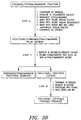
- FIG. 3 illustrates a preferred process scheme for the isolation and purification of paclitaxel from T. brevifolla
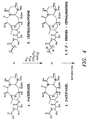
- FIG. 4 illustrates a preferred reaction scheme for the selective bromination of cephalomannine.
- the separation process is not dependent on the concentration of the paclitaxel present, nor on the compositions of the complex mixtures that are the starting points for the isolation and purification of paclitaxel. Therefore the present inventive procedure can conveniently be applied to the downstream isolation and purification of paclitaxel from other sources of paclitaxel such as cultured plant cells and paclitaxel producing fungi, with the step of selective halogenation contemplated for use in any step in the procedure to facilitate the isolation and purification of paclitaxel.
- the halogenation process is similar to the one described above.
- the mixture is preferably dissolved in a large amount of chlorinated solvent, for example CCl 4 , or CHCl 3 and after cooling close to 0°C with stirring, a stoichiometric amount of bromine (1.2 molar equivalents relative to cephalomannine) diluted with CCl 4 or CHCl 3 is added until the cephalomannine is completely brominated.
- the entire reaction should be run in the dark at temperatures which should not exceed 20°C, preferably 5° C, and monitored, for example, by HPLC analysis. After the bromination is finished, the reaction mixture is washed to remove the excess bromine.
- the cephalomannine and other unsaturated taxanes are brominated with a high recovery of the paclitaxel.
- the resulting mixtures containing paclitaxel and brominated compounds are separated and purified using a variety of methods such as chromatography and crystallization.
- the transformation of the cephalomannine to the less polar dibromo derivative gives possibilities for an easier separation of paclitaxel from the mixture.
- the number of molar equivalents of bromine added to the mixture depends mainly on the concentration of cephalomannine and the other unsaturated compounds. Generally, a less pure mixture (containing a high amount of unsaturated taxanes relative to cephalomannine) requires more molar equivalents of bromine to completely brominate the unsaturated taxanes than would a purer mixture.
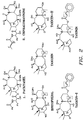
- FIG. 2 illustrates the structures of various unsaturated taxanes. If the mixture has a high content of unsaturated compounds such as taxicin, taxicin-I, taxinin, and/or brevifoliol the molar equivalents will be higher because they will absorb more than 1 molar equivalent of bromine.
- Solvents that can be used for the process of halogenation must be inert to the halogen employed, especially the preferred bromine.
- Useful and preferred solvents in accordance with this invention are chlorinated solvents such as CCl 4 , CHCl 3 , CH 2 Cl 2 , C 2 H 4 Cl 2 , with CCl 4 being most preferred.
- the halogenation process is most effective within the temperature range of about -20°C to about +20°C, preferably from about -5°C to about 5°C with bromine.
- a preferred reagent for the above reactions is 0.01M to 0.1M bromine in carbon tetrachloride, or chloroform, which is commercially available.
- paclitaxel is neither significantly degraded nor brominated during the reaction.
- Paclitaxel may degrade to several unidentified compounds if the reaction is exposed to a large amount of light, or if a large excess of halogen is employed. Any degradation of paclitaxel during the halogenation (bromination) reaction can be easily avoided by periodically monitoring the reaction by HPLC.
- the following examples are related to the purification of paclitaxel by a preferred embodiment of the inventive process. All chemicals were used as received from the manufacturer/supplier. The paclitaxel and cephalomannine resulting from all product and by-product streams were monitored by thin-layer chromatography using Merck #5554, F 254 Silica gel plates and by HPLC.
- the HPLC system consists of a Waters 510 pump, 660E system controller, 712 WISP or 710E WISP autoinjector, Waters 490 program multiwavelength detector, Waters 990 photodiode array detector and NEC APCIV computer and Waters LambdaMax model 481 spectrophotometer and data module. HPLC columns used include a 3.9mm x 300mm phenyl reversed phase Waters ⁇ bondapak column and a phenyl guard column. Silica gel for flash chromatography was 32-63mm mesh size supplied by ICN Biomedicals.
- Bark from the Pacific yew, Taxus brevifolia is shredded to between 2 to 4 mm in size.
- the concentration of paclitaxel in the bark is between 0.03-0.1% w/w. 45kg of the bark is fed into a stainless steel tank. This is extracted thrice with 150 litres of methanol. Each extraction is performed over a period of 5 days with frequent recirculation of the extract to promote mixing.
- the extract is concentrated by rotary evaporation to a concentrate between 10-15 liters in volume. The temperature of the extract did not exceed 40°C. Nearly 99% of the paclitaxel is extracted into the methanol phase by this method.
- the methanol concentrate from step 1 is partitioned, for example, between methylene chloride, or ethylene dichloride and the like, and water.
- methylene chloride or ethylene dichloride and the like
- water To 15 liters of the methanol extract, equal volumes of methylene chloride and water are added. The mixture is stirred slowly for 15 minutes and allowed to stand for a period of 2 hours. The two phases are separated. The methylene chloride phase is further processed for isolation of paclitaxel. If upon analysis, paclitaxel remains in the aqueous phase it is then reextracted with methylene chloride and the methylene chloride fraction is pooled with the same fraction from the first extraction. Methanol (0.5-1 liters) is added to the mixture if emulsions are formed during mixing and are required to be broken. The methylene chloride extract is rotary evaporated to dryness. The solid residue is between 0.9-1.1 kg containing 1.8-2.2% w/w of paclitaxel. The
- the aqueous fraction from step 2 contains glycosides of paclitaxel, 10-deacetyl baccatin III, baccatin III and other polar compounds.
- To 35 liters of the aqueous fraction 5 liters of brine solution is added. This is extracted with 20 liters of ethyl acetate. The two phases are separated. The upper, ethyl acetate layer contains glycosides of paclitaxel, 10-deacetyl baccatin III, baccatin III and other polar compounds.
- the lower, aqueous phase is reextracted with ethyl acetate and the ethyl acetate fraction is pooled with the same fraction from the earlier extraction.
- the pooled ethyl acetate fraction which is between 30-35 liters, is then concentrated by rotary evaporation to a viscous dark brown solution between 2.8-3.2 liters. This is stored for further processing to isolate glycosides.
- the methylene chloride solid residue from step 2 is dissolved in 2 liters of acetone. An equal volume of hexanes is added under conditions of intensive agitation. Polar impurities are precipitated out under these conditions. They are allowed to settle and the supernatant is decanted for further processing. The precipitate is washed with acetone/hexanes (1/1 v/v) and the filtrate is pooled with the previous supernatant. The supernatant is evaporated to one-third (1/3) volume by rotary evaporation. The viscous residue is between 1.5L-3.0L and is yellowish brown in color.
- step 4 The acetone/hexanes residue from step 4 is added dropwise to 10 - 15L hexanes, while stirring vigorously. A light yellow material starts precipitating. After approximately 8 hours this material is filtered and dried under high vacuum (1mm to 2mm) at 40°C to yield about 0.5 ⁇ 0.6 kg material.
- the solid residue from step 5 is next dissolved in 0.5 liters of an acetone-methylene chloride, 1:9 v/v mixture, and flash chromatographed over a silica gel column using the same solvent as the mobile phase.
- the amount of silica gel used is between 3.5-4 kg.
- the fractions were collected in volumes of 1 liter. Each sample was analyzed by TLC and HPLC.
- Cephalomannine co-eluted out with the paclitaxel.
- the fractions containing paclitaxel and cephalomannine are pooled together and rotary evaporated to dryness.
- the solid residue is a crude mixture of paclitaxel and cephalomannine of between 55gm to 70gm containing 45-55% w/w of paclitaxel, or about 36g - 40g paclitaxel.
- 10 g of the crude mixture is dissolved in 1 liter of a chlorinated solvent, such as, for example, carbon tetrachloride, chloroform, methylene chloride or ethylene dichloride.
- a 0.01M solution of bromine in carbon tetrachloride is reacted very slowly with the crude solution under conditions of darkness and at a temperature of 0°C with vigorous mixing. Reaction progress is monitored by HPLC.
- the bromination reaction is terminated when the cephalomannine has been completely reacted. Trace amounts of bromine are removed by washing with an aqueous solution of sodium sulfite. Hydrobromic acid formed during the reaction is washed off with a dilute sodium bicarbonate solution (0.5%) w/w). The resulting organic extract is then dried with anhydrous sodium sulfate and concentrated on a rotary evaporator to a solid residue which is 13.2 g by weight.
- the brominated residue from step 7 is dissolved in an acetone/methylene chloride mixture, 1:9 v/v, and chromatographically separated over a silica column.
- the fractions collected were analyzed by TLC and HPLC.
- the paclitaxel-containing fractions were pooled together and evaporated to dryness by rotary evaporation.
- the solid residue is white and has a mass of 6.1 g.
- the solid residue from Step 8 was next dissolved in acetone and crystallized with an equal volume of n-hexane or hexanes.
- the crystals were washed with cold acetone/hexane, 1/1 v/v, solution and then dried under vacuum at 40°C.
- the solid crystals weighed 4.84 g and contained >97% w/w of paclitaxel as measured by HPLC.
- the bromination was monitored by HPLC analysis every hour. The reaction is complete when all the cephalomannine present is converted to the 2", 3"-dibromo-derivative, which based on HPLC, required approximately 8 hrs. The reaction mixture was light yellow to colorless, due to the consumption of the bromine.
- the reaction mixture was next transferred to a one litre separatory funnel and first washed with 0.5% aqueous sodium sulfite (300 mL), 0.5% aqueous sodium bicarbonate (300 mL) and then twice with deionized water (200 mL each) to a final pH 6.5.
- the combined aqueous layer was extracted once with CH 2 Cl 2 and the CH 2 Cl 2 layer mixed with the previous organic extract. It was then dried over Na 2 SO 4 , filtered, and evaporated to dryness.
- the yield was 0.76 g of a light cream-colored solid which is approximately a 100% yield based on the starting material.
- the cream colored solid material was chromatographed on a column of silica gel (50g, ICN Silitech, 32-63 D, 60 A) using acetone/CH 2 Cl 2 (10:90) as the eluent. Fifty ml fractions were collected and checked by TLC (Silicagel 60 F 254 , Merck #5554, developed with acetone/CH 2 Cl 2 (20/80), and detected using vanillin-sulfuric acid in methanol spray reagent).
- Example 2 Using similar apparatus as used in Example 2, a sample of crude paclitaxel (2.0 g) of a mixture of 51.2% paclitaxel 28.8% cephalomannine, and about 20% other taxanes or non-taxane impurities based on HPLC was dissolved in 150 mL carbon tetrachloride and 150 mL CH 2 Cl 2 , to yield a clear, light yellow solution. The flask was immersed in an ice-salt bath and stirred. When the temperature reached -5°C, a solution of 0.
- the molar ratio between cephalomannine and bromine was 1 : 1.2.
- the reaction temperature did not exceed 5°C.
- stirring was continued while maintaining the temperature at -1 to 5°C.
- the reaction was monitored by HPLC every hour until all the cephalomannine had been converted to the dibromo derivatives (approximately 8 hrs.).
- the final color of the 1500 - 1600 mL of solution was light yellow or cream, depending on the color of the starting mixture and the possible presence of a small excess of bromine.
- reaction mixture was washed with 0.5% aqueous Na 2 SO 3 (500 mL), 0.5% aqueous NaHCO 3 (500 mL), and deionized water (2x500 mL).
- the reaction mixture was dried with anhydrous Na 2 SO 4 , and concentrated to dryness under vacuum to yield 13.20 g of a light cream to white crystalline material.
- This material was chromatographically separated on a silica gel column under the conditions listed above in Examples 2 and 3.
- a 100 x 5 cm glass column was prepared by the slurry method with 600 g silica gel (ratio 1:50). The column was eluted with acetone/CH 2 Cl 2 (10 : 90). A 1 L acetone/CH 2 Cl 2 (25 : 75) was used as a final column wash. Every fraction was analyzed by TLC and every third fraction by HPLC.
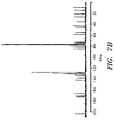
- FIG. 7b 13 C NMR Spectrum (300 MHz, CDCl 3 ) (ppm) 79.1(C-1); 75.1(C-2); 45.8(C-3); 81.2 (C-4);84.4(C-5);35.6(C-6); 72.1(C-7); 56.7 (C-8); 203.6 (C-9); 75.6 (C-10); 133.3(C-11); 141.9(C-12); 72.3(C-13); 35.7 (C-14); 43.2(C-15); 21.8 (C-16); 26.9 (C-17); 14.7 (C-18); 9.5 (C-19); 76.5 (C-20); 73.3(C-2'); 55.1 (C-3'); 20.7 ( C H 3 CO) at C-10); 22.6 ( C H 3 CO at C-4); 170.3 (CH 3 C O at C-10); 171.1 (CH 3 C O at C-4); 167 .
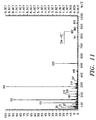
- [M] + 853 (m/z, the main fragments) 568 [T] + ; 550 [T - H 2 O] + ; 508 [T - AcOH] + ; 490 [T - AcOH - H 2 O] + ; 448 [T - 2AcOH] + or [T - BzOH] + ; 386 [T - AcOH - BzOH] + ; 326 [T - BzOH - 2AcOH] + ; 308 [326 - H 2 O] + ; 286 [M - T] + or [S] + ; 280; 268 [S - O] + ; 240 [S - O - CO] + ; 210 [S - O - CO - HCOH] + ; 122 [BzOH] + ; 105 [Bz] + ; 91 [C 7 H 7 ] + ; 77 [C 6 H 5 ] +
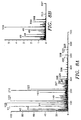
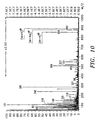
- FIG. 10 FAB + MS (m/z; the main fragments) 892 [M + K] + ; 876 [M + Na] + ; 854 [M + H] + ; 569; 551; 523; 509; 495; 369; 327; 286; 240; 210; 277; 155; 149; 119; 105; 85; 69.
- FIG. 10 FAB + MS (m/z; the main fragments) 892 [M + K] + ; 876 [M + Na] + ; 854 [M + H] + ; 569; 551; 523; 509; 495; 3
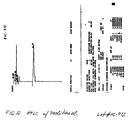
- FIG. 12 HPLC Column ⁇ Bondapak Phenyl Solvent System CH 3 CN : CH 3 OH : H 2 O - 32 : 20 : 48 Flow Rate 1 mL/min Detector Waters 490 at 227 nm Injection volume 20 ⁇ L
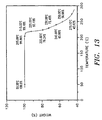
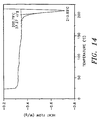
- FIG. 14 DSC 210.85°C. Water content (%H 2 O): 0.90% (Karl Fischer)
Landscapes
- Chemical & Material Sciences (AREA)
- Organic Chemistry (AREA)
- Epoxy Compounds (AREA)
- Pharmaceuticals Containing Other Organic And Inorganic Compounds (AREA)
- Preparation Of Compounds By Using Micro-Organisms (AREA)
- Medicines Containing Plant Substances (AREA)
Claims (34)
- Verfahren zur Isolierung und Reinigung von Paclitaxel aus organischem Material, das eine Mischung von Taxanen enthält; wobei das Verfahren umfasst:(1) die Extraktion einer eine Taxus-Verbindung enthaltenden Zusammensetzung aus dem organischen Material;(2) die chromatographische Abtrennung einer Mischung mit Paclitaxel, Cephalomannin und anderen Taxanen aus der Zusammensetzung; daraufhin(3) die Umsetzung der Mischung mit einem Halogen unter Bedingungen, die wirksam für die selektive Umwandung von Cephalomannin in eine Diastereomeren-Mischung von Dihalocephalomanninen sind; daraufhin(4) die Abtrennung des Paclitaxels aus der Mischung.
- Verfahren nach Anspruch 1, bei dem das organische Material mit einem ersten Extraktions-Lösungsmittel extrahiert wird, das dann verdampft wird unter Bildung eines ersten Paclitaxel enthaltenden Rückstandes, worauf der erste Rückstand mit einem zweiten Extraktions-Lösungsmittel extrahiert wird, das dann verdampft wird unter Erzeugung eines zweiten Paclitaxel enthaltenden Rückstandes, worauf der zweite Rückstand weiter durch Kristallisation gereinigt wird.
- Verfahren nach Anspruch 2, bei dem das erste Extraktions-Lösungsmittel Methanol ist und bei dem der erste Paclitaxel enthaltende Rückstand verteilt wird in Wasser und einem Lösungsmittel, das ausgewählt ist aus der Gruppe bestehend aus Methylenchlorid, Ethylendichlorid und Chloroform, und bei dem der Rückstand in dem Lösungsmittel extrahiert und getrocknet wird unter Bildung des zweiten Rückstandes und bei dem der zweite Paclitaxel enthaltende Rückstand in Aceton gelöst wird und nicht-polare Verunreinigungen mit Hexanen ausgefällt werden, wobei die Aceton-Hexanlösung dann verdampft wird auf etwa ein Drittel (1/3) des Volumens unter Erzeugung eines dritten Paclitaxel enthaltenden, viskosen Rückstandes.
- Verfahren nach Anspruch 3, bei dem das Lösungsmittel und Wasser in einem Verhältnis von etwa 1:1 auf v/v-Basis vorliegen.
- Verfahren nach Anspruch 3, bei dem der dritte viskose Rückstand ausgefällt wird durch Zugabe von etwa dem 10-fachen Volumen an Hexanen unter Erzeugung eines hellgelben Niederschlages unter Erzeugung eines vierten Paclitaxel enthaltenden, festen Rückstandes.
- Verfahren nach Anspruch 4, das weiterhin umfasst das Auflösen des vierten festen Rückstandes in Aceton mit Methylenchlorid und/oder Ethylendichlorid, worauf die Lösung einer Blitz-Chromatographie über einer Silicagel-Kolonne in einem chromatographischen Lösungsmittel unterworfen wird, um Extraktionsmittel-Fraktionen zu gewinnen, die Mischungen von Paclitaxel und Cephalomannin enthalten, die kombiniert und getrocknet werden unter Erzeugung eines fünften Paclitaxel enthaltenden Rückstandes.
- Verfahren nach Anspruch 6, bei dem das chromatographische Lösungsmittel aus einer Mischung von Aceton und Methylenchlorid oder Ethylendichlorid in einem Verhältnis von etwa 1:9 bis etwa 3:7 auf v/v-Basis besteht.
- Verfahren nach Anspruch 6, bei dem der fünfte Rückstand in einem chlorierten Lösungsmittel gelöst wird, das ausgewählt ist aus der Gruppe bestehend aus CCl4, CHCl3, C2H4Cl2 und CH2Cl2 und mit einem Halogen umgesetzt wird.
- Verfahren nach Anspruch 8, bei dem das Halogen aus Brom besteht.
- Verfahren nach Anspruch 9, bei dem das Brom in einer Konzentration entsprechend einer 0,01 M bis etwa 0,1 M Lösung in halogenierten Lösungsmitteln vorliegt.
- Verfahren nach Anspruch 10, bei dem die Umsetzung mit Brom bei einer Temperatur von etwa -20 °C bis etwa 20 °C im Dunkeln durchgeführt wird.
- Verfahren nach Anspruch 11, bei dem praktisch sämtliches in der Lösung von chlorierten Lösungsmitteln vorliegenden Cephalomannin in eine Diastereomeren-Mischung von Dibromocephalomanninen umgewandelt wird und bei dem das Paclitaxel dann aus der Reaktionsmischung abgetrennt wird.
- Verfahren nach Anspruch 12, bei dem das Paclitaxel enthaltende, organische Material ausgewählt ist aus der Gruppe bestehend aus der Rinde von Taxus brexifolia, einem Pflanzenmaterial der Taxus-Spezies, einer Zellkultur aus der Taxus-Spezies und einem Paclitaxel erzeugenden Pilz.
- Verfahren nach Anspruch 12, bei dem das Paclitaxel von der Reaktionsmischung durch Silicagel-Chromatographie mit einem chromatographischen Lösungsmittel abgetrennt wird, das eine Mischung von Aceton und Methylenchlorid oder Ethylendichlorid umfasst, die in einem Verhältnis von etwa 1:9 bis etwa 3:7 auf Volumenbasis vorliegen.
- Verfahren nach Anspruch 12, bei dem das abgetrennte Paclitaxel mit Aceton und Hexanmischungen auskristallisiert wird.
- Verfahren zur Abtrennung von Paclitaxel aus einer Mischung enthaltend Paclitaxel und Cephalomannin, das die Stufen umfasst: a) Umsetzung der Mischung mit einem Halogen bei einer Temperatur sowie während einer Zeitspanne, die ausreichen, um praktisch sämtliches Cephalomannin zu halogenieren, und b) Abtrennung des Paclitaxels von dem halogenierten Cephalomannin.
- Verfahren nach Anspruch 16, bei dem das Halogen ausgewählt ist aus der Gruppe bestehend aus Fluor, Chlor, Brom und Iod.
- Verfahren nach Anspruch 17, bei dem das Halogen Brom ist.
- Verfahren nach Anspruch 18, bei dem das Brom in einer Konzentration im Bereich von etwa 0,01 M bis etwa 0,1 M vorliegt.
- Verfahren nach Anspruch 16, bei dem die Reaktion von a) bei einer Temperatur im Bereich von etwa -20 °C bis etwa 20°C durchgeführt wird.
- Verfahren nach Anspruch 19, bei dem das Brom in einem chlorierten Lösungsmittel vorliegt, das ausgewählt ist aus der Gruppe bestehend aus CCl4, CHCl3 und CH2Cl2.
- Verfahren nach Anspruch 21, bei dem das chlorierte Lösungsmittel CCl4 oder CHCl3 ist.
- Verfahren nach Anspruch 16, bei dem die Reaktion a) im Dunkeln durchgeführt wird.
- Verfahren nach Anspruch 16, bei dem die Trennung b) durch Silicagel-Chromatographie in einem geeigneten Lösungsmittel durchgeführt wird.
- Verfahren nach Anspruch 24, bei dem das Lösungsmittel eine Mischung aus Aceton und Methylenchlorid oder 1,2-Dichloroethan in einem Volumenverhältnis von etwa 1:9 bis etwa 3:7 ist.
- Verfahren nach Anspruch 25, bei dem die Paclitaxel enthaltenden Fraktionen zu einem festen Rückstand eingedampft werden.
- Verfahren nach Anspruch 26, das weiterhin umfasst die Reinigung des Paclitaxels durch Kristallisation.
- Verfahren nach Anspruch 27, bei dem der feste Rückstand in Aceton gelöst wird.
- Verfahren nach Anspruch 28, bei dem das Paclitaxel mit Hexanen auskristallisiert wird.
- Verfahren nach Anspruch 25, bei dem das Paclitaxel von einer Diastereomeren-Mischung von 2"-, 3"-Dibromocephalomanninen abgetrennt wird.
- Verfahren nach Anspruch 16, bei dem die Umsetzung a) durch Hochleistungs-Flüssigkeits-Chromatographie überwacht wird.
- Verfahren nach Anspruch 16, bei dem die Mischung von einem Paclitaxel enthaltenden Lieferanten stammt.
- Verfahren nach Anspruch 32, bei dem der Paclitaxel enthaltende Lieferant ausgewählt ist aus der Gruppe bestehend aus der Rinde von Taxus brevifolia, Pflanzenmaterial von einer Taxus-Spezies, einer Zellkultur einer Taxus-Spezies und einem Paclitaxel produzierenden Pilz.
- Verfahren zur Abtrennung von Paclitaxel aus einer Mischung von Paclitaxel und Cephalomannin mit den Stufen von a) Umsetzung der Mischung mit Brom bei einer Temperatur und während einer Zeitspanne, die ausreichen, um praktisch sämtliches Cephalomannin zu bromieren, und b) Abtrennung des Paclitaxels von dem bromierten Cephalomannin.
Applications Claiming Priority (4)
| Application Number | Priority Date | Filing Date | Title |
|---|---|---|---|
| US08/572,240 US5654448A (en) | 1995-10-02 | 1995-12-13 | Isolation and purification of paclitaxel from organic matter containing paclitaxel, cephalomannine and other related taxanes |
| US572240 | 1995-12-13 | ||
| PCT/US1996/017545 WO1997021696A1 (en) | 1995-12-13 | 1996-11-01 | Isolation and purification of paclitaxel and cephalomannine |
| ZA976834A ZA976834B (en) | 1995-10-02 | 1997-07-31 | Isolation and purification of paclitaxel from organic matter containing paclitaxel cephalomannine and other related taxanes |
Publications (3)
| Publication Number | Publication Date |
|---|---|
| EP0809639A1 EP0809639A1 (de) | 1997-12-03 |
| EP0809639A4 EP0809639A4 (de) | 1999-01-13 |
| EP0809639B1 true EP0809639B1 (de) | 2003-12-10 |
Family
ID=27075788
Family Applications (1)
| Application Number | Title | Priority Date | Filing Date |
|---|---|---|---|
| EP96937101A Expired - Lifetime EP0809639B1 (de) | 1995-12-13 | 1996-11-01 | Isolierung und reinigung von paclitaxel und cephalomannine |
Country Status (9)
| Country | Link |
|---|---|
| US (1) | US5654448A (de) |
| EP (1) | EP0809639B1 (de) |
| JP (1) | JPH11500753A (de) |
| CN (1) | CN1104426C (de) |
| AU (1) | AU720719B2 (de) |
| BR (1) | BR9607137A (de) |
| CA (1) | CA2210972C (de) |
| NZ (1) | NZ321499A (de) |
| WO (1) | WO1997021696A1 (de) |
Families Citing this family (34)
| Publication number | Priority date | Publication date | Assignee | Title |
|---|---|---|---|---|
| US5840748A (en) * | 1995-10-02 | 1998-11-24 | Xechem International, Inc. | Dihalocephalomannine and methods of use therefor |
| KR100266448B1 (ko) * | 1997-06-26 | 2000-09-15 | 박종헌 | 식물세포 배양 중의 온도변화에 의한 택솔의 대량생산 방법 |
| AU1701699A (en) * | 1997-11-19 | 1999-06-07 | Xechem International, Inc. | Halogenated paclitaxel derivatives |
| KR100474228B1 (ko) * | 1998-10-28 | 2005-12-13 | 주식회사 보락 | 파크리탁셀의분리방법 |
| US6136989A (en) * | 1998-12-30 | 2000-10-24 | Phytogen Life Sciences, Incorporated | Method for high yield and large scale extraction of paclitaxel from paclitaxel-containing material |
| US5969165A (en) * | 1999-01-07 | 1999-10-19 | 508037 (Nb) Inc. | Isolation and purification of paclitaxel and other related taxanes by industrial preparative low pressure chromatography on a polymeric resin column |
| US6002025A (en) * | 1999-02-24 | 1999-12-14 | Bcm Developement Inc. | Method for the purification of taxanes |
| CN1111166C (zh) * | 1999-09-10 | 2003-06-11 | 云南汉德生物技术有限公司 | 水溶性三尖杉磷碱聚氨基酸酯或其盐,含它们的药物组合物及其医药用途 |
| AU775373B2 (en) | 1999-10-01 | 2004-07-29 | Immunogen, Inc. | Compositions and methods for treating cancer using immunoconjugates and chemotherapeutic agents |
| AU784323B2 (en) * | 2000-01-13 | 2006-03-09 | Purdue Research Foundation | Production of taxol and taxanes |
| US6452024B1 (en) | 2000-02-22 | 2002-09-17 | Chaichem Pharmaceuticals International | Process for extraction and purification of paclitaxel from natural sources |
| KR100666652B1 (ko) * | 2000-02-25 | 2007-01-09 | 한화석유화학 주식회사 | 식물 원료로부터 초임계 유체를 이용하여 탁솔을 제조하는방법 |
| WO2002038556A2 (en) | 2000-11-08 | 2002-05-16 | Actipharm, Inc. | Process for mass production of gmp paclitaxel and related taxanes |
| WO2002038555A1 (en) * | 2000-11-13 | 2002-05-16 | Lahu Saiji | Isolation of taxanes |
| US6759539B1 (en) | 2003-02-27 | 2004-07-06 | Chaichem Pharmaceuticals International | Process for isolation and purification of paclitaxel from natural sources |
| CN1331859C (zh) * | 2005-01-04 | 2007-08-15 | 四川华申科技开发有限公司 | 分离紫杉醇和三尖杉磷碱的方法 |
| CN102702139B (zh) * | 2006-04-03 | 2016-01-20 | 药物热化学品公司 | 热提取方法和产物 |
| US20090077871A1 (en) * | 2007-05-04 | 2009-03-26 | Alex Berg Gebert | Process for obtaining low and medium molecular weight Polyphenols and standardized solid fuel from tree wood or bark |
| CN101307040B (zh) * | 2007-05-14 | 2010-12-29 | 中国科学院大连化学物理研究所 | 一种分离制备紫杉醇的方法 |
| US7905990B2 (en) | 2007-11-20 | 2011-03-15 | Ensyn Renewables, Inc. | Rapid thermal conversion of biomass |
| US20110284359A1 (en) | 2010-05-20 | 2011-11-24 | Uop Llc | Processes for controlling afterburn in a reheater and for controlling loss of entrained solid particles in combustion product flue gas |
| US8499702B2 (en) | 2010-07-15 | 2013-08-06 | Ensyn Renewables, Inc. | Char-handling processes in a pyrolysis system |
| US9441887B2 (en) | 2011-02-22 | 2016-09-13 | Ensyn Renewables, Inc. | Heat removal and recovery in biomass pyrolysis |
| US9347005B2 (en) | 2011-09-13 | 2016-05-24 | Ensyn Renewables, Inc. | Methods and apparatuses for rapid thermal processing of carbonaceous material |
| US10400175B2 (en) | 2011-09-22 | 2019-09-03 | Ensyn Renewables, Inc. | Apparatuses and methods for controlling heat for rapid thermal processing of carbonaceous material |
| US10041667B2 (en) | 2011-09-22 | 2018-08-07 | Ensyn Renewables, Inc. | Apparatuses for controlling heat for rapid thermal processing of carbonaceous material and methods for the same |
| US9044727B2 (en) | 2011-09-22 | 2015-06-02 | Ensyn Renewables, Inc. | Apparatuses and methods for controlling heat for rapid thermal processing of carbonaceous material |
| US9109177B2 (en) | 2011-12-12 | 2015-08-18 | Ensyn Renewables, Inc. | Systems and methods for renewable fuel |
| US9670413B2 (en) | 2012-06-28 | 2017-06-06 | Ensyn Renewables, Inc. | Methods and apparatuses for thermally converting biomass |
| EP3013922A4 (de) | 2013-06-26 | 2017-02-08 | Ensyn Renewables, Inc. | Systeme und verfahren für erneuerbaren kraftstoff |
| EP3337966B1 (de) | 2015-08-21 | 2021-12-15 | Ensyn Renewables, Inc. | Flüssigbiomassenheizsystem |
| BR112019013387B1 (pt) | 2016-12-29 | 2023-03-28 | Ensyn Renewables, Inc | Desmetalização de biomassa |
| CN113896695B (zh) * | 2021-05-26 | 2023-12-01 | 四川杉宝生物科技有限公司 | 从曼地亚红豆杉中同时提取三尖杉宁碱和紫杉醇的方法 |
| CN113512015A (zh) * | 2021-05-26 | 2021-10-19 | 上海卓鼎生物技术有限公司 | 一种工业化提纯三尖杉宁碱的方法 |
Family Cites Families (41)
| Publication number | Priority date | Publication date | Assignee | Title |
|---|---|---|---|---|
| FR2601675B1 (fr) * | 1986-07-17 | 1988-09-23 | Rhone Poulenc Sante | Derives du taxol, leur preparation et les compositions pharmaceutiques qui les contiennent |
| US5157049A (en) * | 1988-03-07 | 1992-10-20 | The United States Of America As Represented By The Department Of Health & Human Services | Method of treating cancers sensitive to treatment with water soluble derivatives of taxol |
| US4942184A (en) * | 1988-03-07 | 1990-07-17 | The United States Of America As Represented By The Department Of Health And Human Services | Water soluble, antineoplastic derivatives of taxol |
| FR2629818B1 (fr) * | 1988-04-06 | 1990-11-16 | Centre Nat Rech Scient | Procede de preparation du taxol |
| US4960790A (en) * | 1989-03-09 | 1990-10-02 | University Of Kansas | Derivatives of taxol, pharmaceutical compositions thereof and methods for the preparation thereof |
| US5019504A (en) * | 1989-03-23 | 1991-05-28 | The United States Of America As Represented By The Secretary Of Agriculture | Production of taxol or taxol-like compounds in cell culture |
| US5175315A (en) * | 1989-05-31 | 1992-12-29 | Florida State University | Method for preparation of taxol using β-lactam |
| MY110249A (en) * | 1989-05-31 | 1998-03-31 | Univ Florida State | Method for preparation of taxol using beta lactam |
| US5015744A (en) * | 1989-11-14 | 1991-05-14 | Florida State University | Method for preparation of taxol using an oxazinone |
| US5136060A (en) * | 1989-11-14 | 1992-08-04 | Florida State University | Method for preparation of taxol using an oxazinone |
| US5278324A (en) * | 1990-08-28 | 1994-01-11 | Virginia Tech Intellectual Properties, Inc. | Water soluble derivatives of taxol |
| US5059699A (en) * | 1990-08-28 | 1991-10-22 | Virginia Tech Intellectual Properties, Inc. | Water soluble derivatives of taxol |
| US5475120A (en) * | 1990-11-02 | 1995-12-12 | University Of Florida | Method for the isolation and purification of taxol and its natural analogues |
| US5194635A (en) * | 1991-03-18 | 1993-03-16 | Virginia Tech Intellectual Properties, Inc. | Rearranged taxol compounds and method of using in testing of in vivo activity |
| EP0580759B1 (de) * | 1991-04-19 | 1999-05-26 | The University Of Mississippi | Verfahren und zubereitungen zur isolierung von taxanen |
| CA2071160A1 (en) * | 1991-07-31 | 1993-02-01 | Vittorio Farina | Asymmetric synthesis of taxol side chain |
| US5338872A (en) * | 1993-01-15 | 1994-08-16 | Florida State University | Process for the preparation of 10-desacetoxybaccatin III and 10-desacetoxytaxol and derivatives thereof |
| US5283253A (en) * | 1991-09-23 | 1994-02-01 | Florida State University | Furyl or thienyl carbonyl substituted taxanes and pharmaceutical compositions containing them |
| US5227400A (en) * | 1991-09-23 | 1993-07-13 | Florida State University | Furyl and thienyl substituted taxanes and pharmaceutical compositions containing them |
| US5250683A (en) * | 1991-09-23 | 1993-10-05 | Florida State University | Certain substituted taxanes and pharmaceutical compositions containing them |
| US5274124A (en) * | 1991-09-23 | 1993-12-28 | Florida State University | Metal alkoxides |
| US5243045A (en) * | 1991-09-23 | 1993-09-07 | Florida State University | Certain alkoxy substituted taxanes and pharmaceutical compositions containing them |
| US5284865A (en) * | 1991-09-23 | 1994-02-08 | Holton Robert A | Cyclohexyl substituted taxanes and pharmaceutical compositions containing them |
| US5229526A (en) * | 1991-09-23 | 1993-07-20 | Florida State University | Metal alkoxides |
| US5272171A (en) * | 1992-02-13 | 1993-12-21 | Bristol-Myers Squibb Company | Phosphonooxy and carbonate derivatives of taxol |
| IT1254515B (it) * | 1992-03-06 | 1995-09-25 | Indena Spa | Tassani di interesse oncologico, loro metodo di preparazione ed uso |
| US5200534A (en) * | 1992-03-13 | 1993-04-06 | University Of Florida | Process for the preparation of taxol and 10-deacetyltaxol |
| CA2131532A1 (en) * | 1992-04-01 | 1993-10-14 | Steven R. Wann | Induction of somatic embryogenesis in taxus, and the production of taxane-ring containing alkaloids therefrom |
| US5254703A (en) * | 1992-04-06 | 1993-10-19 | Florida State University | Semi-synthesis of taxane derivatives using metal alkoxides and oxazinones |
| US5248796A (en) * | 1992-06-18 | 1993-09-28 | Bristol-Myers Squibb Company | Taxol derivatives |
| GB9213077D0 (en) * | 1992-06-19 | 1992-08-05 | Erba Carlo Spa | Polymerbound taxol derivatives |
| US5294637A (en) * | 1992-07-01 | 1994-03-15 | Bristol-Myers Squibb Company | Fluoro taxols |
| US5254580A (en) * | 1993-01-19 | 1993-10-19 | Bristol-Myers Squibb Company | 7,8-cyclopropataxanes |
| US5334732A (en) * | 1992-07-02 | 1994-08-02 | Hauser Chemical Research, Inc. | Oxidation of cephalomannine with ozone in the presence of taxol |
| US5202448A (en) * | 1992-08-14 | 1993-04-13 | Napro Biotherapeutics, Inc. | Processes of converting taxanes into baccatin III |
| US5470866A (en) * | 1992-08-18 | 1995-11-28 | Virginia Polytechnic Institute And State University | Method for the conversion of cephalomannine to taxol and for the preparation of n-acyl analogs of taxol |
| US5319112A (en) * | 1992-08-18 | 1994-06-07 | Virgnia Tech Intellectual Properties, Inc. | Method for the conversion of cephalomannine to taxol and for the preparation of N-acyl analogs of taxol |
| US5279949A (en) * | 1992-12-07 | 1994-01-18 | Board Of Trustees Operating Michigan State University | Process for the isolation and purification of taxol and taxanes from Taxus spp |
| US5475011A (en) * | 1993-03-26 | 1995-12-12 | The Research Foundation Of State University Of New York | Anti-tumor compounds, pharmaceutical compositions, methods for preparation thereof and for treatment |
| US5412092A (en) * | 1993-04-23 | 1995-05-02 | Bristol-Myers Squibb Company | N-substituted 2-azetidinones |
| US5336684A (en) * | 1993-04-26 | 1994-08-09 | Hauser Chemical Research, Inc. | Oxidation products of cephalomannine |
-
1995
- 1995-12-13 US US08/572,240 patent/US5654448A/en not_active Expired - Fee Related
-
1996
- 1996-11-01 CA CA002210972A patent/CA2210972C/en not_active Expired - Fee Related
- 1996-11-01 AU AU74848/96A patent/AU720719B2/en not_active Ceased
- 1996-11-01 JP JP9522026A patent/JPH11500753A/ja not_active Ceased
- 1996-11-01 CN CN96193149A patent/CN1104426C/zh not_active Expired - Fee Related
- 1996-11-01 WO PCT/US1996/017545 patent/WO1997021696A1/en not_active Ceased
- 1996-11-01 NZ NZ321499A patent/NZ321499A/en unknown
- 1996-11-01 EP EP96937101A patent/EP0809639B1/de not_active Expired - Lifetime
- 1996-11-01 BR BR9607137A patent/BR9607137A/pt not_active Application Discontinuation
Also Published As
| Publication number | Publication date |
|---|---|
| NZ321499A (en) | 1999-04-29 |
| US5654448A (en) | 1997-08-05 |
| CA2210972A1 (en) | 1997-06-19 |
| AU7484896A (en) | 1997-07-03 |
| CN1104426C (zh) | 2003-04-02 |
| CN1182424A (zh) | 1998-05-20 |
| EP0809639A1 (de) | 1997-12-03 |
| BR9607137A (pt) | 1997-11-25 |
| CA2210972C (en) | 2003-10-21 |
| WO1997021696A1 (en) | 1997-06-19 |
| EP0809639A4 (de) | 1999-01-13 |
| JPH11500753A (ja) | 1999-01-19 |
| AU720719B2 (en) | 2000-06-08 |
Similar Documents
| Publication | Publication Date | Title |
|---|---|---|
| EP0809639B1 (de) | Isolierung und reinigung von paclitaxel und cephalomannine | |
| US4857653A (en) | Process for the preparation of taxol and 10-deacetyltaxol | |
| EP0253738B1 (de) | Taxal-Derivate, deren Herstellung und diese enthaltende pharmazeutische Zusammenstellungen | |
| US5475120A (en) | Method for the isolation and purification of taxol and its natural analogues | |
| AU694627B2 (en) | Preparation of taxol and docetaxel through primary amines | |
| US5763477A (en) | Taxane derivatives from 14-β-hydroxy-10 deacetylbaccatin III | |
| EP0668862B1 (de) | Oxidation von glykosid-substituierten taxanen zu taxol oder taxolvorstufen und als zwischenprodukte gebildete taxanverbindungen | |
| US6281368B1 (en) | Simple and efficient hydrazinolysis of C-10 and C-13 ester functionalities of taxanes to obtain 10-DAB III | |
| US6495705B2 (en) | Efficient process for the production of 10-DAB III by selective hydrazinolysis of various taxanes | |
| WO1994011366A9 (en) | Oxidation of glycoside substituted taxanes to taxol or taxol precursors and new taxane compounds formed as intermediates | |
| HK1005375A1 (en) | Isolation and purification of paclitaxel and cephalomannine | |
| HK1005375B (en) | Isolation and purification of paclitaxel and cephalomannine | |
| AU724929B2 (en) | Paclitaxel analogs, preparation and use as antitumor agents | |
| US5840930A (en) | Method for production of 2", 3" dihalocephalomannine | |
| MXPA97006180A (en) | Isolation and purification of paclitaxel and cefaloman | |
| EP1099696A2 (de) | Verfahren zur Herstellung von Oxazolidinen | |
| EP0747372A1 (de) | Taxane Derivate aus 14-beta-hydroxy-10 Desacetylbachatin III |
Legal Events
| Date | Code | Title | Description |
|---|---|---|---|
| PUAI | Public reference made under article 153(3) epc to a published international application that has entered the european phase |
Free format text: ORIGINAL CODE: 0009012 |
|
| 17P | Request for examination filed |
Effective date: 19970821 |
|
| AK | Designated contracting states |
Kind code of ref document: A1 Designated state(s): AT BE CH DE DK ES FI FR GB GR IE IT LI LU MC NL PT SE |
|
| AX | Request for extension of the european patent |
Free format text: AL PAYMENT 970819;LT PAYMENT 970819;LV PAYMENT 970819;RO PAYMENT 970819;SI PAYMENT 970819 |
|
| A4 | Supplementary search report drawn up and despatched |
Effective date: 19981127 |
|
| AK | Designated contracting states |
Kind code of ref document: A4 Designated state(s): AT BE CH DE DK ES FI FR GB GR IE IT LI LU MC NL PT SE |
|
| 17Q | First examination report despatched |
Effective date: 20011011 |
|
| GRAH | Despatch of communication of intention to grant a patent |
Free format text: ORIGINAL CODE: EPIDOS IGRA |
|
| GRAH | Despatch of communication of intention to grant a patent |
Free format text: ORIGINAL CODE: EPIDOS IGRA |
|
| GRAH | Despatch of communication of intention to grant a patent |
Free format text: ORIGINAL CODE: EPIDOS IGRA |
|
| GRAA | (expected) grant |
Free format text: ORIGINAL CODE: 0009210 |
|
| AK | Designated contracting states |
Kind code of ref document: B1 Designated state(s): AT BE CH DE DK ES FI FR GB GR IE IT LI LU MC NL PT SE |
|
| AX | Request for extension of the european patent |
Extension state: AL LT LV RO SI |
|
| PG25 | Lapsed in a contracting state [announced via postgrant information from national office to epo] |
Ref country code: NL Free format text: LAPSE BECAUSE OF FAILURE TO SUBMIT A TRANSLATION OF THE DESCRIPTION OR TO PAY THE FEE WITHIN THE PRESCRIBED TIME-LIMIT Effective date: 20031210 Ref country code: IT Free format text: LAPSE BECAUSE OF FAILURE TO SUBMIT A TRANSLATION OF THE DESCRIPTION OR TO PAY THE FEE WITHIN THE PRESCRIBED TIME-LIMIT;WARNING: LAPSES OF ITALIAN PATENTS WITH EFFECTIVE DATE BEFORE 2007 MAY HAVE OCCURRED AT ANY TIME BEFORE 2007. THE CORRECT EFFECTIVE DATE MAY BE DIFFERENT FROM THE ONE RECORDED. Effective date: 20031210 Ref country code: FI Free format text: LAPSE BECAUSE OF FAILURE TO SUBMIT A TRANSLATION OF THE DESCRIPTION OR TO PAY THE FEE WITHIN THE PRESCRIBED TIME-LIMIT Effective date: 20031210 |
|
| REG | Reference to a national code |
Ref country code: GB Ref legal event code: FG4D |
|
| REG | Reference to a national code |
Ref country code: CH Ref legal event code: EP |
|
| REG | Reference to a national code |
Ref country code: IE Ref legal event code: FG4D |
|
| REF | Corresponds to: |
Ref document number: 69631036 Country of ref document: DE Date of ref document: 20040122 Kind code of ref document: P |
|
| PG25 | Lapsed in a contracting state [announced via postgrant information from national office to epo] |
Ref country code: SE Free format text: LAPSE BECAUSE OF FAILURE TO SUBMIT A TRANSLATION OF THE DESCRIPTION OR TO PAY THE FEE WITHIN THE PRESCRIBED TIME-LIMIT Effective date: 20040310 Ref country code: GR Free format text: LAPSE BECAUSE OF FAILURE TO SUBMIT A TRANSLATION OF THE DESCRIPTION OR TO PAY THE FEE WITHIN THE PRESCRIBED TIME-LIMIT Effective date: 20040310 Ref country code: DK Free format text: LAPSE BECAUSE OF FAILURE TO SUBMIT A TRANSLATION OF THE DESCRIPTION OR TO PAY THE FEE WITHIN THE PRESCRIBED TIME-LIMIT Effective date: 20040310 |
|
| PG25 | Lapsed in a contracting state [announced via postgrant information from national office to epo] |
Ref country code: ES Free format text: LAPSE BECAUSE OF FAILURE TO SUBMIT A TRANSLATION OF THE DESCRIPTION OR TO PAY THE FEE WITHIN THE PRESCRIBED TIME-LIMIT Effective date: 20040321 |
|
| LTIE | Lt: invalidation of european patent or patent extension |
Effective date: 20031210 |
|
| NLV1 | Nl: lapsed or annulled due to failure to fulfill the requirements of art. 29p and 29m of the patents act | ||
| REG | Reference to a national code |
Ref country code: HK Ref legal event code: GR Ref document number: 1005375 Country of ref document: HK |
|
| ET | Fr: translation filed | ||
| PLBE | No opposition filed within time limit |
Free format text: ORIGINAL CODE: 0009261 |
|
| STAA | Information on the status of an ep patent application or granted ep patent |
Free format text: STATUS: NO OPPOSITION FILED WITHIN TIME LIMIT |
|
| PG25 | Lapsed in a contracting state [announced via postgrant information from national office to epo] |
Ref country code: LU Free format text: LAPSE BECAUSE OF NON-PAYMENT OF DUE FEES Effective date: 20041101 |
|
| PG25 | Lapsed in a contracting state [announced via postgrant information from national office to epo] |
Ref country code: MC Free format text: LAPSE BECAUSE OF NON-PAYMENT OF DUE FEES Effective date: 20041130 |
|
| 26N | No opposition filed |
Effective date: 20040913 |
|
| PGFP | Annual fee paid to national office [announced via postgrant information from national office to epo] |
Ref country code: IE Payment date: 20051011 Year of fee payment: 10 |
|
| PGFP | Annual fee paid to national office [announced via postgrant information from national office to epo] |
Ref country code: FR Payment date: 20051027 Year of fee payment: 10 |
|
| PGFP | Annual fee paid to national office [announced via postgrant information from national office to epo] |
Ref country code: DE Payment date: 20051101 Year of fee payment: 10 |
|
| PGFP | Annual fee paid to national office [announced via postgrant information from national office to epo] |
Ref country code: BE Payment date: 20051103 Year of fee payment: 10 Ref country code: AT Payment date: 20051103 Year of fee payment: 10 |
|
| REG | Reference to a national code |
Ref country code: CH Ref legal event code: NV Representative=s name: LUCHS & PARTNER PATENTANWAELTE |
|
| PGFP | Annual fee paid to national office [announced via postgrant information from national office to epo] |
Ref country code: CH Payment date: 20060222 Year of fee payment: 10 |
|
| PG25 | Lapsed in a contracting state [announced via postgrant information from national office to epo] |
Ref country code: IE Free format text: LAPSE BECAUSE OF NON-PAYMENT OF DUE FEES Effective date: 20061101 Ref country code: AT Free format text: LAPSE BECAUSE OF NON-PAYMENT OF DUE FEES Effective date: 20061101 |
|
| PG25 | Lapsed in a contracting state [announced via postgrant information from national office to epo] |
Ref country code: LI Free format text: LAPSE BECAUSE OF NON-PAYMENT OF DUE FEES Effective date: 20061130 Ref country code: CH Free format text: LAPSE BECAUSE OF NON-PAYMENT OF DUE FEES Effective date: 20061130 Ref country code: BE Free format text: LAPSE BECAUSE OF NON-PAYMENT OF DUE FEES Effective date: 20061130 |
|
| PGFP | Annual fee paid to national office [announced via postgrant information from national office to epo] |
Ref country code: GB Payment date: 20070103 Year of fee payment: 11 |
|
| PG25 | Lapsed in a contracting state [announced via postgrant information from national office to epo] |
Ref country code: DE Free format text: LAPSE BECAUSE OF NON-PAYMENT OF DUE FEES Effective date: 20070601 |
|
| REG | Reference to a national code |
Ref country code: CH Ref legal event code: PL |
|
| REG | Reference to a national code |
Ref country code: FR Ref legal event code: ST Effective date: 20070731 |
|
| REG | Reference to a national code |
Ref country code: IE Ref legal event code: MM4A |
|
| BERE | Be: lapsed |
Owner name: *XECHEM INC. Effective date: 20061130 |
|
| PG25 | Lapsed in a contracting state [announced via postgrant information from national office to epo] |
Ref country code: PT Free format text: LAPSE BECAUSE OF NON-PAYMENT OF DUE FEES Effective date: 20040510 |
|
| PG25 | Lapsed in a contracting state [announced via postgrant information from national office to epo] |
Ref country code: FR Free format text: LAPSE BECAUSE OF NON-PAYMENT OF DUE FEES Effective date: 20061130 |
|
| GBPC | Gb: european patent ceased through non-payment of renewal fee |
Effective date: 20071101 |
|
| PG25 | Lapsed in a contracting state [announced via postgrant information from national office to epo] |
Ref country code: GB Free format text: LAPSE BECAUSE OF NON-PAYMENT OF DUE FEES Effective date: 20071101 |