EP0803924B1 - Organische Carbonate als Zusätze in nichtwässrigen Elektrolyten alkali-metallelektrochemischer Zellen - Google Patents
Organische Carbonate als Zusätze in nichtwässrigen Elektrolyten alkali-metallelektrochemischer Zellen Download PDFInfo
- Publication number
- EP0803924B1 EP0803924B1 EP97300964A EP97300964A EP0803924B1 EP 0803924 B1 EP0803924 B1 EP 0803924B1 EP 97300964 A EP97300964 A EP 97300964A EP 97300964 A EP97300964 A EP 97300964A EP 0803924 B1 EP0803924 B1 EP 0803924B1
- Authority
- EP
- European Patent Office
- Prior art keywords
- alkali metal
- anode
- carbonate
- electrolyte
- electrochemical cell
- Prior art date
- Legal status (The legal status is an assumption and is not a legal conclusion. Google has not performed a legal analysis and makes no representation as to the accuracy of the status listed.)
- Expired - Lifetime
Links
- 239000000654 additive Substances 0.000 title claims description 60
- 229910052783 alkali metal Inorganic materials 0.000 title claims description 36
- 150000001340 alkali metals Chemical class 0.000 title claims description 21
- 239000011255 nonaqueous electrolyte Substances 0.000 title claims description 11
- 150000005677 organic carbonates Chemical class 0.000 title description 16
- 239000003792 electrolyte Substances 0.000 claims description 50
- 230000000996 additive effect Effects 0.000 claims description 34
- -1 alkali metal salt Chemical class 0.000 claims description 34
- 239000000203 mixture Substances 0.000 claims description 26
- PFYXSUNOLOJMDX-UHFFFAOYSA-N bis(2,5-dioxopyrrolidin-1-yl) carbonate Chemical group O=C1CCC(=O)N1OC(=O)ON1C(=O)CCC1=O PFYXSUNOLOJMDX-UHFFFAOYSA-N 0.000 claims description 23
- XTHFKEDIFFGKHM-UHFFFAOYSA-N Dimethoxyethane Chemical group COCCOC XTHFKEDIFFGKHM-UHFFFAOYSA-N 0.000 claims description 22
- 239000002904 solvent Substances 0.000 claims description 19
- MJSHDCCLFGOEIK-UHFFFAOYSA-N benzyl (2,5-dioxopyrrolidin-1-yl) carbonate Chemical compound O=C1CCC(=O)N1OC(=O)OCC1=CC=CC=C1 MJSHDCCLFGOEIK-UHFFFAOYSA-N 0.000 claims description 18
- 239000006259 organic additive Substances 0.000 claims description 17
- RUOJZAUFBMNUDX-UHFFFAOYSA-N propylene carbonate Chemical group CC1COC(=O)O1 RUOJZAUFBMNUDX-UHFFFAOYSA-N 0.000 claims description 16
- SECXISVLQFMRJM-UHFFFAOYSA-N N-Methylpyrrolidone Chemical compound CN1CCCC1=O SECXISVLQFMRJM-UHFFFAOYSA-N 0.000 claims description 14
- PIZLBWGMERQCOC-UHFFFAOYSA-N dibenzyl carbonate Chemical compound C=1C=CC=CC=1COC(=O)OCC1=CC=CC=C1 PIZLBWGMERQCOC-UHFFFAOYSA-N 0.000 claims description 14
- BVKZGUZCCUSVTD-UHFFFAOYSA-L Carbonate Chemical compound [O-]C([O-])=O BVKZGUZCCUSVTD-UHFFFAOYSA-L 0.000 claims description 10
- 239000008151 electrolyte solution Substances 0.000 claims description 9
- 229910001540 lithium hexafluoroarsenate(V) Inorganic materials 0.000 claims description 9
- YEJRWHAVMIAJKC-UHFFFAOYSA-N 4-Butyrolactone Chemical compound O=C1CCCO1 YEJRWHAVMIAJKC-UHFFFAOYSA-N 0.000 claims description 8
- RAVDHKVWJUPFPT-UHFFFAOYSA-N silver;oxido(dioxo)vanadium Chemical compound [Ag+].[O-][V](=O)=O RAVDHKVWJUPFPT-UHFFFAOYSA-N 0.000 claims description 8
- XBDQKXXYIPTUBI-UHFFFAOYSA-M Propionate Chemical compound CCC([O-])=O XBDQKXXYIPTUBI-UHFFFAOYSA-M 0.000 claims description 7
- KXKVLQRXCPHEJC-UHFFFAOYSA-N acetic acid trimethyl ester Natural products COC(C)=O KXKVLQRXCPHEJC-UHFFFAOYSA-N 0.000 claims description 7
- WEVYAHXRMPXWCK-UHFFFAOYSA-N Acetonitrile Chemical compound CC#N WEVYAHXRMPXWCK-UHFFFAOYSA-N 0.000 claims description 6
- ZMXDDKWLCZADIW-UHFFFAOYSA-N N,N-Dimethylformamide Chemical compound CN(C)C=O ZMXDDKWLCZADIW-UHFFFAOYSA-N 0.000 claims description 6
- WYURNTSHIVDZCO-UHFFFAOYSA-N Tetrahydrofuran Chemical compound C1CCOC1 WYURNTSHIVDZCO-UHFFFAOYSA-N 0.000 claims description 6
- 238000010494 dissociation reaction Methods 0.000 claims description 6
- 230000005593 dissociations Effects 0.000 claims description 6
- 230000006872 improvement Effects 0.000 claims description 6
- 239000007787 solid Substances 0.000 claims description 6
- 125000002915 carbonyl group Chemical group [*:2]C([*:1])=O 0.000 claims description 5
- 239000006182 cathode active material Substances 0.000 claims description 5
- IEJIGPNLZYLLBP-UHFFFAOYSA-N dimethyl carbonate Chemical compound COC(=O)OC IEJIGPNLZYLLBP-UHFFFAOYSA-N 0.000 claims description 5
- 150000003839 salts Chemical class 0.000 claims description 5
- IAZDPXIOMUYVGZ-UHFFFAOYSA-N Dimethylsulphoxide Chemical compound CS(C)=O IAZDPXIOMUYVGZ-UHFFFAOYSA-N 0.000 claims description 4
- 150000005676 cyclic carbonates Chemical class 0.000 claims description 4
- NUJOXMJBOLGQSY-UHFFFAOYSA-N manganese dioxide Chemical compound O=[Mn]=O NUJOXMJBOLGQSY-UHFFFAOYSA-N 0.000 claims description 4
- 238000000034 method Methods 0.000 claims description 4
- KMTRUDSVKNLOMY-UHFFFAOYSA-N Ethylene carbonate Chemical compound O=C1OCCO1 KMTRUDSVKNLOMY-UHFFFAOYSA-N 0.000 claims description 3
- 125000004122 cyclic group Chemical group 0.000 claims description 3
- 229910001496 lithium tetrafluoroborate Inorganic materials 0.000 claims description 3
- 125000001424 substituent group Chemical group 0.000 claims description 3
- YLQBMQCUIZJEEH-UHFFFAOYSA-N tetrahydrofuran Natural products C=1C=COC=1 YLQBMQCUIZJEEH-UHFFFAOYSA-N 0.000 claims description 3
- QPLDLSVMHZLSFG-UHFFFAOYSA-N Copper oxide Chemical compound [Cu]=O QPLDLSVMHZLSFG-UHFFFAOYSA-N 0.000 claims description 2
- 239000005751 Copper oxide Substances 0.000 claims description 2
- OIFBSDVPJOWBCH-UHFFFAOYSA-N Diethyl carbonate Chemical compound CCOC(=O)OCC OIFBSDVPJOWBCH-UHFFFAOYSA-N 0.000 claims description 2
- MBMLMWLHJBBADN-UHFFFAOYSA-N Ferrous sulfide Chemical compound [Fe]=S MBMLMWLHJBBADN-UHFFFAOYSA-N 0.000 claims description 2
- 229910013375 LiC Inorganic materials 0.000 claims description 2
- 229910000552 LiCF3SO3 Inorganic materials 0.000 claims description 2
- 229910010937 LiGaCl4 Inorganic materials 0.000 claims description 2
- 229910013406 LiN(SO2CF3)2 Inorganic materials 0.000 claims description 2
- FXHOOIRPVKKKFG-UHFFFAOYSA-N N,N-Dimethylacetamide Chemical compound CN(C)C(C)=O FXHOOIRPVKKKFG-UHFFFAOYSA-N 0.000 claims description 2
- YALCWJZSJOMTCG-UHFFFAOYSA-N [O--].[O--].[O--].[O--].[V+5].[Cu++].[Ag+] Chemical compound [O--].[O--].[O--].[O--].[V+5].[Cu++].[Ag+] YALCWJZSJOMTCG-UHFFFAOYSA-N 0.000 claims description 2
- JKLVRIRNLLAISP-UHFFFAOYSA-N [O-2].[V+5].[Cu+2] Chemical compound [O-2].[V+5].[Cu+2] JKLVRIRNLLAISP-UHFFFAOYSA-N 0.000 claims description 2
- 230000003213 activating effect Effects 0.000 claims description 2
- NFMAZVUSKIJEIH-UHFFFAOYSA-N bis(sulfanylidene)iron Chemical compound S=[Fe]=S NFMAZVUSKIJEIH-UHFFFAOYSA-N 0.000 claims description 2
- 229910000428 cobalt oxide Inorganic materials 0.000 claims description 2
- IVMYJDGYRUAWML-UHFFFAOYSA-N cobalt(ii) oxide Chemical compound [Co]=O IVMYJDGYRUAWML-UHFFFAOYSA-N 0.000 claims description 2
- 229910000431 copper oxide Inorganic materials 0.000 claims description 2
- OMZSGWSJDCOLKM-UHFFFAOYSA-N copper(II) sulfide Chemical compound [S-2].[Cu+2] OMZSGWSJDCOLKM-UHFFFAOYSA-N 0.000 claims description 2
- 150000003950 cyclic amides Chemical class 0.000 claims description 2
- SBZXBUIDTXKZTM-UHFFFAOYSA-N diglyme Chemical compound COCCOCCOC SBZXBUIDTXKZTM-UHFFFAOYSA-N 0.000 claims description 2
- 229940113088 dimethylacetamide Drugs 0.000 claims description 2
- 229910000339 iron disulfide Inorganic materials 0.000 claims description 2
- MHCFAGZWMAWTNR-UHFFFAOYSA-M lithium perchlorate Chemical compound [Li+].[O-]Cl(=O)(=O)=O MHCFAGZWMAWTNR-UHFFFAOYSA-M 0.000 claims description 2
- 229910001486 lithium perchlorate Inorganic materials 0.000 claims description 2
- 229910001537 lithium tetrachloroaluminate Inorganic materials 0.000 claims description 2
- QSZMZKBZAYQGRS-UHFFFAOYSA-N lithium;bis(trifluoromethylsulfonyl)azanide Chemical compound [Li+].FC(F)(F)S(=O)(=O)[N-]S(=O)(=O)C(F)(F)F QSZMZKBZAYQGRS-UHFFFAOYSA-N 0.000 claims description 2
- QLOAVXSYZAJECW-UHFFFAOYSA-N methane;molecular fluorine Chemical compound C.FF QLOAVXSYZAJECW-UHFFFAOYSA-N 0.000 claims description 2
- 229910000480 nickel oxide Inorganic materials 0.000 claims description 2
- GNRSAWUEBMWBQH-UHFFFAOYSA-N oxonickel Chemical compound [Ni]=O GNRSAWUEBMWBQH-UHFFFAOYSA-N 0.000 claims description 2
- ZUHZGEOKBKGPSW-UHFFFAOYSA-N tetraglyme Chemical compound COCCOCCOCCOCCOC ZUHZGEOKBKGPSW-UHFFFAOYSA-N 0.000 claims description 2
- CFJRPNFOLVDFMJ-UHFFFAOYSA-N titanium disulfide Chemical compound S=[Ti]=S CFJRPNFOLVDFMJ-UHFFFAOYSA-N 0.000 claims description 2
- YFNKIDBQEZZDLK-UHFFFAOYSA-N triglyme Chemical compound COCCOCCOCCOC YFNKIDBQEZZDLK-UHFFFAOYSA-N 0.000 claims description 2
- RTZKZFJDLAIYFH-UHFFFAOYSA-N Diethyl ether Chemical compound CCOCC RTZKZFJDLAIYFH-UHFFFAOYSA-N 0.000 claims 2
- 229910021645 metal ion Inorganic materials 0.000 claims 2
- OIHHMUMDVHEYAA-UHFFFAOYSA-N (2,5-dioxopyrrolidin-1-yl) 5-(2,5-dioxopyrrolidin-1-yl)oxycarbonyloxypentyl carbonate Chemical class O=C1CCC(=O)N1OC(=O)OCCCCCOC(=O)ON1C(=O)CCC1=O OIHHMUMDVHEYAA-UHFFFAOYSA-N 0.000 claims 1
- WMSUFWLPZLCIHP-UHFFFAOYSA-N (2,5-dioxopyrrolidin-1-yl) 9h-fluoren-9-ylmethyl carbonate Chemical compound C12=CC=CC=C2C2=CC=CC=C2C1COC(=O)ON1C(=O)CCC1=O WMSUFWLPZLCIHP-UHFFFAOYSA-N 0.000 claims 1
- ZKOGUIGAVNCCKH-UHFFFAOYSA-N 4-phenyl-1,3-dioxolan-2-one Chemical compound O1C(=O)OCC1C1=CC=CC=C1 ZKOGUIGAVNCCKH-UHFFFAOYSA-N 0.000 claims 1
- 229910001290 LiPF6 Inorganic materials 0.000 claims 1
- IPRBOQUKBZNCAG-MNDPQUGUSA-N [(e)-[cyano(phenyl)methylidene]amino] (4-methoxyphenyl)methyl carbonate Chemical compound C1=CC(OC)=CC=C1COC(=O)O\N=C(\C#N)C1=CC=CC=C1 IPRBOQUKBZNCAG-MNDPQUGUSA-N 0.000 claims 1
- PPQNDCSTOHZQEH-UHFFFAOYSA-N bis(benzotriazol-1-yl) carbonate Chemical compound N1=NC2=CC=CC=C2N1OC(=O)ON1C2=CC=CC=C2N=N1 PPQNDCSTOHZQEH-UHFFFAOYSA-N 0.000 claims 1
- JKJWYKGYGWOAHT-UHFFFAOYSA-N bis(prop-2-enyl) carbonate Chemical compound C=CCOC(=O)OCC=C JKJWYKGYGWOAHT-UHFFFAOYSA-N 0.000 claims 1
- 239000004020 conductor Substances 0.000 claims 1
- 150000002148 esters Chemical class 0.000 claims 1
- BGSFCOHRQUBESL-UHFFFAOYSA-N ethyl prop-2-enyl carbonate Chemical compound CCOC(=O)OCC=C BGSFCOHRQUBESL-UHFFFAOYSA-N 0.000 claims 1
- 230000002687 intercalation Effects 0.000 claims 1
- 238000009830 intercalation Methods 0.000 claims 1
- 229910001547 lithium hexafluoroantimonate(V) Inorganic materials 0.000 claims 1
- 230000003647 oxidation Effects 0.000 claims 1
- 238000007254 oxidation reaction Methods 0.000 claims 1
- 229910052744 lithium Inorganic materials 0.000 description 19
- WHXSMMKQMYFTQS-UHFFFAOYSA-N Lithium Chemical compound [Li] WHXSMMKQMYFTQS-UHFFFAOYSA-N 0.000 description 17
- 229940021013 electrolyte solution Drugs 0.000 description 9
- 238000012360 testing method Methods 0.000 description 9
- CURLTUGMZLYLDI-UHFFFAOYSA-N Carbon dioxide Chemical compound O=C=O CURLTUGMZLYLDI-UHFFFAOYSA-N 0.000 description 8
- PXHVJJICTQNCMI-UHFFFAOYSA-N Nickel Chemical compound [Ni] PXHVJJICTQNCMI-UHFFFAOYSA-N 0.000 description 8
- 239000000463 material Substances 0.000 description 8
- 229910052751 metal Inorganic materials 0.000 description 8
- 239000002184 metal Substances 0.000 description 8
- 239000004743 Polypropylene Substances 0.000 description 6
- 229910002092 carbon dioxide Inorganic materials 0.000 description 6
- 239000010406 cathode material Substances 0.000 description 6
- 150000001875 compounds Chemical class 0.000 description 6
- 230000000694 effects Effects 0.000 description 6
- 229920001155 polypropylene Polymers 0.000 description 6
- RTAQQCXQSZGOHL-UHFFFAOYSA-N Titanium Chemical compound [Ti] RTAQQCXQSZGOHL-UHFFFAOYSA-N 0.000 description 4
- 229910045601 alloy Inorganic materials 0.000 description 4
- 239000000956 alloy Substances 0.000 description 4
- 229910052782 aluminium Inorganic materials 0.000 description 4
- XAGFODPZIPBFFR-UHFFFAOYSA-N aluminium Chemical compound [Al] XAGFODPZIPBFFR-UHFFFAOYSA-N 0.000 description 4
- 230000009286 beneficial effect Effects 0.000 description 4
- 239000012528 membrane Substances 0.000 description 4
- 229910052759 nickel Inorganic materials 0.000 description 4
- 239000010935 stainless steel Substances 0.000 description 4
- 229910001220 stainless steel Inorganic materials 0.000 description 4
- 239000010936 titanium Substances 0.000 description 4
- 229910052719 titanium Inorganic materials 0.000 description 4
- OKTJSMMVPCPJKN-UHFFFAOYSA-N Carbon Chemical compound [C] OKTJSMMVPCPJKN-UHFFFAOYSA-N 0.000 description 3
- 229910052799 carbon Inorganic materials 0.000 description 3
- 238000003487 electrochemical reaction Methods 0.000 description 3
- 239000011521 glass Substances 0.000 description 3
- XGZVUEUWXADBQD-UHFFFAOYSA-L lithium carbonate Chemical compound [Li+].[Li+].[O-]C([O-])=O XGZVUEUWXADBQD-UHFFFAOYSA-L 0.000 description 3
- 229910052808 lithium carbonate Inorganic materials 0.000 description 3
- 229910044991 metal oxide Inorganic materials 0.000 description 3
- 150000004706 metal oxides Chemical class 0.000 description 3
- 229910003455 mixed metal oxide Inorganic materials 0.000 description 3
- 239000003960 organic solvent Substances 0.000 description 3
- 230000036278 prepulse Effects 0.000 description 3
- 239000000126 substance Substances 0.000 description 3
- 101100223811 Caenorhabditis elegans dsc-1 gene Proteins 0.000 description 2
- DGAQECJNVWCQMB-PUAWFVPOSA-M Ilexoside XXIX Chemical compound C[C@@H]1CC[C@@]2(CC[C@@]3(C(=CC[C@H]4[C@]3(CC[C@@H]5[C@@]4(CC[C@@H](C5(C)C)OS(=O)(=O)[O-])C)C)[C@@H]2[C@]1(C)O)C)C(=O)O[C@H]6[C@@H]([C@H]([C@@H]([C@H](O6)CO)O)O)O.[Na+] DGAQECJNVWCQMB-PUAWFVPOSA-M 0.000 description 2
- 229910000733 Li alloy Inorganic materials 0.000 description 2
- 229910001209 Low-carbon steel Inorganic materials 0.000 description 2
- 239000010405 anode material Substances 0.000 description 2
- 239000000010 aprotic solvent Substances 0.000 description 2
- 230000015572 biosynthetic process Effects 0.000 description 2
- 239000001569 carbon dioxide Substances 0.000 description 2
- 230000008859 change Effects 0.000 description 2
- 238000006243 chemical reaction Methods 0.000 description 2
- 238000005260 corrosion Methods 0.000 description 2
- 230000007797 corrosion Effects 0.000 description 2
- 230000003247 decreasing effect Effects 0.000 description 2
- 229910017053 inorganic salt Inorganic materials 0.000 description 2
- 229910000765 intermetallic Inorganic materials 0.000 description 2
- 150000002500 ions Chemical class 0.000 description 2
- 239000010410 layer Substances 0.000 description 2
- 239000001989 lithium alloy Substances 0.000 description 2
- 229910052976 metal sulfide Inorganic materials 0.000 description 2
- 230000004048 modification Effects 0.000 description 2
- 238000012986 modification Methods 0.000 description 2
- 230000000737 periodic effect Effects 0.000 description 2
- 230000008569 process Effects 0.000 description 2
- 230000001681 protective effect Effects 0.000 description 2
- 229910052708 sodium Inorganic materials 0.000 description 2
- 239000011734 sodium Substances 0.000 description 2
- 239000000243 solution Substances 0.000 description 2
- 239000011877 solvent mixture Substances 0.000 description 2
- 239000002344 surface layer Substances 0.000 description 2
- 238000003466 welding Methods 0.000 description 2
- GEWWCWZGHNIUBW-UHFFFAOYSA-N 1-(4-nitrophenyl)propan-2-one Chemical compound CC(=O)CC1=CC=C([N+]([O-])=O)C=C1 GEWWCWZGHNIUBW-UHFFFAOYSA-N 0.000 description 1
- 229910017747 AgV2O5.5 (SVO) Inorganic materials 0.000 description 1
- 229910018075 AgxV2Oy Inorganic materials 0.000 description 1
- ZOXJGFHDIHLPTG-UHFFFAOYSA-N Boron Chemical compound [B] ZOXJGFHDIHLPTG-UHFFFAOYSA-N 0.000 description 1
- 101100514821 Caenorhabditis elegans dsc-4 gene Proteins 0.000 description 1
- 229920013683 Celanese Polymers 0.000 description 1
- 239000002000 Electrolyte additive Substances 0.000 description 1
- 229910008290 Li—B Inorganic materials 0.000 description 1
- 229910006742 Li—Si—B Inorganic materials 0.000 description 1
- ZOKXTWBITQBERF-UHFFFAOYSA-N Molybdenum Chemical compound [Mo] ZOKXTWBITQBERF-UHFFFAOYSA-N 0.000 description 1
- 229910000990 Ni alloy Inorganic materials 0.000 description 1
- 239000004698 Polyethylene Substances 0.000 description 1
- ZLMJMSJWJFRBEC-UHFFFAOYSA-N Potassium Chemical compound [K] ZLMJMSJWJFRBEC-UHFFFAOYSA-N 0.000 description 1
- JFBZPFYRPYOZCQ-UHFFFAOYSA-N [Li].[Al] Chemical compound [Li].[Al] JFBZPFYRPYOZCQ-UHFFFAOYSA-N 0.000 description 1
- 239000006183 anode active material Substances 0.000 description 1
- 229910052787 antimony Inorganic materials 0.000 description 1
- WATWJIUSRGPENY-UHFFFAOYSA-N antimony atom Chemical compound [Sb] WATWJIUSRGPENY-UHFFFAOYSA-N 0.000 description 1
- 229910052785 arsenic Inorganic materials 0.000 description 1
- RQNWIZPPADIBDY-UHFFFAOYSA-N arsenic atom Chemical compound [As] RQNWIZPPADIBDY-UHFFFAOYSA-N 0.000 description 1
- 230000000712 assembly Effects 0.000 description 1
- 238000000429 assembly Methods 0.000 description 1
- 229910052796 boron Inorganic materials 0.000 description 1
- 150000004649 carbonic acid derivatives Chemical class 0.000 description 1
- 239000000919 ceramic Substances 0.000 description 1
- 238000010276 construction Methods 0.000 description 1
- 230000001351 cycling effect Effects 0.000 description 1
- 238000013461 design Methods 0.000 description 1
- 230000001627 detrimental effect Effects 0.000 description 1
- 229920001971 elastomer Polymers 0.000 description 1
- 239000007772 electrode material Substances 0.000 description 1
- 230000008030 elimination Effects 0.000 description 1
- 238000003379 elimination reaction Methods 0.000 description 1
- 150000002170 ethers Chemical class 0.000 description 1
- 239000012467 final product Substances 0.000 description 1
- 239000011888 foil Substances 0.000 description 1
- 239000003365 glass fiber Substances 0.000 description 1
- BHEPBYXIRTUNPN-UHFFFAOYSA-N hydridophosphorus(.) (triplet) Chemical compound [PH] BHEPBYXIRTUNPN-UHFFFAOYSA-N 0.000 description 1
- 239000012212 insulator Substances 0.000 description 1
- 230000016507 interphase Effects 0.000 description 1
- 239000007788 liquid Substances 0.000 description 1
- 239000007769 metal material Substances 0.000 description 1
- 150000002739 metals Chemical class 0.000 description 1
- 239000012982 microporous membrane Substances 0.000 description 1
- 230000005012 migration Effects 0.000 description 1
- 238000013508 migration Methods 0.000 description 1
- 229910052750 molybdenum Inorganic materials 0.000 description 1
- 239000011733 molybdenum Substances 0.000 description 1
- 229910000510 noble metal Inorganic materials 0.000 description 1
- 239000005486 organic electrolyte Substances 0.000 description 1
- 150000002895 organic esters Chemical class 0.000 description 1
- 239000008188 pellet Substances 0.000 description 1
- 230000000704 physical effect Effects 0.000 description 1
- 239000004033 plastic Substances 0.000 description 1
- 229920003023 plastic Polymers 0.000 description 1
- 229920000573 polyethylene Polymers 0.000 description 1
- 229920001343 polytetrafluoroethylene Polymers 0.000 description 1
- 230000008092 positive effect Effects 0.000 description 1
- 229910052700 potassium Inorganic materials 0.000 description 1
- 239000011591 potassium Substances 0.000 description 1
- 159000000001 potassium salts Chemical class 0.000 description 1
- 238000002360 preparation method Methods 0.000 description 1
- 239000000047 product Substances 0.000 description 1
- 239000011241 protective layer Substances 0.000 description 1
- 230000009257 reactivity Effects 0.000 description 1
- 230000002829 reductive effect Effects 0.000 description 1
- 238000006894 reductive elimination reaction Methods 0.000 description 1
- 229920006395 saturated elastomer Polymers 0.000 description 1
- 238000000926 separation method Methods 0.000 description 1
- 229910052710 silicon Inorganic materials 0.000 description 1
- 239000010703 silicon Substances 0.000 description 1
- 239000007784 solid electrolyte Substances 0.000 description 1
- 238000005507 spraying Methods 0.000 description 1
- 230000007704 transition Effects 0.000 description 1
Images


Classifications
-
- H—ELECTRICITY
- H01—ELECTRIC ELEMENTS
- H01M—PROCESSES OR MEANS, e.g. BATTERIES, FOR THE DIRECT CONVERSION OF CHEMICAL ENERGY INTO ELECTRICAL ENERGY
- H01M10/00—Secondary cells; Manufacture thereof
- H01M10/05—Accumulators with non-aqueous electrolyte
- H01M10/056—Accumulators with non-aqueous electrolyte characterised by the materials used as electrolytes, e.g. mixed inorganic/organic electrolytes
- H01M10/0564—Accumulators with non-aqueous electrolyte characterised by the materials used as electrolytes, e.g. mixed inorganic/organic electrolytes the electrolyte being constituted of organic materials only
- H01M10/0566—Liquid materials
- H01M10/0567—Liquid materials characterised by the additives
-
- H—ELECTRICITY
- H01—ELECTRIC ELEMENTS
- H01M—PROCESSES OR MEANS, e.g. BATTERIES, FOR THE DIRECT CONVERSION OF CHEMICAL ENERGY INTO ELECTRICAL ENERGY
- H01M6/00—Primary cells; Manufacture thereof
- H01M6/14—Cells with non-aqueous electrolyte
- H01M6/16—Cells with non-aqueous electrolyte with organic electrolyte
- H01M6/162—Cells with non-aqueous electrolyte with organic electrolyte characterised by the electrolyte
- H01M6/168—Cells with non-aqueous electrolyte with organic electrolyte characterised by the electrolyte by additives
-
- H—ELECTRICITY
- H01—ELECTRIC ELEMENTS
- H01M—PROCESSES OR MEANS, e.g. BATTERIES, FOR THE DIRECT CONVERSION OF CHEMICAL ENERGY INTO ELECTRICAL ENERGY
- H01M6/00—Primary cells; Manufacture thereof
- H01M6/14—Cells with non-aqueous electrolyte
- H01M6/16—Cells with non-aqueous electrolyte with organic electrolyte
- H01M6/162—Cells with non-aqueous electrolyte with organic electrolyte characterised by the electrolyte
- H01M6/164—Cells with non-aqueous electrolyte with organic electrolyte characterised by the electrolyte by the solvent
-
- Y—GENERAL TAGGING OF NEW TECHNOLOGICAL DEVELOPMENTS; GENERAL TAGGING OF CROSS-SECTIONAL TECHNOLOGIES SPANNING OVER SEVERAL SECTIONS OF THE IPC; TECHNICAL SUBJECTS COVERED BY FORMER USPC CROSS-REFERENCE ART COLLECTIONS [XRACs] AND DIGESTS
- Y02—TECHNOLOGIES OR APPLICATIONS FOR MITIGATION OR ADAPTATION AGAINST CLIMATE CHANGE
- Y02E—REDUCTION OF GREENHOUSE GAS [GHG] EMISSIONS, RELATED TO ENERGY GENERATION, TRANSMISSION OR DISTRIBUTION
- Y02E60/00—Enabling technologies; Technologies with a potential or indirect contribution to GHG emissions mitigation
- Y02E60/10—Energy storage using batteries
Definitions
- the present invention relates to a nonaqueous electrolyte alkali metal electrochemical cell, and in particular, a lithium cell designed for high current pulse discharge applications.
- SEI solid-electrolyte interphase
- the ideal anode surface film should be electrically insulating and ionically conducting. While most alkali metal, and in particular, lithium electrochemical systems meet the first requirement, the second requirement is difficult to achieve. As a result, higher impedance builds up inside the cell due to this surface layer formation which often results in lower discharge voltage and lower cell capacity. In the case of a cell subjected to high current pulse discharge, large voltage delay and voltage drop may occur and limit the effectiveness of the cell under these conditions. The surface film also affects the efficiency and cyclability of secondary alkali metal cells.
- the present invention is directed to dissolving organic carbonate additives in the electrolyte to change the anode surface film.
- the carbonate additives can be either linear or cyclic carbonates, comprise covalent O-X and O-Y bonds on opposite sides of a carbonyl group and have the general structure X-O-CO-O-Y. At least one of the O-X and the O-Y bonds has a relatively low dissociation energy.
- the carbonate additives effect the anode surface film to desirably change its ionic conductivity.
- the object of the present invention is to improve the performance of a primary alkali metal electrochemical cell, and more particularly, a lithium electrochemical cell by dissolving in the nonaqueous electrolyte solution at least one of a family of carbonate additives.
- a further object of this invention is to provide the present electrolyte solution in operative association with an electrochemical system incorporated in a defibrillator battery to minimize or eliminate voltage delay under high current pulse discharge conditions.
- the concept of this invention is likewise applicable to secondary alkali metal electrochemical cells.
- the aforementioned objects are achieved by the addition of at least one organic additive, preferably a carbonate additive, dissolved in the electrolyte solution of an alkali metal electrochemical cell.
- the present invention uses solid or liquid organic additives which provide ease in handling and in electrolyte preparation.
- the additives are designed to interact with the alkali metal anode, and particularly with a lithium anode to form a protective anode surface layer which improves the discharge performance of the cell and minimizes or even eliminates voltage delay under high current discharge conditions.
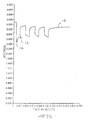
- Fig. 1 is a graph showing the pulse discharge curve 10 of a control electrochemical cell activated with an electrolyte comprising an alkali metal salt dissolved in an aprotic organic solvent devoid of an organic carbonate additive according to the present invention.
- Fig. 2 is a graph showing the pulse discharge curve 20 of an electrochemical cell activated with an electrolyte comprising an alkali metal salt dissolved in an aprotic organic solvent including an organic additive according to the present invention.
- Fig. 3 is a graph showing the pulse discharge curve 30 of an electrochemical cell similar to that discharged to generate the graph shown in Fig. 2 but without the organic additive.
- Figs. 4 to 6 are graphs showing discharge curves of electrochemical cells having 800 mAh of capacity removed before testing and including no additive, 0.01M BSC additive and 0.03M DBC additive, respectively.
- Figs. 7 to 9 are graphs showing discharge curves of electrochemical cells having 1200 mAh of capacity removed before testing and including no additive, 0.01M BSC additive and 0.03M DBC additive, respectively.
- the electrochemical cell of the present invention includes an anode selected from Group IA of the Periodic Table of Elements, including lithium, sodium, potassium, etc., and their alloys and intermetallic compounds including, for example Li-Si, Li-B and Li-Si-B alloys and intermetallic compounds.
- the preferred anode comprises lithium, and the more preferred anode comprises a lithium alloy, the preferred lithium alloy being lithium-aluminum with the aluminum comprising from between about 0% to about 50% by weight of the alloy. The greater the amount of aluminum present by weight in the alloy the lower the energy density of the cell.
- the form of the anode may vary, but preferably the anode is a thin metal sheet or foil of the anode metal, pressed or rolled on a metallic anode current collector, i.e., preferably comprising nickel, to form an anode component.
- the anode component has an extended tab or lead of the same material as the anode current collector, i.e., preferably nickel, integrally formed therewith such as by welding and contacted by a weld to a cell case of conductive metal in a case-negative electrical configuration.
- the anode may be formed in some other geometry, such as a bobbin shape, cylinder or pellet to allow an alternate low surface cell design.
- the electrochemical reaction at the cathode involves conversion of ions which migrate from the anode to the cathode in atomic or molecular forms.
- the solid cathode material may comprise a metal element, a metal oxide, a mixed metal oxide, a metal sulfide or carbonaceous compounds, and combinations thereof. Suitable cathode materials include silver vanadium oxide, copper silver vanadium oxide, manganese dioxide, cobalt oxide, nickel oxide, copper vanadium oxide, titanium disulfide, copper oxide, copper sulfide, iron sulfide, iron disulfide, and fluorinated carbon.
- the solid cathode exhibits excellent thermal stability and is generally safer and less reactive than a non-solid cathode.
- the solid cathode material comprises a mixed metal oxide formed by the chemical addition, reaction or otherwise intimate contact or by a thermal spray coating process of various metal sulfides, metal oxides or metal oxide/elemental metal combinations.
- the materials thereby produced contain metals and oxides of Groups IB, IIB, IIIB, IVB, VB, VIB, VIIB and VIII of the Periodic Table of Elements, which includes the noble metals and/or their oxide compounds.
- an exemplary cathode active material comprises silver vanadium oxide having the general formula Ag x V 2 O y in any one of its many phases, i.e.
- the cell of the present invention includes a separator to provide physical separation between the anode and cathode active electrodes.
- the separator is of electrically insulative material to prevent an internal electrical short circuit between the electrodes, and the separator material also is chemically unreactive with the anode and cathode active materials and both chemically unreactive with and insoluble in the electrolyte.
- the separator material has a degree of porosity sufficient to allow flow therethrough of the electrolyte during the electrochemical reaction of the cell.
- Illustrative separator materials include non-woven glass, polypropylene, polyethylene, glass fiber materials, ceramics, polytetrafluorethylene membrane commercially available under the designations ZITEX (Chemplast Inc.), polypropylene membrane commercially available under the designation CELGARD (Celanese Plastic Company Inc.) and a membrane commercially available under the designation DEXIGLAS (C.H. Dexter, Div., Dexter Corp.).
- the form of the separator typically is a sheet which is placed between the anode and cathode electrodes and in a manner preventing physical contact therebetween.
- Such is the case when the anode is folded in a serpentine-like structure with a plurality of cathode plates disposed intermediate the anode folds and received in a cell casing or when the electrode combination is rolled or otherwise formed into a cylindrical "jellyroll" configuration.
- the electrochemical cell of the present invention further includes a nonaqueous, ionically conductive electrolyte operatively associated with the anode and the cathode electrodes.
- the electrolyte serves as a medium for migration of ions between the anode and the cathode during the electrochemical reactions of the cell and nonaqueous solvents suitable for the present invention are chosen so as to exhibit those physical properties necessary for ionic transport (low viscosity, low surface tension and wettability).
- Suitable nonaqueous solvents are comprised of an inorganic salt dissolved in a nonaqueous solvent and more preferably an alkali metal salt dissolved in a mixture of aprotic organic solvents comprising a low viscosity solvent including organic esters, ethers and dialkyl carbonates, and mixtures thereof, and a high permittivity solvent including cyclic carbonates, cyclic esters and cyclic amides, and mixtures thereof.
- Low viscosity solvents include tetrahydrofuran (THF), methyl acetate (MA), diglyme, triglyme, tetraglyme, dimethyl carbonate (DMC), 1,2-dimethoxyethane (DME), diethyl carbonate and others.
- High permittivity solvents include propylene carbonate (PC), ethylene carbonate (EC), acetonitrile, dimethyl sulfoxide, dimethyl formamide, dimethyl acetamide, ⁇ -butyrolactone (GBL) and N-methyl-pyrrolidinone (NMP) and others.
- Suitable nonaqueous solvents are substantially inert to the anode and cathode electrode materials and a preferred solvent comprises a 50/50 mixture (by volume) of propylene carbonate (PC) and dimethoxyethane (DME).
- the preferred electrolyte comprises an inorganic salt having the general formula MM'F 6 or MM'F 4 wherein M is an alkali metal similar to the alkali metal comprising the anode and M' is an element selected from the group consisting of phosphorous, arsenic, antimony and boron.
- M is an alkali metal similar to the alkali metal comprising the anode
- M' is an element selected from the group consisting of phosphorous, arsenic, antimony and boron.
- salts yielding M'F 6 are: hexafluorophosphate (PF 6 ), hexafluoroarsenate (AsF 6 ) and hexafluoroantimonate (SbF 6 ) while tetrafluoroborate (BF 4 ) is exemplary of salts yielding M'F 4 .
- the alkali metal salt of the electrolyte of the present invention preferably comprises lithium hexafluorophosphate, lithium hexafluoroarsenate, lithium hexafluoroantimonate or lithium tetrafluoroborate dissolved in a suitable solvent mixture.
- the corresponding sodium or potassium salts may be used.
- Other inorganic salts useful with the present invention include LiClO 4 , LiAlCl 4 , LiGaCl 4 , LiC(SO 2 CF 3 ) 3 , LiN(SO 2 CF 3 ) 2 and LiCF 3 SO 3 , and mixtures thereof.
- the addition of certain organic carbonate additives to the electrolyte solution has beneficial effects in minimizing or eliminating voltage delay when the cell is subjected to current pulse discharge conditions.
- the organic carbonate additives can be either linear or cyclic carbonates containing covalent O-X and O-Y bonds on opposite sides of a carbonyl group and have the general structure of X-O-CO-O-Y, wherein X and Y are the same or different and X is selected from MR 1 R 2 and CR 3 R 4 R 5 , Y is selected from NR' 1 R' 2 and CR' 3 R' 4 R' 5 , and wherein R 1 , R 2 , R 3 , R 4 , R 5 , R' 1 , R' 2 , R' 3 , R' 4 and R' 5 are the same or different, and at least R 3 is an unsaturated substituent if X is CR 3 R 4 R 5 and Y is CR' 3 R' 4 R' 5 .
- the presence of at least one of the covalent O-X and O-Y bonds on opposite sides of the carbonyl group having a dissociation energy less than about 80 kcal/mole in the present compounds having the general formula X-O-CO-O-Y is important for improved performance of the alkali metal cells, and particularly lithium cells. Due to the respectively low O-X and O-Y bond dissociation energy, the above listed family of additives can compete effectively with electrolyte solvents or solutes to react with the lithium anode. Increased amounts of lithium carbonate are believed to be deposited on the anode surface to form an ionically conductive protective film. As a consequence, the chemical composition and perhaps the morphology of the anode surface protective layer is believed to be changed with concomitant benefits to the cell's discharge characteristics.
- the anode is lithium metal and the cathode is preferably the transition mixed metal oxide AgV 2 O 5.5 (SVO).
- the preferred electrolyte is 1.OM to 1.2M LiAsF 6 dissolved in an aprotic solvent mixture comprising at least one of the above listed low viscosity solvents and at least one of the above listed high permittivity solvents.
- the preferred aprotic solvent mixture comprises a 50/50, by volume, mixture of propylene carbonate and dimethoxyethane.
- concentration of the above mentioned organic additives should preferably be in the range of between about 0.001M to about 0.2M. The positive effects of these additives have been achieved both at room temperature as well as at temperatures up to about 37°C.
- the assembly of the cell described herein is preferably in the form of a wound element cell. That is, the fabricated cathode, anode and separator are wound together in a "jellyroll" type configuration or “wound element cell stack" such that the anode is on the outside of the roll to make electrical contact with the cell case in a case-negative configuration.
- the wound cell stack is inserted into a metallic case of a suitable size dimension.
- the metallic case may comprise materials such as stainless steel, mild steel, nickel-plated mild steel, titanium or aluminum, but not limited thereto, so long as the metallic material is compatible for use with components of the cell.
- the cell header comprises a metallic disc-shaped body with a first hole to accommodate a glass-to-metal seal/terminal pin feedthrough and a second hole for electrolyte filling.
- the glass used is of a corrosion resistant type having up to about 50% by weight silicon such as CABAL 12, TA 23 or FUSITE 425 or FUSITE 435.
- the positive terminal pin feedthrough preferably comprises titanium although molybdenum, aluminum, nickel alloy, or stainless steel can also be used.
- the cell header comprises elements having compatibility with the other components of the electrochemical cell and is resistant to corrosion.
- the cathode lead is welded to the positive terminal pin in the glass-to-metal seal and the header is welded to the case containing the electrode stack.
- the cell is thereafter filled with the electrolyte solution comprising at least one of the organic carbonate additives described hereinabove and hermetically sealed such as by close-welding a stainless steel ball over the fill hole, but not limited thereto.
- This above assembly describes a case-negative cell which is the preferred construction of the exemplary cell of the present invention.
- the exemplary electrochemical system of the present invention can also be constructed in a case-positive configuration.
- Lithium anode material and silver vanadium oxide cathode material were each pressed on titanium current collector screens connected to nickel leads.
- a prismatic cell stack assembly of a single anode and a single cathode with two layers of polypropylene separator sandwiched between the two electrodes was prepared.
- the thusly constructed electrode assembly was placed in a glass vessel sealed with a rubber septum and activated with a nonaqueous electrolyte.
- the electrochemical cell assemblies were then divided into ten cell groups.
- the nonaqueous electrolyte was prepared by dissolving LiAsF 6 salt in each of the solvent mixtures listed in Table 1.
- All the cells i.e., those having the organic additives of the present invention dissolved in the respective electrolytes and the reference test cells, were discharged under a 1K ohm load for 1 hour and then discharged under a 2K ohm load.
- These cells received once every two days an application of a pulse train consisting of four 17.7 mA/cm 2 , 10 second pulses with 15 seconds rest between each pulse.
- Four pulse trains were applied to each cell. in general, voltage delay in the first pulse can be observed for all of the above reference test cells in the third and fourth pulse trains. Voltage delay is defined as pulse one end potential minus pulse one minimum potential as shown in Fig. 1 wherein in the pulse discharge curve 10, pulse one end potential is indicated at 12 and pulse one minimum potential is indicated at 14.
- a positive value indicates the existence of voltage delay.
- the larger this value the larger the voltage delay.
- the beneficial effects of the organic additives on the voltage delay are thus obtained by comparing the results of test cells having the organic additives of the present invention dissolved in the electrolyte solution with respect to the reference cells at pulse trains 3 and 4.
- the results from pulse train 4 are summarized in Table 3.
- Lithium anode material was pressed on nickel current collector screen and silver vanadium oxide cathode material was pressed on titanium current collector screen.
- a prismatic cell stack assembly configuration with two layers of microporous polypropylene membrane separator sandwiched between the anode and cathode was prepared.
- the electrode assembly was then hermetically sealed in a stainless steel casing in a case negative configuration and activated with an electrolyte comprising 1.0M LiAsF 6 dissolved in a 50/50 mixture (by volume) of propylene carbonate and 1,2-dimethoxyethane.
- Some of the cells in this example were provided with 0.01M DSC dissolved in the electrolyte while reference cells were built without the dissolved organic additive.
- curve 20 was constructed from the pulse discharge of the cell built according to the present invention with the DSC electrolyte additive with the pulse one end potential indicated at 22 and the pulse one minimum potential indicated at 24.
- the pulse discharge curve 30 shown in Fig. 3 the pulse one end potential is indicated at 32 and the pulse one minimum potential is indicated at 34.
- Voltage Delay (V) Data From Hermetic Cells at 37°C Effect of DSC Additive Without DSC Additive (P 1end -P 1min ) With DSC Additive (P 1end -P 1min ) 0.163 0.116
- Hermetically sealed Li/SVO defibrillator cells were constructed similar to those described in Example II and activated with an electrolyte comprising 1.OM LiAsF 6 dissolved in a 50/50 mixture (by volume) of propylene carbonate and 1,2-dimethoxyethane. Some of the cells were provided with 0.01M BSC dissolved in the electrolyte while some of the cells were provided with 0.03M DBC additive dissolved in the electrolyte. Reference cells for the two cell groups were built without organic additives in the electrolyte. These cells were further divided into two sub-groups. One group was partially discharged under 200 ohm for about 56 hours to remove 800 mAh capacity.
- the second sub-group cells were discharged under 200 ohm for about 87 hours to remove 1200 mAh capacity. After storing on open circuit at 37°C for 8 weeks, they received an application of a pulse train consisting of four 18.4 mA/cm 2 , 10 second pulses with 15 second rest between each pulse at 37°C. The voltage delay results are listed in Table 6 and are graphically shown in Figs. 4 to 9.
- the pulse discharge curve 40 (Fig. 4) was constructed from a Li/SVO cell activated with an electrolyte of 1.OM LiAsF 6 dissolved in a 50/50 mixture (by volume) of propylene carbonate and 1,2-dimethoxyethane without any additive therein and after 800 mAh of capacity was removed, wherein the pulse one end potential is indicated at 42 and the pulse one minimum potential is indicated at 44.
- the pulse discharge curve 50 in Fig. 5 was constructed from a cell similar to that used in Fig.
- the pulse discharge curve 60 in Fig. 6 was constructed from a similar electrochemical system as that used in Fig. 5 except that the electrolyte contained 0.03M DBC additive dissolved therein and after 800 mAh of capacity was removed, wherein the pulse one end potential is indicated at 62 and the pulse one minimum potential is indicated at 64.
- the pulse discharge curve in Fig. 7 was constructed from a Li/SVO cell activated with an electrolyte of 1.OM LiAsF 6 dissolved in a 50/50 mixture (by volume) of PC/DME without any additive therein and after 1200 mAh of capacity was removed, wherein the pulse one end potential is indicated at 72 and the pulse one minimum potential is indicated at 74.
- the pulse discharge curve 80 in Fig. 8 was constructed from a similar electrochemical system as that used in Fig. 7 except that the electrolyte contained 0.01M BSC additive dissolved therein and after 1200 mAh of capacity was removed, wherein the pulse one end potential is indicated at 82 and the pulse one minimum potential is indicated at 84.
- Organic carbonate additives are also found to be beneficial to low rate lithium batteries with carbon monofluoride as a cathode material.
- Li/CF x batteries were constructed in a similar fashion to those described in Example II (except using a non-woven polypropylene separator instead of microporous membrane polypropylene separator) and activated with an electrolyte comprising 1.OM LiBF 4 dissolved in GBL. Some of the cells were provided with 0.01M DSC dissolved in the electrolyte while reference cells were built without any organic additive in the electrolyte. These cells were further divided into three sub-groups. These three sub-groups were discharged under constant loads of 2.OK ohm, 5.1K ohm and 10.OK ohm, respectively. The results are summarized in Tables 7, 8 and 9. Li/CF x Cell Potential (V) vs.
- the organic carbonates of the present invention are reduced to form a product which deposits on the anode surface.
- This surface film is ionically more conductive than the film formed in the absence of the additives and it is responsible for the increased cell performance. Since lithium carbonate is known to form a good ionic conductive film on lithium surfaces, the reductive cleavage of the O-X and/or the O-Y bonds in the carbonate additives of the present invention may produce lithium carbonate as the final product.
Landscapes
- Chemical & Material Sciences (AREA)
- Manufacturing & Machinery (AREA)
- Engineering & Computer Science (AREA)
- Chemical Kinetics & Catalysis (AREA)
- Electrochemistry (AREA)
- General Chemical & Material Sciences (AREA)
- General Physics & Mathematics (AREA)
- Condensed Matter Physics & Semiconductors (AREA)
- Inorganic Chemistry (AREA)
- Physics & Mathematics (AREA)
- Primary Cells (AREA)
- Secondary Cells (AREA)
- Battery Electrode And Active Subsutance (AREA)
Claims (13)
- Eine elektrochemische Zelle, umfassend eine Alkalimetall anode; eine Kathode; einen arbeitend mit der Anode und der Kathode verbundenen Elektrolyten, die Verbesserung der Zelle umfassend: ein organisches Additiv, gelöst in dem Elektrolyten, worin das Additiv entweder linear oder cyclisch ist und covalente O-X- und O-Y-Bindungen auf gegenüberliegenden Seiten einer Carbonylgruppe umfasst und die allgemeine Struktur X-O-CO-O-Y aufweist, worin mindestens eine der O-X- und der O-Y-Bindungen eine Dissoziationsenergie von weniger als etwa 80 kcal/Mol aufweist und worin X und Y gleich oder verschieden sind und X ausgewählt ist unter NR1R2 und CR3R4R5 und Y ausgewählt ist unter NR'1R'2 und CR'3R'4R'5 und worin R1, R2, R3, R4, R5, R'1, R'2, R'3, R'4 und R'5 gleich oder verschieden sind und mindestens R3 ein ungesättigter Substituent ist, falls X CR3R4R5 und Y CR'3R'4R'5 ist.
- Elektrochemische Zelle gemäß Anspruch 1, worin das Additiv ausgewählt ist unter:a) X = Y = NR1R2;b) X ≠ Y, dann X = NR1R2 und Y = CR3R4R5c) X ≠ Y, dann X = NR1R2 und Y = NR'1R'2d) X = Y = CR3R4R5 und R3 ist eine ungesättigte Gruppe; unde) X ≠ Y, dann X = CR3R4R5 und R3 ist eine ungesättigte Gruppe und Y = CR'3R'4R'5 und Mischungen derselben.
- Elektrochemische Zelle gemäß Anspruch 1 oder 2, worin das Additiv ausgewählt ist unter Di-(N-succinimidyl)carbonat, Benzyl-N-succinimidylcarbonat, Di-(1-benzotriazolyl)carbonat, N-(Benzyloxycarbonyloxy)succinimid, N-Benzyloxycarbonyloxy-5-norbornen-2-3-dicarboximid, N-(9-fluorenylmethoxycarbonyloxy)-succinimid, 2-(4-Methoxybenzyloxycarbonyloxyimino)-2-phenylazetonitril, 1,5-bis-(Succinimidooxycarbonyloxy)pentan, Succinimidyl-2,2,2-trichlorethylcarbonat, Diallylcarbonat, Allylethylcarbonat, 4-Phenyl-1,3-dioxolan-2-on und Dibenzylcarbonat und Mischungen derselben.
- Elektrochemische Zelle gemäß einem der Ansprüche 1 bis 3, worin die Anode aus einem Alkalimetall besteht, der Elektrolyt ein nichtwässriger Elektrolyt ist und in diesem ein Alkalimetallsalz gelöst ist, das dem die Anode ausmachenden Alkalimetall entspricht.
- Elektrochemische Zelle gemäß einem der Ansprüche 1 bis 4, worin die Zelle umfasst:a) die Alkalimetallanode, die elektrochemisch oxidierbar ist, um bei der Entladung Metallionen in der Zelle zu bilden, um einen Elektronenfluss in einem daran angeschlossenen externen elektrischen Schaltkreis zu erzeugen;b) die Kathode, umfassend ein kathodenaktives Material, worin der Elektronenfluss durch Interkalation der durch Oxidation der Alkalimetallanode gebildeten Metallionen in das kathodenaktive Material erzeugt wird; undc) der Elektrolyt ist arbeitend mit der Anode und der Kathode verbunden, wobei der Elektrolyt ein nichtwässriger Elektrolyt ist, umfassend ein darin gelöstes Alkalimetallsalz, worin das Alkalimetallsalz dem die Anode ausmachenden Alkalimetall gleichartig ist, oder worin der Elektrolyt mindestens ein Ionen bildendes Alkalimetallsalz umfasst, ausgewählt unter Hexafluoroarsenat, Hexafluorophosphat und Hexafluoroantimonat und Mischungen derselben, worin das Alkalimetallsalz dem die Anode ausmachenden Alkalimetall gleichartig ist.
- Elektrochemische Zelle gemäß Anspruch 5, worin der nichtwässrige Elektrolyt ein niedrig viskoses Lösungsmittel umfasst, ausgewählt unter einem Ester, einem Ether und einem Dialkylcarbonat und Mischungen derselben.
- Elektrochemische Zelle gemäß Anspruch 6, worin das niedrig viskose Lösungsmittel ausgewählt ist unter 1,2-Dimethoxyethan, Dimethylcarbonat, Diethylcarbonat, Methylacetat, Tetrahydrofuran, Diglyme, Triglyme und Tetraglyme und Mischungen derselben.
- Elektrochemische Zelle gemäß einem der Ansprüche 5 bis 7, worin das nichtwässrige Lösungsmittel ein Lösungsmittel mit hoher Dielektrizitätskonstante umfasst, ausgewählt unter einem cyclischen Carbonat, einem cyclischen Ester und einem cyclischen Amid und Mischungen derselben.
- Elektrochemische Zelle gemäß Anspruch 8, worin das Lösungsmittel mit hoher Dielektrizitätskonstante ausgewählt ist unter Propylencarbonat, Ethylencarbonat, γ-Butyrolacton, N-Methylpyrrolidinon, Dimethylsulfoxid, Acetonitril, Dimethylformamid und Dimethylacetamid und Mischungen derselben.
- Elektrochemische Zelle gemäß einem der Ansprüche 5 bis 9, worin die Kathode ein kathodenaktives Material umfasst, ausgewählt unter Silbervanadiumoxid, Kupfersilbervanadiumoxid, Mangandioxid, Cobaltoxid, Nickeloxid, fluoriertem Kohlenstoff, Kupferoxid, Kupfersulfid, Eisensulfid, Eisendisulfid, Titandisulfid und Kupfervanadiumoxid und Mischungen derselben.
- Elektrochemische Zelle gemäß einem der Ansprüche 5 bis 10, worin das Alkalimetallsalz, umfassend die Elektrolytlösung, ausgewählt ist unter LiPF6, LiAsF6, LiSbF6, LiBF4, LiClO4, LiAlCl4, LiGaCl4, LiC(SO2CF3)3, LiN(SO2CF3)2 und LiCF3SO3 und Mischungen derselben.
- Verfahren zur Verringerung der Spannungsverzögerung in einer elektrochemischen Zelle, die mit einem nichtwässrigen Elektrolyten aktiviert wird, das umfasst:a) Bereitstellen einer ein Alkalimetall umfassenden Anode;b) Bereitstellen einer festen Kathode aus einem elektronisch leitenden Material;c) Aktivieren der elektrochemischen Zelle mit dem nichtwässrigen Elektrolyten, der arbeitend mit der Anode und der Kathode verbunden ist, wobei der nichtwässrige Elektrolyt ein darin gelöstes Alkalimetallsalz umfasst, worin das Alkalimetall des Salzes dem die Anode umfassenden Alkalimetall gleichartig ist; undd) Auflösen eines organischen Additivs in dem Elektrolyten, worin das Additiv entweder linear oder cyclisch ist und covalente O-X- und O-Y-Bindungen auf gegenüberliegenden Seiten einer Carbonylgruppe umfasst und die allgemeine Struktur X-O-CO-O-Y aufweist, worin mindestens eine der O-X- und der O-Y-Bindungen eine Dissoziationsenergie von weniger als etwa 80 kcal/Mol hat und worin X und Y gleich oder verschieden sind und X ausgewählt ist unter NR1R2 und CR3R4R5 und Y ausgewählt ist unter NR'1R'2 und CR'3R'4R'5 und worin R1, R2, R3, R4, R5, R'1, R'2, R'3, R'4 und R'5 gleich oder verschieden sind und mindestens R3 ein ungesättigter Substituent ist, wenn X CR3R4R5 und Y CR'3R'4R'5 ist.
- Verfahren gemäß Anspruch 12, worin die elektrochemische Zelle die elektrochemische Zelle nach einem der Ansprüche 1 bis 12 ist.
Applications Claiming Priority (2)
| Application Number | Priority Date | Filing Date | Title |
|---|---|---|---|
| US08/638,894 US5753389A (en) | 1995-03-17 | 1996-04-25 | Organic carbonate additives for nonaqueous electrolyte in alkali metal electrochemical cells |
| US638894 | 1996-04-25 |
Publications (3)
| Publication Number | Publication Date |
|---|---|
| EP0803924A2 EP0803924A2 (de) | 1997-10-29 |
| EP0803924A3 EP0803924A3 (de) | 1998-12-09 |
| EP0803924B1 true EP0803924B1 (de) | 2001-10-31 |
Family
ID=24561898
Family Applications (1)
| Application Number | Title | Priority Date | Filing Date |
|---|---|---|---|
| EP97300964A Expired - Lifetime EP0803924B1 (de) | 1996-04-25 | 1997-02-14 | Organische Carbonate als Zusätze in nichtwässrigen Elektrolyten alkali-metallelektrochemischer Zellen |
Country Status (5)
| Country | Link |
|---|---|
| US (1) | US5753389A (de) |
| EP (1) | EP0803924B1 (de) |
| JP (1) | JP4064492B2 (de) |
| AU (1) | AU708221B2 (de) |
| DE (1) | DE69707746T2 (de) |
Families Citing this family (58)
| Publication number | Priority date | Publication date | Assignee | Title |
|---|---|---|---|---|
| JP3416016B2 (ja) * | 1997-03-18 | 2003-06-16 | 富士通株式会社 | リチウム二次電池用イオン伝導体及びそれを用いたリチウム二次電池 |
| JP3945004B2 (ja) * | 1997-08-22 | 2007-07-18 | 宇部興産株式会社 | リチウム二次電池用電解液およびそれを用いたリチウム二次電池 |
| US6096447A (en) * | 1997-11-05 | 2000-08-01 | Wilson Greatbatch Ltd. | Phosphonate additives for nonaqueous electrolyte in alkali metal electrochemical cells |
| US6068950A (en) * | 1997-11-19 | 2000-05-30 | Wilson Greatbatch Ltd. | Organic phosphate additives for nonaqueous electrolyte in alkali metal electrochemical cells |
| US6063526A (en) * | 1998-04-16 | 2000-05-16 | Wilson Greatbatch Ltd. | Dicarbonate additives for nonaqueous electrolyte in alkali metal electrochemical cells |
| EP1096592A4 (de) * | 1998-06-04 | 2007-05-02 | Mitsubishi Chem Corp | Sekundärbatterie mit nichtwässriger elektrolytischer lösung |
| US6759170B2 (en) | 1998-10-22 | 2004-07-06 | Wilson Greatbatch Technologies, Inc. | Organic carbonate additives for nonaqueous electrolyte rechargeable electrochemical cells |
| EP0996187A1 (de) * | 1998-10-22 | 2000-04-26 | Wilson Greatbatch Ltd. | Organische Karbonate als Zusätze für nichtwässrige aufladbare Zellen |
| US20010004507A1 (en) * | 1998-10-22 | 2001-06-21 | Hong Gan | Organic carbonate additives for nonaqueous electrolyte rechargeable electrochemical cells |
| US6221534B1 (en) * | 1998-11-25 | 2001-04-24 | Wilson Greatbatch Ltd. | Alkali metal electrochemical cell having an improved cathode activated with a nonaqueous electrolyte having a carbonate additive |
| JP2000182621A (ja) * | 1998-12-11 | 2000-06-30 | Fujitsu Ltd | リチウム二次電池、リチウム二次電池用の負極、およびこの負極の製造方法 |
| DE19910968A1 (de) * | 1999-03-12 | 2000-11-09 | Merck Patent Gmbh | Anwendung von Additiven in Elektrolyten für elektrochemische Zellen |
| US6174629B1 (en) | 1999-09-10 | 2001-01-16 | Wilson Greatbatch Ltd. | Dicarbonate additives for nonaqueous electrolyte rechargeable cells |
| JP4827287B2 (ja) * | 2000-09-25 | 2011-11-30 | 株式会社デンソー | 非水電解液および該電解液を用いた非水電解液二次電池 |
| US6586135B2 (en) | 2001-03-21 | 2003-07-01 | Wilson Greatbach Ltd. | Electrochemical cell having an electrode with a dicarbonate additive in the electrode active mixture |
| US6605385B2 (en) | 2001-03-22 | 2003-08-12 | Wilson Greatbatch Ltd. | Electrochemical cell having an electrode with a carbonate additive in the electrode active mixture |
| US7807300B2 (en) * | 2006-01-31 | 2010-10-05 | Medtronic, Inc. | Resistance-stabilizing additives for electrolyte |
| US7442471B1 (en) * | 2001-11-27 | 2008-10-28 | The United States Of America As Represented By The Secretary Of The Army | Solvent systems comprising a mixture of lactams and esters for non-aqueous electrolytes and non-aqueous electrolyte cells comprising the same |
| DE60322285D1 (de) * | 2002-02-20 | 2008-09-04 | Greatbatch W Technologies | Organische, zyklische Carbonate als Zusatzstoff in nichtwässrigem Elektrolyten von elektrochemischen Alkalimetall Zellen |
| US7226702B2 (en) | 2002-03-22 | 2007-06-05 | Quallion Llc | Solid polymer electrolyte and method of preparation |
| US20030180624A1 (en) * | 2002-03-22 | 2003-09-25 | Bookeun Oh | Solid polymer electrolyte and method of preparation |
| US7695860B2 (en) * | 2002-03-22 | 2010-04-13 | Quallion Llc | Nonaqueous liquid electrolyte |
| US20050019656A1 (en) * | 2002-03-22 | 2005-01-27 | Yoon Sang Young | Method for fabricating composite electrodes |
| US7498102B2 (en) * | 2002-03-22 | 2009-03-03 | Bookeun Oh | Nonaqueous liquid electrolyte |
| US6887619B2 (en) | 2002-04-22 | 2005-05-03 | Quallion Llc | Cross-linked polysiloxanes |
| US7588859B1 (en) | 2004-02-11 | 2009-09-15 | Bookeun Oh | Electrolyte for use in electrochemical devices |
| US20040161671A1 (en) * | 2003-02-13 | 2004-08-19 | Medtronic, Inc. | Liquid electrolyte for an electrochemical cell |
| US20070065728A1 (en) | 2003-03-20 | 2007-03-22 | Zhengcheng Zhang | Battery having electrolyte with mixed solvent |
| US8076032B1 (en) | 2004-02-04 | 2011-12-13 | West Robert C | Electrolyte including silane for use in electrochemical devices |
| US7718321B2 (en) * | 2004-02-04 | 2010-05-18 | Quallion Llc | Battery having electrolyte including organoborate salt |
| US8076031B1 (en) | 2003-09-10 | 2011-12-13 | West Robert C | Electrochemical device having electrolyte including disiloxane |
| AR045347A1 (es) | 2003-08-08 | 2005-10-26 | Rovcal Inc | Celda alcalina de alta capacidad |
| US7473491B1 (en) | 2003-09-15 | 2009-01-06 | Quallion Llc | Electrolyte for electrochemical cell |
| US8765295B2 (en) | 2004-02-04 | 2014-07-01 | Robert C. West | Electrolyte including silane for use in electrochemical devices |
| US9786954B2 (en) | 2004-02-04 | 2017-10-10 | Robert C. West | Electrolyte including silane for use in electrochemical devices |
| US8153307B1 (en) | 2004-02-11 | 2012-04-10 | Quallion Llc | Battery including electrolyte with mixed solvent |
| AR047875A1 (es) | 2004-06-04 | 2006-03-01 | Rovcal Inc | Celdas alcalinas que presentan alta capacidad |
| EP1898485A4 (de) * | 2005-06-23 | 2010-03-31 | Mitsubishi Chem Corp | Wasserfreier elektrolyt und wiederaufladbare batterie mit wasserfreiem elektrolyt |
| US20060288547A1 (en) * | 2005-06-23 | 2006-12-28 | 3M Innovative Properties Company | Zoned stretching of a web |
| US20070077488A1 (en) * | 2005-10-04 | 2007-04-05 | Kaimin Chen | Power capability of a cathode |
| EP1989748B1 (de) * | 2006-01-17 | 2012-10-31 | Medtronic, Inc. | Batterie für implantierbare medizinische vorrichtung |
| US20070176151A1 (en) * | 2006-01-31 | 2007-08-02 | Kaimin Chen | Electrolyte additive for performance stability of batteries |
| WO2007096579A1 (en) * | 2006-02-24 | 2007-08-30 | British Telecommunications Public Limited Company | Sensing a disturbance |
| JP5238748B2 (ja) * | 2010-04-19 | 2013-07-17 | シャープ株式会社 | 非水系二次電池およびその難燃剤 |
| US8795904B2 (en) | 2010-05-13 | 2014-08-05 | The United States Of America As Represented By The Secretary Of The Army | Nonaqueous electrolyte solvents and additives |
| US10438753B2 (en) | 2010-07-06 | 2019-10-08 | The United States Of America As Represented By The Secretary Of The Army | Electrolytes in support of 5V Li ion chemistry |
| US10608284B2 (en) | 2013-11-15 | 2020-03-31 | The Regents Of The University Of California | Electrochemical devices comprising compressed gas solvent electrolytes |
| JP7226771B2 (ja) | 2016-05-27 | 2023-02-21 | ザ リージェンツ オブ ザ ユニバーシティ オブ カリフォルニア | 電気化学エネルギー貯蔵デバイス |
| WO2019222345A1 (en) | 2018-05-18 | 2019-11-21 | South 8 Technologies, Inc. | Electrochemical cell cap |
| CN112204688B (zh) | 2018-05-18 | 2021-08-06 | 南8技术公司 | 电化学装置的化学配方 |
| US11362316B2 (en) | 2018-12-28 | 2022-06-14 | Pacesetter, Inc. | Battery having hybrid cathode configuration |
| US10873070B2 (en) | 2019-10-07 | 2020-12-22 | South 8 Technologies, Inc. | Method and apparatus for liquefied gas solvent delivery for electrochemical devices |
| US11735773B1 (en) | 2020-03-20 | 2023-08-22 | Greatbatch Ltd. | Lithium electrochemical cell activated with an electrolyte containing LiBOB and FEC additives |
| US11742520B2 (en) | 2020-05-15 | 2023-08-29 | Greatbatch Ltd. | Lithium electrochemical cell activated with an electrolyte containing DBC, LiBOB and FEC additives |
| CN112201852B (zh) * | 2020-09-30 | 2022-11-15 | 香河昆仑新能源材料股份有限公司 | 一种锂离子电池电解液添加剂及其制备方法以及锂离子电池电解液 |
| CN117280504A (zh) | 2021-05-12 | 2023-12-22 | 利特罗尼克电池技术有限公司 | 具有偕二腈添加剂的碱金属原电池 |
| WO2026017310A1 (en) | 2024-07-16 | 2026-01-22 | Litronik Batterietechnologie Gmbh | Primary alkali metal cells with cyano-cycloalkenes additives |
| CN119560633B (zh) * | 2024-12-10 | 2025-12-16 | 远景动力技术(江苏)有限公司 | 电解液、二次电池和用电装置 |
Family Cites Families (11)
| Publication number | Priority date | Publication date | Assignee | Title |
|---|---|---|---|---|
| DE2834485C2 (de) * | 1978-08-07 | 1982-01-21 | Rheinisch-Westfälisches Elektrizitätswerk AG, 4300 Essen | Wiederaufladbares galvanisches Element |
| JPS6286673A (ja) * | 1985-10-11 | 1987-04-21 | Toyota Central Res & Dev Lab Inc | リチウム二次電池用電解液 |
| US4830939B1 (en) * | 1987-10-30 | 1996-10-08 | Mhb Joint Venture | Radiation cured solid electrolytes and electrochemical devices employing the same |
| US4853304A (en) * | 1988-01-21 | 1989-08-01 | Honeywell, Inc. | Electrolyte for secondary non-aqueous cells |
| JP2717890B2 (ja) * | 1991-05-27 | 1998-02-25 | 富士写真フイルム株式会社 | リチウム二次電池 |
| JPH06349523A (ja) * | 1993-06-10 | 1994-12-22 | Fuji Photo Film Co Ltd | 非水電池 |
| US5358620A (en) * | 1993-10-13 | 1994-10-25 | Valence Technology, Inc. | Allyl polyelectrolytes |
| FR2719161B1 (fr) * | 1994-04-22 | 1996-08-02 | Accumulateurs Fixes | Générateur électrochimique rechargeable au lithium à anode de carbone. |
| JPH08106909A (ja) * | 1994-10-04 | 1996-04-23 | Sanyo Electric Co Ltd | 非水電解液電池 |
| WO1996029750A1 (en) * | 1995-03-17 | 1996-09-26 | Wilson Greatbatch Ltd. | Organic carbonate additives for nonaqueous electrolyte in alkali metal electrochemical cells |
| JP3756232B2 (ja) * | 1996-01-17 | 2006-03-15 | 宇部興産株式会社 | 非水電解質二次電池 |
-
1996
- 1996-04-25 US US08/638,894 patent/US5753389A/en not_active Expired - Lifetime
-
1997
- 1997-02-14 EP EP97300964A patent/EP0803924B1/de not_active Expired - Lifetime
- 1997-02-14 DE DE69707746T patent/DE69707746T2/de not_active Expired - Lifetime
- 1997-03-06 AU AU15117/97A patent/AU708221B2/en not_active Ceased
- 1997-03-31 JP JP11738297A patent/JP4064492B2/ja not_active Expired - Lifetime
Also Published As
| Publication number | Publication date |
|---|---|
| EP0803924A2 (de) | 1997-10-29 |
| JP4064492B2 (ja) | 2008-03-19 |
| AU708221B2 (en) | 1999-07-29 |
| US5753389A (en) | 1998-05-19 |
| EP0803924A3 (de) | 1998-12-09 |
| JPH1050325A (ja) | 1998-02-20 |
| DE69707746D1 (de) | 2001-12-06 |
| AU1511797A (en) | 1997-10-30 |
| DE69707746T2 (de) | 2002-07-11 |
Similar Documents
| Publication | Publication Date | Title |
|---|---|---|
| US5753389A (en) | Organic carbonate additives for nonaqueous electrolyte in alkali metal electrochemical cells | |
| US6511772B2 (en) | Electrochemical cell having an electrode with a phosphate additive in the electrode active mixture | |
| US6537698B2 (en) | Electrochemical cell having an electrode with a phosphonate additive in the electrode active mixture | |
| US6919141B2 (en) | Phosphate additives for nonaqueous electrolyte rechargeable electrochemical cells | |
| EP0829911B1 (de) | Ternäres Lösungsmittel enthaltender nichtwässriger organischer Elektrolyt für Alkalimetall enthaltende elektrochemische Zellen | |
| US6350542B1 (en) | Sulfite additives for nonaqueous electrolyte rechargeable cells | |
| US6350546B1 (en) | Sulfate additives for nonaqueous electrolyte rechargeable cells | |
| US6221534B1 (en) | Alkali metal electrochemical cell having an improved cathode activated with a nonaqueous electrolyte having a carbonate additive | |
| US6495285B2 (en) | Phosphonate additives for nonaqueous electrolyte in rechargeable electrochemical cells | |
| US6605385B2 (en) | Electrochemical cell having an electrode with a carbonate additive in the electrode active mixture | |
| US6027827A (en) | Organic nitrite additives for nonaqueous electrolyte in alkali metal electrochemical cells | |
| EP0971432A1 (de) | Anorganische und organische Nitrate als Elektrolytzusätze in nichtwässrigen elektrochemischen Alkalimetall-Zellen | |
| EP0917224A1 (de) | Phosphonate als Additive für nichtwässrige Elektrolyten in Alkalimetall enthaltende elektrochemische Zellen | |
| WO1996039723A1 (en) | Reduced voltage delay additive for nonaqueous electrolyte in alkali metal electrochemical cell | |
| US6174629B1 (en) | Dicarbonate additives for nonaqueous electrolyte rechargeable cells | |
| US20010004507A1 (en) | Organic carbonate additives for nonaqueous electrolyte rechargeable electrochemical cells | |
| US6593029B2 (en) | Manufacturing process for improved discharge of lithium-containing electrochemical cells | |
| US6013394A (en) | Organic sulfate additives for nonaqueous electrolyte in alkali metal electrochemical cells | |
| US6562515B2 (en) | Electrochemical cell having an electrode with a nitrate additive in the electrode active mixture | |
| US6586135B2 (en) | Electrochemical cell having an electrode with a dicarbonate additive in the electrode active mixture | |
| US6528207B2 (en) | Electrochemical cell having an electrode with a nitrite additive in the electrode active mixture | |
| EP0996187A1 (de) | Organische Karbonate als Zusätze für nichtwässrige aufladbare Zellen | |
| WO1996029750A1 (en) | Organic carbonate additives for nonaqueous electrolyte in alkali metal electrochemical cells |
Legal Events
| Date | Code | Title | Description |
|---|---|---|---|
| PUAI | Public reference made under article 153(3) epc to a published international application that has entered the european phase |
Free format text: ORIGINAL CODE: 0009012 |
|
| AK | Designated contracting states |
Kind code of ref document: A2 Designated state(s): DE FR GB IT NL SE |
|
| PUAL | Search report despatched |
Free format text: ORIGINAL CODE: 0009013 |
|
| AK | Designated contracting states |
Kind code of ref document: A3 Designated state(s): DE FR GB IT NL SE |
|
| 17P | Request for examination filed |
Effective date: 19990201 |
|
| 17Q | First examination report despatched |
Effective date: 20000110 |
|
| GRAG | Despatch of communication of intention to grant |
Free format text: ORIGINAL CODE: EPIDOS AGRA |
|
| GRAG | Despatch of communication of intention to grant |
Free format text: ORIGINAL CODE: EPIDOS AGRA |
|
| GRAH | Despatch of communication of intention to grant a patent |
Free format text: ORIGINAL CODE: EPIDOS IGRA |
|
| GRAH | Despatch of communication of intention to grant a patent |
Free format text: ORIGINAL CODE: EPIDOS IGRA |
|
| GRAH | Despatch of communication of intention to grant a patent |
Free format text: ORIGINAL CODE: EPIDOS IGRA |
|
| GRAA | (expected) grant |
Free format text: ORIGINAL CODE: 0009210 |
|
| AK | Designated contracting states |
Kind code of ref document: B1 Designated state(s): DE FR GB IT NL SE |
|
| REF | Corresponds to: |
Ref document number: 69707746 Country of ref document: DE Date of ref document: 20011206 |
|
| REG | Reference to a national code |
Ref country code: GB Ref legal event code: IF02 |
|
| ET | Fr: translation filed | ||
| PLBE | No opposition filed within time limit |
Free format text: ORIGINAL CODE: 0009261 |
|
| STAA | Information on the status of an ep patent application or granted ep patent |
Free format text: STATUS: NO OPPOSITION FILED WITHIN TIME LIMIT |
|
| 26N | No opposition filed | ||
| PGFP | Annual fee paid to national office [announced via postgrant information from national office to epo] |
Ref country code: NL Payment date: 20050214 Year of fee payment: 9 |
|
| PGFP | Annual fee paid to national office [announced via postgrant information from national office to epo] |
Ref country code: IT Payment date: 20060228 Year of fee payment: 10 |
|
| PG25 | Lapsed in a contracting state [announced via postgrant information from national office to epo] |
Ref country code: NL Free format text: LAPSE BECAUSE OF NON-PAYMENT OF DUE FEES Effective date: 20060901 |
|
| NLV4 | Nl: lapsed or anulled due to non-payment of the annual fee |
Effective date: 20060901 |
|
| PG25 | Lapsed in a contracting state [announced via postgrant information from national office to epo] |
Ref country code: IT Free format text: LAPSE BECAUSE OF NON-PAYMENT OF DUE FEES Effective date: 20070214 |
|
| PGFP | Annual fee paid to national office [announced via postgrant information from national office to epo] |
Ref country code: SE Payment date: 20110225 Year of fee payment: 15 |
|
| PGFP | Annual fee paid to national office [announced via postgrant information from national office to epo] |
Ref country code: GB Payment date: 20110223 Year of fee payment: 15 |
|
| GBPC | Gb: european patent ceased through non-payment of renewal fee |
Effective date: 20120214 |
|
| PG25 | Lapsed in a contracting state [announced via postgrant information from national office to epo] |
Ref country code: SE Free format text: LAPSE BECAUSE OF NON-PAYMENT OF DUE FEES Effective date: 20120215 |
|
| PG25 | Lapsed in a contracting state [announced via postgrant information from national office to epo] |
Ref country code: GB Free format text: LAPSE BECAUSE OF NON-PAYMENT OF DUE FEES Effective date: 20120214 |
|
| REG | Reference to a national code |
Ref country code: FR Ref legal event code: PLFP Year of fee payment: 19 |
|
| REG | Reference to a national code |
Ref country code: FR Ref legal event code: PLFP Year of fee payment: 20 |
|
| PGFP | Annual fee paid to national office [announced via postgrant information from national office to epo] |
Ref country code: DE Payment date: 20160209 Year of fee payment: 20 |
|
| PGFP | Annual fee paid to national office [announced via postgrant information from national office to epo] |
Ref country code: FR Payment date: 20160108 Year of fee payment: 20 |
|
| REG | Reference to a national code |
Ref country code: DE Ref legal event code: R071 Ref document number: 69707746 Country of ref document: DE |