EP0803094B1 - Procede et systeme de protection contre les erreurs des memoires programmables - Google Patents
Procede et systeme de protection contre les erreurs des memoires programmables Download PDFInfo
- Publication number
- EP0803094B1 EP0803094B1 EP96935199A EP96935199A EP0803094B1 EP 0803094 B1 EP0803094 B1 EP 0803094B1 EP 96935199 A EP96935199 A EP 96935199A EP 96935199 A EP96935199 A EP 96935199A EP 0803094 B1 EP0803094 B1 EP 0803094B1
- Authority
- EP
- European Patent Office
- Prior art keywords
- data
- discrepancy
- identifier
- error
- stored
- Prior art date
- Legal status (The legal status is an assumption and is not a legal conclusion. Google has not performed a legal analysis and makes no representation as to the accuracy of the status listed.)
- Expired - Lifetime
Links
Images

Classifications
-
- G—PHYSICS
- G06—COMPUTING OR CALCULATING; COUNTING
- G06F—ELECTRIC DIGITAL DATA PROCESSING
- G06F11/00—Error detection; Error correction; Monitoring
- G06F11/07—Responding to the occurrence of a fault, e.g. fault tolerance
- G06F11/16—Error detection or correction of the data by redundancy in hardware
-
- G—PHYSICS
- G06—COMPUTING OR CALCULATING; COUNTING
- G06F—ELECTRIC DIGITAL DATA PROCESSING
- G06F11/00—Error detection; Error correction; Monitoring
- G06F11/07—Responding to the occurrence of a fault, e.g. fault tolerance
- G06F11/08—Error detection or correction by redundancy in data representation, e.g. by using checking codes
- G06F11/10—Adding special bits or symbols to the coded information, e.g. parity check, casting out 9's or 11's
- G06F11/1008—Adding special bits or symbols to the coded information, e.g. parity check, casting out 9's or 11's in individual solid state devices
- G06F11/1044—Adding special bits or symbols to the coded information, e.g. parity check, casting out 9's or 11's in individual solid state devices with specific ECC/EDC distribution
-
- G—PHYSICS
- G11—INFORMATION STORAGE
- G11B—INFORMATION STORAGE BASED ON RELATIVE MOVEMENT BETWEEN RECORD CARRIER AND TRANSDUCER
- G11B20/00—Signal processing not specific to the method of recording or reproducing; Circuits therefor
- G11B20/10—Digital recording or reproducing
- G11B20/18—Error detection or correction; Testing, e.g. of drop-outs
- G11B20/1806—Pulse code modulation systems for audio signals
- G11B20/1813—Pulse code modulation systems for audio signals by adding special bits or symbols to the coded information
Definitions
- the invention relates to a method for error-protective encoding of data, said method comprising the steps of:
- the invention provides a method as defined in claim 1 which is characterized in that
- a dummy identifier is stored.
- the error protecting code is a block code.
- this allows for easy encoding as well as for easy decoding procedures.
- non-block coding schemes such as for example, based on convolution codes would be feasible as well.
- convolution type codes in a matrix memory environment see United States Patent Serial No. 5,022,031 (PHN 12232) to the present assignee.
- a convolution type code for use in a linear medium environment has been described in US Patent 4,395,768 (PHN 9079) to the present assignee. Both documents describe encoding as well as decoding.
- the invention also relates to a device as defined in claim 8 for error-protective encoding of data, said device comprising:
- the invention also relates to a method as defined in claim 10 for decoding data that have been encoded according to the foregoing, said method comprising the steps of reading and decoding said encoded data, and upon so attaining correctly decoded data forwarding said decoded data to a user, and furthermore accessing a discrepancy identifier stored in association with the encoded data, under control of said discrepancy identifier amending said encoded data to correctible data, and decoding the correctible data to correctly decoded data for forwarding to a user.
- the specific encoding scheme allows for a particularly straightforward and simple decoding strategy.
- the invention also relates to a decoding device for data as defined in claim 12 that have been encoded according to the foregoing, said device comprising medium access means for reading and decoding said encoded data, detection means fed by said access means for detecting correctly decoded data for forwarding said decoded data to a user, further detection/amending means for accessing a discrepancy identifier stored in association with the encoded data, and under control of said discrepancy identifier amending said encoded data to correctible data, and said decoding means being fed by said further detection/amending means for decoding the correctible data to correctly decoded data for forwarding to a user.
- An elementary decoder is sufficient to allow a relatively robust protection level to be fully utilized.
- the invention also relates to a storage medium as defined in claim 14 comprising data generated by the encoding method of the foregoing, and having a plurality of uniform-sized storage locations each accommodating storage of an encoded data unit and an associated discrepancy identifier, and said medium allowing location-wise access thereto.
- the medium can be in various realizations, such as matrix-organized, in particular an EEPROM or similar memory type. Another realization uses a linear storage format.
- Figure 1 shows a general block diagram of an encoding device according to the invention.
- Data to be stored is received along interconnection 20 in central processing and control device 22.
- This device implements an error protecting code.
- the encoded data so formed is presented to registers 24 and 28.
- Register 28 is bidirectionally connected to read/write buffer 30 that interfaces to matrix memory 34.
- matrix memory 34 receives a row address along line 42 in row addressing mechanism 38.
- read/write buffer 30 receives a write control signal so that the content of register 28 is written at the so-addressed row. For a check, the same row is addressed once more in read mode, and the data read out is stored in register 28, therewith overwriting old data in that register.
- comparing device 26 under control of an enabling signal on line 50 from central processing and control device 22 compares the contents of registers 24 and 28. If identical, device 26 sends a 'ready' signal on bidirectional connection 50 to central processing and control device 22, thus enabling it to prepare storage of a next memory row. If non-identical, comparator 26 generates a discrepancy identifier from the difference and sends a signal 'store discrepancy identifier' to central processing and control device 22. The discrepancy identifier is via line 44 sent to write buffer 32. Under control of a signal on line 42 and a write control signal on line 40, the discrepancy identifier is stored in part 36 of the matrix memory that specifically accommodates thereto.
- the manner in which the discrepancy identifier is coded will be described hereinafter; a particular dummy value, such as all-zero, may signal identity between stored data and encoded data. Subsequently, the system is ready to prepare storage of a next memory row. For brevity, the organization and timing of the storage cycles has not been discussed further.
- the memory may be EPROM or EEPROM, but also, a fuse-programmable memory or even an S-RAM would be fully operative.
- the discrepancy identifier may indicate the position of a particular non-conforming bit, for example, the one with the lowest rank in the word, but other solutions are possible. The discrepancy identifier may in principle indicate more than one non-conforming bit.
- FIG. 2 is a general block diagram of a decoding device according to the invention.
- Block 80 executes read control upon request by an external entity not shown.
- row address decoder 82 receives the row address, and the necessary timing and read enabling signals. The information read out is sent towards standard decoder 92 via buffer 90. On its data output 98 the decoder will produce the corrected data if correctible, or if applicable, provided with signalization of an undecoded error situation on line 94. Either upon reception of the latter signalization or immediately at the beginning, the discrepancy identifier read out from memory part 86 is decoded in decoder 88. If the discrepancy identifier indicates unreliable data, this is signalled on line 95 to a user.
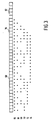
- Figure 3 shows a particular coding scheme to be used in the invention.
- a single bit error correcting, double bit error detecting [30,24,4] Hamming bit code is used as an error protective code.
- block 60 contains the 24 user bits.
- Block 76 contains 6 redundant bits. Of these, 5 bits suffice to attain-single-bit error correction.
- the sixth bit raises that level to simultaneous single-bit error correction and double bit error protection, corresponding to distance 4. In fact, distance 4 also allows triple bit error detection.
- Lines 64-74 show the formation of the six parity bits as follows. As indicated by the dots on line 64, the sixth parity bit is generated by even parity on all bits.
- the fifth parity bit is generated by even parity on all odd numbered bits, and so on for the further parity bits.
- the code as shown up to now is known in the art.
- the rank thereof is stored in the five remaining bits in part 62.
- the rank may be coded from 00001 to 11110 (HEX 1E).
- the absence of error may be represented by a dummy identifier (00000). If two errors are found, the rank of the first one is indicated by the discrepancy identifier. If three or more errors are found, an URD code 11111 (IF) is stored, signalling UnReliable Data.
- the standard decoding is undertaken for this particular code. If the decoding is successful, the reconstructed data is available to a user. If the amount of errors is too high, the outcome will generally be an incorrectibility signalization. In rather improbable situations, the errors will map the erroneous data word on another code word or rather on a data word that is correctable another to code word.
- the discrepancy identifier is inspected, to find an error that had been detected originally upon first write.
- the following codes may be found therein:
- case 1 The result of case 1 is that the stored data was already beyond correction, and an unreliability signal is sent to a user.
- case 2 the original error is directly pointed at; after inversion thereof, the decoding will present correct data.
- case 3 the decoding also after access of the discrepancy identifier will signal correctly the presence of exactly two incorrectible bit errors.
- Case 4 gives the same result as case 2: one error is inverted through the discrepancy identifier. Thereafter, the second error becomes correctable.
- Cases 5 and 6 are beyond correction, but also here, after inversion of the bit error identified by the discrepancy identifier, the presence of exactly two bit errors is correctly signalled. In all cases, an optimistic view is held.
- the later errors may or may not lead to a corrected word; correction or even detection are not guaranteed.
- the later errors are supposed to occur in the encoded data.
- the discrepancy identifier may comprise the extra error. In general, this will lead to pointing at an erroneous discrepancy position. The result of the decoding will then be dependent on the existence of an earlier error in the encoded data. If none, full correction is attained. If one, two errors are detected. The other possibilities will be clear now.
- the coding scheme used is particularly advantageous through the properties of the distance 4 code.
- the error protectivity is relatively high.
- the decoding is extremely simple because the discrepancy identifier may control the correcting of one error simply through inverting.
- a conventional [35,24,5] code may also correct two errors, but necessitates a decoder of much greater complexity.
- the only advantage of the latter code is that the two errors may occur at any instant in time .
- the two-error correctability requires that one error occurs at first write.
- this is no disadvantage, because in the environment of a matrix memory, in particular an EEPROM or the like, a great fraction of the errors will occur at the write operation.
- the present invention in case at least one error occurs at the original write phase, guarantees three error detection (including one original write error).
- tail point to an error position found during read-back, and add a parity bit over the tail to get odd parity. If at later read-out the tail has odd weight, the original error protection code is used without heeding the tail. If the tail has even weight however, the bit to which it is pointing, is inverted, and the original error protecting code is used on the information so modified.
- a Reed-Solomon code may be used. For example, with a user word of 24 bytes, adding four bytes would provide double byte error correctability. If now, upon reading directly after encoding, the storage is found to have one or more erroneous bytes, the rank numbers of the first two thereof are stored as discrepancy identifier. This allows the decoder later on to directly go to a two-erasure, one error strategy. Usually it is preferable to store the rank number of each erroneous byte also in the form of a byte, in case the hardware used is byte-oriented. However, this is not a prequisite.
- the erasure is generally treated by a standard correcting procedure, because the one-bit inversion technique is not possible here.
- the erasure may be brought about by an arbitrary bit error pattern in the erroneous byte or bytes.
- the procedure considered for Reed-Solomon codes can be used advantageously for an arbitrary code distance. Also here, the decoding is much easier than would be the case when the discrepancy identifier were replaced by extra distance producing symbols of the Reed-Solomon code.
Landscapes
- Engineering & Computer Science (AREA)
- Theoretical Computer Science (AREA)
- Quality & Reliability (AREA)
- Physics & Mathematics (AREA)
- General Engineering & Computer Science (AREA)
- General Physics & Mathematics (AREA)
- Multimedia (AREA)
- Signal Processing (AREA)
- Techniques For Improving Reliability Of Storages (AREA)
- Detection And Correction Of Errors (AREA)
- Error Detection And Correction (AREA)
Abstract
Claims (14)
- Procédé de codage de données de protection contre les erreurs, ledit procédé comprenant les étapes suivantes:caractérisé en ce que:codage des données par un code de protection contre les erreurs en données codées;stockage desdites données codées dans un support comme données stockées;lecture desdites données stockées du support et comparaison avec lesdites données codées,lors de la détection d'une divergence particulière entre lesdites données stockées et lesdites données codées, on génère un identificateurde divergence;on stocke ledit identificateur de divergence en association avec lesdites données stockées comme identificateur stocké, et on augmente de ce fait la protection contre les erreurs offerte par ledit code de protection contre les erreurs.
- Procédé suivant la revendication 1, dans lequel en cas d'absence de détection d'une divergence, un identificateur fictif est stocké.
- Procédé suivant les revendications 1 ou 2, dans lequel ladite divergence telle qu'identifiée par l'identificateur de divergence se situe dans les limites de la capacité de correction des erreurs du code de protection contre les erreurs.
- Procédé suivant les revendications 1, 2 ou 3, dans lequel ledit code de protection contre les erreurs est un code à blocs.
- Procédé suivant l'une quelconque des revendications 1 à 4, dans lequel ledit code de protection contre les erreurs est un code de correction des erreurs sur des bits, et ledit identificateur de divergence est un identificateur d'erreur sur des bits.
- Procédé suivant l'une quelconque des revendications 1 à 5, dans lequel ledit code de correction d'erreur est un code de Hamming ou un code de Reed-Solomon.
- Procédé suivant la revendication 6, dans lequel ledit support est organisé en matrice.
- Dispositif de codage de données de protection contre les erreurs, ledit dispositif comportant :caractérisé par un moyen de stockage secondaire alimenté par le moyen de comparaison pour générer, sous le contrôle de la détection d'une divergence particulière entre lesdites données stockées et lesdites données codées, un identificateur de divergence pour présentation audit moyen d'accès à la mémoire, afin de stocker ledit identificateur de divergence avec lesdites données stockées comme identificateur stocké en tant que protection contre les erreurs supplémentaire pour lesdites données stockées.un codeur de protection contre les erreurs pour coder les données en données codées;un moyen de support de mémoire pour stocker lesdites données codées;un moyen d'accès de mémoire pour écrire lesdites données codées dans la mémoire, sous la forme de données stockées, et pour lire lesdites données stockées du support;un moyen de comparaison connecté audit moyen d'accès pour comparer lesdites données codées avec lesdites données stockées,
- Dispositif suivant la revendication 8, dans lequel ledit support est organisé en matrice.
- Procédé pour décoder des données qui ont été codées conformément au procédé suivant l'une quelconque des revendications 1 à 7, ledit procédé comprenant les étapes suivantes: lire et décoder lesdites données codées, et lorsque les données correctement décodées ont été obtenues, acheminer lesdites données décodées à un utilisateur, et en outre accéder à un identificateur de divergence stocké en association avec les données codées, sous le contrôle dudit identificateur de divergence qui amende lesdites données codées en données pouvant être corrigées, et décoder les données pouvant être corrigées en données correctement décodées pour les acheminer vers un utilisateur.
- Procédé suivant la revendication 10, combiné avec la détection d'une valeur URD (UnReliable Data) dans ledit identificateur de divergence, et ensuite, avec la signalisation d'un signal de non-fiabilité à un utilisateur.
- Dispositif pour décoder des données qui ont été codées conformément à un procédé suivant l'une quelconque des revendications 1 à 7, ledit dispositif comprenant un moyen d'accès au support pour lire et décoder lesdites données codées, un moyen de détection alimenté par ledit moyen d'accès pour détecter les données correctement décodées afin d'acheminer lesdites données décodées à un utilisateur, en outre, un moyen de détection/amendement pour accéder à un identificateur de divergence stocké en association avec les données codées, et sous le contrôle dudit identificateur de divergence pour amender lesdites données codées en données pouvant être corrigées, et ledit décodage étant alimenté par ledit autre moyen de détection/amendement pour décoder les données pouvant être corrigées en données correctement décodées à acheminer à un utilisateur.
- Dispositif suivant la revendication 12, dans lequel ledit moyen de détection comporte une sortie UnReliable Data pour signaler, sous le contrôle d'une valeur UnReliable Data dans ledit identificateur de divergence, un signal de non-fiabilité à un utilisateur.
- Support d'informations pour stocker des données générées par un procédé suivant l'une quelconque des revendications 1 à 7, et pour jouer le rôle d'interface vers un dispositif suivant la revendication 12 ou 13, ledit support d'informations ayant une pluralité d'emplacements de stockage de dimensions uniformes, adaptés chacun au stockage d'une unité de données codées et d'un identificateur de divergence associé, et ledit support d'informations permettant un accès par emplacement.
Priority Applications (1)
| Application Number | Priority Date | Filing Date | Title |
|---|---|---|---|
| EP96935199A EP0803094B1 (fr) | 1995-11-10 | 1996-10-30 | Procede et systeme de protection contre les erreurs des memoires programmables |
Applications Claiming Priority (4)
| Application Number | Priority Date | Filing Date | Title |
|---|---|---|---|
| EP95203072 | 1995-11-10 | ||
| EP95203072 | 1995-11-10 | ||
| PCT/IB1996/001164 WO1997017655A1 (fr) | 1995-11-10 | 1996-10-30 | Procede et systeme de protection contre les erreurs des memoires programmables |
| EP96935199A EP0803094B1 (fr) | 1995-11-10 | 1996-10-30 | Procede et systeme de protection contre les erreurs des memoires programmables |
Publications (2)
| Publication Number | Publication Date |
|---|---|
| EP0803094A1 EP0803094A1 (fr) | 1997-10-29 |
| EP0803094B1 true EP0803094B1 (fr) | 2002-02-20 |
Family
ID=8220823
Family Applications (1)
| Application Number | Title | Priority Date | Filing Date |
|---|---|---|---|
| EP96935199A Expired - Lifetime EP0803094B1 (fr) | 1995-11-10 | 1996-10-30 | Procede et systeme de protection contre les erreurs des memoires programmables |
Country Status (6)
| Country | Link |
|---|---|
| US (1) | US5896397A (fr) |
| EP (1) | EP0803094B1 (fr) |
| JP (1) | JPH10512697A (fr) |
| KR (1) | KR100715878B1 (fr) |
| DE (1) | DE69619359T2 (fr) |
| WO (1) | WO1997017655A1 (fr) |
Families Citing this family (4)
| Publication number | Priority date | Publication date | Assignee | Title |
|---|---|---|---|---|
| JP3094957B2 (ja) * | 1997-06-30 | 2000-10-03 | 日本電気株式会社 | 移動通信システムの上り選択サイトダイバーシチにおける無線基地局受信データ伝送システム |
| US7047481B2 (en) * | 2001-10-26 | 2006-05-16 | Koninklijke Philips Electronics N.V. | Decoding method and decoder for Reed Solomon code |
| US7220233B2 (en) * | 2003-04-08 | 2007-05-22 | Flowcardia, Inc. | Ultrasound catheter devices and methods |
| US9466301B2 (en) * | 2012-11-07 | 2016-10-11 | Kenneth John Lannes | System and method for linear frequency translation, frequency compression and user selectable response time |
Family Cites Families (9)
| Publication number | Priority date | Publication date | Assignee | Title |
|---|---|---|---|---|
| NL7804673A (nl) * | 1978-05-02 | 1979-11-06 | Philips Nv | Systeem voor het overdragen van binaire informatie over een aantal kanalen. |
| JPS58105500A (ja) * | 1981-11-23 | 1983-06-23 | スペリ・コ−ポレ−シヨン | メモリ駆動回路故障検出システム及び方法 |
| NL8105799A (nl) * | 1981-12-23 | 1983-07-18 | Philips Nv | Stelsel voor het overdragen van een televisiebeeldinformatie middels een beeldbloksgewijze tegen fouten beschermende kode, beeldvormer met inrichting voor het genereren van zo een bloksgewijs beschermende kode, en weergeeftoestel voor het onder dekodering van de kode weergeven van het televisiebeeld. |
| DE3319710A1 (de) * | 1983-05-31 | 1984-12-06 | Siemens AG, 1000 Berlin und 8000 München | Speichersteueranordnung, insbesondere fuer ein fehlertolerantes fernsprech-vermittlungssystem |
| NL8701996A (nl) * | 1987-08-26 | 1989-03-16 | Philips Nv | Halfgeleidergeheugen voorzien van een medegeintegreerde foutkorrektie-inrichting, en geintegreerde schakeling voorzien van zo een halfgeleidergeheugen. |
| ES2081820T3 (es) * | 1988-08-02 | 1996-03-16 | Siemens Ag | Procedimiento para el aseguramiento contra errores en sistemas de memoria de instalaciones de proceso de datos, especialmente instalaciones de conmutacion telefonica. |
| EP0437865B1 (fr) * | 1990-01-18 | 1997-04-16 | Koninklijke Philips Electronics N.V. | Dispositif de stockage pour le stockage réversible de données numériques sur un support d'enregistrement multi-piste, dispositif de décodage, appareil de reproduction d'information à utiliser avec un tel support d'enregistrement, et support de stockage à utiliser avec un tel dispositif de stockage , avec un tel dispositif de décodage et/ou avec un tel appareil de reproduction d'information |
| NL9100218A (nl) * | 1991-02-07 | 1992-09-01 | Philips Nv | Encodeer/decodeer-schakeling, alsmede digitaal video-systeem voorzien van de schakeling. |
| EP0603932B1 (fr) * | 1992-12-14 | 1998-04-08 | Koninklijke Philips Electronics N.V. | Méthode et dispositif de mise en oeuvre d'un code quasi-produit avec différents degrés de protection contre les erreurs |
-
1996
- 1996-10-30 WO PCT/IB1996/001164 patent/WO1997017655A1/fr not_active Ceased
- 1996-10-30 DE DE69619359T patent/DE69619359T2/de not_active Expired - Fee Related
- 1996-10-30 JP JP9518012A patent/JPH10512697A/ja active Pending
- 1996-10-30 EP EP96935199A patent/EP0803094B1/fr not_active Expired - Lifetime
- 1996-10-30 KR KR1019970704818A patent/KR100715878B1/ko not_active Expired - Fee Related
- 1996-11-12 US US08/744,165 patent/US5896397A/en not_active Expired - Fee Related
Also Published As
| Publication number | Publication date |
|---|---|
| KR100715878B1 (ko) | 2007-12-07 |
| US5896397A (en) | 1999-04-20 |
| KR19980701428A (ko) | 1998-05-15 |
| DE69619359T2 (de) | 2002-10-24 |
| DE69619359D1 (de) | 2002-03-28 |
| JPH10512697A (ja) | 1998-12-02 |
| WO1997017655A1 (fr) | 1997-05-15 |
| EP0803094A1 (fr) | 1997-10-29 |
Similar Documents
| Publication | Publication Date | Title |
|---|---|---|
| US5757824A (en) | Code error correction apparatus | |
| CA1275739C (fr) | Methode de correction des erreurs | |
| KR960003094B1 (ko) | 프로덕트 코드를 디코딩하는 디코더 및 방법 | |
| US6018817A (en) | Error correcting code retrofit method and apparatus for multiple memory configurations | |
| EP0332662B1 (fr) | Procede et appareil de codage d'erreur d'ecriture d'octets | |
| US6012839A (en) | Method and apparatus to protect data within a disk drive buffer | |
| US6367047B1 (en) | Multi-level error detection and correction technique for data storage recording device | |
| EP1500200B1 (fr) | Procede et appareil pour integrer une couche supplementaire de correction d'erreur dans un code de correction d'erreur | |
| US20070283214A1 (en) | Corruption-resistant data porting with multiple error correction schemes | |
| US7168026B2 (en) | Method and apparatus for preservation of failure state in a read destructive memory | |
| KR20010067139A (ko) | 기록/재생 장치, 반도체 메모리 및 이 반도체 메모리를이용하는 메모리 카드 | |
| JPH0529935B2 (fr) | ||
| US20200007168A1 (en) | Data storage system and associated data storing method for reducing data error rate | |
| US5896397A (en) | Method and device for error protection of programmable memories | |
| CN115729746A (zh) | 一种基于crc和ecc存储数据保护方法 | |
| US6615384B1 (en) | Encoding/decoding method and apparatus and disk storage device | |
| JP2005011386A (ja) | 誤り訂正装置 | |
| JPS567299A (en) | Error correcting circuit | |
| US11775387B2 (en) | Cyclic redundancy check (CRC) retry for memory systems in compute express link (CXL) devices | |
| TWI708256B (zh) | 記憶體裝置、記憶體控制器及其資料存取方法 | |
| KR20000020028A (ko) | 플래시 메모리의 엔코딩 및 디코딩 방법 | |
| TW591670B (en) | Memory device | |
| JPS62254540A (ja) | 誤り訂正装置 | |
| CN116483614A (zh) | 用于计算快速链路(cxl)装置中的存储器系统的循环冗余校验(crc)重试 | |
| JPS58182762A (ja) | 誤り訂正方式 |
Legal Events
| Date | Code | Title | Description |
|---|---|---|---|
| PUAI | Public reference made under article 153(3) epc to a published international application that has entered the european phase |
Free format text: ORIGINAL CODE: 0009012 |
|
| AK | Designated contracting states |
Kind code of ref document: A1 Designated state(s): DE FR GB |
|
| 17P | Request for examination filed |
Effective date: 19971117 |
|
| GRAG | Despatch of communication of intention to grant |
Free format text: ORIGINAL CODE: EPIDOS AGRA |
|
| 17Q | First examination report despatched |
Effective date: 20010423 |
|
| GRAG | Despatch of communication of intention to grant |
Free format text: ORIGINAL CODE: EPIDOS AGRA |
|
| GRAH | Despatch of communication of intention to grant a patent |
Free format text: ORIGINAL CODE: EPIDOS IGRA |
|
| GRAH | Despatch of communication of intention to grant a patent |
Free format text: ORIGINAL CODE: EPIDOS IGRA |
|
| REG | Reference to a national code |
Ref country code: GB Ref legal event code: IF02 |
|
| GRAA | (expected) grant |
Free format text: ORIGINAL CODE: 0009210 |
|
| AK | Designated contracting states |
Kind code of ref document: B1 Designated state(s): DE FR GB |
|
| REF | Corresponds to: |
Ref document number: 69619359 Country of ref document: DE Date of ref document: 20020328 |
|
| ET | Fr: translation filed | ||
| PLBE | No opposition filed within time limit |
Free format text: ORIGINAL CODE: 0009261 |
|
| STAA | Information on the status of an ep patent application or granted ep patent |
Free format text: STATUS: NO OPPOSITION FILED WITHIN TIME LIMIT |
|
| 26N | No opposition filed |
Effective date: 20021121 |
|
| PGFP | Annual fee paid to national office [announced via postgrant information from national office to epo] |
Ref country code: FR Payment date: 20061025 Year of fee payment: 11 |
|
| PGFP | Annual fee paid to national office [announced via postgrant information from national office to epo] |
Ref country code: GB Payment date: 20061030 Year of fee payment: 11 |
|
| PGFP | Annual fee paid to national office [announced via postgrant information from national office to epo] |
Ref country code: DE Payment date: 20061227 Year of fee payment: 11 |
|
| GBPC | Gb: european patent ceased through non-payment of renewal fee |
Effective date: 20071030 |
|
| PG25 | Lapsed in a contracting state [announced via postgrant information from national office to epo] |
Ref country code: DE Free format text: LAPSE BECAUSE OF NON-PAYMENT OF DUE FEES Effective date: 20080501 |
|
| REG | Reference to a national code |
Ref country code: FR Ref legal event code: ST Effective date: 20080630 |
|
| PG25 | Lapsed in a contracting state [announced via postgrant information from national office to epo] |
Ref country code: GB Free format text: LAPSE BECAUSE OF NON-PAYMENT OF DUE FEES Effective date: 20071030 |
|
| PG25 | Lapsed in a contracting state [announced via postgrant information from national office to epo] |
Ref country code: FR Free format text: LAPSE BECAUSE OF NON-PAYMENT OF DUE FEES Effective date: 20071031 |