EP0803009B1 - Procede de fabrication d'un rouleau destine a etre utilise dans la production de papier, rouleau destine a etre utilise dans la production de papier, et revetement devant etre applique sur ledit rouleau - Google Patents
Procede de fabrication d'un rouleau destine a etre utilise dans la production de papier, rouleau destine a etre utilise dans la production de papier, et revetement devant etre applique sur ledit rouleau Download PDFInfo
- Publication number
- EP0803009B1 EP0803009B1 EP96934838A EP96934838A EP0803009B1 EP 0803009 B1 EP0803009 B1 EP 0803009B1 EP 96934838 A EP96934838 A EP 96934838A EP 96934838 A EP96934838 A EP 96934838A EP 0803009 B1 EP0803009 B1 EP 0803009B1
- Authority
- EP
- European Patent Office
- Prior art keywords
- roll
- coating
- sealing
- pores
- phosphate
- Prior art date
- Legal status (The legal status is an assumption and is not a legal conclusion. Google has not performed a legal analysis and makes no representation as to the accuracy of the status listed.)
- Expired - Lifetime
Links
- 238000000576 coating method Methods 0.000 title claims abstract description 80
- 239000011248 coating agent Substances 0.000 title claims abstract description 74
- 238000004519 manufacturing process Methods 0.000 title claims abstract description 20
- 238000000034 method Methods 0.000 title claims description 27
- 239000003795 chemical substances by application Substances 0.000 claims abstract description 36
- 239000011148 porous material Substances 0.000 claims abstract description 33
- 238000007789 sealing Methods 0.000 claims abstract description 32
- 238000007751 thermal spraying Methods 0.000 claims abstract description 16
- XLYOFNOQVPJJNP-UHFFFAOYSA-N water Substances O XLYOFNOQVPJJNP-UHFFFAOYSA-N 0.000 claims abstract description 15
- 230000008030 elimination Effects 0.000 claims abstract description 8
- 238000003379 elimination reaction Methods 0.000 claims abstract description 8
- 239000013078 crystal Substances 0.000 claims abstract description 3
- NBIIXXVUZAFLBC-UHFFFAOYSA-N Phosphoric acid Chemical compound OP(O)(O)=O NBIIXXVUZAFLBC-UHFFFAOYSA-N 0.000 claims description 29
- 239000000919 ceramic Substances 0.000 claims description 16
- 239000000843 powder Substances 0.000 claims description 14
- 229910019142 PO4 Inorganic materials 0.000 claims description 13
- NBIIXXVUZAFLBC-UHFFFAOYSA-K phosphate Chemical compound [O-]P([O-])([O-])=O NBIIXXVUZAFLBC-UHFFFAOYSA-K 0.000 claims description 13
- 239000010452 phosphate Substances 0.000 claims description 13
- 235000011007 phosphoric acid Nutrition 0.000 claims description 13
- 229910000147 aluminium phosphate Inorganic materials 0.000 claims description 12
- QDOXWKRWXJOMAK-UHFFFAOYSA-N dichromium trioxide Chemical compound O=[Cr]O[Cr]=O QDOXWKRWXJOMAK-UHFFFAOYSA-N 0.000 claims description 8
- 239000000463 material Substances 0.000 claims description 7
- 239000000203 mixture Substances 0.000 claims description 6
- 150000003013 phosphoric acid derivatives Chemical class 0.000 claims description 5
- XAGFODPZIPBFFR-UHFFFAOYSA-N aluminium Chemical compound [Al] XAGFODPZIPBFFR-UHFFFAOYSA-N 0.000 claims description 4
- 229910052782 aluminium Inorganic materials 0.000 claims description 4
- PNEYBMLMFCGWSK-UHFFFAOYSA-N aluminium oxide Inorganic materials [O-2].[O-2].[O-2].[Al+3].[Al+3] PNEYBMLMFCGWSK-UHFFFAOYSA-N 0.000 claims description 4
- 229910052593 corundum Inorganic materials 0.000 claims description 4
- 229910052574 oxide ceramic Inorganic materials 0.000 claims description 4
- 229910001845 yogo sapphire Inorganic materials 0.000 claims description 4
- 239000002245 particle Substances 0.000 claims description 3
- VYZAMTAEIAYCRO-UHFFFAOYSA-N Chromium Chemical compound [Cr] VYZAMTAEIAYCRO-UHFFFAOYSA-N 0.000 claims description 2
- ILRRQNADMUWWFW-UHFFFAOYSA-K aluminium phosphate Chemical compound O1[Al]2OP1(=O)O2 ILRRQNADMUWWFW-UHFFFAOYSA-K 0.000 claims description 2
- 229910010293 ceramic material Inorganic materials 0.000 claims description 2
- 229910052804 chromium Inorganic materials 0.000 claims description 2
- 239000011651 chromium Substances 0.000 claims description 2
- 229910000151 chromium(III) phosphate Inorganic materials 0.000 claims description 2
- IKZBVTPSNGOVRJ-UHFFFAOYSA-K chromium(iii) phosphate Chemical compound [Cr+3].[O-]P([O-])([O-])=O IKZBVTPSNGOVRJ-UHFFFAOYSA-K 0.000 claims description 2
- 150000001875 compounds Chemical class 0.000 claims description 2
- 239000010438 granite Substances 0.000 description 5
- 238000011109 contamination Methods 0.000 description 4
- 239000010410 layer Substances 0.000 description 4
- 238000005336 cracking Methods 0.000 description 3
- 239000011224 oxide ceramic Substances 0.000 description 3
- 238000000926 separation method Methods 0.000 description 3
- CPLXHLVBOLITMK-UHFFFAOYSA-N Magnesium oxide Chemical compound [Mg]=O CPLXHLVBOLITMK-UHFFFAOYSA-N 0.000 description 2
- VYPSYNLAJGMNEJ-UHFFFAOYSA-N Silicium dioxide Chemical compound O=[Si]=O VYPSYNLAJGMNEJ-UHFFFAOYSA-N 0.000 description 2
- GWEVSGVZZGPLCZ-UHFFFAOYSA-N Titan oxide Chemical compound O=[Ti]=O GWEVSGVZZGPLCZ-UHFFFAOYSA-N 0.000 description 2
- WGLPBDUCMAPZCE-UHFFFAOYSA-N Trioxochromium Chemical compound O=[Cr](=O)=O WGLPBDUCMAPZCE-UHFFFAOYSA-N 0.000 description 2
- MCMNRKCIXSYSNV-UHFFFAOYSA-N Zirconium dioxide Chemical compound O=[Zr]=O MCMNRKCIXSYSNV-UHFFFAOYSA-N 0.000 description 2
- 239000002253 acid Substances 0.000 description 2
- 229910000423 chromium oxide Inorganic materials 0.000 description 2
- 238000005260 corrosion Methods 0.000 description 2
- 230000007797 corrosion Effects 0.000 description 2
- 230000000694 effects Effects 0.000 description 2
- 238000002474 experimental method Methods 0.000 description 2
- 239000003292 glue Substances 0.000 description 2
- 238000010438 heat treatment Methods 0.000 description 2
- TWNQGVIAIRXVLR-UHFFFAOYSA-N oxo(oxoalumanyloxy)alumane Chemical compound O=[Al]O[Al]=O TWNQGVIAIRXVLR-UHFFFAOYSA-N 0.000 description 2
- RVTZCBVAJQQJTK-UHFFFAOYSA-N oxygen(2-);zirconium(4+) Chemical compound [O-2].[O-2].[Zr+4] RVTZCBVAJQQJTK-UHFFFAOYSA-N 0.000 description 2
- 239000011435 rock Substances 0.000 description 2
- 229910001928 zirconium oxide Inorganic materials 0.000 description 2
- 229910018819 PO3F Inorganic materials 0.000 description 1
- 238000004026 adhesive bonding Methods 0.000 description 1
- CETPSERCERDGAM-UHFFFAOYSA-N ceric oxide Chemical compound O=[Ce]=O CETPSERCERDGAM-UHFFFAOYSA-N 0.000 description 1
- 229910000422 cerium(IV) oxide Inorganic materials 0.000 description 1
- KRVSOGSZCMJSLX-UHFFFAOYSA-L chromic acid Substances O[Cr](O)(=O)=O KRVSOGSZCMJSLX-UHFFFAOYSA-L 0.000 description 1
- 239000011247 coating layer Substances 0.000 description 1
- 229910052681 coesite Inorganic materials 0.000 description 1
- 229910052906 cristobalite Inorganic materials 0.000 description 1
- 230000032798 delamination Effects 0.000 description 1
- 238000006056 electrooxidation reaction Methods 0.000 description 1
- -1 for example AlPO3 Inorganic materials 0.000 description 1
- AWJWCTOOIBYHON-UHFFFAOYSA-N furo[3,4-b]pyrazine-5,7-dione Chemical compound C1=CN=C2C(=O)OC(=O)C2=N1 AWJWCTOOIBYHON-UHFFFAOYSA-N 0.000 description 1
- 238000009499 grossing Methods 0.000 description 1
- 238000007542 hardness measurement Methods 0.000 description 1
- 239000008236 heating water Substances 0.000 description 1
- 238000002844 melting Methods 0.000 description 1
- 230000008018 melting Effects 0.000 description 1
- RHFUXPCCELGMFC-UHFFFAOYSA-N n-(6-cyano-3-hydroxy-2,2-dimethyl-3,4-dihydrochromen-4-yl)-n-phenylmethoxyacetamide Chemical compound OC1C(C)(C)OC2=CC=C(C#N)C=C2C1N(C(=O)C)OCC1=CC=CC=C1 RHFUXPCCELGMFC-UHFFFAOYSA-N 0.000 description 1
- 239000005445 natural material Substances 0.000 description 1
- 150000004767 nitrides Chemical class 0.000 description 1
- 230000035515 penetration Effects 0.000 description 1
- 239000004033 plastic Substances 0.000 description 1
- 229920003023 plastic Polymers 0.000 description 1
- HBMJWWWQQXIZIP-UHFFFAOYSA-N silicon carbide Chemical compound [Si+]#[C-] HBMJWWWQQXIZIP-UHFFFAOYSA-N 0.000 description 1
- 229910010271 silicon carbide Inorganic materials 0.000 description 1
- 239000000377 silicon dioxide Substances 0.000 description 1
- 229910052682 stishovite Inorganic materials 0.000 description 1
- 229920001187 thermosetting polymer Polymers 0.000 description 1
- 229910052905 tridymite Inorganic materials 0.000 description 1
- RUDFQVOCFDJEEF-UHFFFAOYSA-N yttrium(III) oxide Inorganic materials [O-2].[O-2].[O-2].[Y+3].[Y+3] RUDFQVOCFDJEEF-UHFFFAOYSA-N 0.000 description 1
Images
Classifications
-
- D—TEXTILES; PAPER
- D21—PAPER-MAKING; PRODUCTION OF CELLULOSE
- D21F—PAPER-MAKING MACHINES; METHODS OF PRODUCING PAPER THEREON
- D21F3/00—Press section of machines for making continuous webs of paper
- D21F3/02—Wet presses
- D21F3/08—Pressure rolls
-
- C—CHEMISTRY; METALLURGY
- C23—COATING METALLIC MATERIAL; COATING MATERIAL WITH METALLIC MATERIAL; CHEMICAL SURFACE TREATMENT; DIFFUSION TREATMENT OF METALLIC MATERIAL; COATING BY VACUUM EVAPORATION, BY SPUTTERING, BY ION IMPLANTATION OR BY CHEMICAL VAPOUR DEPOSITION, IN GENERAL; INHIBITING CORROSION OF METALLIC MATERIAL OR INCRUSTATION IN GENERAL
- C23C—COATING METALLIC MATERIAL; COATING MATERIAL WITH METALLIC MATERIAL; SURFACE TREATMENT OF METALLIC MATERIAL BY DIFFUSION INTO THE SURFACE, BY CHEMICAL CONVERSION OR SUBSTITUTION; COATING BY VACUUM EVAPORATION, BY SPUTTERING, BY ION IMPLANTATION OR BY CHEMICAL VAPOUR DEPOSITION, IN GENERAL
- C23C4/00—Coating by spraying the coating material in the molten state, e.g. by flame, plasma or electric discharge
- C23C4/04—Coating by spraying the coating material in the molten state, e.g. by flame, plasma or electric discharge characterised by the coating material
- C23C4/10—Oxides, borides, carbides, nitrides or silicides; Mixtures thereof
- C23C4/11—Oxides
-
- C—CHEMISTRY; METALLURGY
- C23—COATING METALLIC MATERIAL; COATING MATERIAL WITH METALLIC MATERIAL; CHEMICAL SURFACE TREATMENT; DIFFUSION TREATMENT OF METALLIC MATERIAL; COATING BY VACUUM EVAPORATION, BY SPUTTERING, BY ION IMPLANTATION OR BY CHEMICAL VAPOUR DEPOSITION, IN GENERAL; INHIBITING CORROSION OF METALLIC MATERIAL OR INCRUSTATION IN GENERAL
- C23C—COATING METALLIC MATERIAL; COATING MATERIAL WITH METALLIC MATERIAL; SURFACE TREATMENT OF METALLIC MATERIAL BY DIFFUSION INTO THE SURFACE, BY CHEMICAL CONVERSION OR SUBSTITUTION; COATING BY VACUUM EVAPORATION, BY SPUTTERING, BY ION IMPLANTATION OR BY CHEMICAL VAPOUR DEPOSITION, IN GENERAL
- C23C4/00—Coating by spraying the coating material in the molten state, e.g. by flame, plasma or electric discharge
- C23C4/18—After-treatment
-
- Y—GENERAL TAGGING OF NEW TECHNOLOGICAL DEVELOPMENTS; GENERAL TAGGING OF CROSS-SECTIONAL TECHNOLOGIES SPANNING OVER SEVERAL SECTIONS OF THE IPC; TECHNICAL SUBJECTS COVERED BY FORMER USPC CROSS-REFERENCE ART COLLECTIONS [XRACs] AND DIGESTS
- Y10—TECHNICAL SUBJECTS COVERED BY FORMER USPC
- Y10T—TECHNICAL SUBJECTS COVERED BY FORMER US CLASSIFICATION
- Y10T29/00—Metal working
- Y10T29/49—Method of mechanical manufacture
- Y10T29/49544—Roller making
- Y10T29/4956—Fabricating and shaping roller work contacting surface element
- Y10T29/49563—Fabricating and shaping roller work contacting surface element with coating or casting about a core
Definitions
- the invention concerns a method according to the preamble of the claim 1 for the manufacture of a roll for use in the production of paper, in which method the roll is coated by means of thermal spraying.
- the invention concerns a roll for use in the production of paper, which roll comprises a frame and a roll coating, which coating has been produced by means of thermal spraying.
- the invention concerns a coating for a roll for use in the production of paper, which coating has been produced by means of thermal spraying, and in which coating there are pores.
- granite As is well known, earlier the only alternative for the centre roll in the press section of a paper machine was a rock roll, which was made of granite. The popularity of granite was based on its surface properties, which produced controlled separation of the paper web from the rock face, and, moreover, granite tolerates the abrading effect of a doctor very well. However, granite has certain drawbacks. Being a natural material, its properties show variation, and internal flaws in granite and its tendency of cracking form a series obstacle for its use in some applications. This is why, to-day, as the centre roll of the press section of a paper machine, a coated roll is used very frequently, in particular a roll coated with an oxide coating.
- coated rolls are also used in a great variety of other applications, for example as press rolls, suction rolls, and as rolls of calenders and supercalenders.
- the coating can be added in a number of different processes of manufacture.
- One important process for adding the coating onto a roll is thermal spraying, in which the problem has, however, occurred that a certain degree of porosity has tended to remain in the roll coatings. This tendency occurs in particular in coatings prepared from oxide ceramic by thermal spraying, because oxide materials are poorly melting.
- Oxide coatings are, however, highly suitable roll coatings for applications in which requirements are imposed concerning separation of the paper web, resistance to wear, resistance to corrosion, doctoring, and keeping clean. Such applications are, for example, the centre roll in a press section of a paper machine and the rolls in calenders.
- thermosetting plastics which are composed of two or more components and which have a low viscosity when not solidified.
- problems have, however, arisen from the fact that the suitability for doctoring is deteriorated, because the plastic face tends to become smooth.
- the smoothing may cause problems of runnability, because the properties of separation of paper are also changed.
- Document EP 0 481 321 discloses a method for the manufacture of a roll for use in the production of paper. According to the method disclosed therein, the roll is coated by means of thermal spraying, and the method comprises the steps: onto the coating of the roll produced by means of thermal spraying, a sealing-agent solution is spread to seal the pores in the coating, the sealing-agent solution is allowed to be absorbed into the pores in the coating, and the roll is heated.
- the object of the present invention is to suggest a solution which eliminates or at least minimizes the problems described above and arising from the porosity of the roll faces prepared by means of thermal spraying.
- the method in accordance with the invention is mainly characterized in that the method comprises the following steps:
- the roll in accordance with the invention is mainly characterized in that the coating has been sealed by means of crystals formed out of a sealing-agent solution on elimination of water.
- the roll coating in accordance with the invention is mainly characterized in that. in order to seal the coating, a sealing agent has been crystallized in the pores in the coating.
- the porous roll coating is sealed by means of a ceramic sealing agent, in particular by means of a phosphate sealing agent.
- the ceramic sealing in particular phosphate sealing
- the ceramic sealing can be carried out, for example, so that onto the coated roll Al(OH) 3 -H 3 PO 4 solution is spread.
- the solution is allowed to be absorbed into the pores in the coating during a certain period of time, for example twelve hours, after which the temperature of the roll is raised slowly and successively to a final temperature of 200...400 °C, during which heating water is eliminated from the solution.
- the solution crystallizes in the pores in the coating as phosphate compounds of aluminum, for example AlPO 3 , AlPO 4 , etc.
- a mixture of phosphoric acid for example 85-% orthophosphoric acid H 3 PO 4 and finely divided ceramic powder or powders of a particle size, for example, smaller than 3 ⁇ m.
- Materials suitable for this purpose are, for example, Al 2 O 3 and Cr 2 O 3 .
- the ceramic powder is dissolved into the phosphoric acid, whereby a solution is formed, which is made to penetrate into the porous face of the roll by absorbing during a period of time long enough, after which water is eliminated during heating, whereby aluminum phosphate and/or chromium phosphate is/are formed.
- any extra phosphate that may remain on the roll face is wiped away, for example, with silicon carbide paper.
- the good properties of the phosphate sealing are based on the fact that the sealing agent blocks the pores and, moreover, the phosphoric acid that is included reacts with the oxide material in the coating and "glues" said material together, as a result of which the wear by means of cracking and splitting is also excluded.
- Sealing of the roll coating with aluminum oxide increased the microhardness of the coating by about 250 HV03 units (Vickers hardness measurement with a weight of 0.3 kilogram), and sealing with chromium oxide by about 300 HV03 units, and with zirconium oxide by about 300 HV03 units.
- the increased microhardness and the ("gluing") effect of phosphoric acid increase the wear resistance of the coating.
- the wear resistances of the coatings were improved with aluminum oxide even to ten-fold, with chromium oxide to five-fold, and with zirconium oxide to eight-fold.
- electrochemical corrosion tests it was noticed that the capacity of corrosion protection of the coating was improved by up to five decades.
- the sealing increases the resistance of the coating to delamination as well as the property of remaining clean, because contaminations cannot penetrate into the pores in the coating.
- sealing it is also possible to use, for example, a mixture of phosphoric acid and very finely divided oxide ceramic, the finely divided oxide ceramic being partly dissolved in the phosphoric acid, and the sealing of the roll coating is carried out by means of the methods described above.
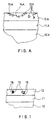
- the roll frame 10a is provided with an adhesion layer 11a, onto which the ceramic layer 12a has been applied.
- the face of the ceramic includes pores 13a and cavities 14a between them. In such a case, it is possible that the roll coating splits along a crack 15a that is formed.
- Fig. 1 is a schematic sectional view in part of a sealed roll coating in accordance with the invention, and in the figure the roll frame is denoted with the reference numeral 10, an adhesion layer, if any, with the reference numeral 11, and the coating layer with the reference numeral 12.
- the pores 13 in the coating have been sealed with a sealing agent 16, as a result of which contaminations cannot penetrate into the pores 13 and a crack cannot proceed along the cavities between the pores.
- the roll coating 12 which has been applied onto the roll frame, either onto an adhesion layer 11 or directly onto the roll frame 10, by means of thermal spraying, is sealed so that a ceramic sealing agent, which is in the form of a solution of an acid, is made to penetrate into the roll coating.
- the solution of sealing agent is absorbed into the pores in the coating during a certain period of time, for example twelve hours.
- the temperature of the roll is raised slowly and successively to a final temperature of about 200...400 °C. Owing to this heating, water is eliminated out of the solution, in which connection the solution crystallizes in the pores in the coating as compounds of the ceramic, and the accompanying acid glues the ceramic material together.
- the roll is allowed to cool, whereupon any extra material is wiped away from the roll face by means of a suitable method.
- the roll coating 12 may be an oxide coating, for example Y 2 O 3 , Al 2 O 3 , Cr 2 O 3 , ZrO 2 , SiO 2 , MgO, TiO 2 , CeO 2 , or any other roll coating prepared by thermal spraying, for example a mixture of oxide and carbide or of oxide and nitride.
- oxide coating for example Y 2 O 3 , Al 2 O 3 , Cr 2 O 3 , ZrO 2 , SiO 2 , MgO, TiO 2 , CeO 2 , or any other roll coating prepared by thermal spraying, for example a mixture of oxide and carbide or of oxide and nitride.
- the ceramic sealing agent preferably phosphate sealing agents are used, and also fluorophosphoric acid (H 2 PO 3 F) and chromic acid are suitable for sealing agents.
- the thermally sprayed roll coating is sealed by means of a phosphate sealing agent, in which connection Al(OH) 3 -H 3 PO 4 solution is spread onto the coated roll.
- the solution is allowed to be absorbed into the pores in the coating for twelve hours, and after this the temperature of the roll is raised slowly and successively to a final temperature of 200...400 °C, during which process water is eliminated from the solution.
- the solution crystallizes in the pores in the coating as phosphate compounds of aluminum (AlPO 3 , AlPO 4 , etc.).
- a mixture of phosphoric acid for example 85-% orthophosphoric acid H 3 PO 4 and finely divided ceramic powder or powders of a particle size, for example, smaller than 3 ⁇ m.
- Materials suitable for this purpose are, for example, Al 2 O 3 and Cr 2 O 3 .
- a solution is formed, which is absorbed into the pores in the coating.
- water is eliminated from the solution. Owing to the elimination of water, the solution crystallizes in the pores in the coating as phosphate compounds of aluminum and/or chromium.
Landscapes
- Chemical & Material Sciences (AREA)
- Engineering & Computer Science (AREA)
- Mechanical Engineering (AREA)
- Plasma & Fusion (AREA)
- Chemical Kinetics & Catalysis (AREA)
- Materials Engineering (AREA)
- Physics & Mathematics (AREA)
- Metallurgy (AREA)
- Organic Chemistry (AREA)
- Paper (AREA)
- Coating By Spraying Or Casting (AREA)
- Application Of Or Painting With Fluid Materials (AREA)
- Rolls And Other Rotary Bodies (AREA)
Claims (20)
- Procédé de fabrication d'un rouleau destiné à être utilisé dans la production de papier, procédé dans lequelcaractérisé par le fait que le procédé comprend les étapes suivantes :le rouleau est revêtu par pulvérisation thermique,une solution d'un agent d'étanchement renfermant de l'eau est répandue sur le revêtement (12) du rouleau ayant été produit par pulvérisation thermique, afin d'obturer hermétiquement les pores (13) présents dans ledit revêtement (12),on autorise l'absorption de ia solution d'agent d'étanchement par les pores (13) présents dans le revêtement (12), etle rouleau est chauffé,le rouleau est chauffé afin d'éliminer l'eau de la solution d'agent d'étanchement,lors de l'élimination de l'eau, la solution d'agent d'étanchement se cristallise dans les pores (13) présents dans le revêtement (12), eton autorise un refroidissement du rouleau.
- Procédé selon la revendication 1, caractérisé par le fait que, dans ledit procédé, on élimine par essuyage une quelconque quantité excédentaire d'agent d'étanchement ayant subsisté sur la face du rouleau.
- Procédé selon la revendication 1, caractérisé par le fait qu'un agent d'étanchement au phosphate est utilisé en tant que solution d'agent d'étanchement.
- Procédé selon la revendication 3, caractérisé par le fait qu'une solution d'Al(OH)3-H3PO4 est utilisée en tant qu'agent d'étanchement au phosphate.
- Procédé selon la revendication 3, caractérisé par le fait qu'un mélange d'acide phosphorique et d'une poudre/de poudres céramique(s) est utilisé en tant que solution d'agent d'étanchement au phosphate.
- Procédé selon la revendication 5, caractérisé par le fait que de l'acide orthophosphorique à 85 % est utilisé en tant qu'acide phosphorique, et des matériaux du type Al2O3 et/ou Cr2O3 sont utilisés en tant que poudre céramique.
- Procédé selon l'une quelconque des revendications précédentes, caractérisé par le fait que le rouleau est chauffé jusqu'à une température de 200 ... 400°C.
- Procédé selon l'une quelconque des revendications précédentes, caractérisé par le fait que, dans ledit procédé, le revêtement du rouleau a lieu sur une couche d'adhérence (11) placée sur le bâti (10) dudit rouleau.
- Procédé selon l'une quelconque des revendications précédentes, caractérisé par le fait que le rouleau est revêtu d'un matériau du type céramique oxydée.
- Rouleau destiné à être utilisé dans la production de papier, lequel rouleau comprend un bâti (10) et un revêtement (12), ledit revêtement (12) ayant été produit par pulvérisation thermique, caractérisé par le fait que ledit revêtement (12) a été rendu étanche à l'aide de cristaux formés à partir d'une solution d'un agent d'étanchement, lors de l'élimination de l'eau.
- Rouleau selon la revendication 10, caractérisé par le fait que la solution d'agent d'étanchement consiste en un agent d'étanchement au phosphate.
- Rouleau selon la revendication 11, caractérisé par le fait que l'agent d'étanchement au phosphate est un mélange d'acide phosphorique et d'une poudre/de poudres céramique(s).
- Rouleau selon la revendication 12, caractérisé par le fait que la grosseur de particules est inférieure à 3 µm dans la poudre/les poudres céramique(s).
- Rouleau selon la revendication 11, caractérisé par le fait que l'agent d'étanchement au phosphate consiste en une solution d'Al(OH3)-H3PO4.
- Rouleau selon l'une quelconque des revendications précédentes, caractérisé par le fait que le revêtement (12) consiste en un matériau céramique.
- Rouleau selon l'une quelconque des revendications précédentes, caractérisé par le fait que du phosphate d'aluminium et/ou du phosphate de chrome s'est/se sont cristallisé (si dans les pores présents dans le revêtement (12).
- Rouleau selon l'une quelconque des revendications précédentes, caractérisé par le fait qu'une couche d'adhérence (11) se trouve entre le bâti dudit rouleau et le revêtement (12).
- Revêtement pour un rouleau destiné à être utilisé dans la production de papier, ledit revêtement (12) ayant été produit par pulvérisation thermique, et des pores (13) étant présents dans ledit revêtement (12), caractérisé par le fait que, en vue d'assurer l'étanchéité (12) du revêtement, un agent d'étanchement (16) a été cristallisé dans les pores (13) présents dans ledit revêtement (12).
- Revêtement pour un rouleau, selon la revendication 18, caractérisé par le fait que des composés céramiques ont été cristallisés dans les pores présents dans ledit revêtement (12).
- Revêtement pour un rouleau, selon la revendication 18 ou 19, caractérisé par le fait que des composés phosphatés (16) d'aluminium et/ou de chrome ont été cristallisés dans les pores (13) présents dans ledit revêtement (12).
Applications Claiming Priority (3)
| Application Number | Priority Date | Filing Date | Title |
|---|---|---|---|
| FI955040A FI110441B (fi) | 1995-10-23 | 1995-10-23 | Menetelmä paperin valmistuksessa käytettävän telan valmistamiseksi, paperin valmistuksessa käytettävä tela ja paperinvalmistuksessa käytettävän telan pinnoite |
| FI955040 | 1995-10-23 | ||
| PCT/FI1996/000549 WO1997015719A1 (fr) | 1995-10-23 | 1996-10-17 | Procede de fabrication d'un rouleau destine a etre utilise dans la production de papier, rouleau destine a etre utilise dans la production de papier, et revetement devant etre applique sur ledit rouleau |
Publications (2)
| Publication Number | Publication Date |
|---|---|
| EP0803009A1 EP0803009A1 (fr) | 1997-10-29 |
| EP0803009B1 true EP0803009B1 (fr) | 2000-02-02 |
Family
ID=8544242
Family Applications (1)
| Application Number | Title | Priority Date | Filing Date |
|---|---|---|---|
| EP96934838A Expired - Lifetime EP0803009B1 (fr) | 1995-10-23 | 1996-10-17 | Procede de fabrication d'un rouleau destine a etre utilise dans la production de papier, rouleau destine a etre utilise dans la production de papier, et revetement devant etre applique sur ledit rouleau |
Country Status (9)
| Country | Link |
|---|---|
| US (2) | US5830537A (fr) |
| EP (1) | EP0803009B1 (fr) |
| JP (1) | JPH10511752A (fr) |
| AT (1) | ATE189495T1 (fr) |
| BR (1) | BR9607245A (fr) |
| CA (1) | CA2208161C (fr) |
| DE (1) | DE69606520T2 (fr) |
| FI (1) | FI110441B (fr) |
| WO (1) | WO1997015719A1 (fr) |
Families Citing this family (12)
| Publication number | Priority date | Publication date | Assignee | Title |
|---|---|---|---|---|
| FI112266B (fi) * | 1997-04-11 | 2003-11-14 | Metso Paper Inc | Keraamipinnoitteinen puristintela vaikeisiin korroosio-olosuhteisiin, menetelmä telan valmistamiseksi ja pinnoitekoostumus |
| EP0870867B1 (fr) | 1997-04-11 | 2002-12-11 | Metso Paper, Inc. | Rouleau pour une machine à papier ou à carton et méthode pour la fabrication d'un tel rouleau |
| FI117945B (fi) | 1999-02-15 | 2007-04-30 | Metso Paper Inc | Menetelmä telan pinnoitteen tiivistämiseksi, telavaipan pinnoite ja keraamipinnoitettu tela |
| DE19925418A1 (de) * | 1999-06-02 | 2000-12-07 | Voith Sulzer Papiertech Patent | Elastische Walze und Verfahren zum Herstellen einer solchen |
| EP1111089A1 (fr) * | 1999-12-13 | 2001-06-27 | Sulzer Markets and Technology AG | Procédé pour sceller une couche poreuse à la surface d'un objet, en particulier pour sceller une couche obtenue par pulvérisation thermique |
| US6339883B1 (en) * | 2000-02-25 | 2002-01-22 | Voith Sulzer Paper Technology North America, Inc. | Method of making a roll for paper-making machine |
| JP4254236B2 (ja) | 2000-12-12 | 2009-04-15 | コニカミノルタホールディングス株式会社 | 薄膜形成方法 |
| FI20085084L (fi) | 2008-01-31 | 2009-08-01 | Metso Paper Inc | Menetelmä kuiturainakoneen kone-elimen pinnoittamiseksi ja kuiturainakoneen pinnoitettu kone-elin |
| US20090202846A1 (en) * | 2008-02-08 | 2009-08-13 | Mohan Jayaraman | Thermally adaptive surfaces for receiving thermal sprays |
| US20100015354A1 (en) * | 2008-07-16 | 2010-01-21 | Lee Tai-Cheung | Method of making rollers with a fine pattern |
| JP6453608B2 (ja) * | 2014-10-17 | 2019-01-16 | 新日鐵住金株式会社 | 連続焼鈍炉用ハースロール及びその製造方法 |
| CN108316042B (zh) * | 2017-12-20 | 2019-09-27 | 东莞理文造纸厂有限公司 | 一种耐腐蚀聚氨酯压榨辊的制备方法 |
Family Cites Families (5)
| Publication number | Priority date | Publication date | Assignee | Title |
|---|---|---|---|---|
| US3944683A (en) * | 1967-12-28 | 1976-03-16 | Kaman Sciences Corporation | Methods of producing chemically hardening coatings |
| FI82094C (fi) * | 1989-02-16 | 1997-09-09 | Valmet Corp | Anvaendning av en legering av ett metallpulver och en karbid eller nitrid innefattande belaeggningskomposition foer en i en pappersmaskin anvaendbar yankeecylinder |
| ATE138434T1 (de) * | 1990-10-08 | 1996-06-15 | Yamauchi Corp | Presswalze für papiermaschinen |
| US5171404A (en) * | 1990-11-30 | 1992-12-15 | S. D. Warren Company | Method and apparatus for calendering paper with internally heated roll |
| US5411462A (en) * | 1993-08-30 | 1995-05-02 | Link; Terry G. | Lightweight ink transfer roll |
-
1995
- 1995-10-23 FI FI955040A patent/FI110441B/fi active
-
1996
- 1996-10-17 BR BR9607245A patent/BR9607245A/pt not_active IP Right Cessation
- 1996-10-17 CA CA002208161A patent/CA2208161C/fr not_active Expired - Fee Related
- 1996-10-17 WO PCT/FI1996/000549 patent/WO1997015719A1/fr not_active Ceased
- 1996-10-17 AT AT96934838T patent/ATE189495T1/de not_active IP Right Cessation
- 1996-10-17 JP JP9516312A patent/JPH10511752A/ja not_active Ceased
- 1996-10-17 DE DE69606520T patent/DE69606520T2/de not_active Expired - Fee Related
- 1996-10-17 EP EP96934838A patent/EP0803009B1/fr not_active Expired - Lifetime
- 1996-10-18 US US08/733,251 patent/US5830537A/en not_active Expired - Fee Related
-
1998
- 1998-01-05 US US09/002,856 patent/US5976064A/en not_active Expired - Fee Related
Also Published As
| Publication number | Publication date |
|---|---|
| US5976064A (en) | 1999-11-02 |
| EP0803009A1 (fr) | 1997-10-29 |
| CA2208161C (fr) | 2004-08-03 |
| ATE189495T1 (de) | 2000-02-15 |
| WO1997015719A1 (fr) | 1997-05-01 |
| US5830537A (en) | 1998-11-03 |
| CA2208161A1 (fr) | 1997-05-01 |
| BR9607245A (pt) | 1997-12-30 |
| DE69606520T2 (de) | 2000-06-21 |
| JPH10511752A (ja) | 1998-11-10 |
| FI955040L (fi) | 1997-04-24 |
| DE69606520D1 (de) | 2000-03-09 |
| FI955040A0 (fi) | 1995-10-23 |
| FI110441B (fi) | 2003-01-31 |
Similar Documents
| Publication | Publication Date | Title |
|---|---|---|
| EP0803009B1 (fr) | Procede de fabrication d'un rouleau destine a etre utilise dans la production de papier, rouleau destine a etre utilise dans la production de papier, et revetement devant etre applique sur ledit rouleau | |
| KR100532883B1 (ko) | 제지기 또는 판지기용 로울, 이 로울의 제조방법, 및 이 로울용코팅조성물 | |
| CA2234888C (fr) | Rouleau de presse avec revetement de ceramique, methode pour fabriquer le rouleau et composition de revetement | |
| CA2028335A1 (fr) | Rouleau utilise dans la fabrication du papier et methode de fabrication du rouleau | |
| JP4612108B2 (ja) | 紙匹成形機用の静電脱水素子及び紙匹成形機用に設計される静電脱水素子を被覆するための方法 | |
| EP0262137B1 (fr) | Racle resistante a l'usure | |
| US20070158045A1 (en) | Edge-provided tool and method for the manufacture thereof | |
| KR101279758B1 (ko) | 세라믹스-수지 복합 롤 및 그 제조 방법 | |
| CA2547277C (fr) | Stratifie decoratif et procede de fabrication associe | |
| RU2223173C2 (ru) | Форма штампа, способ изготовления формы штампа и способ формования продукта с использованием формы штампа | |
| FI117945B (fi) | Menetelmä telan pinnoitteen tiivistämiseksi, telavaipan pinnoite ja keraamipinnoitettu tela | |
| KR100751970B1 (ko) | 이동식 기판표면을 도장하는 방법 및 장치 | |
| FI112963B (fi) | Uusi keraaminen puristintela, menetelmä telan valmistamiseksi ja telan pinnoitekoostumus | |
| KR100251378B1 (ko) | 제지용코팅머신의세라믹독터블레이드의코팅층형성방법및코팅층조성물 | |
| FI115153B (fi) | Telapinnoite ja menetelmä telapinnoitteen valmistamiseksi | |
| FI111396B (fi) | Uusi keraaminen kalanteritela, menetelmä telan valmistamiseksi ja pinnoitekoostumus sekä menetelmä mattapintaisten paperilaatujen valmistamiseksi ja menetelmällä valmistettu paperi/kartonki |
Legal Events
| Date | Code | Title | Description |
|---|---|---|---|
| PUAI | Public reference made under article 153(3) epc to a published international application that has entered the european phase |
Free format text: ORIGINAL CODE: 0009012 |
|
| 17P | Request for examination filed |
Effective date: 19970603 |
|
| AK | Designated contracting states |
Kind code of ref document: A1 Designated state(s): AT DE FI FR GB IT SE |
|
| 17Q | First examination report despatched |
Effective date: 19990209 |
|
| GRAG | Despatch of communication of intention to grant |
Free format text: ORIGINAL CODE: EPIDOS AGRA |
|
| GRAG | Despatch of communication of intention to grant |
Free format text: ORIGINAL CODE: EPIDOS AGRA |
|
| GRAH | Despatch of communication of intention to grant a patent |
Free format text: ORIGINAL CODE: EPIDOS IGRA |
|
| GRAH | Despatch of communication of intention to grant a patent |
Free format text: ORIGINAL CODE: EPIDOS IGRA |
|
| GRAA | (expected) grant |
Free format text: ORIGINAL CODE: 0009210 |
|
| AK | Designated contracting states |
Kind code of ref document: B1 Designated state(s): AT DE FI FR GB IT SE |
|
| REF | Corresponds to: |
Ref document number: 189495 Country of ref document: AT Date of ref document: 20000215 Kind code of ref document: T |
|
| REF | Corresponds to: |
Ref document number: 69606520 Country of ref document: DE Date of ref document: 20000309 |
|
| ITF | It: translation for a ep patent filed | ||
| ET | Fr: translation filed | ||
| PLBE | No opposition filed within time limit |
Free format text: ORIGINAL CODE: 0009261 |
|
| STAA | Information on the status of an ep patent application or granted ep patent |
Free format text: STATUS: NO OPPOSITION FILED WITHIN TIME LIMIT |
|
| 26N | No opposition filed | ||
| PGFP | Annual fee paid to national office [announced via postgrant information from national office to epo] |
Ref country code: FI Payment date: 20011018 Year of fee payment: 6 |
|
| REG | Reference to a national code |
Ref country code: GB Ref legal event code: IF02 |
|
| PG25 | Lapsed in a contracting state [announced via postgrant information from national office to epo] |
Ref country code: FI Free format text: LAPSE BECAUSE OF NON-PAYMENT OF DUE FEES Effective date: 20021017 |
|
| PGFP | Annual fee paid to national office [announced via postgrant information from national office to epo] |
Ref country code: SE Payment date: 20051013 Year of fee payment: 10 |
|
| PG25 | Lapsed in a contracting state [announced via postgrant information from national office to epo] |
Ref country code: SE Free format text: LAPSE BECAUSE OF NON-PAYMENT OF DUE FEES Effective date: 20061018 |
|
| EUG | Se: european patent has lapsed | ||
| PGFP | Annual fee paid to national office [announced via postgrant information from national office to epo] |
Ref country code: DE Payment date: 20071025 Year of fee payment: 12 |
|
| PGFP | Annual fee paid to national office [announced via postgrant information from national office to epo] |
Ref country code: AT Payment date: 20071015 Year of fee payment: 12 Ref country code: IT Payment date: 20071026 Year of fee payment: 12 |
|
| PGFP | Annual fee paid to national office [announced via postgrant information from national office to epo] |
Ref country code: GB Payment date: 20071023 Year of fee payment: 12 Ref country code: FR Payment date: 20071016 Year of fee payment: 12 |
|
| GBPC | Gb: european patent ceased through non-payment of renewal fee |
Effective date: 20081017 |
|
| REG | Reference to a national code |
Ref country code: FR Ref legal event code: ST Effective date: 20090630 |
|
| PG25 | Lapsed in a contracting state [announced via postgrant information from national office to epo] |
Ref country code: IT Free format text: LAPSE BECAUSE OF NON-PAYMENT OF DUE FEES Effective date: 20081017 Ref country code: DE Free format text: LAPSE BECAUSE OF NON-PAYMENT OF DUE FEES Effective date: 20090501 Ref country code: AT Free format text: LAPSE BECAUSE OF NON-PAYMENT OF DUE FEES Effective date: 20081017 |
|
| PG25 | Lapsed in a contracting state [announced via postgrant information from national office to epo] |
Ref country code: FR Free format text: LAPSE BECAUSE OF NON-PAYMENT OF DUE FEES Effective date: 20081031 |
|
| PG25 | Lapsed in a contracting state [announced via postgrant information from national office to epo] |
Ref country code: GB Free format text: LAPSE BECAUSE OF NON-PAYMENT OF DUE FEES Effective date: 20081017 |