EP0781092B1 - Nucleic acid encoding adenovirus e1a polypeptide for sensitizing tumor cells to chemotherapy or irradiation - Google Patents
Nucleic acid encoding adenovirus e1a polypeptide for sensitizing tumor cells to chemotherapy or irradiation Download PDFInfo
- Publication number
- EP0781092B1 EP0781092B1 EP95933746A EP95933746A EP0781092B1 EP 0781092 B1 EP0781092 B1 EP 0781092B1 EP 95933746 A EP95933746 A EP 95933746A EP 95933746 A EP95933746 A EP 95933746A EP 0781092 B1 EP0781092 B1 EP 0781092B1
- Authority
- EP
- European Patent Office
- Prior art keywords
- nucleic acid
- polypeptide
- cell
- cells
- irradiation
- Prior art date
- Legal status (The legal status is an assumption and is not a legal conclusion. Google has not performed a legal analysis and makes no representation as to the accuracy of the status listed.)
- Expired - Lifetime
Links
Images



Classifications
-
- C—CHEMISTRY; METALLURGY
- C07—ORGANIC CHEMISTRY
- C07K—PEPTIDES
- C07K14/00—Peptides having more than 20 amino acids; Gastrins; Somatostatins; Melanotropins; Derivatives thereof
- C07K14/005—Peptides having more than 20 amino acids; Gastrins; Somatostatins; Melanotropins; Derivatives thereof from viruses
-
- A—HUMAN NECESSITIES
- A61—MEDICAL OR VETERINARY SCIENCE; HYGIENE
- A61K—PREPARATIONS FOR MEDICAL, DENTAL OR TOILETRY PURPOSES
- A61K41/00—Medicinal preparations obtained by treating materials with wave energy or particle radiation ; Therapies using these preparations
- A61K41/0038—Radiosensitizing, i.e. administration of pharmaceutical agents that enhance the effect of radiotherapy
-
- A—HUMAN NECESSITIES
- A61—MEDICAL OR VETERINARY SCIENCE; HYGIENE
- A61P—SPECIFIC THERAPEUTIC ACTIVITY OF CHEMICAL COMPOUNDS OR MEDICINAL PREPARATIONS
- A61P35/00—Antineoplastic agents
-
- A—HUMAN NECESSITIES
- A61—MEDICAL OR VETERINARY SCIENCE; HYGIENE
- A61K—PREPARATIONS FOR MEDICAL, DENTAL OR TOILETRY PURPOSES
- A61K38/00—Medicinal preparations containing peptides
-
- C—CHEMISTRY; METALLURGY
- C12—BIOCHEMISTRY; BEER; SPIRITS; WINE; VINEGAR; MICROBIOLOGY; ENZYMOLOGY; MUTATION OR GENETIC ENGINEERING
- C12N—MICROORGANISMS OR ENZYMES; COMPOSITIONS THEREOF; PROPAGATING, PRESERVING, OR MAINTAINING MICROORGANISMS; MUTATION OR GENETIC ENGINEERING; CULTURE MEDIA
- C12N2710/00—MICROORGANISMS OR ENZYMES; COMPOSITIONS THEREOF; PROPAGATING, PRESERVING, OR MAINTAINING MICROORGANISMS; MUTATION OR GENETIC ENGINEERING; CULTURE MEDIA dsDNA viruses
- C12N2710/00011—Details
- C12N2710/10011—Adenoviridae
- C12N2710/10311—Mastadenovirus, e.g. human or simian adenoviruses
- C12N2710/10322—New viral proteins or individual genes, new structural or functional aspects of known viral proteins or genes
Definitions
- This invention relates generally to the fields of molecular biology and more specifically to the effect of adenovirus E1A on tumor cells.
- the present invention satisfies these needs and provides related advantages as well.
- the present invention makes available novel methods for treating a tumor cell and enhancing a patient's response to irradiation and chemotherapy.
- the present invention is directed to the use of a nucleic acid encoding a polypeptide having E1A activity for the preparation of a medicament, which, in combination with a chemotherapeutic agent or irradiation, is for treating a human tumor cell or for treating a cancer in a human subject by introducing said nucleic acid into and expressing said polypeptide in said tumor cell, followed by contacting said tumor cell with a chemotherapeutic agent or by irradiating said cell.
- the invention also provides the use of a nucleic acid encoding a polypeptide having E1A activity for the preparation of a medicament for enhancing a response to chemotherapy or irradiation in a human subject or for sensitizing human tumor cell to a chemotherapeutic agent or to irradiation by introducing said nucleic acid into and expressing said polypeptide in said subject's tumor cells, followed by contacting said subject with a chemotherapeutic agent or by irradiating said subject.
- Adenovirus is a large DNA virus whose natural host is human cells. Virtually every adult has been infected with adenovirus at some time, the major effect being cold-like symptoms. Adenovirus is referred to as a "DNA tumor virus" because of its oncogenic effect in rodents. Expression of the adenovirus genome occurs in two stages. First, the early gene products are expressed which encode the E1A and the E1B genes. These products are necessary for expression of the late gene products. Late gene products encode proteins necessary for replication as well as the viral structural proteins.
- the proteins encoded by the E1A gene of adenovirus have been studied primarily from two points of view.
- the 243 amino acid and 289 amino acid forms of E1A are both transcriptional regulatory proteins, J. Flint, T. Shenk, Ann. Rev. Gen. , 23:141-161 (1989).
- these proteins facilitate the oncogenic transformation of certain rodent cells by other oncogenes, H.E. Ruley, Nature , 304:602-606 (1983), and, as such E1A is generally classified as an oncogene.
- oncogenes can increase the susceptibility of cells to apoptosis, also known as programmed cell death.
- the E1A gene may increase cellular susceptibility to apoptosis in primary rodent cells. Roa et al., Proc. Natl. Acad. Sci., 89:7742-7746 (1992).
- oncogenes such as c-myc
- overexpression of c-myc may also confer susceptibility to apoptosis induced by anticancer agents, such as tumor necrosis factor ⁇ , Chen et al., Nature , 330:581-583 (1987), or etoposide, Fanidi et al., Nature , 359:554-556 (1992) and Lowe et al., supra .
- Lowe et al., supra explore the effects of p53 in combination with E1A on the sensitivity of mouse embryo fibroblasts (MEFs) to chemotherapeutic drugs.
- E1A acts as a tumor suppressor gene in the human context.
- Steven M. Frisch Proc. Natl. Acad. Sci. , 88:9077-9081 (1991), which is incorporated herein by reference, provides evidence of the antioncogenic effect of adenovirus E1A in human tumor cells. More importantly, it is striking and unexpected that E1A, sensitizes human tumor cells and enhances tumor cell's response to chemotherapy and irradiation treatment. The effect is independent of p53.
- the methods involve treating a human tumor cell by, first, introducing into the tumor cell nucleic acid encoding a polypeptide having adenovirus E1A activity, expressing the E1A active polypeptide in the cell, and then either contacting the E1A-expressing tumor cell with a chemotherapeutic agent or irradiating the E1A-expressing tumor cell.
- the methods may be practiced in vitro or in vivo .
- This invention also makes available methods of enhancing a subject's response to chemotherapy or irradiation by introducing into a subject's tumor cells nucleic acid encoding a polypeptide having adenovirus E1A activity, expressing the E1A active polypeptide in the cells and finally, administering either a chemotherapeutic agent or irradiation.
- the invention also makes available methods of treating a cancer which is susceptible to treatment by introducing into a subject's tumor cells nucleic acid encoding a polypeptide having adenovirus E1A activity, expressing said polypeptide in said tumor cells, and finally, either contacting said tumor cells with a chemotherapeutic agent or irradiating said tumor cells.
- a nucleic acid molecule encoding a polypeptide having E1A activity can be useful in the preparation of a medicament for enhancing a subjects response to chemotherapy or irradiation and for the treatment of cancer.
- Treating human tumor cells with E1A sensitizes the cells.
- the sensitization results in enhancing a tumor cell's susceptibility to respond to chemotherapeutic agents or irradiation.
- E1A-expressing cells more readily sensitize human tumor cells and make them more susceptible to killing by, chemotherapy or irradiation as compared to cells lacking E1A.
- chemotherapeutic agents or irradiation may affect tumor cells by a variety of ways, including killing or decreased viability, by for example apoptosis or other mechanisms, poisoning, inactivation of tumor, and the like.
- E1A-expression sensitizes the cells and enhances their response to chemotherapy or irradiation. While not wishing to be bound by any theory or mechanism, it is postulated that the instant invention may work based on E1A's ability to reverse-transform human tumor cells and convert them to epithelial cells. Reverse-transformation by E1A confers sensitivity to anoikis (a type of programmed cell death). Frisch and Francis, J. Cell Biology , 124:619-626 (Feb. 1994).
- nucleic acid means DNA, including cDNA, or RNA.
- isolated nucleic acids useful in this invention are those that encode a polypeptide functionally equivalent to a polypeptide encoded by the E1A region of the adenovirus genome.
- the isolated nucleic acid is the adenovirus E1A region. This region is defined by those of skill in the art to be from nucleotide 560 to nucleotide 1542.
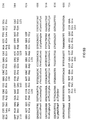
- the nucleotide and amino acid sequence of E1A is provided in Figure 5.
- the term "introducing" in relation to nucleic acid encompasses any method of inserting an exogenous nucleic acid molecule into a cell and includes, but is not limited to transduction, transfection, microinjection and viral infection of host cells. Methods of carrying out these procedures are well known to those of skill in the art.
- the nucleic acid may be introduced, for example, by contacting the cell with an adenovirus vector or a retroviral vector.
- the nucleic acid is introduced into the cell by contacting a cell with a retroviral vector containing the nucleic acid under conditions such that the nucleic acid is inserted into the cell.
- the virus is a replication-incompetent retrovirus.
- a replication-incompetent retrovirus is defined as a virus not having the ability to produce viral proteins, precluding spread of the vector in the infected host cells. Examples of such vectors useful for the practice of this invention are well known and readily available to those of skill in the art.
- the E1A gene product has the capacity, after being expressed in a human tumor cell to sensitize the tumor cell and enhance the cell's response to a chemotherapeutic agent or irradiation. Such capacity is herein termed "E1A activity.”
- E1A activity A "polypeptide having E1A activity” is used in its broadest sense to include the structure of native adenovirus E1A, its functional subunits and fragments and modifications to the native sequence which retain E1A activity. In one aspect of the invention, this amino acid sequence is the 243 amino acid polypeptide product of the adenovirus E1A gene, as provided in Figure 5.
- Functional equivalents of the 243 amino acid polypeptide are polypeptides that can also sensitize human tumor cells and enhance their susceptibility to treatment by chemotherapy agents or irradiation.
- Cells which express a polypeptide having E1A activity are repeatedly referred to herein as "E1A-expressing" cells.
- the activity of an E1A polypeptide can be routinely determined by any one of the tests for sensitivity and/or response to cancer treatment as described above and below.
- the invention makes available generally a method of sensitizing a human tumor cell based on the effect of E1A and the response of E1A-expressing cells to a toxic agent, i.e., chemotherapeutic agent or irradiation.
- chemotherapeutic agent means any chemical agent or drug used in chemotherapy treatment which selectively affects tumor cells, including but not limited to such agents as adriamycin, amsacrine, etoposide, actinomycin D, VP 16, camptothecin, colchicine, taxol, cisplatinum, vincristine, vinblastine, methotrexate. Other such agents are well known in the art.
- the agents encompassed by this invention are not limited to working by any one mechanism, and may for example be effective by direct poisoning, apoptosis or other mechanisms of cell death or killing, tumor inactivation, or other mechanisms known or unknown.
- the means for contacting tumor cells with these agents and for administering a chemotherapeutic agent to a subject are well known and readily available to those of skill in the art.
- the term "irradiation” or “irradiating” is intended in its broadest sense to include any treatment of a tumor cell or subject by photons, electrons, neutrons or other ionizing radiations. These radiations include, but are not limited to, X-rays, gamma-radiation, or heavy ion particles, such as alpha or beta particles. Moreover, the irradiation may be radioactive, as is commonly used in cancer treatment and can include interstitial irradiation. The means for irradiating tumor cells and a subject are well known and readily available to those of skill in the art.
- the uses described herein can be useful for sensitizing cancers of a number of types, including but not limited to breast cancer, sarcomas and other neoplasms, bladder cancer, colon cancer, lung cancer, various leukemias and lymphomas.
- the tumor cells of the instant invention are from human tumors or malignancies.
- human tumor cells do not express functional p53.
- Human tumor cells which do not express functional p53 include, but are not limited to, HT1080 fibrosarcoma, Saos2 osteosarcoma, NCI-H23 non-small cell lung carcinoma, and RD rhabdomyosarcoma.
- the phrase "functional p53” means any structure which substantially corresponds to the native p53 protein and which has the function of native p53, which is generally known to be tumor suppression. Therefore, mutations in p53 which result in a lack of p53 activity or function would not be encompassed by "functional p53.”
- non-functional p53 can be obtained, for example, by Western blot analysis using monoclonal antibody PAb1801 (Oncogene Science; New York). Such an assay capitalizes on the fact that mutant forms of p53 are more stable than wild-type (functional) p53 and therefore accumulate to much higher protein levels than wild-type p53.
- Parental cell lines such as HT1080 cells can be used as a positive control and FM 0097 cells, for example, can be used as a negative control. These materials and methods are described in Anderson et al., supra , which is incorporated herein by reference.
- the presence of wild-type or non-functional mutant forms of p53 can be confirmed by preparing a p53 cDNA clone from the chosen cell line, followed by determining its primary DNA sequence using standard methods well known and available in the art.
- the invention also makes available methods of enhancing a subject's response to chemotherapy or irradiation by introducing into a subject's tumor cells nucleic acid encoding a polypeptide having adenovirus E1A activity, expressing the E1A active polypeptide in the cells and finally, administering either a chemotherapeutic agent or irradiation.
- a population of tumor cells can be isolated by a variety of procedures known to those skilled in the art. Isolation is most commonly done surgically by a biopsy. After introduction and expression of E1A in the cells, the new population of E1A-expressing cells are then transferred back into the subject, generally by reinjection or other means well known in the field. Thereafter, tumor regression and/or progression can be monitored by standard methodologies known in the art.
- Stable E1A-expressing cell lines from HT1080 fibrosarcoma cells and A2058 melanoma cells were constructed using the plasmid p1Aneo as described in Frisch et al., Oncogene , 5:75-83 (1990), which is incorporated herein by reference, Franza et al., Cell , 44:408-418 (1988), which is incorporated herein by reference, and Maruyama et al., Oncagene , 1:361-367 (1987), which is incorporated herein by reference.
- Cells labeled HT1080neo r and A2058neo r resulted from transfection with Bluescript plasmid (Stratagene, La Jolla, CA) containing the simian virus 40 early enhancer-promoted aph gene (encoding resistance to G418).
- Bluescript plasmid (Stratagene, La Jolla, CA) containing the simian virus 40 early enhancer-promoted aph gene (encoding resistance to G418).
- bovine serum albumin After addition of bovine serum albumin to 0.5 mg/ml, lysates were preabsorbed with 100 ⁇ l of a 50% (wt/vol) protein A-Sepharose (Pharmacia; Indianapolis, IN) slurry (prepared in RIPA-1 containing bovine serum albumin at 0.5 mg/ml) by mixing at 4°C for 30 minutes and centrifuging for 10 minutes at 14,000 rpm in an Eppendorf microcentrifuge and 0.5 ml samples were then incubated with 1.5 ⁇ g of anti-E1A monoclonal antibody M73 (Narlow et al., J. Virol.
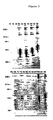
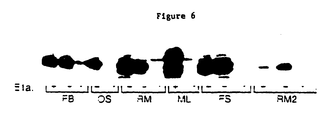
- E1A protein was detected on the gel as evidenced by Figure 3 which shows the [35S]methionine-labeled proteins from E1A-expressing clones derived from HT1080 cells (lanes 1-5), HeLa cells (lanes 6-8), and A2058 cells (lanes 9-11) immunoprecipitated with anti-E1A antibodies (E) or control antibodies (C).
- the bands corresponding to E1A protein species are bracketed.
- E1A viral expression vectors were achieved by subcloning cDNAs encoding the 243 amino acid or 289 amino acid E1A proteins of adenovirus type 5 into the retroviral vectors: LNCX, LNSX.
- the 243 amino acid form of E1A (12S cDNA) was cut at adenovirus map position 610 with BstX1 and the 5' end was reconstructed with a double-stranded oligonucleotide, thus removing all E1A 5' noncoding sequences.
- the HindIII end of this oligonucleotide was made blunt ended and the 3' end of E1A was cut with HpaI (map position 1575) to remove the polyA addition site.
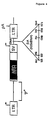
- the resulting E1A sequence was subcloned into the retrovirus vector LNSX (described in Miller and Rosman, Biotechniques , 7:980-990 (1989), which is incorporated herein by reference, (the retroviral plasmid construct is schematically depicted in Figure 4).
- plasmid DNAs were transfected into the ecotropic packaging cell line gpE86 (maintained in hygromycin/mycophenolic acid selection medium).
- unselected virus stocks were prepared by collecting conditioned media, clearing by centrifugation and freezing. These viral stocks were used to infect the amphotropic packaging cell line gpEam12 (cells available from ATCC) in 35 mm wells by incubation for 12 hours in DME/10% fetal calf serum media containing 4 ⁇ g/ml polybrene.
- cells were split at ratios between 1:100-1:300, and infected cells were selected in 500 ⁇ g/ml G418 for 3 weeks.
- Virus-producing cell lines were expanded into 35 mm wells and conditioned media containing virus was prepared for each line.
- Virus stocks were prepared from producer cell lines containing either 243 amino acid E1A or 289 amino acid E1A, in the vectors LNCX and LNSX (which promote transcription using internal CMV or SV40 early enhancers, respectively).
- FS HT1080 fibrosarcoma (subclone H4)
- ML A2058 melanoma
- OS Saos-2 osteosarcoma
- LC NCI-H23 non-small cell lung carcinoma
- RM A204 rhabdomyosarcoma
- RM2 RD rhabdomyosarcoma
- FB fibroblast.
- This example demonstrates the chemotherapeutic drug sensitization effects of E1A with respect to etoposide.
- Etoposide cytotoxicity dose-response curves of tumor cells and E1A-expressing derivatives are provided.
- E1A caused a remarkable degree of sensitization to killing by etoposide, significantly more E1A-expressing tumor cells were killed by etoposide than the parental cells lacking E1A. Because at least FS, OS, and LC cells do not express functional p53, Anderson et al., supra , Subler and Martin, supra , and Takahashi et al., supra , respectively, the observed effect of enhanced sensitization is independent of the p53 protein.
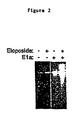
- This example further demonstrates the effect of E1A on the sensitivity of A2058 human melanoma cells and the E1A-expressing cell's response to etoposide.
- the degree of sensitization to killing by this drug is determined by gel electrophoresis of DNA extractions.
- E1A- human melanoma cells lacking E1A
- E1A-expressing derivative cell line 1A58c8-1 E1A+
- Etoposide Sigma, St. Louis, Missouri
- Low-molecular weight DNA was extracted with 0.5% Triton X-100, 10 mM EDTA, and 10 mM Tris, pH 7.4 (0.6 ml), phenol-chloroform extracted three times, ethanol precipitated and analyzed on a 1.5% agarose gel in TBE buffer.
- E1A converts partially or totally drug-resistant tumors such as A2058 melanoma into drug-sensitive tumors.
Landscapes
- Health & Medical Sciences (AREA)
- Chemical & Material Sciences (AREA)
- Life Sciences & Earth Sciences (AREA)
- Organic Chemistry (AREA)
- General Health & Medical Sciences (AREA)
- Medicinal Chemistry (AREA)
- Veterinary Medicine (AREA)
- Public Health (AREA)
- Animal Behavior & Ethology (AREA)
- Pharmacology & Pharmacy (AREA)
- Biophysics (AREA)
- Virology (AREA)
- Molecular Biology (AREA)
- Genetics & Genomics (AREA)
- Epidemiology (AREA)
- Biochemistry (AREA)
- Gastroenterology & Hepatology (AREA)
- Proteomics, Peptides & Aminoacids (AREA)
- Chemical Kinetics & Catalysis (AREA)
- General Chemical & Material Sciences (AREA)
- Nuclear Medicine, Radiotherapy & Molecular Imaging (AREA)
- Medicines That Contain Protein Lipid Enzymes And Other Medicines (AREA)
- Medicines Containing Material From Animals Or Micro-Organisms (AREA)
- Micro-Organisms Or Cultivation Processes Thereof (AREA)
- Pharmaceuticals Containing Other Organic And Inorganic Compounds (AREA)
Applications Claiming Priority (3)
| Application Number | Priority Date | Filing Date | Title |
|---|---|---|---|
| US301316 | 1994-09-06 | ||
| US08/301,316 US5776743A (en) | 1994-09-06 | 1994-09-06 | Method of sensitizing tumor cells with adenovirus E1A |
| PCT/US1995/011342 WO1996007322A1 (en) | 1994-09-06 | 1995-09-05 | Method of sensitizing tumor cells with adenovirus e1a |
Publications (3)
| Publication Number | Publication Date |
|---|---|
| EP0781092A1 EP0781092A1 (en) | 1997-07-02 |
| EP0781092A4 EP0781092A4 (en) | 1998-09-30 |
| EP0781092B1 true EP0781092B1 (en) | 2004-05-12 |
Family
ID=23162849
Family Applications (1)
| Application Number | Title | Priority Date | Filing Date |
|---|---|---|---|
| EP95933746A Expired - Lifetime EP0781092B1 (en) | 1994-09-06 | 1995-09-05 | Nucleic acid encoding adenovirus e1a polypeptide for sensitizing tumor cells to chemotherapy or irradiation |
Country Status (10)
| Country | Link |
|---|---|
| US (3) | US5776743A (enExample) |
| EP (1) | EP0781092B1 (enExample) |
| JP (1) | JP2000510435A (enExample) |
| AT (1) | ATE266425T1 (enExample) |
| CA (1) | CA2199265A1 (enExample) |
| DE (1) | DE69533036T2 (enExample) |
| DK (1) | DK0781092T3 (enExample) |
| ES (1) | ES2216018T3 (enExample) |
| PT (1) | PT781092E (enExample) |
| WO (1) | WO1996007322A1 (enExample) |
Families Citing this family (37)
| Publication number | Priority date | Publication date | Assignee | Title |
|---|---|---|---|---|
| US5776743A (en) * | 1994-09-06 | 1998-07-07 | La Jolla Cancer Research Foundation | Method of sensitizing tumor cells with adenovirus E1A |
| US6326356B1 (en) | 1996-10-18 | 2001-12-04 | Board Of Regents, The University Of Texas System | Suppression of neu overexpression using a mini-E1A gene |
| CA2234060A1 (en) * | 1995-10-06 | 1997-04-10 | Arch Development Corporation | Methods and compositions for viral enhancement of cell killing |
| US6395712B1 (en) | 1996-03-20 | 2002-05-28 | Board Of Regents, The University Of Texas System | Sensitization of HER-2/neu overexpressing cancer cells to chemotherapy |
| US6248351B1 (en) | 1997-01-10 | 2001-06-19 | Board Of Regents,The University Of Texas System | Human PEA3 is a tumor suppressor for cancer cells |
| US5922688A (en) | 1997-01-10 | 1999-07-13 | Board Of Regents, The University Of Texas System | PEA3 is a tumor suppressor |
| US20040048821A1 (en) * | 1997-06-27 | 2004-03-11 | Cold Spring Harbor Laboratory | Enhancement of drug cytotoxicity in tumor cells containing mutant Rb gene |
| AU771224B2 (en) | 1998-07-13 | 2004-03-18 | Board Of Regents, The University Of Texas System | Cancer treatment methods using antibodies to aminophospholipids |
| US6552005B1 (en) * | 1998-09-29 | 2003-04-22 | Uab Research Foundation | Molecular chemotherapy enhancement of radiotherapy |
| US6911200B2 (en) | 2000-03-24 | 2005-06-28 | Cell Genesys, Inc. | Methods of treating neoplasia with combination of target-cell specific adenovirus, chemotherapy and radiation |
| US7048920B2 (en) * | 2000-03-24 | 2006-05-23 | Cell Genesys, Inc. | Recombinant oncolytic adenovirus for human melanoma |
| MXPA03004095A (es) | 2000-11-09 | 2004-09-10 | Neopharm Inc | Complejos de sn-38 con lipidos y sus metodos de uso. |
| AR035227A1 (es) | 2001-02-20 | 2004-05-05 | Oncolytics Biotech Inc | Uso de un agente quimioterapeutico para la manufactura de un medicamento para la sensibilizacion de celulas neoplasicas resistentes a agentes quimioterapeuticos con reovirus |
| WO2002069896A2 (en) * | 2001-03-01 | 2002-09-12 | Northwest Hospital | Connexin enhances chemotherapy-induced apoptosis in human cancer cells inhibiting tumor cell proliferation |
| FR2821748A1 (fr) * | 2001-03-12 | 2002-09-13 | Laurent Schwartz | Utilisation d'un principe actif anti-fibrose pour la preparation d'un medicamment destine a la prevention du cancer broncho-pulmonaire |
| US20020169126A1 (en) * | 2001-03-21 | 2002-11-14 | Mien-Chie Hung | Compositions and methods for inactivating the Akt oncogene and/or activating the p38 pro-apoptotic gene |
| US20030138405A1 (en) * | 2001-04-17 | 2003-07-24 | Juan Fueyo | Conditionally replicative adenovirus to target the Rb and Rb-related pathways |
| WO2003030864A1 (en) * | 2001-05-29 | 2003-04-17 | Neopharm, Inc. | Liposomal formulation of irinotecan |
| EP1505993B1 (en) * | 2002-05-10 | 2012-04-25 | Oncolytics Biotech Inc. | Sensitization of neoplastic cells to radiation therapy with oncolytic viruses |
| EP2269656B1 (en) | 2002-07-15 | 2014-08-20 | Board Of Regents, The University Of Texas | Selected antibodies binding to aminophospholipids and their use in treatment, such as cancer |
| US20060030578A1 (en) * | 2002-08-20 | 2006-02-09 | Neopharm, Inc. | Pharmaceutically active lipid based formulation of irinotecan |
| AU2003296897A1 (en) * | 2002-08-20 | 2004-05-04 | Neopharm, Inc. | Pharmaceutical formulations of camptothecine derivatives |
| WO2008109433A2 (en) | 2007-03-02 | 2008-09-12 | The Cleveland Clinic Foundation | Anti-angiogenic peptides |
| US20040191761A1 (en) * | 2003-03-27 | 2004-09-30 | Routes John M. | Modified adenoviral E1A constructs and methods of use thereof |
| FR2858460B1 (fr) * | 2003-07-30 | 2005-10-14 | Soitec Silicon On Insulator | Structure semiconducteur-sur-isolant contrainte ayant une tenue des contraintes aux hautes temperatures |
| US7879545B2 (en) * | 2003-11-05 | 2011-02-01 | H. Lee Moffitt Cancer Center And Research Institute, Inc. | Identification of novel targets for radio sensitization using a genomic-based radiation sensitivity classifier |
| CA2553690C (en) | 2004-01-22 | 2016-05-24 | Sung Lan Hsia | Topical co-enzyme q10 formulations and methods of use |
| WO2005086922A2 (en) | 2004-03-10 | 2005-09-22 | Board Of Regents, University Of Texas System | Oncolytic adenovirus armed with therapeutic genes |
| JP4433918B2 (ja) * | 2004-07-15 | 2010-03-17 | コニカミノルタエムジー株式会社 | 画像形成方法 |
| KR100651728B1 (ko) * | 2004-11-10 | 2006-12-06 | 한국전자통신연구원 | 정착기를 갖는 전자 소자용 화합물 및 이를 포함하는 전자소자와 이들의 제조 방법 |
| DK1984007T3 (en) * | 2006-02-13 | 2015-12-07 | Oncolytics Biotech Inc | Application of Low-dose local immunosuppression for amplification of viral oncolytic therapy |
| US20090076734A1 (en) | 2007-03-22 | 2009-03-19 | Torres-Roca Javier F | Gene Signature for the Prediction of Radiation Therapy Response |
| US20080234946A1 (en) * | 2007-03-22 | 2008-09-25 | University Of South Florida | Predictive radiosensitivity network model |
| WO2008136213A1 (ja) * | 2007-04-27 | 2008-11-13 | Oncolys Biopharma Inc. | 放射線増感増強剤 |
| NZ586053A (en) | 2007-11-09 | 2012-09-28 | Peregrine Pharmaceuticals Inc | Anti-vegf antibody compositions and methods |
| US8112237B2 (en) * | 2009-03-11 | 2012-02-07 | Progress Rail Services Corp. | System and method for correcting signal polarities and detection thresholds in a rail vehicle inspection system |
| CN115873942B (zh) * | 2022-12-29 | 2023-06-09 | 徐州医科大学 | Trim35作为抗腺病毒感染治疗药物的新靶点及其应用 |
Family Cites Families (5)
| Publication number | Priority date | Publication date | Assignee | Title |
|---|---|---|---|---|
| DK0560932T3 (enExample) * | 1990-12-04 | 1997-02-17 | Univ Texas | |
| US5516631A (en) * | 1992-10-13 | 1996-05-14 | La Jolla Cancer Research Foundation | Method of inhibiting replication of hyperproliferative cells |
| DK0689447T3 (da) * | 1993-02-16 | 1999-10-18 | Onyx Pharma Inc | Cytopatiske vira til behandling af og profylakse for neoplasia |
| US5821733A (en) * | 1994-02-22 | 1998-10-13 | Packard Bell Nec | Multiple cell and serially connected rechargeable batteries and charging system |
| US5776743A (en) * | 1994-09-06 | 1998-07-07 | La Jolla Cancer Research Foundation | Method of sensitizing tumor cells with adenovirus E1A |
-
1994
- 1994-09-06 US US08/301,316 patent/US5776743A/en not_active Expired - Fee Related
-
1995
- 1995-09-05 DE DE69533036T patent/DE69533036T2/de not_active Expired - Fee Related
- 1995-09-05 WO PCT/US1995/011342 patent/WO1996007322A1/en not_active Ceased
- 1995-09-05 CA CA002199265A patent/CA2199265A1/en not_active Abandoned
- 1995-09-05 DK DK95933746T patent/DK0781092T3/da active
- 1995-09-05 PT PT95933746T patent/PT781092E/pt unknown
- 1995-09-05 ES ES95933746T patent/ES2216018T3/es not_active Expired - Lifetime
- 1995-09-05 EP EP95933746A patent/EP0781092B1/en not_active Expired - Lifetime
- 1995-09-05 JP JP08509670A patent/JP2000510435A/ja not_active Ceased
- 1995-09-05 AT AT95933746T patent/ATE266425T1/de not_active IP Right Cessation
-
1997
- 1997-05-09 US US08/853,831 patent/US6100243A/en not_active Expired - Fee Related
-
2000
- 2000-02-23 US US09/510,885 patent/US6544955B1/en not_active Expired - Fee Related
Also Published As
| Publication number | Publication date |
|---|---|
| ATE266425T1 (de) | 2004-05-15 |
| AU693604B2 (en) | 1998-07-02 |
| WO1996007322A1 (en) | 1996-03-14 |
| EP0781092A1 (en) | 1997-07-02 |
| AU3627895A (en) | 1996-03-27 |
| US6100243A (en) | 2000-08-08 |
| US5776743A (en) | 1998-07-07 |
| JP2000510435A (ja) | 2000-08-15 |
| DE69533036T2 (de) | 2005-05-19 |
| US6544955B1 (en) | 2003-04-08 |
| EP0781092A4 (en) | 1998-09-30 |
| PT781092E (pt) | 2004-09-30 |
| CA2199265A1 (en) | 1996-03-14 |
| ES2216018T3 (es) | 2004-10-16 |
| DE69533036D1 (de) | 2004-06-17 |
| DK0781092T3 (da) | 2004-08-30 |
Similar Documents
| Publication | Publication Date | Title |
|---|---|---|
| US5776743A (en) | Method of sensitizing tumor cells with adenovirus E1A | |
| Fortunato et al. | p53 and RPA are sequestered in viral replication centers in the nuclei of cells infected with human cytomegalovirus | |
| Wang et al. | Hepatitis B virus X protein inhibits p53 sequence-specific DNA binding, transcriptional activity, and association with transcription factor ERCC3. | |
| Höhne et al. | Malignant transformation of immortalized transgenic hepatocytes after transfection with hepatitis B virus DNA. | |
| Deneen et al. | Loss of p16 pathways stabilizes EWS/FLI1 expression and complements EWS/FLI1 mediated transformation | |
| Zhen et al. | Expression of the simian virus 40 large tumor antigen (Tag) and formation of Tag‐p53 and Tag‐pRb complexes in human brain tumors | |
| Hajihosseini et al. | Evidence that retroviruses integrate into post‐replication host DNA. | |
| De Mattei et al. | High incidence of BK virus large‐T‐antigen‐coding sequences in normal human tissues and tumors of different histotypes | |
| WO1992014829A1 (en) | Viral particles having altered host range | |
| Huang | Abrogation of P53 function by transfection of HPV16 E6 gene does not enhance resistance of human tumour cells to ionizing radiation | |
| EP0666929B1 (en) | Method of inhibiting replication of hyperproliferative cells | |
| Jacob et al. | Integration of woodchuck hepatitis and N‐myc rearrangement determine size and histologic grade of hepatic tumors | |
| EP4796641A1 (en) | Viral gene therapy vector for removing hepatitis b viruses and use | |
| EP0662976A1 (en) | Interferon regulatory factors 1 and 2 in the diagnosis of tumorigenicity | |
| Wyllie et al. | Direct growth stimulation of normal human epithelial cells by mutant p53 | |
| Chi et al. | Oltipraz, a novel inhibitor of hepatitis B virus transcription through elevation of p53 protein. | |
| De León Vázquez et al. | The internal Kaposi's sarcoma-associated herpesvirus LANA regions exert a critical role on episome persistence | |
| Peden et al. | Effects of mutations within the SV40 large T antigen ATPase/p53 binding domain on viral replication and transformation | |
| AU693604C (en) | Method of sensitizing tumor cells with adenovirus E1A | |
| AU618749B2 (en) | Gene transfer for drug resistance | |
| Gamberi et al. | Presence and expression of the simian virus‐40 genome in human giant cell tumors of bone | |
| Powell et al. | Different functions are required for initiation and maintenance of immortalization of rat embryo fibroblasts by SV40 large T antigen | |
| WO1995005738A1 (en) | Anticancer agents and apoptosis | |
| JP4117367B2 (ja) | 腫瘍にあるサイクリンg1の発現を阻害する薬剤、その発現伝達体、およびベクター | |
| Norris et al. | A fluorescent p53GFP fusion protein facilitates its detection in mammalian cells while retaining the properties of wild-type p53 |
Legal Events
| Date | Code | Title | Description |
|---|---|---|---|
| PUAI | Public reference made under article 153(3) epc to a published international application that has entered the european phase |
Free format text: ORIGINAL CODE: 0009012 |
|
| 17P | Request for examination filed |
Effective date: 19970404 |
|
| AK | Designated contracting states |
Kind code of ref document: A1 Designated state(s): AT BE CH DE DK ES FR GB GR IE IT LI LU MC NL PT SE |
|
| A4 | Supplementary search report drawn up and despatched |
Effective date: 19980818 |
|
| AK | Designated contracting states |
Kind code of ref document: A4 Designated state(s): AT BE CH DE DK ES FR GB GR IE IT LI LU MC NL PT SE |
|
| 17Q | First examination report despatched |
Effective date: 20010410 |
|
| RIC1 | Information provided on ipc code assigned before grant |
Ipc: 7C 12N 15/33 B Ipc: 7C 12N 15/09 B Ipc: 7C 07K 14/075 B Ipc: 7A 61K 48/00 A |
|
| RTI1 | Title (correction) |
Free format text: NUCLEIC ACID ENCODING ADENOVIRUS E1A POLYPEPTIDE FOR SENSITIZING TUMOR CELLS TO CHEMOTHERAPY OR IRRADIATION |
|
| GRAP | Despatch of communication of intention to grant a patent |
Free format text: ORIGINAL CODE: EPIDOSNIGR1 |
|
| RIC1 | Information provided on ipc code assigned before grant |
Ipc: 7C 12N 15/33 B Ipc: 7C 12N 15/09 B Ipc: 7C 07K 14/075 B Ipc: 7A 61K 48/00 A |
|
| RTI1 | Title (correction) |
Free format text: NUCLEIC ACID ENCODING ADENOVIRUS E1A POLYPEPTIDE FOR SENSITIZING TUMOR CELLS TO CHEMOTHERAPY OR IRRADIATION |
|
| GRAS | Grant fee paid |
Free format text: ORIGINAL CODE: EPIDOSNIGR3 |
|
| GRAA | (expected) grant |
Free format text: ORIGINAL CODE: 0009210 |
|
| AK | Designated contracting states |
Kind code of ref document: B1 Designated state(s): AT BE CH DE DK ES FR GB GR IE IT LI LU MC NL PT SE |
|
| REG | Reference to a national code |
Ref country code: GB Ref legal event code: FG4D |
|
| REG | Reference to a national code |
Ref country code: CH Ref legal event code: EP |
|
| REG | Reference to a national code |
Ref country code: IE Ref legal event code: FG4D |
|
| REF | Corresponds to: |
Ref document number: 69533036 Country of ref document: DE Date of ref document: 20040617 Kind code of ref document: P |
|
| REG | Reference to a national code |
Ref country code: SE Ref legal event code: TRGR |
|
| REG | Reference to a national code |
Ref country code: GR Ref legal event code: EP Ref document number: 20040402443 Country of ref document: GR |
|
| REG | Reference to a national code |
Ref country code: DK Ref legal event code: T3 |
|
| REG | Reference to a national code |
Ref country code: PT Ref legal event code: SC4A Free format text: AVAILABILITY OF NATIONAL TRANSLATION Effective date: 20040728 |
|
| REG | Reference to a national code |
Ref country code: ES Ref legal event code: FG2A Ref document number: 2216018 Country of ref document: ES Kind code of ref document: T3 |
|
| ET | Fr: translation filed | ||
| PLBE | No opposition filed within time limit |
Free format text: ORIGINAL CODE: 0009261 |
|
| STAA | Information on the status of an ep patent application or granted ep patent |
Free format text: STATUS: NO OPPOSITION FILED WITHIN TIME LIMIT |
|
| 26N | No opposition filed |
Effective date: 20050215 |
|
| PGFP | Annual fee paid to national office [announced via postgrant information from national office to epo] |
Ref country code: GB Payment date: 20050831 Year of fee payment: 11 |
|
| PGFP | Annual fee paid to national office [announced via postgrant information from national office to epo] |
Ref country code: NL Payment date: 20050904 Year of fee payment: 11 |
|
| PGFP | Annual fee paid to national office [announced via postgrant information from national office to epo] |
Ref country code: SE Payment date: 20050906 Year of fee payment: 11 |
|
| PGFP | Annual fee paid to national office [announced via postgrant information from national office to epo] |
Ref country code: DE Payment date: 20050909 Year of fee payment: 11 |
|
| PGFP | Annual fee paid to national office [announced via postgrant information from national office to epo] |
Ref country code: MC Payment date: 20050912 Year of fee payment: 11 |
|
| PGFP | Annual fee paid to national office [announced via postgrant information from national office to epo] |
Ref country code: IE Payment date: 20050913 Year of fee payment: 11 Ref country code: GR Payment date: 20050913 Year of fee payment: 11 Ref country code: AT Payment date: 20050913 Year of fee payment: 11 |
|
| PGFP | Annual fee paid to national office [announced via postgrant information from national office to epo] |
Ref country code: CH Payment date: 20050914 Year of fee payment: 11 |
|
| PGFP | Annual fee paid to national office [announced via postgrant information from national office to epo] |
Ref country code: DK Payment date: 20050915 Year of fee payment: 11 |
|
| PGFP | Annual fee paid to national office [announced via postgrant information from national office to epo] |
Ref country code: FR Payment date: 20050919 Year of fee payment: 11 |
|
| PGFP | Annual fee paid to national office [announced via postgrant information from national office to epo] |
Ref country code: LU Payment date: 20050928 Year of fee payment: 11 |
|
| PGFP | Annual fee paid to national office [announced via postgrant information from national office to epo] |
Ref country code: ES Payment date: 20051027 Year of fee payment: 11 |
|
| PGFP | Annual fee paid to national office [announced via postgrant information from national office to epo] |
Ref country code: BE Payment date: 20051125 Year of fee payment: 11 |
|
| PG25 | Lapsed in a contracting state [announced via postgrant information from national office to epo] |
Ref country code: IE Free format text: LAPSE BECAUSE OF NON-PAYMENT OF DUE FEES Effective date: 20060905 Ref country code: AT Free format text: LAPSE BECAUSE OF NON-PAYMENT OF DUE FEES Effective date: 20060905 |
|
| PG25 | Lapsed in a contracting state [announced via postgrant information from national office to epo] |
Ref country code: SE Free format text: LAPSE BECAUSE OF NON-PAYMENT OF DUE FEES Effective date: 20060906 |
|
| PG25 | Lapsed in a contracting state [announced via postgrant information from national office to epo] |
Ref country code: MC Free format text: LAPSE BECAUSE OF NON-PAYMENT OF DUE FEES Effective date: 20060930 Ref country code: LI Free format text: LAPSE BECAUSE OF NON-PAYMENT OF DUE FEES Effective date: 20060930 Ref country code: CH Free format text: LAPSE BECAUSE OF NON-PAYMENT OF DUE FEES Effective date: 20060930 Ref country code: BE Free format text: LAPSE BECAUSE OF NON-PAYMENT OF DUE FEES Effective date: 20060930 |
|
| PGFP | Annual fee paid to national office [announced via postgrant information from national office to epo] |
Ref country code: IT Payment date: 20060930 Year of fee payment: 12 |
|
| PG25 | Lapsed in a contracting state [announced via postgrant information from national office to epo] |
Ref country code: DK Free format text: LAPSE BECAUSE OF NON-PAYMENT OF DUE FEES Effective date: 20061002 |
|
| PG25 | Lapsed in a contracting state [announced via postgrant information from national office to epo] |
Ref country code: PT Free format text: LAPSE BECAUSE OF NON-PAYMENT OF DUE FEES Effective date: 20070305 |
|
| REG | Reference to a national code |
Ref country code: PT Ref legal event code: MM4A Free format text: LAPSE DUE TO NON-PAYMENT OF FEES Effective date: 20070305 |
|
| PG25 | Lapsed in a contracting state [announced via postgrant information from national office to epo] |
Ref country code: NL Free format text: LAPSE BECAUSE OF NON-PAYMENT OF DUE FEES Effective date: 20070401 |
|
| PG25 | Lapsed in a contracting state [announced via postgrant information from national office to epo] |
Ref country code: DE Free format text: LAPSE BECAUSE OF NON-PAYMENT OF DUE FEES Effective date: 20070403 |
|
| REG | Reference to a national code |
Ref country code: DK Ref legal event code: EBP |
|
| REG | Reference to a national code |
Ref country code: CH Ref legal event code: PL |
|
| EUG | Se: european patent has lapsed | ||
| GBPC | Gb: european patent ceased through non-payment of renewal fee |
Effective date: 20060905 |
|
| NLV4 | Nl: lapsed or anulled due to non-payment of the annual fee |
Effective date: 20070401 |
|
| REG | Reference to a national code |
Ref country code: IE Ref legal event code: MM4A |
|
| REG | Reference to a national code |
Ref country code: FR Ref legal event code: ST Effective date: 20070531 |
|
| PG25 | Lapsed in a contracting state [announced via postgrant information from national office to epo] |
Ref country code: GB Free format text: LAPSE BECAUSE OF NON-PAYMENT OF DUE FEES Effective date: 20060905 |
|
| REG | Reference to a national code |
Ref country code: ES Ref legal event code: FD2A Effective date: 20060906 |
|
| BERE | Be: lapsed |
Owner name: *LA JOLLA CANCER RESEARCH FOUNDATION Effective date: 20060930 |
|
| PG25 | Lapsed in a contracting state [announced via postgrant information from national office to epo] |
Ref country code: ES Free format text: LAPSE BECAUSE OF NON-PAYMENT OF DUE FEES Effective date: 20060906 |
|
| REG | Reference to a national code |
Ref country code: PT Ref legal event code: NF4A Free format text: RESTITUTIO IN INTEGRUM Effective date: 20080306 |
|
| PG25 | Lapsed in a contracting state [announced via postgrant information from national office to epo] |
Ref country code: FR Free format text: LAPSE BECAUSE OF NON-PAYMENT OF DUE FEES Effective date: 20061002 |
|
| PGFP | Annual fee paid to national office [announced via postgrant information from national office to epo] |
Ref country code: PT Payment date: 20080306 Year of fee payment: 13 |
|
| PGRI | Patent reinstated in contracting state [announced from national office to epo] |
Ref country code: PT Effective date: 20080306 |
|
| PG25 | Lapsed in a contracting state [announced via postgrant information from national office to epo] |
Ref country code: LU Free format text: LAPSE BECAUSE OF NON-PAYMENT OF DUE FEES Effective date: 20060905 |
|
| PG25 | Lapsed in a contracting state [announced via postgrant information from national office to epo] |
Ref country code: GR Free format text: LAPSE BECAUSE OF NON-PAYMENT OF DUE FEES Effective date: 20070404 |
|
| REG | Reference to a national code |
Ref country code: PT Ref legal event code: MM4A Free format text: LAPSE DUE TO NON-PAYMENT OF FEES Effective date: 20090305 |
|
| PG25 | Lapsed in a contracting state [announced via postgrant information from national office to epo] |
Ref country code: PT Free format text: LAPSE BECAUSE OF NON-PAYMENT OF DUE FEES Effective date: 20090305 |
|
| PG25 | Lapsed in a contracting state [announced via postgrant information from national office to epo] |
Ref country code: IT Free format text: LAPSE BECAUSE OF NON-PAYMENT OF DUE FEES Effective date: 20070905 |