EP0775203B1 - Gentherapeutisches verfahren unter verwendung von dna-vektoren ohne selektionsmarker-gen - Google Patents
Gentherapeutisches verfahren unter verwendung von dna-vektoren ohne selektionsmarker-gen Download PDFInfo
- Publication number
- EP0775203B1 EP0775203B1 EP95929028A EP95929028A EP0775203B1 EP 0775203 B1 EP0775203 B1 EP 0775203B1 EP 95929028 A EP95929028 A EP 95929028A EP 95929028 A EP95929028 A EP 95929028A EP 0775203 B1 EP0775203 B1 EP 0775203B1
- Authority
- EP
- European Patent Office
- Prior art keywords
- dna
- gene
- vector
- heterologous
- selection marker
- Prior art date
- Legal status (The legal status is an assumption and is not a legal conclusion. Google has not performed a legal analysis and makes no representation as to the accuracy of the status listed.)
- Expired - Lifetime
Links
Images

Classifications
-
- C—CHEMISTRY; METALLURGY
- C12—BIOCHEMISTRY; BEER; SPIRITS; WINE; VINEGAR; MICROBIOLOGY; ENZYMOLOGY; MUTATION OR GENETIC ENGINEERING
- C12N—MICROORGANISMS OR ENZYMES; COMPOSITIONS THEREOF; PROPAGATING, PRESERVING, OR MAINTAINING MICROORGANISMS; MUTATION OR GENETIC ENGINEERING; CULTURE MEDIA
- C12N15/00—Mutation or genetic engineering; DNA or RNA concerning genetic engineering, vectors, e.g. plasmids, or their isolation, preparation or purification; Use of hosts therefor
- C12N15/09—Recombinant DNA-technology
- C12N15/63—Introduction of foreign genetic material using vectors; Vectors; Use of hosts therefor; Regulation of expression
- C12N15/65—Introduction of foreign genetic material using vectors; Vectors; Use of hosts therefor; Regulation of expression using markers
-
- A—HUMAN NECESSITIES
- A61—MEDICAL OR VETERINARY SCIENCE; HYGIENE
- A61P—SPECIFIC THERAPEUTIC ACTIVITY OF CHEMICAL COMPOUNDS OR MEDICINAL PREPARATIONS
- A61P1/00—Drugs for disorders of the alimentary tract or the digestive system
-
- A—HUMAN NECESSITIES
- A61—MEDICAL OR VETERINARY SCIENCE; HYGIENE
- A61P—SPECIFIC THERAPEUTIC ACTIVITY OF CHEMICAL COMPOUNDS OR MEDICINAL PREPARATIONS
- A61P11/00—Drugs for disorders of the respiratory system
-
- A—HUMAN NECESSITIES
- A61—MEDICAL OR VETERINARY SCIENCE; HYGIENE
- A61P—SPECIFIC THERAPEUTIC ACTIVITY OF CHEMICAL COMPOUNDS OR MEDICINAL PREPARATIONS
- A61P17/00—Drugs for dermatological disorders
-
- C—CHEMISTRY; METALLURGY
- C07—ORGANIC CHEMISTRY
- C07K—PEPTIDES
- C07K14/00—Peptides having more than 20 amino acids; Gastrins; Somatostatins; Melanotropins; Derivatives thereof
- C07K14/435—Peptides having more than 20 amino acids; Gastrins; Somatostatins; Melanotropins; Derivatives thereof from animals; from humans
- C07K14/46—Peptides having more than 20 amino acids; Gastrins; Somatostatins; Melanotropins; Derivatives thereof from animals; from humans from vertebrates
- C07K14/47—Peptides having more than 20 amino acids; Gastrins; Somatostatins; Melanotropins; Derivatives thereof from animals; from humans from vertebrates from mammals
- C07K14/4701—Peptides having more than 20 amino acids; Gastrins; Somatostatins; Melanotropins; Derivatives thereof from animals; from humans from vertebrates from mammals not used
- C07K14/4712—Cystic fibrosis
-
- C—CHEMISTRY; METALLURGY
- C12—BIOCHEMISTRY; BEER; SPIRITS; WINE; VINEGAR; MICROBIOLOGY; ENZYMOLOGY; MUTATION OR GENETIC ENGINEERING
- C12N—MICROORGANISMS OR ENZYMES; COMPOSITIONS THEREOF; PROPAGATING, PRESERVING, OR MAINTAINING MICROORGANISMS; MUTATION OR GENETIC ENGINEERING; CULTURE MEDIA
- C12N15/00—Mutation or genetic engineering; DNA or RNA concerning genetic engineering, vectors, e.g. plasmids, or their isolation, preparation or purification; Use of hosts therefor
- C12N15/09—Recombinant DNA-technology
- C12N15/10—Processes for the isolation, preparation or purification of DNA or RNA
-
- A—HUMAN NECESSITIES
- A61—MEDICAL OR VETERINARY SCIENCE; HYGIENE
- A61K—PREPARATIONS FOR MEDICAL, DENTAL OR TOILETRY PURPOSES
- A61K48/00—Medicinal preparations containing genetic material which is inserted into cells of the living body to treat genetic diseases; Gene therapy
Definitions
- the invention relates to the use of vector DNA without a selection marker gene in the Gene therapy and the use of these vectors for the manufacture of medicinal products for the Gene therapy.
- Gene therapy of somatic cells can be carried out, for example, using retroviral vectors, other viral vectors or by non-viral gene transfer (for an overview, see T. Friedmann (1989) (1) , Morgan (1993) (2) )
- Delivery systems suitable for gene therapy are, for example, retroviruses (Mulligan, RC (1991) (3) ), Adeno associated virus (McLughlin (1988) (4) ), Vaccina virus, (Moss et al. (1987) (5) ), Bovine papiloma virus , (Rasmussen et al. (1987) (6) ) or viruses from the group of herpes viruses, such as Eppstein Barr virus (Margolskee et al. (1988) (7) ) or Herpes Simplex virus.
- Non-viral delivery systems are also known.
- "naked" nucleic acid preferably DNA
- nucleic acid is usually used, or nucleic acid together with an auxiliary, such as. B. with transfer reagents (liposomes, dendromers, polylysine-transferrin conjugates (Wagner et al. (1990) (14), (Felgner et al. (1987) (8) ).
- nucleic acid that can be used for gene therapy In order to have the nucleic acid that can be used for gene therapy available in a therapeutic amount, these nucleic acids must be multiplied before the therapeutic application.
- at least one selection step takes place which takes advantage of a marker gene located on the nucleic acid and its gene product.
- Typical selection markers are, for example, ampicillin, chloramphenicol, erythromycin, kanamycin, neomycin and tetracycline (Davies et al. (1978) (9) ).
- nucleic acids When nucleic acids are applied in a gene therapy treatment, there is the possibility that bacteria present in the respiratory and digestive tract and on the skin absorb the nucleic acids.
- the marker is an active antibiotic resistance gene (AB R gene), antibiotic resistance could be generated as an undesirable side effect in the patient. This is particularly disadvantageous in the gene therapy treatment of cystic fibrosis.
- large amounts of vector nucleic acid are applied to the patient as plasmid DNA or as an aerosol using liposomes as a DNA transfer reagent (Alton et al. (1993) (15) ).
- Patients suffering from cystic fibrosis usually also suffer from bacterial ones Lung infections by, for example, Pseudomonas aeruginosa, Staphylococcus aureus, Haemophilus influenzae, usually treated with antibiotics such as penicillin become. Resistance of the patients to these antibiotics is therefore disadvantageous.
- E. coli vectors based on pUC or pBR with ampicillin are also used in the other in vivo gene therapy protocols or publications of in vitro or animal model studies with naked DNA or DNA / transfer system conjugates Resistance gene (Nabel et al. (1993) (18); Lori et al. (1994) (20); Cotten et al. (1994) (21) ; Lew et al. (1994) (22) etc.) ,
- the cleavage in step a) is preferably carried out by restriction endonucleases.
- restriction endonucleases In this Case is recircularized by adding ligase (step b). It is also preferred to cleavage and one-step recircularization through recombination with site-specific Recombinase systems (SSR) to perform.
- SSR site-specific Recombinase systems
- SSR systems site-specific recombinase systems
- two specific recombination sites must be installed upstream and downstream of the AB R gene. If an SSR is added, it carries out a specific recombination between the two recombination sites, as a result of which the pieces of DNA are separated between the recombination sites. In this way, two circular molecules are created (one with the AB R gene and one with the insert and the plasmid replication origin), each of which has a recombination site.
- DNA is recircularized (by ligase or recombinase) after the deletion of the vector portion, since circular DNA can be transfected with greater efficiency than linear DNA (Chen and Okayama (1987) (37) ) and a longer half-life in the blood or in the target cell, ie less susceptible to nuclease exposure.
- the resulting two circular molecules can be separated from one another by chromatographic methods. The greater the size difference between the two molecules, the better the separation works.
- the circular therapeutic DNA obtained contains only the therapeutically effective gene, plus the necessary regulatory elements to ensure gene expression in the human target cells and, for technical reasons, the E. coli plasmid origin of replication, which, however, has no disruptive influence.
- the interfering AB R gene is deleted.
- the site-specific recombination can be carried out both in vivo and in vitro.
- in vivo site-specific recombination one is inserted into the host cell DNA (or F episome) integrated SSR gene induces, the gene product formed, the SSR, leads the specific Recombination reaction on the additional therapeutic in the cell Plasmid in vivo.
- the recombination products are isolated from the cell and in chromatographic process steps separated.
- To carry out the site-specific In vitro recombination is purified SSR to that isolated by conventional methods given therapeutic plasmid. After recombination, the circular end products separated from each other via chromatographic process steps.
- the cre / lox system of bacteriophage P1 is particularly preferably used for this purpose (N. Sternberg et al. (1986) (34) ; B. Sauer and N. Henderson (1989) (35) .
- the recombination is carried out by the cre gene product recombinase.
- Two circular plasmid fragments (with and without heterologous DNA) are formed, which can be separated chromatographically, for example, with sufficient size differences.
- the vector is preferably composed such that the proportion of the heterologous DNA and the proportion of the base vector differ in their size by more than a factor of 1.5, preferably 2.
- the recircularization is essential since circular DNA can be transformed with higher efficiency and has a higher half-life in the blood or target cell than linear DNA (low nuclease sensitivity).
- the drug is preferably used as an aerosol.
- a vector DNA is particularly preferably used by means of which a defective gene is corrected, an intact gene can be inserted or replaced at the correct gene locus.
- a vector DNA in the sense of the invention is a non-viral DNA molecule, based of a prokaryotic plasmid.
- this DNA molecule contains the in gene therapy method DNA to be transmitted, preferably an expressible gene.
- Nonviral DNA in the sense of the invention is to be understood that this DNA is not a component an infectious viral particle and does not contain an intact viral genome.
- DNA can contain viral sequences such as e.g. B. regulatory sequences (e.g. promoter, Enhancer), transcription stops or viral genes, such as. B. the herpes simplex Tk gene contain.
- the DNA vectors are particularly suitable for such gene therapy treatments where the vectors are in direct contact with surfaces in mammals or humans come.
- surfaces are, for example, the respiratory and digestive tracts as well as the skin surface.
- the vector DNA preparation can be lyophilized or in a buffer solution (e.g. TE buffer).
- a buffer solution e.g. TE buffer
- Nucleic acids suitable according to the invention can be produced by methods such as, for example, in Sambrook et al. (1985) (47) .
- anion exchange columns can also be used to separate the DNA from RNA and proteins (eg Qiagen plasmid purification kit).
- the main application is the improved gene therapy treatment of cystic fibrosis.
- the previously known methods for the treatment of cystic fibrosis are described for example in WO 91/2796 (11) .
- a CFTR gene suitable for gene therapy is also described there.
- Cystic fibrosis is a serious monogenetic, autosomal recessive inherited disorder that occurs with a frequency of 1/2500 births. It is characterized by inadequate electrolyte transport of the epithelial tissue membranes, which leads to functional abnormalities (dysfunction of exocrine glands) in the respiratory tract, pancreas (increased production and increased viscosity of the secretion of mucous glands), sweat glands (increased electrolyte content in sweat and the associated loss of fluids and electrolytes and gonad) leads.
- CFTR Cystic Fibrosis Transmembrane Conductance Regulator
- the CFTR gene is applied by inhalation of CFTR adenovirus vectors.
- Adenoviruses naturally infect the lung epithelium.
- the first clinical successes have already been achieved with this method, but only for a short period of a few weeks and with undesirable toxic side effects (Zabner & Welsh (1993) (23) .
- the second method involves the introduction of CFTR plasmids complexed with cationic liposomes by means of Inhalation into the respiratory tract (Alton et al.
- plasmid doses are in the range of 100 ⁇ g-1 mg, preferably 300-500 ⁇ g plasmid / patient are what with a plasmid size of 8.2 kb (Alton et al. (1993) (15) ; Whitsett et al. (1992) (24) ) a number of about 5 x 10 13 DNA molecules This application and dosage is also preferred according to the invention.
- the lung epithelial cells can only take a small proportion of the amount of plasmid introduced take up. Most of the plasmid is expected to either be exhaled or is swallowed by the patient, that is, a high proportion in the environment (patients in Vacuum safety rooms) and the gastrointestinal tract of the patient.
- CF patients Bacterial colonization of the viscous, protein-rich secretions, which are increasingly secreted in the respiratory tract of CF patients, by bacteria is a common cause of severe cases of bronchitis and pneumonia.
- CF patients are particularly exposed to bronchial and lung infections from Haemophilus influenzae, Pseudomonas aeruginosa and Staphylococcus aureus (Dodge et al. (1993) ( 25 ), FitzSimmons (1993) ( 26 )), which is why they are frequently subjected to antibiotic treatments have to.
- penicillin or its derivatives such as B. Ampicillin (H. influenzae) and carbenicillin (P. aeruginosa, ⁇ -lactamase sensitive penicillin derivative, Davis et al. (1980) ( 27 )). Because of the widespread penicillin resistance in Staphylococcus aureus, the ⁇ -lactamase-resistant penicillin derivatives (methicillin, oxacillin, cephalosporin) are of particular importance here.
- Streptococcus pneumoniae pneumococci
- Enterobacteriaceae e.g. Klebsiella pneumoniae
- penicillin the most important therapeutic agent, particularly in pneumococci
- Enterobacteriaceae and enterococci are present in the gastrointestinal tract (Balows et al. (1991) (12) ). Penicillins and their derivatives also play a central role in the treatment of intestinal infections caused by Enterobacter, E. coli, Serratia and Streptococcus faecalis (Davis et al. (1980) (27) ).
- Bacteria of the natural flora of humans are able to take up plasmid DNA.
- the recorded DNA can be converted into the cell's own DNA (chromosome, Integrate plasmids) and come under the control of a host's own promoter, i.e. be expressed.
- the CFTR plasmid has been introduced Ampicillin resistance gene integrated into the patient's DNA, there under the control of a cell's own Promotors expressed and the gene product active or passive (e.g. cell lysis in inflammatory reactions) is removed.
- the locally released ⁇ -lactamase could also be in the In the event of a general bacterial infection, penicillin therapy may hinder.
- DNA vectors without a selection marker gene is advantageous in the gene therapy treatments of AIDS (Lori et al. (1994) (20) ) or cancer patients (Nabel et al. (1993) (18) ), since in both cases the patients are usually immunosuppressed by the clinical picture itself (in the case of AIDS) or by chemotherapeutic therapies or radiotherapy (in the case of cancer). In these patients, bacterial infections can be prevented or brought under control by antibiotic treatment.
- Muscle tissue Gene therapy plasmids can be used for in vivo vaccination directly into muscle tissue (Ulmer et al. (1993) (28) ; Davis et al. (1993) (29) ); Lew et al. (1994) (22) ) or in tumors (immunostimulation for tumor vaccination; Nabel et al. (1993) (18) ; San et al. (1993) (30) .
- Therapeutic plasmids have hitherto been injected in low doses for this reason, which is why the injected plasmid DNA remained localized only around the puncture channel. In order to obtain systemic reactions, a higher dosage or a systemic administration of the therapeutic plasmids cannot be avoided, which then leads to a spread of the plasmid DNA in the blood system.
- Blood system For gene therapy in the liver, conjugates of plasmid DNA / polylysine / liver targeting groups (Chiou et al. (1994) (31) ) can be administered intravenously. This causes the plasmid DNA to spread in the blood system.
- conjugates from therapeutic plasmid can be introduced directly into the intestine (Arenas et al. (1994) (32) ).
- gene delivery for example of genes which code for the LDL receptor, is being considered about the intestinal mucosa. Plasmids introduced can transmit the antibiotic resistance gene to the bacteria in the gastrointestinal tract.
- Plasmid DNA can be taken up directly as a conjugate with liposomes in skin cells, e.g. for gene therapy for melanoma or hemophilia B (factor IX, X) (Alexander et al. (1994) (33) ). In this way, bacteria in the skin flora can become resistant to antibiotics.
- Persistent viral infections of the eye can be caused by gene therapy using therapeutic Plasmids are treated, which increases the risk of transmission of antibiotic resistance on the bacteria of the eye flora.
- E. coli plasmid DNA e.g. pUC18 or derivatives thereof from bacteria other genera and the ampicillin resistance gene are expressed can, which leads to ampicillin-resistant cloning.
- the probability of emergence ampicillin-resistant germs is determined by the uptake rate of the plasmid DNA from the Substrate and the rate of incorporation of the ampicillin resistance gene by non-homologous recombination into the chromosomal DNA of the host bacterium. Plasmids with alternative markers or markers inactivated by stop codons (see above) no longer call for resistance out.
- Liquid cultures are carried out in nutrient medium using isotonic buffer (NaCl, Mg 2+ , Ca 2+ ). Plasmid DNA (eg pUC18 / ap R gene) is added to these in various concentrations. After incubation for several hours with shaking, antibiotic is added. It is further incubated, plated out on an antibiotic agar and a dilution series is carried out on non-antibiotic agar. After incubation, the number of live bacteria is determined by counting and identifying or characterizing the colonies obtained.
- isotonic buffer NaCl, Mg 2+ , Ca 2+ .
- a bacterial culture incubated overnight is centrifuged, the pellet is washed with phosphate-buffered saline solution (PBS), resuspended in 2% of the culture volume PBS and mixed with 200 ng plasmid DNA / ml.
- a dilution series is immediately plated onto plates without an antibiotic.
- the suspension is slowly shaken at 37 ° C. and at different times (1, 2 and 4 h), dilution series are plated onto standard I agar with and without antibiotic (ampicillin 100 ⁇ g / ml) and incubated at 37 ° C.
- Dilutions 10 1 -10 5 are plated on antibiotic plates, and dilutions 10 9 -10 10 are plated on plates without selection.
- the transformed resistant cultures are counted and compared to the number of live germs.
- plasmid and bacteria of a defined number of germs are placed on nutrient agar plated and incubated for a few hours, antibiotics added by spraying and the colonies obtained were counted and identified or characterized.
- a defined one The amount of plasmid and bacteria of a defined bacterial count are applied to a nylon filter the filters are incubated on nutrient agar for a few hours. Then the Filters placed on nutrient agar containing antibiotics, incubated and the colonies obtained counted and identified or characterized.
- the principle of the method is based on restriction of the isolated, therapeutic plasmid, separation of the small fragments with the vector portion (+ resistance gene) and religation of the large fragment with the therapeutically active gene in several steps in vitro (restriction endonucleases + ligase) or in one step in vivo or in vitro (site-specific recombinases).
- restriction endonucleases + ligase restriction endonucleases + ligase
- site-specific recombinases site-specific recombinases
- the plasmid map of pCMV-CFTR is in Figure 1, the DNA sequence in SEQ ID NO: 1 shown.
- pCMV-CFTR_PP2 was transformed into E. coli.
- E.coli pCMV-CFTR_PP2
- pCMV-CFTR_PP2 was fermented, disrupted and the plasmid DNA over a QIAGEN® column according to the specification of the Manufacturer (QUIAGEN, Germany) cleaned.
- the purified plasmid DNA was analyzed with PvuI cut (10 U / ⁇ g; 1 ⁇ g in 20 ⁇ l volume; according to the specification of the PvuI manufacturer).
- the DNA was then cut with PvuI + PstI (5 U / ⁇ g PvuI + 10 U / ⁇ g PstI).
- the fragments were separated on a molecular sieve column and the much larger 5.8 kb fragment thereby separated.
- the eluted 5.8 kb fragment was purified using T4 ligase (according to specification of the manufacturer).
- the plasmid was named pCMV-CFTR_2loxP.
- the plasmid pCMV-CFTR_2loxP obtained was cloned into E.coli XL1-Blue_ ⁇ imm434nin5_X1-T5-cre (construction analogous to Sauer (1988) (44) ), the lysogenic phage ⁇ with the cre recombinase gene under the control of the strictly regulatable T5 Promoter (Bujard et al. (1987) (36) ) and a laclq gene (F-episomal coded).
- E.coli Xl1-blue_ ⁇ imm434nin5_X1-T5-cre (pCMV-CFTR_2loxP) was grown in LB medium with 100 ⁇ g / ml ampicillin.
- the T5 promoter was induced by adding 5 mM IPTG and thus switching on the expression of the cre recombinase gene.
- the cre recombinase performed a recombination of the two loxP sites in pCMV-CFTR_2loxP in vivo.
- the plasmid pCMV-CFTR_loxP was converted into two circular plasmids of very different sizes.
- the E.coli Xl1-blue_ ⁇ imm434nin5_X1-T5-cre (pCMV-CFTR_2loxP) was grown in LB medium with 100 ⁇ g / ml ampicillin.
- the T5 promoter was induced by adding 5 mM IPTG and thus switching on the expression
- coli cells were then harvested, disrupted and the mixture of circular plasmids isolated.
- the mixture consisted of unchanged pCMV-CFTR_2loxP, the circular Amp R gene with a loxP site and the desired end product (the circular DNA with the therapeutic insert + an loxP site + the pUC origin of replication).
- cre / lox recombination can run in both directions, it is important to optimize the response time or the harvest time after IPTG induction. Since the T5 promoter system is not completely repressed even in lacl q strains, there is always low expression of the cre recombinase gene and thus a low level of recombinations. Placing one of the two loxP sites between the Amp R gene and the origin of replication ensures, however, that the cre-mediated recombinations only result in constructs which cannot replicate or no longer impart ampicillin resistance. They are quickly lost during the replication cycles under a selection pressure by adding ampicillin.
Landscapes
- Health & Medical Sciences (AREA)
- Life Sciences & Earth Sciences (AREA)
- Chemical & Material Sciences (AREA)
- Genetics & Genomics (AREA)
- Engineering & Computer Science (AREA)
- Organic Chemistry (AREA)
- Bioinformatics & Cheminformatics (AREA)
- Zoology (AREA)
- General Health & Medical Sciences (AREA)
- Wood Science & Technology (AREA)
- General Engineering & Computer Science (AREA)
- Biotechnology (AREA)
- Biomedical Technology (AREA)
- Biochemistry (AREA)
- Molecular Biology (AREA)
- Biophysics (AREA)
- Medicinal Chemistry (AREA)
- Physics & Mathematics (AREA)
- Microbiology (AREA)
- Plant Pathology (AREA)
- General Chemical & Material Sciences (AREA)
- Pulmonology (AREA)
- Pharmacology & Pharmacy (AREA)
- Animal Behavior & Ethology (AREA)
- Public Health (AREA)
- Nuclear Medicine, Radiotherapy & Molecular Imaging (AREA)
- Veterinary Medicine (AREA)
- Chemical Kinetics & Catalysis (AREA)
- Toxicology (AREA)
- Crystallography & Structural Chemistry (AREA)
- Gastroenterology & Hepatology (AREA)
- Proteomics, Peptides & Aminoacids (AREA)
- Dermatology (AREA)
- Medicines That Contain Protein Lipid Enzymes And Other Medicines (AREA)
- Pharmaceuticals Containing Other Organic And Inorganic Compounds (AREA)
- Medicines Containing Material From Animals Or Micro-Organisms (AREA)
- Saccharide Compounds (AREA)
- Medicinal Preparation (AREA)
- Measuring Or Testing Involving Enzymes Or Micro-Organisms (AREA)
Description
z.B. das cre/lox-System des Bakteriophagen P1 (Sauer und Henderson (1988) (44); Baubonis (1993) (46)
das λint-System des Bakteriophagen λ (Landy et al. (1989) (42))
oder das Gin-System des Bakteriophagen Mu (Klippel et al. (1993) (41)).
z.B. das "FLP/FRT"-System des 2µ-Episoms aus Saccharomyces cerevisiae (Cox et al. (1983) (40)),
das "R" SSR-System des Episoms pSRI aus Zygosaccharomyces rouxi (Matsuzaki et al. (1990) (43)),
das SSR-System des Episoms pKD1 aus Kluyveromyces drosophilarium (Chen et al. (1986) (38))
oder das SSR-System des Episoms pKW1 aus Kluyveromyces waltii (Chen et al. (1992) (39)).
z.B. die Integrase des Transposons Tn3 (Stark et al. (1992) (45)).
- Figur 1
- zeigt die Plasmidkarte von pCMV-CFTR.
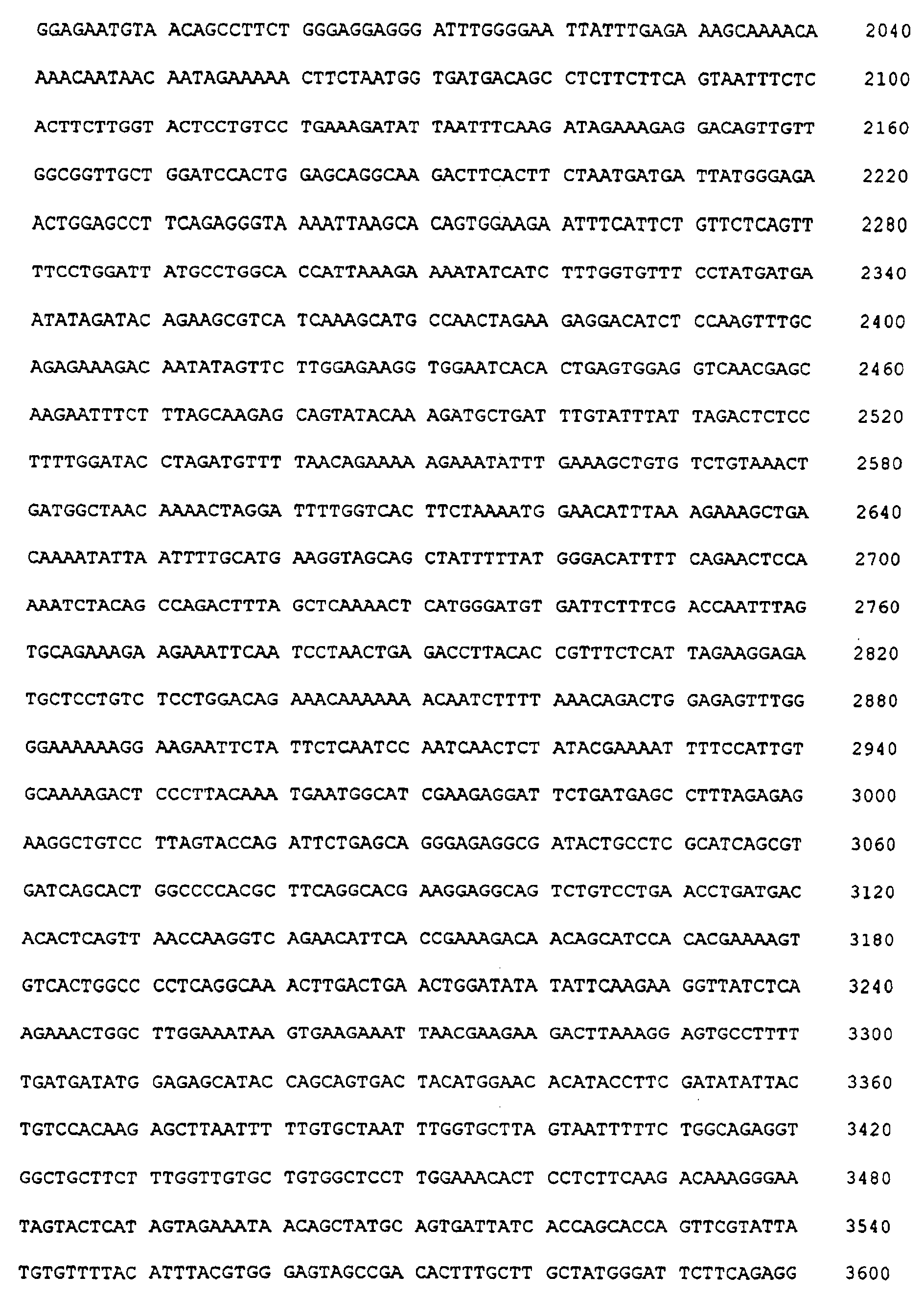
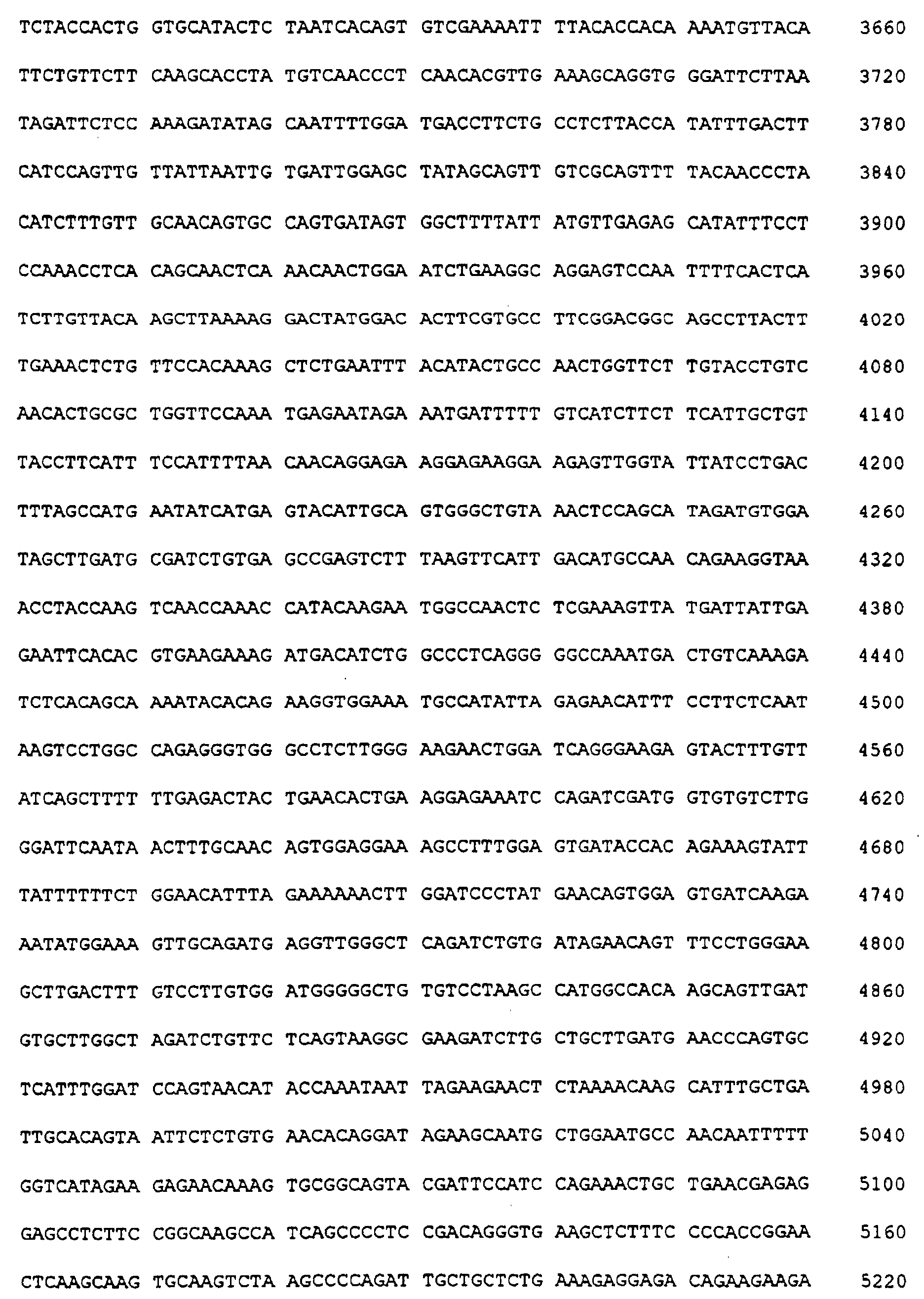
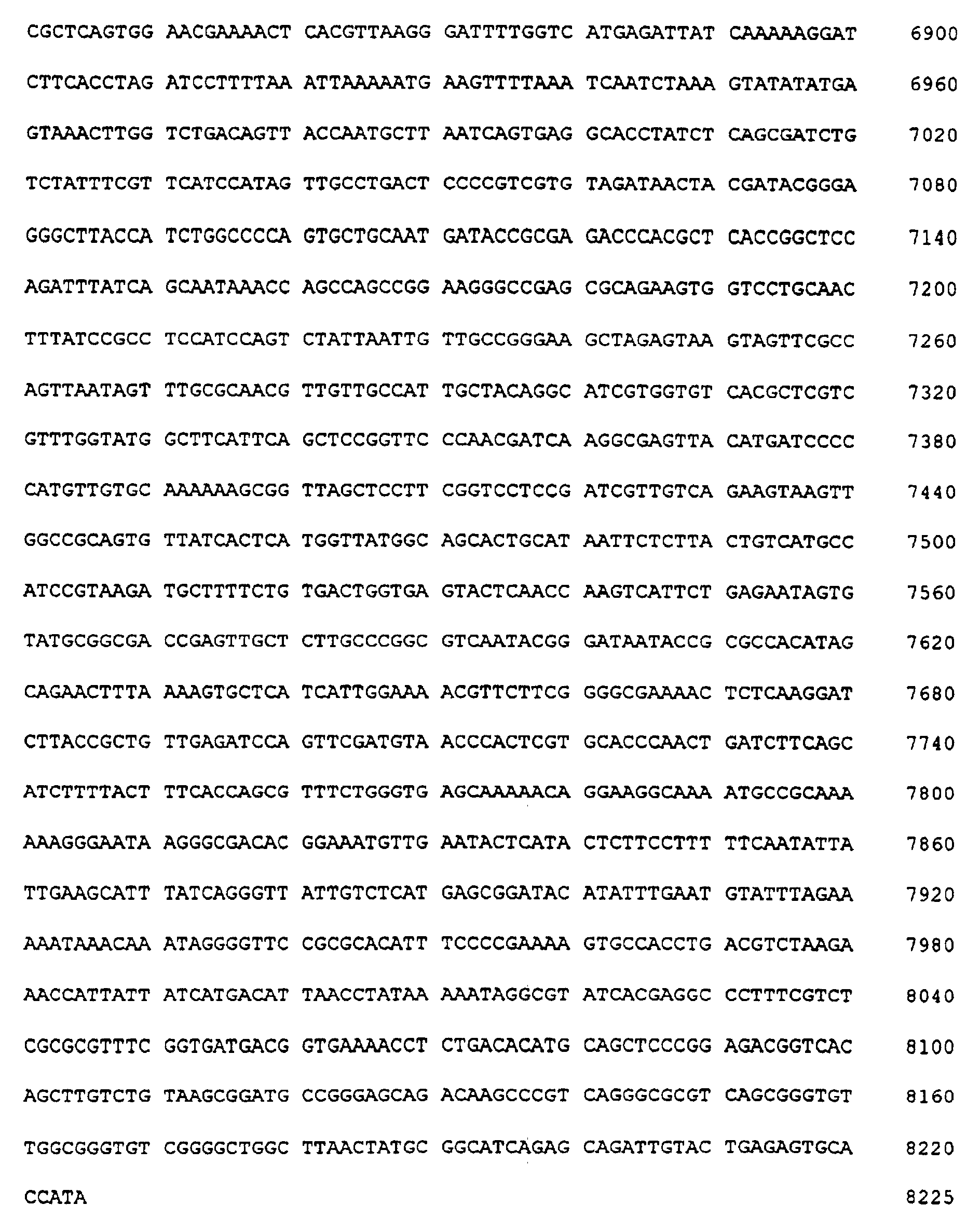
- SEQ ID NO:1
- zeigt die DNA-Sequenz von pCMV-CFTR.
- SEQ ID NO:2-5
- zeigen DNA-Sequenzen von DNA-Linkern.
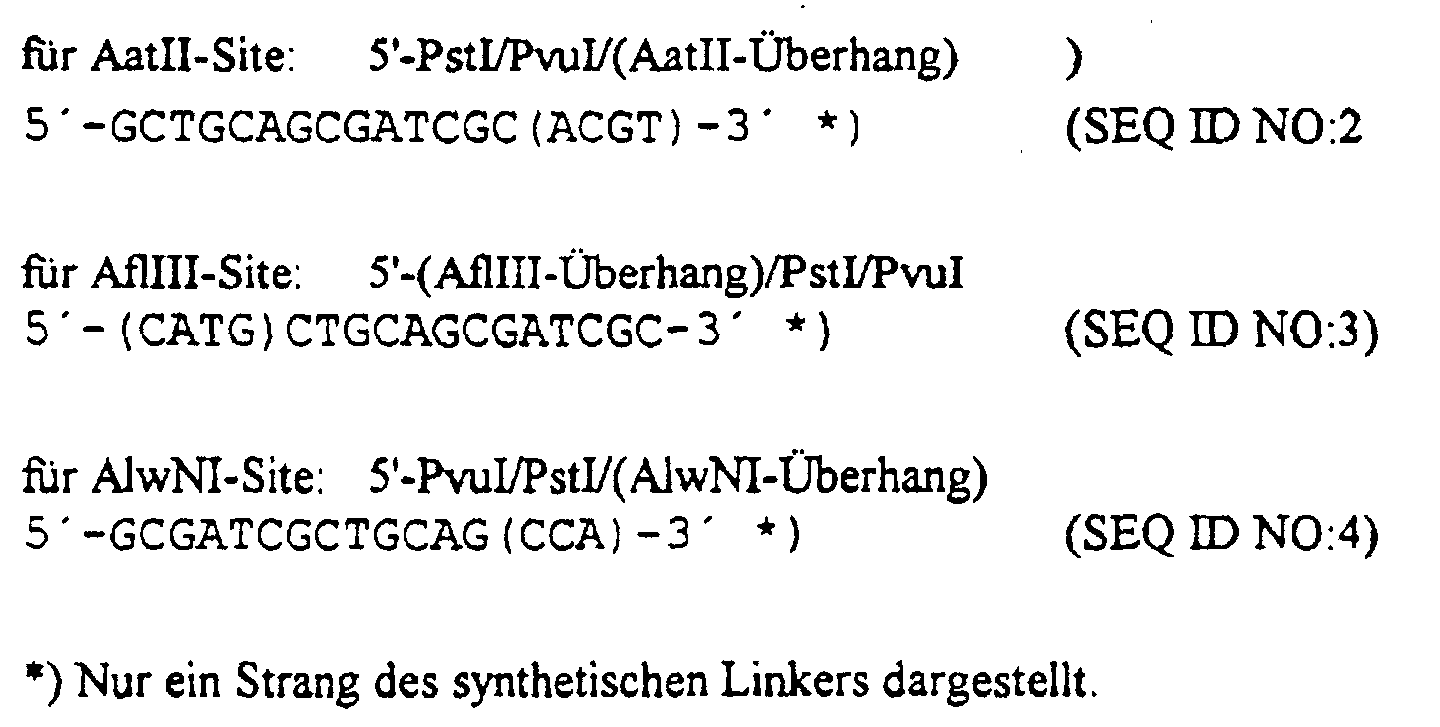
5'-(HindIII)-PvuI-PstI-XhoI-SaII-XbaI-BamHI-SmaI-NotI-PstI-PvuI-(EcoRI).








Claims (8)
- Verwendung einer zirkulären Vektor-DNA ohne Selektionsmarker - Gen zur Herstellung eines Arzneimittels zur Gentherapie von Säugetieren oder Menschen, wobei die Vektor - DNA dadurch erhältlich ist, dass eine Vektor-DNA, welche ein Selektionsmarker-Gen und eine für den Vektor heterologe DNA-Sequenz enthält, die eine Modulation, Korrektur oder Aktivierung der Expression eines endogenen Gens oder die Expression eines durch die Vektor-DNA in die Zellen des Säugetiers oder des Menschen eingeführten Gens bewirkt,a) unter Selektionsdruck amplifiziert und so gespalten wird, daß das genannte Selektionsmarker-Gen und die genannte heterologe DNA auf getrennten DNA-Fragmenten vorliegen,b) das DNA-Fragment, welches die genannte heterologe DNA enthält, oder beide Fragmente zu Vektoren rezirkularisiert werden,c) die genannten DNA-Fragmente vor oder nach der Rezirkularisierung getrennt werden,d) das rezirkularisierte DNA-Fragment, welches die genannte heterologe DNA enthält, isoliert unde) das so erhaltene rezirkularisierte DNA-Fragment zur Herstellung des Arzneimittels verwendet wird.
- Verwendung nach Anspruch 1, dadurch gekennzeichnet, daß die Spaltung in Schritt a) durch eine Restriktionsendonuklease erfolgt.
- Verwendung nach Anspruch 1, dadurch gekennzeichnet, daß die Spaltung in Schritt a) und die Rezirkularisierung in einem Schritt durch eine sitespezifische Rekombination erfolgt.
- Verwendung nach Anspruch 1 oder 3, dadurch gekennzeichnet, daß sich an die 3'- und 5'-Enden der heterologen DNA jeweils eine LoxP-Site anschließt und die Schritte a) und b) durch die Rekombinase Cre bewirkt werden.
- Verwendung nach den Ansprüchen 1 bis 3, dadurch gekennzeichnet, daß die gentherapeutische Behandlung in den Atmungswegen, in dem Verdauungstrakt oder auf der Hautoberfläche erfolgt.
- Verwendung nach Anspruch 5, dadurch gekennzeichnet, daß die zirkuläre Vektor-DNA eine Modulation oder Aktivierung der Expression des endogenen Gens für die zystische Fibrose bewirkt oder für das zystische Fibrose-Gen codiert.
- Verwendung nach Anspruch 6, dadurch gekennzeichnet, daß das Arzneimittel als Aerosol zur Anwendung im Atmungstrakt hergestellt wird.
- Therapeutische Präparation einer zirkulären Vektor-DNA in einer Menge von 30 bis 90 pmol, die eine für den Vektor heterologe DNA-Sequenz enthält, die die Modulation, Aktivierung oder Korrektur eines endogenen zystischen Fibrose-Gens in Säugerzellen bewirkt, oder welche ein in Säugerzellen exprimierbares zystisches Fibrose-Gen enthält, dadurch gekennzeichnet, daß diese Vektor-DNA kein Selektionsmarker-Gen enthält.
Applications Claiming Priority (3)
| Application Number | Priority Date | Filing Date | Title |
|---|---|---|---|
| DE4428402 | 1994-08-11 | ||
| DE4428402A DE4428402A1 (de) | 1994-08-11 | 1994-08-11 | Gentherapeutisches Verfahren unter Verwendung von DNA-Vektoren ohne Selektionsmarker-Gen |
| PCT/EP1995/003027 WO1996005297A1 (de) | 1994-08-11 | 1995-07-31 | Gentherapeutisches verfahren unter verwendung von dna-vektoren ohne selektionsmarker-gen |
Publications (2)
| Publication Number | Publication Date |
|---|---|
| EP0775203A1 EP0775203A1 (de) | 1997-05-28 |
| EP0775203B1 true EP0775203B1 (de) | 2003-11-12 |
Family
ID=6525410
Family Applications (1)
| Application Number | Title | Priority Date | Filing Date |
|---|---|---|---|
| EP95929028A Expired - Lifetime EP0775203B1 (de) | 1994-08-11 | 1995-07-31 | Gentherapeutisches verfahren unter verwendung von dna-vektoren ohne selektionsmarker-gen |
Country Status (8)
| Country | Link |
|---|---|
| US (2) | US6265218B1 (de) |
| EP (1) | EP0775203B1 (de) |
| JP (1) | JPH09512030A (de) |
| AT (1) | ATE254171T1 (de) |
| CA (1) | CA2197075C (de) |
| DE (2) | DE4428402A1 (de) |
| ES (1) | ES2210308T3 (de) |
| WO (1) | WO1996005297A1 (de) |
Families Citing this family (10)
| Publication number | Priority date | Publication date | Assignee | Title |
|---|---|---|---|---|
| US6825012B2 (en) | 1995-02-23 | 2004-11-30 | Gencell S.A. | DNA molecules, preparation and use in gene therapy |
| FR2731014B1 (fr) | 1995-02-23 | 1997-03-28 | Rhone Poulenc Rorer Sa | Molecules d'adn, preparation et utilisation en therapie genique |
| US7279313B2 (en) * | 1995-09-15 | 2007-10-09 | Centelion | Circular DNA molecule having a conditional origin of replication, process for their preparation and their use in gene therapy |
| FR2738842B1 (fr) * | 1995-09-15 | 1997-10-31 | Rhone Poulenc Rorer Sa | Molecule d'adn circulaire a origine de replication conditionnelle, leur procede de preparation et leur utilisation en therapie genique |
| US7364894B2 (en) * | 1995-09-15 | 2008-04-29 | Centelion | Circular DNA molecule having a conditional origin of replication, process for their preparation and their use in gene therapy |
| HUP0102697A3 (en) * | 1998-07-16 | 2003-09-29 | Novo Nordisk As | Method of making proteins in transformed yeast cells |
| US20020198139A1 (en) * | 2001-05-17 | 2002-12-26 | Deutschman Clifford S. | Method of preventing acute pulmonary cell injury |
| WO2004111247A1 (de) * | 2003-06-10 | 2004-12-23 | Mologen Ag | Zirkuläres expressionskonstrukt für gentherapeutische anwendungen |
| RU2712838C1 (ru) * | 2018-09-04 | 2020-01-31 | Генетик Диагностик Энд Терапи 21 Лтд | Генотерапевтический ДНК-вектор GDTT1.8NAS12, способ его получения, штамм Escherichia coli JM110-NAS, способ его получения, штамм Escherichia coli JM110-NAS/GDTT1.8NAS12, несущий генотерапевтический ДНК-вектор GDTT1.8NAS12, способ его получения, способ производства в промышленных масштабах генотерапевтического ДНК-вектора |
| WO2020174079A1 (en) | 2019-02-28 | 2020-09-03 | Proteonic Biotechnology Ip B.V. | Self-immolative plasmid backbone |
Family Cites Families (9)
| Publication number | Priority date | Publication date | Assignee | Title |
|---|---|---|---|---|
| US4931373A (en) * | 1984-05-25 | 1990-06-05 | Zymogenetics, Inc. | Stable DNA constructs for expression of α-1 antitrypsin |
| US5670488A (en) * | 1992-12-03 | 1997-09-23 | Genzyme Corporation | Adenovirus vector for gene therapy |
| AU664847B2 (en) * | 1991-05-15 | 1995-12-07 | Cell Genesys, Inc. | Genomic modifications with homologous DNA targeting |
| WO1993001283A1 (en) * | 1991-07-08 | 1993-01-21 | The United States Of America As Represented By The Secretary Of Agriculture | Selection-gene-free transgenic plants |
| AU5405994A (en) * | 1992-10-16 | 1994-05-09 | Government Of The United States Of America, As Represented By The Secretary Of The Department Of Health And Human Services, The | Supercoiled minicircle dna as as a unitary promoter vector |
| US5441884A (en) * | 1993-07-08 | 1995-08-15 | Ecogen Inc. | Bacillus thuringiensis transposon TN5401 |
| DE4410188A1 (de) | 1994-03-24 | 1995-09-28 | Boehringer Mannheim Gmbh | Gentherapeutisches Verfahren unter Verwendung von antibiotikaresistenzgenfreien DNA-Vektoren |
| FR2731014B1 (fr) * | 1995-02-23 | 1997-03-28 | Rhone Poulenc Rorer Sa | Molecules d'adn, preparation et utilisation en therapie genique |
| US5763270A (en) | 1995-06-07 | 1998-06-09 | Genemedicine, Inc. | Plasmid for delivery of nucleic acids to cells and methods of use |
-
1994
- 1994-08-11 DE DE4428402A patent/DE4428402A1/de not_active Withdrawn
-
1995
- 1995-07-31 CA CA002197075A patent/CA2197075C/en not_active Expired - Fee Related
- 1995-07-31 DE DE59510829T patent/DE59510829D1/de not_active Expired - Lifetime
- 1995-07-31 EP EP95929028A patent/EP0775203B1/de not_active Expired - Lifetime
- 1995-07-31 US US08/793,618 patent/US6265218B1/en not_active Expired - Fee Related
- 1995-07-31 WO PCT/EP1995/003027 patent/WO1996005297A1/de not_active Ceased
- 1995-07-31 ES ES95929028T patent/ES2210308T3/es not_active Expired - Lifetime
- 1995-07-31 JP JP8506966A patent/JPH09512030A/ja active Pending
- 1995-07-31 AT AT95929028T patent/ATE254171T1/de not_active IP Right Cessation
-
2001
- 2001-02-27 US US09/794,431 patent/US6573100B1/en not_active Expired - Fee Related
Also Published As
| Publication number | Publication date |
|---|---|
| EP0775203A1 (de) | 1997-05-28 |
| DE4428402A1 (de) | 1996-02-15 |
| CA2197075A1 (en) | 1996-02-22 |
| JPH09512030A (ja) | 1997-12-02 |
| ES2210308T3 (es) | 2004-07-01 |
| ATE254171T1 (de) | 2003-11-15 |
| DE59510829D1 (de) | 2003-12-18 |
| US6265218B1 (en) | 2001-07-24 |
| WO1996005297A1 (de) | 1996-02-22 |
| CA2197075C (en) | 1999-12-21 |
| US6573100B1 (en) | 2003-06-03 |
Similar Documents
| Publication | Publication Date | Title |
|---|---|---|
| DE69634043T2 (de) | Zirkuläres dna molekül mit einem abhängigen replikationsursprung, seine herstellungsverfahren und seine verwendung in der gentherapie | |
| DE69636032T2 (de) | Plasmid zur verabreichung von nukleine säuren und verwendungsverfahren | |
| DE69518910T2 (de) | Verfahren zur herstellung von viralen vektoren von mindestens 20kb durch intermolekulare homologe rekombination in einer prokaryotischen zelle | |
| DE69637156T2 (de) | Dna-molekül, herstellung und verwendung in der gentherapie | |
| DE60113851T2 (de) | Bakteriophage mit breitem wirtsspektrum | |
| DE60221801T3 (de) | Cpg-freie synthetische gene und bakterielle plasmide | |
| DE69914382T2 (de) | Verwendung der Leserahmen der adenoviralen E4-Region zur Verbesserung der Genexpression | |
| DD209476A5 (de) | Verfahren zur stabilisierung und selektierung von wirtszellen, die rekombinierende dna enthalten | |
| DE69616559T2 (de) | Hilfsvirus für die herstellung von rekombinanten virusvektoren | |
| DE60212825T2 (de) | Selbsterhaltender lactococcus stamm | |
| EP0807183B1 (de) | Gentherapie von erkrankungen, die durch das immunsystem bedingt sind, mit hilfe eines zellspezifischen zellzyklusregulierten wirkstoffes | |
| DE69611794T2 (de) | Stabilisierung von plasmiden | |
| DE60319083T2 (de) | Pharmazeutische verbindung und methoden zur behandlung von menschlichen karzinomen mittels arginin-entzug | |
| Rubens et al. | Transposable plasmid deoxyribonucleic acid sequence in Pseudomonas aeruginosa which mediates resistance to gentamicin and four other antimicrobial agents | |
| EP1214440A2 (de) | Sequenz-spezifische dna-rekombination in eukaryotischen zellen | |
| LU83745A1 (de) | Hybride human-leukozyten-interferone | |
| DD216044A5 (de) | Verfahren zur herstellung eines rekombinierenden dna-klonierungsvektors | |
| WO2010002470A1 (en) | Minicircle dna vector preparations and methods of making and using the same | |
| DE4428402A1 (de) | Gentherapeutisches Verfahren unter Verwendung von DNA-Vektoren ohne Selektionsmarker-Gen | |
| WO1995025800A1 (de) | Gentherapeutisches verfahren unter verwendung von antibiotikaresistenzgenfreien dna-vektoren | |
| TW202342743A (zh) | 調節vegf的方法及其用途 | |
| EP2625275A1 (de) | Verfahren zur semi-synthetischen herstellung hochreiner "minicircle" dna-vektoren aus plasmiden | |
| EP1631672B1 (de) | Zirkuläres expressionskonstrukt für gentherapeutische anwendungen | |
| DE69709891T2 (de) | Chitosan enthaltende zusammensetzung | |
| EP1294919B1 (de) | Verfahren in vitro zum einbringen von nukleinsäure in eine zelle (transfektion) mittels calciumphosphat |
Legal Events
| Date | Code | Title | Description |
|---|---|---|---|
| PUAI | Public reference made under article 153(3) epc to a published international application that has entered the european phase |
Free format text: ORIGINAL CODE: 0009012 |
|
| 17P | Request for examination filed |
Effective date: 19970311 |
|
| AK | Designated contracting states |
Kind code of ref document: A1 Designated state(s): AT BE CH DE DK ES FR GB GR IE IT LI LU NL PT SE |
|
| RAP3 | Party data changed (applicant data changed or rights of an application transferred) |
Owner name: ROCHE DIAGNOSTICS GMBH |
|
| 17Q | First examination report despatched |
Effective date: 20020308 |
|
| GRAH | Despatch of communication of intention to grant a patent |
Free format text: ORIGINAL CODE: EPIDOS IGRA |
|
| GRAS | Grant fee paid |
Free format text: ORIGINAL CODE: EPIDOSNIGR3 |
|
| GRAA | (expected) grant |
Free format text: ORIGINAL CODE: 0009210 |
|
| AK | Designated contracting states |
Kind code of ref document: B1 Designated state(s): AT BE CH DE DK ES FR GB GR IE IT LI LU NL PT SE |
|
| PG25 | Lapsed in a contracting state [announced via postgrant information from national office to epo] |
Ref country code: NL Free format text: LAPSE BECAUSE OF FAILURE TO SUBMIT A TRANSLATION OF THE DESCRIPTION OR TO PAY THE FEE WITHIN THE PRESCRIBED TIME-LIMIT Effective date: 20031112 Ref country code: IE Free format text: LAPSE BECAUSE OF FAILURE TO SUBMIT A TRANSLATION OF THE DESCRIPTION OR TO PAY THE FEE WITHIN THE PRESCRIBED TIME-LIMIT Effective date: 20031112 |
|
| REG | Reference to a national code |
Ref country code: GB Ref legal event code: FG4D Free format text: NOT ENGLISH |
|
| REG | Reference to a national code |
Ref country code: CH Ref legal event code: EP |
|
| REF | Corresponds to: |
Ref document number: 59510829 Country of ref document: DE Date of ref document: 20031218 Kind code of ref document: P |
|
| REG | Reference to a national code |
Ref country code: CH Ref legal event code: NV Representative=s name: F. HOFFMANN-LA ROCHE AG |
|
| REG | Reference to a national code |
Ref country code: IE Ref legal event code: FG4D Free format text: GERMAN |
|
| PG25 | Lapsed in a contracting state [announced via postgrant information from national office to epo] |
Ref country code: SE Free format text: LAPSE BECAUSE OF FAILURE TO SUBMIT A TRANSLATION OF THE DESCRIPTION OR TO PAY THE FEE WITHIN THE PRESCRIBED TIME-LIMIT Effective date: 20040212 Ref country code: GR Free format text: LAPSE BECAUSE OF FAILURE TO SUBMIT A TRANSLATION OF THE DESCRIPTION OR TO PAY THE FEE WITHIN THE PRESCRIBED TIME-LIMIT Effective date: 20040212 Ref country code: DK Free format text: LAPSE BECAUSE OF FAILURE TO SUBMIT A TRANSLATION OF THE DESCRIPTION OR TO PAY THE FEE WITHIN THE PRESCRIBED TIME-LIMIT Effective date: 20040212 |
|
| GBT | Gb: translation of ep patent filed (gb section 77(6)(a)/1977) |
Effective date: 20040122 |
|
| NLV1 | Nl: lapsed or annulled due to failure to fulfill the requirements of art. 29p and 29m of the patents act | ||
| REG | Reference to a national code |
Ref country code: IE Ref legal event code: FD4D |
|
| REG | Reference to a national code |
Ref country code: ES Ref legal event code: FG2A Ref document number: 2210308 Country of ref document: ES Kind code of ref document: T3 |
|
| ET | Fr: translation filed | ||
| PG25 | Lapsed in a contracting state [announced via postgrant information from national office to epo] |
Ref country code: LU Free format text: LAPSE BECAUSE OF NON-PAYMENT OF DUE FEES Effective date: 20040731 Ref country code: BE Free format text: LAPSE BECAUSE OF NON-PAYMENT OF DUE FEES Effective date: 20040731 Ref country code: AT Free format text: LAPSE BECAUSE OF NON-PAYMENT OF DUE FEES Effective date: 20040731 |
|
| PLBE | No opposition filed within time limit |
Free format text: ORIGINAL CODE: 0009261 |
|
| STAA | Information on the status of an ep patent application or granted ep patent |
Free format text: STATUS: NO OPPOSITION FILED WITHIN TIME LIMIT |
|
| 26N | No opposition filed |
Effective date: 20040813 |
|
| BERE | Be: lapsed |
Owner name: *ROCHE DIAGNOSTICS G.M.B.H. Effective date: 20040731 |
|
| BERE | Be: lapsed |
Owner name: *ROCHE DIAGNOSTICS G.M.B.H. Effective date: 20040731 |
|
| PG25 | Lapsed in a contracting state [announced via postgrant information from national office to epo] |
Ref country code: PT Free format text: LAPSE BECAUSE OF NON-PAYMENT OF DUE FEES Effective date: 20040412 |
|
| PGFP | Annual fee paid to national office [announced via postgrant information from national office to epo] |
Ref country code: ES Payment date: 20100701 Year of fee payment: 16 Ref country code: CH Payment date: 20100726 Year of fee payment: 16 |
|
| PGFP | Annual fee paid to national office [announced via postgrant information from national office to epo] |
Ref country code: IT Payment date: 20100717 Year of fee payment: 16 Ref country code: GB Payment date: 20100616 Year of fee payment: 16 Ref country code: FR Payment date: 20100813 Year of fee payment: 16 Ref country code: DE Payment date: 20100730 Year of fee payment: 16 |
|
| REG | Reference to a national code |
Ref country code: CH Ref legal event code: PL |
|
| GBPC | Gb: european patent ceased through non-payment of renewal fee |
Effective date: 20110731 |
|
| REG | Reference to a national code |
Ref country code: FR Ref legal event code: ST Effective date: 20120330 |
|
| PG25 | Lapsed in a contracting state [announced via postgrant information from national office to epo] |
Ref country code: DE Free format text: LAPSE BECAUSE OF NON-PAYMENT OF DUE FEES Effective date: 20120201 Ref country code: FR Free format text: LAPSE BECAUSE OF NON-PAYMENT OF DUE FEES Effective date: 20110801 Ref country code: CH Free format text: LAPSE BECAUSE OF NON-PAYMENT OF DUE FEES Effective date: 20110731 Ref country code: LI Free format text: LAPSE BECAUSE OF NON-PAYMENT OF DUE FEES Effective date: 20110731 |
|
| REG | Reference to a national code |
Ref country code: DE Ref legal event code: R119 Ref document number: 59510829 Country of ref document: DE Effective date: 20120201 |
|
| PG25 | Lapsed in a contracting state [announced via postgrant information from national office to epo] |
Ref country code: IT Free format text: LAPSE BECAUSE OF NON-PAYMENT OF DUE FEES Effective date: 20110731 |
|
| PG25 | Lapsed in a contracting state [announced via postgrant information from national office to epo] |
Ref country code: GB Free format text: LAPSE BECAUSE OF NON-PAYMENT OF DUE FEES Effective date: 20110731 |
|
| REG | Reference to a national code |
Ref country code: ES Ref legal event code: FD2A Effective date: 20130531 |
|
| PG25 | Lapsed in a contracting state [announced via postgrant information from national office to epo] |
Ref country code: ES Free format text: LAPSE BECAUSE OF NON-PAYMENT OF DUE FEES Effective date: 20110801 |