EP0774481B1 - Process for producing polyolefin solutions - Google Patents
Process for producing polyolefin solutions Download PDFInfo
- Publication number
- EP0774481B1 EP0774481B1 EP96905028A EP96905028A EP0774481B1 EP 0774481 B1 EP0774481 B1 EP 0774481B1 EP 96905028 A EP96905028 A EP 96905028A EP 96905028 A EP96905028 A EP 96905028A EP 0774481 B1 EP0774481 B1 EP 0774481B1
- Authority
- EP
- European Patent Office
- Prior art keywords
- feed section
- kneader
- polyolefin resin
- polyolefin
- section
- Prior art date
- Legal status (The legal status is an assumption and is not a legal conclusion. Google has not performed a legal analysis and makes no representation as to the accuracy of the status listed.)
- Expired - Lifetime
Links
Images


Classifications
-
- C—CHEMISTRY; METALLURGY
- C08—ORGANIC MACROMOLECULAR COMPOUNDS; THEIR PREPARATION OR CHEMICAL WORKING-UP; COMPOSITIONS BASED THEREON
- C08J—WORKING-UP; GENERAL PROCESSES OF COMPOUNDING; AFTER-TREATMENT NOT COVERED BY SUBCLASSES C08B, C08C, C08F, C08G or C08H
- C08J3/00—Processes of treating or compounding macromolecular substances
- C08J3/02—Making solutions, dispersions, lattices or gels by other methods than by solution, emulsion or suspension polymerisation techniques
- C08J3/09—Making solutions, dispersions, lattices or gels by other methods than by solution, emulsion or suspension polymerisation techniques in organic liquids
-
- B—PERFORMING OPERATIONS; TRANSPORTING
- B29—WORKING OF PLASTICS; WORKING OF SUBSTANCES IN A PLASTIC STATE IN GENERAL
- B29C—SHAPING OR JOINING OF PLASTICS; SHAPING OF MATERIAL IN A PLASTIC STATE, NOT OTHERWISE PROVIDED FOR; AFTER-TREATMENT OF THE SHAPED PRODUCTS, e.g. REPAIRING
- B29C48/00—Extrusion moulding, i.e. expressing the moulding material through a die or nozzle which imparts the desired form; Apparatus therefor
- B29C48/25—Component parts, details or accessories; Auxiliary operations
- B29C48/285—Feeding the extrusion material to the extruder
- B29C48/297—Feeding the extrusion material to the extruder at several locations, e.g. using several hoppers or using a separate additive feeding
-
- B—PERFORMING OPERATIONS; TRANSPORTING
- B29—WORKING OF PLASTICS; WORKING OF SUBSTANCES IN A PLASTIC STATE IN GENERAL
- B29C—SHAPING OR JOINING OF PLASTICS; SHAPING OF MATERIAL IN A PLASTIC STATE, NOT OTHERWISE PROVIDED FOR; AFTER-TREATMENT OF THE SHAPED PRODUCTS, e.g. REPAIRING
- B29C48/00—Extrusion moulding, i.e. expressing the moulding material through a die or nozzle which imparts the desired form; Apparatus therefor
- B29C48/25—Component parts, details or accessories; Auxiliary operations
- B29C48/36—Means for plasticising or homogenising the moulding material or forcing it through the nozzle or die
- B29C48/395—Means for plasticising or homogenising the moulding material or forcing it through the nozzle or die using screws surrounded by a cooperating barrel, e.g. single screw extruders
- B29C48/40—Means for plasticising or homogenising the moulding material or forcing it through the nozzle or die using screws surrounded by a cooperating barrel, e.g. single screw extruders using two or more parallel screws or at least two parallel non-intermeshing screws, e.g. twin screw extruders
-
- B—PERFORMING OPERATIONS; TRANSPORTING
- B29—WORKING OF PLASTICS; WORKING OF SUBSTANCES IN A PLASTIC STATE IN GENERAL
- B29C—SHAPING OR JOINING OF PLASTICS; SHAPING OF MATERIAL IN A PLASTIC STATE, NOT OTHERWISE PROVIDED FOR; AFTER-TREATMENT OF THE SHAPED PRODUCTS, e.g. REPAIRING
- B29C48/00—Extrusion moulding, i.e. expressing the moulding material through a die or nozzle which imparts the desired form; Apparatus therefor
- B29C48/25—Component parts, details or accessories; Auxiliary operations
- B29C48/36—Means for plasticising or homogenising the moulding material or forcing it through the nozzle or die
- B29C48/50—Details of extruders
- B29C48/505—Screws
- B29C48/625—Screws characterised by the ratio of the threaded length of the screw to its outside diameter [L/D ratio]
-
- C—CHEMISTRY; METALLURGY
- C08—ORGANIC MACROMOLECULAR COMPOUNDS; THEIR PREPARATION OR CHEMICAL WORKING-UP; COMPOSITIONS BASED THEREON
- C08J—WORKING-UP; GENERAL PROCESSES OF COMPOUNDING; AFTER-TREATMENT NOT COVERED BY SUBCLASSES C08B, C08C, C08F, C08G or C08H
- C08J2323/00—Characterised by the use of homopolymers or copolymers of unsaturated aliphatic hydrocarbons having only one carbon-to-carbon double bond; Derivatives of such polymers
- C08J2323/02—Characterised by the use of homopolymers or copolymers of unsaturated aliphatic hydrocarbons having only one carbon-to-carbon double bond; Derivatives of such polymers not modified by chemical after treatment
Definitions
- the present invention relates to a method of manufacturing a polyolefin solution used for manufacturing microporous polyolefin membranes, polyolefin fibers and the like. More particularly, it relates to a method for continuously manufacturing a solution of polyolefin having a wide molecular distribution range, in a stable manner and with a high output.
- a polyolefin resin has superior mechanical strength and physical characteristics; therefore, it has been used for various purposes.
- microporous polyolefin membranes and porous fibers have been used as a separator for batteries, a separation film for electrolytic capacitors, precision filters, air filters and the like.
- a polyolefin resin is generally manufactured using a polyolefin solution incorporating an advanced flow improver or solvent.
- the polyolefin solution is conventionally manufactured by means of "batch" type kneading, continuous kneading and the like of a polyolefin resin and a liquid such as mineral oil and the like.
- the batch kneading the polyolefin and the liquid are put into an autoclave equipped with a mixer; the temperature is increased while the mixture is mixed, and the polyolefin and the liquid are kneaded.
- the batch kneading the kneading time takes longer, which is a short-coming.
- an object of the present invention is to provide a manufacturing method in which a polyolefin solution can be continuously obtained with a high yield and in a stable manner.
- the present inventors made the present invention, using a continuous kneader having a self-cleaning effect, and by maintaining a starving state within an internal section of the kneader at a polyolefin resin feed section, a liquid feed section and a kneading section.
- the present inventors discovered that in this way, a polyolefin solution having uniform quality can be continuously obtained in a stable manner with a high yield.
- the manufacturing method of a polyolefin solution according to the present invention comprises kneading a polyolefin resin with a liquid being composed of a solvent, and is characterized by that :
- the manufacturing method of a polyolefin solution according to the present invention comprises kneading a polyolefin resin and a liquid composed of a solvent, and is characterized by that:
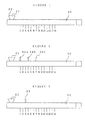
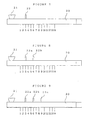
- the numerals 1 through 14 indicate a pressure meter
- the numeral 20 indicates an extruder
- the numeral 21 indicates a polyolefin feed section
- the numeral 22 indicates a liquid feed section.
- the polyolefin resin can be a crystalline homopolymer or copolymer obtained by polymerizing ethylene, propylene, 1-butene, 4-methyl-1-pentene or 1-hexene or a blend thereof.
- the copolymer can be, for example, a block copolymer (multi-step polymer), obtained by introducing propylene and ethylene sequentially to a reactor. Among those above, polypropylene, polyethylene and a blend of them are preferable.
- the polyolefin may be in powder or pellet form.
- polyolefin resins preferred is a polyolefin resin containing a component with a molecular weight of at least 1 x 10 6 .
- polyolefin resins containing a component having a molecular weight of at least 1 x 10 6 include crystalline homopolymers and copolymers of ethylene, propylene, 1-butene, 4-methyl-1-pentene, 1-hexene and the like and blends thereof.
- an ultra high molecular weight polyethylene containing at least 5% by weight of a component having a molecular weight of at least 1 x 10 6 .
- the polyolefin resin described above it is desirable that it contains at least 5% by weight (according to the GPC method), more desirably 10% by weight to 90% by weight, of a component having a molecular weight of at least 1 x 10 6 .
- the molecular weight distribution (weight average molecular weight/number average molecular weight) of the polyolefin resin described above is 5 to 300.
- the component having a molecular weight of at least 1 x 10 6 is less than 5% by weight, the drawing property of a formed object made from the solution, cannot be improved, and it is not possible to obtain a formed object with sufficient strength.
- the afore-mentioned range of molecular weight distribution is desirable in order to easily prepare the solution.
- a polyolefin resin produced by a reactor blend multi-step polymerized polyolefin
- a mixture can be made by blending a polyolefin containing at least 5% by weight of a component having a molecular weight of at least 1 x 10 6 with a polyolefin having a molecular weight of at least 1 x 10 4 but less than 1 x 10 6 .
- a mixture prepared by blending the polyethylene having an ultra high molecular weight described above with high density polyethylene having the molecular weight described above is especially desirable.
- a reactor blend containing at least 5% by weight of a component having a molecular weight of at least 1 x 10 6 and a molecular weight distribution (weight average molecular weight/number average molecular weight) of 5 to 300 can be produced by means of multi-step polymerization.
- the multi-step polymerization method it is desirable to use a 2-step polymerization method to produce the high molecular weight polymer portion and the low molecular weight polymer portion.
- the polyolefin containing a component having a molecular weight of at least 1 x 10 6 more desirably an ultra high molecular weight polyolefin containing at least 5% by weight percent of a component having a molecular weight of at least 1 x 10 6 , especially ultra high molecular weight polyethylene described previously, or a mixture of the ultra high molecular weight polyethylene and high density polyethylene, is especially desirable as a solution for forming microporous membranes.
- nucleation agent such as nucleation agent, anti-oxidant, ultra-violet ray absorbing agent, anti-blocking agent, pigment, dye, inorganic filler, anti-bacterial agent, deodorant, far-infrared radiation irradiation agent and the like.
- the liquid to be added to the polyolefin resin is a low volatile and good solvent for the polyolefin resin, and is for example, low volatile aliphatic or cyclic hydrocarbons such as nonane, decane, decalin, p-xylene, undecane, dodecane, liquid paraffin and the like, or a fraction of mineral oil having a boiling point corresponding to the above.
- the quantity of the liquid is 15 parts by weight to 2000 parts by weight, more desirably 20 parts by weight to 1500 parts by weight per 100 parts by weight of the polyolefin resin.
- the quantity of the liquid goes over 2000 parts by weight, kneading becomes difficult.
- the quantity of the liquid is less than 15 parts by weight, the viscosity is high and the quality deteriorates due to shearing heat at the time of kneading.
- the continuous kneader used for manufacturing the polyolefin solution has a self-cleaning action.
- a thread ridge of another screw or a protruding section or the like of a cylinder passes through a groove section of a screw, so that the mixture does not rotate with the screw, and it is possible to direct the mixture in a direction in accordance with the thread ridge of the screw or a combination angle of a kneading disk.
- the self-cleaning action of the kneader does not have to be effective in all sections of the kneader, but it is sufficient that the self-cleaning action is effective in at least a section of the kneader in which the mixture described above exists, so that a liquid feed section and the section in which the kneading of the polyolefin resin and the liquid is initially carried out, are kept in the starved state.
- the self-cleaning action in the kneader does not have to be effective in all section of the kneader, but it is enough that the self-cleaning action is effective in at least one section of the sections in which the mixture described above exists, so that the pressure in the liquid feed section is 10kg/cm 2 or below.
- a twin-screw kneader or special single screw kneader is preferred as this type of continuous kneader described above.
- Specific examples of such kneader includes a co-rotating twin screw mixer (extruder), a counter-rotating twin screw mixter (extruder), or a special single-screw kneader such as a Bosco kneader and the like.
- the co-rotating twin-screw mixer is especially preferred.
- At least one liquid feed section is placed at a polyolefin resin feed section or downstream thereof.
- the liquid is supplied en route to the kneader in which the polyolefin resin exists, and the solution of the polyolefin resin of a uniform concentration is prepared by kneading.
- the manufacturing method of a polyolefin solution according to the present invention includes a case that a polyolefin resin and a liquid are supplied from the same feed section, and a case that the liquid feed section is placed downstream of the feed section of the polyolefin resin. It is necessary to keep an internal section of the kneader at each feed section in a starving state. In addition, it is necessary to keep the internal section of the kneader at a kneading section of an initial liquid and the polyolefin resin in a starving state.
- the starving state of the internal section of the kneader here means that there exists an air space between the cylinder and the screw where the polyolefin resin or the mixture of the liquid with the polyolefin resin does not exist.
- the pressure toward the direction of the screw length becomes 0.
- the liquid feed section is placed at the polyolefin resin feed section and downstream thereof are provided, it is preferred in the case that an extremely large quantity of the liquid is supplied, to keep at least one internal section of the kneader filled with the polyolefin resin, between the polyolefin resin feed section and the liquid feed section located most upstream.
- the liquid feed section is placed at the polyolefin resin feed section and downstream thereof are provided, it is preferred in the case that an extremely large quantity of the liquid is supplied, to keep at least one internal section of the kneader filled with the polyolefin resin, between the polyolefin resin feed section and the liquid feed section located most upstream.
- the pressure distribution described above can be obtained by changing the shape of the screw of the kneader, the liquid feed location, operation conditions such as screw rotation number and the like.
- the method of manufacturing a polyolefin solution according to the present invention can be characterized by that a specific pressure distribution is maintained in the kneader.
- the pressure in the kneader here is an average value of the pressure in the internal section of the kneader over a constant time interval, and this constant time is a sufficiently long time to average out the changes in pressure attributable to the rotation of the screw of the kneader.
- At least one section of the kneader located between the polyolefin resin feed section and the most upstream liquid feed is kept at a higher pressure than the pressure of the most upstream liquid feed.
- a section having greater pressure than the internal pressure of the liquid feed section is maintained upstream of the most upstream liquid feed.
- the pressure in the kneader at the liquid feed section located most upstream is set to less than 10 kg/cm 2 (gauge pressure).
- the section filled with only the polyolefin is reduced to the minimum, by setting the pressure in the kneader within the range described above, and as a result, the shearing heat is controlled and deterioration due to heat can be prevented.
- the pressure distribution described above can be obtained by changing the shape of the screw of the kneader and the like.
- the kneading temperature must be set between the melting point of the polyolefin and 250°C, preferably between the melting point of the polyolefin + 10°C and 220°C. If the kneading temperature is less than the melting point of the polyolefin, sufficient kneading cannot be carried out, and if the kneading temperature is higher than 250°C, the deterioration of the polyolefin resin takes place.
- the pressure at the liquid feed section zero, by creating a starving state in the internal section of the kneader at the polyolefin resin feed section and the liquid feed section and the initial kneading section.
- a starving state in the internal section of the kneader at the polyolefin resin feed section and the liquid feed section and the initial kneading section As a result, it is possible to obtain a uniform polyolefin solution with a high yield, without creating the back flow of the liquid, even though there is no section filled with only the polyolefin resin upstream of the liquid feed section.
- Table 1 shows the polyolefin resin and the liquid being used, and the quantity of supplied liquid for 100 parts by weight of the polyolefin resin.
- the quantity (shown as parts by weight for 100 parts by weight of the polyolefin ) of the liquid supplied from each of the liquid feed holes and the pressure in the internal section of the extruder and operation conditions are shown in Table 2.
- the pressure value shown in Table 2 was the value (kg/cm 2 , gauge pressure) when the atmospheric pressure is set to zero.
- Table 1 shows the distance from the pressure meter 1 to the left end of the extruder 20 .
- Examples 6 through 16 show that the pressure value (kg/cm 2 , gauge pressure) at the location of the pressure meter located immediately upstream of the liquid feed section located most upstream, was over zero, so that the internal section of the extruder was in the filled state.
- the polyolefin solution, obtained in the above manner, was formed into a sheet of 2 mm in thickness using the press forming die. The sheet obtained looked superior in its appearance.
- the sheet was drawn with a simultaneous two-axis, using a batch type rolling mill, and it became clear that it was possible to draw in the scale of more than 2 x 2.
- Example 1 Each of the polyolefin resins and the liquids, shown in Table 1, were kneaded, using the co-rotating twin screw mixer (extruder), TEX-54, the same as that of Example 1. In addition, the screw shape of the extruder was selected so that the preferred pressure distribution could be obtained.
- the pressure meters were placed in the same manner with those of Example 1. The location of the pressure meter and the location of the liquid feed section are shown in Figure 1, Figure 3, Figure 4, and Figure 6, and the relation of each Comparative Example and the Figures are shown in Table 1.
- Table 2 shows the internal pressure of the extruder and the operation conditions. As shown in Table 2, as for the Comparative Examples, the value of the pressure was over zero at the location of the immediately downstream of the polyolefin resin feed section, or the liquid feed section located most upstream, and at the location of the pressure meter immediately downstream, which shows that the internal of the extruder was in the filled state, and was not in a starving state. However, the pressure value shown in Table 2, was the value when the atmospheric pressure was zero (kg/cm 2 , gage pressure). The operation conditions shown in Table 2 were the conditions when the stable production could be seen and when the maximum yield was realized.
- Comparative Example 1 through Comparative Example 4 when the yield was increased, the following phenomena were observed: its variation became big and the liquid not being kneaded was jetted out intermittently.
- Comparative Example 5 and Comparative Example 6 were formed into a sheet of 2 mm in thickness, using a press forming die. The color of the sheet changed to yellow. Subsequently, this sheet was drawn with a simultaneous two-axis, using a batch type rolling mill; however, it was torn in all experimental conditions.
- Table 4 and Table 6 show the operation conditions, and Table 5 and Table 7 show the pressure distribution measured. However, the pressure values shown in Table 5 and Table 7 were the value (gauge pressure) at the time when the atmospheric pressure was set to zero.
- the operation conditions shown in Table 4 and Table 6 were the conditions at the time of maximum yield when a stable yield was seen.
- the polyolefin solution obtained in the above manner is formed into a sheet of 2 mm in thickness using a press forming die.
- the sheet obtained looked superior in its appearance.
- the sheet was drawn in simultaneous two-axis, using a batch type rolling mill, and it was clear that it was possible to draw in the scale of more than 2 x 2.
- Example 17 Each of the polyolefin resins and the liquids, shown in Table 3, were kneaded, using co-rotating twin screw mixer (extruder), TEX-54, the same with Example 17. In addition, the screw shape of the extruder was selected so that a preferred pressure distribution could be obtained.
- the pressure meters were placed in the same manner with that of Example 17. The locations of the pressure meters and the locations of the liquid feed sections are shown in Figure 7 through Figure 10, and the relation of each Comparative Example and the Figures are shown in Table 4 and Table 6.
- Table 4 and Table 6 show the operation conditions
- Table 5 and Table 7 show the pressure distribution measured.
- the operation conditions were the conditions at the time of maximum yield when the stable yield was observed.
- the polyolefin solutions in the Comparative Example 9 and the Comparative Example 12 were formed into a sheet of 2 mm in thickness, using a press forming die, and these sheets were drawn in simultaneous two-axis, using the batch type rolling mill; however, these sheets were torn in all experimental conditions.
- the method according to the present invention by creating a straving state in an internal section of the kneader at a polyolefin resin feed section and a liquid feed section, and an initial kneading section, it is possible to obtain a uniform polyolefin solution with a high yield, without creating a backflow of the liquid.
- the polyolefin solution obtained by the method according to the present invention in the manner described above, can be used for manufacturing various types of polyolefin formed objects.
- the manufacturing method according to the present invention can prevent a backflow of a liquid, and can continuously obtain a high yield of a uniform polyolefin solution, by means of a specific distribution of pressure in the kneader.
- the polyolefin solution obtained by a method according to the present invention in the manner described above can be used for manufacturing various types of polyolefin formed objects, and is especially suitable for forming microporous membranes.
Landscapes
- Chemical & Material Sciences (AREA)
- Engineering & Computer Science (AREA)
- Mechanical Engineering (AREA)
- Dispersion Chemistry (AREA)
- Health & Medical Sciences (AREA)
- Chemical Kinetics & Catalysis (AREA)
- Medicinal Chemistry (AREA)
- Polymers & Plastics (AREA)
- Organic Chemistry (AREA)
- Processing And Handling Of Plastics And Other Materials For Molding In General (AREA)
- Compositions Of Macromolecular Compounds (AREA)
- Processes Of Treating Macromolecular Substances (AREA)
Applications Claiming Priority (4)
| Application Number | Priority Date | Filing Date | Title |
|---|---|---|---|
| JP7723095 | 1995-03-08 | ||
| JP77230/95 | 1995-03-08 | ||
| JP7077230A JPH08245799A (ja) | 1995-03-08 | 1995-03-08 | ポリオレフィン溶液の製造方法 |
| PCT/JP1996/000564 WO1996027631A1 (fr) | 1995-03-08 | 1996-03-07 | Procede de production de solutions de polyolefines |
Publications (3)
| Publication Number | Publication Date |
|---|---|
| EP0774481A1 EP0774481A1 (en) | 1997-05-21 |
| EP0774481A4 EP0774481A4 (en) | 1998-07-08 |
| EP0774481B1 true EP0774481B1 (en) | 2002-07-31 |
Family
ID=13628066
Family Applications (1)
| Application Number | Title | Priority Date | Filing Date |
|---|---|---|---|
| EP96905028A Expired - Lifetime EP0774481B1 (en) | 1995-03-08 | 1996-03-07 | Process for producing polyolefin solutions |
Country Status (5)
| Country | Link |
|---|---|
| US (1) | US5741848A (enExample) |
| EP (1) | EP0774481B1 (enExample) |
| JP (1) | JPH08245799A (enExample) |
| DE (1) | DE69622665T2 (enExample) |
| WO (1) | WO1996027631A1 (enExample) |
Families Citing this family (10)
| Publication number | Priority date | Publication date | Assignee | Title |
|---|---|---|---|---|
| US5861374A (en) * | 1991-02-28 | 1999-01-19 | Novo Nordisk A/S | Modified Factor VII |
| ITTO20020578A1 (it) * | 2002-07-03 | 2004-01-05 | Maris Spa Flli | Procedimento di produzione in continuo di una composizione comprendente gomma resina idrocarbonica e solvente |
| US7271209B2 (en) | 2002-08-12 | 2007-09-18 | Exxonmobil Chemical Patents Inc. | Fibers and nonwovens from plasticized polyolefin compositions |
| US7795366B2 (en) * | 2002-08-12 | 2010-09-14 | Exxonmobil Chemical Patents Inc. | Modified polyethylene compositions |
| US8192813B2 (en) * | 2003-08-12 | 2012-06-05 | Exxonmobil Chemical Patents, Inc. | Crosslinked polyethylene articles and processes to produce same |
| ITTO20030764A1 (it) * | 2003-10-01 | 2005-04-02 | Maris Flli Spa | Procedimento perfezionato di produzione in continuo di |
| EP1650251A1 (en) * | 2004-10-22 | 2006-04-26 | Teijin Twaron B.V. | Method for dissolving PPTA in sulfuric acid using a twin screw extruder |
| US10615388B2 (en) * | 2006-03-22 | 2020-04-07 | Celgard, Llc | Membrane made of a blend of UHMW polyolefins |
| WO2008055405A1 (en) * | 2006-11-08 | 2008-05-15 | Panpan Hu | A process for producing fiber of ultra high molecular weight polyethylene |
| DE112011100850T5 (de) * | 2010-03-08 | 2013-01-24 | Sumitomo Chemical Co., Ltd. | Ethylenpolymerpellet und Extrusionsverfahren unter Verwendung desselben |
Family Cites Families (10)
| Publication number | Priority date | Publication date | Assignee | Title |
|---|---|---|---|---|
| CA957473A (en) * | 1970-10-28 | 1974-11-12 | E. I. Du Pont De Nemours And Company | Process for continuously extruding crosslinkable polyethylene compositions |
| US3799234A (en) * | 1971-02-22 | 1974-03-26 | Welding Engineers | Countercurrent vapor stripping in screw devolatilizer |
| US4028302A (en) * | 1975-10-07 | 1977-06-07 | E. I. Du Pont De Nemours And Company | Process for preparing concentrated acrylonitrile polymer solutions |
| JPS562149A (en) * | 1979-06-19 | 1981-01-10 | Mitsubishi Petrochem Co Ltd | Continuous manufacture of aqueous dispersion of olefin resin |
| DE3577110D1 (de) * | 1984-09-28 | 1990-05-17 | Stamicarbon | Verfahren zur kontinuierlichen herstellung von homogenen loesungen von hochmolekularen polymeren. |
| NL8402961A (nl) * | 1984-09-28 | 1986-04-16 | Stamicarbon | Werkwijze voor het bereiden van hoogverstrekbare polymere gelvoorwerpen. |
| JPS61143439A (ja) * | 1984-12-17 | 1986-07-01 | Kuraray Co Ltd | 高分子量ポリマ−原液の連続調製法 |
| US4886279A (en) * | 1988-09-15 | 1989-12-12 | Taylor William A | Circular chess/checkers board method of play |
| JPH08109268A (ja) * | 1994-10-07 | 1996-04-30 | Tonen Chem Corp | ポリオレフィン溶液の製造方法 |
| JPH08120093A (ja) * | 1994-10-19 | 1996-05-14 | Tonen Chem Corp | ポリオレフィン溶液の製造方法 |
-
1995
- 1995-03-08 JP JP7077230A patent/JPH08245799A/ja active Pending
-
1996
- 1996-03-07 WO PCT/JP1996/000564 patent/WO1996027631A1/ja not_active Ceased
- 1996-03-07 EP EP96905028A patent/EP0774481B1/en not_active Expired - Lifetime
- 1996-03-07 US US08/737,205 patent/US5741848A/en not_active Expired - Fee Related
- 1996-03-07 DE DE69622665T patent/DE69622665T2/de not_active Expired - Lifetime
Also Published As
| Publication number | Publication date |
|---|---|
| EP0774481A4 (en) | 1998-07-08 |
| EP0774481A1 (en) | 1997-05-21 |
| JPH08245799A (ja) | 1996-09-24 |
| US5741848A (en) | 1998-04-21 |
| WO1996027631A1 (fr) | 1996-09-12 |
| DE69622665T2 (de) | 2003-04-03 |
| DE69622665D1 (de) | 2002-09-05 |
Similar Documents
| Publication | Publication Date | Title |
|---|---|---|
| DE3031540C2 (de) | Polyäthylenmasse, Verfahren zu ihrer Herstellung und ihre Verwendung zur Herstellung von Folien, Rohren und Schläuchen | |
| US6231942B1 (en) | Method and apparatus for microcellular polypropylene extrusion, and polypropylene articles produced thereby | |
| DE69837573T2 (de) | Hochdichte polyethylenfilme mit verbesserter sperrfähigkeit | |
| US4329313A (en) | Apparatus and method for extruding ethylene polymers | |
| DE69919393T2 (de) | Polymerzusammensetzung für rohre | |
| EP1805258B1 (de) | Polymerblends zur herstellung von folien mit reduzierter defektzahl | |
| DE69513736T2 (de) | Gut verarbeitbare polymerzusammensetzungen aus lldpe | |
| EP0774481A1 (en) | Process for producing polyolefin solution | |
| CN101291788B (zh) | 热塑性树脂微孔膜的制造方法 | |
| DE69029620T2 (de) | Neue Polypropylen-Faser und Verfahren zur Herstellung | |
| US8853327B2 (en) | Methods and apparatus for forming blends of polyolefin and resin modifier | |
| US4861834A (en) | Compositions of ethylene polymers, and method for the preparation thereof | |
| DE2138685C3 (de) | Thermoplastische Formmasse | |
| EP0645232A1 (en) | Method for compounding a polymerized alpha-olefin resin | |
| US7049361B2 (en) | Polyolefin series resinfilm, composition for preparing the same, process for preparing the composition for preparing the same, and apparatus for preparing the same | |
| EP0084049A4 (en) | TWO-COMPONENT POLYETHYLENE EXTRUSION COATING MIXTURES. | |
| DE69908730T2 (de) | Polyolefin-zusammensetzungen und daraus hergestellte folien | |
| DE602005005055T2 (de) | Druckrohr enthaltend eine multimodale Polyethylenzusammensetzung und anorganischen Füllstoff | |
| DE19935938A1 (de) | Verfahren zum Herstellen von auf unvernetztem Polypropylen basierenden Harzschaumplatten und auf unvernetztem Polypropylen basierende Harzschaumplatten | |
| JPH08109268A (ja) | ポリオレフィン溶液の製造方法 | |
| EP1814953A1 (de) | Polymermischungen für spritzguss anwendungen | |
| JPH08245798A (ja) | ポリオレフィン溶液の製造方法 | |
| JPH08120093A (ja) | ポリオレフィン溶液の製造方法 | |
| CA2189868C (en) | Method of manufacturing polyolefin solutions | |
| EP2129720A1 (de) | Verfahren zur herstellung von polymermischungen |
Legal Events
| Date | Code | Title | Description |
|---|---|---|---|
| PUAI | Public reference made under article 153(3) epc to a published international application that has entered the european phase |
Free format text: ORIGINAL CODE: 0009012 |
|
| 17P | Request for examination filed |
Effective date: 19961209 |
|
| AK | Designated contracting states |
Kind code of ref document: A1 Designated state(s): DE FR GB NL |
|
| A4 | Supplementary search report drawn up and despatched |
Effective date: 19980520 |
|
| AK | Designated contracting states |
Kind code of ref document: A4 Designated state(s): DE FR GB NL |
|
| 17Q | First examination report despatched |
Effective date: 20010309 |
|
| RTI1 | Title (correction) |
Free format text: PROCESS FOR PRODUCING POLYOLEFIN SOLUTIONS |
|
| GRAG | Despatch of communication of intention to grant |
Free format text: ORIGINAL CODE: EPIDOS AGRA |
|
| GRAG | Despatch of communication of intention to grant |
Free format text: ORIGINAL CODE: EPIDOS AGRA |
|
| GRAG | Despatch of communication of intention to grant |
Free format text: ORIGINAL CODE: EPIDOS AGRA |
|
| GRAH | Despatch of communication of intention to grant a patent |
Free format text: ORIGINAL CODE: EPIDOS IGRA |
|
| RAP1 | Party data changed (applicant data changed or rights of an application transferred) |
Owner name: TONEN CHEMICAL CORPORATION |
|
| GRAH | Despatch of communication of intention to grant a patent |
Free format text: ORIGINAL CODE: EPIDOS IGRA |
|
| GRAA | (expected) grant |
Free format text: ORIGINAL CODE: 0009210 |
|
| AK | Designated contracting states |
Kind code of ref document: B1 Designated state(s): DE FR GB NL |
|
| REG | Reference to a national code |
Ref country code: GB Ref legal event code: FG4D |
|
| REF | Corresponds to: |
Ref document number: 69622665 Country of ref document: DE Date of ref document: 20020905 |
|
| ET | Fr: translation filed | ||
| PLBE | No opposition filed within time limit |
Free format text: ORIGINAL CODE: 0009261 |
|
| STAA | Information on the status of an ep patent application or granted ep patent |
Free format text: STATUS: NO OPPOSITION FILED WITHIN TIME LIMIT |
|
| 26N | No opposition filed |
Effective date: 20030506 |
|
| REG | Reference to a national code |
Ref country code: NL Ref legal event code: SD Effective date: 20110411 |
|
| REG | Reference to a national code |
Ref country code: GB Ref legal event code: 732E Free format text: REGISTERED BETWEEN 20110519 AND 20110525 |
|
| REG | Reference to a national code |
Ref country code: FR Ref legal event code: TP |
|
| REG | Reference to a national code |
Ref country code: DE Ref legal event code: R082 Ref document number: 69622665 Country of ref document: DE Representative=s name: MUELLER-BORE & PARTNER, PATENTANWAELTE, EUROPE, DE |
|
| REG | Reference to a national code |
Ref country code: DE Ref legal event code: R082 Ref document number: 69622665 Country of ref document: DE Representative=s name: MUELLER-BORE & PARTNER PATENTANWAELTE PARTG MB, DE Effective date: 20120103 Ref country code: DE Ref legal event code: R082 Ref document number: 69622665 Country of ref document: DE Representative=s name: MUELLER-BORE & PARTNER PATENTANWAELTE, EUROPEA, DE Effective date: 20120103 Ref country code: DE Ref legal event code: R081 Ref document number: 69622665 Country of ref document: DE Owner name: TORAY BATTERY SEPARATOR FILM CO., LTD., NASHUS, JP Free format text: FORMER OWNER: TONEN CHEMICAL CORP., TOKIO/TOKYO, JP Effective date: 20120103 Ref country code: DE Ref legal event code: R081 Ref document number: 69622665 Country of ref document: DE Owner name: TORAY BATTERY SEPARATOR FILM CO., LTD., JP Free format text: FORMER OWNER: TONEN CHEMICAL CORP., TOKIO/TOKYO, JP Effective date: 20120103 |
|
| REG | Reference to a national code |
Ref country code: DE Ref legal event code: R082 Ref document number: 69622665 Country of ref document: DE Representative=s name: MUELLER-BORE & PARTNER PATENTANWAELTE, EUROPEA, DE |
|
| REG | Reference to a national code |
Ref country code: NL Ref legal event code: TD Effective date: 20121010 Ref country code: NL Ref legal event code: SD Effective date: 20121010 |
|
| REG | Reference to a national code |
Ref country code: FR Ref legal event code: CD Owner name: TORAY BATTERY SEPARATOR FILM CO.LTD., JP Effective date: 20121026 |
|
| REG | Reference to a national code |
Ref country code: DE Ref legal event code: R082 Ref document number: 69622665 Country of ref document: DE Representative=s name: MUELLER-BORE & PARTNER PATENTANWAELTE PARTG MB, DE Effective date: 20121012 Ref country code: DE Ref legal event code: R082 Ref document number: 69622665 Country of ref document: DE Representative=s name: MUELLER-BORE & PARTNER PATENTANWAELTE, EUROPEA, DE Effective date: 20121012 Ref country code: DE Ref legal event code: R081 Ref document number: 69622665 Country of ref document: DE Owner name: TORAY BATTERY SEPARATOR FILM CO., LTD., NASHUS, JP Free format text: FORMER OWNER: TORAY TONEN SPECIALTY SEPARATOR GODO KAISHA, TOCHIGI PREFECTURE, 329-2763, JP Effective date: 20121012 Ref country code: DE Ref legal event code: R081 Ref document number: 69622665 Country of ref document: DE Owner name: TORAY BATTERY SEPARATOR FILM CO., LTD., JP Free format text: FORMER OWNER: TORAY TONEN SPECIALTY SEPARATOR GODO KAISHA, TOCHIGI PREFECTURE, 329-2763, JP Effective date: 20121012 |
|
| PGFP | Annual fee paid to national office [announced via postgrant information from national office to epo] |
Ref country code: NL Payment date: 20140208 Year of fee payment: 19 |
|
| PGFP | Annual fee paid to national office [announced via postgrant information from national office to epo] |
Ref country code: FR Payment date: 20140311 Year of fee payment: 19 |
|
| PGFP | Annual fee paid to national office [announced via postgrant information from national office to epo] |
Ref country code: GB Payment date: 20140305 Year of fee payment: 19 |
|
| PGFP | Annual fee paid to national office [announced via postgrant information from national office to epo] |
Ref country code: DE Payment date: 20140417 Year of fee payment: 19 |
|
| REG | Reference to a national code |
Ref country code: DE Ref legal event code: R119 Ref document number: 69622665 Country of ref document: DE |
|
| GBPC | Gb: european patent ceased through non-payment of renewal fee |
Effective date: 20150307 |
|
| REG | Reference to a national code |
Ref country code: NL Ref legal event code: MM Effective date: 20150401 |
|
| REG | Reference to a national code |
Ref country code: FR Ref legal event code: ST Effective date: 20151130 |
|
| PG25 | Lapsed in a contracting state [announced via postgrant information from national office to epo] |
Ref country code: GB Free format text: LAPSE BECAUSE OF NON-PAYMENT OF DUE FEES Effective date: 20150307 Ref country code: DE Free format text: LAPSE BECAUSE OF NON-PAYMENT OF DUE FEES Effective date: 20151001 |
|
| PG25 | Lapsed in a contracting state [announced via postgrant information from national office to epo] |
Ref country code: FR Free format text: LAPSE BECAUSE OF NON-PAYMENT OF DUE FEES Effective date: 20150331 |
|
| PG25 | Lapsed in a contracting state [announced via postgrant information from national office to epo] |
Ref country code: NL Free format text: LAPSE BECAUSE OF NON-PAYMENT OF DUE FEES Effective date: 20150401 |