EP0729032A2 - Verfahren und Reagenz zur spezifischen Bestimmung von LDL in Serumproben - Google Patents
Verfahren und Reagenz zur spezifischen Bestimmung von LDL in Serumproben Download PDFInfo
- Publication number
- EP0729032A2 EP0729032A2 EP96102230A EP96102230A EP0729032A2 EP 0729032 A2 EP0729032 A2 EP 0729032A2 EP 96102230 A EP96102230 A EP 96102230A EP 96102230 A EP96102230 A EP 96102230A EP 0729032 A2 EP0729032 A2 EP 0729032A2
- Authority
- EP
- European Patent Office
- Prior art keywords
- ldl
- detergent
- acid
- hydrogen
- reagent
- Prior art date
- Legal status (The legal status is an assumption and is not a legal conclusion. Google has not performed a legal analysis and makes no representation as to the accuracy of the status listed.)
- Granted
Links
- 238000000034 method Methods 0.000 title claims abstract description 36
- 239000003153 chemical reaction reagent Substances 0.000 title claims abstract description 30
- 210000002966 serum Anatomy 0.000 title claims abstract description 10
- 239000003599 detergent Substances 0.000 claims abstract description 47
- 239000002253 acid Substances 0.000 claims abstract description 15
- 102000004895 Lipoproteins Human genes 0.000 claims abstract description 9
- 108090001030 Lipoproteins Proteins 0.000 claims abstract description 9
- 239000003795 chemical substances by application Substances 0.000 claims abstract description 9
- 238000005259 measurement Methods 0.000 claims abstract description 6
- 229920000447 polyanionic polymer Polymers 0.000 claims abstract description 6
- 108010007622 LDL Lipoproteins Proteins 0.000 claims description 51
- 102000007330 LDL Lipoproteins Human genes 0.000 claims description 51
- RAXXELZNTBOGNW-UHFFFAOYSA-N imidazole Natural products C1=CNC=N1 RAXXELZNTBOGNW-UHFFFAOYSA-N 0.000 claims description 15
- 239000000872 buffer Substances 0.000 claims description 13
- 229910052739 hydrogen Inorganic materials 0.000 claims description 11
- 239000001257 hydrogen Substances 0.000 claims description 11
- 229960000633 dextran sulfate Drugs 0.000 claims description 8
- 239000002245 particle Substances 0.000 claims description 8
- HTTJABKRGRZYRN-UHFFFAOYSA-N Heparin Chemical compound OC1C(NC(=O)C)C(O)OC(COS(O)(=O)=O)C1OC1C(OS(O)(=O)=O)C(O)C(OC2C(C(OS(O)(=O)=O)C(OC3C(C(O)C(O)C(O3)C(O)=O)OS(O)(=O)=O)C(CO)O2)NS(O)(=O)=O)C(C(O)=O)O1 HTTJABKRGRZYRN-UHFFFAOYSA-N 0.000 claims description 7
- 238000008214 LDL Cholesterol Methods 0.000 claims description 7
- 229960002897 heparin Drugs 0.000 claims description 7
- 229920000669 heparin Polymers 0.000 claims description 7
- QAOWNCQODCNURD-UHFFFAOYSA-L Sulfate Chemical compound [O-]S([O-])(=O)=O QAOWNCQODCNURD-UHFFFAOYSA-L 0.000 claims description 6
- -1 alkane carboxylic acid Chemical class 0.000 claims description 6
- 229920000642 polymer Polymers 0.000 claims description 6
- 229920002554 vinyl polymer Polymers 0.000 claims description 6
- 229920001213 Polysorbate 20 Polymers 0.000 claims description 5
- HQPMKSGTIOYHJT-UHFFFAOYSA-N ethane-1,2-diol;propane-1,2-diol Chemical compound OCCO.CC(O)CO HQPMKSGTIOYHJT-UHFFFAOYSA-N 0.000 claims description 5
- 229920001993 poloxamer 188 Polymers 0.000 claims description 5
- 239000000256 polyoxyethylene sorbitan monolaurate Substances 0.000 claims description 5
- 235000010486 polyoxyethylene sorbitan monolaurate Nutrition 0.000 claims description 5
- 229920003169 water-soluble polymer Polymers 0.000 claims description 5
- LSNNMFCWUKXFEE-UHFFFAOYSA-M Bisulfite Chemical compound OS([O-])=O LSNNMFCWUKXFEE-UHFFFAOYSA-M 0.000 claims description 4
- VMHLLURERBWHNL-UHFFFAOYSA-M Sodium acetate Chemical group [Na+].CC([O-])=O VMHLLURERBWHNL-UHFFFAOYSA-M 0.000 claims description 4
- 239000007983 Tris buffer Substances 0.000 claims description 4
- OWMVSZAMULFTJU-UHFFFAOYSA-N bis-tris Chemical compound OCCN(CCO)C(CO)(CO)CO OWMVSZAMULFTJU-UHFFFAOYSA-N 0.000 claims description 4
- 125000003178 carboxy group Chemical group [H]OC(*)=O 0.000 claims description 4
- 239000012876 carrier material Substances 0.000 claims description 4
- 150000001875 compounds Chemical class 0.000 claims description 4
- 125000002887 hydroxy group Chemical group [H]O* 0.000 claims description 4
- 229910021645 metal ion Inorganic materials 0.000 claims description 4
- 150000003839 salts Chemical class 0.000 claims description 4
- 235000017281 sodium acetate Nutrition 0.000 claims description 4
- 239000001632 sodium acetate Substances 0.000 claims description 4
- TUBRCQBRKJXJEA-UHFFFAOYSA-N 3-[hexadecyl(dimethyl)azaniumyl]propane-1-sulfonate Chemical compound CCCCCCCCCCCCCCCC[N+](C)(C)CCCS([O-])(=O)=O TUBRCQBRKJXJEA-UHFFFAOYSA-N 0.000 claims description 3
- 238000005227 gel permeation chromatography Methods 0.000 claims description 3
- 239000011541 reaction mixture Substances 0.000 claims description 3
- WQPMYSHJKXVTME-UHFFFAOYSA-N 3-hydroxypropane-1-sulfonic acid Chemical group OCCCS(O)(=O)=O WQPMYSHJKXVTME-UHFFFAOYSA-N 0.000 claims description 2
- SUMDYPCJJOFFON-UHFFFAOYSA-N isethionic acid Chemical compound OCCS(O)(=O)=O SUMDYPCJJOFFON-UHFFFAOYSA-N 0.000 claims description 2
- 125000004435 hydrogen atom Chemical class [H]* 0.000 claims 7
- 229910019142 PO4 Inorganic materials 0.000 claims 3
- 239000010452 phosphate Substances 0.000 claims 3
- 150000001335 aliphatic alkanes Chemical class 0.000 claims 2
- VNWKTOKETHGBQD-UHFFFAOYSA-N methane Chemical compound C VNWKTOKETHGBQD-UHFFFAOYSA-N 0.000 claims 2
- 101710095342 Apolipoprotein B Proteins 0.000 claims 1
- 102100040202 Apolipoprotein B-100 Human genes 0.000 claims 1
- 108010028554 LDL Cholesterol Proteins 0.000 claims 1
- ABLZXFCXXLZCGV-UHFFFAOYSA-N Phosphorous acid Chemical compound OP(O)=O ABLZXFCXXLZCGV-UHFFFAOYSA-N 0.000 claims 1
- 239000012472 biological sample Substances 0.000 claims 1
- 239000000470 constituent Substances 0.000 claims 1
- IZWSFJTYBVKZNK-UHFFFAOYSA-N lauryl sulfobetaine Chemical compound CCCCCCCCCCCC[N+](C)(C)CCCS([O-])(=O)=O IZWSFJTYBVKZNK-UHFFFAOYSA-N 0.000 abstract description 7
- 150000007513 acids Chemical class 0.000 abstract 1
- 238000001556 precipitation Methods 0.000 description 12
- 230000010196 hermaphroditism Effects 0.000 description 11
- 239000000243 solution Substances 0.000 description 10
- 229920001798 poly[2-(acrylamido)-2-methyl-1-propanesulfonic acid] polymer Polymers 0.000 description 9
- HVYWMOMLDIMFJA-DPAQBDIFSA-N cholesterol Chemical compound C1C=C2C[C@@H](O)CC[C@]2(C)[C@@H]2[C@@H]1[C@@H]1CC[C@H]([C@H](C)CCCC(C)C)[C@@]1(C)CC2 HVYWMOMLDIMFJA-DPAQBDIFSA-N 0.000 description 8
- TWRXJAOTZQYOKJ-UHFFFAOYSA-L Magnesium chloride Chemical compound [Mg+2].[Cl-].[Cl-] TWRXJAOTZQYOKJ-UHFFFAOYSA-L 0.000 description 6
- BHATUINFZWUDIX-UHFFFAOYSA-N Zwittergent 3-14 Chemical compound CCCCCCCCCCCCCC[N+](C)(C)CCCS([O-])(=O)=O BHATUINFZWUDIX-UHFFFAOYSA-N 0.000 description 6
- 239000000126 substance Substances 0.000 description 6
- 238000012360 testing method Methods 0.000 description 6
- 239000000203 mixture Substances 0.000 description 5
- 230000001629 suppression Effects 0.000 description 5
- GUQQBLRVXOUDTN-XOHPMCGNSA-N 3-[dimethyl-[3-[[(4r)-4-[(3r,5s,7r,8r,9s,10s,12s,13r,14s,17r)-3,7,12-trihydroxy-10,13-dimethyl-2,3,4,5,6,7,8,9,11,12,14,15,16,17-tetradecahydro-1h-cyclopenta[a]phenanthren-17-yl]pentanoyl]amino]propyl]azaniumyl]-2-hydroxypropane-1-sulfonate Chemical compound C([C@H]1C[C@H]2O)[C@H](O)CC[C@]1(C)[C@@H]1[C@@H]2[C@@H]2CC[C@H]([C@@H](CCC(=O)NCCC[N+](C)(C)CC(O)CS([O-])(=O)=O)C)[C@@]2(C)[C@@H](O)C1 GUQQBLRVXOUDTN-XOHPMCGNSA-N 0.000 description 4
- 239000007987 MES buffer Substances 0.000 description 4
- 235000012000 cholesterol Nutrition 0.000 description 4
- 208000037265 diseases, disorders, signs and symptoms Diseases 0.000 description 4
- 208000035475 disorder Diseases 0.000 description 4
- 238000002360 preparation method Methods 0.000 description 4
- UFTFJSFQGQCHQW-UHFFFAOYSA-N triformin Chemical compound O=COCC(OC=O)COC=O UFTFJSFQGQCHQW-UHFFFAOYSA-N 0.000 description 4
- 102000006410 Apoproteins Human genes 0.000 description 3
- 108010083590 Apoproteins Proteins 0.000 description 3
- 230000004520 agglutination Effects 0.000 description 3
- 125000000129 anionic group Chemical group 0.000 description 3
- 230000000694 effects Effects 0.000 description 3
- 150000002431 hydrogen Chemical class 0.000 description 3
- 229910001629 magnesium chloride Inorganic materials 0.000 description 3
- 150000003626 triacylglycerols Chemical class 0.000 description 3
- NEYTXADIGVEHQD-UHFFFAOYSA-N 2-hydroxy-2-(prop-2-enoylamino)acetic acid Chemical compound OC(=O)C(O)NC(=O)C=C NEYTXADIGVEHQD-UHFFFAOYSA-N 0.000 description 2
- UMCMPZBLKLEWAF-BCTGSCMUSA-N 3-[(3-cholamidopropyl)dimethylammonio]propane-1-sulfonate Chemical compound C([C@H]1C[C@H]2O)[C@H](O)CC[C@]1(C)[C@@H]1[C@@H]2[C@@H]2CC[C@H]([C@@H](CCC(=O)NCCC[N+](C)(C)CCCS([O-])(=O)=O)C)[C@@]2(C)[C@@H](O)C1 UMCMPZBLKLEWAF-BCTGSCMUSA-N 0.000 description 2
- 102000057248 Lipoprotein(a) Human genes 0.000 description 2
- 108010033266 Lipoprotein(a) Proteins 0.000 description 2
- 229920006318 anionic polymer Polymers 0.000 description 2
- 238000006243 chemical reaction Methods 0.000 description 2
- 238000012790 confirmation Methods 0.000 description 2
- 229920001577 copolymer Polymers 0.000 description 2
- 238000001962 electrophoresis Methods 0.000 description 2
- 235000021588 free fatty acids Nutrition 0.000 description 2
- 239000000787 lecithin Substances 0.000 description 2
- 229940067606 lecithin Drugs 0.000 description 2
- 230000002366 lipolytic effect Effects 0.000 description 2
- 239000000463 material Substances 0.000 description 2
- 229910052751 metal Inorganic materials 0.000 description 2
- 239000002184 metal Substances 0.000 description 2
- 239000000178 monomer Substances 0.000 description 2
- JRKICGRDRMAZLK-UHFFFAOYSA-L persulfate group Chemical group S(=O)(=O)([O-])OOS(=O)(=O)[O-] JRKICGRDRMAZLK-UHFFFAOYSA-L 0.000 description 2
- WTJKGGKOPKCXLL-RRHRGVEJSA-N phosphatidylcholine Chemical compound CCCCCCCCCCCCCCCC(=O)OC[C@H](COP([O-])(=O)OCC[N+](C)(C)C)OC(=O)CCCCCCCC=CCCCCCCCC WTJKGGKOPKCXLL-RRHRGVEJSA-N 0.000 description 2
- 238000006116 polymerization reaction Methods 0.000 description 2
- 238000011084 recovery Methods 0.000 description 2
- 238000000926 separation method Methods 0.000 description 2
- ASWBNKHCZGQVJV-UHFFFAOYSA-N (3-hexadecanoyloxy-2-hydroxypropyl) 2-(trimethylazaniumyl)ethyl phosphate Chemical group CCCCCCCCCCCCCCCC(=O)OCC(O)COP([O-])(=O)OCC[N+](C)(C)C ASWBNKHCZGQVJV-UHFFFAOYSA-N 0.000 description 1
- IIZPXYDJLKNOIY-JXPKJXOSSA-N 1-palmitoyl-2-arachidonoyl-sn-glycero-3-phosphocholine Chemical compound CCCCCCCCCCCCCCCC(=O)OC[C@H](COP([O-])(=O)OCC[N+](C)(C)C)OC(=O)CCC\C=C/C\C=C/C\C=C/C\C=C/CCCCC IIZPXYDJLKNOIY-JXPKJXOSSA-N 0.000 description 1
- XHZPRMZZQOIPDS-UHFFFAOYSA-N 2-Methyl-2-[(1-oxo-2-propenyl)amino]-1-propanesulfonic acid Chemical compound OS(=O)(=O)CC(C)(C)NC(=O)C=C XHZPRMZZQOIPDS-UHFFFAOYSA-N 0.000 description 1
- QKNYBSVHEMOAJP-UHFFFAOYSA-N 2-amino-2-(hydroxymethyl)propane-1,3-diol;hydron;chloride Chemical compound Cl.OCC(N)(CO)CO QKNYBSVHEMOAJP-UHFFFAOYSA-N 0.000 description 1
- HVYWMOMLDIMFJA-UHFFFAOYSA-N 3-cholesterol Natural products C1C=C2CC(O)CCC2(C)C2C1C1CCC(C(C)CCCC(C)C)C1(C)CC2 HVYWMOMLDIMFJA-UHFFFAOYSA-N 0.000 description 1
- 102100040214 Apolipoprotein(a) Human genes 0.000 description 1
- 101710115418 Apolipoprotein(a) Proteins 0.000 description 1
- 208000037260 Atherosclerotic Plaque Diseases 0.000 description 1
- 239000004215 Carbon black (E152) Substances 0.000 description 1
- 108010004103 Chylomicrons Proteins 0.000 description 1
- 229920002307 Dextran Polymers 0.000 description 1
- 206010013710 Drug interaction Diseases 0.000 description 1
- 239000006173 Good's buffer Substances 0.000 description 1
- UFHFLCQGNIYNRP-UHFFFAOYSA-N Hydrogen Chemical compound [H][H] UFHFLCQGNIYNRP-UHFFFAOYSA-N 0.000 description 1
- 206010060378 Hyperinsulinaemia Diseases 0.000 description 1
- 206010020772 Hypertension Diseases 0.000 description 1
- CERQOIWHTDAKMF-UHFFFAOYSA-N Methacrylic acid Chemical class CC(=C)C(O)=O CERQOIWHTDAKMF-UHFFFAOYSA-N 0.000 description 1
- YHSUKCZOJPDYOC-UHFFFAOYSA-N N-methyl-N-tridecylhydroxylamine Chemical compound CCCCCCCCCCCCCN(C)O YHSUKCZOJPDYOC-UHFFFAOYSA-N 0.000 description 1
- 229920002845 Poly(methacrylic acid) Polymers 0.000 description 1
- 108010015078 Pregnancy-Associated alpha 2-Macroglobulins Proteins 0.000 description 1
- 241001122767 Theaceae Species 0.000 description 1
- 108010062497 VLDL Lipoproteins Proteins 0.000 description 1
- 239000002250 absorbent Substances 0.000 description 1
- 230000002745 absorbent Effects 0.000 description 1
- 230000002378 acidificating effect Effects 0.000 description 1
- 230000002776 aggregation Effects 0.000 description 1
- 238000004220 aggregation Methods 0.000 description 1
- 230000016571 aggressive behavior Effects 0.000 description 1
- 125000000217 alkyl group Chemical group 0.000 description 1
- 150000001412 amines Chemical class 0.000 description 1
- 238000004458 analytical method Methods 0.000 description 1
- 150000001450 anions Chemical class 0.000 description 1
- 230000000923 atherogenic effect Effects 0.000 description 1
- 239000013060 biological fluid Substances 0.000 description 1
- 230000003139 buffering effect Effects 0.000 description 1
- 125000004432 carbon atom Chemical group C* 0.000 description 1
- 239000000969 carrier Substances 0.000 description 1
- 230000001419 dependent effect Effects 0.000 description 1
- 230000008021 deposition Effects 0.000 description 1
- 229960002086 dextran Drugs 0.000 description 1
- SYELZBGXAIXKHU-UHFFFAOYSA-N dodecyldimethylamine N-oxide Chemical compound CCCCCCCCCCCC[N+](C)(C)[O-] SYELZBGXAIXKHU-UHFFFAOYSA-N 0.000 description 1
- 238000007720 emulsion polymerization reaction Methods 0.000 description 1
- 239000002158 endotoxin Substances 0.000 description 1
- 238000005516 engineering process Methods 0.000 description 1
- 238000002474 experimental method Methods 0.000 description 1
- 238000010528 free radical solution polymerization reaction Methods 0.000 description 1
- 229920001519 homopolymer Polymers 0.000 description 1
- 229930195733 hydrocarbon Natural products 0.000 description 1
- 150000002430 hydrocarbons Chemical group 0.000 description 1
- 230000003451 hyperinsulinaemic effect Effects 0.000 description 1
- 201000008980 hyperinsulinism Diseases 0.000 description 1
- 230000001771 impaired effect Effects 0.000 description 1
- 238000011534 incubation Methods 0.000 description 1
- 239000003999 initiator Substances 0.000 description 1
- 235000010445 lecithin Nutrition 0.000 description 1
- 239000007788 liquid Substances 0.000 description 1
- 125000002496 methyl group Chemical group [H]C([H])([H])* 0.000 description 1
- 229940078490 n,n-dimethylglycine Drugs 0.000 description 1
- DVEKCXOJTLDBFE-UHFFFAOYSA-N n-dodecyl-n,n-dimethylglycinate Chemical compound CCCCCCCCCCCC[N+](C)(C)CC([O-])=O DVEKCXOJTLDBFE-UHFFFAOYSA-N 0.000 description 1
- 230000007935 neutral effect Effects 0.000 description 1
- 230000001473 noxious effect Effects 0.000 description 1
- 210000000056 organ Anatomy 0.000 description 1
- ORTFAQDWJHRMNX-UHFFFAOYSA-M oxidooxomethyl Chemical compound [O-][C]=O ORTFAQDWJHRMNX-UHFFFAOYSA-M 0.000 description 1
- 125000004430 oxygen atom Chemical group O* 0.000 description 1
- 150000002978 peroxides Chemical class 0.000 description 1
- 125000002467 phosphate group Chemical group [H]OP(=O)(O[H])O[*] 0.000 description 1
- 125000003367 polycyclic group Chemical group 0.000 description 1
- 239000002244 precipitate Substances 0.000 description 1
- 230000001376 precipitating effect Effects 0.000 description 1
- 238000007430 reference method Methods 0.000 description 1
- 239000002904 solvent Substances 0.000 description 1
- 210000002023 somite Anatomy 0.000 description 1
- 150000003431 steroids Chemical group 0.000 description 1
- 239000000725 suspension Substances 0.000 description 1
- 238000010557 suspension polymerization reaction Methods 0.000 description 1
- 238000004879 turbidimetry Methods 0.000 description 1
- 210000002700 urine Anatomy 0.000 description 1
Images

Classifications
-
- G—PHYSICS
- G01—MEASURING; TESTING
- G01N—INVESTIGATING OR ANALYSING MATERIALS BY DETERMINING THEIR CHEMICAL OR PHYSICAL PROPERTIES
- G01N33/00—Investigating or analysing materials by specific methods not covered by groups G01N1/00 - G01N31/00
- G01N33/48—Biological material, e.g. blood, urine; Haemocytometers
- G01N33/50—Chemical analysis of biological material, e.g. blood, urine; Testing involving biospecific ligand binding methods; Immunological testing
- G01N33/53—Immunoassay; Biospecific binding assay; Materials therefor
-
- G—PHYSICS
- G01—MEASURING; TESTING
- G01N—INVESTIGATING OR ANALYSING MATERIALS BY DETERMINING THEIR CHEMICAL OR PHYSICAL PROPERTIES
- G01N33/00—Investigating or analysing materials by specific methods not covered by groups G01N1/00 - G01N31/00
- G01N33/48—Biological material, e.g. blood, urine; Haemocytometers
- G01N33/50—Chemical analysis of biological material, e.g. blood, urine; Testing involving biospecific ligand binding methods; Immunological testing
- G01N33/92—Chemical analysis of biological material, e.g. blood, urine; Testing involving biospecific ligand binding methods; Immunological testing involving lipids, e.g. cholesterol, lipoproteins, or their receptors
-
- G—PHYSICS
- G01—MEASURING; TESTING
- G01N—INVESTIGATING OR ANALYSING MATERIALS BY DETERMINING THEIR CHEMICAL OR PHYSICAL PROPERTIES
- G01N2800/00—Detection or diagnosis of diseases
- G01N2800/04—Endocrine or metabolic disorders
- G01N2800/044—Hyperlipemia or hypolipemia, e.g. dyslipidaemia, obesity
-
- Y—GENERAL TAGGING OF NEW TECHNOLOGICAL DEVELOPMENTS; GENERAL TAGGING OF CROSS-SECTIONAL TECHNOLOGIES SPANNING OVER SEVERAL SECTIONS OF THE IPC; TECHNICAL SUBJECTS COVERED BY FORMER USPC CROSS-REFERENCE ART COLLECTIONS [XRACs] AND DIGESTS
- Y10—TECHNICAL SUBJECTS COVERED BY FORMER USPC
- Y10S—TECHNICAL SUBJECTS COVERED BY FORMER USPC CROSS-REFERENCE ART COLLECTIONS [XRACs] AND DIGESTS
- Y10S436/00—Chemistry: analytical and immunological testing
- Y10S436/815—Test for named compound or class of compounds
-
- Y—GENERAL TAGGING OF NEW TECHNOLOGICAL DEVELOPMENTS; GENERAL TAGGING OF CROSS-SECTIONAL TECHNOLOGIES SPANNING OVER SEVERAL SECTIONS OF THE IPC; TECHNICAL SUBJECTS COVERED BY FORMER USPC CROSS-REFERENCE ART COLLECTIONS [XRACs] AND DIGESTS
- Y10—TECHNICAL SUBJECTS COVERED BY FORMER USPC
- Y10S—TECHNICAL SUBJECTS COVERED BY FORMER USPC CROSS-REFERENCE ART COLLECTIONS [XRACs] AND DIGESTS
- Y10S436/00—Chemistry: analytical and immunological testing
- Y10S436/825—Pretreatment for removal of interfering factors from sample
-
- Y—GENERAL TAGGING OF NEW TECHNOLOGICAL DEVELOPMENTS; GENERAL TAGGING OF CROSS-SECTIONAL TECHNOLOGIES SPANNING OVER SEVERAL SECTIONS OF THE IPC; TECHNICAL SUBJECTS COVERED BY FORMER USPC CROSS-REFERENCE ART COLLECTIONS [XRACs] AND DIGESTS
- Y10—TECHNICAL SUBJECTS COVERED BY FORMER USPC
- Y10T—TECHNICAL SUBJECTS COVERED BY FORMER US CLASSIFICATION
- Y10T436/00—Chemistry: analytical and immunological testing
- Y10T436/10—Composition for standardization, calibration, simulation, stabilization, preparation or preservation; processes of use in preparation for chemical testing
- Y10T436/104165—Lipid, cholesterol, or triglyceride standard or control
Definitions
- the invention relates to a method for the specific determination of LDL in biological liquids in the presence of an LDL-precipitating agent or a water-soluble polymer, in particular a polyanion and a detergent or a detergent mixture, and a reagent suitable for this purpose, with the advantage of a significantly reduced VLDL disorder.
- the polymer is in particular one with a branched structure, the side branches having acid groups, in particular branched alkanesulfone groups.
- LDL low density lipoproteins
- the invention was therefore based on the object of providing a simple and rapid method for the specific determination of LDL which is not disturbed by lipoprotein particles, in particular VLDL, nor by increased concentrations of triglycerides or free fatty acids or by heparinized samples.
- the sample to be examined is an LDL-precipitating agent or a water-soluble polymer, for example with anionic Side branches and a detergent or detergent mixture is added and then the content of the LDL-specific aggregate (agglutinate) formed is determined directly by turbidimetry.
- the VLDL disorder can be reduced by adding a detergent or detergent mixture according to the invention.
- Water-soluble polymers which can be used are those with anionic side groups according to DE 42 23 355 which are derived from acrylic ester monomers, but also dextran sulfate and heparin.
- Compounds of the general formula (I) have proven to be preferred: in which the radicals R 1 are hydrogen or a lower hydrocarbon radical, preferably a methyl group, X is an oxygen atom or an NH group, A is a linear or branched hydrocarbon chain consisting of 2 to 10 carbon atoms, branched chains being preferred, and Z is one represent.
- the polymers having anionic side groups preferably have a molecular weight of 2 ⁇ 10 4 to 5 ⁇ 10 6 daltons, particularly preferably of approximately 5 ⁇ 10 5 daltons (gel permeation chromatography):
- anionic polymers can be prepared by methods known to those skilled in the art, such as solution, suspension or emulsion polymerization (Meth. D.Organ. Chemie (Houben-Weyl), Vol. E 20, Makrom. Stoffe, Thieme Verlag, Stuttgart, 1987 ). Solvent polymerization is preferred, as described, for example, in Polymer 31 (1990), 1269-1276 (Huglin and Rego).
- the polymerization can be accelerated by conventional initiators which form free radicals and are used in aqueous systems, in particular peroxides, persulfates or persulfate / bisulfite or corresponding azo compounds. This is also known to the person skilled in the art.
- the concentration of one or more of the branched polyanions is between 0.001 to 5.0 mg / ml, and is preferably between 0.005 to 1.0 mg / ml. A range from 0.01 to 0.1 mg / ml has proven to be particularly suitable.
- the detergents to be added according to the invention are in particular those with a zwitterionic character of the general formula (II): where x is a number from 1 to 20, y is a number from 0 to 8, R 1 is hydrogen, a cholamido group or a mono- or di-glyceride group bonded via a phosphate residue, R 2 is hydrogen, a hydroxyl group or an oxyanion, an acid residue, a hydroxyalkylsulfonic acid group or a carboxyl group.
- Preferred detergents are those in which x is an odd number between 11 to 17, y is a number between 1 and 3 and / or R 2 is a sulfonic acid, hydroxyethylsulfonic acid, hydroxypropylsulfonic acid or carboxyl radical or R 1 is hydrogen, a steroid structure, a lecithin or lysolecithin residue.
- N-dodecyl-N N-dimethylammonio-3-propanesulfate or the corresponding N-tetradecyl or N-hexadecyl compound
- type "Zwittergent” Zwittergent 3-14, 3-16
- N-dodecyl-N N-dimethyl-glycine
- Empigen BB® amine oxides
- CHAPS CHAPSO
- ⁇ -lecithin ⁇ -phosphatidylcholine
- ⁇ -lysolecithin ⁇ -lysophosphatidylcholine
- the zwitterionic detergents are added alone or in combination with a nonionic detergent such as Pluronic F68 and / or Tween 20.
- buffer substances which have their buffering capacity in the weakly acidic, neutral or slightly alkaline pH range can be used for the determination method according to the invention.
- Sodium acetate and so-called good buffers such as e.g. TRIS ⁇ HCl, BIS-TRIS-methane, MES or imidazole.
- the pH value for the determination when using these buffer substances should preferably be selected between pH 5 and 9, a range from 7.0 to 8.0 is particularly preferred and a pH range from 7.3 to 7.7 is very particularly suitable.
- the concentration of the buffer should be between 0.001 to 0.2 mol / l. A concentration range of 0.005 to 0.07 mol / l has proven to be particularly suitable here.
- a preferred embodiment consists in the use of a TRIS ⁇ HCl, a bis [2-hydroxyethyl] imino-tris [hydroxymethyl] methane (bis-TRIS), an MES or an imidazole buffer in the presence of divalent metal ions, whereby the concentration of the buffer from 0.001 to 0.2 mol / l, the concentration of the metal salts from 0.001 to 0.20 mol / l and the pH from 5.5 to 9.0. In a particularly preferred embodiment, the concentration of the buffer is 0.005 to 0.07 mol / l, the concentration of the metal salts 0.01 to 0.03 mol / l and the pH 7.0 to 8.0. In general, the salts of all known divalent metal ions can be used. Mg 2+ , Ca 2+ , Mn 2+ and Cu 2+ are preferably used. Mg 2+ and Ca 2+ have proven particularly suitable. The polyanion concentration should be selected as indicated above.
- the invention further relates to a reagent which contains a water-soluble polymer and a zwitterionic and / or a nonionic detergent and a substance which buffers in the pH range from 5 to 9.
- the amount of polymers is between about 0.005 to 1.0 mg / ml of reagent solution; poly- (2-acrylamido-2-methyl-1-propanesulfonic acid) (PAMPS), polyacrylic acid- (2-phos-pho-1,1-dimethyl-ethylamide) (PAP), poly-2-acrylamido-glycolic acid ( PAAG), poly (2-acrylamido-2-methyl-1-propanesulfonic acid-CO-2-acrylamido-glycolic acid) [P (AMPS-AAG)] and / or corresponding copolymers and / or corresponding poly (meth) acrylic acid esters or also Dextran sulfate, polyvinyl sulfate or heparin are added in a concentration range
- the amount of detergent to be added is very dependent on the type of detergent in question. For example, the effectiveness of VLDL suppression for detergents with a shorter chain length (x, y ⁇ 4) is only achieved at higher concentrations.
- the addition of a zwitterionic detergent in concentrations of approximately 0.002 to 1.0% (w / v) in the determination batch has proven to be particularly suitable.
- the concentration of the buffer is preferably 0.001-0.2 mol / l.
- the indicated concentrations are final concentrations, i.e. the concentration in the respective reaction mixture.
- the pH value range of the reagent for the determination of LDL is between 5.0 and 9.0, preferably between pH 7.0 and 8.0 or between pH 7.3 and 7.7.
- the temperature can vary between 10 and 40 ° C for the determination; measurement at about 37 ° C. is preferred.
- the volume ratio of the sample to be examined to the reagent solution is variable. Ratios of 1: 6 to 1: 100 have proven to be suitable here. Approximately 5 parts by volume of a serum sample (eg 5 ⁇ l) are preferably mixed with 300 parts by volume of reagent solution (eg 300 ⁇ l). As a sample biological fluids such as serum come in particular. Consider plasma or urine.
- two separate reagent solutions are first prepared, one of which contains a divalent metal ion and the second of which contains a water-soluble polymeric aggression agent, either in the first reagent which is first added to the sample or in both A zwitterionic and / or a non-ionic detergent is added to reagents.
- the method or reagent according to the invention thus leads in a previously unknown manner to complete specific agglutination of the LDL particles within 1 to 5 minutes, without interference from increased triglyceride concentrations and without prior separation of the other lipoprotein fractions, and therefore allows the desired use of an automatic analyzer or a simple photometer (turbidimetric) for routine analysis to determine the LDL concentration or the LDL cholesterol. It is also possible to determine the apoprotein B-100 contained in the LDL agglutinate and / or other molecular components of the LDL particles.
- the wide measuring range in which the method according to the invention has a linear measuring signal completely includes the diagnostically relevant range, in particular also the increased LDL values (> 190 mg / dl), which has the further advantage that only one Single point calibration is required.
- the expanded linear range makes it possible, in particular, to quantitatively track values of elevated LDL levels more precisely, without the need for corresponding complex confirmation methods such as lipoprotein electrophoresis or ultracentrifuge.
- the method or reagent according to the invention does not agglutinate LDL-like Lp (a) in addition to LDL. This is surprising since all known LDL precipitation reagents also at least partially co-precipitate the Lp (a) fraction. It is therefore also possible with the present invention to also determine the Lp (a) fraction in a simple manner by, after LDL agglutination and determination according to the invention, the Lp (a) component connected via a disulfide bridge in a manner known to the person skilled in the art of the Lp (a) particle is cleaved reductively and the LDL fraction thus obtained is determined, for example according to the invention. The difference in lipoprotein (a) content can thus be determined.
- the method according to the invention can also be carried out on test strips or similar matrices if the individual reaction components are impregnated or covalently bound on or in a carrier material.
- An absorbent, swellable or film-forming carrier material e.g. B. a known for test strips backing material such as paper and similar nonwoven materials, such as tea bag paper, can be used.
- the reaction components can be distributed over several carriers in contact or can themselves serve as carrier material.
- Covalently bound polyanions e.g. PAMPS
- the LDL cholesterol value can be determined by measuring the cholesterol content of the unbound lipoprotein particles and forming a difference with the total cholesterol value.
- a native sample with a low VLDL content (16 mg / dl) was first blended with an LDL-free VLDL preparation. 5 ⁇ l of this sample are mixed with 250 ⁇ l of reagent solution 1 and incubated for 5 minutes at 37 ° C. Then 50 ⁇ l of reagent solution 2 are added and incubated again at 37 ° C. for 5 minutes. The resulting turbidity is measured bichromatically at 505 nm (reference wavelength 700 nm) immediately after the 5-minute incubation time.
- a native sample with a low VLDL content (16 mg / dl) was blended with an LDL-free VLDL preparation as described in Example 1 and measured for comparison.
- Table 2 shows that, in addition to Zwittergent 3 - 14, a very good interference suppression of VLDL-spiked sample is also achieved with Zwittergent 3 - 16, while the variants which contain a somewhat shorter alkyl group did not improve the tested concentrations.
Landscapes
- Health & Medical Sciences (AREA)
- Life Sciences & Earth Sciences (AREA)
- Engineering & Computer Science (AREA)
- Molecular Biology (AREA)
- Immunology (AREA)
- Urology & Nephrology (AREA)
- Hematology (AREA)
- Biomedical Technology (AREA)
- Chemical & Material Sciences (AREA)
- Biochemistry (AREA)
- Physics & Mathematics (AREA)
- Microbiology (AREA)
- Pathology (AREA)
- Cell Biology (AREA)
- Food Science & Technology (AREA)
- Medicinal Chemistry (AREA)
- General Physics & Mathematics (AREA)
- Analytical Chemistry (AREA)
- Biotechnology (AREA)
- General Health & Medical Sciences (AREA)
- Endocrinology (AREA)
- Biophysics (AREA)
- Investigating Or Analysing Biological Materials (AREA)
- Detergent Compositions (AREA)
- Measuring Or Testing Involving Enzymes Or Micro-Organisms (AREA)
Abstract
Description
- Die Erfindung betrifft ein Verfahren zur spezifischen Bestimmung von LDL in biologischen Flüssigkeiten in Gegenwart eines LDL fällenden Mittels bzw. eines wasserlöslichen Polymeren, insbesondere eines Polyanions und eines Detergenzes bzw. eines Detergenzgemisches sowie ein hierfür geeignetes Reagenz mit dem Vorteil einer deutlich reduzierten VLDL-Störung. Bei dem Polymeren handelt es sich insbesondere um solche mit verzweigter Struktur, wobei die Seitenäste Säuregruppen, insbesondere verzweigte Alkansulfongruppen, aufweisen.
- Die Bestimmung des LDL-Spiegels im Plasma bzw. insbesondere im Serum hat hohe klinische Bedeutung: Bis zu 80 % des Gesamtcholesterins werden in Form der sogenannten Low Density-Lipoproteine (LDL oder β-Fraktion) transportiert und sind damit Bestandteil jener Partikel, die heute als bedeutendste atherogene Komponente im Fettstoftwechsel gelten. Darüber hinaus ist bekannt, daß von erhöhten Plasma-LDL-Konzentrationen eine direkte endothel-schädigende Wirkung zu erwarten ist, die mindestens vergleichbar ist mit einer Reihe anderer Noxen, wie beispielsweise Hypertonie, Hyperinsulinämie oder Endotoxine, und daß das in einem atherosklerotischen Plaque zur Ablagerung gelangte Cholesterin ursprünglich in Form von LDL-Cholesterin im Plasma vorlag.
- Eine Reihe Verfahren zur quantitativen Bestimmung von LDL- bzw. β-Cholesterin im Plasma bzw. insbesondere im Serum stehen heute zur Verfügung (Mills, G.L. Lane, P.A., Weech, P.K., A guidebook to lipoprotein technique, Elsevier, Amsterdam, 1984; Cremer, P., und Seidel, D., Deutsch. Gesell. Klin. Chem. Mittl. 21 (1990), 215 - 232).
- Man unterscheidet im wesentlichen zwischen differenzierenden Techniken wie Ultrazentrifügation und Elektrophorese auf der einen und Fällungstechniken auf der anderen Seite. Erstere sind dabei mit dem Umstand verbunden, daß sie eine aufwendige Geräteausstattung erfordern und dazu zeitintensiv sind. Sie finden daher heute in erster Linie als Bezugs- bzw. Bestätigungsverfahren Verwendung. Die Fällung mit hochmolekularen, meist negative Ladungen enthaltenden Substanzen zählt dagegen zu den routinetauglichen Laborverfahren. Insbesondere werden heute in der klinischen Diagnostik Dextransulfat, Polyvinylsulfat, polyzyklische, oberflächenaktive Anionen oder Heparin als LDL-Präzipitationsreagenzien eingesetzt. Die Verfahren sind jedoch mit Nachteilen verbunden. So werden bei der Fällung mit Heparin im sauren Medium bzw. mit polyzyklischen Anionen bei Serumproben mit vorausgegangener oder bestehender lipolytischer Aktivität falsch hohe Meßergebnisse für LDL-Cholesterin erhalten. Mit Dextransulfat bzw. Polyvinylsulfat (PVS) - welche heute als Mittel der Wahl gelten, da sie die höchste Präzision bei der LDL-Bestimmung zeigen - werden dagegen in Serumproben mit vorausgegangener oder bestehender lipolytischer Aktivität falsch niedrige Werte gefunden. Außerdem werden mit Dextransullat-haltigen Präzipitationsreagenzien auch bei hohen Spiegeln freier Fettsäuren bzw. Triglyceriden in der zu untersuchenden Probe falsch niedrige Meßergebnisse erhalten. Die Störung in triglyceridreichen Proben wird primär durch das Vorhandensein hoher VLDL-Konzentrationen verursacht. Dieser Umstand tritt verstärkt bei Heparin-therapierten Personen auf. Weiter ist bei sämtlichen Präzipitationsverfahren nachteilig, daß neben LDL auch das LDL-ähnliche Lipoprotein Lp(a) vollständig mitgefällt wird und die Verfahren somit nicht völlig LDL-spezifisch sind.
- In DE 42 23 355 wird ein Verfahren zur spezifischen Bestimmung von LDL mittels bestimmter Alkansulfonsäuregruppen aufweisender Polymere beschrieben. Dieses Verfahren genügt jedoch den heutigen Ansprüchen - insbesondere, wenn die Proben einen hohen Anteil an VLDL aufweisen - nur bedingt.
- Der Erfindung lag daher der Aufgabe zugrunde, ein einfach und rasch durchzuführendes Verfahren zur spezifischen Bestimmung von LDL zur Verfügung zu stellen, das weder durch Lipoproteinpartikel, insbesondere VLDL, noch durch erhöhte Konzentrationen von Triglyceriden oder freien Fettsäuren oder durch heparinisierte Proben gestört wird.
- Gelöst wird die Aufgabe dadurch, daß der zu untersuchenden Probe ein LDL fällendes Mittel oder ein wasserlösliches Polymeres, beispielsweise mit anionischen Seitenästen sowie ein Detergenz bzw. Detergenzgemisch zugesetzt wird und anschließend der Gehalt des gebildeten LDL-spezifischen Aggregats (Agglutinats) direkt turbidimetrisch bestimmt wird. Auch bei den gängigen Routinemethoden wie beispielsweise Dextran oder PVS als Fällungsmittel kann durch den Zusatz eines erfindungsgemäßen Detergenzies oder Detergenzgemisches die VLDL-Störung vermindert werden.
- Als wasserlösliche Polymere können solche mit anionischen Seitengruppen gemäß DE 42 23 355, die sich von Acrylsäureestermonomeren ableiten, aber auch Dextransulfat und Heparin verwendet werden. Bevorzugt haben sich Verbindungen der allgemeinen Formel (I) erwiesen:

in der die Reste R1 Wasserstoff oder ein niederer Kohlenwasserstoffrest, vorzugsweise eine Methylgruppe, X ein Sauerstoffatom oder eine NH-Gruppierung, A eine lineare der verzweigte Kohlenwasserstoffkette bestehend aus 2 bis 10 C-Atomen, wobei verzweigte Ketten bevorzugt sind, und Z eine
darstellen. - Als besonders geeignet haben sich Homopolymere von 2-Acrylamido-2-methyl-1-propansulfonsäure, 2-Acrylamidoglykolsäure und/oder Copolymere der genannten Monomeren erwiesen.
- Die anionische Seitengruppen aufweisenden Polymere haben bevorzugt ein Molekulargewicht von 2 x 10⁴ bis 5 x 10⁶ Dalton, besonders bevorzugt von ungefähr 5 x 10⁵ Dalton auf (Gelpermeationschromatographie):
- Diese anionischen Polymere können durch dem Fachmann bekannte Methoden wie Lösungs-, Suspensions- oder Emulsionspoly-merisation hergestellt werden (Meth. d. Organ. Chemie (Houben-Weyl), Bd. E 20, Makrom. Stoffe, Thieme Verlag, Stuttgart, 1987). Bevorzugt ist die Lösungs-mittelpolymerisation, wie sie beispielsweise in Polymer 31 (1990), 1269-1276 (Huglin und Rego) beschrieben ist. Die Polymerisation kann durch herkömmliche, in wäßrigen Systemen eingesetzte, freie Radikale bildende Initiatoren, insbesondere Peroxide, Persulfate oder Persulfat/Bisulfit oder entsprechende Azoverbindungen beschleunigt werden. Auch dies ist dem Fachmann bekannt.
- Die Konzentration eines oder mehrerer der verzweigten Polyanionen liegt zwischen 0.001 bis 5.0 mg/ml, sie beträgt vorzugsweise zwischen 0.005 bis 1.0 mg/ml. Als besonders geeignet hat sich hier ein Bereich von 0.01 bis 0.1 mg/ml erwiesen.
- Bei den erfindungsgemäß zuzusetzenden Detergenzien handelt es sich insbesondere um solche mit zwitterionischem Charakter der allgemeinen Formel (II):

wobei x eine Zahl von 1 bis 20, y eine Zahl von 0 bis 8,
R1 Wasserstoff, eine Cholamidogruppe oder eine über einen Phosphatrest gebundene Mono- oder Di-Glyceridgruppe ist,
R2 Wasserstoff, eine Hydroxygruppe bzw. ein Oxyanion, ein Säurerest, eine Hydroxyalkylsulfonsäuregruppe oder eine Carboxylgruppe ist. - Bevorzugt sind solche Detergenzien, in denen x eine ungerade Zahl zwischen 11 bis 17, y eine Zahl zwischen 1 und 3 und/oder R2 einen Sulfonsäure-, Hydroxyethylsulfonsäure-, Hydroxypropylsulfonsäure- oder Carboxylrest oder R1 Wasserstoff, ein Steroidgerüst, ein Lecithin- oder Lysolecithinrest darstellen.
- Insbesondere als geeignet haben sich folgende Detergenzen erwiesen: N-Dodecyl-N,N-dimethylammonio-3-propansulfat bzw. die entsprechende N-Tetradecyl- oder N-Hexadecyl-Verbindung (Typ "Zwittergent": Zwittergent 3-14, 3-16), N-Dodecyl-N,N-dimethyl-glycin (Empigen BB®), Aminoxide, CHAPS, CHAPSO und α-Lecithin (α-Phosphatidylcholin) bzw. α-Lysolecithin (α-Lysophosphatidylcholin). Sämtliche Detergenzien sind über einschlägige Anbieter erhältlich.
- Die zwitterionischen Detergenzien werden allein oder in Kombination mit einem nichtionischen Detergenz wie beispielsweise Pluronic F68 und/oder Tween 20 zugesetzt.
- Generell können für das erfindungsgemäße Bestimmungsverfahren Puffersubstanzen verwendet werden, die ihre Pufferkapazität im schwach sauren, neutralen oder leicht alkalischen pH-Bereich haben. Besonders geeignet sind als Puffersubstanzen Natriumacetat und sogenannte Good-Puffer, wie z.B. TRIS·HCl, BIS-TRIS-Methan, MES oder Imidazol. Der pH-Wert für die Bestimmung bei Verwendung dieser Puffersubstanzen ist vorzugsweise zwischen pH 5 und 9 zu wählen, besonders bevorzugt ist ein Bereich von 7.0 bis 8.0 und ganz besonders geeignet ist ein pH-Bereich von 7.3 bis 7.7. Die Konzentration des Puffers sollte zwischen 0.001 bis 0.2 mol/l liegen. Als besonders geeignet hat sich hier ein Konzentrationsbereich von 0,005 bis 0,07 mol/l erwiesen.
- Eine bevorzugte Ausführungsform besteht in der Verwendung eines TRIS·HCl-, eines Bis [2- Hydroxyethyl] imino-tris [hydroxymethyl] methan (Bis-TRIS), eines MES- oder eines Imidazol-Puffers in Gegenwart von 2-wertigen Metallionen, wobei die Konzentration des Puffers von 0.001 bis 0.2 mol/l, die Konzentration der Metallsalze von 0.001 - 0.20 mol/l und der pH-Wert 5,5 bis 9,0 betragen. In einer besonders bevorzugten Ausführungsform beträgt die Konzentration des Puffers 0.005 bis 0.07 mol/l, die Konzentration der Metallsalze 0.01 bis 0.03 mol/l und der pH-Wert 7.0 bis 8.0. Generell können die Salze aller bekannten 2-wertigen Metallionen verwendet werden. Bevorzugt verwendet werden Mg2+, Ca2+, Mn 2+ und Cu 2+. Besonders geeignet haben sich Mg 2+ und Ca 2+ erwiesen. Die Polyanionkonzentration ist wie oben angegeben zu wählen.
- Ein weiterer Gegenstand der Erfindung ist ein Reagenz, welches ein wasserlösliches Polymeres und ein zwitterionisches und/oder ein nichtionisches Detergenz sowie eine im pH-Bereich von 5 bis 9 puffernde Substanz enthält. Die Menge an Polymeren beträgt dabei zwischen ca. 0.005 bis 1.0 mg/ml Reagenzlösung; bevorzugt wird Poly-(2-acrylamido-2-methyl-1-propansulfonsäure) (PAMPS), Polyacrylsäure-(2-phos-pho-1,1-dimethyl-ethylamid) (PAP), Poly-2-acrylamido-glykolsäure (PAAG), Poly-(2-acrylamido-2-methyl-1-propansulfonsäure-CO-2-acrylamido-glykolsäure) [P(AMPS-AAG)] und/oder entsprechende Copolymere und/oder entsprechende Poly(meth) acrylsäureester oder auch Dextransufat, Polyvinylsulfat bzw. Heparin in einem Konzentrationsbereich von 0.01 - 0.1 mg/ml, ganz besonders bevorzugt im Konzentrationsbereich von 0.02 - 0.04 mg/ml zugesetzt.
- Die Menge des zuzusetzenden Detergenzes ist sehr vom jeweiligen Detergenztyp abhängig. So wird beispielsweise die Wirksamkeit der VLDL-Entstörung bei Detergenzien mit kürzerer Kettenlänge (x, y < 4) erst bei höheren Konzentrationen erreicht. Als besonders geeignet hat sich der Zusatz eines zwitterionischen Detergenzes in Konzentrationen von ca. 0,002 bis 1,0% (w/v) im Bestimmungsansatz erwiesen.
- Als Puffersubstanzen haben sich Natriumacetat, TRIS·HCl, BIS-TRIS, MES und Imidazol als besonders geeignet erwiesen. Die Konzentration des Puffers beträgt vorzugsweise 0.001 - 0.2 mol/l.
- Bei den angegebenen Konzentrationen handelt es sich jeweils um Endkonzentrationen, d.h. die Konzentration im jeweiligen Reaktionsansatz.
- Der pH-Wert-Bereich des Reagenzes für die Bestimmung von LDL liegt zwischen 5.0 und 9.0, bevorzugt zwischen pH 7.0 und 8.0 oder zwischen pH 7.3 und 7.7. Die Temperatur kann für die Bestimmung zwischen 10 und 40°C variieren; bevorzugt wird bei ca. 37°C gemessen.
- Das Volumenverhältnis von zu untersuchender Probe zur Reagenzlösung ist variabel. Verhältnisse von 1:6 bis 1:100 haben sich hier als geeignet erwiesen. Bevorzugt werden ca. 5 Volumenteile einer Serumprobe (z. B. 5 µl) mit 300 Volumenanteilen Reagenzlösung (z. B. 300 µl) miteinander vermischt. Als Probe kommen insbesondere biologische Flüssigkeiten wie Serum. Plasma oder Urin in Betracht.
- Des weiteren hat sich als vorteilhaft herausgestellt, daß zunächst zwei getrennte Reagenzlösungen gefertigt werden, wovon die eine ein 2-wertiges Metallion und die zweite ein wasserlösliches polymeres Aggretationsmittel enthält, wobei entweder im ersten Reagenz, das zuerst mit der Probe versetzt wird, oder in beiden Reagenzien ein zwitterionisches und/oder ein nicht-ionisches Detergenz zugesetzt wird.
- Die mit einem LDL fällenden Mittel wie beispielsweise Dextransulfat, Polyvinylsulfat oder Heparin bzw. bevorzugt mit einem anionischen Polymeren (PAMPS) und einem oder mehreren der erfindungsgemäßen Detergenzien bewirkte LDL-spezifische Aggregation bzw. Agglutination bietet gegenüber den bekannten Methoden bedeutende Vorteile:
- 1) Außer LDL gehen andere Apoprotein B-haltige Lipoproteine wie Very Low Density Lipoproteine (VLDL), Lp(a) und/oder Chylomikronen keine Wechselwirkung mit der erfindungsgemäßen Kombination ein und werden somit nicht erfaßt.
- 2) Hohe Konzentrationen an Triglyceriden haben keinen negativen Einfluß auf das Meßergebnis.
- 3) Die Bestimmung erfolgt sehr schnell - dazu ohne Probenvorbehandlung - (ca. 1 -10 min);
- 4) gebildetes Aggregat liegt in einem stabilen Zustand vor und ist daher meßtechnisch direkt und reproduzierbar erfaßbar;
- 5) die Bestimmung des LDL-Cholesterin verläuft in einem breiten Meßbereich linear (50 - 350 mg/dl LDL-Cholesterin).
- Das erfindungsgemäße Verfahren bzw. Reagenz führt somit in bislang nicht bekannter Weise innerhalb von 1 bis 5 Minuten zur vollständigen spezifischen Agglutination der LDL-Partikel, ohne Störung durch erhöhte Triglyceridkonzentrationen und ohne vorherige Abtrennung der anderen Lipoproteinfraktionen, und erlaubt daher die für die Routineanalytik erwünschte Verwendung eines Analyseautomaten bzw. eines einfachen Photometers (turbidimetrisch) zur Bestimmung der LDL-Konzentration bzw. des LDL-Cholesterins. Weiterhin ist es möglich, auch noch das in dem LDL-Agglutinat enthaltende Apoprotein B-100 und/oder andere molekulare Bestandteile der LDL-Partikel zu bestimmen.
- Der breite Meßbereich, in dem die erfindungsgemäße Methode ein lineares Meßsignal aufweist, schließt den diagnostisch relevanten Bereich, insbesondere auch den erhöhter LDL-Werte (> 190 mg/dl), vollständig mit ein, was den weiteren Vorteil mit sich bringt, daß nur eine Einpunkt-Kalibrierung erforderlich ist. Auch lassen sich durch den erweiterten linearen Bereich insbesondere Werte erhöhter LDL-Spiegel präziser quantitativ verfolgen, ohne daß entsprechende aufwendige Bestätigungsverfahren wie Lipoprotein-Elektrophorese bzw. Ultrazentrifügation erforderlich sind.
- Das erfindungsgemäße Verfahren bzw. Reagenz agglutiniert neben LDL nicht zusätzlich LDL-ähnliches Lp(a). Dies ist überraschend, da sämtlich bekannte LDL-Fällungsreagenzien auch die Lp(a)-Fraktion zumindest teilweise mitfällen. Somit ist mit der vorliegenden Erfindung darüber hinaus möglich, auch die Lp(a)-Fraktion in einfacher Weise zu bestimmen, indem nach erfindungsgemäßer LDL-Agglutination und -Bestimmung in einer dem Fachmann bekannten Weise der über eine Disulfidbrücke verbundene Lp(a)-Anteil des Lp(a)-Partikels reduktiv abgespalten wird und die so erhaltene LDL-Fraktion, beispielsweise erfindungsgemäß, bestimmt wird. Durch Differenzbildung kann somit der Gehalt an Lipoprotein(a) ermittelt werden.
- Es ist ferner anzumerken, daß trotz der bisherigen Lehrmeinung, daß durch Zusatz von Detergenzien die LDL-Fällung stark beeinträchtigt wird, es überraschenderweise möglich ist, durch Zusatz an zwitterionischen Detergenzien, vor allem vom Typ Zwittergent oder durch Gemische von nichtionischen Detergentien, die gleichzeitige Präzipitation von VLDL zu verhindern, ohne daß die spezifische Fällung von LDL beeinträchtigt wird. Besonders wichtig ist es, die optimale Konzentration des Detergenzes im Reaktionsgemisch zu ermitteln. Während bei zu geringen Konzentrationen die Entstörwirkung gleich Null ist, kann bei zu hohen Detergenzkonzentrationen zwar die gleichzeitige Präzipitation von VLDL verhindert, aber auch die vollständige Präzipitation von LDL-Partikeln reduziert werden. Mit dem erfindungsgemäßen Verfahren bzw. Reagenz ist eine störungsfreie LDL-Bestimmung bis ca. 130 mg/dl VLDL-Gehalt, dies entspricht einem Triglyceridgehalt von ca. 800 mg/dl, möglich, während mit den Routinemethoden wie Dextransulfatfällung bereits ab 400 mg/dl Triglyceridgehalt eine deutliche Störung auftritt.
- Weiterhin ist auch die Durchführung des erfindungsgemäßen Verfahrens auf Teststreifen oder ähnlichen Matrices möglich, wenn die einzelnen Reaktionskomponenten auf oder in einem Trägermaterial imprägniert oder kovalent gebunden vorliegen. Als Trägermaterial kann ein saugfähiges, quellfähiges oder filmbildendes Trägermaterial, z. B. ein für Teststreifen bekanntes Trägermaterial wie Papier und ähnliche Vliesmaterialien, beispielsweise Teebeutelpapier, verwendet werden. Dabei können die Reaktionskomponenten auf mehrere, in Kontakt stehende Träger verteilt sein oder selbst als Trägermaterial dienen. Kovalent gebundenes Polyanion (z.B. PAMPS) ermöglicht so die vollständige, selektive Abtrennung von LDL auf einem Teststreifen. Durch Messung des Cholesteringehalts der ungebundenen Lipoproteinpartikel und Differenzbildung mit dem Gesamtcholesterinwert kann der LDL-Cholesterinwert ermittelt werden.
-
- CHAPS =
- [3-(3-Cholamidopropyl)-dimethylammonio]-1-propansulfonat
- CHAPSO =
- [3-(3-Cholamidopropyl)-dimethylammonio]-2-hydroxy-1-propansulfonat
- MES =
- 2-N-Morpholin-ethansulfonsäure
- Abbildung 1:
- Wiederfindung LDL (in Prozent) in Abhängigkeit vom VLDL-Gehalt [mg/dl]
-□- ohne Detergenz
-X- 0.005 % Zwittergent 3-14 - Die folgenden Beispiele erläutern die Erfindung weiter:
-
- Reagenzlösung 1:
- 10 mM Bis-Tris-Methan, pH 7,5
12 mM MgCl2
x % Zwittergent 3 - 14 (= N-Tetradecyl-N,N-dimethylammonio-3-propansulfonat) - Reagenzlösung 2:
- 10 mM Bis-Tris-Methan, pH 7,5
0.05 mg/ml PAMPS - Eine native Probe mit niedrigem VLDL-Gehalt (16 mg/dl) wurde mit einer LDL-freien VLDL-Präparation zunächst verschnitten. 5 µl dieser Probe werden mit 250 µl Reagenzlösung 1 vermischt und 5 Minuten bei 37°C inkubiert. Anschließend werden 50 µl Reagenzlösung 2 zugesetzt und wiederum 5 Minuten bei 37°C inkubiert. Die hierbei entstehende Trübung wird sofort nach der 5-minütigen Inkubationszeit bichromatisch bei 505 nm (Referenzwellenlänge 700 nm) vermessen.
- Aus Tabelle 1 geht hervor, daß eine Konzentration von 0,005 und 0,01 % an Zwittergent wirksam ist, d.h. es wurde nahezu eine vollständige Entstörung von VLDL erreicht, während ohne Detergenzzusatz eine deutliche Störung ab 25 mg/dl VLDL auftritt.
Tabelle 1 Probe VLDL-Konz. (mg/dl) LDL-Konz. (UZ) (mg/dl) Zwittergent 3-14 (%) ; Meßwerte LDL in mg/dl 0 0.0005 0.001 0.002 0.005 0.01 1 16 118 143 140 147 141 136 144 2 26 113 156 149 149 149 134 134 3 44 103 170 176 179 171 130 118 4 66 91 200 210 213 196 114 112 5 88 79 214 206 213 202 73 81 % Wiederfindung 1 16 118 121 118 125 120 115 122 2 26 113 138 132 132 132 119 119 3 44 103 165 171 174 166 126 115 4 66 91 220 230 234 216 125 123 5 88 79 271 261 270 256 92 102 -
- Reagenzlösung:
- s. Beispiel 1
Folgende Detergenzien wurden neben Zwittergent 3 - 14 verwendet:
Zwittergent 3 - 08
Zwittergent 3 - 10
Zwittergent 3 - 12
Zwittergent 3 - 16 - Eine native Probe mit niedrigem VLDL-Gehalt (16 mg/dl) wurde wie in Beispiel 1 beschrieben mit einer LDL-freien VLDL-Präparation verschnitten und vergleichend vermessen.
- Tabelle 2 zeigt, daß neben Zwittergent 3 - 14 auch mit Zwittergent 3 - 16 eine sehr gute Entstörung von VLDL-aufgestockter Probe erreicht wird, während die Varianten, welche eine etwas kürzere Alkylgruppe enthalten, in den getesteten Konzentrationen keine Verbesserung bewirkten.

- Eine VLDL-Präparation ohne LDL-Gehalt mit einem VLDL-Gehalt von 64 mg/dl wurde wie in Beispiel 1 beschrieben vergleichend vermessen. Da kein LDL in der Präparation enthalten ist, muß ein LDL-Wert von 0 (Optimalwert) erzielt werden.
- Reagenz 1:
- 10 mM BIS-Tris-Methan pH 7.5
0.03 mg/ml PAMPS
+ Detergenz - Reagenz 2:
- 10 mM Bis-Tris-Methan pH 7.5
120 mM MgCl2
+ Detergenz - Es wurde der Einfluß der Detergenzkonzentration der Zwittergenttypen 3-10, 3-12 und 3-14 in nativen Proben mit unterschiedlichen VLDL-Gehalten überprüft. Die LDL- und VLDL-Sollwerte der Proben wurden mit der UZ-Referenzmethode ermittelt.
- Reagenz 1:
- 40 mM BIS-Tris-Methan pH 7.5
24 mM MgCl2
x % Zwittergent - Reagenz 2:
- 40 mM Bis-Tris-Methan pH 7.5
0.15 mg/ml PAMPS
x % Zwittergent - Die Ergebnisse in Tabelle 4 belegen, daß Proben bis zu 130 mg/dl VLDL-Gehalt völlig entstört werden können. Bei Verwendung von Zwittergenttypen mit kürzerer Kettenlänge x ist eine höhere Konzentration zur Entstörung notwenig.


| Detergenz | LDL [mg/dl] |
| ohne Detergenz | 38.3 |
| 0.005 % Zwittergent 3-14 | 1.0 |
| 0.01 % Chaps | 10.1 |
| 0.01 % Chapso | 10.0 |
| 0.01 % Empigen | 13.8 |
| 0.01 % Phosphatidylcholin | 11.8 |
| 0.01 % Diheptadecanoyl Phosphatidylcholin | 10.5 |
| 0.01 % Dodecyldimethylaminoxid | 8.2 |
| 0.1 % Pluronic F68/0.01 % Tween 20 | -0.6 |
Claims (14)
- Verfahren zur spezifischen Bestimmung der LDL-Fraktion in Gegenwart anderer Lipoproteine des Serums durch Zusatz eines Puffers, eines LDL fällenden oder eines wasserlöslichen polymeren LDL-aggregierenden Mittels sowie eines zwitterionischen und/oder eines nichtionischen Detergenzes und direkte Messung des LDL-Aggregats.
- Verfahren nach Anspruch 1, dadurch gekennzeichnet, daß als LDL-aggregierendes Mittel Dextransulfat, Polyvinylsulfat, Heparin oder ein wasserlösliches Polymeres mit Alkansulfonsäure-, Alkanphosphonsäure- und/oder Alkancarbonsäure-Seitengruppen und einem Molekulargewicht von 20.000 bis 5.000.000 Dalton (Gelpermeationschromatographie) und als Detergenz eine Verbindung der allgemeinen Formel (II)

R1 Wasserstoff, eine Cholamido- oder eine über einen Phosphatrest gebundene Mono- oder Di-Glyceridgruppe ist,
R2 Wasserstoff, eine Hydroxygruppe bzw. ein Oxyanion, ein Säurerest, eine Hydroxyalkylsulfonsäure- oder eine Carboxylgruppe ist,
und der Puffer Natriumacetat, TRIS·HCl, BIS-Tris-Methan oder MES und/oder Imidazol ist,
zugesetzt wird und der pH-Wert zwischen 5 und 9 liegt. - Verfahren nach Anspruch 1 oder 2, dadurch gekennzeichnet, daß ein Detergenz der allgemeinen Formel (II) in der x eine ungerade Zahl zwischen 11 und 17, y eine Zahl zwischen 1 und 3 und/oder R2 einen Sulfonsäure-, Carboxyl-, Hydroxyethylsulfonsäure- oder Hydroxypropylsulfonsäurerest und R1 Wasserstoff darstellen, zugesetzt wird.
- Verfahren nach einem der Ansprüche 1 bis 3, dadurch gekennzeichnet, daß man das Detergenz N-Decyl-, N-Dodecyl-, N-Tetradecyl- oder N-Hexadecyl-N,N-dimethylammonio-3-propansulfonat oder ein entsprechendes Derivat zusetzt.
- Verfahren nach Anspruch 1-4, dadurch gekennzeichnet, daß als Detergenz Pluronic F68 und/oder Tween 20 zugesetzt wird.
- Verfahren nach einem der Ansprüche 1 bis 5, dadurch gekennzeichnet, daß das LDL-aggregierende Mittel in einer Konzentration von 0.005 bis 1.0 mg/ml in der Reaktionsmischung oder/und das Detergenz in einer Konzentration von 0,001 bis 1,0 % (w/v).
- Verfahren nach einem der Ansprüche 1 bis 6, dadurch gekennzeichnet, daß Salze 2-wertiger Metallionen in einer Konzentration von 0.001 bis 0.20 mol/l zugesetzt werden.
- Verfahren nach einem der Ansprüche 1 bis 8, dadurch gekennzeichnet, daß bei einer Temperatur von 10 bis 40°C gearbeitet wird und das LDL-Aggregat turbidimetrisch bestimmt wird.
- Verfahren nach einem der Ansprüche 1 bis 8, dadurch gekennzeichnet, daß Low Density-Lipoproteine, LDL-Cholesterin, LDL-Apolipoprotein B oder sonstige molekularen Bestandteile der LDL-Partikel bestimmt werden.
- Reagenz zur spezifischen Bestimmung von LDL in Gegenwart anderer Lipoproteine des Serums enthaltend (1) Dextransulfat, Polyvinylsulfat ein Alkansulfonsäure-, Alkanphosphonsäure- und/oder Alkancarbonsäure-Seitengruppen aufweisendes Polymer, (2) einen Puffer für pH 5 bis 9 und (3) ein Detergenz, dadurch gekennzeichnet, daß das Polyanion ein Molekulargewicht von 20.000 bis 5.000.000 Dalton (Gelpermeationschromatographie) aufweist, das Detergenz eine Verbindung entsprechend der allgemeinen Formel (II)
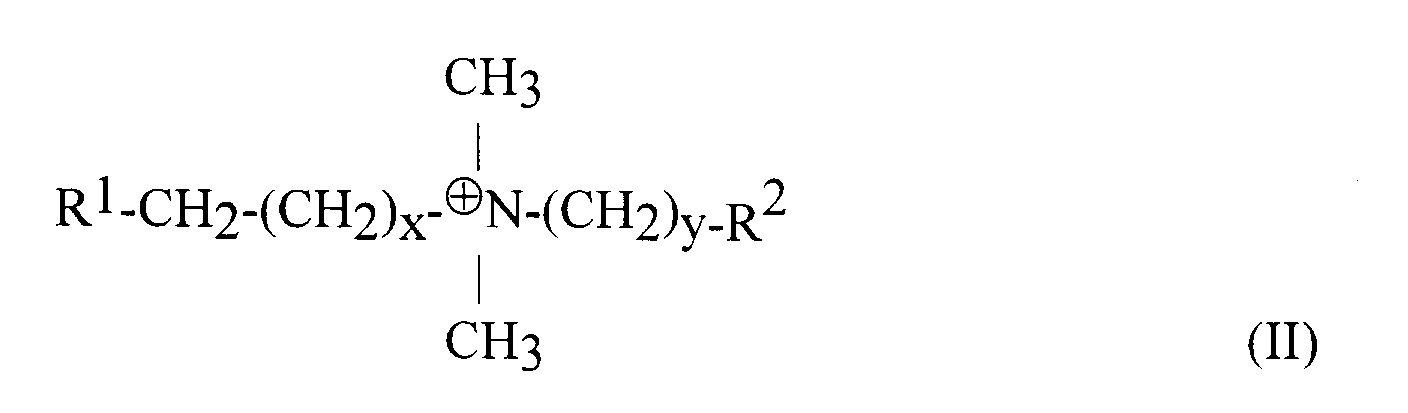
R1 Wasserstoff, eine Cholamido- oder eine über einen Phosphatrest gebundene Mono- oder Di-Glyceridgruppe ist,
R2 Wasserstoff, eine Hydroxygruppe bzw. ein Oxyanion, ein Säurerest, eine Hydroxyalkylsulfonsäure- oder eine Carboxylgruppe ist,
und der Puffer Natriumacetat, TRIS·HCl, Bis-TRIS-Methan oder MES und/oder Imidazol ist. - Reagenz nach Anspruch 10, dadurch gekennzeichnet, daß das Detergenz N-Decyl-, N-Dodecyl-, N-Tetradecyl- oder N-Hexadecyl-N,N-dimethylammonio-3-propansulfonat oder ein Derivat davon ist.
- Reagenz nach den Ansprüchen 10 oder 11, dadurch gekennzeichnet, daß als Detergenz Pluronic F68 und/oder Tween 20 enthalten ist.
- Reagenz nach einem der Ansprüche 10 oder 11, dadurch gekennzeichnet, daß es auf oder in einem blattförmigen Trägermaterial imprägniert vorliegt.
- Verwendung einer Verbindung entsprechend der allgemeinen Formel (II)

R1 Wasserstoff, eine Cholamido- oder eine über einen Phosphatrest gebundene Mono- oder Di-Glyceridgruppe ist,
R2 Wasserstoff, eine Hydroxygruppe bzw. ein Oxyanion, ein Säurerest, eine Hydroxyalkylsulfonsäure- oder eine Carboxylgruppe ist, zur selektiven Bestimmung von LDL in einer biologischen Probe.
Applications Claiming Priority (2)
| Application Number | Priority Date | Filing Date | Title |
|---|---|---|---|
| DE19505894A DE19505894A1 (de) | 1995-02-21 | 1995-02-21 | Verfahren und Reagenz zur spezifischen Bestimmung von LDL in Serumproben |
| DE19505894 | 1995-02-21 |
Publications (3)
| Publication Number | Publication Date |
|---|---|
| EP0729032A2 true EP0729032A2 (de) | 1996-08-28 |
| EP0729032A3 EP0729032A3 (de) | 1998-05-06 |
| EP0729032B1 EP0729032B1 (de) | 2002-05-15 |
Family
ID=7754585
Family Applications (1)
| Application Number | Title | Priority Date | Filing Date |
|---|---|---|---|
| EP96102230A Expired - Lifetime EP0729032B1 (de) | 1995-02-21 | 1996-02-15 | Verfahren und Reagenz zur spezifischen Bestimmung von LDL in Serumproben |
Country Status (9)
| Country | Link |
|---|---|
| US (1) | US5804450A (de) |
| EP (1) | EP0729032B1 (de) |
| JP (1) | JP2749009B2 (de) |
| KR (1) | KR960031992A (de) |
| AU (1) | AU720492B2 (de) |
| CA (1) | CA2170003A1 (de) |
| DE (2) | DE19505894A1 (de) |
| ES (1) | ES2176370T3 (de) |
| IL (1) | IL117182A (de) |
Families Citing this family (15)
| Publication number | Priority date | Publication date | Assignee | Title |
|---|---|---|---|---|
| JP3193634B2 (ja) * | 1996-05-29 | 2001-07-30 | 第一化学薬品株式会社 | Ldlコレステロールの定量方法 |
| EP0821239A3 (de) * | 1996-07-25 | 1998-06-17 | Wako Pure Chemical Industries, Ltd | Verfahren zur Messung eines Inhalts von LDL-Cholesterin |
| US5814472A (en) * | 1997-05-13 | 1998-09-29 | Wako Pure Chemical Industries, Ltd. | Measurement of LDL-cholesterol |
| US6344576B1 (en) * | 1997-08-18 | 2002-02-05 | MAX-PLANCK-Gesellschaft zur Förderung der Wissenschaften e.V. | Phospholipid-analogous compounds |
| US5925534A (en) * | 1998-06-08 | 1999-07-20 | Wako Pure Chemical Industries, Ltd. | Method for measuring LDL-cholesterol |
| US6794157B1 (en) * | 1998-09-18 | 2004-09-21 | Kyowa Medex Co., Ltd. | Methods for fractional quatification of cholesterol in lipoproteins and quantification reagents |
| JP3441993B2 (ja) | 1999-01-27 | 2003-09-02 | 松下電器産業株式会社 | コレステロールセンサ |
| US6342364B1 (en) | 1999-11-22 | 2002-01-29 | Matsushita Electric Industrial Co., Ltd. | Cholesterol sensor and method of determining cholesterol |
| JP4593026B2 (ja) * | 2001-07-18 | 2010-12-08 | 栄研化学株式会社 | SmalldenseLDLの測定方法 |
| US7491542B2 (en) * | 2004-07-12 | 2009-02-17 | Kim Scheuringer | Test device for determining the concentration of LDL-cholesterol in a sample |
| CN100365409C (zh) * | 2005-06-01 | 2008-01-30 | 王贤理 | 一种测定低密度脂蛋白胆固醇的试剂及制备方法 |
| US8217025B2 (en) * | 2006-11-17 | 2012-07-10 | Harbor Therapeutics, Inc. | Drug screening and treatment methods |
| CA2690305C (en) * | 2007-06-08 | 2018-10-02 | Quest Diagnostics Investments Incorporated | Lipoprotein analysis by differential charged-particle mobility |
| CN101657546B (zh) * | 2007-09-05 | 2013-01-02 | 爱科来株式会社 | 低密度脂蛋白(ldl)胆固醇测定方法以及ldl胆固醇测定用试验片 |
| JP2012530900A (ja) * | 2009-06-17 | 2012-12-06 | メイン スタンダーズ カンパニー リミテッド ライアビリティ カンパニー | リポタンパク質特異的アポリポタンパク質を測定する方法 |
Family Cites Families (4)
| Publication number | Priority date | Publication date | Assignee | Title |
|---|---|---|---|---|
| FR2513766B1 (fr) * | 1981-09-28 | 1985-09-13 | Biomerieux Sa | Procedes et reactifs de separation selective des lipoproteines de faible densite ldl et de quantification de leurs composants |
| US5286626A (en) * | 1991-12-13 | 1994-02-15 | Actimed Laboratories, Inc. | Process and apparatus for direct determination of low density lipoprotein |
| DE4223355A1 (de) * | 1992-07-16 | 1994-01-20 | Boehringer Mannheim Gmbh | Verfahren und Reagenz zur spezifischen Bestimmung von LDL in Serumproben |
| US5290703A (en) * | 1992-12-14 | 1994-03-01 | Miles, Inc. | Method for the separation of high density lipoprotein from blood samples |
-
1995
- 1995-02-21 DE DE19505894A patent/DE19505894A1/de not_active Withdrawn
-
1996
- 1996-02-15 DE DE59609198T patent/DE59609198D1/de not_active Expired - Fee Related
- 1996-02-15 EP EP96102230A patent/EP0729032B1/de not_active Expired - Lifetime
- 1996-02-15 AU AU45532/96A patent/AU720492B2/en not_active Ceased
- 1996-02-15 ES ES96102230T patent/ES2176370T3/es not_active Expired - Lifetime
- 1996-02-16 KR KR1019960003851A patent/KR960031992A/ko not_active Ceased
- 1996-02-19 IL IL11718296A patent/IL117182A/xx not_active IP Right Cessation
- 1996-02-20 US US08/604,083 patent/US5804450A/en not_active Expired - Fee Related
- 1996-02-21 CA CA002170003A patent/CA2170003A1/en not_active Abandoned
- 1996-02-21 JP JP8034113A patent/JP2749009B2/ja not_active Expired - Fee Related
Also Published As
| Publication number | Publication date |
|---|---|
| JPH09211002A (ja) | 1997-08-15 |
| DE59609198D1 (de) | 2002-06-20 |
| JP2749009B2 (ja) | 1998-05-13 |
| KR960031992A (ko) | 1996-09-17 |
| ES2176370T3 (es) | 2002-12-01 |
| EP0729032B1 (de) | 2002-05-15 |
| AU4553296A (en) | 1996-08-29 |
| AU720492B2 (en) | 2000-06-01 |
| US5804450A (en) | 1998-09-08 |
| EP0729032A3 (de) | 1998-05-06 |
| IL117182A0 (en) | 1996-06-18 |
| IL117182A (en) | 2001-01-11 |
| CA2170003A1 (en) | 1996-08-22 |
| DE19505894A1 (de) | 1996-08-22 |
Similar Documents
| Publication | Publication Date | Title |
|---|---|---|
| EP0729032B1 (de) | Verfahren und Reagenz zur spezifischen Bestimmung von LDL in Serumproben | |
| EP0265933B1 (de) | Verfahren und Reagenz zur spezifischen Bestimmung des Cholesterins der HDL-Fraktion | |
| DE3586619T2 (de) | Haematologische zusammensetzungen als referenz fuer drei populationen von leukocyten, verfahren zu deren herstellung und deren verwendung in ganzbluttestverfahren. | |
| EP0088420B1 (de) | Verfahren zur spezifischen Bestimmung des Cholesterins der LDL-Fraktion im Serum | |
| DE3123669C2 (de) | ||
| EP0130537B1 (de) | Verfahren und Mittel zur raschen und vollständigen Beseitigung einer Trübung in einer biologischen Flüssigkeit | |
| DE3338836A1 (de) | Verfahren zur bestimmung der low density lipoproteine (ldl) und reagenz zu seiner durchfuehrung | |
| DD202178A5 (de) | Verfahren und reagens zur untersuchung von antigen-antikoerper-reaktionen | |
| DE69123445T2 (de) | Verfahren zur bestimmung von endotoxinen | |
| EP0579138B1 (de) | Verfahren und Reagenz zur spezifischen Bestimmung von LDL in Serumproben | |
| DE60309785T2 (de) | Reagenzien-Kit zum Nachweis von Lupus-Antikoagulant | |
| EP0039885B1 (de) | Verfahren und Reagens zum Nachweis von Fibrinmonomer | |
| DE19713088C1 (de) | Verfahren und Blutabnahmegefäß zur Aufbereitung von Blutproben für die Homocystein- und/oder Folatbestimmung | |
| EP0077449B1 (de) | Verfahren zur Bestimmung der beta-Lipoproteinfraktion (LDL) in Körperflüssigkeiten | |
| EP0306859A1 (de) | Verfahren und Reagenz zur Bestimmung von Eisen | |
| DE3942081A1 (de) | Mittel zur verbesserung der wiederfindung von annexinen | |
| EP0898168B1 (de) | Verwendung von Annexinen als Lupus Antikoagulans Kontrolle oder Standard in Gerinnungstesten | |
| DE19756255C2 (de) | Verfahren und Diagnostikprodukt zur Bestimmung von in Lipoprotein enthaltenem Triglycerid | |
| DE19781870B3 (de) | Verfahren zur Bestimmung des Blutplättcheninhibierungseffekts eines Blutplättchen-Inhibitors | |
| EP0570356B1 (de) | Reagens zur Bestimmung der aktivierten partiellen Thromboplastinzeit (aPTT) | |
| DE3010400A1 (de) | Verfahren zur klinischen trennung von (alpha) - und (beta) -lipoproteinen | |
| DE69128238T2 (de) | Nachweis von thrombopenies | |
| EP3413053A1 (de) | Kalibration von lupus antikoagulans | |
| DE69030135T2 (de) | Ein Reagenssystem zur Bestimmung von Lipase | |
| EP0351605B1 (de) | Quantitative Bestimmung von Phosphor |
Legal Events
| Date | Code | Title | Description |
|---|---|---|---|
| PUAI | Public reference made under article 153(3) epc to a published international application that has entered the european phase |
Free format text: ORIGINAL CODE: 0009012 |
|
| AK | Designated contracting states |
Kind code of ref document: A2 Designated state(s): DE ES FR GB IT |
|
| PUAL | Search report despatched |
Free format text: ORIGINAL CODE: 0009013 |
|
| AK | Designated contracting states |
Kind code of ref document: A3 Designated state(s): DE ES FR GB IT |
|
| 17P | Request for examination filed |
Effective date: 19981106 |
|
| RAP3 | Party data changed (applicant data changed or rights of an application transferred) |
Owner name: ROCHE DIAGNOSTICS GMBH |
|
| 17Q | First examination report despatched |
Effective date: 20001207 |
|
| GRAG | Despatch of communication of intention to grant |
Free format text: ORIGINAL CODE: EPIDOS AGRA |
|
| GRAG | Despatch of communication of intention to grant |
Free format text: ORIGINAL CODE: EPIDOS AGRA |
|
| GRAH | Despatch of communication of intention to grant a patent |
Free format text: ORIGINAL CODE: EPIDOS IGRA |
|
| GRAH | Despatch of communication of intention to grant a patent |
Free format text: ORIGINAL CODE: EPIDOS IGRA |
|
| GRAA | (expected) grant |
Free format text: ORIGINAL CODE: 0009210 |
|
| RAP1 | Party data changed (applicant data changed or rights of an application transferred) |
Owner name: ROCHE DIAGNOSTICS GMBH |
|
| AK | Designated contracting states |
Kind code of ref document: B1 Designated state(s): DE ES FR GB IT |
|
| REG | Reference to a national code |
Ref country code: GB Ref legal event code: FG4D Free format text: NOT ENGLISH |
|
| REF | Corresponds to: |
Ref document number: 59609198 Country of ref document: DE Date of ref document: 20020620 |
|
| GBT | Gb: translation of ep patent filed (gb section 77(6)(a)/1977) |
Effective date: 20020814 |
|
| ET | Fr: translation filed | ||
| REG | Reference to a national code |
Ref country code: ES Ref legal event code: FG2A Ref document number: 2176370 Country of ref document: ES Kind code of ref document: T3 |
|
| PLBE | No opposition filed within time limit |
Free format text: ORIGINAL CODE: 0009261 |
|
| STAA | Information on the status of an ep patent application or granted ep patent |
Free format text: STATUS: NO OPPOSITION FILED WITHIN TIME LIMIT |
|
| 26N | No opposition filed |
Effective date: 20030218 |
|
| PGFP | Annual fee paid to national office [announced via postgrant information from national office to epo] |
Ref country code: GB Payment date: 20050110 Year of fee payment: 10 |
|
| PGFP | Annual fee paid to national office [announced via postgrant information from national office to epo] |
Ref country code: FR Payment date: 20050202 Year of fee payment: 10 |
|
| PGFP | Annual fee paid to national office [announced via postgrant information from national office to epo] |
Ref country code: ES Payment date: 20050211 Year of fee payment: 10 |
|
| PGFP | Annual fee paid to national office [announced via postgrant information from national office to epo] |
Ref country code: DE Payment date: 20050228 Year of fee payment: 10 |
|
| PG25 | Lapsed in a contracting state [announced via postgrant information from national office to epo] |
Ref country code: GB Free format text: LAPSE BECAUSE OF NON-PAYMENT OF DUE FEES Effective date: 20060215 |
|
| PG25 | Lapsed in a contracting state [announced via postgrant information from national office to epo] |
Ref country code: ES Free format text: LAPSE BECAUSE OF NON-PAYMENT OF DUE FEES Effective date: 20060216 |
|
| PGFP | Annual fee paid to national office [announced via postgrant information from national office to epo] |
Ref country code: IT Payment date: 20060228 Year of fee payment: 11 |
|
| PG25 | Lapsed in a contracting state [announced via postgrant information from national office to epo] |
Ref country code: DE Free format text: LAPSE BECAUSE OF NON-PAYMENT OF DUE FEES Effective date: 20060901 |
|
| GBPC | Gb: european patent ceased through non-payment of renewal fee |
Effective date: 20060215 |
|
| REG | Reference to a national code |
Ref country code: FR Ref legal event code: ST Effective date: 20061031 |
|
| REG | Reference to a national code |
Ref country code: ES Ref legal event code: FD2A Effective date: 20060216 |
|
| PG25 | Lapsed in a contracting state [announced via postgrant information from national office to epo] |
Ref country code: FR Free format text: LAPSE BECAUSE OF NON-PAYMENT OF DUE FEES Effective date: 20060228 |
|
| PG25 | Lapsed in a contracting state [announced via postgrant information from national office to epo] |
Ref country code: IT Free format text: LAPSE BECAUSE OF NON-PAYMENT OF DUE FEES Effective date: 20070215 |