EP0702572B1 - Biological adhesive composition and method of promoting adhesion between tissue surfaces - Google Patents
Biological adhesive composition and method of promoting adhesion between tissue surfaces Download PDFInfo
- Publication number
- EP0702572B1 EP0702572B1 EP94919328A EP94919328A EP0702572B1 EP 0702572 B1 EP0702572 B1 EP 0702572B1 EP 94919328 A EP94919328 A EP 94919328A EP 94919328 A EP94919328 A EP 94919328A EP 0702572 B1 EP0702572 B1 EP 0702572B1
- Authority
- EP
- European Patent Office
- Prior art keywords
- adhesive composition
- biological adhesive
- tissue
- transglutaminase
- growth factor
- Prior art date
- Legal status (The legal status is an assumption and is not a legal conclusion. Google has not performed a legal analysis and makes no representation as to the accuracy of the status listed.)
- Expired - Lifetime
Links
- 239000000203 mixture Substances 0.000 title claims abstract description 47
- 239000003364 biologic glue Substances 0.000 title claims abstract description 31
- 230000001737 promoting effect Effects 0.000 title claims 2
- 238000000034 method Methods 0.000 title description 11
- 102100038095 Protein-glutamine gamma-glutamyltransferase 2 Human genes 0.000 claims abstract description 62
- 108700039882 Protein Glutamine gamma Glutamyltransferase 2 Proteins 0.000 claims abstract description 61
- 229910021645 metal ion Inorganic materials 0.000 claims abstract description 7
- OYPRJOBELJOOCE-UHFFFAOYSA-N Calcium Chemical compound [Ca] OYPRJOBELJOOCE-UHFFFAOYSA-N 0.000 claims abstract description 6
- 239000011575 calcium Substances 0.000 claims abstract description 6
- 229910052791 calcium Inorganic materials 0.000 claims abstract description 6
- 210000001519 tissue Anatomy 0.000 claims description 33
- 210000000845 cartilage Anatomy 0.000 claims description 32
- 108090000623 proteins and genes Proteins 0.000 claims description 29
- 235000018102 proteins Nutrition 0.000 claims description 28
- 102000004169 proteins and genes Human genes 0.000 claims description 28
- 108060008539 Transglutaminase Proteins 0.000 claims description 27
- 102000003601 transglutaminase Human genes 0.000 claims description 27
- 210000004027 cell Anatomy 0.000 claims description 19
- 239000000758 substrate Substances 0.000 claims description 19
- 230000007547 defect Effects 0.000 claims description 18
- 238000002054 transplantation Methods 0.000 claims description 15
- 210000000988 bone and bone Anatomy 0.000 claims description 13
- 201000009859 Osteochondrosis Diseases 0.000 claims description 10
- 230000003902 lesion Effects 0.000 claims description 10
- 208000007656 osteochondritis dissecans Diseases 0.000 claims description 9
- 108010073385 Fibrin Proteins 0.000 claims description 8
- 102000009123 Fibrin Human genes 0.000 claims description 8
- BWGVNKXGVNDBDI-UHFFFAOYSA-N Fibrin monomer Chemical compound CNC(=O)CNC(=O)CN BWGVNKXGVNDBDI-UHFFFAOYSA-N 0.000 claims description 8
- 229950003499 fibrin Drugs 0.000 claims description 8
- 239000007943 implant Substances 0.000 claims description 8
- 108010049003 Fibrinogen Proteins 0.000 claims description 7
- 102000008946 Fibrinogen Human genes 0.000 claims description 7
- 102000004887 Transforming Growth Factor beta Human genes 0.000 claims description 7
- 108090001012 Transforming Growth Factor beta Proteins 0.000 claims description 7
- 210000004204 blood vessel Anatomy 0.000 claims description 7
- 229940012952 fibrinogen Drugs 0.000 claims description 7
- 239000003102 growth factor Substances 0.000 claims description 7
- 238000001356 surgical procedure Methods 0.000 claims description 7
- ZRKFYGHZFMAOKI-QMGMOQQFSA-N tgfbeta Chemical group C([C@H](NC(=O)[C@H](C(C)C)NC(=O)CNC(=O)[C@H](CCC(O)=O)NC(=O)[C@H](CCCNC(N)=N)NC(=O)[C@H](CC(N)=O)NC(=O)[C@H](CC(C)C)NC(=O)[C@H]([C@@H](C)O)NC(=O)[C@H](CCC(O)=O)NC(=O)[C@H]([C@@H](C)O)NC(=O)[C@H](CC(C)C)NC(=O)CNC(=O)[C@H](C)NC(=O)[C@H](CO)NC(=O)[C@H](CCC(N)=O)NC(=O)[C@@H](NC(=O)[C@H](C)NC(=O)[C@H](C)NC(=O)[C@@H](NC(=O)[C@H](CC(C)C)NC(=O)[C@@H](N)CCSC)C(C)C)[C@@H](C)CC)C(=O)N[C@@H]([C@@H](C)O)C(=O)N[C@@H](C(C)C)C(=O)N[C@@H](CC=1C=CC=CC=1)C(=O)N[C@@H](C)C(=O)N1[C@@H](CCC1)C(=O)N[C@@H]([C@@H](C)O)C(=O)N[C@@H](CC(N)=O)C(=O)N[C@@H](CCC(O)=O)C(=O)N[C@@H](C)C(=O)N[C@@H](CC=1C=CC=CC=1)C(=O)N[C@@H](CCCNC(N)=N)C(=O)N[C@@H](C)C(=O)N[C@@H](CC(C)C)C(=O)N1[C@@H](CCC1)C(=O)N1[C@@H](CCC1)C(=O)N[C@@H](CCCNC(N)=N)C(=O)N[C@@H](CCC(O)=O)C(=O)N[C@@H](CCCNC(N)=N)C(=O)N[C@@H](CO)C(=O)N[C@@H](CCCNC(N)=N)C(=O)N[C@@H](CC(C)C)C(=O)N[C@@H](CC(C)C)C(O)=O)C1=CC=C(O)C=C1 ZRKFYGHZFMAOKI-QMGMOQQFSA-N 0.000 claims description 7
- 108010035532 Collagen Proteins 0.000 claims description 6
- 102000008186 Collagen Human genes 0.000 claims description 6
- 108010067306 Fibronectins Proteins 0.000 claims description 6
- 102000016359 Fibronectins Human genes 0.000 claims description 6
- 108090000723 Insulin-Like Growth Factor I Proteins 0.000 claims description 6
- 102000013275 Somatomedins Human genes 0.000 claims description 6
- 229920001436 collagen Polymers 0.000 claims description 6
- 210000005036 nerve Anatomy 0.000 claims description 6
- 210000002435 tendon Anatomy 0.000 claims description 6
- 108020004511 Recombinant DNA Proteins 0.000 claims description 5
- 230000001413 cellular effect Effects 0.000 claims description 5
- 239000003937 drug carrier Substances 0.000 claims description 5
- 210000004185 liver Anatomy 0.000 claims description 5
- 239000000463 material Substances 0.000 claims description 5
- 230000002792 vascular Effects 0.000 claims description 5
- 102000018233 Fibroblast Growth Factor Human genes 0.000 claims description 3
- 108050007372 Fibroblast Growth Factor Proteins 0.000 claims description 3
- 102100037369 Nidogen-1 Human genes 0.000 claims description 3
- 108010077077 Osteonectin Proteins 0.000 claims description 3
- 102000009890 Osteonectin Human genes 0.000 claims description 3
- 108010031318 Vitronectin Proteins 0.000 claims description 3
- 102100035140 Vitronectin Human genes 0.000 claims description 3
- 229960005188 collagen Drugs 0.000 claims description 3
- 210000000695 crystalline len Anatomy 0.000 claims description 3
- 210000002889 endothelial cell Anatomy 0.000 claims description 3
- 210000003743 erythrocyte Anatomy 0.000 claims description 3
- 210000001508 eye Anatomy 0.000 claims description 3
- 210000003734 kidney Anatomy 0.000 claims description 3
- 210000003041 ligament Anatomy 0.000 claims description 3
- 210000004072 lung Anatomy 0.000 claims description 3
- 210000002540 macrophage Anatomy 0.000 claims description 3
- 210000003205 muscle Anatomy 0.000 claims description 3
- 210000004165 myocardium Anatomy 0.000 claims description 3
- 108010008217 nidogen Proteins 0.000 claims description 3
- 210000000056 organ Anatomy 0.000 claims description 3
- 210000002027 skeletal muscle Anatomy 0.000 claims description 3
- 210000000329 smooth muscle myocyte Anatomy 0.000 claims description 3
- 210000000952 spleen Anatomy 0.000 claims description 3
- NMWKYTGJWUAZPZ-WWHBDHEGSA-N (4S)-4-[[(4R,7S,10S,16S,19S,25S,28S,31R)-31-[[(2S)-2-[[(1R,6R,9S,12S,18S,21S,24S,27S,30S,33S,36S,39S,42R,47R,53S,56S,59S,62S,65S,68S,71S,76S,79S,85S)-47-[[(2S)-2-[[(2S)-4-amino-2-[[(2S)-2-[[(2S)-2-[[(2S)-2-[[(2S)-2-[[(2S)-2-amino-3-methylbutanoyl]amino]-3-methylbutanoyl]amino]-3-hydroxypropanoyl]amino]-3-(1H-imidazol-4-yl)propanoyl]amino]-3-phenylpropanoyl]amino]-4-oxobutanoyl]amino]-3-carboxypropanoyl]amino]-18-(4-aminobutyl)-27,68-bis(3-amino-3-oxopropyl)-36,71,76-tribenzyl-39-(3-carbamimidamidopropyl)-24-(2-carboxyethyl)-21,56-bis(carboxymethyl)-65,85-bis[(1R)-1-hydroxyethyl]-59-(hydroxymethyl)-62,79-bis(1H-imidazol-4-ylmethyl)-9-methyl-33-(2-methylpropyl)-8,11,17,20,23,26,29,32,35,38,41,48,54,57,60,63,66,69,72,74,77,80,83,86-tetracosaoxo-30-propan-2-yl-3,4,44,45-tetrathia-7,10,16,19,22,25,28,31,34,37,40,49,55,58,61,64,67,70,73,75,78,81,84,87-tetracosazatetracyclo[40.31.14.012,16.049,53]heptaoctacontane-6-carbonyl]amino]-3-methylbutanoyl]amino]-7-(3-carbamimidamidopropyl)-25-(hydroxymethyl)-19-[(4-hydroxyphenyl)methyl]-28-(1H-imidazol-4-ylmethyl)-10-methyl-6,9,12,15,18,21,24,27,30-nonaoxo-16-propan-2-yl-1,2-dithia-5,8,11,14,17,20,23,26,29-nonazacyclodotriacontane-4-carbonyl]amino]-5-[[(2S)-1-[[(2S)-1-[[(2S)-3-carboxy-1-[[(2S)-1-[[(2S)-1-[[(1S)-1-carboxyethyl]amino]-4-methyl-1-oxopentan-2-yl]amino]-4-methyl-1-oxopentan-2-yl]amino]-1-oxopropan-2-yl]amino]-1-oxopropan-2-yl]amino]-3-(1H-imidazol-4-yl)-1-oxopropan-2-yl]amino]-5-oxopentanoic acid Chemical compound CC(C)C[C@H](NC(=O)[C@H](CC(C)C)NC(=O)[C@H](CC(O)=O)NC(=O)[C@H](C)NC(=O)[C@H](Cc1c[nH]cn1)NC(=O)[C@H](CCC(O)=O)NC(=O)[C@@H]1CSSC[C@H](NC(=O)[C@@H](NC(=O)[C@@H]2CSSC[C@@H]3NC(=O)[C@H](Cc4ccccc4)NC(=O)[C@H](CCC(N)=O)NC(=O)[C@@H](NC(=O)[C@H](Cc4c[nH]cn4)NC(=O)[C@H](CO)NC(=O)[C@H](CC(O)=O)NC(=O)[C@@H]4CCCN4C(=O)[C@H](CSSC[C@H](NC(=O)[C@@H](NC(=O)CNC(=O)[C@H](Cc4c[nH]cn4)NC(=O)[C@H](Cc4ccccc4)NC3=O)[C@@H](C)O)C(=O)N[C@@H](CCCNC(N)=N)C(=O)N[C@@H](Cc3ccccc3)C(=O)N[C@@H](CC(C)C)C(=O)N[C@@H](C(C)C)C(=O)N[C@@H](CCC(N)=O)C(=O)N[C@@H](CCC(O)=O)C(=O)N[C@@H](CC(O)=O)C(=O)N[C@@H](CCCCN)C(=O)N3CCC[C@H]3C(=O)N[C@@H](C)C(=O)N2)NC(=O)[C@H](CC(O)=O)NC(=O)[C@H](CC(N)=O)NC(=O)[C@H](Cc2ccccc2)NC(=O)[C@H](Cc2c[nH]cn2)NC(=O)[C@H](CO)NC(=O)[C@@H](NC(=O)[C@@H](N)C(C)C)C(C)C)[C@@H](C)O)C(C)C)C(=O)N[C@@H](Cc2c[nH]cn2)C(=O)N[C@@H](CO)C(=O)NCC(=O)N[C@@H](Cc2ccc(O)cc2)C(=O)N[C@@H](C(C)C)C(=O)NCC(=O)N[C@@H](C)C(=O)N[C@@H](CCCNC(N)=N)C(=O)N1)C(=O)N[C@@H](C)C(O)=O NMWKYTGJWUAZPZ-WWHBDHEGSA-N 0.000 claims description 2
- 102000011632 Caseins Human genes 0.000 claims description 2
- 108010076119 Caseins Proteins 0.000 claims description 2
- 101800003838 Epidermal growth factor Proteins 0.000 claims description 2
- 102000015696 Interleukins Human genes 0.000 claims description 2
- 108010063738 Interleukins Proteins 0.000 claims description 2
- 108010060630 Lactoglobulins Proteins 0.000 claims description 2
- 102000008192 Lactoglobulins Human genes 0.000 claims description 2
- 206010065433 Ligament rupture Diseases 0.000 claims description 2
- 102000004264 Osteopontin Human genes 0.000 claims description 2
- 108010081689 Osteopontin Proteins 0.000 claims description 2
- 108091005804 Peptidases Proteins 0.000 claims description 2
- 102000035195 Peptidases Human genes 0.000 claims description 2
- 108010038512 Platelet-Derived Growth Factor Proteins 0.000 claims description 2
- 102000010780 Platelet-Derived Growth Factor Human genes 0.000 claims description 2
- 102100033237 Pro-epidermal growth factor Human genes 0.000 claims description 2
- 108060008245 Thrombospondin Proteins 0.000 claims description 2
- 102000002938 Thrombospondin Human genes 0.000 claims description 2
- 102000006747 Transforming Growth Factor alpha Human genes 0.000 claims description 2
- 101800004564 Transforming growth factor alpha Proteins 0.000 claims description 2
- 108060008682 Tumor Necrosis Factor Proteins 0.000 claims description 2
- 230000003872 anastomosis Effects 0.000 claims description 2
- 239000012736 aqueous medium Substances 0.000 claims description 2
- 239000006172 buffering agent Substances 0.000 claims description 2
- 239000005018 casein Substances 0.000 claims description 2
- BECPQYXYKAMYBN-UHFFFAOYSA-N casein, tech. Chemical compound NCCCCC(C(O)=O)N=C(O)C(CC(O)=O)N=C(O)C(CCC(O)=N)N=C(O)C(CC(C)C)N=C(O)C(CCC(O)=O)N=C(O)C(CC(O)=O)N=C(O)C(CCC(O)=O)N=C(O)C(C(C)O)N=C(O)C(CCC(O)=N)N=C(O)C(CCC(O)=N)N=C(O)C(CCC(O)=N)N=C(O)C(CCC(O)=O)N=C(O)C(CCC(O)=O)N=C(O)C(COP(O)(O)=O)N=C(O)C(CCC(O)=N)N=C(O)C(N)CC1=CC=CC=C1 BECPQYXYKAMYBN-UHFFFAOYSA-N 0.000 claims description 2
- 235000021240 caseins Nutrition 0.000 claims description 2
- 229940116977 epidermal growth factor Drugs 0.000 claims description 2
- 229940047122 interleukins Drugs 0.000 claims description 2
- 210000001161 mammalian embryo Anatomy 0.000 claims description 2
- 238000002360 preparation method Methods 0.000 claims description 2
- 229910052712 strontium Inorganic materials 0.000 claims description 2
- CIOAGBVUUVVLOB-UHFFFAOYSA-N strontium atom Chemical compound [Sr] CIOAGBVUUVVLOB-UHFFFAOYSA-N 0.000 claims description 2
- 238000012546 transfer Methods 0.000 claims description 2
- 102000003390 tumor necrosis factor Human genes 0.000 claims description 2
- VBEQCZHXXJYVRD-GACYYNSASA-N uroanthelone Chemical compound C([C@@H](C(=O)N[C@H](C(=O)N[C@@H](CS)C(=O)N[C@@H](CC(N)=O)C(=O)N[C@@H](CS)C(=O)N[C@H](C(=O)N[C@@H]([C@@H](C)CC)C(=O)NCC(=O)N[C@@H](CC=1C=CC(O)=CC=1)C(=O)N[C@@H](CO)C(=O)NCC(=O)N[C@@H](CC(O)=O)C(=O)N[C@@H](CCCNC(N)=N)C(=O)N[C@@H](CS)C(=O)N[C@@H](CCC(N)=O)C(=O)N[C@@H]([C@@H](C)O)C(=O)N[C@@H](CCCNC(N)=N)C(=O)N[C@@H](CC(O)=O)C(=O)N[C@@H](CC(C)C)C(=O)N[C@@H](CCCNC(N)=N)C(=O)N[C@@H](CC=1C2=CC=CC=C2NC=1)C(=O)N[C@@H](CC=1C2=CC=CC=C2NC=1)C(=O)N[C@@H](CCC(O)=O)C(=O)N[C@@H](CC(C)C)C(=O)N[C@@H](CCCNC(N)=N)C(O)=O)C(C)C)[C@@H](C)O)NC(=O)[C@H](CO)NC(=O)[C@H](CC(O)=O)NC(=O)[C@H](CC(C)C)NC(=O)[C@H](CO)NC(=O)[C@H](CCC(O)=O)NC(=O)[C@@H](NC(=O)[C@H](CC=1NC=NC=1)NC(=O)[C@H](CCSC)NC(=O)[C@H](CS)NC(=O)[C@@H](NC(=O)CNC(=O)CNC(=O)[C@H](CC(N)=O)NC(=O)[C@H](CC(C)C)NC(=O)[C@H](CS)NC(=O)[C@H](CC=1C=CC(O)=CC=1)NC(=O)CNC(=O)[C@H](CC(O)=O)NC(=O)[C@H](CC=1C=CC(O)=CC=1)NC(=O)[C@H](CO)NC(=O)[C@H](CO)NC(=O)[C@H]1N(CCC1)C(=O)[C@H](CS)NC(=O)CNC(=O)[C@H]1N(CCC1)C(=O)[C@H](CC=1C=CC(O)=CC=1)NC(=O)[C@H](CO)NC(=O)[C@@H](N)CC(N)=O)C(C)C)[C@@H](C)CC)C1=CC=C(O)C=C1 VBEQCZHXXJYVRD-GACYYNSASA-N 0.000 claims description 2
- 239000003814 drug Substances 0.000 claims 1
- 210000005260 human cell Anatomy 0.000 claims 1
- 238000002560 therapeutic procedure Methods 0.000 claims 1
- 102000004190 Enzymes Human genes 0.000 abstract description 15
- 108090000790 Enzymes Proteins 0.000 abstract description 15
- 238000006243 chemical reaction Methods 0.000 abstract description 14
- 125000000404 glutamine group Chemical group N[C@@H](CCC(N)=O)C(=O)* 0.000 abstract description 11
- 150000001412 amines Chemical class 0.000 abstract description 5
- 230000003197 catalytic effect Effects 0.000 abstract description 4
- 239000008365 aqueous carrier Substances 0.000 abstract description 3
- 239000000565 sealant Substances 0.000 description 28
- 210000001188 articular cartilage Anatomy 0.000 description 15
- 229940088598 enzyme Drugs 0.000 description 14
- 108010080379 Fibrin Tissue Adhesive Proteins 0.000 description 13
- 230000008439 repair process Effects 0.000 description 13
- 229940012444 factor xiii Drugs 0.000 description 12
- 108010071289 Factor XIII Proteins 0.000 description 11
- 238000011534 incubation Methods 0.000 description 11
- 239000000243 solution Substances 0.000 description 9
- 241000906034 Orthops Species 0.000 description 8
- 241000283973 Oryctolagus cuniculus Species 0.000 description 8
- FAPWRFPIFSIZLT-UHFFFAOYSA-M Sodium chloride Chemical compound [Na+].[Cl-] FAPWRFPIFSIZLT-UHFFFAOYSA-M 0.000 description 8
- 230000001070 adhesive effect Effects 0.000 description 8
- 210000001612 chondrocyte Anatomy 0.000 description 8
- 101710106625 Chondroitinase-AC Proteins 0.000 description 7
- 206010017076 Fracture Diseases 0.000 description 7
- 239000007983 Tris buffer Substances 0.000 description 7
- 238000004132 cross linking Methods 0.000 description 7
- 210000003127 knee Anatomy 0.000 description 7
- 239000011159 matrix material Substances 0.000 description 7
- 201000008482 osteoarthritis Diseases 0.000 description 7
- LENZDBCJOHFCAS-UHFFFAOYSA-N tris Chemical compound OCC(N)(CO)CO LENZDBCJOHFCAS-UHFFFAOYSA-N 0.000 description 7
- 230000015572 biosynthetic process Effects 0.000 description 6
- 230000006378 damage Effects 0.000 description 6
- 208000014674 injury Diseases 0.000 description 6
- 210000000629 knee joint Anatomy 0.000 description 6
- 210000005065 subchondral bone plate Anatomy 0.000 description 6
- BHPQYMZQTOCNFJ-UHFFFAOYSA-N Calcium cation Chemical compound [Ca+2] BHPQYMZQTOCNFJ-UHFFFAOYSA-N 0.000 description 5
- 108090000190 Thrombin Proteins 0.000 description 5
- 239000000853 adhesive Substances 0.000 description 5
- 238000006073 displacement reaction Methods 0.000 description 5
- 239000012634 fragment Substances 0.000 description 5
- 239000011535 reaction buffer Substances 0.000 description 5
- 229960004072 thrombin Drugs 0.000 description 5
- 208000032843 Hemorrhage Diseases 0.000 description 4
- 208000027418 Wounds and injury Diseases 0.000 description 4
- 239000000370 acceptor Substances 0.000 description 4
- 238000004026 adhesive bonding Methods 0.000 description 4
- 238000013459 approach Methods 0.000 description 4
- 229910001424 calcium ion Inorganic materials 0.000 description 4
- 230000000694 effects Effects 0.000 description 4
- 210000000968 fibrocartilage Anatomy 0.000 description 4
- 230000000399 orthopedic effect Effects 0.000 description 4
- 210000002381 plasma Anatomy 0.000 description 4
- 239000000047 product Substances 0.000 description 4
- UXVMQQNJUSDDNG-UHFFFAOYSA-L Calcium chloride Chemical compound [Cl-].[Cl-].[Ca+2] UXVMQQNJUSDDNG-UHFFFAOYSA-L 0.000 description 3
- 108010000196 Factor XIIIa Proteins 0.000 description 3
- 241000871495 Heeria argentea Species 0.000 description 3
- 208000034158 bleeding Diseases 0.000 description 3
- 231100000319 bleeding Toxicity 0.000 description 3
- 230000000740 bleeding effect Effects 0.000 description 3
- 239000000872 buffer Substances 0.000 description 3
- 239000001110 calcium chloride Substances 0.000 description 3
- 229910001628 calcium chloride Inorganic materials 0.000 description 3
- 230000022159 cartilage development Effects 0.000 description 3
- 230000011712 cell development Effects 0.000 description 3
- 230000001419 dependent effect Effects 0.000 description 3
- 235000004554 glutamine Nutrition 0.000 description 3
- 230000035876 healing Effects 0.000 description 3
- 150000002500 ions Chemical class 0.000 description 3
- 125000003588 lysine group Chemical group [H]N([H])C([H])([H])C([H])([H])C([H])([H])C([H])([H])C([H])(N([H])[H])C(*)=O 0.000 description 3
- 230000005499 meniscus Effects 0.000 description 3
- 210000003491 skin Anatomy 0.000 description 3
- 239000011780 sodium chloride Substances 0.000 description 3
- 239000000126 substance Substances 0.000 description 3
- 208000030507 AIDS Diseases 0.000 description 2
- 208000001148 Cartilage Fractures Diseases 0.000 description 2
- 101000666165 Cavia cutleri Protein-glutamine gamma-glutamyltransferase 2 Proteins 0.000 description 2
- 229920002567 Chondroitin Polymers 0.000 description 2
- KCXVZYZYPLLWCC-UHFFFAOYSA-N EDTA Chemical compound OC(=O)CN(CC(O)=O)CCN(CC(O)=O)CC(O)=O KCXVZYZYPLLWCC-UHFFFAOYSA-N 0.000 description 2
- 229920002683 Glycosaminoglycan Polymers 0.000 description 2
- 241001465754 Metazoa Species 0.000 description 2
- 208000006735 Periostitis Diseases 0.000 description 2
- 108010067787 Proteoglycans Proteins 0.000 description 2
- 102000016611 Proteoglycans Human genes 0.000 description 2
- 208000031737 Tissue Adhesions Diseases 0.000 description 2
- 241000700605 Viruses Species 0.000 description 2
- 230000009471 action Effects 0.000 description 2
- 239000000654 additive Substances 0.000 description 2
- 230000008827 biological function Effects 0.000 description 2
- 230000005540 biological transmission Effects 0.000 description 2
- 206010061592 cardiac fibrillation Diseases 0.000 description 2
- DLGJWSVWTWEWBJ-HGGSSLSASA-N chondroitin Chemical compound CC(O)=N[C@@H]1[C@H](O)O[C@H](CO)[C@H](O)[C@@H]1OC1[C@H](O)[C@H](O)C=C(C(O)=O)O1 DLGJWSVWTWEWBJ-HGGSSLSASA-N 0.000 description 2
- 239000000515 collagen sponge Substances 0.000 description 2
- 238000007906 compression Methods 0.000 description 2
- 230000006835 compression Effects 0.000 description 2
- 210000002808 connective tissue Anatomy 0.000 description 2
- 238000002316 cosmetic surgery Methods 0.000 description 2
- 102000038379 digestive enzymes Human genes 0.000 description 2
- 108091007734 digestive enzymes Proteins 0.000 description 2
- 239000000539 dimer Substances 0.000 description 2
- LOKCTEFSRHRXRJ-UHFFFAOYSA-I dipotassium trisodium dihydrogen phosphate hydrogen phosphate dichloride Chemical compound P(=O)(O)(O)[O-].[K+].P(=O)(O)([O-])[O-].[Na+].[Na+].[Cl-].[K+].[Cl-].[Na+] LOKCTEFSRHRXRJ-UHFFFAOYSA-I 0.000 description 2
- 238000009826 distribution Methods 0.000 description 2
- 238000001493 electron microscopy Methods 0.000 description 2
- 210000002615 epidermis Anatomy 0.000 description 2
- JPKNLFVGUZRHOB-YUMQZZPRSA-N epsilon-(gamma-glutamyl)lysine Chemical compound OC(=O)[C@@H](N)CCCCNC(=O)CC[C@H](N)C(O)=O JPKNLFVGUZRHOB-YUMQZZPRSA-N 0.000 description 2
- 230000002600 fibrillogenic effect Effects 0.000 description 2
- 238000009472 formulation Methods 0.000 description 2
- 238000002682 general surgery Methods 0.000 description 2
- 239000003292 glue Substances 0.000 description 2
- ZDXPYRJPNDTMRX-UHFFFAOYSA-N glutamine Natural products OC(=O)C(N)CCC(N)=O ZDXPYRJPNDTMRX-UHFFFAOYSA-N 0.000 description 2
- 230000008407 joint function Effects 0.000 description 2
- 230000033001 locomotion Effects 0.000 description 2
- 230000004048 modification Effects 0.000 description 2
- 238000012986 modification Methods 0.000 description 2
- 210000003460 periosteum Anatomy 0.000 description 2
- 239000002953 phosphate buffered saline Substances 0.000 description 2
- 230000035790 physiological processes and functions Effects 0.000 description 2
- 229920000642 polymer Polymers 0.000 description 2
- 150000003141 primary amines Chemical class 0.000 description 2
- 108090000765 processed proteins & peptides Proteins 0.000 description 2
- KIDHWZJUCRJVML-UHFFFAOYSA-N putrescine Chemical compound NCCCCN KIDHWZJUCRJVML-UHFFFAOYSA-N 0.000 description 2
- 230000001105 regulatory effect Effects 0.000 description 2
- ATHGHQPFGPMSJY-UHFFFAOYSA-N spermidine Chemical compound NCCCCNCCCN ATHGHQPFGPMSJY-UHFFFAOYSA-N 0.000 description 2
- 210000000130 stem cell Anatomy 0.000 description 2
- 229910021653 sulphate ion Inorganic materials 0.000 description 2
- 208000024891 symptom Diseases 0.000 description 2
- 230000001225 therapeutic effect Effects 0.000 description 2
- 230000008733 trauma Effects 0.000 description 2
- PIEPQKCYPFFYMG-UHFFFAOYSA-N tris acetate Chemical compound CC(O)=O.OCC(N)(CO)CO PIEPQKCYPFFYMG-UHFFFAOYSA-N 0.000 description 2
- JKMHFZQWWAIEOD-UHFFFAOYSA-N 2-[4-(2-hydroxyethyl)piperazin-1-yl]ethanesulfonic acid Chemical compound OCC[NH+]1CCN(CCS([O-])(=O)=O)CC1 JKMHFZQWWAIEOD-UHFFFAOYSA-N 0.000 description 1
- QKNYBSVHEMOAJP-UHFFFAOYSA-N 2-amino-2-(hydroxymethyl)propane-1,3-diol;hydron;chloride Chemical compound Cl.OCC(N)(CO)CO QKNYBSVHEMOAJP-UHFFFAOYSA-N 0.000 description 1
- QTBSBXVTEAMEQO-UHFFFAOYSA-M Acetate Chemical compound CC([O-])=O QTBSBXVTEAMEQO-UHFFFAOYSA-M 0.000 description 1
- 102000004506 Blood Proteins Human genes 0.000 description 1
- 108010017384 Blood Proteins Proteins 0.000 description 1
- 208000010392 Bone Fractures Diseases 0.000 description 1
- 241000283690 Bos taurus Species 0.000 description 1
- -1 Ca2+ ions Chemical class 0.000 description 1
- BVKZGUZCCUSVTD-UHFFFAOYSA-L Carbonate Chemical compound [O-]C([O-])=O BVKZGUZCCUSVTD-UHFFFAOYSA-L 0.000 description 1
- 206010007710 Cartilage injury Diseases 0.000 description 1
- 241000700199 Cavia porcellus Species 0.000 description 1
- 108090000819 Chondroitin-sulfate-ABC endolyases Proteins 0.000 description 1
- 206010061762 Chondropathy Diseases 0.000 description 1
- 241000766026 Coregonus nasus Species 0.000 description 1
- 241000557626 Corvus corax Species 0.000 description 1
- GUBGYTABKSRVRQ-WFVLMXAXSA-N DEAE-cellulose Chemical compound OC1C(O)C(O)C(CO)O[C@H]1O[C@@H]1C(CO)OC(O)C(O)C1O GUBGYTABKSRVRQ-WFVLMXAXSA-N 0.000 description 1
- 206010063045 Effusion Diseases 0.000 description 1
- 108010062466 Enzyme Precursors Proteins 0.000 description 1
- 102000010911 Enzyme Precursors Human genes 0.000 description 1
- 206010016717 Fistula Diseases 0.000 description 1
- 241000287828 Gallus gallus Species 0.000 description 1
- 108010010803 Gelatin Proteins 0.000 description 1
- 102000003886 Glycoproteins Human genes 0.000 description 1
- 108090000288 Glycoproteins Proteins 0.000 description 1
- 108060003393 Granulin Proteins 0.000 description 1
- 239000007995 HEPES buffer Substances 0.000 description 1
- 241000700721 Hepatitis B virus Species 0.000 description 1
- 241000282412 Homo Species 0.000 description 1
- 208000002658 Intra-Articular Fractures Diseases 0.000 description 1
- 241000124008 Mammalia Species 0.000 description 1
- 108010052285 Membrane Proteins Proteins 0.000 description 1
- 102000018697 Membrane Proteins Human genes 0.000 description 1
- NPPQSCRMBWNHMW-UHFFFAOYSA-N Meprobamate Chemical compound NC(=O)OCC(C)(CCC)COC(N)=O NPPQSCRMBWNHMW-UHFFFAOYSA-N 0.000 description 1
- 206010028851 Necrosis Diseases 0.000 description 1
- 206010073853 Osteochondral fracture Diseases 0.000 description 1
- 101710135467 Outer capsid protein sigma-1 Proteins 0.000 description 1
- 102000013566 Plasminogen Human genes 0.000 description 1
- 108010051456 Plasminogen Proteins 0.000 description 1
- 102000007327 Protamines Human genes 0.000 description 1
- 108010007568 Protamines Proteins 0.000 description 1
- 239000005700 Putrescine Substances 0.000 description 1
- 229920002684 Sepharose Polymers 0.000 description 1
- 238000001793 Wilcoxon signed-rank test Methods 0.000 description 1
- 239000008351 acetate buffer Substances 0.000 description 1
- 230000004913 activation Effects 0.000 description 1
- 239000013543 active substance Substances 0.000 description 1
- 125000002252 acyl group Chemical group 0.000 description 1
- 238000001042 affinity chromatography Methods 0.000 description 1
- 150000001413 amino acids Chemical group 0.000 description 1
- BFNBIHQBYMNNAN-UHFFFAOYSA-N ammonium sulfate Chemical compound N.N.OS(O)(=O)=O BFNBIHQBYMNNAN-UHFFFAOYSA-N 0.000 description 1
- 229910052921 ammonium sulfate Inorganic materials 0.000 description 1
- 235000011130 ammonium sulphate Nutrition 0.000 description 1
- 238000004873 anchoring Methods 0.000 description 1
- 210000004102 animal cell Anatomy 0.000 description 1
- 230000009286 beneficial effect Effects 0.000 description 1
- 230000008901 benefit Effects 0.000 description 1
- 239000012867 bioactive agent Substances 0.000 description 1
- 230000004071 biological effect Effects 0.000 description 1
- 239000012620 biological material Substances 0.000 description 1
- 230000031018 biological processes and functions Effects 0.000 description 1
- 210000001772 blood platelet Anatomy 0.000 description 1
- 210000001124 body fluid Anatomy 0.000 description 1
- 239000010839 body fluid Substances 0.000 description 1
- 210000001185 bone marrow Anatomy 0.000 description 1
- 210000002805 bone matrix Anatomy 0.000 description 1
- 238000012511 carbohydrate analysis Methods 0.000 description 1
- 238000006555 catalytic reaction Methods 0.000 description 1
- 210000000170 cell membrane Anatomy 0.000 description 1
- 239000007795 chemical reaction product Substances 0.000 description 1
- 239000003795 chemical substances by application Substances 0.000 description 1
- 235000013330 chicken meat Nutrition 0.000 description 1
- 238000004587 chromatography analysis Methods 0.000 description 1
- 238000003776 cleavage reaction Methods 0.000 description 1
- 230000000052 comparative effect Effects 0.000 description 1
- 239000002299 complementary DNA Substances 0.000 description 1
- 230000007812 deficiency Effects 0.000 description 1
- 230000000593 degrading effect Effects 0.000 description 1
- 230000003111 delayed effect Effects 0.000 description 1
- 238000010494 dissociation reaction Methods 0.000 description 1
- 230000005593 dissociations Effects 0.000 description 1
- 238000001035 drying Methods 0.000 description 1
- 210000003989 endothelium vascular Anatomy 0.000 description 1
- 238000005516 engineering process Methods 0.000 description 1
- 230000002255 enzymatic effect Effects 0.000 description 1
- 108010032995 epsilon-(gamma-glutamyl)-lysine Proteins 0.000 description 1
- 238000002474 experimental method Methods 0.000 description 1
- 210000002744 extracellular matrix Anatomy 0.000 description 1
- 238000000605 extraction Methods 0.000 description 1
- 230000005294 ferromagnetic effect Effects 0.000 description 1
- 230000001605 fetal effect Effects 0.000 description 1
- 239000000835 fiber Substances 0.000 description 1
- 229940126864 fibroblast growth factor Drugs 0.000 description 1
- 230000003890 fistula Effects 0.000 description 1
- ZZUFCTLCJUWOSV-UHFFFAOYSA-N furosemide Chemical compound C1=C(Cl)C(S(=O)(=O)N)=CC(C(O)=O)=C1NCC1=CC=CO1 ZZUFCTLCJUWOSV-UHFFFAOYSA-N 0.000 description 1
- 239000007789 gas Substances 0.000 description 1
- 229920000159 gelatin Polymers 0.000 description 1
- 239000008273 gelatin Substances 0.000 description 1
- 229940014259 gelatin Drugs 0.000 description 1
- 235000019322 gelatine Nutrition 0.000 description 1
- 235000011852 gelatine desserts Nutrition 0.000 description 1
- 102000034238 globular proteins Human genes 0.000 description 1
- 108091005896 globular proteins Proteins 0.000 description 1
- 238000010438 heat treatment Methods 0.000 description 1
- 230000023597 hemostasis Effects 0.000 description 1
- 208000002672 hepatitis B Diseases 0.000 description 1
- 230000001900 immune effect Effects 0.000 description 1
- 230000028993 immune response Effects 0.000 description 1
- 230000002163 immunogen Effects 0.000 description 1
- 238000000338 in vitro Methods 0.000 description 1
- 239000004615 ingredient Substances 0.000 description 1
- 230000003886 intestinal anastomosis Effects 0.000 description 1
- 230000003834 intracellular effect Effects 0.000 description 1
- 230000001788 irregular Effects 0.000 description 1
- 238000002955 isolation Methods 0.000 description 1
- 238000005304 joining Methods 0.000 description 1
- 210000000281 joint capsule Anatomy 0.000 description 1
- 210000000265 leukocyte Anatomy 0.000 description 1
- 230000007774 longterm Effects 0.000 description 1
- 210000001365 lymphatic vessel Anatomy 0.000 description 1
- 229920002521 macromolecule Polymers 0.000 description 1
- 238000004519 manufacturing process Methods 0.000 description 1
- 230000010534 mechanism of action Effects 0.000 description 1
- 210000002901 mesenchymal stem cell Anatomy 0.000 description 1
- 229910052751 metal Inorganic materials 0.000 description 1
- 239000002184 metal Substances 0.000 description 1
- 230000003278 mimic effect Effects 0.000 description 1
- 238000002156 mixing Methods 0.000 description 1
- 239000002808 molecular sieve Substances 0.000 description 1
- 230000017074 necrotic cell death Effects 0.000 description 1
- 229940099990 ogen Drugs 0.000 description 1
- 230000003349 osteoarthritic effect Effects 0.000 description 1
- 230000002688 persistence Effects 0.000 description 1
- 239000008363 phosphate buffer Substances 0.000 description 1
- 210000002826 placenta Anatomy 0.000 description 1
- 229940012957 plasmin Drugs 0.000 description 1
- 201000003144 pneumothorax Diseases 0.000 description 1
- 238000006116 polymerization reaction Methods 0.000 description 1
- 230000004481 post-translational protein modification Effects 0.000 description 1
- 230000002980 postoperative effect Effects 0.000 description 1
- 238000001556 precipitation Methods 0.000 description 1
- 125000002924 primary amino group Chemical group [H]N([H])* 0.000 description 1
- 230000008569 process Effects 0.000 description 1
- 229940048914 protamine Drugs 0.000 description 1
- 230000002797 proteolythic effect Effects 0.000 description 1
- 238000011158 quantitative evaluation Methods 0.000 description 1
- 230000000306 recurrent effect Effects 0.000 description 1
- 230000008929 regeneration Effects 0.000 description 1
- 238000011069 regeneration method Methods 0.000 description 1
- 238000011160 research Methods 0.000 description 1
- 230000008458 response to injury Effects 0.000 description 1
- 238000012552 review Methods 0.000 description 1
- 230000007017 scission Effects 0.000 description 1
- 230000028327 secretion Effects 0.000 description 1
- 210000002966 serum Anatomy 0.000 description 1
- 238000003307 slaughter Methods 0.000 description 1
- URGAHOPLAPQHLN-UHFFFAOYSA-N sodium aluminosilicate Chemical compound [Na+].[Al+3].[O-][Si]([O-])=O.[O-][Si]([O-])=O URGAHOPLAPQHLN-UHFFFAOYSA-N 0.000 description 1
- 229940063673 spermidine Drugs 0.000 description 1
- 230000006641 stabilisation Effects 0.000 description 1
- 238000011105 stabilization Methods 0.000 description 1
- 230000004936 stimulating effect Effects 0.000 description 1
- 238000003860 storage Methods 0.000 description 1
- 239000006228 supernatant Substances 0.000 description 1
- 238000004381 surface treatment Methods 0.000 description 1
- 238000011477 surgical intervention Methods 0.000 description 1
- 230000008961 swelling Effects 0.000 description 1
- 208000011580 syndromic disease Diseases 0.000 description 1
- 210000001258 synovial membrane Anatomy 0.000 description 1
- 238000012360 testing method Methods 0.000 description 1
- 210000000115 thoracic cavity Anatomy 0.000 description 1
- 239000003106 tissue adhesive Substances 0.000 description 1
- 230000000451 tissue damage Effects 0.000 description 1
- 231100000827 tissue damage Toxicity 0.000 description 1
- 231100000331 toxic Toxicity 0.000 description 1
- 230000002588 toxic effect Effects 0.000 description 1
- 238000006276 transfer reaction Methods 0.000 description 1
- 230000000472 traumatic effect Effects 0.000 description 1
- 230000007306 turnover Effects 0.000 description 1
- 231100000216 vascular lesion Toxicity 0.000 description 1
- 238000007631 vascular surgery Methods 0.000 description 1
- 244000000009 viral human pathogen Species 0.000 description 1
- XLYOFNOQVPJJNP-UHFFFAOYSA-N water Substances O XLYOFNOQVPJJNP-UHFFFAOYSA-N 0.000 description 1
- 230000029663 wound healing Effects 0.000 description 1
Images


Classifications
-
- C—CHEMISTRY; METALLURGY
- C12—BIOCHEMISTRY; BEER; SPIRITS; WINE; VINEGAR; MICROBIOLOGY; ENZYMOLOGY; MUTATION OR GENETIC ENGINEERING
- C12N—MICROORGANISMS OR ENZYMES; COMPOSITIONS THEREOF; PROPAGATING, PRESERVING, OR MAINTAINING MICROORGANISMS; MUTATION OR GENETIC ENGINEERING; CULTURE MEDIA
- C12N9/00—Enzymes; Proenzymes; Compositions thereof; Processes for preparing, activating, inhibiting, separating or purifying enzymes
- C12N9/10—Transferases (2.)
- C12N9/1025—Acyltransferases (2.3)
- C12N9/104—Aminoacyltransferases (2.3.2)
- C12N9/1044—Protein-glutamine gamma-glutamyltransferase (2.3.2.13), i.e. transglutaminase or factor XIII
-
- A—HUMAN NECESSITIES
- A61—MEDICAL OR VETERINARY SCIENCE; HYGIENE
- A61K—PREPARATIONS FOR MEDICAL, DENTAL OR TOILETRY PURPOSES
- A61K38/00—Medicinal preparations containing peptides
- A61K38/16—Peptides having more than 20 amino acids; Gastrins; Somatostatins; Melanotropins; Derivatives thereof
- A61K38/43—Enzymes; Proenzymes; Derivatives thereof
- A61K38/45—Transferases (2)
-
- A—HUMAN NECESSITIES
- A61—MEDICAL OR VETERINARY SCIENCE; HYGIENE
- A61L—METHODS OR APPARATUS FOR STERILISING MATERIALS OR OBJECTS IN GENERAL; DISINFECTION, STERILISATION OR DEODORISATION OF AIR; CHEMICAL ASPECTS OF BANDAGES, DRESSINGS, ABSORBENT PADS OR SURGICAL ARTICLES; MATERIALS FOR BANDAGES, DRESSINGS, ABSORBENT PADS OR SURGICAL ARTICLES
- A61L24/00—Surgical adhesives or cements; Adhesives for colostomy devices
- A61L24/001—Use of materials characterised by their function or physical properties
- A61L24/0015—Medicaments; Biocides
-
- A—HUMAN NECESSITIES
- A61—MEDICAL OR VETERINARY SCIENCE; HYGIENE
- A61L—METHODS OR APPARATUS FOR STERILISING MATERIALS OR OBJECTS IN GENERAL; DISINFECTION, STERILISATION OR DEODORISATION OF AIR; CHEMICAL ASPECTS OF BANDAGES, DRESSINGS, ABSORBENT PADS OR SURGICAL ARTICLES; MATERIALS FOR BANDAGES, DRESSINGS, ABSORBENT PADS OR SURGICAL ARTICLES
- A61L24/00—Surgical adhesives or cements; Adhesives for colostomy devices
- A61L24/04—Surgical adhesives or cements; Adhesives for colostomy devices containing macromolecular materials
- A61L24/10—Polypeptides; Proteins
- A61L24/106—Fibrin; Fibrinogen
-
- A—HUMAN NECESSITIES
- A61—MEDICAL OR VETERINARY SCIENCE; HYGIENE
- A61P—SPECIFIC THERAPEUTIC ACTIVITY OF CHEMICAL COMPOUNDS OR MEDICINAL PREPARATIONS
- A61P41/00—Drugs used in surgical methods, e.g. surgery adjuvants for preventing adhesion or for vitreum substitution
-
- A—HUMAN NECESSITIES
- A61—MEDICAL OR VETERINARY SCIENCE; HYGIENE
- A61P—SPECIFIC THERAPEUTIC ACTIVITY OF CHEMICAL COMPOUNDS OR MEDICINAL PREPARATIONS
- A61P43/00—Drugs for specific purposes, not provided for in groups A61P1/00-A61P41/00
-
- A—HUMAN NECESSITIES
- A61—MEDICAL OR VETERINARY SCIENCE; HYGIENE
- A61L—METHODS OR APPARATUS FOR STERILISING MATERIALS OR OBJECTS IN GENERAL; DISINFECTION, STERILISATION OR DEODORISATION OF AIR; CHEMICAL ASPECTS OF BANDAGES, DRESSINGS, ABSORBENT PADS OR SURGICAL ARTICLES; MATERIALS FOR BANDAGES, DRESSINGS, ABSORBENT PADS OR SURGICAL ARTICLES
- A61L2300/00—Biologically active materials used in bandages, wound dressings, absorbent pads or medical devices
- A61L2300/10—Biologically active materials used in bandages, wound dressings, absorbent pads or medical devices containing or releasing inorganic materials
- A61L2300/102—Metals or metal compounds, e.g. salts such as bicarbonates, carbonates, oxides, zeolites, silicates
-
- A—HUMAN NECESSITIES
- A61—MEDICAL OR VETERINARY SCIENCE; HYGIENE
- A61L—METHODS OR APPARATUS FOR STERILISING MATERIALS OR OBJECTS IN GENERAL; DISINFECTION, STERILISATION OR DEODORISATION OF AIR; CHEMICAL ASPECTS OF BANDAGES, DRESSINGS, ABSORBENT PADS OR SURGICAL ARTICLES; MATERIALS FOR BANDAGES, DRESSINGS, ABSORBENT PADS OR SURGICAL ARTICLES
- A61L2300/00—Biologically active materials used in bandages, wound dressings, absorbent pads or medical devices
- A61L2300/20—Biologically active materials used in bandages, wound dressings, absorbent pads or medical devices containing or releasing organic materials
- A61L2300/252—Polypeptides, proteins, e.g. glycoproteins, lipoproteins, cytokines
- A61L2300/254—Enzymes, proenzymes
-
- A—HUMAN NECESSITIES
- A61—MEDICAL OR VETERINARY SCIENCE; HYGIENE
- A61L—METHODS OR APPARATUS FOR STERILISING MATERIALS OR OBJECTS IN GENERAL; DISINFECTION, STERILISATION OR DEODORISATION OF AIR; CHEMICAL ASPECTS OF BANDAGES, DRESSINGS, ABSORBENT PADS OR SURGICAL ARTICLES; MATERIALS FOR BANDAGES, DRESSINGS, ABSORBENT PADS OR SURGICAL ARTICLES
- A61L2300/00—Biologically active materials used in bandages, wound dressings, absorbent pads or medical devices
- A61L2300/40—Biologically active materials used in bandages, wound dressings, absorbent pads or medical devices characterised by a specific therapeutic activity or mode of action
- A61L2300/412—Tissue-regenerating or healing or proliferative agents
- A61L2300/414—Growth factors
-
- Y—GENERAL TAGGING OF NEW TECHNOLOGICAL DEVELOPMENTS; GENERAL TAGGING OF CROSS-SECTIONAL TECHNOLOGIES SPANNING OVER SEVERAL SECTIONS OF THE IPC; TECHNICAL SUBJECTS COVERED BY FORMER USPC CROSS-REFERENCE ART COLLECTIONS [XRACs] AND DIGESTS
- Y10—TECHNICAL SUBJECTS COVERED BY FORMER USPC
- Y10S—TECHNICAL SUBJECTS COVERED BY FORMER USPC CROSS-REFERENCE ART COLLECTIONS [XRACs] AND DIGESTS
- Y10S530/00—Chemistry: natural resins or derivatives; peptides or proteins; lignins or reaction products thereof
- Y10S530/827—Proteins from mammals or birds
- Y10S530/834—Urine; urinary system
- Y10S530/835—Kidney
-
- Y—GENERAL TAGGING OF NEW TECHNOLOGICAL DEVELOPMENTS; GENERAL TAGGING OF CROSS-SECTIONAL TECHNOLOGIES SPANNING OVER SEVERAL SECTIONS OF THE IPC; TECHNICAL SUBJECTS COVERED BY FORMER USPC CROSS-REFERENCE ART COLLECTIONS [XRACs] AND DIGESTS
- Y10—TECHNICAL SUBJECTS COVERED BY FORMER USPC
- Y10S—TECHNICAL SUBJECTS COVERED BY FORMER USPC CROSS-REFERENCE ART COLLECTIONS [XRACs] AND DIGESTS
- Y10S530/00—Chemistry: natural resins or derivatives; peptides or proteins; lignins or reaction products thereof
- Y10S530/827—Proteins from mammals or birds
- Y10S530/84—Bones; tendons; teeth; cartilage
-
- Y—GENERAL TAGGING OF NEW TECHNOLOGICAL DEVELOPMENTS; GENERAL TAGGING OF CROSS-SECTIONAL TECHNOLOGIES SPANNING OVER SEVERAL SECTIONS OF THE IPC; TECHNICAL SUBJECTS COVERED BY FORMER USPC CROSS-REFERENCE ART COLLECTIONS [XRACs] AND DIGESTS
- Y10—TECHNICAL SUBJECTS COVERED BY FORMER USPC
- Y10S—TECHNICAL SUBJECTS COVERED BY FORMER USPC CROSS-REFERENCE ART COLLECTIONS [XRACs] AND DIGESTS
- Y10S530/00—Chemistry: natural resins or derivatives; peptides or proteins; lignins or reaction products thereof
- Y10S530/827—Proteins from mammals or birds
- Y10S530/841—Muscles; heart
-
- Y—GENERAL TAGGING OF NEW TECHNOLOGICAL DEVELOPMENTS; GENERAL TAGGING OF CROSS-SECTIONAL TECHNOLOGIES SPANNING OVER SEVERAL SECTIONS OF THE IPC; TECHNICAL SUBJECTS COVERED BY FORMER USPC CROSS-REFERENCE ART COLLECTIONS [XRACs] AND DIGESTS
- Y10—TECHNICAL SUBJECTS COVERED BY FORMER USPC
- Y10S—TECHNICAL SUBJECTS COVERED BY FORMER USPC CROSS-REFERENCE ART COLLECTIONS [XRACs] AND DIGESTS
- Y10S530/00—Chemistry: natural resins or derivatives; peptides or proteins; lignins or reaction products thereof
- Y10S530/827—Proteins from mammals or birds
- Y10S530/842—Skin; hair; nails; sebaceous glands; cerumen
-
- Y—GENERAL TAGGING OF NEW TECHNOLOGICAL DEVELOPMENTS; GENERAL TAGGING OF CROSS-SECTIONAL TECHNOLOGIES SPANNING OVER SEVERAL SECTIONS OF THE IPC; TECHNICAL SUBJECTS COVERED BY FORMER USPC CROSS-REFERENCE ART COLLECTIONS [XRACs] AND DIGESTS
- Y10—TECHNICAL SUBJECTS COVERED BY FORMER USPC
- Y10S—TECHNICAL SUBJECTS COVERED BY FORMER USPC CROSS-REFERENCE ART COLLECTIONS [XRACs] AND DIGESTS
- Y10S530/00—Chemistry: natural resins or derivatives; peptides or proteins; lignins or reaction products thereof
- Y10S530/827—Proteins from mammals or birds
- Y10S530/843—Digestive system
- Y10S530/846—Liver
-
- Y—GENERAL TAGGING OF NEW TECHNOLOGICAL DEVELOPMENTS; GENERAL TAGGING OF CROSS-SECTIONAL TECHNOLOGIES SPANNING OVER SEVERAL SECTIONS OF THE IPC; TECHNICAL SUBJECTS COVERED BY FORMER USPC CROSS-REFERENCE ART COLLECTIONS [XRACs] AND DIGESTS
- Y10—TECHNICAL SUBJECTS COVERED BY FORMER USPC
- Y10S—TECHNICAL SUBJECTS COVERED BY FORMER USPC CROSS-REFERENCE ART COLLECTIONS [XRACs] AND DIGESTS
- Y10S530/00—Chemistry: natural resins or derivatives; peptides or proteins; lignins or reaction products thereof
- Y10S530/827—Proteins from mammals or birds
- Y10S530/85—Reproductive organs or embryos
Definitions
- This invention relates to the employment of biological adhesives in surgery.
- a biological glue can be used to stop a haemorrhage in general surgery, reconstruct nerve ruptures in neurosurgery, adhere skin and cartilage transplants and defects in plastic surgery, treat pneumothorax and/or fistulas in general or thoracic surgery, support vascular and intestinal anastomoses in vascular and general surgery, etc.
- a biological sealant In orthopedic surgery, possible applications of a biological sealant include the treatment of chondral- and osteochondral fractures, transplantation of chondral or osteochondral materials, treatment of osteochondritis dissecans, joint fractures, meniscal tears as well as ruptured ligaments, tendons, myotendineous junctions or muscles. Furthermore, the polymerization and adhesion of biomatrix implants, being composed e. g. of collagen, gelatin, fibrinogen, fibrin, or also macromolecules that are not tissue transglutaminase substrates such as polylactates etc. and possibly containing various additives such as cell-attachment proteins, growth factors, cells etc., to tissue defects in order to enhance and stimulate the healing processes. This latter application of the new biological sealant is of a particular importance.
- This invention pertains to a formulated biological adhesive composition, its method of preparation and application.
- the value of the invention has been documented by biomechanical testing of adhesiveness between connective tissue surfaces.
- Cartilage covers all articulating surfaces and does, due to its unique structure, endow a joint with nearly frictionless motion.
- F frequency
- W applied load
- the coefficient of friction for ice on ice is around five times higher (0.01-0.1), Mow, V. C., A. Ratcliffe and A. R. Poole "CARTILAGE AND DIARTHRODIAL JOINTS AS PARADIGMS FOR HIERARCHICAL MATERIALS AND STRUCTURES" Biomaterials, 13(2): 67-97 (1992).
- the matrix of articular cartilage consists of 60-80% water (and dissolved ions and gases) by wet weight of articular cartilage and 20-40% structural molecules like collagen, proteoglycans, glycosaminoglycans and glycoproteins. Chondrocytes, the specialized cells in articular cartilage, are embedded in this matrix and occupy only about 10% of the volume and articular cartilage contains neither nerves nor lymphatic vessels nor blood vessels, Buckwalter, J. A., L. C. Rosenberg and E. B.
- Hunziker "ARTICULAR CARTILAGE: COMPOSITION, STRUCTURE, RESPONSE TO INJURY, AND METHODS OF FACILITATING REPAIR", reprinted in ARTICULAR CARTILAGE AND KNEE JOINT FUNCTION: BASIC SCIENCE AND ARTHROSCOPY New York, Raven Press (1990) and Hunziker, E. B. "STRUKTURMOLEKULE DES KNORPELGEWEBES, DER SEHNEN UND BANDER, Kniegelenk und Kreuzbander, Berlin, Springer (1990).
- the chondral or superficial defect does not extend to or damage the subchondral bone.
- the subchondral bone is innervated, contains blood vessels, and connects the articular cartilage to the bone and bone marrow.
- Superficial cartilage lesions not extending to the subchondral bone (i. e. partial thickness defects), may appear as a linear-crack type, a stellate fracture, a flap type, a fibrillation type, Bauer, M. and R. W. Jackson "CHONDRAL LESIONS OF THE FEMORAL CONDYLES: A SYSTEM OF ARTHROSCOPIC CLASSIFICATION" Arthroscopy, 4(2):97-102 (1988).
- Cartilage lesions are often of traumatic origin but do also occur without any obvious cause. Because of the lack of nerve supply, they usually do not cause pain. If symptoms occur, they are detected as delayed swelling of the synovium (the inner side of the joint capsule), with a intermittent locking as a result of a chondral fragment, or as recurrent effusions and crepitus, Scott, W. N. and J. N. Insall "INJURIES OF THE KNEE”, reprinted in ROCKWOOD AND GREEN'S FRACTURES IN ADULTS , Philadelphia, J.B. Lippincott Company (1991). Such defects are notorious as they do not heal, do not show propensity for repair reactions, and show many similarities to the early stages of degenerative joint diseases, such as osteoarthritis.
- the full-thickness defect extends to the subchondral bone, which contains nerves and blood vessels. It results for example from heavy trauma as a crater- or degrading type (Bauer et al, supra ), or occurs in late stages of degenerative joint diseases, such as osteoarthritis. A symptom is often severe pain. Bleedings and repair reactions may occur, resulting in a vascularized fibrous type of cartilage which is however not sufficient to support joint function. Such repair tissue very rarely persists (Buckwalter et al, supra ).
- Perichondrium and periosteum are thin connective tissue layers which cover fibrocartilage or bone, respectively. Most investigators suture the perichondrium or periosteum into a subchondral defect, thereby creating additional cartilage damage. Others obtained good results by gluing perichondrium onto chondral defects of rabbits knee joints using a commercial fibrin sealant (Tissucol), Homminga, G. N., T. J. van der Linden, E. A. W. Terwindt-Rouwenhorst and J.
- fibrin sealant A major argument against the use of fibrin sealant is the possible transmission of human pathogenic viruses, e.g., human immune deficiency virus (HIV) and hepatitis B virus. For this reason, fibrin sealants composed of crude fractions of human blood plasma proteins are not permitted for use in the United States.
- human pathogenic viruses e.g., human immune deficiency virus (HIV) and hepatitis B virus.
- Osteochondritis dissecans is an osteochondral lesion with an unknown, probably multifactorial etiology. Most patients with a loose osteochondral fragment in the joint have to undergo surgery, as nonoperative treatment has been shown to accelerate degenerative arthritis, Federico, D. J., J. K. Lynch and P. Jokl "OSTEOCHONDRITIS DISSECANS OF THE KNEE: A HISTORICAL REVIEW OF ETIOLOGY AND TREATMENT" Arthroscopy 6(3): 190-197 (1990).
- the options for fixation of osteochondral fragments include the use of compression-screws, Kirschner wires, or a compression pinning system (hooked wires, anchoring screws, and bolts), Jakob, R. P.
- the human meniscus is a discoid or semilunar slice of cartilage (consisting mainly of circumferentially orientated collagen fibers). It is present between joint surfaces, improves joint congruency and lessens point contact, as e.g. in the knee joint (Scott, W. N. and J. N. Insall, "INJURIES OF THE KNEE", reprinted in ROCKWOOD AND GREEN'S FRACTURES IN ADULTS , Philadelphia, J. B. Lippincott Company (1991).
- the central and inner part of the meniscus consists of an avascular, aneural and alymphatic fibrocartilage, Arnoczky, S. P. and R. F.
- a collagen sponge implant can facilitate chondral repair, Speer, D. P., M. Chvapil, R. G. Volz and M. D. Holmes "ENHANCEMENT OF HEALING IN OSTEOCHONDRAL DEFECTS BY COLLAGEN SPONGE IMPLANTS.” Clin Orthop 144: 326-335 (1979).
- a number of proteins can promote chondrogenesis, like transforming growth factor beta, Seyedin, S. M., A. Y. Thompson and H. Bentz "CARTILAGE-INDUCING FACTOR- ⁇ : APPARENT IDENTITY TO TRANSFORMING GROWTH FACTOR- ⁇ " J Biol Chem.
- tissue transglutaminase in an effective amount to promote tissue adhesion upon treatment of tissue in the presence of a divalent metal ion.
- This invention is directed to a formulated biological adhesive composition.
- the composition contains tissue transglutaminase in a pharmaceutically acceptable aqueous carrier.
- tissue transglutaminase in an effective catalytic amount (100 ⁇ g/ml to 50 mg/ml) is employed to promote adhesion between tissue surfaces upon treatment thereof by catalyzing the reaction between glutaminyl residues and amine donors of the tissue or in the enzyme itself.
- the carrier also preferably contains the divalent metal ion which promotes said reaction.
- the biological adhesive composition contains tissue transglutaminase in a pharmaceutically acceptable carrier having a pH of about 7 to about 8.5, a buffer and calcium (Ca 2++ ) ions.
- tissue transglutaminase does not require the inclusion of a proteolytic enzyme in the formulation and thus limits the risk of tissue damage (as for example induced by thrombin and plasmin present in fibrin sealant, etc.).
- the sealant composition may optionally contain one or more matrix forming proteins, such as fibronectin, or a growth factor such as transforming growth factor ⁇ .
- tissue transglutaminase may be obtained from animal cells and cellular products.
- Tissue sources from which transglutaminase enzymes may be prepared for use in the biological sealant compositions consist of cells and cellular products including many organs and cell types of the human or animal body such as lung, liver, spleen, kidney, heart muscle, skeletal muscle, eye lens, endothelial cells, erythrocytes, smooth muscle cells, bone and macrophages.
- the biological adhesive composition is particularly suited for use in the treatment of tissue surfaces in orthopedic or traumatological surgery.
- Compositions may also be used in the treatment of biomatrices including cells embedded in a matrix where the matrix may be biodegradable or nonbiodegradable.
- the biomatrices may also contain naturally occuring or synthetic proteins having transglutaminase substrate sites. Adhesion may be promoted between natural tissue surfaces and a biomatrix-coated implant material.
- the tissue transglutaminase may be a recombinant DNA tissue transglutaminase and, particularly, where the recombinant DNA has molecular regions that differ from a natural tissue transglutaminase without affecting its promotion of adhesion.
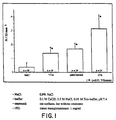
- Fig. 1 shows the influence of the shear force, needed for the displacement of cartilage cylinders at the relative incubation humidity of 50%; incubation time: 10 minutes.
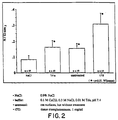
- Fig. 2 shows the influence of the shear force, needed for the displacement of cartilage cylinders at the relative incubation humidity of 50%; relative incubation time: 15 minutes.
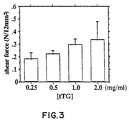
- Fig. 3 shows the influence of tTG-concentration on the shear force, needed for the displacement of cartilage cylinders at the relative incubation humidity of 50%.
- Fig. 4 shows the influence of the shear force, needed for the displacement of cartilage cylinders at the relative incubation humidities of 50% or 80%; incubation time: 15 minutes.
- Fig. 5 shows the influence of shear force, needed for the displacement of cartilage cylinders at a relative incubation humidity of 50%; incubation time: 10 minutes; with (tTG + CAC) or without (tTG) prior cartilage cylinder surface treatment by chondroitinase AC (CAC) during 5 minutes.
- tissue transglutaminase tissue transglutaminase
- transglutaminase as used herein specifies this form of the enzyme independent of the cellular origin or post translational modifications, K. Ikura, T. Nasu, H.
- the enzyme may be produced by recombinant DNA technology and may be altered in regions not affecting the active site to obtain better conditions for application (e.g., storage stability, method for application, glutaminyl substrate quality, etc.), higher immunologic tolerance, or enzymatic capacity in certain cases.
- the tissue transglutaminase is formulated in a pharmaceutically acceptable aqueous carrier or media.
- the carrier contains a buffering agent to maintain the pH in the range of about 7 to about 8.5.
- a Tris-buffer or HEPES-buffer may be employed.
- the preferred Tris-buffer is tris (hydroxymethyl) amino methane hydrochloride.
- Other types of buffers may be used, but it is desirable to exclude carbonate, acetate and phosphate buffers at high concentrations (or in excess over Ca 2+ ions because of the low solubility of calcium ions in such buffers.
- Preferably calcium (Ca +2 ) ions are also present in a concentration above 0.5mM, preferably about 50-100mM for cartilage, to promote the reaction.
- Strontium is another example of a divalent metal ion that may be used.
- the biological sealant composition may optionally contain a matrix-forming protein.
- the protein may be adjusted to the particular application in the amount and nature of the ingredients and is selected from the group consisting of collagen, fibrin, fibrinogen, fibronectin, entactin, osteonectin, osteopontin, thrombospondin, vitronectin, ⁇ -lactoglobulin, and casein, and mixtures thereof.
- any protein may optionally be employed in the sealant composition where it contains one or more amine acceptor sites for the tissue transglutaminase-catalyzed reaction.
- the biological adhesive composition may also contain a growth factor selected from the group consisting of transforming growth factor ⁇ family, transforming growth factor ⁇ family, insulin-like growth factor family, epidermal growth factor, platelet-derived growth factor family, tumor necrosis factor family, fibroblast growth factor family and interleukins.
- a growth factor selected from the group consisting of transforming growth factor ⁇ family, transforming growth factor ⁇ family, insulin-like growth factor family, epidermal growth factor, platelet-derived growth factor family, tumor necrosis factor family, fibroblast growth factor family and interleukins.
- the biological adhesive composition may be employed in the treatment of tissue surfaces in orthopedic or traumatological surgery selected from the group consisting of joint fractures, chondral defects, superficial chondral defects (chondral defects), full-thickness defects, osteochondritis dissecans, meniscal tears, ligament tears, tendon tears, muscle lesions, myotendineous junction lesions, cartilage transplantation, bone transplantation, ligament transplantation, tendon transplantation, chondral transplantation, chondro-osseous transplantation, osseous transplantation, skin graft fixation, grafting (repairing) nerves and blood vessels, patching vascular grafts, microvascular blood vessel anastomosis, and treatment of combinations of said tissue surfaces.
- the biological adhesive composition may be employed in other applications such as embryo transfer and applications such as for fibrin glue for the promotion of adhesion between a tissue surface and a biomatrix-coated implant material.
- the biomatrix implants may further contain a naturally occuring or synthetic protein having transglutaminase substrate sites.
- the matrix may be biodegradable or nonbiodegradable and the adhesive may be for use of cells embedded in the matrix (mesenchymal cells, chondroblasts, chondrocytes, stem cells, etc.).
- a modification of the method may include the pretreatment of tissue surfaces with digestive enzymes may be used to enhance adhesion.
- the method and composition of this invention employs crosslinking of tissue surface proteins by tissue transglutaminase under conditions that mimic physiological events and allow sealant action even without the addition of exogenous substrate proteins. It differs from methods based on known commercially available sealants by the employment of tissue transglutaminase rather than factor XIII, the plasma transglutaminase.
- the biological sealants of this invention give a broader specificity and allow gluing of tissue surfaces by action of the enzyme alone without any other protein additives.
- the biological sealant has been found to give tissue adhesion which is stable to higher shear forces than those associated with commercially available sealant containing factor XIII.
- tissue transglutaminase an enzyme that catalyses a chemical reaction by which proteins become crosslinked to form network-like polymers. It belongs to a large family of enzymes, designated transglutaminases which have been shown to have a wide distribution amongst tissues and body fluids. Proteins are modified by transglutaminases during many physiological processes, e. g. in fibrin clots during hemostasis and wound healing, in cell membranes of terminally differentiated cells, in various types of extracellular matrices and in the formation of the cornified envelope of epidermis. While the biological function is known only in a few cases, the mechanism of action of transglutaminase is well characterized at the molecular level.
- Transglutaminase (EC 2.3.2.13) catalyses a Ca 2+ -dependent acyl-transfer reaction in which new ⁇ -amide bonds are formed between ⁇ -carboxamide groups of peptide-bound glutamine residues and various primary amines (Folk, J. E. "TRANSGLUTAMINASES” Ann Rev Biochem 49: 517-531 (1980); Folk, J. E. and J. S. Finlayson "THE ⁇ -( ⁇ -GLUTAMYL)LYSINE CROSSLINK AND THE CATALYTIC ROLE OF TRANSGLUTAMINASES” Adv Protein Chem 31: 1-133 (1977) and Lorand, L. and S. M.
- a glutamine residue serves as acyl-donor and the most common acyl-acceptors are ⁇ -amino groups of peptide-bound lysine residues (reaction scheme I) or primary amino groups of some naturally occurring (poly) amines, like putrescine or spermidine (reaction scheme II).
- reaction scheme I the reaction results in the formation of ⁇ -glutamyl- ⁇ -lysine crosslinks either in or between proteins.
- Reactions following the second scheme result in modifications possibly affecting the biological activity and turnover of the protein but not in polymer formation.
- transglutaminase the specificity for different glutaminyl substrates varies depending on the type of transglutaminase.
- transglutaminase may recognize a single protein as substrate, but often with different affinity and/or with specificity for different glutamine residues.
- Certain proteins may serve as substrates only for a single member of the transglutaminase family.
- Factor XIII the plasma transglutaminase, is an essential component of the commercially available fibrin sealants, but acts on a much more restricted group of protein-bound glutamines than tissue transglutaminase Gorman, J. J. and J. E.
- Tissue transglutaminase is a mainly intracellular enzyme with a broad tissue distribution, Greenberg, C. S., P. J. Birckbichler and R. H. Rice "TRANSGLUTAMINASES: MULTIFUNCTIONAL CROSS-LINKING ENZYMES THAT STABILIZE TISSUES” FASEB J5: 3071-3077 (1991).
- the sealant of this invention employs tissue transglutaminase rather than factor XIII, a major advantage being that its broad substrate specificity gives a stronger adhesion.
- Factor XIII exists as a tetramer, a 2 b 2 (Mr ⁇ 320'000), composed of a dimer of the catalytic a-subunit (Mr ⁇ 83'000 each) and two regulatory b-subunits (Mr ⁇ 80'000) when circulating in the blood plasma, or as a dimer of only the a-subunit in, e. g. platelets, leukocytes and placenta Carrell, N. A., H. P. Erickson and J.
- Factor XIII is a zymogen, which is activated to factor XIIIa by thrombin cleavage and the following Ca +2 dependent dissociation into active a-subunits and inactive b-subunits.
- the commercially available fibrin sealants are composed of a partially purified fraction of human blood plasma containing the active agents factor XIII, fibrinogen, fibronectin, thrombin, CaCl 2 .
- tissue transglutaminase is a monomeric globular protein with a molecular mass of about 77'000 (Greenberg et al, supra and Ichinose, et al, supra ) and does, in contrast to factor XIII, not require proteolytic activation. This property makes reproducible applications easier.
- a number of agents like transforming growth factor ⁇ and insulin-like growth factor have previously been described to stimulate chondrogenesis and may be applied in concert with the inventive sealant to achieve optimal regeneration.
- tissue transglutaminase is expressed in a variety of cartilages. Aeschlimann, D., Wetterwald, A., Fleisch, H., and Paulsson, M.
- Tissue transglutaminase is likely to catalyze physiological crosslinks in cartilage, and in this respect the inventive sealant mimics a naturally occurring process. As a consequence both the enzyme and its reaction products occur in normal cartilage and are unlikely to be toxic.
- Transglutaminases catalyze protein crosslinking during formation of the cornified envelope forming the superficial layer of the epidermis, Thacher, S. M. and R. H.
- Tissue transglutaminase was purified from guinea pig liver by means of DEAE-cellulose chromatography of liver homogenate supernatant, followed by protamine precipitation of the enzyme, selective extraction with ammonium sulfate solution, and rechromatography over a molecular sieve column, Connellan, J. M., S. I. Chung, N. K. Whetzel, L. M. Bradley and J. E. Folk "STRUCTURAL PROPERTIES OF GUINEA PIG LIVER TRANSGLUTAMINASE” J Biol Chem 246(4): 1093-1098 (1971).
- tTG was pooled and concentrated to 1 mg/ml in 10 mM Tris/acetate (pH 6.0), containing 1 mM EDTA and 150 mM NaCl, Aeschlimann, D. and M. Paulsson "CROSS-LINKING OF LAMININ-NIDOGEN COMPLEXES BY TISSUE TRANSGLUTAMINASE” J Biol Chem 266: 15308-15317 (1991).
- Tissucol consists of two solutions which are mixed prior to application. One part consists of 75-115 mg/ml fibrinogen, 2-9 mg/ml plasma fibronectin, 10-50 U/ml factor XIII and 40-120 ⁇ g/ml plasminogen. The other one is made up of 4 IU thrombin in 53 mM CaCl 2 . After heating to 37°C and mixing, the two components are applied to the cartilage surfaces.
- Tissue transglutaminase glue consists of two solutions: A) tissue transglutaminase (1 mg/ml in 10 mM Tris/acetate, pH 6.0, 150 mM NaCl, 1 mM EDTA) and B) Tris reaction buffer (0.1 M CaCl 2 in 10 mM Tris/HCl, pH 7.4, 300 mM NaCl), which are applied to separate tissue surfaces and are mixed by joining the two tissue surfaces. A 0.9% NaCl solution, Tris reaction buffer and not treated cartilage surfaces were used as controls.
- Cartilage-bone cylinders with a diameter of 3.9mm were obtained with a myelotomy drill (Institute Straumann, Switzerland) from a bovine shoulder 10-20 hours after slaughter. 50% of the cartilage thickness was cut off perpendicularly to the long axis of the cylinder with a razor blade.
- the surfaces were treated with 4 ⁇ l tTG solution and 4 ⁇ l Tris reaction buffer, one drop of fibrin glue or 8 ⁇ l of the control solutions or left untreated.
- the two cartilage cylinders were immediately joined at their cut surfaces and an 80 g weight was applied vertically while the assembly was incubated at 37°C in a humidified chamber (humidity 50 or 80%) for 10 or 15 minutes.
- a controlled, linear, ramped shear force (0.27 N/s) was applied to the top cartilage cylinder.
- the shear force was regulated via a signal generator (wavetech) and an amplifier, exerted by an electromagnetic coil and a ferromagnetic bar, and measured with a specially designed load cell (precision 1.0 x 10 -3 N).
- the load cell was connected with a dynamic strain gauge amplifier (DMD 20 A, Hottinger Baldwin Messtechnik, Switzerland). 720 values in 3 seconds were recorded on a data logger (Mikromec, Suprag, Switzerland), from which they were transmitted to a computer (Macintosh LC). In parallel with the digitalization of the resulting force the input signal (linear up ramp) and the measured values can be visualized on an oscilloscope.
Landscapes
- Health & Medical Sciences (AREA)
- Life Sciences & Earth Sciences (AREA)
- Chemical & Material Sciences (AREA)
- General Health & Medical Sciences (AREA)
- Animal Behavior & Ethology (AREA)
- Veterinary Medicine (AREA)
- Public Health (AREA)
- Engineering & Computer Science (AREA)
- Bioinformatics & Cheminformatics (AREA)
- Epidemiology (AREA)
- Surgery (AREA)
- Organic Chemistry (AREA)
- Medicinal Chemistry (AREA)
- Pharmacology & Pharmacy (AREA)
- Zoology (AREA)
- Wood Science & Technology (AREA)
- Genetics & Genomics (AREA)
- Molecular Biology (AREA)
- Biochemistry (AREA)
- Biotechnology (AREA)
- Chemical Kinetics & Catalysis (AREA)
- Microbiology (AREA)
- General Chemical & Material Sciences (AREA)
- Nuclear Medicine, Radiotherapy & Molecular Imaging (AREA)
- Biomedical Technology (AREA)
- General Engineering & Computer Science (AREA)
- Materials Engineering (AREA)
- Gastroenterology & Hepatology (AREA)
- Immunology (AREA)
- Proteomics, Peptides & Aminoacids (AREA)
- Materials For Medical Uses (AREA)
- Medicines That Contain Protein Lipid Enzymes And Other Medicines (AREA)
- Adhesives Or Adhesive Processes (AREA)
Applications Claiming Priority (3)
| Application Number | Priority Date | Filing Date | Title |
|---|---|---|---|
| US71528 | 1993-06-03 | ||
| US08/071,528 US5549904A (en) | 1993-06-03 | 1993-06-03 | Biological adhesive composition and method of promoting adhesion between tissue surfaces |
| PCT/US1994/006208 WO1994028949A1 (en) | 1993-06-03 | 1994-06-03 | Biological adhesive composition and method of promoting adhesion between tissue surfaces |
Publications (2)
| Publication Number | Publication Date |
|---|---|
| EP0702572A1 EP0702572A1 (en) | 1996-03-27 |
| EP0702572B1 true EP0702572B1 (en) | 2003-03-19 |
Family
ID=22101910
Family Applications (1)
| Application Number | Title | Priority Date | Filing Date |
|---|---|---|---|
| EP94919328A Expired - Lifetime EP0702572B1 (en) | 1993-06-03 | 1994-06-03 | Biological adhesive composition and method of promoting adhesion between tissue surfaces |
Country Status (10)
| Country | Link |
|---|---|
| US (2) | US5549904A (enExample) |
| EP (1) | EP0702572B1 (enExample) |
| JP (1) | JP3483255B2 (enExample) |
| AT (1) | ATE234643T1 (enExample) |
| AU (2) | AU7051194A (enExample) |
| CA (1) | CA2163250A1 (enExample) |
| DE (1) | DE69432300T2 (enExample) |
| ES (1) | ES2194869T3 (enExample) |
| TW (1) | TW404836B (enExample) |
| WO (1) | WO1994028949A1 (enExample) |
Families Citing this family (116)
| Publication number | Priority date | Publication date | Assignee | Title |
|---|---|---|---|---|
| US5936035A (en) * | 1988-11-21 | 1999-08-10 | Cohesion Technologies, Inc. | Biocompatible adhesive compositions |
| US6197325B1 (en) | 1990-11-27 | 2001-03-06 | The American National Red Cross | Supplemented and unsupplemented tissue sealants, methods of their production and use |
| US6117425A (en) | 1990-11-27 | 2000-09-12 | The American National Red Cross | Supplemented and unsupplemented tissue sealants, method of their production and use |
| US7196054B1 (en) * | 1990-11-27 | 2007-03-27 | The American National Red Cross | Methods for treating wound tissue and forming a supplemented fibrin matrix |
| US6054122A (en) | 1990-11-27 | 2000-04-25 | The American National Red Cross | Supplemented and unsupplemented tissue sealants, methods of their production and use |
| JPH07328108A (ja) * | 1994-06-10 | 1995-12-19 | Ajinomoto Co Inc | 生体組織接着剤及び血液凝固剤 |
| EP0785276A4 (en) * | 1994-09-29 | 2002-01-09 | Ajinomoto Kk | MODIFICATION OF A PEPTIDE AND A PROTEIN |
| US7883693B2 (en) | 1995-12-18 | 2011-02-08 | Angiodevice International Gmbh | Compositions and systems for forming crosslinked biomaterials and methods of preparation of use |
| US6458889B1 (en) | 1995-12-18 | 2002-10-01 | Cohesion Technologies, Inc. | Compositions and systems for forming crosslinked biomaterials and associated methods of preparation and use |
| PT876165E (pt) | 1995-12-18 | 2006-10-31 | Angiotech Biomaterials Corp | Composicoes de polimeros reticulados e processos para a sua utilizacao |
| US6833408B2 (en) | 1995-12-18 | 2004-12-21 | Cohesion Technologies, Inc. | Methods for tissue repair using adhesive materials |
| WO1999008730A1 (en) * | 1997-08-15 | 1999-02-25 | Children's Medical Center Corporation | Osteopontin coated surfaces and methods of use |
| US6114119A (en) * | 1997-08-29 | 2000-09-05 | Wisconsin Alumni Research Foundation | Transglutaminase and gene encoding same |
| US20030099620A1 (en) * | 1997-10-30 | 2003-05-29 | The General Hospital Corporation | Bonding of cartilaginous matrices using isolated chondrocytes |
| WO1999022747A1 (en) * | 1997-10-30 | 1999-05-14 | The General Hospital Corporation | Bonding of cartilaginous matrices using isolated chondrocytes |
| US6190896B1 (en) | 1997-11-14 | 2001-02-20 | Bassam M. Fraij | Active human cellular transglutaminase |
| EP1066051A4 (en) * | 1998-03-26 | 2002-05-02 | Gen Hospital Corp | SCIELLIN AND USES THEREOF |
| US20020022588A1 (en) * | 1998-06-23 | 2002-02-21 | James Wilkie | Methods and compositions for sealing tissue leaks |
| US6190815B1 (en) * | 1998-08-11 | 2001-02-20 | Xerox Corporation | Toner compositions |
| US7241730B2 (en) * | 1998-08-27 | 2007-07-10 | Universitat Zurich | Enzyme-mediated modification of fibrin for tissue engineering: fibrin formulations with peptides |
| US6197061B1 (en) * | 1999-03-01 | 2001-03-06 | Koichi Masuda | In vitro production of transplantable cartilage tissue cohesive cartilage produced thereby, and method for the surgical repair of cartilage damage |
| US6463335B1 (en) | 1999-10-04 | 2002-10-08 | Medtronic, Inc. | Temporary medical electrical lead having electrode mounting pad with biodegradable adhesive |
| WO2001054748A1 (en) | 2000-01-25 | 2001-08-02 | Edwards Lifesciences Corporation | Delivery systems for treatment of restenosis and anastomotic intimal hyperplasia |
| GB0011356D0 (en) * | 2000-05-12 | 2000-06-28 | Univ Nottingham Trent | Medical implant materials |
| US6685626B2 (en) | 2001-02-02 | 2004-02-03 | Regeneration Technologies, Inc. | Compositions, devices, methods, and kits for induction of adhesions |
| US20060094112A1 (en) * | 2001-03-07 | 2006-05-04 | Omotunde Babalola | Biological scaffold |
| ATE502660T1 (de) * | 2001-07-16 | 2011-04-15 | Depuy Products Inc | Poröses freisetzungsgerüst und verfahren |
| US8815793B2 (en) * | 2001-07-20 | 2014-08-26 | Northwestern University | Polymeric compositions and related methods of use |
| US7858679B2 (en) * | 2001-07-20 | 2010-12-28 | Northwestern University | Polymeric compositions and related methods of use |
| US7618937B2 (en) * | 2001-07-20 | 2009-11-17 | Northwestern University | Peptidomimetic polymers for antifouling surfaces |
| KR100944204B1 (ko) * | 2001-09-15 | 2010-02-26 | 러쉬 유니버시티 메디컬 센터 | 중층 연골 조직 및 그것을 조작하는 방법 |
| US20030165473A1 (en) * | 2001-11-09 | 2003-09-04 | Rush-Presbyterian-St. Luke's Medical Center | Engineered intervertebral disc tissue |
| RU2203072C1 (ru) * | 2001-12-29 | 2003-04-27 | Челябинский государственный институт лазерной хирургии | Способ приготовления суспензии фетальных клеток, предназначенных для трансплантации при хронических заболеваниях печени |
| ES2223227B1 (es) | 2002-05-31 | 2006-04-16 | Consejo Sup. Investig. Cientificas | Secuencia de nucleotidos de maiz codificante de una proteina con actividad transglutaminasa, y su uso. |
| US20080171012A1 (en) * | 2007-01-11 | 2008-07-17 | Phillip Messersmith | Fouling Resistant Coatings and Methods of Making Same |
| US8911831B2 (en) * | 2002-07-19 | 2014-12-16 | Northwestern University | Surface independent, surface-modifying, multifunctional coatings and applications thereof |
| US7163545B2 (en) * | 2002-07-29 | 2007-01-16 | Mayo Foundation For Medical Education And Research | Spinal cord surgical implant |
| US7208171B2 (en) * | 2002-10-31 | 2007-04-24 | Northwestern University | Injectable and bioadhesive polymeric hydrogels as well as related methods of enzymatic preparation |
| AU2003303513A1 (en) * | 2002-12-30 | 2004-07-29 | Angiotech International Ag | Tissue reactive compounds and compositions and uses thereof |
| CA2511521C (en) * | 2002-12-30 | 2012-02-07 | Angiotech International Ag | Drug delivery from rapid gelling polymer composition |
| JP2004283371A (ja) * | 2003-03-20 | 2004-10-14 | Nagoya Industrial Science Research Inst | 医用材料 |
| US7067123B2 (en) | 2003-04-29 | 2006-06-27 | Musculoskeletal Transplant Foundation | Glue for cartilage repair |
| US7901457B2 (en) | 2003-05-16 | 2011-03-08 | Musculoskeletal Transplant Foundation | Cartilage allograft plug |
| US20050075584A1 (en) | 2003-10-06 | 2005-04-07 | Cali Douglas S. | Minimally invasive valve replacement system |
| CA2545874C (en) | 2003-10-06 | 2012-02-21 | 3F Therapeutics, Inc. | Minimally invasive valve replacement system |
| ES2404682T3 (es) | 2003-12-11 | 2013-05-28 | Isto Technologies Inc. | Sistema de cartílago particulado |
| NZ550964A (en) | 2004-04-28 | 2011-05-27 | Angiodevice Internat Gmbh | Compositions and systems for forming crosslinked biomaterials and associated methods of preparation and use |
| WO2005122870A2 (en) | 2004-06-14 | 2005-12-29 | Pneumrx, Inc. | Lung access device |
| US20050281740A1 (en) * | 2004-06-16 | 2005-12-22 | Glen Gong | Imaging damaged lung tissue |
| US7678767B2 (en) | 2004-06-16 | 2010-03-16 | Pneumrx, Inc. | Glue compositions for lung volume reduction |
| US7608579B2 (en) * | 2004-06-16 | 2009-10-27 | Pneumrx, Inc. | Lung volume reduction using glue compositions |
| US20050281798A1 (en) * | 2004-06-16 | 2005-12-22 | Glen Gong | Targeting sites of damaged lung tissue using composition |
| US7553810B2 (en) * | 2004-06-16 | 2009-06-30 | Pneumrx, Inc. | Lung volume reduction using glue composition |
| US20050281739A1 (en) * | 2004-06-16 | 2005-12-22 | Glen Gong | Imaging damaged lung tissue using compositions |
| US20050281799A1 (en) | 2004-06-16 | 2005-12-22 | Glen Gong | Targeting damaged lung tissue using compositions |
| US20060004400A1 (en) * | 2004-06-16 | 2006-01-05 | Mcgurk Erin | Method of treating a lung |
| US20050288796A1 (en) * | 2004-06-23 | 2005-12-29 | Hani Awad | Native soft tissue matrix for therapeutic applications |
| US7766938B2 (en) | 2004-07-08 | 2010-08-03 | Pneumrx, Inc. | Pleural effusion treatment device, method and material |
| US7766891B2 (en) | 2004-07-08 | 2010-08-03 | Pneumrx, Inc. | Lung device with sealing features |
| EP1796602A4 (en) | 2004-09-17 | 2016-10-19 | Angiotech Pharm Inc | MULTIFUNCTIONAL COMPOUNDS FOR PRODUCING NETWORKED BIOMATERIALS AND MANUFACTURING AND USE METHOD THEREFOR |
| US7837740B2 (en) | 2007-01-24 | 2010-11-23 | Musculoskeletal Transplant Foundation | Two piece cancellous construct for cartilage repair |
| US20090319045A1 (en) | 2004-10-12 | 2009-12-24 | Truncale Katherine G | Cancellous constructs, cartilage particles and combinations of cancellous constructs and cartilage particles |
| WO2006050213A2 (en) * | 2004-10-29 | 2006-05-11 | Michalow Alexander E | Methods of promoting healing of cartilage defects and method of causing stem cells to differentiate by the articular chondrocyte pathway |
| WO2006058195A2 (en) | 2004-11-23 | 2006-06-01 | Pneumrx, Inc. | Steerable device for accessing a target site and methods |
| US7815926B2 (en) * | 2005-07-11 | 2010-10-19 | Musculoskeletal Transplant Foundation | Implant for articular cartilage repair |
| WO2007025290A2 (en) | 2005-08-26 | 2007-03-01 | Isto Technologies, Inc. | Implants and methods for repair, replacement and treatment of joint disease |
| EP1926459B1 (en) | 2005-09-19 | 2015-01-07 | Histogenics Corporation | Cell-support matrix having narrowly defined uniformly vertically and non-randomly organized porosity and pore density and a method for preparation thereof |
| US7732539B2 (en) * | 2006-02-16 | 2010-06-08 | National Science Foundation | Modified acrylic block copolymers for hydrogels and pressure sensitive wet adhesives |
| US8888800B2 (en) | 2006-03-13 | 2014-11-18 | Pneumrx, Inc. | Lung volume reduction devices, methods, and systems |
| US8157837B2 (en) | 2006-03-13 | 2012-04-17 | Pneumrx, Inc. | Minimally invasive lung volume reduction device and method |
| US9402633B2 (en) | 2006-03-13 | 2016-08-02 | Pneumrx, Inc. | Torque alleviating intra-airway lung volume reduction compressive implant structures |
| CA2651827C (en) * | 2006-05-26 | 2013-11-26 | Baxter International Inc. | Injectable fibrin composition for bone augmentation |
| ATE494916T1 (de) * | 2006-05-26 | 2011-01-15 | Baxter Int | Injizierbarer füllstoff für knochenhohlräume |
| DE102006033168A1 (de) | 2006-07-10 | 2008-01-17 | Gelita Ag | Verwendung von Gelatine und einem Vernetzungsmittel zur Herstellung einer vernetzenden therapeutischen Zusammensetzung |
| DE102006033167A1 (de) | 2006-07-10 | 2008-01-24 | Gelita Ag | Verwendung von Gelatine und einem Vernetzungsmittel zur Herstellung eines vernetzenden medizinischen Klebers |
| WO2008019352A1 (en) | 2006-08-04 | 2008-02-14 | Nerites Corporation | Biomimetic compounds and synthetic methods therefor |
| WO2008091386A2 (en) * | 2006-08-04 | 2008-07-31 | Northwestern University | Biomimetic modular adhesive complex: material, methods and applications therefore |
| US20100297218A1 (en) * | 2006-09-20 | 2010-11-25 | Pneumrx, Inc. | Tissue adhesive compositions and methods thereof |
| DK176786B1 (da) * | 2006-12-08 | 2009-08-24 | Dat Schaub A M B A | A process for joining of pieces of natural casing |
| US7935363B2 (en) * | 2006-12-12 | 2011-05-03 | Synthasome, Inc. | Composite material for tissue repair |
| US8133484B2 (en) * | 2006-12-15 | 2012-03-13 | Lifebond Ltd | Hemostatic materials and dressing |
| US9017664B2 (en) | 2006-12-15 | 2015-04-28 | Lifebond Ltd. | Gelatin-transglutaminase hemostatic dressings and sealants |
| US20080154233A1 (en) * | 2006-12-20 | 2008-06-26 | Zimmer Orthobiologics, Inc. | Apparatus for delivering a biocompatible material to a surgical site and method of using same |
| US8163549B2 (en) | 2006-12-20 | 2012-04-24 | Zimmer Orthobiologics, Inc. | Method of obtaining viable small tissue particles and use for tissue repair |
| US8383092B2 (en) * | 2007-02-16 | 2013-02-26 | Knc Ner Acquisition Sub, Inc. | Bioadhesive constructs |
| US8673286B2 (en) | 2007-04-09 | 2014-03-18 | Northwestern University | DOPA-functionalized, branched, poly(aklylene oxide) adhesives |
| US10278947B2 (en) * | 2007-02-28 | 2019-05-07 | Orthopeutics, L.P. | Crosslinker enhanced repair of connective tissues |
| US8435551B2 (en) | 2007-03-06 | 2013-05-07 | Musculoskeletal Transplant Foundation | Cancellous construct with support ring for repair of osteochondral defects |
| AU2008240191B2 (en) | 2007-04-12 | 2013-09-19 | Zimmer, Inc. | Compositions and methods for tissue repair |
| CN101668549B (zh) * | 2007-04-23 | 2014-04-09 | 巴克斯特国际公司 | 包含锶化合物的纤维蛋白组合物 |
| AU2009261559B2 (en) * | 2008-06-18 | 2014-01-16 | Lifebond Ltd | Improved cross-linked compositions |
| CA2728186A1 (en) * | 2008-06-18 | 2009-12-23 | Lifebond Ltd | Methods and devices for use with sealants |
| US20110086014A1 (en) * | 2008-06-18 | 2011-04-14 | Ishay Attar | Method for enzymatic cross-linking of a protein |
| US9173669B2 (en) | 2008-09-12 | 2015-11-03 | Pneumrx, Inc. | Enhanced efficacy lung volume reduction devices, methods, and systems |
| WO2010083051A2 (en) * | 2009-01-15 | 2010-07-22 | ProChon Biotech, Ltd. | Cartilage particle tissue mixtures optionally combined with a cancellous construct |
| CN102573700B (zh) | 2009-05-18 | 2014-12-17 | 纽姆克斯股份有限公司 | 细长的肺减容装置在部署过程中的横截面变化 |
| US9597430B2 (en) * | 2009-07-31 | 2017-03-21 | Synthasome, Inc. | Synthetic structure for soft tissue repair |
| US20110130465A1 (en) * | 2009-12-01 | 2011-06-02 | Nerites Corporation | Coatings for prevention of biofilms |
| CN102711853B (zh) | 2009-12-22 | 2015-05-20 | 生命连结有限公司 | 用于控制交联基质的性质的酶交联剂的改性 |
| US9163212B2 (en) | 2010-01-25 | 2015-10-20 | Warsaw Orthopedic, Inc. | Osteogenic cell delivery matrix |
| EP2600910B1 (en) | 2010-08-05 | 2016-01-20 | Lifebond Ltd | Dry composition wound dressings and adhesives |
| US9549760B2 (en) | 2010-10-29 | 2017-01-24 | Kyphon Sarl | Reduced extravasation of bone cement |
| EP2637707A4 (en) | 2010-11-09 | 2014-10-01 | Kensey Nash Corp | ADHESIVES AND METHOD OF USE FOR HERNIEREPARATUR |
| CA2851363A1 (en) * | 2011-10-11 | 2013-04-18 | Shaun B. Hanson | Methods and instruments for subchondral treatment of osteoarthritis in a small joint |
| US8999376B2 (en) | 2012-02-03 | 2015-04-07 | Xcede Technologies, Inc. | Tissue patch |
| US20140178343A1 (en) | 2012-12-21 | 2014-06-26 | Jian Q. Yao | Supports and methods for promoting integration of cartilage tissue explants |
| US10390838B1 (en) | 2014-08-20 | 2019-08-27 | Pneumrx, Inc. | Tuned strength chronic obstructive pulmonary disease treatment |
| US10077420B2 (en) | 2014-12-02 | 2018-09-18 | Histogenics Corporation | Cell and tissue culture container |
| US9833538B2 (en) | 2015-08-07 | 2017-12-05 | Xcede Technologies, Inc. | Adhesive compositions and related methods |
| AU2016307447A1 (en) | 2015-08-07 | 2018-02-22 | Xcede Technologies, Inc. | Adhesive compositions and related methods |
| US9540548B1 (en) | 2015-08-07 | 2017-01-10 | Xcede Technologies, Inc. | Adhesive compositions and related methods |
| WO2017223462A1 (en) * | 2016-06-24 | 2017-12-28 | President And Fellows Of Harvard College | Composition and method for adhering biomaterials to a target surface |
| CN110290817B (zh) * | 2017-01-30 | 2020-07-03 | 生命细胞公司 | 转谷氨酰胺酶处理的产品 |
| JP2020513944A (ja) * | 2017-01-30 | 2020-05-21 | ライフセル コーポレーションLifeCell Corporation | 組織マトリックス材料および酵素接着剤 |
| JP2020505137A (ja) * | 2017-01-30 | 2020-02-20 | ライフセル コーポレーションLifeCell Corporation | 筋肉マトリックスを含むデバイスおよび製造方法および使用方法 |
| US11998654B2 (en) | 2018-07-12 | 2024-06-04 | Bard Shannon Limited | Securing implants and medical devices |
Family Cites Families (10)
| Publication number | Priority date | Publication date | Assignee | Title |
|---|---|---|---|---|
| DE2949407A1 (de) * | 1979-12-07 | 1981-06-11 | Boehringer Mannheim Gmbh, 6800 Mannheim | Verfahren zur gewinnung von (alpha) -2-sb-glykoprotein |
| DE3113986A1 (de) * | 1981-04-07 | 1982-10-21 | Robert Bosch Gmbh, 7000 Stuttgart | Vorrichtung zur regelung der leerlaufdrehzahl einer brennkraftmaschine |
| US4582794A (en) * | 1982-09-15 | 1986-04-15 | The University Of Arizona Foundation | Method of determining polyamine content of biological fluids |
| US4728643A (en) * | 1984-11-02 | 1988-03-01 | The General Hospital Corporation | Method of treating psoriasis |
| US5037816A (en) * | 1984-11-02 | 1991-08-06 | The General Hospital Corporation | Method of treating psoriasis |
| AU2423988A (en) * | 1987-08-17 | 1989-03-09 | Liposome Company, Inc., The | A sponge enzyme having transglutaminase-like activity |
| US4968713A (en) * | 1989-07-31 | 1990-11-06 | Merck & Co., Inc. | Certain imidazole compounds as transglutaminase inhibitors |
| WO1992012238A1 (en) * | 1991-01-04 | 1992-07-23 | The Board Of Regents, University Of Texas System | Cloning and expression of tissue transglutaminases |
| US5206023A (en) * | 1991-01-31 | 1993-04-27 | Robert F. Shaw | Method and compositions for the treatment and repair of defects or lesions in cartilage |
| US5270300A (en) * | 1991-09-06 | 1993-12-14 | Robert Francis Shaw | Methods and compositions for the treatment and repair of defects or lesions in cartilage or bone |
-
1993
- 1993-06-03 US US08/071,528 patent/US5549904A/en not_active Expired - Lifetime
-
1994
- 1994-06-03 JP JP50193595A patent/JP3483255B2/ja not_active Expired - Fee Related
- 1994-06-03 WO PCT/US1994/006208 patent/WO1994028949A1/en not_active Ceased
- 1994-06-03 AU AU70511/94A patent/AU7051194A/en not_active Abandoned
- 1994-06-03 AT AT94919328T patent/ATE234643T1/de not_active IP Right Cessation
- 1994-06-03 ES ES94919328T patent/ES2194869T3/es not_active Expired - Lifetime
- 1994-06-03 CA CA002163250A patent/CA2163250A1/en not_active Abandoned
- 1994-06-03 DE DE69432300T patent/DE69432300T2/de not_active Expired - Fee Related
- 1994-06-03 EP EP94919328A patent/EP0702572B1/en not_active Expired - Lifetime
- 1994-06-06 TW TW083105136A patent/TW404836B/zh not_active IP Right Cessation
-
1996
- 1996-01-29 US US08/592,921 patent/US5736132A/en not_active Expired - Lifetime
-
1998
- 1998-09-01 AU AU83055/98A patent/AU8305598A/en not_active Abandoned
Also Published As
| Publication number | Publication date |
|---|---|
| AU7051194A (en) | 1995-01-03 |
| CA2163250A1 (en) | 1994-12-22 |
| TW404836B (en) | 2000-09-11 |
| US5549904A (en) | 1996-08-27 |
| ATE234643T1 (de) | 2003-04-15 |
| DE69432300D1 (de) | 2003-04-24 |
| AU8305598A (en) | 1999-04-29 |
| JPH08510943A (ja) | 1996-11-19 |
| WO1994028949A1 (en) | 1994-12-22 |
| US5736132A (en) | 1998-04-07 |
| DE69432300T2 (de) | 2004-02-12 |
| JP3483255B2 (ja) | 2004-01-06 |
| ES2194869T3 (es) | 2003-12-01 |
| EP0702572A1 (en) | 1996-03-27 |
Similar Documents
| Publication | Publication Date | Title |
|---|---|---|
| US5549904A (en) | Biological adhesive composition and method of promoting adhesion between tissue surfaces | |
| Jürgensen et al. | A new biological glue for cartilage-cartilage interfaces: tissue transglutaminase | |
| CN1056083C (zh) | 治疗及修复软骨缺损或损伤的方法及组合物 | |
| US6444222B1 (en) | Reinforced matrices | |
| US20210187036A1 (en) | Method of Tissue Repair | |
| Aeschlimann et al. | Tissue transglutaminase and factor XIII in cartilage and bone remodeling | |
| DE69329875T2 (de) | Verfahren zur herstellung eines mit plättchenfaktoren angereicherten biologischen klebstoffes und seine verwendung | |
| EP2175869B1 (en) | Compositions for repair of lesions in cartilage and bone | |
| US7892802B2 (en) | Fibrinogen-based tissue adhesive containing an elastase inhibitor | |
| EP1814571A2 (en) | In situ method for treatment and repair of meniscal injuries | |
| CA2592973A1 (en) | Supplemented matrices for the repair of bone fractures | |
| Kurnaz et al. | Effect of platelet-rich plasma and platelet-rich fibrin matrix on healing of vertical meniscal tears in a rabbit model | |
| LIAN et al. | In vitro degradation of bone particles by human monocytes is decreased with the depletion of the vitamin K-dependent bone protein from the matrix | |
| Orr et al. | Attachment of periosteal grafts to articular cartilage with fibrin sealant | |
| Huang et al. | Mechanisms of platelet adhesion to the basal lamina | |
| Huh et al. | Covalent crosslinking of human coagulation factor V by activated factor XIII from guinea pig megakaryocytes and human plasma | |
| WO2002080970A1 (en) | Method for inhibiting articular cartilage matrix calcification | |
| Imler | In vitro modulation of meniscus biosynthesis: a basis for understanding cellular response to physiologically relevant stimuli | |
| Sugitachi et al. | A New Approach To Wound Healing | |
| Mahajan | Platelet Rich Plasma in Orthopaedics: A Review | |
| AU2002340826A1 (en) | Reinforced matrices | |
| HK1006416B (en) | Growth factor containing matrix for the treatment of cartilage lesions |
Legal Events
| Date | Code | Title | Description |
|---|---|---|---|
| PUAI | Public reference made under article 153(3) epc to a published international application that has entered the european phase |
Free format text: ORIGINAL CODE: 0009012 |
|
| 17P | Request for examination filed |
Effective date: 19951130 |
|
| AK | Designated contracting states |
Kind code of ref document: A1 Designated state(s): AT BE CH DE DK ES FR GB GR IE IT LI LU MC NL PT SE |
|
| 17Q | First examination report despatched |
Effective date: 19971027 |
|
| RIC1 | Information provided on ipc code assigned before grant |
Free format text: 7A 61L 24/10 A, 7A 61P 41/00 B, 7A 61P 43/00 B |
|
| GRAG | Despatch of communication of intention to grant |
Free format text: ORIGINAL CODE: EPIDOS AGRA |
|
| GRAG | Despatch of communication of intention to grant |
Free format text: ORIGINAL CODE: EPIDOS AGRA |
|
| GRAH | Despatch of communication of intention to grant a patent |
Free format text: ORIGINAL CODE: EPIDOS IGRA |
|
| GRAH | Despatch of communication of intention to grant a patent |
Free format text: ORIGINAL CODE: EPIDOS IGRA |
|
| GRAA | (expected) grant |
Free format text: ORIGINAL CODE: 0009210 |
|
| AK | Designated contracting states |
Designated state(s): AT BE CH DE DK ES FR GB GR IE IT LI LU MC NL PT SE |
|
| PG25 | Lapsed in a contracting state [announced via postgrant information from national office to epo] |
Ref country code: NL Free format text: LAPSE BECAUSE OF FAILURE TO SUBMIT A TRANSLATION OF THE DESCRIPTION OR TO PAY THE FEE WITHIN THE PRESCRIBED TIME-LIMIT Effective date: 20030319 Ref country code: IT Free format text: LAPSE BECAUSE OF FAILURE TO SUBMIT A TRANSLATION OF THE DESCRIPTION OR TO PAY THE FEE WITHIN THE PRESCRIBED TIME-LIMIT;WARNING: LAPSES OF ITALIAN PATENTS WITH EFFECTIVE DATE BEFORE 2007 MAY HAVE OCCURRED AT ANY TIME BEFORE 2007. THE CORRECT EFFECTIVE DATE MAY BE DIFFERENT FROM THE ONE RECORDED. Effective date: 20030319 Ref country code: GR Free format text: LAPSE BECAUSE OF FAILURE TO SUBMIT A TRANSLATION OF THE DESCRIPTION OR TO PAY THE FEE WITHIN THE PRESCRIBED TIME-LIMIT Effective date: 20030319 Ref country code: BE Free format text: LAPSE BECAUSE OF FAILURE TO SUBMIT A TRANSLATION OF THE DESCRIPTION OR TO PAY THE FEE WITHIN THE PRESCRIBED TIME-LIMIT Effective date: 20030319 Ref country code: AT Free format text: LAPSE BECAUSE OF FAILURE TO SUBMIT A TRANSLATION OF THE DESCRIPTION OR TO PAY THE FEE WITHIN THE PRESCRIBED TIME-LIMIT Effective date: 20030319 |
|
| REG | Reference to a national code |
Ref country code: GB Ref legal event code: FG4D |
|
| REG | Reference to a national code |
Ref country code: CH Ref legal event code: EP |
|
| REG | Reference to a national code |
Ref country code: IE Ref legal event code: FG4D |
|
| REF | Corresponds to: |
Ref document number: 69432300 Country of ref document: DE Date of ref document: 20030424 Kind code of ref document: P |
|
| PG25 | Lapsed in a contracting state [announced via postgrant information from national office to epo] |
Ref country code: LU Free format text: LAPSE BECAUSE OF NON-PAYMENT OF DUE FEES Effective date: 20030603 |
|
| PGFP | Annual fee paid to national office [announced via postgrant information from national office to epo] |
Ref country code: IE Payment date: 20030603 Year of fee payment: 10 |
|
| PG25 | Lapsed in a contracting state [announced via postgrant information from national office to epo] |
Ref country code: SE Free format text: LAPSE BECAUSE OF FAILURE TO SUBMIT A TRANSLATION OF THE DESCRIPTION OR TO PAY THE FEE WITHIN THE PRESCRIBED TIME-LIMIT Effective date: 20030619 Ref country code: DK Free format text: LAPSE BECAUSE OF FAILURE TO SUBMIT A TRANSLATION OF THE DESCRIPTION OR TO PAY THE FEE WITHIN THE PRESCRIBED TIME-LIMIT Effective date: 20030619 |
|
| PG25 | Lapsed in a contracting state [announced via postgrant information from national office to epo] |
Ref country code: PT Free format text: LAPSE BECAUSE OF FAILURE TO SUBMIT A TRANSLATION OF THE DESCRIPTION OR TO PAY THE FEE WITHIN THE PRESCRIBED TIME-LIMIT Effective date: 20030620 |
|
| PG25 | Lapsed in a contracting state [announced via postgrant information from national office to epo] |
Ref country code: MC Free format text: LAPSE BECAUSE OF NON-PAYMENT OF DUE FEES Effective date: 20030630 |
|
| REG | Reference to a national code |
Ref country code: CH Ref legal event code: NV Representative=s name: BOVARD AG PATENTANWAELTE |
|
| NLV1 | Nl: lapsed or annulled due to failure to fulfill the requirements of art. 29p and 29m of the patents act | ||
| ET | Fr: translation filed | ||
| PLBE | No opposition filed within time limit |
Free format text: ORIGINAL CODE: 0009261 |
|
| STAA | Information on the status of an ep patent application or granted ep patent |
Free format text: STATUS: NO OPPOSITION FILED WITHIN TIME LIMIT |
|
| 26N | No opposition filed |
Effective date: 20031222 |
|
| PG25 | Lapsed in a contracting state [announced via postgrant information from national office to epo] |
Ref country code: IE Free format text: LAPSE BECAUSE OF NON-PAYMENT OF DUE FEES Effective date: 20040603 |
|
| REG | Reference to a national code |
Ref country code: IE Ref legal event code: MM4A |
|
| PGFP | Annual fee paid to national office [announced via postgrant information from national office to epo] |
Ref country code: GB Payment date: 20060505 Year of fee payment: 13 |
|
| PGFP | Annual fee paid to national office [announced via postgrant information from national office to epo] |
Ref country code: FR Payment date: 20060605 Year of fee payment: 13 |
|
| PGFP | Annual fee paid to national office [announced via postgrant information from national office to epo] |
Ref country code: CH Payment date: 20060608 Year of fee payment: 13 |
|
| PGFP | Annual fee paid to national office [announced via postgrant information from national office to epo] |
Ref country code: ES Payment date: 20060613 Year of fee payment: 13 |
|
| PGFP | Annual fee paid to national office [announced via postgrant information from national office to epo] |
Ref country code: DE Payment date: 20060630 Year of fee payment: 13 |
|
| REG | Reference to a national code |
Ref country code: CH Ref legal event code: PL |
|
| GBPC | Gb: european patent ceased through non-payment of renewal fee |
Effective date: 20070603 |
|
| REG | Reference to a national code |
Ref country code: FR Ref legal event code: ST Effective date: 20080229 |
|
| PG25 | Lapsed in a contracting state [announced via postgrant information from national office to epo] |
Ref country code: LI Free format text: LAPSE BECAUSE OF NON-PAYMENT OF DUE FEES Effective date: 20070630 Ref country code: DE Free format text: LAPSE BECAUSE OF NON-PAYMENT OF DUE FEES Effective date: 20080101 Ref country code: CH Free format text: LAPSE BECAUSE OF NON-PAYMENT OF DUE FEES Effective date: 20070630 |
|
| PG25 | Lapsed in a contracting state [announced via postgrant information from national office to epo] |
Ref country code: GB Free format text: LAPSE BECAUSE OF NON-PAYMENT OF DUE FEES Effective date: 20070603 |
|
| REG | Reference to a national code |
Ref country code: ES Ref legal event code: FD2A Effective date: 20070604 |
|
| PG25 | Lapsed in a contracting state [announced via postgrant information from national office to epo] |
Ref country code: FR Free format text: LAPSE BECAUSE OF NON-PAYMENT OF DUE FEES Effective date: 20070702 |
|
| PG25 | Lapsed in a contracting state [announced via postgrant information from national office to epo] |
Ref country code: ES Free format text: LAPSE BECAUSE OF NON-PAYMENT OF DUE FEES Effective date: 20070604 |