EP0656018B1 - Lösungsmittelfreie, öllösliche polymersuspension mit reibungsvermindernder wirkung - Google Patents
Lösungsmittelfreie, öllösliche polymersuspension mit reibungsvermindernder wirkung Download PDFInfo
- Publication number
- EP0656018B1 EP0656018B1 EP94920690A EP94920690A EP0656018B1 EP 0656018 B1 EP0656018 B1 EP 0656018B1 EP 94920690 A EP94920690 A EP 94920690A EP 94920690 A EP94920690 A EP 94920690A EP 0656018 B1 EP0656018 B1 EP 0656018B1
- Authority
- EP
- European Patent Office
- Prior art keywords
- polymer
- reaction
- polyolefin
- polymerization
- bulk
- Prior art date
- Legal status (The legal status is an assumption and is not a legal conclusion. Google has not performed a legal analysis and makes no representation as to the accuracy of the status listed.)
- Expired - Lifetime
Links
- 229920000642 polymer Polymers 0.000 title claims description 184
- 230000001603 reducing effect Effects 0.000 title claims description 49
- 239000000725 suspension Substances 0.000 title claims description 6
- 238000006243 chemical reaction Methods 0.000 claims description 88
- 238000000034 method Methods 0.000 claims description 48
- XLYOFNOQVPJJNP-UHFFFAOYSA-N water Substances O XLYOFNOQVPJJNP-UHFFFAOYSA-N 0.000 claims description 45
- 229930195733 hydrocarbon Natural products 0.000 claims description 44
- 150000002430 hydrocarbons Chemical class 0.000 claims description 44
- 239000002904 solvent Substances 0.000 claims description 40
- 239000000463 material Substances 0.000 claims description 38
- 229920000098 polyolefin Polymers 0.000 claims description 38
- 239000003054 catalyst Substances 0.000 claims description 36
- 238000012662 bulk polymerization Methods 0.000 claims description 33
- QVGXLLKOCUKJST-UHFFFAOYSA-N atomic oxygen Chemical compound [O] QVGXLLKOCUKJST-UHFFFAOYSA-N 0.000 claims description 30
- VLKZOEOYAKHREP-UHFFFAOYSA-N n-Hexane Chemical compound CCCCCC VLKZOEOYAKHREP-UHFFFAOYSA-N 0.000 claims description 30
- 229910052760 oxygen Inorganic materials 0.000 claims description 29
- 239000001301 oxygen Substances 0.000 claims description 29
- 239000004215 Carbon black (E152) Substances 0.000 claims description 28
- 238000006116 polymerization reaction Methods 0.000 claims description 28
- 230000004888 barrier function Effects 0.000 claims description 25
- 150000001336 alkenes Chemical class 0.000 claims description 24
- 239000000203 mixture Substances 0.000 claims description 21
- 230000008569 process Effects 0.000 claims description 20
- JRZJOMJEPLMPRA-UHFFFAOYSA-N olefin Natural products CCCCCCCC=C JRZJOMJEPLMPRA-UHFFFAOYSA-N 0.000 claims description 15
- 229920000620 organic polymer Polymers 0.000 claims description 15
- 239000002245 particle Substances 0.000 claims description 15
- 238000004519 manufacturing process Methods 0.000 claims description 14
- 239000002685 polymerization catalyst Substances 0.000 claims description 13
- 125000004432 carbon atom Chemical group C* 0.000 claims description 10
- 230000009477 glass transition Effects 0.000 claims description 9
- 238000001816 cooling Methods 0.000 claims description 8
- 238000010790 dilution Methods 0.000 claims description 7
- 239000012895 dilution Substances 0.000 claims description 7
- 230000000694 effects Effects 0.000 claims description 6
- 230000000379 polymerizing effect Effects 0.000 claims description 6
- 239000000376 reactant Substances 0.000 claims description 5
- 238000013019 agitation Methods 0.000 claims description 4
- 239000002562 thickening agent Substances 0.000 claims description 3
- 239000000375 suspending agent Substances 0.000 claims description 2
- 230000009467 reduction Effects 0.000 description 38
- 239000000243 solution Substances 0.000 description 27
- 239000000178 monomer Substances 0.000 description 25
- 239000003638 chemical reducing agent Substances 0.000 description 20
- 239000000047 product Substances 0.000 description 18
- 239000002002 slurry Substances 0.000 description 18
- -1 polyethylene Polymers 0.000 description 17
- 239000007788 liquid Substances 0.000 description 13
- IJGRMHOSHXDMSA-UHFFFAOYSA-N Atomic nitrogen Chemical compound N#N IJGRMHOSHXDMSA-UHFFFAOYSA-N 0.000 description 12
- IMNFDUFMRHMDMM-UHFFFAOYSA-N N-Heptane Chemical compound CCCCCCC IMNFDUFMRHMDMM-UHFFFAOYSA-N 0.000 description 12
- 238000012360 testing method Methods 0.000 description 11
- 239000011248 coating agent Substances 0.000 description 10
- 229920006158 high molecular weight polymer Polymers 0.000 description 10
- 239000003921 oil Substances 0.000 description 10
- 229910010062 TiCl3 Inorganic materials 0.000 description 9
- 239000007787 solid Substances 0.000 description 9
- YONPGGFAJWQGJC-UHFFFAOYSA-K titanium(iii) chloride Chemical compound Cl[Ti](Cl)Cl YONPGGFAJWQGJC-UHFFFAOYSA-K 0.000 description 9
- 239000012298 atmosphere Substances 0.000 description 8
- 239000003795 chemical substances by application Substances 0.000 description 8
- 239000000843 powder Substances 0.000 description 8
- 239000004094 surface-active agent Substances 0.000 description 8
- 239000004698 Polyethylene Substances 0.000 description 7
- 238000013459 approach Methods 0.000 description 7
- 238000010528 free radical solution polymerization reaction Methods 0.000 description 7
- 229920000573 polyethylene Polymers 0.000 description 7
- 238000002360 preparation method Methods 0.000 description 7
- 239000004743 Polypropylene Substances 0.000 description 6
- 239000010779 crude oil Substances 0.000 description 6
- 238000002347 injection Methods 0.000 description 6
- 239000007924 injection Substances 0.000 description 6
- 229910052757 nitrogen Inorganic materials 0.000 description 6
- AFFLGGQVNFXPEV-UHFFFAOYSA-N 1-decene Chemical compound CCCCCCCCC=C AFFLGGQVNFXPEV-UHFFFAOYSA-N 0.000 description 5
- RTZKZFJDLAIYFH-UHFFFAOYSA-N Diethyl ether Chemical compound CCOCC RTZKZFJDLAIYFH-UHFFFAOYSA-N 0.000 description 5
- 229920000219 Ethylene vinyl alcohol Polymers 0.000 description 5
- 239000012530 fluid Substances 0.000 description 5
- 239000010410 layer Substances 0.000 description 5
- 229920001155 polypropylene Polymers 0.000 description 5
- DURPTKYDGMDSBL-UHFFFAOYSA-N 1-butoxybutane Chemical compound CCCCOCCCC DURPTKYDGMDSBL-UHFFFAOYSA-N 0.000 description 4
- 150000001298 alcohols Chemical class 0.000 description 4
- 230000015572 biosynthetic process Effects 0.000 description 4
- HQMRIBYCTLBDAK-UHFFFAOYSA-M bis(2-methylpropyl)alumanylium;chloride Chemical compound CC(C)C[Al](Cl)CC(C)C HQMRIBYCTLBDAK-UHFFFAOYSA-M 0.000 description 4
- 150000001721 carbon Chemical group 0.000 description 4
- 229910052799 carbon Inorganic materials 0.000 description 4
- 239000007795 chemical reaction product Substances 0.000 description 4
- 238000000576 coating method Methods 0.000 description 4
- 238000000227 grinding Methods 0.000 description 4
- 229920001748 polybutylene Polymers 0.000 description 4
- 239000011541 reaction mixture Substances 0.000 description 4
- 238000000638 solvent extraction Methods 0.000 description 4
- 239000004711 α-olefin Substances 0.000 description 4
- LYCAIKOWRPUZTN-UHFFFAOYSA-N Ethylene glycol Chemical compound OCCO LYCAIKOWRPUZTN-UHFFFAOYSA-N 0.000 description 3
- DNIAPMSPPWPWGF-UHFFFAOYSA-N Propylene glycol Chemical compound CC(O)CO DNIAPMSPPWPWGF-UHFFFAOYSA-N 0.000 description 3
- 239000000654 additive Substances 0.000 description 3
- 239000002518 antifoaming agent Substances 0.000 description 3
- 230000008901 benefit Effects 0.000 description 3
- 239000003139 biocide Substances 0.000 description 3
- CJZGTCYPCWQAJB-UHFFFAOYSA-L calcium stearate Chemical compound [Ca+2].CCCCCCCCCCCCCCCCCC([O-])=O.CCCCCCCCCCCCCCCCCC([O-])=O CJZGTCYPCWQAJB-UHFFFAOYSA-L 0.000 description 3
- 239000008116 calcium stearate Substances 0.000 description 3
- 235000013539 calcium stearate Nutrition 0.000 description 3
- 239000002283 diesel fuel Substances 0.000 description 3
- 238000004090 dissolution Methods 0.000 description 3
- 239000012467 final product Substances 0.000 description 3
- 239000000446 fuel Substances 0.000 description 3
- 238000002156 mixing Methods 0.000 description 3
- 239000000126 substance Substances 0.000 description 3
- LFQSCWFLJHTTHZ-UHFFFAOYSA-N Ethanol Chemical compound CCO LFQSCWFLJHTTHZ-UHFFFAOYSA-N 0.000 description 2
- 239000004354 Hydroxyethyl cellulose Substances 0.000 description 2
- 229920000663 Hydroxyethyl cellulose Polymers 0.000 description 2
- KFZMGEQAYNKOFK-UHFFFAOYSA-N Isopropanol Chemical compound CC(C)O KFZMGEQAYNKOFK-UHFFFAOYSA-N 0.000 description 2
- BZLVMXJERCGZMT-UHFFFAOYSA-N Methyl tert-butyl ether Chemical compound COC(C)(C)C BZLVMXJERCGZMT-UHFFFAOYSA-N 0.000 description 2
- LRHPLDYGYMQRHN-UHFFFAOYSA-N N-Butanol Chemical compound CCCCO LRHPLDYGYMQRHN-UHFFFAOYSA-N 0.000 description 2
- NINIDFKCEFEMDL-UHFFFAOYSA-N Sulfur Chemical compound [S] NINIDFKCEFEMDL-UHFFFAOYSA-N 0.000 description 2
- 230000004913 activation Effects 0.000 description 2
- 239000008186 active pharmaceutical agent Substances 0.000 description 2
- 229910052782 aluminium Inorganic materials 0.000 description 2
- 230000015556 catabolic process Effects 0.000 description 2
- 230000008859 change Effects 0.000 description 2
- 239000003426 co-catalyst Substances 0.000 description 2
- 238000010960 commercial process Methods 0.000 description 2
- 239000013065 commercial product Substances 0.000 description 2
- 235000009508 confectionery Nutrition 0.000 description 2
- 238000006731 degradation reaction Methods 0.000 description 2
- 239000003085 diluting agent Substances 0.000 description 2
- 239000000839 emulsion Substances 0.000 description 2
- 150000002170 ethers Chemical class 0.000 description 2
- 239000004715 ethylene vinyl alcohol Substances 0.000 description 2
- 230000005484 gravity Effects 0.000 description 2
- RZXDTJIXPSCHCI-UHFFFAOYSA-N hexa-1,5-diene-2,5-diol Chemical compound OC(=C)CCC(O)=C RZXDTJIXPSCHCI-UHFFFAOYSA-N 0.000 description 2
- 235000019447 hydroxyethyl cellulose Nutrition 0.000 description 2
- 238000003780 insertion Methods 0.000 description 2
- 230000037431 insertion Effects 0.000 description 2
- ZXEKIIBDNHEJCQ-UHFFFAOYSA-N isobutanol Chemical compound CC(C)CO ZXEKIIBDNHEJCQ-UHFFFAOYSA-N 0.000 description 2
- 239000003350 kerosene Substances 0.000 description 2
- HQKMJHAJHXVSDF-UHFFFAOYSA-L magnesium stearate Chemical compound [Mg+2].CCCCCCCCCCCCCCCCCC([O-])=O.CCCCCCCCCCCCCCCCCC([O-])=O HQKMJHAJHXVSDF-UHFFFAOYSA-L 0.000 description 2
- 238000005259 measurement Methods 0.000 description 2
- 239000002736 nonionic surfactant Substances 0.000 description 2
- 229920003023 plastic Polymers 0.000 description 2
- 239000004033 plastic Substances 0.000 description 2
- 238000001556 precipitation Methods 0.000 description 2
- 239000012429 reaction media Substances 0.000 description 2
- 239000002195 soluble material Substances 0.000 description 2
- 229910052717 sulfur Inorganic materials 0.000 description 2
- 239000011593 sulfur Substances 0.000 description 2
- RIOQSEWOXXDEQQ-UHFFFAOYSA-N triphenylphosphine Chemical compound C1=CC=CC=C1P(C=1C=CC=CC=1)C1=CC=CC=C1 RIOQSEWOXXDEQQ-UHFFFAOYSA-N 0.000 description 2
- 238000001291 vacuum drying Methods 0.000 description 2
- 229920003169 water-soluble polymer Polymers 0.000 description 2
- 238000012935 Averaging Methods 0.000 description 1
- 229920003313 Bynel® Polymers 0.000 description 1
- 229920002134 Carboxymethyl cellulose Polymers 0.000 description 1
- ZAFNJMIOTHYJRJ-UHFFFAOYSA-N Diisopropyl ether Chemical compound CC(C)OC(C)C ZAFNJMIOTHYJRJ-UHFFFAOYSA-N 0.000 description 1
- VGGSQFUCUMXWEO-UHFFFAOYSA-N Ethene Chemical compound C=C VGGSQFUCUMXWEO-UHFFFAOYSA-N 0.000 description 1
- 239000005977 Ethylene Substances 0.000 description 1
- MXRIRQGCELJRSN-UHFFFAOYSA-N O.O.O.[Al] Chemical compound O.O.O.[Al] MXRIRQGCELJRSN-UHFFFAOYSA-N 0.000 description 1
- XUIMIQQOPSSXEZ-UHFFFAOYSA-N Silicon Chemical compound [Si] XUIMIQQOPSSXEZ-UHFFFAOYSA-N 0.000 description 1
- 101100137008 Streptomyces hygroscopicus Pmms gene Proteins 0.000 description 1
- YXFVVABEGXRONW-UHFFFAOYSA-N Toluene Chemical compound CC1=CC=CC=C1 YXFVVABEGXRONW-UHFFFAOYSA-N 0.000 description 1
- 229920004897 Triton X-45 Polymers 0.000 description 1
- LDLCEGCJYSDJLX-OWOJBTEDSA-N ac1q3hc4 Chemical compound C1N(C2)CN3CN2C[N+]1(C/C=C/Cl)C3 LDLCEGCJYSDJLX-OWOJBTEDSA-N 0.000 description 1
- 150000001241 acetals Chemical class 0.000 description 1
- 230000000996 additive effect Effects 0.000 description 1
- 230000001464 adherent effect Effects 0.000 description 1
- 239000002998 adhesive polymer Substances 0.000 description 1
- 230000002411 adverse Effects 0.000 description 1
- QQQCWVDPMPFUGF-ZDUSSCGKSA-N alpinetin Chemical compound C1([C@H]2OC=3C=C(O)C=C(C=3C(=O)C2)OC)=CC=CC=C1 QQQCWVDPMPFUGF-ZDUSSCGKSA-N 0.000 description 1
- PNEYBMLMFCGWSK-UHFFFAOYSA-N aluminium oxide Inorganic materials [O-2].[O-2].[O-2].[Al+3].[Al+3] PNEYBMLMFCGWSK-UHFFFAOYSA-N 0.000 description 1
- 239000003945 anionic surfactant Substances 0.000 description 1
- 230000001580 bacterial effect Effects 0.000 description 1
- DMSMPAJRVJJAGA-UHFFFAOYSA-N benzo[d]isothiazol-3-one Chemical compound C1=CC=C2C(=O)NSC2=C1 DMSMPAJRVJJAGA-UHFFFAOYSA-N 0.000 description 1
- 230000003115 biocidal effect Effects 0.000 description 1
- 238000009835 boiling Methods 0.000 description 1
- 239000006229 carbon black Substances 0.000 description 1
- 235000019241 carbon black Nutrition 0.000 description 1
- 239000001768 carboxy methyl cellulose Substances 0.000 description 1
- 235000010948 carboxy methyl cellulose Nutrition 0.000 description 1
- 239000008112 carboxymethyl-cellulose Substances 0.000 description 1
- 239000004927 clay Substances 0.000 description 1
- 229910052570 clay Inorganic materials 0.000 description 1
- 238000004140 cleaning Methods 0.000 description 1
- 238000002485 combustion reaction Methods 0.000 description 1
- 230000000052 comparative effect Effects 0.000 description 1
- 150000001875 compounds Chemical class 0.000 description 1
- 239000000356 contaminant Substances 0.000 description 1
- 239000002826 coolant Substances 0.000 description 1
- 229920001577 copolymer Polymers 0.000 description 1
- 238000004132 cross linking Methods 0.000 description 1
- 230000009849 deactivation Effects 0.000 description 1
- 230000003247 decreasing effect Effects 0.000 description 1
- 238000013461 design Methods 0.000 description 1
- MHDVGSVTJDSBDK-UHFFFAOYSA-N dibenzyl ether Chemical compound C=1C=CC=CC=1COCC1=CC=CC=C1 MHDVGSVTJDSBDK-UHFFFAOYSA-N 0.000 description 1
- KPUWHANPEXNPJT-UHFFFAOYSA-N disiloxane Chemical class [SiH3]O[SiH3] KPUWHANPEXNPJT-UHFFFAOYSA-N 0.000 description 1
- 238000001035 drying Methods 0.000 description 1
- 229920001971 elastomer Polymers 0.000 description 1
- 239000000806 elastomer Substances 0.000 description 1
- 150000002148 esters Chemical class 0.000 description 1
- 230000007717 exclusion Effects 0.000 description 1
- 238000002474 experimental method Methods 0.000 description 1
- 239000000945 filler Substances 0.000 description 1
- 238000005189 flocculation Methods 0.000 description 1
- 230000016615 flocculation Effects 0.000 description 1
- 238000005187 foaming Methods 0.000 description 1
- 125000000524 functional group Chemical group 0.000 description 1
- 239000003502 gasoline Substances 0.000 description 1
- 150000002334 glycols Chemical class 0.000 description 1
- 231100001261 hazardous Toxicity 0.000 description 1
- 239000013056 hazardous product Substances 0.000 description 1
- 229920001519 homopolymer Polymers 0.000 description 1
- BHEPBYXIRTUNPN-UHFFFAOYSA-N hydridophosphorus(.) (triplet) Chemical compound [PH] BHEPBYXIRTUNPN-UHFFFAOYSA-N 0.000 description 1
- 229920013818 hydroxypropyl guar gum Polymers 0.000 description 1
- 239000012442 inert solvent Substances 0.000 description 1
- 238000005304 joining Methods 0.000 description 1
- 238000009533 lab test Methods 0.000 description 1
- 239000004816 latex Substances 0.000 description 1
- 229920000126 latex Polymers 0.000 description 1
- 238000011068 loading method Methods 0.000 description 1
- 235000019359 magnesium stearate Nutrition 0.000 description 1
- 239000003607 modifier Substances 0.000 description 1
- 229920001778 nylon Polymers 0.000 description 1
- 239000003973 paint Substances 0.000 description 1
- 239000008188 pellet Substances 0.000 description 1
- 239000002985 plastic film Substances 0.000 description 1
- 229920000434 poly[(mercaptopropyl)methylsiloxane] polymer Polymers 0.000 description 1
- 229920000728 polyester Polymers 0.000 description 1
- 238000012667 polymer degradation Methods 0.000 description 1
- 229920006324 polyoxymethylene Polymers 0.000 description 1
- 238000012545 processing Methods 0.000 description 1
- BDERNNFJNOPAEC-UHFFFAOYSA-N propan-1-ol Chemical compound CCCO BDERNNFJNOPAEC-UHFFFAOYSA-N 0.000 description 1
- QQONPFPTGQHPMA-UHFFFAOYSA-N propylene Natural products CC=C QQONPFPTGQHPMA-UHFFFAOYSA-N 0.000 description 1
- 125000004805 propylene group Chemical group [H]C([H])([H])C([H])([*:1])C([H])([H])[*:2] 0.000 description 1
- 238000005086 pumping Methods 0.000 description 1
- 239000003507 refrigerant Substances 0.000 description 1
- 238000012552 review Methods 0.000 description 1
- 238000005096 rolling process Methods 0.000 description 1
- 238000000926 separation method Methods 0.000 description 1
- 229910052710 silicon Inorganic materials 0.000 description 1
- 239000010703 silicon Substances 0.000 description 1
- 239000002356 single layer Substances 0.000 description 1
- 239000011343 solid material Substances 0.000 description 1
- 239000007921 spray Substances 0.000 description 1
- 239000007858 starting material Substances 0.000 description 1
- 238000006467 substitution reaction Methods 0.000 description 1
- 239000000454 talc Substances 0.000 description 1
- 229910052623 talc Inorganic materials 0.000 description 1
- 235000012222 talc Nutrition 0.000 description 1
- 229920001169 thermoplastic Polymers 0.000 description 1
- 239000004416 thermosoftening plastic Substances 0.000 description 1
- 229910052723 transition metal Inorganic materials 0.000 description 1
- 150000003624 transition metals Chemical class 0.000 description 1
- 239000000230 xanthan gum Substances 0.000 description 1
- 229920001285 xanthan gum Polymers 0.000 description 1
- 235000010493 xanthan gum Nutrition 0.000 description 1
- 229940082509 xanthan gum Drugs 0.000 description 1
Images
Classifications
-
- F—MECHANICAL ENGINEERING; LIGHTING; HEATING; WEAPONS; BLASTING
- F17—STORING OR DISTRIBUTING GASES OR LIQUIDS
- F17D—PIPE-LINE SYSTEMS; PIPE-LINES
- F17D1/00—Pipe-line systems
- F17D1/08—Pipe-line systems for liquids or viscous products
- F17D1/16—Facilitating the conveyance of liquids or effecting the conveyance of viscous products by modification of their viscosity
-
- C—CHEMISTRY; METALLURGY
- C08—ORGANIC MACROMOLECULAR COMPOUNDS; THEIR PREPARATION OR CHEMICAL WORKING-UP; COMPOSITIONS BASED THEREON
- C08F—MACROMOLECULAR COMPOUNDS OBTAINED BY REACTIONS ONLY INVOLVING CARBON-TO-CARBON UNSATURATED BONDS
- C08F10/00—Homopolymers and copolymers of unsaturated aliphatic hydrocarbons having only one carbon-to-carbon double bond
-
- C—CHEMISTRY; METALLURGY
- C09—DYES; PAINTS; POLISHES; NATURAL RESINS; ADHESIVES; COMPOSITIONS NOT OTHERWISE PROVIDED FOR; APPLICATIONS OF MATERIALS NOT OTHERWISE PROVIDED FOR
- C09K—MATERIALS FOR MISCELLANEOUS APPLICATIONS, NOT PROVIDED FOR ELSEWHERE
- C09K3/00—Materials not provided for elsewhere
-
- C—CHEMISTRY; METALLURGY
- C08—ORGANIC MACROMOLECULAR COMPOUNDS; THEIR PREPARATION OR CHEMICAL WORKING-UP; COMPOSITIONS BASED THEREON
- C08F—MACROMOLECULAR COMPOUNDS OBTAINED BY REACTIONS ONLY INVOLVING CARBON-TO-CARBON UNSATURATED BONDS
- C08F110/00—Homopolymers of unsaturated aliphatic hydrocarbons having only one carbon-to-carbon double bond
- C08F110/14—Monomers containing five or more carbon atoms
Definitions
- This invention generally relates to the preparation and use of non-crystalline high molecular weight hydrocarbon soluble drag reducing polymers.
- this invention relates to a method for producing a highly active, non-hazardous, easily transported and easily handled suspension of drag reducing polymers having increased performance characteristics.
- hydrocarbon soluble materials are noted for their effectiveness as drag reducing agents and anti-misting agents.
- An anti-misting agent is a polymer which, when dissolved in a hydrocarbon, serves to significantly increase medium droplet size and thereby reduce flammability of fuel sprays caused by high velocity wind shear, such as that as which occurs during rupture of a fuel cell resulting from impact such as an airplane crash.
- the polymer should be placed in a form adequate for easy transportation and handling without exotic or unusual equipment, since injection points can often be at remote and inaccessible locations.
- the polymer must also be a form which dissolves rapidly in the hydrocarbon being transported, since the polymers have little drag reducing effect until solubilized.
- the polymer should also be innocuous to the ultimate purpose of the hydrocarbon fluid. For example, in the case of a crude oil flowing through a pipeline, larger amounts of water and contaminants can be tolerated than in a finished pipeline product such as diesel fuel or gasoline which are ultimately destined to be consumed in internal combustion engines or the like.
- the entire mixture, containing polyolefin, solvent and catalyst particles, is used without separation to form dilute solutions of the polymer in crude oil or other hydrocarbon.
- a solvent which poses a shipping and handling hazard.
- the product itself forms a gel-like solution which requires pressurized injection equipment and which becomes extremely viscous and difficult to handle under cold weather temperature conditions at pipeline injection points.
- the entire reaction mixture of a polymerization process comprising a high molecular weight polymer dissolved in a polymerization solvent such as hexane, heptane or kerosene in a concentration ranging from as low as 2 to 3 percent to a maximum of about 12 percent is utilized. While this material has proven to be difficult to pump under cold weather conditions, it is presently the most economical way to utilize polymer reaction products as drag reducing materials.
- Drag reducing polymers are described in the art. Representative but non-exhaustive examples of such art are U.S. 3,692,676, which teaches a method for reducing friction loss or drag for pumpable fluids through pipelines by adding a minor amount of the high molecular weight non-crystalline polymer. U.S. 3,884,252 teaches the use of polymer chunks as a drag reducing material. These materials are extremely visco-elastic and are not suitable for forming injection molded or blow molded articles. In general, these have no known use other than as drag reducing materials. The very properties that make these materials extremely effective as drag reducing additives make them extremely difficult to handle since they have a severe tendency to cold flow or reagglomerate.
- 3,736,288 teaches solutions of drag reducing polymers in inert normally liquid vehicles for addition to liquids flowing in conduits achieving a staggered dissolution effect by varying the size of the polymer particles. Suspending with surface active agents are also shown.
- U.S. 4,340,076 shows a process for dissolving high molecular weight hydrocarbon polymer in liquid hydrocarbons by comminuting the polymer into discreet particles and contacting these materials at near cryogenic temperatures with the liquid hydrocarbons to more rapidly dissolve the polymer.
- U.S. 4,584,244 cryogrinds drag reducing polymers under liquid nitrogen with alumina to obtain a free-flowing friable solid drag reducing composition.
- U.S. 4,720,397, 4,826,728 and 4,837,249 all to O'Mara et al. deal with processes and compositions around a rapid dissolving polymer composition or in the polymer cryoground below glass transition temperatures and while the surfaces are freshly cleaved in an inert atmosphere, coating the material with a coating which holds the inert atmosphere adjacent to the polymer until dissolved in the hydrocarbon.
- U.S. 4,212,312 deals with drag reducing polymers which are particulated and placed into a low boiling solvent which is water immiscible together with surfactants to form an emulsion and the solvent is removed from the emulsion.
- Canadian patent 901,727 deals with a process of continuous polymerization.
- the process utilizes two rolls of sheeting which are formed into an envelope with a non-sealed but rolled edge.
- a liquid polymerization mixture is placed into the cavity formed by joining the two sheets.
- the process is useful for formation of compounds with polymerizable oxygen function such as ethers, acetals, ketals and esters.
- the enclosure is maintained until the polymerization is complete, whereupon the plastic sheet is recovered and the long strip of polymerized polymer is recovered.
- the present invention relates to a bulk polymerization method for the rapid production of oil soluble drag reducing polymer, which bulk polymerized polymer is reduced to particles and slurried in water to create a high solids, low viscosity product.
- the reaction product further contains additives needed during manufacturing or needed to impart certain properties.
- Advantages of the process and product of the present invention over the current commercial drag reducing products include a sufficiently low viscosity to flow by gravity to the injection pump suction, and eliminating the need for pressure vessels which significantly add to handling costs. Further, the material contains a significantly higher concentration of polymer per volume which reduces the cost of transportation. As pressure vessels are not needed, the size and weight of each container can be reduced.
- the material of the present invention in form, appearance and behavior closely resembles latex paint. No significant amount of solvents or hydrocarbons need to be involved, reducing handling and exposure hazards.
- the drag reducers of the present invention are produced by bulk polymerization of olefin monomers to form an ultra-high molecular weight polymer, cryogrinding the polymer to a fine powder and mixing the powder with water and additives to achieve a stable slurry.
- solvents can be used with bulk polymerization processes, it is preferred that the reaction and product be as solvent free as possible, providing a substantially solvent free polymerization process and drag reducing product.
- the bulk polymerization reactor contents will contain at least 80% polymer by weight.
- the reactive olefins are normally substantially totally polymerized (above 95% polymer content by weight), although the reactor can be viscosity modified by the addition of non-reactive components such as diluent hydrocarbons.
- Reactive olefins will normally comprise at least 80% of the total reactor content, and preferably 90% of the total reactor content. The most preferred embodiment will be carried out with the reactor containing at least 95% reactive olefins by weight.
- the present invention relates to the bulk polymerization of alphaolefins containing from 2 to 40 carbon atoms wherein bulk polymerization is carried out above 0°F (-17.8°C) while removing sufficient heat of reaction to allow formation of a substantially non-crystalline, hydrocarbon soluble, ultra-high molecular weight polymer having an inherent viscosity (IV) of at least 25 deciliters/gram (dL/g).
- the bulk polymerization is carried out in a reaction vessel comprising barrier plastics. The reaction vessel is consumed with the final product, through the chopping and cryogrinding of the produced polymer and reaction enclosure.
- the barrier plastics utilized are both oxygen and water barrier polymers which are normally layered to prevent the passage of either water or oxygen to the polymerization system.
- oxygen barrier polymers are sandwiched between layers of highly effective water barrier polymers such as polyethylenes, polypropylenes or polybutylenes to provide the necessary reaction enclosure or reaction vessel to achieve ultra high molecular weight polyolefins and allowing the reaction to proceed to essential completion by avoiding catalyst deactivation by water or oxygen.
- the containers in which the reaction is carried out are sized to provide minimum cross sectional area to dissipate the high heat of reaction, such that the reactor used, conventional or consumable, has a smallest dimension no greater than 9 inches (22.9 cm).
- the advantage of the present invention using a disposable reactor resides in processing in that the reaction product polymer is sticky and agglomerates as formed. In the preferred process of the present invention, the reactor is disposable and is consumed with the polymer in the final end use, eliminating the costly requirement of obtaining, cleaning and maintaining conventional reactors.
- the present invention comprises a process for production of olefin monomers via bulk polymerization to produce a substantially non-crystalline, hydrocarbon soluble, ultra-high molecular weight drag reducing polymer.
- the polymer is produced by the bulk polymerization of olefins containing from 2 to 40 carbon atoms in the presence of a polymerization catalyst under polymerizatior conditions while removing sufficient heat of reaction tc obtain a polymer having an inherent viscosity (IV) of at least 25 deciliters per gram (dL/g).
- the procedure for determining IV was modified, using a four bulb shear dilution viscometer, and measuring at 0.05 gram (g) of polymer/100 milliliters (ml) of hexane solvent at 25°C and a shear rate of 300/s where the results of the high shear bulb are not used.
- Solid polymers had previously been made by conventional solution polymerizations followed by removing the solvent before grinding. Bulk polymerization was attempted as an approach to make a substantially solvent-free polymer for grinding to avoid this solvent removal step. Bulk polymerization was expected to eliminate the solvent removal step but it was expected that because of the temperatures reached and lower molecular weights expected that more polymer would be needed to obtain an equivalent drag reduction. Obtaining a higher molecular weight polymer from bulk polymerization was not expected in view of the art. Bulk polymerization includes cases where conversion of monomer is not total, and cases where some solvent is added to modify reaction kinetics.
- the term "bulk polymerization" means that the polymerization medium contains primarily catalyst and alpha-olefins. Although some diluent hydrocarbons can be present, all reactive olefins are normally reacted.
- the reaction medium will normally contain at least 80% reactive olefins by weight, and normally these olefins are completely reacted, resulting in polymer contents of at least. 80% by weight, based on the total reactor content.
- the olefins comprise at least 90% by weight, and most preferably 95% by weight of the reaction medium.
- the polymers of the present invention are used in the form of a finely divided, substantially non-crystalline ultra high molecular weight hydrocarbon soluble polyolefin which is useful to improve the flow of hydrocarbons, which comprises:
- reaction enclosure is capable of excluding sufficient oxygen and water to permit the polymerization to occur, and recognizes that incidental amounts of water and oxygen may in fact pass through the reaction enclosure.
- a process for producing a finely divided, substantially non-crystalline, ultra-high molecular weight hydrocarbon-soluble polyolefin which is useful to improve flow of hydrocarbons in conduits which comprises:
- cryoground product of step (d) above is combined with a water soluble polymeric thickening agent and a suspending material selected from the group consisting of water and water-alcohol mixtures under agitation conditions to obtain stable, non-agglomerating suspensions.
- the polymerization catalyst is a Ziegler-Natta polymerization catalyst
- the organic polymer forming the reaction enclosure is multi-layered comprising a crystalline polyolefin on either side of an oxygen barrier polymer and the reaction temperature is maintained in the range of about -10°F (-23°C) to about 150°F (66°C).
- a drag reducing composition comprising:
- an ultra high molecular weight material can be obtained without cooling the feed or cooling the reaction mixture to low temperatures.
- Reactions of the present invention optionally can be conveniently started at room temperature and the temperature rise is held to about 60°F (15.6°C) to provide an ultra high molecular weight polymer.
- the catalyst and reactants are contacted at a temperature of from 0°C to about 40°C.
- reaction enclosure dimension above which reaction heat cannot be removed faster than generated by the reaction.
- the maximum thickness is estimated to be about 9 inches (22.9 cm).
- reaction enclosures in order to keep the temperatures sufficiently low to make ultra high molecular weight polymer everywhere in the reaction container, it is preferred to design reaction enclosures as small as possible in the various dimensions. It has been found that reaction vessels must be shaped such that maximum surface area is exposed to a cooling medium in order to achieve ultra high molecular weight.
- the bulk polymerizations of the present invention can be carried out using any olefin polymerization catalyst, but it is preferred to carry out the reaction in the presence of Ziegler-Natta catalysts. These catalysts are notoriously sensitive to oxygen and water. Accordingly, the reaction enclosures must be made of barrier polymers which are capable of excluding air and water from the reaction mixture during the time the reaction is taking place. These barrier polymers are crystalline and are non-soluble in hydrocarbons in which the drag reducing non-crystalline polymers are soluble at ambient conditions, such as crude oil and refined fuels. Cross-linking may be present in these barrier polymers.
- the invention has been demonstrated with bottles and bags containing five to seven layers, including a water impervious polyolefin such as polypropylene, polyethylene, polybutylene, a bonding polymer, and ethylene vinyl alcohol copolymer oxygen barrier, another bonding polymer, and externally coated with polyethylene, polypropylene or polybutylene.
- a water impervious polyolefin such as polypropylene, polyethylene, polybutylene, a bonding polymer, and ethylene vinyl alcohol copolymer oxygen barrier, another bonding polymer, and externally coated with polyethylene, polypropylene or polybutylene.
- a water impervious polyolefin such as polypropylene, polyethylene, polybutylene, a bonding polymer, and ethylene vinyl alcohol copolymer oxygen barrier
- another bonding polymer and externally coated with polyethylene, polypropylene or polybutylene.
- Ethylene vinyl alcohol copolymer is an excellent oxygen barrier but a poor water barrier
- the ethylene vinyl alcohol also has better oxygen barrier properties when dry, and placing the ethylene vinyl alcohol layer interior to the water resistant exterior polyolefin materials enhances its oxygen barrier effectiveness.
- a function of the polyolefin layer adjacent the reaction mixture is to protect the catalyst from the functional groups on the ethylene vinyl alcohol copolymer.
- the Ziegler-Natta catalysts used can be any of those described in the art. Particularly useful materials are those described in U.S. 4,945,142, 4,358,572, 4,371,455, 4,415,714, 4,333,123, 4,493,903 and 4,493,904. Interestingly, it was discovered that to some degree the concentration of catalyst which is optimum depends upon the dimensions of the reaction vessel, which is most likely related to the higher temperature which results from larger vessels. Cooling can compensate for differences in catalyst concentration to some degree. In bulk polymerization systems, catalysts are used typically at a concentration of 3500 moles monomer per mole transition metal halide in the catalyst, although ratios can vary from as low of 500/1 to as high as 10000/1 or more. Catalyst concentration affects rate of reaction and temperature as well as molecular weight.
- the bulk-polymerized polymers of the present invention could not be tested using Procedure A since a solution capable of being tested could not be formed.
- Polymers prepared according to the present invention are extremely effective relative to solution-polymerized materials now in commercial use which contain solvent as illustrated in the examples.
- the present invention can be carried out with a variety of monomers and monomer mixtures. It is only necessary that sufficient high molecular weight monomers (carbon atom contents above about 4) are present to produce a polymer which is ultimately substantially non-crystalline and hydrocarbon soluble. Substantial amounts of lower carbon atom monomers such as ethylene and propylene will ultimately produce a more crystalline product which will be less soluble in flowing hydrocarbons. However, these materials can be present for whatever advantage they offer to particular solution problems in the specific flowing hydrocarbon systems. Thus from 5 to 50 mole percent of a C2 to C4 monomer is entirely feasible while achieving high molecular weights and dissolution in flowing hydrocarbons.
- the catalyst and monomer are combined in a reaction vessel and agitated at ambient conditions for a period of time sufficient to increase viscosity of the reactants sufficiently to suspend the catalyst and then placed into a cool environment to allow the reaction to proceed.
- the cool environment is normally maintained at a temperature from about 0°F (-18°C) to about 80°F (27°C), allowing the reaction to proceed at a relatively constant pace, while removing heat and forming ultra high molecular weight polymers. Conversions of more than 95 percent can be obtained, although reaching such conversion levels may require several days.
- the entire reaction vessel can be cryoground or for handling purposes can be chopped and the chopped particles then cryoground in a cold mill. It is most convenient and economical to cryogrind utilizing liquid nitrogen to freeze the material below the glass transition temperature of the polymers. During this cryogrinding a coating agent, sometimes referred to as a partitioning agent, is normally added to prevent the freshly exposed surfaces from sticking together.
- a coating agent sometimes referred to as a partitioning agent
- Suitable coating agents are alumina, calcined clay, talc, carbon black, calcium stearate, magnesium stearate.
- the level of coating agent may vary depending on the coating agent used but can be up to about 30 to 35 percent based on weight of polymer. Blends of coating agents can be used and may be desirable for creating a stable slurry.
- the material is slurried in water or a water-alcohol solution.
- Alcohols which are effective are alcohols which are miscible in water in the proportion used, such as ethanol, propanol, isopropanol, butanol, isobutanol and the glycols such as ethylene glycol and propylene glycol. Mixtures of alcohols can also be used. It is only necessary that the alcohols used form a continuous phase with the water and any viscosifying agents and surfactants used.
- water soluble polymers can be utilized. Such water-soluble polymers are non-exhaustively represented by carboxymethyl cellulose, hydroxyethyl cellulose, hydroxypropyl guar, and xanthan gum.
- Surfactants are normally but not critically used in producing a stable slurry. Surfactants which reduce flocculation and increase the level of solids content can be added.
- surfactants are non-ionic surfactants and anionic surfactants.
- biocides and defoamers can be utilized to prevent bacterial growth in the slurry mixture and to prevent foaming during formation and pumping of the slurry itself.
- defoaming materials are the Antifoam agents, trademark of and sold by Dow Corning, Midland, Michigan, USA, and the Bubble Breaker products, trademark of and sold by Witco Chemical Company, Organics Division.
- biocides are water soluble polyoxymethylenes such as Dowicil, trademark of and sold by the Dow Chemical Company, and Proxel® BD, trademark of and sold by ICI Americas Inc.
- a catalyst slurry was prepared by combining .40 grams of TiCl 3 .AA in solvent (solvent level is chosen to be sufficient to agitate the TiCl 3 .AA) together with dibutyl ether promoter according to the teachings of Mack U.S. 4,415,714. The mixture was agitated for 30 minutes, and aluminum alkyl co-catalyst was added. The catalyst slurry was then agitated for 30 minutes.
- a 40 ounce (1.18 liter) laminated barrier bottle was filled with 1000 grams of decene and aluminum alkyl co-catalyst before being purged with nitrogen and dried. Catalyst was injected into the bottle to activate the polymerization reaction. Each bottle was shaken for 5 to 10 seconds, then put into a rolling tube to continue agitation for about 3 minutes. When the bottles emerged from the roller the reaction had proceeded to the extent that the decene had viscosified such that the catalyst did not settle. The bottles were placed into a refrigerated room at 12°F (-11.1°C). After 24 hours the bottles were returned to ambient conditions and allowed to stand for two weeks to complete the polymerization.
- Catalyst Activation TiCl 3 AA 0.40 grams (2.0 m moles) slurry in approximately 40 ml solvent (solvent level is chosen to be sufficient to agitate the TiCl 3 ,) Dibutyl ether 0.38 ml (2.2 m moles) agitate for 30 minutes Diisobutyl aluminum chloride (25% in heptane) 4.0 ml (4.0 m moles) agitate for 30 minutes Reaction in 40 Ounce (1.18 l) Polymerization Bottle Decene 1000.0 grams Diisobutyl Aluminum Chloride (25% in heptane) 10.0 ml Catalyst from above recipe 4.0 ml Such a catalyst typically has about 95% conversion to polymer having an inherent viscosity of 28 dl/g.
- a second catalyst was prepared using the following recipe and method of preparation: TiCl3 AA 0.40 grams (2.0 m moles) slurry in approximately 40 ml solvent, such as hexane (solvent chosen to be sufficient to agitate the TiCl3) Dibutyl ether 0.38 ml (2.2 m moles) Agitate 30 minutes Diisobutyl aluminum chloride (25% in heptane) 4.0 ml (4.0 m moles) Agitate 20 minutes Polyethylene siloxane (PMMS) 2.0 ml (2.0 m moles) Agitate 10 minutes Typical results will closely compare to those for the recipe derived in Example 1.
- Catalyst prepared as in Examples 1 or 2 can be prepared utilizing other ethers in the catalyst activation recipe.
- Dibutyl ether can be substituted by any one of benzyl ether, n-propyl ether, isopropyl ether, methyl tert-butyl ether, and diethyl ether.
- These promoters are shown experimentally by Mack in U.S. patent 4,415,714 to increase inherent viscosity of produced polymers at a decreased rate. In the bulk polymerization systems of the present invention the rate decrease is not significant and these materials will produce effective drag reducing polymers.
- Example 1 The catalyst preparation of Examples 1 and 2 is repeated utilizing catalyst described in Mack U.S. 4,493,903 utilizing TiCl 3 AA 1.13 a camphor-modified TiCl 3 .
- a phosphorous-containing catalyst modifier is substituted for the ether.
- the resulting polymer will have comparable IVs to those shown in Example 1 and will be an effective drag reducer.
- the following catalyst preparation is utilized.
- cryoground free-flowing powder and partitioning agent were allowed to warm to ambient conditions at room atmosphere. The warmed particles were then slurried and suspended. The final suspension contained:
- the mixture was mixed at high speed for 20 minutes and produced a stable, latex-like slurry.
- Example 5 The slurry described in Example 5 was field tested in a 29.3 mile (47.1 km) long, 12.25 inch (31.12 cm) diameter pipeline carrying crude oil 28.4°API (Alaska North Slope or ANS and 38°API West Texas Intermediate or WTI). Normal pipeline throughput is 3600 to 4400 barrels (572.4 - 699.6 m 3 ) per hour (BPH) depending on crude oil and ambient temperature.
- the polymer slurry described was injected into the pipeline at constant ppm levels and drag reduction was monitored over the 29.3 mile (47.1 Km) live. The results are set out in Table 2.
- Example 6 The same pipeline described in Example 6 was used in field tests of a conventional, commercially available drag reducing polymer prepared by solution polymerization techniques and contains about 7.1% active polymer (CDR® 102M, trademark of and sold by Conoco Specialty Products Inc.). The drag reducer was inserted into the pipeline at constant ppm levels and the drag reduction was monitored over the 29.3 mile (47.1 Km) pipeline. The results are set out in Table 3. Oil Type Pipeline Throughput (BPH) Temp. Oil (°F) Oil Visc.
- BPH Oil Type Pipeline Throughput
- Oil °F
- CDR® 102M is a trademark of and sold by Conoco Specialty Products Inc.
- BPDR means bulk polymerized drag reducer.
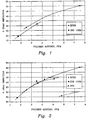
- PPD means precipitated, cryoground 102M. All plots are on a comparative, active polymer basis. The results show that even after undergoing mechanical shear, mixing agitation and use in a colder, more viscous crude, the drag reducers of the present invention are generally superior to current commercial products.
- CDR® 102M is a solution polymerized polyolefin at a concentration of about 10% polymer in solvent and is physically in the form of a viscous gel (hereinafter gel).
- the samples compared are typical polydecenes from commercial production and have the following IV's: Method A Method B gel 15.6 dL/g 23.2 dL/g bulk -- 27.8 dL/g
- Method A Method B gel 15.6 dL/g 23.2 dL/g bulk -- 27.8 dL/g
- the bulk polymerized polymer approaches Virk's asymptote in this short test segment. Differences between the polymers are apparently disguised at higher concentrations because Virk's asymptote is approached. This effect at higher concentrations is true only in short laboratory test loops where flow degradation is not significant.
- the active polymer was polydecene in both the solution-polymerized drag reducer and the bulk-polymerized drag reducer polymerized in consumable containers as described in the present invention, then chopped, cryoground in the presence of calcium stearate, and slurried in water. The test was carried out to demonstrate the feasibility of closing an intermediate pump station using the bulk-polymerized polymer.
- the solution-polymerized polymer was CDR® 102M, sold by Conoco Specialty Products. Drag Reduction (%) Polymerization Method Active Polymer (PPM) Active Predicted solution 0.7 17 18 solution 1.4 23 27 bulk 2.7 54 37 bulk 5.6 60 48
- Example 9 The test described in Example 9 was repeated in a 12-inch (30.5 cm) pipeline transporting 2500 barrels (397.5 m 3 ) per hour (BPH) of a low sulfur (sweet) crude. Test results are reported on the same basis as Example 9. Drag Reduction (%) Polymerization Method Active Polymer (PPM) Active Predicted solution 11.4 62 56 solution 16.3 65 59 bulk 2.9 53 40 bulk 4.6 61 47 bulk 5.4 60 49 bulk 5.4 66 49 bulk 6.8 68 51 bulk 8.8 74 54
Landscapes
- Engineering & Computer Science (AREA)
- Chemical & Material Sciences (AREA)
- Health & Medical Sciences (AREA)
- Organic Chemistry (AREA)
- General Engineering & Computer Science (AREA)
- Public Health (AREA)
- Water Supply & Treatment (AREA)
- Mechanical Engineering (AREA)
- Materials Engineering (AREA)
- Chemical Kinetics & Catalysis (AREA)
- Medicinal Chemistry (AREA)
- Polymers & Plastics (AREA)
- Addition Polymer Or Copolymer, Post-Treatments, Or Chemical Modifications (AREA)
- Braking Arrangements (AREA)
- Lubricants (AREA)
- Polysaccharides And Polysaccharide Derivatives (AREA)
Claims (12)
- Verfahren zur Herstellung im wesentlichen nichtkristalliner, ultrahochmolekularer, kohlenwasserstofflöslicher Polyolefine, die zum Verbessern des Fließens von Kohlenwasserstoffen in Leitungen brauchbar sind, umfassend die Massepolymerisation wenigstens eines 2 bis 40 Kohlenstoffatome enthaltenden Olefins in Anwesenheit eines Polymerisationskatalysators unter Massepolymerisationsbedingungen auf einen Gehalt von mindestens 80 Gew.-% bezogen auf das Gesamtgewicht des Reaktorinhalts, während ausreichend Reaktionswärme abgeführt wird, unter Entwickeln einer inhärenten Viskosität (IV) von mindestens 25 Deziliter/Gramm, wobei die IV durch Messen bei 0,05 Gramm Polymer je 100 Milliliter Hexan als Lösungsmittel bei 25°C in einem Cannon-Ubbelohde-Scherverdünnungsviskosimeter mit vier Kugeln bestimmt wird und die inhärenten Viskositäten für die letzten drei Kugeln als Funktion einer durchschnittlichen Scherrate von 300 s-1 berechnet werden.
- Verfahren wie in Anspruch 1 beschrieben, wobei die Massepolymerisationsreaktion in einem Reaktor mit einer kleinsten Abmessung von höchstens 22,9 cm (neun Zoll) durchgeführt wird.
- Verfahren wie in Anspruch 2 beschrieben, wobei der verwendete Katalysator ein Ziegler/Natta-Olefinpolymerisationskatalysator ist.
- Verfahren wie in Anspruch 3 beschrieben, wobei der Katalysator und die Reaktionsteilnehmer bei einer Temperatur von 0°C bis etwa 40°C zusammengebracht werden.
- Verfahren wie in einem der Ansprüche 1 bis 4 beschrieben, wobei die Massepolymerisation bis zu einem Gehalt von mindestens 90 Gew.-% bezogen auf das Gesamtgewicht des Reaktorinhalts durchgeführt wird.
- Verfahren wie in einem der Ansprüche 1 bis 4 beschrieben, wobei die Massepolymerisation bis zu einem Gehalt von mindestens 95 Gew.-% bezogen auf das Gesamtgewicht des Reaktorinhalts durchgeführt wird.
- Verfahren zum Herstellen eines fein verteilten, im wesentlichen nichtkristallinen, ultrahochmolekularen, kohlenwasserstofflöslichen Polyolefins, das zum Verbessern des Fließens von Kohlenwasserstoffen in Leitungen brauchbar ist, umfassend:(a) das Vereinigen wenigstens eines 2 bis 40 Kohlenstoffatome enthaltenden Olefins mit einem Polymerisationskatalysator in im wesentlichen vollständiger Sauerstoff- und Wasserabwesenheit in einem undurchlässigen Reaktionsgefäß aus einem organischen Polymer, das den Übertritt von Sauerstoff und Wasser im wesentlichen verhindern kann, wobei das Reaktionsgefäß von einer derartigen Größe und Gestalt ist, daß es eine hohe Wärmeleitfähigkeit von dem Inhalt des Reaktionsgefäßes zur äußeren Umgebung bewirkt,(b) die Massepolymerisation des Olefins, während aus dem reagierenden Polyolefin in dem Reaktionsgefäß ausreichend Wärme abgeführt wird, um die Reaktion bei einer zur Herstellung eines nichtkristallinen, ultrahochmolekularen Polyolefins geeigneten Temperatur über einen zum Erhalt eines derartigen Polymers in einem Gehalt von mindestens 80 Gew.-% bezogen auf den gesamten Reaktorinhalt ausreichenden Zeitraum zu halten,(c) Kühlen des erhaltenen Polymers und des Gefäßes auf eine tiefe Temperatur und(d) Zerkleinern des Reaktionsgefäßes und erhaltenen Polymers bei einer tiefen Temperatur unter der Glasübergangstemperatur des reibungsvermindernden Polymers zu einem fein verteilten Zustand.
- Verfahren von Anspruch 7, wobei das kaltzerkleinerte Produkt aus (d) mit einem wasserlöslichen, polymeren Verdickungsmittel und einem suspendierenden Material, das aus der aus Wasser und Wasser-Alkohol-Gemischen bestehenden Gruppe ausgewählt ist, unter Bedingungen des Rührens unter Erhalt stabiler, nicht-agglomerierender Suspensionen vereinigt wird.
- Fein verteiltes, im wesentlichen nichtkristallines, ultrahochmolekulares, kohlenwasserstofflösliches, reibungsverminderndes Polyolefin mit einer inhärenten Viskosität (IV) von mindestens 25 Deziliter/Gramm, wobei die IV durch Messen bei 0,05 Gramm Polymer je 100 Milliliter Hexan als Lösungsmittel bei 25°C in einem Cannon-Ubbelohde-Scherverdünnungsviskosimeter mit vier Kugeln und Berechnen der inhärenten Viskositäten für die letzten drei Kugeln als Funktion der durchschnittlichen Scherrate bei 300 s-1 bestimmt wird, wobei das Polyolefin dispergierte Teilchen aus kristallinem, nichtlöslichem organischem Polymer enthält und durch das Verfahren hergestellt wurde umfassend das:(a) Vereinigen wenigstens eines 2 bis 40 Kohlenstoffatome enthaltenden 1-Olefins mit einem Polymerisationskatalysator bei im wesentlichen vollständiger Sauerstoff- und Wasserabwesenheit in einem undurchlässigen Reaktionsgefäß aus einem organischen Polymer, das den Übertritt von Sauerstoff und Wasser im wesentlichen verhindern kann, wobei das Reaktionsgefäß von einer derartigen Größe und Gestalt ist, daß es ein Abführen von Reaktionswärme aus dem Gefäß für die Polymerisierungsreaktion zur äußeren Umgebung gestattet,(b) Durchführen einer Massepolymerisation des Olefins, während aus der Polymerisationsreaktion in dem Reaktionsgefäß aus dem organischen Polymer ausreichend Wärme abgeführt wird, um die Polymerisationsreaktion bei einer zur Herstellung eines nichtkristallineri, ultrahochmolekularen Polyolefins geeigneten Temperatur, auf einer Umsatzhöhe von mindestens 80% des Reaktorinhalts bezogen auf das Gesamtgewicht des Reaktorinhalts und über einen zum Erhalt eines derartigen Polymers ausreichenden Zeitraum zu halten,(c) Kühlen des erhaltenen Polymers und des Reaktionsgefäßes aus dem organischen Polymer auf eine tiefe Temperatur und(d) Zerkleinern sowohl des Reaktionsgefäßes aus dem organischen Polymer als auch des erhaltenen massepolymerisierten, nichtkristallinen, hochmolekularen Polyolefinpolymers zu einem fein verteilten Zustand bei einer tiefen Temperatur unter der Glasübergangstemperatur des reibungsvermindernden Polymers.
- Reibungsverminderndes Polyolefin von Anspruch 9, wobei der Polymerisationskatalysator ein Ziegler-Natta-Polymerisationskatalysator ist und wobei das das Reaktionsgefäß bildende organische Polymer mehrschichtig ist und ein kristallines Polyolefin auf jeder Seite eines sauerstoffundurchlässigen Polymers umfaßt und wobei die Reaktionstemperatur im Bereich von etwa -10°F (-23°C) bis etwa 150°F (66°C) gehalten wird.
- Reibungsvermindernde Zusammensetzung umfassend:(a) ein hochmolekulares, im wesentlichen nichtkristallines Polyolefin mit einer inhärenten Viskosität (IV) von mindestens 25 Deziliter/Gramm, wobei die IV durch Messen bei 0,05 Gramm Polymer je 100 Milliliter Hexan als Lösungsmittel bei 25°C in einem Cannon-Ubbelohde-Scherverdünnungsviskosimeter mit vier Kugeln und Berechnen der inhärenten Viskositäten für die letzten drei Kugeln als Funktion der durchschnittlichen Scherrate bei 300 s-1 bestimmt wird und das Polyolefin durch Massepolymerisation wenigstens eines 2 bis 40 Kohlenstoffatome enthaltenden Olefins bei einer Umsatzhöhe von mindestens 80% des Reaktorinhalts bezogen auf das Gesamtgewicht des Reaktorinhalts gebildet wurde, und(b) wenigstens ein kristallines, kohlenwasserstoffunlösliches, wasserundurchlässiges und/oder sauerstoffundurchlässiges Polymer, das in(c) einem suspendierenden Material suspendiert ist, das aus der Gruppe ausgewählt ist, die aus ein Suspendiermittel enthaltendem Wasser und Wasser-Alkohol-Gemischen besteht.
- Zusammensetzung von Anspruch 11, wobei das wasserundurchlässige Polymer und sauerstoffundurchlässige Polymer verschiedene Polymere sind.
Priority Applications (1)
| Application Number | Priority Date | Filing Date | Title |
|---|---|---|---|
| EP97121905A EP0840057B1 (de) | 1993-06-18 | 1994-05-27 | Lösungsmittelfreie, öllösliche Polymersuspension mit reibungsvermindernder Wirkung |
Applications Claiming Priority (5)
| Application Number | Priority Date | Filing Date | Title |
|---|---|---|---|
| US8042293A | 1993-06-18 | 1993-06-18 | |
| US80422 | 1993-06-18 | ||
| US234686 | 1994-05-06 | ||
| US08/234,686 US5449732A (en) | 1993-06-18 | 1994-05-06 | Solvent free oil soluble drag reducing polymer suspension |
| PCT/US1994/006039 WO1995000563A1 (en) | 1993-06-18 | 1994-05-27 | Solvent-free oil soluble drag reducing polymer suspension |
Related Child Applications (1)
| Application Number | Title | Priority Date | Filing Date |
|---|---|---|---|
| EP97121905A Division EP0840057B1 (de) | 1993-06-18 | 1994-05-27 | Lösungsmittelfreie, öllösliche Polymersuspension mit reibungsvermindernder Wirkung |
Publications (2)
| Publication Number | Publication Date |
|---|---|
| EP0656018A1 EP0656018A1 (de) | 1995-06-07 |
| EP0656018B1 true EP0656018B1 (de) | 1998-08-05 |
Family
ID=26763490
Family Applications (2)
| Application Number | Title | Priority Date | Filing Date |
|---|---|---|---|
| EP94920690A Expired - Lifetime EP0656018B1 (de) | 1993-06-18 | 1994-05-27 | Lösungsmittelfreie, öllösliche polymersuspension mit reibungsvermindernder wirkung |
| EP97121905A Expired - Lifetime EP0840057B1 (de) | 1993-06-18 | 1994-05-27 | Lösungsmittelfreie, öllösliche Polymersuspension mit reibungsvermindernder Wirkung |
Family Applications After (1)
| Application Number | Title | Priority Date | Filing Date |
|---|---|---|---|
| EP97121905A Expired - Lifetime EP0840057B1 (de) | 1993-06-18 | 1994-05-27 | Lösungsmittelfreie, öllösliche Polymersuspension mit reibungsvermindernder Wirkung |
Country Status (15)
| Country | Link |
|---|---|
| US (3) | US5449732A (de) |
| EP (2) | EP0656018B1 (de) |
| CN (1) | CN1222545C (de) |
| AU (1) | AU7139094A (de) |
| BR (1) | BR9405531A (de) |
| CA (1) | CA2135932C (de) |
| DE (2) | DE69424450T2 (de) |
| DK (2) | DK0840057T3 (de) |
| ES (2) | ES2148893T3 (de) |
| HU (1) | HUT71952A (de) |
| MY (1) | MY114123A (de) |
| NO (1) | NO20000127D0 (de) |
| PE (1) | PE6795A1 (de) |
| RU (1) | RU2125577C1 (de) |
| WO (1) | WO1995000563A1 (de) |
Families Citing this family (70)
| Publication number | Priority date | Publication date | Assignee | Title |
|---|---|---|---|---|
| US5539044A (en) * | 1994-09-02 | 1996-07-23 | Conoco In. | Slurry drag reducer |
| US5733953A (en) * | 1995-06-29 | 1998-03-31 | Baker Hughes Incorporated | Low viscosity, high concentration drag reducing agent and method therefor |
| RU2168535C2 (ru) * | 1996-03-08 | 2001-06-10 | Коноко Инк. | Усовершенствованное средство уменьшения сопротивления среды |
| US6015779A (en) | 1996-03-19 | 2000-01-18 | Energy & Environmental International, L.C. | Methods for forming amorphous ultra-high molecular weight polyalphaolefin drag reducing agents |
| US6172151B1 (en) | 1996-10-15 | 2001-01-09 | Conoco Inc. | Nonaqueous drag reducing suspensions |
| US6126872A (en) * | 1998-01-27 | 2000-10-03 | Baker Hughes Incorporated | Microencapsulated drag reducing agents |
| JP4129071B2 (ja) * | 1998-03-20 | 2008-07-30 | 富士通株式会社 | 半導体部品および半導体実装装置 |
| US6178980B1 (en) | 1998-08-26 | 2001-01-30 | Texaco Inc. | Method for reducing the pipeline drag of heavy oil and compositions useful therein |
| US20010049402A1 (en) * | 2000-05-03 | 2001-12-06 | Foster Cy E. | Polyisobutylene injection slurry for pipeline use |
| FI117704B (fi) * | 2000-05-15 | 2007-01-31 | M I Finland Oy | Menetelmä vastusta vähentävän koostumuksen valmistamiseksi ja menetelmä hiilivetyvirtauksen vastuksen vähentämiseksi |
| US6815011B2 (en) * | 2000-11-27 | 2004-11-09 | Energy & Environmental International, L.C. | Alpha olefin monomer partitioning agents for drag reducing agents and methods of forming drag reducing agents using alpha olefin monomer partitioning agents |
| US6576732B1 (en) * | 2000-11-28 | 2003-06-10 | Conocophillips Co. | Drag-reducing polymers and drag-reducing polymer suspensions and solutions |
| AU2002219885A1 (en) | 2000-11-28 | 2002-06-11 | Conoco Inc. | Drag-reducing polymer suspensions |
| US6399676B1 (en) | 2000-11-28 | 2002-06-04 | Conoco, Inc. | Drag-reducing polymer suspensions |
| RU2277103C2 (ru) * | 2001-01-16 | 2006-05-27 | Энерджи Энд Энвиронментал Интернэшнл, Л.К. | Способ получения аморфных полиолефинов со сверхвысоким молекулярным весом, предназначенных для использования в качестве агентов, снижающих сопротивление течению |
| JP4116266B2 (ja) * | 2001-05-25 | 2008-07-09 | 株式会社オメガ | 携帯可能な殺菌洗浄水の生成方法と其の装置 |
| US7012046B2 (en) * | 2001-06-08 | 2006-03-14 | Eaton Gerald B | Drag reducing agent slurries having alfol alcohols and processes for forming drag reducing agent slurries having alfol alcohols |
| US6989357B2 (en) * | 2001-06-08 | 2006-01-24 | Eaton Gerald B | Alcohol absorbed polyalphaolefin drag reducing agents |
| EP1401570B1 (de) | 2001-06-13 | 2007-08-15 | BETA Technologie AG | Massenpolymerisation-reaktoren und verfahren zur polymerisation |
| US6841593B2 (en) * | 2001-07-05 | 2005-01-11 | Baker Hughes Incorporated | Microencapsulated and macroencapsulated drag reducing agents |
| AU2001281094A1 (en) * | 2001-08-06 | 2003-02-24 | Micron Technology, Inc. | Interpolation error minimization for data reduction |
| FR2829127B1 (fr) * | 2001-09-05 | 2004-11-12 | Ludovic Jourdan | Procede de traitement d'eau en ecoulement et des surfaces en contact avec ladite eau en ecoulement |
| US7018434B2 (en) | 2002-04-18 | 2006-03-28 | Southwest Research Institute | Removal of drag reducer additive from fuel by treatment with selected activated carbons and graphites |
| US6649670B1 (en) * | 2002-12-17 | 2003-11-18 | Baker Hughes Incorporated | Continuous neat polymerization and ambient grinding methods of polyolefin drag reducing agents |
| US6946500B2 (en) * | 2002-12-17 | 2005-09-20 | Baker Hughes Incorporated | Non-cryogenic process for grinding polyolefin drag reducing agents |
| US7015290B2 (en) * | 2003-02-24 | 2006-03-21 | Baker Hughes Incorporated | Method of preparing a polymer under predetermined temperature conditions, and apparatus therefor |
| US6906150B2 (en) * | 2003-02-24 | 2005-06-14 | Baker Hughes Incorporated | Heat exchanger polymerization reactors for manufacturing drag reducing agents |
| US6894088B2 (en) * | 2003-03-24 | 2005-05-17 | Baker Hughes Incorporated | Process for homogenizing polyolefin drag reducing agents |
| US7364599B2 (en) * | 2003-06-03 | 2008-04-29 | Southwest Research Institute | Methods for increased removal of drag reducer additives from liquid hydrocarbon fuel |
| US7264640B2 (en) * | 2003-06-03 | 2007-09-04 | Southwest Research Institute | Method for improving the performance of engines powered by liquid hydrocarbon fuel |
| US7261747B2 (en) * | 2004-03-08 | 2007-08-28 | Southwest Research Institute | Removal of drag reducer additive from liquid hydrocarbon fuel using attapulgus clay |
| US7863362B2 (en) * | 2004-09-14 | 2011-01-04 | Baker Hughes Incorporated | Density-matched polymer slurries |
| US7285582B2 (en) * | 2004-12-30 | 2007-10-23 | Conocophillips Company | Modified latex drag reducer and processes therefor and therewith |
| US7361628B2 (en) * | 2004-12-30 | 2008-04-22 | Conocophillips Company | Remote delivery of latex drag-reducing agent without introduction of immiscible low-viscosity flow facilitator |
| CN101484556B (zh) * | 2005-06-14 | 2013-07-03 | 贝克休斯公司 | 改进减阻聚合物溶解的双或多峰态粒度分布 |
| US20080064785A1 (en) * | 2005-06-14 | 2008-03-13 | Baker Hughes Incorporated | Bi- or Multi-Modal Particle Size Distribution To Improve Drag Reduction Polymer Dissolution |
| FI20070982L (fi) * | 2005-06-14 | 2007-12-13 | Baker Hughes Inc | Polymeerilietetyyppien yhdistäminen optimaalista putkiston virtausvastuksen pienentämistä varten |
| US7271205B2 (en) * | 2005-09-20 | 2007-09-18 | Baker Hughes Incorporated | Non-cryogenic process for granulating polymer drag reducing agents |
| US7256224B2 (en) * | 2005-09-21 | 2007-08-14 | Baker Hughes Incorporated | Stabilized polymer drag reducing agent slurries |
| US7388046B2 (en) * | 2006-04-19 | 2008-06-17 | Baker Hughes Incorporated | Self-dispersing waxes as polymer suspension aids |
| US9784414B2 (en) * | 2006-12-22 | 2017-10-10 | Liquidpower Specialty Products, Inc. | Drag reduction of asphaltenic crude oils |
| US9676878B2 (en) | 2011-08-12 | 2017-06-13 | Liquidpower Specialty Products Inc. | Monomer selection to prepare ultra high molecular weight drag reducer polymer |
| US7888407B2 (en) | 2007-10-26 | 2011-02-15 | Conocophillips Company | Disperse non-polyalphaolefin drag reducing polymers |
| US7842738B2 (en) * | 2007-10-26 | 2010-11-30 | Conocophillips Company | High polymer content hybrid drag reducers |
| US20090209679A1 (en) | 2008-02-14 | 2009-08-20 | Conocophillips Company | Core-shell flow improver |
| US9144796B1 (en) | 2009-04-01 | 2015-09-29 | Johnson Matthey Public Limited Company | Method of applying washcoat to monolithic substrate |
| WO2010121270A1 (en) | 2009-04-17 | 2010-10-21 | California Institute Of Technology | Associative polymers for mist-control |
| FR2976031B1 (fr) * | 2011-06-01 | 2014-05-09 | IFP Energies Nouvelles | Procede de transport d'un liquide avec agents reducteurs de trainee en conditions de degradations mecanique limitee |
| GB201111799D0 (en) | 2011-07-08 | 2011-08-24 | Innospec Ltd | Improvements in fuels |
| RU2463320C1 (ru) * | 2011-07-27 | 2012-10-10 | Государственное образовательное учреждение высшего профессионального образования "Национальный исследовательский Томский политехнический университет" | Способ получения антитурбулентной присадки суспензионного типа для нефти и нефтепродуктов |
| RU2481357C1 (ru) * | 2011-09-30 | 2013-05-10 | Открытое акционерное общество "Акционерная компания по транспорту нефти "Транснефть" (ОАО "АК "Транснефть") | Способ получения противотурбулентной присадки суспензионного типа, снижающей гидродинамическое сопротивление углеводородных жидкостей |
| HK1219968A1 (zh) | 2013-03-15 | 2017-04-21 | California Institute Of Technology | 缔合聚合物以及相关的组合物、方法和体系 |
| EA036959B1 (ru) | 2013-12-18 | 2021-01-20 | ЛиквидПауэр Спешиэлти Продактс Инк. | Композиция на водной основе для снижения гидравлических потерь при транспортировке нефтепродуктов |
| WO2017049316A1 (en) | 2015-09-18 | 2017-03-23 | California Institute Of Technology | Associative polymers to control formation of particulate matter from ignitable compositions and related compositions, methods and systems |
| RU2607914C1 (ru) * | 2015-11-24 | 2017-01-11 | Федеральное государственное бюджетное учреждение науки Институт химии нефти Сибирского отделения Российской академии наук (ИХН СО РАН) | Способ формирования и состав противотурбулентной присадки |
| KR101885812B1 (ko) * | 2015-11-30 | 2018-08-07 | 인디언 오일 코퍼레이션 리미티드 | 마찰저항 감소 폴리머를 제조하는 방법 및 이의 용도 |
| RU2648079C1 (ru) * | 2017-05-24 | 2018-03-22 | Общество с ограниченной ответственностью "МИРРИКО" | Способ получения реагента для снижения гидродинамического сопротивления турбулентного потока жидких углеводородов в трубопроводах |
| US10633306B2 (en) | 2017-06-06 | 2020-04-28 | Liquidpower Specialty Products Inc. | Method of increasing alpha-olefin content |
| CN107323602B (zh) * | 2017-07-19 | 2019-02-12 | 吉林大学 | 一种三明治结构的智能水凝胶材料减阻表面 |
| WO2019245889A1 (en) | 2018-06-18 | 2019-12-26 | Baker Hughes, A Ge Company, Llc | Methods of manufacturing polyolefin drag reducing agents |
| CA3102839C (en) | 2018-06-20 | 2022-08-30 | Baker Hughes Holdings Llc | Free-flowing solid encapsulated drag reducing additives |
| GB201901499D0 (en) * | 2019-02-04 | 2019-03-27 | Innospec Ltd | Polymeric materials |
| GB201901496D0 (en) | 2019-02-04 | 2019-03-27 | Innospec Ltd | Chemical reactions |
| GB201901494D0 (en) | 2019-02-04 | 2019-03-27 | Innospec Ltd | Polymeric materials |
| GB201901503D0 (en) | 2019-02-04 | 2019-03-27 | Innospec Ltd | Chemical reactions |
| US11199296B2 (en) | 2019-06-14 | 2021-12-14 | Baker Hughes Oilfield Operations Llc | Drag reducing agents |
| CN111410949B (zh) * | 2020-04-20 | 2021-02-26 | 成都劳恩普斯科技有限公司 | 一种一体化变粘耐盐降阻剂及其制备方法 |
| CA3122825C (en) | 2020-06-23 | 2024-03-19 | Indian Oil Corporation Limited | Process for producing ultrahigh molecular weight polymer in powder form |
| US11814458B2 (en) | 2020-12-18 | 2023-11-14 | Baker Hughes Oilfield Operations Llc | Drag reducing agent and process of manufacture thereof |
| WO2022132178A1 (en) | 2020-12-18 | 2022-06-23 | Baker Hughes Oilfield Operations Llc | Radical polymerization in sealed containers |
Family Cites Families (35)
| Publication number | Priority date | Publication date | Assignee | Title |
|---|---|---|---|---|
| CA901727A (en) * | 1972-05-30 | Amann Herbert | Process for continuous polymerization | |
| US502857A (en) * | 1893-08-08 | Ington | ||
| US3692676A (en) * | 1969-12-22 | 1972-09-19 | Continental Oil Co | Method of friction loss reduction in oleaginous fluids flowing through conduits |
| US3669948A (en) * | 1970-09-04 | 1972-06-13 | Chisso Corp | Method for producing poly{60 -olefins |
| US3730275A (en) * | 1971-02-16 | 1973-05-01 | Continental Oil Co | Method using low friction loss liquid composition having resistance to shear degradation |
| US3791913A (en) * | 1971-05-17 | 1974-02-12 | Exxon Research Engineering Co | Free flowing elastomer pellets and process for their preparation |
| US3736288A (en) * | 1971-07-09 | 1973-05-29 | Union Carbide Corp | Drag reducing formulations |
| US3857402A (en) * | 1972-08-31 | 1974-12-31 | Nalco Chemical Co | Transmission of oil |
| DE2329641C3 (de) * | 1973-06-09 | 1978-09-28 | Hoechst Ag, 6000 Frankfurt | Verfahren zur Polymerisation von ct-Olefinen |
| US3884252A (en) * | 1973-06-20 | 1975-05-20 | Shell Oil Co | Friction reduction |
| DE2513520A1 (de) * | 1975-03-26 | 1976-10-14 | Shell Int Research | Verfahren zur verminderung des reibungswiderstandes in stroemendem rohoel |
| US4147677A (en) * | 1977-11-29 | 1979-04-03 | Exxon Research & Engineering Co. | Dry blending of neutralized sulfonated elastomeric powders |
| US4212312A (en) * | 1978-08-28 | 1980-07-15 | Shell Oil Company | Fragmented polymers as friction reducers in pipeline transportation of products |
| US4263926A (en) * | 1978-12-04 | 1981-04-28 | Shell Oil Company | Injection system for solid friction reducing polymers |
| US4415714A (en) * | 1979-01-02 | 1983-11-15 | Conoco Inc. | Catalyst and method for preparation of drag reducing substances |
| US4433123A (en) * | 1979-01-29 | 1984-02-21 | Conoco Inc. | Polymerization process for drag reducing substances |
| US4340076A (en) * | 1979-02-27 | 1982-07-20 | General Technology Applications, Inc. | Dissolving polymers in compatible liquids and uses thereof |
| US4333123A (en) | 1980-03-31 | 1982-06-01 | Consan Pacific Incorporated | Antistatic equipment employing positive and negative ion sources |
| US4358572A (en) * | 1981-05-07 | 1982-11-09 | Conoco Inc. | Method for the preparation of non-crystalline polymers of high molecular weight |
| US4493903A (en) * | 1981-05-12 | 1985-01-15 | Conoco Inc. | Polymerization process for drag reducing substances |
| US4493904A (en) * | 1981-06-29 | 1985-01-15 | Conoco Inc. | Catalyst and method for preparation of drag reducing substances |
| US4384089A (en) * | 1981-10-15 | 1983-05-17 | Atlantic Richfield Company | Low temperature polymerization process |
| US4371455A (en) * | 1981-12-21 | 1983-02-01 | Conoco, Inc. | Supported catalyst for olefin polymerization |
| US4416714A (en) | 1982-05-27 | 1983-11-22 | B & H Manufacturing Company, Inc. | Labeling machine for heat shrink labels |
| US4584244A (en) * | 1985-05-28 | 1986-04-22 | Conoco Inc. | Preparation of cold flow resistant polymer powders |
| EP0223889B1 (de) * | 1985-11-21 | 1991-02-06 | Pony Industries Incorporated | Verfahren zum Polymerisieren von alpha-Olefinen mit einem Ziegler-Katalysator |
| US4720397A (en) * | 1985-12-12 | 1988-01-19 | General Technology Applications, Inc. | Rapid dissolving polymer compositions and uses therefor |
| US4758354A (en) * | 1985-12-12 | 1988-07-19 | General Technology Applications, Inc. | Separation process |
| FR2597487B1 (fr) * | 1986-04-17 | 1989-09-29 | Bp Chimie Sa | Copolymeres amorphes de masse moleculaire elevee d'ethylene et d'alpha-olefines. |
| FR2604439B1 (fr) * | 1986-09-26 | 1989-07-28 | Solvay | Solide catalytique utilisable pour la polymerisation stereospecifique des alpha-olefines, procede pour le preparer et procede pour polymeriser des alpha-olefines en sa presence |
| SU1616694A1 (ru) * | 1987-01-23 | 1990-12-30 | Специальное конструкторско-технологическое бюро катализаторов с опытным заводом | Способ получени катализатора дл стереоспецифической полимеризации пропилена |
| US4771799A (en) * | 1987-10-29 | 1988-09-20 | Conoco Inc. | Method for improving the performance of highly viscous concentrates of high molecular weight drag reducing polymers |
| US5028574A (en) * | 1988-11-14 | 1991-07-02 | Conoco Inc. | Composition and method for friction loss reduction |
| US4945142A (en) * | 1988-11-14 | 1990-07-31 | Conoco Inc. | Composition and process for friction loss reduction |
| US5244937A (en) | 1990-09-04 | 1993-09-14 | Conoco Inc. | Stable nonagglomerating aqueous suspensions of oil soluble polymeric friction reducers |
-
1994
- 1994-05-06 US US08/234,686 patent/US5449732A/en not_active Expired - Lifetime
- 1994-05-27 DK DK97121905T patent/DK0840057T3/da active
- 1994-05-27 RU RU95111374A patent/RU2125577C1/ru not_active IP Right Cessation
- 1994-05-27 ES ES97121905T patent/ES2148893T3/es not_active Expired - Lifetime
- 1994-05-27 HU HU9500803A patent/HUT71952A/hu unknown
- 1994-05-27 DE DE69424450T patent/DE69424450T2/de not_active Expired - Lifetime
- 1994-05-27 DK DK94920690T patent/DK0656018T3/da active
- 1994-05-27 EP EP94920690A patent/EP0656018B1/de not_active Expired - Lifetime
- 1994-05-27 CA CA002135932A patent/CA2135932C/en not_active Expired - Lifetime
- 1994-05-27 DE DE69412212T patent/DE69412212T2/de not_active Expired - Lifetime
- 1994-05-27 AU AU71390/94A patent/AU7139094A/en not_active Abandoned
- 1994-05-27 CN CN94190392.3A patent/CN1222545C/zh not_active Expired - Lifetime
- 1994-05-27 WO PCT/US1994/006039 patent/WO1995000563A1/en not_active Ceased
- 1994-05-27 EP EP97121905A patent/EP0840057B1/de not_active Expired - Lifetime
- 1994-05-27 BR BR9405531-9A patent/BR9405531A/pt not_active IP Right Cessation
- 1994-05-27 ES ES94920690T patent/ES2119210T3/es not_active Expired - Lifetime
- 1994-06-01 MY MYPI94001388A patent/MY114123A/en unknown
- 1994-06-16 PE PE1994244710A patent/PE6795A1/es not_active Application Discontinuation
-
1995
- 1995-04-12 US US08/421,577 patent/US5504132A/en not_active Expired - Lifetime
- 1995-04-12 US US08/421,576 patent/US5504131A/en not_active Expired - Lifetime
-
2000
- 2000-01-10 NO NO20000127A patent/NO20000127D0/no unknown
Also Published As
| Publication number | Publication date |
|---|---|
| EP0840057A1 (de) | 1998-05-06 |
| WO1995000563A1 (en) | 1995-01-05 |
| DE69412212T2 (de) | 1998-12-10 |
| US5504131A (en) | 1996-04-02 |
| RU95111374A (ru) | 1996-12-27 |
| DE69424450T2 (de) | 2000-09-14 |
| ES2148893T3 (es) | 2000-10-16 |
| PE6795A1 (es) | 1995-03-22 |
| NO20000127D0 (no) | 2000-01-10 |
| CA2135932C (en) | 2002-05-14 |
| US5504132A (en) | 1996-04-02 |
| DE69424450D1 (de) | 2000-06-15 |
| US5449732A (en) | 1995-09-12 |
| BR9405531A (pt) | 1999-09-08 |
| NO20000127L (no) | 1995-02-17 |
| DK0656018T3 (da) | 1998-11-02 |
| HUT71952A (en) | 1996-02-28 |
| RU2125577C1 (ru) | 1999-01-27 |
| MY114123A (en) | 2002-08-30 |
| CN1222545C (zh) | 2005-10-12 |
| EP0840057B1 (de) | 2000-05-10 |
| EP0656018A1 (de) | 1995-06-07 |
| ES2119210T3 (es) | 1998-10-01 |
| CN1110876A (zh) | 1995-10-25 |
| CA2135932A1 (en) | 1995-01-05 |
| DE69412212D1 (de) | 1998-09-10 |
| AU7139094A (en) | 1995-01-17 |
| DK0840057T3 (da) | 2000-08-07 |
Similar Documents
| Publication | Publication Date | Title |
|---|---|---|
| EP0656018B1 (de) | Lösungsmittelfreie, öllösliche polymersuspension mit reibungsvermindernder wirkung | |
| CA2247100C (en) | Improved slurry drag reducer | |
| US7842738B2 (en) | High polymer content hybrid drag reducers | |
| EP1358231B1 (de) | Strömungsbeschleunigende polymere und suspensionen und lösungen von strömungsbeschleunigenden polymeren | |
| US11248748B2 (en) | Drag reducing agents | |
| NO332983B1 (no) | Kontinuerlig ren polymerisering og ambiente finmalingsmetoder for polyolefin-friksjonsreduserende midler. | |
| CN1323091C (zh) | 作为冷流体中的流动改进剂有用的超高分子量聚烯烃 | |
| US11834527B1 (en) | Poly alpha-olefins, compositions thereof, and methods of making | |
| RU2168535C2 (ru) | Усовершенствованное средство уменьшения сопротивления среды | |
| US20220195085A1 (en) | Rapid dissolution of drag-reducing agents at low temperatures | |
| RU2792053C1 (ru) | Антифрикционные присадки |
Legal Events
| Date | Code | Title | Description |
|---|---|---|---|
| PUAI | Public reference made under article 153(3) epc to a published international application that has entered the european phase |
Free format text: ORIGINAL CODE: 0009012 |
|
| 17P | Request for examination filed |
Effective date: 19941223 |
|
| AK | Designated contracting states |
Kind code of ref document: A1 Designated state(s): DE DK ES FR GB IT |
|
| 17Q | First examination report despatched |
Effective date: 19960910 |
|
| GRAG | Despatch of communication of intention to grant |
Free format text: ORIGINAL CODE: EPIDOS AGRA |
|
| GRAG | Despatch of communication of intention to grant |
Free format text: ORIGINAL CODE: EPIDOS AGRA |
|
| GRAG | Despatch of communication of intention to grant |
Free format text: ORIGINAL CODE: EPIDOS AGRA |
|
| GRAH | Despatch of communication of intention to grant a patent |
Free format text: ORIGINAL CODE: EPIDOS IGRA |
|
| GRAH | Despatch of communication of intention to grant a patent |
Free format text: ORIGINAL CODE: EPIDOS IGRA |
|
| GRAA | (expected) grant |
Free format text: ORIGINAL CODE: 0009210 |
|
| AK | Designated contracting states |
Kind code of ref document: B1 Designated state(s): DE DK ES FR GB IT |
|
| REF | Corresponds to: |
Ref document number: 69412212 Country of ref document: DE Date of ref document: 19980910 |
|
| REG | Reference to a national code |
Ref country code: ES Ref legal event code: FG2A Ref document number: 2119210 Country of ref document: ES Kind code of ref document: T3 |
|
| REG | Reference to a national code |
Ref country code: DK Ref legal event code: T3 |
|
| ET | Fr: translation filed | ||
| PLBE | No opposition filed within time limit |
Free format text: ORIGINAL CODE: 0009261 |
|
| STAA | Information on the status of an ep patent application or granted ep patent |
Free format text: STATUS: NO OPPOSITION FILED WITHIN TIME LIMIT |
|
| 26N | No opposition filed | ||
| REG | Reference to a national code |
Ref country code: GB Ref legal event code: IF02 |
|
| REG | Reference to a national code |
Ref country code: GB Ref legal event code: 732E |
|
| REG | Reference to a national code |
Ref country code: FR Ref legal event code: TP |
|
| PGFP | Annual fee paid to national office [announced via postgrant information from national office to epo] |
Ref country code: IT Payment date: 20090515 Year of fee payment: 16 |
|
| PG25 | Lapsed in a contracting state [announced via postgrant information from national office to epo] |
Ref country code: IT Free format text: LAPSE BECAUSE OF NON-PAYMENT OF DUE FEES Effective date: 20100527 |
|
| PGFP | Annual fee paid to national office [announced via postgrant information from national office to epo] |
Ref country code: ES Payment date: 20120524 Year of fee payment: 19 |
|
| PGFP | Annual fee paid to national office [announced via postgrant information from national office to epo] |
Ref country code: GB Payment date: 20130425 Year of fee payment: 20 Ref country code: DK Payment date: 20130424 Year of fee payment: 20 Ref country code: DE Payment date: 20130531 Year of fee payment: 20 |
|
| PGFP | Annual fee paid to national office [announced via postgrant information from national office to epo] |
Ref country code: FR Payment date: 20130531 Year of fee payment: 20 |
|
| REG | Reference to a national code |
Ref country code: ES Ref legal event code: PC2A Owner name: PHILLIPS 66 CCOMPANY Effective date: 20140228 |
|
| REG | Reference to a national code |
Ref country code: DE Ref legal event code: R071 Ref document number: 69412212 Country of ref document: DE |
|
| REG | Reference to a national code |
Ref country code: DK Ref legal event code: EUP Effective date: 20140527 |
|
| REG | Reference to a national code |
Ref country code: GB Ref legal event code: PE20 Expiry date: 20140526 |
|
| PG25 | Lapsed in a contracting state [announced via postgrant information from national office to epo] |
Ref country code: GB Free format text: LAPSE BECAUSE OF EXPIRATION OF PROTECTION Effective date: 20140526 |
|
| PG25 | Lapsed in a contracting state [announced via postgrant information from national office to epo] |
Ref country code: DE Free format text: LAPSE BECAUSE OF EXPIRATION OF PROTECTION Effective date: 20140528 |
|
| REG | Reference to a national code |
Ref country code: ES Ref legal event code: FD2A Effective date: 20140926 |
|
| PG25 | Lapsed in a contracting state [announced via postgrant information from national office to epo] |
Ref country code: ES Free format text: LAPSE BECAUSE OF EXPIRATION OF PROTECTION Effective date: 20140528 |