EP0619732B1 - Biodegradable polymers for cell transplantation - Google Patents
Biodegradable polymers for cell transplantation Download PDFInfo
- Publication number
- EP0619732B1 EP0619732B1 EP94901280A EP94901280A EP0619732B1 EP 0619732 B1 EP0619732 B1 EP 0619732B1 EP 94901280 A EP94901280 A EP 94901280A EP 94901280 A EP94901280 A EP 94901280A EP 0619732 B1 EP0619732 B1 EP 0619732B1
- Authority
- EP
- European Patent Office
- Prior art keywords
- protected
- polymer
- cells
- acid
- matrix
- Prior art date
- Legal status (The legal status is an assumption and is not a legal conclusion. Google has not performed a legal analysis and makes no representation as to the accuracy of the status listed.)
- Expired - Lifetime
Links
Images
Classifications
-
- A—HUMAN NECESSITIES
- A61—MEDICAL OR VETERINARY SCIENCE; HYGIENE
- A61L—METHODS OR APPARATUS FOR STERILISING MATERIALS OR OBJECTS IN GENERAL; DISINFECTION, STERILISATION OR DEODORISATION OF AIR; CHEMICAL ASPECTS OF BANDAGES, DRESSINGS, ABSORBENT PADS OR SURGICAL ARTICLES; MATERIALS FOR BANDAGES, DRESSINGS, ABSORBENT PADS OR SURGICAL ARTICLES
- A61L27/00—Materials for grafts or prostheses or for coating grafts or prostheses
- A61L27/50—Materials characterised by their function or physical properties, e.g. injectable or lubricating compositions, shape-memory materials, surface modified materials
- A61L27/54—Biologically active materials, e.g. therapeutic substances
-
- A—HUMAN NECESSITIES
- A61—MEDICAL OR VETERINARY SCIENCE; HYGIENE
- A61K—PREPARATIONS FOR MEDICAL, DENTAL OR TOILETRY PURPOSES
- A61K47/00—Medicinal preparations characterised by the non-active ingredients used, e.g. carriers or inert additives; Targeting or modifying agents chemically bound to the active ingredient
- A61K47/50—Medicinal preparations characterised by the non-active ingredients used, e.g. carriers or inert additives; Targeting or modifying agents chemically bound to the active ingredient the non-active ingredient being chemically bound to the active ingredient, e.g. polymer-drug conjugates
- A61K47/51—Medicinal preparations characterised by the non-active ingredients used, e.g. carriers or inert additives; Targeting or modifying agents chemically bound to the active ingredient the non-active ingredient being chemically bound to the active ingredient, e.g. polymer-drug conjugates the non-active ingredient being a modifying agent
- A61K47/56—Medicinal preparations characterised by the non-active ingredients used, e.g. carriers or inert additives; Targeting or modifying agents chemically bound to the active ingredient the non-active ingredient being chemically bound to the active ingredient, e.g. polymer-drug conjugates the non-active ingredient being a modifying agent the modifying agent being an organic macromolecular compound, e.g. an oligomeric, polymeric or dendrimeric molecule
- A61K47/59—Medicinal preparations characterised by the non-active ingredients used, e.g. carriers or inert additives; Targeting or modifying agents chemically bound to the active ingredient the non-active ingredient being chemically bound to the active ingredient, e.g. polymer-drug conjugates the non-active ingredient being a modifying agent the modifying agent being an organic macromolecular compound, e.g. an oligomeric, polymeric or dendrimeric molecule obtained otherwise than by reactions only involving carbon-to-carbon unsaturated bonds, e.g. polyureas or polyurethanes
- A61K47/593—Polyesters, e.g. PLGA or polylactide-co-glycolide
-
- A—HUMAN NECESSITIES
- A61—MEDICAL OR VETERINARY SCIENCE; HYGIENE
- A61K—PREPARATIONS FOR MEDICAL, DENTAL OR TOILETRY PURPOSES
- A61K47/00—Medicinal preparations characterised by the non-active ingredients used, e.g. carriers or inert additives; Targeting or modifying agents chemically bound to the active ingredient
- A61K47/50—Medicinal preparations characterised by the non-active ingredients used, e.g. carriers or inert additives; Targeting or modifying agents chemically bound to the active ingredient the non-active ingredient being chemically bound to the active ingredient, e.g. polymer-drug conjugates
- A61K47/51—Medicinal preparations characterised by the non-active ingredients used, e.g. carriers or inert additives; Targeting or modifying agents chemically bound to the active ingredient the non-active ingredient being chemically bound to the active ingredient, e.g. polymer-drug conjugates the non-active ingredient being a modifying agent
- A61K47/62—Medicinal preparations characterised by the non-active ingredients used, e.g. carriers or inert additives; Targeting or modifying agents chemically bound to the active ingredient the non-active ingredient being chemically bound to the active ingredient, e.g. polymer-drug conjugates the non-active ingredient being a modifying agent the modifying agent being a protein, peptide or polyamino acid
- A61K47/64—Drug-peptide, drug-protein or drug-polyamino acid conjugates, i.e. the modifying agent being a peptide, protein or polyamino acid which is covalently bonded or complexed to a therapeutically active agent
- A61K47/645—Polycationic or polyanionic oligopeptides, polypeptides or polyamino acids, e.g. polylysine, polyarginine, polyglutamic acid or peptide TAT
-
- A—HUMAN NECESSITIES
- A61—MEDICAL OR VETERINARY SCIENCE; HYGIENE
- A61L—METHODS OR APPARATUS FOR STERILISING MATERIALS OR OBJECTS IN GENERAL; DISINFECTION, STERILISATION OR DEODORISATION OF AIR; CHEMICAL ASPECTS OF BANDAGES, DRESSINGS, ABSORBENT PADS OR SURGICAL ARTICLES; MATERIALS FOR BANDAGES, DRESSINGS, ABSORBENT PADS OR SURGICAL ARTICLES
- A61L27/00—Materials for grafts or prostheses or for coating grafts or prostheses
- A61L27/14—Macromolecular materials
- A61L27/18—Macromolecular materials obtained otherwise than by reactions only involving carbon-to-carbon unsaturated bonds
-
- A—HUMAN NECESSITIES
- A61—MEDICAL OR VETERINARY SCIENCE; HYGIENE
- A61L—METHODS OR APPARATUS FOR STERILISING MATERIALS OR OBJECTS IN GENERAL; DISINFECTION, STERILISATION OR DEODORISATION OF AIR; CHEMICAL ASPECTS OF BANDAGES, DRESSINGS, ABSORBENT PADS OR SURGICAL ARTICLES; MATERIALS FOR BANDAGES, DRESSINGS, ABSORBENT PADS OR SURGICAL ARTICLES
- A61L27/00—Materials for grafts or prostheses or for coating grafts or prostheses
- A61L27/36—Materials for grafts or prostheses or for coating grafts or prostheses containing ingredients of undetermined constitution or reaction products thereof, e.g. transplant tissue, natural bone, extracellular matrix
- A61L27/38—Materials for grafts or prostheses or for coating grafts or prostheses containing ingredients of undetermined constitution or reaction products thereof, e.g. transplant tissue, natural bone, extracellular matrix containing added animal cells
- A61L27/3804—Materials for grafts or prostheses or for coating grafts or prostheses containing ingredients of undetermined constitution or reaction products thereof, e.g. transplant tissue, natural bone, extracellular matrix containing added animal cells characterised by specific cells or progenitors thereof, e.g. fibroblasts, connective tissue cells, kidney cells
-
- C—CHEMISTRY; METALLURGY
- C07—ORGANIC CHEMISTRY
- C07K—PEPTIDES
- C07K14/00—Peptides having more than 20 amino acids; Gastrins; Somatostatins; Melanotropins; Derivatives thereof
- C07K14/001—Peptides having more than 20 amino acids; Gastrins; Somatostatins; Melanotropins; Derivatives thereof by chemical synthesis
-
- C—CHEMISTRY; METALLURGY
- C08—ORGANIC MACROMOLECULAR COMPOUNDS; THEIR PREPARATION OR CHEMICAL WORKING-UP; COMPOSITIONS BASED THEREON
- C08G—MACROMOLECULAR COMPOUNDS OBTAINED OTHERWISE THAN BY REACTIONS ONLY INVOLVING UNSATURATED CARBON-TO-CARBON BONDS
- C08G63/00—Macromolecular compounds obtained by reactions forming a carboxylic ester link in the main chain of the macromolecule
- C08G63/68—Polyesters containing atoms other than carbon, hydrogen and oxygen
- C08G63/685—Polyesters containing atoms other than carbon, hydrogen and oxygen containing nitrogen
- C08G63/6852—Polyesters containing atoms other than carbon, hydrogen and oxygen containing nitrogen derived from hydroxy carboxylic acids
-
- C—CHEMISTRY; METALLURGY
- C12—BIOCHEMISTRY; BEER; SPIRITS; WINE; VINEGAR; MICROBIOLOGY; ENZYMOLOGY; MUTATION OR GENETIC ENGINEERING
- C12N—MICROORGANISMS OR ENZYMES; COMPOSITIONS THEREOF; PROPAGATING, PRESERVING, OR MAINTAINING MICROORGANISMS; MUTATION OR GENETIC ENGINEERING; CULTURE MEDIA
- C12N5/00—Undifferentiated human, animal or plant cells, e.g. cell lines; Tissues; Cultivation or maintenance thereof; Culture media therefor
- C12N5/0068—General culture methods using substrates
-
- A—HUMAN NECESSITIES
- A61—MEDICAL OR VETERINARY SCIENCE; HYGIENE
- A61L—METHODS OR APPARATUS FOR STERILISING MATERIALS OR OBJECTS IN GENERAL; DISINFECTION, STERILISATION OR DEODORISATION OF AIR; CHEMICAL ASPECTS OF BANDAGES, DRESSINGS, ABSORBENT PADS OR SURGICAL ARTICLES; MATERIALS FOR BANDAGES, DRESSINGS, ABSORBENT PADS OR SURGICAL ARTICLES
- A61L2300/00—Biologically active materials used in bandages, wound dressings, absorbent pads or medical devices
- A61L2300/20—Biologically active materials used in bandages, wound dressings, absorbent pads or medical devices containing or releasing organic materials
- A61L2300/25—Peptides having up to 20 amino acids in a defined sequence
-
- A—HUMAN NECESSITIES
- A61—MEDICAL OR VETERINARY SCIENCE; HYGIENE
- A61L—METHODS OR APPARATUS FOR STERILISING MATERIALS OR OBJECTS IN GENERAL; DISINFECTION, STERILISATION OR DEODORISATION OF AIR; CHEMICAL ASPECTS OF BANDAGES, DRESSINGS, ABSORBENT PADS OR SURGICAL ARTICLES; MATERIALS FOR BANDAGES, DRESSINGS, ABSORBENT PADS OR SURGICAL ARTICLES
- A61L2300/00—Biologically active materials used in bandages, wound dressings, absorbent pads or medical devices
- A61L2300/60—Biologically active materials used in bandages, wound dressings, absorbent pads or medical devices characterised by a special physical form
- A61L2300/602—Type of release, e.g. controlled, sustained, slow
- A61L2300/604—Biodegradation
-
- A—HUMAN NECESSITIES
- A61—MEDICAL OR VETERINARY SCIENCE; HYGIENE
- A61L—METHODS OR APPARATUS FOR STERILISING MATERIALS OR OBJECTS IN GENERAL; DISINFECTION, STERILISATION OR DEODORISATION OF AIR; CHEMICAL ASPECTS OF BANDAGES, DRESSINGS, ABSORBENT PADS OR SURGICAL ARTICLES; MATERIALS FOR BANDAGES, DRESSINGS, ABSORBENT PADS OR SURGICAL ARTICLES
- A61L2300/00—Biologically active materials used in bandages, wound dressings, absorbent pads or medical devices
- A61L2300/60—Biologically active materials used in bandages, wound dressings, absorbent pads or medical devices characterised by a special physical form
- A61L2300/64—Animal cells
-
- C—CHEMISTRY; METALLURGY
- C12—BIOCHEMISTRY; BEER; SPIRITS; WINE; VINEGAR; MICROBIOLOGY; ENZYMOLOGY; MUTATION OR GENETIC ENGINEERING
- C12N—MICROORGANISMS OR ENZYMES; COMPOSITIONS THEREOF; PROPAGATING, PRESERVING, OR MAINTAINING MICROORGANISMS; MUTATION OR GENETIC ENGINEERING; CULTURE MEDIA
- C12N2533/00—Supports or coatings for cell culture, characterised by material
- C12N2533/30—Synthetic polymers
- C12N2533/40—Polyhydroxyacids, e.g. polymers of glycolic or lactic acid (PGA, PLA, PLGA); Bioresorbable polymers
-
- Y—GENERAL TAGGING OF NEW TECHNOLOGICAL DEVELOPMENTS; GENERAL TAGGING OF CROSS-SECTIONAL TECHNOLOGIES SPANNING OVER SEVERAL SECTIONS OF THE IPC; TECHNICAL SUBJECTS COVERED BY FORMER USPC CROSS-REFERENCE ART COLLECTIONS [XRACs] AND DIGESTS
- Y10—TECHNICAL SUBJECTS COVERED BY FORMER USPC
- Y10S—TECHNICAL SUBJECTS COVERED BY FORMER USPC CROSS-REFERENCE ART COLLECTIONS [XRACs] AND DIGESTS
- Y10S530/00—Chemistry: natural resins or derivatives; peptides or proteins; lignins or reaction products thereof
- Y10S530/81—Carrier - bound or immobilized peptides or proteins and the preparation thereof, e.g. biological cell or cell fragment as carrier
- Y10S530/812—Peptides or proteins is immobilized on, or in, an organic carrier
- Y10S530/815—Carrier is a synthetic polymer
Definitions
- the present invention describes the synthesis and applications of a hydrolytically degradable polymer useful in biomedical applications involving the interaction of cells with the polymer structure.
- transplantation of the liver is often times successful but has plateaued at about 2200 transplants per year because of donor scarcity.
- 30,000 Americans die every year of liver disease while an additional 5 million Americans are affected.
- the cost to the economy is more than $14 billion dollars annually.
- the situation is similar with other organ systems such as the kidney, pancreas, lung, and heart.
- the polymer scaffold must have suitable surface chemistry to guide and reorganize the cell mass.
- the three dimensional structure must be designed to deliver a significant number of cells while allowing for the proper diffusion of nutrients.
- Biocompatibility is essential in order to prevent acute adverse tissue responses that could impair the function of the transplanted cells.
- Biodegradability is desired to provide a completely natural tissue replacement without the possibility of chronic tissue reaction to the foreign body.
- the mechanical properties must allow for easy and reproducible processing into a variety of shapes, and the resulting devices must maintain their shape once implanted.
- the surface chemistry must be easily manipulated so that it can be optimized to meet the needs of each application.
- matrices that is commercially available consists of the purified extracellular matrix components, such as fibronectin, laminin, and collagen. Although these matrices provide great biocompatibility and cell adhesion, they do not have sufficient mechanical properties to build a stable three dimensional structure independent of the cells. It is also difficult to obtain high quality matrix material on a consistent basis since it must be harvested from natural sources.
- Another possible matrix material that is produced commercially is surgical suture material.
- This is made from polyglycolic acid, polylactic acid and copolymers of glycolic and lactic acid.
- the biocompatibility and biodegradability of these polymers are well characterized, and the physical strength and fiber forming properties are good (Gilding, D. K. and Reed, A. M., "Biodegradable Polymers for Use in Surgery - Polyglycolic / Poly(lactic acid) Homo- and Copolymers: 1, Polymer , 20 , 1459-1464 (1979); U. S. Patent No. 4,048,256 to Casey, D. J.
- US Patent No 5,010,167 describes biocompatible, biodegradable poly(amide- and imide-co-anhydride)s which are useful for biological applications, including matrices for cell attachment and bioabsorbable sutures.
- a polymer is needed that has the beneficial qualities of polylactic acid but also provides for an easily manipulated surface chemistry.
- Polymers have been designed which degrade in vivo to non-toxic residues that have biologically active moieties such as amino acids bound to the polymer, either directly or via short side chains.
- biologically active moieties are coupled to the polymers via free carboxylic acids, amino groups, sulfide groups, or hydroxyl groups on the amino acids.
- the resulting polymers have good mechanical and biological properties.
- monomers containing amino acids with reactive side chains such as lysine
- monomers containing amino acids with reactive side chains have been synthesized which are copolymerized with the lactic acid containing monomer, lactide, the glycolic acid containing monomer, glycolide, or any other monomers with similar mechanisms of polymerization.
- the reactive sites on the amino acids are protected with standard protecting groups.
- Copolymerized with the lactide, the resulting copolymers are of the form poly (lactic acid-co-amino acid) with the amino acid being incorporated into the backbone via an amide bond. If the percentage of the amino acid subunit is low, in the range of 1-10%, the mechanical properties will not be disrupted.
- the reactive side chains of the amino acids are made available by removing the protecting group using standard deprotection methods. These reactive side chains are now available for modification by any of the normal methods used in coupling chemistry. In the most preferred embodiment, attachment peptides are bound to the amino acids where they serve to enhance binding of cells to the polymer.
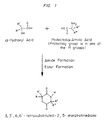
- Figure 1 is a schematic of the reaction of an ⁇ -hydroxy acid with a protected ⁇ -amino acid to yield the cyclilized hydroxyl acid-co-amino acid.
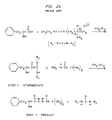
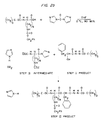
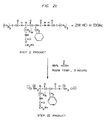
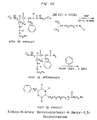
- Figures 2A-D is a schematic of the formation of 3-(butyl-4-benzyloxycarbonyl amino)-6-benzyl-2,5-morpholinedione, where an ester bond is formed first and then the product cyclized through amide bond formation, as shown in the prior art.
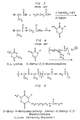
- Figure 3 is a schematic of the cyclizing of the ⁇ -hydroxy acid with an ⁇ -amino acid to make alkyl substituted 2,5-morpholinediones, where an a-bromo acyl bromide is utilized as the ⁇ -hydroxy acid equivalent, as shown in the prior art.
- Figure 4 is a schematic of a ring opening polymerization for lactic acid, as shown in the prior art.
- Figure 5 is a schematic of a desired monomer structure, 3-(Butyl-4-benzyloxycarbonyl amino)-6-methyl-2,5-morpholinedione, a lysine containing monomer.
- polymers having advantageous properties for implantation and cell culture are described.
- the polymers are characterized by biocompatibility, degradability into non-toxic products normally present in the body, preferably by hydrolysis, and the presence of accessible biologically active moieties bound to the polymers by amino acids polymerized within the polymer or chemically coupled to the polymer.
- the polymers are formed by polymerization of ⁇ amino acids with a hydroxy acids.
- the biologically active moieties are then coupled to the amino acids via free carboxylic acids, amino groups, sulfide groups, or hydroxyl groups on the amino acids.
- the general concept for producing the monomer in Figure 1, referred to herein as the amino acid monomer, is to cyclize an ⁇ -hydroxy acid with an ⁇ -amino acid to yield a 3,6-disubstituted-2,5-morpholinedione.
- the ⁇ amino acids are generally of the formula: R, R'-COH-CO-OH, wherein R and R' are independently H or a linear or branched alkyl.
- Examples of ⁇ hydroxy acids include lactic acid and glycolic acid.
- the ⁇ amino acids are preferably of the formula: R'', R'''-CNH 2 -CO-OH, wherein R'' and R''' are independently H or a linear or branched alkyl; any protected primary or secondary amino group; any protected ester; any protected hydroxyl; any protected sulfide; any protected amide; any protected guanidino; or any protected imidazole. All 20 of the common amino acids can be used. The most preferred amino acids are protected lysine and protected aspartic acid.
- This transformation involves producing an amide bond and an ester bond.
- All synthetic routes are variations of two main themes: 1) formation of the ester bond and then cyclization via amide bond formation or 2) formation of the amide bond and then cyclization via ester bond formation.
- the first method describing the formation of 3-(butyl-4-benzyloxycarbonyl amino)-6-benzyl-2,5-morpholinedione, is by Yasutake, A.; Miyazaki, K.; Aoyagi, H.; Kato, T.; and Izumiya, N., "Cyclic Peptides: VIII. Synthesis and Tryptic Hydrolysis of Cyclic Depsidipeptides Containing a Lysine Residue," Int. J. Peptide Protein Res. , 16 , 61-65 (1980). An ester bond is formed first and then the product cyclized through amide bond formation.
- the cyclization through the ester bond formation takes place by an SN 2 displacement of the bromine with the sodium salt of the carboxylic acid. This reaction exchanges the roles of the two centers.
- the carboxylic acid group acts as the nucleophile, while the ⁇ -bromo group provides the electrophilic center.
- the monomers are polymerized using a technique such as melt condensation, as exemplified using polyglycolic acid and polylactic acid.
- polyglycolic acid was first produced by condensation polymerization of hydroxy acetic acid (Higgins, 1954 and Beck, 1952).
- problems associated with condensation polymerizations including long reaction times to obtain even moderate molecular weight products, side reactions which create the necessity for by-product removal, and a lack of end group control (Brode, G. L. and Koleske, J. V., "Lactone Polymerization and Polymer Properties,” J. Macromol. Sci.-Chem. , A6 , 1109-1144 (1972)), for example, when dimerization to form glycolide competes with chain extension.
- Catalyst that have been used include: tributlytin methoxide, dibutyltin dimethoxide, dibutyltin diacetate, dibutyltin oxide, dibutyltin dichloride, tin dioxide, tin dibromide, tin dichloride, tin tetrabromide, tin tetrachloride, tetraphenyl tin, lead oxide, zinc oxide, zinc, antimony trioxide, triethyl aluminum, aluminum bromide, triisobutyl aluminum, triisopropyl aluminum, magnesium acetate, magnesium stearate, magnesium 2,4-pentanedionate, magnesium ethoxide, magnesium oxide, and stannous octoate, with stannous octoate being the preferred catalyst (Gilding, D.
- the substituted morpholinedione contains both an amide bond and an ester bond in the ring. Both of these functional groups could polymerize by a ring opening mechanism using several different types of initiators such as cationic, active hydrogen, anionic, and coordination (Ivin, J. K. and Saegusa, T., eds., Ring Opening Polymerization, Volumes 1-3, Elseveir Applied Science Publishers, New York, 1984). However, 6-member ring lactams do not polymerize under cationic or active hydrogen initiator conditions (Ivin, 1984). If these conditions are used, the morpholinedione should polymerize through the ester bond.
- initiators such as cationic, active hydrogen, anionic, and coordination (Ivin, J. K. and Saegusa, T., eds., Ring Opening Polymerization, Volumes 1-3, Elseveir Applied Science Publishers, New York, 1984).
- 6-member ring lactams do not polymer
- this ester bond will have a reactivity very similar to the reactivity of the ester bonds in lactide, due to the fact that the amide structure with its partial double bond character will increase the ring strain.
- Copolymerizations with lactide and methyl substituted morpholinediones at monomer ratios of 1:1 yielded polymers with a mole ratio of monomer units of 1:1 within experimental error (Samyn 1988; Helder, 1986; Yonezawa, 1985). This result suggests that the two ester bonds have similar reactivities.
- the benzoxycarbonyl amino protecting group is common in peptide synthesis, and can be cleaved by the selective method of solid phase catalytic reduction. This reaction is quite mild and should not harm the ester bonds in the backbone of the polymer. However, many other protecting groups and deprotecting conditions are available, as indicated in Table I (Greene, T. W., Protective Groups in Organic Synthesis, 239-241,John Wiley and Sons, Inc., New York, (1981)).
- the polymer can be cast into a variety of shapes by standard processing techniques, such as solvent casting and compression molding. Solvent casting is used to obtain thin films. Variables that should be considered in order to optimize this processing technique are choice of solvent, concentration of starting solution, solvent evaporation rate, casting surface, and molecular weight of the polymer. Compression molding is used to form small discs by compressing finely ground polymer powder. Variables that are important for compression molding include polymer contact surface, pressure, temperature, cooling rate if appropriate, polymer powder size, and molecular weight of the polymer.
- the polymer contact surface can greatly influence the composition of the surface of the polymer film or disc.
- the polymer interfaces with air, whereas, during compression molding, the interface will probably be either metal/polymer or teflon/polymer if a teflon release tape is used.
- metal/polymer or teflon/polymer if a teflon release tape is used.
- very hydrophobic interfaces may cause the hydrophilic amino groups to become inaccessible.
- the choice of solvent in solvent casting may also affect the accessibility of the amino groups.
- More sophisticated processing techniques such as injection molding, fiber extrusion, fiber weaving, may be essential to obtain optimal cell function, especially in the case of hepatocytes. These methods are known to those skilled in the art.
- Adhesion of cells to the surface of the polymer is enhanced by coupling of biologically active moieties, such as GRGDY and YIGSR (standard one letter abbreviations for amino acids are used herein), to the reactive side chains of the polymer such as amino groups or carboxylic acids.
- biologically active moieties such as GRGDY and YIGSR (standard one letter abbreviations for amino acids are used herein)
- YIGSR standard one letter abbreviations for amino acids are used herein
- the reactive side chains may not be accessible to the surface of the polymer device
- several methods can be used to increase the surface reactive group accessibility.
- the surface can be exposed to an aqueous solution containing miscible hydrophilic or polar solvents such as ethanol or acetone.
- miscible hydrophilic or polar solvents such as ethanol or acetone.
- Such exposure should increase the flexibility of the polymer backbone by lowering T g . This increased flexibility will allow the reactive groups to move to the surface while the hydrophilic nature of the aqueous solution will provide the driving force.
- Polar solvents should provide a greater driving force for the reactive groups to move to the surface.
- the first method involves activating the C-terminus carboxylic acid of the peptide, and then reacting this group with the amino groups on the polymer surface.
- the C-terminus carboxylic acid can be activated by several methods as indicated in Table I.
- a preferred reagent is 1-ethyl-3-(3-dimethylaminopropyl-carbodiimide (EDC) which produces an O-acyl-isourea.
- RGDS peptide contains two carboxylic acid groups, one at the C-terminus and the other on the aspartic acid residue. If the C-terminus carboxylic acid is to be used to chemically attach the peptide to the polymer surface then the aspartic acid residue must be protected. A completely protected RGDS peptide can be synthesized by those skilled in the art. After attachment the peptide side chains of the peptide would have to be deprotected.
- An alternative approach is to link the peptide to the polymer surface through a bifunctional molecule which is reactive towards amines at both ends.
- a bifunctional molecule is bis(sulfosuccinimidyl) suberate which has an N-hydroxysuccinimide ester at both ends (D'Souza, S. E.; Ginsberg, M. H.; Lam, S. C.-T.; and Plow, E. F., "Chemical Cross-Linking of Arginyl-Glycyl-Aspartic Acid Peptides to an Adhesion Receptor on Platelets," The Journal of Biological Chemistry , 263 , 3943-3951 (1988); Staros, J.
- N-Hydroxysulfosuccinimide Active Esters Bis(N-hydroxysulfosuccinimide) Esters of Two Dicarboxylic Acids are Hydrophilic, Membrane-Impermeant, Protein Cross-Linkers," Biochemistry , 21 , 3950-3955 (1982)).
- Another commonly used bifunctional linking reagent which reacts with amino groups is glutaraldehyde (Weston, P. D. and Avrameas, S., "Proteins Coupled to Polyacrylamide Beads Using Glutaraldehyde," Biochemical and Biophysical Research Communications , 45 , 1574-1580 (1971); Arayanan, S. R.; Kakodkar, S.
- the first step in this approach is to react the polymer surface amino groups with one end of the bifunctional molecule.
- the peptide is attached to the other end of the molecule through the N-terminus amine. It is not necessary to synthesize a protected peptide as previously mentioned, for there is only one amino group in the peptide in this example.
- This approach also utilizes a bifunctional molecule which is reactive towards amines at both ends such as carbonyl diimidazole.
- This bifunctional molecule, the polymer, and the peptide can be dissolved together in a common solvent. Some side reactions may occur, include linking of polymer-polymer and peptide-peptide, but these should not interfere excessively with the linking reaction of the polymer-peptide.
- Cells such as hepatocytes, pancreatic cells, intestinal cells, uroendothelial cells, skin cells, muscle cells, nerve cells, and bone cells which are dissociated and viable and in a suspension are applied to a matrix formed of the polymer. Cells are provided with sufficient time to attach to the polymer, then the matrix is implanted using standard surgical techniques.
- This example illustrates the preparation of 3-(butyl-4-benzyloxycarbonyl amino)-6-methyl-2,5-morpholinedione, a monomer containing lactic acid and lysine where the side chain amino group of lysine is protected with a benzyloxycarbonyl group, as shown in Figure 5.
- both the lactic acid and lysine are in the L configuration.
- the eluent is 93/5/2 chloroform/methanol/acetic acid.
- the eluent is removed under vacuum with heating to 60 °C.
- a viscous oil forms.
- the product is crystallized by washing the viscous oil with petroleum ether.
- a yellowish/white powder forms. This powder is recrystallized from ethyl acetate which produces a clean white powder.
- the yield is for these last two steps combined is 31% which is 16.6 g, 0.05 M. Melting point 135-136 °C. High resolution mass spectroscopy confirmed elemental analysis; expected 334.15287 amu, experimental 334.1527 amu. The IR and NMR were also consistent.
- Example 2 Copolymerization of the monomer produced in Example 1 with lactide to make poly (lactic acid-co-N- ⁇ -benzyloxycarbonyl lysine).
- the polymerization flask must be siliconized to rid the glass surface of all hydroxyl groups. Throughout the polymerization procedure, all the glassware is dried in a 130 °C oven overnight and cooled under vacuum. All parts of the experiment requiring that the monomers be exposed to the atmosphere were done in a N 2 box.
- each of the monomers must be recrystallized from ethyl acetate in the N 2 box. These crystals are then dried under vacuum overnight. The monomers are then weighed out into the polymerization flask, 10.9 g lactide (75.3 mM) and 2.77 g protected lysine monomer (8.27 mM).
- the catalyst solution 1.06 g of stannous octoate in 10 ml of chloroform, 0.262 ⁇ mol/ ⁇ l, is prepared and 305 ⁇ l of the catalyst solution added into the polymerization flask. The chloroform is removed under vacuum. The flask is flushed several times with argon.
- the product from this reaction is poly (lactic acid-co-lysine).
- the yield is 79% which is 7.8 g.
- Proton NMR indicates that 75% of the protecting residues were removed while amino acid analysis indicates that 88% of the lysine units remain in the polymer.
- Example 4 Processing of the copolymer synthesized in Example 3.
- Solvent Casting Poly (lactic acid-co-lysine) from Example 3 (100 mg) was weighed out into a standard 10 ml glass beaker. Chloroform (2 ml) was added to dissolve the polymer. The chloroform was allowed to evaporate very slowly over a 48 hour period. In order to remove the film from the beaker it was submersed in water for 4 hours. The free standing film is easily handled without breaking and can be cut with a razor blade or scissors. Its appearance is translucent.
- Poly (lactic acid-co-lysine) from Example 3 is ground to a fine powder.
- the powder (150 mg) is put into a die (1.4 cm diameter) and compressed at 10,000 psi for 30 minutes while the top and bottom compression plates are at 100 °C.
- This type of film can be easily handled, but higher temperatures are necessary to obtain a translucent film. Higher temperatures also cause the film to become brittle.
- Example 5 The hydrolytic degradation of the poly (lactic acid-co-lysine).
- This example illustrates the hydrolytic degradation of the poly (lactic acid-co-lysine) described in Example 3.
- the solvent cast films of poly (lactic acid-co-lysine) from Example 4 were immersed in PBS pH 7.2 at 37 °C with rotational agitation at 120 rpm.
- the buffer was changed weekly and the films were sacrificed at various time points. These films degrade more quickly than homopolymers of lactic acid.
- the Mw of the copolymer was half of its original value and the films had lost integrity, breaking up into many pieces.
- the remaining weight of the films decreased gradually. By 23 weeks more than 40% of the weight was lost. Lactic acid was also released into the buffer, as determined by an enzymatic assay.
- Example 6 Bulk attachment of GRGDY-peptide into polymer synthesized in Example 3
- the polymer from Example 3 (102 mg) was dissolved in 1 ml of dichloromethane and then 1.5 ml of dimethylsulfoxide was added.
- the GRGDY peptide (1.15 mg, 2.0 ⁇ mol) was dissolved in 1 ml of dimethylsulfoxide.
- a solution of carbonyldiimidazole (CDI) was prepared in dichloromethane at a concentration of 10 mg/ml, 0.0627 mmol/ml.
- the polymer and peptide solutions were combined, and then, 0.375 ml (equivalent to 23.1 ⁇ mol) of the 10 mg/ml solution of CDI was added over a 4 hour period.
- the dicholoromethane was removed by evaporation and 5 ml of water was added.
- the polymer precipitated and was collected by vacuum filtration. Amino acid analysis of the peptide modified sample yielded 3 ⁇ mol of peptide/g of polymer. Appropriate controls contained no peptide
- Example 7 GRGDY-peptide attachment to processed films from Example 4.
- GRGDY peptide 0.5 mg/ml in PBS, pH 7.2
- the films were rinsed for 2 minutes each in a series of 6 buffers or water: 0.01 N pyridine, pH 6.0; deionized water; 0.1 M sodium acetate, pH 5.5; 1 M sodium chloride; phosphate buffered saline, pH 7.2; and deionized water (in that order).
- Example 8 Cell adhesion to modified films from Example 7.
- This example illustrates the ability of cells to adhere the peptide modified films from Example 7.
- the films from example 7 were sterilized by exposure to ultraviolet radiation for 15 minutes on each side and then placed in a sterile cell adhesion apparatus.
- the wells were filled.with 0.4 ml of serum-free Dulbecco's Modified Eagle's Medium and 3T3 mouse fibroblasts were added to the medium so that the initial density was approximately 10,000 cells/cm 2 .
- the cells were incubated at 37°C for 4 hours, then washed 3 times with Hanks Balanced Salt Solution, and the remaining cells were visually counted.
Landscapes
- Health & Medical Sciences (AREA)
- Chemical & Material Sciences (AREA)
- Life Sciences & Earth Sciences (AREA)
- Engineering & Computer Science (AREA)
- Medicinal Chemistry (AREA)
- General Health & Medical Sciences (AREA)
- Biomedical Technology (AREA)
- Bioinformatics & Cheminformatics (AREA)
- Epidemiology (AREA)
- Animal Behavior & Ethology (AREA)
- Organic Chemistry (AREA)
- Public Health (AREA)
- Veterinary Medicine (AREA)
- Chemical Kinetics & Catalysis (AREA)
- Oral & Maxillofacial Surgery (AREA)
- Proteomics, Peptides & Aminoacids (AREA)
- Molecular Biology (AREA)
- Transplantation (AREA)
- Genetics & Genomics (AREA)
- Zoology (AREA)
- Dermatology (AREA)
- Wood Science & Technology (AREA)
- Cell Biology (AREA)
- Pharmacology & Pharmacy (AREA)
- Biochemistry (AREA)
- Biotechnology (AREA)
- Botany (AREA)
- Biophysics (AREA)
- Gastroenterology & Hepatology (AREA)
- General Chemical & Material Sciences (AREA)
- Microbiology (AREA)
- General Engineering & Computer Science (AREA)
- Polymers & Plastics (AREA)
- Urology & Nephrology (AREA)
- Materials For Medical Uses (AREA)
- Polyesters Or Polycarbonates (AREA)
- Polyamides (AREA)
- Medicines Containing Material From Animals Or Micro-Organisms (AREA)
- Medicinal Preparation (AREA)
- Prostheses (AREA)
Applications Claiming Priority (3)
| Application Number | Priority Date | Filing Date | Title |
|---|---|---|---|
| US07/972,156 US5399665A (en) | 1992-11-05 | 1992-11-05 | Biodegradable polymers for cell transplantation |
| PCT/US1993/010655 WO1994009760A1 (en) | 1992-11-05 | 1993-11-05 | Biodegradable polymers for cell transplantation |
| US972156 | 1997-11-17 |
Publications (3)
| Publication Number | Publication Date |
|---|---|
| EP0619732A1 EP0619732A1 (en) | 1994-10-19 |
| EP0619732A4 EP0619732A4 (en) | 1995-02-22 |
| EP0619732B1 true EP0619732B1 (en) | 2001-01-31 |
Family
ID=25519259
Family Applications (1)
| Application Number | Title | Priority Date | Filing Date |
|---|---|---|---|
| EP94901280A Expired - Lifetime EP0619732B1 (en) | 1992-11-05 | 1993-11-05 | Biodegradable polymers for cell transplantation |
Country Status (8)
| Country | Link |
|---|---|
| US (1) | US5399665A (enExample) |
| EP (1) | EP0619732B1 (enExample) |
| JP (1) | JP3288380B2 (enExample) |
| AT (1) | ATE198980T1 (enExample) |
| CA (1) | CA2127463C (enExample) |
| DE (1) | DE69329903T2 (enExample) |
| ES (1) | ES2156893T3 (enExample) |
| WO (1) | WO1994009760A1 (enExample) |
Families Citing this family (230)
| Publication number | Priority date | Publication date | Assignee | Title |
|---|---|---|---|---|
| US5863531A (en) * | 1986-04-18 | 1999-01-26 | Advanced Tissue Sciences, Inc. | In vitro preparation of tubular tissue structures by stromal cell culture on a three-dimensional framework |
| US6132463A (en) | 1995-05-19 | 2000-10-17 | Etex Corporation | Cell seeding of ceramic compositions |
| US6541037B1 (en) | 1995-05-19 | 2003-04-01 | Etex Corporation | Delivery vehicle |
| US5766584A (en) * | 1995-06-02 | 1998-06-16 | Massachusetts Institute Of Technology | Inhibition of vascular smooth muscle cell proliferation with implanted matrix containing vascular endothelial cells |
| AU729774B2 (en) * | 1995-06-07 | 2001-02-08 | T. J. Smith & Nephew Limited | Stromal cell-based three-dimensional culture system for forming tubes, tendons, ligaments and corrective structures |
| US5654381A (en) * | 1995-06-16 | 1997-08-05 | Massachusetts Institute Of Technology | Functionalized polyester graft copolymers |
| US5908624A (en) * | 1996-06-27 | 1999-06-01 | Albany Medical College | Antigenic modulation of cells |
| US5916585A (en) * | 1996-06-03 | 1999-06-29 | Gore Enterprise Holdings, Inc. | Materials and method for the immobilization of bioactive species onto biodegradable polymers |
| US8007784B1 (en) | 1996-06-27 | 2011-08-30 | Albany Medical College | Antigenic modulation of cells |
| US8728536B2 (en) * | 1996-10-16 | 2014-05-20 | Etex Corporation | Chemotherapeutic composition using nanocrystalline calcium phosphate paste |
| ATE381314T1 (de) | 1996-10-16 | 2008-01-15 | Etex Corp | Biokeramische zusammensetzung |
| US6042820A (en) | 1996-12-20 | 2000-03-28 | Connaught Laboratories Limited | Biodegradable copolymer containing α-hydroxy acid and α-amino acid units |
| US6776792B1 (en) | 1997-04-24 | 2004-08-17 | Advanced Cardiovascular Systems Inc. | Coated endovascular stent |
| ES2178102T3 (es) | 1997-07-16 | 2002-12-16 | Isotis Nv | Dispositivo para la generacion de tejido oseo, que comprende un termoplastico de copoliester biodegradable y celulas cultivadas. |
| US5925053A (en) * | 1997-09-02 | 1999-07-20 | Children's Medical Center Corporation | Multi-lumen polymeric guidance channel, method for promoting nerve regeneration, and method of manufacturing a multi-lumen nerve guidance channel |
| AR014940A1 (es) * | 1997-12-12 | 2001-04-11 | Expression Genetics Inc | Un portador para la liberacion de un agente bioactivo, un polimero poliester biodegradable, copolimeros y composiciones farmaceuticas que loscontienen. |
| US6143293A (en) * | 1998-03-26 | 2000-11-07 | Carnegie Mellon | Assembled scaffolds for three dimensional cell culturing and tissue generation |
| US6245345B1 (en) | 1998-07-07 | 2001-06-12 | Atrix Laboratories, Inc. | Filamentous porous films and methods for producing the same |
| US6091979A (en) | 1998-07-07 | 2000-07-18 | Children's Medical Center Corporation | Subdural electrode arrays for monitoring cortical electrical activity |
| US6093792A (en) * | 1998-09-16 | 2000-07-25 | University Of Massachusetts | Bioresorbable copolymers |
| US6365385B1 (en) | 1999-03-22 | 2002-04-02 | Duke University | Methods of culturing and encapsulating pancreatic islet cells |
| US6303355B1 (en) | 1999-03-22 | 2001-10-16 | Duke University | Method of culturing, cryopreserving and encapsulating pancreatic islet cells |
| US20070032853A1 (en) | 2002-03-27 | 2007-02-08 | Hossainy Syed F | 40-O-(2-hydroxy)ethyl-rapamycin coated stent |
| US6703040B2 (en) | 2000-01-11 | 2004-03-09 | Intralytix, Inc. | Polymer blends as biodegradable matrices for preparing biocomposites |
| US6783793B1 (en) | 2000-10-26 | 2004-08-31 | Advanced Cardiovascular Systems, Inc. | Selective coating of medical devices |
| MXPA03007665A (es) * | 2001-02-26 | 2004-03-16 | Univ Duke | Polimeros dendriticos novedosos y sus usos biomedicos. |
| US20020142304A1 (en) * | 2001-03-09 | 2002-10-03 | Anderson Daniel G. | Uses and methods of making microarrays of polymeric biomaterials |
| US6780424B2 (en) | 2001-03-30 | 2004-08-24 | Charles David Claude | Controlled morphologies in polymer drug for release of drugs from polymer films |
| US20030017181A1 (en) * | 2001-05-31 | 2003-01-23 | Rood Gloria A. | Dermatological compositions and methods |
| US8741378B1 (en) | 2001-06-27 | 2014-06-03 | Advanced Cardiovascular Systems, Inc. | Methods of coating an implantable device |
| US6565659B1 (en) | 2001-06-28 | 2003-05-20 | Advanced Cardiovascular Systems, Inc. | Stent mounting assembly and a method of using the same to coat a stent |
| US7722894B2 (en) * | 2001-10-22 | 2010-05-25 | Massachusetts Institute Of Technology | Biodegradable polymer |
| EP1448656B1 (en) * | 2001-10-22 | 2007-02-07 | Massachusetts Institute Of Technology | Biodegradable polymer |
| KR100515035B1 (ko) * | 2001-12-27 | 2005-09-15 | 한국과학기술원 | 약물전달시스템을 위한 생분해성 열감응성 스타형블록공중합체 |
| EP2138575B8 (en) | 2002-02-20 | 2013-07-24 | Mersana Therapeutics, Inc. | Conjugates comprising a biodegradable polymer and uses therefor |
| US20040131582A1 (en) * | 2002-02-26 | 2004-07-08 | Grinstaff Mark W. | Novel dendritic polymers and their biomedical uses |
| US20040127563A1 (en) * | 2002-03-22 | 2004-07-01 | Deslauriers Richard J. | Methods of performing medical procedures which promote bone growth, compositions which promote bone growth, and methods of making such compositions |
| US20030232088A1 (en) * | 2002-06-14 | 2003-12-18 | Kimberly-Clark Worldwide, Inc. | Materials with both bioadhesive and biodegradable components |
| US7037983B2 (en) | 2002-06-14 | 2006-05-02 | Kimberly-Clark Worldwide, Inc. | Methods of making functional biodegradable polymers |
| US7056523B1 (en) | 2002-06-21 | 2006-06-06 | Advanced Cardiovascular Systems, Inc. | Implantable medical devices incorporating chemically conjugated polymers and oligomers of L-arginine |
| US8506617B1 (en) | 2002-06-21 | 2013-08-13 | Advanced Cardiovascular Systems, Inc. | Micronized peptide coated stent |
| US6994867B1 (en) | 2002-06-21 | 2006-02-07 | Advanced Cardiovascular Systems, Inc. | Biocompatible carrier containing L-arginine |
| US7033602B1 (en) | 2002-06-21 | 2006-04-25 | Advanced Cardiovascular Systems, Inc. | Polycationic peptide coatings and methods of coating implantable medical devices |
| US7070798B1 (en) | 2002-06-21 | 2006-07-04 | Advanced Cardiovascular Systems, Inc. | Coatings for implantable medical devices incorporating chemically-bound polymers and oligomers of L-arginine |
| US7217426B1 (en) | 2002-06-21 | 2007-05-15 | Advanced Cardiovascular Systems, Inc. | Coatings containing polycationic peptides for cardiovascular therapy |
| US7011842B1 (en) | 2002-06-21 | 2006-03-14 | Advanced Cardiovascular Systems, Inc. | Polycationic peptide coatings and methods of making the same |
| US20040028804A1 (en) * | 2002-08-07 | 2004-02-12 | Anderson Daniel G. | Production of polymeric microarrays |
| CA2494889C (en) | 2002-08-12 | 2011-12-20 | Osteotech, Inc. | Synthesis of a bone-polymer composition material |
| US7862831B2 (en) * | 2002-10-09 | 2011-01-04 | Synthasome, Inc. | Method and material for enhanced tissue-biomaterial integration |
| US20050069572A1 (en) * | 2002-10-09 | 2005-03-31 | Jennifer Elisseeff | Multi-layered polymerizing hydrogels for tissue regeneration |
| US6896965B1 (en) | 2002-11-12 | 2005-05-24 | Advanced Cardiovascular Systems, Inc. | Rate limiting barriers for implantable devices |
| US6992543B2 (en) * | 2002-11-22 | 2006-01-31 | Raytheon Company | Mems-tuned high power, high efficiency, wide bandwidth power amplifier |
| US7758880B2 (en) | 2002-12-11 | 2010-07-20 | Advanced Cardiovascular Systems, Inc. | Biocompatible polyacrylate compositions for medical applications |
| US7776926B1 (en) | 2002-12-11 | 2010-08-17 | Advanced Cardiovascular Systems, Inc. | Biocompatible coating for implantable medical devices |
| US7074276B1 (en) | 2002-12-12 | 2006-07-11 | Advanced Cardiovascular Systems, Inc. | Clamp mandrel fixture and a method of using the same to minimize coating defects |
| US7094256B1 (en) | 2002-12-16 | 2006-08-22 | Advanced Cardiovascular Systems, Inc. | Coatings for implantable medical device containing polycationic peptides |
| US7063884B2 (en) | 2003-02-26 | 2006-06-20 | Advanced Cardiovascular Systems, Inc. | Stent coating |
| EP3254710B1 (en) * | 2003-04-11 | 2019-05-22 | Etex Corporation | Osteoinductive bone material |
| US7279174B2 (en) | 2003-05-08 | 2007-10-09 | Advanced Cardiovascular Systems, Inc. | Stent coatings comprising hydrophilic additives |
| US20050118344A1 (en) | 2003-12-01 | 2005-06-02 | Pacetti Stephen D. | Temperature controlled crimping |
| EP1642921B1 (en) * | 2003-07-07 | 2008-08-27 | Nof Corporation | Triblock copolymer, method for producing the same and biocompatible material |
| US7198675B2 (en) | 2003-09-30 | 2007-04-03 | Advanced Cardiovascular Systems | Stent mandrel fixture and method for selectively coating surfaces of a stent |
| US9114198B2 (en) | 2003-11-19 | 2015-08-25 | Advanced Cardiovascular Systems, Inc. | Biologically beneficial coatings for implantable devices containing fluorinated polymers and methods for fabricating the same |
| US7220816B2 (en) | 2003-12-16 | 2007-05-22 | Advanced Cardiovascular Systems, Inc. | Biologically absorbable coatings for implantable devices based on poly(ester amides) and methods for fabricating the same |
| US7435788B2 (en) | 2003-12-19 | 2008-10-14 | Advanced Cardiovascular Systems, Inc. | Biobeneficial polyamide/polyethylene glycol polymers for use with drug eluting stents |
| US7563324B1 (en) | 2003-12-29 | 2009-07-21 | Advanced Cardiovascular Systems Inc. | System and method for coating an implantable medical device |
| US8012210B2 (en) * | 2004-01-16 | 2011-09-06 | Warsaw Orthopedic, Inc. | Implant frames for use with settable materials and related methods of use |
| AU2005210630A1 (en) * | 2004-01-30 | 2005-08-18 | Warsaw Orthopedic, Inc. | Stacking implants for spinal fusion |
| CA2575740A1 (en) | 2004-03-24 | 2005-10-13 | Doctor's Research Group, Inc. | Methods of performing medical procedures that promote bone growth, methods of making compositions that promote bone growth, and apparatus for use in such methods |
| KR101218454B1 (ko) * | 2004-04-15 | 2013-01-04 | 에텍스 코포레이션 | 세팅 지연 칼슘 포스페이트 페이스트 |
| US7553377B1 (en) | 2004-04-27 | 2009-06-30 | Advanced Cardiovascular Systems, Inc. | Apparatus and method for electrostatic coating of an abluminal stent surface |
| US8293890B2 (en) | 2004-04-30 | 2012-10-23 | Advanced Cardiovascular Systems, Inc. | Hyaluronic acid based copolymers |
| WO2005112974A2 (en) * | 2004-05-14 | 2005-12-01 | William Marsh Rice University | Peptide-modified polyurethane compositions and associated methods |
| US9561309B2 (en) | 2004-05-27 | 2017-02-07 | Advanced Cardiovascular Systems, Inc. | Antifouling heparin coatings |
| US7563780B1 (en) | 2004-06-18 | 2009-07-21 | Advanced Cardiovascular Systems, Inc. | Heparin prodrugs and drug delivery stents formed therefrom |
| US7494665B1 (en) | 2004-07-30 | 2009-02-24 | Advanced Cardiovascular Systems, Inc. | Polymers containing siloxane monomers |
| US7311980B1 (en) | 2004-08-02 | 2007-12-25 | Advanced Cardiovascular Systems, Inc. | Polyactive/polylactic acid coatings for an implantable device |
| US7244443B2 (en) | 2004-08-31 | 2007-07-17 | Advanced Cardiovascular Systems, Inc. | Polymers of fluorinated monomers and hydrophilic monomers |
| US7166680B2 (en) | 2004-10-06 | 2007-01-23 | Advanced Cardiovascular Systems, Inc. | Blends of poly(ester amide) polymers |
| US8603634B2 (en) | 2004-10-27 | 2013-12-10 | Abbott Cardiovascular Systems Inc. | End-capped poly(ester amide) copolymers |
| US7481835B1 (en) | 2004-10-29 | 2009-01-27 | Advanced Cardiovascular Systems, Inc. | Encapsulated covered stent |
| US7390497B2 (en) | 2004-10-29 | 2008-06-24 | Advanced Cardiovascular Systems, Inc. | Poly(ester amide) filler blends for modulation of coating properties |
| US9492400B2 (en) * | 2004-11-04 | 2016-11-15 | Massachusetts Institute Of Technology | Coated controlled release polymer particles as efficient oral delivery vehicles for biopharmaceuticals |
| US7214759B2 (en) | 2004-11-24 | 2007-05-08 | Advanced Cardiovascular Systems, Inc. | Biologically absorbable coatings for implantable devices based on polyesters and methods for fabricating the same |
| DE602005022481D1 (de) * | 2004-12-08 | 2010-09-02 | Pervasis Therapeutics Inc | Zusammensetzungen und deren verwendung für besseren gefässzugang |
| US7632307B2 (en) | 2004-12-16 | 2009-12-15 | Advanced Cardiovascular Systems, Inc. | Abluminal, multilayer coating constructs for drug-delivery stents |
| US7604818B2 (en) | 2004-12-22 | 2009-10-20 | Advanced Cardiovascular Systems, Inc. | Polymers of fluorinated monomers and hydrocarbon monomers |
| US7419504B2 (en) | 2004-12-27 | 2008-09-02 | Advanced Cardiovascular Systems, Inc. | Poly(ester amide) block copolymers |
| US8007775B2 (en) * | 2004-12-30 | 2011-08-30 | Advanced Cardiovascular Systems, Inc. | Polymers containing poly(hydroxyalkanoates) and agents for use with medical articles and methods of fabricating the same |
| US7202325B2 (en) | 2005-01-14 | 2007-04-10 | Advanced Cardiovascular Systems, Inc. | Poly(hydroxyalkanoate-co-ester amides) and agents for use with medical articles |
| EP1868534A4 (en) * | 2005-02-18 | 2008-08-20 | Synthasome Inc | SYNTHETIC STRUCTURE FOR THE REPAIR OF SOFT TISSUE |
| WO2006116357A1 (en) | 2005-04-21 | 2006-11-02 | Massachusetts Institute Of Technology | Materials and methods for altering an immune response to exogenous and endogenous immunogens, including syngeneic and non-syngeneic cells, tissues or organs |
| US7637941B1 (en) | 2005-05-11 | 2009-12-29 | Advanced Cardiovascular Systems, Inc. | Endothelial cell binding coatings for rapid encapsulation of bioerodable stents |
| US7622070B2 (en) | 2005-06-20 | 2009-11-24 | Advanced Cardiovascular Systems, Inc. | Method of manufacturing an implantable polymeric medical device |
| CN101878757A (zh) | 2005-06-21 | 2010-11-10 | 渗透治疗有限公司 | 用于增强血管通路的方法和组合物 |
| CN100393753C (zh) * | 2005-07-04 | 2008-06-11 | 南开大学 | 金属-胍配合物原位催化原子转移自由基聚合反应的方法 |
| US20070036842A1 (en) * | 2005-08-15 | 2007-02-15 | Concordia Manufacturing Llc | Non-woven scaffold for tissue engineering |
| WO2007022348A2 (en) * | 2005-08-18 | 2007-02-22 | Massachusetts Institute Of Technology | Amplification of cell polulations from embryonic stem cells |
| ES2628031T3 (es) * | 2005-10-26 | 2017-08-01 | Genesis Technologies Limited | Matrices de regeneración tisular acelulares bioabsorbibles producidas mediante incubación de productos sanguíneos acelulares |
| US20070100323A1 (en) * | 2005-10-31 | 2007-05-03 | Ludwig Florian N | Facilitation of endothelialization by in situ surface modification |
| US8147860B2 (en) | 2005-12-06 | 2012-04-03 | Etex Corporation | Porous calcium phosphate bone material |
| US20100204783A1 (en) * | 2005-12-06 | 2010-08-12 | Helen Marie Nugent | Methods and compositions for enhancing vascular access |
| WO2007070682A2 (en) * | 2005-12-15 | 2007-06-21 | Massachusetts Institute Of Technology | System for screening particles |
| US7591841B2 (en) | 2005-12-16 | 2009-09-22 | Advanced Cardiovascular Systems, Inc. | Implantable devices for accelerated healing |
| US7638156B1 (en) | 2005-12-19 | 2009-12-29 | Advanced Cardiovascular Systems, Inc. | Apparatus and method for selectively coating a medical article |
| WO2007082305A2 (en) | 2006-01-12 | 2007-07-19 | Massachusetts Institute Of Technology | Biodegradable elastomers |
| US20090011486A1 (en) * | 2006-01-12 | 2009-01-08 | Massachusetts Institute Of Technology | Biodegradable Elastomers |
| EP1976459A4 (en) * | 2006-01-19 | 2012-06-20 | Warsaw Orthopedic Inc | POROUS BONE IMPLANT |
| WO2007084725A2 (en) | 2006-01-19 | 2007-07-26 | Osteotech, Inc. | Injectable and moldable bone substitute materials |
| US7601383B2 (en) | 2006-02-28 | 2009-10-13 | Advanced Cardiovascular Systems, Inc. | Coating construct containing poly (vinyl alcohol) |
| JP2009534309A (ja) | 2006-03-31 | 2009-09-24 | マサチューセッツ インスティテュート オブ テクノロジー | 治療剤の標的化送達のためのシステム |
| US8367113B2 (en) | 2006-05-15 | 2013-02-05 | Massachusetts Institute Of Technology | Polymers for functional particles |
| US20110052697A1 (en) * | 2006-05-17 | 2011-03-03 | Gwangju Institute Of Science & Technology | Aptamer-Directed Drug Delivery |
| US9561351B2 (en) | 2006-05-31 | 2017-02-07 | Advanced Cardiovascular Systems, Inc. | Drug delivery spiral coil construct |
| WO2007150030A2 (en) | 2006-06-23 | 2007-12-27 | Massachusetts Institute Of Technology | Microfluidic synthesis of organic nanoparticles |
| CN100428964C (zh) * | 2006-06-29 | 2008-10-29 | 武汉理工大学 | RGD多肽接枝聚(羟基乙酸-L-赖氨酸-L-乳酸)/β-磷酸三钙复合材料及其制备方法 |
| US9028859B2 (en) | 2006-07-07 | 2015-05-12 | Advanced Cardiovascular Systems, Inc. | Phase-separated block copolymer coatings for implantable medical devices |
| US20080193536A1 (en) * | 2006-08-14 | 2008-08-14 | Alireza Khademhosseini | Cell-Laden Hydrogels |
| EP2079478A2 (en) * | 2006-11-07 | 2009-07-22 | Pervasis Therapeutics, Inc. | Materials and methods for treating and managing angiogenesis-mediated diseases |
| JP5258189B2 (ja) * | 2006-11-09 | 2013-08-07 | 学校法人 関西大学 | 柔軟性生分解性ポリマー |
| WO2008147456A2 (en) * | 2006-11-20 | 2008-12-04 | Massachusetts Institute Of Technology | Drug delivery systems using fc fragments |
| US7935363B2 (en) * | 2006-12-12 | 2011-05-03 | Synthasome, Inc. | Composite material for tissue repair |
| CA2675762C (en) * | 2007-01-17 | 2016-09-06 | Dow Agrosciences Llc | Delivery of ethylene blocking and/or promoting agents |
| US9217129B2 (en) * | 2007-02-09 | 2015-12-22 | Massachusetts Institute Of Technology | Oscillating cell culture bioreactor |
| WO2008124632A1 (en) | 2007-04-04 | 2008-10-16 | Massachusetts Institute Of Technology | Amphiphilic compound assisted nanoparticles for targeted delivery |
| WO2008124634A1 (en) | 2007-04-04 | 2008-10-16 | Massachusetts Institute Of Technology | Polymer-encapsulated reverse micelles |
| JP5264103B2 (ja) * | 2007-05-09 | 2013-08-14 | 学校法人 関西大学 | 温度応答性を有する生分解性グラフト共重合体 |
| WO2008144514A2 (en) * | 2007-05-17 | 2008-11-27 | Massachusetts Institute Of Technology | Polyol-based polymers |
| US9056155B1 (en) | 2007-05-29 | 2015-06-16 | Abbott Cardiovascular Systems Inc. | Coatings having an elastic primer layer |
| US10092524B2 (en) | 2008-06-11 | 2018-10-09 | Edge Therapeutics, Inc. | Compositions and their use to treat complications of aneurysmal subarachnoid hemorrhage |
| WO2008156705A1 (en) * | 2007-06-13 | 2008-12-24 | Pervasis Therapeutics, Inc. | Methods and devices for minimally-invasive delivery of cell-containing flowable compositions |
| WO2008157372A2 (en) | 2007-06-14 | 2008-12-24 | Massachusetts Institute Of Technology | Self assembled films for protein and drug delivery applications |
| US20100291219A1 (en) * | 2007-06-21 | 2010-11-18 | Massachusetts Institute Of Technology | Methods and compositions relating to progenitor cells |
| HUE035101T2 (hu) | 2007-09-28 | 2018-05-02 | Pfizer | Ráksejtek célzása nanorészecskék alkalmazásával |
| CN105770878A (zh) | 2007-10-12 | 2016-07-20 | 麻省理工学院 | 疫苗纳米技术 |
| US8431158B2 (en) | 2007-11-26 | 2013-04-30 | Yissum Research Development Company Of The Hebrew University Of Jerusalem Ltd. | Compositions comprising fibrous polypeptides and polysaccharides |
| WO2009120969A2 (en) * | 2008-03-28 | 2009-10-01 | Osteotech, Inc. | Bone anchors for orthopedic applications |
| US9198875B2 (en) * | 2008-08-17 | 2015-12-01 | Massachusetts Institute Of Technology | Controlled delivery of bioactive agents from decomposable films |
| US8277812B2 (en) | 2008-10-12 | 2012-10-02 | Massachusetts Institute Of Technology | Immunonanotherapeutics that provide IgG humoral response without T-cell antigen |
| US8343497B2 (en) | 2008-10-12 | 2013-01-01 | The Brigham And Women's Hospital, Inc. | Targeting of antigen presenting cells with immunonanotherapeutics |
| US8343498B2 (en) | 2008-10-12 | 2013-01-01 | Massachusetts Institute Of Technology | Adjuvant incorporation in immunonanotherapeutics |
| US8591905B2 (en) * | 2008-10-12 | 2013-11-26 | The Brigham And Women's Hospital, Inc. | Nicotine immunonanotherapeutics |
| CA3026701C (en) | 2009-03-02 | 2023-04-18 | Massachusetts Institute Of Technology | Methods and products for in vivo enzyme profiling |
| MX2011012598A (es) | 2009-05-27 | 2012-04-19 | Selecta Biosciences Inc | Nanoportadores sinteticos objetivos con liberacion sensible al ph de agentes inmunomoduladores. |
| US9597430B2 (en) * | 2009-07-31 | 2017-03-21 | Synthasome, Inc. | Synthetic structure for soft tissue repair |
| KR20120059572A (ko) | 2009-08-26 | 2012-06-08 | 셀렉타 바이오사이언시즈, 인크. | T-세포 도움을 유도하는 조성물 |
| CN106913874A (zh) * | 2010-02-22 | 2017-07-04 | 优势医疗公司 | 治疗脑的出血性病状的方法和组合物 |
| US8685433B2 (en) | 2010-03-31 | 2014-04-01 | Abbott Cardiovascular Systems Inc. | Absorbable coating for implantable device |
| AU2011258156B2 (en) | 2010-05-26 | 2016-11-24 | Selecta Biosciences, Inc. | Multivalent synthetic nanocarrier vaccines |
| WO2012031205A2 (en) | 2010-09-03 | 2012-03-08 | The Brigham And Women's Hospital, Inc. | Lipid-polymer hybrid particles |
| PT2672983T (pt) | 2011-02-11 | 2017-07-25 | Edge Therapeutics Inc | Composições e métodos para melhorar o prognóstico de um ser humano com hemorragia subaracnóidea |
| CN103517726B (zh) | 2011-04-05 | 2016-08-17 | 优势医疗 | 用于改善脑损伤后影响脑血流的结果的脑室内药物递送系统 |
| HUE050142T2 (hu) | 2011-04-29 | 2020-11-30 | Selecta Biosciences Inc | Ellenanyagválasz csökkentésére szolgáló tolerogén, szintetikus nanohordozók |
| CN109172819A (zh) | 2011-07-29 | 2019-01-11 | 西莱克塔生物科技公司 | 产生体液和细胞毒性t淋巴细胞(ctl)免疫应答的合成纳米载体 |
| WO2013020714A2 (en) | 2011-08-11 | 2013-02-14 | Qiagen Gmbh | Cell- or virus simulating means comprising encapsulated marker molecules |
| CN102408389B (zh) * | 2011-09-15 | 2013-07-31 | 南开大学 | 一种乳酸-谷氨酸吗啉二酮及其合成工艺方法 |
| AU2013216828B2 (en) | 2012-02-09 | 2017-01-12 | Novus International Inc. | Functionalized polymer compositions |
| WO2013163234A1 (en) | 2012-04-23 | 2013-10-31 | Massachusetts Institute Of Technology | Stable layer-by-layer coated particles |
| EP2841010B1 (en) | 2012-04-24 | 2023-08-23 | Harvard Apparatus Regenerative Technology, Inc. | Supports for engineered tissue scaffolds |
| US9399019B2 (en) | 2012-05-09 | 2016-07-26 | Evonik Corporation | Polymorph compositions, methods of making, and uses thereof |
| US9375519B2 (en) | 2012-06-25 | 2016-06-28 | Surmodics, Inc. | Bioerodable poly(etheresteramides) and medical article uses |
| CN107753462B (zh) | 2012-07-12 | 2021-01-08 | 诺华丝国际股份有限公司 | 用于保护生物活性剂的基质和层组合物 |
| US20140072611A1 (en) | 2012-09-07 | 2014-03-13 | Fibrocell Technologies, Inc. | Methods and Compositions for Treating Post-Cardial Infarction Damage |
| US11284987B2 (en) | 2013-01-09 | 2022-03-29 | Biostage, Inc. | Synthetic scaffolds |
| WO2014134029A1 (en) | 2013-02-26 | 2014-09-04 | Massachusetts Institute Of Technology | Nucleic acid particles, methods and use thereof |
| CN110743008A (zh) | 2013-03-14 | 2020-02-04 | 哈佛大学的校长及成员们 | 基于纳米颗粒的组合物 |
| WO2014150074A1 (en) | 2013-03-15 | 2014-09-25 | Massachusetts Institute Of Technology | Compositions and methods for nucleic acid delivery |
| KR20220025911A (ko) | 2013-05-03 | 2022-03-03 | 셀렉타 바이오사이언시즈, 인크. | Cd4+ 조절 t 세포를 증진시키기 위한 방법 및 조성물 |
| MX2015016691A (es) | 2013-06-04 | 2016-04-04 | Selecta Biosciences Inc | Administracion repetida de inmunoterapeuticos especificos de antigeno no inmunosupresores. |
| CA2953507A1 (en) | 2014-06-25 | 2015-12-30 | Selecta Biosciences, Inc. | Methods and compositions for treatment with synthetic nanocarriers and immune checkpoint inhibitors |
| KR20170045344A (ko) | 2014-09-07 | 2017-04-26 | 셀렉타 바이오사이언시즈, 인크. | 항-바이러스 전달 벡터 면역 반응을 약화시키기 위한 방법 및 조성물 |
| CA2966852C (en) | 2014-11-05 | 2024-01-02 | Selecta Biosciences, Inc. | Methods and compositions related to synthetic nanocarriers with rapamycin in a stable, super-saturated state |
| EP3340982B1 (en) | 2015-08-26 | 2021-12-15 | Achillion Pharmaceuticals, Inc. | Compounds for treatment of immune and inflammatory disorders |
| AR106018A1 (es) | 2015-08-26 | 2017-12-06 | Achillion Pharmaceuticals Inc | Compuestos de arilo, heteroarilo y heterocíclicos para el tratamiento de trastornos médicos |
| US20170181981A1 (en) | 2015-12-29 | 2017-06-29 | Massachusetts Institute Of Technology | Biodegradable free-standing controlled drug release stickers |
| CA3013479A1 (en) | 2016-02-16 | 2017-08-24 | Carl NOVINA | Immunotherapy compositions and methods |
| MX2018011012A (es) | 2016-03-11 | 2019-03-28 | Selecta Biosciences Inc | Formulaciones y dosis de uricasa pegilada. |
| MX2018016046A (es) | 2016-06-27 | 2019-05-02 | Achillion Pharmaceuticals Inc | Quinazolina y compuestos indol para tratar trastornos medicos. |
| JP2019533718A (ja) | 2016-09-27 | 2019-11-21 | セレクタ バイオサイエンシーズ インコーポレーテッドSelecta Biosciences,Inc. | がんの処置における使用のための組換え免疫毒素 |
| JP2020502062A (ja) | 2016-11-17 | 2020-01-23 | ザ ユニバーシティ オブ ノース カロライナ アット チャペル ヒル | アルキルピロロピリミジン類似体、及びその製造方法と使用方法 |
| CN110325203A (zh) | 2017-01-07 | 2019-10-11 | 西莱克塔生物科技公司 | 与合成纳米载体偶联的免疫抑制剂的模式化给药 |
| AU2018227849B2 (en) | 2017-03-01 | 2022-04-28 | Achillion Pharmaceuticals, Inc. | Aryl, heteroaryl, and heterocyclic pharmaceutical compounds for treatment of medical disorders |
| KR20250011715A (ko) | 2017-03-11 | 2025-01-21 | 셀렉타 바이오사이언시즈, 인크. | 항염증제, 및 면역억제제를 포함하는 합성 나노담체를 사용한 조합 치료와 관련된 방법 및 조성물 |
| EP3607085A1 (en) | 2017-04-07 | 2020-02-12 | Massachusetts Institute Of Technology | Methods to spatially profile protease activity in tissue and sections |
| US10584306B2 (en) | 2017-08-11 | 2020-03-10 | Board Of Regents Of The University Of Oklahoma | Surfactant microemulsions |
| US11517591B2 (en) | 2017-09-01 | 2022-12-06 | Dana-Farber Cancer Institute, Inc. | Immunogenic peptides specific to BCMA and TACI antigens |
| WO2019075292A1 (en) | 2017-10-12 | 2019-04-18 | Massachusetts Institute Of Technology | PROSTATE CANCER PROTEIN NANOCATORS AND USES THEREOF |
| JP7427584B2 (ja) | 2017-10-13 | 2024-02-05 | セレクタ バイオサイエンシーズ インコーポレーテッド | 抗ウイルス導入ベクターigm応答を減弱化するための方法および組成物 |
| US11419947B2 (en) | 2017-10-30 | 2022-08-23 | Massachusetts Institute Of Technology | Layer-by-layer nanoparticles for cytokine therapy in cancer treatment |
| US11054428B2 (en) | 2018-03-05 | 2021-07-06 | Massachusetts Institute Of Technology | Inhalable nanosensors with volatile reporters and uses thereof |
| WO2019217661A1 (en) | 2018-05-09 | 2019-11-14 | Yale University | Compositions and systems for ex vivo cell modulation and methods of use thereof |
| CN112771070A (zh) | 2018-07-16 | 2021-05-07 | 西莱克塔生物科技公司 | Otc构建体和载体的方法和组合物 |
| US20200038463A1 (en) | 2018-07-16 | 2020-02-06 | Selecta Biosciences, Inc. | Methods and compositions of mma constructs and vectors |
| US20230022157A1 (en) | 2018-08-20 | 2023-01-26 | Achillion Pharmaceuticals, Inc. | Pharmaceutical compounds for the treatment of complement factor d medical disorders |
| EP3856921B1 (en) | 2018-09-25 | 2026-04-29 | Massachusetts Institute Of Technology | Lung protease nanosensors and uses thereof |
| WO2020081635A2 (en) | 2018-10-16 | 2020-04-23 | Massachusetts Institute Of Technology | Renal clearable nanocatalysts for disease monitoring |
| JP7504088B2 (ja) | 2018-10-16 | 2024-06-21 | ジョージア ステイト ユニバーシティー リサーチ ファウンデーション インコーポレイテッド | 医学的障害の治療のための一酸化炭素プロドラッグ |
| US11835522B2 (en) | 2019-01-17 | 2023-12-05 | Massachusetts Institute Of Technology | Sensors for detecting and imaging of cancer metastasis |
| US12448429B2 (en) | 2019-03-06 | 2025-10-21 | Dana-Farber Cancer Institute, Inc. | T cell receptors specific to b-cell maturation antigen for treatment of cancer |
| CA3134608A1 (en) | 2019-03-22 | 2020-10-01 | Achillion Pharmaceuticals, Inc. | Pharmaceutical compounds for the treatment of complement mediated disorders |
| WO2020223205A1 (en) | 2019-04-28 | 2020-11-05 | Selecta Biosciences, Inc. | Methods for treatment of subjects with preexisting immunity to viral transfer vectors |
| KR20220015425A (ko) | 2019-05-28 | 2022-02-08 | 셀렉타 바이오사이언시즈, 인크. | 약화된 항바이러스 전달 벡터 면역 반응을 위한 방법 및 조성물 |
| WO2021002984A1 (en) | 2019-05-30 | 2021-01-07 | Massachusetts Institute Of Technology | Peptide nucleic acid functionalized hydrogel microneedles for sampling and detection of interstitial fluid nucleic acids |
| WO2020247625A1 (en) | 2019-06-04 | 2020-12-10 | Selecta Biosciences, Inc. | Formulations and doses of pegylated uricase |
| US20210154324A1 (en) | 2019-10-21 | 2021-05-27 | Selecta Biosciences, Inc. | Methods and compositions for treating liver diseases and disorders |
| IL292770A (en) | 2019-11-08 | 2022-07-01 | Selecta Biosciences Inc | Formulations and dosages of polyethylene glycol-modified oricase |
| WO2021167687A1 (en) | 2020-02-18 | 2021-08-26 | Massachusetts Institute Of Technology | Multiplexed in vivo disease sensing with nucleic acid-barcoded reporters |
| US20250197403A1 (en) | 2020-02-20 | 2025-06-19 | Achillion Pharmaceuticals, Inc. | Heteroaryl compounds for treatment of complement factor d mediated disorders |
| US20210290601A1 (en) | 2020-02-26 | 2021-09-23 | Selecta Biosciences, Inc. | Methods and compositions using synthetic nanocarriers comprising immunosuppressant |
| CN115484931A (zh) | 2020-03-11 | 2022-12-16 | 西莱克塔生物科技公司 | 与合成纳米载体相关的方法和组合物 |
| CN115916193A (zh) | 2020-04-14 | 2023-04-04 | 西莱克塔生物科技公司 | 用于诱导自噬的方法和组合物 |
| EP4216946A4 (en) | 2020-09-23 | 2024-11-13 | Achillion Pharmaceuticals, Inc. | Pharmaceutical compounds for the treatment of complement mediated disorders |
| CN116568329A (zh) | 2020-11-04 | 2023-08-08 | 西莱克塔生物科技公司 | 用于降低针对免疫球蛋白蛋白酶的免疫应答的组合物 |
| JP2024502115A (ja) | 2021-01-05 | 2024-01-17 | セレクタ バイオサイエンシーズ インコーポレーテッド | ウイルスベクター投薬プロトコル |
| CA3216364A1 (en) | 2021-04-09 | 2022-10-13 | Selecta Biosciences, Inc. | Synthetic nanocarriers comprising an immunosuppressant in combination with high affinity il-2 receptor agonists to enhance immune tolerance |
| US20240285740A1 (en) | 2021-05-12 | 2024-08-29 | Dana-Farber Cancer Institute, Inc. | Compositions and methods for treating cancer |
| US20230141563A1 (en) | 2021-10-12 | 2023-05-11 | Selecta Biosciences, Inc. | Methods and compositions for attenuating anti-viral transfer vector igm responses |
| EP4415760A1 (en) | 2021-10-12 | 2024-08-21 | Cartesian Therapeutics, Inc. | Viral vector dosing protocols |
| CA3237037A1 (en) | 2021-11-14 | 2023-05-19 | Cartesian Therapeutics, Inc. | Multiple dosing with viral vectors |
| US20230263906A1 (en) | 2022-01-10 | 2023-08-24 | Selecta Biosciences, Inc. | High affinity il-2 receptor agonists and synthetic nanocarrier dose sparing |
| US20230357437A1 (en) | 2022-03-09 | 2023-11-09 | Selecta Biosciences, Inc. | Immunosuppressants in combination with anti-igm agents and related dosing |
| US20230322884A1 (en) | 2022-03-09 | 2023-10-12 | Selecta Biosciences, Inc. | Immunosuppressant in combination with high affinity il-2 receptor agonists and related dosing |
| WO2023183568A1 (en) | 2022-03-25 | 2023-09-28 | Selecta Biosciences, Inc. | Synthetic nanocarriers comprising an immunosuppressant in combination with high affinity il-2 receptor agonists and anti-igm agents |
| WO2023196566A1 (en) | 2022-04-08 | 2023-10-12 | Selecta Biosciences, Inc. | High affinity il-2 receptor agonists and immunosuppressants to enhance immune tolerance |
| AU2023321906A1 (en) | 2022-08-11 | 2025-03-27 | Cartesian Therapeutics, Inc. | Compositions and methods related to immunoglobulin proteases and fusions thereof |
| WO2024107889A1 (en) | 2022-11-15 | 2024-05-23 | Selecta Biosciences, Inc. | Compositions and methods for treating primary biliary cholangitis |
| WO2024229432A1 (en) | 2023-05-03 | 2024-11-07 | Cartesian Therapeutics, Inc. | Synthetic nanocarriers comprising an immunosuppressant in combination with high affinity il-2 receptor agonists to enhance immune tolerance |
| WO2024229370A1 (en) | 2023-05-03 | 2024-11-07 | Cartesian Therapeutics, Inc. | Compositions and methods for treating gvhd |
| WO2024229350A1 (en) | 2023-05-03 | 2024-11-07 | Cartesian Therapeutics, Inc. | Immunosuppressant in combination with high affinity il-2 receptor agonists for diabetes |
| WO2024229380A1 (en) | 2023-05-03 | 2024-11-07 | Cartesian Therapeutics, Inc. | Immunosuppressant in combination with high affinity il-2 receptor agonists in autoimmune liver diseases |
Family Cites Families (13)
| Publication number | Priority date | Publication date | Assignee | Title |
|---|---|---|---|---|
| US2676945A (en) * | 1950-10-18 | 1954-04-27 | Du Pont | Condensation polymers of hydroxyacetic acid |
| US2668162A (en) * | 1952-03-20 | 1954-02-02 | Du Pont | Preparation of high molecular weight polyhydroxyacetic ester |
| US3839297A (en) * | 1971-11-22 | 1974-10-01 | Ethicon Inc | Use of stannous octoate catalyst in the manufacture of l(-)lactide-glycolide copolymer sutures |
| US4048256A (en) * | 1976-06-01 | 1977-09-13 | American Cyanamid Company | Normally-solid, bioabsorbable, hydrolyzable, polymeric reaction product |
| US4441496A (en) * | 1982-02-08 | 1984-04-10 | Ethicon, Inc. | Copolymers of p-dioxanone and 2,5-morpholinediones and surgical devices formed therefrom having accelerated absorption characteristics |
| CA1196862A (en) * | 1983-06-01 | 1985-11-19 | Connaught Laboratories Limited | Microencapsulation of living tissue and cells |
| US4689293A (en) * | 1983-06-06 | 1987-08-25 | Connaught Laboratories Limited | Microencapsulation of living tissue and cells |
| US4806355A (en) * | 1983-06-06 | 1989-02-21 | Connaught Laboratories Limited | Microencapsulation of living tissue and cells |
| NO166836C (no) * | 1985-03-14 | 1991-09-11 | Univ California | Fremgangsmaate for behandling av et organtransplantat. |
| US5010167A (en) * | 1989-03-31 | 1991-04-23 | Massachusetts Institute Of Technology | Poly(amide-and imide-co-anhydride) for biological application |
| WO1992015676A1 (en) * | 1991-03-08 | 1992-09-17 | The Salk Institute For Biological Studies | Somatic cell gene therapy |
| US5215278A (en) * | 1991-12-02 | 1993-06-01 | Hess Douglas S | Apparatus for laying turf |
| US5248761A (en) * | 1992-08-12 | 1993-09-28 | United States Surgical Corporation | Amino acid terminated polyesters having predetermined monomeric sequence |
-
1992
- 1992-11-05 US US07/972,156 patent/US5399665A/en not_active Expired - Lifetime
-
1993
- 1993-11-05 DE DE69329903T patent/DE69329903T2/de not_active Expired - Lifetime
- 1993-11-05 AT AT94901280T patent/ATE198980T1/de active
- 1993-11-05 JP JP51143894A patent/JP3288380B2/ja not_active Expired - Fee Related
- 1993-11-05 ES ES94901280T patent/ES2156893T3/es not_active Expired - Lifetime
- 1993-11-05 WO PCT/US1993/010655 patent/WO1994009760A1/en not_active Ceased
- 1993-11-05 CA CA002127463A patent/CA2127463C/en not_active Expired - Fee Related
- 1993-11-05 EP EP94901280A patent/EP0619732B1/en not_active Expired - Lifetime
Also Published As
| Publication number | Publication date |
|---|---|
| ATE198980T1 (de) | 2001-02-15 |
| EP0619732A1 (en) | 1994-10-19 |
| EP0619732A4 (en) | 1995-02-22 |
| DE69329903D1 (de) | 2001-03-08 |
| JP3288380B2 (ja) | 2002-06-04 |
| CA2127463A1 (en) | 1994-05-11 |
| US5399665A (en) | 1995-03-21 |
| WO1994009760A1 (en) | 1994-05-11 |
| JPH07506622A (ja) | 1995-07-20 |
| CA2127463C (en) | 2005-07-05 |
| ES2156893T3 (es) | 2001-08-01 |
| DE69329903T2 (de) | 2001-07-19 |
Similar Documents
| Publication | Publication Date | Title |
|---|---|---|
| US5399665A (en) | Biodegradable polymers for cell transplantation | |
| JP4376455B2 (ja) | 制御された分解速度を有するポリヒドロキシアルカノエート組成物 | |
| Barrera et al. | Copolymerization and degradation of poly (lactic acid-co-lysine) | |
| US7244442B2 (en) | Method for making devices using polyhydroxyalkanoate having pyrogen removed | |
| US6878758B2 (en) | Polyhydroxyalkanoate compositions having controlled degradation rates | |
| US6867248B1 (en) | Polyhydroxyalkanoate compositions having controlled degradation rates | |
| US6828357B1 (en) | Polyhydroxyalkanoate compositions having controlled degradation rates | |
| Chawla et al. | In-vivo degradation of poly (lactic acid) of different molecular weights | |
| Chen et al. | The use of poly (l-lactide) and RGD modified microspheres as cell carriers in a flow intermittency bioreactor for tissue engineering cartilage | |
| JPH0796025B2 (ja) | 生体への移植用物品 | |
| WO2023231045A1 (zh) | 一种含有超支化聚赖氨酸的聚氨酯心脏贴片及其制备方法 | |
| WO2003042277A1 (en) | The polyester containing active drugs and having amino acids in the main chain, and its preparation method | |
| CN101327335A (zh) | 3-羟基丁酸、4-羟基丁酸和3-羟基己酸共聚物作为组织工程材料的应用 | |
| JP4548644B2 (ja) | 生体材料 | |
| Barrera | Synthesis and characterization of a novel biodegradable polymer--poly (lactic acid-co-lysine) | |
| Somerville | Williams et al. | |
| Elbert et al. | Multifunctional organic polymers |
Legal Events
| Date | Code | Title | Description |
|---|---|---|---|
| PUAI | Public reference made under article 153(3) epc to a published international application that has entered the european phase |
Free format text: ORIGINAL CODE: 0009012 |
|
| 17P | Request for examination filed |
Effective date: 19940803 |
|
| AK | Designated contracting states |
Kind code of ref document: A1 Designated state(s): AT BE CH DE DK ES FR GB GR IE IT LI LU MC NL PT SE |
|
| A4 | Supplementary search report drawn up and despatched | ||
| AK | Designated contracting states |
Kind code of ref document: A4 Designated state(s): AT BE CH DE DK ES FR GB GR IE IT LI LU MC NL PT SE |
|
| 17Q | First examination report despatched |
Effective date: 19980204 |
|
| GRAG | Despatch of communication of intention to grant |
Free format text: ORIGINAL CODE: EPIDOS AGRA |
|
| GRAG | Despatch of communication of intention to grant |
Free format text: ORIGINAL CODE: EPIDOS AGRA |
|
| GRAG | Despatch of communication of intention to grant |
Free format text: ORIGINAL CODE: EPIDOS AGRA |
|
| GRAH | Despatch of communication of intention to grant a patent |
Free format text: ORIGINAL CODE: EPIDOS IGRA |
|
| GRAH | Despatch of communication of intention to grant a patent |
Free format text: ORIGINAL CODE: EPIDOS IGRA |
|
| GRAA | (expected) grant |
Free format text: ORIGINAL CODE: 0009210 |
|
| AK | Designated contracting states |
Kind code of ref document: B1 Designated state(s): AT BE CH DE DK ES FR GB GR IE IT LI LU MC NL PT SE |
|
| PG25 | Lapsed in a contracting state [announced via postgrant information from national office to epo] |
Ref country code: LI Free format text: LAPSE BECAUSE OF FAILURE TO SUBMIT A TRANSLATION OF THE DESCRIPTION OR TO PAY THE FEE WITHIN THE PRESCRIBED TIME-LIMIT Effective date: 20010131 Ref country code: GR Free format text: LAPSE BECAUSE OF NON-PAYMENT OF DUE FEES Effective date: 20010131 Ref country code: CH Free format text: LAPSE BECAUSE OF FAILURE TO SUBMIT A TRANSLATION OF THE DESCRIPTION OR TO PAY THE FEE WITHIN THE PRESCRIBED TIME-LIMIT Effective date: 20010131 Ref country code: BE Free format text: LAPSE BECAUSE OF FAILURE TO SUBMIT A TRANSLATION OF THE DESCRIPTION OR TO PAY THE FEE WITHIN THE PRESCRIBED TIME-LIMIT Effective date: 20010131 Ref country code: AT Free format text: LAPSE BECAUSE OF FAILURE TO SUBMIT A TRANSLATION OF THE DESCRIPTION OR TO PAY THE FEE WITHIN THE PRESCRIBED TIME-LIMIT Effective date: 20010131 |
|
| REF | Corresponds to: |
Ref document number: 198980 Country of ref document: AT Date of ref document: 20010215 Kind code of ref document: T |
|
| REG | Reference to a national code |
Ref country code: CH Ref legal event code: EP |
|
| REG | Reference to a national code |
Ref country code: IE Ref legal event code: FG4D |
|
| REF | Corresponds to: |
Ref document number: 69329903 Country of ref document: DE Date of ref document: 20010308 |
|
| ITF | It: translation for a ep patent filed | ||
| PG25 | Lapsed in a contracting state [announced via postgrant information from national office to epo] |
Ref country code: PT Free format text: LAPSE BECAUSE OF FAILURE TO SUBMIT A TRANSLATION OF THE DESCRIPTION OR TO PAY THE FEE WITHIN THE PRESCRIBED TIME-LIMIT Effective date: 20010430 Ref country code: DK Free format text: LAPSE BECAUSE OF FAILURE TO SUBMIT A TRANSLATION OF THE DESCRIPTION OR TO PAY THE FEE WITHIN THE PRESCRIBED TIME-LIMIT Effective date: 20010430 |
|
| ET | Fr: translation filed | ||
| REG | Reference to a national code |
Ref country code: ES Ref legal event code: FG2A Ref document number: 2156893 Country of ref document: ES Kind code of ref document: T3 |
|
| REG | Reference to a national code |
Ref country code: CH Ref legal event code: PL |
|
| PLBE | No opposition filed within time limit |
Free format text: ORIGINAL CODE: 0009261 |
|
| STAA | Information on the status of an ep patent application or granted ep patent |
Free format text: STATUS: NO OPPOSITION FILED WITHIN TIME LIMIT |
|
| REG | Reference to a national code |
Ref country code: GB Ref legal event code: IF02 |
|
| 26N | No opposition filed | ||
| PGFP | Annual fee paid to national office [announced via postgrant information from national office to epo] |
Ref country code: NL Payment date: 20101123 Year of fee payment: 18 Ref country code: MC Payment date: 20101021 Year of fee payment: 18 Ref country code: IE Payment date: 20101124 Year of fee payment: 18 Ref country code: FR Payment date: 20101202 Year of fee payment: 18 |
|
| PGFP | Annual fee paid to national office [announced via postgrant information from national office to epo] |
Ref country code: LU Payment date: 20101130 Year of fee payment: 18 Ref country code: DE Payment date: 20101126 Year of fee payment: 18 |
|
| PGFP | Annual fee paid to national office [announced via postgrant information from national office to epo] |
Ref country code: IT Payment date: 20101124 Year of fee payment: 18 Ref country code: SE Payment date: 20101126 Year of fee payment: 18 Ref country code: GB Payment date: 20101124 Year of fee payment: 18 |
|
| PGFP | Annual fee paid to national office [announced via postgrant information from national office to epo] |
Ref country code: ES Payment date: 20101125 Year of fee payment: 18 |
|
| REG | Reference to a national code |
Ref country code: NL Ref legal event code: V1 Effective date: 20120601 |
|
| PG25 | Lapsed in a contracting state [announced via postgrant information from national office to epo] |
Ref country code: MC Free format text: LAPSE BECAUSE OF NON-PAYMENT OF DUE FEES Effective date: 20111130 |
|
| REG | Reference to a national code |
Ref country code: SE Ref legal event code: EUG |
|
| GBPC | Gb: european patent ceased through non-payment of renewal fee |
Effective date: 20111105 |
|
| PG25 | Lapsed in a contracting state [announced via postgrant information from national office to epo] |
Ref country code: NL Free format text: LAPSE BECAUSE OF NON-PAYMENT OF DUE FEES Effective date: 20120601 |
|
| REG | Reference to a national code |
Ref country code: FR Ref legal event code: ST Effective date: 20120731 |
|
| REG | Reference to a national code |
Ref country code: IE Ref legal event code: MM4A |
|
| PG25 | Lapsed in a contracting state [announced via postgrant information from national office to epo] |
Ref country code: IT Free format text: LAPSE BECAUSE OF NON-PAYMENT OF DUE FEES Effective date: 20111105 |
|
| REG | Reference to a national code |
Ref country code: DE Ref legal event code: R119 Ref document number: 69329903 Country of ref document: DE Effective date: 20120601 |
|
| PG25 | Lapsed in a contracting state [announced via postgrant information from national office to epo] |
Ref country code: IE Free format text: LAPSE BECAUSE OF NON-PAYMENT OF DUE FEES Effective date: 20111105 Ref country code: SE Free format text: LAPSE BECAUSE OF NON-PAYMENT OF DUE FEES Effective date: 20111106 Ref country code: GB Free format text: LAPSE BECAUSE OF NON-PAYMENT OF DUE FEES Effective date: 20111105 |
|
| PG25 | Lapsed in a contracting state [announced via postgrant information from national office to epo] |
Ref country code: FR Free format text: LAPSE BECAUSE OF NON-PAYMENT OF DUE FEES Effective date: 20111130 |
|
| PG25 | Lapsed in a contracting state [announced via postgrant information from national office to epo] |
Ref country code: LU Free format text: LAPSE BECAUSE OF NON-PAYMENT OF DUE FEES Effective date: 20111105 |
|
| REG | Reference to a national code |
Ref country code: ES Ref legal event code: FD2A Effective date: 20130603 |
|
| PG25 | Lapsed in a contracting state [announced via postgrant information from national office to epo] |
Ref country code: DE Free format text: LAPSE BECAUSE OF NON-PAYMENT OF DUE FEES Effective date: 20120601 |
|
| PG25 | Lapsed in a contracting state [announced via postgrant information from national office to epo] |
Ref country code: ES Free format text: LAPSE BECAUSE OF NON-PAYMENT OF DUE FEES Effective date: 20111106 |