EP0563259B1 - Discontinuous and nonsequential polymeric gel systems for separation of macromolecules - Google Patents
Discontinuous and nonsequential polymeric gel systems for separation of macromolecules Download PDFInfo
- Publication number
- EP0563259B1 EP0563259B1 EP92903113A EP92903113A EP0563259B1 EP 0563259 B1 EP0563259 B1 EP 0563259B1 EP 92903113 A EP92903113 A EP 92903113A EP 92903113 A EP92903113 A EP 92903113A EP 0563259 B1 EP0563259 B1 EP 0563259B1
- Authority
- EP
- European Patent Office
- Prior art keywords
- gel
- layers
- gels
- separating
- discrete
- Prior art date
- Legal status (The legal status is an assumption and is not a legal conclusion. Google has not performed a legal analysis and makes no representation as to the accuracy of the status listed.)
- Expired - Lifetime
Links
- 238000000926 separation method Methods 0.000 title claims abstract description 55
- 229920002521 macromolecule Polymers 0.000 title claims abstract description 23
- 239000000499 gel Substances 0.000 claims abstract description 160
- 239000000203 mixture Substances 0.000 claims abstract description 42
- 238000005192 partition Methods 0.000 claims abstract description 16
- 229920002401 polyacrylamide Polymers 0.000 claims description 49
- 102000004895 Lipoproteins Human genes 0.000 claims description 37
- 108090001030 Lipoproteins Proteins 0.000 claims description 37
- 229920000936 Agarose Polymers 0.000 claims description 25
- 239000002245 particle Substances 0.000 claims description 25
- 210000002966 serum Anatomy 0.000 claims description 20
- 238000001962 electrophoresis Methods 0.000 claims description 15
- 229920001577 copolymer Polymers 0.000 claims description 12
- 238000001914 filtration Methods 0.000 claims description 10
- 239000011543 agarose gel Substances 0.000 claims description 7
- 239000012634 fragment Substances 0.000 claims description 6
- 108010017384 Blood Proteins Proteins 0.000 claims description 3
- 102000004506 Blood Proteins Human genes 0.000 claims description 3
- 102000003886 Glycoproteins Human genes 0.000 claims description 3
- 108090000288 Glycoproteins Proteins 0.000 claims description 3
- 229920002307 Dextran Polymers 0.000 claims description 2
- 108091034117 Oligonucleotide Proteins 0.000 claims description 2
- JLCPHMBAVCMARE-UHFFFAOYSA-N [3-[[3-[[3-[[3-[[3-[[3-[[3-[[3-[[3-[[3-[[3-[[5-(2-amino-6-oxo-1H-purin-9-yl)-3-[[3-[[3-[[3-[[3-[[3-[[5-(2-amino-6-oxo-1H-purin-9-yl)-3-[[5-(2-amino-6-oxo-1H-purin-9-yl)-3-hydroxyoxolan-2-yl]methoxy-hydroxyphosphoryl]oxyoxolan-2-yl]methoxy-hydroxyphosphoryl]oxy-5-(5-methyl-2,4-dioxopyrimidin-1-yl)oxolan-2-yl]methoxy-hydroxyphosphoryl]oxy-5-(6-aminopurin-9-yl)oxolan-2-yl]methoxy-hydroxyphosphoryl]oxy-5-(6-aminopurin-9-yl)oxolan-2-yl]methoxy-hydroxyphosphoryl]oxy-5-(6-aminopurin-9-yl)oxolan-2-yl]methoxy-hydroxyphosphoryl]oxy-5-(6-aminopurin-9-yl)oxolan-2-yl]methoxy-hydroxyphosphoryl]oxyoxolan-2-yl]methoxy-hydroxyphosphoryl]oxy-5-(5-methyl-2,4-dioxopyrimidin-1-yl)oxolan-2-yl]methoxy-hydroxyphosphoryl]oxy-5-(4-amino-2-oxopyrimidin-1-yl)oxolan-2-yl]methoxy-hydroxyphosphoryl]oxy-5-(5-methyl-2,4-dioxopyrimidin-1-yl)oxolan-2-yl]methoxy-hydroxyphosphoryl]oxy-5-(5-methyl-2,4-dioxopyrimidin-1-yl)oxolan-2-yl]methoxy-hydroxyphosphoryl]oxy-5-(6-aminopurin-9-yl)oxolan-2-yl]methoxy-hydroxyphosphoryl]oxy-5-(6-aminopurin-9-yl)oxolan-2-yl]methoxy-hydroxyphosphoryl]oxy-5-(4-amino-2-oxopyrimidin-1-yl)oxolan-2-yl]methoxy-hydroxyphosphoryl]oxy-5-(4-amino-2-oxopyrimidin-1-yl)oxolan-2-yl]methoxy-hydroxyphosphoryl]oxy-5-(4-amino-2-oxopyrimidin-1-yl)oxolan-2-yl]methoxy-hydroxyphosphoryl]oxy-5-(6-aminopurin-9-yl)oxolan-2-yl]methoxy-hydroxyphosphoryl]oxy-5-(4-amino-2-oxopyrimidin-1-yl)oxolan-2-yl]methyl [5-(6-aminopurin-9-yl)-2-(hydroxymethyl)oxolan-3-yl] hydrogen phosphate Polymers Cc1cn(C2CC(OP(O)(=O)OCC3OC(CC3OP(O)(=O)OCC3OC(CC3O)n3cnc4c3nc(N)[nH]c4=O)n3cnc4c3nc(N)[nH]c4=O)C(COP(O)(=O)OC3CC(OC3COP(O)(=O)OC3CC(OC3COP(O)(=O)OC3CC(OC3COP(O)(=O)OC3CC(OC3COP(O)(=O)OC3CC(OC3COP(O)(=O)OC3CC(OC3COP(O)(=O)OC3CC(OC3COP(O)(=O)OC3CC(OC3COP(O)(=O)OC3CC(OC3COP(O)(=O)OC3CC(OC3COP(O)(=O)OC3CC(OC3COP(O)(=O)OC3CC(OC3COP(O)(=O)OC3CC(OC3COP(O)(=O)OC3CC(OC3COP(O)(=O)OC3CC(OC3COP(O)(=O)OC3CC(OC3COP(O)(=O)OC3CC(OC3CO)n3cnc4c(N)ncnc34)n3ccc(N)nc3=O)n3cnc4c(N)ncnc34)n3ccc(N)nc3=O)n3ccc(N)nc3=O)n3ccc(N)nc3=O)n3cnc4c(N)ncnc34)n3cnc4c(N)ncnc34)n3cc(C)c(=O)[nH]c3=O)n3cc(C)c(=O)[nH]c3=O)n3ccc(N)nc3=O)n3cc(C)c(=O)[nH]c3=O)n3cnc4c3nc(N)[nH]c4=O)n3cnc4c(N)ncnc34)n3cnc4c(N)ncnc34)n3cnc4c(N)ncnc34)n3cnc4c(N)ncnc34)O2)c(=O)[nH]c1=O JLCPHMBAVCMARE-UHFFFAOYSA-N 0.000 claims description 2
- 108020004707 nucleic acids Proteins 0.000 claims description 2
- 102000039446 nucleic acids Human genes 0.000 claims description 2
- 150000007523 nucleic acids Chemical class 0.000 claims description 2
- 229920001184 polypeptide Polymers 0.000 claims description 2
- 102000004196 processed proteins & peptides Human genes 0.000 claims description 2
- 108090000765 processed proteins & peptides Proteins 0.000 claims description 2
- 239000003446 ligand Substances 0.000 claims 2
- 238000001179 sorption measurement Methods 0.000 claims 2
- 239000002808 molecular sieve Substances 0.000 abstract description 27
- URGAHOPLAPQHLN-UHFFFAOYSA-N sodium aluminosilicate Chemical compound [Na+].[Al+3].[O-][Si]([O-])=O.[O-][Si]([O-])=O URGAHOPLAPQHLN-UHFFFAOYSA-N 0.000 abstract description 27
- 239000000126 substance Substances 0.000 abstract description 12
- 230000014759 maintenance of location Effects 0.000 abstract description 4
- NIXOWILDQLNWCW-UHFFFAOYSA-N acrylic acid group Chemical group C(C=C)(=O)O NIXOWILDQLNWCW-UHFFFAOYSA-N 0.000 abstract description 2
- 230000015572 biosynthetic process Effects 0.000 abstract description 2
- 238000012512 characterization method Methods 0.000 abstract description 2
- 239000002131 composite material Substances 0.000 abstract 1
- 239000010410 layer Substances 0.000 description 110
- 238000000034 method Methods 0.000 description 18
- HRPVXLWXLXDGHG-UHFFFAOYSA-N Acrylamide Chemical compound NC(=O)C=C HRPVXLWXLXDGHG-UHFFFAOYSA-N 0.000 description 12
- 108010010234 HDL Lipoproteins Proteins 0.000 description 12
- 102000015779 HDL Lipoproteins Human genes 0.000 description 12
- 239000000243 solution Substances 0.000 description 12
- XLYOFNOQVPJJNP-UHFFFAOYSA-N water Chemical compound O XLYOFNOQVPJJNP-UHFFFAOYSA-N 0.000 description 12
- 108010004103 Chylomicrons Proteins 0.000 description 11
- 239000000463 material Substances 0.000 description 11
- 239000000178 monomer Substances 0.000 description 11
- 239000011148 porous material Substances 0.000 description 11
- 108010007622 LDL Lipoproteins Proteins 0.000 description 10
- 102000007330 LDL Lipoproteins Human genes 0.000 description 10
- 108010062497 VLDL Lipoproteins Proteins 0.000 description 9
- 102000004169 proteins and genes Human genes 0.000 description 9
- 108090000623 proteins and genes Proteins 0.000 description 9
- 238000007873 sieving Methods 0.000 description 9
- MTPJEFOSTIKRSS-UHFFFAOYSA-N 3-(dimethylamino)propanenitrile Chemical compound CN(C)CCC#N MTPJEFOSTIKRSS-UHFFFAOYSA-N 0.000 description 8
- ROOXNKNUYICQNP-UHFFFAOYSA-N ammonium persulfate Chemical compound [NH4+].[NH4+].[O-]S(=O)(=O)OOS([O-])(=O)=O ROOXNKNUYICQNP-UHFFFAOYSA-N 0.000 description 8
- 229920002684 Sepharose Polymers 0.000 description 7
- 239000008367 deionised water Substances 0.000 description 7
- 229910021641 deionized water Inorganic materials 0.000 description 7
- 239000011521 glass Substances 0.000 description 7
- LYCAIKOWRPUZTN-UHFFFAOYSA-N Ethylene glycol Chemical compound OCCO LYCAIKOWRPUZTN-UHFFFAOYSA-N 0.000 description 6
- HVYWMOMLDIMFJA-DPAQBDIFSA-N cholesterol Chemical compound C1C=C2C[C@@H](O)CC[C@]2(C)[C@@H]2[C@@H]1[C@@H]1CC[C@H]([C@H](C)CCCC(C)C)[C@@]1(C)CC2 HVYWMOMLDIMFJA-DPAQBDIFSA-N 0.000 description 6
- -1 i.e. Substances 0.000 description 6
- 239000000523 sample Substances 0.000 description 6
- KWYHDKDOAIKMQN-UHFFFAOYSA-N N,N,N',N'-tetramethylethylenediamine Chemical compound CN(C)CCN(C)C KWYHDKDOAIKMQN-UHFFFAOYSA-N 0.000 description 5
- 239000012472 biological sample Substances 0.000 description 5
- 239000000872 buffer Substances 0.000 description 5
- 239000012153 distilled water Substances 0.000 description 5
- 239000011159 matrix material Substances 0.000 description 5
- 239000002609 medium Substances 0.000 description 5
- 229920000642 polymer Polymers 0.000 description 5
- FAPWRFPIFSIZLT-UHFFFAOYSA-M Sodium chloride Chemical compound [Na+].[Cl-] FAPWRFPIFSIZLT-UHFFFAOYSA-M 0.000 description 4
- 229910001870 ammonium persulfate Inorganic materials 0.000 description 4
- 230000008859 change Effects 0.000 description 4
- 238000013461 design Methods 0.000 description 4
- 230000000694 effects Effects 0.000 description 4
- 230000004048 modification Effects 0.000 description 4
- 238000012986 modification Methods 0.000 description 4
- 238000002360 preparation method Methods 0.000 description 4
- 238000001228 spectrum Methods 0.000 description 4
- 238000005199 ultracentrifugation Methods 0.000 description 4
- KCXVZYZYPLLWCC-UHFFFAOYSA-N EDTA Chemical compound OC(=O)CN(CC(O)=O)CCN(CC(O)=O)CC(O)=O KCXVZYZYPLLWCC-UHFFFAOYSA-N 0.000 description 3
- OKKJLVBELUTLKV-UHFFFAOYSA-N Methanol Chemical compound OC OKKJLVBELUTLKV-UHFFFAOYSA-N 0.000 description 3
- ZRKLEAHGBNDKHM-UHFFFAOYSA-N N,n'-diallyl-2,3-dihydroxysuccinamide Chemical compound C=CCNC(=O)C(O)C(O)C(=O)NCC=C ZRKLEAHGBNDKHM-UHFFFAOYSA-N 0.000 description 3
- DBMJMQXJHONAFJ-UHFFFAOYSA-M Sodium laurylsulphate Chemical compound [Na+].CCCCCCCCCCCCOS([O-])(=O)=O DBMJMQXJHONAFJ-UHFFFAOYSA-M 0.000 description 3
- 239000007983 Tris buffer Substances 0.000 description 3
- XSQUKJJJFZCRTK-UHFFFAOYSA-N Urea Chemical compound NC(N)=O XSQUKJJJFZCRTK-UHFFFAOYSA-N 0.000 description 3
- 238000004458 analytical method Methods 0.000 description 3
- 238000005266 casting Methods 0.000 description 3
- 235000012000 cholesterol Nutrition 0.000 description 3
- 238000010276 construction Methods 0.000 description 3
- 238000011049 filling Methods 0.000 description 3
- 239000011544 gradient gel Substances 0.000 description 3
- ZIUHHBKFKCYYJD-UHFFFAOYSA-N n,n'-methylenebisacrylamide Chemical compound C=CC(=O)NCNC(=O)C=C ZIUHHBKFKCYYJD-UHFFFAOYSA-N 0.000 description 3
- 230000001575 pathological effect Effects 0.000 description 3
- 230000008569 process Effects 0.000 description 3
- 230000000717 retained effect Effects 0.000 description 3
- 235000019333 sodium laurylsulphate Nutrition 0.000 description 3
- 238000000638 solvent extraction Methods 0.000 description 3
- OSBLTNPMIGYQGY-UHFFFAOYSA-N 2-amino-2-(hydroxymethyl)propane-1,3-diol;2-[2-[bis(carboxymethyl)amino]ethyl-(carboxymethyl)amino]acetic acid;boric acid Chemical compound OB(O)O.OCC(N)(CO)CO.OC(=O)CN(CC(O)=O)CCN(CC(O)=O)CC(O)=O OSBLTNPMIGYQGY-UHFFFAOYSA-N 0.000 description 2
- XDLMVUHYZWKMMD-UHFFFAOYSA-N 3-trimethoxysilylpropyl 2-methylprop-2-enoate Chemical compound CO[Si](OC)(OC)CCCOC(=O)C(C)=C XDLMVUHYZWKMMD-UHFFFAOYSA-N 0.000 description 2
- FTOAOBMCPZCFFF-UHFFFAOYSA-N 5,5-diethylbarbituric acid Chemical compound CCC1(CC)C(=O)NC(=O)NC1=O FTOAOBMCPZCFFF-UHFFFAOYSA-N 0.000 description 2
- 102100040214 Apolipoprotein(a) Human genes 0.000 description 2
- 101710115418 Apolipoprotein(a) Proteins 0.000 description 2
- RTZKZFJDLAIYFH-UHFFFAOYSA-N Diethyl ether Chemical compound CCOCC RTZKZFJDLAIYFH-UHFFFAOYSA-N 0.000 description 2
- LFQSCWFLJHTTHZ-UHFFFAOYSA-N Ethanol Chemical compound CCO LFQSCWFLJHTTHZ-UHFFFAOYSA-N 0.000 description 2
- 108010023302 HDL Cholesterol Proteins 0.000 description 2
- AUNGANRZJHBGPY-SCRDCRAPSA-N Riboflavin Chemical compound OC[C@@H](O)[C@@H](O)[C@@H](O)CN1C=2C=C(C)C(C)=CC=2N=C2C1=NC(=O)NC2=O AUNGANRZJHBGPY-SCRDCRAPSA-N 0.000 description 2
- 229920002472 Starch Polymers 0.000 description 2
- 239000008051 TBE buffer Substances 0.000 description 2
- 239000000853 adhesive Substances 0.000 description 2
- 230000001070 adhesive effect Effects 0.000 description 2
- 239000003637 basic solution Substances 0.000 description 2
- 239000007853 buffer solution Substances 0.000 description 2
- 239000004202 carbamide Substances 0.000 description 2
- 229920002301 cellulose acetate Polymers 0.000 description 2
- 229940093476 ethylene glycol Drugs 0.000 description 2
- 238000002474 experimental method Methods 0.000 description 2
- 239000000835 fiber Substances 0.000 description 2
- 239000012530 fluid Substances 0.000 description 2
- 238000002523 gelfiltration Methods 0.000 description 2
- 150000004676 glycans Chemical class 0.000 description 2
- 230000006872 improvement Effects 0.000 description 2
- 238000003780 insertion Methods 0.000 description 2
- 230000037431 insertion Effects 0.000 description 2
- 239000011229 interlayer Substances 0.000 description 2
- 230000001788 irregular Effects 0.000 description 2
- 238000004519 manufacturing process Methods 0.000 description 2
- 238000002156 mixing Methods 0.000 description 2
- 230000037230 mobility Effects 0.000 description 2
- 230000008520 organization Effects 0.000 description 2
- 229920001282 polysaccharide Polymers 0.000 description 2
- 239000005017 polysaccharide Substances 0.000 description 2
- OCQZXMCGTAWGEQ-UHFFFAOYSA-N prop-2-enamide;n-[(prop-2-enoylamino)methyl]prop-2-enamide Chemical compound NC(=O)C=C.C=CC(=O)NCNC(=O)C=C OCQZXMCGTAWGEQ-UHFFFAOYSA-N 0.000 description 2
- 238000011002 quantification Methods 0.000 description 2
- 238000005070 sampling Methods 0.000 description 2
- 239000011780 sodium chloride Substances 0.000 description 2
- 239000008107 starch Substances 0.000 description 2
- 235000019698 starch Nutrition 0.000 description 2
- YCUVUDODLRLVIC-VPHDGDOJSA-N sudan black b Chemical compound C1=CC(=C23)NC(C)(C)NC2=CC=CC3=C1\N=N\C(C1=CC=CC=C11)=CC=C1\N=N\C1=CC=CC=C1 YCUVUDODLRLVIC-VPHDGDOJSA-N 0.000 description 2
- 238000012546 transfer Methods 0.000 description 2
- QFVHZQCOUORWEI-UHFFFAOYSA-N 4-[(4-anilino-5-sulfonaphthalen-1-yl)diazenyl]-5-hydroxynaphthalene-2,7-disulfonic acid Chemical compound C=12C(O)=CC(S(O)(=O)=O)=CC2=CC(S(O)(=O)=O)=CC=1N=NC(C1=CC=CC(=C11)S(O)(=O)=O)=CC=C1NC1=CC=CC=C1 QFVHZQCOUORWEI-UHFFFAOYSA-N 0.000 description 1
- OLQIKGSZDTXODA-UHFFFAOYSA-N 4-[3-(4-hydroxy-2-methylphenyl)-1,1-dioxo-2,1$l^{6}-benzoxathiol-3-yl]-3-methylphenol Chemical compound CC1=CC(O)=CC=C1C1(C=2C(=CC(O)=CC=2)C)C2=CC=CC=C2S(=O)(=O)O1 OLQIKGSZDTXODA-UHFFFAOYSA-N 0.000 description 1
- MPVDXIMFBOLMNW-ISLYRVAYSA-N 7-hydroxy-8-[(E)-phenyldiazenyl]naphthalene-1,3-disulfonic acid Chemical compound OC1=CC=C2C=C(S(O)(=O)=O)C=C(S(O)(=O)=O)C2=C1\N=N\C1=CC=CC=C1 MPVDXIMFBOLMNW-ISLYRVAYSA-N 0.000 description 1
- 108010071619 Apolipoproteins Proteins 0.000 description 1
- 102000007592 Apolipoproteins Human genes 0.000 description 1
- 108091003079 Bovine Serum Albumin Proteins 0.000 description 1
- KXDHJXZQYSOELW-UHFFFAOYSA-M Carbamate Chemical compound NC([O-])=O KXDHJXZQYSOELW-UHFFFAOYSA-M 0.000 description 1
- 102000016938 Catalase Human genes 0.000 description 1
- 108010053835 Catalase Proteins 0.000 description 1
- AUNGANRZJHBGPY-UHFFFAOYSA-N D-Lyxoflavin Natural products OCC(O)C(O)C(O)CN1C=2C=C(C)C(C)=CC=2N=C2C1=NC(=O)NC2=O AUNGANRZJHBGPY-UHFFFAOYSA-N 0.000 description 1
- 102000008857 Ferritin Human genes 0.000 description 1
- 108050000784 Ferritin Proteins 0.000 description 1
- 238000008416 Ferritin Methods 0.000 description 1
- 102000008946 Fibrinogen Human genes 0.000 description 1
- 108010049003 Fibrinogen Proteins 0.000 description 1
- 102000001390 Fructose-Bisphosphate Aldolase Human genes 0.000 description 1
- 108010068561 Fructose-Bisphosphate Aldolase Proteins 0.000 description 1
- 102000057248 Lipoprotein(a) Human genes 0.000 description 1
- 108010033266 Lipoprotein(a) Proteins 0.000 description 1
- CNCOEDDPFOAUMB-UHFFFAOYSA-N N-Methylolacrylamide Chemical compound OCNC(=O)C=C CNCOEDDPFOAUMB-UHFFFAOYSA-N 0.000 description 1
- NPGIHFRTRXVWOY-UHFFFAOYSA-N Oil red O Chemical compound Cc1ccc(C)c(c1)N=Nc1cc(C)c(cc1C)N=Nc1c(O)ccc2ccccc12 NPGIHFRTRXVWOY-UHFFFAOYSA-N 0.000 description 1
- BELBBZDIHDAJOR-UHFFFAOYSA-N Phenolsulfonephthalein Chemical compound C1=CC(O)=CC=C1C1(C=2C=CC(O)=CC=2)C2=CC=CC=C2S(=O)(=O)O1 BELBBZDIHDAJOR-UHFFFAOYSA-N 0.000 description 1
- KIDHWZJUCRJVML-UHFFFAOYSA-N Putrescine Natural products NCCCCN KIDHWZJUCRJVML-UHFFFAOYSA-N 0.000 description 1
- BLRPTPMANUNPDV-UHFFFAOYSA-N Silane Chemical compound [SiH4] BLRPTPMANUNPDV-UHFFFAOYSA-N 0.000 description 1
- 238000009825 accumulation Methods 0.000 description 1
- 239000002253 acid Substances 0.000 description 1
- 230000009471 action Effects 0.000 description 1
- 238000001042 affinity chromatography Methods 0.000 description 1
- 125000000746 allylic group Chemical group 0.000 description 1
- 150000001408 amides Chemical class 0.000 description 1
- 150000001412 amines Chemical class 0.000 description 1
- 125000003277 amino group Chemical group 0.000 description 1
- 230000037037 animal physiology Effects 0.000 description 1
- 230000000923 atherogenic effect Effects 0.000 description 1
- 229960002319 barbital Drugs 0.000 description 1
- 239000002585 base Substances 0.000 description 1
- 239000011324 bead Substances 0.000 description 1
- 230000001588 bifunctional effect Effects 0.000 description 1
- 239000011230 binding agent Substances 0.000 description 1
- KGBXLFKZBHKPEV-UHFFFAOYSA-N boric acid Chemical compound OB(O)O KGBXLFKZBHKPEV-UHFFFAOYSA-N 0.000 description 1
- 239000004327 boric acid Substances 0.000 description 1
- 229940098773 bovine serum albumin Drugs 0.000 description 1
- 210000004027 cell Anatomy 0.000 description 1
- 238000006243 chemical reaction Methods 0.000 description 1
- 239000003153 chemical reaction reagent Substances 0.000 description 1
- 238000013375 chromatographic separation Methods 0.000 description 1
- 238000004587 chromatography analysis Methods 0.000 description 1
- 239000012501 chromatography medium Substances 0.000 description 1
- 239000000084 colloidal system Substances 0.000 description 1
- 230000000536 complexating effect Effects 0.000 description 1
- 239000012141 concentrate Substances 0.000 description 1
- 229910000365 copper sulfate Inorganic materials 0.000 description 1
- ARUVKPQLZAKDPS-UHFFFAOYSA-L copper(II) sulfate Chemical compound [Cu+2].[O-][S+2]([O-])([O-])[O-] ARUVKPQLZAKDPS-UHFFFAOYSA-L 0.000 description 1
- OBRMNDMBJQTZHV-UHFFFAOYSA-N cresol red Chemical compound C1=C(O)C(C)=CC(C2(C3=CC=CC=C3S(=O)(=O)O2)C=2C=C(C)C(O)=CC=2)=C1 OBRMNDMBJQTZHV-UHFFFAOYSA-N 0.000 description 1
- 238000004132 cross linking Methods 0.000 description 1
- 230000003247 decreasing effect Effects 0.000 description 1
- 230000001934 delay Effects 0.000 description 1
- 238000009792 diffusion process Methods 0.000 description 1
- 239000000539 dimer Substances 0.000 description 1
- 238000009826 distribution Methods 0.000 description 1
- 239000003814 drug Substances 0.000 description 1
- 238000001035 drying Methods 0.000 description 1
- 230000005684 electric field Effects 0.000 description 1
- 150000002148 esters Chemical class 0.000 description 1
- 229940012952 fibrinogen Drugs 0.000 description 1
- 210000000540 fraction c Anatomy 0.000 description 1
- 239000011953 free-radical catalyst Substances 0.000 description 1
- 108010074605 gamma-Globulins Proteins 0.000 description 1
- 230000002440 hepatic effect Effects 0.000 description 1
- NAQMVNRVTILPCV-UHFFFAOYSA-N hexane-1,6-diamine Chemical compound NCCCCCCN NAQMVNRVTILPCV-UHFFFAOYSA-N 0.000 description 1
- 230000002209 hydrophobic effect Effects 0.000 description 1
- 125000002887 hydroxy group Chemical group [H]O* 0.000 description 1
- 238000007654 immersion Methods 0.000 description 1
- 230000000984 immunochemical effect Effects 0.000 description 1
- 230000003993 interaction Effects 0.000 description 1
- 230000002452 interceptive effect Effects 0.000 description 1
- 238000002955 isolation Methods 0.000 description 1
- 150000002605 large molecules Chemical class 0.000 description 1
- 238000002356 laser light scattering Methods 0.000 description 1
- 239000004816 latex Substances 0.000 description 1
- 229920000126 latex Polymers 0.000 description 1
- 239000007788 liquid Substances 0.000 description 1
- 230000004060 metabolic process Effects 0.000 description 1
- 230000005012 migration Effects 0.000 description 1
- 238000013508 migration Methods 0.000 description 1
- 210000003205 muscle Anatomy 0.000 description 1
- 239000002773 nucleotide Substances 0.000 description 1
- 125000003729 nucleotide group Chemical group 0.000 description 1
- 238000012856 packing Methods 0.000 description 1
- 230000007310 pathophysiology Effects 0.000 description 1
- 229960003531 phenolsulfonphthalein Drugs 0.000 description 1
- 230000004962 physiological condition Effects 0.000 description 1
- 230000037039 plant physiology Effects 0.000 description 1
- 229920003023 plastic Polymers 0.000 description 1
- 239000004033 plastic Substances 0.000 description 1
- 238000002264 polyacrylamide gel electrophoresis Methods 0.000 description 1
- 238000007692 polyacrylamide-agarose gel electrophoresis Methods 0.000 description 1
- 229920006267 polyester film Polymers 0.000 description 1
- 238000006116 polymerization reaction Methods 0.000 description 1
- USHAGKDGDHPEEY-UHFFFAOYSA-L potassium persulfate Chemical compound [K+].[K+].[O-]S(=O)(=O)OOS([O-])(=O)=O USHAGKDGDHPEEY-UHFFFAOYSA-L 0.000 description 1
- 238000004321 preservation Methods 0.000 description 1
- 238000012950 reanalysis Methods 0.000 description 1
- 229960002477 riboflavin Drugs 0.000 description 1
- 235000019192 riboflavin Nutrition 0.000 description 1
- 239000002151 riboflavin Substances 0.000 description 1
- 229910000077 silane Inorganic materials 0.000 description 1
- 229940083575 sodium dodecyl sulfate Drugs 0.000 description 1
- 238000002415 sodium dodecyl sulfate polyacrylamide gel electrophoresis Methods 0.000 description 1
- RWVGQQGBQSJDQV-UHFFFAOYSA-M sodium;3-[[4-[(e)-[4-(4-ethoxyanilino)phenyl]-[4-[ethyl-[(3-sulfonatophenyl)methyl]azaniumylidene]-2-methylcyclohexa-2,5-dien-1-ylidene]methyl]-n-ethyl-3-methylanilino]methyl]benzenesulfonate Chemical compound [Na+].C1=CC(OCC)=CC=C1NC1=CC=C(C(=C2C(=CC(C=C2)=[N+](CC)CC=2C=C(C=CC=2)S([O-])(=O)=O)C)C=2C(=CC(=CC=2)N(CC)CC=2C=C(C=CC=2)S([O-])(=O)=O)C)C=C1 RWVGQQGBQSJDQV-UHFFFAOYSA-M 0.000 description 1
- 239000007787 solid Substances 0.000 description 1
- 125000006850 spacer group Chemical group 0.000 description 1
- 241000894007 species Species 0.000 description 1
- 238000004611 spectroscopical analysis Methods 0.000 description 1
- 238000010186 staining Methods 0.000 description 1
- 238000003860 storage Methods 0.000 description 1
- 125000001424 substituent group Chemical group 0.000 description 1
- 239000000758 substrate Substances 0.000 description 1
- 229920001059 synthetic polymer Polymers 0.000 description 1
- PRZSXZWFJHEZBJ-UHFFFAOYSA-N thymol blue Chemical compound C1=C(O)C(C(C)C)=CC(C2(C3=CC=CC=C3S(=O)(=O)O2)C=2C(=CC(O)=C(C(C)C)C=2)C)=C1C PRZSXZWFJHEZBJ-UHFFFAOYSA-N 0.000 description 1
- YNJBWRMUSHSURL-UHFFFAOYSA-N trichloroacetic acid Chemical compound OC(=O)C(Cl)(Cl)Cl YNJBWRMUSHSURL-UHFFFAOYSA-N 0.000 description 1
- 229960004319 trichloroacetic acid Drugs 0.000 description 1
- LENZDBCJOHFCAS-UHFFFAOYSA-N tris Chemical compound OCC(N)(CO)CO LENZDBCJOHFCAS-UHFFFAOYSA-N 0.000 description 1
- 239000013598 vector Substances 0.000 description 1
- 108010017342 very high density lipoproteins Proteins 0.000 description 1
- 210000000605 viral structure Anatomy 0.000 description 1
Images
Classifications
-
- B—PERFORMING OPERATIONS; TRANSPORTING
- B01—PHYSICAL OR CHEMICAL PROCESSES OR APPARATUS IN GENERAL
- B01D—SEPARATION
- B01D57/00—Separation, other than separation of solids, not fully covered by a single other group or subclass, e.g. B03C
- B01D57/02—Separation, other than separation of solids, not fully covered by a single other group or subclass, e.g. B03C by electrophoresis
-
- G—PHYSICS
- G01—MEASURING; TESTING
- G01N—INVESTIGATING OR ANALYSING MATERIALS BY DETERMINING THEIR CHEMICAL OR PHYSICAL PROPERTIES
- G01N27/00—Investigating or analysing materials by the use of electric, electrochemical, or magnetic means
- G01N27/26—Investigating or analysing materials by the use of electric, electrochemical, or magnetic means by investigating electrochemical variables; by using electrolysis or electrophoresis
- G01N27/416—Systems
- G01N27/447—Systems using electrophoresis
- G01N27/44704—Details; Accessories
- G01N27/44747—Composition of gel or of carrier mixture
-
- G—PHYSICS
- G01—MEASURING; TESTING
- G01N—INVESTIGATING OR ANALYSING MATERIALS BY DETERMINING THEIR CHEMICAL OR PHYSICAL PROPERTIES
- G01N27/00—Investigating or analysing materials by the use of electric, electrochemical, or magnetic means
- G01N27/26—Investigating or analysing materials by the use of electric, electrochemical, or magnetic means by investigating electrochemical variables; by using electrolysis or electrophoresis
- G01N27/416—Systems
- G01N27/447—Systems using electrophoresis
- G01N27/44756—Apparatus specially adapted therefor
- G01N27/44773—Multi-stage electrophoresis, e.g. two-dimensional electrophoresis
Definitions
- This invention relates generally to methods and a system for the separation and resolution of molecular components, including synthetic, organic or biologic particles, from a mixture of such components. More particularly, the invention pertains to a multilayer molecular filtration system comprised of discontinuous and nonsequential, gelous, semifluid or fluid, chromatographic or electrophoretic mediae placed on or inside or around different and presently known and used mechanical vectors, facilitating a movement of polar particles with various molecular characteristics and related methods thereof.
- the sieving gels which are most often used for analytical and scientific purposes include the following: cellulose acetate, starch gels, agar-gels, agarose-gels, gels of agarose derivatives, polyacrylamide gels, gradient polyacrylamide gels of different gradients (from 2% to 27% of PAA and 4% to 30% of PAA), pore gradient polyacrylamide gels, mixture of, or combinations of polyacrylamide gels and different derivatives of agarose, as well as any of the above gels with addition of protein-complexes-forming variants (SDS), urea, or emulators (TRITONS), or glass adhesives, etc.
- gels and combinations thereof are known to be used only in continuous forms (e.g., nongradient mediae), or continuous gradients (e.g., gradient mediae).
- continuous forms e.g., nongradient mediae
- continuous gradients e.g., gradient mediae
- the most often employed gelous mediae are the agarose-gels.
- gels of different concentrations off purified agarose are utilized for specific purposes (e.g., 1%, 11 ⁇ 2%, 2%, 21 ⁇ 2%, etc.), all are known as "continuous" gels.
- the "gradient" gels comprise gels (usually polyacrylamidic) of increasing concentrations of acrylamide monomer, as shown by the formula where T equals the percent of monomers concentration:
- These gels are known to be used in different ranges of their gradients (for instance from 3-7%, or 2-5%, or 2-16%, or 2-27%), but these gradients are known to be always sequentially assorted (e.g., in 3-4-5-6-7%, or 2-3-4-5%, or in 2-3-4-5-6-7-8-9-10-11-12-13-14-15-16% fashion, etc.).
- the above designated devices (A, B and C) only comprise two (2) layers of gels wherein the first layer serves primarily as a mechanical, and not as an analytical means (e.g., delivery of the biological sample to an analytical gel (A), or to clean the analyzed biological sample from interfering components (B), or to unspecified improvement of desired analytical procedures (C)).
- certain ones, called “technical” gels are composed of components which are substantially smaller , than are the main, analytical gels (A, B, C).
- U.S. Patent No. 4,306,956 to De Castro describes the first of the two-layer systems designated (A). This patent is directed to the use of thymol blue, phenol red, o-cresol red, orange G, m-cresol purple and mixtures, as a tracking dye in an SDS-PAGE electrophoresis process.
- the patent describes system designated (A) as follows - "Often in discontinuous sodium-dodecyl sulfate polyacrylamide electrophoretic gels (U.S. Patent No. 3,384,564), two separately polymerized layers of polyacrylamide, designated as 'a stocking gel' and 'a separating gel', are prepared.” (Col. 1, lines 40-42).
- the large pore size of "the stacking gels” allows the biological sample to concentrate into narrow starting zone, necessary for good resolution in the following gel, with no change in characteristics, until it encounters a discontinuity in entering "the separating gel", either in the nature of the supporting medium, i.e., pore size, or in the buffer, e.g., pH.
- This change based on entering into second gel, produces the separation of the different macro-molecular species into discrete bands, but it does not relate to the present invention.
- the second of the two-layer systems (B) was also called “discontinuous" by S. Moulin, J.C. Fruchart, P. Dewailly and G. Sezille - Electrophorese des lipoproteines seriques sur plaque de gel d'acrylamide-agarose, en gradient discontinu d'acrylamide. Clinca Chimica Acta, 91 (1979):159-163.
- the authors used two different concentrations (2% and 3%) of acrylamide and a constant concentration of agarose (0.7%).
- the biological samples are placed in the first gel (2%) in order to retain macromolecular components (e.g., chylomicrons), which hinder a good electrophoretic separation of other lower molecular components of diagnostic interest.
- the entire analytical separation takes place on a homogeneous second gel (3%), without any further interference of the first layer which clearly serves only as a technical preserver of the unwanted material and therefore does not relate to the present invention.
- U.S. Patent No. 4,189,370 to Boschetti describes the third of these two-layer systems (designated (C)) which was referred to as a "stepped gradient".
- the patent is directed to a process for preparing gels stratified upon a film, comprising two steps: first, disposing upon said film gel, being formed from a first monomer concentration and disposing upon said first film a second gel, so as to form "a discontinuous gradient" between said first gel and second gel; these layers may be spaced from polyester film and the second layer may also be disposed on said first layer.
- the author failed to demonstrate how the separation of biomacromolecules is enhanced by said invented separation line (between layers). However, the so claimed, but not proven "separation" may be often artificial, or otherwise incorrect, or may be related to wrongly defined fractions, etc.
- Boschetti (1980) and de Castro (1981) are basically identical, although their inventions differ in concentrations of recommended gels for electrophoresis of serum lipoproteins and/or proteins - decer's so called “stacking gel” has lower T% than his "separating gradient gel” offered in a wide variety of gradually increasing compositions from 0.5% to 30% T; preferred range is from about 3-27% T.
- Boschetti's first gel has lower concentrations of said bi-functional allylic or acrylic compound e.g., about 7.5%
- the nongradient second gel has higher concentrations, e.g., about 10-17%, although concentrations of the monomers in the said gels differ not significantly, e.g., 2.5% and 2.0%, respectively.
- the filtration system of the invention comprises at least five layers arranged in a successive, discrete, discontinuous and nonsequential fashion according to partition and/or retardation coefficients for every group of assorted macromolecules to be analyzed. This makes uniquely possible the separation of molecules according to molecular weights which may differ by millions of daltons.
- a system of multilayered, discrete, discontinuous, nonsequential gels for molecular electrophoresis of biologic particles and macromolecules comprising at least five discrete separating gel-layers, wherein each gelous layer is defined by specific separation coefficients represented by K D and K R for the analyzed group of molecules, which direct the concentration of the medium and density of netting of each gelous layer, and wherein the value of K D and K R and the concentration of the medium for each separating layer differs in a significant increasing and nonsequential manner from that of the preceding separating layer nearer the sample well and wherein one or more distinct intermedate gelous layers having a discrete concentration of acrylamide polymer, ranging in amounts from about 1.5% to 2.5% T are inserted between the separating gels.
- a multilayer molecular filtration system for the separation of a group of molecules according to claim 13.
- novel molecular sieves are employed in the form of polyacrylamide gels of different densities which are arranged into discrete discontinuous and nonsequential multilayered molecular filtration systems.
- a thin substrate for electrophoretic separations of high-molecular substances consisting of nonsequential, discrete, discontinuous and multitudinous organization of polyacrylamide gel-layers with different concentration of monomers. They may contain constant concentrations of "poring" polysaccharides, such as agaroses and/or its derivatives, or sepharoses, dextrans, etc. In optional layers, immunofixative or other material binding biological molecules can be used.
- multilayered filtration system for electrophoresis, microelectrophoresis or chromatographic separation in accordance with the present invention advantageously is preparable in any of practically used sizes and forms (e.g., plates, columns, capillaries, etc.), and maybe utilized for mass production.
- the multilayered molecular filtration systems in accordance with the invention comprise a series of at least about 5 discontinuous and nonsequential molecular sieves or separating gel-layers which are effective to separate particles according to a broad range of molecular weights when arranged in a regular or irregular, i.e., sequential or nonsequential, successions manner such that selected molecules or molecular groups are retained by the specific "binding" or sieving layers of the filtration system.
- the largest molecules are engaged by the first sieving layer, while all other molecules of less size pass into the next layer.
- the next sieve selectively keeps groups of the next large molecules, but releases the rest of the molecules of lesser size until separation of the molecular groups is completed.
- the filtration system may contain a number of non-sieving or "nonbinding" layers which function to increase the resolution of the separation in certain cases.
- the particles or molecules which may be separated are of various origin (synthetic or occurring in the nature) with unrestricted significance, e.g., in chemistry, pharmacology, biochemistry, pathophysiology, plant or animal physiology, or in medicine.
- the separating gel layers may be prepared from all known media including, but not limited to, cellulose acetate, starch gels, agar-gels, agarose-gels, gels of agarose derivatives, polyacrylamide gels, gradient polyacrylamide gels of different gradients (e.g., from 2% to 27% of PAA and 4% to 30% of PAA), pore gradient polyacrylamide gels, mixture of, or combinations of polyacrylamide gels and different derivatives of agarose or other polysaccharides, immunofixative or biospecific sorbants ,as well as any of the above gels with addition of protein-complexes-forming variants (SDS), urea, or emulators (TRITONS), or glass adhesives, etc.
- the gels may be solid, semifluid or fluid.
- This invention is most advantageous in separations and/or determinations of molecular weights of unknown particles, or those mixtures of particles with very broad molecular sizes and weights or mixtures of very small as well as very large particles.
- the object of the discrete system of layers is to filter-up, or otherwise separate macromolecular mixtures according to their molecular sizes in such a manner that each of the layers excluded (or retains, or delays) groups of molecules of higher order and releases all other molecules of lower order, e.g., of smaller molecular sizes, until the groups of the smallest molecular size are retained at the end of the mediae while none of the molecules are lost.
- An optimal composition of discrete layers may be selected or developed using adequate molecular standards and/or molecular markers covering the entire molecular scale of separated mixtures or complexes.
- K R should depend only on the gel structure and the size of the partitioning protein.
- the layers are at least about 0.2mm. In another embodiment, the layers are from about 0.5mm to about 10cm.
- the system comprises from about 5 to about 30 layers.
- the system will comprise e.g., about 6-30 and, more often, about 18 gel-layers (polypeptides and/or serum proteins) with variable concentrations of copolymers in the range of from 2-30% by weight to about 2-27% by weight; about 6-18 separating gel-layers and, advantageously 12 layers (serum lipoproteins) with variable concentrations of copolymers in the range of 2-20% by weight to about 2-17% by weight; about 6-16 separating gel-layers, advantageously 8 layers (serum glyco-proteins) with variable concentrations of copolymers in the range of 3-27% by weight; about 5-20 separating gel-layers ( oligonucleotides and nucleic acids and/or their fragments in the range of the size of bases to megabases) with variable concentrations of copoly
- discontinuous in relation to the system of the invention is intended to mean that the specific values of T, K D and/or K R for adjacent separating gel-layers or sieves of the system will not be related in any sequential linear, exponential or logarithmic fashion, but rather, will differ by a statistically significant (for purposes of separation) nonsequential (i.e., discontinuous) value. This is clearly shown and demonstrated in both the examples and the drawing figures.
- the procedure for making a discrete system of specific molecular sieves or filters includes: empiric or experimental selection between sieves and specific binders (e.g., based on immuno-affinity, complexing, physical or chemical interactions, etc.) in particular relation to the macromolecules to be isolated. Empiric or experimental selection of molecular dimensions of molecular mixtures for which the discrete system should be effective. Empiric or experimental selection of molecular standards and/or markers indicating critical margins of the dissolved molecular spectrum and preparation of discrete multitudinous systems of specific, discontinuous sieves or filters first in a working form of non-polymerized or non-gelatinized status.
- the discrete gelous polymers are organized into discrete multiple layers, each of them designed to have exclusive and/or strictly specific properties, which are selectively effective in the molecular separation and/or in molecular characterization of the chosen mixture of macromolecules.
- the discrete layers of the gel polymers are obtained by polymerization (at elected various degrees) of recrystallized N-methylol-acrylamide with a bifunctional acrylic or allylic compound (e.g., BIS or DATD) forming a three-dimensional, cross-linked sieve of the resulting polymer having different acrylamide monomer concentrations, e.g., 36% of the acryl monomer.
- a free-radical catalyst e.g., potassium persulfate, riboflavin or TEMED, was added, as well as a sodium chloride and/or TRIS, or barbital, or similar buffer solution to provide the intended concentration of acrylamide monomer (T).
- each layer is prepared individually and casted (layered) into pre-prepared glass column, capillaries, circular dishes, or pre-assembled macro- or micro-plates in the molds.
- layers containing gradients are prepared using conventional linear or exponential gradient makers (e.g., LKB-217-MULTIPHOR II, or others).
- Repel Silane and/or Bind Silane (LKB) may be applied, if the gels are to be bound or repelled off the glass plate.
- PAA gels may be modified and/or filled with agarose, sepharose, agarose derivatives, etc. (as demonstrated in the Examples).
- the layers are filled starting from the bottom of the molds.
- the "stacking gels" are layered as the last layer.
- any known techniques can be employed for the construction of the applicator gels with precast sample wells (capable of absorbing from 5 ⁇ l to 80 ⁇ l sample volumes).
- Construction of the final system of specific layers is prepared in any quantity, quality, physical form, composition and sequence.
- the borderlines of the layers may be constructed with sharp, visible edges (for example if the previous layer is fully gelatinized, when the following one is being overlaid) or in unbroken confluent fashion.
- the separation lines of the above layers are rectilinear when electrophoretic plates or columns are elected or strictly circular (when circular microelectrophosis, or circular diffusion techniques are picked-up).
- the discrete layers may be particularly efficient as system of almost identical or widely varying layers, because of their optimal composition, structure or length or shape or gradation of changes in their quality or composition.
- the final shape of these discrete systems of molecular sieves may be manufactured in any thickness and usable forms in large or small (e.g. microplates) plates with glasseous or plastic supports, columns in glass tubes, or in capillaries, chromatographic columns, etc.
- gel-plates of various sizes (from 125 x 250 mm, allowing the simultaneous separation of up to 96 biological samples - down to 50 x 50 mm, allowing the simultaneous separation of 9 samples and only one standard) may be prepared.
- the preservation of gels in glass plates, containing analytical systems of discrete and/or discontinuous gelose layers may be preserved by immersion into a buffer solution as well as by packing them in storage bags. In such manner, it will be possible to handle their shipment and other usual commercial handling.
- gel-casting forms e.g. plates, tubes, capillaries, etc.
- any known electrophoretic procedure e.g. electrophoretic procedures
- the optimal composition of the multitudinous, discrete, nonsequential gel layers may be prepared or developed by determination of partition (K D ) and/or retardation (K R ) coefficients, calculated for the selected molecular groups of the analyzed mixture.
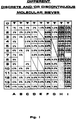
- FIG. I depicts compositions of discrete sequential (A,B) and discrete nonsequential (C-I) systems of different molecular sieves, comprising from layers (1-14) of copolymers of acrylamide gels, wherein each individual layer differs from the adjacent layer.
- Number "0" is assigned to the “sampling” or "stocking gel” equipped with sample holes.
- T indicates % T, e.g.. range of acrylamide comonomers concentration in percent, utilized in gels (represented in that particular column).
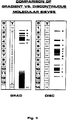
- a natural polydispersed macromolecular system e.g., pre-isolated serum lipoproteins by ultracentrifugation
- Numbers 1-14 indicate amount of layers.
- T indicates % T, e.g., range of acrylamide monomers concentration in percent, utilized in particular gels.
- GRAD Abbreviation
- DISC Abbreviations "DISC” accounts for a discrete, nonsequential, discontinuous and multitudinous polyacrylamide-agarose gels, forming sieves with specific partition coefficients for lipoproteins.
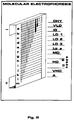
- FIG. III depicts a glass plate in homogeneous electric field with adhering system of discrete nonsequential gelous molecular sieves, build according to the methods described under EXAMPLE 7, in compliance with partition (K D ) and retardation (K R ) coefficients for analyzed lipoprotein classes and diagnostically important subclasses.
- the separating layers alternate with distantly layers (shaded intervals).
- Alphabetically arranged set of the letters correspond to the letters used for characterizing individual classes and subclasses of serum lipoproteins described under EXAMPLE 7. They are related to standard abbreviations of the lipoprotein classes and subclasses (to the right).
- the gel mixture for each layer of gel is prepared separately.
- Distilled and deionized water is added to each gel mixture, in order to adjust the total volume to 15.0 ml.
- the TBE buffer solution was prepared from 32.7078 g of TRIS, 14.8392 g of boric acid and 3.35025 g of Na 2 EDTA, dissolved in 3,000 ml of deionized water, after adjustment to the pH 8.3 with 2N HCl.
- the 6.4% DMAPN solution was prepared by resolving 16 ml of concentrated DMAPN in 250 ml of deionized water.
- the acrylamide- bisacrylamide solution was prepared by adding 47.5 g acrylamide to 2.5 g N,N'-methylenebisacrylamide in 250 ml of deionized water.
- the ammonium persulfate solution was prepared by adding 1.6 g ammonium persulfate in 100 ml of deionized water. (All chemicals were obtained from Sigma Chemicals).
- the serum lipoproteins were pre-isolated by ultracentrifugation at density 1.21 g/ml, adjusted by NaCl and KBr, using Beckman Model L Ultracentrifuge at 100 000 g for 16 hours in a Beckman type 50 rotor.
- the lipoproteins separated in gels were prestained (by mixing of equal volume of flotant with 5 g per L solution of Sudan Black B in ethylene glycol), or stained after a standard fixation (200 g trichloracetic acid in 1000 ml of distilled water) with Coomassie Blue G 250 for apolipoproteins (in a mixture of equal portions of acid copper sulfate solution and solved Coomassie Blue in diluted methanol), or Sudan Black B for lipidic moiety (using SBB in ethyleneglycol or in 60% ethanol), respectively Oil red O stain.
- the gels were thereafter destained a preserved in adequate preserving solution, or dried.
- a system of discrete, multitudinous, nonsequential gelous molecular sieves was prepared according to the design placed into column D, FIG. I and methods given in EXAMPLE 1.
- the specificity of this arrangement is based on an insertion of a polyacrylamide gradient gel-plate with linearly increasing concentration from 4 to 6% T into the position 8-10,
- Discrete or nondiscrete (e.g. continual), but sequential polyacrylamide gradient gels may replace any segment in a system of discrete, nonsequential, multitudinous gels, so far they contribute to the improvement in separation of analyzed biomacromolecules.
- Their sequence may be adjusted linearly, or exponentially. Their length may be variable. Any gelatinizing material may be employed.
- a system of multitudinous, discrete, nonsequential polyacrylamide gels, in part forming sieves with specific partition coefficients for analyzed macromolecules was prepared according to the plan given in column G, FIG. I with the exception of the layer numbers 3-7, where an another layer of a linear gradient 3.0-4.8% T polyacrylamide gel was inserted.
- the GPAAG itself eliminates the superior capability of the system of molecular sieves selected according to the K D and/or K R of individual classes of serum lipoproteins.
- IDL intermediate
- HDL very high-den sity lipoproteins
- the gel mixture for each layer of gel is prepared separately.
- TBE TRIS- Borate-Na 2 EDTA
- DMAPN 3-dimethylaminopropionitrile
- TEMED N,N,N',N',- t
- the 2% agarose was prepared according to the following specifications: 2g of Seakem agarose (Marine Colloids, Inc.) was dispersed into 90 ml of deionized, 70°C hot distilled water, cooled to 50°-55°C, adjusted to 100 ml and used, or stored at 4°C.
- Serum lipoproteins were pre-isolated, as described under EXAMPLE 1.
- composition of the basic gelous matrix there is no restriction concerning the composition of the basic gelous matrix, not the selection or composition, or concentration (0.5% agarose concentration was mostly used in this invention) of the filling material.
- This invention is not restricted to polyacrylamide gels used here only for an example. Any net forming and well netting material, resembling durable and well consistent gels may be employed for construction of discrete, multitudinous, nonsequential gels in order to construct molecular sieves with specific K D and/or K R for separations of intended groups or mixtures of biomacromolecules.
- the serum lipoproteins were separated into the classes and subclasses which were verified by their identification with corresponding classes and subclasses isolated by preparative ultracentrifugation at specific densities and by a reanalysis using analytical micro-ultracentrifugation, as well as by laser - light scattering spectroscopy and finally by immunochemical and chemical analyses.
- the concentrations of the copolymers in individual gel-layers were adjusted according to the appropriate K D and/or K R i in a mode which made possible to separate diagnostically important classes and subclasses of lipoproteins of low, intermediate and high molecular weight in one analytical system.
- HDL 1 - HDL 2 - HDL 3 The above-described modification allowed to separate better the subclasses of HDL: HDL 1 - HDL 2 - HDL 3 .
- the sequential, continuous gradients may be placed anywhere into the analytical system of nonsequential, discontinuous layers. They may be linear, or exponential.
- the length of the said continuous gradients may be variable and so may be the material, from which the said matrixes may be prepared.
- the optimal "filling matrix material” constitutes, for example, of an agarose and/or it derivatives, wherein any of the substituents are attached to the agarose molecule via: a hydroxyl linkage, or an ester linkage, or an ether linkage, or an amide linkage, or an amine linkage, or an isourea linkage, or a carbamate linkage.
- the layer number 14 was replaced in the standard agarose-polyacrylamide gel system of multitudinous, discrete, nonsequential molecular sieves, made according to the project given in the column F, FIG. I.
- ⁇ -aminohexyl-Sepharose 4B e.g. 1,6-diaminohexanesepharose, attached through the amino-group to Sepharose 4B. It contained 6-1 ⁇ moles of 1.6 diaminohexane per ml gel (Sigma, Chemical Company).
- the 2% derivative of Sepharose 4B was prepared according to the following specifications: 0.2 g of ⁇ -aminohexyl-Sepharose 4B was dissolved in 9.0 ml of distilled water, heated to 70°C, cooled to 50-55°C, adjusted to 10.0 ml with deionized water, cooled and stored in form of a gel at 4°C.
- the last molecular sieve possessed the function of a affinity chromatography medium.
- the length of the sieve may be adapted accordingly.
- the said specific layer with immunofixative capabilities has to be equipped with nonfiltrating, non-sieving properties, e.g., releasing particular molecular groups, passing through this matrix.
- the Lp(a) was routinely retained during regular analytical process, the protein-immuno-complex was eluted from the above specific matrix and the atherogenic lipoprotein Lp(a) was separated out for further physicochemical studies.
Landscapes
- Chemical & Material Sciences (AREA)
- Health & Medical Sciences (AREA)
- Life Sciences & Earth Sciences (AREA)
- Molecular Biology (AREA)
- Electrochemistry (AREA)
- Chemical Kinetics & Catalysis (AREA)
- General Health & Medical Sciences (AREA)
- Pathology (AREA)
- Analytical Chemistry (AREA)
- Biochemistry (AREA)
- Physics & Mathematics (AREA)
- General Physics & Mathematics (AREA)
- Immunology (AREA)
- Environmental & Geological Engineering (AREA)
- Engineering & Computer Science (AREA)
- Dispersion Chemistry (AREA)
- Solid-Sorbent Or Filter-Aiding Compositions (AREA)
- Processing And Handling Of Plastics And Other Materials For Molding In General (AREA)
- Investigating Or Analysing Biological Materials (AREA)
- Processes Of Treating Macromolecular Substances (AREA)
- Absorbent Articles And Supports Therefor (AREA)
- Treatment Of Liquids With Adsorbents In General (AREA)
- Measuring Or Testing Involving Enzymes Or Micro-Organisms (AREA)
Applications Claiming Priority (3)
| Application Number | Priority Date | Filing Date | Title |
|---|---|---|---|
| US62705490A | 1990-12-13 | 1990-12-13 | |
| US627054 | 1990-12-13 | ||
| PCT/US1991/009348 WO1992010277A1 (en) | 1990-12-13 | 1991-12-13 | Discontinuous and nonsequential polymeric gel systems for separation of macromolecules |
Publications (3)
| Publication Number | Publication Date |
|---|---|
| EP0563259A1 EP0563259A1 (en) | 1993-10-06 |
| EP0563259A4 EP0563259A4 (cs) | 1994-01-12 |
| EP0563259B1 true EP0563259B1 (en) | 1999-09-08 |
Family
ID=24512990
Family Applications (1)
| Application Number | Title | Priority Date | Filing Date |
|---|---|---|---|
| EP92903113A Expired - Lifetime EP0563259B1 (en) | 1990-12-13 | 1991-12-13 | Discontinuous and nonsequential polymeric gel systems for separation of macromolecules |
Country Status (8)
| Country | Link |
|---|---|
| US (1) | US5387325A (cs) |
| EP (1) | EP0563259B1 (cs) |
| AT (1) | ATE184211T1 (cs) |
| AU (1) | AU9162191A (cs) |
| CA (1) | CA2098306A1 (cs) |
| CS (1) | CS257291A3 (cs) |
| DE (1) | DE69131600D1 (cs) |
| WO (1) | WO1992010277A1 (cs) |
Families Citing this family (11)
| Publication number | Priority date | Publication date | Assignee | Title |
|---|---|---|---|---|
| HUT63158A (en) * | 1990-05-23 | 1993-07-28 | Lipogenics Inc | Process for obtaining tokotrienols, tokoferols and tokotrienol-like compounds and pahrmaceutical compositions comprising same as active ingredient |
| US5083315A (en) * | 1990-12-13 | 1992-01-28 | Johnson & Johnson Medical, Inc. | Unisex scrub shirt and methods for making same |
| US5589104A (en) * | 1993-12-30 | 1996-12-31 | Bambeck; Gregory S. | Electrophoresis separation gel and a method for preparing an electrophoresis separation gel |
| US5925229A (en) * | 1996-05-03 | 1999-07-20 | The Regents Of The University Of California | Low density lipoprotein fraction assay for cardiac disease risk |
| US6969615B2 (en) * | 1999-07-26 | 2005-11-29 | 20/20 Genesystems, Inc. | Methods, devices, arrays and kits for detecting and analyzing biomolecules |
| WO2001007915A2 (en) * | 1999-07-26 | 2001-02-01 | The Government Of The United States Of America, As Represented By The Secretary, Department Of Health & Human Services, The National Institutes Of Health | Layered device with capture regions for cellular analysis |
| US7838222B2 (en) * | 1999-07-26 | 2010-11-23 | United States of America/ NIH | Methods, devices and kits for multiplex blotting of biological samples from multi-well plates |
| US7214477B1 (en) | 1999-07-26 | 2007-05-08 | The United States Of America As Represented By The Secretary Of The Department Of Health And Human Services | Layered device with capture regions for cellular analysis |
| US6379519B1 (en) * | 1999-09-01 | 2002-04-30 | Mirador Dna Design Inc. | Disposable thermoformed electrophoresis cassette |
| US20060147926A1 (en) * | 2002-11-25 | 2006-07-06 | Emmert-Buck Michael R | Method and apparatus for performing multiple simultaneous manipulations of biomolecules in a two-dimensional array |
| CN105137070B (zh) * | 2015-08-03 | 2018-07-24 | 复旦大学附属中山医院 | 改良凝胶电泳检测血清前β1高密度脂蛋白的方法和应用 |
Family Cites Families (13)
| Publication number | Priority date | Publication date | Assignee | Title |
|---|---|---|---|---|
| US3384564A (en) * | 1962-11-21 | 1968-05-21 | Mount Sinai Hospital Res Found | Electrophoretic process for simultaneously spearating and concentrating particles |
| US4189370A (en) * | 1978-06-21 | 1980-02-19 | Societe Sebia | Process for obtaining gels of N-methylol-acrylamide copolymers and application of said gels for the stepped gradient separation of seric lipoproteins |
| US4312727A (en) * | 1979-03-23 | 1982-01-26 | The Cleveland Clinic Foundation | Glyoxal agarose and zonal immobilization of proteins therewith |
| US4319975A (en) * | 1980-10-20 | 1982-03-16 | Fmc Corporation | Derivatized agarose and method of making and using same |
| US4306956A (en) * | 1980-11-10 | 1981-12-22 | Miles Laboratories, Inc. | Discontinuous gel electrophoresis process |
| JPS59212751A (ja) * | 1983-05-19 | 1984-12-01 | Fuji Photo Film Co Ltd | 電気泳動媒体材料の製造方法 |
| JPS62173858A (ja) * | 1986-01-27 | 1987-07-30 | Nec Home Electronics Ltd | リモコン付テレビジヨン受像機の電源回路 |
| JPH0797339B2 (ja) * | 1987-04-21 | 1995-10-18 | 日本電気株式会社 | 制御装置システム |
| JPH01147355A (ja) * | 1987-12-02 | 1989-06-09 | Shimadzu Corp | 分子篩ユニット |
| JPH01173858A (ja) * | 1987-12-28 | 1989-07-10 | Fuji Photo Film Co Ltd | 電気泳動用媒体膜及び電気泳動方法 |
| JPH01263548A (ja) * | 1988-04-14 | 1989-10-20 | Fuji Photo Film Co Ltd | 電気泳動用媒体 |
| JP2597145B2 (ja) * | 1988-05-31 | 1997-04-02 | ハイモ株式会社 | 電気泳動用ゲルの製造方法 |
| US5078853A (en) * | 1991-03-22 | 1992-01-07 | Assay Technology, Inc. | Segmented electrophoretic separation system useful for lipid profiling |
-
1991
- 1991-08-20 CS CS912572A patent/CS257291A3/cs unknown
- 1991-12-13 AU AU91621/91A patent/AU9162191A/en not_active Abandoned
- 1991-12-13 US US08/074,847 patent/US5387325A/en not_active Expired - Fee Related
- 1991-12-13 WO PCT/US1991/009348 patent/WO1992010277A1/en not_active Ceased
- 1991-12-13 DE DE69131600T patent/DE69131600D1/de not_active Expired - Lifetime
- 1991-12-13 EP EP92903113A patent/EP0563259B1/en not_active Expired - Lifetime
- 1991-12-13 CA CA002098306A patent/CA2098306A1/en not_active Abandoned
- 1991-12-13 AT AT92903113T patent/ATE184211T1/de not_active IP Right Cessation
Also Published As
| Publication number | Publication date |
|---|---|
| CA2098306A1 (en) | 1992-06-14 |
| CS257291A3 (en) | 1992-06-17 |
| DE69131600D1 (de) | 1999-10-14 |
| EP0563259A1 (en) | 1993-10-06 |
| EP0563259A4 (cs) | 1994-01-12 |
| AU9162191A (en) | 1992-07-08 |
| US5387325A (en) | 1995-02-07 |
| WO1992010277A1 (en) | 1992-06-25 |
| ATE184211T1 (de) | 1999-09-15 |
Similar Documents
| Publication | Publication Date | Title |
|---|---|---|
| US5968332A (en) | Discontinuous and nonsequential polymeric gel systems for separation of macromolecules | |
| Maurer | Disc electrophoresis and related techniques of polyacrylamide gel electrophoresis | |
| EP0563259B1 (en) | Discontinuous and nonsequential polymeric gel systems for separation of macromolecules | |
| Moss et al. | Hydroxylapatite chromatography of protein-sodium dodecyl sulfate complexes: A new method for the separation of polypeptide subunits | |
| Richards et al. | Disc electrophoresis of ribonucleic acid in polyacrylamide gels | |
| Dennison | A guide to protein isolation | |
| Gordon | Electrophoresis of Proteins in Polyacrylamide and Starch Gels: Laboratory Techniques in Biochemistry and Molecular Biology | |
| Mould et al. | Electrokinetic ultrafiltration analysis of polysaccharides. A new approach to the chromatography of large molecules | |
| US4756834A (en) | Phase supports for the partition chromatography of macromolecules, a process for their preparation and their use | |
| Righetti | Of matrices and men | |
| Eisenberg et al. | Hydrodynamic studies of the interaction between nucleosome core particles and core histones | |
| Ito et al. | Micro liquid-liquid partition techniques with the coil planet centrifuge | |
| US20080314751A1 (en) | Electrophoretic Separation of Analytes by Molecular Mass | |
| Latner et al. | A simplified technique of high resolution two-dimensional electrophoresis: serum immunoglobulins | |
| US7033477B2 (en) | Electrophoresis gel assembly | |
| Oss Van | Electrokinetic separation methods | |
| Butterman et al. | Ferguson plots based on absolute mobilities in polyacrylamide gel electrophoresis: Dependence of linearity of polymerization conditions and application to the determination of free mobility | |
| Takagi et al. | Effect of salt concentration on the elution properties of complexes formed between sodium dodecylsulphate and protein polypeptides in high-performance silica gel chromatography | |
| EP0442177A1 (en) | Electrophoretic sieving in gel-free media with dissolved polymers | |
| Chrambach et al. | Isotachophoresis on polyacrylamide gel | |
| Wenisch et al. | Capillary zone electrophoresis for monitoring r-DNA protein purification in multi-compartment electrolysers with immobiline membranes | |
| Wilson et al. | Preparative isoelectric focusing of immunologically reactive components of Aspergillus fumigatus mycelium | |
| Okotore | Basic separation techniques in biochemistry | |
| Felgenhauer | Characterization of native multicomponent protein mixtures bu one-and two-dimensional gradient electrophoresis | |
| EP0645010A4 (en) | DIAGNOSTIC METHOD FOR DETECTING ACTIVE ATHEROGENESIS. |
Legal Events
| Date | Code | Title | Description |
|---|---|---|---|
| PUAI | Public reference made under article 153(3) epc to a published international application that has entered the european phase |
Free format text: ORIGINAL CODE: 0009012 |
|
| 17P | Request for examination filed |
Effective date: 19930712 |
|
| AK | Designated contracting states |
Kind code of ref document: A1 Designated state(s): AT BE CH DE DK FR GB IT LI NL SE |
|
| A4 | Supplementary search report drawn up and despatched |
Effective date: 19931126 |
|
| AK | Designated contracting states |
Kind code of ref document: A4 Designated state(s): AT BE CH DE DK FR GB IT LI NL SE |
|
| 17Q | First examination report despatched |
Effective date: 19950725 |
|
| GRAG | Despatch of communication of intention to grant |
Free format text: ORIGINAL CODE: EPIDOS AGRA |
|
| GRAG | Despatch of communication of intention to grant |
Free format text: ORIGINAL CODE: EPIDOS AGRA |
|
| GRAG | Despatch of communication of intention to grant |
Free format text: ORIGINAL CODE: EPIDOS AGRA |
|
| GRAH | Despatch of communication of intention to grant a patent |
Free format text: ORIGINAL CODE: EPIDOS IGRA |
|
| GRAH | Despatch of communication of intention to grant a patent |
Free format text: ORIGINAL CODE: EPIDOS IGRA |
|
| GRAA | (expected) grant |
Free format text: ORIGINAL CODE: 0009210 |
|
| AK | Designated contracting states |
Kind code of ref document: B1 Designated state(s): AT BE CH DE DK FR GB IT LI NL SE |
|
| PG25 | Lapsed in a contracting state [announced via postgrant information from national office to epo] |
Ref country code: SE Free format text: THE PATENT HAS BEEN ANNULLED BY A DECISION OF A NATIONAL AUTHORITY Effective date: 19990908 Ref country code: NL Free format text: LAPSE BECAUSE OF FAILURE TO SUBMIT A TRANSLATION OF THE DESCRIPTION OR TO PAY THE FEE WITHIN THE PRESCRIBED TIME-LIMIT Effective date: 19990908 Ref country code: LI Free format text: LAPSE BECAUSE OF FAILURE TO SUBMIT A TRANSLATION OF THE DESCRIPTION OR TO PAY THE FEE WITHIN THE PRESCRIBED TIME-LIMIT Effective date: 19990908 Ref country code: IT Free format text: LAPSE BECAUSE OF FAILURE TO SUBMIT A TRANSLATION OF THE DESCRIPTION OR TO PAY THE FEE WITHIN THE PRE;WARNING: LAPSES OF ITALIAN PATENTS WITH EFFECTIVE DATE BEFORE 2007 MAY HAVE OCCURRED AT ANY TIME BEFORE 2007. THE CORRECT EFFECTIVE DATE MAY BE DIFFERENT FROM THE ONE RECORDED.SCRIBED TIME-LIMIT Effective date: 19990908 Ref country code: FR Free format text: LAPSE BECAUSE OF FAILURE TO SUBMIT A TRANSLATION OF THE DESCRIPTION OR TO PAY THE FEE WITHIN THE PRESCRIBED TIME-LIMIT Effective date: 19990908 Ref country code: CH Free format text: LAPSE BECAUSE OF FAILURE TO SUBMIT A TRANSLATION OF THE DESCRIPTION OR TO PAY THE FEE WITHIN THE PRESCRIBED TIME-LIMIT Effective date: 19990908 Ref country code: BE Free format text: LAPSE BECAUSE OF FAILURE TO SUBMIT A TRANSLATION OF THE DESCRIPTION OR TO PAY THE FEE WITHIN THE PRESCRIBED TIME-LIMIT Effective date: 19990908 Ref country code: AT Free format text: LAPSE BECAUSE OF FAILURE TO SUBMIT A TRANSLATION OF THE DESCRIPTION OR TO PAY THE FEE WITHIN THE PRESCRIBED TIME-LIMIT Effective date: 19990908 |
|
| REF | Corresponds to: |
Ref document number: 184211 Country of ref document: AT Date of ref document: 19990915 Kind code of ref document: T |
|
| REG | Reference to a national code |
Ref country code: CH Ref legal event code: EP |
|
| REF | Corresponds to: |
Ref document number: 69131600 Country of ref document: DE Date of ref document: 19991014 |
|
| PG25 | Lapsed in a contracting state [announced via postgrant information from national office to epo] |
Ref country code: DK Free format text: LAPSE BECAUSE OF FAILURE TO SUBMIT A TRANSLATION OF THE DESCRIPTION OR TO PAY THE FEE WITHIN THE PRESCRIBED TIME-LIMIT Effective date: 19991208 |
|
| PG25 | Lapsed in a contracting state [announced via postgrant information from national office to epo] |
Ref country code: DE Free format text: LAPSE BECAUSE OF FAILURE TO SUBMIT A TRANSLATION OF THE DESCRIPTION OR TO PAY THE FEE WITHIN THE PRESCRIBED TIME-LIMIT Effective date: 19991209 |
|
| PG25 | Lapsed in a contracting state [announced via postgrant information from national office to epo] |
Ref country code: GB Free format text: LAPSE BECAUSE OF NON-PAYMENT OF DUE FEES Effective date: 19991213 |
|
| NLV1 | Nl: lapsed or annulled due to failure to fulfill the requirements of art. 29p and 29m of the patents act | ||
| EN | Fr: translation not filed | ||
| REG | Reference to a national code |
Ref country code: CH Ref legal event code: PL |
|
| PLBE | No opposition filed within time limit |
Free format text: ORIGINAL CODE: 0009261 |
|
| STAA | Information on the status of an ep patent application or granted ep patent |
Free format text: STATUS: NO OPPOSITION FILED WITHIN TIME LIMIT |
|
| GBPC | Gb: european patent ceased through non-payment of renewal fee |
Effective date: 19991213 |
|
| 26N | No opposition filed |