EP0553759B1 - Cloth suitable for textile printing and ink-jet textile printing method - Google Patents
Cloth suitable for textile printing and ink-jet textile printing method Download PDFInfo
- Publication number
- EP0553759B1 EP0553759B1 EP93101119A EP93101119A EP0553759B1 EP 0553759 B1 EP0553759 B1 EP 0553759B1 EP 93101119 A EP93101119 A EP 93101119A EP 93101119 A EP93101119 A EP 93101119A EP 0553759 B1 EP0553759 B1 EP 0553759B1
- Authority
- EP
- European Patent Office
- Prior art keywords
- ink
- cloth
- textile printing
- jet textile
- jet
- Prior art date
- Legal status (The legal status is an assumption and is not a legal conclusion. Google has not performed a legal analysis and makes no representation as to the accuracy of the status listed.)
- Expired - Lifetime
Links
Images

Classifications
-
- D—TEXTILES; PAPER
- D06—TREATMENT OF TEXTILES OR THE LIKE; LAUNDERING; FLEXIBLE MATERIALS NOT OTHERWISE PROVIDED FOR
- D06P—DYEING OR PRINTING TEXTILES; DYEING LEATHER, FURS OR SOLID MACROMOLECULAR SUBSTANCES IN ANY FORM
- D06P5/00—Other features in dyeing or printing textiles, or dyeing leather, furs, or solid macromolecular substances in any form
- D06P5/30—Ink jet printing
-
- D—TEXTILES; PAPER
- D06—TREATMENT OF TEXTILES OR THE LIKE; LAUNDERING; FLEXIBLE MATERIALS NOT OTHERWISE PROVIDED FOR
- D06P—DYEING OR PRINTING TEXTILES; DYEING LEATHER, FURS OR SOLID MACROMOLECULAR SUBSTANCES IN ANY FORM
- D06P1/00—General processes of dyeing or printing textiles, or general processes of dyeing leather, furs, or solid macromolecular substances in any form, classified according to the dyes, pigments, or auxiliary substances employed
- D06P1/0004—General aspects of dyeing
-
- Y—GENERAL TAGGING OF NEW TECHNOLOGICAL DEVELOPMENTS; GENERAL TAGGING OF CROSS-SECTIONAL TECHNOLOGIES SPANNING OVER SEVERAL SECTIONS OF THE IPC; TECHNICAL SUBJECTS COVERED BY FORMER USPC CROSS-REFERENCE ART COLLECTIONS [XRACs] AND DIGESTS
- Y10—TECHNICAL SUBJECTS COVERED BY FORMER USPC
- Y10S—TECHNICAL SUBJECTS COVERED BY FORMER USPC CROSS-REFERENCE ART COLLECTIONS [XRACs] AND DIGESTS
- Y10S428/00—Stock material or miscellaneous articles
- Y10S428/913—Material designed to be responsive to temperature, light, moisture
-
- Y—GENERAL TAGGING OF NEW TECHNOLOGICAL DEVELOPMENTS; GENERAL TAGGING OF CROSS-SECTIONAL TECHNOLOGIES SPANNING OVER SEVERAL SECTIONS OF THE IPC; TECHNICAL SUBJECTS COVERED BY FORMER USPC CROSS-REFERENCE ART COLLECTIONS [XRACs] AND DIGESTS
- Y10—TECHNICAL SUBJECTS COVERED BY FORMER USPC
- Y10S—TECHNICAL SUBJECTS COVERED BY FORMER USPC CROSS-REFERENCE ART COLLECTIONS [XRACs] AND DIGESTS
- Y10S8/00—Bleaching and dyeing; fluid treatment and chemical modification of textiles and fibers
- Y10S8/916—Natural fiber dyeing
- Y10S8/917—Wool or silk
-
- Y—GENERAL TAGGING OF NEW TECHNOLOGICAL DEVELOPMENTS; GENERAL TAGGING OF CROSS-SECTIONAL TECHNOLOGIES SPANNING OVER SEVERAL SECTIONS OF THE IPC; TECHNICAL SUBJECTS COVERED BY FORMER USPC CROSS-REFERENCE ART COLLECTIONS [XRACs] AND DIGESTS
- Y10—TECHNICAL SUBJECTS COVERED BY FORMER USPC
- Y10T—TECHNICAL SUBJECTS COVERED BY FORMER US CLASSIFICATION
- Y10T442/00—Fabric [woven, knitted, or nonwoven textile or cloth, etc.]
- Y10T442/20—Coated or impregnated woven, knit, or nonwoven fabric which is not [a] associated with another preformed layer or fiber layer or, [b] with respect to woven and knit, characterized, respectively, by a particular or differential weave or knit, wherein the coating or impregnation is neither a foamed material nor a free metal or alloy layer
- Y10T442/2762—Coated or impregnated natural fiber fabric [e.g., cotton, wool, silk, linen, etc.]
- Y10T442/277—Coated or impregnated cellulosic fiber fabric
- Y10T442/2779—Coating or impregnation contains an acrylic polymer or copolymer [e.g., polyacrylonitrile, polyacrylic acid, etc.]
-
- Y—GENERAL TAGGING OF NEW TECHNOLOGICAL DEVELOPMENTS; GENERAL TAGGING OF CROSS-SECTIONAL TECHNOLOGIES SPANNING OVER SEVERAL SECTIONS OF THE IPC; TECHNICAL SUBJECTS COVERED BY FORMER USPC CROSS-REFERENCE ART COLLECTIONS [XRACs] AND DIGESTS
- Y10—TECHNICAL SUBJECTS COVERED BY FORMER USPC
- Y10T—TECHNICAL SUBJECTS COVERED BY FORMER US CLASSIFICATION
- Y10T442/00—Fabric [woven, knitted, or nonwoven textile or cloth, etc.]
- Y10T442/20—Coated or impregnated woven, knit, or nonwoven fabric which is not [a] associated with another preformed layer or fiber layer or, [b] with respect to woven and knit, characterized, respectively, by a particular or differential weave or knit, wherein the coating or impregnation is neither a foamed material nor a free metal or alloy layer
- Y10T442/2762—Coated or impregnated natural fiber fabric [e.g., cotton, wool, silk, linen, etc.]
- Y10T442/277—Coated or impregnated cellulosic fiber fabric
- Y10T442/2787—Coating or impregnation contains a vinyl polymer or copolymer
Definitions
- This invention relates to a cloth suitable for textile printing and an ink-jet textile printing method.
- the cloth of this invention is suitable for ink-jet textile printing which is mainly composed of silk fibers and which exhibits a high degree of exhaustion and high coloring property when used in the formation of a printed image by ink-jet textile printing, making it possible to obtain a clear and fine pattern.
- This invention also relates to an ink-jet textile printing method using such a cloth.
- screen textile printing and roller textile printing are the most common methods of textile printing.
- One problem with these methods is that they require preparation of a plate, so that they are not suitable for the production of a variety of articles in small quantities. Further, it is hard to quickly adapt these methods to the fashions of the day.
- an electronic textile-printing system that does not require plate making is presently desired.
- a number of textile-printing methods based on ink-jet recording have been proposed, and much is expected of these methods from all quarters.
- Japanese Patent Laid-Open No. 62-53492 discloses a kind of cloth having an ink-reception layer.
- a cloth suitable for textile printing which is comprised of threads made up mainly of silk fibers, said silk threads and silk fibers respectively having a thickness of 15.4 to 161.7 dtex (14 to 147d) and 2.75 to 3.85 dtex (2.5 to 3.5d), the cloth having a moisture regain of 17 to 112% by weight, as determined according to JIS L 1019.
- the symbol "d” after figures denotes the unit "denier”.
- this invention provides an ink-jet textile-printing method according to claim 12.
- An ink-jet textile printing method which uses an ink having a much lower viscosity as compared with conventional printing paste, and forming images by a dot expression of this ink, involves an extremely large number of restrictions with respect to the physical characteristics of the cloth. This is particularly true in the case of a cloth mainly composed of silk fibers.
- the present inventors While attempting to improve a cloth suitable for textile printing mainly composed of silk fibers so that it may satisfy the various requirements mentioned above, the present inventors have found that, apart from the improvements effected, for example, by conducting pre-processes on the cloth as in the prior art, it is possible to remarkably improve the various properties of the cloth, such as coloring property, degree of exhaustion, fixing property, blurring retardation and feeding property, by keeping the moisture regain of the cloth, which is a basic characteristic of the material, within a fixed range.
- the present inventors have found that it is possible to still further improve the various properties of the cloth, such as coloring property, degree of exhaustion, fixing property, blurring retardation and feeding property, by keeping the average thickness of the silk threads composing the cloth, and the average thickness of the fibers composing the silk threads, within fixed ranges, which thicknesses are basic characteristics of the material, in addition to controlling the moisture regain of the cloth, thus attaining the present invention.
- the cloth suitable for textile printing according to the present invention is mainly composed of silk fibers.
- the cloth has a moisture regain of 17 to 112% and is formed of silk threads which have an average thickness of 15.4 to 161.7 dtex (14 to 147d) and which are composed of silk fibers having an average thickness of 2.75 to 3.85 dtex (2.5 to 3.5d).
- the cloth of the present invention is mainly composed of silk fibers.
- the silk is composed of cocoon fibers obtained from the cocoons of silkworms.
- Raw silk obtained from cocoons is an excellent smooth material which has an elegant silky gloss and which is soft to the touch and supple.
- Silk fabrics or the like made from this material have various fine properties: they have an appropriate degree of suppleness, are soft to the touch, have an excellent and beautiful gloss, and can be dyed beautiful colors, etc., so that they have been popularly preferred as a clothing material.
- Silk fibers consist of a protein called fibroin sericin formed through amino-acid condensation polymerization. Glycine and alanine, which are the amino acids constituting fibroin, form a multitude of peptide linkages to form filamentous high polymers, which in turn accumulate to form monofilaments. A number of these monofilaments are doubled into silk threads having the requisite thickness, which number varies depending on the use.
- a "cloth suitable for textile printing” implies a woven fabric, a non-woven fabric, a knitted fabric, and a plush fabric which are mainly composed of silk threads.
- the cloth can also be used as a cloth suitable for textile printing according to this invention, if the blending ratio is 70% or more or, more preferably, 80% or more of silk fibers.
- the moisture regain which is a characterizing factor of the cloth suitable for textile printing of this invention, ranges from 17 to 112%, more preferably, from 18 to 92%, and most preferably, from 19 to 72%.
- a moisture regain of less than 17% results in problems in coloring property and degree of exhaustion.
- a moisture regain of more than 112% results in problems in feeding property and blurring.
- the official moisture regain of raw silk is 12%.
- the measurement of the moisture regain of the cloth was conducted referring to JIS L 1019. That is, 100g of a sample was accurately weighed and put in a desiccator at 105 ⁇ 2°C to be dried until a constant weight was reached.
- the cloth suitable for ink-jet textile printing according to this invention has an average thickness of the silk fibers that is kept to 2.75 to 3.85 dtex (2.5 to 3.5d), and preferably 2.97 to 3.63 dtex (2.7 to 3.3d), and has an average thickness of the silk threads formed of the silk fibers that is kept to 15.4 to 161.7 dtex (14 to 147d), preferably 15.4 to 138.6 dtex (14 to 126d) and more preferably 15.4 to 115.5 dtex (14 to 105d), the thread being formed into cloth by a conventional method.
- An average fiber thickness which is above or below these ranges results in inappropriate intertwining of the silk fibers, and leads to problems in dyeing properties, degree of exhaustion, blurring and fixation properties of the ink and, further, in feeding property of the cloth inside the apparatus.
- water-soluble high molecular weight polymer examples include: starch substances, such as corn and wheat flour; cellulose-type substances, such as carboxymethyl cellulose, methyl cellulose and hydroxyethyl cellulose; polysaccharides, such as sodium alginate, gum arabic, locust bean gum, tragacanth gum, guar gum and tamarind seeds; protein substances, such as gelatin and casein; natural water-soluble high molecular weight polymers, such as tannin-type substances and lignin-type substances.
- starch substances such as corn and wheat flour
- cellulose-type substances such as carboxymethyl cellulose, methyl cellulose and hydroxyethyl cellulose
- polysaccharides such as sodium alginate, gum arabic, locust bean gum, tragacanth gum, guar gum and tamarind seeds
- protein substances such as gelatin and casein
- natural water-soluble high molecular weight polymers such as tannin-type substances and lignin-type substances.
- Examples of a synthetic high polymer include: polyvinyl alcohol compounds, polyethylene oxide compounds, acrylic-type water-soluble high molecular weight polymers, and maleic-anhydride-type water-soluble high molecular weight polymers. Of these, the polysaccharide-type high polymers and the cellulose-type high polymers are especially preferable.
- water-soluble metallic salt examples include compounds forming typical ionic crystals and having a pH ranging from 4 to 10, like halides of alkaline metals or alkaline earth metals.
- Typical examples of the alkaline-metal salt include: NaCl, Na 2 SO 4 , KCl and CH 3 COONa.
- Typical examples of the alkaline-earth-metal salt include: CaCl 2 and MgCl 2 . Of these, salts of Na, K and Ca are especially preferable.
- textile-printing ink used for the textile-printing cloth of this invention there is no particular limitation regarding the textile-printing ink used for the textile-printing cloth of this invention as long as the ink is capable of dyeing silk fibers.
- An ink-jet textile-printing ink composed of a dye and an aqueous liquid medium is preferably employed.
- dyes preferably used in the present invention include: acid dyes, 2:1-type metal complex dyes, basic dyes, direct dyes, reactive dyes, mordant dyes, acid mordant dyes, sulfur dyes, vat dyes, solubilized vat dyes, vegetable dyes, animal dyes, etc.
- acid dyes, reactive dyes and direct dyes are especially preferable.
- These dyes can be used alone or in the form of a mixture, or as a mixture having different hues.
- the amount of dye used generally ranges from 2 to 25 wt%, more preferably, from 3 to 20 wt% and, most preferably, from 3 to 15 wt%, with respect to the total ink amount.
- a dye amount that is less than 2 wt% results in insufficient coloring density, and more than 25 wt% results in insufficient ink ejection property.
- approximately 10 to 20,000 ppm of chlorine ions and/or sulfate ions are added, with respect to the amount of dyes contained in the ink, and approximately 0.1 to 30 ppm in total of at least one kind of substance selected from the group: silicon, iron, nickel and zinc, is added to the ink.
- the ink in addition to the above-mentioned metallic salts, it is desirable for the ink to contain a total amount of calcium and/or magnesium of 0.1 to 30 ppm, more preferably, 0.2 to 20 ppm and, most preferably, 0.3 to 10 ppm, thereby attaining further improvement particularly in the degree of exhaustion.
- Water which is a preferred component of the liquid medium composing the ink of the ink-jet textile printing of this invention, composes 30 to 90 wt%, more preferably, 40 to 90 wt% and, most preferably, 50 to 85 wt%, with respect to the total ink amount.
- organic solvent examples include: ketones or keto alcohols, such as acetone and diacetone alcohol; ethers, such as tetrahydrofuran and dioxane; addition polymers of oxyethylene or oxypropylene, such as diethylene glycol, triethylene glycol, tetraethylene glycol, diproplyene glycol, tripropylene glycol, polyethylene glycol and polypropylene glycol; alkylene glycols having two to six carbon atoms, such as ethylene glycol, propylene glycol, trimethylene glycol, butylene glycol and hexylene glycol; triols, such as 1,2,6-hexanetriol; thiodiglycol; glycerin; low alkylethers of polyhydric alcohols, such as ethyleneglycol monomethyl
- the content of the above water-soluble organic solvents is generally 3 to 60 wt% and, more preferably, 5 to 50 %, with respect to the total weight of the ink.
- Liquid mediums as mentioned above may be used alone or in a mixture.
- the most desirable liquid-medium composition contains at least one type of polyhydric alcohol.
- a composition consisting of thioglycol alone or a mixture of diethyleneglycol and thiodiglycol is especially preferable.
- additives include: viscosity controlling agents, such as polyvinyl alcohol and water-soluble resins; various surface active agents of cationic or nonionic type; surface tension controlling agents, such as diethanolamine and triethanolamine; pH regulators with buffer solution, anti-mildew agents, etc.
- ink-jet textile-printing method of this invention textile printing is performed on a textile-printing cloth according to this invention, using a textile-printing ink as described above.
- Any known ink-jet recording system may be employed.
- the most effective example of the ink-jet recording system is disclosed in Japanese Patent Laid-Open No. 54-59936, in which the volume of ink increases rapidly by the action of heat energy and, as a result of this change in state, the ink is ejected through the nozzles.
- the ejected droplets be within the range of 20 to 200 pl (10 -12 l) and the ink application within the range of 4 to 40 nl/mm 2 .
- An example of an apparatus suitable for textile printing using the textile-printing cloth of this invention is one which imparts heat energy corresponding to recording signals to the ink in the recording-head chamber, causing ink droplets to be generated by heat energy.
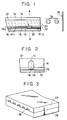
- Figs. 1, 2 and 3 show an example of the construction of the head which constitutes the principal section of the apparatus.
- a head 13 is formed by gluing a plate made of glass, a ceramic material or plastic and having a groove 14 passing ink, to a heat generating head 15 used in thermal recording (though the drawings show a head, the present invention is not limited to such a head).
- the heat generating head 15 is composed of a protective layer 16 made of silicon oxide or the like, aluminum electrodes 17-1 and 17-2, a heat-generating-resistor layer 18 made of nichrome or the like, a heat storage layer 19, and a substrate 20 made of a material having satisfactory radiation properties, such as alumina.
- Ink 21 reaches an ejection orifice (a minute hole) 22, forming a meniscus 23 by a pressure P.
- Fig. 3 shows the outward appearance of a multi-head formed by arranging a number of heads together as shown in Fig. 1. This multi-head is produced by closely attaching a glass plate 27 having multi-grooves 26 to a heat generating head 28 similar to the one described with reference to Fig. 1.
- Fig. 1 is a sectional view of the head 13 taken along the ink flow passage
- Fig. 2 is a sectional view taken along the line A-B of Fig. 1.
- Fig. 4 shows an example of an ink-jet recording apparatus with such a head incorporated therein.
- Numeral 61 indicates a blade serving as a wiping member, one end of which is held by a blade holding member forming a fixed end, thus exhibiting a cantilever-like structure.
- the blade 61 is arranged adjacent to the area where recording is performed by the recording head. In this example, the blade 61 is held in a position in which it protrudes into the path of movement of the recording head.
- Numeral 62 indicates a cap, which is arranged at a home position adjacent to the blade 61 and which is adapted to move in a direction perpendicular to the direction of movement of the recording head, abutting the ejection surface of the head, thereby effecting capping.
- Numeral 63 indicates an absorbing member provided adjacent to the blade 61 and held, like the blade 61, in a position in which it protrudes into the path of movement of the recording head.
- the blade 61, the cap 62 and the absorbing member 63 constitute an ejection-performance recovery section 64, which removes water, dust, etc. from the ink-ejection surface by the blade 61 and the absorbing member 63.
- Numeral 65 indicates a recording head which has an energy generating means and which ejects ink onto a cloth containing silk fibers and opposed to the ejection surface of the head having ejection outlets, thereby effecting recording.
- Numeral 66 indicates a carriage for moving the recording head 65, which is mounted thereon. The carriage 66 is slidably engaged with a guide shaft 67, and a part of the carriage 66 is connected with a belt 69 (the connection is not shown) driven by a motor 68. Due to this arrangement, the carriage 66 can move along the guide shaft 67, making it possible for the recording head 65 to move across the area where recording is performed and the area adjacent thereto.
- Numeral 51 indicates a cloth feeding section for inserting the cloth of this invention, which is mainly composed of silk fibers.
- Numeral 52 indicates a feeding roller driven by a motor (not shown). Due to this construction, the cloth of this invention is fed to a position where it faces the ejection-outlet surface of the recording head. As the recording proceeds, the cloth is transferred to a cloth discharge section where cloth-discharge rollers 53 are arranged.
- the cap 62 of the ejection-performance recovery section 64 is withdrawn from the path of movement of the recording head 65, whereas the blade 61 continues to protrude into the path of movement. As a result, the ejection-outlet surface of the recording head 65 is wiped.
- the cap 62 is brought into abutment with the ejection-outlet surface of the recording head 65 so as to effect capping, the cap 62 is moved in such a way as to protrude into the path of movement of the recording head.
- the cap 62 and the blade 61 are at the same positions as those where the above-described wiping is performed. As a result, the ejection-outlet surface of the recording head 65 is also wiped in the course of this movement.
- the above movement of the recording head to the home position is performed not only upon completion of recording or at the time of ejection-performance recovery, but also during the movement of the recording head across the recording area for the purpose of recording. That is, during recording movement, the recording head moves at fixed intervals to the home position adjacent to the recording area, effecting the above-mentioned wiping.
- the textile-printing ink which has been imparted by the method of this invention to the textile-printing cloth of this invention, only sticks to the cloth, but is not fixed thereto.
- a process for fixing the ink to the cloth by reactive fixation and a process of removing unfixed dye should follow.
- the two processes may be effected by conventionally known methods, such as steaming, HT steaming or thermofixing, in which washing is conducted after processing.
- a woven fabric of 100% silk consisting of silk threads having an average thickness of 46.2 dtex (42d) and composed of silk fibers having an average thickness of 3.3 dtex (3d), was immersed in a water vessel, and its moisture regain was adjusted to 20% by adjusting the squeezing ratio.
- the squeezing ratio is a value obtained by the formula: a b x 100 (where "a” is an increase in the weight of a cloth when it has been immersed in a processing liquid and then squeezed by a mangle or the like; and “b” is the weight of the cloth prior to the processing).
- a woven fabric of 100% silk consisting of silk threads having an average thickness of 69.3 dtex (63d) and composed of silk fibers having an average thickness of 3.52 dtex (3.2d), was immersed in a water vessel, and its moisture regain was adjusted to 30% by adjusting the squeezing ratio.
- a woven fabric like that of Example 1, of 100% silk was immersed beforehand in an aqueous solution of sodium alginate having a concentration of 5%, and was then immersed in a water vessel. Its moisture regain was adjusted to 20% by adjusting the squeezing ratio.
- a woven fabric of 100% silk consisting of silk threads having an average thickness of 23.1 dtex (21d) and composed of silk fibers having an average thickness of 2.97 dtex (2.7d), was immersed in a water vessel, and its moisture regain was adjusted to 60% by adjusting the squeezing ratio.
- Printing was performed on this woven fabric in the same manner as in Example 1, and the dyed article was evaluated for clarity and blurring retardation. The evaluation results are given in Table 1.
- a woven fabric of 85% silk consisting of silk threads having an average thickness of 30.8 dtex (28d) and composed of silk fibers having an average thickness of 3.08 dtex (2.8d), and 15% of nylon, was immersed in a water vessel, and its moisture regain was adjusted to 50% by adjusting the squeezing ratio.
- Printing was performed on this woven fabric in the same manner as in Example 1, and the dyed article was evaluated for clarity and blurring retardation. The evaluation results are given in Table 1.
- a woven fabric of 100% silk consisting of silk threads having an average thickness of 46.2 dtex (42d) and composed of silk fibers having an average thickness of 3.3 dtex (3.0d), was immersed in a water vessel, and its moisture regain was adjusted to 40% by adjusting the squeezing ratio.
- Printing was performed on this woven fabric in the same manner as in Example 1, and the dyed article was evaluated for clarity and blurring retardation. The evaluation results are given in Table 1.
- a woven fabric of 100% silk consisting of silk threads having an average thickness of 92.4 dtex (84d) and composed of silk fibers having an average thickness of 3.52 dtex (3.2d), was immersed in a water vessel, and its moisture regain was adjusted to 70% by adjusting the squeezing ratio.
- Printing was performed on this woven fabric in the same manner as in Example 1, and the dyed article was evaluated for clarity and blurring retardation. The evaluation results are given in Table 1.
- a woven fabric like that of Example 5, of 100% silk was immersed beforehand in an aqueous solution of sodium alginate having a concentration of 5%, and its moisture regain was adjusted to 20%.
- a woven fabric of 100% silk like that used in Example 1 was immersed in a water vessel, and its moisture regain was adjusted to 20% by adjusting the squeezing ratio. After that, the cloth was dried to adjust its moisture regain to 8%.
- Printing was performed on this woven fabric in the same manner as in the above examples, using the same ink-jet textile-printing inks (A) to (H) as used in the above examples, and the dyed article was evaluated for clarity and blurring retardation. The evaluation results are given in Table 1. The densities of the printed articles were lower than those of Example 1, resulting in a poorer degree of exhaustion.
- a woven fabric of 100% silk like that of Example 1 was immersed in a water vessel, and its moisture regain was adjusted to 115% by adjusting the squeezing ratio.
- Printing was performed on this woven fabric in the same manner as in the above examples, using the same ink-jet textile-printing inks (A) to (H) as used in the above examples, and the dyed article was evaluated for clarity and blurring retardation.
- the evaluation results are given in Table 1.
- Regarding conveyance properties problems were found in terms of feeding precision.
- a woven fabric of 100% silk consisting of silk threads having an average thickness of 13.2 dtex (12d) and composed of silk fibers having an average thickness of 2.53 dtex (2.3d), was immersed in a water vessel.
- Printing was performed on this woven fabric in the same manner as in the above examples, using the same ink-jet textile-printing inks (A) to (H) as used in the above examples, and the dyed article was evaluated for clarity and blurring retardation.
- the evaluation results are given in Table 1. The densities of the printed articles were lower than those of the above examples, resulting in poorer degree of exhaustion.
- a woven fabric of 100% silk consisting of silk threads which had an average thickness of 165 dtex (150d) and which were composed of silk fibers having an average thickness of 3.96 dtex (3.6d), was immersed in a water vessel, and its moisture regain was adjusted to 50% by adjusting the squeezing ratio.
- Printing was performed on this woven fabric in the same manner as in the above examples, using the same ink-jet textile-printing inks (A) to (H) as used in the above examples, and the dyed article was evaluated for clarity and blurring retardation.
- the evaluation results are given in Table 1.
- the densities of the printed articles were lower than those of the above examples, resulting in a poorer degree of exhaustion. Also, regarding conveyance properties, problems were found in terms of feeding precision.
- the ink-jet textile-printing method of this invention excels in ink fixation and cloth feeding properties, making it possible to efficiently provide excellent dyed articles.
Landscapes
- Engineering & Computer Science (AREA)
- Textile Engineering (AREA)
- Coloring (AREA)
- Woven Fabrics (AREA)
- Ink Jet Recording Methods And Recording Media Thereof (AREA)
Applications Claiming Priority (2)
| Application Number | Priority Date | Filing Date | Title |
|---|---|---|---|
| JP34063/92 | 1992-01-27 | ||
| JP3406392 | 1992-01-27 |
Publications (2)
| Publication Number | Publication Date |
|---|---|
| EP0553759A1 EP0553759A1 (en) | 1993-08-04 |
| EP0553759B1 true EP0553759B1 (en) | 1997-10-08 |
Family
ID=12403809
Family Applications (1)
| Application Number | Title | Priority Date | Filing Date |
|---|---|---|---|
| EP93101119A Expired - Lifetime EP0553759B1 (en) | 1992-01-27 | 1993-01-26 | Cloth suitable for textile printing and ink-jet textile printing method |
Country Status (4)
| Country | Link |
|---|---|
| US (2) | US5468553A (enExample) |
| EP (1) | EP0553759B1 (enExample) |
| JP (1) | JP2895697B2 (enExample) |
| DE (1) | DE69314361T2 (enExample) |
Families Citing this family (41)
| Publication number | Priority date | Publication date | Assignee | Title |
|---|---|---|---|---|
| JP2952128B2 (ja) * | 1992-01-27 | 1999-09-20 | キヤノン株式会社 | インクジェット捺染用布帛、インクジェット捺染方法及び捺染物 |
| JP3201674B2 (ja) * | 1993-03-26 | 2001-08-27 | キヤノン株式会社 | インクジェットプリント方法およびインクジェットプリント装置 |
| US6189989B1 (en) * | 1993-04-12 | 2001-02-20 | Canon Kabushiki Kaisha | Embroidering using ink jet printing apparatus |
| US5515093A (en) * | 1993-06-25 | 1996-05-07 | Canon Kabushiki Kaisha | Ink jet printing method and print medium for use in the method |
| JP3584094B2 (ja) * | 1994-10-25 | 2004-11-04 | キヤノン株式会社 | インクジェット捺染用布帛、捺染方法及び捺染物 |
| US5781216A (en) * | 1994-10-28 | 1998-07-14 | Canon Kabushiki Kaisha | Ink-jet printing cloth, textile printing method of the same and print resulting therefrom |
| US5579694A (en) * | 1995-08-30 | 1996-12-03 | Polaroid Corporation | Printer adapted for use with silica-based print media |
| JP3673610B2 (ja) | 1996-02-15 | 2005-07-20 | キヤノン株式会社 | インクジェット捺染用布帛、インクジェット捺染方法および捺染物 |
| JPH09279489A (ja) * | 1996-02-15 | 1997-10-28 | Canon Inc | インクジェット捺染用布帛、インクジェット捺染方法および捺染物 |
| JPH1018184A (ja) * | 1996-05-02 | 1998-01-20 | Canon Inc | インクジェット捺染方法及び捺染物 |
| US6095628A (en) * | 1996-07-19 | 2000-08-01 | Rhome; Matthew | Apparatus for ink jet printing |
| US5888287A (en) * | 1997-04-10 | 1999-03-30 | Markem Corporation | Washable fabrics ink |
| US6214417B1 (en) * | 1997-07-12 | 2001-04-10 | Seiren Co., Ltd. | Cloth for ink-jet printing, method of fabricating same, and method of ink-jet printing same |
| US6312123B1 (en) | 1998-05-01 | 2001-11-06 | L&P Property Management Company | Method and apparatus for UV ink jet printing on fabric and combination printing and quilting thereby |
| JP3582434B2 (ja) * | 1998-12-17 | 2004-10-27 | セイコーエプソン株式会社 | インクジェット捺染用インク組成物 |
| US6447592B1 (en) * | 1999-03-12 | 2002-09-10 | Seiko Epson Corporation | Ink composition for ink jet textile printing |
| US6726317B2 (en) | 1999-09-03 | 2004-04-27 | L&P Property Management Company | Method and apparatus for ink jet printing |
| DE60035558T2 (de) | 1999-10-01 | 2008-03-20 | Canon K.K. | Druckverfahren und damit hergestellte Drucke sowie mit diesem Verfahren hergestellter Artikel |
| US6769829B1 (en) | 2000-06-30 | 2004-08-03 | Avery Dennison Corporation | Drawable and/or traceable binder |
| US6808776B2 (en) * | 2002-03-11 | 2004-10-26 | Avery Dennison Corporation | Water-absorbent film construction |
| AU2003243975B2 (en) * | 2003-05-02 | 2010-04-22 | Canon Kabushiki Kaisha | Aqueous fluorescent ink, recorded image using same, and judging method |
| WO2005044932A1 (en) * | 2003-11-11 | 2005-05-19 | Canon Kabushiki Kaisha | An ink comprising a block copolymer dispersing agent having a hydrophilic and a hydrophobic segment and an ink-applying process and apparatus using the same |
| JP4808418B2 (ja) * | 2005-02-28 | 2011-11-02 | キヤノンファインテック株式会社 | インクジェット用水系インク、インクジェット記録方法、インクカートリッジおよびインクジェット記録装置 |
| US20070011819A1 (en) * | 2005-07-07 | 2007-01-18 | Screen-Trans Development Corp. | Method and composition for pretreating fabric for direct printing |
| JP2007277362A (ja) * | 2006-04-05 | 2007-10-25 | Canon Inc | インクジェット記録用インク、記録方法及び記録装置 |
| ITMI20061420A1 (it) * | 2006-07-20 | 2008-01-21 | J-Teck3 S R L | Metodo ed apparecchiatura per la stampa per la stampa digitale su articoli tessili. |
| JP5064783B2 (ja) * | 2006-12-20 | 2012-10-31 | キヤノン株式会社 | インク及びインクジェット記録方法 |
| EP2173823B1 (en) * | 2007-07-23 | 2017-05-17 | Canon Kabushiki Kaisha | Ink jet recording ink |
| US8506067B2 (en) * | 2007-07-23 | 2013-08-13 | Canon Kabushiki Kaisha | Ink jet image-forming method, ink jet color image-forming method and ink jet recording apparatus |
| WO2009014242A1 (en) * | 2007-07-23 | 2009-01-29 | Canon Kabushiki Kaisha | Ink jet recording ink, ink jet image-forming method and ink jet recording apparatus |
| JP2010188721A (ja) * | 2009-01-22 | 2010-09-02 | Canon Inc | インクジェット画像形成方法及びインクジェット記録装置 |
| JP5787482B2 (ja) * | 2009-01-22 | 2015-09-30 | キヤノン株式会社 | インクジェット記録用インク及びインクジェット画像形成方法 |
| US7967773B2 (en) * | 2009-10-13 | 2011-06-28 | Smiths Medical Asd, Inc. | Two piece medication cassette closure apparatus and method |
| JP5647405B2 (ja) * | 2009-11-13 | 2014-12-24 | ユニオンケミカー株式会社 | インクジェット捺染用白色インク |
| GB201111102D0 (en) * | 2011-06-30 | 2011-08-10 | Palacios Guberti Silvana B | Colour development |
| WO2015041637A1 (en) * | 2013-09-17 | 2015-03-26 | Hewlett-Packard Development Company, L.P. | Cleaning pads |
| US10167399B2 (en) | 2016-01-22 | 2019-01-01 | Canon Kabushiki Kaisha | Ink, ink cartridge, and image recording method |
| JP2017128700A (ja) | 2016-01-22 | 2017-07-27 | キヤノン株式会社 | インク、インクカートリッジ、及び画像記録方法 |
| EP3196261B1 (en) | 2016-01-22 | 2019-06-19 | Canon Kabushiki Kaisha | Ink, ink cartridge, and image recording method |
| EP3196259A1 (en) | 2016-01-22 | 2017-07-26 | Canon Kabushiki Kaisha | Ink, ink cartridge, and image recording method |
| JP2017197709A (ja) | 2016-01-22 | 2017-11-02 | キヤノン株式会社 | インク、インクカートリッジ、及び画像記録方法 |
Family Cites Families (11)
| Publication number | Priority date | Publication date | Assignee | Title |
|---|---|---|---|---|
| JPS5459936A (en) * | 1977-10-03 | 1979-05-15 | Canon Inc | Recording method and device therefor |
| US4786288A (en) * | 1983-10-07 | 1988-11-22 | Toray Industries Incorporated | Fabric treating method to give sharp colored patterns |
| US4702742A (en) * | 1984-12-10 | 1987-10-27 | Canon Kabushiki Kaisha | Aqueous jet-ink printing on textile fabric pre-treated with polymeric acceptor |
| EP0202656B1 (en) * | 1985-05-21 | 1992-01-29 | Canon Kabushiki Kaisha | Ink jet printing method |
| US4725849A (en) * | 1985-08-29 | 1988-02-16 | Canon Kabushiki Kaisha | Process for cloth printing by ink-jet system |
| JPS6253492A (ja) * | 1985-08-29 | 1987-03-09 | キヤノン株式会社 | 捺染方法 |
| US4849770A (en) * | 1985-12-13 | 1989-07-18 | Canon Kabushiki Kaisha | Ink for use in ink jet and ink jet printing method using the same |
| US4957553A (en) * | 1986-12-01 | 1990-09-18 | Canon Kabushiki Kaisha | Ink for ink-jet recording and ink-jet recording process employing the same |
| JPS63162773A (ja) * | 1986-12-26 | 1988-07-06 | Canon Inc | インクジエツト用インク及びそれを用いたインクジエツト記録方法 |
| US5250121A (en) * | 1991-09-26 | 1993-10-05 | Canon Kabushiki Kaisha | Ink-jet textile printing ink and ink-jet textile printing process |
| JP2713685B2 (ja) * | 1991-12-27 | 1998-02-16 | キヤノン株式会社 | インクジェット捺染方法、同方法で捺染され布帛、及び捺染された布帛の製造方法 |
-
1992
- 1992-12-25 JP JP4357690A patent/JP2895697B2/ja not_active Expired - Fee Related
-
1993
- 1993-01-25 US US08/008,330 patent/US5468553A/en not_active Expired - Lifetime
- 1993-01-26 DE DE69314361T patent/DE69314361T2/de not_active Expired - Lifetime
- 1993-01-26 EP EP93101119A patent/EP0553759B1/en not_active Expired - Lifetime
-
1995
- 1995-06-02 US US08/458,283 patent/US5594485A/en not_active Expired - Fee Related
Non-Patent Citations (1)
| Title |
|---|
| JIS L 1019-1977 * |
Also Published As
| Publication number | Publication date |
|---|---|
| EP0553759A1 (en) | 1993-08-04 |
| JP2895697B2 (ja) | 1999-05-24 |
| JPH05272078A (ja) | 1993-10-19 |
| US5468553A (en) | 1995-11-21 |
| US5594485A (en) | 1997-01-14 |
| DE69314361T2 (de) | 1998-03-05 |
| DE69314361D1 (de) | 1997-11-13 |
Similar Documents
| Publication | Publication Date | Title |
|---|---|---|
| US5468553A (en) | Cloth suitable for textile printing and ink-jet textile printing method | |
| EP0553761B1 (en) | Cloth suitable for ink-jet textile printing and ink-jet textile printing method | |
| US5902387A (en) | Ink-jet textile printing ink, and ink-jet printing process and instrument making use of the same | |
| EP0621367B9 (en) | Ink-jet printing process, ink set for use in such process, and processed article obtained thereby | |
| KR0153308B1 (ko) | 잉크 제트 날염용 직물, 잉크 제트 날염 방법 및 그 날염용 직물을 사용하는 날염물 생산 방법 | |
| US5698478A (en) | Ink jet printing cloth, textile printing process, and print | |
| EP0550872B1 (en) | Ink jet printing method | |
| EP0553760B1 (en) | Ink-jet textile printing process | |
| JPH05272078A5 (enExample) | ||
| EP0583133A1 (en) | Ink jet printing method and printed article | |
| US5603756A (en) | Ink-jet textile printing ink, ink-jet printing process and instrument making use of the same, and processed article obtained | |
| US5584918A (en) | Ink-jet textile printing ink, printing process and instrument making use of the same, and prints obtained | |
| US5854649A (en) | Ink-jet printing cloth and ink-jet printing process | |
| US5847740A (en) | Ink-jet printing cloth and ink-jet printing process | |
| KR0142485B1 (ko) | 날염 방법 및 이에 의해 얻어지는 날염물 | |
| KR0142484B1 (ko) | 날염방법, 이에 의해 얻어지는 날염물 및 잉크 | |
| JP2959692B2 (ja) | インクジェット捺染方法 | |
| JP2959691B2 (ja) | インクジェット捺染方法 |
Legal Events
| Date | Code | Title | Description |
|---|---|---|---|
| PUAI | Public reference made under article 153(3) epc to a published international application that has entered the european phase |
Free format text: ORIGINAL CODE: 0009012 |
|
| AK | Designated contracting states |
Kind code of ref document: A1 Designated state(s): CH DE FR GB IT LI |
|
| 17P | Request for examination filed |
Effective date: 19931221 |
|
| 17Q | First examination report despatched |
Effective date: 19950703 |
|
| GRAG | Despatch of communication of intention to grant |
Free format text: ORIGINAL CODE: EPIDOS AGRA |
|
| GRAH | Despatch of communication of intention to grant a patent |
Free format text: ORIGINAL CODE: EPIDOS IGRA |
|
| GRAH | Despatch of communication of intention to grant a patent |
Free format text: ORIGINAL CODE: EPIDOS IGRA |
|
| GRAA | (expected) grant |
Free format text: ORIGINAL CODE: 0009210 |
|
| AK | Designated contracting states |
Kind code of ref document: B1 Designated state(s): CH DE FR GB IT LI |
|
| REG | Reference to a national code |
Ref country code: CH Ref legal event code: EP |
|
| ITF | It: translation for a ep patent filed | ||
| REF | Corresponds to: |
Ref document number: 69314361 Country of ref document: DE Date of ref document: 19971113 |
|
| REG | Reference to a national code |
Ref country code: CH Ref legal event code: NV Representative=s name: BOVARD AG PATENTANWAELTE |
|
| ET | Fr: translation filed | ||
| PLBE | No opposition filed within time limit |
Free format text: ORIGINAL CODE: 0009261 |
|
| STAA | Information on the status of an ep patent application or granted ep patent |
Free format text: STATUS: NO OPPOSITION FILED WITHIN TIME LIMIT |
|
| 26N | No opposition filed | ||
| REG | Reference to a national code |
Ref country code: GB Ref legal event code: IF02 |
|
| PGFP | Annual fee paid to national office [announced via postgrant information from national office to epo] |
Ref country code: CH Payment date: 20090116 Year of fee payment: 17 |
|
| PGFP | Annual fee paid to national office [announced via postgrant information from national office to epo] |
Ref country code: IT Payment date: 20090121 Year of fee payment: 17 |
|
| PGFP | Annual fee paid to national office [announced via postgrant information from national office to epo] |
Ref country code: FR Payment date: 20090121 Year of fee payment: 17 |
|
| REG | Reference to a national code |
Ref country code: CH Ref legal event code: PL |
|
| REG | Reference to a national code |
Ref country code: FR Ref legal event code: ST Effective date: 20100930 |
|
| PG25 | Lapsed in a contracting state [announced via postgrant information from national office to epo] |
Ref country code: LI Free format text: LAPSE BECAUSE OF NON-PAYMENT OF DUE FEES Effective date: 20100131 Ref country code: FR Free format text: LAPSE BECAUSE OF NON-PAYMENT OF DUE FEES Effective date: 20100201 Ref country code: CH Free format text: LAPSE BECAUSE OF NON-PAYMENT OF DUE FEES Effective date: 20100131 |
|
| PG25 | Lapsed in a contracting state [announced via postgrant information from national office to epo] |
Ref country code: IT Free format text: LAPSE BECAUSE OF NON-PAYMENT OF DUE FEES Effective date: 20100126 |
|
| PGFP | Annual fee paid to national office [announced via postgrant information from national office to epo] |
Ref country code: DE Payment date: 20110131 Year of fee payment: 19 |
|
| PGFP | Annual fee paid to national office [announced via postgrant information from national office to epo] |
Ref country code: GB Payment date: 20110125 Year of fee payment: 19 |
|
| GBPC | Gb: european patent ceased through non-payment of renewal fee |
Effective date: 20120126 |
|
| PG25 | Lapsed in a contracting state [announced via postgrant information from national office to epo] |
Ref country code: GB Free format text: LAPSE BECAUSE OF NON-PAYMENT OF DUE FEES Effective date: 20120126 Ref country code: DE Free format text: LAPSE BECAUSE OF NON-PAYMENT OF DUE FEES Effective date: 20120801 |
|
| REG | Reference to a national code |
Ref country code: DE Ref legal event code: R119 Ref document number: 69314361 Country of ref document: DE Effective date: 20120801 |