EP0507952B1 - Verfahren zur herstellung von limulus amöbozytenlysat - Google Patents
Verfahren zur herstellung von limulus amöbozytenlysat Download PDFInfo
- Publication number
- EP0507952B1 EP0507952B1 EP91917028A EP91917028A EP0507952B1 EP 0507952 B1 EP0507952 B1 EP 0507952B1 EP 91917028 A EP91917028 A EP 91917028A EP 91917028 A EP91917028 A EP 91917028A EP 0507952 B1 EP0507952 B1 EP 0507952B1
- Authority
- EP
- European Patent Office
- Prior art keywords
- derived
- group
- glucan
- lal
- glucoside
- Prior art date
- Legal status (The legal status is an assumption and is not a legal conclusion. Google has not performed a legal analysis and makes no representation as to the accuracy of the status listed.)
- Expired - Lifetime
Links
Images



Classifications
-
- G—PHYSICS
- G01—MEASURING; TESTING
- G01N—INVESTIGATING OR ANALYSING MATERIALS BY DETERMINING THEIR CHEMICAL OR PHYSICAL PROPERTIES
- G01N33/00—Investigating or analysing materials by specific methods not covered by groups G01N1/00 - G01N31/00
- G01N33/48—Biological material, e.g. blood, urine; Haemocytometers
- G01N33/50—Chemical analysis of biological material, e.g. blood, urine; Testing involving biospecific ligand binding methods; Immunological testing
- G01N33/579—Chemical analysis of biological material, e.g. blood, urine; Testing involving biospecific ligand binding methods; Immunological testing involving limulus lysate
-
- Y—GENERAL TAGGING OF NEW TECHNOLOGICAL DEVELOPMENTS; GENERAL TAGGING OF CROSS-SECTIONAL TECHNOLOGIES SPANNING OVER SEVERAL SECTIONS OF THE IPC; TECHNICAL SUBJECTS COVERED BY FORMER USPC CROSS-REFERENCE ART COLLECTIONS [XRACs] AND DIGESTS
- Y10—TECHNICAL SUBJECTS COVERED BY FORMER USPC
- Y10T—TECHNICAL SUBJECTS COVERED BY FORMER US CLASSIFICATION
- Y10T436/00—Chemistry: analytical and immunological testing
- Y10T436/25—Chemistry: analytical and immunological testing including sample preparation
- Y10T436/25125—Digestion or removing interfering materials
Definitions
- the present invention relates to a method of preparing limulus amoebocyte lysate.
- LAL limulus amoebocyte lysate
- the above-described coagulation reaction mechanism has been elucidated, i.e., coagulogen is converted to coagulin to cause a coagulation (gelation) according to a stepwise reaction as shown in Fig. 1 [S. Iwanaga et al., The hemolymph coagulation system in invertebrate animals, J. Protein Chem., 5, 255-268 (1986)].
- the reaction mechanism includes two coagulation systems: a system initiated by endotoxin (factor C system) and a system initiated by (1 ⁇ 3)- ⁇ -D-glucan (e.g., curdlan, partially carboxymethylated (1 ⁇ 3)- ⁇ -D-glucan) (factor G system).
- the present inventors already found that the (1 ⁇ 3)- ⁇ -D-glucan structural portion having a particular molecular weight inhibits the activation of the system of LAL initiated by (1 ⁇ 3)- ⁇ -D-glucan (factor G system), and filed the patent application as a limulus amoebocyte lysate factor G activation inhibitor (Japanese Patent Application No. 63-216341 and WO 90/02951).
- EP-A-0 333 187 discloses polysaccharide (derivatives) containing a ⁇ -1,3-glucosidic linkage, but does not disclose a (1 ⁇ 3)- ⁇ -D-glucoside structural portion obtained by depolymerizing and/or fractionating a carbohydrate chain.
- An object of the present invention is to provide LAL free from factor G which is first activated with (1 ⁇ 3)- ⁇ >D-glucan in the LAL coagulation mechanism.
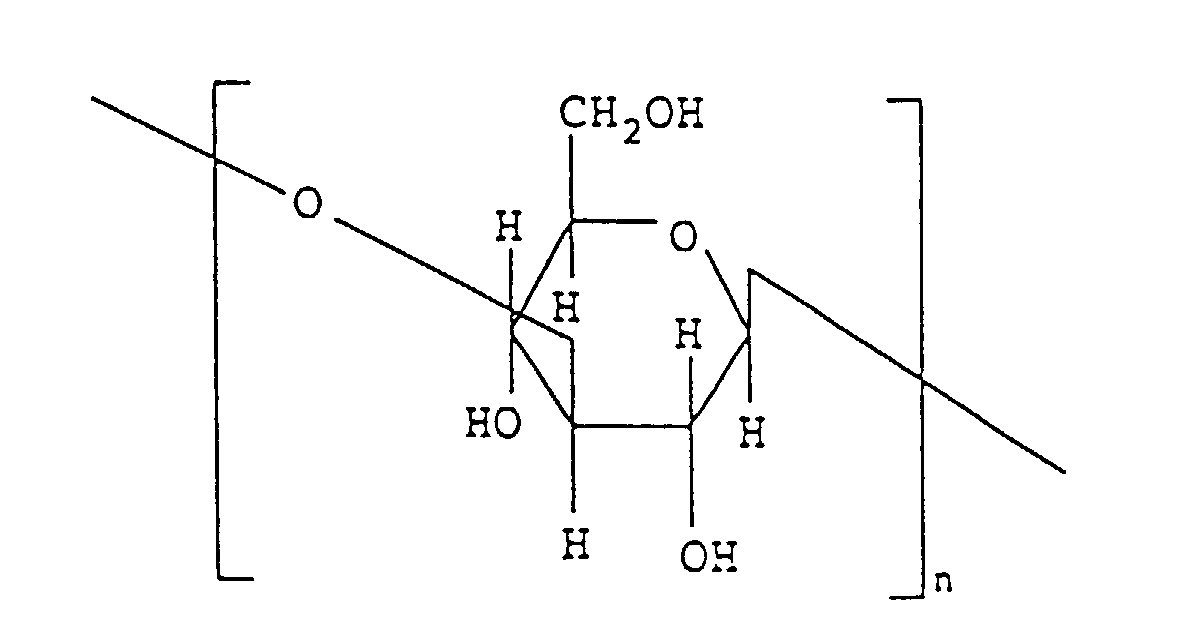
- the present invention provides a method of preparing limulus amoebocyte lysate substantially free from factor G which comprises contacting limulus amoebocyte lysate with an insoluble carrier on which (1 ⁇ 3)- ⁇ -D-glucoside structural portion having formula [I] is fixed. wherein n represents an integer of 2 to 370.
- the (1 ⁇ 3)- ⁇ -D-glucoside structural portion used in the present invention is a polyglycoside having, in one molecule, at least one poly-(1 ⁇ 3)- ⁇ -D-glucoside structural portion [hereinafter referred to as a poly(1 ⁇ 3)glucoside moiety] comprising 2 to 370, preferably 3 to 310, and more preferably 4 to 180 consecutive (1 ⁇ 3)- ⁇ -D-glucoside structural units (molecular weight: 162) represented by the following formula.
- the polyglycoside used in the present invention is required to have at least one poly(1 ⁇ 3)glucoside moiety in one molecule.
- the polyglycoside used in the present invention may consists substantially of one poly(1 ⁇ 3)glucoside moiety, for example, poly-(1+3)- ⁇ -D-glucoside represented by the following formula wherein n is an integer of 2 to 370, preferably 3 to 310, and more preferably 4 to 180.
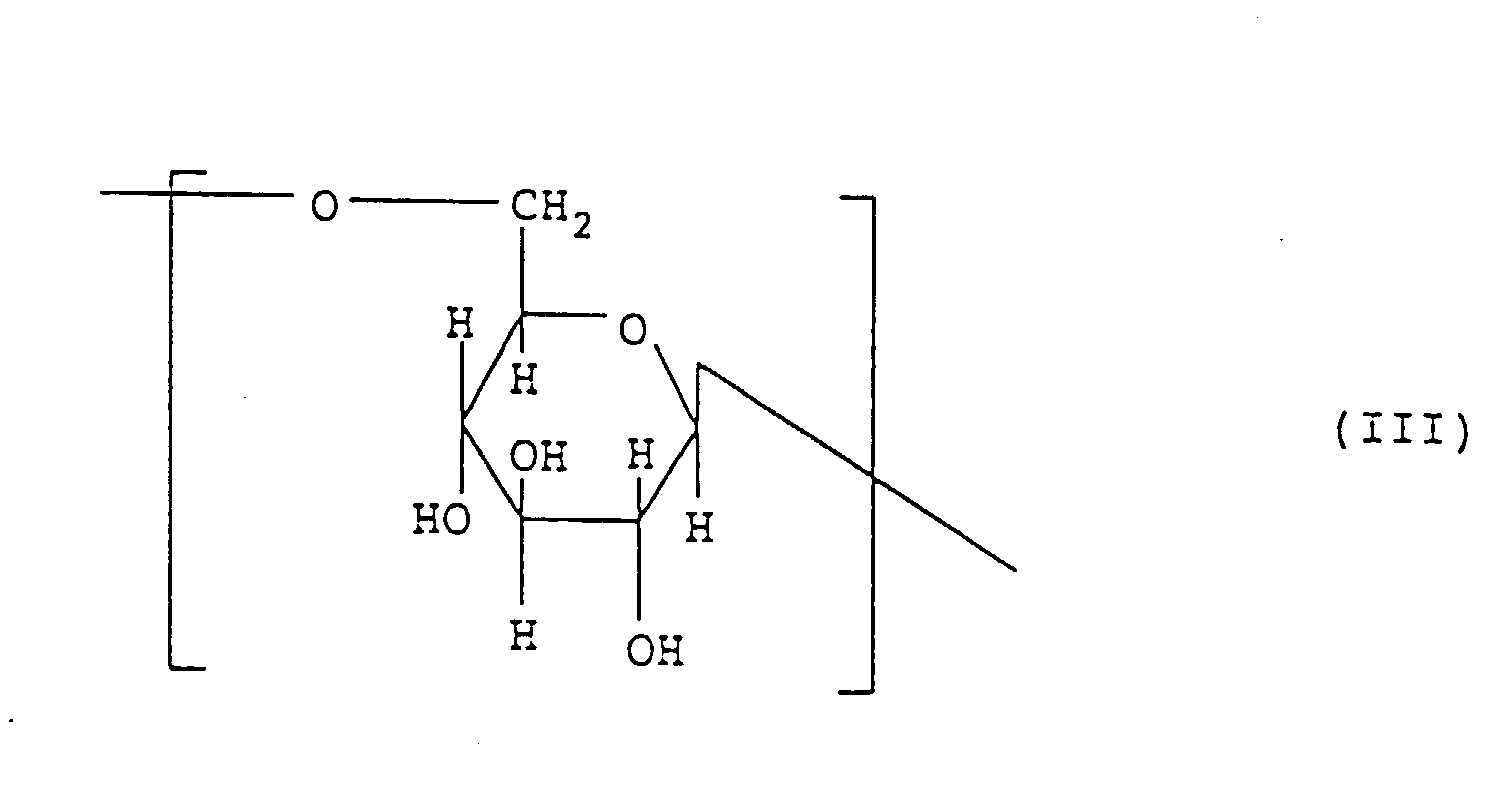
- one poly(1 ⁇ 3)glucoside moiety has a carbohydrate chain, which may be bound to the above-described poly(1 ⁇ 3)glucoside moiety as a branched chain, composed of one or more (1 ⁇ 4)- ⁇ -D-glucoside structural units represented by the following formula; one or more (1 ⁇ 6)- ⁇ -D-glucoside structural units represented by the following formula; or one or more modified ⁇ -D-glucoside structural units represented by the following formulae; wherein at least one of R 1 , R 2 and R 3 represent(s) a chemically introducible group(s), i.e., a methyl group, a hydroxyalkyl group such as a hydroxymethyl group, a carboxyalkyl group such as a carboxymethyl group, an acetyl group, a sulfate group, a phosphate group, an allyl group, a metal salt of any of the above-mentioned groups, an ammonium salt of
- the polyglycoside used in the present invention may have a structure in which two or more of the above-described poly(1 ⁇ 3)glucoside moieties are linked to each other via the other carbohydrate moieties as shown by the following formula A 1 -B 1 -A 2 -B 2 - ⁇ wherein each of A 1 , A 2 , ⁇ represents a (poly(1 ⁇ 3)- ⁇ -D-glucoside moiety having 2 to 370, preferably 3 to 310, and more preferably 4 to 180 (1 ⁇ 3)- ⁇ -D-glucoside structural units represented by the above formula (I) continuously bound to one another, the number of the units of formula (I) constituting each moiety of A 1 , A 2 , ⁇ may be different from each other, and B 1 , B 2 , ⁇ each represent the same or different carbohydrate chain moieties.
- the other carbohydrate chain structural portions represented by B 1 , B 2 , ⁇ may be, for example, a structural moiety composed of one structural unit represented by the above-described formula (II), (III), (IV), (V) or (VI) or two or more such structural units.
- the polyglycoside used in the present invention may have such a structure that the above-described poly(1 ⁇ 3)glucoside moiety is linked to a long-chain poly(1 ⁇ 3)- ⁇ -D-glucoside structural portion composed of 371 or more consecutive (1 ⁇ 3)- ⁇ -D-glucoside structural units represented by the above-described formula (I), via the other carbohydrate chain structures as shown by the above-described B 1 , B 2 , ⁇ .
- the polyglycoside used in the present invention contains at least one of the above-described poly(1 ⁇ 3)glucoside moieties per molecule, and its molecular weight is not particularly limited.
- the polyglycoside used in the present invention substantially comprises at least one of the above-described poly(1 ⁇ 3)glucoside moieties per molecule, but it should not be limited thereto.
- it may also contain other polyglycosides including a high molecular weight poly(1 ⁇ 3)- ⁇ -D-glucoside moiety having consecutive 371 or more (1 ⁇ 3)- ⁇ -D-glucoside structural units represented by the above-described formula (I).
- the polyglycoside according to the present invention is more rapidly and more strongly bound to factor G which is an initiation factor of a factor G activation system of LAL, than a high molecular weight poly(1 ⁇ 3)- ⁇ -D-glucoside which is a factor G activating substance used to thereby inhibit the activation of factor G to an activated factor G. Therefore, the presence of such high molecular weight poly(1 ⁇ 3)- ⁇ -D-glucoside does not substantially affect the inhibition action of the polyglycoside of the present invention.
- the molecular weight of the polyglycoside used herein is determined by performing gel permeation chromatography using a standard substance of known molecular weight under the following conditions to prepare a calibration curve, subjecting a test sample to gel permeation chromatography under the same conditions, and comparing the results with the calibration curve.
- polyglycosides of the present invention may be derived from natural sources or may be synthesized. They also may be partially chemically modified products of poly(1 ⁇ 3)- ⁇ -D-glucoside having three or more (1 ⁇ 3)- ⁇ -D-glucoside structural units represented by the above-described formula (I). Usually, those derived from natural sources are readily available. Examples of such polyglycoside are described below.
- polyglycosides are commercially available and can be used as is. If necessary, the polyglycosides are used following a partial decomposition and/or a fractionation treatment to prepare a fraction rich in a polyglycoside containing the (1 ⁇ 3)- ⁇ -D-glucoside structural unit represented by the above formula (I) in the above specified amount.
- partial decomposition and fractionation treatment can be effected according to a known method.
- partial decomposition of carbohydrate chains can be effected by hydrolysis with an acid, an alkali or ⁇ -glucanase, acetolysis, sonication or the like.
- a molecular weight fractionation can be effected by precipitation with an organic solvent such as alcohol, acetone and ether, or salts, or a fractionation using a molecular sieve agent or a molecular sieve membrane.
- a part of the carbohydrate chains of the polyglycoside as exemplified in the above (1) to (3) may be chemically modified with an alkyl group such as a methyl group, a hydroxyalkyl group such as a hydroxymethyl group, a carboxyalkyl group such as a carboxymethyl group, an acidic group such as an acetyl group, a sulfate group or a phosphate group, or other functional groups.
- an alkyl group such as a methyl group
- a hydroxyalkyl group such as a hydroxymethyl group
- a carboxyalkyl group such as a carboxymethyl group
- an acidic group such as an acetyl group, a sulfate group or a phosphate group, or other functional groups.
- (1 ⁇ 3)- ⁇ -D-glucan having a molecular weight of about 60,000 or more and having factor G activating action becomes usable if it is subjected to a partial chemical modification so as to adjust the number of the (1 ⁇ 3)- ⁇ -D-glucoside structural units represented by the above formula (I) in the poly(1 ⁇ 3)- ⁇ -D-glucoside moiety to 370 or less.
- polyglycosides of the present invention are as follows:
- Any insoluble carrier can be used for immobilization of the above-described (1 ⁇ 3)- ⁇ -D-glucoside structural portion having the poly(1 ⁇ 3)glucoside moiety as long as it has hydrophilic groups such as a hydroxy group and a carbamoyl group.
- insoluble carriers examples include cellulose such as cellulose powder (available from Advantec Toyo), Cellulofine (available from Seikagaku Corporation), Avicel (available from Funakoshi Pharmaceutical), Cellex (available from Bio-Rad); agarose such as Sepharose (available from Pharmacia), Biogel A (available from Bio-Rad), Chromagel A (available from Dojindo Laboratories), Sagavac (available from Seravac Laboratories), Gelarcse (available from Litex), P-L Agarose (available from P-L Biochemicals); crosslinked dextran such as Sephadex G and Sephacryl (available from Pharmacia), P-L Dex (available from P-L Biochemicals); polyacrylamide such as Biogel P (available from Bio-Rad), Chromagel P (available from Dojindo Laboratories); porous glass such as Bioglass (available from Bio-Rad); hydrophilic polyvinyl synthetic polymer such as Toyopearl (available from Tosoh
- these carriers are required to be activated.
- activation methods including, for a carrier having hydroxyl groups, a cyanogen bromide method (R. Axen, J. Porath, and S. Ernback, Nature, 214 , 1302 (1967)) and a method using oxiranes (J. Porath and N. Fornstedt, J. Chromatogr., 51 , 479 (1970) and L. Sundberg and J. Porath, J.
- a method which comprises epoxy-activating a carrier with epichlorohydrin or bisoxiranes, reacting the resulting epoxy-activated insoluble carrier with hydrazine hydrate or dihydrazide compound to obtain a hydrazine derivative or a dihydrazide derivative, which serves as an activated product (Isamu Matsumoto et al. JP-A-59-15401).
- LAL used in the method according to the present invention is not particularly limited as long as it is extracted from iimulus blood corpuscles and the factor C system thereof is activated in a reaction with endotoxin.
- Usable as such LAL include commercially available products such as a freeze-dried product of LAL, a freeze-dried product of LAL with a synthetic substrate and the like.
- lysate Various commercially available lysate are as follows: Pregel, Pregel-S, Pregel-M, Pyrodick, Toxicolor (all available from Seikagaku Corporation), Limulus II-Test Wako, Limulus II-single Test Wako, Limulus HS II-Test Wako, Limulus HS II-single Test Wako, Limulus S II-single Test Wako, Limulus amoebocyte lysate II (freeze-dried product), Limulus amoebocyte lysate-HS II (freeze-dried product) (all available from Wako Pure Chemical Industries), Pyrotell (available from Cape Cod), Pyrosate (available from Haemachem), Pyrogent®, Pyrogent® Plus, Pyrogent® Single Test, Pyrogent® Multitest, LAL Single Test Kit, QCL-1000, Kinetic QCLTM (all available from Whittaker Bioproducts), Coatest® Endotoxin (Kabi Bit
- the (1 ⁇ 3)- ⁇ -D-glucoside structural portion used in the present invention can be prepared, for example, by the method described in the following preparation examples. Commercially available (1 ⁇ 3)- ⁇ -D-glucan products fallen within the scope of the present invention can be used as it is.
- curdlan (Wako Pure Chemical Industries, Lot No. PEQ 9080, Mn>136,000, Mw/Mn>2.76, sample No. 101) was dissolved in 0.3M NaOH (5 mg/ml). Each 100 microliter aliquot of the resulting solution was subjected to gel permeation chromatography (hereinafter abbreviated as GPC) at room temperature under the following conditions. ⁇ Columns: TSKgel G6000PW XL and G5000PW XL (both 7.8 ⁇ 300 mm) are connected in series, mobile phase: 0.3M NaOH, flow rate: 0.5 ml/min ⁇ . The eluted low molecular fraction (Nos.
- Example No. 1 Fraction patterns obtained by a rechromatography of fraction Nos. 44 to 46 in Fig. 2 are shown in Fig. 3.
- the present sample No. 1 was digested with ⁇ -1,3-glucanase (Zymolyase-100T, available from Seileagaku Corporation), then, the resulting digest was analyzed by means of GPC (columns: TSKgel G4000PW XL , G3000PW XL and G2500PW XL connected in series; mobile phase: distilled water, flow rate: 0.6 ml/min), whereby it could be confirmed that a sugar composition in the digest was glucose 40%, laminaribiose 30%, laminaritriose 20%, laminaritetraose 8%, laminaripentaose 2%, recovery 94%.
- the sugar structure of the present sample (No. 1) is ⁇ -polyglucoside comprising the (1 ⁇ 3)- ⁇ -D-glucoside structural portion.
- Example No. 3 0.15 g of the water-soluble fraction obtained in the above-described Preparation Example 3 (sample No. 3) was dissolved in 30 ml of distilled water, and subjected to GPC (columns: TSKgel G3000PW XL ⁇ 2, G2500PW XL ⁇ 1, mobile phase: distilled water, flow rate: 0.5 ml/min) to collect 0.5 ml fractions. Subsequent rechromatography gave six samples (Nos. 11 to 16) each having a different molecular weight.
- Example No. 4 0.2 g of the water-insoluble fraction obtained in Preparation Example 3 (sample No. 4) was dissolved in 40 ml of 0.3M NaOH solution, and fractionated in the same manner as in the above-described Preparation Example 4-1 using GPC (columns: TSKgel G3000PW XL ⁇ 2, G25000PW XL ⁇ 1, mobile phase: 0.3M NaOH solution, flow rate: 0.5 ml/min), followed by rechromatography. The resulting eluate was neutralized by adding 0.3M HCl solution to obtain two samples each having a different molecular weight (Nos. 17 and 18).
- One gram of the sample No. 102 was suspended in about 100 ml of 5 mM NaOH solution and the suspension was subjected to sonication for 12 minutes at 20 KHz and 80 W under ice-cooling using SonicatorTM (Model 5202PZT, Ohtake Works, Tokyo) to lower the molecular weight of the sample.
- SonicatorTM Model 5202PZT, Ohtake Works, Tokyo
- a sample derived from Eisenia bicyclis was prepared as follows in accordance with the method by T. Usui et al., (Agric. Biol. Chem. 43 , 603-611, (1979)). 100 g of a commercially available Eisensia bicyclis dried frond (Suita Syoten, Tokyo) was pulverized and subjected to extraction with 80% ethanol to remove a low molecular weight water-soluble fraction. Then, from the resulting residue, a laminaran fraction was extracted using 2% aqueous CaCl 2 solution. 95% ethanol was added to the extract to give a final concentration of 75%, and the formed precipitate was collected by centrifugation.
- a sample derived from Laminaria japonica was prepared as follows in accordance with the method described in J.J. Connell et al., J. Chem. Soc., 3494 (1950).
- 100 g of a commercially available Laminaria japonica dried frond (Suita Syoten, Tokyo) was pulverized, a 0.09M HCl solution was added thereto and it was allowed to stand for about three days to effect extraction. Insoluble matters were removed by a filtration and the resulting filtrate was allowed to stand for further one day.
- a small amount of the precipitate formed was removed by centrifugation. To the supernatant obtained was added 3-fold volume of ethanol so as to give a final concentration of 75%.
- the precipitate thus formed was collected by centrifugation, washed with alcohol and dried to obtain a water-soluble laminaran fraction (sample No. 27).
- a sclerotan sample derived from Eumycetes Sclerotinia libertiana was prepared as follows in accordance with the method described in Kitahara et al., Res. Bull. Fac. Agric. Gifu University 8, 100-105 (1957).
- the defatted dry powder of sclerotium of Sclerotinia libertiana (30 g) was subjected to extraction with water.
- the resulting residue was further subjected to extraction with a 7% NaOH solution and a 10% CuSO 4 solution was added to the extract to form precipitate.
- the resulting precipitate was collected by filtration, washed with hydrochloric acid-acidic methanol to remove copper and then washed with 80% methanol to remove HCl.
- the residue was purified by three repetitions of washing with methanol and ether and drying to obtain 6 g of sample No. 28.
- a sample derived from Eumycetes Schizophyllum commune was prepared from commercially available schizophyllan (Kaken Chemical, trade name: Sonifilan, medicine Lot No. J61040) in accordance with the method described in K. Tabata et al., Carbohydr. Res., 89 , 121-135, (1981).
- schizophyllan was sonicated for 10 hours in the same manner as in the procedure of the above Preparation Example 5, followed by molecular sieve fractionation under an alkaline condition to obtain three samples different in molecular weight (Nos. 29, 30 and 31).
- a ⁇ -glucan sample derived from yeast Saccharomyces cerevisiae was prepared as follows. Thus, 50 ml of distilled water was added to 90 mg of a commercially available bakers' yeast glucan (Sigma, Lot No. 56F-4027) followed by stirring at room temperature for 2 hours. After centrifugation, about 50 ml of the supernatant was concentrated under a reduced pressure to 1 ml. Insoluble matters were removed by centrifugation. Thus, 0.64 g of sample No. 33 was obtained from the supernatant.
- a commercially available barley ⁇ -glucan (Sigma, Lot No. 56F-0652) was dissolved in a 0.3M NaOH solution to give a concentration of 5 mg/ml. Then, in accordance with the method described in Preparation Example 4-2, the solution was subjected to molecular sieve fractionation under an alkaline condition to obtain the ⁇ -glucan sample (No. 36) having a narrow molecular weight distribution.
- a curdlan water-insoluble product obtained according to Preparation Example 2 was carboxymethylated in accordance with the method described in A.E. Clarke and B.A. Stone: Phytochemistry 1 , 175-188 (1962).
- 100 g of a curdlan water-insoluble product was dissolved in 1 l of a 5M NaOH solution at 0°C in nitrogen gas stream.
- To the resulting solution was added dropwise 236 g of monochloroacetic acid dissolved in 200 ml of water with stirring. After the completion of the addition, stirring was continued for 2 hours at 60 to 65°C.
- the formed gel was pulverized by vigorous stirring in a 2.5-fold volume of ethanol followed by filtration.
- the resulting residue was thoroughly washed successively with 70% ethanol, ethanol and ether, and dried.
- the dried product was dissolved in 7 l of water and neutralized with 1M acetic acid.
- 40 g of an activated carbon was added thereto and the resulting solution was stirred at room temperature for 1 hour followed by filtration.
- the filtrate was concentrated under a reduced pressure to 1 l, and 3-fold volume of ethanol was added thereto to form precipitate.
- the precipitate was washed with ethanol and ether and dried over concentrated sulfuric acid under reduced pressure to obtain 113.85 g of a desired product.
- the partially carboxymethylated (1 ⁇ 3)- ⁇ -D-glucan thus obtained was measured for the etherification degree (Degree of Substitution: DS) in accordance with the uranyl nitrate method of D.F. Durso (Methods in Carbohydrate Chem. VIII, 127-129 (1980). As a result, it was found to be 0.63, which means that 0.63 residue out of substitutable three hydroxyl groups in one glucose residue constituting a carbohydrate chain was substituted.
- the degree of substitution was measured in the same manner as the method of measuring the partially carboxymethylated (1 ⁇ 3)- ⁇ -D-glucan having the DS of 0.63 obtained in Preparation Example 9. As a result, the DS of the sample was 1.20
- Laminaria digitata -derived laminaran was sulfated in pyridine using a pyridine-sulfur trioxide complex (Wako Pure Chemical Industries, Lot No. PPL 8823) as described below.
- the molecular weights in the table are represented in terms of number-average molecular weights (Mn) defined by the following formula determined by means of the above-described gel permeation chromatography (hereinafter, sometimes abbreviated as GPC).
- Mn number-average molecular weights
- GPC gel permeation chromatography
- Mw/Mn polydispersity
- Hi represents the i-th peak height (sample concentration) when a chromatogram is equally divided by time
- Mi represents the i-th molecular weight
- the factor G activation inhibitory titer was measured according to the following activation titer determination method of factor G activation inhibiting substance and represented as units per mg.
- Activation titer determination method of factor G activation inhibiting substance hereinafter, sometimes abbreviated as GI
- a 200 ⁇ l portion of a reaction mixture has the following composition.
- the GI amount which causes 100% inhibition of an activation of factor G by GA is defined as 100 units.
- the insoluble fixation product of the present invention obtained by fixing the above-described (1 ⁇ 3)- ⁇ -D-glucoside structural portion on an insoluble carrier is then contacted with LAL.
- the contact can be carried out at 0 to 40°C, preferably 0 to 10°C, and at a pH of 6 to 8.
- the insoluble immobilized product is separated from LAL.
- the separation can be conducted by subjecting the mixture to filtration or centrifugation to remove the insoluble fixation product, or by applying LAL on a column packed with the insoluble immobilized product to obtain the passed LAL.
- the amount of the insoluble immobilized product for contacting with LAL varies depending upon a strength of factor G activation inhibitory activity of the (1 ⁇ 3)- ⁇ -D-glucoside structural portion fixed on a carrier, it can be determined, for example, as follows.
- various amount of the insoluble immobilized product (comprising no endotoxin) are contacted with a predetermined amount of LAL, then the insoluble immobilized product is removed by a centrifugation, to which is added a predetermined amount of a factor G activating substance (comprising no endotoxin and comprising a factor G activation inhibiting substance in an amount as small as possible) which can substantially activates LAL under ordinary determination conditions, followed by reaction under the same conditions as those usually employed when LAL is used.
- the amount of the insoluble immobilized product which shows 100% inhibition of an activation of LAL is determined under the above-described conditions.
- the insoluble immobilized product in the amount determined in the above is contacted with the above-described predetermined amount of LAL, successively, various amounts of the factor G activating substance are further added, whereby it is confirmed that LAL is not activated with any amount of the factor G activating substance. According to the above-described procedure, the amount of the insoluble immobilized product which is required to completely inhibit the activation of factor G in a certain amount of LAL can be determined.
- the preparation of the insoluble immobilized product of the present invention as well as the preparation of LAL which specifically reacts with endotoxin utilizing the same is described by way of the following examples.
- the insoluble immobilized product was prepared according to the method of Matsumoto et al. (Isamu Matsumoto et al., JP-A-59-15401).
- Toyopearl synthetic hydrophilic polyvinyl polymer, HW55, Fine, available from Tosoh
- Toyopearl was added 600 ml of a 0.2M K 2 HPO 4 solution in which 32 g of laminaribiose (available from Seikagaku Corporation, Lot 8701100) and 10.4 g of sodium cyanoborohydride were dissolved, followed by agitation at room temperature for three days. After the reaction, the resulting product was successively washed with water and 0.2M sodium acetate solution on a glass filter. Thereto were added 400 ml of 0.2M sodium acetate solution and 200 ml of acetic anhydride, followed by agitation at 0°C for 30 minutes.
- Fig. 1 shows a reaction mechanism of a limulus amoebocyte lysate coagulation system.
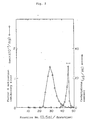
- Fig. 2 shows a fraction pattern (elution curve) of a commercially available curdlan obtained by a molecular sieve chromatography.
- the symbol ⁇ stands for factor G activation inhibition titer (left side, ordinate axis) and ⁇ stands for a sugar content.
- Fig. 3 shows a fraction pattern of rechromatographed fraction Nos. 44 to 46 of Fig. 2.
- the symbol ⁇ stands for factor G activation inhibition titer (left side, ordinate axis) and ⁇ stands for a carbohydrate content.
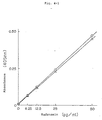
- Fig. 4-1 shows absorbance obtained when untreated LAL or LAL treated in accordance with the present invention was reacted with various concentrations of endotoxin.
- Fig. 4-2 shows absorbance obtained when untreated LAL or LAL treated in accordance with the present invention was reacted with various concentrations of (1 ⁇ 3)- ⁇ -D-glucan.
- the symbol ⁇ stands for untreated LAL and ⁇ stands for LAL treated in accordance with Example 2.
- LAL-1 is desirably reactive with only endotoxin.
- limulus hemolymph was collected and subjected to centrifugation (3,000 rpm, 5 minutes) to obtain hemocytes (about 20 g). 100 ml of 0.02M Tris-HCl buffer (pH 8.0) was added thereto and the mixture was homogenized with Waring blender, followed by centrifugation (8,000 rpm, 30 minutes, 4°C) to separate supernatant and precipitate. This extraction procedure was repeated once again and 150 ml of the supernatant in all was obtained to serve as LAL.
- a 1 ml portion of the resulting LAL was filtered using the above-described membrane to which laminaran-immobilized Cellulofine was adhered to obtain a filtrate.
- To a 0.04 ml portion of the filtrate were added 1.5 ⁇ g of MgCl 2 and 4.0 ⁇ g of synthetic substrate (N-ter-butoxycarbonyl-Leu-Gly-Arg-p-nitroanilide), followed by freeze-drying.
- the symbol ⁇ stands for an absorbance obtained in the case of using untreated LAL and the symbol ⁇ stands for an absorbance obtained in the case of using LAL treated with laminaran-immobilized Cellulofine.
- LAL treated with laminaran-immobilized Cellulofine did not react with (1 ⁇ 3)- ⁇ -D-glucan but reacted with endotoxin.
- endotoxin can be specifically determined using the LAL treated with laminaran-immobilized Cellulofine.
Landscapes
- Life Sciences & Earth Sciences (AREA)
- Health & Medical Sciences (AREA)
- Engineering & Computer Science (AREA)
- Molecular Biology (AREA)
- Biomedical Technology (AREA)
- Chemical & Material Sciences (AREA)
- Hematology (AREA)
- Immunology (AREA)
- Urology & Nephrology (AREA)
- Cell Biology (AREA)
- Biochemistry (AREA)
- Biotechnology (AREA)
- Food Science & Technology (AREA)
- Medicinal Chemistry (AREA)
- Physics & Mathematics (AREA)
- Analytical Chemistry (AREA)
- Microbiology (AREA)
- General Health & Medical Sciences (AREA)
- General Physics & Mathematics (AREA)
- Pathology (AREA)
- Polysaccharides And Polysaccharide Derivatives (AREA)
- Pharmaceuticals Containing Other Organic And Inorganic Compounds (AREA)
- Medicines Containing Material From Animals Or Micro-Organisms (AREA)
Claims (5)
- Verfahren zur Herstellung eines im wesentlichen Faktor G-freien Limulus-Amöbocytenlysats, umfassend das Inkontaktbringen von Limulus-Amöbocytenlysat mit einem unlöslichen Träger, auf dem der durch Depolymerisieren und/oder Fraktionieren einer Kohlehydratkette hergestellte, durch die folgende Formel (I) dargestellte (1→3)-β-D-Glucosid-Strukturanteil immobilisiert ist:
- Verfahren nach Anspruch 1, dadurch gekennzeichnet, daß der (1→3)-β-D-Glucosid-Struktubanteil zusätzlich eine oder mehrere von mindestens einer Struktureinheit enthält, die ausgewählt ist aus einer Gruppe, bestehend aus den durch die folgenden Formeln (II), (III), (IV), (V) und (VI) dargestellten Struktureinheiten.



- Verfahren nach Anspruch 1 oder 2, dadurch gekennzeichnet, daß der (1→3)-β-D-Glucosid-Strukturanteil abgeleitet ist von natürlichen Quellen, ausgewählt aus der Gruppe bestehend aus (1→3)-β-D-Glucan, abgeleitet von Bakterien des Genus Alcarigenes, Paramylon, abgeleitet von Euglena, β-Glucan oder Callose abgeleitet von höheren Pflanzen, Laminaranen, abgeleitet von Braunalgen, Chrysolaminaranen, abgeleitet von Kieselalgen, Pachyman, abgeleitet von Poria, Glucan, abgeleitet von der Zellwand von Phytophthora, Sclerotan, abgeleitet von Sclerotinia, Schizophyllan, abgeleitet von Schizophyllum, Grifolan LE, abgeleitet von Grifola frondosa, Scleroglucanen, abgeleitet von Sclerotium, Corticium oder Stromatinia, Lentinan, abgeleitet von Lentinus, β-Glucan, abgeleitet von der Zellwand von Saccharomyces (Bäckerhefe), Lichenanen, abgeleitet von Cetraria, Usnea oder Evernia, und in Gerstenendosperm enthaltenem β-Glucan.
- Verfahren nach Anspruch 1, dadurch gekennzeichnet, daß der (1→3)-β-D-Glucosid-Strukturanteil erhalten wird durch Depolymerisieren einer Kohlenhydratkette durch ein Verfahren der teilweisen Zersetzung, das ausgewählt ist aus der Gruppe bestehend aus einer Hydrolyse unter Verwendung einer Säure, eines Alkalis oder von β-Glucanase, einer Acetolyse und einer Ultraschallbehandlung, und/oder durch Fraktionieren einer Kohlehydratkette durch ein Verfahren der fraktionierten Ausfällung unter Verwendung eines organischen Lösungsmittels oder von Salzen, oder ein Fraktionierverfahren, unter Verwendung eines Molekularsiebmittels oder einer Molekularsiebmembran.
- Verfahren nach Anspruch 1, dadurch gekennzeichnet, daß der unlösliche Träger ausgewählt ist aus der Gruppe bestehend aus Cellulose, Agarose, vernetztem Dextran, Polyacrylamid, porösem Glas, und einem Hydrazin oder Hydrazidderivat eines synthetischen hydrophilen Polyvinylpolymers.
Applications Claiming Priority (3)
| Application Number | Priority Date | Filing Date | Title |
|---|---|---|---|
| JP255201/90 | 1990-09-27 | ||
| JP02255201A JP3122454B2 (ja) | 1990-09-27 | 1990-09-27 | カブトガニ・アメボサイト・ライセートの調製法 |
| PCT/JP1991/001308 WO1992006381A1 (fr) | 1990-09-27 | 1991-09-27 | Procede de preparation de lysat d'amoebocyte de limulus |
Publications (3)
| Publication Number | Publication Date |
|---|---|
| EP0507952A4 EP0507952A4 (de) | 1992-08-07 |
| EP0507952A1 EP0507952A1 (de) | 1992-10-14 |
| EP0507952B1 true EP0507952B1 (de) | 1996-12-27 |
Family
ID=17275427
Family Applications (1)
| Application Number | Title | Priority Date | Filing Date |
|---|---|---|---|
| EP91917028A Expired - Lifetime EP0507952B1 (de) | 1990-09-27 | 1991-09-27 | Verfahren zur herstellung von limulus amöbozytenlysat |
Country Status (5)
| Country | Link |
|---|---|
| US (1) | US5401647A (de) |
| EP (1) | EP0507952B1 (de) |
| JP (1) | JP3122454B2 (de) |
| DE (1) | DE69123834T2 (de) |
| WO (1) | WO1992006381A1 (de) |
Cited By (1)
| Publication number | Priority date | Publication date | Assignee | Title |
|---|---|---|---|---|
| US8753668B2 (en) | 2005-05-05 | 2014-06-17 | Sensient Flavors Llc | Production of beta-glucans and mannans |
Families Citing this family (23)
| Publication number | Priority date | Publication date | Assignee | Title |
|---|---|---|---|---|
| AU650626B2 (en) * | 1989-09-08 | 1994-06-30 | Alpha-Beta Technology, Inc. | Method for producing soluble glucans |
| JP3322700B2 (ja) * | 1992-09-14 | 2002-09-09 | 生化学工業株式会社 | 固相系反応用エンドトキシン特異的測定剤 |
| JP3242733B2 (ja) * | 1993-02-26 | 2001-12-25 | 生化学工業株式会社 | エンドトキシン特異的測定剤 |
| JP3429036B2 (ja) * | 1993-09-30 | 2003-07-22 | 生化学工業株式会社 | エンドトキシンの特異的測定剤 |
| US5866150A (en) * | 1996-03-20 | 1999-02-02 | Aquaculture Technology Incorporated | Antibacterially active extracts from the marine algae chaetoceros and methods of use |
| EP0837330B1 (de) | 1996-10-21 | 2005-08-24 | Seikagaku Corporation | Verfahren zur Bestimmung von Endotoxin |
| US6270982B1 (en) * | 1997-10-09 | 2001-08-07 | Charles River Laboratories | Methods and compositions for the detection of bacterial endotoxins |
| US6369216B1 (en) | 1998-09-25 | 2002-04-09 | Biopolymer Engineering Pharmaceutical, Inc. | Very high molecular weight β-glucans |
| AU6261999A (en) | 1998-09-25 | 2000-04-17 | Collaborative Group, Ltd., The | Very high molecular weight beta-glucans |
| EP1545208A4 (de) * | 2002-08-13 | 2006-04-12 | Biopolymer Engineering Inc | Verfahren zur verwendung von beta-glucan als strahlenschutzmittel |
| CA2496508C (en) | 2002-09-04 | 2014-04-22 | University Of Louisville Research Foundation, Inc. | Cancer therapy using beta glucan and antibodies |
| US20060165700A1 (en) * | 2002-09-04 | 2006-07-27 | Ostroff Gary R | Cancer therapy using whole glucan particles and antibodies |
| EP1606414B1 (de) * | 2003-03-17 | 2009-12-23 | Charles River Laboratories, Inc. | Methoden und zusammensetzungen für den nachweis mikrobieller verunreinigungen |
| US7197521B2 (en) * | 2003-11-21 | 2007-03-27 | Intel Corporation | Method and system performing concurrently mark-sweep garbage collection invoking garbage collection thread to track and mark live objects in heap block using bit vector |
| EP1842069A2 (de) | 2004-12-02 | 2007-10-10 | Charles River Laboratories, Inc. | Verfahren und zusammensetzungen zum nachweis und/oder zur quantifizierung grampositiver bakterienkontaminanten |
| JP5096166B2 (ja) * | 2005-01-13 | 2012-12-12 | チャールズ リバー ラボラトリーズ, インコーポレイテッド | 生体サンプル中の微生物を分類する方法 |
| WO2009137244A1 (en) * | 2008-04-15 | 2009-11-12 | Charles River Laboratories, Inc. | Cartridge and method for sample analysis |
| CU24073B1 (es) | 2011-12-27 | 2015-01-29 | Ct De Investigación Y Desarrollo De Medicamentos Cidem | COMPOSICIÓN A PARTIR DE EXTRACTO DE HEMOCITOS DE LANGOSTA PARA LA DETECCIÓN DE LIPOPOLISACÁRIDOS, PEPTIDOGLICANOS Y 1,3-ß-D-GLUCANOS |
| DE112014003580B4 (de) | 2013-08-02 | 2018-04-26 | Euglena Co., Ltd. | Endo-β-1,3-Glucanase, Polynukleotid, rekombinanter Vektor, Transformant, Herstellungsverfahren für Endo-β-1,3-Glucanase, Enzymherstellung und Herstellung von Paramylon mit reduziertem Molekulargewicht |
| US9901606B2 (en) | 2016-06-09 | 2018-02-27 | Algaeon, Inc. | Euglena lysate composition |
| SG11201900767VA (en) | 2016-08-03 | 2019-02-27 | Lonza Walkersville Inc | Method of detecting an endotoxin using limulus amebocyte lysate substantially free of coagulogen |
| EP3552021B1 (de) * | 2017-01-11 | 2022-10-26 | Lonza Walkersville, Inc. | Koagulogenfreies geklärtes limulus-amoebocyten-lysat |
| JPWO2019142760A1 (ja) * | 2018-01-16 | 2021-01-14 | 株式会社Adeka | ヒアルロニダーゼ活性阻害剤 |
Family Cites Families (7)
| Publication number | Priority date | Publication date | Assignee | Title |
|---|---|---|---|---|
| JPS5366442A (en) * | 1976-11-18 | 1978-06-13 | Takuma Sasaki | Antitumors |
| JPS5944705B2 (ja) * | 1978-01-13 | 1984-10-31 | オリンパス光学工業株式会社 | 磁気記録再生方式 |
| JPS5928474A (ja) * | 1982-08-05 | 1984-02-15 | Seikagaku Kogyo Co Ltd | カブトガニのアメボサイト・ライゼ−ト中に存在する凝固系阻害因子の採取法 |
| EP0367795A4 (en) * | 1987-07-16 | 1992-01-15 | E.I. Du Pont De Nemours And Company | Affinity separating using immobilized flocculating reagents |
| JPH0711523B2 (ja) * | 1988-03-16 | 1995-02-08 | 和光純薬工業株式会社 | 試薬の調製方法 |
| CA1328074C (en) * | 1988-09-01 | 1994-03-29 | Shigenori Tanaka | Horseshoe crab amebocyte lysate factor g inhibitor |
| JPH02186267A (ja) * | 1988-09-01 | 1990-07-20 | Seikagaku Kogyo Co Ltd | カブトガニ・アメボサイト・ライセートg因子活性化阻害剤 |
-
1990
- 1990-09-27 JP JP02255201A patent/JP3122454B2/ja not_active Expired - Lifetime
-
1991
- 1991-09-27 EP EP91917028A patent/EP0507952B1/de not_active Expired - Lifetime
- 1991-09-27 WO PCT/JP1991/001308 patent/WO1992006381A1/ja not_active Ceased
- 1991-09-27 US US07/859,411 patent/US5401647A/en not_active Expired - Lifetime
- 1991-09-27 DE DE69123834T patent/DE69123834T2/de not_active Expired - Fee Related
Cited By (1)
| Publication number | Priority date | Publication date | Assignee | Title |
|---|---|---|---|---|
| US8753668B2 (en) | 2005-05-05 | 2014-06-17 | Sensient Flavors Llc | Production of beta-glucans and mannans |
Also Published As
| Publication number | Publication date |
|---|---|
| DE69123834T2 (de) | 1997-05-15 |
| EP0507952A4 (de) | 1992-08-07 |
| DE69123834D1 (de) | 1997-02-06 |
| EP0507952A1 (de) | 1992-10-14 |
| WO1992006381A1 (fr) | 1992-04-16 |
| JP3122454B2 (ja) | 2001-01-09 |
| JPH04134265A (ja) | 1992-05-08 |
| US5401647A (en) | 1995-03-28 |
Similar Documents
| Publication | Publication Date | Title |
|---|---|---|
| EP0507952B1 (de) | Verfahren zur herstellung von limulus amöbozytenlysat | |
| US5155032A (en) | Horseshoe crab amebocyte lysate factor g activation inhibitor | |
| Kim et al. | Structural characterization of β-D-(1→ 3, 1→ 6)-linked glucans using NMR spectroscopy | |
| Synytsya et al. | Structural analysis of glucans | |
| US5474984A (en) | Horseshoe crab amebocyte lysate factor G activation inhibitor | |
| Misaki et al. | Structure of the dextran of Leuconostoc mesenteroides B-1355 | |
| Brummer et al. | Understanding carbohydrate analysis | |
| Liu et al. | Endo-β-1, 3-glucanase digestion combined with the HPAEC-PAD-MS/MS analysis reveals the structural differences between two laminarins with different bioactivities | |
| US5318893A (en) | Process for measuring endotoxin | |
| Guo et al. | Methodology for structural analysis of polysaccharides | |
| Cardemil et al. | The polysaccharides from heterocyst and spore envelopes of a blue-green alga. Methylation analysis and structure of the backbones. | |
| Bardalaye et al. | Galactosaminogalactan from cell walls of Aspergillus niger | |
| Shida et al. | Structure of the alkali-insoluble skeletal glucan of Lentinus edodes | |
| Kremmyda et al. | The detection, purity and structural properties of partially soluble mushroom and cereal β-D-glucans: A solid-state NMR study | |
| MIMURA et al. | Purification, antitumor activity, and structural characterization of β-1, 3-glucan from Peziza vesiculosa | |
| Minghou et al. | Structure of agar from Gracilaria spp (Rhodophyta) collected in the People's Republic of China | |
| Yalin et al. | Isolation, purification and structural investigation of a water-soluble polysaccharide from Solanum lyratum Thunb | |
| Tanaka et al. | Inhibition of high-molecular-weight-(1→ 3)-β-D-glucan-dependent activation of a limulus coagulation factor G by laminaran oligosaccharides and curdlan degradation products | |
| Roger et al. | Polysaccharide labelling: impact on structural and biological properties | |
| Nakajima et al. | A cell wall proteo-heteroglycan from Piricularia oryzae: isolation and partial structure | |
| Yamada et al. | Characterisation of fucomannopeptide and mannoprotein from Absidia cylindrospora | |
| Furneaux et al. | Isolation and C-NMR spectral study of the water soluble polysaccharides from four south african red algae | |
| Hisamatsu et al. | The correlation between adhesion of schizophyllan to yeast glucan and its effect on regeneration of yeast protoplast | |
| JP2547264B2 (ja) | カブトガニ・アメボサイト・ライセートg因子活性化阻害剤 | |
| Chen et al. | Structural characterization of the carbohydrate portion of a glycopeptide from wheat gluten |
Legal Events
| Date | Code | Title | Description |
|---|---|---|---|
| PUAI | Public reference made under article 153(3) epc to a published international application that has entered the european phase |
Free format text: ORIGINAL CODE: 0009012 |
|
| 17P | Request for examination filed |
Effective date: 19920715 |
|
| AK | Designated contracting states |
Kind code of ref document: A1 Designated state(s): DE ES FR GB IT NL SE |
|
| 17Q | First examination report despatched |
Effective date: 19950317 |
|
| GRAG | Despatch of communication of intention to grant |
Free format text: ORIGINAL CODE: EPIDOS AGRA |
|
| GRAH | Despatch of communication of intention to grant a patent |
Free format text: ORIGINAL CODE: EPIDOS IGRA |
|
| GRAH | Despatch of communication of intention to grant a patent |
Free format text: ORIGINAL CODE: EPIDOS IGRA |
|
| GRAA | (expected) grant |
Free format text: ORIGINAL CODE: 0009210 |
|
| AK | Designated contracting states |
Kind code of ref document: B1 Designated state(s): DE ES FR GB IT NL SE |
|
| PG25 | Lapsed in a contracting state [announced via postgrant information from national office to epo] |
Ref country code: IT Free format text: LAPSE BECAUSE OF FAILURE TO SUBMIT A TRANSLATION OF THE DESCRIPTION OR TO PAY THE FEE WITHIN THE PRESCRIBED TIME-LIMIT;WARNING: LAPSES OF ITALIAN PATENTS WITH EFFECTIVE DATE BEFORE 2007 MAY HAVE OCCURRED AT ANY TIME BEFORE 2007. THE CORRECT EFFECTIVE DATE MAY BE DIFFERENT FROM THE ONE RECORDED. Effective date: 19961227 Ref country code: ES Free format text: THE PATENT HAS BEEN ANNULLED BY A DECISION OF A NATIONAL AUTHORITY Effective date: 19961227 |
|
| REF | Corresponds to: |
Ref document number: 69123834 Country of ref document: DE Date of ref document: 19970206 |
|
| ET | Fr: translation filed | ||
| PLBE | No opposition filed within time limit |
Free format text: ORIGINAL CODE: 0009261 |
|
| STAA | Information on the status of an ep patent application or granted ep patent |
Free format text: STATUS: NO OPPOSITION FILED WITHIN TIME LIMIT |
|
| 26N | No opposition filed | ||
| PGFP | Annual fee paid to national office [announced via postgrant information from national office to epo] |
Ref country code: SE Payment date: 19990805 Year of fee payment: 9 |
|
| PGFP | Annual fee paid to national office [announced via postgrant information from national office to epo] |
Ref country code: GB Payment date: 19990922 Year of fee payment: 9 |
|
| PGFP | Annual fee paid to national office [announced via postgrant information from national office to epo] |
Ref country code: FR Payment date: 19990930 Year of fee payment: 9 Ref country code: NL Payment date: 19990930 Year of fee payment: 9 |
|
| PGFP | Annual fee paid to national office [announced via postgrant information from national office to epo] |
Ref country code: DE Payment date: 19991019 Year of fee payment: 9 |
|
| PG25 | Lapsed in a contracting state [announced via postgrant information from national office to epo] |
Ref country code: GB Free format text: LAPSE BECAUSE OF NON-PAYMENT OF DUE FEES Effective date: 20000927 |
|
| PG25 | Lapsed in a contracting state [announced via postgrant information from national office to epo] |
Ref country code: SE Free format text: THE PATENT HAS BEEN ANNULLED BY A DECISION OF A NATIONAL AUTHORITY Effective date: 20000929 |
|
| PG25 | Lapsed in a contracting state [announced via postgrant information from national office to epo] |
Ref country code: NL Free format text: LAPSE BECAUSE OF NON-PAYMENT OF DUE FEES Effective date: 20010401 |
|
| GBPC | Gb: european patent ceased through non-payment of renewal fee |
Effective date: 20000927 |
|
| EUG | Se: european patent has lapsed |
Ref document number: 91917028.2 |
|
| PG25 | Lapsed in a contracting state [announced via postgrant information from national office to epo] |
Ref country code: FR Free format text: LAPSE BECAUSE OF NON-PAYMENT OF DUE FEES Effective date: 20010531 |
|
| NLV4 | Nl: lapsed or anulled due to non-payment of the annual fee |
Effective date: 20010401 |
|
| PG25 | Lapsed in a contracting state [announced via postgrant information from national office to epo] |
Ref country code: DE Free format text: LAPSE BECAUSE OF NON-PAYMENT OF DUE FEES Effective date: 20010601 |
|
| REG | Reference to a national code |
Ref country code: FR Ref legal event code: ST |