EP0506190B1 - Cloning and expression of genes encoding arabinan-degrading enzymes of fungal origin - Google Patents
Cloning and expression of genes encoding arabinan-degrading enzymes of fungal origin Download PDFInfo
- Publication number
- EP0506190B1 EP0506190B1 EP92200818A EP92200818A EP0506190B1 EP 0506190 B1 EP0506190 B1 EP 0506190B1 EP 92200818 A EP92200818 A EP 92200818A EP 92200818 A EP92200818 A EP 92200818A EP 0506190 B1 EP0506190 B1 EP 0506190B1
- Authority
- EP
- European Patent Office
- Prior art keywords
- gene
- arabinan
- dna molecule
- enzyme
- fungal
- Prior art date
- Legal status (The legal status is an assumption and is not a legal conclusion. Google has not performed a legal analysis and makes no representation as to the accuracy of the status listed.)
- Expired - Lifetime
Links
Images





Classifications
-
- A—HUMAN NECESSITIES
- A23—FOODS OR FOODSTUFFS; TREATMENT THEREOF, NOT COVERED BY OTHER CLASSES
- A23K—FODDER
- A23K20/00—Accessory food factors for animal feeding-stuffs
- A23K20/10—Organic substances
- A23K20/189—Enzymes
-
- A—HUMAN NECESSITIES
- A23—FOODS OR FOODSTUFFS; TREATMENT THEREOF, NOT COVERED BY OTHER CLASSES
- A23K—FODDER
- A23K30/00—Processes specially adapted for preservation of materials in order to produce animal feeding-stuffs
- A23K30/10—Processes specially adapted for preservation of materials in order to produce animal feeding-stuffs of green fodder
- A23K30/15—Processes specially adapted for preservation of materials in order to produce animal feeding-stuffs of green fodder using chemicals or microorganisms for ensilaging
- A23K30/18—Processes specially adapted for preservation of materials in order to produce animal feeding-stuffs of green fodder using chemicals or microorganisms for ensilaging using microorganisms or enzymes
-
- C—CHEMISTRY; METALLURGY
- C12—BIOCHEMISTRY; BEER; SPIRITS; WINE; VINEGAR; MICROBIOLOGY; ENZYMOLOGY; MUTATION OR GENETIC ENGINEERING
- C12N—MICROORGANISMS OR ENZYMES; COMPOSITIONS THEREOF; PROPAGATING, PRESERVING, OR MAINTAINING MICROORGANISMS; MUTATION OR GENETIC ENGINEERING; CULTURE MEDIA
- C12N15/00—Mutation or genetic engineering; DNA or RNA concerning genetic engineering, vectors, e.g. plasmids, or their isolation, preparation or purification; Use of hosts therefor
- C12N15/09—Recombinant DNA-technology
- C12N15/63—Introduction of foreign genetic material using vectors; Vectors; Use of hosts therefor; Regulation of expression
- C12N15/79—Vectors or expression systems specially adapted for eukaryotic hosts
- C12N15/80—Vectors or expression systems specially adapted for eukaryotic hosts for fungi
-
- C—CHEMISTRY; METALLURGY
- C12—BIOCHEMISTRY; BEER; SPIRITS; WINE; VINEGAR; MICROBIOLOGY; ENZYMOLOGY; MUTATION OR GENETIC ENGINEERING
- C12N—MICROORGANISMS OR ENZYMES; COMPOSITIONS THEREOF; PROPAGATING, PRESERVING, OR MAINTAINING MICROORGANISMS; MUTATION OR GENETIC ENGINEERING; CULTURE MEDIA
- C12N9/00—Enzymes; Proenzymes; Compositions thereof; Processes for preparing, activating, inhibiting, separating or purifying enzymes
- C12N9/14—Hydrolases (3)
- C12N9/24—Hydrolases (3) acting on glycosyl compounds (3.2)
- C12N9/2402—Hydrolases (3) acting on glycosyl compounds (3.2) hydrolysing O- and S- glycosyl compounds (3.2.1)
- C12N9/2405—Glucanases
- C12N9/2408—Glucanases acting on alpha -1,4-glucosidic bonds
- C12N9/2411—Amylases
- C12N9/2428—Glucan 1,4-alpha-glucosidase (3.2.1.3), i.e. glucoamylase
-
- C—CHEMISTRY; METALLURGY
- C12—BIOCHEMISTRY; BEER; SPIRITS; WINE; VINEGAR; MICROBIOLOGY; ENZYMOLOGY; MUTATION OR GENETIC ENGINEERING
- C12Y—ENZYMES
- C12Y302/00—Hydrolases acting on glycosyl compounds, i.e. glycosylases (3.2)
- C12Y302/01—Glycosidases, i.e. enzymes hydrolysing O- and S-glycosyl compounds (3.2.1)
- C12Y302/01055—Alpha-N-arabinofuranosidase (3.2.1.55)
-
- D—TEXTILES; PAPER
- D21—PAPER-MAKING; PRODUCTION OF CELLULOSE
- D21C—PRODUCTION OF CELLULOSE BY REMOVING NON-CELLULOSE SUBSTANCES FROM CELLULOSE-CONTAINING MATERIALS; REGENERATION OF PULPING LIQUORS; APPARATUS THEREFOR
- D21C5/00—Other processes for obtaining cellulose, e.g. cooking cotton linters ; Processes characterised by the choice of cellulose-containing starting materials
- D21C5/005—Treatment of cellulose-containing material with microorganisms or enzymes
-
- C—CHEMISTRY; METALLURGY
- C07—ORGANIC CHEMISTRY
- C07K—PEPTIDES
- C07K2319/00—Fusion polypeptide
-
- C—CHEMISTRY; METALLURGY
- C07—ORGANIC CHEMISTRY
- C07K—PEPTIDES
- C07K2319/00—Fusion polypeptide
- C07K2319/01—Fusion polypeptide containing a localisation/targetting motif
- C07K2319/02—Fusion polypeptide containing a localisation/targetting motif containing a signal sequence
Definitions
- the present invention relates to the field of molecular biology.
- the present invention relates to the cloning and expression of genes encoding enzymes of fungal origin.
- the composition of the plant cell wall is complex and variable.
- Polysaccharides are mainly found in the form of long chains of cellulose (the main structural component of the plant cell wall), hemicellulose (comprising various ⁇ -xylan chains) and pectic substances (consisting of galacturonans and rhamnogalacturonans; arabinans; and galactans and arabinogalactans).
- pectic substances consisting of galacturonans and rhamnogalacturonans; arabinans; and galactans and arabinogalactans.
- Arabinans consist of a main chain of ⁇ -L-arabinose subunits linked ⁇ -(1 ⁇ 5) to one another. Side chains are linked ⁇ -(1 ⁇ 3) or sometimes ⁇ -(1 ⁇ 2) to the main ⁇ -(1 ⁇ 5)-L-arabinan backbone. In apple, for example, one third of the total arabinose is present in the side chains. The molecular weight of arabinan is normally about 15 kDa.
- Enzymes capable of degrading arabinans are becoming increasingly important to the food industry.
- juice production for example, the demand to increase yields in order to reduce production costs has necessitated the modification of traditional processes.
- the utilization of enzymatic pre-treatments of the fruit pulp before pressing with specific enzymatic products drastically improves the juice yield by solubilizing the cell wall polysaccharides.
- arabinan haze a persistent turbidity commonly referred to as "arabinan haze" has been a source of problems in the production of concentrated juices.
- the arabinan haze is more often present in concentrated juice than in non-concentrated juice. This may indicate that water activity has an influence on the solubility of arabinan.
- this haze is soluble between 60 and 80°C.
- WO 90/06343 discloses the debranching of sugar beet araban by the action of an ⁇ -L-arabinofuranosidase, free of endo arabinanase activity, which is isolated from a culture filtrate of Aspergillus niger or from a commercial pectinase mixture using ion-exchange and gel filtration chromatography procedures.
- the debranched araban may be used as a fat substitute in foods.
- Arabinan-degrading enzymes are known to be produced by a variety of plants and microorganisms, among these, fungi such as those of the genera Aspergillus , Corticium , Rhodotorula (Kaji, A. (1984) Adv. Carbohydr. Chem. Biochem., 42 , 383), Dichotomitus (Brillouet et al . (1985) Carbohydrate Research, 144, 113), Ascomycetes and Basidomycetes (Sydow, G. (1977) DDR Patent Application No. 124,812).
- fungi such as those of the genera Aspergillus , Corticium , Rhodotorula (Kaji, A. (1984) Adv. Carbohydr. Chem. Biochem., 42 , 383), Dichotomitus (Brillouet et al . (1985) Carbohydrate Research, 144, 113), Ascomycetes and Bas
- the filamentous fungus Aspergillus niger is known to produce three different arabinan-degrading enzymes: an ⁇ -L-arabinanase having a molecular weight of approximately 35 kDa and two ⁇ -L-arabinofuranosidases having molecular weights of approximately 118 and 60 kDa, respectively, (Rombouts et al. (1988) Carbohydrate Polymers, 9 , 25). [N.B. van der Veen et al . ((1991) Arch. Microbial., 157 , 23) reports molecular weights of 43, 83 and 67 kDa for these same three enzymes, respectively.]
- the 35 kDa arabinanase (also known as ABN A) has endo activity and exclusively cleaves 1 ⁇ 5 linkages. The activity of this enzyme decreases as the 1,5- ⁇ -L-arabinan sequences become shorter and the concentration of arabinose dimers and trimers increased (Rombouts et al. , supra). [N.B. van der Veen et al. (1991) reported a molecular weight of 43 kDa.]
- the 118 kDa ⁇ -L-arabinofuranosidase (also known as arabinofuranosidase A, ABF A or EXO A) exclusively cleaves 1 ⁇ 5 linkages with exo-type activity as shown by the accumulation of arabinose monomers.
- This enzyme displays the highest activity on low molecular weight substrates (Rombouts et al ., supra). [N.B. van der Veen et al. (1991) reported a molecular weight of 83 kDa.]
- the 60 kDa ⁇ -L-arabinofuranosidase also known as arabinofuranosidase B, ABF B or EXO B
- arabinofuranosidase B also known as arabinofuranosidase B, ABF B or EXO B
- exo-type activity predominantly cleaves 1 ⁇ 3 and 1 ⁇ 2 ⁇ -L-arabinans
- arabinose monomers are detected after degradation of an ⁇ -L-arabinan-containing substrate.
- N.B. van der Veen et al. (1991) reported a molecular weight of 67 kDa.
- the A. niger ABF B enzyme has also demonstrated the ability to cleave the 1 ⁇ 6 linkage between a terminal arabinofuranosyl unit and the intermediate glucose of monoterpenyl ⁇ -L-arabinofuranosylglucosides (Gunata et al . (1989) European Patent Application No. 332.281; Gunata et al. (1990) J. Agric. Food Chem., 38 , 772).
- Enzymes having an activity similar to that of the A. niger ABF B enzyme have been identified in other fungi such as Dichotomitus squalens (Brillouet et al ., supra), Corticium rolfsii and Rhodotorula flava (Kaji, A., supra).
- a possible solution to the problem of haze formation in juices may be to use an enzyme formulation having an improved balance between the endo arabinanase (ABN A) and the ABF A and ABF B enzymes, or alternatively, enzymes having similar activities, i.e. one or more arabinofuranosidases obtained from another microorganism which is capable of cleaving 1 ⁇ 3 and 1 ⁇ 2 ⁇ -L-arabinans, as well as 1 ⁇ 5 ⁇ -L-arabinans.
- A. niger fails to yield sufficient levels of the desired arabinofuranosidases.
- ABF B enzyme to cleave the terminal 1 ⁇ 6 linkage of monoterpenyl ⁇ -L-arabinofuranosylglucosides may be used to assist in the release of aroma components from various fruit juices and thus, the enhancement of their flavors (Gunata, Z. et al. (1989 and 1990), supra).
- a purified ABF B or ABF B-like enzyme for this purpose since the presence of other enzymatic activity may degrade other important components of the juice and, in so doing, have a detrimental effect on the ultimate quality of the juice.
- microbial arabinan-degrading enzymes are always produced together with other enzymes having polysaccharide-degrading activities, such as pectinases, xylanases, acetyl xylan esterases, acetyl esterases, galactanases and cellulases. As mentioned above, for some applications, these enzyme activities are not needed or are unwanted. Moreover, due to relatively low expression levels in the wild-type strains, the arabinan-degrading enzymes have proven to be somewhat difficult to isolate both from each other and from other enzymes produced by A. niger.
- fermentation conditions may be varied to favor the production of an enzyme of interest.
- the cloning of the gene encoding the desired enzyme and overexpressing it in its natural host, or in another compatible expression host will specifically enhance the production of the enzyme of interest. This latter method is particularly useful if the enzyme of interest is to be obtained in increased amounts, or in a form which is free of other, undesired enzymatic activity.
- a gene encoding an arabinosidase was cloned from the anaerobic bacterium Bacteriodes ovatus and brought to expression in E. coli, as disclosed by Whitehead & Hespell ((1990) J. Bacteriol., 172 , 2408).
- E. coli expression hosts are, in some instances, considered to be unsafe for the production of proteins by recombinant DNA methods due to their production of unacceptable by-products such as toxins.
- E. coli expression large amounts of heterologous protein tend to accumulate inside the cell. Subsequent purification of the desired protein from the bulk of E. coli intracellular proteins can sometimes be difficult.
- the present invention provides purified and isolated DNA molecules of fungal origin, encoding an enzyme having arabinan-degrading activity, as defined in the appended claims.
- DNA constructs for the enhanced microbial expression of the DNA molecules of the present invention contain the DNA molecule encoding the desired arabinan-degrading enzyme with either its native 5' and 3' regulatory regions or, in an alternative embodiment, hybrid DNA constructs are provided in which the DNA molecule is operably linked to regulatory regions such as promoter, secretion leader and terminator signals which may be selected to provide for the optimal expression of the enzyme in the desired expression host and, if desired, the secretion therefrom.
- industrial processes which require the activity of arabinan-degrading enzymes at a lower pH than that at which similar enzymes of bacterial origin optimally function.
- the present invention provides purified and isolated DNA molecules obtainable from fungi, and genetic variants thereof, which encode enzymes having arabinan-degrading activity as defined in claim 1.
- Genetic variants consist of DNA molecules encoding mutant arabinan-degrading proteins and degenerate DNA molecules wherein the desired activity of the enzyme expressed therefrom is retained.
- the present invention also provides DNA constructs (also referred to herein as expression constructs) for the expression of one or more arabinan-degrading enzymes in a desired expression host.
- the DNA constructs provided may comprise the DNA molecule encoding the desired arabinan-degrading enzyme with its native 5' and 3' regulatory regions.
- hybrid DNA constructs are provided which comprise a DNA molecule encoding the arabinan-degrading enzyme operably linked to regulatory regions, such as promoter, secretion and terminator signals originating from homologous or heterologous organisms, these regulatory regions being capable of directing the enhanced expression of the structural gene in an appropriate host.
- the expression construct will be integrated into the genome of the selected expression host.
- the present invention further provides vectors, preferably plasmids, for the cloning and/or transformation of microbial hosts via the introduction into the microbial host of the DNA constructs for the expression of the desired arabinan-degrading enzyme.
- the present invention provides microbial hosts transformed with one or more vectors, each containing at least one of the DNA constructs described above.
- Microbial expression hosts may be selected from bacteria, yeasts or fungi.
- enhanced expression is defined as the expression of the DNA construct whereby the arabinan-degrading enzyme of interest is produced at levels higher than that which are ordinarily encountered in the homologous wild-type organism.
- enhanced expression also intends expression in a heterologous organism which does not normally produce such arabinan-degrading enzyme except for the introduction of the DNA molecule encoding the arabinan-degrading enzyme of interest, together with appropriate regulatory regions, into the heterologous expression host. Progeny of these expression hosts are, of course, also to be understood to be embraced by the present invention.
- homologous is understood to intend all that which is native to the DNA molecule encoding the arabinan-degrading enzyme of interest, including its regulatory regions.
- a homologous host is defined as the species from which such DNA molecule may be isolated.
- heterologous is thus defined as all that which is not native to the DNA molecule encoding the arabinan-degrading enzyme of interest itself, including regulatory regions.
- a “heterologous” host is defined as any microbial species other than that from which the arabinan-degrading enzyme-encoding gene has been isolated.
- arabinan-degrading enzyme of interest is understood to include arabinan-degrading enzymes of fungal origin.
- Arabinan-degrading activity is the ability of an enzyme to release arabinose residues, either monomers or oligomers, from arabinan backbones or from arabinan-containing sidechains of other hemicellulose backbone structures such as arabinoxylans or arabinogalactans, or even the release of arabinose monomers via the cleavage of the 1 ⁇ 6 linkage between the terminal arabinofuranosyl unit and the intermediate glucosyl unit of monoterpenyl ⁇ -L-arabinofuranosyl glucosides.
- the "arabinan-degrading activity" according to the present invention is the “arabinan-degrading activity”.
- arabinan-degrading enzymes are ⁇ -L-arabinofuranosidases which have 1) exo-type arabinan-degrading activity on (1 ⁇ 5)- ⁇ -L-arabinosidic linkages; or 2) exo-type arabinan-degrading activity on (1 ⁇ 3)- ⁇ -L-arabinosidic linkages and (1 ⁇ 2)- ⁇ -L-arabinosidic linkages; or 4) the ability to cleave the 1 ⁇ 6 linkage between the terminal arabinofuranosyl unit and the intermediate glucosyl unit of monoterpenyl ⁇ -L-arabinofuranosyl glucosides.
- Preferred DNA molecules encoding arabinan-degrading enzyme of the present invention are those which are obtainable from filamentous fungi of the genera Aspergillus (especially A. niger, A. niger var. tubigensis (see also Kusters-van Someren (1991) Curr. Genet., 19 , 21), A. niger var. awamori, A. nidulans (with the exception of the abf A gene) and A. aculeatis ), Dichotomitus (especially D. sgualens ), Corticium (especially C. rolfsii), Penicillium (especially P. chrysogenum ) and Rhodotorula (especially R. flava ).
- ABSORB ⁇ -L-arabinofuranosidases
- the present invention also includes DNA sequences which hybridize under low stringency conditions to the DNA sequences obtainable from the fungi described above, but which may differ in codon sequence due to the degeneracy of the genetic code or cross-species variation.
- Arabinofuranosidases having the desired activity may be identified by various methods not critical to the present invention. For example, assays for the presence of paranitrophenol or arabinose monomers are indicative of the ability of the enzyme to cleave 1 ⁇ 3 or 1 ⁇ 2- ⁇ -L-arabinosidic linkages using para-nitrophenyl- ⁇ -L-arabinoside or other arabinan-containing substrates, respectively, using methods such as those described by Rombouts et al . ((1988) supra) or van der Veen et al . ((1991) supra).
- the ability of an enzyme to cleave 1 ⁇ 5- ⁇ -L-arabinosidic linkages may be determined using an apple juice ultrafiltration retentate (UFR) arabinan substrate and assaying for the presence of small arabinoside oligomers as described by Rombouts et al ., supra.
- UFR apple juice ultrafiltration retentate
- endo 1,5- ⁇ -L-arabinanase activity of a culture filtrate may be measured using a test kit such as Arabina-ZymeTM tablets as produced by Megazyme Pty. Ltd. (North Rocks, New South Wales, Australia).
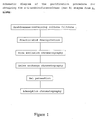
- the DNA molecule encoding such arabinan-degrading enzyme may be obtained from the filamentous fungus which naturally produces it by culturing the fungus in a suitable medium, isolating the desired arabinan-degrading enzyme using known methods such as those outlined in Figure 1 (ABF B enzyme) or those as described by Rombouts et al . ((1988) supra) or van der Veen et al . ((1991) supra) and determining at least a portion of the amino acid sequence of the purified protein.
- DNA probes may thereafter be obtained by designing oligonucleotides based on the deduced partial amino acid sequence.
- Amino acid sequences may be determined from the N-terminus of the complete protein and/or from the N-termini of internal peptide fragments obtained via proteolytic or chemical digestion of the complete protein. Once obtained, the DNA probe(s) are then used to screen a genomic or cDNA library.
- a genomic library may be prepared by partially digesting the fungal chromosomal DNA with a restriction enzyme which recognizes a DNA sequence of four successive nucleotides, e.g. Sau 3A, and cloning the resulting fragments in a suitable plasmid or lambda phage vector, e.g. lambda GEM-11.
- a cDNA library may be prepared by cloning cDNA, synthesized from mRNA isolated from fungal cells induced for the synthesis of arabinan-degrading enzyme, into an appropriate phage vector, e.g. lambda gt10, such as described by Harmsen et al . (1990) Curr. Genet., 18 , 161.
- an appropriate phage vector e.g. lambda gt10, such as described by Harmsen et al . (1990) Curr. Genet., 18 , 161.
- the genomic or cDNA library may be screened with a suitable DNA probe.
- the genomic or cDNA library may be differentially screened with cDNA probes obtained from mRNA from non-induced and induced cells.
- Induced mRNA is prepared from cells grown on media containing arabinan as a carbon source, while non-induced mRNA must be isolated from cells grown on a carbon source other than arabinan, e.g. glucose.
- a clone containing the gene encoding the desired arabinan-degrading enzyme may be recovered.
- a gene encoding an arabinan-degrading enzyme of interest may be identified by cross-hybridization with a gene from a related arabinan-degrading enzyme.
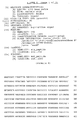
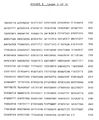
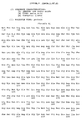
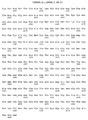
- oligonucleotide probes are obtained from the N-terminal amino acid sequence (see Figure 2, Formula 1) of an arabinan-degrading enzyme having an apparent molecular weight of 60 kDa (in glycosylated form) purified from an Aspergillus niger culture filtrate and/or from the amino acid sequence of an internal peptide fragment (see Figure 3, Formula 3) obtained by digestion of the enzyme with CNBr.
- the oligonucleotide mixtures AB1719 ( Figure 2, Formula 1a) and AB2306 ( Figure 3, Formula 3a) are complementary to the corresponding deduced arabinofuranosidase mRNA.
- Four positive phage clones were obtained from the screening of a lambda GEM-11 library, prepared from partially Sau 3A digested DNA isolated from Aspergillus niger, with the N-terminal oligo mixture AB 1719.
- the abf B gene encodes a protein 499 amino acids in length having a deduced molecular weight of 52523 Da ( Figure 6, Formula 5), as derived from the abf B gene sequence ( Figure 5) and confirmed by the abf B cDNA sequence.
- the N-terminal amino acid sequence, as determined in Example 12.2 (Formula 14) is preceded by a 18 amino acid-long hydrophobic sequence.
- the amino acid sequences determined from the CNBr peptides are found in the sequence from amino acid position 203 until position 219, 267 until 286 and 294 until 312, respectively.
- the mature ABF B protein is 481 amino acids in length, and the unglycosylated protein has a deduced molecular weight of 50663 Da and a theoretical IEP of 3.8.
- PCR polymerase chain reaction
- the DNA molecule encoding the enzyme of interest may be introduced into the selected expression host to increase the copy number of the construct and, consequently, protein expression.
- an uninterrupted (intronless) DNA molecule is used for the construction of a heterologous expression construct in order to avoid the possibility that splice signals residing on the genomic fragment are not recognized by the heterologous host.
- This uninterrupted DNA molecule may be obtained from a cDNA library constructed from mRNA isolated from cells, induced for the synthesis of arabinan-degrading enzymes. This library may be screened with an oligonucleotide or cDNA probe obtained as described before. Alternatively, an uninterrupted DNA molecule may be obtained by applying a polymerase chain reaction using appropriate 5' and 3' oligonucleotides on the first strand cDNA synthesized from the RNA of arabinan-induced cells.
- Enhanced expression of the DNA molecule encoding the arabinan-degrading enzyme of interest may also be achieved by the selection of heterologous regulatory regions, e.g. promoter, secretion leader and terminator regions, which serve to increase expression and, if desired, secretion levels of the protein of interest from the chosen expression host and/or to provide for the inducible control of the expression of the arabinan-degrading enzyme of interest.
- heterologous regulatory regions e.g. promoter, secretion leader and terminator regions
- promoters may be used to direct its expression.
- the promoter may be selected for its efficiency in directing the expression of the arabinan-degrading enzyme of interest in the desired expression host.
- a constitutive promoter may be selected to direct the expression of the desired arabinan-degrading enzyme.
- Such an expression construct may provide additional advantages since it circumvents the need to culture the expression hosts on a medium containing arabinans as an inducing substrate.
- strong constitutive and/or inducible promoters which are preferred for use in fungal expression hosts are those which are obtainable from the fungal genes for xylanase ( xln A), phytase, ATP-synthetase, subunit 9 ( oli C), triose phosphate isomerase ( tpi ), alcohol dehydrogenase ( adh A), ⁇ -amylase ( amy ), amyloglucosidase (AG - from the gla A gene), acetamidase ( amd S) and glyceraldehyde-3-phosphate dehydrogenase ( gpd ) promoters.
- xylanase xln A
- phytase ATP-synthetase
- subunit 9 oli C
- triose phosphate isomerase tpi
- alcohol dehydrogenase adh A
- ⁇ -amylase amy
- strong yeast promoters are those obtainable from the genes for alcohol dehydrogenase, lactase, 3-phosphoglycerate kinase and triosephosphate isomerase promoters.
- strong bacterial promoters are the ⁇ -amylase and Spo 2 promoters as well as promoters from extracellular protease genes.
- Hybrid promoters may also advantageously be used to improve inducible regulation of the expression construct.
- the arabinan-degrading enzyme of interest it is desirable for the arabinan-degrading enzyme of interest to be secreted from the expression host into the culture medium from where the arabinan-degrading enzyme may be more easily recovered.
- the arabinan-degrading enzyme of interest's native secretion leader sequence may be used to effect the secretion of the expressed arabinan-degrading enzyme.
- the present invention also provides heterologous leader sequences to provide for the most efficient secretion of the arabinan-degrading enzyme from the chosen expression host.
- the secretion leader may be selected on the basis of the desired expression host.
- a heterologous secretion leader may be chosen which is homologous to the other regulatory regions of the expression construct.
- the leader of the highly secreted amyloglucosidase (AG) protein may be used in combination with the amyloglucosidase (AG) promoter itself, as well as in combination with other promoters.
- Hybrid signal sequences may also advantageously be used within the context of the present invention.
- heterologous secretion leader sequences are those originating from the fungal amyloglucosidase (AG) gene ( gla A - both 18 and 24 amino acid versions e.g. from Aspergillus ), the ⁇ -factor gene (yeasts e.g. Saccharomyces and Kluyveromyces ) or the ⁇ -amylase gene ( Bacillus ).
- AG fungal amyloglucosidase
- gla A both 18 and 24 amino acid versions e.g. from Aspergillus
- ⁇ -factor gene e.g. Saccharomyces and Kluyveromyces
- Bacillus e.g. Saccharomyces and Kluyveromyces
- terminators are not considered to be critical elements for the enhanced expression of genes.
- a terminator may be selected from the same genes as the promoters, or alternatively, the homologous terminator may be employed.
- the transforming DNA may contain a selection marker to discriminate cells which have incorporated the desired gene from the bulk of untransformed cells.
- This selection marker provided with the appropriate 5' and 3' regulatory sequences, may reside on the same DNA molecule containing the desired gene or be present on a separate molecule. In the latter case, a co-transformation must be performed. The ratio of the expression vector/selection vector must be adjusted in such a manner that a high percentage of the selected transformants also have incorporated the vector containing the expression construct of the arabinan-degrading enzyme of interest.
- the most suitable selection systems for industrial micro-organisms are those formed by the group of selection markers which do not require a mutation in the host organism.
- fungal selection markers are the genes for acetamidase ( amd S), ATP synthetase, subunit 9 ( oli C), orotidine-5'-phosphate-decarboxylase ( pyr A), phleomycin (Durand et al . (1991) Curr. Genet., 19 , 149) and benomyl resistance ( ben A).
- Exemplary of non-fungal selection markers are the bacterial G418 resistance gene (this may also be used in yeast, but not in fungi), the ampicillin resistance gene ( E. coli ), the neomycin resistance gene ( Bacillus ) and the E. coli uid A gene, coding for ⁇ -glucuronidase (GUS).
- the desired expression construct is transformed into a suitable cloning host such as E. coli to propagate the construct. Afterwards, the expression construct is introduced into a suitable expression host wherein the expression construct is preferably integrated into the genome. Certain hosts such as Bacillus species may be used as both cloning and expression hosts, thus avoiding an extra transformation step.
- a variety of organisms may be used as hosts for the production of the arabinan-degrading enzyme of interest. If more than one arabinan-degrading enzyme of interest is to be produced, multiple vectors, each containing an expression construct for an arabinan-degrading enzyme of interest (e.g. ABF A, ABF B and/or ABN A) may be introduced into the same expression host. Alternatively, each desired arabinan-degrading enzyme may be produced independently in separate expression hosts.
- an arabinan-degrading enzyme of interest e.g. ABF A, ABF B and/or ABN A
- a homologous expression host may be used. This involves the introduction of the expression construct back into the strain from which the arabinan-degrading enzyme encoding DNA molecule was isolated either in increased gene copy numbers, or under the control of heterologous regulatory regions as described above, or both.
- one or more arabinan-degrading enzymes of interest may be produced by introducing and expressing one or more DNA molecule(s) encoding the arabinan-degrading enzyme(s) of interest, each under the control of appropriate regulatory regions, into heterologous hosts such as bacteria, yeasts or fungi.
- a DNA molecule encoding an arabinan-degrading enzyme of interest is preferably expressed under the control of promoter and terminator sequences originating from the heterologous host.
- Factors such as the size (molecular weight), the need for proper glycosylation or the desirability of the extracellular secretion of an arabinan-degrading enzyme of interest play an important role in the selection of the expression host.
- the gram-negative bacterium E. coli is widely used as a host for heterologous gene expression.
- large amounts of heterologous protein tend to accumulate inside the cell.
- Subsequent purification of the desired protein from the bulk of E. coli intracellular proteins can sometimes be difficult.
- bacteria from the genus Bacillus are very suitable as heterologous hosts because of their capability to secrete proteins into the culture medium.
- Other bacteria suitable as hosts are those from the genera Streptomyces and Pseudomonas .
- eukaryotic hosts such as yeasts or fungi may be preferred.
- yeast cells are preferred over fungal cells because they are easier to manipulate.
- some proteins are either poorly secreted from the yeast cell, or in some cases are not processed properly (e.g. hyperglycosylation in yeast). In these instances, a fungal host organism should be selected.
- a heterologous host may also be chosen wherein the arabinan-degrading enzyme of interest is produced in a form which is substantially free from other polysaccharide-degrading enzymes. This may be achieved by choosing a host which does not normally produce such enzymes such as Kluyveromyces lactis.
- Examples of preferred expression hosts within the scope of the present invention are fungi such as Aspergillus species (described in European Patent Applications 184.438 and 284.603) and Trichoderma species; bacteria such as Bacillus species (described in European Patent Applications 134.048 and 253.455), Streptomyces species and Pseudomonas species; and yeasts such as Kluyveromyces species (described in European Patent Applications 96.430 and 301.670) and Saccharomyces species.
- fungi such as Aspergillus species (described in European Patent Applications 184.438 and 284.603) and Trichoderma species
- bacteria such as Bacillus species (described in European Patent Applications 134.048 and 253.455), Streptomyces species and Pseudomonas species
- yeasts such as Kluyveromyces species (described in European Patent Applications 96.430 and 301.670) and Saccharomyces species.
- Particularly preferred expression hosts may be selected from Aspergillus niger, Aspergillus niger var. tubigensis, Aspergillus niger var. awamori, Aspergillus aculeatis , Aspergillus nidulans , Aspergillus oryzae , Trichoderma reesei, Bacillus subtilis , Bacillus licheniformis , Bacillus amyloliquefaciens , Kluyveromyces lactis and Saccharomyces cerevisiae .
- the production of arabinan-degrading enzyme(s) of interest is effected by the culturing of microbial expression hosts which have been transformed with one or more DNA constructs of the present invention, in a conventional nutrient fermentation medium.
- the fermentation medium consists of an ordinary culture medium containing a carbon source (e.g. glucose, maltose, molasses, etc.), a nitrogen source (e.g. ammonium sulphate, ammonium nitrate, ammonium chloride, etc.), an organic nitrogen source (e.g. yeast extract, malt extract, peptone, etc.) and inorganic nutrient sources (e.g. phosphate, magnesium, potassium, zinc, iron, etc.).
- a carbon source e.g. glucose, maltose, molasses, etc.
- a nitrogen source e.g. ammonium sulphate, ammonium nitrate, ammonium chloride, etc.
- an organic nitrogen source e.g. yeast extract, malt extract, peptone, etc.
- inorganic nutrient sources e.g. phosphate, magnesium, potassium, zinc, iron, etc.
- an inducer e.g. sugar beet arabinan
- the selection of the appropriate medium may be based on the choice of expression hosts and/or based on the regulatory requirements of the expression construct. Such media are well-known to those skilled in the art.
- the medium may, if desired, contain additional components favoring the transformed expression hosts over other potentially contaminating microorganisms.
- the fermentation is performed over a period of 0.5-20 days in a batch or fed-batch process at a temperature in the range of between 0 and 45°C and a pH between 2 and 10.
- Preferred fermentation conditions are a temperature in the range of between 20 and 37°C and a pH between 3 and 9. The appropriate conditions are selected based on the choice of the expression host.
- the cells are removed from the fermentation broth by means of centrifugation or filtration. After removal of the cells, The arabinan-degrading enzyme of interest may then be recovered and, if desired, purified and isolated by conventional means.
- the product is stably formulated either in liquid or dry form.
- immobilization of the enzyme on a solid matrix may be preferred.
- Arabinan-degrading enzymes of interest produced by means of the present invention, may be applied either singly, or as a mixture of arabinan-degrading enzyme activities (i.e. combinations of ABF A and/or ABF B and/or ABN A activities), and optionally together with other selected enzymes in a variety of processes requiring the action of arabinan-degrading enzymes.
- the fungal arabinan-degrading enzymes of the present invention which generally have lower pH optima than arabinan-degrading enzymes of bacterial origin, are particularly well suited for use in industrial processes which are performed at low pH.
- the ABF A enzyme acts only on low oligomeric arabinosides
- the ABF B enzyme preferably hydrolyzes the side chain L-arabinose residues (with some endo activity) and the ABN A acts optimally on linear arabinan
- mixtures of the ABF A and/or ABF B enzyme act synergistically when combined with endo arabinanase (ABN A) activity.
- ABSA endo arabinanase
- arabinan-degrading enzymes produced via the present invention may be used in the production of concentrated juices, especially fruit (e.g. apple, pear and the like) or vegetable juices to eliminate "arabinan haze”.
- ABF B for example, to an enzyme preparation (such as that obtained from an Aspergillus species) which in turn is added to the pulp prior to pressing provides an increased yield of the resultant juice without the presence of the undesirable arabinan haze in either concentrated or non-concentrated forms of the juice.
- a mixture of all three arabinan-degrading enzymes produced according to the present invention may be supplemented in the processing of concentrated juices from fruits having higher amounts arabinans (e.g. pear juice). Additional enzymatic activity such as pectinase activity may also be added for optimal results as may be determined by one skilled in the art.
- arabinan-degrading enzymes produced according to the present invention improve the filterability of the juices such as grape juice.
- the juice is first treated with an enzyme mixture having high amounts of arabinanases and arabinofuranosidases produced according to the present invention, followed by treatment with ⁇ -1-3- and ⁇ -1-6- galactanases.
- ⁇ -L-arabinofuranosidases particularly the ABF B enzyme, may be used to assist in the liberation of aroma compounds from substrates such as juices or wines, as described by Gunata et al . ((1989) and (1990), supra).
- the first step comprises the use of an ⁇ -L-arabinofuranosidase, preferably having ABF B-like activity, to catalyze the release of arabinose residues from monoterpenyl ⁇ -L-arabinofuranosyl glucosides contained in the fruit or vegetable juice via the cleavage of the (1 ⁇ 6) linkage between a terminal arabinofuranosyl unit and the intermediate glucose of a monoterpenyl ⁇ -L-arabinofuranosylglucoside.
- the ⁇ -L-arabinofuranosidase preferably being in purified form to avoid the undesirable degradation of other components of the juice which may be detrimental to the ultimate quality of the juice.
- Arabinan-degrading enzymes may also be added to animal feeds which are rich in arabinans.
- feeds including silage
- monogastric animals e.g. poultry or swine
- cereals such as barley, wheat, maize, rye or oats or cereal by-products such as wheat bran or maize bran
- the enzyme significantly improves the break-down of plant cell walls which leads to better utilization of the plant nutrients by the animal. As a consequence, growth rate and/or feed conversion are improved.
- arabinan-degrading enzymes may be used to the reduce the viscosity of feeds containing arabinans.
- An arabinan-degrading enzyme may be added beforehand to the feed or silage if pre-soaking or wet diets are preferred. More advantageously, the arabinan-degrading enzymes produced via the present invention continue to hydrolyze arabinans in the feed in vivo .
- Fungal arabinan-degrading enzymes which generally have lower pH optima, are capable of releasing important nutrients in such acidic environments as the stomach of the animal ingesting such arabinan-degrading enzyme-supplemented feed.
- arabinan-degrading enzymes produced according to the present invention is in the pulp and paper industry.
- the application of xylanases is often reported to be beneficial in the removal of lignins and terpenoids from the cellulose and hemicellulose residues of a hemicellulose backbone, an essential step in the processing of wood, wood pulp or wood derivative product for the production of paper.
- the addition of arabinan-degrading enzymes, produced according to the present invention, to the xylanase treatment step assists in the degradation of an arabinan-containing hemicellulose backbone and thus facillitates an improved, more efficient removal of both lignins and terpenoids.
- the application of arabinan-degrading enzymes is particularly advantageous in the processing of soft woods in which the hemicellulose backbone contains arabinoglucoronic xylans.
- arabinan-degrading enzymes produced via the present invention may be used in other processes such as to increase yield in the enzymatic hydrolysis of sugar beet pulp, the resulting hydrolyzed fraction being capable of use in microorganism culture medium; and the hydrolysis of sycamore or gum arabic or agricultural residues such wheat-straw.
- Protein content used for the determination of specific enzymatic activity, was measured according to the method of Lowry et al . ((1951) J. Biol. Chem 193 , 265), except where otherwise denoted.
- Arabinofuranosidase activity may be determined by the addition of 0.250 ml enzyme solution to 8 mM p-nitrophenyl ⁇ -L-arabinofuranoside (PNA - in 0.1 M sodium acetate buffer; pH 4.4). After incubation for 10 min at 40°C, the reaction was stopped by the addition of 2 ml of 0.5 M glycine-sodium buffer, pH 9.0. The concentration of p-nitrophenol (pNP) was determined by reading the absorbance at 400 nm. 1 nkat of activity corresponds to the liberation of 1 nmol of pNP per second under the test conditions.
- PNA p-nitrophenyl ⁇ -L-arabinofuranoside
- arabinofuranosidase activity may be expressed in Units per milliliter (U/ml) wherein a unit of arabinofuranosidase activity is defined as the amount of enzyme which releases 1 ⁇ mol pNP per minute from PNA (see van der Veen et al . (1991) supra).
- ⁇ -D-glucopyranosidase and ⁇ -L-rhamnopyranosidase activities were measured under the same conditions, according to their action on p-nitrophenyl ⁇ -D-glucopyranoside and p-nitrophenyl ⁇ -L-rhamnopyranoside substrates, respectively.
- Endo 1,5- ⁇ -L-arabinanase activity of a culture filtrate was measured and calculated using the ArabinaZymeTM test kit as produced by Megazyme Pty. Ltd. (North Rocks, New South Wales, Australia), according to the manufacturer's instructions.
- One unit of activity is defined as the amount of enzyme required to release 1 ⁇ mol of arabinose reducing sugar equivalents from carboxymethyl linear (1 ⁇ 5)- ⁇ -L-arabinan per minute under the assay conditions.
- FIG. 1 A schematic diagram of the procedure which was applied for the purification of the ⁇ -L-arabinofuranosidase (ABF B) enzyme from a culture filtrate obtained from the A. niger HEM strain is shown in Figure 1. Five steps were used for purification: 1) fractionated precipitation with ammonium sulphate; 2) size exclusion; 3) ion exchange chromatography; 4) gel permeation; and 5) adsorption chromatography.
- the precipitate was solubilized in sodium acetate buffer (pH 4.5; 0.05 M) and diafiltered in the same buffer in order to remove salts. Characteristics of the different fractions are summarized in Table 1.
- a DEAE ART LS column (5,2 x 36 cm; IBF Biotechnics, France) was pre-equilibrated in 0.05 M; pH 4.5 sodium acetate buffer at a flow rate of 100 ml/hour.
- the protein was eluted using a gradient of sodium chloride from 0 to 0.5 M in the start buffer. Fractions of 15 ml were collected and assayed for enzyme activities.
- BIO-GEL P60 column (2.8 x 30 cm; BIO-RAD; Richmond, Va., USA) was pre-equilibrated with 0.01 M sodium phosphate buffer (pH 8.8), at a flow rate of 30 ml/hour.
- the eluted protein was detected with a UV detector at an absorbance of 280 nm.
- BIO-GEL HTP column (2.8 x 20 cm; BIO-RAD; Richmond, Va., USA) was pre-equilibrated with 0.01 M sodium phosphate buffer (pH 8.8), at a flow rate of 30 ml/hour.
- the pool of ⁇ -L-arabinofuranosidase from BIO-GEL P60 (35 ml) (obtained from Example 2.4, above) was applied to the pre-equilibrated BIO-GEL HTP column and chromatographed at a flow rate of 30 ml/hour.
- the proteins were eluted with an appropriate sodium phosphate buffer gradient (pH 8.8) from 0.01 to 0.2 M.
- Example 3.1 High performance size exclusion chromatography (HPSEC) on TSK G3000 SW
- fractions 63, 64, 65, 66, 67 were chromatographed on a TSK G3000 SW column (LKB, Produckter AB; Bromma, Sweden) under the following conditions. 100 ⁇ l aliquots of each fraction were injected on the TSK G3000 SW column, which was pre-equilibrated with sodium-potassium phosphate buffer (pH 7.00; 0.1 M) at a flow rate of 0.5 ml/min. The eluted proteins were detected spectro-photometrically at an absorbance of 280 nm. Fractions of 0.5 ml were collected and the ⁇ -L-arabinofuranosidase activity was tested qualitatively with the colorimetric test on a microtitre plate.
- the column was calibrated with standard molecular weight proteins (Pharmacia Gel filtration calibration kit; Pharmacia AB, Uppsala, Sweden).
- the chromatographic profile reveals the high homogeneity of the protein eluted in fraction 63 to 66.
- the molecular weight of the ⁇ -L-arabinofuranosidase B enzyme was determined to be approximately 70 kDa which agrees fairly closely to the molecular weight for the same enzyme as reported by van der Veen et al . ((1991) supra).
- SDS PAGE electrophoresis confirms the high purity of the enzyme and the molecular weight as determined by HPSEC.
- the amino acid sequence as depicted in Formula 2 is identical to the N-terminal sequence of the ABF B protein (see Formula 1), the 29 kDa band represents the N-terminal fragment of the protein, while the 15 kDa fragment represents an internal fragment.
- amino acid sequences as depicted in Formulas 1 and 3 were used for the construction of oligonucleotide mixtures AB1719 and AB2306 (see Figures 2 and 3). Inosine nucleotides were used in case of a degeneracy of the genetic code of four or more nucleotides.
- Plaques were purified by repeated plating of phages eluted from isolated agar plugs and subsequent screening with oligo AB1719. The five plaques were found to hybridize to a different extent with oligo AB1719: Plaque Hybridization signal 7 +++++ 8 +++++ 12 ⁇ 45 ++ 53 +++++
- phages were eluted from the top agar by continuous shaking of the plate on a rocker platform during 90 minutes with 15 ml Phage Buffer. Halfway, the plates were given a quarter turn. The phage suspension was collected from the plates and centrifuged to remove cell debris. DNase and RNase were added to a final concentration of 1 ⁇ g/ml and the phage suspension was incubated 45 min at 37°C.
- Phages were PEG-precipitated for one hour on ice in 1 M NaCl and 10% PEG 6000. After centrifugation, the phage pellet was resuspended in 1 ml Phage Buffer per plate and insoluble debris removed by centrifugation. SDS and EDTA were added to a final concentration of 0.2% and 15 mM, after which proteinase K was added to 50 ⁇ g/ml and the mixture incubated for 30 min at 65°C. After successive extractions with equal volumes of phenol, phenol/chloroform and chloroform, the DNA was precipitated from the aqueous phase with isopropanol. The DNA was dissolved in TE, containing 0.1 ⁇ g/ml RNase.
- Phage DNA was digested until completion with enzymes recognizing a sequence of four successive nucleotides and the resulting fragments were ligated in pTZ18R or pUC18.
- the resulting colonies were transferred to nitrocellulose membranes and screened with oligo AB1719 to select plasmids with a hybridizing insert. Sufficiently small inserts were sequenced to identify the insert.
- Sequence analysis of a 2.8 kb Sac I fragment of phage clone 7 was performed using a Sequenase R version 2.0 reagent kit (United States Biochemical) according to the manufacturer's instructions.
- the 2.8 kb Sac I fragment was cloned into the E. coli plasmid pUC18.
- the resulting plasmid was given the designation pGBabfB and was deposited in E. coli strain DH5 ⁇ at the Centraal Bureau voor Schimmelcultures (Baarn, the Netherlands on March 11, 1991, under accession number CBS 156.91).
- the phage clone 7 DNA, obtained in Example 6 is introduced into Aspergillus niger by co-transformation of Aspergillus niger strain N593 using the Aspergillus niger pyr A gene as a selective marker on the plasmid pGW635 (Goosen et al . (1989) Mol. Gen. Genet. 219 , 282) and the phage clone 7 DNA as the co-transforming DNA.
- 1:20 molar ratios of transforming DNAs were added in order to favor the frequency of co-transformation.
- the plasmid pNOM102 (Roberts et al , (1989) Curr. Genet., 15 , 177) harboring the E. coli uid A gene, coding for ⁇ -glucuronidase (GUS) was used as co-transforming DNA.
- PYRA + transformants were subsequently transferred to X-glucuronide medium (Clontech, Palo Alto, CA, U.S.A.; Roberts et al. (1989) supra) and scored for GUS activity. Blue colonies were scored as GUS+ phenotype, colourless as GUS- phenotype.
- A. niger co-transformed with pNOM102 and pGW635 plasmids for transformation/selection respectively, gave co-transformation frequencies up to 85 %.
- Protoplasts were prepared from mycelium by growing Aspergillus niger N593 on minimal medium supplemented with 50 mM glucose, 0.5 % yeast extract, 0.2 % casamino acids and 10 mM uridine for 20 hours at 30°C.
- the minimal medium had the following composition (per 1000 ml): 6.0 g NaNO 3 , 1.5 g KH 2 PO 4 , 0.5 g MgSO 4 ⁇ 7H 2 O, 0.5 g KCl, 1 ml Visniac solution (Visniac, W. & Santer, M. (1957) Bact. Rev., 21 , 195), carbon source as indicated, pH 6.0.
- the preparation of protoplasts of A. niger N593 and the transformation procedure was performed as described by Goosen et al . (1987) Current Genet., 11 , 499.
- the resulting PYR+ transformants were isolated, purified and tested for arabinofuranosidase production in shake flasks (see Example 9). Since no plate assay for the co-transformed gene was available, a Polymerase Chain Reaction (PCR) amplification test developed by D. Seth (Biotech International Ltd., Australia) as a quick screen to identify those transformants harbouring the non-selected gene was utilized. This PCR amplification test was performed as follows :
- the PYR + transformants obtained in Example 8 were analyzed for the expression of the abf B gene.
- the PYR + transformants harboring bacteriophage lambda 7 DNA are selected by the PCR amplification test.
- Approximately 1 x 10 6 spores were inoculated in 100 ml pre-culture medium containing (per liter): 30 g sucrose, 2 g NaNO 3 , 1 g K 2 HPO 4 , 0.5 g MgSO 4 ⁇ 7H 2 O, 0.5 g KCl, 0.01 g FeSO 4 ⁇ 7H 2 O, 5 g yeast-extract, 10 g malt-extract and 3 g carboxypolymethylene (B.F. Goodrich Company). The pH was adjusted to 6.1 with NaOH.
- the mycelium was grown for at least a further 100 hours at 34°C and at 250 rpm. Samples were taken at selected intervals. The mycelium was removed by filtration and the culture filtrate analyzed by SDS-polyacrylamide gel electrophoresis and by the arabinofuranosidase assay as described in Example 1.
- Example 10.2 Construction of pAB6-1, pAB-6-3, pAB6-4, pAB6-31 and pAGEK1
- amyloglucosidase (AG) gene ( gla A) of A. niger was isolated from plasmid libraries containing 3-4 kb Eco RI fragments or 13-15 kb Hin dIII fragments in the E. coli vector pUC19 (Yanisch-Perron et al . (1985) Gene, 33 , 103; obtainable from e.g. Pharmacia LKB Biotechnology, Sweden) using the following AG-specific oligos: both based on the nucleotide sequence published for A. niger (Boel et al . (1984) EMBO J., 3 , 1097-1102 ; Boel et al . (1984) Mol. Cell.
- oligo AG-1 is located 3' of the intron and has a polarity identical to the AG mRNA and oligo AG-2 is found upstream of intron 2 and is chosen antiparallel to the AG mRNA.
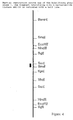
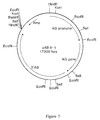
- Plasmid pAB6-1 was obtained which contains the gla A gene on a 14.5 kb Hin dIII fragment (see Figure 7).
- pAB6-1 From plasmid pAB6-1 several subclones were made in pUC19: pAB6-3 which contains a 1.8 kb Eco RI fragment just upstream of the gla A gene and probably harbors regulatory sequences; pAB6-4 which contains a 4.6 kb Hin dIII - Bgl II fragment comprising the promoter of the gla A gene and a portion of the 5'-end of this gene.
- plasmid pAB6-3 was partially digested with Eco RI and treated with T4 polymerase.
- the Hin dIII plus Eco RI fragment of plasmid pAB6-4 was ligated, again after treatment with T4 polymerase.
- the resulting construct was designated pAB6-31; this construct contains a 3.6 kb upstream fragment of the gla A gene with a destroyed Eco RI site in the middle and an unique Eco RI site close to the gla A gene.
- the two DNA fragments generated by PCR were purified by gel electrophoresis and SephaglasTM Band prep kit (Pharmacia, Sweden).
- the ligated DNA was transformed into E. coli electrocompetent Top10 cells as described by the supplier (Invitrogen corporation; San Diego, CA, U.S.A.). Selection was made on Luria Broth (LB) plates containing Xgal (5-bromo-4-chloro-3-indolyl- ⁇ -D-galactoside), IPTG (iso-propylthiogalactoside) and ampicillin. Plasmid DNA from white transformants was prepared as described by Andreoli, P. (1985) Mol. Gen. Genet., 199 , 372 and analyzed with the restriction enzymes Eco RI and Sma I. Those transformants containing the 530 bp fusion DNA fragment were sequenced and designated pAGabfB1.
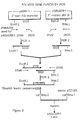
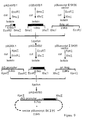
- FIG. 8 A schematic view of the construction of plasmid pAGabfB1 is presented in Figure 8.
- the 530 bp Eco RI- Sma I fragment from plasmid pAGabfB1 was isolated and the 1.8 kb Sma I- Xho I fragment from pGBabfB1 (containing the mature abf B gene) was isolated (see Example 7). These two fragments were ligated into the Eco RI- Xho I cut-pBluescript II SK(+) vector and transformed to E. coli DH5 ⁇ competent cells prepared according to a modified Hanahan procedure ((1983) J. Mol. Biol., 166 , 557). Selection was made on LB plates containing Xgal, IPTG and ampicillin.
- Plasmid DNA from white transformants was prepared and analyzed with the restriction enzymes Eco RI and Xho I.
- the plasmid that harbored the desired 2.3 kb Eco RI- Xho I fragment was designated pAGabfB2.
- the remaining 3.4 kb upstream region of the AG-promoter was obtained by digestion of plasmid pAGEK1 with Kpn I and Eco RI and purified by agarose gel electrophoresis.
- the 2.3. kb Eco RI- Xho I fragment containing the AG-arabanase gene fusion was purified from plasmid pAGabfB2.
- the plasmid pAGabfB3 was introduced into A. niger by co-transformation of strain N593 using the pyr A gene as a selective marker on the plasmid pGW635 (Goosen et al . (1989) supra) and the expression cassette pAGabfB3 as the co-transforming DNA.
- the resulting PYR + transformants were isolated, purified and tested for arabinofuranosidase production in shake flasks using the process as described in Example 11.
- Example 10.8 Introduction of the pAGabfB5 expression cassette in Aspergillus niger strain CBS 513.88
- the plasmid pAGabfB5 was introduced in Aspergillus niger strain CBS 513.88 (deposited October 10, 1988) using transformation procedures as described by Tilburn et al. (1983) Gene, 26 , 205 and Kelly & Hynes (1985) EMBO J., 4, 475 with the following modifications:
- the resulting transformants were replica-plated to selective acetamide minimal medium 1.2 % agarose plates and incubated at 30°C for 4-7 days.
- the AMDS + transformants were purified by streaking for single colonies on selective acetamide minimal medium 1.2 % agarose plates and tested for arabinofuranosidase production in shake flasks using the process as described in Example 11.
- the mycelium was grown for at least a further 140 hours at 34°C and at 250 rpm. Samples were taken at selected intervals. The mycelium was removed by filtration and the culture filtrate analyzed by SDS-polyacrylamide gel electrophoresis and by the arabinofuranosidase assay as described in Example 1.
- the N593 transformants harboring the pAGabfB3 or the pAGabfB4 expression cassette exhibit enhanced production of the ABF B enzyme as compared to the N593 transformants harboring only the pyr A selection marker.
- the CBS 513.88 transformants harboring the pAGabfB5 expression cassette exhibit enhanced production of the ABF B enzyme as compared to the CBS 513.88 transformants harboring the p18FYT3 expression cassette.
- ABSORB ⁇ -L-arabinofuranosidase B
- the protein was dialyzed against bidest for 18 hours after which the protein was freeze-dried.
- the powder was resuspended in 70 % formic acid at a concentration of 1 mg/ml.
- amino acid sequences of Formulas 12 - 15 are also found in the derived amino acid sequnce as provided in Figure 6. This confirms that the ABF B enzyme is conserved in varying strains of Aspergillus niger .
- the structural portion of the abf B gene ranges from position 167 until position 1666 and contains no introns.
- the abf B gene encodes a protein 499 amino acids in length having a deduced molecular weight of 52523 Da ( Figure 6, Formula 5) as derived from the abf B gene sequence and confirmed by the abf B cDNA sequence.
- the N-terminal amino acid sequence, as determined in Example 12.2 (Formula 14) is preceded by a 18 amino acid-long hydrophobic sequence.
- the amino acid sequences determined from the CNBr peptides (Formulas 15, 16 and 17) are found in the sequence from amino acid position 203 until position 219, 267 until 286 and 294 until 312, respectively.
- the mature ABF B protein is 481 amino acids in length, and has a deduced molecular weight of 50663 Da and a theoretical IEP of 3.8.
- the deduced molecular weight value for the ABF B enzyme differs from those reported in the literature as mentioned above (see Rombouts et al ., supra and van der Veen et al. , supra). This is most likely to be attributable to the literature evaluations being made on the glycosylated protein whereas the deduced molecular weight found in the present example is based strictly on the unglycosylated protein.
- a glycosidic extract was obtained by extraction of a must of Muscat de Frontignan variety grapes according to the method as described by Gunata et al . ((1989) supra).
Landscapes
- Life Sciences & Earth Sciences (AREA)
- Chemical & Material Sciences (AREA)
- Health & Medical Sciences (AREA)
- Engineering & Computer Science (AREA)
- Zoology (AREA)
- Genetics & Genomics (AREA)
- Organic Chemistry (AREA)
- Bioinformatics & Cheminformatics (AREA)
- Wood Science & Technology (AREA)
- Microbiology (AREA)
- Biochemistry (AREA)
- General Engineering & Computer Science (AREA)
- Biomedical Technology (AREA)
- Biotechnology (AREA)
- Polymers & Plastics (AREA)
- General Health & Medical Sciences (AREA)
- Molecular Biology (AREA)
- Medicinal Chemistry (AREA)
- Food Science & Technology (AREA)
- Animal Husbandry (AREA)
- Mycology (AREA)
- Physics & Mathematics (AREA)
- Biophysics (AREA)
- Plant Pathology (AREA)
- Chemical Kinetics & Catalysis (AREA)
- General Chemical & Material Sciences (AREA)
- Enzymes And Modification Thereof (AREA)
- Micro-Organisms Or Cultivation Processes Thereof (AREA)
- Non-Alcoholic Beverages (AREA)
- Measuring Or Testing Involving Enzymes Or Micro-Organisms (AREA)
- Saccharide Compounds (AREA)
Priority Applications (1)
| Application Number | Priority Date | Filing Date | Title |
|---|---|---|---|
| EP92200818A EP0506190B1 (en) | 1991-03-27 | 1992-03-20 | Cloning and expression of genes encoding arabinan-degrading enzymes of fungal origin |
Applications Claiming Priority (3)
| Application Number | Priority Date | Filing Date | Title |
|---|---|---|---|
| EP91200720 | 1991-03-27 | ||
| EP91200720 | 1991-03-27 | ||
| EP92200818A EP0506190B1 (en) | 1991-03-27 | 1992-03-20 | Cloning and expression of genes encoding arabinan-degrading enzymes of fungal origin |
Publications (2)
| Publication Number | Publication Date |
|---|---|
| EP0506190A1 EP0506190A1 (en) | 1992-09-30 |
| EP0506190B1 true EP0506190B1 (en) | 2001-11-14 |
Family
ID=8207573
Family Applications (1)
| Application Number | Title | Priority Date | Filing Date |
|---|---|---|---|
| EP92200818A Expired - Lifetime EP0506190B1 (en) | 1991-03-27 | 1992-03-20 | Cloning and expression of genes encoding arabinan-degrading enzymes of fungal origin |
Country Status (13)
| Country | Link |
|---|---|
| US (1) | US5863783A (enExample) |
| EP (1) | EP0506190B1 (enExample) |
| JP (1) | JPH06500022A (enExample) |
| AT (1) | ATE208821T1 (enExample) |
| AU (1) | AU651194B2 (enExample) |
| CA (1) | CA2084056A1 (enExample) |
| DE (1) | DE69232197T2 (enExample) |
| FI (1) | FI925359A7 (enExample) |
| IE (1) | IE920964A1 (enExample) |
| NO (1) | NO924576D0 (enExample) |
| NZ (1) | NZ242124A (enExample) |
| PL (1) | PL170943B1 (enExample) |
| WO (1) | WO1992017592A1 (enExample) |
Families Citing this family (15)
| Publication number | Priority date | Publication date | Assignee | Title |
|---|---|---|---|---|
| DK24593D0 (enExample) * | 1993-03-05 | 1993-03-05 | Novo Nordisk As | |
| US6051431A (en) * | 1994-07-22 | 2000-04-18 | Dsm N.V. | Selection marker gene free recombinant strains: a method for obtaining them and the use of these strains |
| GB9505479D0 (en) * | 1995-03-17 | 1995-05-03 | Danisco | Enzyme |
| JPH10510720A (ja) * | 1995-10-13 | 1998-10-20 | ギスト ブロカデス ベスローテン フェンノートシャップ | タンパク質検出法 |
| US6015703A (en) * | 1998-03-10 | 2000-01-18 | Iogen Corporation | Genetic constructs and genetically modified microbes for enhanced production of beta-glucosidase |
| JP2002095491A (ja) * | 2000-09-22 | 2002-04-02 | Unitika Ltd | L−アラビノース又はl−アラビノース含有酵素処理物の製造方法 |
| JP2001286294A (ja) * | 2000-02-01 | 2001-10-16 | Unitika Ltd | L−アラビノースの製造方法並びにl−アラビノース含有酵素処理物及びその製造方法 |
| JP2002136278A (ja) * | 2000-11-02 | 2002-05-14 | Unitika Ltd | アラビノース含有果実又は野菜ジュース及びその製造法 |
| US7223902B1 (en) * | 1999-11-19 | 2007-05-29 | Yissum Research Development Company Of The Hebrew University Of Jerusalem | Method of producing recombinant Aspergillus niger β-glucosidase and an aroma spreading plant |
| DE60134436D1 (de) * | 2000-02-01 | 2008-07-24 | Unitika Ltd | Lebensmittel für Diabetiker und Verfahren zur Herstellung desselben |
| FR2885365B1 (fr) | 2005-05-04 | 2007-06-08 | Adisseo France Sas Soc Par Act | Gene abfb-2 de penicillium funiculosum |
| FR2885366B1 (fr) * | 2005-05-04 | 2007-06-15 | Adisseo France Sas Soc Par Act | Gene abfb-1 de penicillium funiculosum |
| US9850512B2 (en) | 2013-03-15 | 2017-12-26 | The Research Foundation For The State University Of New York | Hydrolysis of cellulosic fines in primary clarified sludge of paper mills and the addition of a surfactant to increase the yield |
| US9951363B2 (en) | 2014-03-14 | 2018-04-24 | The Research Foundation for the State University of New York College of Environmental Science and Forestry | Enzymatic hydrolysis of old corrugated cardboard (OCC) fines from recycled linerboard mill waste rejects |
| CN110423701B (zh) * | 2019-06-14 | 2022-10-28 | 青岛蔚蓝生物集团有限公司 | 一种高产阿拉伯呋喃糖苷酶的黑曲霉菌株 |
Citations (1)
| Publication number | Priority date | Publication date | Assignee | Title |
|---|---|---|---|---|
| EP0463706A1 (en) * | 1990-07-24 | 1992-01-02 | Gist-Brocades N.V. | Cloning and expression of xylanase genes from fungal origin |
Family Cites Families (23)
| Publication number | Priority date | Publication date | Assignee | Title |
|---|---|---|---|---|
| DE124812C (enExample) * | ||||
| JPS59198978A (ja) * | 1983-04-26 | 1984-11-10 | Hirosuke Okada | キシラン分解酵素系遺伝子を有する組み換え体プラスミドおよびそれにより形質転換されたEscherichia属菌 |
| US4760025A (en) * | 1984-05-29 | 1988-07-26 | Genencor, Inc. | Modified enzymes and methods for making same |
| US4757006A (en) * | 1983-10-28 | 1988-07-12 | Genetics Institute, Inc. | Human factor VIII:C gene and recombinant methods for production |
| US4703008A (en) * | 1983-12-13 | 1987-10-27 | Kiren-Amgen, Inc. | DNA sequences encoding erythropoietin |
| FI841500A0 (fi) * | 1984-04-13 | 1984-04-13 | Valtion Teknillinen | Foerfarande foer uppbygnande av cellulolytiska jaeststammar. |
| SE455183B (sv) * | 1984-04-13 | 1988-06-27 | Autoliv Dev | Anordning for avkenning av en staende, vippbar troghetskropps lege i ett sekerhetssystem for fordon |
| SE8505922D0 (sv) * | 1985-12-13 | 1985-12-13 | Kabigen Ab | Construction of an igg binding protein to facilitate downstream processing using protein engineering |
| US5188958A (en) * | 1986-05-29 | 1993-02-23 | Calgene, Inc. | Transformation and foreign gene expression in brassica species |
| US5013652A (en) * | 1986-10-14 | 1991-05-07 | Genex Corporation | Composite yeast vectors |
| EP0311469A3 (en) * | 1987-09-02 | 1990-05-30 | Plant Genetic Systems N.V. | Transformed lactic acid bacteria |
| US5324653A (en) * | 1988-02-11 | 1994-06-28 | Gist-Brocades N.V. | Recombinant genetic means for the production of serine protease muteins |
| CN1056187C (zh) * | 1988-02-11 | 2000-09-06 | 金克克国际有限公司 | 新的蛋白水解酶及其在洗涤剂中的应用 |
| FR2628439B1 (fr) * | 1988-03-08 | 1990-09-21 | Agronomique Inst Nat Rech | Procede d'obtention de composants d'aromes et d'aromes a partir de leurs precurseurs de nature glycosidique, et composants d'aromes et aromes ainsi obtenus |
| US5246849A (en) * | 1988-04-12 | 1993-09-21 | Enzon, Inc. | Thermally stable serine proteases |
| US5108918A (en) * | 1988-08-11 | 1992-04-28 | Gist-Brocades | Method for identifying and using biosynthetic genes for enhanced production of secondary metabolites |
| FI912687A7 (fi) * | 1988-12-05 | 1991-06-04 | British Sugar Plc | Arabaani, josta haaraketjuja on poistettu, ja sen käyttö rasvan korvik keena |
| US5075227A (en) * | 1989-03-07 | 1991-12-24 | Zymogenetics, Inc. | Directional cloning |
| JPH03505976A (ja) * | 1989-05-17 | 1991-12-26 | アムジエン・インコーポレーテツド | 多重突然変異スブチリシン |
| EP0421919A3 (en) * | 1989-09-02 | 1992-04-15 | Ciba-Geigy Ag | Polygalacturonase encoding fungal expression system |
| EP0436502B1 (en) * | 1990-01-04 | 2005-11-16 | Genencor International, Inc. | Novel glucose isomerases with an altered pH optimum |
| US5482849A (en) * | 1990-12-21 | 1996-01-09 | Novo Nordisk A/S | Subtilisin mutants |
| US5340735A (en) * | 1991-05-29 | 1994-08-23 | Cognis, Inc. | Bacillus lentus alkaline protease variants with increased stability |
-
1991
- 1991-03-27 US US07/952,853 patent/US5863783A/en not_active Expired - Fee Related
-
1992
- 1992-03-20 DE DE69232197T patent/DE69232197T2/de not_active Expired - Fee Related
- 1992-03-20 PL PL92296926A patent/PL170943B1/pl unknown
- 1992-03-20 CA CA002084056A patent/CA2084056A1/en not_active Abandoned
- 1992-03-20 AU AU15755/92A patent/AU651194B2/en not_active Ceased
- 1992-03-20 EP EP92200818A patent/EP0506190B1/en not_active Expired - Lifetime
- 1992-03-20 AT AT92200818T patent/ATE208821T1/de not_active IP Right Cessation
- 1992-03-20 WO PCT/NL1992/000056 patent/WO1992017592A1/en not_active Ceased
- 1992-03-20 FI FI925359A patent/FI925359A7/fi unknown
- 1992-03-20 JP JP4507789A patent/JPH06500022A/ja active Pending
- 1992-03-25 NZ NZ242124A patent/NZ242124A/xx unknown
- 1992-03-26 IE IE096492A patent/IE920964A1/en unknown
- 1992-11-26 NO NO924576A patent/NO924576D0/no unknown
Patent Citations (1)
| Publication number | Priority date | Publication date | Assignee | Title |
|---|---|---|---|---|
| EP0463706A1 (en) * | 1990-07-24 | 1992-01-02 | Gist-Brocades N.V. | Cloning and expression of xylanase genes from fungal origin |
Non-Patent Citations (1)
| Title |
|---|
| VAN DER VEEN ET AL., ARCH. MICROBIOL., vol. 157, December 1991 (1991-12-01), pages 23 - 28 * |
Also Published As
| Publication number | Publication date |
|---|---|
| NZ242124A (en) | 1993-10-26 |
| CA2084056A1 (en) | 1992-09-28 |
| FI925359A0 (fi) | 1992-11-25 |
| DE69232197D1 (de) | 2001-12-20 |
| PL296926A1 (en) | 1993-09-06 |
| IE920964A1 (en) | 1992-10-07 |
| NO924576L (no) | 1992-11-26 |
| FI925359L (fi) | 1992-11-25 |
| AU651194B2 (en) | 1994-07-14 |
| US5863783A (en) | 1999-01-26 |
| ATE208821T1 (de) | 2001-11-15 |
| AU1575592A (en) | 1992-11-02 |
| EP0506190A1 (en) | 1992-09-30 |
| PL170943B1 (pl) | 1997-02-28 |
| JPH06500022A (ja) | 1994-01-06 |
| NO924576D0 (no) | 1992-11-26 |
| DE69232197T2 (de) | 2002-03-28 |
| WO1992017592A1 (en) | 1992-10-15 |
| FI925359A7 (fi) | 1992-11-25 |
Similar Documents
| Publication | Publication Date | Title |
|---|---|---|
| Manzanares et al. | Purification and characterization of two different α-L-rhamnosidases, RhaA and RhaB, from Aspergillus aculeatus | |
| AU654147B2 (en) | Cloning and expression of xylanase genes from fungal origin | |
| Ruiz-Arribas et al. | Overproduction, purification, and biochemical characterization of a xylanase (Xys1) from Streptomyces halstedii JM8 | |
| EP2421965B1 (en) | Carbohydrate degrading polypeptide and uses thereof | |
| KR100618495B1 (ko) | 섬유상의 진균성 숙주 영역에서의 형질전환 시스템:크리소스포륨속에서 | |
| US5665585A (en) | Recombinant production of glucoamylase P in trichoderma | |
| EP3447136A1 (en) | Carbohydrate degrading polypeptide and uses thereof | |
| EP0730653B1 (en) | Arabinoxylan degrading enzymes | |
| US5863783A (en) | Cloning and expression of DNA molecules encoding arabinan-degrading enzymes of fungal origin | |
| CA2159314A1 (en) | An .alpha.-galactosidase enzyme | |
| AU671710B2 (en) | Cloning And Expression Of Xylanase B | |
| EP0804558B1 (en) | Tripeptidyl aminopeptidase | |
| EP2336152B1 (en) | Thermostable xylanase for the selective hydrolysis of pentose-containing polysaccharides | |
| EP1184460A1 (en) | Modified fungal xylanases | |
| US5550045A (en) | Cloning and expression of DNA encoding a ripening form of a polypeptide having rhamnogalcturonase activity | |
| WO1993024621A1 (en) | Novel enzyme preparations and methods for their production | |
| Juge et al. | Secretion, purification, and characterisation of barley α-amylase produced by heterologous gene expression in Aspergillus niger | |
| US6558728B1 (en) | α-glucuronidases of aspergillus, production thereof and their uses | |
| US6077702A (en) | Endo β-1,4-glucanase from Aspergillus | |
| US5989887A (en) | Cloning and expression of DNA molecules incoding arabinan-degrading enzymes of fungal origin | |
| JPH11502113A (ja) | アスペルギルスのアラビノフラノシダーゼ | |
| EP0570075A2 (en) | Cloning and expression of DNA encoding a ripening form of a polypeptide having rhamnogalacturonase activity | |
| WO1998006858A1 (en) | BETA-1,4-ENDOGLUCANASE FROM $i(ASPERGILLUS NIGER) | |
| KR101276752B1 (ko) | 페니실리움 푸니쿨로섬의 abfB-1 유전자 | |
| CA2240390C (en) | Novel xylanases, genes encoding them, and uses thereof |
Legal Events
| Date | Code | Title | Description |
|---|---|---|---|
| PUAI | Public reference made under article 153(3) epc to a published international application that has entered the european phase |
Free format text: ORIGINAL CODE: 0009012 |
|
| AK | Designated contracting states |
Kind code of ref document: A1 Designated state(s): AT BE CH DE DK ES FR GB GR IT LI LU MC NL PT SE |
|
| 17P | Request for examination filed |
Effective date: 19921211 |
|
| 17Q | First examination report despatched |
Effective date: 19960129 |
|
| RAP1 | Party data changed (applicant data changed or rights of an application transferred) |
Owner name: DSM N.V. |
|
| RIC1 | Information provided on ipc code assigned before grant |
Free format text: 7C 12N 15/80 A, 7C 12N 9/24 B |
|
| GRAG | Despatch of communication of intention to grant |
Free format text: ORIGINAL CODE: EPIDOS AGRA |
|
| RIC1 | Information provided on ipc code assigned before grant |
Free format text: 7C 12N 15/80 A, 7C 12N 9/24 B |
|
| GRAG | Despatch of communication of intention to grant |
Free format text: ORIGINAL CODE: EPIDOS AGRA |
|
| GRAH | Despatch of communication of intention to grant a patent |
Free format text: ORIGINAL CODE: EPIDOS IGRA |
|
| GRAH | Despatch of communication of intention to grant a patent |
Free format text: ORIGINAL CODE: EPIDOS IGRA |
|
| GRAA | (expected) grant |
Free format text: ORIGINAL CODE: 0009210 |
|
| AK | Designated contracting states |
Kind code of ref document: B1 Designated state(s): AT BE CH DE DK ES FR GB GR IT LI LU MC NL PT SE |
|
| PG25 | Lapsed in a contracting state [announced via postgrant information from national office to epo] |
Ref country code: IT Free format text: LAPSE BECAUSE OF FAILURE TO SUBMIT A TRANSLATION OF THE DESCRIPTION OR TO PAY THE FEE WITHIN THE PRE;WARNING: LAPSES OF ITALIAN PATENTS WITH EFFECTIVE DATE BEFORE 2007 MAY HAVE OCCURRED AT ANY TIME BEFORE 2007. THE CORRECT EFFECTIVE DATE MAY BE DIFFERENT FROM THE ONE RECORDED.SCRIBED TIME-LIMIT Effective date: 20011114 Ref country code: NL Free format text: LAPSE BECAUSE OF FAILURE TO SUBMIT A TRANSLATION OF THE DESCRIPTION OR TO PAY THE FEE WITHIN THE PRESCRIBED TIME-LIMIT Effective date: 20011114 Ref country code: FR Free format text: LAPSE BECAUSE OF FAILURE TO SUBMIT A TRANSLATION OF THE DESCRIPTION OR TO PAY THE FEE WITHIN THE PRESCRIBED TIME-LIMIT Effective date: 20011114 Ref country code: AT Free format text: LAPSE BECAUSE OF FAILURE TO SUBMIT A TRANSLATION OF THE DESCRIPTION OR TO PAY THE FEE WITHIN THE PRESCRIBED TIME-LIMIT Effective date: 20011114 Ref country code: GR Free format text: LAPSE BECAUSE OF FAILURE TO SUBMIT A TRANSLATION OF THE DESCRIPTION OR TO PAY THE FEE WITHIN THE PRESCRIBED TIME-LIMIT Effective date: 20011114 Ref country code: BE Free format text: LAPSE BECAUSE OF FAILURE TO SUBMIT A TRANSLATION OF THE DESCRIPTION OR TO PAY THE FEE WITHIN THE PRESCRIBED TIME-LIMIT Effective date: 20011114 Ref country code: CH Free format text: LAPSE BECAUSE OF FAILURE TO SUBMIT A TRANSLATION OF THE DESCRIPTION OR TO PAY THE FEE WITHIN THE PRESCRIBED TIME-LIMIT Effective date: 20011114 Ref country code: LI Free format text: LAPSE BECAUSE OF FAILURE TO SUBMIT A TRANSLATION OF THE DESCRIPTION OR TO PAY THE FEE WITHIN THE PRESCRIBED TIME-LIMIT Effective date: 20011114 |
|
| REF | Corresponds to: |
Ref document number: 208821 Country of ref document: AT Date of ref document: 20011115 Kind code of ref document: T |
|
| REG | Reference to a national code |
Ref country code: CH Ref legal event code: EP |
|
| REF | Corresponds to: |
Ref document number: 69232197 Country of ref document: DE Date of ref document: 20011220 |
|
| REG | Reference to a national code |
Ref country code: GB Ref legal event code: IF02 |
|
| PG25 | Lapsed in a contracting state [announced via postgrant information from national office to epo] |
Ref country code: DK Free format text: LAPSE BECAUSE OF FAILURE TO SUBMIT A TRANSLATION OF THE DESCRIPTION OR TO PAY THE FEE WITHIN THE PRESCRIBED TIME-LIMIT Effective date: 20020214 Ref country code: SE Free format text: LAPSE BECAUSE OF FAILURE TO SUBMIT A TRANSLATION OF THE DESCRIPTION OR TO PAY THE FEE WITHIN THE PRESCRIBED TIME-LIMIT Effective date: 20020214 Ref country code: PT Free format text: LAPSE BECAUSE OF FAILURE TO SUBMIT A TRANSLATION OF THE DESCRIPTION OR TO PAY THE FEE WITHIN THE PRESCRIBED TIME-LIMIT Effective date: 20020214 |
|
| PG25 | Lapsed in a contracting state [announced via postgrant information from national office to epo] |
Ref country code: GB Free format text: LAPSE BECAUSE OF NON-PAYMENT OF DUE FEES Effective date: 20020320 Ref country code: LU Free format text: LAPSE BECAUSE OF NON-PAYMENT OF DUE FEES Effective date: 20020320 Ref country code: MC Free format text: LAPSE BECAUSE OF NON-PAYMENT OF DUE FEES Effective date: 20020320 |
|
| NLV1 | Nl: lapsed or annulled due to failure to fulfill the requirements of art. 29p and 29m of the patents act | ||
| PG25 | Lapsed in a contracting state [announced via postgrant information from national office to epo] |
Ref country code: ES Free format text: LAPSE BECAUSE OF FAILURE TO SUBMIT A TRANSLATION OF THE DESCRIPTION OR TO PAY THE FEE WITHIN THE PRESCRIBED TIME-LIMIT Effective date: 20020530 |
|
| REG | Reference to a national code |
Ref country code: CH Ref legal event code: PL |
|
| PLBE | No opposition filed within time limit |
Free format text: ORIGINAL CODE: 0009261 |
|
| STAA | Information on the status of an ep patent application or granted ep patent |
Free format text: STATUS: NO OPPOSITION FILED WITHIN TIME LIMIT |
|
| EN | Fr: translation not filed | ||
| PG25 | Lapsed in a contracting state [announced via postgrant information from national office to epo] |
Ref country code: DE Free format text: LAPSE BECAUSE OF NON-PAYMENT OF DUE FEES Effective date: 20021001 |
|
| 26N | No opposition filed | ||
| GBPC | Gb: european patent ceased through non-payment of renewal fee |
Effective date: 20020320 |