EP0498347B1 - Verfahren zur Herstellung von Isothiazolonderivaten - Google Patents
Verfahren zur Herstellung von Isothiazolonderivaten Download PDFInfo
- Publication number
- EP0498347B1 EP0498347B1 EP92101738A EP92101738A EP0498347B1 EP 0498347 B1 EP0498347 B1 EP 0498347B1 EP 92101738 A EP92101738 A EP 92101738A EP 92101738 A EP92101738 A EP 92101738A EP 0498347 B1 EP0498347 B1 EP 0498347B1
- Authority
- EP
- European Patent Office
- Prior art keywords
- mit
- process according
- solvent
- reactor
- mmpa
- Prior art date
- Legal status (The legal status is an assumption and is not a legal conclusion. Google has not performed a legal analysis and makes no representation as to the accuracy of the status listed.)
- Expired - Lifetime
Links
- 238000000034 method Methods 0.000 title claims description 52
- 238000002360 preparation method Methods 0.000 title claims description 8
- JLHMJWHSBYZWJJ-UHFFFAOYSA-N 1,2-thiazole 1-oxide Chemical class O=S1C=CC=N1 JLHMJWHSBYZWJJ-UHFFFAOYSA-N 0.000 title description 3
- VYQTZFNKSHBQKY-UHFFFAOYSA-N n-methyl-3-sulfanylpropanamide Chemical compound CNC(=O)CCS VYQTZFNKSHBQKY-UHFFFAOYSA-N 0.000 claims abstract description 73
- 239000002904 solvent Substances 0.000 claims abstract description 64
- 239000000203 mixture Substances 0.000 claims abstract description 48
- DHNRXBZYEKSXIM-UHFFFAOYSA-N chloromethylisothiazolinone Chemical compound CN1SC(Cl)=CC1=O DHNRXBZYEKSXIM-UHFFFAOYSA-N 0.000 claims abstract description 44
- 239000000460 chlorine Substances 0.000 claims abstract description 27
- ZAMOUSCENKQFHK-UHFFFAOYSA-N Chlorine atom Chemical compound [Cl] ZAMOUSCENKQFHK-UHFFFAOYSA-N 0.000 claims abstract description 23
- 229910052801 chlorine Inorganic materials 0.000 claims abstract description 23
- PUSPAPGHKSLKKH-UHFFFAOYSA-N 2-methyl-1,2-thiazolidin-3-one Chemical compound CN1SCCC1=O PUSPAPGHKSLKKH-UHFFFAOYSA-N 0.000 claims abstract description 6
- MVPPADPHJFYWMZ-UHFFFAOYSA-N chlorobenzene Chemical compound ClC1=CC=CC=C1 MVPPADPHJFYWMZ-UHFFFAOYSA-N 0.000 claims description 64
- YMWUJEATGCHHMB-UHFFFAOYSA-N Dichloromethane Chemical compound ClCCl YMWUJEATGCHHMB-UHFFFAOYSA-N 0.000 claims description 41
- 238000006243 chemical reaction Methods 0.000 claims description 35
- 239000000047 product Substances 0.000 claims description 35
- 239000007787 solid Substances 0.000 claims description 30
- 239000011541 reaction mixture Substances 0.000 claims description 28
- XLYOFNOQVPJJNP-UHFFFAOYSA-N water Substances O XLYOFNOQVPJJNP-UHFFFAOYSA-N 0.000 claims description 26
- 238000001914 filtration Methods 0.000 claims description 16
- 238000007872 degassing Methods 0.000 claims description 15
- WSLDOOZREJYCGB-UHFFFAOYSA-N 1,2-Dichloroethane Chemical compound ClCCCl WSLDOOZREJYCGB-UHFFFAOYSA-N 0.000 claims description 10
- 238000005406 washing Methods 0.000 claims description 9
- 230000008929 regeneration Effects 0.000 claims description 8
- 238000011069 regeneration method Methods 0.000 claims description 8
- HEDRZPFGACZZDS-UHFFFAOYSA-N Chloroform Chemical compound ClC(Cl)Cl HEDRZPFGACZZDS-UHFFFAOYSA-N 0.000 claims description 6
- 238000001816 cooling Methods 0.000 claims description 5
- 238000004821 distillation Methods 0.000 claims description 3
- 238000001035 drying Methods 0.000 claims description 3
- CYTYCFOTNPOANT-UHFFFAOYSA-N Perchloroethylene Chemical group ClC(Cl)=C(Cl)Cl CYTYCFOTNPOANT-UHFFFAOYSA-N 0.000 claims description 2
- 238000004064 recycling Methods 0.000 claims 2
- 230000001172 regenerating effect Effects 0.000 claims 2
- 239000003463 adsorbent Substances 0.000 claims 1
- 239000012065 filter cake Substances 0.000 claims 1
- 239000012066 reaction slurry Substances 0.000 claims 1
- 238000005660 chlorination reaction Methods 0.000 abstract description 6
- KZBUYRJDOAKODT-UHFFFAOYSA-N Chlorine Chemical compound ClCl KZBUYRJDOAKODT-UHFFFAOYSA-N 0.000 description 32
- YXFVVABEGXRONW-UHFFFAOYSA-N Toluene Chemical compound CC1=CC=CC=C1 YXFVVABEGXRONW-UHFFFAOYSA-N 0.000 description 18
- 239000000243 solution Substances 0.000 description 18
- 239000000543 intermediate Substances 0.000 description 12
- 239000000463 material Substances 0.000 description 12
- 239000002002 slurry Substances 0.000 description 12
- HEMHJVSKTPXQMS-UHFFFAOYSA-M Sodium hydroxide Chemical compound [OH-].[Na+] HEMHJVSKTPXQMS-UHFFFAOYSA-M 0.000 description 9
- 239000006227 byproduct Substances 0.000 description 9
- 150000001875 compounds Chemical class 0.000 description 9
- 150000003840 hydrochlorides Chemical class 0.000 description 9
- 238000004519 manufacturing process Methods 0.000 description 8
- 239000000706 filtrate Substances 0.000 description 7
- 238000009472 formulation Methods 0.000 description 7
- 238000002441 X-ray diffraction Methods 0.000 description 6
- VYPSYNLAJGMNEJ-UHFFFAOYSA-N Silicium dioxide Chemical compound O=[Si]=O VYPSYNLAJGMNEJ-UHFFFAOYSA-N 0.000 description 5
- 239000012458 free base Substances 0.000 description 5
- 239000003960 organic solvent Substances 0.000 description 5
- 239000012071 phase Substances 0.000 description 5
- 239000011324 bead Substances 0.000 description 4
- 230000015572 biosynthetic process Effects 0.000 description 4
- 230000007423 decrease Effects 0.000 description 4
- 238000004090 dissolution Methods 0.000 description 4
- 230000000694 effects Effects 0.000 description 4
- 239000011521 glass Substances 0.000 description 4
- 239000012074 organic phase Substances 0.000 description 4
- 239000000741 silica gel Substances 0.000 description 4
- 229910002027 silica gel Inorganic materials 0.000 description 4
- 239000012265 solid product Substances 0.000 description 4
- UHOVQNZJYSORNB-UHFFFAOYSA-N Benzene Chemical compound C1=CC=CC=C1 UHOVQNZJYSORNB-UHFFFAOYSA-N 0.000 description 3
- 238000000354 decomposition reaction Methods 0.000 description 3
- 150000004816 dichlorobenzenes Chemical class 0.000 description 3
- 239000012535 impurity Substances 0.000 description 3
- 150000003839 salts Chemical class 0.000 description 3
- OCJBOOLMMGQPQU-UHFFFAOYSA-N 1,4-dichlorobenzene Chemical class ClC1=CC=C(Cl)C=C1 OCJBOOLMMGQPQU-UHFFFAOYSA-N 0.000 description 2
- BSZXAFXFTLXUFV-UHFFFAOYSA-N 1-phenylethylbenzene Chemical class C=1C=CC=CC=1C(C)C1=CC=CC=C1 BSZXAFXFTLXUFV-UHFFFAOYSA-N 0.000 description 2
- UZWXYEHTFDWCIS-UHFFFAOYSA-N 3-chloro-n-methylpropanamide Chemical compound CNC(=O)CCCl UZWXYEHTFDWCIS-UHFFFAOYSA-N 0.000 description 2
- VQXMSONJQUSLMG-UHFFFAOYSA-N 4,5-dichloro-2-methyl-1,2-thiazolidin-3-one Chemical compound CN1SC(Cl)C(Cl)C1=O VQXMSONJQUSLMG-UHFFFAOYSA-N 0.000 description 2
- IJGRMHOSHXDMSA-UHFFFAOYSA-N Atomic nitrogen Chemical compound N#N IJGRMHOSHXDMSA-UHFFFAOYSA-N 0.000 description 2
- UIIMBOGNXHQVGW-UHFFFAOYSA-M Sodium bicarbonate Chemical compound [Na+].OC([O-])=O UIIMBOGNXHQVGW-UHFFFAOYSA-M 0.000 description 2
- 239000004480 active ingredient Substances 0.000 description 2
- 239000013011 aqueous formulation Substances 0.000 description 2
- 230000003115 biocidal effect Effects 0.000 description 2
- 239000007806 chemical reaction intermediate Substances 0.000 description 2
- 239000007810 chemical reaction solvent Substances 0.000 description 2
- 238000010924 continuous production Methods 0.000 description 2
- 229940117389 dichlorobenzene Drugs 0.000 description 2
- 230000008034 disappearance Effects 0.000 description 2
- 238000001704 evaporation Methods 0.000 description 2
- 230000008020 evaporation Effects 0.000 description 2
- 239000007789 gas Substances 0.000 description 2
- 230000002401 inhibitory effect Effects 0.000 description 2
- MGIYRDNGCNKGJU-UHFFFAOYSA-N isothiazolinone Chemical class O=C1C=CSN1 MGIYRDNGCNKGJU-UHFFFAOYSA-N 0.000 description 2
- 238000005191 phase separation Methods 0.000 description 2
- 238000001556 precipitation Methods 0.000 description 2
- 239000012258 stirred mixture Substances 0.000 description 2
- 238000003756 stirring Methods 0.000 description 2
- 238000003860 storage Methods 0.000 description 2
- VZGDMQKNWNREIO-UHFFFAOYSA-N tetrachloromethane Chemical compound ClC(Cl)(Cl)Cl VZGDMQKNWNREIO-UHFFFAOYSA-N 0.000 description 2
- RSPCKAHMRANGJZ-UHFFFAOYSA-N thiohydroxylamine Chemical class SN RSPCKAHMRANGJZ-UHFFFAOYSA-N 0.000 description 2
- SCYULBFZEHDVBN-UHFFFAOYSA-N 1,1-Dichloroethane Chemical compound CC(Cl)Cl SCYULBFZEHDVBN-UHFFFAOYSA-N 0.000 description 1
- FKPCCLRWSGMEJU-UHFFFAOYSA-N 1,2-thiazole 1-oxide;hydrochloride Chemical class Cl.O=S1C=CC=N1 FKPCCLRWSGMEJU-UHFFFAOYSA-N 0.000 description 1
- UEFCKYIRXORTFI-UHFFFAOYSA-N 1,2-thiazolidin-3-one Chemical compound O=C1CCSN1 UEFCKYIRXORTFI-UHFFFAOYSA-N 0.000 description 1
- KZPCYJYSSHZADR-UHFFFAOYSA-N 2,2-dichloro-n-methylpropanamide Chemical compound CNC(=O)C(C)(Cl)Cl KZPCYJYSSHZADR-UHFFFAOYSA-N 0.000 description 1
- PDGOVYBTZIEWRC-UHFFFAOYSA-N 4,4,5,5-tetrachloro-2-methyl-1,2-thiazolidin-3-one Chemical compound CN1SC(Cl)(Cl)C(Cl)(Cl)C1=O PDGOVYBTZIEWRC-UHFFFAOYSA-N 0.000 description 1
- UPJVNXWFKBZLBE-UHFFFAOYSA-N 4,4,5-trichloro-2-methyl-1,2-thiazolidin-3-one Chemical compound CN1SC(Cl)C(Cl)(Cl)C1=O UPJVNXWFKBZLBE-UHFFFAOYSA-N 0.000 description 1
- MZIVASQDXSXHHV-UHFFFAOYSA-N 4,5-dichloro-2-methyl-1-oxo-1,2-thiazolidin-3-one Chemical compound CN1C(=O)C(Cl)C(Cl)S1=O MZIVASQDXSXHHV-UHFFFAOYSA-N 0.000 description 1
- 102100039339 Atrial natriuretic peptide receptor 1 Human genes 0.000 description 1
- 101710102163 Atrial natriuretic peptide receptor 1 Proteins 0.000 description 1
- 241000894006 Bacteria Species 0.000 description 1
- OEZPGUJTMPURAE-UHFFFAOYSA-N Cl.CN1SC(Cl)CC1=O Chemical compound Cl.CN1SC(Cl)CC1=O OEZPGUJTMPURAE-UHFFFAOYSA-N 0.000 description 1
- QUNTYLHCYYFGLD-UHFFFAOYSA-N ClC(=CC(=O)NC)Cl Chemical compound ClC(=CC(=O)NC)Cl QUNTYLHCYYFGLD-UHFFFAOYSA-N 0.000 description 1
- 241000195493 Cryptophyta Species 0.000 description 1
- 241000233866 Fungi Species 0.000 description 1
- 239000005909 Kieselgur Substances 0.000 description 1
- 206010070835 Skin sensitisation Diseases 0.000 description 1
- 239000002250 absorbent Substances 0.000 description 1
- 230000002745 absorbent Effects 0.000 description 1
- 125000001931 aliphatic group Chemical group 0.000 description 1
- 238000004458 analytical method Methods 0.000 description 1
- 239000008346 aqueous phase Substances 0.000 description 1
- 238000010936 aqueous wash Methods 0.000 description 1
- 239000003849 aromatic solvent Substances 0.000 description 1
- 239000002585 base Substances 0.000 description 1
- KCXMKQUNVWSEMD-UHFFFAOYSA-N benzyl chloride Chemical class ClCC1=CC=CC=C1 KCXMKQUNVWSEMD-UHFFFAOYSA-N 0.000 description 1
- 239000003139 biocide Substances 0.000 description 1
- 230000004071 biological effect Effects 0.000 description 1
- 238000005422 blasting Methods 0.000 description 1
- 239000012159 carrier gas Substances 0.000 description 1
- 239000003610 charcoal Substances 0.000 description 1
- 239000007795 chemical reaction product Substances 0.000 description 1
- 239000003153 chemical reaction reagent Substances 0.000 description 1
- 239000000356 contaminant Substances 0.000 description 1
- 238000011109 contamination Methods 0.000 description 1
- 230000002596 correlated effect Effects 0.000 description 1
- 239000012043 crude product Substances 0.000 description 1
- 239000013078 crystal Substances 0.000 description 1
- 238000002425 crystallisation Methods 0.000 description 1
- 230000008025 crystallization Effects 0.000 description 1
- 230000001687 destabilization Effects 0.000 description 1
- 230000000368 destabilizing effect Effects 0.000 description 1
- 238000007865 diluting Methods 0.000 description 1
- 238000010790 dilution Methods 0.000 description 1
- 239000012895 dilution Substances 0.000 description 1
- 238000002474 experimental method Methods 0.000 description 1
- 238000000605 extraction Methods 0.000 description 1
- 238000002290 gas chromatography-mass spectrometry Methods 0.000 description 1
- 230000026030 halogenation Effects 0.000 description 1
- 238000005658 halogenation reaction Methods 0.000 description 1
- 238000007654 immersion Methods 0.000 description 1
- 238000002955 isolation Methods 0.000 description 1
- 239000007791 liquid phase Substances 0.000 description 1
- 230000014759 maintenance of location Effects 0.000 description 1
- 125000002496 methyl group Chemical group [H]C([H])([H])* 0.000 description 1
- 230000003641 microbiacidal effect Effects 0.000 description 1
- 244000005700 microbiome Species 0.000 description 1
- 229910052757 nitrogen Inorganic materials 0.000 description 1
- 150000004005 nitrosamines Chemical group 0.000 description 1
- XKLJHFLUAHKGGU-UHFFFAOYSA-N nitrous amide Chemical compound ON=N XKLJHFLUAHKGGU-UHFFFAOYSA-N 0.000 description 1
- 229920001296 polysiloxane Polymers 0.000 description 1
- 239000002244 precipitate Substances 0.000 description 1
- 239000002243 precursor Substances 0.000 description 1
- 239000013557 residual solvent Substances 0.000 description 1
- 238000007363 ring formation reaction Methods 0.000 description 1
- 231100000370 skin sensitisation Toxicity 0.000 description 1
- 229910000030 sodium bicarbonate Inorganic materials 0.000 description 1
- 235000017557 sodium bicarbonate Nutrition 0.000 description 1
- 239000000126 substance Substances 0.000 description 1
- 239000006228 supernatant Substances 0.000 description 1
Images




Classifications
-
- C—CHEMISTRY; METALLURGY
- C07—ORGANIC CHEMISTRY
- C07D—HETEROCYCLIC COMPOUNDS
- C07D275/00—Heterocyclic compounds containing 1,2-thiazole or hydrogenated 1,2-thiazole rings
- C07D275/02—Heterocyclic compounds containing 1,2-thiazole or hydrogenated 1,2-thiazole rings not condensed with other rings
- C07D275/03—Heterocyclic compounds containing 1,2-thiazole or hydrogenated 1,2-thiazole rings not condensed with other rings with hetero atoms or with carbon atoms having three bonds to hetero atoms with at the most one bond to halogen, e.g. ester or nitrile radicals, directly attached to ring carbon atoms
Definitions
- This invention relates to the preparation of isothiazolone derivatives, and, more specifically, to the preparation of 2-methyl-isothiazolin-3-one and its mixtures, in various proportions, with 5-chloro-2-methylisothiazolin-3-one.
- Said mixtures are designated by the abbreviation MIT, the non-chlorinated component being designated by 5H-MIT, and the chlorinated component as 5Cl-MIT.
- MIT is a biodicidal product and is effective for the control of microorganisms.
- U.S. Patent 3,849,430 describes and claims a process for preparing the said compounds by halogenation, accompanied by cyclization, of disulfideamides or mercaptoamides.
- U.S. Patent 4,105,431 discloses and claims the same compounds as compositions for inhibiting the growth of bacteria, fungi or algae, and a method for inhibiting said growth by the use of said compounds.
- EP 95907 claims a biocidal composition containing 3-isothiazolones, which is characterized in that the impurity content in the composition of nitrosamines plus nitrosamine precursors is less than 15 ppm of the 3-isothiazolones.
- EP 363011 claims microbiocidal compositions of MIT in which the percentage of 5Cl-MIT is from 1.2 to 25.4%, the remaining part of the composition being 5H-MIT. Increased biological activity over that of each material separately is stated to be possessed by the compositions, which are also said to produce less skin-sensitization than compositions containing higher amounts of 5Cl-MIT.
- the compositions are prepared by semi-batch reaction between N-methyl-3-mercaptopropionamide (MMPA) and Cl 2 in monochlorobenzene, the molar ratio of Cl 2 to MMPA being 2.
- EP 375265 claims a process for the preparation of crystalline isothiazolone monohydrochloride salts by chlorination of disulfidediamides or mercaptoamides, to give a crude product which is purified by crystallizing from chlorobenzene via reduction of the HCl content.
- compositions in which the 5Cl component is in the minority are those in which the 5Cl/5H ratio is 2.5 or higher.
- Batch and semi-batch operations directed to produce mixtures of the said high 5Cl/5H ratios have the disadvantage of causing a large loss of yield because of the formation of large amounts of overchlorinated materials (mainly 4,5-dichloro-MIT).
- MIT.HCl white HCl-salt
- the chlorination is preferably carried out by contacting a concentrated solution of MMPA in a chlorinated solvent with gaseous chlorine or with a solution of chlorine in the same solvent. Desirable concentrations of the MMPA solution are between 50 and 80%.
- the flow of the solvent in the reactor is set as to obtain a hold-up time (hereinafter briefly designated by HUT) in the range of 0.5 to 7 minutes, and still more preferably, 1 to 3 minutes;
- the MMPA flow rate is preferably chosen so that the concentration of MMPA in the reaction mixture is in the range of 2 to 10%;
- the chlorine flow rate is preferably set so as to obtain a Cl 2 -MMPA molar ratio comprised between 2.0 and 3.2; and the reaction temperature is maintained in the range of 15 to 50°C, preferably 20 to 40°C, and still more preferably, 25 to 35°C.
- the reaction is carried out in two stages in the first stage the MMPA is contacted with chlorine under the conditions hereinbefore set forth and under stirring, in a first reactor, thereafter the reaction mixture is transferred to a second reactor and the reaction is allowed to continue under stirring and under degassing for a time greater than 2 minutes and preferably greater than 10 minutes.
- the degassing is preferably carried out to such an extent as to reduce the chlorine content of the solvent to less than 1 mole, preferably less than 0.1 mole, per mole of products, by the time the reaction mixture leaves said second reactor.
- the HUT in the first reactor which is optimum for the production of that 5Cl/5H ratio which is desired in the product will depend on the other chlorination conditions, the reactor geometry and the manner in which the Cl 2 is introduced. Limited experimental adjustments suffice to establish the optimum operating conditions.
- reaction between chlorine and MMPA is very exothermic (ca. 1000 kcal/kg MMPA converted completely to 5Cl-MIT) it is convenient and desirable to pre-cool the solvent and the chlorine before their entry into the reactor in order to facilitate removal of the reaction heat in an efficient manner.
- suitable cooling should be employed, preferably external cooling both in a solvent cooling unit and in the reactor itself.
- chlorinated solvents suitable for carrying out the invention are: benzene, toluene, chlorobenzene, dichloromethane, 1,2-dichloroethane, perchloroethylene and chloroform, but other halogenated aliphatic or aromatic solvents can be used.
- reaction mixture which contains a certain amount of intermediates which have not yet been fully converted into the desired product
- a second stirred vessel in which the reaction proceeds and in which the HUT of the reaction mixture is greater than 2 minutes, and preferably greater than 10 minutes.
- intermediates convert to final products and overchlorination is prevented by degassing, preferably by means of an air blast passed through the stirred mixture, in order to reduce the chlorine content of the solvent to less than 1 mole per mole of products, preferably less than 0.1 mole per mole of products.
- the HUT in the second reactor beyond 10 minutes will largely depend upon whether the subsequent filtration step is performed in a continuous, semi-batch or batch operation. The choice between these depends on engineering considerations and on the equipment available. In any case, the HUT in the second reactor will be controlled by the concentration level of the reaction intermediate by GC, as shown in Example 3.
- the concentration of intermediate is greatest at the reactor exit and decreases as the reaction mixture is passed through the second reactor. Decrease in the concentration of this material is accompanied by an increase in the concentration of (mainly) 5Cl-MIT.
- the time required for complete disappearance of this material depends on several factors, in particular the HUT in the first reactor, since increasing this HUT will, naturally, decrease the amount of intermediate present at the exit point.
- the reactor HUT cannot usually be increased enough so that intermediates have time to convert into final products, because the presence of the excess Cl 2 causes further conversion of the desired product into unwanted overchlorinated by-product.
- the use of a second reactor, in which the excess Cl 2 is removed (by air or nitrogen blast) enables conversion of intermediate to product without the accompanying problem of overchlorination.
- the slurried product is maintained in the second reactor at least until the disappearance of this reaction intermediate.
- the second reactor can therefore be operated in continuous fashion, if the filtration is suitable for such a format, and in this case the flow rate of the reaction mixture will be controlled so as to obtain the desired HUT. Since there is no upper limit to the HUT in this reactor, two secondary reactors can be used in alternating fashion to supply a batch filtration system. Before filtration, the slurry is preferably cooled to maximize the precipitation of MIT-HCl salt.
- the continuous operation of the first, or main, reactor is the critical factor in maintaining product quality.
- This procedure enables (i) production of stable, intermediate-free MIT, (ii) good control over the 5Cl/5H MIT ratios in the product, and (iii) subsequent precipitation of the MIT as the HCl salt with high purity (>98 area %).
- the filtered MIT-HCl cake is washed with fresh solvent and the washed cake, containing 30-60% residual wash solvent, can either be vacuum-dried to give solid MIT as its HCl salt (a mixture of 5H and 5Cl-MIT-HCl) or dissolved from the filter with cold water to give, finally, an aqueous MIT formulation.
- the solid MIT HCl salt is stable and does not decompose exothermically over the range 20-180°C. It has also been found that MIT-HCl produced by the process according to the invention is stable at ⁇ 10°C for at least two years.
- This solid product can be shipped as is, or, in the case that an aqueous formulation is the desired end product, the solid MIT-HCl salt can be dissolved in cold water. This dissolution can be carried out either on the dry MIT cake or on the solvent wet cake on the filter. In the latter case, the two-phase solution is first taken to a separator, where the solvent phase is separated and returned to the second stirred reactor to recover dissolved MIT.
- the solubility of 5Cl-MIT is lowest in toluene, moderate in chlorobenzene and highest in solvents like chloroform, dichloromethane or dichloroethane. For this reason, and because toluene is not the optimum solvent, being reactive under the reaction conditions used and being converted into chlorotoluenes, lachrymatory substances and diphenylethanes, chlorobenzene is the preferred solvent for carrying out the process according to the invention.
- the aqueous phase is then brought to the desired pH and stabilized by methodology already known (see, for example, EP 0 300 483 - examples 1, 2 and EP 0 095 907 - example 2).
- the resulting solution is diluted with water to give the desired final active ingredients (AI) concentration.
- suitable treatment hereafter called regeneration
- suitable treatment can be either by distillation, or washing with aqueous base, water and aqueous HCl, or passing the solvent over an absorbent such as active charcoal, silica gel, diatomaceous earth, etc.
- an aqueous wash is used for the regeneration, the water concentration in the solvent must be reduced to ⁇ 1000 ppm, preferably ⁇ 300 ppm, otherwise an inferior MIT-HCl product will result.
- the drying can be carried out by distillation of a small fraction of the solvent (removal of water as an azeotrope) or by passing the washed solvent over silica gel beads, or by other means known in the art.
- the solvent can also be recycled without any regeneration, but in most cases, serious loss of product occurs after 3-5 such (untreated) recycles.
- MMPA is completely converted to a mixture of products consisting mainly of 5H-MIT and 5Cl-MIT (up to 90% yield, 5Cl/5H ratio 0.1-10.0).
- the solid MIT product obtained alter filtration/washing sometimes contains ca. 0.5-1.0% each of BETA and 4,5-dichloro-MIT.
- Other by-products may be present also but in amounts not exceeding 0.5% in any individual case.
- the by-products BETA and 4,5-dichloro-MIT are not present in the final formulated product in amounts exceeding 0.1%.
- the reaction mixture contained 10.6% BETA, 18.8% 5H-MIT, 39.1% 5Cl-MIT and 26.2% 4,5-dichloro-MIT.
- the 5Cl/5H ratio was 2.1 for a total MIT content (5H + 5Cl) of 57.9%.
- the reaction was again repeated with reduction of the Cl 2 /MMPA mole ratio to 2.7.
- the reaction mixture contained 13.8% BETA, 21.9% 5H-MIT, 47.0% 5Cl-MIT and 13.8% 4,5-dichloro-MIT.
- the 5Cl/5H ratio was 2.2 for a total MIT content (5H + 5Cl) of 68.9%.
- the reaction system consisted of a 100 mL glass first reactor, a 2000 mL glass second reactor and a glass sinter filter. EDC, gaseous Cl 2 and 80% MMPA in EDC were separately fed into the first reactor at rates of 67 mL/min, 7-9 g/min and 5 mL/min, respectively.
- This reactor was stirred and cooled in an ice bath and the EDC line was also cooled so as to maintain a reaction temperature of 20°C.
- the HUT in this reactor was 1.3 min.
- the exiting reaction mixture was then fed into the second reactor, also stirred but not cooled, and a blast of N 2 (1 L/min) was passed through the stirred reaction mixture. The temperature in this reactor was 25°C and the HUT was 9 min.
- the slurry was sampled and analysed by GC to determine its composition, and then fed into the sinter (for isolation of solid product by filtration).
- This example shows the necessity for maintaining the reaction mixture exiting the reactor for a certain period in a second stirred reactor in order to enable conversion of intermediate(s). Without such a second reactor, the solid MIT ⁇ HCl obtained on filtration of the reaction mixture exiting the degasser contains intermediate(s) and produces a product which discolorizes on storage.
- At least one of these intermediates can be readily observed by GLC, eluting just after 5Cl-MIT (ca. 0.2 min later).
- the GLC conditions used for observation of this intermediate were: Hewlett-Packard Model HP 5890 fitted with a 4 m capillary column (HP series 530 micron) containing methyl silicone as liquid phase and N 2 as carrier gas.
- a solution of MMPA (0.06 g/ml) in DCM was fed into the reactor together with Cl 2 so that the Cl 2 /MMPA mole ratio was 3.1.
- the reactor hold-up time was 0.5 or 2.5 minutes and its temperature 26°C.
- the product exiting the reactor was either (i) filtered immediately or (ii) kept in a second stirred reactor at ca. 30°C for 8 or 12 minutes while blasting air through the stirred mixture. After these hold-up times in the second reactor, the solids were filtered and examined. The results are shown below.
- the run was now repeated but passing a stream of air through the second reactor for removal of excess Cl 2 .
- the product mixture exiting the second stirred reactor had a composition of 4.2% BETA, 26.2% 5H-MIT, 62.3% 5Cl-MIT and 6.6% 4,5-dichloro-MIT.
- the 5Cl/5H ratio was 2.4.
- This example demonstrates the range of 5Cl/5H ratios accessible by changes of the Cl 2 /MMPA mole ratio, the MMPA concentration in the reactor, the reactor hold-up time and the reactor temperature.
- This example shows the effect of varying the reactor hold-up time on the composition of the product mixture.
- This example shows the effect of using solvent wet with water on the MIT reaction.
- the solid product mixture (after filtration) contained 1.1% BETA, 19.2% 5H-MIT and 77.7% 5Cl-MIT.
- the solid product was sticky and contained, in addition to 2.5% BETA, 14.3% 5H-MIT and 60.6% 5Cl-MIT, at least two other (unidentified) compounds accounting for a total of 16%.
- This example shows the effect of diluting the MMPA feedstock solution on the composition of the reaction mixture. Dilution of the MMPA feedstock enables better selectivity to MIT-HCl and an improved 5Cl/5H ratio.
- These runs were carried out using MMPA concentrations in DCM or MCB of 0.12 or 0.06 g/ml, a Cl 2 /MMPA mole ratio of 2.9 - 3.1, a reaction temperature of 25°C, a second stirred reactor held at a temperature of 27 - 30°C and an air stream for degassing.
- This example shows the effect of varying the type of solvent (DCM, MCB or toluene (T)) on the composition of the solid MIT-HCl which precipitates from the reaction mixture (slurry) after degassing.
- the differences observed stem mainly from the different solubility of the 5Cl-MIT-HCl component in the said solvent.
- These runs were carried out using an MMPA concentration in the solvent of 0.06 g/ml, a Cl 2 /MMPA mole ratio of 2.9 - 3.1, a reaction temperature of 25°C, a second stirred reactor held at a temperature of 27-30°C and an air stream for degassing.
- the solid MIT-HCl cakes wet with 40 - 60% of solvent, can be dissolved in water in order to produce aqueous formulations.
- the organic solvent is removed by phase separation.
- the MIT-HCl salt is decomposed into the free MIT and HCl dissolved (H-bonded) to water.
- the free MIT particularly the 5Cl-MIT component, is very soluble in organic solvents (in contrast to the less soluble 5Cl-MIT ⁇ HCl salt) and considerable loss of this component can occur via its extraction into the organic phase which separates during the dissolution of the MIT-HCl cake in water.
- This example shows the relative loss of 5Cl-MIT into the organic phase on solution of the cake in water.
- the solvents used in the reaction for the preparation of the MIT-HCl wet cake were DCM, MCB and T.
- the cakes were dissolved in an amount of water such that the volumes of water and organic phase obtained were equal.
- the phases were separated and analyzed by GLC. Figures are given as percent of total component present in each phase.
- This example shows that the continuous reaction can be carried out over an extended period in MCB with recycle of the solvent after filtration to remove the solid MIT ⁇ HCl wet cake.
- a solution of MMPA in MCB was fed into a stirred 500 ml jacketed reactor, together with a solution of chlorine in MCB.
- the MMPA concentration in the reactor was 2%.
- a Cl 2 /MMPA mole ratio of 2.5 - 2.8 was maintained throughout the run.
- the reactor hold-up time was 2 minutes, the reactor temperature was 35-38°C and the exiting reaction mixture was fed into a second stirred reactor.
- the hold-up time in this reactor was 10 minutes, the temperature was 28-30°C and air was passed through the stirred slurry at 150 litre/hour.
- the slurry On exiting the second reactor, the slurry was collected in ca. 5-8 litre batches, cooled to 5°C and filtered to obtain the crude MIT ⁇ HCl. The cake was washed with clean MCB and the combined filtrate and washings were recycled without further treatment. The run was continued for 16 hours, after which time the reactors were still clean and scale-free. After filtration, a total of 7595 g of MIT ⁇ HCl wet cake was obtained with a 5Cl/5H ratio of 4.5. This cake contained 30% w/w of residual solvent. This represents an isolated MIT yield of 87%.
- This example illustrates the requirement for using fresh or regenerated solvent if MIT product of high stability is to be obtained.
- the run here described was carried out using MCB as solvent.
- the concentration of feedstock MMPA in MCB was 80%.
- the equipment was arranged so that the MCB filtrate, from the filtration step after removal of MIT ⁇ HCl solid cake, was transferred to the MCB tank and recycled without treatment.
- the size of the MCB tank was such that ca. 2.5 hours operation were required to empty it. Hence, after 2.5 hours operation, the fresh MCB was fully replaced by once-through MCB from the filtration step and, after 5 hours, the MCB used was twice-through. This method of recycle was continued for a total of 9 hours operation.
- the MIT ⁇ HCl solid was formulated in water as described in EP 0 300 483 (examples 1 and 2) and the stability of the formulation was examined at 50°C.
- REACTOR 1 MMPA feedstock addition rate - 5 ml/min, MCB addition rate - 67 ml/min, Cl 2 addition rate - 2250 ml/min, HUT - 1 minute, temperature 34-35°C
- REACTOR 2 N 2 flow rate - 1000 ml/min, HUT 9 minutes, temperature 40-43°C.
- RUN TIME hours from start
- STABILITY OF FORMULATION (days at 50°C without decomposition) 1 75 5 70 9 50
- This example illustrates regeneration of used MCB via washing with 10% aqueous NaOH.
- This example illustrates regeneration of used MCB via treatment with silica gel (3 mm beads, Aldrich 25,562-9).
- the MCB was examined by GLC and found to contain 0.01% 5H-MIT, 2.1% 5Cl-MIT and 0.16% 4,5-dichloro-MIT. About 1% dichlorobenzenes were present and the other components were non-detectable.
- the 5 liter reactor was operated with a HUT of 1.8 minutes and a temperature of 23-26°C was maintained.
- the second reactor 100 liter capacity was used to collect all of he MIT slurry produced over a 4-hour run time. During collection, the slurry was stirred and degassed with a stream of dry air. Three runs were carried out, using (i) fresh MCB (ex.
- Solid MIT.HCl (containing 40-50% MCB) was obtained in the usual fashion by filtration of the slurry after degassing.
- Solid MIT-free base was obtained by slurring a sample of the MIT.HCl salt (wet with MCB), in DCM with excess sodium bicarbonate. The DCM supernatant was then evaporated under vacuum to leave a waxy solid MIT-free base, containing residual MCB.
- the samples in open glass tubes, were individually heated by immersion in a thermostatted bath.
- the bath temperature was raised from 30-150°C at a constant rate by an electric element and the temperatures of bath and each sample were continuously monitored. Exothermic decomposition of the sample was indicated by a sudden rise in the sample temperature over that of the bath temperature.
- the attached graphs Fig. 1 and Fig. 2 show the batch and sample temperatures plotted against time for MIT ⁇ HCl salt and MIT-free base respectively. Note that the salt does not decompose exothermically but the free base does (at ca. 130°C).
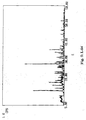
- the XRDs of the MIT samples clearly show the presence of both 5H and 5Cl HCl salts.
- the intensity of the three strong peaks in the XRDs of the individual compounds - namely theta values of 15.97, 26.44 and 28.35 for 5H-MIT and 13.07, 23.58 and 27.75 for 5Cl-MIT - were recorded.
Landscapes
- Chemical & Material Sciences (AREA)
- Organic Chemistry (AREA)
- Organic Low-Molecular-Weight Compounds And Preparation Thereof (AREA)
- Thiazole And Isothizaole Compounds (AREA)
- Pharmaceuticals Containing Other Organic And Inorganic Compounds (AREA)
- Plural Heterocyclic Compounds (AREA)
Claims (29)
- Verfahren zur Herstellung von Gemischen von 2-Methylisothiazolin-3-on (5H-MIT) und 5-Chloro-2-methyl-isothiazolin-3-on (5Cl-MIT), bei dem N-Methyl-3-mercaptopropionamid (MMPA) in einem chlorierten Lösungsmedium mit Chlor in Kontakt gebracht wird, dadurch gekennzeichnet, daß das Verfahren kontinuierlich durchgeführt wird, indem man das Lösungsmittel, das MMPA und das Chlor mit solchen Strömungsraten durch einen Reaktor strömen läßt, daß die Strömungsrate des Lösungsmittels in dem Reaktor so eingestellt ist, daß eine Verweilzeit (HUT) in dem Bereich von 0,1 bis 30 min erzielt wird, die MMPA-Strömungsrate so gewählt wird, daß die MMPA-Konzentration in der Reaktionsmischung in dem Bereich von 1 bis 20 % liegt und die Chlor-Strömungsrate so eingestellt ist, daß ein Cl2:MMPA-Molverhältnis zwischen 1,5 und 4 erzielt wird.
- Verfahren nach Anspruch 1, bei dem die Reaktionstemperatur in dem Bereich von 15 bis 50°C gehalten wird.
- Verfahren nach Anspruch 2, bei dem das MMPA in Form einer konzentrierten Lösung in dem chlorierten Lösungsmittel durch den Reaktor strömen gelassen wird.
- Verfahren nach Anspruch 3, bei dem die Konzentration der MMPA-Lösung zwischen 50 und 80 % liegt.
- Verfahren nach Anspruch 2, bei dem das Chlor in Form einer Lösung in dem chlorierten Lösungsmittel durch den Reaktor strömen gelassen wird.
- Verfahren nach Anspruch 2, bei dem das Chlor in Form eines Gases durch den Reaktor strömen gelassen wird.
- Verfahren nach Anspruch 2, bei dem die Verweilzeit HUT in dem Bereich von 0,5 bis 7 min liegt.
- Verfahren nach Anspruch 7, bei dem die HUT in dem Bereich von 1 bis 3 min liegt.
- Verfahren nach Anspruch 2, bei dem die MMPA-Durchflußrate so gewählt wird, daß die MMPA-Konzentration in der Reaktionsmischung in dem Bereich von 2 bis 10 % liegt.
- Verfahren nach Anspruch 2, bei dem die Chlor-Durchflußrate so eingestellt wird, daß ein Cl2:MMPA-Molverhältnis erzielt wird, das zwischen 2,0 und 3,2 liegt.
- Verfahren nach Anspruch 2, bei dem die Reaktionstemperatur in dem Bereich von 20 bis 40°C gehalten wird.
- Verfahren nach Anspruch 11, bei dem die Temperatur in dem Bereich von 25 bis 35°C gehalten wird.
- Verfahren nach Anspruch 1, das außerdem umfaßt das Überführen des den Reaktor verlassenden Stroms der Reaktionsmischung in einen zweiten Reaktor und das Weiterreagierenlassen der Reaktionsmischung darin, während diese gerührt und entgast wird, für eine Zeitspanne von mehr als 2 min.
- Verfahren nach Anspruch 13, bei dem man die Reaktionsmischung in dem zweiten Reaktor für eine Zeitspanne von mehr als 10 min weiterreagieren läßt.
- Verfahren nach Anspruch 13, bei dem das Entgasen bis zu einem solchen Grade durchgeführt wird, daß der Chlorgehalt des Lösungsmittels auf weniger als 1 Mol pro Mol der Produkte herabgesetzt wird.
- Verfahren nach Anspruch 15, bei dem das Entgasen bis zu einem solchen Grade durchgeführt wird, daß der Chlorgehalt des Lösungsmittels auf weniger als 0,1 Mol pro Mol der Produkte herabgesetzt wird.
- Verfahren nach Anspruch 1, das umfaßt das Vorkühlen des Lösungsmittels und des Chlors, bevor diese in den Reaktor eingeführt werden, und das Kühlen des Lösungsmittels und der Reaktionsmischung während der Reaktion.
- Verfahren nach Anspruch 1, bei dem das Chlor und das MMPA in einem Molverhältnis, das zwischen 1,8 und 3,5 liegt, zugeführt werden bei einer Reaktor-HUT von 0,7 bis 5 min und einer Reaktor-Temperatur von 25 bis 45°C unter entsprechender Bildung eines Gemisches von 2-Methyl-isothiazolin-3-on (5H-MIT) und 5-Chloro-2-methyl-isothiazolin-3-on (5Cl-MIT), in dem das Verhältnis 5-Cl-MIT:5H-MIT zwischen 0,14 und 10,27 liegt.
- Verfahren nach Anspruch 1, worin das chlorierte Lösungsmittel ausgewählt wird aus Chlorbenzol, Dichlormethan, 1,2-Dichlorethan, Perchlorethylen und Chloroform.
- Verfahren nach Anspruch 13, bei dem die Reaktion in dem zweiten Reaktor kontinuierlich durchgeführt wird.
- Verfahren nach Anspruch 13, bei dem die Reaktion in dem zweiten Reaktor absatzweise (diskontinuierlich) durchgeführt wird.
- Verfahren nach einem der vorhergehenden Ansprüche, das außerdem die Regenerierung und Recyclisierung des Lösungsmittels umfaßt.
- Verfahren nach Anspruch 13, welches das Abfiltrieren der festen MIT.HCl-Salze aus der Reaktions-Aufschlämmung umfaßt.
- Verfahren nach Anspruch 23, das umfaßt das Inkontaktbringen des Filterkuchens mit Wasser und das Benetzen mit Lösungsmittel, um die MIT.HCl-Salze daraus zu extrahieren, wodurch das Lösungsmittel, das einen Teil des MIT enthält, in Form einer getrennten Schicht freigesetzt wird.
- Verfahren nach Anspruch 24, das umfaßt das Recyclisieren des freigesetzten Lösungsmittels, welches das gelöste MIT enthält in den zweiten Reaktor.
- Verfahren nach Anspruch 24, das außerdem die Regenerierung mindestens eines Teils des freigesetzten Lösungsmittels umfaßt.
- Verfahren nach Anspruch 26, bei dem die Regenerierung des Lösungsmittels nach einem Verfahren durchgeführt wird, das ausgewählt wird aus (a) einer Destillation, (b) einem Waschen mit einer wäßrigen Base, Wasser und wäßriger HCl und (c) das Überleiten des Lösungsmittels über ein Adsorbens.
- Verfahren nach Anspruch 27, das umfaßt die Durchführung der Lösungsmittel-Regenerierung durch Waschen und das weitere Trocknen des Lösungsmittels zur Verringerung seiner Wasser-Konzentration auf < 1000 ppm.
- Verfahren nach Anspruch 28, das umfaßt die Durchführung der Lösungsmittel-Regenerierung durch Waschen und das weitere Trocknen des Lösungsmittels zur Verringerung seiner Wasser-Konzentration auf < 300 ppm.
Applications Claiming Priority (2)
| Application Number | Priority Date | Filing Date | Title |
|---|---|---|---|
| IL9716691A IL97166A (en) | 1991-02-06 | 1991-02-06 | Process for the preparation of 2-methyl-isothiazolin-3-one compounds |
| IL97166 | 1991-02-06 |
Publications (2)
| Publication Number | Publication Date |
|---|---|
| EP0498347A1 EP0498347A1 (de) | 1992-08-12 |
| EP0498347B1 true EP0498347B1 (de) | 2000-10-18 |
Family
ID=11062082
Family Applications (1)
| Application Number | Title | Priority Date | Filing Date |
|---|---|---|---|
| EP92101738A Expired - Lifetime EP0498347B1 (de) | 1991-02-06 | 1992-02-03 | Verfahren zur Herstellung von Isothiazolonderivaten |
Country Status (6)
| Country | Link |
|---|---|
| US (1) | US5315008A (de) |
| EP (1) | EP0498347B1 (de) |
| AT (1) | ATE197046T1 (de) |
| DE (1) | DE69231506T2 (de) |
| ES (1) | ES2152924T3 (de) |
| IL (1) | IL97166A (de) |
Families Citing this family (10)
| Publication number | Priority date | Publication date | Assignee | Title |
|---|---|---|---|---|
| KR100212963B1 (ko) * | 1995-12-21 | 1999-08-02 | 조민호 | 안정화된 이소티아졸론 조성물과 이소티아졸론 혼합물의 제조방법 |
| JP3732061B2 (ja) * | 1999-12-27 | 2006-01-05 | 株式会社ケミクレア | 2−アルキル−4−イソチアゾリン−3−オン類の製造方法 |
| KR100450692B1 (ko) * | 2002-04-03 | 2004-10-01 | (주)대지화학 | 이소티아졸론 조성물의 제조방법 |
| KR101004368B1 (ko) | 2003-07-29 | 2010-12-27 | 에스케이케미칼주식회사 | N,n'-디치환-3,3'-디티오디프로피온아미드 제조방법 및그를 이용한 치환된 3-이소티아졸론 제조방법 |
| US7893273B2 (en) * | 2006-04-03 | 2011-02-22 | Beijing Tianqing Chemicals Co. Ltd. | Preparation of N-substituted isothiazolinone derivatives |
| CN101417966A (zh) * | 2007-10-25 | 2009-04-29 | 北京天擎化工有限责任公司 | 3-异噻唑啉酮衍生物的连续式生产方法 |
| JP5581312B2 (ja) * | 2009-03-31 | 2014-08-27 | ナガセケムテックス株式会社 | 殺微生物剤 |
| CN103880773A (zh) * | 2012-12-23 | 2014-06-25 | 北京合创同盛科技有限公司 | 一种异噻唑啉酮衍生物的生产方法 |
| CN104961705B (zh) * | 2015-07-02 | 2017-05-24 | 大连百傲化学股份有限公司 | 一锅法合成4,5‑二氯‑2‑甲基异噻唑啉酮的工艺 |
| CN113651769B (zh) * | 2021-08-31 | 2023-07-28 | 陕西中杰科仪化学科技有限公司 | 2-甲基-4-异噻唑啉-3-酮的连续化生产方法 |
Family Cites Families (6)
| Publication number | Priority date | Publication date | Assignee | Title |
|---|---|---|---|---|
| US3523121A (en) | 1967-03-09 | 1970-08-04 | Rohm & Haas | Certain 2-carbamoyl-3-isothiazolenes |
| US3849430A (en) | 1967-03-09 | 1974-11-19 | Rohm & Haas | Process for the preparation of 3-isothiazolones and 3-hydroxyisothiazoles |
| CA1189514A (en) | 1982-06-01 | 1985-06-25 | Horst O. Bayer | Nitrosamine-free 3-isothiazolones and process |
| IL87111A (en) | 1987-07-23 | 1994-02-27 | Bromine Compounds Ltd | Method for stabilizing compositions of isothiazolinones |
| US5028620A (en) | 1988-09-15 | 1991-07-02 | Rohm And Haas Company | Biocide composition |
| US5008395A (en) | 1988-12-22 | 1991-04-16 | Rohm And Haas Company | Purification of isothiazolones |
-
1991
- 1991-02-06 IL IL9716691A patent/IL97166A/en not_active IP Right Cessation
-
1992
- 1992-02-03 EP EP92101738A patent/EP0498347B1/de not_active Expired - Lifetime
- 1992-02-03 DE DE69231506T patent/DE69231506T2/de not_active Expired - Fee Related
- 1992-02-03 AT AT92101738T patent/ATE197046T1/de not_active IP Right Cessation
- 1992-02-03 ES ES92101738T patent/ES2152924T3/es not_active Expired - Lifetime
- 1992-02-05 US US07/831,465 patent/US5315008A/en not_active Expired - Fee Related
Also Published As
| Publication number | Publication date |
|---|---|
| IL97166A (en) | 1995-10-31 |
| ES2152924T3 (es) | 2001-02-16 |
| EP0498347A1 (de) | 1992-08-12 |
| DE69231506T2 (de) | 2001-06-07 |
| IL97166A0 (en) | 1992-05-25 |
| US5315008A (en) | 1994-05-24 |
| DE69231506D1 (de) | 2000-11-23 |
| ATE197046T1 (de) | 2000-11-15 |
Similar Documents
| Publication | Publication Date | Title |
|---|---|---|
| EP0095907B1 (de) | Biozide oder biostatische Zusammensetzungen die 3-Isothiazolone enthalten, Verfahren zu ihrer Herstellung und ihre Anwendungen | |
| EP0498347B1 (de) | Verfahren zur Herstellung von Isothiazolonderivaten | |
| US5312827A (en) | Nitrosamine-free-3-isothiazolones and process | |
| US5466818A (en) | 3-isothiazolone biocide process | |
| EP0635477B1 (de) | Verfahren zur Herstellung von Arylcarbonaten | |
| KR0142327B1 (ko) | 이소티아졸류의 정제법 | |
| EP0691326B1 (de) | Verfahren zur Herstellung von Arylcarbonaten | |
| EP0722930A1 (de) | Verfahren zur Herstellung von Arylcarbonaten | |
| US4952725A (en) | Process for the preparation of 4,4'dinitrostilbene-2,2'-disulfonic acid and its salts | |
| EP0122206A2 (de) | 2-Cyano-imidazopyridinderivate, ihre Herstellung und Verwendung als Fungizide | |
| EP0644178B1 (de) | Verfahren zur Reinigung von Ethalfluralin | |
| JPH0395103A (ja) | 3―イソチアゾロン組成物の製造法 | |
| US4987266A (en) | Process for the manufacture of nitrophenetole | |
| US5420290A (en) | Nitrosamine-free 3-isothiazolones and process | |
| JPH05178833A (ja) | N−シアノアセトアミジン誘導体の製造方法 | |
| EP0367635B1 (de) | Verfahren zur Herstellung von 2-Thiocyanatomethylthiobenzthiazol | |
| KR100310165B1 (ko) | 5-클로로-2-메틸-3-이소티아졸론정제방법 | |
| EP0632032B1 (de) | Verfahren zur Reinigung von Tetrachlorphthalsäureanhydrid und Tetrachlorphthalsäure Anhydrid von hoher Reinheit | |
| WO2022074631A1 (en) | A process for preparing sglt2 inhibitor intermediate 2-chloro-5-iodobenzoic acid | |
| CH616151A5 (de) | ||
| RU2101285C1 (ru) | Способ очистки диметиламинборана | |
| JP2002020380A (ja) | 高純度テトラクロロフタル酸無水物の製造方法 | |
| FR2507599A1 (fr) | Procede de preparation de derives de sulfimide d'acide n-carbamoylbenzoique | |
| JPH0559027A (ja) | 2−メルカプト−ベンゾチアゾールの製法 | |
| JPS6111941B2 (de) |
Legal Events
| Date | Code | Title | Description |
|---|---|---|---|
| PUAI | Public reference made under article 153(3) epc to a published international application that has entered the european phase |
Free format text: ORIGINAL CODE: 0009012 |
|
| AK | Designated contracting states |
Kind code of ref document: A1 Designated state(s): AT BE CH DE ES FR GB IT LI NL |
|
| 17P | Request for examination filed |
Effective date: 19930202 |
|
| 17Q | First examination report despatched |
Effective date: 19950606 |
|
| GRAG | Despatch of communication of intention to grant |
Free format text: ORIGINAL CODE: EPIDOS AGRA |
|
| GRAG | Despatch of communication of intention to grant |
Free format text: ORIGINAL CODE: EPIDOS AGRA |
|
| GRAH | Despatch of communication of intention to grant a patent |
Free format text: ORIGINAL CODE: EPIDOS IGRA |
|
| GRAH | Despatch of communication of intention to grant a patent |
Free format text: ORIGINAL CODE: EPIDOS IGRA |
|
| GRAH | Despatch of communication of intention to grant a patent |
Free format text: ORIGINAL CODE: EPIDOS IGRA |
|
| GRAH | Despatch of communication of intention to grant a patent |
Free format text: ORIGINAL CODE: EPIDOS IGRA |
|
| ITF | It: translation for a ep patent filed | ||
| GRAA | (expected) grant |
Free format text: ORIGINAL CODE: 0009210 |
|
| AK | Designated contracting states |
Kind code of ref document: B1 Designated state(s): AT BE CH DE ES FR GB IT LI NL |
|
| REF | Corresponds to: |
Ref document number: 197046 Country of ref document: AT Date of ref document: 20001115 Kind code of ref document: T |
|
| REG | Reference to a national code |
Ref country code: CH Ref legal event code: EP |
|
| REF | Corresponds to: |
Ref document number: 69231506 Country of ref document: DE Date of ref document: 20001123 |
|
| REG | Reference to a national code |
Ref country code: CH Ref legal event code: NV Representative=s name: JACOBACCI & PERANI S.A. |
|
| ET | Fr: translation filed | ||
| REG | Reference to a national code |
Ref country code: ES Ref legal event code: FG2A Ref document number: 2152924 Country of ref document: ES Kind code of ref document: T3 |
|
| PLBE | No opposition filed within time limit |
Free format text: ORIGINAL CODE: 0009261 |
|
| STAA | Information on the status of an ep patent application or granted ep patent |
Free format text: STATUS: NO OPPOSITION FILED WITHIN TIME LIMIT |
|
| 26N | No opposition filed | ||
| REG | Reference to a national code |
Ref country code: GB Ref legal event code: IF02 |
|
| PGFP | Annual fee paid to national office [announced via postgrant information from national office to epo] |
Ref country code: ES Payment date: 20021230 Year of fee payment: 12 |
|
| PGFP | Annual fee paid to national office [announced via postgrant information from national office to epo] |
Ref country code: AT Payment date: 20030109 Year of fee payment: 12 |
|
| PGFP | Annual fee paid to national office [announced via postgrant information from national office to epo] |
Ref country code: GB Payment date: 20030116 Year of fee payment: 12 |
|
| PGFP | Annual fee paid to national office [announced via postgrant information from national office to epo] |
Ref country code: NL Payment date: 20030120 Year of fee payment: 12 Ref country code: DE Payment date: 20030120 Year of fee payment: 12 |
|
| PGFP | Annual fee paid to national office [announced via postgrant information from national office to epo] |
Ref country code: CH Payment date: 20030121 Year of fee payment: 12 |
|
| PGFP | Annual fee paid to national office [announced via postgrant information from national office to epo] |
Ref country code: BE Payment date: 20030203 Year of fee payment: 12 |
|
| PGFP | Annual fee paid to national office [announced via postgrant information from national office to epo] |
Ref country code: FR Payment date: 20030228 Year of fee payment: 12 |
|
| PG25 | Lapsed in a contracting state [announced via postgrant information from national office to epo] |
Ref country code: GB Free format text: LAPSE BECAUSE OF NON-PAYMENT OF DUE FEES Effective date: 20040203 Ref country code: AT Free format text: LAPSE BECAUSE OF NON-PAYMENT OF DUE FEES Effective date: 20040203 |
|
| PG25 | Lapsed in a contracting state [announced via postgrant information from national office to epo] |
Ref country code: ES Free format text: LAPSE BECAUSE OF NON-PAYMENT OF DUE FEES Effective date: 20040204 |
|
| PG25 | Lapsed in a contracting state [announced via postgrant information from national office to epo] |
Ref country code: BE Free format text: LAPSE BECAUSE OF NON-PAYMENT OF DUE FEES Effective date: 20040228 |
|
| PG25 | Lapsed in a contracting state [announced via postgrant information from national office to epo] |
Ref country code: LI Free format text: LAPSE BECAUSE OF NON-PAYMENT OF DUE FEES Effective date: 20040229 Ref country code: CH Free format text: LAPSE BECAUSE OF NON-PAYMENT OF DUE FEES Effective date: 20040229 |
|
| BERE | Be: lapsed |
Owner name: *BROMINE COMPOUNDS LTD Effective date: 20040228 |
|
| PG25 | Lapsed in a contracting state [announced via postgrant information from national office to epo] |
Ref country code: NL Free format text: LAPSE BECAUSE OF NON-PAYMENT OF DUE FEES Effective date: 20040901 Ref country code: DE Free format text: LAPSE BECAUSE OF NON-PAYMENT OF DUE FEES Effective date: 20040901 |
|
| GBPC | Gb: european patent ceased through non-payment of renewal fee |
Effective date: 20040203 |
|
| REG | Reference to a national code |
Ref country code: CH Ref legal event code: PL |
|
| PG25 | Lapsed in a contracting state [announced via postgrant information from national office to epo] |
Ref country code: FR Free format text: LAPSE BECAUSE OF NON-PAYMENT OF DUE FEES Effective date: 20041029 |
|
| NLV4 | Nl: lapsed or anulled due to non-payment of the annual fee |
Effective date: 20040901 |
|
| REG | Reference to a national code |
Ref country code: FR Ref legal event code: ST |
|
| PG25 | Lapsed in a contracting state [announced via postgrant information from national office to epo] |
Ref country code: IT Free format text: LAPSE BECAUSE OF NON-PAYMENT OF DUE FEES Effective date: 20050203 |
|
| REG | Reference to a national code |
Ref country code: ES Ref legal event code: FD2A Effective date: 20040204 |