EP0444951A2 - Verfahren zur Herstellung einer Intraokularlinse mit Befestigungselement mit hoher Bruchzähigkeit - Google Patents
Verfahren zur Herstellung einer Intraokularlinse mit Befestigungselement mit hoher Bruchzähigkeit Download PDFInfo
- Publication number
- EP0444951A2 EP0444951A2 EP91301713A EP91301713A EP0444951A2 EP 0444951 A2 EP0444951 A2 EP 0444951A2 EP 91301713 A EP91301713 A EP 91301713A EP 91301713 A EP91301713 A EP 91301713A EP 0444951 A2 EP0444951 A2 EP 0444951A2
- Authority
- EP
- European Patent Office
- Prior art keywords
- polymer
- polymer composition
- cured
- mixture
- mold
- Prior art date
- Legal status (The legal status is an assumption and is not a legal conclusion. Google has not performed a legal analysis and makes no representation as to the accuracy of the status listed.)
- Withdrawn
Links
- 238000000034 method Methods 0.000 title claims abstract description 21
- 230000008569 process Effects 0.000 title claims abstract description 16
- 229920000642 polymer Polymers 0.000 claims abstract description 115
- 239000000203 mixture Substances 0.000 claims abstract description 76
- 239000002245 particle Substances 0.000 claims abstract description 72
- 239000011159 matrix material Substances 0.000 claims abstract description 54
- 239000007787 solid Substances 0.000 claims abstract description 47
- 229920002959 polymer blend Polymers 0.000 claims abstract description 20
- 238000002156 mixing Methods 0.000 claims abstract description 9
- 238000010276 construction Methods 0.000 claims description 9
- 230000003068 static effect Effects 0.000 claims description 8
- 238000004519 manufacturing process Methods 0.000 claims description 6
- 230000001747 exhibiting effect Effects 0.000 claims 1
- 238000004513 sizing Methods 0.000 claims 1
- RYGMFSIKBFXOCR-UHFFFAOYSA-N Copper Chemical compound [Cu] RYGMFSIKBFXOCR-UHFFFAOYSA-N 0.000 description 17
- 229910052802 copper Inorganic materials 0.000 description 17
- 239000010949 copper Substances 0.000 description 17
- 239000000463 material Substances 0.000 description 17
- STVZJERGLQHEKB-UHFFFAOYSA-N ethylene glycol dimethacrylate Substances CC(=C)C(=O)OCCOC(=O)C(C)=C STVZJERGLQHEKB-UHFFFAOYSA-N 0.000 description 13
- DBCAQXHNJOFNGC-UHFFFAOYSA-N 4-bromo-1,1,1-trifluorobutane Chemical compound FC(F)(F)CCCBr DBCAQXHNJOFNGC-UHFFFAOYSA-N 0.000 description 12
- VVQNEPGJFQJSBK-UHFFFAOYSA-N Methyl methacrylate Chemical compound COC(=O)C(C)=C VVQNEPGJFQJSBK-UHFFFAOYSA-N 0.000 description 11
- 239000000178 monomer Substances 0.000 description 11
- 239000011347 resin Substances 0.000 description 10
- 229920005989 resin Polymers 0.000 description 10
- 239000011521 glass Substances 0.000 description 9
- 239000003431 cross linking reagent Substances 0.000 description 8
- 229920003229 poly(methyl methacrylate) Polymers 0.000 description 8
- 239000004926 polymethyl methacrylate Substances 0.000 description 8
- IJGRMHOSHXDMSA-UHFFFAOYSA-N Atomic nitrogen Chemical compound N#N IJGRMHOSHXDMSA-UHFFFAOYSA-N 0.000 description 6
- 230000015572 biosynthetic process Effects 0.000 description 6
- 229910052573 porcelain Inorganic materials 0.000 description 6
- 238000012360 testing method Methods 0.000 description 6
- -1 poly(methyl methacrylate) Polymers 0.000 description 5
- XFCMNSHQOZQILR-UHFFFAOYSA-N 2-[2-(2-methylprop-2-enoyloxy)ethoxy]ethyl 2-methylprop-2-enoate Chemical compound CC(=C)C(=O)OCCOCCOC(=O)C(C)=C XFCMNSHQOZQILR-UHFFFAOYSA-N 0.000 description 4
- 239000004809 Teflon Substances 0.000 description 4
- 229920006362 Teflon® Polymers 0.000 description 4
- GWEVSGVZZGPLCZ-UHFFFAOYSA-N Titan oxide Chemical compound O=[Ti]=O GWEVSGVZZGPLCZ-UHFFFAOYSA-N 0.000 description 4
- 239000000975 dye Substances 0.000 description 4
- 238000011068 loading method Methods 0.000 description 4
- 229910052751 metal Inorganic materials 0.000 description 4
- 239000002184 metal Substances 0.000 description 4
- 238000003756 stirring Methods 0.000 description 4
- 239000000126 substance Substances 0.000 description 4
- 239000004342 Benzoyl peroxide Substances 0.000 description 3
- OMPJBNCRMGITSC-UHFFFAOYSA-N Benzoylperoxide Chemical compound C=1C=CC=CC=1C(=O)OOC(=O)C1=CC=CC=C1 OMPJBNCRMGITSC-UHFFFAOYSA-N 0.000 description 3
- 239000006096 absorbing agent Substances 0.000 description 3
- 230000008901 benefit Effects 0.000 description 3
- 235000019400 benzoyl peroxide Nutrition 0.000 description 3
- 239000002270 dispersing agent Substances 0.000 description 3
- 229910052757 nitrogen Inorganic materials 0.000 description 3
- 231100000252 nontoxic Toxicity 0.000 description 3
- 230000003000 nontoxic effect Effects 0.000 description 3
- 238000006116 polymerization reaction Methods 0.000 description 3
- XLYOFNOQVPJJNP-UHFFFAOYSA-N water Substances O XLYOFNOQVPJJNP-UHFFFAOYSA-N 0.000 description 3
- ZDQNWDNMNKSMHI-UHFFFAOYSA-N 1-[2-(2-prop-2-enoyloxypropoxy)propoxy]propan-2-yl prop-2-enoate Chemical compound C=CC(=O)OC(C)COC(C)COCC(C)OC(=O)C=C ZDQNWDNMNKSMHI-UHFFFAOYSA-N 0.000 description 2
- LEJBBGNFPAFPKQ-UHFFFAOYSA-N 2-(2-prop-2-enoyloxyethoxy)ethyl prop-2-enoate Chemical compound C=CC(=O)OCCOCCOC(=O)C=C LEJBBGNFPAFPKQ-UHFFFAOYSA-N 0.000 description 2
- INQDDHNZXOAFFD-UHFFFAOYSA-N 2-[2-(2-prop-2-enoyloxyethoxy)ethoxy]ethyl prop-2-enoate Chemical compound C=CC(=O)OCCOCCOCCOC(=O)C=C INQDDHNZXOAFFD-UHFFFAOYSA-N 0.000 description 2
- HWSSEYVMGDIFMH-UHFFFAOYSA-N 2-[2-[2-(2-methylprop-2-enoyloxy)ethoxy]ethoxy]ethyl 2-methylprop-2-enoate Chemical compound CC(=C)C(=O)OCCOCCOCCOC(=O)C(C)=C HWSSEYVMGDIFMH-UHFFFAOYSA-N 0.000 description 2
- OWDBMKZHFCSOOL-UHFFFAOYSA-N 2-[2-[2-(2-methylprop-2-enoyloxy)propoxy]propoxy]propyl 2-methylprop-2-enoate Chemical compound CC(=C)C(=O)OC(C)COC(C)COC(C)COC(=O)C(C)=C OWDBMKZHFCSOOL-UHFFFAOYSA-N 0.000 description 2
- KUDUQBURMYMBIJ-UHFFFAOYSA-N 2-prop-2-enoyloxyethyl prop-2-enoate Chemical compound C=CC(=O)OCCOC(=O)C=C KUDUQBURMYMBIJ-UHFFFAOYSA-N 0.000 description 2
- RZVAJINKPMORJF-UHFFFAOYSA-N Acetaminophen Chemical compound CC(=O)NC1=CC=C(O)C=C1 RZVAJINKPMORJF-UHFFFAOYSA-N 0.000 description 2
- SOGAXMICEFXMKE-UHFFFAOYSA-N Butylmethacrylate Chemical compound CCCCOC(=O)C(C)=C SOGAXMICEFXMKE-UHFFFAOYSA-N 0.000 description 2
- BAPJBEWLBFYGME-UHFFFAOYSA-N Methyl acrylate Chemical compound COC(=O)C=C BAPJBEWLBFYGME-UHFFFAOYSA-N 0.000 description 2
- 241001111421 Pannus Species 0.000 description 2
- 240000004760 Pimpinella anisum Species 0.000 description 2
- 239000002202 Polyethylene glycol Substances 0.000 description 2
- ULQMPOIOSDXIGC-UHFFFAOYSA-N [2,2-dimethyl-3-(2-methylprop-2-enoyloxy)propyl] 2-methylprop-2-enoate Chemical compound CC(=C)C(=O)OCC(C)(C)COC(=O)C(C)=C ULQMPOIOSDXIGC-UHFFFAOYSA-N 0.000 description 2
- 238000000137 annealing Methods 0.000 description 2
- 238000005452 bending Methods 0.000 description 2
- 239000006229 carbon black Substances 0.000 description 2
- 239000002131 composite material Substances 0.000 description 2
- 238000007796 conventional method Methods 0.000 description 2
- 238000013461 design Methods 0.000 description 2
- 238000005553 drilling Methods 0.000 description 2
- 230000000694 effects Effects 0.000 description 2
- 239000012530 fluid Substances 0.000 description 2
- QSHDDOUJBYECFT-UHFFFAOYSA-N mercury Chemical compound [Hg] QSHDDOUJBYECFT-UHFFFAOYSA-N 0.000 description 2
- 229910052753 mercury Inorganic materials 0.000 description 2
- 239000000049 pigment Substances 0.000 description 2
- 229920003023 plastic Polymers 0.000 description 2
- 239000004033 plastic Substances 0.000 description 2
- 229920001223 polyethylene glycol Polymers 0.000 description 2
- FBCQUCJYYPMKRO-UHFFFAOYSA-N prop-2-enyl 2-methylprop-2-enoate Chemical compound CC(=C)C(=O)OCC=C FBCQUCJYYPMKRO-UHFFFAOYSA-N 0.000 description 2
- 239000005297 pyrex Substances 0.000 description 2
- 239000000243 solution Substances 0.000 description 2
- 229910001220 stainless steel Inorganic materials 0.000 description 2
- 239000010935 stainless steel Substances 0.000 description 2
- 239000004094 surface-active agent Substances 0.000 description 2
- 239000004408 titanium dioxide Substances 0.000 description 2
- 238000005303 weighing Methods 0.000 description 2
- VDYWHVQKENANGY-UHFFFAOYSA-N 1,3-Butyleneglycol dimethacrylate Chemical compound CC(=C)C(=O)OC(C)CCOC(=O)C(C)=C VDYWHVQKENANGY-UHFFFAOYSA-N 0.000 description 1
- PPGAFAOTXHZHCA-UHFFFAOYSA-N 2-methylpropanenitrile Chemical compound C[C](C)C#N PPGAFAOTXHZHCA-UHFFFAOYSA-N 0.000 description 1
- FQMIAEWUVYWVNB-UHFFFAOYSA-N 3-prop-2-enoyloxybutyl prop-2-enoate Chemical compound C=CC(=O)OC(C)CCOC(=O)C=C FQMIAEWUVYWVNB-UHFFFAOYSA-N 0.000 description 1
- JHWGFJBTMHEZME-UHFFFAOYSA-N 4-prop-2-enoyloxybutyl prop-2-enoate Chemical compound C=CC(=O)OCCCCOC(=O)C=C JHWGFJBTMHEZME-UHFFFAOYSA-N 0.000 description 1
- SAPGBCWOQLHKKZ-UHFFFAOYSA-N 6-(2-methylprop-2-enoyloxy)hexyl 2-methylprop-2-enoate Chemical compound CC(=C)C(=O)OCCCCCCOC(=O)C(C)=C SAPGBCWOQLHKKZ-UHFFFAOYSA-N 0.000 description 1
- FIHBHSQYSYVZQE-UHFFFAOYSA-N 6-prop-2-enoyloxyhexyl prop-2-enoate Chemical compound C=CC(=O)OCCCCCCOC(=O)C=C FIHBHSQYSYVZQE-UHFFFAOYSA-N 0.000 description 1
- LVGFPWDANALGOY-UHFFFAOYSA-N 8-methylnonyl prop-2-enoate Chemical compound CC(C)CCCCCCCOC(=O)C=C LVGFPWDANALGOY-UHFFFAOYSA-N 0.000 description 1
- NIXOWILDQLNWCW-UHFFFAOYSA-M Acrylate Chemical compound [O-]C(=O)C=C NIXOWILDQLNWCW-UHFFFAOYSA-M 0.000 description 1
- JIGUQPWFLRLWPJ-UHFFFAOYSA-N Ethyl acrylate Chemical compound CCOC(=O)C=C JIGUQPWFLRLWPJ-UHFFFAOYSA-N 0.000 description 1
- CERQOIWHTDAKMF-UHFFFAOYSA-M Methacrylate Chemical compound CC(=C)C([O-])=O CERQOIWHTDAKMF-UHFFFAOYSA-M 0.000 description 1
- 239000005062 Polybutadiene Substances 0.000 description 1
- VYPSYNLAJGMNEJ-UHFFFAOYSA-N Silicium dioxide Chemical compound O=[Si]=O VYPSYNLAJGMNEJ-UHFFFAOYSA-N 0.000 description 1
- DAKWPKUUDNSNPN-UHFFFAOYSA-N Trimethylolpropane triacrylate Chemical compound C=CC(=O)OCC(CC)(COC(=O)C=C)COC(=O)C=C DAKWPKUUDNSNPN-UHFFFAOYSA-N 0.000 description 1
- OKKRPWIIYQTPQF-UHFFFAOYSA-N Trimethylolpropane trimethacrylate Chemical compound CC(=C)C(=O)OCC(CC)(COC(=O)C(C)=C)COC(=O)C(C)=C OKKRPWIIYQTPQF-UHFFFAOYSA-N 0.000 description 1
- XTXRWKRVRITETP-UHFFFAOYSA-N Vinyl acetate Chemical compound CC(=O)OC=C XTXRWKRVRITETP-UHFFFAOYSA-N 0.000 description 1
- 238000010521 absorption reaction Methods 0.000 description 1
- 238000005054 agglomeration Methods 0.000 description 1
- 230000002776 aggregation Effects 0.000 description 1
- 238000013019 agitation Methods 0.000 description 1
- 230000004075 alteration Effects 0.000 description 1
- 229910052788 barium Inorganic materials 0.000 description 1
- DSAJWYNOEDNPEQ-UHFFFAOYSA-N barium atom Chemical compound [Ba] DSAJWYNOEDNPEQ-UHFFFAOYSA-N 0.000 description 1
- 230000009286 beneficial effect Effects 0.000 description 1
- 239000000560 biocompatible material Substances 0.000 description 1
- 239000001045 blue dye Substances 0.000 description 1
- 239000001055 blue pigment Substances 0.000 description 1
- WERYXYBDKMZEQL-UHFFFAOYSA-N butane-1,4-diol Chemical compound OCCCCO WERYXYBDKMZEQL-UHFFFAOYSA-N 0.000 description 1
- CQEYYJKEWSMYFG-UHFFFAOYSA-N butyl acrylate Chemical compound CCCCOC(=O)C=C CQEYYJKEWSMYFG-UHFFFAOYSA-N 0.000 description 1
- 239000003054 catalyst Substances 0.000 description 1
- 239000013043 chemical agent Substances 0.000 description 1
- 239000003086 colorant Substances 0.000 description 1
- 238000011109 contamination Methods 0.000 description 1
- 238000001816 cooling Methods 0.000 description 1
- 238000005260 corrosion Methods 0.000 description 1
- 230000007797 corrosion Effects 0.000 description 1
- 238000004132 cross linking Methods 0.000 description 1
- 230000007547 defect Effects 0.000 description 1
- 238000011161 development Methods 0.000 description 1
- 125000004386 diacrylate group Chemical group 0.000 description 1
- 239000006185 dispersion Substances 0.000 description 1
- 230000008030 elimination Effects 0.000 description 1
- 238000003379 elimination reaction Methods 0.000 description 1
- SUPCQIBBMFXVTL-UHFFFAOYSA-N ethyl 2-methylprop-2-enoate Chemical compound CCOC(=O)C(C)=C SUPCQIBBMFXVTL-UHFFFAOYSA-N 0.000 description 1
- 229910021485 fumed silica Inorganic materials 0.000 description 1
- RBTKNAXYKSUFRK-UHFFFAOYSA-N heliogen blue Chemical compound [Cu].[N-]1C2=C(C=CC=C3)C3=C1N=C([N-]1)C3=CC=CC=C3C1=NC([N-]1)=C(C=CC=C3)C3=C1N=C([N-]1)C3=CC=CC=C3C1=N2 RBTKNAXYKSUFRK-UHFFFAOYSA-N 0.000 description 1
- LNCPIMCVTKXXOY-UHFFFAOYSA-N hexyl 2-methylprop-2-enoate Chemical compound CCCCCCOC(=O)C(C)=C LNCPIMCVTKXXOY-UHFFFAOYSA-N 0.000 description 1
- 239000007943 implant Substances 0.000 description 1
- 239000003112 inhibitor Substances 0.000 description 1
- 238000009434 installation Methods 0.000 description 1
- 150000002500 ions Chemical class 0.000 description 1
- 238000002386 leaching Methods 0.000 description 1
- 238000003754 machining Methods 0.000 description 1
- 230000005499 meniscus Effects 0.000 description 1
- YDKNBNOOCSNPNS-UHFFFAOYSA-N methyl 1,3-benzoxazole-2-carboxylate Chemical compound C1=CC=C2OC(C(=O)OC)=NC2=C1 YDKNBNOOCSNPNS-UHFFFAOYSA-N 0.000 description 1
- 238000013508 migration Methods 0.000 description 1
- 230000005012 migration Effects 0.000 description 1
- 239000011259 mixed solution Substances 0.000 description 1
- 238000012544 monitoring process Methods 0.000 description 1
- 230000006911 nucleation Effects 0.000 description 1
- 238000010899 nucleation Methods 0.000 description 1
- 230000003287 optical effect Effects 0.000 description 1
- 238000013021 overheating Methods 0.000 description 1
- PNJWIWWMYCMZRO-UHFFFAOYSA-N pent‐4‐en‐2‐one Natural products CC(=O)CC=C PNJWIWWMYCMZRO-UHFFFAOYSA-N 0.000 description 1
- 230000000704 physical effect Effects 0.000 description 1
- 229920002857 polybutadiene Polymers 0.000 description 1
- 239000002861 polymer material Substances 0.000 description 1
- 239000000843 powder Substances 0.000 description 1
- 239000002244 precipitate Substances 0.000 description 1
- 238000012545 processing Methods 0.000 description 1
- QTECDUFMBMSHKR-UHFFFAOYSA-N prop-2-enyl prop-2-enoate Chemical compound C=CCOC(=O)C=C QTECDUFMBMSHKR-UHFFFAOYSA-N 0.000 description 1
- 210000001747 pupil Anatomy 0.000 description 1
- 150000003242 quaternary ammonium salts Chemical class 0.000 description 1
- 230000005855 radiation Effects 0.000 description 1
- 210000001525 retina Anatomy 0.000 description 1
- 150000003839 salts Chemical class 0.000 description 1
- 239000007790 solid phase Substances 0.000 description 1
- 238000007711 solidification Methods 0.000 description 1
- 230000008023 solidification Effects 0.000 description 1
- 239000002904 solvent Substances 0.000 description 1
- 125000006850 spacer group Chemical group 0.000 description 1
- 239000012258 stirred mixture Substances 0.000 description 1
- 238000001356 surgical procedure Methods 0.000 description 1
- 239000000725 suspension Substances 0.000 description 1
- 229940124543 ultraviolet light absorber Drugs 0.000 description 1
- 239000006097 ultraviolet radiation absorber Substances 0.000 description 1
Images
Classifications
-
- B—PERFORMING OPERATIONS; TRANSPORTING
- B29—WORKING OF PLASTICS; WORKING OF SUBSTANCES IN A PLASTIC STATE IN GENERAL
- B29C—SHAPING OR JOINING OF PLASTICS; SHAPING OF MATERIAL IN A PLASTIC STATE, NOT OTHERWISE PROVIDED FOR; AFTER-TREATMENT OF THE SHAPED PRODUCTS, e.g. REPAIRING
- B29C70/00—Shaping composites, i.e. plastics material comprising reinforcements, fillers or preformed parts, e.g. inserts
- B29C70/58—Shaping composites, i.e. plastics material comprising reinforcements, fillers or preformed parts, e.g. inserts comprising fillers only, e.g. particles, powder, beads, flakes, spheres
-
- B—PERFORMING OPERATIONS; TRANSPORTING
- B29—WORKING OF PLASTICS; WORKING OF SUBSTANCES IN A PLASTIC STATE IN GENERAL
- B29C—SHAPING OR JOINING OF PLASTICS; SHAPING OF MATERIAL IN A PLASTIC STATE, NOT OTHERWISE PROVIDED FOR; AFTER-TREATMENT OF THE SHAPED PRODUCTS, e.g. REPAIRING
- B29C39/00—Shaping by casting, i.e. introducing the moulding material into a mould or between confining surfaces without significant moulding pressure; Apparatus therefor
- B29C39/003—Shaping by casting, i.e. introducing the moulding material into a mould or between confining surfaces without significant moulding pressure; Apparatus therefor characterised by the choice of material
- B29C39/006—Monomers or prepolymers
-
- B—PERFORMING OPERATIONS; TRANSPORTING
- B29—WORKING OF PLASTICS; WORKING OF SUBSTANCES IN A PLASTIC STATE IN GENERAL
- B29C—SHAPING OR JOINING OF PLASTICS; SHAPING OF MATERIAL IN A PLASTIC STATE, NOT OTHERWISE PROVIDED FOR; AFTER-TREATMENT OF THE SHAPED PRODUCTS, e.g. REPAIRING
- B29C39/00—Shaping by casting, i.e. introducing the moulding material into a mould or between confining surfaces without significant moulding pressure; Apparatus therefor
- B29C39/02—Shaping by casting, i.e. introducing the moulding material into a mould or between confining surfaces without significant moulding pressure; Apparatus therefor for making articles of definite length, i.e. discrete articles
- B29C39/021—Shaping by casting, i.e. introducing the moulding material into a mould or between confining surfaces without significant moulding pressure; Apparatus therefor for making articles of definite length, i.e. discrete articles by casting in several steps
-
- B—PERFORMING OPERATIONS; TRANSPORTING
- B29—WORKING OF PLASTICS; WORKING OF SUBSTANCES IN A PLASTIC STATE IN GENERAL
- B29C—SHAPING OR JOINING OF PLASTICS; SHAPING OF MATERIAL IN A PLASTIC STATE, NOT OTHERWISE PROVIDED FOR; AFTER-TREATMENT OF THE SHAPED PRODUCTS, e.g. REPAIRING
- B29C39/00—Shaping by casting, i.e. introducing the moulding material into a mould or between confining surfaces without significant moulding pressure; Apparatus therefor
- B29C39/22—Component parts, details or accessories; Auxiliary operations
- B29C39/42—Casting under special conditions, e.g. vacuum
-
- B—PERFORMING OPERATIONS; TRANSPORTING
- B29—WORKING OF PLASTICS; WORKING OF SUBSTANCES IN A PLASTIC STATE IN GENERAL
- B29D—PRODUCING PARTICULAR ARTICLES FROM PLASTICS OR FROM SUBSTANCES IN A PLASTIC STATE
- B29D11/00—Producing optical elements, e.g. lenses or prisms
- B29D11/02—Artificial eyes from organic plastic material
- B29D11/023—Implants for natural eyes
-
- A—HUMAN NECESSITIES
- A61—MEDICAL OR VETERINARY SCIENCE; HYGIENE
- A61F—FILTERS IMPLANTABLE INTO BLOOD VESSELS; PROSTHESES; DEVICES PROVIDING PATENCY TO, OR PREVENTING COLLAPSING OF, TUBULAR STRUCTURES OF THE BODY, e.g. STENTS; ORTHOPAEDIC, NURSING OR CONTRACEPTIVE DEVICES; FOMENTATION; TREATMENT OR PROTECTION OF EYES OR EARS; BANDAGES, DRESSINGS OR ABSORBENT PADS; FIRST-AID KITS
- A61F2/00—Filters implantable into blood vessels; Prostheses, i.e. artificial substitutes or replacements for parts of the body; Appliances for connecting them with the body; Devices providing patency to, or preventing collapsing of, tubular structures of the body, e.g. stents
- A61F2/02—Prostheses implantable into the body
- A61F2/14—Eye parts, e.g. lenses or corneal implants; Artificial eyes
- A61F2/16—Intraocular lenses
- A61F2002/1681—Intraocular lenses having supporting structure for lens, e.g. haptics
- A61F2002/1683—Intraocular lenses having supporting structure for lens, e.g. haptics having filiform haptics
- A61F2002/1686—Securing a filiform haptic to a lens body
-
- B—PERFORMING OPERATIONS; TRANSPORTING
- B29—WORKING OF PLASTICS; WORKING OF SUBSTANCES IN A PLASTIC STATE IN GENERAL
- B29C—SHAPING OR JOINING OF PLASTICS; SHAPING OF MATERIAL IN A PLASTIC STATE, NOT OTHERWISE PROVIDED FOR; AFTER-TREATMENT OF THE SHAPED PRODUCTS, e.g. REPAIRING
- B29C2791/00—Shaping characteristics in general
- B29C2791/004—Shaping under special conditions
- B29C2791/008—Using vibrations during moulding
-
- B—PERFORMING OPERATIONS; TRANSPORTING
- B29—WORKING OF PLASTICS; WORKING OF SUBSTANCES IN A PLASTIC STATE IN GENERAL
- B29K—INDEXING SCHEME ASSOCIATED WITH SUBCLASSES B29B, B29C OR B29D, RELATING TO MOULDING MATERIALS OR TO MATERIALS FOR MOULDS, REINFORCEMENTS, FILLERS OR PREFORMED PARTS, e.g. INSERTS
- B29K2105/00—Condition, form or state of moulded material or of the material to be shaped
- B29K2105/06—Condition, form or state of moulded material or of the material to be shaped containing reinforcements, fillers or inserts
- B29K2105/16—Fillers
-
- B—PERFORMING OPERATIONS; TRANSPORTING
- B29—WORKING OF PLASTICS; WORKING OF SUBSTANCES IN A PLASTIC STATE IN GENERAL
- B29K—INDEXING SCHEME ASSOCIATED WITH SUBCLASSES B29B, B29C OR B29D, RELATING TO MOULDING MATERIALS OR TO MATERIALS FOR MOULDS, REINFORCEMENTS, FILLERS OR PREFORMED PARTS, e.g. INSERTS
- B29K2995/00—Properties of moulding materials, reinforcements, fillers, preformed parts or moulds
- B29K2995/0037—Other properties
- B29K2995/0079—Torsion strength; Torsion stiffness
-
- Y—GENERAL TAGGING OF NEW TECHNOLOGICAL DEVELOPMENTS; GENERAL TAGGING OF CROSS-SECTIONAL TECHNOLOGIES SPANNING OVER SEVERAL SECTIONS OF THE IPC; TECHNICAL SUBJECTS COVERED BY FORMER USPC CROSS-REFERENCE ART COLLECTIONS [XRACs] AND DIGESTS
- Y10—TECHNICAL SUBJECTS COVERED BY FORMER USPC
- Y10S—TECHNICAL SUBJECTS COVERED BY FORMER USPC CROSS-REFERENCE ART COLLECTIONS [XRACs] AND DIGESTS
- Y10S623/00—Prosthesis, i.e. artificial body members, parts thereof, or aids and accessories therefor
- Y10S623/901—Method of manufacturing prosthetic device
Definitions
- This invention relates to intraocular lenses for the human eye, and more particularly to a one-piece intraocular lens including haptics having high fracture toughness.
- the replacement of a natural lens with an artificial intraocular lens implant in the human eye has become a well known procedure to physicians specializing in ophthalmology. In such a procedure, a corneo-scleral incision is made in the eye through which the natural lens is removed and the artificial intraocular lens is inserted.
- the intraocular lens may be designed to be positioned within either the anterior or posterior chamber of the eye.
- Intraocular lenses typically include a central lens section, referred to as the optic, for focusing light onto the retina.
- One or more supporting structures extend outwardly from the optic to align and stabilize the optic with respect to the pupil.
- the haptics comprise one or more filamentous or wire-like arms or loops which extend radially outwardly from the periphery of the optic.
- the haptics may be fixed in position within the eye by sutures or by engagement with predetermined eye tissues.
- haptic Installation of an intraocular lens should be permanent so that subsequent surgical adjustments are not required. Accordingly, the reliability of the haptic is of great importance.
- the materials of construction and the design parameters must be selected such that the haptic can endure significant stresses with minimum risk of breakage. Moreover, the haptic must be capable of functioning safely in the presence of small stress risers, such as notches or nicks, which may be inflicted during handling and manipulation.
- haptics often develop clusters of fractures, referred to as craze, when subjected to impact and bending forces during handling. If the individual craze fractures are large enough to extend across a significant portion of the shaft diameter, a broken haptic results.
- this invention provides haptics for intraocular lenses having high fracture toughness, i.e. which are resistant to the formation of large craze fractures.
- the haptics are formed from a polymer composition comprising a polymer matrix with a relatively low concentration of small, solid particles dispersed throughout the polymer matrix.
- the solid particles are present in an amount of up to about 1.0% by weight, and preferably are present in an amount of from about 0.5% to about 0.1% by weight.
- the size of the particles is preferably not more than about 5 microns and is preferably from about 0.1 to about 0.8 micron.
- the solid particles are of materials which are biocompatible.
- the presently preferred solid particles are of copper phthalocyanate and titanium dioxide.
- Cooper phthalocyanate is particularly preferred because it imparts a blue color to the haptic as well as toughening the haptic against crazing.
- the polymer matrix preferably comprises poly(methyl methacrylate) (PMMA) and a cross-linking agent, preferably ethylene glycol dimethacrylate (EGDMA).
- PMMA poly(methyl methacrylate)
- EGDMA ethylene glycol dimethacrylate
- a one-piece intraocular lens comprising a clear optic and a pair of filamentous, colored haptics having high fracture toughness.
- the present invention further provides a process for preparing a polymer composition having high fracture toughness comprising cured polymer matrix and solid particles dispersed throughout the polymer matrix for use in construction of the haptics.
- the process comprises mixing the solid particles with uncured components of the polymer matrix to form an uncured polymer mixture.
- the uncured polymer mixture is the introduced into a mold and ultrasonic energy is applied to the mold and mixture for a time sufficient for the uncured mixture to solidify. Curing of the composition is then completed under conventional conditions, e.g., the application of heat, and the cured polymer composition is then removed from the mold.
- the mixture of solid particles and uncured components of the polymer matrix are subjected to ultrasonic energy to disperse the solid particles within the mixture before the mixture is introduced into the mold. Thereafter, ultrasonic energy is applied to the mold and mixture contained therein for a time sufficient for the mixture to partially cure and solidify.
- dispersion of the solid particles is enhanced by first removing electrostatic charges from the solid particles and preferably also from the mold. This is done through the use of commercially available antistatic equipment.
- an antistatic chemical agent such as an electrically conductive salt, e.g. a quaternary ammonium salt, may be added to the solid particles.
- the solid particles are mixed with the uncured components of the polymer matrix and ultrasonic energy is applied to the mixture to disperse the solid particles within the mixture.
- the mixture is then introduced into a mold for curing and ultrasonic energy is applied to the mold and mixture contained therein for a time sufficient for the mixture to partially cure and solidify. Thereafter, heat is applied to the mold and contained mixture until curing is complete.
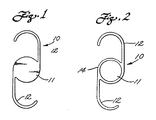
- FIG. 1 A preferred one-piece posterior chamber intraocular lens constructed in accordance with the present invention is shown in FIG. 1.
- the intraocular lens 10 comprises a generally circular optic 11 and a pair of filamentous haptics 12.
- the optic has a diameter of about 7 mm and the haptics have a cross-sectional diameter of about 0.13 to about 0.26 inch along most of their length. It is understood that the dimensions may vary as desired.
- the haptics 12 are made of a first polymer composition comprising a first polymer matrix and a relatively low concentration of discrete solid particles generally uniformly dispersed throughout the first polymer matrix.
- the solid particles have a particle size of up to about 5 microns and are preferably in the range of about 0.1 to about 0.8 microns. In general, smaller particles are preferred over larger particles. Particles having a size greater than about 5 microns are not preferred because such particles tend to create large fractures when the haptic is placed under stress and thus tend to reduce the strength and flexibility of the haptics.
- Particles having a size less than about 0.8 microns are particularly preferred because, in the preferred loadings, such particles have been found to result in the greatest resistance to the formation of large, stress-induced fractures.
- the solid particles tend to act as inhibitors to the curing of the polymer matrix. Slow curing tends to increase the flexibility of the polymer matrix. This beneficial effect is enhanced by the presence of smaller particles, such as those having a particle size less than about 0.8 microns.
- Particles having a size less than about 0.1 microns are not presently preferred because they are generally commercially unavailable and also because they tend to be more difficult to disperse uniformly throughout the polymer matrix.
- the solid particles are present in the first polymer matrix in a positive amount of up to about 1.0% by weight and are preferably present in an amount of from about 0.05% to about 0.5% by weight. Loadings above 1.0% are not preferred because the particles tend to agglomerate and precipitate or drop out of suspension during the curing of the first polymer matrix. Haptics comprising solid particles in the preferred size range and loadings in the range of from about 0.05% to about 0.5% have been found to exhibit the greatest degree of resistance to the formation of large fractures.
- the solid particles may be made of any biocompatible material, i.e., one that is inert and non-toxic to the fluids of the eye, which will not dissolve in the uncured monomers that polymerize to form the polymer matrix, and which form a discrete solid phase in the cured polymer matrix.
- the presently preferred solid particles are made of copper phthalocyanate. Copper phthalocyanate is preferred because it is biocompatible and because it is colored, i.e. blue, thus introducing all the benefits of a colored material to the haptic. For example, colored haptics are easier to see and therefore manipulate during surgery.
- any biocompatible solid particles may be used.
- suitable materials include titanium dioxide, fumed silica, barium sulfact and other highly insoluable and inert materials.
- Carbon black may be used but is not presently preferred because it tends to be difficult to disperse into uniform discrete particles, i.e. carbon black tends to agglomerate into chains.
- Particles of elastomeric materials e.g., polybutadiene, polyethyline, etc., may also be used provided that such elastomeric materials are biocompatible.
- the toughening i.e., resistance to the formation of large fractures, imparted to the haptic material by the presence of the solid particles is the result of stress-induced nucleation of multiple subsurface fracture sites at the locations of the solid particles.
- the subsurface fracture sites are believed to retard the growth of larger fractures by relieving stress in regions of greatest stress concentration. It is also believed that the absorption of mechanical impact energy associated with the formation of the sizeable surface area contained within the subsurface fracture sites may promote toughening.
- the preferred sizes and loadings of the solid particles provide the optimum particle size and spacing of particles, when uniformly dispersed throughout the polymer matrix, to minimize overlap of the subsurface fractures created at each particle site when the haptic is placed under bending stress.
- the addition of the solid particles tends to retard the polymerization of the polymer matrix. This could result in a more flexible, less cross-linked envelope around each particle. Such a layer or envelope would be more elastic than the surrounding cured resin and could contribute to stress relief by providing increased plastic deformation capability.
- the optic 11 is made of a second polymer composition comprising a second polymer matrix and is preferably clear, i.e. free of any coloring agents. It is preferred that the first and second polymer matrices be the same. If different, the monomers of the first polymer which polymerize to form the first and second polymer matrices are preferably able to cross-link or polymerize with each other to form an integral one-piece structure.
- one-piece refers to a construction wherein the optic and haptic comprise polymeric matrices, which, when cured in contact with each other, will copolymerize or cross-link to form a strong chemical bond with each other to form an integral unit.
- the first and second polymer matrices may comprise any suitable medical grade polymers that is inert and non-toxic to the fluids of the eye and which impart sufficient strength and rigidity to the haptics to support the optic 11 within the eye.
- Suitable polymers may be derived from acrylate monomers including methyl acrylate, ethyl acrylate, butyl acrylate and isodecyl acrylate, methacrylate monomers such as methyl methacrylate, ethyl methacrylate, n-hexyl methacrylate, butyl methacrylate and vinyl acetate monomers and appropriate mixtures thereof as is well known in the art.
- a polymer matrix comprising poly(methyl methacrylate) (PMMA) is presently preferred for the optic and haptics.
- the intraocular lens comprise a clear optic and colored haptics.
- one or both of the first and second polymer matrixes contain a cross-linking agent. If no cross-linking agent is used, unpolymerized monomers in one polymer matrix tend to dissolve polymerized monomers of the other matrix at the interface between the two, leading to a slight migration of the solid particles and a "fuzziness" at the boundary. If a cross-linking agent is present in either of the polymer matrices, this is prevented. Also, if the haptic material contains a dye, the cross-linking agent tends to prevent the dye from leaching into the optic.
- Difunctional monomers such as ethylene glycol dimethacrylate (EGDMA), ethylene glycol diacrylate, triethylene glycol dimethacrylate (TEGDMA), triethylene glycol diacrylate, allyl methacrylate (AMA), allylacrylate, polyethylene glycol dimethacrylate (PEGDMA), polyethylene glycol diacrylate, 1, 3-butylene glycol dimethacrylate (BGDMA), 1, 3-butylene glycol diacrylate, 1, 4-butylene glycol dimethacryalte (BGDMA), 1, 4-butylene glycol diacrylate, diethylene glycol dimethacrylate (DEGDMA), diethylene glycol diacrylate, 1, 6-hexanediol dimethacrylate (HDODMA), 1, 6-hexanediol diacrylate, neopentyl glycol dimethacrylate (NPGDMA), neopentyl glycol diacrylate, tripropylene glycol dimethacrylate (EGDMA), ethylene glyco
- the above cross-linking agents act as dispersants, helping to evenly distribute the particles throughout the mixture. It is understood that dispersants other than the cross-linking agents mentioned above may be used. However, it is preferred that the dispersant cross-link with monomers so that they will not leach out after the intraocular lens is implanted in the eye.
- a suitable catalyst such as 2.2′ azobis [2-methylpropanenitrile] (AIBN) or benzoyl peroxide (BPO) is used to initiate polymerization.
- AIBN 2.2′ azobis [2-methylpropanenitrile]
- BPO benzoyl peroxide
- the haptics 12 may comprise one or more pigments to either impart color to or enhance the color of the haptics.
- Suitable pigments include dyes which are compatible with the first polymer matrix, such as DuPont 2050 blue dye, BASF Neozapon blue 807, BASF Heliogen blue L6875F, Sandoz chemicals Savinyl blue RLS, Milliken chemicals Reactint blue X3 and Sun Chemicals phthalo blue C48-5411. While not preferred, it is understood that the second polymer composition which forms the optic may comprise a dye, if desired.
- the presently preferred first polymer composition which forms the haptics comprises a first polymer matrix including about 95% by weight PMMA, about 5% by weight EGDMA, about 0.05% by weight AIBN and about 0.05% by weight copper phthalocyanate having a particle size of from about 0.1 to about 0.8 microns uniformly dispersed throughout the first polymer matrix.
- a composition exhibits a tensile strength of about 10,000 psi and an elongation of greater than 10% as well as enhanced resistance to large fracture formation.
- the presently preferred second polymer composition which forms the optic comprises a second polymer matrix including about 95% by weight PMMA, about 5% by weight ultraviolet (UV) absorber, and about 0.05% by weight BPO. It is understood that, while preferred, the presence of a UV absorber is not required for the practice of the invention. Suitable ultraviolet absorbers are described, for example, in U.S. Patent Number 4,636,212 to Posin, which is incorporated herein by reference.
- the optic 11 shown is generally circular and plano-convex.
- non-circular and biconvex or meniscus i.e. concave-convex, optics may be used if desired.
- the diameter of the optic may also vary as desired. Diameters of about 6 and about 7 millimeters are presently preferred.
- the haptics 12 shown in FIG. 1 comprise a pair of curved, filamentous or wire-like structures which extends in opposite directions from opposite sides of the optic 11. Each haptic 12 first extends in a direction generally tangential to the optic and then curves to generally track the curvature of the optic 11.
- the number, size, shape and position of the haptics may vary as desired.
- the haptics may have free ends as shown in FIG. 1 or may form a loop and may be co-planar with the optic 11 or at or at selected angle relative to the optic 11.
- haptic arrangements which can be used in the practice of the present invention in which the haptics have a free end are shown, for example, in U.S. Patent Nos. 4,575,374 to Anis, 4,589,147 to Nevyas, 4,591,358 to Kelman, 4,601,720 to Sinsky, 4,601,721 to Kamerling, 4,504,981 to Walman, 4,476,591 to Arnott and 4,435,855 to Pannu, all of which are incorporated herein by reference.
- the free end of the haptic may be enlarged and comprise a suture or manipulation hole, e.g., as shown in U.S. Patents Nos. 4,575,374, to Anis, 4,476,591 to Arnott and 4,435,855 to Pannu, which are incorporated herein by reference.
- haptic arrangements which can be used in the practice of the present invention wherein the haptics form loops are shown in U.S. Patent Nos. 4,502,163 to Graham, 4,588,405 to Knolle, Jr, 4,502,162 to Gerhard et al. and 4,110,848 to Jensen, all of which are incorporated herein by reference.
- the optic 11 may be surrounded by a circumferential sheath 14 of the first polymer composition.
- a circumferential sheath 14 increases the interface area between the first and second polymer compositions which form the haptics 12 and optic 11 respectively. This, in turn, enhances the bond strength between the first and second polymer compositions.
- the present invention further comprises a process for providing a uniform dispersement of the solid particles within the first polymer matrix.
- the process comprises mixing the solid particles with the uncured polymer matrix components, i.e., unpolymerized or partially polymerized monomers, and then subjecting the uncured polymer mixture to ultrasonic energy during the initial curing of the polymer matrix, i.e., until the polymer matrix solidifies within a mold.
- This can be done, for example, by immersing the mold containing uncured polymer matrix into an ultrasonic bath. After the polymer matrix solidifies, further curing can be conducted without the application of ultrasonic energy.
- the uncured polymer mixture may be first subjected to mechanical agitation and then to ultrasonic energy to disperse the solid particles in the uncured polymer mixture before the mixture is introduced into the mold. Application of ultrasonic energy is continued while the mixture solidifies in the mold. Thereafter, curing can be completed without ultrasonic energy.
- Dispersement of the solid particles may be further enhanced by eliminating, or at least reducing, static electrical charges on the solid particles prior to mixing the solid particles with the uncured polymer components. This can be done, for example, by introducing the solid particles into the ion stream generated by any suitable commercially available antistatic device.
- the mold it is also preferred to treat the mold to eliminate, or at least reduce, static electrical charges on the surface of the mold. This is done, e.g., by the use of a deionizing air gun or any other suitable available antistatic device. Elimination of static charges reduces the electrical attraction between the particles and between the particles and the walls of the mold. This, in turn, reduced agglomeration of the particles as well as settling of the particles against the mold walls.
- uncured polymer mixture which will form the haptics is cast around a rigid rod or pin.
- the pin is preferably made of metal with 13, 15 or 17 series stainless steel being particularly preferred.
- the rigid pin is centered, e.g. with slotted centering washers in a tube made out of glass, plastic or other suitable material.
- the centering washers can be made out of teflon, a corrosion resistant non-toxic metal or the like.
- the diameter of the pin is the same as the diameter of the optic and the inner diameter of the tube is at least as large as a circle circumscribing the haptics.
- the uncured haptic polymer mixture is poured through the slots of the centering washers into the annular space surrounding the pin.
- the tube is then sealed and placed in an ultrasonic bath until the polymer mixture begins to solidify.
- the tube is then removed, cooled and allowed to completely cure.
- the hardened polymer matrix is then removed from the tube and the pin removed from the hardened polymer matrix. Before the pin is removed, it is preferred to turn the rod in a lathe using the pin as the turning center. This establishes high concentricity between the exterior surface of the rod and interior surface, i.e. the surface of the axial hole formed by the pin.
- the axial hole in the rod is filled with uncured polymer mixture which will form the optic which is then allowed to cure.
- the resultant solid rod having a central optic region and outer haptic region can then be sliced into disks for further processing into finished IOLs.
- the casing of haptic material around a rigid pin offers several advantages. For example, it saves the labor and cost of drilling an axial hole in the formed rod as well as monitoring the accuracy and quality of the drilled hole. It also provides a hole having a smoother wall than that typically achieved by drilling. This latter feature results in a finished intraocular lens having a sharper, more cosmetically pleasing optic-haptic interface and a more consistent interface with respect to physical properties.
- the resultant intraocular lens has a higher degree of concentricity between the optic and haptic regions. This is particularly noticeable in those intraocular lens constructions comprising a circular optic surrounded by a ring of haptic material as shown in Fig. 2.
- the mold in which the first polymer matrix is allowed to cure may be of any desired shape or design.
- molds which provide plates or sheets of the cured material, as well as rods or buttons, may be used. It is understood that molds which provide thicker sections may require cooling of the material after removal from the ultrasonic bath to prevent overheating of the material during curing.
- a circular hole having a diameter the same as the desired diameter of the optic is cut or drilled in the cured polymer, i.e. in the sheet, rod, button or the like which is formed.
- the hole is then filled with uncured second polymer matrix material and allowed to cure.
- the composite structure is then cut or cored as required, and the haptics are then formed by conventional machining techniques.
- MMA distilled methyl methacrylate
- EGDMA 0.05 grams AIBN
- the antistatic treatment station consisted of a commercially available antistatic device marketed as Simco ME Shockless Static Bar 7KV RMS work Patent No. 3,120,626.
- the porcelain dish containing the copper phthalocyanate was placed in the antistatic field and stirred or agitated for approximately 5 minutes using a porcelain spatula. The porcelain dish was then placed back into the antistatic container for transport to a weighing station. 0.0625 grams of the antistatic treated copper phthalocyanate was weighed out and combined with the MMA, EGDMA and AIBN in the Erlenmeyer flask.
- the resulting mixture was then stirred for 30 minutes on a lab top stirrer using a stir bar.
- the stirred mixture was then placed in a 40 KHz ultrasonic bath for two hours at 48° ⁇ 2°C.
- the bath contained a surfactant to optimize ultrasonic activity.
- the mold cavity or haptic cell into which the mixture was poured consisted of a pair of glass sheets and a gasket which extends generally around the perimeter of the glass sheets clamped between the glass sheets.
- the glass sheets were cleaned thoroughly and deionized using a deionized air nozzle.
- the cell was then assembled, clamping the gasket between the glass sheets.
- the gasket had a seal which could be opened to allow the introduction of the polymer mixture into the cell.
- the gasket seal is opened and the inside of the cell is deionized with a deionizing air gun.
- a funnel is also deionized in the same manner. The funnel is then placed in the gasket seal opening.
- the Erlenmeyer flask containing the polymer mixture is removed from the ultrasonic bath and the cell is filled with the polymer mixture. The cell is then sealed and clamped. A secondary seal of tape is placed around the cell.
- the haptic cell is then immediately immersed in the 40 KHz ultrasonic bath which had been degassed for 2 hours and stabilized at 50° + 1, - 3°C.
- the cell is immersed in the ultrasonic bath for 25-35 minutes until the polymer mixture has solidified.
- the cell is then removed from the bath, dried and placed in a curing oven at 115° ⁇ 10° overnight.
- the cell is then placed in an oven at 265°F for 4 hours and then placed in a holding oven at 190°F until the cell is opened.
- a sheet of polymer material in which the copper phthalocyanate particles are uniformly dispersed results.
- holes having a diameter of about 6 mm were drilled in the sheet and an uncured composition containing 65% MMA and 35% C-400, which is a polymer powder comprising MMA and an ultraviolet light absorber made by Optical Radiation Corporation of Azuza, California, was poured into and filled the holes.
- the sheets having holes containing the uncured material were heated to about 170°F for about 4 hours, and then to about 220°F ⁇ 10 for another 2 hours.
- a solid sheet having clear PMMA centers surrounded by the blue PMMA haptic material resulted.
- buttons having a clear center surrounded by a blue annular ring.
- the buttons were then lathe cut and mill cut to obtain intraocular lenses having a clear optic and a pair of blue haptics having high fracture toughness.
- haptics may simply be cut or formed from the cured first polymer matrix material and attached to an optic by conventional methods, e.g., heat staking or the like.
- Copper phthalocyanate blue pigment is vacuum dried in a deionized beaker overnight at 120°F and 27 ⁇ 1 inches of mercury.
- the MMA, EGDMA and AIBN is then weighed and combined in an Erlenmeyer flask. These components are mixed for 20 minutes on a lab top stirrer using a stir bar. The solution is filtered through a 0.6 micron filter.
- An amount of vacuum dried copper phthalocyanate slightly larger than the required amount is placed in a porcelain dish and then inside an antistatic container for transportation to an antistatic treatment station.
- the copper phthalocyanate is then placed in an antistatic field and manipulated for approximately 5 minutes with a porcelain spatula.
- the copper phthalocyanate is then placed back in the antistatic container for transportation to a weighing station.
- the calculated amount of copper phthalocyanate is then weighed out on an analytical balance and the antistatic treatment is repeated.
- the treated, weighed copper phthalocyanate is then combined with the MMA, EGDMA and AIBN in the Erlenmeyer flask.
- the solution is then mixed for approximately 30 minutes on a lab top stirrer using a stir bar.
- the mixed solution is then placed in a 40 KHz ultrasonic bath for one and one half to two hours at 51°C ⁇ 3°C.
- the bath contains a surfactant to optimize the ultrasonic activity.
- a pyrex glass test tube 25 X 200 mm is cleaned thoroughly and deionized with nitrogen.
- a stainless steel pin having an appropriate diameter, e.g. 6 mm, and having teflon centering spacers on the top and bottom, is then inserted into the pyrex glass tube which is then purged with nitrogen and covered to keep clean.
- the mixture of MMA, EGDMA, AIBN and copper phthalocyanate is then poured into the test tube until it is full.
- the test tube is then covered with a Wheaton cap and teflon plumber's tape is then applied around the cap to assure an airtight seal.
- the sealed test tube is then placed in a 40 KHz ultrasonic bath for one and one half to two hours at 50°C - 56°C.
- the polymer is checked for curing after one and one half hours. Once polymerization begins, the polymer is checked approximately once each minute until the mixture has solidified.
- the test tube is placed in a cold water batch at approximately 40°F for 30 - 60 minutes.
- the tube is then transported to a circulated water bath for 20 hours at 36°C ⁇ 1°C.
- the temperature of the water bath is then raised to 45°C for an additional 4 hours.
- the tube is then transported to a post cure oven at 265°F for approximately 4 to 5 hours.
- the tube is then cooled to 150°F and removed from the oven.
- a cured polymerized rod is removed from the glass test tube and inspected for defects.
- the polymerized rod is then turned and sized on a lathe using the metal pin as the turning center.
- the metal pin is then removed and the polymerized rod having an axial hole is annealed at 200°F in an annealing oven and then cooled slowly to 140°F.
- the polymerized rod is then removed from the annealing oven.
- the axial hole in the polymerized rod is cleaned thoroughly with a solvent.
- the outside of the rod is then covered with tape for protection from the optic resin.
- the axial hole is plugged at one end and a resin reservoir is attached to the opposite end of the rod.
- the hole is purged with nitrogen and then filled with an uncured resin which forms the optic of the intraocular lens.
- the uncured resin comprises 65% MMA and 35% C-400.
- the rod containing uncured optic resin is then degassed for 15 to 20 minutes at 24-25 inches mercury vacuum to remove any bubbles in the optic resin.
- the resin reservoir is then covered with teflon tape to prevent contamination of the optic resin.
- the rods are then placed in an oven for curing of the optic resin at 125°F ⁇ 5°F for 42 hours.
- the tape is then removed and the oven temperature is increased to 210°F ⁇ 10°F and continued at 210°F for 2 hours.
- the rods were then cooled to 140°F and removed from the oven.
- the rods were then sliced to the desired thickness to form buttons which were then lathe cut and mill cut to obtain the desired intraocular lenses.
Landscapes
- Engineering & Computer Science (AREA)
- Mechanical Engineering (AREA)
- Health & Medical Sciences (AREA)
- Manufacturing & Machinery (AREA)
- Ophthalmology & Optometry (AREA)
- Chemical & Material Sciences (AREA)
- Composite Materials (AREA)
- Prostheses (AREA)
- Materials For Medical Uses (AREA)
- Eyeglasses (AREA)
Applications Claiming Priority (2)
| Application Number | Priority Date | Filing Date | Title |
|---|---|---|---|
| US489212 | 1990-03-02 | ||
| US07/489,212 US5037435A (en) | 1990-03-02 | 1990-03-02 | Haptics for intraocular lenses having high fracture toughness |
Publications (2)
| Publication Number | Publication Date |
|---|---|
| EP0444951A2 true EP0444951A2 (de) | 1991-09-04 |
| EP0444951A3 EP0444951A3 (en) | 1992-08-19 |
Family
ID=23942873
Family Applications (1)
| Application Number | Title | Priority Date | Filing Date |
|---|---|---|---|
| EP19910301713 Withdrawn EP0444951A3 (en) | 1990-03-02 | 1991-03-01 | Process for forming intraocular lenses having haptics with high fracture toughness |
Country Status (4)
| Country | Link |
|---|---|
| US (1) | US5037435A (de) |
| EP (1) | EP0444951A3 (de) |
| JP (1) | JP3293637B2 (de) |
| AU (1) | AU637881B2 (de) |
Cited By (3)
| Publication number | Priority date | Publication date | Assignee | Title |
|---|---|---|---|---|
| WO1994004346A1 (en) * | 1992-08-21 | 1994-03-03 | Allergan, Inc. | Intraocular lenses and methods for making same |
| US5611968A (en) * | 1994-08-16 | 1997-03-18 | Allergan | Method of making intraocular lenses |
| WO2011127079A1 (en) * | 2010-04-09 | 2011-10-13 | Chu Milton W | Intraocular lenses with high contrast haptics, materials, and methods |
Families Citing this family (14)
| Publication number | Priority date | Publication date | Assignee | Title |
|---|---|---|---|---|
| US5217491A (en) * | 1990-12-27 | 1993-06-08 | American Cyanamid Company | Composite intraocular lens |
| JP3348866B2 (ja) | 1991-08-31 | 2002-11-20 | 株式会社ニデック | 眼内レンズ及びその加工方法 |
| US5282853A (en) * | 1992-09-29 | 1994-02-01 | Iolab Corporation | Intraocular lens with resilient haptics |
| EP0637503B1 (de) * | 1993-07-28 | 1998-10-28 | Iolab Corporation | Intraokularlinse mit bruchfesten Haltebügeln |
| US5843186A (en) * | 1996-12-20 | 1998-12-01 | Implemed, Inc. | Intraocular lens with antimicrobial activity |
| JP3779801B2 (ja) * | 1997-09-12 | 2006-05-31 | 株式会社メニコン | 眼内レンズの製造方法 |
| US6271281B1 (en) * | 1999-08-26 | 2001-08-07 | Medennium, Inc. | Homopolymers containing stable elasticity inducing crosslinkers and ocular implants made therefrom |
| US7404825B2 (en) * | 2001-06-11 | 2008-07-29 | Herrick Ii Robert S | Implant capable of forming a differential image in an eye |
| ATE463220T1 (de) * | 2005-01-11 | 2010-04-15 | Procter & Gamble | Dichte verbindung der hülle eines absorbierenden kernes |
| EP2293784B1 (de) | 2008-06-03 | 2016-04-13 | Indivior UK Limited | Fliessfähige zubereitungsform aus einem dehydrierten hydrogel und einem einschlusskomplex einer bioaktiven verbindung |
| US9277988B1 (en) | 2013-03-15 | 2016-03-08 | Milton W. Chu | Intraocular lenses with quantum dots |
| US11684703B2 (en) * | 2018-02-20 | 2023-06-27 | Qura, Inc. | Coatings for implantable devices |
| CN109694513B (zh) * | 2018-12-28 | 2021-06-22 | 山东中电通电缆科技有限公司 | 一种建筑工程用环保电线 |
| KR20220117269A (ko) * | 2019-12-11 | 2022-08-23 | 렌즈젠, 인크. | 안구내 렌즈용 유체 렌즈 부품 및 그 제조 방법들 |
Family Cites Families (10)
| Publication number | Priority date | Publication date | Assignee | Title |
|---|---|---|---|---|
| FR1489868A (fr) * | 1966-06-17 | 1967-07-28 | Financ Europ Fineurop | Procédé pour effectuer des réactions chimiques, notamment des polymérisations, et installation pour sa mise en oeuvre |
| US4159546A (en) * | 1977-06-15 | 1979-07-03 | Shearing Steven P | Intraocular lens |
| US4636212A (en) * | 1982-05-10 | 1987-01-13 | Optical Radiation Corporation | Ultraviolet radiation absorbing intraocular lens |
| US4473673A (en) | 1983-05-09 | 1984-09-25 | Wildon Industries, Inc. | Cast polyester resin process and product |
| US4681585A (en) * | 1984-04-11 | 1987-07-21 | Intermedics Intraocular, Inc. | Intraocular implant |
| US4687485A (en) * | 1985-08-23 | 1987-08-18 | Barnes-Hind, Inc. | Intraocular lens with leg means having compressible regions and/or color |
| US4743255A (en) * | 1986-10-20 | 1988-05-10 | Bardenstein David S | Radiopaque intra-ocular lens implant |
| US4849318A (en) * | 1986-10-31 | 1989-07-18 | Mita Industrial Co., Ltd. | Processes for producing electrophotographic toner |
| US4813956A (en) * | 1987-04-03 | 1989-03-21 | Ioptex Research, Inc. | Method of forming single-piece intraocular lens and core member and lens formed thereby |
| JPH027954A (ja) * | 1988-03-04 | 1990-01-11 | Alcon Surgical Inc | 着色周辺部付きレンズの製造方法 |
-
1990
- 1990-03-02 US US07/489,212 patent/US5037435A/en not_active Expired - Lifetime
-
1991
- 1991-03-01 EP EP19910301713 patent/EP0444951A3/en not_active Withdrawn
- 1991-03-01 JP JP03629091A patent/JP3293637B2/ja not_active Expired - Fee Related
- 1991-03-01 AU AU72039/91A patent/AU637881B2/en not_active Ceased
Cited By (6)
| Publication number | Priority date | Publication date | Assignee | Title |
|---|---|---|---|---|
| WO1994004346A1 (en) * | 1992-08-21 | 1994-03-03 | Allergan, Inc. | Intraocular lenses and methods for making same |
| US5725574A (en) * | 1992-08-21 | 1998-03-10 | Allergan | Intraocular lenses and methods for making same |
| US5840219A (en) * | 1992-08-21 | 1998-11-24 | Allergan | Intraocular lenses and methods for making same |
| US5611968A (en) * | 1994-08-16 | 1997-03-18 | Allergan | Method of making intraocular lenses |
| US5762837A (en) * | 1994-08-16 | 1998-06-09 | Grisoni; Bernard F. | Intraocular lenses and methods for making same |
| WO2011127079A1 (en) * | 2010-04-09 | 2011-10-13 | Chu Milton W | Intraocular lenses with high contrast haptics, materials, and methods |
Also Published As
| Publication number | Publication date |
|---|---|
| JPH0767950A (ja) | 1995-03-14 |
| US5037435A (en) | 1991-08-06 |
| EP0444951A3 (en) | 1992-08-19 |
| JP3293637B2 (ja) | 2002-06-17 |
| AU7203991A (en) | 1991-09-12 |
| AU637881B2 (en) | 1993-06-10 |
Similar Documents
| Publication | Publication Date | Title |
|---|---|---|
| AU637881B2 (en) | Process of forming intraocular lenses having haptics with high fracture toughness | |
| US5182053A (en) | Process for forming intraocular lenses having haptics with high fracture toughness | |
| JP4221899B2 (ja) | 折りたたみ可能親水性眼科用デバイス材料を調製する方法 | |
| EP0485197B1 (de) | Polymere und ihre Verwendung für opthalmische Linsen | |
| DE69813115T2 (de) | Material für weiche intraokulare Linsen | |
| DE69128703T2 (de) | Mehrteilige intraoculare Linse und Verfahren zu ihrer Herstellung | |
| DE69828351T2 (de) | Polymerformgegenstand mit hydrophiler Oberfläche und Verfahren zu dessen Herstellung | |
| US5674960A (en) | Flexible high refractive index, cross-linked, acrylic copolymers | |
| US3983083A (en) | Soft contact lenses and process for preparation thereof | |
| US4863539A (en) | Haptic attachment for intraocular lenses | |
| DE69728402T2 (de) | Verfahren und zusammensetzung für einbauen von strahlungs absorbierende mittel in polymere | |
| HK1000733B (en) | Polymers and their use for ophthalmic lenses | |
| EP1080382B1 (de) | Material mit hohem brechungsindex für ophthalmische vorrichtung | |
| TW319741B (de) | ||
| US6030554A (en) | Method of sterilizing intraocular lens by electron beam | |
| WO2004029675A1 (en) | Method of manufacturing ophthalmic lenses made from hydrophobic acrylic polymers | |
| JP4219485B2 (ja) | 光学性含水ゲルからなる眼科用材料 | |
| US5158719A (en) | Method of producing haptics for intraocular lenses having high fracture toughness | |
| EP1009450A1 (de) | Faltbare intraokularlinse | |
| EP0625093B1 (de) | Intraokulare linsen, halterungsansätze und herstellen von denselben | |
| US7771470B2 (en) | Ophthalmic apparatuses and methods | |
| WO2002089709A1 (en) | Modified keratoprosthesis | |
| GB2088390A (en) | Preparation of hydrogel materials | |
| JP2719488B2 (ja) | 眼内レンズ |
Legal Events
| Date | Code | Title | Description |
|---|---|---|---|
| PUAI | Public reference made under article 153(3) epc to a published international application that has entered the european phase |
Free format text: ORIGINAL CODE: 0009012 |
|
| AK | Designated contracting states |
Kind code of ref document: A2 Designated state(s): AT BE CH DE DK ES FR GB GR IT LI LU NL SE |
|
| PUAL | Search report despatched |
Free format text: ORIGINAL CODE: 0009013 |
|
| AK | Designated contracting states |
Kind code of ref document: A3 Designated state(s): AT BE CH DE DK ES FR GB GR IT LI LU NL SE |
|
| STAA | Information on the status of an ep patent application or granted ep patent |
Free format text: STATUS: THE APPLICATION IS DEEMED TO BE WITHDRAWN |
|
| 18D | Application deemed to be withdrawn |
Effective date: 19930220 |