EP0348975B1 - Copolymer von polymerisierbaren Komponenten in Benzinöl und Maleinsäure-Anhydrid, Verfahren zur Herstellung dieses Copolymers und Derivate davon - Google Patents
Copolymer von polymerisierbaren Komponenten in Benzinöl und Maleinsäure-Anhydrid, Verfahren zur Herstellung dieses Copolymers und Derivate davon Download PDFInfo
- Publication number
- EP0348975B1 EP0348975B1 EP89111862A EP89111862A EP0348975B1 EP 0348975 B1 EP0348975 B1 EP 0348975B1 EP 89111862 A EP89111862 A EP 89111862A EP 89111862 A EP89111862 A EP 89111862A EP 0348975 B1 EP0348975 B1 EP 0348975B1
- Authority
- EP
- European Patent Office
- Prior art keywords
- copolymer
- maleic anhydride
- naphtha oil
- reaction
- weight
- Prior art date
- Legal status (The legal status is an assumption and is not a legal conclusion. Google has not performed a legal analysis and makes no representation as to the accuracy of the status listed.)
- Expired - Lifetime
Links
Images
Classifications
-
- C—CHEMISTRY; METALLURGY
- C09—DYES; PAINTS; POLISHES; NATURAL RESINS; ADHESIVES; COMPOSITIONS NOT OTHERWISE PROVIDED FOR; APPLICATIONS OF MATERIALS NOT OTHERWISE PROVIDED FOR
- C09K—MATERIALS FOR MISCELLANEOUS APPLICATIONS, NOT PROVIDED FOR ELSEWHERE
- C09K23/00—Use of substances as emulsifying, wetting, dispersing, or foam-producing agents
- C09K23/08—Sulfation or sulfonation products of fats, oils, waxes, or higher fatty acids or esters thereof with monovalent alcohols
-
- C—CHEMISTRY; METALLURGY
- C08—ORGANIC MACROMOLECULAR COMPOUNDS; THEIR PREPARATION OR CHEMICAL WORKING-UP; COMPOSITIONS BASED THEREON
- C08F—MACROMOLECULAR COMPOUNDS OBTAINED BY REACTIONS ONLY INVOLVING CARBON-TO-CARBON UNSATURATED BONDS
- C08F212/00—Copolymers of compounds having one or more unsaturated aliphatic radicals, each having only one carbon-to-carbon double bond, and at least one being terminated by an aromatic carbocyclic ring
-
- C—CHEMISTRY; METALLURGY
- C04—CEMENTS; CONCRETE; ARTIFICIAL STONE; CERAMICS; REFRACTORIES
- C04B—LIME, MAGNESIA; SLAG; CEMENTS; COMPOSITIONS THEREOF, e.g. MORTARS, CONCRETE OR LIKE BUILDING MATERIALS; ARTIFICIAL STONE; CERAMICS; REFRACTORIES; TREATMENT OF NATURAL STONE
- C04B24/00—Use of organic materials as active ingredients for mortars, concrete or artificial stone, e.g. plasticisers
- C04B24/16—Sulfur-containing compounds
- C04B24/20—Sulfonated aromatic compounds
- C04B24/22—Condensation or polymerisation products thereof
-
- C—CHEMISTRY; METALLURGY
- C08—ORGANIC MACROMOLECULAR COMPOUNDS; THEIR PREPARATION OR CHEMICAL WORKING-UP; COMPOSITIONS BASED THEREON
- C08F—MACROMOLECULAR COMPOUNDS OBTAINED BY REACTIONS ONLY INVOLVING CARBON-TO-CARBON UNSATURATED BONDS
- C08F222/00—Copolymers of compounds having one or more unsaturated aliphatic radicals, each having only one carbon-to-carbon double bond, and at least one being terminated by a carboxyl radical and containing at least one other carboxyl radical in the molecule; Salts, anhydrides, esters, amides, imides, or nitriles thereof
- C08F222/04—Anhydrides, e.g. cyclic anhydrides
- C08F222/06—Maleic anhydride
-
- C—CHEMISTRY; METALLURGY
- C08—ORGANIC MACROMOLECULAR COMPOUNDS; THEIR PREPARATION OR CHEMICAL WORKING-UP; COMPOSITIONS BASED THEREON
- C08F—MACROMOLECULAR COMPOUNDS OBTAINED BY REACTIONS ONLY INVOLVING CARBON-TO-CARBON UNSATURATED BONDS
- C08F240/00—Copolymers of hydrocarbons and mineral oils, e.g. petroleum resins
-
- C—CHEMISTRY; METALLURGY
- C09—DYES; PAINTS; POLISHES; NATURAL RESINS; ADHESIVES; COMPOSITIONS NOT OTHERWISE PROVIDED FOR; APPLICATIONS OF MATERIALS NOT OTHERWISE PROVIDED FOR
- C09K—MATERIALS FOR MISCELLANEOUS APPLICATIONS, NOT PROVIDED FOR ELSEWHERE
- C09K23/00—Use of substances as emulsifying, wetting, dispersing, or foam-producing agents
-
- C—CHEMISTRY; METALLURGY
- C09—DYES; PAINTS; POLISHES; NATURAL RESINS; ADHESIVES; COMPOSITIONS NOT OTHERWISE PROVIDED FOR; APPLICATIONS OF MATERIALS NOT OTHERWISE PROVIDED FOR
- C09K—MATERIALS FOR MISCELLANEOUS APPLICATIONS, NOT PROVIDED FOR ELSEWHERE
- C09K8/00—Compositions for drilling of boreholes or wells; Compositions for treating boreholes or wells, e.g. for completion or for remedial operations
- C09K8/02—Well-drilling compositions
- C09K8/04—Aqueous well-drilling compositions
- C09K8/14—Clay-containing compositions
- C09K8/18—Clay-containing compositions characterised by the organic compounds
- C09K8/22—Synthetic organic compounds
- C09K8/24—Polymers
Definitions
- the present invention relates to a copolymer of maleic anhydride and the polymerizable components of naphtha oil, a process for preparing the same and products comprising the same. Further, the present invention relates to an esterified copolymer thereof and a process of its production.
- an alkene or diene having 4 - 6 carbon atoms such as butene, butadiene or isoprene.
- numerous techniques have become known regarding copolymers of maleic anhydride and hydrocarbons such as linear dienes or alkenes, or styrene or methylstyrene.
- indene which represents a major percentage of the polymerizable components (monomers having a reactive double bond) in naphtha oil is a bicyclic monomer containing a benzene ring to which a cyclic side chain is bound.
- the rate of formation of an indene-maleic anhydride copolymer is reported in J. Macromol. Sci., A Vol. 12, No. 8 (1978) but no review is made of an industrial process for producing such copolymer.
- Coal-derived naphtha oil which accompanies the dry distillation of coal, and petroleum-derived naphtha oil which is produced by thermal cracking of oils are both neutral oils having boiling points in the range of 80 - 220°C.
- indene-based aromatic hydrocarbon oils having reactive double bonds are contained in the form of a mixture, and no industrial process including separation and purification steps has been disclosed with respect to the production of copolymers from this mixture and maleic anhydride.
- Japanese Patent Public Disclosure No. 60-206808 describes a process for producing a styrene-maleic anhydride copolymer using a ketone-based solvent. This process has the advantage or permitting consistent operations since the resulting copolymer will not adhere to the walls of the container or the agitating blades. Furthermore, this process allows the copolymer to be produced in high yield. However, because of the extremely high solubility of the copolymer in the solvent used, cumbersome procedures are necessary to separate are recover the copolymer, such as by charging the reaction solution into a poor solvent (i.e., a solvent in which the copolymer is slightly soluble) and recovering the copolymer as a precipitate.
- a poor solvent i.e., a solvent in which the copolymer is slightly soluble
- Japanese Patent Publication No. 62-3165 describes a process in which a styrene containing a substituted alkyl- ⁇ -methylstyrene is reacted with maleic acid or derivatives thereof in the absence of a solvent to prepare a styrene-maleic acid copolymer.
- This method is not suitable for industrial operations since the copolymer produced by solventless reaction adheres to the reaction vessel and agitating blades and is difficult to recover.
- copolymers of maleic anhydride and monomers having a reactive double bond are not simple in nature and the reactivity of monomers as well as the solubility of the resulting copolymers will vary depending upon whether the monomer is styrene, olefins having 3 - 8 carbon atoms or dienes. It is, hence, necessary to design an industrial production process that takes the characteristics of different monomers into accout.
- a solventless polymerization system (bulk polymerization) has the advantage of obviating the need to separate the copolymer from a solvent but this approach also is not industrially advantageous since the copolymer produced adheres to the reaction vessel or agitating blades and is difficult to recover.
- a styrene-maleic anhydride copolymer has recently attracted attention as a heat-resistant resin and it is known that the heat resistance of various resins such as ABS resins, polycarbonate resins (PC resins), polyvinyl chloride resins (PVC resins), polystyrene resins and nylons can be improved by incorporation of this copolymer.
- resins such as ABS resins, polycarbonate resins (PC resins), polyvinyl chloride resins (PVC resins), polystyrene resins and nylons
- PC resins polycarbonate resins
- PVC resins polyvinyl chloride resins
- nylons polystyrene resins and nylons
- the styrene-maleic anhydride copolymer starts to decompose thermally at a temperature around 200°C, so it is not suitable for molding by extrusion or injection at temperatures exceeding 200°C because of various unwanted phenomena that would be encountered such as weight decrease due to the cleavage of the backbone chain of the copolymer or side chains, undesirable coloring and gasification of low-boiling point components.
- the styrene-maleic anhydride copolymer has not been used in practice.
- a drilling fluid usually called mud
- the mud also reduces the heat of friction generated by the bit and prevents refracturing of the drill cuttings.
- the hydrostatic pressure of the mud column in the hole balances the formation pressure to prevent collapse of weak formations and influx of formation fluids into the well bore.
- the mud which plays these important roles in rotary drilling is usually prepared by conditioning a suspension of water and clay with various additives.
- Clay is typically bentonite which is a montmorillonite-containing clay mineral or sepiolite which is a fibrous magnesium silicate.
- Commonly employed mud conditioners include sodium lignosulfonate, ferrochrome lignosulfonate, sodium humate, sodium salt of chrome humate and a lignin-humic acid complex.
- the mud prepared with these conventional conditioners does not have a high heat resistance so that if it is used in drilling a hole in hot and high-pressure formations, it experiences increased dehydration and gels to form thick mud cakes on the walls of the hole, which might be a cause of drill pipe sticking to the hole.
- the recent environmental considerations require that muds containing large amounts of heavy metals be disposed of in an environmentally safe manner, and this substantially precludes the use of ferrochrome lignosulfonate and chrome humate which are comparatively more heat-resistant than other lignosulfonates and humates.
- Japanese Patent Publication NO. 53-35875 proposes that a heat-resistant mud suitable for use in drilling a hole in hot formations be prepared by using a system in which alkali metal salts of humic acids are combined with a complex of natural fossil resin and natural asbestos.
- the mud prepared by this method is capable of withstanding a maximum of 180°C but at higher temperatures, it deteriorates gradually and becomes completely useless at 220°C.
- Japanese Patent Publication No. 57-36306 proposes that the heat resistance of a drilling fluid composed of a clay mineral, an alkali salt of nitrohumic acids and water be improved by adding a coumarone-indene resin as a stabilizer. Even this mud is heat-stable up to a temperature of only about 220°C.
- U.S. Patent Nos. 3,332,872 and 3,764,530 propose that alkali salts of a styrene-maleic anhydride copolymer or alkali salts of polyacrylic acid be used as mud stabilizers. Dispersants based on these polycarboxylates are more heat-resistant than lignosulfonates and humates but they suffer from the disadvantage that a marked increase in gel strength will occur as a result of prolonged use at about 220°C.
- cement mixes e.g. cement pastes, mortars and concretes
- the flowability of cement mixes is known to decrease with time due primarily to the reaction of hydration between cement and water and to physical aggregation of cement particles.
- hydration between cement and water occurs in cement mixes and as time lapses, the physical and chemical aggregation of cement particles proceeds to reduce cement flowability and its workability and the finishability will consequently decrease with time.
- This phenomenon is commonly referred to as "flow reduction” in mortars or "slump loss” in concretes and limits the "open time” of cement mixes.
- slump loss causes various problems such as limited time of transportation, prolonged standby on the installation site and temporary interruptions of transfer by pumping, all these phenomena leading to undesirable effects such as deterioration of quality and low operational efficiency. Slump loss is also deleterious to fabricated concrete products since it limits molding time or causes insufficient centrifugal re-compaction. Therefore, slump loss, or time-dependent decrease in the flowability of cement mixes such as cement pastes, mortars and concretes, is a critical problem to be solved.
- Japanese Patent Publication No. 51-15856 shows a method in which a concrete admixture selected either from water-soluble salts of sulfonated aromatic compounds or from water-soluble salts of the products of condensation between sulfonated aromatic compounds and formaldehyde is added repeatedly to concrete to maintain its flowability for a prolonged period.
- This method is effective to some extent but not only is it low in operational efficiency due to cumbersome procedures of addition of the admixture but it is also disadvantageous from an economic viewpoint.
- Another method which involves the addition of a retarder such as an oxycarboxylic acid causes a reduction in strength or insufficient hardening. Hydration of cement can be retarded by this method but it is very difficult to prevent physical aggregation of cement particles.
- Japanese Patent Public Disclosure No. 54-139929 shows a method in which granules of a concrete admixture such as the product of condensation between naphthalenesulfonic acid and formaldehyde are added to concrete and dissolve slowly to prevent slump loss in the concrete.
- This method is effective to some extent in preventing slump loss but on the other hand, it is difficult to control the rate of dissolution of the admixture and residual admixture granules will reduce the strength and durability of the concrete.
- Additives to be used to prevent slump loss in cements are also described in Japanese Patent Public Disclosure No. 59-141445 (the saponification product of a sulfonated styrene-maleic acid copolymer) and Japanese Patent Public Disclosure No. 60-11256 (the saponified product of a styrene-maleic acid copolymer).
- these additives if used in small amounts, are not very effective in improving the flowability of cement mixes. Besides, they suffer from an economic disadvantage in that they have to be prepared from expensive materials.
- Copolymers of maleic anhydride and monomers having a reactive double bond in particular, styrene or aliphatic hydrocarbon olefins having 4 - 6 carbon atoms may be used as such but more often than not they are put to use after at least part of the carboxylic acid groups is esterified by reaction with alcohols to impart desirable chemical or physical properties such as increase solubility in solvents and miscibility with other resins, although the polarity of carboxylic acid groups is left intact.
- Esterification products of copolymers of maleic anhydride with monomers other than styrene have not been well characterized.
- the esterification of compounds having acid anhydrides generally proceeds until 50% of the carboxylic acid groups is esterified by the ring opening of acid anhydride groups if the compounds are heated together with alcohols with which they are to be esterified.
- the reaction rate is largely dependent on the molecular weight and structure of the compounds to be esterified and those of the lower molecular weight will undergo esterification with relative ease but difficulty is often encountered in esterifying compounds of the higher molecular weight.
- the reactivity of compounds is further reduced by the presence of large groups such as a benzene ring and a t-butyl group that adjoin the acid anhydride group to cause steric hindrance.
- Naphtha oil obtained from coal or petroleum contains components having reactive double bonds, a major proportion of which is represented by indene. Such indene or other components having reactive double bonds may be reacted with maleic anhydride to produce copolymers in an industrially feasible yield.
- part of the carboxylic acid groups in the copolymer may be esterified by reaction with alcohols. The improved solubility of this copolymer in solvents or miscibility with other resins will help expand the scope in which it may be used.
- esterifying maleic anhydride copolymers is largely dependent on the molecular weight or structure of the copolymer resin and specific conditions to be employed will differ from one resin to another.
- esterification products of copolymers between maleic anhydride and indene or other components having reactive double bonds in naphtha oil derived from coal and the process for producing them have not been subjected to a serious review.
- An object, therefore, of the present invention is to provide, a copolymer from maleic anhydride and various polymerizable compounds in naphtha oil (i.e., indene and other aromatic hydrocarbon monomers having reactive double bonds, and these may hereinafter sometimes be referred to simply as "polymerizable components"), a process by which the copolymer can be obtained in high yield and recovered in a substantially quantitative amount without using any special solvent, a resin modifier that contains as an effective ingredient the copolymer and which has the advantages of better heat resistance than resin compositions incorporating a styrene-maleic anhydride copolymer, and sufficiently good miscibility with general-purpose plastics at about 250°C to ensure molding by extrusion, injection or other techniques without any particular problems, a resin composition having said resin modifier incorporated therein, a mud stabilizer that may be added to muds so that they will remain stable at elevated temperatures irrespective of the type of development wells to be drilled, a slump loss reducing plasticizer which,
- the present invention relates to efficient utilization of the naphtha oil.
- the copolymer obtained by the present invention is useful as a resin modifier.
- the sulfonation product of the copolymer may be converted to a water-soluble salt form such as an alkali metal salt, an alkaline earth metal salt or an ammonium salt.
- These salts are useful as dispersants for dyes, pigments or ceramics, dispersants for coal-water slurries, stabilizers for drilling fluids or muds used in drilling geothermal, oil, or natural gas development wells, slump loss reducing plasticizer in cement mixes, textile aids, paper sizes, water treating agents, and as additives in printing inks.
- the copolymer may also be esterified with alcohols and the resulting esterified product finds versatile use in such applications as paints, ink dispersants, adhesives, and levelling agents in floor polishing waxes.
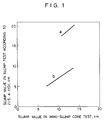
- Fig. 1 is a graph showing the correlation between the slump values obtained in a mini-slump cone test and those obtained in the slump test specified in JIS, or Japanese Industrial Standard, A1101.
- Naphtha oil is a neutral oil produced from coal or petroleum that has a boiling point in the range of from 80 to 220°C.
- the principal components of naphtha oil include those which have no reactive double bond such as benzene, toluene, xylenes, trimethylbenzenes, ethyltoluenes, indan, tetramethylbenzenes, methylindans, propylbenzenes and naphthalenes, as well as those which have a reactive double bond as specifically exemplified by styrene, ⁇ -methylstyrenes, methylstyrenes, dimethylstyrenes, trimethylstyrenes, indene, methylindenes, dicyclopentadiene and coumarone.
- Naphtha oil also contains minor amounts of acidic substances, basic (nitrogenous) substances and sulfur-containing substances.
- polymerizable components refers to the mixtures that are chiefly composed of indene and aromatic hydrocarbonoils having a reactive double bond and which are present in naphtha oil.
- composition of naphtha oil may vary with the method of distillation and the type starting materials used and the sum of the polymerizable components, i.e., indene and aromatic hydrocarbonoils having a reactive double bond is about 5 - 80 wt% on average.
- the contents of polymerizable components can be increased up to 100% by super-distillation but this is not highly desirable from an operational or economic viewpoint.
- the polymerizable components of naphtha oil are chiefly composed of indene and other aromatic hydrocarbonoils having a reactive double bond.
- the polymerizable components in naphtha oil which are chiefly composed of indene and which are present in an amount of at least 5 wt% consist of the following components (a), (b) and (c) whose contents are indicated by weight percentages:
- maleic anhydride may be copolymerized with polymerizable components in naphtha oil.
- the esterified copolymer is such that a part, preferably 5 - 50%, of those carboxylic acid groups including acid anhydride groups which are present in the copolymer of maleic anhydride and indene or polymerizable components in naphtha oil, a major proportion of which is represented by indene and other aromatic hydrocarbons having a reactive double bond is esterified.
- the desired esterified copolymer may be obtained by heating the copolymer of maleic anhydride and a polymerizable component in naphtha oil together with an alcohol. Compared to the original copolymer, the esterified copolymer has improved physical properties such as better solubility in organic solvents and higher miscibility with other resins. There is no particular limitation on the alcohols that may be used to esterify the copolymer.
- alcohols that can be used include: aliphatic alcohols such as methyl alcohol, ethyl alcohol, propyl alcohol, butyl alcohol, amyl alcohol and hexyl alcohol; cellosolves such as methyl cellosolve, ethyl cellosolve, propyl cellosolve, and butyl cellosolve; lower diols such as ethylene glycol, diethylene glycol and 1,4-butanediol; and alcohols having a functional group such as monochloroethyl alcohol, allyl alcohol, ethanolamine and benzyl alcohol.
- aliphatic alcohols such as methyl alcohol, ethyl alcohol, propyl alcohol, butyl alcohol, amyl alcohol and hexyl alcohol
- cellosolves such as methyl cellosolve, ethyl cellosolve, propyl cellosolve, and butyl cellosolve
- lower diols such as ethylene glycol, diethylene glyco
- the resulting esterified copolymer is a white powder having a number average molecular weight (Mn) of 1,200 - 35,000 and it can be extensively used as, for instance, paint or ink additives, dye or pigment dispersants, adhesive aids and leveling agents in floor polishing waxes.
- Mn number average molecular weight
- the process for producing the esterified copolymer is briefly described below.
- the alcohols listed two paragraphs ago are used to esterify the copolymer.
- the esterification between the copolymer and the alcohol will gradually proceed even if the reaction temperature is low.
- a very long time, sometimes a whole day and longer is needed to attain the desired degree of esterification. Therefore, it is recommended to perform the reaction at a temperature between 100 and 200°C. If the reaction temperature is 100°C and above, the desired degree of esterification can be reached within about 24 h although the exact time will vary with the type of alcohol used and the degree of esterification to be attained.
- reaction temperature of 100°C is insufficient and needs to be about 160°C. Temperatures above 200°C are not desirable since the decomposition reaction of the esterified copolymer will start at such high temperatures.
- the reaction is performed in an air atmosphere, the aerial oxygen might cause undesirable coloring of the esterified product or introduce a fire hazard. It is thus required that the esterification reaction be performed in an inert atmosphere such as nitrogen or argon.
- a pressure-resistant reaction vessel must be employed in the esterification reaction since a reaction temperature of 100 - 200°C will exceed the boiling points of some alcohols.
- Reaction solvents may or may not used. However, some alcohols have such a great ability to dissolve the esterified copolymer that there may be a case where the rate of its recovery (precipitation) cannot be improved any further by charging it into a poor solvent. In this case, the use of reaction solvents is desirably avoided.
- the degree of esterification can be calculated from the instrumental integration for the ester as obtained by proton NMR.
- a glass polymerizer (inner capacity, 500 ml) equipped with a stirrer, a dropping funnel and a reflux condenser was charged with 24.5 g (0.25 mol) of maleic anhydride dissolved in 100 ml of methyl ethyl ketone.
- reaction solution was thereafter returned to room temperature and gradually added to 300 ml of n-hexane in a precipitating tank (beaker with an inner capacity of 1 l), whereupon a white precipitate of copolymer formed.
- the precipitate was separated by filtration under suction and vacuum-dried to obtain a copolymer of maleic anhydride and polymerizable components in naphtha oil in a yield of 95 wt% as calculated from equation (1) given hereinabove.
- the resulting copolymer had a number average molecular weight of 13,500 (sample No. 1 of the present invention).
- a copolymer was prepared in Example 1 except that 116 g of the naphtha oil having this composition (0.25 mol of the polymerizable component in terms of indene) was used. The resulting copolymer was white in color and its yield was 92 wt%.
- This copolymer had a number average molecular weight of 17,500 (sample No. 2 of the present invention).
- a copolymer was prepared as in Example 1 except that 32 g of the naphtha oil having this composition (0.25 mol of the polymerizable component in terms of indene) was used and that the naphtha oil was diluted with 100 ml of methyl isobutyl ketone in order to avoid precipitation of the copolymer during reaction on account of the high content of polymerizable components.
- the resulting copolymer was white in color and its yield was 96 wt%.
- This copolymer had a number average molecular weight of 6,500 (sample No. 3 of the present invention).
- a glass polymerizer (inner capacity, 500 ml) equipped with a stirrer, a dropping funnel, a reflux condenser and a nitrogen introducing pipe was charged with 200 ml of chloroform as a reaction solvent. Under agitation with the stirrer, a small amount of nitrogen gas was constantly supplied into the polymerizer while at the same time, the solvent in the polymerizer was held at 50°C by means of an oil bath equipped with a temperature controller. Thereafter, a uniform solution of indene (29 g), maleic anhydride (24.5 g), benzoyl peroxide (1.2 g) and chloroform (100 ml) was charged into the overhead dropping funnel and dripped into the polymerizer slowly over a period of about 1 h.
- reaction solution started to become turbid and fine particles of copolymer formed. Thereafter, the reaction system was held at the reaction temperature for 5 h until the reaction was completed.
- reaction solution was subjected to filtration by suction to separate the fine particles, which were vacuum-dried to obtain an indene-maleic anhydride copolymer in a yield of 95 wt%.
- This copolymer had a number average molecular weight of 30,500 as measured by GPC.
- a glass polymerizer (inner capacity, 1 l) equipped with a stirrer, a dropping funnel and a reflux condenser was charged with 400 ml of benzene (reaction solvent) and 98 g of maleic anhydride. Under agitation with the stirrer, the reaction solution in the polymerizer was held under reflux by means of an oil bath equipped with a temperature controller.
- reaction system was held at the reflux temperature for about 3 h until the reaction was completed.
- reaction mixture was returned to room temperature and subjected to filtration by suction to separate the resulting fine particles, which were vacuum-dried to obtain an indene-maleic anhydride copolymer in a yield of 93 wt%.
- This copolymer had a number average molecular weight of 15,300 as measured by GPC.
- a Stainless steel polymerizer (inner capacity, 2 l) equipped with a stirrer, a feed pump, a reflux condenser and a nitrogen introducing pipe was charged with 1.2 l of toluene and 232 g of indene. Under agitation with the stirrer, a small amount of nitrogen gas was constantly supplied into the polymerizer and the temperature of the reaction solution was held at 90°C by means of an external heater until the end of the reaction.
- a tank associated with the feed pump was charged with maleic anhydride (196 g), azoisobutyronitrile (3.3 g) and toluene (0.6 l), from which a uniform solution was formed. This solution was supplied to the polymerizer by the feed pump over a period of 2 h. Thereafter, the contents of the polymerizer were left to stand for about 4 h until the reaction was completed.
- reaction mixture was returned to room temperature and the polymerizer was uncovered.
- the reaction product did not adhere to the walls of the polymerizer or the agitating blades and instead it formed a flowable creamy mass as a whole.
- the resulting fine particles were separated by suction filtration and vacuum-dried to obtain an indene-maleic anhydride copolymer in a yield of 93 wt%.
- This copolymer had a number average molecular weight of 11,600 as measured by GPC.
- a glass polymerizer (inner capacity, 1 l) equipped with a stirrer, a dropping funnel, a reflux condenser and a nitrogen introducing pipe was charged with 300 ml of toluene. Under agitation with the stirrer, a small amount of nitrogen gas was constantly supplied into the polymerizer while at the same time, the solvent in the polymerizer was held at 70°C by means of an oil bath equipped with a temperature controller.
- a uniform solution of naphtha oil (138 g containing 42 wt% of the polymerizable component), maleic anhydride (49 g), azoisobutyronitrile (0.6 g) and toluene (200 ml) was charged into the dropping funnel and dripped into polymerizer slowly over a period of about 1 h. About 20 min after the start of dripping, the reaction solution started to become turbid.
- This copolymer had a number average molecular weight of 18,300 as measured by GPC.
- a Stainless steel polymerizer (inner capacity, 2 l) equipped with a stirrer, a feed pump, a reflux condenser and a nitrogen introducing pipe was charged with 800 ml of xylene and 196 g of maleic anhydride. Under agitation with the stirrer, a small amount of nitrogen gas was constantly supplied into the polymerizer and the temperature of the reaction solution was held at 100°C by means of an external heater until the end of the reaction.
- a tank associated with the feed pump was charged with naphtha oil (containing 65 wt% of polymerizable component), azoisobutyronitrile (24 g) and xylene (400 ml), from which a uniform solution was formed. This solution was supplied to the polymerizer by the feed pump over a period of 1 h. Thereafter, the contents of the polymerizer were left to stand for about 4 h until the reaction was completed.
- reaction mixture was returned to room temperature and the polymerizer was uncovered.
- the reaction product did not adhere to the walls of the polymerizer or the agitating blades and instead it formed a flowable creamy mass as a whole.
- the resulting fine particles were separated by suction filtration and vacuum-dried to obtain a copolymer of maleic anhydride and the porimerizable component of naphtha oil in a yield of 97 wt%.
- This copolymer had a number average molecular weight of 9,600 as measured by GPC.
- a glass polymerizer (inner capacity, 2 l) equipped with a stirrer, a dropping funnel, a reflux condenser and a nitrogen introducing pipe was charged with 500 ml of cumene. Under agitation with the stirrer, a small amount of nitrogen gas was constantly supplied into the polymerizer while at the same time, the solvent in the polymerizer was held at 120°C by means of an oil bath equipped with a temperature controller.
- This copolymer had a number average molecular weight of 3,800 as measured by GPC.
- a Stainless steel polymerizer (inner capacity, 2 l) equipped with a stirrer, a feed pump, a reflux condenser and a nitrogen introducing pipe was charged with 600 ml of ethylbenzene . Under agitation with the stirrer, a small amount of nitrogen gas was constantly supplied into the polymerizer and the temperature of the reaction solution was held at 120°C by means of an external heater until the end of the reaction.
- a tank associated with the feed pump was charged with naphtha oil (120 g), maleic anhydride (49 g), azobiscyclohexanecarbonitrile (2.0 g) and ethylbenzene (300 ml), from which a uniform solution was formed. This solution was supplied to the polymerizer by the feed pump over a period of 1 h. Thereafter, the contents of the polymerizer were left to stand for about 3 h until the reaction was completed.
- reaction mixture was returned to room temperature and the polymerizer was uncovered.
- the reaction product did not adhere to the walls of the polymerizer or the agitating blades and instead it formed a flowable creamy mass as a whole.
- the resulting fine particles were separated by suction filtration and vacuum-dried to obtain a copolymer of maleic anhydride and the porimerizable component of naphtha oil in a yield of 93 wt%.
- This copolymer had a number average molecular weight of 4,400 as measured by GPC.
- a glass polymerizer (inner capacity, 1 l) equipped with a stirrer, a dropping funnel and a reflux condenser was charged with 300 ml of toluene. Under agitation with the stirrer, the charge in the polymerizer was held at the reflux temperature of the solvent by means of an oil bath equipped with a temperature controller.
- a uniform solution of naphtha oil (464 g), maleic anhydride (98 g), azoisobutyronitrile (1.6 g) and toluene (100 ml) was charged into the dropping funnel and dripped into polymerizer slowly over a period of about 1 h. About 8 min after the start of dripping, the reaction solution started to become turbid.
- This copolymer had a number average molecular weight of 7,200 as measured by GPC.
- a Stainless steel polymerizer (inner capacity, 2 L) equipped with a stirrer, a feed pump, a reflux condenser and a nitrogen introducing pipe was charged with 1,000 ml of cumene. Under agitation with the stirrer, a small amount of nitrogen gas was constantly supplied into the polymerizer and the temperature of the reaction solution was held at 120°C by means of an external heater until the end of the reaction.
- a tank associated with the feed pump was charged with naphtha oil (130 g), maleic anhydride (98 g), azoisobutyronitrile (5 g) and cumene (500 ml), from which a uniform solution was formed. This solution was supplied to the polymerizer by the feed pump over a period of 2 h. Thereafter, the contents of the polymerizer were left to stand for about 3 h until the reaction was completed.
- reaction mixture was returned to room temperature and the polymerizer was uncovered.
- the reaction product did not adhere to the walls of the polymerizer or the agitating blades and instead it formed a flowable creamy mass as a whole.
- the resulting fine particles were separated by suction filtration and vacuum-dried to obtain a copolymer of maleic anhydride and the polymerizable component of naphtha oil in a yield of 95 wt%.
- This copolymer had a number average molecular weight of 3,900 as measured by GPC.
- a glass polymerizer (inner capacity, 500 ml) equipped with a stirrer, two dropping funnels and a reflux condenser was charged with a dilution of indene (27 g, 0.25 mol) in methyl isobutyl ketone (100 ml). Under agitation with the stirrer, the contents of the polymerizer were held at the reflux temperature with an external heater.
- One of the two dropping funnels was charged with a solution of maleic anhydride (24.5 g) in methyl isobutyl ketone (100 ml).
- the other dropping funnel was charged with a dilution of 400 mg of Perbutyl Z (the trade name of Nippon Oil & Fats Co., Ltd. for a peroxide-based radical reaction initiator) in 50 ml of methyl isobutyl ketone.
- the solutions in the two dropping funnels were started to drip at the same time and dripped slowly into the polymerizer over 1 h. After completion of the dripping, the system was held at the reflux temperature for 1 h until the reaction was completed.
- reaction solution was returned to room temperature and slowly poured into ligroin (300 ml) in a precipitation tank (a glass beaker having an inner capacity of 1 l), whereupon a white precipitate of indene-maleic anhydride copolymer formed.
- the precipitate was separated by suction filtration and vacuum-dried to obtain an indene-maleic anhydride copolymer in a yield of 96 wt%.
- This copolymer had a number average molecular weight of 12,000 as measured by GPC.
- the profile of weight loss in the copolymer prepared in Comparative Example 4 was measured by a thermogravitometer (product of Rigaku Co., Ltd.) in a nitrogen atmosphere with the temperature being elevated from room temperature at a rate of 3°C/min. The weight of the copolymer was found to decrease at 310°C and above.
- the profile of weight loss in the copolymer prepared in Example 4 was measured by a thermogravitometer (product of Rigaku Co., Ltd.) in a nitrogen atmosphere with the temperature held at 270°C for 3 h. The weight of the copolymer did not decrease at all. GPC showed no change in the molecular weight of the tested copolymer, suggesting that cleavage of the backbone chain and side chains in the copolymer would not proceed at 270°C.
- the profile of weight loss in a styrene-maleic anhydride copolymer (commercial product) was measured under the same conditions as those employed in Example 10. At the end of the measurement, the copolymer was found to have experienced a 5% weight loss compared to its initial total weight. Based on this data, one may well conclude that the styrene-maleic anhydride copolymer is not as heat-stable as the copolymer of maleic anhydride and the polymerizable component of naphtha oil.
- Copolymers of maleic anhydride and the polymerizable component in naphtha oil having molecular weights of 6,000, 8,500 and 18,000 were sulfonated and subsequently subjected to liming sodation to synthesize alkali salts of sulfonated copolymers.
- 300 ml each of the alkali salts of sulfonated copolymers (10%) in solution was charged into an autoclave and held at 250°C for 15 h. Thereafter, the solutions were returned to room temperature and the molecular weights of the copolymers were measured by GPC. Each sample had the same molecular weight as it was before the heat treatment, suggesting that none of the copolymers experienced thermal deterioration.
- Fresh water (100 parts), bentonite (4 parts), chrysotile-containing asbestos (1 part) and an alkali metal salt of humic acids (4 parts) were mixed with one part of a sodium salt of sulfonated copolymers (Mn, 8,500)of maleic anhydride and the polymerizable component in naphtha oil to prepare a drilling mud.
- the characteristics of this mud were evaluated under the conditions shown in Table 1. Measurements were conducted with a Fann VG meter and a dehydration (water loss) tester that complied with the A.P.I. Standard.
- Table 3 shows that the muds containing a sodium salt of SIMA as a dispersant remained stable even under the hostile temperature condition of 250°C.
- Example 4 Ten (10.0) g of the copolymer prepared in Example 4 was added to 50g of 98% sulfuric acid to perform sulfonation reaction at 40°C for 3h. After completion of the reaction, liming sodation was performed to remove residual sulfuric acid as gypsum and to convert the sulfonated product to a sodium salt form. As a result, an aqueous solution of Na salt of the sulfonated copolymer was obtained.
- Water, cement and the liquefying agent (0.4 wt% of cement on a solids basis) were put into a cement mixing vessel and mixed for 30 seconds. Sand was added with stirring over a period of 30 seconds, followed by mixing for and additional 60 seconds. After standing for 20 seconds, the mortar adhering to the wall of the container and to the surface of the paddle was scraped off, followed by remixing for 120 seconds.
- Fluidity evaluation was performed by a mini-slump cone test (mortar test) adapted from the slump test described in JIS A 1101.
- the mini-slump cone test is a convenient method adapted for evaluating the fluidity of various cement additives. As shown in Fig. 1, the results of this test are in good agreement with those obtained by performing a slump test in accordance with the method described in JIS A 1101.
- Fig. 1 is a graph showing the correlation between the results of a slump test conducted in accordance with JIS A 1101 on a commercial fluidizing agent (Na salt of the condensation product of naphthalenesulfonic acid and formaldehyde) and the results of a mini-slump cone test conducted on the same test sample. Line (a) represents the correlation for initial slump values and line (b) the correlation for slump values after 60 min.
- a portion of the mortar thus prepared was placed into a mini-slump cone 15 cm high and the slump of the mortar as determined after removal of the cone was 11.9 cm.
- Example 6 Ten (10.0g) of the copolymer prepared in Example 6 was added to 50g of 98% sulfuric acid to perform sulfonation reaction at 40°C for 3h. After completion of the reaction, the sulfonated product was neutralized with calcium hydroxide to remove residual sulfuric acid as gypsum and to obtain an aqueous solution of the Ca salt of the sulfonated copolymer.
- Example 13 Using a commercial cement admixture (i.e. a sodium salt of naphthalenesulfonic acid-formaldehyde condensate), a mortar was made and subjected to tests as in Example 13. The results are shown in Table 3.
- a commercial cement admixture i.e. a sodium salt of naphthalenesulfonic acid-formaldehyde condensate
- Example 12 A mortar was made as in Example 12 except that no admixture was used.
- the results of tests conducted on this mortar as in Example 13 are shown in Table 3.
- Table 3 Results of Mortar Test
- Slump Cm
- Residual slump %) after 0 min after 60 min
- Example 13 11.9 11.5 96.6
- Example 14 11.7 11.1 94.9
- Comparative Example 8 11.7 11.0 94.0
- Comparative Example 9 11.9 8.7 73.1 Comparative Example 10 11.3 10.1 89.4 Comparative Example 11 9.8 7.1 72.4
- a glass polymerizer (inner capacity, 500ml) equipped with a stirrer, a dropping funnel and a reflux condenser was charged with 24.5g (0.25 mol) of maleic anhydride dissolved in 100 ml of methyl ethyl ketone.
- An indene-maleic anhydride copolymer was prepared as in Comparative Example 12 except that 300 mg of benzoyl peroxide was used as a radical reaction initiator. The yield of the copolymer was 93 wt%.
- a glass polymerizer (inner capacity, 500ml) equipped with a stirrer, a dropping funnel and a reflux condenser was charged with 300ml of xylene. Under agitation with the stirrer, the charge was held at the reflux temperature by means of an external heater. It was attempted to dissolve 24.5g(0.25mol) of maleic anhydride in 27.5g (0.25mol) of indene but part of the maleic anhydride remained undissolved. Therefore, an additional amount (50ml) of xylene was added to make a complete solution of maleic anhydride. To that solution, 250mg of dicumyl peroxide was added as a radical reaction initiator to make a uniform mixture. This was charged into the overhead dropping funnel.
- the charge was slowly dripped into the polymerizer over a period of about 1.5h. After completion of dripping, the reaction solution was left under reflux for 2h until the reaction was completed. The obtained copolymer was separated by filtration under suction and vacuum -dried to obtain copolymer of indene and maleic anhydride in a yield of 93 wt%.
- An indene-maleic anhydride copolymer was prepared as in Comparative Example 14 except that 200mg of Perbutyl I (tradename of Nippon Oil & Fats Co., Ltd. for a peroxide-based radical reaction initiator)was used as a radical initiator. The yield of this copolymer was 95 wt%.
- Perbutyl I tradename of Nippon Oil & Fats Co., Ltd. for a peroxide-based radical reaction initiator
- An indene-maleic anhydride copolymer was prepared as in Comparative Example 14 except that 300 mg of azobisiosbutyronitrile (AIBN) which was an azo-based radical reaction initiator was used as a radical initiator. The yield of this copolymer was 94 wt%.
- AIBN azobisiosbutyronitrile
- a glass polymerizer ( inner capacity, 500ml) equipped with a stirrer, a dropping funnel and a reflux condenser was charged with 24.5g (0.25mol) of maleic anhydride dissolved in 100ml of methyl ethyl ketone.
- reaction solution was thereafter returned to room temperature and gradually added to 300ml of n-hexane in a precipitating tank (beaker with an inner capacity of 1 l), whereupon a white precipitate of copolymer formed.
- the precipitate was separated by filtration under suction and vacuum-dried to obtain a copolymer of maleic anhydride and polymerizable components in naphtha oil in a yield of 95 wt% as calculated from equation (1) given hereinabove.
- the resulting copolymer had a number average molecular weight of 13,500.
- a portion (21.4g) of the thus synthesized copolymer, 7.0g of methyl alcohol and 50ml of toluene were charged into a SUS 304 autoclave having an inner capacity of 500ml. After replacing the atmosphere in the autoclave with a nitrogen gas, the contents of the autoclave were heated to 170°C with an external heater and reaction was carried out at that temperature for 2h. Thereafter, toluene and methyl alcohol were distilled off under vacuum and 50mg of the resulting esterified copolymer was dissolved in 1ml of deuterated chloroform. By proton NMR, the degree of esterification of the copolymer was found to be 50%.
- Example 15 Indene-maleic anhydride copolymers were esterified as in Example 15 except that the amount of methyl alcohol was varied as shown in Table 6 below. The results are also shown in Table 4 Table 4 Methyl alcohol (%) Degree of esterification Example 15 7.0 50 Example 16 3.5 40 Example 17 3.0 34 Example 18 2.0 20 Example 19 1.0 10 Example 20 0.5 5
Landscapes
- Chemical & Material Sciences (AREA)
- Organic Chemistry (AREA)
- Engineering & Computer Science (AREA)
- Materials Engineering (AREA)
- Chemical Kinetics & Catalysis (AREA)
- Health & Medical Sciences (AREA)
- Medicinal Chemistry (AREA)
- Polymers & Plastics (AREA)
- Ceramic Engineering (AREA)
- General Life Sciences & Earth Sciences (AREA)
- Life Sciences & Earth Sciences (AREA)
- Dispersion Chemistry (AREA)
- General Chemical & Material Sciences (AREA)
- Oil, Petroleum & Natural Gas (AREA)
- Structural Engineering (AREA)
- Addition Polymer Or Copolymer, Post-Treatments, Or Chemical Modifications (AREA)
Claims (23)
- Copolymer aus Maleinsäureanhydrid und polymerisierbaren Bestandteilen von Naphthaöl mit einem Molekulargewicht-Zahlenmittel von 1200 bis 60.000, wobei das Naphthaöl mindestens 5 Gew.-% des polymerisierbaren Bestandteils enthält, und wobei die polymerisierbaren Bestandteile von Naphthaöl im wesentlichen aus(a) 70 bis 99 Gew.-% Inden,(b) 0,5 bis 29,5 Gew.-% Styrol und(c) insgesamt 0,5 bis 29,5 Gew.-% von mindestens einem Mitglied, ausgewählt aus der Gruppe, bestehend aus α-Methylstryol, Methylstyrol, Methylinden, Dimethylstyrol, Trimethylstyrol, Coumaron und Dicyclopentadien,bestehen.
- Copolymer nach Anspruch 1, wobei das Naphthaöl die polymerisierbaren Bestandteile in einer Menge in dem Bereich von 5 bis 80 Gew.-% enthält.
- Verfahren zum Herstellen des Copolymers nach Anspruch 1 oder 2, umfassend die folgende Stufe:- Copolymerisieren des Naphthaöls mit Maleinsäureanhydrid durch Radikalpolymerisation.
- Verfahren nach Anspruch 3, wobei das Copolymer unter Verwendung von mindestens einem Fällungslösungsmittel, ausgewählt aus der Gruppe, bestehend aus aliphatischen Kohlenwasserstoffölen, naphthenartigen Kohlenwasserstoffölen und Ligroin, gewonnen wird.
- Verfahren nach Anspruch 3, wobei die Radikalpolymerisation zwischen dem Maleinsäureanhydrid und dem Naphthaöl durch Verwendung eines Reaktionslösungsmittels gefördert wird, welches fähig ist, das Naphthaöl und das Maleinsäureanhydrid aufzulösen, aber das nur eine geringe Fähigkeit besitzt, das Copolymer aufzulösen, ohne daß ein Fällungslösungsmittel zur Gewinnung des Copolymers verwendet wird.
- Verfahren nach Anspruch 5, wobei das Reaktionslösungsmittel aus der Gruppe, bestehend aus Benzol, Toluol, Ethylbenzol, Xylol und Cumol, ausgewählt ist.
- Harz-Modifikationsmittel, enthaltend das Copolymer nach Anspruch 1 oder 2 als wirksamen Inhaltsstoff.
- Harz-Zusammensetzung, umfassend das Copolymer nach Anspruch 1 oder 2 und ein thermoplastisches Harz.
- Alkalimetallsalz, Erdalkalimetallsalz oder Ammoniumsalz eines Sulfonierungsprodukts des Copolymers nach Anspruch 1.
- Dispergiermittel, enthaltend mindestens eine Verbindung, ausgewählt aus der Gruppe, bestehend aus dem Alkalimetallsalz, Erdalkalimetallsalz und Ammoniumsalz nach Anspruch 9.
- Schlammstabilisator zur Verwendung bei der Bohrung durch heiße Formationen, welcher das Dispergiermittel nach Anspruch 10, ein Tongestein und Wasser umfaßt.
- Weichmacher zur Verwendung in Zementgemischen, um Verlust durch Rutschung zu reduzieren, welcher das Dispergiermittel nach Anspruch 10 umfaßt.
- Verestertes Copolymer des Copolymers nach Anspruch 1, wobei Carbonsäuregruppen, umfassend Säureanhydridgruppen, in dem Copolymer nach Anspruch 1 mindestens teilweise verestert sind.
- Verfahren zum Herstellen eines veresterten Copolymers des Copolymers nach Anspruch 1, wobei das Copolymer nach Anspruch 1 mit einem Alkohol bei einer Temperatur von 100 bis 200°C reagierengelassen wird.
- Alkalimetallsalz, Erdalkalimetallsalz und Ammoniumsalz des Sulfonierungsprodukts eines Copolymers von Maleinsäureanhydrid und dem polymerisierbaren Bestandteil von Naphthaöl, der in dem Naphthaöl in einer Menge von mindestens 5 Gew.-% anwesend ist, und dessen hauptsächlicher Teil Inden und aromatische Kohlenwasserstoffe mit einer reaktiven Doppelbindung sind, wobei das Copolymer ein Molekulargewicht-Zahlenmittel von 1200 bis 60.000 hat.
- Alkalimetallsalz, Erdalkalimetallsalz und Ammoniumsalz nach Anspruch 15, wobei das Naphthaöl mindestens 5 Gew.-% des polymerisierbaren Bestandteils enthält, der Inden in einer Menge von mindestens 50 Gew.-% enthält.
- Dispergiermittel, enthaltend mindestens eine Verbindung, ausgewählt aus der Gruppe, bestehend aus dem Alkalimetallsalz, Erdalkalimetallsalz und Ammoniumsalz nach Anspruch 15 oder 16.
- Schlammstabilisator zur Verwendung bei der Bohrung durch heiße Formationen, der das Dispergiermittel nach Anspruch 17, ein Tongestein und Wasser umfaßt.
- Weichmacher zur Verwendung in Zementgemischen, um einen Verlust durch Rutschung zu reduzieren, der das Dispergiermittel nach Anspruch 17 umfaßt.
- Verestertes Copolymer, worin mindestens ein Teil der Carbonsäuregruppen, umfassend Säureanhydridgruppen, in einem Copolymer von Maleinsäureanhydrid und des polymerisierbaren Bestandteils von Naphthaöl mit einem Molekulargewicht-Zahlenmittel von 1200 bis 60.000 verestert ist, wobei der hauptsächliche Teil des polymerisierbaren Bestandteils von Naphthaöl Inden und aromatische Kohlenwasserstoffe mit einer reaktiven Doppelbindung sind, und der polymerisierbare Bestandteil in dem Naphthaöl in einer Menge von mindestens 5 Gew.-% enthalten ist.
- Verestertes Copolymer nach Anspruch 20, wobei das Naphthaöl mindestens 5 Gew.-% des polymerisierbaren Bestandteils enthält, der Inden in einer Menge von mindestens 50 Gew.-% enthält.
- Verfahren zum Herstellen eines veresterten Copolymers, umfassend die folgende Stufe:- Reagierenlassen eines Copolymers aus Maleinsäureanhydrid und dem polymerisierbaren Bestandteil von Naphthaöl, der in Naphthaöl in einer Menge von mindestens 5 Gew.-% anwesend ist und dessen größter Teil Inden und aromatische Kohlenwasserstoffe mit einer reaktiven Doppelbindung ist, mit einem Alkohol bei einer Temperatur von 100 bis 200°C, wobei das Copolymer ein Molekulargewicht-Zahlenmittel von 1200 bis 60.000 hat.
- Verfahren nach Anspruch 22, wobei das Naphthaöl mindestens 5 Gew.-% des polymerisierbaren Bestandteils enthält, der Inden in einer Menge von mindestens 50 Gew.-% enthält.
Applications Claiming Priority (11)
| Application Number | Priority Date | Filing Date | Title |
|---|---|---|---|
| JP163625/88 | 1988-06-30 | ||
| JP16362588 | 1988-06-30 | ||
| JP17946088 | 1988-07-19 | ||
| JP179460/88 | 1988-07-19 | ||
| JP9615389 | 1989-04-14 | ||
| JP9615589 | 1989-04-14 | ||
| JP96155/89 | 1989-04-14 | ||
| JP96156/89 | 1989-04-14 | ||
| JP96154/89 | 1989-04-14 | ||
| JP1096156A JPH02274708A (ja) | 1989-04-14 | 1989-04-14 | 樹脂改質剤および樹脂組成物 |
| JP9615489 | 1989-04-14 |
Publications (3)
| Publication Number | Publication Date |
|---|---|
| EP0348975A2 EP0348975A2 (de) | 1990-01-03 |
| EP0348975A3 EP0348975A3 (en) | 1990-10-31 |
| EP0348975B1 true EP0348975B1 (de) | 1994-08-17 |
Family
ID=39758874
Family Applications (1)
| Application Number | Title | Priority Date | Filing Date |
|---|---|---|---|
| EP89111862A Expired - Lifetime EP0348975B1 (de) | 1988-06-30 | 1989-06-29 | Copolymer von polymerisierbaren Komponenten in Benzinöl und Maleinsäure-Anhydrid, Verfahren zur Herstellung dieses Copolymers und Derivate davon |
Country Status (4)
| Country | Link |
|---|---|
| EP (1) | EP0348975B1 (de) |
| JP (1) | JPH0733413B2 (de) |
| KR (1) | KR930001067B1 (de) |
| DE (1) | DE68917543T2 (de) |
Families Citing this family (4)
| Publication number | Priority date | Publication date | Assignee | Title |
|---|---|---|---|---|
| EP0499271A1 (de) * | 1991-02-15 | 1992-08-19 | Kawasaki Steel Corporation | Lichtempfindliches Harz |
| US5380905A (en) * | 1991-10-09 | 1995-01-10 | Minnesota Mining And Manufacturing Company | Magnetic recording medium having radiation curable binder with α-methylstyrene unsaturation |
| JP6326824B2 (ja) * | 2014-01-15 | 2018-05-23 | 日油株式会社 | 感光性樹脂組成物およびその用途 |
| DE102014008646B3 (de) | 2014-06-13 | 2015-09-24 | Ulrich Bruhnke | Verfahren zur Herstellung von geschlossenen ringförmigen Konstruktionsbauteilen aus Leichtmetall, sowie Anordnung zur Durchführung des Verfahrens |
Family Cites Families (7)
| Publication number | Priority date | Publication date | Assignee | Title |
|---|---|---|---|---|
| US2456358A (en) * | 1945-10-31 | 1948-12-14 | Allied Chem & Dye Corp | Thermoplastic resins and process of making |
| DE1110416B (de) * | 1960-04-27 | 1961-07-06 | Bergwerksverband Gmbh | Verfahren zur Herstellung von Kunststoffen, insbesondere Grundstoffen fuer Lacke, UEberzugs- und Impraegnierungsmittel sowie Verklebungsmittel |
| US4177076A (en) * | 1977-04-15 | 1979-12-04 | Nippon Oil Company, Ltd. | Water or alcohol soluble printing ink composition |
| US4082820A (en) * | 1977-06-15 | 1978-04-04 | The Standard Oil Company | High softening maleic anhydride copolymers |
| US4117218A (en) * | 1977-09-06 | 1978-09-26 | The Standard Oil Company | High softening maleic anhydride copolymers |
| JPS54111594A (en) * | 1978-02-16 | 1979-08-31 | Standard Oil Co | Crosslinked and water swellable indeneemaleic anhydride interpolymer |
| JPS61246206A (ja) * | 1985-04-24 | 1986-11-01 | Mitsubishi Petrochem Co Ltd | マレイン化樹脂 |
-
1989
- 1989-06-29 DE DE68917543T patent/DE68917543T2/de not_active Expired - Fee Related
- 1989-06-29 EP EP89111862A patent/EP0348975B1/de not_active Expired - Lifetime
- 1989-06-30 KR KR1019890009414A patent/KR930001067B1/ko not_active Expired - Fee Related
- 1989-07-19 JP JP1186907A patent/JPH0733413B2/ja not_active Expired - Lifetime
Also Published As
| Publication number | Publication date |
|---|---|
| JPH0347815A (ja) | 1991-02-28 |
| KR910000821A (ko) | 1991-01-30 |
| DE68917543D1 (de) | 1994-09-22 |
| KR930001067B1 (ko) | 1993-02-15 |
| JPH0733413B2 (ja) | 1995-04-12 |
| EP0348975A2 (de) | 1990-01-03 |
| DE68917543T2 (de) | 1994-12-22 |
| EP0348975A3 (en) | 1990-10-31 |
Similar Documents
| Publication | Publication Date | Title |
|---|---|---|
| EP0291590B1 (de) | Dispergiermittel für Zement | |
| JP7154217B2 (ja) | リグニン誘導体化合物及びその用途 | |
| KR100280274B1 (ko) | 수용성 그라프트 중합체 | |
| EP0303747B1 (de) | Acrylpolymer und dieses enthaltende Zementzusammensetzung | |
| EP0467654B1 (de) | Verfahren zum Zementieren von Öl- und Gasbohrlöchern | |
| CA1271879A (en) | Cement dispersion agent | |
| JPH01145358A (ja) | セメント分散剤 | |
| US4655838A (en) | Cement additive composition | |
| US5191049A (en) | Copolymer of polymerizable components in naphtha oil and maleic anhydride, process for producing said copolymer, and derivatives thereof | |
| EP0337738B1 (de) | Verfahren zur Herstellung von Sulfonierungsprodukten von konjugierten Dienen, Polymere des Sulfonierungsproduktes sowie dispergierende Zusammensetzung, die das Sulfonierungsprodukt und/oder das Polymer enthält | |
| US5229449A (en) | Copolymer of polymerizable components in naphtha oil and maleic anhydride, process for producing said copolymer, and derivatives thereof | |
| EP0422222B1 (de) | Dispergiermittel und zementzusatz | |
| JPH0118028B2 (de) | ||
| EP0348975A2 (de) | Copolymer von polymerisierbaren Komponenten in Benzinöl und Maleinsäure-Anhydrid, Verfahren zur Herstellung dieses Copolymers und Derivate davon | |
| US5166275A (en) | Copolymer of polymerizable components in naphtha oil and maleic anhydride, process for producing said copolymers, and derivatives thereof | |
| JP2020025935A (ja) | 分散剤及びその製造方法 | |
| CA1325311C (en) | Cement admixture | |
| EP0341791B1 (de) | Betonzusammensetzung mit einem Verflüssigungszusatz | |
| US4511683A (en) | Sulfonic acid compound having cyclopentadiene skeleton and composition comprising same and cement | |
| KR930001063B1 (ko) | 나프타유의 중합성분과 무수말레인산의 혼성중합체의 술폰화물의 염과 그 용도 | |
| JP3470515B2 (ja) | 分散剤の製造方法及び分散剤 | |
| KR870001513B1 (ko) | 시클로펜타디엔 구조를 가지는 술폰산 화합물의 공중합체 제조방법 | |
| JPH0297505A (ja) | スルホン化共重合体およびその用途 | |
| JPH06220125A (ja) | スルホン化共重合体およびその用途 | |
| JPH0159227B2 (de) |
Legal Events
| Date | Code | Title | Description |
|---|---|---|---|
| PUAI | Public reference made under article 153(3) epc to a published international application that has entered the european phase |
Free format text: ORIGINAL CODE: 0009012 |
|
| 17P | Request for examination filed |
Effective date: 19890629 |
|
| AK | Designated contracting states |
Kind code of ref document: A2 Designated state(s): DE FR GB IT NL |
|
| PUAL | Search report despatched |
Free format text: ORIGINAL CODE: 0009013 |
|
| AK | Designated contracting states |
Kind code of ref document: A3 Designated state(s): DE FR GB IT NL |
|
| 17Q | First examination report despatched |
Effective date: 19920401 |
|
| GRAA | (expected) grant |
Free format text: ORIGINAL CODE: 0009210 |
|
| AK | Designated contracting states |
Kind code of ref document: B1 Designated state(s): DE FR GB IT NL |
|
| PG25 | Lapsed in a contracting state [announced via postgrant information from national office to epo] |
Ref country code: NL Effective date: 19940817 Ref country code: IT Free format text: LAPSE BECAUSE OF FAILURE TO SUBMIT A TRANSLATION OF THE DESCRIPTION OR TO PAY THE FEE WITHIN THE PRESCRIBED TIME-LIMIT;WARNING: LAPSES OF ITALIAN PATENTS WITH EFFECTIVE DATE BEFORE 2007 MAY HAVE OCCURRED AT ANY TIME BEFORE 2007. THE CORRECT EFFECTIVE DATE MAY BE DIFFERENT FROM THE ONE RECORDED. Effective date: 19940817 |
|
| REF | Corresponds to: |
Ref document number: 68917543 Country of ref document: DE Date of ref document: 19940922 |
|
| ET | Fr: translation filed | ||
| NLV1 | Nl: lapsed or annulled due to failure to fulfill the requirements of art. 29p and 29m of the patents act | ||
| PLBE | No opposition filed within time limit |
Free format text: ORIGINAL CODE: 0009261 |
|
| STAA | Information on the status of an ep patent application or granted ep patent |
Free format text: STATUS: NO OPPOSITION FILED WITHIN TIME LIMIT |
|
| 26N | No opposition filed | ||
| PGFP | Annual fee paid to national office [announced via postgrant information from national office to epo] |
Ref country code: FR Payment date: 19960611 Year of fee payment: 8 |
|
| PGFP | Annual fee paid to national office [announced via postgrant information from national office to epo] |
Ref country code: GB Payment date: 19960620 Year of fee payment: 8 |
|
| PG25 | Lapsed in a contracting state [announced via postgrant information from national office to epo] |
Ref country code: GB Free format text: LAPSE BECAUSE OF NON-PAYMENT OF DUE FEES Effective date: 19970629 |
|
| PGFP | Annual fee paid to national office [announced via postgrant information from national office to epo] |
Ref country code: DE Payment date: 19970704 Year of fee payment: 9 |
|
| GBPC | Gb: european patent ceased through non-payment of renewal fee |
Effective date: 19970629 |
|
| PG25 | Lapsed in a contracting state [announced via postgrant information from national office to epo] |
Ref country code: FR Free format text: LAPSE BECAUSE OF NON-PAYMENT OF DUE FEES Effective date: 19980227 |
|
| REG | Reference to a national code |
Ref country code: FR Ref legal event code: ST |
|
| REG | Reference to a national code |
Ref country code: FR Ref legal event code: ST |
|
| PG25 | Lapsed in a contracting state [announced via postgrant information from national office to epo] |
Ref country code: DE Free format text: LAPSE BECAUSE OF NON-PAYMENT OF DUE FEES Effective date: 19990401 |