EP0347552B1 - Verfahren zur Herstellung einer Aluminiumnitrid-Keramik - Google Patents
Verfahren zur Herstellung einer Aluminiumnitrid-Keramik Download PDFInfo
- Publication number
- EP0347552B1 EP0347552B1 EP89107240A EP89107240A EP0347552B1 EP 0347552 B1 EP0347552 B1 EP 0347552B1 EP 89107240 A EP89107240 A EP 89107240A EP 89107240 A EP89107240 A EP 89107240A EP 0347552 B1 EP0347552 B1 EP 0347552B1
- Authority
- EP
- European Patent Office
- Prior art keywords
- powder
- gel
- sintering
- sol
- alloy
- Prior art date
- Legal status (The legal status is an assumption and is not a legal conclusion. Google has not performed a legal analysis and makes no representation as to the accuracy of the status listed.)
- Expired - Lifetime
Links
- 239000000919 ceramic Substances 0.000 title claims description 22
- 229910017083 AlN Inorganic materials 0.000 title claims description 17
- PIGFYZPCRLYGLF-UHFFFAOYSA-N Aluminum nitride Chemical compound [Al]#N PIGFYZPCRLYGLF-UHFFFAOYSA-N 0.000 title claims description 17
- 238000004519 manufacturing process Methods 0.000 title claims description 9
- 239000000843 powder Substances 0.000 claims description 46
- 238000005245 sintering Methods 0.000 claims description 36
- 150000004767 nitrides Chemical class 0.000 claims description 24
- 238000000034 method Methods 0.000 claims description 22
- PXHVJJICTQNCMI-UHFFFAOYSA-N Nickel Chemical compound [Ni] PXHVJJICTQNCMI-UHFFFAOYSA-N 0.000 claims description 21
- 239000000203 mixture Substances 0.000 claims description 13
- 229910052759 nickel Inorganic materials 0.000 claims description 13
- 229910052751 metal Inorganic materials 0.000 claims description 10
- 239000002184 metal Substances 0.000 claims description 10
- 229910000990 Ni alloy Inorganic materials 0.000 claims description 9
- 150000002902 organometallic compounds Chemical class 0.000 claims description 7
- 239000000155 melt Substances 0.000 claims description 6
- 239000007787 solid Substances 0.000 claims description 6
- VWQVUPCCIRVNHF-UHFFFAOYSA-N yttrium atom Chemical compound [Y] VWQVUPCCIRVNHF-UHFFFAOYSA-N 0.000 claims description 6
- 239000010941 cobalt Substances 0.000 claims description 5
- GUTLYIVDDKVIGB-UHFFFAOYSA-N cobalt atom Chemical compound [Co] GUTLYIVDDKVIGB-UHFFFAOYSA-N 0.000 claims description 5
- 239000007791 liquid phase Substances 0.000 claims description 5
- 239000002245 particle Substances 0.000 claims description 5
- 238000001272 pressureless sintering Methods 0.000 claims description 5
- 150000003839 salts Chemical class 0.000 claims description 5
- 229910045601 alloy Inorganic materials 0.000 claims description 4
- 239000000956 alloy Substances 0.000 claims description 4
- 238000000576 coating method Methods 0.000 claims description 4
- 238000007731 hot pressing Methods 0.000 claims description 4
- 229910052727 yttrium Inorganic materials 0.000 claims description 4
- 229910000531 Co alloy Inorganic materials 0.000 claims description 3
- 238000005275 alloying Methods 0.000 claims description 3
- 239000011248 coating agent Substances 0.000 claims description 3
- 239000002131 composite material Substances 0.000 claims description 3
- 229910052735 hafnium Inorganic materials 0.000 claims description 3
- 239000010936 titanium Substances 0.000 claims description 3
- 229910052719 titanium Inorganic materials 0.000 claims description 3
- 229910052726 zirconium Inorganic materials 0.000 claims description 3
- RTAQQCXQSZGOHL-UHFFFAOYSA-N Titanium Chemical compound [Ti] RTAQQCXQSZGOHL-UHFFFAOYSA-N 0.000 claims description 2
- 229910000946 Y alloy Inorganic materials 0.000 claims description 2
- QCWXUUIWCKQGHC-UHFFFAOYSA-N Zirconium Chemical compound [Zr] QCWXUUIWCKQGHC-UHFFFAOYSA-N 0.000 claims description 2
- 239000012736 aqueous medium Substances 0.000 claims description 2
- 239000012298 atmosphere Substances 0.000 claims description 2
- 239000006185 dispersion Substances 0.000 claims description 2
- VBJZVLUMGGDVMO-UHFFFAOYSA-N hafnium atom Chemical compound [Hf] VBJZVLUMGGDVMO-UHFFFAOYSA-N 0.000 claims description 2
- 229910052746 lanthanum Inorganic materials 0.000 claims 1
- FZLIPJUXYLNCLC-UHFFFAOYSA-N lanthanum atom Chemical compound [La] FZLIPJUXYLNCLC-UHFFFAOYSA-N 0.000 claims 1
- 239000011368 organic material Substances 0.000 claims 1
- 239000002904 solvent Substances 0.000 claims 1
- 239000000499 gel Substances 0.000 description 38
- KFZMGEQAYNKOFK-UHFFFAOYSA-N Isopropanol Chemical compound CC(C)O KFZMGEQAYNKOFK-UHFFFAOYSA-N 0.000 description 9
- 239000010410 layer Substances 0.000 description 9
- RUDFQVOCFDJEEF-UHFFFAOYSA-N yttrium(III) oxide Inorganic materials [O-2].[O-2].[O-2].[Y+3].[Y+3] RUDFQVOCFDJEEF-UHFFFAOYSA-N 0.000 description 8
- 239000002243 precursor Substances 0.000 description 7
- 239000000758 substrate Substances 0.000 description 7
- LFQSCWFLJHTTHZ-UHFFFAOYSA-N Ethanol Chemical compound CCO LFQSCWFLJHTTHZ-UHFFFAOYSA-N 0.000 description 6
- 230000001965 increasing effect Effects 0.000 description 5
- 239000000463 material Substances 0.000 description 5
- 239000007769 metal material Substances 0.000 description 5
- VYPSYNLAJGMNEJ-UHFFFAOYSA-N silicon dioxide Inorganic materials O=[Si]=O VYPSYNLAJGMNEJ-UHFFFAOYSA-N 0.000 description 5
- NGDQQLAVJWUYSF-UHFFFAOYSA-N 4-methyl-2-phenyl-1,3-thiazole-5-sulfonyl chloride Chemical compound S1C(S(Cl)(=O)=O)=C(C)N=C1C1=CC=CC=C1 NGDQQLAVJWUYSF-UHFFFAOYSA-N 0.000 description 4
- IJGRMHOSHXDMSA-UHFFFAOYSA-N Atomic nitrogen Chemical compound N#N IJGRMHOSHXDMSA-UHFFFAOYSA-N 0.000 description 4
- OKTJSMMVPCPJKN-UHFFFAOYSA-N Carbon Chemical compound [C] OKTJSMMVPCPJKN-UHFFFAOYSA-N 0.000 description 4
- PMHQVHHXPFUNSP-UHFFFAOYSA-M copper(1+);methylsulfanylmethane;bromide Chemical compound Br[Cu].CSC PMHQVHHXPFUNSP-UHFFFAOYSA-M 0.000 description 4
- 238000000280 densification Methods 0.000 description 4
- 229910002804 graphite Inorganic materials 0.000 description 4
- 239000010439 graphite Substances 0.000 description 4
- 239000012299 nitrogen atmosphere Substances 0.000 description 4
- 238000009736 wetting Methods 0.000 description 4
- UHOVQNZJYSORNB-UHFFFAOYSA-N Benzene Chemical compound C1=CC=CC=C1 UHOVQNZJYSORNB-UHFFFAOYSA-N 0.000 description 3
- 229910002646 NiO-Y2O3 Inorganic materials 0.000 description 3
- YXFVVABEGXRONW-UHFFFAOYSA-N Toluene Chemical compound CC1=CC=CC=C1 YXFVVABEGXRONW-UHFFFAOYSA-N 0.000 description 3
- 239000000654 additive Substances 0.000 description 3
- 239000003125 aqueous solvent Substances 0.000 description 3
- 239000000084 colloidal system Substances 0.000 description 3
- 150000001875 compounds Chemical class 0.000 description 3
- 238000010438 heat treatment Methods 0.000 description 3
- 238000002360 preparation method Methods 0.000 description 3
- NREVZTYRXVBFAQ-UHFFFAOYSA-N propan-2-ol;yttrium Chemical compound [Y].CC(C)O.CC(C)O.CC(C)O NREVZTYRXVBFAQ-UHFFFAOYSA-N 0.000 description 3
- 229910052761 rare earth metal Chemical class 0.000 description 3
- 239000000377 silicon dioxide Substances 0.000 description 3
- 238000003980 solgel method Methods 0.000 description 3
- 239000000126 substance Substances 0.000 description 3
- 230000007704 transition Effects 0.000 description 3
- LRHPLDYGYMQRHN-UHFFFAOYSA-N N-Butanol Chemical compound CCCCO LRHPLDYGYMQRHN-UHFFFAOYSA-N 0.000 description 2
- 238000003917 TEM image Methods 0.000 description 2
- GWEVSGVZZGPLCZ-UHFFFAOYSA-N Titan oxide Chemical compound O=[Ti]=O GWEVSGVZZGPLCZ-UHFFFAOYSA-N 0.000 description 2
- MCMNRKCIXSYSNV-UHFFFAOYSA-N Zirconium dioxide Chemical compound O=[Zr]=O MCMNRKCIXSYSNV-UHFFFAOYSA-N 0.000 description 2
- QVGXLLKOCUKJST-UHFFFAOYSA-N atomic oxygen Chemical compound [O] QVGXLLKOCUKJST-UHFFFAOYSA-N 0.000 description 2
- 230000015572 biosynthetic process Effects 0.000 description 2
- 229910017052 cobalt Inorganic materials 0.000 description 2
- 239000013078 crystal Substances 0.000 description 2
- 238000011161 development Methods 0.000 description 2
- 238000006073 displacement reaction Methods 0.000 description 2
- 238000009826 distribution Methods 0.000 description 2
- 238000005516 engineering process Methods 0.000 description 2
- 238000002474 experimental method Methods 0.000 description 2
- 239000007789 gas Substances 0.000 description 2
- 239000011521 glass Substances 0.000 description 2
- 230000006872 improvement Effects 0.000 description 2
- 150000001247 metal acetylides Chemical class 0.000 description 2
- KBJMLQFLOWQJNF-UHFFFAOYSA-N nickel(ii) nitrate Chemical compound [Ni+2].[O-][N+]([O-])=O.[O-][N+]([O-])=O KBJMLQFLOWQJNF-UHFFFAOYSA-N 0.000 description 2
- 229910052757 nitrogen Inorganic materials 0.000 description 2
- 239000001301 oxygen Substances 0.000 description 2
- 229910052760 oxygen Inorganic materials 0.000 description 2
- 239000008188 pellet Substances 0.000 description 2
- 238000005325 percolation Methods 0.000 description 2
- 230000008569 process Effects 0.000 description 2
- 229910001404 rare earth metal oxide Inorganic materials 0.000 description 2
- 230000009257 reactivity Effects 0.000 description 2
- 238000005979 thermal decomposition reaction Methods 0.000 description 2
- 238000007669 thermal treatment Methods 0.000 description 2
- VXUYXOFXAQZZMF-UHFFFAOYSA-N titanium(IV) isopropoxide Chemical compound CC(C)O[Ti](OC(C)C)(OC(C)C)OC(C)C VXUYXOFXAQZZMF-UHFFFAOYSA-N 0.000 description 2
- 229910000314 transition metal oxide Inorganic materials 0.000 description 2
- 238000009827 uniform distribution Methods 0.000 description 2
- POILWHVDKZOXJZ-ARJAWSKDSA-M (z)-4-oxopent-2-en-2-olate Chemical compound C\C([O-])=C\C(C)=O POILWHVDKZOXJZ-ARJAWSKDSA-M 0.000 description 1
- 229910052684 Cerium Inorganic materials 0.000 description 1
- XDTMQSROBMDMFD-UHFFFAOYSA-N Cyclohexane Chemical compound C1CCCCC1 XDTMQSROBMDMFD-UHFFFAOYSA-N 0.000 description 1
- NTIZESTWPVYFNL-UHFFFAOYSA-N Methyl isobutyl ketone Chemical compound CC(C)CC(C)=O NTIZESTWPVYFNL-UHFFFAOYSA-N 0.000 description 1
- UIHCLUNTQKBZGK-UHFFFAOYSA-N Methyl isobutyl ketone Natural products CCC(C)C(C)=O UIHCLUNTQKBZGK-UHFFFAOYSA-N 0.000 description 1
- GRYLNZFGIOXLOG-UHFFFAOYSA-N Nitric acid Chemical compound O[N+]([O-])=O GRYLNZFGIOXLOG-UHFFFAOYSA-N 0.000 description 1
- 229910052581 Si3N4 Inorganic materials 0.000 description 1
- JCFISKANHFQUCT-UHFFFAOYSA-N [Y].[La] Chemical compound [Y].[La] JCFISKANHFQUCT-UHFFFAOYSA-N 0.000 description 1
- 150000001242 acetic acid derivatives Chemical class 0.000 description 1
- 230000000996 additive effect Effects 0.000 description 1
- 150000001298 alcohols Chemical class 0.000 description 1
- 150000004703 alkoxides Chemical class 0.000 description 1
- 239000004411 aluminium Substances 0.000 description 1
- 229910052782 aluminium Inorganic materials 0.000 description 1
- XAGFODPZIPBFFR-UHFFFAOYSA-N aluminium Chemical compound [Al] XAGFODPZIPBFFR-UHFFFAOYSA-N 0.000 description 1
- 238000013459 approach Methods 0.000 description 1
- 150000004945 aromatic hydrocarbons Chemical class 0.000 description 1
- 239000011230 binding agent Substances 0.000 description 1
- YHWCPXVTRSHPNY-UHFFFAOYSA-N butan-1-olate;titanium(4+) Chemical compound [Ti+4].CCCC[O-].CCCC[O-].CCCC[O-].CCCC[O-] YHWCPXVTRSHPNY-UHFFFAOYSA-N 0.000 description 1
- BSDOQSMQCZQLDV-UHFFFAOYSA-N butan-1-olate;zirconium(4+) Chemical compound [Zr+4].CCCC[O-].CCCC[O-].CCCC[O-].CCCC[O-] BSDOQSMQCZQLDV-UHFFFAOYSA-N 0.000 description 1
- 238000001354 calcination Methods 0.000 description 1
- 239000003054 catalyst Substances 0.000 description 1
- 229910010293 ceramic material Inorganic materials 0.000 description 1
- ZMIGMASIKSOYAM-UHFFFAOYSA-N cerium Chemical compound [Ce][Ce][Ce][Ce][Ce][Ce][Ce][Ce][Ce][Ce][Ce][Ce][Ce][Ce][Ce][Ce][Ce][Ce][Ce][Ce][Ce][Ce][Ce][Ce][Ce][Ce][Ce][Ce][Ce][Ce][Ce][Ce][Ce][Ce][Ce][Ce][Ce][Ce] ZMIGMASIKSOYAM-UHFFFAOYSA-N 0.000 description 1
- 230000008859 change Effects 0.000 description 1
- 238000006243 chemical reaction Methods 0.000 description 1
- 238000010344 co-firing Methods 0.000 description 1
- UFMZWBIQTDUYBN-UHFFFAOYSA-N cobalt dinitrate Chemical compound [Co+2].[O-][N+]([O-])=O.[O-][N+]([O-])=O UFMZWBIQTDUYBN-UHFFFAOYSA-N 0.000 description 1
- 229910001981 cobalt nitrate Inorganic materials 0.000 description 1
- 229910052681 coesite Inorganic materials 0.000 description 1
- 238000005056 compaction Methods 0.000 description 1
- 230000006835 compression Effects 0.000 description 1
- 238000007906 compression Methods 0.000 description 1
- 229910052906 cristobalite Inorganic materials 0.000 description 1
- 238000000354 decomposition reaction Methods 0.000 description 1
- 230000007423 decrease Effects 0.000 description 1
- 230000002950 deficient Effects 0.000 description 1
- 238000009792 diffusion process Methods 0.000 description 1
- 238000010494 dissociation reaction Methods 0.000 description 1
- 230000005593 dissociations Effects 0.000 description 1
- 238000001035 drying Methods 0.000 description 1
- 230000002708 enhancing effect Effects 0.000 description 1
- 238000001704 evaporation Methods 0.000 description 1
- 239000011888 foil Substances 0.000 description 1
- 230000017525 heat dissipation Effects 0.000 description 1
- 230000020169 heat generation Effects 0.000 description 1
- 230000003301 hydrolyzing effect Effects 0.000 description 1
- 238000011065 in-situ storage Methods 0.000 description 1
- 238000010348 incorporation Methods 0.000 description 1
- 229910000765 intermetallic Inorganic materials 0.000 description 1
- 239000007788 liquid Substances 0.000 description 1
- 235000012054 meals Nutrition 0.000 description 1
- 229910001960 metal nitrate Inorganic materials 0.000 description 1
- 229940043265 methyl isobutyl ketone Drugs 0.000 description 1
- 229910017604 nitric acid Inorganic materials 0.000 description 1
- 239000012454 non-polar solvent Substances 0.000 description 1
- 239000002798 polar solvent Substances 0.000 description 1
- 238000006068 polycondensation reaction Methods 0.000 description 1
- 239000011148 porous material Substances 0.000 description 1
- 238000012545 processing Methods 0.000 description 1
- 150000002910 rare earth metals Chemical class 0.000 description 1
- 230000009467 reduction Effects 0.000 description 1
- 229910052706 scandium Inorganic materials 0.000 description 1
- SIXSYDAISGFNSX-UHFFFAOYSA-N scandium atom Chemical compound [Sc] SIXSYDAISGFNSX-UHFFFAOYSA-N 0.000 description 1
- 239000005368 silicate glass Substances 0.000 description 1
- 229910010271 silicon carbide Inorganic materials 0.000 description 1
- HBMJWWWQQXIZIP-UHFFFAOYSA-N silicon carbide Chemical compound [Si+]#[C-] HBMJWWWQQXIZIP-UHFFFAOYSA-N 0.000 description 1
- HQVNEWCFYHHQES-UHFFFAOYSA-N silicon nitride Chemical compound N12[Si]34N5[Si]62N3[Si]51N64 HQVNEWCFYHHQES-UHFFFAOYSA-N 0.000 description 1
- 239000002356 single layer Substances 0.000 description 1
- 238000001778 solid-state sintering Methods 0.000 description 1
- 229910052682 stishovite Inorganic materials 0.000 description 1
- 238000012360 testing method Methods 0.000 description 1
- 230000001131 transforming effect Effects 0.000 description 1
- 229910052723 transition metal Inorganic materials 0.000 description 1
- 150000003624 transition metals Chemical class 0.000 description 1
- 229910052905 tridymite Inorganic materials 0.000 description 1
- WFKWXMTUELFFGS-UHFFFAOYSA-N tungsten Chemical compound [W] WFKWXMTUELFFGS-UHFFFAOYSA-N 0.000 description 1
- 229910052721 tungsten Inorganic materials 0.000 description 1
- 239000010937 tungsten Substances 0.000 description 1
- 238000009834 vaporization Methods 0.000 description 1
- 230000008016 vaporization Effects 0.000 description 1
- XLYOFNOQVPJJNP-UHFFFAOYSA-N water Substances O XLYOFNOQVPJJNP-UHFFFAOYSA-N 0.000 description 1
- 230000004580 weight loss Effects 0.000 description 1
Images


Classifications
-
- C—CHEMISTRY; METALLURGY
- C04—CEMENTS; CONCRETE; ARTIFICIAL STONE; CERAMICS; REFRACTORIES
- C04B—LIME, MAGNESIA; SLAG; CEMENTS; COMPOSITIONS THEREOF, e.g. MORTARS, CONCRETE OR LIKE BUILDING MATERIALS; ARTIFICIAL STONE; CERAMICS; REFRACTORIES; TREATMENT OF NATURAL STONE
- C04B35/00—Shaped ceramic products characterised by their composition; Ceramics compositions; Processing powders of inorganic compounds preparatory to the manufacturing of ceramic products
- C04B35/515—Shaped ceramic products characterised by their composition; Ceramics compositions; Processing powders of inorganic compounds preparatory to the manufacturing of ceramic products based on non-oxide ceramics
- C04B35/58—Shaped ceramic products characterised by their composition; Ceramics compositions; Processing powders of inorganic compounds preparatory to the manufacturing of ceramic products based on non-oxide ceramics based on borides, nitrides, i.e. nitrides, oxynitrides, carbonitrides or oxycarbonitrides or silicides
- C04B35/584—Shaped ceramic products characterised by their composition; Ceramics compositions; Processing powders of inorganic compounds preparatory to the manufacturing of ceramic products based on non-oxide ceramics based on borides, nitrides, i.e. nitrides, oxynitrides, carbonitrides or oxycarbonitrides or silicides based on silicon nitride
-
- C—CHEMISTRY; METALLURGY
- C04—CEMENTS; CONCRETE; ARTIFICIAL STONE; CERAMICS; REFRACTORIES
- C04B—LIME, MAGNESIA; SLAG; CEMENTS; COMPOSITIONS THEREOF, e.g. MORTARS, CONCRETE OR LIKE BUILDING MATERIALS; ARTIFICIAL STONE; CERAMICS; REFRACTORIES; TREATMENT OF NATURAL STONE
- C04B35/00—Shaped ceramic products characterised by their composition; Ceramics compositions; Processing powders of inorganic compounds preparatory to the manufacturing of ceramic products
- C04B35/515—Shaped ceramic products characterised by their composition; Ceramics compositions; Processing powders of inorganic compounds preparatory to the manufacturing of ceramic products based on non-oxide ceramics
- C04B35/58—Shaped ceramic products characterised by their composition; Ceramics compositions; Processing powders of inorganic compounds preparatory to the manufacturing of ceramic products based on non-oxide ceramics based on borides, nitrides, i.e. nitrides, oxynitrides, carbonitrides or oxycarbonitrides or silicides
- C04B35/581—Shaped ceramic products characterised by their composition; Ceramics compositions; Processing powders of inorganic compounds preparatory to the manufacturing of ceramic products based on non-oxide ceramics based on borides, nitrides, i.e. nitrides, oxynitrides, carbonitrides or oxycarbonitrides or silicides based on aluminium nitride
-
- C—CHEMISTRY; METALLURGY
- C04—CEMENTS; CONCRETE; ARTIFICIAL STONE; CERAMICS; REFRACTORIES
- C04B—LIME, MAGNESIA; SLAG; CEMENTS; COMPOSITIONS THEREOF, e.g. MORTARS, CONCRETE OR LIKE BUILDING MATERIALS; ARTIFICIAL STONE; CERAMICS; REFRACTORIES; TREATMENT OF NATURAL STONE
- C04B35/00—Shaped ceramic products characterised by their composition; Ceramics compositions; Processing powders of inorganic compounds preparatory to the manufacturing of ceramic products
- C04B35/515—Shaped ceramic products characterised by their composition; Ceramics compositions; Processing powders of inorganic compounds preparatory to the manufacturing of ceramic products based on non-oxide ceramics
- C04B35/58—Shaped ceramic products characterised by their composition; Ceramics compositions; Processing powders of inorganic compounds preparatory to the manufacturing of ceramic products based on non-oxide ceramics based on borides, nitrides, i.e. nitrides, oxynitrides, carbonitrides or oxycarbonitrides or silicides
- C04B35/584—Shaped ceramic products characterised by their composition; Ceramics compositions; Processing powders of inorganic compounds preparatory to the manufacturing of ceramic products based on non-oxide ceramics based on borides, nitrides, i.e. nitrides, oxynitrides, carbonitrides or oxycarbonitrides or silicides based on silicon nitride
- C04B35/593—Shaped ceramic products characterised by their composition; Ceramics compositions; Processing powders of inorganic compounds preparatory to the manufacturing of ceramic products based on non-oxide ceramics based on borides, nitrides, i.e. nitrides, oxynitrides, carbonitrides or oxycarbonitrides or silicides based on silicon nitride obtained by pressure sintering
Definitions
- the present invention is concerned with a method for producing a ceramic and especially concerned with producing a ceramic from aluminium nitride being suitable as substrate for electronic circuits.
- Ceramic materials presently suggested are those produced from carbides and/or nitrides including silicon carbide, silicon nitride, and aluminum nitride.
- the fabrication processes could stand improvement. This is particularly so with respect to the sintering rate and/or sintering temperature of such procedures that are not entirely satisfactory.
- liquid phase sintering of the ceramics suffers from a problem of reduced density exhibited by the final ceramic.
- This problem associated with reduced density is believed to be caused by vaporization or volatilization as evidenced by large weight losses during the thermal decomposition of the nitride during sintering at high temperatures.
- the dissociation/decomposition of nitrides, particularly AlN creates the formation of defective structures and diffusion of oxygen into the crystal lattice.
- the incorporation of oxygen in the crystal lattice of AlN reduces the thermal conductivity.
- the lowering of sintering temperature and enhancing the sintering rate are desirable for the fabrication of nitride ceramics having high thermal conductivity, particularly in view of the above-discussed problems associated with high temperature. Moreover, the lowering of sintering temperature will allow the co-firing of metal layer with the ceramics such as AlN to fabricate multi-layer ceramic substrates.
- the method of the present invention provides for improved densification of the ceramic along with the ability to employ lower sintering temperatures.
- the powder of aluminium nitride is contacted with a sol of organometallic compounds and/or inorganic metal salts which subsequently form a gel.
- the gel produced at the boundaries of the powders primarily as coatings eventually transforms into a melt or liquid phase during the sintering stage and forms a low contact angle with the powder and acts as a sintering aid.
- the present invention is concerned with producing a ceramic from aluminium nitride that exhibit increased density.
- a powder of aluminium nitride is provided.
- the particle size of the powder is usually from about 1 »m (microns) to about 12 »m and preferably about 2 »m to about 5 »m with the most preferred average particle size of about 2 »m.
- the particle size distribution curve of the powders employed shows a median of about 2 »m.
- the powder is contacted with a sol of organo-metallic compounds and/or inorganic metal salts.
- the sol transforms into a gel.
- the gel composition is such that on subsequent heat treatment during the drying and sintering stages, the gel will decompose to create a reducing environment due to the presence of residual organics which assist in the reduction of oxide layer on the nitrides. At higher temperatures the gel will produce in situ a melt or liquid phase. It is essential that the gel-derived grain boundary melt form a low contact angle with the powder in the grain of the nitride.
- the melt thus acts as a sintering aid for nitride material which, in turn, results in increasing the sintering rate.
- the composition and reactivity of the gel layer is effective in reacting with the nitrogen released during the sintering step to form nitrides and thus the pressure which is generated at the pores of the grain boundary is reduced, consequently, the sintering is enhanced.
- organo- metallic compounds and/or inorganic salts of transition metals and/or rare earth metals are employed.
- the rare earth elements and group IV transition elements are stable nitrides which enhance the sintering rate.
- the metallic material be employed in the form of a sol-gel.
- the sol-gel process allows a uniform distribution of the sintering aids as highly reactive products chemically bonded to the powder surface.
- the distribution, composition, and reactivity of the grain boundary layers which play a major role in liquid phase sintering are controlled by the appropriate use of sol-gel processing.
- the nitride powders can be contacted with the sol (in a non-aqueous solvent) by applying the sol as a gel coating to the powder.
- the technique used is based on the percolation of the sol through ceramic powders.
- the powder can be contacted with the gel by first dispersing the powder in a non-aqueous medium that contains the sol of organo-metallic compounds that are capable of forming a gel and then converting the dispersion into a gel containing the sintering additives and the powder.
- the nitride powders are usually at least about 90% by weight of the combined solids from the powder and metallic compound and more usually from about 90% to about 99.5% and preferably about 95% to about 99% by weight.
- the additive materials employed in order to facilitate the sintering readily wet the nitride, that is, exhibit a low contact angle (about 40° to about 0°) with the nitride power to be sintered.
- a discussion of various nickel alloys and their ability to wet aluminium nitride can be found, for instance, in Trontelj, et al., "Wetting of Aluminum Nitride by Nickel Alloys", Journal of the American Ceramic Society, Volume 61, No. 5-6, pages 204-207, May-June 1978. The work of Trontelj, et al.
- Metallic materials suitable for sintering aids according to the present invention include alloys of nickel and/or cobalt, with rare earth elements such as yttrium lanthanum, scandium, and cerium, and alloys of nickel and/or cobalt with transition elements such as hafnium, zirconium, and titanium.
- the alloys contain about 90% to 30% by weight of nickel and/or cobalt and about 10% to about 70% by weight of the alloying metal.
- the metallic material be employed in the form of a sol which assures uniform distribution of the metallic materials in the microstructure of the powder. This, in turn, assures for increased sintering rate while, at the same time, making it possible to lower the temperature of the subsequent sintering. Moreover, the sintered ceramic will exhibit enhanced density characteristics and uniform microstructures.
- sol-gels of metallic compounds is well known and detailed fabrication methods can be readily determined by persons skilled in the art once aware of the present disclosure.
- sols and/or sol-gels are discussed in U.S. Patents 4,397,666 to Mishima, et al., 4,429,051 to Davidge, et al.; 4,517,037 to Francis, et al.; and 4,574,063 to Scherer.
- a sol is generally a multicomponent colloidal system that is semi-solid and includes a predominant amount of liquid.
- the gelling component is normally present in amounts less than about 10% by weight.
- a sol or partially polymerized solution of the metal-organic precursors of sintering aids are formed and subsequently transformed in to a "gel" by controlling the gel processing parameters such as pH, concentration, and catalysts.
- the precursors used were metal alkoxides, metal acetylacetonate metal nitrates, and acetates.
- the gel can contain NiO-Y2O3.
- the sols are generally in non-aqueous solvents such as alcohols including ethanol and isopropyl alcohol and aromatic hydrocarbons such as benzene and toluene, cyclohexane, methylisobutyl ketone.
- non-aqueous solvents such as alcohols including ethanol and isopropyl alcohol and aromatic hydrocarbons such as benzene and toluene, cyclohexane, methylisobutyl ketone.
- aromatic hydrocarbons such as benzene and toluene, cyclohexane, methylisobutyl ketone.
- a mixture of polar and non-polar solvents is used to dissolve the precursors of different chemical nature.
- the compounds employed provide highly reactive oxide materials that are uniformly distributed with the nitride powder.
- the selection of the precursor compounds used for the sol-gel preparation are made on the basis of the following factors:
- NiO-Y2O3 gel The precursor for the NiO gel is nickel nitrate dissolved in ethanol or isopropanol.
- the precursor for Y2O3 is either yttrium nitrate or yttrium isopropoxide.
- Yttrium nitrate solution is prepared by dissolving Y2O3 in nitric acid solution. The solution is then evaporated to dryness to prepare yttrium nitrate which is then dissolved in ethanol or isopropanol at a pH of about 3.
- yttrium sol is prepared by dissolving yttrium isopropoxide in isopropanol.
- the solutions of nickel nitrate and yttrium nitrate or yttrium isopropoxide are mixed together at a pH of about 3. This stock sol is used to either prepare the gel coating on the AlN powders or to make a composite powder containing AlN and gel.
- the sources for other oxides are as follows: Oxide Precursors ZrO2 Zirconium Butoxide in Butanol TiO2 Titanium isopropoxide, titanium butoxide CoO Cobalt Nitrate According to the procedure whereby nitride particles are coated with the gel, the organics employed in the gel are mostly received by thermal treatment of 150°C up to about 350°C, thereby resulting in a porous reactive surface oxide layer. However, some residual organics remain which provide a reducing atmosphere during subsequent fixing stages at higher temperatures in nitrogen atmosphere. The powders thus obtained after calcining at 350°C to about 600°C are subjected to sintering process.
- the powder compacts obtained with the gel-coated samples are subjected to sintering at a temperature of about 1500°C to about 1900°C and preferably about 1600°C to 1800°C, typical of which is about 1700°C.
- the gel-coated powders are heated up to about 600°C in N2 atmosphere and are subsequently placed into a cylindrical graphite die of 1.27 cm (0.5") inner diameter.
- the pistons, also of graphite, were lined with a graphite foil to facilitate the removal of the hot-pressed specimen from the die.
- the powder is cold compacted at about 5 MPa and then placed in a tungsten mesh furnace.
- the hot pressing experiments are carried out at about 1600°C and about 1700°C in a nitrogen atmosphere.
- the heat-up time for the furnace is approximately 1 hour. During this period, a load of about 1-2 MPa is maintained on the powder.
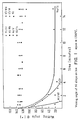
- th is the theoretical density of aluminum nitride (3.26 gm/cm3)
- L is the length of the specimen when its density is .
- the quantity L th is related to the theoretical density by the equation: where W is the weight of the specimen and D is diameter of the graphite die.
- curve noted as “1B” contains only yttrium and those identified as 2 and 3 contain only nickel. As can be appreciated, such exhibit significantly inferior properties to those containing both yttrium and nickel in the gel-sol.
- a typical example of the pressureless sintering i.e., when no external pressure is applied to the powder compact, is described below:
- a powder compact without any binder is made by cold compaction at about 137 880 bar(2000 psi) for about 1 minute.
- the pellet is heated in a furnace which is evacuated to 100 microns or less and then back-filled with nitrogen three times prior to heating cycle.
- the pellet is heated to about 1880°C at a heating rate of about 580°C per hour and is sintered at about 1880°C for about 2 hours (completely dense bodies were obtained).
- the pressureless sintering is usually completed in about 1/2 hour to 2 hours and preferably 1 to about 2 hours.
- the temperature is in the range of about 1700°C to about 1900°C.
- the final sintering is carried out under N2 atmosphere.
- An initial thermal treatment with NH3 gas up to a temperature of about 1500°C is employed.
- the function of the NH3 gas is to reduce the gel-layer to form metallic nitrides which help in wetting of the grain boundary.
- the gel layer which is chemically an oxide containing residual organics subsequently changes chemically and physically during subsequent steps used for sintering. It is critical to the present invention that a gel of a metallic material be employed that forms in the melt form a low contact angle with the powder. This, as discussed above, can be achieved by using a combination of nickel and/or cobalt with rare earth oxides and/or Group IV transition metal oxides as sintering aid. Although rare earth oxides and Group IV transition metal oxides individually have been suggested, such do not form the low contact angle as required by the present invention.
Landscapes
- Engineering & Computer Science (AREA)
- Chemical & Material Sciences (AREA)
- Ceramic Engineering (AREA)
- Manufacturing & Machinery (AREA)
- Materials Engineering (AREA)
- Structural Engineering (AREA)
- Organic Chemistry (AREA)
- Ceramic Products (AREA)
Claims (8)
- Verfahren zur Herstellung einer Aluminiumnitrid-Keramik umfassend:a) Bereitstellen eines Aluminiumnitrid-Pulvers;b) in Kontakt Bringen des Pulvers mit einem Gel, das aus einem Sol einer organometallischen Verbindung und/oder anorganischen Metallsalzen gewonnen wird, wobei sich das Gel während des Sinterns in einer reduzierenden Atmosphäre in eine Schmelze oder in eine flüssige Phase umwandelt, die eine Legierung enthält, die mit dem Nitridpulver einen Kontaktwinkel von 40 ° bis 0 ° bildet;c) das Entfernen der Lösungsmittel und aller organischen Stoffe, die bei dem in Schritt b) erhaltenen Gemisch erhalten werden;d) Sintern des Gemisches aus Schritt c), um daraus die Keramik herzustellen.
- Verfahren nach Anspruch 1, wobei das Pulver eine Korngröße von etwa 1 »m bis zu etwa 12 »m aufweist, wobei eine Korngröße von etwa 2 »m vorzuziehen ist.
- Verfahren nach Anspruch 1 oder 2, bei dem das Gel als Überzug auf das Pulver aufgebracht wird, oder bei dem ein Composite-Pulver gebildet wird, das Nitrid und Gel enthält.
- Verfahren nach Anspruch 1 oder 2, bei dem das Pulver in einem nicht wasserhaltigen Medium dispergiert wird, das ein Sol von organometallischen Verbindungen enthält, die sich zum Bilden eines Gels eignen und dann die Dispersion in ein Gel umgewandelt wird.
- Verfahren nach einem der Ansprüche 1 bis 4, bei dem das Aluminiumnitrid-Pulver mindestens 90 Gewichtsprozente, jedoch vorzugsweise etwa 90 bis etwa 99,5 Gewichtsprozente der zusammengesetzten festen Substanzen des Pulvers und der organometallischen Verbindung und/oder der anorganischen Metallsalze ausmacht.
- Verfahren nach einem der Ansprüche 1 bis 5, bei dem die Legierung eine Legierung aus Nickel und/oder Kobalt und eines Legierungsmetalls aus der Gruppe von Yttrium, Lanthan, Sc, Ce, Hafnium, Zirkon und Titan ist, wobei eine Legierung von Nickel und Yttrium vorzuziehen ist, wobei die Legierung vorzugsweise etwa 90 % bis etwa 30 % Nickel und etwa 10 bis etwa 70 Gewichtsprozente des Legierungsmetalls enthält.
- Verfahren nach einem der Ansprüche 1 bis 6, bei dem das Sintern bei einer Temperatur von etwa 1500 °C bis etwa 1900 °C durchgeführt wird.
- Verfahren nach einem der Ansprüche 1 bis 7, bei dem das Sintern ein druckloses Sintern oder ein Heißpressen ist, wobei das Sintern vorzugsweise etwa eine 1/2 Stunde bis zu etwa 2 Stunden dauert.
Applications Claiming Priority (2)
| Application Number | Priority Date | Filing Date | Title |
|---|---|---|---|
| US19302388A | 1988-05-12 | 1988-05-12 | |
| US193023 | 1988-05-12 |
Publications (3)
| Publication Number | Publication Date |
|---|---|
| EP0347552A2 EP0347552A2 (de) | 1989-12-27 |
| EP0347552A3 EP0347552A3 (en) | 1990-04-18 |
| EP0347552B1 true EP0347552B1 (de) | 1995-07-05 |
Family
ID=22711976
Family Applications (1)
| Application Number | Title | Priority Date | Filing Date |
|---|---|---|---|
| EP89107240A Expired - Lifetime EP0347552B1 (de) | 1988-05-12 | 1989-04-21 | Verfahren zur Herstellung einer Aluminiumnitrid-Keramik |
Country Status (3)
| Country | Link |
|---|---|
| EP (1) | EP0347552B1 (de) |
| JP (1) | JPH0662340B2 (de) |
| DE (1) | DE68923326T2 (de) |
Families Citing this family (1)
| Publication number | Priority date | Publication date | Assignee | Title |
|---|---|---|---|---|
| DE4405652A1 (de) * | 1994-02-22 | 1995-09-07 | Hoechst Ag | Verfahren zur Herstellung von nichtoxidischer Keramik mit definierter Wärmeleitfähigkeit |
Family Cites Families (4)
| Publication number | Priority date | Publication date | Assignee | Title |
|---|---|---|---|---|
| JPS6191066A (ja) * | 1984-10-11 | 1986-05-09 | 旭化成株式会社 | 希土類元素の酸化物を表面に付着した窒化ケイ素粉体の製法 |
| JPS61266359A (ja) * | 1985-05-20 | 1986-11-26 | 日本碍子株式会社 | 窒化珪素焼結体の製造法 |
| JPH0788258B2 (ja) * | 1985-08-01 | 1995-09-27 | ジ−・テイ−・イ−・ラボラトリ−ズ・インコ−ポレイテツド | 焼結性の良好な窒化珪素粉末を製造する方法 |
| ZA877802B (en) * | 1986-11-20 | 1989-06-28 | Minnesota Mining & Mfg | Aluminum oxide/aluminum oxynitride/group ivb metal nitride abrasive particles derived from a sol-gel process |
-
1989
- 1989-04-14 JP JP1093260A patent/JPH0662340B2/ja not_active Expired - Lifetime
- 1989-04-21 DE DE1989623326 patent/DE68923326T2/de not_active Expired - Fee Related
- 1989-04-21 EP EP89107240A patent/EP0347552B1/de not_active Expired - Lifetime
Non-Patent Citations (2)
| Title |
|---|
| Römpps Chemie-Lexicon, 7. Auflage, pages 274, 3251 and 1244 * |
| SPRECHSAAL, Vol. 119, No. 4, 1986, pages 265-271 * |
Also Published As
| Publication number | Publication date |
|---|---|
| DE68923326T2 (de) | 1996-03-07 |
| EP0347552A3 (en) | 1990-04-18 |
| DE68923326D1 (de) | 1995-08-10 |
| JPH01305864A (ja) | 1989-12-11 |
| EP0347552A2 (de) | 1989-12-27 |
| JPH0662340B2 (ja) | 1994-08-17 |
Similar Documents
| Publication | Publication Date | Title |
|---|---|---|
| Greskovich et al. | Sintering of covalent solids | |
| Cao et al. | . alpha.'-Sialon ceramics: a review | |
| JPH02279575A (ja) | 緻密なセラミック膜を有するセラミック焼結体の製造方法 | |
| JPS6353231A (ja) | 炭化硼素−、硼素−および硼化物−反応性金属サ−メットの溶浸処理 | |
| US4810442A (en) | Method of forming fiber- and filament-containing ceramic preform and composite | |
| US4541975A (en) | Method for producing high strength sintered silicon carbide | |
| EP2189432B1 (de) | Aluminiumnitridgesinterter Körper mit hoher thermischer Leitfähigkeit | |
| US4988646A (en) | Method for producing a ceramic | |
| Lin et al. | Constrained densification kinetics of alumina/borosilicate glass+ alumina/alumina sandwich structure | |
| KR0168302B1 (ko) | 질화 알루미늄 소결체 및 그의 제조방법 | |
| Giachello et al. | Post-sintering of reaction-bonded silicon nitride | |
| JPH0822782B2 (ja) | 繊維強化セラミックスの製造方法 | |
| EP0504441A1 (de) | Keramisches Verbundgefüge hoher Festigkeit und Verfahren zu seiner Herstellung | |
| EP0347552B1 (de) | Verfahren zur Herstellung einer Aluminiumnitrid-Keramik | |
| Mackin et al. | Environmentally compatible double coating concepts for sapphire fiber-reinforced γ-TiAl | |
| US6605556B1 (en) | High temperature composite material formed from nanostructured powders | |
| CN111470866A (zh) | 金刚石-碳化硅复合材料及其制备方法、电子设备 | |
| JPS60180967A (ja) | 多孔性セラミツク構造部材の圧縮方法 | |
| AU621409B2 (en) | Novel method for producing ceramic bodies | |
| JP3606923B2 (ja) | 窒化アルミニウム焼結体およびその製造方法 | |
| Sanders et al. | Characteristics of Si3N4‐SiO2‐Ce2O3 Compositions Sintered in High‐pressure Nitrogen | |
| Cao | Preparation and characterization of alpha'-SiAlON ceramics | |
| JP2003002760A (ja) | セラミックス多孔体の製造方法 | |
| JP3359443B2 (ja) | アルミナ質焼結体およびその製造方法 | |
| JPH08157262A (ja) | 窒化アルミニウム焼結体およびその製造方法 |
Legal Events
| Date | Code | Title | Description |
|---|---|---|---|
| PUAI | Public reference made under article 153(3) epc to a published international application that has entered the european phase |
Free format text: ORIGINAL CODE: 0009012 |
|
| AK | Designated contracting states |
Kind code of ref document: A2 Designated state(s): DE FR GB |
|
| PUAL | Search report despatched |
Free format text: ORIGINAL CODE: 0009013 |
|
| AK | Designated contracting states |
Kind code of ref document: A3 Designated state(s): DE FR GB |
|
| 17P | Request for examination filed |
Effective date: 19900326 |
|
| 17Q | First examination report despatched |
Effective date: 19920205 |
|
| GRAA | (expected) grant |
Free format text: ORIGINAL CODE: 0009210 |
|
| AK | Designated contracting states |
Kind code of ref document: B1 Designated state(s): DE FR GB |
|
| REF | Corresponds to: |
Ref document number: 68923326 Country of ref document: DE Date of ref document: 19950810 |
|
| ET | Fr: translation filed | ||
| PGFP | Annual fee paid to national office [announced via postgrant information from national office to epo] |
Ref country code: GB Payment date: 19960325 Year of fee payment: 8 |
|
| PLBE | No opposition filed within time limit |
Free format text: ORIGINAL CODE: 0009261 |
|
| STAA | Information on the status of an ep patent application or granted ep patent |
Free format text: STATUS: NO OPPOSITION FILED WITHIN TIME LIMIT |
|
| 26N | No opposition filed | ||
| PG25 | Lapsed in a contracting state [announced via postgrant information from national office to epo] |
Ref country code: FR Effective date: 19961227 |
|
| PG25 | Lapsed in a contracting state [announced via postgrant information from national office to epo] |
Ref country code: DE Effective date: 19970101 |
|
| REG | Reference to a national code |
Ref country code: FR Ref legal event code: ST |
|
| PG25 | Lapsed in a contracting state [announced via postgrant information from national office to epo] |
Ref country code: GB Effective date: 19970421 |
|
| GBPC | Gb: european patent ceased through non-payment of renewal fee |
Effective date: 19970421 |