EP0346162A2 - Wasserlösliche filmformende anorganische Verbindungen, feuerfeste und feuerbeständige Verbundmaterialien und feuerbeständige biegsame Folien-Verbundmaterialien für Beschichtngen aus diesen Verbindungen und Verfahren zur Herstellung einer feuerfesten Beschichtung - Google Patents
Wasserlösliche filmformende anorganische Verbindungen, feuerfeste und feuerbeständige Verbundmaterialien und feuerbeständige biegsame Folien-Verbundmaterialien für Beschichtngen aus diesen Verbindungen und Verfahren zur Herstellung einer feuerfesten Beschichtung Download PDFInfo
- Publication number
- EP0346162A2 EP0346162A2 EP89305928A EP89305928A EP0346162A2 EP 0346162 A2 EP0346162 A2 EP 0346162A2 EP 89305928 A EP89305928 A EP 89305928A EP 89305928 A EP89305928 A EP 89305928A EP 0346162 A2 EP0346162 A2 EP 0346162A2
- Authority
- EP
- European Patent Office
- Prior art keywords
- water
- refractory
- forming inorganic
- soluble film
- inorganic compound
- Prior art date
- Legal status (The legal status is an assumption and is not a legal conclusion. Google has not performed a legal analysis and makes no representation as to the accuracy of the status listed.)
- Granted
Links
- 150000002484 inorganic compounds Chemical class 0.000 title claims abstract description 65
- 229910010272 inorganic material Inorganic materials 0.000 title claims abstract description 65
- 239000002131 composite material Substances 0.000 title claims abstract description 44
- 150000001875 compounds Chemical class 0.000 title claims abstract description 25
- 239000000463 material Substances 0.000 title claims description 81
- 238000000034 method Methods 0.000 title claims description 38
- 230000009975 flexible effect Effects 0.000 title claims description 30
- 230000008569 process Effects 0.000 title claims description 14
- 238000006243 chemical reaction Methods 0.000 claims abstract description 67
- 230000001070 adhesive effect Effects 0.000 claims abstract description 53
- 229910052751 metal Inorganic materials 0.000 claims abstract description 52
- 239000002184 metal Substances 0.000 claims abstract description 52
- XLYOFNOQVPJJNP-UHFFFAOYSA-N water Substances O XLYOFNOQVPJJNP-UHFFFAOYSA-N 0.000 claims abstract description 52
- 239000000853 adhesive Substances 0.000 claims abstract description 50
- 230000005484 gravity Effects 0.000 claims abstract description 40
- 229910052500 inorganic mineral Inorganic materials 0.000 claims abstract description 39
- 239000011707 mineral Substances 0.000 claims abstract description 39
- 239000002253 acid Substances 0.000 claims abstract description 38
- 239000007787 solid Substances 0.000 claims abstract description 32
- KRHYYFGTRYWZRS-UHFFFAOYSA-N Fluorane Chemical compound F KRHYYFGTRYWZRS-UHFFFAOYSA-N 0.000 claims abstract description 31
- 238000010438 heat treatment Methods 0.000 claims abstract description 30
- 238000000576 coating method Methods 0.000 claims abstract description 25
- 229910052783 alkali metal Inorganic materials 0.000 claims abstract description 18
- 239000011248 coating agent Substances 0.000 claims abstract description 18
- 150000001340 alkali metals Chemical class 0.000 claims abstract description 17
- 239000004327 boric acid Substances 0.000 claims abstract description 13
- KGBXLFKZBHKPEV-UHFFFAOYSA-N boric acid Chemical compound OB(O)O KGBXLFKZBHKPEV-UHFFFAOYSA-N 0.000 claims abstract description 12
- 230000000887 hydrating effect Effects 0.000 claims abstract description 9
- 238000010494 dissociation reaction Methods 0.000 claims abstract description 5
- 230000005593 dissociations Effects 0.000 claims abstract description 5
- 229910000831 Steel Inorganic materials 0.000 claims description 47
- 239000010959 steel Substances 0.000 claims description 47
- 229910052710 silicon Inorganic materials 0.000 claims description 34
- 239000011888 foil Substances 0.000 claims description 33
- 239000000203 mixture Substances 0.000 claims description 32
- 229910052708 sodium Inorganic materials 0.000 claims description 26
- 239000000123 paper Substances 0.000 claims description 21
- 229910052782 aluminium Inorganic materials 0.000 claims description 20
- LFQSCWFLJHTTHZ-UHFFFAOYSA-N Ethanol Chemical compound CCO LFQSCWFLJHTTHZ-UHFFFAOYSA-N 0.000 claims description 18
- 239000000843 powder Substances 0.000 claims description 11
- 238000002156 mixing Methods 0.000 claims description 8
- 239000012784 inorganic fiber Substances 0.000 claims description 7
- 239000003795 chemical substances by application Substances 0.000 claims description 6
- 229910052744 lithium Inorganic materials 0.000 claims description 6
- 229910052700 potassium Inorganic materials 0.000 claims description 6
- 238000009835 boiling Methods 0.000 claims description 5
- 210000002268 wool Anatomy 0.000 claims description 5
- 230000001476 alcoholic effect Effects 0.000 claims description 4
- 238000004070 electrodeposition Methods 0.000 claims description 4
- XLYOFNOQVPJJNP-UHFFFAOYSA-M hydroxide Chemical compound [OH-] XLYOFNOQVPJJNP-UHFFFAOYSA-M 0.000 claims description 4
- 239000002557 mineral fiber Substances 0.000 claims description 4
- 150000003839 salts Chemical class 0.000 claims description 4
- 239000010410 layer Substances 0.000 claims description 3
- 238000009417 prefabrication Methods 0.000 claims description 3
- 239000000057 synthetic resin Substances 0.000 claims description 3
- 229910052735 hafnium Inorganic materials 0.000 claims description 2
- VBJZVLUMGGDVMO-UHFFFAOYSA-N hafnium atom Chemical compound [Hf] VBJZVLUMGGDVMO-UHFFFAOYSA-N 0.000 claims description 2
- 239000013049 sediment Substances 0.000 claims description 2
- 238000001694 spray drying Methods 0.000 claims description 2
- 229920003002 synthetic resin Polymers 0.000 claims description 2
- 239000000470 constituent Substances 0.000 claims 1
- 229910000765 intermetallic Inorganic materials 0.000 claims 1
- 239000002023 wood Substances 0.000 abstract description 6
- 239000000047 product Substances 0.000 description 69
- VYPSYNLAJGMNEJ-UHFFFAOYSA-N silicon dioxide Inorganic materials O=[Si]=O VYPSYNLAJGMNEJ-UHFFFAOYSA-N 0.000 description 51
- 239000000243 solution Substances 0.000 description 40
- HEMHJVSKTPXQMS-UHFFFAOYSA-M Sodium hydroxide Chemical compound [OH-].[Na+] HEMHJVSKTPXQMS-UHFFFAOYSA-M 0.000 description 38
- 239000011734 sodium Substances 0.000 description 35
- PNEYBMLMFCGWSK-UHFFFAOYSA-N aluminium oxide Inorganic materials [O-2].[O-2].[O-2].[Al+3].[Al+3] PNEYBMLMFCGWSK-UHFFFAOYSA-N 0.000 description 23
- 235000010755 mineral Nutrition 0.000 description 23
- 229910001220 stainless steel Inorganic materials 0.000 description 22
- XUIMIQQOPSSXEZ-UHFFFAOYSA-N Silicon Chemical compound [Si] XUIMIQQOPSSXEZ-UHFFFAOYSA-N 0.000 description 21
- 239000010703 silicon Substances 0.000 description 21
- 239000010935 stainless steel Substances 0.000 description 21
- 239000000377 silicon dioxide Substances 0.000 description 20
- 238000005336 cracking Methods 0.000 description 19
- XEEYBQQBJWHFJM-UHFFFAOYSA-N Iron Chemical compound [Fe] XEEYBQQBJWHFJM-UHFFFAOYSA-N 0.000 description 18
- PUZPDOWCWNUUKD-UHFFFAOYSA-M sodium fluoride Chemical compound [F-].[Na+] PUZPDOWCWNUUKD-UHFFFAOYSA-M 0.000 description 18
- 238000012360 testing method Methods 0.000 description 18
- 235000019441 ethanol Nutrition 0.000 description 17
- XAGFODPZIPBFFR-UHFFFAOYSA-N aluminium Chemical compound [Al] XAGFODPZIPBFFR-UHFFFAOYSA-N 0.000 description 15
- 239000000945 filler Substances 0.000 description 15
- 239000005995 Aluminium silicate Substances 0.000 description 12
- CPLXHLVBOLITMK-UHFFFAOYSA-N Magnesium oxide Chemical compound [Mg]=O CPLXHLVBOLITMK-UHFFFAOYSA-N 0.000 description 12
- OKKJLVBELUTLKV-UHFFFAOYSA-N Methanol Chemical compound OC OKKJLVBELUTLKV-UHFFFAOYSA-N 0.000 description 12
- KWYUFKZDYYNOTN-UHFFFAOYSA-M Potassium hydroxide Chemical compound [OH-].[K+] KWYUFKZDYYNOTN-UHFFFAOYSA-M 0.000 description 12
- 239000004411 aluminium Substances 0.000 description 12
- 235000012211 aluminium silicate Nutrition 0.000 description 12
- NLYAJNPCOHFWQQ-UHFFFAOYSA-N kaolin Chemical compound O.O.O=[Al]O[Si](=O)O[Si](=O)O[Al]=O NLYAJNPCOHFWQQ-UHFFFAOYSA-N 0.000 description 12
- NTHWMYGWWRZVTN-UHFFFAOYSA-N sodium silicate Chemical compound [Na+].[Na+].[O-][Si]([O-])=O NTHWMYGWWRZVTN-UHFFFAOYSA-N 0.000 description 11
- 239000004568 cement Substances 0.000 description 10
- 239000006228 supernatant Substances 0.000 description 10
- DGAQECJNVWCQMB-PUAWFVPOSA-M Ilexoside XXIX Chemical compound C[C@@H]1CC[C@@]2(CC[C@@]3(C(=CC[C@H]4[C@]3(CC[C@@H]5[C@@]4(CC[C@@H](C5(C)C)OS(=O)(=O)[O-])C)C)[C@@H]2[C@]1(C)O)C)C(=O)O[C@H]6[C@@H]([C@H]([C@@H]([C@H](O6)CO)O)O)O.[Na+] DGAQECJNVWCQMB-PUAWFVPOSA-M 0.000 description 9
- 229910052796 boron Inorganic materials 0.000 description 9
- 239000013078 crystal Substances 0.000 description 9
- 238000005520 cutting process Methods 0.000 description 9
- 229910052742 iron Inorganic materials 0.000 description 9
- 239000011775 sodium fluoride Substances 0.000 description 9
- 235000013024 sodium fluoride Nutrition 0.000 description 9
- 239000000126 substance Substances 0.000 description 9
- 239000005909 Kieselgur Substances 0.000 description 8
- 239000007864 aqueous solution Substances 0.000 description 8
- 230000008859 change Effects 0.000 description 8
- 230000000694 effects Effects 0.000 description 8
- 229910052731 fluorine Inorganic materials 0.000 description 8
- 239000004115 Sodium Silicate Substances 0.000 description 7
- 239000007789 gas Substances 0.000 description 7
- 235000019589 hardness Nutrition 0.000 description 7
- 239000007788 liquid Substances 0.000 description 7
- 229920002451 polyvinyl alcohol Polymers 0.000 description 7
- 239000000376 reactant Substances 0.000 description 7
- 229910021487 silica fume Inorganic materials 0.000 description 7
- 229910052911 sodium silicate Inorganic materials 0.000 description 7
- 229910052845 zircon Inorganic materials 0.000 description 7
- WMFOQBRAJBCJND-UHFFFAOYSA-M Lithium hydroxide Chemical compound [Li+].[OH-] WMFOQBRAJBCJND-UHFFFAOYSA-M 0.000 description 6
- 239000004372 Polyvinyl alcohol Substances 0.000 description 6
- 229910021538 borax Inorganic materials 0.000 description 6
- 239000007795 chemical reaction product Substances 0.000 description 6
- 239000011521 glass Substances 0.000 description 6
- 239000000395 magnesium oxide Substances 0.000 description 6
- 238000004519 manufacturing process Methods 0.000 description 6
- 239000004328 sodium tetraborate Substances 0.000 description 6
- 235000010339 sodium tetraborate Nutrition 0.000 description 6
- OKTJSMMVPCPJKN-UHFFFAOYSA-N Carbon Chemical compound [C] OKTJSMMVPCPJKN-UHFFFAOYSA-N 0.000 description 5
- 206010042674 Swelling Diseases 0.000 description 5
- 239000003513 alkali Substances 0.000 description 5
- 238000004458 analytical method Methods 0.000 description 5
- 229910052799 carbon Inorganic materials 0.000 description 5
- 239000000919 ceramic Substances 0.000 description 5
- 238000001035 drying Methods 0.000 description 5
- 239000004744 fabric Substances 0.000 description 5
- 239000000835 fiber Substances 0.000 description 5
- 239000004745 nonwoven fabric Substances 0.000 description 5
- 235000019353 potassium silicate Nutrition 0.000 description 5
- RMAQACBXLXPBSY-UHFFFAOYSA-N silicic acid Chemical compound O[Si](O)(O)O RMAQACBXLXPBSY-UHFFFAOYSA-N 0.000 description 5
- 235000012239 silicon dioxide Nutrition 0.000 description 5
- 230000008961 swelling Effects 0.000 description 5
- 238000003466 welding Methods 0.000 description 5
- ODINCKMPIJJUCX-UHFFFAOYSA-N Calcium oxide Chemical compound [Ca]=O ODINCKMPIJJUCX-UHFFFAOYSA-N 0.000 description 4
- 241000218692 Cryptomeria Species 0.000 description 4
- PEDCQBHIVMGVHV-UHFFFAOYSA-N Glycerine Chemical compound OCC(O)CO PEDCQBHIVMGVHV-UHFFFAOYSA-N 0.000 description 4
- VEXZGXHMUGYJMC-UHFFFAOYSA-N Hydrochloric acid Chemical compound Cl VEXZGXHMUGYJMC-UHFFFAOYSA-N 0.000 description 4
- ATUOYWHBWRKTHZ-UHFFFAOYSA-N Propane Chemical compound CCC ATUOYWHBWRKTHZ-UHFFFAOYSA-N 0.000 description 4
- QAOWNCQODCNURD-UHFFFAOYSA-N Sulfuric acid Chemical compound OS(O)(=O)=O QAOWNCQODCNURD-UHFFFAOYSA-N 0.000 description 4
- 150000001298 alcohols Chemical class 0.000 description 4
- 238000005452 bending Methods 0.000 description 4
- 239000004567 concrete Substances 0.000 description 4
- 238000010276 construction Methods 0.000 description 4
- 229910052906 cristobalite Inorganic materials 0.000 description 4
- 238000010790 dilution Methods 0.000 description 4
- 239000012895 dilution Substances 0.000 description 4
- 238000004090 dissolution Methods 0.000 description 4
- 239000010440 gypsum Substances 0.000 description 4
- 229910052602 gypsum Inorganic materials 0.000 description 4
- JEIPFZHSYJVQDO-UHFFFAOYSA-N iron(III) oxide Inorganic materials O=[Fe]O[Fe]=O JEIPFZHSYJVQDO-UHFFFAOYSA-N 0.000 description 4
- VTHJTEIRLNZDEV-UHFFFAOYSA-L magnesium dihydroxide Chemical compound [OH-].[OH-].[Mg+2] VTHJTEIRLNZDEV-UHFFFAOYSA-L 0.000 description 4
- 239000000347 magnesium hydroxide Substances 0.000 description 4
- 229910001862 magnesium hydroxide Inorganic materials 0.000 description 4
- 229910052903 pyrophyllite Inorganic materials 0.000 description 4
- -1 silica alkoxide Chemical class 0.000 description 4
- GFQYVLUOOAAOGM-UHFFFAOYSA-N zirconium(iv) silicate Chemical compound [Zr+4].[O-][Si]([O-])([O-])[O-] GFQYVLUOOAAOGM-UHFFFAOYSA-N 0.000 description 4
- ZOXJGFHDIHLPTG-UHFFFAOYSA-N Boron Chemical compound [B] ZOXJGFHDIHLPTG-UHFFFAOYSA-N 0.000 description 3
- LYCAIKOWRPUZTN-UHFFFAOYSA-N Ethylene glycol Chemical compound OCCO LYCAIKOWRPUZTN-UHFFFAOYSA-N 0.000 description 3
- KFZMGEQAYNKOFK-UHFFFAOYSA-N Isopropanol Chemical compound CC(C)O KFZMGEQAYNKOFK-UHFFFAOYSA-N 0.000 description 3
- 229910052581 Si3N4 Inorganic materials 0.000 description 3
- 150000007513 acids Chemical class 0.000 description 3
- 239000000654 additive Substances 0.000 description 3
- 229910021502 aluminium hydroxide Inorganic materials 0.000 description 3
- ANBBXQWFNXMHLD-UHFFFAOYSA-N aluminum;sodium;oxygen(2-) Chemical compound [O-2].[O-2].[Na+].[Al+3] ANBBXQWFNXMHLD-UHFFFAOYSA-N 0.000 description 3
- 229910001566 austenite Inorganic materials 0.000 description 3
- 229910052681 coesite Inorganic materials 0.000 description 3
- 230000003247 decreasing effect Effects 0.000 description 3
- 239000000428 dust Substances 0.000 description 3
- 239000002657 fibrous material Substances 0.000 description 3
- 238000001879 gelation Methods 0.000 description 3
- 230000036571 hydration Effects 0.000 description 3
- 238000006703 hydration reaction Methods 0.000 description 3
- 150000004679 hydroxides Chemical class 0.000 description 3
- 238000005470 impregnation Methods 0.000 description 3
- 239000011810 insulating material Substances 0.000 description 3
- 230000007774 longterm Effects 0.000 description 3
- 239000011777 magnesium Substances 0.000 description 3
- 229910052749 magnesium Inorganic materials 0.000 description 3
- 150000002894 organic compounds Chemical class 0.000 description 3
- HQVNEWCFYHHQES-UHFFFAOYSA-N silicon nitride Chemical compound N12[Si]34N5[Si]62N3[Si]51N64 HQVNEWCFYHHQES-UHFFFAOYSA-N 0.000 description 3
- 229910001388 sodium aluminate Inorganic materials 0.000 description 3
- 239000007921 spray Substances 0.000 description 3
- 229910052682 stishovite Inorganic materials 0.000 description 3
- 229910052905 tridymite Inorganic materials 0.000 description 3
- QGZKDVFQNNGYKY-UHFFFAOYSA-N Ammonia Chemical compound N QGZKDVFQNNGYKY-UHFFFAOYSA-N 0.000 description 2
- 229920000742 Cotton Polymers 0.000 description 2
- 241000218691 Cupressaceae Species 0.000 description 2
- KRHYYFGTRYWZRS-UHFFFAOYSA-M Fluoride anion Chemical compound [F-] KRHYYFGTRYWZRS-UHFFFAOYSA-M 0.000 description 2
- ZRALSGWEFCBTJO-UHFFFAOYSA-N Guanidine Chemical compound NC(N)=N ZRALSGWEFCBTJO-UHFFFAOYSA-N 0.000 description 2
- FYYHWMGAXLPEAU-UHFFFAOYSA-N Magnesium Chemical compound [Mg] FYYHWMGAXLPEAU-UHFFFAOYSA-N 0.000 description 2
- NBIIXXVUZAFLBC-UHFFFAOYSA-N Phosphoric acid Chemical compound OP(O)(O)=O NBIIXXVUZAFLBC-UHFFFAOYSA-N 0.000 description 2
- 239000004809 Teflon Substances 0.000 description 2
- 229920006362 Teflon® Polymers 0.000 description 2
- 238000010521 absorption reaction Methods 0.000 description 2
- 230000001133 acceleration Effects 0.000 description 2
- 230000000996 additive effect Effects 0.000 description 2
- WNROFYMDJYEPJX-UHFFFAOYSA-K aluminium hydroxide Chemical compound [OH-].[OH-].[OH-].[Al+3] WNROFYMDJYEPJX-UHFFFAOYSA-K 0.000 description 2
- QVGXLLKOCUKJST-UHFFFAOYSA-N atomic oxygen Chemical compound [O] QVGXLLKOCUKJST-UHFFFAOYSA-N 0.000 description 2
- 239000011324 bead Substances 0.000 description 2
- 230000015572 biosynthetic process Effects 0.000 description 2
- 230000000903 blocking effect Effects 0.000 description 2
- 239000006227 byproduct Substances 0.000 description 2
- 239000000292 calcium oxide Substances 0.000 description 2
- 235000012255 calcium oxide Nutrition 0.000 description 2
- 238000001816 cooling Methods 0.000 description 2
- KZHJGOXRZJKJNY-UHFFFAOYSA-N dioxosilane;oxo(oxoalumanyloxy)alumane Chemical compound O=[Si]=O.O=[Si]=O.O=[Al]O[Al]=O.O=[Al]O[Al]=O.O=[Al]O[Al]=O KZHJGOXRZJKJNY-UHFFFAOYSA-N 0.000 description 2
- CDMADVZSLOHIFP-UHFFFAOYSA-N disodium;3,7-dioxido-2,4,6,8,9-pentaoxa-1,3,5,7-tetraborabicyclo[3.3.1]nonane;decahydrate Chemical compound O.O.O.O.O.O.O.O.O.O.[Na+].[Na+].O1B([O-])OB2OB([O-])OB1O2 CDMADVZSLOHIFP-UHFFFAOYSA-N 0.000 description 2
- 239000010459 dolomite Substances 0.000 description 2
- 229910000514 dolomite Inorganic materials 0.000 description 2
- 238000005187 foaming Methods 0.000 description 2
- 235000011187 glycerol Nutrition 0.000 description 2
- 229960000443 hydrochloric acid Drugs 0.000 description 2
- 235000011167 hydrochloric acid Nutrition 0.000 description 2
- 230000006872 improvement Effects 0.000 description 2
- 230000002401 inhibitory effect Effects 0.000 description 2
- 229910021432 inorganic complex Inorganic materials 0.000 description 2
- 238000009413 insulation Methods 0.000 description 2
- 229910044991 metal oxide Inorganic materials 0.000 description 2
- 150000004706 metal oxides Chemical class 0.000 description 2
- 150000002739 metals Chemical class 0.000 description 2
- 239000011490 mineral wool Substances 0.000 description 2
- 229910052863 mullite Inorganic materials 0.000 description 2
- 239000001301 oxygen Substances 0.000 description 2
- 229910052760 oxygen Inorganic materials 0.000 description 2
- 230000036961 partial effect Effects 0.000 description 2
- 229920000728 polyester Polymers 0.000 description 2
- 238000012545 processing Methods 0.000 description 2
- 239000001294 propane Substances 0.000 description 2
- 230000009257 reactivity Effects 0.000 description 2
- 230000002829 reductive effect Effects 0.000 description 2
- 239000011819 refractory material Substances 0.000 description 2
- 230000001105 regulatory effect Effects 0.000 description 2
- 239000002904 solvent Substances 0.000 description 2
- FDDDEECHVMSUSB-UHFFFAOYSA-N sulfanilamide Chemical compound NC1=CC=C(S(N)(=O)=O)C=C1 FDDDEECHVMSUSB-UHFFFAOYSA-N 0.000 description 2
- 229940124530 sulfonamide Drugs 0.000 description 2
- 238000001757 thermogravimetry curve Methods 0.000 description 2
- 239000010455 vermiculite Substances 0.000 description 2
- 229910052902 vermiculite Inorganic materials 0.000 description 2
- 235000019354 vermiculite Nutrition 0.000 description 2
- 229910000859 α-Fe Inorganic materials 0.000 description 2
- PQMFVUNERGGBPG-UHFFFAOYSA-N (6-bromopyridin-2-yl)hydrazine Chemical compound NNC1=CC=CC(Br)=N1 PQMFVUNERGGBPG-UHFFFAOYSA-N 0.000 description 1
- DDFHBQSCUXNBSA-UHFFFAOYSA-N 5-(5-carboxythiophen-2-yl)thiophene-2-carboxylic acid Chemical compound S1C(C(=O)O)=CC=C1C1=CC=C(C(O)=O)S1 DDFHBQSCUXNBSA-UHFFFAOYSA-N 0.000 description 1
- QGZKDVFQNNGYKY-UHFFFAOYSA-O Ammonium Chemical compound [NH4+] QGZKDVFQNNGYKY-UHFFFAOYSA-O 0.000 description 1
- 229910052582 BN Inorganic materials 0.000 description 1
- 229920000049 Carbon (fiber) Polymers 0.000 description 1
- IMROMDMJAWUWLK-UHFFFAOYSA-N Ethenol Chemical compound OC=C IMROMDMJAWUWLK-UHFFFAOYSA-N 0.000 description 1
- YCKRFDGAMUMZLT-UHFFFAOYSA-N Fluorine atom Chemical compound [F] YCKRFDGAMUMZLT-UHFFFAOYSA-N 0.000 description 1
- 229910001335 Galvanized steel Inorganic materials 0.000 description 1
- 206010024769 Local reaction Diseases 0.000 description 1
- CHJJGSNFBQVOTG-UHFFFAOYSA-N N-methyl-guanidine Natural products CNC(N)=N CHJJGSNFBQVOTG-UHFFFAOYSA-N 0.000 description 1
- 241000218657 Picea Species 0.000 description 1
- 239000004111 Potassium silicate Substances 0.000 description 1
- 206010037660 Pyrexia Diseases 0.000 description 1
- 230000009471 action Effects 0.000 description 1
- 230000003044 adaptive effect Effects 0.000 description 1
- 239000002390 adhesive tape Substances 0.000 description 1
- 229910000147 aluminium phosphate Inorganic materials 0.000 description 1
- 229910021529 ammonia Inorganic materials 0.000 description 1
- 239000012298 atmosphere Substances 0.000 description 1
- 229910001570 bauxite Inorganic materials 0.000 description 1
- 239000011575 calcium Substances 0.000 description 1
- 229940043430 calcium compound Drugs 0.000 description 1
- 150000001674 calcium compounds Chemical class 0.000 description 1
- AXCZMVOFGPJBDE-UHFFFAOYSA-L calcium dihydroxide Chemical compound [OH-].[OH-].[Ca+2] AXCZMVOFGPJBDE-UHFFFAOYSA-L 0.000 description 1
- 239000000920 calcium hydroxide Substances 0.000 description 1
- 229910001861 calcium hydroxide Inorganic materials 0.000 description 1
- 229910001424 calcium ion Inorganic materials 0.000 description 1
- 239000000378 calcium silicate Substances 0.000 description 1
- 229910052918 calcium silicate Inorganic materials 0.000 description 1
- OSGAYBCDTDRGGQ-UHFFFAOYSA-L calcium sulfate Chemical compound [Ca+2].[O-]S([O-])(=O)=O OSGAYBCDTDRGGQ-UHFFFAOYSA-L 0.000 description 1
- OYACROKNLOSFPA-UHFFFAOYSA-N calcium;dioxido(oxo)silane Chemical compound [Ca+2].[O-][Si]([O-])=O OYACROKNLOSFPA-UHFFFAOYSA-N 0.000 description 1
- CEDDGDWODCGBFQ-UHFFFAOYSA-N carbamimidoylazanium;hydron;phosphate Chemical compound NC(N)=N.OP(O)(O)=O CEDDGDWODCGBFQ-UHFFFAOYSA-N 0.000 description 1
- 125000004432 carbon atom Chemical group C* 0.000 description 1
- 239000004917 carbon fiber Substances 0.000 description 1
- 239000004927 clay Substances 0.000 description 1
- 238000009833 condensation Methods 0.000 description 1
- 230000005494 condensation Effects 0.000 description 1
- 238000006482 condensation reaction Methods 0.000 description 1
- 238000010924 continuous production Methods 0.000 description 1
- 239000013256 coordination polymer Substances 0.000 description 1
- 229910052802 copper Inorganic materials 0.000 description 1
- 230000007797 corrosion Effects 0.000 description 1
- 238000005260 corrosion Methods 0.000 description 1
- 229910052593 corundum Inorganic materials 0.000 description 1
- 230000006378 damage Effects 0.000 description 1
- 238000000354 decomposition reaction Methods 0.000 description 1
- 230000018044 dehydration Effects 0.000 description 1
- 238000006297 dehydration reaction Methods 0.000 description 1
- 238000001514 detection method Methods 0.000 description 1
- 230000006866 deterioration Effects 0.000 description 1
- 238000004455 differential thermal analysis Methods 0.000 description 1
- SWSQBOPZIKWTGO-UHFFFAOYSA-N dimethylaminoamidine Natural products CN(C)C(N)=N SWSQBOPZIKWTGO-UHFFFAOYSA-N 0.000 description 1
- 238000001914 filtration Methods 0.000 description 1
- 239000010419 fine particle Substances 0.000 description 1
- 230000009970 fire resistant effect Effects 0.000 description 1
- 238000010304 firing Methods 0.000 description 1
- 239000011737 fluorine Substances 0.000 description 1
- 239000010881 fly ash Substances 0.000 description 1
- 239000003517 fume Substances 0.000 description 1
- 230000004927 fusion Effects 0.000 description 1
- 239000008397 galvanized steel Substances 0.000 description 1
- 239000003365 glass fiber Substances 0.000 description 1
- 239000011491 glass wool Substances 0.000 description 1
- 150000004676 glycans Chemical class 0.000 description 1
- 150000002363 hafnium compounds Chemical class 0.000 description 1
- 230000036541 health Effects 0.000 description 1
- 150000004678 hydrides Chemical class 0.000 description 1
- 229910000040 hydrogen fluoride Inorganic materials 0.000 description 1
- 125000002887 hydroxy group Chemical group [H]O* 0.000 description 1
- TUJKJAMUKRIRHC-UHFFFAOYSA-N hydroxyl Chemical compound [OH] TUJKJAMUKRIRHC-UHFFFAOYSA-N 0.000 description 1
- 238000005342 ion exchange Methods 0.000 description 1
- 150000002500 ions Chemical class 0.000 description 1
- 238000005259 measurement Methods 0.000 description 1
- 238000002844 melting Methods 0.000 description 1
- 230000008018 melting Effects 0.000 description 1
- 229910000000 metal hydroxide Inorganic materials 0.000 description 1
- 150000004692 metal hydroxides Chemical class 0.000 description 1
- VNWKTOKETHGBQD-UHFFFAOYSA-N methane Chemical compound C VNWKTOKETHGBQD-UHFFFAOYSA-N 0.000 description 1
- 125000002496 methyl group Chemical group [H]C([H])([H])* 0.000 description 1
- 239000010445 mica Substances 0.000 description 1
- 229910052618 mica group Inorganic materials 0.000 description 1
- 230000004048 modification Effects 0.000 description 1
- 238000012986 modification Methods 0.000 description 1
- 239000002103 nanocoating Substances 0.000 description 1
- XULSCZPZVQIMFM-IPZQJPLYSA-N odevixibat Chemical compound C12=CC(SC)=C(OCC(=O)N[C@@H](C(=O)N[C@@H](CC)C(O)=O)C=3C=CC(O)=CC=3)C=C2S(=O)(=O)NC(CCCC)(CCCC)CN1C1=CC=CC=C1 XULSCZPZVQIMFM-IPZQJPLYSA-N 0.000 description 1
- 230000000737 periodic effect Effects 0.000 description 1
- 229920003023 plastic Polymers 0.000 description 1
- 239000004033 plastic Substances 0.000 description 1
- 231100000614 poison Toxicity 0.000 description 1
- 230000007096 poisonous effect Effects 0.000 description 1
- 238000006116 polymerization reaction Methods 0.000 description 1
- 229920001282 polysaccharide Polymers 0.000 description 1
- 239000005017 polysaccharide Substances 0.000 description 1
- NNHHDJVEYQHLHG-UHFFFAOYSA-N potassium silicate Chemical compound [K+].[K+].[O-][Si]([O-])=O NNHHDJVEYQHLHG-UHFFFAOYSA-N 0.000 description 1
- 229910052913 potassium silicate Inorganic materials 0.000 description 1
- 239000002244 precipitate Substances 0.000 description 1
- 102000004169 proteins and genes Human genes 0.000 description 1
- 108090000623 proteins and genes Proteins 0.000 description 1
- 230000005855 radiation Effects 0.000 description 1
- 239000002994 raw material Substances 0.000 description 1
- 239000012429 reaction media Substances 0.000 description 1
- 239000011347 resin Substances 0.000 description 1
- 229920005989 resin Polymers 0.000 description 1
- 238000004062 sedimentation Methods 0.000 description 1
- 230000035939 shock Effects 0.000 description 1
- 229910000033 sodium borohydride Inorganic materials 0.000 description 1
- 239000012279 sodium borohydride Substances 0.000 description 1
- 238000001179 sorption measurement Methods 0.000 description 1
- 239000012798 spherical particle Substances 0.000 description 1
- 238000005507 spraying Methods 0.000 description 1
- 230000007480 spreading Effects 0.000 description 1
- 238000003892 spreading Methods 0.000 description 1
- 125000004079 stearyl group Chemical group [H]C([*])([H])C([H])([H])C([H])([H])C([H])([H])C([H])([H])C([H])([H])C([H])([H])C([H])([H])C([H])([H])C([H])([H])C([H])([H])C([H])([H])C([H])([H])C([H])([H])C([H])([H])C([H])([H])C([H])([H])C([H])([H])[H] 0.000 description 1
- 239000000758 substrate Substances 0.000 description 1
- 238000006557 surface reaction Methods 0.000 description 1
- 238000003786 synthesis reaction Methods 0.000 description 1
- 239000012209 synthetic fiber Substances 0.000 description 1
- 229920002994 synthetic fiber Polymers 0.000 description 1
- 239000002699 waste material Substances 0.000 description 1
- 229910001845 yogo sapphire Inorganic materials 0.000 description 1
- 150000003755 zirconium compounds Chemical class 0.000 description 1
Images

Classifications
-
- B—PERFORMING OPERATIONS; TRANSPORTING
- B32—LAYERED PRODUCTS
- B32B—LAYERED PRODUCTS, i.e. PRODUCTS BUILT-UP OF STRATA OF FLAT OR NON-FLAT, e.g. CELLULAR OR HONEYCOMB, FORM
- B32B7/00—Layered products characterised by the relation between layers; Layered products characterised by the relative orientation of features between layers, or by the relative values of a measurable parameter between layers, i.e. products comprising layers having different physical, chemical or physicochemical properties; Layered products characterised by the interconnection of layers
- B32B7/04—Interconnection of layers
- B32B7/12—Interconnection of layers using interposed adhesives or interposed materials with bonding properties
-
- B—PERFORMING OPERATIONS; TRANSPORTING
- B32—LAYERED PRODUCTS
- B32B—LAYERED PRODUCTS, i.e. PRODUCTS BUILT-UP OF STRATA OF FLAT OR NON-FLAT, e.g. CELLULAR OR HONEYCOMB, FORM
- B32B15/00—Layered products comprising a layer of metal
- B32B15/04—Layered products comprising a layer of metal comprising metal as the main or only constituent of a layer, which is next to another layer of the same or of a different material
- B32B15/12—Layered products comprising a layer of metal comprising metal as the main or only constituent of a layer, which is next to another layer of the same or of a different material of paper or cardboard
-
- B—PERFORMING OPERATIONS; TRANSPORTING
- B32—LAYERED PRODUCTS
- B32B—LAYERED PRODUCTS, i.e. PRODUCTS BUILT-UP OF STRATA OF FLAT OR NON-FLAT, e.g. CELLULAR OR HONEYCOMB, FORM
- B32B15/00—Layered products comprising a layer of metal
- B32B15/18—Layered products comprising a layer of metal comprising iron or steel
-
- C—CHEMISTRY; METALLURGY
- C04—CEMENTS; CONCRETE; ARTIFICIAL STONE; CERAMICS; REFRACTORIES
- C04B—LIME, MAGNESIA; SLAG; CEMENTS; COMPOSITIONS THEREOF, e.g. MORTARS, CONCRETE OR LIKE BUILDING MATERIALS; ARTIFICIAL STONE; CERAMICS; REFRACTORIES; TREATMENT OF NATURAL STONE
- C04B12/00—Cements not provided for in groups C04B7/00 - C04B11/00
-
- C—CHEMISTRY; METALLURGY
- C04—CEMENTS; CONCRETE; ARTIFICIAL STONE; CERAMICS; REFRACTORIES
- C04B—LIME, MAGNESIA; SLAG; CEMENTS; COMPOSITIONS THEREOF, e.g. MORTARS, CONCRETE OR LIKE BUILDING MATERIALS; ARTIFICIAL STONE; CERAMICS; REFRACTORIES; TREATMENT OF NATURAL STONE
- C04B28/00—Compositions of mortars, concrete or artificial stone, containing inorganic binders or the reaction product of an inorganic and an organic binder, e.g. polycarboxylate cements
-
- C—CHEMISTRY; METALLURGY
- C04—CEMENTS; CONCRETE; ARTIFICIAL STONE; CERAMICS; REFRACTORIES
- C04B—LIME, MAGNESIA; SLAG; CEMENTS; COMPOSITIONS THEREOF, e.g. MORTARS, CONCRETE OR LIKE BUILDING MATERIALS; ARTIFICIAL STONE; CERAMICS; REFRACTORIES; TREATMENT OF NATURAL STONE
- C04B41/00—After-treatment of mortars, concrete, artificial stone or ceramics; Treatment of natural stone
- C04B41/009—After-treatment of mortars, concrete, artificial stone or ceramics; Treatment of natural stone characterised by the material treated
-
- C—CHEMISTRY; METALLURGY
- C04—CEMENTS; CONCRETE; ARTIFICIAL STONE; CERAMICS; REFRACTORIES
- C04B—LIME, MAGNESIA; SLAG; CEMENTS; COMPOSITIONS THEREOF, e.g. MORTARS, CONCRETE OR LIKE BUILDING MATERIALS; ARTIFICIAL STONE; CERAMICS; REFRACTORIES; TREATMENT OF NATURAL STONE
- C04B41/00—After-treatment of mortars, concrete, artificial stone or ceramics; Treatment of natural stone
- C04B41/45—Coating or impregnating, e.g. injection in masonry, partial coating of green or fired ceramics, organic coating compositions for adhering together two concrete elements
- C04B41/50—Coating or impregnating, e.g. injection in masonry, partial coating of green or fired ceramics, organic coating compositions for adhering together two concrete elements with inorganic materials
- C04B41/5076—Coating or impregnating, e.g. injection in masonry, partial coating of green or fired ceramics, organic coating compositions for adhering together two concrete elements with inorganic materials with masses bonded by inorganic cements
-
- C—CHEMISTRY; METALLURGY
- C09—DYES; PAINTS; POLISHES; NATURAL RESINS; ADHESIVES; COMPOSITIONS NOT OTHERWISE PROVIDED FOR; APPLICATIONS OF MATERIALS NOT OTHERWISE PROVIDED FOR
- C09D—COATING COMPOSITIONS, e.g. PAINTS, VARNISHES OR LACQUERS; FILLING PASTES; CHEMICAL PAINT OR INK REMOVERS; INKS; CORRECTING FLUIDS; WOODSTAINS; PASTES OR SOLIDS FOR COLOURING OR PRINTING; USE OF MATERIALS THEREFOR
- C09D1/00—Coating compositions, e.g. paints, varnishes or lacquers, based on inorganic substances
-
- C—CHEMISTRY; METALLURGY
- C09—DYES; PAINTS; POLISHES; NATURAL RESINS; ADHESIVES; COMPOSITIONS NOT OTHERWISE PROVIDED FOR; APPLICATIONS OF MATERIALS NOT OTHERWISE PROVIDED FOR
- C09J—ADHESIVES; NON-MECHANICAL ASPECTS OF ADHESIVE PROCESSES IN GENERAL; ADHESIVE PROCESSES NOT PROVIDED FOR ELSEWHERE; USE OF MATERIALS AS ADHESIVES
- C09J1/00—Adhesives based on inorganic constituents
-
- B—PERFORMING OPERATIONS; TRANSPORTING
- B32—LAYERED PRODUCTS
- B32B—LAYERED PRODUCTS, i.e. PRODUCTS BUILT-UP OF STRATA OF FLAT OR NON-FLAT, e.g. CELLULAR OR HONEYCOMB, FORM
- B32B2307/00—Properties of the layers or laminate
- B32B2307/30—Properties of the layers or laminate having particular thermal properties
- B32B2307/306—Resistant to heat
- B32B2307/3065—Flame resistant or retardant, fire resistant or retardant
-
- C—CHEMISTRY; METALLURGY
- C04—CEMENTS; CONCRETE; ARTIFICIAL STONE; CERAMICS; REFRACTORIES
- C04B—LIME, MAGNESIA; SLAG; CEMENTS; COMPOSITIONS THEREOF, e.g. MORTARS, CONCRETE OR LIKE BUILDING MATERIALS; ARTIFICIAL STONE; CERAMICS; REFRACTORIES; TREATMENT OF NATURAL STONE
- C04B2111/00—Mortars, concrete or artificial stone or mixtures to prepare them, characterised by specific function, property or use
- C04B2111/00474—Uses not provided for elsewhere in C04B2111/00
- C04B2111/00482—Coating or impregnation materials
- C04B2111/00525—Coating or impregnation materials for metallic surfaces
-
- C—CHEMISTRY; METALLURGY
- C04—CEMENTS; CONCRETE; ARTIFICIAL STONE; CERAMICS; REFRACTORIES
- C04B—LIME, MAGNESIA; SLAG; CEMENTS; COMPOSITIONS THEREOF, e.g. MORTARS, CONCRETE OR LIKE BUILDING MATERIALS; ARTIFICIAL STONE; CERAMICS; REFRACTORIES; TREATMENT OF NATURAL STONE
- C04B2111/00—Mortars, concrete or artificial stone or mixtures to prepare them, characterised by specific function, property or use
- C04B2111/50—Flexible or elastic materials
Definitions
- Film-forming inorganic compounds capable of being formed to be flexible according to the prsent invention have extensive industrial uses, for example, as coatings for papers, fibers, cloths, and the like; for the purpose of preventing firing, increasing heat resistance, raising melting point as applied to a glass cloths, and preventing ignition, flaming and fuming as in wood impregnated with the compounds; and as rust inhibiting coatings and refractory adhesives to ceramics; and so on.
- the present invention relates to fireproof and fire-resistance composites and refractory flexible sheet composite covering materials for use in the interior as of very tall buildings, and for the purposes as of heat-resistance and heat-insulation and sound-insulation in motor vehicles, ships, and the like, and also relates to fire-resistance-covering process using these composite materials.
- Sodium silicate used so far as inorganic adhesive or coating material has disadvantages: for example, it is hygroscopic, gets carbonized with turning white, gets solidified with occurrence of cracks, and tends to peel.
- a fluoride can be added to improve water-proofness, and this is not always sufficiently effective.
- Silica sol and silica alkoxide are commercially available. They themselves have no film-forming property, and so modified by addition of an organic compound into film-forming substance but failed to become high temperature resistant and refractory. Teflon, a synthesis product of freon and organic compound, has good heat resistance compared with general synthetic resins but is not qualified as refractory.
- Teflon which is a fluorine-containing compound cannot be processed into high molecular coating film by the use of inorganic compounds and nothing else.
- the present invention has solved all the above-mentioned problems.
- Water-soluble film-forming compounds according to the invention can be produced only by the reaction of a metal, a mineral or submineral acid compound (referred collectively to as mineral acid compounds hereinafter) able to hydrate, then accompanied by dissociation of boric or hydrofluoric acid, and a alkali metal.
- a metal a mineral or submineral acid compound (referred collectively to as mineral acid compounds hereinafter) able to hydrate
- mineral acid compounds referred collectively to as mineral acid compounds hereinafter
- the reaction product of Si, F and Na which probably is sodium silicofluoride
- Another reaction product of Si, B and Na probably sodium silicoboride, is similar. Contrast to these, the aqueous solutions according to the invention, if they has solid contents 45% or more, were analysed with detection only of Si, F and Na, or Si, B and Na, and this have demonstrated that they were not known compounds.
- reaction among silicon, sodium hydroxide and sulfuric acid can occur when sodium hydroxide flakes are dropped and placed in contact with metallic silicon, which is found at the bottom of a reaction vessel, and at this localized area.
- the present invention is demonstrated to be distinguishable from the localized reaction of flakes described in the above-mentioned U. S. Patents, and this is explainable as follows: dissolution of flakes settled to the bottom of the reaction vessel achieves to equilibrium point at a certain solubility, that is, consumption of them by the reaction or change in solubility of them owing to convection contributes to additional dissolution.
- Water-soluble film-forming inorganic compounds according to the invention can be produced by reaction between a solid metal and a concentrated alkali metal solution, in which hydrated boric acid and hydrofluoric acid takes part, the reaction proceeding exothermic reaction or under heating.
- borax and sodium fluoride With borax and sodium fluoride, owing to their lower solubilities than that of the acid, the reaction is not directly activated and can be controlled.
- the reaction In summer, frequently the reaction must be regulated so as not to cause boiling by cooling or by addition of at least one selected from the group of hafnium compounds or zircon, zirconias and zirconia-byproduct zirca, (these zirconium compounds are referred collectively to as zircons hereinafter) in 0.5 to 100% of the mineral acid compounds.
- heating to 50 °C or higher temperatures is carried out for the acceleration of the reaction.
- mineral acids includes hydrogen fluoride, hydrofluoric acid, sodium fluoride, ammonium fluoride, these being capable of hydrating accompanied by dissociation of hydrofluoric acid; and boric acid, borax, sodium borohydride or borofluorohydric acid and their ammonium and metallic salts, which being capable of hydrating accompanied by the dissociation of boric acid.
- reaction solution has a solid content of 10% or more when its specific gravity is 1. 1, and is aqueous solution having pH up to 13, then it is a film-forming inorganic compound according to the invention which is distinguished from sodium silicofluoride or sodium silicoboride.
- Reaction of a metal and a concentrated solution of alkali metal flakes at the bottom of the reaction vessel could be carried out either under addition of gas of or a concentrated aqueous solution of mineral acid, or under mixed condition of a concentrated mineral acid and a metal and while supplying alkali metal flakes or less than 10-time concentrated solution to the bottom of the reaction vessel.
- the reaction product of specific gravity 1.2 or more and pH up to 9 was obtained.
- the reaction temperature should be regulated suitably by heating when it does not reach 50 °C and so as to prevent boiling when it may reach 90 °C to 100 °C by addition of said zircons or by cooling.
- the solubility of alkali metal in the concentrated mineral acid solution is small, it is necessary to heat or to allow the reaction to progress slowly.
- the supernatant of the reaction solution has a nearly definite composition because any of the components can be soluble merely to the solubility product, even if added in excess amount.
- the above-mentioned film-forming inorganic compound was coated on an iron plate and dried at ordinary temperature, and thus a film of 7 ⁇ was obtained which was unaffected by heating test for cracking, peeling, and the like.
- Supersaturation of the metal reactant results in increased strength of the above-mentioned film and acceleration of the hardening.
- various materials are added to the above-mentioned film-forming inorganic compound. Suitable examples for this are, when zircon was used as the metal, SiO2-containing substance such as silica sol, sodium silicate, pozzolan and silica fume, or calcined products; and when aluminium was used as the metal.
- Al2O3-containing substances such as alumina sol, sodium aluminate, kaolin and bouxite.
- film can be faster formed with higher surface hardness even at ordinary temperature.
- Such a metal-containing substance is suitable for working to be about 20% within 30% in solid content defined in claim 1 of the present invention when expressed as SiO2 or Al2O3. This modification in process contributed, for example, to improvement in pencil hardness from 5H to 9H.
- Heating which accelerates hardening and film-forming on the surface, may be cause for swelling due to excessive water. Also heating after cold hardening has similar tendency.
- fine powder having up to 100 mesh of metal such as Mg, Al or Fe hydrating to form hydroxyl group is added in 1 to 500% of solid content to the film-forming inorganic compound, whereby the swelling due to exothermic reaction which may occur on heating after cold hardening can be prevented.
- Above 500 °C-calcined powder of non-crystalline mineral which changed into hydroxide of silicic acid or alumina is effective.
- Film-forming inorganic compound according to the invention is noncombustible or refractory.
- stickiness and refractoriness may be added at least one from the group consisting of kaolin, pyrophyllite, clay, terra alba, amorphous silica (pozzolan, silica fume), mica, vermiculite, diatomaceous earth, and during the high temperature period, refract mullite or other alumina forming material, thereby adhesive, refractory/fire-preventive (1000°C and higher temperatures) and high-strength coating can be obtained.
- This may be used as flexible, refractory adhesive for iron, stainless steels, aluminium, ceramic felts and boards.
- the viscosity increases from 100 to 200 centipoise without any additive to 800 to 1500 centipoise, and besides the flexural strength is increased by mixing mineral fiber. Amount of the additive equal to or exceeding the film-forming inorganic compound however may reduce the shock resistance. Adhesives obtained as mentioned above had a friction pull strength of as much as 30 kg/ cm2 in respect to steel.
- the film-forming inorganic compound gets hardened under the action of hydrate capable of eluting active Ca ion.
- the hardening can be carried out more rapidly by addition of a hydration-exothermic agent containing quick lime or lightburnt dolomite, which causes removal of excess water and ion exchange.
- Usual cements capable of eluting calcium hydroxide can be used for the hardening. Also cutoff cement is effective which fast hardens in virtue of the exothermic reaction. Hardening reaction occurs between magnesia cement and the film-forming inorganic compound. Likewise mixtures with metallic aluminium, magnesium, iron or oxides of them which can hydrate accompanied by exothermic reaction function effectively. Addition may be within the range between equal to and 3 times as much as the amount of excess water in the film-forming inorganic compound.
- the film-forming inorganic compounds according to the invention are considered to be polymeric complexes, in each of which the boundary between hydroxyl radical and excess water is not clear, and thus has a disadvantage that the film-formation on the surface is faster than hydration by heating or cold drying.
- There is an effective measure for overcoming this which comprises adding at least one selected from the group consisting of metal oxides, hydroxides, burnt products of amorphous metals, and the like, which are capable of converting into hydroxyl radicals working to absorb water.
- the film-forming inorganic compound can be formed into hydrated beads of 5 to 80 ⁇ by spraying it on a dryer having inlet temperature between 150 and 600 °C. Hydration into 2 to 7% could be shown with a KETTO moisture counter. The product was added in different rates to 1 to 100% to the film-forming inorganic compound, and the mixtures can be applied as coatings having good thickness.
- Threads of fibers such as glass fiber, carbon fiber, cotton, synthetic fibers, and wool are composed of hundreds of yarns, and hold air.
- a coating which can replaced with such air and react with the film-forming inorganic compound, preferably a synthetic resin having alcohol radical, for example, polyvinyl alcohol having alkali resistant property, is suitable for use as a primer. Even if soluble in water, it is subjected to condensation with the film-forming inorganic compound to get insoluble.
- At least one metal may be used which is selected from the group consisting of metals of Groups I - VIII of the Periodic Table.
- metallic silicon and aluminium are preferred. Reactivity becomes more with increasing surface area.
- Moderate or small size lump, grain, foil or wire can be used. These can be used repeatedly several times, if held in a mesh and suspended, as mentioned above, somewhat above the bottom, without being covered with the reaction product.
- Any of mineral and submineral acids which is capable of dissociating in water to produce boric acid or hydrofluoric acid, such as borax or sodium fluoride can be used. It can be also used if it is of gas, as above-mentioned.
- any of the above-mentioned zircons may be thrown in the reaction solution to prevent it from boiling due to exceeding exothermic reaction though substantial reaction occurs.
- a zircon-byproduct as well as zircon, silica fume, which contains a very small amount of hafnium, may be thrown in.
- Any alkali metal selected from the group consisting of Na, K and Li can be used whether power, flake or any other form and in not more than 10-fold (not more than 5-fold for wide uses) diluted concentrations.
- Additives effective for providing super-saturation of the metal are silica, alumina sol, and alkali metal salts such as sodium silicate, sodium aluminate, the above-mentioned amorphous minerals, calcined products of them, the above-mentioned oxides capable of converting into hydroxides, and hydroxides alone or in composite.
- Alcohols may be added for getting high specific gravity product. Methyl alcohol causes too fast gelation, and ethyl alcohol itself is expensive. Thus denaturated alcohol is preferred. Also isopropyl alcohol (I. P. A.) can be used with result of high yield and much economically. Appropriate alcohol depends on what mineral acid is used.
- a mineral acid solution such as pH 2 hydrochlo-ric acid is added in 20% of this solution, and can be used with higher sedimentation rate.
- Any mineral acid may be used which is other than the same mineral acid as that is a reactant for producing the film-forming inorganic compound because both being compatible.
- Suitable fillers for use in getting refractory property and appropriate film thickness are kaolin, amorphous silica-containing mineral powder, silica fume, magnesium hydroxide, aluminium hydroxide, or those capable of hydrating to elute them. They are preferred to be of very small powder having up to 100 mesh in size.
- a reactant is a solid or liquid having a higher specific gravity than that of water at the bottom of a reaction vessel.
- Each reactant therefore can not be dissolved over a certain limit of solutions according to the theory of solubility product. If excessively added, the surplus of it remains undissolved, and supernatant is formed owing to the convection caused by the exothermic reaction.
- the ratio between metal and mineral acid cannot be such ratio as dilution reaction equivalent because, they can react into the product in accordance with the dissolved amount of alkali metal even if they excessively used.
- the water-soluble film-forming inorganic compounds according to the invention are divided into two groups, one consisting of Si, F and Na and the other consisting of Si, B and Na, and has a solid content of 20% or more, as shown by the analysis results of the Kanagawa Prefecture Industrial Laboratories (Japan), and thus it was demonstrated to be neither sodium silicofluoride nor sodium silicoborate. Either of them can be coated on a steel plate as film having thicknesses ranging from 5 to 100 ⁇ and neither cracking nor peeling occurs there.
- the film-forming inorganic compound according to the invention has a structure formula probably expressed as [AaBb] r CcDd or [AaBbCcDd] s CpDq wherein A is Si or Al; B is FH, F2H, BH3 or B2O3 C is Na, K or Li; and D is H2O; or OH; and a, b, c, d, p, q, r and s are each a number of moles.
- a 50 ⁇ iron foil was coated and dried at 80 °C. Thickness was 7 ⁇ and hardness was 9H or more. Uncoated ones could be cut in 50 flexes while ones coated with the product according to the invention could not cut still by 120 times' flexes. Uncoated iron plate of 3.2 mm was heated with a burner, and perforation was made in 100 sec while it took 250 sec to perforate ones coated on both sides with a Si-F-Na product according to the invention.
- Tht 10 ⁇ coated iron plate was dried at 180 °C and heated to 1000 °C with a burner with the result of causing no swelling.
- the products according to the invention defined in claims 1 through 5 are aqueous solutions, and thus can be coated to about 10 ⁇ in thickness.
- fillers should be added. Suitable fillers are such as kaolin, amorphous silica, pozzolan, Zeeklite, silica fume, and pyrophyllite sinter, which have storage-stability may be used, and refractory property can be provided by removal of pyrophyllite crystal water, and the change in mullite phase and cristobalite phase.
- Adhesive property can be imparted with diatomaceous earth and flexural strength with mineral fibers. With these mixtures as adhesives, for example, laminated sheets consisting of SUS foils and alumina silica papers were manufactured. They were flexible and had been demonstrated by 1000 °C heating test to have refractory property and without occurrence of peeling.
- transparent and thick coatings can be formed with transparent fillers such as crystal, magnesium hydroxide and aluminium.
- transparent fillers such as crystal, magnesium hydroxide and aluminium.
- the products according to the invention defined in claim 1 to 5 were subjected to spray drying at 200 °C and higher temperatures, and consequently most of excess water was removed, and several percent of water was remained. Thus fine ceramic beads still having reactivity were obtained. They were observed with a microscope to be transparent and spherical (5 to 80 ⁇ ).
- the products according to the invention defined in claims 1 through 5 can work as hardening agent in 3 to 20% addition to magnesia cement. Mixing of magnesia cement with any of the products defined in claims of the present invention results in hardening. Cements characterized by exothermic hydration, whether at ordinary temperature or by heating, and calcium compounds having similar property, such as quick lime and dolomite, are mixed as filler, and besides work as hardening agent. These can be adhered to the metal with decreased hardening and shrinkage and refractory at 1000 °C.
- the products can be effectively film-formed by heating under reduced pressure to remove, excess water (for example, at 60 °C and 740 mHg corresponding to 180 to 200 °C and atmospheric pressure) but there is difficulty in continuous process.
- Fiber and felt are composed of a large number of yarns and so hold air, and therefore the products according to the invention can be heated under an tightly enclosed condition, with the result of obtaining films becoming broken due to thermal expansion, and thus having neither refractory property nor pliability.
- water-soluble film-forming inorganic compounds according to the invention for use in fireproof and refractory composite contain no organic compounds unlike the above-mentioned products, and hence noncombustible and will not generate decomposition gas at temperature as high as 1000 °C.
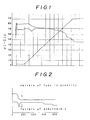
- Fig. 1 showing schematic DTG analysis results
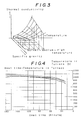
- Fig. 2 giving differential thermograms revealed that change in weight at high temperatures after removal of excess water was very small, and this make the reason understand that neither cracking nor peeling was produced.
- Friction pull test with steel plates as substrates showed strength of 20 or more Kg/cm2 on heating to 300 °C, and coating with them over the steel plate prevented rest from forming after 90 RH ⁇ 60 °C ⁇ 7 days.
- the water-soluble film-forming inorganic compounds according to the invention can be used as surface coatings or adhesives an exposed to very high temperature burner flame without breakage of the inorganic coating. They effect to inhibit thermal conduct ion as the result of removing crystal water, and to, as the refractory coating film, prevent radiant heat from flowing-in.
- the inorganic compounds are not only so good as never seen owing to additionally having refractory and adhesive properties without peeling at high temperatures but also flexible in normal state.
- the water-soluble film-forming inorganic compounds can be used, with or without the addition of the above-mentioned filler(s), for manufacturing a variety of refractory and fireproof composite materials.
- water-soluble film-forming inorganic compounds typically four are summarized in Table 1 as mentioned above. These may be mixed with any natural or synthetic mineral powder, fiber or layer lattice compound, and the resulting mixtures get additional similar properties. Suitable examples are kaolin, pozzolan, silica fume, bauxite, pyrophyllite, metal oxides, metal hydroxides, cements, etc. Any mixture having as main function the characteristic according to the invention cannot be said out of the scope of the present invention if it is associated with the mixing with a high temperature foamed material, or the like.
- plate(s) is used herein to referred to non-combustible or fire resistant material.
- a metal foil, if flexible, may be processed into a flexible sheet, and if not flexible, into a composite plate.
- Suitable metal foils for use are of wide usable iron SUS, Al, Cu, etc., and varying thicknesses up to 100 ⁇ .
- organic fiber(s) covers fibers of wide-usable alumina, alumina-silica, carbon, boron, silicon nitride, etc., which are formable into paper, wool and blanket. Suitable organic surface materials for use are of producing no poisonous gas, little fume, and containing slight calorie. Natural wood, paper and non-woven fabric having thicknesses of up to 500 ⁇ , preferably 50 to 200 ⁇ are suitable.
- a combustible material is impregnated or coated with a fire-preventing agent to get flashover-proof, and then used. Those easy to be folded as slice wood paper are coated on the back of it to be reinforced before use.
- An example of suitable coating for this is a mixture obtained by adding a fire-preventing agent to a substance having alcoholic acid chemically bonding to the inorganic compound according to the invention, such as PVA.
- non-combustible film(s) is applied herein to noncombustible papers containing inorganic fiber as of alumina, silica, aluminasilica, carbon, glass, boron, and silicon nitride, and fabrics and non-woven fabrics of inorganic fiber.
- Another method comprising mixing filler capable of losing much crystal water during heating, such as aluminium or magnesium hydroxide to water glass, and in this case it cannot get flexible.
- the present invention could solve these problems in such a way that the water-soluble film-forming inorganic compounds are processed into adhesives having good adhesiveness in particular to stainless steel of high anticorrosive property and in addition by admixing amorphous filler for improving in thickness and durability and imparting flexibility.
- Adhesives comprising a water-soluble film-forming inorganic compound according to the invention are heated with removal of excess water at 170 to 180 °C, and crystal water at about 470, 580 and 650 °C, respectively, but with little change in weight in the temperature range between 250 and above 800 °C, which showing that is difficult for cracking to occur.
- the filler was added to water glass No. 3, and tested likewise, with the result of cracking and peeling in places.
- the heat-insulating inorganic fiber materials it is those of alumina and alumina silica that is refractory to temperatures 1000 °C or above.
- Fig. 3 shows "Temperature-thermal conductivity characteristic of a light-weight heat-insulating material that the thermal conductivity rises and heat insulating property falls with higher temperature.
- Fig. 2 additionally gives the water content against thermal conductivity characteristic that water found in the material contributes to increasing the thermal conductivity and decreasing the heat insulating property.
- the refractory adhesives according to the present invention as demonstrated by the above-mentioned differential thermal analysis, have 3 peaks where crystal water is removed.
- the refractory composite coatings according to the invention gave good results attributing to the heat insulating property of the blanket alone in moderate and high temperature ranges, as summarized in Table 2 located under.
- the refractory composite covering material (8P ⁇ 25 mm) according to the invention has good performance corresponding to the 45 to 50 mm blanket which is a component of the covering material.
- Heat insulating property depends in combination on thermal conduction through solid, thermal convection and heat radiation.
- the refractory covering materials according to the present invention have good heat insulating property, which is based on the metal foil as surface material and film-foming property of the adhesive according to the present invention used therefor. If damaged by a superheating flame, metal foil on the surface gets nearly equal to the property of blanket alone. When the metal foil keeps refractory property, the thermal convection is controlled by the radiant-heat reflecting effect caused by the metal foil. This phenomenon can be demonstrated by Examples described later.
- the refractory covering materials according to the invention is of flexible sheet, and hence treatment of a joint applied.
- an alumina silica paper of 0.5 mm to 5 mm refractory to 1000 °C or above and 50 ⁇ stainless steel were put together through the intermediation of an adhesive according to the invention, to form into flexible film (tape) sheet.
- a refractory tape enough wide to cover the joint was put on the joint with the adhesive according to the present invention to integrate refractory covering materials.
- the refractory adhesives according to the invention have a bond or adhesive strength of 28 g/cm2. When it is temporarily attached with a tape, excess water is absorbed into the blanket. One hour later, the adhesive strength increases to 3.2 kg/cm2. By making several dumpling-shaped or spot bonds, satisfactorily-increased or safe adhesive strength (30 k/cm2 at 4 weeks) can be obtained. Four spot bonds (20 cm2) ensures safety adhesive strength. Further for meeting long term safety, firm fastening was made in combination with stud electrodeposition as paste and nail are used in combination.
- the product according to the invention is thin and so T-pin technique involving the temporary fastening with a tape, and then perforation from the surface to steel frame, followed by electrodeposition, is advantageous for working.
- Any metal foil can be used, and stainless steel foils are preferred because they are virtually immune to corrosion. From the viewpoint of refractory property, rolled products are recommended. Stearites are preferred rather than ferrite. Considering the aspects of flexibility and long term refractoriness, 20 to 100 ⁇ is suitable.
- Suitable heat-insulating inorganic fiber materials may be, from practical viewpoint, of wool, felt and blanket.
- Joint covering materials are preferred of paper, alumina, alumina silica, boron, silicon nitride having refractory range of 1000 ° to 1200 °C. In economical view, selection may be done between 10 to 40 mm taking long-term refractoriness into consideration, and needle-punched alumina silica blanket or felt is suitable.
- Suitable adhesives are either 4 water-soluble film-forming inorganic compounds given in Table 1 or intermediate substances.
- Suitable fillers is necessary to have effect of creating the above-mentioned initial bond strength, hardening without involving cracking nor peeling, and addition of them is preferred to be 10 to 100% of the water-soluble film-forming inorganic compound.
- a metal foil and heat-insulating inorganic fibrous material are bonded together with a refractory adhesive to make a refractory, flexible sheet covering material, and when used in accordance with the above-mentioned refractory covering process, the following advantages are attained:
- Examples 1 through 20 are of water-soluble film-forming inorganic compound.
- Examples 21 through 29 are of fire-proof and refractory composite material and
- Examples 30 through 37 are of refractory flexible sheet composite covering material and refractory-covering process with them.
- Metal silicon 300 g was densely laid to a thickness of 5 to 10 mm at the bottom of a plastic 1-liter vessel, and a 5-fold dilution (300 cc) of borax decahydrate was poured in it. Then several pieces of sodium hydroxide flakes were dropped on the silicon, and were diffused with failure to cause reaction on the surface of silicon. In addition a 3-fold sodium hydroxide dilution (50 cc) was poured, which sank under the gravity, and reaction occurred with foaming from the surface of the metal. The solution near the bottom sampled with a dropping pipette had an increased concentration and pH 14 while pH of the surface solution was as low as 9.5. Ambient temperature was 21 °C and the temperature of the liquid was 18.4 °C.
- metallic silicon was closely laid at the bottom of a reaction vessel, and 300 cc of a sodium fluoride aqueous solution (sodium fluoride 100 g + water 200 g), followed by 50 cc of a potassium hydroxide solution with pH 13.
- a sodium fluoride aqueous solution sodium fluoride 100 g + water 200 g
- a potassium hydroxide solution with pH 13.
- reactants were the same salts, similarly reaction did not immediately begin but occurred gradually.
- the ambient temperature was 18 °C and the temperature of the liquid was 16 °C.
- the temperature of the dram wall rose to 90 °C and boiling occurred, and thus additional 50 liters of water was added and allowed to stand. On the following day, the supernatant (pH 12.6, specific gravity 1.23 and solid content 24% ) was transferred to another drum, and obtained in a volume of 100 liters.
- Example 4 In Example 4 described aboe, increasing amounts of borax (10, 15, 20, 30, 40 and 50 kg, respectively) were added, and each reaction was terminated and subjected to analysis. In any case, a transparent solution (pH 12 to 12.6, specific gravity 1.2, and solid content 20%) was obtained. The reaction results in each case were in accordance with the theory of solubility at the bottom of the reaction vessel, and the respective reaction products were approximately the same.
- Example 2 As an alternative of Example 2 described previously, to metallic aluminium (300 g) were added zircon (10 g), followed by 5-fold diluted lithium hydroxide (100 cc). Then exothermic reaction occurred between the solid metal and the concentrated alkali solution, and 35% horic acid (80 °C) was blown gradually to the bottom of the vessel through a 3 mm SUS pipe until the pH reached 9.5, thus resulting in a viscous liquid. Then the supernatant was transferred to another vessel, which was airtight sealed, and then allowed to stand. One day later, a transparent, viscous solution of pH 7.8 and specific gravity 1.6 was yielded.
- the last product was transparent and viscous, and of specific gravity 1.3 and pH 7.6.
- borofluoric acid instead of anhydrous hydrofluoric acid and with sodium or lithium hydroxide instead of potassium hydroxide, similar viscous transparent products were obtained.
- solid alkali metal was sprinkled over to make pH 10, and the same product of pH 8 and specific gravity 1.35 was yielded.
- Any element was not detected with a spectrophotometer (Shimazu, Tokyo) other than Si, F, Na, K and Li. Addition of a fluoride to sodium silicate caused hardening.
- the product according to the present invention proved to be a hydride but in state of solution, and not any known substance.
- Example 4 through 6 To the products according to the ivnention obtained in Examples 4 through 6 were added sodium silicate (No. 3; Nihon Chemicals, Japan) as metallic reactant at increasing rates of 0, 3, 10, 30 and 40%, respectively, and each of them was applied to a SUS foil and heated to and cured at 100 °C. Then 5 mm bending (90 °C) test was done. At thicknesses of 20 ⁇ or below, any occurrence of cracking was not observed. The hardnesses were between 5 to 9H. Likewise, Cataloid-SA (SiO2, 30%; Shokubai Kasei Co., Ltd.) was added in 1 to 35% and applied to a SUS foil to a coating thickness of 10 ⁇ or below. After heating and drying, 2 mm bending test was made, and no peeling was noted.
- sodium silicate No. 3; Nihon Chemicals, Japan
- the mixture was put in dumpling-shape on a 10 mm steel plate. On this, a 12.5 mm alumina silica blanket was pressed and heated to 1200 °C. Two hours later, neither peeling nor cracking occurred. Besides the above-mentioned fillers were added to make 100 parts or more, and the viscosity became 200 cps.
- Example 4 to 10 were dried by a spray dryer (Ohgawara Kohki Co., Ltd.) at varying inlet temperatures from 200 to 600 °C. Substantial spherical particles having sizes between 50 and 100 ⁇ were obtained in a yield of 95% or more. Water content reduced to 2 to 5% of the weights of those products.
- Kaolin (10 parts) was added to 10% PVA liquid and applied as prime to a potassium silicate plate. This was finished with product No. 4 in Table 3 and dried at 100 °C without the occurrence of swelling. Water-Proofness test by a cylinder resulted in 0.1 g/cm2.
- a plate (10 cm ⁇ 20 cm ⁇ 0. 1 cm) as of Japanese cedar, Japanese cypress, spruce or lauan was subjected to impregnation with ethylene glycol. After 6 hours' impregnation, it was withdrawn, and gel on the surface was washed off. After drying, this was again subjected to impregnation with the blend which was used in No. 1 in Table 3 for 12 hours, withdrawn and dried. The reimpregnated product was heated a burner (850 °C) resulting in getting carbonized without occurrence of flashover.
- Fig. 1 gives a DTG of the blend which was used in No. 7 in Table 3 which exhibits heat absorption peak or dehydration at 170 °, 470 °, 570 ° and 670 °, and little change in weight of it throughout the range exceeding 300 °C.
- Fig. 2 schematically shows the DTG.
- Table 1 shows No. 1, 2, 7 and 8 of Example 14.
- the blend which was used in No. 1 in Table 3 was applied to a 10 mm thick steel plate and flame-cut without producing burr which would occur unless coated.
- the product of product No. 3 in Table 3 was applied to a 10-mm thick stainless steel plate and cut with a laser cutter (Mitsubishi Electric Corp.), with fireproof effect and without production no burr which would be done unless coated.
- a glass cloth 120 g/m2; Nitto Boseki Co., Ltd. was impregnated with a mixture of a 10% poval aqueous solution (50 parts) and a 10% sulfamine guanidine solution (50 parts), and dried at 80 °C. This was reimpregnated with the blend which was used in No. 4 in Table 3 and redried. 'The thus-obtained product according to the invention having an improved flameproof and refractory property was not allowed to be 1000 °C flame-perforated while untreated glass cloth was easily 650 °C flame-perforated.
- a 80 g/m2 paper and a 60 g/m2 polyester non-woven fabric were treated with the blends which were used in Nos. 2 and 4 in Table 3, respectively, as in the preceding Example 24.
- the thus-obtained product according to the ivnention had an improved flameproof property, and Meker burner flame-proofness test of it was made without occurrence of flashover.
- a 50 ⁇ stainless steel (manufactured by THYSSEN) and a 25 mm alumina silica blanket (8P) were bonded together by the use of a mixture, as adhesive, of the blend which was used in No. 3 in Table 3, kaolin (20 parts), pozzolan (35 parts), diatomaceous earth (3 parts) and vermiculite (10 parts) and dried for one day.
- the composite was spot-adhered with the adhesive to a 10 mm steel plate, of which test for refractory property in accordance with the standard heating curve (JIS-Al304) was made.
- the steel plate was heated to a temperature as low as 320 °C. Similar result was obtained at a thickness as thin as about 36% of the rock wool product (70 mm).
- a thickness of 50 mm is necessary with blanket alone, and on the other hand, the product was demonstrated to have excellent refractory property.
- the Japanese cedar slicede paper of 130 ⁇ was, for the treatment for making it hard-to-burn, impregnated with a 10% solution of sulfamine or guanidine phosphate and dried. In the concentration range of 1 to 20%, hard-to-burn property was effected.
- the treated paper was bonded to an alumina silica paper with the blend which was used in No. 4 in Table 3.
- the composite (20 mm ⁇ 20 mm) which is called wood paper was tested in accordance with the provision in Notice No. 1828 of The Ministry of Construction. CA (fuming amount) was 11 to 13, and neither residual flame nor cracking was not observed. It has demonstrated that there was no increase in calorie and thus the product was suited to non-combustible material.
- Japanese cedar and Japanese cypress can be used as processed materials according to the invention for the housing interior in very tall buildings.
- Example 27 With 70 g non-woven fabric (Toyobo Co., Ltd.) with print pattern instead of the Japanese cedar, the same procedure as in Example 27 was carried out. The non-combustible material test as in Examples 27 and 28 was made with the result of meeting the requirements.
- a 8P-25 mm thick alumina silica blanket was bonded to a ferrite stainless steel (A) and an austenite stainless steel (B), respectively, with the refractory adhesive of Example 31 according to the present invention in a rate of 250 g /mm2.
- a piece (300 mm ⁇ 300 mm) of each composite was further bonded to a 3.2 mm steel plate and heated for 3 hours. Sample (A) was observed to become deteriorated and damaged, and reach 450 °C or above on the back in 2 hours, then heating being stopped.
- sample (B) the temperature of steel plate on the back was 320 °C, and the metal foil on the surface remained undamaged. The performance depended on refractorinesses of the metal foil on the surface and the refractory adhesive. With the a blanket of 40 mm, a temperature of the back of 200 °C was noted.
- a composite material was obtained by 8P-25 mm thick alumina silica blanket was bonded to an austenite stainless steel with the refractory adhesive of Example 31 according to the present invention in a rate of 250 g/mm2. Divided this composite material into two equal parts. In accordance with the previous JIS A 1302 method, these two parts of composite material were bonded to a 10 m/m steel plate while the sections of cutting were joind oppositely.
- refractory covering tape was obtained by 2.5 mm paper blanket was bonded to an austenite stainless steel with the refractory adhesive of Example 31 according to the present invention in a rate of 250 g/mm2.
- the 5 cm width of this refractory covering tape was bonded to the before mentioned composite materials and to the cutting slit.
- the cutting slit of the composite material was covered and coated by the refractory covering tape.
- the steel plate was coated by two parts of composite material and by refractory covering tape on the cutting slit of composite material.
- T-shaped pin was inserted into the refractory covering material of the preceding Example according to the present invention and electrodeposited with a stud welder (Nihon Driveit Co., Ltd.) which was accomplished momentarily.
- a refractory covering material according to the invention is as thin as up to 30 m/m and it is easily electrodeposited. If the same ablity as obtained by this method should be obtained by the method using a blanket, 50-60 m/m thin of blanket would be required. In the method using a blanket the stud is required longer than that used in this method and many stud is required than that used in this method.
- an adhesive according to the present invention was spot-adhered, the above-mentioned 25 mm refractory covering material was wound in H-pattern.
- temporary fastening was made with a adhesive tape, and T-shaped pins were inserted and very electrodeposited with much easiness.
- the 2.5 mm refractory covering tape was applied and T-shaped pins were electrodeposited. The appearance was beautiful. On the spot, no dust was evolved.
- the H steel in the preceding Example was wound with stainless steel strip as primer and fastened (Futonmaki technique in Japanese). Besides mesh was welded and studs were electrodeposited. These works with the exception of fine mesh wires could be made with easiness.
- the 2.5 mm refractory covering tape was coiled on as primer, and easily electrodeposited.
- Any primer was coated with the refractory adhesive according to the invention, to which the 2.5 mm refractory covering material according to the invention could be adhered with easiness.
- Figs. 6 through 9 illustrates the covering process according to the present invention.
- Fig. 7 is an enlarged cross-sectional view illustrative of how a refractory covering material 1 is bonded to a steel frame 2 through the intermediation of an inorganic refractory adhesive3.
- the covering material is fastened with stud pins 5.
- the fastening is applied at the end of a steel frame beam additionally to prevent initial peeling of the adhered part.
- Fig. 8 is an enlarged cross-sectional view illustrative of how the covering material is engaged with slab concrete of Fig. 6 at the upper end portion of steel frame beam.
- the covering material was fastened by spot welding of the metallic foil (stainless steel. 50 ⁇ thick) through a metal plate (1 mm thick) as holder.
- a reference numeral4 designates a slab concrete.
- Fig. 9 is a cross-sectional view illustrative of the structure of the refractory covering material according to the invention.
- Reference characters designate as 9 adhesive, 7 heat insulating ceramic fiber material, and 8 50 ⁇ -thick stainless foil.
Landscapes
- Chemical & Material Sciences (AREA)
- Engineering & Computer Science (AREA)
- Ceramic Engineering (AREA)
- Organic Chemistry (AREA)
- Materials Engineering (AREA)
- Inorganic Chemistry (AREA)
- Structural Engineering (AREA)
- Chemical Kinetics & Catalysis (AREA)
- Life Sciences & Earth Sciences (AREA)
- Wood Science & Technology (AREA)
- Paints Or Removers (AREA)
- Fireproofing Substances (AREA)
- Laminated Bodies (AREA)
Applications Claiming Priority (6)
| Application Number | Priority Date | Filing Date | Title |
|---|---|---|---|
| JP63144399A JPH0730595B2 (ja) | 1988-06-10 | 1988-06-10 | 複合化可撓性シート状耐火被覆材及び耐火被覆工法 |
| JP144399/88 | 1988-06-10 | ||
| JP14439788A JPH0714801B2 (ja) | 1988-06-10 | 1988-06-10 | 水性造膜性無機化合物の製造方法 |
| JP144397/88 | 1988-06-10 | ||
| JP144398/88 | 1988-06-10 | ||
| JP63144398A JPH07365B2 (ja) | 1988-06-10 | 1988-06-10 | 防災・防火・耐火複合材 |
Publications (3)
| Publication Number | Publication Date |
|---|---|
| EP0346162A2 true EP0346162A2 (de) | 1989-12-13 |
| EP0346162A3 EP0346162A3 (de) | 1992-01-15 |
| EP0346162B1 EP0346162B1 (de) | 1996-02-28 |
Family
ID=27318815
Family Applications (1)
| Application Number | Title | Priority Date | Filing Date |
|---|---|---|---|
| EP89305928A Expired - Lifetime EP0346162B1 (de) | 1988-06-10 | 1989-06-12 | Wasserlösliche filmformende anorganische Verbindungen, feuerfeste und feuerbeständige Verbundmaterialien und feuerbeständige biegsame Folien-Verbundmaterialien für Beschichtngen aus diesen Verbindungen und Verfahren zur Herstellung einer feuerfesten Beschichtung |
Country Status (5)
| Country | Link |
|---|---|
| US (2) | US5049316A (de) |
| EP (1) | EP0346162B1 (de) |
| AU (1) | AU634962B2 (de) |
| CA (1) | CA1333745C (de) |
| DE (1) | DE68925756T2 (de) |
Cited By (6)
| Publication number | Priority date | Publication date | Assignee | Title |
|---|---|---|---|---|
| WO2002062916A1 (fr) * | 2001-02-08 | 2002-08-15 | Hiroshi Kokuta | Accelerateur de dissolution inorganique pour rendre une substance metallique ou inorganique soluble dans l'eau |
| WO2003000806A3 (fr) * | 2001-06-22 | 2003-03-13 | Hiroshi Kokuta | Composition inorganique formant un film aqueux, mousse inorganique, composite thermoisolant et procede de production desdites composition et mousse |
| EP1215255A3 (de) * | 2000-12-12 | 2005-03-16 | Ngk Insulators, Ltd. | Verfahren zur Herstellung gefügter Gegenstände, gefügte Gegenstände und Fügemittel |
| US8080225B2 (en) * | 2005-11-07 | 2011-12-20 | Specialist Process Technologies Limited | Functional fluid and a process for the preparation of the functional fluid |
| CN108913040A (zh) * | 2018-03-22 | 2018-11-30 | 湖州铁佛防火材料有限公司 | 一种改性无机防火胶及其制备方法 |
| CN113234397A (zh) * | 2021-06-03 | 2021-08-10 | 哈尔滨工程大学 | 一种发泡隔热磷酸盐胶黏剂的制备方法 |
Families Citing this family (15)
| Publication number | Priority date | Publication date | Assignee | Title |
|---|---|---|---|---|
| AU634962B2 (en) * | 1988-06-10 | 1993-03-11 | Kohmix Co., Ltd. | Water-Soluble, film-forming inorganic compounds |
| US5234631A (en) * | 1988-06-10 | 1993-08-10 | Kohmix Co., Ltd. | Fireproof or refractory materials containing fire-resistant, water soluble, film-forming inorganic compounds |
| US5308553A (en) * | 1991-08-14 | 1994-05-03 | Swan Industries, Inc. | Metal hydride compositions and methods |
| US5556578A (en) * | 1993-12-23 | 1996-09-17 | W. R. Grace & Co.-Conn. | Aggregate containing hydration water in spray applied fireproofing |
| US5629362A (en) * | 1995-05-31 | 1997-05-13 | Heatshield Technologies Inc. | Photon diffusive coating |
| US5879593A (en) * | 1996-04-15 | 1999-03-09 | Kyoei Corporation | Fire resistant liquid, process for preparing it, and fireproof building material and fire resistant adhesive using the fire resistant liquid |
| US6060002A (en) * | 1996-04-15 | 2000-05-09 | Kyoei Corporation | Fire resistant liquid, process for preparing it, and fireproof building material and fire resistant adhesive using the fire resistant liquid |
| US6004387A (en) * | 1997-04-15 | 1999-12-21 | Kyoei Corporation | Fire resistant liquid, process for preparing it, and fireproof building material and fire resistant adhesive using the fire resistant liquid |
| TW414721B (en) * | 1998-01-10 | 2000-12-11 | Kokuta Hiroshi | Treating agent for packet solidification of wastes and the purification method of waste treatment |
| AU757161B2 (en) * | 1998-04-27 | 2003-02-06 | Kyoei Corporation | Refractory liquid and method of manufacturing the same, and refractory material, refractory building material and refractory adhesive each manufactured from the refractory liquid |
| JP2003004614A (ja) * | 2001-06-22 | 2003-01-08 | Akashi Corp | 材料試験機 |
| US20040247819A1 (en) * | 2003-06-09 | 2004-12-09 | 3M Innovative Properties Company | Casing-free insulation blanket |
| US20110250436A1 (en) * | 2010-04-09 | 2011-10-13 | John Nelson | Method of forming ceramic coatings and ceramic coatings and structures formed thereby |
| US8967331B2 (en) * | 2011-12-14 | 2015-03-03 | E I Du Pont De Nemours And Company | Multilayered sheet |
| CN115433479B (zh) * | 2022-10-18 | 2023-06-27 | 中国民航大学 | 一种遇火高度陶瓷化的磷酸盐胶基阻燃隔热涂料制备方法 |
Family Cites Families (16)
| Publication number | Priority date | Publication date | Assignee | Title |
|---|---|---|---|---|
| US2006348A (en) * | 1934-06-30 | 1935-07-02 | Duplate Corp | Laminated glass and process of making the same |
| US2447359A (en) * | 1944-12-01 | 1948-08-17 | Tennessee Corp | Production of sodium fluosilicate |
| BE518119A (de) * | 1953-03-06 | |||
| GB1119132A (en) * | 1966-02-14 | 1968-07-10 | Babcock & Wilcox Co | Manufacture of high temperature alumina-silica fibers |
| US3488702A (en) * | 1966-05-31 | 1970-01-06 | Ethyl Corp | Production of inorganic fluoro-chemicals and silicon dioxide |
| IT980569B (it) * | 1972-04-21 | 1974-10-10 | Degussa | Procedimento per la preparazione di silicati alcalini solubili |
| CA1062131A (en) * | 1974-09-12 | 1979-09-11 | Russell C. Miller | Coating compositions and processes |
| US4117088A (en) * | 1977-01-10 | 1978-09-26 | Merkl George | Hydrophosphide-group containing multi-metal inorganic polymeric complex and method of making same |
| US4381716A (en) * | 1978-06-05 | 1983-05-03 | Hastings Otis | Insulating apparatus and composite laminates employed therein |
| DE3143045A1 (de) * | 1981-10-30 | 1983-05-05 | Basf Ag, 6700 Ludwigshafen | Borosilikatzeolithe-zbh und verfahren zur herstellung von kristallinen borosilikatzeolithen (zbh) und deren verwendung als katalysator |
| US4362703A (en) * | 1982-03-01 | 1982-12-07 | Iowa State University Research Foundation, Inc. | Process for preparing cryolite from fly ash |
| IT1157932B (it) * | 1982-05-07 | 1987-02-18 | Anic Spa | Materiali sintetici, cristallini, porosi costituiti da ossidi di silicio e boro, loro metodo di preparazione e loro usi |
| EP0103034A1 (de) * | 1982-09-09 | 1984-03-21 | The Dow Chemical Company | Kristalline Lithiumaluminate und Verfahren zu ihrer Herstellung |
| US4693878A (en) * | 1986-06-11 | 1987-09-15 | Swiss Aluminium Ltd. | Process for the production of soluble alkali silicates |
| US4824807A (en) * | 1987-06-01 | 1989-04-25 | Blount David H | Flexible alkali metal silicate glass products |
| AU634962B2 (en) * | 1988-06-10 | 1993-03-11 | Kohmix Co., Ltd. | Water-Soluble, film-forming inorganic compounds |
-
1989
- 1989-06-09 AU AU36281/89A patent/AU634962B2/en not_active Ceased
- 1989-06-12 US US07/365,112 patent/US5049316A/en not_active Expired - Lifetime
- 1989-06-12 DE DE68925756T patent/DE68925756T2/de not_active Expired - Fee Related
- 1989-06-12 CA CA000602501A patent/CA1333745C/en not_active Expired - Fee Related
- 1989-06-12 EP EP89305928A patent/EP0346162B1/de not_active Expired - Lifetime
-
1993
- 1993-05-25 US US08/066,223 patent/US5368950A/en not_active Expired - Lifetime
Cited By (7)
| Publication number | Priority date | Publication date | Assignee | Title |
|---|---|---|---|---|
| EP1215255A3 (de) * | 2000-12-12 | 2005-03-16 | Ngk Insulators, Ltd. | Verfahren zur Herstellung gefügter Gegenstände, gefügte Gegenstände und Fügemittel |
| WO2002062916A1 (fr) * | 2001-02-08 | 2002-08-15 | Hiroshi Kokuta | Accelerateur de dissolution inorganique pour rendre une substance metallique ou inorganique soluble dans l'eau |
| WO2003000806A3 (fr) * | 2001-06-22 | 2003-03-13 | Hiroshi Kokuta | Composition inorganique formant un film aqueux, mousse inorganique, composite thermoisolant et procede de production desdites composition et mousse |
| US8080225B2 (en) * | 2005-11-07 | 2011-12-20 | Specialist Process Technologies Limited | Functional fluid and a process for the preparation of the functional fluid |
| CN108913040A (zh) * | 2018-03-22 | 2018-11-30 | 湖州铁佛防火材料有限公司 | 一种改性无机防火胶及其制备方法 |
| CN113234397A (zh) * | 2021-06-03 | 2021-08-10 | 哈尔滨工程大学 | 一种发泡隔热磷酸盐胶黏剂的制备方法 |
| CN113234397B (zh) * | 2021-06-03 | 2022-05-27 | 哈尔滨工程大学 | 一种发泡隔热磷酸盐胶黏剂的制备方法 |
Also Published As
| Publication number | Publication date |
|---|---|
| CA1333745C (en) | 1995-01-03 |
| US5049316A (en) | 1991-09-17 |
| AU3628189A (en) | 1989-12-14 |
| EP0346162A3 (de) | 1992-01-15 |
| DE68925756D1 (de) | 1996-04-04 |
| US5368950A (en) | 1994-11-29 |
| AU634962B2 (en) | 1993-03-11 |
| EP0346162B1 (de) | 1996-02-28 |
| DE68925756T2 (de) | 1996-11-14 |
Similar Documents
| Publication | Publication Date | Title |
|---|---|---|
| EP0346162A2 (de) | Wasserlösliche filmformende anorganische Verbindungen, feuerfeste und feuerbeständige Verbundmaterialien und feuerbeständige biegsame Folien-Verbundmaterialien für Beschichtngen aus diesen Verbindungen und Verfahren zur Herstellung einer feuerfesten Beschichtung | |
| US4347285A (en) | Curable aqueous silicate composition, uses thereof, and coatings or layers made therefrom | |
| EP0181372B1 (de) | Feuerschutzbeschichtung | |
| US5604024A (en) | Products of reaction of an aluminum compound, a boron-containing acid, a phosphorus-containing acid and an amine | |
| WO2006070960A1 (en) | Covering composite for fire resistance and sound absorption | |
| NO863611L (no) | Sammensetning for bruk ved brannsikring og isolasjon. | |
| CN110194636B (zh) | 防火板材及其制备方法 | |
| EP3904308B1 (de) | Feuerbeständige wärmedämmzusammensetzung, feuerbeständiger wärmedämmzusammensetzungsschlamm, feuerbeständige wärmedämmplatte und feuerbeständige wärmedämmstruktur | |
| US5234631A (en) | Fireproof or refractory materials containing fire-resistant, water soluble, film-forming inorganic compounds | |
| US3788885A (en) | Fibrous materials | |
| JP2018178046A (ja) | 不燃性建材及び不燃断熱性建材 | |
| US20100180797A1 (en) | Ceramic Fire Protection Panel and Method for Producing the Same | |
| WO2021177378A1 (ja) | 耐火断熱ボード及び耐火断熱構造体 | |
| CN101980990A (zh) | 含外加膨胀蛭石的石膏砂浆及其制备方法 | |
| KR102326873B1 (ko) | 폐알루미늄 드로스 분말을 사용한 다공성 세라믹 단열재 및 이의 제조방법 | |
| US4826534A (en) | Metallizing compositions, metal bonded structures and methods of metallizing and/or fireproofing | |
| JPH03122060A (ja) | 鉄に対する付着力の優れた耐火被覆組成物 | |
| GB2055623A (en) | Rigid foam body and production thereof | |
| JPH07224272A (ja) | 排ガス量が低い耐熱性結合および被覆剤およびそれらの使用 | |
| CN117363066B (zh) | 一种基于磷酸铵镁胶粘剂的钢结构防火涂料及其制备方法、使用方法 | |
| JP7551064B2 (ja) | 耐火断熱組成物、耐火断熱組成物スラリー、耐火断熱ボード及び耐火断熱構造体 | |
| JPH0448344B2 (de) | ||
| US3988402A (en) | Non-combustible molding material | |
| US3945840A (en) | Non-combustible molding material | |
| WO2022004750A1 (ja) | 耐火断熱組成物、耐火断熱組成物スラリー、耐火断熱ボード及び耐火断熱構造体 |
Legal Events
| Date | Code | Title | Description |
|---|---|---|---|
| PUAI | Public reference made under article 153(3) epc to a published international application that has entered the european phase |
Free format text: ORIGINAL CODE: 0009012 |
|
| AK | Designated contracting states |
Kind code of ref document: A2 Designated state(s): DE FR GB IT |
|
| PUAL | Search report despatched |
Free format text: ORIGINAL CODE: 0009013 |
|
| AK | Designated contracting states |
Kind code of ref document: A3 Designated state(s): DE FR GB IT |
|
| 17P | Request for examination filed |
Effective date: 19920403 |
|
| 17Q | First examination report despatched |
Effective date: 19930621 |
|
| GRAH | Despatch of communication of intention to grant a patent |
Free format text: ORIGINAL CODE: EPIDOS IGRA |
|
| GRAA | (expected) grant |
Free format text: ORIGINAL CODE: 0009210 |
|
| AK | Designated contracting states |
Kind code of ref document: B1 Designated state(s): DE FR GB IT |
|
| ITF | It: translation for a ep patent filed | ||
| REF | Corresponds to: |
Ref document number: 68925756 Country of ref document: DE Date of ref document: 19960404 |
|
| ET | Fr: translation filed | ||
| PLBE | No opposition filed within time limit |
Free format text: ORIGINAL CODE: 0009261 |
|
| STAA | Information on the status of an ep patent application or granted ep patent |
Free format text: STATUS: NO OPPOSITION FILED WITHIN TIME LIMIT |
|
| K2C3 | Correction of patent specification (complete document) published |
Effective date: 19960228 |
|
| 26N | No opposition filed | ||
| PGFP | Annual fee paid to national office [announced via postgrant information from national office to epo] |
Ref country code: GB Payment date: 19980605 Year of fee payment: 10 |
|
| PGFP | Annual fee paid to national office [announced via postgrant information from national office to epo] |
Ref country code: FR Payment date: 19980609 Year of fee payment: 10 |
|
| PGFP | Annual fee paid to national office [announced via postgrant information from national office to epo] |
Ref country code: DE Payment date: 19980622 Year of fee payment: 10 |
|
| PG25 | Lapsed in a contracting state [announced via postgrant information from national office to epo] |
Ref country code: GB Free format text: LAPSE BECAUSE OF NON-PAYMENT OF DUE FEES Effective date: 19990612 |
|
| PG25 | Lapsed in a contracting state [announced via postgrant information from national office to epo] |
Ref country code: FR Free format text: THE PATENT HAS BEEN ANNULLED BY A DECISION OF A NATIONAL AUTHORITY Effective date: 19990630 |
|
| GBPC | Gb: european patent ceased through non-payment of renewal fee |
Effective date: 19990612 |
|
| PG25 | Lapsed in a contracting state [announced via postgrant information from national office to epo] |
Ref country code: DE Free format text: LAPSE BECAUSE OF NON-PAYMENT OF DUE FEES Effective date: 20000503 |
|
| REG | Reference to a national code |
Ref country code: FR Ref legal event code: ST |
|
| PG25 | Lapsed in a contracting state [announced via postgrant information from national office to epo] |
Ref country code: IT Free format text: LAPSE BECAUSE OF NON-PAYMENT OF DUE FEES;WARNING: LAPSES OF ITALIAN PATENTS WITH EFFECTIVE DATE BEFORE 2007 MAY HAVE OCCURRED AT ANY TIME BEFORE 2007. THE CORRECT EFFECTIVE DATE MAY BE DIFFERENT FROM THE ONE RECORDED. Effective date: 20050612 |