EP0344112B1 - Substituierte Bisacyloxynaphtacene und Verfahren zur Herstellung von Tetrathiotetracenen - Google Patents
Substituierte Bisacyloxynaphtacene und Verfahren zur Herstellung von Tetrathiotetracenen Download PDFInfo
- Publication number
- EP0344112B1 EP0344112B1 EP89810366A EP89810366A EP0344112B1 EP 0344112 B1 EP0344112 B1 EP 0344112B1 EP 89810366 A EP89810366 A EP 89810366A EP 89810366 A EP89810366 A EP 89810366A EP 0344112 B1 EP0344112 B1 EP 0344112B1
- Authority
- EP
- European Patent Office
- Prior art keywords
- substituted
- formula
- alkyl
- unsubstituted
- substituent
- Prior art date
- Legal status (The legal status is an assumption and is not a legal conclusion. Google has not performed a legal analysis and makes no representation as to the accuracy of the status listed.)
- Expired - Lifetime
Links
Classifications
-
- C—CHEMISTRY; METALLURGY
- C07—ORGANIC CHEMISTRY
- C07D—HETEROCYCLIC COMPOUNDS
- C07D495/00—Heterocyclic compounds containing in the condensed system at least one hetero ring having sulfur atoms as the only ring hetero atoms
- C07D495/02—Heterocyclic compounds containing in the condensed system at least one hetero ring having sulfur atoms as the only ring hetero atoms in which the condensed system contains two hetero rings
- C07D495/06—Peri-condensed systems
-
- B—PERFORMING OPERATIONS; TRANSPORTING
- B05—SPRAYING OR ATOMISING IN GENERAL; APPLYING FLUENT MATERIALS TO SURFACES, IN GENERAL
- B05D—PROCESSES FOR APPLYING FLUENT MATERIALS TO SURFACES, IN GENERAL
- B05D1/00—Processes for applying liquids or other fluent materials
- B05D1/18—Processes for applying liquids or other fluent materials performed by dipping
- B05D1/20—Processes for applying liquids or other fluent materials performed by dipping substances to be applied floating on a fluid
- B05D1/202—Langmuir Blodgett films (LB films)
-
- B—PERFORMING OPERATIONS; TRANSPORTING
- B82—NANOTECHNOLOGY
- B82Y—SPECIFIC USES OR APPLICATIONS OF NANOSTRUCTURES; MEASUREMENT OR ANALYSIS OF NANOSTRUCTURES; MANUFACTURE OR TREATMENT OF NANOSTRUCTURES
- B82Y30/00—Nanotechnology for materials or surface science, e.g. nanocomposites
-
- B—PERFORMING OPERATIONS; TRANSPORTING
- B82—NANOTECHNOLOGY
- B82Y—SPECIFIC USES OR APPLICATIONS OF NANOSTRUCTURES; MEASUREMENT OR ANALYSIS OF NANOSTRUCTURES; MANUFACTURE OR TREATMENT OF NANOSTRUCTURES
- B82Y40/00—Manufacture or treatment of nanostructures
-
- C—CHEMISTRY; METALLURGY
- C07—ORGANIC CHEMISTRY
- C07C—ACYCLIC OR CARBOCYCLIC COMPOUNDS
- C07C317/00—Sulfones; Sulfoxides
- C07C317/16—Sulfones; Sulfoxides having sulfone or sulfoxide groups and singly-bound oxygen atoms bound to the same carbon skeleton
- C07C317/22—Sulfones; Sulfoxides having sulfone or sulfoxide groups and singly-bound oxygen atoms bound to the same carbon skeleton with sulfone or sulfoxide groups bound to carbon atoms of six-membered aromatic rings of the carbon skeleton
-
- C—CHEMISTRY; METALLURGY
- C07—ORGANIC CHEMISTRY
- C07C—ACYCLIC OR CARBOCYCLIC COMPOUNDS
- C07C323/00—Thiols, sulfides, hydropolysulfides or polysulfides substituted by halogen, oxygen or nitrogen atoms, or by sulfur atoms not being part of thio groups
- C07C323/10—Thiols, sulfides, hydropolysulfides or polysulfides substituted by halogen, oxygen or nitrogen atoms, or by sulfur atoms not being part of thio groups containing thio groups and singly-bound oxygen atoms bound to the same carbon skeleton
- C07C323/18—Thiols, sulfides, hydropolysulfides or polysulfides substituted by halogen, oxygen or nitrogen atoms, or by sulfur atoms not being part of thio groups containing thio groups and singly-bound oxygen atoms bound to the same carbon skeleton having the sulfur atom of at least one of the thio groups bound to a carbon atom of a six-membered aromatic ring of the carbon skeleton
- C07C323/21—Thiols, sulfides, hydropolysulfides or polysulfides substituted by halogen, oxygen or nitrogen atoms, or by sulfur atoms not being part of thio groups containing thio groups and singly-bound oxygen atoms bound to the same carbon skeleton having the sulfur atom of at least one of the thio groups bound to a carbon atom of a six-membered aromatic ring of the carbon skeleton with the sulfur atom of the thio group bound to a carbon atom of a six-membered aromatic ring being part of a condensed ring system
-
- C—CHEMISTRY; METALLURGY
- C07—ORGANIC CHEMISTRY
- C07C—ACYCLIC OR CARBOCYCLIC COMPOUNDS
- C07C69/00—Esters of carboxylic acids; Esters of carbonic or haloformic acids
-
- C—CHEMISTRY; METALLURGY
- C07—ORGANIC CHEMISTRY
- C07F—ACYCLIC, CARBOCYCLIC OR HETEROCYCLIC COMPOUNDS CONTAINING ELEMENTS OTHER THAN CARBON, HYDROGEN, HALOGEN, OXYGEN, NITROGEN, SULFUR, SELENIUM OR TELLURIUM
- C07F7/00—Compounds containing elements of Groups 4 or 14 of the Periodic Table
- C07F7/02—Silicon compounds
- C07F7/08—Compounds having one or more C—Si linkages
- C07F7/0803—Compounds with Si-C or Si-Si linkages
- C07F7/081—Compounds with Si-C or Si-Si linkages comprising at least one atom selected from the elements N, O, halogen, S, Se or Te
-
- C—CHEMISTRY; METALLURGY
- C08—ORGANIC MACROMOLECULAR COMPOUNDS; THEIR PREPARATION OR CHEMICAL WORKING-UP; COMPOSITIONS BASED THEREON
- C08G—MACROMOLECULAR COMPOUNDS OBTAINED OTHERWISE THAN BY REACTIONS ONLY INVOLVING UNSATURATED CARBON-TO-CARBON BONDS
- C08G61/00—Macromolecular compounds obtained by reactions forming a carbon-to-carbon link in the main chain of the macromolecule
- C08G61/12—Macromolecular compounds containing atoms other than carbon in the main chain of the macromolecule
- C08G61/122—Macromolecular compounds containing atoms other than carbon in the main chain of the macromolecule derived from five- or six-membered heterocyclic compounds, other than imides
- C08G61/123—Macromolecular compounds containing atoms other than carbon in the main chain of the macromolecule derived from five- or six-membered heterocyclic compounds, other than imides derived from five-membered heterocyclic compounds
-
- H—ELECTRICITY
- H01—ELECTRIC ELEMENTS
- H01B—CABLES; CONDUCTORS; INSULATORS; SELECTION OF MATERIALS FOR THEIR CONDUCTIVE, INSULATING OR DIELECTRIC PROPERTIES
- H01B1/00—Conductors or conductive bodies characterised by the conductive materials; Selection of materials as conductors
- H01B1/06—Conductors or conductive bodies characterised by the conductive materials; Selection of materials as conductors mainly consisting of other non-metallic substances
- H01B1/12—Conductors or conductive bodies characterised by the conductive materials; Selection of materials as conductors mainly consisting of other non-metallic substances organic substances
- H01B1/121—Charge-transfer complexes
-
- C—CHEMISTRY; METALLURGY
- C07—ORGANIC CHEMISTRY
- C07C—ACYCLIC OR CARBOCYCLIC COMPOUNDS
- C07C2603/00—Systems containing at least three condensed rings
-
- C—CHEMISTRY; METALLURGY
- C07—ORGANIC CHEMISTRY
- C07C—ACYCLIC OR CARBOCYCLIC COMPOUNDS
- C07C2603/00—Systems containing at least three condensed rings
- C07C2603/02—Ortho- or ortho- and peri-condensed systems
- C07C2603/40—Ortho- or ortho- and peri-condensed systems containing four condensed rings
- C07C2603/42—Ortho- or ortho- and peri-condensed systems containing four condensed rings containing only six-membered rings
- C07C2603/44—Naphthacenes; Hydrogenated naphthacenes
Definitions
- the invention relates to 5,12-acyloxynaphthacenes substituted in the 1-, 2-, 3-, 4-, 7-, 8-, 9- and / or 10-position, a process for their preparation and a process for the preparation of unsubstituted or correspondingly substituted 5,6,11,12-tetrathiotetracenes.
- Naphthacen-5,12-dione are important intermediates in the production of tetrathio- and tetraselenotetracenes. Depending on the reaction conditions and reaction time, the reduction of the diones leads to dihydrotetracenes, tetracenes or mixtures thereof.
- the tetracenes can be 5, 11- or. 6,12-dichlorotetracenes are chlorinated.
- 5,12-diacyloxy-tetracenes can be reacted directly with sulfur to give 5,6,11,12-tetrathiotetracenes.
- the 5,12-diacyloxytetracenes are accessible by simple reductive acylation in high yields and purities.
- R1 to R8 are independently H and at least one of R1 to R8 is a substituent from the group -F, -Si (C1-C4-alkyl) 3, -COOR10; or two adjacent radicals from R1 to R8 -CO-O-CO-; or at least one of R1 to R8 unsubstituted or substituted with -F, -OH-, -CN, C1-C12-alkoxy, C1-C12-acyloxy or -COOR10-C1-C20-alkyl , C2-C20 alkenyl , C2-C20 alkynyl , C3-C8-cycloalkyl , C1-C12-alkyl-C3-C8-cycloalkyl , C3-C8-cycloalkyl-CH2 , C1-C12-alkyl-C3-C8-cycloalkyl-CH2 , C1-C12-alkyl-C3-
- the alkyl group can be methyl, ethyl, n- or i-propyl or n- and i-butyl.
- -Si (CH3) 3 is particularly preferred.
- R10 can be H or linear or branched alkyl having preferably 1 to 12, particularly 1 to 8, carbon atoms.
- alkyl are methyl, ethyl, and the isomers of propyl, butyl, pentyl, hexyl, heptyl, octyl, nonyl, decyl, undecyl, dodecyl, tetradecyl, hexadecyl and octadecyl.
- R1 to R8 can be substituted in the context of the preceding definitions, preferably mono- to triple, especially mono- or triple.
- the substituents can e.g. are linear or branched alkoxy with preferably 1 to 6, especially 1 to 4 carbon atoms. Ethoxy and methoxy are particularly preferred.
- the substituents can e.g. also act as acyloxy, preferably with 1 to 6 carbon atoms, e.g. C1-C6-alkyl-CO-O- or benzyloxy. Examples are formyloxy, acetoxy, trifluoroacetoxy, propionyloxy, acryloxy, methacryloxy and butanoyloxy.
- the substituents can also be e.g. act -COOR10, wherein R10 is preferably H or C1-C4-alkyl.
- R1 to R8 can be substituted with -OH, -F, C1-C4-alkoxy, -COO (C1-C4-alkyl) and C1-C6-alkyl-CO-O-.
- R1 to R8 can be C1-C20 alkyl be.
- the alkyl group can be linear or branched and preferably contains 1 to 18, particularly 1 to 12 and in particular 1 to 8 carbon atoms. Examples of alkyl groups have been mentioned previously.
- R1 to R8 can be C2-C20 alkenyl where p is preferably 1, X is preferably -O- and the alkenyl group preferably contains a terminal alkene group.
- the alkenyl can be linear or branched and preferably contain 2 to 18, particularly 2 to 12 and in particular 2 to 6 carbon atoms.
- Examples are ethenyl, allyl, prop-1-en-1- or -2-yl, but-1-en-1- or -2- or -3- or -4-yl, but-2-en-1- or -2-yl, Pent-1-en- or Pent-2-en-1- or -2- or -3- or -4- or -5-yl, Hex-1-en- or Hex-2- en- or hex-3-en-1- or -2- or -3- or -4- or -5- or -6-yl, heptenyl, octenyl, nonenyl, decenyl, undecenyl, dodecenyl, tetracenyl, hexadecenyl and octadecenyl .
- R1 to R8 can be C2-C20 alkynyl where p is preferably 1, X is preferably -O- and the alkynyl group preferably contains a terminal alkyne group.
- the alkynyl can be linear or branched be and preferably contain 2 to 18, especially 2 to 12 and in particular 2 to 6 carbon atoms.
- Examples are ethynyl, propargyl, but-1-in-3- or -4-yl, pent-1-in-3- or -4- or -5-yl, hex-1-in-3- or -4- or -5- or -6-yl, Hex-2-in-1- or -4- or -5- or -6-yl, Hex-3-in-1- or -2-yl, heptinyl, octinyl, Noninyl, decinyl, undecinyl and dodecinyl.
- R1 to R8 can be C3-C8 cycloalkyl be in which p is preferably 1 and the cycloalkyl preferably contains 3 to 6, especially 5 or 6 carbon atoms. Examples are cyclopropyl, cyclobutyl, cyclopentyl, cyclohexyl, cycloheptyl and cyclooctyl.
- R1 to R8 can (C1-C12-alkyl) -C3-C8-cycloalkyl be, in which the alkyl preferably contains 1 to 6 carbon atoms, p preferably represents 1 and the cycloalkyl is preferably cyclopentyl or cyclohexyl. Examples are methyl or ethylcyclopentyl or cyclohexyl, methylcyclopropyl and methylcyclobutyl.
- R1 to R8 can be C3-C8-, preferably C5- or C6-cycloalkyl-CH2 where p is preferably 1.
- R1 to R8 can (C1-C12-alkyl) -C3-C8-cycloalkyl-CH2 in which p is preferably 1, the alkyl group preferably contains 1 to 6 carbon atoms and the cycloalkyl is preferably cyclopentyl or cyclohexyl. Examples are methylcyclohexylmethyl or methyl.
- R1 to R8 are C beau-C10-aryl-X-, the aryl is especially naphthyl and especially phenyl.
- R1 to R8 are C7-C20-alkaryl-X- it is preferably (C1- C14-alkyl) -phenyl-X-, the alkyl group preferably containing 1 to 8, especially 1 to 4, carbon atoms.
- R1 to R8 in the meaning of C7-C12 aralkyl it is preferably benzyl-X- or phenylethyl-X-.
- R1 to R8 in the meaning of C8-C20 alkaralkyl it is preferably (C1-C13-alkyl) benzyl-X-, the alkyl group in particular containing 1 to 6 carbon atoms. Examples are methylbenzyl-X- and ethylbenzyl-X-.
- R1 to R8 in the meaning of Y preferably represents -O-
- m is preferably 2 or 3 and n is preferably a number from 2 to 12, particularly 2 to 6, and R10 is preferably H or C1-C4-alkyl.
- the C m H 2m group is particularly ethylene or 1,2-propylene.
- R9 is preferably unsubstituted or substituted by F C1- or C2-acyl.
- Examples are butanoyl, propionyl, mono- or difluoroacetoxy, formyloxy and especially acetoxy and trifluoroacetoxy.
- a preferred embodiment are those compounds of the formula I in which R1 to R8 are independently H and at least one of R1 to R8 is a substituent from the group -F, -Si (CH3) 3, -COO (C1-C12-alkyl), unsubstituted or C1-C1-alkoxy, C1-C6-acyloxy or -COO- (C1-C12-alkyl) substituted C1-C18-alkyl , C2-C18 alkenyl , C2-C12 alkynyl , C6-C10-aryl-X-, C7-C18-alkaryl-X-, C7-C10-aralkyl , C8-C18 alkaralkyl or represent, R10 is H or C1-C6 alkyl, X is -O-, -S-, -SO- or -SO2- and Y is -O- or -S-, m is 2 or 3 and n is a
- R1 and R4 to R8 are H; R2 -F, -CF3, -COO (C1-C18-alkyl), unsubstituted or substituted by -OH, -COO (C1-C6-alkyl) or C1-C6-acyloxy-C1-C18-alkyl-X; wherein Y is -O- or -S-, R10 H or C1-C6-alkyl and n is a number from 2 to 12; C2-C12-alkenyl-CH2-X-; C2-C12-alkynyl-CH2-X-; Phenyl-X-; C1-C12 alkylphenyl-X-; Benzyl-X-; C1-C12-alkylbenzyl-X and R3 is H or independently has the meaning of R2, and X is -O-, -S-, -SO- or -SO2-.
- R1 as a substituent is especially -CF3 or -COO (C1-C12-alkyl).
- Preferred embodiments are also those compounds of the formula I in which a) R4, R5 and R8 are H, or b) R1, R4, R5 and R8 are H, or c) R2 and / or R3 is a substituent and R1 and R4 to R8 are H, or d) R6 and / or R7 are a substituent and R1 to R5 and R8 are H.
- the invention further relates to a process for the preparation of compounds of the formula I, which is characterized in that a substituted naphthacen-5,12-dione of the formula II wherein R1 to R8 have the meanings given above, under reducing conditions with an anhydride of the formula R9CO-O-OCR9, wherein R9 has the meaning given above, is implemented.
- Reductive acylation using reducing metals e.g. Zinc is known and has been described by T. Kametani in Chem. Pharm. Bull 26 (12), pp. 3820-3825 (1978).
- the reduction can also be carried out electrochemically or catalytically using noble metal catalysts, e.g. Pt or Pd can be made.
- the catalytic reduction or the reduction with metals is expediently carried out in the presence of an alkali metal salt of the carboxylic acid R9COOH on which the anhydride of the formula R9CO-O-OCR9 is based.
- the alkali metal can e.g. Li, Na, K, Rb or Cs.
- reaction is carried out in the presence of an inert solvent, for example carboxylic acid esters, such as, for example, methyl or ethyl acetate.
- an inert solvent for example carboxylic acid esters, such as, for example, methyl or ethyl acetate.
- the reaction temperature can e.g. 20 to 100 ° C.
- substituted naphthacen-5,12-diones of the formula II are known or they can be prepared using the processes described below.
- the compounds of formula II can be prepared, for example, by a naphthalenedicarboxylic anhydride of formula IV according to Friedel-Craft in the presence of a Lewis acid with a benzene of the formula V is implemented, wherein R1 to R8 have the meanings given above, and compounds of the formula I in which at least one of R1 to R8 is -F are substituted nucleophilically.
- Compounds suitable for nucleophilic substitution are particularly those of the formula (R1 to R8) ⁇ X-H, in which X is -O-, -S-, -SO- or -SO2-, malonic acid esters or nitriles and phenylacetic acid nitrile.
- nucleophilic compounds can be used in the form of their alkali salts, for example Li, Na or K salts. It is also possible to carry out the nucleophilic substitution in the presence of bases, such as, for example, alkali metal lyes or carbonates.
- the compounds of formula II can also be prepared by, in a Diels-Alder reaction, a compound of formula VI wherein R5, R6, R7 and R8 have the meanings given above and X1 and X2 independently of one another are -Cl, -Br or -J, with subsequent elimination of HX1 and HX2 with a compound of formula VII wherein R1, R2, R3 and R4 have the meanings given above, implemented.
- p is preferably 1.
- the reaction is advantageously carried out at temperatures from 50 to 250 ° C., preferably 80 to 200 ° C.
- An inert solvent is expediently used, for example polar aprotic solvents.
- Some examples are aromatic hydrocarbons (benzene, toluene, xylene, chlorobenzene and dichlorobenzene), nitriles (acetonitrile), ethers (dibutyl ether, dioxane, tetrahydrofuran, ethylene glycol or diethylene glycol dimethyl ether).
- Isolation and cleaning can be carried out using conventional methods, e.g. Crystallization, sublimation or chromatography.
- the p-naphthoquinones of formula VII are known and e.g. by nucleophilic substitution of optionally protected and substituted halogen or nitro-1,4-naphthoquinones with e.g. the compounds described above in the presence of alkali metal compounds (K2CO3, Cs2CO3, KOH, NaOH, NaNH2, NaOCH3, NaOC2H5) or with alkali metal compounds e.g. available from Li, K, Na, Rb or Cs.
- Halogen and nitro-naphthoquinones are e.g. in Houben-Weyl, Chinone I, Volume 7 / 3b (1977).
- the naphthoquinones of formula VII can also be prepared in a known manner by electrophilic or nucleophilic substitution of optionally substituted naphthalenes, dihydro- or tetrahydronaphthalenes and subsequent conversion into the substituted 1,4-naphthoquinones.
- the compounds of formula II can also be prepared by using 1,2-bis (dihalomethyl) benzenes of the formula wherein Y1 is Cl, Br or I, in the presence of NaI in an organic solvent with a compound of formula VII. This method is described by JW McOmie in Synthesis, pp. 416-417 (1973).
- Compounds of formula II can also be obtained by using anthracene-1,4-quinones of the formula with an ⁇ -pyrone of the formula VIII or a butadiene of the formula IX implemented, wherein R11 is C1-C6-alkyl, R10 has the meaning given above and is preferably C1-C6-alkyl.
- This method and the preparation of ⁇ -pyrones is described in US Pat. No. 4,617,151 and EP-A-0 195 743.
- R1 to R8 represent a polyoxaalkylene radical
- such compounds are also obtained by reacting compounds of the formula I with R1 to R8 equal to hydroxyalkyloxy with epoxides. It is also possible to modify the radicals R1 to R8 by conventional reactions, such as hydrolysis, esterification or transesterification, amidation, oxidation or reduction. Carboxylic acid esters can be converted into the trifluoromethyl derivatives in a known manner using HF / SF4.
- the compounds of formula I are obtained in short reaction times in high yields and in high purity. Surprisingly, they are suitable for direct reaction with sulfur to form tetrathiotetracenes.
- Another subject is a process for the preparation of 5,6,11,12-tetrathiotetracenes of the formula III wherein R1 to R8 independently of one another H or a substituent from the group -F, -Si (C1-C4-alkyl) 3, -COOR10; or two adjacent radicals from R1 to R8 -CO-O-CO-; or R1 to R8 is a substituent from the group unsubstituted or substituted by -F, -OH-, C1-C12-alkoxy, C1-C12-acyloxy, or -COOR10 C1-C20-alkyl , C3-C8-cycloalkyl , C1-C12-alkyl-C3-C8-cycloalkyl , C3-C8-cycloalkyl-CH2 , C1-C12-alkyl-C3-C8-cycloalkyl-CH2 , C6-C10-aryl-
- Suitable solvents are especially halogenated aromatic hydrocarbons, e.g. Chlorobenzene, dichlorobenzenes and trichlorobenzenes, but also nitrobenzene or Dowtherm A.
- the reaction is also conveniently carried out under an inert gas atmosphere, e.g. using noble gases (helium, neon, argon) or nitrogen.
- noble gases helium, neon, argon
- nitrogen nitrogen
- the reaction temperature is advantageously 100 to 250 ° C, especially 150 to 250 ° C. It is advisable to work at the reflux temperature of the chosen solvent.
- the amount of sulfonic acid can be 0.001 to 10 mol%, preferably 0.001 to 5 mol% and particularly 0.01 to 2 mol%, based on the amount of the compounds of the formula Ia.
- Suitable sulfonic acids are e.g. organic sulfonic acids, especially aromatic sulfonic acids. Examples are methane, ethane, propane, butane, hexane, trifluoromethane or benzenesulfonic acid and especially p-toluenesulfonic acid.
- the tetrathiotetracenes of the formula III are obtained in good yields.
- they can be cleaned using standard methods, e.g. by recrystallization or sublimation. Isolation is generally accomplished by removing the solvent, washing the residue with a non-solvent, and drying.
- CT complexes Electrically conductive charge transfer complexes
- the CT complexes are also suitable for producing, for example, antistatic coatings on photographic film elements, magnetic tapes, electrophotographic film elements and electronic components (see US Pat. No. 3,634,336).
- the chalcogenated tetracenes have furthermore electrochromic properties; they can be used for electrochromic displays. They are also suitable as laser-optical data storage [Nach. Chem. Techn. Lab. 35, pp.
- CT complexes of substituted tetrathio- or tetraselenotetracenes can also be incorporated into thermoplastic, thermosetting or elastomeric polymers to achieve antistatic properties.
- the substituted tetrathio- or tetraselenotetracenes are expediently used together with a soluble polymer or a precursor thereof and an electron acceptor, for example a halogen-forming agent (organic halogenated compounds such as bromoform, trichlorobromomethane, tetrabromomethane, hexachloropropane, perchlorobutadiene, 1,3- or 1,4-dichloro-2-butene, 1,4-bis (trichloromethyl) benzene, iodoacetonitrile, iodoform, tetrachlorethylene, perchlorocyclobutadiene, N-chloro, bromine or iodosuccinimide) optionally dissolved together with another inert solvent and the Excess halogen forming agent and the solvent evaporates at a higher temperature.
- a halogen-forming agent organic halogenated compounds such as bro
- composition formed contains a network of needle-shaped crystals of the CT complex in the polymer if the chalcogenated tetracene is unsubstituted or contains small substituents (eg F, CH3, CF3).
- Such compositions have high electrical conductivity. This can be improved further if a substituted tetrathio- or tetraselenotetracene of the formula III is used which does not form such a network and which is present in the polymer matrix in a fine distribution, since such substituted tetrathio- or tetraselenotetracenes have no or only a slight tendency to crystallize in the polymer .
- the corresponding 2-substituted naphthacen-5,12-diones of Examples 1-15 and 17 can be obtained by nucleophilic substitution of 2-fluoronaphtacen-5,12-dione.
- Electrochromy 1 mg of 2,3-di (trifluoromethyl) -5,6,11,12-tetrathioetracene and 100 are added to the anode side of an electrochromic cell consisting of a Teflon membrane and 0.5 mm apart from an anode and cathode made of ITO glass mg LiClO4, dissolved in 5 ml acetone, and on the cathode side a solution of 1 mg 2,3-di (trifluoromethyl) -5,6,11,12-tetrathiotetracene perchlorate (CT complex, preparation see US Pat. No. 3,634,336) and 100 mg LiClO4 filled in 5 ml acetone.
- CT complex preparation see US Pat. No. 3,634,336
Landscapes
- Chemical & Material Sciences (AREA)
- Organic Chemistry (AREA)
- Engineering & Computer Science (AREA)
- Nanotechnology (AREA)
- Physics & Mathematics (AREA)
- Condensed Matter Physics & Semiconductors (AREA)
- Crystallography & Structural Chemistry (AREA)
- General Physics & Mathematics (AREA)
- Manufacturing & Machinery (AREA)
- Composite Materials (AREA)
- Materials Engineering (AREA)
- Health & Medical Sciences (AREA)
- Chemical Kinetics & Catalysis (AREA)
- Medicinal Chemistry (AREA)
- Polymers & Plastics (AREA)
- Spectroscopy & Molecular Physics (AREA)
- Organic Low-Molecular-Weight Compounds And Preparation Thereof (AREA)
- Heterocyclic Carbon Compounds Containing A Hetero Ring Having Oxygen Or Sulfur (AREA)
Description
- Die Erfindung betrifft in 1-, 2-, 3-, 4-, 7-, 8-, 9- und/oder 10-Stellung substituierte 5,12-Acyloxynaphthacene, ein Verfahren zu deren Herstellung und ein Verfahren zur Herstellung von unsubstituierten oder entsprechend substituierten 5,6,11,12-Tetrathiotetracenen.
- Bei der Herstellung von Tetrathio- und Tetraselenotetracenen sind Naphthacen-5,12-dione wichtige Zwischenprodukte. Die Reduktion der Dione führt je nach Reaktionsbedingungen und Reaktionszeit zu Dihydrotetracenen, Tetracenen oder Gemischen hiervon. Die Tetracene können zu 5,11-bzw. 6,12-Dichlortetracenen chloriert werden.
- Die direkte Umsetzung von Dihydrotetracen mit Schwefel ergibt in mässigen Ausbeuten Tetrathiotetracen [Ch. Marschalk, Bull. Soc. Chim. France S. 931 und 1122 (1939)]. Auch die direkte Umsetzung von Tetracenen und Dichlortetracenen mit Schwefel ergibt Tetrathiotetracene [EP-A-0 153 905 und Ch. Marschalk, Bull. Soc. Chim. France, S. 427 (1948)]. Die Herstellung möglichst reiner Tetrathiotetracene nach diesen Verfahren setzt unter anderem voraus, dass man von reinen Tetracenen ausgeht. Die Reduktion von Naphthacendionen ergibt jedoch oft Gemische mit Hydroxy- und Dihydroxytetracenen, wobei zudem die Ausbeuten nicht befriedigend sind. Zudem reagieren Hydroxy- und Dihydroxytetracene mit Schwefel nicht zu Tetrathiotetracenen.
- 5,12-Diacetoxytetracen ist von T. Kametani in Chem. Pharm. Bull. 26(12), S. 3820-3824 (1978) beschrieben worden.
- L. Bee et al. in J. Chem. Res./Synop. 1981 vol, 12, S.368 beschreiben 5,12-Acetyloxy-7-Methyltetracen als Zwischenprodukt in einem mehrstufigen Verfahren.
- Es wurde nun gefunden, dass man 5,12-Diacyloxy-tetracene direkt mit Schwefel zu 5,6,11,12-Tetrathiotetracenen umsetzen kann. Die 5,12-Diacyloxytetracene sind hierbei durch einfache reduktive Acylierung in hohen Ausbeuten und Reinheiten zugänglich.
- Ein Gegenstand der Erfindung sind Verbindungen der Formel I

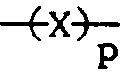
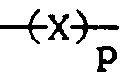
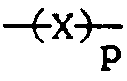
worin R¹ bis R⁸ unabhängig voneinander H und mindestens eines von R¹ bis R⁸ ein Substituent aus der Gruppe -F, -Si(C₁-C₄-Alkyl)₃, -COOR¹⁰; oder je zwei benachbarte Reste von R¹ bis R⁸ -CO-O-CO-; oder mindestens eines von R¹ bis R⁸ unsubstituiertes oder mit -F, -OH-, -CN, C₁-C₁₂-Alkoxy, C₁-C₁₂-Acyloxy oder -COOR¹⁰ substitiertes C₁-C₂₀-Alkyl, C₂-C₂₀-Alkenyl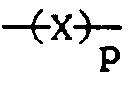 , C₂-C₂₀-Alkinyl
 , C₃-C₈-Cycloalkyl
 , C₁-C₁₂-Alkyl-C₃-C₈-cycloalkyl
 , C₃-C₈-Cycloalkyl-CH₂
 , C₁-C₁₂-Alkyl-C₃-C₈-cycloalkyl-CH₂
 , C₆-C₁₀-Aryl-X-, C₇-C₂₀-Alkaryl-X-, C₇-C₁₂-Aralkyl
 oder C₈-C₂₀-Alkaralkyl
 oder
oder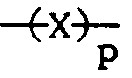

darstellen;
R¹⁰ für H oder C₁-C₁₈-Alkyl steht, X -O-, -S-, -SO- oder -SO₂- und Y -O- oder -S- bedeuten, und p für 0 oder 1, m für eine Zahl von 2 bis 6 und n für eine Zahl von 2 bis 20 stehen;
und R⁹ unsubstituiertes oder mit -F substituiertes C₁-C₄-Acyl darstellt, mit Ausnahme von 5,12-Acetyloxy-7-Methyltetracen.
Bedeuten R¹ bis R⁸ -Si(C₁-C₄-Alkyl)₃, so kann es sich bei der Alkylgruppe um Methyl, Ethyl, n- oder i-Propyl oder n- und i-Butyl handeln. Besonders bevorzugt ist -Si(CH₃)₃. - Bedeuten R¹ bis R⁸ -COOR¹⁰, so kann R¹⁰ H oder lineares oder verzweigtes Alkyl mit bevorzugt 1 bis 12, besonders 1 bis 8 C-Atomen sein. Beispiele für Alkyl sind Methyl, Ethyl, und die Isomeren von Propyl, Butyl, Pentyl, Hexyl, Heptyl, Octyl, Nonyl, Decyl, Undecyl, Dodecyl, Tetradecyl, Hexadecyl und Octadecyl.
- R¹ bis R⁸ können in Rahmen der vorangehenden Definitionen substituiert sein, bevorzugt ein-bis dreifach, besonders ein-oder zweifach. Bei den Substituenten kann es sich z.B. um lineares oder verzweigtes Alkoxy mit vorzugsweise 1 bis 6, besonders 1 bis 4 C-Atomen handeln. Besonders bevorzugt sind Ethoxy und Methoxy.
- Bei den Substituenten kann es sich z.B. auch um Acyloxy mit vorzugsweise 1 bis 6 C-Atomen handeln, z.B. C₁-C₆-Alkyl-CO-O- oder Benzyloxy. Beispiele sind Formyloxy, Acetoxy, Trifluoracetoxy, Propionyloxy, Acryloxy, Methacryloxy und Butanoyloxy.
- Bei den Substituenten kann es sich ferner z.B. um -COOR¹⁰ handeln, worin R¹⁰ bevorzugt für H oder C₁-C₄-Alkyl steht.
- In einer bevorzugten Ausführungsform können R¹ bis R⁸ mit -OH, -F, C₁-C₄-Alkoxy, -COO(C₁-C₄-Alkyl) und C₁-C₆-Akyl-CO-O- substituiert sein.
- R¹ bis R⁸ können C₁-C₂₀-Alkylsein. Die Alkylgruppe kann linear oder verzweigt sein und enthält bevorzugt 1 bis 18, besonders 1 bis 12 und insbesondere 1 bis 8 C-Atome. Beispiel für Alkylgruppen sind zuvor erwähnt worden.

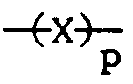
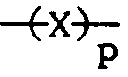
- R¹ bis R⁸ können C₂-C₂₀-Alkenylsein, worin p bevorzugt 1 ist, X bevorzugt für -O- steht und die Alkenylgruppe bevorzugt eine terminale Alkengruppe enthält. Das Alkenyl kann linear oder verzweigt sein und bevorzugt 2 bis 18, besonders 2 bis 12 und insbesondere 2 bis 6 C-Atome enthalten. Beispiele sind Ethenyl, Allyl, Prop-1-en-1- oder -2-yl, But-1-en-1- oder -2- oder -3- oder -4-yl, But-2-en-1- oder -2-yl, Pent-1-en- oder Pent-2-en-1- oder -2- oder -3- oder -4- oder -5-yl, Hex-1-en- oder Hex-2-en- oder Hex-3-en-1- oder -2- oder -3- oder -4- oder -5- oder -6-yl, Heptenyl, Octenyl, Nonenyl, Decenyl, Undecenyl, Dodecenyl, Tetracenyl, Hexadecenyl und Octadecenyl.
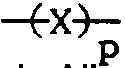
- R¹ bis R⁸ können C₂-C₂₀-Alkinylsein, worin p bevorzugt 1 ist, X bevorzugt für -O- steht und die Alkinylgruppe bevorzugt eine terminale Alkingruppe enthält. Das Alkinyl kann linear oder verzweigt sein und bevorzugt 2 bis 18, besonders 2 bis 12 und insbesondere 2 bis 6 C-Atome enthalten. Beispiele sind Ethinyl, Propargyl, But-1-in-3- oder -4-yl, Pent-1-in-3- oder -4- oder -5-yl, Hex-1-in-3- oder -4- oder -5- oder -6-yl, Hex-2-in-1- oder -4- oder -5- oder -6-yl, Hex-3-in-1- oder -2-yl, Heptinyl, Octinyl, Noninyl, Decinyl, Undecinyl und Dodecinyl.

- R¹ bis R⁸ können C₃-C₈-Cycloalkylsein, worin p bevorzugt für 1 steht und das Cycloalkyl bevorzugt 3 bis 6, besonders 5 oder 6 C-Atome enthält. Beispiele sind Cyclopropyl, Cyclobutyl, Cyclopentyl, Cyclohexyl, Cycloheptyl und Cyclooctyl.

R¹ bis R⁸ können (C₁-C₁₂-Alkyl)-C₃-C₈-cycloalkylsein, worin das Alkyl bevorzugt 1 bis 6 C-Atome enthält, p bevorzugt für 1 steht und das Cycloalkyl bevorzugt Cyclopentyl oder Cyclohexyl ist. Beispiele sind Methyl- oder Ethylcyclopentyl oder -cyclohexyl, Methylcyclopropyl und Methylcyclobutyl.
- R¹ bis R⁸ können C₃-C₈-, bevorzugt C₅- oder C₆-Cycloalkyl-CH₂sein, worin p bevorzugt 1 ist.

- R¹ bis R⁸ können (C₁-C₁₂-Alkyl)-C₃-C₈-cycloalkyl-CH₂sein, worin p bevorzugt 1 ist, die Alkylgruppe bevorzugt 1 bis 6 C-Atome enthält und das Cycloalkyl bevorzugt Cyclopentyl oder Cyclohexyl ist. Beispiele sind Methylcyclohexylmethyl oder -ethyl.

- Bei R¹ bis R⁸ in der Bedeutung von C₆-C₁₀-Aryl-X- stellt das Aryl besonders Naphthyl und insbesondere Phenyl dar. Bei R¹ bis R⁸ in der Bedeutung von C₇-C₂₀-Alkaryl-X- handelt es sich vorzugsweise um (C₁-C₁₄-Alkyl)-phenyl-X-, wobei die Alkylgruppe bevorzugt 1 bis 8, besonders 1 bis 4 C-Atome enthält.
- Bei R¹ bis R⁸ in der Bedeutung von C₇-C₁₂-Aralkylhandelt es sich bevorzugt um Benzyl-X- oder Phenylethyl-X-.

- Bei R¹ bis R⁸ in der Bedeutung von C₈-C₂₀-Alkaralkylhandelt es sich bevorzugt um (C₁-C₁₃-Alkyl)benzyl-X-, wobei die Alkylgruppe insbesondere 1 bis 6 C-Atome enthält. Beispiele sind Methylbenzyl-X- und Ethylbenzyl-X-.

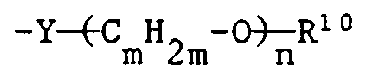
- Bei R¹ bis R⁸ in der Bedeutung von

stellt Y bevorzugt -O- dar, m ist bevorzugt 2 oder 3 und n bevorzugt eine Zahl von 2 bis 12, besonders 2 bis 6, und R¹⁰ steht bevorzugt für H oder C₁-C₄-Alkyl. Bei der CmH2m-Gruppe handelt es sich besonders um Ethylen oder 1,2-Propylen. - R⁹ ist bevorzugt unsubstituiertes oder mit F substituiertes C₁- oder C₂-Acyl. Beispiele sind Butanoyl, Propionyl, Mono- oder Difluoracetoxy, Formyloxy und besonders Acetoxy und Trifluoracetoxy.
- Eine bevorzugte Ausführungsform sind solche Verbindungen der Formel I, worin R¹ bis R⁸ unabhängig voneinander H und mindestens eines von R¹ bis R⁸ ein Substituent aus der Gruppe -F, -Si(CH₃)₃, -COO(C₁-C₁₂-Alkyl), unsubstituiertes oder mit -F, C₁-C₆-Alkoxy, C₁-C₆-Acyloxy oder -COO-(C₁-C₁₂-Alkyl) substituiertes C₁-C₁₈-Alkyl, C₂-C₁₈-Alkenyl
 , C₂-C₁₂-Alkinyl
 , C₆-C₁₀-Aryl-X-, C₇-C₁₈-Alkaryl-X-, C₇-C₁₀-Aralkyl
 , C₈-C₁₈-Alkaralkyl
 oder
oder

darstellen, R¹⁰ für H oder C₁-C₆-Alkyl steht, X -O-, -S-, -SO- oder -SO₂- und Y -O- oder -S- bedeuten, m für 2 oder 3 und n für eine Zahl von 2 bis 12 stehen, und p 0 oder 1 bedeutet, und R⁹ unsubstituiertes oder mit -F substituiertes Acetyl darstellt. - Eine andere bevorzugte Ausführungsform sind solche Verbindungen der Formel I, worin R¹ und R⁴ bis R⁸ H darstellen; R² -F, -CF₃, -COO(C₁-C₁₈-Alkyl), unsubstituiertes oder mit -OH, -COO(C₁-C₆-Alkyl) oder C₁-C₆-Acyloxy substituiertes C₁-C₁₈-Alkyl-X;

worin Y -O- oder -S-, R¹⁰ H oder C₁-C₆-Alkyl und n eine Zahl von 2 bis 12 bedeuten; C₂-C₁₂-Alkenyl-CH₂-X-; C₂-C₁₂-Alkinyl-CH₂-X-; Phenyl-X-; C₁-C₁₂-Alkylphenyl-X-; Benzyl-X-; C₁-C₁₂-Alkylbenzyl-X bedeutet und R³ H ist oder unabhängig die Bedeutung von R² hat, und X -O-, -S-, -SO- oder -SO₂-ist. - R¹ bedeutet als Substituent besonders -CF₃ oder -COO(C₁-C₁₂-Alkyl).
- Bevorzugte Ausführungsformen sind auch solche Verbindungen der Formel I, worin a) R⁴, R⁵ und R⁸ für H stehen, oder b) R¹, R⁴, R⁵ und R⁸ für H stehen, oder c) R² und/oder R³ einen Substituenten und R¹ und R⁴ bis R⁸ H bedeuten, oder d) R⁶ und/oder R⁷ einen Substituenten und R¹ bis R⁵ und R⁸ H bedeuten.
- Ein weiterer Gegenstand der Erfindung ist ein Verfahren zur Herstellung von Verbindungen der Formel I, das dadurch gekennzeichnet ist, dass man in einem Lösungsmittel ein substituiertes Naphthacen-5,12-dion der Formel II

worin R¹ bis R⁸ die zuvor angegebenen Bedeutungen haben, unter reduzierenden Bedingungen mit einem Anhydrid der Formel R⁹CO-O-OCR⁹, worin R⁹ die zuvor angegebene Bedeutung hat, umsetzt. - Die reduktive Acylierung unter Verwendung von reduzierenden Metallen, z.B. Zink, ist bekannt und von T. Kametani in Chem. Pharm. Bull 26(12), S. 3820-3825 (1978) beschrieben worden. Die Reduktion kann auch elektrochemisch oder katalytisch mit Edelmetallkatalysatoren wie z.B. Pt oder Pd vorgenommen werden.
- Die katalytische Reduktion oder die Reduktion mit Metallen wird zweckmässig in Gegenwart eines Alkalimetallsalzes der dem Anhydrid der Formel R⁹CO-O-OCR⁹ zugrunde liegenden Carbonsäure R⁹COOH durchgeführt. Das Alkalimetall kann z.B. Li, Na, K, Rb oder Cs sein.
- Die Reaktion wird in Gegenwart eines inerten Lösungsmittels durchgeführt, z.B. Carbonsäureestern, wie z.B. Essigsäuremethyl- oder -ethylester. Hierdurch verläuft die Reaktions unter milderen Bedingungen und mit höherer Ausbeute als bei den bekannten Verfahren.
- Die Reaktionstemperatur kann z.B. 20 bis 100°C betragen. Vorteilhaft wird eine Temperatur im Bereich der Raumtemperatur, z.B. 20 bis 40°C gewählt.
- Die substituierten Naphthacen-5,12-dione der Formel II sind teilweise bekannt oder sie können mit den nachfolgend beschriebenen Verfahren hergestellt werden.
- Die Verbindungen der Formel II können z.B. hergestellt werden, indem man nach Friedel-Craft ein Naphthalindicarbonsäureanhydrid der Formel IV

in Gegenwart einer Lewissäure mit einem Benzol der Formel V
umsetzt, wobei R¹ bis R⁸ die zuvor angegebenen Bedeutungen haben, und Verbindungen der Formel I, worin mindestens eines von R¹ bis R⁸ -F bedeutet, nukleophil substituiert. Für die nukleophile Substitution geeignete Verbindungen sind besonders solche der Formel (R¹ bis R⁸)̵X-H, worin X -O-, -S-, -SO- oder -SO₂- sind, Malonsäureester oder -nitrile und Phenylessigsäurenitril. Diese nukleophilen Verbindungen können in Form ihrer Alkalisalze, z.B. Li-, Na- oder K-Salze verwendet werden. Ebenso ist es möglich, die nukleophile Substitution in Gegenwart von Basen, wie z.B. Alkalilaugen oder -carbonaten durchzuführen. - Die Verbindungen der Formel II können auch hergestellt werden, indem man in einer Diels-Alder-Reaktion eine Verbindung der Formel VI
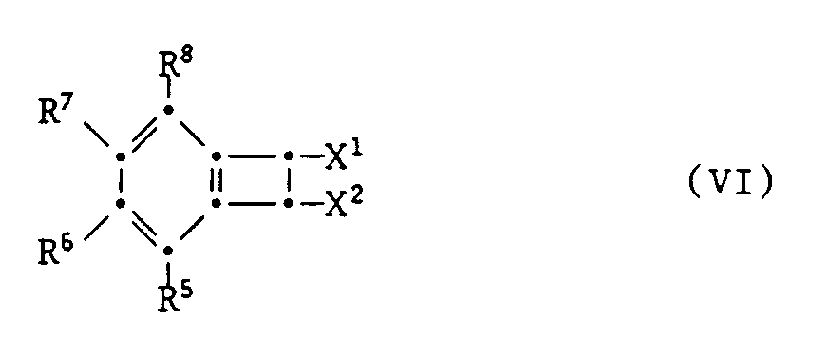
worin R⁵, R⁶, R⁷ und R⁸ die zuvor angegebenen Bedeutungen haben und X¹ und X² unabhängig voneinander für -Cl, -Br oder -J stehen, unter nachfolgender Abspaltung von HX¹ und HX² mit einer Verbindung der Formel VII
worin R¹, R², R³ und R⁴ die zuvor angegebenen Bedeutungen haben, umsetzt. In den Substituenten R¹ bis R⁸ ist p bevorzugt 1. - Die Reaktion wird vorteilhaft bei Temperaturen von 50 bis 250°C, bevorzugt 80 bis 200°C durchgeführt. Zweckmässig wird ein inertes Lösungsmittel verwendet, zum Beispiel polare aprotische Lösungsmittel. Einige Beispiele sind aromatische Kohlenwasserstoffe (Benzol, Toluol, Xylol, Chlorbenzol und Dichlorbenzol), Nitrile (Acetonitril), Ether (Dibutylether, Dioxan, Tetrahydrofuran, Ethylenglykol- oder Diethylenglykoldimethylether). Die Isolierung und Reinigung kann nach üblichen Methoden erfolgen, z.B. Kristallisation, Sublimation oder Chromatographie.
- Verbindungen der Formel VI sind teilweise bekannt (siehe z.B. H.P. Cava et al., J. Am. Chem. Soc., S. 1701 (1957) und J.W. Barton et al., J. Chem. Soc. Perkin Trans. 1, S. 967-971 (1986)), bzw. nach analogen Verfahren herstellbar. Die für die Herstellung benötigten substituierten 1,2-Bis(dichlor- oder dibrommethyl)benzole sind ebenfalls teilweise bekannt oder durch übliche elektrophile oder nukleophile Substitutionsreaktionen entsprechender o-Dimethylbenzole, und deren anschliessenden Chlorierung oder Bromierung mit z.B. N-Chlor- oder N-Bromsuccinimid erhältlich.
- Die p-Naphthochinone der Formel VII sind bekannt und z.B. durch nukleophile Substitution von gegebenenfalls geschützten und substituierten Halogen- oder Nitro-1,4-naphthochinonen mit z.B. den zuvor beschriebenen Verbindungen in Gegenwart von Alkalimetallverbindungen (K₂CO₃, Cs₂CO₃, KOH, NaOH, NaNH₂, NaOCH₃, NaOC₂H₅) oder mit Alkalimetall-Verbindungen z.B. von Li, K, Na, Rb oder Cs, erhältlich. Halogen-und Nitro-naphthochinone sind z.B. in Houben-Weyl, Chinone I, Band 7/3b (1977) beschreiben. Die Naphthochinone der Formel VII können auch in bekannter Weise durch elektrophile oder nukleophile Substitution von gegebenenfalls substituierten Naphthalinen, Dihydro- oder Tetrahydronaphthalinen und anschliessende Umwandlung in die substituierten 1,4-Naphthochinone hergestellt werden.
- Die Verbindungen der Formel II können auch hergestellt werden, indem man 1,2-Bis(dihalogenmethyl)benzole der Formel

worin Y¹ für Cl, Br oder I steht, in Gegenwart von NaI in einem organischen Lösungsmittel mit einer Verbindung de Formel VII umsetzt. Diese Methode ist von J.W. McOmie in Synthesis, S. 416-417 (1973) beschrieben. - Verbindungen der Formel II können auch erhalten werden, indem man Anthracen-1,4-chinone der Formel

mit einem α-Pyron der Formel VIII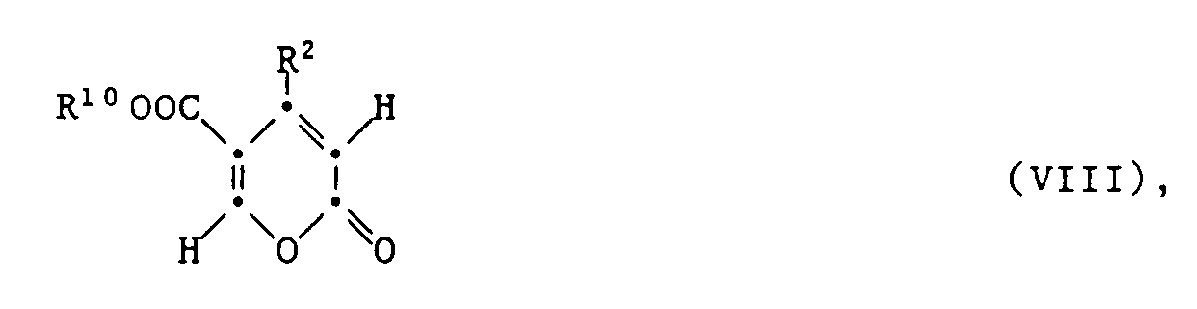
oder einem Butadien der Formel IX
umsetzt, wobei R¹¹ C₁-C₆-Alkyl ist, R¹⁰ die zuvor angegebene Bedeutung hat und bevorzugt C₁-C₆-Alkyl ist. Diese Methode und die Herstellung von α-Pyronen ist in der US-PS 4,617,151 und der EP-A-0 195 743 beschrieben. - Verbindungen der Formeln VIII und IX sind z.B. folgendermassen erhältlich, wobei X¹ ein Alkalimetall bedeutet:

- Wenn R¹ bis R⁸ einen Polyoxaalkylenrest bedeuten, so erhält man solche Verbindungen auch durch Umsetzung von Verbindungen der Formel I mit R¹ bis R⁸ gleich Hydroxyalkyloxy mit Epoxiden. Ferner ist es möglich die Reste R¹ bis R⁸ durch klassische Reaktionen abzuwandeln, wie z.B. Hydrolyse, Ver- oder Umesterung, Amidierung, Oxidation oder Reduktion. Carbonsäureester können in bekannter Weise mit HF/SF₄ in die Trifluormethylderivate umgewandelt werden.
- Die Verbindungen der Formel I werden in kurzen Reaktionszeiten in hohen Ausbeuten und in hoher Reinheit erhalten. Sie eignen sich überraschend zur direkten Umsetzung mit Schwefel unter Bildung von Tetrathiotetracenen.
- Ein weiterer Gegenstand ist ein Verfahren zur Herstellung von 5,6,11,12-Tetrathiotetracenen der Formel III

worin R¹ bis R⁸ unabhängig voneinander H oder einen Substituenten aus der Gruppe -F, -Si(C₁-C₄-Alkyl)₃, -COOR¹⁰; oder je zwei benachbarte Rest von R¹ bis R⁸ -CO-O-CO-; oder R¹ bis R⁸ einen Substituenten aus der Gruppe unsubstituiertes oder mit -F, -OH-, C₁-C₁₂-Alkoxy, C₁-C₁₂-Acyloxy, oder -COOR¹⁰ substitiertes C₁-C₂₀-Alkyl, C₃-C₈-Cycloalkyl , C₁-C₁₂-Alkyl-C₃-C₈-cycloalkyl
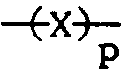 , C₃-C₈-Cycloalkyl-CH₂
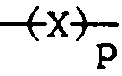 , C₁-C₁₂-Alkyl-C₃-C₈-cycloalkyl-CH₂
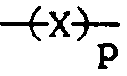 , C₆-C₁₀-Aryl-X-, C₇-C₂₀-Alkaryl-X-, C₇-C₁₂-Aralkyl
 oder C₈-C₂₀-Alkaralkyl
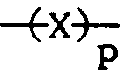 oder
oder
darstellen;
R¹⁰ für H oder C₁-C₁₈-Alkyl steht, X -O-, -S-, -SO- oder -SO₂- und Y -O- oder -S- bedeuten, und p für 0 oder 1, m für eine Zahl von 2 bis 6 und n für eine Zahl von 2 bis 20 stehen; dadurch gekennzeichnet, dass man eine Verbindung der Formel Ia
worin R¹ bis R⁸ die zuvor angegebenen Bedeutungen haben und R⁹ unsubstituiertes oder mit -F substituiertes C₁-C₄-Acyl darstellt, in Gegenwart katalytischer Mengen einer Sulfonsäure mit Schwefel umsetzt. - Die Reaktion wird zweckmässig in einem hochsiedenden Lösungsmittel durchgeführt. Geeignete Lösungsmittel sind besonders halogenierte aromatische Kohlenwasserstoffe, z.B. Chlorbenzol, Dichlorbenzole und Trichlorbenzole, aber auch Nitrobenzol oder Dowtherm A.
- Die Reaktion wird ferner zweckmässig unter Inertgasatmosphäre durchgeführt, z.B. unter Verwendung von Edelgasen (Helium, Neon, Argon) oder Stickstoff.
- Die Reaktionstemperatur beträgt vorteilhaft 100 bis 250°C, besonders 150 bis 250°C. Es ist zweckmässig, bei Rückflusstemperatur des gewählten Lösungsmittels zu arbeiten.
- Die Menge an Sulfonsäure kann 0,001 bis 10 Mol-%, bevorzugt 0,001 bis 5 Mol-% und besonders 0,01 bis 2 Mol-% betragen, bezogen auf die Menge der Verbindungen der Formel Ia.
- Geeignete Sulfonsäuren sind z.B. organische Sulfonsäuren, besonders aromatische Sulfonsäuren. Beispiele sind Methan-, Ethan-, Propan-, Butan-, Hexan-, Trifluormethan- oder Benzolsulfonsäure und besonders p-Toluolsulfonsäure.
- Mit dem erfindungsgemässen Verfahren erhält man die Tetrathiotetracene der Formel III in guten Ausbeuten. Sie können nach der Isolierung mit Hilfe üblicher Methoden gereinigt werden, z.B. durch Umkristallisation oder Sublimation. Die Isolierung erfolgt im allgemeinen durch Entfernen des Lösungsmittels, Auswaschen des Rückstandes mit einem Nichtlösungsmittel und Trocknen.
- Aus den Verbindungen der Formel III können mit Elektronenacceptoren elektrisch leitende Charge-Transferkomplexe (CT-Komplexe) hergestellt werden. Mit deren funktionellen Substituenten kann man sie an Polymere binden, z.B. als Seitengruppen in Polymere einbauen (vgl. US-PS 4,617,151). Die CT-Komplexe eignen sich auch zur Herstellung z.B. von antistatischen Beschichtungen photographischer Filmelemente, Magnetbänder, elektrophotographischer Filmelemente und elektronischer Komponenten (siehe US-PS 3,634,336). Die chalkogenierten Tetracene weisen ferner elektrochrome Eigenschaften auf; sie können für elektrochrome Displays verwendet werden. Sie eignen sich auch als laser-optische Datenspeicher [Nach. Chem. Techn. Lab. 35, S. 255 ff (1987)] und als Anodenmaterial in organischen Solid-State-Batterien (EP-A-0 090 598). CT-Komplexe von substituierten Tetrathio- oder Tetraselenotetracenen können zur Erzielung antistatischer Eigenschaften auch in thermoplastische, duroplastische oder elastomere Polymere eingearbeitet werden. Hierzu werden zweckmässig z.B. die substituierten Tetrathio- bzw. Tetraselenotetracene zusammen mit einem löslichen Polymer oder einer Vorstufe davon und einem Elektronenacceptor, z.B. einem Halogen bildenden Mittel (organische halogenierte Verbindungen wie z.B. Bromoform, Trichlorbrommethan, Tetrabrommethan, Hexachlorpropan, Perchlorbutadien, 1,3- oder 1,4-Dichlor-2-buten, 1,4-Bis(trichloromethyl)-benzol, Iodacetonitril, Iodoform, Tetrachlorethylen, Perchlorcyclobutadien, N-Chlor-, -brom oder -iodsuccinimid) gegebenenfalls zusammen mit einem weiteren inerten Lösungsmittel gelöst und das überschüssige Halogen bildende Mittel und das Lösungsmittel bei höherer Temperatur verdampft. Die gebildete Zusammensetzung enthält im Polymer ein Netzwerk nadelförmiger Kristalle des CT-Komplexes, wenn das chalkogenierte Tetracen unsubstituiert ist oder kleine Substituenten (z.B. F, CH₃, CF₃) enthält. Solche Zusammensetzungen weisen eine hohe elektrische Leitfähigkeit auf. Diese kann noch verbessert werden, wenn man ein substituiertes Tetrathio- oder Tetraselenotetracen der Formel III mitverwendet, das kein solches Netzwerk bildet und das in der Polymermatrix in feiner Verteilung vorliegt, da solche substituierten Tetrathio-oder Tetraselenotetracene keine oder nur eine geringe Kristallisationstendenz im Polymer besitzen.
- Die nachfolgenden Beispiele erläutern die Erfindung näher.
- 10,35 mMol 2-substituiertes Naphthacen-5,12-dion, 40 ml Essigsäureethylester, 25 ml Acetanhydrid und 31,05 mMol Kaliumacetat werden unter Rühren mit 31,05 mMol Zinkpulver versetzt. Nach 40 Minuten Rühren bei 25°C wird das Reaktionsgemisch filtriert und der Rückstand viermal mit CH₂Cl₂ gewaschen. Die Filtrate werden eingedampft und der Rückstand aus CH₂Cl₂/Pentan und dann aus Toluol umkristallisiert. Ausbeuten und Schmelzpunkte der erhaltenen 2-substitierten 5,12-Diacetoxynaphthacene sind in Tabelle 1 angegeben.

- Die entsprechenden 2-substituierten Naphthacen-5,12-dione der Beispiele 1-15 und 17 sind durch nukleophile Substitution von 2-Fluornaphtacen-5,12-dion erhältlich.
- 5,65 g (25 mMol) 6-(Trifluormethyl-)-1,4-naphthochinon, 9,82 g (ca. 37 mMol) 1,2-Dibrombenzocyclobuten (verunreinigt mit etwas 2-Brom-1-jodbenzocyclobuten) und 100 ml Xylol werden während 16 Stunden mit einem Wasserabscheider am Rückfluss gehalten. Das Gemisch wird abgekühlt und der Niederschlag abfiltriert umd mit Xylol gewaschen. Ausbeute 5,82 g (71 %); Smp. 253-254°C.
- Analog wird bei der Herstellung der in den nachfolgenden Beispielen 24-26 verwendeten 2,3-Bis-(trifluormethyl-)-naphthacen-5,12-dion (Ausbeute 59 %; Smp. >280°C); 1-(Trifluormethyl-)-naphthacen-5,12-dion-3-carbonsäuremethylester (Ausbeute 60 %; Smp. 234-235°C) und 2-Ethoxy-naphthacen-5,12-dion-3-carbonsäuremethylester (Ausbeute 30 %; Smp. 192-194°C) verfahren.
- 1,65 mMol 2-substituiertes Naphthacen-5,12-dion, 5 ml Essigsäureethylester, 4,96 mMol Kaliumacetat und 3 ml Acetanhydrid werden unter Zugabe von 0,1 g Pd/C (5 %) bei 20-25°C während 35 Minuten hydriert. Das Gemisch wird filtriert und der Rückstand dreimal mit CH₂Cl₂ ausgewaschen. Die Filtrate werden eingedampft und der Rückstand aus CH₂Cl₂/Pentan umkristallisiert. Ausbeuten und Schmelzpunkte der erhaltenen 5,12-Diacetoxynaphthacene sind in Tabelle 2 angegeben.

- In eine durch eine D3 Glasfritte getrennte Zelle, ausgestattet mit einer als Rührer ausgebildeten Edelstahlkathode und einer Pt-Anode, wird eine Lösung von 400 ml Acetanhydrid und 11,1 g (0,04 mol) Tetrabutylammoniumchlorid gegeben. Unter Stickstoff werden dann 3 g (0,67 mMol) 2-(4-Hydroxybutoxy)-naphthacen-5,12-dion zugegeben und bei einer Stromstärke von 20 mA wird 20 Stunden elektrolysiert. Danach wird die Lösung des Kathodenraumes in Eiswasser eingetragen und mit gesättigter Natriumcarbonatlösung neutralisiert. Das ausgefallene Produkt wird abfiltriert und mit Wasser gewaschen. Ausbeute 3,8 g (90,5 %) 2-(4′-Acetoxybutoxy)-5,12-diacetoxy-naphthacen. Massenspektrum: M⁺ = 474

- 2 g (6,62 mMol) 2-Ethoxynaphthacen-5,12-dion, 55 ml Trifluoressigsäureanhydrid, 2,7 g Trifluoressigsäure-Natriumsalz, 20 ml Essigsäureethylester und 1,08 g (16,54 mMol) Zinkstaub werden während 3 Std. bei 25-30°C gerührt. Das Gemisch wird abfiltriert und der Rückstand mit Tetrahydrofuran/CH₂Cl₂ mehrmals nachgewaschen. Die Filtrate werden eingedampft und der Rückstand mit Diethylether verrührt. Die Kristalle werden abfiltriert und aus Toluol umkristallisiert: Ausbeute 2,83 g (86 %); Smp. 165-70°C.
- In einem 250 ml Kolben mit Rückflusskühler und Gaseinleitungsrohr werden unter leichtem Argonfluss 1,83 mMol substituiertes Naphthacen-5,12-diacetat, 15,8 mVal S₈ und 0,026 mMol p-Toluolsulfonsäure in 100 ml 1,2,4-Trichlorbenzol 5 1/2 Stunden am Rückfluss erhitzt. Danach wird die dunkelgrüne Lösung am Hochvakuum eingedampft.
- Das Rohprodukt wird über eine Kieselgelflashsäule (240 g Kieselgel, ⌀ 7 cm) mit CCl₄ chromatographiert. [Das Kieselgel muss zuvor mit CCl₄, das 2 % Triethylamin enthält, behandelt und darauf mit reinem CCl₄ gewaschen werden, bis das Eluat wieder neutral ist.] Die dunkelgrün gefärbten Fraktionen enthalten das gereinigte 2-substituierte 5,6,11,12-Tetrathiotetracen. Spektrale Daten und Ausbeuten sind in Tabelle 3 angegeben.

- In einem 100 ml Kölbchen mit Rückflusskühler und Gaseinlassrohr werden unter leichtem Argonfluss 251 mg (0,61 mMol) 2-Trifluormethylnaphthacen-5,12-diacetat, 78 mg (2,43 mVal) S₈ und 2 mg (0,01 mMol) p-Toluolsulfonsäure in 35 ml 1,2,4-Trichlorbenzol 20 Stunden am Rückfluss erhitzt. Nach dem Abkühlen wird am Hochvakuum (HV) das Lösungsmittel abgedampft, der Rückstand mit Hexan ausgekocht, das schwarze Pulver abfiltriert und am HV bei 60°C getrocknet. Man erhält 203 mg (79 %) Rohprodukt.
- Dieses wird bei 190°C (1,3 x 10⁻⁴ mbar) sublimiert, wobei 67,5 mg (35,6 %) reines 2-Trifluormethyl-5,6,11,12-tetrathiotetracen erhalten werden (schwarze Nädelchen) . Massenspektrum: M⁺ = 420.
λmax (1,2,4-Trichlorbenzol): 725, 665, 484 nm. - Es wird wie in Beispiel 37 verfahren und 2,3-Trifluormethylnaphtacen-5,12-diacetat verwendet. Ausbeute: 75,6 mg (30 %) nach Sublimation.
Massenspektrum: M⁺ = 488.
λmax (1,2,4-Trichlorbenzol): 755 nm. - Elektrochromie
In eine Elektrochromiezelle, bestehend aus einer Teflonmembran und in je 0,5 mm Abstand einer Anode und Kathode aus ITO-Glas, werden zur Anodenseite 1 mg 2,3-Di(trifluormethyl)-5,6,11,12-tetrathioetracen und 100 mg LiClO₄, gelöst in 5 ml Aceton, und zur Kathodenseite eine Lösung von 1 mg 2,3-Di(trifluormethyl)-5,6,11,12-tetrathiotetracen-perchlorat (CT-Komplex, Herstellung siehe US-PS 3,634,336) und 100 mg LiClO₄ in 5 ml Aceton eingefüllt. Nach Anlegen einer Spannung von 2 Volt wechseln innerhalb weniger Sekunden die Farben von grün nach rotviolett auf der Anodenseite und von rotviolett nach grün auf der Kathodenseite. Durch Umpolung der Spannung werden in beiden Zellenhälften die ursprünglichen Farben erhalten. Der gleiche Effekt wird beobachtet, wenn man Nitrobenzol oder Dimethylformamid als Lösungsmittel verwendet.
Claims (17)
- Verbindungen der Formel I
 , C₂-C₂₀-Alkenyl
 , C₂-C₂₀-Alkinyl
 , C₃-C₈-Cycloalkyl
 , C₁-C₁₂-Alkyl-C₃-C₈-cycloalkyl
 , C₃-C₈-Cycloalkyl-CH₂
 , C₁-C₁₂-Alkyl-C₃-C₈-cycloalkyl-CH₂
 , C₆-C₁₀-Aryl-X-, C₇-C₂₀-Alkaryl-X-, C₇-C₁₂-Aralkyl
 oder C₈-C₂₀-Alkaralkyl
 oder
oder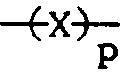
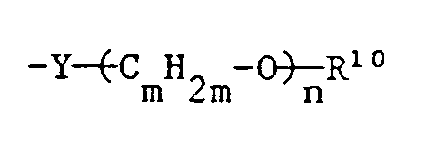
R¹⁰ für H oder C₁-C₁₈-Alkyl steht, X -O-, -S-, -SO- oder -SO₂- und Y -O- oder -S- bedeuten, und p für 0 oder 1, m für eine Zahl von 2 bis 6 und n für eine Zahl von 2 bis 20 stehen;
und R⁹ unsubstituiertes oder mit -F substituiertes C₁-C₄-Acyl darstellt, mit Ausnahme von 5,12-Acetyloxy-7-Methyltetracen. - Verbindungen gemäss Anspruch 1, worin R¹ bis R⁸ unabhängig voneinander H und mindestens eines von R¹ bis R⁸ ein Substituent aus der Gruppe -F, -Si(CH₃)₃, -COO(C₁-C₁₂-Alkyl), unsubstituiertes oder mit -F, C₁-C₆-Alkoxy, C₁-C₆-Acyloxy oder -COO(C₁-C₁₂-Alkyl) substituiertes C₁-C₁₈-AlkylC₂-C₁₈-Alkenyl
 C₂-C₁₂-Alkinyl
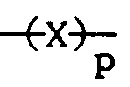 , C₆-C₁₀-Aryl-X-, C₇-C₁₈-Alkaryl-X-, C₇-C₁₀-Aralkyl
 C₈-C₁₈-Alkaralkyl
 oder
oder
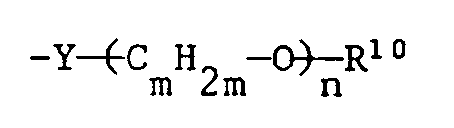
- Verbindungen gemäss Anspruch 1, worin R⁴, R⁵ und R⁸ für H stehen.
- Verbindungen gemäss Anspruch 1, worin R¹, R⁴, R⁵ und R⁸ für H stehen.
- Verbindungen gemäss Anspruch 1, worin R² und/oder R³ einen Substituenten und R¹ und R⁴ bis R⁸ H bedeuten.
- Verbindungen gemäss Anspruch 1, worin R⁶ und/oder R⁷ einen Substituenten und R¹ bis R⁵ und R⁸ H bedeuten.
- Verbindungen gemäss Anspruch 1, worin R¹ als Substituent -CF₃ oder COO(C₁-C₁₂-Alkyl) ist.
- Verbindungen gemäss Anspruch 1, worin R¹ und R⁴ bis R⁸ H darstellen, R² -F, -CF₃, -COO(C₁-C₁₈-Alkyl), unsubstituiertes oder mit -OH, -COO(C₁-C₆-Alkyl) oder C₁-C₆-Acyloxy substituiertes C₁-C₁₈-Alkyl-X;

- Verfahren zur Herstellung von Verbindungen der Formel I gemäss Anspruch 1, dadurch gekennzeichnet, dass man in einem Lösungsmittel ein substituiertes Naphthacen-5,12-dion der Formel II

- Verfahren gemäss Anspruch 9, dadurch gekennzeichnet, dass das Lösungsmittel ein Carbonsäureester ist.
- Verfahren gemäss Anspruch 9, dadurch gekennzeichnet, dass die reduzierenden Bedingungen elektrochemisch, katalytisch oder durch Zusatz von reduzierenden Metallen erzeugt werden.
- Verfahren zur Herstellung von 5,6,11,12-Tetrahiotetracenen der Formel III
 ,C₃-C₈-Cycloalkyl
 , C₁-C₁₂-Alkyl-C₃-C₈-cycloalkyl
 ,C₃-C₈-Cycloalkyl- CH₂
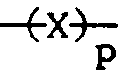 ,C₁-C₁₂-Alkyl-C₃-C₈-cycloalkyl-CH₂
 , C₆-C₁₀-Aryl-X-, C₇-C₂₀-Alkaryl-X-, C₇-C₁₂-Aralkyl
 oder C₈-C₂₀-Alkaralkyl
 oder
oder

R¹⁰ für H oder C₁-C₁₈-Alkyl steht, X -O-, -S-, -SO- oder -SO₂- und Y -O- oder -S- bedeuten, und p für 0 oder 1, m für eine Zahl von 2 bis 6 und n für eine Zahl von 2 bis 20 stehen; dadurch gekennzeichnet, dass man eine Verbindung der Formel Ia
- Verfahren gemäss Anspruch 12, dadurch gekennzeichet, dass man die Reaktion in Gegenwart eines hochsiedenden Lösungsmittels durchführt.
- Verfahren gemäss Anspruch 12, dadurch gekennzeichnet, dass man die Reaktion unter Inertgasatmosphäre durchführt.
- Verfahren gemäss Anspruch 12, dadurch gekennzeichnet, dass es sich bei der Sulfonsäure um eine aromatische Sulfonsäure handelt.
- Verfahren gemäss Anspruch 15, dadurch gekennzeichnet, dass es sich um p-Toluolsulfonsäure handelt.
- Verfahren gemäss Anspruch 12, dadurch gekennzeichnet, dass die Menge der Sulfonsäure 0,001 bis 10 Mol-% beträgt, bezogen auf die Menge der Verbindung der Formel Ia.
Applications Claiming Priority (4)
| Application Number | Priority Date | Filing Date | Title |
|---|---|---|---|
| CH200888 | 1988-05-27 | ||
| CH2008/88 | 1988-05-27 | ||
| CH275488 | 1988-07-19 | ||
| CH2754/88 | 1988-07-19 |
Publications (3)
| Publication Number | Publication Date |
|---|---|
| EP0344112A2 EP0344112A2 (de) | 1989-11-29 |
| EP0344112A3 EP0344112A3 (en) | 1990-04-11 |
| EP0344112B1 true EP0344112B1 (de) | 1993-01-20 |
Family
ID=25689249
Family Applications (1)
| Application Number | Title | Priority Date | Filing Date |
|---|---|---|---|
| EP89810366A Expired - Lifetime EP0344112B1 (de) | 1988-05-27 | 1989-05-18 | Substituierte Bisacyloxynaphtacene und Verfahren zur Herstellung von Tetrathiotetracenen |
Country Status (4)
| Country | Link |
|---|---|
| US (2) | US5206390A (de) |
| EP (1) | EP0344112B1 (de) |
| JP (1) | JPH0219341A (de) |
| DE (1) | DE58903321D1 (de) |
Families Citing this family (3)
| Publication number | Priority date | Publication date | Assignee | Title |
|---|---|---|---|---|
| CA2401487C (en) * | 2000-02-29 | 2011-06-21 | Japan Science And Technology Agency | Polyacene derivatives and process of producing thereof |
| CN102037346B (zh) * | 2008-04-16 | 2013-04-10 | 明智全像公司 | 可光聚合的组合物 |
| CN115160138B (zh) * | 2022-08-16 | 2024-01-02 | 宁波市鼎瑞翔新材料科技有限公司 | 一种制备抗氧剂1076的方法 |
Family Cites Families (5)
| Publication number | Priority date | Publication date | Assignee | Title |
|---|---|---|---|---|
| US2934544A (en) * | 1958-01-17 | 1960-04-26 | Du Pont | Polynuclear quinones |
| US4522754A (en) * | 1982-11-12 | 1985-06-11 | Ciba Geigy Corporation | Metallically conducting (2-fluoro-5,6,11,12-tetraselenotetracene)2 -bromide |
| US4601853A (en) * | 1984-02-13 | 1986-07-22 | Ciba-Geigy Corporation | (2-fluoro-5,6,11,12-tetraselenotetracene)2 chloride |
| CH662567A5 (de) * | 1984-03-23 | 1987-10-15 | Ciba Geigy Ag | In 2-stellung substituiertes 5,6,11,12-tetrathio- und 5,6,11,12-tetraselenotetracene, verfahren zu ihrer herstellung und ihre verwendung. |
| EP0344108A3 (de) * | 1988-05-27 | 1991-03-27 | Ciba-Geigy Ag | Elektroaktive ultradünne Schichten |
-
1989
- 1989-05-18 DE DE8989810366T patent/DE58903321D1/de not_active Expired - Fee Related
- 1989-05-18 EP EP89810366A patent/EP0344112B1/de not_active Expired - Lifetime
- 1989-05-24 US US07/356,827 patent/US5206390A/en not_active Expired - Fee Related
- 1989-05-29 JP JP1132913A patent/JPH0219341A/ja active Pending
-
1993
- 1993-01-11 US US08/003,067 patent/US5338863A/en not_active Expired - Fee Related
Non-Patent Citations (1)
| Title |
|---|
| CHEMICAL AND PHARMACEUTICAL BULLETIN, Band 26, Nr. 12, Dezember 1978, Seiten 3820-3824, Tokyo (JP); T. KAMETANI et al.: "Studies on the syntheses of tetracycline derivatives. III. Synthetic approach to adriamycin - synthesis of the linear tetracyclic skeleton having the same BC ring system with adriamycin" * |
Also Published As
| Publication number | Publication date |
|---|---|
| US5338863A (en) | 1994-08-16 |
| US5206390A (en) | 1993-04-27 |
| EP0344112A3 (en) | 1990-04-11 |
| EP0344112A2 (de) | 1989-11-29 |
| DE58903321D1 (de) | 1993-03-04 |
| JPH0219341A (ja) | 1990-01-23 |
Similar Documents
| Publication | Publication Date | Title |
|---|---|---|
| US5763719A (en) | Thermally stable fullerene derivatives and process for producing the same | |
| US4500459A (en) | Tetracyanoanthraquinodimethane compounds | |
| EP0567429B1 (de) | Substituierte Tetracyanochinodimethane, Verfahren zu deren Herstellung und deren Verwendung als pi-akzeptoren und elektrische Halbleiter | |
| DE69708062T2 (de) | Zyklische phenolsulfide, die eine sulfinyl- oder sulfonylgruppe enthalten und ein verfahren zu ihrer herstellung | |
| EP0344111A2 (de) | Substituierte Tetrathio- und Tetraselenotetracene | |
| EP0153905B1 (de) | (2-Fluor-5,6,11,12-tetraselenotetracen)2-chlorid, Verfahren zu dessen Herstellung und dessen Verwendung | |
| CH630888A5 (de) | Verfahren zur herstellung eines regioisomerengemisches von naphthacentetraonverbindungen. | |
| DE60130786T2 (de) | Porphyrinverbindungen bestehend aus in eine einzige richtung über drei kovalente bindungen kondensierten porphyrinringen, d.h. eine meso-meso-kohlenstoffbindung und zwei beta-beta-kohlenstoffbindungen sowie verfahren zu deren herstellung | |
| EP0344112A2 (de) | Substituierte Bisacyloxynaphtacene und Verfahren zur Herstellung von Tetrathiotetracenen | |
| US4249013A (en) | Conjugatively linked tetrathiafulvalenes and method for preparation thereof | |
| EP0039085A1 (de) | Verfahren zur Erhöhung der Löslichkeit aromatischer Systeme | |
| EP0588759A1 (de) | Dithiopentacenderivate, deren Herstellung und deren Verwendung als Elektronenakzeptoren in Charge-Transfer Komplexen | |
| US5011944A (en) | Substituted α-pyrones | |
| DE3635124A1 (de) | Difluorierte (5,6,11,12-tetraselenotetracen)(pfeil abwaerts)2(pfeil abwaerts)-halogenide, verfahren zu deren herstellung und deren verwendung | |
| EP0106805B1 (de) | Verfahren zur Herstellung von 3,4,9,10-Tetrathioperylen und 3,4,9,10-Tetraselenoperylen | |
| EP0554220A1 (de) | Charge-Transfer Komplexe mit Ferrocenen, deren Herstellung und deren Verwendung | |
| US4243601A (en) | Cyano substituted diphenoquinones and a process for preparing them | |
| EP0061264A1 (de) | Tetracyanoanthrachinodimethanverbindungen, Verfahren zu deren Herstellung und davon abgeleitete Polymere und Ladungsübertragungskomplexe | |
| EP0346276B1 (de) | Substituierte Benzocyclobutene, Verfahren zu deren Herstellung und deren Verwendung | |
| EP0206281A2 (de) | Verfahren zum überführen von rohen Isoindolinpigmenten in eine Pigmentform | |
| DE3437814A1 (de) | Charge-transfer-komplexe | |
| EP0695742A1 (de) | Fullerenazirin-Derivate, Verfahren zu ihrer Herstellung und deren Verwendung | |
| DE3007366C2 (de) | Verfahren zur Herstellung von 2-Methyl-5-hydroxy-1,4-naphthochinon | |
| DE963153C (de) | Verfahren zur Herstellung von Alkyleniminochinonen | |
| EP0026846B1 (de) | Cyclisch substituierte Fulvalenophane, ihre Herstellung und Verwendung |
Legal Events
| Date | Code | Title | Description |
|---|---|---|---|
| PUAI | Public reference made under article 153(3) epc to a published international application that has entered the european phase |
Free format text: ORIGINAL CODE: 0009012 |
|
| 17P | Request for examination filed |
Effective date: 19890520 |
|
| AK | Designated contracting states |
Kind code of ref document: A2 Designated state(s): CH DE FR GB IT LI NL |
|
| PUAL | Search report despatched |
Free format text: ORIGINAL CODE: 0009013 |
|
| AK | Designated contracting states |
Kind code of ref document: A3 Designated state(s): CH DE FR GB IT LI NL |
|
| 17Q | First examination report despatched |
Effective date: 19910927 |
|
| GRAA | (expected) grant |
Free format text: ORIGINAL CODE: 0009210 |
|
| AK | Designated contracting states |
Kind code of ref document: B1 Designated state(s): CH DE FR GB IT LI NL |
|
| ITF | It: translation for a ep patent filed | ||
| REF | Corresponds to: |
Ref document number: 58903321 Country of ref document: DE Date of ref document: 19930304 |
|
| GBT | Gb: translation of ep patent filed (gb section 77(6)(a)/1977) |
Effective date: 19930212 |
|
| ET | Fr: translation filed | ||
| PLBE | No opposition filed within time limit |
Free format text: ORIGINAL CODE: 0009261 |
|
| STAA | Information on the status of an ep patent application or granted ep patent |
Free format text: STATUS: NO OPPOSITION FILED WITHIN TIME LIMIT |
|
| 26N | No opposition filed | ||
| PGFP | Annual fee paid to national office [announced via postgrant information from national office to epo] |
Ref country code: FR Payment date: 19940321 Year of fee payment: 6 |
|
| PGFP | Annual fee paid to national office [announced via postgrant information from national office to epo] |
Ref country code: DE Payment date: 19940412 Year of fee payment: 6 |
|
| PGFP | Annual fee paid to national office [announced via postgrant information from national office to epo] |
Ref country code: GB Payment date: 19940425 Year of fee payment: 6 |
|
| PGFP | Annual fee paid to national office [announced via postgrant information from national office to epo] |
Ref country code: NL Payment date: 19940531 Year of fee payment: 6 |
|
| PGFP | Annual fee paid to national office [announced via postgrant information from national office to epo] |
Ref country code: CH Payment date: 19940819 Year of fee payment: 6 |
|
| PG25 | Lapsed in a contracting state [announced via postgrant information from national office to epo] |
Ref country code: GB Effective date: 19950518 |
|
| PG25 | Lapsed in a contracting state [announced via postgrant information from national office to epo] |
Ref country code: LI Effective date: 19950531 Ref country code: CH Effective date: 19950531 |
|
| PG25 | Lapsed in a contracting state [announced via postgrant information from national office to epo] |
Ref country code: NL Effective date: 19951201 |
|
| GBPC | Gb: european patent ceased through non-payment of renewal fee |
Effective date: 19950518 |
|
| REG | Reference to a national code |
Ref country code: CH Ref legal event code: PL |
|
| NLV4 | Nl: lapsed or anulled due to non-payment of the annual fee |
Effective date: 19951201 |
|
| PG25 | Lapsed in a contracting state [announced via postgrant information from national office to epo] |
Ref country code: DE Effective date: 19960201 |
|
| PG25 | Lapsed in a contracting state [announced via postgrant information from national office to epo] |
Ref country code: FR Effective date: 19960229 |
|
| REG | Reference to a national code |
Ref country code: FR Ref legal event code: ST |
|
| REG | Reference to a national code |
Ref country code: FR Ref legal event code: ST |
|
| PG25 | Lapsed in a contracting state [announced via postgrant information from national office to epo] |
Ref country code: IT Free format text: LAPSE BECAUSE OF NON-PAYMENT OF DUE FEES;WARNING: LAPSES OF ITALIAN PATENTS WITH EFFECTIVE DATE BEFORE 2007 MAY HAVE OCCURRED AT ANY TIME BEFORE 2007. THE CORRECT EFFECTIVE DATE MAY BE DIFFERENT FROM THE ONE RECORDED. Effective date: 20050518 |