EP0339366B1 - Verfahren zur Herstellung von Metall-Metallmetalloid-Pulver, dessen Pulverteilchen feinstkristalline bis nanokristalline Struktur haben - Google Patents
Verfahren zur Herstellung von Metall-Metallmetalloid-Pulver, dessen Pulverteilchen feinstkristalline bis nanokristalline Struktur haben Download PDFInfo
- Publication number
- EP0339366B1 EP0339366B1 EP89106477A EP89106477A EP0339366B1 EP 0339366 B1 EP0339366 B1 EP 0339366B1 EP 89106477 A EP89106477 A EP 89106477A EP 89106477 A EP89106477 A EP 89106477A EP 0339366 B1 EP0339366 B1 EP 0339366B1
- Authority
- EP
- European Patent Office
- Prior art keywords
- metal
- metalmetalloid
- metals
- components
- process according
- Prior art date
- Legal status (The legal status is an assumption and is not a legal conclusion. Google has not performed a legal analysis and makes no representation as to the accuracy of the status listed.)
- Expired - Lifetime
Links
Images

Classifications
-
- C—CHEMISTRY; METALLURGY
- C22—METALLURGY; FERROUS OR NON-FERROUS ALLOYS; TREATMENT OF ALLOYS OR NON-FERROUS METALS
- C22C—ALLOYS
- C22C1/00—Making non-ferrous alloys
- C22C1/04—Making non-ferrous alloys by powder metallurgy
- C22C1/05—Mixtures of metal powder with non-metallic powder
- C22C1/051—Making hard metals based on borides, carbides, nitrides, oxides or silicides; Preparation of the powder mixture used as the starting material therefor
- C22C1/057—Making hard metals based on borides, carbides, nitrides, oxides or silicides; Preparation of the powder mixture used as the starting material therefor with in situ formation of phases other than hard compounds by solid state reaction sintering, e.g. metal phase formed by reduction reaction
-
- B—PERFORMING OPERATIONS; TRANSPORTING
- B22—CASTING; POWDER METALLURGY
- B22F—WORKING METALLIC POWDER; MANUFACTURE OF ARTICLES FROM METALLIC POWDER; MAKING METALLIC POWDER; APPARATUS OR DEVICES SPECIALLY ADAPTED FOR METALLIC POWDER
- B22F1/00—Metallic powder; Treatment of metallic powder, e.g. to facilitate working or to improve properties
- B22F1/07—Metallic powder characterised by particles having a nanoscale microstructure
-
- C—CHEMISTRY; METALLURGY
- C22—METALLURGY; FERROUS OR NON-FERROUS ALLOYS; TREATMENT OF ALLOYS OR NON-FERROUS METALS
- C22C—ALLOYS
- C22C1/00—Making non-ferrous alloys
- C22C1/04—Making non-ferrous alloys by powder metallurgy
- C22C1/05—Mixtures of metal powder with non-metallic powder
- C22C1/059—Making alloys comprising less than 5% by weight of dispersed reinforcing phases
-
- Y—GENERAL TAGGING OF NEW TECHNOLOGICAL DEVELOPMENTS; GENERAL TAGGING OF CROSS-SECTIONAL TECHNOLOGIES SPANNING OVER SEVERAL SECTIONS OF THE IPC; TECHNICAL SUBJECTS COVERED BY FORMER USPC CROSS-REFERENCE ART COLLECTIONS [XRACs] AND DIGESTS
- Y10—TECHNICAL SUBJECTS COVERED BY FORMER USPC
- Y10S—TECHNICAL SUBJECTS COVERED BY FORMER USPC CROSS-REFERENCE ART COLLECTIONS [XRACs] AND DIGESTS
- Y10S75/00—Specialized metallurgical processes, compositions for use therein, consolidated metal powder compositions, and loose metal particulate mixtures
- Y10S75/956—Producing particles containing a dispersed phase
Definitions
- the post-published EP-A2-0 288 785 has already proposed a method for producing a material with a structure of nanocrystalline structure. Powders in commercial particle sizes between 2 and 250 micrometers of the selected elements in pure form or as master alloys of the groups concerned are converted into a secondary powder with a nanocrystalline structure by high mechanical forces, for example by high-energy grinding.
- the object of the invention is to develop a process for the production of metal-metal metalloid powder, the powder particles of which have a nanocrystalline structure and in which the separate production of the metal metalloid powder can be dispensed with.
- the object is achieved by a method having the features of claim 1.
- the ground material then consists of powders of the metals of the metal matrix and the highly active form of the metaloids of the metal metalloid components.
- the latter are introduced into the regrind in such a way that a reactive high-energy grinding process takes place.
- the gaseous metalloids N, O and H are highly active due to their physical state (for example gas under atmospheric pressure) in comparison to the non-gaseous metalloid C; this state can be increased by a higher degree of dispersion, for example by using spicy powders.
- the metalloid C achieves a highly active form when it is converted into a state with a high specific surface area, for example in the form of lampblack.
- Another or additional way to activate this metalloid is to create a high degree of disorder in the lattice.
- the high-energy grinding is converted into a reactive high-energy grinding.
- the metal of the metal metalloid component reacts quantitatively with the metalloid so that it only exists in the metal metalloid compound after completion of the milling process.
- the reactive high-energy grinding thus leads to the result which has been achieved in the prior art by high-energy grinding of metal powder in the presence of metal metalloid powder.
- the high-energy grinding is preferably carried out in attritors, in planetary mills or in other mills in which suitable grinding media (grinding balls) are accelerated to at least 8 g (claim 2).
- the process is particularly favorable for such metals of the metal metalloid component whose enthalpy of binding with the element in question from the group C, N, O and / or H is noticeably negative at the process temperature which arises (claim 3).
- metals of the metal metalloid component whose enthalpy of binding with the element in question from the group C, N, O and / or H is noticeably negative at the process temperature which arises (claim 3).
- These include in particular the metals Ti, Zr, Hf, V, Nb, Ta, Cr, Mo, W, Si and Al (claims 4 and 5, respectively).
- a metal-metal-metalloid powder which is particularly fine with regard to the crystalline structure can be produced if the elements C, N, O and / or H are only added to the regrind after metal alloys have already been formed at least in part; In this way, the reactivity of the metals for the formation of the metal metalloid component is reduced in the alloys as a result of possible compound formation.
- the result of the reactive milling process with regard to the metal metalloid is largely independent of the metal matrix, nickel or chromium according to Examples 1 and 2.
- the resulting titanium carbide crystallites are also becoming increasingly fine-grained; after all, in the final stage of the grinding process, only the finest-grained stoichiometric titanium carbide remains, that is becoming increasingly nanocrystalline.
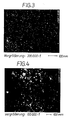
- the result after 48 hours is shown in the TEM image according to FIG. 4.
Landscapes
- Chemical & Material Sciences (AREA)
- Engineering & Computer Science (AREA)
- Materials Engineering (AREA)
- Mechanical Engineering (AREA)
- Metallurgy (AREA)
- Organic Chemistry (AREA)
- Dispersion Chemistry (AREA)
- Chemical Kinetics & Catalysis (AREA)
- Crystallography & Structural Chemistry (AREA)
- Nanotechnology (AREA)
- Manufacture Of Metal Powder And Suspensions Thereof (AREA)
- Powder Metallurgy (AREA)
Description
- Mit der nachveröffentlichten EP-A2-0 288 785 ist bereits ein Verfahren zur Herstellung eines Werkstoffs mit einem Gefüge nanokristalliner Struktur vorgeschlagen worden. Dabei werden Pulver in handelsüblichen Teilchengrößen zwischen 2 und 250 Mikrometer der ausgewählten Elemente in reiner Form oder als Vorlegierungen der betreffenden Gruppen durch hohe mechanische Kräfte, beispielsweise durch Hochenergiemahlen, in ein Sekundärpulver mit nanokristalliner Struktur umgewandelt.
- Aus der US-A-4 624 705 ist ein Verfahren zur Herstellung feinstkristalliner Strukturen durch mechanisches Legieren bekannt, bei dem der Mahlvorgang in Gegenwart einer flüssigen, Kohlenstoff enthaltenden Mahlhilfe abläuft.
- Aufgabe der Erfindung ist die Entwicklung eines Verfahrens zur Herstellung von Metall-Metallmetalloid-Pulver, dessen Pulverteilchen eine nanokristalline Struktur aufweisen und bei dem auf die gesonderte Herstellung des Metallmetalloid-Pulvers verzichtet werden kann.
- Die Aufgabe wird durch ein Verfahren mit den Merkmalen des Anspruchs 1 gelöst. Danach besteht das Mahlgut im Ausgangszustand aus Pulvern der Metalle der Metallmatrix und der in hochaktiver Form vorliegenden Metalloide der Metallmetalloid-Komponenten. Letztere werden derart ins Mahlgut eingebracht, daß ein reaktiver Hochenergiemahlvorgang abläuft. Die gasförmigen Metalloide N, O und H sind durch ihren Aggregatzustand (beispielsweise Gas unter Atmosphärendruck) im Vergleich zu dem nichtgasförmigen Metalloid C in jedem Fall hochaktiv; dieser Zustand läßt sich durch einen höheren Dispersionsgrad noch steigern, beispielsweise durch Verwendung spratziger Pulver. Das Metalloid C erreicht eine hochaktive Form, wenn es in einen Zustand mit möglichst hoher spezifischer Oberfläche überführt, also beispielsweise in der Form von Lampenruß eingesetzt wird. Eine andere oder zusätzliche Möglichkeit, dieses Metalloid zu aktivieren, besteht in der Erzeugung eines hohen Fehlordnungsgrades im Gitter. Durch Einsatz der hochaktiven Metalloide C, N, O und/oder H wird das Hochenergiemahlen in ein reaktives Hochenergiemahlen überführt. Das Metall der Metallmetalloid-Komponente reagiert dabei quantitativ mit dem Metalloid, so daß es nach Abschluß des Mahlvorgangs nur noch in der Metallmetalloid-Verbindung existiert. Das reaktive Hochenergiemahlen führt also zu dem Ergebnis, das nach dem Stand der Technik bisher durch Hochenergiemahlen von Metallpulver in Gegenwart von Metallmetalloid-Pulver erzielt worden ist.
- Vorzugsweise wird das Hochenergiemahlen in Attritoren, in Planetenmühlen oder in anderen Mühlen durchgeführt, in denen geeignete Mahlkörper (Mahlkugeln) auf mindestens 8 g beschleunigt werden (Anspruch 2).
- Besonders günstig ist das Verfahren für derartige Metalle der Metallmetalloid-Komponente, deren Bindungsenthalpie mit dem betreffenden Element aus der Gruppe C, N, O und/oder H bei der sich einstellenden Prozeßtemperatur merklich negativ ist (Anspruch 3).
Dazu gehören insbesondere die Metalle Ti, Zr, Hf, V, Nb, Ta, Cr, Mo, W, Si und Al (Anspruch 4 bzw. 5). - Ein im Hinblick auf die kristalline Struktur besonders feines Metall-Metallmetalloid-Pulver läßt sich erzeugen, falls die Elemente C, N, O und/oder H dem Mahlgut erst zugeführt werden, nachdem sich bereits zumindest teilweise Metallegierungen eingestellt haben; auf diese Weise wird in den Legierungen infolge möglicher Verbindungsbildung die Reaktionsbereitschaft der Metalle für die Bildung der Metallmetalloid-Komponente herabgesetzt.
- Die Erfindung wird nachfolgend anhand einiger Beispiele erläutert, wobei die Strukturuntersuchungen und Phasenanalysen elektronenmikroskopisch durchgeführt worden sind.
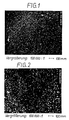
- Ausgangspulver Titan-Nickel-Pulver (70:30 Massen-%), Mahlvorgang an Luft unter Atmosphärendruck, Mahldauer 8 h in einer Planetenmühle mit 12 g Beschleunigung der Mahlkugeln. Die TEM-Aufnahme gemäß Fig. 1 zeigt die Struktur des hergestellten Pulvers. TiO hat sich quantitativ in metallischer Matrix gebildet. Die Aufnahme zeigt ein feinstkristallines Gefüge.
- Ausgangspulver Titan-Chrom-Pulver (70:30 Massen-%), Mahlvorgang an Luft unter Atmosphärendruck, Mahldauer 24 h in einer Planetenmühle mit 12 g Beschleunigung der Mahlkugeln. Die TEM-Aufnahme gemäß Fig. 2 zeigt die Struktur des hergestellten Pulvers. Auch hier hat sich TiO quantitativ in metallischer Matrix gebildet.
- Das Ergebnis des reaktiven Mahlvorgangs bezüglich des Metallmetalloids ist nach den Beispielen 1 und 2 weitgehend unabhängig von der Metallmatrix, Nickel oder Chrom.
- Ausgangspulver Titan-Cobalt-Pulver (70:30 Massen-%), Mahlvorgang mit Stickstoff unter Atmoshärendruck, Mahldauer 90 h im Attritor mit 8 g Beschleunigung der Mahlkugeln. Als Ergebnis hat sich quantitativ Titannitrid gebildet. Die TEM-Aufnahme gemäß Fig. 3 zeigt Titannitrid in metallischer Matrix. Matrix und Nitridphase sind nanokristallin.
- Ausgangspulver Titan-Cobalt-Pulver mit Kohlenstoff in Form von Lampenruß (62:26,5:11,5 Massen-%), Mahldauer 48 h in einer Planetenmühle mit 12 g Beschleunigung der Mahlkugeln. Die hohe spezifische Oberfläche (35 bis 40 m²/g) weist den Ruß als hoch-aktive Komponente aus. Die Hochenergie-Beanspruchung des Mahlgutes während des Mahlens in der Planetenmühle führt im Anfangsstatium zur Ausbildung von relativ groben Titancarbiden (0,5 - 1 µm Kristallitgröße), die offensichtlich in bezug auf den Kohlenstoffgehalt unterstöchiometrisch sind. Im Fortgang des Mahlvorganges wird das Titan sowohl mit Cobalt legiert als auch zugleich feinkristalliner. Gleichzeitig werden die entstehenden Titancarbid-Kristallite ebenfalls zunehmend feinkörniger, schließlich bleibt im Endstadium des Mahlprozesses nur noch feinstkörniges stöchiometrisches Titancarbid, das zunehmend nanokristallin wird. Das Ergebnis nach 48 h zeigt die TEM-Aufnahme gemäß Fig. 4.
- Ausgangspulver Titan-Nickel-Kohlenstoff (62:26,5:11,5 Massen-%). Durch Vormahlen des Titan-Nickel-Pulvergemisches (ca. 48 h) wird die teilweise Bildung eines Legierungspulvers erreicht und damit die Reaktionsbereitschaft des Titans herabgesetzt. Sodann wird Kohlenstoff in Form von hoch-aktivem Lampenruß dem Mahlgut beigegeben und das Mahlgut wird weitere 90 h im Attritor gemahlen. Nach insgesamt ca. 130 h Hochenergie-Beanspruchung hat sich quantitativ feinst- bis nanokristallines Titancarbid in einer Nickelmatrix gebildet. Diese ist ebenfalls weitgehend nanokristallin. TEM-Aufname gemäß Fig. 5 zeigt das Ergebnis.
- Ausgangspulver Wolfram-Cobalt-Nickel-Kohlenstoff (79,5:7, 95:7, 95:4,6 Massen-%), Mahldauer 90 h im Attritor mit 8 g Beschleunigung der Mahlkugeln. Der Kohlenstoff wurde wiederum in Form von hoch-aktivem Lampenruß zugegeben. Die TEM-Aufnahme gemäß Fig. 6 zeigt Carbide, die überwiegend nanokristallin sind.
Claims (6)
- Verfahren zur Herstellung eines Metall-Metallmetalloid-Pulvers durch Hochenergiemahlen, dessen Pulverteilchen nanokristalline Struktur sowohl in der metallischen Matrix als auch in der Metallmetalloid-Komponente aufweisen, die aus einer oder mehreren Metallverbindungen mit einem oder mehreren Elementen der Gruppe C, N, O, und H als Metalloid gebildet ist, wobei die Metalloide der Metallmetalloid-Komponenten als hochaktive Komponenten derart ins Mahlgut - bestehend aus Pulvern der Metalle der Metallmatrix und der Metalle der Metallmetalloid-Komponenten - eingebracht werden, daß ein reaktiver Hochenergiemahlvorgang abläuft.
- Verfahren nach Anspruch 1, dadurch gekennzeichnet, daß das Hochenergiemahlen in Attritoren, in Planetenmühlen oder in anderen Mühlen durchgeführt wird, in denen geeignete Mahlkörper (Mahlkugeln) auf mindestens 8 g beschleunigt werden.
- Verfahren nach den Ansprüchen 1 und 2, dadurch gekennzeichnet, daß die Metalle der Metallmetalloid-Komponente bezüglich der jeweils verwendeten Elemente C, N, O und/oder H eine deutlich negative Bildungsenthalpie bei der sich einstellenden Prozeßtemperatur haben.
- Verfahren nach den Ansprüchen 1 bis 3, dadurch gekennzeichnet, daß die Metalle der Metallmetalloid-Komponente Ti, Zr, Hf, V, Nb, Ta, Cr, Mo und/oder W sind.
- Verfahren nach den Ansprüchen 1 bis 3, dadurch gekennzeichnet, daß das Metall der Metallmetalloid-Komponente Al und/oder Si ist.
- Verfahren nach den Ansprüchen 1 bis 5, dadurch gekennzeichnet, daß die Elemente C, N, O und/oder H in das Mahlgut eingebracht werden, wenn sich während des Hochenergie-Mahlens bei den Metallen Legierungsbildung eingestellt hat.
Applications Claiming Priority (2)
| Application Number | Priority Date | Filing Date | Title |
|---|---|---|---|
| DE3813224 | 1988-04-20 | ||
| DE3813224A DE3813224A1 (de) | 1988-04-20 | 1988-04-20 | Verfahren zur einstellung feinstkristalliner bis nanokristalliner strukturen in metall-metallmetalloid-pulvern |
Publications (2)
| Publication Number | Publication Date |
|---|---|
| EP0339366A1 EP0339366A1 (de) | 1989-11-02 |
| EP0339366B1 true EP0339366B1 (de) | 1993-08-18 |
Family
ID=6352441
Family Applications (1)
| Application Number | Title | Priority Date | Filing Date |
|---|---|---|---|
| EP89106477A Expired - Lifetime EP0339366B1 (de) | 1988-04-20 | 1989-04-12 | Verfahren zur Herstellung von Metall-Metallmetalloid-Pulver, dessen Pulverteilchen feinstkristalline bis nanokristalline Struktur haben |
Country Status (4)
| Country | Link |
|---|---|
| US (1) | US5147449A (de) |
| EP (1) | EP0339366B1 (de) |
| JP (1) | JPH01309901A (de) |
| DE (2) | DE3813224A1 (de) |
Families Citing this family (24)
| Publication number | Priority date | Publication date | Assignee | Title |
|---|---|---|---|---|
| US4818481A (en) * | 1987-03-09 | 1989-04-04 | Exxon Research And Engineering Company | Method of extruding aluminum-base oxide dispersion strengthened |
| JP3359030B2 (ja) * | 1988-12-22 | 2002-12-24 | アドバンスト ナノ テクノロジィーズ プロプライエタリ リミテッド | 金属類、合金類及びセラミック材料類の製造法 |
| DE3906586A1 (de) * | 1989-03-02 | 1990-09-13 | Henkel Kgaa | Verfahren zum herstellen von heterogenen katalysatoren auf der basis nanokristalliner legierungen, verwendung solcher katalysatoren fuer verschiedene reaktionen und entsprechende katalysatoren |
| DE4238688A1 (de) * | 1992-11-17 | 1994-05-19 | Bosch Gmbh Robert | Gesinterter Festelektrolyt mit hoher Sauerstoffionenleitfähigkeit |
| DE4343106C2 (de) * | 1992-12-23 | 1995-12-07 | Deutsche Forsch Luft Raumfahrt | Mechanisches Legieren von spröden und harten Materialien mittels Planetenmühlen |
| US5460701A (en) * | 1993-07-27 | 1995-10-24 | Nanophase Technologies Corporation | Method of making nanostructured materials |
| US6033624A (en) * | 1995-02-15 | 2000-03-07 | The University Of Conneticut | Methods for the manufacturing of nanostructured metals, metal carbides, and metal alloys |
| US5984996A (en) * | 1995-02-15 | 1999-11-16 | The University Of Connecticut | Nanostructured metals, metal carbides, and metal alloys |
| US5968316A (en) * | 1995-06-07 | 1999-10-19 | Mclauglin; John R. | Method of making paper using microparticles |
| US5704556A (en) * | 1995-06-07 | 1998-01-06 | Mclaughlin; John R. | Process for rapid production of colloidal particles |
| US6193844B1 (en) | 1995-06-07 | 2001-02-27 | Mclaughlin John R. | Method for making paper using microparticles |
| IL118088A0 (en) * | 1995-06-07 | 1996-08-04 | Anzon Inc | Colloidal particles of solid flame retardant and smoke suppressant compounds and methods for making them |
| US5935890A (en) | 1996-08-01 | 1999-08-10 | Glcc Technologies, Inc. | Stable dispersions of metal passivation agents and methods for making them |
| US5900116A (en) | 1997-05-19 | 1999-05-04 | Sortwell & Co. | Method of making paper |
| DE19758384C2 (de) * | 1997-12-23 | 2002-08-01 | Geesthacht Gkss Forschung | Verfahren zur Herstellung nanokristalliner Metallhydride |
| US6086242A (en) * | 1998-02-27 | 2000-07-11 | University Of Utah | Dual drive planetary mill |
| CA2341779A1 (en) * | 2001-03-20 | 2002-09-20 | Marco Blouin | Inert electrode material in nanocrystalline powder form |
| US6970162B2 (en) * | 2001-08-03 | 2005-11-29 | Canon Kabushiki Kaisha | Image display apparatus |
| US20070265354A1 (en) * | 2004-10-21 | 2007-11-15 | Canham Leigh T | Silicon Structure |
| DE102006005225B3 (de) * | 2006-01-26 | 2007-04-05 | Technische Universität Dresden | Titanwerkstoff und Verfahren zu seiner Herstellung |
| US9150442B2 (en) | 2010-07-26 | 2015-10-06 | Sortwell & Co. | Method for dispersing and aggregating components of mineral slurries and high-molecular weight multivalent polymers for clay aggregation |
| CN104066686B (zh) | 2012-01-25 | 2016-09-21 | 巴斯夫股份公司 | 分散和凝集矿浆成分的方法 |
| KR101248996B1 (ko) * | 2012-10-10 | 2013-04-02 | 한국지질자원연구원 | 바인더가 포함된 탄화물 및 탄질화물 분말 합성 방법 및 이에 따라 얻어지는 서멧트 |
| CN112342432B (zh) * | 2020-09-29 | 2022-02-15 | 中国科学院金属研究所 | 一种高热稳定性等轴纳米晶Ti-W合金及其制备方法 |
Citations (1)
| Publication number | Priority date | Publication date | Assignee | Title |
|---|---|---|---|---|
| US4624705A (en) * | 1986-04-04 | 1986-11-25 | Inco Alloys International, Inc. | Mechanical alloying |
Family Cites Families (9)
| Publication number | Priority date | Publication date | Assignee | Title |
|---|---|---|---|---|
| AT339060B (de) * | 1973-08-02 | 1977-09-26 | Vmw Ranshofen Berndorf Ag | Kriechfeste und hochwarmfeste dispersionsverfestigte werkstoffe auf basis von aluminium bzw. von al-legierungen |
| IT1130285B (it) * | 1980-03-05 | 1986-06-11 | Anic Spa | Procedimento per la sintesi di allil carbonati di alcoli poliidrici e loro derivati |
| DE3167605D1 (en) * | 1980-07-31 | 1985-01-17 | Mpd Technology | Dispersion-strengthened aluminium alloys |
| US4758273A (en) * | 1984-10-23 | 1988-07-19 | Inco Alloys International, Inc. | Dispersion strengthened aluminum alloys |
| DE3518706A1 (de) * | 1985-05-24 | 1986-11-27 | Kernforschungszentrum Karlsruhe Gmbh, 7500 Karlsruhe | Verfahren zur herstellung von formkoerpern mit verbesserten, isotropen eigenschaften |
| DE3525056A1 (de) * | 1985-07-13 | 1987-01-22 | Metallgesellschaft Ag | Verfahren zur herstellung eines mechanisch legierten verbundpulvers |
| DE3761255D1 (de) * | 1986-02-05 | 1990-02-01 | Siemens Ag | Verfahren zur herstellung eines pulverfoermigen amorphen materials unter vornahme eines mahlprozesses. |
| US4737340A (en) * | 1986-08-29 | 1988-04-12 | Allied Corporation | High performance metal alloys |
| DE3714239C2 (de) * | 1987-04-29 | 1996-05-15 | Krupp Ag Hoesch Krupp | Verfahren zur Herstellung eines Werkstoffs mit einem Gefüge nanokristalliner Struktur |
-
1988
- 1988-04-20 DE DE3813224A patent/DE3813224A1/de not_active Withdrawn
-
1989
- 1989-04-11 US US07/336,664 patent/US5147449A/en not_active Expired - Fee Related
- 1989-04-12 EP EP89106477A patent/EP0339366B1/de not_active Expired - Lifetime
- 1989-04-12 DE DE8989106477T patent/DE58905300D1/de not_active Expired - Fee Related
- 1989-04-20 JP JP1099032A patent/JPH01309901A/ja active Pending
Patent Citations (1)
| Publication number | Priority date | Publication date | Assignee | Title |
|---|---|---|---|---|
| US4624705A (en) * | 1986-04-04 | 1986-11-25 | Inco Alloys International, Inc. | Mechanical alloying |
Also Published As
| Publication number | Publication date |
|---|---|
| EP0339366A1 (de) | 1989-11-02 |
| JPH01309901A (ja) | 1989-12-14 |
| DE3813224A1 (de) | 1988-08-25 |
| US5147449A (en) | 1992-09-15 |
| DE58905300D1 (de) | 1993-09-23 |
Similar Documents
| Publication | Publication Date | Title |
|---|---|---|
| EP0339366A1 (de) | Verfahren zur Herstellung von Metall-Metallmetalloid-Pulver, dessen Pulverteilchen feinstkristalline bis nanokristalline Struktur haben | |
| DE69403413T2 (de) | Pulver zum Gebrauch beim thermischen Spritzen | |
| DE69825057T2 (de) | Binder mit verbesserter plastizität für einen cermet, verfahren zu seiner herstellung und anwendungen | |
| EP0319786B1 (de) | Verfahren zur Herstellung von Sekundärpulverteilchen mit nanokristalliner Struktur und mit versiegelter Teilchenoberfläche | |
| EP0288785B1 (de) | Verfahren zur Herstellung eines Werkstoffs mit einem Gefüge nanokristalliner Struktur | |
| DE19626049C2 (de) | Magnetwerkstoff und Verbundmagnet | |
| EP0689617B1 (de) | Cermet und verfahren zu seiner herstellung | |
| EP1324946B1 (de) | Ultragrobes, einkristallines wolframkarbid und verfahren zu dessen herstellung; und daraus hergestelltes hartmetall | |
| WO2005007327A2 (de) | Verfahren zur herstellung feiner metall-, legierungs- und verbundpulver | |
| DE102016122327A1 (de) | Seltenerdmagnet | |
| DE68927586T2 (de) | Cermet und dessen Herstellungsverfahren | |
| EP0470475B1 (de) | Verfahren zur Herstellung eines Formkörpers aus einem anisotropen Magnetwerkstoff auf Basis des Stoffsystems Sm-Fe-N | |
| DE69318682T2 (de) | Magnetpulver vom Typ SE-Fe-B, Sintermagnete daraus und Herstellungsverfahren | |
| DE69301365T2 (de) | Verdichteter und verfestigter Werkstoff aus einer hochfesten, hitzebeständigen Legierung auf Aluminiumbasis und Verfahren zu seiner Herstellung | |
| EP3431209B1 (de) | Verfahren und anlage zur herstellung eines ausgangsmaterials für die herstellung von seltenerdmagneten | |
| DE69317878T2 (de) | Ferrit enthaltendes magnetisches Material und Herstellung von Ferrit durch Sintern | |
| DE3781724T2 (de) | Verfahren zur herstellung einer nickel-titan-legierung. | |
| EP0502397B1 (de) | Verfahren zur Herstellung eines weichmagnetischen, Fe-haltigen Werkstoffes mit hoher Sättigungsmagnetisierung und ultrafeiner Kornstruktur | |
| DE3934317C2 (de) | Legierungstarget zur Herstellung eines magneto-optischen Aufzeichnungsmediums | |
| EP0988124A2 (de) | Verfahren und pulver zur herstellung metallischer funktionsmuster mittels lasersintern | |
| EP0243641B1 (de) | Verfahren zur Herstellung eines Dauermagnetwerkstoffes aus pulverförmigen Ausgangskomponenten | |
| DE102006032520B4 (de) | Verfahren zur Herstellung von Magnetkernen, Magnetkern und induktives Bauelement mit einem Magnetkern | |
| WO1995033079A1 (de) | Bildung von intermetallischähnlichen vorlegierungen | |
| DE102011108173A1 (de) | Magnetisches Material und Verfahren zu dessen Herstellung | |
| EP2758357B1 (de) | Verfahren zur herstellung von kugelförmigem hartstoffpulver |
Legal Events
| Date | Code | Title | Description |
|---|---|---|---|
| PUAI | Public reference made under article 153(3) epc to a published international application that has entered the european phase |
Free format text: ORIGINAL CODE: 0009012 |
|
| AK | Designated contracting states |
Kind code of ref document: A1 Designated state(s): BE CH DE FR IT LI LU NL SE |
|
| 17P | Request for examination filed |
Effective date: 19900306 |
|
| 17Q | First examination report despatched |
Effective date: 19910107 |
|
| RAP1 | Party data changed (applicant data changed or rights of an application transferred) |
Owner name: FRIED. KRUPP AG |
|
| RAP1 | Party data changed (applicant data changed or rights of an application transferred) |
Owner name: FRIED. KRUPP AG HOESCH-KRUPP |
|
| GRAA | (expected) grant |
Free format text: ORIGINAL CODE: 0009210 |
|
| AK | Designated contracting states |
Kind code of ref document: B1 Designated state(s): BE CH DE FR IT LI LU NL SE |
|
| REF | Corresponds to: |
Ref document number: 58905300 Country of ref document: DE Date of ref document: 19930923 |
|
| ET | Fr: translation filed | ||
| ITF | It: translation for a ep patent filed | ||
| PG25 | Lapsed in a contracting state [announced via postgrant information from national office to epo] |
Ref country code: LU Free format text: LAPSE BECAUSE OF NON-PAYMENT OF DUE FEES Effective date: 19940430 Ref country code: LI Effective date: 19940430 Ref country code: CH Effective date: 19940430 Ref country code: BE Effective date: 19940430 |
|
| PLBE | No opposition filed within time limit |
Free format text: ORIGINAL CODE: 0009261 |
|
| STAA | Information on the status of an ep patent application or granted ep patent |
Free format text: STATUS: NO OPPOSITION FILED WITHIN TIME LIMIT |
|
| 26N | No opposition filed | ||
| BERE | Be: lapsed |
Owner name: FRIED. KRUPP A.G. HOESCH-KRUPP Effective date: 19940430 |
|
| PG25 | Lapsed in a contracting state [announced via postgrant information from national office to epo] |
Ref country code: NL Effective date: 19941101 |
|
| NLV4 | Nl: lapsed or anulled due to non-payment of the annual fee | ||
| PG25 | Lapsed in a contracting state [announced via postgrant information from national office to epo] |
Ref country code: FR Effective date: 19941229 |
|
| REG | Reference to a national code |
Ref country code: CH Ref legal event code: PL |
|
| EAL | Se: european patent in force in sweden |
Ref document number: 89106477.6 |
|
| REG | Reference to a national code |
Ref country code: FR Ref legal event code: ST |
|
| PGFP | Annual fee paid to national office [announced via postgrant information from national office to epo] |
Ref country code: DE Payment date: 19960314 Year of fee payment: 8 |
|
| PGFP | Annual fee paid to national office [announced via postgrant information from national office to epo] |
Ref country code: SE Payment date: 19960321 Year of fee payment: 8 |
|
| PG25 | Lapsed in a contracting state [announced via postgrant information from national office to epo] |
Ref country code: SE Effective date: 19970413 |
|
| PG25 | Lapsed in a contracting state [announced via postgrant information from national office to epo] |
Ref country code: DE Free format text: LAPSE BECAUSE OF NON-PAYMENT OF DUE FEES Effective date: 19980101 |
|
| EUG | Se: european patent has lapsed |
Ref document number: 89106477.6 |
|
| PG25 | Lapsed in a contracting state [announced via postgrant information from national office to epo] |
Ref country code: IT Free format text: LAPSE BECAUSE OF NON-PAYMENT OF DUE FEES;WARNING: LAPSES OF ITALIAN PATENTS WITH EFFECTIVE DATE BEFORE 2007 MAY HAVE OCCURRED AT ANY TIME BEFORE 2007. THE CORRECT EFFECTIVE DATE MAY BE DIFFERENT FROM THE ONE RECORDED. Effective date: 20050412 |