EP0331616A2 - Polymer-gebundene Komplexbildner, deren Komplexe, Verfahren zu ihrer Herstellung und diese enthaltende pharmazeutische Mittel - Google Patents
Polymer-gebundene Komplexbildner, deren Komplexe, Verfahren zu ihrer Herstellung und diese enthaltende pharmazeutische Mittel Download PDFInfo
- Publication number
- EP0331616A2 EP0331616A2 EP89730046A EP89730046A EP0331616A2 EP 0331616 A2 EP0331616 A2 EP 0331616A2 EP 89730046 A EP89730046 A EP 89730046A EP 89730046 A EP89730046 A EP 89730046A EP 0331616 A2 EP0331616 A2 EP 0331616A2
- Authority
- EP
- European Patent Office
- Prior art keywords
- group
- mmol
- poly
- carboxymethyl
- complex
- Prior art date
- Legal status (The legal status is an assumption and is not a legal conclusion. Google has not performed a legal analysis and makes no representation as to the accuracy of the status listed.)
- Granted
Links
Images

Classifications
-
- A—HUMAN NECESSITIES
- A61—MEDICAL OR VETERINARY SCIENCE; HYGIENE
- A61K—PREPARATIONS FOR MEDICAL, DENTAL OR TOILETRY PURPOSES
- A61K49/00—Preparations for testing in vivo
- A61K49/06—Nuclear magnetic resonance [NMR] contrast preparations; Magnetic resonance imaging [MRI] contrast preparations
- A61K49/08—Nuclear magnetic resonance [NMR] contrast preparations; Magnetic resonance imaging [MRI] contrast preparations characterised by the carrier
- A61K49/10—Organic compounds
- A61K49/14—Peptides, e.g. proteins
- A61K49/16—Antibodies; Immunoglobulins; Fragments thereof
-
- A—HUMAN NECESSITIES
- A61—MEDICAL OR VETERINARY SCIENCE; HYGIENE
- A61K—PREPARATIONS FOR MEDICAL, DENTAL OR TOILETRY PURPOSES
- A61K49/00—Preparations for testing in vivo
- A61K49/06—Nuclear magnetic resonance [NMR] contrast preparations; Magnetic resonance imaging [MRI] contrast preparations
- A61K49/08—Nuclear magnetic resonance [NMR] contrast preparations; Magnetic resonance imaging [MRI] contrast preparations characterised by the carrier
- A61K49/085—Nuclear magnetic resonance [NMR] contrast preparations; Magnetic resonance imaging [MRI] contrast preparations characterised by the carrier conjugated systems
-
- A—HUMAN NECESSITIES
- A61—MEDICAL OR VETERINARY SCIENCE; HYGIENE
- A61K—PREPARATIONS FOR MEDICAL, DENTAL OR TOILETRY PURPOSES
- A61K49/00—Preparations for testing in vivo
- A61K49/06—Nuclear magnetic resonance [NMR] contrast preparations; Magnetic resonance imaging [MRI] contrast preparations
- A61K49/08—Nuclear magnetic resonance [NMR] contrast preparations; Magnetic resonance imaging [MRI] contrast preparations characterised by the carrier
- A61K49/10—Organic compounds
- A61K49/12—Macromolecular compounds
- A61K49/126—Linear polymers, e.g. dextran, inulin, PEG
-
- A—HUMAN NECESSITIES
- A61—MEDICAL OR VETERINARY SCIENCE; HYGIENE
- A61K—PREPARATIONS FOR MEDICAL, DENTAL OR TOILETRY PURPOSES
- A61K49/00—Preparations for testing in vivo
- A61K49/06—Nuclear magnetic resonance [NMR] contrast preparations; Magnetic resonance imaging [MRI] contrast preparations
- A61K49/08—Nuclear magnetic resonance [NMR] contrast preparations; Magnetic resonance imaging [MRI] contrast preparations characterised by the carrier
- A61K49/10—Organic compounds
- A61K49/14—Peptides, e.g. proteins
- A61K49/146—Peptides, e.g. proteins the peptide being a polyamino acid, e.g. poly-lysine
-
- C—CHEMISTRY; METALLURGY
- C08—ORGANIC MACROMOLECULAR COMPOUNDS; THEIR PREPARATION OR CHEMICAL WORKING-UP; COMPOSITIONS BASED THEREON
- C08G—MACROMOLECULAR COMPOUNDS OBTAINED OTHERWISE THAN BY REACTIONS ONLY INVOLVING UNSATURATED CARBON-TO-CARBON BONDS
- C08G69/00—Macromolecular compounds obtained by reactions forming a carboxylic amide link in the main chain of the macromolecule
- C08G69/48—Polymers modified by chemical after-treatment
-
- C—CHEMISTRY; METALLURGY
- C08—ORGANIC MACROMOLECULAR COMPOUNDS; THEIR PREPARATION OR CHEMICAL WORKING-UP; COMPOSITIONS BASED THEREON
- C08G—MACROMOLECULAR COMPOUNDS OBTAINED OTHERWISE THAN BY REACTIONS ONLY INVOLVING UNSATURATED CARBON-TO-CARBON BONDS
- C08G73/00—Macromolecular compounds obtained by reactions forming a linkage containing nitrogen with or without oxygen or carbon in the main chain of the macromolecule, not provided for in groups C08G12/00 - C08G71/00
- C08G73/02—Polyamines
- C08G73/0206—Polyalkylene(poly)amines
-
- C—CHEMISTRY; METALLURGY
- C08—ORGANIC MACROMOLECULAR COMPOUNDS; THEIR PREPARATION OR CHEMICAL WORKING-UP; COMPOSITIONS BASED THEREON
- C08G—MACROMOLECULAR COMPOUNDS OBTAINED OTHERWISE THAN BY REACTIONS ONLY INVOLVING UNSATURATED CARBON-TO-CARBON BONDS
- C08G73/00—Macromolecular compounds obtained by reactions forming a linkage containing nitrogen with or without oxygen or carbon in the main chain of the macromolecule, not provided for in groups C08G12/00 - C08G71/00
- C08G73/02—Polyamines
- C08G73/0233—Polyamines derived from (poly)oxazolines, (poly)oxazines or having pendant acyl groups
-
- C—CHEMISTRY; METALLURGY
- C08—ORGANIC MACROMOLECULAR COMPOUNDS; THEIR PREPARATION OR CHEMICAL WORKING-UP; COMPOSITIONS BASED THEREON
- C08G—MACROMOLECULAR COMPOUNDS OBTAINED OTHERWISE THAN BY REACTIONS ONLY INVOLVING UNSATURATED CARBON-TO-CARBON BONDS
- C08G73/00—Macromolecular compounds obtained by reactions forming a linkage containing nitrogen with or without oxygen or carbon in the main chain of the macromolecule, not provided for in groups C08G12/00 - C08G71/00
- C08G73/02—Polyamines
- C08G73/028—Polyamidoamines
-
- C—CHEMISTRY; METALLURGY
- C08—ORGANIC MACROMOLECULAR COMPOUNDS; THEIR PREPARATION OR CHEMICAL WORKING-UP; COMPOSITIONS BASED THEREON
- C08G—MACROMOLECULAR COMPOUNDS OBTAINED OTHERWISE THAN BY REACTIONS ONLY INVOLVING UNSATURATED CARBON-TO-CARBON BONDS
- C08G73/00—Macromolecular compounds obtained by reactions forming a linkage containing nitrogen with or without oxygen or carbon in the main chain of the macromolecule, not provided for in groups C08G12/00 - C08G71/00
- C08G73/06—Polycondensates having nitrogen-containing heterocyclic rings in the main chain of the macromolecule
- C08G73/10—Polyimides; Polyester-imides; Polyamide-imides; Polyamide acids or similar polyimide precursors
- C08G73/12—Unsaturated polyimide precursors
-
- C—CHEMISTRY; METALLURGY
- C08—ORGANIC MACROMOLECULAR COMPOUNDS; THEIR PREPARATION OR CHEMICAL WORKING-UP; COMPOSITIONS BASED THEREON
- C08G—MACROMOLECULAR COMPOUNDS OBTAINED OTHERWISE THAN BY REACTIONS ONLY INVOLVING UNSATURATED CARBON-TO-CARBON BONDS
- C08G83/00—Macromolecular compounds not provided for in groups C08G2/00 - C08G81/00
Definitions
- the invention relates to the subject matter characterized in the patent claims, that is to say new polymer complexes, agents containing these compounds, their use in diagnostics and methods for producing these compounds and agents.
- paramagnetic complex salts have recently been proposed as diagnostics, predominantly as NMR diagnostics.
- the number of paramagnetic centers in the complexes described in European patent applications no. 88 695 and No. 150 884 are not sufficient for organ-specific imaging.
- the invention is therefore based on the object of providing these compounds and agents and of creating the simplest possible method for their production. This object is achieved by the invention.
- polymer complexes which consist of a carboxylic acid-containing ligand provided with amide, hydrazide and / or alkylated or acylated imino subunits, at least one ion of an element of atomic numbers 21-29, 42, 44 or 57-83 and optionally cations of inorganic and / or organic bases, amino acids or amino acid amides, are surprisingly outstandingly suitable for the production of NMR, X-ray and ultrasound diagnostics, since they are stable above all the number of metal ions required for this use in the complex bound included.
- a C o -alkylene chain is to be understood as a direct bond.
- the complex-forming structures of the general formula Ia may be mentioned as preferred polymer units:
- the central ion of the complex salt must be paramagnetic.
- Suitable ions are, for example, chromium (III), manganese (II), iron (II), cobalt (II), nickel (II), copper (II), praseodymium (III), neodymium (III ) -, samarium (III) - and ytterbium (III) ion. Because of their very strong magnetic moment, gadolinium (III), terbium (III), dysprosium (III), holmium (III), erbium (III) and iron (III) ions are particularly preferred.
- the central ion must be derived from an element with a higher atomic number in order to achieve sufficient absorption of the X-rays. It has been found that diagnostic agents which contain a physiologically compatible complex salt with central ions of elements of atomic numbers between 21-29, 42, 44, 57-83 are suitable for this purpose; these are, for example, the lanthanum (III) ion and the above-mentioned ions of the lanthanide series.
- the polymer complexes according to the invention contain at least one ion of an element of the atomic number mentioned above.
- the alkylene group representing V and the alkyl group representing R 2 , R and R ' can be straight-chain, branched, cyclic, aliphatic, aromatic or arylaliphatic and have up to 20 carbon atoms.
- Straight-chain mono- to decamethylene groups and C 1 -C 4 -alkylenephenyl groups are preferred.
- Preferred functional groups which are located at the end of the V "alkylene group are, for example, the maleimidobenzoyl, 3-sulfomaleimidobenzoyl, 4- (maleimidomethyl) cyclohexylcarbonyl, 4- [3-sulfo (maleimidomethyl) cyclohexylcarbonyl -, 4- (p-Maleimidophenyl) butyryl, 3- (2-pyridyldithio) propionyl, methacryloyl (pentamethylene) amido, bromoacetyl, iodoacetyl, 3-iodopropyl, 2-bromoethyl, 3-mercaptopropyl , 2-mercaptoethyl, phenylene isothiocyanate, 3-aminopropyl, benzyl ester, ethyl ester, t-butyl ester, amino, C 1 -C 6 alkylamino
- R and R ' are the same or different and each represents a hydrogen atom, a saturated or unsaturated Ci-C p o -alkyl radical optionally substituted by a phenyl group or a phenyl group.
- Examples of the complexing agent residues K are those of ethylenediaminetetraacetic acid, diethylenetriaminepentaacetic acid, trans-1,2-cyclohexanediamine tetraacetic acid, 1,4,7,10-tetraazacyclododecanetetraacetic acid, 1,4,7-triazacyclononane-triacetic acid, 1,4,8,11 -Tetraazatetradecantetraacetic acid and 1,5-9-triazacyclododecanetriacetic acid called, which are bonded to the residues of the polymer units via (each containing K) a carbon atom or a carbonyl group. If desired, some of the carboxylic acids can be present as esters and / or amides.
- suitable polymers for the preparation of the polymer complexes according to the invention are polyethyleneimine, polylysine, polyaspartic acid, polyethyleneimine polyacetic acid esters and polyacrylic esters.
- the remaining acidic hydrogen atoms that is to say those which have not been substituted by the central ion, can optionally be wholly or partly replaced by cations of inorganic and / or organic bases or amino acids. All or part of the corresponding acid groups can also be converted into esters or amides.
- Suitable inorganic cations are, for example, lithium ion, potassium ion, calcium ion and in particular sodium ion.
- Suitable cations of organic bases include those of primary, secondary or tertiary amines, such as, for example, ethanolamine, diethanolamine, morpholine, glucamine, N, N-dimethylglucamine and in particular N-methylglucamine.
- Suitable cations of amino acids are, for example, those of lysine, arginine and ornithine and the amides of otherwise acidic or neutral amino acids.
- Suitable esters are preferably those with a C 1 -Ce alkyl radical; Examples include the methyl, ethyl and tertiary butyl radical.
- carboxylic acid groups are at least partially present as amides, tertiary amides are preferred.
- Saturated, unsaturated, straight-chain or branched-chain or cyclic hydrocarbons with up to 5 C atoms, which are optionally substituted by 1 to 3 hydroxy or C 1 -C 4 alkoxy groups, are suitable as radicals.
- Examples include methyl, ethyl, 2-hydroxyethyl, 2-hydroxy-1- (hydroxymethyl) ethyl, 1- (hydroxymethyl) ethyl, propyl, isopropenyl, 2-hydroxypropyl, 3- Hydroxypropyl, 2,3-dihydroxypropyl, butyl, isobutyl, isobutenyl, 2-hydroxybutyl, 3-hydroxybutyl, 4-hydroxybutyl, 2-, 3- and 4-hydroxy2-methylbutyl, 2- and 3-hydroxyisobutyl, 2,3,4, trihydroxybutyl, 1,2,4-trihydroxybutyl, pentyl, cyclopentyl and 2-methoxyethyl groups.
- the amide residue can also be a heterocyclic 5- or 6-ring formed with the inclusion of the amide nitrogen.
- Examples include: the pyrrolidinyl, piperidyl, pyrazolidinyl, pyrrolinyl, pyrazolinyl, piperazinyl, morpholinyl, imidazolidinyl, oxazolidinyl, thiazolidinyl ring.
- the polymer complexes according to the invention contain the large number of metal ions required for their use stably bound in the complex.
- the compatibility of the polymer complexes is also superior to that of the organ-specific monomeric complexes.
- the value for the magnitude of the relaxivity which represents a measure of the imaging, is surprisingly high: for the polymer complexes according to the invention, it is higher by a factor of 3-1000 than for gadolinium DTPA. As a result, a correspondingly lower molar amount of complex is required in comparison to the monomers in order to obtain a certain signal strength during imaging.
- Another important advantage of the polymer complexes according to the invention is their excretion behavior.
- the excretion rate desired depending on the application can be set very specifically and easily via the molecular weight to be selected.
- the polymer complexes according to the invention have a surprisingly high tissue specificity. For example, just a few minutes after intravenous injection of an N-methylglucamine salt solution of the gadolinium (III) complex of the polyethyleneimine-poly-DTPA (see Example 1), a clear contrast enhancement in peripheral tumor tissue that lasts for a long time and a clear diagnostic result is obtained in the nuclear magnetic resonance image Gains.
- blood vessels can also be visualized in vivo without the use of special pulse sequences, with which they can be used, inter alia, as perfusion agents.
- polymers such as polyethyleneimine, polyethyleneimine polyacetic acid derivatives.
- Anhydride, p-nitrophenyl ester and acid chloride may be mentioned as examples of an activated carbonyl group.
- the alkylation or acylation carried out to introduce the complexing agent units is carried out using reagents which contain the desired KV or -K w -V w substituents (bound to an escape group) or from which the desired substituent, if appropriate after modification by Follow-up reaction (s) that generate the reaction.
- the former are halides, mesylates, tosylates and anhydrides.
- the second group includes, for example, oxiranes, thiiranes, aziranes, ⁇ , ⁇ -unsaturated carbonyl compounds or their vinylogens, aldehydes, ketones, isothiocyanates and isocyanates.
- the compounds I 'required as starting materials are known (for example European patent application publication no. 0154788) or can be obtained from the corresponding polyamines (where the functional group present may be protected) by alkylation with an ester of the general formula II HalCH 2 COOY (II), where Hal is chlorine, bromine or iodine and Y is an acid protecting group.
- the reaction was carried out in polar aprotic solvents such as, for example, dimethylformamide, dimethyl sulfoxide or hexamethylphosphoric acid triamide in the presence of an acid scavenger, such as, for example, tertiary amine (for example triethylamine, trimethylamine, N, N-dimethylaminopyridine, 1,5-diazabicyclo [4.3.0], nonen -5 (DBN), 1,5-diazabicyclo [5.4.0] -undecen-5- (DBU), alkali, alkaline earth carbonate or hydrogen carbonate (for example sodium, magnesium, calcium, barium, potassium carbonate and hydrogen carbonate) at temperatures between -10 ° C and 120 ° C, preferably between 0 ° C and 50 ° C.
- an acid scavenger such as, for example, tertiary amine (for example triethylamine, trimethylamine, N, N-dimethylaminopyridine, 1,5-d
- Lower alkyl, aryl and aralkyl groups for example the methyl groups, come as acid protecting groups Y.
- Ethyl Propyl, butyl, phenyl, benzyl, diphenylmethyl, triphenylmethyl, bis (p-nitrophenyl) methyl group and trialkylsilyl groups are possible.
- the protecting groups Y are split off by the processes known to the person skilled in the art, for example by hydrolysis, alkaline saponification of the esters with alkali in aqueous / alcoholic solution at temperatures from 0 ° C. to 50 ° C. or in the case of tert-butyl esters with the aid of trifluoroacetic acid .
- the activated carbonyl derivatives I "(eg mixed anhydride, N-hydroxysuccinimide ester, acylimidazole, trimethylsilyl ester) are prepared by methods known from the literature [Houben-Weyl, Methods of Organic Chemistry, Georg Thieme Verlag, Stuttgart, Volume E 5 (1985), 633; Org React. 12, 157 (1962)] or is described in the experimental section.
- the corresponding polyamines required as starting materials for the preparation of the polyamine polyacids of the general formula I'A are analogous to methods known from the literature (for example Canad. Patent No. 1 178 951, Eur. I. Med. Chem. Chim. Ther. 1985, 20, 509 and 1986, 21, 333) by starting from amino acids which are converted into optionally ethyleneamine-substituted amides (for example with benzyl N- (2-aminoethyl) carbamate) and then (optionally after splitting off the protective groups) to give the desired amines (preferably with Diborane or lithium aluminum hydride) can be reduced.
- the literature for example Canad. Patent No. 1 178 951, Eur. I. Med. Chem. Chim. Ther. 1985, 20, 509 and 1986, 21, 333
- amino acids which are converted into optionally ethyleneamine-substituted amides (for example with benzyl N- (2-aminoethyl) carbamate
- the cyclic polyamines required as starting materials for I'C or I "C are prepared by cyclizing two reactants, one of which (in the case of the synthesis of I'C) is substituted by V" '-.
- one of the two reactants carries two leaving groups at the chain end, the other two nitrogen atoms, which nucleophilically displace these leaving groups.
- Examples include the reaction of terminal, optionally containing one or two nitrogen atoms, dibromo, dimesyloxy, ditosyloxy or dialkoxycarbonylalkylene compounds with terminal.
- the nitrogen atoms are optionally protected, for example as tosylates, and are released before the subsequent alkylation reaction by methods known from the literature.
- the diketo compounds thus obtained must be reduced by methods known to those skilled in the art, for example using diborane.
- the substituents V "which can be converted into V or into the substituents V" which at the end have a functional group which is suitable for binding to a macro- or biomolecule are, among others, hydroxyl and nitrobenzyl, hydroxyl and carboxyalkyl and thioalkyl radicals suitable with up to 20 carbon atoms. They are described according to literature methods known to the person skilled in the art (Chem. Pharm. Bull. 33,674 (1985), Compendium of Org. Synthesis Vol. 1-5, Wiley and Sons, Inc., Houben-Weyl, Methods of Organic Chemistry. Volume VIII, Georg Thieme Verlag, Stuttgart, J. Biochem.
- Examples of the conversion of hydroxyl or amino groups bound to aromatic or aliphatic radicals are those in anhydrous, aprotic solvents such as tetrahydrofuran, dimethoxyethane or dimethyl sulfoxide in the presence of an acid scavenger such as sodium hydroxide, sodium hydride or alkali or alkaline earth carbonates such as sodium, magnesium , Potassium carbonate, calcium carbonate at temperatures between 0 ° C. and the boiling point of the respective solvent, but preferably between 20 ° C. and 60 ° C., reactions carried out with a substrate of the general formula III Nf-L-Fu (111),
- Nf for a nucleofuge such as CI, Br, J, CH 3 C 6 H 4 S0 3 , or CF 3 SO 3
- L for an aliphatic, aromatic, arylaliphatic, branched, straight-chain or cyclic hydrocarbon radical with up to 20 carbon atoms and Fu for the desired terminal functional group, optionally in protected form, stand (DE-OS 34 17 413).
- Conversions of carboxy groups can, for example, according to the carbodiimide method (Fieser, Reagents for Organic Syntheses 10,142), over a mixed anhydride [Org. Prep. Proc. Int. 7.215 (1975)] or via an activated ester (Adv. Org. Chem. Part B, 472).
- a triamine is obtained by reaction with a partially protected diamine (for example according to the carbodiimide method), deprotection and diborane reduction.
- the number of carbon atoms between the N atoms can be determined by the type of diamines or amino acids used as coupling partners.
- a part of the acid groups of the polymer compounds obtained in this way introduced via the complexing agent units K or K w can, if desired, be further functionalized by methods known to the person skilled in the art, for example by conversion into ester, amide, hydrazide, maleimido or others Groups that are suitable for coupling to bio or macromolecules.
- the complex-forming ligands (and the complexes) obtained in this way can also be linked to bio- or macromolecules, which are known to accumulate particularly well in the organ or organ part to be examined.
- bio- or macromolecules which are known to accumulate particularly well in the organ or organ part to be examined.
- Such molecules are, for example, enzymes, hormones, dextrans, porphyrins, bleomycins, insulin, prostaglandins, steroid hormones, amino sugars, amino acids, peptides such as polylysine, proteins (such as, for example, immunoglobulins, monoclonal antibodies, lectins) or lipids (also in the form of liposomes).
- conjugates with albumins such as human serum albumin, antibodies such as monoclonal antibodies specific for tumor associated antigens or antimyosin.
- suitable synthetic polymers such as polyethyleneimines, polyamides, polyureas, polyethers and polythioureas can also be attached.
- the pharmaceutical agents formed therefrom are suitable, for example, for use in tumor and infarct diagnostics and tumor therapy.
- Monoclonal antibodies (for example Nature 256, 495, 1975) have the advantages over polyclonal antibodies that they are specific for an antigenic determinant, have a defined binding affinity, are homogeneous (this makes their purification much easier) and can be produced in large quantities in cell cultures are.
- monoclonal antibodies or their fragments Fab and F (ab ') 2 are suitable for tumor imaging, for example, which are specific for human tumors of the gastrointestinal tract, breast, liver, bladder, gonads and melanomas ( Cancer Treatment Repts. 68, 317, 1984, Bio Sci 34, 150, 1984) or against carcinoembryonic antigen (CEA), HUMANES choriogonadotropin (ß-HCG) or other tumorigenic antigens, such as glycoproteins, are directed (New Engl. J. Med 298, 1384, 1973, U.S. Patent 4,331,647).
- Anti-myosin, anti-insulin and anti-fibrin antibodies are also suitable.
- Colon carcinomas can be detected by NMR with the help of conjugates of polyethyleneimine-poly-DTPA-polyhydrazide complexed with gadolinium (III) ions with the antibody 17-1A (Centocor, USA) using NMR diagnosis.
- conjugates or inclusion compounds with liposomes are suitable, which are used, for example, as unilamellar or multilamellar phosphatidylcholine-cholesterol vesicles.
- the binding of metals to the desired macro or biomolecules has so far been carried out using methods such as those described in Rev. Roum. Morphole. Embryo. Physio., Physiologie 1981, 18, 241 and J. Pharm. Sci. 68, 79 (1979), for example by reacting the nucleophilic group of a macromolecule, such as the amino, phenol, sulfhydryl, aldehyde or imidazole group, with an activated derivative of the polymer complex or ligand.
- Activated derivatives include, for example, anhydrides, acid chlorides, mixed anhydrides (see, for example, GE Krejcarek and KL Tucker, Biochem., Biophys. Res. Commun.
- activated esters nitrenes or isothiocyanates.
- activated macromolecule with the polymer complex or ligand.
- Substituents for example of the structure C 6 H 4 N 2 + , C 6 H 4 NHCOCH 2 , C 6 H 4 NHCS or C 6 H 4 0CH 2 CO, are also suitable for conjugation with proteins.
- this type of binding has the disadvantage of a lack of complex stability of the conjugates or a lack of specificity (for example Diagnostic Imaging 84, 56; Science 220, 613, 1983; Cancer Drug Delivery 1, 125, 1984).
- the conjugate formation according to the present invention takes place via the functional groups located in K and / or W. Up to several hundred metal ions can be bound via a binding site in the macromolecule.
- the binding of the antibody to the complex or ligand must not lead to the loss or reduction of the binding affinity and binding specificity of the antibody to the antigen. This can be done either by binding to the carbohydrate portion in the Fc part of the glycoprotein or in the Fab or F (ab ') 2 fragments or by binding to sulfur atoms of the antibody or the antibody fragments.
- an oxidative cleavage of sugar units to generate couplable formyl groups must first be carried out.
- This oxidation can be done chemically with oxidizing agents such as Periodic acid, sodium metaperiodate or potassium metaperiodate according to methods known from the literature (for example J. Histochem and Cytochem. 22, 1084, 1974) in aqueous solution in concentrations of 1 to 100, preferably 1 to 20 mg / ml, and a concentration of the oxidizing agent between 0.001 to 10 mmol, preferably 1 to 10 mmol in a pH range of approximately 4 to 8 at a temperature between 0 to 37 ° C and a reaction time between 15 minutes and 24 hours.
- oxidizing agents such as Periodic acid, sodium metaperiodate or potassium metaperiodate according to methods known from the literature (for example J. Histochem and Cytochem. 22, 1084, 1974) in aqueous solution in concentrations of 1 to 100, preferably 1 to 20 mg / ml, and a concentration of the
- the oxidation can also be carried out enzymatically, for example with the aid of galactose oxidase in an enzyme concentration of 10-100 units / ml, a substrate concentration of 1 to 20 mg / ml, at a pH of 5 to 8, a reaction time of 1 to 8 Hours and a temperature between 20 and 40 ° C, for example (J. Biol. Chem. 234, 445, 1959).
- Complexes or ligands with suitable functional groups such as, for example, hydrazine, hydrazide, hydroxylamine, phenylhydrazine, semicarbazide and thiosemicarbazide are reacted to the aldehydes generated by oxidation by reaction between 0-37 ° C., with a reaction time of 1 to 65 hours, a pH between about 5.5 and 8, an antibody concentration of 0.5 to 20 mg / ml and a molar ratio of the complexing agent to the antibody aldehyde of 1: 1 to 1000: 1 bound.
- the subsequent stabilization of the conjugate is carried out by reducing the double bond, e.g. with sodium borohydride or sodium cyanoborohydride; the reducing agent is used in a 10 to 100-fold excess (for example J. Biol. Chem. 254, 4359, 1979).
- the second possibility for the formation of antibody conjugates is based on a gentle reduction of the disulfide bridges of the immunoglobulin molecule; the more sensitive disulfide bridges between the H chains of the antibody molecule are cleaved, while the SS bonds of the antigen-binding region remain intact, so that there is practically no reduction in the binding affinity and specificity of the antibody (Biochem. 18, 2226 , 1979, Handbook of Experimental Immunology, Vol. 1, Second Edition, Blackwell Scientific Publications, London 1973, Chapter 10).
- Suitable functional groups of complexing agents or metal complexes at 0 to 37 ° C., a pH of about 4 to 7, and a reaction time of 3 to 72 hours with the formation of a covalent bond, which does not affect the antigen binding region of the antibody.
- suitable reactive groups are: haloalkyl, haloacetyl, p-mercuribenzoate groups and groups which give rise to a Michael addition reaction, such as, for example, maleimides, methacrylic groups (for example J.Amer. Chem. Soc. 101, 3097, 1979) are subject.
- Bonds of a non-covalent type can also be used for the coupling, whereby both ionic and van der Waals and hydrogen bonds in varying proportions and strength (key-lock principle) can contribute to the bond (for example avidin-biotin, antibodies -Antigen).
- Inclusion compounds (host-guest) of smaller complexes in larger cavities in the macromolecule are also possible.
- the coupling principle consists in first producing a bifunctional macromolecule by either fusing an antibody hybridoma directed against a tumor antigen with a second antibody hybridoma directed against a complex according to the invention or by chemically combining the two antibodies via a linker (for example in the method described in J. Amer Chem. Soc. 101, 3097 (1979)) linked to one another or binds the antibody directed against the tumor antigen, optionally via a linker, to avidin (or biotin) [DJ Hnatowich et al., J. Nucl. Med. 28, 1294 (1987)].
- a linker for example in the method described in J. Amer Chem. Soc. 101, 3097 (1979)
- avidin or biotin
- the bifunctional macromolecule that accumulates at the target site is first injected, and then the complex compound according to the invention [optionally bound to biotin (or avidin)], which is coupled in-vivo at the target site and its diagnostic or therapeutic effect there, is injected at intervals can unfold.
- biotin or avidin
- other coupling methods such as that in Protein Tailoring Food Med. Uses [Am. Chem. Soc. Symp.] (1985), 349, described "Reversible Radiolabeling" can be used.
- the so-called solid phase coupling provides a particularly simple method for producing antibody conjugates or antibody fragment conjugates:
- the antibody is coupled to a stationary phase (e.g. an ion exchanger), which is located in a glass column, for example.
- a stationary phase e.g. an ion exchanger
- This process allows the automatic and continuous production of any amount of conjugates.
- sequence papain reduction / bifunctional linker / functionalized complex or ligand fragment conjugates can be produced.
- the compounds formed in this way are then preferably purified chromatographically via ion exchangers on a fast protein liquid chromatography system.
- the metal complexes according to the invention are prepared in the manner disclosed in patent specification DE-OS 34.01.052 by adding the metal oxide or a metal salt (for example the nitrate, acetate, carbonate, chloride or sulfate) of the element of atomic numbers 21 -29, 42, 44, 57-83 dissolved or suspended in water and / or a lower alcohol (such as methanol, ethanol or isopropanol) and reacted with the solution or suspension of the equivalent amount of the complex-forming ligand and then, if desired, azides present Hydrogen atoms of the acid or phenol groups are substituted by cations of inorganic and / or organic bases or amino acids.
- a metal salt for example the nitrate, acetate, carbonate, chloride or sulfate
- a lower alcohol such as methanol, ethanol or isopropanol
- the neutralization is carried out with the aid of inorganic bases (for example hydroxides, carbonates or bicarbonates) of, for example, sodium, potassium, lithium, magnesium or calcium and / or organic bases such as, inter alia, primary, secondary and tertiary amines, for example ethanolamine, morpholine , Glucamine, N-methyl and N, N-dimethylglucamine, as well as basic amino acids, such as, for example, lysine, arginine and ornithine or amides of originally neutral or acidic amino acids.
- inorganic bases for example hydroxides, carbonates or bicarbonates
- organic bases such as, inter alia, primary, secondary and tertiary amines, for example ethanolamine, morpholine , Glucamine, N-methyl and N, N-dimethylglucamine, as well as basic amino acids, such as, for example, lysine, arginine and ornithine or amides of originally neutral or acidic amino acids.
- the acidic complex salts in aqueous solution or suspension can be added with enough of the desired bases that the neutral point is reached.
- the solution obtained can then be evaporated to dryness in vacuo.
- water-miscible solvents such as lower alcohols (methanol, ethanol, isopropanol and others), lower ketones (acetone and others), polar ethers (tetrahydrofuran, dioxane, 1,2) -Dimethoxyethane and others) to precipitate and to obtain crystals that are easy to isolate and easy to clean. It has proven to be particularly advantageous to add the desired base already during the complex formation of the reaction mixture and thereby to save one process step.
- acidic complex compounds contain several free acidic groups, it is often expedient to prepare neutral mixed salts which contain both inorganic and organic cations as counterions.
- the order of base addition can also be reversed.
- neutral complex compounds Another possibility of obtaining neutral complex compounds is to convert all or part of the remaining acid groups in the complex into, for example, esters or amides. This can be done by subsequent reaction on the finished polymer complex (for example by exhaustive reaction of the free carboxy groups with dimethyl sulfate) as well as by using a suitable derivatized substrate to introduce the complexing agent units KV or Kw-Vw of the general formulas l'A , 1'8, rc, 1'0, I "AB, I” C (e.g.
- compositions according to the invention are likewise prepared in a manner known per se by suspending or dissolving the complex compounds according to the invention - optionally with the addition of the additives customary in galenics - in an aqueous medium and then, if appropriate, sterilizing the suspension or solution.
- suitable additives are, for example, physiologically acceptable buffers (such as tromethamine), small additions of complexing agents (such as diethylenetriaminepentaacetic acid) or, if necessary, electrolytes such as sodium chloride or if necessary, antioxidants such as ascorbic acid.
- suspensions or solutions of the agents according to the invention in water or physiological saline solution are desired for enteral administration or other purposes, they are mixed with one or more auxiliary substances (e.g. methyl cellulose, lactose, mannitol) and / or surfactant (s) ) (for example lecithins, Tween 9 , Myrj @ and / or flavoring (s) for flavor correction (e.g. essential oils) mixed.
- auxiliary substances e.g. methyl cellulose, lactose, mannitol
- surfactant (s) ) for example lecithins, Tween 9 , Myrj @ and / or flavoring (s) for flavor correction (e.g. essential oils) mixed.
- the invention therefore also relates to processes for the preparation of the complex compounds and their salts.
- the final security is cleaning the isolated complex salt.
- compositions according to the invention preferably contain 1 ⁇ mol -1 mol / 1 of the metal in the form of its complex salt and are generally dosed in amounts of 0.001-5 mmol metal / kg body weight. They are intended for enteral and parenteral administration.
- the agents according to the invention meet the diverse requirements for their suitability as contrast agents for magnetic resonance imaging. After oral or parenteral application, they are ideally suited to improve the meaningfulness of the image obtained with the aid of an MRI scanner by increasing the signal intensity. They also show the high effectiveness that is necessary to burden the body with the smallest possible amount of foreign substances and the good tolerance that is necessary to maintain the non-invasive character of the examinations.
- the good water solubility of the agents according to the invention makes it possible to produce highly concentrated solutions, thus keeping the volume load of the circulation within reasonable limits and compensating for the dilution with body fluid, that is to say NMR diagnostics must be 100-1000 times better water-soluble than for NMR spectroscopy .
- the agents according to the invention not only have a high stability in vitro, but also a surprisingly high stability in vivo, so that a release or an exchange of the ions which are not convexly bound in the complexes - in themselves toxic - within the time in which the new contrast agents are completely excreted again, is extremely slow.
- the agents according to the invention for use as NMR diagnostic agents are dosed in amounts of 0.001-5 mmol metal / kg body weight, preferably 0.005-0.5 mmol metal / kg body weight. Details of the application are, for example, in H. J. Weinmann et al., Am. J. of Roentgenology 142, 619 (1984).
- organ-specific NMR diagnostics can be used, for example, to detect tumors and heart attacks.
- complex compounds according to the invention can advantageously be used as shift and susceptibility reagents.
- the agents according to the invention are also suitable as X-ray contrast agents, and it should be particularly emphasized that they also show a pharmacokinetic which is significantly more favorable for diagnostics than the iodine-containing contrast agents which have been used up to now. They are also particularly valuable due to their favorable absorption properties in areas with higher tube voltages for digital subtraction techniques.
- the agents according to the invention for use as X-ray contrast agents are dosed in analogy to, for example, meglumine diatrizoate in amounts of 0.1 -5 mmol metal / kg body weight, preferably 0.25-1 mmol metal / kg body weight.
- the agents according to the invention are also suitable as contrast agents for ultrasound diagnostics, in particular in the form of suspensions. They are generally dosed in amounts of 0.1 to 5 mmol / kg body weight, preferably from 0.25 to 1 mmol / kg body weight.
- the polymer complexes of the general formula I 'can also be used as haptens for the production of antibodies. Details of the use of haptens for the production of antibodies are e.g. B. in S. Sell, Immunology, Immunopathology and Immunity, 372, Harper and Row Publ., 3rd ed.
- the derivatized complex is also obtained after analogous workup. From 7.85 g of the gadolinium complex with 20.6% by weight Gd, 7.78 g of the complex coated with amidoethylene (maleimido) groups are obtained. The product shows a gadolinium content of 20.1% by weight and 0.78 mg maleimide per gram of substance.
- the hydrazide of the complexing agent is obtained if an equivalent amount of hydrazine hydrate is added instead of 2- (maleimido) ethylamine.
- the hydrazine content is determined colorimetrically (p-dimethylaminobenzaldehyde) to 22.8 mg (0.8 mmol) hydrazine / g substance. From 4.02 g of complexing agent, 3.87 g of hydrazide are obtained as a white, crystalline substance.
- the gadolinium complex and its salts are obtained as described in Example 1j.
- 11-amino-undecanoic acid (tert-butoxycarbonyl) hydrazide is used as the nitrogen base in the process described for Example 2 instead of 2- (maleimido) ethylamine
- the hydrazine content is determined colorimetrically at 18.7 mg (0.67 mmol) per gram of substance.
- the gadolinium complex and its salts are obtained as described in Example 1j.
- Example 5 Analogously to the instructions given for Example 2, 2.9 g of the complexing agent obtained in Example 5 are reacted. 2.8 g of the title compound are obtained.
- the gadolinium complex and its salts are obtained as described in Example 1j.
- Example 3 Analogously to the instructions for Example 3, starting from 3.5 g of the complexing agent obtained in Example 5, 3.4 g of the hydrazide are obtained. The hydrazine content is 14.0 mg per gram of substance. Analysis: C 52.06 H 6.47 N 9.54
- the gadolinium complex and its salts are obtained as described in Example 1j.
- the gadolinium complex and its salts are obtained as described in Example 1j.
- the gadolinium complex and its salts are obtained as described in Example 1j.
- Example 9 Analogously to the instructions given for Example 2, 3.9 g of the complexing agent obtained in Example 9 are reacted. 4.0 g of the title compound are obtained.
- the gadolinium complex and its salts are obtained as described in Example 1j.
- Example 9 Analogously to the instructions given for Example 3, 2.5 g of the complexing agent obtained in Example 9 are reacted. 2.3 g of the title compound are obtained. Hydrazine content (colorim.): 0.35 wt% analysis: C 55.18 H 7.14 N 11.61
- the gadolinium complex and its salts are obtained as described in Example 1j.
- the gadolinium complex and its salts are obtained as described in Example 1j.
- Example b 1 g of the compound according to Example b are reacted according to the instructions given for Example 1.
- the colorless crystals obtained weigh 1.19 g (93.7% of theory).
- Example 1f According to the instructions given for Example 1f, 5.19 g (16.3 mmol) of the title compound from Example c are converted into 7.75 g (61% of theory) of the title compound in the form of a viscous, clear liquid.
- the gadolinium complex and its salts are obtained as described in Example 1j.
- Example 17 Analogously to the instructions given for Example 2, 4.3 g of the complexing agent obtained in Example 17 are reacted. 4.1 g of the title compound are obtained. Maleimide content (UV) 0.68 wt% analysis: C 51.74 H 6.05 N 10.55
- the gadolinium complex and its salts are obtained as described in Example 1j.
- Example 17 2.6 g of the complexing agent obtained in Example 17 are reacted analogously to the instructions given for Example 3. 2.5 g of the title compound are obtained. Hydrazine content (colorim.) 0.32% by weight Analysis: C 51.91 H 6.05 N 10.52
- the gadolinium complex and its salts are obtained as described in Example 1j.
- Example 17 Analogously to the instructions given for Example 4, 2.8 g of the complexing agent obtained in Example 17 are reacted. 2.9 g of the title compound are obtained. Hydrazine content (colorim.) 0.77% by weight Analysis: C 52.03 H 6.09 N 10.65
- the gadolinium complex and its salts are obtained as described in Example 1j.
- the gadolinium complex and its salts are obtained as described in Example 1j.
- Example 21 Analogously to the procedure given for Example 2, 2.5 g of the complexing agent obtained in Example 21 are reacted. 2.2 g of the title compound are obtained. Maleimide content (UV) 0.67% by weight Analysis: C 51.46 H 5.66 N 12.18
- the gadolinium complex and its salts are obtained as described in Example 1j.
- Example 21 Analogously to the procedure given for Example 3, 4.4 g of the complexing agent obtained in Example 21 are reacted. 4.2 g of the title compound are obtained. Hydrazine content (colorium.) 0.32% by weight Analysis: C 51.64 H 5.66 N 12.08
- the gadolinium complex and its salts are obtained as described in Example 1j.
- the gadolinium complex and its salts are obtained as described in Example 1j.
- the mixture is stirred for a further 30 minutes at -10 ° C., then allowed to come to room temperature with stirring and then heated to 10 Minutes to 30 ° C.
- the solvent is then removed on a rotary evaporator and poured onto 500 ml of ice water. The crystals are filtered off, washed with ice water and dried. The yield is 10.33 g (81% of theory).
- Example 5 the title compound is obtained from 4.2 g of the compound obtained in the previous reaction step and 230 mg of polyethyleneimine as a colorless crystalline powder in a yield of 2.31 g. Above 145 ° C the compound sinters with a gradual darkening. Analysis: C 45.99 H 6.57 N 10.77
- the gadolinium complex and its salt are obtained as described in Example 1j.
- Example 25 Analogously to the instructions given for Example 2, 2.5 g of the complexing agent obtained in Example 25 are reacted. 2.4 g of the title compound are obtained. Maleimide content (UV) 0.30% by weight Analysis: C 46.17 H 6.54 N 10.8
- the gadolinium complex and its salts are obtained as described in Example 1j.
- Example 25 Analogously to the procedure given for Example 3, 2.3 g of the complexing agent obtained in Example 25 are reacted. 2.3 g of the title compound are obtained. Hydrazine content (colorim.) 0.37% by weight Analysis: C 45.89 H 6.59 N 10.75
- the gadolinium complex and its salts are obtained as described in Example 1j.
- the gadolinium complex and its salts are obtained as described in Example 1j.
- the gadolinium complex and its salts are obtained as described in Example 1j.
- Example 29 Analogously to the instructions given for Example 2, 4.3 g of the complexing agent obtained in Example 29 are reacted. 4.1 g of the title compound are obtained. Maleimide content (UV) 0.35% by weight Analysis: C 52.41 H 6.16 N 10.64
- the gadolinium complex and its salts are obtained as described in Example 1j.
- Example 29 Analogously to the instructions given for Example 3, 4.6 g of the complexing agent obtained in Example 29 are reacted. 4.5 g of the title compound are obtained. Hydrazine content (colorim.) 0.52% by weight Analysis: C 52.29 H 6.13 N 10.63
- the gadolinium complex and its salts are obtained as described in Example 1j.
- the gadolinium complex and its salts are obtained as described in Example 1j.
- the gadolinium complex and its salts are obtained as described in Example 1j.
- Example 33 5.3 g of the complexing agent obtained according to Example 33 are reacted analogously to the instructions given for Example 2. 5.1 g of the title compound are obtained.
- the gadolinium complex and its salts are obtained as described in Example 1j.
- Example 3 Analogously to the instructions given for Example 3, 4.7 g of the complexing agent obtained in Example 33 are reacted. 4.6 g of the title compound are obtained. Hydrazine content (colorim.) 0.12% by weight Analysis: C 55.19 H 7.12 N 11.59
- the gadolinium complex and its salts are obtained as described in Example 1j.
- Example 4 Analogously to the instructions given for Example 4, 3.8 g of the complexing agent obtained in Example 33 are reacted. 3.9 g of the title compound are obtained. Hydrazine content (colorim.) 0.14% by weight Analysis: C 55.54 H 7.18 N 11.64
- the gadolinium complex and its salts are obtained as described in Example 1j.
- the gadolinium complex and its salts are obtained as described in Example 1j.
- the gadolinium complex and its salt are obtained as described in Example 1j.
- Example 25d Starting from 3,6,9-triaza-3,6,9-tris (tert-butoxycarbonylmethyl) -4-hydroxymethyl-undecanedioic acid bis (tert-butyl) diester (Example 25d), the title compound is analogous to that Instructions for Example 41a obtained in 71% yield.
- Example 45a Starting from the benzyloxycarbonyl-protected amino compound obtained in the previous reaction stage (Example 45a), the title compound is obtained in 93% yield analogously to the procedure given for Example 41b.
- Example 53c 3.5 g of the tetra-tertiary-butyl ester described in Example 53c are suspended in 80 ml of 240% aqueous hydrogen bromide solution and stirred at room temperature for 6 days. The resulting solution is then adjusted to pH 7 with sodium hydroxide solution, the residual turbidity is filtered off and the filtrate is ultrafiltered (Amicon ultrafiltration membrane YM2). After freeze-drying, 1.6 g are obtained. Yield: 74% mp:> 250 ° C
- the coupling is carried out in 0.1 mol / l sodium acetate buffer pH 5, which contains 0.1 mol / l sodium chloride and is referred to below as the buffer.
- Solution A is added to solution B with shaking and the mixture is incubated for 16 hours at room temperature with gentle rocking movements.
- the MAK concentration in the batch is 0.5 mg / ml and the ratio of hydrazide to aldehyde groups is 100: 1.
- the hydrazone formed is reduced by adding sodium cyanoborohydride (100 mol / mol MAK). Uncoupled Gd complex is separated from the conjugate by means of cation exchange chromatography in acetate buffer pH 4.5.
- Example 54 200 mg of the conjugate of Example 54 are dissolved in 10 ml of sodium bicarbonate buffer (20 mM, 130 mM NaCl). The solution is sterile filtered and freeze-dried in a multivial. For intravenous administration, the substance is dissolved in 10 ml of sterile, double-distilled water.
- Example 39a 2.4 g (4.2 mmol) of the ethyl ester described in Example 39a are partially converted into the hydrazide analogously to the instructions given for Example 39b and worked up at a pH ⁇ 9 as described there. Yield: 2 g hydride content: 0.3 mol%, ethoxy determination: 6.3%
- the polymeric Boc hydrazide obtained is taken up in trifluoroacetic acid without further purification, stirred for 1 hour at room temperature and then precipitated with ether, suction filtered and dried. The residue is adjusted to pH 7 in water and freeze-dried. Yield: 5.5 g hydrazide content: 1.5 mol% 1 g of this compound complexes 200 mg Gd 3+ .
- Example 60a 5.0 g of the polymeric DTPA ethyl ester described in Example 60a are dissolved in as little 2N NaOH solution as possible and neutralized after 2 hours at room temperature by adding dilute hydrochloric acid. The clear solution is ultrafiltered (Amicon YM 5) and then freeze-dried. Yield: 4.6 g ethoxy determination: negative 1 g of this compound complexes 260 mg Gd 3+ .
- Example 61 a 3.0 g of the complexing agent described in Example 61 a are complexed with Gd 2 0 3 analogously to Example 60 b. Yield: 3.6 g Gd content: 20.7% by weight
- Example 62 b 4.0 g of the complexing agent described in Example 62 b are analogous to Example 60 b with Gd 2 0 3 complexed. Yield: 4.8 g Gd content: 19.1% by weight Ti relaxivity: 11.75 (L / mmol sec) T 2 relaxivity: 12.93 (L / mmol sec)
- Example 63a 9.25 g (20 mmol) of the acid described in Example 63a are activated analogously to Example 62b with acetic anhydride / pyridine and reacted with 1.6 g (10 mmol) of poly-L-lysine hydrochloride and worked up as described. Yield: 4.8 g (85% of theory) Melting point: above 200 ° C 1 g of this compound complexes 230 mg Gd 3+
- Example 63b 4.0 g of the complexing agent described in Example 63b are complexed with Gd 2 0 3 analogously to Example 60b. Yield: 4.6 g Gd content: 18.6% by weight Ti relaxivity: 12.31 (L / mmol sec) T 2 relaxivity: 13.15 (L / mmol sec)
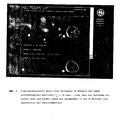
- Gd / kg were in the form of the Gd complex of the poly-N- [10-carboxy-3,6,9-tris (carboxymethyl) -3,6,9-triazadecanoyl] poly-L-lysine polyhydrazide (Example 39c) a nude mouse (Balb / c nu / nu, female, 25 g) with a subcutaneous HT29 colon carcinoma iv applied.
- the substance was dissolved in 300 ⁇ l 0.9% NaCl.
- the animal was examined in a magnetic resonance scanner from General Electric with a 2 Tesla magnet.
Landscapes
- Health & Medical Sciences (AREA)
- Chemical & Material Sciences (AREA)
- Medicinal Chemistry (AREA)
- Organic Chemistry (AREA)
- Chemical Kinetics & Catalysis (AREA)
- Polymers & Plastics (AREA)
- Life Sciences & Earth Sciences (AREA)
- Epidemiology (AREA)
- Animal Behavior & Ethology (AREA)
- General Health & Medical Sciences (AREA)
- Public Health (AREA)
- Veterinary Medicine (AREA)
- Radiology & Medical Imaging (AREA)
- Nuclear Medicine, Radiotherapy & Molecular Imaging (AREA)
- Proteomics, Peptides & Aminoacids (AREA)
- Immunology (AREA)
- General Chemical & Material Sciences (AREA)
- Medicines Containing Antibodies Or Antigens For Use As Internal Diagnostic Agents (AREA)
- Pharmaceuticals Containing Other Organic And Inorganic Compounds (AREA)
- Medicines That Contain Protein Lipid Enzymes And Other Medicines (AREA)
- Macromolecular Compounds Obtained By Forming Nitrogen-Containing Linkages In General (AREA)
- Polyamides (AREA)
- Compositions Of Macromolecular Compounds (AREA)
- Polymers With Sulfur, Phosphorus Or Metals In The Main Chain (AREA)
- Other Resins Obtained By Reactions Not Involving Carbon-To-Carbon Unsaturated Bonds (AREA)
- Medicinal Preparation (AREA)
Abstract
Description
- Die Erfindung betrifft den in den Patentansprüchen gekennzeichneten Gegenstand, das heißt neue Polymer-Komplexe, diese Verbindungen enthaltende Mittel, ihre Verwendung in der Diagnostik sowie Verfahren zur Herstellung dieser Verbindungen und Mittel.
- Die Anwendung von Komplexbildnern oder Komplexen bzw. deren Salzen in der Medizin ist seit langem bekannt. Als Beispiele seien genannt:
- Komplexbildner als Stabilisatoren pharmazeutischer Präparate, Komplexe und deren Salze als Hilfsmittel zur Verabreichung schlecht löslicher Ionen (z.B. Eisen), Komplexbildner und Komplexe (bevorzugt Calcium-oder Zink-), gegebenenfalls als Salze mit anorganischen und/oder organischen Basen, als Antidots zur Entgiftung bei versehentlicher Inkorporation von Schwermetallen oder deren radioaktiven Isotopen und Komplexbildner als Hilfsmittel in der Nuklearmedizin unter Verwendung radioaktiver Isotope wie 99mTc für die Szintigraphie sind bekannt.
- In der Patentschrift DE-OS 3401052 sind neuerdings paramagnetische Komplexsalze als Diagnostika, vorwiegend als NMR-Diagnostika vorgeschlagen worden.
- Diese Komplexe oder Komplexsalze sind recht gut verträglich und gewährleisten eine weitestgehend vollständige Ausscheidung der paramagnetischen lonen. Der Nachteil ist allerdings, daß sie sich nur unspezifisch im Extrazellulärraum verteilen und daher nur im Ausnahmefall für eine Erkennung pathologisch veränderter Gewebe taugen.
- Der Ansatz, zumindest einen Teil dieser Probleme durch Verwendung von Komplexbildern, die einerseits durch ionische Bindung an das jeweils geeignete Metall (siehe unten) sowie andererseits durch Bindung an eine funktionelle Gruppe oder ein als Carrier-Molekül dienendes nicht-toxisches und möglichst organ-spezifisches Molekül gebunden sind, zu lösen, war bisher nur sehr begrenzt erfolgreich.
- So ist beispielsweise die Anzahl paramagnetischer Zentren in den Komplexen, die in den Europäischen Patentanmeldungen No. 88 695 und No. 150 884 beschrieben sind, für eine organspezifische Bildgebung nicht ausreichend.
- Erhöht man die Anzahl der benötigten Metallionen durch mehrfache Einführung komplexierender Einheiten in ein Makromolekül, so ist das immer mit einer nicht tolerierbaren Beeinträchtigung der Affinität und/oder Spezifizität dieses Makromoleküls verbunden [J. Nucl. Med. 24, 1158 (1983)].
- Es besteht daher für vielfältige Zwecke ein Bedarf an stabilen, gut löslichen, aber auch besser verträglichen, gut zugänglichen Komplexverbindungen, die eine möglichst große Anzahl der benötigten Metallionen im Komplex enthalten, ohne daß ihre Affinität und/oder Spezifizität verloren geht. Der Erfindung liegt somit die Aufgabe zugrunde, diese Verbindungen und Mittel zur Verfügung zu stellen, sowie ein möglichst einfaches Verfahren zu ihrer Herstellung zu schaffen. Diese Aufgabe wird durch die Erfindung gelöst.
- Es wurde gefunden, daß sich Polymer-Komplexe, die aus einem Carbonsäure-gruppen enthaltenden, mit Amid-, Hydrazid- und/oder alkylierten oder acylierten Imino-Untereinheiten versehenen Liganden, mindestens einem Ion eines Elements der Ordnungszahlen 21 -29, 42, 44 oder 57 - 83 sowie gegebenenfalls Kationen anorganischer und/oder organischer Basen, Aminosäuren oder Aminosäureamide bestehen, überraschenderweise hervorragend zur Herstellung von NMR-, Röntgen- und Ultraschall-Diagnostika eignen, da sie vor allem die für diese Verwendung benötigte Anzahl von Metallionen im Komplex stabil gebunden enthalten.
- Die erfindungsgemäßen Polymere weisen als Polymer-Einheiten komplexbildende Strukturen der allgemeinen Formel I auf
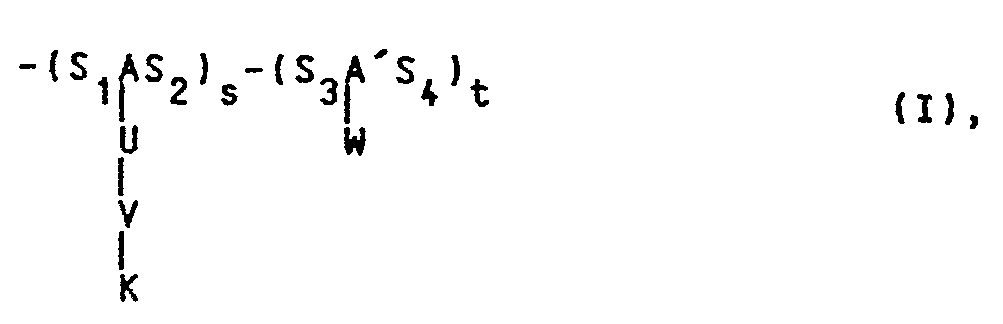
- A und A' jeweils N -, - CH- oder -NH- <-H-(CH2)r-CO-, mit r in der Bedeutung der Ziffern 0 oder 1, s die ganzen Zahlen von 7 bis 20.000
- t die ganzen Zahlen von 0 bis 20.000,
- U eine direkte Bindung, die Gruppe

- V, Si,S2,S3 und S4 jeweils eine gegebenenfalls Imino-, Phenylen-, Phenylenoxy-, Phenylenimino-, Amid-, Hydrazid-, Estergruppe(n), Sauerstoff-, Schwefel- und/oder Stickstoff-Atom(e) enthaltende gegebenenfalls durch Hydroxy-, Mercapto-, Imino-, Epoxy-, Oxo-, Thioxo- und/oder Aminogruppe(n) substituierte geradkettige, verzweigte, gesättigte oder ungesättigte Co-C2o-Alkylengruppe,
- K ein Komplexbildner der allgemeinen Formeln IA, IB, IC oder ID


- n und m jeweils für die Ziffern 0, 1, 2, 3 oder 4, wobei n und m zusammen nicht mehr als 4 ergeben, k für die Ziffern 1, 2, 3, 4 oder 5,
- I für die Ziffern 0, 1, 2, 3, 4 oder 5,
- q für die Ziffern 0, 1 oder 2,
- X unabhängig voneinander jeweils für die Reste -COOH oder V steht, worin V' den am Ende eine funktionelle Gruppe oder gebunden über diese funktionelle Gruppe ein Bio- oder Makromolekül aufweisenden Rest V bedeutet, wobei, falls das Molekül V' enthält, mindestens 0,1% der Substituenten X für V' stehen,
- B, D und E, die gleich oder verschieden sind, jeweils für die Gruppe

- R2 in der Bedeutung von Wasserstoff oder einer gegebenenfalls Sauerstoff-und/oder Stickstoffatom(e) enthaltenden gegebenenfalls durch Hydroxy-und/oder Aminogruppe(n) substituierten geradkettigen, verzweigten, gesättigten oder ungesättigten C1-C20-Alkylgruppe,
- u in der Bedeutung der Ziffern 0, 1, 2, 3, 4 oder 5,
- v in der Bedeutung der Ziffern 0 oder 1,
- wobei B, D und E jeweils mindestens 2 und maximal 5 Kohlenstoffatome enthalten,
- Z für die Gruppe

- R1 für eine direkte Bindung oder ein Wasserstoffatom,
- R3 und R4 gemeinsam für eine gegebenenfalls durch 1-2 Hydroxy- oder 1-3 C1-C4-Alkylgruppen substituierten Dimethylen- oder Trimethylen-methingruppe, stehen,
- mit der Maßgabe, daß Z nur dann für die Gruppe

- R1 gleichzeitig eine direkte Bindung bedeutet,
- W ein Wasserstoffatom, Biotin, Avidin, Avidin-Biotin-Antikörper, Avidin-Biotin-Antikörper-Fragmente, die Gruppe Uw-Vw-Kw, wobei Uw, Vw und Kw jeweils eine der für U, V und K genannten Bedeutungen haben, V' oder
- die Gruppe

- Unter einer Co-Alkylenkette ist eine direkte Bindung zu verstehen. Als bevorzugte Polymer-Einheiten seien die komplexbildenden Strukturen der allgemeinen Formel la genannt:

- Ist das erfindungsgemäße Mittel zur Anwendung in der NMR-Diagnostik bestimmt, so muß das Zentralion des Komplexsalzes paramagnetisch sein. Dies sind insbesondere die zwei- und dreiwertigen lonen der Elemente der Ordnungszahlen 21-29, 42, 44 und 57-70. Geeignete lonen sind beispielsweise das Chrom(III)-, Mangan (II)-, Eisen(II)-, Cobalt(II)-, Nickel(II)-, Kupfer(II)-, Praseodym(III)-, Neodym(III)-, Samarium(III)- und Ytterbium(III)-ion. Wegen ihres sehr starken magnetischen Moments sind besonders bevorzugt das Gadolinium(III)-, Terbium (III)-, Dysprosium(III)-, Holmium(III)-, Erbium(III)- und Eisen(III)-ion.
- Ist das erfindungsgemäße Mittel zur Anwendung in der Röntgen-Diagnostik bestimmt, so muß sich das Zentralion von einem Element höherer Ordnungszahl ableiten, um eine ausreichende Absorption der Röntgenstrahlen zu erzielen. Es wurde gefunden, daß zum diesem Zweck diagnostische Mittel, die ein physiologisch verträgliches Komplexsalz mit Zentralionen von Elementen der Ordnungszahlen zwischen 21-29, 42, 44, 57-83 enthalten, geeignet sind; dies sind beispielsweise das Lanthan(III)-ion und die oben genannten lonen der Lanthanidenreihe.
- Die erfindungsgemäßen Polymer-Komplexe enthalten mindestens ein Ion eines Elements der oben genannten Ordnungszahl.
- Die für V stehende Alkylengruppe sowie die für R2, R und R' stehende Alkylgruppe kann geradkettig, verzweigt, cyclisch, aliphatisch, aromatisch oder arylaliphatisch sein und bis zu 20 Kohlenstoffatome aufweisen. Bevorzugt sind geradkettige Mono- bis Decamethylengruppen sowie C1-C4-Alkylenphenylgrup- pen. Zur Verdeutlichung seien folgende Alkylengruppen beispielhaft genannt: -CH2-O-C6H4-CH2-; -CH2-CH(OH)-CH2-O-C6H4-CH2-; -C(=NH)-O-C6H4-CH2-; -(CH2)4-NH-CO-CH2-O-C6H4-CH2-; -(CH2)4-NH-CH2-CH(OH)-CH2-O-C6H4-CH2-; -(CH2)3-O-C6H4-CH2-; -CH2-CO-NH-(CH2)3-O-CH2-; -CH2-CO-NH-NH-; -CH2-CONH-(CH2)2-; -CH2-CO-NH(CH2)10-; -CH2-CONH-(CH2)2-S-; -(CH2)4-NH-CO-(CH2)8-; -CH2-CO-NH-(CH2)3-NH-; -(CH2)3-NH;
- Bevorzugte funktionelle Gruppen, die sich am Ende der V"-Alkylengruppe befinden sind beispielswiese die Maleimidobenzoyl-, 3-Sulfomaleimidobenzoyl-, 4-(Maleimidomethyl)-cyclohexylcarbonyl-, 4-[3-Sulfo-(maleimi- domethyl)-cyclohexyl-carbonyl-, 4-(p-Maleimidophenyl)-butyryl-, 3-(2-Pyridyldithio)propionyl-, Methacryloyl-(pentamethylen)amido-, Bromacetyl, Jodacetyl-, 3-Jodpropyl-, 2-Bromethyl-, 3-Mercaptopropyl-, 2-Mercaptoethyl-, Phenylenisothiocyanat-, 3-Aminopropyl-, Benzylester-, Ethylester-, t-Butylester-, Amino-, C1-C6-Alkyla- mino-, Aminocarbonyl-, Hydrazino-, Hydrazinocarbonyl-, Maleimido-, Methacrylamido-, Methacryloylhydrazinocarbonyl-, Maleimidamidocarbonyl-, Halogeno-, Mercapto-, Hydrazinotrimethylenhydrazinocarbonyl-, Aminodimethylenamidocarbonyl-, Brom-carbonyl-, Phenylendiazonium-, Isothiocyanat-, Semicarbazid-, Thiosemicarbazid-Gruppe.
- Zur Verdeutlichung seien einige ausgewählte Gruppen aufgeführt:


- Als Beispiele für die Komplexbildner-Reste K seien diejenigen der Ethylendiamintetraessigsäure, Diethylentriaminpentaessigsäure, trans-1,2-Cyclohexandiamintetraessigsäure, 1,4,7,10-Tetraazacyclododecantetraessigsäure, 1,4,7-Triazacyclononan-triessigsäure, 1,4,8,11-Tetraazatetradecantetraessigsäure und 1,5-9-Triazacyclododecantriessigsäure genannt, die über (jeweils in K enthaltend) ein Kohlenstoffatom oder eine Carbonylgruppe an die Reste der Polymer-Einheiten gebunden sind. Gewünschtenfalls kann ein Teil der Carbonsäuren als Ester und/oder Amid vorliegen.
- Als für die Herstellung der erfindungsgemäßen Polymer-Komplexe geeignete Polymere seien beispielhaft Polyethylenimin, Polylysin, Polyasparaginsäure, Polyethyleniminpolyessigsäureester und Polyacrylester genannt.
- Die restlichen aziden Wasserstoffatome, das heißt diejenigen, die nicht durch das Zentralion substituiert worden sind, können gegebenenfalls ganz oder teilweise durch Kationen anorganischer und/oder organischer Basen oder Aminosäuren ersetzt sein. Die entsprechenden Säuregruppen können auch ganz oder teilweise in Ester oder Amide überführt sein.
- Geeignete anorganische Kationen sind beispielsweise das Lithiumion, das Kaliumion, das Calciumion und insbesondere das Natriumion. Geeignete Kationen organischer Basen sind unter anderem solche von primären, sekundären oder tertiären Aminen, wie zum Beispiel Ethanolamin, Diethanolamin, Morpholin, Glucamin, N,N-Dimethylglucamin und insbesondere N-Methylglucamin. Geeignete Kationen von Aminosäuren sind beispielsweise die des Lysins, des Arginins und des Ornithins sowie die Amide ansonsten saurer oder neutraler Aminosäuren. Geeignete Ester sind vorzugsweise diejenigen mit einem C1-Ce-Alkylrest; genannt seien beispielsweise der Methyl-, Ethyl- und tertiär-Butylrest. Sollen die Carbonsäuregruppen zumindest teilweise als Amide vorliegen, so sind tertiäre Amide bevorzugt. Als Reste kommen gesättigte, ungesättigte, gerad-oder verzweigtkettige oder cyclische Kohlenwasserstoffe mit bis zu 5 C-Atomen infrage, die gegebenenfalls durch 1 bis 3 Hydroxy- oder C1-C4-Alkoxy-Gruppen substituiert sind. Beispielsweise genannt seien die Methyl-, Ethyl-, 2-Hydroxyethyl-, 2-Hydroxy-1-(hydroxymethyl)-ethyl-, 1-(Hydroxymethyl)-ethyl-, Propyl-, Isopropenyl-, 2-Hydroxypropyl-, 3-Hydroxypropyl-, 2,3-Dihydroxypropyl-, Butyl-, Isobutyl-, Isobutenyl-, 2-Hydroxybutyl-, 3-Hydroxybutyl-, 4-Hydroxybutyl-,2-, 3- und 4-Hydroxy2-methylbutyl-, 2- und 3-Hydroxyisobutyl-, 2,3,4,-Trihydroxybutyl-, 1,2,4-Trihydroxybutyl-, Pentyl-, Cyclopentyl- und 2-Methoxyethylgruppe. Der Amidrest kann auch ein unter Einschluß des Amid-Stickstoffs gebildeter heterocyclischer 5- oder 6-Ring sein. Beispielhaft genannt seien: der Pyrrolidinyl-, Piperidyl-, Pyrazolidinyl-, Pyrrolinyl-, Pyrazolinyl-, Piperazinyl-, Morpholinyl-, Imidazolidinyl-, Oxazolidinyl-, Thiazolidinyl-Ring.
- Die erfindungsgemäßen Polymer-Komplexe enthalten die für ihre Verwendung benötigte große Anzahl von Metallionen im Komplex stabil gebunden.
- So ergeben z.B. Gleichgewichts- bzw. Umkomplexierungs-Untersuchungen mit dem als Stand der Technik anzusehendem, in der Fachwelt als gutes Kontrastmittel anerkanntem Gadolinium-Komplex der Diethylentriaminpentaessigsäure DTPA (Europäische Patentschrift EP 71 564), daß die erfindungsgemäßen Polymer-Komplexe überraschenderweise über den gesamten durch die Indexziffern bestimmten Molekularbereich (5-2000 kD) stabiler sind als dieser.
- Auch die Verträglichkeit der Polymer-Komplexe ist beispielsweise der organspezifischer monomerer Komplexe überlegen.
- Überraschend hoch ist der Wert für die ein Maß der Bildgebung darstellende Größe der Relaxivität: Sie ist für die erfindungsgemäßen Polymer-Komplexe um den Faktor 3-1000 höher als für Gadolinium-DTPA. Hierdurch wird, um eine bestimmte Signalstärke bei der Bildgebung zu erhalten, eine entsprechend geringere molare Menge an Komplex im Vergleich zu den Monomeren benötigt.
- Als weiterer wichtiger Vorteil der erfindungsgemäßen Polymer-Komplexe ist ihr Ausscheidungsverhalten anzuführen. Die je nach Anwendungszweck erwünschte Ausscheidungsgeschwindigkeit läßt sich dabei sehr gezielt und einfach über das zu wählende Molekulargewicht einstellen.
- Die erfindungsgemäßen Polymer-Komplexe weisen eine überraschend hohe Gewebespezifität auf. So erhält man beispielsweise bereits wenige Minuten nach intravenöser Injektion einer N-Methylglucaminsalzlösung vom Gadolinium(III)-Komplex des Polyethylenimin-poly-DTPA (s. Beispiel 1) im Kernresonanzbild eine deutliche Kontrastverstärkung in peripherem Tumorgewebe, die längere Zeit anhält und einen deutlichen diagnostischen Zugewinn bringt.
- Überraschenderweise können auch mit Hilfe der erfindungsgemäßen Polymer-Komplexe Blutgefäße ohne Anwendung spezieller Puls-Sequenzen in-vivo dargestellt werden, womit sie unter anderem als Perfusionsagentien Verwendung finden können.
- Die Herstellung der erfindungsgemäßen Polymere erfolgt dadurch, daß man mit Amino-, Imino- und/oder
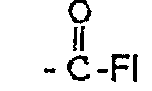

- A, A', U, V, S1, S2, S3, S4, s und t die oben genannte Bedeutung haben und K' Komplexbildner der allgemeinen Formeln I'A, I'B, I'C und I'D, die identisch mit den für IA, IB, IC und ID angegebenen Formeln sind, jedoch anstelle der Substituenten X und Z jeweils X' und Z' tragen, wobei
- X' unabhängig voneinander für -COOH und
- Z' für die Gruppe

- W' ein Wasserstoffatom, die Gruppe Uw-VwK'w, wobei Uw und Vw die oben genannte Bedeutung haben und K'w die für K genannte Bedeutung hat, V" oder die Gruppe

- Man geht dabei aus von Polymeren wie zum Beispiel Polyethylenimin, Polyethyleniminpolyessigsäurederivaten. Polyacrylester oder Polylysin, die gegebenenfalls

- Diese Verbindungen werden in an sich bekannter Weise amidiert, hydraziniert (Houben-Weyl), Methoden der organischen Chemie, Band VIII/3 Georg Thieme Verlag, Stuttgart (1952), 654 und 676), acyliert (J. March, Advanced Organic Chemistry, McGraw-Hill, 2nd ed., (1977) 377-382) und/oder alkyliert (Houben-Weyl, Methoden der organischen Chemie, Band VI/3 Georg Thieme Verlag, Stuttgart (1965), 187). Als Substrat zur Einführung der Komplexbildner-Einheiten K-V bzw. Kw-Vw dienen Verbindungen der allgemeinen Formeln I'A, I'B, I'C, I'D, I"AB und I"C




- Als Beispiel für eine aktivierte Carbonylgruppe seien Anhydrid, p-Nitrophenylester und Säurechlorid genannt.
- Die zur Einführung der Komplexbildner-Einheiten vorgenommene Alkylierung bzw. Acylierung wird mit Reagenzien durchgeführt, die den gewünschten K-V- bzw.-Kw-Vw-Substituenten (gebunden an eine Fluchtgruppe) enthalten oder aus denen der gewünschte Substituent, gegebenenfalls nach Modifikation durch Folgereaktion(en), durch die Reaktion generiert wird. Als Beispiele für die erstgenannten seien Halogenide, Mesylate, Tosylate und Anhydride genannt. Zur zweiten Gruppe gehören zum Beispiel Oxirane, Thiirane, Azirane, a,ß-ungesättigte Carbonylverbindungen oder deren Vinyloge, Aldehyde, Ketone, Isothiocyanate und Isocyanate.
- Als Beispiele für Folgereaktionen seien Esterspaltungen, Hydrierungen, Veresterungen, Oxidationen, Veretherungen und Alkylierungen genannt, die nach dem Fachmann bekannten Literaturverfahren durchgeführt werden.
- Die als Edukte benötigten Verbindungen I' sind bekannt (z.B. Europäische Patentanmeldung Publikation Nr. 0154788) oder können aus den entsprechenden Polyaminen (wobei vorhandene funktionelle Gruppe gegebenenfalls geschützt sind) durch Alkylierung mit einem Ester der allgemeinen Formel II HalCH2COOY (II), worin Hal für Chlor, Brom oder Jod und Y für eine Säureschutzgruppe steht, hergestellt werden.
- Die Umsetzung erfolgte in polaren aprotischen Lösungsmitteln wie zum Beispiel Dimethylformamid, Dimethylsulfoxid oder Hexamethylphosphorsäuretriamid in Gegenwart eines Säurefängers, wie zum Beispiel tertiäres Amin (zum Beispiel Triäthylamin, Trimethylamin, N,N-Dimethylaminopyridin, 1,5-Diazabicyclo[4.3.0], nonen-5(DBN), 1,5-Diazabicyclo[5.4.0]-undecen-5-(DBU), Alkali-, Erdalkalicarbonat oder -hydrogencarbonat (zum Beispiel Natrium-, Magnesium-, Calcium-, Barium-, Kalium- carbonat und -hydrogen-carbonat) bei Temperaturen zwischen -10°C und 120°C, vorzugsweise zwischen 0°C und 50°C.
- Als Säureschutzgruppen Y kommen niedere Alkyl-, Aryl- und Aralkylgruppen, beispielsweise die Methyl-. Ethyl-. Propyl-, Butyl-, Phenyl-, Benzyl-, Diphenylmethyl, Triphenylmethyl-, bis-(p-Nitrophenyl)-methylgruppe, sowie Trialkylsilylgruppen in Frage.
- Die Abspaltung der Schutzgruppen Y erfolgt nach den dem Fachmann bekannten Verfahren, beispielsweise durch Hydrolyse, alkalische Verseifung der Ester mit Alkali in wäßrig-alkoholischer Lösung bei Temperaturen von 0°C bis 50°C oder im Fall von tert.-Butylestern mit Hilfe von Trifluoressigsäure.
- Die Herstellung der aktivierten Carbonylderivate I" (z.B. gemischtes Anhydrid, N-Hydroxysuccinimidester, Acylimidazole, Trimethylsilylester) erfolgt nach literaturbekannten Methoden [Houben-Weyl, Methoden der organischen Chemie, Georg Thieme Verlag, Stuttgart, Band E 5(1985), 633; Org. React. 12,157(1962)] oder wird im experimentellen Teil beschrieben.
- Die für die Herstellung der Polyamin-polysäuren der allgemeinen Formel l'A als Edukte benötigten entsprechenden Polyamine werden analog literaturbekannten Methoden (zum Beispiel Canad. Patent No. 1 178 951, Eur. I. Med. Chem.-Chim.Ther. 1985,20,509 und 1986, 21,333) hergestellt, indem man von Aminosäuren ausgeht, die in gegebenenfalls ethylenaminsubstituierte Amide (zum Beispiel mit N-(2-Aminoethyl)-carbaminsäurebenzylester) überführt und anschließend (gegebenenfalls nach Abspalten der Schutzgruppen) zu den gewünschten Aminen (vorzugsweise mit Diboran oder Lithiumaluminiumhydrid) reduziert werden. Will man die Polyamin-Edukte für die Verbindungen der allgemeinen Formel I'B synthetisieren, so ist es notwendig, vor der Reduktion ein derartiges Amid durch Umsetzung mit zum Beispiel Ethyloxamat in einem polaren Lösungsmittel wie zum Beispiel Tetrahydrofuran, Dimethylsulfoxid oder Dimethoxyethan bei einer Temperatur zwischen 50°C und 250°C, vorzugsweise 70°C bis 150°C (gegebenenfalls in einem Druckbehälter) an der a-Aminogruppe zu substituieren, so daß man ein 3-Aza-2-oxo-glutarsäurediamid-Derivat als Zwischenprodukt erhält.
- Die Herstellung der als Edukte für I'C bzw. I"C benötigten cyclischen Polyamine erfolgt durch Cyclisierung zweier Reaktanten, von denen (im Falle der Synthese von I'C) der eine V"'-substituiert ist.
- Die Cyclisierung wird nach literaturbekannten Methoden, zum Beispiel Org. Synth. 58,86 (1978), Macrocyclic Polyether Syntheses, Springer Verlag, Berlin, Heidelberg, New York 1982, Coord. Chem. Rev. 3,3 (1968), Ann. Chem. 1976, 916, durchgeführt: einer der beiden Reaktanten trägt am Kettenende zwei Fluchtgruppen, der andere zwei Stickstoffatome, die nukleophil diese Fluchtgruppen verdrängen. Als Beispiel seien genannt die Umsetzung von endständigen, gegebenenfalls ein oder zwei Stickstoffatom(e) enthaltenden, Dibrom-, Dimesyloxy-, Ditosyloxy- oder Dialkoxycarbonylalkylenverbindungen mit endständigen. gegebenenfalls ein oder zwei zusätzliche Stickstoffatom(e) in der Alkylenkette enthaltenden Diazaalkylenverbindungen, von denen (im Falle der Synthese von I'C) einer der beiden Reaktanten V"' substituiert ist.
- Die Stickstoffatome sind gegebenenfalls geschützt, zum Beispiel als Tosylate, und werden vor der nachfolgenden Alkylierungsreaktion nach literaturbekannten Verfahren freigesetzt.
- Werden Diester in die Cyclisierungsreaktion eingesetzt, so müssen die so erhaltenen Diketoverbindungen nach dem Fachmann bekannten Verfahren, zum Beispiel mit Diboran, reduziert werden.
- Als Substituenten V", der in V oder in den am Ende eine für eine Bindung an ein Makro- oder Biomolekül geeignete funktionelle Gruppe aufweisenden Substituenten V" überführt werden kann, sind unter anderem Hydroxy-und Nitrobenzyl-, Hydroxy-und Carboxyalkyl- sowie Thioalkylreste mit bis zu 20 Kohlenstoffatomen geeignet. Sie werden nach dem Fachmann bekannten Literaturverfahren (Chem. Pharm. Bull. 33,674 (1985), Compendium of Org. Synthesis Vol. 1-5, Wiley und Sons, Inc., Houben-Weyl, Methoden der organischen Chemie. Band VIII, Georg Thieme Verlag, Stuttgart, J. Biochem. 92, 1413,1982) in die gewünschten Substituenten ( zum Beispiel mit der Amino-, Hydrazino-, Hydrazinocarbonyl-, Epoxid-, Anhydrid-, Methacryloylhydrazinocarbonyl-, Maleimidamidocarbonyl-, Halogeno-, Halogenocarbonyl-, Mercapto-, lsothiocyanatgruppe als funktioneller Gruppe) umgewandelt, wobei im Falle des Nitrobenzylrestes zunächst eine katalytische Hydrierung (zum Beispiel nach P.N. Rylander, Catalytic Hydrogenation over Platinum Metals, Academic Press 1967) zum Aminobenzylderivat vorgenommen werden muß.
- Beispiele für die Umwandlung von an aromatische oder aliphatische Reste gebundenen Hydroxy- oder Aminogruppen sind die in wasserfreien, aprotischen Lösungsmitteln wie Tetrahydrofuran, Dimethoxyethan oder Dimethylsulfoxid in Gegenwart eines Säurefängers wie zum Beispiel Natriumhydroxid, Natriumhydrid oder Alkali oder Erdalkalicarbonaten wie zum Beispiel Natrium-, Magnesium-, Kalium-,Calciumcarbonat bei Temperaturen zwischen 0 °C und dem Siedepunkt des jeweiligen Lösungsmittels, vorzugsweise jedoch zwischen 20 °C und 60 °C, durchgeführten Umsetzungen mit einem Substrat der allgemeinen Formel III Nf-L-Fu (111),
- worin Nf für ein Nucleofug wie z.B. CI, Br, J, CH3C6H4S03, oder CF3SO3, L für einen aliphatischen, aromatischen, arylaliphatischen, verzweigten, geradkettigen oder cyclischen Kohlenwasserstoffrest mit bis zu 20 Kohlenstoffatomen und Fu für die gewünschte endständige funktionelle Gruppe, gegebenenfalls in geschützter Form, stehen (DE-OS 34 17 413).
- Als Beispiele für Verbindungen der allgemeinen Formel III seien genannt Br(CH2)2NH2, Br(CH2)30H, BrCH2COOCH3, BrCH2C02 tBu, CICH2CONHNH2, Br(CH2)4C02C2H5, BrCH2COBr, BrCH2CONH2, CICH2CO-OC2Hs, BrCH2CONHNH2,

- Umwandlungen von Carboxy-Gruppen können zum Beispiel nach der Carbodiimid-Methode (Fieser, Reagents for Organic Syntheses 10,142), über ein gemischtes Anhydrid [Org. Prep. Proc. Int. 7,215(1975)] oder über einen aktivierten Ester (Adv. Org. Chem. Part B, 472) durchgeführt werden.
- Die Herstellung der als Ausgangssubstanzen für die Cyclisierung benötigten Amine erfolgt analog literaturbekannten Methoden.
- Ausgehend von einer N-geschützten Aminosäure erhält man durch Umsetzung mit einem partiell geschützten Diamin (zum Beispiel nach der Carbodiimidmethode), Abspaltung der Schutzgruppen und Diboranreduktion ein Triamin.
- Die Umsetzung eines aus Aminosäuren erhältlichen Diamins (Eur. J. Med. Chem.-Chim. Ther. 21,333 (1986)) mit der doppelten molaren Menge einer N-geschützten co-Aminosäure liefert ein Tetramin nach geeigneter Aufarbeitung.
- In beiden Fällen ist die Anzahl der Kohlenstoffatome zwischen den N-Atomen durch die Art der als Kopplungspartner eingesetzten Diamine bzw. Aminosäuren bestimmbar.
- Ein Teil der über die Komplexbildner-Einheiten K bzw. Kw eingeführten Säuregruppen der so erhaltenen Polymer-Verbindungen kann gewünschtenfalls nach dem Fachmann bekannten Verfahren weiter funktionaiisiert werden, zum Beispiel durch Überführung in Ester-, Amid-, Hydrazid-, Maleimido- oder andere Gruppen, die zur Kopplung an Bio- oder Makromoleküle geeignet sind.
- Die so erhaltenen komplexbildenden Liganden (sowie die Komplexe) können auch an Bio- oder Makromoleküle geknüpft sein, von denen bekannt ist, daß sie sich in dem zu untersuchenden Organ oder Organteil besonders anreichern. Solche Moleküle sind beispielsweise Enzyme, Hormone, Dextrane, Porphyrine, Bleomycine, Insulin, Prostaglandine, Steroidhormone, Aminozucker, Aminosäuren, Peptide wie Polylysin, Proteine (wie zum Beispiel lmmunoglobuline, monoklonale Antikörper, Lektine) oder Lipide (auch in Form von Liposomen). Besonders hervorzuheben sind Konjugate mit Albuminen, wie Humanserumalbumin, Antikörpern, wie zum Beispiel monoklonale, für tumorassoziierte Antigene spezifische Antikörper oder Antimyosin. Anstelle von biologischen Makromolekülen können auch geeignete synthe tische Polymere wie Polyethylenimine , Polyamide, Polyharnstoffe, Polyether und Polythioharnstoffe angeknüpft werden. Die hieraus gebildeten pharmazeutischen Mittel eignen sich beispielsweise zur Anwendung in der Tumor- und Infarkt-Diagnostik sowie Tumortherapie. Monoklonale Antikörper (zum Beispiel Nature 256, 495, 1975) haben gegenüber polyklonalen Antikörpern die Vorzüge, daß sie spezifisch für eine antigene Determinante sind, eine definierte Bindungsaffinität besitzen, homogen sind (damit wird ihre Reindarstellung wesentlich einfacher) und in Zellkulturen in großen Mengen herstellbar sind. Als solche sind zum Beispiel für die Tumordarstellung monoklonale Antikörper bzw. deren Fragmente Fab und F(ab')2 geeignet, die zum Beispiel spezifisch sind für humane Tumore des Gastrointestinaltraktes, der Brust, der Leber, der Blase, der Keimdrüsen und von Melanomen (Cancer Treatment Repts. 68, 317, 1984, Bio Sci 34, 150,1984) oder gegen Carcinoembryonales Antigen (CEA), HUMANES Choriogonadotropin (ß-HCG) oder andere tumorständige Antigene, wie Glycoproteine, gerichtet sind (New Engl. J. Med. 298, 1384, 1973, US-P 4,331,647). Geeignet sind unter anderem auch Anti-Myosin, Anti-Insulin-und Anti-Fibrin-Antikörper (US-P 4,036,945).
- Coloncarcinome lassen sich mit Hilfe von mit Gadolinium(III)-lonen komplexierten Konjugaten von Polyethylenimin-poly-DTPA-polyhydrazid mit dem Antikörper 17-1A (Centocor, USA) NMR-diagnostisch nachweisen.
- Für Leberuntersuchungen beziehungsweise für die Tumordiagnostik eignen sich beispielsweise Konjugate oder Einschlußverbindungen mit Liposomen, die beispielsweise als unilamellare oder multilamellare Phosphatidylcholin-Cholesterol-Vesikel eingesetzt werden.
- Die Bindung von Metallen an die gewünschten Makro- oder Biomoleküle erfolgte bisher nach Methoden, wie sie zum Beispiel in Rev. Roum. Morphol. Embryol. Physio., Physiologie 1981, 18, 241 und J. Pharm. Sci. 68, 79 (1979) beschireben sind, beispielsweise durch Reaktion der nucleophilen Gruppe eines Makromoleküls, wie der Amino-, Phenol-, Sulfhydryl-, Aldehyd- oder Imidazol-Gruppe mit einem aktivierten Derivat des Polymer-Komplexes oder Liganden. Als aktivierte Derivate kommen beispielsweise Anhydride, Säurechloride, gemischte Anhydride (siehe zum Beispiel G.E. Krejcarek und K.L. Tucker, Biochem., Biophys. Res. Commun. 1977,581) , aktivierte Ester, Nitrene oder Isothiocyanate in Betracht. Umgekehrt ist es auch möglich, ein aktiviertes Makromolekül mit dem Polymer-Komplex oder Liganden umzusetzen. Zur Konjugation mit Proteinen bieten sich auch Substituenten zum Beispiel der Struktur C6H4N2 +, C6H4NHCOCH2, C6H4NHCS oder C6H40CH2CO an.
- Diese Art der Bindung ist jedoch mit dem Nachteil mangelnder Komplex-Stabilität der Konjugate bzw. mangelnder Spezifität behaftet (zum Beispiel Diagnostic Imaging 84, 56; Science 220, 613,1983; Cancer Drug Delivery 1, 125, 1984). Die Konjugatbildung gemäß vorliegender Erfindung erfolgt dagegen über die in K und/oder W befindlichen funktionellen Gruppen. Es können hierbei über eine Bindungsstelle im Makromolekül bis zu mehrere Hundert Metallionen gebunden werden.
- Im Falle der Antikörper-Konjugate darf die Bindung des Antikörpers an den Komplex oder Liganden nicht zum Verlust oder zur Verminderung der Bindungsaffinität und Bindungsspezifität des Antikörpers zum Antigen führen. Dies kann entweder durch Bindung an den Kohlenhydrat-Anteil im Fc-Teil des Glycoproteins bzw. in den Fab oder F(ab')2-Fragmenten oder durch Bindung an Schwefelatome des Antikörpers bzw. der Antikörper-Fragmente erfolgen.
- Im ersten Fall muß zunächst eine oxidative Spaltung von Zukereinheiten zur Generation kopplungsfähiger Formylgruppen durchgeführt werden. Diese Oxidation kann auf chemischem Wege mit Oxidationsmitteln wie z.B. Perjodsäure, Natriummetaperjodat oder Kaliummetaperjodat nach literaturbekannten Methoden (zum Beispiel J. Histochem and Cytochem. 22, 1084, 1974) in wäßriger Lösung in Konzentrationen von 1 bis 100, vorzugsweise 1 bis 20 mg/mi, und einer Konzentration des Oxidationsmittels zwischen 0,001 bis 10 mMol, vorzugsweise 1 bis 10 mMol in einem pH-Bereich von ca. 4 bis 8 bei einer Temperatur zwischen 0 bis 37 ° C und einer Reaktionsdauer zwischen 15 Minuten und 24 Stunden vorgenommen werden. Auch auf enzymatischem Wege kann die Oxidation, beispielsweise mit Hilfe von Galaktoseoxidase in einer Enzymkonzentration von 10-100 Einheiten/ml, einer Substratkonzentration von 1 bis 20 mg/mi, bei einem pH-Wert von 5 bis 8, einer Reaktionsdauer von 1 bis 8 Stunden und einer Temperatur zwischen 20 und 40 ° C, durchgeführt werden (zum Beispiel J. Biol. Chem. 234, 445, 1959).
- An die durch Oxidation generierten Aldehyde werden Komplexe oder Liganden mit geeigneten funktionellen Gruppen wie zum Beispiel Hydrazin, Hydrazid, Hydroxylamin, Phenylhydrazin, Semicarbazid und Thiosemicarbazid durch Reaktion zwischen 0- 37 °C, bei einer Reaktionsdauer von 1 bis 65 Stunden, einem pH-Wert zwischen ca. 5,5 und 8, einer Antikörperkonzentration von 0,5 bis 20 mg/ml und einem mo laren Verhältnis des Komplexbildners zum Antikörperaldehyden von 1:1 bis 1000:1 gebunden. Die anschließende Stabilisierung des Konjugates erfolgt durch Reduktion der Doppelbindung, z.B. mit Natriumborhydrid oder Natriumcyanoborhydrid; das Reduktionsmittel wird dabei in einem 10 bis 100-fachen Überschuß verwendet (zum Beispiel J. Biol. Chem. 254, 4359, 1979).
- Die zweite Möglichkeit der Bildung von Antikörper-Konjugaten geht aus von einer schonenden Reduktion der Disulfid-Brücken des Immunoglobulin-Moleküls; hierbei werden die empfindlicheren Disulfid-Brücken zwischen den H-Ketten des Antikörper-Moleküls gespalten, während die S-S-Bindungen der Antigen-bindenden Region intakt bleiben, so daß praktisch keine Verminderung der Bindungsaffinität und -spezifität des Antikörpers eintritt (Biochem. 18, 2226, 1979, Handbook of Experimental Immunology, Vol. 1, Second Edition, Blackwell Scientific Publications, London 1973, Chapter 10). Diese freien Sulfhydryl-Gruppen der interHKetten Regionen werden dann mit geeigneten funktionellen Gruppen von Komplexbildnern oder Metallkomplexen bei 0 bis 37 °C, einem pH-Wert von ca. 4 bis 7, und einer Reaktionsdauer von 3 bis 72 Stunden unter Ausbildung einer kovalenten Bindung, die die Antigen-Bindungsregion des Antikörpers nicht beeinflußt, umgesetzt. Als geeignete reaktive Gruppen seien beispielsweise genannt: Halogenalkyl-, Halogenacetyl-, p-Mercuribenzoatgruppen sowie Gruppen, die einer MichaelAdditions Reaktion, wie zum Beispiel Maleinimide, Methacrylogruppen (zum Beispiel J.Amer. Chem. Soc. 101, 3097, 1979), zu unterwerfen sind. Zur Verknüpfung der Antikörperfragmente mit den Polymer-Komplexen bzw. den Liganden gibt es zusätzlich eine Reihe geeigneter, oft auch kommerziell erhältlicher bifunktioneller "Linker" (siehe zum Beispiel Pierce, Handbook and General Catalogue (1986), die sowohl gegenüber den SH-Gruppen der Fragmente als auch gegenüber den Amino- bzw. Hydrazinogruppen der Polymere reaktiv sind.
- Als Beispiele seien genannt:
- m-Maleimidobenzoyl-N-hydroxysuccinimidester (MBS),
- m-Maleimidobenzoyl-N-sulfosuccinimidester (Sulfo-MBS),
- N-Succinimidyl-[4-(lodacetyl)-amino]benzoesäureester (SIAB),
- Succinimidyl-4(N-maleimidomethyl)-cyclohexan-1-carbonsäureester (SMCC),
- Succinimidyl-4(p-maleimidophenyl)-buttersäureester (SMPB),
- N-Succinimidyl-3-(2-pyridyldithio)-propionsäureester (SDPD),
- 4-[3-(2,5-Dioxo-3-pyrrolinyl)-propionyloxy]-3-oxo-2,5-diphenyl-2,3-dihydrothiopen-1,1-dioxid.
- Es können auch Bindungen nicht-kovalenter Art zur Kopplung genutzt werden, wobei sowohl ionische als auch van der Waals- und Wasserstoffbrücken-Bindungen in wechselnden Anteilen und Stärke (Schlüssel-Schloß-Prinzip) zur Bindung beitragen können (zum Beispiel Avidin-Biotin, Antikörper-Antigen). Auch Einschlußverbindungen (host-guest) kleinerer Komplexe in größere Cavitäten beim Makromolekül sind möglich.
- Das Kopplungsprinzip besteht darin, zunächst ein bifunktionelles Makromolekül herzustellen, indem man entweder ein gegen ein Tumorantigen gerichtetes Antikörper-Hybridom mit einem gegen einen erfindungsgemäßen Komplex gerichtetes zweiten Antikörper-Hybridom fusioniert oder die beiden Antikörper chemisch über einen Linker (beispielsweise in der im J. Amer. Chem. Soc. 101, 3097 (1979) angegebenen Weise) miteinander verknüpft oder den gegen das Tumorantigen gerichteten Antikörper, gegebenenfalls über einen Linker, an Avidin (bzw. Biotin) bindet [D.J. Hnatowich et al., J. Nucl. Med. 28, 1294 (1987)]. Anstelle der Antikörper können auch ihre entsprechenden F(ab)-bzw. F(ab')2-Fragmente verwendet werden. Für die pharmazeutische Anwendung injiziert man zunächst das bifunktionelle Makromolekül, das sich am Zielort anreichert, und dann im zeitlichen Abstand die erfindungsgemäße Komplexverbindung [gegebenenfalls an Biotin (bzw. Avidin) gebunden], die in-vivo am Zielort angekoppelt wird und dort ihre diagnostische oder therapeutische Wirkung entfalten kann. Darüberhinaus können sich auch andere Kopplungsmethoden wie beispielsweise das in Protein Tailoring Food Med. Uses [Am. Chem. Soc. Symp.] (1985), 349, beschriebene "Reversible Radiolabeling" zur Anwendung kommen.
- Mit der sogenannten Festphasen-Kopplung steht eine besonders einfache Methode zur Herstellung von Antikörper-Konjugaten bzw. Antikörperfragment-Konjugaten zur Verfügung: Der Antikörper wird an eine stationäre Phase (z.B. einen lonenaustauscher), der sich zum Beispiel in einer Glassäule befindet, gekoppelt. Durch sukzessives Spülen der Säule mit einer zur Generierung von Aldehyd-Gruppen geeigneten Lösung, Waschen, Spülen mit einer Lösung des funktionalisierten Komplexes (bzw. Liganden), Waschen (wird der Ligand eingesetzt, erfolgt noch ein Spülen mit einer das Metallsalz enthaltenen Lösung, gefolgt von nochmaligem Spülen) und schließlich Eluieren des Konjugats werden sehr hohe Konjugat-Ausbeuten erhalten.
- Dieses Verfahren erlaubt die automatische und kontinuierliche Produktion beliebiger Mengen an Konjugaten.
- Auch andere Kopplungsschritte können auf diese Art und Weise durchgeführt werden.
- So können zum Beispiel durch die Sequenz Papain-Reduktion/ bifunktioneller Linker/ funktionalisierter Komplex bzw. Ligand Fragment-Konjugate hergestellt werden.
- Die so gebildeten Verbindungen werden anschließend vorzugsweise chromatographisch über lonenaustauscher auf einer Fast-Protein-Liquid-Chromatography-Anlage gereinigt.
- Die Herstellung der erfindungsgemäßen Metallkomplexe erfolgt in der Weise, wie sie in der Patentschrift DE-OS 34.01.052 offenbart worden ist, indem man das Metalloxid oder ein Metallsalz (beispielsweise das Nitrat, Acetat, Carbonat, Chlorid oder Sulfat) des Elements der Ordnungszahlen 21-29, 42, 44, 57-83 in Wasser und/oder einem niederen Alkohol (wie Methanol, Ethanol oder Isopropanol) löst oder suspendiert und mit der Lösung oder Suspension der äquivalenten Menge des komplexbildenden Liganden umsetzt und anschließend, falls gewünscht, vorhandene azide Wasserstoffatome der Säure- bzw. Phenolgruppen durch Kationen anorganischer und/oder organischer Basen oder Aminosäuren substituiert.
- Die Neutralisation erfolgt dabei mit Hilfe anorganischer Basen (zum Beispiel Hydroxiden, Carbonaten oder Bicarbonaten) von zum Beispiel Natrium, Kalium, Lithium, Magnesium oder Calcium und/oder organischer Basen wie unter anderem primärer, sekundärer und tertiärer Amine, wie zum Beispiel Ethanolamin, Morpholin, Glucamin, N-Methyl-und N,N-Dimethylglucamin, sowie basischer Aminosäuren, wie zum Beispiel Lysin, Arginin und Ornithin oder von Amiden ursprünglich neutraler oder saurer Aminosäuren.
- Zur Herstellung der neutralen Komplexverbindungen kann man beispielsweise den sauren Komplexsalzen in wäßriger Lösung oder Suspension soviel der gewünschten Basen zusetzen, daß der Neutralpunkt erreicht wird. Die erhaltene Lösung kann anschließend im Vakuum zur Trockne eingeengt werden. Häufig ist es von Vorteil, die gebildeten Neutralsalze durch Zugabe von mit Wasser mischbaren Lösungsmitteln, wie zum Beispiel niederen Alkoholen (Methanol, Ethanol, Isopropanol und andere), niederen Ketonen (Aceton und andere), polaren Ethern (Tetrahydrofuran, Dioxan, 1,2-Dimethoxyethan und andere) auszufällen und so leicht zu isolierende und gut zu reinigende Kristallisate zu erhalten. Als besonders vorteilhaft hat es sich erwiesen, die gewünschte Base bereits während der Komplexbildung der Reaktionsmischung zuzusetzen und dadurch einen Verfahrensschritt einzusparen.
- Enthalten die sauren Komplexverbindungen mehrere freie azide Gruppen, so ist es oft zweckmäßig, neutrale Mischsalze herzustellen, die sowohl anorganische als auch organische Kationen als Gegenionen enthalten.
- Dies kann beispielsweise geschehen, indem man dem komplexbildenden Liganden in wäßriger Suspension oder Lösung mit dem Oxid oder Salz des das Zentralion liefernden Elements und der Hälfte der zur Neutralisation benötigten Menge einer organischen Base umsetzt, das gebildete Komplexsalz isoliert, es gewünschtenfalls reinigt und dann zur vollständigen Neutralisation mit der benötigten Menge anorganischer Base versetzt. Die Reihenfolge der Basenzugabe kann auch umgekehrt werden.
- Eine andere Möglichkeit, zu neutralen Komplexverbindungen zu kommen, besteht darin, die verbleibenden Säuregruppen im Komplex ganz oder teilweise in zum Beispiel Ester oder Amide zu überführen. Dies kann durch nachträgliche Reaktion am fertigen Polymer-Komplex geschehen (z.B. durch erschöpfende Umsetzung der freien Carboxy-Gruppen mit Dimethylsulfat) wie auch durch Verwendung eines geeignet derivatisierten Substrats zur Einführung der Komplexbildner-Einheiten K-V bzw. Kw-Vw der allgemeinen Formeln l'A, 1'8, rc, 1'0, I"AB, I"C (z. B. N3-(2,6-Dioxomorpholinomethyl)-N6-(ethoxycarbonylmethyl)-3,6-diazaoctandisäure) Die Konjugate aus Antikörper und Komplex werden vor der in vivo Anwendung nach Inkubation mit einem schwachen Komplexbildner, wie zum Beispiel Natriumcitrat, Natrium-Ethylen-diamintetraessigsäure dialysiert, um schwachgebundene Metallatome zu entfernen.
- Die Herstellung der erfindungsgemäßen pharmazeutischen Mittel erfolgt ebenfalls in an sich bekannter Weise, indem man die erfindungsgemäßen Komplexverbindungen - gegebenenfalls unter Zugabe der in der Galenik üblichen Zusätze - in wäßrigem Medium suspendiert oder löst und anschließend die Suspension oder Lösung gegebenenfalls sterilisiert. Geeignete Zusätze sind beispielsweise physiologisch unbedenkliche Puffer (wie zum Beispiel Tromethamin), geringe Zusätze von Komplexbildnern (wie zum Beispiel Diethylentriaminpentaessigsäure) oder, falls erforderlich, Elektrolyte wie zum Beispiel Natriumchlorid oder, falls erforderlich, Antioxidantien wie zum Beispiel Ascorbinsäure.
- Sind für die enterale Verabreichung oder andere Zwecke Suspensionen oder Lösungen der erfindungsgemäßen Mittel in Wasser oder physiologischer Salzlösung erwünscht, werden sie mit einem oder mehreren in der Galenik üblichen Hilfsstoff(en) (zum Beispiel Methylcellulose, Lactose, Mannit) und/oder Tensid(en) (zum Beispiel Lecithine, Tween9, Myrj@ und/oder Aromastoff(en) zur Geschmackskorrektur (z.B. ätherischen Ölen) gemischt.
- Prinzipiell ist es auch möglich, die erfindungsgemäßen pharmazeutischen Mittel auch ohne Isolierung der Komplexsalze herzustellen. In jedem Fall muß besondere Sorgfalt darauf verwendet werden, die Chelatbildung so vorzunehmen, daß die erfindungsgemäßen Salze und Salzlösungen praktisch frei sind von nicht komplexierten toxisch wirkenden Metallionen.
- Dies kann beispielsweise mit Hilfe von Farbindikatoren wie Xylenolorange durch Kontrolltitrationen während des Herstellungsprozesses gewährleistet werden. Die Erfindung betrifft daher auch Verfahren zur Herstellung der Komplexverbindungen und ihrer Salze. Als letzte Sicherheit bleibt eine Reinigung des isolierten Komplexsalzes.
- Die erfindungsgemäßen pharmazeutischen Mittel enthalten vorzugsweise 1 µMol -1 Mol/1 des Metalls in Form seines Komplexsalzes und werden in der Regel in Mengen von 0,001-5 mMol Metall/kg Körpergewicht dosiert. Sie sind zur enteralen und parenteralen Applikation bestimmt.
- Die erfindungsgemäßen Mittel erfüllen die vielfältigen Voraussetzungen für die Eignung als Kontrastmittel für die Kernspintomographie. So sind sie hervorragend dazu geeignet, nach oraler oder parenteraler Applikation durch Erhöhung der Signalintensität das mit Hilfe des Kernspintomographen erhaltene Bild in seiner Aussagekraft zu verbessern. Ferner zeigen sie die hohe Wirksamkeit, die notwendig ist, um den Körper mit möglichst geringen Mengen an Fremdstoffen zu belasten und die gute Verträglichkeit, die notwendig ist, um den nichtinvasiven Charakter der Untersuchungen aufrechtzuerhalten.
- Die gute Wasserlöslichkeit der erfindungsgemäßen Mittel erlaubt es, hochkonzentrierte Lösungen herzustellen, damit die Volumenbelastung des Kreislaufs in vertretbaren Grenzen zu halten und die Verdünnung durch Körperflüssigkeit auszugleichen, das heißt NMR-Diagnostika müssen 100-1000-fach besser wasserlöslich sein als für die NMR-Spektroskopie. Weiterhin weisen die erfindungsgemäßen Mittel nicht nur eine hohe Stabilität in-vitro auf, sondern auch eine überraschend hohe Stabilität in-vivo, so daß eine Freigabe oder ein Austausch der in den Komplexen nicht konvalent gebundenen - an sich giftigen -lonen innerhalb der Zeit, in der die neuen Kontrastmittel vollständig wieder ausgeschieden werden, nur äußerst langsam erfolgt.
- Im allgemeinen werden die erfindungsgemäßen Mittel für die Anwendung als NMR-Diagnostika in Mengen von 0,001 - 5 mMol Metall/kg Körpergewicht, vorzugsweise 0,005 - 0,5 mMol Metall/kg Körpergewicht, dosiert. Details der Anwendung werden zum Beispiel in H. J. Weinmann et al., Am. J. of Roentgenology 142,619 (1984) diskutiert.
- Besonders niedrige Dosierungen (unter 1 mg/kg Körpergewicht) von organspezifischen NMR-Diagnostika sind zum Beispiel zum Nachweis von Tumoren und von Herzinfarkt einsetzbar.
- Ferner können die erfindungsgemäßen Komplexverbindungen vorteilhaft als Shift-und als Suszeptibilitäts-Reagenzien verwendet werden.
- Die erfindungsgemäßen Mittel sind ebenfalls als Röntgenkontrastmittel geeignet, wobei besonders hervorzuheben ist, daß sie auch im Vergleich zu den bisher ge bräuchlichen jodhaltigen Kontrastmitteln eine für die Diagnostik wesentlich günstigeren Pharmakokinetik erkennen lassen. Besonders wertvoll sind sie wei terhin wegen der günstigen Absorptionseigenschaften in Bereichen höherer Röhrenspannungen für digitale Substraktionstechniken. Im allgemeinen werden die erfindungsgemäßen Mittel für die Anwendung als Röntgenkontrastmittel in Analogie zu zum Beispiel Meglumin-Diatrizoat in Mengen von 0,1 -5 mMol Metall/kg Körpergewicht, vorzugsweise 0,25 - -1 mMol Metall/kg Körpergewicht, dosiert.
- Details der Anwendung von Röntgenkontrastmitteln werden zum Beispiel in Barke, Röntgenkontrastmittel, G. Thieme, Leipzig (1970) und P. Thurn, E. Bücheler -"Einführung in die Röntgendiagnostik", G. Thieme, Stuttgart, New York (1977) diskutiert.
- Die erfindungsgemäßen Mittel sind - da ihre akustische Impedanz höher ist als die von Körperflüssigkeiten und Geweben - auch als Kontrastmittel für die Ultraschalldiagnostik geeignet, insbesondere in Form von Suspensionen. Sie werden im allgemeinen in Mengen von 0,1 bis 5 mMol/kg Körpergewicht, vorzugsweise von 0,25 bis 1 mMol/kg Körpergewicht dosiert.
- Details der Anwendung von Ultraschalldiagnostika werden zum Beispiel in T.B. Typer et al., Ultrasonic Imaging 3.323 (1981 J.I. Haft, "Clinical Echokardiography", Futura, Mount Kisco, New York 1978 und G. Stefan "Echokardiographie" G. Thieme Stuttgart/New York 1981, beschrieben.
- Insgesamt ist es gelungen, neue Polymer-Komplexe zu synthetisieren, die neue Möglichkeiten in der diagnostischen und therapeutischen Medizin erschließen. Vor allem die Entwicklung neuartiger bildgebender Verfahren in der medizinischen Diagnostik läßt diese Entwicklung wünschenswert erscheinen.
- Die Polymer-Komplexe der allgemeinen Formel I' können auch als Haptene zur Herstellung von Antikörpern benutzt werden. Details der Anwendung von Haptenen zur Herstellung von Antikörpern werden z. B. in S. Sell, Immunology, Immunopathology and Immunity, 372, Harper and Row Publ., 3rd ed. beschrieben.
- Die nachfolgenden Beispiele dienen zur näheren Erläuterung des Erfindungsgegenstandes.
- 112,5 g (0,41 mMol) O-Benzyltyrosin werden in 1 Liter trockenem Methanol suspendiert und bei Raumtemperatur mit 58,9 ml (0,42 Mol) Triethylamin versetzt. Nach Zugabe von 67 ml (0,53 Mol) Trifluoressigsäuremethylester wird 130 Stunden bei Raumtemperatur unter Wasserausschluß gerührt. Man trennt von unumgesetztem Ausgangsmaterial ab und entfernt flüchtige Komponenten durch Schütteln mit Essigester/wäßriger Salzsäure. Die Essigesterphase wird mit Aktivkohle entfärbt. Nach Verdampfen der Lösungsmittel erhält man 120,7 g (800/0 der Theorie) farbloser Kristalle.
Schmelzpunkt: 149-150° C
- 18,5 g (50,4 mMol) O-Benzyl-N-trifluoracetyltyrosin (Beispiel 1a) werden in 200 ml trockenem Tetrahydrofuran gelöst, mit 7 ml Triethylamin versetzt und dann tropfenweise 4,8 ml (50,8 mMol) Chlorameisensäureethylester zugefügt, wobei die Temperatur auf unter -10°C gehalten wird. Nach Beendigung der Zugabe wird 30 Minuten bei dieser Temperatur gerührt, nochmals mit der gleichem Menge vorgekühltem Triethylamin versetzt und eine eiskalte Lösung von 11,6 g (50,4 mMol) N-(2-Aminoethyl)-car- baminsäurebenzylester-Hydrochlorid in 100 ml Dimethylformamid zugetropft. Man rührt noch 30 Minuten bei -10° C, läßt dann unter Rühren auf Raumtemperatur kommen und erwärmt dann 10 Minuten auf 30° C. Danach entfernt man das Lösungsmittel am Rotationsverdampfer und gießt auf 750 ml Eiswasser. Das Kristallisat wird abgesaugt, mit Eiswasser gewaschen und getrocknet. Die Ausbeute beträgt 26,9 g (94% der Theorie). Schmelzpunkt: 189-190°C

- 25,9 g (47,8 mMol) O-Benzyl-N-trifluoracetyltyrosin-(2-carbobenzoxyaminoethylen)-amid (Beispiel 1b) werden in 300 ml Ethanol suspendiert und portionsweise mit 7,2 g (191 mMol) Natriumborhydrid versetzt. Nach Rühren über Nacht bei Raumtemperatur wird mit 50 ml Aceton versetzt, vom Lösungsmittel befreit, mit 500 ml Wasser versetzt und mehrmals mit Essigester extrahiert. Die organische Phase liefert nach Trocknen und Einengen 18,8 g (88% der Theorie) weißer Kristalle vom Schmelzpunkt 145°C.

- 42,3 g (94,6 mMol) der Verbindung nach Beispiel 1c löst man in 1,1 Liter Methanol, fügt 2 g 10% Palladium-Kohle zu und hydriert unter Rühren, bis keine weitere Wasserstoffaufnahme mehr erfolgt. Der Katalysator wird abfiltriert und das Lösungsmittel abgedampft. Man löst in der Hitze in Methanol und fällt mit Ether. Man erhält 17 g (86% der Theorie) farblose Kristalle.
Schmelzpunkt: 138-414° C
- 6,55 g (29,3 mMol) der Verbindung nach Beispiel 1d werden in 130 ml trockenem Tetrahydrofuran suspendiert und ein langsamer Strom von Diboran (aus 5,8 g Natriumborhydrid in 75 ml Diethylenglykoldimethylether und 54 ml Bortrifluorid-Etherat-Komplex) mit trockenem Stickstoff unter stetigem Rühren durch die Lösung getrieben. Man rührt über Nacht bei 60°C, tropft danach bei 20°C 30 ml Methanol zu und leitet unter Eiskühlung Chlorwasserstoff ein. Man kocht danach kurz auf und saugt ab. Das Trihydrochlorid wird in Form farbloser Kristalle (8,04 g; 86% der Theorie) erhalten. Schmelzpunkt: 250°C (Zersetzung)

- 2.07 g (6,5 mMol) der Verbindung nach Beispiel 1e und 5,2 g Natriumhydrogencarbonat werden in 60 ml Dimethylformamid (getrocknet über Natriumhydrid) vorgelegt und bei 35° C 6,34 g (82,2 mMol) Bromessigsäure-tert.-butylester in 30 ml Dimethylformamid zugetropft. Man rührt noch weitere 2,5 Stunden bei 35°C, wonach kein Ausgangsprodukt mehr dünnschichtchromatographisch nachzuweisen ist. Man filtriert von ausgefallenem Natriumbromid ab und engt das Filtrat ein. Der Rückstand wird mit Wasser versetzt und mehrmals mit Ether extrahiert. Nach Trocknen und Einengen wird der Etherextrakt über eine Kieselgelsäule von unumgesetztem Bromessigsäure-tert.-butylester gereinigt. Man erhält 3,54 g (68,8% der Theorie) eines farblosen Öls.

- 1.98 g (2,54 mMol) der Verbindung nach Beispiel 1f werden mit 70 mg Natriumhydrid (80% in Paraffin) (2,5 mMol) in 30 ml trockenem Tetrahydrofuran unter Rühren langsam zusammengegeben und dann bei Raumtemperatur 0,54 g Bromessigsäurebenzylester (2,54 mMol) in 20 ml trockenem Tetrahydrofuran zugetropft. Nach Rühren über Nacht saugt man von ausgefallenem Natriumbromid ab, engt ein, nimmt in Diethylether auf und entfernt die übrigen anorganischen Bestandteile durch Waschen mit Wasser. Nach Trocknen über Magnesiumsulfat wird vom Lösungsmittel befreit und über eine Kieselgelsäule gereinigt. Man erhält 1,35 g (1,45 mMol) eines farblosen Sirups (62% der Theorie).

- 7.83 g (8,43 mMol) der Verbindung nach Beispiel 1 g werden in 70 ml trockenem Tetrahydrofuran gelöst und in Gegenwart von 1,4 g 10% Palladium-Kohle hydriert, bis keine weitere Wasserstoffaufnahme stattfindet. Nach Absaugen wird das Lösungsmittel am Rotationsverdampfer entfernt und die Substanz bei 0,01 Torr getrocknet. Man erhält 4,2 g eines farblosen Öls (Ausbeute 740/0 der Theorie).

- 7,16 g (8,5 mMol) der Verbindung nach Beispiel 1h werden in 80 ml Tetrahydrofuran mit 1,28 g (9,4 mMol) Chlorameisensäureisobutylester und 1,9 g (18,8 mMol) Triethylamin, jeweils in 20 ml Tetrahydrofuran gelöst, bei 0°C unter Rühren versetzt.
- Nach einer Stunde fügt man unter Beibehaltung der Kühlung eine Lösung von 533,2 mg (entspricht 12,4 mMol monomere Untereinheit) Polyethylenimin (Polymin wasserfrei®) in Wasser hinzu und läßt unter Rühren auf Raumtemperatur kommen. Ausgefallenes Salz wird abfiltriert, das Lösungsmittel abgedampft und der Rückstand durch Erwärmen mit 150 ml Ameisensäure gelöst. Nach 3 Stunden bei 60°C gießt man in 2 Liter Eiswasser und dialysiert. Nach Gefriertrocknung bleiben 4,35 g weißes, feinkristallines Pulver zurück. Analyse: C 51,75 H 6,03 N10,54
- 2,36 g des polymeren Komplexbildners von Beispiel 1 werden in 30 ml Wasser unter Zusatz von wenigen Tropfen verdünnter Ammoniaklösung gelöst und mit 3,92 ml einer 1 m Lösung von Gadoliniumacetat in 0,1 m Ammonacetatpuffer pH 4,5 versetzt, wobei der pH-Wert durch Zugabe von verdünnter Ammoniaklösung auf einem Wert über 5,5 gehalten wird. Man dialysiert und unterwirft einer Gefriertrocknung. Es bleiben 2,96 g eines weißen kristallinen Pulvers zurück.
Analyse: C 41,26 H 4,41 N 8,39 Gd 20,67 - 1,8 g des Polymer-Komplexes werden in 20 ml Wasser unter Rühren und Zugabe von 1 n Natronlauge gelöst, wobei der pH-Wert 7,5 nicht übersteigen darf (Verbrauch 4,73 ml). Nach Gefriertrocknung liegt das Natriumsalz in Form feiner weißer Kristalle vor. Die Ausbeute beträgt 1,89 g. Analyse: C 39,0 H 3,92 N 7,94 Na 5,71 Gd 19,54.
- Man legt 2,16 g des Gadoliniumkomplexes in 50 ml Wasser vor und titriert mit einer 1 m wässrigen Lösung N-Methylglucamin auf einen pH-Wert zwischen 7,3 und 7,4. Der Verbrauch beträgt 6,2 ml. Nach Gefriertrocknung liegen 3,37 g farblose Kristalle vor. Analyse: C 42,62 H 4,21 N 8,12 Gd 13,9
- 3.81 g des nach Beispiel 1 erhaltenen Komplexbildners werden in 8 ml Wasser unter Zusatz von 110 mg Kaliumcarbonat gelöst und mit 150 ml Dimethylsulfoxid (DMSO) rasch aufgefüllt. Man versetzt dann mit 200 mg Dimethylsulfat in 1 ml DMSO und erwärmt 30 Minuten auf 60°C. Danach fügt man 1,3 g (9,3 mMol) 2-(Maleimido)-ethylamin zu, erwärmt weiter 30 Minuten auf 80°C und gießt in die dreifache Menge Wasser. Nach Dialyse und Gefriertrocknung liegen 4,0 g weiße kristalline Substanz vor. UV-specktroskopisch wird ein Gehalt von 78,9 mg (0,8 mMol) Maleimid/ g Substanz bestimmt ( =280 nm). Analyse: C 51,75 H 6,03 N 10,56
- Der Gadolinium-Komplex und dessen Salze werden wie in Beispiel 1j beschrieben, erhalten.
- Gadolinium-Komplex C 41,28 H 4,41 N 8,42 Gd 20,63
- Natrium-Salz C 39,02 H 3,92 N 7,96 Na 5,7 Gd 19,40
- N-Methylglucamin-Salz C 42,63 H 4,21 N 8,14 Gd 13,88
- Führt man die Reaktion nach der obigen Vorschrift aus, verwendet jedoch an Stelle des Komplexbildners den fertigen Gd-Komplex aus Beispiel 1j, so erhält man nach analoger Aufarbeitung ebenfalls den derivatisierten Komplex. Aus 7,85 g des Gadolinium-Komplexes mit 20,6 GewO/o Gd werden 7,78 g des mit Amidoethylen-(maleimido)-Gruppen belegten Komplexes erhalten. Das Produkt zeigt einen Gadoliniumgehalt von 20,1 GewO/o und 0,78 mg Maleimid pro Gramm Substanz.
- Wie für Beispiel 2 beschrieben, erhält man das Hydrazid des Komplexbildners, wenn man statt 2-(Maleimido)-ethylamin eine äquivalente Menge an Hydrazin-Hydrat zufügt. Der Hydrazingehalt wird colorimetrisch (p-Dimethylaminobenzaldehyd) zu 22,8 mg (0,8 mMol) Hydrazin/ g Substanz ermittelt. Aus 4,02 g Komplexbildner erhält man 3,87 g Hydrazid als weiße, kristalline Substanz.
- Der Gadolinium-Komplex und dessen Salze werden wie in Beispiel 1j beschrieben, erhalten.
-
- Gadolinium-Komplex C 41,21 H 4,44 N 8,46 Gd 20,65
- Natrium-Salz C 38,96 H 3,95 N 8,00 Na 5,70 Gd 19,52
- N-Methylglucamin-Salz C 42.58 H 4,23 N 8,17 Gd 13,89
- Verwendet man als Stickstoffbase in dem für Beispiel 2 beschriebenen Verfahren das 11-Amino-undecan- säure-(tert.-butoxycarbonyl)-hydrazid anstelle von 2-(Maleimido)-ethylamin,so erhält man das Poly- <4-[2,6-di-(bis-(carboxymethyl)-amino)-4-(carboxymethyl)-aza-hexyl]-phenoxyacetyl>-polyethylenimin-poly-[10-((tert.butoxycarbonyl)-hydrazinocarbonyl)decylamid, aus dem mit Ameisensäure, wie für Beispiel 1i i beschrieben, die tert.-Butoxycarbonylschutzgruppen entfernt werden. Man erhält so aus 6,30 g Komplexbildner 6.41 g weiße Festsubstanz. Der Hydrazingehalt wird colorimetrisch zu 18,7 mg (0,67 mMol) pro Gramm Substanz bestimmt.
- Der Gadolinium-Komplex und dessen Salze werden wie in Beispiel ij beschrieben, erhalten.
-
- Gadolinium-Komplex C 41,38 H 4,45 N 8,52 Gd 20,52
- Natrium-Salz C 39.13 H 3,96 N 8,06 Na 5,67 Gd 19,40
- N-Methylglucamin-Salz C 42,69 H 4.24 N 8,21 Gd 13,83
- 16.35 g (21,0 mMol) 3,6,9-Triaza-4-(4-hydroxybenzyl)-3,6,9-tris-(tert.-butoxycarbonylmethyl)-undecandisäu- re-bis-(tert.-butyl)-diester (Beispiel 1f) werden mit 630 mg (21 mMol) Natriumhydrid (80% in Paraffin) in 300 ml Toluol unter Rühren gelöst und bei 40° C tropfenweise mit einer Lösung von 1,95 g (21 mMol) Epichlorhydrin in 20 ml Toluol versetzt. Nach einer Stunde wird vorsichtig mit 100 ml Wasser versetzt. Nach Schütteln werden die Phasen getrennt. Anschließend wird die organische Phase nach Trocknen eingeengt. Nach chromatographischer Reinigung liegen 15,4 g (880/0 der Theorie) farbloses Öl vor.
- Analyse:
- Ber.: C 63,20 H 8,80 N 5,02 0 22,96
- Gef.: C 63,35 H 8,76 N 5,09
- 12,3 g (14,7 mMol) 3,6,9-Triaza-3,6,9-tris-(tert.-butoxycarbonylmethyl)-4-(4-oxiranylmethoxybenzyl)-undec- andisäure-bis-(tert.-butyl)-diester werden in 150 ml Methanol mit 6,30 mg (14,65 mMol monomere Untereinheiten) Polyethylenimin gelöst, wobei zunächst die Temperatur unter 5°C gehalten wird. Man läßt innerhalb einer Stunde auf Raumtemperatrur aufwärmen und erhitzt dann noch eine Stunde auf 60°C. Nach Abziehen des Lösungsmittels erwärmt man in 100 ml Ameisensäure 3 Stunden auf 60°C, gießt in 2 Liter Wasser und dialysiert. Nach Gefriertrocknung liegen 6,22 g eines feinkristallinen weißen Pulvers vor, das oberhalb 150°C zu sintern beginnt. Analyse: C 52,17 H 6,41 N 9,42
- Der Gadolinium-Komplex und dessen Salze werden wie in Beispiel 1j beschrieben, erhalten.
-
- Gadolinium-Komplex C 41.51 H 4,70 N 7,50 Gd 20,83
- Natrium-Salz C 39,22 H 4,19 N 7,08 Na 5,75 Gd 19,69
- N-Methylglucamin-Salz C 42,79 H 4,40 N 7,52 Gd 13,97
- Analog der für Beispiel 2 angegebenen Vorschrift werden 2,9 g des nach Beispiel 5 erhaltenen Komplexbildners umgesetzt. Man erhält 2,8 g der Titelverbindung. Maleimidgehalt (UV) 0,31 Gew% Analyse: C 52,17 H 6,41 N 9,45
- Der Gadolinium-Komplex und dessen Salze werden wie in Beispiel 1j beschrieben, erhalten.
-
- Gadolinium-Komplex C 41,53 H 4,70 N 7,52 Gd 20,79
- Natrium-Salz C 39,25 H 4,19 N 7,11 Na 5,74 Gd 19,65
- N-Methylglucamin-Salz C 42,80 H 4,41 N 7,59 Gd 13,96
- Analog zur Vorschrift für Beispiel 3 wird, ausgehend von 3,5 g des nach Beispiel 5 erhaltenen Komplexbildners, 3,4 g des Hydrazids erhalten. Der Hydrazingehalt beträgt 14,0 mg pro Gramm Substanz. Analyse: C 52,06 H 6,47 N 9,54
- Der Gadolinium-Komplex und dessen Salze werden wie in Beispiel 1j beschrieben, erhalten.
-
- Gadolinium-Komplex C 41,44 H 4,75 N 7,60 Gd 20,80
- Natrium-Salz C 39,16 H 4,24 N 7,18 Na 5,74 Gd 19,65
- N-Methylglucamin-Salz C 42,74 H 4,44 N 7,58 Gd 13,96
- Analog der für Beispiel 4 angegebenen Vorschrift werden 4,5 g des nach Beispiel 5 erhaltenen Komplexbildners umgesetzt. Man erhält 4,6 g der Titelverbindung. Analyse: C 52,22 H 6,44 N 9,54
- Der Gadolinium-Komplex und dessen Salze werden wie in Beispiel 1j beschrieben, erhalten.
-
- Gadolinium-Komplex C 41,61 H 4,73 N 7,60 Gd 20,71
- Natrium-Salz C 39,33 H 4,22 N 7,18 Na 5,72 Gd 19,57
- N-Methylglucamin-Salz C 42,85 H 4,43 N 7,59 Gd 13,92
- 24,0 g (75,3 mMol) 3-Aza-1-(4-hydroxybenzyl)-pentan-1,5-diamin (als Trihydrochlorid Beispiel 1e) werden in 250 ml trockenem Pyridin vorgelegt und bei 0°C unter gutem Rühren 37,9 g (198,7 mMol) Tosylchlorid, gelöst in 100 ml Pyridin, über eine Stunde zugetropft. Man läßt über Nacht bei 4°C stehen, dampft den Hauptteil des Pyridins im Vakuum ab und nimmt in 300 ml Dichlormethan auf. Durch mehrmaliges Waschen mit verdünnter Salzsäure, wäßriger Bicarbonatlösung und bidestilliertem Wasser entfernt man restliches Pyridin und überschüssige Toluolsulfonsäure. Nach Trocknen wird an Kieselgel mit Essigester/Hexan chromatographiert. Man erhält das Tritosylat in Form farbloser Kristalle. Ausbeute 36,9 g (73% der Theorie) Schmelzpunkt: 145-146° C
-
- Analy- Ber.: C 57,20 H 5,55 N 6,25 0 16,66 S 14,31 se:
- Gef.: C 57,15 H 5,32 N 6,24 S 14,20
- 10.95 g (16,3 mMol) 3-Aza-1-(4-hydroxybenzyl)-1,3,5-tri-tosyl-pentan-1,5-diamin werden in 100 ml Dimethylformamid gelöst und mit 1,35 g (45 mMol) Natriumhydrid (80% in Paraffin) 30 Minuten bei 35-40° C gerührt. Danach versetzt man langsam mit einer Lösung von 9,51 g (16,3 mMol) 3-Aza-1,3,5-tritosyl-1,5-dihy- droxypentan in 100 ml DMF. Man rührt vier Stunden bei 130°C, läßt über Nacht erkalten und destilliert das Lösungsmittel ab. Der Rückstand kristallisiert beim Verreiben mit wenig Methanol. Nach Waschen mit verdünnter Salzsäure und Umkristallisieren aus Acetonitril erhält man 7,4 g (48% der Theorie) farblose Kristalle vom Schmelzpunkt 192-193°C.
-
- Analy- Ber.: C 53,84 H 5,25 N 5,84 0 21,68 S 13,37 se:
- Gef.: C 53,66 H 5,17 N 5,81 S 13,30
- 12.0 g (12,7 mMol) 2-(4-Hydroxybenzyl-1,4,7,10-tetra-tosyl-1,4,7,10-tetra-azacyclododecan werden in 50 ml Eisessig mit 33% Bromwasserstoff vier Stunden auf 100°C erhitzt. Man gießt in 300 ml Diethylether, saugt ab und resuspendiert zweimal in jeweils 300 ml Diethylether. Alle Operationen werden unter Stickstoffschutzatmosphäre durchgeführt. Nach dem Trocknen im Vakuum liegen 5,16 g (78% der Theorie) farbloser Kristalle vor. die bei 115-117°C unter Zersetzung schmelzen.
-
- Analy- Ber.: C 34,57 H 5,60 N 10,75 0 3,07 Br 45,99 se:
- Gef.: C 34,75 H 5,61 N 10,77 Br 45,64
- 8.49 g (16,3 mMol) 2-(4-Hydroxybenzyl)-1,4,7,10-tetraazacyclododecan (als Trihydrobromid) werden in 150 ml Dimethylformamid suspendiert, mit 9,66 g (115 mMol) Natriumhydrogencarbonat versetzt und bei 60°C mit einer Lösung von 12,7 g (65,2 mMol) Bromessigsäure-tert.-butylester in 100 ml DMF versetzt. Nach 2 Stunden Rühren bei dieser Temperatur wird das Lösungsmittel abgezogen und der ölige Rückstand an Kieselgel mit Ether/Hexan chromatographiert. Man erhält ein farbloses viskoses Öl. Ausbeute 9,0 g (79%)
-
- Analyse: Ber.: C 63,73 H 9,05 N 7,62 0 19,59
- Gef.: C 63,70 H 8,97 N 7,50
- 12.72 g (18,2 mMol) 2-(4-Hydroxybenzyl)-1,4,7,10-tetrakis-(tert.butoxycarbonylmethyl)-1,4,7,10-tetraazacy- clododecan (Beispiel 9d) werden in 250 ml Toluol gelöst und mit 350 mg Natriumhydrid (800/o in Paraffin, 18,3 mMol) versetzt. Man erwärmt auf 80 bis 100°C und versetzt tropfenweise mit einer Lösung von 1,74 g (18,2 mMol) Epichlorhydrin in 50 ml Toluol. Nach zweistündigem Erhitzen auf Rückflußtemperatur wird eingeengt und über eine Kieselgelsäule gereinigt. Man erhält ein farbloses Öl. Ausbeute: 11,53 g (79,7% der Theorie)
-
- Analyse: Ber.: C 63,44 H 9,38 N 7,04 0 20,12
- Gef.: C 63,34 H 9,15 N 7,12
- Wie für Beispiel 5 beschrieben erhält man aus 12 g (15,1 mMol) 2-[4-(Oxiranylmethoxy)-benzyl]-1,4,7,10-tetrakis-(tert.-butoxycarbonylmethyl)-1,4,7,10-tetraazacyclododecan und 645 mg (15 mMol monomere Untereinheiten) Polyethyllenimin 7,49 g weißes feinkristallines Pulver, das sich oberhalb 165°C zersetzt. Analyse: C 55,16 H 7,11 N 11,52
- Der Gadolinium-Komplex und dessen Salze werden wie in Beispiel 1j beschrieben, erhalten.
-
- Gadolinium-Komplex C 44,03 H 5,28 N 9,18 Gd 20,55
- Natrium-Salz C 42,80 H 5,01 N 8,93 Na 2,92 Gd 19,98
- N-Methylglucamin-Salz C 44,30 H 4,99 N 8,87 Gd 16,55
- Analog der für Beispiel 2 angegebenen Vorschrift werden 3,9 g des nach Beispiel 9 erhaltenen Komplexbildners umgesetzt. Man erhält 4,0 g der Titelverbindung. Maleimid-Gehalt (UV): 0,48 Gew% Analyse: C 55,05 H 7,16 N 11,63
- Der Gadolinium-Komplex und dessen Salze werden wie in Beispiel 1j beschrieben, erhalten.
-
- Gadolinium-Komplex C 43,96 H 5,32 N 9,29 Gd 20,52
- Natrium-Salz C 42,74 H 5,04 N 9,03 Na 2,91 Gd 19,95
- N-Methylglucamin-Salz C 44,24 H 5,03 N 8,95 Gd 16,53
- Analog der für Beispiel 3 angegebenen Vorschrift werden 2,5 g des nach Beispiel 9 erhaltenen Komplexbildners umgesetzt. Man erhält 2,3 g der Titelverbindung. Hydrazin-Gehalt (colorim.):0,35 GewO/o Analyse: C 55,18 H 7,14 N 11,61
- Der Gadolinium-Komplex und dessen Salze werden wie in Beispiel 1j beschrieben, erhalten.
-
- Gadolinium-Komplex C 42,89 H 5,31 N 9,28 Gd 20,43
- Natrium-Salz C 42,89 H 5,045 N 9,03 Na 2,9 Gd 19,86
- N-Methylglucamin-Salz C 44,37 H 5,02 N 8,95 Gd 16,47
- Analog der für Beispiel 4 angegebenen Vorschrift werden 5,8 g des nach Beispiel 9 hergestellten Komplexbildners umgesetzt. Man erhält 5,9 g der Titelverbindung. Hydrazin-Gehalt (colorim.): 0,35 GewO/o Analyse: C 55,14 H 7,10 N 11,55
- Der Gadolinium-Komplex und dessen Salze werden wie in Beispiel 1j beschrieben, erhalten.
-
- Gadolinium-Komplex C 44,06 H 5,28 N 9,22 Gd 20,48
- Natrium-Salz C 42,84 H 5,01 N 8,97 Na 2,91 Gd 19,91
- N-Methylglucamin-Salz C 44,32 H 4,99 N 8,91 Gd 16,50
- Eine Suspension von 21,1 g (50 mMol) N3,N6-Bis-(carboxymethyl)-N9-(ethoxycarbonylmethyl)-3,6,9-tria- zaundecandisäure (J. Pharm. Sci. 68, 1979, 194) in 250 ml Essigsäureanhydrid läßt man nach Zugabe von 42,2 ml Pyridin drei Tage bei Raumtemperatur rühren. Dann saugt man den Niederschlag ab, wäscht ihn dreimal mit je 50 ml Essigsäureanhydrid und verrührt ihn anschließend mehrere Stunden mit absolutem Diethylether. Nach Absaugen, Waschen mit absolutem Diethylether und Trocknen im Vakuum bei 40° C erhält man 18,0 g (=89% der Theorie) eines weißen Pulvers vom Schmelzpunkt 195-196°C.
- Analyse (bezogen auf wasserfreie Substanz):
- Ber.: C 47,64 H 6,25 N 10,42
- Gef.: C 47,54 H 6,30 N 10,22
- 380 mg Polyethylenimin (8,8 mMol monomere Untereinheiten) werden in 50 ml Wasser gelöst. Unter Eiskühlung gibt man portionsweise 2,37 g (5,9 mMol) des nach 13a erhaltenen Monoanhydrids zu, wobei der pH-Wert mit 1 n Natronlauge auf Werten über 9 gehalten wird. Nach einer Stunde Rühren wird dialysiert und gefriergetrocknet. Ausbeute 1,48 g Analyse: C 46,55 H 6,46 N 14,51
-
- Gadolinium-Komplex C 35,10 H 4,41 N 10,51 Gd 26,22
- Natrium-Salz C 33,25 H 4,02 N 10,33 Na 3,72 Gd 25,85
- N-Methylglucamin-Salz C 36.95 H 4,21 N 10,02 Gd 20,40
-
- Dysprosium-Komplex C 34,24 H 4,25 N 10,66 Dy 26,94
- Natrium-Salz C 33,04 H 3,94 N 10,28 Na 3,67 Dy 25,99
- N-Methylglucamin-Salz C 36,87 H 4,15 N 9,93 Dy 20,61
- Analog der für Beispiel 2 angegebenen Vorschrift werden 5,2 g des nach Beispiel 13 hergestellten Komplexbildners umgesetzt. Man erhält 4,5 g der Titelverbindung. Maleimid-Gehalt (UV): 0,27 Gew% Analyse: C 46,53 H 6,51 N 14,51
- Der Gadolinium-Komplex und dessen Salze werden, wie in Beispiel 1j beschrieben, erhalten.
- Gadolinium-Komplex C 34,58 H 4,28 N 10,78 Gd 26,24
- Natrium-Salz C 33,35 H 3,95 N 10,35 Na 3,65 Gd 25,30
- N-Methylglucamin-Salz C 37,12 H 4,15 N 10,00 Gd 20,05
- Analog der für Beispiel 3 angegebenen Vorschrift werden 2,5 g des nach Beispiel 13 hergestellten Komplexbildners umgesetzt. Man erhält 2,2 g der Titelverbindung. Hydrazin-Gehalt (colorim.) : 0,47 Gew% Analyse: C 64,47 H 6,44 N 14,49
- Der Gadolinium-Komplex und dessen Salze werden, wie in Beispiel 1j beschrieben, erhalten.
- Gadolinium-Komplex C 34,32 H 4,26 N 10,75 Gd 26,38
- Natrium-Salz C 33,36 H 3,96 N 10,31 Na 3,73 Gd 25,39
- N-Methylglucamin-Salz C 37,04 H 4,15 N 9,95 Gd 20,19
- Analog der für Beispiel 4 angegebenen Vorschrift werden 2,8 g des nach beispiel 13 hergestellten Komplexbildners umgesetzt. Man erhält 2,9 der Titelverbindung. Hydrazin-Gehalt (colorim.): 0,31 Gew% Analyse: C 46,66 H 6,43 N 14,55
- Der Gadolinium-Komplex und dessen Salze werden, wie in Beispiel 1j beschrieben, erhalten.
- Gadolinium-Komplex C 34,44 H 4,27 N 10,72 Gd 26,20
- Natrium-Salz C 33,39 H 3,96 N 10,35 Na 3,72 Gd 25,48
- N-Methylglucamin-Salz C 37,07 H 4,19 N 9,96 Gd 20,00
- 3,62 g (13,3 mMol) 0-Benzyltyrosinamid werden mit 2,7 g Ethyloxamat (23 mMol) 14 Stunden in Dimethoxyethan am Rückfluß gekocht. Nach Abziehen des Lösungsmittels wäscht man sukzessive mit Wasser, Ethanol und Ether. Nach Trocknen erhält man 2,73 g weißer Kristalle (600/o der Theorie). Schmelzpunkt: 270° C
- Analyse: Ber.: C 63,33 H 5,61 N 12,30 0 18,74
- Gef.: C 63,24 H 5,52 N 12,14
- Analyse: Ber.: C 64,85 H 5,98 N 7,56 0 21,59
- Gef.: C 64,71 H 6,11 N 7,46
- β) 3,6 g (9,72 mMol) der Verbindung nach Beispiel aa werden mit 40 ml einer Lösung von 1 Mol NH3/1 Methanol übergossen. Nach einer Stunde filtriert man das ausgefallene Produkt ab. Nach Trocknen werden 3,13 g (95% der Theorie) der Titelverbindung in Form farbloser Kristalle erhalten. Schmelzpunkt: 269° C
- Analyse: Ber.: C 63,33 H 5,61 N 12,30 0 18,74
- Gef.: C 63,25 H 5,63 N 12,17
- 1 g (2,9 mMol) der Verbindung von Beispiel 17a wird mit 100 mg 10% Palladium-Kohle und einigen Tropfen konzentrierter Salzsäure in 20 ml Methanol suspendiert und bis zum Ende der Wasserstoffaufnahme hydriert. Nach Abfiltrieren vom Katalysator erhält man 690 mg farblose Kristalle (93% der Theorie). Schmelzpunkt: 245-250° C (Zersetzung)
- Analyse: Ber.: C 52,58 H 5,21 N 16,72 O 25,47
- Gef.: C 52,83 H 5,19 N 16,84
- 1 g der Verbindung nach Beispiel b werden nach der für Beispiel 1 gegebenen Vorschrift umgesetzt. Das erhaltene farblose Kristallisat wiegt 1,19 g (93.7% der Theorie).
- Schmelzpunkt: 238°C
- Analy- Ber.: C 41,61 H 6,98 N 13,23 0 5,03 CI 33.13 se:
- Gef.: C 41,60 H 6,95 N 13,17 Cl 33.33
- Nach der für Beispiel 1f gegebenen Vorschrift werden 5,19 g (16,3 mMol) der Titelverbindung von Beispiel c zu 7,75 g (61% der Theorie) der Titelverbindung in Form einer zähviskosen klaren Flüssigkeit umgesetzt.
-
- Analyse: Ber.: C 63,13 H 8,91 N 5,38 0 22,56
- Gef.: C 63,00 H 8,92 N 5,29
- 5,0 g (6,4 mMol) der Titelverbindung von Beispiel d werden nach der Vorschrift für Beispiel 1g mit Bromessigsäurebenzylester umgesetzt zu 4,6 g (74.8 % der Theorie) eines farblosen, zähflüssigen Öls.
- Analyse: Ber.: C 64,70 H 8,26 N 4,52 0 22,40
- Gef.: C 64,46 H 8,30 N 4,49
- Aus 4,9 g (5,16 mMol) des in der vorigen Reaktionsstufe erhaltenen Benzylesters werden nach der unter Beispiel 1h angegebenen Vorschrift 4,1 g eines farblosen zähen Öls erhalten (93,2 % der Theorie).
-
- Analyse: Ber.: C 61,62 H 8,53 N 5,01 0 24,81
- Gef.: C 61,66 H 8,45 N 5,15
- Die Titelverbindung wird nach der für Beispiel 1 angegebenen Vorschrift aus 3,27 g des in der vorigen Reaktionsstufe beschriebenen Pentaesters und 245 mg Polyethylenimin synthetisiert. Man erhält so 2,0 g des polymeren Komplexbildners als weißes kristallines Pulver.
Analyse: C 51,76 H 6,04 N 10,56 - Der Gadolinium-Komplex und dessen Salze werden, wie in Beispiel 1j beschrieben, erhalten.
-
- Gadolinium-Komplex C 41,32 H 4,42 N 8,45 Gd 20,70
- Natrium-Salz C 38,91 H 3,91 N 7,94 Na 5,71 Gd 19,58
- N-Methylglucamin-Salz C 42,60 H 4,23 N 8,13 Gd 13,87
- Analog der für Beispiel 2 angegebenen Vorschrift werden 4,3 g des nach Beispiel 17 erhaltenen Komplexbildners umgesetzt. Man erhält 4,1 g der Titelverbindung. Maleimidgehalt (UV) 0,68 GewO/o Analyse: C 51,74 H 6,05 N 10,55
- Der Gadolinium-Komplex und dessen Salze werden, wie in Beispiel 1j beschrieben, erhalten.
-
- Gadolinium-Komplex C 41,09 H 4,43 N 8,43 Gd 20,69
- Natrium-Salz C 38,95 H 3,93 N 7,98 Na 5,71 Gd 19,50
- N-Methylglucamin-Salz C 42,54 H 4,21 N 8,15 Gd 13,88
- Analog der für Beispiel 3 angegebenen Vorschrift werden 2,6 g des nach Beispiel 17 erhaltenen Komplexbildners umgesetzt. Man erhält 2,5 g der Titelverbindung. Hydrazin-Gehalt (colorim.) 0,32 Gew% Analyse: C 51,91 H 6,05 N 10,52
- Der Gadolinium-Komplex und dessen Salze werden, wie in Beispiel 1j beschrieben, erhalten.
-
- Gadolinium-Komplex C 41,06 H 4,41 N 8,43 Gd 20,71
- Natrium-Salz C 39,13 H 3,93 N 7,93 Na 5,73 Gd 19,48
- N-Methylglucamin-Salz C 42,57 H 4,21 N 8,11 Gd 13,92
- Analog der für Beispiel 4 angegebenen Vorschrift werden 2,8 g des nach Beispiel 17 erhaltenen Komplexbildners umgesetzt. Man erhält 2,9 g der Titelverbindung. Hydrazin-Gehalt (colorim.) 0,77 Gew% Analyse: C 52,03 H 6,09 N 10,65
- Der Gadolinium-Komplex und dessen Salze werden, wie in Beispiel 1j beschrieben, erhalten.
-
- Gadolinium-Komplex C 41.29 H 4,47 N 8,52 Gd 20,52
- Natrium-Salz C 39,14 H 3,96 N 8,06 Na 5,67 Gd 19,40
- N-Methylglucamin-Salz C 42,76 H 4,24 N8,17 Gd 13,79
- 15.31 g (0,064 Mol) 4-Hydroxybenzyl-1,2-ethan-diamin als Dihydrochlorid und 71,14 g (0,71 Mol) Kaliumhydrogencarbonat werden in 380 ml Dimethylformamid (getrocknet über Natriumhydrid) vorgelegt und bei 353C 50 g (0,26 Mol) Bromessigsäure-tert.-butylester in 80 ml Dimethylformamid zugetropft. Man rührt noch weitere 2,5 Stunden bei 35° C, wonach kein Ausgangsprodukt mehr dünnschichtchromatographisch nachzuweisen ist. Man filtriert von ausgefallenem Kaliumbromid ab und engt das Filtrat ein. Der Rückstand wird mit Wasser versetzt und mehrmals mit Ether extrahiert. Nach Trocknen und Einengen wird der Etherextrakt über eine Kieselgelsäule von unumgesetztem Bromessigsäure-tert.butylester gereinigt. Man erhält 24,8 g (63% der Theorie) eines farblosen Öls.
-
- Analyse: Ber.: C 63,64 H 8,73 N 4,49 0 23,12
- Gef.: C 63,78 H 8,69 N 4,41
- 7.2 g (1_1,56 mMol) der Titelverbindung von a) werden in 150 ml Methanol gelöst und portionsweise mit 1,4 g (13.3 mMol) Bromcyan versetzt, wobei gleichzeitig eine äquimolare Menge 0,1 n methanolischer Kalilauge zugetropft wird. Die Temperatur darf dabei 10°C nicht überschreiten. Nach 15 Minuten versetzt man mit einer Lösung von 470 mg (10,9 mMol monomere Untereinheiten) Polyethylenimin in 20 ml Methanol und erwärmt langsam auf 40°C. Nach einer halben Stunde bei dieser Temperatur dampft man das Lösungsmittel ab (nachdem man vorher einen eventuellen Niederschlag abfiltriert hat) und löst den Rückstand in 150 ml Ameisensäure unter Erwärmen. Nach 2 Stunden bei 60° C gießt man in 2 Liter Eiswasser, dialysiert und unterwirft das Retentat einer Gefriertrocknung. Das weiße, flockige Kristallisat beginnt sich oberhalb von 80° C zu zersetzen. Die Ausbeute beträgt 3,56 g. Analyse: C 51,52 H 5,65 N 12,13
- Der Gadolinium-Komplex und dessen Salze werden, wie in Beispiel 1j beschrieben, erhalten.
-
- Gadolinium-Komplex C 38,59 H 3,77 N 9,14 Gd 25,10
- Natrium-Salz C 37.45 H 3,47 N 8,80 Na 3,57 Gd 24,37
- N-Methylglucamin-Salz C 40,14 H 3,78 N 8,76 Gd 19,46
- Analog der für Beispiel 2 angegebenen Vorschrift werden 2,5 g des nach Beispiel 21 erhaltenen Komplexbildners umgesetzt. Man erhält 2,2 g der Titelverbindung. Maleimid-Gehalt (UV) 0,67 Gew% Analyse: C 51,46 H 5,66 N 12,18
- Der Gadolinium-Komplex und dessen Salze werden, wie in Beispiel 1j beschrieben, erhalten.
-
- Gadolinium-Komplex C 38,85 H 3,77 N 9,10 Gd 25,17
- Natrium-Salz C 37,63 H 3,48 N 8,80 Na 3,55 Gd 24,42
- N-Methylglucamin-Salz C 40,36 H 3,79 N 8,80 Gd 19,50
- Analog der für Beispiel 3 angegebenen Vorschrift werden 4,4 g des nach Beispiel 21 erhaltenen Komplexbildners umgesetzt. Man erhält 4,2 g der Titelverbindung. Hydrazin-Gehalt (colorium.) 0,32 Gew% Analyse: C 51,64 H 5,66 N 12,08
- Der Gadolinium-Komplex und dessen Salze werden, wie in Beispiel 1j beschrieben, erhalten.
-
- Gadolinium-Komplex C 38,79 H 3,77 N 9,09 Gd 25,21
- Natrium-Salz C 37,57 H 3,48 N 8,77 Na 3,54 Gd 24,44
- N-Meglumin-Salz C 40,41 H 3,79 N 8,80 Gd 19,48
- Analog der für Beispiel 4 angegebenen Vorschrift werden 3,1 g des nach Beispiel 21 erhaltenen Komplexbildners umgesetzt. Man erhält 3,2 g der Titelverbindung. Hydrazin-Gehalt (colorim.) 0,17Gew% Analyse: C 51,43 H 5,70 N 12,16
- Der Gadolinium-Komplex und dessen Salze werden, wie in Beispiel 1j beschrieben, erhalten.
-
- Gadolinium-Komplex C 39,03 H 3,81 N 9,24 Gd 25,02
- Natrium-Salz C 37,41 H 3,51 N 8,93 Na 3,53 Gd 24,35
- N-Meglumin-Salz C 40,56 H 3,82 N 8,81 Gd 19,40
- 7,34 g (30,7 mMol) N-Carbobenzoxyserin werden in 120 ml trockenem Tetrahydrofuran gelöst, mit 5 ml Et3N versetzt und dann tropfenweise 2,9 ml Chlorameisensäureethylester zugefügt, wobei die Temperatur auf unter -10° C gehalten wird. Nach Beendigung der Zugabe wird 30 Minuten bei dieser Temperatur gerührt, nochmals mit der gleichen Menge vorgekühltem Triethylamin versetzt und eine eiskalte Lösung von 7,1 g (30,7 mMol) N-(2-Aminoethyl)-carbaminsäurebenzylester-hydrochlorid in 70 ml Dimethylformamid zugetropft. Man rührt noch 30 Minuten bei -10°C, läßt dann unter Rühren auf Raumtemperatur kommen und erwärmt dann 10 Minuten auf 30°C. Danach entfernt man das Lösungsmittel am Rotationsverdampfer und gießt auf 500 ml Eiswasser. Das Kristallisat wird abgesaugt, mit Eiswasser gewaschen und getrocknet. Die Ausbeute beträgt 10,33 g (81% der Theorie).
- Schmelzpunkt: 167°C
- Analyse: Ber.: C 60,71 H 6,06 N 10,11 0 23,10
- Gef.: C 60,75 H 5,98 N 10,15
- 13,46 g (32,4 mMol) N-Carbobenzoxyserin-(2-carbobenzoxyaminoethylen)-amid werden in 200 ml Methanol in Gegenwart von 1,37 g 100/o Palladium/Kohle solange hydriert, bis kein Wasserstoff mehr aufgenommen wird. Man filtriert vom Katalysator ab und entfernt alle flüchtigen Anteile an der Ölpumpe. Es hinterbleibt ein zähes, teilweise kristallines Öl.
- Ausbeute 4,67 g (98% der Theorie)
- Analyse: Ber.: C 40,80 H 8,89 N 28,55 0 21,74
- Gef.: C 40,71 H 8,85 N 28,30
- 4,3 g (29,3 mMol) (2-Aminoethyl)-serinamid (Beispiel 25b) werden in 130 ml trockenem Tetrahydrofuran suspendiert und ein langsamer Strom von B2H6 (aus 5,6 g NaBH4 in 75 ml Diethylenglykoldimethylether und 54 ml Bortrifluorid-Etherat-Komplex) mit trockenem Stickstoff unter stetigem Rühren durch die Lösung getrieben. Man rührt über Nacht bei 60°C, tropft danach bei 20°C 30 ml Methanol zu und leitet unter Eiskühlung Chlorwasserstoff ein. Man kocht danach kurz auf und saugt ab. Das Trihydrochlorid wird als weißes, kristallines Pulver in 69 %iger Ausbeute erhalten.
- Schmelzpunkt: 236°C (Zersetzung)
- Analy- Ber.: C 24,75 H 7,47 N 17,32 0 6,59 CI 43,84 se:
- Gef.: C 24,71 H 7,40 N 17,41 CI 43,75
- 17.85 g (73,59 mMol) des nach 25c) erhaltenen Triamins werden in 450 ml Dimethylformamid vorgelegt und mit 54,4 g (648 mMol) Natriumhydrogencarbonat versetzt. Bei 35° C tropft man unter Rühren 78,95 g (404,72 mMol) Bromessigsäure-tert.-butylester zu, rührt danach noch 3 Stunden bei 35°C nach und filtriert vom ausgefallenen Salz ab. Nach Einengen versetzt man den Rückstand mit Wasser und extrahiert mehrmals mit Ether. Man trennt vom unumgesetzten Bromessigsäureester an einer Kieselgelsäule ab und erhält nach Abziehen der Lösungsmittel 42,32 g (60,12 mMol) eines farblosen zähen Öls. (81,7 % der Theorie)
- Analyse: Ber.: C 59,72 H 9,30 N 5,97 0 25,0
- Gef.: C 59,66 H 9,17 N 5,92
- 24,16 g (34,32 mMol) der nach 25d) erhaltenen Hydroxymethyl-Verbindung werden mit 1,47 g (37,76 mMol) Natriumamid in 500 ml trockenem Toluol gelöst und bei 40°C langsam mit einer Lösung von 3,46 g (37,41 mMol) Epichlorhydrin in 50 ml Toluol versetzt. Nach einer Stunde Rühren bei dieser Temperatur saugt man Unlösliches ab, engt ein und reinigt über eine Kieselgelsäule. Es bleiben 24,0 g (31,58 mMol) farbloses Öl zurück. (920/0 der Theorie)
- Analyse: Ber.: C 60,05 H 9,15 N 5,53 0 25,26
- Gef.: C 60,11 H 9,32 N 5,49
- Wie für Beispiel 5 beschrieben erhält man die Titelverbindung aus 4,2 g der in der vorigen Reaktionsstufe erhaltenen Verbindung und 230 mg Polyethylenimin als farbloses kristallines Pulver in einer Ausbeute von 2,31 g. Oberhalb von 145°C sintert die Verbindung unter allmählicher Dunkelfärbung. Analyse: C 45,99 H 6,57 N 10,77
- Der Gadolinium-Komplex und dessen Salz werden, wie in Beispiel 1j beschrieben, erhalten.
-
- Gadolinium-Komplex C 35,51 H 4,63 N 8,32 Gd 23,18
- Natrium-Salz C 33,28 H 4,06 N 7,08 Na 6,34 Gd 21,67
- N-Meglumin-Salz C 39,08 H 4,32 N 8,08 Gd 15,05
- Analog der für Beispiel 2 angegebenen Vorschrift werden 2,5 g des nach Beispiel 25 erhaltenen Komplexbildners umgesetzt. Man erhält 2,4 g der Titelverbindung. Maleimid-Gehalt (UV) 0,30 GewO/o Analyse: C 46,17 H 6,54 N 10,8
- Der Gadolinium-Komplex und dessen Salze werden, wie in Beispiel 1j beschrieben, erhalten.
-
- Gadolinium-Komplex C 35,43 H 4,65 N 8,41 Gd 23,20
- Natrium-Salz C 33,45 H 4,09 N 7,83 Na 6,31 Gd 21,77
- N-Meglumin-Salz C 39,23 H 4,35 N 8,10 Gd 14,90
- Analog der für Beispiel 3 angegebenen Vorschrift werden 2,3 g des nach Beispiel 25 erhaltenen Komplexbildners umgesetzt. Man erhält 2,3 g der Titelverbindung. Hydrazin-Gehalt (colorim.) 0,37 GewO/o Analyse: C 45,89 H 6,59 N 10,75
- Der Gadolinium-Komplex und dessen Salze werden, wie in Beispiel 1j beschrieben, erhalten.
-
- Gadolinium-Komplex C 35,66 H 4,64 N 8,29 Gd 23,11
- Natrium-Salz C 33,42 H 4,05 N 7,82 Na 6,35 Gd 21,7
- N-Meglumin-Salz C 39,12 H 4,32 N 8,01 Gd 15,00
- Analog der für Beispiel 4 angegebenen Vorschrift werden 3,0 g des nach Beispiel 25 erhaltenen Komplexbildners umgesetzt. Man erhält 3,1 g der Titelverbindung. Hydrazin-Gehalt (colorim.) 0,46 Gew% Analyse: C 46,06 H 6,61 N 10,81
- Der Gadolinium-Komplex und dessen Salze werden, wie in Beispiel 1j beschrieben, erhalten.
-
- Gadolinium-Komplex C 35,74 H 4,66 N 8,39 Gd 23,05
- Natrium-Salz C 33,32 H 4,08 N 7,90 Na 6,33 Gd 21,6
- N-Meglumin-Salz C 39,25 H 4,33 N 8,06 Gd 14,99
- Zu einer Lösung von 3,21 g (25 mMol Lysyluntereinheiten) Polylysin und 2,8 g KOH in 150 ml Wasser tropft man bei 0° C eine Lösung, die man aus 25,14 g (30 mMol) der Titelverbindung von Beispiel 1 h, 4,7 g (30 mMol) Chlorameisensäureisobutylester und 3,03 g (30 mMol) Triethylamin in 100 ml Tetrahydrofuran bei 0°C hergestellt hat. Nach beendeter Zugabe dekantiert man vom Niederschlag und wäscht diesen mit Wasser. Man löst den Niederschlag in 250 ml warmer Ameisensäure und erhitzt anschließend 2 Stunden auf 50°C. Danach gießt man in 3 Liter Wasser, dialysiert und unterwirft das Retentat einer Gefriertrocknung. Man erhält feine weiße Kristalle in einer Ausbeute von 9,07 g.
- Analyse: C 52,25 H 6,15 N 10,63
- Der Gadolinium-Komplex und dessen Salze werden, wie in Beispiel 1j beschrieben, erhalten.
-
- Gadolinium-Komplex C 42,51 H 4,65 N 8,68 Gd 19,04
- Natrium-Salz C 40.55 H 4,20 N 8,20 Na 5,28 Gd 18,07
- N-Meglumin-Salz C 43.63 H 4,40 N 8,34 Gd 13,16
- Analog der für Beispiel 2 angegebenen Vorschrift werden 4,3 g des nach Beispiel 29 erhaltenen Komplexbildners umgesetzt. Man erhält 4,1 g der Titelverbindung. Maleimid-Gehalt (UV) 0,35 Gew% Analyse: C 52.41 H 6,16 N 10,64
- Der Gadolinium-Komplex und dessen Salze werden, wie in Beispiel 1j beschrieben, erhalten.
-
- Gadolinium-Komplex C 44,42 H 4,66 N 8,68 Gd 18,84
- Natrium-Salz C 40.60 H 4,17 N 8,28 Na 5,25 Gd 17,95
- N-Meglumin-Salz C 43.23 H 4,38 N 8,33 Gd 13,01
- Analog der für Beispiel 3 angegebenen Vorschrift werden 4,6 g des nach Beispiel 29 erhaltenen Komplexbildners umgesetzt. Man erhält 4,5 g der Titelverbindung. Hydrazin-Gehalt (colorim.) 0,52 Gew% Analyse: C 52,29 H 6,13 N 10,63
- Der Gadolinium-Komplex und dessen Salze werden, wie in Beispiel 1j beschrieben, erhalten.
-
- Gadolinium-Komplex C 42,47 H 4,64 N 8,67 Gd 19,03
- Natrium-Salz C 40,34 H 4,20 N 8,21 Na 5,25 Gd 17,93
- N-Meglumin-Salz C 43,59 H 4,37 N 8,32 Gd 13,14
- Analog der für Beispiel 4 angegebenen Vorschrift werden 5,3 g des nach Beispiel 29 erhaltenen Komplexbildners umgesetzt. Man erhält 5,4 g der Titelverbindung. Hydrazin-Gehalt (colorim.) 0,31 Gew% Analyse: C 52,3 H 6,17 N 10,69
- Der Gadolinium-Komplex und dessen Salze werden, wie in Beispiel 1j beschrieben, erhalten.
-
- Gadolinium-Komplex C 42,77 H 4,65 N 8,70 Gd 18,84
- Natrium-Salz C 40,41 H 4,18 N 8,29 Na 5,24 Gd 17,87
- N-Meglumin-Salz C 43,34 H 4,40 N 8,33 Gd 13,09
- Zu einer Lösung von 1,76 g (13,75 mMol Lysyleinheiten) Polylysin in 100 ml Wasser mit 1,39 g Triethylamin gibt man bei 0°C eine Lösung von 8,1 g (14,58 mMol) 3,6,9-Triaza-3,6,9-tris-(carboxymethyl)-4-[4-(oxiranylme- thoxy)-benzyl]-undecandisäure (hergestellt aus dem entsprechenden Penta-(tert.-butylester) des Beispiels 5a durch Erwärmen mit Ameisensäure entsprechend der Vorschrift des Beispiels 1i) in 150 ml 0,1 n Natronlauge. Man läßt auf Raumtemperatur erwärmen, dialysiert und unterwirft das Retentat einer Gefriertrocknung. Man erhält 8,36 g feinnadliger, farbloser Substanz. Analyse: C 55,27 H 7,14 N 11,62
- Der Gadolinium-Komplex und dessen Salze werden, wie in Beispiel 1j beschrieben, erhalten.
-
- Gadolinium-Komplex C 45,01 H 5,43 N 9,41 Gd 19,26
- Natrium-Salz C 43,80 H 5,17 N 9,18 Na 2,74 Gd 18,81
- N-Meglumin-Salz C 44,79 H 5,14 N 4,05 Gd 15,75
- Analog der für Beispiel 2 angegebenen Vorschrift werden 5,3 g des nach Beispiel 33 erhaltenen Komplexbildners umgesetzt. Man erhält 5,1 g der Titelverbindung. Maleimid-Gehalt (UV) 0,44 Gew% Analyse: C 55,43 H 7,11 N 25,90
- Der Gadolinium-Komplex und dessen Salze werden, wie in Beispiel 1j beschrieben, erhalten.
-
- Gadolinium-Komplex C 45,02 H 5,43 N 9,43 Gd 19,14
- Natrium-Salz C 43,85 H 5,14 N 9,16 Na 2,74 Gd 18,73
- N-Meglumin-Salz C 44,92 H 5,13 N 9,08 Gd 15,65
- Analog der für Beispiel 3 angegebenen Vorschrift werden 4,7 g des nach Beispiel 33 erhaltenen Komplexbildners umgesetzt. Man erhält 4,6 g der Titelverbindung. Hydrazin-Gehalt (colorim.) 0,12 Gew% Analyse: C 55,19 H 7,12 N 11,59
- Der Gadolinium-Komplex und dessen Salze werden, wie in Beispiel 1j beschrieben, erhalten.
-
- Gadolinium-Komplex C 44,77 H 5,40 N 9,43 Gd 19,17
- Natrium-Salz C 43,83 H 5,14 N 9,20 Na 2,75 Gd 18,67
- N-Meglumin-Salz C 45,08 H 5,11 N 9,10 Gd 15,66
- Analog der für Beispiel 4 angegebenen Vorschrift werden 3,8 g des nach Beispiel 33 erhaltenen Komplexbildners umgesetzt. Man erhält 3,9 g der Titelverbindung. Hydrazin-Gehalt (colorim.) 0,14 Gew% Analyse: C 55,54 H 7,18 N 11,64
- Der Gadolinium-Komplex und dessen Salze werden, wie in Beispiel 1j beschrieben, erhalten.
-
- Gadolinium-Komplex C 45.00 H 5,46 N 9,46 Gd 19,08
- Natrium-Salz C 43.82 H 5,16 N 9,20 Na 2,73 Gd 18,64
- N-Meglumin-Salz C 45.17 H 5,14 N 9,10 Gd 15,69
- 632 mg (4,9 mMol monomere Untereinheiten) Polylysin werden in 50 ml Wasser mit 5 ml 1 n Natronlauge gelöst und unter Eiskühlung portionsweise mit 2,1 g (5,2 mMol) N3-(2,6-Dioxomorpholinoethyl)-N6-(ethox- ycarbonylmethyl)-3,6-diazaoctandisäure (Beispiel 13a) versetzt, wobei der pH-Wert mit 1 n Natronlauge auf über 9 gehalten wird. Man läßt über Nacht unter Rühren auf Raumtemperatur aufwärmen und dialysiert. Nach Gefriertrocknung liegen 2,05 g farblose kristalline Nädelchen vor. Analyse: C 48,06 H 6,61 N 14,21
- Der Gadolinium-Komplex und dessen Salze werden, wie in Beispiel 1j beschrieben, erhalten.
-
- Gadolinium-Komplex C 36.99 H 4,66 N 10,91 Gd 23,34
- Natrium-Salz C 35,80 H 4,35 N 10,63 Na 3,27 Gd 22,44
- N-Meglumin-Salz C 38,78 H 4,46 N 10,19 Gd 18,20
- Analog der für Beispiel 2 angegebenen Vorschrift werden 2,7 g des nach Beispiel 37 erhaltenen Komplexbildners umgesetzt. Man erhält 2,4 g der Titelverbindung. Maleimid-Gehalt (UV) 0,88 Gew% Analyse: C 48,10 H 6,61 N 14,26
- Der Gadolinium-Komplex und dessen Salz werden, wie in Beispiel 1j beschrieben, erhalten.
-
- Gadolinium-Komplex C 37,12 H 4,64 N 11,02 Gd 23,14
- Natrium-Salz C 35,87 H 4,36 N 10,62 Na 3,29 Gd 22,99
- N-Meglumin-Salz C 38,83 H 4,49 N 10,28 Gd 18,15
- 0,82 g (5 mmol) poly-L-lysin-Hydrochlorid werden in 100 ml Wasser gelöst. Unter Einhaltung eines pH-Wertes von 9,5 werden portionsweise 6,06 g (15 mmol) N3-(2,6-Dioxomorpholinoethyl)-N6-(ethoxycarbo- nylmethyl)-3,6-diazaoctandisäure (Beispiel 13a) zugegeben, mit ca. 11 ml 1 N Salzsäure auf pH 7 gestellt und über eine Ultrafiltrationsmembran (Amicon YM2) entsalzt und anschließend gefrierge- trocknet.
-
- Ausbeute: 2,6 g (90% der Theorie);
- Ethoxy-Bestimmung: 6,85%, das entspricht einer Acylierung des poly-Lysins von 880/0.
- Schmelzpunkt: 247°C (Zersetzung) 1 g dieser Verbindung komplexieren 240 mg Gd 3+.
- 2,4 g (4,2 mmol) des in Beispiel 39a beschriebenen Ethylesters werden in 100 ml Wasser gelöst und nach Zugabe von 5 ml (0,5 mmol) 0,1 M Hydrazinhydratlösung 4 Stunden am Rückfluß und über Nacht bei Raumtemperatur gerührt. Bei einem pH-Wert von über 9 wird ultrafiltriert, die Restlösung nach Zugabe von Amberlite IR 120(H+) auf einen pH-Wert von 4 eingestellt und gefriergetrocknet. Ausbeute: 2 g Hydrazid-Gehalt: 0,3 Mol%
- 1,9 g des in Beispiel 39b beschriebenen Komplexbildners werden in 200 ml Wasser gelöst, mit 548 mg Gd203 = 475 mg Gd3+ versetzt und eine Stunde bei 80°C gerührt; die erhaltene Lösung wird ultrafiltriert und anschließend gefriergetrocknet. Ausbeute: 2,35 g Gd-Gehalt: 20 Gew% λ max (H20) = 201 nm (s = 9.000)
- Es wurden folgende Relaxivitäten gemessen [die Messungen der Relaxationszeiten T1 und T2 erfolgten in einem Minispec p 20 (Bruker) bei 0,46 Tesla (= 20 MHz), 37° C]:
- Ti-Reiaxivität: 11,38 (L/mmol sec)
- T2-Relaxivität: 13,13 (L/mmol sec)
- Analog der für Beispiel 4 angegebenen Vorschrift werden 2,9 g des nach Beispiel 37 hergestellten Komplexbildners umgesetzt. Man erhält 3,0 g der Titelverbindung. Hydrazin-Gehalt (colorim.) 0,41 Gew% Analyse: C 48,3 H 6,60 N 14,23
-
- Gadolinium-Komplex C 37,10 H 4,68 N 10,96 Gd 23,31
- Natrium-Salz C 35,84 H 4,39 N 10,67 Na 3,28 Gd 22,49
- N-Meglumin-Salz C 38,87 H 4.48 N 10,29 Gd 18,27
- 4,6 g (5,90 mMol) der Verbindung nach Beispiel 1f werden mit 194 mg NaH (80%ig in Paraffin) (6,48 mmol) in 40 ml trockenem Tetrahydrofuran zusammengegeben und dazu langsam 1,6 g N-(3-Brompropyl)-carbamin- säurebenzylester in 20 ml Tetrahydrofuran zugetropft. Nach Rühren über Nacht wird eingeengt und über eine Kieselgelsäule vom Paraffinöl abgetrennt. Man erhält nach Abdampfen des Lösungsmittels 4,2 g eines farblosen Öls (Ausbeute 74% der Theorie).
-
- Analyse: Ber.: C 64,30 H 8,51 N 5,76 0 21,41
- Gef.: C 64,20 H 8,65 N 5,82
- 3,9 g (4,8 mMol) 3,6,9-Triaza-3,6,9-tris-(tert.-butoxycarbonylmethyl)-4-[4-(3-benzyloxycarbonylaminopro- poxy)-benzyl)]-undecandisäure-bis-(tert.-butyl)-diester (Beispiel 41a) werden in 100 ml Methanol gelöst und mit 2,13 g 10% Palladium-Kohle hydriert, bis keine weitere H2-Aufnahme erfolgt. Danach wird vom Katalysator abfiltriert. Das zurückbleibende farblose Öl wiegt 3,17 g (97,3 % der Theorie).
-
- Analyse: Ber.: C 63,13 H 9,15 N 6,69 0 21,02
- Gef.: C 62,97 H 9,01 N 6,62
- Zu einer Lösung von 10,1 g Polyacrylsäurepolyethylester in 100 ml Toluol gibt man tropfenweise bei 60-80°C eine Lösung von 83,7 g (100 mMol) der in der vorigen Reaktionsstufe (41b) hergestellten Verbindung in 100 ml Toluol und hält 20 Stunden bei dieser Temperatur. Man zieht das Lösungsmittel ab und erwärmt 10 Stunden mit 1 Liter Trifluoressigsäure. Nach dem Verdünnen mit 10 Liter Wasser wird dialysiert und portionsweise gefriergetrocknet. Man erhält insgesamt 45,46 g einer farblosen, faserig-kristallinen Polymers. Analyse: C 51,08 H 6,69 N 9,45
-
- Gadolinium-Komplex C 40.69 H 4,91 N 7,47 Gd 20,97
- Natrium-Salz C 38,17 H 4,36 N 7,07 Na 5,81 Gd 19,94
- N-Meglumin-Salz C 42,13 H 4,55 N 7,52 Gd 14,05
- Analog der für Beispiel 2 angegebenen Vorschrift werden 6,2 g des nach Beispiel 41 hergestellten Komplexbildners umgesetzt. Man erhält 6,0 g der Titelverbindung. Maleimid-Gehalt (UV) 0,44 Gew% Analyse: C 51,22 H 6,7 N 9,45
- Gadolinium-Komplex C 40.61 H 4,91 N 7,54 Gd 20,99
- Natrium-Salz C 38,36 H 4,36 N 7,10 Na 5,83 Gd 19,88
- N-Meglumin-Salz C 42,35 H 4,54 N 7,53 Gd 14,04
- Analog der für Beispiel 4 angegebenen Vorschrift werden 4,3 g des nach Beispiel 41 hergestellten Komplexbildners umgesetzt. Man erhält 4,4 g der Titelverbindung. Hydrazin-Gehalt (colorim.) 0,56 Gew% Analyse: C 51,26 H 6,73 N 9,54
- Gadolinium-Komplex C 40,61 H 4,94 N 7,58 Gd 20,91
- Natrium-Salz C 38,35 H 4,37 N 7,15 Na 5,81 Gd 19,76
- N-Meglumin-Salz C 42,17 H 4,54 N 7,57 Gd 14,07
- Eine Lösung von 3,5 g Polyacrylsäurepolyethylester in 500 ml Toluol wird mit einer Lösung von 29 g (34 mMol) der Titelverbindung von Beispiel 41a und 5 ml einer Tetrahydrofuran-Lösung, die 150 mg Hydrazin pro Liter enthielt, gleichzeitig bei Raumtemperatur versetzt. Man erwärmt langsam auf 80° C und verfährt dann so wie in Beispiel 41c beschrieben. Ausbeute: 15,39 g (farblose Kristalle) Analyse: C 50,90 H 6,95 N 9,43
- Gadolinium-Komplex C 40,38 H 4,88 N 7,49 Gd 21,04
- Natrium-Salz C 38,43 H 4,37 N 7,10 Na 5,81 Gd 19,87
- N-Meglumin-Salz C 41,94 H 4,53 N 7,50 Gd 14,12
- Ausgehend von 3,6,9-Triaza-3,6,9-tris-(tert.-butoxycarbonylmethyl)-4-hydroxymethyl-undecandisäure-bis-(tert.-butyl)-diester (Beispiel 25d) wird die Titelverbindung analog der Vorschrift für Beispiel 41a in 71%iger Ausbeute erhalten.

- Ausgehend von der in der vorigen Reaktionsstufe (Beispiel 45a) erhaltenen benzyloxycarbonyl-geschützten Aminoverbindung wird die Titelverbindung analog der für das Beispiel 41 b angegebenen Vorschrift in 93%iger Ausbeute erhalten.

- 8,18 g Polyethylenimin (186,5 mMol monomere Untereinheiten), 20,1 g Triethylamin (200 mMol) und 30 g Bromessigsäuremethylester (196 mMol) werden unter Eiskühlung in 250 ml Methanol gemischt und über Nacht auf Raumtemperatur erwärmt. Man entfernt das Lösungsmittel und extrahiert mehrmals mit warmem Methylenchlorid. Nach dem Trocknen hinterbleiben 19 g Öl. Analyse: C 60,03 H 9,13 N 14,14
- 3,65 g Polyethyleniminpolyessigsäurepolymethylester (Beispiel 45c) werden in 50 ml Methanol gelöst und mit einer Lösung von 31 g (42 mMol) der Titelverbindung von Beispiel 45b versetzt. Man erwärmt 10 Stunden auf 60°C, zieht das Lösungsmittel ab und spaltet die Ester mit Ameisensäure wie für Beispiel 1 beschrieben. Nach Dialyse und Gefriertrocknung liegen 15,07 g des Komplexbildners in Form feiner kristalliner Nadeln vor. Analyse: C 43,24 H 7,07 N 13,28
- Gadolinium-Komplex C 33,66 H 5,04 N 10,27 Gd 22,86
- Natrium-Salz C 31.40 H 4,44 N 9,64 Na 6,29 Gd 21,59
- N-Meglumin-Salz C 37,51 H 4,61 N 9,34 Gd 14,96
- 3,12 g Polyethyleniminpolyessigsäurepolymethylester (Beispiel 45c) werden in 100 ml Methanol gelöst und mit 1 ml einer Lösung, die 50 mg Hydrazinhydrat auf 100 ml enthielt, versetzt. Man erwärmt 30 Minuten auf 40 C und fügt dann 26 g (35,2 mMol) der Titelverbindung von Beispiel 45b gelöst in 50 ml Methanol hinzu. Die weitere Bearbeitung erfolgt wie für Beispiel 41 c beschrieben. Man erhält 12,17 g feinkristalline Substanz. Hydrazingehalt: 0,13 Gew% Analyse: C 43,35 H 7,10 N 13,25
- Gadolinium-Komplex C 33,45 H 5.04 N 10,31 Gd 22,97
- Natrium-Salz C 31,52 H 4,45 N 9,68 Na 6,28 Gd 21,61
- N-Meglumin-Salz C 37.62 H 4,61 N 9,30 Gd 14,91
- Ersetzt man in Beispiel 46 das Hydrazin durch eine äquivalente Menge 2-(Maleimido)-ethylamin (das in Form seines Trifluoracetats zugegeben wird) so erhält man das entsprechende Polymer mit Maleimid-Funktionen. Maleimid-Gehalt (UV): 0,38 Gew% Analyse: C 43,05 H 7,10 N 13,31 36,46
- Gadolinium-Komplex C 33,45 H 5,05 N 10,28 Gd 22,95
- Natrium-Salz C 31,52 H 4,46 N 9,64 Na 6,30 Gd 21,56
- N-Meglumin-Salz C 37,79 H 4,61 N 9,33 Gd 14,90
- Ersetzt man in Beispiel 46 das Hydrazin durch eine äquivalente Menge 11-Aminoundecansäure-(2-tert.-butoxycarbonyl)-hydrazid, so erhält man den mit Hydrazid als funktionelle Gruppe versehenen Komplex. Hydrazin-Gehalt: 0,77 Gew% Analyse: C 43,30 H 7,09 N 13,36
- Gadolinium-Komplex C 33,62 H 5,07 N 10,32 Gd 22,92
- Natrium-Salz C 31,63 H 4,48 N 9,74 Na 6,30 Gd 21,50
- N-Meglumin-Salz C 37,68 H 4,61 N 9,38 Gd 14,94
- 2,15 g (4,9 mMol) 1,2-Bis-[di-(carboxymethyl)-amino]-5-(3-amino-1-thiapropyl)-4-hydroxy-cyclohexan (Europäische Patentanmeldung Publikations-Nr. 0154788) werden mit 0,5 g Triethylamin in 50 ml Methanol gelöst und mit einer Lösung von 470 mg (4,75 mMol monomere Untereinheiten) Polyethyleniminpolyessigsäurepolymethylester in 30 ml Methanol vereinigt. Nach 18 Stunden bei 60° C wird das Methanol abgedampft, in Wasser gelöst, dialysiert und das Retentat gefriergetrocknet. Ausbeute: 2,21 g, weiße Plättchen, die oberhalb 85°C sintern. Analyse: C 44,25 H 7,43 N 12,91 S 5,88
- Gadolinium-Komplex C 34,47 H 5,36 N 10,07 S 4,6 Gd 22,53
- Natrium-Salz C 33,57 H 5,05 N 9,72 Na 3,18 S 4,43 Gd 21,88
- N-Meglumin-Salz C 36,82 H 5,05 N 9,55 S 3,63 Gd 17,77
- Die Herstellung der Titelverbindung erfolgt analog der Vorschrift für Beispiel 47 durch Umsetzung von Polyethyleniminpolyessigsäurepolymethylester mit 2-(Maleimido)-ethylamin und 1,2-Bis-[di(carboxymethyl)-amino)-5-(3-amino-1-thiapropyl)-4-hydroxycyclohexan. Maleimid-Gehalt (UV) 0,51 Gew% Analyse: C 44,43 H 7,39 N 12,99 S 5,84
- Gadolinium-Komplex C 34,61 H 5,33 N 10,05 S 4,58 Gd 22,38
- Natrium-Salz C 33,49 H 5,04 N 9,79 Na 3,16 S 4,44 Gd 21,86
- N-Meglumin-Salz C 36,96 H 5,05 N 9,55 S 3,62 Gd 17,80
- Polyethyleniminpolyessigsäurepoly-<3-[4-[4,5-di-(bis-(carboxymethyl)-amino)-2-hydroxy-cyclohexyl]-3-sul- fapropyl > -amid-poly-hydrazid
- Die Herstellung der Titelverbindung erfolgt analog der Vorschrift für Beispiel 46 durch Umsetzung von Polyethyleniminopolyessigsäurepolymethylester mit Hydrazinhydrat und 1,2-Bis-[di(carboxymethyl)-amino--5-(3-amino-1-thiapropyl)-4-hydroxycyclohexan. Hydrazin-Gehalt (colorim.) 0,17 GewO/o Analyse: C 44,14 H 7,44 N 12,87 S 5,88
- Gadolinium-Komplex C 34,34 H 5,36 N 10,04 S 4,6 Gd 22,55
- Natrium-Salz C 33,60 H 5,07 N 9,80 Na 3,17 S 4,45 Gd 21,89
- N-Meglumin-Salz C 36,73 H 5,05 N 9,58 S 3,61 Gd 17,75
- 572 mg (1 mmol) des in Beispiel 15 beschriebenen Gadoliniumkomplexes werden in 20 ml Wasser mit 220 mg (0,5 mmol) Sulfo-NHS-Biotin (Pierce Chemical Company) versetzt und durch Zugabe von NaHCO3) bei pH 8-9 gehalten. Nach mehrstündigem Rühren bei Raumtemperatur verdünnt man mit Wasser und dialysiert, bis im Filtrat kein Biotin mehr nachweisbar ist. Nach Gefriertrocknung erhält man 520 mg farblose Substanz. Der Biotin-Gehalt wird colorimetrisch ermittelt (N.M. Green, Methods in Enzymology XVIII, Part A (1970),418-424): 0.39 Mol%
- a) 3,6 Diaza-3,6-bis-(tert.-butoxycarbonylmethyl)-4-(4-benzyloxycarbonylmethoxybenzyl)-suberinsäure-bis-(tert-butyl)-diester
- 93,06 g der nach Beispiel 21 erhaltenen Substanz (0,15 Mol) werden mit 4,48 g NaH (800/o in Paraffin) (0,15 Mol) in 600 ml trockenem Tetrahydrofuran unter Rühren langsam zusammengegeben und dann bei Raumtemperatur 34,4 g Bromessigsäurebenzylester (0,15 Mol) in 150 ml trockenem Tetrahydrofuran zugetropft. Nach Rühren über Nacht saugt man von ausgefallenem Natriumbromid ab, engt ein, nimmt in Diethylether auf und entfernt die übrigen anorganischen Bestandteile durch Waschen mit Wasser. Nach Trocknen mit MgS04 wird vom Lösungsmittel befreit und über eine Kieselgelsäule gereinigt. Man erhält 75,2 g (65% der Theorie) eines farblosen Öls.

- 9.5 g der in der vorigen Reaktionsstufe erhaltenen Verbindung (0,012 Mol) werden in 100 ml trockenem Tetrahydrofuran gelöst und in Gegenwart von 2 g 10% Pd/C hydriert, bis keine weitere Wasserstoffaufnahme stattfindet. Nach Absaugen wird das Lösungsmittel am Rotationsverdampfer entfernt und die Substanz bei 0.01 Torr weitergetrocknet. Das erhaltene zähflüssige Öl wiegt 8,33 g (99% der Theorie).

- 9,54 g (14 mmol) der in Beispiel 53b beschriebenen Säure werden in DMF gelöst, bei -15°C mit 9,7 ml Triethylamin, 1,48 ml (15,4 mmol) Chlorameisensäure-ethylester und mit einer Lösung von 1,16 g (7 mmol) poly-L-Lysin-Hydrochlorid in Wasser versetzt. Die entstehende Suspension läßt man ohne weitere Kühlung rühren, der Niederschlag wird abgesaugt, mit DMF und Wasser gewaschen und anschließend getrocknet. Ausbeute: 4 g (72% der Theorie) Fp.: 212°C (Zersetzung)
- 3,5 g des in Beispiel 53c beschriebenen Tetra-tertiär-Butylesters werden in 80 ml 240/oiger wäßriger Bromwasserstofflösung suspendiert und 6 Tage bei Raumtemperatur gerührt. Anschließend wird die entstandene Lösung mit Natronlauge auf pH 7 eingestellt, die Resttrübung abfiltriert und das Filtrat ultrafiltriert (Amicon Ultrafiltrationsmembran YM2). Nach Gefriertrocknung werden 1,6 g erhalten. Ausbeute: 74% Fp.: >250°C
- 1,2 g (2 mmol) des in Beispiel 53d beschriebenen Tetrasäure-Natriumsalzes werden in 60 ml Methanol/Wasser (1:1) gelöst. Nach Zugabe von 0,026 g (0,2 mmol) Dimethylsulfat wird 6 Stunden bei Raumtemperatur gerührt, anschließend mit 5 ml 800/oiger Hydrazinhydratlösung versetzt und über Nacht gerührt. Freies Hydrazin wird über eine Ultrafiltration (pH >9) entfernt und die erhaltene Restlösung durch Zugabe von Amberlite IR 120 (H+) auf pH ca.4 gestellt, vom Ionenaustauscher abfiltriert und gefriergetrocknet. Ausbeute: 1,0 g Hydrazid-Gehalt (colorimetrisch): 4,8 Mol%
- 1,0 g des in Beispiel 53e beschriebenen Komplexbildners in 100 ml Wasser wird mit 253 mg Gd203 versetzt und eine Stunde bei 80°C gerührt; die erhaltene Lösung wird ultrafiltriert und anschließend gefriergetrocknet. Ausbeute: 1,1 g Gd-Gehalt: 18,0 GewO/o. Es wurden folgende Relaxivitäten gemessen (die Messungen der Relaxationszeiten T1 und T2 erfolgten in einem Minispec p 20 (Bruker) bei 0,46 Tesla (= 20 MHz), 37° C):
- T1-Relaxivität: 24,08 (L/mmol sec)
- T2-Relaxivität: 30,24 (L/mmol sec)
- Die Koppelung wird in 0,1 mol/I Natriumacetat-Puffer pH 5, der 0,1 mol/I Natriumchlorid enthält und im folgenden Puffer genannt wird, durchgeführt.
- 10 mg Natriumperjodat oxidierter MAK werden in 10 ml Puffer gelöst (Lösung A).1,6 g des funktionalisierten polymeren Gd-Komplexes des Beispiels 53 g, entsprechend 0,02 mol Hydrazidgruppen pro komplexierende Untereinheit (665 D), werden ebenfalls in 10 ml Puffer gelöst (Lösung B).
- Lösung A wird unter Schütteln zu Lösung B gegeben und der Ansatz über 16 Stunden bei Raumtemperatur unter leichten Schaukelbewegungen inkubiert. Die MAK-Konzentration im Ansatz beträgt 0,5 mg/ml und das Verhältnis von Hydrazid- zu Aldehydgruppen ist 100:1. Durch Zugabe von Natriumcyanoborhydrid (100 mol/mol MAK) wird das gebildete Hydrazon reduziert. Nicht gekoppelter Gd-Komplex wird mittels Kationenaustauscher-Chromatographie in Acetat-Puffer pH 4,5 vom Konjugat abgetrennt.
- 200 mg des Konjugates des Beispiels 54 werden in 10 ml Natriumbicarbonatpuffer (20 mM, 130 mM NaCI) gelöst. Die Lösung wird sterilfiltriert und in einem Multivial gefriergetrocknet. Zur intravenösen Applikation wird die Substanz in 10 ml sterilem bidestilliertem Wasser gelöst.
- Poly-N6-[10-carboxy-3,6-bis-(carboxymethyl)-9-ethoxycarbonylmethyl-3,6,9-triazadecanoyl]-poly-L-lysins 1,0 g des in Beispiel 39a beschriebenen Komplexbildners werden in 100 ml Wasser gelöst und wie in Beispiel 53f beschrieben mit 277 mg Gd2O3 = 240 mg Gd3+ komplexiert. Ausbeute: 1,2 g Gd-Gehalt: 19,3 Gew%. λmax (H20) = 201 nm (s=9.000) Es wurden folgende Relaxivitäten gemessen (die Messungen der Relaxationszeiten T1 und T2 erfolgten in einem Minispec p 20 (Bruker) bei 0,47 Tesla (= 20 MHz), 39° C):
- Ti-Relaxivität: 9,61 (L/mmol sec)
- T2-Relaxivität: 10,56 (L/mmol sec)
- 2,4 g (4,2 mmol) des in Beispiel 39a beschriebenen Ethylesters werden analog der für Beispiel 39b gegebenen Vorschrift teilweise ins Hydrazid überführt und bei einem pH-Wert ≦9 wie dort beschrieben, aufgearbeitet. Ausbeute: 2 g Hydryzid-Gehalt: 0,3 mol%, Ethoxybestimmung: 6,3%
- 1,9 g des in Beispiel a beschriebenen Komplexbildners werden analog Beispiel 53f mit 525 mg Gd203 = 455 mg Gd3+ komplexiert. Ausbeute: 2,3 g; Gd-Gehalt: 17,0 Gew%; Schmelzpunkt oberhalb 250°C
- 10,81 g (50 mmol) Sebacinsäure-mono-methylester werden in Tetrahydrofuran gelöst und bei -5°C nacheinander mit 8,32 ml (60 mmol) Triethylamin und 5,28 ml (55 mmol) Chlorameisensäure-ethylester [Ethyl Chlorformiat] versetzt. Nach 15 Minuten werden bei dieser Temperatur 6,61 g (50 mmol) tert.-Butylcarbazat in Tetrahydrofuran zugetropft und anschließend 2 Stunden bei Raumtemperatur gerührt. Der Niederschlag wird abgesaugt, das Filtrat eingeengt und in Essigester aufgenommen. Die organische Phase wird nacheinander mit NaHCO3-Lösung, Zitronensäure und Wasser gewaschen und über Na2S04 getrocknet. Das nach Einengen des Essigesters erhaltene Öl wird an Kieselgel in Diisopropylether chromatographiert. Ausbeute: 11,2 g (68% der Theorie)

- 9.9 g (30 mmol) des in Beispiel 58 a beschriebenen Methylesters werden mit 150 ml 1n NaOH-Lösung versetzt und eine Stunde bei Raumtemperatur gerührt. Die klare wäßrige Lösung wird mit Ether gewaschen, mit Zitronensäure angesäuert und der entstehende Niederschlag in Essigester aufgenommen. Nach Trocknung über Na2S04 und Eindampfen des Lösungsmittels erhält man einen öligen Rückstand. Ausbeute: 9,3 g (980/o der Thgeorie)

- 0.48 g (1,5 mmol) Sebacinsäure-mono(N'-t-butoxycarbonyl-hydrazid) (Beispiel 58 b) werden in Tetrahydrofuran gelöst und bei -5°C nacheinander mit 4,16 ml (30 mmol) Triethylamin und 0,15 ml (1,58 mmol) Chlor-ameisensäure-ethylester versetzt. Nach 15 Minuten werden bei -20° C eine Lösung von 2,46 g (15 mmol) poly-L-Lysin-Hydrochlorid in Wasser zugegeben und auf Raumtemperatur erwärmt. Nach 3 Stunden wird Tetrahydrofuran abdestilliert, mit Wasser verdünnt und bei pH = 9 portionsweise 18,15 g (45 mmol) N3-(2,6-Dioxomorpholinoethyl)-N6-(ethoxycarbonylmethyl)-3,6-diaza-octandisäure (Beispiel 13 a) versetzt und anschließend mit verdünnter Salzsäure auf pH = 7 gestellt. Die Lösung wird filtriert, das Filtrat über eine Ultrafiltrationsmembran (Amicon YM 5) von niedermolekularen Bestandteilen gereinigt und schließlich gefriergetrocknet. Dünnschichtchromatographisch sind keine Verunreinigungen zu erkennen. Ausbeute: 6,6 g Das erhaltene polymere Boc-Hydrazid wird ohne weitere Reinigung in Trifluoressigsäure aufgenommen, 1 Stunde bei Raumtemperatur gerührt und anschließend mit Ether gefällt, abgesaugt und getrocknet. Der Rückstand wird in Wasser auf pH 7 gestellt und gefriergetrocknet. Ausbeute: 5,5 g Hydrazid-Gehalt: 1,5 mol% 1 g dieser Verbindung komplexiert 200 mg Gd3+.
- 5 g des in Beispiel 58 c beschriebenen Komplexbildners werden in 500 ml Wasser gelöst, mit 1,13 g Gd203 = 980 mg Gd3+ versetzt und 1 Stunde bei 80° C gerührt. Die erhaltene Lösung wird ultrafiltriert und anschließend gefriergetrocknet. Ausbeute: 5,6 g; Gd-Gehalt: 16,1 Gew% λmax(H2O) =200 nm (s=9.000)
- 5,5 g des in Beispiel 58 c beschriebenen polymeren DTPA-ethylesters werden in möglichst wenig 2n NaOH-Lösung gelöst und nach 2 Stunden bei Raumtemperatur durch Zugabe von verdünnter Salzsäure neutralisiert. Die klare Lösung wird ultrafiltriert (Amicon YM 5) und anschließend gefriergetrocknet. Ausbeute: 5,1 g Ethoxybestimmung: negativ 1 g dieser Verbindung komplexiert 200 mg Gd3+
- 5 g des in Beispiel 59 a beschriebenen Komplexbildners werden wie in Beispiel 58 d beschrieben mit Gd203 komplexiert. Ausbeute: 5,6 g Gd-Gehalt: 16,2 Gew% λmax (H20) = 201 nm (s = 9.000)
- Zu 2,1 g (10 mmol) a,ß-poly-Asparaginsäure-(N-3-aminopropyl)-amid (H.N. Kovacs et al.,J. Med. Chem. 10, 904-908 (1967)) in wäßriger Natronlauge (pH 9) werden portionsweise 12,1 g (30 mmol) N3-(2,6-Dioxomorpho- linoethyl)-N6-(ethoxycarbonylmethyl)-3,6-diaza-octandisäure (Beispiel 13 a) gegeben. Durch gleichzeitige Zugabe von 1 n NaOH-Lösung wird der pH der Lösung zwischen 9 und 9,5 gehalten. Danach wird noch 15 Minuten bei Raumtemperatur gerührt und mit verdünnter Salzsäure neutralisiert. Die Lösung wird ultrafiltriert (Amicon YM 5) und das entsalzte Polymer gefriergetrocknet. Ausbeute: 5,5 g (860/0 der Theorie) Ethoxy-Bestimmung: 6,33%, das entspricht einer Acylierung des Poly-Asparaginsäure-amids von 900/o 1 g dieser Verbindung komplexiert 258 mg Gd3+.
- 2,96 g (5 mmol)) des in Beispiel 60 a beschriebenen Komplexbildners werden bei pH 4-5 in Wasser mit 815 mg Gd203 = 708 mg Gd3+versetzt und 1 Stunde bei 80° C gerührt; die erhaltene Lösung wird ultrafiltriert und anschließend gefriergetrocknet. Ausbeute: 3,30 g Gd-Gehalt: 20,5 Gew%
- Es wurden folgende Relaxivitäten gemessen [die Messungen der Relaxationszeiten T1 und T2 erfolgten in einem Minispec p20 (Bruker) bei 0,46 Tesla (= 20 MHz), 37°C].
- T1-Relaxivität: 12.4 (L/mmol sec)
- T2-Relaxivität: 12.5 (L/mmol sec)
- 5,0 g des in Beispiel 60 a beschriebenen polymeren DTPA-ethylesters werden in möglichst wenig 2 N NaOH-Lösung gelöst und nach 2 Stunden bei Raumtemperatur durch Zugabe von verdünnter Salzsäure neutralisiert. Die klare Lösung wird ultrafiltriert (Amicon YM 5) und anschließend gefriergetrocknet. Ausbeute: 4,6 g Ethoxybestimmung: negativ 1 g dieser Verbindung komplexiert 260 mg Gd3+.
- 3.0 g des in Beispiel 61 a beschriebenen Komplexbildners werden analog Beispiel 60 b mit Gd203 komplexiert. Ausbeute: 3,6 g Gd-Gehalt: 20,7 Gew%
- Es wurden folgende Relaxivitäten gemessen [die Messungen der Relaxationszeiten T1 und T2 erfolgten in einem Minispec p20 (Bruker) bei 0,46 Tesla (= 20 MHz), 37°C].
- T1-Relaxivität: 12.9 (L/mmol sec)
- T2-Relaxivität: 12.7 (L/mmol sec)
- 20,17 g (50 mmol) N3-(2,6-Dioxomorpholinoethyl)-N6-(ethoxycarbonylmethyl)-3,6-diaza-octandisäure (Beispiel 13 a) werden in 250 ml DMF mit 34,7 ml (250 mmol) Triethylamin und 5,22 ml (50 mmol) Diethylamin bei 0°C versetzt, über Nacht bei Raumtemperatur gerührt, im Vakuum eingedampft, in 2 N NaOH-Lösung gelöst und 2 Stunden bei Raumtemperatur gerührt. Die Lösung wird über Amberlite IR 120 (H+) gegeben und das saure Eluat gefriergetrocknet. Ausbeute: 14,1 g (63% der Theorie) Schmelzpunkt: 130° C
-

- 8.97 g (20 mmol) der in Beispiel 62 a beschriebenen Säure werden in 150 ml Acetanhydrid suspendiert und nach Zugabe von 9,7 ml Pyridin über Nacht bei Raumtemperatur gerührt. Die Lösung wird mehrmals aus Ether umgefällt und das leicht gelbliche pulvrige Produkt zu einer Lösung von 1,6 g (10 mmol) poly-L-Lysin-Hydrochlorid in 200 ml Wasser gegeben, wobei der pH-Wert durch Zugabe von verdünnter Natronlauge bei 9,5 gehalten wird. Anschließend wird noch 1 Stunde nachgerührt, mit verdünnter Salzsäure neutralisiert, ultrafiltriert (Amicon YM 5) und gefriergetrocknet. Ausbeute: 4,8 g (88% der Theorie) Schmelzpunkt: oberhalb 200°C 1 g dieser Verbindung komplexiert 236 mg Gd3+
- 4,0 g des in Beispiel 62 b beschriebenen Komplexbildners werden analog Beispiel 60 b mit Gd203 komplexiert. Ausbeute: 4,8 g Gd-Gehalt: 19,1 Gew% Ti-Relaxivität: 11,75 (L/mmol sec) T2-Relaxivität: 12,93 (L/mmol sec)
- 20,17 g (50 mmol) N3-(2,6-Dioxomorpholinomethyl)-N6-((ethoxycarbonylmethyl)-3,6-diaza-octansäure (Beispiel 13a) werden in 250 ml DMF mit 34,7 ml (250 mmol) Triethylamin und 4,8 g (55 mmol) Morpholin in 20 ml DMF versetzt und wie in Beispiel 62a beschrieben, aufgearbeitet. Nach Gefriertrocknung des sauren Ionenaustauscher-eluats erhält man 16,2 g (700/0 der Theorie) der Titelverbindung.

- 9,25 g (20 mmol) der in Beispiel 63a beschriebenen Säure werden analog Beispiel 62b mit Acetanhydrid/Pyridin aktiviert und mit 1,6 g (10 mmol) poly-L-Lysin-Hydrochlorid zur Reaktion gebracht und wie beschrieben aufgearbeitet. Ausbeute: 4,8 g (85% der Theorie) Schmelzpunkt: oberhalb 200°C 1 g dieser Verbindung komplexiert 230 mg Gd 3+
- 4,0 g des in Beispiel 63b beschriebenen Komplexbildners werden analog Beispiel 60b mit Gd203 komplexiert. Ausbeute: 4,6 g Gd-Gehalt: 18,6 GewO/o Ti-Relaxivität: 12,31 (L/mmol sec) T2-Relaxivität: 13,15 (L/mmol sec)
- Man bereitet bei 0°C eine Lösung von 2,5 g der nach 9e erhaltenen Verbindung in 10 ml Tetrahydrofuran und tropft sie bei 0°C zu einer Lösung von 0,3 g Poly-L-Lysin in 15 ml Wasser. Nach beendeter Zugabe erhitzt man noch eine Stunde unter Rückfluß. Nach Abziehen des Lösungsmittels erwärmt man in 25 ml warmer Ameisensäure und hält zwei Stunden auf 50°C. Danach gießt man in 300 ml Wasser ein, dialysiert und unterwirft das Retentat der Gefriertrocknung. Man erhält 1,1 g der Titelverbindung als weißes Pulver. Analyse: Gef.: C 51,88 H 6,35 N 11,77
- Der Gadolinium-Komplex wird, wie in Beispiel 38b beschrieben, erhalten. Analyse: Gef.: C 41,33 H 4,72 N 8,91 Gd 18,88
- Natriumsalz Analyse: Gef.: C 39,75 H 4,61 N 8,47 Gd 17,91
- N-Megluminsalz Analyse: Gef.: C 42,55 H 4,52 N 8,53 Gd 12,97
- 5,0 g der unter 9d erhaltenen Verbindung werden mit 200 mg Natriumhydrid (800/0 in Paraffin) in 35 ml trockenem Tetrahydrofuran unter Rühren langsam versetzt, dann tropft man bei Raumtemperatur 1,45 g Bromessigsäurebenzylester in 50 ml trockenem Tetrahydrofuran zu. Nach Rühren über Nacht saugt man vom ausgefallenen Natriumbromid ab, engt ein, nimmt in Diethylether auf und entfernt die restlichen anorganischen Bestandteile durch Waschen mit Wasser. Nach Trocknen über Magnesiumsulfat wird über eine Kieselgelsäule gereinigt. Nach dem Einengen zur Trockne erhält man 4,5 g eines farblosen Öls.

- 3,8 g der nach a) erhaltenen Verbindung werden in 70 ml Tetrahydrofuran gelöst und in Gegenwart von 1,4 g 10% Palladium-Kohle hydriert, bis keine weitere Wasserstoffaufnahme stattfindet. Nach Filtration wird das Lösungsmittel abgedampft und die Substanz bei 0,01 torr getrocknet. Man erhält 1,7 g eines farblosen Öls. (Ausbeute. 51% der Theorie)

- Man bereitet bei 0°C eine Lösung von 12,8 g der nach b) erhaltenen Verbindung, 2,35 g Chlorameisensäure-isobutylester und 1 g Triethylamin in 100 ml Tetrahydrofuran und tropft diese Lösung bei 0"C in eine Lösung von 1,6 g Poly-L-Lysin und 1,4 g Kaliumhydroxid in 80 ml Wasser ein. Nach beendeter Zugabe dekantiert man vom Niederschlag und behandelt ihn zwei Stunden bei 50°C mit 35 ml warmer Ameisensäure. Danach gießt man in Wasser ein, dialysiert und unterwirft das Retentat einer Gefriertrocknung. Man erhält 4,1 g eines weißen Pulvers. Analyse: Gef.: C 59,21 H 3,74 N 13,82 Der Gadolinium-Komplex wird, wie in Beispiel 38b beschrieben, erhalten. Analyse: Gef.: C 49,76 H 2,23 N 11,56 Gd 21,02
- Natriumsalz Analyse: Gef.: C 47,54 H 2,11 N 11,20 Gd 19,89
- N-Megluminsalz Analyse: Gef.: C 50,88 H 2,03 N 11,47 Gd 14,32
- 0.1 mmol Gd/kg wurden in Form des Gd-Komplexes des Poly-N-[10-carboxy-3,6,9-tris-(carboxymethyl)-3,6,9-triazadecanoyl]-poly-L-lysin-polyhydrazids (Beispiel 39c) einer Nacktmaus (Balb/c nu/nu, weibl., 25 g) mit einem subcutanen HT29 Coloncarcinom i.v. appliziert.
- Die Substanz war in 300 µl 0,9% NaCI gelöst. Das Tier wurde in einem Kernspintomographen der Firma General Electric mit einem 2 Tesla Magneten untersucht.
- Es wurden Aufnahmen vor und nach Applikation des Kontrastmittels mit einer Spin-Echo-Sequenz (Tn = 400 msec, Tε = 30 msec) im Bereich der Leber und des Tumors gemacht. Abbildung 1 zeigt die Aufnahme (Transversalschnitt) im Leberbereich. Abbildung 2 zeigt einen Transversalschnitt durch den Tumor und die Niere.
diese dann in an sich bekannter Weise gewünschtenfalls mit mindestens einem Metalloxid oder Metallsalz eines Elements der Ordnungszahlen 21-29, 42, 44, oder 57-83 umsetzt und gewünschtenfalls K' und/oder W' durch Umwandlung mindestens einer der in K' oder W' enthaltenen -C02H -Gruppen in die gewünschte, am Ende eine funktionelle Gruppe aufweisende Alkylengruppe und gegebenenfalls anschließende Verknüpfung mit einem Makro- oder Biomolekül und/oder durch Bindung an den Biotin- oder Avidin-Rest in K und W überführt, wobei die angegebenen Reaktionsschritte (mit Ausnahme der Makro-oder Biomolekül-Verknüpfung, die erst nach der Generierung der funktionellen Gruppe erfolgen kann) in beliebiger Reihenfolge durchgeführt werden können, und gegebenenfalls anschließend in den so erhaltenen Polymer-Komplexen noch vorhandene azide Wasserstoffatome durch Kationen anorganischer und/oder organischer Basen, Aminosäuren oder Aminosäureamide substituiert bzw. die entsprechenden Säuregruppen ganz oder teilweise in Ester oder Amide überführt.
oder nach Methode B a) 3-Aza-2-(4-benzyloxybenzyl)-4-oxoglutarsäure-5-ethylester-1-amid 3 g (11,1 mMol) O-Benzyltyrosinamid werden in 30 ml Dimethoxyethan gelöst, mit 1,56 ml Triethylamin versetzt und bei 0°C 1,53 g (11,1 mMol) Oxalsäureethylesterchlorid zugetropft. Nach 30 Minuten bei 0°C gießt man auf 100 ml Eis, saugt ab und trocknet. Die Ausbeute beträgt 3,87 g (94% der Theorie). Schmelzpunkt: 142° C
Claims (14)

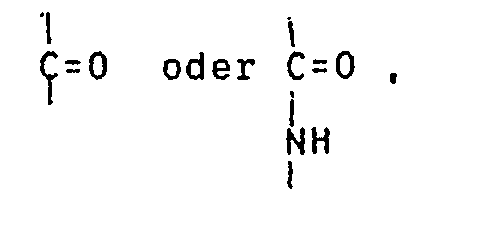


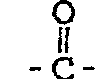


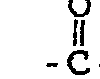

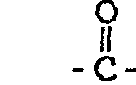

diese dann in an sich bekannter Weise gewünschtenfalls mit mindestens einem Metalloxid oder Metallsalz eines Elements der Ordnungszahlen 21-29, 42, 44 oder 57-83 umsetzt und gewünschtenfalls K' und/oder W durch Umwandlung mindestens einer der in K' oder W' enthaltenen -CC2H- Gruppen in die gewünschte, am Ende eine funktionelle Gruppe aufweisende Alkylengruppe und gegebenenfalls anschließende Verknüpfung mit einem Makro-oder Biomolekül und/oder durch Bindung an den Biotin-oder Avidin-Rest in K und W überführt, wobei die angegebenen Reaktionsschritte (mit Ausnahme der Makro- oder Biomolekül-Verknüpfung, die erst nach der Generierung der funktionellen Gruppe erfolgen kann) in beliebiger Reihenfolge durchgeführt werden können, und gegebenenfalls anschließend in den so erhaltenen PolymerKomplexen noch vorhandene azide Wasserstoffatome ganz oder teilweise durch Kationen anorganischer und/oder organischer Basen, Aminosäuren oder Aminosäureamide substituiert bzw. die entsprechenden Säuregruppen ganz oder teilweise in Ester oder Amide überführt.
Applications Claiming Priority (2)
| Application Number | Priority Date | Filing Date | Title |
|---|---|---|---|
| DE3806795 | 1988-02-29 | ||
| DE3806795A DE3806795A1 (de) | 1988-02-29 | 1988-02-29 | Polymer-gebundene komplexbildner, deren komplexe und konjugate, verfahren zu ihrer herstellung und diese enthaltende pharmazeutische mittel |
Publications (3)
| Publication Number | Publication Date |
|---|---|
| EP0331616A2 true EP0331616A2 (de) | 1989-09-06 |
| EP0331616A3 EP0331616A3 (de) | 1992-03-04 |
| EP0331616B1 EP0331616B1 (de) | 1995-11-08 |
Family
ID=6348654
Family Applications (1)
| Application Number | Title | Priority Date | Filing Date |
|---|---|---|---|
| EP89730046A Expired - Lifetime EP0331616B1 (de) | 1988-02-29 | 1989-02-27 | Polymer-gebundene Komplexbildner, deren Komplexe, Verfahren zu ihrer Herstellung und diese enthaltende pharmazeutische Mittel |
Country Status (6)
| Country | Link |
|---|---|
| EP (1) | EP0331616B1 (de) |
| JP (1) | JP2685568B2 (de) |
| AT (1) | ATE130017T1 (de) |
| DE (2) | DE3806795A1 (de) |
| GR (1) | GR3018071T3 (de) |
| NO (1) | NO174394C (de) |
Cited By (29)
| Publication number | Priority date | Publication date | Assignee | Title |
|---|---|---|---|---|
| WO1990012050A1 (en) * | 1989-04-07 | 1990-10-18 | Salutar, Inc. | Chelants |
| DE3938992A1 (de) * | 1989-11-21 | 1991-05-23 | Schering Ag | Kaskadenpolymer-gebundene komplexbildner, deren komplexe und konjugate, verfahren zu ihrer herstellung und diese enthaltende pharmazeutische mittel |
| WO1992017215A1 (en) | 1990-03-28 | 1992-10-15 | Nycomed Salutar, Inc. | Contrast media |
| US5230883A (en) * | 1989-05-04 | 1993-07-27 | Wisconsin Alumni Research Foundation | Method for localization and treatment of tumors using polylysine complexes |
| US5314681A (en) * | 1988-12-23 | 1994-05-24 | Nycomed Innovation Ab | Composition of positive and negative contrast agents for electron spin resonance enhanced magnetic resonance imaging |
| US5348954A (en) * | 1989-01-13 | 1994-09-20 | Nycomed Imaging As | Heterocyclic chelating agents |
| WO1995009848A3 (en) * | 1990-01-19 | 1995-07-27 | Nycomed Salutar Inc | Polyazacycloalkanes as dichelants |
| WO1996010359A1 (en) * | 1994-10-03 | 1996-04-11 | The Trustees Of The University Of Pennsylvania | Chelate complex with high conspicuity for magnetic resonance imaging |
| US5582814A (en) * | 1994-04-15 | 1996-12-10 | Metasyn, Inc. | 1-(p-n-butylbenzyl) DTPA for magnetic resonance imaging |
| US5593658A (en) * | 1992-09-04 | 1997-01-14 | The General Hospital Corporation | Medical compositions |
| WO1997025305A1 (de) * | 1996-01-04 | 1997-07-17 | Schering Aktiengesellschaft | Neue monofunktionalisierte edta-, dtpa- und ttha-derivate und deren verwendung in der medizinischen diagnostik und therapie |
| US5650133A (en) * | 1990-01-19 | 1997-07-22 | Nycomed Salutar | Macrocyclic polyaza dichelates linked through ring nitrogens via an amide or ester functionality |
| US5811076A (en) * | 1993-05-20 | 1998-09-22 | The Regents Of The University Of California | Macromolecular contrast media for MR imaging |
| WO1998032469A3 (en) * | 1997-01-29 | 1998-11-05 | Nycomed Imaging As | Polymers |
| US5885549A (en) * | 1991-02-01 | 1999-03-23 | Imarx Pharmaceutical Corp. | Phosphorylated materials as contrast agents for use in magnetic resonance imaging of the gastrointestinal region |
| DE19728954C1 (de) * | 1997-06-30 | 1999-04-22 | Schering Ag | Saccharid-Konjugate, diese enthaltende pharmazeutische Mittel, Verfahren zu ihrer Herstellung und ihre Verwendung |
| US5972307A (en) * | 1989-10-23 | 1999-10-26 | Nycomed Salutar, Inc. | Dichelants |
| WO2000015267A1 (en) * | 1998-09-17 | 2000-03-23 | Massachusetts Institute Of Technology | Contrast agent |
| WO1999060920A3 (en) * | 1998-05-26 | 2000-04-06 | Wisconsin Alumni Res Found | Mr signal-emitting coatings |
| US6372194B1 (en) | 1997-03-18 | 2002-04-16 | Toshihiro Akaike | MRI contrast media recognizing minor environmental changes |
| US6676929B2 (en) | 1995-02-01 | 2004-01-13 | Epix Medical, Inc. | Diagnostic imaging contrast agents with extended blood retention |
| WO2005004992A3 (en) * | 2003-06-26 | 2005-03-10 | Gen Electric | Magnetic resonance contrast-enhancing agents and method for detecting and imaging artherosclerotic plaque |
| US6896874B2 (en) | 1998-05-26 | 2005-05-24 | Wisconsin Alumni Research Foundation | MR-signal emitting coatings |
| EP1529779A3 (de) * | 2003-10-23 | 2005-09-28 | Samsung Electronics Co., Ltd. | Organischer Photorezeptor mit zwei N,N,N, -trisubstituierten Amino-Gruppen enthaltenden Ladungstransportmaterialien |
| DE102007002726A1 (de) | 2007-01-18 | 2008-07-31 | Bayer Schering Pharma Aktiengesellschaft | Neue Kaskaden-Polymer-Komplexe, Verfahren zu ihrer Herstellung und diese enthaltende pharmazeutische Mittel |
| EP2194063A3 (de) * | 2005-11-25 | 2010-09-08 | Basf Se | Herstellung und Verwendung von modifizierten Polylysinen |
| US8412306B2 (en) | 2007-02-28 | 2013-04-02 | Wisconsin Alumni Research Foundation | Voltage standing wave suppression for MR-guided therapeutic interventions |
| US8457712B2 (en) | 2005-12-30 | 2013-06-04 | Wisconsin Alumni Research Foundation | Multi-mode medical device system and methods of manufacturing and using same |
| US8532742B2 (en) | 2006-11-15 | 2013-09-10 | Wisconsin Alumni Research Foundation | System and method for simultaneous 3DPR device tracking and imaging under MR-guidance for therapeutic endovascular interventions |
Families Citing this family (5)
| Publication number | Priority date | Publication date | Assignee | Title |
|---|---|---|---|---|
| DE3919915A1 (de) * | 1989-06-19 | 1990-12-20 | Boehringer Mannheim Gmbh | Aminoalkylmaleimide und davon abgeleitete hapten- und antigenderivate sowie konjugate mit peptiden oder proteinen |
| US7189879B2 (en) | 2004-05-25 | 2007-03-13 | Schering Ag | Process for the production of 1-hydroxymethyl-1,3,5-triazapentane, trihydrochloride |
| DE102004026102B4 (de) * | 2004-05-25 | 2006-08-24 | Schering Ag | Verfahren zur Herstellung von 1-Hydroxymethyl-1,3,5-triazapentan, Trihydrochlorid |
| JP2010528122A (ja) * | 2007-05-09 | 2010-08-19 | 日東電工株式会社 | 白金薬剤と結合されたポリマー |
| CN115304780B (zh) * | 2022-08-04 | 2023-06-13 | 上海师范大学 | 金属-有机多孔框架(MOFs)材料的制备方法及性能检测 |
Family Cites Families (4)
| Publication number | Priority date | Publication date | Assignee | Title |
|---|---|---|---|---|
| DE3129906C3 (de) * | 1981-07-24 | 1996-12-19 | Schering Ag | Paramagnetische Komplexsalze, deren Herstellung und Mittel zur Verwendung bei der NMR-Diagnostik |
| NL194579C (nl) * | 1983-01-21 | 2002-08-05 | Schering Ag | Diagnostisch middel. |
| EP0268707A3 (de) * | 1985-11-05 | 1989-03-08 | The General Hospital Corporation | Negativ geladene spezifische Affinitätsreagenzien |
| DE3701665A1 (de) * | 1987-01-19 | 1988-07-28 | Schering Ag | Polymer-komplexe, verfahren zu deren herstellung und diese enthaltende pharmazeutische mittel |
-
1988
- 1988-02-29 DE DE3806795A patent/DE3806795A1/de not_active Withdrawn
-
1989
- 1989-02-27 JP JP1043346A patent/JP2685568B2/ja not_active Expired - Lifetime
- 1989-02-27 DE DE58909479T patent/DE58909479D1/de not_active Expired - Lifetime
- 1989-02-27 AT AT89730046T patent/ATE130017T1/de not_active IP Right Cessation
- 1989-02-27 EP EP89730046A patent/EP0331616B1/de not_active Expired - Lifetime
- 1989-02-27 NO NO890832A patent/NO174394C/no unknown
-
1995
- 1995-11-10 GR GR950403172T patent/GR3018071T3/el unknown
Cited By (52)
| Publication number | Priority date | Publication date | Assignee | Title |
|---|---|---|---|---|
| US5314681A (en) * | 1988-12-23 | 1994-05-24 | Nycomed Innovation Ab | Composition of positive and negative contrast agents for electron spin resonance enhanced magnetic resonance imaging |
| US5439668A (en) * | 1989-01-13 | 1995-08-08 | Nycomed Imaging As | Heterocyclic chelating agents |
| US5348954A (en) * | 1989-01-13 | 1994-09-20 | Nycomed Imaging As | Heterocyclic chelating agents |
| WO1990012050A1 (en) * | 1989-04-07 | 1990-10-18 | Salutar, Inc. | Chelants |
| EP0481526A1 (de) * | 1989-04-07 | 1992-04-22 | Nycomed Salutar, Inc. | Chelatbildner |
| US5364613A (en) * | 1989-04-07 | 1994-11-15 | Sieving Paul F | Polychelants containing macrocyclic chelant moieties |
| US5230883A (en) * | 1989-05-04 | 1993-07-27 | Wisconsin Alumni Research Foundation | Method for localization and treatment of tumors using polylysine complexes |
| US5972307A (en) * | 1989-10-23 | 1999-10-26 | Nycomed Salutar, Inc. | Dichelants |
| AU684453B2 (en) * | 1989-11-21 | 1997-12-18 | Schering Aktiengesellschaft | Cascade polymer bound chelating compounds, their chelates and conjugates, processes for their production, and pharmaceutical agents containing them |
| US6576222B2 (en) | 1989-11-21 | 2003-06-10 | Schering Aktiengesellschaft | Cascade polymer bound complexing compounds, their complexes and conjugates, process for their production and pharmaceutical agents containing them |
| EP0430863A3 (en) * | 1989-11-21 | 1992-03-04 | Schering Aktiengesellschaft Berlin Und Bergkamen | Complexe builders bonded to sterwise prepared polymers, their complexes and conjugates, process for their preparation and pharmaceutical agents containing the same |
| US7208139B2 (en) | 1989-11-21 | 2007-04-24 | Schering Ag | Cascade polymer bound complexing compounds, their complexes and conjugates, processes for their production, and pharmaceutical agents containing them |
| DE3938992A1 (de) * | 1989-11-21 | 1991-05-23 | Schering Ag | Kaskadenpolymer-gebundene komplexbildner, deren komplexe und konjugate, verfahren zu ihrer herstellung und diese enthaltende pharmazeutische mittel |
| AU684453C (en) * | 1989-11-21 | 2001-08-02 | Schering Aktiengesellschaft | Cascade polymer bound chelating compounds, their chelates and conjugates, processes for their production, and pharmaceutical agents containing them |
| US6855309B2 (en) | 1989-11-21 | 2005-02-15 | Schering, Ag | Cascade polymer bound complexing compounds, their complexes and conjugates, processes for their production, and pharmaceutical agents containing them |
| US6193950B1 (en) | 1989-11-21 | 2001-02-27 | Schering Ag | Cascade polymer bound complexing compounds, their complexes and conjugates, processes for their production, and pharmaceutical agents containing them |
| US5650133A (en) * | 1990-01-19 | 1997-07-22 | Nycomed Salutar | Macrocyclic polyaza dichelates linked through ring nitrogens via an amide or ester functionality |
| WO1995009848A3 (en) * | 1990-01-19 | 1995-07-27 | Nycomed Salutar Inc | Polyazacycloalkanes as dichelants |
| WO1992017215A1 (en) | 1990-03-28 | 1992-10-15 | Nycomed Salutar, Inc. | Contrast media |
| US5885549A (en) * | 1991-02-01 | 1999-03-23 | Imarx Pharmaceutical Corp. | Phosphorylated materials as contrast agents for use in magnetic resonance imaging of the gastrointestinal region |
| US5593658A (en) * | 1992-09-04 | 1997-01-14 | The General Hospital Corporation | Medical compositions |
| US5811076A (en) * | 1993-05-20 | 1998-09-22 | The Regents Of The University Of California | Macromolecular contrast media for MR imaging |
| US5582814A (en) * | 1994-04-15 | 1996-12-10 | Metasyn, Inc. | 1-(p-n-butylbenzyl) DTPA for magnetic resonance imaging |
| WO1996010359A1 (en) * | 1994-10-03 | 1996-04-11 | The Trustees Of The University Of Pennsylvania | Chelate complex with high conspicuity for magnetic resonance imaging |
| US8394356B2 (en) | 1995-02-01 | 2013-03-12 | Lantheus Medical Imaging, Inc. | Diagnostic imaging contrast agents with extended blood retention |
| US8017105B2 (en) | 1995-02-01 | 2011-09-13 | Lantheus Medical Imaging, Inc. | Diagnostic imaging contrast agents with extended blood retention |
| US7229606B2 (en) | 1995-02-01 | 2007-06-12 | Epix Pharmaceuticals, Inc. | Diagnostic imaging contrast agents with extended blood retention |
| US7060250B2 (en) | 1995-02-01 | 2006-06-13 | Epix Pharmaceuticals, Inc. | Diagnostic imaging contrast agents with extended blood retention |
| US7011815B2 (en) | 1995-02-01 | 2006-03-14 | Epix Pharmaceuticals, Inc. | Diagnostic imaging contrast agents with extended blood retention |
| US6676929B2 (en) | 1995-02-01 | 2004-01-13 | Epix Medical, Inc. | Diagnostic imaging contrast agents with extended blood retention |
| WO1997025305A1 (de) * | 1996-01-04 | 1997-07-17 | Schering Aktiengesellschaft | Neue monofunktionalisierte edta-, dtpa- und ttha-derivate und deren verwendung in der medizinischen diagnostik und therapie |
| US6080785A (en) * | 1996-01-04 | 2000-06-27 | Schering Aktiengesellschaft | Monofunctionalised EDTA, DTPA and TTHA derivatives and their use in medical diagnosis and therapy |
| WO1998032469A3 (en) * | 1997-01-29 | 1998-11-05 | Nycomed Imaging As | Polymers |
| US6372194B1 (en) | 1997-03-18 | 2002-04-16 | Toshihiro Akaike | MRI contrast media recognizing minor environmental changes |
| DE19728954C1 (de) * | 1997-06-30 | 1999-04-22 | Schering Ag | Saccharid-Konjugate, diese enthaltende pharmazeutische Mittel, Verfahren zu ihrer Herstellung und ihre Verwendung |
| US6896874B2 (en) | 1998-05-26 | 2005-05-24 | Wisconsin Alumni Research Foundation | MR-signal emitting coatings |
| GB2353039A (en) * | 1998-05-26 | 2001-02-14 | Wisconsin Alumni Res Found | MR signal-emitting coatings |
| WO1999060920A3 (en) * | 1998-05-26 | 2000-04-06 | Wisconsin Alumni Res Found | Mr signal-emitting coatings |
| US6896873B2 (en) | 1998-05-26 | 2005-05-24 | Wisconsin Alumni Research Foundation | MR signal-emitting coatings |
| GB2353039B (en) * | 1998-05-26 | 2002-03-06 | Wisconsin Alumni Res Found | MR signal-emitting coatings |
| ES2169708A1 (es) * | 1998-05-26 | 2002-07-01 | Wisconsin Alumni Res Found | Revestimientos que emiten señales de resonancia magnetica. |
| US6361759B1 (en) | 1998-05-26 | 2002-03-26 | Wisconsin Alumni Research Foundation | MR signal-emitting coatings |
| US6355224B1 (en) | 1998-09-17 | 2002-03-12 | Massachusetts Institute Of Technology | Conductive polymer contrast agent compositions and uses therefor |
| WO2000015267A1 (en) * | 1998-09-17 | 2000-03-23 | Massachusetts Institute Of Technology | Contrast agent |
| WO2005004992A3 (en) * | 2003-06-26 | 2005-03-10 | Gen Electric | Magnetic resonance contrast-enhancing agents and method for detecting and imaging artherosclerotic plaque |
| EP1529779A3 (de) * | 2003-10-23 | 2005-09-28 | Samsung Electronics Co., Ltd. | Organischer Photorezeptor mit zwei N,N,N, -trisubstituierten Amino-Gruppen enthaltenden Ladungstransportmaterialien |
| EP2194063A3 (de) * | 2005-11-25 | 2010-09-08 | Basf Se | Herstellung und Verwendung von modifizierten Polylysinen |
| EP2332969A3 (de) * | 2005-11-25 | 2011-11-02 | Basf Se | Herstellung von hochfunktionellen, hoch- oder hyperverzweigten Polylysinen |
| US8457712B2 (en) | 2005-12-30 | 2013-06-04 | Wisconsin Alumni Research Foundation | Multi-mode medical device system and methods of manufacturing and using same |
| US8532742B2 (en) | 2006-11-15 | 2013-09-10 | Wisconsin Alumni Research Foundation | System and method for simultaneous 3DPR device tracking and imaging under MR-guidance for therapeutic endovascular interventions |
| DE102007002726A1 (de) | 2007-01-18 | 2008-07-31 | Bayer Schering Pharma Aktiengesellschaft | Neue Kaskaden-Polymer-Komplexe, Verfahren zu ihrer Herstellung und diese enthaltende pharmazeutische Mittel |
| US8412306B2 (en) | 2007-02-28 | 2013-04-02 | Wisconsin Alumni Research Foundation | Voltage standing wave suppression for MR-guided therapeutic interventions |
Also Published As
| Publication number | Publication date |
|---|---|
| DE58909479D1 (de) | 1995-12-21 |
| DE3806795A1 (de) | 1989-09-07 |
| NO174394B (no) | 1994-01-17 |
| JP2685568B2 (ja) | 1997-12-03 |
| ATE130017T1 (de) | 1995-11-15 |
| EP0331616B1 (de) | 1995-11-08 |
| NO174394C (no) | 1994-04-27 |
| NO890832D0 (no) | 1989-02-27 |
| NO890832L (no) | 1989-08-30 |
| GR3018071T3 (en) | 1996-02-29 |
| EP0331616A3 (de) | 1992-03-04 |
| JPH02196864A (ja) | 1990-08-03 |
Similar Documents
| Publication | Publication Date | Title |
|---|---|---|
| EP0331616B1 (de) | Polymer-gebundene Komplexbildner, deren Komplexe, Verfahren zu ihrer Herstellung und diese enthaltende pharmazeutische Mittel | |
| EP0430863B1 (de) | Kaskadenpolymer-gebundene Komplexbildner, deren Komplexe und Konjugate, Verfahren zu ihrer Herstellung und diese enthaltende pharmazeutische Mittel | |
| EP0305320B1 (de) | Mehrkernige substituierte Komplexbildner, Komplexe und Komplexsalze, Verfahren zu deren Herstellung und diese enthaltende pharmazeutische Mittel | |
| EP0438206B1 (de) | 6-Ring enthaltende makrocyclische Tetraaza-Verbindungen, Verfahren zu ihrer Herstellung und diese enthaltende pharmazeutische Mittel | |
| US5681544A (en) | Polymer-bonded complexing agents, their complexes and conjugates, processes for their production and pharmaceutical agents containing them | |
| DE69534990T2 (de) | Kontrastmittel | |
| DE3713842A1 (de) | Substituierte cyclische komplexbildner, komplexe und komplexsalze, verfahren zu deren herstellung und diese enthaltende pharmazeutische mittel | |
| EP0512661B1 (de) | Makrocyclische Polymer-Komplexbildner, deren Komplexe, Verfahren zu ihrer Herstellung und diese enthaltende pharmazeutische Mittel | |
| DE19525924A1 (de) | Kaskaden-Polymer-Komplexe, Verfahren zu ihrer Herstellung und diese enthaltende pharmazeutische Mittel | |
| DE4425857A1 (de) | Kaskaden-Polymer-Komplexe, Verfahren zur ihrer Herstellung und diese enthaltende pharmazeutische Mittel | |
| EP0277088A2 (de) | Polymer-Komplexe, Verfahren zu deren Herstellung und diese enthaltende pharmazeutische Mittel | |
| DE3710730A1 (de) | Substituierte komplexbildner, komplexe und komplexsalze, verfahren zu deren herstellung und diese enthaltende pharmazeutische mittel | |
| EP1307237B9 (de) | Perfluoralkylhaltige komplexe mit polaren resten, verfahren zu deren herstellung und ihre verwendung | |
| DE19549286A1 (de) | Kaskaden-Polymer-Komplexe, Verfahren zu ihrer Herstellung und diese enthaltende pharmazeutische Mittel | |
| WO2008046463A1 (de) | Metallchelate mit perfluoriertem peg-rest, verfahren zu deren herstellung sowie deren verwendung | |
| DE3621026A1 (de) | Neue komplexe und komplexsalze |
Legal Events
| Date | Code | Title | Description |
|---|---|---|---|
| PUAI | Public reference made under article 153(3) epc to a published international application that has entered the european phase |
Free format text: ORIGINAL CODE: 0009012 |
|
| 17P | Request for examination filed |
Effective date: 19890308 |
|
| AK | Designated contracting states |
Kind code of ref document: A2 Designated state(s): AT BE CH DE ES FR GB GR IT LI LU NL SE |
|
| PUAL | Search report despatched |
Free format text: ORIGINAL CODE: 0009013 |
|
| AK | Designated contracting states |
Kind code of ref document: A3 Designated state(s): AT BE CH DE ES FR GB GR IT LI LU NL SE |
|
| 17Q | First examination report despatched |
Effective date: 19940314 |
|
| GRAA | (expected) grant |
Free format text: ORIGINAL CODE: 0009210 |
|
| AK | Designated contracting states |
Kind code of ref document: B1 Designated state(s): AT BE CH DE ES FR GB GR IT LI LU NL SE |
|
| PG25 | Lapsed in a contracting state [announced via postgrant information from national office to epo] |
Ref country code: BE Effective date: 19951108 Ref country code: NL Free format text: LAPSE BECAUSE OF FAILURE TO SUBMIT A TRANSLATION OF THE DESCRIPTION OR TO PAY THE FEE WITHIN THE PRESCRIBED TIME-LIMIT Effective date: 19951108 |
|
| REF | Corresponds to: |
Ref document number: 130017 Country of ref document: AT Date of ref document: 19951115 Kind code of ref document: T |
|
| ITF | It: translation for a ep patent filed | ||
| REF | Corresponds to: |
Ref document number: 58909479 Country of ref document: DE Date of ref document: 19951221 |
|
| PGFP | Annual fee paid to national office [announced via postgrant information from national office to epo] |
Ref country code: BE Payment date: 19960116 Year of fee payment: 8 |
|
| PGFP | Annual fee paid to national office [announced via postgrant information from national office to epo] |
Ref country code: NL Payment date: 19960123 Year of fee payment: 8 |
|
| REG | Reference to a national code |
Ref country code: GR Ref legal event code: FG4A Free format text: 3018071 |
|
| PG25 | Lapsed in a contracting state [announced via postgrant information from national office to epo] |
Ref country code: ES Free format text: LAPSE BECAUSE OF FAILURE TO SUBMIT A TRANSLATION OF THE DESCRIPTION OR TO PAY THE FEE WITHIN THE PRESCRIBED TIME-LIMIT Effective date: 19960219 |
|
| ET | Fr: translation filed | ||
| NLV1 | Nl: lapsed or annulled due to failure to fulfill the requirements of art. 29p and 29m of the patents act | ||
| REG | Reference to a national code |
Ref country code: CH Ref legal event code: NV Representative=s name: E. BLUM & CO. PATENTANWAELTE |
|
| GBT | Gb: translation of ep patent filed (gb section 77(6)(a)/1977) |
Effective date: 19960401 |
|
| NLXE | Nl: other communications concerning ep-patents (part 3 heading xe) |
Free format text: A REQUEST FOR RESTORATION TO THE PRIOR STATE HAS BEEN FILED ON 960329 |
|
| PLBE | No opposition filed within time limit |
Free format text: ORIGINAL CODE: 0009261 |
|
| STAA | Information on the status of an ep patent application or granted ep patent |
Free format text: STATUS: NO OPPOSITION FILED WITHIN TIME LIMIT |
|
| 26N | No opposition filed | ||
| PGFP | Annual fee paid to national office [announced via postgrant information from national office to epo] |
Ref country code: ES Payment date: 19970214 Year of fee payment: 9 |
|
| NLV1 | Nl: lapsed or annulled due to failure to fulfill the requirements of art. 29p and 29m of the patents act | ||
| NLXE | Nl: other communications concerning ep-patents (part 3 heading xe) |
Free format text: THE REQUEST FOR RESTORATION TO THE PRIOR STATE AS PROVIDED FOR IN ARTICLE 23 OF THE PATENTS ACT 1995 (SEE PUBLICATION IN HEADING XE OF THE PATENT BULLETIN OF 030696/96)HAS BEEN REJECTED |
|
| PGFP | Annual fee paid to national office [announced via postgrant information from national office to epo] |
Ref country code: FR Payment date: 19980112 Year of fee payment: 10 |
|
| PGFP | Annual fee paid to national office [announced via postgrant information from national office to epo] |
Ref country code: AT Payment date: 19980115 Year of fee payment: 10 |
|
| PGFP | Annual fee paid to national office [announced via postgrant information from national office to epo] |
Ref country code: SE Payment date: 19980116 Year of fee payment: 10 |
|
| PGFP | Annual fee paid to national office [announced via postgrant information from national office to epo] |
Ref country code: GB Payment date: 19980121 Year of fee payment: 10 |
|
| PGFP | Annual fee paid to national office [announced via postgrant information from national office to epo] |
Ref country code: CH Payment date: 19980127 Year of fee payment: 10 |
|
| PGFP | Annual fee paid to national office [announced via postgrant information from national office to epo] |
Ref country code: GR Payment date: 19980130 Year of fee payment: 10 |
|
| PGFP | Annual fee paid to national office [announced via postgrant information from national office to epo] |
Ref country code: LU Payment date: 19980203 Year of fee payment: 10 |
|
| PG25 | Lapsed in a contracting state [announced via postgrant information from national office to epo] |
Ref country code: GB Free format text: LAPSE BECAUSE OF NON-PAYMENT OF DUE FEES Effective date: 19990227 Ref country code: LU Free format text: LAPSE BECAUSE OF NON-PAYMENT OF DUE FEES Effective date: 19990227 Ref country code: AT Free format text: LAPSE BECAUSE OF NON-PAYMENT OF DUE FEES Effective date: 19990227 |
|
| PG25 | Lapsed in a contracting state [announced via postgrant information from national office to epo] |
Ref country code: GR Free format text: LAPSE BECAUSE OF NON-PAYMENT OF DUE FEES Effective date: 19990228 Ref country code: CH Free format text: LAPSE BECAUSE OF NON-PAYMENT OF DUE FEES Effective date: 19990228 Ref country code: LI Free format text: LAPSE BECAUSE OF NON-PAYMENT OF DUE FEES Effective date: 19990228 Ref country code: SE Free format text: LAPSE BECAUSE OF NON-PAYMENT OF DUE FEES Effective date: 19990228 |
|
| REG | Reference to a national code |
Ref country code: CH Ref legal event code: PL |
|
| GBPC | Gb: european patent ceased through non-payment of renewal fee |
Effective date: 19990227 |
|
| PG25 | Lapsed in a contracting state [announced via postgrant information from national office to epo] |
Ref country code: FR Free format text: LAPSE BECAUSE OF NON-PAYMENT OF DUE FEES Effective date: 19991029 |
|
| EUG | Se: european patent has lapsed |
Ref document number: 89730046.3 |
|
| REG | Reference to a national code |
Ref country code: FR Ref legal event code: ST |
|
| PG25 | Lapsed in a contracting state [announced via postgrant information from national office to epo] |
Ref country code: IT Free format text: LAPSE BECAUSE OF NON-PAYMENT OF DUE FEES;WARNING: LAPSES OF ITALIAN PATENTS WITH EFFECTIVE DATE BEFORE 2007 MAY HAVE OCCURRED AT ANY TIME BEFORE 2007. THE CORRECT EFFECTIVE DATE MAY BE DIFFERENT FROM THE ONE RECORDED. Effective date: 20050227 |
|
| PGFP | Annual fee paid to national office [announced via postgrant information from national office to epo] |
Ref country code: DE Payment date: 20080118 Year of fee payment: 20 |