EP0330764B1 - Blockcopolymerzusammensetzung - Google Patents
Blockcopolymerzusammensetzung Download PDFInfo
- Publication number
- EP0330764B1 EP0330764B1 EP88200423A EP88200423A EP0330764B1 EP 0330764 B1 EP0330764 B1 EP 0330764B1 EP 88200423 A EP88200423 A EP 88200423A EP 88200423 A EP88200423 A EP 88200423A EP 0330764 B1 EP0330764 B1 EP 0330764B1
- Authority
- EP
- European Patent Office
- Prior art keywords
- block copolymer
- weight
- range
- polystyrene
- polyisoprene
- Prior art date
- Legal status (The legal status is an assumption and is not a legal conclusion. Google has not performed a legal analysis and makes no representation as to the accuracy of the status listed.)
- Expired
Links
- 229920001400 block copolymer Polymers 0.000 title claims description 78
- 239000000203 mixture Substances 0.000 title claims description 47
- PPBRXRYQALVLMV-UHFFFAOYSA-N Styrene Chemical compound C=CC1=CC=CC=C1 PPBRXRYQALVLMV-UHFFFAOYSA-N 0.000 claims description 42
- 229920000642 polymer Polymers 0.000 claims description 29
- RRHGJUQNOFWUDK-UHFFFAOYSA-N Isoprene Chemical compound CC(=C)C=C RRHGJUQNOFWUDK-UHFFFAOYSA-N 0.000 claims description 28
- 230000001070 adhesive effect Effects 0.000 claims description 21
- -1 aromatic vinyl compound Chemical class 0.000 claims description 17
- 239000000853 adhesive Substances 0.000 claims description 15
- 229920002554 vinyl polymer Polymers 0.000 claims description 15
- 229920005989 resin Polymers 0.000 claims description 14
- 239000011347 resin Substances 0.000 claims description 14
- 238000002360 preparation method Methods 0.000 claims description 13
- 238000000034 method Methods 0.000 claims description 9
- 150000001993 dienes Chemical class 0.000 claims description 7
- 125000003118 aryl group Chemical group 0.000 claims description 3
- SFHYNDMGZXWXBU-LIMNOBDPSA-N 6-amino-2-[[(e)-(3-formylphenyl)methylideneamino]carbamoylamino]-1,3-dioxobenzo[de]isoquinoline-5,8-disulfonic acid Chemical compound O=C1C(C2=3)=CC(S(O)(=O)=O)=CC=3C(N)=C(S(O)(=O)=O)C=C2C(=O)N1NC(=O)N\N=C\C1=CC=CC(C=O)=C1 SFHYNDMGZXWXBU-LIMNOBDPSA-N 0.000 claims description 2
- 125000000391 vinyl group Chemical group [H]C([*])=C([H])[H] 0.000 claims description 2
- 229920001195 polyisoprene Polymers 0.000 description 28
- 239000004793 Polystyrene Substances 0.000 description 26
- 229920002223 polystyrene Polymers 0.000 description 26
- 239000002390 adhesive tape Substances 0.000 description 10
- OFBQJSOFQDEBGM-UHFFFAOYSA-N Pentane Chemical compound CCCCC OFBQJSOFQDEBGM-UHFFFAOYSA-N 0.000 description 8
- 229920001971 elastomer Polymers 0.000 description 8
- 230000014759 maintenance of location Effects 0.000 description 8
- VLKZOEOYAKHREP-UHFFFAOYSA-N n-Hexane Chemical compound CCCCCC VLKZOEOYAKHREP-UHFFFAOYSA-N 0.000 description 8
- 238000002474 experimental method Methods 0.000 description 7
- 239000005060 rubber Substances 0.000 description 7
- MZRVEZGGRBJDDB-UHFFFAOYSA-N N-Butyllithium Chemical compound [Li]CCCC MZRVEZGGRBJDDB-UHFFFAOYSA-N 0.000 description 6
- 230000000052 comparative effect Effects 0.000 description 6
- 238000006116 polymerization reaction Methods 0.000 description 6
- XDTMQSROBMDMFD-UHFFFAOYSA-N Cyclohexane Chemical compound C1CCCCC1 XDTMQSROBMDMFD-UHFFFAOYSA-N 0.000 description 5
- WYURNTSHIVDZCO-UHFFFAOYSA-N Tetrahydrofuran Chemical compound C1CCOC1 WYURNTSHIVDZCO-UHFFFAOYSA-N 0.000 description 4
- 239000010734 process oil Substances 0.000 description 4
- 239000000243 solution Substances 0.000 description 4
- UHOVQNZJYSORNB-UHFFFAOYSA-N Benzene Chemical compound C1=CC=CC=C1 UHOVQNZJYSORNB-UHFFFAOYSA-N 0.000 description 3
- KAKZBPTYRLMSJV-UHFFFAOYSA-N Butadiene Chemical compound C=CC=C KAKZBPTYRLMSJV-UHFFFAOYSA-N 0.000 description 3
- YMWUJEATGCHHMB-UHFFFAOYSA-N Dichloromethane Chemical compound ClCCl YMWUJEATGCHHMB-UHFFFAOYSA-N 0.000 description 3
- 238000013329 compounding Methods 0.000 description 3
- 229920001577 copolymer Polymers 0.000 description 3
- BYLOHCRAPOSXLY-UHFFFAOYSA-N dichloro(diethyl)silane Chemical compound CC[Si](Cl)(Cl)CC BYLOHCRAPOSXLY-UHFFFAOYSA-N 0.000 description 3
- 239000007788 liquid Substances 0.000 description 3
- 229920003023 plastic Polymers 0.000 description 3
- 239000004033 plastic Substances 0.000 description 3
- MYRTYDVEIRVNKP-UHFFFAOYSA-N 1,2-Divinylbenzene Chemical compound C=CC1=CC=CC=C1C=C MYRTYDVEIRVNKP-UHFFFAOYSA-N 0.000 description 2
- NLZUEZXRPGMBCV-UHFFFAOYSA-N Butylhydroxytoluene Chemical compound CC1=CC(C(C)(C)C)=C(O)C(C(C)(C)C)=C1 NLZUEZXRPGMBCV-UHFFFAOYSA-N 0.000 description 2
- VTYYLEPIZMXCLO-UHFFFAOYSA-L Calcium carbonate Chemical compound [Ca+2].[O-]C([O-])=O VTYYLEPIZMXCLO-UHFFFAOYSA-L 0.000 description 2
- VYPSYNLAJGMNEJ-UHFFFAOYSA-N Silicium dioxide Chemical compound O=[Si]=O VYPSYNLAJGMNEJ-UHFFFAOYSA-N 0.000 description 2
- GWEVSGVZZGPLCZ-UHFFFAOYSA-N Titan oxide Chemical compound O=[Ti]=O GWEVSGVZZGPLCZ-UHFFFAOYSA-N 0.000 description 2
- 238000010539 anionic addition polymerization reaction Methods 0.000 description 2
- 239000010426 asphalt Substances 0.000 description 2
- 235000010354 butylated hydroxytoluene Nutrition 0.000 description 2
- 230000007613 environmental effect Effects 0.000 description 2
- 238000005227 gel permeation chromatography Methods 0.000 description 2
- 239000012943 hotmelt Substances 0.000 description 2
- 229930195733 hydrocarbon Natural products 0.000 description 2
- 150000002430 hydrocarbons Chemical class 0.000 description 2
- 239000010410 layer Substances 0.000 description 2
- 239000000178 monomer Substances 0.000 description 2
- 239000012299 nitrogen atmosphere Substances 0.000 description 2
- 230000035939 shock Effects 0.000 description 2
- 229920003048 styrene butadiene rubber Polymers 0.000 description 2
- 125000003011 styrenyl group Chemical group [H]\C(*)=C(/[H])C1=C([H])C([H])=C([H])C([H])=C1[H] 0.000 description 2
- 150000003505 terpenes Chemical class 0.000 description 2
- 235000007586 terpenes Nutrition 0.000 description 2
- YLQBMQCUIZJEEH-UHFFFAOYSA-N tetrahydrofuran Natural products C=1C=COC=1 YLQBMQCUIZJEEH-UHFFFAOYSA-N 0.000 description 2
- PMJHHCWVYXUKFD-SNAWJCMRSA-N (E)-1,3-pentadiene Chemical group C\C=C\C=C PMJHHCWVYXUKFD-SNAWJCMRSA-N 0.000 description 1
- SCYULBFZEHDVBN-UHFFFAOYSA-N 1,1-Dichloroethane Chemical compound CC(Cl)Cl SCYULBFZEHDVBN-UHFFFAOYSA-N 0.000 description 1
- APQIUTYORBAGEZ-UHFFFAOYSA-N 1,1-dibromoethane Chemical compound CC(Br)Br APQIUTYORBAGEZ-UHFFFAOYSA-N 0.000 description 1
- ATWLRNODAYAMQS-UHFFFAOYSA-N 1,1-dibromopropane Chemical compound CCC(Br)Br ATWLRNODAYAMQS-UHFFFAOYSA-N 0.000 description 1
- SEQRDAAUNCRFIT-UHFFFAOYSA-N 1,1-dichlorobutane Chemical compound CCCC(Cl)Cl SEQRDAAUNCRFIT-UHFFFAOYSA-N 0.000 description 1
- KNKRKFALVUDBJE-UHFFFAOYSA-N 1,2-dichloropropane Chemical compound CC(Cl)CCl KNKRKFALVUDBJE-UHFFFAOYSA-N 0.000 description 1
- IANQTJSKSUMEQM-UHFFFAOYSA-N 1-benzofuran Chemical compound C1=CC=C2OC=CC2=C1 IANQTJSKSUMEQM-UHFFFAOYSA-N 0.000 description 1
- NVZWEEGUWXZOKI-UHFFFAOYSA-N 1-ethenyl-2-methylbenzene Chemical compound CC1=CC=CC=C1C=C NVZWEEGUWXZOKI-UHFFFAOYSA-N 0.000 description 1
- JZHGRUMIRATHIU-UHFFFAOYSA-N 1-ethenyl-3-methylbenzene Chemical compound CC1=CC=CC(C=C)=C1 JZHGRUMIRATHIU-UHFFFAOYSA-N 0.000 description 1
- QEDJMOONZLUIMC-UHFFFAOYSA-N 1-tert-butyl-4-ethenylbenzene Chemical compound CC(C)(C)C1=CC=C(C=C)C=C1 QEDJMOONZLUIMC-UHFFFAOYSA-N 0.000 description 1
- IGGDKDTUCAWDAN-UHFFFAOYSA-N 1-vinylnaphthalene Chemical compound C1=CC=C2C(C=C)=CC=CC2=C1 IGGDKDTUCAWDAN-UHFFFAOYSA-N 0.000 description 1
- YBYIRNPNPLQARY-UHFFFAOYSA-N 1H-indene Chemical compound C1=CC=C2CC=CC2=C1 YBYIRNPNPLQARY-UHFFFAOYSA-N 0.000 description 1
- BTOVVHWKPVSLBI-UHFFFAOYSA-N 2-methylprop-1-enylbenzene Chemical compound CC(C)=CC1=CC=CC=C1 BTOVVHWKPVSLBI-UHFFFAOYSA-N 0.000 description 1
- KXYAVSFOJVUIHT-UHFFFAOYSA-N 2-vinylnaphthalene Chemical compound C1=CC=CC2=CC(C=C)=CC=C21 KXYAVSFOJVUIHT-UHFFFAOYSA-N 0.000 description 1
- AQWSFUIGRSMCST-UHFFFAOYSA-N 3-pyridin-3-ylsulfonyl-5-(trifluoromethyl)chromen-2-one Chemical compound N1=CC(=CC=C1)S(=O)(=O)C=1C(OC2=CC=CC(=C2C=1)C(F)(F)F)=O AQWSFUIGRSMCST-UHFFFAOYSA-N 0.000 description 1
- JLBJTVDPSNHSKJ-UHFFFAOYSA-N 4-Methylstyrene Chemical compound CC1=CC=C(C=C)C=C1 JLBJTVDPSNHSKJ-UHFFFAOYSA-N 0.000 description 1
- 239000004215 Carbon black (E152) Substances 0.000 description 1
- 239000004150 EU approved colour Substances 0.000 description 1
- VGGSQFUCUMXWEO-UHFFFAOYSA-N Ethene Chemical compound C=C VGGSQFUCUMXWEO-UHFFFAOYSA-N 0.000 description 1
- 239000005977 Ethylene Substances 0.000 description 1
- 244000043261 Hevea brasiliensis Species 0.000 description 1
- 239000004831 Hot glue Substances 0.000 description 1
- VQTUBCCKSQIDNK-UHFFFAOYSA-N Isobutene Chemical group CC(C)=C VQTUBCCKSQIDNK-UHFFFAOYSA-N 0.000 description 1
- 229920000459 Nitrile rubber Polymers 0.000 description 1
- 239000004743 Polypropylene Substances 0.000 description 1
- 229910000831 Steel Inorganic materials 0.000 description 1
- 239000002174 Styrene-butadiene Substances 0.000 description 1
- 239000006096 absorbing agent Substances 0.000 description 1
- 239000000654 additive Substances 0.000 description 1
- 239000012790 adhesive layer Substances 0.000 description 1
- XYLMUPLGERFSHI-UHFFFAOYSA-N alpha-Methylstyrene Chemical compound CC(=C)C1=CC=CC=C1 XYLMUPLGERFSHI-UHFFFAOYSA-N 0.000 description 1
- 239000003963 antioxidant agent Substances 0.000 description 1
- 235000006708 antioxidants Nutrition 0.000 description 1
- 229910000019 calcium carbonate Inorganic materials 0.000 description 1
- 239000006229 carbon black Substances 0.000 description 1
- 239000004927 clay Substances 0.000 description 1
- 229910052570 clay Inorganic materials 0.000 description 1
- 230000006835 compression Effects 0.000 description 1
- 238000007906 compression Methods 0.000 description 1
- 239000007822 coupling agent Substances 0.000 description 1
- SRIHMZCTDWKFTQ-UHFFFAOYSA-N dibromo(diethyl)silane Chemical compound CC[Si](Br)(Br)CC SRIHMZCTDWKFTQ-UHFFFAOYSA-N 0.000 description 1
- LIQOCGKQCFXKLF-UHFFFAOYSA-N dibromo(dimethyl)silane Chemical compound C[Si](C)(Br)Br LIQOCGKQCFXKLF-UHFFFAOYSA-N 0.000 description 1
- FJBFPHVGVWTDIP-UHFFFAOYSA-N dibromomethane Chemical compound BrCBr FJBFPHVGVWTDIP-UHFFFAOYSA-N 0.000 description 1
- LIKFHECYJZWXFJ-UHFFFAOYSA-N dimethyldichlorosilane Chemical compound C[Si](C)(Cl)Cl LIKFHECYJZWXFJ-UHFFFAOYSA-N 0.000 description 1
- 238000004090 dissolution Methods 0.000 description 1
- 238000009826 distribution Methods 0.000 description 1
- 239000000806 elastomer Substances 0.000 description 1
- 238000004945 emulsification Methods 0.000 description 1
- 239000005038 ethylene vinyl acetate Substances 0.000 description 1
- 229920006244 ethylene-ethyl acrylate Polymers 0.000 description 1
- 235000013305 food Nutrition 0.000 description 1
- 238000010438 heat treatment Methods 0.000 description 1
- 239000012442 inert solvent Substances 0.000 description 1
- 238000002329 infrared spectrum Methods 0.000 description 1
- 239000003999 initiator Substances 0.000 description 1
- 238000002347 injection Methods 0.000 description 1
- 239000007924 injection Substances 0.000 description 1
- 239000011256 inorganic filler Substances 0.000 description 1
- 229910003475 inorganic filler Inorganic materials 0.000 description 1
- 229920000554 ionomer Polymers 0.000 description 1
- 229910052744 lithium Inorganic materials 0.000 description 1
- 150000002642 lithium compounds Chemical class 0.000 description 1
- WGOPGODQLGJZGL-UHFFFAOYSA-N lithium;butane Chemical compound [Li+].CC[CH-]C WGOPGODQLGJZGL-UHFFFAOYSA-N 0.000 description 1
- ZLNQQNXFFQJAID-UHFFFAOYSA-L magnesium carbonate Chemical compound [Mg+2].[O-]C([O-])=O ZLNQQNXFFQJAID-UHFFFAOYSA-L 0.000 description 1
- 239000001095 magnesium carbonate Substances 0.000 description 1
- 229910000021 magnesium carbonate Inorganic materials 0.000 description 1
- 239000000463 material Substances 0.000 description 1
- 229940073584 methylene chloride Drugs 0.000 description 1
- 229920003052 natural elastomer Polymers 0.000 description 1
- 229920001194 natural rubber Polymers 0.000 description 1
- 229940006093 opthalmologic coloring agent diagnostic Drugs 0.000 description 1
- 238000012856 packing Methods 0.000 description 1
- 239000003208 petroleum Substances 0.000 description 1
- PMJHHCWVYXUKFD-UHFFFAOYSA-N piperylene Natural products CC=CC=C PMJHHCWVYXUKFD-UHFFFAOYSA-N 0.000 description 1
- 229920001084 poly(chloroprene) Polymers 0.000 description 1
- 229920002589 poly(vinylethylene) polymer Polymers 0.000 description 1
- 229920002857 polybutadiene Polymers 0.000 description 1
- 229920001748 polybutylene Polymers 0.000 description 1
- 229920006267 polyester film Polymers 0.000 description 1
- 229920001155 polypropylene Polymers 0.000 description 1
- 238000005096 rolling process Methods 0.000 description 1
- 239000000377 silicon dioxide Substances 0.000 description 1
- 239000002904 solvent Substances 0.000 description 1
- 239000003381 stabilizer Substances 0.000 description 1
- 239000010959 steel Substances 0.000 description 1
- 238000003860 storage Methods 0.000 description 1
- 239000000758 substrate Substances 0.000 description 1
- 239000000454 talc Substances 0.000 description 1
- 229910052623 talc Inorganic materials 0.000 description 1
- 229920001169 thermoplastic Polymers 0.000 description 1
Classifications
-
- C—CHEMISTRY; METALLURGY
- C09—DYES; PAINTS; POLISHES; NATURAL RESINS; ADHESIVES; COMPOSITIONS NOT OTHERWISE PROVIDED FOR; APPLICATIONS OF MATERIALS NOT OTHERWISE PROVIDED FOR
- C09J—ADHESIVES; NON-MECHANICAL ASPECTS OF ADHESIVE PROCESSES IN GENERAL; ADHESIVE PROCESSES NOT PROVIDED FOR ELSEWHERE; USE OF MATERIALS AS ADHESIVES
- C09J153/00—Adhesives based on block copolymers containing at least one sequence of a polymer obtained by reactions only involving carbon-to-carbon unsaturated bonds; Adhesives based on derivatives of such polymers
- C09J153/02—Vinyl aromatic monomers and conjugated dienes
-
- C—CHEMISTRY; METALLURGY
- C08—ORGANIC MACROMOLECULAR COMPOUNDS; THEIR PREPARATION OR CHEMICAL WORKING-UP; COMPOSITIONS BASED THEREON
- C08F—MACROMOLECULAR COMPOUNDS OBTAINED BY REACTIONS ONLY INVOLVING CARBON-TO-CARBON UNSATURATED BONDS
- C08F297/00—Macromolecular compounds obtained by successively polymerising different monomer systems using a catalyst of the ionic or coordination type without deactivating the intermediate polymer
- C08F297/02—Macromolecular compounds obtained by successively polymerising different monomer systems using a catalyst of the ionic or coordination type without deactivating the intermediate polymer using a catalyst of the anionic type
- C08F297/04—Macromolecular compounds obtained by successively polymerising different monomer systems using a catalyst of the ionic or coordination type without deactivating the intermediate polymer using a catalyst of the anionic type polymerising vinyl aromatic monomers and conjugated dienes
- C08F297/046—Macromolecular compounds obtained by successively polymerising different monomer systems using a catalyst of the ionic or coordination type without deactivating the intermediate polymer using a catalyst of the anionic type polymerising vinyl aromatic monomers and conjugated dienes polymerising vinyl aromatic monomers and isoprene, optionally with other conjugated dienes
Definitions
- the invention relates to a block copolymer composition, to an adhesive composition containing said block copolymer composition and to a process for the preparation of said adhesive composition.
- a block copolymer composition has now been found which when used as adhesive, makes hot melt moulded adhesive compositions with an excellent balance between low temperature tack and high temperature bonding force.
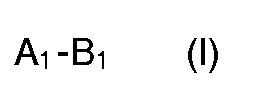
- the invention provides a block copolymer composition comprising:
- the content of the polymer block of the aromatic vinyl compound is larger than 20% by weight, or the molecular weight of 8 1 is lower than 150,000, there will be insufficient low temperature tack, and when the molecular weight of A 1 is lower than 12,000, the high temperature retention force will be insufficient.
- the content of the polymer block of the aromatic vinyl compound A 1 on the total amount of A 1 and B 1 is preferably more than 1 % by weight, more preferably in the range of from 4 to 18% by weight, still more preferably 5 to 15% by weight; the molecular weight of A 1 is preferably in the range of from 12,000 to 55,000, the molecular weight of B 1 is preferably in the range of from 150,000 to 300,000.
- the total content of the polymer blocks of the aromatic vinyl compounds A 2 and A3 on the total amount of A 2 , B 2 and A3 is preferably in the range of from 25 to 80% by weight, still more preferably 30 to 80% by weight, and A 2 and A3 are each preferably in the range of from 10 to 50% by weight of the total of A 2 -B 2 -A3, more preferably 12 to 40% by weight.
- the molecular weights of A 2 and A3 are preferably in the range of from 12,000 to 55,000.
- the weight ratio of the two block copolymers lies outside the range 40 to 85% by weight for the block copolymer of the general formula I and 15 to 60% by weight for the block copolymer of the general formula II, the balance between low temperature tack and high temperature bonding force will not be upheld.
- the amounts in which the two block copolymers are blended are preferably in the range of from 45 to 80% by weight of the block copolymer of the general formula I and in the range of from 20 to 55% by weight of the block copolymer of the general formula II.
- the afore-mentioned block copolymers of the general formulae I and II can be obtained by anionic polymerization using an alkyl-lithium initiator.
- an organic lithium compound such as n-butyllithium, sec-butyllithium is added and then, while an aromatic vinyl monomer, such as styrene, a-methylstyrene, p-methylstyrene, m-methylstyrene, o-methylstyrene, p-tert-butylstyrene, a dimethylstyrene, 1- or 2-vinylnaphthalene, and a conjugated diene monomer, such as isoprene, butadiene, piperylene, are gradually added, the blocks are formed, generally at a temperature in the range of from 30 to 120°C, preferably 50
- the copolymer of the general formula II may be obtained by allowing the copolymer of the general formula I to be coupled by using a coupling agent, such as a divinyl aromatic compound, for instance divinylbenzene, a dihalogenated hydrocarbon, for instance dibromomethane, dibromoethane, dibromopropane, methylenechloride, dichloroethane, dichloropropane, dichlorobutane, a dialkyl dihalogenated silicon, for instance dimethyldichlorosilane, diethyldichlorosilane, dimethylsilicondibromide, diethylsilicon- dichloride, diethylsilicon dibromide.
- a coupling agent such as a divinyl aromatic compound, for instance divinylbenzene, a dihalogenated hydrocarbon, for instance dibromomethane, dibromoethane, dibromopropane, methylenechloride, dichlor
- the invention further provides an adhesive composition comprising
- Tackifying resins that may be added to the afore-mentioned block copolymer compositions, are rosins, terpene resins, denaturated terpene resins, cumarone inden resins, petroleum resins, styrene resins, of which one or more may be blended in.
- the amount of the said resins added lies preferably in the range of from 50 to 200 parts by weight (pbw), on 100 pbw of the afore-mentioned copolymers of the general formulae I and II.
- a usually employed softener such as a process oil, for instance paraffinic process oil, naphthenic process oil, aromatic process oil, may be used as softener, and apart from these, a liquid tackifying resin may also be used for the purpose.
- a process oil for instance paraffinic process oil, naphthenic process oil, aromatic process oil
- a liquid tackifying resin may also be used for the purpose.
- the amount of softener used is preferably in the range of from 20 to 150 pbw.
- stabilizers such as anti-oxidants, ultaviolet absorbers, inorganic fillers, such as calcium carbonate, talc, clay, titania, silica, magnesium carbonate, carbon black, and colouring agents, may be added to the composition of the present invention, if required.
- compositions of the present invention may be mixed with one or a mixture of two or more other elastomers, for instance natural rubber, polyisoprene rubber, polybutadiene rubber, styrene butadiene rubber, high styrene rubber, chloroprene rubber, EPT, EPR, acryl rubber, polyisoprene isobutylene rubber, and thermoplastic plastics, for instance, 1,2-polybutadiene, poly-(1-butene), polyethylene, ethylene vinyl acetate copolymer, ethylene-ethyl acrylate copolymer, atactic polypropylene, an ionomer, ethylene resin.
- other elastomers for instance natural rubber, polyisoprene rubber, polybutadiene rubber, styrene butadiene rubber, high styrene rubber, chloroprene rubber, EPT, EPR, acryl rubber, polyisoprene isobutylene rubber, and thermoplastic plastic
- the invention also provides a process for the preparation of an adhesive composition according to the present invention which process comprises mixing
- the afore-mentioned components are placed in, for instance, a normal mixing vessel or a sealed kneader and mixed with heating, if required in a nitrogen atmosphere, to prepare the block copolymer compositions or adhesive compositions according to the invention.
- the adhesive compositions according to the invention thus prepared when mixed by heat dissolution and applied direct to form a tacky layer, are highly efficient economically. They may, however, also be mixed and applied with the aid of a usual solvent or by emulsification.
- compositions of the invention with adhesive properties thus prepared can be formed into a tacky layer by applying them to a substrate, they can be efficiently used for all kinds of, for example, adhesive tapes, labels, linings for fixing all kinds of light weight plastic mould goods and linings for fixing carperts and also as materials for adhesive layers for adhesive tapes and labels used for cold storage foods and in cold surroundings.
- the block copolymer compositions of the present invention cover a wide range of uses, of which injection moulded goods, such as foot wear and containers, flow moulded goods, such as toys and household appliances, compression moulded goods, such as packings, sheets, plates, may be given as examples.
- the block copolymer compositions of the present invention may also be blended with other rubbers, such as SBR and NBR and plastics, such as polystyrene, to improve their properties. For instance, their service in rubber is as improvers of crepe sponge and in plastics as shock resistance improvers for widely used polystyrenes.
- the block copolymers of the present invention may also be blended with asphalt to improve the cold resistance of the asphalt.
- the molecular weights of the styrene part and the polyisoprene part were found with the aid of the following method.
- the temperature was kept at 60-70 C.
- 2,6-di-tert-butyl-p-cresol was added to the polymer solution, and the cyclohexane/n-pentane was removed by heat to afford the block copolymer.
- the molecular weights of the individual parts of the polystyrene-polyisoprene block copolymer (1) obtained were determined; the molecular weight of the polystyrene part was found to be 16,000 (A, and of the polyisoprene part 200,000 (Bi).
- This block copolymer was obtained in the same way as the polystyrene-polyisoprene block copolymer (1) described hereinbefore, except that the amount of styrene added was 41.2 g and the amount of isoprene added was 358.8 g.
- the molecular weights of the individual parts of the polystyrene-polyisoprene block copolymer (2) obtained were determined; the molecular weight of the polystyrene part was found to be 16,000 (A, and of the polyisoprene part 155,000 (Bi).
- This block copolymer was obtained in the same way as the polystyrene-polyisoprene block copolymer (1) described hereinbefore, except that the amount of styrene added was 20.4 g and the amount of isoprene added was 379.6 g.
- the molecular weights of the individual parts of the polystyrene-polyisoprene block copolymer (3) obtained were determined; the molecular weight of the polystyrene part was found to be 16,000 (A, and of the polyisoprene part 300,000 (Bi).
- This block copolymer was obtained in the same way as the polystyrene-polyisoprene block copolymer (1) described hereinbefore, except that the amount of styrene added was 55.2 g and the amount of isoprene added was 344.8 g.
- the molecular weights of the individual parts of the polystyrene-polyisoprene block copolymer (4) obtained were determined; the molecular weight of the polystyrene part was found to be 16,000 (A, and of the polyisoprene part 100,000 (Bi).
- the temperature was kept at 60-70 C.
- 2,6-di-tert-butyl-p-cresol was added to the polymer solution; then the cyclohexane/n-pentane was removed by heat to afford the block copolymer.
- the molecular weights of the individual parts of the polystyrene-polyisoprene-polystyrene linear block copolymer (S-I-S)(1) obtained were determined; the molecular weight of the first polystyrene part was found to be 16,000 (A 2 ), the molecular weight of the polyisoprene part was 100,000 (B 2 ) and the molecular weight of the second polystyrene part was found to be 16,000 (A3)
- This block copolymer was obtained in the same way as the polystyrene-polyisoprene-polystyrene linear block copolymer (1) described hereinbefore, except that the amounts of styrene added were 62.8 g each and the amount of isoprene added was 274.4 g.
- the molecular weights of the individual parts of the polystyrene-polyisoprene-polystyrene linear block copolymer (S-I-S)(2) obtained were determined; the molecular weight of the first polystyrene part was found to be 16,000 (A 2 ), the molecular weight of the polyisoprene part was 70,000 (B 2 ) and the molecular weight of the second polystyrene part was found to be 16,000 (A3)
- This block copolymer was obtained in the same way as the polystyrene-polyisoprene-polystyrene linear block copolymer (1) described hereinbefore, except that the amounts of styrene added were each 27.6 g and the amount of isoprene added was 344.8 g.
- the molecular weights of the individual parts of the polystyrene-polyisoprene-polystyrene linear block copolymer (S-I-S)(3) obtained were determined; the molecular weight of the first polystyrene part was found to be 16,000 (A 2 ), the molecular weight of the polyisoprene part was 200,000 (B 2 ) and the molecular weight of the second polystyrene part was found to be 16,000 (A3)
- Blends of the block copolymers having the compositions shown in Table 1 were charged to a rubber mill which was heated to 130 ° C and mixed for 30 minutes to form a uniform smoothly flowing adhesive composition.
- This adhesive composition was removed under melt conditions and with an applicator it was coated 35 u.m thick onto a polyester film to prepare adhesive tape samples. Tack (10 ° C), bonding force (23 ° C) and retention force (40 ° C) of these adhesive tapes were determined and listed in Table 1.
- An adhesive tape sample was cut into 10 mm wide strips, stuck onto a SUS 304 plate and subjected to friction at a pulling speed of 300 mm/min.
- An adhesive tape sample was cut into 15 mm wide strips and stuck to an SUS 304 plate over a fixed area of 15 mm x 25 mm; a load of 1.2 kg was suspended from one side of the tape and the time it took for the plasted area to peel off and fall was recorded.
- the environmental temperature was 40° C.
- Polystyrene-polyisoprene blockcopolymer (S-1)(4) and polystyrene-polyisoprene-polystyrene linear block polymer (S-I-S)(3) were mixed in the compounding ratios given in Table 1, and adhesive tape samples were prepared in the same way as described in Examples 1-4, and their properties were determined; the bonding force (23 C) and tack (10 ° C) were sufficient but the retention force (40 C) was inferior.
- Polystyrene-polyisoprene blockcopolymer (S-I)(1) and polystyrene-polyisoprene-polystyrene linear block polymer (S-I-S)(1) were mixed in the compounding ratios given in Table 1, and adhesive tape samples were prepared in the same way as described in Examples 1-4, and their properties were determined; the retention force (40 C) and the bonding force (23° C) were sufficient, but the tack (10 ° C) was inferior.
- Polystyrene-polyisoprene blockcopolymer (S-1)(4) and polystyrene-polyisoprene-polystyrene linear block polymer (S-I-S)(1) were mixed in the compounding ratios given in Table 1, and adhesive tape samples were prepared in the same way as described in Examples 1-4, and their properties were determined; the bonding force (23° C) and the retention force (40° C) were sufficient, but the tack (10 ° C) was inferior.
- compositions of these Experiments differ in essential elements of preparation from those of the present invention; in none of these, a very good balance of adhesive properties was obtained.
- block copolymer compositions of the present invention in tackifiers results in hot melt adhesive compositions having an excellent balance between low temperature tack and high temperature retention force. Consequently, it is possible to prepare, for instance, adhesive tape which has these excellent adhesive properties, and thus a very high industrial value.
Landscapes
- Chemical & Material Sciences (AREA)
- Chemical Kinetics & Catalysis (AREA)
- Organic Chemistry (AREA)
- Inorganic Chemistry (AREA)
- Health & Medical Sciences (AREA)
- Medicinal Chemistry (AREA)
- Polymers & Plastics (AREA)
- Adhesives Or Adhesive Processes (AREA)
- Compositions Of Macromolecular Compounds (AREA)
Claims (10)

Priority Applications (8)
| Application Number | Priority Date | Filing Date | Title |
|---|---|---|---|
| JP61209306A JPH0755999B2 (ja) | 1986-09-05 | 1986-09-05 | ブロツク共重合体組成物 |
| CA000560341A CA1326087C (en) | 1986-09-05 | 1988-03-02 | Block copolymer composition and process for the preparation thereof |
| ES198888200423T ES2032211T3 (es) | 1986-09-05 | 1988-03-04 | Un procedimiento para preparar una composicion de copolimero de bloques. |
| AU14849/88A AU612142B2 (en) | 1986-09-05 | 1988-03-04 | Block copolymer composition |
| PCT/EP1988/000176 WO1989008128A1 (en) | 1986-09-05 | 1988-03-04 | Block copolymer composition |
| DE8888200423T DE3871517D1 (de) | 1986-09-05 | 1988-03-04 | Blockcopolymerzusammensetzung. |
| EP88200423A EP0330764B1 (de) | 1986-09-05 | 1988-03-04 | Blockcopolymerzusammensetzung |
| US07/427,090 US5089550A (en) | 1986-09-05 | 1988-03-04 | Block copolymer composition |
Applications Claiming Priority (3)
| Application Number | Priority Date | Filing Date | Title |
|---|---|---|---|
| JP61209306A JPH0755999B2 (ja) | 1986-09-05 | 1986-09-05 | ブロツク共重合体組成物 |
| CA000560341A CA1326087C (en) | 1986-09-05 | 1988-03-02 | Block copolymer composition and process for the preparation thereof |
| EP88200423A EP0330764B1 (de) | 1986-09-05 | 1988-03-04 | Blockcopolymerzusammensetzung |
Publications (2)
| Publication Number | Publication Date |
|---|---|
| EP0330764A1 EP0330764A1 (de) | 1989-09-06 |
| EP0330764B1 true EP0330764B1 (de) | 1992-05-27 |
Family
ID=27167891
Family Applications (1)
| Application Number | Title | Priority Date | Filing Date |
|---|---|---|---|
| EP88200423A Expired EP0330764B1 (de) | 1986-09-05 | 1988-03-04 | Blockcopolymerzusammensetzung |
Country Status (8)
| Country | Link |
|---|---|
| US (1) | US5089550A (de) |
| EP (1) | EP0330764B1 (de) |
| JP (1) | JPH0755999B2 (de) |
| AU (1) | AU612142B2 (de) |
| CA (1) | CA1326087C (de) |
| DE (1) | DE3871517D1 (de) |
| ES (1) | ES2032211T3 (de) |
| WO (1) | WO1989008128A1 (de) |
Families Citing this family (19)
| Publication number | Priority date | Publication date | Assignee | Title |
|---|---|---|---|---|
| EP0377564B1 (de) * | 1988-06-03 | 1993-08-25 | Shell Internationale Researchmaatschappij B.V. | Eingekapselte konstruktion und verfahren zu ihrer herstellung |
| US5358783A (en) * | 1989-08-11 | 1994-10-25 | The Dow Chemical Company | Blends containing polystyrene-polyisoprene-polystyrene block copolymers and articles thereof |
| US5143968A (en) * | 1989-08-11 | 1992-09-01 | The Dow Chemical Company | Polystyrene-polyisoprene-polystyrene block copolymers, hot melt adhesive compositions, and articles produced therefrom |
| CA2032125A1 (en) * | 1990-02-22 | 1991-08-23 | John A. Miller | Repositionable adhesive tape |
| DK120190A (da) * | 1990-05-15 | 1991-11-16 | Coloplast As | Elastisk hylsterformet indretning, navnlig uridom samt fremgangsmaade og apparat til fremstilling heraf |
| US5342685A (en) * | 1992-05-18 | 1994-08-30 | Minnesota Mining And Manufacturing Company | Hot-melt-coatable adhesives |
| US5405903A (en) | 1993-03-30 | 1995-04-11 | Shell Oil Company | Process for the preparation of a block copolymer blend |
| TW283152B (de) * | 1993-11-18 | 1996-08-11 | Shell Internat Res Schappej Bv | |
| TW370534B (en) * | 1995-01-24 | 1999-09-21 | Shell Internattonale Res Mij B V | Process for manufacturing isoprene containing block copolymers |
| JP3196561B2 (ja) * | 1995-04-11 | 2001-08-06 | 日本エヌエスシー株式会社 | 使い捨て製品用ホットメルト接着剤およびそれを用いた使い捨て製品 |
| WO1997039076A1 (en) * | 1996-04-16 | 1997-10-23 | Shell Internationale Research Maatschappij B.V. | Styrene-isoprene-styrene tri block copolymers with adapted diblock copolymers |
| US5750623A (en) * | 1996-05-20 | 1998-05-12 | The Dow Chemical Co. | Hot-melt adhesives for disposable items and articles made therefrom |
| KR100241052B1 (ko) * | 1997-08-27 | 2000-02-01 | 박찬구 | 블록 공중합체의 제조방법 |
| JP4333581B2 (ja) * | 2002-07-31 | 2009-09-16 | 日本ゼオン株式会社 | 熱可塑性エラストマー成形体 |
| JP4192007B2 (ja) * | 2003-02-07 | 2008-12-03 | 三菱化学株式会社 | 摩擦係数の大きい熱可塑性エラストマー組成物及びそれからなる滑り止め部材 |
| RU2233848C1 (ru) * | 2003-09-17 | 2004-08-10 | Открытое акционерное общество "Воронежсинтезкаучук" | Способ получения композиции бутадиен-стирольных блок-сополимеров и бутадиен-стирольная блок-сополимерная композиция |
| US8039553B2 (en) * | 2004-08-05 | 2011-10-18 | Japan Elastomer Co., Ltd. | Pressure-sensitive adhesive composition |
| TWI423991B (zh) | 2009-12-17 | 2014-01-21 | Tsrc Corp | 共軛二烯-乙烯基芳香烴共聚物之混合物及包含其之黏著劑組成物 |
| JP7023405B1 (ja) * | 2021-07-19 | 2022-02-21 | アイカ工業株式会社 | ホットメルト組成物 |
Family Cites Families (8)
| Publication number | Priority date | Publication date | Assignee | Title |
|---|---|---|---|---|
| GB1177675A (en) * | 1966-04-13 | 1970-01-14 | Morgan Adhesives Co | Pressure Sensitive Adhesive Composition. |
| US3787531A (en) | 1969-04-04 | 1974-01-22 | Minnesota Mining & Mfg | Pressure-sensitive adhesives comprising a block copolymer and a tackifier |
| US4080348A (en) * | 1976-05-18 | 1978-03-21 | Johnson & Johnson | Tacky adhesive |
| US4136071A (en) * | 1976-05-18 | 1979-01-23 | Johnson & Johnson | Mixed block polymer adhesive |
| DE3782836T2 (de) * | 1986-03-21 | 1993-04-01 | Shell Int Research | Schmelzdichtungsmasse. |
| US4792584A (en) * | 1986-05-02 | 1988-12-20 | Asahi Kasei Kogyo Kabushiki Kaisha | Adhesive compositions |
| US4892903A (en) * | 1986-07-07 | 1990-01-09 | Shell Oil Company | Elastomeric fibers, structures fashioned therefrom and elastomeric films |
| US4822653A (en) * | 1987-08-05 | 1989-04-18 | National Starch And Chemical Corporation | Recyclable hot melt adhesive compositions |
-
1986
- 1986-09-05 JP JP61209306A patent/JPH0755999B2/ja not_active Expired - Fee Related
-
1988
- 1988-03-02 CA CA000560341A patent/CA1326087C/en not_active Expired - Lifetime
- 1988-03-04 EP EP88200423A patent/EP0330764B1/de not_active Expired
- 1988-03-04 AU AU14849/88A patent/AU612142B2/en not_active Expired
- 1988-03-04 WO PCT/EP1988/000176 patent/WO1989008128A1/en not_active Ceased
- 1988-03-04 ES ES198888200423T patent/ES2032211T3/es not_active Expired - Lifetime
- 1988-03-04 US US07/427,090 patent/US5089550A/en not_active Expired - Lifetime
- 1988-03-04 DE DE8888200423T patent/DE3871517D1/de not_active Expired - Lifetime
Also Published As
| Publication number | Publication date |
|---|---|
| AU612142B2 (en) | 1991-07-04 |
| CA1326087C (en) | 1994-01-11 |
| DE3871517D1 (de) | 1992-07-02 |
| AU1484988A (en) | 1989-09-22 |
| JPH0755999B2 (ja) | 1995-06-14 |
| JPS6366254A (ja) | 1988-03-24 |
| US5089550A (en) | 1992-02-18 |
| WO1989008128A1 (en) | 1989-09-08 |
| EP0330764A1 (de) | 1989-09-06 |
| ES2032211T3 (es) | 1993-01-16 |
Similar Documents
| Publication | Publication Date | Title |
|---|---|---|
| US5089550A (en) | Block copolymer composition | |
| US3658740A (en) | Pressure sensitive adhesives | |
| CA2176592C (en) | Radial styrene-isoprene-butadiene multi-armed block copolymers and compositions and articles containing block copolymers | |
| US3932327A (en) | Adhesive compositions | |
| US4038346A (en) | Tackifier composition and rubber mixture | |
| US5583182A (en) | Block copolymer and pressure sensitive adhesive composition | |
| US5393787A (en) | Block copolymer having mixed molecular weight endblocks | |
| US5714548A (en) | Multi-arm block copolymer, and pressure sensitive adhesive and tape employing a multi-arm elastomeric block copolymer | |
| EP0171225A1 (de) | Druckempfindlicher Klebstoff und Copolymere für seine Herstellung | |
| US5532319A (en) | Block copolymer composition and pressure sensitive adhesive composition | |
| EP0394229A1 (de) | Blockcopolymerzusammensetzung | |
| JPH0362193B2 (de) | ||
| US4060503A (en) | Adhesive composition | |
| US4046838A (en) | Adhesive compositions of a block copolymer and tackifying resin | |
| US4172860A (en) | Adhesive composition | |
| US4408006A (en) | Star elastomers in footwear compounds | |
| JP2701268B2 (ja) | ブロック共重合体組成物 | |
| JPH0788458B2 (ja) | ブロック共重合体組成物の製造方法 | |
| JPS60226578A (ja) | ホツトメルト型粘着組成物 | |
| JPH0621136B2 (ja) | ブロツク共重合体 | |
| JPH0522744B2 (de) | ||
| JPH0615595B2 (ja) | ブロツク共重合体 | |
| JPS60221413A (ja) | ブロツク共重合体の製造方法 | |
| JPS60226580A (ja) | 粘着剤組成物 | |
| JPS60228521A (ja) | ブロツク共重合体およびその製法 |
Legal Events
| Date | Code | Title | Description |
|---|---|---|---|
| PUAI | Public reference made under article 153(3) epc to a published international application that has entered the european phase |
Free format text: ORIGINAL CODE: 0009012 |
|
| AK | Designated contracting states |
Kind code of ref document: A1 Designated state(s): ES |
|
| 17P | Request for examination filed |
Effective date: 19900122 |
|
| RBV | Designated contracting states (corrected) |
Designated state(s): BE DE ES FR GB IT NL |
|
| XX | Miscellaneous (additional remarks) |
Free format text: VERBUNDEN MIT 88902447.7/0394229 (EUROPAEISCHE ANMELDENUMMER/VEROEFFENTLICHUNGSNUMMER) DURCH ENTSCHEIDUNG VOM 01.07.91. |
|
| 17Q | First examination report despatched |
Effective date: 19910806 |
|
| GRAA | (expected) grant |
Free format text: ORIGINAL CODE: 0009210 |
|
| AK | Designated contracting states |
Kind code of ref document: B1 Designated state(s): BE DE ES FR GB IT NL |
|
| XX | Miscellaneous (additional remarks) |
Free format text: VERBUNDEN MIT 88902447.7/0394229 (EUROPAEISCHE ANMELDENUMMER/VEROEFFENTLICHUNGSNUMMER) DURCH ENTSCHEIDUNG VOM 01.07.91. |
|
| ITF | It: translation for a ep patent filed | ||
| REF | Corresponds to: |
Ref document number: 3871517 Country of ref document: DE Date of ref document: 19920702 |
|
| ET | Fr: translation filed | ||
| REG | Reference to a national code |
Ref country code: ES Ref legal event code: FG2A Ref document number: 2032211 Country of ref document: ES Kind code of ref document: T3 |
|
| PLBE | No opposition filed within time limit |
Free format text: ORIGINAL CODE: 0009261 |
|
| STAA | Information on the status of an ep patent application or granted ep patent |
Free format text: STATUS: NO OPPOSITION FILED WITHIN TIME LIMIT |
|
| 26N | No opposition filed | ||
| NLS | Nl: assignments of ep-patents |
Owner name: JSR CORPORATION |
|
| REG | Reference to a national code |
Ref country code: FR Ref legal event code: TP |
|
| REG | Reference to a national code |
Ref country code: GB Ref legal event code: 732E |
|
| REG | Reference to a national code |
Ref country code: ES Ref legal event code: PC2A |
|
| REG | Reference to a national code |
Ref country code: GB Ref legal event code: IF02 |
|
| PG25 | Lapsed in a contracting state [announced via postgrant information from national office to epo] |
Ref country code: IT Free format text: LAPSE BECAUSE OF NON-PAYMENT OF DUE FEES;WARNING: LAPSES OF ITALIAN PATENTS WITH EFFECTIVE DATE BEFORE 2007 MAY HAVE OCCURRED AT ANY TIME BEFORE 2007. THE CORRECT EFFECTIVE DATE MAY BE DIFFERENT FROM THE ONE RECORDED. Effective date: 20050304 |
|
| PGFP | Annual fee paid to national office [announced via postgrant information from national office to epo] |
Ref country code: GB Payment date: 20070228 Year of fee payment: 20 |
|
| PGFP | Annual fee paid to national office [announced via postgrant information from national office to epo] |
Ref country code: DE Payment date: 20070301 Year of fee payment: 20 |
|
| PGFP | Annual fee paid to national office [announced via postgrant information from national office to epo] |
Ref country code: NL Payment date: 20070315 Year of fee payment: 20 |
|
| PGFP | Annual fee paid to national office [announced via postgrant information from national office to epo] |
Ref country code: ES Payment date: 20070329 Year of fee payment: 20 |
|
| PGFP | Annual fee paid to national office [announced via postgrant information from national office to epo] |
Ref country code: BE Payment date: 20070514 Year of fee payment: 20 |
|
| REG | Reference to a national code |
Ref country code: GB Ref legal event code: PE20 |
|
| BE20 | Be: patent expired |
Owner name: *JSR CORP. Effective date: 20080304 |
|
| PG25 | Lapsed in a contracting state [announced via postgrant information from national office to epo] |
Ref country code: NL Free format text: LAPSE BECAUSE OF EXPIRATION OF PROTECTION Effective date: 20080304 |
|
| PGFP | Annual fee paid to national office [announced via postgrant information from national office to epo] |
Ref country code: FR Payment date: 20070308 Year of fee payment: 20 Ref country code: IT Payment date: 20070622 Year of fee payment: 20 |
|
| PGRI | Patent reinstated in contracting state [announced from national office to epo] |
Ref country code: IT Effective date: 20080301 |
|
| NLV7 | Nl: ceased due to reaching the maximum lifetime of a patent |
Effective date: 20080304 |
|
| PG25 | Lapsed in a contracting state [announced via postgrant information from national office to epo] |
Ref country code: GB Free format text: LAPSE BECAUSE OF EXPIRATION OF PROTECTION Effective date: 20080303 |
|
| REG | Reference to a national code |
Ref country code: ES Ref legal event code: FD2A Effective date: 20080305 |
|
| PG25 | Lapsed in a contracting state [announced via postgrant information from national office to epo] |
Ref country code: ES Free format text: LAPSE BECAUSE OF EXPIRATION OF PROTECTION Effective date: 20080305 |