EP0303459B1 - Multiplex sequencing - Google Patents
Multiplex sequencing Download PDFInfo
- Publication number
- EP0303459B1 EP0303459B1 EP88307391A EP88307391A EP0303459B1 EP 0303459 B1 EP0303459 B1 EP 0303459B1 EP 88307391 A EP88307391 A EP 88307391A EP 88307391 A EP88307391 A EP 88307391A EP 0303459 B1 EP0303459 B1 EP 0303459B1
- Authority
- EP
- European Patent Office
- Prior art keywords
- tag
- vector
- dna
- sequences
- tag sequence
- Prior art date
- Legal status (The legal status is an assumption and is not a legal conclusion. Google has not performed a legal analysis and makes no representation as to the accuracy of the status listed.)
- Expired - Lifetime
Links
- 238000012163 sequencing technique Methods 0.000 title abstract description 37
- 239000013598 vector Substances 0.000 claims abstract description 114
- 239000012634 fragment Substances 0.000 claims abstract description 49
- 238000000034 method Methods 0.000 claims abstract description 44
- 108091034117 Oligonucleotide Proteins 0.000 claims abstract description 35
- 238000009396 hybridization Methods 0.000 claims abstract description 23
- 239000002773 nucleotide Substances 0.000 claims abstract description 17
- 125000003729 nucleotide group Chemical group 0.000 claims abstract description 17
- 108020004414 DNA Proteins 0.000 claims description 68
- 108091028043 Nucleic acid sequence Proteins 0.000 claims description 17
- 238000010367 cloning Methods 0.000 claims description 15
- 108091008146 restriction endonucleases Proteins 0.000 claims description 12
- JLCPHMBAVCMARE-UHFFFAOYSA-N [3-[[3-[[3-[[3-[[3-[[3-[[3-[[3-[[3-[[3-[[3-[[5-(2-amino-6-oxo-1H-purin-9-yl)-3-[[3-[[3-[[3-[[3-[[3-[[5-(2-amino-6-oxo-1H-purin-9-yl)-3-[[5-(2-amino-6-oxo-1H-purin-9-yl)-3-hydroxyoxolan-2-yl]methoxy-hydroxyphosphoryl]oxyoxolan-2-yl]methoxy-hydroxyphosphoryl]oxy-5-(5-methyl-2,4-dioxopyrimidin-1-yl)oxolan-2-yl]methoxy-hydroxyphosphoryl]oxy-5-(6-aminopurin-9-yl)oxolan-2-yl]methoxy-hydroxyphosphoryl]oxy-5-(6-aminopurin-9-yl)oxolan-2-yl]methoxy-hydroxyphosphoryl]oxy-5-(6-aminopurin-9-yl)oxolan-2-yl]methoxy-hydroxyphosphoryl]oxy-5-(6-aminopurin-9-yl)oxolan-2-yl]methoxy-hydroxyphosphoryl]oxyoxolan-2-yl]methoxy-hydroxyphosphoryl]oxy-5-(5-methyl-2,4-dioxopyrimidin-1-yl)oxolan-2-yl]methoxy-hydroxyphosphoryl]oxy-5-(4-amino-2-oxopyrimidin-1-yl)oxolan-2-yl]methoxy-hydroxyphosphoryl]oxy-5-(5-methyl-2,4-dioxopyrimidin-1-yl)oxolan-2-yl]methoxy-hydroxyphosphoryl]oxy-5-(5-methyl-2,4-dioxopyrimidin-1-yl)oxolan-2-yl]methoxy-hydroxyphosphoryl]oxy-5-(6-aminopurin-9-yl)oxolan-2-yl]methoxy-hydroxyphosphoryl]oxy-5-(6-aminopurin-9-yl)oxolan-2-yl]methoxy-hydroxyphosphoryl]oxy-5-(4-amino-2-oxopyrimidin-1-yl)oxolan-2-yl]methoxy-hydroxyphosphoryl]oxy-5-(4-amino-2-oxopyrimidin-1-yl)oxolan-2-yl]methoxy-hydroxyphosphoryl]oxy-5-(4-amino-2-oxopyrimidin-1-yl)oxolan-2-yl]methoxy-hydroxyphosphoryl]oxy-5-(6-aminopurin-9-yl)oxolan-2-yl]methoxy-hydroxyphosphoryl]oxy-5-(4-amino-2-oxopyrimidin-1-yl)oxolan-2-yl]methyl [5-(6-aminopurin-9-yl)-2-(hydroxymethyl)oxolan-3-yl] hydrogen phosphate Polymers Cc1cn(C2CC(OP(O)(=O)OCC3OC(CC3OP(O)(=O)OCC3OC(CC3O)n3cnc4c3nc(N)[nH]c4=O)n3cnc4c3nc(N)[nH]c4=O)C(COP(O)(=O)OC3CC(OC3COP(O)(=O)OC3CC(OC3COP(O)(=O)OC3CC(OC3COP(O)(=O)OC3CC(OC3COP(O)(=O)OC3CC(OC3COP(O)(=O)OC3CC(OC3COP(O)(=O)OC3CC(OC3COP(O)(=O)OC3CC(OC3COP(O)(=O)OC3CC(OC3COP(O)(=O)OC3CC(OC3COP(O)(=O)OC3CC(OC3COP(O)(=O)OC3CC(OC3COP(O)(=O)OC3CC(OC3COP(O)(=O)OC3CC(OC3COP(O)(=O)OC3CC(OC3COP(O)(=O)OC3CC(OC3COP(O)(=O)OC3CC(OC3CO)n3cnc4c(N)ncnc34)n3ccc(N)nc3=O)n3cnc4c(N)ncnc34)n3ccc(N)nc3=O)n3ccc(N)nc3=O)n3ccc(N)nc3=O)n3cnc4c(N)ncnc34)n3cnc4c(N)ncnc34)n3cc(C)c(=O)[nH]c3=O)n3cc(C)c(=O)[nH]c3=O)n3ccc(N)nc3=O)n3cc(C)c(=O)[nH]c3=O)n3cnc4c3nc(N)[nH]c4=O)n3cnc4c(N)ncnc34)n3cnc4c(N)ncnc34)n3cnc4c(N)ncnc34)n3cnc4c(N)ncnc34)O2)c(=O)[nH]c1=O JLCPHMBAVCMARE-UHFFFAOYSA-N 0.000 claims description 8
- 239000007787 solid Substances 0.000 claims description 6
- OPTASPLRGRRNAP-UHFFFAOYSA-N cytosine Chemical group NC=1C=CNC(=O)N=1 OPTASPLRGRRNAP-UHFFFAOYSA-N 0.000 claims description 5
- 239000003550 marker Substances 0.000 claims description 5
- 108010042407 Endonucleases Proteins 0.000 claims description 3
- 102000004533 Endonucleases Human genes 0.000 claims description 3
- 238000004458 analytical method Methods 0.000 claims description 2
- 238000010438 heat treatment Methods 0.000 claims description 2
- 239000012064 sodium phosphate buffer Substances 0.000 claims description 2
- 239000000523 sample Substances 0.000 description 46
- 239000012528 membrane Substances 0.000 description 37
- 238000006243 chemical reaction Methods 0.000 description 17
- 239000000499 gel Substances 0.000 description 15
- 239000000872 buffer Substances 0.000 description 12
- 239000000203 mixture Substances 0.000 description 9
- 239000004677 Nylon Substances 0.000 description 7
- 229920001778 nylon Polymers 0.000 description 7
- 230000008569 process Effects 0.000 description 7
- 230000000295 complement effect Effects 0.000 description 6
- 239000013612 plasmid Substances 0.000 description 5
- 239000004033 plastic Substances 0.000 description 4
- 229920003023 plastic Polymers 0.000 description 4
- 238000012545 processing Methods 0.000 description 4
- 239000000126 substance Substances 0.000 description 4
- QTBSBXVTEAMEQO-UHFFFAOYSA-N Acetic acid Chemical compound CC(O)=O QTBSBXVTEAMEQO-UHFFFAOYSA-N 0.000 description 3
- 241000894006 Bacteria Species 0.000 description 3
- 238000001712 DNA sequencing Methods 0.000 description 3
- 230000015572 biosynthetic process Effects 0.000 description 3
- 239000001488 sodium phosphate Substances 0.000 description 3
- 229910000162 sodium phosphate Inorganic materials 0.000 description 3
- 239000000243 solution Substances 0.000 description 3
- RYFMWSXOAZQYPI-UHFFFAOYSA-K trisodium phosphate Chemical compound [Na+].[Na+].[Na+].[O-]P([O-])([O-])=O RYFMWSXOAZQYPI-UHFFFAOYSA-K 0.000 description 3
- 241000588724 Escherichia coli Species 0.000 description 2
- ZHNUHDYFZUAESO-UHFFFAOYSA-N Formamide Chemical compound NC=O ZHNUHDYFZUAESO-UHFFFAOYSA-N 0.000 description 2
- NQRYJNQNLNOLGT-UHFFFAOYSA-N Piperidine Chemical compound C1CCNCC1 NQRYJNQNLNOLGT-UHFFFAOYSA-N 0.000 description 2
- FAPWRFPIFSIZLT-UHFFFAOYSA-M Sodium chloride Chemical compound [Na+].[Cl-] FAPWRFPIFSIZLT-UHFFFAOYSA-M 0.000 description 2
- 239000004098 Tetracycline Substances 0.000 description 2
- XAGFODPZIPBFFR-UHFFFAOYSA-N aluminium Chemical compound [Al] XAGFODPZIPBFFR-UHFFFAOYSA-N 0.000 description 2
- 229910052782 aluminium Inorganic materials 0.000 description 2
- 238000003776 cleavage reaction Methods 0.000 description 2
- 230000029087 digestion Effects 0.000 description 2
- 238000010790 dilution Methods 0.000 description 2
- 239000012895 dilution Substances 0.000 description 2
- 238000006073 displacement reaction Methods 0.000 description 2
- UYTPUPDQBNUYGX-UHFFFAOYSA-N guanine Chemical class O=C1NC(N)=NC2=C1N=CN2 UYTPUPDQBNUYGX-UHFFFAOYSA-N 0.000 description 2
- 238000011534 incubation Methods 0.000 description 2
- 239000007788 liquid Substances 0.000 description 2
- 238000011068 loading method Methods 0.000 description 2
- 108090000623 proteins and genes Proteins 0.000 description 2
- 230000010076 replication Effects 0.000 description 2
- 150000003839 salts Chemical class 0.000 description 2
- 230000007017 scission Effects 0.000 description 2
- 238000010561 standard procedure Methods 0.000 description 2
- 229960002180 tetracycline Drugs 0.000 description 2
- 229930101283 tetracycline Natural products 0.000 description 2
- 235000019364 tetracycline Nutrition 0.000 description 2
- 150000003522 tetracyclines Chemical class 0.000 description 2
- 238000013518 transcription Methods 0.000 description 2
- 230000035897 transcription Effects 0.000 description 2
- 230000009466 transformation Effects 0.000 description 2
- 239000002699 waste material Substances 0.000 description 2
- 101150106899 28 gene Proteins 0.000 description 1
- 229920001817 Agar Polymers 0.000 description 1
- 230000004543 DNA replication Effects 0.000 description 1
- KCXVZYZYPLLWCC-UHFFFAOYSA-N EDTA Chemical compound OC(=O)CN(CC(O)=O)CCN(CC(O)=O)CC(O)=O KCXVZYZYPLLWCC-UHFFFAOYSA-N 0.000 description 1
- 102000004190 Enzymes Human genes 0.000 description 1
- 108090000790 Enzymes Proteins 0.000 description 1
- LFQSCWFLJHTTHZ-UHFFFAOYSA-N Ethanol Chemical compound CCO LFQSCWFLJHTTHZ-UHFFFAOYSA-N 0.000 description 1
- 108700007698 Genetic Terminator Regions Proteins 0.000 description 1
- 239000004698 Polyethylene Substances 0.000 description 1
- 206010042618 Surgical procedure repeated Diseases 0.000 description 1
- 239000007983 Tris buffer Substances 0.000 description 1
- XSQUKJJJFZCRTK-UHFFFAOYSA-N Urea Chemical compound NC(N)=O XSQUKJJJFZCRTK-UHFFFAOYSA-N 0.000 description 1
- 239000002253 acid Substances 0.000 description 1
- 239000008272 agar Substances 0.000 description 1
- 230000003321 amplification Effects 0.000 description 1
- 238000000376 autoradiography Methods 0.000 description 1
- 230000001580 bacterial effect Effects 0.000 description 1
- 239000004202 carbamide Substances 0.000 description 1
- 238000007385 chemical modification Methods 0.000 description 1
- 239000007795 chemical reaction product Substances 0.000 description 1
- 239000013599 cloning vector Substances 0.000 description 1
- 239000002299 complementary DNA Substances 0.000 description 1
- 238000010276 construction Methods 0.000 description 1
- 229940104302 cytosine Drugs 0.000 description 1
- UFJPAQSLHAGEBL-RRKCRQDMSA-N dITP Chemical compound O1[C@H](COP(O)(=O)OP(O)(=O)OP(O)(O)=O)[C@@H](O)C[C@@H]1N1C(N=CNC2=O)=C2N=C1 UFJPAQSLHAGEBL-RRKCRQDMSA-N 0.000 description 1
- 238000013501 data transformation Methods 0.000 description 1
- 238000012217 deletion Methods 0.000 description 1
- 230000037430 deletion Effects 0.000 description 1
- 238000010586 diagram Methods 0.000 description 1
- VAYGXNSJCAHWJZ-UHFFFAOYSA-N dimethyl sulfate Chemical compound COS(=O)(=O)OC VAYGXNSJCAHWJZ-UHFFFAOYSA-N 0.000 description 1
- 238000009826 distribution Methods 0.000 description 1
- 230000002255 enzymatic effect Effects 0.000 description 1
- 239000006260 foam Substances 0.000 description 1
- 238000004108 freeze drying Methods 0.000 description 1
- 238000013383 initial experiment Methods 0.000 description 1
- 238000002955 isolation Methods 0.000 description 1
- 239000010808 liquid waste Substances 0.000 description 1
- 238000013507 mapping Methods 0.000 description 1
- 238000002844 melting Methods 0.000 description 1
- 230000008018 melting Effects 0.000 description 1
- 238000002156 mixing Methods 0.000 description 1
- 238000003199 nucleic acid amplification method Methods 0.000 description 1
- 108020004707 nucleic acids Proteins 0.000 description 1
- 150000007523 nucleic acids Chemical class 0.000 description 1
- 102000039446 nucleic acids Human genes 0.000 description 1
- 239000002245 particle Substances 0.000 description 1
- 238000003909 pattern recognition Methods 0.000 description 1
- 229920001084 poly(chloroprene) Polymers 0.000 description 1
- 229920000728 polyester Polymers 0.000 description 1
- 229920000573 polyethylene Polymers 0.000 description 1
- 238000003752 polymerase chain reaction Methods 0.000 description 1
- 238000006116 polymerization reaction Methods 0.000 description 1
- 239000012286 potassium permanganate Substances 0.000 description 1
- 238000001556 precipitation Methods 0.000 description 1
- 238000002360 preparation method Methods 0.000 description 1
- 238000003825 pressing Methods 0.000 description 1
- 239000000047 product Substances 0.000 description 1
- 238000000746 purification Methods 0.000 description 1
- 239000011541 reaction mixture Substances 0.000 description 1
- 230000009467 reduction Effects 0.000 description 1
- 238000000926 separation method Methods 0.000 description 1
- 239000011780 sodium chloride Substances 0.000 description 1
- 230000001629 suppression Effects 0.000 description 1
- 230000002194 synthesizing effect Effects 0.000 description 1
- 238000012360 testing method Methods 0.000 description 1
- 238000012546 transfer Methods 0.000 description 1
- LENZDBCJOHFCAS-UHFFFAOYSA-N tris Chemical compound OCC(N)(CO)CO LENZDBCJOHFCAS-UHFFFAOYSA-N 0.000 description 1
- 238000012800 visualization Methods 0.000 description 1
- 239000011534 wash buffer Substances 0.000 description 1
Images




Classifications
-
- C—CHEMISTRY; METALLURGY
- C12—BIOCHEMISTRY; BEER; SPIRITS; WINE; VINEGAR; MICROBIOLOGY; ENZYMOLOGY; MUTATION OR GENETIC ENGINEERING
- C12Q—MEASURING OR TESTING PROCESSES INVOLVING ENZYMES, NUCLEIC ACIDS OR MICROORGANISMS; COMPOSITIONS OR TEST PAPERS THEREFOR; PROCESSES OF PREPARING SUCH COMPOSITIONS; CONDITION-RESPONSIVE CONTROL IN MICROBIOLOGICAL OR ENZYMOLOGICAL PROCESSES
- C12Q1/00—Measuring or testing processes involving enzymes, nucleic acids or microorganisms; Compositions therefor; Processes of preparing such compositions
- C12Q1/68—Measuring or testing processes involving enzymes, nucleic acids or microorganisms; Compositions therefor; Processes of preparing such compositions involving nucleic acids
- C12Q1/6869—Methods for sequencing
-
- C—CHEMISTRY; METALLURGY
- C12—BIOCHEMISTRY; BEER; SPIRITS; WINE; VINEGAR; MICROBIOLOGY; ENZYMOLOGY; MUTATION OR GENETIC ENGINEERING
- C12Q—MEASURING OR TESTING PROCESSES INVOLVING ENZYMES, NUCLEIC ACIDS OR MICROORGANISMS; COMPOSITIONS OR TEST PAPERS THEREFOR; PROCESSES OF PREPARING SUCH COMPOSITIONS; CONDITION-RESPONSIVE CONTROL IN MICROBIOLOGICAL OR ENZYMOLOGICAL PROCESSES
- C12Q1/00—Measuring or testing processes involving enzymes, nucleic acids or microorganisms; Compositions therefor; Processes of preparing such compositions
- C12Q1/68—Measuring or testing processes involving enzymes, nucleic acids or microorganisms; Compositions therefor; Processes of preparing such compositions involving nucleic acids
- C12Q1/6813—Hybridisation assays
-
- C—CHEMISTRY; METALLURGY
- C12—BIOCHEMISTRY; BEER; SPIRITS; WINE; VINEGAR; MICROBIOLOGY; ENZYMOLOGY; MUTATION OR GENETIC ENGINEERING
- C12Q—MEASURING OR TESTING PROCESSES INVOLVING ENZYMES, NUCLEIC ACIDS OR MICROORGANISMS; COMPOSITIONS OR TEST PAPERS THEREFOR; PROCESSES OF PREPARING SUCH COMPOSITIONS; CONDITION-RESPONSIVE CONTROL IN MICROBIOLOGICAL OR ENZYMOLOGICAL PROCESSES
- C12Q1/00—Measuring or testing processes involving enzymes, nucleic acids or microorganisms; Compositions therefor; Processes of preparing such compositions
- C12Q1/68—Measuring or testing processes involving enzymes, nucleic acids or microorganisms; Compositions therefor; Processes of preparing such compositions involving nucleic acids
- C12Q1/6869—Methods for sequencing
- C12Q1/6874—Methods for sequencing involving nucleic acid arrays, e.g. sequencing by hybridisation
-
- Y—GENERAL TAGGING OF NEW TECHNOLOGICAL DEVELOPMENTS; GENERAL TAGGING OF CROSS-SECTIONAL TECHNOLOGIES SPANNING OVER SEVERAL SECTIONS OF THE IPC; TECHNICAL SUBJECTS COVERED BY FORMER USPC CROSS-REFERENCE ART COLLECTIONS [XRACs] AND DIGESTS
- Y10—TECHNICAL SUBJECTS COVERED BY FORMER USPC
- Y10S—TECHNICAL SUBJECTS COVERED BY FORMER USPC CROSS-REFERENCE ART COLLECTIONS [XRACs] AND DIGESTS
- Y10S435/00—Chemistry: molecular biology and microbiology
- Y10S435/803—Physical recovery methods, e.g. chromatography, grinding
Definitions
- This invention relates to sequencing of DNA.
- sequence of nucleotide bases in DNA is generally determined using the methods described by Maxam and Gilbert ( 65 Methods Enzymol . 497, 1980) or by Sanger et al. ( 74 Proc. Natl. Acad. Sci. USA 5463, 1977). These methods generally involve the isolation of purified fragments of DNA prior to sequence determination.
- the invention features a set comprising at least two vectors, each said vector of said set characterised by having a DNA construct having at least one cloning site and having at least one tag sequence comprising at least 15 base pairs, each said tag sequence being incapable of hybridizing with another said tag sequence of any other vector of the set under stringent hybridization conditions, each said vector of said set differing from each other said vector of said set only at said tag sequence, said tag sequence being positioned close to the cloning site such that a DNA specimen can be placed between two tag sequences or downstream of one tag sequence.
- vector any fragment of DNA, whether linear or circular, which can be ligated to DNA to be sequenced. Such vectors may include an origin of DNA replication.
- the invention features a vector for analysing DNA of an organism, said vector having a DNA construct having at least two restriction endonuclease sites, each said site being recognised by a first restriction endonuclease, wherein treatment of said vector with said first endonuclease produces a discrete DNA fragment consisting of the DNA extending between said sites and comprising two tag sequences separated from each other by a cloning site recognized by a second restriction endonuclease, wherein said tag sequences each comprise at least 15 bases, said tag sequence being unique in said vector said tag sequences being positioned close to the cloning site such that a DNA specimen can be placed between said tag sequences.
- the tag sequences are unique in the vector. By unique is meant that there are no other nucleotide sequences in the vector which exactly correspond to the tag sequences.
- the tag sequences have two strands, one of which is free from cytosine residues; the vectors are produced from a parental vector having randomly formed tag sequences ligated into it; and the randomly formed sequences are formed in a DNA synthesizer supplied with at least two nucleotides at each addition step.
- the invention features a set of tag oligonucleotides, characterised in that each said tag oligonucleotide of said set binds to a tag sequence of a vector of a set of vectors as described above and each said tag oligonucleotide is unique in said set and neither said tag oligonucleotide nor an oligonucleotide homologous to said tag oligonucleotide will hybridize under stringent hybridization conditions to other said tag oligonucleotides in said set, wherein each tag oligonucleotide is at least 15 bases in length.
- the set of vectors described above is produced by ligation into a parental vector of this set of tag oligonucleotides.
- the invention features a method for analysing DNA, said method characterised by the steps of;
- the method further includes the step of ligating the DNA specimen to a plurality of vectors to form a plurality of hybrid vectors; each vector differs from each of the others at a tag sequence and each tag sequence is unable to hybridize under stringent conditions to other tag sequences; the method further includes the step of rehybridizing the fragments with each oligonucleotide corresponding to each tag sequence of each vector; each vector includes two tag sequences; the method further comprises binding the fragments to a solid support prior to the hybridizing step; the method further includes, prior to the separating step, providing a molecular weight marker in one vessel and detecting this marker after the separating step; and the solid support comprises the vector or the oligonucleotide, wherein the vector or oligonucleotide acts as an identifying marker for the support.
- Multiplex sequencing significantly increases the speed at which DNA sequencing can be performed. Specifically, it reduces the experimental time for preparation of the DNA for sequencing, for the base specific chemical reactions (when using the Maxam and Gilbert methodology) and for Sanger dideoxy reactions, for the pouring of sequencing gels, and for reading the image and sequence data from autoradiographs of these gels.
- the above vectors are specifically designed for multiplex sequencing having unique DNA sequences positioned appropriately such that each sequence provides a specific probe region for DNA inserted into the vector, and indeed for each strand of the inserted DNA. Thus any DNA inserted into these vectors is readily sequenced, as a pool of such inserts.
- Multiplex vectors are used to form a set of vectors suitable for multiplex sequencing.
- the vectors are provided with a DNA sequence having a) a cloning site, b) at least one tag sequence and c) optional removal sites.
- the cloning site is a position at which the DNA specimen to be sequenced is placed, usually it is a restriction endonuclease site.
- the vectors are provided with at least one, and preferably two, tag sequences, or probe hybridization sites.
- a tag sequence is an unique DNA sequence of between about 15-200 base pairs, preferably greater than 19 base pairs in length, which will act to specifically identify each vector in hybridization tests. These sequences preferably have no homology elsewhere on the vector and no homology to the genomic DNA to be sequenced.
- positive hybridization using a part or the whole of a tag sequence as a probe for a mixture of multiplex vectors specifically identifies the multiplex vector containing this tag sequence. Further, since it is preferable that no two tag sequences are the same on a single vector, and since each stand of any one tag sequence is unique, a specific strand of the vector can also be specifically identified. Removal sites are useful when using the vectors for Maxam and Gilbert type sequencing. Generally, these sites are restriction endonuclease sites, preferably acted upon by the same restriction enzymes, and allow removal of a fragment of DNA, including the tag sequences and the DNA specimen to be sequenced.
- the tag sequences are positioned close (preferably within 50 bases) to the cloning site, such that the DNA specimen to be sequenced can be placed between the two tag sequences, or at least downstream from one tag sequence. Further, the tag sequences are preferably positioned between two identical restriction endonuclease sites (removal sites) so that the cloned DNA and tag sequences can be readily isolated as a single fragment by digestion with the specific endonuclease.
- vectors having a single tag sequence may be used in this invention, or even vectors having more than two tag sequences.
- Such multi-tag vectors will preferably have multiple cloning sites for accepting different DNA fragments to be sequenced.
- each vector has its own pair of unique tag sequences (labelled PHS) separated by Sma I site (the cloning site) and surrounded by Not I sites (removal sites).
- PHS unique tag sequences
- the unique tag sequences are generated by synthesizing oligonucleotides approximately 20 nucleotides in length in a DNA synthesizer, with all 4 nucleotides provided at each polymerization step. All 4 20 possible 20-mer nucleotide sequences are produced by this procedure.
- the oligomer mixture was ligated into a parent TcEN plasmid to form constructs containing the sequence ( Not I restriction site) - (oligomer tag sequence 1) - ( Sma I site) - (oligomer tag sequence 2) - ( Not I site) using standard procedures.
- the parent plasmid and each TcEN plasmid contain a tetracycline resistance gene which may be used for selection of clones containing these vectors.
- an origin or replication ori which functions in Esherichia coli .
- Probe oligomers complementary to each of the tag sequences have been prepared synthetically and radioisotopically labelled. Other labels are equally suitable; e.g., fluorescent, luminescent and enzymatic (colorimetric) labelled probes.
- a major problem with both dideoxy and chemical sequencing is the formation of hairpins during electrophoretic separation of the sequence reaction products.
- the hairpins often cause two or more base positions to comigrate on the gels causing an artifact which can be hard to notice or decipher.
- One partial solution, sequencing of the opposite nucleotide strand can fail if there are tandem or alternative hairpins, or if the opposite strand has any other artifacts.
- Other methods including the use of hot formamide gels, dITP, or dc 7 GTP.
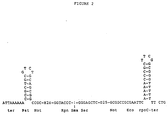
- Cytosines can be chemically modified so that they will not base pair with guanines. Although cytosine chemical modification eliminates hairpins, (since at least two GC base pairs are required to stabilize a hairpin in sequencing gels containing 7M urea at 50°C). They also prevent the GC base pair formation required for most tag probes to be able to bind to identify specific vectors later in the sequencing process. This problem is overcome by preparing a set of NoC vectors having tag sequences which completely lack cytosines on one strand (any guanines on the complementary strand) for at least 15 nucleotides in a row (Figs. 2 & 3). These vectors generally have two such oligonucleotide tag sequences flanking each cloning site.
- the NoC vectors were derived from the TcEN vectors by substituting the sequence shown at the Eco RI sites.
- H26 represents various combinations of 26 A, C, and T nucleotides present on the strand at this point.
- D25 represents 25 A, G, and T's. These were chemically synthesized as a mixture (as described above in example 1) and specific examples were cloned and sequenced (see Fig. 3).
- the object is to have No C ytosines on the appropriate strand in the tag sequence which can be modified by chemical hairpin suppression reactions.
- the sequences of the tag sequence of the NoC multiplex vectors of Fig. 2 are given.
- the first twenty nucleotides have also been synthesized as probes.
- the sequences are all oriented 5′ to 3′, left to right.
- the 5′ terminal nucleotides shown are the 3′-most cytosines of the Not I sites.
- the letter P indicates that the tag sequence is closest to the Pst I site; the letter E that the tag sequence is closest to the Eco RI site.
- the numbers are the vector and tag sequence (or tag probe) numbers; number 00 is the standard plasmid used to provide an internal control of known sequence.
- the Not I site adjacent to the Pst I site has one C deleted so that Not I cleavage of this vector and probing with tag sequence E00 gives a 2500 base long set of sequence markers (3′ end-labeled as with the unknown sequences).
- vectors also incorporate bacterial transcription terminator sequences flanking the tag sequences, to suppress excessive transcription across the boundary between foreign DNA and the vector DNA and thus promote efficient replication.
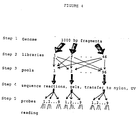
- Multiplex sequencing is a method for keeping a large set of DNA fragments as a precise mixture throughout most of the steps of DNA sequencing.
- Each mixture can be handled with the same effort as a single sample in previous methods, and so a greater total number of fragments can be handled within a fixed time period.
- the mixture must be deciphered at the end of the process. This is done by tagging the fragments at the beginning of the process with unique DNA sequences (tags) and then, at the end of the process, hybridizing complementary nucleic acid (probes) to the sequencing reactions which have been spread out by size, and immobilized on large membranes. Many different sequences are obtained from each pool by hybridizing with a succession of end-specific, strand-specific probes.
- DNA purifications base specific reactions and gel loadings normally done on individual fragments are replaced by operations on pools of fragments (e.g., about 46 fragments per pool).
- the steps in the process are cloning of genomic DNA into a set of multiplex vectors, mixing one clone derived from each vector to form a pool of vectors, performing sequencing reactions on each pool of such vectors, running these reactions on a sequencing gel, binding the DNA fragments in the gel to a solid support, and probing this support with tag probes specific for each vector to identify the DNA sequence of any one cloned fragment.
- This methodology can be used to sequence DNA in combination with any standard sequencing procedure, for example, nested deletions (Henikoff, 28 Gene 351, 1984), cDNA (Okayama et al. 2 Mol. Cell. Biol. 161, 1981), shotgun (Sanger et al. 162 J. Mol. Biol. 729, 1982) or DNA hybridization techniques; and can be combined with amplification methodology, for example, the polymerase chain reaction system of Saiki et al. (230 Science 1350, 1985.)
- Genomic DNA (or equivalent large DNA fragments) of Escherichia coli was sonically fragmented and electrophoretically separated out for further processing.
- the fraction containing fragments of 800-1200 bp in length was isolated, since this size is optimal for sequencing. This treatment assures that virtually all possible DNA sequences from the original DNA are represented in a fraction of convenient molecular size for further processing.
- the sonically fragmented and sized fraction was treated with the enzymes Bal 31, and T4 polymerase, to produce blunt-ended fragments. Aliquots of the blunt-ended fragment mixture were then ligated separately into each of the set of 46 TcEN multiplex vectors and cloned to produce 46 different libraries. Each library contains clones of a large representative sample from the original sonic fraction. All fragments in any library contain the tags derived from the cloning vector used to produce the library, one at each end of each strand.
- Each library was then spread or "plated” onto an agar plate under limiting dilution conditions (conditions such that individual bacteria will be isolated from each other on the plate, and will form separate clonal colonies).
- the plates contained tetracycline so that only cells which have acquired a TcEN plasmid, with its tetracycline-resistance gene will survive.
- one clone i.e., one colony, which will contain offspring of a single bacterium
- This pooled sample contained a single clone, containing a single approx.
- Each of the pooled samples were treated via the Maxam-Gilbert nucleotide sequencing procedure to produce a large number of DNA fragments of differing length. Each fragment will contain one of the tag sequences at one end.
- Some of these chemical sequencing reactions were performed in standard 96 well microtiter plates. The usual alcohol precipitation steps were eliminated. This was done by simply adding 10 ⁇ l of dilute dimethyl sulfate (1 mM), acetic acid (15 mM) or 0.1 mM potassium permanganate (for G+C, A+G, and T reactions, respectively) to 5 ⁇ l of DNA followed by 50 ⁇ l of 1.3M piperidine. The reactions, lyophilization, resuspension, and loading were all done in the 96-well plates using multi-tipped pipets special designed for the 8x12 well format.
- the pooled, reacted samples were then electrophoretically separated on sequencing gels by conventional means. Typically, the four sequencing reaction mixtures of twenty-four different pool samples were applied in separate lanes on each gel. The separated nucleotide patterns were then transferred to a nylon membrane, and fixed to the membrane (other solid media are equally suitable), as described by Church & Gilbert, supra .
- the nucleotide pattern fixed on the nylon membrane can be repeatedly hybridized in 7% SDS 770 mM sodium phosphate, pH 7.2 at 42°C, with a tag probe oligonucleotide, excess probe washed off, autoradiographed, then washed free of probe (by melting the 20 base pair DNA duplexes at 65°C in low salt (2mM tris-EDTA-SDS)), and reacted with another tag probe. Over 45 successive probings have been achieved. There is no reason to expect that this is the limitation on the number of successive probings possible on one membrane. Each tag probe oligonucleotide will detect only those sequencing fragments derived from whichever of the 46 original 1 kb fragments was cloned with the complementary tag probe oligonucleotide.
- the hybridizations, washes and exposures were performed in an automated probing device (see below) with the membrane sealed in a container made of thin plastic (ScotchpakTM #229, about 60 ⁇ m thick).
- the solutions were introduced through a tube to the inside and the X-ray film pressed tightly against the plastic layer by applying pressure (e.g., 3mm Hg air pressure above atmospheric pressure) to the film via a 4 kg flat weight on a constrained inflatable element, such as a plastic bag.
- the membranes were marked with vector DNA used in a manner like ink on paper to automatically identify the membrane and the probe used by the hybridization properties of the DNA markings. Markings to identify the probe used consisted of one vector per dot or line corresponding to each probe, or any appropriate mixture of vectors or fragments thereof. Markings to identify the membrane were a mixture of all vectors, this will hybridize with all the probes used in sequencing procedures.
- Internal standards were also provided in at least one lane in the gel. These known internal standards gave sequencing patterns which are useful for interpretation of unknown sequences. Specifically, during digital image processing of the film sequence data the prior knowledge of lane and band positions and shapes for the sequencing film can speed processing for all subsequent films prepared from the same membrane. Prior knowledge of reaction chemistry deviations and local gel artifacts seen in a standard sequencing reaction also helps in accurate estimation of errors for all subsequent films. For example, internal standards can be applied to each lane and discerned prior to probing with oligonucleotides. One such standard is the product of a sequencing reaction on a vector having no insert, thus providing a known DNA sequence.
- Interpretation of the X-ray films generated by the above-process includes six steps to transform the raw data to an idealized form.
- the resulting data is interpreted to provide a DNA sequence and estimates of the liklihood of alternative interpretations made.
- the steps are: a) to find the boundaries of the lanes and straighten them if necessary; b) to adjust the interband distances; c) to straighten the bands across each lane; d) to adjust the interlane displacements; e) to adjust the band thicknesses; and f) to adjust the reaction specificities (i.e., to ensure that each band in each of the lanes in a set of reactions is a true band).
- FIG. 5 a schematic example of band interpretation is provided.
- DNA sequencing reactions from an internal standard (left panel) and an unknown DNA sample (second panel from left) were placed in the same lanes of a gel and probed with appropriate probes.
- Figure 5 is a schematic of the resulting X-ray films. As can be seen from the left two panels both the standard and the unknown deviate from an ideal result (shown in the right panel) in an identical manner.
- the DNA sequence of the standard is provided on the left of Figure 5. Using this sequence it is possible to determine which bands on the film represent true bands, rather than artifacts. From this analysis the DNA sequence of the unknown can then also be determined by making allowance for artifacts detected in the standard sample.
- the transformation steps described above can be applied.
- Each adjustment that involves manual or automatic pattern recognition on the entire film data set can take about an hour.
- each of the adjustments can be more accurately determined than for an unknown sequence, and then applied to each set of unknown film data obtained from subsequent probings of the same membrane.
- one standard pattern can be used for a large number of later probings of the same membrane.
- the transformation requirements can be memorized by the computer and recalled as necessary.
- An automated probing device is useful for automation of the visualization of latent multiplexed DNA sequences immobilized on nylon membranes, or for any other process where multiple cycles of probing are necessary.
- the automated probing device performs the following steps: a) 100ml of prehybridization buffer (7% SDS, 10% PEG (MW 6000), 0.13M sodium phosphate pH 7.2, and 0.25 M NaCl) is introduced into the bags and the membranes equilibrated; b) this buffer is removed and 90ml of hybridization buffer with probe (5 ⁇ M radiolabeled oligonucleotide in prehybridization buffer) is introduced; followed by a 10ml chase of prehybridization buffer; c) the membranes are then incubated 4 to 16 hours at 42°C; d) wash buffer (1% SDS, 70 mM sodium phosphate pH 7.2) is introduced, incubated at room temperature for 45 minutes and removed; the wash is repeated
- an air bag is inflated directly over the film; f) after exposure the air bag is deflated by use of a vacuum and the films processed; g) the probe is removed with hot stripping buffer (2 mM EDTA,TRIS base pH 7.5, 0.2% SDS at 80°C) and the cycle repeated with a new probe.
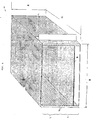
- automated prober 10 is formed of a light-tight aluminum housing 11, having a series of grooves 20 for slideably accepting a series of shelves 18. Shelves 18 are spaced apart about 0.4" to allow a re-usable pouch 12 formed from plastic of thickness 0.65 ⁇ m, an X-ray film (not shown) and an air bag 16 to be sandwiched between each shelf 18.
- Housing 11 has a height A of 27,31 cm (10.75"), a width B of 50,8 cm (20") and a depth C of 60,96 cm (24").
- Each pouch 12 is provided with an inlet pipe 22 and an outlet pipe 24, and the housing is heated by heater 26.
- a door (not shown) of thickness 0,635 cm (0.25”) is provided with a 0,317 cm (0.125”) neoprene light-tight gasket seal and a latch.
- Automated prober 10 is assembled and manufactured by standard procedure. Light-tight construction of automated prober 10 allows exposures to be performed outside of a photographic darkroom; and aluminum housing 11 provides efficient attenuation of beta particles from 32 P decay, with minimal secondary X-ray formation.
- Re-usable pouches 12 allow tight contact with the X-ray film to be exposed, without need for pouch disassembly.
- Membranes 14 are fixed (by heat tacking of corners) inside each pouch 12 to prevent movement and creasing of membranes 14.
- the automated probing device is capable of accommodating membranes from standard restriction digest transfers, and dot and slot blots used in diagnostics.
- the horizontal format allows uniform spatial distribution of a probe, without need for mesh supports.
- the rigid bookshelf type structure allows air bags 16 to expand between shelves 18 to ensure tight contact between each X-ray film and an adjacent membrane 14. Each shelf 18 easily slides out of grooves 20 for membrane replacement.
- a computer (not shown) controls temperature, liquid, air, and vacuum flow. Only the X-ray films and vessels containing liquid input and output have to be manually changed.
- a heated, ventilated output waste vessel 30 which allows 100-fold concentration of liquid wastes, thereby reducing disposal costs.
- Automated prober 10 is constructed as repeating shelf units 42 of ten membranes, each repeat of ten membranes having dedicated reservoirs and valves for service buffers including hybridization buffer, probe, wash solution and stripping buffer. Each individual membrane has its own input valve.
- the waste output valves are placed in series with a 12VDC-controlled Gorman-Rupp reciprocating pump; the buffer input valves are also placed in series via a 12VDC-controlled Gorman-Rupp reciprocating pump.
- Air input is used to inflate air bags for X-ray film exposures. These air bags may be covered by conductive foam to enhance membrane contact.
- a house vacuum is used to evacuate the airbags after exposure. During probing the temperature is maintained at 42°C by heating mats 26 placed inside the top and bottom of the apparatus.
Landscapes
- Life Sciences & Earth Sciences (AREA)
- Chemical & Material Sciences (AREA)
- Proteomics, Peptides & Aminoacids (AREA)
- Organic Chemistry (AREA)
- Health & Medical Sciences (AREA)
- Wood Science & Technology (AREA)
- Zoology (AREA)
- Engineering & Computer Science (AREA)
- Biochemistry (AREA)
- General Engineering & Computer Science (AREA)
- Microbiology (AREA)
- Molecular Biology (AREA)
- Physics & Mathematics (AREA)
- Biotechnology (AREA)
- Analytical Chemistry (AREA)
- Biophysics (AREA)
- Bioinformatics & Cheminformatics (AREA)
- Immunology (AREA)
- General Health & Medical Sciences (AREA)
- Genetics & Genomics (AREA)
- Measuring Or Testing Involving Enzymes Or Micro-Organisms (AREA)
- Diaphragms For Electromechanical Transducers (AREA)
- Laminated Bodies (AREA)
- Investigating Or Analysing Biological Materials (AREA)
- Apparatus Associated With Microorganisms And Enzymes (AREA)
Applications Claiming Priority (4)
| Application Number | Priority Date | Filing Date | Title |
|---|---|---|---|
| US8462387A | 1987-08-11 | 1987-08-11 | |
| US84623 | 1987-08-11 | ||
| US07/228,596 US4942124A (en) | 1987-08-11 | 1988-08-04 | Multiplex sequencing |
| US228596 | 1988-08-04 |
Publications (3)
| Publication Number | Publication Date |
|---|---|
| EP0303459A2 EP0303459A2 (en) | 1989-02-15 |
| EP0303459A3 EP0303459A3 (en) | 1990-01-17 |
| EP0303459B1 true EP0303459B1 (en) | 2000-09-27 |
Family
ID=26771208
Family Applications (1)
| Application Number | Title | Priority Date | Filing Date |
|---|---|---|---|
| EP88307391A Expired - Lifetime EP0303459B1 (en) | 1987-08-11 | 1988-08-10 | Multiplex sequencing |
Country Status (7)
| Country | Link |
|---|---|
| US (1) | US4942124A (enExample) |
| EP (1) | EP0303459B1 (enExample) |
| JP (1) | JP2665775B2 (enExample) |
| AT (1) | ATE196656T1 (enExample) |
| CA (1) | CA1339727C (enExample) |
| DE (1) | DE3856427T2 (enExample) |
| ES (1) | ES2150407T3 (enExample) |
Cited By (3)
| Publication number | Priority date | Publication date | Assignee | Title |
|---|---|---|---|---|
| US7935488B2 (en) | 1991-09-24 | 2011-05-03 | Keygene N.V. | Selective restriction fragment amplification: fingerprinting |
| USRE43097E1 (en) | 1994-10-13 | 2012-01-10 | Illumina, Inc. | Massively parallel signature sequencing by ligation of encoded adaptors |
| US8236493B2 (en) | 1994-10-21 | 2012-08-07 | Affymetrix, Inc. | Methods of enzymatic discrimination enhancement and surface-bound double-stranded DNA |
Families Citing this family (200)
| Publication number | Priority date | Publication date | Assignee | Title |
|---|---|---|---|---|
| US5221518A (en) * | 1984-12-14 | 1993-06-22 | Mills Randell L | DNA sequencing apparatus |
| US5525464A (en) * | 1987-04-01 | 1996-06-11 | Hyseq, Inc. | Method of sequencing by hybridization of oligonucleotide probes |
| US5202231A (en) | 1987-04-01 | 1993-04-13 | Drmanac Radoje T | Method of sequencing of genomes by hybridization of oligonucleotide probes |
| US6270961B1 (en) * | 1987-04-01 | 2001-08-07 | Hyseq, Inc. | Methods and apparatus for DNA sequencing and DNA identification |
| US5149625A (en) * | 1987-08-11 | 1992-09-22 | President And Fellows Of Harvard College | Multiplex analysis of DNA |
| US5112736A (en) * | 1989-06-14 | 1992-05-12 | University Of Utah | Dna sequencing using fluorescence background electroblotting membrane |
| WO1992020824A1 (en) * | 1991-05-24 | 1992-11-26 | Walter Gilbert | Method and apparatus for rapid nucleic acid sequencing |
| WO1992022650A1 (en) * | 1991-06-17 | 1992-12-23 | Life Technologies, Inc. | Recombination-facilitated multiplex analysis of dna fragments |
| WO1993005183A1 (en) * | 1991-09-09 | 1993-03-18 | Baylor College Of Medicine | Method and device for rapid dna or rna sequencing determination by a base addition sequencing scheme |
| GB9207598D0 (en) * | 1992-04-03 | 1992-05-20 | Dynal As | Method of sequencing double stranded dna |
| DE4218152A1 (de) * | 1992-06-02 | 1993-12-09 | Boehringer Mannheim Gmbh | Simultane Sequenzierung von Nukleinsäuren |
| US5556749A (en) * | 1992-11-12 | 1996-09-17 | Hitachi Chemical Research Center, Inc. | Oligoprobe designstation: a computerized method for designing optimal DNA probes |
| US5650274A (en) * | 1993-06-25 | 1997-07-22 | Hitachi, Ltd. | DNA analyzing method |
| US5837501A (en) * | 1993-07-09 | 1998-11-17 | Akzo Nobel N.V. | Nucleic acid quantitation by co-amplification of target with multiple internal controls |
| DK0662156T3 (da) * | 1993-07-09 | 1999-10-25 | Akzo Nobel Nv | Forbedret fremgangsmåde til kvantificering af nukleinsyre |
| US5552278A (en) * | 1994-04-04 | 1996-09-03 | Spectragen, Inc. | DNA sequencing by stepwise ligation and cleavage |
| JP3612092B2 (ja) * | 1994-09-07 | 2005-01-19 | 株式会社日立製作所 | Dnaの分離・分取法及びその解析法 |
| US5604097A (en) * | 1994-10-13 | 1997-02-18 | Spectragen, Inc. | Methods for sorting polynucleotides using oligonucleotide tags |
| US6280935B1 (en) | 1994-10-13 | 2001-08-28 | Lynx Therapeutics, Inc. | Method of detecting the presence or absence of a plurality of target sequences using oligonucleotide tags |
| US5846719A (en) | 1994-10-13 | 1998-12-08 | Lynx Therapeutics, Inc. | Oligonucleotide tags for sorting and identification |
| US5695934A (en) * | 1994-10-13 | 1997-12-09 | Lynx Therapeutics, Inc. | Massively parallel sequencing of sorted polynucleotides |
| US6013445A (en) * | 1996-06-06 | 2000-01-11 | Lynx Therapeutics, Inc. | Massively parallel signature sequencing by ligation of encoded adaptors |
| US6974666B1 (en) * | 1994-10-21 | 2005-12-13 | Appymetric, Inc. | Methods of enzymatic discrimination enhancement and surface-bound double-stranded DNA |
| WO1996036737A1 (en) * | 1995-05-19 | 1996-11-21 | Ely Michael Rabani | Parallel multiplex polynucleotide sequencing |
| US5763175A (en) * | 1995-11-17 | 1998-06-09 | Lynx Therapeutics, Inc. | Simultaneous sequencing of tagged polynucleotides |
| US5962228A (en) * | 1995-11-17 | 1999-10-05 | Lynx Therapeutics, Inc. | DNA extension and analysis with rolling primers |
| US5780231A (en) * | 1995-11-17 | 1998-07-14 | Lynx Therapeutics, Inc. | DNA extension and analysis with rolling primers |
| US5888736A (en) * | 1995-12-22 | 1999-03-30 | Visible Genetics, Inc. | Method, compositions and kit for detection and identification of microorganisms |
| US5830657A (en) * | 1996-05-01 | 1998-11-03 | Visible Genetics Inc. | Method for single-tube sequencing of nucleic acid polymers |
| US6265152B1 (en) | 1995-12-22 | 2001-07-24 | Visible Genetics Inc. | Method and kit for evaluation of HIV mutations |
| US5795722A (en) * | 1997-03-18 | 1998-08-18 | Visible Genetics Inc. | Method and kit for quantitation and nucleic acid sequencing of nucleic acid analytes in a sample |
| US6007983A (en) * | 1995-12-22 | 1999-12-28 | Visible Genetics Inc. | Method and kit for evaluation of HIV mutations |
| US5658736A (en) * | 1996-01-16 | 1997-08-19 | Genetics Institute, Inc. | Oligonucleotide population preparation |
| US6613508B1 (en) | 1996-01-23 | 2003-09-02 | Qiagen Genomics, Inc. | Methods and compositions for analyzing nucleic acid molecules utilizing sizing techniques |
| US6312893B1 (en) | 1996-01-23 | 2001-11-06 | Qiagen Genomics, Inc. | Methods and compositions for determining the sequence of nucleic acid molecules |
| US6027890A (en) * | 1996-01-23 | 2000-02-22 | Rapigene, Inc. | Methods and compositions for enhancing sensitivity in the analysis of biological-based assays |
| US6852487B1 (en) | 1996-02-09 | 2005-02-08 | Cornell Research Foundation, Inc. | Detection of nucleic acid sequence differences using the ligase detection reaction with addressable arrays |
| US6413718B1 (en) | 1996-05-01 | 2002-07-02 | Visible Genetics Inc. | Method for sequencing of nucleic acid polymers |
| US5935793A (en) * | 1996-09-27 | 1999-08-10 | The Chinese University Of Hong Kong | Parallel polynucleotide sequencing method using tagged primers |
| US5885775A (en) * | 1996-10-04 | 1999-03-23 | Perseptive Biosystems, Inc. | Methods for determining sequences information in polynucleotides using mass spectrometry |
| US6124092A (en) | 1996-10-04 | 2000-09-26 | The Perkin-Elmer Corporation | Multiplex polynucleotide capture methods and compositions |
| US6197557B1 (en) | 1997-03-05 | 2001-03-06 | The Regents Of The University Of Michigan | Compositions and methods for analysis of nucleic acids |
| US6117634A (en) * | 1997-03-05 | 2000-09-12 | The Reagents Of The University Of Michigan | Nucleic acid sequencing and mapping |
| US6830887B2 (en) | 1997-03-18 | 2004-12-14 | Bayer Healthcare Llc | Method and kit for quantitation and nucleic acid sequencing of nucleic acid analytes in a sample |
| ATE280838T1 (de) * | 1997-12-05 | 2004-11-15 | Max Planck Gesellschaft | Verfahren zur identifikation von nucleinsäuren durch elektrospray massenspektrometrie |
| US6265163B1 (en) | 1998-01-09 | 2001-07-24 | Lynx Therapeutics, Inc. | Solid phase selection of differentially expressed genes |
| US6780591B2 (en) | 1998-05-01 | 2004-08-24 | Arizona Board Of Regents | Method of determining the nucleotide sequence of oligonucleotides and DNA molecules |
| US7875440B2 (en) | 1998-05-01 | 2011-01-25 | Arizona Board Of Regents | Method of determining the nucleotide sequence of oligonucleotides and DNA molecules |
| AU4255899A (en) | 1998-05-06 | 1999-11-23 | Genprofile Ag | Method for non-radioactive detection of membrane-bonded nucleic acids and test kit |
| DE19821114A1 (de) * | 1998-05-06 | 1999-11-11 | Genprofile Ag | Methode zur Identifizierung und Darstellung interindividueller DNA-Sequenzunterschiede |
| US7270958B2 (en) * | 1998-09-10 | 2007-09-18 | The Regents Of The University Of Michigan | Compositions and methods for analysis of nucleic acids |
| US6480791B1 (en) | 1998-10-28 | 2002-11-12 | Michael P. Strathmann | Parallel methods for genomic analysis |
| US6451525B1 (en) * | 1998-12-03 | 2002-09-17 | Pe Corporation (Ny) | Parallel sequencing method |
| US6818395B1 (en) | 1999-06-28 | 2004-11-16 | California Institute Of Technology | Methods and apparatus for analyzing polynucleotide sequences |
| EP1290225A4 (en) * | 2000-05-20 | 2004-09-15 | Univ Michigan | METHOD FOR PRODUCING A DNA BANK BY POSITIONAL REPRODUCTION |
| CA2426824A1 (en) | 2000-10-24 | 2002-07-25 | The Board Of Trustees Of The Leland Stanford Junior University | Direct multiplex characterization of genomic dna |
| US7226737B2 (en) | 2001-01-25 | 2007-06-05 | Luminex Molecular Diagnostics, Inc. | Polynucleotides for use as tags and tag complements, manufacture and use thereof |
| DK1364065T3 (da) * | 2001-01-25 | 2012-05-14 | Luminex Molecular Diagnostics Inc | Polynukleotider til anvendelse som markeringer og markeringskomplementer, fremstilling og anvendelse deraf |
| CA2440754A1 (en) | 2001-03-12 | 2002-09-19 | Stephen Quake | Methods and apparatus for analyzing polynucleotide sequences by asynchronous base extension |
| US6777187B2 (en) * | 2001-05-02 | 2004-08-17 | Rubicon Genomics, Inc. | Genome walking by selective amplification of nick-translate DNA library and amplification from complex mixtures of templates |
| US20040197791A1 (en) * | 2001-06-29 | 2004-10-07 | Makarov Vladimir L. | Methods of using nick translate libraries for snp analysis |
| US7222059B2 (en) * | 2001-11-15 | 2007-05-22 | Siemens Medical Solutions Diagnostics | Electrophoretic trace simulator |
| US20030180764A1 (en) * | 2002-01-09 | 2003-09-25 | Lynx Therapeutics, Inc. | Genes affected by cholesterol treatment and during adipogenesis |
| US20030166026A1 (en) * | 2002-01-09 | 2003-09-04 | Lynx Therapeutics, Inc. | Identification of specific biomarkers for breast cancer cells |
| US20030170700A1 (en) * | 2002-01-09 | 2003-09-11 | Lynx Therapeutics, Inc. | Secreted and cell surface polypeptides affected by cholesterol and uses thereof |
| US20050186573A1 (en) * | 2002-07-24 | 2005-08-25 | Janeczko Richard A. | Polynucleotides for use as tags and tag complements in the detection of nucleic acid sequences |
| US20050094807A1 (en) * | 2003-11-04 | 2005-05-05 | John Silzel | Accuracy array assay system and method |
| US7169560B2 (en) | 2003-11-12 | 2007-01-30 | Helicos Biosciences Corporation | Short cycle methods for sequencing polynucleotides |
| DE602005020421D1 (de) | 2004-02-19 | 2010-05-20 | Helicos Biosciences Corp | Verfahren zur analyse von polynukleotidsequenzen |
| CA2566806A1 (en) | 2004-05-25 | 2006-01-19 | Helicos Biosciences Corporation | Methods and devices for nucleic acid sequence determination |
| US7476734B2 (en) | 2005-12-06 | 2009-01-13 | Helicos Biosciences Corporation | Nucleotide analogs |
| US7220549B2 (en) | 2004-12-30 | 2007-05-22 | Helicos Biosciences Corporation | Stabilizing a nucleic acid for nucleic acid sequencing |
| US7482120B2 (en) | 2005-01-28 | 2009-01-27 | Helicos Biosciences Corporation | Methods and compositions for improving fidelity in a nucleic acid synthesis reaction |
| US7700287B2 (en) * | 2005-01-28 | 2010-04-20 | Life Technologies Corporation | Compositions and methods for terminating a sequencing reaction at a specific location in a target DNA template |
| US7393665B2 (en) * | 2005-02-10 | 2008-07-01 | Population Genetics Technologies Ltd | Methods and compositions for tagging and identifying polynucleotides |
| US20060263789A1 (en) * | 2005-05-19 | 2006-11-23 | Robert Kincaid | Unique identifiers for indicating properties associated with entities to which they are attached, and methods for using |
| EP2463386B1 (en) | 2005-06-15 | 2017-04-12 | Complete Genomics Inc. | Nucleic acid analysis by random mixtures of non-overlapping fragments |
| US9424392B2 (en) | 2005-11-26 | 2016-08-23 | Natera, Inc. | System and method for cleaning noisy genetic data from target individuals using genetic data from genetically related individuals |
| US11111544B2 (en) | 2005-07-29 | 2021-09-07 | Natera, Inc. | System and method for cleaning noisy genetic data and determining chromosome copy number |
| US11111543B2 (en) | 2005-07-29 | 2021-09-07 | Natera, Inc. | System and method for cleaning noisy genetic data and determining chromosome copy number |
| US7666593B2 (en) | 2005-08-26 | 2010-02-23 | Helicos Biosciences Corporation | Single molecule sequencing of captured nucleic acids |
| WO2007070642A2 (en) * | 2005-12-15 | 2007-06-21 | Helicos Biosciences Corporation | Methods for increasing accuracy of nucleic acid sequencing |
| US7397546B2 (en) | 2006-03-08 | 2008-07-08 | Helicos Biosciences Corporation | Systems and methods for reducing detected intensity non-uniformity in a laser beam |
| BRPI0721095B1 (pt) | 2006-12-13 | 2015-09-29 | Luminex Corporation | Sistemas e métodos para a análise multíplex de pcr em tempo real |
| US7767441B2 (en) * | 2007-10-25 | 2010-08-03 | Industrial Technology Research Institute | Bioassay system including optical detection apparatuses, and method for detecting biomolecules |
| US7811810B2 (en) | 2007-10-25 | 2010-10-12 | Industrial Technology Research Institute | Bioassay system including optical detection apparatuses, and method for detecting biomolecules |
| US20090148849A1 (en) * | 2007-11-02 | 2009-06-11 | Barbara Galvan-Goldman | One-step target detection assay |
| US7958066B2 (en) * | 2007-11-02 | 2011-06-07 | Hunch Inc. | Interactive machine learning advice facility |
| US8592150B2 (en) | 2007-12-05 | 2013-11-26 | Complete Genomics, Inc. | Methods and compositions for long fragment read sequencing |
| US20100227327A1 (en) * | 2008-08-08 | 2010-09-09 | Xiaoliang Sunney Xie | Methods and compositions for continuous single-molecule nucleic acid sequencing by synthesis with fluorogenic nucleotides |
| US20100036110A1 (en) * | 2008-08-08 | 2010-02-11 | Xiaoliang Sunney Xie | Methods and compositions for continuous single-molecule nucleic acid sequencing by synthesis with fluorogenic nucleotides |
| US8236503B2 (en) | 2008-11-07 | 2012-08-07 | Sequenta, Inc. | Methods of monitoring conditions by sequence analysis |
| US8691510B2 (en) | 2008-11-07 | 2014-04-08 | Sequenta, Inc. | Sequence analysis of complex amplicons |
| US9365901B2 (en) | 2008-11-07 | 2016-06-14 | Adaptive Biotechnologies Corp. | Monitoring immunoglobulin heavy chain evolution in B-cell acute lymphoblastic leukemia |
| US9394567B2 (en) | 2008-11-07 | 2016-07-19 | Adaptive Biotechnologies Corporation | Detection and quantification of sample contamination in immune repertoire analysis |
| US8628927B2 (en) | 2008-11-07 | 2014-01-14 | Sequenta, Inc. | Monitoring health and disease status using clonotype profiles |
| US8748103B2 (en) | 2008-11-07 | 2014-06-10 | Sequenta, Inc. | Monitoring health and disease status using clonotype profiles |
| US9528160B2 (en) | 2008-11-07 | 2016-12-27 | Adaptive Biotechnolgies Corp. | Rare clonotypes and uses thereof |
| US9506119B2 (en) | 2008-11-07 | 2016-11-29 | Adaptive Biotechnologies Corp. | Method of sequence determination using sequence tags |
| US8685898B2 (en) | 2009-01-15 | 2014-04-01 | Imdaptive, Inc. | Adaptive immunity profiling and methods for generation of monoclonal antibodies |
| US20110171619A1 (en) * | 2009-05-28 | 2011-07-14 | Daniel Leo Sweeney | Representation of molecules as sets of masses of complementary subgroups and contiguous complementary subgroups |
| RU2014144463A (ru) | 2009-06-25 | 2015-06-20 | Фред Хатчинсон Кансэр Рисёч Сентер | Способ измерения адаптивного иммунитета |
| JP5785942B2 (ja) | 2009-06-29 | 2015-09-30 | ルミネックス コーポレーション | ヘアピンコンフォメーションを有するキメラプライマーおよびその使用法 |
| WO2011053987A1 (en) * | 2009-11-02 | 2011-05-05 | Nugen Technologies, Inc. | Compositions and methods for targeted nucleic acid sequence selection and amplification |
| US20110262989A1 (en) | 2010-04-21 | 2011-10-27 | Nanomr, Inc. | Isolating a target analyte from a body fluid |
| US9476812B2 (en) | 2010-04-21 | 2016-10-25 | Dna Electronics, Inc. | Methods for isolating a target analyte from a heterogeneous sample |
| US8841104B2 (en) | 2010-04-21 | 2014-09-23 | Nanomr, Inc. | Methods for isolating a target analyte from a heterogeneous sample |
| CA2798431C (en) | 2010-05-06 | 2018-10-23 | Sequenta, Inc. | Monitoring health and disease status using clonotype profiles |
| US20190010543A1 (en) | 2010-05-18 | 2019-01-10 | Natera, Inc. | Methods for simultaneous amplification of target loci |
| US12152275B2 (en) | 2010-05-18 | 2024-11-26 | Natera, Inc. | Methods for non-invasive prenatal ploidy calling |
| US9677118B2 (en) | 2014-04-21 | 2017-06-13 | Natera, Inc. | Methods for simultaneous amplification of target loci |
| US11332785B2 (en) | 2010-05-18 | 2022-05-17 | Natera, Inc. | Methods for non-invasive prenatal ploidy calling |
| US11332793B2 (en) | 2010-05-18 | 2022-05-17 | Natera, Inc. | Methods for simultaneous amplification of target loci |
| US12655483B2 (en) | 2010-05-18 | 2026-06-16 | Natera, Inc. | Methods for simultaneous amplification of target loci |
| US10316362B2 (en) | 2010-05-18 | 2019-06-11 | Natera, Inc. | Methods for simultaneous amplification of target loci |
| US11326208B2 (en) | 2010-05-18 | 2022-05-10 | Natera, Inc. | Methods for nested PCR amplification of cell-free DNA |
| US8825412B2 (en) | 2010-05-18 | 2014-09-02 | Natera, Inc. | Methods for non-invasive prenatal ploidy calling |
| US11939634B2 (en) | 2010-05-18 | 2024-03-26 | Natera, Inc. | Methods for simultaneous amplification of target loci |
| US11408031B2 (en) | 2010-05-18 | 2022-08-09 | Natera, Inc. | Methods for non-invasive prenatal paternity testing |
| US12221653B2 (en) | 2010-05-18 | 2025-02-11 | Natera, Inc. | Methods for simultaneous amplification of target loci |
| US11322224B2 (en) | 2010-05-18 | 2022-05-03 | Natera, Inc. | Methods for non-invasive prenatal ploidy calling |
| US11339429B2 (en) | 2010-05-18 | 2022-05-24 | Natera, Inc. | Methods for non-invasive prenatal ploidy calling |
| WO2011156529A2 (en) * | 2010-06-08 | 2011-12-15 | Nugen Technologies, Inc. | Methods and composition for multiplex sequencing |
| EP2656263B1 (en) | 2010-12-22 | 2019-11-06 | Natera, Inc. | Methods for non-invasive prenatal paternity testing |
| CN103608818B (zh) | 2011-02-09 | 2017-12-08 | 纳特拉公司 | 非侵入性产前倍性识别装置 |
| US10385475B2 (en) | 2011-09-12 | 2019-08-20 | Adaptive Biotechnologies Corp. | Random array sequencing of low-complexity libraries |
| KR20160100415A (ko) | 2011-09-29 | 2016-08-23 | 루미넥스 코포레이션 | 가수분해 프로브 |
| CN104080958A (zh) | 2011-10-19 | 2014-10-01 | 纽亘技术公司 | 用于定向核酸扩增和测序的组合物和方法 |
| EP2768982A4 (en) | 2011-10-21 | 2015-06-03 | Adaptive Biotechnologies Corp | QUANTIFICATION OF ADAPTIVE IMMUNOCELL GENOMES IN A COMPLEX MIX OF CELLS |
| ES2867924T3 (es) | 2011-12-09 | 2021-10-21 | Adaptive Biotechnologies Corp | Diagnóstico de tumores malignos linfoides y detección de enfermedad residual mínima |
| US9499865B2 (en) | 2011-12-13 | 2016-11-22 | Adaptive Biotechnologies Corp. | Detection and measurement of tissue-infiltrating lymphocytes |
| CN104093890B (zh) | 2012-01-26 | 2016-04-20 | 纽亘技术公司 | 用于靶向核酸序列富集和高效文库产生的组合物和方法 |
| EP3372694A1 (en) | 2012-03-05 | 2018-09-12 | Adaptive Biotechnologies Corporation | Determining paired immune receptor chains from frequency matched subunits |
| MX354329B (es) | 2012-05-08 | 2018-02-27 | Adaptive Biotechnologies Corp | Composiciones y metodos para medir y calibrar el error de amplificacion en reacciones de pcr multiple. |
| GB2497480B (en) | 2012-06-18 | 2015-02-18 | Nugen Technologies Inc | Compositions and methods for negative selection of non-desired nucleic acid sequences in libraries |
| US20150011396A1 (en) | 2012-07-09 | 2015-01-08 | Benjamin G. Schroeder | Methods for creating directional bisulfite-converted nucleic acid libraries for next generation sequencing |
| US20140100126A1 (en) | 2012-08-17 | 2014-04-10 | Natera, Inc. | Method for Non-Invasive Prenatal Testing Using Parental Mosaicism Data |
| US10876152B2 (en) | 2012-09-04 | 2020-12-29 | Guardant Health, Inc. | Systems and methods to detect rare mutations and copy number variation |
| US20160040229A1 (en) | 2013-08-16 | 2016-02-11 | Guardant Health, Inc. | Systems and methods to detect rare mutations and copy number variation |
| US11913065B2 (en) | 2012-09-04 | 2024-02-27 | Guardent Health, Inc. | Systems and methods to detect rare mutations and copy number variation |
| KR20260025883A (ko) | 2012-09-04 | 2026-02-24 | 가던트 헬쓰, 인크. | 희귀 돌연변이 및 카피수 변이를 검출하기 위한 시스템 및 방법 |
| US20160002731A1 (en) | 2012-10-01 | 2016-01-07 | Adaptive Biotechnologies Corporation | Immunocompetence assessment by adaptive immune receptor diversity and clonality characterization |
| WO2015160439A2 (en) | 2014-04-17 | 2015-10-22 | Adaptive Biotechnologies Corporation | Quantification of adaptive immune cell genomes in a complex mixture of cells |
| US9434940B2 (en) | 2012-12-19 | 2016-09-06 | Dna Electronics, Inc. | Methods for universal target capture |
| US10000557B2 (en) | 2012-12-19 | 2018-06-19 | Dnae Group Holdings Limited | Methods for raising antibodies |
| US9804069B2 (en) | 2012-12-19 | 2017-10-31 | Dnae Group Holdings Limited | Methods for degrading nucleic acid |
| US9599610B2 (en) | 2012-12-19 | 2017-03-21 | Dnae Group Holdings Limited | Target capture system |
| US9995742B2 (en) | 2012-12-19 | 2018-06-12 | Dnae Group Holdings Limited | Sample entry |
| US9551704B2 (en) | 2012-12-19 | 2017-01-24 | Dna Electronics, Inc. | Target detection |
| US20140274738A1 (en) | 2013-03-15 | 2014-09-18 | Nugen Technologies, Inc. | Sequential sequencing |
| EP3521452B1 (en) | 2013-06-19 | 2021-08-04 | Luminex Corporation | Real-time multiplexed hydrolysis probe assay |
| US9708657B2 (en) | 2013-07-01 | 2017-07-18 | Adaptive Biotechnologies Corp. | Method for generating clonotype profiles using sequence tags |
| EP4697022A3 (en) | 2013-08-09 | 2026-06-03 | Luminex Corporation | Probes for improved melt discrimination and multiplexing in nucleic acid assays |
| EP3068883B1 (en) | 2013-11-13 | 2020-04-29 | Nugen Technologies, Inc. | Compositions and methods for identification of a duplicate sequencing read |
| EP3524694B1 (en) | 2013-12-28 | 2020-07-15 | Guardant Health, Inc. | Methods and systems for detecting genetic variants |
| WO2015131107A1 (en) | 2014-02-28 | 2015-09-03 | Nugen Technologies, Inc. | Reduced representation bisulfite sequencing with diversity adaptors |
| ES2741740T3 (es) | 2014-03-05 | 2020-02-12 | Adaptive Biotechnologies Corp | Métodos que usan moléculas sintéticas que contienen segmentos de nucleótidos aleatorios |
| US11390921B2 (en) | 2014-04-01 | 2022-07-19 | Adaptive Biotechnologies Corporation | Determining WT-1 specific T cells and WT-1 specific T cell receptors (TCRs) |
| US10066265B2 (en) | 2014-04-01 | 2018-09-04 | Adaptive Biotechnologies Corp. | Determining antigen-specific t-cells |
| EP4760725A3 (en) | 2014-04-21 | 2026-09-30 | Natera, Inc. | Detecting mutations and ploidy in chromosomal segments |
| US20180173846A1 (en) | 2014-06-05 | 2018-06-21 | Natera, Inc. | Systems and Methods for Detection of Aneuploidy |
| EP3653726B1 (en) | 2014-08-11 | 2021-10-27 | Luminex Corporation | Probes for improved melt discrimination and multiplexing in nucleic acid assays |
| EP3212790B1 (en) | 2014-10-29 | 2020-03-25 | Adaptive Biotechnologies Corp. | Highly-multiplexed simultaneous detection of nucleic acids encoding paired adaptive immune receptor heterodimers from many samples |
| US10246701B2 (en) | 2014-11-14 | 2019-04-02 | Adaptive Biotechnologies Corp. | Multiplexed digital quantitation of rearranged lymphoid receptors in a complex mixture |
| WO2016086029A1 (en) | 2014-11-25 | 2016-06-02 | Adaptive Biotechnologies Corporation | Characterization of adaptive immune response to vaccination or infection using immune repertoire sequencing |
| AU2016222788B2 (en) | 2015-02-24 | 2022-03-31 | Adaptive Biotechnologies Corp. | Methods for diagnosing infectious disease and determining HLA status using immune repertoire sequencing |
| EP3277294B1 (en) | 2015-04-01 | 2024-05-15 | Adaptive Biotechnologies Corp. | Method of identifying human compatible t cell receptors specific for an antigenic target |
| US11479812B2 (en) | 2015-05-11 | 2022-10-25 | Natera, Inc. | Methods and compositions for determining ploidy |
| US20160371428A1 (en) | 2015-06-19 | 2016-12-22 | Natera, Inc. | Systems and methods for determining aneuploidy risk using sample fetal fraction |
| CA3008651A1 (en) | 2015-12-17 | 2017-06-22 | Guardant Health, Inc. | Methods to determine tumor gene copy number by analysis of cell-free dna |
| CN109477138A (zh) | 2016-04-15 | 2019-03-15 | 纳特拉公司 | 肺癌检测方法 |
| US10428325B1 (en) | 2016-09-21 | 2019-10-01 | Adaptive Biotechnologies Corporation | Identification of antigen-specific B cell receptors |
| US10487358B2 (en) | 2016-09-23 | 2019-11-26 | Grail, Inc. | Methods of preparing and analyzing cell-free nucleic acid sequencing libraries |
| US11485996B2 (en) | 2016-10-04 | 2022-11-01 | Natera, Inc. | Methods for characterizing copy number variation using proximity-litigation sequencing |
| US10822651B2 (en) | 2016-10-28 | 2020-11-03 | Grail, Inc. | Methods for single-stranded nucleic acid library preparation |
| GB201618485D0 (en) | 2016-11-02 | 2016-12-14 | Ucl Business Plc | Method of detecting tumour recurrence |
| US10011870B2 (en) | 2016-12-07 | 2018-07-03 | Natera, Inc. | Compositions and methods for identifying nucleic acid molecules |
| EP3551768B1 (en) | 2016-12-12 | 2024-03-06 | Grail, LLC | Methods for tagging and amplifying rna template molecules for preparing sequencing libraries |
| US10982351B2 (en) | 2016-12-23 | 2021-04-20 | Grail, Inc. | Methods for high efficiency library preparation using double-stranded adapters |
| WO2018183918A1 (en) | 2017-03-30 | 2018-10-04 | Grail, Inc. | Enhanced ligation in sequencing library preparation |
| US11584958B2 (en) | 2017-03-31 | 2023-02-21 | Grail, Llc | Library preparation and use thereof for sequencing based error correction and/or variant identification |
| US11118222B2 (en) | 2017-03-31 | 2021-09-14 | Grail, Inc. | Higher target capture efficiency using probe extension |
| US12492430B2 (en) | 2017-04-11 | 2025-12-09 | Tecan Genomics, Inc. | Library quantitation and qualification |
| US11099202B2 (en) | 2017-10-20 | 2021-08-24 | Tecan Genomics, Inc. | Reagent delivery system |
| US11254980B1 (en) | 2017-11-29 | 2022-02-22 | Adaptive Biotechnologies Corporation | Methods of profiling targeted polynucleotides while mitigating sequencing depth requirements |
| CA3085933A1 (en) | 2017-12-14 | 2019-06-20 | Tai Diagnostics, Inc. | Assessing graft suitability for transplantation |
| US11414656B2 (en) | 2017-12-15 | 2022-08-16 | Grail, Inc. | Methods for enriching for duplex reads in sequencing and error correction |
| WO2019126803A1 (en) | 2017-12-22 | 2019-06-27 | Grail, Inc. | Error removal using improved library preparation methods |
| US12644149B2 (en) | 2018-01-12 | 2026-06-02 | Natera, Inc. | Primers and uses thereof |
| JP7573443B2 (ja) | 2018-04-14 | 2024-10-25 | ナテラ, インコーポレイテッド | 循環腫瘍dnaの個別化された検出を用いる癌検出およびモニタリングの方法 |
| US12234509B2 (en) | 2018-07-03 | 2025-02-25 | Natera, Inc. | Methods for detection of donor-derived cell-free DNA |
| US11268091B2 (en) | 2018-12-13 | 2022-03-08 | Dna Script Sas | Direct oligonucleotide synthesis on cells and biomolecules |
| KR20210111262A (ko) | 2019-01-03 | 2021-09-10 | 디엔에이 스크립트 | 올리고뉴클레오티드 세트의 원 포트 합성 |
| WO2020247263A1 (en) | 2019-06-06 | 2020-12-10 | Natera, Inc. | Methods for detecting immune cell dna and monitoring immune system |
| EP3851542A1 (en) | 2020-01-20 | 2021-07-21 | Tecan Genomics, Inc. | Depletion of abundant uninformative sequences |
| CN113275053A (zh) | 2020-02-03 | 2021-08-20 | 帝肯基因组学公司 | 试剂存储系统 |
| US12576400B2 (en) | 2021-01-08 | 2026-03-17 | Cellanome, Inc. | Methods for incubating and analyzing a cell in a compartment of a fluidic device |
| US12569847B2 (en) | 2021-01-08 | 2026-03-10 | Cellanome, Inc. | Methods for detecting intercellular interactions of cells in a compartment of a fluidic device |
| AU2022205377A1 (en) | 2021-01-08 | 2023-07-20 | Cellanome, Inc. | Devices and methods for analyzing biological samples |
| US12661647B2 (en) | 2022-03-22 | 2026-06-23 | Cellanome, Inc. | Methods for enclosing and analyzing a cell in a fluidic device |
Family Cites Families (15)
| Publication number | Priority date | Publication date | Assignee | Title |
|---|---|---|---|---|
| US4302204A (en) * | 1979-07-02 | 1981-11-24 | The Board Of Trustees Of Leland Stanford Junior University | Transfer and detection of nucleic acids |
| US4528266A (en) * | 1979-10-01 | 1985-07-09 | George Pieczenik | Method of inserting unique DNA sequences into DNA vectors |
| US4359535A (en) * | 1979-10-01 | 1982-11-16 | George Pieczenik | Autonomously replicating DNA containing inserted DNA sequences |
| DE3368084D1 (en) * | 1982-05-07 | 1987-01-15 | Biotechnolog Forschung Gmbh | Double stranded vector and process involving said vector |
| US4594318A (en) * | 1982-06-17 | 1986-06-10 | Massachusetts Institute Of Technology | Isolation and localization of DNA segments |
| US4588682A (en) * | 1982-12-13 | 1986-05-13 | Integrated Genetics, Inc. | Binding nucleic acid to a support |
| EP0134622A3 (en) * | 1983-05-25 | 1986-10-08 | Georgetown University | Apparatus and method for separating polynucleotides and detecting specific polynucleotide sequences |
| US4713326A (en) * | 1983-07-05 | 1987-12-15 | Molecular Diagnostics, Inc. | Coupling of nucleic acids to solid support by photochemical methods |
| US4729947A (en) * | 1984-03-29 | 1988-03-08 | The Board Of Regents Of The University Of Nebraska | DNA sequencing |
| US4849077A (en) * | 1984-08-06 | 1989-07-18 | Akademie Der Wissenschaften Der Ddr | Process for solid phase-sequencing of nucleic acid fragments |
| WO1986004255A1 (en) * | 1985-01-25 | 1986-07-31 | James William Walsh | Membrane processing system and method |
| US4865968A (en) * | 1985-04-01 | 1989-09-12 | The Salk Institute For Biological Studies | DNA sequencing |
| US4681853A (en) * | 1985-10-23 | 1987-07-21 | Hardy Kenneth J | Perfusion slit chamber for filter-bound sample analyses |
| EP0224126A3 (en) * | 1985-11-25 | 1989-02-01 | The University of Calgary | Covalently linked complementary oligodeoxynucleotides as universal nucleic acid sequencing primer linkers |
| US4752566A (en) * | 1985-12-17 | 1988-06-21 | Genetics Institute, Inc. | Displacement polynucleotide method and reagent complex employing labeled probe polynucleotide |
-
1988
- 1988-08-04 US US07/228,596 patent/US4942124A/en not_active Expired - Lifetime
- 1988-08-10 CA CA000574283A patent/CA1339727C/en not_active Expired - Fee Related
- 1988-08-10 DE DE3856427T patent/DE3856427T2/de not_active Expired - Fee Related
- 1988-08-10 ES ES88307391T patent/ES2150407T3/es not_active Expired - Lifetime
- 1988-08-10 AT AT88307391T patent/ATE196656T1/de not_active IP Right Cessation
- 1988-08-10 EP EP88307391A patent/EP0303459B1/en not_active Expired - Lifetime
- 1988-08-11 JP JP63199052A patent/JP2665775B2/ja not_active Expired - Fee Related
Cited By (3)
| Publication number | Priority date | Publication date | Assignee | Title |
|---|---|---|---|---|
| US7935488B2 (en) | 1991-09-24 | 2011-05-03 | Keygene N.V. | Selective restriction fragment amplification: fingerprinting |
| USRE43097E1 (en) | 1994-10-13 | 2012-01-10 | Illumina, Inc. | Massively parallel signature sequencing by ligation of encoded adaptors |
| US8236493B2 (en) | 1994-10-21 | 2012-08-07 | Affymetrix, Inc. | Methods of enzymatic discrimination enhancement and surface-bound double-stranded DNA |
Also Published As
| Publication number | Publication date |
|---|---|
| JP2665775B2 (ja) | 1997-10-22 |
| JPH01137982A (ja) | 1989-05-30 |
| CA1339727C (en) | 1998-03-17 |
| DE3856427T2 (de) | 2001-02-08 |
| DE3856427D1 (de) | 2000-11-02 |
| ATE196656T1 (de) | 2000-10-15 |
| EP0303459A3 (en) | 1990-01-17 |
| US4942124A (en) | 1990-07-17 |
| EP0303459A2 (en) | 1989-02-15 |
| ES2150407T3 (es) | 2000-12-01 |
Similar Documents
| Publication | Publication Date | Title |
|---|---|---|
| US4942124A (en) | Multiplex sequencing | |
| US5149625A (en) | Multiplex analysis of DNA | |
| US5683872A (en) | Polymers of oligonucleotide probes as the bound ligands for use in reverse dot blots | |
| Kaufhold et al. | Rapid typing of group A streptococci by the use of DNA amplification and non-radioactive allele-specific oligonucleotide probes | |
| CN102858995B (zh) | 靶向测序方法 | |
| US5364759A (en) | DNA typing with short tandem repeat polymorphisms and identification of polymorphic short tandem repeats | |
| US5605794A (en) | Method of detecting variant nucleic acids | |
| US5512441A (en) | Quantative method for early detection of mutant alleles and diagnostic kits for carrying out the method | |
| US6673551B2 (en) | Probes for variance detection | |
| US5695933A (en) | Direct detection of expanded nucleotide repeats in the human genome | |
| JP2607496B2 (ja) | カンピロバクター検出用プローブ | |
| KR20020008195A (ko) | 폴리뉴클레오티드 서열 변형의 미세배열-기초 분석 | |
| Morin et al. | Rapid screening and comparison of human microsatellite markers in baboons: allele size is conserved, but allele number is not | |
| Drmanac et al. | Sequencing by hybridization | |
| Brownlee et al. | Sequence studies of the 5 S DNA of Xenopus laevis | |
| IL152727A (en) | Single copy genomic hybridization probes and method of generating same | |
| US6562566B1 (en) | Method of sequencing by oligomer hybridization | |
| AU2002238274B2 (en) | Method for the detection of nucleic acid molecules | |
| US5741638A (en) | Microtiter well for detecting nucleic acid | |
| Taylor et al. | The polymerase chain reaction: from functional genomics to high-school practical classes | |
| US7026467B2 (en) | High resolution typing system for pathogenic Mycobaterium tuberculosum | |
| WO2003048727A2 (en) | Identification of rearrangements in nucleic acid molecules | |
| McPherson et al. | A radiation hybrid map of human chromosome 5 with integration of cytogenetic, genetic, and transcript maps | |
| JPH0690795A (ja) | カンピロバクター ジェジュニ検出用プローブ及び検出方法 | |
| WO1998026096A1 (en) | Method for rapid gap closure |
Legal Events
| Date | Code | Title | Description |
|---|---|---|---|
| PUAI | Public reference made under article 153(3) epc to a published international application that has entered the european phase |
Free format text: ORIGINAL CODE: 0009012 |
|
| AK | Designated contracting states |
Kind code of ref document: A2 Designated state(s): AT BE CH DE ES FR GB GR IT LI LU NL SE |
|
| PUAL | Search report despatched |
Free format text: ORIGINAL CODE: 0009013 |
|
| AK | Designated contracting states |
Kind code of ref document: A3 Designated state(s): AT BE CH DE ES FR GB GR IT LI LU NL SE |
|
| 17P | Request for examination filed |
Effective date: 19900706 |
|
| 17Q | First examination report despatched |
Effective date: 19920127 |
|
| GRAG | Despatch of communication of intention to grant |
Free format text: ORIGINAL CODE: EPIDOS AGRA |
|
| GRAG | Despatch of communication of intention to grant |
Free format text: ORIGINAL CODE: EPIDOS AGRA |
|
| GRAH | Despatch of communication of intention to grant a patent |
Free format text: ORIGINAL CODE: EPIDOS IGRA |
|
| TPAD | Observations filed by third parties |
Free format text: ORIGINAL CODE: EPIDOS TIPA |
|
| GRAH | Despatch of communication of intention to grant a patent |
Free format text: ORIGINAL CODE: EPIDOS IGRA |
|
| RAP1 | Party data changed (applicant data changed or rights of an application transferred) |
Owner name: PRESIDENT AND FELLOWS OF HARVARD COLLEGE |
|
| GRAG | Despatch of communication of intention to grant |
Free format text: ORIGINAL CODE: EPIDOS AGRA |
|
| GRAG | Despatch of communication of intention to grant |
Free format text: ORIGINAL CODE: EPIDOS AGRA |
|
| GRAH | Despatch of communication of intention to grant a patent |
Free format text: ORIGINAL CODE: EPIDOS IGRA |
|
| GRAH | Despatch of communication of intention to grant a patent |
Free format text: ORIGINAL CODE: EPIDOS IGRA |
|
| GRAA | (expected) grant |
Free format text: ORIGINAL CODE: 0009210 |
|
| ITF | It: translation for a ep patent filed | ||
| AK | Designated contracting states |
Kind code of ref document: B1 Designated state(s): AT BE CH DE ES FR GB GR IT LI LU NL SE |
|
| PG25 | Lapsed in a contracting state [announced via postgrant information from national office to epo] |
Ref country code: GR Free format text: LAPSE BECAUSE OF NON-PAYMENT OF DUE FEES Effective date: 20000927 |
|
| REF | Corresponds to: |
Ref document number: 196656 Country of ref document: AT Date of ref document: 20001015 Kind code of ref document: T |
|
| REG | Reference to a national code |
Ref country code: CH Ref legal event code: NV Representative=s name: A. BRAUN, BRAUN, HERITIER, ESCHMANN AG PATENTANWAE Ref country code: CH Ref legal event code: EP |
|
| REF | Corresponds to: |
Ref document number: 3856427 Country of ref document: DE Date of ref document: 20001102 |
|
| ET | Fr: translation filed | ||
| REG | Reference to a national code |
Ref country code: ES Ref legal event code: FG2A Ref document number: 2150407 Country of ref document: ES Kind code of ref document: T3 |
|
| PLBE | No opposition filed within time limit |
Free format text: ORIGINAL CODE: 0009261 |
|
| STAA | Information on the status of an ep patent application or granted ep patent |
Free format text: STATUS: NO OPPOSITION FILED WITHIN TIME LIMIT |
|
| PG25 | Lapsed in a contracting state [announced via postgrant information from national office to epo] |
Ref country code: ES Free format text: LAPSE BECAUSE OF NON-PAYMENT OF DUE FEES Effective date: 20010811 |
|
| 26N | No opposition filed | ||
| REG | Reference to a national code |
Ref country code: GB Ref legal event code: IF02 |
|
| REG | Reference to a national code |
Ref country code: ES Ref legal event code: FD2A Effective date: 20020911 |
|
| PGFP | Annual fee paid to national office [announced via postgrant information from national office to epo] |
Ref country code: NL Payment date: 20040716 Year of fee payment: 17 |
|
| PGFP | Annual fee paid to national office [announced via postgrant information from national office to epo] |
Ref country code: AT Payment date: 20040721 Year of fee payment: 17 |
|
| PGFP | Annual fee paid to national office [announced via postgrant information from national office to epo] |
Ref country code: GB Payment date: 20040804 Year of fee payment: 17 |
|
| PGFP | Annual fee paid to national office [announced via postgrant information from national office to epo] |
Ref country code: SE Payment date: 20040819 Year of fee payment: 17 Ref country code: FR Payment date: 20040819 Year of fee payment: 17 |
|
| PGFP | Annual fee paid to national office [announced via postgrant information from national office to epo] |
Ref country code: CH Payment date: 20040823 Year of fee payment: 17 |
|
| PGFP | Annual fee paid to national office [announced via postgrant information from national office to epo] |
Ref country code: LU Payment date: 20040826 Year of fee payment: 17 |
|
| PGFP | Annual fee paid to national office [announced via postgrant information from national office to epo] |
Ref country code: BE Payment date: 20040917 Year of fee payment: 17 |
|
| PGFP | Annual fee paid to national office [announced via postgrant information from national office to epo] |
Ref country code: DE Payment date: 20040930 Year of fee payment: 17 |
|
| PG25 | Lapsed in a contracting state [announced via postgrant information from national office to epo] |
Ref country code: LU Free format text: LAPSE BECAUSE OF NON-PAYMENT OF DUE FEES Effective date: 20050810 Ref country code: IT Free format text: LAPSE BECAUSE OF NON-PAYMENT OF DUE FEES;WARNING: LAPSES OF ITALIAN PATENTS WITH EFFECTIVE DATE BEFORE 2007 MAY HAVE OCCURRED AT ANY TIME BEFORE 2007. THE CORRECT EFFECTIVE DATE MAY BE DIFFERENT FROM THE ONE RECORDED. Effective date: 20050810 Ref country code: GB Free format text: LAPSE BECAUSE OF NON-PAYMENT OF DUE FEES Effective date: 20050810 Ref country code: AT Free format text: LAPSE BECAUSE OF NON-PAYMENT OF DUE FEES Effective date: 20050810 |
|
| PG25 | Lapsed in a contracting state [announced via postgrant information from national office to epo] |
Ref country code: SE Free format text: LAPSE BECAUSE OF NON-PAYMENT OF DUE FEES Effective date: 20050811 |
|
| PG25 | Lapsed in a contracting state [announced via postgrant information from national office to epo] |
Ref country code: LI Free format text: LAPSE BECAUSE OF NON-PAYMENT OF DUE FEES Effective date: 20050831 Ref country code: CH Free format text: LAPSE BECAUSE OF NON-PAYMENT OF DUE FEES Effective date: 20050831 Ref country code: BE Free format text: LAPSE BECAUSE OF NON-PAYMENT OF DUE FEES Effective date: 20050831 |
|
| PG25 | Lapsed in a contracting state [announced via postgrant information from national office to epo] |
Ref country code: NL Free format text: LAPSE BECAUSE OF NON-PAYMENT OF DUE FEES Effective date: 20060301 Ref country code: DE Free format text: LAPSE BECAUSE OF NON-PAYMENT OF DUE FEES Effective date: 20060301 |
|
| REG | Reference to a national code |
Ref country code: CH Ref legal event code: PL |
|
| EUG | Se: european patent has lapsed | ||
| GBPC | Gb: european patent ceased through non-payment of renewal fee |
Effective date: 20050810 |
|
| PG25 | Lapsed in a contracting state [announced via postgrant information from national office to epo] |
Ref country code: FR Free format text: LAPSE BECAUSE OF NON-PAYMENT OF DUE FEES Effective date: 20060428 |
|
| NLV4 | Nl: lapsed or anulled due to non-payment of the annual fee |
Effective date: 20060301 |
|
| REG | Reference to a national code |
Ref country code: FR Ref legal event code: ST Effective date: 20060428 |
|
| BERE | Be: lapsed |
Owner name: *PRESIDENT AND FELLOWS OF HARVARD COLLEGE Effective date: 20050831 |