EP0302501A1 - Biocide water treatment having reduced copper corrosion - Google Patents
Biocide water treatment having reduced copper corrosion Download PDFInfo
- Publication number
- EP0302501A1 EP0302501A1 EP88112729A EP88112729A EP0302501A1 EP 0302501 A1 EP0302501 A1 EP 0302501A1 EP 88112729 A EP88112729 A EP 88112729A EP 88112729 A EP88112729 A EP 88112729A EP 0302501 A1 EP0302501 A1 EP 0302501A1
- Authority
- EP
- European Patent Office
- Prior art keywords
- copper
- bromide
- rate
- discharge
- chlorine
- Prior art date
- Legal status (The legal status is an assumption and is not a legal conclusion. Google has not performed a legal analysis and makes no representation as to the accuracy of the status listed.)
- Withdrawn
Links
- 239000010949 copper Substances 0.000 title claims abstract description 63
- RYGMFSIKBFXOCR-UHFFFAOYSA-N Copper Chemical compound [Cu] RYGMFSIKBFXOCR-UHFFFAOYSA-N 0.000 title claims abstract description 62
- 229910052802 copper Inorganic materials 0.000 title claims abstract description 62
- 230000007797 corrosion Effects 0.000 title claims abstract description 53
- 238000005260 corrosion Methods 0.000 title claims abstract description 53
- XLYOFNOQVPJJNP-UHFFFAOYSA-N water Substances O XLYOFNOQVPJJNP-UHFFFAOYSA-N 0.000 title claims abstract description 36
- 239000003139 biocide Substances 0.000 title abstract description 28
- 230000003115 biocidal effect Effects 0.000 title abstract description 27
- 239000000460 chlorine Substances 0.000 claims abstract description 59
- 229910052801 chlorine Inorganic materials 0.000 claims abstract description 59
- ZAMOUSCENKQFHK-UHFFFAOYSA-N Chlorine atom Chemical compound [Cl] ZAMOUSCENKQFHK-UHFFFAOYSA-N 0.000 claims abstract description 58
- CPELXLSAUQHCOX-UHFFFAOYSA-M Bromide Chemical compound [Br-] CPELXLSAUQHCOX-UHFFFAOYSA-M 0.000 claims abstract description 41
- 230000007423 decrease Effects 0.000 claims abstract description 5
- 238000000034 method Methods 0.000 claims description 32
- 238000004519 manufacturing process Methods 0.000 claims description 12
- WKBOTKDWSSQWDR-UHFFFAOYSA-N Bromine atom Chemical compound [Br] WKBOTKDWSSQWDR-UHFFFAOYSA-N 0.000 claims description 11
- GDTBXPJZTBHREO-UHFFFAOYSA-N bromine Substances BrBr GDTBXPJZTBHREO-UHFFFAOYSA-N 0.000 claims description 11
- 229910052794 bromium Inorganic materials 0.000 claims description 11
- 229910000881 Cu alloy Inorganic materials 0.000 claims description 7
- 244000005700 microbiome Species 0.000 claims description 7
- 239000003643 water by type Substances 0.000 claims description 6
- 150000003842 bromide salts Chemical class 0.000 claims description 5
- VEXZGXHMUGYJMC-UHFFFAOYSA-M Chloride anion Chemical compound [Cl-] VEXZGXHMUGYJMC-UHFFFAOYSA-M 0.000 claims description 4
- 230000003247 decreasing effect Effects 0.000 claims description 4
- 230000002401 inhibitory effect Effects 0.000 claims 1
- 230000000694 effects Effects 0.000 abstract description 15
- 239000000126 substance Substances 0.000 abstract description 15
- CODNYICXDISAEA-UHFFFAOYSA-N bromine monochloride Chemical compound BrCl CODNYICXDISAEA-UHFFFAOYSA-N 0.000 abstract description 9
- 238000005660 chlorination reaction Methods 0.000 description 14
- 239000000243 solution Substances 0.000 description 14
- 238000001816 cooling Methods 0.000 description 12
- CUILPNURFADTPE-UHFFFAOYSA-N hypobromous acid Chemical compound BrO CUILPNURFADTPE-UHFFFAOYSA-N 0.000 description 12
- JHJLBTNAGRQEKS-UHFFFAOYSA-M sodium bromide Chemical compound [Na+].[Br-] JHJLBTNAGRQEKS-UHFFFAOYSA-M 0.000 description 12
- QWPPOHNGKGFGJK-UHFFFAOYSA-N hypochlorous acid Chemical compound ClO QWPPOHNGKGFGJK-UHFFFAOYSA-N 0.000 description 9
- 239000000203 mixture Substances 0.000 description 9
- 239000000498 cooling water Substances 0.000 description 7
- 239000004443 bio-dispersant Substances 0.000 description 5
- 238000002347 injection Methods 0.000 description 5
- 239000007924 injection Substances 0.000 description 5
- 239000007800 oxidant agent Substances 0.000 description 5
- 230000001590 oxidative effect Effects 0.000 description 5
- 238000012360 testing method Methods 0.000 description 5
- QGZKDVFQNNGYKY-UHFFFAOYSA-N Ammonia Chemical compound N QGZKDVFQNNGYKY-UHFFFAOYSA-N 0.000 description 4
- RAHZWNYVWXNFOC-UHFFFAOYSA-N Sulphur dioxide Chemical compound O=S=O RAHZWNYVWXNFOC-UHFFFAOYSA-N 0.000 description 4
- OSVXSBDYLRYLIG-UHFFFAOYSA-N dioxidochlorine(.) Chemical compound O=Cl=O OSVXSBDYLRYLIG-UHFFFAOYSA-N 0.000 description 4
- 239000002270 dispersing agent Substances 0.000 description 4
- GEHJYWRUCIMESM-UHFFFAOYSA-L sodium sulfite Chemical compound [Na+].[Na+].[O-]S([O-])=O GEHJYWRUCIMESM-UHFFFAOYSA-L 0.000 description 4
- 229910000570 Cupronickel Inorganic materials 0.000 description 3
- XEKOWRVHYACXOJ-UHFFFAOYSA-N Ethyl acetate Chemical compound CCOC(C)=O XEKOWRVHYACXOJ-UHFFFAOYSA-N 0.000 description 3
- 238000006243 chemical reaction Methods 0.000 description 3
- YOCUPQPZWBBYIX-UHFFFAOYSA-N copper nickel Chemical compound [Ni].[Cu] YOCUPQPZWBBYIX-UHFFFAOYSA-N 0.000 description 3
- 239000007788 liquid Substances 0.000 description 3
- 230000001105 regulatory effect Effects 0.000 description 3
- 239000004155 Chlorine dioxide Substances 0.000 description 2
- CPELXLSAUQHCOX-UHFFFAOYSA-N Hydrogen bromide Chemical compound Br CPELXLSAUQHCOX-UHFFFAOYSA-N 0.000 description 2
- XEEYBQQBJWHFJM-UHFFFAOYSA-N Iron Chemical compound [Fe] XEEYBQQBJWHFJM-UHFFFAOYSA-N 0.000 description 2
- VPNQIVRFRSHPLH-UHFFFAOYSA-M [Cl+].[Br-] Chemical class [Cl+].[Br-] VPNQIVRFRSHPLH-UHFFFAOYSA-M 0.000 description 2
- SYKNUAWMBRIEKB-UHFFFAOYSA-N [Cl].[Br] Chemical class [Cl].[Br] SYKNUAWMBRIEKB-UHFFFAOYSA-N 0.000 description 2
- 229910045601 alloy Inorganic materials 0.000 description 2
- 239000000956 alloy Substances 0.000 description 2
- 229910021529 ammonia Inorganic materials 0.000 description 2
- 235000019398 chlorine dioxide Nutrition 0.000 description 2
- 238000010586 diagram Methods 0.000 description 2
- JGJLWPGRMCADHB-UHFFFAOYSA-N hypobromite Chemical compound Br[O-] JGJLWPGRMCADHB-UHFFFAOYSA-N 0.000 description 2
- 238000012986 modification Methods 0.000 description 2
- 230000004048 modification Effects 0.000 description 2
- 238000012544 monitoring process Methods 0.000 description 2
- SUKJFIGYRHOWBL-UHFFFAOYSA-N sodium hypochlorite Chemical compound [Na+].Cl[O-] SUKJFIGYRHOWBL-UHFFFAOYSA-N 0.000 description 2
- 235000010265 sodium sulphite Nutrition 0.000 description 2
- 235000010269 sulphur dioxide Nutrition 0.000 description 2
- 231100000331 toxic Toxicity 0.000 description 2
- 230000002588 toxic effect Effects 0.000 description 2
- 238000012546 transfer Methods 0.000 description 2
- SMZOUWXMTYCWNB-UHFFFAOYSA-N 2-(2-methoxy-5-methylphenyl)ethanamine Chemical compound COC1=CC=C(C)C=C1CCN SMZOUWXMTYCWNB-UHFFFAOYSA-N 0.000 description 1
- NIXOWILDQLNWCW-UHFFFAOYSA-N 2-Propenoic acid Natural products OC(=O)C=C NIXOWILDQLNWCW-UHFFFAOYSA-N 0.000 description 1
- 239000010963 304 stainless steel Substances 0.000 description 1
- 241000894006 Bacteria Species 0.000 description 1
- OYPRJOBELJOOCE-UHFFFAOYSA-N Calcium Chemical compound [Ca] OYPRJOBELJOOCE-UHFFFAOYSA-N 0.000 description 1
- KZBUYRJDOAKODT-UHFFFAOYSA-N Chlorine Chemical compound ClCl KZBUYRJDOAKODT-UHFFFAOYSA-N 0.000 description 1
- 229910021594 Copper(II) fluoride Inorganic materials 0.000 description 1
- DGAQECJNVWCQMB-PUAWFVPOSA-M Ilexoside XXIX Chemical compound C[C@@H]1CC[C@@]2(CC[C@@]3(C(=CC[C@H]4[C@]3(CC[C@@H]5[C@@]4(CC[C@@H](C5(C)C)OS(=O)(=O)[O-])C)C)[C@@H]2[C@]1(C)O)C)C(=O)O[C@H]6[C@@H]([C@H]([C@@H]([C@H](O6)CO)O)O)O.[Na+] DGAQECJNVWCQMB-PUAWFVPOSA-M 0.000 description 1
- 229910001209 Low-carbon steel Inorganic materials 0.000 description 1
- FYYHWMGAXLPEAU-UHFFFAOYSA-N Magnesium Chemical compound [Mg] FYYHWMGAXLPEAU-UHFFFAOYSA-N 0.000 description 1
- 229910002651 NO3 Inorganic materials 0.000 description 1
- 229910000990 Ni alloy Inorganic materials 0.000 description 1
- NHNBFGGVMKEFGY-UHFFFAOYSA-N Nitrate Chemical compound [O-][N+]([O-])=O NHNBFGGVMKEFGY-UHFFFAOYSA-N 0.000 description 1
- BPQQTUXANYXVAA-UHFFFAOYSA-N Orthosilicate Chemical compound [O-][Si]([O-])([O-])[O-] BPQQTUXANYXVAA-UHFFFAOYSA-N 0.000 description 1
- 229910019142 PO4 Inorganic materials 0.000 description 1
- 229910000589 SAE 304 stainless steel Inorganic materials 0.000 description 1
- 239000005708 Sodium hypochlorite Substances 0.000 description 1
- QAOWNCQODCNURD-UHFFFAOYSA-L Sulfate Chemical compound [O-]S([O-])(=O)=O QAOWNCQODCNURD-UHFFFAOYSA-L 0.000 description 1
- UCKMPCXJQFINFW-UHFFFAOYSA-N Sulphide Chemical compound [S-2] UCKMPCXJQFINFW-UHFFFAOYSA-N 0.000 description 1
- HCHKCACWOHOZIP-UHFFFAOYSA-N Zinc Chemical compound [Zn] HCHKCACWOHOZIP-UHFFFAOYSA-N 0.000 description 1
- KXKVLQRXCPHEJC-UHFFFAOYSA-N acetic acid trimethyl ester Natural products COC(C)=O KXKVLQRXCPHEJC-UHFFFAOYSA-N 0.000 description 1
- 239000002253 acid Substances 0.000 description 1
- -1 admiralty Inorganic materials 0.000 description 1
- 125000000129 anionic group Chemical group 0.000 description 1
- 239000007864 aqueous solution Substances 0.000 description 1
- 230000033228 biological regulation Effects 0.000 description 1
- 150000001649 bromium compounds Chemical class 0.000 description 1
- 239000006227 byproduct Substances 0.000 description 1
- 239000011575 calcium Substances 0.000 description 1
- 229910052791 calcium Inorganic materials 0.000 description 1
- 238000001311 chemical methods and process Methods 0.000 description 1
- 239000007795 chemical reaction product Substances 0.000 description 1
- 125000001309 chloro group Chemical group Cl* 0.000 description 1
- 238000004590 computer program Methods 0.000 description 1
- 230000001276 controlling effect Effects 0.000 description 1
- 229920001577 copolymer Polymers 0.000 description 1
- 150000001879 copper Chemical class 0.000 description 1
- GWFAVIIMQDUCRA-UHFFFAOYSA-L copper(ii) fluoride Chemical compound [F-].[F-].[Cu+2] GWFAVIIMQDUCRA-UHFFFAOYSA-L 0.000 description 1
- 230000007613 environmental effect Effects 0.000 description 1
- 239000012530 fluid Substances 0.000 description 1
- 239000000446 fuel Substances 0.000 description 1
- BICAGYDGRXJYGD-UHFFFAOYSA-N hydrobromide;hydrochloride Chemical class Cl.Br BICAGYDGRXJYGD-UHFFFAOYSA-N 0.000 description 1
- 229910001503 inorganic bromide Inorganic materials 0.000 description 1
- 229910052500 inorganic mineral Inorganic materials 0.000 description 1
- 229910052742 iron Inorganic materials 0.000 description 1
- 230000007774 longterm Effects 0.000 description 1
- 239000011777 magnesium Substances 0.000 description 1
- 229910052749 magnesium Inorganic materials 0.000 description 1
- 238000012423 maintenance Methods 0.000 description 1
- 238000005272 metallurgy Methods 0.000 description 1
- 125000002496 methyl group Chemical group [H]C([H])([H])* 0.000 description 1
- 239000011707 mineral Substances 0.000 description 1
- 239000002245 particle Substances 0.000 description 1
- 230000002085 persistent effect Effects 0.000 description 1
- 239000010452 phosphate Substances 0.000 description 1
- NBIIXXVUZAFLBC-UHFFFAOYSA-K phosphate Chemical compound [O-]P([O-])([O-])=O NBIIXXVUZAFLBC-UHFFFAOYSA-K 0.000 description 1
- 239000000047 product Substances 0.000 description 1
- 238000005086 pumping Methods 0.000 description 1
- 238000004445 quantitative analysis Methods 0.000 description 1
- 239000000376 reactant Substances 0.000 description 1
- 230000009467 reduction Effects 0.000 description 1
- 239000011734 sodium Substances 0.000 description 1
- 229910052708 sodium Inorganic materials 0.000 description 1
- 239000011701 zinc Substances 0.000 description 1
- 229910052725 zinc Inorganic materials 0.000 description 1
Images




Classifications
-
- C—CHEMISTRY; METALLURGY
- C02—TREATMENT OF WATER, WASTE WATER, SEWAGE, OR SLUDGE
- C02F—TREATMENT OF WATER, WASTE WATER, SEWAGE, OR SLUDGE
- C02F1/00—Treatment of water, waste water, or sewage
- C02F1/72—Treatment of water, waste water, or sewage by oxidation
- C02F1/76—Treatment of water, waste water, or sewage by oxidation with halogens or compounds of halogens
- C02F1/766—Treatment of water, waste water, or sewage by oxidation with halogens or compounds of halogens by means of halogens other than chlorine or of halogenated compounds containing halogen other than chlorine
-
- C—CHEMISTRY; METALLURGY
- C09—DYES; PAINTS; POLISHES; NATURAL RESINS; ADHESIVES; COMPOSITIONS NOT OTHERWISE PROVIDED FOR; APPLICATIONS OF MATERIALS NOT OTHERWISE PROVIDED FOR
- C09K—MATERIALS FOR MISCELLANEOUS APPLICATIONS, NOT PROVIDED FOR ELSEWHERE
- C09K15/00—Anti-oxidant compositions; Compositions inhibiting chemical change
- C09K15/02—Anti-oxidant compositions; Compositions inhibiting chemical change containing inorganic compounds
-
- C—CHEMISTRY; METALLURGY
- C23—COATING METALLIC MATERIAL; COATING MATERIAL WITH METALLIC MATERIAL; CHEMICAL SURFACE TREATMENT; DIFFUSION TREATMENT OF METALLIC MATERIAL; COATING BY VACUUM EVAPORATION, BY SPUTTERING, BY ION IMPLANTATION OR BY CHEMICAL VAPOUR DEPOSITION, IN GENERAL; INHIBITING CORROSION OF METALLIC MATERIAL OR INCRUSTATION IN GENERAL
- C23F—NON-MECHANICAL REMOVAL OF METALLIC MATERIAL FROM SURFACE; INHIBITING CORROSION OF METALLIC MATERIAL OR INCRUSTATION IN GENERAL; MULTI-STEP PROCESSES FOR SURFACE TREATMENT OF METALLIC MATERIAL INVOLVING AT LEAST ONE PROCESS PROVIDED FOR IN CLASS C23 AND AT LEAST ONE PROCESS COVERED BY SUBCLASS C21D OR C22F OR CLASS C25
- C23F15/00—Other methods of preventing corrosion or incrustation
Definitions
- the present invention generally relates to the treatment of industrial process water to control the growth and deposit of microorganisms, and more particularly to the treatment of industrial process water with a chlorine containing oxidant and a bromide salt in such a way that copper corrosion is reduced to a certain minimal level.
- Industrial process waters are contaminated with microorganisms, particularly bacteria.
- Industrial process waters are used in the cooling towers and condensers of electrical power plants, and in many manufacturing plants such as paper mills.
- Fouling caused by microorganisms in the cooling systems of power plants is an especially troublesome problem.
- the temperatures inside a typical condenser provide an ideal environment for the growth of microorganisms.
- Even a few thousandths of an inch of slime deposit on a condenser tube has been shown to affect condenser efficiency, plant heat rate and maintenance costs.
- the slime layer forms a sticky substance which allows silt and other particles to adhere to the surface of the condenser tube.
- the heat transfer loss due to this insulating layer has been estimated to cost the electric utility industry up to 400 million a year in additional fuel costs.
- corrosion and pitting can occur under the slime and silt deposits, causing long term damage to the cooling system.
- TRC total residual chlorine
- biocide alternatives to chlorination which are capable of reducing the TRC value to 0.2 mg/l. These alternatives include water treatment with sodium sulfite, sulfur dioxide, chlorine dioxide, and bromine. But in the amounts required for comparable biocide activity, sodium sulfite, sulfur dioxide, and chlorine dioxide are far more expensive than chlorine. Bromine is also more expensive than chlorine, but its biocide activity is greater. Consequently, bromine is one of the most cost-effective biocide alternative to chlorination.
- bromine is not due to the elemental bromine itself, since it is well known that chlorine is a much stronger oxidant than bromine.
- the biocide activity is primarily due to their respective reaction products with water, which are hypochlorous acid and hypobromous acid.
- Bromine and chlorine are also compatible biocides, and can be used simultaneously in various amounts.
- Elemental bromine which is a liquid, can be injected directly into the process water stream to provide biocide treatment.
- chlorine both the chlorine and the bromine in the form of fuming bromine chloride liquid can be injected simultaneously into the process water stream.
- fuming bromine chloride is relatively dangerous to handle.
- a safe and economical method of providing hypobromous and hypochlorous acid in process water is to chlorinate the process water in the usual fashion, and to simultaneously inject a bromide salt.
- the hypochlorous acid produced during chlorination reacts with the bromide ions in solution to form hypobromous acid and chloride ions.
- the reactants should be relatively concentrated, and therefore the hypobromous acid (or hypobromite) is produced as a treating solution which is injected into the process water stream. Due to the fact that hypochlorous acid is consumed in the reaction, the chlorine residual to bromide ratio can be varied to obtain a system which contains anywhere from a total bromine residual to a total chlorine residual. This is particularly important in systems with high ammonia levels since bromamines degrade more rapidly, and consequently, are not as persistent in the environment.
- a solution is prepared including a chlorine containing oxidant chosen from the group consisting of an inorganic hypochlorite salt, hpyochlorous acid, and chlorine.
- a solution is prepared containing a water-soluble inorganic bromide such as sodium bromide, and an anionic polymeric dispersant such as low molecular weight copolymers of acrylic acid or methyl or ethyl acetate.
- a metering and pumping system for low viscosity fluids is provided to inject the sodium bromide and dispersant solution into the chlorination system.
- the preferred point of injection is either before or after the chlorination injection so that the sodium bromide and the chlorine containing oxidant are mixed together in a relatively high concentration aqueous solution.
- a brand of sodium bromide and dispersant mixture is sold commercially under the trademark "ACTI-BROM" by NALCO Chemical Company, One Nalco Center, Naperville, Illinois, 60566-1024. As a starting dosage, it is recommended that the chlorine dosage be reduced by 50 to 75%.
- the treatment time to prevent biofouling in power plant cooling systems is about two hours per day.
- the chemical feed rates for example, are 2400 pounds per day of chlorine, and 170 pounds per day of sodium bromide.
- Nalco Chemical Company has developed and used a mobile laboratory including monitoring equipment for measuring critical water cooling variables (such as pH, conductivity, fouling factors, and corrosion rates) and a computer programmed for data acquisition and correlation of changes in water chemistry or other variables to fouling and corrosion problems.
- the computer program includes a model of the operation of a cooling water system which considers the concentrating effect of the cooling tower and possible ranges of pH and temperature. The model predicts the solubility of up to 150 different minerals including calcium, chloride, copper fluoride, iron, magnesium, sodium, ammonia, nitrate, phosphate, sulfide, silicate, sulfate, and zinc.
- Corrosion rates are important for monitoring the depreciation of the condensers. So that corrosion will not substantially reduce the expected lifetime of the cooling system, it is desirable to limit the corrosion rate to less than 0.1 mill per year.
- the primary object of the invention is to provide an economical biocide water treatment program for reducing copper corrosion to a certain discharge limit.
- the copper corrosion rate is minimized to a certain discharge limit by providing a chlorine-bromide treatment in which the chemical feed rate of bromide is increased to an amount required to decrease the copper corrosion rate to the rate required to meet the discharge limit.
- the inventors made the unexpected and surprising discovery that an increase in the chemical feed rate of bromide -- even when the chlorine feed rate is constant -- has the effect of reducing copper corrosion. Therefore, this effect is useful for adjusting the copper corrosion rate to an optimum rate to most economically achieve a certain discharge limit.
- the biocide water treatment program includes the steps of measuring the copper corrosion rate during a chlorine-bromide treatment interval, computing the value of copper discharge from the measured copper corrosion rate, comparing the computed value of copper discharge to the discharge limit, and adjusting the bromide chemical feed rate based on the comparison, to thereby economically achieve an amount of copper discharge within the discharge limit.
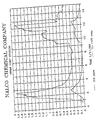
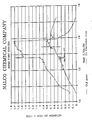
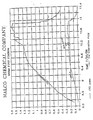
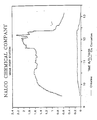
- the present invention stems from an unexpected and surprising discovery that the injection of bromide into a chlorination system for treating cooling water to an electric power plant has the effect of substantially decreasing copper corrosion. This was discovered and confirmed by the inventors while they were employed for Nalco Chemical Company and were using the Nalco mobile laboratory to monitor the cooling system of the Miami Fort station of the Cincinnati Gas and Electric Company from July 11, 1986 to August 5, 1986.
- the test results which are attached in the following appendix to the specification, show the copper corrosion in mills per year in the upper curves and show the residual chlorine in parts per million in the lower curves.
- the corrosion was measured with an instrument called a corrator, manufactured by Magna Corp., which is a kind of corrosometer which determined corrosion by measuring an electric current between electrodes made of the same copper/nickel alloy as the cooling system under test.
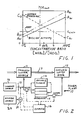
- FIG. 1 there is shown a graph of how various factors are affected by the ratio of the concentration of hypobromous acid to hypochlorous acid during biocide treatment with a chlorine-bromide solution. If chlorine only is injected into the flow of process water, then only hypochlorous acid results so that the concentration ratio is 0%. If an equal molar amount of chlorine and bromide are injected into the process water, then virtually all of the bromide is converted to hypobromous acid and the chlorine becomes converted to chloride. The amount of residual chlorine can be decreased further by injecting an excess of bromide over chlorine, so that, in accordance with Le Chatelier's principle, the conversion reaction between hypochlorous acid and bromide is driven even further toward hypobromous acid production.
- the biocide activity increases as the concentration ratio reaches 100% hypobromous acid.
- the cost of producing hypobromous acid increases at an even faster rate, so that absent any factors other than cost and biocide activity, chlorine alone would always be used for biocide water treatment.
- EPA regulations on the total residual chlorine however, set a TCR limit and to meet this limit bromide must be added to reduce the residual chlorine.
- the TCR limit results in an optimum concentration ratio of x .
- the biocide treatment process is modified so that the feed rate of bromide is increased to achieve a certain copper corrosion limit.
- This copper corrosion limit is dictated by the permissible copper discharge limit divided by the duration of the biocide treatment interval.
- the inventors made the unexpected and surprising discovery that the copper corrosion decreases as bromide is injected, even though the rate of chlorine injection remains constant.
- an even higher concentration ration of hypobromous acid is needed. This higher concentration ratio y is obtained by increasing the chemical feed rate of the bromide solution relative to the chlorine feed rate.
- FIG. 2 there is shown a schematic diagram of how the present invention can be used for optimizing the water treatment process of a power plant generally designated 10 which obtains cooling water from a source 11 and rejects the heated water to a sink 12.
- the source 11 and sink 12 for example, are respective inlets and outlets to a river 13.
- the power plant includes a boiler and turbine 14 which rejects heat to a condenser 15 which receives the flow of water from the source 11 to the sink 12.
- a computer 16 In order to provide biocide treatment to the cooling water, a computer 16 periodically activates a valve or pump 17 to provide a regulated flow of chlorine from a chlorine source 18 into the flow of cooling water from the source 11 to the condenser 15.
- the chlorine source for example, includes a supply of gaseous chlorine or sodium hypochloride.
- the computer 16 In order to provide increased biocide activity and a reduced residual chlorine limit, the computer 16 also activates a control valve or variable rate pump 19 in order to add a bromide and biodispersant solution from a source 20 to the flow of chlorine before the chlorine is injected into the flow of cooling water.
- the chemical feed rate of bromide from the bromide source 20 is increased or adjusted to obtain a certain copper corrosion limit.
- the power plant 10 is one of a number of pollution sources along the river 13. Due to this fact, the EPA sets a certain limit on the discharge of copper that is permitted from the power plant.
- the computer 16 is provided with at least one sensor in order to sense the rate of discharge of copper into the cooling water into the river 13. This sensor, for example, is a corrosometer which indicates the rate of corrosion in the condenser 15. From this rate the amount of copper discharge can be obtained by multiplying the corrosion rate by the internal surface area of the condenser 15, and by the time duration of the chlorine-bromide treatment.
- a corrosometer reading could be calibrated against the actual discharge of copper from the power plant 10 by obtaining sufficiently large samples of water falling from the source 11 and also into the sink 12 and measuring the copper concentration in those samples by applying standard chemical techniques of quantitative analysis.
- the computer 16 determines the average discharge for an entire day's cycle and compares that discharge to the daily limit set by the EPA. Based on this comparison, the set point for the chemical feed rate of bromide is increased or decreased so that during the next day's water treatment cycle the discharge of copper will more closely approximate and will fall within the limit set by the EPA.
Landscapes
- Chemical & Material Sciences (AREA)
- Engineering & Computer Science (AREA)
- Organic Chemistry (AREA)
- Materials Engineering (AREA)
- Environmental & Geological Engineering (AREA)
- Water Supply & Treatment (AREA)
- Life Sciences & Earth Sciences (AREA)
- Inorganic Chemistry (AREA)
- Hydrology & Water Resources (AREA)
- Mechanical Engineering (AREA)
- Metallurgy (AREA)
- Agricultural Chemicals And Associated Chemicals (AREA)
- Treatment Of Water By Oxidation Or Reduction (AREA)
- Preventing Corrosion Or Incrustation Of Metals (AREA)
Applications Claiming Priority (3)
| Application Number | Priority Date | Filing Date | Title |
|---|---|---|---|
| US81857 | 1987-08-05 | ||
| US07/081,857 US4818413A (en) | 1987-08-05 | 1987-08-05 | Biocide water treatment having reduced copper corrosion |
| EP88121040A EP0373249A1 (en) | 1987-08-05 | 1988-12-15 | Biocide water treatment having reduced copper corrosion |
Publications (1)
| Publication Number | Publication Date |
|---|---|
| EP0302501A1 true EP0302501A1 (en) | 1989-02-08 |
Family
ID=39710816
Family Applications (2)
| Application Number | Title | Priority Date | Filing Date |
|---|---|---|---|
| EP88112729A Withdrawn EP0302501A1 (en) | 1987-08-05 | 1988-08-04 | Biocide water treatment having reduced copper corrosion |
| EP88121040A Ceased EP0373249A1 (en) | 1987-08-05 | 1988-12-15 | Biocide water treatment having reduced copper corrosion |
Family Applications After (1)
| Application Number | Title | Priority Date | Filing Date |
|---|---|---|---|
| EP88121040A Ceased EP0373249A1 (en) | 1987-08-05 | 1988-12-15 | Biocide water treatment having reduced copper corrosion |
Country Status (6)
| Country | Link |
|---|---|
| US (1) | US4818413A (cg-RX-API-DMAC10.html) |
| EP (2) | EP0302501A1 (cg-RX-API-DMAC10.html) |
| JP (1) | JPH01119391A (cg-RX-API-DMAC10.html) |
| AU (1) | AU598176B2 (cg-RX-API-DMAC10.html) |
| BR (1) | BR8803873A (cg-RX-API-DMAC10.html) |
| NZ (1) | NZ225663A (cg-RX-API-DMAC10.html) |
Cited By (3)
| Publication number | Priority date | Publication date | Assignee | Title |
|---|---|---|---|---|
| EP0373249A1 (en) * | 1987-08-05 | 1990-06-20 | Nalco Chemical Company | Biocide water treatment having reduced copper corrosion |
| GB2326113A (en) * | 1995-07-19 | 1998-12-16 | Baker Hughes Ltd | Biofouling reduction |
| US20080279964A1 (en) * | 2005-10-27 | 2008-11-13 | Wetegrove Robert L | Biofouling control |
Families Citing this family (11)
| Publication number | Priority date | Publication date | Assignee | Title |
|---|---|---|---|---|
| GB8814222D0 (en) * | 1988-06-15 | 1988-07-20 | Total Pool Chemicals Ltd | Improvement in/relating to sanitation of swimming pool water |
| US5008075A (en) * | 1990-01-16 | 1991-04-16 | Rufolo Paul G | Preventative maintenance system for underwater pipes |
| US5141754A (en) * | 1990-10-01 | 1992-08-25 | Nalco Chemical Company | Zebra mussel control chemical |
| US5516501A (en) * | 1992-05-05 | 1996-05-14 | International Dioxcide | Process for the preparation of aqueous solutions of bromine based disinfectants |
| US5989323A (en) * | 1993-12-09 | 1999-11-23 | The Research Foundation Of State University Of New York | Aquatic antifouling compositions and methods |
| CA2178500C (en) * | 1993-12-09 | 2004-07-13 | Gordon T. Taylor | Aquatic antifouling compositions and methods |
| DE19627605C1 (de) * | 1996-07-09 | 1997-07-10 | Dechema | Verfahren zur Erhöhung der Korrosionsbeständigkeit von Werkstoffen auf der Basis TiAl über die Implantation von Halogenionen in die Werkstoffoberfläche |
| US6402957B1 (en) * | 1999-10-15 | 2002-06-11 | Seh America, Inc. | Bromine biocide removal |
| JP5612822B2 (ja) * | 2008-12-25 | 2014-10-22 | アクアス株式会社 | スライム抑制方法 |
| US9016110B2 (en) * | 2010-11-22 | 2015-04-28 | Nalco Company | Apparatus for on-line continuous chlorine analysis in turbid water and process streams |
| AU2018399624B2 (en) | 2018-01-03 | 2024-03-21 | Ecolab Usa Inc. | Process and method for reducing metal corrosion in water |
Citations (5)
| Publication number | Priority date | Publication date | Assignee | Title |
|---|---|---|---|---|
| DE3028550A1 (de) * | 1980-07-28 | 1982-02-25 | Siemens AG, 1000 Berlin und 8000 München | Vorrichtung zur entkeimung von wasser bei medizinischen, insbesondere zahnmedizinischen geraeten |
| US4451376A (en) * | 1983-07-28 | 1984-05-29 | Nalco Chemical Company | Multi-functional hypobromide precursors |
| DE3414748A1 (de) * | 1983-04-20 | 1984-10-25 | Air Refiner Inc., Oklahoma City, Okla. | Korrosionsinhibitor, korrosionsschutzverfahren und korrosionsfreie waessrige loesung |
| US4614595A (en) * | 1984-09-05 | 1986-09-30 | Coral, Inc. | Method of water treatment |
| US4643835A (en) * | 1985-08-28 | 1987-02-17 | Nalco Chemical Company | Asiatic clam control chemical |
Family Cites Families (10)
| Publication number | Priority date | Publication date | Assignee | Title |
|---|---|---|---|---|
| US2443429A (en) * | 1947-09-26 | 1948-06-15 | Wallace & Tiernan Inc | Procedure for disinfecting aqueous liquid |
| US2580809A (en) * | 1949-06-14 | 1952-01-01 | Wallace & Tiernan Inc | Procedure for purifying aqueous liquid |
| DE1186305B (de) * | 1962-08-22 | 1965-01-28 | Bayer Ag | Verfahren zur Korrosionsverhuetung |
| US3338829A (en) * | 1964-05-06 | 1967-08-29 | Monsanto Co | Corrosion-inhibited ammonium orthophosphate solutions and compositions useful for manufacturing them |
| US3592212A (en) * | 1969-12-18 | 1971-07-13 | James A Schleimer | Water treatment system |
| JPS5140538B1 (cg-RX-API-DMAC10.html) * | 1971-05-28 | 1976-11-04 | ||
| US3767767A (en) * | 1971-08-09 | 1973-10-23 | Dow Chemical Co | Inhibiting corrosion of iron by bromine |
| US4631530A (en) * | 1984-04-02 | 1986-12-23 | Olin Corporation | Chemical process monitor |
| US4659459A (en) * | 1985-07-18 | 1987-04-21 | Betz Laboratories, Inc. | Automated systems for introducing chemicals into water or other liquid treatment systems |
| US4818413A (en) * | 1987-08-05 | 1989-04-04 | Nalco Chemical Company | Biocide water treatment having reduced copper corrosion |
-
1987
- 1987-08-05 US US07/081,857 patent/US4818413A/en not_active Expired - Lifetime
-
1988
- 1988-07-26 AU AU20042/88A patent/AU598176B2/en not_active Ceased
- 1988-08-02 NZ NZ225663A patent/NZ225663A/xx unknown
- 1988-08-04 JP JP63193561A patent/JPH01119391A/ja active Granted
- 1988-08-04 BR BR8803873A patent/BR8803873A/pt unknown
- 1988-08-04 EP EP88112729A patent/EP0302501A1/en not_active Withdrawn
- 1988-12-15 EP EP88121040A patent/EP0373249A1/en not_active Ceased
Patent Citations (5)
| Publication number | Priority date | Publication date | Assignee | Title |
|---|---|---|---|---|
| DE3028550A1 (de) * | 1980-07-28 | 1982-02-25 | Siemens AG, 1000 Berlin und 8000 München | Vorrichtung zur entkeimung von wasser bei medizinischen, insbesondere zahnmedizinischen geraeten |
| DE3414748A1 (de) * | 1983-04-20 | 1984-10-25 | Air Refiner Inc., Oklahoma City, Okla. | Korrosionsinhibitor, korrosionsschutzverfahren und korrosionsfreie waessrige loesung |
| US4451376A (en) * | 1983-07-28 | 1984-05-29 | Nalco Chemical Company | Multi-functional hypobromide precursors |
| US4614595A (en) * | 1984-09-05 | 1986-09-30 | Coral, Inc. | Method of water treatment |
| US4643835A (en) * | 1985-08-28 | 1987-02-17 | Nalco Chemical Company | Asiatic clam control chemical |
Cited By (7)
| Publication number | Priority date | Publication date | Assignee | Title |
|---|---|---|---|---|
| EP0373249A1 (en) * | 1987-08-05 | 1990-06-20 | Nalco Chemical Company | Biocide water treatment having reduced copper corrosion |
| GB2326113A (en) * | 1995-07-19 | 1998-12-16 | Baker Hughes Ltd | Biofouling reduction |
| GB2303316B (en) * | 1995-07-19 | 1999-06-16 | Baker Hughes Ltd | Biofouling reduction |
| GB2326113B (en) * | 1995-07-19 | 1999-06-16 | Baker Hughes Ltd | Biofouling reduction |
| US6183646B1 (en) | 1995-07-19 | 2001-02-06 | Baker Hughes Incorporated | Biofouling reduction |
| US20080279964A1 (en) * | 2005-10-27 | 2008-11-13 | Wetegrove Robert L | Biofouling control |
| US8741157B2 (en) * | 2005-10-27 | 2014-06-03 | Nalco Company | Biofouling control |
Also Published As
| Publication number | Publication date |
|---|---|
| AU2004288A (en) | 1989-02-09 |
| US4818413A (en) | 1989-04-04 |
| BR8803873A (pt) | 1989-02-21 |
| JPH01119391A (ja) | 1989-05-11 |
| NZ225663A (en) | 1989-12-21 |
| JPH0244594B2 (cg-RX-API-DMAC10.html) | 1990-10-04 |
| AU598176B2 (en) | 1990-06-14 |
| EP0373249A1 (en) | 1990-06-20 |
Similar Documents
| Publication | Publication Date | Title |
|---|---|---|
| US4818413A (en) | Biocide water treatment having reduced copper corrosion | |
| US5332494A (en) | Water control system using oxidation reduction potential sensing | |
| CN104355370B (zh) | 压载水处理系统和方法 | |
| CN104981436B (zh) | 杀生物剂生产的控制方法 | |
| US5342510A (en) | Water control system using oxidation reduction potential sensing | |
| US6017461A (en) | Water purification systems | |
| BR0308247B1 (pt) | Métodos de preparação de um biocida, e de controle do crescimento de microorganismos | |
| EP2196092A1 (en) | Bactericidal/algicidal method | |
| AU2001247916A1 (en) | Autocycle control of cooling water systems | |
| EP1284929A4 (en) | AUTOMATIC CYCLE CONTROL FOR COOLING WATER SYSTEMS | |
| CN102165383A (zh) | 用于工业用水系统的前摄性控制系统 | |
| JP2002254083A (ja) | 水系処理法 | |
| CN112119040A (zh) | 通过氧气感测器监测以杀生物剂处理过的制造过程用水的系统及方法 | |
| Bartholomew et al. | Bromine-based biocides for cooling water systems: a literature review | |
| EP3260425B1 (en) | Aeration control in waste water treatment by monitoring nitrification by-products | |
| WO1999050191A1 (en) | Process for inhibiting bacterial and algicidal activity in aqueous media | |
| Rice et al. | Fundamental aspects of ozone chemistry in recirculating cooling water systems—Data evaluation needs | |
| Connell et al. | Committee report: disinfection at large and medium-size systems | |
| Ilavský et al. | Water disinfection agents and disinfection by-products | |
| EP1200360B1 (en) | Waste water nitrification | |
| Matson et al. | Biofouling control in recycled cooling water with bromochlorodimethylhydantoin | |
| Filer et al. | ORP provides versatile water treatment | |
| HK40041200A (en) | System and method for monitoring process water treated with a biocide using an oxygen sensor | |
| WILKES | Ozone Chemistry Applied to Cooling | |
| HK40041200B (en) | System and method for monitoring process water treated with a biocide using an oxygen sensor |
Legal Events
| Date | Code | Title | Description |
|---|---|---|---|
| PUAI | Public reference made under article 153(3) epc to a published international application that has entered the european phase |
Free format text: ORIGINAL CODE: 0009012 |
|
| AK | Designated contracting states |
Kind code of ref document: A1 Designated state(s): FR GB IT |
|
| STAA | Information on the status of an ep patent application or granted ep patent |
Free format text: STATUS: THE APPLICATION IS DEEMED TO BE WITHDRAWN |
|
| 18D | Application deemed to be withdrawn |
Effective date: 19890809 |