EP0300409A1 - Verfahren zur Herstellung von menschlichem Gewebe-Plasminogenaktivator und dafür geeignete Zellinie - Google Patents
Verfahren zur Herstellung von menschlichem Gewebe-Plasminogenaktivator und dafür geeignete Zellinie Download PDFInfo
- Publication number
- EP0300409A1 EP0300409A1 EP88111529A EP88111529A EP0300409A1 EP 0300409 A1 EP0300409 A1 EP 0300409A1 EP 88111529 A EP88111529 A EP 88111529A EP 88111529 A EP88111529 A EP 88111529A EP 0300409 A1 EP0300409 A1 EP 0300409A1
- Authority
- EP
- European Patent Office
- Prior art keywords
- kym
- medium
- chain
- human
- plasminogen activator
- Prior art date
- Legal status (The legal status is an assumption and is not a legal conclusion. Google has not performed a legal analysis and makes no representation as to the accuracy of the status listed.)
- Withdrawn
Links
Images
Classifications
-
- C—CHEMISTRY; METALLURGY
- C12—BIOCHEMISTRY; BEER; SPIRITS; WINE; VINEGAR; MICROBIOLOGY; ENZYMOLOGY; MUTATION OR GENETIC ENGINEERING
- C12N—MICROORGANISMS OR ENZYMES; COMPOSITIONS THEREOF; PROPAGATING, PRESERVING, OR MAINTAINING MICROORGANISMS; MUTATION OR GENETIC ENGINEERING; CULTURE MEDIA
- C12N9/00—Enzymes; Proenzymes; Compositions thereof; Processes for preparing, activating, inhibiting, separating or purifying enzymes
- C12N9/14—Hydrolases (3)
- C12N9/48—Hydrolases (3) acting on peptide bonds (3.4)
- C12N9/50—Proteinases, e.g. Endopeptidases (3.4.21-3.4.25)
- C12N9/64—Proteinases, e.g. Endopeptidases (3.4.21-3.4.25) derived from animal tissue
- C12N9/6421—Proteinases, e.g. Endopeptidases (3.4.21-3.4.25) derived from animal tissue from mammals
- C12N9/6424—Serine endopeptidases (3.4.21)
- C12N9/6456—Plasminogen activators
- C12N9/6459—Plasminogen activators t-plasminogen activator (3.4.21.68), i.e. tPA
-
- C—CHEMISTRY; METALLURGY
- C12—BIOCHEMISTRY; BEER; SPIRITS; WINE; VINEGAR; MICROBIOLOGY; ENZYMOLOGY; MUTATION OR GENETIC ENGINEERING
- C12Y—ENZYMES
- C12Y304/00—Hydrolases acting on peptide bonds, i.e. peptidases (3.4)
- C12Y304/21—Serine endopeptidases (3.4.21)
- C12Y304/21069—Protein C activated (3.4.21.69)
Definitions
- the present invention relates to a process for the production of human tissue plasminogen activator capable of activating plasminogen and also to a human rhabdomyosarcoma-derived cell strain, KYM-SF, useful for the process.
- Human tissue plasminogen activator is a proteolytic enzyme which is produced by endothelial cells or the like and has high affinity to fibrin contained in aggregates of coagulated blood (thrombi). It serves to activate and convert plasminogen, an inactive proenzyme, into plasmin, a thrombolytic enzyme.
- t-PA Human tissue plasminogen activator
- serum is costly and accounts for a high percentage of the cost for raw materials in the culture step. It is also necessary to remove serum-derived substances (contaminating proteins, endotoxins, mycoplasmas, virus, etc.) in order to purify a substance produced by cells and to formulate it for application as a medicine or the like.
- serum-derived substances contaminating proteins, endotoxins, mycoplasmas, virus, etc.
- t-PA degrading proteases and t-PA specific inhibitors present in serum affect the productivity of t-PA [E.D. Sprenger et al., Blood, 36(2) , 381-387 (1987)]. Their removal is also indispensable.
- KYM-A t-PA producing cell strain
- the present inventors hence repeated cloning of KYM-A with a view toward finding out a cell strain high in added commercial value.
- the present inventors found the human rhabdomyosarcoma variant KYM-SF (IFO 50135; will hereinafter be called "KYM-SF"), which can be subjected to suspension culture with stirring in a serum-free medium and can be subcultured without limitations.
- the variant was thus established as an established cell line.
- KYM-SF permits mass production of t-PA and also selective and efficient production of single-chain or double-chain t-PA.
- a first object of this invention is therefore to provide a process for the production of t-PA.
- a second object of this invention is to provide the novel cell strain, KYM-SF, derived from human rhabdomyosarcoma, which is useful in the practice of process described above.
- a process for the production of human tissue plasminogen activator comprises culturing a human rhabdomyosarcoma-derived cell, KYM-SF, in a medium and purification of single-chain and/or double-chain human tissue plasminogen activator from the medium.
- KYM-SF a cell strain having the following characteristic properties:
- single-chain and/or double-chain t-PA can be produced efficiently by culturing KYM-SF in a medium and then purifying resultant single-chain and/or double-chain t-PA from the medium.
- KYM-SF which is used in this invention, is a variant obtained as a result of cloning of KYM-A at the level of cells. Distinct differences are observed in biological properties between KYM-SF and KYM-A. Namely, KYM-SF produces t-PA in a quantity at least equal to KYM-A and has a property permitting serum-free culture in contrast to KYM-A which requires serum for its growth. Significant differences are hence observed in their growth characteristics.
- KYM-SF was obtained by the following cloning procedure.
- Fetal bovine serum was added at suitable 8-stage concentrations in the range of 0% - 5% respectively to RPMI 1640 medium containing human transferrin (1 ⁇ g/ml), monoethanolamine (5 x 10 ⁇ 6 M) and selenious acid (1 x 10 ⁇ 8 M) (the medium added with the three components will hereinafter be called "TES-RPMI 1640").
- the media thus prepared were placed separately in the wells of a 96-well plate.
- KYM-A cells were inoculated in the wells and cultured for 2 weeks in 5% CO2-containing air at 37°C while one half of each medium was replaced by the corresponding fresh medium on every third days.
- the clone of the colony which had grown in the medium of the lowest serum concentration among those produced colonies was transferred to a 24-well plate. The clone which gave the greatest t-PA production was then selected. Using the thus-selected clone and TES-RPMI 1640 containing 0.1% of fetal bovine serum, clones which grew in a suspended state were solely subcultured for about 2 months. Two months later, the clone was inoculated to a 96-well plate, the wells of which were filled separately with media which had been prepared by adding fetal bovine serum to TES-RPMI 1640 at suitable 4-stage concentrations in the range of 0% - 0.001% respectively.
- the clone was cultured for 2 weeks while replacing one half of each medium with the corresponding fresh medium on every third days.
- the clone of the colony which had grown in the medium of the lowest serum concentration among those produced colonies was transferred to a 24-well plate.
- the clone which gave the greatest t-PA production was then selected.
- clones which grew in a suspended state were solely subcultured for about 4 months under serum-free conditions, so that the clone was screened and KYM-SF was obtained successful severelyly.
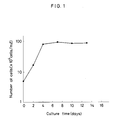
- the serum-independent growth of KYM-SF according to this invention is apparent from a growth curve (FIG. 1) which was obtained by inoculating KYM-SF at an inoculum size of 5 x 10⁴ cells/ml in TES-RPMI 1640 without serum on a 24-well plate and then culturing it for 10 days.
- KYM-SF was satisfactory in both the speed of growth (doubling time: about 36 hours) and the cell density obtained at saturation.
- the culture of KYM-SF is first effected as seed culture in a Petri dish. When the number of cells has reached a suitable value, the culture is transferred to a spinner flask or fermenter to perform suspension culture with stirring there.
- the inoculum size may preferably be about 2-5 x 10⁵ cells/ml. Subculturing of cells is performed when they reach a stationary phase of growth.
- a serum-free medium composed of a basal medium and some additive components is suitable as such a medium.
- RPMI 1640 medium or a 1:1 mixture of RPMI 1640 medium and F12 medium is suitable. These media are generally sold on the market and are readily available.
- the basal medium is however not necessarily limited to the above-exemplified ones, and any media prepared in accordance with the formulations of the above media may also be used.
- human transferrin, monoethanolamine and selenious acid are suitable. More preferably, it is desired to add bovine serum albumin to these additive components.
- RPMI 1640 medium which contains bovine serum albumin, human transferrin, ethanolamine and selenious acid.
- human transferrin at 0.5-1.5 ⁇ g/ml, monoethanolamine at 3-8 ⁇ M and selenious acid at 1 x 10 ⁇ 7 - 1 x 10 ⁇ 9 M, approximately.
- bovine serum albumin When bovine serum albumin is used, its addition in concentrations of 0.05-0.3 % (w/v) is suitable.
- the culture temperature may suitably be 37 ⁇ 1°C and as a gaseous phase, it is suitable to use air which contains about 5% of CO2.
- Other conditions for culture in Petri dishes and the like can be fulfilled by replacing the medium at suitable intervals.
- t-PA molecules have a single-chain structure at the time of their secretion from cells. It is thus determined by environmental factors, which surround t-PA thereafter, whether tPA retains the single-chain structure or is converted into the double-chain structure. The existence or non-existence of serum-derived proteolytic enzymes controls the environmental factors in many instances.
- double-chain structure means a structure that the single-chain structure has been cleaved at a certain specific site of its protein portion. It may include the t-PA's structure in which the cleaved peptides are bound by disulfide bonds, apparently showing the single-chain structure under non-reducing conditions on electrophoresis.
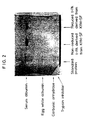
- t-PA Since KYM-SF which is also a subject of this invention can grow without serum, t-PA can be collected in its single-chain form in the process of the present invention without being inferior in the quantity of production compared with conventional cell strains (see FIG. 2).
- t-PA For the production of t-PA, it is suitable to culture KYM-SF in a fermenter or the like and to replace the medium continuously after sufficient growth of cells or to replace a supernatant with a fresh medium at intervals of 1-4 days by the cell-sedimentation method so as to obtain a t-PA-containing medium continuously over about 3 months.
- the purification of t-PA can be achieved by a combination of general purification methods for proteins such as adsorption, ion-exchange, gel filtration, and various affinity chromatographies. Among them, efficient purification is feasible by using a monoclonal antibody in affinity chromatography.
- the isolation and purification may be conducted in the following manner.
- a culture medium recovered is subjected to centrifugation to remove cells and other insoluble materials.
- the resulting supernatants are applied to a column of zinc chelating-agarose prepared by the method of Porath et al. [Nature, 258 , 598-599 (1975)] and equilibrated with Tris-HCl (pH 7.4) containing NaCl and Tween 80 (trade name).
- the column is subjected to gradient elution with the above buffer (pH 7.4) containing the increasing concentration of imidazole.
- t-PA enriched fractions eluted from the column are pooled and then applied to an immuno-affinity column which contains Sepharose 4B (trade name; product of Pharmacia AB) conjugated by the CNBr-activation method with an anti-t-PA monoclonal antibody obtained using KYM-SF-derived t-PA as antigen.
- Sepharose 4B trade name; product of Pharmacia AB
- an anti-t-PA monoclonal antibody obtained using KYM-SF-derived t-PA as antigen.
- t-PA is eluted with 2M of potassium thiocyanate and concentrated by ultrafiltration.
- the concentrated solution of t-PA is developed by a column of "Sephacryl S-200" (trade name; product of Pharmacia AB). Active fractions are pooled again, thereby obtaining a purified t-PA sample. All the procedures described above are conducted at 4°C.
- the monoclonal antibody employed for the purification has the following characteristics.
- the monoclonal antibody is obtained as follows: For immunization, highly purified t-PA derived from KYM-SF is injected twice per 3 weeks into BALB/c mouse. The spleen cells taken out of the mouse are fused with mouse myeloma cells pretreated with colcemid as described by Miyahara et al. [Japanese Patent Application Laid-Open No. 52287/1986; Miyahara et al., Biochem. Biophys. Res. Commun. 124 , 903 (1983)]. An established method with polyethylene glycol is adopted for the fusion of these cells [Kohler et al., Nature, 256 , 495-497 (1975); R.A.
- Hybridoma cells capable of producing a single antibody specific to KYM-SF-derived t-PA are selected using an enzyme immunoassay (or monitoring antibody titers), and then purified using a limited dilution method.
- t-PAs obtained in the above-described manner t-PA produced by culturing KYM-SF in a serum-free medium is collected and purified as single-chain t-PA.
- Structural verification of the t-PA can be effected by its electrophoretic analysis in an SDS-polyacrylamide gel under reducing conditions. Results of the test are shown in FIG. 2. As is apparent from FIG. 2, only single-chain molecules are detected with respect to t-PA produced by culturing KYM-SF in a serum-free medium.
- the molecular weight was estimated to be 60,000-73,000 in both reduced and unreduced states by an electrophoretic analysis in an SDS-polyacrylamide gel (FIG. 2).
- the single-chain t-PA obtained in accordance with the process of this invention has been confirmed to have the same amino acid sequence as the single-chain t-PA purified from the established cell line of human melanoma [P. Wallen et al., Eur. J. Biochem., 132 , 681-686 (1983)].
- Two amino acid sequences, one with the glycine (Gly) terminal and the other with the serine (Ser) terminal, are shown in the table, because the glycine terminal which is supposed to be the N-terminal of single-chain t-PA was probably subjected to processing to lose the three amino acids during the culturing and purification steps and as a result, appeared as the serine-terminal.
- the double-chain t-PA collected and purified in accordance with the process of this invention is not distinguishable from the t-PA purified from the established cell line of human melanoma. It has also been confirmed to be t-PA from other physical and chemical properties.
- single-chain and/or double-chain t-PA can be produced very advantageously by using KYM-SF, mass-culturing the cell strain in a selected medium by the stirred suspension culturing method, and then collecting and purifying t-PA in a manner known per se in the art.
- t-PA activity was conducted by the fibrin clot lysis time method [Rijiken et al., Biochem. Biophys. Acta., 580 140 (1979)] with a modification as follows.
- fibrin clots To prepare fibrin clots, the following solutions were each successively mixed and incubated for 2 minutes at 37°C: 500 ⁇ l of 2.4 mg/ml human fibrinogen, 50 ⁇ l of 0.3 mg/ml human plasminogen, t-PA solution of adequate amount and 40 NIH units/ml thrombin, with each of them being diluted with and dissolved in 50 mM phosphate buffer (pH 7.75) containing 0.1 M of NaCl and 0.25% of gelatin. A nylon ball with a diameter of 3.2 mm was then placed gently on the fibrin clots and the time was measured until the nylon ball reached the bottom of the test tube.
- 50 mM phosphate buffer pH 7.75
- a calibration curve was prepared using as a standard single-chain t-PA whose activity had been measured using WHO international standard t-PA (Lot. 83/517) by the above improved method of the fibrin clot lysis time method, and the activity of t-PA was expressed in terms of t-PA international unit (I.U.)
- t-PA was purified from culture medium of KYM-SF by the conventional method of Rijken and Collen [J. Biol. Chem., 256 , 7035-7041 (1981)]. Namely, a recovered medium which had been obtained by culturing the variant KYM-SF was subjected to a zinc chelating column in the above-described manner, whereby active fractions were obtained. The thus-obtained active fractions were combined in a dialysis tubing, to which powder of polyethylene glycol 20,000 (product of Wako Pure Chemical Industries, Ltd.) was sprinkled to concentrate the solution, which was then dialyzed for 24 hours against 0.01 M phosphate buffer (pH 6.7).
- the dialyzate was applied to a concanavalin-A bound Sepharose column (1 cm across x 20 cm long; manufactured by Pharmacia AB) which had been equilibrated with 0.01 M phosphate buffer (pH 6.7). After washing the column with the same buffer, the column was subjected to gradient elution with 0.01 M phosphate buffer (pH 6.7) containing increasing concentration of potassium thiocyanate to 0.6 M and of ⁇ -methylmannoside to 3 M. The active fractions eluted were put into a dialysis tubing which was then sprinkled with powder of polyethylene glycol 20,000, concentrated at 4°C, and then dialyzed for 24 hours against PBS buffer (pH 6.7).
- Precipitated active fractions were recovered by centrifugation (10,000 x g, 30 min) and dissolved completely in 0.01 M phosphate buffer (pH 6.7) containing 0.6 M potassium thiocyanate. The resulting solution was developed by a column of "Sephacryl S-200" (product of Pharmacia AB) which had been equilibrated with 0.01 M phosphate buffer (pH 6.7) containing 0.6 M potassium thiocyanate. The fractions containing t-PA (about 2 mg as proteins) were provided as an antigen for the preparation of the monoclonal antibody.
- a BALB/c mouse (7 weeks old, female) was intraperitoneally injected twice at an interval of 3 weeks with 0.2 ml of a solution which contained about 13 ⁇ g of purified t-PA and 0.1 ml of Freund complete adjuvant. Two weeks later, approximately 13 ⁇ g of purified t-PA was further injected intraperitoneally together with 0.37 mg of aluminum hydroxide.
- Myeloma cells and spleen cells, both, in Eagle's medium were mixed at the above ratio, followed by centrifugation at 200 x g for 10 minutes.
- the resulting pellet was suspended in Eagle's medium warmed to 37°C, which contained 50% polyethylene glycol 4000 (product of Wako Pure Chemical Industries, Ltd.). The thus-prepared suspension was stirred for about 1 minute.
- One milliliter of Eagle's medium was added ten times at intervals of 30 seconds to a total amount of 10 ml, followed by centrifugation to remove the polyethylene glycol.
- the cells were resuspended in RPMI 1640 medium which contained 10% of fetal calf serum. About 140 ⁇ l of the suspension was distributed into the wells of a 96-well plate.
- HAT medium hyperxanthine, aminopterin, thymidine containing medium
- Hybridoma cells (1 x 10⁷ cells) were inoculated to a BALB/c nude mouse which had been administered with 0.5 ml of pristane 7 days before and then allowed to grow in ascites. Two weeks later, the ascites was taken out, and centrifuged to collect an intermediate layer between an upper pristane layer and a cell pellet. The intermediate layer was salted out with 50% saturation of ammonium sulfate, followed by centrifugation to obtain a precipitate. The precipitate was dissolved in PBS buffer (pH 7.2) containing 0.15 M of NaCl and dialyzed three times against 1 liter of the above buffer. The dialyzate was provided as an anti-t-PA monoclonal antibody immunoglobulin fraction (IgG2a).
- IgG2a anti-t-PA monoclonal antibody immunoglobulin fraction
- An anti-t-PA monoclonal antibody was conjugated with Sepharose 4B (trade name; product of Pharmacia AB) with the CNBr-activation method as described by Miyahara et al. [Biochem. Biophys. Res. Commun., 124 , 903 (1984)].
- RPMI-1640 medium (product of Nissui Chemical Industries, Ltd.) which contained, per liter, 90 mg of human transferrin ["No. T2252" (trade name); product of Sigma Corporation], 4.6 mg of monoethanolamine (product of Nakarai Chemicals, Ltd.), 13 ⁇ g of selenious acid (product of Nakarai Chemicals, Ltd.) and 1 g of bovine serum albumin "Fraction-V" (trade name; product of Armour Pharmaceutical Co., Ltd.).
- KYM-SF cells IFO 150135, were inoculated to a 25-cm2 culture flask (manufactured by Corning Glass Works) and were cultured while replacing the whole volume of medium once every three days. When 30-60ml of cell suspension was obtained after subculturing, suspension culture with stirring was started in a 100-ml glass flask fermenter.
- the inoculation to the 100-ml fermenter was conducted at an inoculum size of at least 2 x 10⁵ cells/ml.
- the cells were cultured with stirring under the following conditions: temperature; 37°C, pH range; 6.8-7.3, and surface aeration with 20 ml/min of a mixed gas of air and CO2 in a proportion of 2.5% of the air.
- the replacement of the medium in the fermenter was effected by stopping the stirring every 2-3 days and replacing approximately 80% of the supernatant.
- the culturing was stopped.
- the thus-grown cells were transferred to a fivefold-capacity, namely, 500-ml fermenter and cultured under the same conditions except for the rate of aeration.
- As the rate of aeration to the 500-ml fermenter surface aeration was performed at a rate of 100 ml/min with a mixed gas of air and CO2 in a proportion of 2.5% of the air.
- the replacement of the medium was conducted every 2-3 days in a similar manner as for the above-described culture.
- the fermenter size was increased successively by fivefold in capacity, namely, to 2.5 l and 12.5l at intervals of 7-10 days under the same conditions except for the rate of aeration.
- the inoculum size in each stage was 3 x 10⁵ cells/ml.
- the transfer of cells to the larger fermenter was conducted when the cell concentration reached 1.5-2.0 x 10⁶ cells/ml upon an elapsed time of 7-10 days after the inoculation.
- a mixed gas composed of air and 2.5% of CO2 was fed as surface aeration at a rate of 400 ml/min in the stage of the 2.5 l culture, and in the stage of the 12.5 l culture, air, CO2, O2 and mixed gases thereof were fed to control the pH within the range of 6.8-7.3 and pO2 at 10% minimum. Replacement of the medium was conducted in a similar manner as for the 100-ml culture and 500-ml culture.
- Culture medium thus recovered was added with 0.01% Tween 80 and then combined and pooled as a recovered culture medium.
- the recovered culture medium was centrifuged at 10,000 x g for 10 min in "Hitachi Refrigerated Centrifuge SCR 20BB” (trade name; manufactured by Hitachi, Ltd.), whereby insoluble materials such as cells and insoluble materials were removed and a supernatant was obtained.
- a zinc chelating-agarose column (5 cm in diameter x 25.2 cm long), which had been prepared by the method of Porath et al. [Nature, 258 , 598-599 (1975)], was equilibrated with 20 mM tris-HCl buffer (pH 7.4) containing 1 M of NaCl and 0.01% of Tween 80 and was then loaded with the above-described supernatant.
- the column was thereafter washed with the aforementioned equilibrating buffer, followed by gradient elution from the above buffer to the one containing 50 mM of imidazole, and t-PA active fractions were pooled.
- the monoclonal antibody column (18 cm in diameter x 1 cm long) was equilibrated with 10 mM phosphate buffer (pH 7.2) containing 1 M of NaCl, and was then loaded with the t-PA fractions eluted from a zinc chelating column. After completion of the loading, the column was washed with the same buffer and then eluted with the buffer containing 2 M of potassium thiocyanate. Fractions containing t-PA were collected and then concentrated through an ultrafiltration membrane (exclusion molecular weight: 10,000; product of Amicon Inc.).
- the concentrate of the active fractions was thereafter developed by a column of "Sephacryl S-200" (trade name; product of Pharmacia AB) which had been equilibrated with 1 M NH3HCO3. Active fractions were pooled again to provide a purified t-PA sample. The purification procedures described above were all conducted at 4°C.
- the purified sample of t-PA was obtained by the 4-step process.
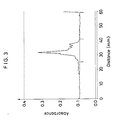
- the t-PA sample thus obtained was subjected to electrophoresis in an SDS gel containing 12.5% of polyacrylamide [Laemli et al., Nature, 227 , 6808 (1970); Weber, K. et al., J. Biol. Chem., 244 , 4406-4412 (1969)].
- the gel was stained with Coomassie Brilliant Blue and its visible range absorption (660 nm) was measured by a densitometer "Ultrascan XL densitometer" (trade name; manufactured by LKB Corporation). As shown in FIG. 3, the purity was found to be at least 90%, thereby indicating a high degree of purification.
- the t-PA thus purified showed a single band near 60,000-73,000 (FIG. 2) in both reduced and unreduced states when subjected to electrophoresis in an SDS gel containing 12.5% of polyacrylamide.
- the t-PA was hence found to be single-chain t-PA.
- each total enzyme activity indicates t-PA activity determined from a calibration curve which was obtained using WHO international standard t-PA (Lot. 83/517) in accordance with the improved method of the fibrin clot lysis method, each total protein was determined by the method of Lowry in which bovine serum albumin (product of Sigma Corporation) was used as a standard protein, and each specific activity is the corresponding total activity/total protein and indicates t-PA activity per mg.
- the purification folds indicate specific activities in the respective purification steps by allotting 1 to the degree of purification of the supernatant of the culture. Incidentally, the variations in total activity in the course of the purification seem to be attributable to influence due to the existence of materials inhibiting t-PA activity.
Landscapes
- Chemical & Material Sciences (AREA)
- Health & Medical Sciences (AREA)
- Organic Chemistry (AREA)
- Life Sciences & Earth Sciences (AREA)
- Engineering & Computer Science (AREA)
- Bioinformatics & Cheminformatics (AREA)
- Genetics & Genomics (AREA)
- Wood Science & Technology (AREA)
- Zoology (AREA)
- Biomedical Technology (AREA)
- Biochemistry (AREA)
- General Health & Medical Sciences (AREA)
- General Engineering & Computer Science (AREA)
- Medicinal Chemistry (AREA)
- Microbiology (AREA)
- Biotechnology (AREA)
- Molecular Biology (AREA)
- Preparation Of Compounds By Using Micro-Organisms (AREA)
- Enzymes And Modification Thereof (AREA)
- Micro-Organisms Or Cultivation Processes Thereof (AREA)
Applications Claiming Priority (2)
| Application Number | Priority Date | Filing Date | Title |
|---|---|---|---|
| JP182000/87 | 1987-07-21 | ||
| JP62182000A JPS6427472A (en) | 1987-07-21 | 1987-07-21 | Production of human tissue plasminogen activator and cell strain using therein |
Publications (1)
| Publication Number | Publication Date |
|---|---|
| EP0300409A1 true EP0300409A1 (de) | 1989-01-25 |
Family
ID=16110571
Family Applications (1)
| Application Number | Title | Priority Date | Filing Date |
|---|---|---|---|
| EP88111529A Withdrawn EP0300409A1 (de) | 1987-07-21 | 1988-07-18 | Verfahren zur Herstellung von menschlichem Gewebe-Plasminogenaktivator und dafür geeignete Zellinie |
Country Status (4)
| Country | Link |
|---|---|
| US (1) | US5139939A (de) |
| EP (1) | EP0300409A1 (de) |
| JP (1) | JPS6427472A (de) |
| AR (1) | AR240063A1 (de) |
Families Citing this family (2)
| Publication number | Priority date | Publication date | Assignee | Title |
|---|---|---|---|---|
| WO1997038123A1 (en) * | 1996-04-05 | 1997-10-16 | Board Of Regents, The University Of Texas System | Methods for producing soluble, biologically-active disulfide bond-containing eukaryotic proteins in bacterial cells |
| US6083715A (en) * | 1997-06-09 | 2000-07-04 | Board Of Regents, The University Of Texas System | Methods for producing heterologous disulfide bond-containing polypeptides in bacterial cells |
Citations (2)
| Publication number | Priority date | Publication date | Assignee | Title |
|---|---|---|---|---|
| EP0113319A2 (de) * | 1982-12-30 | 1984-07-11 | Elaine Lynette Dr. Wilson | Zellinien und ihre Verwendung in der Herstellung von Proteinen |
| FR2558848A1 (fr) * | 1984-01-30 | 1985-08-02 | Meiji Milk Prod Co Ltd | Activeur de plasminogene kym, procede de preparation par culture d'un mutant de rhabdomyosarcome humain et composition pharmaceutique le renfermant dotee d'une activite thrombolytique |
Family Cites Families (3)
| Publication number | Priority date | Publication date | Assignee | Title |
|---|---|---|---|---|
| US4757005A (en) * | 1984-04-19 | 1988-07-12 | Miles Inc. | Method and cell line for obtaining plasminogen activators |
| JPS60231611A (ja) * | 1984-05-02 | 1985-11-18 | Meiji Milk Prod Co Ltd | プラズミノ−ゲンアクチベ−タ−の製造法 |
| JPS62158219A (ja) * | 1985-12-28 | 1987-07-14 | Meiji Milk Prod Co Ltd | ヒト由来組織型プラスミノ−ゲン活性化因子、その製造方法及びこれを有効成分とする血栓溶解剤 |
-
1987
- 1987-07-21 JP JP62182000A patent/JPS6427472A/ja active Pending
-
1988
- 1988-07-15 US US07/219,364 patent/US5139939A/en not_active Expired - Fee Related
- 1988-07-18 EP EP88111529A patent/EP0300409A1/de not_active Withdrawn
- 1988-07-20 AR AR311466A patent/AR240063A1/es active
Patent Citations (2)
| Publication number | Priority date | Publication date | Assignee | Title |
|---|---|---|---|---|
| EP0113319A2 (de) * | 1982-12-30 | 1984-07-11 | Elaine Lynette Dr. Wilson | Zellinien und ihre Verwendung in der Herstellung von Proteinen |
| FR2558848A1 (fr) * | 1984-01-30 | 1985-08-02 | Meiji Milk Prod Co Ltd | Activeur de plasminogene kym, procede de preparation par culture d'un mutant de rhabdomyosarcome humain et composition pharmaceutique le renfermant dotee d'une activite thrombolytique |
Non-Patent Citations (2)
| Title |
|---|
| CHEMICAL ABSTRACTS, vol. 104, no. 17, April 1986, page 548, abstract no. 147145a, Columbus, Ohio, US; & JP-A-60 231 611 (MEIJI MILK PRODUCTS CO., LTD) 18-11-1985 * |
| CHEMICAL ABSTRACTS, vol. 108, no. 11, March 1988, page 534, abstract no. 93083r, Columbus, Ohio, US; & JP-A-62 158 219 (MEIJI MILK PRODUCTS CO., LTD) 14-07-1987 * |
Also Published As
| Publication number | Publication date |
|---|---|
| AR240063A1 (es) | 1990-01-31 |
| JPS6427472A (en) | 1989-01-30 |
| US5139939A (en) | 1992-08-18 |
Similar Documents
| Publication | Publication Date | Title |
|---|---|---|
| Wallén et al. | Purification and characterization of a melanoma cell plasminogen activator | |
| US4752603A (en) | Plasminogen activator and pharmaceutical composition having thrombolytic activity | |
| US4960702A (en) | Methods for recovery of tissue plasminogen activator | |
| EP0302456B1 (de) | Gewebe-Plasminogenaktivator | |
| Einarsson et al. | Large-scale purification of human tissue-type plasminogen activator using monoclonal antibodies | |
| EP0405285A1 (de) | Plasminogenaktivator | |
| Lijnen et al. | Biochemical and thrombolytic properties of a low molecular weight form (comprising Leu144 through Leu411) of recombinant single-chain urokinase-type plasminogen activator. | |
| JPH0216981A (ja) | ヒト組織プラスミノーゲン活性化因子をコードするdna | |
| JPH0632607B2 (ja) | 血清非依存性セルラインの確立方法 | |
| US20070009506A1 (en) | Methods for production of recombinant urokinase | |
| USRE37958E1 (en) | DNA sequence coding for protein C | |
| AU606582B2 (en) | Methods for the recovery of tissue plasminogen activator | |
| Bykowska et al. | Purification and characterization of the plasminogen activator secreted by a rat brain tumor cell line in culture | |
| US5139939A (en) | Process for the production of human tissue plasminogen activator and cell strain useful therefor | |
| EP0139447B1 (de) | Verfahren zur Herstellung von Urokinase Zymogen | |
| US5134065A (en) | Tissue plasminogen activator inhibitor and method of purification | |
| JPS6229975A (ja) | 粗tPAの精製法 | |
| JPS63169987A (ja) | 改良された血栓溶解特性を有するハイブリッドプラスミノーゲン活性化物質およびそれを含有する医薬 | |
| JPH02503635A (ja) | 原核生物中で発現されたプラスミノゲン活性化因子の調製物 | |
| WO1990001333A1 (en) | METHOD FOR PREPARING tPA COMPOSITIONS | |
| EP0196226A2 (de) | Methode zur Herstellung monoklonaler Antikörper gegen Plasminogenaktivatorfaktor | |
| Collen et al. | K1K2Pu, a recombinant t-PA/u-PA Chimera with increased thrombolytic potency, consisting of amino acids 1 to 3 and 87 to 274 of human tissue-type plasminogen activator (t-PA) and amino acids 138 to 411 of human single chain urokinase-type plasminogen activator (scu-PA). Purification in centigram quantities and conditioning for use in man | |
| US5223422A (en) | T-pa mutant gk1l | |
| CA1333163C (en) | Methods for the recovery of tissue plasminogen activator | |
| USRE38981E1 (en) | DNA sequence coding for protein C |
Legal Events
| Date | Code | Title | Description |
|---|---|---|---|
| PUAI | Public reference made under article 153(3) epc to a published international application that has entered the european phase |
Free format text: ORIGINAL CODE: 0009012 |
|
| AK | Designated contracting states |
Kind code of ref document: A1 Designated state(s): BE CH DE ES FR GB IT LI NL |
|
| 17P | Request for examination filed |
Effective date: 19890426 |
|
| 17Q | First examination report despatched |
Effective date: 19911126 |
|
| STAA | Information on the status of an ep patent application or granted ep patent |
Free format text: STATUS: THE APPLICATION IS DEEMED TO BE WITHDRAWN |
|
| 18D | Application deemed to be withdrawn |
Effective date: 19920610 |