EP0251534B1 - Varicella-Zoster-Virus als lebende rekombinante Vakzine - Google Patents
Varicella-Zoster-Virus als lebende rekombinante Vakzine Download PDFInfo
- Publication number
- EP0251534B1 EP0251534B1 EP87305202A EP87305202A EP0251534B1 EP 0251534 B1 EP0251534 B1 EP 0251534B1 EP 87305202 A EP87305202 A EP 87305202A EP 87305202 A EP87305202 A EP 87305202A EP 0251534 B1 EP0251534 B1 EP 0251534B1
- Authority
- EP
- European Patent Office
- Prior art keywords
- vzv
- dna
- pres
- gene
- recombinant
- Prior art date
- Legal status (The legal status is an assumption and is not a legal conclusion. Google has not performed a legal analysis and makes no representation as to the accuracy of the status listed.)
- Expired - Lifetime
Links
Images

Classifications
-
- C—CHEMISTRY; METALLURGY
- C12—BIOCHEMISTRY; BEER; SPIRITS; WINE; VINEGAR; MICROBIOLOGY; ENZYMOLOGY; MUTATION OR GENETIC ENGINEERING
- C12N—MICROORGANISMS OR ENZYMES; COMPOSITIONS THEREOF; PROPAGATING, PRESERVING, OR MAINTAINING MICROORGANISMS; MUTATION OR GENETIC ENGINEERING; CULTURE MEDIA
- C12N7/00—Viruses; Bacteriophages; Compositions thereof; Preparation or purification thereof
- C12N7/04—Inactivation or attenuation; Producing viral sub-units
-
- C—CHEMISTRY; METALLURGY
- C12—BIOCHEMISTRY; BEER; SPIRITS; WINE; VINEGAR; MICROBIOLOGY; ENZYMOLOGY; MUTATION OR GENETIC ENGINEERING
- C12N—MICROORGANISMS OR ENZYMES; COMPOSITIONS THEREOF; PROPAGATING, PRESERVING, OR MAINTAINING MICROORGANISMS; MUTATION OR GENETIC ENGINEERING; CULTURE MEDIA
- C12N15/00—Mutation or genetic engineering; DNA or RNA concerning genetic engineering, vectors, e.g. plasmids, or their isolation, preparation or purification; Use of hosts therefor
- C12N15/09—Recombinant DNA-technology
- C12N15/63—Introduction of foreign genetic material using vectors; Vectors; Use of hosts therefor; Regulation of expression
- C12N15/79—Vectors or expression systems specially adapted for eukaryotic hosts
- C12N15/85—Vectors or expression systems specially adapted for eukaryotic hosts for animal cells
- C12N15/86—Viral vectors
-
- A—HUMAN NECESSITIES
- A61—MEDICAL OR VETERINARY SCIENCE; HYGIENE
- A61P—SPECIFIC THERAPEUTIC ACTIVITY OF CHEMICAL COMPOUNDS OR MEDICINAL PREPARATIONS
- A61P31/00—Antiinfectives, i.e. antibiotics, antiseptics, chemotherapeutics
- A61P31/12—Antivirals
-
- C—CHEMISTRY; METALLURGY
- C07—ORGANIC CHEMISTRY
- C07K—PEPTIDES
- C07K14/00—Peptides having more than 20 amino acids; Gastrins; Somatostatins; Melanotropins; Derivatives thereof
- C07K14/005—Peptides having more than 20 amino acids; Gastrins; Somatostatins; Melanotropins; Derivatives thereof from viruses
-
- C—CHEMISTRY; METALLURGY
- C12—BIOCHEMISTRY; BEER; SPIRITS; WINE; VINEGAR; MICROBIOLOGY; ENZYMOLOGY; MUTATION OR GENETIC ENGINEERING
- C12N—MICROORGANISMS OR ENZYMES; COMPOSITIONS THEREOF; PROPAGATING, PRESERVING, OR MAINTAINING MICROORGANISMS; MUTATION OR GENETIC ENGINEERING; CULTURE MEDIA
- C12N15/00—Mutation or genetic engineering; DNA or RNA concerning genetic engineering, vectors, e.g. plasmids, or their isolation, preparation or purification; Use of hosts therefor
- C12N15/09—Recombinant DNA-technology
- C12N15/11—DNA or RNA fragments; Modified forms thereof; Non-coding nucleic acids having a biological activity
-
- A—HUMAN NECESSITIES
- A61—MEDICAL OR VETERINARY SCIENCE; HYGIENE
- A61K—PREPARATIONS FOR MEDICAL, DENTAL OR TOILETRY PURPOSES
- A61K39/00—Medicinal preparations containing antigens or antibodies
-
- C—CHEMISTRY; METALLURGY
- C12—BIOCHEMISTRY; BEER; SPIRITS; WINE; VINEGAR; MICROBIOLOGY; ENZYMOLOGY; MUTATION OR GENETIC ENGINEERING
- C12N—MICROORGANISMS OR ENZYMES; COMPOSITIONS THEREOF; PROPAGATING, PRESERVING, OR MAINTAINING MICROORGANISMS; MUTATION OR GENETIC ENGINEERING; CULTURE MEDIA
- C12N2710/00—MICROORGANISMS OR ENZYMES; COMPOSITIONS THEREOF; PROPAGATING, PRESERVING, OR MAINTAINING MICROORGANISMS; MUTATION OR GENETIC ENGINEERING; CULTURE MEDIA dsDNA viruses
- C12N2710/00011—Details
- C12N2710/16011—Herpesviridae
- C12N2710/16211—Lymphocryptovirus, e.g. human herpesvirus 4, Epstein-Barr Virus
- C12N2710/16222—New viral proteins or individual genes, new structural or functional aspects of known viral proteins or genes
-
- C—CHEMISTRY; METALLURGY
- C12—BIOCHEMISTRY; BEER; SPIRITS; WINE; VINEGAR; MICROBIOLOGY; ENZYMOLOGY; MUTATION OR GENETIC ENGINEERING
- C12N—MICROORGANISMS OR ENZYMES; COMPOSITIONS THEREOF; PROPAGATING, PRESERVING, OR MAINTAINING MICROORGANISMS; MUTATION OR GENETIC ENGINEERING; CULTURE MEDIA
- C12N2710/00—MICROORGANISMS OR ENZYMES; COMPOSITIONS THEREOF; PROPAGATING, PRESERVING, OR MAINTAINING MICROORGANISMS; MUTATION OR GENETIC ENGINEERING; CULTURE MEDIA dsDNA viruses
- C12N2710/00011—Details
- C12N2710/16011—Herpesviridae
- C12N2710/16711—Varicellovirus, e.g. human herpesvirus 3, Varicella Zoster, pseudorabies
- C12N2710/16741—Use of virus, viral particle or viral elements as a vector
- C12N2710/16743—Use of virus, viral particle or viral elements as a vector viral genome or elements thereof as genetic vector
-
- C—CHEMISTRY; METALLURGY
- C12—BIOCHEMISTRY; BEER; SPIRITS; WINE; VINEGAR; MICROBIOLOGY; ENZYMOLOGY; MUTATION OR GENETIC ENGINEERING
- C12N—MICROORGANISMS OR ENZYMES; COMPOSITIONS THEREOF; PROPAGATING, PRESERVING, OR MAINTAINING MICROORGANISMS; MUTATION OR GENETIC ENGINEERING; CULTURE MEDIA
- C12N2730/00—Reverse transcribing DNA viruses
- C12N2730/00011—Details
- C12N2730/10011—Hepadnaviridae
- C12N2730/10111—Orthohepadnavirus, e.g. hepatitis B virus
- C12N2730/10122—New viral proteins or individual genes, new structural or functional aspects of known viral proteins or genes
Definitions
- Chickenpox is caused by varicella-zoster virus (VZV), a member of the herpesvirus family.
- VZV varicella-zoster virus
- the disease occurs in people with no prior immunity to VZV.
- VZV-specific antibodies can be demonstrated shortly after the onset of disease, decline during convalescence, but remain detectable for many years and correlate with immunity to the disease.
- Chickenpox is highly contagious; over 90% of the population becomes exposed to VZV before the age of 20. In most or all cases, VZV becomes latent, possibly in dorsal root ganglion cells. From this latent state, VZV can reactivate and cause zoster even in the presence of specific antibodies, probably as a result of weakened cellular immunity.
- the disease is highly morbid to the immunosuppressed and to those beyond the second decade.
- Epstein-Barr virus is the etiologic agent of infectious mononucleosis.
- the EB virion has 3 major surface glycoproteins: gp350 (350,000 dalton glycoprotein), gp220, and gp85.
- the gp350 and gp220 polypeptides are the products of a single viral gene. These 2 glycoproteins are capable of eliciting the production of antibodies capable of neutralizing EBV infectivity in vitro . Therefore, the gp350 gene and its products are useful for the preparation of a vaccine to EBV-induced disease through the use of recombinant DNA techniques. Furthermore, it would be desirable to vaccinate people simultaneously against both VZV- and EBV-induced diseases, or alternatively against both VZV-induced disease and another disease.
- Hepatitis B virus is the infectious agent responsible for several varieties of human liver disease, including cirrhosis and hepatocellular carcinoma, which claims hundreds of thousands of lives per year.
- the HB virion is composed of two groups of structural proteins, the core proteins and the envelope or surface ("S") proteins.
- S envelope or surface
- the "S” proteins are the sole constituents of Australia antigen, or 22 nm particles.
- the "S” proteins are the translational products of a large open reading frame (ORF) encoding 389-400 amino acids, depending upon serotype.
- This ORF is demarcated into three domains, each of which begins with an ATG codon that is capable of functioning as a translational initiation site in vivo . These domains are referred to as preS-1 (108-119 amino acids), preS-2 (55 amino acids), and S (226 amino acids) in their respective 5'-3' order in the gene.
- preS-1 108-119 amino acids
- preS-2 55 amino acids
- S (226 amino acids) in their respective 5'-3' order in the gene.
- the six protein products derived from this ORF have the following compositions:
- chimpanzees are the only species which is fully susceptible to HBV infection, as reflected in quantifiable markers such as HBs+, elevated serum levels of liver enzymes, etc .
- Chimpanzees have been vaccinated with three doses of purified HBsAg particles (containing p24) and then challenged with a large dose of infectious HBV. While mock-vaccinated animals have suffered the signs of acute HBV infection, the HBsAg-vaccinated animals have been protected completely from any signs of infection. Therefore, in this experimental system, HBsAg particles, composed of gp27 and p24 (S domain only), have been sufficient to induce protective immunity. Spurred by these observations, several manufacturers have produced HB vaccines composed of HBsAg particles.
- preS-1 and preS-2 domains may play an important role in immunity to HBV infections.
- Both antibodies to preS-1 elicited by immunization with a peptide consisting of amino acid residues 10-32 of preS-1) as well as antibodies to preS-2 (elicited by immunization with a peptide consisting of amino acid residues 1-26 of preS-2) are capable of blocking the binding of HBV to human hepatoma cells in vitro ; anti-HBs (sera from patients vaccinated with HBsAg lacking preS-1 or preS-2) is incapable of mediating this blocking event.
- pre-S domains may represent the HBV binding site to its liver cell receptor, and anti-pre-S may block HBV attachment and initiation of infection.
- anti-pre-S rises in titer during the recovery phase from acute HBV infection, indicating a role for these antibodies in recovery.
- vaccination of chimpanzees with a 108 amino acid pre-S polypeptide was capable of mediating some measure of protection against HBV challenge.
- the VZV genome has been modified by the introduction of heterologous DNA which encodes an immunogenic polypeptide of another human pathogen.
- This heterologous polypeptide is expressed in cells infected by the recombinant virus. Since the vaccine strain of VZV, in clinical testing, is capable of preventing chickenpox in children, recombinant VZV carrying heterologous genetic material is useful as a vaccine for chickenpox as well as for heterologous pathogens.
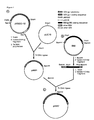
- Figure 1 is a schematic showing the production of pAM2.
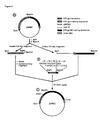
- Figure 2 is a schematic showing the production of pAM3.
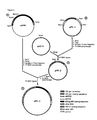
- Figure 3 is a schematic showing the production of pPK-3.
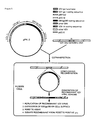
- Figure 4 is a schematic showing the production of pPK-4.
- Figure 5 is a schematic showing the generation of recombinant VZV.
- the present invention is directed to the production of recombinant VZV which can function as a vaccine both for chickenpox as well as for diseases caused by other human pathogens.
- the vaccine strain of VZV has been safe and effective in clinical trials in the immune-compromised. It is undesirable to utilize other live attenuated viruses as vaccines in such individuals, thus affording a significant advantage to the use of VZV and its recombinant derivatives as described in the present invention.
- a heterologous immunogenic polypeptide presented to the immune system as a replicating structure often can elicit longer-lasting immunity than when it is presented as a non-replicating, i.e. , subunit structure.
- a presentation on a replicating structure can elicit cell-mediated immunity more efficiently than can a presentation as a subunit structure.
- heterologous polypeptide undergoes post-translational modifications most closely resembling those occurring when the polypeptide is expressed in the natural human infections by the heterologous pathogen.
- post-translational modifications upon the heterologous polypeptide expressed as a recombinant-derived product in prokaryotic or eukaryotic cells often differ from those modifications which occur when the polypeptide is expressed during the natural human infection.
- expression of the heterologous polypeptide as part of a recombinant VZV obviates any potential risks associated with the use of a live attenuated heterologous pathogen as a vaccine. This is advantageous, since such a live attenuated heterologous pathogen has the theoretical possibility of reversion to a more infectious and, therefore, pathogenic form.
- the live recombinant VZV genome is derived as follows: A DNA clone which places a naturally-occurring VZV promoter sequence immediately 5' to the EBV gp350 gene coding sequence is created as follows. A VZV plasmid containing the complete VZV gpI gene (including the entire 5' flanking sequences) is digested with Sfa Nl and flush-ended, yielding a 0.9 kbp fragment containing the VZV gpI promoter as well as the first 34 amino acids of the gpI primary translational product.
- EBV plasmid containing the gp350 gene is digested with Bam HI and Xho II, yielding a 4.3 kbp fragment containing the complete gp350 coding sequence except for the first 21 amino acids.
- Oligonucleotides encoding amino acids 34-36 of VZV gpI as well as amino acids 21-22 of EBV gp350 are synthesized.
- the 0.9 kbp DNA is cloned into pUC19, digested with Bam HI, and ligated with the 4.3 kbp fragment.
- the resulting vector (pAM2) is digested with Sph I, Bam HI and, Sfa NI, and the resulting 0.9 and 7.0 kbp fragments are ligated with synthetic oligonucleotides, yielding pAM3.
- a VZV plasmid containing the thymidine kinase (tk) gene (pPK-1) is digested with Acc I and Taq I, yielding a 1.5 kbp fragment containing the complete tk coding region which then is cloned into pUC13.
- This tk DNA clone (pPK-2) is digested with Sph I and made flush-ended.
- VZV plasmid containing the tk gene (pPK-1) is digested with Nsi I and made flush-ended.
- pAM3 is digested with Sph I and Sma I, made flush-ended, and cloned into the flush-ended Sph I site of pPK-2 or the flush-ended Nsi I site of pPK-1. This generates a DNA fragment containing the nonessential VZV tk gene circumscribing the VZV gpI promoter and EBV gp350 coding sequence (tk cassette).
- VZV genomic DNA and the tk cassette described above are cotransfected onto the MRC-5 cell strain of human diploid fibroblasts. Plaques from this transfection are screened by means of monoclonal antibodies for the presence of EBV gp350. Recombinant VZV is found which expresses EBV gp350; this recombinant can be passaged in cell-free fashion and is stable upon repeated cell-associated passage. DNA hybridization analyses using EBV gp350 and VZV tk DNA probes further confirm the structure of recombinant VZV.
- Dane particles are utilized as the source of HBV nucleic acid for the isolation of the preS-1/preS-2/S ORF.
- the endogenous polymerase reaction is employed in order to produce covalently closed circular double-stranded DNA of the HBV genome from the nicked and gapped form that resides natively in the HB virion.
- the repaired DNA is isolated and digested to completion with Eco RI.
- the E . coli cloning vector pBR322 also is digested with Eco RI, ligated to the HBV DNA and used to transform E . coli .
- Recombinant plasmids are selected, these containing the HBV genome in a circularly permuted form in which the Eco RI site divides the complete preS-1/preS-2/S coding region into a 5' domain of 0.4 kilobase pairs (kbp) and a 3' domain of 0.8 kbp. These two domains are subcloned for the eventual reassembly of the entire gene.
- pUC19 is digested with Eco RI and Bam HI, then ligated to a synthetic oligonucleotide which consists of the final 5 nucleotides of the coding region, the stop codon, a Hind III site, and a Bam HI end.
- pUC18 is digested with Hind III and Eco RI and ligated to a 72 bp synthetic oligonucleotide which reconstitutes the complete ORF from the Bam HI site upstream, through the distal ATG and a 10 bp nontranslated leader sequence, to a Hind III compatible terminus.
- the 0.3 kbp Bam HI- Eco RI fragment of the 5' domain then is ligated into this oligonucleotide-linked cloning vector.
- the 5' pUC18 and 3' pUC19 clones are amplified by growth in E . coli, and the coding regions are digested from the isolated plasmids as Hind III- Eco RI fragments.
- the 5' and 3' fragments are ligated, digested with Hind III, flush-ended and the complete ORF with flush-ended termini is cloned into pUC18 which had been digested previously with Bam HI and had been flush-ended.
- VZV plasmid containing the complete VZV gpI gene is digested with Ava I, and the 3.7 kbp fragment is purified by preparative agarose gel electrophoresis.
- Four oligonucleotides are synthesized, hybridized and ligated to form a 55 base-pair (bp) Ava I- Xba I linker.
- This linker is ligated to the 3.7 kbp fragment, the mixture is digested with Eco RV, and the 0.9 kbp fragment (containing the gpI promoter) is isolated by preparative agarose gel electrophoresis, flush-ended, and cloned into the Sma I site of the pUC18 vector containing preS-1/preS-2/S.
- This vector (containing the VZV gpI promoter and preS-1/preS-2/S coding region) is digested with Sac I and Pst I, flush-ended, and cloned into the flush-ended Nsi I site of pPK-1. This generates a DNA fragment containing the nonessential VZV tk gene circumscribing the VZV gpI promoter and the preS-1/preS-2/S coding sequence (tk cassette).
- VZV genomic DNA and the tk cassette described above are cotransfected onto MRC-5 cells. Plaques from this transfection are screened by means of monoclonal antibodies for the presence of HBV "S" proteins. Recombinant VZV is found which expresses HBV proteins; this recombinant can be passaged in cell-free fashion and is stable upon repeated cell-associated passage. DNA hybridization analyses using appropriate DNA probes further confirm the structure of recombinant VZV.
- the EBV gp350 gene is but one example of a non-VZV DNA sequence that can be inserted into the VZV genome. Often, but not always, the most useful of such sequences would be those encoding proteins on the surfaces of human pathogens, including viruses and bacteria.
- the EBV gp350 sequence has no intrinsic qualities which make it unique relative to other DNA sequences for recombination into the VZV genome. Thus, it is obvious to those skilled in the art that the principle of inserting the EBV gp350 gene as non-VZV DNA into the VZV genome extends to any non-VZV DNA sequence, including, but not limited to, the preS-1/preS-2/S ORF of HBV.
- VZV since the genome of VZV is very large, it is capable of accommodating a non-VZV DNA sequence of large size. Whether the non-VZV DNA has a single complete gene or more than one gene, expression of the foreign gene will occur or, if more than one gene is added, expression of several foreign genes will occur. Thus, it is obvious to those skilled in the art that the principle of inserting the EBV gp350 gene as non-VZV DNA into the VZV genome extends to more than one gene.
- the VZV gpI promoter is physiologically very active during the course of a viral infection.
- the VZV genome contains many genes flanked by promoters which are useful for directing the synthesis of non-VZV genes, since it is well known that a coding sequence can be expressed even if flanked by a promoter from a different gene.
- numerous promoter sequences derived from mammalian cells have been described which are effective at directing foreign gene expression, such promoters including, but not limiting to, those of metallothionein, the retroviral long terminal repeat, and simian virus 40.
- the promoter is defined by its utility in directing gene transcription, not by its origin. Therefore, it is obvious to those skilled in the art that the choice of a promoter in the expression cassette extends to any eukaryotic, prokaryotic or viral promoter capable of directing gene transcription in cells infected by recombinant VZV.
- tk gene is nonessential to the replication and stability of VZV. This has been demonstrated by the ability to select viable tk ⁇ VZV. Therefore, the utility of tk as an insertion point for non-VZV DNA is useful in particular with respect to its nonessential nature in VZV replication. With the availability of the complete VZV genomic DNA sequence, other nonessential regions can be defined and utilized. Therefore, it will be obvious to those skilled in the art that the choice of an insertion point for non-VZV DNA extends to any nonessential region in the VZV genome.
- Vaccinia virus has been proposed for use as a vector for expressing foreign proteins, e.g. , hepatitis B. It has been recognized that the use of vaccinia virus in immunocompromised individuals often leads to serious morbidity and mortality. On the other hand, the use of an attenuated strain of varicella-zoster virus as a vector for expressing foreign proteins is useful as a vaccine for immunocompromised individuals, thereby immunizing against varicella as well as a disease whose causative agent encodes the foregoing protein expressed by the vector.
- the vaccine may be administered by various routes including but not limited to subcutaneously and intramuscularly.
- foreign proteins are those expressed by EBV, hepatitis B, human immunodeficiency virus (HIV), respiratory syncytial virus, herpes simplex virus type 1 and type 2, and cytomegalovirus.
- the vectors of the present invention elicit formation of protective antibodies in mammalian species, e.g. Callithrix jacchus and in man at a dosage level of 102-104 PFU per individual recipient.
- the VZV gpI glycoprotein represents one of the major structural glycoproteins contained in the VZV virion [Ellis et al ., J. Virology, 53 :81 (1985)]; the transcription rate directed by the VZV gpI promoter is relatively high.
- the Sac I G fragment [Davison et al ., J. Gen. Virol.
- VZV which circumscribes the complete gpI gene
- pRES modified pBR322
- pRES modified pBR322
- the resulting plasmid (pVSGO-12) was digested with Sfa N1, and the 0.9 kbp fragment containing the upstream promoter sequences and coding region for the first 34 amino acids of VZV gpI was purified by preparative agarose gel electrophoresis (Fig.
- the structural gene for EBV gp350 and gp220 is identical and is wholly contained within the Bam HI-L genomic DNA fragment of plasmid B68 ⁇ [Hummel et al ., J. Virology 49 :413 (1984)].
- the B68 ⁇ plasmid containing Bam HI-L was digested with Bam HI, and the 5.0 kbp Bam HI-L fragment was purified by preparative agarose gel electrophoresis. This fragment then was digested with Xho II and the 4.3 kbp fragment containing the entire structural gene except for the first 63 bp of the gp350 coding region, but including the transcriptional termination sequence, was purified by preparative agarose gel electrophoresis (Fig. 1B). pAM1 was digested with Bam HI and ligated with the 4.3 kbp fragment. The resulting plasmid (pAM2, Fig.
- oligonucleotide linker containing the following sequence was synthesized (Fig. 2B): This linker contains Sfa N1 and Bam HI 5' overhangs and represents the coding sequence for amino acids 34-36 of the VZV gpI gene followed by amino acids 21-22 of EBV gp350. The linker, the 0.9 kbp fragment, and the 7.0 kbp fragment were ligated together.
- the resulting plasmid (pAM3, Fig. 2C) was digested with Sph I and Sma I, and the 3.7 kbp fragment was purified by preparative agarose gel electrophoresis and subsequently flush-ended with T4 DNA polymerase (Fig. 3A).
- the resulting plasmid (pPK-1) was digested with Acc I and Taq I, generating a 1.5 kbp fragment containing the entire coding region for tk (Fig. 3B). This fragment was purified by preparative agarose gel electrophoresis, flush-ended with T4 DNA polymerase, and cloned into the Sma I site of pUC13 [Pharmacia Inc., 1984 Catalog # 27-4954-01].
- pPK-3 was digested with Sph I, which digests twice within the tk coding sequence, flush-ended with T4 DNA polymerase, and ligated with the 3.7 kbp fragment.
- the resulting plasmid (pPK-3, Fig. 3D) contains the VZV gpI/EBV gp350 expression cassette within the VZV tk gene.
- pPK-3 was used to generate a recombinant VZV expressing EBV gp350, as described in Example 3, and contains the following salient features: 1) VZV tk flanking sequences for the generation of homologous recombination between VZV DNA and the recombinant plasmid.
- VZV gpI promoter for directing high levels of expression of EBV gp350 during viral replication.
- VZV gpI leader sequence for insertion of gp350 into the rough endoplasmic reticulum and expression on the plasma membrane of infected cells.
- gp350 coding region for the expression of EBV gp350 proteins.
- pAM3 (Example 1) was digested with Sph I and Sma I, and the 3.7 kbp fragment was purified by preparative agarose gel electrophoresis and subsequently flush-ended with T4 DNA polymerase (Fig. 4).
- pPK-1 (Example 1) was digested with Nsi I, flush-ended with T4 DNA polymerase, and ligated to the 3.7 kbp fragment of pAM3.
- the resulting plasmid (pPK-4) contains the VZV gpl/EBV gp350 expression cassette within the VZV tk gene.
- pPK-4 was used to generate a recombinant VZV expressing EBV gp350 as described in Example 3 and contains the same salient features as pPK-3 (Example 1) with the following exception:
- the tk flanking sequences were extended to include the entire VZV Sac I H fragment, increasing the 5' flanking sequence by 3.7 kbp and the 3' flanking sequence by 0.6 kbp, relative to pPK-3.
- the precipitate was added to 1.5 ml growth media [Dulbecco's Modified Eagle's Medium (DMEM) plus 10% fetal calf serum] covering MRC-5 cells, set up the previous day at 3 x 10⁵ cells/35 mm tissue culture plate, and incubated for 4 hours in a 37°C CO2 incubator ( Figure 5).
- the media were removed, the cells were washed with 1 ml growth media, and 15% glycerol in 1X HBS was applied to the cells for 3 minutes.
- the cells were washed once more with growth media and incubated in 1.5 ml growth media for 24 hours in a 37°C CO2 incubator.
- the cells then were trypsinized and passaged into 2 60 mm plates containing 4 ml growth media per plate and incubated in a 37°C CO2 incubator until viral plaques were observed.
- McAb monoclonal antibody
- the cells then were rocked for 7 minutes at 23°C, washed 5 times at 4°C in saline solution, washed 1 time at 4°C in Hank's Balanced Salt Solution (HBSS), and resuspended in 50 ml HBSS for use at a 1:10 dilution. After 1 hour of incubation, the virally-infected cells were washed 3 more times with DMEM and screened visually for the formation on the VZV plaques of rosettes of red blood cells; such rosettes are indicative of cells expressing gp350. Approximately 10% of the plaques were rosette-positive using the C1.4 McAb.
- gp350-specific McAb designated 2L1O and BMA-17 and one anti-EBV+ polyclonal human serum also elicited rosette formation, while normal human serum did not.
- Antibodies to gp350 were not able to elicit rosette formation on plaques generated by transfection of VZV/Oka alone.
- a McAb directed against hepatitis A virus VPI was unable to elicit rosette formation on recombinant VZV plaques, thus indicating the specificity of this assay for the detection of gp350 expression.
- Cell-free virus was generated by sonicating infected cells for 2 minutes at 4°C in DMEM and passing the sonicated supernatant through a 0.22 ⁇ m filter.
- the recombinant VZV expressing EBV gp350 can be passaged as cell-free infectious virus, and such clones can be passaged in the presence of 0.01% (w/v) 5-bromo-2'-deoxyuridine, thus demonstrating recombination within the tk gene.
- the recombinant VZV has been passaged in cell-associated form for more than 30 passages without abrogation of its ability to express EBV gp350, as judged by binding to the 3 anti-gp350 McAb mentioned above.
- Lysates were prepared from MRC-5 cells infected with either recombinant VZV or parental VZV/Oka, electrophoresed in 6% polyacrylamide gels, and Western blotted to nitrocellulose.
- gp350 and gp220 were found to be present in the recombinant VZV-infected cell extract but not in the parental VZV-infected cell extract.
- These glycoproteins comigrated with gp350 and gp220 produced in mouse L cells stably transfected with a eukaryotic expression plasmid for gp350.
- VZV genomic DNA from recombinant and parental viruses then was characterized by Southern blot analysis.
- Purified viral DNA 20 ⁇ g was digested with Bgl II, Hpa I, Kpn I, or Sal I, electrophoresed on a 0.8% agarose gel, transferred to nitrocellulose and probed with DNA from the gp350 gene which had been labelled with ⁇ [32P]dCTP by nick-translation. Only DNA fragments present in the lanes containing the recombinant VZV hybridized to the gp350 probe, demonstrating the linkage of the gp350 gene within the VZV genome.
- Dane particles (subtype ayw) are purified from the plasma of infected individuals by established techniques [Landers et al ., J. Virology 23 : 368 (1977)].
- the HBV genomic DNA resides in a nicked, gapped form in the virion [Hruska et al ., J. Virology 21 : 666 (1977)].
- the endogenous polymerase reaction is employed to produce covalent closed circular double-stranded DNA [Landers et al ., J. Virology 23 : 368 (1977)].
- the DNA is deproteinized by incubation in buffer containing sodium dodecyl sulfate and, Proteinase K followed by extraction with phenol:chloroform:isoamyl alcohol (25:24:1) and concentration by ethanol precipitation.
- This purified DNA is digested to completion with Eco RI.
- the E . coli cloning vector pBR322 also is digested with Eco RI, ligated to the digested HBV DNA and used to transform E . coli .
- Recombinant plasmids are isolated which contain the HBV genome in a circularly permuted orientation about the unique Eco RI site, which divides the complete preS-1/preS-2/S coding region into a 5' domain of 0.4 kbp and a 3' domain of 0.8 kbp [Galibert et al ., Nature 281 : 646 (1979)]. These two domains are subcloned for the eventual reassembly of the entire gene.
- pUC19 is digested with Eco RI and Bam HI, then ligated to a synthetic oligonucleotide which consists of the final 5 nucleotides of the coding region, the stop codon, a Hind III site, and a Bam HI end.
- the structure of this oligonucleotide is: The 3' portion of the preS-1/preS-2/S gene, consisting of a 0.8 kbp Eco RI- Acc I fragment is cloned into this vector (pUC19/DSD).
- pUC18 [Yanisch-Perran et al ., Gene 33 :103 (1985)] is digested with Hind III and Eco RI and ligated to 72 bp synthetic oligonucleotide which reconstitutes the complete ORF from the Bam HI site upstream to the distal ATG through a 10 bp nontranslated leader sequence to a Hind III compatible terminus.
- this oligonucleotide is: (*the natural sequence contains C rather than T; The above change destroys the Hinf I site without changing the encoded amino acid.)
- the 0.4 kbp Bam HI- Eco RI fragment of the 5' domain then is ligated into this oligonucleotide-linked cloning vector (pUC19/DSD).
- the 5' pUC18 and 3' pUC19 clones are amplified by growth in E . coli , and the coding regions are digested from the isolated plasmids as Hind III- Eco RI fragments.
- VZV gpI promoter For deriving a fragment containing the VZV gpI promoter, pVSGO-12 is digested with Ava I, and the 3.7 kbp fragment is purified by preparative agarose gel electrophoresis. This fragment contains the VZV gpI promoter sequences excluding 0.05 kbp immediately 5' to the ATG translational initiation codon of VZV gpI.
- Four oligonucleotides with the following sequences are synthesized:
- Oligonucleotides #1 and #2 are hybridized as are oligonucleotides #3 and #4. The two pairs then are ligated to each other, generating a 55 bp linker containing Ava I and Xba I 5' overhangs, which represents the VZV gpI promoter sequence immediately 5' to the coding sequence of VZV gpI.
- This 55 bp linker is ligated to the 3.7 kbp fragment of pVSGO-12, the mixture is digested with Eco RV, and the 0.9 kbp fragment is purified by preparative agarose gel electrophoresis and subsequently flush-ended with T4 DNA polymerase.
- the purified 0.9 kbp fragment then is cloned into the Sma I site of pUC18/PSSC.
- This vector (containing the VZV gpI promoter and preS-1/preS-2/S coding region) is digested with Sac I and Pst I, flush-ended with T4 DNA polymerase, and cloned into the flush-ended (by T4 DNA polymerase) NsiI site of pPK-1, thus generating pPK-5.
- This plasmid (pPK-5) is used to generate a vero cell line expressing HBV preS1/preS2/S which contains the following salient features: 1) the VZV gpI promoter and RNA cap site; 2) the complete protein coding sequence for HBV preS1/preS2/S; and 3) sequence for transcriptional termination and PolyA addition.
- a McAb directed against hepatitis A virus VPI is unable to elicit rosette formation on recombinant VZV plaques, thus indicating the specificity of this assay for the detection of preS-1/preS-2/S expression.
- Cell-free virus is generated by sonicating infected cells for 2 minutes at 4°C in DMEM and passing the sonicated supernatant through a 0.22 ⁇ m filter.
- the recombinant VZV expressing HBV preS-1/preS-2/S can be passaged as cell-free infectious virus, and such clones can be passaged in the presence of 0.01% (w/v) 5-bromo-2-deoxyuridine, thus demonstrating recombination within the tk gene. Expression is verified further by the detection of HbsAg by AUSRIA® (Abbott) reactivity in culture lysates.
- Lysates are prepared from MRC-5 cells infected with either recombinant VZV or parental VZV/Oka, electrophoresed in 6% polyacrylamide gels, and Western blotted to nitrocellulose.
- preS-1/preS-2/S proteins are found to be present in the recombinant VZV-infected cell extract but not in the parental VZV-infected cell extract. These proteins comigrate with "S" proteins derived from HBV Dane particles.
- VZV genomic DNA from recombinant and parental viruses then is characterized by Southern blot analysis.
- Purified viral DNA 20 ⁇ g, is digested with Bgl II, Hpa I, Kpn I, or Sal I, electrophoresed on a 0.8% agarose gel, transferred to nitrocellulose and probed with DNA from the HBV preS1/preS2/S gene which has been labelled with ⁇ [32P]dCTP by nick-translation. Only DNA fragments present in the lanes containing the recombinant VZV hybridize to the pg350 probe, demonstrating the linkage of the HBV preS1/preS2/S gene within the VZV genome.
- the cell-free virus generated according to example 3 by sonicating infected cells is administered subcutaneously to a group of 4 Callithrix jacchus monkeys at a dosage level of 107 PFU/animal.
- a saline placebo is administered subcutaneously to a control group of 4 more Callithrix jacchus monkeys.
- both groups are challenged with 108 PFU of EBV.
- none of the first group of monkeys shows any sign of replication of EBV while all animals in the control exhibit signs of EBV replication. This result demonstrates development of an immune response in the first group prior to challenge.
Landscapes
- Health & Medical Sciences (AREA)
- Life Sciences & Earth Sciences (AREA)
- Genetics & Genomics (AREA)
- Chemical & Material Sciences (AREA)
- Organic Chemistry (AREA)
- Engineering & Computer Science (AREA)
- Wood Science & Technology (AREA)
- Biomedical Technology (AREA)
- Zoology (AREA)
- Bioinformatics & Cheminformatics (AREA)
- Biotechnology (AREA)
- General Health & Medical Sciences (AREA)
- General Engineering & Computer Science (AREA)
- Biochemistry (AREA)
- Virology (AREA)
- Molecular Biology (AREA)
- Medicinal Chemistry (AREA)
- Microbiology (AREA)
- Biophysics (AREA)
- Plant Pathology (AREA)
- Physics & Mathematics (AREA)
- General Chemical & Material Sciences (AREA)
- Veterinary Medicine (AREA)
- Public Health (AREA)
- Nuclear Medicine, Radiotherapy & Molecular Imaging (AREA)
- Chemical Kinetics & Catalysis (AREA)
- Communicable Diseases (AREA)
- Oncology (AREA)
- Animal Behavior & Ethology (AREA)
- Pharmacology & Pharmacy (AREA)
- Gastroenterology & Hepatology (AREA)
- Proteomics, Peptides & Aminoacids (AREA)
- Immunology (AREA)
- Medicines Containing Antibodies Or Antigens For Use As Internal Diagnostic Agents (AREA)
- Micro-Organisms Or Cultivation Processes Thereof (AREA)
- Medicines Containing Material From Animals Or Micro-Organisms (AREA)
Claims (14)
- Abgeschwächter Variella-Zoster-Virus (VZV), modifiziert durch Anwesenheit von Non-VZV-DNA in seinem Genom.
- VZV nach Anspruch 1, bei dem die Non-VZV-DNA die Codierungssequenz für ein Polypeptid enthält, welches benachbart liegt zu einer Promotor-Sequenz, die angepaßt ist, um die Transkription der Non-VZV-DNA zu lenken.
- VZV nach Anspruch 1, bei dem die Non-VZV-DNA mehr als eine Codierungssequenz enthält, wobei jede Sequenz für ein verschiedenes Polypeptid codiert und jede Sequenz benachbart ist zu einer Promotor-Sequenz, die angepaßt ist, um die Transkription der benachbarten Non-VZV-DNA zu lenken.
- VZV nach Anspruch 2, bei dem die Codierungssequenz ein Immunogenprotein eines menschlichen Pathogens bestimmt.
- VZV nach Anspruch 4, bei dem die Codierungssequenz den Epstein-Barr-Virus gp350 bestimmt.
- VZV nach Anspruch 4, bei dem die Codierungssequenz HBV preS1/preS2/S bestimmt.
- VZV nach Anspruch 2, bei dem sich die Promotorsequenz von VZV ableitet.
- VZV nach Anspruch 7, bei dem sich die Promotorsequenz von dem gpI-Gen von VZV ableitet.
- Verfahren zur Herstellung von VZV nach Anspruch 1, welches umfaßt Aufgeben eines Mediums auf einer Zell-Monoschicht, welches VZV und Non-VZV-DNA enthält, worin die Non-VZV-DNA verknüpft ist mit Sequenzen, die mit der DNA colinear sind, die in einer nicht-essentiellen Region des VZV-Genoms vorliegen.
- Verfahren nach Anspruch 9, bei dem die nicht-essentielle Region das Thymidinkinase-Gen darstellt.
- Impfstoff, der VZV nach Anspruch 1 enthält.
- Impfstoff, der VZV nach Anspruch 3 enthält.
- Verwendung des Produkts nach Anspruch 2 zur Herstellung eines Medikaments, welches geeignet ist zur Immunisierung eines Mitglieds einer gegen Windpocken und mindestens ein weiteres Pathogen empfindlichen Spezies.
- Verwendung nach Anspruch 13, bei der das Mitglied einer empfindlichen Spezies immun-kompromittiert ist.
Priority Applications (1)
| Application Number | Priority Date | Filing Date | Title |
|---|---|---|---|
| AT87305202T ATE93543T1 (de) | 1986-06-20 | 1987-06-12 | Varicella-zoster-virus als lebende rekombinante vakzine. |
Applications Claiming Priority (2)
| Application Number | Priority Date | Filing Date | Title |
|---|---|---|---|
| US87695686A | 1986-06-20 | 1986-06-20 | |
| US876956 | 1986-06-20 |
Publications (2)
| Publication Number | Publication Date |
|---|---|
| EP0251534A1 EP0251534A1 (de) | 1988-01-07 |
| EP0251534B1 true EP0251534B1 (de) | 1993-08-25 |
Family
ID=25368939
Family Applications (1)
| Application Number | Title | Priority Date | Filing Date |
|---|---|---|---|
| EP87305202A Expired - Lifetime EP0251534B1 (de) | 1986-06-20 | 1987-06-12 | Varicella-Zoster-Virus als lebende rekombinante Vakzine |
Country Status (14)
| Country | Link |
|---|---|
| EP (1) | EP0251534B1 (de) |
| JP (1) | JP2523132B2 (de) |
| KR (1) | KR960008674B1 (de) |
| AT (1) | ATE93543T1 (de) |
| AU (1) | AU601747B2 (de) |
| CA (1) | CA1337596C (de) |
| DE (1) | DE3787131T2 (de) |
| DK (1) | DK312687A (de) |
| ES (1) | ES2058116T3 (de) |
| IE (1) | IE60898B1 (de) |
| IL (1) | IL82851A (de) |
| NZ (1) | NZ220645A (de) |
| PT (1) | PT85108B (de) |
| ZA (1) | ZA874434B (de) |
Cited By (1)
| Publication number | Priority date | Publication date | Assignee | Title |
|---|---|---|---|---|
| WO2011064254A1 (fr) | 2009-11-24 | 2011-06-03 | Jacqueline Le Goaster | Utilisation d'un vaccin contre le virus vzv/hsv3 pour traiter les infections herpetiques par le virus hsv1 et/ou le virus hsv2 |
Families Citing this family (6)
| Publication number | Priority date | Publication date | Assignee | Title |
|---|---|---|---|---|
| DE3706233A1 (de) * | 1987-02-26 | 1988-09-08 | Behringwerke Ag | Immunogene fusionsproteine, die epstein-barr-virusproteine enthalten |
| US5324664A (en) * | 1988-08-08 | 1994-06-28 | The Upjohn Company | Herpes virus thymidien kinase-encoding DNA |
| WO1990001547A1 (en) * | 1988-08-08 | 1990-02-22 | The Upjohn Company | Methods for isolating herpes virus thymidine kinase-encoding dna |
| JP3026029B2 (ja) * | 1991-04-26 | 2000-03-27 | 財団法人阪大微生物病研究会 | 組換え水痘ウイルスとその作製法 |
| AU687355B2 (en) * | 1992-07-17 | 1998-02-26 | Merck Sharp & Dohme Corp. | Method for preventing zoster or alleviating varicella related post-herpetic neuralgia |
| CA2177060A1 (en) * | 1993-12-21 | 1995-06-29 | Philip J. Provost | Thermostable varicella zoster virus |
Family Cites Families (4)
| Publication number | Priority date | Publication date | Assignee | Title |
|---|---|---|---|---|
| JPS5341202B2 (de) * | 1974-03-12 | 1978-11-01 | ||
| US4603112A (en) * | 1981-12-24 | 1986-07-29 | Health Research, Incorporated | Modified vaccinia virus |
| CA1282721C (en) * | 1984-06-04 | 1991-04-09 | Bernard Roizman | Herpes simplex virus as a vector |
| IL76751A (en) * | 1984-11-01 | 1991-04-15 | American Home Prod | Method and oral vaccines against infectious organisms using live,recombinant adenovirus for the production of antibodies |
-
1987
- 1987-06-10 NZ NZ220645A patent/NZ220645A/xx unknown
- 1987-06-11 IL IL8285187A patent/IL82851A/en not_active IP Right Cessation
- 1987-06-12 AT AT87305202T patent/ATE93543T1/de not_active IP Right Cessation
- 1987-06-12 EP EP87305202A patent/EP0251534B1/de not_active Expired - Lifetime
- 1987-06-12 ES ES87305202T patent/ES2058116T3/es not_active Expired - Lifetime
- 1987-06-12 DE DE87305202T patent/DE3787131T2/de not_active Expired - Fee Related
- 1987-06-16 CA CA000539785A patent/CA1337596C/en not_active Expired - Fee Related
- 1987-06-17 PT PT85108A patent/PT85108B/pt not_active IP Right Cessation
- 1987-06-19 KR KR1019870006210A patent/KR960008674B1/ko not_active Expired - Fee Related
- 1987-06-19 DK DK312687A patent/DK312687A/da not_active Application Discontinuation
- 1987-06-19 JP JP62151539A patent/JP2523132B2/ja not_active Expired - Lifetime
- 1987-06-19 IE IE163987A patent/IE60898B1/en not_active IP Right Cessation
- 1987-06-19 AU AU74492/87A patent/AU601747B2/en not_active Ceased
- 1987-06-19 ZA ZA874434A patent/ZA874434B/xx unknown
Cited By (1)
| Publication number | Priority date | Publication date | Assignee | Title |
|---|---|---|---|---|
| WO2011064254A1 (fr) | 2009-11-24 | 2011-06-03 | Jacqueline Le Goaster | Utilisation d'un vaccin contre le virus vzv/hsv3 pour traiter les infections herpetiques par le virus hsv1 et/ou le virus hsv2 |
Also Published As
| Publication number | Publication date |
|---|---|
| DK312687D0 (da) | 1987-06-19 |
| ES2058116T3 (es) | 1994-11-01 |
| KR960008674B1 (ko) | 1996-06-28 |
| DE3787131D1 (de) | 1993-09-30 |
| AU601747B2 (en) | 1990-09-20 |
| DK312687A (da) | 1988-03-10 |
| JPS6312277A (ja) | 1988-01-19 |
| CA1337596C (en) | 1995-11-21 |
| IE871639L (en) | 1987-12-20 |
| IL82851A0 (en) | 1987-12-20 |
| DE3787131T2 (de) | 1994-02-03 |
| AU7449287A (en) | 1987-12-24 |
| NZ220645A (en) | 1989-10-27 |
| PT85108B (pt) | 1990-03-08 |
| ATE93543T1 (de) | 1993-09-15 |
| IE60898B1 (en) | 1994-08-24 |
| JP2523132B2 (ja) | 1996-08-07 |
| IL82851A (en) | 1995-01-24 |
| PT85108A (en) | 1987-07-01 |
| ZA874434B (en) | 1987-12-21 |
| EP0251534A1 (de) | 1988-01-07 |
| KR880000579A (ko) | 1988-03-26 |
Similar Documents
| Publication | Publication Date | Title |
|---|---|---|
| US5310668A (en) | Varicella-zoster virus as a live recombinant vaccine | |
| JP3083839B2 (ja) | ヘルペスウイルス組換えポックスウイルスワクチン | |
| US5314808A (en) | Method for the transformation of cells, particularly eukaryotes by a DNA originating from viruses of hepatitis, more particularly from virus of a B viral hepatitis, and preparations containing the expression products of said DNAs | |
| JP2836815B2 (ja) | 融合蛋白 | |
| AU701781B2 (en) | ALVAC canarypox virus recombinants comprising heterologous inserts | |
| US6099840A (en) | Hepatitis B vaccine | |
| US7763589B2 (en) | Compositions and methods for treating intracellular diseases | |
| JPH08253428A (ja) | 膜結合性タンパク質を含有するワクチン類 | |
| LU88000A1 (fr) | Systeme de selection d'hotes de poxvirus du recombinaision | |
| PT752888E (pt) | ''sequencias de nucleótidos e de aminoácidos de gb, gc e gd de herpesvírus canino e suas utilizações'' | |
| US5324513A (en) | Composition useful for the fabrication of vaccines | |
| EP0251534B1 (de) | Varicella-Zoster-Virus als lebende rekombinante Vakzine | |
| Rutgers et al. | Potential future recombinant vaccines | |
| JPH0314840B2 (de) | ||
| US5851823A (en) | Hepatitis B vaccine | |
| EP0380656A1 (de) | Defiziente hepadna-viren, produktive zellinie für impfstoffe sowie behandlung von erkrankungen und störungen der leber | |
| Yu et al. | The GDPAL region of the pre-S1 envelope protein is important for morphogenesis of woodchuck hepatitis virus | |
| Kutinová et al. | Influence of the parental virus strain on the virulence and immunogenicity of recombinant vaccinia viruses expressing HBV preS2-S protein or VZV glycoprotein I | |
| AU642729C (en) | Hepatitis B vaccine | |
| US5989865A (en) | Hepatitis B vaccine | |
| Epstein | Recent progress with vaccines against Epstein-Barr virus infection | |
| Tron | Hepatitis B virus recombinant vaccines: achievement and progress | |
| Smith | Recombinant Vaccinia Viruses as Live Vaccines | |
| Epstein | Nuffield Department of Clinical Medicine University of Oxford, John Radcliffe Hospital Headington, Oxford OX3 9DU, UK |
Legal Events
| Date | Code | Title | Description |
|---|---|---|---|
| PUAI | Public reference made under article 153(3) epc to a published international application that has entered the european phase |
Free format text: ORIGINAL CODE: 0009012 |
|
| AK | Designated contracting states |
Kind code of ref document: A1 Designated state(s): AT BE CH DE ES FR GB GR IT LI LU NL SE |
|
| ITCL | It: translation for ep claims filed |
Representative=s name: SOCIETA' ITALIANA BREVETTI S.P.A. |
|
| 17P | Request for examination filed |
Effective date: 19880609 |
|
| 17Q | First examination report despatched |
Effective date: 19910215 |
|
| GRAA | (expected) grant |
Free format text: ORIGINAL CODE: 0009210 |
|
| AK | Designated contracting states |
Kind code of ref document: B1 Designated state(s): AT BE CH DE ES FR GB GR IT LI LU NL SE |
|
| REF | Corresponds to: |
Ref document number: 93543 Country of ref document: AT Date of ref document: 19930915 Kind code of ref document: T |
|
| REF | Corresponds to: |
Ref document number: 3787131 Country of ref document: DE Date of ref document: 19930930 |
|
| ITF | It: translation for a ep patent filed | ||
| ET | Fr: translation filed | ||
| REG | Reference to a national code |
Ref country code: GR Ref legal event code: FG4A Free format text: 3008979 |
|
| PLBE | No opposition filed within time limit |
Free format text: ORIGINAL CODE: 0009261 |
|
| STAA | Information on the status of an ep patent application or granted ep patent |
Free format text: STATUS: NO OPPOSITION FILED WITHIN TIME LIMIT |
|
| ITTA | It: last paid annual fee | ||
| EPTA | Lu: last paid annual fee | ||
| 26N | No opposition filed | ||
| REG | Reference to a national code |
Ref country code: ES Ref legal event code: FG2A Ref document number: 2058116 Country of ref document: ES Kind code of ref document: T3 |
|
| EAL | Se: european patent in force in sweden |
Ref document number: 87305202.1 |
|
| REG | Reference to a national code |
Ref country code: GB Ref legal event code: IF02 |
|
| PGFP | Annual fee paid to national office [announced via postgrant information from national office to epo] |
Ref country code: LU Payment date: 20030331 Year of fee payment: 17 |
|
| PGFP | Annual fee paid to national office [announced via postgrant information from national office to epo] |
Ref country code: GR Payment date: 20030422 Year of fee payment: 17 |
|
| PGFP | Annual fee paid to national office [announced via postgrant information from national office to epo] |
Ref country code: GB Payment date: 20030501 Year of fee payment: 17 |
|
| PGFP | Annual fee paid to national office [announced via postgrant information from national office to epo] |
Ref country code: AT Payment date: 20030502 Year of fee payment: 17 |
|
| PGFP | Annual fee paid to national office [announced via postgrant information from national office to epo] |
Ref country code: NL Payment date: 20030513 Year of fee payment: 17 |
|
| PGFP | Annual fee paid to national office [announced via postgrant information from national office to epo] |
Ref country code: FR Payment date: 20030602 Year of fee payment: 17 |
|
| PGFP | Annual fee paid to national office [announced via postgrant information from national office to epo] |
Ref country code: SE Payment date: 20030603 Year of fee payment: 17 |
|
| PGFP | Annual fee paid to national office [announced via postgrant information from national office to epo] |
Ref country code: CH Payment date: 20030605 Year of fee payment: 17 |
|
| PGFP | Annual fee paid to national office [announced via postgrant information from national office to epo] |
Ref country code: ES Payment date: 20030618 Year of fee payment: 17 |
|
| PGFP | Annual fee paid to national office [announced via postgrant information from national office to epo] |
Ref country code: DE Payment date: 20030630 Year of fee payment: 17 |
|
| PGFP | Annual fee paid to national office [announced via postgrant information from national office to epo] |
Ref country code: BE Payment date: 20030715 Year of fee payment: 17 |
|
| PG25 | Lapsed in a contracting state [announced via postgrant information from national office to epo] |
Ref country code: LU Free format text: LAPSE BECAUSE OF NON-PAYMENT OF DUE FEES Effective date: 20040612 Ref country code: GB Free format text: LAPSE BECAUSE OF NON-PAYMENT OF DUE FEES Effective date: 20040612 Ref country code: AT Free format text: LAPSE BECAUSE OF NON-PAYMENT OF DUE FEES Effective date: 20040612 |
|
| PG25 | Lapsed in a contracting state [announced via postgrant information from national office to epo] |
Ref country code: SE Free format text: LAPSE BECAUSE OF NON-PAYMENT OF DUE FEES Effective date: 20040613 |
|
| PG25 | Lapsed in a contracting state [announced via postgrant information from national office to epo] |
Ref country code: ES Free format text: LAPSE BECAUSE OF NON-PAYMENT OF DUE FEES Effective date: 20040614 |
|
| PG25 | Lapsed in a contracting state [announced via postgrant information from national office to epo] |
Ref country code: LI Free format text: LAPSE BECAUSE OF NON-PAYMENT OF DUE FEES Effective date: 20040630 Ref country code: CH Free format text: LAPSE BECAUSE OF NON-PAYMENT OF DUE FEES Effective date: 20040630 Ref country code: BE Free format text: LAPSE BECAUSE OF NON-PAYMENT OF DUE FEES Effective date: 20040630 |
|
| BERE | Be: lapsed |
Owner name: *MERCK & CO. INC. Effective date: 20040630 |
|
| PG25 | Lapsed in a contracting state [announced via postgrant information from national office to epo] |
Ref country code: NL Free format text: LAPSE BECAUSE OF NON-PAYMENT OF DUE FEES Effective date: 20050101 Ref country code: DE Free format text: LAPSE BECAUSE OF NON-PAYMENT OF DUE FEES Effective date: 20050101 |
|
| PG25 | Lapsed in a contracting state [announced via postgrant information from national office to epo] |
Ref country code: GR Free format text: LAPSE BECAUSE OF NON-PAYMENT OF DUE FEES Effective date: 20050105 |
|
| EUG | Se: european patent has lapsed | ||
| GBPC | Gb: european patent ceased through non-payment of renewal fee |
Effective date: 20040612 |
|
| EUG | Se: european patent has lapsed | ||
| REG | Reference to a national code |
Ref country code: CH Ref legal event code: PL |
|
| PG25 | Lapsed in a contracting state [announced via postgrant information from national office to epo] |
Ref country code: FR Free format text: LAPSE BECAUSE OF NON-PAYMENT OF DUE FEES Effective date: 20050228 |
|
| NLV4 | Nl: lapsed or anulled due to non-payment of the annual fee |
Effective date: 20050101 |
|
| REG | Reference to a national code |
Ref country code: FR Ref legal event code: ST |
|
| PG25 | Lapsed in a contracting state [announced via postgrant information from national office to epo] |
Ref country code: IT Free format text: LAPSE BECAUSE OF NON-PAYMENT OF DUE FEES;WARNING: LAPSES OF ITALIAN PATENTS WITH EFFECTIVE DATE BEFORE 2007 MAY HAVE OCCURRED AT ANY TIME BEFORE 2007. THE CORRECT EFFECTIVE DATE MAY BE DIFFERENT FROM THE ONE RECORDED. Effective date: 20050612 |
|
| REG | Reference to a national code |
Ref country code: ES Ref legal event code: FD2A Effective date: 20040614 |