EP0226979A2 - Verfahren zur Herstellung eines Proteins mit aequoriner Aktivität in dem man ein Gen eines aequorinen Photoproteins benutzt - Google Patents
Verfahren zur Herstellung eines Proteins mit aequoriner Aktivität in dem man ein Gen eines aequorinen Photoproteins benutzt Download PDFInfo
- Publication number
- EP0226979A2 EP0226979A2 EP86117332A EP86117332A EP0226979A2 EP 0226979 A2 EP0226979 A2 EP 0226979A2 EP 86117332 A EP86117332 A EP 86117332A EP 86117332 A EP86117332 A EP 86117332A EP 0226979 A2 EP0226979 A2 EP 0226979A2
- Authority
- EP
- European Patent Office
- Prior art keywords
- aequorin
- promoter
- protein
- producing
- gene
- Prior art date
- Legal status (The legal status is an assumption and is not a legal conclusion. Google has not performed a legal analysis and makes no representation as to the accuracy of the status listed.)
- Withdrawn
Links
Images

Classifications
-
- C—CHEMISTRY; METALLURGY
- C07—ORGANIC CHEMISTRY
- C07K—PEPTIDES
- C07K14/00—Peptides having more than 20 amino acids; Gastrins; Somatostatins; Melanotropins; Derivatives thereof
- C07K14/435—Peptides having more than 20 amino acids; Gastrins; Somatostatins; Melanotropins; Derivatives thereof from animals; from humans
- C07K14/43504—Peptides having more than 20 amino acids; Gastrins; Somatostatins; Melanotropins; Derivatives thereof from animals; from humans from invertebrates
- C07K14/43595—Peptides having more than 20 amino acids; Gastrins; Somatostatins; Melanotropins; Derivatives thereof from animals; from humans from invertebrates from coelenteratae, e.g. medusae
Definitions
- This invention relates to a process for producing a protein of an aqueorin activity by using a photoprotein aequorin gene. More particularly, it relates to a process for producing the above-mentioned protein by using a bacterial body obtained by substantially isolating the above-mentioned gene, inserting the resulting gene into a promoter-containing plasmid and thereby transforming the plasmid.
- Aequorin is a photoprotein of a photogenic jelly fish growing in a northern district of the west coast in America, and when one molecule of aequorin is specifically bonded two or three mols of Ca 2+ , aequorin oxidizes coelenterazine as an emitter to cause luminescence.
- Ca2+ is indispensable for the luminescence of aequorin, it is possible to specifically determine the quantity of Ca 2+ by the use of aequorin; thus it is possible to measure the concentration of Ca2+ in a trace of about 10- 7 M.
- the aequorin has a possibility of being broadly used for clinical inspection, and further, by injecting it into cells, it is possible to apply it to measurement of Ca 2* concentration inside the cells, cold-heat light source, etc.
- the growing place of the jelly fish is limited to a northern district of the west coast in America; the season of its generation is restricted only to summer season; and the yield is only about one mg per 10,000 jelly fishes so that its production quantity is insufficient and a stabilized supply cannot be ensured.
- the present inventors previously made extensive research in order to solve the above-mentioned problems, and as a result, by employing a technique of gene engineering, isolated and prepared the aequorin gene substantially specifying the formation of aequorin protein, as a cDNA clone from mRNA according to Okayama-Berg method.
- the previous invention is directed to a process for producing a photoprotein aequorin characterized by cultivating a host (e.g. Escherichia coli) modified so as to contain the deoxyribonucleotide arrangement of the photoprotein aequorin or a functional equivalent to the deoxyribonucleotide arrangement.
- a host e.g. Escherichia coli
- the present inventors have further continued research in order to solve the above-mentioned technical problem relative to the previous invention, and as a result, have found that when a plasmid- containing bacterial body obtained by inserting the aequorin gene into a promoter-containing "expression vector" is used, it is possible to efficiently produce a natural type or confluent type photoprotein aequorin.
- an object of the present invention is to provide an efficient biosynthetic process of a natural type or confluent type photoprotein aequorin.
- Another object of the present invention is to provide a process for producing a promoter-containing bacterial body, which makes the above biosynthesis possible.
- An example of the vector is pUC 9.
- PL of lac, tac, trp or X phage originated from Escherichia coli may be used.
- the promoter is prepared as follows:
- Hind III site portion of the expression vector (piC 9) is then removed as follows:
- synthetic nucleotides AR (5' GATCGATGGTCA 3') and AQ (5' AGCTTGACCATC 3') are synthesized according to a known method, respectively, followed by annealing these, thereafter phosphorylating the 5' end thereof with T4-nucleotide kinase in the presence of ATP, then cloning the resulting phosphorylated synthetic nucleotides in the form in which the linkers are repeated at the Bam H-Eco RI site of the previously prepared piC 10, to Prepare piC 11.
- Hind III-Eco RI fragment is separated and purified from aequorin cDNA clone pAQ 440 (with regard to this, see the above-mentioned Japanese patent application No. Sho 59-176125.1984), followed by inserting the resulting fragment into the site of Hind III-Eco RI of piC 11, to obtain a bacterial body containing piQ 5 i.e. a promoter having transformed the gene pAQ 440.
- This piQ 5 has a capability of producing a natural type aequorin protein.
- expression vectors pUC 9, 9-1, 9-2 having a promoter of lac prepared in the same method as that described in the above paragraph 1 is obtained.
- clonings of the above respective fragments are carried out at the restriction enzyme sites of the above respective vectors, whereby piQ 9PE, 9-IPE, 9-2PE, 9-HE and 9-2HE are prepared.
- the thus obtained culture is treated at 5,000 rpm for 10 minutes by means of a centrifuge (Hitachi RP 20, tradename of product manufactured by Hitachi Seisakusho Company) to collect the resulting bacterial bodies, followed by washing the resulting bacterial bodies with M9 salt solution (5 t).
- a centrifuge Hitachi RP 20, tradename of product manufactured by Hitachi Seisakusho Company
- the thus washed bacterial bodies are treated as follows to obtain an enzyme solution to be measured
- the collected bacterial bodies are first dissolved in a 20 mM Tris-HCL buffer (pH: 7.6) (2.5 mt containing EDTA (10 mM), followed by subjecting the resulting solution to ultrasonic treatment for 60 seconds to break the bacterial bodies, and successively subjecting the resulting material to centrifugal treatment at 10,000 rpm for 10 minutes, to use the resulting supernatant as the enzyme solution to be measured.
- a 20 mM Tris-HCL buffer pH: 7.6
- EDTA (10 mM) 2.5 mt containing EDTA (10 mM
- the method of measuring the aequorin activity is carried out for example as follows:
- the above-mentioned respective vectors have a very low luminescent ability, irrespective of whether or not the inducting reagent IPTG is added to the fluid to be measured, whereas the cultures obtained by subjecting the aequorin gene relative to the present invention to cloning downstream from the promoter, have a luminescent ability except for piQ 9-HE, and the ability increases with a leap by adding IPTG.
- the gene of the photoprotein aequorin is used by inserting it into a plasmid having a promoter contained therein, followed by subjecting the resulting material to transformation into bacterial bodies, it is possible to efficiently produce a large quantity of confluent type or natural type photoprotein aequorin.
- pDR 540 (made by PL pharmacie Company) having a tac promoter was digested with a restriction enzyme Bam HI-Hind (III), followed by separating a fragment containing a tac promoter of 92 bp by electrophoresis in 8% acrylamide, thereafter carrying our " cloning at Bam HI-Hind III site of a vector pUC 9 to prepare piC 9, thereafter, in order to remove the Hind III site portion of the expression vector piC 9, first carrying out Hin d III digestion, successively repairing the ends with E. coli DNA polymerase (Klenow fragment) in the presence of dATP, dGTP, dCTP and dTTP and thereafter bonding both the ends by T, ligase to prepare piC 10.
- Bam HI-Hind III
- synethic nucleotide AR 5' GATCGATGGTCA 3'
- AQ 5' AGCTTGACCATC 3'
- linkers were prepared, followed by annealing the resulting material, thereafter phosphorylating 5' ends with T, nucleotide kinase in the presence of ATP, and carrying out cloning in the form in which the linkers were repeated at the Bam HI-Eco RI site of piC 10 previously prepared, to prepare piC 11.
- Hind III-Eco RI fragment was separated and purified from the aequorin cDNA clone pAQ 440, followed by inserting the fragment into the Hind III-Eco RI site to prepare piQ 5.
- the piQ 5 prepared according to the above process can produce a natural type aequorin protein.
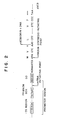
- Fig. 2 shows the structure in the vicinity of the tac promoter and the aequorin gene.
- -35 region refers to the recognition site of RNA polymerase and Pribnow box refers to the binding site of RNA polymerase.
- SD refers to the binding site of ribosome.
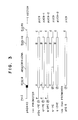
- FIG. 3 The structures of the above respective products are shown in Fig. 3.
- P refers to promoter
- B refers to Bam HI
- E refers to Eco RI.
- a substrate coelenterazine (6 ⁇ g) and 2-mercaptoethanol (10 ⁇ l) were added to the enzyme solution (1 mt), followed by allowing the mixture to stand on ice for 2 -3 hours, thereafter transferring it into a reaction cell in a photocell measuring apparatus, and further injecting 20 mM CaCl 2 (1.5 ml) to measure the resulting luminescence.
Landscapes
- Health & Medical Sciences (AREA)
- Chemical & Material Sciences (AREA)
- Organic Chemistry (AREA)
- Life Sciences & Earth Sciences (AREA)
- Biophysics (AREA)
- Gastroenterology & Hepatology (AREA)
- Zoology (AREA)
- Biochemistry (AREA)
- Toxicology (AREA)
- General Health & Medical Sciences (AREA)
- Genetics & Genomics (AREA)
- Medicinal Chemistry (AREA)
- Molecular Biology (AREA)
- Proteomics, Peptides & Aminoacids (AREA)
- Tropical Medicine & Parasitology (AREA)
- Preparation Of Compounds By Using Micro-Organisms (AREA)
Applications Claiming Priority (2)
| Application Number | Priority Date | Filing Date | Title |
|---|---|---|---|
| JP28025985A JPS62171695A (ja) | 1985-12-14 | 1985-12-14 | 発光蛋白アクアリン遺伝子を用いるアクアリン活性を有する蛋白質の製造法 |
| JP280259/85 | 1985-12-14 |
Publications (2)
| Publication Number | Publication Date |
|---|---|
| EP0226979A2 true EP0226979A2 (de) | 1987-07-01 |
| EP0226979A3 EP0226979A3 (de) | 1988-01-27 |
Family
ID=17622499
Family Applications (1)
| Application Number | Title | Priority Date | Filing Date |
|---|---|---|---|
| EP86117332A Withdrawn EP0226979A3 (de) | 1985-12-14 | 1986-12-12 | Verfahren zur Herstellung eines Proteins mit aequoriner Aktivität in dem man ein Gen eines aequorinen Photoproteins benutzt |
Country Status (2)
| Country | Link |
|---|---|
| EP (1) | EP0226979A3 (de) |
| JP (1) | JPS62171695A (de) |
Cited By (12)
| Publication number | Priority date | Publication date | Assignee | Title |
|---|---|---|---|---|
| EP0187519A3 (en) * | 1984-12-31 | 1988-01-27 | University Of Georgia Research Foundation, Inc. | Recombinant dna vectors capable of expressing apoaequorin, apoaequorin peptides and their production, and microorganisms including said vectors |
| EP0302381A1 (de) * | 1987-08-05 | 1989-02-08 | Chisso Corporation | Fusionsgen enthaltend Aequoringen in Verbindung mit einem funktionellen B-galactosidase Gen |
| EP0264819A3 (en) * | 1986-10-15 | 1989-06-28 | Chisso Corporation | Variant aequorin genes and process for producing variant aequorin proteins |
| EP0341477A1 (de) * | 1988-05-11 | 1989-11-15 | Chisso Corporation | Verfahren zur Herstellung von einem Aequorinphotoprotein |
| US5139937A (en) * | 1987-11-18 | 1992-08-18 | Chisso Corporation | Process for producing apoaequorin |
| US5876995A (en) | 1996-02-06 | 1999-03-02 | Bryan; Bruce | Bioluminescent novelty items |
| US6136274A (en) * | 1996-10-07 | 2000-10-24 | Irori | Matrices with memories in automated drug discovery and units therefor |
| US6247995B1 (en) | 1996-02-06 | 2001-06-19 | Bruce Bryan | Bioluminescent novelty items |
| US6416960B1 (en) | 1996-08-08 | 2002-07-09 | Prolume, Ltd. | Detection and visualization of neoplastic tissues and other tissues |
| US7109315B2 (en) | 2000-03-15 | 2006-09-19 | Bruce J. Bryan | Renilla reniformis fluorescent proteins, nucleic acids encoding the fluorescent proteins and the use thereof in diagnostics, high throughput screening and novelty items |
| US7345160B2 (en) | 2004-03-29 | 2008-03-18 | University Of Kentucky Research Foundation | Aequorin and obelin mutants with differing wavelengths and bioluminescence |
| EP1925320A2 (de) | 1998-03-27 | 2008-05-28 | Prolume, Ltd. | Luciferasen, fluoreszierende Proteine, Nukleinsäuren zur Kodierung der Luciferasen und der fluoreszierenden Proteine sowie deren Verwendung zur Diagnose, zum Screening mit hohem Durchsatz und zur Behandlung neuartiger Probleme |
Families Citing this family (3)
| Publication number | Priority date | Publication date | Assignee | Title |
|---|---|---|---|---|
| JPS6447379A (en) * | 1987-08-19 | 1989-02-21 | Chisso Corp | Preparation of calcium-dependent oxygenation enzyme |
| ATE290205T1 (de) | 1996-12-12 | 2005-03-15 | Prolume Ltd | Vorrichtung und verfahren zum nachweis und identifizieren von infektiösen wirkstoffen |
| AU765703B2 (en) | 1998-03-27 | 2003-09-25 | Bruce J. Bryan | Luciferases, fluorescent proteins, nucleic acids encoding the luciferases and fluorescent proteins and the use thereof in diagnostics, high throughput screening and novelty items |
Family Cites Families (1)
| Publication number | Priority date | Publication date | Assignee | Title |
|---|---|---|---|---|
| NZ214563A (en) * | 1984-12-31 | 1991-05-28 | Univ Georgia | Production of apoaeqorin using recombinant dna |
-
1985
- 1985-12-14 JP JP28025985A patent/JPS62171695A/ja active Pending
-
1986
- 1986-12-12 EP EP86117332A patent/EP0226979A3/de not_active Withdrawn
Cited By (15)
| Publication number | Priority date | Publication date | Assignee | Title |
|---|---|---|---|---|
| EP0540064A1 (de) * | 1984-12-31 | 1993-05-05 | The University Of Georgia Research Foundation, Inc. | Apoaequorin Peptide, rekombinante DNS-Vektoren fähig zu deren Expression und diese Vektoren enthaltende Mikroorganismen |
| EP0187519A3 (en) * | 1984-12-31 | 1988-01-27 | University Of Georgia Research Foundation, Inc. | Recombinant dna vectors capable of expressing apoaequorin, apoaequorin peptides and their production, and microorganisms including said vectors |
| AU589930B2 (en) * | 1984-12-31 | 1989-10-26 | University Of Georgia Research Foundation, Inc., The | Recombinant dna vectors capable of expressing apoaequorin |
| EP0264819A3 (en) * | 1986-10-15 | 1989-06-28 | Chisso Corporation | Variant aequorin genes and process for producing variant aequorin proteins |
| EP0302381A1 (de) * | 1987-08-05 | 1989-02-08 | Chisso Corporation | Fusionsgen enthaltend Aequoringen in Verbindung mit einem funktionellen B-galactosidase Gen |
| US5139937A (en) * | 1987-11-18 | 1992-08-18 | Chisso Corporation | Process for producing apoaequorin |
| EP0341477A1 (de) * | 1988-05-11 | 1989-11-15 | Chisso Corporation | Verfahren zur Herstellung von einem Aequorinphotoprotein |
| US5876995A (en) | 1996-02-06 | 1999-03-02 | Bryan; Bruce | Bioluminescent novelty items |
| US6247995B1 (en) | 1996-02-06 | 2001-06-19 | Bruce Bryan | Bioluminescent novelty items |
| US6416960B1 (en) | 1996-08-08 | 2002-07-09 | Prolume, Ltd. | Detection and visualization of neoplastic tissues and other tissues |
| US6596257B2 (en) | 1996-08-08 | 2003-07-22 | Prolume, Ltd. | Detection and visualization of neoplastic tissues and other tissues |
| US6136274A (en) * | 1996-10-07 | 2000-10-24 | Irori | Matrices with memories in automated drug discovery and units therefor |
| EP1925320A2 (de) | 1998-03-27 | 2008-05-28 | Prolume, Ltd. | Luciferasen, fluoreszierende Proteine, Nukleinsäuren zur Kodierung der Luciferasen und der fluoreszierenden Proteine sowie deren Verwendung zur Diagnose, zum Screening mit hohem Durchsatz und zur Behandlung neuartiger Probleme |
| US7109315B2 (en) | 2000-03-15 | 2006-09-19 | Bruce J. Bryan | Renilla reniformis fluorescent proteins, nucleic acids encoding the fluorescent proteins and the use thereof in diagnostics, high throughput screening and novelty items |
| US7345160B2 (en) | 2004-03-29 | 2008-03-18 | University Of Kentucky Research Foundation | Aequorin and obelin mutants with differing wavelengths and bioluminescence |
Also Published As
| Publication number | Publication date |
|---|---|
| JPS62171695A (ja) | 1987-07-28 |
| EP0226979A3 (de) | 1988-01-27 |
Similar Documents
| Publication | Publication Date | Title |
|---|---|---|
| CA1274481A (en) | Recombinant dna vectors capable of expressing apoaequorin | |
| CA1220735A (en) | Molecular cloning and characterization of a further gene sequence coding for human relaxin | |
| FI64640B (fi) | Foerfarande foer framstaellning av en kombinations-dna-molekylsom innehaoller en foer insulin kodande nukleotidsekvens hocsom kan anvaendas vid framstaellning av en insulin produ rcende mikroorganism | |
| NZ199445A (en) | Production of pre-prorennin,prorennin or rennin by recombinant dna method;recombinant dna material encoding polypeptide signal or zymogen sequence | |
| EP0130166A1 (de) | Ein rekombinantes Plasmid, ein transformierter Mikroorganismus, ein polydeoxyribonucleotides Segment, Verfahren zur Herstellung von biologischem aktivem Protein, und das Protein dadurch produziert | |
| Sobel et al. | Construction of a recombinant bacterial plasmid containing a chick pro-alpha2 collagen gene sequence. | |
| CA1272144A (en) | Fish growth hormone polypeptide | |
| FI86993C (fi) | Foerfarande foer skyddande av en bakterie mot en i naturen foerekommande bakteriofag | |
| EP0245093B1 (de) | Verfahren zum Nachweis von Metallen | |
| JPS62171695A (ja) | 発光蛋白アクアリン遺伝子を用いるアクアリン活性を有する蛋白質の製造法 | |
| US4870015A (en) | Method and composition for producing lectin in microorganisms | |
| GB1568047A (en) | Purification of nucleotide sequences suitable for expression in bacteria | |
| AU742048B2 (en) | Plant alkaline and neutral invertases | |
| JPS6156199A (ja) | 新規ヒトインタ−フエロンα類 | |
| EP0209068A1 (de) | Aal-Wachstumshormon | |
| Tragut et al. | Characterization of DNA restriction-modification systems in Spirulina platensis strain pacifica | |
| GB2104901A (en) | Expression vectors | |
| US4711847A (en) | Preparation of secretin | |
| SU1479005A3 (ru) | Способ получени интерлейкина-2 человека | |
| EP0377540A1 (de) | Rekombinante Fischhormon-Proteine | |
| CA1214738A (en) | Molecular cloning and characterization of the gene sequence coding for porcine relaxin | |
| EP0151560A1 (de) | Verfahren zur Herstellung von bakteriologischen Klonen enthaltend eine optimale genetische Information für den Schutz des wachstumshormonauslösenden Faktors in Escherichia Coli | |
| JP2656329B2 (ja) | フラビンヌクレオチド類の製造法 | |
| KR910000458B1 (ko) | 인간성장호르몬 발현 벡터 pYLBC-GAP-HGH | |
| KR920003664B1 (ko) | 합성유전자에 의한 효모세포로부터 소성장호르몬의 대량 제조방법 |
Legal Events
| Date | Code | Title | Description |
|---|---|---|---|
| PUAI | Public reference made under article 153(3) epc to a published international application that has entered the european phase |
Free format text: ORIGINAL CODE: 0009012 |
|
| AK | Designated contracting states |
Kind code of ref document: A2 Designated state(s): CH DE FR GB LI |
|
| PUAL | Search report despatched |
Free format text: ORIGINAL CODE: 0009013 |
|
| AK | Designated contracting states |
Kind code of ref document: A3 Designated state(s): CH DE FR GB LI |
|
| 17P | Request for examination filed |
Effective date: 19880408 |
|
| 17Q | First examination report despatched |
Effective date: 19900509 |
|
| STAA | Information on the status of an ep patent application or granted ep patent |
Free format text: STATUS: THE APPLICATION HAS BEEN WITHDRAWN |
|
| 18W | Application withdrawn |
Withdrawal date: 19911219 |
|
| RIN1 | Information on inventor provided before grant (corrected) |
Inventor name: INOUYE, SATOSHI Inventor name: SAKAKI, YOSHIYUKI |