EP0199985A2 - Neue Benzoesäurederivate, diese enthaltende Arzneimittel und Verfahren zur Herstellung dieser Verbindungen und Arzneimittel - Google Patents
Neue Benzoesäurederivate, diese enthaltende Arzneimittel und Verfahren zur Herstellung dieser Verbindungen und Arzneimittel Download PDFInfo
- Publication number
- EP0199985A2 EP0199985A2 EP86104007A EP86104007A EP0199985A2 EP 0199985 A2 EP0199985 A2 EP 0199985A2 EP 86104007 A EP86104007 A EP 86104007A EP 86104007 A EP86104007 A EP 86104007A EP 0199985 A2 EP0199985 A2 EP 0199985A2
- Authority
- EP
- European Patent Office
- Prior art keywords
- formula
- group
- compound
- same meaning
- hydrogen
- Prior art date
- Legal status (The legal status is an assumption and is not a legal conclusion. Google has not performed a legal analysis and makes no representation as to the accuracy of the status listed.)
- Withdrawn
Links
Classifications
-
- C—CHEMISTRY; METALLURGY
- C07—ORGANIC CHEMISTRY
- C07D—HETEROCYCLIC COMPOUNDS
- C07D295/00—Heterocyclic compounds containing polymethylene-imine rings with at least five ring members, 3-azabicyclo [3.2.2] nonane, piperazine, morpholine or thiomorpholine rings, having only hydrogen atoms directly attached to the ring carbon atoms
- C07D295/04—Heterocyclic compounds containing polymethylene-imine rings with at least five ring members, 3-azabicyclo [3.2.2] nonane, piperazine, morpholine or thiomorpholine rings, having only hydrogen atoms directly attached to the ring carbon atoms with substituted hydrocarbon radicals attached to ring nitrogen atoms
-
- C—CHEMISTRY; METALLURGY
- C07—ORGANIC CHEMISTRY
- C07D—HETEROCYCLIC COMPOUNDS
- C07D295/00—Heterocyclic compounds containing polymethylene-imine rings with at least five ring members, 3-azabicyclo [3.2.2] nonane, piperazine, morpholine or thiomorpholine rings, having only hydrogen atoms directly attached to the ring carbon atoms
- C07D295/16—Heterocyclic compounds containing polymethylene-imine rings with at least five ring members, 3-azabicyclo [3.2.2] nonane, piperazine, morpholine or thiomorpholine rings, having only hydrogen atoms directly attached to the ring carbon atoms acylated on ring nitrogen atoms
- C07D295/18—Heterocyclic compounds containing polymethylene-imine rings with at least five ring members, 3-azabicyclo [3.2.2] nonane, piperazine, morpholine or thiomorpholine rings, having only hydrogen atoms directly attached to the ring carbon atoms acylated on ring nitrogen atoms by radicals derived from carboxylic acids, or sulfur or nitrogen analogues thereof
- C07D295/182—Radicals derived from carboxylic acids
- C07D295/192—Radicals derived from carboxylic acids from aromatic carboxylic acids
-
- A—HUMAN NECESSITIES
- A61—MEDICAL OR VETERINARY SCIENCE; HYGIENE
- A61P—SPECIFIC THERAPEUTIC ACTIVITY OF CHEMICAL COMPOUNDS OR MEDICINAL PREPARATIONS
- A61P11/00—Drugs for disorders of the respiratory system
- A61P11/08—Bronchodilators
-
- A—HUMAN NECESSITIES
- A61—MEDICAL OR VETERINARY SCIENCE; HYGIENE
- A61P—SPECIFIC THERAPEUTIC ACTIVITY OF CHEMICAL COMPOUNDS OR MEDICINAL PREPARATIONS
- A61P29/00—Non-central analgesic, antipyretic or antiinflammatory agents, e.g. antirheumatic agents; Non-steroidal antiinflammatory drugs [NSAID]
-
- A—HUMAN NECESSITIES
- A61—MEDICAL OR VETERINARY SCIENCE; HYGIENE
- A61P—SPECIFIC THERAPEUTIC ACTIVITY OF CHEMICAL COMPOUNDS OR MEDICINAL PREPARATIONS
- A61P37/00—Drugs for immunological or allergic disorders
- A61P37/08—Antiallergic agents
-
- A—HUMAN NECESSITIES
- A61—MEDICAL OR VETERINARY SCIENCE; HYGIENE
- A61P—SPECIFIC THERAPEUTIC ACTIVITY OF CHEMICAL COMPOUNDS OR MEDICINAL PREPARATIONS
- A61P43/00—Drugs for specific purposes, not provided for in groups A61P1/00-A61P41/00
-
- A—HUMAN NECESSITIES
- A61—MEDICAL OR VETERINARY SCIENCE; HYGIENE
- A61P—SPECIFIC THERAPEUTIC ACTIVITY OF CHEMICAL COMPOUNDS OR MEDICINAL PREPARATIONS
- A61P7/00—Drugs for disorders of the blood or the extracellular fluid
- A61P7/02—Antithrombotic agents; Anticoagulants; Platelet aggregation inhibitors
-
- A—HUMAN NECESSITIES
- A61—MEDICAL OR VETERINARY SCIENCE; HYGIENE
- A61P—SPECIFIC THERAPEUTIC ACTIVITY OF CHEMICAL COMPOUNDS OR MEDICINAL PREPARATIONS
- A61P9/00—Drugs for disorders of the cardiovascular system
-
- A—HUMAN NECESSITIES
- A61—MEDICAL OR VETERINARY SCIENCE; HYGIENE
- A61P—SPECIFIC THERAPEUTIC ACTIVITY OF CHEMICAL COMPOUNDS OR MEDICINAL PREPARATIONS
- A61P9/00—Drugs for disorders of the cardiovascular system
- A61P9/08—Vasodilators for multiple indications
-
- A—HUMAN NECESSITIES
- A61—MEDICAL OR VETERINARY SCIENCE; HYGIENE
- A61P—SPECIFIC THERAPEUTIC ACTIVITY OF CHEMICAL COMPOUNDS OR MEDICINAL PREPARATIONS
- A61P9/00—Drugs for disorders of the cardiovascular system
- A61P9/10—Drugs for disorders of the cardiovascular system for treating ischaemic or atherosclerotic diseases, e.g. antianginal drugs, coronary vasodilators, drugs for myocardial infarction, retinopathy, cerebrovascula insufficiency, renal arteriosclerosis
-
- A—HUMAN NECESSITIES
- A61—MEDICAL OR VETERINARY SCIENCE; HYGIENE
- A61P—SPECIFIC THERAPEUTIC ACTIVITY OF CHEMICAL COMPOUNDS OR MEDICINAL PREPARATIONS
- A61P9/00—Drugs for disorders of the cardiovascular system
- A61P9/12—Antihypertensives
-
- C—CHEMISTRY; METALLURGY
- C07—ORGANIC CHEMISTRY
- C07C—ACYCLIC OR CARBOCYCLIC COMPOUNDS
- C07C255/00—Carboxylic acid nitriles
-
- C—CHEMISTRY; METALLURGY
- C07—ORGANIC CHEMISTRY
- C07C—ACYCLIC OR CARBOCYCLIC COMPOUNDS
- C07C33/00—Unsaturated compounds having hydroxy or O-metal groups bound to acyclic carbon atoms
- C07C33/04—Acyclic alcohols with carbon-to-carbon triple bonds
-
- C—CHEMISTRY; METALLURGY
- C07—ORGANIC CHEMISTRY
- C07C—ACYCLIC OR CARBOCYCLIC COMPOUNDS
- C07C65/00—Compounds having carboxyl groups bound to carbon atoms of six—membered aromatic rings and containing any of the groups OH, O—metal, —CHO, keto, ether, groups, groups, or groups
- C07C65/01—Compounds having carboxyl groups bound to carbon atoms of six—membered aromatic rings and containing any of the groups OH, O—metal, —CHO, keto, ether, groups, groups, or groups containing hydroxy or O-metal groups
- C07C65/19—Compounds having carboxyl groups bound to carbon atoms of six—membered aromatic rings and containing any of the groups OH, O—metal, —CHO, keto, ether, groups, groups, or groups containing hydroxy or O-metal groups having unsaturation outside the aromatic ring
Definitions
- B. Polyunsaturated higher fatty acids such as B. the arachidonic acid in the metabolism of humans and mammals serve as substrates for the enzymatically catalyzed formation of physiologically important eicosanoids such.
- B. prostaglandins and leukotrienes a substance class also known under the name "Slow reacting Substance of Anaphylaxis” (SRS-A).
- SRS-A Slow reacting Substance of Anaphylaxis
- the leukotrienes or SRS-A are known to be responsible for the development of allergic reactions, bronchoconstrictions, inflammation, asthma and a large number of other undesirable effects. It is therefore desirable to be able to have chemically and metabolically stable compounds which have no effect on prostaglandin formation in the organism, but at the same time selectively or specifically inhibit 5-lipoxygenase and thus prevent the formation of the undesired leukotrienes. It has now been found that certain new benzoic acid derivatives are chemically and metabolically sufficiently stable for therapeutic use and have a specific inhibitory effect on 5-lipoxygenase.
- Y is an oxygen atom or the group means and optionally their pharmaceutically acceptable salts with acids, or represents a nitrile radical.
- the compounds of formula 1 can be represented by the following formula: or wherein each R to R 4 have the same meaning as above.
- R and R 3 are hydrogen, while R 2 therein is preferably hydrogen, an alkyl radical having 5 or 6 carbon atoms or a cyclohexyl radical.
- the radical R4 in the compounds of the formula I preferably represents a carboxyl group, optionally in the form of the sodium or potassium salt, a group of the formula -COO- (CH 2 ) p -CH 3 , where p is as defined above, or for the group of the above formula
- R 4 is the group of the formula
- R 10 is hydrogen, - (CH 2 ) p-CH 3 or acetyl and p each has the same meaning as above
- the compounds of the formula I have a specific inhibitory action against 5-lipoxygenase, which has been determined by in vitro experiments.
- basophilic leukemic leukocytes from the rat were grown in vitro and, after reaching a cell density of approx. 10 6 cells per ml, centrifuged at 400 g from the nutrient medium. The residue was suspended in 50 mM potassium phosphate buffer, pH 7.4, so that the cell number was 1.5 ⁇ 10 'cells per ml.
- the radioactivity distribution across the various metabolites 15 was measured using a thin-film scanner. If the percentages of formation of the 5-lipoxygenase products (5-HETE and LTB 4 ) are related to the amount or concentration of the total radioactivity used or the test substance 20 of the formula I, the IC 50 value (ie the concentration , which causes a 50% inhibition of 5-lipoxygenase).
- the influence of the test substances on the cyclooxygenase activity was determined with the aid of sheep seminal vesicle microsomes suspended in potassium phosphate buffer (50 mM, pH 7.0) in the presence of 2,2'-azino-di- [3-ethylbenzothiazole in-sulfonic acid (6)] Incubation with the test substance and arachidonic acid and photometric measurement at 420 nm were examined. It was found that the IC 50 values for the inhibition of cyclooxygenase are more than 50 times, in some cases more than 400 times, higher than the IC 50 values for 5-lipoxygenase inhibition, ie that the test substances are very high specifically only inhibit lipoxygenase activity.
- the compounds according to the invention effect the Formula I in the human or mammalian organism numerous valuable physiological cal effects such.
- the compounds of formula I according to the invention chemically and metabolically sufficiently stable and storable for therapeutic use are, they are suitable for use as a pharmaceutical z.
- the compounds according to the invention have only a low toxicity, which is only noticeable at doses which are far higher than the doses to be used therapeutically or prophylactically. They can therefore be administered as such or in suitable pharmaceutical preparations to humans or animals.
- the invention also relates to medicaments which contain one or more of the compounds of the formula I according to the invention as active ingredient.
- the amount of active ingredient to be administered to the patient varies depending on e.g. B. the weight of the patient, the application away, the indication and the severity of the disease. Taking these factors into account, the active ingredient content per single dose is generally about 0.01-50 mg, in the case of preparations for parenteral administration 0.01 to 10 mg, and in the case of preparations for oral or rectal administration about 0.1 to 50 mg.
- Drugs for parenteral administration can represent solutions as well as suspensions, but easily reconstitutable dry preparations can also be used.
- Well-suited forms of application are also sprays for intranasal or oral application or for the administration of the substances via the bronchi.
- Oral preparation forms of the compounds of the formula I such as tablets, dragées, capsules, granules, drops and juices or syrups, but also suppositories and percutaneous application preparations (such as the active ingredients in one, for example) are also expediently suitable for many prophylactic or therapeutic applications Depot in dissolved form, optionally with the addition of plasters or the like containing skin penetration-promoting agents).
- These forms of preparation which can be used orally, rectally or percutaneously are advantageously produced in such a way that the active substance is released therefrom in a delayed manner, in order to ensure that the patient is supplied with the active substance uniformly over a longer period of time (for example 24 hours).
- the reduction of the compound of formula IX is carried out with metal borohydrides, such as zinc borohydride or in particular sodium borohydride, preferably with the addition of cerium (III) chloride in methanol, ethanol or dimethoxyethane with the addition of water at temperatures from about -20 ° C. to +30 ° C, preferably at around +20 ° C.
- metal borohydrides such as zinc borohydride or in particular sodium borohydride
- the radical R 13 is then converted into the desired radical R 4 in the compound of the formula Ia obtained according to 1, 2 or 3 in a manner known per se, and optionally one or more of the triple bonds present therein (except when A and E are -C ⁇ C-) hydrogenated to double bonds.
- This hydrogenation is generally carried out using catalytically excited hydrogen under normal pressure at room temperature, using in particular palladium catalysts, preferably "Lindlar catalysts" such as, for. B. lead poisoned palladium on calcium carbonate. It is used as a solvent in a manner known per se, for. B. n-hexane, methanol, ethanol, ethyl acetate, benzene, toluene, diisopropyl ether, expediently used with the addition of 0.1-2% quinol in or pyridine or pure pyridine.
- palladium catalysts preferably "Lindlar catalysts”
- It is used as a solvent in a manner known per se, for. B. n-hexane, methanol, ethanol, ethyl acetate, benzene, toluene, diisopropyl ether, expediently used with the addition of 0.1-2% quinol in or pyridine or pure
- the transfer of the radical R 13 into the radical R takes place, if R 13 represents a free carboxyl group, in the usual way by neutralization with a base which is pharmaceutically acceptable in salt form, in particular dilute (e.g. 1-normal) sodium or potassium hydroxide solution.
- a base which is pharmaceutically acceptable in salt form, in particular dilute (e.g. 1-normal) sodium or potassium hydroxide solution.
- the neutralization must be preceded by a saponification reaction in which these esters are mixed with an aqueous solution of e.g. As sodium, potassium or lithium hydroxide, expediently treated at room temperature in the presence of a water-miscible solvent such as methanol, ethanol or tetrahydrofuran.
- radicals R or R 13 in the compounds of the formula I or Ia obtained in one of the above ways contains a basic group, this can easily be converted into a pharmaceutically acceptable salt by neutralization with a suitable acid in a manner known per se convince of this acid.
- this salt formation took place in a solvent in which the salt formed is soluble, its isolation is expediently carried out by freeze-drying, although, of course, the precipitation also takes place by adding suitable liquids which are miscible with the solvent and in which the salt is insoluble, in order to isolate the salt can serve.
- the free base is dissolved in an anhydrous, less polar medium, such as.
- n-hexane or petroleum ether is added to initiate crystallization.
- isolation of the salt by evaporation, preferably in a vacuum is possible.
- Suitable acids for this salt formation are e.g. B. hydrochloric acid, hydrobromic acid, sulfuric acid, phosphoric acid, formic acid, acetic acid, benzoic acid, salicylic acid, benzenesulfonic acid and other acids customary for the preparation of pharmaceutically acceptable salts.
- a compound of formula IIIb can easily be obtained by reacting a compound of formula IVa with a compound of formula e.g. B. using diethyl ether or tetrahydrofuran as a solvent, preferably in the presence of an aprotic dipolar solvent at about -80 ° C, later at 0 ° C, can be obtained.
- a compound of formula VII can be easily prepared by reacting deca-1,9-diyne with a compound of formula VI in the presence of a secondary or tertiary amine, preferably triethylamine, in the presence of catalytic amounts of copper (I) iodide and one complex palladium catalyst, such as. B. bis (triphenylphosphine) palladium (II) chloride at about 0 ° C to 60 ° C, preferably 20 ° C to 25 ° C.
- the products are in the form of oils, unless otherwise specified in individual cases.
- n-butyllithium solution used in the examples contained, dissolved in n-hexane, 1.6 moles of n-butyllithium / liter. However, it is of course also possible to use solutions of other concentrations and / or with solvents other than n-hexane.
- silica gel 60 (0.040-0.063 mm) from Macherey-Nagel was used as the stationary phase for the chromatography or column chromatography.
- the ether used in the examples is diethyl ether, and petroleum ether is the one with a boiling range of 50 ° -70 ° C.
- a solution of 26.7 g (2-oxoheptyl) -phosphonic acid dimethyl ester in 500 ml of absolute tetrahydrofuran is mixed dropwise with stirring and passing dry nitrogen with 68.8 ml of n-butyllithium solution so that the internal temperature does not exceed 5 ° C .
- the mixture is stirred for 15 minutes and then 5.4 g of propiol aldehyde in 250 ml of absolute dimethoxyethane are added dropwise at the same temperature.
- the reaction mixture is then stirred for a further 1 hour and allowed to warm to room temperature.
- the mixture is then neutralized by dropwise addition of acetic acid and evaporated in vacuo.
- the residue is taken up in ether, the solution is washed twice with saturated solutions of sodium hydrogen carbonate or sodium chloride and dried over sodium sulfate.
- a Grignard solution is prepared from 0.316 g of magnesium shavings and 0.93 ml of ethyl bromide in 10 ml of absolute tetrahydrofuran while passing over dry nitrogen.
- a solution of 3.91 g of 5- (tert-butyl-diphenylsilyloxy) -3E-decen-1-in in 10 ml of absolute tetrahydrofuran is added dropwise so that the internal temperature does not exceed 25 ° C. while stirring at room temperature.
- Example 1ci The procedure is analogous to Example 1ci, and 2.90 g of methyl 3-ethynylbenzoate, 3.80 g of 1-bromo-9- (tert-butyldiphenylsilyloxy) -7E-tetradecen-2,5-diyne and 0.25 g of copper ( I) cyanide 2.28 g of an oil, the spectroscopic resonance data of which are identical to those of the product prepared according to Example 1cl.
- the corresponding iodine compound can also be used in this procedure, which can be obtained from the bromine compound analogously to Example 1clliii by reaction with sodium iodide in absolute acetone.
- 0.93 g of methyl 3-ethynylbenzoate, 1.32 g of 1-iodo-9- (tert-butyldiphenylsilyloxy) -7E-tetradecen-2,5-diyne and 0.17 g of copper (I) cyanide are obtained 0.59 g of an oil, the spectroscopic resonance data of which is identical to that of the product prepared according to Example 1 cl.
- Example 2 The procedure is analogous to Example 1, and from 4.84 g of the product of Example 4c, 12 ml of a freshly prepared solution of ethyl magnesium bromide in tetrahydrofuran (1.25 mol / l) and 7.10 g of 1,4-bis (p -toluenesulfonyloxy) -2-butyne 3.23 g of the title compound.
- Example 4e 1.23 g of the product obtained in Example 4e are reacted with 14 ml of a methanolic solution of hydrogen chloride (5%) analogously to Example 1d. 0.48 g of the title compound is isolated. 'H NMR (CDCI 3 ):
- Example 4 0.337 g of the product obtained in Example 4 are hydrogenated analogously to Example 2 in alcoholic, quinoline-containing solution over 0.084 g of palladium on calcium carbonate (5% Pd, poisoned with lead). After purification by HPLC with methanol / water (85:15), 0.182 g of the title compound is obtained.
- Example 6 0.272 g of the product obtained in Example 6 are hydrogenated analogously to Example 2 in alcoholic, quinoline-containing solution over 0.068 g of palladium-poisoned with lead on calcium carbonate (5% Pd). After purification by HPLC with methanol / water (85:15), 0.152 g of the title compound is obtained. 'H NMR (CDCl 3 ):
- Example 1cllv The procedure is analogous to Example 1cllv and, using 1.30 g of the compound prepared in Example 10c, 25 ml of ethanol and 0.086 g of pyridinium toluene-4-sulfonate after column chromatography with petroleum ether / ether (1: 1), 0.839 g of the title compound is obtained.
- Example 1clliii Analogously to Example 1clliii, 2.20 g of the product from Example 13a and a solution of 3.06 g of sodium iodide in acetone are reacted. After working up, 2.39 g of a slightly yellow oil are obtained (without chromatography) which is sufficiently pure for the further reaction. 'H NMR (CDCl 3 ):
- Example 8b The procedure is analogous to Example 8b and 0.56 g is obtained from 0.72 g of methyl 3-ethynylbenzoate, 2.80 ml of n-butyllithium solution, 0.68 g of the product from Example 10a and 4 ml of absolute hexamethylphosphoric triamide after column chromatography as in Example 13cl of the product with the same spectroscopic resonance data.
- Example 1 cllv
- 1.39 g is obtained from 2.03 g of the product obtained in Example 13c in 50 ml of ethanol with 0.133 g of pyridinium toluene-4-sulfonate after column chromatography with n-hexane / ether (1: 1) the title link.
- the same product can also be produced according to Example 14.
- This product can also be obtained by splitting off the tetrahydropyranyl group from the substance prepared in Example 10b.
- Example 1cllv The procedure is analogous to Example 1cllv and 0.571 g of the title compound is obtained from 0.824 g of the product from Example 19a in 20 ml of ethanol with 0.055 g of pyridinium toluene-4-sulfonate after column chromatography with petroleum ether / ethyl acetate (3: 4).
- Example 19a The procedure is analogous to Example 19a, and 1.92 g of n-propyl 3-iodobenzoate (obtained from 3-iodobenzoyl chloride and n-propanol as in Example 15a), 1.50 g of the product from Example 10b, 0.057 g of copper (I ) iodide, 0.126 g bis (triphenylphosphine) palladium (II) chloride and 10 ml absolute triethylamine after column chromatography with n-hexane / ether (3: 1) 2.18 g of the title compound.
Landscapes
- Health & Medical Sciences (AREA)
- Chemical & Material Sciences (AREA)
- Organic Chemistry (AREA)
- Veterinary Medicine (AREA)
- Chemical Kinetics & Catalysis (AREA)
- General Chemical & Material Sciences (AREA)
- Medicinal Chemistry (AREA)
- Nuclear Medicine, Radiotherapy & Molecular Imaging (AREA)
- Bioinformatics & Cheminformatics (AREA)
- Pharmacology & Pharmacy (AREA)
- Life Sciences & Earth Sciences (AREA)
- Animal Behavior & Ethology (AREA)
- General Health & Medical Sciences (AREA)
- Public Health (AREA)
- Engineering & Computer Science (AREA)
- Heart & Thoracic Surgery (AREA)
- Cardiology (AREA)
- Pulmonology (AREA)
- Urology & Nephrology (AREA)
- Vascular Medicine (AREA)
- Immunology (AREA)
- Diabetes (AREA)
- Hematology (AREA)
- Pain & Pain Management (AREA)
- Rheumatology (AREA)
- Organic Low-Molecular-Weight Compounds And Preparation Thereof (AREA)
- Acyclic And Carbocyclic Compounds In Medicinal Compositions (AREA)
- Pharmaceuticals Containing Other Organic And Inorganic Compounds (AREA)
Abstract

- R, Wasserstoff, Methyl oder Ethyl ist, R2 Wasserstoff, ein gegebenenfalls wie definiert substituierter Alkyl-oder Phenylrest oder ein Cycloalkylrest ist, R3 Wasserstoff, Acetyl oder Propionyl darstellt und R4 für eine Carboxylgruppe oder ein funktionelles Derivat davon, wie ein Salz, einen Ester, ein Amid oder eine Hydroxamsäure, oder für eine Nitrilgruppe steht.
Description
- Polyungesättigte höhere Fettsäuren wie z. B. die Arachidonsäure dienen im Stoffwechsel des Menschen und von Säugetieren als Substrate für die enzymatisch katalysierte Bildung physiologisch bedeutsamer Eicosanoide wie z. B. Prostaglandine und Leukotriene, einer auch unter dem Namen "Slow reacting Substance of Anaphylaxis" (SRS-A) bekannten Substanzklasse. Dabei wird die Prostaglandinbildung durch die Cyclo-oxygenase (auch als "Prostaglandinsynthetase" bezeichnet), die Leukotrienbildung durch 5-Lipoxygenasen katalysiert.
- Während die Prostaglandine eine Anzahl erwünschter Wirkungen im Organismus entfalten, ist von den Leukotrienen bzw. der SRS-A bekannt, daß sie für die Entstehung von allergischen Reaktionen, Bronchokonstriktionen, Entzündungen, Asthma und eine Vielzahl weiterer unerwünschter Effekte verantwortlich sind. Es ist daher wünschenswert, über chemisch und metabolisch stabile Verbindungen verfügen zu können, die im Organismus die Prostaglandinbildung unbeeinflußt lassen, gleichzeitig aber möglichst selektiv bzw. spezifisch die 5-Lipoxygenase hemmen und so die Bildung der unerwünschten Leukotriene verhindern. Es wurde nunmehr gefunden, daß bestimmte neue Benzoesäurederivate chemisch und metabolisch für eine therapeutische Anwendung hinreichend stabil sind und eine spezifische Hemmwirkung gegenüber der 5-Lipoxygenase besitzen.
- Diese neuen Benzoesäurederivate entsprechen der allgemeinen Formel

- A und E für -C-C-und B und D für CH2-CH2-stehen oderA, B und D jeweils für -C$C-oder cis-CH = CH-und E für trans-CH = CH-stehen,
- R, Wasserstoff, Methyl oder Ethyl ist,
- R2 Wasserstoff oder
- einen geradkettigen Alkylrest mit 1 bis 6 Kohlenstoffatomen oder eine 5-bis 7-gliedrige Cycloalkylgruppe, vorzugsweise die Cyclohexylgruppe, oder
- eine Gruppe der Formel -(CH2)m=O-R5, worin m für eine der Zahlen 1, 2 oder 3 und Rs für Methyl oder Ethyl steht, oder
- eine Gruppe der Formel

- bedeutet,
- R3 Wasserstoff oder ein Acetyl-oder Propionylrest ist und
- R. für eine Gruppe der Formel -COOR7, worin R7 ein Wasserstoffatom, ein pharmazeutisch verträgliches, insbesondere ein einwertiges Kation, ein geradkettiger oder verzweigter Alkylrest mit 1 bis 6 Kohlenstoffatomen oder die Gruppe -(CH2)2-N[-(CH2)-CH3]2 ist, in der p für Null oder eine der Zahlen 1 bis 3 steht, sowie pharmazeutisch verträgliche Salze dieser basischen Ester mit Säuren, oder
- für eine Gruppe der Formel

- für eine Gruppe der Formel

- für eine Gruppe der Formel -CO-NH-(CH2)r-N(CH3)2, worin r für eine der Zahlen 2 oder 3 steht, und deren pharmazeutisch verträgliche Salze mit Säuren, oder
- für eine Gruppe der Formel

- in der Y ein Sauerstoffatom oder die Gruppe

- Je nach der Bedeutung der Gruppen A, B, D und E lassen sich die Verbindungen der Formel 1 durch folgende Formelbilder wiedergeben:


- Besonders bevorzugt sind von diesen Verbindungen diejenigen der Formel I', d. h. Verbindungen der Formel I, in denen A und E für -C≡C-sowie B und D für -CH2-CH2-stehen.
- In bevorzugten Verbindungen der Formel I stehen R, und R3 für Wasserstoff, während R2 darin vorzugsweise Wasserstoff, einen Alkylrest mit 5 oder 6 Kohlenstoffatomen oder einen Cyclohexylrest bedeutet.
- Der Rest R4 steht in den Verbindungen der Formel I bevorzugt für eine Carboxylgruppe, gegebenenfalls in Form des Natrium-oder Kaliumsalzes, für eine Gruppe der Formel -COO-(CH2) p-CH3, worin p wie oben definiert ist, oder für die Gruppe der obigen Formel

- . Ganz besonders bevorzugt sind aber die Verbindungen der Formel I, in denen R4 die Gruppe der Formel

- Einzelvertreter der bevorzugten Verbindungen sind z. B.
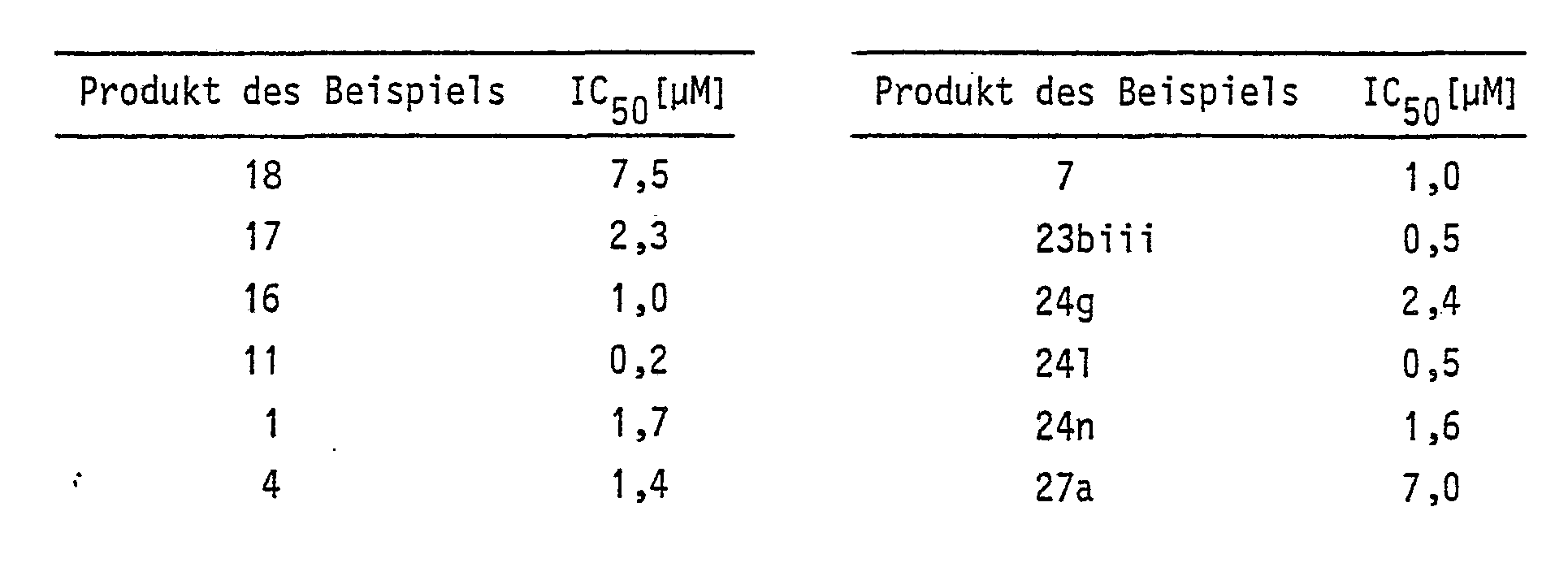
- 3-(11'-Hydroxy-undeca-1',9'-diin-1'-yl)-benzoesäureethylester (Produkt des Beispiels 18)
- 3-(11'-Hydroxy-undeca-1',9'-diin-1'-yl)-benzoesäurepiperidid (Produkt des Beispiels 17),
- 3-(11 '-Hydroxy-undeca-1',9'-diin-1'-yl-N-methyl- benzhydroxamsäure (Produkt des Beispiels 16),
- 4-(11 '-Hydroxy-undeca-1',9'-diin-1'-yl)-N-methylbenzhydroxamsäure (Produkt des Beispiels 11),
- 3-(11'-Hydroxy-hexadec-9'E-en-1',4',7'-triin-1'-yl)-benzoesäuremethylester (Produkt des Beispiels 1),
- 3-(11'-Cyclohexyl-11'-hydroxy-undec-9'E-en-
- 1',4',7'-triin-1'-yl)-benzoesäuremethylester (Produkt des Beispiels 4),
- 4-(11'-Hydroxy-hexadeca-1'Z,4'Z,7'Z,9'E-tetraen-1'-yl)-benzoesäuremethylester (Produkt des Beispiels 7),
- 3-(11'-Cyctohexyl-11'-hydroxy-undeca-1',9'-diin-1'-yl)-N-methyl-benzhydroxamsäure (Produkt des Beispiels 23biii),
- 3-(11'-Hydroxy-undeca-1',9',-diin-l'-yl)-benzoesäure-[N,N-di-(n-propyl)]-amid (Produkt des Beispiels 24g)
- Wie bereits einleitend ausgeführt, besitzen die Verbindungen der Formel I eine spezifische Hemmwirkung gegenüber der 5-Lipoxygenase, was durch in-vitro-Experimente ermittelt wurde.
- Zur Ermittlung der 5-Lipoxygenasehemmung wurden basophile leukämische Leukozyten der Ratte in-vitro gezüchtet und nach Erreichen einer Zelldichte von ca. 106 Zellen pro ml bei 400 g vom Nährmedium abzentrifugiert. Der Rückstand wurde in 50 mM Kaliumphosphatpuffer vom pH 7,4 so suspendiert, daß die Zellzahl 1,5 · 10' Zellen pro ml betrug.
- Jeweils 1 ml dieser Suspension wurde mit Indomethacin (10 uM) und Calciumchlorid (2 mM) versetzt und in An-oder Abwesenheit einer der Testsubstanzen mit radioaktiv markierter Arachi- 5 donsäure und dem Calcium-lonophor A 23 187 bei Raumtemperatur für 5 Minuten inkubiert. Nach Ansäuern auf pH 5 wurden die unter dem Einfluß der 5-Lipoxygenase gebildeten Arachidonsäuremetaboliten mit Ethylacetat extrahiert und 10 mit einem für die Leukotriene geeigneten Fließmittelgemisch dünnschichtchromatographisch getrennt [vgl. Jakschik et al. Biochem. Biophys. Res. Commun. 102, 624 (1981)]. Die Radioaktivitätsverteilung auf die verschiedenen Metaboliten 15 wurde mit Hilfe eines Dünnschichtscanners gemessen. Setzt man die prozentualen Bildungsanteile der 5-Lipoxygenaseprodukte (5-HETE und LTB4) zu der Menge bzw. Konzentration der eingesetzten Gesamtradioaktivität bzw. der Testsubstanz 20 der Formel I in Relation, so läßt sich der IC50-Wert-(d. h. die Konzentration, die eine 50 %-ige Hemmung der 5-Lipoxygenase bewirkt) ermitteln.
- So wurden beispielsweise für die oben aufgeführten sowie weitere in den Beispielen be- 25 schriebene Verbindungen folgende Werte gefunden:
- Der Einfluß der Testsubstanzen auf die Cyclooxygenaseaktivität wurde mit Hilfe von Schafssamenblasenmikrosomen, suspendiert in Kaliumphosphatpuffer (50 mM, pH 7,0) in Gegenwart von 2,2'-Azino-di-[3-ethylbenzothiazol in-sulfonsäure-(6)] durch Inkubation mit der Testsubstanz und Arachidonsäure und photometrische Messung bei 420 nm untersucht. Dabei zeigte sich, daß die IC50-Werte für die Hemmung der Cyclooxygenase um mehr als das 50-fache, teilweise um mehr als das 400- fache höher als die IC50-Werte für die 5-Lipoxygenasehemmung liegen, d. h. daß die Testsubstanzen sehr spezifisch nur die Hemmung der Lipoxygenaseaktivität bewirken.
- Aufgrund dieses günstigen Einflusses auf die Metabolisierung polyungesättigter Fettsäuren, insbesondere der Hemmwirkung auf die Bildung von Arachidonsäuremetaboliten der 5-Lipoxygenase wie 5-Hydroxyperoxyeicosatetraensäure (5-HPETE), 5-Hydroxyeicosatetraensäure (5-HETE) bzw. SRS-A bewirken die erfindungsgemäßen Verbindungen der Formel I im Organismus des Menschen bzw. von Säugetieren zahlreiche wertvolle physiologische Effekte wie z. B. antiallergische, antianaphylaktische, antiphlogistische, antiasthmatische, blutdrucksenkende und durchblutungsfördernde (coronarer und cerebraler Kreislauf) Wirkungen, Verminderung der Leukozytenaggregation bzw. der Bildung von Leukozytenthromben usw. Da die erfindungsgemäßen Verbindungen der Formel I chemisch und metabolisch für eine therapeutische Anwendung hinreichend stabil und lagerfähig sind, eignen sie sich zum Einsatz als Arzneimittel z. B. als Antiallergica, Antianaphylaktica, Antiphiogistica, Antiasthmatica, Antihypertensiva, antithrombotische Mittel, Mittel zur Prophylaxe oder Therapie von ischämischem Herzinfarkt, Störungen der coronaren und/oder cerebralen Arterien usw.
- Die erfindungsgemäßen Verbindungen besitzen nur eine geringe Toxizität, die sich erst bei weit höheren als den therapeutisch oder prophylaktisch anzuwendenden Dosierungen bemerkbar macht. Sie können daher als solche oder in geeigneten pharmazeutischen Zubereitungen an Mensch oder Tier verabreicht werden.
- Die Erfindung betrifft dementsprechend auch Arzneimittel, die als Wirkstoff eine oder mehrere der erfindungsgemäßen Verbindungen der Formel I enthalten. Die an den Patienten zu verabreichende Wirkstoffmenge variiert in Abhängigkeit z. B. vom Gewicht des Patienten, vom Applikations weg, der Indikation und dem Schweregrad der Erkrankung. Unter Berücksichtigung dieser Faktoren beträgt der Wirkstoffgehalt pro Einzeldosis im allgemeinen etwa 0,01 -50 mg, und zwar bei Zubereitungsformen für die parenterale Applikation 0,01 bis 10 mg, bei Zubereitungen für orale oder rektale Applikation etwa 0,1 bis 50 mg.
- Arzneimittel zur parenteralen Applikation können sowohl Lösungen als auch Suspensionen darstellen, es kommen aber auch leicht rekonstituierbare Trockenzubereitungen in Betracht.
- Gut geeignete Applikationsformen sind auch Sprays zur intranasalen oder oralen Applikation bzw. zur Verabreichung der Substanzen über die Bronchien.
- Für viele prophylaktische oder therapeutische Anwendungen kommen zweckmäßig auch oral anwendbare Zubereitungsformen der Verbindungen der Formel I, wie Tabletten, Dragees, Kapseln, Granulate, Tropfen und Säfte bzw. Sirupe, aber auch Suppositorien sowie perkutane Applikationszubereitungen (wie z. B. die Wirkstoffe in einem Depot in gelöster Form, gegebenenfalls unter Zusatz von die Hautpenetration fördernden Mitteln enthaltende Pflaster oder dergleichen) in Betracht. Vorteilhaft werden diese oral, rektal oder perkutan anwendbaren Zubereitungsformen so hergestellt, daß daraus der Wirkstoff verzögert freigesetzt wird, um so über einen längeren Zeitraum (beispielsweise 24 Stunden) eine gleichförmige Versorgung des Patienten mit dem Wirkstoff zu gewährleisten.
- Alle vorstehend erwähnten pharmazeutischen Zubereitungsformen sind an sich bekannt, und da die erfindungsgemäßen Verbindungen der Formel I chemisch recht stabil sind, wirft ihre Einarbeitung in diese Zubereitungsformen für den Fachmann keinerlei Probleme auf. Bei dieser erfindungsgemäßen Herstellung dieser Arzneimittel muß selbstverständlich mit der üblichen Sorgfalt bei Auswahl der Hilfsstoffe wie Trägermaterialien, Farbstoffe, Geschmackskorrigentien, Bindemitteln, Tablettensprengmitteln usw. vorgegangen werden, und insbesondere bei der Herstellung von parenteral anzuwendenden Zubereitungsformen ist auf Sterilität und -wenn sie in flüssiger Form vorliegen -Isotonie zu achten.
- Die erfindungsgemäße Herstellung der Verbindungen der Formel I erfolgt in der Weise, daß man
- 1) bei Temperaturen von etwa -80° C bis +50° C in Gegenwart eines inerten, zweckmäßig eines dipolaren aprotischen Lösungsmittels und vorzugsweise in Gegenwart katalytischer Mengen eines Kupfersalzes
- a) wenn A für -C.C-stehen soll, eine Verbindung der Formel

- mit einer Verbindung der Formel

- R13 die gleiche Bedeutung wie R4 mit der Maßgabe hat, daß darin R7 nicht für ein Kation stehen kann und die in R4 gegebenenfalls vorhandenen basischen Gruppen nicht in Salzform vorliegen können,
umsetzt, oder - mit einer Verbindung der Formel
- b) wenn E (und definitionsgemäß damit auch A) für -C≡C-stehen soll, eine Verbindung der Formel

- mit einer Verbindung der Formel

umsetzt- wobei man eine Verbindung der Formel

erhält.- Steht in den Formeln IVa bzw. IVb der Rest Me für ein Lithiumatom, so erfolgen die betreffenden Umsetzungen vorzugsweise bei etwa -80° C bis 0° C, ist dagegen Me einer der Reste BrMg-oder IMg-, so wird die Reaktion vorzugsweise bei etwa +5° C bis +25° C durchgeführt. Als Lösungsmittel werden inerte Lösungsmittel wie aliphatische Kohlenwasserstoffe oder vorzugsweise wasserfreie Ether wie Diethyl-oder Diiosopropylether, Tetrahydrofuran, Dioxan usw. verwendet. Insbesondere wenn Me für ein Lithiumatom steht, wird zweckmäßig zu einer Lösung der Verbindung der Formel IVabzw. IV b in einem der genannten Lösungsmittel langsam eine Lösung der Verbindung der Formel IIIa bzw. Illb in Hexamethylphosphorsäuretriamid, 1,3-Dimethyltetrahydro-2(1 H)-pyrimidinon, 1,3-Dimethyl-2-imidazolidinon oder z. B. in N,N,N',N'-Tetraethylsulfamid bzw. entsprechend dipolaren aprotischen Lösungsmitteln zugegeben.
- Die Reaktion erfolgt besonders zweckmäßig in Gegenwart von katalytischen Mengen von Kupfer-(I)-halogeniden, Kupfer-(I)-cyanid oder sonstigen Kupfersalzen.
- Zweckmäßig geht man bei den im Rahmen dieser Anmeldung (also vorstehend und in den folgenden Abschnitten) beschriebenen Syntheseverfahren von jeweils solchen Ausgangsmaterialien aus, in denen die gegebenenfalls vorhandenen Doppelbindungen bereits in der im Endprodukt gewünschten Konfiguration vorliegen. Dadurch wird die Isomerentrennung in den Fällen, in denen in der letzten Stufe eine weitere Doppelbindung eingeführt wird, diese aber nicht mit einheitlicher Konfiguration anfällt, erleichtert. Die Isomerentrennung kann in an sich bekannter Weise z. B. durch Säulenchromatographie erfolgen.
- Aus der erhaltenen Verbindung der Formel II spaltet man dann in an sich bekannter Weise den Rest R11 ab. Stellt R,, eine Tetrahydropyranyl-2-Gruppe dar, so erfolgt deren Abspaltung vorzugsweise in methanolischer oder ethanolischer Lösung unter Zusatz katalytischer Mengen von Pyridinium-toluol-4-sulfonat bei etwa 50° - 60° C. Stellt dagegen R,, eine tert-Butyldimethyl-oder -diphenylsilylgruppe dar, so wird diese Gruppe vorzugsweise durch Einwirkung von Tetra-n-butylammoniumfluorid in einem inerten Lösungsmittel wie Tetrahydrofuran, Dioxan, Diethylether, Dichlormethan etc. oder von Chlorwasserstoff, gelöst in Methanol, auf die Verbindung der Formel II bei Raumtemperatur abgespalten.
- Anschließend wird dann, wenn R3 für einen Acetyl-oder Propionylrest stehen soll, dieser Rest in üblicher Weise, beispielsweise durch Behandlung mit einer Lösung von Essigsäure-oder Propionsäureanhydrid in Pyridin oder durch Umsetzung mit Acetyl-oder Propionylchlorid in Gegenwart eines säurebindenden Mittels, eingeführt. Man erhält so eine Verbindung der Formel

- mit einer Verbindung der Formel
- a) wenn A für -C.C-stehen soll, eine Verbindung der Formel
- 2) Eine Verbindung der Formel la, in der E für -C≡C-sowie B und D für -CH2-CH2- stehen, kann auch hergestellt werden, indem man eine Verbindung der Formel


- in Gegenwart eines bei etwa -10° C bis +80°C flüssigen sekundären oder tertiären Amins, insbesondere eines Dialkyl-oder Trialkylamins mit 2 oder 3 Kohlenstoffatomen in jedem der Alkylreste, Pyrrolidin oder Piperidin unter Zugabe katalytischer Mengen (darunter sollen Mengen von etwa 0,01 bis 1 Prozent pro Mol eingesetzter Verbindung der Formel V verstanden werden) eines komplexen Palladiumkatalysators, insbesondere Bis-(triphenylphosphin)-palladium-(II)-chlorid oder -acetat oder Tetrakis-(triphenylphosphin)-palladium, und gegebenenfalls unter Zusatz katalyfischer Mengen Kupfer-(I)-jodid bei etwa 0° C bis 75° C umsetzt. Man erhält so eine Verbindung der Formel

- in Gegenwart eines bei etwa -10° C bis +80°C flüssigen sekundären oder tertiären Amins, insbesondere eines Dialkyl-oder Trialkylamins mit 2 oder 3 Kohlenstoffatomen in jedem der Alkylreste, Pyrrolidin oder Piperidin unter Zugabe katalytischer Mengen (darunter sollen Mengen von etwa 0,01 bis 1 Prozent pro Mol eingesetzter Verbindung der Formel V verstanden werden) eines komplexen Palladiumkatalysators, insbesondere Bis-(triphenylphosphin)-palladium-(II)-chlorid oder -acetat oder Tetrakis-(triphenylphosphin)-palladium, und gegebenenfalls unter Zusatz katalyfischer Mengen Kupfer-(I)-jodid bei etwa 0° C bis 75° C umsetzt. Man erhält so eine Verbindung der Formel
- Die Verbindung der Formel la läßt sich weiterhin dadurch erhalten, daß man
- 3) eine Verbindung der Formel

- in Gegenwart eines tertiären Amins, insbesondere eines Trialkylamins mit 2 oder 3 Kohlenstoffatomen in jedem der Alkylreste unter den vorstehend bei 2 für die Reaktion zwischen den Verbindungen der Formeln V und VI beschriebenen Bedingungen mit einer Verbindung der Formel

- zu einer Verbindung der Formel umsetzt

- in Gegenwart eines tertiären Amins, insbesondere eines Trialkylamins mit 2 oder 3 Kohlenstoffatomen in jedem der Alkylreste unter den vorstehend bei 2 für die Reaktion zwischen den Verbindungen der Formeln V und VI beschriebenen Bedingungen mit einer Verbindung der Formel
- Durch Reduktion oder durch Umsetzung mit einer Verbindung der Formel R 1 -Me, worin Me die gleiche Bedeutung wie oben hat und R mit Ausnahme von Wasserstoff die gleiche Bedeutung wie R, hat, erhält man dann aus der Verbindung der Formel IX -gegebenenfalls nach Einführung eines von Wasserstoff verschiedenen Restes R3 -die entsprechende Verbindung der Formel la (in der R2 und gegebenenfalls R, nicht für Wasserstoff stehen können).
- Die Reduktion der Verbindung der Formel IX erfolgt mit Metallborhydriden, wie Zinkborhydrid oder insbesondere Natriumborhydrid, vorzugsweise unter Zusatz von Cer(III)-chlorid in Methanol, Ethanol oder auch Dimethoxyethan unter Zusatz von Wasser bei Temperaturen von etwa -20° C bis +30° C, bevorzugt bei etwa +20° C.
- Zur Herstellung der entsprechenden Verbindung der Formel I wird dann in der nach 1, 2 oder 3 erhaltenen Verbindung der Formel la in an sich bekannter Weise der Rest R13 in den gewünschten Rest R4 übergeführt, und gegebenenfalls werden eine oder mehrere der darin vorliegenden Dreifachbindungen (außer wenn A und E für -C≡C-stehen) zu Doppelbindungen hydriert.
- Diese Hydrierung erfolgt im allgemeinen mit katalytisch angeregtem Wasserstoff unter Normaldruck bei Raumtemperatur unter Verwendung insbesondere von Palladiumkatalysatoren, vorzugsweise "Lindlar-Katalysatoren" wie z. B. mit Blei vergiftetem Palladium auf Calciumcarbonat. Dabei werden als Lösungsmittel in an sich bekannter Weise z. B. n-Hexan, Methanol, Ethanol, Essigsäureethylester, Benzol, Toluol, Diisopropylether, zweckmäßig unter Zusatz von 0,1 -2 % Chinol in bzw. Pyridin oder reines Pyridin verwendet.
- Die Überführung des Restes R13 in den Rest R, erfolgt, wenn R13 eine freie Carboxylgruppe darstellt, in üblicher Weise durch Neutralisation mit einer in Salzform pharmazeutisch verträglichen Base, insbesondere verdünnter (z. B. 1-normaler) Natron-oder Kalilauge. Zur Herstellung derartiger Salze aus Verbindungen der Formel la, in denen R13 für eine in der definierten Weise veresterte Carboxylgruppe steht, muß der Neutralisation eine Verseifungsreaktion vorangehen, bei der diese Ester mit einer wässrigen Lösung von z. B. Natrium-, Kalium-oder Lithiumhydroxid, zweckmäßig bei Raumtemperatur in Gegenwart eines mit Wasser mischbaren Lösungsmittels wie Methanol, Ethanol oder Tetrahydrofuran behandelt werden.
- Aus den erhaltenen Estern der Formel la lassen sich durch Umsetzung mit Aminen der Formeln

- bzw. mit Hydroxylaminabkömmlingen der Formel
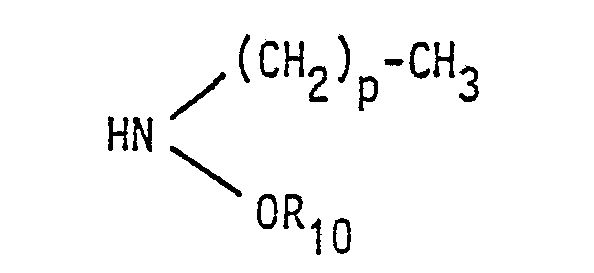
- die entsprechenden Amide bzw. Hydroxamsäuren gewinnen, die andererseits natürlich in an sich bekannter Weise auch aus den freien Carbonsäuren - (R13 bzw. R, = COOH) unter Zuhilfenahme wasserabspaltender Mittel wie Dicyclohexylcarbodiimid, Dimethylformamid/Thionylchlorid und dergleichen oder durch intermediäre Bildung reak tiver funktioneller Derivate des Carbonsäurerestes, wie z. B. gemischter Anhydride, Säurehalogenide usw., zugänglich sind.
- Enthält in den auf einem der obigen Wege gewonnenen Verbindungen der Formel I bzw. la der Rest R, bzw. R13 eine basische Gruppe, so läßt sich diese leicht durch Neutralisation mit einer geeigneten Säure in an sich bekannter Weise in ein pharmazeutisch verträgliches Salz mit dieser Säure überführen. Erfolgte diese Salzbildung in einem Lösungsmittel, in dem das entstehende Salz löslich ist, so erfolgt dessen Isolierung zweckmäßig durch Gefriertrocknung, obwohl natürlich auch das Ausfällen durch Zugabe von geeigneten, mit dem Lösungsmittel mischbaren Flüssigkeiten, in denen das Salz unlöslich ist, zur Isolierung des Salzes dienen kann. Vorzugsweise löst man aber die freie Base in einem wasserfreien, wenig polaren Mittel, wie z. B. Diethylether, gibt eine etherische Lösung der Säure zu und versetzt gegebenenfalls zur Einleitung der Kristallisation beispielsweise mit n-Hexan oder Petrolether. Auch in diesem Falle ist andererseits selbstverständlich die Isolierung des Salzes durch Eindampfen, vorzugsweise im Vacuum, möglich. Geeignete Säuren für diese Salzbildung sind z. B. Salzsäure, Bromwasserstoffsäure, Schwefelsäure, Phosphorsäure, Ameisensäure, Essigsäure, Benzoesäure, Salicylsäure, Benzolsulfonsäure und weitere zur Herstellung pharmazeutisch anwendbarer Salze gebräuchliche Säuren.
- Weitere Umwandlungsmöglichkeiten des Restes R4 bzw. R,3 liegen für den Fachmann auf der Hand. Beispielsweise kann die freie Carboxylgruppe (insbesondere wenn R3 von Wasserstoff verschieden ist) leicht durch Behandlung mit Diazomethan oder Diazoethan in die Carboxymethyl-bzw. Carboxyethylgruppe übergeführt werden.
- Die Darstellung der Ausgangsverbindungen für die oben beschriebenen Vorgehensweisen zur Herstellung der Verbindungen der Formeln II bzw. la erfolgt durchweg in an sich bekannter Weise. Die dafür in Betracht zu ziehenden Wege werden insbesondere auch unter Berücksichtigung der verschiedenen Bedeutungen von B, D und E gewählt. Z. B. kann man zur Herstellung einer Verbindung der Formel Illa, in der E für -C-C-sowie B und D für -CH2-CH2-stehen, eine Verbindung der Formel IVb mit 1,6-Dibromhexan oder 1,6-Dijodhexan umsetzen, wobei dann eine Verbindung der Formel Illa, in der R,2 für Brom oder Jod steht, anfällt. Diese Umsetzung erfolgt in der oben für die Reaktion der Verbindung der Formel IVb mit der Verbindung der Formel IIIb beschriebenen Weise.
- Eine Verbindung der Formel IIIb kann in entsprechender Weise leicht durch Reaktion einer Verbindung der Formel IVa mit einer Verbindung der Formel

- Verbindungen der Formel V lassen sich leicht aus der wie oben beschrieben hergestellten Verbindung der Formel IIIa, in der E für -C≡C-, B und D für -CHZ-CHZ-sowie R,2 für Brom oder Jod stehen, durch Umsetzung mit Lithiumacetylid-Ethylendiamin-Komplex in Dimethylsulfoxid bei Temperaturen von etwa 10° C und gegebenenfalls nachfolgende Abspaltung der Schutzgruppe R11 erhalten.
- Die Herstellung einer Verbindung der Formel VII gelingt leicht durch Umsetzung von Deca-1,9- diin mit einer Verbindung der Formel VI in Gegenwart eines sekundären oder tertiären Amins, bevorzugt Triethylamin, in Gegenwart katalytischer Mengen von Kupfer-(I)-jodid und eines komplexen Palladium-katalysators, wie z. B. Bis-(triphenylphosphin)-palladium-(II)-chlorid bei etwa 0° C bis 60° C, bevorzugt 20° C bis 25° C.
- Weitere Herstellungsmöglichkeiten für die Ausgangsverbindungen für das erfindungsgemäße Verfahren zur Herstellung von Verbindungen der Formel I ergeben sich für den Fachmann anhand der vorstehenden Ausführungen und des Standes der Technik in naheliegender Weise. Darüberhinaus sind verschiedene der erwähnten Ausgangsmaterialien auch literaturbekannt und zum Teil auch im Handel zugänglich.
- Die folgenden Beispiele dienen zur näheren Erläuterung des erfindungsgemäßen Verfahrens sowie der Vorgehensweise zur Herstellung der dabei benutzten neuen Ausgangsmaterialien und Zwischenprodukte. Bei ihrer Durchführung wurde auf die Erzielung maximaler Ausbeuten kein Wert gelegt.
- Alle Temperaturangaben sind unkorrigiert.
- Die Produkte liegen in Form von Ölen vor, soweit im Einzelfall keine anderen Angaben gemacht werden.
- Die 'H-NMR-Spektren wurden bei 60 MHz mit dem Gerät WP-60 der Firma Bruker aufgenommen. Die chemische Verschiebung der spektroskopischen Resonanzdaten wurde in ppm gemessen.
- Die in den Beispielen verwendete n-Butyllithiumlösung enthielt -gelöst in n-Hexan -1,6 Mol n-Butyllithium/Liter. Es können aber selbstverständlich auch Lösungen anderer Konzentrationen und/oder mit anderen Lösungsmitteln als n-Hexan eingesetzt werden.
- Die dünnschichtchromtographische Verfolgung des Reaktionsverlaufs wurde mit "HPTLC Fertigplatten, Kieselgel 60 F 254" der Firma E. Merck, Darmstadt, durchgeführt. Das benutzte Fließmittel wird in den Beispielen jeweils mit "(DC: ...)" angegeben.
- Für die Chromatographie bzw. Säulenchromatographie wurde als stationäre Phase -sofern nicht anders erwähnt -Kieselgel 60 (0,040 - 0,063 mm) der Firma Macherey-Nagel benutzt.
- Für die HPLC wurde ein von Macherey-Nagel unter der Bezeichnung "Nucleosil C 18 (10 u.m)" vertriebenes Kieselgel als stationäre Phase eingesetzt.
- Soweit nicht anders angegeben, handelt es sich bei dem in den Beispielen benutzten Ether um den Diethylether, bei dem Petrolether um denjenigen mit einem Siedebereich von 50° -70° C.
- Die Mischungsverhältnisse der Laufmittel für alle chromatographischen Untersuchungen sind stets in VolumenNolumen angegeben.
- Soweit nicht anders erwähnt, wurden in den Beispielen anfallende Enantiomerengemische nicht aufgetrennt. Die angegebenen Daten beziehen sich in solchen Fällen also auf die Enantiomerengemische.
- (Reaktion eines 2-Oxoalkyl-phosphonsäureesters nach Wittig-Horner mit einem Aldehyd am Beispiel der Herstellung von 5-Oxo-3E-decen-1-in).
- Eine Lösung von 26,7 g (2-Oxoheptyl)-phos- phonsäuredimethylester in 500 ml absolutem Tetrahydrofuran wird unter Rühren und Überleiten von trockenem Stickstoff tropfenweise so mit 68,8 ml n-Butyllithiumlösung versetzt, daß dabei die Innentemperatur 5° C nicht übersteigt. Man rührt 15 Minuten nach und tropft dann bei derselben Temperatur 5,4 g Propiolaldehyd in 250 ml absolutem Dimethoxyethan zu. Danach rührt man das Reaktionsgemisch noch 1 Stunde weiter und läßt dabei auf Raumtemperatur erwärmen. Anschließend wird durch tropfenweise Zugabe von Essigsäure neutralisiert und im Vakuum eingedampft. Man nimmt den Rückstand in Ether auf, wäscht die Lösung je zweimal mit gesättigten Lösungen von Natriumhydrogencarbonat bzw. Natriumchlorid und trocknet über Natriumsulfat.
- Das nach Eindampfen im Vakuum erhaltene Rohprodukt wird durch Säulenchromatographie mit Petrolether/Ether (5:1) gereinigt. Man erhält 10,82 g der Titelverbindung.
- (Reduktion einer Carbonylgruppe in Ketonen mit zusätzlicher Doppel-und gegebenenfalls Dreifachbindung am Beispiel der Herstellung von 5-Hydroxy-3E-decen-1-in)
- Zu 10,51 g 5-Oxo-3E-decen-1-in in 175 ml einer Lösung von Cer(III)-chlorid in Methanol (0,4 Mol/I) gibt man bei Raumtemperatur unter Rühren und Überleiten von trockenem Stickstoff vorsichtig und in kleinen Portionen 2,65 g Natriumborhydrid. Es wird etwa 30 Minuten nachgerührt, dann durch Zufließenlassen von 70 ml Pufferlösung-pH 7 zersetzt. Man versetzt mit 250 ml Dichlormethan und 50 ml einer gesättigten Kaliumnatriumtartratlösung. Die organische Phase wird abgetrennt, die wässrige noch zweimal mit je 50 ml Dichlormethan extrahiert. Die vereinigten organischen Phasen wäscht man je zweimal mit gesättigten Lösungen von Natriumhydrogencarbonat bzw. Natriumchlorid und trocknet über Natriumsulfat. Das durch Eindampfen im Vakuum erhaltene Rohprodukt wird durch Säulenchromatographie mit Petrolether/Ether (2 : 1) gereinigt. Man erhält 9,81 g der Titelverbindung.
- 18,2 ml tert-Butyldiphenylchlorsilan werden bei 0° C unter Rühren und Überleiten von trockenem Stickstoff tropfenweise zu einer Lösung von 8,83 g 5-Hydroxy-3E-decen-1-in (vgl. Referenzbeispiel B) und 4,77 g Imidazol in 60 ml absolutem Dimethylformamid gegeben. Nach beendeter Zugabe wird 3 Stunden bei Raumtemperatur weitergerührt, dann mit Dichlormethan verdünnt und nacheinander mit Wasser sowie mit gesättigten Lösungen von Natriumhydrogencarbonat bzw. Natriumchlorid gewaschen. Die organische Phase wird über Natriumsulfat getrocknet. Nach Eindampfen im Vakuum wird das zurückbleibende Öl durch Säulenchromatographie mit Petrolether/Toluol (10 : 1) gereinight. Man erhält 19,48 g der Titelverbindung.
'H-NMR (CDCl3): - 0,63 -1,65 (m, 11 H); 1,10 (s, 9 H); 2,80 (d, 1 H); 3,95 -4,36 (m, 1 H); 5,23 -6,33 (m, 2 H); 7,05 -7,75 (m, 10 H.
- Aus 0,316 g Magnesiumspänen und 0,93 ml Ethylbromid in 10 ml absolutem Tetrahydrofuran wird unter Überleiten von trockenem Stickstoff eine Grignard-Lösung bereitet. Dazu wird unter Rühren bei Raumtemperatur eine Lösung von 3,91 g 5-(tert-Butyl-diphenylsilyloxy)-3E-decen-1-in in 10 ml absolutem Tetrahydrofuran so zugetropft, daß die Innentemperatur 25° C nicht übersteigt. Man rührt noch 15 Minuten weiter, nimmt dann die gelb gefärbte Lösung mit einer Spritze auf und tropft sie unter Rühren und Überleiten von trockenem Stickstoff so zu einer Lösung von 5,92 g 1,4-Bis-(p-toluolsulfonyloxy)-2-butin (G. Eglington et al., J. Chem. Soc. 1950, 3650) in 15 ml absolutem Tetrahydrofuran, die außerdem ca. 50 mg Kupfer(I)-cyanid enthält, daß die Temperatur 30° C nicht übersteigt. Man rührt noch 30 Minuten nach, gießt dann in ein Gemisch aus 20 ml gesättigter Ammoniumchloridlösung und 40 ml Ether, trennt die organische Phase ab und extrahiert die wässrige Schicht noch zweimal mit Ether. Die vereinigten organischen Phasen wäscht man dreimal mit gesättigter Natriumchloridlösung und trocknet über Natriumsulfat. Eindampfen im Vakuum liefert 7,64 g eines Öls, das durch Säulenchromatographie mit Petrolether/ Ether (7 : 3) gereinigt wird. Man erhält 2,86 g der Titelverbindung.
- 'H-NMR (CDC6):
- 0,60 -1,60 (m, 11 H); 1,10 (s, 9 H); 2,43 (s, 3 H); 3,05 -3,25 (m, 2 H); 3,96 -4,30 (m, 1 H); 4,56 - 4,73 (t, 2 H); 5,16 -6,20 (m, 2 H); 7,03 -7,83 (m, 14 H).
- I 1,40 g 3-Ethinyl-benzoesäuremethylester [J. Org. Chem. 31, 2585 (1966)] werden in 10 ml absolutem Tetrahydrofuran gelöst. Zu der Lösung gibt man unter trocknem Stickstoff vorsichtig bei 0 -2° C 12,79 ml einer frisch bereiteten Lösung von Ethylmagnesiumbromid (0,833 Mol/I) in Tetrahydrofuran. Nach erfolgter Grignardzugabe wird noch 90 Minuten im Eisbad nachgerührt. Das Reaktionsgemisch wird mit 0,20 g Kupfer(I)-bromid und anschließend innerhalb von 30 Minuten mit 2,68 g des in Beispiel 1 b erhaltenen Produktes in 16 ml absolutem Tetrahydrofuran versetzt. (DC: n-Hexan/Essigsäureethylester/Ether -3 : 0,1 : 0,1). Nach etwa 2 Stunden wird mit gesättigter Ammoniumchloridlösung versetzt und dann mit Essigsäureethylester extrahiert. Die organische Phase wird mit gesättigter Natriumchloridlösung gewaschen, über Natriumsulfat getrocknet und dann im Vakuum eingedampft, wobei ein Öl hinterbleibt. Durch Säulenchromatographie mit n-Hexan/Essigsäureethylester/Ether (3 : 0,1 : 0,1) erhält man daraus 1,51 g der Titelverbindung. 'H-NMR (CDCI3):
- 0,60 -1,53 (m, 11 H); 1,10 (s, 9 H); 3,16 -3,47 (m, 4 H); 3,90 (s, 3 H); 3,93 -4,30 (m, 1 H); 5,20 - 6,23 - (m, 2 H); 7,07 -8,07 (m, 14 H).
- Das gleiche Produkt kann auch folgendermaßen erhalten werden:
- II i) 1-Hydroxy-6-(tert-butyldiphenylsilyloxy)-4E-undecen-2-in
- 6,84 g 5-(tert-Butyldiphenylsilyloxy)-3E-decen-1-in werden in 50 ml absolutem Ether gelöst und tropfenweise bei -40° C unter Rühren und Überleiten von trockenem Stickstoff mit 10,9 ml n-Butyllithiumlösung versetzt. Es wird noch 30 Minuten weitergerührt, wobei man auf Raumtemperatur erwärmen läßt. Dann gibt man 1,05 g Paraformaldehyd zu und erhitzt 3 Stunden zum Rückfluß. Man läßt abkühlen, gießt auf 20 ml gesättigte Ammoniumchloridlösung, verdünnt mit 50 ml Ether und trennt die organische Phase ab. Die wässrige Phase wird nochmals ausgeethert. Die vereinigten organischen Phasen werden zweimal mit gesättigter Natriumchloridlösung gewaschen, über Natriumsulfat getrocknet und im Vakuum eingedampft. Der Rückstand wird durch Säulenchromatographie mit Petrolether/Ether (3 : 2) gereinigt. Man erhält 5,74 g der Titelverbindung. 'H-NMR (CDCI,):
- 0,53 -1,60 (m, 11 H); 1,05 (s, 9 H); 1,53 (s, 1 H); 3,95 -4,36 (m 1 H); 4,30 (d, 2 H); 5,35 -6,20 (m, 2 H); 7,13 -7,75 (m, 10 H).
- 5,68 g des Produktes aus i) und 2,96 g p-Toluolsulfonsäurechlorid werden in 20 ml absolutem Ether gelöst und bei 0° C unter Rühren und Überleiten von trockenem Stickstoff portionsweise mit 0,99 g pulverisiertem Kaliumhydroxid versetzt. Dann läßt man in etwa 30 Minuten auf Raumtemperatur erwärmen und gibt dann portionsweise weitere 0,53 g Kaliumhydroxid hinzu. Es wird noch 2 Stunden gerührt, danach filtriert, mit absolutem Ether gewaschen und das Filtrat im Vakuum eingedampft. Dabei erhält man 7,10 g der Titelverbindung in für die Weiterverarbeitung genügend reiner Form. 'H-NMR (CDCl3):
- 0,65 -1,55 (m, 11 H); 1,07 (s, 9 H); 2,37 (s, 3 H); 3,95 -4,30 (m, 1 H); 4,76 (d, 2 H); 5,13 -6,15 (m, 2 H); 7,06 -7,86 (m, 14 H).
- 7,01 g des vorstehend in ii) erhaltenen Produktes, gelöst in 25 ml absolutem Aceton, werden unter Rühren und Überleiten von trockenem Stickstoff zu einer Lösung von 4,57 g Natriumjodid in 25 ml absolutem Aceton getropft. Nach Ablauf der Reaktion unter Rühren bei Raumtemperatur wird filtriert, mit Aceton nachgewaschen und das Filtrat im Vakuum eingedampft. Den Rückstand nimmt man in 100 ml Ether/30 ml Wasser auf und trennt die Etherphase ab. Diese wird noch zweimal mit Wasser gewaschen, über Natriumsulfat getrocknet und dann im Vakuum eingedampft. Das zurückbleibende Öl wird durch Chromatographie über Kieselgel 60 (0,063 -0,200 mm) mit Petrolether/Ether (10 : 1) gereinigt. Man erhält 5,89 g der Titelverbindung. 'H-NMR (CDCI,):
- 0,65 - 1,60 (m, 11 H); 1,06 (s, 9 H); 3,80 (d, 2 H); 3,95 -4,30 (m, 1 H); 5,23 -6,25 (m, 2 H); 7,13 -7,70 (m, 10 H).
- Zu einer Grignard-Lösung aus 0,243 g Magnesiumspänen und 0,71 ml Ethylbromid in 8 ml absolutem Tetrahydrofuran wird bei Raumtemperatur unter Rühren und Überleiten von trocknem Stickstoff langsam eine Lösung von 1,12 g 3-(Tetrahydro-2'-pyranyloxy)-1-propin (H. B. Henbest et al., J. Chem. Soc. 1950, 3646) in 8 ml absolutem Tetrahydrofuran getropft. Man rührt etwa 45 Minuten nach und fügt dann ca. 50 mg Kupfer-(I)-cyanid hinzu. Nach weiteren 15 Minuten gibt man 3,45 g 1-Jod-6-(tert-butyl-diphenylsilyloxy-4E-undecen-2- in, gelöst in 6,5 ml absolutem Tetrahydrofuran, tropfenweise zu. (DC: n-Hexan/Essigsäureethylester -6 : 1). Nach etwa 2 Stunden wird mit 10 ml gesättigter Ammoniumchloridlösung zersetzt und das Gemisch mehrfach mit Ether extrahiert. Die organische Phase wird mit gesättigter Natriumchloridlösung gewaschen und dann über Natriumsulfat getrocknet. Eindampfen im Vakuum liefert 2,80 g eines Öls, aus dem man durch Säulenchromatographie mit n-Hexan/Essigsäureethylester (6 : 1) 1,81 g der reinen öligen Titelverbindung erhält. 'H-NMR (CDCl3):
- 0,60 -1,95 (m, 17 H); 1,06 (s, 9 H); 3,16 -3,40 (m, 2 H); 3,40 -4,25 (m, 3 H); 4,10 -4,30 (m, 2 H); 4,60 - 4,83 (m, 1 H); 5,16 -6,20 (m, 2 H); 7,10 -7,73 (m, 10 H).
- Eine Lösung von 1,74 g des Produktes aus iv) und 0,08 g Pyridinium-toluol-4-sulfonat in 25 ml absolutem Ethanol wird unter Überleiten von trockenem Stickstoff 2 Stunden lang bei 55° C Badtemperatur gerührt. Dann wird im Vakuum eingedampft und der Rückstand mit Petrolether/Ether (2 : 1) chromatographiert. Man erhält 1, 25 g der Titelverbindung. 'H-NMR (CDCb):
- 0,60 -1,70 (m, 12 H); 1,06 (s, 9 H); 3,16 -3,40 (m, 2 H); 4,05 -4,36 (m, 3 H); 5,23 -6,23 (m, 2 H); 7,15 - 7,75 (m, 10 H).
- 1,24 g 1-Hydroxy-9-(tert-butyldiphenylsilyloxy)-7E-tetradecen-2,5-diin und 1,42 g Triphenylphosphin werden in 15 ml absolutem Dichlormethan gelöst. Dazu gibt man bei 0°C unter Rühren und Überleiten von trockenem Stickstoff portionsweise 1,79 g Tetrabrommethan. Nach einstündigem Rühren wird über Kieselgel 60 (0,063 -0,200 mm) mit n-Hexan chromatographiert und nach Eindampfen der Lösung im Vakuum der Rückstand durch Säulenchromatograhie mit n-Hexan/Ether (20 : 1) gereinigt. Man erhält 1,20 g der öligen Titelverbindung. 'H-NMR (CDCI3):
- 0,60 -1,60 (m, 11 H); 1,06 (s, 9 H); 3,23 -3,43 (m, 2 H); 3,80 -3,96 (t, 2 H); 3,93 -4,33 (m, 1 H); 5,23 - 6,25 (m, 2 H); 7,15 -7,75 (m, 10 H).
- An Stelle der Bromverbindung kann man bei diesem Vorgehen auch die entsprechende Jodverbindung einsetzen, die aus der Bromverbindung analog Beispiel 1clliii durch Umsetzung mit Natriumjodid in absolutem Aceton erhältlich ist. Aus 0,93 g 3-Ethinyl-benzoesäuremethylester, 1,32 g 1-Jod-9-(tert-butyldiphenylsilyloxy)-7E-tetradecen-2,5-diin und 0,17 g Kupfer-(I)-cyanid erhält man so 0,59 g eines Öls, dessen spektroskopische Resonanzdaten mit denen des nach Beispiel 1 cl hergestellten Produktes identisch sind.
- 1,34 g des in Beispiel 1 erhaltenen Produktes werden unter trockenem Stickstoff mit 15,5 ml einer methanolischen Lösung von Chlorwasserstoff (2 %) versetzt und bei Raumtemperatur gerührt bis alles in Lösung gegangen ist. (DC: n-Hexan/Ether - 1 : 1 Dann wird mit Essigsäureethylester verdünnt und nacheinander mit gesättigten Lösungen von Natriumbicarbonat und Natriumchlorid gewaschen. Es wird über Natriumsulfat getrocknet, eingedampft und der ölige Rückstand durch Säulenchromatographie mit n-Hexan/Ether (1 : 1) gereinigt, wobei man 0,59 g der Titelverbindung erhält.
- 'H-NMR (CDCl3):
- 0,67 -1,80 (m, 11 H); 3,07 -3,50 (m, 4 H); 3,90 (s, 3 H); 3,97 -4,27 (m, 1 H); 5,37 -6,27 (m, 2 H); 7,07 - 8,07 (m, 4 H).
- 0,29 g des Beispiel 1 erhaltenen Produktes werden in 8 ml absolutem Ethanol gelöst, mit 0,1 ml frisch destilliertem Chinolin versetzt und über 0,095 g Palladium auf Calciumcarbonat (5 % Pd; mit Blei vergifteter "Lindlar-Katalysator") hydriert. Nach langsamer Aufnahme von 55 ml Wasserstoff unter Normaldruck und bei Raumtemperatur kommt die Hydrierung zum Stillstand. Man filtriert den Katalysator ab und engt das Filtrat im Vakuum ein. Der Rückstand wird durch Säulenchromatographie an Kieselgel 60 (0,063 -0,200 mm) mit n-Hexan/Ether (1 : 1) vorgereinigt. Dabei fallen 0,22 g eines Produktes an, welches durch HPLC mit Methanol/Wasser (85 : 15) weiter aufgetrennt wird. Man erhält 0,14 g der Titelverbindung. 'H-NMR (CDCl3):
- 0,57 -1,63 (m, 11 H); 1,60 (s, 1 H); 2,60 -3,10 (m, 4 H); 3,80 (s, 3 H); 3,80 -4,17 (m, 1 H); 5,00 -6,53 (m, 8 H); 7,15 -7,85 (m, 4 H).
- 0,10 g des in Beispiel 2 erhaltenen Produktes, gelöst in 1 ml Methanol und 1 ml Tetrahydrofuran werden mit 1,08 ml einer wässrigen Lösung von Lithiumhydroxid (1 Mol/l) versetzt. (DC: Ether). Nach 18 Stunden wird im Vakuum weitgehend eingedampft, der Rückstand mit 2 ml Wasser verdünnt, unter Eiswasserkühlung mit verdünnter Salzsäure auf pH 3 -4 angesäuert und dreimal mit Ether extrahiert. Die vereinigten Etherextrakte werden zweimal mit Wasser gewaschen, über Natriumsulfat getrocknet und dann eingedampft. Man erhält 0,086 g der Titelverbindung. 'H-NMR (CDCI3):
- 0,43 -1,73 (m, 11 H); 2,12 -3,13 (m, 4 H); 3,83 -4,37 (m, 1 H); 4,90 -6,17 (m, 8 H); 6,77 -8,10 (m, 4 H).
- Man arbeitet analog Referenzbeispiel A und erhält so aus 15,88 g (2-Cyclohexyl-2-oxoethyl)-phosphonsäuredimethylester, 38,8 ml n-Butyllithiumlösung und 3,06 g Propiolaldehyd (75 %ige Lösung in Toluol) 7,78 g der Titelverbindung. 'H-NMR (CDCl3):
- 1,07 -2,10 (m, 10 H); 2,20 -2,77 (m, 1 H); 3,31 (d, 1 H); 6,53 -6,77 (m, 2 H).
- Man verfährt analog Referenzbeispiel B und erhält aus 7,62 g 5-Cyclohexyl-5-oxo-3E-penten-1- in, 117,5 ml einer Lösung von Cer(III)-chlorid in Methanol (0,4 Mol/I) und 1,78 g Natriumborhydrid 7,06 g der Titelverbindung. 'H-NMR (CDCl3):
- 0,65 -2,03 (m, 11 H); 1,60 (s, 1 H); 2,87 (d, 1 H); 3,77 -4,05 (m, 1 H); 5,43 -6,43 (m, 2 H).
- Durch Anwendung der in Beispiel 1a beschriebenen Verfahrensweise erhält man aus 6,95 g 5-Cyclahexyl-5-hydroxy-3E-penten-1-in, 13,2 ml tert-Butyldiphenylchlorsilan und 3,46 g Imidazol nach Säulenchromatographie mit Petrolether/Ether (7 : 3) 13,80 g der Titelverbindung. 'H-NMR (CDCl3):
- 0,65 -1,90 (m, 11 H); 1,10 (s, 9 H); 2,75 (d, 1 H); 3,77 -4,07 (m, 1 H); 5,07 -6,30 (m, 2 H); 7,13 -7,70 (m, 10 H).
- Man arbeitet analog Beispiel 1 und erhält so aus 4,84 g des Produktes des Beispiels 4c, 12 ml einer frisch bereiteten Lösung von Ethylmagnesiumbromid in Tetrahydrofuran (1,25 Mol/l) und 7,10 g 1,4-Bis-(p-toluolsulfonyloxy)-2-butin 3,23 g der Titelverbindung. 1H-NMR (CDCl3:
- 0,67 -1,90 (m, 11 H); 1,06 (s, 9 H); 2,40 (s, 3 H); 3,00 -3,20 (m, 2 H); 3,77 -4,03 (m, 1 H); 4,67 (t, 2 H); 5,03 -6,15 (m, 2 H); 7,10 -7,83 (m, 14 H).
- Man verfährt analog Beispiel 1 cl und erhält aus 1,60 g 3-Ethinyl-benzoesäuremethylester, 12 ml - (0,83 Mol/I) einer frisch bereiteten Lösung von Ethylmagnesiumbromid in Tetrahydrofuran, 0,23 g Kupfer-(I)-bromid und 3,13 g des Produktes aus Beispiel 4d 1,59 g der Titelverbindung. 'H-NMR (CDCI3):
- 0,67 -1,83 (m, 20 H); 3,13 -3,43 (m, 4 H); 3,73 -4,00 (m, 1 H); 3,85 (s, 3 H); 5,05 -6,15 (m, 2 H); 7,05 - 8,03 (m, 14 H).
- 1,23 g des in Beispiel 4e erhaltenen Produktes werden analog Beispiel 1d mit 14 ml einer methanolischen Lösung von Chlorwasserstoff (5 %) umgesetzt. Man isoliert 0,48 g der Titelverbindung. 'H-NMR (CDCI3):
- 0,75 -1,97 (m, 11 H); 1,53 (s, 1 H); 3,13 -3,43 (m, 4 H); 3,63 -3,97 (m, 1 H); 3,87 (s, 3 H); 5,37 -6,28 (m, 2 H); 7,07 -8,03 (m, 4 H).
- 0,337 g des in Beispiel 4 erhaltenen Produktes werden analog Beispiel 2 in alkoholischer, chinolinhaltiger Lösung über 0,084 g Palladium auf Calciumcarbonat (5 % Pd, mit Blei vergiftet) hydriert. Nach Reinigung durch HPLC mit Methanol/Wasser (85 : 15) erhält man 0,182 g der Titelverbindung. 'H-NMR (CDCl3):
- 0,75 -2,10 (m, 12 H); 2,67 -3,23 (m, 4 H); 3,67 -3,97 (m, 1 H); > 3,87 (s, 3 H); 5,03 -6,57 (m, 8 H); 7,20 - 7,90 (m, 4 H).
- Man verfährt analog Beispiel 1 cl und erhält aus 1,28 g 4-Ethinyl-benzoesäuremethylester [J. Org. Chem. 46, 2280 (1981)], 9,6 ml einer frisch bereiteten Lösung von Ethylmagnesiumbromid in Tetrahydrofuran (0,83 Mol/I), 0,18 g Kupfer-(I)-bromid und 2,45 g 1-(p-Toluolsulfonyloxy)-9-(tert-butyldiphenyl- silyloxy)-7E-tetradecen-2,5-diin (Produkt des Beispiels 1 b) 1,35 g der Titelverbindung. 'H-NMR (CDCl3):
- 0,60 -1,60 (m, 11 H); 1,07 (s, 9 H); 3,17 -3,47 (m, 4 H); 3,87 (s, 3 H); 3,90 -4,30 (m, 1 H); 5,20 -6,20 (m, 2 H); 7,07 -7,97 (m, 14 H).
- Man arbeitet analog Beispiel 1 und erhält aus 1,20 g des in Beispiel 6a dargestellten Produktes und 14 ml einer methanolischen Lösung von Chlorwasserstoff (2 %) 0,49 g der Titelverbindung. 'H-NMR (CDCI3):
- 0,75 -1,75 (m, 12 H); 3,23 -3,53 (m, 4 H); 3,93 (s, 3 H); 3,95 -4,33 (m, 1 H); 5,47 -6,33 (m, 2 H); 7,33 - 8,10 (m, 4 H).
- 0,272 g des in Beispiel 6 erhaltenen Produktes werden analog Beispiel 2 in alkoholischer, chinolinhaltiger Lösung über 0,068 g mit Blei vergiftetem Palladium auf Calciumcarbonat (5 % Pd) hydriert. Nach Reinigung durch HPLC mit Methanol/Wasser (85 : 15) erhält man 0,152 g der Titelverbindung. 'H-NMR (CDCl3):
- 0,63 -1,73 (m, 12 H); 2,70 -3,20 (m, 4 H); 3,90 (s, 3 H); 3,95 -4,25 (m, 1 H); 5,07 -6,63 (m, 8 H); 7,10 - 8,05 (m, 4 H).
- 5,61 g 3-Methyl-oct-1-in-3-ol [J. Am. Chem. Soc. 76, 4446 (1954)] und 4,4 ml frisch destilliertes 3,4-Dihydropyran in 40 ml absolutem Dichlormethan werden bei 0° C unter Rühren und Überleiten von trockenem Stickstoff mit 0,019 g p-Toluolsulfonsäure-Hydrat versetzt. Nach 2 Stunden gibt man 0,80 g Kaliumcarbonat-Pulver zu und rührt dann noch für eine Stunde, wobei man die Temperatur auf 20° C ansteigen läßt. Danach filtriert man ab, wäscht den Niederschlag mit Dichlormethan, dampft das Filtrat im Vakuum ein und reinigt den Rückstand durch Säulenchromatographie mit Petrolether/Ether (5 : 1). Man erhält 7,91 g der Titelverbindung. 'H-NMR (CDCI3):
- 0,70 -2,25 (m, 20 H); 2,43 (s, 1 H); 3,23 -4,13 (m, 2 H); 4,90 -5,17 (m, 1 H).
- In eine Lösung von 6,73 g des Produktes aus Beispiel 8a in 60 ml absolutem Tetrahydrofuran gibt man bei -78° C bis -70° C unter trockenem Stickstoff innerhalb von 45 Minuten tropfenweise 18,8 ml n-Butyllithiumlösung, rührt noch 60 Minuten im Kältebad nach und versetzt dann tropfenweise zunächst mit 13,85 ml 1,6-Dibromhexan, danach mit 15 ml absolutem Hexamethylphosphorsäuretriamid. Nach 5 Stunden wird das Kältebad entfernt. Wenn das Reaktionsgemisch sich auf 0° C erwärmt hat, versetzt man mit 60 ml gesättigter Ammoniumchloridlösung, extrahiert mit Ether und wäscht den Extrakt mehrmals mit Ammonchlorid-, dann mit gesättigter Natriumchloridlösung. Der Eindampfrückstand der über Natriumsulfat getrockneten Lösung liefert nach Säulenchromatographie mit Petrolether/Diisopropylether (15 : 1) 7,79 g der Titelverbindung. 'H-NMR (CDCI3):
- 0,67 -2,37 (m, 30 H); 3,20 -3,50 (t, 2 H); 3,23 -4,13 (m, 2 H); 4,87 -5,10 (m, 1 H).
- Man verfährt analog Beispiel 8b und erhält aus 1,60 g 3-Ethinyl-benzoesäuremethylester, 6,25 ml n-Butyllithiumlösung sowie 1,94 g des Produktes aus Beispiel 8b unter Zusatz von 6,2 ml absolutem Hexamethylphosphorsäuretriamid nach Säulenchromatographie mit Petrolether/Ether (5 : 1) 1,61 g der Titelverbindung. 'H-NMR (CDCl3):
- 0,60 -1,97 (m, 25 H); 1,50 (s, 3 H); 2,03 -2,55 (m, 4 H); 3,20 -4,13 (m, 2 H); 3,87 (s, 3 H); 4,90 -5,13 (m, 1 H); 7,07 -8,00 (m, 4 H).
- Man verfährt analog Beispiel 1 cllv und erhält durch Einwirkung von 0,084 g Pyridinium-toluol-4-sulfonat auf 1,56 des Produktes aus Beispiel 8c nach Säulenchromatographie mit n-Hexan/Ether (3 : 2) 1,07 g der Titelverbindung. 'H-NMR (CDCl3):
- 0,67 -1,93 (m, 23 H); 2,00 -2,55 (m, 4 H); 3,87 (s, 3 H); 7,07 -8,00 (m, 4 H).
- Man verfährt analog Beispiel 3 und erhält aus 0,84 g des Produktes aus Beispiel 8 und 11 ml einer wässrigen Lösung von Lithiumhydroxid (1 Mol/l) nach Ansäuern und Aufarbeitung 0,775 g der freien Säure in Form eines Öls, das in Wasser emulgiert und unter Rühren bis pH 7 mit 0,1 n Natronlauge (ca. 21,1 ml) versetzt wird. Durch Gefriertrocknung erhält man 0,78 g des Natriumsalzes der Titelverbindung in Form weißer Kristalle. 'H-NMR (CD,OD):
- 0,67 -1,73 (m, 22 H); 2,00 -2,50 (m, 4 H); 6,97 -7,90 (m, 4 H).
- Man verfährt analog Beispiel 8b und erhält aus 5,0 g 3-(Tetrahydro-2'-pyranyloxy)-1-propin, 22,31 ml n-Butyllithiumlösung sowie 16,3 ml 1,6-Dibromhexan unter Zusatz von 32,0 ml absolutem Hexamethylphosphorsäuretriamid nach Säulenchromatographie mit n-Hexan/Ether (10 : 1) 8,23 g der Titelverbindung. 'H-NMR (CDCI3):
- 1,16 -2,43 (m, 14 H); 3,20 -3,50 (m, 2 H); 3,52 -4,10 (m, 2 H); 4,61 -4,90 (m, 1 H).
- 1,32 g Lithiumacetylid-Ethylendiaminkomplex werden mit 7,5 ml absolutem Dimethylsulfoxid übergossen und unter trocknem Stickstoff 30 Minuten bei Raumtemperatur gerührt. In die auf 8° C abgekühlte Mischung gibt man bei einer Temperatur von 8° C bis 9° C langsam tropfenweise 3,01 g der im Beispiel 10a erhaltenen Bromverbindung, entfernt dann das Kühlbad und rührt 1 Stunde bei Raumtemperatur nach. Man versetzt mit 5 ml gesättigter Ammoniumchloridlösung, extrahiert mehrfach mit Ether, wäscht die vereinigten Extrakte je zweimal mit gesättigten Lösungen von Ammoniumchlorid bzw. Natriumchlorid und trocknet dann über Natriumsulfat. Nach Eindampfen im Vakuum erhält man durch Säulenchromatographie [mit Petrolether/Ether (1 : 1)] des Rückstandes 2,34 g der Titelverbindung. 'H-NMR (CDCl3):
- 1,10 -1,73 (m, 14 H); 1,74 -1,99 (t, 1 H); 2,01 -2,47 (m, 4 H); 3,40 -4,10 (m, 2 H); 4,11 -4,33 (m, 2 H); 4,67 -4,87 (m, 1 H).
- 11,50 g des Produktes aus Beispiel 10b und 12,10 g 4-Jodbenzoesäuremethylester werden in 70 ml über Kaliumhydroxid destilliertem Triethylamin gelöst und unter Rühren mit 0,982 g Bis-(triphenylphosphin)-palladium(II)-chlorid und 0,430 g Kupfer-(I)-jodid versetzt. (DC: Petrolether/Ether -2 : 1). Nach erfolgter Umsetzung wird mit Ether verdünnt, filtriert und das Filtrat im Vakuum eingedampft. Das zurückbleibende Öl wird durch Säulenchromatographie mit Petrolether/ Ether (2 : 1) gereinigt. Man erhält 15,31 g der Titelverbindung. 'H-NMR (CDC13):
- 1,23 -2,03 (m, 14 H); 2,04 -2,67 (m, 4 H); 3,93 (s, 3 H); 3,33 -4,07 (m, 2 H); 4,07 -4,37 (m, 2 H); 4,67 - 4,87 (m, 1 H); 7,13 -8,03 (m, 4 H).
- Man verfährt analog Beispiel 1cllv und erhält bei Verwendung von 1,30 g der in Beispiel 10c hergestellten Verbindung, 25 ml Ethanol und 0,086 g Pyridinium-toluol-4-sulfonat nach Säulenchromatographie mit Petrolether/Ether (1 : 1) 0,839 g der Titelverbindung. 'H-NMR (CDCl3):
- 1,16 -1,93 (m, 8 H); 1,98 -2,67 (m, 4 H); 3,94 (s, 3 H); 4,03 -4,37 (m, 2 H); 7,06 -8,01 (m, 4 H).
- Zu einer Suspension von 0,179 g N-Methylhydroxylamin-Hydrochlorid in 3,5 ml absolutem Methanol gibt man unter Eiswasserkühlung tropfenweise 1,07 ml einer methanolischen Lösung von Kaliumhydroxid (3 Mol/I) und nach 90- minütigem Rühren eine Lösung von 0,321 g des in Beispiel 10 hergestellten Esters in 1 ml Methanol und entfernt dann das Kühlbad. (DC: Essigsäureethylester/Methanol -4 : 0,5). Nach Reaktionsablauf wird das Methanol im Vakuum abgedampft, der Rückstand mit 4 ml Eiswasser versetzt, mit verdünnter Salzsäure auf pH 2 -3 angesäuert und mit Essigsäureethylester extrahiert. Die vereinigten Extrakte werden mit Wasser gewaschen und über Natriumsulfat getrocknet. Nach Eindampfen wird das zurückbleibende Rohprodukt durch Säulenchromatographie mit Essigsäureethylester/Methanol (4 : 0,5) gereinigt. Man erhält 0,182 g der Titelverbindung. 'H-NMR (CDCl3):
- 1,27 -1,93 (m, 8 H); 2,01 -2,56 (m, 4 H); 3,40 (s, 3 H); 4,07 -4,33 (m, 2 H); 7,20 -7,56 (m, 4 H).
- Man verfährt analog Beispiel 10c und erhält aus 2,112 g 2-Jodbenzoesäuremethylester, 2,0 g des in Beispiel 10b hergestellten Produktes, 0,076 g Kupfer-(I)-jodid und 0,168 g Bis-(triphenylphosphin)-palladium-(II)-chlorid 2,52 g der Titelverbindung. 'H-NMR (CDCb):
- 1,16 -1,94 (m, 14 H); 1,96 -2,67 (m, 4 H); 3,93 (s, 3 H); 3,33 -4,10 (m, 2 H); 4,10 -4,42 (m, 2 H); 4,60 - 4,83 (m, 1 H); 7,03 -7,83 (m, 4 H).
- Man verfährt analog Beispiel 1cllv und erhält aus 1,025 g des Produktes aus Beispiel 12a in 20 ml Methanol mit 0,066 g Pyridinium-toluol-4-sulfonat nach Säulenchromatographie mit Ether/Petrolether (2 : 1) 0,698 g der Titelverbindung. 'H-NMR (CDCl3):
- 1,20 -1,90 (m, 8 H); 1,23 -2,70 (m, 4 H); 3,90 (s, 3 H); 4,03 -4,37 (m, 2 H); 7,08 -7,90 (m, 4 H).
- Man verfährt analog Beispiel 8b und erhält aus 1,60 g 3-Ethinyl-benzoesäuremethylester, 6,25 ml n-Butyllithiumlösung, 4,6 ml 1,6-Di bromhexan sowie 5 ml absolutem Hexamethylphosphorsäuretriamid nach Säulenchromatographie mit n-Hexan/Essigsäureethylester/Ether (30 : 1 : 1 ) 2,23 g der Titelverbindung. 'H-NMR (CDCl3):
- 1,33 -2,17 (m, 8 H); 2,23 -2,60 (m, 2 H); 3,27 -3,53 (t,2 H); 3,87 (s, 3 H); 7,07 -8,03 (m, 4 H).
- Man bringt analog Beispiel 1clliii 2,20 g des Produktes aus Beispiel 13a und eine Lösung von 3,06 g Natriumjodid in Aceton zur Reaktion. Nach Aufarbeitung erhält man (ohne Chromatographie) 2,39 g eines leicht gelben Öls, das für die weitere Umsetzung genügend rein ist.
'H-NMR (CDCl3): - 1,23 -2,10 (m, 8 H); 2,23 -2,55 (m, 2 H); 3,03 -3,30 (t, 2 H); 3,87 (s, 3 H); 7,07 - 8,00 (m, 4 H).
- I Man arbeitet analog Beispiel 8b und erhält aus 0,79 g 3-(Tetrahydro-2'-pyranyloxy)-prop-1-in in 17 ml absolutem Tetrahydrofuran, 3,5 ml n-butyllithiumlösung, 1,04 g 3-(8'-Jod-oct-1'-in-1'-yl)-benzoesäuremethyiester in 3 ml absolutem Tetrahydrofuran sowie 5 ml absolutem Hexamethylphosphorsäuretriamid nach Säulenchromatographie mit Petrolether/Ether (5 : 1) 0,78 g der Titelverbindung. 'H-NMR (CDCl3):
- 1,30 -1,93 (m, 14 H); 2,00 -2,53 (m, 4 H); 3,20 -4,13 (m, 2 H); 3,87 (s, 3 H); 4,10 -4,27 (m, 2 H); 4,67 - 4,83 (m, 1 H); 7,05 -7,97 (m, 4 H).
- Das gleiche Produkt kann man auch auf folgenden Wegen erhalten:
- II Man arbeitet analog Beispiel 8b und erhält aus 0,72 g 3-Ethinyl-benzoesäuremethylester, 2,80 ml n-Butyllithiumlösung, 0,68 g des Produktes aus Beispiel 10a sowie 4 ml absolutem Hexamethylphosphorsäuretriamid nach Säulenchromatographie analog Beispiel 13cl 0,56 g des Produktes mit den gleichen spektroskopischen Resonanzdaten.
- III Man bringt analog Beispiel 10c 0,579 g 11-(Tetrahydro-2'-pyranyloxy)-undeca-1,9-diin, 0,61 g 3-Jodbenzoesäuremethylester, 0,033 g Bis-(triphenylphosphin)-palladium-(II)-chlorid und 0,01 g Kupfer(I)-jodid zur Reaktion. Nach Aufarbeitung analog Beispiel 10c erhält man 0,784 g des gleichen Produktes.
- Man verfährt analog Beispiel 1 cllv und erhält aus 2,03 g des in Beispiel 13c erhaltenen Produktes in 50 ml Ethanol mit 0,133 g Pyridinium-toluol-4-sulfonat nach Säulenchromatographie mit n-Hexan/Ether (1 : 1) 1,39 g der Titelverbindung.
- 'H-NMR (CDCI3):
1,30 -1,90 (m, 9 H); 2,07 -2,60 (m, 4 H); 3,90 (s, 3 H); 4,07 -4,37 (m, 2 H); 7,10 -8,07 (m, 4 H). - Das gleiche Produkt kann man auch gemäß Beispiel 14 herstellen.
- Man versetzt 3,24 g Deca-1,9-diin in 300 ml absolutem Tetrahydrofuran bei -40° C unter Rühren und Überleiten von trockenem Stickstoff innerhalb einer Stunde tropfenweise mit 59,4 ml n-Butyllithiumlösung, rührt eine Stunde nach, wobei man die Temperatur auf 0° C ansteigen läßt, gibt 6,00 g Paraformaldehyd zu und erhitzt zum Rückfluß. (DC: Petrolether/Ether -3 : 2). Nach beendeter Umsetzung wird mit gesättigter Ammoniumchloridlösung zersetzt und mehrmals mit Ether extrahiert. Die Etherphasen werden über Natriumsulfat getrocknet und im Vakuum eingedampft. Der ölige Rückstand wird durch Säulen chromatographie mit Petrolether/Ether (3 : 2) gereinigt. Dabei fallen 8,27 g der Titelverbindung in flüssiger Form an, die im Kühlschrank allmählich erstarrt und dann einen Schmelzpunkt von 25° C zeigt. 'H-NMR (CDCl3):
- 1,27 -1,80 (m, 9 H); 1,85 -2,00 (t, 1 H); 2,00 -2,40 - (m, 4 H); 4,10 -4,30 (t, 2 H).
- Dieses Produkt läßt sich auch durch Abspaltung der Tetrahydropyranylgruppe aus der in Beispiel 10b hergestellten Substanz gewinnen.
- Man bringt analog Beispiel 10c 3,29 g Undeca-2,10-diin-1-ol, 5,24 g 3-Jodbenzoesäuremethylester, 0,283 g Bis-(triphenylphosphin)-palladium-(II)-chlorid und 0,086 g Kupfer-(I)-jodid zur Reaktion. Nach Säulenchromatographie mit n-Hexan/Ether (3 : 2) erhält man 4,96 g eines Öls, dessen spektroskopische Resonanzdaten mit denen des nach Beispiel 13d gewonnenen Produktes übereinstimmen.
- 1,00 g 3-Jodbenzoylchlorid wird mit 2,35 ml 1-Hexanol übergossen und drei Stunden bei Raumtemperatur gerührt. Dann gibt man die Lösung direkt auf eine mit Kieselgel 60 (0,063 -0,200 mm) beschickte Fritte und eluiert mit Petrolether/Ether - (8 : 1). Einengen des Eluats, zuletzt am Ölpumpenvakuum, liefert 1,09 g der Titelverbindung. 'H-NMR (CDCl3):
- 0,70 -2,03 (m, 11 H); 4,10 -4,40 (t, 2 H); 6,93 -8,33 (m, 4 H).
- Man bringt analog Beispiel 10c 0,164 g Undeca-2,10-diin-1-ol, 0,332 g 3-Jodbenzoesäure-n-hexylester, 0,014 g Bis-(triphenylphosphin)-palladium(II)-chlorid und 0,004 g Kupfer(l)-jodid zur Reaktion. Nach Säulenchromatographie mit n-Hexan/Ether (3 : 2) erhält man 0,298 g der Titelverbindung. 'H-NMR (CDCl3):
- 0,73 -2,05 (m, 20 H); 2,00 -2,57 (m, 4 H); 4,07 -4,40 (m, 4 H); 7,05 -8,00 (m, 4 H).
- 8,39 g 3-Jodbenzoylchlorid werden in einem Gemisch aus 30 ml Tetrahydrofuran und 15 ml Wasser gelöst und unter Rühren bei 0° C portionsweise mit 2,22 g N-Methylhydroxylamin versetzt. Man läßt auf Raumtemperatur erwärmen und rührt noch drei Stunden. Dann wird mehrfach mit Ether extrahiert. Der Extrakt wird zweimal mit Wasser gewaschen, über Natriumsulfat getrocknet und dann im Vakuum eingedampft. Man nimmt den Rückstand in einem Gemisch aus n-Hexan und Ether (1 : 2) auf und läßt im Kühlschrank stehen. Dabei fallen 6,45 g der Titelverbindung in Form weißer Kristalle an, die bei 97° C bis 99° C - schmelzen. 'H-NMR (CDCl3):
- 3,35 (s, 3 H); 6,90 -7,87 (m, 5 H).
- 0,17 g Undeca-2,10-diin-1-ol, 0,287 g 3-Jod-N-methylbenzhydroxamsäure, 0,015 g Bis-(triphenylphosphin)-palladium(II)-chlorid und 0,004 g Kupfer-(I)-jodid werden analog Beispiel 10c umgesetzt. Durch Reinigung des Rohproduktes mittels HPLC unter Verwendung eines Methanol/ Wasser/Tetrahydrofuran/Phosphatpuffer pH5-Gemisches (65 : 35 : 5 : 2) als Elutionsmittel erhält man 0,23 g der Titelverbindung in Form einer wachsartigen Masse. 'H-NMR (DMSO-d.):
- 1,27 -1,85 (m, 8 H); 2,00 -2,57 (m, 4 H); 3,20 (s, 3 H); 3,87 -4,13 (m, 2 H); 4,73 -5,00 (t, 1 H); 7,17 - 7,57 (m, 4 H); 9,80 (s, 1 H).
- 0,90 g 3-Jodbenzoylchlorid werden unter Rühren und Eisbadkühlung in 6,8 ml Piperidin getropft. Man läßt drei Stunden bei Raumtemperatur stehen, dampft im Vakuum ein und chromatographiert den Rückstand an Kieselgel 60 (0,063 -0,200 mm) mit Petrolether/Ether (1 : 1). Man erhält so 0,97 g der Titelverbindung. 'H-NMR (CDCl3):
- 1,40 -1,80 (m, 6 H); 3,20 -3,70 (m, 4 H); 6,85 -7,73 (m, 4 H).
- 0,12 g Undeca-2,10-diin-1-oi, 0,23 g 3-Jod-benzoesäurepiperidid, 0,011 g Bis-(triphenylphosphin)-palladium(II)-chlorid und 0,003 g Kupfer(1)-jodid werden analog Beispiel 10c zur Reaktion gebracht. Durch Säulenchromatographie des Rohproduktes mit n-Hexan/Ether (1 : 3) erhält man 0,198 g der Titelverbindung. 'H-NMR (CDCl3):
- 1,23 -1,90 (m, 15 H); 2,03 -2,57 (m, 4 H); 3,17 -3,80 (m, 4 H); 4,07 -4,30 (m, 2 H); 7,07 -7,43 (m, 4 H).
- Analog Beispiel 10c werden 0,205 g Undeca-2,10-diin-1-ol unter der katalytischen Wirkung von 0,018 g Bis-(triphenylphosphin)-palladium (II)-chlorid und 0,005 g Kupfer-(I)-jodid mit 0,345 g 3-Jodbenzoesäureethylester zur Reaktion gebracht. Nach Säulenchromatographie mit n-Hexan/Ether (1 : 1) erhält man 0,315 g der Titelverbindung.
'H-NMR (CDCl3): - 1,10 -1,80 (m, 12 H); 2,00 -2,60 (m, 4 H); 4,03 -4,50 (m, 4 H); 7,03 -8,00 (m, 4 H).
- 1,581 g 3-Jod-benzoesäure-N,N-dimethylamid (erhalten aus 3-Jodbenzoylchlorid und Dimethylamin analog Beispiel 17a) und 1,427 g des Produktes aus Beispiel 10b werden in 7,2 ml absolutem Triethylamin gelöst und mit 0,054 g Kupfer(I)-jodid sowie 0,121 g Bis-(triphenylphosphin)-palladium(II)-chlorid versetzt. (DC: Petrolether/Essigsäureethylester -3 : 4). Nach erfolgter Umsetzung wird mit Ether verdünnt, filtriert und das Filtrat im Vakuum eingedampft. Der Rückstand wird durch Säulenchromatographie mit Petrolether/Essigsäureethylester (3 : 4) gereinigt. Man erhält 1,93 g der Titelverbindung. 'H-NMR (CDCl3):
- 1,27 -1,39 (m, 14 H); 2,03 -2,60 (m, 4 H); 3,03 (s, 6 H); 3,23 -4,03 (m, 2 H); 4,03 -4,13 (m, 2 H); 4,60 - 4,90 (m, 1 H); 7,04 -7,47 (m, 4 H).
- Man verfährt analog Beispiel 1cllv und erhält aus 0,824 g des Produktes aus Beispiel 19a in 20 ml Ethanol mit 0,055 g Pyridinium-toluol-4-sulfonat nach Säulenchromatographie mit Petrolether/Essigsäureethylester (3 : 4) 0,571 g der Titelverbindung.
- 'H-NMR (CDCl3):
1,30 -1,93 (m, 8 H); 2,04 -2,60 (m, 4 H); 3,02 (s, 6 H); 4,04 -4,37 (m, 2 H); 7,10 -7,51 (m, 4 H). - Man verfährt analog Beispiel 19a und erhält aus 1,92 g 3-Jodbenzoesäure-n-propylester - (erhalten aus 3-Jodbenzoylchlorid und n-Propanol analog Beispiel 15a), 1,50 g des Produktes aus Beispiel 10b, 0,057 g Kupfer(I)-jodid, 0,126 g Bis-(triphenylphosphin)-palladium(II)-chlorid und 10 ml absolutem Triethylamin nach Säulenchromatographie mit n-Hexan/Ether (3 : 1) 2,18 g der Titelverbindung. 'H-NMR (CDCI3):
- 0,70 -1,23 (m, 3 H); 1,23 -2,56 (m, 20 H); 3,20 -4,40 (m, 6 H); 4,56 -4,93 (m, 1 H); 7,07 -8,07 (m, 4 H).
- Man verfährt analog Beispiel 1cllv und erhält aus 1,00 g des Produktes aus Beispiel 20a in 20 ml Methanol mit 0,066 g Pyridinium-toluol-4-sulfonat nach Säulenchromatographie mit Ether/Petrolether (2 : 1) 0,746 g der Titelverbindung.
'H-NMR (CDCl3): - 0,80 -1,20 (m, 3 H); 1,27 -2,60 (m, 14 H), 3,93 -4,40 (m, 4 H); 7,10 -8,03 (m, 4 H).
- Man verfährt unter Verwendung von 6,16 ml 2-Dimethylaminoethylamin, gelöst in 25 ml absolutem Tetrahydrofuran, und 5,0 g 3-Jodbenzoylchlorid in 15 ml absolutem Tetrahydrofuran analog Beispiel 17a und erhält nach Säulenchromatographie mit Dichlormethan/Methanol (4 : 1) 4,98 g der Titelverbindung.
'H-NMR (CDCI3):
2,27 (s, 6 H); 2,37 -2,67 (m, 2 H); 3,20 -3,63 (m, 2 H); 6,67 -8,10 (m, 5 H). - Man verfährt analog dem in Beispiel 10c beschriebenen Vorgehen, verwendet aber 1,51 g Undeca-2,10-diin-1-ol, 2,90 g 3-Jodbenzoesäure-[N-(2'-dimethylaminoethyl)-amid], 0,138 g Bis-(triphenylphosphin)-palladium(II)-chlorid und 0,058 g Kupfer(1)-jodid. Nach Säulenchromatographie mit Dichlormethan/Methanol (4 : 1) erhält man 2,46 g der Titelverbindung.
'H-NMR (CDCl3):
1,30 -1,90 (m, 8 H); 1,98 -2,73 (m, 6 H); 2,33 (s, 6 H); 3,27 -3,63 (m, 2 H); 4,13 -4,33 (m, 2 H); 6,60 - 7,80 (m, 5 H). - 1 g dieser Verbindung werden in 5 ml absolutem Diethylether gelöst, tropfenweise mit 2 ml einer ca. 5 %-igen Lösung von Chlorwasserstoff in Ether versetzt, und dann wird das Reaktionsgemisch im Vakuum eingedampft. Man erhält das Hydrochlorid in Form weißer Kristalle vom Schmelzpunkt 82 -84° C.
'H-NMR (CDCI3):
1,33 -1,83 (m, 8 H); 2,04 -2,60 (m, 4 H); 2,90 (s, 6 H); 3,06 -3,43 (m, 2 H); 3,60 -4,10 (m, 2 H); 4,15 - 4,30 (m, 2 H); 7,23 -8,03 (m, 4 H); 8,23 -8,67 (m, 1 H). - 1,20 g Undeca-2,10-diin-1-ol und 1,33 g 3-Brombenzonitril, gelöst in 30 ml absolutem Triethylamin, werden mit 0,105 g Bis-(triphenylphosphin)-palladium(II)-chlorid sowie 0,03 g Kupfer(I)-jodid versetzt und bei einer Badtemperatur von 70° C gerührt. (DC: Petrolether/Ether -1 : 1). Nach 6 Stunden ist die Umsetzung beendet. Man verdünnt das Reaktionsgemisch mit 50 ml Ether, filtriert und dampft das Filtrat im Vakuum ein. Der ölige Rückstand wird durch Säulenchromatographie mit Petrolether/Ether (1 : 1) gereinigt. Man erhält 1,31 g der Titelverbindung in Form eines Öls.
'H-NMR (CDCl3):
1,20 -1,83 (m, 8 H); 2,00 -2,57 (m, 4 H); 4,05 -4,33 (m, 2 H); 7,07 -7,65 (m, 4 H). -
- a) 13,42 g Deca-1,9-diin werden in 200 ml absolutem Tetrahydrofuran gelöst. In die auf -78° C bis -70° C abgekühlte Lösung gibt man innerhalb von einer Stunde tropfenweise 32 ml n-Butyllithiumlösung, rührt noch 60 Minuten im Kältebad nach und versetzt dann innerhalb von 15 Minuten die so erhaltene Lösung der Monolithiumverbindung des Deca-1,9-diins tropfenweise mit einer Lösung von 7,4 ml Cyclohexylaldehyd in 15 ml absolutem Tetrahydrofuran. Man läßt im Laufe von 5 Stunden auf 0° C erwärmen und zersetzt dann mit 50 ml gesättigter Ammoniumchloridlösung. Das Gemisch wird mit Ether extrahiert, der Extrakt mit gesättigter Natriumchloridlösung gewaschen, über Natriumsulfat getrocknet und eingedampft. Nach Säulenchromatographie des Rückstandes mit Petrolether/Ether (3 : 1) erhält man 7,22 g 1-Cyclohexyl-undeca-2,10- diin-1-ol.
'H-NMR (CDCl3):
0,75 -2,40 (m, 25 H); 3,90 -4,20 (m, 1 H). - b) Dieses setzt man dann analog Beispiel 10c in Gegenwart von Bis-(triphenylphosphin)-palladium-(II)-chlorid, Kupfer-(I)-jodid und Triethylamin mit den entsprechenden 3-Jodbenzoesäurederivaten um und erhält so:
- i) 3-(11 '-Cyciohexyl-11'-hydroxy-undeca-1',9'-diin-1'-yl)-benzoesäurepiperidid.
'H-NMR (CDCl3):
0,80 -2,00 (m, 26 H); 2,05 -2,57 (m, 4 H); 3,20 -3,73 (m, 4 H); 3,95 -4,17 (m, 1 H); 7,07 -7,40 (m, 4 H). - ii) 3-(11'-Cyclohexyl-11'-hydroxy-undeca-1',9'-diin-1'-yl)-benzoesäuremorpholid.
'H-NMR (CDCl3):
0,87 -2,07 (m, 20 H); 2,03 -2,60 (m, 4 H); 3,35 -3,87 (m, 8 H); 3,90 -4,23 (m, 1 H); 7,07 -7,43 (m, 4 H). - iii) 3-(11'-Cyclohexyl-11'-hydroxy-undeca-1',9'-diin-1'-yl)-N-methylbenzhydroxamsäure.
'H-NMR (CDCl3):
0,75 -2,05 (m, 20 H); 2,05 -2,60 (m, 4 H); 3,33 (s, 3 H); 3,93 -4,20 (m, 1 H); 7,13 - 7,57 (m, 4 H). - iv) 3-(11 '-Cyclohexyl-11'-hydroxy-undeca-1',9'-diin-1'-yl)-N-methyl-N-methoxy- benzoesäureamid.
'H-NMR (CDCl3):
0,75 -1,90 (m, 20 H); 1,95 -2,50 (m, 4 H); 3,27 (s, 3 H); 3,47 (s, 3 H); 3,87 -4,13 (m, 1 H); 6,93 -7,53 (m, 4 H). - v) 3-(11'-Cyclohexyl-11'-hydroxy-undeca-1',9'-diin-1'-yl)-benzoesäure-(N4-methyl)-piperazid.
'H-NMR (CDCl3):
0,90 -2,03 (m, 20 H); 2,05 -2,53 (m, 11 H); 3,30 -3,73 (m, 4 H); 3,87 -4,15 (m, 1 H); 7,05 -7,37 (m, 4 H). - vi) 3-(11'-Cyctohexyl-11'-hydroxy-undeca-1',9'-diin-1'-yl)-benzoesäurepyrrolidid.
'H-NMR (CDCl3):
0,90 -2,50 (m, 28 H); 3,15 -3,70 (m, 4 H); 3,90 -4,15 (m, 1 H); 7,00 -7,37 (m, 4 H).
- i) 3-(11 '-Cyciohexyl-11'-hydroxy-undeca-1',9'-diin-1'-yl)-benzoesäurepiperidid.
- Man verfährt analog Beispielen 15 bis 19 und erhält aus den entsprechenden Ausgangsmaterialien:
- a) 3-(11'-Hydroxy-undeca-1',9'-diin-1'-yl)-be- nzoesäuremorpholid.
'H-NMR (CDCl3):
1,33 -1,80 (m, 9 H); 2,03 -2,55 (m, 4 H); 3,37 -3,80 (m, 8 H); 4,03 -4,27 (m, 2 H); 7,05 - 7,40 (m, 4 H). - b) 3-(11'-Hydroxy-undeca-1',9'-diin-1'-yl)-N-methyl-N-methoxy-benzoesäureamid.
'H-NMR (CDCI3):
1,33 -1,85 (m, 9 H); 2,00 -2,60 (m, 4 H); 3,27 (s, 3 H); 3,47 (s, 3 H); 4,00 -4,30 (m, 2 H); 6,93 -7,60 (m, 4 H. - c) 3-(11'-Hydroxy-undeca-1',9'-diin-1'-yl)-benzoesäure-(N'-methyl)-piperazid und dessen Hydrochlorid.
'H-NMR (CDCl3):
1,33 -1,90 (m, 9 H); 2,05 -2,60 (m, 11 H); 3,37 -3,80 (m, 4 H); 4,10 -4,25 (m, 2 H); 7,05 -7,37 (m, 4 H).
'H-NMR (CDCl3) (Hydrochlorid):
1,35 -1,90 (m, 9 H); 2,03 -2,50 (m, 4 H); 2,60 -4,50 (m, 13 H); 7,10 -7,40 (m, 4 H). - d) 3-(11'-Hydroxy-undeca-1',9'-diin-1'-yl)-be- nzoesäurepyrrolidid.
'H-NMR (CDCI3):
1,33 -2,50 (m, 17 H); 3,15 -3,70 (m, 4 H); 4,07 -4,23 (m, 2 H); 7,10 -7,47 (m, 4 H). - e) N-[3-(11'-Hydroxy-undeca-1',9'-diin-1'-yl)-benzoyl]-hexamethylenimin.
'H-NMR (CDCl3):
1,33 -1,95 (m, 17 H); 2,00 -2,50 (m, 4 H); 3,10 -3,70 (m, 4 H); 4,05 -4,20 (m, 2 H); 6,95 -7,30 (m, 4 H). - f) 3-(11 '-Hydroxy-undeca-1',9'-diin-1'-yt)-benzoesäure-n-pentylamid.
'H-NMR (CDCl3):
0,63 -2,53 (m, 21 H); 3,07 -3,53 (m, 2 H); 3,93 -4,13 (m, 2 H); 5,60 -6,11 (m, 1 H); 6,83 -7,53 (m, 4 H). - g) 3-(11'-Hydroxy-undeca-1',9'-diin-1'-yl)-benzoesäure-[N,N-di-(n-propyl)]-amid.
'H-NMR (CDCI3):
0,41 -2,63 (m, 22 H); 2,73 -3,60 (m, 4 H); 3,93 -4,27 (m, 2 H); 6,83 -7,40 (m, 4 H). - h) 3-(11'-Hydroxy-undeca-1',9'-diin-1'-yl)-benzoesäure-N-(2'-hydroxyethyl)-amid.
'H-NMR (CDCl3):
1,13 -2,56 (m, 12 H); 3,20 -3,83 (m, 4 H); 3,90 -4,33 (m, 2 H); 6,20 -6,77 (m, 1 H); 6,85 -7,67 (m, 4 H). - i) 3-(11'-Hydroxy-undeca-1',9'-diin-1'-y))-benzoesäure-[N,N-di-(2'-hydroxyethyl)]-amid.
'H-NMR (CDCI3)
1,16 -2,60 (m, 12 H); 2,87 -4,20 (m, 10 H); 6,87 -7,33 (m, 4 H). - k) 3-(11'-Hydroxy-undeca-1',9'-diin-1'-yl)-be- nzaesäure-[2'-(N,N-dimethylamino)-ethyl]-ester und dessen Hydrochlorid.
'H-NMR (CDCl3):
1,23 -2,87 (m, 14 H); 2,33 (s, 6 H); 3,95 -4,53 (m, 4 H); 6,93 -8,11 (m, 4 H).
1H-NMR (CDCl3) (Hydrochlorid):
1,06 -2,53 (m, 12 H); 2,77 -2,87 (d, 6 H); 3,03 -3,53 (m, 2 H); 3,95 -4,20 (m, 2 H); 4,47 -4,87 (m, 2 H); 6,87 -7,87 (m, 4 H). - I) 3-(11'-Hydroxy-undeca-1',9'-diin-1'-yl)-benzoesäure-(N-methyl-N-acetoxy)-amid.
'H-NMR (CDCI3):
1,35 -1,80 (m, 9 H); 1,93 (s, 3 H); 1,90 -2,53 (m, 4 H); 3,25 (s, 3 H); 3,93 -4,23 (m, 2 H); 6,95 -7,40 (m, 4 H). - m) 3-(11'-Hydroxy-undeca-1',9'-dii-1'-yl)-benzoesäure-n-propylamid.
'H-NMR (CDCl3):
0,70 -2,53 (m, 17 H); 3,11 -3,51 (m, 2 H); 3,92 -4,20 (m, 2 H); 5,51 -6,13 (m, 1 H); 6,90 -7,61 (m, 4 H). - n) 3-(11'-Hydroxy-undeca-1',9'-diin-1'-yl)-benzoesäure-[N,N-di-(isopropyl)]-amid.
'H-NMR (CDCI3):
1,16 -2,51 (m, 24 H); 3,37 -3,73 (m, 2 H); 3,93 -4,17 (m, 2 H); 6,83 -7,27 (m, 4 H). -
- a) Man verfährt wie in Beispiel 23a und erhält so aus der Monolithiumverbindung des Deca-1,9-diins und Benzaldehyd 1-Phenyl-undeca-2,10-diin-1-ol, das bei Umsetzung unter den in Beispiel 10c beschriebenen Bedingungen mit 3-Jodbenzoesäuremethylester den 3-(11'-Hydroxy-11 '-phenyl-undeca-1',9'-diin-1'-yl)-benzoesäuremethylester liefert.
'H-NMR (CDCl3):
1,33 -1,90 (m, 8 H); 1,97 -2,60 (m, 5 H); 3,83 (s, 3 H); 5,17 -5,43 (m, 1 H); 6,95 -7,95 (m, 9 H). - b) Analog Beispiel 25a erhält man unter Verwendung von Anisaldehyd anstelle von Benzaldehyd den 3-[11'-Hydroxy-11'-(4"-methoxyphenyl)-undeca-1',9'-diin-1'-yl]-benzoesäuremethylester.
'H-NMR (CDCl3):
1,30 -1,75 (m, 8 H); 1,90 -2,50 (m, 5 H); 3,70 (s, 3 H); 3,83 (s, 3 H); 6,57 -7,90 (m, 8 H). - c) Unter Verwendung von Veratrumaldehyd erhält man in analoger Weise den 3-[11'-Hydroxy-11 '-(3",4"-dimethoxyphenyl)-undeca-1 1',9'-diin-1'-yl]-benzoesäuremethylester.
'H-NMR (CDCl3):
1,30 -1,77 (m, 8 H); 1,95 -2,50 (m, 5 H); 3,83 (s, 3 H); 3,86 (s, 6 H); 5,15 -5,40 (m, 1 H); 6,53 -7,90 (m, 7 H). - d) Verwendet man beim Vorgehen gemäß Beispiel 25a statt Benzaldehyd den Phenoxyacetaldehyd, so erhält man den 3-(11'-Hydroxy-12'-phenoxy-dodeca-1',9'-diin-1'-yl)-benzoesäuremethylester.
'H-NMR (CDCl3):
1,16 -1,87 (m, 8 H); 1,95 -2,56 (m, 4 H); 3,77 -4,10 (m, 2 H); 3,83 (s, 3 H); 4,37 -4,73 (m, 1 H); 6,43 -7,87 (m, 9 H). - e) Man arbeitet analog Beispiel 25a, verwendet aber Phenylacetaldehyd und in der zweiten Stufe statt 3-Jod-benzoesäure-methylester den entsprechenden n-Propylester und erhält so den 3-(11'-Hydroxy-12'-phenyl- dodeca-1',9'-diin-1'-yl)-benzoesäure-n-propylester.
'H-NMR (CDCI3):
0,73 -2,53 (m, 17 H); 2,83 -2,93 (d, 2 H); 3,93 -4,56 (m, 3 H); 6,83 -7,93 (m, 9 H). -
- a) Ausgehend von 3-Jodbenzoesäure-n-propylester stellt man analog Beispiel 23b den 3-(Deca-1 ',9'-diin-1'-yl)-benzoesäure-n-propylester her, löst diesen in Triethylamin und gibt zunächst eine äquimolare Menge β-Methoxypropionylchlorid, dann katalytische Mengen von Bis(triphenylphosphin)-palladium-(II)-chlorid und Kupfer-(1)-jodid zu. Man erhält so den 3-(13'-Methoxy-11'-oxo- trideca-1',9'-diin-1'-yl)-benzoesäure-n-propylester, der durch Reduktion in der im Referenzbeispiel B beschriebenen Weise in den 3-(11 '-Hydroxy-13'-methoxy-trideca-1',9'-diin-1'-yl)-benzoesäure-n-propylester übergeführt wird.
'H-NMR (CDCl3):
0,77 -2,47 (m, 17 H); 3,27 (s, 3 H); 3,33 -3,73 (m, 2 H); 3,93 -4,53 (m, 5 H); 6,87 -7,91 (m, 4 H). - b) Geht man bei dem Verfahren des Beispiels 26a von 3-Jodbenzoesäuremethylester aus und verwendet statt des β-Methoxypropionylchlorids das Methoxyacetylchlorid, so erhält man den 3-(11'-Hydroxy-12'-methoxy-dodeca-1',9'-diin-1'-yl)-benzoesäuremethylester.
'H-NMR (CDCl3):
1,13 -2,60 (m, 12 H); 3,16 -3,53 (m, 5 H); 3,83 (s, 3 H); 4,16 -4,53 (m, 1 H); 6,87 -8,87 (m, 4 H). -
- a) Man löst 1,0 g des Produktes aus Beispiel 24f in einem Gemisch aus 10 ml absolutem Tetrahydrofuran und 1,13m1 Pyridin und gibt dann unter Eiswasserkühlung tropfenweise 1,06 ml Essigsäureanhydrid zu. Anschließend läßt man auf Raumtemperatur erwärmen. Nach 20 Stunden wird im Vakuum eingedampft und der Rückstand durch Säulenchromatographie mit Ether/Petrolether (2 : 1) gereinigt. Man erhält so 0,968 g 3-(11 '-Acetoxy-undeca-1',9'-diin-1'-yl)-benzoesäure-n-pentylamid in Form weißer Kristalle, die bei 52° C schmelzen.
'H-NMR (CDCl3):
0,67 -1,93 (m, 17 H); 2,06 (s, 3 H); 1,98 -2,67 (m, 4 H); 3,11 -3,56 (m, 2 H); 4,43 -4,67 (m, 2 H); 5,80 -6,27 (m, 1 H); 6,93 -7,67 (m, 4 H). - b) Man verfährt wie in Beispiel 27a, geht aber von den Produkten der Beispiel 20, 24g bzw. 241 aus und erhält so folgende Verbindungen:
- i) 3-(11 '-Acetoxy-undeca-1',9'-diin-1'-yl)-benzoesäure-n-propylester.
'H-NMR (CDCl3):
0,73 -2,56 (m, 17 H); 1,99 (s, 3 H); 3,90 - 4,27 (m, 2 H); 4,30 -4,63 (m, 2 H); 6,92 - 7,87 (m, 4 H). - ii) 3-(11 '-Acetoxy-undeca-1',9'-diin-1'-yl)-benzoesäure-[N,N-di-(n-propyi)]-amid.
'H-NMR (CDCl3):
0,43 -2,51 (m, 22 H); 2,09 (s, 3 H); 2,73 - 3,47 (m, 4 H); 4,33 -4,59 (m, 2 H); 6,83 - 7,27 (m, 4 H). - iii) 3-(11'-Acetoxy-undeca-1',9'-diin-1'-yl)-benzoesäure-(N-methyl-N-acetoxy)-amid.
'H-NMR (CDCl3):
1,30 -1,75 (m, 8 H); 1,97 (s, 3 H); 2,03 (s, 3 H); 2,0 -2,5 (m, 4 H); 3,33 (s, 3 H); 4,5 - 4,65 (m, 2 H); 7,13 -7,47 (m, 4 H).
- i) 3-(11 '-Acetoxy-undeca-1',9'-diin-1'-yl)-benzoesäure-n-propylester.
und weitere Verbindungen.
Claims (33)

worin


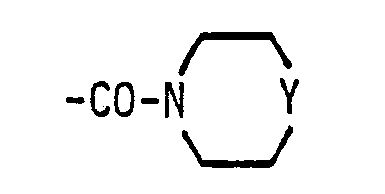
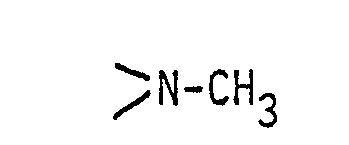
steht.






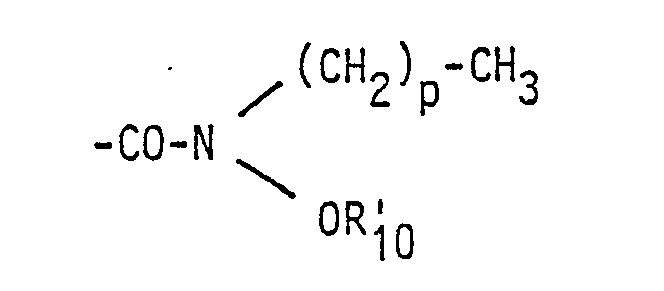


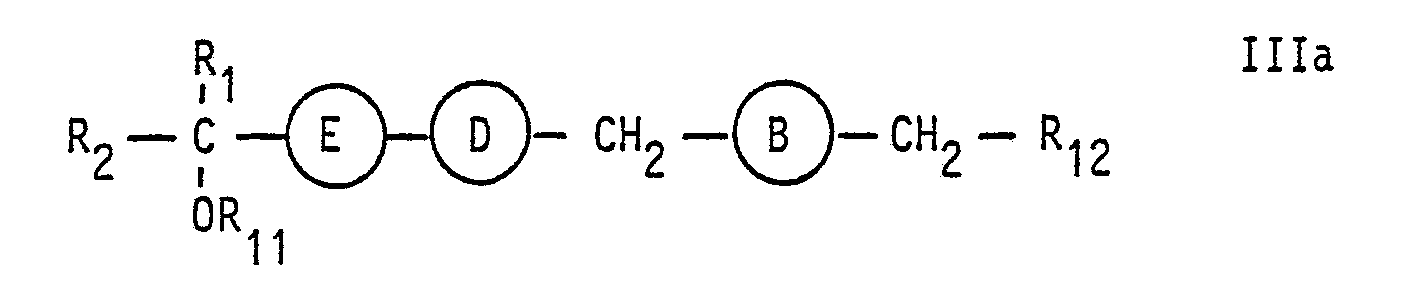





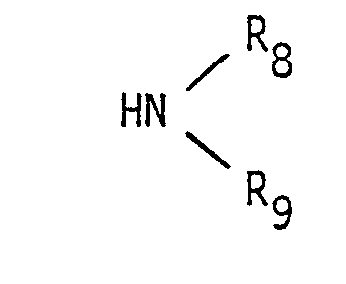

Patentansprüche für den Vertragsstaat: AT

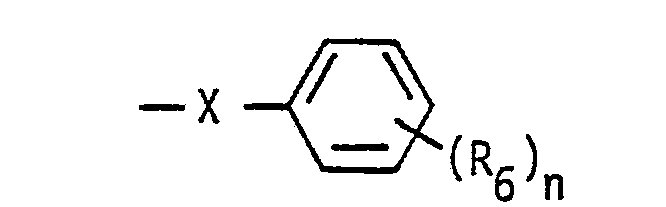


steht, dadurch gekennzeichnet, daß man


umsetzt, oder


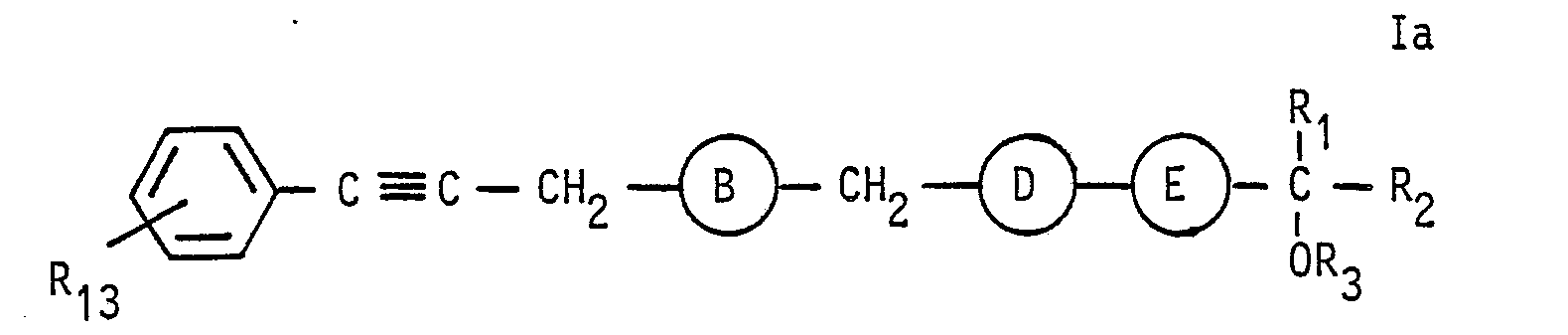



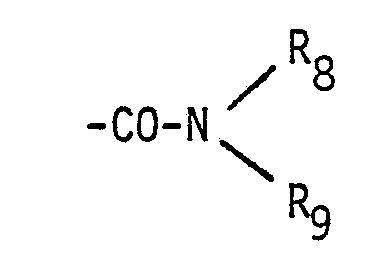


Applications Claiming Priority (2)
| Application Number | Priority Date | Filing Date | Title |
|---|---|---|---|
| DE19853515278 DE3515278A1 (de) | 1985-04-27 | 1985-04-27 | Neue benzoesaeurederivate, diese enthaltende arzneimittel und verfahren zur herstellung dieser verbindungen und arzneimittel |
| DE3515278 | 1985-04-27 |
Publications (2)
| Publication Number | Publication Date |
|---|---|
| EP0199985A2 true EP0199985A2 (de) | 1986-11-05 |
| EP0199985A3 EP0199985A3 (de) | 1988-06-22 |
Family
ID=6269293
Family Applications (1)
| Application Number | Title | Priority Date | Filing Date |
|---|---|---|---|
| EP86104007A Withdrawn EP0199985A3 (de) | 1985-04-27 | 1986-03-24 | Neue Benzoesäurederivate, diese enthaltende Arzneimittel und Verfahren zur Herstellung dieser Verbindungen und Arzneimittel |
Country Status (15)
| Country | Link |
|---|---|
| EP (1) | EP0199985A3 (de) |
| JP (1) | JPS6242947A (de) |
| KR (1) | KR860008155A (de) |
| AU (1) | AU582433B2 (de) |
| DD (1) | DD250313A5 (de) |
| DE (1) | DE3515278A1 (de) |
| DK (1) | DK186286A (de) |
| ES (1) | ES8703402A1 (de) |
| FI (1) | FI861414A7 (de) |
| GR (1) | GR860442B (de) |
| HU (1) | HU196163B (de) |
| IL (1) | IL77989A (de) |
| PT (1) | PT82393B (de) |
| SU (1) | SU1450734A3 (de) |
| ZA (1) | ZA861490B (de) |
Cited By (1)
| Publication number | Priority date | Publication date | Assignee | Title |
|---|---|---|---|---|
| EP0468281A1 (de) * | 1990-07-26 | 1992-01-29 | Grünenthal GmbH | Substituierte Phenylacetylene, diese enthaltende Arzneimittel und Verfahren zur Herstellung dieser Verbindungen und Arzneimittel |
Families Citing this family (2)
| Publication number | Priority date | Publication date | Assignee | Title |
|---|---|---|---|---|
| FR2642972B1 (fr) * | 1989-02-14 | 1994-08-05 | Inst Nat Sante Rech Med | Agents pour le diagnostic et le traitement des melanomes, derives halogenes aromatiques utilisables comme de tels agents et leur preparation |
| DE4120698A1 (de) * | 1991-06-22 | 1992-12-24 | Gruenenthal Gmbh | Substituierte phenoxyalkanole und deren ester, diese verbindungen enthaltende arzneimittel und verfahren zur herstellung dieser verbindungen und arzneimittel |
Family Cites Families (10)
| Publication number | Priority date | Publication date | Assignee | Title |
|---|---|---|---|---|
| DE3068213D1 (en) * | 1979-09-05 | 1984-07-19 | Glaxo Group Ltd | Phenol derivatives, processes for their preparation and pharmaceutical compositions containing them |
| US4331683A (en) * | 1980-10-29 | 1982-05-25 | Pfizer Inc. | Carboxamide compounds as SRS-A antagonists |
| EP0056172B1 (de) * | 1981-01-09 | 1985-04-03 | FISONS plc | Phenoxy- und Thiophenoxyverbindungen, Verfahren zu deren Herstellung und sie enthaltende pharmazeutische Zusammensetzungen |
| IE54269B1 (en) * | 1981-12-30 | 1989-08-02 | Ici America Inc | Pharmaceutically active phenylcarboxylic acid derivatives |
| US4507498A (en) * | 1982-04-09 | 1985-03-26 | Hoffmann-La Roche Inc. | Phenoxycarboxylic acids |
| DE3228629A1 (de) * | 1982-07-31 | 1984-02-02 | Reifenrath, Rainer Richard Otto, Dr., 3104 Unterlüß | Pharmazeutisches erzeugnis zur behandlung der atemwege und verfahren zu seiner herstellung |
| IL69691A (en) * | 1982-09-23 | 1988-01-31 | Merck Frosst Canada Inc | Leukotriene antagonists,their preparation and pharmaceutical compositions containing them |
| DD242802A1 (de) * | 1983-02-28 | 1987-02-11 | Univ Berlin Humboldt | Verfahren zur herstellung neuer w(2'-naphthoxy)-hydroxamsaeuren enthaltende pharmazeutische zubereitungen und ihren salzen |
| US4539419A (en) * | 1983-05-02 | 1985-09-03 | Hoffmann-La Roche Inc. | Naphthalenyloxy substituted carboxylic acids |
| US4499295A (en) * | 1983-05-09 | 1985-02-12 | G. D. Searle & Co. | Protease inhibitors |
-
1985
- 1985-04-27 DE DE19853515278 patent/DE3515278A1/de not_active Withdrawn
-
1986
- 1986-02-14 GR GR860442A patent/GR860442B/el unknown
- 1986-02-25 IL IL77989A patent/IL77989A/xx unknown
- 1986-02-27 ZA ZA861490A patent/ZA861490B/xx unknown
- 1986-03-24 EP EP86104007A patent/EP0199985A3/de not_active Withdrawn
- 1986-04-01 FI FI861414A patent/FI861414A7/fi not_active Application Discontinuation
- 1986-04-04 ES ES553731A patent/ES8703402A1/es not_active Expired
- 1986-04-08 SU SU864027236A patent/SU1450734A3/ru active
- 1986-04-15 PT PT82393A patent/PT82393B/de unknown
- 1986-04-18 AU AU56366/86A patent/AU582433B2/en not_active Expired - Fee Related
- 1986-04-23 DK DK186286A patent/DK186286A/da not_active Application Discontinuation
- 1986-04-24 DD DD86289588A patent/DD250313A5/de unknown
- 1986-04-25 HU HU861716A patent/HU196163B/hu not_active IP Right Cessation
- 1986-04-25 JP JP61095006A patent/JPS6242947A/ja active Pending
- 1986-04-26 KR KR1019860003288A patent/KR860008155A/ko not_active Withdrawn
Cited By (2)
| Publication number | Priority date | Publication date | Assignee | Title |
|---|---|---|---|---|
| EP0468281A1 (de) * | 1990-07-26 | 1992-01-29 | Grünenthal GmbH | Substituierte Phenylacetylene, diese enthaltende Arzneimittel und Verfahren zur Herstellung dieser Verbindungen und Arzneimittel |
| US5202349A (en) * | 1990-07-26 | 1993-04-13 | Gruenenthal Gmbh | Substituted phenylacetylenes, pharmaceutical compositions containing these compounds and processes for the preparation of these compounds and compositions |
Also Published As
| Publication number | Publication date |
|---|---|
| IL77989A (en) | 1989-08-15 |
| SU1450734A3 (ru) | 1989-01-07 |
| DK186286A (da) | 1986-10-28 |
| ES553731A0 (es) | 1987-02-16 |
| HUT40611A (en) | 1987-01-28 |
| PT82393A (de) | 1986-05-01 |
| JPS6242947A (ja) | 1987-02-24 |
| GR860442B (en) | 1986-06-16 |
| HU196163B (en) | 1988-10-28 |
| DK186286D0 (da) | 1986-04-23 |
| AU5636686A (en) | 1986-11-06 |
| PT82393B (de) | 1987-09-10 |
| KR860008155A (ko) | 1986-11-12 |
| FI861414A7 (fi) | 1986-10-28 |
| EP0199985A3 (de) | 1988-06-22 |
| AU582433B2 (en) | 1989-03-23 |
| DE3515278A1 (de) | 1986-10-30 |
| FI861414A0 (fi) | 1986-04-01 |
| DD250313A5 (de) | 1987-10-08 |
| ZA861490B (en) | 1986-10-29 |
| ES8703402A1 (es) | 1987-02-16 |
Similar Documents
| Publication | Publication Date | Title |
|---|---|---|
| DE2923815C2 (de) | ||
| DE3219244A1 (de) | Sulfonatderivate, verfahren zu ihrer herstellung und diese derivate enthaltende arzneimittel | |
| EP0527458A1 (de) | Neue 3,5-Di-tert.butyl-4-hydroxyphenyl-Derivate, Verfahren zu ihrer Herstellung und Arzneimittel | |
| EP0263492A1 (de) | Neue Retinoide, deren Herstellung und Verwendung als Pharmazeutika | |
| EP0025192B1 (de) | Substituierte Oxirancarbonsäuren, Verfahren zu ihrer Herstellung, ihre Verwendung und sie enthaltende Arzneimittel | |
| DE2831761C2 (de) | 2,3- und 2,3,6-substituierte-4-Pyrone und deren Verwendung | |
| EP0007490B1 (de) | Neue Prostaglandinderivate der Delta-2,4-11-Desoxy-PGE-Reihe, Verfahren zu ihrer Herstellung sowie ihre Verwendung als Arzneimittel | |
| DE3925496C2 (de) | ||
| DE2323746A1 (de) | Mono- und diester der 2,5-dihydroxybenzolsulfonsaeure | |
| EP0133935A2 (de) | p-Oxibenzoesäurederivate, Verfahren zu ihrer Herstellung und ihre Verwendung zur Herstellung von Arzneimitteln mit hypolipämischer Wirkung | |
| EP0202529B1 (de) | Neue Phenolderivate, diese enthaltende Arzneimittel und Verfahren zur Herstellung dieser Verbindungen und Arzneimittel | |
| EP0009777B1 (de) | Retinsäure- und 7,8-Dehydro-retinsäure-N-(carboxy)-phenyl-amide, Verfahren zu ihrer Herstellung und diese enthaltende pharmazeutische Mittel | |
| DE3819052A1 (de) | Neue sulfonamid-derivate, ihre herstellung und verwendung | |
| EP0009776B1 (de) | N-Monohydroxypropylamide, N-Dihydroxypropylamide und deren Acetonoide der all-E- und 13-Z-Retinsäure, Verfahren zu ihrer Herstellung und diese enthaltende pharmazeutische Mittel | |
| EP0068250A1 (de) | Dioxybenzoletherderivate, diese enthaltende Arzneimittel, Verfahren zu ihrer Herstellung und ihre Verwendung | |
| EP0306649B1 (de) | Neue 3,5-Dihydroxycarbonsäuren und deren Derivate, Verfahren zu ihrer Herstellung, ihre Verwendung als Arzneimittel, pharmazeutische Präparate und Zwischenprodukte | |
| EP0169408B1 (de) | Neue Imidazolylverbindungen, Verfahren zu ihrer Herstellung und ihre Verwendung als Arzneimittel | |
| DD250313A5 (de) | Verfahren zur herstellung von neuen benzoesaeurederivaten | |
| EP0194579A2 (de) | Neue 3-Pyridylmethylnaphthylderivate, Verfahren zu ihrer Herstellung und ihre Verwendung als Arzneimittel | |
| EP0104483A2 (de) | Sulfamoylbenzophenon-Derivate, Verfahren zu ihrer Herstellung, ihre Verwendung sowie pharmazeutische Präparate auf Basis dieser Verbindungen | |
| EP0007347B1 (de) | Lipidsenkende Alkylenglykolderivate und Verfahren zu ihrer Herstellung | |
| US4275068A (en) | Lipid lowering alkylene glycols and ester derivatives thereof | |
| EP0019069A2 (de) | 6-Keto-PGE1- und PGI1-Derivate, Verfahren zu ihrer Herstellung und ihre Verwendung als Arzneimittel | |
| EP0080718B1 (de) | Inter-m-Phenylen-PGI2-Derivate, Verfahren zu deren Herstellung und diese Verbindungen enthaltende pharmazeutische Präparate | |
| DE3141819C2 (de) |
Legal Events
| Date | Code | Title | Description |
|---|---|---|---|
| PUAI | Public reference made under article 153(3) epc to a published international application that has entered the european phase |
Free format text: ORIGINAL CODE: 0009012 |
|
| 17P | Request for examination filed |
Effective date: 19860324 |
|
| AK | Designated contracting states |
Kind code of ref document: A2 Designated state(s): AT BE CH DE FR GB IT LI LU NL SE |
|
| PUAB | Information related to the publication of an a document modified or deleted |
Free format text: ORIGINAL CODE: 0009199EPPU |
|
| RA1 | Application published (corrected) |
Date of ref document: 19861210 Kind code of ref document: A2 |
|
| RAP1 | Party data changed (applicant data changed or rights of an application transferred) |
Owner name: GRUENENTHAL GMBH |
|
| PUAL | Search report despatched |
Free format text: ORIGINAL CODE: 0009013 |
|
| AK | Designated contracting states |
Kind code of ref document: A3 Designated state(s): AT BE CH DE FR GB IT LI LU NL SE |
|
| 18W | Application withdrawn |
Withdrawal date: 19890623 |
|
| STAA | Information on the status of an ep patent application or granted ep patent |
Free format text: STATUS: THE APPLICATION HAS BEEN WITHDRAWN |
|
| R18W | Application withdrawn (corrected) |
Effective date: 19890623 |
|
| RIN1 | Information on inventor provided before grant (corrected) |
Inventor name: SEIPP, ULRICH, DR. Inventor name: LOSCHEN, GERRIET, DR. Inventor name: KIESEWETTER, ERWIN, DR. Inventor name: VOLLENBERG, WERNER, DR. Inventor name: ZIMMER, OSWALD, DR. |