EP0190389B1 - Tantalum powders for the manufacture of electrodes for electrolytic capacitors with a high charge and low leakage current - Google Patents
Tantalum powders for the manufacture of electrodes for electrolytic capacitors with a high charge and low leakage current Download PDFInfo
- Publication number
- EP0190389B1 EP0190389B1 EP85107534A EP85107534A EP0190389B1 EP 0190389 B1 EP0190389 B1 EP 0190389B1 EP 85107534 A EP85107534 A EP 85107534A EP 85107534 A EP85107534 A EP 85107534A EP 0190389 B1 EP0190389 B1 EP 0190389B1
- Authority
- EP
- European Patent Office
- Prior art keywords
- tantalum
- powder
- nitrogen
- sulfur
- ppm
- Prior art date
- Legal status (The legal status is an assumption and is not a legal conclusion. Google has not performed a legal analysis and makes no representation as to the accuracy of the status listed.)
- Expired
Links
Images


Classifications
-
- H—ELECTRICITY
- H01—ELECTRIC ELEMENTS
- H01G—CAPACITORS; CAPACITORS, RECTIFIERS, DETECTORS, SWITCHING DEVICES, LIGHT-SENSITIVE OR TEMPERATURE-SENSITIVE DEVICES OF THE ELECTROLYTIC TYPE
- H01G9/00—Electrolytic capacitors, rectifiers, detectors, switching devices, light-sensitive or temperature-sensitive devices; Processes of their manufacture
- H01G9/004—Details
- H01G9/04—Electrodes or formation of dielectric layers thereon
- H01G9/048—Electrodes or formation of dielectric layers thereon characterised by their structure
- H01G9/052—Sintered electrodes
- H01G9/0525—Powder therefor
Definitions
- This invention relates to tantalum powders, particularly to tantalum powders which can be fabricated into anodes for electrolytic capacitors having improved electrical capacity and low leakage characteristics.
- tantalum powders for the preparation of anodes in electrolytic capacitors are generally well known.
- Such anodes are produced by compacting the tantalum powder to provide a coherent shape, sintering the compact, and subsequently forming a continuous dielectric oxide film on the sintered product.
- U.S. Patent No. 3,418,106 discloses an agglomerated tantalum powder crushable as tantalum which, when fabricated into an electrode, provides enhanced specific capacity in pressed and sintered anodes.
- 3,843,360 discloses an improved tantalum powder in which the relationship between the average particle diameter of the powder and its bulk density has been limited to a specified range.
- an electrode having a specific capacity in excess of 10,000 pfv/g is prepared by sintering a tantalum powder having a grain size finer than 2.5 ⁇ m.
- tantalum powder for electrolytic capacitors Another approach toward achieving improved specific capacity in tantalum powders for electrolytic capacitors is to modify the particle shape and morphology.
- U.S. Patent No. 3,647,415 a tantalum powder for electrolytic capacitors is disclosed wherein the tantalum particles have an average flakiness of 2 to 60, at least 80 percent by weight of the powder consisting of particles having a shorter breadth of 3 to 250 ⁇ m and being free from particles having a shorter breadth of about 500 ⁇ m.
- U.S. Patent No. 4,009,007 discloses a tantalum powder capable of producing anodes of improved electrical capacity which is prepared by the addition of phosphorous-containing materials in amounts from about 5 to about 400 ppm based on elemental phosphorus.
- phosphorous-containing additives can be made to the powder itself, as in the above U.S. Patent No. 4,009,007; or the dopant can be added, as described in U.S. Patent No.
- German Publication No. DE 3140248A1 describes a process for the manufacture of a porous metal (tantalum and/or niobium) powder doped with boron or boron compounds for electrolytic capacitors having lower relative leakage and higher specific capacity.
- This publication states that the doping with boron or boron compounds, in quantities up to 0.5 weight percent based on the metal content, can be carried out during the manufacture of the powder, or be added to the green porous metal anodes.
- particles of tantalum constituting a porous electrode were doped with a dopant selected from the group consisting of nitrogen, silicon, boron and mixtures thereof.
- a dopant selected from the group consisting of nitrogen, silicon, boron and mixtures thereof.
- the dopant ranges from 0.47 to 2.71 atomic percent (or 0.5 to 3.0% TaN added).
- U.S. Patent No. 4,154,609 describes a method of producing a porous sintered metal body which comprises molding under pressure metal powder to form a molded body and then sintering the molded body, with the metal being selected from the group consisting of Groups IVB, VB, and VIB of the Periodic Table.
- the metal powder Prior to the molding step, the metal powder is admixed with about 0.01 to about 10% by weight of at least one inorganic lubricant selected from sulfides, selenides and tellurides of a member of sub-groups V and VI of the Periodic Table, whereby the sintered metal body still contains 2% to 70% by weight of the inorganic lubricant.
- 4,229,217 discloses a method of producing a porous sintered metal body which comprises the steps of molding metal powder under pressure to form a molded body and then sintering the molded body, with the metal powder being selected from the group consisting of Groups IVB, VB, and VIB of the Periodic Table. Prior to the molding step, the metal powder is mixed with about 0.01 to about 10% by weight of at least one inorganic lubricant selected from nitrides of boron and silicon, whereby the sintered metal bodies still contains 2% to 70% by weight of the inorganic lubricant.
- the oxygen concentration of tantalum powder destined to be used in making electrolytic capacitors is important, according to the discussion in U.S. Patent No. 4,423,004. It is stated that, when the total oxygen content of porous tantalum pellets is above approximately 4000 ppm, capacitors using such pellets as electrodes have unsatisfactory life characteristics. Tantalum powder has a great affinity for oxygen, and the powder particles readily oxidize upon exposure to air, particularly after a thermal treatment step. Further this document discloses treatment of a tantalum powder with an ammonium thiocyanate and potassium thiocyanate.
- a tantalum powder capable of producing capacitors of improved specific capacity in combination with relatively low leakage is prepared by the addition of selected materials providing at least two elements selected from carbon, nitrogen and sulfur. These additions herein are referred to as C+N, C+S, N+S, and C+N+S additions in certain predetermined amounts.
- the preferred addition of C+N+S-containing materials is in the range from about 150 to 3,000 ppm contained C+N+S.
- an addition of a phosphorous-containing material is made: either to the tantalum powder in an amount from about 5 to 400 ppm phosphorus based on elemental phosphorus as described in Patent No. 4,009,007; or during the method of preparing the tantalum powder in an amount so that 2 to 400 ppm phosphorus based on elemental phosphorus is retained in the final tantalum powder as described in Patent No. 4,356,028.
- Potassium thiocyanate has been found to be a preferred additive or dopant for a combined C+N+S additive when it is desired to add all or a portion of these three elements to the tantalum powder in equal mole ratios.
- organic compounds examples include thiophene to provide C+S addition, pyrazole to provide C+S, and thiourea, thiocarbonilide or a mixture of pyrazole and thiophene for C+N+S.
- Inorganic carbides, nitrides and sulfides may be employed for addition of C or N or S alone, or in combination for C+N or C+S, etc.
- a preferred method to introduce the carbon, nitrogen and/or sulfur to the tantalum powder in desired quantities is by appropriate gaseous treatments.
- a sulfur-containing tantalum powder can be produced by exposing the powder to a sulfur-bearing gas, such as hydrogen sulfide, at an elevated temperature, such as about 700°C, for an appropriate time duration.
- a carbon-containing powder can be produced using methane or other hydrocarbon gas in a similar elevated temperature treatment, and a nitrogen-containing powder can be produced using nitrogen gas. Any two or all three of these elements (C, N and S) can be added simultaneously or successively in a gaseous treatment of the tantalum powder at an elevated temperature using selected C-, N-, and S-containing gases.
- a C+N+S-containing material may be added in a dry state to the tantalum powder. If the added material initially is a liquid or solid, it is preferable first to dissolve the additive in a suitable solvent (aqueous, partially aqueous or organic) or to prepare an aqueous or organic slurry or dispersion. The dry additive powder, solution or slurry is then blended with tantalum powder, allowed to dry, and may be further dried at about 50° to 100° in air or in an inert atmosphere. Water, preferably distilled or deionized water, is a suitable carrier or solvent for preparation of an aqueous solution or slurry containing a C+N+S-containing inorganic salt additive.
- Organic solvents such as acetones, alcohols such as methyl alcohol, amides including N,N-dimethylformamide (DMF), N-methylpyrrolidinone (NMP), and dimethyl sulfoxide also can be selected as a solvent or carrier for C+N+S additives, such as a solution for addition of ammonium thiocyanate, for example.
- the preferred materials for phosphorous doping are the inorganic phosphate salts, such as ammonium, sodium, potassium, calcium, barium and lead orthophosphates, ammonium mono-hydrogen orthophosphate, ammonium di-hydrogen orthophosphate, sodium mono-hydrogen orthophosphate, sodium di-hydrogen orthophosphate and potassium di-hydrogen orthophosphate.
- suitable phosphorous-containing materials include elemental phosphorus, metallic phosphides, phosphorous oxides and acids, and organic phosphorous-containing materials such as alkyl phosphates.
- Phosphate materials containing no metallic cations such as ammonium mono-hydrogen orthophosphate, ammonium di-hydrogen orthophosphate and phosphoric acid, are particularly preferred because they do not introduce extraneous metals into the tantalum powder, with possible adverse effects on the DC leakage and breakdown voltage properties of the anodes resulting therefrom.
- Suitable processes for phosphorous doping are disclosed in U.S. Patent Nos. 4,009,007 and 4,356,028, which are assigned to the assignee hereof and incorporated herein by reference.
- the improvement of this invention is applicable to tantalum powders produced in different ways, including sodium-reduced tantalum powders and tantalum powders produced from melted ingots (such as electron beam or arc melted).
- the tantalum powders may, if desired, be in hydride form when the C, N, S and/or phosphorous-containing additives are added, and then reduced to metallic form in a subsequent treatment.
- the tantalum powder may be unagglomerated at the time of C, N, S and/or phosphorus additions, or may be agglomerated thereafter by the thermal agglomeration method of U.S. Patent No. 3,473,915, which patent is assigned to the assignee hereof and incorporated herein by reference.
- the additives can be added to the tantalum powder after a thermal agglomeration treatment.
- the maximum increase in specific capacity is obtained when the pressed tantalum anodes made from the powders of this invention are sintered at relatively low sintering temperatures, especially in the range of about 1400 to 1600°C. A lesser increase is obtained for anodes sintered at 1700°C, and still less for anodes sintered at 1800°C and higher. While not wishing to be bound by theory, it is believed that the C+N+S-containing additive serves or functions as a sintering inhibitor during sintering of the anode. Thus, anodes sintered from a tantalum powder containing a C+N+S additive have a higher surface area, and consequently higher specific capacity, than anodes sintered from the same tantalum powder not containing the additive.
- Example 1 shows the effect of an addition of potassium thiocyanate (KCNS) to a sodium-reduced tantalum powder.
- Potassium thiocyanate (KCNS) was dissolved in deionized water to achieve essentially a saturated solution. The required amount of this solution was added to and mixed with a 100 g sample of sodium-reduced tantalum powder to achieve an addition of 544 ppm contained total C+N+S content on a tantalum metal weight basis. This treated powder was dried by evaporation at ambient temperature, followed by heating to complete dryness in an air atmosphere at about 90°C.
- the powder then was heated in a vacuum of about 10- 5 torr absolute pressure to about 1450°C (optical temperature), held for one-half hour at temperature, cooled under vacuum for two hours and finally under argon to ambient temperature, then milled and screened using a 35 mesh (U.S. Standard) screen. Any oversize material was remilled and rescreened so that all powder was -35 mesh.
- This treatment of the tantalum powder is referred to as "thermal agglomeration" according to the teachings of U.S. Patent No. 3,473,915. This sample was designated 1A.
- Portions of each type of powder were pressed into individually weighed 1.005 ⁇ 0.010 g/anode compacts with an embedded tantalum lead wire in a 5.4 mm. diameter die to a green density of 4.5 g/cm 3 .
- One group of the anodes of each powder was sintered for 30 minutes at 1400°C (optical temperature).
- An additional similar group of anodes was sintered for 30 minutes at 1500°C; another for 30 minutes at 1600°C; and still another for 30 minutes at 1700°C. All sintering was performed in a cold-wall, vacuum sintering furnace (10- 5 torr absolute pressure).
- the electrical testing procedure involved anodizing the sintered anodes in 0.1% phosphoric acid in water at an electrolyte temperature of 90°C. Anodizing of the anodes was carried out at a current density of 35 milliamps per gram until 100 volts was reached, and then they were held for two hours at 100 volts. The anodized anodes were washed in deionized water and dried in clean air at 105°C. Direct current leakage (DCL) was then measured at a test voltage of 70 volts in 10% phosphoric acid. The anodes were immersed in the test solution to the top of the anode, and the test voltage was applied for two minutes, after which the DCL was measured.
- DCL Direct current leakage
- Example 2 the effects of an addition of potassium thiocyanate (KCNS) to a sodium-reduced tantalum powder are compared to the effects of an addition of ammonium thiocyanate (NH 4 CNS). Also, the effect of ammonium mono-hydrogen orthophosphate (NH 4 ) 2 HP0 4 additions, along with either a KCNS or NH 4 CNS addition, is shown.
- KCNS potassium thiocyanate
- NH 4 CNS ammonium mono-hydrogen orthophosphate
- Example 2 A different lot of sodium-reduced tantalum powder was used in Example 2 than for that used in Example 1.
- a 100 g sample of the powder was doped with an addition of KCNS to the 1632 ppm total C+N+S level by the procedure described in Example 1. This sample was designated 2A.
- Another sample similarly doped with KCNS was further doped with an essentially saturated solution of (NH 4 ) 2 HP0 4 to 50 ppm contained phosphorus based on elemental phosphorus.
- This sample was designated 2B.
- An additional sample 2C was similarly doped with an essentially saturated solution of NH 4 CNS to the 1632 total ppm C+N+S level.
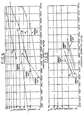
- a further sample 2D was doped both with NH 4 CNS (as for 2C) to the 1632 total ppm C+N+S level and (NH 4 ) 2 HP0 4 to the 50 ppm phosphorus level. All doped powders were dried as in Example 1. An undoped sample 2E was used as a control. All powders were thermally agglomerated, pressed into anodes, sintered at 1500, 1600 or 1700°C, and tested for electrical properties by the procedures described in Example 1. The results are summarized in Table II and in Fig. 3:
- Example 3 the effects of various amounts of an addition of KCNS or NH Q CNS are considered in combination with a fixed addition of (NH 4 ) 2 HPO 4 on the electrical properties of anodes produced from a sodium-reduced tantalum powder.
- Example 2 The same lot of sodium-reduced tantalum powder was used in these tests as in Example 2. Contained C+N+S levels of 544, 1088 and 1632 ppm were added to the tantalum powder using an essentially saturated solution of either KCNS (samples 3A, 3B, and 3C) or NH 4 CNS (samples 3D, 3E, and 3F). In addition, a supplemental addition of 50 ppm phosphorus was made to each sample by adding essentially a saturated solution of (NH 4 ) 2 HPO 4 . One control sample, containing an (NH 4 ) 2 HP0 4 addition of 50 ppm phosphorus but no addition of either KCNS or NH 4 CNS, was designated sample 3G.
- the doped samples were dried as in Example 1, and all samples were agglomerated, pressed to anodes, sintered for 30 minutes at 1400,1500,1600,1700 or 1800°C, and tested for electrical properties.
- the anodes were anodized at 100 volts and tested for DCL at 70 volts, as in Example 1.
- the groups of anodes sintered 30 minutes at 1800°C were anodized at 200 volts and tested for DCL at 140 volts.
- Table III The data are summarized in Table III.
- Example 4 shows the effects of additions of varying amounts of KCNS and NH 4 CNS in combination with an addition of (NH 4 ) 2 HP0 4 to a tantalum powder prepared from an ingot.
- a hydrided, high purity electron-beam melted tantalum ingot was milled and crushed to a FSSS of 3.1 pm (Fisher subsieve size in accordance with ASTM designation B330-65, "Standard Method of Test for Average Particle Size of Refractory metals and Compounds by the Fisher Sub-sieve Sizer").
- An addition of an essentially saturated solution of KCNS was made to an amount of 181 ppm contained C+N+S to one portion of the tantalum hydride.
- a further addition of (NH 4 ) 2 HP0 4 essentially saturated solution was made to an amount of 25 ppm contained phosphorus to the same portion. This portion is designated sample 4A.
- sample 4B additions of KCNS to provide 453 ppm added C+N+S and 25 ppm phosphorus added as (NH 4 ) 2 HP0 4 were made to obtain sample 4B.
- sample 4C was prepared using KCNS to provide 906 ppm contained C+N+S and (NH 4 ) 2 HP0 4 to provide 25 ppm contained phosphorus.
- One-gram anodes as described in Example 1 were pressed to a green density of 7.2 g/cm 3 with an embedded tantalum lead wire.
- One group of anodes of each powder portion was vacuum sintered for 30 minutes at 1600°C (optical temperature), another group was sintered 30 minutes at 1700°C, and another group was sintered for 30 minutes at 2000°C.
- the electrical testing procedure for the anodes is described in Example 1.
- Those anodes sintered at 1600°C and at 1700°C were anodized at 100 volts and tested for direct current leakage at 70 volts.
- the anodes sintered at 2000°C were anodized at 270 volts and tested for DCL at 240 volts.
- Example 5 compares the effects of individual additions of the elements carbon, nitrogen and sulfur with their combined effect on electrical properties of anodes sintered from a sodium-reduced tantalum powder.
- One sample 5A of the tantalum powder was heated in a vacuum of about 10- 5 torr absolute pressure to about 1325°C (optical temperature), held for one-half hour at temperature, and then cooled under vacuum to about 700°C.
- the furnace vacuum pumps were valved off and a quantity of hydrogen sulfide gas in an amount to bring the pressure to 98.8 torr was introduced and allowed to react with and be absorbed by the tantalum powder. Then the powder was cooled to ambient temperature.
- the resulting powder was milled and screened to obtain -35 mesh agglomerated powder.
- the powder analyzed 5600 ppm sulfur. Anodes were pressed from this powder; some of these were tested for DCL and specific capacity by the procedures described in Example 1.
- sample 5B of the tantalum powder was similarly processed as described for sample 5A, except that after cooling the furnace under vacuum to 700°C, and after valving off the vacuum pumps, the furnace pressure was quickly elevated to 83.6 torr by introducing a quantity of methane gas, which then was allowed to be absorbed by the tantalum powder.
- This sample 5B analyzed 404 ppm carbon.
- An additional sample 5C was similarly processed, except that it was treated at 750° with nitrogen gas at 2.0 torr. This sample 5C analyzed 75 ppm nitrogen.
- a fourth sample (5D) was prepared by blending portions of samples 5A, 5B and 5C powders to obtain a powder that analyzed 247 ppm carbon, 66 ppm nitrogen, and 1260 ppm sulfur.
- Example 6 compares the effects of combined additions of: carbon plus sulfur (C+S), carbon plus nitrogen (C+N), and carbon plus nitrogen plus sulfur (C+N+S) on the electrical properties of anodes pressed and sintered from sodium-reduced tantalum powder.
- a 100 g portion, designated sample 6A, of sodium-reduced tantalum powder was doped with 0.1907 g pyrazole dissolved in 50 ml deionized water.
- Another 100 g portion, sample 68 was doped with 0.25 ml thiophene dispersed in 50 ml deionized water.
- a 100 g portion, sample 6C was doped with 0.2137 g thiourea dissolved in 50 ml deionized water.
- a 100 g portion, sample 6D was doped with a dispersion of 0.6412 g thiocarbanilide in 50 ml in water. These doped powders were dried for 16 hours at 70°C.
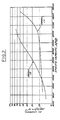
- Fig. 1 shows a plot of specific capacity as a function of sintering temperature from data in Table I for the anodes made from tantalum powders containing various amounts of KCNS additive. Increasing amounts of such C+N+S-containing additive progressively increased specific capacity over the entire range of sintering temperatures.
- Fig. 2 is a plot of the direct current leakage per unit charge versus specific capacity values from Table I for anodes (sample 1C) made from the powder to which 1632 ppm contain C+N+S was added as KCNS, and also from the undoped control powder (sample 1D).
- the improvement of the invention can be illustrated two ways:
- C+N+S plus phosphorous additives Similar improvements in specific capacity were obtained by C+N+S plus phosphorous additives to powder prepared from an electron-beam melted tantalum ingot, as shown in Table IV.
- KCNS appeared as the preferred C+N+S additive at sintering temperatures of 1600 and 1700°C.
- NH 4 CNS appears to be the preferred CNS-containing additive, although the phosphorous-containing additive alone gives similar results.
- these amounts of C+N+S additives, and the methods used for the additives provide a substantial improvement in all cases compared to the undoped control.
- the sulfur content on a weight basis (i.e., tantalum metal weight basis), exceeds not only either the carbon content or the nitrogen content, but also the sum of the carbon content plus the nitrogen content.
Landscapes
- Engineering & Computer Science (AREA)
- Power Engineering (AREA)
- Microelectronics & Electronic Packaging (AREA)
- Powder Metallurgy (AREA)
Applications Claiming Priority (2)
| Application Number | Priority Date | Filing Date | Title |
|---|---|---|---|
| US06/676,666 US4544403A (en) | 1984-11-30 | 1984-11-30 | High charge, low leakage tantalum powders |
| US676666 | 1984-11-30 |
Publications (3)
| Publication Number | Publication Date |
|---|---|
| EP0190389A2 EP0190389A2 (en) | 1986-08-13 |
| EP0190389A3 EP0190389A3 (en) | 1987-07-01 |
| EP0190389B1 true EP0190389B1 (en) | 1989-05-03 |
Family
ID=24715450
Family Applications (1)
| Application Number | Title | Priority Date | Filing Date |
|---|---|---|---|
| EP85107534A Expired EP0190389B1 (en) | 1984-11-30 | 1985-06-18 | Tantalum powders for the manufacture of electrodes for electrolytic capacitors with a high charge and low leakage current |
Country Status (4)
| Country | Link |
|---|---|
| US (1) | US4544403A (enExample) |
| EP (1) | EP0190389B1 (enExample) |
| JP (1) | JPS61133301A (enExample) |
| DE (1) | DE3570008D1 (enExample) |
Families Citing this family (28)
| Publication number | Priority date | Publication date | Assignee | Title |
|---|---|---|---|---|
| US5242481A (en) * | 1989-06-26 | 1993-09-07 | Cabot Corporation | Method of making powders and products of tantalum and niobium |
| US5098485A (en) * | 1990-09-19 | 1992-03-24 | Evans Findings Company | Method of making electrically insulating metallic oxides electrically conductive |
| US5448447A (en) * | 1993-04-26 | 1995-09-05 | Cabot Corporation | Process for making an improved tantalum powder and high capacitance low leakage electrode made therefrom |
| DE69516556T2 (de) * | 1994-01-26 | 2000-09-07 | H.C. Starck, Inc. | Verfahren zum Nitrieren von Tantalpulver |
| US5882719A (en) * | 1995-12-13 | 1999-03-16 | H. C. Starck, Inc. | Solid tantalum capacitor test |
| US6165623A (en) * | 1996-11-07 | 2000-12-26 | Cabot Corporation | Niobium powders and niobium electrolytic capacitors |
| US5869196A (en) * | 1996-12-20 | 1999-02-09 | Composite Material Technology, Inc. | Constrained filament electrolytic anode and process of fabrication |
| WO1998037249A1 (de) | 1997-02-19 | 1998-08-27 | H.C. Starck Gmbh & Co. Kg | Tantalpulver, verfahren zu seiner herstellung, sowie daraus erhältliche sinteranoden |
| US6051044A (en) | 1998-05-04 | 2000-04-18 | Cabot Corporation | Nitrided niobium powders and niobium electrolytic capacitors |
| US6576038B1 (en) * | 1998-05-22 | 2003-06-10 | Cabot Corporation | Method to agglomerate metal particles and metal particles having improved properties |
| KR20010113845A (ko) | 1999-03-19 | 2001-12-28 | 마싸 앤 피네간 | 밀링에 의한 니오븀 및 기타 금속 분말의 제조 |
| US6375704B1 (en) | 1999-05-12 | 2002-04-23 | Cabot Corporation | High capacitance niobium powders and electrolytic capacitor anodes |
| DE19941094A1 (de) * | 1999-08-30 | 2003-07-10 | Epcos Ag | Kondensator und Verfahren zum Herstellen eines Anodenkörpers und eines Anodenableiters hierfür |
| ATE312406T1 (de) * | 1999-10-01 | 2005-12-15 | Showa Denko Kk | Kondensator-pulver-mischung, daraus hergestellter sinterkörper und aus dem sinterkörper hergestellter kondensator |
| CN100491022C (zh) | 2000-03-01 | 2009-05-27 | 卡伯特公司 | 氮化的电子管金属及其制造方法 |
| JP2002093666A (ja) * | 2000-09-20 | 2002-03-29 | Showa Denko Kk | ニオブ粉、それを用いた焼結体及びそれを用いたコンデンサ |
| US6554884B1 (en) | 2000-10-24 | 2003-04-29 | H.C. Starck, Inc. | Tantalum and tantalum nitride powder mixtures for electrolytic capacitors substrates |
| US7274552B2 (en) * | 2001-03-16 | 2007-09-25 | Showa Denko K.K. | Niobium for capacitor and capacitor using sintered body of the niobium |
| JP2004076063A (ja) * | 2002-08-13 | 2004-03-11 | Kawatetsu Mining Co Ltd | ニオブ合金粉末、固体電解コンデンサ用アノード及び固体電解コンデンサ |
| RU2236930C1 (ru) * | 2003-06-24 | 2004-09-27 | Институт химии и технологии редких элементов и минерального сырья им. И.В. Тананаева Кольского научного центра РАН | Способ получения легированного порошка вентильного металла |
| RU2362653C2 (ru) * | 2004-12-09 | 2009-07-27 | Х.К. Штарк Гмбх | Получение порошков клапанных металлов |
| WO2007130483A2 (en) * | 2006-05-05 | 2007-11-15 | Cabot Corporation | Tantalum powder with smooth surface and methods of manufacturing same |
| US7837743B2 (en) * | 2007-09-24 | 2010-11-23 | Medtronic, Inc. | Tantalum anodes for high voltage capacitors employed by implantable medical devices and fabrication thereof |
| JP4868601B2 (ja) * | 2007-12-05 | 2012-02-01 | Necトーキン株式会社 | 固体電解コンデンサ及びその製造方法 |
| JP2009164412A (ja) * | 2008-01-08 | 2009-07-23 | Kobe Steel Ltd | 多孔質金属薄膜およびその製造方法、ならびにコンデンサ |
| CN100528418C (zh) * | 2008-01-11 | 2009-08-19 | 宁夏东方钽业股份有限公司 | 含氮均匀的阀金属粉末及其制造方法,阀金属坯块和阀金属烧结体以及电解电容器的阳极 |
| US11450486B2 (en) * | 2020-04-03 | 2022-09-20 | Greatbatch Ltd. | Electrolytic capacitor having a tantalum anode |
| US12119186B2 (en) | 2020-04-03 | 2024-10-15 | Greatbatch Ltd. | Electrolytic capacitor having an anode formed from a tantalum powder with a relatively low specific charge |
Family Cites Families (9)
| Publication number | Priority date | Publication date | Assignee | Title |
|---|---|---|---|---|
| US3295951A (en) * | 1965-02-02 | 1967-01-03 | Nat Res Corp | Production of metals |
| US3748106A (en) * | 1971-03-18 | 1973-07-24 | Plasmachem | Tantalum powder |
| US3825802A (en) * | 1973-03-12 | 1974-07-23 | Western Electric Co | Solid capacitor |
| US3829310A (en) * | 1973-04-30 | 1974-08-13 | Norton Co | High surface area valve metal powder |
| US4009007A (en) * | 1975-07-14 | 1977-02-22 | Fansteel Inc. | Tantalum powder and method of making the same |
| DE2610224C2 (de) * | 1976-03-11 | 1983-01-05 | Fa. Hermann C. Starck Berlin, 1000 Berlin | Verfahren zur Herstellung von porösen Anodenkörpern durch Pressen und Sintern von Pulvern aus Ventilmetallen |
| US4149876A (en) * | 1978-06-06 | 1979-04-17 | Fansteel Inc. | Process for producing tantalum and columbium powder |
| US4356028A (en) * | 1981-08-24 | 1982-10-26 | Fansteel Inc. | In situ phosphorus addition to tantalum |
| US4423004A (en) * | 1983-03-24 | 1983-12-27 | Sprague Electric Company | Treatment of tantalum powder |
-
1984
- 1984-11-30 US US06/676,666 patent/US4544403A/en not_active Expired - Lifetime
-
1985
- 1985-06-18 EP EP85107534A patent/EP0190389B1/en not_active Expired
- 1985-06-18 DE DE8585107534T patent/DE3570008D1/de not_active Expired
- 1985-06-28 JP JP60140643A patent/JPS61133301A/ja active Granted
Also Published As
| Publication number | Publication date |
|---|---|
| EP0190389A3 (en) | 1987-07-01 |
| DE3570008D1 (en) | 1989-06-08 |
| US4544403A (en) | 1985-10-01 |
| EP0190389A2 (en) | 1986-08-13 |
| JPH0259841B2 (enExample) | 1990-12-13 |
| JPS61133301A (ja) | 1986-06-20 |
Similar Documents
| Publication | Publication Date | Title |
|---|---|---|
| US4544403A (en) | High charge, low leakage tantalum powders | |
| US5448447A (en) | Process for making an improved tantalum powder and high capacitance low leakage electrode made therefrom | |
| US4009007A (en) | Tantalum powder and method of making the same | |
| US4141719A (en) | Tantalum metal powder | |
| DE3533483C2 (de) | Kathode für eine elektrochemische Zelle und deren Verwendung | |
| US6689187B2 (en) | Tantalum powder for capacitors | |
| KR100850386B1 (ko) | 전해 커패시터 기판용의 탄탈과 질화탄탈 분말의 혼합물 및 상기 분말 혼합물을 이용한 캐패시터, 및 그의 제조방법 | |
| CN102317012B (zh) | 金属粉末的生产方法 | |
| US4645533A (en) | Tantalum powder and method of making | |
| KR20010075152A (ko) | 특정 금속 산화물의 부분 환원 방법 및 산소 환원된 금속산화물 | |
| DE3718921C2 (de) | Verfahren zur Herstellung einer Kathode, eine nach diesem Verfahren erhältliche Kathode und Verwendung der Kathode in einer elektrochemischen Zelle | |
| US4273582A (en) | Process for the manufacture of sintered metal bodies, in particular battery electrodes | |
| US4548672A (en) | Process for treating the surface of valve metals with chalcogens | |
| US4356028A (en) | In situ phosphorus addition to tantalum | |
| USRE32260E (en) | Tantalum powder and method of making the same | |
| EP1275124B1 (en) | Niobium powder for capacitor, sintered body thereof and capacitor using the sintered body | |
| EP1501956B1 (en) | Niobium powder, sintered body thereof and capacitor using the same | |
| KR100220881B1 (ko) | 고 표면적 저 금속 불순물의 탄탈륨 분말의 제조 방법 | |
| AU2006254341B2 (en) | Capacitor | |
| DE60222467T3 (de) | Nioblegierung, gesinterter körper davon und kondensator damit | |
| EP1264321A1 (en) | Niobium powder for capacitor, sintered body thereof and capacitor using the sintered body | |
| JP4707164B2 (ja) | コンデンサ用ニオブ粉、それを用いた焼結体及びそれを用いたコンデンサ | |
| JP5020433B2 (ja) | コンデンサ用ニオブ粉、焼結体及びその焼結体を用いたコンデンサ | |
| EP2939760A1 (en) | Chemical conversion body for niobium capacitor positive electrode, and production method therefor | |
| KR20030086593A (ko) | 커패시터 애노드용 탄탈-규소 및 니오븀-규소 기재 |
Legal Events
| Date | Code | Title | Description |
|---|---|---|---|
| PUAI | Public reference made under article 153(3) epc to a published international application that has entered the european phase |
Free format text: ORIGINAL CODE: 0009012 |
|
| AK | Designated contracting states |
Kind code of ref document: A2 Designated state(s): BE DE FR GB |
|
| PUAL | Search report despatched |
Free format text: ORIGINAL CODE: 0009013 |
|
| AK | Designated contracting states |
Kind code of ref document: A3 Designated state(s): BE DE FR GB |
|
| 17P | Request for examination filed |
Effective date: 19870925 |
|
| 17Q | First examination report despatched |
Effective date: 19880801 |
|
| RAP1 | Party data changed (applicant data changed or rights of an application transferred) |
Owner name: FANSTEEL INC. (DELAWARE CORPORATION) |
|
| GRAA | (expected) grant |
Free format text: ORIGINAL CODE: 0009210 |
|
| AK | Designated contracting states |
Kind code of ref document: B1 Designated state(s): BE DE FR GB |
|
| REF | Corresponds to: |
Ref document number: 3570008 Country of ref document: DE Date of ref document: 19890608 |
|
| ET | Fr: translation filed | ||
| PGFP | Annual fee paid to national office [announced via postgrant information from national office to epo] |
Ref country code: BE Payment date: 19890623 Year of fee payment: 5 |
|
| PLBE | No opposition filed within time limit |
Free format text: ORIGINAL CODE: 0009261 |
|
| STAA | Information on the status of an ep patent application or granted ep patent |
Free format text: STATUS: NO OPPOSITION FILED WITHIN TIME LIMIT |
|
| 26N | No opposition filed | ||
| PG25 | Lapsed in a contracting state [announced via postgrant information from national office to epo] |
Ref country code: BE Effective date: 19900630 |
|
| BERE | Be: lapsed |
Owner name: FANSTEEL INC. Effective date: 19900630 |
|
| PGFP | Annual fee paid to national office [announced via postgrant information from national office to epo] |
Ref country code: FR Payment date: 19910813 Year of fee payment: 7 |
|
| PGFP | Annual fee paid to national office [announced via postgrant information from national office to epo] |
Ref country code: DE Payment date: 19910822 Year of fee payment: 7 |
|
| PGFP | Annual fee paid to national office [announced via postgrant information from national office to epo] |
Ref country code: GB Payment date: 19910829 Year of fee payment: 7 |
|
| PG25 | Lapsed in a contracting state [announced via postgrant information from national office to epo] |
Ref country code: GB Effective date: 19920618 |
|
| GBPC | Gb: european patent ceased through non-payment of renewal fee |
Effective date: 19920618 |
|
| PG25 | Lapsed in a contracting state [announced via postgrant information from national office to epo] |
Ref country code: FR Effective date: 19930226 |
|
| PG25 | Lapsed in a contracting state [announced via postgrant information from national office to epo] |
Ref country code: DE Effective date: 19930302 |
|
| REG | Reference to a national code |
Ref country code: FR Ref legal event code: ST |