EP0185448B1 - Verfahren zur Herstellung von Schmierölen - Google Patents
Verfahren zur Herstellung von Schmierölen Download PDFInfo
- Publication number
- EP0185448B1 EP0185448B1 EP85307706A EP85307706A EP0185448B1 EP 0185448 B1 EP0185448 B1 EP 0185448B1 EP 85307706 A EP85307706 A EP 85307706A EP 85307706 A EP85307706 A EP 85307706A EP 0185448 B1 EP0185448 B1 EP 0185448B1
- Authority
- EP
- European Patent Office
- Prior art keywords
- feedstock
- hydrogen
- zeolite
- zsm
- hydrocracking
- Prior art date
- Legal status (The legal status is an assumption and is not a legal conclusion. Google has not performed a legal analysis and makes no representation as to the accuracy of the status listed.)
- Expired
Links
- 238000000034 method Methods 0.000 title claims description 38
- 239000010687 lubricating oil Substances 0.000 title claims description 18
- 238000004519 manufacturing process Methods 0.000 title description 7
- VYPSYNLAJGMNEJ-UHFFFAOYSA-N Silicium dioxide Chemical compound O=[Si]=O VYPSYNLAJGMNEJ-UHFFFAOYSA-N 0.000 claims description 42
- 239000010457 zeolite Substances 0.000 claims description 39
- 239000003054 catalyst Substances 0.000 claims description 38
- 229910021536 Zeolite Inorganic materials 0.000 claims description 37
- HNPSIPDUKPIQMN-UHFFFAOYSA-N dioxosilane;oxo(oxoalumanyloxy)alumane Chemical compound O=[Si]=O.O=[Al]O[Al]=O HNPSIPDUKPIQMN-UHFFFAOYSA-N 0.000 claims description 37
- 239000000203 mixture Substances 0.000 claims description 34
- 239000001257 hydrogen Substances 0.000 claims description 25
- 229910052739 hydrogen Inorganic materials 0.000 claims description 25
- PNEYBMLMFCGWSK-UHFFFAOYSA-N aluminium oxide Inorganic materials [O-2].[O-2].[O-2].[Al+3].[Al+3] PNEYBMLMFCGWSK-UHFFFAOYSA-N 0.000 claims description 24
- 238000004517 catalytic hydrocracking Methods 0.000 claims description 22
- 229910052751 metal Inorganic materials 0.000 claims description 22
- 239000002184 metal Substances 0.000 claims description 22
- UFHFLCQGNIYNRP-UHFFFAOYSA-N Hydrogen Chemical compound [H][H] UFHFLCQGNIYNRP-UHFFFAOYSA-N 0.000 claims description 19
- BASFCYQUMIYNBI-UHFFFAOYSA-N platinum Chemical compound [Pt] BASFCYQUMIYNBI-UHFFFAOYSA-N 0.000 claims description 17
- 239000000377 silicon dioxide Substances 0.000 claims description 17
- 239000000463 material Substances 0.000 claims description 15
- 229930195733 hydrocarbon Natural products 0.000 claims description 14
- 150000002430 hydrocarbons Chemical class 0.000 claims description 14
- 239000004215 Carbon black (E152) Substances 0.000 claims description 11
- 150000002431 hydrogen Chemical class 0.000 claims description 8
- 238000002441 X-ray diffraction Methods 0.000 claims description 7
- 229910052697 platinum Inorganic materials 0.000 claims description 7
- 238000009835 boiling Methods 0.000 claims description 5
- -1 for example Inorganic materials 0.000 description 15
- 230000003197 catalytic effect Effects 0.000 description 12
- 239000000047 product Substances 0.000 description 10
- QGZKDVFQNNGYKY-UHFFFAOYSA-N Ammonia Chemical compound N QGZKDVFQNNGYKY-UHFFFAOYSA-N 0.000 description 9
- 239000013078 crystal Substances 0.000 description 9
- 239000003921 oil Substances 0.000 description 9
- 239000000314 lubricant Substances 0.000 description 8
- MCMNRKCIXSYSNV-UHFFFAOYSA-N Zirconium dioxide Chemical compound O=[Zr]=O MCMNRKCIXSYSNV-UHFFFAOYSA-N 0.000 description 7
- 150000001768 cations Chemical class 0.000 description 7
- 239000003795 chemical substances by application Substances 0.000 description 7
- 229910052681 coesite Inorganic materials 0.000 description 7
- 229910052906 cristobalite Inorganic materials 0.000 description 7
- 239000011734 sodium Substances 0.000 description 7
- 229910052682 stishovite Inorganic materials 0.000 description 7
- 229910052905 tridymite Inorganic materials 0.000 description 7
- KDLHZDBZIXYQEI-UHFFFAOYSA-N Palladium Chemical compound [Pd] KDLHZDBZIXYQEI-UHFFFAOYSA-N 0.000 description 6
- 239000002585 base Substances 0.000 description 6
- 239000011541 reaction mixture Substances 0.000 description 6
- 238000007670 refining Methods 0.000 description 6
- 229910052708 sodium Inorganic materials 0.000 description 6
- DGAQECJNVWCQMB-PUAWFVPOSA-M Ilexoside XXIX Chemical compound C[C@@H]1CC[C@@]2(CC[C@@]3(C(=CC[C@H]4[C@]3(CC[C@@H]5[C@@]4(CC[C@@H](C5(C)C)OS(=O)(=O)[O-])C)C)[C@@H]2[C@]1(C)O)C)C(=O)O[C@H]6[C@@H]([C@H]([C@@H]([C@H](O6)CO)O)O)O.[Na+] DGAQECJNVWCQMB-PUAWFVPOSA-M 0.000 description 5
- PXHVJJICTQNCMI-UHFFFAOYSA-N Nickel Chemical compound [Ni] PXHVJJICTQNCMI-UHFFFAOYSA-N 0.000 description 5
- 229910052784 alkaline earth metal Inorganic materials 0.000 description 5
- 238000001354 calcination Methods 0.000 description 5
- 230000000052 comparative effect Effects 0.000 description 5
- 239000011159 matrix material Substances 0.000 description 5
- 150000002739 metals Chemical class 0.000 description 5
- 238000001179 sorption measurement Methods 0.000 description 5
- XLYOFNOQVPJJNP-UHFFFAOYSA-N water Substances O XLYOFNOQVPJJNP-UHFFFAOYSA-N 0.000 description 5
- 229910001868 water Inorganic materials 0.000 description 5
- CTQNGGLPUBDAKN-UHFFFAOYSA-N O-Xylene Chemical group CC1=CC=CC=C1C CTQNGGLPUBDAKN-UHFFFAOYSA-N 0.000 description 4
- 229910052783 alkali metal Inorganic materials 0.000 description 4
- 229910021529 ammonia Inorganic materials 0.000 description 4
- 229910052792 caesium Inorganic materials 0.000 description 4
- 239000010779 crude oil Substances 0.000 description 4
- 238000002425 crystallisation Methods 0.000 description 4
- 230000008025 crystallization Effects 0.000 description 4
- 125000005131 dialkylammonium group Chemical group 0.000 description 4
- 238000005342 ion exchange Methods 0.000 description 4
- 239000007788 liquid Substances 0.000 description 4
- 230000000737 periodic effect Effects 0.000 description 4
- KWYUFKZDYYNOTN-UHFFFAOYSA-M potassium hydroxide Inorganic materials [OH-].[K+] KWYUFKZDYYNOTN-UHFFFAOYSA-M 0.000 description 4
- 238000000926 separation method Methods 0.000 description 4
- 239000002904 solvent Substances 0.000 description 4
- RWSOTUBLDIXVET-UHFFFAOYSA-N Dihydrogen sulfide Chemical compound S RWSOTUBLDIXVET-UHFFFAOYSA-N 0.000 description 3
- OKKJLVBELUTLKV-UHFFFAOYSA-N Methanol Chemical compound OC OKKJLVBELUTLKV-UHFFFAOYSA-N 0.000 description 3
- 239000002253 acid Substances 0.000 description 3
- 150000001340 alkali metals Chemical class 0.000 description 3
- 150000001342 alkaline earth metals Chemical class 0.000 description 3
- 125000000217 alkyl group Chemical group 0.000 description 3
- 229910052791 calcium Inorganic materials 0.000 description 3
- 239000011575 calcium Substances 0.000 description 3
- 239000000470 constituent Substances 0.000 description 3
- 239000002178 crystalline material Substances 0.000 description 3
- 230000018044 dehydration Effects 0.000 description 3
- 238000006297 dehydration reaction Methods 0.000 description 3
- 229910000037 hydrogen sulfide Inorganic materials 0.000 description 3
- 150000002500 ions Chemical class 0.000 description 3
- NLYAJNPCOHFWQQ-UHFFFAOYSA-N kaolin Chemical compound O.O.O=[Al]O[Si](=O)O[Si](=O)O[Al]=O NLYAJNPCOHFWQQ-UHFFFAOYSA-N 0.000 description 3
- VLKZOEOYAKHREP-UHFFFAOYSA-N n-Hexane Chemical compound CCCCCC VLKZOEOYAKHREP-UHFFFAOYSA-N 0.000 description 3
- 150000002894 organic compounds Chemical class 0.000 description 3
- 229910052763 palladium Inorganic materials 0.000 description 3
- 239000002245 particle Substances 0.000 description 3
- 239000003208 petroleum Substances 0.000 description 3
- 229910052700 potassium Inorganic materials 0.000 description 3
- 229910052712 strontium Inorganic materials 0.000 description 3
- NLXLAEXVIDQMFP-UHFFFAOYSA-N Ammonia chloride Chemical compound [NH4+].[Cl-] NLXLAEXVIDQMFP-UHFFFAOYSA-N 0.000 description 2
- QGZKDVFQNNGYKY-UHFFFAOYSA-O Ammonium Chemical compound [NH4+] QGZKDVFQNNGYKY-UHFFFAOYSA-O 0.000 description 2
- IJGRMHOSHXDMSA-UHFFFAOYSA-N Atomic nitrogen Chemical compound N#N IJGRMHOSHXDMSA-UHFFFAOYSA-N 0.000 description 2
- XDTMQSROBMDMFD-UHFFFAOYSA-N Cyclohexane Chemical compound C1CCCCC1 XDTMQSROBMDMFD-UHFFFAOYSA-N 0.000 description 2
- PIICEJLVQHRZGT-UHFFFAOYSA-N Ethylenediamine Chemical compound NCCN PIICEJLVQHRZGT-UHFFFAOYSA-N 0.000 description 2
- 229910002621 H2PtCl6 Inorganic materials 0.000 description 2
- ZOKXTWBITQBERF-UHFFFAOYSA-N Molybdenum Chemical compound [Mo] ZOKXTWBITQBERF-UHFFFAOYSA-N 0.000 description 2
- ZLMJMSJWJFRBEC-UHFFFAOYSA-N Potassium Chemical compound [K] ZLMJMSJWJFRBEC-UHFFFAOYSA-N 0.000 description 2
- XUIMIQQOPSSXEZ-UHFFFAOYSA-N Silicon Chemical compound [Si] XUIMIQQOPSSXEZ-UHFFFAOYSA-N 0.000 description 2
- FKNQFGJONOIPTF-UHFFFAOYSA-N Sodium cation Chemical compound [Na+] FKNQFGJONOIPTF-UHFFFAOYSA-N 0.000 description 2
- 235000012211 aluminium silicate Nutrition 0.000 description 2
- DIZPMCHEQGEION-UHFFFAOYSA-H aluminium sulfate (anhydrous) Chemical compound [Al+3].[Al+3].[O-]S([O-])(=O)=O.[O-]S([O-])(=O)=O.[O-]S([O-])(=O)=O DIZPMCHEQGEION-UHFFFAOYSA-H 0.000 description 2
- 125000003118 aryl group Chemical group 0.000 description 2
- TVFDJXOCXUVLDH-UHFFFAOYSA-N caesium atom Chemical compound [Cs] TVFDJXOCXUVLDH-UHFFFAOYSA-N 0.000 description 2
- 238000006243 chemical reaction Methods 0.000 description 2
- 229910017052 cobalt Inorganic materials 0.000 description 2
- 239000010941 cobalt Substances 0.000 description 2
- GUTLYIVDDKVIGB-UHFFFAOYSA-N cobalt atom Chemical compound [Co] GUTLYIVDDKVIGB-UHFFFAOYSA-N 0.000 description 2
- 239000002131 composite material Substances 0.000 description 2
- 229910052593 corundum Inorganic materials 0.000 description 2
- 238000010586 diagram Methods 0.000 description 2
- 125000004435 hydrogen atom Chemical group [H]* 0.000 description 2
- 238000005984 hydrogenation reaction Methods 0.000 description 2
- 229910052809 inorganic oxide Inorganic materials 0.000 description 2
- 229910052744 lithium Inorganic materials 0.000 description 2
- 229910044991 metal oxide Inorganic materials 0.000 description 2
- 150000004706 metal oxides Chemical class 0.000 description 2
- 238000002156 mixing Methods 0.000 description 2
- 239000011733 molybdenum Substances 0.000 description 2
- 229910052750 molybdenum Inorganic materials 0.000 description 2
- 230000007935 neutral effect Effects 0.000 description 2
- 229910052759 nickel Inorganic materials 0.000 description 2
- 229940078552 o-xylene Drugs 0.000 description 2
- 230000003647 oxidation Effects 0.000 description 2
- 238000007254 oxidation reaction Methods 0.000 description 2
- 239000011148 porous material Substances 0.000 description 2
- 239000011591 potassium Substances 0.000 description 2
- 229910052710 silicon Inorganic materials 0.000 description 2
- 239000010703 silicon Substances 0.000 description 2
- 229910001415 sodium ion Inorganic materials 0.000 description 2
- 229910001220 stainless steel Inorganic materials 0.000 description 2
- 239000010935 stainless steel Substances 0.000 description 2
- 239000000126 substance Substances 0.000 description 2
- WFKWXMTUELFFGS-UHFFFAOYSA-N tungsten Chemical compound [W] WFKWXMTUELFFGS-UHFFFAOYSA-N 0.000 description 2
- 239000010937 tungsten Substances 0.000 description 2
- 229910052721 tungsten Inorganic materials 0.000 description 2
- 238000010977 unit operation Methods 0.000 description 2
- 229910001845 yogo sapphire Inorganic materials 0.000 description 2
- PAWQVTBBRAZDMG-UHFFFAOYSA-N 2-(3-bromo-2-fluorophenyl)acetic acid Chemical compound OC(=O)CC1=CC=CC(Br)=C1F PAWQVTBBRAZDMG-UHFFFAOYSA-N 0.000 description 1
- MFGOFGRYDNHJTA-UHFFFAOYSA-N 2-amino-1-(2-fluorophenyl)ethanol Chemical compound NCC(O)C1=CC=CC=C1F MFGOFGRYDNHJTA-UHFFFAOYSA-N 0.000 description 1
- 239000005995 Aluminium silicate Substances 0.000 description 1
- OYPRJOBELJOOCE-UHFFFAOYSA-N Calcium Chemical compound [Ca] OYPRJOBELJOOCE-UHFFFAOYSA-N 0.000 description 1
- VYZAMTAEIAYCRO-UHFFFAOYSA-N Chromium Chemical compound [Cr] VYZAMTAEIAYCRO-UHFFFAOYSA-N 0.000 description 1
- RYGMFSIKBFXOCR-UHFFFAOYSA-N Copper Chemical compound [Cu] RYGMFSIKBFXOCR-UHFFFAOYSA-N 0.000 description 1
- 241001507939 Cormus domestica Species 0.000 description 1
- XEEYBQQBJWHFJM-UHFFFAOYSA-N Iron Chemical group [Fe] XEEYBQQBJWHFJM-UHFFFAOYSA-N 0.000 description 1
- PWHULOQIROXLJO-UHFFFAOYSA-N Manganese Chemical compound [Mn] PWHULOQIROXLJO-UHFFFAOYSA-N 0.000 description 1
- 239000004743 Polypropylene Substances 0.000 description 1
- KJTLSVCANCCWHF-UHFFFAOYSA-N Ruthenium Chemical compound [Ru] KJTLSVCANCCWHF-UHFFFAOYSA-N 0.000 description 1
- 239000004115 Sodium Silicate Substances 0.000 description 1
- 239000004809 Teflon Substances 0.000 description 1
- 229920006362 Teflon® Polymers 0.000 description 1
- HCHKCACWOHOZIP-UHFFFAOYSA-N Zinc Chemical compound [Zn] HCHKCACWOHOZIP-UHFFFAOYSA-N 0.000 description 1
- 238000010306 acid treatment Methods 0.000 description 1
- 230000002378 acidificating effect Effects 0.000 description 1
- 150000007513 acids Chemical class 0.000 description 1
- 150000001298 alcohols Chemical class 0.000 description 1
- 239000003513 alkali Substances 0.000 description 1
- 229910000272 alkali metal oxide Inorganic materials 0.000 description 1
- 229910000287 alkaline earth metal oxide Inorganic materials 0.000 description 1
- 125000005210 alkyl ammonium group Chemical group 0.000 description 1
- 150000004645 aluminates Chemical class 0.000 description 1
- 229910052782 aluminium Inorganic materials 0.000 description 1
- XAGFODPZIPBFFR-UHFFFAOYSA-N aluminium Chemical compound [Al] XAGFODPZIPBFFR-UHFFFAOYSA-N 0.000 description 1
- HPTYUNKZVDYXLP-UHFFFAOYSA-N aluminum;trihydroxy(trihydroxysilyloxy)silane;hydrate Chemical group O.[Al].[Al].O[Si](O)(O)O[Si](O)(O)O HPTYUNKZVDYXLP-UHFFFAOYSA-N 0.000 description 1
- 150000001412 amines Chemical class 0.000 description 1
- 235000019270 ammonium chloride Nutrition 0.000 description 1
- 239000000908 ammonium hydroxide Substances 0.000 description 1
- 238000004458 analytical method Methods 0.000 description 1
- 239000003963 antioxidant agent Substances 0.000 description 1
- 150000001491 aromatic compounds Chemical class 0.000 description 1
- 238000003556 assay Methods 0.000 description 1
- 125000004429 atom Chemical group 0.000 description 1
- 238000000498 ball milling Methods 0.000 description 1
- LTPBRCUWZOMYOC-UHFFFAOYSA-N beryllium oxide Inorganic materials O=[Be] LTPBRCUWZOMYOC-UHFFFAOYSA-N 0.000 description 1
- 239000011230 binding agent Substances 0.000 description 1
- QVYARBLCAHCSFJ-UHFFFAOYSA-N butane-1,1-diamine Chemical compound CCCC(N)N QVYARBLCAHCSFJ-UHFFFAOYSA-N 0.000 description 1
- 125000000484 butyl group Chemical group [H]C([*])([H])C([H])([H])C([H])([H])C([H])([H])[H] 0.000 description 1
- HUCVOHYBFXVBRW-UHFFFAOYSA-M caesium hydroxide Inorganic materials [OH-].[Cs+] HUCVOHYBFXVBRW-UHFFFAOYSA-M 0.000 description 1
- 125000004432 carbon atom Chemical group C* 0.000 description 1
- 125000002091 cationic group Chemical group 0.000 description 1
- 238000007385 chemical modification Methods 0.000 description 1
- 239000011651 chromium Substances 0.000 description 1
- 229910052804 chromium Inorganic materials 0.000 description 1
- 239000004927 clay Substances 0.000 description 1
- WHDPTDWLEKQKKX-UHFFFAOYSA-N cobalt molybdenum Chemical compound [Co].[Co].[Mo] WHDPTDWLEKQKKX-UHFFFAOYSA-N 0.000 description 1
- 239000008119 colloidal silica Substances 0.000 description 1
- 229910052802 copper Inorganic materials 0.000 description 1
- 239000010949 copper Substances 0.000 description 1
- 238000005336 cracking Methods 0.000 description 1
- 238000006477 desulfuration reaction Methods 0.000 description 1
- 230000023556 desulfurization Effects 0.000 description 1
- GUJOJGAPFQRJSV-UHFFFAOYSA-N dialuminum;dioxosilane;oxygen(2-);hydrate Chemical compound O.[O-2].[O-2].[O-2].[Al+3].[Al+3].O=[Si]=O.O=[Si]=O.O=[Si]=O.O=[Si]=O GUJOJGAPFQRJSV-UHFFFAOYSA-N 0.000 description 1
- 150000004985 diamines Chemical class 0.000 description 1
- 238000004821 distillation Methods 0.000 description 1
- 238000001035 drying Methods 0.000 description 1
- 230000000694 effects Effects 0.000 description 1
- 125000001495 ethyl group Chemical group [H]C([H])([H])C([H])([H])* 0.000 description 1
- 238000001125 extrusion Methods 0.000 description 1
- 239000007789 gas Substances 0.000 description 1
- 239000000499 gel Substances 0.000 description 1
- 239000008187 granular material Substances 0.000 description 1
- 229910052621 halloysite Inorganic materials 0.000 description 1
- IZKZIDXHCDIZKY-UHFFFAOYSA-N heptane-1,1-diamine Chemical compound CCCCCCC(N)N IZKZIDXHCDIZKY-UHFFFAOYSA-N 0.000 description 1
- 125000003187 heptyl group Chemical group [H]C([*])([H])C([H])([H])C([H])([H])C([H])([H])C([H])([H])C([H])([H])C([H])([H])[H] 0.000 description 1
- JQOAQUXIUNVRQW-UHFFFAOYSA-N hexane Chemical compound CCCCCC.CCCCCC JQOAQUXIUNVRQW-UHFFFAOYSA-N 0.000 description 1
- SYECJBOWSGTPLU-UHFFFAOYSA-N hexane-1,1-diamine Chemical compound CCCCCC(N)N SYECJBOWSGTPLU-UHFFFAOYSA-N 0.000 description 1
- 125000004051 hexyl group Chemical group [H]C([H])([H])C([H])([H])C([H])([H])C([H])([H])C([H])([H])C([H])([H])* 0.000 description 1
- XLYOFNOQVPJJNP-UHFFFAOYSA-M hydroxide Chemical compound [OH-] XLYOFNOQVPJJNP-UHFFFAOYSA-M 0.000 description 1
- 238000005470 impregnation Methods 0.000 description 1
- 239000012535 impurity Substances 0.000 description 1
- 238000011065 in-situ storage Methods 0.000 description 1
- 229910010272 inorganic material Inorganic materials 0.000 description 1
- 239000011147 inorganic material Substances 0.000 description 1
- 229910052500 inorganic mineral Inorganic materials 0.000 description 1
- 229910052741 iridium Inorganic materials 0.000 description 1
- GKOZUEZYRPOHIO-UHFFFAOYSA-N iridium atom Chemical compound [Ir] GKOZUEZYRPOHIO-UHFFFAOYSA-N 0.000 description 1
- 229910052622 kaolinite Inorganic materials 0.000 description 1
- 239000000395 magnesium oxide Substances 0.000 description 1
- CPLXHLVBOLITMK-UHFFFAOYSA-N magnesium oxide Inorganic materials [Mg]=O CPLXHLVBOLITMK-UHFFFAOYSA-N 0.000 description 1
- 230000014759 maintenance of location Effects 0.000 description 1
- 239000011572 manganese Substances 0.000 description 1
- 229910052748 manganese Inorganic materials 0.000 description 1
- 150000001457 metallic cations Chemical class 0.000 description 1
- 239000011707 mineral Substances 0.000 description 1
- DDTIGTPWGISMKL-UHFFFAOYSA-N molybdenum nickel Chemical compound [Ni].[Mo] DDTIGTPWGISMKL-UHFFFAOYSA-N 0.000 description 1
- 229910052901 montmorillonite Inorganic materials 0.000 description 1
- MOWMLACGTDMJRV-UHFFFAOYSA-N nickel tungsten Chemical compound [Ni].[W] MOWMLACGTDMJRV-UHFFFAOYSA-N 0.000 description 1
- 229910052757 nitrogen Inorganic materials 0.000 description 1
- 229910000069 nitrogen hydride Inorganic materials 0.000 description 1
- 229910000510 noble metal Inorganic materials 0.000 description 1
- DDLUSQPEQUJVOY-UHFFFAOYSA-N nonane-1,1-diamine Chemical compound CCCCCCCCC(N)N DDLUSQPEQUJVOY-UHFFFAOYSA-N 0.000 description 1
- RHAGYXLHGYNLAX-UHFFFAOYSA-N octane-1,1-diamine Chemical compound CCCCCCCC(N)N RHAGYXLHGYNLAX-UHFFFAOYSA-N 0.000 description 1
- 125000002347 octyl group Chemical group [H]C([*])([H])C([H])([H])C([H])([H])C([H])([H])C([H])([H])C([H])([H])C([H])([H])C([H])([H])[H] 0.000 description 1
- 125000004430 oxygen atom Chemical group O* 0.000 description 1
- KJOMYNHMBRNCNY-UHFFFAOYSA-N pentane-1,1-diamine Chemical compound CCCCC(N)N KJOMYNHMBRNCNY-UHFFFAOYSA-N 0.000 description 1
- 125000001147 pentyl group Chemical group C(CCCC)* 0.000 description 1
- 229920001281 polyalkylene Polymers 0.000 description 1
- 229920000768 polyamine Polymers 0.000 description 1
- 229920001155 polypropylene Polymers 0.000 description 1
- CBPYOHALYYGNOE-UHFFFAOYSA-M potassium;3,5-dinitrobenzoate Chemical compound [K+].[O-]C(=O)C1=CC([N+]([O-])=O)=CC([N+]([O-])=O)=C1 CBPYOHALYYGNOE-UHFFFAOYSA-M 0.000 description 1
- 239000000843 powder Substances 0.000 description 1
- 239000002244 precipitate Substances 0.000 description 1
- 238000002360 preparation method Methods 0.000 description 1
- GGHDAUPFEBTORZ-UHFFFAOYSA-N propane-1,1-diamine Chemical compound CCC(N)N GGHDAUPFEBTORZ-UHFFFAOYSA-N 0.000 description 1
- 125000001436 propyl group Chemical group [H]C([*])([H])C([H])([H])C([H])([H])[H] 0.000 description 1
- 238000010791 quenching Methods 0.000 description 1
- 230000000171 quenching effect Effects 0.000 description 1
- 230000005855 radiation Effects 0.000 description 1
- 229910052761 rare earth metal Inorganic materials 0.000 description 1
- 150000002910 rare earth metals Chemical class 0.000 description 1
- 239000000376 reactant Substances 0.000 description 1
- 238000011084 recovery Methods 0.000 description 1
- 230000000717 retained effect Effects 0.000 description 1
- 229910052707 ruthenium Inorganic materials 0.000 description 1
- 150000003839 salts Chemical class 0.000 description 1
- 238000009738 saturating Methods 0.000 description 1
- 239000000741 silica gel Substances 0.000 description 1
- 229910002027 silica gel Inorganic materials 0.000 description 1
- 150000004760 silicates Chemical class 0.000 description 1
- 239000010802 sludge Substances 0.000 description 1
- HEMHJVSKTPXQMS-UHFFFAOYSA-M sodium hydroxide Inorganic materials [OH-].[Na+] HEMHJVSKTPXQMS-UHFFFAOYSA-M 0.000 description 1
- NTHWMYGWWRZVTN-UHFFFAOYSA-N sodium silicate Chemical compound [Na+].[Na+].[O-][Si]([O-])=O NTHWMYGWWRZVTN-UHFFFAOYSA-N 0.000 description 1
- 229910052911 sodium silicate Inorganic materials 0.000 description 1
- 241000894007 species Species 0.000 description 1
- 230000006641 stabilisation Effects 0.000 description 1
- 238000011105 stabilization Methods 0.000 description 1
- 238000010561 standard procedure Methods 0.000 description 1
- 230000003068 static effect Effects 0.000 description 1
- 238000003756 stirring Methods 0.000 description 1
- CIOAGBVUUVVLOB-UHFFFAOYSA-N strontium atom Chemical compound [Sr] CIOAGBVUUVVLOB-UHFFFAOYSA-N 0.000 description 1
- 238000007669 thermal treatment Methods 0.000 description 1
- 150000003568 thioethers Chemical class 0.000 description 1
- GWEVSGVZZGPLCZ-UHFFFAOYSA-N titanium dioxide Inorganic materials O=[Ti]=O GWEVSGVZZGPLCZ-UHFFFAOYSA-N 0.000 description 1
- XJIAZXYLMDIWLU-UHFFFAOYSA-N undecane-1,1-diamine Chemical compound CCCCCCCCCCC(N)N XJIAZXYLMDIWLU-UHFFFAOYSA-N 0.000 description 1
- 238000011144 upstream manufacturing Methods 0.000 description 1
- 229910052725 zinc Inorganic materials 0.000 description 1
- 239000011701 zinc Substances 0.000 description 1
Images


Classifications
-
- C—CHEMISTRY; METALLURGY
- C10—PETROLEUM, GAS OR COKE INDUSTRIES; TECHNICAL GASES CONTAINING CARBON MONOXIDE; FUELS; LUBRICANTS; PEAT
- C10G—CRACKING HYDROCARBON OILS; PRODUCTION OF LIQUID HYDROCARBON MIXTURES, e.g. BY DESTRUCTIVE HYDROGENATION, OLIGOMERISATION, POLYMERISATION; RECOVERY OF HYDROCARBON OILS FROM OIL-SHALE, OIL-SAND, OR GASES; REFINING MIXTURES MAINLY CONSISTING OF HYDROCARBONS; REFORMING OF NAPHTHA; MINERAL WAXES
- C10G65/00—Treatment of hydrocarbon oils by two or more hydrotreatment processes only
- C10G65/02—Treatment of hydrocarbon oils by two or more hydrotreatment processes only plural serial stages only
- C10G65/12—Treatment of hydrocarbon oils by two or more hydrotreatment processes only plural serial stages only including cracking steps and other hydrotreatment steps
-
- B—PERFORMING OPERATIONS; TRANSPORTING
- B01—PHYSICAL OR CHEMICAL PROCESSES OR APPARATUS IN GENERAL
- B01J—CHEMICAL OR PHYSICAL PROCESSES, e.g. CATALYSIS OR COLLOID CHEMISTRY; THEIR RELEVANT APPARATUS
- B01J29/00—Catalysts comprising molecular sieves
- B01J29/04—Catalysts comprising molecular sieves having base-exchange properties, e.g. crystalline zeolites
- B01J29/06—Crystalline aluminosilicate zeolites; Isomorphous compounds thereof
- B01J29/70—Crystalline aluminosilicate zeolites; Isomorphous compounds thereof of types characterised by their specific structure not provided for in groups B01J29/08 - B01J29/65
- B01J29/72—Crystalline aluminosilicate zeolites; Isomorphous compounds thereof of types characterised by their specific structure not provided for in groups B01J29/08 - B01J29/65 containing iron group metals, noble metals or copper
- B01J29/74—Noble metals
- B01J29/7484—TON-type, e.g. Theta-1, ISI-1, KZ-2, NU-10 or ZSM-22
-
- C—CHEMISTRY; METALLURGY
- C07—ORGANIC CHEMISTRY
- C07D—HETEROCYCLIC COMPOUNDS
- C07D231/00—Heterocyclic compounds containing 1,2-diazole or hydrogenated 1,2-diazole rings
- C07D231/02—Heterocyclic compounds containing 1,2-diazole or hydrogenated 1,2-diazole rings not condensed with other rings
- C07D231/10—Heterocyclic compounds containing 1,2-diazole or hydrogenated 1,2-diazole rings not condensed with other rings having two or three double bonds between ring members or between ring members and non-ring members
- C07D231/12—Heterocyclic compounds containing 1,2-diazole or hydrogenated 1,2-diazole rings not condensed with other rings having two or three double bonds between ring members or between ring members and non-ring members with only hydrogen atoms, hydrocarbon or substituted hydrocarbon radicals, directly attached to ring carbon atoms
-
- C—CHEMISTRY; METALLURGY
- C07—ORGANIC CHEMISTRY
- C07D—HETEROCYCLIC COMPOUNDS
- C07D233/00—Heterocyclic compounds containing 1,3-diazole or hydrogenated 1,3-diazole rings, not condensed with other rings
- C07D233/54—Heterocyclic compounds containing 1,3-diazole or hydrogenated 1,3-diazole rings, not condensed with other rings having two double bonds between ring members or between ring members and non-ring members
- C07D233/56—Heterocyclic compounds containing 1,3-diazole or hydrogenated 1,3-diazole rings, not condensed with other rings having two double bonds between ring members or between ring members and non-ring members with only hydrogen atoms or radicals containing only hydrogen and carbon atoms, attached to ring carbon atoms
-
- C—CHEMISTRY; METALLURGY
- C07—ORGANIC CHEMISTRY
- C07D—HETEROCYCLIC COMPOUNDS
- C07D249/00—Heterocyclic compounds containing five-membered rings having three nitrogen atoms as the only ring hetero atoms
- C07D249/02—Heterocyclic compounds containing five-membered rings having three nitrogen atoms as the only ring hetero atoms not condensed with other rings
- C07D249/08—1,2,4-Triazoles; Hydrogenated 1,2,4-triazoles
-
- C—CHEMISTRY; METALLURGY
- C07—ORGANIC CHEMISTRY
- C07D—HETEROCYCLIC COMPOUNDS
- C07D403/00—Heterocyclic compounds containing two or more hetero rings, having nitrogen atoms as the only ring hetero atoms, not provided for by group C07D401/00
- C07D403/02—Heterocyclic compounds containing two or more hetero rings, having nitrogen atoms as the only ring hetero atoms, not provided for by group C07D401/00 containing two hetero rings
- C07D403/12—Heterocyclic compounds containing two or more hetero rings, having nitrogen atoms as the only ring hetero atoms, not provided for by group C07D401/00 containing two hetero rings linked by a chain containing hetero atoms as chain links
-
- C—CHEMISTRY; METALLURGY
- C10—PETROLEUM, GAS OR COKE INDUSTRIES; TECHNICAL GASES CONTAINING CARBON MONOXIDE; FUELS; LUBRICANTS; PEAT
- C10G—CRACKING HYDROCARBON OILS; PRODUCTION OF LIQUID HYDROCARBON MIXTURES, e.g. BY DESTRUCTIVE HYDROGENATION, OLIGOMERISATION, POLYMERISATION; RECOVERY OF HYDROCARBON OILS FROM OIL-SHALE, OIL-SAND, OR GASES; REFINING MIXTURES MAINLY CONSISTING OF HYDROCARBONS; REFORMING OF NAPHTHA; MINERAL WAXES
- C10G45/00—Refining of hydrocarbon oils using hydrogen or hydrogen-generating compounds
- C10G45/58—Refining of hydrocarbon oils using hydrogen or hydrogen-generating compounds to change the structural skeleton of some of the hydrocarbon content without cracking the other hydrocarbons present, e.g. lowering pour point; Selective hydrocracking of normal paraffins
- C10G45/60—Refining of hydrocarbon oils using hydrogen or hydrogen-generating compounds to change the structural skeleton of some of the hydrocarbon content without cracking the other hydrocarbons present, e.g. lowering pour point; Selective hydrocracking of normal paraffins characterised by the catalyst used
- C10G45/64—Refining of hydrocarbon oils using hydrogen or hydrogen-generating compounds to change the structural skeleton of some of the hydrocarbon content without cracking the other hydrocarbons present, e.g. lowering pour point; Selective hydrocracking of normal paraffins characterised by the catalyst used containing crystalline alumino-silicates, e.g. molecular sieves
-
- C—CHEMISTRY; METALLURGY
- C10—PETROLEUM, GAS OR COKE INDUSTRIES; TECHNICAL GASES CONTAINING CARBON MONOXIDE; FUELS; LUBRICANTS; PEAT
- C10G—CRACKING HYDROCARBON OILS; PRODUCTION OF LIQUID HYDROCARBON MIXTURES, e.g. BY DESTRUCTIVE HYDROGENATION, OLIGOMERISATION, POLYMERISATION; RECOVERY OF HYDROCARBON OILS FROM OIL-SHALE, OIL-SAND, OR GASES; REFINING MIXTURES MAINLY CONSISTING OF HYDROCARBONS; REFORMING OF NAPHTHA; MINERAL WAXES
- C10G65/00—Treatment of hydrocarbon oils by two or more hydrotreatment processes only
- C10G65/02—Treatment of hydrocarbon oils by two or more hydrotreatment processes only plural serial stages only
- C10G65/04—Treatment of hydrocarbon oils by two or more hydrotreatment processes only plural serial stages only including only refining steps
- C10G65/043—Treatment of hydrocarbon oils by two or more hydrotreatment processes only plural serial stages only including only refining steps at least one step being a change in the structural skeleton
-
- B—PERFORMING OPERATIONS; TRANSPORTING
- B01—PHYSICAL OR CHEMICAL PROCESSES OR APPARATUS IN GENERAL
- B01J—CHEMICAL OR PHYSICAL PROCESSES, e.g. CATALYSIS OR COLLOID CHEMISTRY; THEIR RELEVANT APPARATUS
- B01J2229/00—Aspects of molecular sieve catalysts not covered by B01J29/00
- B01J2229/10—After treatment, characterised by the effect to be obtained
- B01J2229/26—After treatment, characterised by the effect to be obtained to stabilize the total catalyst structure
-
- B—PERFORMING OPERATIONS; TRANSPORTING
- B01—PHYSICAL OR CHEMICAL PROCESSES OR APPARATUS IN GENERAL
- B01J—CHEMICAL OR PHYSICAL PROCESSES, e.g. CATALYSIS OR COLLOID CHEMISTRY; THEIR RELEVANT APPARATUS
- B01J2229/00—Aspects of molecular sieve catalysts not covered by B01J29/00
- B01J2229/30—After treatment, characterised by the means used
- B01J2229/42—Addition of matrix or binder particles
Definitions
- This invention relates to a process for the manufacture of lubricating oils.
- a suitable crude oil as shown by experience or by assay, contains a quantity of lubricant stock having a predetermined set of properties such as, for example, appropriate viscosity, oxidation stability, and maintenace of fluidity at low temperatures.
- the process of refining to isolate that lubricant stock consists of a set of subtractive unit operations which removes the unwanted components.
- the most important of these unit operations include distillation, solvent refining, and dewaxing, which basically are physical separation processes in the sense that if all the separated functions were recombined, one would reconstitute the crude oil.
- hydrocracking will be employed for the foregoing process step and to distinguish this step from the "hydrotreating" step to be described below, the purpose of the latter being to stabilize the lube base stock produced by hydrocracking.
- the hydrocracking and hydrotreating steps may be distinguished also by the amount of hydrogen consumed, the hydrocracking step typically consuming 178-356 Nm 3 /m 3 (1000-2000 SCF/bbi) while the hydrotreating step consumes only 18-36 Nm 3 /m 3 (100-200 SCF/bbl).
- hydrocracking process for increasing the availability of lube oils has an attractive feature that is not immediately apparent.
- composition and properties of hydrocracked stocks are not particularly affected by the source and nature of the crude, i.e. they tend to be much more alike than fractions prepared from different crudes by conventional means.
- the process promises to free the refiner from dependence on a particular crude, with all of the advantages that this freedom implies.
- Hydrocracked lube stocks tend to be unstable in the presence of air when exposed to sunlight. On such exposure, a sludge is formed, sometimes very rapidly and in fairly substantial amount. This tendency in a lubricating oil is unacceptable. Additionally, some hydrocracked lube oils tend to darken or to form a haze.
- U.S. Patent 4,031,016 proposes to add certain antioxidants to the hydrocracked oil.
- a second proposed approach is to hydrotreat the hydrocrackate. Variants of this approach are described in U.S. Patent 3,666,657 which teaches a sulfided mixture of an iron group metal and a Group VI metal for the hydrotreating stage; U.S. Patent 3,530,061 which utilizes a hydrotreating catalyst having one or more elements frolafer Group IIB, VIB and VIII at hydrogen pressure up to about 800 kPa (100 psig); and U.S.
- Patent 4,162,962 which teaches to hydrotreat the hydrocrackage at a temperature in the 200°C to 300°C range with a catalyJt of prescribed pore size.
- U.S. Patent 3,530,061 teaches a non-cracking support for the hydrotreating stage.
- U.S. Patent 3,852,207 teaches hydrotreating with a noble metal hydrogenation component supported on an oxide.
- Hydrocracked lubricating oils generally have an unacceptably high pour point and require dewaxing.
- Solvent dewaxing is a well-known and effective process but expensive. More recently catalytic methods for dewaxing have been proposed.
- U.S. Reissue Patent 28,398 describes a catalytic dewaxing process wherein a particular crystalline zeolite is used. To obtain lubricants and specialty oils with outstanding resistance to oxidation, it is often necessary to hydrotreat the oil after catalytic dewaxing, as illustrated by U.S. Patent 4,137,148, U.S. Pat. Nos.
- 4,283,271, 4,283,272 and 4,414,097 describe processes for producing dewaxed lubricating oil base stocks including hydrocracking a hydrocarbon feedstock, catalytically dewaxing the hydrocrackate and hydrotreating the dewaxed hydrocrackate.
- These latter patents recognized as advances in the art, describe use of catalyst compositions comprising zeolite ZSM-5, ZSM-11 and ZSM-23 for the dewaxing phase.
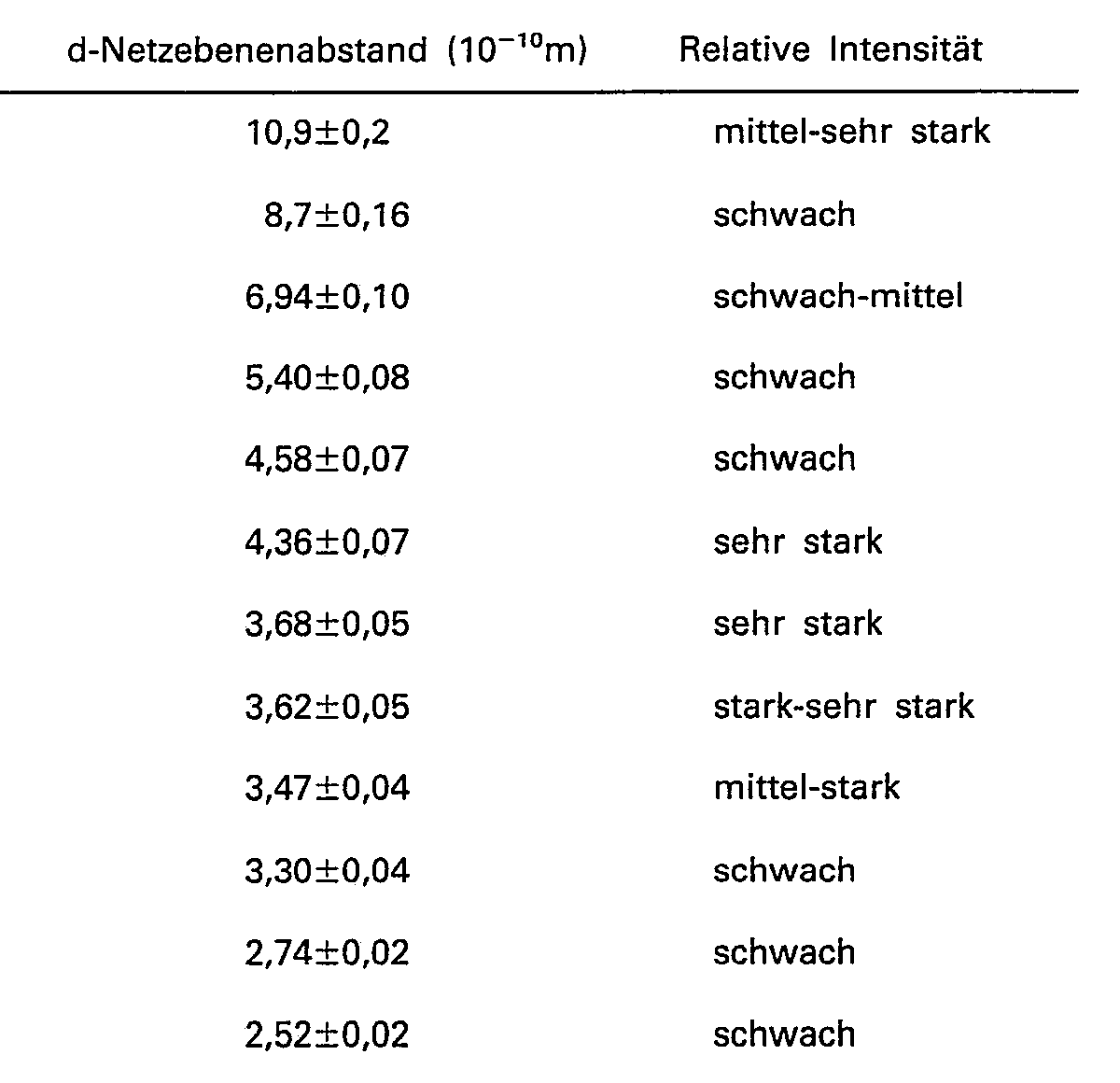
- the invention resides in a process for hydrodewaxing a hydrocarbon feedstock boiling above about 288°C (550°F), to produce a dewaxed lubricating oil base stock, comprising contacting the feedstock in the presence of hydrogen, with a supported catalyst composition comprising 20 to 50 percent by weight of a support material; 0.1 to 3 weight percent of at least one Group VIII metal and the remainder being a porous crystalline zeolite having a silica to alumina mole ratio of at least about 20, wherein the zeolite exhibits the X-ray diffraction lines set out in Table A and wherein contact of said feedstock with said supported catalyst composition is effected at a pressure of from 1480 to 20786 kPa (200 psig to 3000 psig); a temperature of from 260°C to 482°C; a feedstock LHSV ranging from 0.2 to 20 and a hydrogen feed rate of 89 to 3560 Nm 3 hydrogen/m 3 feedstock (500 to 20,000 standard
- the yield of dewaxed oil is higher than those of prior art methods.
- the viscosity index (VI) of the dewaxed oil produced in accordance with the invention is higher than that obtained by methods employing other catalyst compositions containing zeolites in dewaxing. Activity and selectivity, as measured by viscosity index and lube yield at a given pour point, of the catalyst composition are superior.
- the hydrodewaxing conditions include temperatures which are comparable to those of hydrocracking. Accordingly, when the feedstock processed in accordance with the invention has been previously subjected to hydrocracking, the need for quenching the hydrocracking effluent prior to dewaxing is minimized thereby resulting in substantial energy savings.
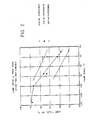
- Figure 1 is a flow diagram illustrating a process according to one example of the invention
- Hydrocracker 3 includes a catalytic hydrocracking zone maintained at conditions effective to convert in a single pass at least 20% of the feed to materials boiling below the initial boiling point of said feed.
- Such conditions for the hydrocracking step are summarized in Table I:
- hydrocracking catalysts are contemplated as suitable for use in the hydrocracker 3. Such catalysts will in general possess an acid function and a hydrogenation function, exemplified by a porous acidic oxide such as a silica alumina or silica zirconia associated with a nickel-tungsten or palladium or platinum, or cobalt-molybdenum or nickel-molybdenum component.
- a Group VIII metal or a combination of a Group VI and a Group VIII metal, as the oxides or sulfides thereof, deposited on silica alumina or silica zirconia may serve as the hydrocracking catalyst.
- the hydrocracking itself may be conducted in two or more stages, with pretreatment of the raw feed as part of the first stage.
- the effluent from the hydrocracker 3 including excess hydrogen may be contaminated with free hydrogen sulfide and in some cases with ammonia, since the hydrocracking step, in addition to saturating aromatic compounds, also is accompanied by desulfurization and denitrogenation.
- This effluent is therefore passed via line 4 to a high pressure gas-liquid separator (G/L Sep) 5 wherein the hydrocrackate is separated from contaminated hydrogen.
- the contaminated hydrogen is then passed from separator 5 via line 6 to a high pressure sorption section 7 wherein a substantial fraction of the hydrogen sulfide and of the ammonia are removed via line 8.
- the hydrogen from sorption unit 7 is passed via line 9 to a high pressure separator section 10 wherein it is separated from light hydrocarbons which are removed via line 11.
- the hydrocrackate separated in separator section 5 is passed via line 12 to catalytic dewaxing section 13 along with makeup hydrogen introduced via line 14.
- the only hydrogen supplied to the catalytic dewaxer section 13 is fresh hydrogen having a hydrogen sulfide partial pessure of less than about 35 kPa (about 5 psia) and less than 100 ppm of ammonia.
- the amount of hydrogen supplied via line 14 may be up to about the amount consumed in the process.
- all of the makeup hydrogen may be supplied via line 14.
- the remainder may be supplied to the hydrocracker via line 15, or at any other point in the system.
- hydrotreater unit 17 contains a hydrotreating catalyst typically one or more metals from Group VIII (e.g. cobalt and nickel) and Group VI (e.g. molybdenum and tungsten) of the Periodic Table of Elements supported by an inorganic oxide such as, for example, alumina or silica-alumina. Conditions in the hydrotreater unit 17 are summarized in Table III:
- the effluent from the hydrotreater unit is passed via line 18 to a high pressure separation section 10 wherein it is treated to separate light hydrocarbons, which are removed together with a hydrogen bleed via line 11. Also separated is the hydrocarbon mixture comprising a stabilized and dewaxed hydrocracked lubricating oil stock, which is recovered via line 19.
- the hydrocarbon mixture containing the lubricating oil stock is passed via line 19 to another unit (not shown) for recovery of the lubricating oil stock.
- the makeup and recycle hydrogen separated in section 10 is passed via line 20 to compressor 21 to raise its pressure and then passed via line 2 to the hydrocracker 3.
- the pressure in line 20, which is downstream from pump 21, and the pressure in line 2, which is upstream of pump 21, do not differ by more than about 5300 kPa (about 750 psig).
- a high pressure separation unit may be located in line 12 or line 16, for example, to remove a low molecular weight fraction of hydrocarbon not suitable for inclusion in the final lubricant base stock, thereby reducing the hydrocarbon load to subsequent sections.
- the catalyst composition used in dewaxing section 13 comprises 47 to 80 weight percent the zeolite ZSM-22, in combination with the Group VIII metal(s) and support material.
- the composition and preparation of the dewaxing catalyst will be described in detail below.
- ZSM-22 is a highly siliceous zeolite which can be prepared from a reaction mixture comprising a source of silica, an alkali metal oxide or an alkaline earth metal oxide, e.g., sodium, potassium, cesium, calcium or strontium, water, and alumina.
- the reaction mixture will preferably contain a template or directing agent.
- the template or directing agent may be selected from a variety of organic compounds. Amines and alcohols may act as such template or directing agents.
- Preferred directing agents are the alkane diamines or their salts and the dialkylammonium compounds.
- Suitable diamines are, e.g., ethanediamine, propanediamine, butanediamine, pentanediamine, hexanediamine, heptanediamine, octane-diamine, nonanediamine, decandediamine, undecanediamine, duodecane-diamine.
- the ZSM-22 has a calculated composition, in terms of moles of oxides, after dehydration, per 100 moles of silica, as follows: wherein RN is a C 2 ⁇ C 12 alkane diamine and M is an alkali metal or an alkaline earth metal having a valence n, e.g., Na, K, Cs, Li, Ca or Sr.
- RN is a C 2 ⁇ C 12 alkane diamine
- M is an alkali metal or an alkaline earth metal having a valence n, e.g., Na, K, Cs, Li, Ca or Sr.
- Suitable dialkylammonium compounds which may be used as the organic compound acting as the template or directing agent are those in which each of the alkyl groups is the same or different and each alkyl group has two (2) to eight (8) carbon atoms, e.g., ethyl, propyl, butyl, pentyl, hexyl, heptyl or octyl.
- the ZSM-22 has a calculated composition, in terms of moles of oxides, after dehydration, per 100 moles of silica, as follows: wherein Q 2 0 is the oxide form of said dialkylammonium. It is believed that either polyalkylene polyamines or methanol in appropriate mole ratios, based on the moles of reactants, may also be used as the directing agent to produce ZSM-22.
- the reaction mixture is maintained at crystallization temperature until crystals of the ZSM-22 zeolit p are formed. Thereafter, the crystals are separated from the liquid by any conventional means, washed and recovered. Crystallization can be carried out under either static or stirred conditions in a reactor vessel, e.g., a polypropylene jar, teflon lined or stainless steel autoclaves, at 80°C (176°F) to about 210°C (410°F) for 6 hours to 150 days. Thereafter, the crystals are separated from the liquid and recovered.
- the composition can be prepared utilizing materials which supply the appropriate oxide.
- Such materials include aluminates, alumina, silicates, sodium silicate, silica hydrosol, silica gel, silicia acid, sodium, potassium or cesium hydroxide, and an alkane diamine.
- the reaction mixture can be prepared either batchwise or continuously. Crystal size and crystallization time of the crystalline material varies with the nature of the reaction mixture employed and the crystallization conditions.
- the ZSM-22 zeolite can be prepared at a relatively wide range of Si0 2 /AI 2 0 3 ratios of 20 to infinity.
- larger alkali metal cations e.g., K + and Cs +
- K + and Cs + are preferably used at the SiO 2 /Al 2 O 3 ratios of 20 to 90 to obtain ZSM-22 crystals substantially free of impurities or other zeolites.
- the potassium (K + ) cation is preferred at such low Si0 2 /AI 2 0 3 ratios because cesium (Cs) appears to decrease the reaction rate.
- the highly siliceous ZSM-22 zeolite comprises crystalline, three-dimensional continuous framework, silicon-containing structures or crystals which result when all the oxygen atoms in the tetrahedra are mutually shared between tetrahedral atoms of silicon or aluminum, and which can exist with a network of mostly Si0 2 , i.e., exclusive of any intracrystalline cations.
- ZSM-22 has a calculated composition, in terms of moles of inorganic oxides, after dehydration and removal of the organic template or directing agent, per 100 moles of silica, as follows: wherein M is an alkali metal or an alkaline earth metal having a valence n, e.g., Na, K, Cs, Li, Ca or Sr and n is 1 or 2.
- M is an alkali metal or an alkaline earth metal having a valence n, e.g., Na, K, Cs, Li, Ca or Sr and n is 1 or 2.
- ZSM-22 can further be identified by its sorptive characteristics and its X-ray diffraction pattern.
- ZSM-22 zeolite has a definite X-ray diffraction pattern, set forth below in Table A, which distinguishes it from other crystalline materials.
- the radiation was the K-alpha doublet of copper and a diffractometer equipped with a scintillation counter and an associated computer were used.
- the ZSM-22 zeolite freely sorbs normal hexane and has a pore dimension greater than about 410 -10 m.
- the structure of the zeolite provides constrained access to larger molecules, which is conveniently measured by determination of the constraint index of the zeolite.
- the term "constraint index" and a method of its determination are described in, for example, U.S. Patent No. 4,016,218.
- ZSM-22 has a constraint index of about 8.6 at 800°F (427°C).
- n-hexane/o-xylene ratios may vary under different conditions, as illustrated by the data of Table C, below:
- the ZSM-22 zeolite tends to crystallize as agglomerates of elongated crystals having the size of 0.5 to 2.0- 10 -6 m. Ballmilling fractures these crystals into smaller size crystallites (about 0.1 . 10 -6 m) without significant loss of crystallinity.
- the zeolite can be formed into a wide variety of particle shapes. Generally speaking, the particles can be in the form of a powder, a granule, or a molded product, such as an extrudate having particle size sufficient to pass through a 2 mesh (Tyler) screen and be retained on a 400 mesh (Tyler) screen. In cases where the catalyst is molded, such as by extrusion, the crystals can be extruded before drying or partially dried and then extruded.
- the as-synthesized zeolite may be conveniently converted into the hydrogen, the univalent or multivalent cationic forms by base exchanging the zeolite to remove the sodium cations by such ions as hydrogen (from acids), ammonium, alkylammonium and arylammonium including RNH 3 , R 3 NH + , R 2 NH 2 and R 4 N + where R is alkyl or aryl, provided that steric hindrance does not prevent the cations from entering the cage and cavity structure of the ZSM-22 type crystalline zeolite.
- the hydrogen form of the zeolite, used in the dewaxing process of the invention is prepared, for example, by-base exchanging the sodium form with, e.g., ammonium chloride or hydroxide whereby the ammonium ion is substituted for the sodium ion.
- the composition is then calcined at a temperature of, e.g., 1000°F (about 540°C) causing evolution of ammonia and retention of the hydrogen proton in the composition.
- Other replacing cations include cations of the metals of the Periodic Table, particularly metals other than sodium, most preferably metals of Group IIA, e.g., zinc, and Groups IIIA, IVA, IB, IIB, IIIB, IVB, VIB and Group VIII of the Periodic Table, and rare earth metals and manganese.
- metals of the Periodic Table particularly metals other than sodium, most preferably metals of Group IIA, e.g., zinc, and Groups IIIA, IVA, IB, IIB, IIIB, IVB, VIB and Group VIII of the Periodic Table, and rare earth metals and manganese.
- Ion exchange of the zeolite can be accomplished conventionally, e.g., by admixing the zeolite with a solution of a cation to be introduced into the zeolite. Ion exchange with various metallic and non-metallic cations can be carried out according to the procedures described in U.S. Patents 3,140,251, 3,140,252 and 3,140,253.
- the zeolite dewaxing catalyst includes a Group VIII metal component which can be exchanged into the zeolite, impregnated therein or physically and intimately admixed therewith. Ion exchange can be carried out according to procedures described above. Impregnation may be effected by treating the zeolite with a solution containing a Group VIII metal- or a Group VIII metal-containing ion.
- the amount of Group VIII metal in the catalyst composition can range from 0.1 to 3 weight percent, preferably from 0.2 to 1 weight percent, based on the total weight of the catalyst composition.
- the Group VIII metal component can be platinum, palladium, iridium, ruthenium, cobalt, nickel and mixtures thereof.
- the preferred Group VIII metal is platinum or palladium.
- the Group VIII metal component of the composition may be used alone or in combination with a metal from Group VI of the Periodic Table of Elements. Examples of metals of Group VI are chromium, molybdenum, tungsten and mixtures thereof
- the catalyst composition comprising the zeolite ZSM-22 dewaxing catalyst component and Group VIII metal(s) includes a support material which is matrix or binder component comprising a material resistant to the temperature and other process conditions.
- Useful matrix materials include both synthetic and naturally occurring substances, as well as inorganic materials, such as clay, silica and/or metal oxides.
- the latter may be either naturally occurring or in the form of gelatinous precipitates or gels including mixtures of silica and metal oxides.
- Naturally occurring clays which can be composited with the zeolite include those of the montmorillonite and kaolin families, which families include the sub-bentonites and the kaolins commonly known as Dixie, McNamee, Georgia and Florida clays or others in which the main mineral constituent is halloysite, kaolinite, nacrite or anauxite. Such clays can be used in the raw state as originally mined or initially subjected to calcination, acid treatment or chemical modification.
- the zeolite ZSM-22 employed herein may be composited with a porous matrix material, such as alumina, silica-alumina, silica-magnesia, silica-zirconia, silica-thoria, silica-beryllia, silica-titania as well as ternary compositions such as silica-alumina-thoria, silica-alumina- zirconia, silica-alumina-magnesia and silica-magnesia-zirconia.
- the matrix can be in the form of a cogel.
- the relative proportions of zeolite ZSM-22 component and Group VIII metal and support material on an anhydrous basis may vary widely.
- the support material content will normally range from 20 to 50 percent by weight or more usually from 25 to 45 percent by weight of the dry composite; preferably the support comprises 30 to 40 percent by weight of the dried composite.
- the preferred supports of the catalyst composition are alumina, silica and silica-alumina.
- the Group VIII component associated with ZSM-22 may be on the zeolite component as above-noted or on the matrix component or both.
- 1.6 mm (1/16") extrude catalysts were sized to 14-25 mesh, 5 cc charged to a stainless steel reactor, and reduced with hydrogen at 482°C (900°F), atmospheric pressure, for one hour before introduction of the oil.
- Standard run conditions were 2859 kPa (400 psig), 1 LHSV (liquid hourly space velocity), 444 Nm 3 H 2 /m 3 feed (2500 SCF H 2 /bbl), and temperature varied to obtain the desired pour point.
- a catalyst was prepared by adding Pt(NH 3 ) 4 CI 2 to 65/35 ZSM-5/Al 2 O 3 extruding the mixture.
- the ZSM-5 had a Si0 2 /AI 2 0 3 molar ratio of 70:1 and the final catalyst after calcination in air at 940°C (1000°F) for 3 hours contained 0.50 wt.% Pt.
- a catalyst was prepared by impregnating HZSM-23 extrudate (65/35 zeolite/AI 2 0 3 ), after calcination in air at 540°C (1000°F) for 3 hours, with H 2 PtCl 6 .
- the zeolite component was a 114/1 Si0 2 /AI 2 0 3 ZSM-23 prepared from HiSil and aluminum sulfate.
- the final catalyst was dried, calcined in air at 482°C (900°F) for an additional 3 hours, and contained 0.56 wt.% Pt.
- a ZSM-22 extrudate was prepared as follows.
- a solution was prepared by mixing one part (by wt.) aluminum sulfate, 4.5 parts potassium hydroxide (86% by wt.) and 50 parts water. This solution was added to an autoclave. Another solution was prepared by mixing 27.6 parts colloidal silica (30% by wt.) and 36 parts water and then this mixture was added to the solution in the autoclave. Six parts of diethylamine hydrochloride was then added and the combined solution was agitated vigorously for approximately one-half hour. The autoclave was heated to 166°C (330°F) with constant stirring and maintained for 72 hours at this temperature. The resultant crystalline material was then filtered and washed on a Buchner funnel and then dried overnight at 121°C (250°F). The X-ray diffraction analysis indicated that this material was ZSM-22. Chemical analysis gave a silica to alumina molar ratio of 82.
- This zeolite was mixed with alpha-A1 2 0 3 3H 2 0 to make a mixture of 65 parts (by wt.) zeolite and 35 parts alumina. Enough water was added to the mixture so that the resulting catalyst could be formed into the required extrudates. These extrudates were activated by first calcining in nitrogen at 540°C (1000°F), followed by aqueous exchanges with a 1.0 N ammonium nitrate solution and finally calcining in air at 540°C (1000°F).
- the extrudate was impregnated with H 2 PtCl 6 , dired and calcined in air at 482°C (900°F) for 3 hours.
- the final catalyst contained 0.57 wt.% Pt.
- solvent refined light neutral stock characterized by the following properties was subjected to hydrodewaxing using the catalyst described in Example 1, at 2859 kPa (400 psig), 1 LHSV, 444 Nm 3 /H 2 /m 3 feed (2500 SCF H 2 /bbl). The results of three runs under such conditions are set forth below:
- Example 2 For purposes of comparison, the solvent refined light neutral stock described in Example 2 was sobjected to hydrodewaxing conditions described in Example 2 but the catalyst was replaced by a 1.0 wt.% NiIZSM-5 extrudate, 70 alpha, sulfided in situ. Run results are set forth below:
Landscapes
- Chemical & Material Sciences (AREA)
- Organic Chemistry (AREA)
- Oil, Petroleum & Natural Gas (AREA)
- Engineering & Computer Science (AREA)
- Chemical Kinetics & Catalysis (AREA)
- General Chemical & Material Sciences (AREA)
- Crystallography & Structural Chemistry (AREA)
- Materials Engineering (AREA)
- Catalysts (AREA)
- Production Of Liquid Hydrocarbon Mixture For Refining Petroleum (AREA)
- Lubricants (AREA)
Claims (5)
Applications Claiming Priority (2)
| Application Number | Priority Date | Filing Date | Title |
|---|---|---|---|
| US06/673,060 US4574043A (en) | 1984-11-19 | 1984-11-19 | Catalytic process for manufacture of low pour lubricating oils |
| US673060 | 1984-11-19 |
Publications (2)
| Publication Number | Publication Date |
|---|---|
| EP0185448A1 EP0185448A1 (de) | 1986-06-25 |
| EP0185448B1 true EP0185448B1 (de) | 1988-09-14 |
Family
ID=24701158
Family Applications (1)
| Application Number | Title | Priority Date | Filing Date |
|---|---|---|---|
| EP85307706A Expired EP0185448B1 (de) | 1984-11-19 | 1985-10-25 | Verfahren zur Herstellung von Schmierölen |
Country Status (11)
| Country | Link |
|---|---|
| US (1) | US4574043A (de) |
| EP (1) | EP0185448B1 (de) |
| JP (1) | JPH0692586B2 (de) |
| AR (1) | AR246074A1 (de) |
| AU (1) | AU570136B2 (de) |
| BR (1) | BR8505799A (de) |
| CA (1) | CA1248480A (de) |
| DE (1) | DE3564961D1 (de) |
| ES (1) | ES8701827A1 (de) |
| IN (1) | IN166021B (de) |
| ZA (1) | ZA858115B (de) |
Families Citing this family (79)
| Publication number | Priority date | Publication date | Assignee | Title |
|---|---|---|---|---|
| US5243112A (en) * | 1982-04-30 | 1993-09-07 | Mobil Oil Corp. | Lubricant range hydrocarbons from light olefins |
| US5254767A (en) * | 1982-04-30 | 1993-10-19 | Mobil Oil Corp. | Highly siliceous porous crystalline material and its use in conversion of oxygenates |
| US5248841A (en) * | 1982-04-30 | 1993-09-28 | Mobil Oil Corporation | Hydrocarbon conversion with ZSM-22 zeolite |
| US5336478A (en) * | 1982-04-30 | 1994-08-09 | Mobil Oil Corp. | Highly siliceous porous crystalline material |
| US5254770A (en) * | 1982-09-01 | 1993-10-19 | Mobil Oil Corp. | Isomerization of aromatic compounds over ZSM-22 zeolite |
| EP0161833B1 (de) * | 1984-05-03 | 1994-08-03 | Mobil Oil Corporation | Katalytische Entwachsung von leichten und schweren Ölen in zwei Parallelreaktoren |
| US4720337A (en) * | 1984-12-24 | 1988-01-19 | Mobil Oil Corporation | Hydrodewaxing method with interstage separation of light products |
| AU576030B2 (en) * | 1984-12-31 | 1988-08-11 | Mobil Oil Corporation | Process for producing high boiling jet fuel |
| US4749467A (en) * | 1985-04-18 | 1988-06-07 | Mobil Oil Corporation | Lube dewaxing method for extension of cycle length |
| US4921594A (en) * | 1985-06-28 | 1990-05-01 | Chevron Research Company | Production of low pour point lubricating oils |
| US4678556A (en) * | 1985-12-20 | 1987-07-07 | Mobil Oil Corporation | Method of producing lube stocks from waxy crudes |
| GB2193222A (en) * | 1986-07-30 | 1988-02-03 | Shell Int Research | Process for the catalytic dewaxing of hydrocarbon oil |
| US4822476A (en) * | 1986-08-27 | 1989-04-18 | Chevron Research Company | Process for hydrodewaxing hydrocracked lube oil base stocks |
| US4867862A (en) * | 1987-04-20 | 1989-09-19 | Chevron Research Company | Process for hydrodehazing hydrocracked lube oil base stocks |
| FR2626005A1 (fr) * | 1988-01-14 | 1989-07-21 | Shell Int Research | Procede de preparation d'une huile lubrifiante de base |
| US5456820A (en) * | 1989-06-01 | 1995-10-10 | Mobil Oil Corporation | Catalytic dewaxing process for producing lubricating oils |
| ES2051518T3 (es) * | 1989-06-01 | 1994-06-16 | Mobil Oil Corp | Procedimiento de desparafinado catalitico para la produccion de aceites lubricantes. |
| US5282958A (en) * | 1990-07-20 | 1994-02-01 | Chevron Research And Technology Company | Use of modified 5-7 a pore molecular sieves for isomerization of hydrocarbons |
| JP2942629B2 (ja) * | 1990-07-20 | 1999-08-30 | シェブロン リサーチ アンド テクノロジー カンパニー | 特殊気孔形態を有する触媒を用いたワックスの異性化 |
| US5358627A (en) * | 1992-01-31 | 1994-10-25 | Union Oil Company Of California | Hydroprocessing for producing lubricating oil base stocks |
| US5385663A (en) * | 1992-06-18 | 1995-01-31 | Uop | Integrated hydrocracking-catalytic dewaxing process for the production of middle distillates |
| JP3833250B2 (ja) * | 1994-11-22 | 2006-10-11 | エクソンモービル リサーチ アンド エンジニアリング カンパニー | 一体型混合粉末ペレット触媒およびそれを用いた蝋質供給原料の改質方法 |
| US6051127A (en) * | 1996-07-05 | 2000-04-18 | Shell Oil Company | Process for the preparation of lubricating base oils |
| KR100530712B1 (ko) * | 1996-11-27 | 2005-11-24 | 앵스띠뛰 프랑세 뒤 뻬뜨롤 | Nu-86 제올라이트계 촉매를 이용한 파라핀 공급 원료의 유동점 개선 방법 |
| FR2756295B1 (fr) * | 1996-11-27 | 1999-01-29 | Inst Francais Du Petrole | Procede pour l'amelioration du point d'ecoulement de charges paraffiniques avec un catalyseur a base de zeolithe nu-86 |
| FR2756296B1 (fr) * | 1996-11-27 | 1999-01-29 | Inst Francais Du Petrole | Procede pour l'amelioration du point d'ecoulement de charges paraffiniques avec un catalyseur a base de zeolithe nu-86 desaluminee |
| FR2765207B1 (fr) * | 1997-06-25 | 1999-08-06 | Inst Francais Du Petrole | Zeolithe nu-85, catalyseur et procede pour l'amelioration du point d'ecoulement de charges contenant des paraffines |
| US6663768B1 (en) * | 1998-03-06 | 2003-12-16 | Chevron U.S.A. Inc. | Preparing a HGH viscosity index, low branch index dewaxed |
| US6294077B1 (en) | 2000-02-02 | 2001-09-25 | Mobil Oil Corporation | Production of high viscosity lubricating oil stock with improved ZSM-5 catalyst |
| JP4208233B2 (ja) * | 2000-12-19 | 2009-01-14 | シエル・インターナシヨネイル・リサーチ・マーチヤツピイ・ベー・ウイ | 燃料の水素化分解プロセスでの塔底フラクションからのスピンドル油、軽質機械油及び中質機械油基油グレードの製造方法 |
| EP1370633B1 (de) * | 2001-02-13 | 2005-08-17 | Shell Internationale Researchmaatschappij B.V. | Schmierölzusammensetzung |
| AR032930A1 (es) * | 2001-03-05 | 2003-12-03 | Shell Int Research | Procedimiento para preparar un aceite de base lubricante y gas oil |
| AR032932A1 (es) * | 2001-03-05 | 2003-12-03 | Shell Int Research | Procedimiento para preparar un aceite de base lubricante y un gas oil |
| AR032941A1 (es) * | 2001-03-05 | 2003-12-03 | Shell Int Research | Un procedimiento para preparar un aceite base lubricante y aceite base obtenido, con sus diversas utilizaciones |
| WO2002074882A1 (en) * | 2001-03-20 | 2002-09-26 | Uop Llc | Two stage hydrocracking process |
| BR0208932A (pt) * | 2001-04-19 | 2004-04-20 | Shell Int Research | Processo para preparar um óleo de base |
| TWI277649B (en) * | 2001-06-07 | 2007-04-01 | Shell Int Research | Process to prepare a base oil from slack-wax |
| JP2005505681A (ja) * | 2001-10-16 | 2005-02-24 | シエル・インターナシヨネイル・リサーチ・マーチヤツピイ・ベー・ウイ | 予備処理した使用済み油の品質向上 |
| WO2003070857A1 (en) | 2002-02-25 | 2003-08-28 | Shell Internationale Research Maatschappij B.V. | Process to prepare a catalytically dewaxed gas oil or gas oil blending component |
| CN100419048C (zh) * | 2002-06-24 | 2008-09-17 | 国际壳牌研究有限公司 | 制备医用白油和工业白油的方法 |
| WO2004003113A1 (en) * | 2002-06-26 | 2004-01-08 | Shell Internationale Research Maatschappij B.V. | Lubricant composition |
| EP1666569B1 (de) | 2002-07-12 | 2018-12-26 | Shell International Research Maatschappij B.V. | Schmierstofffassung und verwendung dieser schmierstofffassung |
| EP1534802B1 (de) * | 2002-07-18 | 2005-11-16 | Shell Internationale Researchmaatschappij B.V. | Verfahren zur herstellung eines mirkokristallinen wachses und eines mitteldestillat-brennstoffs oder -kraftstoffs |
| US20040014877A1 (en) * | 2002-07-19 | 2004-01-22 | Null Volker Klaus | White oil as plasticizer in a polystyrene composition and process to prepare said oil |
| US7345106B2 (en) * | 2002-07-19 | 2008-03-18 | Shell Oil Company | Composition comprising EPDM and a paraffinic oil |
| US7641789B2 (en) * | 2002-12-09 | 2010-01-05 | Shell Oil Company | Process to prepare a base oil having a viscosity index of between 80 and 140 |
| US7815789B2 (en) * | 2003-06-23 | 2010-10-19 | Shell Oil Company | Process to prepare a lubricating base oil |
| CN100358979C (zh) * | 2003-06-27 | 2008-01-02 | 国际壳牌研究有限公司 | 制备润滑基础油的方法 |
| DE602004009073T2 (de) * | 2003-07-04 | 2008-06-19 | Shell Internationale Research Maatschappij B.V. | Verfahren zur herstellung von grundölen aus einem produkt der fischer-tropsch-synthese |
| EP1548088A1 (de) * | 2003-12-23 | 2005-06-29 | Shell Internationale Researchmaatschappij B.V. | Verfahren zum Herstellen eines trübungsfreien Grundöls |
| ATE397651T1 (de) * | 2004-02-26 | 2008-06-15 | Shell Int Research | Verfahren zur herstellung eines schmieröl- grundöls |
| US7727379B2 (en) * | 2004-03-02 | 2010-06-01 | Shell Oil Company | Process to continuously prepare two or more base oil grades and middle distillates |
| EP1733008A1 (de) * | 2004-03-02 | 2006-12-20 | Shell Internationale Researchmaatschappij B.V. | Verfahren zur herstellung von zwei oder mehr grundölqualitäten und mitteldestillaten |
| WO2006003119A1 (en) * | 2004-06-25 | 2006-01-12 | Shell Internationale Research Maatschappij B.V. | Process to prepare a lubricating base oil and its use |
| JP2008516036A (ja) * | 2004-10-11 | 2008-05-15 | シエル・インターナシヨネイル・リサーチ・マーチヤツピイ・ベー・ウイ | 曇りのない基油の製造方法 |
| CA2587555A1 (en) * | 2004-11-18 | 2006-05-26 | Shell Internationale Research Maatschappij B.V. | Process to prepare a gas oil |
| JP2008520786A (ja) * | 2004-11-18 | 2008-06-19 | シエル・インターナシヨネイル・リサーチ・マーチヤツピイ・ベー・ウイ | 基油の製造方法 |
| WO2006067176A1 (en) * | 2004-12-23 | 2006-06-29 | Shell Internationale Research Maatschappij B.V. | Process to prepare a lubricating base oil |
| WO2006122979A2 (en) * | 2005-05-20 | 2006-11-23 | Shell Internationale Research Maatschappij B.V. | Use of a fischer-tropsch derived white oil in food contact applications |
| AU2006264985A1 (en) * | 2005-07-01 | 2007-01-11 | Shell Internationale Research Maatschappij B.V. | Process to prepare a blended brightstock |
| TW200720418A (en) * | 2005-07-18 | 2007-06-01 | Shell Int Research | Process for reducing the cloud point of a base oil |
| JP4600671B2 (ja) * | 2005-08-29 | 2010-12-15 | Jx日鉱日石エネルギー株式会社 | 脱ロウ触媒及びその製造方法、並びに脱ロウ方法 |
| US20070151526A1 (en) * | 2005-12-02 | 2007-07-05 | David Colbourne | Diesel engine system |
| US8747650B2 (en) | 2006-12-21 | 2014-06-10 | Chevron Oronite Technology B.V. | Engine lubricant with enhanced thermal stability |
| US7520993B1 (en) | 2007-12-06 | 2009-04-21 | Water & Power Technologies, Inc. | Water treatment process for oilfield produced water |
| EP2075314A1 (de) | 2007-12-11 | 2009-07-01 | Shell Internationale Research Maatschappij B.V. | Fettformulierungen |
| JP2011508000A (ja) * | 2007-12-20 | 2011-03-10 | シエル・インターナシヨネイル・リサーチ・マーチヤツピイ・ベー・ウイ | 燃料組成物 |
| WO2009080672A1 (en) * | 2007-12-20 | 2009-07-02 | Shell Internationale Research Maatschappij B.V. | Fuel compositions |
| JP5299917B2 (ja) * | 2009-09-24 | 2013-09-25 | Jx日鉱日石エネルギー株式会社 | 炭化水素油及び潤滑油基油の製造方法 |
| KR101796782B1 (ko) * | 2010-05-07 | 2017-11-13 | 에스케이이노베이션 주식회사 | 고급 납센계 윤활기유 및 중질 윤활기유를 병산 제조하는 방법 |
| BR112014031227A8 (pt) | 2012-06-21 | 2020-09-24 | Shell Int Research | composição lubrificante, uso de uma composição lubrificante, e, uso de um material de mistura aromático alquilado |
| WO2014001546A1 (en) | 2012-06-28 | 2014-01-03 | Shell Internationale Research Maatschappij B.V. | Process to prepare a gas oil fraction and a residual base oil |
| EP2746367A1 (de) | 2012-12-18 | 2014-06-25 | Shell Internationale Research Maatschappij B.V. | Verfahren zur Herstellung von Basisöl und Gasöl |
| EA031082B1 (ru) | 2013-10-31 | 2018-11-30 | Шелл Интернэшнл Рисерч Маатсхаппий Б.В. | Способ конверсии парафинового сырья |
| ES2701819T3 (es) * | 2014-02-25 | 2019-02-26 | Saudi Basic Ind Corp | Método para convertir una materia prima hidrocarbonada de alto punto de ebullición en productos hidrocarbonados de menor punto de ebullición |
| RU2570649C1 (ru) * | 2015-02-26 | 2015-12-10 | Открытое акционерное общество "Нефтяная компания "Роснефть" | Способ получения основ низкозастывающих арктических масел |
| WO2017109179A1 (en) | 2015-12-23 | 2017-06-29 | Shell Internationale Research Maatschappij B.V. | Process for preparing a base oil having a reduced cloud point |
| US10934496B2 (en) | 2016-12-23 | 2021-03-02 | Shell Oil Company | Fischer-tropsch feedstock derived haze-free base oil fractions |
| WO2018115288A1 (en) | 2016-12-23 | 2018-06-28 | Shell Internationale Research Maatschappij B.V. | Haze-free base oils with high paraffinic content |
Family Cites Families (17)
| Publication number | Priority date | Publication date | Assignee | Title |
|---|---|---|---|---|
| US28398A (en) * | 1860-05-22 | Henry l | ||
| US3530061A (en) * | 1969-07-16 | 1970-09-22 | Mobil Oil Corp | Stable hydrocarbon lubricating oils and process for forming same |
| USRE28398E (en) | 1969-10-10 | 1975-04-22 | Marshall dann | |
| US3852207A (en) * | 1973-03-26 | 1974-12-03 | Chevron Res | Production of stable lubricating oils by sequential hydrocracking and hydrogenation |
| US4031016A (en) * | 1975-12-15 | 1977-06-21 | Shell Oil Company | Base oil compositions having improved light stability |
| US4137148A (en) * | 1977-07-20 | 1979-01-30 | Mobil Oil Corporation | Manufacture of specialty oils |
| US4181598A (en) * | 1977-07-20 | 1980-01-01 | Mobil Oil Corporation | Manufacture of lube base stock oil |
| US4437975A (en) * | 1977-07-20 | 1984-03-20 | Mobil Oil Corporation | Manufacture of lube base stock oil |
| US4222855A (en) * | 1979-03-26 | 1980-09-16 | Mobil Oil Corporation | Production of high viscosity index lubricating oil stock |
| US4283271A (en) * | 1980-06-12 | 1981-08-11 | Mobil Oil Corporation | Manufacture of hydrocracked low pour lubricating oils |
| US4292166A (en) * | 1980-07-07 | 1981-09-29 | Mobil Oil Corporation | Catalytic process for manufacture of lubricating oils |
| US4437976A (en) * | 1981-08-07 | 1984-03-20 | Mobil Oil Corporation | Two-stage hydrocarbon dewaxing hydrotreating process |
| US4440630A (en) | 1982-02-08 | 1984-04-03 | Mobil Oil Corporation | Process for simultaneous hydrodesulfurization and hydrodewaxing with a catalyst of controlled pore size and metals content |
| US4414097A (en) * | 1982-04-19 | 1983-11-08 | Mobil Oil Corporation | Catalytic process for manufacture of low pour lubricating oils |
| DE3366278D1 (en) * | 1982-08-09 | 1986-10-23 | Mobil Oil Corp | A process and catalyst composition for upgrading a hydrocarbon feedstock |
| US4481177A (en) * | 1982-12-09 | 1984-11-06 | Mobil Oil Corporation | Synthesis of zeolite ZSM-22 with a heterocyclic organic compound |
| US4474618A (en) * | 1983-08-08 | 1984-10-02 | Mobil Oil Corporation | Overnight cloud and color in lube dewaxing using platinum zeolite catalyst |
-
1984
- 1984-11-19 US US06/673,060 patent/US4574043A/en not_active Expired - Lifetime
-
1985
- 1985-10-18 IN IN829/MAS/85A patent/IN166021B/en unknown
- 1985-10-22 ZA ZA858115A patent/ZA858115B/xx unknown
- 1985-10-25 DE DE8585307706T patent/DE3564961D1/de not_active Expired
- 1985-10-25 EP EP85307706A patent/EP0185448B1/de not_active Expired
- 1985-10-25 AU AU49068/85A patent/AU570136B2/en not_active Expired
- 1985-11-07 CA CA000494807A patent/CA1248480A/en not_active Expired
- 1985-11-18 ES ES548994A patent/ES8701827A1/es not_active Expired
- 1985-11-19 BR BR8505799A patent/BR8505799A/pt unknown
- 1985-11-19 AR AR85302300A patent/AR246074A1/es active
- 1985-11-19 JP JP60257910A patent/JPH0692586B2/ja not_active Expired - Lifetime
Also Published As
| Publication number | Publication date |
|---|---|
| AU4906885A (en) | 1986-05-29 |
| JPH0692586B2 (ja) | 1994-11-16 |
| US4574043A (en) | 1986-03-04 |
| JPS61127791A (ja) | 1986-06-16 |
| ES8701827A1 (es) | 1986-12-01 |
| EP0185448A1 (de) | 1986-06-25 |
| AR246074A1 (es) | 1994-03-30 |
| ES548994A0 (es) | 1986-12-01 |
| CA1248480A (en) | 1989-01-10 |
| DE3564961D1 (en) | 1988-10-20 |
| BR8505799A (pt) | 1986-08-12 |
| ZA858115B (en) | 1987-06-24 |
| AU570136B2 (en) | 1988-03-03 |
| IN166021B (de) | 1990-03-03 |
Similar Documents
| Publication | Publication Date | Title |
|---|---|---|
| EP0185448B1 (de) | Verfahren zur Herstellung von Schmierölen | |
| EP0161833B1 (de) | Katalytische Entwachsung von leichten und schweren Ölen in zwei Parallelreaktoren | |
| US6051129A (en) | Process for reducing haze point in bright stock | |
| CA1192518A (en) | Catalytic process for manufacture of low pour point lubricating oils | |
| US5075269A (en) | Production of high viscosity index lubricating oil stock | |
| EP1973654B1 (de) | Hydroprocessing mit gemischten zsm-48-katalysatoren | |
| US4347121A (en) | Production of lubricating oils | |
| EP0464547B1 (de) | Verfahren zur Herstellung von Schmiermitteln mit hohem Viskositätsindex | |
| US4636299A (en) | Process for the manufacture of lubricating oils | |
| US5275719A (en) | Production of high viscosity index lubricants | |
| EP2384360B1 (de) | Sauergas-hydroprocessing zur herstellung eines schmierstoffbasisöls | |
| EP0187497B1 (de) | Verfahren zur Herstellung von hochsiedenden Düsentreibstoffen | |
| US6231749B1 (en) | Production of high viscosity index lubricants | |
| US7625478B2 (en) | Hydroprocessing with blended ZSM-48 catalysts | |
| US5977425A (en) | Method for upgrading waxy feeds using a catalyst comprising mixed powdered dewaxing catalyst and powdered isomerization catalyst formed into a discrete particle | |
| US4788378A (en) | Dewaxing by isomerization | |
| US5376260A (en) | Process for producing heavy lubricating oil having a low pour point | |
| US4563266A (en) | Catalytic dewaxing process | |
| US4560469A (en) | Catalytic dewaxing process | |
| EP0180354A1 (de) | Verfahren zur Wasserstoffbehandlung und Entwachsung von Erdöleinsätzen | |
| EP0313276A1 (de) | Katalytisches Hydroentparaffinierungsverfahren | |
| US5332490A (en) | Catalytic process for dewaxing hydrocarbon feedstocks | |
| US4773987A (en) | Shape-selective conversion of organic feedstock using clathrate group tectosilicates | |
| EP0062985B1 (de) | Verfahren zur Herstellung von naphthenischen Schmierölen aus Rohdestillat, durch Kombination von Hydroentparaffinierung und Hydrierung | |
| EP0149875B1 (de) | Hydroisomerisierung von katalytisch entwachsten Schmierölen |
Legal Events
| Date | Code | Title | Description |
|---|---|---|---|
| PUAI | Public reference made under article 153(3) epc to a published international application that has entered the european phase |
Free format text: ORIGINAL CODE: 0009012 |
|
| AK | Designated contracting states |
Kind code of ref document: A1 Designated state(s): BE DE FR GB IT NL |
|
| 17P | Request for examination filed |
Effective date: 19861120 |
|
| 17Q | First examination report despatched |
Effective date: 19871029 |
|
| GRAA | (expected) grant |
Free format text: ORIGINAL CODE: 0009210 |
|
| AK | Designated contracting states |
Kind code of ref document: B1 Designated state(s): BE DE FR GB IT NL |
|
| REF | Corresponds to: |
Ref document number: 3564961 Country of ref document: DE Date of ref document: 19881020 |
|
| ET | Fr: translation filed | ||
| ITF | It: translation for a ep patent filed | ||
| PLBI | Opposition filed |
Free format text: ORIGINAL CODE: 0009260 |
|
| 26 | Opposition filed |
Opponent name: AKZO N.V. Effective date: 19890614 |
|
| NLR1 | Nl: opposition has been filed with the epo |
Opponent name: AKZO N.V. |
|
| ITTA | It: last paid annual fee | ||
| PGFP | Annual fee paid to national office [announced via postgrant information from national office to epo] |
Ref country code: GB Payment date: 19920826 Year of fee payment: 8 |
|
| PGFP | Annual fee paid to national office [announced via postgrant information from national office to epo] |
Ref country code: DE Payment date: 19920827 Year of fee payment: 8 |
|
| PGFP | Annual fee paid to national office [announced via postgrant information from national office to epo] |
Ref country code: FR Payment date: 19920909 Year of fee payment: 8 |
|
| PGFP | Annual fee paid to national office [announced via postgrant information from national office to epo] |
Ref country code: BE Payment date: 19921013 Year of fee payment: 8 |
|
| PGFP | Annual fee paid to national office [announced via postgrant information from national office to epo] |
Ref country code: NL Payment date: 19921031 Year of fee payment: 8 |
|
| RDAG | Patent revoked |
Free format text: ORIGINAL CODE: 0009271 |
|
| STAA | Information on the status of an ep patent application or granted ep patent |
Free format text: STATUS: PATENT REVOKED |
|
| 27W | Patent revoked |
Effective date: 19930521 |
|
| GBPR | Gb: patent revoked under art. 102 of the ep convention designating the uk as contracting state |
Free format text: 930521 |
|
| NLR2 | Nl: decision of opposition | ||
| APAH | Appeal reference modified |
Free format text: ORIGINAL CODE: EPIDOSCREFNO |