EP0151337B1 - Streptokinase-coding recombinant vectors - Google Patents
Streptokinase-coding recombinant vectors Download PDFInfo
- Publication number
- EP0151337B1 EP0151337B1 EP84306851A EP84306851A EP0151337B1 EP 0151337 B1 EP0151337 B1 EP 0151337B1 EP 84306851 A EP84306851 A EP 84306851A EP 84306851 A EP84306851 A EP 84306851A EP 0151337 B1 EP0151337 B1 EP 0151337B1
- Authority
- EP
- European Patent Office
- Prior art keywords
- streptokinase
- vector
- microorganism
- fragment
- polydeoxyribonucleotide
- Prior art date
- Legal status (The legal status is an assumption and is not a legal conclusion. Google has not performed a legal analysis and makes no representation as to the accuracy of the status listed.)
- Expired - Lifetime
Links
Images

Classifications
-
- C—CHEMISTRY; METALLURGY
- C07—ORGANIC CHEMISTRY
- C07K—PEPTIDES
- C07K14/00—Peptides having more than 20 amino acids; Gastrins; Somatostatins; Melanotropins; Derivatives thereof
- C07K14/195—Peptides having more than 20 amino acids; Gastrins; Somatostatins; Melanotropins; Derivatives thereof from bacteria
- C07K14/315—Peptides having more than 20 amino acids; Gastrins; Somatostatins; Melanotropins; Derivatives thereof from bacteria from Streptococcus (G), e.g. Enterococci
- C07K14/3153—Streptokinase
Definitions
- a significant medical problem namely thromboembolism, is presented by the occlusion of blood vessels due to the presence of thrombi (blood clots). Such thromboembolisms are potentially fatal, often affecting organs such as the heart or lungs. This blockage of normal blood circulation may lead to irreversible tissue damage as metabolizing cells are deprived of oxygen, nutrients and a path for disposal of waste products.
- a thrombolytic event as described above may, for example, result from the formation of a blood clot in an arterioschlerotically altered artery. Such a clot may loosen and circulate to smaller arteries until it reaches an artery or arteriole too small to permit passage of the clot. The clot thereby blocks this small artery and prevents or inhibits the passage of blood therethrough.
- Certain thrombolytic agents facilitate the in vivo lysis or dissolution of blood clots.
- One of these agents is the bacterial protein streptokinase.
- Streptokinase a protein produced and secreted by hemolytic streptococci, was discovered and shown to cause lysis of clots containing human fibrinogen by Tillett and Garner (J. Exp. Med. 58 : 485 [l933]). While the mechanism of such fibrinolysis is not totally understood, streptokinase itself is believed to bind and activate human plasminogen, the fibrinolytically inactive precursor of plasmin. The activation of such plasminogen results in the appearance of plasmin, a fibrinolytic enzyme which hydrolyzes clot fibrinogen (Castellino TIBS, p. l [Jan. 1979]).
- Streptokinase is a thrombolytic agent currently being used for the lysis of intravascular thrombi in pulmonary or peripheral blood vessels (Marder, Ann. Intern. Med. 90 : 802 [l979]).
- Recent studies of intracoronary administration of streptokinase in the treatment of acute myocardial infarction patients indicate a beneficial effect on the early course of acute myocardial infarction (Khaja et al. N.E. J. Ned. 308 , p. l305 [l983] and Anderson et al. N.E. J. Med. 308 , p. l3l2 [l983]).
- Streptokinase from serological group C Streptococci has been purified for clinical usage and studied by several investigators.
- the primary source of this streptokinase has been the culture fluid resulting from the growth of the beta-hemolytic group C organism Streptococcus equisimilis .
- This culture fluid contains, in addition to streptokinase (a single-chain protein with a molecular weight of 45,000 to 50,000), a number of other extracellularly secreted substances. Since many of these other substances are toxic or potentially toxic to humans, the preparation of streptokinase from culture fluid for clinical usage involves multiple steps which must be performed with great care to ensure a clinically acceptable product.
- a publication by Sako et al. (Mol. Gen. Genet. l90 , p. 27l [l983]) describes the cloning of a staphylokinase-producing Escherichia coli transformant.
- a polydeoxynucleotide sequence sak coding for staphylokinase which is a plasminogen activating protein having a size of about l5 kd, was excised from a native staphylococcal-residing bacteriophase (P ⁇ -2) and ligatively inserted into plasmid pBR322.
- This sak -modified plasmid was used to transform Escherichia coli Kl2 and the resultant staphylokinase-producing Escherichia coli transformant was found to secrete amounts of staphylokinase into a culture medium.
- a recombinant vector adapted for transformation of a suitable host to produce streptokinase, said recombinant vector comprising a vector into which a polydeoxyribonucleotide fragment which codes for the synthesis and secretion of streptokinase has been inserted.
- the transformant microorganism including this recombinant vector synthesizes and secretes streptokinase.
- the transformant microorganism may be cultured in a suitable nutrient medium to produce a streptokinase-rich culture, from which streptokinase may be isolated.
- the invention provides a process for preparing such a recombinant vector comprising:
- the invention provides a transformant microorganism which includes a recombinant vector of the type described above and a process of producing such a microorganism.
- the invention provides polydeoxyribonucleotide fragments that code for the production and secretion of streptokinase and fragments performing both of these functions.
- Figure l is a restriction endonuclease map of plasmid pMFl;
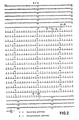
- Figure 2 illustrates the nucleotide sequence for the 2.5 kb PstI - produced pMFl fragment.
- a first vector is digested with a restriction endonuclease to produce linear first vector DNA.
- the first vector is preferably a plasmid, which is preferably obtained from a microbial source of the genera Escherichia , Saccharomyces , Streptococci , Bacillus , Neurospora , or Streptomyces . More preferably, the first vector is a plasmid obtained from a microbial source of the species Escherichia coli .
- the plasmid is the plasmid pBR322, which may be obtained from Escherichia coli RRl, NRRL B-l20l4, and which has been described by Bolivar et al. (Gene. 2 , p. 95, [l977]).
- the restriction endonuclease for digesting the first vector is preferably either Pst I or Hind III.
- the linear first vector DNA is ligated with a first polydeoxyribonucleotide fragment which codes for the synthesis and secretion of streptokinase, to produce a first recombinant vector comprising a first vector into which a polydeoxyribonucleotide fragment which codes for the synthesis and secretion of streptokinase has been inserted.
- the first polydeoxyribonucleotide fragment coding for the synthesis and secretion of streptokinase is preferably obtained by digesting the chromosomal DNA of a streptokinase-producing microorganism with a restriction endonuclease, to produce at least one linear DNA fragment which codes for synthesis and secretion of streptokinase. While streptokinase appears to be exported from Streptococcus equisimilis and from pMFl-transformed Escherichia coli HBl0l, the mechanism of such extracellular export has not been completely defined.
- the streptokinase-producing microorganism which is a source of the first polydeoxynucleotide fragment is a hemolytic microbe, and is more preferably of the genus Streptococcus , and is most preferably of the species Streptococcus equisimilis . Most preferred is Streptococcus equisimilis strain H46A, serological group C.
- the restriction endonuclease with which the DNA of the streptokinase-producing microorganism is digested is preferably Sau 3A or Pst I.
- the polydeoxyribonucleotide fragment which codes for the synthesis and secretion of streptokinase is ligated with linear DNA from a second vector, which preferably comprises a bacteriophage, and most preferably comprises lambda L47 bacteriophage.
- the linear second vector DNA is preferably formed by digesting the second vector DNA with at least one restriction endonuclease, preferably Bam Hl. Ligation of the linear polydeoxyribonucleotide fragment which codes for synthesis and secretion of streptokinase with linear second vector DNA results in production of a second recombinant vector.
- the second recombinant vector is preferably infectively added to a suitable second host, which preferably comprises a microorganism, and more preferably comprises a bacterium.
- the bacterium preferably is of the genus Escherichia , and is more preferably of the species Escherichia coli .
- the bacterium most preferably comprises Escherichia coli strain WL95 (P2). Those infected second hosts which produce streptokinase are selected and cloned.
- DNA from the second recombinant vectors of streptokinase-producing second hosts is preferably partially digested with a restriction endonuclease, which preferably is the same restriction endonuclease with which the first vector is digested as described above, and which preferably comprises Hind III or Pst I.
- the linear polydeoxyribonucleotide fragments produced by digestion of DNA from the streptokinase-producing second recombinant vectors comprise a preferred source of first polydeoxyribonucleotide fragments which code for the synthesis and secretion of streptokinase.
- a first polydeoxyribonucleotide fragment coding for synthesis and secretion of streptokinase is ligated with linear first vector DNA to produce a first recombinant vector.
- Figure 1 shows a restriction endonuclease map of the plasmid pMFl.
- This plasmid comprises a first recombinant vector which has been produced in accordance with the process just described, when the first vector is pBR322 and is digested by Hind III, when the streptokinase-producing microorganism is Streptococcus equisimilis strain H46A, serological group C and is digested with Sau 3A, when the second vector is lambda L47 bacteriophage and is digested with Bam Hl, when the second host is Escherichia coli WL95 (P21) and when the second recombinant vector is digested with Hind III.
- the first recombinant vector is infectively added to a suitable first host, which preferably comprises a microorganism, and more preferably comprises a bacterium.
- the bacterium is preferably of the genus Escherichia , and more preferably of the species Escherichia coli . Most preferred is the Escherichia coli strain HBl0l.
- This infective addition results in a streptokinase-producing transformed first host including a recombinant first vector which comprises a first vector into which a first polydeoxyribonucleotide fragment which codes for streptokinase synthesis and secretion has been inserted.
- Streptococcus equisimilis strain H46A (serological group C) was cultured overnight as a standing culture at 37°C. in 500 ml brain-heart infusion broth (Difco). The Streptococcus equisimilis cells were harvested by centrifugation and washed with cold TES buffer (0.03 M Tris, pH 8.0; 0.005 M EDTA; and 0.05 M NaCl).
- the cells were resuspended in 15 ml of 25 weight percent glucose containing 0.03 M EDTA and then mutanolysin (Dainippon Pharmaceutical Co., Osaka, Japan) dissolved in TES buffer was added to a concentration of about 2mg/ml and this cell suspension incubated at 37°C. for 30 minutes.
- mutanolysin Dainippon Pharmaceutical Co., Osaka, Japan
- TES buffer a concentration of about 2mg/ml
- 12.5 mg of the proteolytic enzyme Pronase which has been predigested for 30 minutes at 37°C. as a TES solution of about 5 mg Pronase per ml, was added to the cell suspension and this resultant mixture subjected to an incubation of 37°C. for 30 minutes.
- the cells in the mixture were then subjected to further lysis by the addition of 10 ml of 2 weight percent sodium dodecyl sulfate in TES and 8.5 ml of 5 M sodium perchlorate in TES to produce a lysate.
- the lysate was then repeatedly extracted with a phenolchloroform (2:1) solution until no further protein appeared at the aqueous-organic interface.
- the DNA was then precipitated from the aqueous phase by the addition of two volumes of ethanol thereto.
- the DNA precipitate was washed with cold 70% ethanol, dissolved in TES buffer and purified further by centrifugation in a cesium chloride-ethidium bromide buoyant density gradient.
- the H46A DNA having an average size of about 50kb, was stored at 40°C. -
- the Streptococcus equisimilis H46A DNA prepared as described above in Example I, was digested with the restriction endonuclease Sau 3A according to the procedure of Maniatas et al. ( Molecular Cloning: A Laboratory Manual , Cold Spring Harbor Laboratory, Cold Spring Harbor, N.Y. [l982]) to produce a mixture of H46A DNA fragments.
- the mixture of H46A DNA fragments was layered on a 37 ml, l0% to 40% linear sucrose density gradient containing l mM NaCl, 20 mM Tris (pH 8.0) and 5 mM EDTA and then subjected to centrifugation at 25,000 rpm for 2l hours in a SW27 Beckman ultracentrifuge rotor. Fractions having volumes of l ml were collected from the centrifuged gradient and the size distribution of DNA fragments in each fraction was determined by electrophoresis thereof in a 0.5% agarose (Sigma) gel and comparisons of the fragment migrations with those of reference bacteriophage lambda DNA fragments having known sizes.
- the fractions having Streptococcus equisimilis H46A DNA fragments sized from about 4 kb to about l5 kb were pooled, dialyzed against l0 mM Tris, pH 7.4 with l mM EDTA and then precipitated with cold ethanol.
- the precipitated DNA fragments were dissolved in l0 mM Tris, pH 7.4 with l mM EDTA at a concentration of l mg DNA per ml.
- Ligation of the Streptococcus equisimilis H46A DNA fragments with the digested bacteriophage lambda L47 DNA was accomplished by combining, in a l0 ⁇ l volume, l ⁇ g of the pooled sized H46A DNA fragments; l ⁇ g of digested lambda L47 DNA, T4 DNA ligase and ligase buffer, according to the directions supplied with the Amersham lambda DNA in vitro packaging kit. Following a l2 hour incubation at l2°C., 4 ⁇ l of the now-ligated DNA mixture was packaged into lambda phage heads according to the conditions prescribed by the Amersham instructions referred to above.
- a portion of the ligated phage thus produced was infectively added to each of two Escherichia coli lawns.
- One lawn contained strain WL95 (P2), which allows propagation only of recombinant clones containing DNA inserts and is not susceptible to phage P2-mediated interference (Loenen et al. Gene 20, p. 249 [l980]).
- the other lawn contained strain WL87, which allows propagation of recombinant clones as well as of reconstituted wild type lambda L47 phage.
- the total packaging efficiency calculated from the WL87 lawn was l05 PFU per p.4' ⁇ g of lambda L47 DNA and these recombinant clones (obtained from the WL95 (P2) lawn) represented a library of the Streptococcus equisimilis strain H46A chromosome.
- Activated plasminogen generates a caseinolytic as well as a fibrinolytic activity.
- the Escherichia coli which were treated with recombinant phage as described in Example II were cultured as plaques on plates of nutrient agar. These plates were then overlaid with a solution containing 50mM Tris, pH 8.l, l50 mM NaCl, l0 ⁇ g/ml human plasminogen, l0 mg agar/ml and l0 volume percent skim milk and were then incubated at 37°C. for at least 2 hours.
- streptokinase in a plaque resulted in the formation of a surrounding clear zone in the overlaying gelled solution, indicative of casein hydrolysis by activated plasminogen.
- l0 were found which produced surrrounding clear zones of caseinolysis.
- These ten recombinant streptokinase-producing clones were designated as lambda L47 (A to K) skc isolated and stored for further study.
- the ten recombinant streptokinase-producing lambda clones described above were isolated from high-titer lysates (l010 PFU/ml) according to the procedures described by Davis et al. ( A Manual for Genetic Engineering: Advanced Bacterial Genetics , Cold Spring Harbor Laboratory, Cold Spring Harbor, N.Y. [l980]). Restriction endonuclease digestion of the DNA from these clones was performed using the restriction endonucleases Bam Hl, Eco Rl and Hind III, again according to procedures described in Davis et al. The DNA digests thus obtained, together with DNA markers of known molecular sizes, were subjected to electrophoresis in l% agarose gels.
- the DNA from lambda L47E skc was partially digested with the restriction endonuclease Hind III and then combined with the DNA of plasmid pBR322 which had been completely digested with the same restriction endonuclease.
- a ligation mixture comprising the above described digested DNA fragments, T4 DNA ligase and ligase buffer was incubated at l2°C. for l2 hours to ligate the digested plasmid pBR322 DNA with the partially digested DNA from lambda L47E skc .
- the ligation products were used to transform Escherichia coli strain HBl0l (a commonly used strain K-l2 subspecies) by following the procedure described by Dagert et al. (Gene 6 , p. 23, [l979]), to produce the transformed microorganism Escherichia coli HBl0l(pMFl).
- the plasmid obtained from this streptokinase-producing transformant was isolated by buoyant density gradient ultracentrifugation and designated plasmid pMFl.
- Six restriction endonucleases (Hind III, Pst I, Sal I, Bam Hl, Ava I and Exo Ri) were utilized to digest plasmid pMFl by the digestion procedure described in Example IV. With the data resulting from these digestions a map of the restriction sites was determined and is shown in Figure l. Plasmid pMFl was found to have a molecular size of about ll.8 kb and contained a 7.4 kb insert in its Hind III site which included the skc gene.
- Partial Hind III digests of the original lambda L47E skc DNA also contained 7.4 kb fragments. Plasmid pMFl and DNA in the lambda L47E skc clone both also contained four Hind III fragments of size 2.65, 2.60, l.9 and 0.2 kb. These identical fragments confirmed that the skc -related sequences of the lambda L47E skc DNA and the plasmid pal DNA were identical, and that the skc -related sequences of plasmid pMFl were derived from the skc -related sequences of lambda L47E.
- Plasmid pMFl having a polydeoxynucleotide insert coding for streptokinase and a size of about 7.4 kb was subjected to digestion with the restriction endonuclease Pst I and the four resultant pMFl fragments having sizes of 6.0, 2.5, 2.2 and l.l kb were separated by electrophoresis in 0.8% low temperature melting agarose.
- the 2.5 kb Pst I-produced pMFl fragment was separated from the other fragments and removed from the agarose by electroelution. This purified 2.5 kb fragment was precipitated from solution by the addition of ethanol and then dissolved in l0 mM Tris, pH 7.4 containing l mM EDTA.
- the dissolved fragment was nick translated according to the procedure described by Maniatas et al. ( Molecular Cloning: A Laboratory Manual , Cold Spring Harbor Laboratory, Cold Spring Harbor, N.Y. [l982]) to form a 32p-labelled 2.5 kb fragment probe. Chromosomal DNA from Streptococcus equisimilis H46A and from Escherichia coli were immobilized on separate nitrocellulose filters.
- the 32p-labelled fragment probe was radioautographically found to hybridize only with immobilized DNA from Streptococcus equisimilis strain H46A, thus confirming that the 2.5 kb Pst I-produced pMFl fragment originated in the Streptococcus equisimilis strain H46A.
- Supernatant culture fluids from the pMFl-containing transformant of Escherichia coli strain HBl0l had levels of streptokinase activity consistent with secretion or the streptokinase from the Escherichia coli cells.
- the overlaid caseinolysis assays of transformed bacteria colonies resulted in areas of casein hydrolysis having large diameters consistent with extracellular streptokinase production.
- the supernatant fluid contained the majority of the streptokinase activity, while the periplasm contained an indetectably low amount and the cytoplasm contained the residue.
- Streptococcus equisimilis H46A streptokinase appears to be a secreted protein. This may indicate, according to the signal hypothesis (Emr et al., J. Cell. Biol. [l980], 86 , p. 70l; Talmadge et al., Proc. Nat'l. Acad. Sci. [l980], 77 , p. 3369; Gray et al., J. Bacteriol. [l98l], 145 , p. 422 and Roggerkamp et al., Proc. Nat'l. Acad. Sci. [l98l], 78 , p.
- the pMFl-transformed Escherichia coli HBl0l also appears to secrete streptokinase, which may indicate a commonality of secretion in gram-positive Streptococcus equisi milis H46A and gram-negative (pMFl) Escherichia coli HBl0l.
- the polydeoxynucleotide fragment from Streptococcus equisi milis contained in the pMFl plasmid thus may code for streptokinase as well as for an amino-terminal signal peptide which is bound to streptokinase and which is hydrolyzed during a streptokinase secretion event.
Landscapes
- Chemical & Material Sciences (AREA)
- Organic Chemistry (AREA)
- Health & Medical Sciences (AREA)
- General Health & Medical Sciences (AREA)
- Biochemistry (AREA)
- Biophysics (AREA)
- Life Sciences & Earth Sciences (AREA)
- Genetics & Genomics (AREA)
- Medicinal Chemistry (AREA)
- Molecular Biology (AREA)
- Proteomics, Peptides & Aminoacids (AREA)
- Gastroenterology & Hepatology (AREA)
- Micro-Organisms Or Cultivation Processes Thereof (AREA)
- Enzymes And Modification Thereof (AREA)
- Heat Treatment Of Strip Materials And Filament Materials (AREA)
Priority Applications (1)
| Application Number | Priority Date | Filing Date | Title |
|---|---|---|---|
| AT84306851T ATE61816T1 (de) | 1983-10-10 | 1984-10-08 | Streptokinase kodierende rekombinante vektoren. |
Applications Claiming Priority (4)
| Application Number | Priority Date | Filing Date | Title |
|---|---|---|---|
| DD255523 | 1983-10-10 | ||
| DD25552383A DD249037A1 (de) | 1983-10-10 | 1983-10-10 | Verfahren zur synthese von streptokinase durch heterologe produzenten |
| US06/585,417 US4764469A (en) | 1984-03-02 | 1984-03-02 | Streptokinase-coding recombinant vectors |
| US585417 | 1984-03-02 |
Publications (3)
| Publication Number | Publication Date |
|---|---|
| EP0151337A2 EP0151337A2 (en) | 1985-08-14 |
| EP0151337A3 EP0151337A3 (en) | 1986-10-08 |
| EP0151337B1 true EP0151337B1 (en) | 1991-03-20 |
Family
ID=25747839
Family Applications (1)
| Application Number | Title | Priority Date | Filing Date |
|---|---|---|---|
| EP84306851A Expired - Lifetime EP0151337B1 (en) | 1983-10-10 | 1984-10-08 | Streptokinase-coding recombinant vectors |
Country Status (8)
| Country | Link |
|---|---|
| EP (1) | EP0151337B1 (da) |
| AU (1) | AU561372B2 (da) |
| CA (1) | CA1223223A (da) |
| DE (1) | DE3484304D1 (da) |
| DK (1) | DK482284A (da) |
| ES (1) | ES8702948A1 (da) |
| FI (1) | FI843963L (da) |
| NO (1) | NO844039L (da) |
Families Citing this family (5)
| Publication number | Priority date | Publication date | Assignee | Title |
|---|---|---|---|---|
| DD250546A1 (de) * | 1983-12-16 | 1987-10-14 | Adw Ddr | Verfahren zur fermentativen herstellung einer streptokinase |
| ZA872534B (en) * | 1986-05-08 | 1987-11-25 | Phillips Petroleum Co | Yeast production of streptokinase |
| US5240845A (en) * | 1989-07-11 | 1993-08-31 | Otsuka Pharmaceutical Factory, Ltd. | Mutated streptokinase proteins |
| CN1035193C (zh) * | 1994-04-04 | 1997-06-18 | 上海医科大学 | 一种制备重组链激酶的方法 |
| US6313191B1 (en) | 1994-08-22 | 2001-11-06 | Dentsply Gmbh | Method and composition for priming and adhering to tooth structure |
Family Cites Families (5)
| Publication number | Priority date | Publication date | Assignee | Title |
|---|---|---|---|---|
| NL120622C (da) * | 1959-12-22 | |||
| US4370417A (en) * | 1980-04-03 | 1983-01-25 | Abbott Laboratories | Recombinant deoxyribonucleic acid which codes for plasminogen activator |
| FI64813C (fi) * | 1980-12-31 | 1984-01-10 | Ilkka Antero Palva | Foerfarande foer producering av ett utvalt aeggviteaemne och vid foerfarandet anvaenda rekombinantplasmidvektorer |
| JPS5867181A (ja) * | 1981-10-16 | 1983-04-21 | Yakult Honsha Co Ltd | スタフイロキナーゼ産生遺伝情報を担うdna断片組み換え体dnaおよびそれを導入した大腸菌 |
| DD250546A1 (de) * | 1983-12-16 | 1987-10-14 | Adw Ddr | Verfahren zur fermentativen herstellung einer streptokinase |
-
1984
- 1984-10-05 AU AU33859/84A patent/AU561372B2/en not_active Ceased
- 1984-10-08 EP EP84306851A patent/EP0151337B1/en not_active Expired - Lifetime
- 1984-10-08 DE DE8484306851T patent/DE3484304D1/de not_active Expired - Lifetime
- 1984-10-09 FI FI843963A patent/FI843963L/fi not_active Application Discontinuation
- 1984-10-09 ES ES536623A patent/ES8702948A1/es not_active Expired
- 1984-10-09 NO NO844039A patent/NO844039L/no unknown
- 1984-10-09 DK DK482284A patent/DK482284A/da not_active Application Discontinuation
- 1984-10-09 CA CA000464939A patent/CA1223223A/en not_active Expired
Also Published As
| Publication number | Publication date |
|---|---|
| FI843963A7 (fi) | 1985-04-11 |
| EP0151337A2 (en) | 1985-08-14 |
| DE3484304D1 (de) | 1991-04-25 |
| FI843963A0 (fi) | 1984-10-09 |
| CA1223223A (en) | 1987-06-23 |
| NO844039L (no) | 1985-04-11 |
| DK482284D0 (da) | 1984-10-09 |
| ES8702948A1 (es) | 1987-01-16 |
| AU561372B2 (en) | 1987-05-07 |
| ES536623A0 (es) | 1987-01-16 |
| FI843963L (fi) | 1985-04-11 |
| AU3385984A (en) | 1985-04-18 |
| DK482284A (da) | 1985-04-26 |
| EP0151337A3 (en) | 1986-10-08 |
Similar Documents
| Publication | Publication Date | Title |
|---|---|---|
| Chmouryguina et al. | Conservation of the C5a peptidase genes in group A and B streptococci | |
| Collen et al. | Isolation and characterisation of natural and recombinant staphylokinase | |
| Tweten | Cloning and expression in Escherichia coli of the perfringolysin O (theta-toxin) gene from Clostridium perfringens and characterization of the gene product | |
| JP2713467B2 (ja) | バンパイアバット唾液プラスミノーゲン賦活体 | |
| Estrada et al. | High level expression of streptokinase in Escherichia coli | |
| Miyoshi et al. | An exocellular thermolysin-like metalloprotease produced by Vibrio fluvialis: purification, characterization, and gene cloning | |
| Rathsam et al. | The cell-bound fructosyltransferase of Streptococcus salivarius: the carboxyl terminus specifies attachment in a Streptococcus gordonii model system | |
| EP1032675B1 (en) | Attaching substances to micro-organisms | |
| US5700648A (en) | Streptolysin O antigen derivatives, their production and uses | |
| Chen et al. | Cloning and expression of the streptococcal C5a peptidase gene in Escherichia coli: linkage to the type 12 M protein gene | |
| EP0151337B1 (en) | Streptokinase-coding recombinant vectors | |
| US5650320A (en) | Lanthionine antibiotic compositions and methods | |
| EP0210279B1 (en) | Stabilized human prourokinase | |
| US5187098A (en) | DNA encoding hybrid streptokinases with plasminogen fibrin binding domains | |
| US5290916A (en) | Purified glucanase enzymes | |
| US4764469A (en) | Streptokinase-coding recombinant vectors | |
| US7407789B2 (en) | Recombinant staphylokinase derivatives and the preparation and applications thereof | |
| JPH0365189A (ja) | プラスミド、その製造方法及びこれをプラスミノ―ゲンアクチベーターの収得に使用する方法 | |
| US5066589A (en) | Streptokinase-coding recombinant vectors | |
| Gerlach et al. | Purification and characterization of the bacterial plasminogen activator staphylokinase secreted by a recombinant Bacillus subtilis | |
| US20040062760A1 (en) | Human complement C3-binding protein from streptococcus pneumoniae | |
| JPH0387188A (ja) | フィブリン結合ドメインを有するハイブリッドストレプトキナーゼおよびその製造方法 | |
| Pratap et al. | Role of N-terminal domain of streptokinase in protein transport | |
| EP0489201B1 (en) | Method for the isolation and expression of a gene which codes for streptokinase, nucleotide sequence obtained, recombinant DNA and transformed microorganisms | |
| RU2127758C1 (ru) | Способ получения рекомбинантной стрептокиназы |
Legal Events
| Date | Code | Title | Description |
|---|---|---|---|
| PUAI | Public reference made under article 153(3) epc to a published international application that has entered the european phase |
Free format text: ORIGINAL CODE: 0009012 |
|
| AK | Designated contracting states |
Designated state(s): AT BE CH DE FR GB IT LI NL SE |
|
| PUAL | Search report despatched |
Free format text: ORIGINAL CODE: 0009013 |
|
| AK | Designated contracting states |
Kind code of ref document: A3 Designated state(s): AT BE CH DE FR GB IT LI NL SE |
|
| 17P | Request for examination filed |
Effective date: 19870408 |
|
| 17Q | First examination report despatched |
Effective date: 19881031 |
|
| RAP1 | Party data changed (applicant data changed or rights of an application transferred) |
Owner name: THE BOARD OF REGENTS OF THE UNIVERSITY OF OKLAHOMA |
|
| GRAA | (expected) grant |
Free format text: ORIGINAL CODE: 0009210 |
|
| AK | Designated contracting states |
Kind code of ref document: B1 Designated state(s): AT BE CH DE FR GB IT LI NL SE |
|
| REF | Corresponds to: |
Ref document number: 61816 Country of ref document: AT Date of ref document: 19910415 Kind code of ref document: T |
|
| REF | Corresponds to: |
Ref document number: 3484304 Country of ref document: DE Date of ref document: 19910425 |
|
| ET | Fr: translation filed | ||
| ITF | It: translation for a ep patent filed | ||
| PLBE | No opposition filed within time limit |
Free format text: ORIGINAL CODE: 0009261 |
|
| STAA | Information on the status of an ep patent application or granted ep patent |
Free format text: STATUS: NO OPPOSITION FILED WITHIN TIME LIMIT |
|
| 26N | No opposition filed | ||
| PGFP | Annual fee paid to national office [announced via postgrant information from national office to epo] |
Ref country code: FR Payment date: 19921030 Year of fee payment: 9 |
|
| PGFP | Annual fee paid to national office [announced via postgrant information from national office to epo] |
Ref country code: NL Payment date: 19921031 Year of fee payment: 9 |
|
| PGFP | Annual fee paid to national office [announced via postgrant information from national office to epo] |
Ref country code: SE Payment date: 19921103 Year of fee payment: 9 Ref country code: DE Payment date: 19921103 Year of fee payment: 9 |
|
| PGFP | Annual fee paid to national office [announced via postgrant information from national office to epo] |
Ref country code: CH Payment date: 19921105 Year of fee payment: 9 |
|
| PGFP | Annual fee paid to national office [announced via postgrant information from national office to epo] |
Ref country code: GB Payment date: 19921112 Year of fee payment: 9 |
|
| PGFP | Annual fee paid to national office [announced via postgrant information from national office to epo] |
Ref country code: BE Payment date: 19921204 Year of fee payment: 9 |
|
| PGFP | Annual fee paid to national office [announced via postgrant information from national office to epo] |
Ref country code: AT Payment date: 19921218 Year of fee payment: 9 |
|
| PG25 | Lapsed in a contracting state [announced via postgrant information from national office to epo] |
Ref country code: GB Effective date: 19931008 Ref country code: AT Effective date: 19931008 |
|
| PG25 | Lapsed in a contracting state [announced via postgrant information from national office to epo] |
Ref country code: SE Effective date: 19931009 |
|
| PG25 | Lapsed in a contracting state [announced via postgrant information from national office to epo] |
Ref country code: LI Effective date: 19931031 Ref country code: CH Effective date: 19931031 Ref country code: BE Effective date: 19931031 |
|
| BERE | Be: lapsed |
Owner name: THE BOARD OF REGENTS OF THE UNIVERSITY OF OKLAHOM Effective date: 19931031 |
|
| PG25 | Lapsed in a contracting state [announced via postgrant information from national office to epo] |
Ref country code: NL Effective date: 19940501 |
|
| GBPC | Gb: european patent ceased through non-payment of renewal fee |
Effective date: 19931008 |
|
| NLV4 | Nl: lapsed or anulled due to non-payment of the annual fee | ||
| PG25 | Lapsed in a contracting state [announced via postgrant information from national office to epo] |
Ref country code: FR Effective date: 19940630 |
|
| REG | Reference to a national code |
Ref country code: CH Ref legal event code: PL |
|
| PG25 | Lapsed in a contracting state [announced via postgrant information from national office to epo] |
Ref country code: DE Effective date: 19940701 |
|
| REG | Reference to a national code |
Ref country code: FR Ref legal event code: ST |
|
| EUG | Se: european patent has lapsed |
Ref document number: 84306851.1 Effective date: 19940510 |