EP0133272B1 - Verfahren zur Bestimmung eines Partners einer Immunreaktion sowie Reagens zur Durchführung dieses Verfahrens - Google Patents
Verfahren zur Bestimmung eines Partners einer Immunreaktion sowie Reagens zur Durchführung dieses Verfahrens Download PDFInfo
- Publication number
- EP0133272B1 EP0133272B1 EP84108708A EP84108708A EP0133272B1 EP 0133272 B1 EP0133272 B1 EP 0133272B1 EP 84108708 A EP84108708 A EP 84108708A EP 84108708 A EP84108708 A EP 84108708A EP 0133272 B1 EP0133272 B1 EP 0133272B1
- Authority
- EP
- European Patent Office
- Prior art keywords
- detergent
- acceptor
- adsorbed
- partner
- serum
- Prior art date
- Legal status (The legal status is an assumption and is not a legal conclusion. Google has not performed a legal analysis and makes no representation as to the accuracy of the status listed.)
- Expired
Links
Images


Classifications
-
- G—PHYSICS
- G01—MEASURING; TESTING
- G01N—INVESTIGATING OR ANALYSING MATERIALS BY DETERMINING THEIR CHEMICAL OR PHYSICAL PROPERTIES
- G01N33/00—Investigating or analysing materials by specific methods not covered by groups G01N1/00 - G01N31/00
- G01N33/48—Biological material, e.g. blood, urine; Haemocytometers
- G01N33/50—Chemical analysis of biological material, e.g. blood, urine; Testing involving biospecific ligand binding methods; Immunological testing
- G01N33/53—Immunoassay; Biospecific binding assay; Materials therefor
- G01N33/543—Immunoassay; Biospecific binding assay; Materials therefor with an insoluble carrier for immobilising immunochemicals
- G01N33/54393—Improving reaction conditions or stability, e.g. by coating or irradiation of surface, by reduction of non-specific binding, by promotion of specific binding
-
- Y—GENERAL TAGGING OF NEW TECHNOLOGICAL DEVELOPMENTS; GENERAL TAGGING OF CROSS-SECTIONAL TECHNOLOGIES SPANNING OVER SEVERAL SECTIONS OF THE IPC; TECHNICAL SUBJECTS COVERED BY FORMER USPC CROSS-REFERENCE ART COLLECTIONS [XRACs] AND DIGESTS
- Y10—TECHNICAL SUBJECTS COVERED BY FORMER USPC
- Y10S—TECHNICAL SUBJECTS COVERED BY FORMER USPC CROSS-REFERENCE ART COLLECTIONS [XRACs] AND DIGESTS
- Y10S435/00—Chemistry: molecular biology and microbiology
- Y10S435/962—Prevention or removal of interfering materials or reactants or other treatment to enhance results, e.g. determining or preventing nonspecific binding
-
- Y—GENERAL TAGGING OF NEW TECHNOLOGICAL DEVELOPMENTS; GENERAL TAGGING OF CROSS-SECTIONAL TECHNOLOGIES SPANNING OVER SEVERAL SECTIONS OF THE IPC; TECHNICAL SUBJECTS COVERED BY FORMER USPC CROSS-REFERENCE ART COLLECTIONS [XRACs] AND DIGESTS
- Y10—TECHNICAL SUBJECTS COVERED BY FORMER USPC
- Y10S—TECHNICAL SUBJECTS COVERED BY FORMER USPC CROSS-REFERENCE ART COLLECTIONS [XRACs] AND DIGESTS
- Y10S436/00—Chemistry: analytical and immunological testing
- Y10S436/825—Pretreatment for removal of interfering factors from sample
-
- Y—GENERAL TAGGING OF NEW TECHNOLOGICAL DEVELOPMENTS; GENERAL TAGGING OF CROSS-SECTIONAL TECHNOLOGIES SPANNING OVER SEVERAL SECTIONS OF THE IPC; TECHNICAL SUBJECTS COVERED BY FORMER USPC CROSS-REFERENCE ART COLLECTIONS [XRACs] AND DIGESTS
- Y10—TECHNICAL SUBJECTS COVERED BY FORMER USPC
- Y10S—TECHNICAL SUBJECTS COVERED BY FORMER USPC CROSS-REFERENCE ART COLLECTIONS [XRACs] AND DIGESTS
- Y10S436/00—Chemistry: analytical and immunological testing
- Y10S436/826—Additives, e.g. buffers, diluents, preservatives
Definitions
- the invention relates to a method for determining a partner of an immune reaction, in which one of the reaction partners is adsorbed on a solid support, in a serum or plasma sample, the incubation environment of the immune reaction between the soluble partner or partners and the a detergent is added to the solid carrier adsorbed partner.
- the object of the invention was to provide a method which provides comparable values in both serum and plasma samples and which can also be carried out in a simple manner and without additional method steps.
- the object is achieved by a method for the comparable determination of a partner of an immune reaction in serum and plasma samples, in which one of the reaction partners is adsorbed on a solid support, characterized in that the incubation environment of the immune reaction between the soluble partner or the soluble partners and a detergent is added to the binding partner adsorbed on the solid support, so that the detergent concentration is 0.0001 to 0.01% (w / v!).
- Another object of the invention is a reagent for carrying out an immune reaction between a reaction partner adsorbed on a solid support and a soluble partner or soluble partners in a serum or plasma sample, which in addition to the components usually required for the immune reaction, a detergent in a concentration of 0.0001-0.01 (w / w%).
- the detergent concentration in the reagent is particularly preferably 0.001-0.005% (% by weight).
- the reagent according to the invention can be present as a powder, lyophilisate or as a solution.
- Non-ionic and anionic detergents can be used as detergents.
- nonionic detergents are epoxy fatty acid esters, for example Tween 20 (polyoxyethylene sorbitan monolaurate), Tween 80 (polyoxyethylene sorbitan monooleate), triton (alkyl polyether alcohol mixtures), Brij 35 (polyoxyethylene lauryl) ether), Non-Idet P-40 (polyoxyethylene octylphenol ether), Lubrol PX (polyethylene oxide-alkyl ether adduct), Berol EMU 043 (C-16, C-18 fatty alcohol with 10 oxyethylene units) and the like.
- Sodium dodecyl sulfate (SDS) is an example of an anionic detergent.
- the detergents are preferably added to the incubation solution in a concentration of 0.001-0.005% (by weight).
- US-A-4,241,175 describes that non-ionic detergents can be used for the adsorption of antigen on carrier materials. Concentrations of 0.1 and 1% by volume are disclosed as examples. The actual immune reaction is not carried out in the presence of detergent, but only the fixation of one of the reactants on a solid support to produce one of the starting reagents necessary for an immunoassay.
- US Pat. No. 4,313,927 also describes detergent concentrations of 0.05% in radioimmunoassays by way of example.
- US-A-4,357,310 relates to increasing the storage stability of a radioactively labeled protein hormone to be used for radioimmunoassays by adding detergent.
- the exemplary detergent concentrations are 0.5% (w / v). This patent does not comment on the problem of the different results in immunoassays in serum and plasma.
- US Pat. No. 4,060,597 describes the stabilization of latex reagents for serological tests which are based on latex agglutination. Specifically, the document relates to the stabilization of polystyrene latex particles which have been treated with a nonionic detergent before being loaded with serologically active substances. In contrast, the present invention is intended to provide a method and reagent for immunoassays which, when applied to serum and plasma samples, give equally reliable and consistent results. None can be inferred from this in US Pat. No. 4,060,597.
- US-A-4,311,788 also relates to a nephelometric method. It describes how turbidity-causing substances that interfere with the nephelometric measurement are rendered ineffective by adding detergents. As a supplementary measure, enzymatic degradation of such opacifying substances is recommended. The reference gives no indication of how consistent results can be achieved between serum and plasma samples.
- An immune reaction in the sense of the invention means all reactions between immunological receptors and acceptors. It is only essential to the invention that a reaction partner is used in the reaction or else only in a partial step of the overall reaction in a form adsorbed onto a solid support.
- the detergent according to the invention is added in each case in the step in which the receptor adsorbed on a solid carrier takes part in the reaction.
- An acceptor is to be understood in particular as an antigen or hapten.
- Complete antibodies or antibody fragments are suitable as receptors.
- the labeling can be done in a known manner by an enzyme, a radioisotope, a fluorescent compound, etc. Plates, spheres, tubes, strips or rods made of glass or plastics are suitable as solid supports.
- sheep anti-digoxin is suitably diluted with phosphate buffer, 10 mM, pH 7.5, filled into polystyrene test tubes and incubated overnight.
- phosphate buffer 10 mM, pH 7.5
- the tubes are also 1000 ul conjugate buffer, the digoxin peroxidase (20 mU / ml) in phosphate buffer, 40 mM, pH 6.8, bovine serum albumin 0.25% and once and once and 0.003% Tween o 20, and 100 ul pipetted serum or plasma or standard sample containing digoxin. The mixture is incubated for one hour at room temperature. Then the tubes are sucked out and washed with tap water.
- the peroxidase activity on the surface of the polystyrene tubes is then determined in a known manner.
- 1000 wl substrate solution, the ABTS and hydrogen peroxide in 100 mM Contains phosphate / citrate buffer, pH 4.4, pipetted into the tubes and incubated for one hour at room temperature. The extinctions are then measured on the photometer.
- a calibration curve is created by measuring standard samples with a known digoxin concentration. The digoxin concentration in the unknown sample is determined from the absorbance of the samples with an unknown digoxin concentration using this calibration curve.
- ABTS 2,2'-azino-di [3-ethyl-benzothiazoline sulfonate (6)].
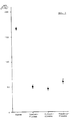
- Figure 1 shows the% digoxin recovery rate for different sample media when the test procedure described above is performed in the absence of a detergent.
- Figure 1 shows the 100% value for clear human serum containing 1.0 ng / ml digoxin.
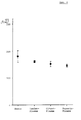
- Figure 2 shows the corresponding values for measurements are shown which have been now, however, as indicated above, carried out in a completely analogous manner with the addition of 0.003% Tween ® 20th The values shown in Figure 2. show that only slight deviations can be observed in the latter case.
- plastic tubes are coated with sheep anti-AFP adsorptively.
- the tubes are dried and then used as follows: 1,000 ⁇ l of an incubation buffer consisting of 100 mM phosphate buffer, pH 6.8 and 1% bovine serum albumin, and 200 ⁇ l of sample or standard are added to the tubes and added for one hour Incubated at room temperature. It is then suctioned off, washed once with tap water and a conjugate solution consisting of sheep anti-AFP, to which peroxidase is coupled, is added. The mixture is incubated for one hour at room temperature.
- Figure 3 shows the AFP values found for the serum, oxalate plasma, citrate plasma and heparin plasma without the addition of a detergent according to the invention. The values shown show that drastically lower AFP concentrations are measured in plasma samples.
- TSH thyrotropin
- plastic tubes are coated with monoclonal antibodies from the mouse, directed against TSH, adsorptively and used after drying as follows: 1,000 ⁇ l incubation solution, the 100 mM phosphate buffer, pH 6.8 and 1% bovine serum albumin contains, together with 200 ⁇ l sample solution from serum or plasma, which contain different amounts of TSH, incubated for one hour at room temperature. It is then suctioned off and washed and incubated with 1,000 ⁇ l of conjugate solution containing sheep anti-TSH to which peroxidase is coupled. The incubation period is one hour at room temperature. It is then suctioned off and washed and continued as described in Examples 1 and 2.
Landscapes
- Health & Medical Sciences (AREA)
- Immunology (AREA)
- Life Sciences & Earth Sciences (AREA)
- Engineering & Computer Science (AREA)
- Chemical & Material Sciences (AREA)
- Hematology (AREA)
- Urology & Nephrology (AREA)
- Biomedical Technology (AREA)
- Molecular Biology (AREA)
- Microbiology (AREA)
- Analytical Chemistry (AREA)
- Biotechnology (AREA)
- Chemical Kinetics & Catalysis (AREA)
- Food Science & Technology (AREA)
- Medicinal Chemistry (AREA)
- Physics & Mathematics (AREA)
- Cell Biology (AREA)
- Biochemistry (AREA)
- General Health & Medical Sciences (AREA)
- General Physics & Mathematics (AREA)
- Pathology (AREA)
- Investigating Or Analysing Biological Materials (AREA)
- Measuring Or Testing Involving Enzymes Or Micro-Organisms (AREA)
Description
- Die Erfindung betrifft ein Verfahren zur Bestimmung eines Partners einer Immunreaktion, bei der einer der Reaktionspartner an einen festen Träger adsorbiert ist, in einer Serum- oder Plasma-Probe, wobei dem Inkubationsmilieu der Immunreaktion zwischen dem löslichen Partner bzw. den löslichen Partnern und dem an den festen Träger adsorbierten Partner ein Detergens zugegeben wird.
- Es ist seit mehreren Jahren bekannt, daß immunologische Bestimmungen im Serum und im Plasma zu unterschiedlichen Ergebnissen führen. Es werden hierfür inhibitorische Faktoren verantwortlich gemacht, die sich in Blutplasma befinden und die Aktivität des an einen festen Träger adsorbierten Bindungspartners beeinflussen.
- In Clin. Chem. 24 (1978) S. 137-139 werden beispielsweise für zahlreiche radioimmunologische Bestimmungen die Unterschiede zwischen Serum- und Plasma-Proben aufgezeigt. Daß auch für einen Enzym-Immunoassay unterschiedliche Werte für Messungen im Serum und im Plasma gefunden werden, wird beispielsweise in Ärztl. Lab. 27 (1981) S. 69-73 beschrieben. Es wird in dieser Arbeit auch die Schlußfolgerung gezogen, daß derartige Inhaltsstoffe des Plasmas, vor allem Fibrinogen, bei allen Enzym-Immunoassays, bei denen das Prinzip der heterogenen Verfahrensweise zur Anwendung kommt, zu Störungen der Immunreaktion zwischen den adsorbierten und dem löslichen Partner bzw. den löslichen Partnern führen.
- Es läßt sich allerdings in der Praxis nicht generell vermeiden, auch Plasma als Probenmilieu einzusetzen. Ferner ist es zuweilen bei einer zu messenden Probe überhaupt nicht bekannt, ob sie auf der Basis eines Serums oder Plasmas zubereitet worden ist.
- Es besteht somit ein Bedarf nach einem Verfahren zur Bestimmung eines Partners einer Immunreaktion, bei dem ein Partner in an einen festen Träger adsorbierter Form vorliegt, das unabhängig vom Probenmaterial, Serum oder Plasma, zuverlässige und übereinstimmende Werte liefert. In Ärztl. Lab. 27 (1981) S. 69-73 wird vorgeschlagen, zur Beseitigung der genannten Störung die Probe für 10 Minuten auf 56 °C zu erhitzen und anschließend die denaturierten Störsubstanzen abzuzentrifugieren. Dieser Hitzeschritt mit anschließender Zentrifugation bedeutet jedoch bei der praktischen Durchführung der Bestimmungsverfahren zusätzliche Arbeitsschritte. Darüber hinaus ist damit zu rechnen, daß durch die Hitzebehandlung andersartige Störungen und Fehlerquellen hervorgerufen werden.
- Aufgabe der Erfindung war es, ein Verfahren bereitzustellen, das sowohl in Serum- als auch in Plasma-Proben vergleichbare Werte liefert und darüber hinaus auf einfache Weise und ohne zusätzliche Verfahrensschritte durchführbar ist.
- Die Aufgabe wird gelöst durch ein Verfahren zur vergleichbaren Bestimmung eines Partners einer Immunreaktion in Serum- und Plasmaproben, bei der einer der Reaktionspartner an einen festen Träger adsorbiert ist, dadurch gekennzeichnet, daß dem Inkubationsmilieu der Immunreaktion zwischen dem löslichen Partner bzw. den löslichen Partnern und dem an den festen Träger adsorbierten Bindungspartner ein Detergens zugegeben wird, so daß die Detergens-Konzentration 0,0001 bis 0,01 % (Gew./Vo!.) beträgt.
- Ein weiterer Gegenstand der Erfindung ist ein Reagens zur Durchführung einer Immunreaktion zwischen einem an einen festen Träger adsorbierten Reaktionspartner und einem löslichen Partner bzw. löslichen Partnern in einer Serum- oder Plasma-Probe, das zusätzlich zu den für die Immunreaktion üblicherweise erforderlichen Bestandteile ein Detergens in einer Konzentration von 0,0001-0,01 (Gew.Nol.) enthält. Die Detergens-Konzentration im Reagens beträgt besonders bevorzugt 0,001-0,005 % (Gew.Nol.). Das erfindungsgemäße Reagens kann als Pulver, Lyophilisat oder als Lösung vorliegen.
- Als Detergentien können nicht-ionische und anionische Detergentien eingesetzt werden. Beispiele für nicht-ionische Detergentien sind Epoxy-Fettsäure-Ester, beispielsweise Tween 20 (Polyoxyethylen- sorbitan-monolaurat), Tween 80 (Polyoxy-ethylen-sorbitan-monooleat), Triton (Alkyl-polyether-alkoholGemische), Brij 35 (Polyoxyethylenlauryl-ether), Non-Idet P-40 (Polyoxy-ethylen-octylphenol-ether), Lubrol PX (Polyethylenoxid-alkylether-Addukt), Berol EMU 043 (C-16, C-18-Fettalkohol mit 10 Oxyethyleneinheiten) u. ä. Als Beispiel für ein anionisches Detergens sei Natriumdodecyl-sulfat (SDS) angeführt.
- Vorzugsweise werden die Detergentien der Inkubationslösung in einer Konzentration von 0,001-0,005 % (Gew.Nol.) zugesetzt.
- Es war bekannt, durch Zugabe von Detergentien unspezifische Bindungen bei einer Immunreaktion zu unterdrücken bzw. zu beseitigen. Wird bei einer Immunreaktion ein Bindungspartner in an einen festen Träger adsorbierter Form eingesetzt, so wurde ein Zusatz von Detergentien bisher vermieden, da dadurch die adsorptive Bindung des Bindungspartners an den Träger geschwächt bzw. völlig aufgehoben wird.
- So beschreibt US-A-4,241,175, daß zur Adsorption von Antigen an Trägermaterialien nicht-ionische Detergentien eingesetzt werden können. Beispielhaft offenbart sind Konzentrationen von 0,1 und 1 Vol.- %. Die eigentliche lmmunreaktion wird nicht in Anwesenheit von Detergens durchgeführt, sondern nur die Fixierung eines der Reaktanden auf einem festen Träger zur Herstellung eines der für einen Immunoassay notwendigen Ausgangsreagentien.
- US-A-4,273,756 beschreibt die Verwendung von 0,2 bzw. 1 % Tween-20 in Immunoassays für klassenspezifische Antikörper in Serum. Der Patentschrift kann nicht entnommen werden, ob unter den beispielhaft offenbarten Bedingungen mit Plasma die gleichen Ergebnisse erzielt werden.
- Ebenso werden auch in US-A-4,313,927 beispielhaft Detergenskonzentrationen von 0,05 % in Radioimmunoassays beschrieben.
- US-A-4,357,310 betrifft die Erhöhung der Lagerstabilität eines radioaktiv markierten Proteinhormons, das für Radioimmunoassays verwendet werden soll durch Detergenszusatz. Die beispielhaften Detergenskonzentrationen liegen bei 0,5 % (Gew.Nol.). Zu dem Problem der unterschiedlichen Resultate bei Immunoassays in Serum und Plasma wird in dieser Patentschrift nicht Stellung genommen.
- In US-A-4,060,597 wird die Stabilisierung von Latexreagentien für serologische Untersuchungen beschrieben, die auf Latexagglutination basieren. Speziell betrifft die Schrift die Stabilisierung von Polystyrol-Latexpartikeln, die vor der Beladung mit serologisch aktiven Substanzen mit einem nichtionischen Detergens behandelt wurden. Demgegenüber soll die vorliegende Erfindung ein Verfahren und Reagens für Immunoassays schaffen, das bei der Anwendung auf Serum- und Plasma-Proben gleichermaßen zuverlässige und übereinstimmende Resultate ergibt. Hierzu kann US-A-4,060,597 nichts entnommen werden.
- Auch US-A-4,311,788 betrifft eine nephelometrische Methode. Es wird dort beschrieben, wie trübungsverursachende Stoffe, die die nephelometrische Messung stören, durch Zusatz von Detergentien unwirksam gemacht werden. Als ergänzende Maßnahme wird ein enzymatischer Abbau solcher trübungsverursachender Stoffe empfohlen. Die Literaturstelle gibt keinerlei Hinweis darauf, wie übereinstimmende Resultate zwischen Serum- und Plasma-Proben erzielt werden können.
- Es war deshalb überraschend, daß der erfindungsgemäße Zusatz von Detergentien in der genannten geringen Konzentration ausreicht, die Wirkung der inhibitorischen Faktoren des Blutplasmas vollständig auszuschalten, ohne die adsorptive Bindung des Bindungspartners an den festen Träger zu beeinträchtigen.
- Unter einer Immunreaktion im Sinne der Erfindung sind alle Reaktionen zwischen immunologischen Rezeptoren und Akzeptoren zu verstehen. Erfindungswesentlich ist nur, daß ein Reaktionspartner bei der Reaktion oder aber auch nur bei einem Teilschritt der Gesamtreaktion in an einen festen Träger adsorbierter Form eingesetzt wird.
- Beispielhaft für die zahlreichen bekannten Varianten solcher immunologischer Bestimmungsverfahren sei der kompetitive Assay erwähnt, bei dem zur Bestimmung eines Akzeptors in einer Probe eine bekannte Menge des markierten Akzeptors zugesetzt wird und der Akzeptor und der markierte Akzeptor um im Unterschuß vorhandene Rezeptorbindungsstellen konkurrieren, die sich auf einem festen Träger befinden. Ein weiteres breites Gebiet sind die Sandwich-Teste, bei denen ein mindestens bivalenter Akzeptor mit einem markierten Rezeptor und einem an einen festen Träger adsorbierten Rezeptor umgesetzt wird. Diese Umsetzung kann auf verschiedene Weise erfolgen :
- a) Der Akzeptor wird gleichzeitig mit dem markierten und dem unlöslichen Rezeptor umgesetzt.
- b) Im ersten Schritt erfolgt die Umsetzung zwischen Akzeptor und dem unlöslichen Rezeptor. Der entstehende Komplex wird in einem zweiten Schritt mit dem markierten Rezeptor inkubiert.
- c) Im ersten Schritt erfolgt die Umsetzung zwischen dem Akzeptor und dem markierten Rezeptor. Der entstandene lösliche Komplex wird anschließend mit dem unlöslichen Rezeptor umgesetzt.
- Der erfindungsgemäße Zusatz des Detergens erfolgt jeweils in dem Schritt, in dem der an einen festen Träger adsorbierte Rezeptor an der Reaktion teilnimmt.
- Unter einem Akzeptor ist insbesondere ein Antigen oder Hapten zu verstehen. Als Rezeptoren kommen vollständige Antikörper oder auch Antikörper-Fragment infrage. Die Markierung kann in bekannter Weise durch ein Enzym, ein Radioisotop, eine fluoreszierende Verbindung usw. erfolgen. Als fester Träger eignen sich Platten, Kugeln, Röhrchen, Streifen oder Stäbchen aus Glas oder Kunststoffen.
- Die folgenden Beispiele erläutern die Erfindung :
- Schaf-anti-Digoxin wird je nach Titer in geeigneter Weise mit Phosphatpuffer, 10 mM, pH 7,5, verdünnt, in Reagensröhrchen aus Polystyrol gefüllt und über Nacht inkubiert. In die Röhrchen werden ferner 1000 µl Konjugatpuffer, der Digoxin-Peroxidase (20 mU/ml) in Phosphatpuffer, 40 mM, pH 6,8, Rinderserumalbumin 0,25 % sowie einmal kein und einmal 0,003 % Tweeno 20 enthält, sowie 100 µl digoxinhaltiges Serum bzw. Plasma bzw. Standardprobe pipettiert. Das Gemisch wird eine Stunde bei Raumtemperatur inkubiert. Danach werden die Röhrchen ausgesaugt und mit Leitungswasser gewaschen.
- Die kovalente Bindung (Kopplung) von Peroxidase an Antikörper erfolgt nach der Methode von M. B. Wilson, Paul K. Nakane, beschrieben in « Recent Developments in the Perjodate Methode of Conjugating Horse Radish Peroxidase (HRPO) to Antibodies". 1978 Elsevier/North-Holland Biomedical Press Seite 215-224 in « Immunfluorescence and Related Staining Techniques ».
- Anschließend wird die Peroxidase-Aktivität an der Oberfläche der Polystyrolröhrchen in bekannter Weise bestimmt. Hierzu werden 1000 wl Substratlösung, die ABTS und Wasserstoffperoxid in 100 mM Phosphat/Citrat-Puffer, pH 4,4, enthält, in die Röhrchen pipettiert und eine Stunde bei Raumtemperatur inkubiert. Anschließend werden die Extinktionen am Photometer vermessen. Durch Messen von Standardproben mit bekannter Digoxinkonzentration wird eine Eichkurve erstellt. Aus der Extinktion der Proben mit unbekannter Digoxinkonzentration wird mit Hilfe dieser Eichkurve die Digoxinkonzentration in der unbekannten Probe bestimmt.
- In Abbildung 1 ist die Digoxin-Wiederfindungsrate in % für verschiedene Probenmedien dargestellt, wenn die oben beschriebene Testdurchführung in Abwesenheit eines Detergens durchgeführt wird. 1 zeigt den 100 %-Wert für klares Humanserum, das 1,0 ng/ml Digoxin enthält. Die entsprechenden Werte für verschiedene Plasmaproben : 2 = Oxalat-Plasma, 3 = Citrat-Plasma und 4 = Heparin-Plasma sind in Abbildung 1 ebenfalls angegeben. Die Werte zeigen deutlich, daß in Abwesenheit eines Detergens eine wesentlich erhöhte Digoxin-Konzentration vorgetäuscht wird. In Abbildung 2 sind die korrespondierenden Werte für Messungen angegeben, die in völlig analoger Weise jedoch jetzt mit Zusatz von 0,003 % Tween® 20, wie vorstehend angegeben, durchgeführt worden sind. Die in Abbildung 2 aufgeführten Werte. zeigen, daß in letzterem Falle nur geringfügige Abweichungen zu beobachten sind.
- Wie in Beispiel 1 beschrieben, werden Kunststoffröhrchen mit Schaf-anti-AFP adsorptiv beschichtet. Die Röhrchen werden getrocknet und anschließend wie folgt verwendet: 1 000 µl eines Inkubationspuffers, der aus 100 mM Phosphat-Puffer, pH 6,8 und 1 % Rinderserumalbumin besteht, und 200 µl Probe bzw. Standard werden in die Röhrchen gegeben und eine Stunde bei Raumtemperatur inkubiert. Anschließend wird ausgesaugt, mit Leitungswasser einmal gewaschen und eine Konjugatlösung bestehend aus Schaf-anti-AFP, an das Peroxidase gekoppelt ist, hinzugegeben. Das Gemisch wird eine Stunde bei Raumtemperatur inkubiert. Anschließend wird erneut ausgesaugt, mit Leitungswasser gewaschen und mit 1 000 wl Substratlösung, die aus ABTS/Wasserstoffperoxid in 100 mM Phosphat-Citrat-Puffer, pH 4,4, besteht, inkubiert. Mit Hilfe von Standardproben mit bekanntem AFP-Gehalt wird eine Eichkurve erstellt. Anhand dieser Eichkurven werden in unbekannten Proben die AFP-Konzentrationen ermittelt.
- In Abbildung 3 sind die nach obigem Verfahren gefundenen AFP-Werte für Serum, Oxalat-Plasma, Citrat-Plasma und Heparin-Plasma ohne erfindungsgemäßen Zusatz eines Detergens aufgezeigt. Die wiedergegebenen Werte zeigen, daß in Plasmaproben drastisch geringere AFP-Konzentrationen gemessen werden.
- In Abbildung 4 sind die korrespondierenden Werte angegeben, wenn in erfindungsgemäßer Weise bei der Inkubation 0,002 % Tween0 20 zugesetzt wird. Die Abweichungen zwischen Serum und Plasma sind gering. Sie liegen im allgemeinen innerhalb der Fehlergrenze.
- Völlig analoge Ergebnisse werden erzielt, wenn bei dem vorstehend beschriebenen Bestimmungsverfahren anstelle von 0,002 % Tween0 20 0,003 % Bril" 35 als Detergens eingesetzt werden.
- Wie in den Beispielen 1 und 2 beschrieben, werden Kunststoffröhrchen mit monoklonalen Antikörpern der Maus, gerichtet gegen TSH, adsorptiv beschichtet und nach Trocknung wie folgt eingesetzt : 1 000 µl Inkubationslösung, die 100 mM Phosphat-Puffer, pH 6,8 und 1 % Rinderserumalbumin enthält, werden zusammen mit 200 µl Probenlösung aus Serum oder Plasma, die unterschiedliche Mengen TSH enthalten, eine Stunde bei Raumtemperatur inkubiert. Anschließend wird ausgesaugt und gewaschen und mit 1 000 µl Konjugatlösung, enthaltend Schaf-anti-TSH, an das Peroxidase gekoppelt ist, inkubiert. Die Inkubationszeit beträgt eine Stunde bei Raumtemperatur. Danach wird ausgesaugt und gewaschen und wie in Beispiel 1 und 2 angegeben, weitergearbeitet.
- Dieses Bestimmungsverfahren wird einmal durchgeführt ohne Zusatz eines Detergens sowie einmal mit Zusatz von 0,005 % Tween@ 20. Die für Serum sowie für verschiedene Plasma-Proben gefundenen Werte sind in der folgenden Tabelle gegenüber gestellt.

- Auch in diesem Falle zeigt sich, daß ohne Zusatz eines Detergens die Werte für Serum- und Plasma- Proben deutlich voneinander abweichen. Bei erfindungsgemäßem Zusatz eines Detergens stimmen die gemessenen Werte für Serum und Plasma gut überein.
Claims (7)
Priority Applications (1)
| Application Number | Priority Date | Filing Date | Title |
|---|---|---|---|
| AT84108708T ATE47231T1 (de) | 1983-07-30 | 1984-07-24 | Verfahren zur bestimmung eines partners einer immunreaktion sowie reagens zur durchfuehrung dieses verfahrens. |
Applications Claiming Priority (2)
| Application Number | Priority Date | Filing Date | Title |
|---|---|---|---|
| DE3327642 | 1983-07-30 | ||
| DE19833327642 DE3327642A1 (de) | 1983-07-30 | 1983-07-30 | Verfahren zur bestimmung eines partners einer immunreaktion sowie reagens zur durchfuehrung dieses verfahrens |
Publications (3)
| Publication Number | Publication Date |
|---|---|
| EP0133272A2 EP0133272A2 (de) | 1985-02-20 |
| EP0133272A3 EP0133272A3 (en) | 1987-12-02 |
| EP0133272B1 true EP0133272B1 (de) | 1989-10-11 |
Family
ID=6205408
Family Applications (1)
| Application Number | Title | Priority Date | Filing Date |
|---|---|---|---|
| EP84108708A Expired EP0133272B1 (de) | 1983-07-30 | 1984-07-24 | Verfahren zur Bestimmung eines Partners einer Immunreaktion sowie Reagens zur Durchführung dieses Verfahrens |
Country Status (5)
| Country | Link |
|---|---|
| US (1) | US4639425A (de) |
| EP (1) | EP0133272B1 (de) |
| JP (1) | JPS6053846A (de) |
| AT (1) | ATE47231T1 (de) |
| DE (2) | DE3327642A1 (de) |
Families Citing this family (30)
| Publication number | Priority date | Publication date | Assignee | Title |
|---|---|---|---|---|
| US5151266A (en) * | 1985-08-20 | 1992-09-29 | Neorx Corporation | Use of anionic detergents with conjugates of monoclonal or polyclonal antibodies |
| DE3530942A1 (de) * | 1985-08-29 | 1987-03-12 | Boehringer Mannheim Gmbh | Verfahren und reagenz zur beseitigung der stoerung der analyt-wiederfindung in plasmaproben |
| DE3532626A1 (de) * | 1985-09-12 | 1987-03-19 | Boehringer Mannheim Gmbh | Verfahren zur bestimmung eines partners einer immunreaktion |
| NL8600056A (nl) * | 1986-01-13 | 1987-08-03 | Nederlanden Staat | Werkwijze voor het aantonen van een lid van een immunologisch paar, werkwijze voor het bereiden van een drager waaraan een lid van een immunologisch paar is gebonden alsmede analyse-inrichting geschikt voor het uitvoeren van dergelijke werkwijzen. |
| DE3717402A1 (de) * | 1987-05-23 | 1988-12-08 | Behringwerke Ag | Verfahren zur bestimmung von proteinen und mittel dazu |
| DE3725504A1 (de) * | 1987-07-31 | 1989-02-09 | Thraenhart Olaf Priv Doz Dr | Verfahren und vorrichtung zum nachweis von antikoerpern und antigenen |
| US5017474A (en) * | 1988-02-12 | 1991-05-21 | Eastman Kodak Company | Wash solution, test kit and method for the determination of an immunological ligand |
| DE3807478A1 (de) * | 1988-03-08 | 1989-09-21 | Behringwerke Ag | Mittel fuer immunchemische tests enthaltend aminoxide |
| US5077198A (en) * | 1988-04-14 | 1991-12-31 | Eastman Kodak Company | Diagnostic kit and method for rapid detection of antibodies |
| US5268299A (en) * | 1988-04-14 | 1993-12-07 | Eastman Kodak Company | Diluent composition useful in the detection of antibodies in assays |
| IT1226712B (it) * | 1988-08-05 | 1991-02-05 | Eniricerche Spa | Metodo immunoenzimatico elisa monopiastra con inibizione competitiva per la rivelazione di anticorpi antisporozoitari di plasmodium falciparum. |
| JP2684069B2 (ja) * | 1988-10-13 | 1997-12-03 | 昇一 首藤 | 免疫学的活性物質の測定方法及びそのための試薬 |
| EP0452503A4 (en) * | 1989-11-02 | 1991-11-06 | Teijin Limited | Immunoassay of human thrombomodulin, and reagent and kit therefor |
| DE4035174A1 (de) * | 1990-11-06 | 1992-05-07 | Biotest Ag | Verfahren zur bestimmung von proteinen in koerperfluessigkeiten und mittel zur durchfuehrung des verfahrens |
| US5424219A (en) * | 1991-10-25 | 1995-06-13 | Cytech Biomedical, Inc. | Method of performing assays for biomolecules and solid supports for use in such methods |
| US5322391A (en) * | 1992-09-01 | 1994-06-21 | Foster-Miller, Inc. | Guided mole |
| US5627080A (en) * | 1994-07-29 | 1997-05-06 | Beckman Instruments, Inc. | Detergent-facilitated immunoassay for the rapid and quantitative assay of pharmacological agents |
| US5639626A (en) * | 1994-11-15 | 1997-06-17 | Chiron Diagnostics Corporation | Reagents for specific binding assays |
| US5856194A (en) | 1996-09-19 | 1999-01-05 | Abbott Laboratories | Method for determination of item of interest in a sample |
| US5795784A (en) | 1996-09-19 | 1998-08-18 | Abbott Laboratories | Method of performing a process for determining an item of interest in a sample |
| JP3514729B2 (ja) * | 1998-07-30 | 2004-03-31 | 株式会社先端生命科学研究所 | C型肝炎ウイルスの測定方法 |
| JP3847257B2 (ja) * | 2000-08-11 | 2006-11-22 | 株式会社先端生命科学研究所 | Hbvの検出又は測定方法 |
| WO2002071067A1 (en) * | 2001-03-07 | 2002-09-12 | Bio-Rad Laboratories, Inc. | Assay system for simultaneous detection and measurement of multiple modified cellular proteins |
| US6984497B2 (en) * | 2002-04-05 | 2006-01-10 | Bio-Rad Laboratories, Inc. | Reducing non-specific binding in immunoassays performed on polymeric solid phases |
| EP2042870A1 (de) * | 2007-09-28 | 2009-04-01 | Fujifilm Corporation | Verfahren für einen hochempfindlichen Immunassay |
| JP2009085703A (ja) * | 2007-09-28 | 2009-04-23 | Fujifilm Corp | 高感度免疫測定方法 |
| US9651549B2 (en) * | 2012-07-13 | 2017-05-16 | Genisphere, Llc | Lateral flow assays using DNA dendrimers |
| JP6346265B2 (ja) | 2013-03-21 | 2018-06-20 | ジェニスフィア・エルエルシー | Dnaインターカレーティング剤の細胞送達 |
| IL260983B (en) | 2016-02-19 | 2022-07-01 | Genisphere Llc | Nucleic acid carriers and methods of medical use |
| JPWO2021182558A1 (de) * | 2020-03-12 | 2021-09-16 |
Family Cites Families (15)
| Publication number | Priority date | Publication date | Assignee | Title |
|---|---|---|---|---|
| JPS5443572B2 (de) * | 1974-07-08 | 1979-12-20 | ||
| IL48804A (en) * | 1975-01-29 | 1979-05-31 | Baxter Travenol Lab | Imminological reagent comprising a mixture of polyethyleneglycol and a nonionic surfactant |
| JPS5344622A (en) * | 1976-09-30 | 1978-04-21 | Mochida Pharm Co Ltd | Immunologically measuring method |
| DE2829531A1 (de) * | 1978-07-05 | 1980-01-24 | Heuck Claus Christian Dr Rer N | Verfahren zur quantitativen bestimmung eines serumproteins in getruebten serum- und plasma-proben |
| US4273756A (en) * | 1978-07-28 | 1981-06-16 | Abbott Laboratories | Immunoassay for class specific antibodies |
| US4241175A (en) * | 1978-12-18 | 1980-12-23 | Merck & Co., Inc. | Assay for hepatitis B core antibody |
| US4273867A (en) * | 1979-04-05 | 1981-06-16 | Mallinckrodt, Inc. | Method and reagent for counteracting lipemic interference |
| US4267270A (en) * | 1979-05-21 | 1981-05-12 | Enzyme Technology, Inc. | Method for the determination of antigens and antibodies using site-deactivating media |
| US4313927A (en) * | 1979-10-19 | 1982-02-02 | Ames-Yissum Ltd. | Immunoassay method for detecting viral antibodies in whole blood samples |
| US4357310A (en) * | 1980-08-08 | 1982-11-02 | Baxter Travenol Laboratories, Inc. | Method and composition for reducing the nonspecific binding of radioiodinated protein hormones |
| US4492762A (en) * | 1981-12-11 | 1985-01-08 | Abbott Laboratories | Fluorescent polarization immunoassays |
| JPS58187862A (ja) * | 1982-04-27 | 1983-11-02 | Sanyo Chem Ind Ltd | 免疫測定改良剤および改良方法 |
| US4454232A (en) * | 1982-06-07 | 1984-06-12 | Bio-Rad Laboratories, Inc. | Estriol assay |
| JPS5997057A (ja) * | 1982-11-26 | 1984-06-04 | Kainosu:Kk | 抗血清試薬 |
| GB8317855D0 (en) * | 1983-06-30 | 1983-08-03 | Iq Bio Ltd | Biochemical detection method |
-
1983
- 1983-07-30 DE DE19833327642 patent/DE3327642A1/de not_active Withdrawn
-
1984
- 1984-07-17 US US06/631,816 patent/US4639425A/en not_active Expired - Lifetime
- 1984-07-24 EP EP84108708A patent/EP0133272B1/de not_active Expired
- 1984-07-24 DE DE8484108708T patent/DE3480120D1/de not_active Expired
- 1984-07-24 AT AT84108708T patent/ATE47231T1/de not_active IP Right Cessation
- 1984-07-30 JP JP59157743A patent/JPS6053846A/ja active Granted
Also Published As
| Publication number | Publication date |
|---|---|
| EP0133272A3 (en) | 1987-12-02 |
| ATE47231T1 (de) | 1989-10-15 |
| JPS6053846A (ja) | 1985-03-27 |
| JPH0465344B2 (de) | 1992-10-19 |
| DE3480120D1 (en) | 1989-11-16 |
| US4639425A (en) | 1987-01-27 |
| DE3327642A1 (de) | 1985-02-14 |
| EP0133272A2 (de) | 1985-02-20 |
Similar Documents
| Publication | Publication Date | Title |
|---|---|---|
| EP0133272B1 (de) | Verfahren zur Bestimmung eines Partners einer Immunreaktion sowie Reagens zur Durchführung dieses Verfahrens | |
| DE68920693T2 (de) | Gefriergetrocknete Zusammensetzung, die ein mit Meerrettichperoxydase markiertes Fab'-Fragment eines gegen menschliches Beta-Interferon gerichteten Antikörpers und Trehalose enthält; EIA Kit, der diese Zusammensetzung enthält. | |
| DE69718094T2 (de) | Verfahren und Kit zur Messung von Hämoglobin A1c | |
| EP0407904B1 (de) | Verfahren zur Bestimmung eines Analyten | |
| DE2450523B2 (de) | Verfahren zum immunologischen nachweis von proteinen | |
| CH639208A5 (de) | Immunoassays unter verwendung von f(ab')(2)-untergruppen. | |
| EP0226182B1 (de) | Reagenzpapier für die immunologische Analyse und Verfahren zu seiner Herstellung | |
| DE3854084T2 (de) | Serumvorbehandlung für testverfahren zur bestimmung des vitamins b12. | |
| DE3811083C2 (de) | ||
| EP0378204B1 (de) | Verfahren zur Ablösung eines Analyten von seinem Bindeprotein | |
| EP0087728B1 (de) | Immunologisches Latex-Agglutinationsverfahren | |
| EP0215457B1 (de) | Verfahren zur Bestimmung eines Partners einer Immunreaktion | |
| DE69419577T2 (de) | Bestimmung von denaturierten Lipoproteinen | |
| EP0182385B1 (de) | Verfahren und Reagenz zur quantitativen Bestimmung von freiem Thyroxin in Plasma, Serum oder Vollblut | |
| DE3688072T2 (de) | Immuntestverfahren und satz. | |
| DE2754350A1 (de) | Verfahren zur bestimmung von antikoerpern, antigenen oder komplexen aus antikoerpern und antigenen in fluessigkeiten | |
| DE3137668A1 (de) | Verfahren zum testen auf vitamin b(pfeil abwaerts)1(pfeil abwaerts)(pfeil abwaerts)2(pfeil abwaerts) und testsatz zu seiner durchfuehrung | |
| DE2825650C3 (de) | Verfahren zur Bestimmung des Thyroxin-bindungsindex im Serum | |
| EP0809805B1 (de) | Verwendung von polyklonalen humanen anti-htg-autoantikörpern als reagenz für die klinische diagnostik von schilddrüsen-autoimmunerkrankungen sowie reagenziensatz für eine bestimmung von anti-htg-autoantikörpern in patientenseren | |
| DE2719836A1 (de) | Verfahren und reaktionsmittel zur konzentrationsbestimmung von thyroxin bindendem globulin | |
| EP0301554B1 (de) | Verfahren zur Beseitigung von unspezifischen Trübungen | |
| EP0554657B1 (de) | Verfahren zur Bestimmung von Antigenen oder Antikörpern in Gegenwart eines Immunkomplexes | |
| DE69610679T2 (de) | Antigen für Enzymimmuntest und Verfahren zur Messung von erythrozytären Antikörpern | |
| DE69627121T2 (de) | Chemische modifikation von teilchenförmigen reagenzien nach ihrer synthese | |
| DE4227102C2 (de) | Immunchemisches Verfahren zum Nachweis eines Analyten |
Legal Events
| Date | Code | Title | Description |
|---|---|---|---|
| PUAI | Public reference made under article 153(3) epc to a published international application that has entered the european phase |
Free format text: ORIGINAL CODE: 0009012 |
|
| 17P | Request for examination filed |
Effective date: 19840724 |
|
| AK | Designated contracting states |
Designated state(s): AT BE CH DE FR GB IT LI LU NL SE |
|
| PUAL | Search report despatched |
Free format text: ORIGINAL CODE: 0009013 |
|
| AK | Designated contracting states |
Kind code of ref document: A3 Designated state(s): AT BE CH DE FR GB IT LI LU NL SE |
|
| 17Q | First examination report despatched |
Effective date: 19880421 |
|
| GRAA | (expected) grant |
Free format text: ORIGINAL CODE: 0009210 |
|
| AK | Designated contracting states |
Kind code of ref document: B1 Designated state(s): AT BE CH DE FR GB IT LI LU NL SE |
|
| PG25 | Lapsed in a contracting state [announced via postgrant information from national office to epo] |
Ref country code: SE Effective date: 19891011 |
|
| REF | Corresponds to: |
Ref document number: 47231 Country of ref document: AT Date of ref document: 19891015 Kind code of ref document: T |
|
| ITF | It: translation for a ep patent filed | ||
| REF | Corresponds to: |
Ref document number: 3480120 Country of ref document: DE Date of ref document: 19891116 |
|
| ET | Fr: translation filed | ||
| GBT | Gb: translation of ep patent filed (gb section 77(6)(a)/1977) | ||
| PG25 | Lapsed in a contracting state [announced via postgrant information from national office to epo] |
Ref country code: LU Free format text: LAPSE BECAUSE OF NON-PAYMENT OF DUE FEES Effective date: 19900731 |
|
| PLBE | No opposition filed within time limit |
Free format text: ORIGINAL CODE: 0009261 |
|
| STAA | Information on the status of an ep patent application or granted ep patent |
Free format text: STATUS: NO OPPOSITION FILED WITHIN TIME LIMIT |
|
| 26N | No opposition filed | ||
| ITTA | It: last paid annual fee | ||
| PGFP | Annual fee paid to national office [announced via postgrant information from national office to epo] |
Ref country code: AT Payment date: 19950713 Year of fee payment: 12 |
|
| PGFP | Annual fee paid to national office [announced via postgrant information from national office to epo] |
Ref country code: CH Payment date: 19950726 Year of fee payment: 12 |
|
| PGFP | Annual fee paid to national office [announced via postgrant information from national office to epo] |
Ref country code: NL Payment date: 19950727 Year of fee payment: 12 |
|
| PGFP | Annual fee paid to national office [announced via postgrant information from national office to epo] |
Ref country code: BE Payment date: 19950911 Year of fee payment: 12 |
|
| PG25 | Lapsed in a contracting state [announced via postgrant information from national office to epo] |
Ref country code: AT Effective date: 19960724 |
|
| PG25 | Lapsed in a contracting state [announced via postgrant information from national office to epo] |
Ref country code: LI Effective date: 19960731 Ref country code: CH Effective date: 19960731 Ref country code: BE Effective date: 19960731 |
|
| BERE | Be: lapsed |
Owner name: BOEHRINGER MANNHEIM G.M.B.H. Effective date: 19960731 |
|
| PG25 | Lapsed in a contracting state [announced via postgrant information from national office to epo] |
Ref country code: NL Effective date: 19970201 |
|
| REG | Reference to a national code |
Ref country code: CH Ref legal event code: PL |
|
| NLV4 | Nl: lapsed or anulled due to non-payment of the annual fee |
Effective date: 19970201 |
|
| PGFP | Annual fee paid to national office [announced via postgrant information from national office to epo] |
Ref country code: FR Payment date: 20000711 Year of fee payment: 17 |
|
| PGFP | Annual fee paid to national office [announced via postgrant information from national office to epo] |
Ref country code: GB Payment date: 20000719 Year of fee payment: 17 |
|
| PGFP | Annual fee paid to national office [announced via postgrant information from national office to epo] |
Ref country code: DE Payment date: 20000724 Year of fee payment: 17 |
|
| PG25 | Lapsed in a contracting state [announced via postgrant information from national office to epo] |
Ref country code: GB Free format text: LAPSE BECAUSE OF NON-PAYMENT OF DUE FEES Effective date: 20010724 |
|
| GBPC | Gb: european patent ceased through non-payment of renewal fee |
Effective date: 20010724 |
|
| PG25 | Lapsed in a contracting state [announced via postgrant information from national office to epo] |
Ref country code: FR Free format text: LAPSE BECAUSE OF NON-PAYMENT OF DUE FEES Effective date: 20020329 |
|
| PG25 | Lapsed in a contracting state [announced via postgrant information from national office to epo] |
Ref country code: DE Free format text: LAPSE BECAUSE OF NON-PAYMENT OF DUE FEES Effective date: 20020501 |
|
| REG | Reference to a national code |
Ref country code: FR Ref legal event code: ST |