EP0106541A2 - Vor-Arzneimittel von Pilocarpin - Google Patents
Vor-Arzneimittel von Pilocarpin Download PDFInfo
- Publication number
- EP0106541A2 EP0106541A2 EP83305437A EP83305437A EP0106541A2 EP 0106541 A2 EP0106541 A2 EP 0106541A2 EP 83305437 A EP83305437 A EP 83305437A EP 83305437 A EP83305437 A EP 83305437A EP 0106541 A2 EP0106541 A2 EP 0106541A2
- Authority
- EP
- European Patent Office
- Prior art keywords
- sub
- group
- formula
- defined above
- salts
- Prior art date
- Legal status (The legal status is an assumption and is not a legal conclusion. Google has not performed a legal analysis and makes no representation as to the accuracy of the status listed.)
- Withdrawn
Links
- QCHFTSOMWOSFHM-WPRPVWTQSA-N (+)-Pilocarpine Chemical compound C1OC(=O)[C@@H](CC)[C@H]1CC1=CN=CN1C QCHFTSOMWOSFHM-WPRPVWTQSA-N 0.000 title claims abstract description 99
- QCHFTSOMWOSFHM-UHFFFAOYSA-N SJ000285536 Natural products C1OC(=O)C(CC)C1CC1=CN=CN1C QCHFTSOMWOSFHM-UHFFFAOYSA-N 0.000 title claims abstract description 96
- 229960001416 pilocarpine Drugs 0.000 title claims abstract description 92
- 239000000651 prodrug Substances 0.000 title abstract description 30
- 229940002612 prodrug Drugs 0.000 title abstract description 30
- -1 benzyloxy, 2-phenylethyloxy, 4-chlorobenzyloxy, 4-methylbenzyloxy Chemical group 0.000 claims abstract description 312
- 150000001875 compounds Chemical class 0.000 claims abstract description 183
- 150000003839 salts Chemical class 0.000 claims abstract description 106
- WJRPDGADPABWOY-WPRPVWTQSA-N (2s,3r)-2-ethyl-3-(hydroxymethyl)-4-(3-methylimidazol-4-yl)butanoic acid Chemical class CC[C@H](C(O)=O)[C@H](CO)CC1=CN=CN1C WJRPDGADPABWOY-WPRPVWTQSA-N 0.000 claims abstract description 65
- 125000000217 alkyl group Chemical group 0.000 claims abstract description 44
- 238000000034 method Methods 0.000 claims abstract description 42
- 125000001997 phenyl group Chemical group [H]C1=C([H])C([H])=C(*)C([H])=C1[H] 0.000 claims abstract description 33
- 125000002887 hydroxy group Chemical group [H]O* 0.000 claims abstract description 32
- 239000001257 hydrogen Substances 0.000 claims abstract description 30
- 229910052739 hydrogen Inorganic materials 0.000 claims abstract description 30
- 125000003545 alkoxy group Chemical group 0.000 claims abstract description 20
- 229910052736 halogen Inorganic materials 0.000 claims abstract description 18
- IJGRMHOSHXDMSA-UHFFFAOYSA-N nitrogen Substances N#N IJGRMHOSHXDMSA-UHFFFAOYSA-N 0.000 claims abstract description 18
- 125000003236 benzoyl group Chemical group [H]C1=C([H])C([H])=C(C([H])=C1[H])C(*)=O 0.000 claims abstract description 17
- QVGXLLKOCUKJST-UHFFFAOYSA-N atomic oxygen Chemical group [O] QVGXLLKOCUKJST-UHFFFAOYSA-N 0.000 claims abstract description 16
- 229910052760 oxygen Inorganic materials 0.000 claims abstract description 16
- 239000001301 oxygen Substances 0.000 claims abstract description 16
- 125000000951 phenoxy group Chemical group [H]C1=C([H])C([H])=C(O*)C([H])=C1[H] 0.000 claims abstract description 16
- UFHFLCQGNIYNRP-UHFFFAOYSA-N Hydrogen Chemical compound [H][H] UFHFLCQGNIYNRP-UHFFFAOYSA-N 0.000 claims abstract description 14
- 125000002777 acetyl group Chemical group [H]C([H])([H])C(*)=O 0.000 claims abstract description 13
- NINIDFKCEFEMDL-UHFFFAOYSA-N Sulfur Chemical group [S] NINIDFKCEFEMDL-UHFFFAOYSA-N 0.000 claims abstract description 12
- 229910052757 nitrogen Inorganic materials 0.000 claims abstract description 12
- 125000004063 butyryl group Chemical group O=C([*])C([H])([H])C([H])([H])C([H])([H])[H] 0.000 claims abstract description 11
- 239000011593 sulfur Chemical group 0.000 claims abstract description 11
- 229910052717 sulfur Chemical group 0.000 claims abstract description 11
- 125000001501 propionyl group Chemical group O=C([*])C([H])([H])C([H])([H])[H] 0.000 claims abstract description 10
- 125000005843 halogen group Chemical group 0.000 claims abstract description 9
- 125000004070 6 membered heterocyclic group Chemical group 0.000 claims abstract description 8
- 125000005842 heteroatom Chemical group 0.000 claims abstract description 8
- 239000002184 metal Substances 0.000 claims abstract description 8
- 241001465754 Metazoa Species 0.000 claims abstract description 7
- 229910052751 metal Inorganic materials 0.000 claims abstract description 7
- QJGQUHMNIGDVPM-UHFFFAOYSA-N nitrogen group Chemical group [N] QJGQUHMNIGDVPM-UHFFFAOYSA-N 0.000 claims abstract description 6
- 125000003342 alkenyl group Chemical group 0.000 claims abstract description 5
- 125000002373 5 membered heterocyclic group Chemical group 0.000 claims abstract description 4
- 230000003301 hydrolyzing effect Effects 0.000 claims abstract description 4
- 125000004433 nitrogen atom Chemical group N* 0.000 claims abstract description 4
- 229910001860 alkaline earth metal hydroxide Inorganic materials 0.000 claims abstract description 3
- 239000012736 aqueous medium Substances 0.000 claims abstract description 3
- 150000002431 hydrogen Chemical class 0.000 claims abstract description 3
- HEMHJVSKTPXQMS-UHFFFAOYSA-M Sodium hydroxide Chemical group [OH-].[Na+] HEMHJVSKTPXQMS-UHFFFAOYSA-M 0.000 claims description 15
- 239000002253 acid Substances 0.000 claims description 13
- 125000001797 benzyl group Chemical group [H]C1=C([H])C([H])=C(C([H])=C1[H])C([H])([H])* 0.000 claims description 13
- 125000004435 hydrogen atom Chemical group [H]* 0.000 claims description 13
- 159000000000 sodium salts Chemical class 0.000 claims description 13
- 239000002585 base Substances 0.000 claims description 12
- WJRPDGADPABWOY-WCBMZHEXSA-N (2r,3r)-2-ethyl-3-(hydroxymethyl)-4-(3-methyl-1h-imidazol-3-ium-4-yl)butanoate Chemical compound CC[C@@H](C(O)=O)[C@H](CO)CC1=CN=CN1C WJRPDGADPABWOY-WCBMZHEXSA-N 0.000 claims description 10
- 150000002367 halogens Chemical class 0.000 claims description 10
- 230000007062 hydrolysis Effects 0.000 claims description 10
- 238000006460 hydrolysis reaction Methods 0.000 claims description 10
- WZJINPJAIFAONH-UHFFFAOYSA-N [2-[(3-methylimidazol-4-yl)methyl]-3-phenylmethoxycarbonylpentyl] benzoate Chemical compound C=1C=CC=CC=1COC(=O)C(CC)C(CC=1N(C=NC=1)C)COC(=O)C1=CC=CC=C1 WZJINPJAIFAONH-UHFFFAOYSA-N 0.000 claims description 7
- 125000000484 butyl group Chemical group [H]C([*])([H])C([H])([H])C([H])([H])C([H])([H])[H] 0.000 claims description 7
- 238000005984 hydrogenation reaction Methods 0.000 claims description 7
- 239000000203 mixture Substances 0.000 claims description 7
- 239000012528 membrane Substances 0.000 claims description 6
- 125000000449 nitro group Chemical group [O-][N+](*)=O 0.000 claims description 6
- 239000008194 pharmaceutical composition Substances 0.000 claims description 6
- 208000010412 Glaucoma Diseases 0.000 claims description 4
- 150000001340 alkali metals Chemical class 0.000 claims description 4
- 238000013270 controlled release Methods 0.000 claims description 4
- 238000012377 drug delivery Methods 0.000 claims description 4
- 125000001917 2,4-dinitrophenyl group Chemical group [H]C1=C([H])C(=C([H])C(=C1*)[N+]([O-])=O)[N+]([O-])=O 0.000 claims description 3
- 125000006280 2-bromobenzyl group Chemical group [H]C1=C([H])C(Br)=C(C([H])=C1[H])C([H])([H])* 0.000 claims description 3
- XAKBSHICSHRJCL-UHFFFAOYSA-N [CH2]C(=O)C1=CC=CC=C1 Chemical group [CH2]C(=O)C1=CC=CC=C1 XAKBSHICSHRJCL-UHFFFAOYSA-N 0.000 claims description 3
- 230000001384 anti-glaucoma Effects 0.000 claims description 3
- 125000005982 diphenylmethyl group Chemical group [H]C1=C([H])C([H])=C(C([H])=C1[H])C([H])(*)C1=C([H])C([H])=C([H])C([H])=C1[H] 0.000 claims description 3
- 238000012544 monitoring process Methods 0.000 claims description 3
- 125000000612 phthaloyl group Chemical group C(C=1C(C(=O)*)=CC=CC1)(=O)* 0.000 claims description 3
- 125000001412 tetrahydropyranyl group Chemical group 0.000 claims description 3
- 238000011282 treatment Methods 0.000 claims description 3
- 125000000026 trimethylsilyl group Chemical group [H]C([H])([H])[Si]([*])(C([H])([H])[H])C([H])([H])[H] 0.000 claims description 3
- 239000000443 aerosol Substances 0.000 claims description 2
- 229910052783 alkali metal Inorganic materials 0.000 claims description 2
- 229910000272 alkali metal oxide Inorganic materials 0.000 claims description 2
- 229910052784 alkaline earth metal Inorganic materials 0.000 claims description 2
- 239000006071 cream Substances 0.000 claims description 2
- 239000000839 emulsion Substances 0.000 claims description 2
- 239000000499 gel Substances 0.000 claims description 2
- 239000007788 liquid Substances 0.000 claims description 2
- 239000002674 ointment Substances 0.000 claims description 2
- 239000000725 suspension Substances 0.000 claims description 2
- 230000000699 topical effect Effects 0.000 claims description 2
- 239000002775 capsule Substances 0.000 claims 1
- 230000000694 effects Effects 0.000 abstract description 14
- 230000003547 miosis Effects 0.000 abstract description 10
- 206010027646 Miosis Diseases 0.000 abstract description 9
- 210000004087 cornea Anatomy 0.000 abstract description 2
- 230000004353 induced myopia Effects 0.000 abstract description 2
- 125000005037 alkyl phenyl group Chemical group 0.000 abstract 1
- 229910000000 metal hydroxide Inorganic materials 0.000 abstract 1
- RTZKZFJDLAIYFH-UHFFFAOYSA-N Diethyl ether Chemical compound CCOCC RTZKZFJDLAIYFH-UHFFFAOYSA-N 0.000 description 68
- VZCYOOQTPOCHFL-OWOJBTEDSA-N Fumaric acid Chemical compound OC(=O)\C=C\C(O)=O VZCYOOQTPOCHFL-OWOJBTEDSA-N 0.000 description 40
- KFZMGEQAYNKOFK-UHFFFAOYSA-N Isopropanol Chemical compound CC(C)O KFZMGEQAYNKOFK-UHFFFAOYSA-N 0.000 description 33
- 239000000243 solution Substances 0.000 description 29
- XEKOWRVHYACXOJ-UHFFFAOYSA-N Ethyl acetate Chemical compound CCOC(C)=O XEKOWRVHYACXOJ-UHFFFAOYSA-N 0.000 description 21
- 150000002148 esters Chemical class 0.000 description 21
- 239000001530 fumaric acid Substances 0.000 description 20
- VZCYOOQTPOCHFL-UHFFFAOYSA-N trans-butenedioic acid Natural products OC(=O)C=CC(O)=O VZCYOOQTPOCHFL-UHFFFAOYSA-N 0.000 description 20
- 238000004458 analytical method Methods 0.000 description 19
- YXFVVABEGXRONW-UHFFFAOYSA-N Toluene Chemical compound CC1=CC=CC=C1 YXFVVABEGXRONW-UHFFFAOYSA-N 0.000 description 18
- 238000006243 chemical reaction Methods 0.000 description 15
- 239000003208 petroleum Substances 0.000 description 15
- XLYOFNOQVPJJNP-UHFFFAOYSA-N water Substances O XLYOFNOQVPJJNP-UHFFFAOYSA-N 0.000 description 12
- HEDRZPFGACZZDS-UHFFFAOYSA-N Chloroform Chemical compound ClC(Cl)Cl HEDRZPFGACZZDS-UHFFFAOYSA-N 0.000 description 10
- 230000015572 biosynthetic process Effects 0.000 description 10
- YKFROQCFVXOUPW-UHFFFAOYSA-N 4-(methylthio) aniline Chemical compound CSC1=CC=C(N)C=C1 YKFROQCFVXOUPW-UHFFFAOYSA-N 0.000 description 9
- UHOVQNZJYSORNB-UHFFFAOYSA-N Benzene Chemical compound C1=CC=CC=C1 UHOVQNZJYSORNB-UHFFFAOYSA-N 0.000 description 9
- 229960001963 pilocarpine nitrate Drugs 0.000 description 9
- 239000002904 solvent Substances 0.000 description 9
- WXAVSTZWKNIWCN-UHFFFAOYSA-N 1-(1-phenylethoxy)ethylbenzene Chemical compound C=1C=CC=CC=1C(C)OC(C)C1=CC=CC=C1 WXAVSTZWKNIWCN-UHFFFAOYSA-N 0.000 description 8
- KZDCMKVLEYCGQX-UDPGNSCCSA-N 2-(diethylamino)ethyl 4-aminobenzoate;(2s,5r,6r)-3,3-dimethyl-7-oxo-6-[(2-phenylacetyl)amino]-4-thia-1-azabicyclo[3.2.0]heptane-2-carboxylic acid;hydrate Chemical compound O.CCN(CC)CCOC(=O)C1=CC=C(N)C=C1.N([C@H]1[C@H]2SC([C@@H](N2C1=O)C(O)=O)(C)C)C(=O)CC1=CC=CC=C1 KZDCMKVLEYCGQX-UDPGNSCCSA-N 0.000 description 8
- 239000007864 aqueous solution Substances 0.000 description 8
- 125000000051 benzyloxy group Chemical group [H]C1=C([H])C([H])=C(C([H])=C1[H])C([H])([H])O* 0.000 description 8
- 238000006798 ring closing metathesis reaction Methods 0.000 description 8
- LFQSCWFLJHTTHZ-UHFFFAOYSA-N Ethanol Chemical compound CCO LFQSCWFLJHTTHZ-UHFFFAOYSA-N 0.000 description 7
- 239000012043 crude product Substances 0.000 description 7
- 238000000338 in vitro Methods 0.000 description 7
- 238000001953 recrystallisation Methods 0.000 description 7
- VEXZGXHMUGYJMC-UHFFFAOYSA-N Hydrochloric acid Chemical compound Cl VEXZGXHMUGYJMC-UHFFFAOYSA-N 0.000 description 6
- ZMXDDKWLCZADIW-UHFFFAOYSA-N N,N-Dimethylformamide Chemical compound CN(C)C=O ZMXDDKWLCZADIW-UHFFFAOYSA-N 0.000 description 6
- UIIMBOGNXHQVGW-UHFFFAOYSA-M Sodium bicarbonate Chemical compound [Na+].OC([O-])=O UIIMBOGNXHQVGW-UHFFFAOYSA-M 0.000 description 6
- FAPWRFPIFSIZLT-UHFFFAOYSA-M Sodium chloride Chemical compound [Na+].[Cl-] FAPWRFPIFSIZLT-UHFFFAOYSA-M 0.000 description 6
- 229940079593 drug Drugs 0.000 description 6
- 239000003814 drug Substances 0.000 description 6
- BWHMMNNQKKPAPP-UHFFFAOYSA-L potassium carbonate Chemical compound [K+].[K+].[O-]C([O-])=O BWHMMNNQKKPAPP-UHFFFAOYSA-L 0.000 description 6
- 238000002360 preparation method Methods 0.000 description 6
- 150000005690 diesters Chemical class 0.000 description 5
- 239000003889 eye drop Substances 0.000 description 5
- 239000000644 isotonic solution Substances 0.000 description 5
- 239000003921 oil Substances 0.000 description 5
- 229940021222 peritoneal dialysis isotonic solution Drugs 0.000 description 5
- 239000000047 product Substances 0.000 description 5
- 230000002035 prolonged effect Effects 0.000 description 5
- 102000004190 Enzymes Human genes 0.000 description 4
- 108090000790 Enzymes Proteins 0.000 description 4
- 238000010521 absorption reaction Methods 0.000 description 4
- 230000009471 action Effects 0.000 description 4
- PASDCCFISLVPSO-UHFFFAOYSA-N benzoyl chloride Chemical compound ClC(=O)C1=CC=CC=C1 PASDCCFISLVPSO-UHFFFAOYSA-N 0.000 description 4
- 229910052799 carbon Inorganic materials 0.000 description 4
- 239000000460 chlorine Substances 0.000 description 4
- 239000012024 dehydrating agents Substances 0.000 description 4
- 238000006345 epimerization reaction Methods 0.000 description 4
- 238000002474 experimental method Methods 0.000 description 4
- 238000004128 high performance liquid chromatography Methods 0.000 description 4
- 239000000543 intermediate Substances 0.000 description 4
- 231100000252 nontoxic Toxicity 0.000 description 4
- 230000003000 nontoxic effect Effects 0.000 description 4
- 230000001052 transient effect Effects 0.000 description 4
- 239000003981 vehicle Substances 0.000 description 4
- 125000003541 2-chlorobenzoyl group Chemical group ClC1=C(C(=O)*)C=CC=C1 0.000 description 3
- 125000001999 4-Methoxybenzoyl group Chemical group [H]C1=C([H])C(=C([H])C([H])=C1OC([H])([H])[H])C(*)=O 0.000 description 3
- 125000000242 4-chlorobenzoyl group Chemical group ClC1=CC=C(C(=O)*)C=C1 0.000 description 3
- CSCPPACGZOOCGX-UHFFFAOYSA-N Acetone Chemical compound CC(C)=O CSCPPACGZOOCGX-UHFFFAOYSA-N 0.000 description 3
- WEVYAHXRMPXWCK-UHFFFAOYSA-N Acetonitrile Chemical compound CC#N WEVYAHXRMPXWCK-UHFFFAOYSA-N 0.000 description 3
- 238000010268 HPLC based assay Methods 0.000 description 3
- OKKJLVBELUTLKV-UHFFFAOYSA-N Methanol Chemical compound OC OKKJLVBELUTLKV-UHFFFAOYSA-N 0.000 description 3
- 239000003929 acidic solution Substances 0.000 description 3
- 125000004106 butoxy group Chemical group [*]OC([H])([H])C([H])([H])C(C([H])([H])[H])([H])[H] 0.000 description 3
- 230000001713 cholinergic effect Effects 0.000 description 3
- 238000001035 drying Methods 0.000 description 3
- 125000001495 ethyl group Chemical group [H]C([H])([H])C([H])([H])* 0.000 description 3
- 239000000706 filtrate Substances 0.000 description 3
- 125000003104 hexanoyl group Chemical group O=C([*])C([H])([H])C([H])([H])C([H])([H])C([H])([H])C([H])([H])[H] 0.000 description 3
- 238000001727 in vivo Methods 0.000 description 3
- 125000001449 isopropyl group Chemical group [H]C([H])([H])C([H])(*)C([H])([H])[H] 0.000 description 3
- 125000000956 methoxy group Chemical group [H]C([H])([H])O* 0.000 description 3
- 125000002496 methyl group Chemical group [H]C([H])([H])* 0.000 description 3
- 125000002801 octanoyl group Chemical group C(CCCCCCC)(=O)* 0.000 description 3
- MDHYEMXUFSJLGV-UHFFFAOYSA-N phenethyl acetate Chemical compound CC(=O)OCCC1=CC=CC=C1 MDHYEMXUFSJLGV-UHFFFAOYSA-N 0.000 description 3
- 229910000027 potassium carbonate Inorganic materials 0.000 description 3
- 230000001179 pupillary effect Effects 0.000 description 3
- 230000004044 response Effects 0.000 description 3
- 238000007363 ring formation reaction Methods 0.000 description 3
- 235000017557 sodium bicarbonate Nutrition 0.000 description 3
- 229910000030 sodium bicarbonate Inorganic materials 0.000 description 3
- 239000007787 solid Substances 0.000 description 3
- 239000007858 starting material Substances 0.000 description 3
- 230000001225 therapeutic effect Effects 0.000 description 3
- 210000001519 tissue Anatomy 0.000 description 3
- XLHUBROMZOAQMV-UHFFFAOYSA-N 1,4-benzosemiquinone Chemical group [O]C1=CC=C(O)C=C1 XLHUBROMZOAQMV-UHFFFAOYSA-N 0.000 description 2
- 125000005975 2-phenylethyloxy group Chemical group 0.000 description 2
- 125000002391 4-chlorocinnamoyl group Chemical group 0.000 description 2
- VTYYLEPIZMXCLO-UHFFFAOYSA-L Calcium carbonate Chemical compound [Ca+2].[O-]C([O-])=O VTYYLEPIZMXCLO-UHFFFAOYSA-L 0.000 description 2
- QOSSAOTZNIDXMA-UHFFFAOYSA-N Dicylcohexylcarbodiimide Chemical compound C1CCCCC1N=C=NC1CCCCC1 QOSSAOTZNIDXMA-UHFFFAOYSA-N 0.000 description 2
- 241000282412 Homo Species 0.000 description 2
- DGAQECJNVWCQMB-PUAWFVPOSA-M Ilexoside XXIX Chemical compound C[C@@H]1CC[C@@]2(CC[C@@]3(C(=CC[C@H]4[C@]3(CC[C@@H]5[C@@]4(CC[C@@H](C5(C)C)OS(=O)(=O)[O-])C)C)[C@@H]2[C@]1(C)O)C)C(=O)O[C@H]6[C@@H]([C@H]([C@@H]([C@H](O6)CO)O)O)O.[Na+] DGAQECJNVWCQMB-PUAWFVPOSA-M 0.000 description 2
- CSNNHWWHGAXBCP-UHFFFAOYSA-L Magnesium sulfate Chemical compound [Mg+2].[O-][S+2]([O-])([O-])[O-] CSNNHWWHGAXBCP-UHFFFAOYSA-L 0.000 description 2
- LRHPLDYGYMQRHN-UHFFFAOYSA-N N-Butanol Chemical compound CCCCO LRHPLDYGYMQRHN-UHFFFAOYSA-N 0.000 description 2
- 241000283973 Oryctolagus cuniculus Species 0.000 description 2
- QAOWNCQODCNURD-UHFFFAOYSA-N Sulfuric acid Chemical compound OS(O)(=O)=O QAOWNCQODCNURD-UHFFFAOYSA-N 0.000 description 2
- 150000007513 acids Chemical class 0.000 description 2
- 239000000654 additive Substances 0.000 description 2
- 150000001408 amides Chemical class 0.000 description 2
- 230000004888 barrier function Effects 0.000 description 2
- 230000008901 benefit Effects 0.000 description 2
- 238000009835 boiling Methods 0.000 description 2
- 229910052794 bromium Inorganic materials 0.000 description 2
- 239000000872 buffer Substances 0.000 description 2
- 239000007853 buffer solution Substances 0.000 description 2
- 125000004744 butyloxycarbonyl group Chemical group 0.000 description 2
- 229910052801 chlorine Inorganic materials 0.000 description 2
- OSASVXMJTNOKOY-UHFFFAOYSA-N chlorobutanol Chemical compound CC(C)(O)C(Cl)(Cl)Cl OSASVXMJTNOKOY-UHFFFAOYSA-N 0.000 description 2
- 238000001816 cooling Methods 0.000 description 2
- 239000002552 dosage form Substances 0.000 description 2
- 229940012356 eye drops Drugs 0.000 description 2
- 238000001914 filtration Methods 0.000 description 2
- 239000012458 free base Substances 0.000 description 2
- 229910052740 iodine Inorganic materials 0.000 description 2
- 229920000609 methyl cellulose Polymers 0.000 description 2
- 239000001923 methylcellulose Substances 0.000 description 2
- 150000007522 mineralic acids Chemical class 0.000 description 2
- 230000007935 neutral effect Effects 0.000 description 2
- 150000007524 organic acids Chemical class 0.000 description 2
- 235000005985 organic acids Nutrition 0.000 description 2
- 230000003285 pharmacodynamic effect Effects 0.000 description 2
- 229960002139 pilocarpine hydrochloride Drugs 0.000 description 2
- RNAICSBVACLLGM-GNAZCLTHSA-N pilocarpine hydrochloride Chemical compound Cl.C1OC(=O)[C@@H](CC)[C@H]1CC1=CN=CN1C RNAICSBVACLLGM-GNAZCLTHSA-N 0.000 description 2
- 125000000587 piperidin-1-yl group Chemical group [H]C1([H])N(*)C([H])([H])C([H])([H])C([H])([H])C1([H])[H] 0.000 description 2
- 125000001436 propyl group Chemical group [H]C([*])([H])C([H])([H])C([H])([H])[H] 0.000 description 2
- DCKVNWZUADLDEH-UHFFFAOYSA-N sec-butyl acetate Chemical compound CCC(C)OC(C)=O DCKVNWZUADLDEH-UHFFFAOYSA-N 0.000 description 2
- 239000011734 sodium Substances 0.000 description 2
- 229910052708 sodium Inorganic materials 0.000 description 2
- 239000011780 sodium chloride Substances 0.000 description 2
- 238000003786 synthesis reaction Methods 0.000 description 2
- 230000009885 systemic effect Effects 0.000 description 2
- DLYUQMMRRRQYAE-UHFFFAOYSA-N tetraphosphorus decaoxide Chemical compound O1P(O2)(=O)OP3(=O)OP1(=O)OP2(=O)O3 DLYUQMMRRRQYAE-UHFFFAOYSA-N 0.000 description 2
- 125000004178 (C1-C4) alkyl group Chemical group 0.000 description 1
- HAFWELDDNUXLCK-TYYBGVCCSA-N (e)-but-2-enedioic acid;hydrate Chemical compound O.OC(=O)\C=C\C(O)=O HAFWELDDNUXLCK-TYYBGVCCSA-N 0.000 description 1
- WGVYCXYGPNNUQA-UHFFFAOYSA-N 1-(bromomethyl)-2-methylbenzene Chemical compound CC1=CC=CC=C1CBr WGVYCXYGPNNUQA-UHFFFAOYSA-N 0.000 description 1
- WZRKSPFYXUXINF-UHFFFAOYSA-N 1-(bromomethyl)-4-methylbenzene Chemical compound CC1=CC=C(CBr)C=C1 WZRKSPFYXUXINF-UHFFFAOYSA-N 0.000 description 1
- QZNQSIHCDAGZIA-UHFFFAOYSA-N 1-(bromomethyl)-4-tert-butylbenzene Chemical compound CC(C)(C)C1=CC=C(CBr)C=C1 QZNQSIHCDAGZIA-UHFFFAOYSA-N 0.000 description 1
- KBPLFHHGFOOTCA-UHFFFAOYSA-N 1-Octanol Chemical compound CCCCCCCCO KBPLFHHGFOOTCA-UHFFFAOYSA-N 0.000 description 1
- MPPPKRYCTPRNTB-UHFFFAOYSA-N 1-bromobutane Chemical compound CCCCBr MPPPKRYCTPRNTB-UHFFFAOYSA-N 0.000 description 1
- CRRUGYDDEMGVDY-UHFFFAOYSA-N 1-bromoethylbenzene Chemical compound CC(Br)C1=CC=CC=C1 CRRUGYDDEMGVDY-UHFFFAOYSA-N 0.000 description 1
- RMSGQZDGSZOJMU-UHFFFAOYSA-N 1-butyl-2-phenylbenzene Chemical group CCCCC1=CC=CC=C1C1=CC=CC=C1 RMSGQZDGSZOJMU-UHFFFAOYSA-N 0.000 description 1
- JQZAEUFPPSRDOP-UHFFFAOYSA-N 1-chloro-4-(chloromethyl)benzene Chemical compound ClCC1=CC=C(Cl)C=C1 JQZAEUFPPSRDOP-UHFFFAOYSA-N 0.000 description 1
- 125000004343 1-phenylethyl group Chemical group [H]C1=C([H])C([H])=C(C([H])=C1[H])C([H])(*)C([H])([H])[H] 0.000 description 1
- 125000005976 1-phenylethyloxy group Chemical group 0.000 description 1
- 125000001462 1-pyrrolyl group Chemical group [*]N1C([H])=C([H])C([H])=C1[H] 0.000 description 1
- HIXDQWDOVZUNNA-UHFFFAOYSA-N 2-(3,4-dimethoxyphenyl)-5-hydroxy-7-methoxychromen-4-one Chemical compound C=1C(OC)=CC(O)=C(C(C=2)=O)C=1OC=2C1=CC=C(OC)C(OC)=C1 HIXDQWDOVZUNNA-UHFFFAOYSA-N 0.000 description 1
- 125000002941 2-furyl group Chemical group O1C([*])=C([H])C([H])=C1[H] 0.000 description 1
- VMZCDNSFRSVYKQ-UHFFFAOYSA-N 2-phenylacetyl chloride Chemical compound ClC(=O)CC1=CC=CC=C1 VMZCDNSFRSVYKQ-UHFFFAOYSA-N 0.000 description 1
- WRMNZCZEMHIOCP-UHFFFAOYSA-N 2-phenylethanol Chemical compound OCCC1=CC=CC=C1 WRMNZCZEMHIOCP-UHFFFAOYSA-N 0.000 description 1
- 125000000094 2-phenylethyl group Chemical group [H]C1=C([H])C([H])=C(C([H])=C1[H])C([H])([H])C([H])([H])* 0.000 description 1
- WMPPDTMATNBGJN-UHFFFAOYSA-N 2-phenylethylbromide Chemical compound BrCCC1=CC=CC=C1 WMPPDTMATNBGJN-UHFFFAOYSA-N 0.000 description 1
- 125000000175 2-thienyl group Chemical group S1C([*])=C([H])C([H])=C1[H] 0.000 description 1
- WHIHIKVIWVIIER-UHFFFAOYSA-N 3-chlorobenzoyl chloride Chemical compound ClC(=O)C1=CC=CC(Cl)=C1 WHIHIKVIWVIIER-UHFFFAOYSA-N 0.000 description 1
- 125000006201 3-phenylpropyl group Chemical group [H]C1=C([H])C([H])=C(C([H])=C1[H])C([H])([H])C([H])([H])C([H])([H])* 0.000 description 1
- 125000001541 3-thienyl group Chemical group S1C([H])=C([*])C([H])=C1[H] 0.000 description 1
- 125000006283 4-chlorobenzyl group Chemical group [H]C1=C([H])C(=C([H])C([H])=C1Cl)C([H])([H])* 0.000 description 1
- 125000006181 4-methyl benzyl group Chemical group [H]C1=C([H])C(=C([H])C([H])=C1C([H])([H])[H])C([H])([H])* 0.000 description 1
- KDDQRKBRJSGMQE-UHFFFAOYSA-N 4-thiazolyl Chemical compound [C]1=CSC=N1 KDDQRKBRJSGMQE-UHFFFAOYSA-N 0.000 description 1
- CWDWFSXUQODZGW-UHFFFAOYSA-N 5-thiazolyl Chemical group [C]1=CN=CS1 CWDWFSXUQODZGW-UHFFFAOYSA-N 0.000 description 1
- 235000003911 Arachis Nutrition 0.000 description 1
- 244000105624 Arachis hypogaea Species 0.000 description 1
- BTBUEUYNUDRHOZ-UHFFFAOYSA-N Borate Chemical compound [O-]B([O-])[O-] BTBUEUYNUDRHOZ-UHFFFAOYSA-N 0.000 description 1
- WKBOTKDWSSQWDR-UHFFFAOYSA-N Bromine atom Chemical compound [Br] WKBOTKDWSSQWDR-UHFFFAOYSA-N 0.000 description 1
- 0 CC(C)C*CCN Chemical compound CC(C)C*CCN 0.000 description 1
- ZHFQTKSBGOJVKU-NEPJUHHUSA-N C[C@@H]([C@@H](Cc1cnc[n]1C)CO)C=C(C)C Chemical compound C[C@@H]([C@@H](Cc1cnc[n]1C)CO)C=C(C)C ZHFQTKSBGOJVKU-NEPJUHHUSA-N 0.000 description 1
- ZAMOUSCENKQFHK-UHFFFAOYSA-N Chlorine atom Chemical compound [Cl] ZAMOUSCENKQFHK-UHFFFAOYSA-N 0.000 description 1
- 108010009685 Cholinergic Receptors Proteins 0.000 description 1
- 229920002153 Hydroxypropyl cellulose Polymers 0.000 description 1
- 238000004566 IR spectroscopy Methods 0.000 description 1
- 229930188970 Justin Natural products 0.000 description 1
- 239000007836 KH2PO4 Substances 0.000 description 1
- 241000599931 Paris quadrifolia Species 0.000 description 1
- 239000004372 Polyvinyl alcohol Substances 0.000 description 1
- 241000288906 Primates Species 0.000 description 1
- 235000004443 Ricinus communis Nutrition 0.000 description 1
- 239000005864 Sulphur Substances 0.000 description 1
- HEDRZPFGACZZDS-MICDWDOJSA-N Trichloro(2H)methane Chemical compound [2H]C(Cl)(Cl)Cl HEDRZPFGACZZDS-MICDWDOJSA-N 0.000 description 1
- YGXGGGNCVNXKBE-GNAZCLTHSA-M [Na+].CC[C@H](C([O-])=O)[C@H](CO)CC1=CN=CN1C Chemical compound [Na+].CC[C@H](C([O-])=O)[C@H](CO)CC1=CN=CN1C YGXGGGNCVNXKBE-GNAZCLTHSA-M 0.000 description 1
- WETWJCDKMRHUPV-UHFFFAOYSA-N acetyl chloride Chemical compound CC(Cl)=O WETWJCDKMRHUPV-UHFFFAOYSA-N 0.000 description 1
- 239000012346 acetyl chloride Substances 0.000 description 1
- 102000034337 acetylcholine receptors Human genes 0.000 description 1
- 230000000996 additive effect Effects 0.000 description 1
- 239000003732 agents acting on the eye Substances 0.000 description 1
- 125000001931 aliphatic group Chemical group 0.000 description 1
- 239000008346 aqueous phase Substances 0.000 description 1
- 239000007900 aqueous suspension Substances 0.000 description 1
- 238000003556 assay Methods 0.000 description 1
- 238000005815 base catalysis Methods 0.000 description 1
- 239000003637 basic solution Substances 0.000 description 1
- OWAQXCQNWNJICI-UHFFFAOYSA-N benzene;chloroform Chemical compound ClC(Cl)Cl.C1=CC=CC=C1 OWAQXCQNWNJICI-UHFFFAOYSA-N 0.000 description 1
- WPYMKLBDIGXBTP-UHFFFAOYSA-N benzoic acid group Chemical group C(C1=CC=CC=C1)(=O)O WPYMKLBDIGXBTP-UHFFFAOYSA-N 0.000 description 1
- AGEZXYOZHKGVCM-UHFFFAOYSA-N benzyl bromide Chemical compound BrCC1=CC=CC=C1 AGEZXYOZHKGVCM-UHFFFAOYSA-N 0.000 description 1
- 125000001584 benzyloxycarbonyl group Chemical group C(=O)(OCC1=CC=CC=C1)* 0.000 description 1
- KGBXLFKZBHKPEV-UHFFFAOYSA-N boric acid Chemical compound OB(O)O KGBXLFKZBHKPEV-UHFFFAOYSA-N 0.000 description 1
- 239000004327 boric acid Substances 0.000 description 1
- GDTBXPJZTBHREO-UHFFFAOYSA-N bromine Substances BrBr GDTBXPJZTBHREO-UHFFFAOYSA-N 0.000 description 1
- 125000004369 butenyl group Chemical group C(=CCC)* 0.000 description 1
- DVECBJCOGJRVPX-UHFFFAOYSA-N butyryl chloride Chemical compound CCCC(Cl)=O DVECBJCOGJRVPX-UHFFFAOYSA-N 0.000 description 1
- 229910000019 calcium carbonate Inorganic materials 0.000 description 1
- 125000001951 carbamoylamino group Chemical group C(N)(=O)N* 0.000 description 1
- 150000001718 carbodiimides Chemical class 0.000 description 1
- 239000000969 carrier Substances 0.000 description 1
- 239000004359 castor oil Substances 0.000 description 1
- 230000015556 catabolic process Effects 0.000 description 1
- 239000003054 catalyst Substances 0.000 description 1
- 230000003197 catalytic effect Effects 0.000 description 1
- 239000003795 chemical substances by application Substances 0.000 description 1
- 229960004926 chlorobutanol Drugs 0.000 description 1
- 230000000052 comparative effect Effects 0.000 description 1
- 238000000354 decomposition reaction Methods 0.000 description 1
- 238000006731 degradation reaction Methods 0.000 description 1
- 230000000994 depressogenic effect Effects 0.000 description 1
- 238000001514 detection method Methods 0.000 description 1
- 230000006866 deterioration Effects 0.000 description 1
- IJKVHSBPTUYDLN-UHFFFAOYSA-N dihydroxy(oxo)silane Chemical compound O[Si](O)=O IJKVHSBPTUYDLN-UHFFFAOYSA-N 0.000 description 1
- 239000003937 drug carrier Substances 0.000 description 1
- 230000002255 enzymatic effect Effects 0.000 description 1
- 125000001301 ethoxy group Chemical group [H]C([H])([H])C([H])([H])O* 0.000 description 1
- 125000003754 ethoxycarbonyl group Chemical group C(=O)(OCC)* 0.000 description 1
- 239000002024 ethyl acetate extract Substances 0.000 description 1
- 230000004438 eyesight Effects 0.000 description 1
- 230000002349 favourable effect Effects 0.000 description 1
- 239000012467 final product Substances 0.000 description 1
- 229910052731 fluorine Inorganic materials 0.000 description 1
- 238000009472 formulation Methods 0.000 description 1
- 238000001640 fractional crystallisation Methods 0.000 description 1
- XLYOFNOQVPJJNP-ZSJDYOACSA-N heavy water Substances [2H]O[2H] XLYOFNOQVPJJNP-ZSJDYOACSA-N 0.000 description 1
- 125000003187 heptyl group Chemical group [H]C([*])([H])C([H])([H])C([H])([H])C([H])([H])C([H])([H])C([H])([H])C([H])([H])[H] 0.000 description 1
- 125000004051 hexyl group Chemical group [H]C([H])([H])C([H])([H])C([H])([H])C([H])([H])C([H])([H])C([H])([H])* 0.000 description 1
- 125000005935 hexyloxycarbonyl group Chemical group 0.000 description 1
- XLYOFNOQVPJJNP-UHFFFAOYSA-M hydroxide Chemical compound [OH-] XLYOFNOQVPJJNP-UHFFFAOYSA-M 0.000 description 1
- 239000001863 hydroxypropyl cellulose Substances 0.000 description 1
- 235000010977 hydroxypropyl cellulose Nutrition 0.000 description 1
- 239000005457 ice water Substances 0.000 description 1
- 238000011065 in-situ storage Methods 0.000 description 1
- 238000011534 incubation Methods 0.000 description 1
- 230000004410 intraocular pressure Effects 0.000 description 1
- PNDPGZBMCMUPRI-UHFFFAOYSA-N iodine Chemical compound II PNDPGZBMCMUPRI-UHFFFAOYSA-N 0.000 description 1
- 238000002955 isolation Methods 0.000 description 1
- 150000002632 lipids Chemical class 0.000 description 1
- 229960003390 magnesium sulfate Drugs 0.000 description 1
- 229910052943 magnesium sulfate Inorganic materials 0.000 description 1
- 235000019341 magnesium sulphate Nutrition 0.000 description 1
- 238000007726 management method Methods 0.000 description 1
- 238000004519 manufacturing process Methods 0.000 description 1
- 239000000463 material Substances 0.000 description 1
- 230000007246 mechanism Effects 0.000 description 1
- 238000005374 membrane filtration Methods 0.000 description 1
- 230000002503 metabolic effect Effects 0.000 description 1
- 125000001160 methoxycarbonyl group Chemical group [H]C([H])([H])OC(*)=O 0.000 description 1
- MGJXBDMLVWIYOQ-UHFFFAOYSA-N methylazanide Chemical compound [NH-]C MGJXBDMLVWIYOQ-UHFFFAOYSA-N 0.000 description 1
- 235000010981 methylcellulose Nutrition 0.000 description 1
- 239000002480 mineral oil Substances 0.000 description 1
- 238000002156 mixing Methods 0.000 description 1
- 229910000402 monopotassium phosphate Inorganic materials 0.000 description 1
- 125000002757 morpholinyl group Chemical group 0.000 description 1
- 125000004123 n-propyl group Chemical group [H]C([H])([H])C([H])([H])C([H])([H])* 0.000 description 1
- 210000004083 nasolacrimal duct Anatomy 0.000 description 1
- 230000003472 neutralizing effect Effects 0.000 description 1
- 238000000655 nuclear magnetic resonance spectrum Methods 0.000 description 1
- 125000002347 octyl group Chemical group [H]C([*])([H])C([H])([H])C([H])([H])C([H])([H])C([H])([H])C([H])([H])C([H])([H])C([H])([H])[H] 0.000 description 1
- 125000005447 octyloxy group Chemical group [H]C([H])([H])C([H])([H])C([H])([H])C([H])([H])C([H])([H])C([H])([H])C([H])([H])C([H])([H])O* 0.000 description 1
- 229940023490 ophthalmic product Drugs 0.000 description 1
- 230000003287 optical effect Effects 0.000 description 1
- 239000012074 organic phase Substances 0.000 description 1
- 238000007911 parenteral administration Methods 0.000 description 1
- 238000005192 partition Methods 0.000 description 1
- 230000035515 penetration Effects 0.000 description 1
- 125000002255 pentenyl group Chemical group C(=CCCC)* 0.000 description 1
- 125000001147 pentyl group Chemical group C(CCCC)* 0.000 description 1
- 230000035699 permeability Effects 0.000 description 1
- 239000000825 pharmaceutical preparation Substances 0.000 description 1
- 230000000144 pharmacologic effect Effects 0.000 description 1
- 125000006678 phenoxycarbonyl group Chemical group 0.000 description 1
- WLJVXDMOQOGPHL-UHFFFAOYSA-N phenylacetic acid Chemical compound OC(=O)CC1=CC=CC=C1 WLJVXDMOQOGPHL-UHFFFAOYSA-N 0.000 description 1
- UYWQUFXKFGHYNT-UHFFFAOYSA-N phenylmethyl ester of formic acid Natural products O=COCC1=CC=CC=C1 UYWQUFXKFGHYNT-UHFFFAOYSA-N 0.000 description 1
- 239000008363 phosphate buffer Substances 0.000 description 1
- 230000004962 physiological condition Effects 0.000 description 1
- 229920002401 polyacrylamide Polymers 0.000 description 1
- 229920000642 polymer Polymers 0.000 description 1
- 229920002451 polyvinyl alcohol Polymers 0.000 description 1
- 235000019422 polyvinyl alcohol Nutrition 0.000 description 1
- 229920000036 polyvinylpyrrolidone Polymers 0.000 description 1
- 239000001267 polyvinylpyrrolidone Substances 0.000 description 1
- 235000013855 polyvinylpyrrolidone Nutrition 0.000 description 1
- GNSKLFRGEWLPPA-UHFFFAOYSA-M potassium dihydrogen phosphate Chemical compound [K+].OP(O)([O-])=O GNSKLFRGEWLPPA-UHFFFAOYSA-M 0.000 description 1
- 239000003755 preservative agent Substances 0.000 description 1
- 230000002335 preservative effect Effects 0.000 description 1
- XUWVIABDWDTJRZ-UHFFFAOYSA-N propan-2-ylazanide Chemical compound CC(C)[NH-] XUWVIABDWDTJRZ-UHFFFAOYSA-N 0.000 description 1
- 125000004368 propenyl group Chemical group C(=CC)* 0.000 description 1
- 239000012264 purified product Substances 0.000 description 1
- ATBIAJXSKNPHEI-UHFFFAOYSA-N pyridine-3-carbonyl chloride Chemical compound ClC(=O)C1=CC=CN=C1 ATBIAJXSKNPHEI-UHFFFAOYSA-N 0.000 description 1
- 125000000246 pyrimidin-2-yl group Chemical group [H]C1=NC(*)=NC([H])=C1[H] 0.000 description 1
- 125000004528 pyrimidin-5-yl group Chemical group N1=CN=CC(=C1)* 0.000 description 1
- 150000003242 quaternary ammonium salts Chemical class 0.000 description 1
- 239000011541 reaction mixture Substances 0.000 description 1
- 230000009257 reactivity Effects 0.000 description 1
- 238000007142 ring opening reaction Methods 0.000 description 1
- 230000035945 sensitivity Effects 0.000 description 1
- 241000894007 species Species 0.000 description 1
- 239000008223 sterile water Substances 0.000 description 1
- 231100000057 systemic toxicity Toxicity 0.000 description 1
- 238000002560 therapeutic procedure Methods 0.000 description 1
- 238000004809 thin layer chromatography Methods 0.000 description 1
- 150000007970 thio esters Chemical class 0.000 description 1
- 125000004568 thiomorpholinyl group Chemical group 0.000 description 1
- 238000011269 treatment regimen Methods 0.000 description 1
- 125000003866 trichloromethyl group Chemical group ClC(Cl)(Cl)* 0.000 description 1
Images

Classifications
-
- C—CHEMISTRY; METALLURGY
- C07—ORGANIC CHEMISTRY
- C07D—HETEROCYCLIC COMPOUNDS
- C07D233/00—Heterocyclic compounds containing 1,3-diazole or hydrogenated 1,3-diazole rings, not condensed with other rings
- C07D233/54—Heterocyclic compounds containing 1,3-diazole or hydrogenated 1,3-diazole rings, not condensed with other rings having two double bonds between ring members or between ring members and non-ring members
- C07D233/64—Heterocyclic compounds containing 1,3-diazole or hydrogenated 1,3-diazole rings, not condensed with other rings having two double bonds between ring members or between ring members and non-ring members with substituted hydrocarbon radicals attached to ring carbon atoms, e.g. histidine
-
- A—HUMAN NECESSITIES
- A61—MEDICAL OR VETERINARY SCIENCE; HYGIENE
- A61P—SPECIFIC THERAPEUTIC ACTIVITY OF CHEMICAL COMPOUNDS OR MEDICINAL PREPARATIONS
- A61P27/00—Drugs for disorders of the senses
- A61P27/02—Ophthalmic agents
-
- A—HUMAN NECESSITIES
- A61—MEDICAL OR VETERINARY SCIENCE; HYGIENE
- A61P—SPECIFIC THERAPEUTIC ACTIVITY OF CHEMICAL COMPOUNDS OR MEDICINAL PREPARATIONS
- A61P27/00—Drugs for disorders of the senses
- A61P27/02—Ophthalmic agents
- A61P27/06—Antiglaucoma agents or miotics
Definitions
- the present invention relates to novel transient prodrug forms of pilocarpine useful in the treatment of glaucoma, to methods for preparing the prodrug forms, to pharmaceutical compositions containing such prodrug forms, and to methods for using the prodrug forms.
- prodrug denotes a derivative of pilocarpic acid which derivative, when administered topically to the eye of warm-blooded animals, e.g. humans, is converted into the proven drug, i.e. pilocarpine, in the ocular tissue thereof.
- transient indicates that the conversion of the prodrug forms proceeds in such a manner that the proven drug form (parent pilocarpine) is released, and the moieties split off remain nontoxic or are metabolized so that nontoxic metabolic products are produced.
- pilocarpine novel prodrug forms of pilocarpine are certain pilocarpic acid derivatives which possess a desirable high lipophilicity in comparison to the parent compound, pilocarpine.
- This poor ability of pilocarpine to penetrate across the cornea is generally attributed to the low lipophilicity of the drug pilocarpine.
- pilocarpine Another serious problem associated with pilocarpine is its short duration of action. Upon instillation into the eye, the duration of lowering of the intraocular pressure caused by pilocarpine lasts only for about 3 h. As a consequence thereof, the frequency of administration is at an inconvenient 3 to 8 times per day. Patient compliance with such treatment regimens is poor, and failure to comply is likely to contribute to inadequate pressure control and deterioration of vision (cf. Norell (1980); Norell & Granstr6m (1980)).
- pilocarpine prodrug derivatives which may be administered topically like pilocarpine and which, upon administration, once they reach the desired site of therapeutic activity after passage of the corneal barrier will be converted into the active parent pilocarpine resulting in therapeutic concentrations of pilocarpine and eliciting, albeit more efficiently and prolongedly, the same pharmacodynamic effect as would be elicited upon administration of the known parent pilocarpine.
- the pilocarpine prodrugs of the present invention are pilocarpic acid derivatives. While it is generally known that pilocarpic acid can undergo a partial ring-closure to pilocarpine in acidic solution (pH 1-3), but not at physiological pH values (pH 7-7.5) or at basic pH, no information has existed about the reactivity of the hitherto unknown pilocarpic acid esters and other derivatives of the present invention.
- the present inventors have discovered that such pilocarpic acid derivatives, especially various types of esters, although being stable in acidic solutions (pH 3-4), undergo ring-closure with formation of pilocarpine in neutral and basic solutions, in other words, under conditions which prevail in the eye tissues.
- pilocarpic acid derivatives in the following referred to as double prodrug forms of pilocarpine, although readily undergoing conversion into pilocarpine in vivo, possess an In vitro stability in aqueous solutions of pH greater than 4-5 that is comparable to or higher than that of pilocarpine.
- R 1 is a group of the formula II wherein R 3 is alkyl; phenyl; phenyl substituted with halogen, lower alkyl, hydroxy, lower alkoxy, or phenoxy; phenyl-lower alkyl in which the phenyl group may be substituted with halogen, lower alkyl, hydroxy, lower alkoxy, or phenoxy; or phenyl-lower alkenyl in which the phenyl group may be substituted with halogen, lower alkyl, hydroxy, lower alkoxy or phenoxy; and X is oxygen or sulfur; or R 1 is a group of the formula III wherein R 4 has the same meaning as R 3 as defined above; or R 4 is a group of the formula IV wherein R 7 has the same meaning as R 3 as defined above; or R 7 is an aromatic 5- or 6-membered heterocyclic ring containing one or two heteroatoms selected from the group consisting of nitrogen, oxygen, and sulfur;
- a most important characteristic of the prodrug derivatives of the formula I is that by appropriate selection of R 1 and optionally R 2 it is feasible to obtain prodrug forms of pilocarpine with varying physicochemical properties, such as lipophilicity, rate of pilocarpine formation, and in vitro stability (shelf life), and hence to control, modify, and optimize the ocular absorption and delivery of pilocarpine and its duration of action as well as its overall activity characteristics.
- the present invention provides novel prodrug forms of pilocarpine which prodrugs, or transient derivatives, possess increased lipid solubility and enhanced ophthalmic absorption and prolonged action when administered to the ophthalmic membrane of a warm-blooded animal.
- pilocarpine prodrugs of the invention Upon ophthalmic administration to a warm-blooded animal, pilocarpine prodrugs of the invention will be converted into the active parent pilocarpine (cf. Scheme 1 below) in therapeutic concentrations and will elicit the pharmacodynamic and therapeutically useful responses of their parent pilocarpine molecule more efficiently and prolongedly.
- the salts of the compounds of the formula I include any pharmaceutically acceptable acid addition salts.
- This term as used herein generally includes the non-toxic acid addition salts of compounds of the formula I, formed with non-toxic inorganic or organic acids.
- the salts include salts with inorganic acids, such as hydrochloric, hydrobromic, sulfuric, sulfamic, nitric, phosphoric and the like; and the salts with organic acids such as acetic, propionic, succinic, fumaric, maleic, tartaric, citric, glycolic, stearic, lactic, malic, pamoic, ascorbic, phenylacetic, glutamic, benzoic, salicylic, sulfonic, sulfanilic, and the like.
- alkyl designates C l-8 alkyl which may be straight or branched, such as methyl, ethyl, propyl, isopropyl, butyl, tert.butyl, pentyl, hexyl, heptyl, or octyl.
- lower alkyl groups are preferred.
- lower alkyl designates C 1-4 alkyl which may be straight or branched, such as methyl, ethyl, propyl, isopropyl, butyl, or tert.butyl.
- phenyl-lower alkyl designates a lower alkyl group (as herein defined) which, in turn, is substituted with a phenyl group.
- Preferred phenyl-lower alkyl are benzyl, 1- and 2-phenylethyl, 1-, 2-, and 3-phenylpropyl, and 1-methyl-1-phenylethyl.
- phenyl-lower alkenyl designates a C 2-5 -monounsaturated aliphatic hydrocarbon group which may be straight or branched, such as propenyl, butenyl or pentenyl, and which in turn is substituted with a phenyl group.
- Preferred phenyl-lower alkenyl groups are phenyl-substituted prop- en(2)-yl optionally substituted with methyl or ethyl, such as 3-phen- ylpropen(2)-yl (both E and Z forms), 2-methyl-3-phenylpropen(2)-yl (both E and Z form), and 3-phenylbuten(2)-yl (both E and Z forms).
- the term "lower alkoxy” designates oxy to which is attached a lower alkyl group as defined above; preferred alkoxy groups are methoxy and ethoxy.
- halogen designates F, Cl, Br or 1; CI is preferred. Where phenyl groups are substituted with e.g.
- halogen, lower alkyl, hydroxy, lower alkoxy, or phenoxy they may be mono-, di-, or trisubstituted, and when they are di- or trisubstituted, the sub- ultimatelyents may be the same or different.
- polyhalogenated lower alkyl designates lower alkyl (as defined above) substituted with two or more halogen atoms, which may be the same or different.
- a preferred example of polyhalogenated lower alkyl is trichloromethyl.
- R 7 is an aromatic 5- or 6-membered heterocyclic ring containing one or two hetero atoms selected from the group consisting of nitrogen, oxygen, and sulphur
- this may, for instance, be 2-, 3-, or 4-pyridinyl, 2-, or 3-thienyl, 2-, 4-, or 5-thiazolyl, 2-, 4- or 5-oxazolyl, 2-imidazolyl, 5-isoxazolyl, 5-isothiazolyl, 2-furanyl, 2-, or 5-pyrimidinyl, 5-[1,3]oxazinyl, or 5-[1,3]-thiazinyl.
- R 10 and R 11 together with the adjacent nitrogen atom form a 5- or 6-membered heterocyclic ring which in addition to the nitrogen may contain one or two further hetero atoms selected from the group consisting of nitrogen, oxygen, and sulfur, it may, for instance, be 1-piperidinyl, 1-imidazolyl, 1-pyrazolyl, morpholinyl, 1-piperazinyl and thiomorpholinyl.
- preferred compounds of the invention are compounds in which R 1 is a group such that the compounds of the formula I are ester type compounds, in other words, R 1 is a group of the formulas II (where X is oxygen), III, or V as defined above, and R 2 is as defined above.
- More preferred compounds of the invention are compounds in which R 1 is a group of the formula II' wherein R' 3 is phenyl-lower alkyl in which the phenyl group may be substituted with halogen, lower alkyl, hydroxy, lower alkoxy, or phenoxy; and R 2 is as defined above; and salts thereof.
- R 1 is a group of the formula II' wherein R' 3 is phenyl-lower alkyl in which the phenyl group may be substituted with halogen, lower alkyl, hydroxy, lower alkoxy, or phenoxy; and R 2 is as defined above; and salts thereof.
- Compounds of this class undergo ring-closure to pilocarpine in quantitative amounts at rates which are surprisingly high at physiological pH.
- R 2 in the general formula I is different from hydrogen
- Compounds of this type have the major advantages that they possess a very high in vitro stability and produce a very prolonged miotic activity. The latter property is believed to be due to the special two-step mechanism of their conversion into pilocarpine.
- preferred compounds of the formula I are compounds ("compounds A") in which R 2 is different from hydrogen, that is, R 2 is a group of the formula IV, wherein R 7 is as defined above; or R 2 is a group of the formula VI, wherein R 3 is as defined above.
- R 1 is a group selected from the groups a specified above and R 2 is one of the following groups (“groups a"):
- compounds B are such ("compounds B") in which R 1 is a group of the formulas II (where X is oxygen), III, or V as defined above, and R 2 is a group of the formula IV, wherein R 7 is as defined above; or R 2 is a group of the formula VI, wherein R 3 is as defined above, and salts thereof.
- Examples of such compounds (B) are compounds in which R 1 is a group selected from the groups b specified above, and R 2 is a group selected from groups a above, and salts thereof.
- Examples of such compounds (C) are compounds in which R 1 is a group selected from the groups b specified above, and R 2 is a group selected from the following groups ("groups ⁇ ") :
- R 1 is a group of the formula II' wherein R' 3 is as defined above
- R 2 is a group of the formula IV, wherein R 7 is as defined above
- R 2 is a group of the formula VI, wherein R 3 is as defined above, and salts thereof.
- Examples of such compounds (D) are compounds in which R 1 is a group selected from the groups c specified above, and R 2 is a group selected from groups ⁇ specified above.
- R 1 is a group of the formula II' wherein R' 3 is as defined above and R 2 is a group of the formula IV wherein R 7 is as defined above, and salts thereof.
- Examples of such compounds (E) are compounds in which R 1 is a group selected from the groups c specified above, and R 2 is a group selected from the groups ⁇ specified above.
- R is a group of the formula II' wherein R' 3 is as defined above, and R 2 is a group of the formula IV wherein R 7 is alkyl; phenyl; phenyl substituted with halogen, lower alkyl, hydroxy, lower alkoxy, or phenoxy; nicotinoyl or isonicotinoyl; and salts thereof.
- Examples of such compounds (F) are compounds in which R 1 is a group selected from the groups c specified above, and R 2 is one of the following groups:
- R 1 is a group of the formula II' wherein R' 3 is as defined above, and R 2 is acetyl, propionyl, butyryl, or benzoyl.
- R 1 is selected from the groups c specified above, and R 2 is acetyl, propionyl, butyryl, or benzoyl.
- Very preferred compounds of the invention are compounds in which R 1 is benzyloxy, 2-phenylethyloxy, 4-chlorobenzyloxy, 4-methylbenzyloxy, or 4-tert.butylbenzyloxy, and R 2 is hydrogen or, in particular, acetyl, propionyl, butyryl, or benzoyl.
- especially preferred compounds are O-benzoyl pilocarpic acid 4-methylbenzyl ester, O-benzoyl pilocarpic acid benzyl ester, O-benzoyl pilocarpic acid 4-chlorobenzyl ester, O-butyryl pilocarpic acid 4-methylbenzyl ester, O-phenylacetyl pilocarpic acid benzyl ester, O-acetyl pilocarpic acid 4-methylbenzyl ester, O-butyryl pilocarpic acid benzyl ester and O-propionyl pilocarpic acid benzyl ester, and salts thereof.
- a particularly preferred compound is O-benzoyl pilocarpic acid benzyl ester.
- Compounds of the formula I may be administered per se, or in combination with any pharmaceutically appropriate inert ophthalmic vehicle or carrier system.
- the administered dose (either as a single dose, a daily dose, or other time-presented dose) depends on the requirements of the individual under treatment.
- the dosage administered is, therefore, not subject to specific limits.
- the dose of any compound of the formula I will typically be an anti-glaucoma effective amount, or, expressed in another way, an amount of the compound of the formula I which, inside the eye, produces an amount of pilocarpine that achieves the desired pharmacological response.
- the single medical dose for warm-blooded animals will be in the range of approximately 0.005 mg to 4 mg, with 0.1 mg to 2 mg being preferred.
- the number of doses per day will be in the range of 1-5, preferably 2-4.
- the compounds of the formula I may be administered in the form of a pharmaceutical composition, which may be a liquid application form, such as a solution, a suspension, or an emulsion; an ointment; a cream; an aerosol; a polymeric or solid controlled-release or monitoring drug delivery device (such as a membrane or capsule-type delivery system); or a polymeric solution that gels upon ophthalmic instillation resulting in a controlled-release or monitoring drug delivery device or system.
- a pharmaceutical composition which may be a liquid application form, such as a solution, a suspension, or an emulsion; an ointment; a cream; an aerosol; a polymeric or solid controlled-release or monitoring drug delivery device (such as a membrane or capsule-type delivery system);
- the prodrug derivatives of the formula I are only slightly soluble in water in their free base forms. This property may be of great value and broaden the range of useful pharmaceutical dosage forms.
- aqueous suspensions prepared from the prodrug derivatives of the formula I, as well as capsule-type delivery systems based on lipophilic membranes surrounding the drug reservoir can be applied. Since pilocarpine is extremely water-soluble both in its free base form and in the form of various salts such means of dispensing pilocarpine itself are limited or impossible (vide e.g. Justin et al. (1981)).
- pharmaceutically appropriate inert vehicle or carrier systems for the ophthalmic administration of the compounds of the present invention are well-known to those skilled in the art of ophthalmic pharmaceutical formulations.
- pharmaceutically acceptable carriers for the preparation of eyedrops include conventional or common vehicle buffer systems, isotonic boric acid or borate solutions, isotonic saline vehicles, and the like, with or without polymers and/or viscosity altering additives such as hydroxypropyl cellulose, methylcellulose, polyvinylpyrrolidone, polyvinyl alcohol or polyacrylamide.
- Suitable carriers for the preparation of ophthalmic oil solutions of the compounds of this invention include arachis oil and other oils like castor and mineral oils.
- the presently preferred administration form is an eyedrop solution.
- An example of a typical method for preparing aqueous eyedrops containing a compound of the present invention is to dissolve the compound (e.g. as a water-soluble salt) in sterile water in a given concentration (e.g. 2-4%), optionally adjust the pH to e.g. 4-6 with a suitable buffer or with hydrochloric acid or sodium hydroxide, optionally add a preservative like phenethanol or chlorobutanol, optionally add a viscosity altering additive like methylcellulose, and sterilize the final solution by e.g. membrane filtration or autoclaving.
- a suitable buffer or with hydrochloric acid or sodium hydroxide optionally add a preservative like phenethanol or chlorobutanol
- a viscosity altering additive like methylcellulose
- An eyedrop preparation may also consist of the compound formulated as a sterile, solid preparation in an eyedrop container. Before dispensing, isotonic saline is added to dissolve the compound.
- One method (a) comprises
- R' 2 is a group of the formula IV, wherein R 7 is as defined above; or R' 2 is a group of the formula VI, wherein R 3 is as defined above; or R' 2 is alkyl, especially tert.
- R 14 has the same meaning as R 3 as defined above; or R 14 is a group of the formula XII wherein R 4 , R 51 and R 6 are as defined above; or R 14 is a group of the formula XII wherein R 5 , R 6 , and R 8 are as defined above; and Z is hydroxy or a leaving group; and then, when R' 2 is different from R 2 , removing R' 2 , and then
- leaving groups Z may be mentioned chlorine, bromine, iodine, and 4-toluenesulfonyl.
- the reaction is preferably performed in a solvent (e.g. a lower alcohol, toluene, N,N-dimethylformamide, or the like).
- a solvent e.g. a lower alcohol, toluene, N,N-dimethylformamide, or the like.
- Z can also be hydroxy.
- a dehydrating agent e.g. N,N-dicyclohexylcarbodiimide
- the reaction is carried out at a temperature from 0°C to the boiling point of the solvent, and for a period of time from 1 to 96 hours.
- Another method (b) for preparing compounds of the invention comprises reacting a salt such as a metal salt of pilocarpic acid or a compound of the formula XIV or an acid addition salt thereof wherein R' 1 has the same meaning as R 1 as defined above in connection with formula 1; or R' 1 is a group removable by hydrolysis or hydrogenation, of the formula XV wherein R 15 is benzyl substituted in the phenyl group with nitro; diphenylmethyl; phenacyl; trimethylsilyl; pentamethylbenzyl; phthal- imidomethyl; 9-anthrylmethyl; picolyl; or phthaloyl; and X is oxygen or sulfur; with a compound of the formula XVI wherein R' 2 is as defined above; and Y is hydroxy or a leaving group; and then, if R' 1 is different from R 1 , removing the group R' 1 and introducing a group R l ; and then, when R' 2 is different from R 2 , removing R'
- the reaction is normally performed in a solvent such as chloroform, benzene, toluene or the like at a temperature in the range of -15°C to 100°C, preferably from 0°C to 50°C, in the presence of a base (e.g. potassium carbonate, a sodium alcoholate or the like).
- a base e.g. potassium carbonate, a sodium alcoholate or the like.
- Y can also be hydroxy.
- a dehydrating agent e.g. N.N-dicyclohexylcarbodiimide
- the removal of the group R' 1 different from R 1 may be performed in a manner known per se, (e.g.
- R 1 may be introduced in a manner described above under (a). Then, if R' 2 is different from R 2 , R t 2 is removed in a manner known per se (e.g. by hydrolysis or hydrogenation), and, if desired, a new group R 2 may be introduced by a method as described above.
- a third method (c) for preparing compounds of the invention comprises reacting pilocarpine or an acid addition salt thereof with a compound of the formula XVII wherein R 1 is as defined above in connection with formula I, and, if desired, introducing a new group R 2 .
- the reaction may be performed without or in a solvent such as chloroform, benzene, toluene, or the like, with or without an acid or base as catalyst, at a temperature from 20°C to 150°C, preferably at a temperature in the range of 20°C to 100°C and for a period of time from a few hours to several days, normally from 2 to 20 hours.
- a solvent such as chloroform, benzene, toluene, or the like
- an acid or base as catalyst
- a further method (d) for preparing compounds of the invention comprises reacting a compound of the formula XVIII or a salt thereof wherein R" is hydroxy or a group R 1 as defined above in connection with formula I; or R" 1 is a leaving group; and R' 2 is as defined above; with a compound of the formula XVII wherein R 1 is as defined above in connection with formula I, with the proviso that R 1 in the formula XVII is different from R" 1 in the formula XVIII, and then, when R' 2 is different from R 2 , removing R' 2 and, if desired, introducing a new group R 2 .
- the reaction is carried out without or in a solvent (e.g. chloroform benzene, toluene, acetone, or the like) and at a temperature from -15°C to the boiling point of the solvent or of the compound of the formula XVII, and for a period of time from 1 hour to 96 hours; when R" 1 is hydroxy a dehydrating agent (e.g. a carbodiimide) has to be present.
- a dehydrating agent e.g. a carbodiimide
- the removal of R' 2 may be performed by, e.g., hydrolysis or hydrogenation.
- the introduction of a new group R 2 may be performed by the method (b) described above.
- Salts of compounds of the formula may be prepared by mixing an acid with a compound of the formula I in or without the presence of a solvent, preferably using a calculated amount of acid required to obtain a salt of the formula I.
- the invention also relates to an advantageous method for preparing substantially pure salts of pilocarpic acid, which are useful intermediates in the preparation of the compounds of the formula I, and to the substantially pure salts per se.
- the salts are, in particular, alkali metal or alkaline earth metal salts of pilocarpic acid, preferably, the salt is the sodium salt.
- the method comprises hydrolyzing pilocarpine in an aqueous medium with a strong base at a temperature of about 0°C.
- the purity of these substantially pure salts of pilocarpic acid obtained in this manner is normally at least 85%, with less than 15% of the undesired salt of isopilocarpic acid.
- the salt is directly useful as a starting material for the further synthesis which will result in a crude product from which the optically pure products of the general formula I may easily be separated, e.g. by recrystallization.
- the temperature at which pilocarpine is hydrolyzed with a strong base in accordance with this aspect of the invention may, e.g., be 0-5°C.
- the strong base may be an alkali metal or alkaline earth metal hydroxide such as sodium hydroxide and is, preferably, used in an excess, such as an excess of 3-20%, preferably 5-10%.
- the crude product with a purity of 85% to 90% may be further purified by recrystallization, resulting in a product containing less than 5% of isopilocarpic acid salt, preferably less than 2.5% of isopilocarpic acid salt.
- the two competing reactions that is, hydrolysis to pilocarpic acid and epimerization to isopilocarpine
- hydrolysis to pilocarpic acid and epimerization to isopilocarpine are balanced in a very favourable manner so that the epimerization is strongly depressed.
- the ring-opening of pilocarpine is performed at higher temperatures, e.g. 25°C to 50°C, the epimerization makes a greater contribution to the total degradation, thus resulting in the formation of a product with a considerably higher content of the corresponding isopilocarpic acid salt.
- the invention also relates to further novel intermediates for preparing the compounds of the formula I.
- novel intermediates are of the formula X in which R' 2 is as defined above, and salts thereof.
- the compounds of the formula X or salts thereof may be prepared by reacting a salt such as a metal salt of pilocarpic acid or a compound of the formula XIV or an acid addition salt thereof wherein R'l is as defined above with a compound of the formula XVI wherein R' 2 and Y are defined as above; and then, if necessary, removing the group R' 1 .
- the reaction is normally performed in a solvent such as chloroform, benzene, toluene or the like at a temperature in the range of -15°C to 100°C, preferably from 0°C to 50°C, in the presence of a base (e.g. potassium carbonate, a sodium alcoholate or the like).
- a base e.g. potassium carbonate, a sodium alcoholate or the like.
- Y can also be hydroxy.
- a dehydrating agent e.g. N,N-dicyclohexylcarbodiimide
- the removal of the group R' 1 may be performed in a manner known per se, (e.g. by hydrolysis or hydrogenation).
- the compounds of the formula X and salts thereof may also be prepared by hydrolyzing pilocarpine or a salt thereof with a base in the presence of a compound of the formula XVI, thus avoiding the need for isolating the pilocarpic acid salt.
- the pilocarpic acid salt is generated in situ and is further reacted without isolation.
- a sample of the crude product prepared as above was purified by fractional crystallization from 2-propanol/acetonitrile/ether giving a product with a purity of 97.8% (i.e. containing 2.2% of the sodium salt of isopilocarpic acid as determined by HPLC as above).
- the purified product had a specific optical rotation [ ⁇ ] D of + 22.4 (water).
- the ester was prepared from the sodium salt of pilocarpic acid and benzyl bromide by the procedure described in Example 2 and isolated in 31% yield. Mp 84-85°C. The ester was hygroscopic.
- the ester was prepared from the sodium salt of pilocarpic acid and 4-chlorobenzyl chloride by the procedure described in Example 2. The crude product was recrystallized from ethyl acetate. Yield: 31%. Mp 106-107°C.
- the ester was prepared from the sodium salt of pilocarpic acid and 4-methylbenzyl bromide by the procedure described in Example 2.
- the crude product was recrystallized from chloroform/petroleum ether and from ethyl acetate. Yield: 30%. Mp 107-109°C.
- the ester was prepared from the sodium salt of pilocarpic acid and 2-methylbenzyl bromide by the procedure described in Example 2. The crude product was recrystallized from ether. Yield: 35%. Mp 57-60°C. k': 0.87.
- the ester was prepared from the sodium salt of pilocarpic acid and 2-phenylethyl bromide by the procedure described in Example 2. After one recrystallization from ether the yield was 22% and the mp. 66-70°C. One further recrystallization from ethyl acetate/ether/petro- leum ether raised the mp. to 74-77°C.
- the ester was prepared from the sodium salt of pilocarpic acid and 4-tert.butylbenzyl bromide by the procedure described in Example 2. After one recrystallization from ether the yield was 18% and the mp. 61-65°C. Recrystallizations from ether and ether/petroleum ether raised the mp. to 68-69°C.
- the compound was prepared from pilocarpic acid 4-methylbenzyl ester (see example 5) and acetyl chloride by the procedure described in Example 11.
- the title compound was recrystallized from 2-propanol/ ether/petroleum ether. Yield: 85%. Mp 80-81°C.
- the ester was prepared from the sodium salt of pilocarpic acid and a-methylbenzyl bromide by the procedure described in Example 2.
- the crude product was recrystallized from ethyl acetate. Mp 109-110°C.
- the compound was prepared from pilocarpic acid benzyl ester (see Example 3) and benzoyl chloride by the procedure described in Example 11.
- the title compound was recrystallized from 2-propanol/ ether/petroleum ether. Mp 88-90°C.
- the compound was prepared form pilocarpic acid 4-chlorobenzyl ester (see Example 4) and benzoyl chloride by the procedure described in Example 11.
- the title compound was recrystallized from 2-propanol/ ether/petroleum ether. Mp 109-111°C.
- the compound was prepared from pilocarpic acid 2-phenylethyl ester (see Example 9) and benzoyl chloride by the procedure described in Example 11.
- the title compound was recrystallized from 2-propanol/ether/petroleum ether. Mp 73-77°C.
- the compound was prepared from pilocarpic acid benzyl ester (see Example 3) and 3-chlorobenzoyl chloride by the procedure described in Example 11.
- the title compound was recrystallized from 2-propanol/ ether/petroleum ether.. Mp 77-78.5°C. k': 4.08
- the compound was prepared form pilocarpic acid 4-methylbenzyl ester (see Example 5) and butyryl chloride by the procedure described in Example 11.
- the title compound was recrystallized from 2-propanol! ether/petroleum ether. Mp 89-91°C.
- the compound was prepared from pilocarpic acid benzyl ester (see Example 3) and phenylacetyl chloride by the procedure described in Example 11.
- the title compound was recrystallized from 2-propanol/ ether/petroleum ether. Mp 63-65°C.
- the compound was prepared from pilocarpic benzyl ester (see Example 3) and nicotinoyl chloride by the procedure described in Example 11. The title compound was recrystallized from 2-propanol/ether/petroleum ether. Mp 71-75°C. k': 1.02
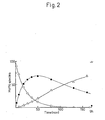
- the esters would undergo an epimerization followed by ring-closure to yield the inactive isopilocarpine, and also a hydrolysis to yield the inactive pilocarpic acid, but the specific HPLC assays revealed only the formation of pilocarpine in quantitative yields.
- the assays would allow a formation of isopilocarpine or isopilocarpic acid of 1% to be detected.
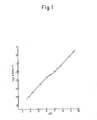
- the rate of ring-closure of the esters increased with increasing hydroxide ion activity, i.e. with increasing pH, c.f. Fig. 1, which shows the pH-rate profile for the 4-chlorobenzylester of pilocarpic acid at 37°C.
- O-benzoyl pilocarpic acid benzyl ester was shown to possess maximum stability in aqueous solutions in the pH region 3-5.
- solutions of the compound were predicted to have shelf-lives in excess of 8 years at 25°C and 20 years at 20°C as determined on the basis of temperature-accelerated kinetic stability studies.
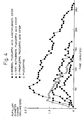
- Solutions of equivalent molar concentrations (0.5% pilocarpine nitrate equivalent) with respect to content of pilocarpine base were prepared of benzyl pilocarpate (0.58% w/v), 4-chlorobenzyl pilocarpate (0.65% w/v), 4-methylbenzyl pilocarpate (0.61% w/v), and pilocarpine (0.38% w/v), the solutions being made isotonic with sodium chloride and the pH adjusted to 4.5 with hydrochloric acid. Twenty-five microliter volumes of each solution were administered by topical ophthalmic instillation to male albino rabbits, and pupillary diameter changes or miotic activities in the eyes of the rabbits were recorded as a function of time, and were compared.
- Fig. 4 shows the miotic activity of 4-tert.butyl benzyl pilocarpic acid ester and 2-phenylethyl pilocarpic acid ester.
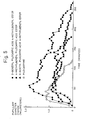
- Fig. 5 is demonstrated the comparative activities of two di-esters and one mono-ester in comparison to pilocarpine.
- the compounds are: 4-methylbenzyl pilocarpic acid ester, O-benzoyl pilocarpic acid 4-methylbenzyl ester, and O-acetyl pilocarpic acid 4-methylbenzyl ester.
- the R 1 -substituent is the 4-methylbenzyloxy group.
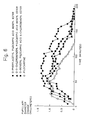
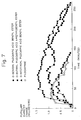
- Figs. 6 and 7 show the activities of further di-ester derivatives in comparison with pilocarpine.
- the compounds are the O-benzoyl 4-chlorobenzyl, the O-phenylacetyl benzyl, and the O-3-chlorobenzoyl benzyl pilocarpic acid esters.
- the compounds are the O-benzoyl benzyl, the O-butyryl 4-methylbenzyl and the O-nicotinoyl benzyl pilocarpic acid esters.
Landscapes
- Chemical & Material Sciences (AREA)
- Organic Chemistry (AREA)
- Health & Medical Sciences (AREA)
- Ophthalmology & Optometry (AREA)
- Pharmacology & Pharmacy (AREA)
- Life Sciences & Earth Sciences (AREA)
- General Chemical & Material Sciences (AREA)
- Medicinal Chemistry (AREA)
- Nuclear Medicine, Radiotherapy & Molecular Imaging (AREA)
- Bioinformatics & Cheminformatics (AREA)
- Engineering & Computer Science (AREA)
- Chemical Kinetics & Catalysis (AREA)
- Animal Behavior & Ethology (AREA)
- General Health & Medical Sciences (AREA)
- Public Health (AREA)
- Veterinary Medicine (AREA)
- Pharmaceuticals Containing Other Organic And Inorganic Compounds (AREA)
- Hydrogenated Pyridines (AREA)
- Pyridine Compounds (AREA)
- Acyclic And Carbocyclic Compounds In Medicinal Compositions (AREA)
Applications Claiming Priority (2)
| Application Number | Priority Date | Filing Date | Title |
|---|---|---|---|
| DK417082 | 1982-09-17 | ||
| DK4170/82 | 1982-09-17 |
Publications (2)
| Publication Number | Publication Date |
|---|---|
| EP0106541A2 true EP0106541A2 (de) | 1984-04-25 |
| EP0106541A3 EP0106541A3 (de) | 1985-12-18 |
Family
ID=8130941
Family Applications (1)
| Application Number | Title | Priority Date | Filing Date |
|---|---|---|---|
| EP83305437A Withdrawn EP0106541A3 (de) | 1982-09-17 | 1983-09-16 | Vor-Arzneimittel von Pilocarpin |
Country Status (10)
| Country | Link |
|---|---|
| US (1) | US4742073A (de) |
| EP (1) | EP0106541A3 (de) |
| JP (1) | JPS59130275A (de) |
| KR (1) | KR840006213A (de) |
| AU (1) | AU557083B2 (de) |
| CA (1) | CA1235416A (de) |
| ES (1) | ES525656A0 (de) |
| IL (1) | IL69593A (de) |
| NZ (1) | NZ205617A (de) |
| PT (1) | PT77347B (de) |
Cited By (6)
| Publication number | Priority date | Publication date | Assignee | Title |
|---|---|---|---|---|
| WO1988001615A1 (en) * | 1986-08-26 | 1988-03-10 | Hans Bundgaard | Prodrug derivatives of carboxylic acid drugs |
| US4742073A (en) * | 1982-09-17 | 1988-05-03 | Hans Bundgaard | Pilocarpine prodrugs |
| WO1992009583A1 (en) * | 1990-11-30 | 1992-06-11 | Leiras Oy | Novel pilocarpine derivatives and process for their preparation |
| WO1993024466A1 (en) * | 1992-05-29 | 1993-12-09 | Leiras Oy | Novel pilocarpine derivatives and process for their preparation |
| LT3081B (en) | 1992-05-29 | 1994-11-25 | Leiras Oy | Novel pilocarpine derivatives and process for their preparation |
| US5436350A (en) * | 1990-11-30 | 1995-07-25 | Jaervinen; Tomi | Bispilocarpic acid ester derivatives and process for their preparation |
Families Citing this family (4)
| Publication number | Priority date | Publication date | Assignee | Title |
|---|---|---|---|---|
| US5066663A (en) * | 1990-05-21 | 1991-11-19 | Warner-Lambert Company | Substituted-hetero-cyclopentanones and cyclopentenones and derivatives thereof acting at muscarinic receptors |
| US5066665A (en) * | 1990-05-21 | 1991-11-19 | Warner-Lambert Co. | Substituted isoxazolidin-3-ones and derivatives thereof acting at muscarinic receptors |
| US5521210A (en) * | 1993-04-13 | 1996-05-28 | Allergan, Inc. | Ophthalmic use of muscarinic agonists having increased duration of activity |
| CN115536641B (zh) * | 2022-09-29 | 2024-12-27 | 广州润尔眼科生物科技有限公司 | 一种内酯化合物及其制备方法与应用 |
Family Cites Families (5)
| Publication number | Priority date | Publication date | Assignee | Title |
|---|---|---|---|---|
| US3470197A (en) * | 1967-08-30 | 1969-09-30 | Miles Lab | 1-substituted derivatives of 3-ethyl-4 - (1-methylimidazolyl-(5)-methyl)-2-pyrrolidinone |
| US3631059A (en) * | 1967-09-11 | 1971-12-28 | John T Goorley | Process for the extraction and purification of pilocarpine |
| US4045558A (en) * | 1975-10-08 | 1977-08-30 | Merck & Co., Inc. | Pilocarpine salts |
| US4061722A (en) * | 1976-04-26 | 1977-12-06 | Interx Research Corporation | Selected quaternary ammonium salts of pilocarpine useful in reducing intraocular pressure in warm-blooded animals |
| IL69593A (en) * | 1982-09-17 | 1988-09-30 | Bundegaard Hans | Pilocarpine prodrugs,their preparation and pharmaceutical compositions containing them |
-
1983
- 1983-08-29 IL IL69593A patent/IL69593A/xx unknown
- 1983-08-29 AU AU18494/83A patent/AU557083B2/en not_active Ceased
- 1983-09-16 CA CA000436880A patent/CA1235416A/en not_active Expired
- 1983-09-16 PT PT77347A patent/PT77347B/pt not_active IP Right Cessation
- 1983-09-16 US US06/533,646 patent/US4742073A/en not_active Expired - Fee Related
- 1983-09-16 NZ NZ205617A patent/NZ205617A/en unknown
- 1983-09-16 JP JP58172052A patent/JPS59130275A/ja active Pending
- 1983-09-16 EP EP83305437A patent/EP0106541A3/de not_active Withdrawn
- 1983-09-16 ES ES525656A patent/ES525656A0/es active Granted
- 1983-09-17 KR KR1019830004369A patent/KR840006213A/ko not_active Ceased
Non-Patent Citations (2)
| Title |
|---|
| JOURNAL OF PHARMACEUTICAL SCIENCES, vol. 59, no. 9, September 1970, pages 1300-1306, Washington, D.C., US; PING-HONG CHUNG et al.: "Kinetics of the hydrolyses of pilocarpine in aqueous solution" * |
| JOURNAL OF PHARMACEUTICAL SCIENCES, vol. 62, no. 12, December 1973, pages 2021-2023, Washington, D.C., US; R.T. KODA et al.: "Synthesis of analogs related to pilocarpine" * |
Cited By (8)
| Publication number | Priority date | Publication date | Assignee | Title |
|---|---|---|---|---|
| US4742073A (en) * | 1982-09-17 | 1988-05-03 | Hans Bundgaard | Pilocarpine prodrugs |
| WO1988001615A1 (en) * | 1986-08-26 | 1988-03-10 | Hans Bundgaard | Prodrug derivatives of carboxylic acid drugs |
| US5073641A (en) * | 1986-08-26 | 1991-12-17 | Hans Bundgaard | Prodrug derivatives of carboxylic acid drugs |
| WO1992009583A1 (en) * | 1990-11-30 | 1992-06-11 | Leiras Oy | Novel pilocarpine derivatives and process for their preparation |
| US5436350A (en) * | 1990-11-30 | 1995-07-25 | Jaervinen; Tomi | Bispilocarpic acid ester derivatives and process for their preparation |
| LT3532B (en) | 1990-11-30 | 1995-11-27 | Leiras Oy | Novel pilocarpine derivatives and process for their preparation |
| WO1993024466A1 (en) * | 1992-05-29 | 1993-12-09 | Leiras Oy | Novel pilocarpine derivatives and process for their preparation |
| LT3081B (en) | 1992-05-29 | 1994-11-25 | Leiras Oy | Novel pilocarpine derivatives and process for their preparation |
Also Published As
| Publication number | Publication date |
|---|---|
| CA1235416A (en) | 1988-04-19 |
| NZ205617A (en) | 1986-06-11 |
| AU557083B2 (en) | 1986-12-04 |
| EP0106541A3 (de) | 1985-12-18 |
| IL69593A (en) | 1988-09-30 |
| PT77347A (en) | 1983-10-01 |
| JPS59130275A (ja) | 1984-07-26 |
| US4742073A (en) | 1988-05-03 |
| ES8502977A1 (es) | 1985-02-01 |
| AU1849483A (en) | 1984-03-22 |
| ES525656A0 (es) | 1985-02-01 |
| KR840006213A (ko) | 1984-11-22 |
| PT77347B (en) | 1986-03-11 |
Similar Documents
| Publication | Publication Date | Title |
|---|---|---|
| EP3078376B1 (de) | Ester-prodrugs aus [3-(1-(1h-imidazol-4-yl)ethyl)-2-methylphenyl]methanol zur behandlung von netzhauterkrankungen | |
| EP1385526B1 (de) | 3, 7 thiaprostansäurederivate als mittel zur verminderung des augeninnendruckes | |
| EP0339416A1 (de) | Gegebenenfalls alpha-substituierte 4-(Chinolin-2-yl-methoxy)phenylessigsäuren und -ester | |
| EP0004532B1 (de) | 1-Aryloxy-3-nitratoalkylamino-2-propanole, Verfahren zu ihrer Herstellung und ihre pharmazeutischen Zubereitungen | |
| US4742073A (en) | Pilocarpine prodrugs | |
| Bundgaard et al. | Pilocarpic acid esters as novel sequentially labile pilocarpine prodrugs for improved ocular delivery | |
| DE3916663A1 (de) | Substituierte (chinolin-2-yl-methoxy)phenyl-acyl-sulfonamide und -cyanamide, verfahren zu ihrer herstellung und ihre verwendung in arzneimitteln | |
| EP0304221A2 (de) | 5-Amino- oder substituierte Amino-1,2,3-Triazole, verwendbar als Antiproliferativa | |
| US5066664A (en) | 2-(hydroxy-2-alkylphenylamino)-oxazolines and thiazolines as anti-glaucoma and vasoconstrictive agents | |
| EP0432899A1 (de) | Pharmazeutische Derivate von Epinephrine-Pilokarpin | |
| US5665753A (en) | Cytokine inhibiting imidazole substituted hydroxamic acid derivatives | |
| DE3023717C2 (de) | ||
| RU2100352C1 (ru) | Производные сложного эфира биспилокарпиновой кислоты и способы их получения | |
| EP0317540A1 (de) | Derivate des Cysteins, Verfahren zur Herstellung und Verwendung davon | |
| EP1572198B1 (de) | Neue pharmazeutische verbindungen mit alpha2receptor aktivität | |
| US4558066A (en) | Treatment and prevention of ocular hypertension | |
| US5874475A (en) | Antiarrhythmic (S)-enantiomers of methanesulfonamides | |
| US5436350A (en) | Bispilocarpic acid ester derivatives and process for their preparation | |
| EP0802900B1 (de) | Antiarrhytmische (s)-enantiomere von methansulphonamiden | |
| DE69720554T2 (de) | Metalloproteinase inhibitoren | |
| US6706732B1 (en) | Nasal preparation of guanidinoimino quinoline derivatives | |
| AU2003302622B2 (en) | Imidazol derivatives having affinity for alpha 2 receptors activity | |
| EP0171760A2 (de) | Substituierte Phenoxypropylaminoäthoxyphenoxyacetamide | |
| EP0642501A1 (de) | Neue pilocarpin-derivate und verfahren zu deren herstellung | |
| WO1999051577A1 (de) | (s)-2-(biphenyl-4-sulfonylamino)-3-(1h-indolyl)-propionsäurederivate als matrix-metalloproteinasehemmer |
Legal Events
| Date | Code | Title | Description |
|---|---|---|---|
| PUAI | Public reference made under article 153(3) epc to a published international application that has entered the european phase |
Free format text: ORIGINAL CODE: 0009012 |
|
| AK | Designated contracting states |
Designated state(s): AT BE CH DE FR GB IT LI LU NL SE |
|
| PUAL | Search report despatched |
Free format text: ORIGINAL CODE: 0009013 |
|
| AK | Designated contracting states |
Designated state(s): AT BE CH DE FR GB IT LI LU NL SE |
|
| 17P | Request for examination filed |
Effective date: 19860401 |
|
| 17Q | First examination report despatched |
Effective date: 19870204 |
|
| STAA | Information on the status of an ep patent application or granted ep patent |
Free format text: STATUS: THE APPLICATION IS DEEMED TO BE WITHDRAWN |
|
| 18D | Application deemed to be withdrawn |
Effective date: 19900403 |