EP0078028A2 - Antihypertonika und Verfahren zur Herstellung derselben - Google Patents
Antihypertonika und Verfahren zur Herstellung derselben Download PDFInfo
- Publication number
- EP0078028A2 EP0078028A2 EP82109739A EP82109739A EP0078028A2 EP 0078028 A2 EP0078028 A2 EP 0078028A2 EP 82109739 A EP82109739 A EP 82109739A EP 82109739 A EP82109739 A EP 82109739A EP 0078028 A2 EP0078028 A2 EP 0078028A2
- Authority
- EP
- European Patent Office
- Prior art keywords
- aqueous extract
- osg
- oil
- alcohol
- reaction
- Prior art date
- Legal status (The legal status is an assumption and is not a legal conclusion. Google has not performed a legal analysis and makes no representation as to the accuracy of the status listed.)
- Granted
Links
Images

Classifications
-
- A—HUMAN NECESSITIES
- A61—MEDICAL OR VETERINARY SCIENCE; HYGIENE
- A61K—PREPARATIONS FOR MEDICAL, DENTAL OR TOILETRY PURPOSES
- A61K36/00—Medicinal preparations of undetermined constitution containing material from algae, lichens, fungi or plants, or derivatives thereof, e.g. traditional herbal medicines
- A61K36/18—Magnoliophyta (angiosperms)
- A61K36/185—Magnoliopsida (dicotyledons)
- A61K36/31—Brassicaceae or Cruciferae (Mustard family), e.g. broccoli, cabbage or kohlrabi
-
- A—HUMAN NECESSITIES
- A61—MEDICAL OR VETERINARY SCIENCE; HYGIENE
- A61K—PREPARATIONS FOR MEDICAL, DENTAL OR TOILETRY PURPOSES
- A61K36/00—Medicinal preparations of undetermined constitution containing material from algae, lichens, fungi or plants, or derivatives thereof, e.g. traditional herbal medicines
- A61K36/18—Magnoliophyta (angiosperms)
- A61K36/185—Magnoliopsida (dicotyledons)
- A61K36/48—Fabaceae or Leguminosae (Pea or Legume family); Caesalpiniaceae; Mimosaceae; Papilionaceae
-
- A—HUMAN NECESSITIES
- A61—MEDICAL OR VETERINARY SCIENCE; HYGIENE
- A61K—PREPARATIONS FOR MEDICAL, DENTAL OR TOILETRY PURPOSES
- A61K36/00—Medicinal preparations of undetermined constitution containing material from algae, lichens, fungi or plants, or derivatives thereof, e.g. traditional herbal medicines
- A61K36/18—Magnoliophyta (angiosperms)
- A61K36/185—Magnoliopsida (dicotyledons)
- A61K36/577—Malvaceae (Mallow family)
-
- A—HUMAN NECESSITIES
- A61—MEDICAL OR VETERINARY SCIENCE; HYGIENE
- A61K—PREPARATIONS FOR MEDICAL, DENTAL OR TOILETRY PURPOSES
- A61K36/00—Medicinal preparations of undetermined constitution containing material from algae, lichens, fungi or plants, or derivatives thereof, e.g. traditional herbal medicines
- A61K36/18—Magnoliophyta (angiosperms)
- A61K36/88—Liliopsida (monocotyledons)
- A61K36/899—Poaceae or Gramineae (Grass family), e.g. bamboo, corn or sugar cane
-
- A—HUMAN NECESSITIES
- A61—MEDICAL OR VETERINARY SCIENCE; HYGIENE
- A61P—SPECIFIC THERAPEUTIC ACTIVITY OF CHEMICAL COMPOUNDS OR MEDICINAL PREPARATIONS
- A61P9/00—Drugs for disorders of the cardiovascular system
- A61P9/12—Antihypertensives
Definitions
- the present invention relates to a process for extraction and purification of an antihypertensive agent containing a substance useful for prevention or treatment of hypertension from vegetable oils such as soybean oil, corn oil, rapeseed oil and cotton seed oil, and to a novel substance useful for prevention or treatment of said hypertension.
- Vegetable oils such as soybean oil and the like are generally produced by pulvertizing seeds such as soybean seed and then compressing the pulverized seeds at lower temperatures or elevated temperatures.
- soybean oil is produced on a large scale by an extraction method wherein organic solvents such as hexane and the like are used.
- the above mentioned substance having antihypertensive activity not only has antihypertensive activity but also can reduce blood pressure gradually or slowly. Furthermore, when this substance is administered to normal humans, little side reaction is observed. In addition, this substance is expected to have an effect of strengthening blood vessels.
- Vegetable oils which are starting materials in the present invention include soybean oil, corn oil, rapeseed oil, and cotton seed oil. Particularly preferred are soybean oil and corn oil. Because oil cakes or foots wherein a portion of vegetable oil is already squeezed out from seeds such as soybean and corn seeds may contain a large amount of the vegetable oil, such oil cakes or foots may be used as the vegetable oils which are starting materials in the present invention.
- these vegetable oils may contain vegetable dyestuff such as chlorophyll, carotenoid, sterols or vitamins such as tocopherol, these components do not migrate into the aqueous solvent in the extraction of the oil with an aqueous solvent because these components have low solubility in water. Accordingly, it is not necessary to remove these water-insoluble components in subsequent purification steps.
- vegetable dyestuff such as chlorophyll, carotenoid, sterols or vitamins such as tocopherol
- the substance useful for prevention or treatment of hypertension is separated and purified from these vegetable oils as described hereinafter.
- Suitable aqueous solvents for use in this invention are water, warm water or a mixture of water and an alcohol.
- Suitable alcohols for use in this invention are lower alcohols such as methanol, ethanol and the like. While the proportion of water to alcohol may widely vary, it is desirable to use a mixture of from 10% to 90% by volume of water and from 90% to 10% by volume of alcohol, and preferably a mixture of from 10% to 40% by volume of water and from 90% to 60% by volume of alcohol.
- the aqueous solvent is used in an amount of from 1 to 5% by weight of the vegetable oil. Incidentaly, use of the mixture of water and alcohol has the effect of preventing fermentation and putrefaction of the aqueous extract.
- the aqueous extract thus obtained is concentrated.
- an alcohol is added to the resulting concentrated solution to form an alcoholic solution having an alcohol concentration of 85% or more, impurities such as gummy matter, protein and the like are precipitated as insoluble matter.
- impurities such as gummy matter, protein and the like are precipitated as insoluble matter.
- alcohol is removed by vacuum distillation or the like, an aqueous extract product containing the desired components in concentrated form can be obtained.
- the settling and separation of gummy matter and protein can be carried out in above treatment even if the alcohol concentration is less than 85%.
- the separation is insufficient and a portion of gummy matter and protein may remain in the mother liquor.
- any alchol concentration above 85% can be used in this treatment.
- aqueous extract product thus prepared already contains the required effective components in a considerably concentrated form, a sufficient function of reducing blood pressure can be attained even if it is applied to a living animal as it is.
- a further purified effective substance can be obtained by adding water to the aqueous extract product, treating the resulting solution with active carbon, then separating and removing from the mother liquor the compounds which deposit and precipitate at a sugar content on a Brix scale of about 50%, and thereafter drying the purified mother liquor into a white powder.
- magnesium lactate will deposit optimally at a sugar content on the Brix scale of about 50%.
- the aqueous extract product can be purified by subjecting it to a carbon column chromatography to fractionate and purify the effective component.
- magnesium lactate is present in soybean oil by the following procedure.
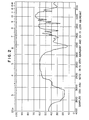
- the compounds are separated as described above, then recrystallized several times, and thereafter measured by elemental analysis, angle of rotation, infrared absorption spectrum (IR), ultraviolet absorption spectrum (UV), gas chromatograph (GC), and nuclear magnetic resonance (NMR).
- IR infrared absorption spectrum
- UV ultraviolet absorption spectrum
- GC gas chromatograph
- NMR nuclear magnetic resonance
- This cyrstalline powder or the crystals obtained by recrystallization is a novel substance the presence of which has not been known to date.
- This novel substance has the following features.
- the novel substance of the present invention exhibits a color reaction of sugar is a-naphthol reaction and orciriol reaction, is negative in TCA reaction and ninhydrin reaction, and is positive in glycyrrhizin reaction. When this substance is subjected to a paper chromatograph method, no spots consistent with those of known sugars are observed.
- a hydrolyzate of the substance exhibits a spot consistent with that of glucose or sorbose and exhibits a sugar lower than that of glucuronic acid. Further, the present substance is confirmed to be a polymeric sugar by infrared absorption spectrum and 1 HNMR spectrum methods. The present substance having these features is hereinafter referred to as OSG.
- the sugar obtained by hydrolyzing the OSG exhibited spots which are consistent with those of glucose and sorbose and a spot the Rf value of which is lower than that of glucuronic acid.
- the OSG was converted to form a trimethyl silyl derivative, and then analysis and identification were carried out by means of a gas chromatograph method.
- Analytical conditions OV-17 (methyl phenyl (50%)-silicon filler); 3% gas column Q stainless-steel, 2 meters; and a temperature of the column of 180°C.
- a sugaralcohol obtained by reduction with NaBH 4 was first acetylated to prepare a sample, and this sample was analyzed under the following conditions: 3% OV-17 gas column Q stainless-steel column, 2 meters, a temperature of the column of 230°C, and FID detection.
- the retention time obtained was consistent with that of sugaralcohol acetates derived from fructose, glucose and mannose. These were some other peaks which could not be identified.
- a raw oil (80 tons) obtained by treating soybeans with hexane to extract soybean oil and then removing oil cakes or foots by a separator for oil cakes or foots is brought into contact with water or warm water in an amount of about 5% by weight of said raw oil to obtain 4,000 liters of an aqueous extract. If oil and water are admixed with vigorous shaking or stirring, emulsification will take place, and it will be difficult to carry out subsequent separation procedures. Accordingly, care must be taken to avoid vigorous shaking of the mixture. For example, it is desirable to use a drop extraction method wherein an extracting solvent is added dropwise.
- Water acidified with organic acids or mineral acids a pH of from 3.0 to 4.9
- neutral water a pH of from 5.0 to 7.0
- warm neutral water can be also used as the extracting solvent.
- an alkali is preferably added to make the solution neutral after extraction.
- aqueous solution (a pH of 6.8) obtained by contact extraction is vacuum distilled at a temperature below 40°C to concentrate it to about 1/40 of its original volume, thereby obtaining 100 kg of a black brown concentrated solution having a sugar content on the Brix scale of about 47%.
- Methyl alcohol (99%) is added to the concentrated solution in the same volume or a volume twice the volume of the solution with stirring to deposit and precipitate insoluble matter. Such insoluble matter is filtered off and removed. The filtrate thus obtained is vacuum distilled to remove alcohol. Thus, a concentrated aqueous extract is obtained.
- the above mentioned addition of methyl alcohol tends to prevent fermentation of the extract.
- Methyl alcohol is further added to the aqueous extract to prepare an alcoholic solution having an alcohol concentration of 85%, whereby a large amount of gummy matter, protein and the like are deposited and precipitated.
- the resulting solution is allowed to stand overnight, and the precipitates are filtered off. Then, the filtrate thus obtained is vacuum distilled to recover alcohol, whereby about 50' kg of considerably purified aqueous extract product can be obtained.
- the sugar content on the Brix scale of this aqueous extract product is about 50%.
- This aqueous extract product is a main starting material for OSG as described hereinafter.
- Purified water is added to 500 g of the aqueous extract product thus obtained to dilute the same.
- a diluted solution having a sugar content on the Brix scale of 30% is obtained.
- An appropriate amount of activated carbon is added to the diluted solution.
- impurities are adsorbed by the activated carbon to obtain a colorless or slightly yellow, clear aqueous extract.
- the sugar content adsorbed onto activated carbon is eluted with hot water until no sugar content effuses. Then, this eluant and the aqueous extract (below 35%) are combined and then concentrated under reduced pressure to prepare a solution having a sugar content on the Brix scale of 50%, from which are deposited needle-like crystals. To examine the relation between the quantity of these crystals deposited and the sugar content of the mother liquor, various solutions respectively having sugar contents on the Brix scale of 20%, 30%, 40% and 50% are prepared. When the sugar content on the B rix scale is 50%, the quantity of crystals deposited is maximal.
- the crystal thus obtained is washed with 99% alcohol and repeatedly recrystallized to deposit glossy white needle-like magnesium lactate crystals.
- Activated carbon is added to the mother liquor, from which magnesium lactate-based precipitates depositing at a sugar content on the Brix scale of about 50% have been separated and removed.
- the mother liquor is treated with activated carbon to obtain a colorless clear aqueous solution.
- This aqueous solution is concentrated and lyophilized to obtain 112 grams of a white hygroscopic powder. This is the objective OSG of the present invention.
- the oil cakes or foots obtained in an initial stage of the extraction step of soybean oil contain OSG of the present invention in addition to sterols, vegetable dyestuffs and tocopherols.
- OSG of the present invention in addition to sterols, vegetable dyestuffs and tocopherols.
- an alcohol-water mixture of from 50% to 75% of alcohol and from 50% to 25% of water is added to soybean oil foots separated by means of a separator for oil foots.
- the reaction mixture is stirred or shaken, or extracted under heating by using a reflux condenser to dissolve effective components present in the soybean oil foots in the alcohol-water mixture medium.
- This alcohol-water mixture medium is vacuum distilled at a temperature below 35°C to remove alcohol, and 99% methyl alcohol is added to the resulting aqueous extract to prepare an alcoholic solution having an alcohol concentration of 85%.
- insoluble matter such as gummy matter, protein and the like are deposited and precipitated.
- the insoluble matter is removed from the extract, and then the alcoholic solution is vacuum distilled to recover alcohol.
- Example II Purified water is added to the aqueous extract product thus obtained, and thereafter activated carbon is added thereto in the same manner as in Example I.
- the resulting colorless clear aqueous solution is vacuum distilled at a temperature of below 35°C to prepare a solution having a sugar content on the Brix scale of 50%.
- magnesium lactate precipitates.
- the magnesium lactate is removed, and 99% methyl alcohol is added to the resulting aqueous extract to prepare a clear alcoholic solution having an alcohol concentration about 85%.
- Acetone is added to 1 liter of the clear alcoholic solution with stirring to form a large quantity of cloudy deposits.
- acetone is added to the methanol solution in a volume of about twice the volume of the solution, deposition and precipitation are greatly facilitated and therefore use of such a quantity is preferred.
- the reaction mixture is allowed to stand overnight to separate the mother liquor from the deposited precipitates. In this case, a large portion of the inorganic material passes into the separated mother liquor.
- the deposited precipitates are subjected to vacuum drying to obtain 74 grams of OSG in the form of a slightly yellow hygroscopic powder.
- the adsorbed carbon removed from the glass tube in an extrusion manner is cut every 2 cm from the top to obtain fractions Nos. 1 through 12.
- To each fraction of the carbon is added 100 ml. of 50% methanol, and an extraction procedure is carried out for 5 minutes using a reflux condenser.
- the extracts are examined by an a-naphthol reaction method to check the color reaction of sugar.
- the fractions Nos. 1 through 7 are positive in an a-naphthol reaction, and the reaction boundary is colored reddish purple (sugar).
- the fraction No.8 exhibits both bluish yellow (magnesium lactate) and raddish purple (sugar).
- the fractions Nos. 9, 10, 11, and 12 exhibit only slightly yellow. Of course, the eluates of these fractions Nos. 9 through 12 exhibit no color reaction of sugar.
- the eluates of the fractions Nos. 1 through 7 are combined, concentrated under reduced pressure at a temperature of 35°C, and lyophilized to obtain a white hygroscopic powder OSG.
- Purified water (700 ml.) is added to a white or pale yellow powder obtained by purifying the aqueous extract product as described in Example I to obtain 1,000 ml. of an aqueous solution having a sugar content on the Brix scale of 20%.
- the aqueous solution is then passed through a column packed with a mixture of an anionic exchange resin Amberlite IRA-410 and a cationic exchange resin Amberlite IR-120B to further adsorb impurities to carry out further purification.
- Corn oil is brought into contact with water or warm water in an amount of about 5% by weight of said oil to obtain an aqueous extract.
- the aqueous extract is vacuum distilled to obtain a concentrated solution having a sugar content on the Brix scale of about 50%.
- Methyl alcohol (99%) is added to the concentrated solution in a volume twice the volume of the solution to deposit and precipitate gummy matter.
- the above- mentioned of methyl alcohol tends to prevent fermentation of the solution.
- Such gummy matter is filtered off and removed.
- the filtrate thus obtained is vacuum distilled to remove alcohol to prepare a concentrated filtrate having an alcohol concentration of about 75%.
- Methyl alcohol is added to the concentrated filtrate to prepare an alcoholic solution having an alcohol concentration of 85%, whereby a small amount of insoluble matter is deposited and precipitated.
- the insoluble matter is filtered off to obtain a clear solution.
- the solution is concentrated under reduced pressure to obtain a pale yellow hygroscopic powder OSG.
- Wheat germ oil is brought into contact with water or warm water in an amount of about 5% by weight of said oil to obtain an aqueous extract.
- the aqueous extract is vacuum distilled to prepare a concentrated aqueous solution.
- Methyl alcohol (99%) is added to the concentrated aqueous solution to prepare an alcoholic solution having an alcohol concentration of 85%, whereby a small amount of insoluble matter is deposited and precipitated.
- the insoluble matter is filtered off to obtain a clear solution.
- the solution is concentrated under reduced pressure to obtain a pale yellow hygroscopic powder OSG.
- mice The observation of the symptoms shows that they may take place most frequently at about 50% of lethal dose.
- the influence of the drug was observed in 5 to 10 seconds after administration, and fore and hind feet were swinged. A number of mice died after 20 seconds. The posture was not constant, but a number of mice were in supination. In one hour after administration, the mice rapidly recovered and moved energetically about.
Landscapes
- Health & Medical Sciences (AREA)
- Natural Medicines & Medicinal Plants (AREA)
- Life Sciences & Earth Sciences (AREA)
- Pharmacology & Pharmacy (AREA)
- Engineering & Computer Science (AREA)
- Veterinary Medicine (AREA)
- Chemical & Material Sciences (AREA)
- Public Health (AREA)
- General Health & Medical Sciences (AREA)
- Medicinal Chemistry (AREA)
- Animal Behavior & Ethology (AREA)
- Alternative & Traditional Medicine (AREA)
- Biotechnology (AREA)
- Epidemiology (AREA)
- Mycology (AREA)
- Microbiology (AREA)
- Medical Informatics (AREA)
- Botany (AREA)
- Chemical Kinetics & Catalysis (AREA)
- Bioinformatics & Cheminformatics (AREA)
- Cardiology (AREA)
- Heart & Thoracic Surgery (AREA)
- Organic Chemistry (AREA)
- General Chemical & Material Sciences (AREA)
- Nuclear Medicine, Radiotherapy & Molecular Imaging (AREA)
- Medicines Containing Plant Substances (AREA)
- Polysaccharides And Polysaccharide Derivatives (AREA)
Applications Claiming Priority (2)
| Application Number | Priority Date | Filing Date | Title |
|---|---|---|---|
| JP56169157A JPS5869819A (ja) | 1981-10-22 | 1981-10-22 | 大豆を資料とする降圧剤 |
| JP169157/81 | 1981-10-22 |
Publications (3)
| Publication Number | Publication Date |
|---|---|
| EP0078028A2 true EP0078028A2 (de) | 1983-05-04 |
| EP0078028A3 EP0078028A3 (en) | 1984-03-28 |
| EP0078028B1 EP0078028B1 (de) | 1987-02-04 |
Family
ID=15881334
Family Applications (1)
| Application Number | Title | Priority Date | Filing Date |
|---|---|---|---|
| EP82109739A Expired EP0078028B1 (de) | 1981-10-22 | 1982-10-21 | Antihypertonika und Verfahren zur Herstellung derselben |
Country Status (5)
| Country | Link |
|---|---|
| US (1) | US4510161A (de) |
| EP (1) | EP0078028B1 (de) |
| JP (1) | JPS5869819A (de) |
| CA (1) | CA1189504A (de) |
| DE (1) | DE3275352D1 (de) |
Families Citing this family (2)
| Publication number | Priority date | Publication date | Assignee | Title |
|---|---|---|---|---|
| JPS58180427A (ja) * | 1982-04-16 | 1983-10-21 | Tetsuya Suzuki | 降圧成分を有する物質の製造方法 |
| ES2399093T3 (es) * | 2004-05-24 | 2013-03-25 | Nestec S.A. | Aislado de arabinogalactano procedente de café verde tostado para aplicaciones alimentarias y de administración, y procedimiento para su producción |
Family Cites Families (8)
| Publication number | Priority date | Publication date | Assignee | Title |
|---|---|---|---|---|
| US2794800A (en) * | 1954-01-06 | 1957-06-04 | Armour & Co | Preparation of antitryptic substance from soybean |
| FR1235902A (fr) * | 1954-05-25 | 1960-07-15 | Procédé d'extraction de lécithine en partant d'huile de soya | |
| FR891M (de) * | 1961-01-31 | 1961-10-06 | ||
| FR1320735A (fr) * | 1961-07-17 | 1963-03-15 | M I P Soc Amilloise De Prod Ch | Nouveau complexe phosphatides-hyposulfite de magnésium et son procédé de préparation |
| GB1427253A (en) * | 1973-05-07 | 1976-03-10 | Kaneda T | Antilipemic composition containing unsaponifiable matter of soybean oil |
| US3993756A (en) * | 1973-05-09 | 1976-11-23 | Takashi Kaneda | Antilipemic agent containing a soybean oil fraction |
| DK46678A (da) * | 1977-02-17 | 1978-08-18 | Calgon Corp | Fremgangsmaade til raffinering af vegetabilske spiseolier |
| IL56383A0 (en) * | 1979-01-05 | 1979-03-12 | Chajuss D | A new pharmaceutically active edible product obtained fromsoybean containing polysaccharides |
-
1981
- 1981-10-22 JP JP56169157A patent/JPS5869819A/ja active Granted
-
1982
- 1982-10-20 US US06/435,350 patent/US4510161A/en not_active Expired - Lifetime
- 1982-10-21 EP EP82109739A patent/EP0078028B1/de not_active Expired
- 1982-10-21 DE DE8282109739T patent/DE3275352D1/de not_active Expired
- 1982-10-22 CA CA000414014A patent/CA1189504A/en not_active Expired
Also Published As
| Publication number | Publication date |
|---|---|
| US4510161A (en) | 1985-04-09 |
| DE3275352D1 (en) | 1987-03-12 |
| EP0078028B1 (de) | 1987-02-04 |
| JPS5869819A (ja) | 1983-04-26 |
| CA1189504A (en) | 1985-06-25 |
| JPH0261443B2 (de) | 1990-12-20 |
| EP0078028A3 (en) | 1984-03-28 |
Similar Documents
| Publication | Publication Date | Title |
|---|---|---|
| Nagaraj et al. | Isolation and characterization of a blue fluorophore from human eye lens crystallins: in vitro formation from Maillard reaction with ascorbate and ribose | |
| US4948785A (en) | Plant polysaccharide fractions inducing prolactin in mammals | |
| US6264853B1 (en) | Complex containing lignan, phenolic and aliphatic substances from flax and process for preparing | |
| US20150196498A1 (en) | Hydroxytrosol containing extract obtained from olives and solids containing residues of olive oil extraction | |
| CN101380390B (zh) | 普洱熟茶标准提取物prc-001的制备方法及其应用 | |
| CZ292800B6 (cs) | Směsi izolovatelné ze semen Eugenia Jambolana Lamarck, způsob jejich přípravy a použití těchto směsí a některých z jejich složek jako léčiva | |
| EP0078028B1 (de) | Antihypertonika und Verfahren zur Herstellung derselben | |
| US11298395B2 (en) | Isolates from spent turmeric for the management of rheumatoid arthritis | |
| JPH0725779A (ja) | 脱脂米胚芽由来のリパーゼインヒビター | |
| Ahmed et al. | A contribution to the chemistry and toxicology of the root of Pbytolacca americana, L. | |
| CA2455655C (en) | A glycoprotein with antidiabetic, antihypertensive, antiobesity and antihyperlipidemic effects from grifola frondosa, and a method for preparing same | |
| Petrichenko et al. | Chemical composition and antioxidant properties of biologically active compounds from Euphrasia brevipila | |
| JP2000044468A (ja) | リパーゼ阻害剤及び抗肥満剤又は高脂血症抑制剤 | |
| US2202307A (en) | Vitamin concentration | |
| US20080166433A1 (en) | Methods and Composition For Dietary Supplements | |
| RU2187317C2 (ru) | Способ получения средства, обладающего адаптогенной активностью | |
| DE68928646T2 (de) | Natriuretisches hormon | |
| US20030044477A1 (en) | Simmondsin processing methods and products | |
| US20020051825A1 (en) | Xanthine oxidase inhibitor and method for producing the same | |
| JP2001335505A (ja) | 抗ストレス剤 | |
| JPH0826010B2 (ja) | クロマン誘導体及びこれを有効成分とするpge2産生抑制剤並びにngf産生誘導剤 | |
| KR900005318B1 (ko) | 은행엽에서 유효생리활성물질을 추출 정제하는 방법 | |
| RU2270686C2 (ru) | Способ получения гепатопротекторного и гипохолестеринемического средства | |
| CN112047983B (zh) | 鸡矢藤苷酸单体化合物、其制备方法和用途 | |
| KR900005319B1 (ko) | 은행엽에서 유효생리활성물질을 추출정제하는 방법 |
Legal Events
| Date | Code | Title | Description |
|---|---|---|---|
| PUAI | Public reference made under article 153(3) epc to a published international application that has entered the european phase |
Free format text: ORIGINAL CODE: 0009012 |
|
| AK | Designated contracting states |
Designated state(s): DE FR GB |
|
| PUAL | Search report despatched |
Free format text: ORIGINAL CODE: 0009013 |
|
| AK | Designated contracting states |
Designated state(s): DE FR GB |
|
| 17P | Request for examination filed |
Effective date: 19840925 |
|
| GRAA | (expected) grant |
Free format text: ORIGINAL CODE: 0009210 |
|
| AK | Designated contracting states |
Kind code of ref document: B1 Designated state(s): DE FR GB |
|
| REF | Corresponds to: |
Ref document number: 3275352 Country of ref document: DE Date of ref document: 19870312 |
|
| ET | Fr: translation filed | ||
| PLBE | No opposition filed within time limit |
Free format text: ORIGINAL CODE: 0009261 |
|
| STAA | Information on the status of an ep patent application or granted ep patent |
Free format text: STATUS: NO OPPOSITION FILED WITHIN TIME LIMIT |
|
| 26N | No opposition filed | ||
| PGFP | Annual fee paid to national office [announced via postgrant information from national office to epo] |
Ref country code: GB Payment date: 19961014 Year of fee payment: 15 |
|
| PGFP | Annual fee paid to national office [announced via postgrant information from national office to epo] |
Ref country code: FR Payment date: 19961030 Year of fee payment: 15 |
|
| PGFP | Annual fee paid to national office [announced via postgrant information from national office to epo] |
Ref country code: DE Payment date: 19961223 Year of fee payment: 15 |
|
| PG25 | Lapsed in a contracting state [announced via postgrant information from national office to epo] |
Ref country code: GB Free format text: LAPSE BECAUSE OF NON-PAYMENT OF DUE FEES Effective date: 19971021 |
|
| PG25 | Lapsed in a contracting state [announced via postgrant information from national office to epo] |
Ref country code: FR Free format text: THE PATENT HAS BEEN ANNULLED BY A DECISION OF A NATIONAL AUTHORITY Effective date: 19971031 |
|
| GBPC | Gb: european patent ceased through non-payment of renewal fee |
Effective date: 19971021 |
|
| PG25 | Lapsed in a contracting state [announced via postgrant information from national office to epo] |
Ref country code: DE Free format text: LAPSE BECAUSE OF NON-PAYMENT OF DUE FEES Effective date: 19980701 |
|
| REG | Reference to a national code |
Ref country code: FR Ref legal event code: ST |