EP0070424B1 - Verfahren zur Herstellung von N,N'-disubstituierten 3-Aminopropanamiden - Google Patents
Verfahren zur Herstellung von N,N'-disubstituierten 3-Aminopropanamiden Download PDFInfo
- Publication number
- EP0070424B1 EP0070424B1 EP82105751A EP82105751A EP0070424B1 EP 0070424 B1 EP0070424 B1 EP 0070424B1 EP 82105751 A EP82105751 A EP 82105751A EP 82105751 A EP82105751 A EP 82105751A EP 0070424 B1 EP0070424 B1 EP 0070424B1
- Authority
- EP
- European Patent Office
- Prior art keywords
- reaction
- process according
- disubstituted
- amine
- carbon atoms
- Prior art date
- Legal status (The legal status is an assumption and is not a legal conclusion. Google has not performed a legal analysis and makes no representation as to the accuracy of the status listed.)
- Expired
Links
- 0 *N1CCNCC1 Chemical compound *N1CCNCC1 0.000 description 1
- YNAVUWVOSKDBBP-UHFFFAOYSA-N C1NCCOC1 Chemical compound C1NCCOC1 YNAVUWVOSKDBBP-UHFFFAOYSA-N 0.000 description 1
Classifications
-
- C—CHEMISTRY; METALLURGY
- C07—ORGANIC CHEMISTRY
- C07D—HETEROCYCLIC COMPOUNDS
- C07D295/00—Heterocyclic compounds containing polymethylene-imine rings with at least five ring members, 3-azabicyclo [3.2.2] nonane, piperazine, morpholine or thiomorpholine rings, having only hydrogen atoms directly attached to the ring carbon atoms
- C07D295/16—Heterocyclic compounds containing polymethylene-imine rings with at least five ring members, 3-azabicyclo [3.2.2] nonane, piperazine, morpholine or thiomorpholine rings, having only hydrogen atoms directly attached to the ring carbon atoms acylated on ring nitrogen atoms
- C07D295/18—Heterocyclic compounds containing polymethylene-imine rings with at least five ring members, 3-azabicyclo [3.2.2] nonane, piperazine, morpholine or thiomorpholine rings, having only hydrogen atoms directly attached to the ring carbon atoms acylated on ring nitrogen atoms by radicals derived from carboxylic acids, or sulfur or nitrogen analogues thereof
- C07D295/182—Radicals derived from carboxylic acids
Definitions
- N-substituted acrylamides or methacrylamides are used, for example, as monomers for the production of homopolymers and copolymers in industry.
- diamines are reacted with acrylic acid or an acrylic acid derivative to give disubstituted 3-aminopropanamides.
- the object was to provide a process which allows starting materials which are cheaper and more readily available than acrylic acids, their esters and other acrylic acid derivatives to be used.
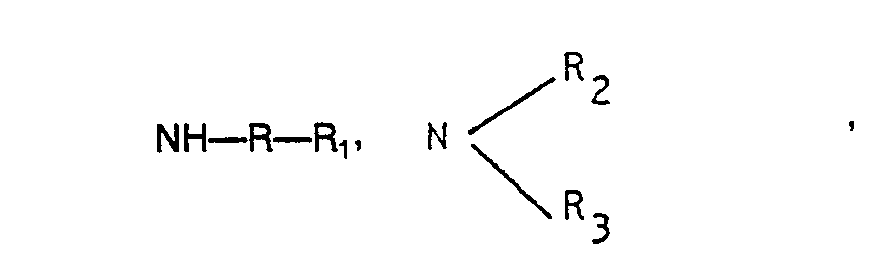
- the invention relates to a process for the preparation of the N, N'-disubstituted 3-aminopropanamides of the above general formula, which is characterized in that acrylonitrile or methacrylonitrile per mole with at least 2 moles of an amine of the general formula wherein Y has the meaning given above, in the presence of at least 1 mol of water and, if appropriate, catalysts which are known per se and are customary for nitrile saponification, are reacted at 80 to 220 ° C. and a pressure of 5 to 30 bar.
- N, N'-disubstituted 3-aminopropanamides can be prepared particularly easily and in high yield by the process according to the invention.
- Secondary amines dimethylamine, di-butylamine, N-methylpiperazine, morpholine.
- Aromatic amines aniline, toluidine, p-methoxyaniline, p-dimethylaminoaniline.
- Acrylonitrile or methacrylonitrile is used in excess, i.e. at least two to four times the molar amount of amine, based on the acrylonitrile or methacrylonitrile, in the presence of water, at least one to in particular twenty times the amount of water and optionally in Implemented presence of a catalyst.
- a homogeneous reaction mixture can be produced by varying the amount of the amine used.
- the amine can thus act as a solvent at the same time.
- the reaction of the three components is carried out between 80 and 220 ° C. and in particular 100 to 180 ° C. at about 5 to 30 bar, if appropriate in the presence of catalysts.
- the addition of the amines to the unsaturated nitrile to the 3-aminopropanenitriles is usually rapid.
- the speed of the saponification step depends on the nitrile used and possibly on the catalyst.
- 3-aminopropanenitriles can be saponified faster than 2-methyl-3-aminopropanenitriles.
- the use of catalysts allows the reaction temperatures to be reduced and the reaction to be accelerated considerably.
- the nitrile saponification catalysts customary in industry are used in general. Copper is particularly suitable both as a pure metal, such as Raney copper, Ullmann copper, and in combination with oxygen and other metals. Copper catalysts which contain further metals, such as chromium, molybdenum, vanadium, manganese and zinc, and their mixed oxides are also very suitable, the metals mentioned being able to occur in the various oxidation states; how they can be obtained from the trade or produced by a variety of methods. A conventional hydrogen reduction takes place before use, in which the oxide is brought into contact with elemental hydrogen at suitable temperatures in order to achieve the desired reduction.
- the catalysts can also be applied on customary supports, such as on silicon dioxide, aluminum oxide or aluminum silicates.
- the reaction is carried out below the specified temperature limit range, depending on the reaction temperature, only partial transamidation (40 to 80%) takes place during the saponification.
- the mixture is briefly heated to about 170 to 200 ° C. to complete the transamidation.
- Copper is particularly suitable both as a pure metal, such as Raney copper, Ullmann copper, and in combination with oxygen and other metals.
- Copper catalysts which contain further metals, such as chromium, molybdenum, vanadium, manganese and zinc, and their mixed oxides, further metals, such as chromium, molybdenum, vanadium, manganese and zinc, as well as their mixed oxides, are also suitable for sale or can be made by a variety of methods.
- a conventional hydrogen reduction takes place before use, in which the oxide is brought into contact with elemental hydrogen at suitable temperatures in order to achieve the desired reduction.
- the catalysts can also be applied on customary supports, such as on silicon dioxide, aluminum oxide or aluminum silicates.
- Manganese dioxide, alkali metal hydroxides and aluminum silicates of natural (montmorillonite) and artificial origin are also suitable as catalysts for the combined saponification and transamidation reaction.
- the reactivity generally decreases in the order given.
- the reaction can be carried out either as a batch process in an agitator or as a continuous process in a reaction tube with an inlet for the reactants and an outlet for the products.
- the powdery copper or manganese dioxide contacts used are separated by filtration after the reaction and, if necessary after reactivation, are used again.
- Tableted contacts can be firmly arranged in a reaction tube.
- N N'-disubstituted 3-aminopropanamides produced at higher temperatures, higher boiling nitriles are best by a scho separating thin-film or short-path distillation.
- the residue contains the disubstituted propanamides in purities of at least 80 to 95%; the rest are polymers.
- the yield is 75 to over 90%.
- the disubstituted propanamides can be obtained in high purity by column, thin-layer or short-path distillation.
- a mixture of 265 g (5 mol) of acrylonitrile, 1,950 g (15 mol) of N, N, 2,2-tetramethylpropanediamine and 270 g (15 mol) of oxygen-free water were mixed with 200 g of Raney copper in a 1 liter Autoclave heated to 170 ° C for five hours. The pressure was then released, the copper catalyst was filtered off, rinsed with water, the ammonia formed, the excess amine and water and unreacted aminopropanenitrile were separated off. A short path distillation apparatus was used to separate the aminopropanenitrile. The viscous residue contained approximately 90% N, N'-bis (2,2-dimethyl-3-dimethylaminopropyl) -3-aminopropanamide. The polymer components were separated by short path distillation, whereby the disubstituted propanamide was obtained in a purity of over 98%.
- the yield was 1 214 g. These are 77.3%, based on the acrylonitrile used, or about 92% if one takes into account that about 15% of unreacted aminopropanenitrile has been recovered.
- a mixture of 530 parts of acrylonitrile, 3,900 parts of N, N, 2,2-tetramethylpropanediamine and 900 g of oxygen-free water (molar ratio 1: 3: 5) was passed through a tube of 2 l content heated to 150 ° C., the half was filled with copper chromite contact Harshaw 0203 T in a reduced form.
- the pressure was 20 bar, the flow rate 200 ml / h.
- the ammonia formed, the excess amine and the water were first separated off by distillation from the emerging reaction mixture.
- the N, N '- (2,2-dimethyl-3-dimethylaminopropyl) -3-aminopropanamide formed was freed from the unreacted aminopropanenitrile, which was returned to the tube reactor together with the amine and the water.
- the turnover per throughput was about 50%.
- Over 90% of the viscous residue consisted of aminopropanamide, which was separated from polymers by short-path distillation and could thus be obtained in a purity of over 98%.
- the viscous residue (1,350 g) contained approximately 81% N, N'-bis (2,2-dimethyl-3-dimethylaminopropyl) -3-aminopropanamide (50%).
- the polymer components were removed by short path distillation. A disubstituted propanamide of high purity (over 98%) was obtained. The yield was 1,092 g (49.7% and 75%, respectively, if one takes into account that about 25% of unreacted aminopropanenitrile could be recovered).
- a 0.5 l autoclave was provided with a wire basket, which was used to take a tabletted copper contact (copper oxide on silicate carrier, 60/35 - Ruhrchemie) and also allowed stirring and the introduction of two dips on the autoclave lid. 200 g of copper catalyst Ruhrchemie 60/35 were filled in and reduced with hydrogen according to the instructions.
Landscapes
- Chemical & Material Sciences (AREA)
- Organic Chemistry (AREA)
- Low-Molecular Organic Synthesis Reactions Using Catalysts (AREA)
- Organic Low-Molecular-Weight Compounds And Preparation Thereof (AREA)
Description
- Die Erfindung betrifft ein Verfahren zur Herstellung von N,N'-disubstituierten 3-Aminopropanamiden der allgemeinen Formel


- R einen gerad-, verzweigtkettigen oder cyclischen Alkylenrest mit 2 bis 8 C-Atomen oder Phenylen,
- R1 Wasserstoff, eine Dialkykamino- oder Alkoxygruppe, wobei der Alkylrest jeweils 1 bis 4 C-Atome enthält,
- R2. R3, R4 jeweils einen Alkylrest mit 1 bis 4 C-Atomen, wobei R2 und R3 auch zusammen einen Ring mit 5 oder 6 C-Atomen bilden können, bedeuten.
- Diese Verbindungen sind von technischem Interesse, da sie leicht in bekannter Weise durch Abspaltung der 3-ständigen Aminogruppe in N-substituierte Acrylamide bzw. Methacrylamide überführt werden können. N-substituierte Acrylamide bzw. Methacrylamide werden zum Beispiel als Monomere für die Herstellung von Homo- und Copolymerisaten in der Technik eingesetzt.
- Es sind bereits Verfahren zur Herstellung von N,N'-disubstituierten 3-Aminopropanamiden bekannt.
- So können 3-Aminopropanamide durch Umsetzung von Dialkylaminen mit Acrylsäure oder einem Acrylsäureester nach J. G. Erickson, J. Am. Chem. Soc. 74, 1952, 6281-6282 hergestellt werden.
- Nach der US-Patentschrift 4 031 138 werden Diamine mit Acrylsäure oder einem Acrylsäurederivat zu disubstituierten 3-Aminopropanamiden umgesetzt.
- Es bestand die Aufgabe, ein Verfahren bereitzustellen, das es gestattet, billigere und leichter verfügbare Ausgangsmaterialien als Acrylsäuren, deren Ester und andere Acrylsäurederivate einzusetzen.
- Aus der US-Patentschrift 4 060 553 ist es bekannt, ungesättigte Nitrile mit einem Alkanolanion bei erhöhter Temperatur umzusetzen. Die Reaktionsbedingungen gemäß dieser Patentschrift konnten aber nicht auf die Umsetzung von Acryl- bzw.' Methacrylnitril mit Aminen übertragen werden.
- Es geht ferner aus der US-Patentschrift 4 201 854 hervor (siehe Beispiele 13 und 14), daß Acrylnitril mit einem Amin umgesetzt werden kann. Unter den Reaktionsbedingungen dieser Patentschrift lagert sich das Amin nur an die olefinische Doppelbindung an, ohne daß die Nitrilgruppe zur Umsetzung kommt.
- In Lösung der gestellten Aufgabe betrifft die Erfindung ein Verfahren zur Herstellung der N,N'- disubstituierten 3-Aminopropanamiden der obigen allgemeinen Formel, das dadurch gekennzeichnet ist, daß Acryl- bzw. Methacrylnitril je Mol mit mindestens 2 Mol eines Amins der allgemeinen Formel

- Es wurde gefunden, daß N,N'-disubstituierte 3-Aminopropanamide besonders leicht und in hoher Ausbeute durch das erfindungsgemäße Verfahren hergestellt werden können.
- Als Beispiele für die eingesetzten Amine können genannt werden :
- Primäre Amine : Ethylamin, n-Butylamin, Ethylhexylamin, Cyclohexylamin und insbesondere N,N-Dimethylpropandiamin, N,N,2,2-Tetramethylpropandiamin, 3-Methoxy-propylamin, N,N-Dimethy- läthandiamin.
- Sekundäre Amine : Dimethylamin, Di-butylamin, N-Methylpiperazin, Morpholin.
- Aromatische Amine : Anilin, Toluidine, p-Methoxyanilin, p-Dimethylaminoanilin.
- Acryl- bzw. Methacrylnitril wird im Überschuß, also mindestens mit der zwei- bis insbesondere etwa vierfachen molaren Menge an Amin, bezogen auf das Acrylnitril bzw. Methacrylnitril, in Gegenwart von Wasser, mindestens der ein- bis insbesondere der zwanzigfachen Menge Wasser und gegebenenfalls in Gegenwart eines Katalysators umgesetzt.
- Außerhalb des Löslichkeitsbereiches des Nitril/Wasser-Gemisches läßt sich durch Variation der Menge des eingesetzten Amins ein homogenes Reaktionsgemisch erzeugen. Das Amin kann also gleichzeitig als Lösungsmittel wirken.
- Die Umsetzung der drei Komponenten wird zwischen 80 und 220 °C und insbesondere 100 bis 180 °C bei etwa 5 bis 30 bar ggf. in Gegenwart von Katalysatoren durchgeführt. Dabei verläuft die Addition der Amine an das ungesättigte Nitril zu den 3-Aminopropannitrilen meist rasch. Die Geschwindigkeit des Verseifungsschrittes hängt vom eingesetzten Nitril und ggf. vom Katalysator ab. 3-Aminopropannitrile lassen sich schneller verseifen als 2-Methyl-3-aminopropannitrile. Durch die Verwendung von Katalysatoren lassen sich die Reaktionstemperaturen senken und die Reaktion dennoch wesentlich beschleunigen.
- Bei Temperaturen unterhalb der angegebenen Grenze ist die Reaktion für einen technischen Prozeß zu langsam. Oberhalb 250 °C werden in zunehmendem Maße unerwünschte Nebenprodukte gebildet.
- Führt man die Umsetzung über 100 °C durch, werden die sich intermediär bildenden Aminopropanamide sofort nach dem Entstehen durch vorhandenes Amin umamidiert.
- Es finden ganz allgemein die in der Technik üblichen Nitril-Verseifungskatalysatoren Anwendung. So eignet sich besonders Kupfer sowohl als reines Metall, wie Raney-Kupfer, Ullmann-Kupfer, als auch in Verbindung mit Sauerstoff und anderen Metallen. Gut geeignet sind auch Kupfer-Katalysatoren, die weitere Metalle, wie Chrom, Molybdän, Vanadium, Mangan und Zink enthalten, sowie deren Mischoxide, wobei die angegebenen Metalle in den verschiedenen Oxidationsstufen auftreten können ; wie sie aus dem Handel bezogen oder nach einer Vielzahl von Methoden hergestellt werden können. Vor der Verwendung erfolgt eine übliche Wasserstoffreduktion, bei der das Oxid mit elementarem Wasserstoff bei geeigneten Temperaturen zur Erzielung der gewünschten Reduktion in Kontakt gebracht wird.
- Die Katalysatoren können auch auf üblichen Trägern aufgebracht sein, wie auf Siliciumdioxid, Aluminiumoxid oder Aluminiumsilikaten.
- Es muß darauf geachtet werden, daß die eingesetzten Verbindungen, so vor allem Wasser, weitgehend von Sauerstoff befreit sind. Dafür existieren eine Reihe technischer Verfahren.
- Bei Temperaturen unterhalb der angegebenen Grenze ist die Reaktion für einen technischen Prozeß zu langsam. Oberhalb 250 °C werden in zunehmendem Maße unerwünschte Nebenprodukte gebildet.
- Führt man die Umsetzung über 100 °C durch, werden die sich intermediär bildenden Aminopropanamide sofort nach dem Entstehen durch vorhandenes Amin umamidiert.
- Führt' man die Umsetzung unterhalb des angegebenen Temperaturgrenzbereiches durch, findet je nach Reaktionstemperatur während der Verseifung nur eine partielle Umamidierung (40 bis 80 %) statt. In diesem Falle wird nach Abtrennen des Katalysators zur Vervollständigung der Umamidierung kurze Zeit auf etwa 170 bis 200 °C erhitzt.
- Es finden ganz allgemein die in der Technik üblichen Nitril-Verseifungskatalysatoren Anwendung. So eignet sich besonders Kupfer sowohl als reines Metall, wie Raney-Kupfer, Ullmann-Kupfer, als auch in Verbindung mit Sauerstoff und anderen Metallen. Gut geeignet sind auch Kupfer-Katalysatoren, die weitere Metalle, wie Chrom, Molybdän, Vanadium, Mangan und Zink enthalten, sowie deren Mischoxyde, weitere Metalle, wie Chrom, Molybdän, Vanadium, Mangan und Zink enthalten, sowie deren Mischoxide, dem Handel bezogen oder nach einer Vielzahl von Methoden hergestellt werden können. Vor der Verwendung erfolgt eine übliche Wasserstoffreduktion, bei der das Oxid mit elementarem Wasserstoff bei geeigneten Temperaturen zur Erzielung der gewünschten Reduktion in Kontakt gebracht wird.
- Die Katalysatoren können auch auf üblichen Trägern aufgebracht sein, wie auf Siliciumdioxid, Aluminiumoxid oder Aluminiumsilikaten.
- Es muß darauf geachtet werden, daß die eingesetzten Verbindungen, so vor allem Wasser, weitgehend von Sauerstoff befreit sind. Dafür existieren eine Reihe technischer Verfahren.
- Ferner eignen sich auch Mangandioxid, Alkalihydroxide und Aluminiumsilikate natürlichen (Montmorillonite) und künstlichen Ursprungs als Katalysatoren der kombinierten Verseifungs- und Umamidierungsreaktion. Die Reaktivität nimmt im allgemeinen in der angegebenen Reihenfolge ab.
- Die Umsetzung läßt sich sowohl als diskontinuierlicher Prozeß in einem Rührwerk oder auch als kontinuierlicher Prozeß in einem Reaktionsrohr mit Einlaß für die Reaktanten und Auslaß für die Produkte durchführen.
- Arbeitet man in einem Rührwerk, werden nach der Umsetzung die dabei eingesetzten pulverförmigen Kupfer- oder Mangandioxid-Kontakte durch Filtration abgetrennt und, gegebenenfalls nach erneuter Aktivierung, wieder verwendet. Tablettierte Kontakte lassen sich in einem Reaktionsrohr fest anordnen.
- Nach der Umsetzung werden Ammoniak, überschüssiges Wasser, Amin und nicht umgesetzetes Nitril destillativ entfernt.
- Höher siedende Nitrile werden aufgrund der bei höheren Temperaturen einsetzenden pyrolytischen Zersetzung der hergestellten N,N'-disubstituierten 3-Aminopropanamide am besten durch eine schonende Dünnschicht- oder Kurzwegdestillation abgetrennt. Der Rückstand enthält die disubstituierten Propanamide in Reinheiten von mindestens 80 bis 95 % ; der rest sind jeweils Polymere.
- Die Ausbeute beträgt je nach Verfahrensbedingungen 75 bis über 90 %.
- Die disubstituierten Propanamide können je nach Siedepunkt durch Kolonnen-, Dünnschicht- oder auch Kurzwegdestillation in hoher Reinheit erhalten werden.
- Das eben beschriebene Verfahren zur Herstellung von disubstituierten Propanamiden ist eine typische Eintopfreaktion •. Alle drei Reaktionsschritte laufen gleichzeitig in einer Reaktionsmischung ab, so daß eine aufwendige Aufarbeitung von Zwischenprodukten entfällt. Darin liegt ein besonderer Vorteil des Verfahrens.
- Die folgenden Beispiele erläutern die Erfindung :
- Ein Gemisch aus 265 g (5 Mol) Acrylnitril, 1 950 g (15 Mol) N,N,2,2-Tetramethylpropandiamin und 270 g (15 Mol) von Sauerstoff befreitem Wasser wurden mit 200 g Raney-Kupfer in einem 1 I-Autoklaven fünf Stunden auf 170 °C erhitzt. Danach wurde entspannt, der Kupferkatalysator abfiltriert, mit Wasser gespült, der entstandene Ammoniak, das überschüssige Amin und Wasser und nicht umgesetztes Aminopropannitril abgetrennt. Zur Abtrennung des Aminopropannitrils wurde eine Kurzwegdestillationsapparatur eingesetzt. Der viskose Rückstand enthielt ca. 90 % N,N'-Bis(2,2-dimethyl-3-dimethylaminopropyl)-3-aminopropanamid. Die Polymeranteile wurden durch Kurzwegdestillation abgetrennt, wodurch das disubstituierte Propanamid in einer Reinheit von über 98 % gewonnen wurde.
- Die Ausbeute betrug 1 214 g. Diese sind 77,3 %, bezogen auf das eingesetzte Acrylnitril, bzw. etwa 92%, wenn man berücksichtigt, daß ca. 15% nicht umgesetztes Aminopropannitril zurückgewonnen wurde.
- Ein Gemisch aus 530 Teilen Acrylnitril, 3 900 Teilen N,N,2,2-Tetramethylpropandiamin und 900 g von Sauerstoff befreitem Wasser (Molverhältnis 1 : 3 : 5) wurde durch ein auf 150 °C erhitztes Rohr von 2 I Inhalt geleitet, das zur Hälfte mit Kupferchromitkontakt Harshaw 0203 T in reduzierter Form gefüllt war. Der Druck betrug dabei 20 bar, die Durchflußgeschwindigkeit 200 ml/h. Vom austretenden Reaktionsgemisch wurden zunächst der entstandene Ammoniak, das überschüssige Amin und das Wasser destillativ abgetrennt. In einer anschließenden Kurzwegdestillation wurde das entstandene N,N'-(2,2-dimethyl-3-dimethylaminopropyl)-3-aminopropanamid vom nicht umgesetzten Aminopropannitril befreit, das zusammen mit dem Amin und dem Wasser in den Rohrreaktor zurückgeführt wurde. Der Umsatz betrug pro Durchsatz etwa 50 %. Der viskose Rückstand bestand zu über 90 % aus Aminopropanamid, das durch eine Kurzwegdestillation von Polymeren abgetrennt und so in über 98 %iger Reinheit erhalten werden konnte.
- 371 g (7 Mol) Acrylnitril, 2730 g N,N,2,2-Tetramethylpropandiamin und 630 g Wasser wurden in einem Autoklaven dreißig Stunden auf 200 °C erhitzt. Danach wurde entspannt, der entstandene Ammoniak, das überschüssige Amin und Wasser und nicht umgesetztes Aminopropannitril destillativ entfernt. Zur Abtrennung des Aminopropannitrils wurde eine Kurzwegdestillationsapparatur eingesetzt.
- Der viskose Rückstand (1 350 g) enthielt ca. 81 % N,N'-Bis(2,2-dimethyl-3-dimethylaminopropyl)-3-aminopropanamid (50 %). Die Polymeranteile wurden durch Kurzwegdestillation abgetrennt. Man erhielt ein disubstituiertes Propanamid von hoher Reinheit (über 98 %). Die Ausbeute betrug 1 092 g (49,7 % bzw. 75 %, wenn man berücksichtigt, daß etwa 25 % nicht umgesetztes Aminopropannitril zurückgewonnen werden konnten).
- Ein 0,5 I-Autoklav wurde mit einem Drahtkorb versehen, der zur Aufnahme eines tablettierten Kupferkontaktes (Kupferoxid auf Silicatträger, 60/35 - Ruhrchemie) diente und außerdem Rühren und das Einführen von zwei am Autoklavendeckel vorhandenen Tauchungen gestattete. 200 g Kupferkatalysator Ruhrchemie 60/35 wurden eingefüllt und nach Vorschrift mit Wasserstoff reduziert.
- Ein Gemisch aus 0,5 Mol Nitril, 1,5 Mol Amin und 2,5 Mol von Sauerstoff befreitem Wasser wurde je nach Amin drei bis fünf Stunden auf 100 bis 1400C erhitzt. Der Katalysator wurde nun durch Herausheben des Drahtkorbes entfernt und der Autoklaveninhalt nochmals eine Stunde auf 140 bis 170 °C erhitzt. Nach beendeter Umsetzung wurde das erhaltene Amid durch Gaschromatographie quantitativ bestimmt. Die Ergebnisse sind in der Tabelle I wiedergegeben.
-

- Der entstandene Ammoniak, das überschüssige Amin, nicht umgesetztes Aminopropannitril und Wasser wurden über eine kurze Kolonne abdestilliert. Das im Rückstand verbleibende disubstituierte Propanamid wurde je nach Siedepunkt und Pyrolyseneigung über eine Kolonne oder einen Kurzwegverdampfer destilliert. Dadurch wurden sowohl noch enthaltene Reste leichtsiederider Verbindungen als auch Polymere abgetrennt. Die reinen disubstituierten Aminopropanamide wurden durch IR- und NMR-Spektren identifiziert.
Claims (6)


Applications Claiming Priority (2)
| Application Number | Priority Date | Filing Date | Title |
|---|---|---|---|
| DE3128575 | 1981-07-20 | ||
| DE3128575A DE3128575C2 (de) | 1981-07-20 | 1981-07-20 | Verfahren zur Herstellung von N,N'-disubstituierten 3-Aminopropanamiden |
Publications (2)
| Publication Number | Publication Date |
|---|---|
| EP0070424A1 EP0070424A1 (de) | 1983-01-26 |
| EP0070424B1 true EP0070424B1 (de) | 1985-12-11 |
Family
ID=6137299
Family Applications (1)
| Application Number | Title | Priority Date | Filing Date |
|---|---|---|---|
| EP82105751A Expired EP0070424B1 (de) | 1981-07-20 | 1982-06-29 | Verfahren zur Herstellung von N,N'-disubstituierten 3-Aminopropanamiden |
Country Status (4)
| Country | Link |
|---|---|
| EP (1) | EP0070424B1 (de) |
| JP (1) | JPS5818344A (de) |
| CA (1) | CA1175049A (de) |
| DE (2) | DE3128575C2 (de) |
Families Citing this family (4)
| Publication number | Priority date | Publication date | Assignee | Title |
|---|---|---|---|---|
| JPS6155334A (ja) * | 1984-08-27 | 1986-03-19 | Toyota Motor Corp | 内燃機関の空燃比制御装置 |
| JPS61205221A (ja) * | 1985-03-08 | 1986-09-11 | Univ Osaka | ニトリルとアミンからのアミドの製造方法 |
| JPS6295582U (de) * | 1985-12-04 | 1987-06-18 | ||
| EP2465843A1 (de) * | 2010-12-17 | 2012-06-20 | Sika Technology AG | Polyamine mit sekundären aliphatischen Aminogruppen |
Family Cites Families (3)
| Publication number | Priority date | Publication date | Assignee | Title |
|---|---|---|---|---|
| US4031138A (en) * | 1976-03-18 | 1977-06-21 | Texaco Development Corporation | Stable substituted acrylamides or methacrylamides |
| US4060553A (en) * | 1976-05-10 | 1977-11-29 | Petrolite Corporation | Hydroxyalkylaminoalkylamides and preparation and uses thereof |
| US4201854A (en) * | 1977-10-20 | 1980-05-06 | Ciba-Geigy Corporation | Curable epoxide resin mixtures |
-
1981
- 1981-07-20 DE DE3128575A patent/DE3128575C2/de not_active Expired
-
1982
- 1982-06-29 DE DE8282105751T patent/DE3267898D1/de not_active Expired
- 1982-06-29 EP EP82105751A patent/EP0070424B1/de not_active Expired
- 1982-07-15 JP JP57122272A patent/JPS5818344A/ja active Pending
- 1982-07-19 CA CA000407545A patent/CA1175049A/en not_active Expired
Also Published As
| Publication number | Publication date |
|---|---|
| DE3128575C2 (de) | 1983-11-17 |
| EP0070424A1 (de) | 1983-01-26 |
| JPS5818344A (ja) | 1983-02-02 |
| DE3128575A1 (de) | 1983-01-27 |
| CA1175049A (en) | 1984-09-25 |
| DE3267898D1 (en) | 1986-01-23 |
Similar Documents
| Publication | Publication Date | Title |
|---|---|---|
| DE2907869C2 (de) | ||
| EP0070397B1 (de) | Verfahren und Katalysator zur Herstellung von cyclischen Iminen | |
| DD207198A5 (de) | Verfahren zur herstellung von n-(tert.aminoalkyl)acrylamiden | |
| DE2502893A1 (de) | Cycloaliphatische amine | |
| EP0070424B1 (de) | Verfahren zur Herstellung von N,N'-disubstituierten 3-Aminopropanamiden | |
| EP0352504B1 (de) | Verfahren zur gemeinschaftlichen Herstellung von 3-Dialkylaminopropionitrilen, Bis-(2-cyanoethyl)-ether und gewünschtenfalls Ethylencyanhydrin | |
| EP0006454A1 (de) | Verfahren zur Herstellung von w,w'-Diaminoalkanen, -oxaalkanen oder -azaalkanen | |
| DE2551055A1 (de) | Verfahren zur herstellung von 1,3- oder 1,4-bis-(aminomethyl)-cyclohexan | |
| DE2227022C2 (de) | Hexamethylendiamin-Verbindungen und deren Verwendung | |
| DE2525636B2 (de) | Verfahren zur Herstellung von Bis[2-(N,Ndimethylamino)äthyl] -äther | |
| DE3028792C2 (de) | ||
| DE3039572C2 (de) | ||
| DE1121063B (de) | Verfahren zur Herstellung von Derivaten des Tetrahydrofurans | |
| DE2057001C3 (de) | Verfahren zur Herstellung von tertiären Aminen | |
| CH618619A5 (de) | ||
| EP0021374B1 (de) | Verfahren zur Herstellung von 4-Amino-diphenylaminen | |
| DE2349708C2 (de) | Verfahren zur Herstellung von Aminoanthrachinonen | |
| EP0171046B1 (de) | Verfahren zur Herstellung von Pantolacton | |
| DE866647C (de) | Verfahren zur Herstellung von sekundaeren 1, 3-Alkendiaminen | |
| EP0064702B1 (de) | 4-tert.-Butoxybenzylamine | |
| DE1117131B (de) | Verfahren zur Herstellung von 2, 4-Bis-alkylamino-6-trichlormethyl-s-triazinen | |
| DE2121325A1 (en) | Methoxypropionitrile prepn - from acrylonitrile and methanol using triethanolamine and ethylene oxide reaction prod as catalyst | |
| DE2749415C2 (de) | Verfahren zur Herstellung von Aminen aus Formamiden | |
| DE1272914B (de) | Verfahren zur Herstellung von Cyanessigsaeureestern | |
| DE2327510B2 (de) | Verfahren zur Herstellung von Dimethylalkylaminen aus Aldehyd-Ammoniak-Verbindungen |
Legal Events
| Date | Code | Title | Description |
|---|---|---|---|
| PUAI | Public reference made under article 153(3) epc to a published international application that has entered the european phase |
Free format text: ORIGINAL CODE: 0009012 |
|
| AK | Designated contracting states |
Designated state(s): BE DE FR GB NL |
|
| 17P | Request for examination filed |
Effective date: 19830625 |
|
| GRAA | (expected) grant |
Free format text: ORIGINAL CODE: 0009210 |
|
| AK | Designated contracting states |
Designated state(s): BE DE FR GB NL |
|
| ET | Fr: translation filed | ||
| REF | Corresponds to: |
Ref document number: 3267898 Country of ref document: DE Date of ref document: 19860123 |
|
| PLBE | No opposition filed within time limit |
Free format text: ORIGINAL CODE: 0009261 |
|
| STAA | Information on the status of an ep patent application or granted ep patent |
Free format text: STATUS: NO OPPOSITION FILED WITHIN TIME LIMIT |
|
| 26N | No opposition filed | ||
| NLT1 | Nl: modifications of names registered in virtue of documents presented to the patent office pursuant to art. 16 a, paragraph 1 |
Owner name: RWE-DEA AKTIENGESELLSCHAFT FUER MINERALOEL UND CHE |
|
| REG | Reference to a national code |
Ref country code: FR Ref legal event code: CD |
|
| PGFP | Annual fee paid to national office [announced via postgrant information from national office to epo] |
Ref country code: GB Payment date: 19940617 Year of fee payment: 13 |
|
| PGFP | Annual fee paid to national office [announced via postgrant information from national office to epo] |
Ref country code: FR Payment date: 19940629 Year of fee payment: 13 |
|
| PGFP | Annual fee paid to national office [announced via postgrant information from national office to epo] |
Ref country code: NL Payment date: 19940630 Year of fee payment: 13 |
|
| PGFP | Annual fee paid to national office [announced via postgrant information from national office to epo] |
Ref country code: BE Payment date: 19940705 Year of fee payment: 13 |
|
| PGFP | Annual fee paid to national office [announced via postgrant information from national office to epo] |
Ref country code: DE Payment date: 19940826 Year of fee payment: 13 |
|
| PG25 | Lapsed in a contracting state [announced via postgrant information from national office to epo] |
Ref country code: GB Effective date: 19950629 |
|
| PG25 | Lapsed in a contracting state [announced via postgrant information from national office to epo] |
Ref country code: BE Effective date: 19950630 |
|
| BERE | Be: lapsed |
Owner name: RWE-DEA A.G. FUR MINERALOEL UND CHEMIE Effective date: 19950630 |
|
| PG25 | Lapsed in a contracting state [announced via postgrant information from national office to epo] |
Ref country code: NL Effective date: 19960101 |
|
| GBPC | Gb: european patent ceased through non-payment of renewal fee |
Effective date: 19950629 |
|
| PG25 | Lapsed in a contracting state [announced via postgrant information from national office to epo] |
Ref country code: FR Effective date: 19960229 |
|
| NLV4 | Nl: lapsed or anulled due to non-payment of the annual fee |
Effective date: 19960101 |
|
| PG25 | Lapsed in a contracting state [announced via postgrant information from national office to epo] |
Ref country code: DE Effective date: 19960301 |
|
| REG | Reference to a national code |
Ref country code: FR Ref legal event code: ST |