Vibrating screen for separating residual peanut seedling membranes
Technical Field
The invention relates to a separating vibrating screen, in particular to a peanut seedling residual membrane separating vibrating screen, and belongs to the technical field of agricultural machinery.
Background
The harvested peanut seedlings are used as feed, but the harvested peanuts planted with the mulching films have a large amount of residual films. The traditional membrane removing method adopts an electric heating type, and has the obvious defects of large power consumption, high cost, poor economical efficiency and difficult popularization. The other method is mechanical, such as common peanut seedling rubbing and cutting film removing equipment, which firstly cuts the peanut seedlings and the residual film, then carries the chopped peanut seedlings and the residual film to a rear stage by a double-layer vibrating screen, and simultaneously removes the residual film by a negative pressure fan by utilizing the difference of the seedling and film suspension speeds. The processing method has the problems that the materials are laid in a certain thickness in the backward conveying process of the vibrating screen and are not easy to break up, and the residual films doped with the materials cannot be completely removed, so that a large amount of residual films still remain in the processed peanut seedlings. The crushed peanut seedlings with membranes are easy to cause death of livestock as feed, and the utilization value of the peanut seedling feed is seriously influenced.
The Chinese patent with the application number of 201510565621.9 discloses a multifunctional machine for harvesting ridge-planted peanuts and recovering residual films, which comprises a crank rocker mechanism consisting of an eccentric wheel, a driving connecting rod and a long rocker supported on a frame, wherein the long rocker, the short rocker and a sieve bed form a double-rocker mechanism consisting of parallel four rods; when the peanuts are harvested, the arc side of the sawtooth rod is upward, the sawtooth side is downward, a rod screen surface is formed, and the lateral output tail surface serving as an adapting piece is installed at the output end; when the residual film is collected, the sawtooth side of the sawtooth rod strip faces upwards and the arc side faces downwards to form a film-by-film screen surface, and the output end is provided with a film collecting basket as an adapting piece. The invention is essentially peanut harvesting equipment with the function of recovering soil residual membranes, and aims at membrane-soil separation, so that the problem of membrane removal of harvested peanut seedlings cannot be solved.
In addition, the peanut digging and residual film recycling combined machine disclosed in the chinese patent with the application number of 201810723889.4 and the tractor-drawn type ridge culture peanut residual film recycling device disclosed in the chinese patent with the application number of 201520138176.3 are both peanut harvesting equipment, and cannot be used for solving the problem of film removal of harvested peanut seedlings for the same reason.
The Chinese patent with the application number of 201710020998.5 discloses a spiral type film-coated peanut seedling sorting device, wherein a separating box is arranged on a rack, a travelling wheel is arranged at the bottom of the rack, a driving mechanism is arranged in front of the rack, and a winnowing box is arranged at the top of the separating box; a transmission shaft is arranged in the separating box body, two ends of the transmission shaft extend out of the box body, and one end of the transmission shaft is connected with a sorting motor; the bottom of the separation box is provided with a screen, and the conveying belt is arranged below the screen; a feeding port is arranged at the upper part of the side surface of the separation box; the air separation box is of a cylindrical structure with a sector section, and an inlet of the air separation box is communicated with the top of the separation box; the bottom end of the air duct is provided with two fork ports, one fork port is communicated with the fan, and the other fork port is an open film outlet. Although the sorting equipment has the advantages of simple structure and the like, peanut seedlings in the separating box are easy to block, the production efficiency is low, the winnowing area is small, and the seedling membrane separation is not clean.
In addition, chinese patent No. 201720043021.0 discloses a peanut vine crushing, film removing, soil removing and separating kneading machine, which comprises a frame, a feeding device, a crushing device, a primary cleaning device, a secondary cleaning device, a tertiary cleaning device, a conveying, collecting, secondary feeding device and a transmission device. Peanut seedlings containing mulching films, soil and other impurities enter a hammer type crusher roller through a feeding conveyer belt of a rubbing machine and a pick-by-pick wheel, the crushed peanut seedlings are screened by a grid concave plate screen and a woven screen, the peanut seedlings with larger volume are automatically discharged into a finger type conveyor through a screen opening on the woven screen and enter the feeding conveyer belt again for operation, and a cleaning fan sucks residual films out of the residual films and discharges the residual films into a residual film collecting device. Although the patent is introduced, mulching film soil impurities contained in the peanut seedlings can be separated completely, the woven screen of the patent is poor in vibration conveying capacity for peanut seedling materials, and the screen surface is easy to block; particularly, the materials are laid on the sieve surface in a certain thickness, the materials are not scattered and a stirring device is lacked, residual films are doped in the materials and cannot be effectively removed, and a large amount of residual films still remain in the processed peanut seedlings.
In a word, the prior art does not completely solve the problem of effectively removing residual films of the harvested peanut seedlings.
Disclosure of Invention
The invention aims to: aiming at the technical problems in the prior art, the peanut seedling and residual membrane separation vibrating screen is suitable for effectively separating the harvested peanut seedlings from residual membranes, and an ideal residual membrane removing effect is obtained, so that the peanut seedlings are safely utilized.
The applicant is subjected to long-term intensive research and analysis, and knows that the peanut seedling membrane separation equipment generally adopts various vibrating screens such as a woven screen and a punching screen to screen the kneaded and cut peanut seedlings. However, the peanut vine after kneading and cutting has poor flowability, is laid in a certain thickness in the backward conveying process of the vibrating screen, is difficult to break up and cannot be fully turned, so that residual membranes doped in the material cannot be effectively separated and removed, which is the key point that the prior art cannot solve the problem of effective separation of the peanut vine and the residual membranes all the time.
On the basis of the recognition, in order to achieve the purposes, the applicant proposes the basic technical scheme of the peanut seedling residual membrane separation vibrating screen as follows:
the screen frame is provided with an upper screen plate and a lower screen plate, the bottom of the screen frame is respectively hinged with the lower ends of a front rocker and a rear rocker, and the upper ends of the front rocker and the rear rocker are respectively hinged on a rack; one end of the screen frame is hinged with the vibration driving connecting rod, and a winnowing device is arranged above the screen frame;
the upper-layer sieve plate is formed by compounding a lower hole sieve and an upper sectional type adjustable sawtooth sieve; the sectional type adjustable sawtooth screen is formed by a group of sawtooth rods which are hinged on supporting rods on two sides at intervals; the hinge fulcrum shaft of the sawtooth rod is fixedly connected with the lower end of the short connecting rod, and the upper end of each short connecting rod can be locked and hinged to the adjusting rod at intervals to form a linkage connecting rod mechanism; sawtooth strips extending towards the conveying direction are fixedly connected to the sawtooth rod at intervals, and the sawtooth strips are provided with upward sawteeth; the mesh number of the sieve pores of the lower layer sieve plate is larger than that of the upper layer sieve plate.
When the peanut harvester works, the screen frame does plane motion with an approximate elliptical track under the action of the double-rocker mechanism, so that peanut seedlings containing membranes input into the upper screen plate from one end continuously move forwards in a winnowing manner, in the process, the sawtooth screen not only can strongly push peanut seedling materials to ensure smoothness, but also the screen surfaces of the sawtooth strips at intervals on the sawtooth rod are higher than the screen surfaces of the hole screen, when the materials are pushed to the sawtooth rod, one part of the materials are scattered to two sides by the sawtooth strips, and the other part of the materials are conveyed on the sawtooth screen surfaces and are thrown onto the hole screen at the interval at the rear part of the material; the materials are continuously and intermittently pushed and thrown through the sawtooth rod after continuously passing through the sawtooth rod, and are fully scattered and stirred, and once the residual films are thrown to the upper side, the residual films are immediately removed by the winnowing device in the process, so that the residual films can be effectively separated and removed. In addition, the inclination angle of the segmented sawtooth strips can be adjusted as required, so that the optimal seedling-membrane separation effect is generated for peanut seedling materials with different membrane rates and water contents. Meanwhile, the sieve with different mesh numbers can be used for screening long and short peanut seedling materials.
The invention has the further improvement that the front rocker is longer than the rear rocker; the short connecting rod on the front side is shorter than the short connecting rod on the rear side. Therefore, the upper sieve plate and the lower sieve plate have forward inclination trends, the conveying speed of the hole sieve to materials is guaranteed, the conveying is facilitated, the sawtooth strips are high in front and low in back, the sawtooth sieve surfaces and the hole sieve form a certain angle, the downward inclination angle of the sawtooth sieve surfaces and the horizontal plane is smaller than the downward inclination angle of the hole sieve and the horizontal plane, the upward throwing angle of the sawtooth strips to the materials is smaller than that of the hole sieve, but the acting force of the sawtooth strips to the materials is larger than that of the hole sieve, so that part of the materials are conveyed along the sawtooth direction, and the materials are turned and thrown due to the fact that the height of the sawtooth strips away from the hole sieve surfaces is increased in the conveying process; theories can prove that the instantaneous speed difference exists between the conveying speed of the material by the sawtooth racks and the conveying speed of the material by the hole sieve; the combination of the height difference and the speed difference which are continuously changed is more beneficial to fully scattering and turning over the materials, removing the residual films and then separating the residual films.
The invention has the further perfection that the hinge fulcrum shafts of the middle sawtooth rods are respectively supported on the adjusting rods in a floating and hinging manner, and the hinge fulcrum shafts of the most front sawtooth rods and the most rear sawtooth rods can be locked and hinged on the adjusting rods by virtue of locking parts; thereby realizing convenient assembly and adjustment with a simple structure.
The invention further perfects that the winnowing device is composed of a front fan system and a rear fan system, and the fan systems are composed of an air draft channel positioned above the upper-layer sieve plate, exhaust fans respectively positioned at two ends of the air draft channel, and a herringbone air exhaust channel communicated with air outlets of the exhaust fans at the two ends.
The invention is further perfected in that the output end of the upper-layer sieve plate is provided with a discharging chute. Therefore, the long peanut seedling materials can be screened, collected and subjected to secondary treatment, and the loss rate of the peanut seedlings is effectively reduced.
Drawings
The invention will be further described with reference to the accompanying drawings.
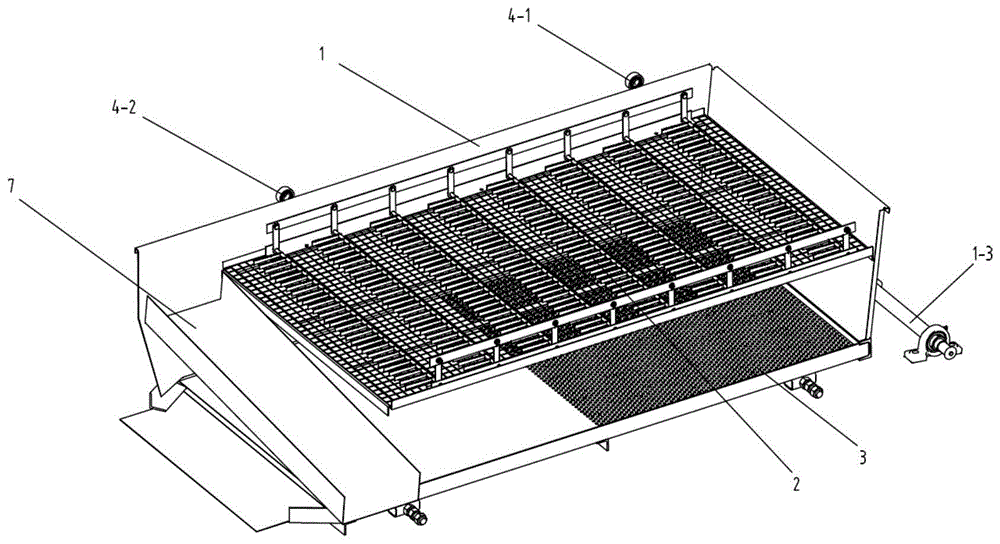
Fig. 1 is a schematic perspective view of an embodiment of the present invention.
Fig. 2 is a perspective view of the inner structure of the screen frame of the embodiment of fig. 1.
Fig. 3 is a schematic perspective view of the upper screen plate of the embodiment of fig. 1.
FIG. 4 is a perspective view of the segmented adjustable serrated screen of the embodiment of FIG. 1.
Fig. 5 is a perspective view of the saw-tooth rod of the embodiment of fig. 1.
Detailed Description
Example one
The peanut seedling plastic film residue separation vibrating screen of the embodiment is shown in figures 1 and 2 and comprises a screen frame 1 provided with an upper screen plate 2 and a lower screen plate 3. The bottom of the screen frame 1 is respectively hinged with the lower ends of a front rocker 4-1 and a rear rocker 4-2, the upper ends of the front rocker 4-1 and the rear rocker 4-2 are respectively hinged on a frame 5 for arranging the vibrating screen, the front end of the screen frame 1 is hinged with one end of a vibration driving connecting rod 1-2, the other end of the vibration driving connecting rod 1-2 is hinged with an eccentric wheel 1-1 driven by a rotating shaft 1-3, and the power source of the rotating shaft 1-3 is a self-driven motor. Because the front rocker 4-1 is longer than the rear rocker 4-2, a double-rocker mechanism which enables the upper sieve plate and the lower sieve plate to do plane motion with forward inclination trend similar to an elliptical orbit is formed, and ideal sieving and winnowing conveying separation effects are obtained.
And a winnowing device 6 consisting of a front fan system and a rear fan system is arranged above the screen frame 1. The fan system is composed of an air draft channel 6-2 positioned above the upper-layer sieve plate 2, exhaust fans 6-1 respectively positioned at two ends of the air draft channel 6-2, and a herringbone air exhaust channel 6-3 communicated with air outlets of the exhaust fans 6-1 at the two ends. The function is to suck and remove the residual film with lighter specific gravity on the material in time.
The output end of the upper-layer sieve plate 2 is provided with a discharge chute 7. The specific structure of the upper screen plate 2 is shown in figure 3 and is formed by combining a lower woven hole screen 2-K and an upper sectional type adjustable sawtooth screen 2-J. Two sides of the woven hole screen 2-K are respectively fixed on the frame strips 2-3 at two sides. The segmented adjustable serrated screen 2-J, see fig. 4, is formed of a set of serrated bars 2-T that are hinged at intervals to support bars 2-6 on both sides. The hinge fulcrum shaft of each sawtooth rod 2-T is fixedly connected with the lower end of a short connecting rod 2-5, and the upper end of each short connecting rod 2-5 can be locked and hinged on an adjusting rod 2-4 at intervals to form a linkage connecting rod mechanism; specifically, the hinge fulcrum shafts of the middle saw-tooth bars 2-T are floatingly hinged to the adjusting bars 2-4 through cotter pins 2-7, respectively, and the hinge fulcrum shafts of the foremost and rearmost saw-tooth bars 2-T are lockably hinged to the adjusting bars 2-4 by means of locknuts 2-8, thereby achieving the locking of the segmental type zigzag screen after adjusting the installation angle through the interlocking link mechanism. The linkage link mechanism can be a parallel link mechanism or a non-parallel link mechanism with a front short connecting rod shorter than a rear short connecting rod, so that the instantaneous speed difference exists between the sawtooth strips and the hole screen for conveying the materials, and the difference of the front and rear inclination angles after adjustment causes a certain instantaneous speed difference between the front and rear parts of the sawtooth strips, thereby obtaining ideal effects of scattering and turning the materials and removing residual films. The specific structure of the sawtooth rod 2-T is shown in figure 5, a sawtooth strip 2-1 extending towards the conveying direction is fixedly connected to a hinge fulcrum shaft at intervals, and the sawtooth strip 2-1 is provided with upward sawteeth.
The lower sieve plate 3 is provided with punched sieve pores with the mesh number larger than that of the upper sieve plate 2, so the sieve plate has the function of sieving and impurity removal. The upper layer of the woven screen conveys the material with the length of more than 40mm (the length can be changed according to the size of the screen hole) to fall into a discharge chute at the rear end, and the material is discharged and is subjected to secondary regrinding; and materials with the length of less than 40mm fall onto the lower punching sieve plate through the woven sieve and are conveyed to the rear sieve, meanwhile, part of light impurities such as soil, mildew seedling scraps, film scraps and the like fall to the lower part through the sieve, and the sieved materials are discharged from the rear end for processing and bagging operation.
Practice shows that when the sectional type adjustable sawtooth sieve is used for treating harvested peanut seedling materials, the pushing force is strong, the sieve surface operation is smooth, the materials are scattered and turned over fully, then residual membranes are sucked and removed through winnowing, the residual membranes can be almost thoroughly removed, and the treated peanut seedlings completely meet the requirement of safe feeding as feeds, so that the problem of efficient and thorough separation of the harvested peanut seedlings and the residual membranes is properly solved. And because the sawtooth screen with the sectional type adjustable structure can change the inclination angle of each level of sawtooth strips and the woven screen according to the requirement, the sawtooth screen is suitable for the material treatment of peanut seedlings with different film-containing rates and water contents. In addition, the woven sieve and the punching sieve which are distributed up and down are combined with each other, so that sorting of long and short peanut seedling materials can be completed, and the loss rate of peanut seedlings is effectively reduced.