WO2025100417A1 - Aavのフルカプシドに対するアフィニティポリペプチド - Google Patents
Aavのフルカプシドに対するアフィニティポリペプチド Download PDFInfo
- Publication number
- WO2025100417A1 WO2025100417A1 PCT/JP2024/039335 JP2024039335W WO2025100417A1 WO 2025100417 A1 WO2025100417 A1 WO 2025100417A1 JP 2024039335 W JP2024039335 W JP 2024039335W WO 2025100417 A1 WO2025100417 A1 WO 2025100417A1
- Authority
- WO
- WIPO (PCT)
- Prior art keywords
- seq
- amino acid
- acid sequence
- positions
- aav
- Prior art date
- Legal status (The legal status is an assumption and is not a legal conclusion. Google has not performed a legal analysis and makes no representation as to the accuracy of the status listed.)
- Pending
Links
Classifications
-
- C—CHEMISTRY; METALLURGY
- C07—ORGANIC CHEMISTRY
- C07K—PEPTIDES
- C07K1/00—General methods for the preparation of peptides, i.e. processes for the organic chemical preparation of peptides or proteins of any length
- C07K1/14—Extraction; Separation; Purification
- C07K1/16—Extraction; Separation; Purification by chromatography
- C07K1/22—Affinity chromatography or related techniques based upon selective absorption processes
-
- C—CHEMISTRY; METALLURGY
- C07—ORGANIC CHEMISTRY
- C07K—PEPTIDES
- C07K16/00—Immunoglobulins [IG], e.g. monoclonal or polyclonal antibodies
-
- C—CHEMISTRY; METALLURGY
- C07—ORGANIC CHEMISTRY
- C07K—PEPTIDES
- C07K16/00—Immunoglobulins [IG], e.g. monoclonal or polyclonal antibodies
- C07K16/08—Immunoglobulins [IG], e.g. monoclonal or polyclonal antibodies against material from viruses
-
- C—CHEMISTRY; METALLURGY
- C07—ORGANIC CHEMISTRY
- C07K—PEPTIDES
- C07K17/00—Carrier-bound or immobilised peptides; Preparation thereof
-
- C—CHEMISTRY; METALLURGY
- C12—BIOCHEMISTRY; BEER; SPIRITS; WINE; VINEGAR; MICROBIOLOGY; ENZYMOLOGY; MUTATION OR GENETIC ENGINEERING
- C12N—MICROORGANISMS OR ENZYMES; COMPOSITIONS THEREOF; PROPAGATING, PRESERVING, OR MAINTAINING MICROORGANISMS; MUTATION OR GENETIC ENGINEERING; CULTURE MEDIA
- C12N15/00—Mutation or genetic engineering; DNA or RNA concerning genetic engineering, vectors, e.g. plasmids, or their isolation, preparation or purification; Use of hosts therefor
- C12N15/09—Recombinant DNA-technology
- C12N15/63—Introduction of foreign genetic material using vectors; Vectors; Use of hosts therefor; Regulation of expression
- C12N15/74—Vectors or expression systems specially adapted for prokaryotic hosts other than E. coli, e.g. Lactobacillus, Micromonospora
-
- C—CHEMISTRY; METALLURGY
- C12—BIOCHEMISTRY; BEER; SPIRITS; WINE; VINEGAR; MICROBIOLOGY; ENZYMOLOGY; MUTATION OR GENETIC ENGINEERING
- C12N—MICROORGANISMS OR ENZYMES; COMPOSITIONS THEREOF; PROPAGATING, PRESERVING, OR MAINTAINING MICROORGANISMS; MUTATION OR GENETIC ENGINEERING; CULTURE MEDIA
- C12N15/00—Mutation or genetic engineering; DNA or RNA concerning genetic engineering, vectors, e.g. plasmids, or their isolation, preparation or purification; Use of hosts therefor
- C12N15/09—Recombinant DNA-technology
- C12N15/63—Introduction of foreign genetic material using vectors; Vectors; Use of hosts therefor; Regulation of expression
- C12N15/79—Vectors or expression systems specially adapted for eukaryotic hosts
- C12N15/80—Vectors or expression systems specially adapted for eukaryotic hosts for fungi
-
- C—CHEMISTRY; METALLURGY
- C12—BIOCHEMISTRY; BEER; SPIRITS; WINE; VINEGAR; MICROBIOLOGY; ENZYMOLOGY; MUTATION OR GENETIC ENGINEERING
- C12N—MICROORGANISMS OR ENZYMES; COMPOSITIONS THEREOF; PROPAGATING, PRESERVING, OR MAINTAINING MICROORGANISMS; MUTATION OR GENETIC ENGINEERING; CULTURE MEDIA
- C12N15/00—Mutation or genetic engineering; DNA or RNA concerning genetic engineering, vectors, e.g. plasmids, or their isolation, preparation or purification; Use of hosts therefor
- C12N15/09—Recombinant DNA-technology
- C12N15/63—Introduction of foreign genetic material using vectors; Vectors; Use of hosts therefor; Regulation of expression
- C12N15/79—Vectors or expression systems specially adapted for eukaryotic hosts
- C12N15/80—Vectors or expression systems specially adapted for eukaryotic hosts for fungi
- C12N15/81—Vectors or expression systems specially adapted for eukaryotic hosts for fungi for yeasts
-
- C—CHEMISTRY; METALLURGY
- C12—BIOCHEMISTRY; BEER; SPIRITS; WINE; VINEGAR; MICROBIOLOGY; ENZYMOLOGY; MUTATION OR GENETIC ENGINEERING
- C12N—MICROORGANISMS OR ENZYMES; COMPOSITIONS THEREOF; PROPAGATING, PRESERVING, OR MAINTAINING MICROORGANISMS; MUTATION OR GENETIC ENGINEERING; CULTURE MEDIA
- C12N15/00—Mutation or genetic engineering; DNA or RNA concerning genetic engineering, vectors, e.g. plasmids, or their isolation, preparation or purification; Use of hosts therefor
- C12N15/09—Recombinant DNA-technology
- C12N15/63—Introduction of foreign genetic material using vectors; Vectors; Use of hosts therefor; Regulation of expression
- C12N15/79—Vectors or expression systems specially adapted for eukaryotic hosts
- C12N15/85—Vectors or expression systems specially adapted for eukaryotic hosts for animal cells
- C12N15/86—Viral vectors
- C12N15/864—Parvoviral vectors, e.g. parvovirus, densovirus
-
- C—CHEMISTRY; METALLURGY
- C12—BIOCHEMISTRY; BEER; SPIRITS; WINE; VINEGAR; MICROBIOLOGY; ENZYMOLOGY; MUTATION OR GENETIC ENGINEERING
- C12N—MICROORGANISMS OR ENZYMES; COMPOSITIONS THEREOF; PROPAGATING, PRESERVING, OR MAINTAINING MICROORGANISMS; MUTATION OR GENETIC ENGINEERING; CULTURE MEDIA
- C12N5/00—Undifferentiated human, animal or plant cells, e.g. cell lines; Tissues; Cultivation or maintenance thereof; Culture media therefor
- C12N5/10—Cells modified by introduction of foreign genetic material
Definitions
- the present disclosure relates to affinity polypeptides for the full capsid of adeno-associated virus (AAV).
- AAV adeno-associated virus
- AAV adeno-associated virus
- Patent Document 1 Specific methods for quantifying full capsids include quantitative PCR (Patent Document 1) and coherent scattering mass spectrometry (Patent Document 2).
- affinity molecules suitable for quantifying full capsids should have higher binding affinity to AAV full capsids than to empty AAV capsids (i.e., selective binding to AAV full capsids).
- the present disclosure therefore aims to provide an affinity molecule that has higher binding affinity to AAV full capsids than to empty AAV capsids.
- Item 1 An anti-AAV full capsid molecule, which is an antibody having a higher binding affinity to an AAV full capsid than to an AAV empty capsid.
- Item 2. A heavy chain variable region comprising, as heavy chain complementarity determining regions, CDR1 consisting of the amino acid sequence represented by SEQ ID NO: 1, CDR2 consisting of the amino acid sequence represented by SEQ ID NO: 2, and CDR3 consisting of an amino acid sequence having 90% or more sequence identity with the amino acid sequence represented by SEQ ID NO: 3;
- An anti-AAV full capsid molecule comprising a light chain variable region including, as light chain complementarity determining regions, CDR1 consisting of the amino acid sequence represented by SEQ ID NO:4, CDR2 consisting of RAS, and CDR3 consisting of an amino acid sequence having 90% or more sequence identity with the amino acid sequence represented by SEQ ID NO:5.
- a heavy chain variable region comprising, as heavy chain complementarity determining regions, CDR1 consisting of the amino acid sequence represented by SEQ ID NO: 6, CDR2 consisting of the amino acid sequence represented by SEQ ID NO: 7, and CDR3 consisting of an amino acid sequence having 90% or more sequence identity with the amino acid sequence represented by SEQ ID NO: 8;
- An anti-AAV full capsid molecule comprising a light chain variable region including, as light chain complementarity determining regions, CDR1 consisting of the amino acid sequence represented by SEQ ID NO:9, CDR2 consisting of RAS, and CDR3 consisting of an amino acid sequence having 90% or more sequence identity with the amino acid sequence represented by SEQ ID NO:10.
- a heavy chain variable region comprising, as heavy chain complementarity determining regions, CDR1 consisting of the amino acid sequence represented by SEQ ID NO: 11, CDR2 consisting of the amino acid sequence represented by SEQ ID NO: 12, and CDR3 consisting of an amino acid sequence having 90% or more sequence identity with the amino acid sequence represented by SEQ ID NO: 13;
- An anti-AAV full capsid molecule comprising a light chain variable region including, as light chain complementarity determining regions, CDR1 consisting of the amino acid sequence represented by SEQ ID NO: 14, CDR2 consisting of QAS, and CDR3 consisting of an amino acid sequence having 90% or more sequence identity with the amino acid sequence represented by SEQ ID NO: 15. Item 5.
- a heavy chain variable region comprising, as heavy chain complementarity determining regions, CDR1 consisting of the amino acid sequence represented by SEQ ID NO: 16, CDR2 consisting of the amino acid sequence represented by SEQ ID NO: 17, and CDR3 consisting of an amino acid sequence having 90% or more sequence identity with the amino acid sequence represented by SEQ ID NO: 18;
- An anti-AAV full capsid molecule comprising a light chain variable region including, as light chain complementarity determining regions, CDR1 consisting of the amino acid sequence represented by SEQ ID NO: 19, CDR2 consisting of RAS, and CDR3 consisting of the amino acid sequence represented by SEQ ID NO: 20.
- the heavy chain variable region is FR1 consisting of an amino acid sequence having 70% or more sequence identity with the amino acid sequence of the 1st to 24th positions of SEQ ID NO:21, the 1st to 24th positions of SEQ ID NO:23, the 1st to 24th positions of SEQ ID NO:25, or the 1st to 24th positions of SEQ ID NO:27;
- FR2 consisting of an amino acid sequence having 70% or more sequence identity with the amino acid sequence of positions 33 to 49 of SEQ ID NO: 21, positions 34 to 50 of SEQ ID NO: 23, positions 34 to 50 of SEQ ID NO: 25, or positions 34 to 50 of SEQ ID NO: 27;
- FR3 consisting of an amino acid sequence having 70% or more sequence identity with the amino acid sequence of positions 59 to 95 of SEQ ID NO:21, positions 60 to 96 of SEQ ID NO:23, positions 59 to 95 of SEQ ID NO:25, or positions 60 to 96 of SEQ ID NO:27;
- FR4 consisting of an amino acid sequence having 70%
- the anti-AAV full capsid molecule according to any one of Items 2 to 5, comprising: an FR3 consisting of an amino acid sequence having 70% or more sequence identity with the amino acid sequence of positions 53 to 88 of SEQ ID NO:22, positions 53 to 88 of SEQ ID NO:24, positions 53 to 88 of SEQ ID NO:26, or positions 53 to 88 of SEQ ID NO:28; and an FR4 consisting of an amino acid sequence having 70% or more sequence identity with the amino acid sequence of positions 101 to 110 of SEQ ID NO:22, positions 101 to 110 of SEQ ID NO:24, positions 101 to 109 of SEQ ID NO:26, or positions 98 to 107 of SEQ ID NO:28.
- Items 7 comprising: an FR3 consisting of an amino acid sequence having 70% or more sequence identity with the amino acid sequence of positions 53 to 88 of SEQ ID NO:22, positions 53 to 88 of SEQ ID NO:24, positions 53 to 88 of SEQ ID NO:26, or positions 53 to 88 of SEQ ID
- the anti-AAV full capsid molecule of Item 2 wherein the heavy chain variable region comprises the amino acid sequence represented by SEQ ID NO:21, and the light chain variable region comprises the amino acid sequence represented by SEQ ID NO:22.
- Item 8. The anti-AAV full capsid molecule of Item 3, wherein the heavy chain variable region comprises the amino acid sequence represented by SEQ ID NO:23, and the light chain variable region comprises the amino acid sequence represented by SEQ ID NO:24.
- Item 9 The anti-AAV full capsid molecule of Item 4, wherein the heavy chain variable region comprises the amino acid sequence represented by SEQ ID NO:25, and the light chain variable region comprises the amino acid sequence represented by SEQ ID NO:26.
- Item 11 The anti-AAV full capsid molecule according to any one of Items 1 to 10, which is an IgG antibody, a Fab antibody, a Fab' antibody, an F(ab') 2 antibody, an Fv antibody, an scFv antibody, a dsFv antibody, an scFv-Fc antibody, a dsFv-Fc antibody, a Bis-scFv antibody, a minibody, a diabody, a triabody, or a tetrabody.
- Item 12 An affinity solid phase for binding to an AAV full capsid, comprising the anti-AAV full capsid molecule according to any one of Items 1 to 11, and a solid phase material on which the anti-AAV full capsid molecule is immobilized.
- Item 13 A method for capturing an AAV full capsid, comprising a step 1 of contacting a sample containing an AAV empty capsid and an AAV full capsid with the AAV full capsid-binding affinity solid phase according to Item 12, and capturing the AAV full capsid.
- Item 16. An expression cassette or recombinant vector comprising the nucleic acid according to Item 15.
- Item 17. A transformant obtained by transforming a host with the expression cassette or recombinant vector according to Item 16.
- Item 18. A method for producing an anti-AAV full capsid molecule, comprising a step of culturing the transformant according to Item 17.
- an anti-AAV full capsid molecule that has a higher binding affinity to AAV full capsids than to empty AAV capsids. Therefore, according to the present disclosure, it is possible to quantify full capsids using the anti-AAV full capsid molecule.
- FIG. 1 shows the relationship between the amount of AAV9 full capsid and the ELISA signal (absorbance) using the anti-AAV full capsid molecule (anti-AAV-scFv) of the present disclosure.
- the anti-AAV full capsid molecule of the present disclosure is an antibody having a higher binding affinity to AAV full capsid than to AAV empty capsid. That is, the anti-AAV full capsid molecule of the present disclosure is a polypeptide having a higher binding affinity to AAV full capsid than to AAV empty capsid, and has a heavy chain variable region including a heavy chain complementarity determining region and a light chain variable region including a light chain complementarity determining region that show a higher binding affinity to AAV full capsid than to AAV empty capsid.
- the anti-AAV full capsid molecule of the present disclosure is a polypeptide having a higher binding affinity to AAV full capsid than to AAV empty capsid, and has a heavy chain variable region including a predetermined heavy chain complementarity determining region and a light chain variable region including a predetermined light chain complementarity determining region.
- AAV serotype targeted by the anti-AAV full capsid molecule of the present disclosure is not particularly limited. Specific serotypes include AAV1, AAV2, AAV3a, AAV3b, AAV4, AAV5, AAV6, AAV7, AAV8, AAV9, AAV10, AAVrh.10, AAV11, AAV12, and AAV13, and preferably AAV9.
- An empty AAV capsid is an empty outer shell of an AAV that does not contain any nucleic acid inside.
- a typical example of an empty AAV capsid is a vesicle used to package a target gene (foreign gene) to be delivered to a cell of a therapeutic target.
- An AAV full capsid is an AAV capsid that contains nucleic acid inside.
- nucleic acid examples include the viral genome of the AAV, nucleic acid medicines (antisense oligonucleotides, RNAi, aptamers, decoys, etc.), and vectors into which genes for gene therapy have been introduced.
- the anti-AAV full capsid molecule of the present disclosure has higher binding affinity to AAV full capsid than to AAV empty capsid.
- the anti-AAV full capsid molecule of the present disclosure has a higher binding affinity to AAV full capsid than to AAV empty capsid can be confirmed by the fact that when the anti-AAV full capsid molecule of the present disclosure is contacted with an AAV empty capsid or an AAV full capsid under the same conditions, the amount of AAV full capsid bound is greater than the amount of AAV empty capsid bound.
- the anti-AAV full capsid molecule of the present disclosure is prepared in a form with an affinity tag, and contacted with an AAV empty capsid or an AAV full capsid under the same conditions.
- the anti-AAV full capsid molecule bound to the capsid is then captured with an antibody (anti-affinity tag antibody) that is specific to the affinity tag and has a signal group (e.g., a fluorescent group, etc.), and the signal intensity (e.g., absorbance based on the fluorescent group) based on the signal group of the anti-affinity tag antibody that captured the anti-AAV full capsid molecule can be confirmed.
- an antibody anti-affinity tag antibody
- a signal group e.g., a fluorescent group, etc.
- the signal intensity e.g., absorbance based on the fluorescent group
- the degree of binding to AAV full capsid include, when the anti-AAV full capsid molecule is contacted with the AAV capsid at pH 7 (25°C) for 1 hour at 25°C, the binding to AAV full capsid based on the above absorbance is 1.5 times or more, specifically 1.5 to 5 times, preferably 2 to 5 times, more preferably 2.5 to 5 times, even more preferably 3 to 5 times, 3.5 to 5 times, and even more preferably 4 to 5 times, of the binding to the empty AAV capsid.
- the anti-AAV full capsid molecule of the present disclosure typically comprises three heavy chain complementarity determining regions (CDR1, CDR2, and CDR3 from the N-terminus) and three light chain complementarity determining regions (CDR1, CDR2, and CDR3 from the N-terminus).
- the anti-AAV full capsid molecule of the present disclosure includes a first anti-AAV full capsid molecule shown in [1] of Table 1, a second anti-AAV full capsid molecule shown in [2], a third anti-AAV full capsid molecule shown in [3], and a fourth anti-AAV full capsid molecule shown in [4].
- the first anti-AAV full capsid molecule comprises a heavy chain variable region including, as a heavy chain complementarity determining region, CDR1 having an amino acid sequence represented by SEQ ID NO:1, CDR2 having an amino acid sequence represented by SEQ ID NO:2, and CDR3 having an amino acid sequence having 90% or more sequence identity with the amino acid sequence represented by SEQ ID NO:3, and a light chain variable region including, as a light chain complementarity determining region, CDR1 having an amino acid sequence represented by SEQ ID NO:4, CDR2 consisting of RAS, and CDR3 having an amino acid sequence having 90% or more sequence identity with the amino acid sequence represented by SEQ ID NO:5.
- the second anti-AAV full capsid molecule comprises a heavy chain variable region including, as a heavy chain complementarity determining region, CDR1 consisting of the amino acid sequence represented by SEQ ID NO:6, CDR2 consisting of the amino acid sequence represented by SEQ ID NO:7, and CDR3 consisting of an amino acid sequence having 90% or more sequence identity with the amino acid sequence represented by SEQ ID NO:8, and a light chain variable region including, as a light chain complementarity determining region, CDR1 consisting of the amino acid sequence represented by SEQ ID NO:9, CDR2 consisting of RAS, and CDR3 consisting of an amino acid sequence having 90% or more sequence identity with the amino acid sequence represented by SEQ ID NO:10.
- the second anti-AAV full capsid molecule is preferred in that it has remarkable binding specificity to AAV full capsids.
- the third anti-AAV full capsid molecule comprises a heavy chain variable region including, as a heavy chain complementarity determining region, CDR1 having an amino acid sequence represented by SEQ ID NO:11, CDR2 having an amino acid sequence represented by SEQ ID NO:12, and CDR3 having an amino acid sequence having 90% or more sequence identity with the amino acid sequence represented by SEQ ID NO:13, and a light chain variable region including, as a light chain complementarity determining region, CDR1 having an amino acid sequence represented by SEQ ID NO:14, CDR2 consisting of QAS, and CDR3 having an amino acid sequence having 90% or more sequence identity with the amino acid sequence represented by SEQ ID NO:15.
- the fourth anti-AAV full capsid molecule comprises a heavy chain variable region including, as a heavy chain complementarity determining region, CDR1 having the amino acid sequence represented by SEQ ID NO: 16, CDR2 having the amino acid sequence represented by SEQ ID NO: 17, and CDR3 having an amino acid sequence having 90% or more sequence identity with the amino acid sequence represented by SEQ ID NO: 18, and a light chain variable region including, as a light chain complementarity determining region, CDR1 having the amino acid sequence represented by SEQ ID NO: 19, CDR2 consisting of RAS, and CDR3 having the amino acid sequence represented by SEQ ID NO: 20.
- sequence identity refers to the value of amino acid sequence identity obtained by the bl2seq program (Tatiana A. Tatsusova, Thomas L. Madden, FEMS Microbiol. Lett., Vol. 174, pp. 247-250, 1999) of BLAST PACKAGE [sgi32 bit edition, Version 2.0.12; available from the National Center for Biotechnology Information (NCBI)].
- NCBI National Center for Biotechnology Information
- Basic amino acids lysine, arginine, histidine
- Acidic amino acids glutamic acid, aspartic acid
- Neutral amino acids glycine, alanine, serine, threonine, methionine, cysteine, phenylalanine, tryptophan, tyrosine, leucine, isoleucine, valine, glutamine, asparagine, proline
- the neutral amino acids can also be classified into those having polar side chains (asparagine, glutamine, serine, threonine, tyrosine, cysteine), those having non-polar side chains (glycine, alanine, valine, leucine, isoleucine, proline, phenylalanine, methionine, tryptophan), those having amide-containing side chains (asparagine, glutamine), those having sulfur-containing side chains (methionine, cysteine), those having aromatic side chains (phenylalanine, tryptophan,
- Methods for replacing a specific amino acid in an amino acid sequence with another amino acid include, for example, site-directed mutagenesis (Hashimoto-Gotoh T. et al., Gene, Vol.152, pp.271-275(1995); Zoller MJ. et al., Methods Enzymol.Vol.100, pp.468-500(1983), Kramer W. et al., Nucleic Acids . Res. Vol. 12, p. 9441-9456 (1984); Kramer W. et al., Methods. Enzymol. Vol. 154, p. 350-367 (1987); Kunkel TA., Proc Natl Acad Sci USA., Vol. 82, p.
- amino acid substitutions can be made in the amino acid sequence of the CDR using this site-directed mutagenesis method.
- a method for substituting with other amino acids also includes the library technique described in WO2005/080432.
- the framework regions of the heavy chain variable region and the light chain variable region of the first to fourth anti-AAV full capsid molecules are not particularly limited, as long as the anti-AAV full capsid molecules have higher binding affinity to AAV full capsid than to AAV empty capsid, and the framework region (FR) of an antibody from any animal (human and non-human, preferably rabbit) can be used.
- the first through fourth anti-AAV full capsid molecules preferably comprise:
- the heavy chain variable region is FR1 consisting of an amino acid sequence having 70% or more sequence identity with the amino acid sequence of the 1st to 24th positions of SEQ ID NO:21, the 1st to 24th positions of SEQ ID NO:23, the 1st to 24th positions of SEQ ID NO:25, or the 1st to 24th positions of SEQ ID NO:27;
- FR2 consisting of an amino acid sequence having 70% or more sequence identity with the amino acid sequence of positions 33 to 49 of SEQ ID NO: 21, positions 34 to 50 of SEQ ID NO: 23, positions 34 to 50 of SEQ ID NO: 25, or positions 34 to 50 of SEQ ID NO: 27;
- FR3 consisting of an amino acid sequence having 70% or more sequence identity with the amino acid sequence of positions 59 to 95 of SEQ ID NO:21, positions 60 to 96 of SEQ ID NO:23, positions 59 to 95 of SEQ ID NO:25, or positions 60 to 96 of SEQ
- sequence identity of 70% or more may vary depending on the full length of the reference amino acid sequence, but are preferably 80% or more or 85% or more, more preferably 90% or more, even more preferably 92% or more, even more preferably 94% or more or 95% or more, even more preferably 96% or more or 97% or more, and most preferably 100%.
- variable regions More preferably, the first anti-AAV full capsid molecule has a heavy chain variable region comprising the amino acid sequence represented by SEQ ID NO:21 and a light chain variable region comprising the amino acid sequence represented by SEQ ID NO:22.
- SEQ ID NO:21 of the heavy chain variable region is composed of, from the N-terminus, ⁇ FR1 consisting of the amino acid sequence of positions 1 to 24 ⁇ - ⁇ CDR1 consisting of the amino acid sequence of positions 25 to 32 (corresponding to CDR1 of SEQ ID NO:1) ⁇ - ⁇ FR2 consisting of the amino acid sequence of positions 33 to 49 ⁇ - ⁇ CDR2 consisting of the amino acid sequence of positions 50 to 58 (corresponding to CDR2 of SEQ ID NO:2) ⁇ - ⁇ FR3 consisting of the amino acid sequence of positions 59 to 95 ⁇ - ⁇ CDR3 consisting of the amino acid sequence of positions 96 to 108 (corresponding to CDR3 of SEQ ID NO:3) ⁇ - ⁇ FR4 consisting of the amino acid sequence of positions 109 to 119 ⁇ .
- the light chain variable region of SEQ ID NO:22 is composed of, from the N-terminus, ⁇ FR1 consisting of the amino acid sequence of positions 1 to 26 ⁇ - ⁇ CDR1 consisting of the amino acid sequence of positions 27 to 32 (corresponding to CDR1 of SEQ ID NO:4) ⁇ - ⁇ FR2 consisting of the amino acid sequence of positions 33 to 49 ⁇ - ⁇ CDR2 consisting of the amino acid sequence of positions 50 to 52 ⁇ - ⁇ FR3 consisting of the amino acid sequence of positions 53 to 88 of SEQ ID NO:22 ⁇ - ⁇ CDR3 consisting of the amino acid sequence of positions 89 to 100 (corresponding to CDR3 of SEQ ID NO:5) ⁇ - ⁇ FR4 consisting of the amino acid sequence of positions 101 to 110 of SEQ ID NO:22 ⁇ .
- the second anti-AAV full capsid molecule has a heavy chain variable region that includes the amino acid sequence represented by SEQ ID NO:23 and a light chain variable region that includes the amino acid sequence represented by SEQ ID NO:24.
- the heavy chain variable region sequence number 23 is composed of, from the N-terminus, ⁇ FR1 consisting of the amino acid sequence of positions 1 to 24 ⁇ - ⁇ CDR1 consisting of the amino acid sequence of positions 25 to 33 (corresponding to CDR1 of sequence number 6) ⁇ - ⁇ FR2 consisting of the amino acid sequence of positions 34 to 50 ⁇ - ⁇ CDR2 consisting of the amino acid sequence of positions 51 to 59 (corresponding to CDR2 of sequence number 7) ⁇ - ⁇ FR3 consisting of the amino acid sequence of positions 60 to 96 ⁇ - ⁇ CDR3 consisting of the amino acid sequence of positions 97 to 108 (corresponding to CDR3 of sequence number 8) ⁇ - ⁇ FR4 consisting of the amino acid sequence of positions 109 to 119 ⁇ .
- the light chain variable region of SEQ ID NO:24 is composed of, from the N-terminus, ⁇ FR1 consisting of the amino acid sequence of positions 1 to 26 ⁇ - ⁇ CDR1 consisting of the amino acid sequence of positions 27 to 32 (corresponding to CDR1 of SEQ ID NO:9) ⁇ - ⁇ FR2 consisting of the amino acid sequence of positions 33 to 49 ⁇ - ⁇ CDR2 consisting of the amino acid sequence of positions 50 to 52 ⁇ - ⁇ FR3 consisting of the amino acid sequence of positions 53 to 88 ⁇ - ⁇ CDR3 consisting of the amino acid sequence of positions 89 to 100 (corresponding to CDR3 of SEQ ID NO:10) ⁇ - ⁇ FR4 consisting of the amino acid sequence of positions 101 to 110 ⁇ .
- the third anti-AAV full capsid molecule has a heavy chain variable region that includes the amino acid sequence represented by SEQ ID NO:25 and a light chain variable region that includes the amino acid sequence represented by SEQ ID NO:26.
- the heavy chain variable region sequence number 25 is composed of, from the N-terminus, ⁇ FR1 consisting of the amino acid sequence of positions 1 to 24 ⁇ - ⁇ CDR1 consisting of the amino acid sequence of positions 25 to 33 (corresponding to CDR1 of sequence number 11) ⁇ - ⁇ FR2 consisting of the amino acid sequence of positions 34 to 50 ⁇ - ⁇ CDR2 consisting of the amino acid sequence of positions 51 to 58 (corresponding to CDR2 of sequence number 12) ⁇ - ⁇ FR3 consisting of the amino acid sequence of positions 59 to 95 ⁇ - ⁇ CDR3 consisting of the amino acid sequence of positions 96 to 106 (corresponding to CDR3 of sequence number 13) ⁇ - ⁇ FR4 consisting of the amino acid sequence of positions 107 to 117 ⁇ .
- the light chain variable region of SEQ ID NO:26 is composed of, from the N-terminus, ⁇ FR1 consisting of the amino acid sequence of positions 1 to 26 ⁇ - ⁇ CDR1 consisting of the amino acid sequence of positions 27 to 32 (corresponding to CDR1 of SEQ ID NO:14) ⁇ - ⁇ FR2 consisting of the amino acid sequence of positions 33 to 49 ⁇ - ⁇ CDR2 consisting of the amino acid sequence of positions 50 to 52 ⁇ - ⁇ FR3 consisting of the amino acid sequence of positions 53 to 88 ⁇ - ⁇ CDR3 consisting of the amino acid sequence of positions 89 to 100 (corresponding to CDR3 of SEQ ID NO:15) ⁇ - ⁇ FR4 consisting of the amino acid sequence of positions 101 to 109 ⁇ .
- the fourth anti-AAV full capsid molecule has a heavy chain variable region that includes an amino acid sequence represented by SEQ ID NO:27 and a light chain variable region that includes an amino acid sequence represented by SEQ ID NO:28.
- the heavy chain variable region of sequence number 27 is composed of, from the N-terminus, ⁇ FR1 consisting of the amino acid sequence of positions 1 to 24 ⁇ - ⁇ CDR1 consisting of the amino acid sequence of positions 25 to 33 (corresponding to CDR1 of sequence number 16) ⁇ - ⁇ FR2 consisting of the amino acid sequence of positions 34 to 50 of sequence number 27 ⁇ - ⁇ CDR2 consisting of the amino acid sequence of positions 51 to 59 (corresponding to CDR2 of sequence number 17) ⁇ - ⁇ FR3 consisting of the amino acid sequence of positions 60 to 96 of sequence number 27 ⁇ - ⁇ CDR3 consisting of the amino acid sequence of positions 97 to 112 (corresponding to CDR3 of sequence number 18) ⁇ - ⁇ FR4 consisting of the amino acid sequence of positions 113 to 123 of sequence number 27 ⁇ .
- the light chain variable region of SEQ ID NO:28 is composed of, from the N-terminus, ⁇ FR1 consisting of the amino acid sequence of positions 1 to 26 ⁇ - ⁇ CDR1 consisting of the amino acid sequence of positions 27 to 32 (corresponding to CDR1 of SEQ ID NO:19) ⁇ - ⁇ FR2 consisting of the amino acid sequence of positions 33 to 49 ⁇ - ⁇ CDR2 consisting of the amino acid sequence of positions 50 to 52 ⁇ - ⁇ FR3 consisting of the amino acid sequence of positions 53 to 88 ⁇ - ⁇ CDR3 consisting of the amino acid sequence of positions 89 to 97 (corresponding to CDR3 of SEQ ID NO:20) ⁇ - ⁇ FR4 consisting of the amino acid sequence of positions 98 to 107 ⁇ .
- the anti-AAV full capsid molecule of the present disclosure may be a complete antibody or a low molecular weight antibody (an antibody having a smaller molecular weight than a complete antibody).
- the anti-AAV full capsid molecule of the present disclosure is a complete antibody
- its isotype is not particularly limited, and examples include IgG (IgG1, IgG2, IgG3, IgG4), IgA (IgA1, IgA2), IgM, IgD, and IgE.
- the anti-AAV full capsid molecule of the present disclosure is a low molecular weight antibody
- specific examples thereof include a Fab antibody (about 55 kDa), a Fab' antibody (about 55 kDa), an F(ab') 2 antibody (about 110 kDa), an Fv antibody (about 25 kDa), an scFv antibody (about 25 kDa), a dsFv antibody (about 25 kDa), an scFv-Fc antibody (about 105 kDa), a dsFv-Fc antibody (about 105 kDa), a Bis-scFv antibody (about 50 kDa), a minibody (about 80 kDa), a diabody (about 55 kDa), a triabody (about 75 kDa), a tetrabody (about 100 kDa), and the like.
- the anti-AAV full capsid molecule of the present disclosure also includes multispecific antibodies (e.g., bispecific antibodies) so long as it has a heavy chain variable region containing a predetermined heavy chain complementarity determining region and a light chain variable region containing a predetermined light chain complementarity determining region.
- multispecific antibodies e.g., bispecific antibodies
- These fragment antibodies and multispecific antibodies can be produced according to conventionally known methods.
- the anti-AAV full capsid molecule of the present disclosure is typically an isolated monoclonal antibody.
- the method for producing the monoclonal antibody is not particularly limited, but may be, for example, the hybridoma method described in "Kohler G, Milstein C., Nature. 1975 Aug 7;256(5517):495-497.”; the recombinant method described in "Clackson et al., Nature. 1991 Aug 7;256(5517):495-497.”; Aug 15; 352 (6336): 624-628. or Marks et al., J Mol Biol. 1991 Dec 5; 222 (3): 581-597., or the method described in Protein Experiment Handbook, Yodosha (2003): 92-96.
- the anti-AAV full capsid molecule of the present disclosure may contain other configurations in addition to the antibody components (the above-mentioned complementarity determining regions, the above-mentioned framework, and the portions other than the complementarity determining regions and framework constituting the above-mentioned "1-6. Specific Form of the Anti-AAV Full Capsid Molecule"), so long as it has a higher binding affinity to an AAV full capsid than to an AAV empty capsid.
- Anti-AAV full capsid molecules of the present disclosure that include other components include conjugated antibodies to which various compounds such as polyethylene glycol, radioactive substances, and toxins are bound as other components, antibodies to which modified glycans are bound as other components, and fusion antibodies to which another protein is fused as other components.
- Preferred examples of other configurations include a hinge region, a spacer, a purification tag for enabling purification of the anti-AAV full capsid molecule of the present disclosure, and an immobilization modification group for enabling immobilization of the anti-AAV full capsid molecule of the present disclosure to a solid phase. These configurations may be used alone or in combination of two or more types.
- the number of amino acid residues constituting the hinge region is not particularly limited, but may be, for example, 1 to 25 aa, and preferably 5 to 20 aa.
- Specific examples of hinge regions include EPKTPKPQ, AHHSEDPS, EPTPPQPQPQPQPNPTTE, etc.
- Any suitable length of spacer can be selected, for example 1 to 6 amino acids, preferably 2 to 5 amino acids.
- the purification tag is directly or indirectly bound to the antibody component via an arbitrary linker group.
- the purification tag include a histidine tag (an oligohistidine consisting of 6 or more, preferably 6 to 10, histidine residues, which reversibly chelates to a solid phase having a central metal ion such as nickel (Ni 2+ ) or cobalt (Co 2+ ) on its surface), a strep tag (a tag consisting of WSHPQFEK, which reversibly binds to a solid phase having streptavidin on its surface), a flag tag (a tag consisting of DYKDDDDK or DYKDHD-G-DYKDHD-I-DYKDDDDK, which reversibly binds to a solid phase having a flag tag recognition site on its surface), a spot tag (a tag consisting of PDRVRAVSHWSS, which reversibly binds to a solid phase having a spot tag recognition site on its surface), and a
- the modification group for immobilization is bound to the antibody component directly or indirectly via an optional linker group.
- the modification group for immobilization includes an amino group (a group that, together with the carboxyl group of a polypeptide, forms a carbamoyl group; it is immobilized via the amino group to a solid phase having an active ester group or an epoxy group immobilized on its surface), a thiol group (immobilized by a Michael addition reaction to a solid phase whose surface is modified with a maleimide group), a cyclopentadienyl group (immobilized by a Diels-Alder reaction to a solid phase whose surface is modified with a quinone group), and a biotinyl group (immobilized by biotin-avidin interaction to a solid phase whose surface is modified with an avidin group).
- an amino group a group that, together with the carboxyl group of a polypeptide, forms a carbamoyl group; it is immobilized via the
- oxyamino group immobilized by Schiff base on a solid phase surface-modified with formyl group
- cysteine residue immobilized by thiazoline ring formation on a solid phase surface-modified with formyl group, or immobilized by transesterification on a solid phase surface-modified with benzylthioester
- carboxyl group modified group with 2-(2-pyridinyldithio)-ethanamine (PDEA) immobilized by disulfide bond on a solid phase surface-modified with thiol group
- the above purification tags or immobilization modification groups can be introduced into antibody components by standard methods, thereby synthesizing the anti-AAV full capsid molecule of the present disclosure.
- AAV full capsid-binding affinity solid phase The AAV full capsid-binding affinity solid phase of the present disclosure includes the above-mentioned "1. Anti-AAV full capsid molecule” and a solid phase material to which the anti-AAV full capsid molecule is immobilized (also referred to herein simply as "solid phase").
- the material of the solid phase is not particularly limited, and examples include resins (agarose, sepharose, dextran, silica gel, polyacrylamide, polystyrene, polyethylene, polypropylene, polyester, polyacrylonitrile, (meth)acrylic acid-based polymers, fluororesins, metal complex resins, etc.), glass, metals, magnetic materials, etc.
- resins agarose, sepharose, dextran, silica gel, polyacrylamide, polystyrene, polyethylene, polypropylene, polyester, polyacrylonitrile, (meth)acrylic acid-based polymers, fluororesins, metal complex resins, etc.
- the shape of the solid phase material is not particularly limited and can be appropriately determined depending on the mode of use of the affinity solid phase for binding to AAV full capsid of the present disclosure.
- Examples of the shape of the solid phase include flat, particulate, fibrous, etc.
- the flat solid phase may form a chip or the bottom surface of a container, well, etc.
- the particulate or fibrous solid phase may be packed in a column.
- the method for capturing AAV full capsid of the present disclosure includes a step 1 of contacting a sample containing an AAV empty capsid and an AAV full capsid with the affinity solid phase for binding to an AAV full capsid described above in "2. Affinity solid phase for binding to AAV full capsid" and capturing the AAV full capsid.
- a sample containing empty AAV capsid and AAV full capsid is contacted with the affinity solid phase to selectively capture the AAV full capsid in the sample.
- the conditions for contacting the sample with the solid phase are not particularly limited, and include, for example, neutral conditions (e.g., pH 6.5 to 7.7 at 25°C) and, for example, room temperature (preferably, 15 to 30°C), for example, 1 minute to 3 hours.
- the AAV full capsid capture method disclosed herein can be used, for example, in a method for quantifying AAV full capsids in the above sample, or in a method for separating AAV full capsids in the above sample.
- the method may further include step 2 of quantifying the captured AAV full capsid by enzyme-linked immunosorbent assay.
- a known method may be used for the enzyme-linked immunosorbent assay, and specifically, any of a direct method, an indirect method, a sandwich method, and a competitive method may be used.
- the binding between the affinity solid phase and the AAV full capsid can be detected based on a signal emitted by a signal group such as a fluorescent label, and therefore the AAV full capsid can be quantified based on the intensity of the signal.
- the method may further include step 3 of separating and recovering the captured AAV full capsid.
- the solid phase material may be used in a form packed in a chromatography column.
- the AAV full capsid captured on the affinity solid phase is recovered by elution.
- the elution method include elution by adjusting the pH (e.g., acid elution, alkaline elution), elution by adjusting the salt concentration (e.g., elution with a high salt concentration), etc.
- the recovered AAV full capsid fraction may be further purified by any purification method as necessary.
- the recovered AAV full capsid fraction or its purified fraction may be powdered by freeze drying, vacuum drying, spray drying, etc. as necessary.
- Anti-AAV full capsid molecule can be appropriately prepared and designed by a person skilled in the art according to the amino acid sequence of the anti-AAV full capsid molecule of the present disclosure.
- the nucleic acid of the present disclosure may be DNA or RNA.
- nucleic acid disclosed herein can be appropriately designed by a person skilled in the art according to the amino acid sequence of the complementarity determining region described above in "1-3. Complementarity determining region.”
- the base sequences encoding CDR1 represented by SEQ ID NO:1, CDR2 represented by SEQ ID NO:2, and CDR3 represented by SEQ ID NO:3 include the base sequences represented by SEQ ID NO:29, 30, and 31, respectively, and DNA base sequences that hybridize under stringent conditions with DNA consisting of base sequences complementary to these base sequences.
- the base sequences encoding CDR1 represented by SEQ ID NO:4, CDR2 consisting of RAS, and CDR3 represented by SEQ ID NO:5 include the base sequence represented by SEQ ID NO:32, agggcatcc, and the base sequence represented by SEQ ID NO:33, respectively, and DNA base sequences that hybridize under stringent conditions with DNA consisting of base sequences complementary to these base sequences.
- the base sequences encoding CDR1 represented by SEQ ID NO:6, CDR2 represented by SEQ ID NO:7, and CDR3 represented by SEQ ID NO:8 include the base sequences represented by SEQ ID NO:34, 35, and 36, respectively, and DNAs consisting of complementary base sequences to these base sequences, and base sequences of DNAs that hybridize under stringent conditions.
- the base sequences encoding CDR1 represented by SEQ ID NO:9, CDR2 consisting of RAS, and CDR3 represented by SEQ ID NO:10 include the base sequence represented by SEQ ID NO:37, agggcatcc, and the base sequence represented by SEQ ID NO:38, respectively, and DNAs consisting of complementary base sequences to these base sequences, and base sequences of DNAs that hybridize under stringent conditions.
- the base sequences encoding CDR1 represented by SEQ ID NO:11, CDR2 represented by SEQ ID NO:12, and CDR3 represented by SEQ ID NO:13 include the base sequences represented by SEQ ID NOs:39, 40, and 41, respectively, and DNAs consisting of complementary base sequences to these base sequences, and DNA base sequences that hybridize under stringent conditions to these base sequences.
- the base sequences encoding CDR1 represented by SEQ ID NO:14, CDR2 consisting of QAS, and CDR3 represented by SEQ ID NO:15 include the base sequence represented by SEQ ID NO:42, caggcatcc, and the base sequence represented by SEQ ID NO:43, respectively, and DNAs consisting of complementary base sequences to these base sequences, and DNA base sequences that hybridize under stringent conditions to these base sequences.
- the base sequences encoding CDR1 represented by SEQ ID NO:16, CDR2 represented by SEQ ID NO:17, and CDR3 represented by SEQ ID NO:18 include the base sequences represented by SEQ ID NOs:44, 45, and 46, respectively, and DNAs consisting of complementary base sequences to these base sequences, and DNA base sequences that hybridize under stringent conditions.
- the base sequences encoding CDR1 represented by SEQ ID NO:19, CDR2 consisting of RAS, and CDR3 represented by SEQ ID NO:20 include the base sequence represented by SEQ ID NO:47, agggcatcc, and the base sequence represented by SEQ ID NO:48, respectively, and DNAs consisting of complementary base sequences to these base sequences, and DNA base sequences that hybridize under stringent conditions.
- the base sequence of the nucleic acid of the present disclosure can be appropriately designed by a person skilled in the art according to the amino acid sequence of the framework region described in "1-4. Framework Region” above, or the amino acid sequence of the variable region described in “1-5. Specific Examples of Variable Regions" above.
- examples of base sequences encoding the heavy chain variable region and the light chain variable region include base sequences represented by SEQ ID NOs: 49 and 50, which encode the amino acid sequences represented by SEQ ID NOs: 21 and 22, respectively, and base sequences of DNA that hybridize under stringent conditions with DNA consisting of base sequences complementary to these base sequences.
- examples of base sequences encoding the heavy chain variable region and the light chain variable region include base sequences represented by SEQ ID NOs: 51 and 52, which encode the amino acid sequences represented by SEQ ID NOs: 23 and 24, respectively, and base sequences of DNA that hybridize under stringent conditions with DNA consisting of base sequences complementary to these base sequences.
- the base sequences encoding the heavy chain variable region and the light chain variable region include the base sequences represented by SEQ ID NOs: 53 and 54, which encode the amino acid sequences represented by SEQ ID NOs: 25 and 26, respectively, and the base sequences of DNA that hybridize under stringent conditions with DNA consisting of base sequences complementary to these base sequences.
- the base sequences encoding the heavy chain variable region and the light chain variable region include the base sequences represented by SEQ ID NOs: 55 and 56, which encode the amino acid sequences represented by SEQ ID NOs: 27 and 28, respectively, and the base sequences of DNA that hybridize under stringent conditions with DNA consisting of base sequences complementary to these base sequences.
- stringent conditions refers to conditions in which the mixture is incubated at 50°C to 65°C for 4 hours to overnight in 6xSSC (1xSSC is 0.15M NaCl, 0.015M sodium citrate, pH 7.0) containing 0.5% SDS, 5x Denhartz's (0.1% bovine serum albumin (BSA), 0.1% polyvinylpyrrolidone, 0.1% Ficoll 400) and 100 ⁇ g/ml salmon sperm DNA.
- BSA bovine serum albumin
- polyvinylpyrrolidone 0.1% Ficoll 400
- a nylon membrane on which a DNA library or a cDNA library is immobilized is prepared, and the nylon membrane is blocked at 65°C in a prehybridization solution containing 6xSSC, 0.5% SDS, 5x Denhartz's, and 100 ⁇ g/ml salmon sperm DNA. Then, each 32P -labeled probe is added and incubated overnight at 65° C. The nylon membrane is washed in 6 ⁇ SSC at room temperature for 10 minutes, in 2 ⁇ SSC containing 0.1% SDS at room temperature for 10 minutes, and in 0.2 ⁇ SSC containing 0.1% SDS at 45° C. for 30 minutes, and then autoradiography is performed to detect DNA that has specifically hybridized with the probe.
- the base sequence of the nucleic acid disclosed herein can be further appropriately designed according to the other configurations described above in "1-7.
- Other Configurations that are represented by amino acid sequences.
- the nucleic acid of the present disclosure can also be obtained by using the nucleic acid encoding the anti-AAV full capsid molecule as a template to obtain at least the region encoding the anti-AAV full capsid molecule by PCR or the like.
- the nucleic acid of the present disclosure can also be artificially synthesized by gene synthesis methods.
- the nucleic acid of the present disclosure may further include at least one of a base sequence encoding a start codon and a stop codon.
- Methods for obtaining the nucleic acids disclosed herein include methods based on hybridization.
- the nucleic acids disclosed herein include various nucleic acids resulting from codon degeneracy.
- Various nucleic acids encoding the same amino acid sequence can be artificially produced easily using known genetic engineering techniques. For example, in the genetic engineering production of a polypeptide, if the codons used in the original gene encoding the target protein are used infrequently in the host, the expression level of the protein may be low. In such cases, the codon usage frequency can be optimized for the host without changing the encoded amino acid sequence, thereby achieving high expression of the target protein.
- the sum of the host optimal codon usage frequencies for each codon can be used as an index of codon usage frequency.
- An optimal codon is defined as the codon with the highest usage frequency among the codons corresponding to the same amino acid. There are no particular limitations on the codon usage frequency as long as it is optimized for the host, but the following is an example of an optimal codon for E.
- coli F: phenylalanine (ttt), L: leucine (ctg), I: isoleucine (att), M: methionine (atg), V: valine (gtg), Y: tyrosine (tat), stop codon (taa), H: histidine (cat), Q: glutamine (cag), N: asparagine (aat), K: lysine (aaa), D: aspartic acid (gat), E: glutamic acid (gaa), S: serine (agc), P: proline (ccg), T: threonine (acc), A: alanine (gcg), C: cysteine (tgc), W: tryptophan (tgg), R: arginine (cgc), G: glycine (ggc).
- Expression Cassette or Recombinant Vector An expression cassette or recombinant vector containing the nucleic acid described in "4. Nucleic Acid” above (hereinafter also referred to as “expression cassette of the present disclosure” or “recombinant vector of the present disclosure”) contains a nucleic acid encoding a polypeptide of the present disclosure.
- the expression cassette or recombinant vector of the present disclosure can be obtained by linking a promoter and a terminator to the nucleic acid of the present disclosure, or by inserting the expression cassette or nucleic acid of the present disclosure into an expression vector.
- the expression cassette or recombinant vector of the present disclosure may contain, as control elements, a promoter and a terminator, as well as transcription elements such as an enhancer, a CCAAT box, a TATA box, and an SPI site, as necessary. These control elements may be operably linked to the DNA of the present disclosure. "Operably linked" means that the various control elements that regulate the DNA of the present disclosure are linked to the DNA of the present disclosure in a state that allows them to operate in a host cell.
- the expression cassette or recombinant vector of the present disclosure can be configured to contain a combination of a base sequence encoding a protease recognition sequence and a base sequence encoding an N-terminal sequence and/or a C-terminal sequence.
- the expression vector is preferably one constructed for genetic recombination from a phage, plasmid, or virus that can grow autonomously in a host.
- Such expression vectors are well known, and those skilled in the art can select and use an appropriate combination with a host cell.
- examples of the vector include pBluescript (pBS) II SK(-) (Stratagene), pSTV vectors (Takara Bio), pUC vectors (Takara Bio), pET vectors (Sigma-Aldrich Japan LLC), pGEX vectors (Global Life Science Technologies Japan (Cytiva)), pCold vectors (Takara Bio), pHY300PLK (Takara Bio), pUB110 (Mckenzie, T.
- examples of the vectors include pUC19 (manufactured by Takara Bio), P66 (Chlamydomonas Center), P-322 (Chlamydomonas Center), pPha-T1 (see Yangmin Gong, et al., Journal of Basic Microbiology, 2011, vol. 51, pp. 666-672), and pJET1 (manufactured by Thermo Fisher Scientific).
- examples of the vectors include pRI-based vectors (manufactured by Takara Bio), pBI-based vectors (manufactured by Clontech), and IN3-based vectors (manufactured by Implanta Innovations).
- Transformant A transformant (hereinafter, sometimes referred to as “the transformant of the present disclosure") can be obtained by transforming a host with the expression cassette or recombinant vector of the present disclosure.
- the host used to produce the transformant is not particularly limited as long as it is capable of introducing a gene, of autonomous proliferation, and of expressing the genetic traits of the present disclosure.
- Suitable examples include microorganisms such as bacteria belonging to the genus Escherichia, such as Escherichia coli, the genus Bacillus, such as Bacillus subtilis, and the genus Pseudomonas, such as Pseudomonas putida; actinomycetes; yeast; and filamentous fungi, but may also be animal cells, insect cells, plant cells, and the like.
- Escherichia coli is particularly preferred.
- the transformant of the present disclosure can be obtained by introducing an expression cassette or recombinant vector of the present disclosure into a host.
- the location of introduction of the nucleic acid of the present disclosure is not particularly limited as long as the target gene can be expressed, and may be on a plasmid or on the genome.
- Specific methods for introducing the expression cassette of the present disclosure or the recombinant vector of the present disclosure include, for example, a recombinant vector method and a genome editing method.
- the conditions for introducing the expression cassette or recombinant vector of the present disclosure into a host may be appropriately set depending on the type of host, etc.
- examples of the methods include a method using competent cells treated with calcium ions, the electroporation method, the spheroplast method, and the lithium acetate method.
- examples of the methods include the electroporation method, the calcium phosphate method, and the lipofection method.
- examples of the methods include the calcium phosphate method, the lipofection method, and the electroporation method.
- examples of the methods include the electroporation method, the Agrobacterium method, the particle gun method, and the PEG method.
- the present disclosure also provides a method for producing the anti-AAV full capsid molecule described above in "1. Anti-AAV full capsid molecule.”
- the anti-AAV full capsid molecule which is an antibody having a higher binding affinity to the AAV full capsid than to the empty AAV capsid, can be appropriately produced by limited mechanical operations.
- the anti-AAV full capsid molecule of the present disclosure can be appropriately obtained by a limited mechanical operation of selecting an antibody from an antibody library by affinity selection for AAV full capsid, and confirming that the selected antibody has a higher binding affinity to AAV full capsid than to AAV empty capsid.
- the anti-AAV full capsid molecule can be obtained by the steps of: immunizing an animal with an AAV capsid protein as an antigen, obtaining an antibody gene from the lymphocytes of the animal, and introducing the obtained antibody genes combining various VH regions and various VL regions into a phagemid vector to construct an antibody library; performing biopanning to select a phage clone having binding affinity to AAV full capsid; and confirming that the binding affinity of the antibody contained in the culture supernatant of the selected phage clone to AAV full capsid is higher than to AAV empty capsid.
- the anti-AAV full capsid molecule of the present disclosure can be appropriately produced by a finite mechanical operation not only in the case of one having a CDR consisting of an amino acid sequence represented by a specific SEQ ID NO, but also in the case of one having a CDR having a sequence identity of 90% to less than 100% with the amino acid sequence represented by a specific SEQ ID NO.
- an antibody phage library is produced by introducing an antibody gene having a very limited variation sequence (preferably a sequence of variation due to conservative amino acid substitution) having a sequence identity of 90% to less than 100% with the amino acid sequence represented by a specific SEQ ID NO in the CDR region on the structural domain into a phagemid vector, and as described in the above item 7-1, a phage clone having binding ability to AAV full capsid is selected by biopanning, and the binding ability of the antibody produced by the selected phage clone to AAV full capsid is confirmed to be higher than that to AAV empty capsid, thereby obtaining the anti-AAV full capsid molecule of the present disclosure.
- a phage clone having binding ability to AAV full capsid is selected by biopanning, and the binding ability of the antibody produced by the selected phage clone to AAV full capsid is confirmed to be higher than that to AAV empty capsid, thereby obtaining the anti-AAV full
- the anti-AAV full capsid molecule of the present disclosure can be produced by culturing the transformant of the present disclosure.
- the culture conditions for the transformant of the present disclosure may be appropriately set taking into consideration the nutritional and physiological properties of the host, but liquid culture is preferred. For industrial production, aeration and agitation culture is preferred.
- the transformant of the present disclosure is cultured, and the culture supernatant or cultured bacterial mass or cultured cells are recovered by centrifugation or other methods. If the polypeptide of the present disclosure has accumulated in the cultured bacterial mass or cells, the bacterial mass or cells can be treated with mechanical methods such as ultrasound or French press, or with a lytic enzyme such as lysozyme, and solubilized as necessary using an enzyme such as protease or a surfactant such as sodium dodecyl sulfate (SDS), to obtain a water-soluble fraction containing the anti-AAV full capsid molecule of the present disclosure.
- mechanical methods such as ultrasound or French press
- a lytic enzyme such as lysozyme
- an enzyme such as protease or a surfactant such as sodium dodecyl sulfate (SDS)
- the expressed anti-AAV full capsid molecule of the present disclosure may be secreted into the culture medium.
- the culture medium, water-soluble fraction, or protease-treated product containing the anti-AAV full capsid molecule of the present disclosure obtained as described above may be subjected to a purification process as is, or the anti-AAV full capsid molecule of the present disclosure in the culture medium, water-soluble fraction, or protease-treated product may be concentrated and then subjected to a purification process.
- Concentration can be performed, for example, by vacuum concentration, membrane concentration, salting out treatment, fractional precipitation using a hydrophilic organic solvent (e.g., methanol, ethanol, and/or acetone), etc.
- a hydrophilic organic solvent e.g., methanol, ethanol, and/or acetone
- the purification process for the anti-AAV full capsid molecule of the present disclosure can be carried out by appropriately combining methods such as gel filtration, hydrophobic chromatography, ion exchange chromatography, and affinity chromatography corresponding to the purification tag.
- the anti-AAV full capsid molecule of the present disclosure purified in this manner may be powdered by freeze-drying, vacuum drying, spray drying, etc., if necessary.
- phagemid vector treatment with a predetermined restriction enzyme was also performed on the phagemid vector, and each gene treated with the restriction enzyme was inserted into the phagemid vector treated with the restriction enzyme.
- This recombinant phagemid vector was transformed into E. coli TG-1, and inoculated into 10 ml of 2xYT medium (containing 1% glucose and 50 mg/L ampicillin). The cells were cultured overnight at 37°C and 200 rpm in a 200 ml Erlenmeyer flask (preculture).
- the preculture solution was inoculated into 50 ml of 2xYT medium (containing 1% glucose and 50 mg/L ampicillin) to an OD600 of 0.1, and cultured at 30°C and 200 rpm with shaking. After culturing until the OD reached approximately 1.0, helper phage VCSM13 was added to the culture solution to a multiplicity of infection (MOI) of 20, and incubated at 37°C for 30 minutes. The mixture was centrifuged at 3000 g for 10 minutes at 37°C, the supernatant was removed, and the mixture was gently suspended in 50 ml of 2xYT medium (containing 50 mg/L ampicillin and 35 mg/L kanamycin).
- 2xYT medium containing 1% glucose and 50 mg/L ampicillin
- the mixture was shaken at 30°C and 200 rpm for 12 hours or more to produce phages displaying single-chain antibodies in the culture supernatant.
- the supernatant was collected by centrifugation, concentrated by PEG precipitation, and a library of phages displaying single-chain antibodies was obtained in 1 ml of PBS.
- the plate was washed three times with a buffer solution containing 0.1% Tween 20 (137 mmol/l NaCl, 8.1 mmol/l Na 2 HPO 4 , 2.68 mmol/l KCl, 1.47 mmol/l KH 2 PO 4 , pH 7.4).
- the phage library (about 1.0 ⁇ 10 11 pfu) prepared in (1) above was dissolved and dispersed in a buffer solution (137 mmol/l NaCl, 8.1 mmol/l Na 2 HPO 4 , 2.68 mmol/l KCl, 1.47 mmol/l KH 2 PO 4 , pH 7.4) containing 2% BSA, added to the tube, and incubated for 1 hour at 25° C.
- a buffer solution 137 mmol/l NaCl, 8.1 mmol/l Na 2 HPO 4 , 2.68 mmol/l KCl, 1.47 mmol/l KH 2 PO 4 , pH 7.4
- coli TG-1 infected with the phage displaying the single-chain antibody was spread on LB agar medium (ampicillin was added to a final concentration of 50 mg/L) and incubated overnight at 37°C to form colonies. 96 clones were randomly selected from the culture.
- the 96 clones selected in (2) above were each cultured in 2YT medium at 37°C for 24 hours, and the anti-AAV-scFv contained in the culture supernatant was purified and quantified using His MultiTrap FF according to the protocol.
- the 96 clones included the first anti-AAV-scFv [1], the second anti-AAV-scFv [2], the third anti-AAV-scFv [3], and the fourth anti-AAV-scFv [4], each of which is composed of the amino acid sequence of the variable region shown in Table 2A and the amino acid sequence of the linker and the amino acid sequence of the tag shown in Table 2B.
- Each anti-AAV-scFv is composed of the heavy chain variable region, linker, light chain variable region, and tag in this order from the N-terminus.
- Aqueous solutions of these anti-AAV-scFv [1] to [4] were applied to a plate and shaken at 25° C. for 1 hour (pH approximately 7).
- Test Example 2 The same procedures as in Test Example 1 were carried out using the second anti-AAV-scFv [2], except that the amount of AAV applied to the plate in step "1" of the experimental procedure in Test Example 1 was changed, and the absorbance at 450 nm and 650 nm was measured for each well, and the value obtained by subtracting the absorbance at 650 nm from the absorbance at 450 nm was used as the absorbance value of the ELISA signal.
- a graph with absorbance on the ordinate and the amount of AAV applied on the abscissa is shown in Figure 1.
Landscapes
- Health & Medical Sciences (AREA)
- Life Sciences & Earth Sciences (AREA)
- Genetics & Genomics (AREA)
- Chemical & Material Sciences (AREA)
- Organic Chemistry (AREA)
- Engineering & Computer Science (AREA)
- Biotechnology (AREA)
- Bioinformatics & Cheminformatics (AREA)
- Biomedical Technology (AREA)
- Wood Science & Technology (AREA)
- Zoology (AREA)
- General Health & Medical Sciences (AREA)
- Biochemistry (AREA)
- General Engineering & Computer Science (AREA)
- Molecular Biology (AREA)
- Biophysics (AREA)
- Microbiology (AREA)
- Physics & Mathematics (AREA)
- Plant Pathology (AREA)
- Medicinal Chemistry (AREA)
- Proteomics, Peptides & Aminoacids (AREA)
- Mycology (AREA)
- Virology (AREA)
- Immunology (AREA)
- Cell Biology (AREA)
- Analytical Chemistry (AREA)
- Peptides Or Proteins (AREA)
Abstract
本開示は、AAVの空カプシドよりもAAVフルカプシドに対する結合性が高いアフィニティ分子を提供することを目的とする。重鎖相補性決定領域として、配列番号6で表されるCDR1、配列番号7で表されるCDR2、配列番号8で表されるCDR3とを含む重鎖可変領域と、軽鎖相補性決定領域として、配列番号9で表されるCDR1、RASからなるCDR2、配列番号10で表されるCDR3とを含む軽鎖可変領域とを含む、抗AAVフルカプシド分子は、AAVの空カプシドよりもAVVフルカプシドに対する結合性が高い。
Description
本開示は、アデノ随伴ウイルス(AAV)のフルカプシドに対するアフィニティポリペプチドに関する。
遺伝子治療薬として応用されるアデノ随伴ウイルス(AAV)の製造過程において、ウイルスに外来DNAが内包されて医薬品有効成分となるフルカプシドと、内包物が無い空カプシドとの混合物が得られる。当該製造過程では、この混合物から、フルカプシドを定量する手法が求められる。
フルカプシドを定量する具体的な手法として、定量PCR法(特許文献1)、干渉散乱質量分析法(特許文献2)等が知られている。
定量PCR法又は干渉散乱質量分析法を利用するフルカプシドの定量方法は、高額な専用の機器が必要で、簡便性及び汎用性に欠ける。
フルカプシドの定量を簡便に且つ汎用的な手法で行うには、アフィニティ分子を用いることが望まれる。このようなフルカプシドの定量に適したアフィニティ分子は、AAVの空カプシドよりもAAVフルカプシドに対する結合性が高いこと(つまり、AAVフルカプシドに対する選択的結合性)が必要である。
そこで、本開示は、AAVの空カプシドよりもAAVフルカプシドに対する結合性が高いアフィニティ分子を提供することを目的とする。
本発明者は、鋭意検討の結果、AAVの空カプシドよりもAAVフルカプシドに対する結合性が高い抗AAVフルカプシド分子を見出した。本開示はこの知見に基づいてさらに検討を重ねることにより完成したものである。
即ち、本開示は、下記に掲げる態様の発明を提供する。
項1. AAVの空カプシドよりもAAVフルカプシドに対して高い結合性を有する抗体である、抗AAVフルカプシド分子。
項2. 重鎖相補性決定領域として、配列番号1で表されるアミノ酸配列からなるCDR1、配列番号2で表されるアミノ酸配列からなるCDR2、配列番号3で表されるアミノ酸配列と90%以上の配列同一性を有するアミノ酸配列からなるCDR3とを含む重鎖可変領域と、
軽鎖相補性決定領域として、配列番号4で表されるアミノ酸配列からなるCDR1、RASからなるCDR2、配列番号5で表されるアミノ酸配列と90%以上の配列同一性を有するアミノ酸配列からなるCDR3とを含む軽鎖可変領域とを含む、抗AAVフルカプシド分子。
項3. 重鎖相補性決定領域として、配列番号6で表されるアミノ酸配列からなるCDR1、配列番号7で表されるアミノ酸配列からなるCDR2、配列番号8で表されるアミノ酸配列と90%以上の配列同一性を有するアミノ酸配列からなるCDR3とを含む重鎖可変領域と、
軽鎖相補性決定領域として、配列番号9で表されるアミノ酸配列からなるCDR1、RASからなるCDR2、配列番号10で表されるアミノ酸配列と90%以上の配列同一性を有するアミノ酸配列からなるCDR3とを含む軽鎖可変領域とを含む、抗AAVフルカプシド分子。
項4. 重鎖相補性決定領域として、配列番号11で表されるアミノ酸配列からなるCDR1、配列番号12で表されるアミノ酸配列からなるCDR2、配列番号13で表されるアミノ酸配列と90%以上の配列同一性を有するアミノ酸配列からなるCDR3とを含む重鎖可変領域と、
軽鎖相補性決定領域として、配列番号14で表されるアミノ酸配列からなるCDR1、QASからなるCDR2、配列番号15で表されるアミノ酸配列と90%以上の配列同一性を有するアミノ酸配列からなるCDR3とを含む軽鎖可変領域とを含む、抗AAVフルカプシド分子。
項5. 重鎖相補性決定領域として、配列番号16で表されるアミノ酸配列からなるCDR1、配列番号17で表されるアミノ酸配列からなるCDR2、配列番号18で表されるアミノ酸配列と90%以上の配列同一性を有するアミノ酸配列からなるCDR3とを含む重鎖可変領域と、
軽鎖相補性決定領域として、配列番号19で表されるアミノ酸配列からなるCDR1、RASからなるCDR2、配列番号20で表されるアミノ酸配列からなるCDR3とを含む軽鎖可変領域とを含む、抗AAVフルカプシド分子。
項6. 前記重鎖可変領域が、
配列番号21の第1~24番目、配列番号23の第1~24番目、配列番号25の第1~24番目、又は配列番号27の第1~24番目のアミノ酸配列と70%以上の配列同一性を有するアミノ酸配列からなるFR1、
配列番号21の第33~49番目、配列番号23の第34~50番目、配列番号25の第34~50番目、又は配列番号27の第34~50番目のアミノ酸配列と70%以上の配列同一性を有するアミノ酸配列からなるFR2、
配列番号21の第59~95番目、配列番号23の第60~96番目、配列番号25の第59~95番目、又は配列番号27の第60~96番目のアミノ酸配列と70%以上の配列同一性を有するアミノ酸配列からなるFR3、及び
配列番号21の第109~119番目、配列番号23の第109~119番目、配列番号25の第107~117番目、又は配列番号27の第113~123番目のアミノ酸配列と70%以上の配列同一性を有するアミノ酸配列からなるFR4を含み、
前記軽鎖可変領域が、
配列番号22の第1~26番目、配列番号24の第1~26番目、配列番号26の第1~26番目、又は配列番号28の第1~26番目のアミノ酸配列と70%以上の配列同一性を有するアミノ酸配列からなるFR1、
配列番号22の第33~49番目、配列番号24の第33~49番目、配列番号26の第33~49番目、又は配列番号28の第33~49番目のアミノ酸配列と70%以上の配列同一性を有するアミノ酸配列からなるFR2、
配列番号22の第53~88番目、配列番号24の第53~88番目、配列番号26の第53~88番目、又は配列番号28の第53~88番目のアミノ酸配列と70%以上の配列同一性を有するアミノ酸配列からなるFR3、及び
配列番号22の第101~110番目、配列番号24の第101~110番目、配列番号26の第101~109番目、又は配列番号28の第98~107番目のアミノ酸配列と70%以上の配列同一性を有するアミノ酸配列からなるFR4を含む、項2~5のいずれかに記載の抗AAVフルカプシド分子。
項7. 前記重鎖可変領域が配列番号21で表されるアミノ酸配列を含み、前記軽鎖可変領域が配列番号22で表されるアミノ酸配列を含む、項2に記載の抗AAVフルカプシド分子。
項8. 前記重鎖可変領域が配列番号23で表されるアミノ酸配列を含み、前記軽鎖可変領域が配列番号24で表されるアミノ酸配列を含む、項3に記載の抗AAVフルカプシド分子。
項9. 前記重鎖可変領域が配列番号25で表されるアミノ酸配列を含み、前記軽鎖可変領域が配列番号26で表されるアミノ酸配列を含む、項4に記載の抗AAVフルカプシド分子。
項10. 前記重鎖可変領域が配列番号27で表されるアミノ酸配列を含み、前記軽鎖可変領域が配列番号28で表されるアミノ酸配列を含む、項5に記載の抗AAVフルカプシド分子。
項11. IgG抗体、Fab抗体、Fab'抗体、F(ab')2抗体、Fv抗体、scFv抗体、dsFv抗体、scFv-Fc抗体、dsFv-Fc抗体、Bis-scFv抗体、ミニボディ、ダイアボディ、トリアボディ、又はテトラボディである、項1~10のいずれかに記載の抗AAVフルカプシド分子。
項12. 項1~11のいずれかに記載の抗AAVフルカプシド分子と、前記抗AAVフルカプシド分子が固定化された固相材料とを含む、AAVのフルカプシド結合用アフィニティ固相。
項13. AAVの空カプシド及びAAVフルカプシドを含む試料を、項12に記載のAAVのフルカプシド結合用アフィニティ固相に接触させ、前記AAVフルカプシドを捕捉する工程1を含む、AAVフルカプシドの捕捉方法。
項14. 捕捉されたAAVフルカプシドを酵素結合免疫吸着測定により定量する工程2をさらに含む、項13に記載の方法。
項15. 項1~11のいずれかに記載の抗AAVフルカプシド分子をコードしている核酸。
項16. 項15に記載の核酸を含む発現カセット又は組換えベクター。
項17. 項16に記載の発現カセット又は組換えベクターを用いて宿主を形質転換して得られる形質転換体。
項18. 項17に記載の形質転換体を培養する工程を含む、抗AAVフルカプシド分子の製造方法。
項1. AAVの空カプシドよりもAAVフルカプシドに対して高い結合性を有する抗体である、抗AAVフルカプシド分子。
項2. 重鎖相補性決定領域として、配列番号1で表されるアミノ酸配列からなるCDR1、配列番号2で表されるアミノ酸配列からなるCDR2、配列番号3で表されるアミノ酸配列と90%以上の配列同一性を有するアミノ酸配列からなるCDR3とを含む重鎖可変領域と、
軽鎖相補性決定領域として、配列番号4で表されるアミノ酸配列からなるCDR1、RASからなるCDR2、配列番号5で表されるアミノ酸配列と90%以上の配列同一性を有するアミノ酸配列からなるCDR3とを含む軽鎖可変領域とを含む、抗AAVフルカプシド分子。
項3. 重鎖相補性決定領域として、配列番号6で表されるアミノ酸配列からなるCDR1、配列番号7で表されるアミノ酸配列からなるCDR2、配列番号8で表されるアミノ酸配列と90%以上の配列同一性を有するアミノ酸配列からなるCDR3とを含む重鎖可変領域と、
軽鎖相補性決定領域として、配列番号9で表されるアミノ酸配列からなるCDR1、RASからなるCDR2、配列番号10で表されるアミノ酸配列と90%以上の配列同一性を有するアミノ酸配列からなるCDR3とを含む軽鎖可変領域とを含む、抗AAVフルカプシド分子。
項4. 重鎖相補性決定領域として、配列番号11で表されるアミノ酸配列からなるCDR1、配列番号12で表されるアミノ酸配列からなるCDR2、配列番号13で表されるアミノ酸配列と90%以上の配列同一性を有するアミノ酸配列からなるCDR3とを含む重鎖可変領域と、
軽鎖相補性決定領域として、配列番号14で表されるアミノ酸配列からなるCDR1、QASからなるCDR2、配列番号15で表されるアミノ酸配列と90%以上の配列同一性を有するアミノ酸配列からなるCDR3とを含む軽鎖可変領域とを含む、抗AAVフルカプシド分子。
項5. 重鎖相補性決定領域として、配列番号16で表されるアミノ酸配列からなるCDR1、配列番号17で表されるアミノ酸配列からなるCDR2、配列番号18で表されるアミノ酸配列と90%以上の配列同一性を有するアミノ酸配列からなるCDR3とを含む重鎖可変領域と、
軽鎖相補性決定領域として、配列番号19で表されるアミノ酸配列からなるCDR1、RASからなるCDR2、配列番号20で表されるアミノ酸配列からなるCDR3とを含む軽鎖可変領域とを含む、抗AAVフルカプシド分子。
項6. 前記重鎖可変領域が、
配列番号21の第1~24番目、配列番号23の第1~24番目、配列番号25の第1~24番目、又は配列番号27の第1~24番目のアミノ酸配列と70%以上の配列同一性を有するアミノ酸配列からなるFR1、
配列番号21の第33~49番目、配列番号23の第34~50番目、配列番号25の第34~50番目、又は配列番号27の第34~50番目のアミノ酸配列と70%以上の配列同一性を有するアミノ酸配列からなるFR2、
配列番号21の第59~95番目、配列番号23の第60~96番目、配列番号25の第59~95番目、又は配列番号27の第60~96番目のアミノ酸配列と70%以上の配列同一性を有するアミノ酸配列からなるFR3、及び
配列番号21の第109~119番目、配列番号23の第109~119番目、配列番号25の第107~117番目、又は配列番号27の第113~123番目のアミノ酸配列と70%以上の配列同一性を有するアミノ酸配列からなるFR4を含み、
前記軽鎖可変領域が、
配列番号22の第1~26番目、配列番号24の第1~26番目、配列番号26の第1~26番目、又は配列番号28の第1~26番目のアミノ酸配列と70%以上の配列同一性を有するアミノ酸配列からなるFR1、
配列番号22の第33~49番目、配列番号24の第33~49番目、配列番号26の第33~49番目、又は配列番号28の第33~49番目のアミノ酸配列と70%以上の配列同一性を有するアミノ酸配列からなるFR2、
配列番号22の第53~88番目、配列番号24の第53~88番目、配列番号26の第53~88番目、又は配列番号28の第53~88番目のアミノ酸配列と70%以上の配列同一性を有するアミノ酸配列からなるFR3、及び
配列番号22の第101~110番目、配列番号24の第101~110番目、配列番号26の第101~109番目、又は配列番号28の第98~107番目のアミノ酸配列と70%以上の配列同一性を有するアミノ酸配列からなるFR4を含む、項2~5のいずれかに記載の抗AAVフルカプシド分子。
項7. 前記重鎖可変領域が配列番号21で表されるアミノ酸配列を含み、前記軽鎖可変領域が配列番号22で表されるアミノ酸配列を含む、項2に記載の抗AAVフルカプシド分子。
項8. 前記重鎖可変領域が配列番号23で表されるアミノ酸配列を含み、前記軽鎖可変領域が配列番号24で表されるアミノ酸配列を含む、項3に記載の抗AAVフルカプシド分子。
項9. 前記重鎖可変領域が配列番号25で表されるアミノ酸配列を含み、前記軽鎖可変領域が配列番号26で表されるアミノ酸配列を含む、項4に記載の抗AAVフルカプシド分子。
項10. 前記重鎖可変領域が配列番号27で表されるアミノ酸配列を含み、前記軽鎖可変領域が配列番号28で表されるアミノ酸配列を含む、項5に記載の抗AAVフルカプシド分子。
項11. IgG抗体、Fab抗体、Fab'抗体、F(ab')2抗体、Fv抗体、scFv抗体、dsFv抗体、scFv-Fc抗体、dsFv-Fc抗体、Bis-scFv抗体、ミニボディ、ダイアボディ、トリアボディ、又はテトラボディである、項1~10のいずれかに記載の抗AAVフルカプシド分子。
項12. 項1~11のいずれかに記載の抗AAVフルカプシド分子と、前記抗AAVフルカプシド分子が固定化された固相材料とを含む、AAVのフルカプシド結合用アフィニティ固相。
項13. AAVの空カプシド及びAAVフルカプシドを含む試料を、項12に記載のAAVのフルカプシド結合用アフィニティ固相に接触させ、前記AAVフルカプシドを捕捉する工程1を含む、AAVフルカプシドの捕捉方法。
項14. 捕捉されたAAVフルカプシドを酵素結合免疫吸着測定により定量する工程2をさらに含む、項13に記載の方法。
項15. 項1~11のいずれかに記載の抗AAVフルカプシド分子をコードしている核酸。
項16. 項15に記載の核酸を含む発現カセット又は組換えベクター。
項17. 項16に記載の発現カセット又は組換えベクターを用いて宿主を形質転換して得られる形質転換体。
項18. 項17に記載の形質転換体を培養する工程を含む、抗AAVフルカプシド分子の製造方法。
本開示によれば、AAVの空カプシドよりもAAVフルカプシドに対する結合性が高い抗AAVフルカプシド分子が提供される。このため、本開示によれば、当該抗AAVフルカプシド分子を用いたフルカプシドの定量が可能となる。
1.抗AAVフルカプシド分子
本開示の抗AAVフルカプシド分子は、AAVの空カプシドよりもAAVフルカプシドに対して高い結合性を有する抗体である。すなわち、本開示の抗AAVフルカプシド分子は、AAVの空カプシドよりもAAVフルカプシドに対する結合性が高いポリペプチドであり、AAVの空カプシドよりもAAVフルカプシドに対して高い結合性を示す重鎖相補性決定領域を含む重鎖可変領域と軽鎖相補性決定領域を含む軽鎖可変領域とを有する。好ましくは、本開示の抗AAVフルカプシド分子は、AAVの空カプシドよりもAAVフルカプシドに対する結合性が高いポリペプチドであり、所定の重鎖相補性決定領域を含む重鎖可変領域と所定の軽鎖相補性決定領域を含む軽鎖可変領域とを有する。
本開示の抗AAVフルカプシド分子は、AAVの空カプシドよりもAAVフルカプシドに対して高い結合性を有する抗体である。すなわち、本開示の抗AAVフルカプシド分子は、AAVの空カプシドよりもAAVフルカプシドに対する結合性が高いポリペプチドであり、AAVの空カプシドよりもAAVフルカプシドに対して高い結合性を示す重鎖相補性決定領域を含む重鎖可変領域と軽鎖相補性決定領域を含む軽鎖可変領域とを有する。好ましくは、本開示の抗AAVフルカプシド分子は、AAVの空カプシドよりもAAVフルカプシドに対する結合性が高いポリペプチドであり、所定の重鎖相補性決定領域を含む重鎖可変領域と所定の軽鎖相補性決定領域を含む軽鎖可変領域とを有する。
1-1.ターゲット
本開示の抗AAVフルカプシド分子のターゲットとなるAAVのセロタイプとしては特に限定されない。具体的なセロタイプとしては、AAV1、AAV2、AAV3a、AAV3b、AAV4、AAV5、AAV6、AAV7、AAV8、AAV9、AAV10、AAVrh.10、AAV11、AAV12及びAAV13が挙げられ、好ましくはAAV9が挙げられる。
本開示の抗AAVフルカプシド分子のターゲットとなるAAVのセロタイプとしては特に限定されない。具体的なセロタイプとしては、AAV1、AAV2、AAV3a、AAV3b、AAV4、AAV5、AAV6、AAV7、AAV8、AAV9、AAV10、AAVrh.10、AAV11、AAV12及びAAV13が挙げられ、好ましくはAAV9が挙げられる。
AAV空カプシドは、内部に核酸を含まないAAVの空の外殻である。AAV空カプシドの典型例は、治療対象の細胞に送達すべき目的遺伝子(外来遺伝子)をパッケージングするために用いられるベシクルである。
AAVフルカプシドは、内部に核酸を含むAAVカプシドである。当該核酸の例として、当該AAVのウイルスゲノム、核酸医薬(アンチセンスオリゴヌクレオチド、RNAi、アプタマー、デコイ等)、及び遺伝子治療用の遺伝子が導入されたベクター等が挙げられる。
1-2.結合性
本開示の抗AAVフルカプシド分子は、AAVの空カプシドよりもAAVフルカプシドに対して高い結合性を有する。
本開示の抗AAVフルカプシド分子は、AAVの空カプシドよりもAAVフルカプシドに対して高い結合性を有する。
AAVの空カプシドよりもAAVフルカプシドに対して高い結合性を有することは、本開示の抗AAVフルカプシド分子を同条件でAAVの空カプシド又はAAVフルカプシドと接触させた場合に、AAVの空カプシドの結合量よりもAAVフルカプシドの結合量の方が多いことにより確認できる。例えば、本開示の抗AAVフルカプシド分子をアフィニティタグが付された形態で調製し、同条件でAAVの空カプシド又はAAVフルカプシドと接触させた後、カプシドに結合した抗AAVフルカプシド分子を、当該アフィニティタグに特異的且つシグナル基(例えば蛍光基等)を有する抗体(抗アフィニティタグ抗体)で捕捉し、抗AAVフルカプシド分子を捕捉した抗アフィニティタグ抗体のシグナル基に基づくシグナル強度(例えば蛍光基に基づく吸光度等)を測定することで確認できる。
AAVフルカプシドに対する結合性の具体的な程度としては、抗AAVフルカプシド分子とAAVカプシドとをpH7(25℃)、25℃で1時間接触させた場合、上記の吸光度に基づくAAVフルカプシドに対する結合性が、AAVの空カプシドに対する結合性の、1.5倍以上、具体的には1.5~5倍、好ましくは2~5倍、より好ましくは2.5~5倍、さらに好ましくは3~5倍、3.5~5倍、一層好ましくは4~5倍が挙げられる。
1-3.相補性決定領域
本開示の抗AAVフルカプシド分子は、典型的に、3つの重鎖相補性決定領域(N末端側から、CDR1、CDR2及びCDR3)と、3つの軽鎖相補性決定領域(N末端側から、CDR1、CDR2及びCDR3)とを含む。
本開示の抗AAVフルカプシド分子は、典型的に、3つの重鎖相補性決定領域(N末端側から、CDR1、CDR2及びCDR3)と、3つの軽鎖相補性決定領域(N末端側から、CDR1、CDR2及びCDR3)とを含む。
好ましい実施形態において、本開示の抗AAVフルカプシド分子は、表1の[1]に示す第1の抗AAVフルカプシド分子、[2]に示す第2の抗AAVフルカプシド分子、[3]に示す第3の抗AAVフルカプシド分子、[4]に示す第4の抗AAVフルカプシド分子を含む。

第1の抗AAVフルカプシド分子は、重鎖相補性決定領域として、配列番号1で表されるアミノ酸配列からなるCDR1、配列番号2で表されるアミノ酸配列からなるCDR2、配列番号3で表されるアミノ酸配列と90%以上の配列同一性を有するアミノ酸配列からなるCDR3とを含む重鎖可変領域と、軽鎖相補性決定領域として、配列番号4で表されるアミノ酸配列からなるCDR1、RASからなるCDR2、配列番号5で表されるアミノ酸配列と90%以上の配列同一性を有するアミノ酸配列からなるCDR3とを含む軽鎖可変領域とを含む。
第2の抗AAVフルカプシド分子は、重鎖相補性決定領域として、配列番号6で表されるアミノ酸配列からなるCDR1、配列番号7で表されるアミノ酸配列からなるCDR2、配列番号8で表されるアミノ酸配列と90%以上の配列同一性を有するアミノ酸配列からなるCDR3とを含む重鎖可変領域と、軽鎖相補性決定領域として、配列番号9で表されるアミノ酸配列からなるCDR1、RASからなるCDR2、配列番号10で表されるアミノ酸配列と90%以上の配列同一性を有するアミノ酸配列からなるCDR3とを含む軽鎖可変領域とを含む。本開示の抗AAVフルカプシド分子の中でも、第2の抗AAVフルカプシド分子は、AAVフルカプシドに対する結合特異性が顕著である点で好ましい。
第3の抗AAVフルカプシド分子は、重鎖相補性決定領域として、配列番号11で表されるアミノ酸配列からなるCDR1、配列番号12で表されるアミノ酸配列からなるCDR2、配列番号13で表されるアミノ酸配列と90%以上の配列同一性を有するアミノ酸配列からなるCDR3とを含む重鎖可変領域と、軽鎖相補性決定領域として、配列番号14で表されるアミノ酸配列からなるCDR1、QASからなるCDR2、配列番号15で表されるアミノ酸配列と90%以上の配列同一性を有するアミノ酸配列からなるCDR3とを含む軽鎖可変領域とを含む。
第4の抗AAVフルカプシド分子は、重鎖相補性決定領域として、配列番号16で表されるアミノ酸配列からなるCDR1、配列番号17で表されるアミノ酸配列からなるCDR2、配列番号18で表されるアミノ酸配列と90%以上の配列同一性を有するアミノ酸配列からなるCDR3とを含む重鎖可変領域と、軽鎖相補性決定領域として、配列番号19で表されるアミノ酸配列からなるCDR1、RASからなるCDR2、配列番号20で表されるアミノ酸配列からなるCDR3とを含む軽鎖可変領域とを含む。
なお、本発明において、「配列同一性」とは、BLAST PACKAGE[sgi32 bit edition,Version 2.0.12;available from National Center for Biotechnology Information(NCBI)]のbl2seq program(Tatiana A.Tatsusova,Thomas L.Madden,FEMS Microbiol.Lett.,Vol.174,p247-250,1999)により得られるアミノ酸配列の同一性の値を示す。パラメーターは、Gap insertion Cost value:11、Gap extension Cost value:1に設定すればよい。
上記の配列同一性が100%未満のアミノ酸配列において、ミスマッチのアミノ酸残基が、基準となるアミノ酸配列から別のアミノ酸に置換されている場合、当該置換としては、類似アミノ酸による置換(即ち保存的アミノ酸置換)が好適である。具体的には、アミノ酸側鎖の性質に基づいて、次のような分類が確立しており、同じ分類に属するアミノ酸に置換されることが好ましい。
塩基性アミノ酸:リジン、アルギニン、ヒスチジン
酸性アミノ酸:グルタミン酸、アスパラギン酸
中性アミノ酸:グリシン、アラニン、セリン、トレオニン、メチオニン、システイン、フェニルアラニン、トリプトファン、チロシン、ロイシン、イソロイシン、バリン、グルタミン、アスパラギン、プロリン
更に、前記中性アミノ酸は、極性側鎖を有するもの(アスパラギン、グルタミン、セリン、トレオニン、チロシン、システイン)、非極性側鎖を有するもの(グリシン、アラニン、バリン、ロイシン、イソロイシン、プロリン、フェニルアラニン、メチオニン、トリプトファン)、アミド含有側鎖を有するもの(アスパラギン、グルタミン)、硫黄含有側鎖を有するもの(メチオニン、システイン)、芳香族側鎖を有するもの(フェニルアラニン、トリプトファン、チロシン)、水酸基含有側鎖を有するもの(セリン、トレオニン、チロシン)、脂肪族側鎖を有するもの(アラニン、ロイシン、イソロイシン、バリン)等に分類することもできる。
塩基性アミノ酸:リジン、アルギニン、ヒスチジン
酸性アミノ酸:グルタミン酸、アスパラギン酸
中性アミノ酸:グリシン、アラニン、セリン、トレオニン、メチオニン、システイン、フェニルアラニン、トリプトファン、チロシン、ロイシン、イソロイシン、バリン、グルタミン、アスパラギン、プロリン
更に、前記中性アミノ酸は、極性側鎖を有するもの(アスパラギン、グルタミン、セリン、トレオニン、チロシン、システイン)、非極性側鎖を有するもの(グリシン、アラニン、バリン、ロイシン、イソロイシン、プロリン、フェニルアラニン、メチオニン、トリプトファン)、アミド含有側鎖を有するもの(アスパラギン、グルタミン)、硫黄含有側鎖を有するもの(メチオニン、システイン)、芳香族側鎖を有するもの(フェニルアラニン、トリプトファン、チロシン)、水酸基含有側鎖を有するもの(セリン、トレオニン、チロシン)、脂肪族側鎖を有するもの(アラニン、ロイシン、イソロイシン、バリン)等に分類することもできる。
アミノ酸配列中の所定のアミノ酸を他のアミノ酸に置換する方法については、例えば、部位特異的変異誘発法(Hashimoto-Gotoh T. et al.,Gene, Vol.152,p.271-275(1995); Zoller MJ. et al.,Methods Enzymol.Vol.100,p.468-500(1983)、Kramer W. et al.,Nucleic Acids Res.Vol.12,p.9441-9456(1984); Kramer W. et al.,Methods. Enzymol.Vol.154,p.350-367(1987); Kunkel TA.,Proc Natl Acad Sci USA.,Vol.82,p.488-492(1985)等)が知られており、当該部位特異的変異誘発法を用いてCDRのアミノ酸配列にアミノ酸置換を行うことができる。また、他のアミノ酸に置換する方法としては、WO2005/080432に記載されているライブラリ技術も挙げられる。
1-4.フレームワーク領域
第1~4の抗AAVフルカプシド分子の重鎖可変領域及び軽鎖可変領域のフレームワーク領域は、抗AAVフルカプシド分子が、AAVの空カプシドよりもAAVフルカプシドに対する結合性が高いことを限度として特に限定されず、任意の動物(ヒト及び非ヒト、好ましくはウサギ)の抗体のフレームワーク領域(FR)を用いることができる。
第1~4の抗AAVフルカプシド分子の重鎖可変領域及び軽鎖可変領域のフレームワーク領域は、抗AAVフルカプシド分子が、AAVの空カプシドよりもAAVフルカプシドに対する結合性が高いことを限度として特に限定されず、任意の動物(ヒト及び非ヒト、好ましくはウサギ)の抗体のフレームワーク領域(FR)を用いることができる。
例えば、第1~4の抗AAVフルカプシド分子は、好ましくは;
重鎖可変領域が、
配列番号21の第1~24番目、配列番号23の第1~24番目、配列番号25の第1~24番目、又は配列番号27の第1~24番目のアミノ酸配列と70%以上の配列同一性を有するアミノ酸配列からなるFR1、
配列番号21の第33~49番目、配列番号23の第34~50番目、配列番号25の第34~50番目、又は配列番号27の第34~50番目のアミノ酸配列と70%以上の配列同一性を有するアミノ酸配列からなるFR2、
配列番号21の第59~95番目、配列番号23の第60~96番目、配列番号25の第59~95番目、又は配列番号27の第60~96番目のアミノ酸配列と70%以上の配列同一性を有するアミノ酸配列からなるFR3、及び
配列番号21の第109~119番目、配列番号23の第109~119番目、配列番号25の第107~117番目、又は配列番号27の第113~123番目のアミノ酸配列と70%以上の配列同一性を有するアミノ酸配列からなるFR4を含み、
前記軽鎖可変領域が、
配列番号22の第1~26番目、配列番号24の第1~26番目、配列番号26の第1~26番目、又は配列番号28の第1~26番目のアミノ酸配列と70%以上の配列同一性を有するアミノ酸配列からなるFR1、
配列番号22の第33~49番目、配列番号24の第33~49番目、配列番号26の第33~49番目、又は配列番号28の第33~49番目のアミノ酸配列と70%以上の配列同一性を有するアミノ酸配列からなるFR2、
配列番号22の第53~88番目、配列番号24の第53~88番目、配列番号26の第53~88番目、又は配列番号28の第53~88番目のアミノ酸配列と70%以上の配列同一性を有するアミノ酸配列からなるFR3、及び
配列番号22の第101~110番目、配列番号24の第101~110番目、配列番号26の第101~109番目、又は配列番号28の第98~107番目のアミノ酸配列と70%以上の配列同一性を有するアミノ酸配列からなるFR4を含み、
且つ、AAVの空カプシドよりもAAVフルカプシドに対する結合性が高い分子である。
重鎖可変領域が、
配列番号21の第1~24番目、配列番号23の第1~24番目、配列番号25の第1~24番目、又は配列番号27の第1~24番目のアミノ酸配列と70%以上の配列同一性を有するアミノ酸配列からなるFR1、
配列番号21の第33~49番目、配列番号23の第34~50番目、配列番号25の第34~50番目、又は配列番号27の第34~50番目のアミノ酸配列と70%以上の配列同一性を有するアミノ酸配列からなるFR2、
配列番号21の第59~95番目、配列番号23の第60~96番目、配列番号25の第59~95番目、又は配列番号27の第60~96番目のアミノ酸配列と70%以上の配列同一性を有するアミノ酸配列からなるFR3、及び
配列番号21の第109~119番目、配列番号23の第109~119番目、配列番号25の第107~117番目、又は配列番号27の第113~123番目のアミノ酸配列と70%以上の配列同一性を有するアミノ酸配列からなるFR4を含み、
前記軽鎖可変領域が、
配列番号22の第1~26番目、配列番号24の第1~26番目、配列番号26の第1~26番目、又は配列番号28の第1~26番目のアミノ酸配列と70%以上の配列同一性を有するアミノ酸配列からなるFR1、
配列番号22の第33~49番目、配列番号24の第33~49番目、配列番号26の第33~49番目、又は配列番号28の第33~49番目のアミノ酸配列と70%以上の配列同一性を有するアミノ酸配列からなるFR2、
配列番号22の第53~88番目、配列番号24の第53~88番目、配列番号26の第53~88番目、又は配列番号28の第53~88番目のアミノ酸配列と70%以上の配列同一性を有するアミノ酸配列からなるFR3、及び
配列番号22の第101~110番目、配列番号24の第101~110番目、配列番号26の第101~109番目、又は配列番号28の第98~107番目のアミノ酸配列と70%以上の配列同一性を有するアミノ酸配列からなるFR4を含み、
且つ、AAVの空カプシドよりもAAVフルカプシドに対する結合性が高い分子である。
上記70%以上の配列同一性の好ましい例は、基準となるアミノ酸配列の全長に応じて異なり得るが、好ましくは80%以上又は85%以上、より好ましくは90%以上、更に好ましくは92%以上、一層好ましくは94%以上又は95%以上、より一層好ましくは96%以上又は97%以上、最も好ましくは100%が挙げられる。
1-5.可変領域の具体例
より好ましくは、第1の抗AAVフルカプシド分子は、前記重鎖可変領域が配列番号21で表されるアミノ酸配列を含み、前記軽鎖可変領域が配列番号22で表されるアミノ酸配列を含む。
より好ましくは、第1の抗AAVフルカプシド分子は、前記重鎖可変領域が配列番号21で表されるアミノ酸配列を含み、前記軽鎖可変領域が配列番号22で表されるアミノ酸配列を含む。
重鎖可変領域の配列番号21は、N末端から、{第1~24番目のアミノ酸配列からなるFR1}-{第25~32番目のアミノ酸配列からなるCDR1(配列番号1のCDR1に相当)}-{第33~49番目のアミノ酸配列からなるFR2}-{第50~58番目のアミノ酸配列からなるCDR2(配列番号2のCDR2に相当)}-{第59~95番目のアミノ酸配列からなるFR3}-{第96~108番目のアミノ酸配列からなるCDR3(配列番号3のCDR3に相当)}-{第109~119番目のアミノ酸配列からなるFR4}で構成される。軽鎖可変領域の配列番号22は、N末端から、{第1~26番目のアミノ酸配列からなるFR1}-{第27~32番目のアミノ酸配列からなるCDR1(配列番号4のCDR1に相当)}-{第33~49番目のアミノ酸配列からなるFR2}-{第50~52番目のアミノ酸配列からなるCDR2}-{配列番号22の第53~88番目のアミノ酸配列からなるFR3}-{第89~100番目のアミノ酸配列からなるCDR3(配列番号5のCDR3に相当)}-{配列番号22の第101~110番目のアミノ酸配列からなるFR4}で構成される。
より好ましくは、第2の抗AAVフルカプシド分子は、前記重鎖可変領域が配列番号23で表されるアミノ酸配列を含み、前記軽鎖可変領域が配列番号24で表されるアミノ酸配列を含む。
重鎖可変領域の配列番号23は、N末端から、{第1~24番目のアミノ酸配列からなるFR1}-{第25~33番目のアミノ酸配列からなるCDR1(配列番号6のCDR1に相当)}-{第34~50番目のアミノ酸配列からなるFR2}-{第51~59番目のアミノ酸配列からなるCDR2(配列番号7のCDR2に相当)}-{第60~96番目のアミノ酸配列からなるFR3}-{第97~108番目のアミノ酸配列からなるCDR3(配列番号8のCDR3に相当)}-{第109~119番目のアミノ酸配列からなるFR4}で構成される。軽鎖可変領域の配列番号24は、N末端から、{第1~26番目のアミノ酸配列からなるFR1}-{第27~32番目のアミノ酸配列からなるCDR1(配列番号9のCDR1に相当)}-{第33~49番目のアミノ酸配列からなるFR2}-{第50~52番目のアミノ酸配列からなるCDR2}-{第53~88番目のアミノ酸配列からなるFR3}-{第89~100番目のアミノ酸配列からなるCDR3(配列番号10のCDR3に相当)}-{第101~110番目のアミノ酸配列からなるFR4}で構成される。
より好ましくは、第3の抗AAVフルカプシド分子は、前記重鎖可変領域が配列番号25で表されるアミノ酸配列を含み、前記軽鎖可変領域が配列番号26で表されるアミノ酸配列を含む。
重鎖可変領域の配列番号25は、N末端から、{第1~24番目のアミノ酸配列からなるFR1}-{第25~33番目のアミノ酸配列からなるCDR1(配列番号11のCDR1に相当)}-{第34~50番目のアミノ酸配列からなるFR2}-{第51~58番目のアミノ酸配列からなるCDR2(配列番号12のCDR2に相当)}-{第59~95番目のアミノ酸配列からなるFR3}-{第96~106番目のアミノ酸配列からなるCDR3(配列番号13のCDR3に相当)}-{第107~117番目のアミノ酸配列からなるFR4}で構成される。軽鎖可変領域の配列番号26は、N末端から、{第1~26番目のアミノ酸配列からなるFR1}-{第27~32番目のアミノ酸配列からなるCDR1(配列番号14のCDR1に相当)}-{第33~49番目のアミノ酸配列からなるFR2}-{第50~52番目のアミノ酸配列からなるCDR2}-{第53~88番目のアミノ酸配列からなるFR3}-{第89~100番目のアミノ酸配列からなるCDR3(配列番号15のCDR3に相当)}-{第101~109番目のアミノ酸配列からなるFR4}で構成される。
より好ましくは、第4の抗AAVフルカプシド分子は、前記重鎖可変領域が配列番号27で表されるアミノ酸配列を含み、前記軽鎖可変領域が配列番号28で表されるアミノ酸配列を含む。
重鎖可変領域の配列番号27は、N末端から、{第1~24番目のアミノ酸配列からなるFR1}-{第25~33番目のアミノ酸配列からなるCDR1(配列番号16のCDR1に相当)}-{配列番号27の第34~50番目のアミノ酸配列からなるFR2}-{第51~59番目のアミノ酸配列からなるCDR2(配列番号17のCDR2に相当)}-{配列番号27の第60~96番目のアミノ酸配列からなるFR3}-{第97~112番目のアミノ酸配列からなるCDR3(配列番号18のCDR3に相当)}-{配列番号27の第113~123番目のアミノ酸配列からなるFR4}で構成される。軽鎖可変領域の配列番号28は、N末端から、{第1~26番目のアミノ酸配列からなるFR1}-{第27~32番目のアミノ酸配列からなるCDR1(配列番号19のCDR1に相当)}-{第33~49番目のアミノ酸配列からなるFR2}-{第50~52番目のアミノ酸配列からなるCDR2}-{第53~88番目のアミノ酸配列からなるFR3}-{第89~97番目のアミノ酸配列からなるCDR3(配列番号20のCDR3に相当)}-{第98~107番目のアミノ酸配列からなるFR4}で構成される。
1-6.抗AAVフルカプシド分子の具体的形態
本開示の抗AAVフルカプシド分子は、完全抗体であってもよいし、低分子抗体(完全抗体よりも分子量が小さい抗体)であってもよい。
本開示の抗AAVフルカプシド分子は、完全抗体であってもよいし、低分子抗体(完全抗体よりも分子量が小さい抗体)であってもよい。
本開示の抗AAVフルカプシド分子が完全抗体である場合、そのアイソタイプについては特に制限されず、例えば、IgG(IgG1、IgG2、IgG3、IgG4)、IgA(IgA1、IgA2)、IgM、IgD、及びIgEが挙げられる。
本開示の抗AAVフルカプシド分子が低分子抗体である場合、その具体例としては、Fab抗体(約55kDa)、Fab'抗体(約55kDa)、F(ab')2抗体(約110kDa)、Fv抗体(約25kDa)、scFv抗体(約25kDa)、dsFv抗体(約25kDa)、scFv-Fc抗体(約105kDa)、dsFv-Fc抗体(約105kDa)、Bis-scFv抗体(約50kDa)、ミニボディ(約80kDa)、ダイアボディ(約55kDa)、トリアボディ(約75kDa)、テトラボディ(約100kDa)等が挙げられる。
さらに、本開示の抗AAVフルカプシド分子は、所定の重鎖相補性決定領域を含む重鎖可変領域と所定の軽鎖相補性決定領域を含む軽鎖可変領域とを有する限り、多価特異性抗体(例えば二重特異性抗体)も包含する。これらの断片抗体及び多重特異性抗体は、従来公知の方法に従って作製することができる。
本開示の抗AAVフルカプシド分子は、典型的には、単離されたモノクローナル抗体である。モノクローナル抗体の作製方法は特に限定されないが、例えば、“Kohler G, Milstein C., Nature. 1975 Aug 7;256(5517):495-497.”に掲載されているようなハイブリドーマ法;米国特許第4816567号に記載されているような組換え法;“Clackson et al., Nature. 1991 Aug 15;352(6336):624-628.”、又は“Marks et al., J Mol Biol. 1991 Dec 5;222(3):581-597.”に記載されているようなファージ抗体ライブラリから単離する方法、“タンパク質実験ハンドブック, 羊土社(2003):92-96.”に掲載されている方法等により作製することができる。
1-7.他の構成
本開示の抗AAVフルカプシド分子は、AAVの空カプシドよりもAAVフルカプシドに対して高い結合性を有する限りにおいて、抗体構成要素(上記相補性決定領域、上記フレームワーク、及び上記「1-6.抗AAVフルカプシド分子の具体的形態」を構成する、相補性決定領域及びフレームワーク以外の部分)以外の他の構成を含んでいてもよい。
本開示の抗AAVフルカプシド分子は、AAVの空カプシドよりもAAVフルカプシドに対して高い結合性を有する限りにおいて、抗体構成要素(上記相補性決定領域、上記フレームワーク、及び上記「1-6.抗AAVフルカプシド分子の具体的形態」を構成する、相補性決定領域及びフレームワーク以外の部分)以外の他の構成を含んでいてもよい。
他の構成を含む場合の本開示の抗AAVフルカプシド分子としては、ポリエチレングリコール、放射性物質、トキシン等の各種化合物等が他の構成として結合したコンジュゲート抗体、改変糖鎖が他の構成として結合した抗体、別のタンパク質が他の構成として融合した融合抗体等が挙げられる。
他の構成の好ましい例としては、ヒンジ領域、スペーサー、本開示の抗AAVフルカプシド分子の精製を可能にするための精製用タグ、本開示の抗AAVフルカプシド分子の固相への固定化を可能にするための固定化用修飾基等が挙げられる。これらの構成は、1種を単独で用いてもよいし、2種以上を組み合わせて用いてもよい。
ヒンジ領域を構成するアミノ酸残基数については特に限定されないが、例えば1~25aa、好ましくは5~20aaが挙げられる。ヒンジ領域の具体例としては、EPKTPKPQ、AHHSEDPS、EPTPPQPQPQPQPQPNPTTE等が挙げられる。
スペーサーとしては、適当な長さの配列を選択すればよく、例えば1~6アミノ酸、好ましくは2~5アミノ酸が挙げられる。
精製用タグは、直接的に、又は任意のリンカー基を介して間接的に、抗体の構成要素に結合している。精製用タグとしては、ヒスチジンタグ(6残基以上、好ましくは6~10残基のヒスチジンからなるオリゴヒスチジン。ニッケル(Ni2+)、コバルト(Co2+)等の中心金属となる金属イオンを表面に有する固相に、可逆的にキレート結合する。);ストレップタグ(WSHPQFEKからなるタグ。ストレプトアビジンを表面に有する固相に、可逆的に結合する。);フラッグタグ(DYKDDDDK又はDYKDHD-G-DYKDHD-I-DYKDDDDKからなるタグ。フラッグタグ認識部位を表面に有する固相に、可逆的に結合する。)、スポットタグ(PDRVRAVSHWSSからなるタグ。スポットタグ認識部位を表面に有する固相に、可逆的に結合する。)、Cタグ(EPEAからなるタグ。Cタグ認識部位を表面に有する固相に、可逆的に結合する。)、Mycタグ(EQKLISEEDLからなるタグ。抗Mycタグ抗体を表面に有する固相に、可逆的に結合する。)等のエピトープタグ;グルタチオン-S-トランスフェラーゼタグ(グルタチオン-S-トランスフェラーゼ認識部位又はグルタチオンを表面に有する固相に、可逆的に結合する。)、マルトース結合タンパク質タグ(マルトース結合タンパク質認識部位を表面に有する固相に、可逆的に結合する。)等のタンパク質タグが挙げられる。他の構成として、これらの精製用タグを、1種を単独で用いてもよいし、2種以上を組み合わせて用いてよい。これらの精製用タグを2種以上組み合わせて用いる場合は、適当なスペーサーを介して精製用タグを結合することができる。
固定化用修飾基は、直接的に、又は任意のリンカー基を介して間接的に、抗体の構成要素に結合している。固定化用修飾基としては、アミノ基(ポリペプチドのカルボキシル基とともにカルバモイル基を構成する基。活性エステル基又はエポキシ基が表面に固定された固相に、アミノ基を介して固定される。)、チオール基(マレイミド基で表面修飾された固相に、マイケル付加反応により固定される。)、シクロペンタジエニル基(キノン基で表面修飾された固相に、ディールスアルダー反応により固定される。)、ビオチニル基(アビジン基で表面修飾された固相に、ビオチン-アビジン相互作用により固定化される。)、オキシアミノ基(ホルミル基で表面修飾された固相に、シッフ塩基により固定化される。)、システイン残基(ホルミル基で表面修飾された固相に、チアゾリン環形成により固定化される、又は、ベンジルチオエステルで表面修飾された固相に、エステル交換により固定化される)、2-(2-ピリジニルジチオ)-エタンアミン(PDEA)によるカルボキシル基の修飾基(チオール基で表面修飾された固相に、ジスルフィド結合により固定化される)等が挙げられる。
上記の精製用タグ又は固定化用修飾基は、常法により、抗体の構成要素へ導入することができ、これにより、本開示の抗AAVフルカプシド分子を合成することができる。
2.AAVのフルカプシド結合用アフィニティ固相
本開示のAAVのフルカプシド結合用アフィニティ固相は、上記「1.抗AAVフルカプシド分子」と、当該抗AAVフルカプシド分子が固定化された固相材料(本明細書において、単に「固相」とも記載する。)とを含む。
本開示のAAVのフルカプシド結合用アフィニティ固相は、上記「1.抗AAVフルカプシド分子」と、当該抗AAVフルカプシド分子が固定化された固相材料(本明細書において、単に「固相」とも記載する。)とを含む。
固相材料の材質については特に限定されず、例えば、樹脂(アガロース、セファロース、デキストラン、シリカゲル、ポリアクリルアミド、ポリスチレン、ポリエチレン、ポリプロピレン、ポリエステル、ポリアクリロニトリル、(メタ)アクリル酸系ポリマー、フッ素樹脂、金属錯体樹脂等)、ガラス、金属、磁性体等が挙げられる。
固相材料の形状については特に限定されず、本開示のAAVのフルカプシド結合用アフィニティ固相の使用態様に応じて適宜決定することができる。固相の形状の例としては平板状、粒子状、繊維状等が挙げられる。
固相材料の形状が平板状である場合、平板状の固相は、チップを構成していてもよいし、容器、ウェル等の底面を構成していてもよい。固相材料の形状が粒子状又は繊維状である場合、粒子状又は繊維状の固相は、カラムに充填された態様であってもよい。
本開示のAAVのフルカプシド結合用アフィニティ固相において、抗AAVフルカプシド分子の固定化の態様としては、上記「1-7.他の構成」の固定化用修飾基についての説明で述べた通りである。
3.AAVフルカプシドの捕捉方法
本開示のAAVフルカプシドの捕捉方法は、AAVの空カプシド及びAAVフルカプシドを含む試料を、上記「2.AAVのフルカプシド結合用アフィニティ固相」で述べたAAVのフルカプシド結合用アフィニティ固相に接触させ、前記AAVフルカプシドを捕捉する工程1を含む。
本開示のAAVフルカプシドの捕捉方法は、AAVの空カプシド及びAAVフルカプシドを含む試料を、上記「2.AAVのフルカプシド結合用アフィニティ固相」で述べたAAVのフルカプシド結合用アフィニティ固相に接触させ、前記AAVフルカプシドを捕捉する工程1を含む。
AAVのフルカプシド結合用アフィニティ固相に固定化されている抗AAVフルカプシド分子が、AAVの空カプシドよりもAAVフルカプシドに対して高い結合性を示すため、工程1では、AAVの空カプシド及びAAVフルカプシドを含む試料を当該アフィニティ固相に接触させることで、試料中のAAVフルカプシドを選択的に捕捉する。試料を固相に接触させる条件としては特に限定されず、例えば中性条件(25℃でのpHで、例えば6.5~7.7)下、且つ例えば常温(好ましくは、15~30℃)で、例えば1分~3時間が挙げられる。
本開示のAAVフルカプシドの捕捉方法は、例えば、上記試料中のAAVフルカプシドを定量する方法、又は上記試料中のAAVフルカプシドを分離する方法に用いることができる。
本開示のAAVフルカプシドの捕捉方法が、上記試料中のAAVフルカプシドを定量する方法に用いられる場合、捕捉されたAAVフルカプシドを酵素結合免疫吸着測定により定量する工程2をさらに含むことができる。酵素結合免疫吸着測定の方法については、公知の方法を用いることができ、具体的には、直接法、間接法、サンドイッチ法、競合法のいずれであってもよい。工程2では、アフィニティ固相とAAVフルカプシドとの結合が、蛍光標識等のシグナル基により発せられるシグナルに基づいて検出できるため、AAVフルカプシドを、当該シグナルの強度に基づいて定量することができる。
本開示のAAVフルカプシドの捕捉方法が、上記試料中のAAVフルカプシドを分離する方法に用いられる場合、捕捉されたAAVフルカプシドを分離回収する工程3をさらに含むことができる。この場合、前記固相材料をクロマトグラフィーカラムに充填された形態で用いることができる。工程3では、アフィニティ固相に捕捉されたAAVフルカプシドを溶出により回収する。溶出方法については、pHの調整による溶出(例えば、酸溶出、アルカリ溶出)、塩濃度の調整による溶出(例えば、高濃度塩による溶出)等が挙げられる。回収されたAAVフルカプシド画分は、必要に応じ、さらに任意の精製方法により精製することができる。回収されたAAVフルカプシド画分又はその精製画分は、必要に応じて、凍結乾燥、真空乾燥、スプレードライ等により粉末化してもよい。
4.核酸
上記「1.抗AAVフルカプシド分子」で述べた抗AAVフルカプシド分子をコードしている核酸(以下、「本開示の核酸」と表記することもある)は、当業者であれば、本開示の抗AAVフルカプシド分子のアミノ酸配列に従って適宜調製及び設計することができる。本開示の核酸は、DNAであってもよいし、RNAであってもよい。
上記「1.抗AAVフルカプシド分子」で述べた抗AAVフルカプシド分子をコードしている核酸(以下、「本開示の核酸」と表記することもある)は、当業者であれば、本開示の抗AAVフルカプシド分子のアミノ酸配列に従って適宜調製及び設計することができる。本開示の核酸は、DNAであってもよいし、RNAであってもよい。
本開示の核酸の塩基配列は、上記「1-3.相補性決定領域」で述べた相補性決定領域のアミノ酸配列に従って、当業者が適宜設計可能である。
例えば、第1の抗AAVフルカプシド分子をコードする塩基配列において、配列番号1で表されるCDR1、配列番号2で表されるCDR2、配列番号3で表されるCDR3をコードする塩基配列としては、それぞれ、配列番号29、30、31で表される塩基配列、及びそれら塩基配列と相補的な塩基配列からなるDNAと、ストリンジェントな条件下でハイブリダイズするDNAの塩基配列が挙げられる。配列番号4で表されるCDR1、RASからなるCDR2、配列番号5で表されるCDR3をコードする塩基配列としては、それぞれ、配列番号32で表される塩基配列、agggcatcc、配列番号33で表される塩基配列、及びそれら塩基配列と相補的な塩基配列からなるDNAと、ストリンジェントな条件下でハイブリダイズするDNAの塩基配列が挙げられる。
第2の抗AAVフルカプシド分子をコードする塩基配列において、配列番号6で表されるCDR1、配列番号7で表されるCDR2、配列番号8で表されるCDR3をコードする塩基配列としては、それぞれ、配列番号34、35、36で表される塩基配列、及びそれら塩基配列と相補的な塩基配列からなるDNAと、ストリンジェントな条件下でハイブリダイズするDNAの塩基配列が挙げられる。配列番号9で表されるCDR1、RASからなるCDR2、配列番号10で表されるCDR3をコードする塩基配列としては、それぞれ、配列番号37で表される塩基配列、agggcatcc、配列番号38で表される塩基配列、及びそれら塩基配列と相補的な塩基配列からなるDNAと、ストリンジェントな条件下でハイブリダイズするDNAの塩基配列が挙げられる。
第3の抗AAVフルカプシド分子をコードする塩基配列において、配列番号11で表されるCDR1、配列番号12で表されるCDR2、配列番号13で表されるCDR3をコードする塩基配列としては、それぞれ、配列番号39、40、41で表される塩基配列、及びそれら塩基配列と相補的な塩基配列からなるDNAと、ストリンジェントな条件下でハイブリダイズするDNAの塩基配列が挙げられる。配列番号14で表されるCDR1、QASからなるCDR2、配列番号15で表されるCDR3をコードする塩基配列としては、それぞれ、配列番号42で表される塩基配列、caggcatcc、配列番号43で表される塩基配列、及びそれら塩基配列と相補的な塩基配列からなるDNAと、ストリンジェントな条件下でハイブリダイズするDNAの塩基配列が挙げられる。
第4の抗AAVフルカプシド分子をコードする塩基配列において、配列番号16で表されるCDR1、配列番号17で表されるCDR2、配列番号18で表されるCDR3をコードする塩基配列としては、それぞれ、配列番号44、45、46で表される塩基配列、及びそれら塩基配列と相補的な塩基配列からなるDNAと、ストリンジェントな条件下でハイブリダイズするDNAの塩基配列が挙げられる。配列番号19で表されるCDR1、RASからなるCDR2、配列番号20で表されるCDR3をコードする塩基配列としては、それぞれ、配列番号47で表される塩基配列、agggcatcc、配列番号48で表される塩基配列、及びそれら塩基配列と相補的な塩基配列からなるDNAと、ストリンジェントな条件下でハイブリダイズするDNAの塩基配列が挙げられる。
本開示の核酸の塩基配列は、さらに、上記「1-4.フレームワーク領域」で述べたフレームワーク領域のアミノ酸配列、又は上記「1-5.可変領域の具体例」で述べた可変領域のアミノ酸配列に従って、当業者が適宜設計可能である。例えば、第1の抗AAVフルカプシド分子をコードする塩基配列において、重鎖可変領域及び軽鎖可変領域をそれぞれコードする塩基配列としては、配列番号21、22で表されるアミノ酸配列それぞれをコードする、配列番号49、50で表される塩基配列、及びそれら塩基配列と相補的な塩基配列からなるDNAと、ストリンジェントな条件下でハイブリダイズするDNAの塩基配列が挙げられる。第2の抗AAVフルカプシド分子をコードする塩基配列において、重鎖可変領域及び軽鎖可変領域をそれぞれコードする塩基配列としては、配列番号23、24で表されるアミノ酸配列それぞれをコードする、配列番号51、52で表される塩基配列、及びそれら塩基配列と相補的な塩基配列からなるDNAと、ストリンジェントな条件下でハイブリダイズするDNAの塩基配列が挙げられる。第3の抗AAVフルカプシド分子をコードする塩基配列において、重鎖可変領域及び軽鎖可変領域をそれぞれコードする塩基配列としては、配列番号25、26で表されるアミノ酸配列それぞれをコードする、配列番号53、54で表される塩基配列、及びそれら塩基配列と相補的な塩基配列からなるDNAと、ストリンジェントな条件下でハイブリダイズするDNAの塩基配列が挙げられる。第4の抗AAVフルカプシド分子をコードする塩基配列において、重鎖可変領域及び軽鎖可変領域をそれぞれコードする塩基配列としては、配列番号27、28で表されるアミノ酸配列それぞれをコードする、配列番号55、56で表される塩基配列、及びそれら塩基配列と相補的な塩基配列からなるDNAと、ストリンジェントな条件下でハイブリダイズするDNAの塩基配列が挙げられる。
なお、「ストリンジェントな条件下」とは、0.5%SDS、5×デンハルツ〔Denhartz’s、0.1%ウシ血清アルブミン(BSA)、0.1%ポリビニルピロリドン、0.1%フィコール400〕および100μg/mlサケ精子DNAを含む6×SSC(1×SSCは、0.15M NaCl、0.015M クエン酸ナトリウム、pH7.0)中で、50℃~65℃で4時間~一晩保温する条件をいう。ストリンジェントな条件下でのハイブリダイゼーションは、具体的には、以下の手法によって行われる。即ち、DNAライブラリー又はcDNAライブラリーを固定化したナイロン膜を作成し、6×SSC、0.5% SDS、5×デンハルツ、100μg/mlサケ精子DNAを含むプレハイブリダイゼーション溶液中、65℃でナイロン膜をブロッキングする。その後、32Pでラベルした各プローブを加えて、65℃で一晩保温する。このナイロン膜を6×SSC中、室温で10分間、0.1%SDSを含む2×SSC中、室温で10分間、0.1%SDSを含む0.2×SSC中、45℃で30分間洗浄した後、オートラジオグラフィーをとり、プローブと特異的にハイブリダイズしているDNAを検出することができる。
本開示の核酸の塩基配列は、さらに、上記「1-7.他の構成」で述べた他の構成のうちアミノ酸配列で表されるものに従って、適宜設計可能である。
また、本開示の核酸は、上記の抗AAVフルカプシド分子をコードしている核酸を鋳型として、少なくとも抗AAVフルカプシド分子をコードしている領域をPCR等によって取得することにより得ることもできる。また、本開示の核酸は、遺伝子の合成法によって人工合成することもできる。
また、本開示の核酸は、さらに、開始コドン及び終止コドンをコードする塩基配列の少なくともいずれかをさらに含んでいてもよい。
本開示の核酸を得る方法として、ハイブリダイゼーションに基づく方法が挙げられる。
本開示の核酸には、コドンの縮重に由来する多種の核酸が包含される。同じアミノ酸配列をコードする多種の核酸を人為的に作製することは、公知の遺伝子工学的手法を用いて容易に行うことができる。例えば、遺伝子工学的なポリペプチドの生産において、目的のタンパク質をコードする本来の遺伝子上で使用されているコドンが宿主中では使用頻度の低いものであった場合には、タンパク質の発現量が低いことがある。このような場合にはコードされているアミノ酸配列に変化を与えることなく、コドン利用頻度を宿主に最適化することにより、目的タンパク質の高発現を図ることができる。
コドン利用頻度を表す指標として、各コドンの宿主最適コドン利用頻度の総計を採択すればよい。最適コドンとは、同じアミノ酸に対応するコドンのうち利用頻度が最も高いコドンと定義される。コドン利用頻度は、宿主に最適化したものであれば特に限定されないが、例えば、大腸菌の最適コドンの一例として以下のものが挙げられる。F:フェニルアラニン(ttt)、L:ロイシン(ctg)、I:イソロイシン(att)、M:メチオニン(atg)、V:バリン(gtg)、Y:チロシン(tat)、終止コドン(taa)、H:ヒスチジン(cat)、Q:グルタミン(cag)、N:アスパラギン(aat)、K:リジン(aaa)、D:アスパラギン酸(gat)、E:グルタミン酸(gaa)、S:セリン(agc)、P:プロリン(ccg)、T:スレオニン(acc)、A:アラニン(gcg)、C:システイン(tgc)、W:トリプトファン(tgg)、R:アルギニン(cgc)、G:グリシン(ggc)。
5.発現カセット又は組換えベクター
上記「4.核酸」で述べた核酸を含む発現カセット又は組換えベクター(以下、「本開示の発現カセット」又は「本開示の組換えベクター」とも表記する)は本開示のポリペプチドをコードする核酸を含む。
上記「4.核酸」で述べた核酸を含む発現カセット又は組換えベクター(以下、「本開示の発現カセット」又は「本開示の組換えベクター」とも表記する)は本開示のポリペプチドをコードする核酸を含む。
本開示の発現カセット又は組換えベクターは、本開示の核酸にプロモーター及びターミネーターを連結することにより、若しくは、発現ベクターに本開示の発現カセット又は本開示の核酸挿入することにより得ることができる。
本開示の発現カセット又は組換えベクターには、制御因子として、プロモーター及びターミネーターの他、更に必要に応じてエンハンサー、CCAATボックス、TATAボックス、SPI部位等の転写要素が含まれていてもよい。これらの制御因子は、本開示のDNAに作動可能に連結されていればよい。作動可能に連結とは、本開示のDNAを調節する種々の制御因子と本開示のDNAが、宿主細胞中で作動し得る状態で連結されることをいう。
本開示の発現カセット又は本開示の組換えベクターを、プロテアーゼ認識配列を含む全長ポリペプチドを一旦発現させた後にプロテアーゼで末端配列を切断可能となるように設計する場合、本開示の発現カセット又は組換えベクターは、プロテアーゼ認識配列をコードする塩基配列とN末端配列及び/又はC末端配列をコードする塩基配列とを組み合わせで含むように構成することができる。
発現ベクターとしては、宿主内で自律的に増殖し得るファージ、プラスミド、又はウイルスから遺伝子組換え用として構築されたものが好適である。このような発現ベクターは公知であり、宿主細胞との適切な組み合わせを当業者が適宜選択して用いることができる。例えば、微生物を宿主とする場合には、pBluescript(pBS) II SK(-)(Stratagene社製)、pSTV系ベクター(タカラバイオ社製)、pUC系ベクター(タカラバイオ社製)、pET系ベクター(シグマアルドリッチジャパン合同会社製)、pGEX系ベクター(グローバルライフサイエンステクノロジーズジャパン社製(Cytiva))、pCold系ベクター(タカラバイオ社製)、pHY300PLK(タカラバイオ社製)、pUB110(Mckenzie,T.et al.,1986,Plasmid 15(2),p.93-103)、pBR322(タカラバイオ社製)、pRS403(ストラタジーン社製)、及びpMW218/219(ニッポンジーン社製)等が挙げられる。藻類又は微細藻類を宿主とする場合には、pUC19(タカラバイオ社製)、P66(Chlamydomonas Center)、P-322(Chlamydomonas Center)、pPha-T1(Yangmin Gong,et al.,Journal of Basic Microbiology,2011,vol.51,p.666-672参照)、又はpJET1(サーモフィッシャーサイエンティフィック社製)等が挙げられる。植物細胞を宿主とする場合には、pRI系ベクター(タカラバイオ社製)、pBI系ベクター(クロンテック社製)、及びIN3系ベクター(インプランタイノベーションズ社製)が挙げられる。
6.形質転換体
本開示の発現カセット又は組換えベクターを用いて宿主を形質転換することによって、形質転換体(以下、「本開示の形質転換体」と表記することもある)が得られる。
本開示の発現カセット又は組換えベクターを用いて宿主を形質転換することによって、形質転換体(以下、「本開示の形質転換体」と表記することもある)が得られる。
形質転換体の製造に使用される宿主としては、遺伝子の導入が可能であり、且つ自律増殖可能で本開示の遺伝子の形質を発現できるのであれば特に制限されないが、例えば、大腸菌(Escherichia coli)等のエッシェリヒア属、バチルス・ズブチリス(Bacillus subtilis)等のバチルス属、シュードモナス・プチダ(Pseudomonas putida)等のシュードモナス属等に属する細菌;放線菌等;酵母等;糸状菌等の微生物が好適な例として挙げられるが、その他、動物細胞、昆虫細胞、植物細胞等であってもよい。これらの中でも大腸菌が特に好ましい。
本開示の形質転換体は、宿主に本開示の発現カセット又は組換えベクターを導入することによって得ることができる。本開示の核酸を導入する場所も、目的の遺伝子が発現できる限り特に限定されず、プラスミド上であってもよいし、ゲノム上であってもよい。本開示の発現カセット又は本開示の組換えベクターを導入する具体的な方法としては、例えば、組換えベクター法、ゲノム編集法が挙げられる。
宿主に本開示の発現カセット又は組換えベクターを導入する条件は、宿主の種類等に応じて適宜設定すればよい。宿主が微生物の場合であれば、例えば、カルシウムイオン処理によるコンピテントセルを用いる方法、エレクトロポレーション法、スフェロプラスト法及び酢酸リチウム法等が挙げられる。宿主が動物細胞の場合であれば、例えば、エレクトロポレーション法、リン酸カルシウム法及びリポフェクション法等が挙げられる。宿主が昆虫細胞の場合であれば、例えば、リン酸カルシウム法、リポフェクション法及びエレクトロポレーション法等が挙げられる。宿主が植物細胞の場合であれば、例えば、エレクトロポレーション法、アグロバクテリウム法、パーティクルガン法、及びPEG法等が挙げられる。
7.抗AAVフルカプシド分子の製造方法
本開示は、上記「1.抗AAVフルカプシド分子」で述べた抗AAVフルカプシド分子の製造方法も提供する。AAVの空カプシドよりもAAVフルカプシドに対して高い結合性を有する抗体である抗AAVフルカプシド分子は、有限の機械的作業により適宜製造できる。
本開示は、上記「1.抗AAVフルカプシド分子」で述べた抗AAVフルカプシド分子の製造方法も提供する。AAVの空カプシドよりもAAVフルカプシドに対して高い結合性を有する抗体である抗AAVフルカプシド分子は、有限の機械的作業により適宜製造できる。
7-1.
本開示の抗AAVフルカプシド分子は、抗体ライブラリから、AAVフルカプシドに対する親和性選択により選抜し、選抜した抗体のAAVフルカプシドに対する結合性がAAVの空カプシドよりも高いことを確認するという有限の機械的作業により適宜取得できる。具体的には、AAVカプシドタンパク質を抗原として動物に免疫し、当該動物のリンパ球から抗体遺伝子を取得し、得られた様々なVH領域と様々なVL領域とを組み合わせた抗体遺伝子をファージミドベクターに導入して抗体ライブラリを構築する工程;AAVフルカプシドに対する結合性を持つファージクローンを選別するバイオパンニングを行う工程;及び選別されたファージクローンの培養上清に含まれる抗体のAAVフルカプシドに対する結合性が、AAVの空カプシドよりも高いことを確認する工程により、抗AAVフルカプシド分子を取得できる。
本開示の抗AAVフルカプシド分子は、抗体ライブラリから、AAVフルカプシドに対する親和性選択により選抜し、選抜した抗体のAAVフルカプシドに対する結合性がAAVの空カプシドよりも高いことを確認するという有限の機械的作業により適宜取得できる。具体的には、AAVカプシドタンパク質を抗原として動物に免疫し、当該動物のリンパ球から抗体遺伝子を取得し、得られた様々なVH領域と様々なVL領域とを組み合わせた抗体遺伝子をファージミドベクターに導入して抗体ライブラリを構築する工程;AAVフルカプシドに対する結合性を持つファージクローンを選別するバイオパンニングを行う工程;及び選別されたファージクローンの培養上清に含まれる抗体のAAVフルカプシドに対する結合性が、AAVの空カプシドよりも高いことを確認する工程により、抗AAVフルカプシド分子を取得できる。
7-2.
本開示の抗AAVフルカプシド分子は、特定の配列番号で表されるアミノ酸配列からなるCDRを持つものだけでなく、特定の配列番号で表されるアミノ酸配列と90%以上100%未満の配列同一性を有するCDRを持つものも、有限の機械的作業により適宜製造できる。具体的には、構造ドメイン上のCDRの領域に、特定の配列番号で表されるアミノ酸配列と90%以上100%未満の配列同一性を有する極めて限定的なバリエーションの配列(好ましくは保存的アミノ酸置換によるバリエーションの配列)を持つ抗体の遺伝子をファージミドベクターに導入することで抗体ファージライブラリを作製し、上記項目7-1で述べたように、バイオパニングによりAAVフルカプシドに対する結合性を持つファージクローンを選別し、選抜したファージクローンが産生する抗体のAAVフルカプシドに対する結合性がAAVの空カプシドよりも高いことを確認することにより、本開示の抗AAVフルカプシド分子を取得できる。
本開示の抗AAVフルカプシド分子は、特定の配列番号で表されるアミノ酸配列からなるCDRを持つものだけでなく、特定の配列番号で表されるアミノ酸配列と90%以上100%未満の配列同一性を有するCDRを持つものも、有限の機械的作業により適宜製造できる。具体的には、構造ドメイン上のCDRの領域に、特定の配列番号で表されるアミノ酸配列と90%以上100%未満の配列同一性を有する極めて限定的なバリエーションの配列(好ましくは保存的アミノ酸置換によるバリエーションの配列)を持つ抗体の遺伝子をファージミドベクターに導入することで抗体ファージライブラリを作製し、上記項目7-1で述べたように、バイオパニングによりAAVフルカプシドに対する結合性を持つファージクローンを選別し、選抜したファージクローンが産生する抗体のAAVフルカプシドに対する結合性がAAVの空カプシドよりも高いことを確認することにより、本開示の抗AAVフルカプシド分子を取得できる。
7-3.
好ましい実施形態において、本開示の抗AAVフルカプシド分子は、前記本開示の形質転換体を培養することによって製造することができる。
好ましい実施形態において、本開示の抗AAVフルカプシド分子は、前記本開示の形質転換体を培養することによって製造することができる。
本開示の形質転換体の培養条件は、宿主の栄養生理学的性質を考慮して適宜設定すればよいが、好ましくは液体培養が挙げられる。また、工業的製造を行う場合であれば、通気攪拌培養が好ましい。
本開示の形質転換体を培養し、培養液を遠心分離等の方法により培養上清若しくは培養菌体又は培養細胞を回収する。本開示のポリペプチドが培養菌体内又は培養細胞内に蓄積されている場合であれば、菌体又は細胞を超音波、フレンチプレス等の機械的方法又はリゾチーム等の溶菌酵素により処理を施し、必要に応じてプロテアーゼ等の酵素やドデシル硫酸ナトリウム(SDS)等の界面活性剤を使用することにより可溶化し、本開示の抗AAVフルカプシド分子を含む水溶性画分を得ることができる。
また、適当な発現ベクターと宿主を選択することにより、発現した本開示の抗AAVフルカプシド分子を培養液中に分泌させてもよい。
上記のようにして得られた本開示の抗AAVフルカプシド分子を含む培養液、水溶性画分、又はプロテアーゼ処理物は、そのまま精製処理に供してもよいが、当該培養液、水溶性画分、又はプロテアーゼ処理物中の本開示の抗AAVフルカプシド分子を濃縮した後に精製処理に供してもよい。
濃縮は、例えば、減圧濃縮、膜濃縮、塩析処理、親水性有機溶媒(例えば、メタノール、エタノール及び/又はアセトン)による分別沈殿法等により行うことができる。
本開示の抗AAVフルカプシド分子の精製処理は、例えば、ゲルろ過、疎水性クロマトグラフィー、イオン交換クロマトグラフィー、精製用タグに対応するアフィニティークロマトグラフィー等の方法を適宜組み合わせることによって行うことができる。
このようにして精製された本開示の抗AAVフルカプシド分子は、必要に応じて、凍結乾燥、真空乾燥、スプレードライ等により粉末化してもよい。
本明細書に開示された各々の態様は、本明細書に開示された他のいかなる特徴とも組み合わせることができる。
以下に実施例を示して本発明をより具体的に説明するが、各実施形態における各構成及びそれらの組み合わせ等は、一例であって、本発明の主旨から逸脱しない範囲内で、適宜、構成の付加、省略、置換、及びその他の変更が可能である。本開示は、実施形態によって限定されることはなく、クレームの範囲によってのみ限定される。
[試験例1]
(1)抗体ライブラリの調製
AAVカプシドタンパク質から切り出したタンパク質を抗原としてウサギに免疫し抗体を産生させた。脾臓より全RNAを取得し、逆転写ポリメラーゼ連鎖反応でcDNAライブラリを構築した。次に、プライマーを用いて、重鎖(H鎖)の可変領域(VHドメイン)の遺伝子と、軽鎖(L鎖)の可変領域(VLドメイン)の遺伝子とをPCRで増幅した。次に、これらPCR産物をファージミドベクターに挿入するため、制限酵素による処理等を行った。また、ファージミドベクターにおいても所定の制限酵素による処理等を行い、制限酵素処理をした各遺伝子を、制限酵素処理したファージミドベクターへ挿入した。この組換えファージミドベクターで大腸菌TG-1を形質転換し、2×YT培地(1%グルコース、50mg/Lアンピシリン含有)10ml中に植菌した。200ml三角フラスコ中で37℃、200rpmにおいて一晩培養した(前培養)。
(1)抗体ライブラリの調製
AAVカプシドタンパク質から切り出したタンパク質を抗原としてウサギに免疫し抗体を産生させた。脾臓より全RNAを取得し、逆転写ポリメラーゼ連鎖反応でcDNAライブラリを構築した。次に、プライマーを用いて、重鎖(H鎖)の可変領域(VHドメイン)の遺伝子と、軽鎖(L鎖)の可変領域(VLドメイン)の遺伝子とをPCRで増幅した。次に、これらPCR産物をファージミドベクターに挿入するため、制限酵素による処理等を行った。また、ファージミドベクターにおいても所定の制限酵素による処理等を行い、制限酵素処理をした各遺伝子を、制限酵素処理したファージミドベクターへ挿入した。この組換えファージミドベクターで大腸菌TG-1を形質転換し、2×YT培地(1%グルコース、50mg/Lアンピシリン含有)10ml中に植菌した。200ml三角フラスコ中で37℃、200rpmにおいて一晩培養した(前培養)。
前培養液を、OD600=0.1となるように、50mlの2×YT培地(1%グルコース、50mg/Lアンピシリン含有)中に植菌し、30℃、200rpmで振とう培養した。OD=1.0付近まで培養後、ヘルパーファージVCSM13を感染多重度(MOI)=20となるように培養液に加え、37℃で30分インキュベートした。37℃で3000g、10分間遠心分離し、上清を除去し、2×YT培地(50mg/Lアンピシリン、35mg/Lカナマイシン含有)50ml中に穏やかに懸濁した。30℃、200rpmで12時間以上振とうし、培養上清中に、単鎖抗体を提示するファージを生産した。上清を遠心分離によって回収し、PEG沈殿によって濃縮とするとともに、1mlのPBS中に単鎖抗体を提示するファージのライブラリを取得した。
(2)バイオパニング
AAV9フルカプシドサンプルを、緩衝液(137mmol/l NaCl, 8.1mmol/l Na2HPO4, 2.68mmol/l KCl, 1.47mmol/l KH2PO4, pH7.4)中でイムノチューブに物理吸着させた。続いて、BSAを2%となるよう緩衝液(137mmol/l NaCl, 8.1mmol/l Na2HPO4, 2.68mmol/l KCl, 1.47mmol/l KH2PO4, pH7.4)に溶解・分散させた溶液で各チューブをブロッキングした。しばらくインキュベートした後、0.1%Tween20を含む緩衝液(137mmol/l NaCl, 8.1mmol/l Na2HPO4, 2.68mmol/l KCl, 1.47mmol/l KH2PO4, pH7.4)で3回洗浄した。
AAV9フルカプシドサンプルを、緩衝液(137mmol/l NaCl, 8.1mmol/l Na2HPO4, 2.68mmol/l KCl, 1.47mmol/l KH2PO4, pH7.4)中でイムノチューブに物理吸着させた。続いて、BSAを2%となるよう緩衝液(137mmol/l NaCl, 8.1mmol/l Na2HPO4, 2.68mmol/l KCl, 1.47mmol/l KH2PO4, pH7.4)に溶解・分散させた溶液で各チューブをブロッキングした。しばらくインキュベートした後、0.1%Tween20を含む緩衝液(137mmol/l NaCl, 8.1mmol/l Na2HPO4, 2.68mmol/l KCl, 1.47mmol/l KH2PO4, pH7.4)で3回洗浄した。
上記(1)で調製したファージライブラリ(約1.0 × 10¹¹ pfu分)を、2%のBSAを含む緩衝液(137mmol/l NaCl, 8.1mmol/l Na2HPO4, 2.68mmol/l KCl, 1.47mmol/l KH2PO4, pH7.4)に溶解・分散させたものをチューブに添加し、1時間、25℃にてインキュベートした。インキュベート後に溶液を取り除き、0.1%Tween20を含む緩衝液(137mmol/l NaCl, 8.1mmol/l Na2HPO4, 2.68mmol/l KCl, 1.47mmol/l KH2PO4, pH7.4)で5回チューブを洗浄し、0.1Mグリシン塩酸(Glycine-HCl)(pH2.2)を加えて10分間25℃にてインキュベートした。その後、チューブの溶液を回収し、中和した後、大腸菌TG-1に感染させた。単鎖抗体を提示するファージを感染させた大腸菌TG-1をLB寒天培地 (Final 50mg/L となるようアンピシリン添加)に撒き、一晩37℃でインキュベートしてコロニーを形成した。ここから無作為に96クローンを選抜した。
(3)実験手順
1. 0.1μgのAAVを含む溶液(PBS)をMaxisorp 96 well plateにアプライし、1時間室温で静置した。AAVサンプルとしては、AAV9について、フルカプシド又は空カプシドを含むもの、つまり、「AAV9 Full capsidサンプル」、及び「AAV9 Empty capsidサンプル」の2種類を用いた。
2. PBSで2回 wellを洗浄した。
3. 2% BSAブロッキング溶液をplateにアプライし、25℃で1時間振盪撹拌した。
4. PBST(0.1% Tween)で3回wellを洗浄した。
5. 別途、上記(2)で選抜された96クローンを各々2YT培地で37℃、24時間培養し、培養上清中に含まれていた抗AAV-scFvを、His MultiTrap FFにてプロトコールに従って精製し、定量した。96クローン中には、表2Aに示す可変領域のアミノ酸配列と、表2Bに示すリンカーのアミノ酸配列及びタグのアミノ酸配列とからなる、第1の抗AAV-scFv[1]、第2の抗AAV-scFv[2]、第3の抗AAV-scFv[3]、第4の抗AAV-scFv[4]を含んでいた。いずれの抗AAV-scFvも、N末端から、重鎖可変領域、リンカー、軽鎖可変領域、タグの順番で配列が構成されている。これら抗AAV-scFv[1]~[4]の水溶液をplateにアプライし、25℃で1時間振盪撹拌(pHは約7)した。
1. 0.1μgのAAVを含む溶液(PBS)をMaxisorp 96 well plateにアプライし、1時間室温で静置した。AAVサンプルとしては、AAV9について、フルカプシド又は空カプシドを含むもの、つまり、「AAV9 Full capsidサンプル」、及び「AAV9 Empty capsidサンプル」の2種類を用いた。
2. PBSで2回 wellを洗浄した。
3. 2% BSAブロッキング溶液をplateにアプライし、25℃で1時間振盪撹拌した。
4. PBST(0.1% Tween)で3回wellを洗浄した。
5. 別途、上記(2)で選抜された96クローンを各々2YT培地で37℃、24時間培養し、培養上清中に含まれていた抗AAV-scFvを、His MultiTrap FFにてプロトコールに従って精製し、定量した。96クローン中には、表2Aに示す可変領域のアミノ酸配列と、表2Bに示すリンカーのアミノ酸配列及びタグのアミノ酸配列とからなる、第1の抗AAV-scFv[1]、第2の抗AAV-scFv[2]、第3の抗AAV-scFv[3]、第4の抗AAV-scFv[4]を含んでいた。いずれの抗AAV-scFvも、N末端から、重鎖可変領域、リンカー、軽鎖可変領域、タグの順番で配列が構成されている。これら抗AAV-scFv[1]~[4]の水溶液をplateにアプライし、25℃で1時間振盪撹拌(pHは約7)した。
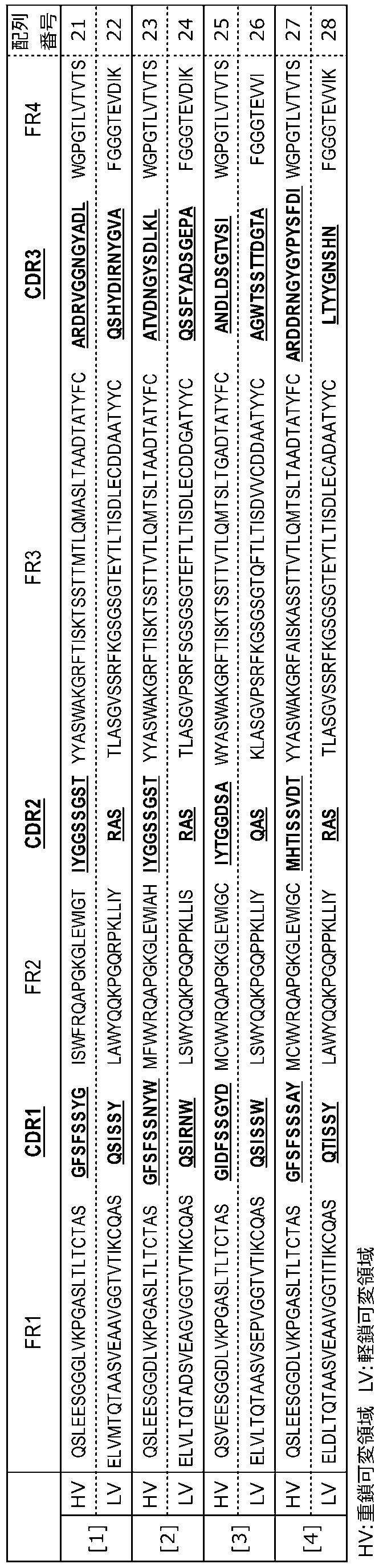
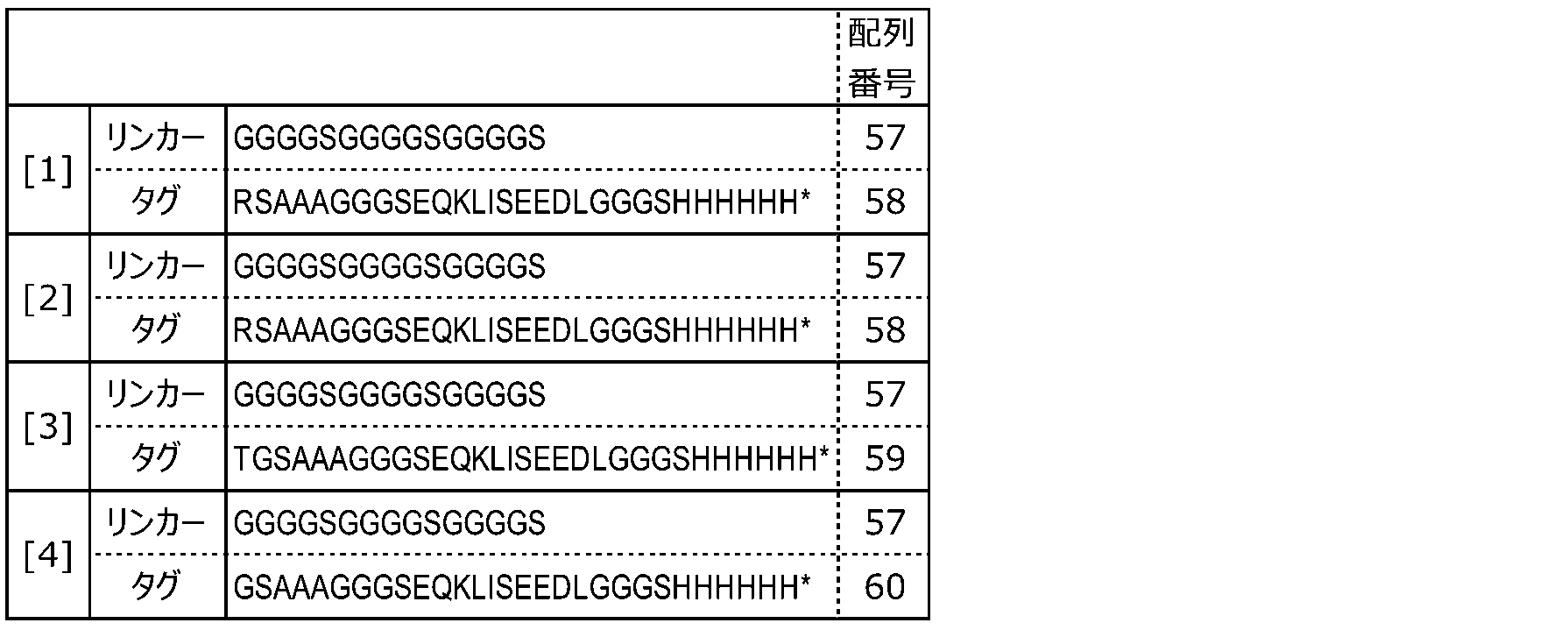
6. PBST(0.1% Tween)で3回wellを洗浄した。
7. HRP修飾された抗体His-Tag抗体をplateにアプライし、1時間25℃で振盪撹拌した。
8. PBST(0.1% Tween)で3回wellを洗浄した。
9. HRP酵素の基質(1-Step Ultra TMB-Substrate Solution)を添加した。
10. 室温でインキュベートし発色させた後、硫酸や塩酸を添加し反応を停止させた。
11. 450 nmおよび650nmの吸光度を各wellで測定し、450 nmの吸光度から650nmの吸光度を差し引いた値をELISAシグナルの吸光度の値とした。
12.空カプシドのサンプルにおける吸光度(IE)に対するフルカプシドのサンプルにおける吸光度(IF)の比率(IF/IE)、及びブランク(BSA)における吸光度(IB)に対する空カプシドのサンプルにおける吸光度(IE)の比率(IE/IB)を導出した。
7. HRP修飾された抗体His-Tag抗体をplateにアプライし、1時間25℃で振盪撹拌した。
8. PBST(0.1% Tween)で3回wellを洗浄した。
9. HRP酵素の基質(1-Step Ultra TMB-Substrate Solution)を添加した。
10. 室温でインキュベートし発色させた後、硫酸や塩酸を添加し反応を停止させた。
11. 450 nmおよび650nmの吸光度を各wellで測定し、450 nmの吸光度から650nmの吸光度を差し引いた値をELISAシグナルの吸光度の値とした。
12.空カプシドのサンプルにおける吸光度(IE)に対するフルカプシドのサンプルにおける吸光度(IF)の比率(IF/IE)、及びブランク(BSA)における吸光度(IB)に対する空カプシドのサンプルにおける吸光度(IE)の比率(IE/IB)を導出した。
結果
第1の抗AAV-scFv[1]、第2の抗AAV-scFv[2]、第3の抗AAV-scFv[3]、第4の抗AAV-scFv[4]について得られた、比率IF/IE及び比率IE/IBを下記表3に示す。
第1の抗AAV-scFv[1]、第2の抗AAV-scFv[2]、第3の抗AAV-scFv[3]、第4の抗AAV-scFv[4]について得られた、比率IF/IE及び比率IE/IBを下記表3に示す。
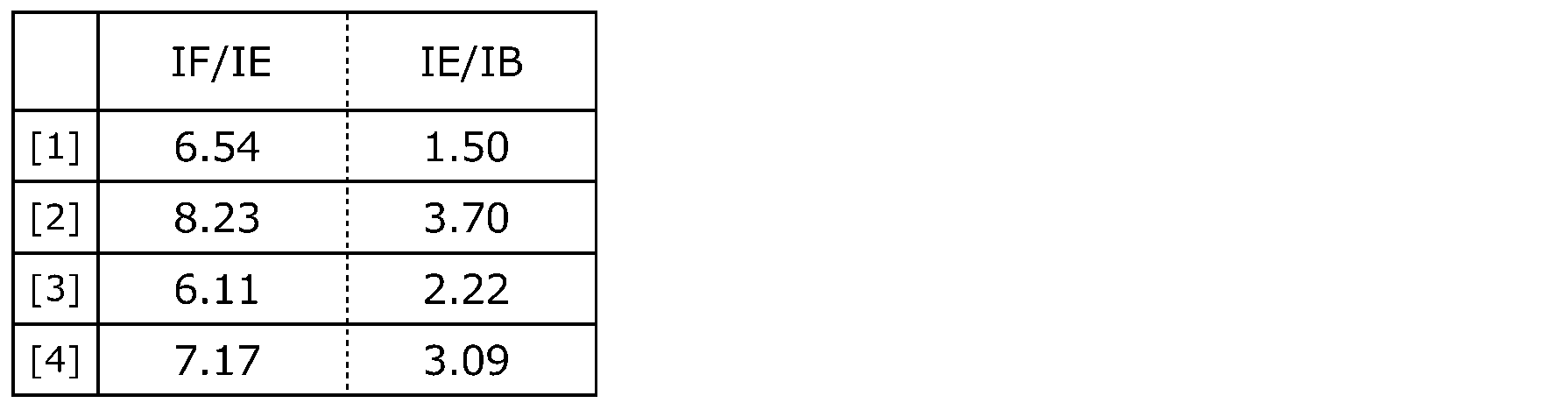
表3に示される通り、[1]~[4]の抗AAV-scFvはいずれも、AAVフルカプシドに対する特異的な結合性が認められた。
[試験例2]
第2の抗AAV-scFv[2]を用い、試験例1の実験手順の「1」でplateにアプライしたAAVの量を変化させたことを除いて、試験例1と同様の手順を行い、450 nmおよび650nmの吸光度を各wellで測定し、450 nmの吸光度から650nmの吸光度を差し引いた値をELISAシグナルの吸光度の値とした。吸光度を縦軸、アプライしたAAVの量を横軸としたグラフを図1に示す。
第2の抗AAV-scFv[2]を用い、試験例1の実験手順の「1」でplateにアプライしたAAVの量を変化させたことを除いて、試験例1と同様の手順を行い、450 nmおよび650nmの吸光度を各wellで測定し、450 nmの吸光度から650nmの吸光度を差し引いた値をELISAシグナルの吸光度の値とした。吸光度を縦軸、アプライしたAAVの量を横軸としたグラフを図1に示す。
図1に示される通り、ブランク(BSA)及び空カプシド(Empty)については実質的に吸光度に差が無く且つ濃度依存性が認められなかったことに対し、フルカプシド(Full)については濃度依存的に吸光度が増加していた。つまり、抗AAV-scFvによるAAVフルカプシドを選択的に定量できることが認められた。
Claims (18)
- AAVの空カプシドよりもAAVフルカプシドに対して高い結合性を有する抗体である、抗AAVフルカプシド分子。
- 重鎖相補性決定領域として、配列番号1で表されるアミノ酸配列からなるCDR1、配列番号2で表されるアミノ酸配列からなるCDR2、配列番号3で表されるアミノ酸配列と90%以上の配列同一性を有するアミノ酸配列からなるCDR3とを含む重鎖可変領域と、
軽鎖相補性決定領域として、配列番号4で表されるアミノ酸配列からなるCDR1、RASからなるCDR2、配列番号5で表されるアミノ酸配列と90%以上の配列同一性を有するアミノ酸配列からなるCDR3とを含む軽鎖可変領域とを含む、抗AAVフルカプシド分子。 - 重鎖相補性決定領域として、配列番号6で表されるアミノ酸配列からなるCDR1、配列番号7で表されるアミノ酸配列からなるCDR2、配列番号8で表されるアミノ酸配列と90%以上の配列同一性を有するアミノ酸配列からなるCDR3とを含む重鎖可変領域と、
軽鎖相補性決定領域として、配列番号9で表されるアミノ酸配列からなるCDR1、RASからなるCDR2、配列番号10で表されるアミノ酸配列と90%以上の配列同一性を有するアミノ酸配列からなるCDR3とを含む軽鎖可変領域とを含む、抗AAVフルカプシド分子。 - 重鎖相補性決定領域として、配列番号11で表されるアミノ酸配列からなるCDR1、配列番号12で表されるアミノ酸配列からなるCDR2、配列番号13で表されるアミノ酸配列と90%以上の配列同一性を有するアミノ酸配列からなるCDR3とを含む重鎖可変領域と、
軽鎖相補性決定領域として、配列番号14で表されるアミノ酸配列からなるCDR1、QASからなるCDR2、配列番号15で表されるアミノ酸配列と90%以上の配列同一性を有するアミノ酸配列からなるCDR3とを含む軽鎖可変領域とを含む、抗AAVフルカプシド分子。 - 重鎖相補性決定領域として、配列番号16で表されるアミノ酸配列からなるCDR1、配列番号17で表されるアミノ酸配列からなるCDR2、配列番号18で表されるアミノ酸配列と90%以上の配列同一性を有するアミノ酸配列からなるCDR3とを含む重鎖可変領域と、
軽鎖相補性決定領域として、配列番号19で表されるアミノ酸配列からなるCDR1、RASからなるCDR2、配列番号20で表されるアミノ酸配列からなるCDR3とを含む軽鎖可変領域とを含む、抗AAVフルカプシド分子。 - 前記重鎖可変領域が、
配列番号21の第1~24番目、配列番号23の第1~24番目、配列番号25の第1~24番目、又は配列番号27の第1~24番目のアミノ酸配列と70%以上の配列同一性を有するアミノ酸配列からなるFR1、
配列番号21の第33~49番目、配列番号23の第34~50番目、配列番号25の第34~50番目、又は配列番号27の第34~50番目のアミノ酸配列と70%以上の配列同一性を有するアミノ酸配列からなるFR2、
配列番号21の第59~95番目、配列番号23の第60~96番目、配列番号25の第59~95番目、又は配列番号27の第60~96番目のアミノ酸配列と70%以上の配列同一性を有するアミノ酸配列からなるFR3、及び
配列番号21の第109~119番目、配列番号23の第109~119番目、配列番号25の第107~117番目、又は配列番号27の第113~123番目のアミノ酸配列と70%以上の配列同一性を有するアミノ酸配列からなるFR4を含み、
前記軽鎖可変領域が、
配列番号22の第1~26番目、配列番号24の第1~26番目、配列番号26の第1~26番目、又は配列番号28の第1~26番目のアミノ酸配列と70%以上の配列同一性を有するアミノ酸配列からなるFR1、
配列番号22の第33~49番目、配列番号24の第33~49番目、配列番号26の第33~49番目、又は配列番号28の第33~49番目のアミノ酸配列と70%以上の配列同一性を有するアミノ酸配列からなるFR2、
配列番号22の第53~88番目、配列番号24の第53~88番目、配列番号26の第53~88番目、又は配列番号28の第53~88番目のアミノ酸配列と70%以上の配列同一性を有するアミノ酸配列からなるFR3、及び
配列番号22の第101~110番目、配列番号24の第101~110番目、配列番号26の第101~109番目、又は配列番号28の第98~107番目のアミノ酸配列と70%以上の配列同一性を有するアミノ酸配列からなるFR4を含む、請求項2~5のいずれかに記載の抗AAVフルカプシド分子。 - 前記重鎖可変領域が配列番号21で表されるアミノ酸配列を含み、前記軽鎖可変領域が配列番号22で表されるアミノ酸配列を含む、請求項2に記載の抗AAVフルカプシド分子。
- 前記重鎖可変領域が配列番号23で表されるアミノ酸配列を含み、前記軽鎖可変領域が配列番号24で表されるアミノ酸配列を含む、請求項3に記載の抗AAVフルカプシド分子。
- 前記重鎖可変領域が配列番号25で表されるアミノ酸配列を含み、前記軽鎖可変領域が配列番号26で表されるアミノ酸配列を含む、請求項4に記載の抗AAVフルカプシド分子。
- 前記重鎖可変領域が配列番号27で表されるアミノ酸配列を含み、前記軽鎖可変領域が配列番号28で表されるアミノ酸配列を含む、請求項5に記載の抗AAVフルカプシド分子。
- IgG抗体、Fab抗体、Fab'抗体、F(ab')2抗体、Fv抗体、scFv抗体、dsFv抗体、scFv-Fc抗体、dsFv-Fc抗体、Bis-scFv抗体、ミニボディ、ダイアボディ、トリアボディ、又はテトラボディである、請求項1~5のいずれかに記載の抗AAVフルカプシド分子。
- 請求項1~5のいずれかに記載の抗AAVフルカプシド分子と、前記抗AAVフルカプシド分子が固定化された固相材料とを含む、AAVのフルカプシド結合用アフィニティ固相。
- AAVの空カプシド及びAAVフルカプシドを含む試料を、請求項12に記載のAAVのフルカプシド結合用アフィニティ固相に接触させ、前記AAVフルカプシドを捕捉する工程1を含む、AAVフルカプシドの捕捉方法。
- 捕捉されたAAVフルカプシドを酵素結合免疫吸着測定により定量する工程2をさらに含む、請求項13に記載の方法。
- 請求項1~5のいずれかに記載の抗AAVフルカプシド分子をコードしている核酸。
- 請求項15に記載の核酸を含む発現カセット又は組換えベクター。
- 請求項16に記載の発現カセット又は組換えベクターを用いて宿主を形質転換して得られる形質転換体。
- 請求項17に記載の形質転換体を培養する工程を含む、抗AAVフルカプシド分子の製造方法。
Applications Claiming Priority (2)
| Application Number | Priority Date | Filing Date | Title |
|---|---|---|---|
| JP2023-189677 | 2023-11-06 | ||
| JP2023189677 | 2023-11-06 |
Publications (1)
| Publication Number | Publication Date |
|---|---|
| WO2025100417A1 true WO2025100417A1 (ja) | 2025-05-15 |
Family
ID=95695562
Family Applications (1)
| Application Number | Title | Priority Date | Filing Date |
|---|---|---|---|
| PCT/JP2024/039335 Pending WO2025100417A1 (ja) | 2023-11-06 | 2024-11-05 | Aavのフルカプシドに対するアフィニティポリペプチド |
Country Status (1)
| Country | Link |
|---|---|
| WO (1) | WO2025100417A1 (ja) |
Cited By (1)
| Publication number | Priority date | Publication date | Assignee | Title |
|---|---|---|---|---|
| WO2026048975A1 (ja) * | 2024-08-29 | 2026-03-05 | 株式会社ダイセル | Aavカプシドに結合する抗体 |
Citations (6)
| Publication number | Priority date | Publication date | Assignee | Title |
|---|---|---|---|---|
| JP2013536173A (ja) * | 2010-07-16 | 2013-09-19 | フエー・イー・ベー・フエー・ゼツト・ウエー | Gpcrの機能的立体構造状態を安定化するタンパク質結合ドメインおよびその使用 |
| JP2015513538A (ja) * | 2012-02-22 | 2015-05-14 | イムーンダイアグノスティック・アー・ゲー | 酸化的ストレスに苦しむ患者の上皮小体ホルモンを測定する手段および方法 |
| JP2016523821A (ja) * | 2013-04-24 | 2016-08-12 | フラウンホーファーゲゼルシャフト ツール フォルデルング デル アンゲヴァンテン フォルシユング エー.フアー. | アピコンプレクサ病原体に対する新規ワクチン |
| JP2021523702A (ja) * | 2018-05-04 | 2021-09-09 | オレゴン ヘルス アンド サイエンス ユニバーシティ | ヒト抗aav2カプシドポリクローナル抗体エピトープ |
| JP2022549679A (ja) * | 2019-09-27 | 2022-11-28 | バイオマリン ファーマシューティカル インコーポレイテッド | サイズ排除クロマトグラフィー及び多角度光散乱技術を使用した遺伝子療法ウイルス粒子のキャラクタリゼーション |
| JP2023529417A (ja) * | 2020-06-15 | 2023-07-10 | サレプタ セラピューティクス, インコーポレイテッド | アデノ関連ウイルス抗体及びそのフラグメント |
-
2024
- 2024-11-05 WO PCT/JP2024/039335 patent/WO2025100417A1/ja active Pending
Patent Citations (6)
| Publication number | Priority date | Publication date | Assignee | Title |
|---|---|---|---|---|
| JP2013536173A (ja) * | 2010-07-16 | 2013-09-19 | フエー・イー・ベー・フエー・ゼツト・ウエー | Gpcrの機能的立体構造状態を安定化するタンパク質結合ドメインおよびその使用 |
| JP2015513538A (ja) * | 2012-02-22 | 2015-05-14 | イムーンダイアグノスティック・アー・ゲー | 酸化的ストレスに苦しむ患者の上皮小体ホルモンを測定する手段および方法 |
| JP2016523821A (ja) * | 2013-04-24 | 2016-08-12 | フラウンホーファーゲゼルシャフト ツール フォルデルング デル アンゲヴァンテン フォルシユング エー.フアー. | アピコンプレクサ病原体に対する新規ワクチン |
| JP2021523702A (ja) * | 2018-05-04 | 2021-09-09 | オレゴン ヘルス アンド サイエンス ユニバーシティ | ヒト抗aav2カプシドポリクローナル抗体エピトープ |
| JP2022549679A (ja) * | 2019-09-27 | 2022-11-28 | バイオマリン ファーマシューティカル インコーポレイテッド | サイズ排除クロマトグラフィー及び多角度光散乱技術を使用した遺伝子療法ウイルス粒子のキャラクタリゼーション |
| JP2023529417A (ja) * | 2020-06-15 | 2023-07-10 | サレプタ セラピューティクス, インコーポレイテッド | アデノ関連ウイルス抗体及びそのフラグメント |
Cited By (1)
| Publication number | Priority date | Publication date | Assignee | Title |
|---|---|---|---|---|
| WO2026048975A1 (ja) * | 2024-08-29 | 2026-03-05 | 株式会社ダイセル | Aavカプシドに結合する抗体 |
Similar Documents
| Publication | Publication Date | Title |
|---|---|---|
| CN103890174B (zh) | IgG结合性肽及利用其检测和纯化IgG的方法 | |
| US12492249B2 (en) | Antibodies and use thereof | |
| JP2010515463A (ja) | 配座的に束縛されたポリペプチド配列のコンビナトリアルライブラリー | |
| WO2025100417A1 (ja) | Aavのフルカプシドに対するアフィニティポリペプチド | |
| CN113993889A (zh) | 与多个Fc同种型和亚类偶联的抗原结合片段 | |
| US20030017504A1 (en) | Antibodies specific for poly(ethylene glycol) | |
| CN113583112A (zh) | Aav特异性抗体及其应用 | |
| CN109863176B (zh) | 与硫氧还蛋白1特异性结合的单克隆抗体及其用途 | |
| WO2018206738A1 (en) | Light-switchable polypeptide and uses thereof | |
| KR20210056398A (ko) | 항 인간 심근 트로포닌 i의 항체 및 그 사용 | |
| CN110885375B (zh) | 特异性针对mmp-9蛋白锌离子结合结构域的单域抗体及产品与应用 | |
| CN116940684A (zh) | 抗SARS-CoV-2抗体 | |
| JP2019030231A (ja) | 抗体及びその製造方法、並びに抗体の熱安定性を向上させる方法 | |
| CN104812773A (zh) | 表位标记用抗体、杂交瘤细胞株以及其用途 | |
| WO2026048975A1 (ja) | Aavカプシドに結合する抗体 | |
| CN106928360B (zh) | 一种CD105纳米抗体Nb68 | |
| KR100914377B1 (ko) | 스트랩토코쿠스 표면 항원 Ⅰ/Ⅱ와 특이적으로 결합하는diabody 및 이의 이용 방법 | |
| CN106928355A (zh) | 一种CD105纳米抗体Nb184 | |
| US20040214242A1 (en) | Method for the isolation of large variances of specific molecules for a target molecule from phagemid gene libraries, and a test kit | |
| CN121405810B (zh) | 一种靶向人和食蟹猴pd-l1交叉结合的单域抗体及其应用 | |
| JP6245688B2 (ja) | IgY特異的結合ペプチド及びそれによるIgYの精製法 | |
| CN113173992B (zh) | 一种白细胞抗原结合多肽 | |
| JP5733693B2 (ja) | 組換え型ポリペプチドの製造方法 | |
| JP2026063348A (ja) | 変異抗体、変異抗体の製造方法 | |
| KR20110128833A (ko) | 아테롬성 동맥 경화증 관동맥 플라크에 대한 시약 및 그것의 사용 |
Legal Events
| Date | Code | Title | Description |
|---|---|---|---|
| 121 | Ep: the epo has been informed by wipo that ep was designated in this application |
Ref document number: 24888712 Country of ref document: EP Kind code of ref document: A1 |