WO2025037595A1 - 吸収促進造粒物およびその製造方法、医薬組成物、並びに組み合わせ剤 - Google Patents
吸収促進造粒物およびその製造方法、医薬組成物、並びに組み合わせ剤 Download PDFInfo
- Publication number
- WO2025037595A1 WO2025037595A1 PCT/JP2024/028626 JP2024028626W WO2025037595A1 WO 2025037595 A1 WO2025037595 A1 WO 2025037595A1 JP 2024028626 W JP2024028626 W JP 2024028626W WO 2025037595 A1 WO2025037595 A1 WO 2025037595A1
- Authority
- WO
- WIPO (PCT)
- Prior art keywords
- absorption
- granule
- mass
- medicinal ingredient
- core particle
- Prior art date
- Legal status (The legal status is an assumption and is not a legal conclusion. Google has not performed a legal analysis and makes no representation as to the accuracy of the status listed.)
- Ceased
Links
Images
Classifications
-
- A—HUMAN NECESSITIES
- A61—MEDICAL OR VETERINARY SCIENCE; HYGIENE
- A61K—PREPARATIONS FOR MEDICAL, DENTAL OR TOILETRY PURPOSES
- A61K38/00—Medicinal preparations containing peptides
- A61K38/16—Peptides having more than 20 amino acids; Gastrins; Somatostatins; Melanotropins; Derivatives thereof
- A61K38/17—Peptides having more than 20 amino acids; Gastrins; Somatostatins; Melanotropins; Derivatives thereof from animals; from humans
- A61K38/22—Hormones
- A61K38/28—Insulins
-
- A—HUMAN NECESSITIES
- A61—MEDICAL OR VETERINARY SCIENCE; HYGIENE
- A61K—PREPARATIONS FOR MEDICAL, DENTAL OR TOILETRY PURPOSES
- A61K47/00—Medicinal preparations characterised by the non-active ingredients used, e.g. carriers or inert additives; Targeting or modifying agents chemically bound to the active ingredient
- A61K47/02—Inorganic compounds
-
- A—HUMAN NECESSITIES
- A61—MEDICAL OR VETERINARY SCIENCE; HYGIENE
- A61K—PREPARATIONS FOR MEDICAL, DENTAL OR TOILETRY PURPOSES
- A61K47/00—Medicinal preparations characterised by the non-active ingredients used, e.g. carriers or inert additives; Targeting or modifying agents chemically bound to the active ingredient
- A61K47/06—Organic compounds, e.g. natural or synthetic hydrocarbons, polyolefins, mineral oil, petrolatum or ozokerite
- A61K47/08—Organic compounds, e.g. natural or synthetic hydrocarbons, polyolefins, mineral oil, petrolatum or ozokerite containing oxygen, e.g. ethers, acetals, ketones, quinones, aldehydes, peroxides
- A61K47/10—Alcohols; Phenols; Salts thereof, e.g. glycerol; Polyethylene glycols [PEG]; Poloxamers; PEG/POE alkyl ethers
-
- A—HUMAN NECESSITIES
- A61—MEDICAL OR VETERINARY SCIENCE; HYGIENE
- A61K—PREPARATIONS FOR MEDICAL, DENTAL OR TOILETRY PURPOSES
- A61K47/00—Medicinal preparations characterised by the non-active ingredients used, e.g. carriers or inert additives; Targeting or modifying agents chemically bound to the active ingredient
- A61K47/06—Organic compounds, e.g. natural or synthetic hydrocarbons, polyolefins, mineral oil, petrolatum or ozokerite
- A61K47/08—Organic compounds, e.g. natural or synthetic hydrocarbons, polyolefins, mineral oil, petrolatum or ozokerite containing oxygen, e.g. ethers, acetals, ketones, quinones, aldehydes, peroxides
- A61K47/12—Carboxylic acids; Salts or anhydrides thereof
-
- A—HUMAN NECESSITIES
- A61—MEDICAL OR VETERINARY SCIENCE; HYGIENE
- A61K—PREPARATIONS FOR MEDICAL, DENTAL OR TOILETRY PURPOSES
- A61K47/00—Medicinal preparations characterised by the non-active ingredients used, e.g. carriers or inert additives; Targeting or modifying agents chemically bound to the active ingredient
- A61K47/06—Organic compounds, e.g. natural or synthetic hydrocarbons, polyolefins, mineral oil, petrolatum or ozokerite
- A61K47/16—Organic compounds, e.g. natural or synthetic hydrocarbons, polyolefins, mineral oil, petrolatum or ozokerite containing nitrogen, e.g. nitro-, nitroso-, azo-compounds, nitriles, cyanates
- A61K47/18—Amines; Amides; Ureas; Quaternary ammonium compounds; Amino acids; Oligopeptides having up to five amino acids
-
- A—HUMAN NECESSITIES
- A61—MEDICAL OR VETERINARY SCIENCE; HYGIENE
- A61K—PREPARATIONS FOR MEDICAL, DENTAL OR TOILETRY PURPOSES
- A61K47/00—Medicinal preparations characterised by the non-active ingredients used, e.g. carriers or inert additives; Targeting or modifying agents chemically bound to the active ingredient
- A61K47/06—Organic compounds, e.g. natural or synthetic hydrocarbons, polyolefins, mineral oil, petrolatum or ozokerite
- A61K47/20—Organic compounds, e.g. natural or synthetic hydrocarbons, polyolefins, mineral oil, petrolatum or ozokerite containing sulfur, e.g. dimethyl sulfoxide [DMSO], docusate, sodium lauryl sulfate or aminosulfonic acids
-
- A—HUMAN NECESSITIES
- A61—MEDICAL OR VETERINARY SCIENCE; HYGIENE
- A61K—PREPARATIONS FOR MEDICAL, DENTAL OR TOILETRY PURPOSES
- A61K47/00—Medicinal preparations characterised by the non-active ingredients used, e.g. carriers or inert additives; Targeting or modifying agents chemically bound to the active ingredient
- A61K47/06—Organic compounds, e.g. natural or synthetic hydrocarbons, polyolefins, mineral oil, petrolatum or ozokerite
- A61K47/22—Heterocyclic compounds, e.g. ascorbic acid, tocopherol or pyrrolidones
-
- A—HUMAN NECESSITIES
- A61—MEDICAL OR VETERINARY SCIENCE; HYGIENE
- A61K—PREPARATIONS FOR MEDICAL, DENTAL OR TOILETRY PURPOSES
- A61K47/00—Medicinal preparations characterised by the non-active ingredients used, e.g. carriers or inert additives; Targeting or modifying agents chemically bound to the active ingredient
- A61K47/06—Organic compounds, e.g. natural or synthetic hydrocarbons, polyolefins, mineral oil, petrolatum or ozokerite
- A61K47/26—Carbohydrates, e.g. sugar alcohols, amino sugars, nucleic acids, mono-, di- or oligo-saccharides; Derivatives thereof, e.g. polysorbates, sorbitan fatty acid esters or glycyrrhizin
-
- A—HUMAN NECESSITIES
- A61—MEDICAL OR VETERINARY SCIENCE; HYGIENE
- A61K—PREPARATIONS FOR MEDICAL, DENTAL OR TOILETRY PURPOSES
- A61K47/00—Medicinal preparations characterised by the non-active ingredients used, e.g. carriers or inert additives; Targeting or modifying agents chemically bound to the active ingredient
- A61K47/06—Organic compounds, e.g. natural or synthetic hydrocarbons, polyolefins, mineral oil, petrolatum or ozokerite
- A61K47/28—Steroids, e.g. cholesterol, bile acids or glycyrrhetinic acid
-
- A—HUMAN NECESSITIES
- A61—MEDICAL OR VETERINARY SCIENCE; HYGIENE
- A61K—PREPARATIONS FOR MEDICAL, DENTAL OR TOILETRY PURPOSES
- A61K47/00—Medicinal preparations characterised by the non-active ingredients used, e.g. carriers or inert additives; Targeting or modifying agents chemically bound to the active ingredient
- A61K47/30—Macromolecular organic or inorganic compounds, e.g. inorganic polyphosphates
- A61K47/32—Macromolecular compounds obtained by reactions only involving carbon-to-carbon unsaturated bonds, e.g. carbomers, poly(meth)acrylates, or polyvinyl pyrrolidone
-
- A—HUMAN NECESSITIES
- A61—MEDICAL OR VETERINARY SCIENCE; HYGIENE
- A61K—PREPARATIONS FOR MEDICAL, DENTAL OR TOILETRY PURPOSES
- A61K47/00—Medicinal preparations characterised by the non-active ingredients used, e.g. carriers or inert additives; Targeting or modifying agents chemically bound to the active ingredient
- A61K47/30—Macromolecular organic or inorganic compounds, e.g. inorganic polyphosphates
- A61K47/36—Polysaccharides; Derivatives thereof, e.g. gums, starch, alginate, dextrin, hyaluronic acid, chitosan, inulin, agar or pectin
- A61K47/38—Cellulose; Derivatives thereof
-
- A—HUMAN NECESSITIES
- A61—MEDICAL OR VETERINARY SCIENCE; HYGIENE
- A61K—PREPARATIONS FOR MEDICAL, DENTAL OR TOILETRY PURPOSES
- A61K47/00—Medicinal preparations characterised by the non-active ingredients used, e.g. carriers or inert additives; Targeting or modifying agents chemically bound to the active ingredient
- A61K47/30—Macromolecular organic or inorganic compounds, e.g. inorganic polyphosphates
- A61K47/36—Polysaccharides; Derivatives thereof, e.g. gums, starch, alginate, dextrin, hyaluronic acid, chitosan, inulin, agar or pectin
- A61K47/40—Cyclodextrins; Derivatives thereof
-
- A—HUMAN NECESSITIES
- A61—MEDICAL OR VETERINARY SCIENCE; HYGIENE
- A61K—PREPARATIONS FOR MEDICAL, DENTAL OR TOILETRY PURPOSES
- A61K47/00—Medicinal preparations characterised by the non-active ingredients used, e.g. carriers or inert additives; Targeting or modifying agents chemically bound to the active ingredient
- A61K47/30—Macromolecular organic or inorganic compounds, e.g. inorganic polyphosphates
- A61K47/42—Proteins; Polypeptides; Degradation products thereof; Derivatives thereof, e.g. albumin, gelatin or zein
-
- A—HUMAN NECESSITIES
- A61—MEDICAL OR VETERINARY SCIENCE; HYGIENE
- A61K—PREPARATIONS FOR MEDICAL, DENTAL OR TOILETRY PURPOSES
- A61K9/00—Medicinal preparations characterised by special physical form
- A61K9/14—Particulate form, e.g. powders, Processes for size reducing of pure drugs or the resulting products, Pure drug nanoparticles
- A61K9/16—Agglomerates; Granulates; Microbeadlets ; Microspheres; Pellets; Solid products obtained by spray drying, spray freeze drying, spray congealing,(multiple) emulsion solvent evaporation or extraction
-
- A—HUMAN NECESSITIES
- A61—MEDICAL OR VETERINARY SCIENCE; HYGIENE
- A61K—PREPARATIONS FOR MEDICAL, DENTAL OR TOILETRY PURPOSES
- A61K9/00—Medicinal preparations characterised by special physical form
- A61K9/48—Preparations in capsules, e.g. of gelatin, of chocolate
- A61K9/50—Microcapsules having a gas, liquid or semi-solid filling; Solid microparticles or pellets surrounded by a distinct coating layer, e.g. coated microspheres, coated drug crystals
-
- A—HUMAN NECESSITIES
- A61—MEDICAL OR VETERINARY SCIENCE; HYGIENE
- A61P—SPECIFIC THERAPEUTIC ACTIVITY OF CHEMICAL COMPOUNDS OR MEDICINAL PREPARATIONS
- A61P3/00—Drugs for disorders of the metabolism
- A61P3/08—Drugs for disorders of the metabolism for glucose homeostasis
- A61P3/10—Drugs for disorders of the metabolism for glucose homeostasis for hyperglycaemia, e.g. antidiabetics
Definitions
- the present invention relates to an absorption-enhancing granule and its manufacturing method, a pharmaceutical composition, and a combination drug, etc.
- oral administration is the most commonly used route, as it is safe and easy to administer pharmaceuticals.
- the active ingredients of pharmaceuticals are usually absorbed in the small intestine via the oral cavity, esophagus, and stomach, so there has been a tendency for applicable active ingredients to be limited, for example, due to limitations in membrane permeability in the small intestine.
- Patent Document 1 describes an invention relating to a solid composition containing a GLP-1 peptide and an enhancer for use as a medicine for oral administration.
- the enhancer is a compound that increases the bioavailability of the GLP-1 peptide
- specific examples of absorption enhancers include sodium caprate and SNAC.
- a tablet composition was prepared by mixing the GLP-1 peptide, the enhancer (absorption enhancer), and an additive, and roller compacting the mixture.
- the medicinal ingredient and the absorption enhancer are mixed together with additives (such as excipients).
- additives such as excipients
- the medicinal ingredient and the absorption enhancer may interact with each other within the formulation, reducing the stability of the formulation.
- the need to incorporate the two ingredients together may limit the formulation technology that can be applied.
- the present invention provides a new method for applying an absorption enhancer.
- the present invention includes, for example, the following aspects:
- [1-1] An absorption-enhancing granule comprising a core particle A containing an absorption enhancer and a coated particle layer A coating the core particle A.
- [1-4] The absorption-enhancing granule according to any one of the above [1-1] to [1-3], wherein the core particle A further contains a hydrophobic thickener.
- the thickener comprises at least one selected from the group consisting of carrageenan, gelatin, glycerin monostearate, agar, polyethylene glycol, methylcellulose, hydroxypropylmethylcellulose, hydroxypropylcellulose, aminoalkylmethacrylate copolymer, and ammonioalkylmethacrylate copolymer.
- the coated particle layer A contains at least one selected from the group consisting of bentonite, ethyl cellulose, corn starch, rice starch, wheat starch, potato starch, calcium stearate, magnesium carbonate, low-substituted sodium carboxymethyl starch, sodium starch glycolate, anhydrous silicic acid, magnesium silicate, diatomaceous earth, zeolite, silicon dioxide, powdered agar, croscarmellose sodium, crospovidone, and talc.
- [1-7] The absorption-enhancing granule according to any one of the above [1-1] to [1-6], wherein the core particle A further contains an enteric polymer.
- a pharmaceutical composition comprising: [1-9] The pharmaceutical composition according to the above-mentioned [1-8], wherein the first granule is a medicinal ingredient-containing granule comprising a core particle B containing a medicinal ingredient and a coated particle layer B coating the core particle B.
- [1-10] The pharmaceutical composition according to the above [1-9], wherein the medicinal ingredient-containing granule does not contain an absorption enhancer.
- a medicinal ingredient-containing granulated product comprising a core particle B containing a medicinal ingredient and a coated particle layer B coating the core particle B; 13.
- a pharmaceutical composition comprising: [1-13] The pharmaceutical composition according to the above [1-12], wherein the medicinal ingredient-containing granule does not contain an absorption enhancer.
- the absorption enhancer comprises at least one selected from the group consisting of sodium caprate, sodium caprylate, SNAC, cell membrane permeable peptide, C-CPE, Angubindin-1, polyoxyethylene alkyl ethers, sodium lauryl sulfate, saponin, chitosan, cyclodextrin, alkyl saccharides, sucrose fatty acid esters, N-acyl amino acids, N-acyltaurine, glycocholic acid, taurocholic acid, deoxycholic acid, ethylenediaminetetraacetic acid (EDTA), sodium salicylate, sodium laurate, tryptophan, arginine, and fatty acids having 8 to 30 carbon atoms.
- the absorption enhancer comprises at least one selected from the group consisting of sodium caprate, sodium caprylate, SNAC, cell membrane permeable peptide, C-CPE, Angubindin-1, polyoxyethylene alkyl ethers, sodium lauryl sulfate, sapon
- the medicinal ingredient-containing granules do not contain an absorption enhancer.
- a medicinal ingredient-containing granulated product comprising a core particle B containing a medicinal ingredient and a coated particle layer B coating the core particle B;
- a combination comprising: [1-21] The combination according to the above [1-20], wherein the medicinal ingredient-containing granule does not contain an absorption enhancer.
- the absorption enhancer comprises at least one selected from the group consisting of sodium caprate, sodium caprylate, SNAC, a cell membrane-permeable peptide, C-CPE, Angubindin-1, polyoxyethylene alkyl ethers, sodium lauryl sulfate, saponin, chitosan, cyclodextrin, alkyl saccharides, sucrose fatty acid esters, N-acyl amino acids, N-acyltaurine, glycocholic acid, taurocholic acid, deoxycholic acid, ethylenediaminetetraacetic acid (EDTA), sodium salicylate, sodium laurate, tryptophan, arginine, and fatty acids having 8 to 30 carbon atoms.
- the absorption enhancer comprises at least one selected from the group consisting of sodium caprate, sodium caprylate, SNAC, a cell membrane-permeable peptide, C-CPE, Angubindin-1, polyoxyethylene alkyl ethers, sodium lauryl s
- [1-23] The combination according to any one of the above [1-20] to [1-22], wherein the medicinal ingredient-containing granule is administered simultaneously with the second granule.
- [1-24] A method for producing an absorption-enhancing granule according to any one of [1-1] to [1-7] above, comprising a granulation step of introducing droplets of a granulation solution containing an absorption enhancer into a fluidized bed in which coated particles are flowing, and adhering the coated particles to the surfaces of the droplets to form granules.
- a second granule containing an absorption enhancer comprising a core particle B containing a medicinal ingredient and a coated particle layer B coating the core particle B; 13.
- a pharmaceutical composition comprising: [2-2] The pharmaceutical composition according to the above [2-1], wherein the medicinal ingredient-containing granule does not contain an absorption enhancer.
- the absorption enhancer comprises at least one selected from the group consisting of sodium caprate, sodium caprylate, SNAC, a cell membrane-permeable peptide, C-CPE, Angubindin-1, polyoxyethylene alkyl ethers, sodium lauryl sulfate, saponin, chitosan, cyclodextrin, alkyl saccharides, sucrose fatty acid esters, N-acyl amino acids, N-acyltaurine, glycocholic acid, taurocholic acid, deoxycholic acid, ethylenediaminetetraacetic acid (EDTA), sodium salicylate, sodium laurate, tryptophan, arginine, and fatty acids having 8 to 30 carbon atoms.
- the absorption enhancer comprises at least one selected from the group consisting of sodium caprate, sodium caprylate, SNAC, a cell membrane-permeable peptide, C-CPE, Angubindin-1, polyoxyethylene alkyl ethers, sodium lauryl s
- An absorption-enhancing granule comprising a core particle A containing an absorption enhancer and a coating particle layer A coating the core particle A.
- the absorption-enhancing granule according to the above [2-9] which does not contain any medicinal ingredient.
- [2-12] The absorption-enhancing granule according to any one of the above [2-9] to [2-11], wherein the core particle A further contains a hydrophobic thickener.
- the thickener comprises at least one selected from the group consisting of carrageenan, gelatin, glycerin monostearate, agar, polyethylene glycol, methylcellulose, hydroxypropylmethylcellulose, hydroxypropylcellulose, aminoalkylmethacrylate copolymer, and ammonioalkylmethacrylate copolymer.
- the coated particle layer A contains at least one selected from the group consisting of bentonite, ethyl cellulose, corn starch, rice starch, wheat starch, potato starch, calcium stearate, magnesium carbonate, low-substituted sodium carboxymethyl starch, sodium starch glycolate, anhydrous silicic acid, magnesium silicate, diatomaceous earth, zeolite, silicon dioxide, powdered agar, croscarmellose sodium, crospovidone, and talc.
- [2-15] The absorption-enhancing granule according to any one of the above [2-9] to [2-14], wherein the core particle A further contains an enteric polymer.
- a pharmaceutical composition comprising: [2-17] The pharmaceutical composition according to the above-mentioned [2-16], wherein the first granule is a medicinal ingredient-containing granule comprising a core particle B containing an active ingredient and a coated particle layer B coating the core particle B.
- [2-18] The pharmaceutical composition according to the above [2-17], wherein the medicinal ingredient-containing granule does not contain an absorption enhancer.
- the present invention provides granulated materials and the like that can provide a new method of applying absorption enhancers.
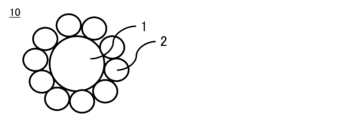
- FIG. 1 is a schematic diagram of an absorption-enhancing granule according to one embodiment of the present invention.
- the absorption-enhancing granules of one embodiment of the present invention comprise a core particle A containing an absorption enhancer and a coating particle layer A coating the core particle A.
- the absorption-promoting granule of one embodiment of the present invention preferably does not contain a medicinal ingredient.
- This can provide at least one of the following effects: for example, interactions between the medicinal ingredient and the absorption enhancer in the formulation can be avoided; a granule can be prepared containing an additive suitable for the absorption enhancer contained therein; various formulation techniques can be applied to the absorption enhancer, such as providing sustained release properties.
- various formulation techniques can be applied to the absorption enhancer, such as providing sustained release properties.
- the term "granule” refers to a granular or particulate form in which one or more powdered components have been aggregated, bound, or compounded to improve handleability.
- FIG. 1 is a schematic diagram of an absorption-enhancing granule according to one embodiment of the present invention.
- the absorption-promoting granulation 10 has a core particle A1 containing an absorption enhancer, and a coated particle layer A2 that coats the core particle A1.
- the presence of the coated particle layer A2 formed by the coating particles adhering to the surface of the core particle A1 allows the core particle A1 to be granulated into the shape of the absorption-promoting granulation 10.
- the absorption-enhancing granules 10 are formulated into a pharmaceutical composition (e.g., capsules) together with a granule containing a separately prepared medicinal ingredient.
- a pharmaceutical composition e.g., capsules
- the absorption-enhancing granules 10 are formulated to optimize the stability and pharmacokinetics of the absorption enhancer, and the absorption-enhancing effect on the medicinal ingredient used, and therefore it may be possible to enhance the absorption of the medicinal ingredient in the pharmaceutical composition in the small intestine and reduce side effects.
- the average particle size of the absorption-promoting granules is preferably 10 to 1000 ⁇ m, and more preferably 100 to 500 ⁇ m. It is preferable that the average particle size of the absorption-promoting granules is 10 ⁇ m or more, since sufficient hardness is obtained and the shape can be maintained during the formulation process such as tableting. On the other hand, it is preferable that the average particle size of the absorption-promoting granules is 1000 ⁇ m or less, since the resulting tablets, etc. can be of a size that is easy to take.
- particle size means the maximum distance between two points on the contour line of an object.
- average particle size means the average particle size of any 50 objects contained in one field of view of a scanning electron microscope (SEM).
- the core particle A contains an absorption enhancer.
- the core particle A may further contain a thickener, an enteric polymer, an antacid, a pH adjuster, a solvent, an additive, etc. It is preferable that the core particle A does not contain a medicinal ingredient.
- the absorption enhancer is not particularly limited as long as it is a component that has the function of promoting absorption of a medicinal ingredient, and for example, has the function of acting on cell membranes, intercellular spaces, etc. in the small intestine, etc. to promote absorption of the medicinal ingredient.
- the absorption enhancer is not particularly limited, but preferably includes at least one selected from the group consisting of sodium caprate, sodium caprylate, SNAC, cell membrane permeable peptide, C-CPE, Angubindin-1, polyoxyethylene alkyl ethers, sodium lauryl sulfate, saponin, chitosan, cyclodextrin, alkyl saccharides, sucrose fatty acid esters, N-acyl amino acids, N-acyltaurine, glycocholic acid, taurocholic acid, deoxycholic acid, ethylenediaminetetraacetic acid (EDTA), sodium salicylate, sodium laurate, tryptophan, arginine, and fatty acids having 8 to 30 carbon atoms, more preferably includes at least one selected from the group consisting of sodium caprate, sodium caprylate, SNAC, cell membrane permeable peptide, C-CPE, Angubindin-1, and tryptophan, and even more preferably includes at least one selected from the
- SNAC sodium sarcaprozate
- C-CPE includes the C-terminal fragment of Clostridium perfringens enterotoxin and its mutants, including C-CPE184-319, C-CPE194-319, and C-CPE Y306W/S313H.
- Angubindin-1 is the amino acid region from positions 421 to 644 of component Ib, one of two proteins (component Ia and component Ib) that make up iota toxin produced by Clostridium perfringens.
- polyoxyethylene alkyl ethers examples include polyoxyethylene capryl ether, polyoxyethylene lauryl ether, polyoxyethylene myristyl ether, polyoxyethylene stearyl ether, etc.
- Alkyl saccharides include ⁇ -octyl glucoside, ⁇ -decyl glucoside, ⁇ -decyl galactoside, ⁇ -octyl mannoside, ⁇ -dodecyl maltoside, ⁇ -dodecyl isomaltoside, ⁇ -dodecyl maltotrioside, ⁇ -stearyl glucoside, ⁇ -stearyl galactoside, ⁇ -stearyl mannoside, ⁇ -stearyl maltoside, ⁇ -stearyl isomaltoside, decyl oligoglucoside, dodecyl oligoglucoside, etc.
- N-acyl amino acids include amino acids N-acylated with fatty acids having 8 to 30 carbon atoms, as described below.
- the amino acids are not particularly limited, but are preferably glutamic acid, aspartic acid, glycine, and alanine.
- the fatty acids are not particularly limited, but are preferably caprylic acid, capric acid, lauric acid, myristic acid, palmitic acid, and stearic acid, and more preferably lauric acid.
- sucrose fatty acid esters include those in which the hydroxyl groups of sucrose are esterified with fatty acids having 8 to 30 carbon atoms, as described below.
- the fatty acid is not particularly limited, but is preferably caprylic acid, capric acid, lauric acid, myristic acid, palmitic acid, or stearic acid, and more preferably lauric acid.
- the sucrose fatty acid may be a monoester, diester, triester, tetraester, or a mixture of these.
- the HLB (hydrophilic-lipophilic balance) of the sucrose fatty acid ester is preferably 1 to 18, and more preferably 3 to 15.
- Fatty acids with 8 to 30 carbon atoms include saturated fatty acids with 8 to 30 carbon atoms and unsaturated fatty acids with 8 to 30 carbon atoms.
- Saturated fatty acids with 8 to 30 carbon atoms include, but are not limited to, caprylic acid, capric acid, lauric acid, myristic acid, palmitic acid, stearic acid, arachidic acid, and behenic acid.
- Unsaturated fatty acids with 8 to 30 carbon atoms include, but are not limited to, oleic acid, linoleic acid, ⁇ -linolenic acid, ⁇ -linolenic acid, arachidonic acid, docosahexaenoic acid, and eicosapentaenoic acid.
- absorption enhancers may be used alone or in combination of two or more.
- the content of the absorption enhancer is preferably 0.01 to 80% by mass, 0.01 to 70% by mass, 0.01 to 60% by mass, 0.01 to 50% by mass, 0.01 to 30% by mass, 0.01 to 20% by mass, 0.01 to 15% by mass, 0.01 to 10% by mass, 0.1 to 70% by mass, 0.1 to 60% by mass, 0.1 to 50% by mass, 0.1 to 30% by mass, 0.1 to 20% by mass, 0.1 to 15% by mass, 0.1 to 10% by mass, 0.3 to 70% by mass, 0.3 to 60% by mass, 0.3 to 50% by mass, 0.3 to 30% by mass, 0.3 to 20% by mass, 0.3 to 15% by mass, 0.3 to 10% by mass, 1 to 70% by mass.
- the content of the absorption enhancer can be set over a wide range due to the shape-retaining function of the coated particle layer A, and for example, the shape of the absorption-promoting granules can be favorably maintained even if a large amount of absorption enhancer is contained.
- the absorption-enhancing granules of the present invention can increase the content (proportion) of the absorption enhancer, and as the content (proportion) of the absorption enhancer increases, drug absorption can be promoted (see, for example, Buckley et al., Sci. Transl. Med. 10, eaar7047 (2016) 14).
- the core particle A further contains a thickener.
- the thickener can have, for example, a function of stabilizing the shape of the core particle A, a function of adjusting the physical properties (hardness, etc.) of the absorption-enhancing granule, a function of promoting membrane permeation of the medicinal ingredient in the small intestine, etc. in the living body, and the like.
- Thickeners include hydrophobic thickeners and hydrophilic thickeners.
- a “hydrophobic thickener” means that the solubility of 1 g of thickener added to 25 mL of water at 25°C is less than 100 mg/mL.
- a “hydrophilic thickener” means that the solubility of 1 g of thickener added to 25 mL of water at 25°C is 100 mg/mL or more.
- Hydrophobic thickeners include, but are not limited to, glyceryl monostearate, aminoalkyl methacrylate copolymer, ammonioalkyl methacrylate copolymer, etc.
- Hydrophilic thickeners include, but are not limited to, carrageenan, gelatin, agar, polyethylene glycol, methylcellulose, hydroxypropylmethylcellulose, hydroxypropylcellulose, etc.
- the thickener preferably includes a hydrophobic thickener, and more preferably includes glyceryl monostearate.
- the hydrophobic thickener can improve bioavailability by promoting membrane permeation of the medicinal ingredient in the small intestine, etc., in the living body.
- the thickener preferably contains carrageenan.
- Carrageenan can swell at least partially upon contact with water in the oral cavity, esophagus, stomach, and small intestine. As a result, it can improve the absorption-promoting effect of the medicinal ingredient by, for example, inhibiting the decomposition of the absorption enhancer by digestive enzymes, gastric acid, etc., and exhibiting a sustained release effect of the absorption enhancer in the small intestine.
- the thickener preferably includes at least one selected from the group consisting of carrageenan, gelatin, glycerin monostearate, agar, polyethylene glycol, methylcellulose, hydroxypropylmethylcellulose, hydroxypropylcellulose, aminoalkylmethacrylate copolymer, and ammonioalkylmethacrylate copolymer, more preferably includes at least one selected from the group consisting of carrageenan, gelatin, glycerin monostearate, agar, and polyethylene glycol, and even more preferably includes at least one selected from the group consisting of carrageenan, gelatin, and glycerin monostearate.
- the above-mentioned thickeners may be used alone or in combination of two or more.
- the content of the thickener is preferably 1 to 85% by mass, more preferably 1 to 75% by mass, and even more preferably 5 to 65% by mass, based on the total mass of the absorption-promoting granules.
- a thickener content of 1% by mass or more is preferable because it makes it easier to maintain the shape after injection until granulation.
- a thickener content of 85% by mass or less is preferable because it makes it possible to give the granulation solution a viscosity suitable for injection.
- the core particle A further contains an enteric polymer.
- the enteric polymer can have a function of suppressing the release and/or decomposition of the absorption enhancer in the stomach, for example, by encapsulating at least a portion of the absorption enhancer inside the core particle A.
- enteric polymer refers to a polymer that does not dissolve in the stomach but dissolves in the intestine.
- enteric refers to small intestinal enteric and/or large intestinal enteric, preferably small intestinal enteric.
- the enteric polymer is not particularly limited, but includes methacrylic acid copolymer, hydroxypropyl methylcellulose phthalate (HPMCP), hydroxypropyl methylcellulose acetate succinate (HPMCAS), polyvinyl acetate phthalate, cellulose acetate phthalate (ceracephate), ethyl acrylate-methyl methacrylate copolymer, carboxymethyl ethyl cellulose (CMEC), cellulose acetate phthalate (CAP), polyvinyl alcohol phthalate (PVAP), etc.
- HPMCP hydroxypropyl methylcellulose phthalate
- HPMCAS hydroxypropyl methylcellulose acetate succinate
- polyvinyl acetate phthalate cellulose acetate phthalate
- CAP cellulose acetate phthalate
- PVAP polyvinyl alcohol phthalate
- the enteric polymer preferably contains at least one selected from the group consisting of methacrylic acid copolymer, HPMCP, and CMEC, and more preferably contains methacrylic acid copolymer.
- the above-mentioned enteric polymers may be used alone or in combination of two or more kinds.
- the content of the enteric polymer is preferably 20% by mass or less, more preferably 15% by mass or less, and even more preferably 0.1 to 10% by mass, based on the total mass of the absorption-enhancing granules.
- the core particle A may further contain an antacid.
- the antacid neutralizes gastric acid to increase the intragastric pH, thereby preventing the decomposition of the medicinal ingredient and the absorption enhancer, increasing the solubility of the absorption enhancer, and the like.
- Antacids include, but are not limited to, sodium compounds, calcium compounds, magnesium compounds, aluminum compounds, etc.
- Examples of the sodium compound include sodium bicarbonate (NaHCO 3 ) and sodium alginate.
- the calcium compound includes calcium carbonate.
- Examples of the magnesium compound include magnesium oxide, magnesium carbonate, magnesium hydroxide, and magnesium silicate.
- Examples of the aluminum compound include aluminum hydroxide and aluminum silicate.
- the antacid preferably contains a sodium compound, and more preferably contains sodium bicarbonate (NaHCO 3 ).
- NaHCO 3 sodium bicarbonate
- the above-mentioned antacids may be used alone or in combination of two or more kinds.
- the content of the antacid is preferably 60% by mass or less, more preferably 0.01 to 50% by mass, and even more preferably 0.01 to 40% by mass, based on the total mass of the absorption-enhancing granules.
- the core particle A may further contain a pH adjuster.
- the pH adjuster has a function of improving the stability of the absorption enhancer by controlling the pH inside the core particle A.
- pH adjusters include, but are not limited to, lactic acid, acetic acid, acetates (such as sodium acetate), citric acid, citrates (such as sodium citrate), phosphoric acid, phosphates (such as sodium phosphate), diisopropanolamine, triisopropanolamine, triethanolamine, potassium hydroxide, sodium hydroxide, L-arginine, etc. These pH adjusters may be used alone or in combination of two or more.
- the core particle A may contain a solvent.
- the solvent has a function of adjusting the dispersibility of the absorption enhancer, the hardness of the absorption enhancing granules, etc.
- Solvents include water or organic solvents.
- the organic solvent is not particularly limited, but examples thereof include propylene glycol monocaprylate, propylene glycol dicaprylate, propylene glycol dicaprate, propylene glycol monolaurate, propylene glycol monooleate, benzyl benzoate, octyldecyl triglyceride, oleic acid, triethyl citrate, dimethylpolysiloxane, cinnamaldehyde, medium-chain mono- and diglycerides, medium-chain fatty acid triglycerides, triacetin, piperonyl butoxide, diethyl phthalate, dibutyl phthalate, butylphthalyl butyl glycolate, octyldodecyl myristate, ethyl butyrate, ethanol, and isopropanol.
- the solvent contains water.
- the above-mentioned solvents may be used alone or in combination of two or more kinds.
- the content of the solvent is preferably 20% by mass or less, more preferably 0.01 to 15% by mass, and even more preferably 0.1 to 10% by mass, based on the total mass of the absorption-enhancing granules.
- the core particles A may contain an additive.
- Additives are not particularly limited, but include colorants, masking agents, sweeteners, antioxidants, preservatives, lubricants, flavors, etc. These additives may be used alone or in combination of two or more.
- the average particle size of the core particles A is preferably 5 to 1000 ⁇ m, more preferably 10 to 800 ⁇ m, and even more preferably 100 to 500 ⁇ m. If the average particle size of the core particles is 5 ⁇ m or more, this is preferable because the proportion of core particles can be increased. On the other hand, if the average particle size of the core particles is 1000 ⁇ m or less, this is preferable because the resulting tablets etc. can be of a size that is easy to take.
- the core particles A preferably account for 90% by mass or less of the total mass of the absorption-promoting granules, and more preferably 10 to 90% by mass. If the core particles A account for 90% by mass or less, this is preferred because it can increase the shape stability of the absorption-promoting granules.
- the coated particle layer A of the absorption-enhancing granule of the present invention coats the core particles A.
- the coated particle layer A contains coated particles.
- the coated particles adhere to the surface of the core particles A to form a layer, thereby forming the coated particle layer A.
- the coated particle layer A of the present invention is layered, and includes a form in which the core particles A are completely coated, and a form in which only a part of the core particles A is coated. In a form in which only a part of the core particles A is coated, the part of the core particles A that is not coated with the coated particle layer A is exposed.
- coated particles are not particularly limited, but are usually water-insoluble particles. Specific examples of coated particles include divalent or higher metal salts, inorganic substances, polysaccharides or derivatives thereof, organic polymers, etc.
- the divalent or higher metal salts include calcium chloride, calcium carbonate, calcium oxide, calcium sulfate, calcium hydrogen phosphate, calcium dihydrogen phosphate, calcium stearate, magnesium chloride, magnesium carbonate, magnesium oxide, magnesium silicate, aluminum chloride, aluminum hydroxide, aluminum phosphate, aluminum sulfate, aluminum silicate, potassium alum, ferric chloride alum, ammonium alum, ferric sulfate, ferric citrate, zinc oxide, zinc sulfate, and hydrates thereof.
- the inorganic substances include silicic anhydride, silicon dioxide, titanium oxide, kaolin, diatomaceous earth, bentonite, zeolite, talc, etc.
- polysaccharides or derivatives thereof examples include corn starch, rice starch, wheat starch, potato starch, agar powder, crystalline cellulose, ethyl cellulose, croscarmellose sodium, low-substituted sodium carboxymethyl starch, sodium starch glycolate, etc.
- the organic polymers include crospovidone, aminoalkyl methacrylate copolymer E, methacrylic acid copolymer L, dry methacrylic acid copolymer LD, methacrylic acid copolymer S, ammonioalkyl methacrylate copolymer, etc.
- the coated particle layer A preferably contains at least one selected from the group consisting of bentonite, ethyl cellulose, corn starch, rice starch, wheat starch, potato starch, calcium stearate, magnesium carbonate, low-substituted sodium carboxymethyl starch, sodium starch glycolate, anhydrous silicic acid, magnesium silicate, diatomaceous earth, zeolite, silicon dioxide, powdered agar, croscarmellose sodium, crospovidone, and talc, and preferably contains bentonite and/or corn starch.
- bentonite can promote the swelling of carrageenan by acting on the thickener carrageenan present in the core particle A, for example.
- the absorption-promoting granules can preferably exhibit enteric properties, more preferably small intestinal enteric properties.
- the absorption-promoting granules preferably contain a core particle A containing an absorption promoter and carrageenan, and a coated particle layer A containing bentonite that coats the core particle A.
- the above-mentioned coated particles may be used alone or in combination of two or more types.
- the average particle size of the coated particles is preferably 1 to 100 ⁇ m, more preferably 2 to 50 ⁇ m, and even more preferably 3 to 30 ⁇ m. If the average particle size of the coated particles is 1 ⁇ m or more, the fluidity of the coated particles can be increased, which is preferable. On the other hand, if the average particle size of the coated particles is 100 ⁇ m or less, the surface area is small, which can increase the bonding strength with the core particles A, which is preferable.
- the average particle size of the coated particles is preferably 30 to 100 ⁇ m, more preferably 30 to 80 ⁇ m, even more preferably 30 to 70 ⁇ m, and particularly preferably 40 to 60 ⁇ m, from the viewpoint that the core particles A can be favorably contacted with digestive fluids (saliva, gastric acid, intestinal fluid, pancreatic fluid, etc.) due to the large voids between the particles, thereby improving absorbency.
- digestive fluids saliva, gastric acid, intestinal fluid, pancreatic fluid, etc.
- the coated particle layer A is preferably 90% by mass or less, more preferably 10 to 85% by mass, even more preferably 15 to 70% by mass, and particularly preferably 20 to 70% by mass, relative to the total mass of the absorption-promoting granules. If the coated particle layer A is 90% by mass or less, this is preferred because it can increase the shape stability of the absorption-promoting granules.
- a method for producing absorption-enhancing granules includes a granulation step in which droplets of a granulation solution containing an absorption enhancer are introduced into a fluidized bed in which coated particles are flowing, and the coated particles are attached to the surfaces of the droplets to form granules.
- the components of the granulation solution Thickener, solvent, etc.
- the granulation step can use, for example, the granulation method described in JP 2019-073459 A, specifically, a step of introducing droplets of a granulation solution containing an absorption enhancer into a fluidized bed in which coated particles are flowing, and attaching the coated particles to the surfaces of the droplets to granulate them. More specifically, a predetermined amount of the granulation solution is intermittently ejected, and the droplets of the granulation solution are introduced into a fluidized bed of coated particles, and the coated particles are attached to the surfaces of the droplets to allow the components (thickener, solvent, etc.) to be absorbed by the coated particles.
- a predetermined amount of the granulation solution is intermittently ejected, and the droplets of the granulation solution are introduced into a fluidized bed of coated particles, and the coated particles are attached to the surfaces of the droplets to allow the components (thickener, solvent, etc.) to be absorbed by the coated particles.
- the granulation solution contains an absorption enhancer.
- the granulation solution may further contain a thickener, an enteric polymer, an antacid, a pH adjuster, a solvent, an additive, etc. It is preferable that the granulation solution does not contain a medicinal ingredient.
- the granulation solution may be contained in the core particle A of the absorption enhancing granulation product.
- the components such as absorption enhancers, thickeners, enteric polymers, antacids, pH adjusters, solvents, and additives, are as described above.
- each component such as the absorption enhancer, thickener, enteric polymer, antacid, pH adjuster, solvent, additive, etc.
- the content of core particle A in the absorption-promoting granule and the average particle size of core particle A can be adjusted by adjusting the content of solids in the granulation solution (total content of components other than the solvent in the granulation solution).
- the granulation solution preferably contains water.
- the water content is preferably 60 to 98% by mass, more preferably 70 to 95% by mass, and even more preferably 80 to 90% by mass, based on the total mass of the granulation solution.
- the water content is within the above range, it is preferable because the shape of the absorption-promoting granules can be suitably formed when droplets of the granulation solution are introduced into a fluidized bed made of coated particles, which will be described later.
- the viscosity of the granulation solution is not particularly limited, but is preferably 0.5 to 20,000 mPa, and more preferably 1 to 10,000 mPa.
- a viscosity of 0.5 mPa or more is preferable because the shape of the ejected droplets of the granulation solution is easily maintained when the droplets are injected into a fluidized bed.
- a viscosity of 20,000 mPa or less is preferable because it provides excellent productivity.
- the granulation solution is preferably intermittently ejected in a predetermined amount at a time. At this time, the ejected granulation solution is in the form of droplets.
- the ejection of the granulation solution can be performed, for example, by a liquid formulation ejection device equipped with an ejection nozzle.
- the amount of granulation solution ejected each time can usually be controlled by the nozzle diameter and ejection pressure of the ejection nozzle of the liquid dosage ejection device.
- the average particle size of the core particles A can be controlled by adjusting the amount of granulation solution ejected.
- the nozzle diameter of the discharge nozzle is not particularly limited, but is preferably 0.1 to 1.0 mm, and more preferably 0.2 to 0.5 mm.
- a discharge nozzle diameter of 0.1 mm or more is preferable from the viewpoints of being able to discharge even highly viscous granulation solutions and being excellent in productivity.
- a discharge nozzle diameter of 1.0 mm or less is preferable because the shape of the droplets can be maintained when they come into contact with the fluidized bed.
- the discharge pressure is not particularly limited, but is preferably 0.1 to 5.0 MPa, and more preferably 0.1 to 2.0 MPa.
- a discharge pressure of 0.1 MPa or more is preferable from the viewpoints of being able to discharge even a highly viscous granulation solution and being excellent in productivity.
- a discharge pressure of 5.0 MPa or less is preferable because the shape of the droplets can be maintained when they come into contact with the fluidized bed.
- the time between injections of the granulating solution is usually controlled by the intermittent injection number of the liquid dosage unit dispenser.
- the intermittent injection number There are no particular limitations on the intermittent injection number, but it is preferably 500 to 50,000 rpm, and more preferably 1,000 to 20,000 rpm. An intermittent injection number of 500 rpm or more is preferable because it can increase productivity. On the other hand, an intermittent injection number of 50,000 rpm or less is preferable because it can suppress heat generation in the device due to friction. In this specification, "intermittent injection number” means the number of injections per minute.
- the ejected droplets of the granulation solution are fed into a fluidized bed.
- Coated particles are contained in the fluidized bed, and the droplets come into contact with the coated particles in the fluidized bed, causing the coated particles to adhere to the surfaces of the droplets.
- the coated particles then absorb the components in the droplets (thickener, solvent, etc.), reducing the fluidity of the droplets and forming core particles A.
- the coated particles attached to the core particles A form a layered structure, forming a coated particle layer A. This allows the production of an absorption-promoting granulated product.
- the coated particles are as described above.
- An example of a fluidized bed is a pan granulator in which coated particles are placed and tumbled.
- the rotating pan (dish) imparts a rolling motion to the coated particles, which allows the coated particles to form a layered configuration when droplets come into contact with the coated particles. This also prevents or suppresses collisions with subsequent droplets.
- the vibration applied to the coated particles in the fluidized bed is not particularly limited, but is preferably 10 to 500 rpm, and more preferably 20 to 200 rpm. If the vibration is 10 rpm or more, it is preferable because it can prevent or suppress collisions with subsequent droplets. On the other hand, if the vibration is 500 rpm or less, it is preferable because it can suppress deviation of the coated particles due to centrifugal force.
- a pharmaceutical composition includes a granulated material containing an absorption enhancer and a granulated material containing a medicinal ingredient.
- pharmaceutical composition refers to a form that can be taken by a patient by combining a granulated material, additives, etc., and molding, filling, packaging, etc. into a single preparation.
- the form of the pharmaceutical composition includes solid preparations such as tablets, capsules, powders, and fine granules, and liquid preparations such as suspensions.
- the pharmaceutical composition is preferably a solid preparation, more preferably a tablet, capsule, or powder, and even more preferably a tablet or capsule.
- the pharmaceutical composition may be formulated using a "granule containing an absorption enhancer" and a "granule containing a medicinal component” that are separately prepared. Therefore, the granule containing an absorption enhancer and the granule containing a medicinal component are not particularly limited, and known ones may be used.
- the pharmaceutical composition may contain the above-mentioned absorption-promoting granule as the "granule containing an absorption enhancer” and may contain any granule as the "granule containing a medicinal ingredient" (first embodiment).
- the pharmaceutical composition may include a form in which the "granule containing an absorption enhancer" contains any granule, and the "granule containing an active ingredient” contains a granule containing an active ingredient (the above-mentioned absorption enhancing granule containing an active ingredient instead of an absorption enhancer, and the details will be described later) (second embodiment).
- the pharmaceutical composition includes the above-mentioned absorption-promoting granule and a first granule containing an active ingredient. That is, the first embodiment is a pharmaceutical composition including the above-mentioned absorption-promoting granule.
- the absorption-promoting granules may be any of those mentioned above. In this case, the absorption-promoting granules may be used alone or in combination of two or more kinds.
- the content of the absorption enhancer is preferably 0.01 to 90% by mass, and more preferably 0.01 to 80% by mass, based on the total mass of the absorption enhancing granules and the first granules. Furthermore, the content of the absorption enhancer is preferably 1 to 500 parts by mass, more preferably 1 to 300 parts by mass, and even more preferably 1 to 200 parts by mass, 1 to 100 parts by mass, 1 to 70 parts by mass, 1 to 60 parts by mass, 1 to 50 parts by mass, 1 to 20 parts by mass, 1 to 10 parts by mass, 1 to 5 parts by mass, 10 to 100 parts by mass, 20 to 100 parts by mass, 50 to 200 parts by mass, 60 to 200 parts by mass, 70 to 200 parts by mass, or 100 to 200 parts by mass.
- the first granule contains an active ingredient.
- the form of the first granule is not limited and may be any form.
- the first granules include aggregated granules in which the medicinal ingredient is aggregated via a binder or the like, layered granules containing an excipient core particle and a coating layer containing the medicinal ingredient that covers the excipient core particle, and granules containing a core particle B containing the medicinal ingredient and a coating particle layer B that covers the core particle B (hereinafter also referred to as a "medicinal ingredient-containing granules"), etc.
- These first granules may be used alone or in combination of two or more kinds.
- the first granule is preferably a medicinal ingredient-containing granule that includes a core particle B containing an active ingredient and a coating particle layer B that coats the core particle B.
- the pharmaceutical composition includes the above-mentioned absorption-promoting granule, and the first granule includes a medicinal ingredient-containing granule that includes a core particle B containing an active ingredient and a coating particle layer B that coats the core particle B.
- the first granule is a granule containing a medicinal ingredient.
- the medicinal ingredient-containing granules have a configuration in which a medicinal ingredient is used instead of the absorption enhancer contained in the absorption-enhancing composition described above.
- the medicinal ingredient-containing granules preferably do not contain an absorption-enhancing composition. It is preferable to appropriately adjust the configuration of the medicinal ingredient-containing granules depending on the type of medicinal ingredient, etc.
- the core particle B contains a medicinal ingredient.
- the core particle B may further contain a thickener, an enteric polymer, an antacid, a pH adjuster, a solvent, an additive, etc. It is preferable that the core particle B does not contain an absorption enhancer.
- the medicinal ingredient is not particularly limited, but is preferably a polymer ingredient.
- polymer means a molecular weight of 500 or more, preferably 500 to 1,000,000, more preferably 500 to 200,000, and even more preferably 500 to 10,000.
- the polymer components include antibodies, peptides, proteins, polymerized substances, nucleic acids, and biosimilars thereof.
- polymeric components include insulin, calcitonin, angiotensin, vasopressin, desmopressin, LH-RH (luteinizing hormone releasing hormone), somatostatin, glucagon, oxytocin, gastrin, cyclosporine, somatomedin, secretin, h-ANP (human atrial natriuretic peptide), ACTH (adrenocorticotropic hormone), MSH (melanophore stimulating hormone), ⁇ -endorphin, muramyl dipeptide, and enkephalin.
- insulin calcitonin
- angiotensin vasopressin
- desmopressin LH-RH (luteinizing hormone releasing hormone)
- somatostatin glucagon
- oxytocin gastrin
- gastrin gastrin
- cyclosporine cyclosporine
- somatomedin secretin
- h-ANP human atrial natriuretic peptid
- valproate neurotensin, bombesin, VIP (vasoactive intestinal peptide), CCK-8 (cholecystokinin-8), PTH (parathyroid hormone), CGRP (calcitonin gene-related peptide), TRH (thyrotropin-releasing hormone), endothelin, hGH (human growth hormone), as well as cytokines such as interleukins, interferons, colony-stimulating factors, and tumor necrosis factors, GLP-1 receptor agonists (semaglutide), and cyanocobalamin.
- These medicinal ingredients may be used alone or in combination of two or more.
- the content of the medicinal ingredient is preferably 0.01 to 10% by mass, more preferably 0.01 to 5% by mass, more preferably 0.03 to 3% by mass, even more preferably 0.05 to 1% by mass, and particularly preferably 0.15 to 0.8% by mass, based on the total mass of the medicinal ingredient-containing granule.
- the content of the medicinal ingredient is preferably 0.1 to 10% by mass, more preferably 0.4 to 10% by mass, even more preferably 0.4 to 5% by mass or 1 to 10% by mass, particularly preferably 1 to 5% by mass, and most preferably 1.5 to 4% by mass, based on the total mass of the medicinal ingredient-containing granule.
- the core particle B may further contain at least one of a thickener, an enteric polymer, an antacid, a pH adjuster, a solvent, an additive, and the like.
- the thickeners, enteric polymers, antacids, pH adjusters, solvents, and additives can be the same as those used in the core particle A of the absorption-enhancing granules.
- the coated particle layer B coats the core particles B.
- the coated particle layer B can have the same structure as the coated particle layer A of the absorption-promoting granule.
- the content of the first granules is preferably 0.01 to 80% by mass, and more preferably 0.01 to 50% by mass, based on the total mass of the absorption-promoting granules and the first granules.
- the content of the medicinal ingredient is preferably 0.01 to 20% by mass, and more preferably 0.01 to 10% by mass, based on the total mass of the absorption-promoting granules and the first granules.
- the pharmaceutical composition may further contain an additive.
- the additive is usually different from the additive that may be contained in the absorption-promoting granule and the first granule, and is an additive used during the production (formulation) of the pharmaceutical composition.
- Additives that can be used include known additives, such as excipients, binders, disintegrants, lubricants, coating agents, preservatives, emulsifiers, solvents, solubilizers, buffers, isotonicity agents, soothing agents, flavoring agents, and coloring agents.
- additives such as excipients, binders, disintegrants, lubricants, coating agents, preservatives, emulsifiers, solvents, solubilizers, buffers, isotonicity agents, soothing agents, flavoring agents, and coloring agents.
- the pharmaceutical composition includes a second granule containing an absorption enhancer, and a medicinal ingredient-containing granule containing a core particle B containing an active ingredient and a coating particle layer B coating the core particle B. That is, the second embodiment is a pharmaceutical composition containing the medicinal ingredient-containing granule described in the above first embodiment.
- the second granule comprises an absorption enhancer.
- the form of the second granules is not particularly limited as long as it is a form other than the absorption-enhancing granules described above, and may be any form.
- Examples of the second granules include aggregated granules in which the absorption enhancer is aggregated via a binder or the like, and layered granules containing excipient core particles and a coating layer containing an absorption enhancer that covers the excipient core particles. These second granules may be used alone or in combination of two or more. The second granules may further contain an antacid.
- the absorption enhancer used in the second granule is the same as that used in the absorption enhancing granule.
- the content of the absorption enhancer is preferably 0.01 to 80% by mass, and more preferably 0.01 to 70% by mass, based on the total mass of the second granule.
- the second granule can be prepared by a known method.
- the content of the second granules is preferably 0.01 to 90% by mass, and more preferably 0.01 to 80% by mass, based on the total mass of the second granules and the medicinal ingredient-containing granules.
- the content of the absorption enhancer is preferably 1 to 500 parts by mass, more preferably 1 to 300 parts by mass, and even more preferably 1 to 200 parts by mass, 1 to 100 parts by mass, 1 to 70 parts by mass, 1 to 60 parts by mass, 1 to 50 parts by mass, 1 to 20 parts by mass, 1 to 10 parts by mass, 1 to 5 parts by mass, 10 to 100 parts by mass, 20 to 100 parts by mass, 50 to 200 parts by mass, 60 to 200 parts by mass, 70 to 200 parts by mass, or 100 to 200 parts by mass.
- the medicinal ingredient-containing granulated material may be any of those mentioned above. In this case, the medicinal ingredient-containing granulated material may be used alone or in combination of two or more kinds.
- the content of the medicinal ingredient-containing granules is preferably 0.01 to 80% by mass, more preferably 0.01 to 50% by mass, based on the total mass of the second granules and the medicinal ingredient-containing granules.
- the content of the medicinal ingredient is preferably 0.01 to 20% by mass, and more preferably 0.01 to 10% by mass, based on the total mass of the second granules and the medicinal ingredient-containing granules.
- the pharmaceutical composition may further contain an additive.
- the additive is usually different from the additive that may be contained in the second granule and the medicinal ingredient-containing granule, and is an additive used during the production (formulation) of the pharmaceutical composition.
- Additives that can be used include known additives, such as excipients, binders, disintegrants, lubricants, coating agents, preservatives, emulsifiers, solvents, solubilizers, buffers, isotonicity agents, soothing agents, flavoring agents, and coloring agents.
- additives such as excipients, binders, disintegrants, lubricants, coating agents, preservatives, emulsifiers, solvents, solubilizers, buffers, isotonicity agents, soothing agents, flavoring agents, and coloring agents.
- the pharmaceutical composition may further contain an antacid.
- the antacid may be the same as that used in core particle A, and the preferred antacid is also the same as that in core particle A.
- the content of the antacid is preferably 60% by mass or less, more preferably 0.01 to 50% by mass, and even more preferably 0.01 to 40% by mass, based on the total content of the antacid and the absorption enhancer.
- a combination is provided.
- the combination is a combination of a granule containing an absorption enhancer and a granule containing a medicinal ingredient.
- the term “combination” refers to a combination of two or more granules or pharmaceutical compositions that are prepared separately and taken separately.
- the combination drug contains the above-mentioned absorption-promoting granule and a first granule containing an active ingredient. That is, in the first embodiment, the above-mentioned absorption-promoting granule and the first granule are each taken separately.
- the absorption-promoting granules and the first granules can be those described above. In this case, the absorption-promoting granules and the first granules can be used alone or in combination of two or more types.
- the combination drug comprises an absorption-promoting granule, which includes a core particle A containing an absorption enhancer and a coated particle layer A that coats the core particle A, and a medicinal ingredient-containing granule, which includes a core particle B containing an active ingredient and a coated particle layer B that coats the core particle A.
- the absorption-promoting granule and the medicinal ingredient-containing granule have a similar composition, so that the composition can be adjusted to suit the absorption of the active ingredient when taken.
- the first granule may be administered prior to, simultaneously with, or after the absorption-enhancing granule.
- the first granule is administered simultaneously with the absorption-enhancing granule. Simultaneous administration can provide effects such as easier formulation design and improved compliance.
- the combination agent comprises a second granule containing an absorption enhancer, and a medicinal ingredient-containing granule containing a core particle B containing an active ingredient and a coating particle layer B coating the core particle.
- the second granulated material and the medicinal ingredient-containing granulated material can be those described above.
- the second granulated material and the medicinal ingredient-containing granulated material can be used alone or in combination of two or more types.
- the active ingredient-containing granule may be administered prior to, simultaneously with, or after the second granule.
- the first granule is administered simultaneously with the absorption-enhancing granule.
- Simultaneous administration can provide benefits such as easier formulation design and improved compliance.
- the absorption-promoting granule and the first granule used in the first embodiment , and the second granule and the medicinal ingredient-containing granule used in the second embodiment are granules, and therefore may be difficult to take. For this reason, from the viewpoint of making it easier to take, at least one of the absorption-promoting granule, the first granule, the second granule, and the medicinal ingredient-containing granule can be made into a pharmaceutical composition form (tablet, capsule, etc.) using an additive.
- a medicinal ingredient-containing granulated product was prepared, which included core particles B containing insulin as the medicinal ingredient and a coated particle layer B coating the core particles B.
- gelatin a thickening agent, and water were heated to 90°C to dissolve, then cooled to 70°C before adding insulin to prepare the granulation solution.
- the prepared granulation solution was heated to 80°C and charged into a liquid dosage unit (discharge nozzle diameter: 0.3 mm), with the discharge pressure set to 0.5 MPa and the intermittent injection speed set to 10,000 rpm.
- An open-pan granulator (pan aperture: 300 mm) was placed 70 cm below the discharge nozzle, and corn starch (average particle size: 50 ⁇ m) was placed in the open-pan granulator.
- the open-pan granulator was orbitally vibrated at 90 rpm to form a fluidized bed in which the corn starch tumbled and flowed.
- the granulating solution was intermittently ejected from a liquid dosage unit, and droplets of the granulating solution were fed into the fluidized bed.
- Corn starch adhered to the surface of the droplets, producing a medicinal ingredient-containing granulated material having core particles derived from the granulating solution and a coating particle layer of corn starch.
- the medicinal ingredient-containing granulated material and corn starch from the open pan granulator were classified, and the medicinal ingredient-containing granulated material in the fraction below the 500 ⁇ m sieve and above the 180 ⁇ m sieve was collected.
- the composition of the medicinal ingredient-containing granulated material prepared is shown in Table 1.
- Example 1-1 An absorption-enhancing granule containing core particles A containing L-tryptophan as an absorption enhancer and a coated particle layer A coating the core particles A was prepared.
- the absorption-enhancing granules were prepared in the same manner as in Preparation Example 1, except that L-tryptophan was used instead of insulin and the composition was adjusted to be as shown in Table 1.
- Example 2-1 A pharmaceutical composition was prepared by suspending 46.2 parts of the medicinal ingredient-containing granules of Preparation Example 1 and 53.8 parts of the absorption-enhancing granules of Example 1-1 in 5720.8 parts of water.
- Example 2-2 A pharmaceutical composition was produced by suspending 16.6 parts of the medicinal ingredient-containing granules of Preparation Example 1, 19.3 parts of the absorption-promoting granules of Example 1-1, and 64.1 parts of the absorption promoter, sarcaprozate sodium (SNAC), in 2054.2 parts of water.
- Example 2-3 A pharmaceutical composition was produced by suspending 20.6 parts of the medicinal ingredient-containing granules of Preparation Example 1 and 79.4 parts of sarcaprozate sodium (SNAC) as an absorption enhancer in 2,545.8 parts of water.
- SNAC sarcaprozate sodium
- Example 2-4 A pharmaceutical composition was produced by suspending 15.1 parts of the medicinal ingredient-containing granules of Preparation Example 1, 26.5 parts of sodium bicarbonate, and 58.4 parts of the absorption enhancer sarcaprozate sodium (SNAC) in 1,870.6 parts of water.
- SNAC absorption enhancer sarcaprozate sodium
- Comparative Example 2-2 A pharmaceutical composition was prepared by suspending 100 parts of the medicinal ingredient-containing granules of Preparation Example 1 in 12,376.2 parts of water.
- the pharmaceutical compositions produced in Examples 2-1 to 2-4 and Comparative Examples 2-1 to 2-2 are shown in Table 2 below.
- the mass % value of each component means the content relative to the solid content of the pharmaceutical composition (the content relative to the total mass of solids excluding water, which is the solvent).
- the relative blood glucose level was calculated by dividing the blood glucose level after administration by the blood glucose level immediately before administration.
- AAC area above the curve
- PA area above the curve
- PA pharmaceutical availability
- AUC area under the curve
- Nuclear particle A 2. Coated particle layer A 10. Absorption-promoting granules
Landscapes
- Health & Medical Sciences (AREA)
- Chemical & Material Sciences (AREA)
- Life Sciences & Earth Sciences (AREA)
- Veterinary Medicine (AREA)
- Pharmacology & Pharmacy (AREA)
- Public Health (AREA)
- General Health & Medical Sciences (AREA)
- Animal Behavior & Ethology (AREA)
- Medicinal Chemistry (AREA)
- Epidemiology (AREA)
- Engineering & Computer Science (AREA)
- General Chemical & Material Sciences (AREA)
- Chemical Kinetics & Catalysis (AREA)
- Oil, Petroleum & Natural Gas (AREA)
- Inorganic Chemistry (AREA)
- Bioinformatics & Cheminformatics (AREA)
- Diabetes (AREA)
- Proteomics, Peptides & Aminoacids (AREA)
- Endocrinology (AREA)
- Biochemistry (AREA)
- Molecular Biology (AREA)
- Zoology (AREA)
- Gastroenterology & Hepatology (AREA)
- Immunology (AREA)
- Emergency Medicine (AREA)
- Hematology (AREA)
- Obesity (AREA)
- Nuclear Medicine, Radiotherapy & Molecular Imaging (AREA)
- Organic Chemistry (AREA)
- Medicinal Preparation (AREA)
Priority Applications (1)
| Application Number | Priority Date | Filing Date | Title |
|---|---|---|---|
| JP2025540685A JPWO2025037595A1 (cg-RX-API-DMAC7.html) | 2023-08-14 | 2024-08-09 |
Applications Claiming Priority (2)
| Application Number | Priority Date | Filing Date | Title |
|---|---|---|---|
| JP2023-131996 | 2023-08-14 | ||
| JP2023131996 | 2023-08-14 |
Publications (1)
| Publication Number | Publication Date |
|---|---|
| WO2025037595A1 true WO2025037595A1 (ja) | 2025-02-20 |
Family
ID=94632297
Family Applications (1)
| Application Number | Title | Priority Date | Filing Date |
|---|---|---|---|
| PCT/JP2024/028626 Ceased WO2025037595A1 (ja) | 2023-08-14 | 2024-08-09 | 吸収促進造粒物およびその製造方法、医薬組成物、並びに組み合わせ剤 |
Country Status (2)
| Country | Link |
|---|---|
| JP (1) | JPWO2025037595A1 (cg-RX-API-DMAC7.html) |
| WO (1) | WO2025037595A1 (cg-RX-API-DMAC7.html) |
Citations (7)
| Publication number | Priority date | Publication date | Assignee | Title |
|---|---|---|---|---|
| JP2005505533A (ja) * | 2001-08-22 | 2005-02-24 | アイシス・ファーマシューティカルス・インコーポレーテッド | パルス放出性製剤と、薬物の消化管吸収を強化する方法 |
| JP2005060309A (ja) * | 2003-08-13 | 2005-03-10 | Towa Yakuhin Kk | 不快な味を低減した口腔内崩壊錠剤 |
| JP2005531487A (ja) * | 2001-08-22 | 2005-10-20 | アイシス・ファーマシューティカルス・インコーポレーテッド | 生体接着性組成物及び粘膜薬剤吸収性を増進させる方法 |
| JP2015512374A (ja) * | 2012-03-22 | 2015-04-27 | ノヴォ ノルディスク アー/エス | Glp−1ペプチドの組成物、及びその調製 |
| JP2019182856A (ja) * | 2018-04-12 | 2019-10-24 | 三生医薬株式会社 | 造粒組成物 |
| JP2020070287A (ja) * | 2018-10-31 | 2020-05-07 | 武田テバファーマ株式会社 | 口腔内崩壊錠及びその製造方法 |
| WO2023068289A1 (ja) * | 2021-10-20 | 2023-04-27 | 三生医薬株式会社 | 医薬組成物およびその製造方法 |
-
2024
- 2024-08-09 JP JP2025540685A patent/JPWO2025037595A1/ja active Pending
- 2024-08-09 WO PCT/JP2024/028626 patent/WO2025037595A1/ja not_active Ceased
Patent Citations (7)
| Publication number | Priority date | Publication date | Assignee | Title |
|---|---|---|---|---|
| JP2005505533A (ja) * | 2001-08-22 | 2005-02-24 | アイシス・ファーマシューティカルス・インコーポレーテッド | パルス放出性製剤と、薬物の消化管吸収を強化する方法 |
| JP2005531487A (ja) * | 2001-08-22 | 2005-10-20 | アイシス・ファーマシューティカルス・インコーポレーテッド | 生体接着性組成物及び粘膜薬剤吸収性を増進させる方法 |
| JP2005060309A (ja) * | 2003-08-13 | 2005-03-10 | Towa Yakuhin Kk | 不快な味を低減した口腔内崩壊錠剤 |
| JP2015512374A (ja) * | 2012-03-22 | 2015-04-27 | ノヴォ ノルディスク アー/エス | Glp−1ペプチドの組成物、及びその調製 |
| JP2019182856A (ja) * | 2018-04-12 | 2019-10-24 | 三生医薬株式会社 | 造粒組成物 |
| JP2020070287A (ja) * | 2018-10-31 | 2020-05-07 | 武田テバファーマ株式会社 | 口腔内崩壊錠及びその製造方法 |
| WO2023068289A1 (ja) * | 2021-10-20 | 2023-04-27 | 三生医薬株式会社 | 医薬組成物およびその製造方法 |
Non-Patent Citations (1)
| Title |
|---|
| MORI, MISATO; UTSUMI, HIROMI; KAWATANI, YUKA; WAKO, MIDORI; GENKAKU, HIDEO; SUGIURA, MIZUE; KURONO, MASAHIRO; OKAWARA, MASAKI; OZE: "1-5-10 Evaluation of the efficacy of an oral insulin formulation for the treatment of diabetes using the UniORV technology", PROCEEDINGS OF THE 38TH ANNUAL MEETING OF THE ACADEMY OF PHARMACEUTICAL SCIENCE AND TECHNOLOGY, WINK AICHI, JAPAN; MAY 16-23, 2023, ACADEMY OF PHARMACEUTICAL SCIENCE AND TECHNOLOGY, JP, vol. 38, 8 May 2023 (2023-05-08) - 23 May 2023 (2023-05-23), JP, pages 132, XP009561674 * |
Also Published As
| Publication number | Publication date |
|---|---|
| JPWO2025037595A1 (cg-RX-API-DMAC7.html) | 2025-02-20 |
Similar Documents
| Publication | Publication Date | Title |
|---|---|---|
| TWI446906B (zh) | 以γ-羥基丁酸為基礎的新穎組成物 | |
| KR100863146B1 (ko) | 경구 흡수 개선 의약 조성물 | |
| US20030175355A1 (en) | Fast melt multiparticulate formulations for oral delivery | |
| JP2012527425A (ja) | 油滴含有組成物 | |
| MD4180C1 (ro) | Procedeu de fabricare a compoziţiilor farmaceutice cu conţinut de rifaximină sub formă de microgranule gastrorezistente, compoziţii şi utilizarea lor în tratamentul afecţiunilor inflamatoare ale intestinelor | |
| WO2011077451A2 (en) | Controlled release pharmaceutical composition | |
| JP2025020319A (ja) | テルリプレシン組成物およびその使用方法 | |
| JP6474421B2 (ja) | 持続放出特性を有するとともにエタノールの影響に対する耐性を有する医薬品組成物または栄養機能食品組成物 | |
| US20130004563A1 (en) | Multiparticulate s-adenosylmethionine compositions and related methods | |
| JP2021152050A (ja) | フマル酸ジメチルを含む医薬ビーズ製剤 | |
| US20220233649A1 (en) | Oral administration of unstable or poorly-absorbed drugs | |
| KR20190086446A (ko) | 치료제의 장 전달을 위한 제제 | |
| CN1642537A (zh) | 用于硬壳胶囊的布洛芬溶液 | |
| WO2023249087A1 (ja) | 医薬組成物およびその製造方法 | |
| JP2012111773A (ja) | 経口吸収改善用医薬組成物 | |
| AU2015349891B2 (en) | Pharmaceutical matrix formulations comprising dimethyl fumarate | |
| MXPA06008241A (es) | Composicion dermatologica de gel suave. | |
| JP7640453B2 (ja) | 医薬製剤およびその製造方法 | |
| JP2007535545A (ja) | 難吸収性薬剤の経口投与のための製剤 | |
| CN102697764A (zh) | 一种含有异硫氰酸苯乙酯的肠溶固体制剂 | |
| WO2024162210A1 (ja) | 自己乳化型組成物およびその製造方法 | |
| JP2004339083A (ja) | ムコ多糖類製剤 | |
| HK1238130A1 (en) | Oral administration of unstable or poorly-absorbed drugs | |
| HK1238130B (en) | Oral administration of unstable or poorly-absorbed drugs |
Legal Events
| Date | Code | Title | Description |
|---|---|---|---|
| 121 | Ep: the epo has been informed by wipo that ep was designated in this application |
Ref document number: 24854185 Country of ref document: EP Kind code of ref document: A1 |
|
| ENP | Entry into the national phase |
Ref document number: 2025540685 Country of ref document: JP Kind code of ref document: A |
|
| WWE | Wipo information: entry into national phase |
Ref document number: 2025540685 Country of ref document: JP |
|
| NENP | Non-entry into the national phase |
Ref country code: DE |
|
| 122 | Ep: pct application non-entry in european phase |
Ref document number: 24854185 Country of ref document: EP Kind code of ref document: A1 |