WO2025032860A1 - 粒子およびその利用 - Google Patents
粒子およびその利用 Download PDFInfo
- Publication number
- WO2025032860A1 WO2025032860A1 PCT/JP2024/003009 JP2024003009W WO2025032860A1 WO 2025032860 A1 WO2025032860 A1 WO 2025032860A1 JP 2024003009 W JP2024003009 W JP 2024003009W WO 2025032860 A1 WO2025032860 A1 WO 2025032860A1
- Authority
- WO
- WIPO (PCT)
- Prior art keywords
- particles
- coating layer
- particle
- cellulose nanofibers
- orally disintegrating
- Prior art date
- Legal status (The legal status is an assumption and is not a legal conclusion. Google has not performed a legal analysis and makes no representation as to the accuracy of the status listed.)
- Pending
Links
Images







Classifications
-
- A—HUMAN NECESSITIES
- A23—FOODS OR FOODSTUFFS; TREATMENT THEREOF, NOT COVERED BY OTHER CLASSES
- A23L—FOODS, FOODSTUFFS OR NON-ALCOHOLIC BEVERAGES, NOT OTHERWISE PROVIDED FOR; PREPARATION OR TREATMENT THEREOF
- A23L5/00—Preparation or treatment of foods or foodstuffs, in general; Food or foodstuffs obtained thereby; Materials therefor
-
- A—HUMAN NECESSITIES
- A61—MEDICAL OR VETERINARY SCIENCE; HYGIENE
- A61K—PREPARATIONS FOR MEDICAL, DENTAL OR TOILETRY PURPOSES
- A61K31/00—Medicinal preparations containing organic active ingredients
- A61K31/33—Heterocyclic compounds
- A61K31/395—Heterocyclic compounds having nitrogen as a ring hetero atom, e.g. guanethidine or rifamycins
- A61K31/41—Heterocyclic compounds having nitrogen as a ring hetero atom, e.g. guanethidine or rifamycins having five-membered rings with two or more ring hetero atoms, at least one of which being nitrogen, e.g. tetrazole
- A61K31/4164—1,3-Diazoles
- A61K31/4178—1,3-Diazoles not condensed 1,3-diazoles and containing further heterocyclic rings, e.g. pilocarpine, nitrofurantoin
-
- A—HUMAN NECESSITIES
- A61—MEDICAL OR VETERINARY SCIENCE; HYGIENE
- A61K—PREPARATIONS FOR MEDICAL, DENTAL OR TOILETRY PURPOSES
- A61K31/00—Medicinal preparations containing organic active ingredients
- A61K31/33—Heterocyclic compounds
- A61K31/395—Heterocyclic compounds having nitrogen as a ring hetero atom, e.g. guanethidine or rifamycins
- A61K31/435—Heterocyclic compounds having nitrogen as a ring hetero atom, e.g. guanethidine or rifamycins having six-membered rings with one nitrogen as the only ring hetero atom
- A61K31/47—Quinolines; Isoquinolines
- A61K31/4709—Non-condensed quinolines and containing further heterocyclic rings
-
- A—HUMAN NECESSITIES
- A61—MEDICAL OR VETERINARY SCIENCE; HYGIENE
- A61K—PREPARATIONS FOR MEDICAL, DENTAL OR TOILETRY PURPOSES
- A61K31/00—Medicinal preparations containing organic active ingredients
- A61K31/33—Heterocyclic compounds
- A61K31/395—Heterocyclic compounds having nitrogen as a ring hetero atom, e.g. guanethidine or rifamycins
- A61K31/535—Heterocyclic compounds having nitrogen as a ring hetero atom, e.g. guanethidine or rifamycins having six-membered rings with at least one nitrogen and one oxygen as the ring hetero atoms, e.g. 1,2-oxazines
- A61K31/5375—1,4-Oxazines, e.g. morpholine
- A61K31/5383—1,4-Oxazines, e.g. morpholine ortho- or peri-condensed with heterocyclic ring systems
-
- A—HUMAN NECESSITIES
- A61—MEDICAL OR VETERINARY SCIENCE; HYGIENE
- A61K—PREPARATIONS FOR MEDICAL, DENTAL OR TOILETRY PURPOSES
- A61K45/00—Medicinal preparations containing active ingredients not provided for in groups A61K31/00 - A61K41/00
-
- A—HUMAN NECESSITIES
- A61—MEDICAL OR VETERINARY SCIENCE; HYGIENE
- A61K—PREPARATIONS FOR MEDICAL, DENTAL OR TOILETRY PURPOSES
- A61K47/00—Medicinal preparations characterised by the non-active ingredients used, e.g. carriers or inert additives; Targeting or modifying agents chemically bound to the active ingredient
- A61K47/02—Inorganic compounds
-
- A—HUMAN NECESSITIES
- A61—MEDICAL OR VETERINARY SCIENCE; HYGIENE
- A61K—PREPARATIONS FOR MEDICAL, DENTAL OR TOILETRY PURPOSES
- A61K47/00—Medicinal preparations characterised by the non-active ingredients used, e.g. carriers or inert additives; Targeting or modifying agents chemically bound to the active ingredient
- A61K47/06—Organic compounds, e.g. natural or synthetic hydrocarbons, polyolefins, mineral oil, petrolatum or ozokerite
- A61K47/26—Carbohydrates, e.g. sugar alcohols, amino sugars, nucleic acids, mono-, di- or oligo-saccharides; Derivatives thereof, e.g. polysorbates, sorbitan fatty acid esters or glycyrrhizin
-
- A—HUMAN NECESSITIES
- A61—MEDICAL OR VETERINARY SCIENCE; HYGIENE
- A61K—PREPARATIONS FOR MEDICAL, DENTAL OR TOILETRY PURPOSES
- A61K47/00—Medicinal preparations characterised by the non-active ingredients used, e.g. carriers or inert additives; Targeting or modifying agents chemically bound to the active ingredient
- A61K47/30—Macromolecular organic or inorganic compounds, e.g. inorganic polyphosphates
- A61K47/32—Macromolecular compounds obtained by reactions only involving carbon-to-carbon unsaturated bonds, e.g. carbomers, poly(meth)acrylates, or polyvinyl pyrrolidone
-
- A—HUMAN NECESSITIES
- A61—MEDICAL OR VETERINARY SCIENCE; HYGIENE
- A61K—PREPARATIONS FOR MEDICAL, DENTAL OR TOILETRY PURPOSES
- A61K47/00—Medicinal preparations characterised by the non-active ingredients used, e.g. carriers or inert additives; Targeting or modifying agents chemically bound to the active ingredient
- A61K47/30—Macromolecular organic or inorganic compounds, e.g. inorganic polyphosphates
- A61K47/36—Polysaccharides; Derivatives thereof, e.g. gums, starch, alginate, dextrin, hyaluronic acid, chitosan, inulin, agar or pectin
-
- A—HUMAN NECESSITIES
- A61—MEDICAL OR VETERINARY SCIENCE; HYGIENE
- A61K—PREPARATIONS FOR MEDICAL, DENTAL OR TOILETRY PURPOSES
- A61K47/00—Medicinal preparations characterised by the non-active ingredients used, e.g. carriers or inert additives; Targeting or modifying agents chemically bound to the active ingredient
- A61K47/30—Macromolecular organic or inorganic compounds, e.g. inorganic polyphosphates
- A61K47/36—Polysaccharides; Derivatives thereof, e.g. gums, starch, alginate, dextrin, hyaluronic acid, chitosan, inulin, agar or pectin
- A61K47/38—Cellulose; Derivatives thereof
-
- A—HUMAN NECESSITIES
- A61—MEDICAL OR VETERINARY SCIENCE; HYGIENE
- A61K—PREPARATIONS FOR MEDICAL, DENTAL OR TOILETRY PURPOSES
- A61K8/00—Cosmetics or similar toiletry preparations
- A61K8/18—Cosmetics or similar toiletry preparations characterised by the composition
- A61K8/72—Cosmetics or similar toiletry preparations characterised by the composition containing organic macromolecular compounds
- A61K8/73—Polysaccharides
-
- A—HUMAN NECESSITIES
- A61—MEDICAL OR VETERINARY SCIENCE; HYGIENE
- A61K—PREPARATIONS FOR MEDICAL, DENTAL OR TOILETRY PURPOSES
- A61K9/00—Medicinal preparations characterised by special physical form
- A61K9/14—Particulate form, e.g. powders, Processes for size reducing of pure drugs or the resulting products, Pure drug nanoparticles
- A61K9/16—Agglomerates; Granulates; Microbeadlets ; Microspheres; Pellets; Solid products obtained by spray drying, spray freeze drying, spray congealing,(multiple) emulsion solvent evaporation or extraction
-
- A—HUMAN NECESSITIES
- A61—MEDICAL OR VETERINARY SCIENCE; HYGIENE
- A61K—PREPARATIONS FOR MEDICAL, DENTAL OR TOILETRY PURPOSES
- A61K9/00—Medicinal preparations characterised by special physical form
- A61K9/20—Pills, tablets, discs, rods
-
- A—HUMAN NECESSITIES
- A61—MEDICAL OR VETERINARY SCIENCE; HYGIENE
- A61P—SPECIFIC THERAPEUTIC ACTIVITY OF CHEMICAL COMPOUNDS OR MEDICINAL PREPARATIONS
- A61P31/00—Antiinfectives, i.e. antibiotics, antiseptics, chemotherapeutics
- A61P31/04—Antibacterial agents
-
- A—HUMAN NECESSITIES
- A61—MEDICAL OR VETERINARY SCIENCE; HYGIENE
- A61P—SPECIFIC THERAPEUTIC ACTIVITY OF CHEMICAL COMPOUNDS OR MEDICINAL PREPARATIONS
- A61P7/00—Drugs for disorders of the blood or the extracellular fluid
- A61P7/02—Antithrombotic agents; Anticoagulants; Platelet aggregation inhibitors
-
- A—HUMAN NECESSITIES
- A61—MEDICAL OR VETERINARY SCIENCE; HYGIENE
- A61P—SPECIFIC THERAPEUTIC ACTIVITY OF CHEMICAL COMPOUNDS OR MEDICINAL PREPARATIONS
- A61P9/00—Drugs for disorders of the cardiovascular system
- A61P9/12—Antihypertensives
-
- A—HUMAN NECESSITIES
- A61—MEDICAL OR VETERINARY SCIENCE; HYGIENE
- A61Q—SPECIFIC USE OF COSMETICS OR SIMILAR TOILETRY PREPARATIONS
- A61Q19/00—Preparations for care of the skin
Definitions
- the present invention relates to a particle having a coating layer containing cellulose nanofibers.
- the present invention also relates to a composition containing the particle, and a method for producing the particle. Furthermore, the present invention relates to a method for ensuring the strength of a particle in which a core particle is covered with a coating layer.
- the present invention relates to an orally disintegrating tablet having particles containing cellulose nanofibers, and a disintegrating particle.
- the present invention also relates to a method for producing the orally disintegrating tablet, and a method for improving the physical properties of the orally disintegrating tablet.
- Patent Document 1 describes medicinal particles that are formed of a spherical core containing a medicinal ingredient and a coating that covers the spherical core and includes a release control layer and an outermost layer that contains mannitol.
- Option 2 Tablets may be difficult to take for elderly and pediatric patients who have difficulty swallowing, and for patients who are subject to fluid restrictions.
- Orally disintegrating tablets also called “orally disintegrating preparations: OD tablets”
- OD tablets are applicable to such patients, and are therefore useful for formulating various active ingredients.
- Patent Document 2 describes a disintegrating particle composition used in orally disintegrating tablets, which contains a disintegrant component and microfibrous cellulose.
- Patent Document 1 (Invention 1)
- the medicinal particles described in Patent Document 1 leave room for improvement in terms of particle strength.
- one aspect of the present invention aims to provide a particle in which the strength of a core particle coated with a coating layer is ensured.
- Another aspect of the present invention aims to provide a method for ensuring the strength of a particle in which the core particle is coated with a coating layer.
- Patent Document 1 the orally disintegrating tablet described in Patent Document 1 has room for improvement in terms of its physical properties, particularly in terms of compression moldability, disintegrability, tableting trouble, tablet hardness after humidification, and friability after humidification.
- one aspect of the present invention aims to provide an orally disintegrating tablet having improved physical properties, as well as disintegrating particles used in such orally disintegrating tablets.
- Another aspect of the present invention aims to provide a method for producing an orally disintegrating tablet having improved physical properties, and a method for improving the physical properties of an orally disintegrating tablet.
- one aspect of the present invention includes the following configuration. ⁇ 1> The core particles are covered with a coating layer, The particles, wherein the coating layer contains cellulose nanofibers. ⁇ 2> The particle according to ⁇ 1>, further comprising an intermediate layer between the core particle and the coating layer. ⁇ 3> The particle described in ⁇ 1> or ⁇ 2>, wherein the coating layer does not contain any additives other than the cellulose nanofibers.
- ⁇ 4> The particles according to any one of ⁇ 1> to ⁇ 3>, wherein the cellulose nanofibers have an average fiber diameter of less than 1 ⁇ m.
- a composition comprising the particles according to any one of ⁇ 1> to ⁇ 4>.
- ⁇ 6> The composition according to ⁇ 5>, wherein the use of the composition is at least one selected from the group consisting of medicine, food, and cosmetics.
- a method for producing particles in which a core particle is covered with a coating layer comprising the steps of: The method comprises the step of coating the core particles with a coating layer comprising cellulose nanofibers.
- a method for ensuring the strength of a particle in which a core particle is covered with a coating layer comprising the steps of: A method comprising the step of incorporating cellulose nanofibers into the coating layer.
- an orally disintegrating tablet As a result of intensive research to solve the above problems, the present inventors discovered for the first time that the physical properties of an orally disintegrating tablet (particularly, compression moldability, disintegrability, tableting trouble, tablet hardness after humidification, and friability after humidification) are improved by incorporating cellulose nanofibers (hereinafter also referred to as "CNF") having an average particle size of less than 10 ⁇ m into the particles that constitute the orally disintegrating tablet, and thus completed the present invention. That is, one aspect of the present invention includes the following configuration. ⁇ 9> An orally disintegrating tablet, characterized by having particles containing cellulose nanofibers with an average particle size of less than 10 ⁇ m.
- CNF cellulose nanofibers
- ⁇ 10> The orally disintegrating tablet according to ⁇ 9>, wherein the particles are disintegrating particles.
- the orally disintegrating tablet according to ⁇ 9> or ⁇ 10> characterized in that the average fiber diameter of the cellulose nanofibers is 0.001 to 1 ⁇ m.
- the particle has a core and a coating layer, The orally disintegrating tablet according to ⁇ 9> or ⁇ 10>, characterized in that the cellulose nanofibers are contained in the coating layer.
- the disintegrating particles contain a sugar alcohol and an organic or inorganic hydrophilic and water-insoluble additive,
- the organic hydrophilic and water-insoluble additive comprises at least one selected from the group consisting of starch, starch derivatives, and crospovidone;
- An orally disintegrating tablet characterized by having cellulose nanofibers having an average fiber length of less than 10 ⁇ m.
- Disintegrable particles characterized by containing cellulose nanofibers with an average particle diameter of less than 10 ⁇ m.
- Particles comprising a drug and cellulose nanofibers with an average particle size of less than 10 ⁇ m.
- a method for producing an orally disintegrating tablet comprising the particles comprises a step of making the particles contain cellulose nanofibers having an average particle diameter of less than 10 ⁇ m.
- a method for improving the physical properties of an orally disintegrating tablet containing particles The method is characterized by including a step of making the particles contain cellulose nanofibers having an average particle diameter of less than 10 ⁇ m, The method according to claim 1, wherein the physical property is at least one of the following: (1) Compression moldability, (2) Collapsibility, (3) Tableting problems, (4) tablet hardness after humidification, and (5) tablet friability after humidification.
- invention 1 it is possible to provide a particle having a core particle covered with a coating layer and having ensured strength. Also, according to one aspect of the present invention, it is possible to provide a method for ensuring the strength of a particle having a core particle covered with a coating layer.
- invention 2 it is possible to provide an orally disintegrating tablet having improved physical properties (particularly compression moldability, disintegrability, tableting trouble, tablet hardness after humidification, and friability after humidification), as well as disintegrating particles used for the orally disintegrating tablet, etc. Furthermore, according to one aspect of the present invention, it is possible to provide a method for producing an orally disintegrating tablet having improved physical properties, and a method for improving the physical properties of an orally disintegrating tablet.
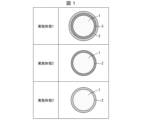
- FIG. 1 is a schematic diagram showing a particle according to one embodiment of the present invention in (Invention 1).
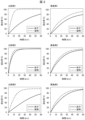
- FIG. 1 shows the results of dissolution tests using particles and tablets in Examples 1 to 3 and Comparative Examples 1 to 3.
- FIG. 1 is a diagram showing the results of measuring particle strength using particles in Example 4 and Comparative Examples 4 to 7.
- FIG. 13 is a diagram showing the results of measuring particle strength using particles in Example 5 and Comparative Example 8.
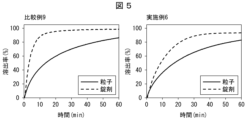
- FIG. 1 shows the results of dissolution tests using particles and tablets in Example 6 and Comparative Example 9.
- FIG. 13 is a diagram showing the results of measuring particle strength using particles in Example 6 and Comparative Example 9.
- FIG. 1 shows the results of dissolution tests using particles and tablets in Example 7 and Comparative Example 10.
- FIG. 1 shows the results of dissolution tests using particles and tablets in Example 7 and Comparative Example 10.
- FIG. 13 is a diagram showing the results of measuring particle strength using particles in Example 7 and Comparative Example 10.
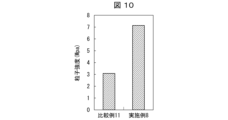
- FIG. 1 shows the results of dissolution tests using particles and tablets in Example 8 and Comparative Example 11.
- FIG. 13 is a diagram showing the results of measuring particle strength using particles in Example 8 and Comparative Example 11.
- 1 is a diagram showing the CNF (CNF-1) used in the example of (Invention 2) photographed with a scanning electron microscope (JSM-IT200, top two rows) and a scanning probe microscope (SPM-Nanoa, bottom row).
- FIG. 1 is a diagram showing the relationship between tableting pressure and tablet hardness (compression moldability), and the relationship between tablet hardness and disintegration time (disintegrability) in Examples 1-1 to 3-1 and Comparative Examples 1-1 to 2-1.
- FIG. 1 is a diagram showing the relationship between tableting pressure and tablet hardness (compression moldability), and the relationship between tablet hardness and disintegration time (disintegrability) in Examples 1-1 to 3-1 and Comparative Examples 1-1 to
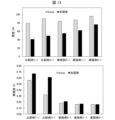
- FIG. 1 is a graph showing tablet hardness after humidification and friability after humidification in Examples 1-1 to 3-1 and Comparative Examples 1-1 to 2-1.
- FIG. 1 is a diagram showing the relationship between tablet hardness and disintegration time (disintegrability) in Examples 1-1, 4-1, and 5-1, and Comparative Examples 1-1 and 3-1.
- FIG. 1 is a graph showing tablet hardness after humidification and friability after humidification in Examples 1-1, 4-1, and 5-1, and Comparative Examples 1-1 and 3-1.
- FIG. 1 is a diagram showing the relationship between tableting pressure and tablet hardness (compression moldability), and the relationship between tablet hardness and disintegration time (disintegrability) in Examples 6-1 and 7-1, and Comparative Example 4-1.
- FIG. 1 is a graph showing the relationship between tablet hardness and disintegration time (disintegrability) in Example 8-1 and Comparative Example 5-1.
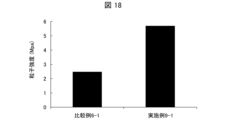
- FIG. 1 is a diagram showing the results of measuring particle strength using particles in Example 9-1 and Comparative Example 6
- invention 1 Overview of the Invention
- a particle according to one embodiment of the present invention (hereinafter referred to as “the particle") is characterized in that a core particle is covered with a coating layer, and the coating layer contains cellulose nanofibers.
- the composition according to one embodiment of the present invention (hereinafter referred to as "the composition") is characterized by containing the particles.
- this production method is characterized by including a step of coating the core particles with a coating layer containing cellulose nanofibers.
- this method is characterized in that the coating layer contains cellulose nanofibers.
- Particles with functional coatings such as those described in Patent Document 1 have traditionally had issues with the functional coating layer cracking due to tableting stress, resulting in leakage of the active ingredient (e.g., drug) contained in the core particle. Furthermore, conventional particles in which the core particle is covered with a coating layer also have room for improvement in terms of strength.
- the present inventors conducted extensive research from the viewpoint of ensuring the strength of particles in which a core particle is covered with a coating layer, and as a result, succeeded in obtaining the following findings. -
- the strength of the particles can be improved.
- a particle comprising a core particle, an intermediate layer, and a coating layer by incorporating cellulose nanofibers in the coating layer, the strength of the particle can be improved and cracking of the intermediate layer during tableting can be prevented.
- cellulose nanofibers are involved in particle strength. Therefore, it is surprising that the inventors focused on cellulose nanofibers with the aim of ensuring particle strength, and by applying them to a coating layer inside the particles, were able to improve particle strength and prevent cracking of the intermediate layer during tableting. Furthermore, with this particle, the strength of the particle can be ensured by incorporating cellulose nanofibers in the outer layer (e.g., coating layer) of the core particle without adding cellulose nanofiber to the core particle.
- the outer layer e.g., coating layer
- the particles exhibit advantageous effects based on the above findings, and can therefore be used with great advantage in a variety of fields where particles containing a coating layer are used as raw materials.
- a core particle is covered with a coating layer, and the coating layer contains cellulose nanofibers. Since the coating layer contains cellulose nanofibers, the present particle has an effect of ensuring the strength of the particle.
- ensuring particle strength means “improving particle strength” and/or “preventing cracking of the intermediate layer during tableting.” In other words, “ensuring particle strength” means increasing or maintaining the strength of the particles.
- the particles can be used for a variety of purposes, including medicine, food, and cosmetics, but below we will explain the use of the particles for medicinal purposes as an example. It goes without saying that the uses of the particles are not limited to medicine.
- Embodiment 1 is shown in the upper diagram of Figure 1.
- a core particle 1 is coated with an intermediate layer 3, and the intermediate layer 3 is further coated with a coating layer 2.
- the coating layer 2 contains cellulose nanofibers.
- the core particle 1 is coated with the intermediate layer 3 and the coating layer 2, which has the effect of improving particle strength. In addition, it has the effect of preventing the intermediate layer from cracking during tableting.
- Core particle 1 is located at the innermost part of the particle and contains an active ingredient.
- the active ingredient contained in core particle 1 is not particularly limited, but examples thereof include drugs, food ingredients, nutrients, micronutrients, flavorings, fragrances, etc.
- the coating layer 2 is located outside the intermediate layer 3. In embodiments where the particle does not include an intermediate layer 3, the coating layer 2 is located outside the core particle 1.
- the coating layer 2 contains cellulose nanofibers.
- cellulose nanofibers refers to cellulose fibers with nano-sized fiber diameters that are prepared by mechanically processing cellulose.
- the average fiber diameter of the cellulose nanofibers is preferably less than 1 ⁇ m, more preferably 500 nm or less, even more preferably 300 nm or less, particularly preferably 200 nm or less, and most preferably 100 nm or less.
- the average fiber diameter of the cellulose nanofibers means the average fiber diameter measured for any 10 or more cellulose nanofibers in an image obtained by a scanning probe microscope.
- the fiber length of the cellulose nanofiber is not particularly limited, but is, for example, 0.001 to 100 ⁇ m, preferably 0.01 to 50 ⁇ m, more preferably 0.05 to 25 ⁇ m, and even more preferably 0.1 to 10 ⁇ m.
- the fiber length of the cellulose nanofiber is measured by image analysis.
- the content of the cellulose nanofibers is, for example, 0.1 to 10.0% by mass, preferably 0.4 to 9.0% by mass, more preferably 0.6 to 8.0% by mass, and even more preferably 0.8 to 7.0% by mass, relative to the total mass of the core particle 1 and the intermediate layer 3.
- the effect of the present invention i.e., ensuring particle strength
- the coating layer 2 may be a functional coating layer.
- the functional coating layer is not particularly limited as long as it is a layer that exhibits a desired function by coating the core particle 1, but examples of such a layer include a layer that contains a bitterness masking agent, an enteric base, a sustained-release base, a moisture-proof base, a light-resistant base, a shielding base, etc.
- the coating layer 2 does not contain any additives other than the cellulose nanofibers. That is, in one embodiment of the present invention, the coating layer 2 may be composed only of cellulose nanofibers.
- the intermediate layer 3 is located between the core particle 1 and the coating layer 2.
- the intermediate layer 3 may be a functional coating layer.
- the functional coating layer the one described under (Coating layer) is used.
- the intermediate layer 3 may be a single layer or may be a multilayer.
- the number of layers is not particularly limited, but may be, for example, two layers, three layers, four layers, five layers, etc.
- each layer may be the same functional coating layer or may be a different functional coating layer.
- each layer is a different functional coating layer.
- the core particle 1, coating layer 2, and intermediate layer 3 of this particle may contain additives such as excipients, binders, lubricants, disintegrants, surfactants, plasticizers, and colorants.
- excipients are not particularly limited, but examples include D-mannitol, lactose (e.g., lactose hydrate), white sugar, corn starch, calcium phosphate, sorbitol, crystalline cellulose, light anhydrous silicic acid, etc. Crystalline cellulose and lactose (e.g., lactose hydrate) are preferably used.
- Binders include, but are not limited to, hydroxypropyl cellulose, hydroxypropyl methylcellulose (also called “hypromellose”), povidone, methylcellulose, hydroxyethyl cellulose, carboxymethyl cellulose, polyvinylpyrrolidone, copolymers of N-vinylpyrrolidone and vinyl acetate, or combinations of these polymers, pregelatinized starch, gelatin, agar, gum arabic, etc.
- hypromellose is used.
- Lubricants are not particularly limited, but examples include inactive substances such as talc, kaolin, and titanium dioxide, magnesium stearate, calcium stearate, stearic acid, light anhydrous silicic acid, finely ground silicon dioxide, sodium stearyl fumarate, and glycerin fatty acid esters. Glycerin fatty acid esters are preferably used.
- Disintegrants include, but are not limited to, crospovidone, low-substituted hydroxypropyl cellulose, sodium starch glycolate, croscarmellose sodium, carmellose, carmellose calcium, potato starch, etc. Crospovidone is preferably used.
- the coloring agent is not particularly limited, but examples thereof include yellow coloring agents (e.g., yellow ferric oxide, yellow ferric oxide, Food Yellow No. 4 Aluminum Lake, red iron oxide, etc.), red coloring agents (e.g., ferric oxide, Food Red No. 2, Food Red No. 3, Food Red No. 102, etc.), black coloring agents (e.g., black ferric oxide, carbon black, medicinal charcoal, etc.), blue coloring agents (e.g., Blue No. 2 Aluminum Lake, etc.), caramel, etc.
- yellow ferric oxide and Blue No. 2 Aluminum Lake are used.
- each of the additives is not particularly limited and can be appropriately set by a person skilled in the art based on conventionally known techniques.
- the particle is composed of a core particle 1, a shielding layer (middle layer 3), and a bitterness-masking functional coating layer (coating layer 2) containing cellulose nanofibers.
- Embodiment 2 is shown in the center diagram of Figure 1.
- a core particle 1 is coated with a coating layer 2.
- the coating layer 2 contains cellulose nanofibers.
- the core particle 1 is coated with the coating layer 2, which has the effect of improving particle strength.
- the particle does not include an intermediate layer 3.
- the content of the cellulose nanofiber is, for example, 0.1 to 10.0% by mass, preferably 0.4 to 9.0% by mass, more preferably 0.6 to 8.0% by mass, and even more preferably 0.8 to 7.0% by mass, relative to the mass of the core particle 1.
- the effect of the present invention i.e., ensuring particle strength
- the coating layer 2 only needs to contain cellulose nanofibers, and may contain any other additives.
- additives include those described in ⁇ embodiment 1>.
- the "core particle” is the same as that described in ⁇ embodiment 1>.
- Embodiment 3 is shown in the lower diagram of Figure 1.
- a core particle 1 is coated with a coating layer 2.
- the coating layer 2 is composed only of cellulose nanofibers.
- the core particle 1 is coated with the coating layer 2, which has the effect of improving the particle strength.
- the particle does not include an intermediate layer 3.
- the content of the cellulose nanofiber is, for example, 0.1 to 10.0% by mass, preferably 0.4 to 9.0% by mass, more preferably 0.6 to 8.0% by mass, and even more preferably 0.8 to 7.0% by mass, relative to the mass of the core particle 1.
- the effect of the present invention i.e., ensuring particle strength
- the "core particle” is the same as that described in embodiment 1.
- compositions contain the particles described in [2. Particles] (i.e., the present particles). Since the present composition contains particles with ensured strength, the active ingredient contained in the core particle can be utilized more effectively.
- the composition can be used for various purposes based on the active ingredient contained in the core particles of the particle.
- the uses of the composition are not particularly limited, but may be, for example, medicines, foods (e.g., functional foods, supplements), cosmetics, etc.
- the composition may contain various additives depending on the application.
- the additives described in the section ⁇ Embodiment 1> may be used.
- the present production method is a method for producing particles in which a core particle is coated with a coating layer, and includes a step of coating the core particle with a coating layer containing cellulose nanofibers. By coating the core particle with a coating layer containing cellulose nanofibers, the present production method can ensure the strength of the particle.
- the method for covering the core particles with the coating layer is not particularly limited, and any method known in the art can be used.
- the manufacturing method includes a step of coating the core particles with an intermediate layer.
- the manufacturing method is a method for manufacturing particles in which a core particle is covered with a coating layer, the method including a step of coating the core particle with an intermediate layer, and a step of coating the intermediate layer with a coating layer containing cellulose nanofibers.
- core particle As described in [2. Particles].
- This method is a method for ensuring the strength of a particle in which a core particle is covered with a coating layer, and is characterized in that the coating layer contains cellulose nanofibers. That is, the method includes a step of making the coating layer contain cellulose nanofibers. In this method, the strength of the particle can be ensured by making the coating layer contain cellulose nanofibers.
- the method for incorporating cellulose nanofibers into the coating layer is not particularly limited, and any method known in the art can be used.
- core particle As described in [2. Particles].
- invention 2 6. Overview of the Invention
- the orally disintegrating tablet according to one embodiment of the present invention (hereinafter referred to as “the present orally disintegrating tablet”) is characterized by having particles containing cellulose nanofibers having an average particle size of less than 10 ⁇ m.
- the disintegrating particles according to one embodiment of the present invention are characterized by containing cellulose nanofibers having an average particle diameter of less than 10 ⁇ m.
- this production method is characterized by having a step of incorporating cellulose nanofibers having an average particle diameter of less than 10 ⁇ m into the particles.
- this method a method for improving the physical properties of an orally disintegrating tablet containing particles according to one embodiment of the present invention is characterized in that the particles contain cellulose nanofibers having an average particle size of less than 10 ⁇ m, and the physical property is at least one of the following: (1) compression moldability, (2) disintegration property, (3) tableting trouble, (4) tablet hardness after humidification, and (5) friability after humidification.
- the orally disintegrating tablet described in Patent Document 1 has room for improvement in its physical properties, particularly in terms of compression moldability, disintegrability, tableting problems, tablet hardness after humidification, and friability after humidification.
- the present inventors conducted extensive research and succeeded in obtaining the following findings.
- CNF with an average particle size of less than 10 ⁇ m into the particles that constitute the orally disintegrating tablet
- the particles containing CNF may be disintegrating particles or drug particles, but disintegrating particles are preferred.
- the CNF is preferably contained in the coating layer.
- CNF is involved in various physical properties of orally disintegrating tablets having particles that contain CNF (particularly compression moldability, disintegrability, tableting trouble, tablet hardness after humidification, and friability after humidification). Therefore, it is surprising that the present inventors focused on CNF for the purpose of improving various physical properties of the orally disintegrating tablet, and were able to improve various physical properties of the orally disintegrating tablet by incorporating the CNF into the particles that make up the orally disintegrating tablet.
- the present orally disintegrating tablet exhibits advantageous effects based on the above findings, and can be applied to various active ingredients for orally disintegrating applications.
- variable physical properties the effects of one embodiment of the present invention (compression moldability, disintegration, tableting problems, tablet hardness after humidification, and friability after humidification) may be collectively referred to as "various physical properties.”
- the orally disintegrating tablet is characterized in that it contains particles containing CNFs having an average particle size of less than 10 ⁇ m. By containing CNFs having the specific average particle size, the orally disintegrating tablet has the effect of improving various physical properties of the orally disintegrating tablet.
- CNF cellulose nanofiber
- the average particle size of the CNF is less than 10 ⁇ m, preferably 8.0 ⁇ m or less, more preferably 5.0 ⁇ m or less, and even more preferably 3.0 ⁇ m or less.
- the lower limit of the average particle size of the CNF is not particularly limited as long as the effects of the present invention are achieved, but is, for example, 1.0 ⁇ m or more, preferably 2.0 ⁇ m or more.
- the average particle size of the CNF means the volume-based average particle size measured by a laser diffraction particle size distribution analyzer.
- the average fiber diameter of the CNF is preferably 0.001 to 1 ⁇ m, more preferably 0.002 to 0.5 ⁇ m, even more preferably 0.005 to 0.2 ⁇ m, particularly preferably 0.01 to 0.1 ⁇ m, and even more preferably 0.01 to 0.05 ⁇ m.
- the average fiber diameter of the CNF means the average fiber diameter measured for any 10 or more cellulose nanofibers in an image obtained by a scanning probe microscope.
- the average fiber length of the CNF is preferably less than 10 ⁇ m, more preferably 5 ⁇ m or less, and even more preferably 2 ⁇ m or less. By making the average fiber length of the CNF less than 10 ⁇ m, various physical properties of the orally disintegrating tablet can be improved.
- the lower limit of the average fiber length of the CNF is not particularly limited as long as the effects of the present invention are achieved, but is, for example, 0.5 ⁇ m or more, and preferably 1.0 ⁇ m or more.
- the average fiber length of the CNF is measured by image analysis.
- the CNF content is, for example, 0.1 to 10.0% by mass, preferably 0.6 to 8.0% by mass, more preferably 0.8 to 5.0% by mass, and even more preferably 1.0 to 4.0% by mass, based on the mass of the particle containing CNF (when the particle contains a core and a coating layer, the total mass of the core and coating layer, as described below).
- the CNF content is 0.1 to 10.0% by mass based on the mass of the particle containing CNF, various physical properties of the orally disintegrating tablet can be improved.
- the CNF contained in the orally disintegrating tablet may be a commercially available CNF (e.g., BiNFi-s manufactured by Sugino Machine Co., Ltd.).
- the CNF contained in the orally disintegrating tablet may also be CNF manufactured from commercially available CNF.
- the method for manufacturing the CNF contained in the orally disintegrating tablet is not particularly limited, but it may be manufactured, for example, by micronizing general CNF.
- the CNF in one embodiment of the present invention may be manufactured by wet micronization of commercially available CNF (e.g., CEOLUS (registered trademark) (manufactured by Asahi Kasei Corporation) PH grade) under high pressure conditions (e.g., 150 MPa) at a processing speed of 32 to 440 L/h.
- CNF commercially available CNF
- CEOLUS registered trademark
- 150 MPa high pressure conditions
- the particles constituting the present orally disintegrating tablet may be disintegrating particles, drug particles, or both. That is, in the present orally disintegrating tablet, CNF may be contained in the disintegrating particles, drug particles, or both. In addition, the disintegrating particles may or may not contain a drug.
- the particles that make up this orally disintegrating tablet may contain additives such as excipients, binders, lubricants, disintegrants, surfactants, plasticizers, and colorants in addition to CNF.
- excipients are not particularly limited, but examples include D-mannitol, lactose (e.g., lactose hydrate), white sugar, corn starch, calcium phosphate, sorbitol, crystalline cellulose, light anhydrous silicic acid, etc.
- D-mannitol, crystalline cellulose, and lactose e.g., lactose hydrate are used.
- Binders include, but are not limited to, hydroxypropyl cellulose, hydroxypropyl methylcellulose (also called “hypromellose”), povidone, methylcellulose, hydroxyethyl cellulose, carboxymethyl cellulose, polyvinylpyrrolidone, copolymers of N-vinylpyrrolidone and vinyl acetate, or combinations of these polymers, pregelatinized starch, gelatin, agar, gum arabic, etc. Hydroxypropyl cellulose and hypromellose are preferably used.
- Lubricants are not particularly limited, but examples include inactive substances such as talc, kaolin, and titanium dioxide, magnesium stearate, calcium stearate, stearic acid, light anhydrous silicic acid, finely ground silicon dioxide, sodium stearyl fumarate, and glycerin fatty acid esters.
- inactive substances such as talc, kaolin, and titanium dioxide, magnesium stearate, calcium stearate, stearic acid, light anhydrous silicic acid, finely ground silicon dioxide, sodium stearyl fumarate, and glycerin fatty acid esters.
- Magnesium stearate and glycerin fatty acid esters are preferably used.
- Disintegrants include, but are not limited to, crospovidone, low-substituted hydroxypropyl cellulose, sodium starch glycolate, croscarmellose sodium, carmellose, carmellose calcium, potato starch, etc. Crospovidone is preferably used.
- the coloring agent is not particularly limited, but examples thereof include yellow coloring agents (e.g., yellow ferric oxide, yellow ferric oxide, Food Yellow No. 4 Aluminum Lake, red iron oxide, etc.), red coloring agents (e.g., ferric oxide, Food Red No. 2, Food Red No. 3, Food Red No. 102, etc.), black coloring agents (e.g., black ferric oxide, carbon black, medicinal charcoal, etc.), blue coloring agents (e.g., Blue No. 2 Aluminum Lake, etc.), caramel, etc.
- yellow coloring agents e.g., yellow ferric oxide, yellow ferric oxide, Food Yellow No. 4 Aluminum Lake, red iron oxide, etc.
- red coloring agents e.g., ferric oxide, Food Red No. 2, Food Red No. 3, Food Red No. 102, etc.
- black coloring agents e.g., black ferric oxide, carbon black, medicinal charcoal, etc.
- blue coloring agents e.g., Blue No. 2 Aluminum Lake, etc.
- caramel e.g., preferably, ferric oxide,
- the amount of each of the additives contained is not particularly limited and can be appropriately determined by a person skilled in the art based on conventionally known techniques.
- the disintegrating particles may contain a sugar alcohol and organic and inorganic hydrophilic and water-insoluble additives.
- the organic hydrophilic and water-insoluble additive preferably contains at least one selected from the group consisting of starch, starch derivatives, and crospovidone.
- starch and starch derivatives include corn starch, potato starch, partially pregelatinized starch, pregelatinized starch, etc.
- the inorganic hydrophilic and water-insoluble additive preferably contains light anhydrous silicic acid and/or magnesium aluminometasilicate.
- the sugar alcohol include erythritol, xylitol, sorbitol, mannitol, lactitol, etc.
- the sugar alcohol content is, for example, 55 to 85% by mass, and preferably 65 to 75% by mass, relative to the mass of the disintegrating particles.
- the organic hydrophilic and water-insoluble additive content is, for example, 10 to 40% by mass, and preferably 18 to 32% by mass, relative to the mass of the disintegrating particles.
- the inorganic hydrophilic and water-insoluble additive content is, for example, 0.3 to 55% by mass, and preferably 0.5 to 3% by mass, relative to the mass of the disintegrating particles.
- the particles constituting the orally disintegrating tablet have a core and a coating layer.
- the core is covered with the coating layer. That is, the core is located inside the particle, and the coating layer is located outside the particle.
- the CNF may be contained in the coating layer, the core, or both. From the viewpoint of further improving various physical properties of the orally disintegrating tablet, it is preferable that the CNF is contained in the coating layer.
- the core and the coating layer may contain the additives described above in addition to CNF.
- the core may contain mannitol and light anhydrous silicic acid, and the coating layer may contain corn starch, crospovidone, and CNF.
- the core may contain mannitol, light anhydrous silicic acid, and CNF, and the coating layer may contain corn starch and crospovidone.
- the coating layer may be a single layer or multiple layers.
- each coating layer may have a different function.
- the function of the coating layer is not particularly limited, but may be, for example, bitterness masking, an enteric base, a sustained release base, a moisture-proof base, a light-resistant base, a shielding base, etc.
- the orally disintegrating tablet has at least one of improved compression moldability, disintegrability, tableting trouble, tablet hardness after humidification, and friability after humidification.
- the orally disintegrating tablet has preferably improved in more than one of the compression moldability, disintegrability, tableting trouble, tablet hardness after humidification, and friability after humidification, and most preferably improved in all of them.
- compression moldability refers to the property of powder or granules bonding together when pressure is applied to the powder or granules, and means the property that enables amorphous powder or granules to be compressed into a specific shape, and it is preferable that a practical hardness can be obtained at low pressure. Specifically, compression moldability is measured by the method described in the Examples.
- disintegrability refers to the ease with which a tablet disintegrates. Specifically, disintegrability is measured by the method described in the Examples.
- tablette trouble refers to problems such as sticking that occur during the tabletting process. Specifically, tabletting trouble is measured by the method described in the Examples.
- tablette hardness after humidification means the hardness after storage for 7 days under conditions of a temperature of 25°C and a relative humidity of 75%. Specifically, the tablet hardness after humidification is measured by the method described in the Examples.
- “friction degree after humidification” means the friction degree after storage for 7 days under conditions of a temperature of 25°C and a relative humidity of 75%. Specifically, the friction degree after humidification is measured by the method described in the Examples.
- the present disintegrative particles are characterized in that they contain CNF with an average particle size of less than 10 ⁇ m. By containing CNF with the specific average particle size, the present disintegrative particles have the effect of improving various physical properties of a composition containing the present disintegrative particles.
- the disintegrating particles can be used in a variety of applications where disintegration in the oral cavity is required. Examples of applications of the disintegrating particles include medicines, foods, and supplements.
- particles In the present disintegrating particles, the terms “particles,” “orally disintegrating tablets,” and “cellulose nanofibers (CNF)” are as described in [7. Orally disintegrating tablets].
- the present production method is a method for producing an orally disintegrating tablet containing particles, and includes a step of incorporating CNF having an average particle size of less than 10 ⁇ m into the particles constituting the orally disintegrating tablet.
- the method for incorporating CNF into the particles that constitute the orally disintegrating tablet is not particularly limited, and any method known in the art can be used.
- incorporating CNF into the particles is carried out by mixing CNF with other components that constitute the particles in any mixing device.
- This method is a method for improving the physical properties of an orally disintegrating tablet containing particles, and is characterized in that the particles are made to contain CNF having an average particle size of less than 10 ⁇ m. That is, the method has a step of making the particles contain CNF having an average particle size of less than 10 ⁇ m.
- the physical properties are at least one of (1) compression moldability, (2) disintegration property, (3) tableting trouble, (4) tablet hardness after humidification, and (5) friability after humidification.
- This method can improve at least one of the physical properties (1) to (5) by making the particles constituting the orally disintegrating tablet contain CNF having an average particle size of less than 10 ⁇ m.
- the method for incorporating CNF into the particles that make up the orally disintegrating tablet is not particularly limited, and any method known in the art can be used.
- Dissolution test The average dissolution rate of the particles (overcoated particles, masking particles) and tablets was measured according to the Japanese Pharmacopoeia dissolution test paddle method (rotation speed 75 rpm, dissolution test second liquid 900 mL).
- the particles were mixed with disintegrating particles in an equal amount in advance and placed in the test vessel.
- the dissolution rate was measured at a measurement wavelength of 288 nm using a fiber probe type ultraviolet-visible spectrophotometer.
- the particle strength was measured using a microcompression tester (MCT-210, manufactured by Shimadzu Corporation).
- Example 1 Preparation of Drug Particles A 50% (w/w) ethanol solution was sprayed onto a mixed powder containing levofloxacin hydrate (0.5 hydrate), hydroxypropylcellulose (HPC-L (75 ⁇ m-106 ⁇ m), manufactured by Nippon Soda Co., Ltd.), and low-substituted hydroxypropylcellulose (LH-31, manufactured by Shin-Etsu Chemical Co., Ltd.), and the mixture was granulated using a high-speed stirring mixer. The resulting granules were dried using a tumbling fluidized bed granulator and then classified using sieves with openings of 250 ⁇ m and 75 ⁇ m to prepare drug particles (core particles).
- HPC-L hydroxypropylcellulose
- LH-31 low-substituted hydroxypropylcellulose
- the masked particles were coated with cellulose nanofibers by spraying this solution, and overcoated particles (particles in which a core particle is coated with an intermediate layer and a coating layer) were prepared.
- the amount of cellulose nanofiber coating was 2% by mass relative to the mass of the masked particles.
- the overcoated particles were mixed with disintegrating particles and magnesium stearate (vegetable-based, manufactured by Taihei Chemical Industry Co., Ltd.), and then tableted at 7 kN using a hand tab. A dissolution test was performed using the masked particles and tablets.
- composition of each component is shown in Table 1.
- Example 2 The preparation of the masked particles was carried out in the same manner as in Example 1.
- the obtained masked particles were put into a tumbling fluidized bed granulator.
- a 5% (w/v) aqueous dispersion (5% viscosity: 20000 mPa ⁇ s) of cellulose nanofibers (Binfis AFo-100 5%, average fiber diameter about 10-50 nm, fiber length about 0.5-1.0 ⁇ m, manufactured by Sugino Machine Co., Ltd.) was diluted with water to 1% (w/v), and then treated at 10000 rpm for 20 minutes using a homogenizer.
- the masked particles were coated with cellulose nanofibers by spraying this solution, and overcoated particles were prepared.
- the coating amount of cellulose nanofiber was 2% by mass relative to the mass of the masked particles.
- disintegrating particles were prepared and tableted in the same manner as in Example 1. Dissolution tests were conducted using the overcoated particles and tablets.
- Example 3 The preparation of masking particles was carried out in the same manner as in Example 1. (Preparation of overcoat particles) The obtained masked particles were put into a tumbling fluidized bed granulator. A liquid containing crystalline cellulose converted into cellulose nanofibers so that the viscosity of the crystalline cellulose in a 2% (w/v) aqueous dispersion was 1000 mPa ⁇ s or more, and diluted with water to 1% (w/v), and then treated at 10,000 rpm for 20 minutes using a homogenizer. The masked particles were coated with the crystalline cellulose converted into cellulose nanofibers by spraying this solution, to prepare overcoated particles. The coating amount of the crystalline cellulose converted into cellulose nanofibers was 2% by mass relative to the mass of the masked particles.
- disintegrating particles were prepared and tableted using the same method as in Example 1. Dissolution tests were performed using the overcoated particles and tablets.
- Comparative Example 1 The preparation of masking particles was carried out in the same manner as in Example 1. In this case, the preparation of overcoat particles was not carried out.
- disintegrating particles were prepared using the same method as in Example 1.
- the masked particles were mixed with disintegrating particles and magnesium stearate (vegetable-based, manufactured by Taihei Chemical Industry Co., Ltd.), and then tableted at 7 kN using a hand tab. A dissolution test was performed using the masked particles and tablets.
- Comparative Example 2 The preparation of the masked particles was carried out in the same manner as in Example 1.
- HPC-SL Hydroxypropyl cellulose
- disintegrating particles were prepared and tableted using the same method as in Example 1.
- a dissolution test (RT-J2000, manufactured by Dai Nippon Seiki Co., Ltd.) was conducted using the overcoated particles and tablets.
- Ethyl cellulose (Ethocel Standard FP7CPS Premium, manufactured by DuPont Nutrition & Biosciences, Inc.) was dissolved in 90% (w/w) ethanol to a concentration of 1% (w/v). The solution was sprayed to coat the masked particles with ethyl cellulose to prepare overcoated particles. The coating amount of ethyl cellulose was 2% by mass relative to the mass of the masked particles.
- disintegrating particles were prepared and tableted in the same manner as in Example 1. Dissolution tests were conducted using the overcoated particles and tablets.
- Example 4 Using the resulting overcoated particles, the particle strength was measured in the same manner as in Example 1.
- Comparative Example 4 Drug particles were prepared in the same manner as in Example 1. The resulting drug particles were used to measure particle strength.
- Comparative Example 5 Using the masked particles thus obtained, the particle strength was measured in the same manner as in Comparative Example 1.
- Comparative Example 6 Using the obtained overcoated particles, the particle strength was measured in the same manner as in Comparative Example 2.
- Comparative Example 7 Using the obtained overcoated particles, the particle strength was measured in the same manner as in Comparative Example 3.
- Example 5 The procedures up to the preparation of drug particles were the same as those in Example 1.
- the obtained drug particles were put into a tumbling fluidized bed granulator.
- a 5% (w/v) aqueous dispersion of cellulose nanofibers (Binfis WFo-100 5%, manufactured by Sugino Machine Co., Ltd.) was diluted with water to 1% (w/v), and then treated with a homogenizer at 10,000 rpm for 20 minutes.
- the drug particles were coated with cellulose nanofibers by spraying this solution, to prepare masked particles (particles in which a core particle is covered with a coating layer).
- the amount of cellulose nanofiber coating was 2% by mass relative to the mass of the drug particles.
- the resulting masked particles were used to measure particle strength.
- Comparative Example 8 Drug particles were prepared in the same manner as in Example 1. The resulting drug particles were used to measure particle strength.
- Example 4 has a higher particle strength than Comparative Examples 4 to 7. Therefore, it was shown that in particles including a core particle, an intermediate layer, and a coating layer, the particle according to one embodiment of the present invention, in which the coating layer includes cellulose nanofibers, has improved particle strength.
- Example 5 is higher than that of Comparative Example 8. Therefore, it was shown that the particle strength of the particle according to one embodiment of the present invention, in which the core particle is covered with a coating layer composed of cellulose nanofibers, is improved.
- Example 6 The procedures up to the preparation of drug particles were the same as those in Example 1.
- disintegrating particles were prepared and tableted using the same method as in Example 1.
- a dissolution test was performed using the obtained masked particles and tablets.
- particle strength was measured using the obtained masked particles.
- composition of each component is shown in Table 2.
- disintegrating particles were prepared and tableted using the same method as in Example 1.
- a dissolution test was performed using the obtained masked particles and tablets.
- particle strength was measured using the obtained masked particles.
- Example 6 the change in dissolution behavior between the particles and the tablets is suppressed compared to Comparative Example 9. Therefore, it was shown that in a particle including a core particle and a coating layer, a particle according to one embodiment of the present invention in which the coating layer includes cellulose nanofibers can prevent cracking of the coating layer during tableting.
- Example 6 the particle strength of Example 6 is higher than that of Comparative Example 9. Therefore, it was shown that, in a particle including a core particle and a coating layer, a particle according to one embodiment of the present invention in which the coating layer includes cellulose nanofibers has improved particle strength.
- Example 7 The procedures up to the preparation of drug particles were the same as those in Example 1.
- disintegrating particles were prepared and tablets were pressed (tabletting pressure 11 kN) in the same manner as in Example 1. Dissolution tests were conducted using the overcoated particles and tablets.
- composition of each component is shown in Table 3.
- Comparative Example 10 The preparation of masked particles was carried out in the same manner as in Example 7. In this case, the preparation of overcoat particles was not carried out.
- disintegrating particles were prepared and tablets were pressed (tabletting pressure 11 kN) in the same manner as in Example 1.
- a dissolution test was conducted using the masked particles and tablets.
- Example 7 the change in dissolution behavior between the particles and the tablets is suppressed compared to Comparative Example 10. Therefore, it was shown that in a particle including a core particle, an intermediate layer, and a coating layer, a particle according to one embodiment of the present invention, in which the coating layer includes cellulose nanofibers, can prevent cracking of the coating layer during tableting.
- Example 7 the particle strength of Example 7 is higher than that of Comparative Example 10. Therefore, it was shown that in a particle including a core particle, an intermediate layer, and a coating layer, a particle according to one embodiment of the present invention in which the coating layer includes cellulose nanofibers has improved particle strength.
- Example 8 The procedures up to the preparation of drug particles were the same as those in Example 1.
- the masked particles obtained were put into a tumbling fluidized bed granulator.
- a 5% (w/v) aqueous dispersion (5% viscosity: 20,000 mPa ⁇ s) of cellulose nanofiber (Binfis AFo-100 5%, manufactured by Sugino Machine Co., Ltd.) was diluted with water to 1% (w/v), and then treated at 10,000 rpm for 20 minutes using a homogenizer. This solution was sprayed onto the masked particles to prepare overcoated particles (particles in which the core particles are coated with an intermediate layer and a coating layer).
- the amount of coating of the cellulose nanofiber was 2% by mass relative to the mass of the masked particles.
- disintegrating particles were prepared and tablets were pressed (tabletting pressure 7 kN) in the same manner as in Example 1. Dissolution tests were conducted using the overcoated particles and tablets.
- composition of each component is shown in Table 4.
- Comparative Example 11 The preparation of masked particles was carried out in the same manner as in Example 8. In this case, the preparation of overcoat particles was not carried out.
- disintegrating particles were prepared and tablets were pressed (tabletting pressure 7 kN) in the same manner as in Example 1. Dissolution tests were conducted using the overcoated particles and tablets.
- Example 8 the change in dissolution behavior between the particles and the tablets is suppressed compared to Comparative Example 11. Therefore, it was shown that in a particle including a core particle, an intermediate layer, and a coating layer, a particle according to one embodiment of the present invention, in which the coating layer includes cellulose nanofibers, can prevent cracking of the coating layer during tableting.
- Example 8 is higher than that of Comparative Example 11. Therefore, it was shown that in a particle including a core particle, an intermediate layer, and a coating layer, a particle according to one embodiment of the present invention in which the coating layer includes cellulose nanofibers has improved particle strength.
- CNF-1 average particle size 2.0 ⁇ m, average fiber diameter about 10 nm, average fiber length less than 10 ⁇ m.
- Crystalline cellulose CEOLUS (registered trademark) (manufactured by Asahi Kasei Corporation), grade PH-101, average particle size 77 ⁇ m, average fiber diameter about 50 ⁇ m, average fiber length about 150 ⁇ m) was dispersed in water to a concentration of 2% (w/v), and then treated 30 times with a wet micronization device (Starburst Labo, Sugino Machine Co., Ltd.) to produce a CNF aqueous dispersion.
- CNF-2 BiNFi-s (manufactured by Sugino Machine Co., Ltd.), grade short chain, average particle diameter 2.9 ⁇ m, average fiber diameter approximately 10 to 50 nm, average fiber length 0.5 to 1.0 ⁇ m.
- CNF-3 BiNFi-s (manufactured by Sugino Machine Co., Ltd.), grade very short chain, average particle diameter 2.5 ⁇ m, average fiber diameter approximately 10 to 50 nm, average fiber length less than 0.5 ⁇ m.
- Microfibrillated cellulose Celish (manufactured by Daicel Corporation), grade FD200L, average particle size 11.1 ⁇ m, average fiber diameter about 0.1 to 1.0 ⁇ m, average fiber length more than 10 ⁇ m.
- Crystalline cellulose Ceolas, grade PH-101 (manufactured by Asahi Kasei Corporation)
- Ethyl cellulose Ethocel Standard 7FP Premium (manufactured by DuPont Nutrition & Biosciences, Inc.) [Measurement and evaluation methods] The evaluations in the examples and comparative examples were carried out by the following methods.
- a CNF-containing aqueous dispersion is prepared so that the solid content is 0.125 to 0.5%. After preparation, the dispersion is treated for 5 to 10 minutes using an ultrasonic homogenizer (UD-200, manufactured by Tommy Seiko Co., Ltd.) until the fibers are uniformly dispersed. The treated liquid is then measured using a laser diffraction particle size distribution analyzer (MS3000, manufactured by Malvern Co., Ltd.) equipped with a wet dispersion unit (Hydro MV, manufactured by Malvern Co., Ltd.).
- MS3000 laser diffraction particle size distribution analyzer
- Hydro MV manufactured by Malvern Co., Ltd.
- the measurement liquid is circulated for 30 seconds at a pump speed of 3500 rpm while irradiating with ultrasonic waves, and then the ultrasonic waves and pump are stopped, and the average particle size is measured.
- the measurement liquid is circulated again, and the average particle size is obtained by measuring in the same manner.
- a scanning probe microscope was used to observe the morphology of CNFs and measure their fiber diameter.
- a sheet made by drying a CNF aqueous dispersion was fixed to a sample holder, and then a minute probe was brought into contact with the sample surface and scanned to observe and analyze the surface microstructure (fiber diameter, etc.) with nano-order resolution.
- compression moldability The tablet hardness was measured using a hardness tester (manufactured by ERWEKA) and the compression moldability was evaluated.
- tablette hardness after humidification After storage for 7 days under conditions of a temperature of 25° C. and a relative humidity of 75%, the tablet hardness was measured using a hardness tester (manufactured by ERWEKA).
- the particle strength was measured using a microcompression tester (MCT-210, manufactured by Shimadzu Corporation).
- Example 1-1 Purified water was sprayed onto a powder mixture containing olmesartan medoxomil, hydroxypropyl cellulose (HPC-M, Nippon Soda Co., Ltd.), and lactose hydrate (Fine Powder, DFE Pharma Co., Ltd.), and granulated using a high-speed stirring mixer. The resulting granules were dried using a fluidized bed granulator (MP-01, Powrex Corporation), and then classified using sieves with 250 ⁇ m and 75 ⁇ m openings to prepare drug particles.
- HPC-M hydroxypropyl cellulose
- lactose hydrate Fe Powder, DFE Pharma Co., Ltd.
- CNF-1 was diluted with water to a concentration of 1.25% (w/v), and then processed with a homogenizer at 10,000 rpm for 20 minutes (2 parts by mass as CNF).
- the drug particles, disintegrating particles, aspartame (Ajinomoto Co., Inc.), light anhydrous silicic acid (Adsolider-101, Freund Corporation), and magnesium stearate (vegetable, Taihei Chemical Industry Co., Ltd.) were mixed and compressed with a rotary tablet press to a practical hardness, yielding tablets with a diameter of 10 mm (punch: with markings and score line).
- the obtained tablets were measured for compression moldability, disintegrability, tablet hardness after humidification, friability after humidification, and tableting trouble.
- composition of each component is shown in Table 5.
- Example 2-1 Particles and tablets were produced in the same manner as in Example 1-1, except that the CNF content was changed from 5.28 mg (2% by mass) to 2.64 mg (1% by mass). The obtained tablets were measured for compression moldability, disintegration property, tablet hardness after humidification, and friability after humidification.
- Example 3-1 Particles and tablets were produced in the same manner as in Example 1-1, except that the CNF content was changed from 5.28 mg (2% by mass) to 10.56 mg (4% by mass). The obtained tablets were measured for compression moldability, disintegration property, tablet hardness after humidification, and friability after humidification.
- Example 4-1 Tablets were produced in the same manner as in Example 1-1, except that the type of CNF was changed from “CNF-1" to "CNF-2.” The obtained tablets were measured for compression moldability, disintegration property, tablet hardness after humidification, friability after humidification, and tableting trouble.
- Example 5-1 Tablets were produced in the same manner as in Example 1-1, except that the type of CNF was changed from “CNF-1" to “CNF-3.” The resulting tablets were measured for disintegration, tablet hardness after humidification, friability after humidification, and tableting trouble.
- Example 6-1 Tablets were produced in the same manner as in Example 1-1, except that the punches used in tableting with the rotary tablet press were changed from “with engraving” to “without engraving.” The compression moldability and disintegration properties of the obtained tablets were measured.
- Example 7-1 Purified water was sprayed onto a powder mixture containing olmesartan medoxomil, hydroxypropyl cellulose (HPC-M, Nippon Soda Co., Ltd.), and lactose hydrate (Fine Powder, DFE Pharma Co., Ltd.), and granulated using a high-speed stirring mixer. The resulting granules were dried using a fluidized bed granulator (MP-01, Powrex Corporation), and then classified using sieves with 250 ⁇ m and 75 ⁇ m openings to prepare drug particles.
- HPC-M hydroxypropyl cellulose
- lactose hydrate Feine Powder, DFE Pharma Co., Ltd.
- CNF-1 was diluted with water to a concentration of 1.25% (w/v), and then processed with a homogenizer at 10,000 rpm for 20 minutes (2 parts by mass as CNF). This liquid was sprayed onto the granules, which were then granulated and dried.
- the drug particles, disintegrating particles, aspartame (Ajinomoto Co., Inc.), light anhydrous silicic acid (Adsolider-101, Freund Corporation), and magnesium stearate (vegetable-based, Taihei Chemical Industry Co., Ltd.) were mixed and compressed with a rotary tablet press to a practical hardness, yielding tablets with a diameter of 10 mm (punch: no markings, with a score line).
- the compression moldability and disintegration properties of the resulting tablets were measured.
- Example 8-1 Cilostazol and D-mannitol (PEARLITOL 50C, manufactured by Rocket Japan Co., Ltd.) were charged into a fluidized bed granulator.
- CNF-1 was diluted with water to a concentration of 1.25% (w/v), and then processed with a homogenizer at 10,000 rpm for 20 minutes (2 parts by mass as CNF).
- Corn starch (Corn Starch W, manufactured by Nihon Shokuhin Kako Co., Ltd.) and crospovidone (Polyplasdone INF10, manufactured by ISP Japan Co., Ltd.) were dispersed in water, and the resulting solution was sprayed to granulate, then dried and classified at 30M to obtain drug particles.
- the drug particles crystalline cellulose (PH101, Asahi Kasei Corporation), talc (Microace P-3, Nippon Talc Co., Ltd.), aspartame (Ajinomoto Co., Inc.), light anhydrous silicic acid (Adsolider-101, Freund Corporation), and magnesium stearate (vegetable-based, Taihei Chemical Industries Co., Ltd.) were mixed and compressed with a rotary tablet press to a practical hardness, yielding tablets with a diameter of 7 mm (punch: engraved and scored). The compression moldability and disintegration properties of the resulting tablets were measured.
- composition of each component is shown in Table 6.
- Comparative Example 1-1 Purified water was sprayed onto a powder mixture containing olmesartan medoxomil, hydroxypropyl cellulose (HPC-M, Nippon Soda Co., Ltd.), and lactose hydrate (Fine Powder, DFE Pharma Co., Ltd.), and granulated using a high-speed stirring mixer. The resulting granules were dried using a fluidized bed granulator (MP-01, Powrex Corporation), and then classified using sieves with 250 ⁇ m and 75 ⁇ m openings to prepare drug particles.
- HPC-M hydroxypropyl cellulose
- lactose hydrate Feine Powder, DFE Pharma Co., Ltd.
- the drug particles, disintegrating particles, aspartame (Ajinomoto Co., Inc.), light anhydrous silicic acid (Adsolider-101, Freund Corporation), and magnesium stearate (vegetable, Taihei Chemical Industry Co., Ltd.) were mixed and compressed with a rotary tablet press to a practical hardness, yielding tablets with a diameter of 10 mm (punch: with markings and score line).
- the obtained tablets were measured for compression moldability, disintegrability, tablet hardness after humidification, friability after humidification, and tableting trouble.
- Comparative Example 2-1 Tablets were produced in the same manner as in Example 1-1, except that the type of CNF was changed from “CNF-1" to "crystalline cellulose.” The resulting tablets were measured for particle size distribution, compression moldability, disintegration property, tablet hardness after humidification, friability after humidification, and tableting trouble.
- Comparative Example 3-1 Tablets were produced in the same manner as in Example 1-1, except that the type of CNF was changed from “CNF-1" to "microfibrillated cellulose.” The resulting tablets were measured for particle size distribution, compression moldability, disintegration property, tablet hardness after humidification, friability after humidification, and tableting trouble.
- Comparative Example 4-1 Tablets were produced in the same manner as in Comparative Example 1, except that the punches used for tableting with the rotary tablet press were changed from “with engraving” to “without engraving.” The compression moldability and disintegration properties of the obtained tablets were measured.
- Cilostazol, D-mannitol (PEARLITOL 50C, manufactured by Rocket Japan Co., Ltd.), and ethyl cellulose (Ethocel Standard FP7CPS Premium, manufactured by DuPont Nutrition & Biosciences Co., Ltd.) were charged into a fluidized bed granulator.
- Corn starch (Corn Starch W, manufactured by Nihon Shokuhin Kako Co., Ltd.) and crospovidone (Polyplasdone INF10, manufactured by ISP Japan Co., Ltd.) were dispersed in purified water, and the resulting solution was sprayed to granulate, followed by drying and classification at 30M to obtain drug particles.
- the drug particles crystalline cellulose (PH101, Asahi Kasei Corporation), talc (Microace P-3, Nippon Talc Co., Ltd.), aspartame (Ajinomoto Co., Inc.), light anhydrous silicic acid (Adsolider-101, Freund Corporation), and magnesium stearate (vegetable-based, Taihei Chemical Industries Co., Ltd.) were mixed and compressed with a rotary tablet press to a practical hardness, yielding tablets with a diameter of 7 mm (punch: engraved and scored). The obtained tablets were then measured for compression moldability, disintegration, and tableting problems.
- Example 9-1 Preparation of Drug Particles
- CNF-1 described in ⁇ CNF used in the Examples>
- the resulting granules were dried using a tumbling fluidized bed granulator and then classified using sieves with openings of 250 ⁇ m and 75 ⁇ m to prepare drug particles.
- composition of each component is shown in Table 7.
- Comparative Example 6-1 Drug particles were prepared in the same manner as in Example 9-1, except that water was used instead of the CNF aqueous dispersion.
- Example 10-1 Preparation of Drug Particles
- CNF-1 described in ⁇ CNF used in the Examples>
- a powder mixture containing levofloxacin hydrate (0.5 hydrate), hydroxypropyl cellulose (HPC-L FP, Nippon Soda Co., Ltd.), crystalline cellulose (CEOLUS PH101, Asahi Kasei Corporation), and carmellose (NS-300, Nichirin Chemical Industry Co., Ltd.)
- the resulting granules were dried using a tumbling fluidized bed granulator and then classified using a sieve with a screen diameter of 1143 mm to size the drug particles.
- the drug particles croscarmellose sodium (Ac-Di-Sol, DuPont Co., Ltd.) and magnesium stearate (vegetable-based, Taihei Chemical Industry Co., Ltd.) were mixed and compressed into tablets with an oval punch (major axis 8.1 mm, minor axis 4.7 mm) in a rotary tablet press to a practical hardness, yielding tablets.
- croscarmellose sodium Ac-Di-Sol, DuPont Co., Ltd.
- magnesium stearate vegetable-based, Taihei Chemical Industry Co., Ltd.
- composition of each component is shown in Table 8.
- Comparative Example 7-1 Drug particles were prepared in the same manner as in Example 10-1, except that water was used instead of the CNF aqueous dispersion. Then, tablets were obtained using the obtained drug particles in the same manner as in Example 10-1. The obtained tablets were measured for compression moldability, disintegration property, and tableting trouble.
- Example 6-1 and 7-1 had superior compression moldability and disintegration properties compared to Comparative Example 4-1. Furthermore, among the Examples, Example 6-1, which had a high proportion of CNF on the particle surface, showed the shortest disintegration time.
- the orally disintegrating tablet of the present invention has improved at least one of the compression moldability, disintegrability, tableting trouble, tablet hardness after humidification, and friability after humidification.
- Example 9-1 is higher than that of Comparative Example 6-1. Therefore, it was shown that the particle strength of the particle according to one embodiment of the present invention, which contains a drug and CNF with an average particle diameter of less than 10 ⁇ m, is improved.
- Example 10-1 had superior disintegration properties and tableting troubles compared to Comparative Example 7-1, while having the same hardness. Therefore, it was found that the tablet containing the particles according to one embodiment of the present invention, which contains a drug and CNF having an average particle size of less than 10 ⁇ m, has superior compression moldability, disintegration properties, and tableting troubles.
- invention 1 Since the particles of the present invention have sufficient strength, they are suitable for use in various fields in which particles are used, such as the fields of medicine, food, cosmetics, etc.
- invention 2 Since the orally disintegrating tablet of the present invention has various improved physical properties, it can be suitably used in fields where orally disintegrating tablets are used, such as the pharmaceutical and food fields.
Landscapes
- Health & Medical Sciences (AREA)
- Chemical & Material Sciences (AREA)
- Life Sciences & Earth Sciences (AREA)
- Animal Behavior & Ethology (AREA)
- General Health & Medical Sciences (AREA)
- Public Health (AREA)
- Veterinary Medicine (AREA)
- Medicinal Chemistry (AREA)
- Pharmacology & Pharmacy (AREA)
- Epidemiology (AREA)
- Engineering & Computer Science (AREA)
- Bioinformatics & Cheminformatics (AREA)
- Inorganic Chemistry (AREA)
- Chemical Kinetics & Catalysis (AREA)
- General Chemical & Material Sciences (AREA)
- Nuclear Medicine, Radiotherapy & Molecular Imaging (AREA)
- Organic Chemistry (AREA)
- Nutrition Science (AREA)
- Biochemistry (AREA)
- Polymers & Plastics (AREA)
- Communicable Diseases (AREA)
- Oncology (AREA)
- Molecular Biology (AREA)
- Oil, Petroleum & Natural Gas (AREA)
- Food Science & Technology (AREA)
- Cardiology (AREA)
- Heart & Thoracic Surgery (AREA)
- Dermatology (AREA)
- Birds (AREA)
- Diabetes (AREA)
- Hematology (AREA)
- Medicinal Preparation (AREA)
Priority Applications (2)
| Application Number | Priority Date | Filing Date | Title |
|---|---|---|---|
| JP2025539113A JPWO2025032860A1 (https=) | 2023-08-10 | 2024-01-31 | |
| JP2025259381A JP2026034838A (ja) | 2023-08-10 | 2025-12-17 | 粒子およびその利用 |
Applications Claiming Priority (2)
| Application Number | Priority Date | Filing Date | Title |
|---|---|---|---|
| JP2023-131381 | 2023-08-10 | ||
| JP2023131381 | 2023-08-10 |
Publications (1)
| Publication Number | Publication Date |
|---|---|
| WO2025032860A1 true WO2025032860A1 (ja) | 2025-02-13 |
Family
ID=94533832
Family Applications (1)
| Application Number | Title | Priority Date | Filing Date |
|---|---|---|---|
| PCT/JP2024/003009 Pending WO2025032860A1 (ja) | 2023-08-10 | 2024-01-31 | 粒子およびその利用 |
Country Status (2)
| Country | Link |
|---|---|
| JP (2) | JPWO2025032860A1 (https=) |
| WO (1) | WO2025032860A1 (https=) |
Citations (8)
| Publication number | Priority date | Publication date | Assignee | Title |
|---|---|---|---|---|
| JP2009203559A (ja) | 2008-02-26 | 2009-09-10 | Daicel Chem Ind Ltd | 微小繊維状セルロースの繊維集合体及びその製造方法 |
| CN103656654A (zh) * | 2013-12-10 | 2014-03-26 | 天津科技大学 | 速溶口腔崩解片剂及其制备方法 |
| WO2015163135A1 (ja) | 2014-04-21 | 2015-10-29 | 株式会社ダイセル | 微小繊維状セルロースを含む崩壊性粒子組成物 |
| JP2019167477A (ja) * | 2018-03-26 | 2019-10-03 | 日本曹達株式会社 | セルロースエーテル粒子 |
| JP2019182758A (ja) * | 2018-04-04 | 2019-10-24 | アリメント工業株式会社 | キャッピング抑制被覆粉末及び該キャッピング抑制被覆粉末を含有する錠剤 |
| JP2020183499A (ja) * | 2019-05-09 | 2020-11-12 | 凸版印刷株式会社 | 徐放性複合粒子、成形体および徐放性複合粒子の製造方法 |
| JP2022024336A (ja) | 2020-07-16 | 2022-02-09 | 東和薬品株式会社 | 機能性薬効粒子およびその製造方法ならびに口腔内崩壊錠 |
| JP2024020181A (ja) * | 2022-08-01 | 2024-02-14 | 東和薬品株式会社 | 粒子およびその利用 |
-
2024
- 2024-01-31 WO PCT/JP2024/003009 patent/WO2025032860A1/ja active Pending
- 2024-01-31 JP JP2025539113A patent/JPWO2025032860A1/ja active Pending
-
2025
- 2025-12-17 JP JP2025259381A patent/JP2026034838A/ja active Pending
Patent Citations (8)
| Publication number | Priority date | Publication date | Assignee | Title |
|---|---|---|---|---|
| JP2009203559A (ja) | 2008-02-26 | 2009-09-10 | Daicel Chem Ind Ltd | 微小繊維状セルロースの繊維集合体及びその製造方法 |
| CN103656654A (zh) * | 2013-12-10 | 2014-03-26 | 天津科技大学 | 速溶口腔崩解片剂及其制备方法 |
| WO2015163135A1 (ja) | 2014-04-21 | 2015-10-29 | 株式会社ダイセル | 微小繊維状セルロースを含む崩壊性粒子組成物 |
| JP2019167477A (ja) * | 2018-03-26 | 2019-10-03 | 日本曹達株式会社 | セルロースエーテル粒子 |
| JP2019182758A (ja) * | 2018-04-04 | 2019-10-24 | アリメント工業株式会社 | キャッピング抑制被覆粉末及び該キャッピング抑制被覆粉末を含有する錠剤 |
| JP2020183499A (ja) * | 2019-05-09 | 2020-11-12 | 凸版印刷株式会社 | 徐放性複合粒子、成形体および徐放性複合粒子の製造方法 |
| JP2022024336A (ja) | 2020-07-16 | 2022-02-09 | 東和薬品株式会社 | 機能性薬効粒子およびその製造方法ならびに口腔内崩壊錠 |
| JP2024020181A (ja) * | 2022-08-01 | 2024-02-14 | 東和薬品株式会社 | 粒子およびその利用 |
Also Published As
| Publication number | Publication date |
|---|---|
| JP2026034838A (ja) | 2026-03-02 |
| JPWO2025032860A1 (https=) | 2025-02-13 |
Similar Documents
| Publication | Publication Date | Title |
|---|---|---|
| JP5854476B2 (ja) | 圧縮性コーティングで被覆された医薬組成物及び錠剤並びに製造方法 | |
| JP6588915B2 (ja) | Azd9291を含む医薬組成物 | |
| RU2325163C2 (ru) | Композиции с пролонгированным высвобождением, включающие ламотригин | |
| PT1561458E (pt) | Preparação sólida de desintegração rápida | |
| TWI590835B (zh) | 含有氫嗎啡酮(hydromorphone)和納洛酮(naloxone)之藥學組成物 | |
| PT2263660T (pt) | Comprimidos de desintegração oral | |
| JP2011126915A (ja) | 医薬品組成物 | |
| CN108969490A (zh) | 快速分散颗粒、口腔崩解片以及方法 | |
| WO2009076361A1 (en) | Orally disintegrating tablets comprising diphenhydramine | |
| JP2005532300A (ja) | 持続放出被覆粒子及びそれらを含む錠剤 | |
| US20100015239A1 (en) | Orally Disintegrating Solid Pharmaceutical Dosage Forms Comprising Delayed-Release Lansoprazole and Methods of Making and Using the Same | |
| JP2010248106A (ja) | フィルムコーティング錠 | |
| JP2022107684A (ja) | クエン酸第二鉄を含む錠剤 | |
| JP5787762B2 (ja) | コーティングフィルム、及びそれを用いた顆粒、錠剤 | |
| JP7182356B2 (ja) | 口腔内崩壊錠及びその製造方法 | |
| US20230058473A1 (en) | Esomeprazole oral preparation and method for producing the same | |
| US8920839B2 (en) | Dry-coated orally-disintegrating tablet | |
| WO2009014372A2 (en) | Dispersible tablet comprising coated drug-containing particles and method for the preparation thereof | |
| JP2024020181A (ja) | 粒子およびその利用 | |
| WO2018124282A1 (ja) | 医薬組成物およびその製造方法 | |
| WO2025032860A1 (ja) | 粒子およびその利用 | |
| EP2298290A1 (en) | Controlled release composition comprising levetiracetam | |
| JP7761403B2 (ja) | 水不溶性ポリマーコーティング顆粒、それを含む製剤、口腔内崩壊錠及びそれらの製造方法 | |
| US20110280936A1 (en) | Self Breaking Tablets | |
| JP2022189172A (ja) | 腸溶性の粒状物及びそれを含有する固形製剤 |
Legal Events
| Date | Code | Title | Description |
|---|---|---|---|
| 121 | Ep: the epo has been informed by wipo that ep was designated in this application |
Ref document number: 24851295 Country of ref document: EP Kind code of ref document: A1 |
|
| ENP | Entry into the national phase |
Ref document number: 2025539113 Country of ref document: JP Kind code of ref document: A |
|
| WWE | Wipo information: entry into national phase |
Ref document number: 2025539113 Country of ref document: JP |
|
| WWE | Wipo information: entry into national phase |
Ref document number: 2024851295 Country of ref document: EP |
|
| NENP | Non-entry into the national phase |
Ref country code: DE |