WO2025013687A1 - 加熱調理機、サーバ、情報処理方法、およびキッチン連携システム - Google Patents
加熱調理機、サーバ、情報処理方法、およびキッチン連携システム Download PDFInfo
- Publication number
- WO2025013687A1 WO2025013687A1 PCT/JP2024/023853 JP2024023853W WO2025013687A1 WO 2025013687 A1 WO2025013687 A1 WO 2025013687A1 JP 2024023853 W JP2024023853 W JP 2024023853W WO 2025013687 A1 WO2025013687 A1 WO 2025013687A1
- Authority
- WO
- WIPO (PCT)
- Prior art keywords
- refrigerator
- cooking
- cpu
- food
- information
- Prior art date
- Legal status (The legal status is an assumption and is not a legal conclusion. Google has not performed a legal analysis and makes no representation as to the accuracy of the status listed.)
- Ceased
Links
Images












Classifications
-
- F—MECHANICAL ENGINEERING; LIGHTING; HEATING; WEAPONS; BLASTING
- F24—HEATING; RANGES; VENTILATING
- F24C—DOMESTIC STOVES OR RANGES ; DETAILS OF DOMESTIC STOVES OR RANGES, OF GENERAL APPLICATION
- F24C1/00—Stoves or ranges in which the fuel or energy supply is not restricted to solid fuel or to a type covered by a single one of the following groups F24C3/00 - F24C9/00; Stoves or ranges in which the type of fuel or energy supply is not specified
-
- F—MECHANICAL ENGINEERING; LIGHTING; HEATING; WEAPONS; BLASTING
- F24—HEATING; RANGES; VENTILATING
- F24C—DOMESTIC STOVES OR RANGES ; DETAILS OF DOMESTIC STOVES OR RANGES, OF GENERAL APPLICATION
- F24C7/00—Stoves or ranges heated by electric energy
-
- F—MECHANICAL ENGINEERING; LIGHTING; HEATING; WEAPONS; BLASTING
- F24—HEATING; RANGES; VENTILATING
- F24C—DOMESTIC STOVES OR RANGES ; DETAILS OF DOMESTIC STOVES OR RANGES, OF GENERAL APPLICATION
- F24C7/00—Stoves or ranges heated by electric energy
- F24C7/02—Stoves or ranges heated by electric energy using microwaves
-
- F—MECHANICAL ENGINEERING; LIGHTING; HEATING; WEAPONS; BLASTING
- F25—REFRIGERATION OR COOLING; COMBINED HEATING AND REFRIGERATION SYSTEMS; HEAT PUMP SYSTEMS; MANUFACTURE OR STORAGE OF ICE; LIQUEFACTION SOLIDIFICATION OF GASES
- F25D—REFRIGERATORS; COLD ROOMS; ICE-BOXES; COOLING OR FREEZING APPARATUS NOT OTHERWISE PROVIDED FOR
- F25D23/00—General constructional features
-
- H—ELECTRICITY
- H04—ELECTRIC COMMUNICATION TECHNIQUE
- H04M—TELEPHONIC COMMUNICATION
- H04M11/00—Telephonic communication systems specially adapted for combination with other electrical systems
-
- H—ELECTRICITY
- H04—ELECTRIC COMMUNICATION TECHNIQUE
- H04Q—SELECTING
- H04Q9/00—Arrangements in telecontrol or telemetry systems for selectively calling a substation from a main station, in which substation desired apparatus is selected for applying a control signal thereto or for obtaining measured values therefrom
Definitions
- One aspect of the present invention relates to technology for linking a refrigerator and a cooking appliance.
- Patent Document 1 Jitsuzen Publication No. 60-079686 discloses a refrigerator with a cooking device attached to the top or bottom of the refrigerator compartment.
- the objective of one aspect of the present invention is to provide a cooking appliance, a server, an information processing method, and a kitchen linkage system that enable information acquired by a refrigerator to be used by the cooking appliance.
- a cooking machine includes a communication interface, a heating mechanism, and a control unit.
- the control unit receives information about frosting on food from the refrigerator via the communication interface, and performs cooking by controlling the heating mechanism based on the information.
- a cooking appliance As described above, according to one aspect of the present invention, a cooking appliance, a server, an information processing method, and a kitchen linkage system are provided that enable information acquired by a refrigerator to be used by the cooking appliance.
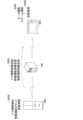
- FIG. 1 is a conceptual diagram showing an overall configuration of a kitchen linkage system according to a first embodiment
- FIG. 2 is an image diagram showing an outline of the operation of the kitchen linkage system according to the first embodiment.
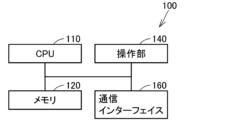
- FIG. 2 is a block diagram showing a configuration of a server according to the first embodiment;
- FIG. 4 is a diagram illustrating device information data according to the first embodiment.
- FIG. 11 is a diagram showing refrigerator history data according to the first embodiment.
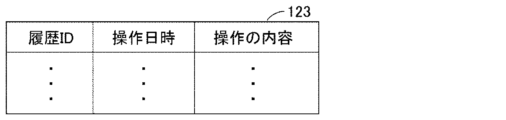
- FIG. 4 is a diagram showing cooking history data according to the first embodiment;
- FIG. 1 is a block diagram showing a configuration of a refrigerator according to a first embodiment.
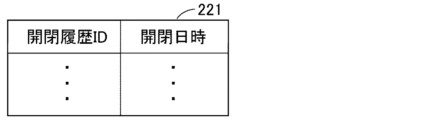
- FIG. 4 is a diagram showing opening/closing history data according to the first embodiment;
- FIG. 11 is a diagram showing open/close flag data according to the first embodiment;
- FIG. 4 is a diagram showing defrosting history data according to the first embodiment
- FIG. 2 is a diagram showing food data according to the first embodiment
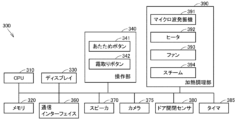
- 1 is a block diagram showing a configuration of a cooking machine according to a first embodiment
- FIG. 4 is a diagram showing open/close correspondence data according to the first embodiment
- FIG. 11 is a diagram showing defrost response data according to the first embodiment.
- 5 is a flowchart showing information processing of the refrigerator according to the first embodiment. 4 is a flowchart showing a door opening/closing process of the refrigerator according to the first embodiment.
- 1 is a flowchart showing information transmission and reception processing of a refrigerator according to a first embodiment.
- 5 is a flowchart showing information processing of the cooking machine according to the first embodiment.
- FIG. 5 is a flowchart showing an information transmission/reception process of the cooking machine according to the first embodiment.
- 5 is a flowchart showing a user input operation process of the cooking machine according to the first embodiment.
- 4 is a flowchart showing a cooking process of the cooking machine according to the first embodiment.
- 13 is a flowchart showing information transmission and reception processing of a refrigerator according to a second embodiment.
- 13 is a flowchart showing information transmission and reception processing of a refrigerator according to a third embodiment.
- 13 is a flowchart showing information transmission and reception processing of a refrigerator according to a fourth embodiment.
- FIG. 13 is a diagram showing opening/closing level data according to the fifth embodiment;
- FIG. 13 is a diagram showing defrost level data according to the fifth embodiment.
- FIG. 13 is a diagram showing period level data according to the fifth embodiment;
- FIG. 23 is a block diagram showing a configuration of a cooking machine according to an eighth embodiment.
- FIG. 23 is a block diagram showing a configuration of a cooking machine according to an eighth embodiment.
- FIG. 23 is a block diagram showing a configuration of a cooking machine according to an eighth embodiment.
- the overall configuration of a kitchen linkage system 1 will be described with reference to Fig. 1.
- the kitchen linkage system 1 includes, as main devices, a server 100 for providing a kitchen linkage service to a user, and a cooking appliance 300 such as a refrigerator 200 or a microwave oven that exchanges data with the server 100 via a router 400, the Internet, or the like.
- a server 100 for providing a kitchen linkage service to a user and a cooking appliance 300 such as a refrigerator 200 or a microwave oven that exchanges data with the server 100 via a router 400, the Internet, or the like.
- the refrigerator 200 accumulates various information related to the food stored therein (step S002).
- the refrigerator 200 accumulates door opening/closing history, defrosting history, food storage history, power outage history, and the like.
- the refrigerator 200 is assumed to provide various information to the cooking machine 300 related to both the food in the refrigerator compartment and the food in the freezer compartment, but it may also be configured to provide various information to the cooking machine 300 related only to the food stored in the freezer compartment, such as door opening/closing, number of defrosts, storage period, and the like.
- the refrigerator 200 transmits the recent door opening/closing history and defrosting history to the cooking appliance 300 via the server 100 (step S004).
- the cooking machine 300 When cooking the food, the cooking machine 300 performs pre-processing based on various information received from the refrigerator 200 (step S006). Pre-processing is preferably performed by the cooking machine 300 before cooking, depending on the degree of deterioration of the food stored in the refrigerator 200, particularly in the freezer. In this embodiment, if the door is opened and closed frequently or the defrosting operation is performed frequently, the cooking machine 300 determines that there is a high possibility that frost has formed around the food, and performs heating with a heater as pre-processing. Alternatively, if the door is opened and closed frequently or the defrosting operation is performed frequently, the cooking machine 300 determines that there is a high possibility that moisture has been removed from the food, and performs steam heating as pre-processing. This can reduce uneven heating, etc.
- the cooking machine 300 After pre-processing, the cooking machine 300 performs cooking as specified by the user (step S008).
- the cooking device 300 can perform more appropriate cooking in accordance with the storage state of the food in the refrigerator 200.
- the kitchen linkage system 1 for realizing such a function will be described in detail below.
- the server 100 in this embodiment includes, as main components, a CPU (Central Processing Unit) 110, a memory 120, an operation unit 140, and a communication interface 160.
- a CPU Central Processing Unit
- the CPU 110 controls each part of the server 100 by executing the programs stored in the memory 120.
- the CPU 110 executes the programs stored in the memory 120 and performs various processes, which will be described later, by referring to various data.
- the memory 120 is realized by various types of RAM (Random Access Memory), various types of ROM (Read-Only Memory), etc., and may be included in the server 100, may be detachable from various interfaces of the server 100, or may be a recording medium of another device accessible from the server 100.
- the memory 120 stores programs executed by the CPU 110, data generated by the execution of the programs by the CPU 110, device information data 121, refrigeration history data 122, cooking history data 123, and other databases used in the kitchen linkage service according to this embodiment.
- the device information data 121 stores the correspondence between the device ID, user name, user ID, family ID, model name, etc. for each refrigerator 200 and cooking appliance 300 registered in this service. Such correspondence can be registered by a user who uses the kitchen linkage service from his/her own personal computer, smartphone, etc. This enables the CPU 110 to identify the cooking appliance 300 that corresponds to the refrigerator 200, and to identify the refrigerator 200 that corresponds to the cooking appliance 300.
- Refrigeration history data 122 is prepared for each refrigerator 200, and for each operation, a history ID, the date and time of the operation, the details of the operation, and the deadline that the operation affects are stored.
- operations include operation commands input by the user to refrigerator 200, operations performed by the user on refrigerator 200 such as opening and closing the door, operations automatically performed by refrigerator 200 such as defrosting operation, and operations performed by refrigerator 200 following instructions from server 100.
- cooking history data 123 is prepared for each cooking machine 300, and a history ID, operation date and time, and operation details are stored for each cooking operation.
- operations include operation commands input by the user to the cooking machine 300, operations performed by the user on the cooking machine 300 such as opening and closing the door, operations automatically performed by the cooking machine 300, and operations performed by the cooking machine 300 following instructions from the server 100.
- the operation unit 140 accepts operations from a service administrator or the like and inputs various commands to the CPU 110.
- the communication interface 160 transmits various data such as voice data and control commands to other devices such as the refrigerator 200 and the cooking appliance 300 via the Internet, a carrier network, the router 400, etc. Conversely, the communication interface 160 receives data from other devices such as the refrigerator 200 and the cooking appliance 300 via the Internet, the carrier network, the router 400, etc., and passes the data to the CPU 110.
- the refrigerator 200 includes, as main components, a CPU 210, a memory 220, a display 230, an operation unit 240, a communication interface 260, a speaker 270, a camera 275, a door opening/closing sensor 280, a timer 285, and a cooling unit 290.
- Memory 220 is realized by various RAMs, various ROMs, etc.
- Memory 220 stores device driving programs executed by CPU 210 and other programs, data generated by execution of programs by CPU 210, data received from server 100 and other devices, data such as operation commands input via operation unit 240, opening/closing history data 221, opening/closing flag data 222, defrosting history data 223, food data 224, etc.
- the speaker 270 outputs sound based on a signal from the CPU 210.
- the CPU 210 outputs from the speaker 270 sound data that has been preregistered in the memory 220 or sound data received from the server 100.
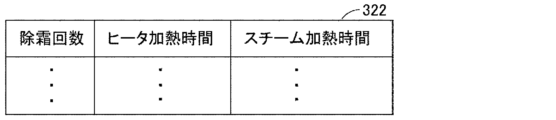
- the defrost response data 322 stores the heating time by the heater according to the number of defrosts of the refrigerator 200. More specifically, if the number of defrosts of the refrigerator 200 is large during a predetermined period, for example, within the last seven days, it is highly likely that a lot of frost has formed on the surface of the food, and therefore the heater 392 and the fan 393 are driven to melt and remove the frost before the desired cooking is performed. Note that the configuration may be such that the frost is melted using only either the heater 392 or the fan 393.
- the CPU 210 uses the timer 285 to determine, based on the opening/closing flag data 222, whether a predetermined expiration time, for example 10 minutes, has elapsed since the door was opened (step S212).
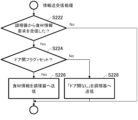
- the CPU 210 uses the communication interface 260 to determine whether or not a request for ingredient information has been received from the cooking device 300 (step S222).
- the CPU 210 transmits information to be used for cooking to the cooking machine 300 via the communication interface 260 (step S226).
- the CPU 210 provides the cooking machine 300 with the number of times the door was opened and closed and the number of times defrosting was performed for the last 72 hours.
- the CPU 210 may also refer to the food data 224 and provide the cooking machine 300 with the number of times the door was opened and closed and the number of times defrosting was performed for the period during which food was stored.
- CPU 210 transmits information to cooking machine 300 via communication interface 260 that the door of refrigerator 200 is not open (step S228).
- the CPU 310 of the cooking machine 300 executes the following processing according to a program stored in the memory 320.
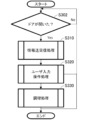
- the CPU 310 of the cooking device 300 detects via the door open/close sensor 380 that the door is open (YES in step S302), it executes an information transmission/reception process (step S310).
- the CPU 310 executes a user input operation process (step S320).
- the CPU 310 executes a cooking process (step S330).
- the CPU 310 transmits a request for ingredient information to the refrigerator 200 via the communication interface 360 (step S312).
- the CPU 310 determines whether or not a reply has been received from the refrigerator 200 via the communication interface 360 (step S314). If a reply has been received from the refrigerator 200 (YES in step S314), the CPU 310 ends the information transmission/reception process.
- the CPU 310 waits for a reply from the refrigerator 200 via the communication interface 360 (step S314) until a timeout occurs (while NO in step S316).
- the CPU 310 waits for input of a cooking menu and cooking instructions from the user via the operation unit 340 (step S322).
- the CPU 310 accepts input of a cooking menu and cooking instructions from the user (YES in step S324), it sets the input instructions in the memory 320 and ends the user input operation process.
- the CPU 310 waits for input of an operation instruction from the user via the operation unit 340 until a timeout occurs.
- CPU 310 sets normal cooking conditions, i.e., conditions specified by the user (step S332).
- CPU 310 executes normal heating and cooking (step S350).
- CPU 310 receives data from refrigerator 200 via communication interface 360 indicating that the door has not been opened (YES in step S336), CPU 310 executes normal heating and cooking (step S350).
- the CPU 310 receives various information from the refrigerator 200 via the communication interface 360 (step S338).
- the CPU 310 estimates the amount of frost and the degree of dryness of the food based on information from the refrigerator 200 such as the number of times it has been opened and closed, the number of times it has been defrosted, and the storage period (step S338).
- the CPU 310 determines whether the amount of frost exceeds a predetermined value and whether the dryness exceeds a predetermined value (step S340). If the amount of frost exceeds a predetermined value and the dryness also exceeds a predetermined value, the CPU 310 sets the first cooking condition (step S341). For example, as pre-processing, the CPU 310 drives the heater 392 to perform a process to remove frost from the food, then drives the steam mechanism 394 to perform a process to moisturize the food, and then performs normal heating control (step S350).
- the CPU 310 sets the second cooking conditions (step S342). For example, the CPU 310 drives the heater 392 to perform a process to remove frost from the food, and then performs normal heating control (step S350).
- the CPU 310 sets the third cooking condition (step S343). For example, the CPU 310 activates the steam mechanism 394 to perform a process to moisturize the food, and then performs normal heating control (step S350).
- the CPU 310 sets the fourth cooking condition (step S344).For example, the CPU 310 executes normal heating control (step S350).
- step S310 when the information request button is pressed via the operation unit 340 (YES in step S302B).
- the CPU 310 of the cooking device 300 may execute an information transmission/reception process (step S310) when a user performs an input operation for cooking via the operation unit 340 (step S320).
- the processing on the refrigerator 200 side is not limited to the above embodiment.
- the refrigerator 200 determines whether the door open/close flag is ON.
- the refrigerator 200 may provide various information such as open/close information and defrost information to the cooking appliance 300 not only after the request but also when the door is opened/closed before the request.
- the CPU 210 uses the communication interface 260 to determine whether or not a request for ingredient information has been received from the cooking device 300 (step S222).
- step S222 If a request for ingredient information is received (YES in step S222), the CPU 210 sets a timeout period to wait for the door to open or close (step S223).
- the CPU 210 determines whether the door opening/closing flag is ON or whether the door has been opened (step S224). Note that in step S224, the CPU 210 may determine whether the door opening/closing flag is ON and the door has been opened.
- the CPU 210 transmits information used for cooking to the cooking device 300 via the communication interface 260 (step S226). For example, the CPU 210 provides the cooking device 300 with the number of times the door has been opened and closed and the number of times defrosting has been performed in the last 72 hours.
- step S224 determines whether the door open flag is OFF (NO in step S224). If the door open flag is OFF (NO in step S224), the CPU 210 determines whether the timeout time has been reached (step S225). If the timeout time has been reached (YES in step S225), the CPU 210 transmits information to the cooking device 300 via the communication interface 260 that the door of the refrigerator 200 has not been opened (step S228).
- CPU 210 transmits information used for cooking to cooking appliance 300 via communication interface 260 (step S226).
- the refrigerator 200 transmits the number of times the door has been opened and closed and the number of times the defrosting operation has been performed to the refrigerator 200 in response to a request from the cooking appliance 300, but the information provided by the refrigerator 200 is not limited to such information.
- memory 220 of refrigerator 200 stores opening/closing level data 126, which indicates the number of times the door was opened and closed and the level during a specified period of time recently.
- memory 220 of refrigerator 200 also stores defrost level data 127, which indicates the number of times defrosting was performed and the level during a specified period of time recently.
- memory 220 of refrigerator 200 also stores period level data 128, which indicates the length of the period during which the refrigerator was stored in refrigerator 200 and the level.
- step S226 the CPU 210 of the refrigerator 200 reads, for the removed food, the level of the number of times the door has been opened and closed by referring to the opening and closing level data 126, the level of the number of times the door has been opened and closed by referring to the defrosting level data 127, and the level of the storage period by referring to the period level data 128.
- the CPU 210 transmits these level information to the cooking appliance 300 via the communication interface 260.
- the CPU 310 of the cooking machine 300 sets the heater and steam output and time as pre-processing for cooking according to the level of the number of times the door has been opened and closed, the level of the number of times defrosting has been performed, and the level of the length of the storage period.
- the CPU 210 of the refrigerator 200 may calculate the degree of frosting or the degree of dryness LV (TTL) based on the following calculation formula or the like.
- LV (TTL) (LV (df) x 2 + LV (dr) x 3 + LV (fr) x 1)/6
- the CPU 210 transmits the calculation result LV(TT L) to the cooking appliance 300.
- CPU 210 of refrigerator 200 may use communication interface 260 to provide data relating to the degree of frosting or dryness directly to cooking appliance 300 via Bluetooth communication (registered trademark) or the like, without going through other devices such as server 100 or router 400.
- Bluetooth communication registered trademark
- each device such as the server 100, refrigerator 200, and cooking appliance 300, in the kitchen linkage system 1 of the above embodiment may be performed by other devices.
- the CPU 210 of the refrigerator 200 in response to a request from the cooking appliance 300, provides data related to the degree of frosting and dryness to the cooking appliance 300 via the communication interface 260.
- the server 100 may provide various information related to the refrigerator 200 in accordance with the control command and status of the cooking appliance 300.
- the server 100 stores opening/closing history data 221, opening/closing flag data 222, defrosting history data 223, and food data 224 for each refrigerator 200 registered in the service.
- the CPU 210 of the refrigerator 200 uses the communication interface 260 to successively transmit to the server 100 that the door has been opened or closed.
- the CPU 210 of the refrigerator 200 uses the communication interface 260 to successively transmit to the server 100 that a defrosting operation has been performed.
- the CPU 210 of the refrigerator 200 uses the communication interface 260 to successively transmit to the server 100 that the food has been stored or removed.
- the CPU 110 of the server 100 stores the received information for each refrigerator 200 in the opening/closing history data 221, the opening/closing flag data 222, the defrosting history data 223, and the food data 224.
- the server 100 executes the processes of Fig. 15, Fig. 16, and Fig. 17. That is, in response to a request from the cooking appliance 300, the CPU 110 identifies the refrigerator 200 corresponding to the cooking appliance 300, reads information related to the door opening and closing, information related to the defrosting operation, and information related to the storage period related to the refrigerator 200, calculates the levels corresponding to these, and transmits this information to the cooking appliance 300 via the communication interface 160.
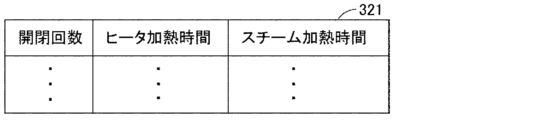
- CPU 310 of cooking machine 300 refers to opening/closing correspondence data 321 and defrosting correspondence data 322, and determines or sets control related to pre-processing of cooking based on information from refrigerator 200.
- memory 120 of server 100 may store opening/closing correspondence data 321 and defrosting correspondence data 322, and CPU 110 of server 100 may determine control related to cooking itself or pre-processing of cooking based on information from refrigerator 200 and information from cooking machine 300, and issue a command to cooking machine 300 via communication interface 160.
- the cooking machine 300 automatically executes control to remove frost from food and control to remove dryness from food based on various information provided by the refrigerator 200.
- the user of the cooking machine 300 may directly input a control command to remove frost from food and a control command to remove dryness from food by the user's own operation.
- the operation unit 340 of the cooking device 300 is provided with a warm button 341 and a defrost button 342.
- the CPU 310 controls the microwave oscillator 391 to perform cooking as in a normal microwave oven, or uses the heater 392 and fan 393 to perform baking or oven cooking, or uses the steam mechanism 394 to perform steam cooking.
- the defrost button 342 controls the heater 392 and fan 393 to heat the outside of the food, thereby melting and removing frost on the outside of the food.
- the operation unit 340 of the cooking device 300 is provided with a warming button 341, a defrosting button 342, and a moistening button 343.
- the processing when the warming button 341 is pressed and the processing when the defrosting button 342 is pressed are as described above.
- the moistening button 343 is pressed, the CPU 310 controls the steam mechanism 394 to bring steam into contact with the outside of the food, thereby moistening the food.
- the operation unit 340 of the cooking device 300 is provided with a warm button 341, a defrost button 342, a moist button 343, and a defrost button 344.
- the processing when the warm button 341 is pressed, the processing when the defrost button 342 is pressed, and the processing when the moist button 343 is pressed are as described above.
- the CPU 310 controls the microwave oscillator 391, the steam mechanism 394, etc. to defrost the outside and inside of the food simultaneously.
- buttons for other processes may be provided, or conversely, no buttons for any processes may be provided.
- CPU 310 may enable heater 392 only when defrost button 342 or defrost button 344 is pressed. Additionally, the CPU 310 may enable the steam mechanism 394 when the moisturizing button 343 or the defrosting button 344 is pressed.
- CPU 310 sets the second cooking conditions (step S342). For example, CPU 310 may adjust the time or output value of normal cooking, or may perform a process to remove frost from the food by operating heater 392 in addition to normal cooking (step S350). Note that CPU 310 preferably extends the operating time of heater 392 or increases its output the greater the degree of frosting. CPU 310 may also enable heater 392 only when defrost button 342 or defrost button 344 is pressed.
- the CPU 310 sets a third cooking condition (step S343).
- the CPU 310 may adjust the time or output value of normal cooking, or may operate the steam mechanism 394 to moisturize the food in addition to normal cooking (step S350).
- the CPU 310 preferably extends the operating time of the steam mechanism 394 or increases its output the greater the degree of dryness.
- the CPU 310 may also enable the steam mechanism 394 when the moisturize button 343 or defrost button 344 is pressed.
- the CPU 310 sets the fourth cooking condition (step S344).For example, the CPU 310 executes normal heating control (step S350). ⁇ Summary>
- a cooking machine includes a communication interface, a heating mechanism, and a control unit.
- the control unit receives information about frosting on food from the refrigerator via the communication interface, and performs cooking by controlling the heating mechanism based on the information.
- the heating mechanism includes a first heating mechanism that emits microwaves and a second heating mechanism that uses a different method from the first heating mechanism.
- the control unit controls the second heating mechanism based on the information to perform a defrosting process for the food.
- control unit controls the first heating mechanism or a third heating mechanism different from the first and second heating mechanisms to heat and cook the food.
- control unit based on information from the refrigerator, sets the time for cooking by the heating mechanism to be longer when the degree of frosting on the food is greater than when the degree of frosting on the food is less.
- control unit based on information from the refrigerator, sets the heating output of the heating mechanism to be stronger when the degree of frosting on the food is greater, compared to when the degree of frosting on the food is less.
- control unit receives information from the refrigerator regarding the number of times the refrigerator is opened and closed or the number of times the refrigerator is defrosted.
- a server in the above embodiment, includes a communication interface for communicating with the refrigerator and the cooking appliance, and a control unit.
- the control unit receives information about frosting on food from the refrigerator via the communication interface, and transmits the information to the cooking appliance corresponding to the refrigerator.
- a server information processing method includes the steps of acquiring information about frosting on food from a refrigerator via a communication interface, and transmitting information about frosting on food from the refrigerator corresponding to the cooking appliance to the cooking appliance.
- a kitchen linkage system includes a refrigerator that transmits information about frosting on food, and a cooking appliance that obtains information from the refrigerator and performs cooking by controlling a heating mechanism based on that information.
Landscapes
- Engineering & Computer Science (AREA)
- Chemical & Material Sciences (AREA)
- Combustion & Propulsion (AREA)
- Mechanical Engineering (AREA)
- General Engineering & Computer Science (AREA)
- Computer Networks & Wireless Communication (AREA)
- Signal Processing (AREA)
- Physics & Mathematics (AREA)
- Thermal Sciences (AREA)
- Cold Air Circulating Systems And Constructional Details In Refrigerators (AREA)
- Defrosting Systems (AREA)
Priority Applications (1)
| Application Number | Priority Date | Filing Date | Title |
|---|---|---|---|
| JP2025532698A JPWO2025013687A1 (https=) | 2023-07-07 | 2024-07-02 |
Applications Claiming Priority (2)
| Application Number | Priority Date | Filing Date | Title |
|---|---|---|---|
| JP2023112277 | 2023-07-07 | ||
| JP2023-112277 | 2023-07-07 |
Publications (1)
| Publication Number | Publication Date |
|---|---|
| WO2025013687A1 true WO2025013687A1 (ja) | 2025-01-16 |
Family
ID=94215466
Family Applications (1)
| Application Number | Title | Priority Date | Filing Date |
|---|---|---|---|
| PCT/JP2024/023853 Ceased WO2025013687A1 (ja) | 2023-07-07 | 2024-07-02 | 加熱調理機、サーバ、情報処理方法、およびキッチン連携システム |
Country Status (2)
| Country | Link |
|---|---|
| JP (1) | JPWO2025013687A1 (https=) |
| WO (1) | WO2025013687A1 (https=) |
Citations (9)
| Publication number | Priority date | Publication date | Assignee | Title |
|---|---|---|---|---|
| JPH08240A (ja) * | 1994-06-20 | 1996-01-09 | Toshiba Corp | 解凍装置 |
| JPH09173A (ja) * | 1995-06-22 | 1997-01-07 | Matsushita Electric Ind Co Ltd | 蒸気とマイクロ波による食品加熱調理方法 |
| JP2000304433A (ja) * | 1999-04-23 | 2000-11-02 | Matsushita Electric Ind Co Ltd | 連動調理が可能な冷蔵庫と調理器 |
| JP2005143353A (ja) * | 2003-11-13 | 2005-06-09 | Matsushita Electric Ind Co Ltd | 解凍方法 |
| JP2005173675A (ja) * | 2003-12-08 | 2005-06-30 | Hitachi Ltd | 物品管理および健康管理システム |
| JP2005296526A (ja) * | 2004-04-15 | 2005-10-27 | Daikin Ind Ltd | 調理機器管理装置、調理機器管理システム及び調理機器管理方法 |
| JP2009187338A (ja) * | 2008-02-07 | 2009-08-20 | Sharp Corp | 調理支援装置及び調理システム |
| WO2014087040A1 (en) * | 2012-12-03 | 2014-06-12 | Menumat Oy | Arrangement and method for nutrition and care services |
| JP2021065619A (ja) * | 2019-10-28 | 2021-04-30 | 三菱電機株式会社 | 炊飯器および米飯調理システム |
-
2024
- 2024-07-02 JP JP2025532698A patent/JPWO2025013687A1/ja active Pending
- 2024-07-02 WO PCT/JP2024/023853 patent/WO2025013687A1/ja not_active Ceased
Patent Citations (9)
| Publication number | Priority date | Publication date | Assignee | Title |
|---|---|---|---|---|
| JPH08240A (ja) * | 1994-06-20 | 1996-01-09 | Toshiba Corp | 解凍装置 |
| JPH09173A (ja) * | 1995-06-22 | 1997-01-07 | Matsushita Electric Ind Co Ltd | 蒸気とマイクロ波による食品加熱調理方法 |
| JP2000304433A (ja) * | 1999-04-23 | 2000-11-02 | Matsushita Electric Ind Co Ltd | 連動調理が可能な冷蔵庫と調理器 |
| JP2005143353A (ja) * | 2003-11-13 | 2005-06-09 | Matsushita Electric Ind Co Ltd | 解凍方法 |
| JP2005173675A (ja) * | 2003-12-08 | 2005-06-30 | Hitachi Ltd | 物品管理および健康管理システム |
| JP2005296526A (ja) * | 2004-04-15 | 2005-10-27 | Daikin Ind Ltd | 調理機器管理装置、調理機器管理システム及び調理機器管理方法 |
| JP2009187338A (ja) * | 2008-02-07 | 2009-08-20 | Sharp Corp | 調理支援装置及び調理システム |
| WO2014087040A1 (en) * | 2012-12-03 | 2014-06-12 | Menumat Oy | Arrangement and method for nutrition and care services |
| JP2021065619A (ja) * | 2019-10-28 | 2021-04-30 | 三菱電機株式会社 | 炊飯器および米飯調理システム |
Also Published As
| Publication number | Publication date |
|---|---|
| JPWO2025013687A1 (https=) | 2025-01-16 |
Similar Documents
| Publication | Publication Date | Title |
|---|---|---|
| CN107468048B (zh) | 烹饪器具及其控制方法 | |
| CN113915892B (zh) | 一种冰箱和杀菌控制方法 | |
| CN110895011B (zh) | 一种空调控制方法、装置、存储介质及空调 | |
| CN112168001B (zh) | 烹饪设备和烹饪方法 | |
| CN114568962B (zh) | 蒸烤设备及其烹饪控制方法和装置 | |
| CN113465138A (zh) | 用于空调器的杀菌控制方法及空调器 | |
| CN109323377A (zh) | 空调器及其控制方法和控制装置 | |
| CN109828475A (zh) | 跑步机和空调的联动控制方法、装置、存储介质及服务器 | |
| CN112168002A (zh) | 烹饪设备和烹饪方法 | |
| CN113842058B (zh) | 烹饪设备的控制方法、烹饪设备和计算机可读存储介质 | |
| CN106765917A (zh) | 一种空调器控制方法及装置 | |
| CN109114730A (zh) | 一种母婴空调除霜控制方法和空调器 | |
| WO2025013687A1 (ja) | 加熱調理機、サーバ、情報処理方法、およびキッチン連携システム | |
| WO2025013688A1 (ja) | 加熱調理機、サーバ、情報処理方法、およびキッチン連携システム | |
| WO2025013715A1 (ja) | 加熱調理機 | |
| WO2025013713A1 (ja) | 冷蔵庫、サーバ、情報処理方法、およびキッチン連携システム | |
| JP7539048B2 (ja) | 制御方法、空気調和機およびプログラム | |
| CN109084442A (zh) | 一种母婴空调控制方法和具有母婴模式的空调器 | |
| CN119085086B (zh) | 空调器的智能控制方法及装置、空调器 | |
| CN110940031A (zh) | 一种空调控制方法及厨房空调系统、存储介质 | |
| US11768031B1 (en) | Refrigerator appliance and methods for responding to ambient humidity levels | |
| CN107270481B (zh) | 送风装置的控制方法及相关设备 | |
| CN117190449A (zh) | 空调器的控制方法及装置、空调器、计算机可读存储介质 | |
| CN114485020B (zh) | 解冻控制方法、装置及解冻设备 | |
| JP2022029715A (ja) | 家庭用電気機器 |
Legal Events
| Date | Code | Title | Description |
|---|---|---|---|
| 121 | Ep: the epo has been informed by wipo that ep was designated in this application |
Ref document number: 24839579 Country of ref document: EP Kind code of ref document: A1 |
|
| ENP | Entry into the national phase |
Ref document number: 2025532698 Country of ref document: JP Kind code of ref document: A |
|
| WWE | Wipo information: entry into national phase |
Ref document number: 2025532698 Country of ref document: JP |
|
| NENP | Non-entry into the national phase |
Ref country code: DE |