WO2025013577A1 - 重合性組成物及び樹脂含浸超電導コイル - Google Patents
重合性組成物及び樹脂含浸超電導コイル Download PDFInfo
- Publication number
- WO2025013577A1 WO2025013577A1 PCT/JP2024/022670 JP2024022670W WO2025013577A1 WO 2025013577 A1 WO2025013577 A1 WO 2025013577A1 JP 2024022670 W JP2024022670 W JP 2024022670W WO 2025013577 A1 WO2025013577 A1 WO 2025013577A1
- Authority
- WO
- WIPO (PCT)
- Prior art keywords
- polymerizable composition
- resin
- superconducting coil
- norbornene
- impregnated
- Prior art date
- Legal status (The legal status is an assumption and is not a legal conclusion. Google has not performed a legal analysis and makes no representation as to the accuracy of the status listed.)
- Ceased
Links
Images
Classifications
-
- C—CHEMISTRY; METALLURGY
- C08—ORGANIC MACROMOLECULAR COMPOUNDS; THEIR PREPARATION OR CHEMICAL WORKING-UP; COMPOSITIONS BASED THEREON
- C08G—MACROMOLECULAR COMPOUNDS OBTAINED OTHERWISE THAN BY REACTIONS ONLY INVOLVING UNSATURATED CARBON-TO-CARBON BONDS
- C08G61/00—Macromolecular compounds obtained by reactions forming a carbon-to-carbon link in the main chain of the macromolecule
- C08G61/02—Macromolecular compounds containing only carbon atoms in the main chain of the macromolecule, e.g. polyxylylenes
- C08G61/04—Macromolecular compounds containing only carbon atoms in the main chain of the macromolecule, e.g. polyxylylenes only aliphatic carbon atoms
- C08G61/06—Macromolecular compounds containing only carbon atoms in the main chain of the macromolecule, e.g. polyxylylenes only aliphatic carbon atoms prepared by ring-opening of carbocyclic compounds
- C08G61/08—Macromolecular compounds containing only carbon atoms in the main chain of the macromolecule, e.g. polyxylylenes only aliphatic carbon atoms prepared by ring-opening of carbocyclic compounds of carbocyclic compounds containing one or more carbon-to-carbon double bonds in the ring
-
- C—CHEMISTRY; METALLURGY
- C08—ORGANIC MACROMOLECULAR COMPOUNDS; THEIR PREPARATION OR CHEMICAL WORKING-UP; COMPOSITIONS BASED THEREON
- C08L—COMPOSITIONS OF MACROMOLECULAR COMPOUNDS
- C08L65/00—Compositions of macromolecular compounds obtained by reactions forming a carbon-to-carbon link in the main chain; Compositions of derivatives of such polymers
-
- H—ELECTRICITY
- H01—ELECTRIC ELEMENTS
- H01F—MAGNETS; INDUCTANCES; TRANSFORMERS; SELECTION OF MATERIALS FOR THEIR MAGNETIC PROPERTIES
- H01F6/00—Superconducting magnets; Superconducting coils
- H01F6/06—Coils, e.g. winding, insulating, terminating or casing arrangements therefor
Definitions
- the present invention relates to a polymerizable composition for a resin-impregnated superconducting coil used in a high-dose environment where the radiation exposure per 100,000 hours is 1 MGy or more, and to a resin-impregnated superconducting coil obtained using such a polymerizable composition.
- Superconducting coils for generating the magnetic field of particle accelerators are usually used in high-dose environments where the radiation exposure per 100,000 hours or over the entire operating period is 1 MGy or more. Therefore, when a resin-impregnated superconducting coil, which is a superconducting coil impregnated with resin, is used in such a high-dose environment, the resin in the resin-impregnated superconducting coil is required to have durability in the high-dose environment.
- Non-Patent Document 1 discloses the results of an investigation into the fluctuation of additives, polymers and additive decomposition products, monomers, etc., as well as changes in tensile strength, color tone, odor, etc., due to gamma ray irradiation using films or sheets made of polyethylene, polypropylene, and polystyrene to which a specific antioxidant has been added.
- Non-Patent Document 2 also discloses the results of irradiating a polymer blend obtained by mixing polypropylene (PP) and polyethylene (LDPE) samples in different weight ratios with radiation of up to 100 kGy, and concludes that the polymer blend may have improved physical and thermal properties of the polymers that make up the polymer blend, and may have properties that can be used in applications involving radiation.
- PP polypropylene
- LDPE polyethylene
- Non-Patent Document 1 only discloses results of gamma ray irradiation up to 50 kGy
- Non-Patent Document 2 only discloses results of gamma ray irradiation up to 100 kGy, and the durability in a high-dose environment exposed to radiation on the order of MGy was not evaluated.
- the present invention has been made in consideration of these circumstances, and aims to provide a polymerizable composition for resin-impregnated superconducting coils that can be used to manufacture resin-impregnated superconducting coils that have excellent impregnation properties and durability in high-dose environments (high-dose environments in which the radiation exposure per 100,000 hours is 1 MGy or more).
- the inventors conducted research to achieve the above-mentioned objective, and discovered that the above-mentioned objective can be achieved by a polymerizable composition comprising a norbornene-based monomer and a metathesis polymerization catalyst, and rare earth element-containing particles, thereby completing the present invention.
- the following polymerizable composition and resin-impregnated superconducting coil are provided.
- the rare earth element-containing particles contain at least one rare earth element selected from the group consisting of cerium, praseodymium, gadolinium, dysprosium, holmium, and erbium.
- the resin-impregnated superconducting coil according to [9] wherein the norbornene-based resin has a specific heat of 3.0 J/K/kg or more at a temperature of 4 K.
- the present invention provides a polymerizable composition for resin-impregnated superconducting coils that has excellent impregnation properties and can be used to manufacture resin-impregnated superconducting coils that have excellent durability in high-dose environments (high-dose environments in which the radiation exposure per 100,000 hours is 1 MGy or more).
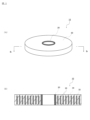
- FIG. 1(A) is a schematic perspective view of a resin-impregnated superconducting coil according to one embodiment of the present invention
- FIG. 1(B) is a schematic cross-sectional view of the resin-impregnated superconducting coil according to one embodiment of the present invention.
- the polymerizable composition of the present invention is a polymerizable composition for a resin-impregnated superconducting coil used in a high-dose environment in which the radiation exposure dose per 100,000 hours is 1 MGy or more, and contains a norbornene-based monomer, rare earth element-containing particles, and a metathesis polymerization catalyst.
- Superconducting coils for generating the magnetic field of particle accelerators are typically used in high-dose environments where the radiation exposure per 100,000 hours is 1 MGy or more.
- the radiation exposure per unit time for superconducting coils for generating the magnetic field of particle accelerators is thought to be, specifically, often about 2-5 MGy per 100,000 hours.
- the average radiation exposure per unit time for the superconducting coil is usually 10 Gy/h or more, but in high-dose environments it is estimated to be often about 20-50 Gy/h.
- the polymerizable composition of the present invention can provide a norbornene-based resin that has excellent durability in a high-dose environment where the radiation exposure amount per 100,000 hours falls within the above-mentioned range. Therefore, by using the polymerizable composition of the present invention, it is possible to manufacture a resin-impregnated superconducting coil that can be used stably for a long period of time even in such a high-dose environment.
- the resin-impregnated superconducting coil obtained using the polymerizable composition of the present invention can be suitably used in an environment where the radiation exposure dose per 100,000 hours is 1 MGy or more.
- the lower limit of the radiation exposure dose per 100,000 hours for the resin-impregnated superconducting coil obtained using the polymerizable composition of the present invention is more preferably 2 MGy or more, and even more preferably 3 MGy or more.
- the upper limit of the radiation exposure dose per 100,000 hours is preferably 30 MGy or less, more preferably 25 MGy or less, and even more preferably 20 MGy or less.
- the upper limit of the radiation exposure dose per 100,000 hours may be 15 MGy or less, 10 MGy or less, 8 MGy or less, or 6 MGy or less.
- the resin-impregnated superconducting coil obtained using the polymerizable composition of the present invention can be suitably used in an environment where the total cumulative radiation exposure is 1 MGy or more.
- the lower limit of the total cumulative radiation exposure for the resin-impregnated superconducting coil obtained using the polymerizable composition of the present invention is more preferably 2 MGy or more, and even more preferably 3 MGy or more.
- the upper limit of the total cumulative radiation exposure is preferably 30 MGy or less, more preferably 25 MGy or less, and even more preferably 20 MGy or less.
- the upper limit of the total cumulative radiation exposure may be 15 MGy or less, 10 MGy or less, 8 MGy or less, or 6 MGy or less.
- the radiation exposure per 100,000 hours may be within the above range.
- the polymerizable composition of the present invention contains a norbornene-based monomer, it has a low viscosity, and therefore when the polymerizable composition of the present invention is applied to a superconducting coil, it exhibits sufficient impregnation of the superconducting coil. Therefore, the polymerizable composition of the present invention can be suitably used for manufacturing a resin-impregnated superconducting coil.
- the norbornene-based resin obtained using the polymerizable composition of the present invention has excellent mechanical properties even at extremely low temperatures, while having a relatively low adhesive strength with the superconducting wire that constitutes the superconducting coil. Therefore, even if the norbornene-based resin undergoes thermal contraction during cooling, the occurrence of destruction of the superconducting coil due to tensile stress caused by thermal contraction can be suppressed, and thus the occurrence of quenching, which is caused by destruction of the superconducting coil, can be effectively suppressed.
- the norbornene-based monomer may be any compound having a norbornene ring structure, and is not particularly limited.
- Examples of the norbornene-based monomer include bicyclic compounds such as norbornene and norbornadiene; tricyclic compounds such as dicyclopentadiene; tetracyclic compounds such as tetracyclododecene; pentacyclic compounds such as tricyclopentadiene; heptacyclic compounds such as tetracyclopentadiene; and derivatives of these compounds having an alkenyl group having 2 to 10 carbon atoms, an alkynyl group having 2 to 10 carbon atoms, an alkylidene group having 1 to 10 carbon atoms, an epoxy group, or a (meth)acrylic group.
- the norbornene-based monomer may be used alone or in combination of two or more types.
- the norbornene-based monomer the tricyclic compounds are preferred, and dicyclopentadiene is particularly preferred, from the viewpoint of further enhancing the effects of the present invention.
- the norbornene-based monomer used preferably contains 50% by mass or more of the tricyclic compounds, especially dicyclopentadiene. It is also preferable to use the above-mentioned tricyclic and pentacyclic norbornene monomers in combination, in which case the mass ratio of "tricyclic:pentacyclic" is preferably 60:40 to 97:3, and more preferably 80:20 to 95:5.
- the content of the norbornene-based monomer in the polymerizable composition of the present invention is not particularly limited, but is preferably 50% by mass or more, more preferably 60% by mass or more, and even more preferably 70% by mass or more, and may be 100% by mass, based on 100% by mass of the total polymerizable monomers contained in the polymerizable composition.
- the norbornene-based resin obtained using the polymerizable composition of the present invention can be made to have even better durability in a high-dose environment.
- the mechanical properties at extremely low temperatures can be further improved while the adhesive strength to the superconducting wire that constitutes the superconducting coil is sufficiently reduced.
- a monocyclic cycloolefin may also be used as a polymerizable monomer contained in the polymerizable composition.
- Monocyclic cycloolefins include, but are not limited to, cyclobutene, cyclopentene, cyclohexene, cyclooctene, cyclododecene, cyclopentadiene, 1,4-cyclohexadiene, 1,5-cyclooctadiene, and derivatives thereof having an alkenyl group having 2 to 10 carbon atoms, an alkynyl group having 2 to 10 carbon atoms, an alkylidene group having 1 to 10 carbon atoms, an epoxy group, or a (meth)acrylic group.
- the monocyclic cycloolefins can be used alone or in combination of two or more types.
- the polymerizable composition of the present invention may contain, in addition to the norbornene-based monomer and the monocyclic cycloolefin, other polymerizable monomers that are polymerizable with these.
- other polymerizable monomers include other cycloolefin monomers.
- the content of polymerizable monomers other than norbornene-based monomers in the polymerizable composition of the present invention is not particularly limited, but is preferably 50% by mass or less, more preferably 40% by mass or less, and even more preferably 30% by mass or less, based on 100% by mass of the total polymerizable monomers contained in the polymerizable composition, and may be 0% by mass.
- the total content of polymerizable monomers, including norbornene-based monomers, in the polymerizable composition of the present invention is preferably 10 to 95% by mass, more preferably 12 to 90% by mass, and even more preferably 15 to 50% by mass, based on 100% by mass of the total polymerizable composition.
- the polymerizable composition of the present invention contains rare earth element-containing particles. This allows the polymerizable composition of the present invention to have excellent durability in a high-dose environment (a high-dose environment in which the radiation exposure per 100,000 hours is 1 MGy or more).
- the rare earth element-containing particles used in the present invention are not particularly limited as long as they contain a rare earth element, but preferably contain at least one rare earth element selected from cerium, praseodymium, gadolinium, dysprosium, holmium, and erbium, and more preferably contain at least one rare earth element selected from gadolinium and holmium.
- the rare earth element-containing particles preferably contain at least one rare earth compound selected from CeCu6 , CeAl2 , HoCu2 , Er3Ni , PrB6 , PrCu2 , DyCu2 , GdCu2 , Gd2O3 , and Gd2O2S , more preferably contain at least one rare earth compound selected from HoCu2 , Gd2O3 , and Gd2O2S , even more preferably contain at least one rare earth compound selected from Gd2O3 and Gd2O2S , and particularly preferably contain Gd2O3 .
- the rare earth element-containing particles used in the present invention may further contain a metal oxide such as silver oxide (Ag 2 O) or copper oxide (Cu 2 O), or a metal such as bismuth (Bi) or lead (Pb).
- a metal oxide such as silver oxide (Ag 2 O) or copper oxide (Cu 2 O)
- a metal such as bismuth (Bi) or lead (Pb).
- the particle diameter of the rare earth element-containing particles used in the present invention is not particularly limited, but the mode diameter on a number basis is preferably 0.05 ⁇ m or more and less than 1.5 ⁇ m, more preferably 0.07 to 1.3 ⁇ m, even more preferably 0.1 to 1.2 ⁇ m, and particularly preferably 0.7 to 1.1 ⁇ m.
- the mode diameter on a number basis of the rare earth element-containing particles is within the above range, the rare earth element-containing particles have excellent heat storage properties as well as excellent heat dissipation properties, so that the resin-impregnated superconducting coil manufactured using the polymerizable composition of the present invention can be cooled in a shorter time than conventional coils.
- the mode diameter on a number basis is the particle diameter with the highest probability of existence on a number basis, and the particle diameter showing the maximum value in a particle diameter distribution curve in which the frequency of existence of individual particle diameters against the logarithm of particle diameter is plotted on a number basis can be taken as the mode diameter on a number basis.
- the mode diameter on a number basis of rare earth element-containing particles can be calculated, for example, by determining the particle size distribution converted to a number basis from the particle size distribution measured by a light scattering method (laser diffraction/scattering method).
- the shape of the rare earth element-containing particles is not particularly limited, but examples include spherical, bale-shaped, spheroidal, cylindrical, fibrous, and irregular shapes, and the particles may be a mixture of a plurality of these shapes.
- the rare earth element-containing particles may be a combination of spherical rare earth element-containing particles and cylindrical rare earth element-containing particles.
- the rare earth element-containing particles may be a mixture of two or more types of particles having different compositions.
- the rare earth element-containing particles may also be particles of a rare earth element compound containing a rare earth element, the surface of which is coated with a metal having high electrical conductivity and thermal conductivity.
- a metal having high electrical conductivity and thermal conductivity include silver, gold, nickel, and copper.
- the rare earth element-containing particles used in the present invention may have their surfaces hydrophobized.
- hydrophobized rare earth element-containing particles By using hydrophobized rare earth element-containing particles, aggregation and sedimentation of the particles can be prevented in the polymerizable composition, and the particles can be uniformly dispersed in the norbornene resin obtained by bulk polymerization of the polymerizable composition.
- treatment agents used for the hydrophobization include silane coupling agents, titanate coupling agents, aluminum coupling agents, fatty acids such as stearic acid, oils and fats, surfactants, waxes, etc.
- the treatment agent can also be simply mixed with the rare earth element-containing particles in the polymerizable composition.
- the treating agent it is preferable to use a silane coupling agent having at least one hydrocarbon group having a norbornene structure, since the viscosity is low and the thixotropy (viscosity at rest) is not likely to increase even when rare earth element-containing particles are blended with the polymerizable composition.
- the silane coupling agent can also function as a monomer, but in the present invention, it is treated as a silane coupling agent.
- silane coupling agents include bicycloheptenyltrimethoxysilane, bicycloheptenyltriethoxysilane, bicycloheptenylethyltrimethoxysilane, and bicycloheptenylethyltriethoxysilane.
- silane coupling agents other than those mentioned above for example, silane coupling agents that do not have a norbornene structure such as vinyltrimethoxysilane, can be used.
- the treating agents can be used alone or in combination of two or more kinds.
- the content of the treating agent in the polymerizable composition of the present invention is preferably 0.1 to 5 mass%, more preferably 0.3 to 2 mass%, and even more preferably 0.5 to 1 mass%.
- the content of rare earth element-containing particles in the polymerizable composition of the present invention is preferably 4 to 90 mass%, more preferably 10 to 88 mass%, even more preferably 20 to 87 mass%, even more preferably 70 to 86 mass%, and particularly preferably 75 to 85 mass%, based on 100 mass% of the total polymerizable composition.
- the metathesis polymerization catalyst used in the present invention is not particularly limited as long as it can ring-open polymerize norbornene-based monomers, and any known metathesis polymerization catalyst can be used.
- the metathesis polymerization catalyst used in the present invention is a complex in which a plurality of ions, atoms, polyatomic ions and/or compounds are bonded to a transition metal atom as the central atom.
- a transition metal atom atoms of Groups 5, 6 and 8 (long-period periodic table, the same applies below) are used.
- the atoms of each group are not particularly limited, but an example of an atom of Group 5 is tantalum, an example of an atom of Group 6 is molybdenum or tungsten, and an example of an atom of Group 8 is ruthenium or osmium. Among these transition metal atoms, ruthenium and osmium of Group 8 are preferred.
- a complex having ruthenium or osmium as the central atom is preferred, and a complex having ruthenium as the central atom is more preferred.
- a complex having ruthenium as the central atom a ruthenium carbene complex in which a carbene compound is coordinated to ruthenium is preferred.
- carbene compound is a general term for compounds having a methylene free radical, and refers to a compound having an uncharged divalent carbon atom (carbene carbon) as represented by (>C:).
- Ruthenium carbene complexes have excellent catalytic activity during bulk ring-opening polymerization, so the resulting polymer has little odor due to unreacted monomers, and high-quality polymers can be obtained with good productivity. In addition, they are relatively stable against oxygen and moisture in the air and are not easily deactivated, so they can be used in the atmosphere.
- the metathesis polymerization catalyst may be used alone or in combination of multiple types.
- Examples of the ruthenium carbene complex include those represented by the following general formula (1) or (2).
- R1 and R2 are each independently a hydrogen atom, a halogen atom, or an organic group having 1 to 20 carbon atoms which may contain a halogen atom, an oxygen atom, a nitrogen atom, a sulfur atom, a phosphorus atom, or a silicon atom, and these groups may have a substituent or may be bonded to each other to form a ring.
- An example of R1 and R2 bonded to each other to form a ring is an indenylidene group which may have a substituent, such as a phenylindenylidene group.
- organic groups having 1 to 20 carbon atoms which may contain a halogen atom, an oxygen atom, a nitrogen atom, a sulfur atom, a phosphorus atom or a silicon atom
- alkyl groups having 1 to 20 carbon atoms alkenyl groups having 2 to 20 carbon atoms, alkynyl groups having 2 to 20 carbon atoms, aryl groups having 6 to 20 carbon atoms, alkoxy groups having 1 to 20 carbon atoms, alkenyloxy groups having 2 to 20 carbon atoms, alkynyloxy groups having 2 to 20 carbon atoms, aryloxy groups having 6 to 20 carbon atoms, and alkyl groups having 1 to 20 carbon atoms.
- alkylthio group examples include 8 carbon atoms, a carbonyloxy group, an alkoxycarbonyl group having 1 to 20 carbon atoms, an alkylsulfonyl group having 1 to 20 carbon atoms, an alkylsulfinyl group having 1 to 20 carbon atoms, an alkylsulfonic acid group having 1 to 20 carbon atoms, an arylsulfonic acid group having 6 to 20 carbon atoms, a phosphonic acid group, an arylphosphonic acid group having 6 to 20 carbon atoms, an alkylammonium group having 1 to 20 carbon atoms, and an arylammonium group having 6 to 20 carbon atoms.
- These organic groups having 1 to 20 carbon atoms which may contain a halogen atom, an oxygen atom, a nitrogen atom, a sulfur atom, a phosphorus atom, or a silicon atom, may have a substituent.
- substituents include an alkyl group having 1 to 10 carbon atoms, an alkoxy group having 1 to 10 carbon atoms, and an aryl group having 6 to 10 carbon atoms.
- X1 and X2 each independently represent any anionic ligand.
- the anionic ligand is a ligand that has a negative charge when separated from a central metal atom, and examples of the anionic ligand include a halogen atom, a diketonate group, a substituted cyclopentadienyl group, an alkoxyl group, an aryloxy group, and a carboxyl group.
- L 1 and L 2 represent a heteroatom-containing carbene compound or a neutral electron donor compound other than a heteroatom-containing carbene compound.
- a heteroatom-containing carbene compound and a neutral electron donor compound other than a heteroatom-containing carbene compound are compounds that have a neutral charge when separated from a central metal. From the viewpoint of improving catalytic activity, a heteroatom-containing carbene compound is preferred.
- the heteroatom means an atom of Groups 15 and 16 of the periodic table, and specific examples thereof include a nitrogen atom, an oxygen atom, a phosphorus atom, a sulfur atom, an arsenic atom, and a selenium atom. Among these, from the viewpoint of obtaining a stable carbene compound, a nitrogen atom, an oxygen atom, a phosphorus atom, and a sulfur atom are preferred, and a nitrogen atom is more preferred.
- heteroatom-containing carbene compound a compound represented by the following general formula (3) or (4) is preferable, and from the viewpoint of improving catalytic activity, a compound represented by the following general formula (3) is more preferable.
- R 3 , R 4 , R 5 and R 6 each independently represent a hydrogen atom, a halogen atom, or an organic group having 1 to 20 carbon atoms which may contain a halogen atom, an oxygen atom, a nitrogen atom, a sulfur atom, a phosphorus atom or a silicon atom.
- Specific examples of the organic group having 1 to 20 carbon atoms which may contain a halogen atom, an oxygen atom, a nitrogen atom, a sulfur atom, a phosphorus atom or a silicon atom are the same as those in the above general formulas (1) and (2).
- R 3 , R 4 , R 5 and R 6 may be bonded to each other in any combination to form a ring.
- R5 and R6 are hydrogen atoms.
- R3 and R4 are preferably an aryl group which may have a substituent, more preferably a phenyl group having an alkyl group having 1 to 10 carbon atoms as a substituent, and further preferably a mesityl group.
- neutral electron donor compound examples include oxygen atoms, water, carbonyls, ethers, nitriles, esters, phosphines, phosphinites, phosphites, sulfoxides, thioethers, amides, imines, aromatics, cyclic diolefins, olefins, isocyanides, and thiocyanates.
- R 1 , R 2 , X 1 , X 2 , L 1 and L 2 may each be alone and/or bonded to each other in any combination to form a multidentate chelating ligand.
- the compound represented by the above general formula (1) is preferred because the effects of the present invention are more pronounced, and among these, the compound represented by the following general formula (5) or general formula (6) is more preferred.
- Z is an oxygen atom, a sulfur atom, a selenium atom, NR 12 , PR 12 or AsR 12 , and R 12 is a hydrogen atom; a halogen atom; or an organic group having 1 to 20 carbon atoms which may contain a halogen atom, an oxygen atom, a nitrogen atom, a sulfur atom, a phosphorus atom or a silicon atom; however, an oxygen atom is preferred as Z because the effects of the present invention become more pronounced.
- R 1 , R 2 , X 1 and L 1 are the same as those in the above general formulae (1) and (2), and may form a multidentate chelating ligand either alone or in any combination by bonding to each other.
- X 1 and L 1 do not form a multidentate chelating ligand and that R 1 and R 2 bond to each other to form a ring, and it is more preferable that they are an indenylidene group which may have a substituent, and further preferably a phenylindenylidene group.
- organic group having 1 to 20 carbon atoms which may contain a halogen atom, an oxygen atom, a nitrogen atom, a sulfur atom, a phosphorus atom or a silicon atom are the same as those in the general formulae (1) and (2) above.
- R 7 and R 8 are each independently a hydrogen atom, an alkyl group having 1 to 20 carbon atoms, an alkenyl group having 2 to 20 carbon atoms, or a heteroaryl group having 6 to 20 carbon atoms, and these groups may have a substituent, or may be bonded to each other to form a ring.
- substituents examples include an alkyl group having 1 to 10 carbon atoms, an alkoxy group having 1 to 10 carbon atoms, or an aryl group having 6 to 10 carbon atoms, and when a ring is formed, the ring may be any of an aromatic ring, an alicyclic ring, and a heterocyclic ring, but it is preferable to form an aromatic ring, more preferably an aromatic ring having 6 to 20 carbon atoms, and even more preferably an aromatic ring having 6 to 10 carbon atoms.
- R 9 , R 10 and R 11 are each independently a hydrogen atom, a halogen atom, or an organic group having 1 to 20 carbon atoms which may contain a halogen atom, an oxygen atom, a nitrogen atom, a sulfur atom, a phosphorus atom or a silicon atom, and these groups may have a substituent or may be bonded to each other to form a ring.
- Specific examples of the organic group having 1 to 20 carbon atoms which may contain a halogen atom, an oxygen atom, a nitrogen atom, a sulfur atom, a phosphorus atom or a silicon atom are the same as those in the above general formulas (1) and (2).
- R 9 , R 10 and R 11 are preferably a hydrogen atom or an alkyl group having 1 to 20 carbon atoms, and more preferably a hydrogen atom or an alkyl group having 1 to 3 carbon atoms.
- m is 0 or 1.
- m is preferably 1, in which case Q is an oxygen atom, a nitrogen atom, a sulfur atom, a methylene group, an ethylene group, or a carbonyl group, and is preferably a methylene group.
- R 1 , X 1 , X 2 and L 1 are the same as those in the above general formulae (1) and (2), and may form a polydentate chelating ligand either alone or in any combination by bonding with each other. However, it is preferred that X 1 , X 2 and L 1 do not form a polydentate chelating ligand and that R 1 is a hydrogen atom.
- R 13 to R 21 are each a hydrogen atom, a halogen atom, or an organic group having 1 to 20 carbon atoms which may contain a halogen atom, an oxygen atom, a nitrogen atom, a sulfur atom, a phosphorus atom, or a silicon atom, and these groups may have a substituent or may be bonded to each other to form a ring.
- Specific examples of the organic group having 1 to 20 carbon atoms which may contain a halogen atom, an oxygen atom, a nitrogen atom, a sulfur atom, a phosphorus atom, or a silicon atom are the same as those in the above general formulas (1) and (2).
- the content of the metathesis polymerization catalyst is preferably 0.005 millimoles or more, more preferably 0.01 to 50 millimoles, and even more preferably 0.015 to 20 millimoles, per mole of the total amount of polymerizable monomers used in the reaction.
- the polymerizable composition of the present invention may also contain a radical generator, a diisocyanate compound, a polyfunctional (meth)acrylate compound, and other optional components, as desired.
- the radical generator generates radicals when heated, which have the effect of inducing a crosslinking reaction in the norbornene resin formed by bulk polymerization.
- the sites where the radical generator induces the crosslinking reaction are mainly the carbon-carbon double bonds contained in the norbornene resin, but crosslinking can also occur in saturated bond portions.
- Examples of radical generators include organic peroxides, diazo compounds, and non-polar radical generators.
- the amount of the radical generator in the polymerizable composition of the present invention is preferably 0.1 to 10 parts by mass, and more preferably 0.5 to 5 parts by mass, per 100 parts by mass of the total amount of polymerizable monomers used in the reaction.
- Diisocyanate compounds include, for example, 4,4'-methylene diphenyl diisocyanate (MDI), toluene-2,4-diisocyanate, 4-methoxy-1,3-phenylene diisocyanate, 4-isopropyl-1,3-phenylene diisocyanate, 4-chloro-1,3-phenylene diisocyanate, 4-butoxy-1,3-phenylene diisocyanate, 2,4-diisocyanate diphenyl ether, 1,4-phenylene diisocyanate, tolylene diisocyanate, xylylene diisocyanate (XDI), 1,5-naphthalene diisocyanate, benzidine diisocyanate, o-nitrobenzidine diisocyanate, and 4,4'-diisocyanate diisocyanate.
- MDI 4,4'-methylene diphenyl diisocyanate
- toluene-2,4-diisocyanate
- diisocyanate examples include aromatic diisocyanate compounds such as benzyl; aliphatic diisocyanate compounds such as methylene diisocyanate, 1,4-tetramethylene diisocyanate, 1,6-hexamethylene diisocyanate, and 1,10-decamethylene diisocyanate; alicyclic diisocyanate compounds such as 4-cyclohexylene diisocyanate, 4,4'-methylenebis(cyclohexyl isocyanate), 1,5-tetrahydronaphthalene diisocyanate, isophorone diisocyanate, hydrogenated MDI, and hydrogenated XDI; and polyurethane prepolymers obtained by reacting these diisocyanate compounds with low molecular weight polyols or polyamines so that the terminals are isocyanate.
- aromatic diisocyanate compounds such as benzyl
- aliphatic diisocyanate compounds such as methylene diisocyanate, 1,4-te
- conventionally known compounds having a polyfunctional isocyanate group which are made into an isocyanurate, biuret, adduct, or polymeric form, can be used without any particular limitation.
- examples of such compounds include a dimer of 2,4-toluylene diisocyanate, triphenylmethane triisocyanate, tris-(p-isocyanatophenyl)thiophosphite, polyfunctional aromatic isocyanate compounds, polyfunctional aromatic aliphatic isocyanate compounds, polyfunctional aliphatic isocyanate compounds, fatty acid modified polyfunctional aliphatic isocyanate compounds, polyfunctional blocked isocyanate compounds such as blocked polyfunctional aliphatic isocyanate compounds, polyisocyanate prepolymers, etc.
- aromatic diisocyanate compounds aliphatic diisocyanate compounds, and alicyclic diisocyanate compounds, which are polyfunctional unblocked isocyanate compounds, are preferably used because of their ease of availability and ease of handling. These compounds can be used alone or in combination of two or more.
- a polyfunctional blocked isocyanate compound is one in which at least two isocyanate groups in the molecule are reacted with an active hydrogen-containing compound to render the compound inactive at room temperature.
- the isocyanate compound generally has a structure in which the isocyanate groups are masked with a blocking agent such as alcohols, phenols, ⁇ -caprolactam, oximes, and active methylene compounds.
- Polyfunctional blocked isocyanate compounds generally have excellent storage stability because they do not react at room temperature, but the isocyanate groups are usually regenerated by heating at 140 to 200°C, and they can exhibit excellent reactivity.
- the diisocyanate compounds may be used alone or in combination of two or more.
- the amount of the diisocyanate compound in the polymerizable composition of the present invention is preferably 0.5 to 20 parts by mass, more preferably 1 to 15 parts by mass, and even more preferably 2 to 10 parts by mass, per 100 parts by mass of the total amount of polymerizable monomers used in the reaction.
- a polyfunctional (meth)acrylate compound may be used.
- a polyfunctional (meth)acrylate compound together with a diisocyanate compound the active hydrogen reactive group of the diisocyanate compound forms a chemical bond with the hydroxyl group present in the polyfunctional (meth)acrylate compound, thereby further improving the mechanical properties of the norbornene-based resin at extremely low temperatures.
- Preferred examples of polyfunctional (meth)acrylate compounds include ethylene glycol dimethacrylate, triethylene glycol dimethacrylate, trimethylolpropane trimethacrylate, and neopentyl glycol dimethacrylate.
- the polyfunctional (meth)acrylate compounds may be used alone or in combination of two or more.
- the amount of the polyfunctional (meth)acrylate compound in the polymerizable composition of the present invention is preferably 0.5 to 20 parts by mass, more preferably 1 to 15 parts by mass, and even more preferably 2 to 10 parts by mass, per 100 parts by mass of the total amount of polymerizable monomers used in the reaction.
- activators include activators, activity regulators, elastomers, antioxidants (anti-aging agents), dispersants, etc.
- the activator is a compound that acts as a cocatalyst for the metathesis polymerization catalyst described above and improves the polymerization activity of the catalyst.
- activators that can be used include alkylaluminum halides such as ethylaluminum dichloride and diethylaluminum chloride; alkoxyalkylaluminum halides in which part of the alkyl groups of these alkylaluminum halides are replaced with alkoxy groups; and organotin compounds.
- the amount of activator used is preferably 0.1 to 100 moles, and more preferably 1 to 10 moles, per mole of the total metathesis polymerization catalyst used in the polymerizable composition.
- the activity regulator is used to prevent polymerization from starting during the injection process when a polymerizable composition is prepared by mixing two or more reactant solutions as described below and then injected into a mold to initiate polymerization.
- examples of the activity regulator include compounds that have the effect of reducing the metathesis polymerization catalyst, and alcohols, haloalcohols, esters, ethers, nitriles, etc. can be used. Among these, alcohols and haloalcohols are preferred, and haloalcohols are more preferred.
- alcohols include n-propanol, n-butanol, n-hexanol, 2-butanol, isobutyl alcohol, isopropyl alcohol, and t-butyl alcohol.
- haloalcohols include 1,3-dichloro-2-propanol, 2-chloroethanol, and 1-chlorobutanol.
- Lewis base compounds can be used as activity regulators.
- Lewis base compounds include phosphorus-containing Lewis base compounds such as tricyclopentylphosphine, tricyclohexylphosphine, triphenylphosphine, triphenylphosphite, and n-butylphosphine; and nitrogen-containing Lewis base compounds such as n-butylamine, pyridine, 4-vinylpyridine, acetonitrile, ethylenediamine, N-benzylidenemethylamine, pyrazine, piperidine, and imidazole.
- phosphorus-containing Lewis base compounds such as tricyclopentylphosphine, tricyclohexylphosphine, triphenylphosphine, triphenylphosphite, and n-butylphosphine
- nitrogen-containing Lewis base compounds such as n-butylamine, pyridine, 4-vinylpyridine, acetonitrile, ethylenediamine
- Norbornenes substituted with alkenyl groups such as vinylnorbornene, propenylnorbornene, and isopropenylnorbornene, are polymerizable monomers and also function as activity regulators. The amount of these activity regulators used can be adjusted appropriately depending on the compound used.
- elastomers examples include natural rubber, polybutadiene, polyisoprene, styrene-butadiene copolymer (SBR), styrene-butadiene-styrene copolymer (SBS), styrene-isoprene-styrene copolymer (SIS), ethylene-propylene-diene terpolymer (EPDM), ethylene-vinyl acetate copolymer (EVA), and hydrogenated versions of these.
- SBR styrene-butadiene copolymer
- SBS styrene-butadiene-styrene copolymer
- SIS styrene-isoprene-styrene copolymer
- EPDM ethylene-propylene-diene terpolymer
- EVA ethylene-vinyl acetate copolymer
- the impact resistance of the norbornene resin formed by bulk polymerization of the composition can be improved by adding an elastomer.
- the amount of elastomer used is preferably 0.5 to 20 parts by mass, more preferably 2 to 10 parts by mass, based on 100 parts by mass of the total amount of polymerizable monomers in the polymerizable composition.
- Antioxidants include various types of antioxidants for plastics and rubber, such as phenol-based, phosphorus-based, and amine-based antioxidants.
- the polymerizable composition of the present invention is prepared by appropriately mixing the above-mentioned components according to a known method.
- the polymerizable composition of the present invention may be prepared by preparing two or more premixed liquids and mixing the two or more premixed liquids using a mixing device or the like just before bulk polymerization to obtain a norbornene-based resin.
- the premixed liquid is prepared by dividing the above-mentioned components into two or more liquids so that one liquid alone does not bulk polymerize, but when all the liquids are mixed, a polymerizable composition containing each component in a predetermined ratio (total of the contents of each component is 100% by mass) is obtained.
- the polymerizable composition of the present invention may be a polymerizable composition that is composed of two or more premixed liquids that do not cause a polymerization reaction by themselves and can form a polymerizable composition by combining the premixed liquids.
- a two or more reaction stock liquids
- the following two types (a) and (b) can be mentioned depending on the type of metathesis polymerization catalyst used.
- the metathesis polymerization catalyst may be one that does not have polymerization reaction activity by itself, but exhibits polymerization reaction activity when used in combination with an activator.
- a premixed liquid (liquid A) containing a polymerizable monomer containing a norbornene-based monomer and an activator and a premixed liquid (liquid B) containing a polymerizable monomer containing a norbornene-based monomer and a metathesis polymerization catalyst are used and mixed to obtain a polymerizable composition.
- a premixed liquid (liquid C) containing a polymerizable monomer containing a norbornene-based monomer and not containing a metathesis polymerization catalyst or an activator may be used in combination.
- a polymerizable composition can be obtained by mixing a premixed liquid (i) containing a polymerizable monomer including a norbornene-based monomer with a premixed liquid (ii) containing a metathesis polymerization catalyst.
- the premixed liquid (ii) is usually a liquid in which the metathesis polymerization catalyst is dissolved or dispersed in a small amount of an inert solvent.
- solvents examples include aromatic hydrocarbons such as toluene, xylene, ethylbenzene, and trimethylbenzene; ketones such as methyl ethyl ketone, cyclopentanone, cyclohexanone, 2-heptanone, and 4-hydroxy-4-methyl-2-pentanone; cyclic ethers such as tetrahydrofuran; diethyl ether, dichloromethane, dimethyl sulfoxide, and ethyl acetate.
- aromatic hydrocarbons such as toluene, xylene, ethylbenzene, and trimethylbenzene
- ketones such as methyl ethyl ketone, cyclopentanone, cyclohexanone, 2-heptanone, and 4-hydroxy-4-methyl-2-pentanone
- cyclic ethers such as tetrahydrofuran
- diethyl ether dichloromethane
- Optional components such as radical generators, diisocyanate compounds, and polyfunctional (meth)acrylate compounds may be included in any of the premixed liquids, or may be added in the form of a mixed liquid other than the premixed liquids.
- the mixing device used to mix the above premixed liquid may be, for example, an impingement mixer commonly used in reaction injection molding, or a low-pressure mixer such as a dynamic mixer or static mixer.
- the resin-impregnated superconducting coil of the present invention is a resin-impregnated superconducting coil used in a high-dose environment where the radiation exposure per 100,000 hours is 1 MGy or more, and is formed by impregnating a superconducting coil with a norbornene-based resin obtained by bulk polymerizing the above-mentioned polymerizable composition of the present invention. That is, the resin-impregnated superconducting coil of the present invention is a superconducting coil impregnated with a norbornene-based resin obtained by bulk polymerizing the polymerizable composition of the present invention.
- FIG. 1(A) is a schematic perspective view of a resin-impregnated superconducting coil 10 according to one embodiment of the present invention
- FIG. 1(B) is a schematic cross-sectional view of the resin-impregnated superconducting coil 10 according to one embodiment of the present invention.
- the resin-impregnated superconducting coil of the present invention will be described using the resin-impregnated superconducting coil 10 according to one embodiment of the present invention shown in FIG. 1(A) and FIG. 1(B) as an example, but the present invention is in no way limited to the embodiment shown in FIG. 1(A) and FIG. 1(B).
- the resin-impregnated superconducting coil 10 comprises a winding form 20 and a winding body 30 formed around the winding form 20.
- FIG. 1(B) is a cross-sectional view of the resin-impregnated superconducting coil 10 taken along line Ib-Ib in FIG. 1(A).
- the winding body 30 comprises a superconducting wire 32 and a wire protective layer 34.
- the reel 20 is formed, for example, from a glass fiber reinforced composite material, a high-strength polyethylene fiber reinforced composite material, stainless steel, aluminum, or the like, and the superconducting wire 32 is wound concentrically around the reel 20.
- the wire protective layer 34 is a protective layer for protecting the superconducting wire 32, and in this embodiment, the wire protective layer 34 is made of a norbornene-based resin obtained by bulk polymerization of the polymerizable composition of the present invention described above.
- the resin-impregnated superconducting coil 10 may also be configured to have insulating plates on the upper and/or lower surfaces of the winding body 30.
- the resin-impregnated superconducting coil 10 of this embodiment can be manufactured, for example, by the first manufacturing method or the second manufacturing method described below.
- the superconducting wire 32 is wound around the reel 20 while being coated with the above-mentioned polymerizable composition of the present invention, and then the polymerizable composition is polymerized and cured to manufacture the resin-impregnated superconducting coil 10.
- Examples of the superconducting wire 32 include wires containing superconducting materials such as niobium titanium alloys, A15 type intermetallic compounds (niobium-3-tin, niobium-3-aluminum , vanadium - 3 - gallium , etc.), magnesium diboride, rare earth barium copper oxides ( REBa2Cu3O7 :REBCO) including yttrium barium copper oxide ( YBa2Cu3O7 :YBCO) or gadolinium barium copper oxide ( GdBa2Cu3O7 :GdBCO), and bismuth strontium copper oxides ( Bi2Sr2CaCu2Ox :Bi2212, Bi2Sr2Ca2Cu3Ox : Bi2223 ).
- superconducting materials such as niobium titanium alloys, A15 type intermetallic compounds (niobium-3-tin, niobium-3-aluminum , vanadium
- the shape of the superconducting wire 32 may be, for example, a round wire, a rectangular wire, a stranded wire, a tape-shaped wire, etc.
- Fig. 1(B) illustrates an example in which the superconducting wire 32 is a tape-shaped wire.
- the superconducting wire 32 may also have a multi-layer structure, for example, a configuration having a first stabilization layer, a substrate, an intermediate layer, a superconducting layer, a protective layer, and a second stabilization layer in that order.
- the first stabilization layer can be made of a metal with a high specific heat such as copper or aluminum
- the substrate can be made of a high-strength metal such as a nickel-based alloy, stainless steel, or copper.
- the intermediate layer can have a laminated structure of multiple oxides
- the superconducting layer can be made of the above-mentioned superconducting materials.
- the protective layer can be made of, for example, silver, gold, or platinum, and can have the function of suppressing oxygen diffusion from the superconducting layer
- the second stabilization layer can be made of a metal with a high specific heat such as copper or aluminum.
- the polymerizable composition can be applied to the superconducting wire 32, for example, by continuously transporting the superconducting wire 32 from a delivery means using rollers and passing it through the polymerizable composition.
- the transport speed of the superconducting wire 32 may be appropriately adjusted so that the polymerizable composition adheres sufficiently to the surface of the superconducting wire 32.
- the polymerizable composition can be prepared by separately introducing the above-mentioned two or more premixed liquids into an impingement mixer, bringing them into contact with each other, and mixing them.
- an impingement mixer for reaction injection molding (RIM) or a low-pressure mixer such as a dynamic mixer or a static mixer can be used.
- the prepared polymerizable composition can be appropriately stored in any tank or the like for use in passing the superconducting wire 32 through it.
- the polymerizable composition may gradually thicken, but from the viewpoint of uniformly applying the polymerizable composition to the superconducting wire 32, it is desirable to pass the superconducting wire 32 through the polymerizable composition for less than the pot life of the polymerizable composition (the time from the time the polymerizable composition is obtained until the polymerizable composition changes from a liquid state to a pudding state and no longer flows, also called the pot life).
- the superconducting wire 32 that has passed through the polymerizable composition is wound up on a reel 20, and the polymerizable composition is then polymerized and hardened by bulk polymerization to obtain a resin-impregnated superconducting coil 10.
- the superconducting wire 32 does not have an insulating layer on its surface, it is preferable to ensure insulation between the superconducting wires 32 in the circumferential direction by winding insulating tape around the superconducting wire 32 in advance, or to ensure insulation between the superconducting wires 32 in the circumferential direction by inserting an insulating sheet between the superconducting wires 32 when winding the wires around the reel 20.
- materials for the insulating tape or insulating sheet include polyimide and aramid fiber paper.
- paraffin, wax, or grease may be applied to the surface of the superconducting wire 32 in advance.
- the polymerizable composition that has been wound together with the superconducting wire 32 and that has been impregnated and adhered between the superconducting wires 32 or to the surface of the superconducting wire 32 can be polymerized and hardened by, for example, storing the composition in a mold formed of a male mold and a female mold and heating it after drying as desired.
- the heating temperature is preferably 10 to 150°C, more preferably 30 to 120°C, and even more preferably 50 to 100°C
- the heating time is preferably 20 seconds to 20 minutes, more preferably 20 seconds to 5 minutes.
- nitrogen gas may be sealed in the mold as desired, and a pressure of preferably 0.1 to 1 MPa may be applied. After heating is completed, the mold is opened and demolded to obtain the resin-impregnated superconducting coil 10.
- the following method can be adopted as the second manufacturing method. That is, in the second manufacturing method, the superconducting wire 32 is wound around the reel 20 without being impregnated with the polymerizable composition, and while wound around the reel 20, the superconducting wire 32 is impregnated with the polymerizable composition, and then the polymerizable composition is polymerized and cured to manufacture the resin-impregnated superconducting coil 10.
- the impregnation of the polymerizable composition into the superconducting wire 32 wound around the reel 20 can be carried out by various methods.
- the obtained polymerizable composition can be stored in any tank or the like, and the superconducting wire 32 wound around the reel 20 can be immersed in it and maintained for a certain period of time.
- the impregnation of the polymerizable composition can be carried out while removing air, etc. by vacuum drawing and degassing under reduced pressure when the superconducting wire 32 is immersed, or it can be carried out under pressure by sealing in nitrogen gas.
- the superconducting wire 32 wound around the reel 20 can be placed in a mold formed of a male mold and a female mold, and the polymerizable composition can be injected into the mold while removing air, etc. by vacuum drawing and degassing under reduced pressure. Furthermore, after the injection of the polymerizable composition, nitrogen gas can be sealed in and the mold can be carried out under pressure.
- the pressure at which the polymerizable composition is impregnated into the superconducting wire 32 wound around the reel 20 is preferably 0.1 to 1 MPa.
- the polymerization and hardening of the polymerizable composition impregnated into the superconducting wire 32 wound around the reel 20 can be carried out in the same manner as in the first manufacturing method described above, and in the second manufacturing method as well, the resin-impregnated superconducting coil 10 can be obtained by opening the mold and removing the material after heating is completed.
- the resin-impregnated superconducting coil 10 can be obtained by the first or second manufacturing method.
- the insulating tape or insulating sheet used when winding the superconducting wire 32 is pre-impregnated with the polymerizable composition of the present invention to form a prepreg, which is then pre-wound around the superconducting wire 32, or inserted between the superconducting wires 32 when winding the superconducting wire 32 on the reel 20, and after winding the superconducting wire 32, heated to polymerize and harden the polymerizable composition, thereby manufacturing the resin-impregnated superconducting coil 10 of this embodiment.
- the specifications of the resin-impregnated superconducting coil 10 of this embodiment are not particularly limited, but for example, the inner diameter can be in the range of 30 to 400 mm, the outer diameter can be in the range of 100 to 1000 mm, and the number of turns can be in the range of 100 to 5000.
- the resin-impregnated superconducting coil 10 of this embodiment comprises a norbornene-based resin obtained by bulk polymerization of the above-mentioned polymerizable composition of the present invention.
- the norbornene-based resin obtained using the polymerizable composition of the present invention has excellent durability in the above-mentioned high radiation environment. Therefore, the resin-impregnated superconducting coil manufactured using the polymerizable composition of the present invention can be used stably for a long period of time in a high radiation environment.
- the norbornene-based resin obtained using the polymerizable composition of the present invention has excellent mechanical properties even at extremely low temperatures, but has a property of having a relatively weak adhesive strength with the superconducting wire 32 that constitutes the resin-impregnated superconducting coil 10. Therefore, even if thermal contraction of the norbornene-based resin occurs during cooling, the occurrence of destruction of the resin-impregnated superconducting coil 10 due to tensile stress caused by thermal contraction can be suppressed, and the occurrence of quenching can be effectively suppressed.
- the norbornene-based resin obtained using the polymerizable composition of the present invention contains rare earth element-containing particles. Since the rare earth element-containing particles have excellent heat storage properties, the norbornene-based resin obtained using the polymerizable composition of the present invention can exhibit a high specific heat at extremely low temperatures, which effectively suppresses the occurrence of quenching. In addition, the action of such rare earth element-containing particles can absorb the generated heat and mitigate the temperature rise, which effectively suppresses the occurrence of thermal runaway in the resin-impregnated superconducting coil.
- the norbornene-based resin obtained using the polymerizable composition of the present invention can exhibit a high specific heat at a temperature of 4K, preferably 3.0 J/K/kg or more, more preferably 5.0 J/K/kg or more, even more preferably 10.0 J/K/kg or more, and particularly preferably 15.0 J/K/kg or more.
- the upper limit of the specific heat of the norbornene-based resin at a temperature of 4K is not particularly limited, but is, for example, 100 J/K/kg or less.
- the resin-impregnated superconducting coil 10 of this embodiment can take advantage of these characteristics and be suitably used as a resin-impregnated superconducting coil for use in high-dose environments where the radiation exposure per 100,000 hours falls within the range described above.
- the resin-impregnated superconducting coil 10 of this embodiment can be suitably used as a superconducting coil for generating a magnetic field in a particle accelerator such as SuperKEKB.
- Example 1 A preliminary blend liquid (i) was obtained by mixing 100 parts of RIM monomer (manufactured by Zeon Corporation), 500 parts of Gd 2 O 3 particles having a mode diameter of 0.9 ⁇ m on a number basis measured by a light scattering method (laser diffraction/scattering method), 1.5 parts of coupling agent 1 (vinyltrimethoxysilane, manufactured by Shin-Etsu Chemical Co., Ltd.), 3 parts of coupling agent 2 (bicycloheptenylethyltriethoxysilane, manufactured by Shin-Etsu Chemical Co., Ltd.), and 3 parts of a dispersant (product name "Rheodol SP-030V", isopropyl tristearoyl titanate, manufactured by Kao Corporation).
- the above RIM monomer contains 90 parts of dicyclopentadiene and 10 parts of tricyclopentadiene as norbornene-based monomers.
- a preliminary blend liquid (ii) was obtained by dissolving 0.3 parts of a ruthenium catalyst represented by the formula (7) as a metathesis polymerization catalyst, 30 parts of 2,6-di-t-butyl-p-cresol (BHT, antioxidant), and 30 parts of triphenylphosphine in 39.7 parts of cyclopentanone.
- BHT 2,6-di-t-butyl-p-cresol
- triphenylphosphine in 39.7 parts of cyclopentanone.
- Mes represents a mesityl group.
- the molding die used was a flat molded product reaction injection die made of two stainless steel plates with an internal space of 245 mm length x 210 mm width x 4 mm thickness. This reaction injection die was designed with a reaction liquid injection hole at the bottom of one of the stainless steel plates.
- the mixture was heated in an oven heated to 40°C for 30 minutes, and then heated at 120°C for 60 minutes to obtain a norbornene-based resin that had been polymerized and cured.
- the bending strength of the obtained norbornene-based resin was measured according to the above method. The results are shown in Table 1.
- Example 2 Except for using Gd2O2S particles having a mode diameter of 1.1 ⁇ m on a number basis measured by a light scattering method (laser diffraction/scattering method) instead of the Gd2O3 particles , a norbornene -based resin was obtained in the same manner as in Example 1, and tests were performed in the same manner as in Example 1. The results are shown in Table 1.
- Example 3 Except for using HoCu2 particles having a mode diameter of 1.1 ⁇ m based on the number measured by a light scattering method (laser diffraction/scattering method) instead of Gd2O3 particles, a norbornene - based resin was obtained in the same manner as in Example 1, and tests were performed in the same manner as in Example 1. The results are shown in Table 1.
- the polymerizable compositions obtained in Examples 1 to 3 had low viscosity, and when applied to superconducting coils, they exhibited sufficient impregnation properties for the superconducting coils, making them suitable for use in the manufacture of resin-impregnated superconducting coils.
- the polymerizable compositions of Examples 1 to 3 were capable of producing norbornene-based resins with sufficient bending strength, whether they were irradiated with gamma rays at approximately 3 to 4 MGy or at approximately 5 MGy. Therefore, it was confirmed that a polymerizable composition containing a norbornene-based monomer, rare earth element-containing particles, and a metathesis polymerization catalyst can be used to produce a resin-impregnated superconducting coil with excellent durability in a high-dose environment (a high-dose environment in which the radiation exposure per 100,000 hours is 1 MGy or more).
- the obtained norbornene-based resin has excellent mechanical properties even at extremely low temperatures, and also has the property of having a relatively low adhesive strength to the material that constitutes the windings that make up the superconducting coil. Therefore, even if the norbornene-based resin undergoes thermal contraction when the superconducting coil is cooled, it is possible to prevent the superconducting coil from being destroyed by tensile stress caused by the thermal contraction, and it is possible to effectively prevent the occurrence of quenching.
- the norbornene-based resin of Example 1 was measured for specific heat at a temperature of 4K using a physical property evaluation system (product name "PPMS", manufactured by Nippon Quantum Design Co., Ltd.) as a measuring device.
- PPMS physical property evaluation system
- the norbornene-based resin of Example 1 had a high specific heat of 20 J/K/kg at a temperature of 4K.
- the norbornene-based resin of Example 1 when applied to a superconducting coil, the norbornene-based resin of Example 1 can effectively suppress the occurrence of quenching due to its excellent heat storage property, and further absorbs the generated heat to mitigate the temperature rise, and as a result, the occurrence of thermal runaway can be effectively suppressed, so that a resin-impregnated superconducting coil with high current stability and excellent reliability can be obtained.
- the norbornene-based resin of Example 1 also has excellent heat dissipation properties, and the obtained resin-impregnated superconducting coil can be cooled in a short time.
- REFERENCE SIGNS LIST 10 resin-impregnated superconducting coil 20: winding frame 30: winding body 32: superconducting wire 34: wire protection layer
Landscapes
- Chemical & Material Sciences (AREA)
- Health & Medical Sciences (AREA)
- Chemical Kinetics & Catalysis (AREA)
- Medicinal Chemistry (AREA)
- Polymers & Plastics (AREA)
- Organic Chemistry (AREA)
- Engineering & Computer Science (AREA)
- Power Engineering (AREA)
- Compositions Of Macromolecular Compounds (AREA)
Priority Applications (1)
| Application Number | Priority Date | Filing Date | Title |
|---|---|---|---|
| JP2025532637A JPWO2025013577A1 (https=) | 2023-07-10 | 2024-06-21 |
Applications Claiming Priority (2)
| Application Number | Priority Date | Filing Date | Title |
|---|---|---|---|
| JP2023113279 | 2023-07-10 | ||
| JP2023-113279 | 2023-07-10 |
Publications (1)
| Publication Number | Publication Date |
|---|---|
| WO2025013577A1 true WO2025013577A1 (ja) | 2025-01-16 |
Family
ID=94215140
Family Applications (1)
| Application Number | Title | Priority Date | Filing Date |
|---|---|---|---|
| PCT/JP2024/022670 Ceased WO2025013577A1 (ja) | 2023-07-10 | 2024-06-21 | 重合性組成物及び樹脂含浸超電導コイル |
Country Status (2)
| Country | Link |
|---|---|
| JP (1) | JPWO2025013577A1 (https=) |
| WO (1) | WO2025013577A1 (https=) |
Cited By (1)
| Publication number | Priority date | Publication date | Assignee | Title |
|---|---|---|---|---|
| CN120265108A (zh) * | 2025-05-28 | 2025-07-04 | 兰州大学 | 一种超快浸渍封装超导结构的方法 |
Citations (4)
| Publication number | Priority date | Publication date | Assignee | Title |
|---|---|---|---|---|
| WO2003062253A1 (en) | 2002-01-22 | 2003-07-31 | Universiteit Gent | Metal complexes for use in metathesis |
| WO2011079799A1 (en) | 2009-12-30 | 2011-07-07 | Zannan Scitech Co., Ltd. | Highly active metathesis catalysis selective for romp and rcm |
| JP2020047740A (ja) * | 2018-09-18 | 2020-03-26 | 株式会社東芝 | 超電導コイル、及び、超電導機器 |
| WO2022118614A1 (ja) * | 2020-12-03 | 2022-06-09 | Rimtec株式会社 | 重合性組成物及び樹脂含浸超電導コイル |
-
2024
- 2024-06-21 JP JP2025532637A patent/JPWO2025013577A1/ja active Pending
- 2024-06-21 WO PCT/JP2024/022670 patent/WO2025013577A1/ja not_active Ceased
Patent Citations (6)
| Publication number | Priority date | Publication date | Assignee | Title |
|---|---|---|---|---|
| WO2003062253A1 (en) | 2002-01-22 | 2003-07-31 | Universiteit Gent | Metal complexes for use in metathesis |
| JP2005515260A (ja) | 2002-01-22 | 2005-05-26 | ウニベルズィタイト・ヘント | 複分解に使用される金属錯体 |
| WO2011079799A1 (en) | 2009-12-30 | 2011-07-07 | Zannan Scitech Co., Ltd. | Highly active metathesis catalysis selective for romp and rcm |
| JP2013516392A (ja) | 2009-12-30 | 2013-05-13 | ザンナン・サイテック・カンパニー・リミテッド | Rompとrcm反応に対する高効率複分解触媒 |
| JP2020047740A (ja) * | 2018-09-18 | 2020-03-26 | 株式会社東芝 | 超電導コイル、及び、超電導機器 |
| WO2022118614A1 (ja) * | 2020-12-03 | 2022-06-09 | Rimtec株式会社 | 重合性組成物及び樹脂含浸超電導コイル |
Non-Patent Citations (2)
| Title |
|---|
| MEHTAP SIRIN: "Effect of gamma irradiation on the thermal and mechanical behaviour of polypropylene and polyethylene blends", RADIATION PHYSICS AND CHEMISTRY, vol. 110034, 2022, pages 1 - 11 |
| YOKO KAWAMURA: "Sankaboushizai-Ganyuu Porientiren, Poripuropiren, oyobi Porisutiren nitaisuru Ganmasenno Eikyou (Effects of Gamma Irradiation on Polyethylene, Polypropylene and Polystyrene Containing Antioxidants", FOOD IRRADIATION, JAPANESE RESEARCH ASSOCIATION FOR FOOD IRRADIATION, vol. 38, 30 September 2003 (2003-09-30), pages 11 - 22 |
Cited By (1)
| Publication number | Priority date | Publication date | Assignee | Title |
|---|---|---|---|---|
| CN120265108A (zh) * | 2025-05-28 | 2025-07-04 | 兰州大学 | 一种超快浸渍封装超导结构的方法 |
Also Published As
| Publication number | Publication date |
|---|---|
| JPWO2025013577A1 (https=) | 2025-01-16 |
Similar Documents
| Publication | Publication Date | Title |
|---|---|---|
| JP7849675B2 (ja) | 重合性組成物及び樹脂含浸超電導コイル | |
| JP7792907B2 (ja) | シクロオレフィン系樹脂硬化物 | |
| US10351682B2 (en) | Method for producing composite molded article | |
| WO2025013577A1 (ja) | 重合性組成物及び樹脂含浸超電導コイル | |
| WO2018207861A1 (ja) | 超電導コイル装置及びその製造方法 | |
| EP4011613A1 (en) | Polymerizable composition, cycloolefin-based polymer, and metal/resin composite | |
| EP3466658A1 (en) | Method for manufacturing composite material molding | |
| US20210292497A1 (en) | Polymerizable composition and composite material | |
| WO2026048498A1 (ja) | 重合性組成物及び樹脂含浸超電導コイル | |
| US12570774B2 (en) | Cycloolefin resin cured product having oxygen barrier properties | |
| JP6954809B2 (ja) | 複合材料の製造方法 | |
| WO2022230803A1 (ja) | 金属樹脂積層体及び金属樹脂積層体の製造方法 | |
| US7217600B2 (en) | Cyclic olefin polymers and catalyst for semiconductor applications | |
| JP2024154793A (ja) | 複合材料 | |
| JP2022180216A (ja) | 重合性組成物及びフッ素含有ノルボルネン系樹脂 | |
| JP2025103847A (ja) | 吐出方法、成形体の製造方法および吐出装置 | |
| EP4606837A1 (en) | Polymerizable composition and norbornene resin | |
| JP2025180677A (ja) | 成形体および成形体の製造方法 | |
| CN119923426A (zh) | 催化剂溶液和聚合性组合物 |
Legal Events
| Date | Code | Title | Description |
|---|---|---|---|
| 121 | Ep: the epo has been informed by wipo that ep was designated in this application |
Ref document number: 24839473 Country of ref document: EP Kind code of ref document: A1 |
|
| ENP | Entry into the national phase |
Ref document number: 2025532637 Country of ref document: JP Kind code of ref document: A |
|
| WWE | Wipo information: entry into national phase |
Ref document number: 2025532637 Country of ref document: JP |
|
| WWE | Wipo information: entry into national phase |
Ref document number: 2024839473 Country of ref document: EP |
|
| NENP | Non-entry into the national phase |
Ref country code: DE |