WO2025009604A1 - 炭酸カルシウム粒子の製造方法 - Google Patents
炭酸カルシウム粒子の製造方法 Download PDFInfo
- Publication number
- WO2025009604A1 WO2025009604A1 PCT/JP2024/024364 JP2024024364W WO2025009604A1 WO 2025009604 A1 WO2025009604 A1 WO 2025009604A1 JP 2024024364 W JP2024024364 W JP 2024024364W WO 2025009604 A1 WO2025009604 A1 WO 2025009604A1
- Authority
- WO
- WIPO (PCT)
- Prior art keywords
- calcium carbonate
- acid
- carbonate particles
- containing waste
- waste
- Prior art date
- Legal status (The legal status is an assumption and is not a legal conclusion. Google has not performed a legal analysis and makes no representation as to the accuracy of the status listed.)
- Ceased
Links
Images




Classifications
-
- B—PERFORMING OPERATIONS; TRANSPORTING
- B09—DISPOSAL OF SOLID WASTE; RECLAMATION OF CONTAMINATED SOIL
- B09B—DISPOSAL OF SOLID WASTE NOT OTHERWISE PROVIDED FOR
- B09B3/00—Destroying solid waste or transforming solid waste into something useful or harmless
- B09B3/70—Chemical treatment, e.g. pH adjustment or oxidation
-
- C—CHEMISTRY; METALLURGY
- C01—INORGANIC CHEMISTRY
- C01F—COMPOUNDS OF THE METALS BERYLLIUM, MAGNESIUM, ALUMINIUM, CALCIUM, STRONTIUM, BARIUM, RADIUM, THORIUM, OR OF THE RARE-EARTH METALS
- C01F11/00—Compounds of calcium, strontium, or barium
- C01F11/18—Carbonates
-
- B—PERFORMING OPERATIONS; TRANSPORTING
- B09—DISPOSAL OF SOLID WASTE; RECLAMATION OF CONTAMINATED SOIL
- B09B—DISPOSAL OF SOLID WASTE NOT OTHERWISE PROVIDED FOR
- B09B2101/00—Type of solid waste
- B09B2101/30—Incineration ashes
-
- B—PERFORMING OPERATIONS; TRANSPORTING
- B09—DISPOSAL OF SOLID WASTE; RECLAMATION OF CONTAMINATED SOIL
- B09B—DISPOSAL OF SOLID WASTE NOT OTHERWISE PROVIDED FOR
- B09B2101/00—Type of solid waste
- B09B2101/45—Concrete
-
- B—PERFORMING OPERATIONS; TRANSPORTING
- B09—DISPOSAL OF SOLID WASTE; RECLAMATION OF CONTAMINATED SOIL
- B09B—DISPOSAL OF SOLID WASTE NOT OTHERWISE PROVIDED FOR
- B09B2101/00—Type of solid waste
- B09B2101/55—Slag
Definitions
- the technology disclosed herein relates to a method for producing calcium carbonate particles.
- high-whiteness (high-purity) calcium carbonate from Ca-containing solid waste as a raw material is carried out through a multi-stage process.
- a high-purity Ca ion solution is obtained by a process of extracting Ca from Ca-containing solid waste with a strong inorganic acid and then removing impurities (see, for example, Patent Document 1), or by a process of selectively extracting Ca with a weak inorganic acid (see, for example, Patent Document 2), and then in a next step, the Ca ion solution is reacted with carbonic acid or carbonate ions to produce calcium carbonate with high whiteness (high purity).
- the technology disclosed herein has been made in consideration of the above circumstances, and the objective of the technology disclosed herein is to provide a technology relating to a method for producing calcium carbonate particles that can produce calcium carbonate particles with high whiteness (high purity) in a small number of steps, and to solve the above-mentioned problem.
- a method for producing calcium carbonate particles by mixing Ca-containing waste, a carbonate ion-containing compound, and an organic acid.
- ⁇ 2> The method for producing calcium carbonate particles according to ⁇ 1>, wherein the organic acid has one or more groups selected from the group consisting of a carboxy group and a sulfo group.
- ⁇ 3> The method for producing calcium carbonate particles according to ⁇ 1> or ⁇ 2>, wherein the organic acid is one or more selected from the group consisting of citric acid, acetic acid, formic acid, oxalic acid, stearic acid, glutamic acid, and polyacrylic acid.
- ⁇ 4> The method for producing calcium carbonate particles according to any one of ⁇ 1> to ⁇ 3>, wherein the Ca-containing waste contains carbide slag.
- ⁇ 5> The method for producing calcium carbonate particles according to any one of ⁇ 1> to ⁇ 4>, wherein the Ca-containing waste is Ca-containing solid waste.
- the technology disclosed herein provides a technology related to a method for producing calcium carbonate particles that can produce calcium carbonate particles with high whiteness (high purity) in a small number of steps.
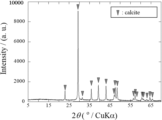
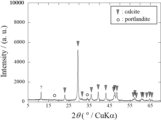
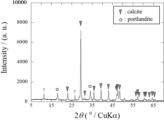
- 1 is an XRD pattern of calcium carbonate particles obtained in Example 4.
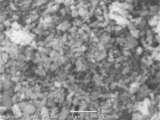
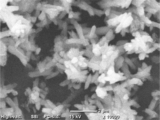
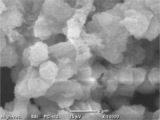
- 1 is a SEM image of calcium carbonate particles obtained in Example 4.
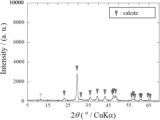
- 1 is an XRD pattern of calcium carbonate particles obtained in Comparative Example 1.
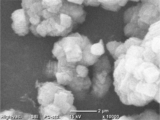
- 1 is a SEM image of calcium carbonate particles obtained in Comparative Example 1.
- 1 is an XRD pattern of calcium carbonate particles obtained in Example 8.
- 1 is a SEM image of calcium carbonate particles obtained in Comparative Example 2.
- 1 is a SEM image of calcium carbonate particles obtained in Comparative Example 2.
- 1 is an XRD pattern of calcium carbonate particles obtained in Comparative Example 2.
- 1 is an XRD pattern of calcium carbonate particles obtained in Example 9.
- 1 is a SEM image of calcium carbonate particles obtained in Example 9.
- 1 is an XRD pattern of calcium carbonate particles obtained in Comparative Example 3.
- 1 is a SEM image of calcium carbonate particles obtained in Comparative Example 3.
- the method for producing calcium carbonate particles according to the present disclosure includes a production step of mixing a Ca-containing waste material, a carbonate ion-containing compound, and an organic acid.
- the method for producing calcium carbonate particles according to the present disclosure may further include a recovery step of recovering the calcium carbonate particles obtained in the production step by solid-liquid separation using a filter medium, a washing step of washing the recovered filter cake, a drying step of drying the filter cake, and the like.
- the term "few steps” means only the production steps up to the production of calcium carbonate particles from Ca-containing waste, and does not include a recovery step, a washing step, and the like that are optionally performed after the production of calcium carbonate particles.
- calcium carbonate particles can be produced in a single step of mixing a Ca-containing waste, a carbonate ion-containing compound, and an organic acid, and production costs and equipment costs can be reduced. When Ca-containing waste is reacted with a carbonate ion-containing compound in water, calcium carbonate of low purity is obtained.
- calcium carbonate with high whiteness can be obtained because the presence of an organic acid (a) inhibits the crystal growth of calcium carbonate and also inhibits coprecipitation with calcium carbonate by coordinating the organic acid to the water-soluble metal ions in the Ca-containing waste, and (b) inhibits the crystal growth of calcium carbonate, resulting in calcium carbonate particles with small particle size, which can be easily separated from water-insoluble solid impurities with large particle size.
- an organic acid (a) inhibits the crystal growth of calcium carbonate and also inhibits coprecipitation with calcium carbonate by coordinating the organic acid to the water-soluble metal ions in the Ca-containing waste, and (b) inhibits the crystal growth of calcium carbonate, resulting in calcium carbonate particles with small particle size, which can be easily separated from water-insoluble solid impurities with large particle size.
- Ca-containing waste Although waste concrete is well known as a Ca-containing waste, it is not limited to waste concrete, and coal ash, biomass combustion ash, waste incineration ash, residual concrete, returned concrete, etc. can also be used. Note that residual concrete refers to concrete that remains in an agitator truck after being unloaded at the site. Returned concrete refers to concrete that is not unloaded from an agitator truck and is returned to the ready-mixed concrete plant from which it was shipped, but ready-mixed concrete that is left over or remains unused at a construction site, including returned concrete, is sometimes called residual concrete.
- the Ca-containing waste may be in various forms, such as solid, liquid, muddy, etc., but solid waste is usually more likely to be distributed.
- solid Ca-containing waste may be referred to as Ca-containing solid waste.
- Ca-containing solid waste examples include waste concrete, waste cement, cement sludge, coal ash, biomass combustion ash, waste combustion ash, carbide slag, desulfurization slag, converter slag, and electric furnace slag. From the viewpoint of the calcium hydroxide and calcium oxide content, carbide slag, desulfurization slag, coal ash, biomass combustion ash, and waste combustion ash are preferred, and carbide slag is more preferred.
- Carbide slag is a by-product of the production of acetylene by the reaction of calcium carbide with water, and is a solid whose main component is Ca(OH) 2. Generally, carbide slag contains 70 mass% or more of Ca(OH) 2 .
- Carbonate ion-containing compounds examples include carbon dioxide gas ( CO2 gas), an aqueous solution of carbon dioxide gas ( CO2 gas), sodium bicarbonate, sodium carbonate, and other metal carbonates.
- CO2 gas carbon dioxide gas
- CO2 gas an aqueous solution of carbon dioxide gas
- sodium bicarbonate sodium carbonate
- other metal carbonates such as sodium bicarbonate, sodium carbonate, and other metal carbonates.
- CO2 gas carbon dioxide gas
- the Ca-containing waste and the organic acid may be added to water, and then the carbon dioxide gas may be bubbled into the liquid to essentially prepare an aqueous carbon dioxide solution, which is then reacted directly with the Ca-containing waste and the carbonate ion-containing compound; alternatively, carbon dioxide gas may be bubbled into water or an aqueous alkaline solution such as an aqueous NaOH solution to prepare an aqueous solution containing dissolved carbonate ions, which is then reacted with the Ca-containing waste.
- CO2 gas carbon dioxide gas
- CO2 gas
- the metal carbonate When a metal carbonate is used, the metal carbonate may be prepared in an aqueous solution, and then the Ca-containing waste, the carbonate ion-containing compound, and the organic acid may be mixed therewith.
- the carbonate ion-containing compound may be used alone or in combination of two or more kinds.
- the amount of the carbonate ion-containing compound to be blended varies depending on the Ca content in the Ca-containing waste.
- the molar ratio (Ca/CO 3 2 ⁇ ) of the Ca content in the Ca-containing waste to the carbonate ions in the carbonate ion-containing compound is preferably 0.6 to 2.0, and more preferably 0.7 to 1.3.
- Organic acids The organic acid is not particularly limited as long as it is an organic compound having a carboxy group, a sulfo group, a hydroxy group, or the like and exhibiting acidity. Among them, it is preferable to use an organic acid having one or more groups selected from the group consisting of a carboxy group and a sulfo group.
- organic acids (carboxylic acids) having a carboxy group examples include citric acid, acetic acid, formic acid, oxalic acid, stearic acid, glutamic acid, polyacrylic acid, lactic acid, benzoic acid, phthalic acid, fumaric acid, maleic acid, salicylic acid, aspartic acid, and the like.
- citric acid, acetic acid, formic acid, oxalic acid, stearic acid, glutamic acid, and polyacrylic acid (PAA) are preferred.
- the polyacrylic acid (PAA) preferably has a weight average molecular weight (Mw) of 2,000 to 10,000, and more preferably 3,000 to 7,000.
- organic acids having a sulfo group examples include toluenesulfonic acid, propylsulfonic acid, polystyrenesulfonic acid, polyvinylsulfonic acid, Nafion, and the like, with toluenesulfonic acid and polystyrenesulfonic acid being preferred among these.
- the toluenesulfonic acid may be in the ortho (o-), meta (m-) or para (p-) form, with p-toluenesulfonic acid being preferred.
- the weight average molecular weight (Mw) of the polystyrene sulfonic acid is preferably from 50,000 to 1,000,000, and more preferably from 70,000 to 200,000.
- the organic acid may be used alone or in combination of two or more kinds.
- a carboxylic acid as the organic acid, and it is more preferable to use one or more selected from the group consisting of citric acid, acetic acid, formic acid, oxalic acid, stearic acid, glutamic acid, and polyacrylic acid.
- the amount of the organic acid to be blended varies depending on the Ca content in the Ca-containing waste, but is usually preferably 50 to 160 parts by mass, more preferably 60 to 100 parts by mass, and even more preferably 80 to 90 parts by mass, per 100 parts by mass of the Ca-containing waste. Furthermore, when a carboxylic acid is used as the organic acid, the molar ratio (Ca/COOH) of the Ca content in the Ca-containing waste to the carboxy group content in the organic acid is preferably 0.5 to 2.0, and more preferably 0.6 to 1.7.
- the Ca content in the Ca-containing waste can be measured by X-ray fluorescence analysis (XRF) of glass beads made from the Ca-containing waste, or by inductively coupled plasma (ICP) emission spectrometry of a solution in which the Ca-containing waste is dissolved in a strong acid or the like.
- XRF X-ray fluorescence analysis
- ICP inductively coupled plasma
- a pH adjuster such as an aqueous NaOH solution may be added to the reaction liquid to adjust the pH.
- the Ca-containing waste with the organic acid and then mix the carbonate ion-containing compound therewith.
- the three components can be mixed under atmospheric pressure (0.1 MPa) at room temperature (25° C.).
- the calcium carbonate particles obtained by the method for producing calcium carbonate particles according to the present disclosure usually have a primary particle diameter of 10 nm to 2 ⁇ m and a secondary particle diameter of 100 nm or more. Therefore, by filtering the reaction liquid using a filter having a pore size of 0.1 ⁇ m, only the calcium carbonate particles can be recovered by solid-liquid separation.
- the particle size of the calcium carbonate particles may be evaluated by photographic observation using a scanning electron microscope (SEM) or a transmission electron microscope (TEM), or may be evaluated by a laser diffraction particle size analyzer or the like.
- the calcium carbonate particles obtained by the production method of the present disclosure usually contain calcite.
- Ca-containing waste 1 Suspension of Ca(OH) 2 , FeCl3 , and H2O mixed in the ratio shown in "Ca-containing waste 1" in Table 2.
- Ca-containing waste 2 Suspension of carbide slag and H2O mixed in the ratio shown in "Ca-containing waste 2" in Table 3.
- the carbide slag used was the residue left after soaking calcium carbide manufactured by Kishida Chemical Co., Ltd. in water to generate acetylene.
- the chemical composition of the carbide slag used is shown in Table 1. The chemical composition was measured by preparing glass beads and subjecting them to X-ray fluorescence analysis (XRF).
- XRF X-ray fluorescence analysis
- Carbonate ion-containing compound Aqueous sodium carbonate solution obtained by mixing sodium carbonate (Na 2 CO 3 ) and H 2 O in the amounts shown in the “carbonate ion-containing compound” in Tables 2 and 3.
- Example 1 Ca (OH) 2 , FeCl3 , and H2O were mixed in the ratio shown in "Ca-containing waste 1" in Table 2 to obtain suspension 1.
- Sodium carbonate ( Na2CO3 ) and H2O were mixed in the ratio shown in "carbonate ion-containing compound” in Table 2 to obtain an aqueous sodium carbonate solution.
- Suspension 1 and an additive (acetic acid) were mixed in the ratio shown in Table 2, and then an aqueous sodium carbonate solution was added thereto. The mixture was stirred at 300 rpm using a stirring blade to proceed with a reaction for 120 minutes, thereby producing calcium carbonate particles of Example 1.
- Examples 2 to 5 and 7 Calcium carbonate particles of Examples 2 to 5 and 7 were produced in the same manner as in Example 1, except that, instead of 2.7 g of acetic acid, additives of the types and amounts shown in Table 2 were mixed as organic acids.
- Example 6 Calcium carbonate particles of Example 6 were produced in the same manner as in the production of calcium carbonate particles of Example 5, except that 2 mL of a 10 mol/L NaOH aqueous solution was mixed to adjust the pH.
- Example 8 Carbide slag and H 2 O were mixed in the ratio shown in "Ca-containing waste 2" in Table 3 to obtain suspension 2. Sodium carbonate (Na 2 CO 3 ) and H 2 O were mixed in the ratio shown in "carbonate ion-containing compound” in Table 3 to obtain an aqueous sodium carbonate solution. Suspension 2 and an additive (citric acid) were mixed in the ratio shown in Table 3, and then an aqueous sodium carbonate solution was added thereto. The mixture was stirred at 300 rpm using a stirring blade for 120 minutes to proceed with the reaction, thereby producing calcium carbonate particles of Example 8.
- Example 9 Carbide slag and H 2 O were mixed in the ratio shown in "Ca-containing waste 2" in Table 3 to obtain suspension 3. Sodium carbonate (Na 2 CO 3 ) and H 2 O were mixed in the ratio shown in "carbonate ion-containing compound” in Table 3 to obtain an aqueous sodium carbonate solution. Suspension 3 and an additive (citric acid) were mixed in the ratio shown in Table 3, and then an aqueous sodium carbonate solution was added thereto. The mixture was stirred at 300 rpm using a stirring blade for 120 minutes to proceed with the reaction, thereby producing calcium carbonate particles of Example 9.
- Comparative Example 1 Calcium carbonate particles of Comparative Example 1 were produced in the same manner as in Example 1, except that no additive was added.
- Comparative Example 2 Calcium carbonate particles of Comparative Example 2 were produced in the same manner as in Example 8, except that no additive was added.
- Comparative Example 3 Calcium carbonate particles of Comparative Example 3 were produced in the same manner as in Example 9, except that no additive was added.
- Examples 3 to 5 in Table 2 are examples of calcium carbonate produced under the same conditions except for the amount of citric acid mixed. Under these experimental conditions, calcium carbonate with the highest whiteness was obtained in Example 4, in which the amount of citric acid mixed was 2.88 g. However, the amount of mixing that can obtain calcium carbonate with the highest whiteness depends on the experimental conditions, and the appropriate amount of mixing may differ.
- Example 6 in Table 2 the pH was adjusted by adding an aqueous NaOH solution.
- Example 6 in which the pH was adjusted showed a slightly higher whiteness than Example 5 (which was the same as Example 6 except that the pH was not adjusted).
- Example 7 in Table 2 p-toluenesulfonic acid was mixed in as the organic acid, and the resulting calcium carbonate had a higher whiteness than Comparative Example 1.
- Examples 8 and 9 and Comparative Examples 2 and 3 in Table 3 are examples in which Ca-containing waste 2 was used as the raw material and the amount of carbide slag mixed was different. By adding citric acid, calcium carbonate with a high whiteness was obtained, and in Example 9, where the amount of carbide slag added was small, calcium carbonate with an even higher whiteness was obtained.
- 1 and 2 show the XRD pattern and SEM image of the calcium carbonate particles obtained in Example 4; 3 and 4 show the XRD pattern and SEM image of the calcium carbonate particles obtained in Comparative Example 1; 5 and 6 show the XRD pattern and SEM image of the calcium carbonate particles obtained in Example 8; 7 and 8 show the XRD pattern and SEM image of the calcium carbonate particles obtained in Comparative Example 2; 9 and 10 show the XRD pattern and SEM image of the calcium carbonate particles obtained in Example 9; 11 and 12 show an XRD pattern and an SEM image, respectively, of the calcium carbonate particles obtained in Comparative Example 3.
- Ca-containing waste 1 or Ca-containing waste 2 as a raw material and mixing it with citric acid, nanometer-order particles can be obtained, and the particle size can also be controlled by the amount of the mixed material.
- calcium carbonate particles with high whiteness can be produced from Ca-containing waste in a small number of steps.
- the calcium carbonate particles produced in this way can be used as a raw material for cement materials, asphalt admixtures, polymer fillers, etc.
Landscapes
- Chemical & Material Sciences (AREA)
- Organic Chemistry (AREA)
- Engineering & Computer Science (AREA)
- General Chemical & Material Sciences (AREA)
- General Health & Medical Sciences (AREA)
- Toxicology (AREA)
- Health & Medical Sciences (AREA)
- Environmental & Geological Engineering (AREA)
- Life Sciences & Earth Sciences (AREA)
- Geology (AREA)
- Inorganic Chemistry (AREA)
- Chemical Kinetics & Catalysis (AREA)
- Processing Of Solid Wastes (AREA)
- Compounds Of Alkaline-Earth Elements, Aluminum Or Rare-Earth Metals (AREA)
Abstract
高白色度(高純度)の炭酸カルシウム粒子を少工程で製造することができる炭酸カルシウム粒子の製造方法を提供する。 具体的には、Ca含有廃棄物と、炭酸イオン含有化合物と、有機酸とを混合する炭酸カルシウム粒子の製造方法とした。
Description
本開示の技術は、炭酸カルシウム粒子の製造方法に関する。
一般的に、Ca含有固体廃棄物を原料とした高白色度(高純度)の炭酸カルシウムの製造は、多段階のプロセスより行われる。
例えば、1工程目として、Ca含有固体廃棄物から、無機の強酸によりCaを抽出した後に不純物を除去するプロセス(例えば、特許文献1参照)、又は、無機の弱酸により選択的にCaを抽出するプロセス(例えば、特許文献2参照)により、高純度のCaイオン溶液を得た後に、次工程として、Caイオン溶液を炭酸又は炭酸イオンと反応させることで、高白色度(高純度)の炭酸カルシウムを製造することが知られている。
例えば、1工程目として、Ca含有固体廃棄物から、無機の強酸によりCaを抽出した後に不純物を除去するプロセス(例えば、特許文献1参照)、又は、無機の弱酸により選択的にCaを抽出するプロセス(例えば、特許文献2参照)により、高純度のCaイオン溶液を得た後に、次工程として、Caイオン溶液を炭酸又は炭酸イオンと反応させることで、高白色度(高純度)の炭酸カルシウムを製造することが知られている。
しかし、特許文献1及び2のような従来のプロセスで高白色度(高純度)の炭酸カルシウムを得る場合、2工程以上の多工程を経る必要があるため、製造コスト及び設備コストがかかる。
本開示の技術は以上の事情に鑑みてなされたものであり、本開示技術の課題は、高白色度(高純度)の炭酸カルシウム粒子を少工程で製造することができる炭酸カルシウム粒子の製造方法に関する技術を提供することであり、該課題を解決することを目的とする。
<1> Ca含有廃棄物と、炭酸イオン含有化合物と、有機酸とを混合する炭酸カルシウム粒子の製造方法。
<2> 前記有機酸が、カルボキシ基及びスルホ基からなる群より選択される1つ以上を有する<1>に記載の炭酸カルシウム粒子の製造方法。
<3> 前記有機酸が、クエン酸、酢酸、ギ酸、シュウ酸、ステアリン酸、グルタミン酸、及びポリアクリル酸からなる群より選択される1つ以上である<1>又は<2>に記載の炭酸カルシウム粒子の製造方法。
<3> 前記有機酸が、クエン酸、酢酸、ギ酸、シュウ酸、ステアリン酸、グルタミン酸、及びポリアクリル酸からなる群より選択される1つ以上である<1>又は<2>に記載の炭酸カルシウム粒子の製造方法。
<4> 前記Ca含有廃棄物が、カーバイドスラグを含む<1>~<3>のいずれか1つに記載の炭酸カルシウム粒子の製造方法。
<5> 前記Ca含有廃棄物が、Ca含有固体廃棄物である<1>~<4>のいずれか1つに記載の炭酸カルシウム粒子の製造方法。
<5> 前記Ca含有廃棄物が、Ca含有固体廃棄物である<1>~<4>のいずれか1つに記載の炭酸カルシウム粒子の製造方法。
本開示の技術によれば、高白色度(高純度)の炭酸カルシウム粒子を少工程で製造することができる炭酸カルシウム粒子の製造方法に関する技術を提供することができる。
本明細書に記載された数値範囲の上限値および下限値は任意に組み合わせることができる。例えば、数値範囲として「A~B」及び「C~D」が記載されている場合、「A~D」及び「C~B」の数値範囲も、本開示の範囲に含まれる。
また、本明細書に記載された数値範囲「下限値~上限値」は、特に断りのない限り、下限値以上、上限値以下であることを意味する。
また、本明細書に記載された数値範囲「下限値~上限値」は、特に断りのない限り、下限値以上、上限値以下であることを意味する。
<炭酸カルシウム粒子の製造方法>
本開示の炭酸カルシウム粒子の製造方法は、Ca含有廃棄物と、炭酸イオン含有化合物と、有機酸とを混合する製造工程を有する。
本開示の炭酸カルシウム粒子の製造方法は、更に、製造工程で得られた炭酸カルシウム粒子をろ材により固液分離して回収する回収工程、回収したろ物を洗浄する洗浄工程、ろ物を乾燥する乾燥工程等を更に有していてもよい。
本開示の炭酸カルシウム粒子の製造方法は、Ca含有廃棄物と、炭酸イオン含有化合物と、有機酸とを混合する製造工程を有する。
本開示の炭酸カルシウム粒子の製造方法は、更に、製造工程で得られた炭酸カルシウム粒子をろ材により固液分離して回収する回収工程、回収したろ物を洗浄する洗浄工程、ろ物を乾燥する乾燥工程等を更に有していてもよい。
本開示の炭酸カルシウム粒子の製造方法において、「少工程」とは、Ca含有廃棄物から炭酸カルシウム粒子を製造するまでの製造工程のみを意味し、炭酸カルシウム粒子を製造した後に任意に行う回収工程、洗浄工程等は含まない。
本開示の炭酸カルシウム粒子の製造方法によれば、Ca含有廃棄物と、炭酸イオン含有化合物と、有機酸とを混合する1工程で炭酸カルシウム粒子を製造することができ、製造コスト及び設備コストを抑制することができる。
Ca含有廃棄物と炭酸イオン含有化合物とを水中で反応させると、低純度の炭酸カルシウムが得られる。しかしながら、有機酸が存在することで、(a)炭酸カルシウムの結晶成長が抑制され、かつCa含有廃棄物中の水溶性金属イオンに有機酸が配位し、炭酸カルシウムとの共沈が抑制されるため、また(b)炭酸カルシウムの結晶成長が抑制され、粒径の小さい炭酸カルシウム粒子が得られ、粒径の大きな非水溶性固体不純物と簡単に分離できるようになるため、高白色度(高純度)の炭酸カルシウムが得られると考えられる。
本開示の炭酸カルシウム粒子の製造方法によれば、Ca含有廃棄物と、炭酸イオン含有化合物と、有機酸とを混合する1工程で炭酸カルシウム粒子を製造することができ、製造コスト及び設備コストを抑制することができる。
Ca含有廃棄物と炭酸イオン含有化合物とを水中で反応させると、低純度の炭酸カルシウムが得られる。しかしながら、有機酸が存在することで、(a)炭酸カルシウムの結晶成長が抑制され、かつCa含有廃棄物中の水溶性金属イオンに有機酸が配位し、炭酸カルシウムとの共沈が抑制されるため、また(b)炭酸カルシウムの結晶成長が抑制され、粒径の小さい炭酸カルシウム粒子が得られ、粒径の大きな非水溶性固体不純物と簡単に分離できるようになるため、高白色度(高純度)の炭酸カルシウムが得られると考えられる。
例えば、モデル廃棄物としてCa(OH)2とFeCl3の混合物の懸濁液を用い、該懸濁液とNa2CO3水溶液を反応させるとFe(OH)3が共沈し、低純度の炭酸カルシウムが得られる。その反応下に、有機酸が存在すると、有機酸がFe3+イオンを捕捉し、Fe(OH)3との共沈を抑制するため、1工程で比較的高白色度(高純度)の炭酸カルシウム粒子を製造することができると考えられる。
〔Ca含有廃棄物〕
Ca含有廃棄物としては、廃コンクリートが良く知られているが、廃コンクリートに限定されず、石炭灰、バイオマス燃焼灰、廃棄物焼却灰や残コンクリート、戻りコンクリート等を用いることもできる。なお、残コンクリートは、現場で荷下ろしされた後、アジテータ車に残ったコンクリートを意味する。戻りコンクリートは、アジテータ車から荷降ろしされずに出荷元の生コンクリート工場に戻されるコンクリートを意味するが、戻りコンクリートを含め、工事現場で使用されずに余ったり残ったりしたレディーミクストコンクリートを残コンクリートと称することがある。
また、Ca含有廃棄物の形態は、固体状、液状、泥状等、様々な形態が有りうるが、通常、固体状の廃棄物が流通しやすい。以下、固体状のCa含有廃棄物を、Ca含有固体廃棄物と称することがある。
Ca含有廃棄物としては、廃コンクリートが良く知られているが、廃コンクリートに限定されず、石炭灰、バイオマス燃焼灰、廃棄物焼却灰や残コンクリート、戻りコンクリート等を用いることもできる。なお、残コンクリートは、現場で荷下ろしされた後、アジテータ車に残ったコンクリートを意味する。戻りコンクリートは、アジテータ車から荷降ろしされずに出荷元の生コンクリート工場に戻されるコンクリートを意味するが、戻りコンクリートを含め、工事現場で使用されずに余ったり残ったりしたレディーミクストコンクリートを残コンクリートと称することがある。
また、Ca含有廃棄物の形態は、固体状、液状、泥状等、様々な形態が有りうるが、通常、固体状の廃棄物が流通しやすい。以下、固体状のCa含有廃棄物を、Ca含有固体廃棄物と称することがある。
本開示の炭酸カルシウム粒子の製造方法は、Ca含有固体廃棄物を用いることが好ましい。
Ca含有固体廃棄物は、廃コンクリート、廃セメント、セメントスラッジ、石炭灰、バイオマス燃焼灰、廃棄物燃焼灰、カーバイドスラグ、脱硫スラグ、転炉スラグ、電気炉スラグ等が挙げられ、水酸化カルシウム及び酸化カルシウムの含有量の観点から、カーバイドスラグ、脱硫スラグ、石炭灰、バイオマス燃焼灰、及び廃棄物燃焼灰が好ましく、カーバイドスラグがより好ましい。
カーバイドスラグとは、カルシウムカーバイドと水との反応によるアセチレン生成の副産物であり、Ca(OH)2を主成分とする固体をいう。一般に、カーバイドスラグ中に70質量%以上のCa(OH)2が含まれる。
Ca含有固体廃棄物は、廃コンクリート、廃セメント、セメントスラッジ、石炭灰、バイオマス燃焼灰、廃棄物燃焼灰、カーバイドスラグ、脱硫スラグ、転炉スラグ、電気炉スラグ等が挙げられ、水酸化カルシウム及び酸化カルシウムの含有量の観点から、カーバイドスラグ、脱硫スラグ、石炭灰、バイオマス燃焼灰、及び廃棄物燃焼灰が好ましく、カーバイドスラグがより好ましい。
カーバイドスラグとは、カルシウムカーバイドと水との反応によるアセチレン生成の副産物であり、Ca(OH)2を主成分とする固体をいう。一般に、カーバイドスラグ中に70質量%以上のCa(OH)2が含まれる。
〔炭酸イオン含有化合物〕
炭酸イオン含有化合物は、炭酸ガス(CO2ガス)、炭酸ガス(CO2ガス)溶解水溶液、炭酸水素ナトリウム、炭酸ナトリウム等の炭酸金属塩等が挙げられる。
炭酸ガスを用いる場合は、Ca含有廃棄物と有機酸とを水に加えた後、液中に炭酸ガスをバブリングすることで実質的に炭酸ガス水溶液として、Ca含有廃棄物と炭酸イオン含有化合物と直接反応させても構わないし、炭酸ガスを水やNaOH水溶液などのアルカリ水溶液にバブリングし調製し、炭酸イオン溶解水溶液とした後に、Ca含有廃棄物と反応させてもよい。
また、炭酸金属塩を用いる場合は、炭酸金属塩を水溶液に調製し、Ca含有廃棄物と、炭酸イオン含有化合物と、有機酸とを混合してもよい。
炭酸イオン含有化合物は、1種のみを用いてもよいし、2種以上を混合して用いてもよい。
炭酸イオン含有化合物は、炭酸ガス(CO2ガス)、炭酸ガス(CO2ガス)溶解水溶液、炭酸水素ナトリウム、炭酸ナトリウム等の炭酸金属塩等が挙げられる。
炭酸ガスを用いる場合は、Ca含有廃棄物と有機酸とを水に加えた後、液中に炭酸ガスをバブリングすることで実質的に炭酸ガス水溶液として、Ca含有廃棄物と炭酸イオン含有化合物と直接反応させても構わないし、炭酸ガスを水やNaOH水溶液などのアルカリ水溶液にバブリングし調製し、炭酸イオン溶解水溶液とした後に、Ca含有廃棄物と反応させてもよい。
また、炭酸金属塩を用いる場合は、炭酸金属塩を水溶液に調製し、Ca含有廃棄物と、炭酸イオン含有化合物と、有機酸とを混合してもよい。
炭酸イオン含有化合物は、1種のみを用いてもよいし、2種以上を混合して用いてもよい。
炭酸イオン含有化合物の配合量は、Ca含有廃棄物中のCa含有量によって異なるが、通常、Ca含有廃棄物中のCa含有量と、炭酸イオン含有化合物中の炭酸イオンとのモル比(Ca/CO3
2-)が、0.6~2.0であることが好ましく、0.7~1.3であることがより好ましい。
〔有機酸〕
有機酸は、カルボキシ基、スルホ基、ヒドロキシ基等を有し、酸性を示す有機化合物であれば、特に制限されないが、中でも、カルボキシ基及びスルホ基からなる群より選択される1つ以上を有する有機酸を用いることが好ましい。
有機酸は、カルボキシ基、スルホ基、ヒドロキシ基等を有し、酸性を示す有機化合物であれば、特に制限されないが、中でも、カルボキシ基及びスルホ基からなる群より選択される1つ以上を有する有機酸を用いることが好ましい。
カルボキシ基を有する有機酸(カルボン酸)としては、クエン酸、酢酸、ギ酸、シュウ酸、ステアリン酸、グルタミン酸、ポリアクリル酸、乳酸、安息香酸、フタル酸、フマル酸、マレイン酸、サリチル酸、アスパラギン酸等が挙げられ、中でも、クエン酸、酢酸、ギ酸、シュウ酸、ステアリン酸、グルタミン酸、及びポリアクリル酸(PAA)が好ましい。
ポリアクリル酸(PAA)は、重量平均分子量(Mw)が、2,000~10,000であることが好ましく、3,000~7,000であることがより好ましい。
ポリアクリル酸(PAA)は、重量平均分子量(Mw)が、2,000~10,000であることが好ましく、3,000~7,000であることがより好ましい。
スルホ基を有する有機酸(スルホン酸)としては、トルエンスルホン酸、プロピルスルホン酸、ポリスチレンスルホン酸、ポリビニルスルホン酸、ナフィオン等が挙げられ、中でも、トルエンスルホン酸及びポリスチレンスルホン酸が好ましい。
トルエンスルホン酸は、オルト(o-)体、メタ(m-)体、パラ(p-)体のいずれでもよいが、p-トルエンスルホン酸が好ましい。
ポリスチレンスルホン酸は、重量平均分子量(Mw)が、50,000~1,000,000であることが好ましく、70,000~200,000であることがより好ましい。
トルエンスルホン酸は、オルト(o-)体、メタ(m-)体、パラ(p-)体のいずれでもよいが、p-トルエンスルホン酸が好ましい。
ポリスチレンスルホン酸は、重量平均分子量(Mw)が、50,000~1,000,000であることが好ましく、70,000~200,000であることがより好ましい。
有機酸は、1種のみを用いてもよいし、2種以上を混合して用いてもよい。
上記の中でも、有機酸は、カルシウムイオンとの相互作用の強さの観点から、カルボン酸を用いることが好ましく、クエン酸、酢酸、ギ酸、シュウ酸、ステアリン酸、グルタミン酸、及びポリアクリル酸からなる群より選択される1つ以上を用いることがより好ましい。
上記の中でも、有機酸は、カルシウムイオンとの相互作用の強さの観点から、カルボン酸を用いることが好ましく、クエン酸、酢酸、ギ酸、シュウ酸、ステアリン酸、グルタミン酸、及びポリアクリル酸からなる群より選択される1つ以上を用いることがより好ましい。
有機酸の配合量は、Ca含有廃棄物中のCa含有量によって異なるが、通常、Ca含有廃棄物100質量部に対し、50~160質量部であることが好ましく、60~100質量部であることがより好ましく、80~90質量部であることがさらに好ましい。
また、有機酸としてカルボン酸を用いる場合、Ca含有廃棄物中のCa含有量と、有機酸中のカルボキシ基含有量とのモル比(Ca/COOH)が、0.5~2.0であることが好ましく、0.6~1.7であることがより好ましい。
Ca含有廃棄物中のCa含有量は、Ca含有廃棄物から作製したガラスビードの蛍光X線分析(XRF)や、Ca含有廃棄物を強酸等で溶解した溶液の誘導結合プラズマ(ICP)発光分光分析等により測定することができる。
また、有機酸としてカルボン酸を用いる場合、Ca含有廃棄物中のCa含有量と、有機酸中のカルボキシ基含有量とのモル比(Ca/COOH)が、0.5~2.0であることが好ましく、0.6~1.7であることがより好ましい。
Ca含有廃棄物中のCa含有量は、Ca含有廃棄物から作製したガラスビードの蛍光X線分析(XRF)や、Ca含有廃棄物を強酸等で溶解した溶液の誘導結合プラズマ(ICP)発光分光分析等により測定することができる。
(他の成分)
Ca含有廃棄物と、炭酸イオン含有化合物と、有機酸との混合を、水存在下で行う場合は、NaOH水溶液等のpH調整剤を反応液に添加してpH調整を行ってもよい。
Ca含有廃棄物と、炭酸イオン含有化合物と、有機酸との混合を、水存在下で行う場合は、NaOH水溶液等のpH調整剤を反応液に添加してpH調整を行ってもよい。
不純物の発生を抑制する観点から、Ca含有廃棄物と有機酸を混合してから、炭酸イオン含有化合物を混合することが好ましい。
3成分の混合は、大気圧下(0.1MPa)、室温下(25℃)で行うことができる。
3成分の混合は、大気圧下(0.1MPa)、室温下(25℃)で行うことができる。
本開示の炭酸カルシウム粒子の製造方法により得られる炭酸カルシウム粒子は、通常、一次粒子径が10nm~2μmであり、二次粒子径は100nm以上であることから、孔径0.1μmのフィルターを用いて反応液をろ過することより、固液分離により炭酸カルシウム粒子のみを回収することができる。
炭酸カルシウム粒子の粒子径は、走査電子顕微鏡(SEM)や透過型電子顕微鏡(TEM)を用いた写真観察により評価してもよいし、レーザー回折式粒度分計等により評価してもよい。
なお、本開示の製造方法により得られる炭酸カルシウム粒子は、通常、カルサイトを含む。
炭酸カルシウム粒子の粒子径は、走査電子顕微鏡(SEM)や透過型電子顕微鏡(TEM)を用いた写真観察により評価してもよいし、レーザー回折式粒度分計等により評価してもよい。
なお、本開示の製造方法により得られる炭酸カルシウム粒子は、通常、カルサイトを含む。
次に実施例により本開示の技術を具体的に説明するが、本開示の技術はこれらの例によって何ら制限されるものではない。
<炭酸カルシウム粒子の製造に用いた成分>
(Ca含有廃棄物)
Ca含有廃棄物1:Ca(OH)2とFeCl3とH2Oを、表2の「Ca含有廃棄物1」に示す量比で混合した懸濁液
Ca含有廃棄物2:カーバイドスラグとH2Oを、表3の「Ca含有廃棄物2」に示す量比で混合した懸濁液
なお、カーバイドスラグは、キシダ化学社製カルシウムカーバイドを水につけ、アセチレンを発生させた後の残渣を用いた。用いたカーバイドスラグの化学組成を表1に示す。化学組成は、ガラスビードを作製し、蛍光X線分析(XRF)により測定した。
(Ca含有廃棄物)
Ca含有廃棄物1:Ca(OH)2とFeCl3とH2Oを、表2の「Ca含有廃棄物1」に示す量比で混合した懸濁液
Ca含有廃棄物2:カーバイドスラグとH2Oを、表3の「Ca含有廃棄物2」に示す量比で混合した懸濁液
なお、カーバイドスラグは、キシダ化学社製カルシウムカーバイドを水につけ、アセチレンを発生させた後の残渣を用いた。用いたカーバイドスラグの化学組成を表1に示す。化学組成は、ガラスビードを作製し、蛍光X線分析(XRF)により測定した。

(炭酸イオン含有化合物)
炭酸ナトリウム(Na2CO3)とH2Oを、表2~3の「炭酸イオン含有化合物」に示す量比で混合した炭酸ナトリウム水溶液
炭酸ナトリウム(Na2CO3)とH2Oを、表2~3の「炭酸イオン含有化合物」に示す量比で混合した炭酸ナトリウム水溶液
(有機酸)
表2~3の「添加剤」欄に示す化合物
なお、PAA(ポリアクリル酸)は、重量平均分子量(Mw)が5000である。
表2~3の「添加剤」欄に示す化合物
なお、PAA(ポリアクリル酸)は、重量平均分子量(Mw)が5000である。
<炭酸カルシウム粒子の製造>
〔実施例1〕
Ca(OH)2とFeCl3とH2Oを、表2の「Ca含有廃棄物1」に示す量比で混合し、懸濁液1を得た。また、炭酸ナトリウム(Na2CO3)とH2Oを、表2の「炭酸イオン含有化合物」に示す量比で混合し、炭酸ナトリウム水溶液を得た。
懸濁液1と、添加物(酢酸)とを、表2に示す割合で混合し、更に、炭酸ナトリウム水溶液を混合して、撹拌翼を用いて300rpmで撹拌しながら120分間反応を進め、実施例1の炭酸カルシウム粒子を製造した。
〔実施例1〕
Ca(OH)2とFeCl3とH2Oを、表2の「Ca含有廃棄物1」に示す量比で混合し、懸濁液1を得た。また、炭酸ナトリウム(Na2CO3)とH2Oを、表2の「炭酸イオン含有化合物」に示す量比で混合し、炭酸ナトリウム水溶液を得た。
懸濁液1と、添加物(酢酸)とを、表2に示す割合で混合し、更に、炭酸ナトリウム水溶液を混合して、撹拌翼を用いて300rpmで撹拌しながら120分間反応を進め、実施例1の炭酸カルシウム粒子を製造した。
〔実施例2~5及び7〕
実施例1の炭酸カルシウム粒子の製造において、酢酸2.7gに代えて、有機酸として表2に示す種類及び配合量の添加剤を混合したほかは同様にして、実施例2~5及び7の炭酸カルシウム粒子を製造した。
実施例1の炭酸カルシウム粒子の製造において、酢酸2.7gに代えて、有機酸として表2に示す種類及び配合量の添加剤を混合したほかは同様にして、実施例2~5及び7の炭酸カルシウム粒子を製造した。
〔実施例6〕
実施例5の炭酸カルシウム粒子の製造において、pH調整のために、10mol/LのNaOH水溶液を2mL混合したほかは同様にして、実施例6の炭酸カルシウム粒子を製造した。
実施例5の炭酸カルシウム粒子の製造において、pH調整のために、10mol/LのNaOH水溶液を2mL混合したほかは同様にして、実施例6の炭酸カルシウム粒子を製造した。
〔実施例8〕
カーバイドスラグとH2Oを、表3の「Ca含有廃棄物2」に示す量比で混合し、懸濁液2を得た。また、炭酸ナトリウム(Na2CO3)とH2Oを、表3の「炭酸イオン含有化合物」に示す量比で混合し、炭酸ナトリウム水溶液を得た。
懸濁液2と、添加物(クエン酸)とを、表3に示す割合で混合し、更に、炭酸ナトリウム水溶液を混合して、撹拌翼を用いて300rpmで撹拌しながら120分間反応を進め、実施例8の炭酸カルシウム粒子を製造した。
カーバイドスラグとH2Oを、表3の「Ca含有廃棄物2」に示す量比で混合し、懸濁液2を得た。また、炭酸ナトリウム(Na2CO3)とH2Oを、表3の「炭酸イオン含有化合物」に示す量比で混合し、炭酸ナトリウム水溶液を得た。
懸濁液2と、添加物(クエン酸)とを、表3に示す割合で混合し、更に、炭酸ナトリウム水溶液を混合して、撹拌翼を用いて300rpmで撹拌しながら120分間反応を進め、実施例8の炭酸カルシウム粒子を製造した。
〔実施例9〕
カーバイドスラグとH2Oを、表3の「Ca含有廃棄物2」に示す量比で混合し、懸濁液3を得た。また、炭酸ナトリウム(Na2CO3)とH2Oを、表3の「炭酸イオン含有化合物」に示す量比で混合し、炭酸ナトリウム水溶液を得た。
懸濁液3と、添加物(クエン酸)とを、表3に示す割合で混合し、更に、炭酸ナトリウム水溶液を混合して、撹拌翼を用いて300rpmで撹拌しながら120分間反応を進め、実施例9の炭酸カルシウム粒子を製造した。
カーバイドスラグとH2Oを、表3の「Ca含有廃棄物2」に示す量比で混合し、懸濁液3を得た。また、炭酸ナトリウム(Na2CO3)とH2Oを、表3の「炭酸イオン含有化合物」に示す量比で混合し、炭酸ナトリウム水溶液を得た。
懸濁液3と、添加物(クエン酸)とを、表3に示す割合で混合し、更に、炭酸ナトリウム水溶液を混合して、撹拌翼を用いて300rpmで撹拌しながら120分間反応を進め、実施例9の炭酸カルシウム粒子を製造した。
〔比較例1〕
実施例1の炭酸カルシウム粒子の製造において、添加剤を混合しなかったほかは同様にして、比較例1の炭酸カルシウム粒子を製造した。
実施例1の炭酸カルシウム粒子の製造において、添加剤を混合しなかったほかは同様にして、比較例1の炭酸カルシウム粒子を製造した。
〔比較例2〕
実施例8の炭酸カルシウム粒子の製造において、添加剤を混合しなかったほかは同様にして、比較例2の炭酸カルシウム粒子を製造した。
実施例8の炭酸カルシウム粒子の製造において、添加剤を混合しなかったほかは同様にして、比較例2の炭酸カルシウム粒子を製造した。
〔比較例3〕
実施例9の炭酸カルシウム粒子の製造において、添加剤を混合しなかったほかは同様にして、比較例3の炭酸カルシウム粒子を製造した。
実施例9の炭酸カルシウム粒子の製造において、添加剤を混合しなかったほかは同様にして、比較例3の炭酸カルシウム粒子を製造した。
<評価>
(回収時pH)
実施例1~9及び比較例1~3の炭酸カルシウム粒子の製造で得られた反応液のpHを、表2~3の「回収時pH」に示した。
(回収時pH)
実施例1~9及び比較例1~3の炭酸カルシウム粒子の製造で得られた反応液のpHを、表2~3の「回収時pH」に示した。
(粉末X線解析(XRD)測定)
実施例4、8~9及び比較例1~3の試料を、粉末X線回折(XRD)装置(「AERIS」、スペクトリス(株)社製)を用いて粉末X線回折(XRD)測定を行った。
実施例4、8~9及び比較例1~3の試料を、粉末X線回折(XRD)装置(「AERIS」、スペクトリス(株)社製)を用いて粉末X線回折(XRD)測定を行った。
(白色度)
実施例1~9及び比較例1~3において得られた固体分について、日本分光(株)社製、紫外可視分光光度計「V770」および積分球ユニット「ISV―923」を用いて、JIS Z 8715(1999)に準じた手法にて白色度を測定した。結果を表2~3に示す。
実施例1~9及び比較例1~3において得られた固体分について、日本分光(株)社製、紫外可視分光光度計「V770」および積分球ユニット「ISV―923」を用いて、JIS Z 8715(1999)に準じた手法にて白色度を測定した。結果を表2~3に示す。
(走査型電子顕微鏡(SEM)観察)
実施例4、8~9及び比較例1~3の試料を、走査型電子顕微鏡(SEM)装置(「JCM-6000」、日本電子株式会社製)を用いて走査型電子顕微鏡(SEM)観察を行った。試料の前処理はスパッタリング装置(「Smart Coater」、日本電子株式会社製)を用いて金蒸着を1分間行った後、観察した。
実施例4、8~9及び比較例1~3の試料を、走査型電子顕微鏡(SEM)装置(「JCM-6000」、日本電子株式会社製)を用いて走査型電子顕微鏡(SEM)観察を行った。試料の前処理はスパッタリング装置(「Smart Coater」、日本電子株式会社製)を用いて金蒸着を1分間行った後、観察した。
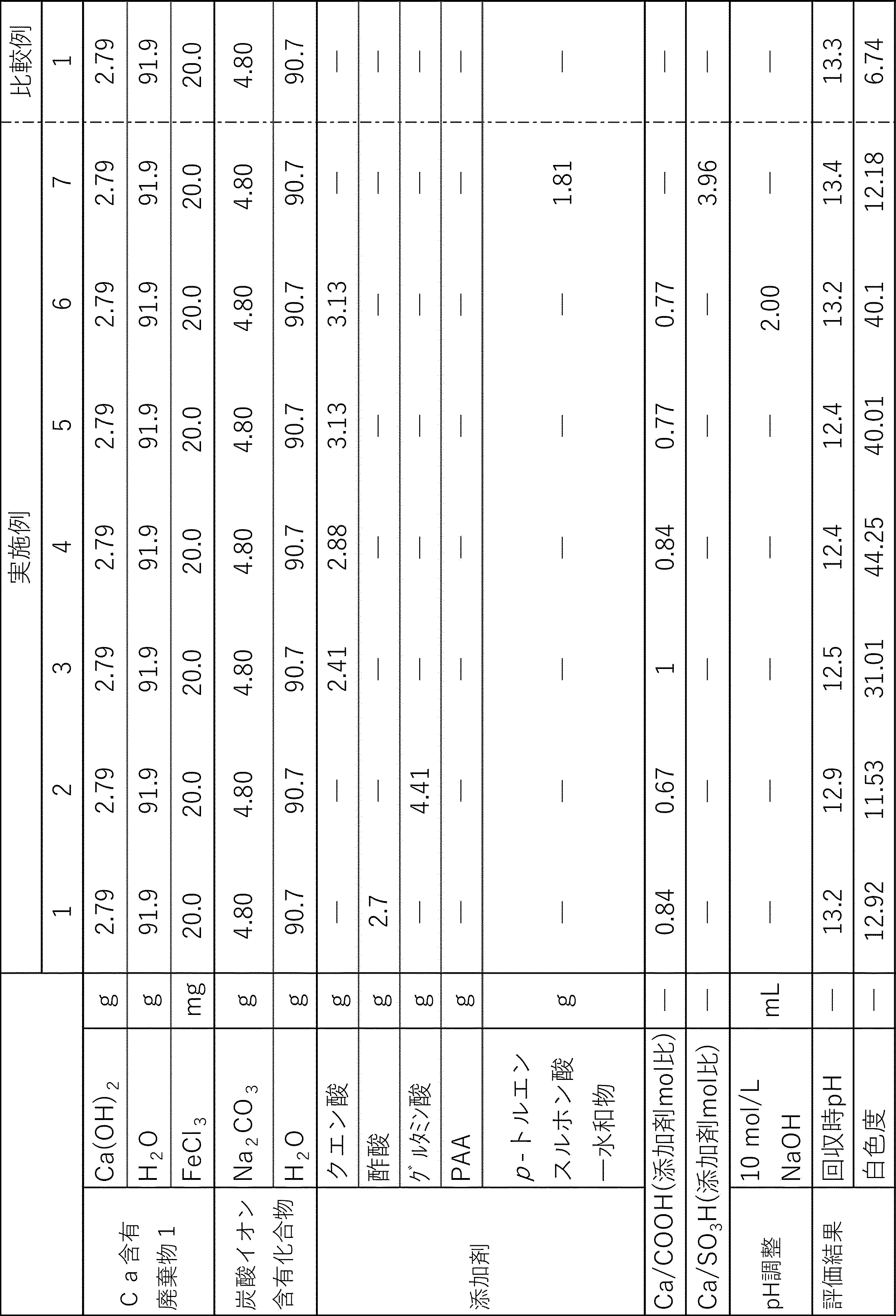

Ca含有廃棄物1を原料とし、炭酸イオン含有化合物と、有機酸とを混合した実施例1~7、及び有機酸を混合しなかった比較例1について、表2に記載した結果からわかるように、有機酸とを混合することで、1工程で高白色度の炭酸カルシウム粒子を製造することができる。
また、Ca含有廃棄物2を原料とし、炭酸イオン含有化合物と、有機酸とを混合した実施例8及び9、並びに、有機酸を混合しなかった比較例2及び3についても、表3に記載した結果からわかるように、有機酸とを混合することで、1工程で高白色度の炭酸カルシウム粒子を製造することができる。
また、Ca含有廃棄物2を原料とし、炭酸イオン含有化合物と、有機酸とを混合した実施例8及び9、並びに、有機酸を混合しなかった比較例2及び3についても、表3に記載した結果からわかるように、有機酸とを混合することで、1工程で高白色度の炭酸カルシウム粒子を製造することができる。
表2の実施例1~6および比較例1の結果から分かるように、カルボキシ基を有する有機酸(カルボン酸)を混合することで、白色度の向上がみられた。本実施例での実験条件では、クエン酸を加えた場合が最も高い白色度の炭酸カルシウムが得られた。
しかしながら、どの有機酸を用いると最も高い白色度の炭酸カルシウムが得られるかについては、実験条件に依存し、他の有機酸の方が適切な場合もありうる。
しかしながら、どの有機酸を用いると最も高い白色度の炭酸カルシウムが得られるかについては、実験条件に依存し、他の有機酸の方が適切な場合もありうる。
表2の実施例3~5は、クエン酸の混合量が異なるほかは同じ条件で炭酸カルシウムの製造を行った例である。本実験条件では、クエン酸混合量が2.88gの実施例4の場合に最も高い白色度の炭酸カルシウムが得られた。
しかしながら、どの程度の混合量が最も高い白色度の炭酸カルシウムが得られるかについては、実験条件に依存し、適切な混合量は異なる場合もありうる。
しかしながら、どの程度の混合量が最も高い白色度の炭酸カルシウムが得られるかについては、実験条件に依存し、適切な混合量は異なる場合もありうる。
表2の実施例6は、NaOH水溶液を添加することでpH調整を行ったものである。pHを調整した実施例6の場合の方が、実施例5(pH調整を行っていない他は実施例6と同じ)に比べ、若干高い白色度を示した。
表2の実施例7は、有機酸としてp-トルエンスルホン酸を混合したものであり、混合により比較例1よりも高い白色度の炭酸カルシウムが得られた。
表3の実施例8、9および比較例2、3は、Ca含有廃棄物2を原料した場合で、かつカーバイドスラグの混合量が異なる例である。クエン酸の混合により、高い白色度の炭酸カルシウムが得られることに加え、カーバイドスラグ添加量が少ない実施例9ではより、高い白色度の炭酸カルシウムが得られた。これは、クエン酸混合量が多いことにより、より炭酸カルシウムの結晶成長が抑えられ、かつカーバイドスラグ中の水溶性金属イオンにクエン酸が配位し、炭酸カルシウムとの共沈が抑制されたため、また、炭酸カルシウムの結晶成長が抑制され、粒径の小さい炭酸カルシウム粒子が得られ、粒径の大きな非水溶性固体不純物と簡単に分離できたためであると考えられる。
しかしながら、適切なカーバイドスラグ混合量は、実験条件に依存し、他の混合比の場合の方が高い白色度の炭酸カルシウムを得られる場合もありうる。
しかしながら、適切なカーバイドスラグ混合量は、実験条件に依存し、他の混合比の場合の方が高い白色度の炭酸カルシウムを得られる場合もありうる。
図1及び2に実施例4で得られた炭酸カルシウム粒子のXRDパターン及びSEM像を;
図3及び4に比較例1で得られた炭酸カルシウム粒子のXRDパターン及びSEM像を;
図5及び6に実施例8で得られた炭酸カルシウム粒子のXRDパターン及びSEM像を;
図7及び8に比較例2で得られた炭酸カルシウム粒子のXRDパターン及びSEM像を;
図9及び10に実施例9で得られた炭酸カルシウム粒子のXRDパターン及びSEM像を;
図11及び12に比較例3で得られた炭酸カルシウム粒子のXRDパターン及びSEM像を、それぞれ示す。
Ca含有廃棄物1又はCa含有廃棄物2を原料にし、クエン酸を混合することで、nmオーダーの粒子を得ることができ、さらにその混合量によって、粒径の制御も可能である。
図3及び4に比較例1で得られた炭酸カルシウム粒子のXRDパターン及びSEM像を;
図5及び6に実施例8で得られた炭酸カルシウム粒子のXRDパターン及びSEM像を;
図7及び8に比較例2で得られた炭酸カルシウム粒子のXRDパターン及びSEM像を;
図9及び10に実施例9で得られた炭酸カルシウム粒子のXRDパターン及びSEM像を;
図11及び12に比較例3で得られた炭酸カルシウム粒子のXRDパターン及びSEM像を、それぞれ示す。
Ca含有廃棄物1又はCa含有廃棄物2を原料にし、クエン酸を混合することで、nmオーダーの粒子を得ることができ、さらにその混合量によって、粒径の制御も可能である。
本実施形態によれば、Ca含有廃棄物から高白色度(高純度)の炭酸カルシウム粒子を少工程で製造することができる。このようにして生成された炭酸カルシウム粒子は、セメント材料、アスファルト混和材、ポリマーフィラー等の原料として利用することができる。
Claims (5)
- Ca含有廃棄物と、炭酸イオン含有化合物と、有機酸とを混合する炭酸カルシウム粒子の製造方法。
- 前記有機酸が、カルボキシ基及びスルホ基からなる群より選択される1つ以上を有する請求項1に記載の炭酸カルシウム粒子の製造方法。
- 前記有機酸が、クエン酸、酢酸、ギ酸、シュウ酸、ステアリン酸、グルタミン酸、及びポリアクリル酸からなる群より選択される1つ以上である請求項1又は2に記載の炭酸カルシウム粒子の製造方法。
- 前記Ca含有廃棄物が、カーバイドスラグを含む請求項1~3のいずれか1項に記載の炭酸カルシウム粒子の製造方法。
- 前記Ca含有廃棄物が、Ca含有固体廃棄物である請求項1~4のいずれか1項に記載の炭酸カルシウム粒子の製造方法。
Priority Applications (1)
| Application Number | Priority Date | Filing Date | Title |
|---|---|---|---|
| JP2025531601A JPWO2025009604A1 (ja) | 2023-07-05 | 2024-07-05 |
Applications Claiming Priority (2)
| Application Number | Priority Date | Filing Date | Title |
|---|---|---|---|
| JP2023110785 | 2023-07-05 | ||
| JP2023-110785 | 2023-07-05 |
Publications (1)
| Publication Number | Publication Date |
|---|---|
| WO2025009604A1 true WO2025009604A1 (ja) | 2025-01-09 |
Family
ID=94171628
Family Applications (1)
| Application Number | Title | Priority Date | Filing Date |
|---|---|---|---|
| PCT/JP2024/024364 Ceased WO2025009604A1 (ja) | 2023-07-05 | 2024-07-05 | 炭酸カルシウム粒子の製造方法 |
Country Status (2)
| Country | Link |
|---|---|
| JP (1) | JPWO2025009604A1 (ja) |
| WO (1) | WO2025009604A1 (ja) |
Citations (3)
| Publication number | Priority date | Publication date | Assignee | Title |
|---|---|---|---|---|
| JP2011073892A (ja) * | 2009-09-29 | 2011-04-14 | Nippon Paper Industries Co Ltd | 炭酸カルシウムの製造方法 |
| JP2014069091A (ja) * | 2012-09-27 | 2014-04-21 | Yoshizawa Lime Industry | ドロマイト系焼成ダストの処理方法 |
| JP2020176033A (ja) * | 2019-04-18 | 2020-10-29 | 大泉建設株式会社 | 貝殻由来の炭酸カルシウム結晶の製造方法、および、それから得られる中間生成物 |
-
2024
- 2024-07-05 JP JP2025531601A patent/JPWO2025009604A1/ja active Pending
- 2024-07-05 WO PCT/JP2024/024364 patent/WO2025009604A1/ja not_active Ceased
Patent Citations (3)
| Publication number | Priority date | Publication date | Assignee | Title |
|---|---|---|---|---|
| JP2011073892A (ja) * | 2009-09-29 | 2011-04-14 | Nippon Paper Industries Co Ltd | 炭酸カルシウムの製造方法 |
| JP2014069091A (ja) * | 2012-09-27 | 2014-04-21 | Yoshizawa Lime Industry | ドロマイト系焼成ダストの処理方法 |
| JP2020176033A (ja) * | 2019-04-18 | 2020-10-29 | 大泉建設株式会社 | 貝殻由来の炭酸カルシウム結晶の製造方法、および、それから得られる中間生成物 |
Also Published As
| Publication number | Publication date |
|---|---|
| JPWO2025009604A1 (ja) | 2025-01-09 |
Similar Documents
| Publication | Publication Date | Title |
|---|---|---|
| KR101604954B1 (ko) | 폐전지의 리튬폐액을 활용한 고순도 인산리튬 제조방법 | |
| RU2553305C2 (ru) | Получение карбоната кальция | |
| KR102385412B1 (ko) | 해수의 간접탄산화를 이용한 고순도 배터라이트형 및 칼사이트형 탄산칼슘의 제조방법 | |
| KR101870619B1 (ko) | 철강슬래그로부터 칼슘 및 실리콘 화합물 제조방법 | |
| CN113620331A (zh) | 一种co2矿化电石渣制备纳米球霰石碳酸钙方法 | |
| KR101297988B1 (ko) | 비표면적이 높은 고농도 액상소석회 제조방법 | |
| WO2011108195A1 (ja) | ハイドロタルサイト様化合物の製造法ならびにハイドロタルサイト様化合物もしくは複合酸化物、陰イオン吸着剤および固体塩基触媒 | |
| Lin et al. | Killing three birds with one stone: A novel valorization strategy for comprehensive utilization of waste titanium gypsum | |
| CN1334782A (zh) | 石灰处理 | |
| WO2001030700A1 (fr) | Carbonate de calcium et son procede de production | |
| Li et al. | A novel method for enhancing vanadium extraction from calcified vanadium slag: H 2 SO 4–Na 2 SO 3 synergistic reduction leaching and short process preparation of vanadium dioxide | |
| WO2008123566A1 (ja) | 炭酸基含有水酸化マグネシウム粒子およびその製造方法 | |
| JP6658792B2 (ja) | 炭酸バリウムの製造方法 | |
| JP2005306667A (ja) | 結晶質層状複水酸化物粉末とその製造方法並びに成型体及び有害物質の固定化方法 | |
| WO2024038386A1 (en) | A mechanochemically carbonated slag, methods of its production and uses thereof | |
| US20230271845A1 (en) | Method for producing calcium carbonate and calcium carbonate | |
| JP2011073892A (ja) | 炭酸カルシウムの製造方法 | |
| Pei et al. | Producing amorphous calcium carbonate using waste Ca-rich solution generated through the bio-leaching of slag | |
| WO2025009605A1 (ja) | 炭酸カルシウム粒子の製造方法 | |
| JP2005139012A (ja) | 針状炭酸カルシウムの製造方法 | |
| KR101877923B1 (ko) | 해수 및 제지슬러지소각재의 직접탄산화반응을 이용한 이산화탄소의 저장방법 | |
| JP4944466B2 (ja) | 無水炭酸マグネシウム粉末及びその製造方法 | |
| JP7089311B1 (ja) | 炭酸カルシウムの製造方法 | |
| JP2006341210A (ja) | 二酸化炭素の海洋への隔離・貯留方法 | |
| JPH11157833A (ja) | 炭酸カルシウムの製造方法 |
Legal Events
| Date | Code | Title | Description |
|---|---|---|---|
| 121 | Ep: the epo has been informed by wipo that ep was designated in this application |
Ref document number: 24836116 Country of ref document: EP Kind code of ref document: A1 |
|
| ENP | Entry into the national phase |
Ref document number: 2025531601 Country of ref document: JP Kind code of ref document: A |
|
| WWE | Wipo information: entry into national phase |
Ref document number: 2025531601 Country of ref document: JP |
|
| NENP | Non-entry into the national phase |
Ref country code: DE |