WO2025009480A1 - 麦芽発酵液の製造方法 - Google Patents
麦芽発酵液の製造方法 Download PDFInfo
- Publication number
- WO2025009480A1 WO2025009480A1 PCT/JP2024/023580 JP2024023580W WO2025009480A1 WO 2025009480 A1 WO2025009480 A1 WO 2025009480A1 JP 2024023580 W JP2024023580 W JP 2024023580W WO 2025009480 A1 WO2025009480 A1 WO 2025009480A1
- Authority
- WO
- WIPO (PCT)
- Prior art keywords
- fermentation
- malt
- liquid
- concentration
- producing
- Prior art date
- Legal status (The legal status is an assumption and is not a legal conclusion. Google has not performed a legal analysis and makes no representation as to the accuracy of the status listed.)
- Ceased
Links
Images
Classifications
-
- A—HUMAN NECESSITIES
- A23—FOODS OR FOODSTUFFS; TREATMENT THEREOF, NOT COVERED BY OTHER CLASSES
- A23L—FOODS, FOODSTUFFS OR NON-ALCOHOLIC BEVERAGES, NOT OTHERWISE PROVIDED FOR; PREPARATION OR TREATMENT THEREOF
- A23L2/00—Non-alcoholic beverages; Dry compositions or concentrates therefor; Preparation or treatment thereof
-
- C—CHEMISTRY; METALLURGY
- C12—BIOCHEMISTRY; BEER; SPIRITS; WINE; VINEGAR; MICROBIOLOGY; ENZYMOLOGY; MUTATION OR GENETIC ENGINEERING
- C12C—BEER; PREPARATION OF BEER BY FERMENTATION; PREPARATION OF MALT FOR MAKING BEER; PREPARATION OF HOPS FOR MAKING BEER
- C12C7/00—Preparation of wort
Definitions
- the present invention relates to a method for producing a fermented liquid using a saccharified product of malt as a fermentation raw material, which has a low ethanol concentration and a reduced wort odor, and a method for producing a beverage containing the fermented liquid produced by the production method as an ingredient.
- yeasts in fermented alcoholic beverages the various aroma components produced during fermentation depend on the type of yeast used in fermentation.
- yeast most widely used in brewing beer and wine is the Saccharomyces genus, but in recent years, yeasts other than Saccharomyces have been used to produce beers with flavors different from those of conventional beers.
- a method for producing beer with a high content of isoamyl acetate (IAAT) and ethyl acetate by fermenting wort under aerobic conditions using yeast of the Pichia genus, such as Pichia kluyveri (Patent Document 1).
- a method for producing a fermented beverage with an alcohol concentration of less than 1% by volume by inoculating a mixture of wort and whey with Kluyveromyces lactis and Kluyveromyces fragilis and fermenting the mixture (Patent Document 2).
- Saccharomycodes ludwigii which has low ethanol production ability, has been used as a yeast for producing non-alcoholic beer (Non-Patent Document 1).
- mutant strains of Kluyveromyces lactis with a phenotype that cannot grow when respiration is inhibited (RAG - phenotype) produce less ethanol on YPD medium than wild-type strains (Non-Patent Document 2). It has also been reported that mutant strains with RAG - phenotypes can be selected by subjecting wild-type strains of Kluyveromyces lactis to mutation treatment and using poor growth in a medium containing antimycin A, a respiration inhibitor, as an indicator (Non-Patent Document 3).
- the present invention aims to provide a method for producing a malt fermentation liquid having a low ethanol concentration and little wort odor remaining due to poor fermentation, a method for producing a fermented malt beverage using the malt fermentation liquid produced by said production method, and a fermented malt beverage produced by said production method.
- the present inventors have conducted intensive research to solve the above problems, and as a result have found that by fermenting a fermentation raw material liquid containing a saccharified product of malt using RAG - phenotype Kluyveromyces lactis, fermentation is carried out sufficiently while ethanol production is greatly suppressed, making it possible to produce a malt fermentation liquid having a sufficiently low ethanol concentration and little unpleasant odor derived from wort, thereby completing the present invention.
- the method for producing a fermented malt liquid, the method for producing a fermented malt beverage, and the fermented malt beverage according to the present invention are as follows.
- the method for producing a malt fermentation liquor, wherein the malt fermentation liquor has an ethanol concentration of less than 0.05 v/v% per Brix 5.0 mass%.
- [2] The method for producing a malt fermentation liquor according to [1], wherein the malt fermentation liquor has a methional concentration of 3.0 ppb or less per Brix 5.0 mass%.
- [3] The method for producing a malt fermentation liquid according to [1] or [2], wherein the methional concentration of the malt fermentation liquid is 15% by mass or less of the methional concentration of the fermentation raw material liquid.
- [4] The method for producing a malt fermentation liquor according to any one of [1] to [3] above, wherein the bacterial concentration in the malt fermentation liquor at the end of fermentation is 3.0 x 10 6 cells/mL or more.
- [8] The method for producing a malt fermentation liquid according to any one of [1] to [7], wherein the fermentation is carried out at 1° C. or higher.
- a method for producing a malt fermentation liquid comprising producing a malt fermentation liquid by any one of the methods for producing a malt fermentation liquid according to [1] to [10] above, and then producing a fermented malt beverage using the resulting malt fermentation liquid as a raw material.
- the method for producing a malt fermentation liquor according to the present invention fermentation is carried out using RAG - phenotype Kluyveromyces lactis, which has an extremely low ethanol production ability and can sufficiently remove unpleasant odors derived from wort. Therefore, the method for producing a malt fermentation liquor according to the present invention can provide a malt fermentation liquor having a low ethanol concentration and a sufficiently low unpleasant odor derived from wort. Furthermore, by using the malt fermentation liquor, a malt fermented beverage having a low ethanol concentration and a suppressed wort odor can be provided.
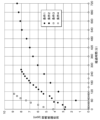
- FIG. 1 shows the results of measuring the dissolved oxygen concentration over time in pure water incubated at 18° C. under normal pressure under various oxygen-supplying conditions in Reference Example 1.
- X 1 to X 2 (are real numbers satisfying X 1 ⁇ X 2 )" means a numerical range of "not less than X 1 and not more than X 2 ".
- ppb and ppm mean “ppb by mass” and “ppm by mass”, respectively.
- the term "RAG - (Resistance to Antimycin A on Glucose - ) phenotype” means a trait of sensitivity to a respiratory inhibitor in the presence of glucose, i.e., a trait of being inhibited in growth in the presence of glucose and a respiratory inhibitor.
- the respiratory inhibitor is not particularly limited as long as it is a substance that has an effect of inhibiting any of the oxidative phosphorylation reactions in mitochondria.
- the respiratory inhibitor examples include electron transport inhibitors such as antimycin A (CAS RN: 1397-94-0), rotenone (CAS RN: 83-79-4), and thenoyltrifluoroacetone (CAS RN: 326-91-0), and ATP synthase inhibitors such as oligomycin A (CAS RN: 579-13-5).
- electron transport inhibitors such as antimycin A (CAS RN: 1397-94-0), rotenone (CAS RN: 83-79-4), and thenoyltrifluoroacetone (CAS RN: 326-91-0)
- ATP synthase inhibitors such as oligomycin A (CAS RN: 579-13-5).
- RAG - phenotype Kluyveromyces lactis means a Kluyveromyces lactis strain that is sensitive to a respiratory inhibitor, i.e., a strain whose normal growth is inhibited in the presence of a respiratory inhibitor. Wild-type Kluyveromyces lactis can grow without problems in the presence of glucose or a respiratory inhibitor, but some mutant strains are of the RAG - phenotype. Whether Kluyveromyces lactis is of the RAG - phenotype or not can be identified, for example, by culturing it in a culture medium containing glucose as a carbon source and a culture medium containing a respiratory inhibitor in addition to glucose. Kluyveromyces lactis that can grow in a culture medium containing glucose but cannot grow in a culture medium containing a respiratory inhibitor is identified as Kluyveromyces lactis of the RAG - phenotype.
- the genotype of the RAG - phenotype Kluyveromyces lactis used in the present invention is not particularly limited as long as it has sensitivity to a respiratory inhibitor in the presence of glucose.
- Examples of the RAG - phenotype Kluyveromyces lactis include, among Kluyveromyces lactis, functionally defective mutants of the RAG1 gene that encodes the glucose transporter protein RAG1.
- Kluyveromyces lactis that does not have a RAG - phenotype can be subjected to a mutation treatment such as a drug treatment using EMS (Ethyl Methanesulfonate) or ultraviolet light irradiation, and from the obtained mutants, a mutant that cannot be cultured in a culture medium containing a respiratory inhibitor but can be cultured in a culture medium not containing a respiratory inhibitor can be obtained.
- EMS Ethyl Methanesulfonate
- ultraviolet light irradiation ultraviolet light irradiation
- the RAG - phenotype Kluyveromyces lactis can be a respiration inhibitor-sensitive strain appropriately selected from strains of Kluyveromyces lactis available from strain preservation organizations such as the National Biotechnology Center (NBRC) of the National Institute of Technology and Evaluation and the National Collection of Yeast Cultures (NCYC) or from distributors.
- NBRC National Biotechnology Center
- NCYC National Collection of Yeast Cultures
- the RAG - phenotype Kluyveromyces lactis to be inoculated into the fermentation raw material liquid may be one type or two or more types.
- the fermentation raw material liquid may be inoculated with a combination of RAG - phenotype Kluyveromyces lactis and other yeasts to the extent that the effects of the present invention are not impaired.
- the method for producing a malt fermentation liquor according to the present invention comprises a step of inoculating a fermentation raw material liquid containing a saccharified product of malt with yeast and fermenting the liquid to prepare a malt fermentation liquor, and is characterized in that RAG - phenotype Kluyveromyces lactis is used as the yeast.
- RAG - phenotype Kluyveromyces lactis has a sufficient ability to produce aroma components through fermentation but a low ability to produce ethanol through fermentation. Therefore, by fermenting the fermentation raw material liquid with RAG - phenotype Kluyveromyces lactis, it is possible to produce a malt fermentation liquor that contains various aroma components through fermentation but has a sufficiently reduced ethanol concentration.
- the method for producing malt fermentation liquor according to the present invention can produce a malt fermentation liquor having an ethanol concentration of less than 0.05 v/v% per 5.0 mass% Brix.
- the ethanol concentration of the malt fermentation liquor produced by the present invention per 5.0 mass% Brix is not particularly limited as long as it is less than 0.05 v/v%, but is preferably 0.025 v/v% or less, more preferably 0.010 v/v% or less, even more preferably 0.008 v/v% or less, and even more preferably 0.005 v/v% or less.
- the lower limit of the ethanol concentration per 5.0 mass% Brix of the malt fermentation liquor produced by the present invention is not particularly limited, and can be, for example, 0.001 v/v% or more, or may be 0.002 v/v% or more.
- the methional concentration per Brix 5.0 mass% of the malt fermentation liquid produced by the present invention is not particularly limited as long as it is 3.0 ppb or less, but is preferably 1.0 ppb or less.
- the lower limit of the methional concentration per Brix 5.0 mass% of the malt fermentation liquid produced by the present invention is not particularly limited, and can be, for example, 0.10 ppb or more, or may be 0.20 ppb or more.
- the ethanol concentration of malt fermentation liquid or beverages can be measured by, for example, an enzymatic method that measures the amount of NADH (reduced nicotinamide adenine dinucleotide) generated using ADH (alcohol dehydrogenase) and AlDH (aldehyde dehydrogenase) by spectroscopy, an enzymatic method using the multifunctional biosensor BF-5 (manufactured by Oji Measurement Instruments), a distillation-density (specific gravity) method, a gas chromatography (GC) analysis method, an oxidation method (oxidation-reduction titration method), etc.
- NADH reduced nicotinamide adenine dinucleotide
- AlDH aldehyde dehydrogenase
- a malt fermentation liquor having an ethanol concentration of less than 0.05 v/v% per Brix 5.0 mass% and a methional concentration of 3.0 ppb or less per Brix 5.0 mass% can be produced.
- Methional is an aroma component that causes wort odor and decreases as fermentation progresses.
- a methional concentration of 3.0 ppb or less per Brix 5.0 mass% means that fermentation has progressed and the wort odor has been sufficiently reduced. That is, according to the present invention, a malt fermentation liquor in which both the ethanol concentration and the methional concentration are sufficiently reduced can be produced.
- the methional concentration of a malt fermentation liquid or beverage can be determined, for example, from the peak area of a chromatograph obtained by GC (gas chromatography) analysis, GC-MS analysis (gas chromatography-mass spectrometry), or solid-phase microextraction (SPME)-GC-MS/MS analysis (gas chromatography-triple quadrupole mass spectrometry).
- the method for quantifying the concentration from the peak area is not particularly limited, but examples include the area percentage method, the internal standard method, the standard addition method, and the absolute calibration curve method.
- the concentration can be determined by the method described in the examples below.
- the methional concentration of the malt fermentation liquor can be sufficiently reduced below the methional concentration of the fermentation raw material liquor by fermentation using RAG - phenotype Kluyveromyces lactis.
- the methional concentration of the malt fermentation liquor can be reduced to preferably 15% by mass or less, more preferably 10% by mass or less, and even more preferably 5% by mass or less of the methional concentration of the fermentation raw material liquor.
- the method for producing a malt fermentation liquor according to the present invention can provide a malt fermentation liquor that is low in ethanol but also has a low methional concentration and a highly palatable malt fermentation liquor with a suppressed wort odor.
- the fermentation raw material liquid to be inoculated with RAG - phenotype Kluyveromyces lactis and fermented is not particularly limited as long as it contains a saccharified product of malt and contains a carbon source or nitrogen source that can be assimilated by RAG - phenotype Kluyveromyces lactis.
- it may consist of only a saccharified product of malt, or it may contain a carbon source or nitrogen source other than a saccharified product of malt.
- malt saccharification product refers to the product that has been saccharified using various enzymes from sugars in malt.
- the enzymes used in the saccharification process may be enzymes that are naturally contained in malt, or may be enzymes derived from sources other than malt.
- a saccharification product can be obtained using amylase derived from malt.
- a saccharification enzyme derived from a source other than malt may be further added, and enzymes other than saccharification enzymes, such as proteolytic enzymes, may be used in combination.
- wort or malt extract can be used as the malt saccharification product.
- Malt extract is concentrated wort, and its main component is malt sugar.
- Malt extract can be mixed with carbonated water as it is to make a beverage, or it can be used as an ingredient in food and beverage products.
- Wort can be concentrated by conventional methods. Concentration under reduced pressure is preferred because it minimizes the effect on the components in the wort, but it can also be concentrated by heating to remove the solvent.
- Wort is prepared by preparing a mixture containing malt and raw water, heating it, and saccharifying the starch in the malt. It is preferable to use malt powder obtained by crushing the malt.
- the crushing of malt can be carried out by a conventional method.
- the crushed malt may be subjected to a conventional treatment before or after the crushing. Such treatment may include, for example, root removal.
- the mixture containing malt and raw water may contain a fermentation raw material other than malt.
- the fermentation raw material may be a grain raw material or a carbohydrate raw material.
- grain raw materials other than malt include wheat and barley, rice, corn, soybeans, and other beans, and potatoes.
- the grain raw material can also be used as ground grain, grain syrup, grain extract, and the like.
- Ground grain may be corn starch, corn grits, and the like, which have been subjected to a typical process before or after grinding. Examples of the typical process include removal of proteins, husks, and germs, and dehydration.
- carbohydrate raw materials include sugars such as liquid sugar.
- the wort may be used as it is as a fermentation raw material liquid, but it is preferable to carry out a boiling treatment before inoculating the yeast.
- This boiling treatment allows sterilization and makes fermentation safer.
- the filtration treatment is not particularly limited, and can be appropriately selected from solid-liquid separation treatments that are commonly carried out in the manufacturing process of foods and beverages, such as diatomaceous earth filtration and filter filtration.
- a malt extract to which warm water has been added can be used and boiled. The boiling method and conditions can be determined appropriately.
- a malt fermentation liquid with the desired flavor can be produced.
- hops By performing the boiling process in the presence of hops, the flavor and aroma components of the hops can be efficiently extracted.
- the amount of hops to be added, the manner of addition (for example, adding in several batches), and the boiling conditions can be determined as appropriate.
- dregs such as proteins that have formed due to precipitation from the boiled wort before inoculating the yeast.
- Any solid-liquid separation process can be used to remove the dregs, but typically a tank called a whirlpool is used to remove the sediment.
- the temperature of the boiled wort during this process should be 15°C or higher, and is generally around 50-80°C.
- the clear wort (filtrate) after removing the dregs is cooled to an appropriate fermentation temperature using a plate cooler or similar. This wort after removing the dregs becomes the fermentation raw material liquid.
- the Brix of the fermentation raw material liquid into which the RAG - phenotype Kluyveromyces lactis is inoculated is preferably 4% to 20%, more preferably 8% to 18%, and even more preferably 12% to 16%.
- the pH of the fermentation raw material liquid into which the RAG - phenotype Kluyveromyces lactis is inoculated is preferably 3.0 to 6.0, and more preferably 3.5 to 5.5.
- the Brix value of the fermentation raw material liquid can be measured by standard methods using a measuring device such as a refractometer (RX-5000 ⁇ , manufactured by Atago Co., Ltd.).
- the cooled fermentation raw material liquid is inoculated with RAG - phenotype Kluyveromyces lactis to carry out fermentation.
- the cooled fermentation raw material liquid may be subjected to fermentation as it is, or may be subjected to fermentation after being adjusted to a desired extract concentration.
- the amount of RAG - phenotype Kluyveromyces lactis added to the fermentation raw material liquid is not particularly limited.
- the amount of RAG - phenotype Kluyveromyces lactis inoculated into the fermentation raw material liquid is preferably an amount that results in a bacterial concentration of the malt fermentation liquid at the start of fermentation of 2.0 x 10 4 cells/mL or more, more preferably an amount that results in a bacterial concentration of 2.0 x 10 4 to 2.0 x 10 7 cells/mL.
- the bacterial concentration of the malt fermentation liquor at the end of fermentation is preferably 3.0 x 10 6 cells/mL or more, and more preferably 3.0 x 10 6 to 1.4 x 10 8 cells/mL.
- the conditions for fermentation performed by inoculating RAG - phenotype Kluyveromyces lactis are not particularly limited.
- the fermentation temperature may be 1° C. or higher, and for example, is preferably 1 to 35° C., which is a temperature range in which yeast can generally survive, more preferably 1 to 28° C., even more preferably 1 to 25° C., and even more preferably 1 to 20° C.
- fermentation may be performed at a constant temperature from the start of fermentation to the end of fermentation, or the fermentation temperature may be appropriately changed.
- the fermentation time can be appropriately determined in consideration of the fermentation temperature and the desired product quality, etc., but is preferably 4 hours or more because it is expected that unpleasant odors derived from wort such as methional can be sufficiently reduced.
- the fermentation time is preferably 4 to 168 hours, more preferably 4 to 96 hours, and even more preferably 4 to 72 hours.
- the time when the RAG - phenotype Kluyveromyces lactis in the fermentation liquor reaches a target bacterial concentration can also be regarded as the end of fermentation.
- the RAG - phenotype Kluyveromyces lactis may be in a growth phase, or may be fermented in a state where it is barely growing. For example, at 1° C., RAG - phenotype Kluyveromyces lactis grows only slightly, but by inoculating a sufficient amount of RAG - phenotype Kluyveromyces lactis into the fermentation raw material liquid, a malt fermentation liquid having a desired low ethanol concentration and low unpleasant odor can be obtained.
- anaerobic environment refers to a condition where a certain oxygen supply condition is maintained, but the amount of oxygen supplied is less than the amount of oxygen consumed by the growth of the bacteria, and as a result, the dissolved oxygen concentration in the liquid becomes zero, rather than a completely anaerobic condition.
- a completely anaerobic environment refers to an environment where no new oxygen is supplied, that is, “under conditions where no oxygen is supplied.”
- a completely anaerobic environment can be achieved by supplying oxygen-free gas, such as nitrogen gas or carbon dioxide gas, to a fermentation tank.
- fermentation can be performed under a constant oxygen-supplying condition while maintaining an anaerobic environment, thereby allowing the RAG - phenotype Kluyveromyces lactis to grow to 3.0 ⁇ 10 6 cells/mL or more, preferably 3.0 ⁇ 10 6 to 1.4 ⁇ 10 8 cells/mL, at the end of fermentation, and a malt fermentation liquid with a desired low ethanol concentration and low unpleasant odor can be obtained.
- the fermentation raw material liquid when the number of inoculated cells in the fermentation raw material liquid is 3 ⁇ 10 6 cells/mL or more, fermentation may be performed under an anaerobic environment, and even when fermentation is performed under a completely anaerobic environment, the fermentation time can be adjusted to obtain a malt fermentation liquid with a desired low ethanol concentration and low unpleasant odor.
- the fermentation raw material liquid with a cell count of RAG - phenotype Kluyveromyces lactis of 3 x 10 cells/mL or more and fermenting the liquid at 1 to 35°C, preferably 1 to 28°C, more preferably 8 to 28°C, and even more preferably 12 to 24°C for 24 hours or more, it is possible to obtain a malt fermentation liquid with the desired low ethanol concentration and low unpleasant odor, even when fermented in a completely anaerobic environment.
- RAG - phenotype Kluyveromyces lactis When RAG - phenotype Kluyveromyces lactis is fermented in an anaerobic environment, it is preferable to carry out the fermentation under oxygen-adding conditions such that the time required to increase the dissolved oxygen concentration in pure water from 6 ppm to 8 ppm at 18° C. and normal pressure is more than 0 hours and not more than 5 hours, for example, 15 minutes to 5 hours, so that the oxygen concentration can be adjusted within an appropriate range. Fermentation under the oxygen-adding conditions can be carried out by fermenting the fermentation liquid while stirring it in a fermentation tank filled with an oxygen-containing gas such as air, rather than directly mixing oxygen into the fermentation liquid.
- an oxygen-containing gas such as air
- the oxygen-adding conditions can be achieved by stirring the fermentation liquid while supplying air to the empty space in the fermentation tank, or by pressurizing the fermentation tank at 0.026 MPa and supplying air at 10 NL/h per 1 kL of fermentation liquid.
- the above-mentioned oxygen-imparting conditions can be achieved, for example, by stirring the fermentation liquid with a pump, by putting 400 mL of wort into a 500 mL Erlenmeyer flask and stirring at 60 rpm using a shaking culture device, or by putting 400 mL of wort into a 500 mL jar fermenter with a 0.2 ⁇ m filter attached to the exhaust port and rotating the stirring blade at 50 rpm without actively supplying air.
- the above-mentioned oxygen-imparting conditions can also be achieved by leaving the fermentation liquid stationary in a fermentation vessel with a wide gas-liquid contact surface.
- the malt fermentation liquid obtained in the present invention can be used as it is as a raw material for food and beverages.
- the food and beverages produced using the malt fermentation liquid as a raw material There are no particular limitations on the food and beverages produced using the malt fermentation liquid as a raw material.
- beverages are preferred, malt fermented beverages are more preferred, and malt fermented beer-like sparkling beverages are even more preferred.
- the term "fermented malt beverage” refers to a beverage produced by using malt or a processed malt product as a raw material and undergoing a fermentation process with yeast.
- the fermented malt beverage may be an alcoholic beverage, or may be a so-called non-alcoholic beverage or low-alcohol beverage having an ethanol concentration of less than 1.0 v/v%.
- the fermented malt beverage produced by using the malt fermentation liquid obtained in the present invention as a raw material has an ethanol concentration of less than 0.05 v/v%, preferably 0.025 v/v% or less, more preferably 0.01 v/v% or less, even more preferably 0.008 v/v% or less, and even more preferably 0.005 v/v% or less.
- beer-like sparkling beverage refers to a sparkling beverage that has a flavor, taste, and texture equivalent to or similar to that of beer, and has a beer-like flavor (a flavor that is pronounced of beer).
- malt-fermented beer-like sparkling beverages include beer and happoshu (low-malt beer) made from malt.
- liqueurs obtained by mixing malt fermentation liquid with an ethanol-containing distilled liquid are also possible.
- the ethanol-containing distilled liquid is a solution containing ethanol obtained by a distillation operation, and may be, for example, raw material alcohol (ethanol), or distilled alcohol (spirits) such as whiskey, brandy, vodka, rum, tequila, gin, and shochu.
- ethanol raw material alcohol
- spirits distilled alcohol
- the obtained malt fermentation liquid can be subjected to solid-liquid separation to remove yeast and the like, thereby obtaining a fermented malt beverage.
- the solid-liquid separation can be performed by any method capable of removing yeast and the like, such as centrifugation, diatomaceous earth filtration, and filter filtration using a filter with an average pore size of about 0.4 to 0.5 ⁇ m, and these treatments can be combined.
- hops, hop extract, flavorings, and the like can be added to the obtained malt fermentation liquid to adjust the flavor of the fermented malt beverage.
- the flavor can be adjusted before or after the solid-liquid separation.
- the malt fermentation liquid after the solid-liquid separation can be stored and aged under low-temperature conditions of about 0°C. In order to produce a fermented malt beverage, further treatments such as pH adjustment and heating can be performed according to conventional methods.
- the obtained malt fermentation liquid can be appropriately diluted to produce a malt fermented beverage having an extract concentration within a desired range.
- the solution used for dilution is not particularly limited, but examples include water or carbonated water.
- the dilution ratio is not particularly limited, and can be, for example, 2-10 times, more preferably 2-6 times, and even more preferably 2-4 times.
- a malt fermented beverage can be produced by diluting the original wort extract concentration to within a desired range, for example, 3-7% by mass.
- the process of diluting the malt fermentation liquid may be performed after the fermentation process is completed, or after the yeast and the like are removed, or it may be performed on the malt fermentation liquid after maturation.
- the original wort extract concentration of malt fermentation liquid or malt fermented beverage can be measured according to the method stipulated in the analytical method published by the Brewing Society of Japan ("8.5 Extract-related Measurement Methods” in "BCOJ Beer Analysis Methods (2013 Revised Edition) (edited by the International Technical Committee (Analysis Committee) of the Brewers Association of Japan)). Specifically, it can be measured from the alcohol concentration and true extract concentration.
- the true extract concentration of malt fermentation liquid or malt fermented beverage can be measured according to the method specified in "8.4.3 Alcolyzer Method” of "BCOJ Beer Analysis Methods (2013 revised edition)” (edited by the International Technical Committee (Analysis Committee) of the Brewers Association of Japan).
- the ethanol concentration of the malt fermented beverage obtained using the malt fermentation liquid obtained in the present invention as a raw material is not particularly limited.
- a malt fermented beverage with a low ethanol concentration and reduced wort odor can be produced.
- a fermented malt beverage having an ethanol concentration of 0.05 v/v% or less per 5.0 mass% Brix is preferred, a fermented malt beer-like sparkling beverage having an ethanol concentration of 0.05 v/v% or less and a methional concentration of 3.0 ppb or less per 5.0 mass% Brix is more preferred, a fermented malt beer-like sparkling beverage having an ethanol concentration of 0.01 v/v% or less and a methional concentration of 3.0 ppb or less per 5.0 mass% Brix is even more preferred, and a fermented malt beer-like sparkling beverage having an ethanol concentration of 0.01 v/v% or less and a methional concentration of 1.0 ppb or less per 5.0 mass% Brix is even more preferred.
- the ethanol concentration in the malt fermentation liquid or beverage was measured by the following method.
- the sample was diluted with distilled water to an ethanol concentration of 0.5 to 2.0 v/v%, and the solution was measured using a multifunctional biosensor (BF-5, manufactured by Oji Instruments Co., Ltd.)
- the ethanol concentration (v/v%) in the sample was determined by multiplying the measured value by the dilution rate.
- the multifunctional biosensor is a device that electrochemically detects hydrogen peroxide ( H2O2 ) produced by oxidation with alcohol oxidase, and can measure the total concentration of methanol and ethanol. Since yeast does not synthesize methanol, malt fermentation liquor contains only trace amounts of methanol that are within the margin of error. Therefore, the measurement value obtained by the multifunctional biosensor is the measurement value of the amount of ethanol in the malt fermentation liquor sample.
- H2O2 hydrogen peroxide
- this multifunctional biosensor was used to measure the ethanol concentration of a solution diluted with the sample so that the alcohol concentration was 0.01 to 0.04 v/v%, using a highly sensitive measurement method that uses a sodium azide-free buffer solution (SL04-0015, Oji Instruments and Measurement Co., Ltd.).
- SPME solid-phase microextraction
- PFBOA o-(2,3,4,5,6-pentafluorobenzyl) hydroxylamine.HCl
- a SPME fiber (PDMS/DVB: 65 ⁇ m, 1 cm, 57327-U 24 gauge StableFlex, SPELCO) was exposed to the headspace of the vial containing the PFBOA solution at 50°C for 10 minutes.
- the SPME fiber that captured the PFBOA was exposed to the headspace of a vial containing 10 g of sample and 50 ⁇ L of Methional-d3 dissolved in ethanol to a concentration of 5 mg/L at 50°C for 60 minutes.
- the derivatized methional was analyzed under the following GC-MS/MS conditions.
- GC-MS/MS Apparatus: GC-MS/MS (7890A/7000C, Agilent) equipped with a multifunction autosampler MPS2 system (Gerstel) Column: HP-5MS UI 30 m x 0.25 mm x 0.25 ⁇ m (Agilent) Carrier gas: helium Flow rate: 1 mL/min Heating conditions: 80°C (5 min) ⁇ 15°C/min ⁇ 150°C ⁇ 5°C/min ⁇ 220°C ⁇ 50°C/min ⁇ 300°C (5 min) Injection method: splitless purge flow: 50 mL/min, 1 min Injection port temperature: 250° C.
- ⁇ Preparation of worts A and D> Worts A and D were produced using a 200 L scale brewing facility. First, 40 kg of ground malt and starchy auxiliary materials as fermentation raw materials and 160 L of raw water were charged into the brewing tank. Next, the mixture in the brewing tank was heated and saccharified in a conventional manner, and the resulting saccharified liquid was filtered. Hops were added to the resulting filtrate, which was then boiled. The boiled filtrate was transferred to a settling tank to separate and remove the precipitate, after which the pH was adjusted with phosphoric acid and cooled to obtain worts A and D. The analytical values of the resulting worts A and D were as shown in Table 2.
- Oxygenation condition 1 400 mL of pure water was placed in a 500 mL Erlenmeyer flask and stirred at 60 rpm in a shaking incubator.
- Oxygenation condition 2 400 mL of pure water was placed in a 500 mL jar fermenter, and with a 0.2 ⁇ m filter attached to the exhaust port, air was not actively supplied and the mixture was stirred by rotating the stirring blade at 50 rpm.
- Oxygenation condition 3 100 L of pure water was placed in a 200 L fermentation tank, pressurized to 0.026 MPa, and air was supplied at a rate of 0.67 NL/min per 100 L of pure water.
- Oxygenation condition 4 400 mL of pure water was placed in a 500 mL jar fermenter, a 0.2 ⁇ m filter was attached to the exhaust port, and nitrogen gas was blown in while the stirring blades were rotated at 50 rpm (completely anaerobic conditions).
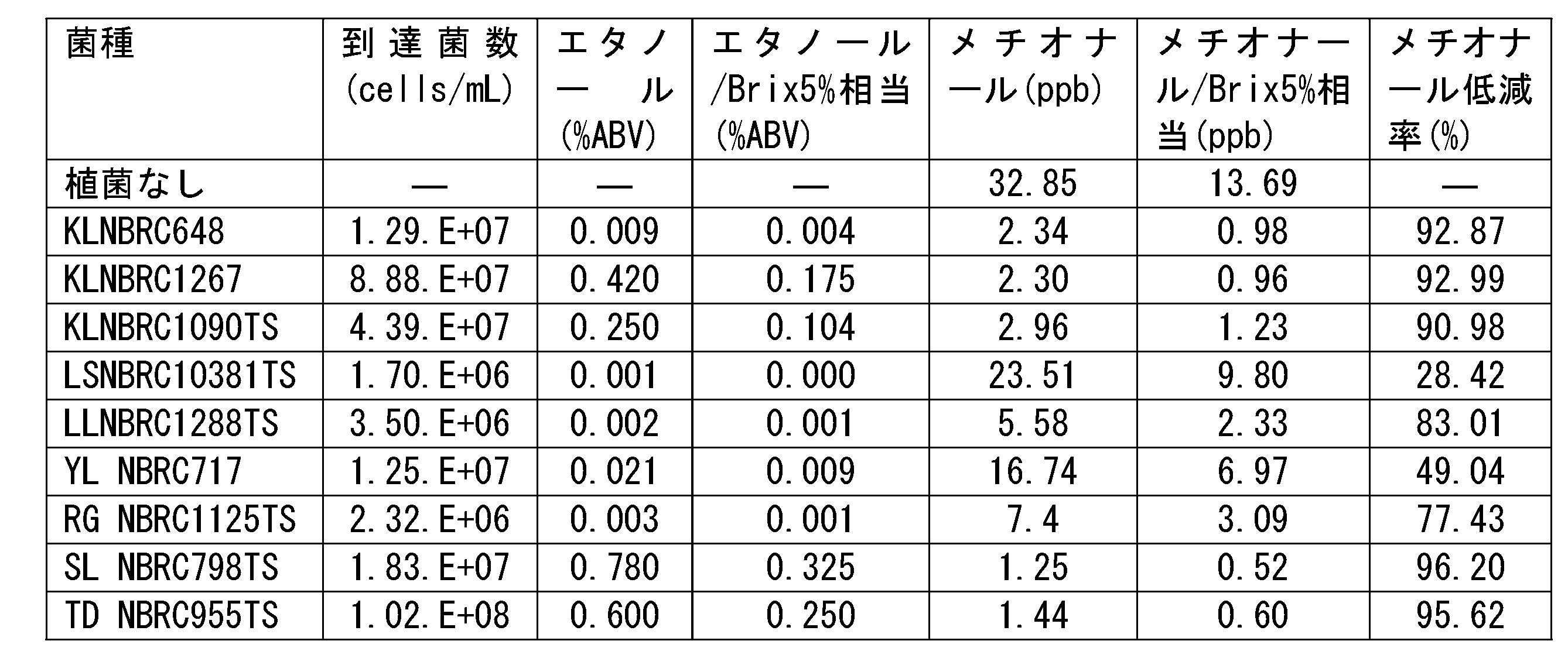
- Example 1 Wort was fermented in flasks using various yeasts, and the bacterial concentration, ethanol concentration, and methional concentration of the resulting fermented liquid were examined.
- Kluyveromyces lactis NBRC648 strain has a RAG ⁇ phenotype
- Kluyveromyces lactis NBRC1267 strain and Kluyveromyces lactis NBRC1090TS strain do not have the RAG ⁇ phenotype and are capable of growing even in the presence of a respiratory inhibitor.
- Wort A was used as the fermentation raw material liquid.
- each yeast was pre-cultured overnight in wort diluted with water to a Brix of 5% by mass, washed once with water, and then added to 400 mL of wort (Brix 12.0%) in a 500 mL Erlenmeyer flask so that the initial number of yeast cells was 1.0 x 10 6 per mL of wort.
- the wort inoculated with yeast was shake-cultured at an incubator speed of 60 rpm and normal pressure of 18 ° C., and fermented for 3 days. Thereafter, the bacterial concentration, ethanol concentration, and methional concentration of the obtained fermentation liquid were quantified.
- ethanol (% ABV) indicates the ethanol concentration (v/v%) of the fermentation broth at the end of fermentation
- ethanol/Brix 5% equivalent (% ABV) indicates the ethanol concentration (v/v%) per Brix 5.0 mass% of the fermentation broth at the end of fermentation
- methional (ppb) indicates the methional concentration (ppb) of the fermentation broth at the end of fermentation
- methional/Brix 5% equivalent (ppb) indicates the methional concentration (ppb) per Brix 5.0 mass% of the fermentation broth at the end of fermentation.
- Methods concentration (ppb) indicates the methional concentration (ppb) of the fermentation raw material liquid (wort before inoculation)
- Methodhional/Brix 5% equivalent (ppb) indicates the methional concentration (ppb) per Brix 5.0% by mass of the fermentation raw material liquid.
- Methodhional reduction rate (%) indicates the reduction rate of the methional concentration from the fermentation raw material liquid (100% - [Methional concentration (ppb) per Brix 5.0% by mass of the fermentation liquid at the end of fermentation] / [Methional concentration (ppb) per Brix 5.0% by mass of the fermentation raw material liquid] x 100%).
- yeasts produced fermentation broths with low ethanol concentrations, similar to Saccharomyces ludwigii, which is commercially used to produce non-alcoholic beer.
- Kluyveromyces lactis NBRC648, Lipomyces starchii NBRC10381TS, Lipomyces lipofus NBRC1288TS, Yarrowia lipolytica NBRC717, and Rhodotorula gluntis NBRC1125TS had extremely low ethanol concentrations of less than 0.05 v/v% per Brix 5.0%.
- the fermentation broths fermented with Kluyveromyces lactis NBRC648 and Lipomyces lipofus NBRC1288TS had methional reduction rates of 80% or more, and fermentation was carried out sufficiently.
- the evaluation items were (a) the strength of the wort odor, and (b) the deliciousness. (a) was evaluated by aroma, and (b) by taste.
- Each evaluation sample was 20 mL, and the order of evaluation was randomized so that it was different for each panelist.
- the results of the sensory evaluation are shown in Table 5.
- the diluted fermentation liquids of Kluyveromyces lactis NBRC648 strain, Kluyveromyces lactis NBRC1267 strain, Kluyveromyces lactis NBRC1090TS strain, Lipomyces lipofus NBRC1288TS strain, and Rhodotorula gluntis NBRC1125TS strain which had low methional concentrations (ppb) per 5.0 mass% Brix of the fermentation raw material liquid, had a weak wort odor and were highly rated for their deliciousness.
- the diluted solution of the fermented liquid fermented with Kluyveromyces lactis NBRC648 strain had a high palatability rating of 5 or more, similar to the diluted solution of the fermented liquid fermented with Saccharomycodes ludwigii, and had a very low ethanol concentration of 0.004 v/v% per Brix 5.0 mass%, making it a mild, refreshing, easy-to-drink beer-like sparkling beverage.
- Example 2 Wort was fermented in flasks using various RAG - phenotypes of Kluyveromyces lactis, and the bacterial concentration, ethanol concentration, and methional concentration of the resulting fermentation broth were examined.
- KL NBRC648 was suspended in pure water to a concentration of 1 x 10 8 cells/mL to obtain a suspension. 100 ⁇ L of the suspension was inoculated onto a parafluorophenylalanine-containing agar medium (0.67% Yeast Nitrogen Base with Amino Acids, 2% Glucose, 1.0 mg/mL parafluorophenylalanine, 2% agar) and cultured at 25°C for 4 days. From the colonies that appeared on the agar medium, strains that produced a large amount of aroma component ( ⁇ -phenethyl alcohol) were selected.
- a parafluorophenylalanine-containing agar medium 0.67% Yeast Nitrogen Base with Amino Acids, 2% Glucose, 1.0 mg/mL parafluorophenylalanine, 2% agar
- KL NBRC1267 strain was treated with 0.3% ethyl methanesulfonate at 30°C for 60 minutes to give a viable cell rate of 38%.
- the treated cells were inoculated onto YPD agar medium so that about 100 colonies grew, and replica plating was performed onto antimycin A-containing agar medium (0.5% yeast extract, 1% peptone, 5% glucose, 5 ⁇ M antimycin A, 2% agar). Strains that could grow on YPD agar medium but could not grow on antimycin A-containing agar medium were selected.
- ⁇ 400mL scale test> In the same manner as in Example 1, the pre-cultured yeast was inoculated into the wort so that the initial cell count was 1.0 x 10⁶ per 1 mL of wort, and the wort was fermented by shaking culture at 18°C and normal pressure for 3 days. The cell concentration (achieved cell count), ethanol concentration, and methional concentration of the obtained fermentation liquid were quantified. The results are shown in Table 7.
- the fermentation broths obtained from all of the breeding strains had an ethanol concentration of less than 0.05 v/v% per 5.0 mass% Brix, and the methional concentration was reduced by 85 mass% or more compared to wort A. Furthermore, the methional concentration was 3 ppb or less per 5.0 mass% Brix.
- Example 3 Worts with different compositions and Brix were fermented using RAG - phenotype Kluyveromyces lactis as fermentation raw material liquids, and the bacterial concentration, ethanol concentration, and methional concentration of the resulting fermentation liquids were examined.
- Kluyveromyces lactis NBRC648 strain was used as the RAG - phenotype Kluyveromyces lactis.
- Example 1 The same procedure as in Example 1 was followed except that the wort A was replaced with the Brix wort shown in Table 8.
- the pre-cultured yeast was inoculated into the wort so that the initial cell count was 1.0 x 10⁶ per mL of wort, and fermented by shaking culture at 18°C and normal pressure for 3 days.
- the bacterial concentration (achieved cell count), ethanol concentration, and methional concentration of the obtained fermentation liquid were quantified. The results are shown in Table 8.
- the ethanol concentration per Brix 5.0 mass% was less than 0.05 v/v%, and the methional concentration was reduced by 85 mass% or more compared to the wort before yeast inoculation. Furthermore, a malt fermentation liquid with a methional concentration of 3 ppb or less per Brix 5.0 mass% was produced.
- the resulting malt fermentation liquid had an ethanol concentration of less than 0.05 v/v% per Brix 5.0 mass%, and the methional concentration was reduced by 85 mass% or more compared to the wort before yeast inoculation, and furthermore, the methional concentration per Brix 5.0 mass% was 3 ppb or less.
- Example 4 The number of RAG - phenotype Kluyveromyces lactis bacteria inoculated into the fermentation raw material liquid and the number of bacteria reached were varied, and the bacterial concentration, ethanol concentration, and methional concentration of the resulting fermentation liquid were examined.
- Kluyveromyces lactis NBRC648 strain was used as the RAG - phenotype Kluyveromyces lactis, and wort A was used as the fermentation raw material liquid.
- Example 10 The same procedure as in Example 1 was followed except that the culture time, culture scale, and initial cell count were as shown in Table 10.
- the precultured yeast was inoculated into the wort in an Erlenmeyer flask so that the initial cell count was 1.0 x 10 6 cells per mL of wort, and fermented by shaking culture at an incubator speed of 60 rpm and at normal pressure of 18°C.
- the bacterial concentration (achieved cell count), ethanol concentration, and methional concentration of the obtained fermentation liquid were quantified. The results are shown in Table 10.
- the column with the culture time of 0 days shows the measurement results of the fermentation raw material liquid (wort) before inoculation with yeast.
- the reduction rate of methional was 60% or less, and fermentation was insufficient.
- the ethanol concentration per Brix 5.0 mass% was more than 0.05 v / v %, and the amount of ethanol produced was large.
- the ethanol concentration per Brix 5.0 mass% was 0.05 v / v % or less and the methional reduction rate was 90% or more, and a good malt fermentation liquid with low alcohol and low methional was obtained.
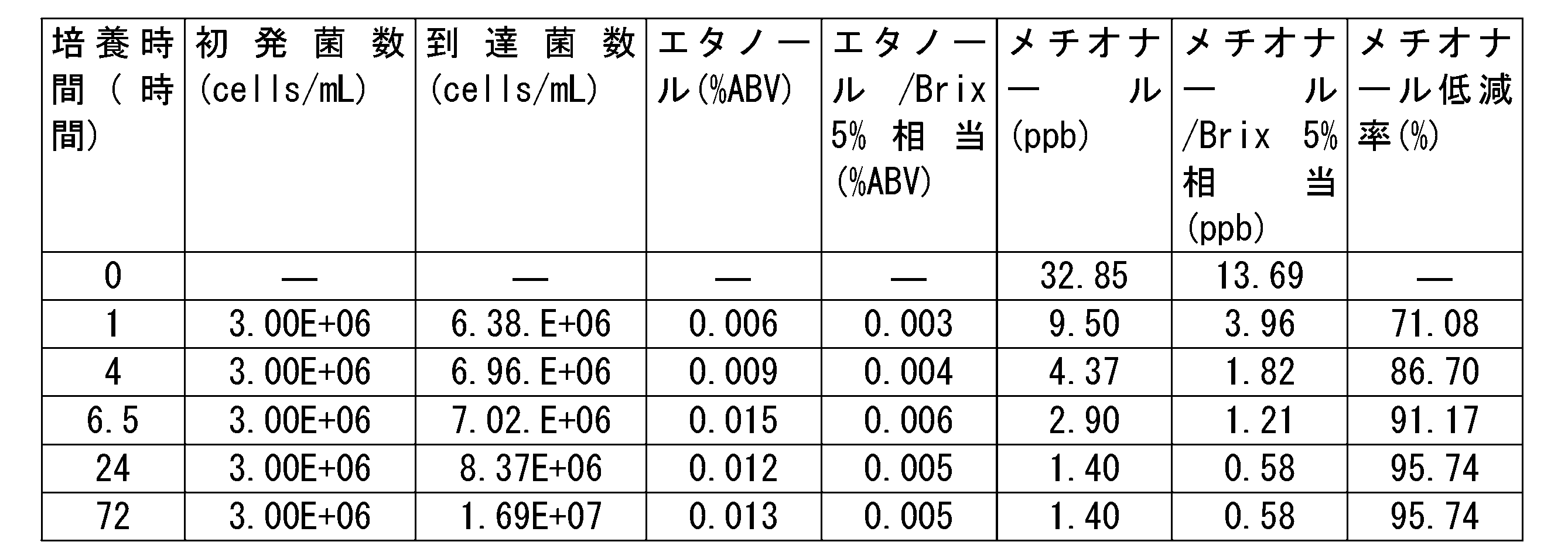
- Example 5 The fermentation raw material liquid was inoculated with RAG - phenotype Kluyveromyces lactis and the fermentation time was changed, and the bacterial concentration, ethanol concentration, and methional concentration of the resulting fermentation liquid were examined.
- Kluyveromyces lactis NBRC648 strain was used as the RAG - phenotype Kluyveromyces lactis, and wort A was used as the fermentation raw material liquid.
- Example 11 In a 200 mL Erlenmeyer flask, 160 mL of wort was placed, and the number of days of culture and the initial number of bacteria were set as shown in Table 11. The same procedure as in Example 1 was followed, except that the pre-cultured yeast was inoculated into the wort placed in an Erlenmeyer flask so that the initial number of bacteria was 1.0 x 10 6 per mL of wort, and fermented by shaking culture at an incubator speed of 60 rpm and normal pressure of 18 ° C. The bacterial concentration (achieved number of bacteria), ethanol concentration, and methional concentration of the obtained fermentation liquid were quantified. The results are shown in Table 11.
- the column with a culture time of 0 hours shows the measurement results of the fermentation raw material liquid (wort) before inoculation with yeast.
- the longer the culture time the higher the methional reduction rate.
- the contact time between yeast and wort was 4 hours or more, a malt fermentation liquid was obtained in which the ethanol concentration per Brix 5.0 mass% was less than 0.05 v/v%, methional was reduced by 85 mass% or more compared to the wort (fermentation raw material liquid), and the methional concentration per Brix 5.0 mass% was 3 ppb or less.
- Example 6 The fermentation raw material liquid was inoculated with RAG - phenotype Kluyveromyces lactis and fermented under different oxygen supply conditions, and the bacterial concentration, ethanol concentration, and methional concentration of the resulting fermentation liquid were examined.
- Kluyveromyces lactis NBRC648 strain was used as the RAG - phenotype Kluyveromyces lactis
- wort A was used as the fermentation raw material liquid.
- Fermentation under oxygenation condition 2 400 mL of wort was put into a 500 mL jar fermenter, and yeast was inoculated so that the initial number of bacteria was 2.0 ⁇ 10 5 per mL of wort. Then, a 0.2 ⁇ m diameter filter was attached to the exhaust port to allow air to enter and exit without actively supplying air, and the stirring blade was rotated at 50 rpm to stir the mixture, and the mixture was fermented at 18 ° C. and normal pressure for 1 day. The yeast pre-cultured was inoculated into the wort and fermented in the same manner as in Example 1. The bacterial concentration (number of bacteria reached), ethanol concentration, and methional concentration of the obtained fermentation liquid were quantified. The results are shown in Table 12.
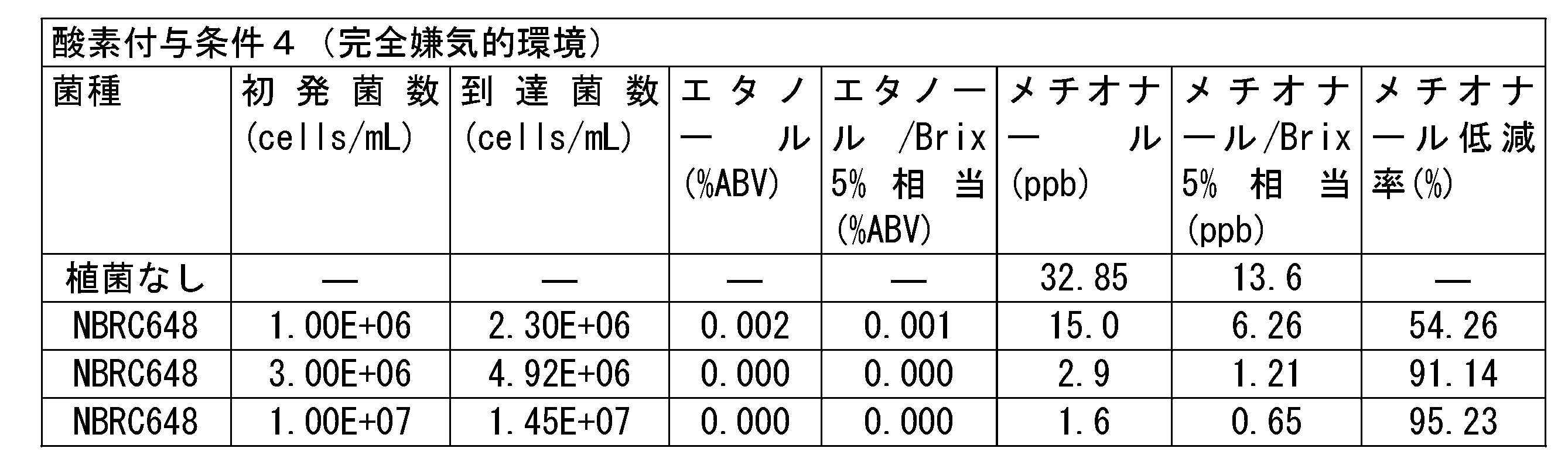
- Fermentation under oxygenation condition 4 (Reference Example 1) 400 mL of wort was put into a 500 mL jar fermenter, and yeast was inoculated so that the initial number of bacteria was 2.0 ⁇ 10 5 per mL of wort. Then, a 0.2 ⁇ m diameter filter was attached to the exhaust port, and the stirring blade was rotated at 50 rpm to stir the mixture, and fermented at 18 ° C. and normal pressure for 1 day. The yeast pre-cultured was inoculated into the wort and fermented in the same manner as in (1). The bacterial concentration (number of bacteria reached), ethanol concentration, and methional concentration of the obtained fermentation liquid were quantified. The results are shown in Table 12.
- the column with "oxygenation condition” "2" shows the results when fermentation was performed in a state where air was not actively supplied but air was allowed to flow in and out (oxygenation condition 2 in Reference Example 1)
- the column with "4" shows the results when fermentation was performed in a state where nitrogen gas was blown in (oxygenation condition 4 in Reference Example 1).
- oxygenation condition 2 which is an anaerobic environment
- a malt fermentation liquid was obtained in which the ethanol concentration per Brix 5.0 mass% was less than 0.05 v/v%, methional was reduced by 85 mass% or more compared to the wort (fermentation raw material liquid), and the methional concentration per Brix 5.0 mass% was 3 ppb or less.
- the methional reduction rate was only about 30%, and the fermentation was insufficient.
- Example 7 The fermentation temperature was varied during inoculation of the fermentation raw material liquid with RAG - phenotype Kluyveromyces lactis and fermentation was carried out, and the bacterial concentration, ethanol concentration, and methional concentration of the resulting fermentation liquid were examined. Wort A was used as the fermentation raw material liquid.
- the methional reduction rate can be made 90% or more, and a malt fermentation liquid having an ethanol concentration of less than 0.05 v/v% per Brix 5.0 mass% and an ethanol concentration of less than 0.05 v/v% per Brix 5.0 mass% can be prepared.
- Example 8 The fermentation temperature was 1° C., and the bacterial concentration, ethanol concentration, and methional concentration of the obtained fermentation liquid were examined. Wort A was used as the fermentation raw material liquid.
- yeasts Kluyveromyces lactis NBRC648 strain and Kluyveromyces lactis R33 strain, which are RAG - phenotype Kluyveromyces lactis, and Saccharomyces ludwigii NBRC798TS strain were used.
- Example 15 240 mL of wort was placed in a 300 mL Erlenmeyer flask, and the pre-cultured yeast was inoculated into the wort in the same manner as in Example 1, except that the fermentation temperature, yeast species, and initial cell count were as shown in Table 15. Fermentation was carried out by shaking culture at an incubator speed of 60 rpm at 18°C and normal pressure. The cell concentration (achieved cell count), ethanol concentration, and methional concentration of the resulting fermentation liquid were quantified. The results are shown in Table 15.
- each of the fermented liquids obtained was diluted 2.56 times to prepare a liquid (fermented malt beer-like sparkling beverage), and the taste was evaluated by five experienced panelists. The results are shown in Table 16.
- the fermentation liquid obtained using any of the yeasts had a methional reduction rate of 85% or more, and was sufficiently fermented.
- the fermentation liquid obtained using the RAG - phenotype Kluyveromyces lactis Kluyveromyces lactis NBRC648 strain and Kluyveromyces lactis R33 strain had a low ethanol production amount and was mild, but refreshing, light, and easy to drink compared to the fermentation liquid obtained using the Saccharomyces ludwigii NBRC798TS strain (Table 16).
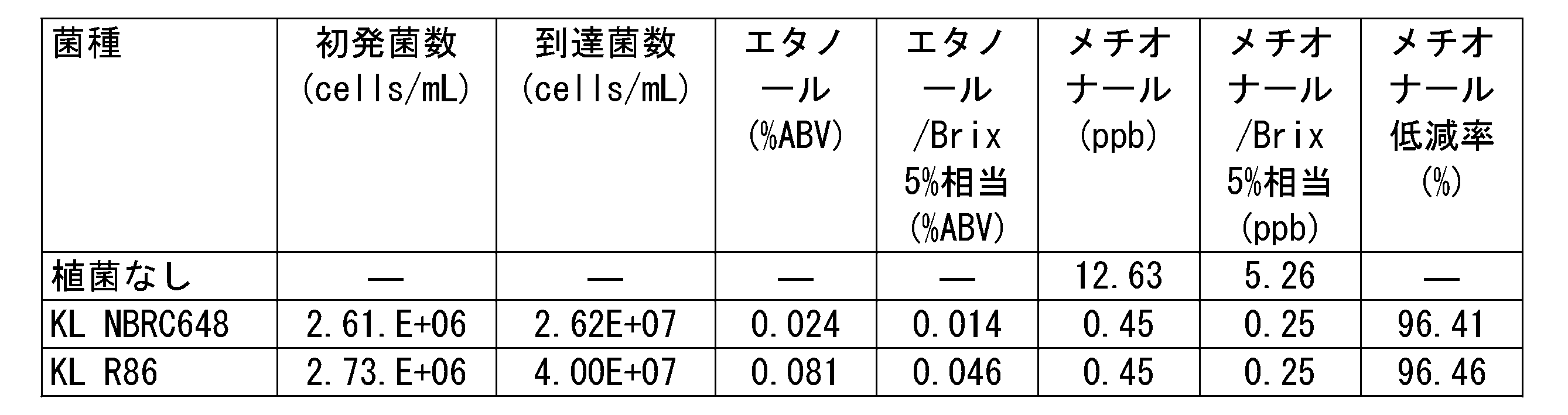
- Example 9 Fermentation was carried out on a pilot scale using RAG - phenotype Kluyveromyces lactis, and the bacterial concentration, ethanol concentration, and methional concentration of the resulting fermentation liquid were examined.
- Wort D was used as the fermentation raw material liquid.
- yeast Kluyveromyces lactis NBRC648 strain and Kluyveromyces lactis R86 strain, which are RAG - phenotype Kluyveromyces lactis, were used.
Landscapes
- Engineering & Computer Science (AREA)
- Chemical & Material Sciences (AREA)
- Food Science & Technology (AREA)
- Health & Medical Sciences (AREA)
- Life Sciences & Earth Sciences (AREA)
- Organic Chemistry (AREA)
- General Health & Medical Sciences (AREA)
- General Engineering & Computer Science (AREA)
- Bioinformatics & Cheminformatics (AREA)
- Genetics & Genomics (AREA)
- Biochemistry (AREA)
- Wood Science & Technology (AREA)
- Zoology (AREA)
- Nutrition Science (AREA)
- Polymers & Plastics (AREA)
- Distillation Of Fermentation Liquor, Processing Of Alcohols, Vinegar And Beer (AREA)
Abstract
Description
本願は、2023年7月4日に、日本に出願された特願2023-109981号に基づき優先権を主張し、その内容をここに援用する。
本発明は、エタノール濃度が低く、かつ発酵不良により残存した麦汁臭が少ない麦芽発酵液の製造方法、当該製造方法により製造された麦芽発酵液を用いて麦芽発酵飲料を製造する方法、及び当該製造方法により製造された麦芽発酵飲料を提供することを目的とする。
[1] 麦芽の糖化物を含む発酵原料液に酵母を接種して発酵させて、麦芽発酵液を調製する工程を有し、
前記酵母が、RAG-表現型クルイベロミセス・ラクチスであり、
前記麦芽発酵液が、Brix5.0質量%あたりのエタノール濃度が0.05v/v%未満である、麦芽発酵液の製造方法。
[2] 前記麦芽発酵液が、Brix5.0質量%あたりのメチオナール濃度が3.0ppb以下である、前記[1]の麦芽発酵液の製造方法。
[3] 前記麦芽発酵液のメチオナール濃度が、前記発酵原料液のメチオナール濃度の15質量%以下である、前記[1]又は[2]の麦芽発酵液の製造方法。
[4] 発酵終了時の前記麦芽発酵液の菌濃度が、3.0×10⁶cells/mL以上である、前記[1]~[3]のいずれかの麦芽発酵液の製造方法。
[5] 発酵開始時の前記麦芽発酵液の菌濃度が、2.0×10⁴cells/mL以上である、前記[1]~[4]のいずれかの製造方法。
[6] 前記発酵を、酸素付与条件下で行い、
前記酸素付与条件が、18℃常圧において、純水の溶存酸素濃度を6.0ppmから8.0ppmに上昇させるために要する時間が0時間超5時間以下である条件である前記[1]~[5]のいずれかの麦芽発酵液の製造方法。
[7] 前記発酵を、酸素付与のない条件下で行う、前記[1]~[5]のいずれかの麦芽発酵液の製造方法。
[8] 前記発酵を、1℃以上で行う、前記[1]~[7]のいずれかの麦芽発酵液の製造方法。
[9] 前記発酵を、4時間以上行う、前記[1]~[8]のいずれかの麦芽発酵液の製造方法。
[10] 前記発酵を、24時間以上行う、前記[1]~[8]のいずれかの麦芽発酵液の製造方法。
[11] 前記[1]~[10]のいずれかの麦芽発酵液の製造方法により麦芽発酵液を製造した後、得られた麦芽発酵液を原料として、麦芽発酵飲料を製造する、麦芽発酵飲料の製造方法。
[12] 前記麦芽発酵液を希釈する工程を有する、前記[11]の麦芽発酵飲料の製造方法。
[13] 原麦汁エキスが3~7質量%である麦芽発酵飲料を製造する、前記[11]又は[12]の麦芽発酵飲料の製造方法。
[14] 前記麦芽発酵飲料がビール様発泡性飲料である、前記[11]~[13]のいずれかの麦芽発酵飲料の製造方法。
[15] Brix5.0質量%あたりのエタノール濃度が0.05v/v%未満であり、Brix5.0質量%あたりのメチオナール濃度が3.0ppb以下である、麦芽発酵飲料。
[16] ビール様発泡性飲料である、前記[15]の麦芽発酵飲料。
本発明及び本願明細書において、「ppb」及び「ppm」は、それぞれ、「質量ppb」及び「質量ppm」を意味する。
以降の実験において、特に記載のない限り、麦芽発酵液又は飲料中のエタノール濃度は、下記の方法により測定した。
蒸留水を用いてエタノール濃度が0.5~2.0v/v%になるようにサンプルを希釈した溶液を、多機能バイオセンサ(BF-5、王子機器計測社製)により測定した。得られた測定値に希釈倍率を乗じた値を、サンプル中のエタノール濃度(v/v%)とした。
以降の実験において、特に記載のない限り、発酵原料液、麦芽発酵液、又は飲料のメチオナールの濃度は、GC-MS分析法により定量した。分析に使用したMRMトランジションを表1に示す。

装置:多機能オートサンプラMPS2システム(Gerstel社製)が搭載されたGC-MS/MS(7890A/7000C Agilent社製)
カラム:HP-5MS UI 30m×0.25mm×0.25μm(Agilent社製)
キャリアガス:ヘリウム
流量:1mL/分
昇温条件:80℃(5分間)→15℃/分→150℃→5℃/分→220℃→50℃/分→300℃(5分間)
注入法:スプリットレス
パージフロー:50mL/分、1分間
注入口温度:250℃
圧力:9.3825psi
トランスファーライン:320℃
イオン化:電子イオン化法(70eV)
イオン源温度:250℃
四重極温度:150℃
Heクエンチガス流量:2.25mL/分
N2コリジョンガス流量:1.5mL/分
MRMトランジション:(表1参照)
以降の実験において、特に記載のない限り、発酵原料液、麦芽発酵液、又は飲料のBrixは、デジタル屈折計(RX-5000α、アタゴ社製)を用いて測定した。
以降の実験において、特に記載のない限り、発酵原料液、麦芽発酵液、又は飲料のpHは、pH計測機(LAQUAtwin-pH-33、Horiba社製)により測定した。
麦汁A及びDは、200Lスケールの仕込設備を用いて製造した。まず、仕込槽に、発酵原料となる粉砕麦芽及びデンプン質副原料を40kgと原料水を160Lとを投入した。次いで、当該仕込槽内の混合物を常法に従って加温して糖化させた後、得られた糖化液を濾過した。得られた濾液にホップを添加した後、煮沸した。煮沸後の濾液を沈降槽に移して沈殿物を分離除去した後、pHをリン酸で調整し、冷却して麦汁A及びDを得た。得られた麦汁A及びDの分析値は、表2の通りであった。

表3に記載の市販の麦芽エキスを水で希釈、混合し、それぞれ表3に記載のBrix及びpHの麦汁B又は麦汁Cとした。

18℃、大気圧で、純水を下記の酸素付与条件でインキュベートし、溶存酸素濃度を測定した。
酸素付与条件2:500mL容のジャーファーメンターに400mLの純水をいれ、排気口に0.2μm口径フィルターを取り付けた状態で積極的な空気供給はせず、撹拌羽を50rpmで回転させて撹拌する。
酸素付与条件3:200L容の発酵タンクに100Lの純水を入れ、て0.026MPaで加圧して、100L純水あたり空気を0.67NL/分で供給する。
酸素付与条件4:500mL容のジャーファーメンターに400mLの純水をいれ、排気口に0.2μm口径フィルターを取り付けて窒素ガスを吹き込む状態で、撹拌羽を50rpmで回転させて撹拌する(完全嫌気的条件)。
様々な酵母を用いて麦汁をフラスコ内で発酵させ、得られた発酵液の菌濃度、エタノール濃度、及びメチオナール濃度を調べた。
クルイベロミセス・ラクチスNBRC648株、クルイベロミセス・ラクチスNBRC1267株、クルイベロミセス・ラクチスNBRC1090TS株、リポマイセス・スターキー(Lipomyces starkeyi)NBRC10381TS株、リポマイセス・リポファ(Lipomyces lipofer)NBRC1288TS株、ヤロウィア・リポリティカ(Yarrowia lipolytica)NBRC717株、ロドトルラ・グルンティス(Rhodotorula gluntis)NBRC1125TS株、サッカロマイコーデス・ルドウィギイNBRC798TS株、及びトルラスポラ・デルブリュッキ(Torulaspora delbrueckii)NBRC955TS株を用いた。株名の末尾に「TS」とある株は、タイプストレイン株である。
使用した3株のクルイベロミセス・ラクチスのうち、クルイベロミセス・ラクチスNBRC648株はRAG-表現型であり、クルイベロミセス・ラクチスNBRC1267株、クルイベロミセス・ラクチスNBRC1090TS株はRAG-表現型を持たず、呼吸阻害剤存在下でも増殖可能である。
発酵原料液として、麦汁Aを用いた。まず、Brix5質量%となるよう水で希釈した麦汁で一晩前培養した各酵母を、1度水で洗浄した後、500mL容の三角フラスコに入れた麦汁(Brix12.0%)各400mLに、酵母の初発菌数が麦汁1mLあたり1.0×10⁶個となるよう添加した。次いで、酵母を接種した麦汁を、インキュベーターの回転数を60rpm、18℃常圧にて振盪培養を行い、3日間発酵させた。その後、得られた発酵液の菌濃度、エタノール濃度、及びメチオナール濃度を定量した。
官能評価は、各発酵液を2.56倍希釈した液(発酵麦芽ビール様発泡性飲料)を評価試料として、熟練のパネリスト5名により、1点から7点のSD法(semantic differential method)(Frey, The SAGE Encyclopedia of Educational Research, Measurement, and Evaluation, "Semantic Differential Scaling" , 2018, p. 1504-1507)を用いて行った。評価項目は、(a)麦汁臭の強さ、及び(b)おいしさとした。(a)については香りで、(b)については味で評価を行った。評価試料はそれぞれ20mLとし、評価する順番はパネリストによって異なるようランダム化した。
(b)については、麦汁Aをコントロール(3点)として、採点を行った。

様々なRAG-表現型クルイベロミセス・ラクチスを用いて麦汁をフラスコ内で発酵させ、得られた発酵液の菌濃度、エタノール濃度、及びメチオナール濃度を調べた。
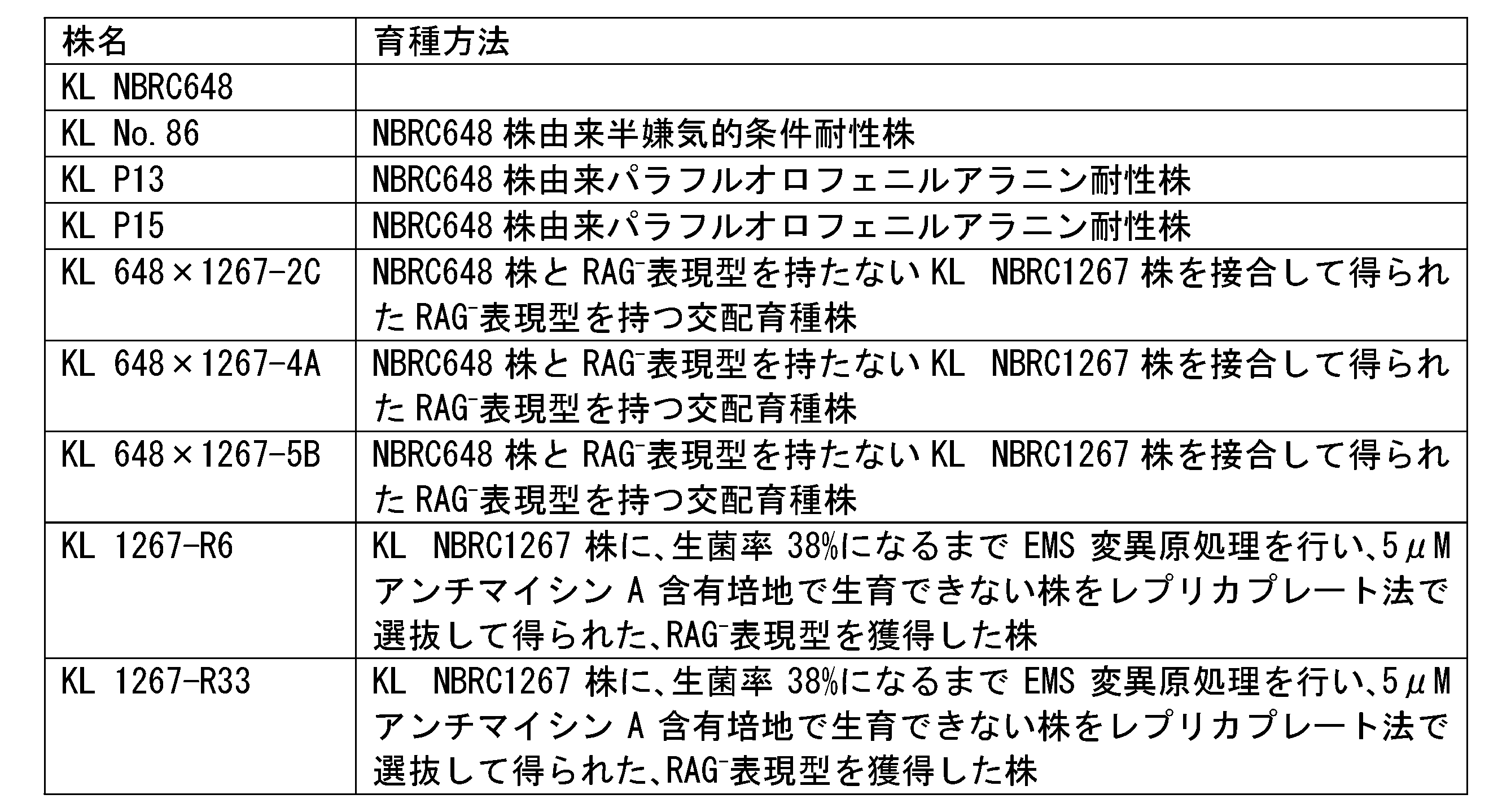
RAG-表現型クルイベロミセス・ラクチスとしては、クルイベロミセス・ラクチスNBRC648株及び/又はNBRC1267株から育種した、表6に記載の株を用いた。表中、「KL」は「Kluyveromyces lactis」の略である。
麦汁90mLを100mL容三角フラスコに入れ、NBRC648株(前培養菌体)を2×10⁶ cells/mL植菌し、18℃で60rpmロータリーにて2日間の培養を5回繰り返した。得られた菌体をYM寒天培地に塗抹し、アネロパック・微好気(三菱ガス化学社製)とともに密閉容器に入れ、25℃で5日間培養した。寒天培地上に生じたコロニーのうち、生育が早いコロニーを選抜した。
純水にKL NBRC648を1×10⁸cells/mLになるように懸濁し、懸濁液を得た。パラフルオロフェニルアラニン含有寒天培地(0.67% Yeast Nitrogen Base w/o Amino Acids、2% Glucose、1.0 mg/mL パラフルオロフェニルアラニン、2% agar)に懸濁液100μLを植菌し、25℃で4日間培養した。寒天培地上に生じたコロニーのうち、香気成分(βフェネチルアルコール)の産生量が多い株を選抜した。
NBRC648株とRAG-表現型を持たないKL NBRC1267株を接合して得られた胞子のうち、RAG-表現型をもつ株を選抜した。
KL NBRC1267株を0.3%エチルメタンスルホン酸で30℃、60分間処理し、生菌率が38%になるようにした。処理した菌体を100個程度のコロニーが生えるようにYPD寒天培地に植菌し、アンチマイシンA含有寒天培地(0.5% Yeast extract、1% peptone、5% Glucose、5μM アンチマイシンA、2% agar)にレプリカプレーティングを行った。YPD寒天培地では生育可能で、アンチマイシンA含有寒天培地では生育できない株を選抜した。
実施例1と同様にして、前培養した酵母を初発菌数が麦汁1mLあたり1.0×10⁶個となるよう麦汁に接種し、18℃常圧にて3日間振盪培養を行って発酵させた。得られた発酵液の菌濃度(到達菌数)、エタノール濃度、及びメチオナール濃度を定量した。その結果を表7に示す。

組成やBrixが異なる麦汁を発酵原料液としてRAG-表現型クルイベロミセス・ラクチスを用いて発酵させ、得られた発酵液の菌濃度、エタノール濃度、及びメチオナール濃度を調べた。RAG-表現型クルイベロミセス・ラクチスとして、クルイベロミセス・ラクチスNBRC648株を用いた。
麦汁Aに代えて、表8に記載のBrixの麦汁を用いた以外は、実施例1と同様にして、前培養した酵母を初発菌数が麦汁1mLあたり1.0×10⁶個となるよう麦汁に接種し、18℃常圧にて3日間振盪培養を行って発酵させた。得られた発酵液の菌濃度(到達菌数)、エタノール濃度、及びメチオナール濃度を定量した。その結果を表8に示す。

麦汁Aに代えて、麦汁Bを表9に記載のBrixに調製した麦汁を用いた以外は、前記(1)と同様にして、前培養した酵母を麦汁に酵母菌数が麦汁1mLあたり1.0×10⁶個となるよう接種し、18℃常圧にて3日間振盪培養を行って発酵させた。得られた発酵液の菌濃度(到達菌数)、エタノール濃度、及びメチオナール濃度を定量した。その結果を表9に示す。

発酵原料液に接種させるRAG-表現型クルイベロミセス・ラクチスの菌数や到達菌数を変えて、得られた発酵液の菌濃度、エタノール濃度、及びメチオナール濃度を調べた。RAG-表現型クルイベロミセス・ラクチスとして、クルイベロミセス・ラクチスNBRC648株を用い、発酵原料液として麦汁Aを使用した。
なお、500mL容の三角フラスコに純水160mLを入れて、18℃常圧において、インキュベーターの回転数を60rpmで撹拌しながらインキュベートした場合、当該純水の溶存酸素濃度が6.0ppmから8.0ppmに上昇するのに要する時間は1時間であった。また、200mL容の三角フラスコに純水160mLを入れて、18℃常圧において、インキュベーターの回転数を60rpmで撹拌しながらインキュベートした場合、当該純水の溶存酸素濃度が6.0ppmから8.0ppmに上昇するのに要する時間は160分間であった。

発酵原料液にRAG-表現型クルイベロミセス・ラクチスを接種して発酵時間を変えて、得られた発酵液の菌濃度、エタノール濃度、及びメチオナール濃度を調べた。RAG-表現型クルイベロミセス・ラクチスとして、クルイベロミセス・ラクチスNBRC648株を用い、発酵原料液として麦汁Aを使用した。
発酵原料液にRAG-表現型クルイベロミセス・ラクチスを接種して発酵させる際の酸素付与条件を変えて、得られた発酵液の菌濃度、エタノール濃度、及びメチオナール濃度を調べた。RAG-表現型クルイベロミセス・ラクチスとして、クルイベロミセス・ラクチスNBRC648株を用い、発酵原料液として麦汁Aを使用した。
500mL容のジャーファーメンターに400mLの麦汁をいれ、酵母を初発菌数が麦汁1mLあたり2.0×10⁵個となるように接種させた後、排気口に0.2μm口径フィルターを取り付けて積極的な空気供給はしないが空気の出入りは可能にしてある状態で、撹拌羽を50rpmで回転させて撹拌して、18℃常圧で1日間発酵させた以外は、実施例1と同様にして、前培養した酵母を麦汁に接種し、発酵させた。得られた発酵液の菌濃度(到達菌数)、エタノール濃度、及びメチオナール濃度を定量した。その結果を表12に示す。
500mL容のジャーファーメンターに400mLの麦汁をいれ、酵母を初発菌数が麦汁1mLあたり2.0×10⁵個となるように接種させた後、排気口に0.2μm口径フィルターを取り付けて窒素ガスを吹き込む状態で、撹拌羽を50rpmで回転させて撹拌して、18℃常圧で1日間発酵させた以外は、前記(1)と同様にして、前培養した酵母を麦汁に接種し、発酵させた。得られた発酵液の菌濃度(到達菌数)、エタノール濃度、及びメチオナール濃度を定量した。その結果を表12に示す。

発酵原料液にRAG-表現型クルイベロミセス・ラクチスを接種して発酵させる際の発酵温度を変えて、得られた発酵液の菌濃度、エタノール濃度、及びメチオナール濃度を調べた。発酵原料液として麦汁Aを使用した。

発酵温度1℃として、得られた発酵液の菌濃度、エタノール濃度、及びメチオナール濃度を調べた。発酵原料液として麦汁Aを使用した。酵母としては、RAG-表現型クルイベロミセス・ラクチスであるクルイベロミセス・ラクチスNBRC648株及びクルイベロミセス・ラクチスR33株と、サッカロマイコーデス・ルドウィギイNBRC798TS株とを用いた。


パイロットスケールでRAG-表現型クルイベロミセス・ラクチスを用いて発酵させ、得られた発酵液の菌濃度、エタノール濃度、及びメチオナール濃度を調べた。発酵原料液として麦汁Dを使用した。酵母としては、RAG-表現型クルイベロミセス・ラクチスであるクルイベロミセス・ラクチスNBRC648株及びクルイベロミセス・ラクチスR86株を用いた。
200L容の発酵タンクに、麦汁D(Brix9.0%)100Lを入れ、当該発酵タンクに、初発菌数が表17に記載の量となるように酵母を添加した。次いで、発酵タンクを0.026MPaで加圧して、100L発酵液あたりに空気を0.67NL/分で供給した条件(参考例1における酸素付与条件3)下で、18℃、3日間発酵させた。得られた発酵液の菌濃度(到達菌数)、エタノール濃度、及びメチオナール濃度を定量した。その結果を表17に示す。
Claims (16)
- 麦芽の糖化物を含む発酵原料液に酵母を接種して発酵させて、麦芽発酵液を調製する工程を有し、
前記酵母が、RAG-表現型クルイベロミセス・ラクチスであり、
前記麦芽発酵液が、Brix5.0質量%あたりのエタノール濃度が0.05v/v%未満である、麦芽発酵液の製造方法。 - 前記麦芽発酵液が、Brix5.0質量%あたりのメチオナール濃度が3.0ppb以下である、請求項1に記載の麦芽発酵液の製造方法。
- 前記麦芽発酵液のメチオナール濃度が、前記発酵原料液のメチオナール濃度の15質量%以下である、請求項1に記載の麦芽発酵液の製造方法。
- 発酵終了時の前記麦芽発酵液の菌濃度が、3.0×10⁶cells/mL以上である、請求項1に記載の麦芽発酵液の製造方法。
- 発酵開始時の前記麦芽発酵液の菌濃度が、2.0×10⁴cells/mL以上である、請求項1に記載の麦芽発酵液の製造方法。
- 前記発酵を、酸素付与条件下で行い、
前記酸素付与条件が、18℃常圧において、純水の溶存酸素濃度を6.0ppmから8.0ppmに上昇させるために要する時間が0時間超5時間以下である条件である、請求項1に記載の麦芽発酵液の製造方法。 - 前記発酵を、酸素付与のない条件下で行う、請求項1に記載の麦芽発酵液の製造方法。
- 前記発酵を、1℃以上で行う、請求項1に記載の麦芽発酵液の製造方法。
- 前記発酵を、4時間以上行う、請求項1に記載の麦芽発酵液の製造方法。
- 前記発酵を、24時間以上行う、請求項1に記載の麦芽発酵液の製造方法。
- 請求項1~10のいずれか一項に記載の麦芽発酵液の製造方法により麦芽発酵液を製造した後、得られた麦芽発酵液を原料として、麦芽発酵飲料を製造する、麦芽発酵飲料の製造方法。
- 前記麦芽発酵液を希釈する工程を有する、請求項11に記載の麦芽発酵飲料の製造方法。
- 原麦汁エキスが3~7質量%である麦芽発酵飲料を製造する、請求項11に記載の麦芽発酵飲料の製造方法。
- 前記麦芽発酵飲料がビール様発泡性飲料である、請求項11に記載の麦芽発酵飲料の製造方法。
- Brix5.0質量%あたりのエタノール濃度が0.05v/v%未満であり、Brix5.0質量%あたりのメチオナール濃度が3.0ppb以下である、麦芽発酵飲料。
- ビール様発泡性飲料である、請求項15に記載の麦芽発酵飲料。
Priority Applications (2)
| Application Number | Priority Date | Filing Date | Title |
|---|---|---|---|
| JP2025531532A JPWO2025009480A1 (ja) | 2023-07-04 | 2024-06-28 | |
| AU2024290294A AU2024290294A1 (en) | 2023-07-04 | 2024-06-28 | Method for producing fermented malt liquid |
Applications Claiming Priority (2)
| Application Number | Priority Date | Filing Date | Title |
|---|---|---|---|
| JP2023-109981 | 2023-07-04 | ||
| JP2023109981 | 2023-07-04 |
Publications (1)
| Publication Number | Publication Date |
|---|---|
| WO2025009480A1 true WO2025009480A1 (ja) | 2025-01-09 |
Family
ID=94171588
Family Applications (1)
| Application Number | Title | Priority Date | Filing Date |
|---|---|---|---|
| PCT/JP2024/023580 Ceased WO2025009480A1 (ja) | 2023-07-04 | 2024-06-28 | 麦芽発酵液の製造方法 |
Country Status (3)
| Country | Link |
|---|---|
| JP (1) | JPWO2025009480A1 (ja) |
| AU (1) | AU2024290294A1 (ja) |
| WO (1) | WO2025009480A1 (ja) |
Citations (3)
| Publication number | Priority date | Publication date | Assignee | Title |
|---|---|---|---|---|
| JPS6094077A (ja) * | 1983-10-27 | 1985-05-27 | Kagome Kk | 発酵飲料及びその製造方法 |
| US5384135A (en) * | 1992-03-10 | 1995-01-24 | Brasserie Du Cardinal Fribourg S.A. | Process for the manufacture of an alcohol-free beer having the organoleptic properties of a lager type pale beer |
| JP2022508429A (ja) * | 2018-09-10 | 2022-01-19 | ハイネケン・サプライ・チェーン・ビー.ブイ. | 改善された風味を有する非アルコール性発酵ビール |
-
2024
- 2024-06-28 WO PCT/JP2024/023580 patent/WO2025009480A1/ja not_active Ceased
- 2024-06-28 AU AU2024290294A patent/AU2024290294A1/en active Pending
- 2024-06-28 JP JP2025531532A patent/JPWO2025009480A1/ja active Pending
Patent Citations (3)
| Publication number | Priority date | Publication date | Assignee | Title |
|---|---|---|---|---|
| JPS6094077A (ja) * | 1983-10-27 | 1985-05-27 | Kagome Kk | 発酵飲料及びその製造方法 |
| US5384135A (en) * | 1992-03-10 | 1995-01-24 | Brasserie Du Cardinal Fribourg S.A. | Process for the manufacture of an alcohol-free beer having the organoleptic properties of a lager type pale beer |
| JP2022508429A (ja) * | 2018-09-10 | 2022-01-19 | ハイネケン・サプライ・チェーン・ビー.ブイ. | 改善された風味を有する非アルコール性発酵ビール |
Non-Patent Citations (1)
| Title |
|---|
| WÉSOLOWSKI-LOUVEL MICHELINE, GOFFRINI PAOLA, FERRERO ILIANA, FUKUHARA HIROSHI: "Abstract: Glucose transport in the yeast Kluyveromyces lactis", MOLECULAR GENETICS AND GENOMICS, vol. 233, 1 May 1992 (1992-05-01), DE, pages 1 - 1, XP093259108, ISSN: 1617-4615, DOI: 10.1007/BF00587565 * |
Also Published As
| Publication number | Publication date |
|---|---|
| JPWO2025009480A1 (ja) | 2025-01-09 |
| AU2024290294A1 (en) | 2025-10-30 |
Similar Documents
| Publication | Publication Date | Title |
|---|---|---|
| CN101346458B (zh) | 微生物稳定的啤酒 | |
| CN113811193A (zh) | 啤酒味饮料 | |
| US12454665B2 (en) | Production of an alcohol-free beverage | |
| JPWO2019035439A1 (ja) | 非甘味性飲料 | |
| WO2021070930A1 (ja) | ビールテイスト発酵麦芽飲料 | |
| TW202212558A (zh) | 啤酒風味飲料 | |
| US20090110769A1 (en) | Process for Producing Fermented Beverages Using Fermentation Raw Material Solutions of Low Maltotriose Ratio | |
| JP2019106903A (ja) | ビール様発酵麦芽飲料の製造方法及びビール様発酵麦芽飲料の泡持ち向上方法 | |
| WO2023286789A1 (en) | Method of producing fermented malt-based liquid | |
| JP5855579B2 (ja) | ピルビン酸含有量の高いビール様発泡性発酵飲料の製造方法 | |
| JP2023064993A (ja) | 発酵ビール様発泡性飲料及びその製造方法 | |
| EP4170007B1 (en) | Method for producing fermented malt liquid | |
| WO2025009480A1 (ja) | 麦芽発酵液の製造方法 | |
| JP4219959B2 (ja) | 発泡アルコール飲料及びその製造方法 | |
| JP7158211B2 (ja) | ビールテイスト小麦麦芽飲料の製造方法及びビールテイスト小麦麦芽飲料の4-ビニルグアイアコール含有量の低減方法 | |
| WO2025154727A1 (ja) | 発酵ビール様発泡性飲料 | |
| WO2023171157A1 (ja) | 発酵ビール様発泡性飲料及びその製造方法 | |
| JP2024180317A (ja) | ビール様飲料の静菌性を増強する方法 | |
| JP2026002651A (ja) | ビール様飲料の静菌性を増強する方法 | |
| WO2024180164A1 (en) | Low diacetyl yeast progeny strains | |
| WO2026004062A1 (ja) | ビールテイストノンアルコール飲料およびその製造方法 | |
| JP2025010874A (ja) | 容器詰麦芽発酵飲料 | |
| JP2024530339A (ja) | マルトース陰性酵母とその後の脱アルコール化を用いて得られる低アルコール又はノンアルコール飲料 | |
| HK40059487A (en) | Beer-flavored beverage | |
| JP2021040574A (ja) | ビールテイスト飲料におけるペクチネイタス属細菌の生育抑制方法 |
Legal Events
| Date | Code | Title | Description |
|---|---|---|---|
| 121 | Ep: the epo has been informed by wipo that ep was designated in this application |
Ref document number: 24835993 Country of ref document: EP Kind code of ref document: A1 |
|
| ENP | Entry into the national phase |
Ref document number: 2025531532 Country of ref document: JP Kind code of ref document: A |
|
| WWE | Wipo information: entry into national phase |
Ref document number: 2025531532 Country of ref document: JP |
|
| WWE | Wipo information: entry into national phase |
Ref document number: AU2024290294 Country of ref document: AU Ref document number: 826004 Country of ref document: NZ |
|
| ENP | Entry into the national phase |
Ref document number: 2024290294 Country of ref document: AU Date of ref document: 20240628 Kind code of ref document: A |
|
| WWE | Wipo information: entry into national phase |
Ref document number: 2024835993 Country of ref document: EP |
|
| NENP | Non-entry into the national phase |
Ref country code: DE |
|
| ENP | Entry into the national phase |
Ref document number: 2024835993 Country of ref document: EP Effective date: 20260204 |