WO2025009199A1 - 情報処理システム、情報処理端末、健康管理機能提供方法及びプログラム - Google Patents
情報処理システム、情報処理端末、健康管理機能提供方法及びプログラム Download PDFInfo
- Publication number
- WO2025009199A1 WO2025009199A1 PCT/JP2024/002950 JP2024002950W WO2025009199A1 WO 2025009199 A1 WO2025009199 A1 WO 2025009199A1 JP 2024002950 W JP2024002950 W JP 2024002950W WO 2025009199 A1 WO2025009199 A1 WO 2025009199A1
- Authority
- WO
- WIPO (PCT)
- Prior art keywords
- user
- health management
- information
- information processing
- management function
- Prior art date
- Legal status (The legal status is an assumption and is not a legal conclusion. Google has not performed a legal analysis and makes no representation as to the accuracy of the status listed.)
- Ceased
Links
Images



Classifications
-
- G—PHYSICS
- G16—INFORMATION AND COMMUNICATION TECHNOLOGY [ICT] SPECIALLY ADAPTED FOR SPECIFIC APPLICATION FIELDS
- G16H—HEALTHCARE INFORMATICS, i.e. INFORMATION AND COMMUNICATION TECHNOLOGY [ICT] SPECIALLY ADAPTED FOR THE HANDLING OR PROCESSING OF MEDICAL OR HEALTHCARE DATA
- G16H50/00—ICT specially adapted for medical diagnosis, medical simulation or medical data mining; ICT specially adapted for detecting, monitoring or modelling epidemics or pandemics
- G16H50/30—ICT specially adapted for medical diagnosis, medical simulation or medical data mining; ICT specially adapted for detecting, monitoring or modelling epidemics or pandemics for calculating health indices; for individual health risk assessment
-
- G—PHYSICS
- G16—INFORMATION AND COMMUNICATION TECHNOLOGY [ICT] SPECIALLY ADAPTED FOR SPECIFIC APPLICATION FIELDS
- G16H—HEALTHCARE INFORMATICS, i.e. INFORMATION AND COMMUNICATION TECHNOLOGY [ICT] SPECIALLY ADAPTED FOR THE HANDLING OR PROCESSING OF MEDICAL OR HEALTHCARE DATA
- G16H20/00—ICT specially adapted for therapies or health-improving plans, e.g. for handling prescriptions, for steering therapy or for monitoring patient compliance
-
- G—PHYSICS
- G16—INFORMATION AND COMMUNICATION TECHNOLOGY [ICT] SPECIALLY ADAPTED FOR SPECIFIC APPLICATION FIELDS
- G16H—HEALTHCARE INFORMATICS, i.e. INFORMATION AND COMMUNICATION TECHNOLOGY [ICT] SPECIALLY ADAPTED FOR THE HANDLING OR PROCESSING OF MEDICAL OR HEALTHCARE DATA
- G16H40/00—ICT specially adapted for the management or administration of healthcare resources or facilities; ICT specially adapted for the management or operation of medical equipment or devices
- G16H40/60—ICT specially adapted for the management or administration of healthcare resources or facilities; ICT specially adapted for the management or operation of medical equipment or devices for the operation of medical equipment or devices
- G16H40/67—ICT specially adapted for the management or administration of healthcare resources or facilities; ICT specially adapted for the management or operation of medical equipment or devices for the operation of medical equipment or devices for remote operation
-
- G—PHYSICS
- G16—INFORMATION AND COMMUNICATION TECHNOLOGY [ICT] SPECIALLY ADAPTED FOR SPECIFIC APPLICATION FIELDS
- G16H—HEALTHCARE INFORMATICS, i.e. INFORMATION AND COMMUNICATION TECHNOLOGY [ICT] SPECIALLY ADAPTED FOR THE HANDLING OR PROCESSING OF MEDICAL OR HEALTHCARE DATA
- G16H50/00—ICT specially adapted for medical diagnosis, medical simulation or medical data mining; ICT specially adapted for detecting, monitoring or modelling epidemics or pandemics
- G16H50/20—ICT specially adapted for medical diagnosis, medical simulation or medical data mining; ICT specially adapted for detecting, monitoring or modelling epidemics or pandemics for computer-aided diagnosis, e.g. based on medical expert systems
-
- G—PHYSICS
- G16—INFORMATION AND COMMUNICATION TECHNOLOGY [ICT] SPECIALLY ADAPTED FOR SPECIFIC APPLICATION FIELDS
- G16H—HEALTHCARE INFORMATICS, i.e. INFORMATION AND COMMUNICATION TECHNOLOGY [ICT] SPECIALLY ADAPTED FOR THE HANDLING OR PROCESSING OF MEDICAL OR HEALTHCARE DATA
- G16H20/00—ICT specially adapted for therapies or health-improving plans, e.g. for handling prescriptions, for steering therapy or for monitoring patient compliance
- G16H20/30—ICT specially adapted for therapies or health-improving plans, e.g. for handling prescriptions, for steering therapy or for monitoring patient compliance relating to physical therapies or activities, e.g. physiotherapy, acupressure or exercising
-
- G—PHYSICS
- G16—INFORMATION AND COMMUNICATION TECHNOLOGY [ICT] SPECIALLY ADAPTED FOR SPECIFIC APPLICATION FIELDS
- G16H—HEALTHCARE INFORMATICS, i.e. INFORMATION AND COMMUNICATION TECHNOLOGY [ICT] SPECIALLY ADAPTED FOR THE HANDLING OR PROCESSING OF MEDICAL OR HEALTHCARE DATA
- G16H20/00—ICT specially adapted for therapies or health-improving plans, e.g. for handling prescriptions, for steering therapy or for monitoring patient compliance
- G16H20/70—ICT specially adapted for therapies or health-improving plans, e.g. for handling prescriptions, for steering therapy or for monitoring patient compliance relating to mental therapies, e.g. psychological therapy or autogenous training
-
- G—PHYSICS
- G16—INFORMATION AND COMMUNICATION TECHNOLOGY [ICT] SPECIALLY ADAPTED FOR SPECIFIC APPLICATION FIELDS
- G16H—HEALTHCARE INFORMATICS, i.e. INFORMATION AND COMMUNICATION TECHNOLOGY [ICT] SPECIALLY ADAPTED FOR THE HANDLING OR PROCESSING OF MEDICAL OR HEALTHCARE DATA
- G16H40/00—ICT specially adapted for the management or administration of healthcare resources or facilities; ICT specially adapted for the management or operation of medical equipment or devices
- G16H40/20—ICT specially adapted for the management or administration of healthcare resources or facilities; ICT specially adapted for the management or operation of medical equipment or devices for the management or administration of healthcare resources or facilities, e.g. managing hospital staff or surgery rooms
Definitions
- the present invention belongs to the field of healthcare-related technology, and relates to an information processing system, an information processing terminal, and a method and program for providing health management functions.
- Patent Document 1 In recent years, interest in personal health care has increased, and systems have been proposed that can provide health management functions, such as presenting patients with information on behavioral changes that can lead to the treatment of illnesses (for example, Patent Document 1).
- Patent Document 1 discloses a system that has a server and a user terminal, in which when a patient provides medical information such as their own vital signs via the user terminal (e.g., a smartphone), information for treating illnesses tailored to each individual patient based on the medical information is presented via the user terminal.
- a patient provides medical information such as their own vital signs via the user terminal (e.g., a smartphone)
- information for treating illnesses tailored to each individual patient based on the medical information is presented via the user terminal.
- the present invention aims to provide a function related to the user's health management to the user in an appropriate manner according to the user's characteristics and condition.
- An information processing system including at least an information processing terminal configured to be able to execute an application program that provides a health management function related to management of a user's health
- a user information acquisition means for acquiring user information including an index related to the user's health
- a user suitability determination means for determining suitability of the user for the health management function provided based on an index included in the user information
- a setting means for setting a mode of providing the health management function according to a result of the determination
- Health management does not only refer to so-called preventive medical care for healthy people, but also includes medical treatment for patients with injuries and illnesses.
- the “health management function” also includes sending the user's vital data to medical professionals such as doctors.
- User information includes various information, such as biometric information such as blood pressure, pulse, body temperature, weight, and electrocardiogram, physical function information such as eyesight, hearing, muscle strength, and cognitive function, attribute information such as age and gender, and information on symptoms (e.g. pain, numbness, etc.) and their location and strength in the case of injuries and illnesses.
- acquiring here includes accepting manual input from the user, receiving sensing information by a sensor device, receiving measurement results by a biometric information measuring device, etc.
- the sensor device and measuring device may be configured integrally with the information processing terminal.
- the number of “indicators” is not limited to one, and may be multiple depending on the type of information to be acquired.
- “setting the manner of providing the health management function” also includes placing restrictions on the functions provided.
- the indicators may include an indicator related to the cognitive function of the user, and the setting of the manner in which the health management function is provided by the setting means may include presenting information encouraging the user to see a doctor early when providing the health management function.
- the setting means when the setting means sets the manner in which the health management function is provided to present information encouraging the user to see a doctor early, the setting means may further set the manner in which the health management function is provided to stop providing the health management function if information indicating that the user has seen a doctor within a specified period is not input.
- the information processing terminal may be equipped with a communication means
- the health management function may include transmitting the user information via the communication means
- the setting of the manner in which the health management function is provided by the setting means may include setting the result of the judgment on the suitability to be added to the user information and transmitted.
- the information processing terminal is provided with an image display means, the health management function includes presenting information by the image display means,
- the indicators include an indicator related to the user's visual acuity,
- the setting of the manner in which the health management function is provided by the setting means may include changing the display by the image display means.
- changing the display includes changing the size of the characters, changing the color scheme of the screen (including the characters), etc. With this configuration, it becomes possible to present health management information in an appropriate display format according to the user's eyesight.
- the information processing terminal is provided with a voice output means
- the health management function includes presentation of information by the audio output means
- the index includes an index related to the hearing ability of the user
- the setting of the mode of providing the health management function performed by the setting means may include changing the sound output by the sound output means.
- changing the output audio includes changing the volume of the audio, changing the pitch, changing the playback speed of the audio, etc. With this configuration, it is possible to output an appropriate audio according to the user's hearing ability.
- the health management function includes presenting to the user a method of performing exercises related to treatment of an injury or illness of the user;
- the indicators include at least one of the user's body temperature, blood pressure, pulse, and electrocardiogram,
- the setting of the manner in which the health management function is provided by the setting means may include changing the content and/or intensity of the exercise, or presenting information to the effect that the exercise should be stopped.
- the information processing system includes an information processing device configured to be able to communicate with the information processing terminal,
- the information processing device may provide, to the information processing terminal, information on the index used to determine the suitability in accordance with the content of the health management function provided by the application program.
- the server information processing device
- the server can determine what user information is required to obtain the desired functions and suggest the required user information to the user (information processing terminal), resulting in a more user-friendly system.
- the information processing device may also issue corresponding authentication information for each user and each health management function, and when receiving the authentication information from the information processing terminal, provide the information processing terminal with information on the index used to determine the suitability of the user and the health management function corresponding to the authentication information.
- the server issues authentication information (access code) for each user and each health management function, and the normal function is activated (enabled) on the condition that the user inputs this information on the user's information processing terminal and sends it to the server, thereby enabling appropriate personal authentication and information management.
- the server issues authentication information (access code) for each user and each health management function, and the normal function is activated (enabled) on the condition that the user inputs this information on the user's information processing terminal and sends it to the server, thereby enabling appropriate personal authentication and information management.
- the present invention also provides a method for producing a semiconductor device comprising the steps of: An information processing terminal configured to be able to execute an application program that provides a health management function related to management of a user's health, A user information acquisition means for acquiring user information including an index related to the user's health; a user suitability determination means for determining suitability of the user for the health management function provided based on an index included in the user information; a setting means for setting a mode of providing the health management function according to a result of the determination;
- the information processing device can also be regarded as an information processing terminal having the above-mentioned features.
- the present invention also provides a method for producing a method for manufacturing a semiconductor device comprising the steps of: A method for providing a health management function using an information processing terminal configured to be able to execute an application program for providing a health management function related to management of a user's health, comprising: The information processing terminal, A user information acquisition step of acquiring user information including an index related to the user's health; a user suitability determination step of determining suitability of the user for the provided health management function based on an index included in the user information; a setting step of setting a mode of providing the health management function according to a result of the determination;
- the present invention can also be regarded as a method for providing a health management function, comprising the steps of:
- the present invention can also be seen as a program for causing a computer to execute each step described in such a method, or as a computer-readable recording medium on which such a program is non-transiently recorded.
- the function when providing a user with a function related to the user's health management, the function can be provided in an appropriate manner according to the user's characteristics and condition.
- FIG. 1 is a schematic diagram showing a hardware configuration of an information processing terminal according to a first embodiment.
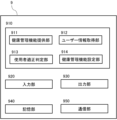
- FIG. 2 is a block diagram illustrating a functional configuration of the information processing terminal according to the first embodiment.
- FIG. 3 is a flowchart showing a flow of processing performed in the information processing terminal according to the first embodiment.
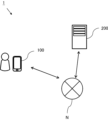
- FIG. 4 is a schematic diagram showing an overview of an information processing system according to the second embodiment.
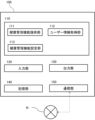
- FIG. 5 is a block diagram illustrating a functional configuration of a user terminal according to the second embodiment.
- FIG. 6 is a table showing the relationship between the applications used and the indices used for determining user suitability in the second embodiment.
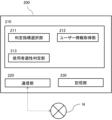
- FIG. 7 is a block diagram illustrating a functional configuration of a server device according to the second embodiment.
- FIG. 1 is a schematic diagram showing a hardware configuration of an information processing terminal according to a first embodiment.
- FIG. 2 is a block diagram illustrating a functional configuration of the information processing terminal according to the first embodiment.
- FIG. 3 is a
- FIG. 8 is a diagram showing the flow of information transmission and processing performed in the information processing system according to the second embodiment.
- FIG. 9 is a schematic diagram showing an overview of an information processing system according to the third embodiment.
- FIG. 10 is a block diagram illustrating a functional configuration of a server device according to the third embodiment.
- FIG. 11 is a diagram showing the flow of information transmission and processing performed in the information processing system according to the third embodiment.
- FIG. 1 is a schematic diagram showing an outline of the device configuration of an information processing terminal 9 according to this embodiment.
- FIG. 2 is a block diagram showing an outline of the functional configuration of the information processing terminal 9.
- the information processing terminal 9 is an information processing device configured to be able to provide functions for managing the user's health, and may be, for example, a smartphone, but is not necessarily limited to this, and may be a tablet terminal, a smart display, a wearable terminal, etc.
- the health management functions provided by the information processing terminal 9 include functions that can be used by healthy people, such as daily exercise records and nutritional management, but are not limited to these. They also include functions related to the treatment of patients' injuries and illnesses, such as blood pressure management for hypertensive patients and rehabilitation for injured patients.
- the information processing terminal 9 includes as its components a processor 91, a memory 92, an input/output interface (IF) 93, and a communication IF 94, which are interconnected by a connection bus 90.
- the processor 91 may be, for example, a CPU (Central Processing Unit), an MPU (Micro-Processing Unit), or a DSP (Digital Signal Processor).
- a CPU Central Processing Unit
- MPU Micro-Processing Unit
- DSP Digital Signal Processor
- the memory 92 includes main storage devices such as flash memory, RAM (Random Access Memory) and ROM (Read Only Memory), not shown, and auxiliary storage devices such as SSD (Solid State Drive), EPROM (Erasable Programmable ROM), flash memory, USB memory and SD (Secure Digital) memory cards.
- the memory 92 stores various information such as programs executed by the processor 91, data processed by the processor 91, operation setting information, user information and user suitability criteria described below.
- the programs stored in the memory 92 are executed by the processor 91, which controls each component of the information processing terminal 9, thereby realizing each functional unit that fulfills a specified purpose.
- the input/output IF 93 includes input/output means such as a touch panel display and a speaker.
- the communication IF 94 can adopt an appropriate configuration depending on the connection method (wired or wireless, connection standard, etc.) with the communication network to be connected.
- the information processing terminal 9 also has a control unit 910, an input unit 920, an output unit 930, a memory unit 940, and a communication unit 950 as its main functional components.
- the control unit 910 is realized by the processor 91, and is responsible for controlling the entire information processing terminal 9.
- the control unit 910 can realize each of the functional units, a health management function providing unit 911, a user information acquiring unit 912, a user suitability determining unit 913, and a health management function setting unit 914, by executing an application program related to health management. These will be explained in detail later.
- the input unit 920 transmits various input signals input via the input/output IF 93 to the control unit 910.
- the output unit 930 outputs various information to devices such as a touch panel display (not shown) and a speaker (not shown) via the input/output IF 93.
- the communication unit 950 communicates information with other devices via the communication IF 94 (and a communication network). Examples of other devices include biometric information measuring devices, which will be described later.
- the health management function providing unit 911 is realized by executing a health management application program (hereinafter, the application program is also simply referred to as an "app") stored in the memory 92.
- the health management function provided in this embodiment is a function of "displaying a video of a rehabilitation method according to the part of the body and the movement that the patient wishes to rehabilitate, and encouraging rehabilitation exercises.”
- the video may be displayed on the touch panel display of the information processing terminal 9, or may be output to another display device such as a television by communicating with the other display device.
- the user information acquisition unit 912 acquires user information including indicators related to the user's health.
- the acquired user information may be stored in the storage unit 940 (memory 92).
- the user information referred to here includes various information such as biometric information such as blood pressure, pulse, body temperature, weight, and electrocardiogram, physical function information such as eyesight, hearing, muscle strength, and cognitive function, attribute information such as age and gender, and symptoms (e.g. pain, numbness, etc.) and the location and strength of any injury or illness.
- Specific modes of acquiring user information include accepting manual input from the user, receiving sensing information by a sensor, receiving vital information measurement results by a vital information measuring device, reading out information stored in memory 92, etc.
- the information processing terminal 9 is a wearable terminal, it may be equipped with sensors (e.g., electrodes for measuring electrocardiograms, photoelectric sensors for measuring pulse waves, etc.) and functions for measuring vital information such as electrocardiograms and blood pressure.
- the user suitability assessment unit 913 assesses the user's suitability for the health management functions provided based on the indices contained in the acquired user information.
- the "indices" referred to here are not limited to one, but may be multiple depending on the type of information.
- the indices used to assess suitability may differ depending on the health management functions provided. Specifically, for the health management functions provided in this embodiment, user suitability is assessed using the indices of cognitive function, body temperature, blood pressure, motor ability (calculated from the number of steps and walking speed), hearing, eyesight, age, medical history, and pain (in the area to be rehabilitated).
- the suitability assessment of the user performed by the user suitability assessment unit 913 includes a judgment as to whether the health management function can be used (hereinafter also referred to as a first judgment) and a judgment as to whether the manner in which the health management function is provided needs to be changed (hereinafter also referred to as a second judgment). However, only one of the judgments may be performed depending on the content of the health management function provided.
- the health management function setting unit 914 sets the manner in which the health management function is provided, depending on the result of the judgment by the user suitability judgment unit 913. Setting the manner in which the health management function is provided here also includes placing restrictions on all or part of the health management function. Furthermore, “restriction” here is not limited to stopping the provision of the health management function until certain conditions are met, but also includes adding annotation information (such as doubts about the accuracy of the information) to the biometric information when the measured biometric information is transmitted to the outside.
- the settings for the manner in which the health management function is provided also include optimizing the provision of the health management function for each user, such as changing the color scheme of the displayed image, enlarging the displayed image (including text information), and changing the standard output volume level, depending on the user's physical function.
- the above-mentioned user information acquisition unit 912, user suitability determination unit 913, and health management function setting unit 914 are realized by executing a user suitability determination application stored in memory 92.
- Fig. 3 is a flow chart showing the flow of processing carried out in the information processing terminal 9 for providing a health management function.
- the control unit 910 determines the indices necessary for determining the user suitability for providing the health management function (S101). Then, the user information acquisition unit 912 acquires user information including the indices determined in S101 (S102).
- the indices used in determining user suitability are cognitive function, body temperature, blood pressure, motor ability, hearing, eyesight, age, medical history, and pain.
- the method of acquiring each index may differ depending on the index. For example, age, medical history, and pain may be acquired by requesting the user to manually input the information on a touch panel or the like.
- body temperature and motor ability (determined by the number of steps and walking ability) may be acquired automatically by a sensor provided in the information processing terminal 9.
- the results of measurement are acquired for cognitive function, blood pressure, hearing, and eyesight.
- the measurement results may be acquired from other devices such as a blood pressure monitor via a communication means, or by having the user manually input the measurement results, and for indicators for which the information processing terminal 9 has a function for measurement, the measurement results may be acquired.
- other subroutines such as an interview phase, not shown
- a known cognitive function testing method such as that disclosed in JP 2020-151045 A may be used.
- the user suitability determination unit 913 determines whether or not the condition corresponding to the change in the provision mode of the health management function is met for each of the indicators included in the user information acquired in step S102 (S103). Then, in step S104, the user suitability determination unit 913 determines whether or not all of the indicators for the first determination meet the condition for the provision of the health management function F1 to be "available" (S104). In this embodiment, it determines whether or not all of the indicators of cognitive function (whether or not the health management function is at a level at which it is possible to use it), body temperature (whether or not there is a fever, e.g., whether or not it is below 37.5°C), and blood pressure (whether or not it is below a predetermined value) meet the conditions.
- step S104 determines in step S104 that any one of the indicators does not satisfy the conditions
- the process proceeds to step S105, where it decides to prohibit provision of the health management function (S105), and ends the series of processes.
- the health management function will not be provided until any of the suspension conditions are lifted.
- information such as the reason why the health management function cannot be provided and the conditions under which provision of the function can be resumed may be presented to the user by displaying it on a touch panel display.
- step S106 the user suitability judgment unit 913 judges whether or not it is necessary to change the manner in which the health management function is provided with respect to each indicator for the second judgment (S106).
- the process proceeds to step S108, where the health management function provision unit 911 provides the health management function (in this embodiment, the rehabilitation method is displayed as a video), and the series of processes ends.
- step S106 determines whether a change is required in the manner in which the health management function is provided. If it is determined in step S106 that a change is required in the manner in which the health management function is provided, the process proceeds to step S107.
- the health management function setting unit 914 changes the manner in which the health management function is provided from the default content according to the indicator and the content of the indicator that is determined in step S106 to be a change required in the manner in which the health management function is provided (S107).
- the following judgments are made: That is, based on an index of motor function, it is judged whether the intensity of the exercise shown in the video needs to be changed. Based on an index of hearing, it is judged whether the volume of the video needs to be changed. Based on an index of vision, it is judged whether the font size or color scheme needs to be changed. Based on an index of age, it is judged whether the playback speed of the video needs to be changed. Based on an index of medical history (for example, whether there is a medical history such as abdominal aortic aneurysm that would require avoiding strenuous exercise), it is judged whether the playback time of the video or the intensity of the exercise needs to be changed.
- an index of motor function it is judged whether the intensity of the exercise shown in the video needs to be changed. Based on an index of hearing, it is judged whether the volume of the video needs to be changed. Based on an index of vision, it is judged whether the font size or color scheme needs to be changed. Based on an index of age, it is judged whether the
- an index of pain for example, whether there is pain in a place other than the part of the body that is being rehabilitated
- it is judged whether the video to be displayed needs to be changed (such as changing to a video that avoids exercises that move painful parts of the body).
- step S107 the health management function setting unit 914 changes the manner in which the health management function is provided (such as the content of the video) in accordance with the result of the above-mentioned determination.
- the health management function providing unit 911 then provides a health management function that reflects such changes (S108), and the series of processes ends.
- the information processing terminal 9 of this embodiment as described above, it is possible to restrict the provision of health management functions to users in a state in which it is not appropriate to provide the functions. Furthermore, the manner in which the health management functions are provided can be optimized according to the user's state. This reduces the possibility of incorrect treatment actions being taken when the health management functions are provided without the supervision of a medical professional, and also makes it possible to provide users with a more convenient health management tool.
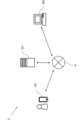
- Fig. 4 is a schematic diagram showing the configuration of an information processing system 1 according to this embodiment.
- the information processing system 1 is configured to include an information processing terminal (hereinafter referred to as a user terminal) 100 used by a user and a server device 200, which are capable of communicating with each other via a communication network N.
- the information processing system 1 may also include a medical institution terminal used by medical personnel such as doctors, and a vital sign measuring device (such as a blood pressure monitor or a body composition monitor) equipped with a communication function.
- the user terminal 100 can be a smartphone, like the information processing terminal 9 of the first embodiment, but is not necessarily limited to this, and can also be a tablet terminal, a smart display, a wearable terminal, etc. That is, the hardware configuration of the user terminal 100 according to this embodiment can be the same as that of the information processing terminal 9 of the first embodiment, and therefore the hardware configuration will not be described again.
- FIG. 5 is a block diagram showing the functional blocks of the user terminal 100.
- the user terminal 100 has a control unit 110, an input unit 120, an output unit 130, a memory unit 140, and a communication unit 150 as its main functional components.
- the user terminal 100 in this embodiment has a functional configuration that is roughly similar to that of the information processing terminal 9 in the first embodiment. That is, the control unit 110, input unit 120, output unit 130, memory unit 140, and communication unit 150 of the user terminal 100 correspond to the control unit 910, input unit 920, output unit 930, memory unit 940, and communication unit 950 of the information processing terminal 9, respectively.
- control unit 110 namely, the health management function providing unit 111, the user information acquiring unit 112, and the health management function setting unit 113, are similar to the corresponding functional units of the information processing terminal 9.
- control unit 110 differs from the information processing terminal 9 of the first embodiment in that it does not include a user suitability determining unit.
- the health management function providing unit 111 is capable of providing a plurality of different health management functions. That is, a plurality of different health management apps are installed on the user terminal 100, and different health management functions are provided depending on the app being executed. The following describes a case where three apps, health management app A, health management app B, and health management app C, are installed.
- Health management app A provides a function (hereinafter also referred to as the "first health management function") that "displays video of rehabilitation methods according to the part of the body the patient wants to rehabilitate and the movements to encourage rehabilitation exercise," as described in the first embodiment.
- health management app B provides a function (hereinafter also referred to as the “second health management function”) that "performs a cognitive function assessment using vision and language to determine when to resume activities after suffering a concussion during sports, etc.”
- health management app C provides a function (hereinafter also referred to as the “third health management function”) that "performs blood pressure lowering treatment through lifestyle improvement and drug therapy.”
- the first to third health management functions provided by each of the health management apps A to C are provided with different user suitability assessment indices (and standards) according to the differences in the functions.
- Figure 6 shows a table showing the relationship between the indices used to assess user suitability for the functions provided by each app and the method of obtaining them.
- the indices for determining user suitability for the first health management function provided by health management application A are "cognitive function, body temperature, blood pressure, motor function, hearing, eyesight, age, medical history, pain.”
- the indices for the second health management function provided by health management application B are "body temperature, eyesight”
- the indices for the third health management function provided by health management application C are "cognitive function, body temperature, motor function, medical history, blood sugar/lipids.”
- the method of acquiring each index is different. Specifically, the indices "cognitive function, blood pressure, hearing, and vision” are acquired by measurement. Furthermore, “body temperature and motor function” are acquired by sensing. Furthermore, “age, medical history, pain, blood sugar and lipids” are acquired by manual input by the user. Note that, for measurement, the measurement results may be acquired in cooperation with other bio-information measuring devices, or the user terminal 100 itself may have a configuration for measurement. For sensing, the user terminal 100 is equipped with a temperature sensor and an acceleration sensor to acquire information. Other explanations of measurement, sensing, and manual input that overlap with those explained in embodiment 1 will be omitted.
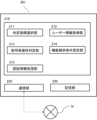
- FIG. 7 is a block diagram showing the functional configuration of the server device 200.
- a general server computer can be used as the server device 200. That is, although not shown, the server device 200 is an information processing device having a processor, a memory, an input/output IF, a communication IF, and the like as a hardware configuration. As shown in FIG. 7, the server device 200 has the functional blocks of a control unit 210, a communication unit 220, and a storage unit 230. In addition, although not shown, the server device 200 may have an operation input unit and an output unit.
- the control unit 210 controls the server device 200 and is implemented by a processor such as a CPU.
- the control unit 210 also includes the following functional modules: a judgment index selection unit 211, a user information acquisition unit 212, and a user suitability judgment unit 213.
- the communication unit 220 includes a hardware configuration (e.g., a communication interface board and a wireless communication circuit for wireless communication) for connecting the server device 200 to the communication network N.
- a hardware configuration e.g., a communication interface board and a wireless communication circuit for wireless communication
- the storage unit 230 includes a main storage device such as a ROM or RAM, and an auxiliary storage device such as an EPROM, HDD or SSD, or removable media, although these are not shown.
- the auxiliary storage device stores an operating system, various programs, etc.
- the judgment index selection unit 211 selects an index to be used for user suitability judgment according to the type of health management function provided by the user terminal 100. As shown in FIG. 6, the index used for user suitability judgment differs depending on the health management function provided. For this reason, in a user terminal 100 in which multiple health management apps are available, different user information is required for each health management function (i.e., each app used).
- the judgment index selection unit 211 acquires information on which health management app is used in the user terminal 100 (i.e., which health management function the user wants to be provided), and determines an index for user suitability judgment according to the health management app to be used based on this. Specifically, for example, as shown in the table of FIG. 6, a data table that associates health management apps (health management functions provided by the apps) with the indexes required for the user suitability judgment is stored in the storage unit 230, and the index can be determined by referring to this.
- the user information acquisition unit 212 acquires user information of the user who uses the user terminal 100 via the communication unit 220. More specifically, it acquires user information including the index determined by the judgment index selection unit 211.
- the user suitability determination unit 213 determines the suitability of the user for the health management function provided in the user terminal 100 based on the index included in the acquired user information. As described above, the health management function provided in the user terminal 100 differs depending on the health management app used, so the user suitability determination unit 213 performs a determination according to each app. As in the first embodiment, the user suitability determination performed by the user suitability determination unit 213 includes a determination of whether the health management function can be used (first determination) and a determination of whether the provision mode of the health management function needs to be changed (second determination), but only one of the determinations may be performed depending on the content of the health management function provided. As described above, in this embodiment, the function of the user suitability determination unit 213 is configured to be realized in the server device 200, not in the user terminal 100.
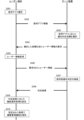
- Fig. 8 is a diagram showing the exchange of information and the flow of processing performed in the information processing system 1.
- a user executes a health management application whose function he/she wishes to use on the user terminal 100 (S201)
- information on which health management application has been executed is transmitted from the user terminal 100 to the server device 200 via the communication network N (S202).
- the user's attribute information (age, sex, user ID, etc.) may also be transmitted.
- the judgment index selection unit 211 selects an appropriate judgment index according to the app (S203).
- the server device 200 transmits information about the one or more judgment indexes selected in step S203 and a request to transmit user information including the judgment indexes to the user terminal 100 via the communication network N (S204).
- the user terminal 100 executes a process to acquire user information including the indicators requested in step S204 (S205).
- the necessary user information is acquired, for example, by displaying a user interface (UI) for acquiring information on the display to accept user input or prompt the user to measure.
- the user terminal 100 transmits the user information acquired in step S205 to the server device 200 (S207).
- step S207 in the server device 200 that has received the user information including the indicators necessary for user suitability assessment, the user suitability assessment unit 213 assesses user suitability according to the health management app used on the user terminal (S207). For example, when health management app B is used on the user terminal 100, the user suitability assessment unit 213 makes only the first assessment using the body temperature and visual acuity indicators. Specifically, when health management app B is executed on the user terminal 100, the user suitability assessment unit 213 assesses whether or not the user has a fever, and whether or not the user has the eye movement ability and visual field to be able to use the second health management function, and decides only whether or not the function can be used.
- user suitability assessment unit 213 makes a first assessment based on the indicators of "cognitive function (if cognitive function is impaired, there is a risk of forgetting that one has taken medication and taking too much medication) and body temperature," and further makes a second assessment on the indicators of "motor function, medical history, blood sugar and lipids.”
- the system will determine whether or not to change the intensity of exercise (and if so, how to change it) based on walking speed over several days.
- an index of medical history for example, whether or not there is a medical history that suggests strenuous exercise should be avoided, such as abdominal aortic aneurysm
- it will determine whether or not to change the intensity of exercise (and the extent to which it should be changed) and whether or not to suggest improvements to lifestyle habits other than exercise.
- blood glucose and lipid indexes blood glucose level, LDL cholesterol level, etc.
- it will determine whether or not to suggest dietary improvements (for example, suggesting foods that are high in cholesterol and limiting their intake).
- the server device 200 transmits the assessment result to the user terminal (S208).
- the health management function setting unit 113 performs settings to reflect the function provision mode according to the assessment result transmitted (S209).
- the "function provision mode" here includes limiting the functions to be provided, including ceasing provision of the function itself.
- the health management function provision unit 111 provides the health management function via the app used by the user in the mode set in step S209 (S210).
- the load (computational load, memory capacity, etc.) on the user terminal 100 can be reduced by determining user suitability in the server device 200, which has high processing power.
- the information processing system may be configured to be communicatively connected to a medical institution terminal used by a medical professional.
- a schematic configuration of an information processing system 2 according to such an embodiment is shown in FIG. 9.
- the same names and symbols are used for configurations, processes, and functions as those in the above-mentioned embodiment, and a repeated description is omitted.
- the information processing system 2 according to this embodiment includes a user terminal 100, a server device 201, and a medical institution terminal 300, which are communicatively connected via a communication network N. Since the user terminal 100 has the same configuration as that described in the second embodiment, a detailed description is omitted.
- the medical institution terminal 300 may be a general-purpose computer equipped with a processor, memory, input/output IF, and communication IF (none of which are shown).
- the medical institution terminal 300 may be linked to an electronic medical record system, and may have a function to display patient data in an easy-to-view format to assist doctors in medical treatment.
- the server device 201 is an information processing device having a processor, memory, an input/output IF, a communication IF, etc., in the same hardware configuration as that described in the second embodiment.
- FIG. 10 is a block diagram showing the functional configuration of the server device 201 according to this embodiment. As shown in FIG. 10, the server device 201 according to this embodiment is similar to the server device 200 according to the second embodiment, except that it further has a function provision condition setting unit 214 and an authentication information processing unit 215 as functional units.
- the function provision condition setting unit 214 sets function provision conditions for each user and for each health management function (application) based on information provided by the medical institution terminal 300.
- the information provided by the medical institution terminal 300 is information entered by a medical professional such as a doctor, and includes some user information such as the type of health management function (application) to be used by the patient (i.e., the user), the patient's medical information, and the patient's attribute information.
- the function provision conditions also include the period during which the health management function provided by the user terminal 100 is valid (or the expiration date), the index selected by the judgment index selection unit, etc.
- the authentication information processing unit 215 issues an access code for activating the health management function provided in the user terminal 100, based on the information provided by the medical institution terminal 300 and the function provision conditions set by the function provision condition setting unit 214.
- the access code is unique for each combination of user, type of health management function, and (if necessary) the expiration date for using the health management function, and may be, for example, a character string or an encoded two-dimensional code.
- the issued access code is transmitted to the medical institution terminal 300, for example, via the communication unit 220.
- the authentication information processing unit 215 receives the access code via the communication network N, performs authentication, and performs processing to activate the health management function in the user terminal 100.
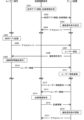
- FIG. 11 is a diagram showing the exchange of information and the flow of processing performed in the information processing system 2.
- the doctor decides on a treatment plan to use health management app C for the patient, and inputs information to the medical institution terminal 300, such as the type of health management function (app) to be used, the expiration date of the health management function, the patient's medical information, and some user information such as the patient's attribute information. That is, the medical institution terminal 300 acquires the patient information such as the information on the app used and the medical information (S301).
- the expiration date of the health management function may be, for example, a period with some margin from the next scheduled appointment date.
- the medical information may include, for example, the state of the patient's symptoms, the contents of the medical interview, the prescription, the next scheduled appointment date, and the like.
- the doctor may specify the index and/or threshold value for determining user suitability, which is included in the function provision conditions described below, in step S301.
- the medical institution terminal 300 transmits the information acquired in step S301 to the server device 201 via communication means and communication network N (not shown) (S302).
- the server device 201 uses the received information such as the information on the application in use and medical information to set conditions (function provision conditions) for providing the third health management function to the user terminal 100 of the target patient, and issues an access code reflecting the set conditions (S303).
- the function provision condition setting unit 214 sets conditions including the index (and judgment threshold) selected by the judgment index selection unit 211 or the judgment index (and judgment threshold) input by the doctor, and the authentication information processing unit 215 issues an access code.
- the conditions here may include an expiration date for which the health management function can be used.
- the server device 201 transmits the access code to the medical institution terminal 300 via the communication network N (S304).
- the doctor outputs the access code received by the medical institution terminal 300 by printing or other means, and communicates it to the patient using the user terminal 100.
- the health management application C is launched on the user terminal 100 (S305).
- the health management application C is configured to request the entry of an access code on first use, and the third health management function is not provided unless the appropriate access code is entered.
- the patient inputs an access code using the input means (e.g., a touch panel display or a camera) of the user terminal 100.
- the input access code is sent to the server device 201 via the communication network N (S306), and the authentication information processing unit 215 performs authentication processing of the access code (S307). Then, when authentication is properly performed, the function provision conditions linked to the access code input by the patient are sent from the server device 201 to the user terminal (S308).
- the health management function provision unit 111 When the user terminal 100 receives the function provision conditions, the health management function provision unit 111 provides the function based on the conditions (S309). When the health management function is provided, processes such as user suitability determination are also performed, but since each process when providing such a function is similar to the processes from step S204 onwards in the information processing system 1 of embodiment 2, a description thereof will be omitted here. Since the third health management function also includes the collection and storage of the user's daily vital data, the information acquired by the user information acquisition unit 112 of the user terminal 100 is transmitted to the server device 201 via the communication network N (S310) and stored in the storage unit 230 (S311).
- the doctor requests the transmission of the user information stored in the server device 201 from the medical institution terminal 300 so that the doctor can refer to the user information including the patient's vital data (S312).
- the server device 201 Upon receiving the request, the server device 201 transmits the requested user information to the medical institution terminal 300 (S313).
- an authentication process may be performed, such as requesting the input of an access code or some other user information.
- the doctor examines the patient using the information provided by the server device 201, and inputs the medical information, the next expiration date of the health management app, and the like, into the medical institution terminal 300. That is, the medical institution terminal 300 acquires the medical information (S314). The medical institution terminal 300 transmits the acquired medical information to the server device 201 via the communication network N (S315).
- the function provision condition setting unit 214 updates the function provision conditions of the health management function provided to the target patient based on the received medical information (S316). Note that updating here also includes continuing to set the exact same conditions as the previous time.
- the authentication information processing unit 215 then issues a new access code linked to the updated function provision conditions, and transmits it to the medical institution terminal 300 (S317). Subsequent processing is the same as that from step S305 onwards.
- the information processing system 2 described above it is possible to provide a health management function that enables patients to live a lifestyle appropriate for treatment (including taking medication) without the need for daily care from medical professionals, for diseases that can be treated through lifestyle improvements or drug therapy under the supervision of a doctor, assuming medical examination by a doctor.
- doctors can check the progress of a patient's daily vital signs data at any time of their choice, such as before examining the patient, thereby improving the quality of medical care.
- the medical institution terminal 300 may send medical information to the server device 201 to update the function provision conditions and issue an access code that can reset the provision mode of the health management function that outputs a warning message.
- the health management function setting unit 113 may set the provision mode to stop the provision of the function itself.
- additional information indicating that cognitive function has declined can be sent together with the user information sent to the server device 201.
- a doctor can make a diagnosis while taking into account the possibility that the transmitted vital data may not be accurate, thereby reducing the possibility of incorrect medical treatment being performed.
- the information processing terminal 9 may be capable of using a plurality of health management applications as in embodiment 2. That is, as in embodiment 2, the acquired user information (indexes) and the contents of the user suitability judgment may be configured to differ depending on the health management application to be executed.
- the destination of the user information (particularly vital data) transmitted from the user terminal 100 as a function of the health management app can be the medical institution terminal 300 instead of the server device 201.
- the user information can be transmitted to both the server device 201 and the medical institution terminal 300.
- the health management app is stored in the memory of the terminal used by the user, but the health management function may be provided in the form of SaaS (Software as a Service) via a network.
- the health management app and the user suitability assessment app are described as separate application programs, but each functional unit of the information processing terminal 9 may be realized by an integrated application program that includes these.
- the above embodiment 2 (and its modified example), a configuration was described in which there was one user terminal and one server device, but there may be multiple user terminals (and medical institution terminals) that communicate with one server device.
- Information processing system 9 Information processing terminal 90: Bus 91: Processor 92: Memory 93: Input/output IF 94: Communication IF LIST OF SYMBOLS 100 User terminal 200, 201 Server device 300 Medical institution terminal 110, 210, 910 Control unit 120, 230, 940 Storage unit 150, 220, 950 Communication unit 120, 920 Input unit 130, 930 Output unit N Communication network
Landscapes
- Engineering & Computer Science (AREA)
- Health & Medical Sciences (AREA)
- Medical Informatics (AREA)
- Public Health (AREA)
- Biomedical Technology (AREA)
- Epidemiology (AREA)
- Primary Health Care (AREA)
- General Health & Medical Sciences (AREA)
- Data Mining & Analysis (AREA)
- Pathology (AREA)
- Databases & Information Systems (AREA)
- Business, Economics & Management (AREA)
- General Business, Economics & Management (AREA)
- Medical Treatment And Welfare Office Work (AREA)
- Measuring And Recording Apparatus For Diagnosis (AREA)
Abstract
Description
ユーザーの健康の管理に係る健康管理機能を提供するアプリケーションプログラムを実行可能に構成された情報処理端末を少なくとも含む情報処理システムであって、
前記ユーザーの健康に関する指標を含むユーザー情報を取得するユーザー情報取得手段と、
前記ユーザー情報に含まれる指標に基づいて、提供される前記健康管理機能に対する前記ユーザーの適性を判定する使用者適性判定手段と、
前記判定の結果に応じて、前記健康管理機能の提供の態様を設定する設定手段と、
を有する、情報処理システムである。
前記健康管理機能は前記画像表示手段による情報の提示を含み、
前記指標は前記ユーザーの視力に係る指標を含み、
前記設定手段が行う前記健康管理機能の提供の態様の設定には、前記画像表示手段による表示を変更することを含んでいてもよい。
前記健康管理機能は前記音声出力手段による情報の提示を含み、
前記指標は前記ユーザーの聴力に係る指標を含み、
前記設定手段が行う前記健康管理機能の提供の態様の設定には、前記音声出力手段による出力音声を変更することを含んでいてもよい。
前記指標には前記ユーザーの体温、血圧、脈拍、心電図のうち少なくともひとつに係る指標を含み、
前記設定手段が行う前記健康管理機能の提供の態様の設定には、前記運動の内容及び/又は強度を変更すること、或いは前記運動を休止すべき旨の情報を提示することを含んでいてもよい。
前記情報処理装置は、前記アプリケーションプログラムが提供する前記健康管理機能の内容に応じて、前記適性の判定に用いられる前記指標の情報を、前記情報処理端末に提供するものであってもよい。
ユーザーの健康の管理に係る健康管理機能を提供するアプリケーションプログラムを実行可能に構成された情報処理端末であって、
前記ユーザーの健康に関する指標を含むユーザー情報を取得するユーザー情報取得手段と、
前記ユーザー情報に含まれる指標に基づいて、提供される前記健康管理機能に対する前記ユーザーの適性を判定する使用者適性判定手段と、
前記判定の結果に応じて、前記健康管理機能の提供の態様を設定する設定手段と、
を有する、情報処理端末、としても捉えることができる。
ユーザーの健康の管理に係る健康管理機能を提供するアプリケーションプログラムを実行可能に構成された情報処理端末を用いる健康管理機能提供方法であって、
前記情報処理端末が、
前記ユーザーの健康に関する指標を含むユーザー情報を取得するユーザー情報取得ステップと、
前記ユーザー情報に含まれる指標に基づいて、提供される前記健康管理機能に対する前記ユーザーの適性を判定する使用者適性判定ステップと、
前記判定の結果に応じて、前記健康管理機能の提供の態様を設定する設定ステップと、
を有する、健康管理機能提供方法、としても捉えることができる。
以下、本発明の具体的な実施形態について図面に基づいて説明する。ただし、この実施形態に記載されている構成要素の寸法、形状、その相対配置などは、特に記載がない限りは、この発明の範囲をそれらのみに限定する趣旨のものではない。
次に、本実施形態の情報処理端末9において行われる処理の流れを、図3を参照して説明する。図3は、情報処理端末9で行われる健康管理機能提供に係る処理の流れを示すフローチャートである。
(システム構成)
次に、本発明の他の実施形態について説明する。図4は、本実施形態に係る情報処理システム1の構成を示す概略図である。図4に示すように、本実施形態に係る情報処理システム1は、ユーザーが使用する情報処理端末(以下、ユーザー端末という)100と、サーバ装置200とを含んで構成され、これらが通信ネットワークNを介して相互に通信可能となっている。なお、図示しないが、情報処理システム1には、医師などの医療従事者が用いる医療機関端末や、通信機能を備える生体情報測定装置(血圧計、体組成計など)を含んでいてもよい。
ユーザー端末100は、実施形態1の情報処理端末9と同様に、スマートフォンとすることができるが、必ずしもこれに限定されず、タブレット端末、スマートディスプレイ、ウェアラブル端末、などとすることもできる。即ち、本実施形態に係るユーザー端末100のハードウェア構成は、実施形態1の情報処理端末9と同様にすることができるので、そのハードウェア構成についての改めての説明は行わない。
サーバ装置200は、ユーザー端末100と通信連携して、ユーザー端末100において健康管理機能を提供する際の処理をサポートする役割を果たす。図7は、サーバ装置200の機能構成を示すブロック図である。なお、サーバ装置200には一般的なサーバコンピュータを用いることができる。即ち、図示しないが、サーバ装置200は、ハードウェア構成としてプロセッサ、メモリ、入出力IF、通信IFなどを備える情報処理装置である。そして、図7に示すように、サーバ装置200は、制御部210、通信部220、記憶部230の各機能ブロックを備えている。また、図示しないが操作入力部、出力部を備えていてもよい。
次に、図8に基づいて、上記のような構成を有する本実施形態に係る情報処理システム1で行われる処理の流れを説明する。図8は、情報処理システム1内で行われる情報の授受、及び処理の流れを示す図である。図8に示すように、まず、ユーザーがユーザー端末100において機能を利用したい健康管理アプリを実行すると(S201)、いずれの健康管理アプリを実行したかの情報が、通信ネットワークNを介してユーザー端末100からサーバ装置200に送信される(S202)。この際に、ユーザーの属性情報(年齢、性別、ユーザーIDなど)を併せて送信するようになっていてもよい。
なお、上記の情報処理システムは、医療従事者が用いる医療機関端末とも通信接続される構成であってもよい。このような実施形態に係る情報処理システム2の概略構成を図9に示す。なお本実施形態において、上述の実施形態と同様の構成、処理、機能については同一の名称及び符号を用い、改めての説明は省略する。図9に示すように、本実施形態に係る情報処理システム2は、ユーザー端末100、サーバ装置201、医療機関端末300を含み、これらが通信ネットワークNを介して通信接続される構成となっている。なお、ユーザー端末100は実施形態2で説明したのと同様の構成であるため、詳細な説明は省略する。
ユーザー端末100で利用可能な健康管理機能のうち、例えば健康管理アプリCにより提供される「生活習慣の改善や薬物療法により血圧の降圧治療を行う機能」(第3健康管理機能)は、基本的には医師による診断や処方を必要とするものである。このような機能をユーザー端末100で提供する場合には、医師による診察、処方を前提として、医師の監督の下で、ユーザー端末100における機能を有効化することが望ましい。以下では、第3健康管理機能の提供を行う場合を例に、本実施形態に係る情報処理システム2において行われる処理の流れを説明する。図11は、情報処理システム2内で行われる情報の授受、及び処理の流れを示す図である。
なお、上記実施形態2のような健康管理機能を提供する場合、患者の認知機能が低下していると、ユーザー端末100からサーバ装置201に送信される日々のバイタルデータの正確性に疑義が生じ、医師の診断に悪影響を及ぼし得る。このため、第3健康管理機能を提供する場合には、使用者適性判定部213による判定において、即時の機能提供を中止するほどではないもののユーザーの認知機能が低下していると判定した場合には、ユーザー端末100の健康管理機能設定部113は、早期に医師の診断を受ける旨の警告メッセージを出力するように設定されていてもよい。
上記各例の説明は、本発明を例示的に説明するものに過ぎず、本発明は上記の具体的な形態には限定されない。本発明は、その技術的思想の範囲内で種々の変形及び組み合わせが可能である。例えば、上記の実施形態1に係る情報処理端末9において、実施形態2のように複数の健康管理アプリが使用可能となっていてもよい。即ち、実施形態2のように、実行する健康管理アプリに応じて、取得するユーザー情報(指標)、使用者適性判定の内容、が異なるように構成されていてもよい。
9・・・情報処理端末
90・・・バス
91・・・プロセッサ
92・・・メモリ
93・・・入出力IF
94・・・通信IF
100・・・ユーザー端末
200、201・・・サーバ装置
300・・・医療機関端末
110、210、910・・・制御部
120、230、940・・・記憶部
150、220、950・・・通信部
120、920・・・入力部
130、930・・・出力部
N・・・通信ネットワーク
Claims (12)
- ユーザーの健康の管理に係る健康管理機能を提供するアプリケーションプログラムを実行可能に構成された情報処理端末を少なくとも含む情報処理システムであって、
前記ユーザーの健康に関する指標を含むユーザー情報を取得するユーザー情報取得手段と、
前記ユーザー情報に含まれる指標に基づいて、提供される前記健康管理機能に対する前記ユーザーの適性を判定する使用者適性判定手段と、
前記判定の結果に応じて、前記健康管理機能の提供の態様を設定する設定手段と、
を有する、情報処理システム。 - 前記指標には前記ユーザーの認知機能に係る指標を含み、
前記設定手段が行う前記健康管理機能の提供の態様の設定には、前記健康管理機能の提供にあたり、早期に医師の診察を受けることを促す情報を提示することを含む、
ことを特徴とする、請求項1に記載の情報処理システム。 - 前記設定手段が早期に医師の診察を受けることを促す情報を提示するように前記健康管理機能の提供の態様を設定した場合において、
前記設定手段は、所定期間内に医師の診察を受けたことを示す情報が入力されない場合には、前記健康管理機能の提供を停止するようにさらに健康管理機能の提供の態様の設定を行う、
ことを特徴とする、請求項2に記載の情報処理システム。 - 前記情報処理端末は通信手段を備えており、
前記健康管理機能は、前記通信手段を介して前記ユーザー情報を送信することを含み、
前記設定手段が行う前記健康管理機能の提供の態様の設定には、前記適性についての前記判定の結果を前記ユーザー情報に付加して送信するように設定することを含む、
ことを特徴とする、請求項1に記載の情報処理システム。 - 前記情報処理端末は画像表示手段を備えており、
前記健康管理機能は前記画像表示手段による情報の提示を含み、
前記指標は前記ユーザーの視力に係る指標を含み、
前記設定手段が行う前記健康管理機能の提供の態様の設定には、前記画像表示手段による表示を変更することを含む、
ことを特徴とする、請求項1に記載の情報処理システム。 - 前記情報処理端末は音声出力手段を備えており、
前記健康管理機能は前記音声出力手段による情報の提示を含み、
前記指標は前記ユーザーの聴力に係る指標を含み、
前記設定手段が行う前記健康管理機能の提供の態様の設定には、前記音声出力手段による出力音声を変更することを含む、
ことを特徴とする、請求項1に記載の情報処理システム。 - 前記健康管理機能は前記ユーザーの傷病の治療に係る運動の実施方法を前記ユーザーに提示することを含み、
前記指標には前記ユーザーの体温、血圧、脈拍、心電図のうちの少なくともひとつに係る指標を含み、
前記設定手段が行う前記健康管理機能の提供の態様の設定には、前記運動の内容及び/又は強度を変更すること、或いは前記運動を休止すべき旨の情報を提示することを含む、
ことを特徴とする、請求項1に記載の情報処理システム。 - 前記情報処理システムは、前記情報処理端末と通信可能に構成された情報処理装置を含んでおり、
前記情報処理装置は、前記アプリケーションプログラムが提供する前記健康管理機能の内容に応じて、前記適性の判定に用いられる前記指標の情報を、前記情報処理端末に提供する、
ことを特徴とする、請求項1に記載の情報処理システム。 - 前記情報処理装置は、前記ユーザーごとかつ前記健康管理機能ごとに対応する認証情報を発行し、前記情報処理端末から前記認証情報を受信した場合に、前記認証情報に対応する前記ユーザー及び前記健康管理機能に係る前記適性の判定に用いられる前記指標の情報を、前記情報処理端末に提供する、
ことを特徴とする、請求項8に記載の情報処理システム。 - ユーザーの健康の管理に係る健康管理機能を提供するアプリケーションプログラムを実行可能に構成された情報処理端末であって、
前記ユーザーの健康に関する指標を含むユーザー情報を取得するユーザー情報取得手段と、
前記ユーザー情報に含まれる指標に基づいて、提供される前記健康管理機能に対する前記ユーザーの適性を判定する使用者適性判定手段と、
前記判定の結果に応じて、前記健康管理機能の提供の態様を設定する設定手段と、
を有する、情報処理端末。 - ユーザーの健康の管理に係る健康管理機能を提供するアプリケーションプログラムを実行可能に構成された情報処理端末を用いる健康管理機能提供方法であって、
前記情報処理端末が、
前記ユーザーの健康に関する指標を含むユーザー情報を取得するユーザー情報取得ステップと、
前記ユーザー情報に含まれる指標に基づいて、提供される前記健康管理機能に対する前記ユーザーの適性を判定する使用者適性判定ステップと、
前記判定の結果に応じて、前記健康管理機能の提供の態様を設定する設定ステップと、
を有する、健康管理機能提供方法。 - 請求項11に記載の健康管理機能提供方法に記載の各ステップを情報処理装置に実行させるためのプログラム。
Priority Applications (3)
| Application Number | Priority Date | Filing Date | Title |
|---|---|---|---|
| CN202480029627.1A CN121058069A (zh) | 2023-07-06 | 2024-01-30 | 信息处理系统、信息处理终端、健康管理功能提供方法以及程序产品 |
| DE112024001195.0T DE112024001195T5 (de) | 2023-07-06 | 2024-01-30 | Informationsverarbeitungssystem, informationsverarbeitungsendgerät, verfahren zum bereitstellen einer gesundheitsmanagementfunktion und programm |
| US19/389,868 US20260106007A1 (en) | 2023-07-06 | 2025-11-14 | Information processing system, information processing terminal, health management function providing method, and recording medium |
Applications Claiming Priority (2)
| Application Number | Priority Date | Filing Date | Title |
|---|---|---|---|
| JP2023111120A JP2025008711A (ja) | 2023-07-06 | 2023-07-06 | 情報処理システム、情報処理端末、健康管理機能提供方法及びプログラム |
| JP2023-111120 | 2023-07-06 |
Related Child Applications (1)
| Application Number | Title | Priority Date | Filing Date |
|---|---|---|---|
| US19/389,868 Continuation US20260106007A1 (en) | 2023-07-06 | 2025-11-14 | Information processing system, information processing terminal, health management function providing method, and recording medium |
Publications (1)
| Publication Number | Publication Date |
|---|---|
| WO2025009199A1 true WO2025009199A1 (ja) | 2025-01-09 |
Family
ID=94172222
Family Applications (1)
| Application Number | Title | Priority Date | Filing Date |
|---|---|---|---|
| PCT/JP2024/002950 Ceased WO2025009199A1 (ja) | 2023-07-06 | 2024-01-30 | 情報処理システム、情報処理端末、健康管理機能提供方法及びプログラム |
Country Status (5)
| Country | Link |
|---|---|
| US (1) | US20260106007A1 (ja) |
| JP (1) | JP2025008711A (ja) |
| CN (1) | CN121058069A (ja) |
| DE (1) | DE112024001195T5 (ja) |
| WO (1) | WO2025009199A1 (ja) |
Citations (3)
| Publication number | Priority date | Publication date | Assignee | Title |
|---|---|---|---|---|
| JP2004157596A (ja) * | 2002-11-01 | 2004-06-03 | Junichi Ninomiya | 健康管理システム及び健康管理方法 |
| JP2004355328A (ja) * | 2003-05-29 | 2004-12-16 | Sanyo Electric Co Ltd | 健康管理支援装置、健康管理支援システム、健康管理支援方法および健康管理支援プログラム |
| JP2021002265A (ja) * | 2019-06-24 | 2021-01-07 | 株式会社 みずほ銀行 | ユーザ支援システム、ユーザ支援方法及びユーザ支援プログラム |
-
2023
- 2023-07-06 JP JP2023111120A patent/JP2025008711A/ja active Pending
-
2024
- 2024-01-30 CN CN202480029627.1A patent/CN121058069A/zh active Pending
- 2024-01-30 DE DE112024001195.0T patent/DE112024001195T5/de active Pending
- 2024-01-30 WO PCT/JP2024/002950 patent/WO2025009199A1/ja not_active Ceased
-
2025
- 2025-11-14 US US19/389,868 patent/US20260106007A1/en active Pending
Patent Citations (3)
| Publication number | Priority date | Publication date | Assignee | Title |
|---|---|---|---|---|
| JP2004157596A (ja) * | 2002-11-01 | 2004-06-03 | Junichi Ninomiya | 健康管理システム及び健康管理方法 |
| JP2004355328A (ja) * | 2003-05-29 | 2004-12-16 | Sanyo Electric Co Ltd | 健康管理支援装置、健康管理支援システム、健康管理支援方法および健康管理支援プログラム |
| JP2021002265A (ja) * | 2019-06-24 | 2021-01-07 | 株式会社 みずほ銀行 | ユーザ支援システム、ユーザ支援方法及びユーザ支援プログラム |
Also Published As
| Publication number | Publication date |
|---|---|
| DE112024001195T5 (de) | 2025-12-24 |
| US20260106007A1 (en) | 2026-04-16 |
| JP2025008711A (ja) | 2025-01-20 |
| CN121058069A (zh) | 2025-12-02 |
Similar Documents
| Publication | Publication Date | Title |
|---|---|---|
| JP5926517B2 (ja) | 個人の健康およびウェルネスの管理のためのシステムおよび、その命令を含むコンピュータプログラムを格納した非一時的コンピュータ可読記憶媒体 | |
| KR101141425B1 (ko) | 온라인을 통한 개인 맞춤형 건강관리와 진료방법 및 온라인 건강관리와 의료서비스 제공 서버장치 | |
| WO2020059794A1 (ja) | 情報処理方法、情報処理装置及びプログラム | |
| KR102124249B1 (ko) | 건강 관련 앱과 웨어러블 기기를 이용한 성인초기 대상자를 위한 대사증후군 예방 프로그램 | |
| JP6566241B2 (ja) | 健康管理システム、健康管理装置及び表示方法 | |
| JP7522592B2 (ja) | 生体情報提供装置、生体情報提供方法及び生体情報提供プログラム | |
| EP2437189A2 (en) | Healthcare information system | |
| JP2012008931A (ja) | 生体情報処理装置、生体情報表示装置、遠隔診療システム、遠隔診療方法、処理制御プログラム、表示制御プログラムおよび記録媒体 | |
| JP2005227928A (ja) | 在宅療養・治療支援システム | |
| JP2003150707A (ja) | 医療用問診装置 | |
| JP2021026556A (ja) | 生活習慣改善支援装置、端末装置、コンピュータプログラム及び生活習慣改善支援方法 | |
| CN105167763A (zh) | 一种健康检测仪 | |
| JPWO2007072816A1 (ja) | 生活習慣改善支援装置および生活習慣改善支援方法 | |
| JPWO2007023818A1 (ja) | リアルタイム情報収集・利用者支援システムおよびそれに用いられるサーバ制御プログラム | |
| JP2005267364A (ja) | 治療支援システム | |
| KR101228586B1 (ko) | 유무선 통신망을 이용한 질병 관리 시스템 및 방법 | |
| KR20190061826A (ko) | 외상 후 스트레스 장애 및 공황장애 치료를 위한 복합 생체 정보 검출 시스템 및 방법 | |
| JP2004344265A (ja) | 睡眠診断支援サーバおよびプログラム | |
| JP2008225585A (ja) | 健康管理支援システム | |
| Lee et al. | Designing a low-cost adaptable and personalized remote patient monitoring system | |
| KR20080004125A (ko) | 원격 검진/건강관리 시스템 | |
| JP7744736B1 (ja) | オンライン連携システム及びオンライン連携システムにおける健康モニタリング方法 | |
| JP2023088513A (ja) | 診療支援システム、診療支援装置及びプログラム | |
| JP2025008711A (ja) | 情報処理システム、情報処理端末、健康管理機能提供方法及びプログラム | |
| Yu et al. | M-HELP: a miniaturized total health examination system launched on a mobile phone platform |
Legal Events
| Date | Code | Title | Description |
|---|---|---|---|
| 121 | Ep: the epo has been informed by wipo that ep was designated in this application |
Ref document number: 24829019 Country of ref document: EP Kind code of ref document: A1 |
|
| WWE | Wipo information: entry into national phase |
Ref document number: 112024001195 Country of ref document: DE |
|
| WWE | Wipo information: entry into national phase |
Ref document number: 202517114463 Country of ref document: IN |
|
| WWP | Wipo information: published in national office |
Ref document number: 202517114463 Country of ref document: IN |
|
| WWP | Wipo information: published in national office |
Ref document number: 112024001195 Country of ref document: DE |
|
| 122 | Ep: pct application non-entry in european phase |
Ref document number: 24829019 Country of ref document: EP Kind code of ref document: A1 |