WO2025005147A1 - ヌクレオチドモノマー、及び核酸オリゴマーの製造方法 - Google Patents
ヌクレオチドモノマー、及び核酸オリゴマーの製造方法 Download PDFInfo
- Publication number
- WO2025005147A1 WO2025005147A1 PCT/JP2024/023211 JP2024023211W WO2025005147A1 WO 2025005147 A1 WO2025005147 A1 WO 2025005147A1 JP 2024023211 W JP2024023211 W JP 2024023211W WO 2025005147 A1 WO2025005147 A1 WO 2025005147A1
- Authority
- WO
- WIPO (PCT)
- Prior art keywords
- group
- nucleic acid
- general formula
- acid oligomer
- represented
- Prior art date
- Legal status (The legal status is an assumption and is not a legal conclusion. Google has not performed a legal analysis and makes no representation as to the accuracy of the status listed.)
- Ceased
Links
Images


Classifications
-
- Y—GENERAL TAGGING OF NEW TECHNOLOGICAL DEVELOPMENTS; GENERAL TAGGING OF CROSS-SECTIONAL TECHNOLOGIES SPANNING OVER SEVERAL SECTIONS OF THE IPC; TECHNICAL SUBJECTS COVERED BY FORMER USPC CROSS-REFERENCE ART COLLECTIONS [XRACs] AND DIGESTS
- Y02—TECHNOLOGIES OR APPLICATIONS FOR MITIGATION OR ADAPTATION AGAINST CLIMATE CHANGE
- Y02P—CLIMATE CHANGE MITIGATION TECHNOLOGIES IN THE PRODUCTION OR PROCESSING OF GOODS
- Y02P20/00—Technologies relating to chemical industry
- Y02P20/50—Improvements relating to the production of bulk chemicals
- Y02P20/55—Design of synthesis routes, e.g. reducing the use of auxiliary or protecting groups
Definitions
- the present invention relates to a method for producing a nucleotide monomer and a nucleic acid oligomer.
- Antisense molecules which have a base sequence complementary to that of a target nucleic acid, can form a complementary double strand with the target nucleic acid and inhibit protein production from the target nucleic acid.
- antisense molecules act directly on the disease-related gene, and are therefore attracting attention as an effective medicine for gene therapy.
- antisense molecules are primarily required to have cell membrane permeability, nuclease resistance, chemical stability within the body (e.g., in an environment of pH 7.4), and the ability to form stable double strands only with specific base sequences.
- nucleic acid oligomers obtained using boranophosphate compounds hereinafter referred to as "boranophosphate-type nucleic acid oligomers" are known as antisense molecules.
- a known method for chemically synthesizing nucleic acids is to use a monomer in which an acyl-based protecting group has been introduced into the amino group of the nucleic acid base portion, and obtain an oligomer by subjecting it to appropriate chemical modification via a phosphite triester intermediate as shown in the formula on the left below.
- this phosphite triester intermediate can be borated by reacting it with a boranoating agent to obtain a boranophosphate-type nucleic acid oligomer as shown in the formula on the right below.
- DMTr represents a 4,4'-dimethoxytrityl group
- a circle represents a solid phase support
- B PRO and B PRO* represent nucleic acid bases represented by the following formula.
- Ph represents a phenyl group.
- the acyl-based protecting groups that protect the amino groups of adenine, cytosine, and guanine are reduced by the boranolyzing agent and cannot be deprotected, so the above-mentioned method can only be used when the nucleic acid base is thymine or uracil.
- Non-Patent Documents 1 and 2 use a nucleotide monomer represented by the following formula on the left and a nucleotide monomer represented by the following formula on the right, respectively.
- a monomer having a cyclic structure as shown below, side reactions with the amino group are suppressed even under mild acidic conditions, and it is possible to obtain an oligomer even if the base moiety is unprotected.
- DMTr and Ph are as described above, and B NH2 represents a nucleic acid base selected from the group consisting of adenine, guanine, cytosine, 5-methylcytosine, thymine, and uracil, and the amino groups in the adenine, guanine, cytosine, and 5-methylcytosine are not substituted.
- nucleotide monomers have extremely small steric hindrance around the phosphorus atom, making them too highly reactive to hydrolysis and quickly hydrolyzing under condensation conditions, which tends to reduce the effective concentration of the nucleotide monomer.
- the objective of the present invention is to provide a novel nucleotide monomer that has a nucleic acid base with an unsubstituted amino group and that gives a nucleic acid oligomer in high yield, and a method for producing a nucleic acid oligomer in high yield.
- R 1 represents a hydrogen atom, a hydroxyl group, an alkoxy group, an alkenyloxy group, an acyloxy group, a trihydrocarbylsilyloxy group, an alkoxyalkoxy group, a haloalkoxyalkoxy group, or a halogenyl group
- R 2 represents a hydrogen atom; or R 1 and R 2 are bonded to each other to form a 5-membered or greater ring which may or may not have a substituent and which may or may not have a heteroatom
- R 3 represents a hydrogen atom or a protecting group for a hydroxyl group
- R 4 represents an aryl group which may or may not have a substituent
- R 5 represents a hydrogen atom, a halogenyl group, or an alkyl group which may or may not have a substituent
- R 6 represents a hydrogen atom, a halogenyl group, or
- ⁇ 2> The nucleotide monomer according to ⁇ 1>, wherein the alkyl group represented by R 6 is branched.
- ⁇ 3> The nucleotide monomer according to ⁇ 1> or ⁇ 2>, wherein the alkyl group represented by R 6 has 6 to 14 carbon atoms.
- R 1 represents a hydrogen atom, a hydroxyl group, an alkoxy group, an alkenyloxy group, an acyloxy group, a trihydrocarbylsilyloxy group, an alkoxyalkoxy group, a haloalkoxyalkoxy group, or a halogenyl group
- R 2 represents a hydrogen atom
- R 1 and R 2 are bonded to each other to form a divalent group represented by the following general formula (2):
- R 7 and R 8 each independently represent a hydrogen atom or an alkyl group having 1 to 10 carbon atoms, or are bonded to each other to form a ring; * and ** represent a bond, the bond represented by * being bonded to the carbon atom to which R 1 is directly bonded in general formula (1), and the bond represented by ** being bonded to the carbon atom to which R 2 is directly bonded in general formula (1)
- ⁇ 5> A nucleotide monomer according to any one of ⁇ 1> to ⁇ 4>, in which the stereochemistry of the phosphorus atom in the nucleotide monomer is controlled.
- R 1 represents a hydrogen atom, a hydroxyl group, an alkoxy group, an alkenyloxy group, an acyloxy group, a trihydrocarbylsilyloxy group, an alkoxyalkoxy group, a haloalkoxyalkoxy group, or a halogenyl group
- R 2 represents a hydrogen atom; or R 1 and R 2 are bonded to each other to form a 5-membered or greater ring which may or may not have a substituent and which may or may not have a heteroatom
- R 3a represents a protecting group for a hydroxyl group
- R 4 represents an aryl group which may or may not have a substituent
- R 5 represents a hydrogen atom, a halogenyl group, or an alkyl group which may or may not have a substituent
- R 6 represents an alkyl group having 3 or more carbon atoms which may or may not have a substituent and which may or may not have a heteroatom in the
- R 1 , R 2 , R 3a , R 4 to R 6 , and B NH2 are as defined above.
- R 1 , R 2 , R 3a , R 4 to R 6 , and B NH2 are as defined above.
- R 1 , R 2 , and R 4 to R 6 are as defined above.
- R 9 represents a protecting group for a hydroxyl group
- R 10 represents a protecting group for an amino group
- Bs represents a nucleic acid base selected from the group consisting of adenine, guanine, cytosine, 5-methylcytosine, thymine, and uracil, and the amino groups in the adenine, guanine, cytosine, and 5-methylcytosine are substituted with protecting groups for the amino groups
- R9 and R10 represent a hydrogen atom
- Bs represents BNH2 .
- R 1 represents a hydrogen atom, a hydroxyl group, an alkoxy group, an alkenyloxy group, an acyloxy group, a trihydrocarbylsilyloxy group, an alkoxyalkoxy group, a haloalkoxyalkoxy group, or a halogenyl group
- R 2 represents a hydrogen atom, or R 1 and R 2 are bonded to each other to form a divalent group represented by the following general formula (2):
- R 7 and R 8 each independently represent a hydrogen atom or an alkyl group having 1 to 10 carbon atoms, or are bonded to each other to form a ring; * and ** represent a bond, the bond represented by * being bonded to the carbon atom to which R 1 is directly bonded in general formula (1a), and the bond represented by ** being bonded to the carbon atom to which R 2 is directly bonded in general formula (1a).
- ⁇ 10> The method according to any one of ⁇ 6> to ⁇ 9>, in which the stereochemistry of the phosphorus atom in the nucleotide monomer and the nucleotide unit is controlled.
- the present invention provides a novel nucleotide monomer that has a nucleic acid base with an unsubstituted amino group and that gives a nucleic acid oligomer in high yield, and a method for producing a nucleic acid oligomer in high yield.
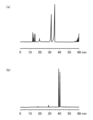
- 1(a) and 1(b) are diagrams showing reverse-phase HPLC charts performed in Comparative Synthesis Example 1 and Synthesis Example 1, entry 3, respectively.
- 2(a) to 2(c) are diagrams showing reverse-phase HPLC charts performed in Synthesis Example 2, Entries 2 and 6 and Comparative Synthesis Example 2, respectively.
- 3(a) and 3(b) are diagrams showing reversed-phase HPLC charts performed in Comparative Synthesis Example 3 and Synthesis Example 3, respectively.
- 4(a) and 4(b) are diagrams showing reversed-phase HPLC charts performed in Comparative Synthesis Example 4 and Synthesis Example 4, respectively.
- 5(a) to 5(c) are diagrams showing reverse-phase HPLC charts performed in Comparative Synthesis Examples 5 and 6, and Synthesis Example 5, respectively.
- the term "process” includes not only an independent process, but also a process that cannot be clearly distinguished from other processes, as long as the intended purpose of the process is achieved.
- ⁇ indicates a range that includes the numerical values written before and after it as the minimum and maximum values, respectively.
- the amount of each component in the composition means the total amount of the multiple substances present in the composition, unless otherwise specified.
- the nucleotide monomer according to this embodiment is represented by the above general formula (1).
- R 4 represents an aryl group with or without a substituent
- R 6 represents an alkyl group with 3 or more carbon atoms with or without a substituent and with or without a heteroatom in the molecular chain, or R 6 is bonded to R 5 to form a ring with 5 or more members that has a branched chain, has or has no substituents other than the branched chain, and has or has no heteroatoms.
- the nucleotide monomer represented by the general formula (1) has a nucleic acid base with an unsubstituted amino group, but has low polarity, so that purification by silica gel column chromatography is easy and can be obtained with high purity, and thus a nucleic acid oligomer can be obtained with a high yield. Furthermore, the nucleotide monomer is provided with an appropriate steric hindrance around the phosphorus atom, which suppresses hydrolysis, and the effective concentration can be kept high during the condensation reaction, thereby improving the condensation efficiency.
- the alkoxy group represented by R 1 is preferably an alkoxy group having 1 to 12 carbon atoms, more preferably an alkoxy group having 1 to 6 carbon atoms, and examples thereof include a methoxy group, an ethoxy group, an n-propoxy group, an i-propoxy group, an n-butoxy group, a sec-butoxy group, a tert-butoxy group, and an n-pentyloxy group.
- Examples of the alkenyloxy group represented by R 1 include a vinyloxy group, an allyloxy group, a 1-propenyloxy group, an isopropenyloxy group, a 2-methyl-1-propenyloxy group, a 2-methylallyloxy group, and a 2-butenyloxy group.
- Examples of the acyloxy group represented by R 1 include alkyl-carbonyloxy groups having 1 to 6 carbon atoms (eg, methylcarbonyloxy group, ethylcarbonyloxy group, etc.) and aryl-carbonyloxy groups having 6 to 10 carbon atoms (eg, benzoyloxy group).
- Examples of the trihydrocarbylsilyloxy group represented by R 1 include trialkylsilyloxy groups such as trimethylsilyloxy group, triethylsilyloxy group, triisopropylsilyloxy group, and t-butyldimethylsilyloxy group, and alkyldiarylsilyloxy groups such as t-butyldiphenylsilyloxy group.
- Examples of the alkoxyalkoxy group represented by R 1 include a methoxymethoxy group, a methoxyethoxy group, an ethoxymethoxy group, an ethoxyethoxy group, and a (2-cyanoethoxy)methoxy group.
- haloalkoxyalkoxy group represented by R 1 examples include a (2-fluoro)ethoxymethoxy group, a (2,2-difluoro)ethoxymethoxy group, a (2-chloro)methoxyethoxy group, and a (2,2-dichloro)ethoxymethoxy group.
- halogenyl group represented by R 1 examples include a fluoro group, a chloro group, and a bromo group, with a fluoro group being preferred.
- R 1 is preferably a hydrogen atom, a hydroxyl group, an alkoxy group, a trialkylsilyloxy group, an alkoxyalkoxy group, a haloalkoxyalkoxy group, and a halogenyl group from the viewpoint of double-strand formation ability.
- R 1 and R 2 may be bonded to each other to form a ring of 5 or more members, which may or may not have a substituent and may or may not have a heteroatom.
- alkyl group include a methyl group, an ethyl group, etc.
- examples of the substituent include a halogenyl group such as a fluoro group, a chloro group, or a bromo group, an amino group, an imino group, etc.
- heteroatom include an oxygen atom, a nitrogen atom, a sulfur atom, etc.
- the number of members of the ring is preferably 5 to 10 members, more preferably 5 to 8 members, and even more preferably 5 to 7 members.
- R 1 and R 2 are bonded to each other to form a divalent group represented by the following general formula (2).
- R 7 and R 8 each independently represent a hydrogen atom or an alkyl group having 1 to 10 carbon atoms, or are bonded to each other to form a ring, and * and ** represent a bond, where the bond represented by * is bonded to the carbon atom to which R 1 is directly bonded in general formula (1), and the bond represented by ** is bonded to the carbon atom to which R 2 is directly bonded in general formula (1).
- Examples of the alkyl group represented by R7 or R8 include linear or branched alkyl groups having 1 to 10 carbon atoms, and specific examples thereof include a methyl group, an ethyl group, an n-propyl group, an i-propyl group, an n-butyl group, a t-butyl group, an n-hexyl group, and an n-octyl group.
- specific examples of the ring include a cyclopropane ring, a cyclobutane ring, and a cyclohexane ring.
- R1 and R2 are bonded to each other to form a ring having 5 or more members which may or may not have a substituent and may or may not have a heteroatom
- specific examples of the ring include rings represented by the following formulas. (In the formula, BNH2 is as defined above.)
- Examples of the hydroxyl-protecting group represented by R3 include an acetyl group, a phenylacetyl group, a phenoxyacetyl group, a chloroacetyl group, a pivaloyl group, a benzyl group, a 4-methoxybenzyl group, a benzoyl group, a 4-methoxybenzoyl group, a triphenylmethyl group, a 4,4'-dimethoxytrityl (DMTr) group, a 4-methoxytrityl (MMTr) group, a 9-phenylxanthenyl group, a t-butoxycarbonyl group, a trimethylsilyl group, a t-butyldimethylsilyl group, a t-butyldiphenylsilyl group, a cyanomethoxymethyl group, a 2-(cyanoethoxy)ethyl group, a cyanoethoxymethyl group
- R 4 represents an aryl group having or without a substituent, and in terms of ease of synthesis, reactivity, ease of deprotection of the phosphoric acid moiety during oligomer formation, and high stereoselectivity during condensation when stereochemistry is controlled, it is preferable to represent an aryl group having 6 to 20 carbon atoms having or without a substituent, more preferably an aryl group having 6 to 14 carbon atoms having or without a substituent, and even more preferably an aryl group having 6 to 10 carbon atoms having or without a substituent.
- the substituent include an alkyl group having or without a substituent, a hydroxyl group, an amino group, an alkoxy group, a halogenyl group, and the like.
- Examples of the alkyl group include a methyl group, an ethyl group, and the like.
- substituent include a hydroxyl group, an amino group, an alkoxy group, an imino group, a halogenyl group, and the like.
- alkoxy group include a methoxy group, an ethoxy group, and the like.
- halogenyl group include a fluoro group, a chloro group, and a bromo group.
- Examples of R4 include a phenyl group and a naphthyl group, and from the standpoint of ease of synthesis, reactivity, etc., a phenyl group is preferred.
- halogenyl group represented by R 5 examples include a fluoro group, a chloro group, and a bromo group, with a fluoro group being preferred.
- the alkyl group represented by R5 which may or may not have a substituent, is preferably an alkyl group having 1 to 12 carbon atoms, which may or may not have a substituent, and more preferably an alkyl group having 1 to 6 carbon atoms, which may or may not have a substituent.
- substituent include a hydroxyl group, an amino group, an alkoxy group, an imino group, and a halogenyl group.
- Examples of the alkoxy group include a methoxy group and an ethoxy group.
- the halogenyl group include a fluoro group, a chloro group, and a bromo group.
- Examples of the alkyl group represented by R5 which may or may not have a substituent, include a methyl group, an ethyl group, an n-propyl group, an i-propyl group, an n-butyl group, a sec-butyl group, a tert-butyl group, and an n-pentyl group.
- R5 is preferably a hydrogen atom.
- R 6 represents an alkyl group having 3 or more carbon atoms, with or without a substituent, and with or without a heteroatom in the molecular chain.
- the alkyl group represented by R 6 preferably has 3 to 20 carbon atoms, more preferably has 6 to 14 carbon atoms, and even more preferably has 8 to 12 carbon atoms, in terms of the yield and purity of the monomer, and the ease of improving the yield of the resulting nucleic acid oligomer.
- the substituent include a hydroxyl group, an amino group, an alkoxy group, an imino group, and a halogenyl group.
- Examples of the alkoxy group include a methoxy group and an ethoxy group.
- halogenyl group examples include a fluoro group, a chloro group, and a bromo group.
- heteroatom examples include an oxygen atom, a nitrogen atom, and a sulfur atom.
- the alkyl group represented by R 6 is preferably branched in terms of the yield and purity of the monomer, and the ease of improving the yield of the resulting nucleic acid oligomer.
- R6 examples include an i-propyl group, a sec-butyl group, a tert-butyl group, a neopentyl group, an i-pentyl group, a sec-pentyl group, a 3-pentyl group, a tert-pentyl group, an i-hexyl group, a 2-ethylhexyl group, a 1-methylheptyl group, a 3-methyloctyl group, and a tetrahydrogeranyl group (i.e., a 3,7-dimethyloctyl group), with a tetrahydrogeranyl group being preferred.
- a tetrahydrogeranyl group i.e., a 3,7-dimethyloctyl group
- R 5 and R 6 may be bonded to each other to form a ring of 5 or more members having a branched chain, having or not having a substituent other than the branched chain, and having or not having a heteroatom.
- the number of members of the ring is preferably 5 to 10 members, more preferably 5 to 8 members, and even more preferably 5 to 7 members.
- the substituent include an alkyl group, a hydroxyl group, an amino group, an alkoxy group, an imino group, a halogenyl group, and the like, which may or may not have a substituent.
- the alkyl group include a methyl group, an ethyl group, and the like.
- examples of the substituent include a hydroxyl group, an amino group, an alkoxy group, an imino group, a halogenyl group, and the like.
- examples of the alkoxy group include a methoxy group, an ethoxy group, and the like.
- examples of the halogenyl group include a fluoro group, a chloro group, a bromo group, and the like.
- examples of the heteroatom include an oxygen atom, a nitrogen atom, a sulfur atom, and the like.
- Examples of the branched chain include an alkyl group, which may or may not have a substituent, and which may or may not have a heteroatom in the molecular chain.
- the alkyl group preferably has 1 to 15 carbon atoms, more preferably has 2 to 10 carbon atoms, and even more preferably has 3 to 8 carbon atoms.
- the substituent in the branched chain include a hydroxyl group, an amino group, an alkoxy group, an imino group, and a halogenyl group.
- the alkoxy group include a methoxy group and an ethoxy group.
- Examples of the halogenyl group include a fluoro group, a chloro group, and a bromo group.
- Examples of the heteroatom in the branched chain include an oxygen atom, a nitrogen atom, and a sulfur atom.
- Examples of the alkyl group include a methyl group, an ethyl group, an n-propyl group, an i-propyl group, an n-butyl group, a sec-butyl group, a tert-butyl group, and an n-pentyl group.
- the stereochemistry of the phosphorus atom is controlled in the nucleotide monomer.
- the nucleotide monomer in which the stereochemistry of the phosphorus atom is controlled include the Sp form represented by the formula on the left below and the Rp form represented by the formula on the right below.
- R 1 to R 6 and B NH2 are as defined above.
- the nucleotide monomer of this embodiment can be produced, for example, in a manner similar to that shown in the Examples.
- the method for producing a nucleic acid oligomer according to the present embodiment includes a chain elongation step in which a combination of the condensation step, the boranoylation step or the oxidation step, and the deprotection step is carried out once or repeated two or more times, and the nucleic acid oligomer production step.
- This production method allows the production of a nucleic acid oligomer in high yield.
- a hydroxyl group bonded to the 5' carbon atom of a ribose structure in a nucleoside structure supported on a solid support or in a nucleoside structure of a nucleic acid oligomer is condensed with a phosphorous moiety of a nucleotide monomer represented by the above general formula (1a).
- the hydroxyl-protecting group represented by R3a is the same as the hydroxyl-protecting group represented by R3 .
- an acidic activator can be used.
- the acidic activator include 1-phenylimidazolium triflate, N-cyanomethylpyrrolidium triflate, and N-cyanomethyldimethylammonium triflate.
- the acidic activator may be used alone or in combination of two or more.
- the condensation reaction in the condensation step can be carried out, for example, under ice cooling (0°C) or higher and room temperature (25°C) or lower, preferably in the range of 20°C or higher and 25°C or lower, for example, for 1 minute to several hours or less, preferably 2 minutes to 1 hour or less.
- the reaction solvent include inert solvents. Examples of the inert solvent include acetonitrile and isobutyronitrile. The reaction solvent may be used alone or in combination of two or more.
- a boronization agent can be used.
- the boronization agent include borane compounds such as borane/tetrahydrofuran complex and dimethylsulfide borane.
- the boronization agent may be used alone or in combination of two or more.
- the boronization reaction in the boronization step can be carried out, for example, under ice cooling (0°C) or higher and room temperature (25°C) or lower, preferably in the range of 20°C or higher and 25°C or lower, for example, for 30 seconds or longer and several hours or shorter, preferably 1 minute or longer and 1 hour or shorter.
- the reaction solvent include inert solvents. Examples of the inert solvent include acetonitrile, tetrahydrofuran, toluene, etc. The reaction solvent may be used alone or in combination of two or more.
- an oxidizing agent can be used.
- the oxidizing agent include peroxides such as t-butyl hydroperoxide, m-chloroperbenzoic acid, (2R,8aS)-(+)-(camphorylsulfonyl)oxaziridine, and (1S)-(+)-(8,8-dichlorocamphorylsulfonyl)oxaziridine.
- the oxidizing agent may be used alone or in combination of two or more.
- the oxidation reaction in the oxidation step may be carried out, for example, under ice cooling (0°C) or higher and room temperature (25°C) or lower, preferably in the range of 20°C or higher and 25°C or lower, for example, for 1 minute to several hours or less, preferably 2 minutes to 1 hour or less.
- the reaction solvent include inert solvents.
- the inert solvent include acetonitrile, toluene, and decane.
- the reaction solvent may be used alone or in combination of two or more.
- a deprotecting agent can be used.
- the deprotecting agent include carboxylic acid and halogenated alkyl carboxylic acid.
- the carboxylic acid include acetic acid.
- the halogenated alkyl carboxylic acid include trifluoroacetic acid, trichloroacetic acid, and dichloroacetic acid.
- the deprotecting agent may be used alone or in combination of two or more.
- the protecting group R 3a of the hydroxyl group bonded to the carbon atom at the 5' position is a trityl-based protecting group such as a triphenylmethyl group, a 4,4'-dimethoxytrityl (DMTr) group, or a 4-methoxytrityl (MMTr) group
- the precursor nucleic acid oligomer further has a borano group
- the cation trapping agent include triethylsilane.
- the cation trapping agent may be used alone or in combination of two or more.
- a combination of the condensation step, the boranolation step or the oxidation step, and the deprotection step is performed once or repeatedly performed two or more times. This results in the formation of a precursor nucleic acid oligomer having dimers or more. Specifically, by performing the above combination once, a precursor nucleic acid oligomer having dimers can be obtained, and by performing the above combination n times (n is an integer of 2 or more), a precursor nucleic acid oligomer having (n+1)mers can be obtained.
- the phosphate protecting group represented by the general formula (7) can be removed using a phosphate protecting group removal agent.
- the phosphate protecting group removal agent include bases such as diazabicycloundecene, 1,8-(dimethylamino)naphthalene, and aqueous ammonia.
- the phosphate protecting group removal agent may be used alone or in combination of two or more.
- the phosphate protecting group removal reaction may be carried out, for example, under ice cooling (0°C) or higher and room temperature (25°C) or lower, preferably 20°C or higher and 25°C or lower, for example, for 15 minutes to 24 hours or lower, preferably 30 minutes to 20 hours or lower.
- the reaction solvent include inert solvents. Examples of the inert solvent include acetonitrile and ethanol. The reaction solvent may be used alone or in combination of two or more.
- examples of the hydroxyl-protecting group represented by R 9 include an acetyl group, a phenylacetyl group, a phenoxyacetyl group, a 4-tert-butylphenoxyacetyl group, a 4-isopropylphenoxyacetyl group, a chloroacetyl group, a trifluoroacetyl group, a propionyl group, a butyryl group, an isobutyryl group, a pivaloyl group, a benzyl group, a 4-methoxybenzyl group, a benzoyl group, a 4-methoxybenzoyl group, a triphenylmethyl group, a 4,4'-dimethoxytrityl (DMTr) group, a 4-methoxytrityl (MMTr) group, a 9-phenylxanthenyl group, a 9-fluor
- examples of the protective group for the amino group represented by R 10 and the protective group for the amino group in Bs representing adenine, guanine, cytosine, or 5-methylcytosine include an acetyl group, a phenylacetyl group, a phenoxyacetyl group, a 4-tert-butylphenoxyacetyl group, a 4-isopropylphenoxyacetyl group, a chloroacetyl group, a trifluoroacetyl group, a propionyl group, a butyryl group, an isobutyryl group, a pivaloyl group, a benzyl group, a 4-methoxybenzyl group, a benzoyl group, a 4-methylphenylacetyl ...
- methoxybenzoyl group triphenylmethyl group, 4,4'-dimethoxytrityl (DMTr) group, 4-methoxytrityl (MMTr) group, 9-phenylxanthenyl group, 9-fluorenylmethyloxycarbonyl group, t-butoxycarbonyl group, trimethylsilyl group, t-butyldimethylsilyl group, t-butyldiphenylsilyl group, cyanomethoxymethyl group, 2-(cyanoethoxy)ethyl group, cyanoethoxymethyl group, (dimethylamino)methyl group, and the like.
- DMTr 4,4'-dimethoxytrityl
- MMTr 4-methoxytrityl
- 9-phenylxanthenyl group 9-fluorenylmethyloxycarbonyl group
- t-butoxycarbonyl group trimethylsilyl group
- Capping of the 5'-hydroxyl group and amino group with a protecting group and removal of the protecting group can be carried out by known methods.
- Examples of the counter cation represented by X + include ammonium ion, cations derived from organic amine compounds, and metal cations.
- the counter cations may be used alone or in combination of two or more.
- Examples of the cation derived from an organic amine compound include, from the viewpoint of solubility in an organic solvent and volatility of the counter cation, cations derived from tertiary alkylamine compounds and cations derived from quaternary ammonium compounds.
- Examples of the cation derived from a tertiary alkylamine compound include the cation HNEt 3 + (Et represents an ethyl group) derived from triethylamine and a cation derived from 1,8-diazabicyclo[5.4.0]undecene.
- Examples of the cation derived from a quaternary ammonium compound include tetrabutylammonium ion.
- Examples of the metal cation include Na + , Li + , and K + .
- At least the condensation step through the nucleic acid oligomer production step are preferably carried out by a reaction using a solid phase support (solid phase method).
- a monomer containing a base at the 3' end of the nucleic acid oligomer can be bound to the solid phase support, for example, via an oxygen atom bound to the 3' carbon atom of the ribose structure.
- a linker may be present between the monomer and the solid phase support, if necessary.
- the type of the solid phase carrier is not particularly limited, and examples thereof include pore glass, oxalyl-pore glass, TentaGel support-amino polyethylene glycol derivatized support, highly cross-linked aminomethyl polystyrene, Pros-polystyrene/divinylbenzene copolymer, etc.
- the amino group on the solid phase carrier can be used to link the solid phase carrier to the monomer. Examples of the amino group on the solid phase carrier include 3-aminopropyl group, long chain alkylamino group (LCAA), etc.
- a linker may be present between the solid phase carrier and the monomer. Examples of the linker include succinyl group, sarkosyl group, succinylsarkosyl group, oxalyl group, etc.
- the nucleic acid oligomer obtained as described above can be appropriately excised from the solid phase carrier.
- the nucleic acid oligomer can be excised from the solid phase carrier by, for example, treating the solid phase carrier to which the nucleic acid oligomer is bound with ammonia water.
- Examples of the ammonia water used in excising the nucleic acid oligomer from the solid phase carrier include 25% ammonia water by mass or a mixed solution of 25% ammonia water and ethanol (3:1, v/v).
- the nucleic acid oligomer can be excised from the solid phase carrier by, for example, simultaneously with the removal of the protecting group for the 5'-hydroxyl group or the removal of the phosphate protecting group described above.
- the resulting nucleic acid oligomer can be purified by known purification methods such as reverse phase high performance liquid chromatography (reverse phase HPLC), ion exchange HPLC, column chromatography, and recrystallization.
- reverse phase HPLC reverse phase high performance liquid chromatography
- ion exchange HPLC ion exchange HPLC
- column chromatography e.g., chromatography, chromatography, and recrystallization.
- the stereochemistry of the phosphorus atom of the nucleotide monomer when the stereochemistry of the phosphorus atom of the nucleotide monomer is controlled, the stereochemistry of the phosphorus atom is controlled in the nucleotide unit.
- the nucleic acid oligomer can be stereoselectively synthesized, and it is easy to effectively improve, for example, the efficacy and safety as an antisense molecule.
- the stereochemical purity is preferably 90% or more, and more preferably 95% or more.
- nucleic acid oligomer obtained by the method for producing a nucleic acid oligomer according to this embodiment contains at least one selected from the group consisting of nucleotide units represented by the above general formula (7) and nucleotide units represented by the above general formula (8).
- the nucleotide units represented by the above general formula (7) may be used alone or in combination of two or more.
- the nucleotide units represented by the above general formula (8) may be used alone or in combination of two or more.
- Nucleic acid oligomers containing nucleotide units represented by general formula (7) tend to have excellent affinity with target RNA and RNase H induction activity, and are particularly resistant to degradative enzymes, and are unlikely to be highly toxic.
- Nucleic acid oligomers containing nucleotide units represented by general formula (8) tend to have excellent affinity with target RNA and RNase H induction activity, and are unlikely to be highly toxic, but are likely to be less resistant to degradative enzymes.
- nucleic acid oligomer contains nucleotide units represented by general formula (7) and nucleotide units represented by general formula (8), it is expected that the above nucleic acid oligomers will maintain high affinity with target RNA, RNase H induction activity, and resistance to degradative enzymes, while keeping toxicity low.
- the length (base length) of the nucleic acid oligomer is not particularly limited as long as the nucleic acid oligomer has two or more bases, and a desired length can be appropriately selected depending on the type, length, etc. of the target nucleic acid.
- the length of the nucleic acid oligomer is not particularly limited, and from the viewpoint of application to antisense medicines, it is preferably 8 to 50 bases, more preferably 10 to 30 bases, and even more preferably 10 to 21 bases.
- the base sequence of the nucleic acid oligomer is set based on the base sequence of the target nucleic acid. From the viewpoint of double-strand formation ability, the base sequence of the nucleic acid oligomer is appropriately selected so as to be a base sequence complementary to the base sequence of the target nucleic acid, but in some cases, the base sequence may contain one or more different bases. Furthermore, in the nucleic acid oligomer, the ratio of the nucleotide unit represented by general formula (7) and the nucleotide unit represented by general formula (8) is appropriately selected so as to maintain high affinity with the target RNA, RNase H inducing activity, resistance to degradative enzymes, and blood retention.
- the nucleic acid oligomer according to this embodiment may be a nucleic acid oligomer having nucleotide units other than the nucleotide units represented by general formula (7) and the nucleotide units represented by general formula (8).
- the total ratio of the nucleotide units represented by general formula (7) and the nucleotide units represented by general formula (8) is not particularly limited, and from the viewpoint of double-strand formation ability, it is preferably 40 to 100 mol %, more preferably 50 to 100 mol %, even more preferably 60 to 100 mol %, and particularly preferably 70 to 100 mol %, relative to the total nucleotide units in the nucleic acid oligomer.
- the 5' end may be a hydroxyl group or a protecting group for a hydroxyl group
- the 3' end may be a hydroxyl group or a protecting group for a hydroxyl group.
- Specific examples of the protecting group for a hydroxyl group are as described above.
- the amino alcohol derivative 1 (11.33 g, 83 mmol) shown on the left side of the above scheme was dried azeotropically with pyridine (10 mL x 3 times) and toluene (10 mL x 3 times) under an argon atmosphere and dissolved in tetrahydrofuran (500 mL).
- the resulting tetrahydrofuran solution was stirred while adding triethylamine (TEA, 17.5 mL, 124.5 mmol) and chlorotrimethylsilane (TMSC1, 15.7 mL, 124.5 mmol), and stirred for 2 hours.
- methanol 5.5 mL was added to stop the reaction, and the solvent was distilled off under reduced pressure.
- Aminoalcohol derivative 2 (32.4 g, 70.0 mmol) was dissolved in dimethylformamide (350 mL) under an argon atmosphere.
- 18-crown-6 (35.0 g, 140 mmol), potassium carbonate (37.0 g, 280 mmol), and 4-mercaptobenzoic acid (19.0 g, 140 mmol) were added in sequence, and the mixture was heated to 40°C and stirred for 12 hours. After that, about half of the solvent was distilled off under reduced pressure.
- Aminoalcohol derivatives 3i, 3t, or 3r (3i: 0.67 g, 3.8 mmol; 3t: 13.9 g, 50 mmol; 3r: 1.4 g, 5.0 mmol) were dried azeotropically with toluene (5 mL x 3 times) under an argon atmosphere, and toluene (3i: 3.7 mL; 3t: 40.0 mL; 3r: 3.3 mL) and N-methylmorpholine (3i: 0.9 mL, 7.9 mmol; 3t: 11.5 mL, 105 mmol; 3r: 1.15 mL, 10.5 mmol) were added.
- the mixed solution was added to a solution of phosphorus trichloride (3i: 0.3 mL, 3.9 mmol; 3t: 11.5 mL, 105 mmol; 3r: 0.5 mL, 5.3 mmol) in toluene (3i: 2.5 mL; 3t: 40 mL; 3r: 3.0 mL) at 0°C over 10 min.
- phosphorus trichloride 3i: 0.3 mL, 3.9 mmol; 3t: 11.5 mL, 105 mmol; 3r: 0.5 mL, 5.3 mmol
- toluene 3i: 2.5 mL; 3t: 40 mL; 3r: 3.0 mL
- B NH2 is Ad NH2 , Cy NH2 , Gu NH2 , or Th
- Ad NH2 represents adenine with an unsubstituted amino group
- Cy NH2 represents cytosine with an unsubstituted amino group
- Gu NH2 represents guanine with an unsubstituted amino group
- Th represents thymine
- Oxazaphospholidine monomers 6a, 6c, 6g, 6t, 6l, 6r, and 6i were synthesized with reference to a known method (J. Am. Chem. Soc., 2008, 130, 47, pp.16031-16037).
- Nucleoside derivatives 5a, 5c, 5g, 5t, or 5l (A: 2.2 g, 4.0 mmol; C: 3.2 g, 6.0 mmol; G: 2.6 g, 4.5 mmol; T: 1.4 g, 2.5 mmol; LNAT: 1.7 g, 3.0 mmol) shown on the left side of the above scheme were azeotropically dried with pyridine, toluene, and THF, 1 mL each, three times under an argon atmosphere, and THF (A: 10 mL; C: 15 mL; G: 10.3 mL; T: 10 mL; LNAT: 7.5 mL) and triethylamine (A: 3.9 mL, 28 mmol; C: 5.8 mL, 42 mmol; G: 4.4 mL, 31.5 mmol; T: 3.9 mL, 28 mmol; LNAT: 2.9 mL, 21 mmol) were added.
- the obtained THF solution was stirred at a predetermined temperature (A, C, T, LNAT: -78°C; G: -40°C), while 0.6M compound 4t/tetrahydrofuran solution (A: 3.4g, 10mmol; C: 5.1g, 15mmol; G: 3.8g, 11.3mmol; T: 2.1g, 6.25mmol; LNAT: 2.6g, 7.7mmol) was added over 5 minutes. Then, only the thymidine derivative was heated to room temperature, and the other derivatives were stirred for 2 hours while maintaining the predetermined temperature. After dilution with 280mL of chloroform, it was washed with a saturated aqueous sodium bicarbonate solution (50mL x 3 times).
- the aqueous layer was back-extracted with chloroform (50mL x 3 times).
- the organic layer was collected and the moisture was removed with sodium sulfate, and the solvent of the organic layer was distilled off under reduced pressure, and the obtained residue was azeotropically dried with toluene (1mL x 3 times) under an argon atmosphere. It was separated and purified by amino silica gel column chromatography. Only for 6 g of oxazaphospholidine monomer, a portion of the residue was then separated and purified by reverse phase HPLC. The specific procedure for separation and purification is as follows.
- the target compound (oxazaphosphoridine monomer 6a, 6c, 6g, 6t, or 6l) was obtained by distilling off the solvent from the isolated and purified product under reduced pressure. Yield: A: 0.82 g, 0.95 mmol, 34%; C: 0.80 g, 0.96 mmol, 39%; G: 0.61 g, 0.70 mmol, 30%; T: 1.02 g, 1.20 mmol, 55%; LNAT: 0.82 g, 0.93 mmol, 31%
- Nucleoside derivative 5c (1.1 g, 2.0 mmol) shown on the left side of the above scheme was azeotropically dried with pyridine, toluene, and THF 1 mL x 3 times under an argon atmosphere, and THF (5.0 mL) and triethylamine (1.9 mL, 14.0 mmol) were added. While stirring the obtained THF solution at -78°C, 0.6 M compound 4r/tetrahydrofuran solution (1.7 g, 5.0 mmol) was added over 5 minutes. Then, the mixture was stirred for 2 hours while maintaining the temperature at -78°C.
- the target compound (oxazaphosphoridine monomer 6r) was obtained by distilling off the solvent from the isolated and purified product under reduced pressure. Yield 6r: 0.86 g, 1.02 mmol, 51%
- Nucleoside derivative 5c (0.8 g, 1.5 mmol) shown on the left side of the above scheme was azeotropically dried with pyridine, toluene, and THF 1 mL x 3 times under an argon atmosphere, and THF (3.8 mL) and triethylamine (1.5 mL, 10.5 mmol) were added. While stirring the obtained THF solution at -78°C, 0.6 M compound 4i/tetrahydrofuran solution (0.9 g, 3.8 mmol) was added over 5 minutes. Then, the mixture was stirred for 2 hours while maintaining the temperature at -78°C.
- the target compound (oxazaphosphoridine monomer 6i) was obtained by distilling off the solvent from the isolated and purified product under reduced pressure. Yield 6i: 0.30 g, 0.41 mmol, 27%
- [N-Thg,Ph]-type oxazaphosphoridine monomers 6a, 6c, 6g, or 6t (A: 25.8 mg (60 equivalents, 30 ⁇ mol); C: 25.0 mg (60 equivalents, 30 ⁇ mol); G: 26.3 mg (60 equivalents, 30 ⁇ mol); T: 25.5 mg (60 equivalents, 30 ⁇ mol)) were added.
- the solid support was then washed with dried dichloromethane (1 mL x 3 times) and acetonitrile (1 mL x 3 times), and dried for 5 minutes.
- the free 5'-hydroxyl group was acetylated for 1 minute by adding 10 mg of 4-dimethylaminopyridine, 450 ⁇ L of 2,6-lutidine, and 50 ⁇ L of acetic anhydride.
- the solid support was washed with dried dichloromethane (1 mL x 3 times) and acetonitrile (1 mL x 3 times), and dried for 5 minutes.
- the free 5'-hydroxyl group was acetylated by sequentially adding 300 ⁇ L of a 36% N-methylimidazole/tetrahydrofuran solution and 250 ⁇ L of a 22% acetic anhydride/tetrahydrofuran solution that had been prepared in advance, and stirring for 30 seconds.
- the solid support was then washed with dried acetonitrile, and dried.
- the protecting group at the phosphoric acid site was removed by reacting with a 4% diazabicycloundecene/acetonitrile solution for one and a half hours.
- the product was then cut out from the solid support by reacting with a 25% aqueous ammonia solution for 17 hours, and a mixture containing the target product was obtained.
- the mixture was analyzed by HPLC. The results are shown in Table 1.
- Figures 1(a) and 1(b) show the results of reversed-phase HPLC analysis in Comparative Synthesis Example 1 and Entry 3 of Synthesis Example 1, respectively.
- a large amount of unreacted thymidine was observed in the area with a short elution time, and a large amount of by-products was observed in the area with a long elution time.
- Entry 3 of Synthesis Example 1 the amount of unreacted substances and by-products was significantly smaller.
- the ratio (%) of the target product to all products was 19% higher in Entry 3 of Synthesis Example 1.
- the solid support was dried for 5 min, and then oxazaphospholidine monomer 6a, 6c, 6g, 6t, 6l, or 6i (A: 25.8 mg (60 equivalents, 30 ⁇ mol); C(Thg): 25.0 mg (60 equivalents, 30 ⁇ mol); G: 26.3 mg (60 equivalents, 30 ⁇ mol); T: 25.5 mg (60 equivalents, 30 ⁇ mol); LNAT: 26.3 mg (60 equivalents, 30 ⁇ mol); C(iPr): 22.1 mg (60 equivalents, 30 ⁇ mol)) was added.
- the solid phase carrier was then washed with dried dichloromethane (1 mL x 3 times) and acetonitrile (1 mL x 3 times), and then reacted with 25% aqueous ammonia/ethanol (3:1, v/v, 5 mL) solution at room temperature for 3 hours to remove the protecting group of the phosphoric acid moiety and to cut it out from the solid phase carrier.
- the reaction solution was filtered and washed with acetonitrile.
- the solvent was distilled off under reduced pressure, and the crude product was analyzed by reverse phase HPLC in the same manner as described above. The results are shown in Table 2.
- Figures 2(a) to 2(c) show the results of reversed-phase HPLC analysis of entries 2 and 6 of Synthesis Example 2 and Comparative Synthesis Example 2.
- Comparative Synthesis Example 2 unreacted thymidine was observed, whereas in entries 2 and 6 of Synthesis Example 2, unreacted thymidine was not observed compared to Comparative Synthesis Example 2, and the HPLC yield of the target product was 2% higher in each case.
- a dimer was synthesized, but since the number of condensations increases when synthesizing oligomers, it is preferable to use a monomer with high condensation efficiency. It was confirmed that a monomer having a branched alkyl group with 3 or more carbon atoms is more suitable for synthesizing nucleic acid oligomers.
- the free 5'-hydroxyl group was acetylated by sequentially adding 300 ⁇ L of a 36% N-methylimidazole/tetrahydrofuran solution and 250 ⁇ L of a 22% acetic anhydride/tetrahydrofuran solution, which had been prepared in advance, and stirring for 30 seconds.
- the solid support was then washed with dried acetonitrile, and dried.
- the protecting group at the phosphoric acid site was removed by reacting with a 4% diazabicycloundecene/acetonitrile solution for one and a half hours.
- the solid support was then washed with dried acetonitrile, dried, and then reacted with a 25% ammonia aqueous solution for one hour to cut out the product from the solid support, and a mixture containing the target product was obtained.
- the mixture was analyzed by HPLC. The results are shown in Table 3.
- the solid support was washed with dried acetonitrile and dichloromethane. After drying the solid support, boronization was performed under an argon atmosphere with a 0.05 M borane/tetrahydrofuran complex tetrahydrofuran solution for 2 minutes. The solid support was washed with dichloromethane. The dimethoxytrityl group was deprotected with a 3% dichloroacetic acid/dichloromethane-triethylsilane (1:1, v/v) solution. The solid support was then washed with dried dichloromethane and acetonitrile, and dried.
- the free 5'-hydroxyl group was acetylated by adding 10 mg of 4-dimethylaminopyridine, 450 ⁇ L of 2,6-lutidine, and 50 ⁇ L of acetic anhydride and stirring for 60 seconds.
- the solid support was then washed with dried acetonitrile, and dried.
- the protecting group at the phosphoric acid site was removed by reacting with a 10% diazabicycloundecene/acetonitrile solution for 1 hour.
- the solid support was then washed with dried acetonitrile, dried, and then reacted with 25% aqueous ammonia-ethanol (3:1, v/v) for 17 hours to cut out the target product from the solid support, and the mixture containing the target product was obtained.
- the mixture was analyzed by HPLC. The results are shown in Table 3.
- the stereochemical purity was calculated from the area ratio of the Sp- CPB T to the Rp- CPB T in the HPLC results.
- the HPLC yield was calculated from the area ratio (Rp) -CPB T/(T+(Rp) -CPB T) in the HPLC results.
- FIGS 3(a) and 3(b) show the results of reversed-phase HPLC analysis in Comparative Synthesis Example 3 and Synthesis Example 3, respectively.
- Synthesis Example 3 had a higher yield and stereochemical purity of the target product. From these results, it is believed that epimerization is prominent under condensation reaction conditions in the [N-Me,Ph]-type, whereas stereochemical purity is maintained in the [N-Thg,Ph]-type due to sufficient steric hindrance around the nitrogen atom. Therefore, it was confirmed that the [N-Thg,Ph]-type is more suitable for synthesis with controlled stereochemistry.
- the solid phase carrier was washed with dried dichloromethane and acetonitrile, and dried. 10 mg of 4-dimethylaminopyridine, 450 ⁇ L of 2,6-lutidine, and 50 ⁇ L of acetic anhydride were added to the free 5'-hydroxyl group, and acetylation was performed for 60 seconds.
- the solid phase carrier was washed with dried dichloromethane and acetonitrile, and dried. A previously prepared 4% diazabicycloundecene/acetonitrile solution was added, and the protecting group of the phosphoric acid site was removed for 17 hours.
- the solid phase carrier was then washed with dried acetonitrile and dried. The solid phase carrier was reacted with 25% aqueous ammonia for 1 hour, and cut out from the solid phase alone, to obtain a mixture containing the target product. The mixture was analyzed by HPLC. The results are shown in Table 4.
- the solid phase carrier was washed with dried dichloromethane and acetonitrile, and dried. 10 mg of 4-dimethylaminopyridine, 450 ⁇ L of 2,6-lutidine, and 50 ⁇ L of acetic anhydride were added to the free 5'-hydroxyl group, and acetylation was performed for 60 seconds.
- the solid phase carrier was washed with dried dichloromethane and acetonitrile, and dried.
- a previously prepared 10% diazabicycloundecene/acetonitrile solution was added and the protecting group of the phosphoric acid site was removed for 1 hour.
- the solid phase carrier was then washed with dried acetonitrile and dried.
- the product was cut out from the solid phase carrier by reaction with 25% aqueous ammonia-ethanol (3:1, v/v) for 17 hours, and a mixture containing the target product was obtained. The mixture was analyzed by HPLC. The results are shown in Table 4.
- the HPLC yield was calculated from the area ratio T PB T PB T/(T+T PB T+T PB T PB T) in the HPLC results.
- Figures 4(a) and 4(b) show the results of reversed-phase HPLC analysis in Comparative Synthesis Example 4 and Synthesis Example 4, respectively.
- Comparative Synthesis Example 4 a large amount of dimers was observed, whereas in Synthesis Example 4, the proportion of dimers was smaller than in Comparative Synthesis Example 4, and the HPLC yield of the target product was 15% higher.
- a trimer was synthesized, but in oligomer synthesis, the number of condensations increases, so it is preferable to use a monomer with high condensation efficiency, and it was confirmed that the [N-Thg,Ph]-type is more suitable for synthesizing nucleic acid oligomers.
- the solid phase carrier was then washed with dried dichloromethane and acetonitrile, and dried.
- the solid phase carrier was reacted with 25% aqueous ammonia at room temperature for 1 hour to perform cleavage from the solid phase carrier and deprotection of the phosphoric acid moiety, thereby obtaining a mixture containing the target product T PO T PO T.
- the mixture was analyzed by HPLC. The results are shown in Table 5.
- the solid phase carrier was then washed with dried dichloromethane and acetonitrile, and dried. It was then reacted with 25% aqueous ammonia-ethanol (3:1, v/v) at room temperature for 3 hours to effect cleavage from the solid phase carrier and deprotection of the phosphoric acid moiety, yielding a mixture containing the target compound A PO G PO C PO T. The mixture was analyzed by HPLC. The results are shown in Table 5.
- the percentages in Table 5 indicate the progress rate of phosphodiester deprotection, and were calculated from the area ratio in the HPLC analysis results: phosphodiester derivative (completely deprotected after the deprotection reaction) / (phosphodiester derivative (incompletely deprotected before the deprotection reaction) + phosphodiester derivative (completely deprotected after the deprotection reaction)).
- Figures 5(a) to 5(c) show the results of reversed-phase HPLC analysis in Comparative Synthesis Examples 5 and 6 and Synthesis Example 5.
- Comparative Synthesis Example 5 only 4% of the deprotection proceeded after 1 hour of ammonia treatment, suggesting that the deprotection reaction was extremely slow.
- Comparative Synthesis Example 6 in order to achieve a 100% rate of deprotection of the phosphodiester, it was necessary to increase the reaction temperature to 55°C and extend the reaction time to 12 hours.
- Synthesis Example 5 deprotection was completed in 3 hours at room temperature, and the reaction proceeded rapidly under mild conditions.
- Example 1 Synthesis of PB Nucleic Acid Oligomer (Tetramer) and PB/PO Chimeric Nucleic Acid Oligomer (Tetramer) 5'-O-Dimethoxytritylthymidine (0.5 ⁇ mol) supported on a solid phase carrier via a succinyl linker was detritylated by adding a 3% dichloroacetic acid/dichloromethane solution (5 times x 12 s, 1 mL/time), and the solid phase carrier was washed with acetonitrile and dichloromethane that had been dried using molecular sieves, and then vacuum-dried. Next, a chain elongation reaction of the oligomer was carried out by repeating a combination of the following steps (i), (ii), and (iii) three times.
- step (iii) The solid phase carrier after step (ii) was reacted with 3% dichloroacetic acid/dichloromethane-triethylsilane (1:1, v/v) solution (1 mL) for 12 seconds. After repeating the same operation five times, the solid phase carrier was washed three times with dichloromethane (1 mL) and three times with acetonitrile (1 mL), and then vacuum dried.
- the washed solid phase carrier was treated with 25% aqueous ammonia-ethanol (3:1, v/v) at room temperature for 3 hours and at 50°C for 17 hours to deprotect the nucleic acid base moiety, cleave the coordinate bond between the nitrogen atom of the nucleic acid base moiety and borane, and cut out the nucleic acid oligomer from the solid phase carrier.
- the solid phase carrier was filtered, the filtrate was collected, and the solvent was removed under reduced pressure.
- Reverse-phase HPLC was performed using a linear gradient of 0-60% acetonitrile in 0.1 M TEAA buffer (pH 7) for 60 minutes at 30° C. and a flow rate of 0.5 mL/min. In this manner, PB nucleic acid oligomer C PB A PB G PB T and PB/PO chimeric nucleic acid oligomer C PB A PO G PB T were obtained.
- Example 2 Synthesis of PB/PO chimeric nucleic acid oligomer (12-mer) An oligomer was synthesized under the same conditions as in [Example 1], except that the combination of steps (i), (ii), and (iii) was repeated 11 times.
- PB/PO chimeric nucleic acid oligomer (12-mer) was separated and purified by reversed-phase HPLC. Reverse-phase HPLC and separation and purification were carried out at 60° C. for 20 minutes at a flow rate of 0.5 mL/min using a 0.1 M hexafluoroisopropanol-0.008 M triethylamine buffer solution of 5-40% methanol as the mobile phase.
- the PB/PO chimeric nucleic acid oligomer C PB A PO G PB T PO C PB A PO G PB T PO C PB A PO G PB T (SEQ ID NO: 1) was obtained. Yield: 3% HRMS (ESI-TOF): Calcd for [M-4H] 4- , 907.2133; found, 907.2129
- Example 3 Synthesis of PO nucleic acid oligomer (12-mer) An oligomer was synthesized under the same conditions as in [Example 1], except that the combination of steps (i), (ii), and (iii) was repeated 11 times, and step (IV) was not performed.
- the obtained PO nucleic acid oligomer (12-mer) was separated and purified by reversed-phase HPLC. Reverse-phase HPLC and separation and purification were carried out at 50° C. for 10 minutes at a flow rate of 0.5 mL/min using a 0.4 M hexafluoroisopropanol-0.016 M triethylamine buffer solution of 5-25% methanol as the mobile phase. In this way, the PO nucleic acid oligomer C PO A PO G PO T PO C PO A PO G PO T PO C PO A PO G PO T (SEQ ID NO: 2) was obtained. Yield: 14% HRMS (ESI-TOF): Calcd for [M-4H] 4- , 910.1530; found, 910.1565
Landscapes
- Saccharide Compounds (AREA)
Priority Applications (1)
| Application Number | Priority Date | Filing Date | Title |
|---|---|---|---|
| JP2025530174A JPWO2025005147A1 (https=) | 2023-06-27 | 2024-06-26 |
Applications Claiming Priority (2)
| Application Number | Priority Date | Filing Date | Title |
|---|---|---|---|
| JP2023105223 | 2023-06-27 | ||
| JP2023-105223 | 2023-06-27 |
Publications (1)
| Publication Number | Publication Date |
|---|---|
| WO2025005147A1 true WO2025005147A1 (ja) | 2025-01-02 |
Family
ID=93938668
Family Applications (1)
| Application Number | Title | Priority Date | Filing Date |
|---|---|---|---|
| PCT/JP2024/023211 Ceased WO2025005147A1 (ja) | 2023-06-27 | 2024-06-26 | ヌクレオチドモノマー、及び核酸オリゴマーの製造方法 |
Country Status (2)
| Country | Link |
|---|---|
| JP (1) | JPWO2025005147A1 (https=) |
| WO (1) | WO2025005147A1 (https=) |
Citations (3)
| Publication number | Priority date | Publication date | Assignee | Title |
|---|---|---|---|---|
| US6160109A (en) * | 1995-10-20 | 2000-12-12 | Isis Pharmaceuticals, Inc. | Preparation of phosphorothioate and boranophosphate oligomers |
| WO2005092909A1 (ja) * | 2004-03-25 | 2005-10-06 | Toudai Tlo, Ltd. | 立体規則性の高いリボヌクレオチド類縁体及びデオキシリボヌクレオチド類縁体の製造法 |
| JP2020525442A (ja) * | 2017-06-21 | 2020-08-27 | ウェイブ ライフ サイエンシズ リミテッドWave Life Sciences Ltd. | 合成のための化合物、組成物、及び方法 |
-
2024
- 2024-06-26 JP JP2025530174A patent/JPWO2025005147A1/ja active Pending
- 2024-06-26 WO PCT/JP2024/023211 patent/WO2025005147A1/ja not_active Ceased
Patent Citations (3)
| Publication number | Priority date | Publication date | Assignee | Title |
|---|---|---|---|---|
| US6160109A (en) * | 1995-10-20 | 2000-12-12 | Isis Pharmaceuticals, Inc. | Preparation of phosphorothioate and boranophosphate oligomers |
| WO2005092909A1 (ja) * | 2004-03-25 | 2005-10-06 | Toudai Tlo, Ltd. | 立体規則性の高いリボヌクレオチド類縁体及びデオキシリボヌクレオチド類縁体の製造法 |
| JP2020525442A (ja) * | 2017-06-21 | 2020-08-27 | ウェイブ ライフ サイエンシズ リミテッドWave Life Sciences Ltd. | 合成のための化合物、組成物、及び方法 |
Non-Patent Citations (1)
| Title |
|---|
| WADA, T. MAIZURU, Y. SHIMIZU, M. OKA, N. SAIGO, K.: "Stereoselective synthesis of dinucleoside boranophosphates by an oxazaphospholidine method", BIOORGANIC & MEDICINAL CHEMISTRY LETTERS, ELSEVIER, AMSTERDAM NL, vol. 16, no. 12, 15 June 2006 (2006-06-15), Amsterdam NL , pages 3111 - 3114, XP005422587, ISSN: 0960-894X, DOI: 10.1016/j.bmcl.2006.03.076 * |
Also Published As
| Publication number | Publication date |
|---|---|
| JPWO2025005147A1 (https=) | 2025-01-02 |
Similar Documents
| Publication | Publication Date | Title |
|---|---|---|
| JP5847700B2 (ja) | リボヌクレオシドホスホロチオエートの製造方法 | |
| US10730904B2 (en) | Method for liquid-phase synthesis of nucleic acid | |
| JP6608413B2 (ja) | 不斉補助基 | |
| JP4865544B2 (ja) | 立体規則性の高いリボヌクレオチド類縁体及びデオキシリボヌクレオチド類縁体の製造法 | |
| US5959099A (en) | Protecting group for synthesizing oligonucleotide analogs | |
| IL318896A (en) | Targeted nucleic acid conjugate preparations | |
| KR20210032478A (ko) | 알콕시 페닐 유도체, 뉴클레오시드 보호체 및 뉴클레오티드 보호체, 올리고뉴클레오티드 제조 방법, 및 치환기 제거 방법 | |
| ES2224373T3 (es) | Procedimiento de sintesis de analogos de nucleotidos p-quirales modificados. | |
| FI111265B (fi) | Menetelmä lääkeaineina käyttökelpoisten modifioitujen oligodeoksiribonukleotidien valmistamiseksi ja niiden välituotteita | |
| US6414135B1 (en) | C3′-methylene hydrogen phosphonate monomers and related compounds | |
| US6639061B1 (en) | C3′-methylene hydrogen phosphonate oligomers and related compounds | |
| WO2025005147A1 (ja) | ヌクレオチドモノマー、及び核酸オリゴマーの製造方法 | |
| JP7075681B2 (ja) | 立体制御オリゴヌクレオチド合成用光学活性セグメントおよびその製造方法、ならびにそれを用いた立体制御オリゴヌクレオチドの合成方法 | |
| JP7371829B2 (ja) | 重合性化合物、化合物、及び、ボラノホスフェートオリゴマーの製造方法 | |
| JP7776154B2 (ja) | ホスホロチオエート及びボラノホスフェートを含むキメラ型核酸オリゴマー、及びその製造方法 | |
| WO2026009986A1 (ja) | 化合物の製造方法及び化合物 | |
| HK1242331A1 (en) | Asymmetric auxiliary group | |
| HK1242331B (zh) | 不对称辅助基团 |
Legal Events
| Date | Code | Title | Description |
|---|---|---|---|
| 121 | Ep: the epo has been informed by wipo that ep was designated in this application |
Ref document number: 24832006 Country of ref document: EP Kind code of ref document: A1 |
|
| DPE1 | Request for preliminary examination filed after expiration of 19th month from priority date (pct application filed from 20040101) | ||
| ENP | Entry into the national phase |
Ref document number: 2025530174 Country of ref document: JP Kind code of ref document: A |
|
| WWE | Wipo information: entry into national phase |
Ref document number: 2025530174 Country of ref document: JP |
|
| NENP | Non-entry into the national phase |
Ref country code: DE |