WO2025005136A1 - フラックス残渣除去用洗浄剤組成物 - Google Patents
フラックス残渣除去用洗浄剤組成物 Download PDFInfo
- Publication number
- WO2025005136A1 WO2025005136A1 PCT/JP2024/023174 JP2024023174W WO2025005136A1 WO 2025005136 A1 WO2025005136 A1 WO 2025005136A1 JP 2024023174 W JP2024023174 W JP 2024023174W WO 2025005136 A1 WO2025005136 A1 WO 2025005136A1
- Authority
- WO
- WIPO (PCT)
- Prior art keywords
- component
- cleaning
- mass
- less
- flux residue
- Prior art date
- Legal status (The legal status is an assumption and is not a legal conclusion. Google has not performed a legal analysis and makes no representation as to the accuracy of the status listed.)
- Ceased
Links
Classifications
-
- H—ELECTRICITY
- H05—ELECTRIC TECHNIQUES NOT OTHERWISE PROVIDED FOR
- H05K—PRINTED CIRCUITS; CASINGS OR CONSTRUCTIONAL DETAILS OF ELECTRIC APPARATUS; MANUFACTURE OF ASSEMBLAGES OF ELECTRICAL COMPONENTS
- H05K3/00—Apparatus or processes for manufacturing printed circuits
- H05K3/22—Secondary treatment of printed circuits
- H05K3/26—Cleaning or polishing of the conductive pattern
-
- B—PERFORMING OPERATIONS; TRANSPORTING
- B23—MACHINE TOOLS; METAL-WORKING NOT OTHERWISE PROVIDED FOR
- B23K—SOLDERING OR UNSOLDERING; WELDING; CLADDING OR PLATING BY SOLDERING OR WELDING; CUTTING BY APPLYING HEAT LOCALLY, e.g. FLAME CUTTING; WORKING BY LASER BEAM
- B23K35/00—Rods, electrodes, materials, or media, for use in soldering, welding, or cutting
- B23K35/22—Rods, electrodes, materials, or media, for use in soldering, welding, or cutting characterised by the composition or nature of the material
- B23K35/24—Selection of soldering or welding materials proper
- B23K35/26—Selection of soldering or welding materials proper with the principal constituent melting at less than 400°C
-
- B—PERFORMING OPERATIONS; TRANSPORTING
- B23—MACHINE TOOLS; METAL-WORKING NOT OTHERWISE PROVIDED FOR
- B23K—SOLDERING OR UNSOLDERING; WELDING; CLADDING OR PLATING BY SOLDERING OR WELDING; CUTTING BY APPLYING HEAT LOCALLY, e.g. FLAME CUTTING; WORKING BY LASER BEAM
- B23K35/00—Rods, electrodes, materials, or media, for use in soldering, welding, or cutting
- B23K35/22—Rods, electrodes, materials, or media, for use in soldering, welding, or cutting characterised by the composition or nature of the material
- B23K35/36—Selection of non-metallic compositions, e.g. coatings or fluxes; Selection of soldering or welding materials, conjoint with selection of non-metallic compositions, both selections being of interest
- B23K35/3601—Selection of non-metallic compositions, e.g. coatings or fluxes; Selection of soldering or welding materials, conjoint with selection of non-metallic compositions, both selections being of interest with inorganic compounds as principal constituents
-
- C—CHEMISTRY; METALLURGY
- C11—ANIMAL OR VEGETABLE OILS, FATS, FATTY SUBSTANCES OR WAXES; FATTY ACIDS THEREFROM; DETERGENTS; CANDLES
- C11D—DETERGENT COMPOSITIONS; USE OF SINGLE SUBSTANCES AS DETERGENTS; SOAP OR SOAP-MAKING; RESIN SOAPS; RECOVERY OF GLYCEROL
- C11D3/00—Other compounding ingredients of detergent compositions covered in group C11D1/00
- C11D3/16—Organic compounds
- C11D3/26—Organic compounds containing nitrogen
- C11D3/28—Heterocyclic compounds containing nitrogen in the ring
-
- C—CHEMISTRY; METALLURGY
- C11—ANIMAL OR VEGETABLE OILS, FATS, FATTY SUBSTANCES OR WAXES; FATTY ACIDS THEREFROM; DETERGENTS; CANDLES
- C11D—DETERGENT COMPOSITIONS; USE OF SINGLE SUBSTANCES AS DETERGENTS; SOAP OR SOAP-MAKING; RESIN SOAPS; RECOVERY OF GLYCEROL
- C11D7/00—Compositions of detergents based essentially on non-surface-active compounds
- C11D7/22—Organic compounds
- C11D7/26—Organic compounds containing oxygen
-
- C—CHEMISTRY; METALLURGY
- C11—ANIMAL OR VEGETABLE OILS, FATS, FATTY SUBSTANCES OR WAXES; FATTY ACIDS THEREFROM; DETERGENTS; CANDLES
- C11D—DETERGENT COMPOSITIONS; USE OF SINGLE SUBSTANCES AS DETERGENTS; SOAP OR SOAP-MAKING; RESIN SOAPS; RECOVERY OF GLYCEROL
- C11D7/00—Compositions of detergents based essentially on non-surface-active compounds
- C11D7/22—Organic compounds
- C11D7/26—Organic compounds containing oxygen
- C11D7/263—Ethers
-
- C—CHEMISTRY; METALLURGY
- C11—ANIMAL OR VEGETABLE OILS, FATS, FATTY SUBSTANCES OR WAXES; FATTY ACIDS THEREFROM; DETERGENTS; CANDLES
- C11D—DETERGENT COMPOSITIONS; USE OF SINGLE SUBSTANCES AS DETERGENTS; SOAP OR SOAP-MAKING; RESIN SOAPS; RECOVERY OF GLYCEROL
- C11D7/00—Compositions of detergents based essentially on non-surface-active compounds
- C11D7/22—Organic compounds
- C11D7/32—Organic compounds containing nitrogen
-
- C—CHEMISTRY; METALLURGY
- C11—ANIMAL OR VEGETABLE OILS, FATS, FATTY SUBSTANCES OR WAXES; FATTY ACIDS THEREFROM; DETERGENTS; CANDLES
- C11D—DETERGENT COMPOSITIONS; USE OF SINGLE SUBSTANCES AS DETERGENTS; SOAP OR SOAP-MAKING; RESIN SOAPS; RECOVERY OF GLYCEROL
- C11D7/00—Compositions of detergents based essentially on non-surface-active compounds
- C11D7/22—Organic compounds
- C11D7/32—Organic compounds containing nitrogen
- C11D7/3281—Heterocyclic compounds
-
- C—CHEMISTRY; METALLURGY
- C22—METALLURGY; FERROUS OR NON-FERROUS ALLOYS; TREATMENT OF ALLOYS OR NON-FERROUS METALS
- C22C—ALLOYS
- C22C13/00—Alloys based on tin
-
- H—ELECTRICITY
- H05—ELECTRIC TECHNIQUES NOT OTHERWISE PROVIDED FOR
- H05K—PRINTED CIRCUITS; CASINGS OR CONSTRUCTIONAL DETAILS OF ELECTRIC APPARATUS; MANUFACTURE OF ASSEMBLAGES OF ELECTRICAL COMPONENTS
- H05K3/00—Apparatus or processes for manufacturing printed circuits
- H05K3/22—Secondary treatment of printed circuits
- H05K3/28—Applying non-metallic protective coatings
- H05K3/282—Applying non-metallic protective coatings for inhibiting the corrosion of the circuit, e.g. for preserving the solderability
-
- C—CHEMISTRY; METALLURGY
- C11—ANIMAL OR VEGETABLE OILS, FATS, FATTY SUBSTANCES OR WAXES; FATTY ACIDS THEREFROM; DETERGENTS; CANDLES
- C11D—DETERGENT COMPOSITIONS; USE OF SINGLE SUBSTANCES AS DETERGENTS; SOAP OR SOAP-MAKING; RESIN SOAPS; RECOVERY OF GLYCEROL
- C11D2111/00—Cleaning compositions characterised by the objects to be cleaned; Cleaning compositions characterised by non-standard cleaning or washing processes
- C11D2111/10—Objects to be cleaned
- C11D2111/14—Hard surfaces
- C11D2111/22—Electronic devices, e.g. PCBs or semiconductors
Definitions
- This disclosure relates to a cleaning composition for removing flux residue, a cleaning method using the cleaning composition, and a method for manufacturing electronic components.
- metals such as copper and copper alloys are used for the electrodes that form the circuits of electronic substrates such as semiconductor packages.
- Patent Document 1 discloses a semiconductor element fixed on a substrate by bonding via a die attach material made of a paste composition containing specific silver fine particles, specific silver powder, and a silicon-containing triazine compound, and further containing as a sintering aid a carboxylic acid compound that is an acid anhydride having a boiling point of 100 to 300° C.
- Paragraph 0051 of the same document discloses that if the boiling point of the carboxylic acid compound exceeds 300° C., it is not preferable because the flux component (organic substance such as organic acid) will not volatilize during sintering and will remain in the film.
- Patent Document 2 proposes a cleaning method for cleaning an object having flux residue using a cleaning agent composition containing an organic solvent and a compound having an alkyl group having 1 to 4 carbon atoms on a nitrogen atom of an imidazole ring or a piperazine ring.
- International Publication No. 2019/044463 proposes a treatment liquid for semiconductor devices containing water, an organic solvent, and two or more types of nitrogen-containing aromatic heterocyclic compounds.
- Patent Document 4 proposes a cleaning agent composition for tin-containing alloy parts, which contains an organic carboxylate, a nitrogen-based heterocyclic compound, and an organic solvent as active ingredients.
- the present disclosure relates to a cleaning composition for removing flux residue, comprising a compound represented by the following formula (I) (component A), a benzotriazole derivative (component B), and an imidazole derivative or a pyrazole derivative (component C): R 1 -O-(AO) n -R 2 (I)
- R1 is a phenyl group or an alkyl group having 1 to 8 carbon atoms
- R2 is a hydrogen atom or an alkyl group having 1 to 4 carbon atoms
- AO is an ethylene oxide group (EO) or a propylene oxide group (PO)
- n is the number of moles of AO added and is an integer of 1 to 3.
- the present disclosure relates to a cleaning method including a cleaning step in which an object having flux residue is cleaned with the cleaning composition of the present disclosure.
- a process of holding the substrate at a high temperature of 200° C. or higher is required to melt the metal. If flux residue, mainly composed of acid, remains on the substrate after this sintering process, it must be cleaned, and therefore the cleaning composition is required to have high cleaning properties for flux residue (flux residue removal properties).
- an organic film surface protection film may be formed on the surface of a substrate or a metal member by using a water-soluble preflux.
- the cleaning composition When sintering and flux removal are performed partially on the same substrate surface, or when metal members are present on both sides of the same substrate, the cleaning composition may come into contact with the organic film. In order to prevent the organic film from being removed during flux residue cleaning, the cleaning composition is required to cause little damage to the organic film. Furthermore, since corrosion of metals used in the substrate surface or metal components leads to a decrease in the quality and value of the package substrate, the cleaning composition is also required to have a high metal corrosion prevention ability (corrosion prevention property).
- the present disclosure provides a cleaning agent composition and cleaning method for removing flux residue that are excellent in flux residue removal while suppressing metal corrosion and damage to organic coatings.
- the present disclosure provides a cleaning agent composition and cleaning method for removing flux residue that are excellent in flux residue removal while suppressing metal corrosion and damage to organic coatings.
- the inventors have discovered that by using a combination of the compound represented by the above formula (I) (component A), a benzotriazole derivative (component B), and an imidazole derivative or pyrazole derivative (component C), flux residue can be efficiently removed while suppressing metal corrosion and damage to the organic coating.
- the present disclosure relates to a cleaning composition for removing flux residues (hereinafter also referred to as the "cleaning composition of the present disclosure") that contains a compound represented by the above formula (I) (component A), a benzotriazole derivative (component B), and an imidazole derivative or a pyrazole derivative (component C).
- a cleaning composition for removing flux residues hereinafter also referred to as the "cleaning composition of the present disclosure” that contains a compound represented by the above formula (I) (component A), a benzotriazole derivative (component B), and an imidazole derivative or a pyrazole derivative (component C).
- Component B (benzotriazole derivative) and component C (imidazole derivative or pyrazole derivative), which are nitrogen-containing aromatic heterocyclic compounds, can be coordinated to metals via nitrogen atoms.
- component A a compound represented by formula (I)
- the generated copper ions react with components B and C to reform the organic coating.
- the presence of two types of components B and C forms a dense organic coating with significantly better corrosion resistance than when each component is present alone.
- the flux residue removal ability is excellent while suppressing metal corrosion and damage to the organic coating.
- the present disclosure need not be construed as being limited to this mechanism.
- the "flux” in the present disclosure refers to a flux used to bond two members together by a sintering process (e.g., a process of maintaining at a high temperature of 200° C. or higher), and is used, for example, to bond a heat sink to a semiconductor element or to bond a heat sink to a substrate.
- the flux is a bonding aid containing an acid as a main component.
- the "cleaning composition for removing flux residue” in the present disclosure refers to a cleaning composition for removing flux residue remaining after two members are joined by a sintering step.
- Component A Compound represented by formula (I)
- the cleaning composition of the present disclosure contains a compound represented by the following formula (I) (hereinafter also referred to as "Component A").
- Component A may be one type or a combination of two or more types.
- R1 is a phenyl group or an alkyl group having 1 to 8 carbon atoms
- R2 is a hydrogen atom or an alkyl group having 1 to 4 carbon atoms
- AO is an ethylene oxide group (EO) or a propylene oxide group (PO)
- n is the number of moles of AO added and is an integer of 1 to 3.
- R1 is preferably an alkyl group having 1 to 8 carbon atoms, more preferably an alkyl group having 4 to 6 carbon atoms, from the viewpoint of improving flux residue removability.
- R2 is preferably a hydrogen atom or an alkyl group having 2 to 4 carbon atoms, more preferably a hydrogen atom, from the same viewpoint.
- AO is preferably an ethylene oxide group (EO) from the same viewpoint.
- n is preferably 2 or 3, more preferably 2, from the same viewpoint.
- Component A examples include monophenyl ethers such as ethylene glycol monophenyl ether, diethylene glycol monophenyl ether, and triethylene glycol monophenyl ether; monoalkyl ethers having an alkyl group having from 1 to 8 carbon atoms, such as ethylene glycol monoalkyl ether, diethylene glycol monoalkyl ether, triethylene glycol monoalkyl ether, and tripropylene glycol monoalkyl ether; dialkyl ethers having an alkyl group having from 1 to 8 carbon atoms and an alkyl group having from 1 to 4 carbon atoms, such as ethylene glycol dialkyl ether, diethylene glycol dialkyl ether, and triethylene glycol dialkyl ether; phenyl alkyl ethers having a phenyl group and an alkyl group having from 1 to 4 carbon atoms, such as ethylene glycol phenyl alkyl ether, diethylene glycol phenyl alkyl ether,
- Component A is preferably at least one selected from diethylene glycol monoalkyl ether and dipropylene glycol monoalkyl ether, and examples thereof include at least one selected from diethylene glycol monobutyl ether (butyl diglycol, BDG), dipropylene glycol monobutyl ether (BFDG), and diethylene glycol monohexyl ether (hexyl diglycol).
- BDG diethylene glycol monobutyl ether
- BFDG dipropylene glycol monobutyl ether
- hexyl diglycol diethylene glycol monohexyl ether
- the content of component A when using the cleaning composition of the present disclosure is preferably 35% by mass or more and 99.5% by mass or less, more preferably 50% by mass or more and 95% by mass or less, and even more preferably 75% by mass or more and 90% by mass or less, from the viewpoint of improving flux residue removability, suppressing metal corrosion and suppressing damage to the organic coating.
- the content of component A refers to the total content thereof.
- Component B Benzotriazole derivative
- the cleaning composition of the present disclosure contains a benzotriazole derivative (hereinafter also referred to as "component B").
- component B include a compound represented by the following formula (II) or a compound represented by the following formula (III). From the viewpoints of improving flux residue removability, inhibiting metal corrosion, and inhibiting damage to an organic coating, the compound represented by formula (III) is preferred.
- Component B may be one type or a combination of two or more types.
- R 5 and R 6 each independently represent an alkyl group having 1 to 8 carbon atoms
- R 7 represents a hydrogen atom or a methyl group.
- R5 and R6 are preferably an alkyl group having 6 to 8 carbon atoms, more preferably an alkyl group having 8 carbon atoms.
- R7 is preferably a hydrogen atom.
- Examples of the compound represented by formula (III) above include 1-[N,N-bis(2-ethylhexyl)aminomethyl]benzotriazole (BT-LX), 1-[N,N-bis(2-ethylhexyl)aminomethyl]methylbenzotriazole (TT-LX), etc.
- the content of component B when using the cleaning composition of the present disclosure is preferably 0.05% by mass or more, more preferably 0.1% by mass or more, and even more preferably 0.3% by mass or more, from the viewpoint of inhibiting metal corrosion and inhibiting damage to the organic coating, and is preferably 5% by mass or less, more preferably 3% by mass or less, and even more preferably 1% by mass or less, from the viewpoint of solubility in component A. More specifically, the content of component B when using the cleaning composition of the present disclosure is preferably 0.05% by mass or more and 5% by mass or less, more preferably 0.1% by mass or more and 3% by mass or less, and even more preferably 0.3% by mass or more and 1% by mass or less.
- component B is a combination of two or more types, the content of component B refers to the total content thereof.
- the mass ratio A/B (content of A/content of B) of component A to component B in the cleaning composition of the present disclosure is preferably 50 or more, preferably 100 or more, preferably 150 or more, and may be 200 or more, from the viewpoint of improving flux residue removability and solubility in component A. Furthermore, from the viewpoint of inhibiting metal corrosion and inhibiting damage to the organic coating, it is preferably 1000 or less, preferably 500 or less, preferably 300 or less, and may be 250 or less. More specifically, the mass ratio A/B is preferably 50 or more and 1000 or less, more preferably 100 or more and 500 or less, and even more preferably 150 or more and 300 or less.
- Component C Imidazole derivative or pyrazole derivative
- the cleaning composition of the present disclosure contains an imidazole derivative or a pyrazole derivative (hereinafter, also referred to as “component C”).
- Component C may be one type or a combination of two or more types.
- the imidazole derivative includes, for example, a compound represented by the following formula (IV).
- R 8 , R 9 , R 10 and R 11 each independently represent a hydrogen atom, a hydroxyl group, an alkyl group having 1 to 8 carbon atoms, or a phenyl group, and R 10 and R 11 may form a benzene ring together with the carbon atoms a and b.
- R 8 , R 9 , R 10 and R 11 each independently represent preferably a hydrogen atom or an alkyl group having 1 to 8 carbon atoms, more preferably a hydrogen atom or a methyl group, from the viewpoints of improving flux residue removability, inhibiting metal corrosion, and inhibiting damage to the organic coating.
- Examples of the compound represented by the following formula (IV) include imidazole, 1-methylimidazole, 1-ethylimidazole, 1-propylimidazole, 1-isopropylimidazole, 1-acetylimidazole, 1-aminopropylimidazole, 1-hydroxyethylimidazole, 2-methylimidazole, 2-ethylimidazole, 2-propylimidazole, 2-isopropylimidazole, 2-acetyl ...
- the compound represented by the following formula (IV) is, from the viewpoints of improving the removability of flux residue, inhibiting metal corrosion, and inhibiting damage to the organic coating, preferably at least one selected from imidazole, 1-methylimidazole, 2-methylimidazole, and benzimidazole, more preferably imidazole and 2-methylimidazole, and even more preferably 2-methylimidazole.
- pyrazole derivatives An example of the pyrazole derivative is a compound represented by the following formula (V).
- R 12 , R 13 , R 14 and R 15 each independently represent a hydrogen atom, a hydroxyl group, an alkyl group having 1 to 8 carbon atoms, or a phenyl group, and R 14 and R 15 may be bonded to each other to form a ring.
- R 12 , R 13 , R 14 and R 15 are preferably hydrogen atoms from the viewpoints of improving flux residue removability, inhibiting metal corrosion and inhibiting damage to the organic coating.
- Examples of compounds represented by the following formula (V) include pyrazole and 3,5-dimethylpyrazole.
- the content of component C when using the cleaning composition of the present disclosure is preferably 0.05% by mass or more, more preferably 0.1% by mass or more, and even more preferably 0.3% by mass or more, from the viewpoint of inhibiting metal corrosion and inhibiting damage to the organic coating, and is preferably 5% by mass or less, more preferably 3% by mass or less, and even more preferably 1% by mass or less, from the viewpoint of solubility in component A. More specifically, the content of component C when using the cleaning composition of the present disclosure is preferably 0.05% by mass or more and 5% by mass or less, more preferably 0.1% by mass or more and 3% by mass or less, and even more preferably 0.3% by mass or more and 1% by mass or less.
- component C is a combination of two or more types, the content of component C refers to the total content thereof.
- the mass ratio B/C of component B to component C is preferably 0.01 or more, more preferably 0.1 or more, and even more preferably 0.5 or more, from the viewpoint of inhibiting metal corrosion and inhibiting damage to the organic coating, and from the same viewpoint, is preferably 100 or less, more preferably 10 or less, and even more preferably 5 or less. More specifically, the mass ratio B/C is preferably 0.01 or more and 100 or less, more preferably 0.1 or more and 10 or less, and even more preferably 0.5 or more and 5 or less.
- the mass ratio A/C of components A and C (content of component A/content of component C) in the cleaning composition of the present disclosure is preferably 20 or more, preferably 50 or more, and preferably 70 or more from the viewpoint of improving flux residue removability and solubility in component A, and is preferably 500 or less, preferably 300 or less, and preferably 200 or less from the viewpoint of metal corrosion and damage to the organic coating. More specifically, the mass ratio A/C is preferably 20 or more and 500 or less, more preferably 50 or more and 300 or less, and even more preferably 70 or more and 200 or less.
- the total content of components A, B, and C in the cleaning composition of the present disclosure is preferably 50% by mass or more, more preferably 70% by mass or more, more preferably 80% by mass or more, and more preferably 85% by mass or more, from the viewpoint of improving flux residue removability. Also, from the viewpoint of lowering the flash point, it is preferably 100% by mass or less, more preferably 95% by mass or less, and more preferably 90% by mass or less. More specifically, the total content of components A, B, and C is preferably 50% by mass or more and 100% by mass or less, more preferably 70% by mass or more and 95% by mass or less, even more preferably 80% by mass or more and 90% by mass or less, and even more preferably 85% by mass or more and 90% by mass or less.
- the cleaning composition of the present disclosure may further include water (hereinafter also referred to as "component D").
- component D include ion-exchanged water, RO water (water treated by a reverse osmosis membrane), distilled water, pure water, and ultrapure water.
- the content of Component D during use of the cleaning composition of the present disclosure is preferably 1 mass % or more, more preferably 5 mass % or more, and even more preferably 8 mass % or more from the viewpoint of lowering the flash point, and is preferably 15 mass % or less, more preferably 14 mass % or less, and even more preferably 13 mass % or less from the viewpoint of improving flux residue removability. More specifically, the content of Component D in the cleaning composition of the present disclosure is preferably 1 mass % or more and 15 mass % or less, more preferably 5 mass % or more and 14 mass % or less, and even more preferably 8 mass % or more and 13 mass % or less.
- the cleaning agent composition of the present disclosure may appropriately contain, as necessary, a chelating agent such as 1-hydroxyethylidene-1,1-diphosphonic acid (HEDP), an anti-rust agent, a thickener, a dispersant, a solvent other than Component A, a basic substance (e.g., dibutylaminoethanol, diisopropanolamine, etc.), a pH adjuster, a polymer compound, a surfactant, a solubilizing agent, a preservative, a bactericide, an antibacterial agent, an antifoaming agent, an antioxidant, or an organic carboxylate (e.g., stannous octoate, etc.), which are typically used in cleaning agents, within a range that does not impair the effects of the present disclosure.
- a chelating agent such as 1-hydroxyethylidene-1,1-diphosphonic acid (HEDP), an anti-rust agent, a thickener, a dispersant, a
- the content of other components in the cleaning composition of the present disclosure is preferably 0% by mass or more and 10% by mass or less, more preferably 0% by mass or more and 8% by mass or less, and even more preferably 0% by mass or more and 6% by mass or less.
- the cleaning composition of the present disclosure can be produced, for example, by blending component A, component B, component C, and optional components (component D and other components) as necessary by a known method.
- the cleaning composition of the present disclosure can be produced by blending at least component A, component B, and component C.
- the present disclosure relates to a method for producing a cleaning composition, comprising a step of blending at least component A, component B, and component C.
- "blending" includes mixing component A, component B, component C, and optional components (component D and other components) as necessary simultaneously or in any order.
- the blended amount of each component can be the same as the content of each component when the cleaning composition of the present disclosure is used as described above.
- the content of each component in the cleaning composition at the time of use refers to the content of each component at the time of cleaning, i.e., at the time when the use of the cleaning composition for cleaning is started.
- the cleaning composition of the present disclosure is used for cleaning an object having flux residue, particularly an object having flux residue remaining after joining two members by a sintering process.
- the cleaning composition of the present disclosure can be used as a cleaning agent for removing flux residue from an object to be cleaned having flux residue.
- the present disclosure relates to use of a cleaning composition containing Component A, Component B, and Component C (i.e., the cleaning composition of the present disclosure) as a flux residue cleaning agent.
- the cleaning composition of the present disclosure can be used as a remover for removing flux residue from an object having flux residue therein.
- the present disclosure relates to a flux residue cleaning remover composition comprising the cleaning composition of the present disclosure (hereinafter also referred to as the "flux residue cleaning remover composition of the present disclosure").
- the present disclosure relates to use of the cleaning composition of the present disclosure or the flux residue cleaning remover composition of the present disclosure as a flux residue remover.
- the object to be cleaned may be a substrate having flux residue that has been subjected to a step of heating to 200° C. or higher, and in one or more embodiments, the object may have a copper-containing metal member on the substrate having flux residue that has been subjected to the step of heating to 200° C. or higher.
- the step of heating to 200° C. or higher is a step of maintaining the substrate at a high temperature of 200° C. or higher (sintering step).
- the object to be cleaned may be an object to be cleaned having flux residue.
- the object to be cleaned having flux residue may be a substrate having flux residue, which has undergone a step of heating to 200° C. or higher (sintering step) after applying a flux-containing slurry between a substrate and a metal member or between two metal members on a substrate.
- the present disclosure relates to the use of the cleaning agent composition of the present disclosure in cleaning a substrate having flux residue, which has undergone a step of heating to 200° C. or higher (sintering step) after applying a flux-containing slurry between a substrate and a metal member or between two metal members on a substrate.
- the heating temperature is, for example, 200° C. to 350° C.
- the organic coating is a surface protective film for protecting the substrate surface and/or metal member.
- the organic coating is formed by a water-soluble preflux (OSP, Organic Solderability Preservative) treatment.
- the method for forming the organic coating includes a method of immersing the substrate surface and/or the surface of the metal member in a water-soluble preflux.
- the immersion temperature is, for example, 30° C. to 50° C.
- the immersion time is, for example, 30 seconds to 90 seconds.
- the thickness of the organic coating is, for example, 0.1 ⁇ m to 0.3 ⁇ m.
- the water-soluble preflux is an aqueous solution mainly composed of an imidazole derivative.
- the OSP treatment is a Cu-OSP treatment.
- the object to be cleaned is a substrate having flux residue, which has been subjected to a process of applying a slurry containing a flux between a substrate and a metal member or between two metal members on a substrate and then heating to 200° C. or higher (sintering process), and which includes an organic coating containing an imidazole derivative.
- the flux contains an acid as a main component, for example, an organic acid such as abietic acid.
- the flux-containing slurry may further include metal particles.
- the metal particles are preferably metal particles having a sintering temperature (curing temperature) of 300° C. or less, and examples thereof include tin, copper, silver, or a mixture of metals thereof.
- the metal particles serve as a bonding material capable of bonding between a substrate and a metal member or between two metal members on a substrate.
- the flux-containing slurry may be used as a die attachment paste.
- the slurry may be used as a conductive die attachment paste in one or more embodiments.
- the metal member is fixed onto a substrate.
- the metal of the metal member includes copper, iron, etc.
- the metal member include a heat sink, an electric circuit, etc.
- the substrate may be a substrate having a metal surface, such as a copper plate, a steel plate, a stainless steel plate, a tough pitch copper plate, or a copper wiring printed circuit board.
- the substrate surface and/or the metal member of the object to be cleaned contains copper.
- the present disclosure relates to a cleaning method (hereinafter also referred to as the "cleaning method of the present disclosure") including a cleaning step of cleaning an object having flux residue with the cleaning composition of the present disclosure.
- the object to be cleaned may be any of the above-mentioned objects.
- the cleaning step includes contacting the object to be cleaned having flux residue with the cleaning composition of the present disclosure. According to the cleaning method of the present disclosure, the flux residue can be efficiently removed while suppressing metal corrosion and damage to an organic coating.
- Examples of a method for cleaning an object to be cleaned with the cleaning composition of the present disclosure, or a method for bringing the cleaning composition of the present disclosure into contact with an object to be cleaned include a method for contacting the object in a bathtub of an ultrasonic cleaning device, a method for contacting the object by ejecting the cleaning composition in a spray form (shower method), etc.
- the cleaning composition of the present disclosure can be used for cleaning as it is without dilution.
- the cleaning step is a step of immersing the object to be cleaned in the cleaning composition of the present disclosure. From the viewpoints of improving flux residue removability, inhibiting metal corrosion, and inhibiting damage to an organic coating, the immersion temperature is preferably 80° C.
- the cleaning step is preferably a step of immersing the object to be cleaned in the cleaning composition of the present disclosure at 80° C. or lower.
- the immersion time is preferably 5 minutes or longer, more preferably 10 minutes or longer, and even more preferably 30 minutes or longer, and is preferably 3 hours or shorter, more preferably 2 hours or shorter, and even more preferably 1 hour or shorter.
- the cleaning method of the present disclosure preferably includes a step of contacting the object to be cleaned with the cleaning composition, rinsing the object with water and/or an alcohol such as methanol, and drying the object.
- the cleaning method of the present disclosure it is preferable to irradiate ultrasonic waves when the cleaning composition of the present disclosure comes into contact with the object to be cleaned, from the viewpoint that the cleaning power of the cleaning composition of the present disclosure is easily exhibited, and it is more preferable that the ultrasonic waves are relatively strong.
- the frequency of the ultrasonic waves is preferably 26 to 72 kHz and 80 to 1500 W, and more preferably 36 to 72 kHz and 80 to 1500 W.
- the cleaning step in the cleaning method of the present disclosure is a step (removal step) of cleaning and removing flux residue from an object to be cleaned with a flux residue remover.
- the flux residue remover in the removal step include the flux residue cleaning remover composition of the present disclosure described above. That is, in one or a plurality of embodiments, the cleaning method of the present disclosure is a method for cleaning and removing flux residue, which includes a step of cleaning and removing flux residue from an object to be cleaned with the deflux remover composition of the present disclosure, and the object to be cleaned is a substrate having flux residue that has been subjected to a step of heating to 200° C. or higher (sintering step).
- the present disclosure relates to a method for manufacturing an electronic component using the cleaning method of the present disclosure (hereinafter also referred to as the "method for manufacturing an electronic component of the present disclosure").
- the method for producing electronic components according to the present disclosure includes a step of applying a flux-containing slurry between a substrate and a metal member or between two metal members on a substrate, followed by heating to 200° C. or higher (sintering step), and a step of cleaning the substrate (object to be cleaned) having flux residue after the sintering step, with the cleaning composition of the present disclosure or the cleaning method of the present disclosure (cleaning step).
- a cleaning composition for removing flux residue comprising a compound (component A) represented by the following formula (I), a benzotriazole derivative (component B), and an imidazole derivative or a pyrazole derivative (component C): R 1 -O-(AO) n -R 2 (I)
- R1 is a phenyl group or an alkyl group having 1 to 8 carbon atoms
- R2 is a hydrogen atom or an alkyl group having 1 to 4 carbon atoms
- AO is an ethylene oxide group (EO) or a propylene oxide group (PO)
- n is the number of moles of AO added and is an integer of 1 to 3.
- ⁇ 5> The cleaning composition according to any one of ⁇ 1> to ⁇ 4>, wherein the content of component B is 0.05% by mass or more and 5% by mass or less, or 0.1% by mass or more and 3% by mass or less, or 0.3% by mass or more and 1% by mass or less.
- ⁇ 6> The cleaning composition according to any one of ⁇ 1> to ⁇ 5>, wherein a mass ratio B/C of component B to component C is 0.01 or more and 100 or less.
- ⁇ 7> The cleaning composition according to any one of ⁇ 1> to ⁇ 6>, wherein a mass ratio B/C of component B to component C is 0.01 or more and 100 or less, or 0.1 or more and 10 or less, or 0.5 or more and 5 or less.
- ⁇ 8> The cleaning composition according to any one of ⁇ 1> to ⁇ 7>, wherein a mass ratio A/B of component A to component B (content of A/content of B) is 50 or more and 1,000 or less, or 100 or more and 500 or less, or 150 or more and 300 or less.
- a mass ratio A/C of component A to component C (content of component A/content of component C) is 20 or more and 500 or less, or 50 or more and 300 or less, or 70 or more and 200 or less.
- ⁇ 10> The cleaning composition according to any one of ⁇ 1> to ⁇ 9>, further comprising water (component D).
- a cleaning method comprising: a cleaning step of cleaning an object having flux residue with the cleaning agent composition according to any one of ⁇ 1> to ⁇ 13>.
- the cleaning method according to ⁇ 14>, wherein the object to be cleaned having flux residue is a substrate having flux residue that has been subjected to a process of applying a flux-containing slurry between a substrate and a metal member or between two metal members on a substrate, and then heating the substrate to 200° C. or higher.
- the substrate surface and/or the metal member of the object to be cleaned includes an organic coating containing an imidazole derivative.
- ⁇ 17> The cleaning method according to any one of ⁇ 14> to ⁇ 16>, wherein the substrate surface and/or the metal member of the object to be cleaned includes an organic coating film in contact with an agent containing an imidazole derivative.
- the cleaning step is a step of immersing the object to be cleaned in the flux cleaning composition at 80° C. or lower.
- the substrate surface and/or the metal member of the object to be cleaned contains copper.
- a method for producing a semiconductor electronic component comprising the cleaning method according to any one of ⁇ 14> to ⁇ 19>.
- Test substrate 1 evaluation of damage to organic coating and corrosion resistance
- a test substrate 1 used for evaluating damage to an organic coating and corrosion resistance was prepared as follows. ⁇ Pre-flux treatment of substrate (formation of organic coating)> The test substrate was subjected to a preflux treatment (Cu-OSP treatment) in the following steps and under the following conditions.
- Flux (manufactured by Senju Metal Industry Co., Ltd., product name: Deltalux M B-T100) was printed to a thickness of 100 ⁇ m on a copper wiring printed board (10 mm ⁇ 15 mm) using a stencil mask, and 300 ⁇ m solder balls having a composition of Sn-3Ag-0.5Cu (each value is by mass %) were placed on the flux printed locations, and the board was reflowed in a reflow furnace at a heating rate of 2.5° C./sec and a peak temperature of 250° C. for 30 seconds (oxygen concentration was 100 ppm) to produce test board 2.
- the test substrate 2 produced here is a model that simulates the joining of metals on a substrate from the heating temperature and holding time.
- the sintering conditions assumed were a heating temperature of 250° C. and a heating time of 4 minutes (this heating time includes the holding time at 250° C. (30 seconds), the temperature rise time, and the cooling time).
- the cleaning test was carried out according to the following procedure. First, an ultrasonic cleaning tank, a first rinsing tank, and a second rinsing tank are prepared under the following conditions. The ultrasonic cleaning tank was set to a frequency of 40 kHz and an output of 400 W. 100 g of each cleaning composition was added to a 500 mL glass beaker, which was then placed in an ultrasonic cleaning tank and heated to 60°C. The first and second rinsing tanks were prepared by preparing two 100 mL glass beakers each containing a 50 mm rotor, adding 100 g of pure water to each, placing them in a warm bath, and heating them to 40° C.
- test substrate 1 was observed using an optical microscope (VHX-2000, manufactured by Keyence Corporation).
- the test substrate 1 was placed in a thermo-hygrostat (PR-1J, manufactured by Espec Corporation) and left to stand for 24 hours under conditions of a temperature of 85° C. and a relative humidity of 85% rh, after which the test substrate 1 was removed.
- the test substrate 1 was visually observed using the optical microscope VHX-2000, and the appearance was compared before and after storage under constant temperature and humidity conditions, and the corrosion resistance was evaluated according to the following criteria. The results are shown in Tables 1 and 2.
- B No color unevenness, no discoloration.
- Example 1 Discoloration is observed, with some areas turning brown. D: The whole area is browned.
- the cleaning composition which has a large X-Y value in the evaluation of the water contact angle after cleaning and is capable of leaving an organic coating, was superior in anticorrosion properties, and Examples 2 to 18 also showed excellent anticorrosion properties.
- flux residue can be efficiently removed while suppressing metal corrosion and damage to organic coatings, which makes it possible, for example, to shorten the flux cleaning process in the semiconductor device manufacturing process and improve the performance and reliability of the semiconductor device manufactured, thereby improving the productivity of semiconductor devices.
Landscapes
- Chemical & Material Sciences (AREA)
- Engineering & Computer Science (AREA)
- Organic Chemistry (AREA)
- Chemical Kinetics & Catalysis (AREA)
- Wood Science & Technology (AREA)
- Oil, Petroleum & Natural Gas (AREA)
- Life Sciences & Earth Sciences (AREA)
- Emergency Medicine (AREA)
- Health & Medical Sciences (AREA)
- Microelectronics & Electronic Packaging (AREA)
- Manufacturing & Machinery (AREA)
- Mechanical Engineering (AREA)
- Materials Engineering (AREA)
- Metallurgy (AREA)
- Inorganic Chemistry (AREA)
- Detergent Compositions (AREA)
- Cleaning And De-Greasing Of Metallic Materials By Chemical Methods (AREA)
- Nonmetallic Welding Materials (AREA)
- Manufacturing Of Printed Wiring (AREA)
Abstract
Description
例えば、特開2020-35721号公報(特許文献1)には、特定の銀微粒子と特定の銀粉と珪素含有トリアジン化合物とを含み、さらに沸点が100~300℃の酸無水物であるカルボン酸化合物を焼結助剤として含むペースト組成物からなるダイアタッチ材料を介して接着し、基板上に固定された半導体素子が開示されている。同文献の0051段落には、カルボン酸化合物の沸点が300℃を超えると、焼結の際に揮発せず膜中にフラックス成分(有機酸等の有機物)が残存することとなるので好ましくないことが開示されている。
例えば、国際公開第2020/116534号(特許文献2)には、有機溶剤とイミダゾール環又はピペラジン環の窒素原子に炭素数1~4のアルキル基を有する化合物とを含む洗浄剤組成物を用いて、フラックス残渣を有する被洗浄物を洗浄する洗浄方法が提案されている。
国際公開第2019/044463号(特許文献3)には、水と有機溶剤と2種以上の含窒素芳香族複素環化合物とを含む半導体デバイス用処理液が提案されている。
特開2005-41989号公報(特許文献4)には、有機カルボン酸塩、窒素系複素環化合物及び有機溶剤を有効成分として含有するスズ含有合金製部品用洗浄剤組成物が提案されている。
R1-O-(AO)n-R2 (I)
上記式(I)中、R1はフェニル基又は炭素数1以上8以下のアルキル基であり、R2は水素原子又は炭素数1以上4以下のアルキル基であり、AOはエチレンオキシド基(EO)又はプロピレンオキシド基(PO)であり、nはAOの付加モル数であって1以上3以下の整数である。
また、基板表面や金属部材の表面に水溶性プレフラックスを用いて有機被膜(表面保護膜)が形成されることがある。同一基板面上で部分的に焼結・フラックス除去を行う場合や、同一基板の両面に金属部材を有する場合、有機被膜に洗浄剤組成物が接触することがある。フラックス残渣の洗浄の際に有機被膜が除去されることを抑制するために、洗浄剤組成物には有機被膜へのダメージが少ないことが要求される。
さらに、基板表面や金属部材に使用される金属が腐食するとパッケージ基板の品質や価値の低下を招くことから、洗浄剤組成物には高い金属腐食防止能(防食性)も要求される。
含窒素芳香族複素環化合物である成分B(ベンゾトリアゾール誘導体)および成分C(イミダゾール誘導体又はピラゾール誘導体)は、窒素原子を介して金属に配位することが可能である。成分A(式(I)で表される化合物)による有機被膜の溶解によって銅イオンが生成し、生成した銅イオンが成分B及び成分Cと反応して、有機被膜を再形成すると考えられる。このとき、それぞれが単独で存在する場合に比べて成分Bと成分Cの2種類が存在することで、格段に防食性に優れる緻密な有機被膜が形成されていると推測される。結果として、金属腐食及び有機被膜へのダメージを抑制しつつ、フラックス残渣除去性に優れるものと考えられる。
ただし、本開示はこのメカニズムに限定して解釈されなくてもよい。
本開示における「フラックス残渣除去用洗浄剤組成物」は、一又は複数の実施形態において、焼結工程により2つの部材間を接合した後に残存するフラックス残渣を除去するための洗浄剤組成物をいう。
本開示の洗浄剤組成物は、下記式(I)で表される化合物(以下、「成分A」ともいう)を含む。成分Aは、1種でもよいし、2種以上の組合せでもよい。
R1-O-(AO)n-R2 (I)
上記式(I)において、R1は、フラックス残渣除去性向上の観点から、炭素数1以上8以下のアルキル基が好ましく、炭素数4以上6以下のアルキル基がより好ましい。R2は、同様の観点から、水素原子又は炭素数2以上4以下のアルキル基が好ましく、水素原子がより好ましい。AOは、同様の観点から、エチレンオキシド基(EO)が好ましい。nは、同様の観点から、2又は3が好ましく、2がより好ましい。
これらのなかでも、成分Aとしては、フラックス残渣除去性向上、金属腐食抑制、及び有機被膜へのダメージ抑制の観点から、ジエチレングリコールモノアルキルエーテル及びジプロピレングリコールモノアルキルエーテルから選ばれる少なくとも1種が好ましく、例えば、ジエチレングリコールモノブチルエーテル(ブチルジグリコール、BDG)、ジプロピレングリコールモノブチルエーテル(BFDG)、及びジエチレングリコールモノヘキシルエーテル(ヘキシルジグリコール)から選ばれる少なくとも1種が挙げられる。
本開示の洗浄剤組成物は、ベンゾトリアゾール誘導体(以下、「成分B」ともいう)を含む。成分Bとしては、例えば、下記式(II)で表される化合物又は下記式(III)で表される化合物が挙げられ、フラックス残渣除去性向上、金属腐食抑制、及び有機被膜へのダメージ抑制の観点から、式(III)で表される化合物が好ましい。成分Bは、1種でもよいし、2種以上の組合せでもよい。

上記式(II)において、R3は、金属腐食抑制、及び有機被膜へのダメージ抑制の観点から、水素原子が好ましい。R4は、同様の観点から、水素原子又は炭素数1以上8以下のアルキル基が好ましく、水素原子又はメチル基がより好ましく、水素原子が更に好ましい。
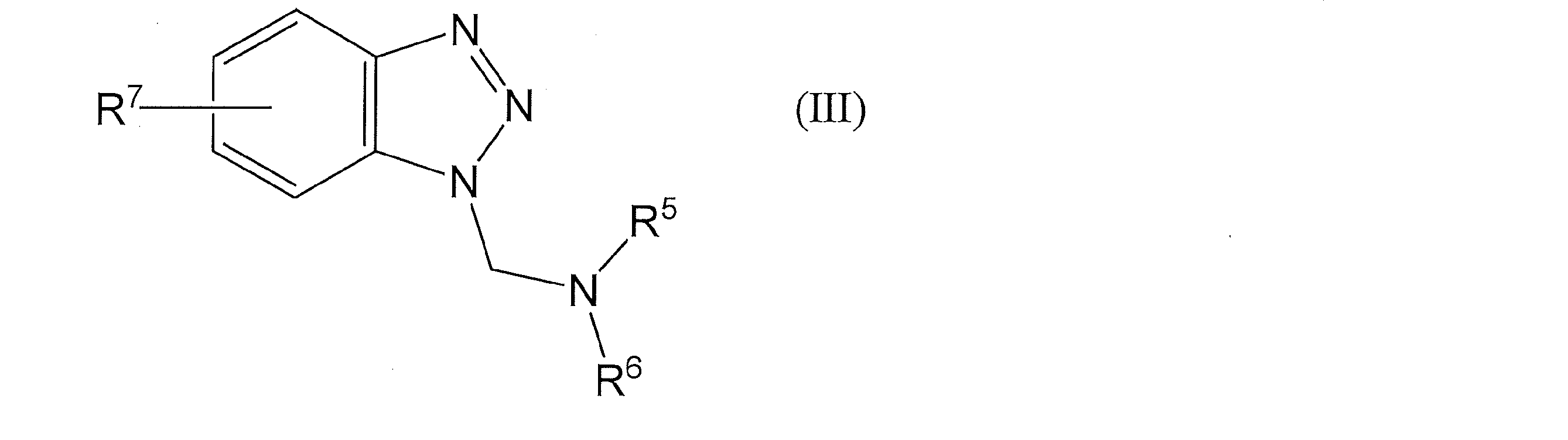
上記式(III)において、R5及びR6は、金属腐食抑制、及び有機被膜へのダメージ抑制の観点から、炭素数6以上8以下のアルキル基が好ましく、炭素数8のアルキル基がより好ましい。R7は、同様の観点から、水素原子が好ましい。
本開示の洗浄剤組成物は、イミダゾール誘導体又はピラゾール誘導体(以下、「成分C」ともいう)を含む。成分Cは、1種でもよいし、2種以上の組合せでもよい。
イミダゾール誘導体としては、例えば、下記式(IV)で表される化合物が挙げられる。
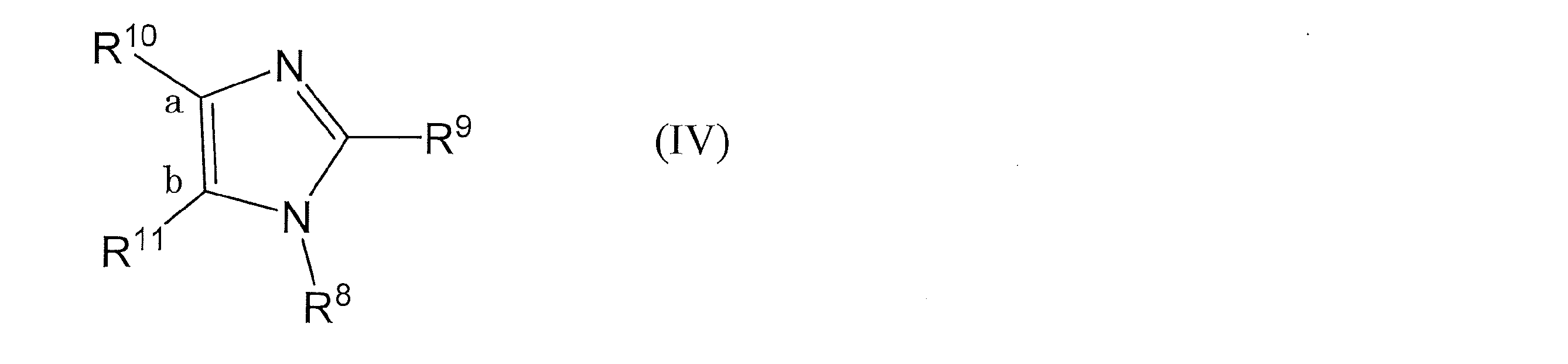
上記式(IV)において、R8、R9、R10及びR11はそれぞれ独立に、フラックス残渣除去性向上、金属腐食抑制、及び有機被膜へのダメージ抑制の観点から、水素原子又は炭素数1以上8以下のアルキル基が好ましく、水素原子又はメチル基がより好ましい。
これらの中でも、下記式(IV)で表される化合物は、フラックス残渣除去性向上、金属腐食抑制、及び有機被膜へのダメージ抑制の観点から、イミダゾール、1-メチルイミダゾール、2-メチルイミダゾール、及び、ベンゾイミダゾールから選ばれる少なくとも1種が好ましく、イミダゾール及び2-メチルイミダゾールがより好ましく、2-メチルイミダゾールが更に好ましい。
ピラゾール誘導体としては、例えば、下記式(V)で表される化合物が挙げられる。

上記式(V)において、R12、R13、R14及びR15は、フラックス残渣除去性向上、金属腐食抑制、及び有機被膜へのダメージ抑制の観点から、水素原子が好ましい。
本開示の洗浄剤組成物は、一又は複数の実施形態において、水(以下、「成分D」ともいう)をさらに含むことができる。成分Dとしては、イオン交換水、RO水(逆浸透膜処理水)、蒸留水、純水、超純水等が挙げられる。
本開示の洗浄剤組成物が成分Dを含む場合、本開示の洗浄剤組成物の使用時における成分Dの含有量は、引火点を下げる観点から、1質量%以上が好ましく、5質量%以上がより好ましく、8質量%以上が更に好ましく、そして、フラックス残渣除去性向上の観点から、15質量%以下が好ましく、14質量%以下がより好ましく、13質量%以下が更に好ましい。より具体的には、本開示の洗浄剤組成物における成分Dの含有量は、1質量%以上15質量%以下が好ましく、5質量%以上14質量%以下がより好ましく、8質量%以上13質量%以下が更に好ましい。
本開示の洗浄剤組成物は、本開示の効果を損なわない範囲で、必要に応じて、通常洗浄剤に用いられる、1-ヒドロキシエチリデン-1,1-ジホスホン酸(HEDP)等のキレート剤、防錆剤、増粘剤、分散剤、成分A以外の溶剤、塩基性物質(例えば、ジブチルアミノエタノール、ジイソプロパノールアミン等)、pH調整剤、高分子化合物、界面活性剤、可溶化剤、防腐剤、殺菌剤、抗菌剤、消泡剤、酸化防止剤、有機カルボン酸塩(例えば、オクチル酸第1すず等)を適宜含有することができる。
本開示の洗浄剤組成物中のその他の成分の含有量は、0質量%以上10質量%以下が好ましく、0質量%以上8質量%以下がより好ましく、0質量%以上6質量%以下が更に好ましい。
本開示の洗浄剤組成物は、例えば、成分A、成分B、成分C、必要に応じて任意成分(成分D、その他の成分)を公知の方法で配合することにより製造できる。一又は複数の実施形態において、本開示の洗浄剤組成物は、少なくとも成分Aと成分Bと成分Cとを配合してなるものとすることができる。したがって、本開示は、一態様において、少なくとも成分Aと成分Bと成分Cとを配合する工程を含む、洗浄剤組成物の製造方法に関する。本開示において「配合する」とは、成分A、成分B、成分C、及び必要に応じて任意成分(成分D、その他の成分)を同時に又は任意の順に混合することを含む。
本開示の洗浄剤組成物の製造方法において、各成分の配合量は、上述した本開示の洗浄剤組成物の使用時における各成分の含有量と同じとすることができる。
本開示において「洗浄剤組成物の使用時における各成分の含有量」とは、洗浄時、すなわち、洗浄剤組成物の洗浄への使用を開始する時点での各成分の含有量をいう。
本開示の洗浄剤組成物は、一又は複数の実施形態において、フラックス残渣を有する被洗浄物からフラックス残渣を除去するための洗浄剤として用いることができる。したがって、本開示は、一態様において、成分Aと成分Bと成分Cとを含む洗浄剤組成物(すなわち、本開示の洗浄剤組成物)のフラックス残渣洗浄剤としての使用に関する。
本開示の洗浄剤組成物は、その他の一又は複数の実施形態において、フラックス残渣を有する被洗浄物からフラックス残渣を除去するための除去剤として用いることができる。したがって、本開示は、その他の態様において、本開示の洗浄剤組成物からなるフラックス残渣洗浄除去剤組成物(以下、「本開示のフラックス残渣洗浄除去剤組成物」ともいう)に関する。本開示は、その他の態様において、本開示の洗浄剤組成物又は本開示のフラックス残渣洗浄除去剤組成物のフラックス残渣除去剤としての使用に関する。
被洗浄物としては、一又は複数の実施形態において、200℃以上に加熱する工程を経たフラックス残渣を有する基板が挙げられ、一又は複数の実施形態において、前記200℃以上に加熱する工程を経た、フラックス残渣を有する基板上に銅を含む金属部材を有するものであってもよい。前記200℃以上に加熱する工程は、一又は複数の実施形態において、200℃以上の高温で保持する工程(焼結工程)である。
被洗浄物としては、一又は複数の実施形態において、フラックス残渣を有する被洗浄物が挙げられる。フラックス残渣を有する被洗浄物としては、一又は複数の実施形態において、基板と金属部材との間又は基板上の2つの金属部材の間にフラックスを含むスラリーを塗布した後、200℃以上に加熱する工程(焼結工程)を経た、フラックス残渣を有する基板が挙げられる。したがって、本開示は、一態様において、基板と金属部材との間又は基板上の2つの金属部材の間にフラックスを含むスラリーを塗布した後、200℃以上に加熱する工程(焼結工程)を経た、フラックス残渣を有する基板の洗浄における、本開示の洗浄剤組成物の使用に関する。
前記焼結工程において、加熱温度は、例えば、200℃~350℃が挙げられる。加熱時間は、例えば、3分~5時間が挙げられる。フラックスの熱による変性に対する洗浄性を発揮する観点から、被洗浄物としては、1時間以上加熱された被洗浄物が好ましい。
被洗浄物の基板表面及び/又は金属部材は、一又は複数の実施形態において、金属が加熱により変色した部分、すなわち、金属が酸化した部分(金属酸化物)を含む。
被洗浄物の基板表面及び/又は金属部材は、一又は複数の実施形態において、イミダゾール誘導体を含有する有機被膜を含む。被洗浄物の基板表面及び/又は金属部材は、一又は複数の実施形態において、イミダゾール誘導体を含有する剤に接触した有機被膜を含む。有機被膜は、一又は複数の実施形態において、基板表面及び/又は金属部材を保護するための表面保護膜である。有機被膜は、一又は複数の実施形態において、水溶性プレフラックス(OSP、Organic Solderability Preservative)処理により形成される。有機被膜の形成方法としては、一又は複数の実施形態において、基板表面及び/又は金属部材の表面を水溶性プレフラックスに浸漬する方法が挙げられる。浸漬温度としては、例えば、30℃~50℃が挙げられ、浸漬時間としては、例えば、30秒~90秒が挙げられる。有機被膜の厚みとしては、例えば、0.1μm~0.3μmが挙げられる。水溶性プレフラックスは、一又は複数の実施形態において、イミダゾール誘導体を主成分とする水溶液である。OSP処理は、一又は複数の実施形態において、Cu-OSP処理である。
一又は複数の実施形態において、被洗浄物は、基板と金属部材との間又は基板上の2つの金属部材の間にフラックスを含むスラリーを塗布した後、200℃以上に加熱する工程(焼結工程)を経た、フラックス残渣を有する基板であって、イミダゾール誘導体を含有する有機被膜を含む基板である。
前記フラックスは、一又は複数の実施形態において、主成分として酸を含む。酸としては、例えば、アビエチン酸等の有機酸が挙げられる。
前記フラックスを含有するスラリーは、一又は複数の実施形態において、金属粒子をさらに含むことができる。金属粒子は、焼結温度(硬化温度)が300℃以下の金属粒子が好ましく、例えば、錫、銅、銀、又はそれらの混合金属等が挙げられる。金属粒子は、一又は複数の実施形態において、基板と金属部材との間又は基板上の2つの金属部材間を接合可能な接合材となる。前記フラックスを含有するスラリーは、一又は複数の実施形態において、ダイアタッチペーストとして使用できる。前記フラックスを含有するスラリーが金属粒子をさらに含む場合、前記スラリーは、一又は複数の実施形態において、導電型ダイアタッチペーストとして使用できる。
前記金属部材は、一又は複数の実施形態において、基板上に固定されている。
前記金属部材の金属は、一又は複数の実施形態において、銅、鉄等の金属を含む。前記金属部材としては、例えば、放熱板、電気回路等が挙げられる。
前記基板としては、一又は複数の実施形態において、金属表面を有する基板が挙げられ、例えば、銅板、鋼板、ステンレス鋼板、タフピッチ銅板、銅配線プリント基板等が挙げられる。
被洗浄物の基板表面及び/又は金属部材は、一又は複数の実施形態において、銅を含む。
本開示は、一態様において、フラックス残渣を有する被洗浄物を本開示の洗浄剤組成物で洗浄する洗浄工程を含む洗浄方法(以下、「本開示の洗浄方法」ともいう)に関する。前記被洗浄物としては、上述した被洗浄物が挙げられる。前記洗浄工程は、一又は複数の実施形態において、フラックス残渣を有する被洗浄物を本開示の洗浄剤組成物に接触させることを含む。本開示の洗浄方法によれば、金属腐食及び有機被膜へのダメージを抑制しつつ、フラックス残渣を効率よく除去できる。
被洗浄物を本開示の洗浄剤組成物で洗浄する方法、又は、被洗浄物に本開示の洗浄剤組成物を接触させる方法としては、例えば、超音波洗浄装置の浴槽内で接触させる方法、洗浄剤組成物をスプレー状に射出して接触させる方法(シャワー方式)等が挙げられる。本開示の洗浄剤組成物は、一又は複数の実施形態において、希釈することなくそのまま洗浄に使用できる。
前記洗浄工程は、一又は複数の実施形態において、前記被洗浄物を本開示の洗浄剤組成物に浸漬する工程である。浸漬温度は、フラックス残渣除去性向上、金属腐食抑制、及び有機被膜へのダメージ抑制の観点から、80℃以下が好ましく、70℃以下がより好ましく、60℃以下が更に好ましく、そして、20℃以上が好ましく、30℃以上がより好ましく、40℃以上が更に好ましい。例えば、前記洗浄工程は、一又は複数の実施形態において、前記被洗浄物を80℃以下の本開示の洗浄剤組成物に浸漬する工程であることが好ましい。浸漬時間は、同様の観点から、5分以上が好ましく、10分以上がより好ましく、30分以上が更に好ましく、そして、3時間以下が好ましく、2時間以下がより好ましく、1時間以下が更に好ましい。
本開示の洗浄方法は、一又は複数の実施形態において、洗浄剤組成物に被洗浄物を接触させた後、水及び/又はメタノール等のアルコールでリンスし、乾燥する工程を含むことが好ましい。
本開示の洗浄方法は、本開示の洗浄剤組成物の洗浄力が発揮されやすい点から、本開示の洗浄剤組成物と被洗浄物との接触時に超音波を照射することが好ましく、その超音波は比較的強いものであることがより好ましい。前記超音波の周波数としては、同様の観点から、26~72kHz、80~1500Wが好ましく、36~72kHz、80~1500Wがより好ましい。
すなわち、本開示の洗浄方法は、一又は複数の実施形態において、被洗浄物からフラックス残渣を本開示のフラックス洗浄除去剤組成物で洗浄除去する工程を含み、前記被洗浄物は200℃以上に加熱する工程(焼結工程)を経た、フラックス残渣を有する基板である、フラックス残渣洗浄除去方法である。
本開示は、一態様において、本開示の洗浄方法を用いる、電子部品の製造方法(以下、「本開示の電子部品の製造方法」ともいう)に関する。
本開示の電子部品の製造方法は、一又は複数の実施形態において、基板と金属部材との間又は基板上の2つの金属部材の間にフラックスを含むスラリーを塗布した後、200℃以上に加熱する工程(焼結工程)及び前記焼結工程を経た、フラックス残渣を有する基板(被洗浄物)を本開示の洗浄剤組成物又は本開示の洗浄方法を用いて洗浄する工程(洗浄工程)を含む。
前記洗浄工程は、一又は複数の実施形態において、フラックス残渣を有する被洗浄物を本開示の洗浄剤組成物に接触させることを含む。前記洗浄工程における洗浄方法としては、上述した本開示の洗浄方法と同様の方法が挙げられる。被洗浄物としては、上述した被洗浄物を挙げることができる。
<1>
下記式(I)で表される化合物(成分A)と、ベンゾトリアゾール誘導体(成分B)と、イミダゾール誘導体又はピラゾール誘導体(成分C)と、を含むフラックス残渣除去用洗浄剤組成物。
R1-O-(AO)n-R2 (I)
上記式(I)中、R1は、フェニル基又は炭素数1以上8以下のアルキル基であり、R2は、水素原子又は炭素数1以上4以下のアルキル基であり、AOは、エチレンオキシド基(EO)又はプロピレンオキシド基(PO)であり、nは、AOの付加モル数であって1以上3以下の整数である。
<2>
成分Aの含有量が、35質量%以上99.5質量%以下である、<1>に記載の洗浄剤組成物。
<3>
成分Aの含有量が、35質量%以上99.5質量%以下、または、50質量%以上95質量%以下、または、75質量%以上90質量%以下である、<1>に記載の洗浄剤組成物。
<4>
成分Bの含有量が、0.05質量%以上5質量%以下である、<1>から<3>のいずれかに記載の洗浄剤組成物。
<5>
成分Bの含有量が、0.05質量%以上5質量%以下、または、0.1質量%以上3質量%以下、または、0.3質量%以上1質量%以下である、<1>から<4>のいずれかに記載の洗浄剤組成物。
<6>
成分Bと成分Cとの質量比B/Cが、0.01以上100以下である、<1>から<5>のいずれかに記載の洗浄剤組成物。
<7>
成分Bと成分Cとの質量比B/Cが、0.01以上100以下、または、0.1以上10以下、または、0.5以上5以下である、<1>から<6>のいずれかに記載の洗浄剤組成物。
<8>
成分Aと成分Bとの質量比A/B(Aの含有量/Bの含有量)は、50以上1000以下、または、100以上500以下、または、150以上300以下である、<1>から<7>のいずれかに記載の洗浄剤組成物。
<9>
成分Aと成分Cとの質量比A/C(成分Aの含有量/成分Cの含有量)は、20以上500以下、または、50以上300以下、または、70以上200以下である、<1>から<8>のいずれかに記載の洗浄剤組成物。
<10>
水(成分D)をさらに含む、<1>から<9>のいずれかに記載の洗浄剤組成物。
<11>
成分Dの含有量が、15質量%以下である、<10>に記載の洗浄剤組成物。
<12>
成分Dの含有量が、1質量%以上15質量%以下、または、5質量%以上14質量%以下、または、8質量%以上13質量%以下である、<10>に記載の洗浄剤組成物。
<13>
成分Aと成分Bと成分Cとの合計含有量は、50質量%以上100質量%以下、または、70質量%以上95質量%以下、または、80質量%以上90質量%以下、または、85質量%以上90質量%以下である、<1>から<12>のいずれかに記載の洗浄剤組成物。
<14>
フラックス残渣を有する被洗浄物を、<1>から<13>のいずれかに記載の洗浄剤組成物で洗浄する洗浄工程を含む、洗浄方法。
<15>
フラックス残渣を有する被洗浄物は、基板と金属部材との間又は基板上の2つの金属部材の間にフラックスを含むスラリーを塗布した後、200℃以上に加熱する工程を経たフラックス残渣を有する基板である、<14>に記載の洗浄方法。
<16>
被洗浄物の基板表面及び/又は金属部材は、イミダゾール誘導体を含有する有機被膜を含む、<14>又は<15>に記載の洗浄方法。
<17>
被洗浄物の基板表面及び/又は金属部材は、イミダゾール誘導体を含有する剤に接触した有機被膜を含む、<14>から<16>のいずれかに記載の洗浄方法。
<18>
前記洗浄工程は、前記被洗浄物を80℃以下の前記フラックス用洗浄剤組成物に浸漬する工程である、<14>から<17>のいずれかに記載の洗浄方法。
<19>
被洗浄物の基板表面及び/又は金属部材は、銅を含む、<14>から<18>のいずれかに記載の洗浄方法。
<20>
<14>から<19>のいずれかに記載の洗浄方法を用いる半導体電子部品の製造方法。
100mLガラスビーカーに、下記表1及び表2に記載の組成となるように各成分を配合し、下記条件で混合することにより、実施例1~18及び比較例1~9の洗浄剤組成物を調製した。表中の各成分の数値は、断りのない限り、調製した洗浄剤組成物における含有量(質量%)を示す。
<混合条件>
液温度:25℃
攪拌機:マグネチックスターラー(50mm回転子)
回転数:300rpm
攪拌時間:10分
(成分A)
ジエチレングリコールモノブチルエーテル[日本乳化剤株式会社製]
ジプロピレングリコールモノブチルエーテル[日本乳化剤株式会社製]
ジエチレングリコールモノヘキシルエーテル[日本乳化剤株式会社製]
(非成分A)
ベンジルアルコール[ランクセス株式会社製]
(成分B)
ベンゾトリアゾール[東京化成工業株式会社製]
5-メチルベンゾトリアゾール[東京化成工業株式会社製]
BT-LX[N,N-ビス(2-エチルヘキシル)(1H-ベンゾトリアゾール-1-イル)メチルアミン、城北化学工業株式会社製]
(成分C)
2-メチルイミダゾール[東京化成工業株式会社製]
1-メチルイミダゾール[東京化成工業株式会社製]
イミダゾール[富士フイルム和光純薬株式会社製]
ベンゾイミダゾール[東京化成工業株式会社製]
ピラゾール[東京化成工業株式会社製]
(非成分C)
1,2,3-トリアゾール[東京化成工業株式会社製]
テトラゾール[東京化成工業株式会社製]
(成分D)
水[オルガノ株式会社製純水装置G-10DSTSETで製造した1μS/cm以下の純水]
(その他の成分)
ジブチルアミノエタノール[日本乳化剤株式会社製](塩基性物質)
ジイソプロパノールアミン[日本乳化剤株式会社製](塩基性物質)
1-ヒドロキシエチリデン-1,1-ジホスホン酸[イタルマッチジャパン株式会社製、デイクエスト2010](キレート剤)
オクチル酸第一すず(オクタン酸第一すず)[東京化成工業株式会社製](有機カルボン酸金属塩)
調製した実施例1~18及び比較例1~9の洗浄剤組成物を用いて下記試験を行い、有機被膜へのダメージ性、金属腐食能(防食性)及びフラックス残渣除去性を評価した。
有機被膜へのダメージ性及び防食性の評価に用いるテスト基板1は下記のようにして作製した。
<基板のプレフラックス処理(有機被膜の形成)>
試験基板に対して、下記工程及び条件でプレフラックス処理(Cu-OSP処理)を施した。
〔試験基板〕
試験基板としては、タフピッチ銅板(50mm×20mm)を用いた。
〔プレフラックス処理〕
プレフラックス処理は、下記工程(a)~工程(d)を含む手順で実施した。
(a)脱脂工程
試験基板を、脱脂液(四国化成工業株式会社製、商品名:タフクリーナーW40G)に 、20~30℃で30秒間浸漬した後、基板を取り出して、1分間水洗した。
(b)ソフトエッチング工程
上記基板を、ソフトエッチング液(四国化成工業株式会社製、商品名:タフクリーナー GB-1400、硫酸-過酸化水素系タイプ)に30℃で30秒間浸漬した後、基板を取り出して1分間水洗した。
(c)酸洗浄工程
上記基板を、酸洗浄液(5%硫酸水溶液)に、20~30℃で30秒間浸漬した後、取り出して、1分間水洗した。その後、エアーナイフで基板の水切りをした。
(d)プレフラックス処理工程
上記基板を、イミダゾール化合物を含有する金属処理剤A(水溶性プレフラックス、四国化成工業株式会社製、商品名:タフエースF2(LX)PK)で、40℃で30~90秒間浸漬した後、基板を取り出して1分間水洗した。次いで、エアーナイフで基板の水切りをした後、100℃で1分間乾燥した。銅表面上に厚さ約0.1~0.3μmの有機被膜(OSP膜)を形成させることで、テスト基板1を作製した。
銅配線プリント基板(10mm×15mm)上に、ステンシルマスクを利用して、フラックス(千住金属工業社製、商品名:デルタラックス M B-T100)を100μm厚で印刷し、Sn-3Ag-0.5Cu(各数値は質量%)組成の300μmのはんだボールをフラックス印刷箇所に搭載し、リフロー炉を用いて、昇温速度を2.5℃/sec、ピーク温度を250℃で30秒間リフローし(酸素濃度は100ppm)、テスト基板2を作製した。
ここで作製されたテスト基板2は、加熱温度並びに保持時間から、基板上の金属同士を接合することを模したモデルである。また、焼結条件としては、加熱温度が250℃、加熱時間が4分(この加熱時間には、250℃での保持時間(30秒)、昇温時間、及び、冷却時間が含まれる)を想定したものである。
洗浄試験は、以下の手順にて行った。
まず、超音波洗浄槽、第1リンス槽、第2リンス槽を以下の条件で準備する。
超音波洗浄槽は、周波数40kHzに設定し出力を400Wとする。500mLガラスビーカーに各洗浄剤組成物を100g添加し、超音波洗浄層に入れて、60℃に加温することにより得た。
第1リンス槽及び第2リンス槽は、50mm回転子を一つ入れた100mLガラスビーカーを二つ用意し、それぞれに純水100gを添加し、温浴に入れて、回転数100rpmで攪拌しながら40℃に加温することにより得た。
次に、テスト基板をピンセットで保持して、前記超音波洗浄槽へ挿入し、60℃で5分間浸漬する(超音波洗浄、40kHz、400W)。
次に、テスト基板をピンセットで保持して第1リンス槽に挿入し、回転数100rpmで攪拌しながら40℃で1分間浸漬する(水リンス)。
さらに、テスト基板をピンセットで保持して第2リンス槽に挿入し、回転数100rpmで攪拌しながら40℃で1分間浸漬する(水リンス)。
最後に、テスト基板を窒素パージし乾燥する。
上記洗浄試験の後、テスト基板1の表面に対する水の接触角を液適法によって測定する。接触角計(協和界面科学株式会社製、DМo-501)を使用し、液滴を作成してから20秒後の値を読み、5点平均で水接触角Xを算出した。
pH1に調整した硫酸水溶液を用いてテスト基板1を同方法で洗浄し、銅板上の水接触角Yを別途算出した。
XからYを引くことにより、有機被膜の残存性を評価した。結果を表1及び2に示す。X-Yの数値が大きいほど、有機被膜が残存し、有機被膜へのダメージが抑制されていると評価できる。

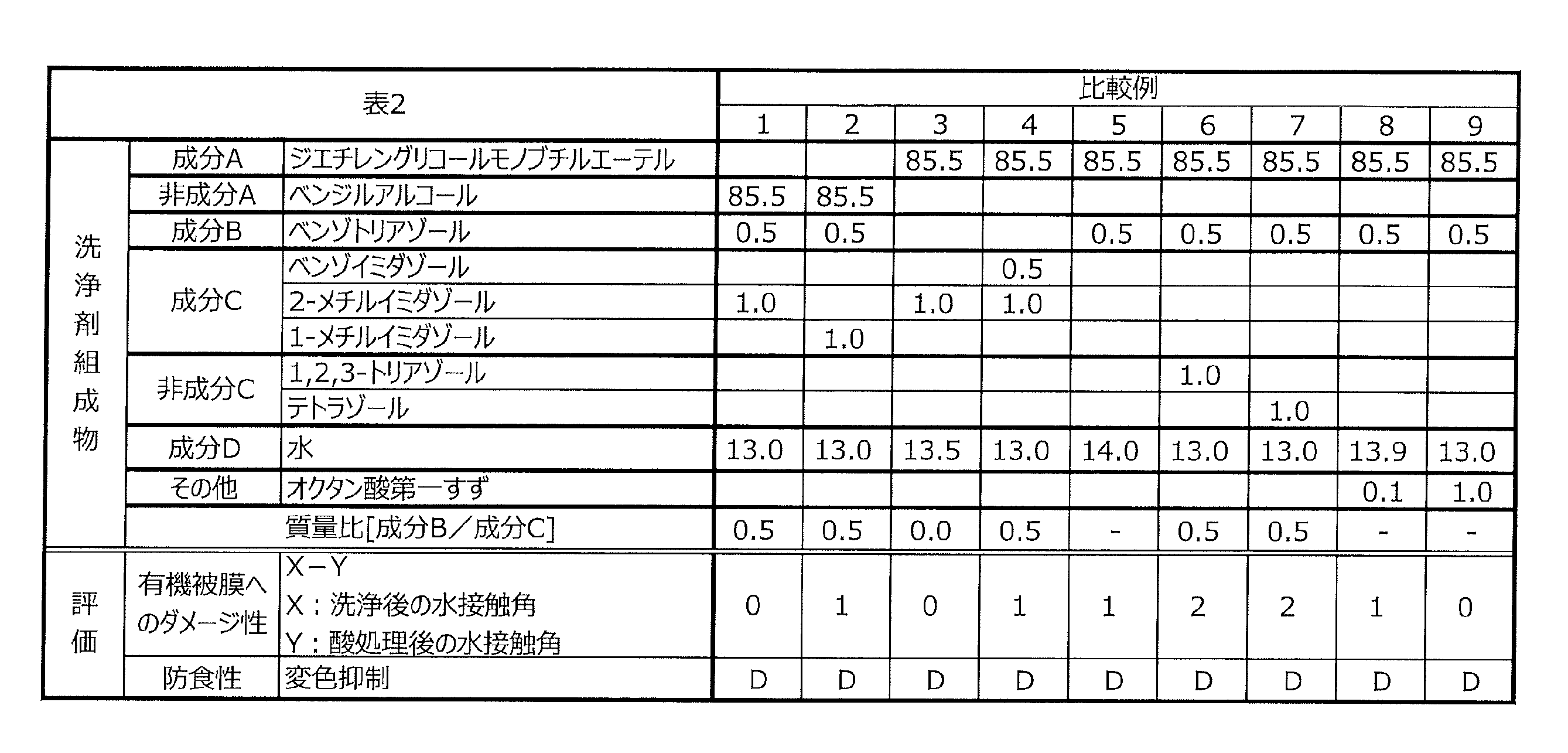
上記有機被膜の評価を行った後、テスト基板1を光学顕微鏡(株式会社キーエンス製、VHX-2000)を用いて観察した。恒温恒湿機(エスペック株式会社製、PR-1J)にテスト基板1を入れ、温度85℃、相対湿度85%rhの条件で24時間静置した後に、テスト基板1を取り出した。テスト基板1を光学顕微鏡VHX-2000を用いて目視観察し、恒温恒湿条件で保存する前後の外観比較を行い、下記判断基準で防食性を評価した。結果を表1及び2に示す。
<判定基準>
A:色むらがなく、変色がない。
B:色むらがなく、変色が見られる。
C:変色が見られ、一部が褐色化している。
D:全体が褐色化している。
成分B及び成分Cを含む実施例1の洗浄剤組成物は、成分B又は成分Cを含まない比較例3、5に比べて、銅の変色抑制(防食性)に優れていた(実施例1:A、比較例3、5:D)。洗浄後の水接触角の評価によるX-Yの数値が大きく、有機被膜を残存させることが可能な洗浄剤組成物は防食性に優れ、実施例2~18においても優れた防食性を示した。
上記洗浄試験の後、テスト基板2を光学顕微鏡(株式会社キーエンス製、VHX-2000)を用いて観察し、洗浄前、及び洗浄後のフラックス残渣の面積を付属の色の識別による面積算出モードで求め、フラックス残渣洗浄率を算出した。
成分Aを含む実施例1の洗浄剤組成物は、フラックス残渣洗浄率100%(完全洗浄)であり、フラックス残渣除去性に優れていた。成分Aを含む実施例2~18においても優れたフラックス残渣除去性を示した。
Claims (14)
- 下記式(I)で表される化合物(成分A)と、ベンゾトリアゾール誘導体(成分B)と、イミダゾール誘導体又はピラゾール誘導体(成分C)と、を含むフラックス残渣除去用洗浄剤組成物。
R1-O-(AO)n-R2 (I)
上記式(I)中、R1は、フェニル基又は炭素数1以上8以下のアルキル基であり、R2は、水素原子又は炭素数1以上4以下のアルキル基であり、AOは、エチレンオキシド基(EO)又はプロピレンオキシド基(PO)であり、nは、AOの付加モル数であって1以上3以下の整数である。 - 成分Aの含有量が、35質量%以上99.5質量%以下である、請求項1に記載の洗浄剤組成物。
- 成分Bの含有量が、0.05質量%以上5質量%以下である、請求項1又は2に記載の洗浄剤組成物。
- 成分Bと成分Cとの質量比B/Cが、0.01以上100以下である、請求項1から3のいずれかに記載の洗浄剤組成物。
- 成分Bと成分Cとの質量比B/Cが、0.01以上10以下である、請求項1から4のいずれかに記載の洗浄剤組成物。
- 水(成分D)をさらに含む、請求項1から5のいずれかに記載の洗浄剤組成物。
- 成分Dの含有量が、15質量%以下である、請求項6に記載の洗浄剤組成物。
- フラックス残渣を有する被洗浄物を、請求項1から7のいずれかに記載の洗浄剤組成物で洗浄する洗浄工程を含む、洗浄方法。
- フラックス残渣を有する被洗浄物は、基板と金属部材との間又は基板上の2つの金属部材の間にフラックスを含むスラリーを塗布した後、200℃以上に加熱する工程を経たフラックス残渣を有する基板である、請求項8に記載の洗浄方法。
- 被洗浄物の基板表面及び/又は金属部材は、イミダゾール誘導体を含有する有機被膜を含む、請求項8又は9に記載の洗浄方法。
- 被洗浄物の基板表面及び/又は金属部材は、イミダゾール誘導体を含有する剤に接触した有機被膜を含む、請求項8から10のいずれかに記載の洗浄方法。
- 前記洗浄工程は、前記被洗浄物を80℃以下の前記フラックス残渣除去用洗浄剤組成物に浸漬する工程である、請求項8から11のいずれかに記載の洗浄方法。
- 被洗浄物の基板表面及び/又は金属部材は、銅を含む、請求項8から12のいずれかに記載の洗浄方法。
- 請求項8から13のいずれかに記載の洗浄方法を用いる電子部品の製造方法。
Priority Applications (3)
| Application Number | Priority Date | Filing Date | Title |
|---|---|---|---|
| KR1020257043520A KR20260013239A (ko) | 2023-06-28 | 2024-06-26 | 플럭스 잔사 제거용 세정제 조성물 |
| EP24831995.6A EP4739007A1 (en) | 2023-06-28 | 2024-06-26 | Cleaning agent composition for removing flux residue |
| CN202480042565.8A CN121400068A (zh) | 2023-06-28 | 2024-06-26 | 助焊剂残渣除去用清洗剂组合物 |
Applications Claiming Priority (2)
| Application Number | Priority Date | Filing Date | Title |
|---|---|---|---|
| JP2023106301 | 2023-06-28 | ||
| JP2023-106301 | 2023-06-28 |
Publications (1)
| Publication Number | Publication Date |
|---|---|
| WO2025005136A1 true WO2025005136A1 (ja) | 2025-01-02 |
Family
ID=93938690
Family Applications (1)
| Application Number | Title | Priority Date | Filing Date |
|---|---|---|---|
| PCT/JP2024/023174 Ceased WO2025005136A1 (ja) | 2023-06-28 | 2024-06-26 | フラックス残渣除去用洗浄剤組成物 |
Country Status (6)
| Country | Link |
|---|---|
| EP (1) | EP4739007A1 (ja) |
| JP (1) | JP7673303B2 (ja) |
| KR (1) | KR20260013239A (ja) |
| CN (1) | CN121400068A (ja) |
| TW (1) | TW202511467A (ja) |
| WO (1) | WO2025005136A1 (ja) |
Citations (7)
| Publication number | Priority date | Publication date | Assignee | Title |
|---|---|---|---|---|
| JPH10215058A (ja) * | 1997-01-30 | 1998-08-11 | Nec Toyama Ltd | 印刷配線板の表面処理方法 |
| JP2005041989A (ja) | 2003-07-22 | 2005-02-17 | Arakawa Chem Ind Co Ltd | スズ含有合金製部品用洗浄剤組成物および洗浄方法 |
| JP2006199939A (ja) * | 2004-12-20 | 2006-08-03 | Sanyo Chem Ind Ltd | エレクトロニクス用洗浄剤 |
| WO2019044463A1 (ja) | 2017-08-31 | 2019-03-07 | 富士フイルム株式会社 | 処理液、キット、基板の洗浄方法 |
| JP2020035721A (ja) | 2018-08-31 | 2020-03-05 | 京セラ株式会社 | ペースト組成物、半導体装置及び電気・電子部品 |
| WO2020116534A1 (ja) | 2018-12-05 | 2020-06-11 | 花王株式会社 | フラックス残渣の洗浄 |
| WO2022050382A1 (ja) * | 2020-09-04 | 2022-03-10 | 花王株式会社 | フラックス用洗浄剤組成物 |
-
2024
- 2024-06-26 WO PCT/JP2024/023174 patent/WO2025005136A1/ja not_active Ceased
- 2024-06-26 KR KR1020257043520A patent/KR20260013239A/ko active Pending
- 2024-06-26 CN CN202480042565.8A patent/CN121400068A/zh active Pending
- 2024-06-26 EP EP24831995.6A patent/EP4739007A1/en active Pending
- 2024-06-26 JP JP2024103210A patent/JP7673303B2/ja active Active
- 2024-06-28 TW TW113124308A patent/TW202511467A/zh unknown
Patent Citations (7)
| Publication number | Priority date | Publication date | Assignee | Title |
|---|---|---|---|---|
| JPH10215058A (ja) * | 1997-01-30 | 1998-08-11 | Nec Toyama Ltd | 印刷配線板の表面処理方法 |
| JP2005041989A (ja) | 2003-07-22 | 2005-02-17 | Arakawa Chem Ind Co Ltd | スズ含有合金製部品用洗浄剤組成物および洗浄方法 |
| JP2006199939A (ja) * | 2004-12-20 | 2006-08-03 | Sanyo Chem Ind Ltd | エレクトロニクス用洗浄剤 |
| WO2019044463A1 (ja) | 2017-08-31 | 2019-03-07 | 富士フイルム株式会社 | 処理液、キット、基板の洗浄方法 |
| JP2020035721A (ja) | 2018-08-31 | 2020-03-05 | 京セラ株式会社 | ペースト組成物、半導体装置及び電気・電子部品 |
| WO2020116534A1 (ja) | 2018-12-05 | 2020-06-11 | 花王株式会社 | フラックス残渣の洗浄 |
| WO2022050382A1 (ja) * | 2020-09-04 | 2022-03-10 | 花王株式会社 | フラックス用洗浄剤組成物 |
Also Published As
| Publication number | Publication date |
|---|---|
| TW202511467A (zh) | 2025-03-16 |
| JP2025009981A (ja) | 2025-01-20 |
| JP7673303B2 (ja) | 2025-05-08 |
| KR20260013239A (ko) | 2026-01-27 |
| EP4739007A1 (en) | 2026-05-06 |
| CN121400068A (zh) | 2026-01-23 |
Similar Documents
| Publication | Publication Date | Title |
|---|---|---|
| JP7385597B2 (ja) | フラックス残渣除去用洗浄剤組成物 | |
| JP6243792B2 (ja) | はんだが固化された回路基板の製造方法、電子部品が搭載された回路基板の製造方法、及び、フラックス用洗浄剤組成物 | |
| US5439783A (en) | Composition for treating copper or copper alloys | |
| JP7370339B2 (ja) | フラックス残渣の洗浄 | |
| JP7512238B2 (ja) | フラックス用洗浄剤組成物 | |
| KR20150030175A (ko) | 수지 마스크층용 세정제 조성물 및 회로 기판의 제조 방법 | |
| WO2007119392A1 (ja) | 鉛フリーハンダフラックス除去用洗浄剤組成物、鉛フリーハンダフラックス除去用すすぎ剤、及び鉛フリーハンダフラックスの除去方法 | |
| JP2010070838A (ja) | 金属表面処理水溶液および金属表面のウィスカ抑制方法 | |
| JP7673303B2 (ja) | フラックス残渣除去用洗浄剤組成物 | |
| JP2022104315A (ja) | フラックス用洗浄剤組成物 | |
| JPH09293954A (ja) | 銅または銅合金表面の処理剤 | |
| JP2024112297A (ja) | フラックス用洗浄剤組成物 | |
| JP7377323B2 (ja) | 水溶性プリフラックス、および表面処理方法 | |
| KR101796112B1 (ko) | 땜납 플럭스 잔류물 세정제 조성물 | |
| JP7692108B1 (ja) | フラックス残渣除去用洗浄剤組成物 | |
| JP7810845B2 (ja) | フラックス用洗浄剤組成物 | |
| JP7804808B2 (ja) | スズ含有水溶性フラックスの洗浄方法 | |
| WO2025234367A1 (ja) | フラックス用洗浄剤組成物 | |
| WO2025258410A1 (ja) | スズ含有水溶性フラックスの洗浄方法 | |
| TW202611283A (zh) | 含有錫之水溶性助焊劑之洗淨方法 | |
| JP2024048154A (ja) | フラックス用洗浄剤組成物 | |
| TW202611282A (zh) | 助焊劑用清潔劑組合物 | |
| KR20110015063A (ko) | 무연땜납 플럭스 세정제 조성물 | |
| KR20110023482A (ko) | 무연땜납 플럭스 세정제 조성물 |
Legal Events
| Date | Code | Title | Description |
|---|---|---|---|
| 121 | Ep: the epo has been informed by wipo that ep was designated in this application |
Ref document number: 24831995 Country of ref document: EP Kind code of ref document: A1 |
|
| ENP | Entry into the national phase |
Ref document number: 1020257043520 Country of ref document: KR Free format text: ST27 STATUS EVENT CODE: A-0-1-A10-A15-NAP-PA0105 (AS PROVIDED BY THE NATIONAL OFFICE) |
|
| WWE | Wipo information: entry into national phase |
Ref document number: 2024831995 Country of ref document: EP |
|
| NENP | Non-entry into the national phase |
Ref country code: DE |
|
| ENP | Entry into the national phase |
Ref document number: 2024831995 Country of ref document: EP Effective date: 20260128 |
|
| ENP | Entry into the national phase |
Ref document number: 2024831995 Country of ref document: EP Effective date: 20260128 |
|
| WWP | Wipo information: published in national office |
Ref document number: 2024831995 Country of ref document: EP |